EP0962872A2 - Verfahren und Vorrichtung zur Qualitätskontrolle mit mehreren Regeln - Google Patents
Verfahren und Vorrichtung zur Qualitätskontrolle mit mehreren Regeln Download PDFInfo
- Publication number
- EP0962872A2 EP0962872A2 EP99105107A EP99105107A EP0962872A2 EP 0962872 A2 EP0962872 A2 EP 0962872A2 EP 99105107 A EP99105107 A EP 99105107A EP 99105107 A EP99105107 A EP 99105107A EP 0962872 A2 EP0962872 A2 EP 0962872A2
- Authority
- EP
- European Patent Office
- Prior art keywords
- control
- medically significant
- results
- concentrations
- result
- Prior art date
- Legal status (The legal status is an assumption and is not a legal conclusion. Google has not performed a legal analysis and makes no representation as to the accuracy of the status listed.)
- Withdrawn
Links
Images





Classifications
-
- G—PHYSICS
- G16—INFORMATION AND COMMUNICATION TECHNOLOGY [ICT] SPECIALLY ADAPTED FOR SPECIFIC APPLICATION FIELDS
- G16H—HEALTHCARE INFORMATICS, i.e. INFORMATION AND COMMUNICATION TECHNOLOGY [ICT] SPECIALLY ADAPTED FOR THE HANDLING OR PROCESSING OF MEDICAL OR HEALTHCARE DATA
- G16H10/00—ICT specially adapted for the handling or processing of patient-related medical or healthcare data
- G16H10/40—ICT specially adapted for the handling or processing of patient-related medical or healthcare data for data related to laboratory analysis, e.g. patient specimen analysis
-
- G—PHYSICS
- G16—INFORMATION AND COMMUNICATION TECHNOLOGY [ICT] SPECIALLY ADAPTED FOR SPECIFIC APPLICATION FIELDS
- G16H—HEALTHCARE INFORMATICS, i.e. INFORMATION AND COMMUNICATION TECHNOLOGY [ICT] SPECIALLY ADAPTED FOR THE HANDLING OR PROCESSING OF MEDICAL OR HEALTHCARE DATA
- G16H40/00—ICT specially adapted for the management or administration of healthcare resources or facilities; ICT specially adapted for the management or operation of medical equipment or devices
- G16H40/40—ICT specially adapted for the management or administration of healthcare resources or facilities; ICT specially adapted for the management or operation of medical equipment or devices for the management of medical equipment or devices, e.g. scheduling maintenance or upgrades
-
- G—PHYSICS
- G16—INFORMATION AND COMMUNICATION TECHNOLOGY [ICT] SPECIALLY ADAPTED FOR SPECIFIC APPLICATION FIELDS
- G16H—HEALTHCARE INFORMATICS, i.e. INFORMATION AND COMMUNICATION TECHNOLOGY [ICT] SPECIALLY ADAPTED FOR THE HANDLING OR PROCESSING OF MEDICAL OR HEALTHCARE DATA
- G16H50/00—ICT specially adapted for medical diagnosis, medical simulation or medical data mining; ICT specially adapted for detecting, monitoring or modelling epidemics or pandemics
- G16H50/20—ICT specially adapted for medical diagnosis, medical simulation or medical data mining; ICT specially adapted for detecting, monitoring or modelling epidemics or pandemics for computer-aided diagnosis, e.g. based on medical expert systems
-
- G—PHYSICS
- G01—MEASURING; TESTING
- G01N—INVESTIGATING OR ANALYSING MATERIALS BY DETERMINING THEIR CHEMICAL OR PHYSICAL PROPERTIES
- G01N33/00—Investigating or analysing materials by specific methods not covered by groups G01N1/00 - G01N31/00
- G01N33/48—Biological material, e.g. blood, urine; Haemocytometers
- G01N33/483—Physical analysis of biological material
- G01N33/487—Physical analysis of biological material of liquid biological material
Definitions
- This invention relates to laboratory information management systems of the type wherein one or more automated or partly automated laboratory instruments, for example, instruments for determining the concentrations of medically significant components of samples of body fluids and/or tissues from patients who have submitted such samples for testing, provide information such as identifying indicia and control solution test results to a programmable machine which is programmed to test such results against statistical quality control criteria defined by way of rules.
- one or more automated or partly automated laboratory instruments for example, instruments for determining the concentrations of medically significant components of samples of body fluids and/or tissues from patients who have submitted such samples for testing, provide information such as identifying indicia and control solution test results to a programmable machine which is programmed to test such results against statistical quality control criteria defined by way of rules.
- Laboratory information management systems are known generally. Some such systems permit the operator to select a rule against which one or a group of such results may be tested. Typically, the way in which this is done is that control solutions having known concentrations of a medically significant component of interest, for example, a hormone, are processed by the laboratory instrument right along with patient samples. The programmable machine then tests the laboratory instrument's concentration determination results against the known concentrations of the hormone in the various controls as determined by the laboratory instrument.
- a medically significant component of interest for example, a hormone
- the statistical quality control test might be, for example, "Is the reported result for the control solution within one standard deviation of the known concentration?" If the answer to such a test is "Yes,” the laboratory instrument's concentration determination process is considered to be in control, and testing to determine the concentration of the hormone in patient samples proceeds. If the answer to this question is "No,” the laboratory instrument's concentration determination process is considered to be out of control, and appropriate steps are taken to bring the process back into control and/or to retest the affected patient sample concentration determinations to provide more reliable results.
- a system for analyzing the results of determinations of the concentrations of medically significant components of control solutions comprises a programmable machine, and a program executable on the machine for testing the results against a set of multiple rules and for producing indications to an operator of the results of the tests.
- the system further comprises an instrument for sequentially determining the concentrations of medically significant components of multiple samples of body fluids and control solutions, and an interface for relaying the results of the determinations of the concentrations of the medically significant components of the control solutions to the programmable machine to be tested by the program.
- the program for testing the results against multiple rules comprises a program for testing a result of a first determination of the concentration of a first medically significant component of a first sample of a first control solution against a first subset of the set of multiple rules, and subsequently testing a result of at least one of: a second determination; the concentration of a second medically significant component; a second sample; and, a second control solution against at least one of the first subset and a second subset of the set of multiple rules.
- the instrument for sequentially determining the concentrations of medically significant components of multiple samples of body fluids and control solutions comprises an instrument for sequentially determining the concentrations of different medically significant components of samples of different body fluids and different control solutions in response to instructions to determine the concentrations of different medically significant components of samples of different body fluids and different control solutions
- the program comprises a program for instructing the instrument to determine the concentrations of different medically significant components of samples of different body fluids and different control solutions
- the system further comprises an interface for relaying instructions from the programmable machine to the instrument.
- system further comprises a second instrument for sequentially determining the concentrations of medically significant components of multiple samples of body fluids and control solutions, and an interface for relaying the results of determinations by the second instrument to the programmable machine to be tested by the program.
- the instrument and the second instrument respectively comprise: an instrument for sequentially determining the concentrations of different medically significant components of samples of different body fluids and control solutions in response to instructions to determine the concentrations of different medically significant components of samples of different body fluids and control solutions; and, a second instrument for sequentially determining the concentrations of different medically significant components of samples of different body fluids and control solutions in response to instructions to determine the concentrations of different medically significant components of samples of different body fluids and control solutions, and the program comprises a program for selectively instructing one of the instrument and the second instrument to determine the concentrations of different medically significant components of samples of different body fluids and control solutions, the system further comprising an interface for relaying instructions from the programmable machine to the one of the instrument and the second instrument.
- a method for analyzing the results of determinations of the concentrations of medically significant components of control solutions comprises the steps of providing a programmable machine, testing the results on the machine against a set of multiple rules, and producing indications to an operator of the results of the tests.
- the method further comprises the step of sequentially determining the concentrations of medically significant components of multiple samples of control solutions and body fluids, and relaying the results of the determinations of the concentrations of the medically significant components of the control solutions to the programmable machine to be tested by the program.
- testing the results against multiple rules comprises testing a result of a first determination of the concentration of a first medically significant component of a first sample of a first control solution against a first subset of the set of multiple rules and subsequently testing a result of at least one of: a second determination; the concentration of a second medically significant component; a second sample; and, a second control solution against at least one of the first subset and a second subset of the set of multiple rules.
- sequentially determining the concentrations of medically significant components of multiple samples of body fluids and control solutions comprises sequentially determining the concentrations of different medically significant components of samples of different body fluids and control solutions in response to instructions to determine the concentrations of different medically significant components of samples of different body fluids and control solutions, instructing the determination of the concentrations of different medically significant components of samples of different body fluids and control solutions, and relaying instructions from the programmable machine to the instrument.
- testing the results against the set of multiple rules comprises testing a result of a first determination of the concentration of a first medically significant component of a first sample of a first control solution against a first subset of the set of multiple rules and subsequently testing a result of at least one of: a second determination; the concentration of a second medically significant component; a second sample; and, a second control solution against at least one of the first subset and a second subset of the set of multiple rules.
- Multi-rule statistical quality control strategies employ combinations of rules to achieve lower incidences of false rejects for the same probability of detecting a given size error than single rule statistical quality control strategies can.
- the rules employed in implementing such strategies can include, for example, combinations of two or more of the following rules.
- W means within a run;
- A means across runs.
- a "run” is a quality interval, that is, a length of time or number of events, such as, for example, an eight hour shift or other stable interval between calibrations of the equipment from which quality data is being monitored. This run length is typically selected based upon the test the quality interval of which is being established and the laboratory instrument upon which the testing is being conducted:
- the disclosed multi-rule QC system may be an add-on to an existing laboratory instrument management program such as, for example, the Laboratory Systems Manager (hereinafter sometimes referred to as LSM), available from Boehringer Mannheim Corporation, 9115 Hague Road, Indianapolis, Indiana 46250.
- LSM Laboratory Systems Manager
- the multi-rule QC approach is based upon the assumption that an analytical technique is stable within limits determined statistically from past performance except when certain events occur which have a significant probability of affecting that stability, such as, for example, the previously mentioned recalibration, cycling the power to an instrument off and on, and so on.
- patient test results are released continuously (referred to in the statistical quality control art as an open run)without waiting for a subsequent control check (referred to in the statistical quality control art as a bracketed run) of the stability of the instrument from which those results are generated.
- control checks are performed in a manner calculated statistically to provide a predetermined probability of detecting deviations of a predetermined magnitude, usually a medically significant magnitude.
- the results are evaluated by combinations of the multiple rules which specify the allowable variance within a set of results. Sets of results can include data from multiple control materials, multiple instruments, and multiple analytical modules within a single laboratory instrument.
- the suite of rules defines when a process is considered in control and when it may be out of control.
- the system can be configured to automate the release of patient results while the suite of rules against which the control results are being tested indicates that a process by which the control and patient results are generated is in control, and to automatically block the release of the results as soon as the suite of rules against which the control results are being tested indicates that the process being conducted by the laboratory instrument producing the results is out of control.
- the system and method according to the invention also support the bracketing mode. As previously noted, in the bracketing mode, patient results are held until results of the testing of one or more controls by the instrument are evaluated by the multi-rule strategy.
- the patient results are released, for example, to a patient results data base.
- the multi-rule quality control testing method and apparatus can be integrated into laboratory system data handling and management software.
- the multi-rule process and apparatus are implemented as components of the LSM, the disclosure of which is incorporated herein by reference.
- LSM information, prompts, etc.
- information, prompts, etc. are displayed to the operator on screens designed to resemble hanging file folders.
- the tabs at the tops of the various folders select those folders. Selection of one of the folders causes that screen, its contents, menu, etc., to be displayed to the operator.
- the screens which are accessed by the multi-rule method and apparatus in the illustrated embodiment include a test status screen which displays the status, for example, in control (indicated by a green circle), caution (indicated by a yellow circle containing an exclamation mark), and out of control (indicated by a red circle containing an "X.”
- the test status screen also illustrates a list of events affecting quality control, violations produced by rule failures, and details of the control results associated with each failure. From this screen, an operator can also manually control the status of a test and view a log of all manual operator QC events and interactions. Any comments added by operators in connection with manual operator QC events and interactions can also be viewed and edited.
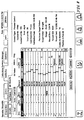
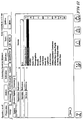
- the screens also include a multi-rule QC rules administration screen. Using this screen the operator can select the operating mode for a test, for example, whether the test will be performed as an open run or as a bracketed run. This screen permits the operator to select the run length. If the control result(s) being tested is (are) part of an open run, data from patient samples will be automatically released to a patient result data base if the multi-rule testing of the control result(s) indicates that the process by which the patient and control results are obtained is in control.
- control result(s) being tested is (are) part of a bracketed run, data from patient samples lying within the brackets will be held until the multi-rule testing of the control result(s) which close(s) the run indicate(s) that the process is in control.
- This screen also permits the operator to select the statistical quality control rules against which the control results are to be tested for QC purposes.
- This screen also prompts the operator to designate any parameters required to be designated for any selected rule, such as, for example, the k in 1xks. For rules which are to be applied across systems, that is across different laboratory instruments, this screen permits the operator to select which system will be the reference system for testing.
- this screen permits any selected rule to force a test into either a caution or out of control state when testing indicates that the process is out of control.
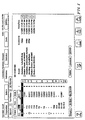
- An illustrative multi-rule QC rules administration screen is illustrated in Fig. 5.
- Illustrative QC rule settings are illustrated in Table 2.
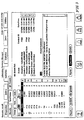
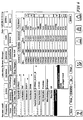
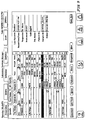
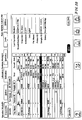
- a control definition screen permits the operator to establish quality control-specific parameters of control materials, such as, for example, mean values and standard deviations of the biologically significant components of those controls. This screen also permits designation of a particular lot of material as a process control lot or study lot, A study lot is a lot which is used in statistical calculations, but not in the multi-rule quality control strategy for controlling the process. Illustrative control definition screens, pages 1 and 2, are illustrated in Figs. 6-7.
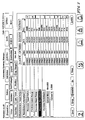
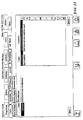
- a QC results screen permits the operator to view control results in detail.
- the operator can exclude or include control results from the long term quality control statistics as well as delete ones which are the result of gross operator errors, such as the misidentification of a material.
- An illustrative QC results screen is illustrated in Fig. 8.
- a patient validation screen permits functions similar to the QC results screen, but also permits the viewing and disposition of patient results in the context of their associated control results.
- a comment administration screen permits entry of comments which can then be selected from a menu.
- a comment dialog is presented to the operator for the entry of text, either to add text to an existing comment or to provide a new comment.
- the method and apparatus of the present invention will typically be configured to automatically present the dialog whenever the operator performs certain actions such as forcing (a) result(s) into an out of control condition or into an in control condition, excluding (a) control result(s), and so on.
- This screen is intended to encourage the operator to enter comments to help document and explain such actions. This supports a laboratory policy of encouraging operators to comment by offering an opportunity for them to do so, or enforcing the entry of comments where appropriate.
- An illustrative comment administration screen is illustrated in Fig. 11.
- a user access rights administration screen permits the system to be tailored to varying levels of access by different operators. For example, some operators may be permitted to access all system screens while others are permitted to access only certain screens.
- An illustrative user access rights administration screen is illustrated in Fig. 12.
- Two background modules provide most of the internal functions of the multi-rule QC system.
- the run module monitors the receipt of control and patient results from the various laboratory instruments whose results the system is monitoring, passes control results to the other module, a rules evaluation module, and modifies the status of a test according to the evaluation results. After checking patient results for normal ranges, etc., the run module can automatically release a patient result if the corresponding test status is in control and the rule against which the associated control is tested is operating in open run mode. If the rule is operating in bracketing mode, the run module does not release a patient result until the module has received and tested sufficient control results to establish that the entire bracketed run is in control.
- the run module also provides certain services to the various screens to support operator actions, such as forcing a control result into an out of control condition or into an in control condition, deleting or excluding a result, and so on, and updating information for display on all screens.
- the rule evaluation module is the background module which is responsible for evaluating control results against the selected QC rules. This module keeps sufficient information about the most recent control results to be able to evaluate each control result against all selected rules as each control result is received. The rule evaluation module passes this information to the run module where patient results are completely evaluated as soon as they are received from the various laboratory instrument interfaces. Except when bracketing mode is enabled, the system continuously evaluates and releases patient results to the patient results data base.
- the flow diagram illustrated in Fig. 13 illustrates validation of results obtained from a laboratory instrument through an appropriate interface. As each result is provided to the system of the invention, it is identified as either a control result or a patient result. If the result is identified as a control result, it is next determined whether the result is a process control result. If the result is identified as a process control result, it is tested against the selected statistical quality control rules. See Fig. 14. If the system and method are not operating in bracketing mode, results passing testing against the selected statistical quality control rules are supplied to the QC test status data base. If the system and method are operating in bracketing mode, and the end of the bracket has not yet been reached, the results are added to the long term quality control data base.
- the decision is first reached whether more rules are selected or configured. If not, the system and method have finished testing the result against the selected rules. If so, the system and method get the next rule against which the result is to be tested. The system and method determine whether all results required by the rule to conduct the indicated test are available. If not, the status of the test is indicated as incomplete, and the system and method return to determine if all results required by the rule to conduct the indicated test are available. If so the system and method determine whether the rule has been violated by the result. If not, the process is indicated as being in control with respect to that particular rule, and the system and method return to test the result against the next rule. If the rule is determined to have been violated, the severity of the violation is ascertained.
- the system and method will not reduce the severity of system status with respect to a selected rule, for example, change an indication of the system status with respect to a selected rule from red to yellow, red to green, or yellow to green. An operator must intervene to achieve this. However, the system and method will increase the severity of the system status with respect to a selected rule, for example, change it from green to red, green to yellow, or yellow to red, automatically whenever such action is warranted by the results of testing.
- the system and method first determine if the QC test status is indicated as out of control. If so, a result is marked with a QC error and blocked. The result is saved to the data base and the QC test status validation is complete. If the QC test status is not indicated as being out of control, the timing of the result is ascertained, If the result is prior in time to the most recent determination, based upon testing of a control, that the process is in control, the result is blocked. Underlying this action is the assumption that the QC test must have indicated that the process being tested was out of control prior to the most recent event indicated to be in control.
- the system and method next determine whether the result has been blocked. If so, the result is saved to the data base. If not, the system and method next determine whether bracketing is enabled. If so, the result's state is set to QC pending, pending testing of the bracket closing control's(s') result(s) against the selected rule(s). The result is then saved to the data base. If bracketing is not enabled, the result is released to be saved to the data base. Once the result is saved to the data base, QC test status validation is complete.
- the system and method first determine whether the result has been generated on a laboratory instrument already flagged for some reason. This might occur, for example, if the operator already is aware that the instrument is in need of service, etc. If the instrument has already been flagged, the result is marked "instrument flagged," and the result is blocked from passage to the data base. If the instrument is not flagged, the test is next validated against the normal ranges for the test. The best matching normal range for the test is identified, and the test is validated against that range. If no normal range for the test is identified, the result is so marked, and, depending on the setting of a file in the system, the result may be blocked.
- the result is marked, and, depending on the setting of a file in the system, the result may be blocked.
- the test is validated against the normal range, or, where no normal range can be found, the result is marked as having no normal range, or where the test is not validated against a normal range, the test is next validated against prior results for the same patient. If there are no prior results in the patient data base for the patient, the result is so marked. If there are prior results in the data base for the patient, the percentage change is checked against the allowable change, the result is marked with that change, and, depending on the setting of a configuration file in the system, the result may be blocked. Once the result is marked with a percentage change, or, where no prior patient data exists, marked to indicate that such marking is not possible, or where the test is not validated against prior patient results, the technical validation is complete.
Landscapes
- Engineering & Computer Science (AREA)
- Health & Medical Sciences (AREA)
- Public Health (AREA)
- Biomedical Technology (AREA)
- Medical Informatics (AREA)
- Epidemiology (AREA)
- General Health & Medical Sciences (AREA)
- Primary Health Care (AREA)
- General Business, Economics & Management (AREA)
- Business, Economics & Management (AREA)
- Data Mining & Analysis (AREA)
- Databases & Information Systems (AREA)
- Pathology (AREA)
- Automatic Analysis And Handling Materials Therefor (AREA)
Applications Claiming Priority (2)
| Application Number | Priority Date | Filing Date | Title |
|---|---|---|---|
| US09/052,613 US6269276B1 (en) | 1998-03-31 | 1998-03-31 | Multi-rule quality control method and apparatus |
| US52613 | 1998-03-31 |
Publications (2)
| Publication Number | Publication Date |
|---|---|
| EP0962872A2 true EP0962872A2 (de) | 1999-12-08 |
| EP0962872A3 EP0962872A3 (de) | 1999-12-15 |
Family
ID=21978750
Family Applications (1)
| Application Number | Title | Priority Date | Filing Date |
|---|---|---|---|
| EP99105107A Withdrawn EP0962872A3 (de) | 1998-03-31 | 1999-03-25 | Verfahren und Vorrichtung zur Qualitätskontrolle mit mehreren Regeln |
Country Status (4)
| Country | Link |
|---|---|
| US (1) | US6269276B1 (de) |
| EP (1) | EP0962872A3 (de) |
| JP (2) | JPH11326333A (de) |
| CA (1) | CA2266960A1 (de) |
Cited By (7)
| Publication number | Priority date | Publication date | Assignee | Title |
|---|---|---|---|---|
| WO2004046993A3 (de) * | 2002-11-18 | 2004-07-29 | Siemens Ag | Verfahren zum durchführen einer qualitätskontrolle für einen analyseprozess und vorrichtung zum durchführen des verfahrens |
| EP1933247A3 (de) * | 2001-08-24 | 2008-09-03 | Bio-Rad Laboratories, Inc. | Biometrisches Qualitätskontrollverfahren |
| EP2118796A4 (de) * | 2007-02-02 | 2011-08-10 | Beckman Coulter Inc | System und verfahren zum testen von autoverifizierungsregeln |
| US8099257B2 (en) | 2001-08-24 | 2012-01-17 | Bio-Rad Laboratories, Inc. | Biometric quality control process |
| US8112232B2 (en) | 2007-02-02 | 2012-02-07 | Beckman Coulter, Inc. | System and method for autoverifying laboratory test results |
| EP2457091A4 (de) * | 2009-07-24 | 2017-03-08 | Bio-Rad Laboratories, Inc. | System und verfahren zum bestimmen des sigma eines klinischen diagnoseverfahrens |
| EP4693318A1 (de) * | 2024-07-29 | 2026-02-11 | Shenzhen New Industries Biomedical Engineering Co., Ltd. | Verfahren, vorrichtung zur empfehlung von qualitätskontrollregeln und computerausrüstung |
Families Citing this family (31)
| Publication number | Priority date | Publication date | Assignee | Title |
|---|---|---|---|---|
| JP3849343B2 (ja) * | 1998-04-21 | 2006-11-22 | 株式会社日立製作所 | 自動分析装置 |
| JP3727481B2 (ja) * | 1999-02-04 | 2005-12-14 | 株式会社日立製作所 | 自動分析方法及び装置 |
| US7055098B2 (en) | 1999-02-19 | 2006-05-30 | Lucent Technologies Inc. | Dynamic display of data item evaluation |
| US6442714B1 (en) * | 1999-03-17 | 2002-08-27 | Cisco Technology | Web-based integrated testing and reporting system |
| JP4950384B2 (ja) * | 2000-03-28 | 2012-06-13 | 株式会社東芝 | 医療用画像診断装置及びそのセキュリティ管理方法 |
| JP3760806B2 (ja) * | 2001-06-25 | 2006-03-29 | 株式会社日立製作所 | 分析結果管理の方法および装置 |
| US7120901B2 (en) * | 2001-10-26 | 2006-10-10 | International Business Machines Corporation | Method and system for tracing and displaying execution of nested functions |
| US6922646B2 (en) * | 2002-09-30 | 2005-07-26 | Randomperfect, Llc | Method and system for random sampling |
| US7467054B2 (en) * | 2003-05-02 | 2008-12-16 | Bio-Rad Laboratories, Inc. | System and method for integrating the internal and external quality control programs of a laboratory |
| US8460243B2 (en) | 2003-06-10 | 2013-06-11 | Abbott Diabetes Care Inc. | Glucose measuring module and insulin pump combination |
| US7722536B2 (en) | 2003-07-15 | 2010-05-25 | Abbott Diabetes Care Inc. | Glucose measuring device integrated into a holster for a personal area network device |
| US6984527B2 (en) * | 2003-08-11 | 2006-01-10 | Dade Behring Inc. | Automated quality control protocols in a multi-analyzer system |
| CA2572455C (en) | 2004-06-04 | 2014-10-28 | Therasense, Inc. | Diabetes care host-client architecture and data management system |
| DE102004055472A1 (de) * | 2004-11-17 | 2006-06-14 | Siemens Ag | Mittel zur Selektion eines statistischen Auswerteverfahrens für eine empirische Untersuchung |
| JP4951216B2 (ja) * | 2005-07-05 | 2012-06-13 | シスメックス株式会社 | 臨床検査情報処理装置及びシステム、分析装置、並びに臨床検査情報処理用のプログラム |
| JP4576307B2 (ja) * | 2005-09-12 | 2010-11-04 | 株式会社日立ハイテクノロジーズ | 自動分析装置 |
| JP4818744B2 (ja) * | 2006-02-09 | 2011-11-16 | シスメックス株式会社 | 試料測定装置 |
| JP4871615B2 (ja) * | 2006-03-07 | 2012-02-08 | 株式会社日立ハイテクノロジーズ | 自動分析装置 |
| US20080154530A1 (en) * | 2006-09-01 | 2008-06-26 | Murray David W | Method for normalized test line limits with measurement uncertainty |
| JP4511512B2 (ja) * | 2006-12-22 | 2010-07-28 | シスメックス株式会社 | 分析装置用ユーザインタフェース及び分析装置 |
| CN104237542B (zh) * | 2008-09-03 | 2016-11-02 | 株式会社日立高新技术 | 自动分析装置 |
| CN102483423B (zh) * | 2009-09-28 | 2014-11-05 | 株式会社日立高新技术 | 自动分析装置、其信息显示方法以及信息显示系统 |
| US8645306B2 (en) * | 2010-07-02 | 2014-02-04 | Idexx Laboratories, Inc. | Automated calibration method and system for a diagnostic analyzer |
| US10136845B2 (en) | 2011-02-28 | 2018-11-27 | Abbott Diabetes Care Inc. | Devices, systems, and methods associated with analyte monitoring devices and devices incorporating the same |
| US10404784B2 (en) * | 2013-02-22 | 2019-09-03 | Samsung Electronics Co., Ltd. | Method and system for transmitting result of examination of specimen from medical device to destination |
| EP2770452A1 (de) * | 2013-02-22 | 2014-08-27 | Samsung Electronics Co., Ltd. | Verfahren und System zur Übertragung des Ergebnisses einer Probenanalyse aus einer medizinischen Vorrichtung über eine mobile Vorrichtung an das Ziel |
| EP2973098B1 (de) * | 2013-03-15 | 2020-05-06 | Abbott Point Of Care, Inc. | Verwaltungssystem zur pflegepunktprüfung |
| EP3504653B1 (de) | 2016-08-29 | 2022-08-03 | Beckman Coulter, Inc. | Ferndatenanalyse und -diagnose |
| WO2019191531A1 (en) * | 2018-03-30 | 2019-10-03 | Idexx Laboratories, Inc. | Quality control for point-of-care diagnostic systems |
| WO2020051028A1 (en) | 2018-09-07 | 2020-03-12 | Siemens Healthcare Diagnostics Inc. | Instrument analyzers, data displays, and display methods |
| JP7860704B2 (ja) * | 2021-10-07 | 2026-05-18 | キヤノンメディカルシステムズ株式会社 | 自動分析装置 |
Family Cites Families (15)
| Publication number | Priority date | Publication date | Assignee | Title |
|---|---|---|---|---|
| SE7513658L (sv) * | 1974-12-06 | 1976-06-08 | Hycel Inc | Apparat och metod for kalibrering av kemisk analysator |
| US4071891A (en) * | 1976-04-30 | 1978-01-31 | Barrows George H | Electronic calculator - register for hematology differentials |
| US4967381A (en) | 1985-04-30 | 1990-10-30 | Prometrix Corporation | Process control interface system for managing measurement data |
| JPH06249857A (ja) | 1993-02-26 | 1994-09-09 | Hitachi Ltd | 自動分析装置 |
| US5546312A (en) | 1993-09-20 | 1996-08-13 | Texas Instruments Incorporated | Use of spatial models for simultaneous control of various non-uniformity metrics |
| DE4418888A1 (de) | 1994-05-30 | 1995-12-07 | Siemens Ag | Verfahren zum Qualitätsmanagement von Fertigungsprozessen |
| US5633166A (en) * | 1995-01-19 | 1997-05-27 | Mds Health Group Limited | Method of analyzing medical specimens with improved length of analytical run determination |
| JP2907269B2 (ja) | 1995-07-28 | 1999-06-21 | 株式会社島津製作所 | 自動分析計の自動校正方法 |
| IL119427A0 (en) | 1995-10-16 | 1997-01-10 | Elf Antar France | Process for monitoring and control of the operation of an analyser and of a manufacturing unit to which it is linked |
| DE69634265T2 (de) * | 1995-12-19 | 2006-04-27 | Abbott Laboratories, Abbott Park | Vorrichtung zum detektieren eines analyten und zur verabreichung einer therapeutischen substanz |
| US5937364A (en) * | 1996-05-07 | 1999-08-10 | Westgard Quality Corporation | Automatic selection of statistical quality control procedures |
| JPH102902A (ja) | 1996-06-14 | 1998-01-06 | Toshiba Corp | 自動分析装置 |
| JP3889877B2 (ja) | 1997-04-10 | 2007-03-07 | 株式会社日立製作所 | 自動分析装置およびその支援システム |
| EP0871034B1 (de) | 1997-04-10 | 2007-03-07 | Hitachi, Ltd. | Automatische Analysevorrichtung |
| JPH11142412A (ja) | 1997-11-05 | 1999-05-28 | Hitachi Ltd | 自動分析装置 |
-
1998
- 1998-03-31 US US09/052,613 patent/US6269276B1/en not_active Expired - Fee Related
-
1999
- 1999-03-25 CA CA002266960A patent/CA2266960A1/en not_active Abandoned
- 1999-03-25 EP EP99105107A patent/EP0962872A3/de not_active Withdrawn
- 1999-03-26 JP JP11084876A patent/JPH11326333A/ja active Pending
- 1999-03-31 JP JP11129023A patent/JPH11337555A/ja active Pending
Cited By (11)
| Publication number | Priority date | Publication date | Assignee | Title |
|---|---|---|---|---|
| EP1933247A3 (de) * | 2001-08-24 | 2008-09-03 | Bio-Rad Laboratories, Inc. | Biometrisches Qualitätskontrollverfahren |
| US8099257B2 (en) | 2001-08-24 | 2012-01-17 | Bio-Rad Laboratories, Inc. | Biometric quality control process |
| WO2004046993A3 (de) * | 2002-11-18 | 2004-07-29 | Siemens Ag | Verfahren zum durchführen einer qualitätskontrolle für einen analyseprozess und vorrichtung zum durchführen des verfahrens |
| US7359806B2 (en) | 2002-11-18 | 2008-04-15 | Siemens Aktiengesellschaft | Method for carrying out quality control on an analytical process and device for carrying out said method |
| EP2118796A4 (de) * | 2007-02-02 | 2011-08-10 | Beckman Coulter Inc | System und verfahren zum testen von autoverifizierungsregeln |
| US8112232B2 (en) | 2007-02-02 | 2012-02-07 | Beckman Coulter, Inc. | System and method for autoverifying laboratory test results |
| US8868353B2 (en) | 2007-02-02 | 2014-10-21 | Beckman Coulter, Inc. | System and method for testing autoverification rules |
| US8886466B2 (en) | 2007-02-02 | 2014-11-11 | Beckman Coulter, Inc. | System and method for autoverifying laboratory test results |
| KR101489012B1 (ko) * | 2007-02-02 | 2015-02-02 | 베크만 컬터, 인코포레이티드 | 자동 검증 규칙 검사 시스템 및 방법 |
| EP2457091A4 (de) * | 2009-07-24 | 2017-03-08 | Bio-Rad Laboratories, Inc. | System und verfahren zum bestimmen des sigma eines klinischen diagnoseverfahrens |
| EP4693318A1 (de) * | 2024-07-29 | 2026-02-11 | Shenzhen New Industries Biomedical Engineering Co., Ltd. | Verfahren, vorrichtung zur empfehlung von qualitätskontrollregeln und computerausrüstung |
Also Published As
| Publication number | Publication date |
|---|---|
| JPH11326333A (ja) | 1999-11-26 |
| CA2266960A1 (en) | 1999-09-30 |
| US6269276B1 (en) | 2001-07-31 |
| JPH11337555A (ja) | 1999-12-10 |
| EP0962872A3 (de) | 1999-12-15 |
Similar Documents
| Publication | Publication Date | Title |
|---|---|---|
| US6269276B1 (en) | Multi-rule quality control method and apparatus | |
| JP7551844B2 (ja) | 診断分析装置において精度管理を行う方法、システムおよびサーバ | |
| CA2677368C (en) | System and method for autoverifying laboratory test results | |
| CA2677378C (en) | System and method for testing autoverification rules | |
| US6748337B2 (en) | Method and apparatus for providing quality control in an instrument for medical analysis | |
| Berge Kristensen et al. | Interpretation of EQA results and EQA-based trouble shooting | |
| CN106339569B (zh) | 判断样本检验结果异常的方法及装置 | |
| US20260080985A1 (en) | Qualification of sequencing instruments and reagents for use in molecular diagnostic methods | |
| US7089139B2 (en) | Method and apparatus for configuration of automated debug of in-circuit tests | |
| WO2002003077A1 (en) | Clinical examination system | |
| JP2011039046A (ja) | 尿の作業領域マネージャーおよび尿の作業領域 | |
| US20190362824A1 (en) | Condition specific sample analysis | |
| CN105989232A (zh) | 样本检验结果自动审核系统及方法 | |
| US20070027648A1 (en) | Clinical testing information processing apparatus, clinical testing information processing method, and analyzing system | |
| CN114446417B (zh) | 多模式约束规则的配置方法、装置、设备和存储介质 | |
| Freeman et al. | The importance of quality control validation and relationships with total error quality goals and bias in the interpretation of laboratory results | |
| CN112782414A (zh) | 一种样本分析系统及其设置方法 | |
| Badrick et al. | An optimized method for setting Internal Quality Control targets (mean and limits) for multi-instrument Internal Quality Control strategies in hematology? | |
| Powers | Laboratory quality control requirements should be based on risk management principles | |
| KR100781353B1 (ko) | 채혈된 혈액의 검사결과 검증방법 및 그 장치 | |
| Lifshitz et al. | Quality Management: Laboratory Statistics, Quality Control, Method Validation, and Performance | |
| Ehrmeyer | Regulatory affairs | |
| JPH02126165A (ja) | 変電設備の故障診断装置 |
Legal Events
| Date | Code | Title | Description |
|---|---|---|---|
| PUAI | Public reference made under article 153(3) epc to a published international application that has entered the european phase |
Free format text: ORIGINAL CODE: 0009012 |
|
| PUAL | Search report despatched |
Free format text: ORIGINAL CODE: 0009013 |
|
| 17P | Request for examination filed |
Effective date: 19990325 |
|
| AK | Designated contracting states |
Kind code of ref document: A2 Designated state(s): CH DE ES FR GB IT LI |
|
| AX | Request for extension of the european patent |
Free format text: AL;LT;LV;MK;RO;SI |
|
| AK | Designated contracting states |
Kind code of ref document: A3 Designated state(s): AT BE CH CY DE DK ES FI FR GB GR IE IT LI LU MC NL PT SE |
|
| AX | Request for extension of the european patent |
Free format text: AL;LT;LV;MK;RO;SI |
|
| AKX | Designation fees paid |
Free format text: CH DE ES FR GB IT LI |
|
| 17Q | First examination report despatched |
Effective date: 20000731 |
|
| STAA | Information on the status of an ep patent application or granted ep patent |
Free format text: STATUS: THE APPLICATION IS DEEMED TO BE WITHDRAWN |
|
| 18D | Application deemed to be withdrawn |
Effective date: 20031001 |