EP0974060B1 - Verfahren zur bestimmung des prozentualen anteils von glykosiliertem hämoglobin - Google Patents
Verfahren zur bestimmung des prozentualen anteils von glykosiliertem hämoglobin Download PDFInfo
- Publication number
- EP0974060B1 EP0974060B1 EP98910389A EP98910389A EP0974060B1 EP 0974060 B1 EP0974060 B1 EP 0974060B1 EP 98910389 A EP98910389 A EP 98910389A EP 98910389 A EP98910389 A EP 98910389A EP 0974060 B1 EP0974060 B1 EP 0974060B1
- Authority
- EP
- European Patent Office
- Prior art keywords
- ghb
- hemoglobin
- microparticles
- sample
- solid phase
- Prior art date
- Legal status (The legal status is an assumption and is not a legal conclusion. Google has not performed a legal analysis and makes no representation as to the accuracy of the status listed.)
- Expired - Lifetime
Links
Images







Classifications
-
- G—PHYSICS
- G01—MEASURING; TESTING
- G01N—INVESTIGATING OR ANALYSING MATERIALS BY DETERMINING THEIR CHEMICAL OR PHYSICAL PROPERTIES
- G01N33/00—Investigating or analysing materials by specific methods not covered by groups G01N1/00 - G01N31/00
- G01N33/48—Biological material, e.g. blood, urine; Haemocytometers
- G01N33/50—Chemical analysis of biological material, e.g. blood, urine; Testing involving biospecific ligand binding methods; Immunological testing
- G01N33/72—Chemical analysis of biological material, e.g. blood, urine; Testing involving biospecific ligand binding methods; Immunological testing involving blood pigments, e.g. haemoglobin, bilirubin or other porphyrins; involving occult blood
- G01N33/721—Haemoglobin
- G01N33/723—Glycosylated haemoglobin
-
- G—PHYSICS
- G01—MEASURING; TESTING
- G01N—INVESTIGATING OR ANALYSING MATERIALS BY DETERMINING THEIR CHEMICAL OR PHYSICAL PROPERTIES
- G01N2474/00—Immunochemical assays or immunoassays characterised by detection mode or means of detection
- G01N2474/20—Immunohistochemistry assay
-
- Y—GENERAL TAGGING OF NEW TECHNOLOGICAL DEVELOPMENTS; GENERAL TAGGING OF CROSS-SECTIONAL TECHNOLOGIES SPANNING OVER SEVERAL SECTIONS OF THE IPC; TECHNICAL SUBJECTS COVERED BY FORMER USPC CROSS-REFERENCE ART COLLECTIONS [XRACs] AND DIGESTS
- Y10—TECHNICAL SUBJECTS COVERED BY FORMER USPC
- Y10S—TECHNICAL SUBJECTS COVERED BY FORMER USPC CROSS-REFERENCE ART COLLECTIONS [XRACs] AND DIGESTS
- Y10S436/00—Chemistry: analytical and immunological testing
- Y10S436/805—Optical property
-
- Y—GENERAL TAGGING OF NEW TECHNOLOGICAL DEVELOPMENTS; GENERAL TAGGING OF CROSS-SECTIONAL TECHNOLOGIES SPANNING OVER SEVERAL SECTIONS OF THE IPC; TECHNICAL SUBJECTS COVERED BY FORMER USPC CROSS-REFERENCE ART COLLECTIONS [XRACs] AND DIGESTS
- Y10—TECHNICAL SUBJECTS COVERED BY FORMER USPC
- Y10S—TECHNICAL SUBJECTS COVERED BY FORMER USPC CROSS-REFERENCE ART COLLECTIONS [XRACs] AND DIGESTS
- Y10S436/00—Chemistry: analytical and immunological testing
- Y10S436/824—Immunological separation techniques
Definitions
- the present invention relates to a method for detecting the presence or amount of glycated hemoglobin (GHb) in a blood sample, and more particularly, to an improved, highly accurate, one-read method for assessing percentage glycated hemoglobin, that is, a method which does not require a measurement of total hemoglobin (THb).
- GHb glycated hemoglobin
- Glycated hemoglobin refers to a series of minor hemoglobin components that are formed via the attachment of various sugars (most commonly glucose) to the hemoglobin molecule.
- the human erythrocyte is freely permeable to glucose. Within each erythrocyte, GHb is formed at a rate that is directly proportional to the ambient glucose concentration.
- the reaction of glucose with hemoglobin is nonenzymatic, irreversible and slow, so that only a fraction of the total hemoglobin is glycated during the life span of an erythrocyte (120 days).
- the measurement of GHb provides a weighted "moving" average of blood glucose levels that can be used to monitor long-term blood glucose levels, providing an accurate index of the mean blood glucose concentration over the preceding 2 to 3 months.
- the most important clinical application of this is in the assessment of glycemic control in a diabetic patient.
- Hemoglobin A1c is one specific type of glycated hemoglobin and is the most important hemoglobin species with respect to diabetes.
- the amount of total hemoglobin that is HbA1c is approximately 3 to 6% in nondiabetics, and 20% or greater in diabetes that is poorly controlled (Goldstein DE, et al, Clin Chem 32 : B64-B70 (1986)).
- glucose is attached to the amino terminal valine residue of one or both of the hemoglobin A beta chains.
- HbA1c (as well as other glycated Hemoglobin A1 species) can be separated from nonglycated hemoglobins by methods that separate molecules based. on differences in their electrical charges.
- HbA0 Glycation of hemoglobin also occurs at other sites on the hemoglobin molecule, but these species cannot be separated from nonglycated hemoglobins based on charge differences, so all of these species of hemoglobin are termed HbA0.
- Methods that measure all forms of glycated hemoglobin are said to measure total GHb. Since glycation at one site appears to be proportional to glycation at any other site, there is a linear relationship between GHb and HbA1c.
- DCCT Diabetes Control and Complications Trial
- the GHb Standardization Subcommittee recommended that within-laboratory, between-run CVs be maintained at 5% or lower for all GHb assays, and that standardization be based on correlation to the DCCT for fresh samples. All manufactured assays must meet these requirements to receive certification.
- Clinical assay methods separate GHb from total hemoglobin based on either charge differences or structural characteristics. Methods based on charge differences include cation exchange chromatography and electrophoresis, and separate HbA1 or HbA1c from HbA0 based on the difference in their charges. Ion exchange chromatography can be - performed either in large columns, mini or micro columns, or by high pressure liquid chromatography (HPLC). Large column methods are impractical for routine use in a clinical laboratory, but simplified mini or micro columns are available. However these methods show poor reproducibility and are very sensitive to variations in temperature, pH and ionic strength.
- Methods based on structural characteristics include affinity binding or chromatography and immunoassays. These methods are less sensitive to small variations in temperature, pH or ionic strength, and generally are not affected by labile GHb intermediates, hemoglobinopathies or sample storage conditions or the extraneous clinical factors mentioned above. However these methods either involve separation of GHb from nonglycated components or require 2 separate determinations - one for total hemoglobin and a second for GHb or HbA1c - to calculate %GHb.
- EP 227240 discloses the use of a boronate ligand coupled to a solid phase matrix which can be used in affinity binding assay due to the affinity of boronate for GHb.
- EP 0445225 discloses the use of boronate to complex the glycosylated hemoglobin.
- US 4,269,60 discloses the use of an antibody coupled to a solid phase matrix which can be used in affinity binding assay due to the affinity of antibody for Ghb and after separating the glycosylated hemoglobin the use the boronate to determine the amount of glycosylated hemoglobin. Ratios of bound (glycated) to nonbound (nonglycated) hemoglobin can then be quantified.
- Immunoassays measure HbA1c using HbA1c specific antibodies, but require 2 separate determinations, one for total hemoglobin and the other for HbA1c, in order to calculate %GHb.
- an immunoassay may bind all hemoglobin species using passive adsorption, then detect HbA1c with a specific antibody conjugate; however this method may be adversely affected by hemoglobin variants.
- EP 708338 discloses a substrate layer for receiving a reaction mixture after the completion of an immunological reaction between the glycated hemoglobin and an enzime - labeled antibody against the glycated hemoglobin, and a reagent layer.
- the unique and novel approach described herein measures %GHb in whole blood samples and provides a %GHb result following only a single measurement. This differs from the methods described above and currently available in the art which require separate total and GHb measurements to calculate a %GHb result as, for example, a ratio of GHb/THb X 100..
- the GHb assay described herein uses a simple procedure for the determination of DCCT Standardized %GHb in whole blood samples. First, a lysed whole blood sample is incubated with a solid phase that is coupled with boronic, phenylboronic or boric acid or related boronate compound through covalent linkage chemistries known in the art.
- This solid phase is novel since it specifically captures GHb in direct proportion to the %GHb in the sample.
- a labeled component that recognizes human hemoglobin is added and the resulting signal is directly proportional to the %GHb in the sample.
- the advantages of measuring %GHb using a single determination include high precision (less than about 5% CVs) and, since the assay is easily automatable, high throughput (100 to 200 tests/hour). With automation, this assay can also be consolidated with other testing on one analyzer.
- Per cent glycated hemoglobin is determined following hemolysis of the red blood cells in whole blood to release hemoglobin, after which samples are diluted and incubated with a solid phase having a boronate reactive group to which glycated hemoglobin binds. Subsequently, or simultaneously, the sample mixture is reacted with a labeled anti-hemoglobin Ab. The resulting signal is detected and is directly proportional to the %GHb in the sample.
- the method according to the various embodiments of the invention thus eliminates the need for two measurements: one for GHb and another for total hemoglobin, with a ratio to then determine % GHb.
- glycated hemoglobin binds to the boronate affinity complex attached to the solid phase.
- Total hemoglobin may compete directly with glycated hemoglobin for binding to the solid phase and thereby permit the accurate determination of the per cent glycated hemoglobin in a single measurement.
- Whole blood can be hemolyzed in a variety of ways, either by diluting the whole blood sample in water, or, more preferably, using an agent such as a nonionic surfactant detergent, like TRITONS X-100. Hemolysis releases hemoglobin and its derivatives from the red blood cells for analysis.
- an agent such as a nonionic surfactant detergent, like TRITONS X-100. Hemolysis releases hemoglobin and its derivatives from the red blood cells for analysis.
- the GHb assay according to the present invention is based on the affinity of boronic, phenylboronic, boric acid and boronate etc. (hereinafter "boronate”) compounds or moieties for glycated hemoglobin. Boronate reacts with GHb in a sample through the cis-diol moiety of glucose bound to hemoglobin, forming a five-membered ring structure.
- a boronate group can be attached to a solid phase covalently, by a variety of chemistries, or electrostatically, and methods for doing so have been described in the art, including, for example, US Patent No. 5,459,080.
- the solid phase itself can be chosen from a variety of materials including, but not limited to beads, microparticles, magnetic microparticles, microtiter plates, tubes, and the like, made of polystyrene, polyacrylamide, agarose, dextran, latex, silica, glass, etc., which may be further derivitized to include functional surface groups.
- These functional surface groups include, but are not limited to aldehyde, aliphatic amine, aromatic amine, amide, carboxylic acid, sulfhydryl, chloromethyl, epoxy, hydrazide, hydroxyl, etc., which can then be covalently coupled to the boronate or boronate support following standard coupling techniques known to those skilled in the art.
- Preferred solid phases include amino functionalized magnetic latex particles and particularly preferred carboxylated magnetic latex particles, which have been derivatized to amino particles using a diamine and standard coupling techniques.
- the diamines include, but are not limited to, ethylenediamine, 1,6-hexanediamine, 1,4- trans -cyclohexanediamine, with ethylenediamine being preferred.
- Preferred functional surface moieties for attachment of boronate compounds can be chosen from a variety of materials including, but not limited to, carboxymethylamylose, carboxymethylcellulose, polyaspartic acid, polyglutamic acid, polylysine, polyacrylic acid, proteins, albumins, antibodies, etc. and can be coupled via known techniques to the solid phase.
- Preferred functional surface moieties are carboxymethylcellulose, with carboxymethylamylose being particularly preferred.
- Boronate compounds for use with the method of the invention include those described in Gallop, US Patent No. 4,496,722.
- Preferred compounds include 4-carboxyphenylboronic acid, 3-nitro-5-carboxyphenylboronic acid and m-aminophenylboronic acid (APBA).
- APBA m-aminophenylboronic acid
- the labeled component may be an antibody, and desirably may be a monoclonal or polyclonal antibody (Ab), or Ab fragment containing the antigen binding site, or complementarity determining region (CDR), such as an F(ab') 2 or Fab fragment.
- the detectable moiety or label may be a radioactive, fluorescent or chemiluminescent substance, or an enzyme.
- a labeled-second Ab which recognizes the species specific Fc fragment of the first Ab may also be used.
- the bound hemoglobin itself due to its peroxidase-like properties, can generate a detectable signal. This is accomplished by adding hydrogen peroxide, with or without addition of another substrate (e.g. isoluminol).
- another substrate e.g. isoluminol
- whole blood samples are lysed and diluted using methods known in the art.
- the blood cells are lysed using agents available to the skilled artisan.
- surfactants and particularly nonionic surfactants, are preferred.
- a 1:80 dilution is typical, using for example, 0.5% TRITONS X-100 nonionic surfactant.
- Azo-valeric initiated, carboxylated magnetic microparticles are coated with an amine, preferably ethylenediamine (EDA), to which is attached a polymer, preferably a polymeric anion, and particularly carboxylic acid based polymeric anion, and a boronate compound.
- EDA ethylenediamine
- CMA carboxymethylamylose
- APBA m-aminophenylboronic acid
- EDAC 1-Ethyl-3-(3-dimethylaminopropyl) carbodiimide hydrochloride
- RLU Relative Light Unit
- Calibrators or standards that are run with the assay provide calibration (or standard) curves from which the %GHb in the sample is determined using the measured chemiluminescent signal.
- the measured chemiluminescent signal is directly proportional to the %GHb in the sample.
- %GHb was determined following hemolysis of whole blood to release hemoglobins, after which samples were diluted and incubated with a solid phase having a boronate reactive group to which glycated hemoglobin binds. Subsequently, or simultaneously, the sample mixture was reacted with a labeled anti-hemoglobin Ab. After washing, the resulting signal was detected and was directly proportional to the %GHb in the sample.
- Example 2 Antibody Conjugation with Acridinium Antibody to be conjugated was first dialyzed against 3 changes of phosphate buffered saline (PBS), utilizing 4 to 6 hours per dialysis change. Antibody was then diluted to a concentration of 1 mg/ml. While mixing the 1 mg/ml antibody solution, 10% 3-[(3-cholamidopropyl)-dimethyammonio]-1-propane sulfonate (CHAPS) and 5 ug/ml sulfopropyl acridinium ester was added. This was mixed for 10 minutes at room temperature then loaded onto a 120 ml bed volume (1.6 x 60 cm) Pharmacia Sephacryl S-200 column.
- PBS phosphate buffered saline
- the column buffer used was 2.28 mM sodium phosphate monobasic, 7.68 mM sodium phosphate dibasic, 145 mM NaCl, 0.1 % CHAPS, pH 6.3. One ml fractions were collected, and those fractions with an absorbance at 280 nm greater than or equal to 0.1 were pooled.
- the acridinium-labeled antibody was diluted to a final concentration of 40 ng/ml in Conjugate Diluent (10 mM MES, 150 mM NaCl, pH 6.3 containing 2% bovine serum albumen (BSA) and 0.5% TRITONS® X-100).
- Common Buffer 4 mM sodium phosphate, 150 mM NaCl, pH 7.5 containing 0.05% Brij and 0.1 % NaN 3 ).
- Chemiluminescent signal was generated by adding Trigger Reagents of 0.053% HNO 3 , 1.2% H 2 O 2 and 0.9% Diethylenetriaminepentaacetic acid (DPTA) followed by 0.35 N NaOH and 2% TRITONS® X-100. The chemiluminescent signal was measured in Relative Light Units (RLU).
- Trigger Reagents 0.053% HNO 3 , 1.2% H 2 O 2 and 0.9% Diethylenetriaminepentaacetic acid (DPTA) followed by 0.35 N NaOH and 2% TRITONS® X-100.
- the chemiluminescent signal was measured in Relative Light Units (RLU).
- CMA/Merquat coated particles Sample + Polyanion Reagent Whole blood samples were lysed by diluting them 1:5 in distilled water. The hemolysate was then further diluted 1:16 in 0.5% TETRONIC®1307 (BASF #550193, Mount Olive, NJ) in PBS. Microparticles prepared in Example 1.A. were washed with 100 mM taurine buffer, pH 9.0, then resuspended in the same taurine buffer at 0.1% solids.
- the diluted whole blood samples were mixed with an equal volume of the IMx® GHb Polyanion Reagent (Abbott Laboratories, Abbott Park, IL) and incubated at 37°C for 7 minutes to allow the GHb in the sample to bind to the boronate group of the Polyanion Reagent. After incubation, 50 ⁇ l of this mixture was mixed with 50 ⁇ l of microparticles, incubated and washed as in Example 3.
- the IMx® GHb Polyanion Reagent Abbott Laboratories, Abbott Park, IL
- Example 1.A CMA/Merguat coated particles + Polyanion Reagent
- the CMA/Merquat coated microparticles from Example 1.A. were overcoated with the IMx® GHb Polyanion Reagent (Abbott Laboratories, Abbott Park, IL) by washing the microparticles with 100 mM taurine buffer, pH 9.0 and resuspending them in the Polyanion Reagent at 0.1% solids. Microparticles were then washed with 100 mM taurine buffer, pH 9.0 to remove excess Polyanion Reagent, and resuspended in the taurine buffer at 0.1% solids.
- IMx® GHb Polyanion Reagent Abbott Laboratories, Abbott Park, IL
- Example 4.A Fifty microliters of sample hemolysate, prepared as in Example 4.A., was then mixed with 50 ⁇ l of microparticles and the GHb assay was performed as described in Example 3 using the same antibody as in Example 4.A.
- Example 4.A Whole blood samples were selected as in Example 4.A. and hemolyzed by diluting 1:80 in 0.5 % TRITONS® X-100 in distilled water. The GHb assay was then performed as in Example 3. using the microparticles from Example 1.B. and the same antibody as in Example 4.A.
- Example 3 CMC-APBA coated particles
- the GHb assay was performed as in Example 3. using samples prepared as in Example 4.C., the microparticles from Example 1.C. and the same antibody as in Example 4.A.
- EDA-CMA-APBA coated particles The GHb assay was performed as in Example 3. using samples prepared as in Example 4.C., the microparticles from Example 1.H. and the same antibody as in Example 4.A. (The procedure in this format is referred to as the IPLS GHb assay.)
- Example 5 Correlation of IPLS GHb assay with Biorad Diamat HPLC and Abbott IMx® GHb 110 whole blood samples were obtained from a hospital lab, where previously they had been tested for GHb using the Biorad Diamat HPLC method to obtain %HbA1c levels.
- Boronate affinity binding methods such as are used in the assays described here, detect all GHb species, including HbA1c. Since there is a linear relationship between GHb and HbA1c, comparisons can be made between tests measuring GHb and HbA1c.
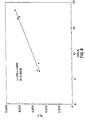
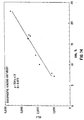
- IPLS GHb assay was performed as in Example 4.I. with the 110 samples prepared as in Example 4.C. Results were correlated with the Biorad Diamat HPLC (Brea, CA) and IMx® GHb (Abbott Laboratories, Abbott Park, IL) assays ( Figures 9 and 10 respectively).
- Example 6 One Step Format
- the hemolysate samples were prepared as in Example 4.C.
- Microparticles, prepared in Example 1.H., were washed with 50 mM taurine buffer, pH 9.0 and resuspended in the same buffer at 0.1% solids.
- the labeled antibody was the same antibody as in Example 4.A.
- the assay was performed by incubating 50 ⁇ l of hemolysate, 50 ⁇ l of microparticles and 50 ⁇ l of acridinium-labeled antibody at 37°C for 25 minutes. The particles were then attracted to a magnet and washed 4 times with 1 ml of Common Buffer.
- Chemiluminescent signal was generated by adding Trigger Reagents.
- RLU chemiluminescent signal
- Example 7 Use of Different Antibodies
- a DEAE-purified mouse monoclonal antibody IgG 1
- Other antibodies including polyclonal, from different species, and monoclonal, can also be used.
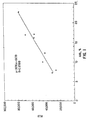
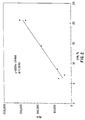
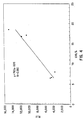
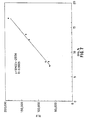
- Example 3 The GHb assay was performed as in Example 3. except both incubations were done at 37°C for 10 minutes, with samples prepared as in Example 4.A., the microparticles from Example 1.A. and the following antibodies to human hemoglobin labeled with acridinium as in Example 2: (1) polyclonal goat anti-human hemoglobin (#CR8000 GAP, Cortex Biochem, San Leandro, CA), (2) monoclonal anti-human hemoglobin (#A36380, BiosPacific, Emeryville, CA), (3) polyclonal goat anti-human hemoglobin (#G32100, Bios Pacific, Emeryville, CA), and (4) polyclonal rabbit anti-human hemoglobin (#A118, Dako Corp., Carpinteria, CA).
- polyclonal goat anti-human hemoglobin #CR8000 GAP, Cortex Biochem, San Leandro, CA
- monoclonal anti-human hemoglobin #A36380, BiosPacific, Emeryville, CA
- results show that the chemiluminescent signal (RLU) was directly proportional to the %GHb in the sample.
- the correlation coefficients (R values) for assays using each Ab were 0.982, 0.975, 0.946 and 0.869 respectively.
- polyclonal cr monoclonal antibodies to human hemoglobin are useable in this assay format for accurately detecting %GHb.
Landscapes
- Health & Medical Sciences (AREA)
- Life Sciences & Earth Sciences (AREA)
- Hematology (AREA)
- Engineering & Computer Science (AREA)
- Molecular Biology (AREA)
- Biomedical Technology (AREA)
- Chemical & Material Sciences (AREA)
- Immunology (AREA)
- Urology & Nephrology (AREA)
- Biotechnology (AREA)
- Microbiology (AREA)
- Cell Biology (AREA)
- Food Science & Technology (AREA)
- Medicinal Chemistry (AREA)
- Physics & Mathematics (AREA)
- Analytical Chemistry (AREA)
- Biochemistry (AREA)
- General Health & Medical Sciences (AREA)
- General Physics & Mathematics (AREA)
- Pathology (AREA)
- Investigating Or Analysing Biological Materials (AREA)
Claims (8)
- Ein Einmallese-Verfahren zur Bestimmung des Prozentsatzes von glykiertem Hämoglobin (GHb) in einer Vollblut-Probe, das folgende Schritte umfasst:a) Lysieren einer Vollblut-Probe, um glykiertes Hämoglobin freizusetzen;b) Inkubieren der lysierten Blutprobe mit einer festen Phase, wobei die feste Phase an einen Boronat-Anteil gekoppelt ist, worin die feste Phase spezifisch glykierte Hämoglobin (Hb) einfängt, in direktem Verhältnis zu dem Prozentsatz von glykiertem Hämoglobin (Hb) in der Probe;c) Hinzufügen einer markierten Komponente, die spezifisch ist für Hämoglobin, zu der Probe;d) Abtrennen der markierten Komponente, die nicht an Hämoglobin gebunden ist, das auf der festen Phase immobilisiert ist, von markiertem Hämoglobin, das auf der festen Phase immobilisiert ist;e) Messen eines resultierenden Signals; undf) Bestimmen eines Prozentsatzes von glykiertem Hämoglobin in der Probe, basierend auf dem resultierenden Signal, unter der Voraussetzung, dass das Gesamt-Hämoglobin nicht gemessen wird.
- Das Verfahren von Anspruch 1, worin die feste Phase gewählt ist aus der Gruppe bestehend aus Kügelchen, Mikropartikeln, magnetischen Mikropartikeln, Mikrotiterplatten und Röhrchen.
- Das Verfahren von Anspruch 1, worin der Boronat-Anteil gewählt ist aus der Gruppe bestehend aus Borsäure, Boronat-Verbindungen und Phenylboronsäuren.
- Das Verfahren von Anspruch 3, worin die Phenylboronsäuren gewählt sind aus der Gruppe bestehend aus 4-Carboxyphenylboronsäure, 3-Nitro-5-carboxyphenylboronsäure und m-Aminophenylboronsäure (APBA).
- Das Verfahren von Anspruch 1, worin die markierte Komponente gewählt ist aus der Gruppe bestehend aus markierten monoklonalen und polyklonalen Antikörpern und anderen markierten Molekülen mit einer Affinität für Hämoglobin.
- Das Verfahren von Anspruch 1, worin die markierte Komponente ein Marker ist.
- Das Verfahren von Anspruch 1, worin ein Marker der markierten Komponente gewählt ist aus der Gruppe bestehend aus radioaktiven, fluoreszierenden, chemilumineszenten Substanzen und Enzymen.
- Ein Einmallese-Verfahren gemäß Anspruch 1, worin das resultierende Signal von Schritt c) von der markierten Komponente gemessen wird.
Applications Claiming Priority (3)
| Application Number | Priority Date | Filing Date | Title |
|---|---|---|---|
| US816237 | 1997-03-13 | ||
| US08/816,237 US6162645A (en) | 1997-03-13 | 1997-03-13 | Determination of % glycated hemoglobin |
| PCT/US1998/005005 WO1998040750A1 (en) | 1997-03-13 | 1998-03-13 | Determination of % glycated hemoglobin |
Publications (2)
| Publication Number | Publication Date |
|---|---|
| EP0974060A1 EP0974060A1 (de) | 2000-01-26 |
| EP0974060B1 true EP0974060B1 (de) | 2003-09-03 |
Family
ID=25220045
Family Applications (1)
| Application Number | Title | Priority Date | Filing Date |
|---|---|---|---|
| EP98910389A Expired - Lifetime EP0974060B1 (de) | 1997-03-13 | 1998-03-13 | Verfahren zur bestimmung des prozentualen anteils von glykosiliertem hämoglobin |
Country Status (8)
| Country | Link |
|---|---|
| US (1) | US6162645A (de) |
| EP (1) | EP0974060B1 (de) |
| JP (1) | JP3356785B2 (de) |
| AT (1) | ATE249049T1 (de) |
| CA (1) | CA2282586A1 (de) |
| DE (1) | DE69817794T2 (de) |
| ES (1) | ES2206900T3 (de) |
| WO (1) | WO1998040750A1 (de) |
Families Citing this family (31)
| Publication number | Priority date | Publication date | Assignee | Title |
|---|---|---|---|---|
| US6316265B1 (en) * | 1997-03-13 | 2001-11-13 | Abbott Laboratories | Determination of % glycated hemoglobin |
| WO2002061436A1 (en) * | 2001-01-31 | 2002-08-08 | Scripps Laboratories | Methods and devices for quantitation of glycated protein |
| US7195923B2 (en) | 2001-01-31 | 2007-03-27 | Scripps Laboratories, Inc. | Ratiometric determination of glycated protein |
| US6677158B2 (en) * | 2001-03-14 | 2004-01-13 | Exocell Inc. | Method for measurement of glycated hemoglobin by a rapid strip test procedure |
| US6562581B2 (en) * | 2001-08-31 | 2003-05-13 | Portascience | Method for quantitative determination of glycated hemoglobin |
| JP4270964B2 (ja) * | 2003-07-31 | 2009-06-03 | 修 野崎 | 赤血球膜糖化度分布測定法およびその測定装置 |
| JP2007506946A (ja) * | 2003-09-23 | 2007-03-22 | エピネックス・ダイアグノスティクス・インコーポレーテッド | グリコアルブミンの迅速検査 |
| US7150995B2 (en) | 2004-01-16 | 2006-12-19 | Metrika, Inc. | Methods and systems for point of care bodily fluid analysis |
| ATE520029T1 (de) * | 2004-11-05 | 2011-08-15 | Hoffmann La Roche | Biochemisches gerät und nachweisverfahren |
| US7361513B2 (en) * | 2005-04-08 | 2008-04-22 | Streck, Inc. | Cellular controls for glycated hemoglobin Hb A1c |
| US8338183B2 (en) * | 2006-07-29 | 2012-12-25 | I-Sens, Inc. | Electrochemical determination system of glycated proteins |
| US8112229B2 (en) * | 2007-05-31 | 2012-02-07 | Abbott Laboratories | Method for determining the order of execution of assays of a sample in a laboratory automation system |
| KR101005559B1 (ko) * | 2008-07-15 | 2011-01-05 | 주식회사 아이센스 | 바이오센서를 이용한 단백질 측정 장치 |
| US20100167306A1 (en) * | 2008-12-26 | 2010-07-01 | Henry John Smith | Rapid test for glycated albumin in saliva |
| US8241915B2 (en) * | 2009-01-14 | 2012-08-14 | Abbott Laboratories | Methods and kits for detecting hemoglobin in test samples |
| US8703494B2 (en) * | 2009-05-20 | 2014-04-22 | Relia Diagnostic Systems, Llc | Systems and methods for determining the percentage of glycated hemoglobin |
| FR2947632B1 (fr) | 2009-07-01 | 2011-11-11 | Sebia Sa | Analyse et dosage d'hemoglobines glyquees par electrophorese capillaire, compositions tampon et kits pour electrophorese capillaire |
| JP5352742B2 (ja) * | 2009-08-07 | 2013-11-27 | オームクス コーポレーション | 酵素による酸化還元変化化学的脱離(e−trace)免疫学的検定法 |
| KR20120051133A (ko) * | 2010-11-12 | 2012-05-22 | 삼성전자주식회사 | 미세유동장치 및 이를 이용한 헤모글로빈의 측정방법 |
| WO2012100078A1 (en) | 2011-01-19 | 2012-07-26 | Ohmx Corporation | Enzyme triggered redox altering chemical elimination (e-trace) immmunoassay |
| JP6203183B2 (ja) * | 2011-10-17 | 2017-09-27 | オームクス コーポレイション | 酵素誘発レドックス変化化学的脱離(e−trace)イムノアッセイを使用する、ヘモグロビンa1cのパーセンテージの単回直接検出 |
| WO2013067349A1 (en) | 2011-11-04 | 2013-05-10 | Ohmx Corporation | Novel chemistry used in biosensors |
| EP2802669A1 (de) | 2012-01-09 | 2014-11-19 | Ohmx Corporation | Enzymkaskadenverfahren für eine e-trace-assay-signalverstärkung |
| EP2877592B1 (de) | 2012-07-27 | 2016-09-21 | Ohmx Corporation | Elektronische messungen von monoschichten nach homogenen reaktionen ihrer bestandteile |
| WO2014018899A1 (en) | 2012-07-27 | 2014-01-30 | Ohmx Corporation | Electric measurement of monolayers following pro-cleave detection of presence and activity of enzymes and other target analytes |
| KR20140032221A (ko) * | 2012-09-06 | 2014-03-14 | 삼성전자주식회사 | 시료 중의 당화 단백질을 확인하는 방법 및 그를 위한 장치 |
| KR20140100843A (ko) * | 2013-02-07 | 2014-08-18 | 삼성전자주식회사 | 시료 중의 당화 단백질을 포획하는 지지체 및 이를 이용한 상기 당화 단백질을 측정하는 장치 및 방법 |
| CN109900908A (zh) | 2014-03-20 | 2019-06-18 | 生物辐射实验室股份有限公司 | 糖化蛋白质试验 |
| JP6487285B2 (ja) * | 2015-07-01 | 2019-03-20 | 株式会社トーキン | ゲル電解質用組成物ならびにそれを用いたゲル電解質および電解コンデンサ |
| JP7237924B2 (ja) | 2018-03-02 | 2023-03-13 | 栄研化学株式会社 | 検体中に含まれる蛋白質を安定化する方法、検体中に含まれる蛋白質を安定化させるための溶液 |
| US20200284807A1 (en) | 2019-03-05 | 2020-09-10 | Victor Manneh | Saturation binding ratiometric assay |
Citations (1)
| Publication number | Priority date | Publication date | Assignee | Title |
|---|---|---|---|---|
| EP0227240A1 (de) * | 1985-10-16 | 1987-07-01 | Farmos-Yhtyma Oy | Verfahren für das Immunoassay eines makromolekular-Analyt |
Family Cites Families (24)
| Publication number | Priority date | Publication date | Assignee | Title |
|---|---|---|---|---|
| US4269605A (en) * | 1978-06-28 | 1981-05-26 | Amicon Corporation | Method and kit for separation of glycoproteins |
| US4496722A (en) * | 1981-05-01 | 1985-01-29 | The Children's Medical Center Corporation | Reporter compounds |
| US4727036A (en) * | 1985-08-08 | 1988-02-23 | Molecular Diagnostics, Inc. | Antibodies for use in determining hemoglobin A1c |
| US5206144A (en) * | 1985-03-29 | 1993-04-27 | Novo Industri A/S | Determination of glycated (glycosylated) hemoglobin in blood |
| JPS637558A (ja) * | 1986-06-27 | 1988-01-13 | Sony Corp | デイスクプレ−ヤ |
| ES2063735T3 (es) * | 1986-10-22 | 1995-01-16 | Abbott Lab | Sales de acridinio quimioluminiscentes. |
| IT1206003B (it) * | 1987-05-18 | 1989-04-05 | Menarini Sas | Soluzione di controllo della funzio nalita' della colonna cromatografica a scambio ionico di apparecchiature hplc (cromatografia liquida ad alta prestazione), e relativo procedimento di preparazione |
| US4861728A (en) * | 1987-07-24 | 1989-08-29 | Becton, Dickinson And Company | Immunoassay of glycosylated hemoglobin using a labeled boron reagent |
| WO1990006516A1 (en) * | 1988-12-05 | 1990-06-14 | Primus Corporation | Method for determination of glycated proteinaceous species |
| NO890029D0 (no) * | 1989-01-04 | 1989-01-04 | Axis Research | Nye modifiserte peptider og proteiner for in vitro diagnoser (diabetes). |
| US5110745A (en) * | 1989-06-01 | 1992-05-05 | The Trustees Of The University Of Pennsylvania | Methods of detecting glycated proteins |
| JP2619537B2 (ja) * | 1989-09-18 | 1997-06-11 | 株式会社日立製作所 | 液体クロマトグラフの方法,その装置,そのシステム,及びその分離カラム |
| JP2855533B2 (ja) * | 1990-02-22 | 1999-02-10 | 磐田化学工業株式会社 | 飲食品用酸味料 |
| EP0455225B1 (de) * | 1990-05-01 | 1995-03-29 | Nacalai Tesque, Inc. | Verfahren zur Bestimmung des Glykationsprozentsatzes eines bestimmten Proteins |
| JP2782470B2 (ja) * | 1990-07-20 | 1998-07-30 | 株式会社日立製作所 | グリコヘモグロビンの分離方法および分離装置並びに分離カラム |
| JP2929462B2 (ja) * | 1990-08-29 | 1999-08-03 | 東ソー株式会社 | 安定型糖化ヘモグロビン分析方法 |
| JPH04145367A (ja) * | 1990-10-06 | 1992-05-19 | Masashi Funayama | ヘモグロビンA1c(HbA1c)の分画定量方法と、それを実施する為に構成されたヘモグロビンA1c(HbA1c)定量キット |
| GB9024771D0 (en) * | 1990-11-14 | 1991-01-02 | Axis Research | Assay |
| US5284777A (en) * | 1991-03-04 | 1994-02-08 | Isolab, Inc. | Combined glycated hemoglobin and immunoturbidometric glycated albumin assay from whole blood lysate |
| WO1992022818A1 (en) * | 1991-06-19 | 1992-12-23 | Abbott Laboratories | Rapid determination of glycated hemoglobin |
| US5506114A (en) * | 1992-02-07 | 1996-04-09 | Osborn Laboratories | Methods and kits for detecting the presence or concentration of biological analytes |
| EP0589001B1 (de) * | 1992-03-04 | 2002-07-24 | Abbott Laboratories | Bestimmung von glykosyliertem hämoglobin durch dämpfung der fluoreszenz |
| US5470759A (en) * | 1992-06-10 | 1995-11-28 | Fujirebio, Inc. | Anti-glycated hemoglobin monoclonal antibody and method for measuring glycated hemoglobin |
| JP3150857B2 (ja) * | 1994-10-19 | 2001-03-26 | 富士写真フイルム株式会社 | グリコヘモグロビン含有比測定用分析要素及び分析方法 |
-
1997
- 1997-03-13 US US08/816,237 patent/US6162645A/en not_active Expired - Lifetime
-
1998
- 1998-03-13 JP JP53986898A patent/JP3356785B2/ja not_active Expired - Fee Related
- 1998-03-13 CA CA002282586A patent/CA2282586A1/en not_active Abandoned
- 1998-03-13 WO PCT/US1998/005005 patent/WO1998040750A1/en not_active Ceased
- 1998-03-13 AT AT98910389T patent/ATE249049T1/de not_active IP Right Cessation
- 1998-03-13 EP EP98910389A patent/EP0974060B1/de not_active Expired - Lifetime
- 1998-03-13 ES ES98910389T patent/ES2206900T3/es not_active Expired - Lifetime
- 1998-03-13 DE DE69817794T patent/DE69817794T2/de not_active Expired - Fee Related
Patent Citations (1)
| Publication number | Priority date | Publication date | Assignee | Title |
|---|---|---|---|---|
| EP0227240A1 (de) * | 1985-10-16 | 1987-07-01 | Farmos-Yhtyma Oy | Verfahren für das Immunoassay eines makromolekular-Analyt |
Also Published As
| Publication number | Publication date |
|---|---|
| WO1998040750A1 (en) | 1998-09-17 |
| ES2206900T3 (es) | 2004-05-16 |
| JP2000514196A (ja) | 2000-10-24 |
| EP0974060A1 (de) | 2000-01-26 |
| DE69817794T2 (de) | 2004-08-05 |
| ATE249049T1 (de) | 2003-09-15 |
| CA2282586A1 (en) | 1998-09-17 |
| US6162645A (en) | 2000-12-19 |
| JP3356785B2 (ja) | 2002-12-16 |
| DE69817794D1 (de) | 2003-10-09 |
Similar Documents
| Publication | Publication Date | Title |
|---|---|---|
| US6162645A (en) | Determination of % glycated hemoglobin | |
| WO1998040750A9 (en) | Determination of % glycated hemoglobin | |
| US6316265B1 (en) | Determination of % glycated hemoglobin | |
| US4434236A (en) | Immunoassay wherein labeled antibody is displaced from immobilized analyte-analogue | |
| CA1332043C (en) | Latex agglutination immunoassay in the presence of hemoglobin | |
| EP0589001B1 (de) | Bestimmung von glykosyliertem hämoglobin durch dämpfung der fluoreszenz | |
| US4302536A (en) | Colorimetric immunoassay process | |
| CA1184488A (en) | Size-exclusion heterogeneous immunoassay | |
| CN111562372B (zh) | 一种检测肌酸激酶同工酶ck-mb的胶乳增强免疫比浊法试剂盒 | |
| CN113125749B (zh) | 一种用于检测血清糖化白蛋白的试剂盒 | |
| EP0227240A1 (de) | Verfahren für das Immunoassay eines makromolekular-Analyt | |
| Freytag et al. | Affinity-column-mediated immunoenzymometric assays: influence of affinity-column ligand and valency of antibody-enzyme conjugates. | |
| US20030003602A1 (en) | Homogeneous immunoassay method | |
| EP1239285A1 (de) | Verbesserte Methode für ein homogenes Immunotestverfahren | |
| KR20010025027A (ko) | 면역측정시약 및 면역측정법 | |
| JPH0783922A (ja) | 糖化蛋白の測定方法 | |
| EP0184701B1 (de) | Verfahren zur Bestimmung eines Liganden | |
| EP1184666A2 (de) | Haptenen und haptenylierte Agenzien als Hilfsstoffe in Verdringungs-Immunoassays | |
| Lee et al. | A solid phase enzyme immunoassay for the quantitation of serum ferritin | |
| CN116381252B (zh) | 一种糖化血红蛋白测定试剂盒 | |
| EP0345777B1 (de) | Immuntest | |
| CA2150029A1 (en) | Immobilization of chemically cross-linked proteins on solid supports | |
| CA2034922A1 (en) | Method for the immunological determination of ligands | |
| Monroe | Enzyme Channelling Immunoassay (ECIA): A Unique and Rapid Quantitative Technique | |
| JPWO1999060401A1 (ja) | 免疫測定試薬および免疫測定法 |
Legal Events
| Date | Code | Title | Description |
|---|---|---|---|
| PUAI | Public reference made under article 153(3) epc to a published international application that has entered the european phase |
Free format text: ORIGINAL CODE: 0009012 |
|
| 17P | Request for examination filed |
Effective date: 19991011 |
|
| AK | Designated contracting states |
Kind code of ref document: A1 Designated state(s): AT BE CH DE ES FR GB IT LI NL |
|
| RIN1 | Information on inventor provided before grant (corrected) |
Inventor name: CHRISTENSEN, MELISSA, A. Inventor name: ADAMCZYK, JANINA Inventor name: YAO, HAIOU, H. Inventor name: WESTERBERG, DAVID, A. Inventor name: LEE, EVELYN, MOK |
|
| 17Q | First examination report despatched |
Effective date: 20011019 |
|
| GRAH | Despatch of communication of intention to grant a patent |
Free format text: ORIGINAL CODE: EPIDOS IGRA |
|
| GRAH | Despatch of communication of intention to grant a patent |
Free format text: ORIGINAL CODE: EPIDOS IGRA |
|
| GRAA | (expected) grant |
Free format text: ORIGINAL CODE: 0009210 |
|
| AK | Designated contracting states |
Kind code of ref document: B1 Designated state(s): AT BE CH DE ES FR GB IT LI NL |
|
| REG | Reference to a national code |
Ref country code: GB Ref legal event code: FG4D |
|
| REG | Reference to a national code |
Ref country code: CH Ref legal event code: EP |
|
| REF | Corresponds to: |
Ref document number: 69817794 Country of ref document: DE Date of ref document: 20031009 Kind code of ref document: P |
|
| REG | Reference to a national code |
Ref country code: CH Ref legal event code: NV Representative=s name: A. BRAUN, BRAUN, HERITIER, ESCHMANN AG PATENTANWAE |
|
| PGFP | Annual fee paid to national office [announced via postgrant information from national office to epo] |
Ref country code: AT Payment date: 20040205 Year of fee payment: 7 Ref country code: GB Payment date: 20040205 Year of fee payment: 7 |
|
| PGFP | Annual fee paid to national office [announced via postgrant information from national office to epo] |
Ref country code: NL Payment date: 20040209 Year of fee payment: 7 |
|
| PGFP | Annual fee paid to national office [announced via postgrant information from national office to epo] |
Ref country code: FR Payment date: 20040302 Year of fee payment: 7 |
|
| PGFP | Annual fee paid to national office [announced via postgrant information from national office to epo] |
Ref country code: ES Payment date: 20040318 Year of fee payment: 7 |
|
| PGFP | Annual fee paid to national office [announced via postgrant information from national office to epo] |
Ref country code: CH Payment date: 20040319 Year of fee payment: 7 |
|
| PGFP | Annual fee paid to national office [announced via postgrant information from national office to epo] |
Ref country code: DE Payment date: 20040331 Year of fee payment: 7 |
|
| PGFP | Annual fee paid to national office [announced via postgrant information from national office to epo] |
Ref country code: BE Payment date: 20040416 Year of fee payment: 7 |
|
| REG | Reference to a national code |
Ref country code: ES Ref legal event code: FG2A Ref document number: 2206900 Country of ref document: ES Kind code of ref document: T3 |
|
| ET | Fr: translation filed | ||
| PLBE | No opposition filed within time limit |
Free format text: ORIGINAL CODE: 0009261 |
|
| STAA | Information on the status of an ep patent application or granted ep patent |
Free format text: STATUS: NO OPPOSITION FILED WITHIN TIME LIMIT |
|
| 26N | No opposition filed |
Effective date: 20040604 |
|
| PG25 | Lapsed in a contracting state [announced via postgrant information from national office to epo] |
Ref country code: IT Free format text: LAPSE BECAUSE OF NON-PAYMENT OF DUE FEES Effective date: 20050313 Ref country code: AT Free format text: LAPSE BECAUSE OF NON-PAYMENT OF DUE FEES Effective date: 20050313 |
|
| PG25 | Lapsed in a contracting state [announced via postgrant information from national office to epo] |
Ref country code: ES Free format text: LAPSE BECAUSE OF NON-PAYMENT OF DUE FEES Effective date: 20050314 |
|
| PG25 | Lapsed in a contracting state [announced via postgrant information from national office to epo] |
Ref country code: LI Free format text: LAPSE BECAUSE OF NON-PAYMENT OF DUE FEES Effective date: 20050331 Ref country code: CH Free format text: LAPSE BECAUSE OF NON-PAYMENT OF DUE FEES Effective date: 20050331 Ref country code: BE Free format text: LAPSE BECAUSE OF NON-PAYMENT OF DUE FEES Effective date: 20050331 |
|
| BERE | Be: lapsed |
Owner name: *ABBOTT LABORATORIES Effective date: 20050331 |
|
| PG25 | Lapsed in a contracting state [announced via postgrant information from national office to epo] |
Ref country code: NL Free format text: LAPSE BECAUSE OF NON-PAYMENT OF DUE FEES Effective date: 20051001 Ref country code: DE Free format text: LAPSE BECAUSE OF NON-PAYMENT OF DUE FEES Effective date: 20051001 |
|
| REG | Reference to a national code |
Ref country code: CH Ref legal event code: PL |
|
| GBPC | Gb: european patent ceased through non-payment of renewal fee |
Effective date: 20050313 |
|
| PG25 | Lapsed in a contracting state [announced via postgrant information from national office to epo] |
Ref country code: FR Free format text: LAPSE BECAUSE OF NON-PAYMENT OF DUE FEES Effective date: 20051130 |
|
| NLV4 | Nl: lapsed or anulled due to non-payment of the annual fee |
Effective date: 20051001 |
|
| REG | Reference to a national code |
Ref country code: FR Ref legal event code: ST Effective date: 20051130 |
|
| REG | Reference to a national code |
Ref country code: ES Ref legal event code: FD2A Effective date: 20050314 |
|
| BERE | Be: lapsed |
Owner name: *ABBOTT LABORATORIES Effective date: 20050331 |