EP0977848B1 - Sous-unite theta humaine du recepteur de gaba-a - Google Patents
Sous-unite theta humaine du recepteur de gaba-a Download PDFInfo
- Publication number
- EP0977848B1 EP0977848B1 EP98917470A EP98917470A EP0977848B1 EP 0977848 B1 EP0977848 B1 EP 0977848B1 EP 98917470 A EP98917470 A EP 98917470A EP 98917470 A EP98917470 A EP 98917470A EP 0977848 B1 EP0977848 B1 EP 0977848B1
- Authority
- EP
- European Patent Office
- Prior art keywords
- receptor
- subunit
- gaba
- theta
- seq
- Prior art date
- Legal status (The legal status is an assumption and is not a legal conclusion. Google has not performed a legal analysis and makes no representation as to the accuracy of the status listed.)
- Expired - Lifetime
Links
Images

Classifications
-
- C—CHEMISTRY; METALLURGY
- C07—ORGANIC CHEMISTRY
- C07K—PEPTIDES
- C07K14/00—Peptides having more than 20 amino acids; Gastrins; Somatostatins; Melanotropins; Derivatives thereof
- C07K14/435—Peptides having more than 20 amino acids; Gastrins; Somatostatins; Melanotropins; Derivatives thereof from animals; from humans
- C07K14/705—Receptors; Cell surface antigens; Cell surface determinants
- C07K14/70571—Receptors; Cell surface antigens; Cell surface determinants for neuromediators, e.g. serotonin receptor, dopamine receptor
-
- A—HUMAN NECESSITIES
- A61—MEDICAL OR VETERINARY SCIENCE; HYGIENE
- A61P—SPECIFIC THERAPEUTIC ACTIVITY OF CHEMICAL COMPOUNDS OR MEDICINAL PREPARATIONS
- A61P25/00—Drugs for disorders of the nervous system
- A61P25/04—Centrally acting analgesics, e.g. opioids
-
- A—HUMAN NECESSITIES
- A61—MEDICAL OR VETERINARY SCIENCE; HYGIENE
- A61P—SPECIFIC THERAPEUTIC ACTIVITY OF CHEMICAL COMPOUNDS OR MEDICINAL PREPARATIONS
- A61P25/00—Drugs for disorders of the nervous system
- A61P25/20—Hypnotics; Sedatives
-
- A—HUMAN NECESSITIES
- A61—MEDICAL OR VETERINARY SCIENCE; HYGIENE
- A61P—SPECIFIC THERAPEUTIC ACTIVITY OF CHEMICAL COMPOUNDS OR MEDICINAL PREPARATIONS
- A61P25/00—Drugs for disorders of the nervous system
- A61P25/22—Anxiolytics
-
- A—HUMAN NECESSITIES
- A61—MEDICAL OR VETERINARY SCIENCE; HYGIENE
- A61K—PREPARATIONS FOR MEDICAL, DENTAL OR TOILETRY PURPOSES
- A61K38/00—Medicinal preparations containing peptides
Definitions
- This invention concerns the cloning of a novel cDNA sequence encoding a particular subunit of the human GABAn receptor.
- the invention relates to a stable cell line capable of expressing said cDNA and to the use of the cell line in a screening technique for the design and development of subtype-specific medicaments.
- GABA Gamma-amino butyric acid
- This receptor comprises a multimeric protein of molecular size 230-270 kDa with specific binding sites for a variety of drugs including benzodiazepines, barbiturates and ⁇ -carbolines, in addition to sites for the agonist ligand GABA (for reviews see MacDonald and Olsen, Ann. Rev. Neurosci., 1994, 17, 569; and Whiting et al, Int. Rev. Neurobiol., 1995, 38, 95).
- the polypeptide is 506 amino acids in length and exhibits greatest amino acid sequence identity with the GABA A receptor ⁇ 3 subunit (47%), although this degree of homology is not sufficient for it to be classified as a fourth ⁇ subunit.
- the present invention relates to a new class of GABA receptor subunit, hereinafter referred to as the theta subunit ( ⁇ subunit).
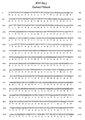
- the present invention accordingly provides, in a first aspect, a DNA molecule encoding the theta subunit of the human GABA receptor comprising the sequence depicted in Figure 1.
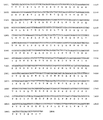
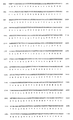
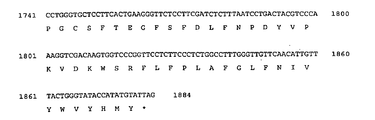
- the present invention provides a DNA molecule encoding the theta subunit of the human GABA receptor comprising the sequence depicted in Figure 2.
- the sequencing of the novel cDNA molecules in accordance with the invention can conveniently be carried out by the standard procedure described in accompanying Example 1; or may be accomplished by alternative molecular cloning techniques which are well known in the art, such as those described by Maniatis et al. in Molecular Cloning, A Laboratory Manual , Cold Spring Harbor Press, New York, 2nd edition, 1989.
- the present invention further relates to a GABA theta subunit polypeptide which has the deduced amino acid sequence of Figure 1 or Figure 2.
- the polypeptide of the present invention may be a recombinant polypeptide, a natural polypeptide or a synthetic polypeptide, preferably a recombinant polypeptide.
- polypeptides and DNA molecules of the present invention are preferably provided in an isolated form, and preferably are purified to homogeneity.
- isolated means that the material is removed from its original environment (e.g., the natural environment if it is naturally occurring).
- a naturally-occurring DNA molecule or polypeptide present in a living animal is not isolated, but the same DNA molecule or polypeptide, separated from some or all of the coexisting materials in the natural system, is isolated.
- DNA molecules could be part of a vector and/or such DNA molecules or polypeptides could be part of a composition, and still be isolated in that such vector or composition is not part of its natural environment.
- the invention provides a recombinant expression vector comprising the nucleotide sequence of the human GABA receptor theta subunit together with additional sequences capable of directing the synthesis of the said human GABA receptor theta subunit in cultures of stably co-transfected eukaryotic cells.
- expression vectors refers to DNA sequences that are required for the transcription of cloned copies of recombinant DNA sequences or genes and the translation of their mRNAs in an appropriate host.
- Such vectors can be used to express eukaryotic genes in a variety of hosts such as bacteria, blue-green algae, yeast cells, insect cells, plant cells and animal cells. Specifically designed vectors allow the shuttling of DNA between bacteria-yeast, bacteria-plant or bacteria-animal cells.
- An appropriately constructed expression vector should contain: an origin of replication for autonomous replication in host cells, selective markers, a limited number of useful restriction enzyme sites, a high copy number, and strong promoters.
- a promoter is defined as a DNA sequence that directs RNA polymerase to bind to DNA and to initiate RNA synthesis.
- a strong promoter is one which causes mRNAs to be initiated at high frequency.
- Expression vectors may include, but are not limited to, cloning vectors, modified cloning vectors, specifically designed plasmids or viruses.
- Cloning vector refers to a DNA molecule, usually a small plasmid or bacteriophage DNA capable of self-replication in a host organism, and used to introduce a fragment of foreign DNA into a host cell.
- the foreign DNA combined with the vector DNA constitutes a recombinant DNA molecule which is derived from recombinant technology.
- Cloning vectors may include plasmids, bacteriophages, viruses and cosmids.
- the recombinant expression vector in accordance with the invention may be prepared by inserting the nucleotide sequence of the GABA theta subunit into a suitable precursor expression vector (hereinafter referred to as the "precursor vector") using conventional recombinant DNA methodology known from the art.
- the precursor vector may be obtained commercially, or constructed by standard techniques from known expression vectors.
- the precursor vector suitably contains a selection marker, typically an antibiotic resistance gene, such as the neomycin or ampicillin resistance gene.
- the precursor vector preferably contains a neomycin resistance gene, adjacent the SV40 early splicing and polyadenylation region; an ampicillin resistance gene; and an origin of replication, e.g. pBR322 ori.
- the vector also preferably contains an inducible promoter, such as MMTV-LTR (inducible with dexamethasone) or metallothionin (inducible with zinc), so that transcription can be controlled in the cell line of this invention.
- an inducible promoter such as MMTV-LTR (inducible with dexamethasone) or metallothionin (inducible with zinc), so that transcription can be controlled in the cell line of this invention. This reduces or avoids any problem of toxicity in the cells because of the chloride channel intrinsic to the GABA A receptor.
- precursor vector pMAMneo available from Clontech Laboratories Inc. (Lee et al., Nature , 1981, 294, 228; and Sardet et al., Cell, 1989, 56, 271).
- precursor vector pMSGneo can be constructed from the vectors pMSG and pSV2neo.
- the recombinant expression vector of the present invention is then produced by cloning the GABA receptor theta subunit cDNA into the above precursor vector.
- the receptor subunit cDNA is subcloned from the vector in which it is harboured, and ligated into a restriction enzyme site, e.g. the Hind III site, in the polylinker of the precursor vector, for example pMAMneo or pMSGneo, by standard cloning methodology known from the art, and in particular by techniques analogous to those described herein.
- theta subunit cDNA Before this subcloning, it is often advantageous, in order to improve expression, to modify the end of the theta subunit cDNA with additional 5' untranslated sequences, for example by modifying the 5' end of the theta subunit DNA by addition of 5' untranslated region sequences from the ⁇ 1 subunit DNA.
- expression of the theta subunit cDNA may be modified by the insertion of an epitope tag sequence such as c-myc.
- a stably co-transfected eukaryotic cell line comprising a vector encoding the theta subunit of the human GABA receptor as shown in SEQ ID NOs 2 or 4, said cell line capable of expressing a GABA receptor, which receptor comprises the theta receptor subunit, at least one alpha receptor subunit and optionally one or more beta, gamma, delta, or epsilon receptor subunit.
- the present invention provides a process for the preparation of a eukaryotic cell line capable of expressing a GABA receptor, which comprises stably co-transfecting a eukaryotic host cell with at least two expression vectors, one such vector harbouring the cDNA sequence encoding the theta GABA receptor subunit, and another such vector harbouring the cDNA sequence encoding an alpha GABA receptor subunit.
- the stable cell-line which is established expresses an ⁇ GABA receptor.
- Each receptor thereby expressed comprising a unique combination of ⁇ , ⁇ and optionally one or more subunits selected from ⁇ , ⁇ , ⁇ or ⁇ subunits, will be referred to hereinafter as a GABA receptor "subunit combination”.
- the GABA receptor may be accomplished by a variety of different promoter-expression systems in a variety of different host cells.
- the eukaryotic host cells suitably include yeast, insect and mammalian cells.
- the eukaryotic cells which can provide the host for the expression of the receptor are mammalian cells.
- Suitable host cells include rodent fibroblast lines, for example mouse Ltk - , Chinese hamster ovary (CHO) and baby hamster kidney (BHK); HeLa; and HEK293 cells. It is necessary to incorporate at least one ⁇ subunit, the ⁇ subunit, and optionally one or more subunits selected from ⁇ , ⁇ , ⁇ or ⁇ into the cell line in order to produce the required receptor.
- the choice of receptor subunit combination is made according to the type of activity or selectivity which is being screened for.
- Preferred subunit combinations include: ⁇ , ⁇ , ⁇ , and ⁇ , and most especially ⁇ 1 ⁇ 2 .
- Further preferred subunit combinations include ⁇ and ⁇ , and most especially ⁇ 2 ⁇ 1 ⁇ 1 and ⁇ 2 ⁇ 3 ⁇ 2 .
- Cells are then co-transfected with the desired combination of the expression vectors.
- a small percentage of the host cells takes up the recombinant DNA. In a small percentage of those, the DNA will integrate into the host cell chromosome. Because an antibitotic resistance marker gene, such as the neomycin or zeocin resistance gene, will have been incorporated into these host cells, they can be selected by isolating the individual clones which will grow in the presence of the chosen antibiotic, e.g. neomycin or zeocin. Each such clone may then tested to identify those which will produce the receptor. This may be achieved by inducing the production, for example with dexamethasone, and then detecting the presence of receptor by means of radioligand binding.
- an antibitotic resistance marker gene such as the neomycin or zeocin resistance gene
- expression of the GABA receptor may be effected in Xenopus oocytes (see, for instance, Hadingham et al. Mol. Pharmacol ., 1993, 44 , 1211-1218). Briefly, isolated oocyte nuclei are injected directly with injection buffer or sterile water containing at least one alpha subunit, the theta subunit, and optionally one or more beta, gamma, delta or epsilon receptor subunits, engineered into a suitable expression vector. The oocytes are then incubated.
- the expression of subunit combinations in the transfected oocytes may be demonstrated using conventional patch clamp assay.
- This assay measures the charge flow into and out of an electrode sealed on the surface of the cell.
- the flow of chloride ions entering the cell via the GABA gated ion channel is measured as a function of the current that leaves the cell to maintain electrical equilibrium within the cell as the gate opens.
- the present invention provides protein preparations of GABA receptor subunit combinations containing the theta subunit, as shown in SEQ ID NOS: 2 or 4 especially human GABA receptor subunit combinations, derived from cultures of stably transfected eukaryotic cells containing the theta subunit.
- the protein preparations of GABA receptor subunit combinations can be recovered and purified from recombinant cell cultures by methods including ammonium sulfate or ethanol precipitation, acid extraction, anion or cation exchange chromatography, phosphocellulose chromatography, hydrophobic interaction chromatography, affinity chromatography, hydroxylapatite chromatography and lectin chromatography. Protein refolding steps can be used, as necessary, in completing configuration of the mature protein. Finally, high performance liquid chromatography (HPLC) can be employed for final purification steps.
- HPLC high performance liquid chromatography
- polypeptides of the present invention may be a naturally purified product, or a product of chemical synthetic procedures, or produced by recombinant techniques from a prokaryotic or eukaryotic host (for example, by bacterial, yeast, higher plant, insect and mammalian cells in culture). Depending upon the host employed in a recombinant production procedure, the polypeptides of the present invention may be glycosylated or may be non-glycosylated. Polypeptides of the invention may also include an initial methionine amino acid residue.
- the GABA theta subunit polypeptide of the present invention is also useful for identifying other subunits of the GABA receptor.
- An example of a procedure for identifying these subunits comprises raising high titre polyclonal antisera against unique, bacterially expressed GABA theta polypeptides. These polyclonal antisera are then used to immunoprecipitate detergent-solubilized GABA receptors from a mammalian brain, for example, a rat brain.
- the invention also provides preparations of membranes containing subunit combinations of the GABA receptor containing the theta subunit, as shown in SEQ ID NOS: 2 or 4 especially human GABA receptor subunit combinations, derived from cultures of stably transfected eukaryotic cells containing the theta subunit.
- the cell line, and the membrane preparations therefrom, according to the present invention have utility in screening and design of drugs which act upon the GABA receptor, for example benzodiazepines, barbiturates, ⁇ -carbolines and neurosteroids.
- Receptor localisation studies using in situ hybridization in monkey brains shows that the ⁇ subunit has a restricted localisation; residing mainly in components of the limbic system (involved in emotions such as rage, fear, motivation sexual behaviours and feeding); medial septum, cingulate cortex, the amygdala and hippocampal fields, in various hypothalamic nuclei, and in regions that have been associated with pain perception; the cingulate cortex, insular cortex, and in mid brain and pons structures.
- the present invention accordingly provides the use of stably cotransfected cell lines described above, and membrane preparations derived therefrom, in screening for and designing medicaments which act upon GABA receptors comprising the ⁇ subunit.
- molecules capable of interacting selectively with GABA receptors made up of varying subunit combinations are molecules capable of interacting selectively with GABA receptors made up of varying subunit combinations.
- the cell line in accordance with the present invention, and the membrane preparations derived therefrom provide ideal systems for the study of structure, pharmacology and function of the various GABA receptor subtypes.
- preferred screens are functional assays utilizing the pharmacological properties of the GABA receptor subunit combinations of the present invention.
- a method for determining whether a ligand, not known to be capable of binding to a human GABA A receptor comprising the theta subunit, can bind to a human GABA A receptor comprising the theta subunit which comprises contacting a mammalian cell comprising DNA molecules encoding at least one alpha receptor subunit, the theta receptor subunit, as shown in SEQ ID NOS: 1 or 3, and optionally one or more beta, gamma, delta or epsilon receptor subunits with the ligand under conditions permitting binding of ligands known to bind to the GABA A receptor, detecting the presence of any of the ligand bound to the GABA A receptor comprising the theta subunit, and thereby determining whether the ligand binds to the GABA A receptor comprising the theta subunit.
- the theta subunit-encoding DNA in the cell has a coding sequence the same as the coding sequence shown in Figure 1 or Figure 2.
- the mammalian cell is non-neuronal in origin.
- An example of a non-neuronal mammalian cell is a fibroblast cell such as an Ltk - cell.
- the preferred method for determining whether a ligand is capable of binding to a human GABA A receptor comprising the theta subunit comprises contacting a transfected non-neuronal mammalian cell (i.e.
- This response system may be based on ion flux changes measured, for example, by scintillation counting (where the ion is radiolabelled) or by interaction of the ion with a fluorescent marker. Particularly suitable ions are chloride ions.
- a host system is conveniently isolated from pre-existing cell lines.
- Such a transfection system provides a complete response system for investigation or assay of the activity of human GABA A receptors comprising the theta subunit with ligands as described above. Transfection systems are useful as living cell cultures for competitive binding assays between known or candidate drugs and ligands which bind to the receptor and which are labeled by radioactive, spectroscopic or other reagents.
- a transfection system constitutes a "drug discovery system" useful for the identification of natural or synthetic compounds with potential for drug development that can be further modified or used directly as therapeutic compounds to activate, inhibit or modulate the natural functions of human GABA A receptors comprising the theta subunit.
- the transfection system is also useful for determining the affinity and efficacy of known drugs at human GABA A receptor sites comprising the theta subunit.
- This invention also provides a method of screening drugs to identify drugs which specifically interact with, and bind to, a human GABA A receptor comprising the theta subunit on the surface of a cell which comprises contacting a mammalian cell comprising DNA molecules encoding at least one alpha receptor subunit, the theta receptor subunit, as shown in SEQ ID NOS: 1 or 3, and optionally one or more beta, gamma, delta or epsilon receptor subunits on the surface of a cell with a plurality of drugs, determining those drugs which bind to the mammalian cell, and thereby identifying drugs which specifically interact with, and bind to, human GABA A receptors comprising the theta subunit.
- the theta subunit-encoding DNA in the cell may have a coding sequence substantially the same as the coding sequence shown in Figure 1 or Figure 2.
- the mammalian cell is non-neuronal in origin.
- An example of a non-neuronal mammalian cell is a fibroblast cell such as an Ltk - cell.
- Drug candidates are identified by choosing chemical compounds which bind with high affinity to the expressed GABA A receptor protein in transfected cells, using radioligand binding methods well known in the art. Drug candidates are also screened for selectivity by identifying compounds which bind with high affinity to one particular GABA A receptor combination but do not bind with high affinity to any other GABA A receptor combination or to any other known receptor site. Because selective, high affinity compounds interact primarily with the target GABA A receptor site after administration to the patient, the chances of producing a drug with unwanted side effects are minimized by this approach.
- the mammalian cell may, for example, comprise DNA molecules encoding at least one alpha receptor subunit, the theta subunit, and optionally one or more gamma receptor subunits and optionally one or more beta receptor subunits.
- the mammalian cell comprises DNA molecules encoding at least one alpha receptor subunit, at least one gamma receptor subunit and the theta receptor subunit.
- Ligands or drug candidates identified above may be agonists or antagonists at human GABA A receptors comprising the theta subunit, or may be agents which allosterically modulate a human GABA A receptor comprising the theta subunit. These ligands or drug candidates identified above may be employed as therapeutic agents, for example, for the modulation of emotions such as rage and fear, of sexual and appetite behaviours and of pain perception.
- compositions comprise a therapeutically effective amount of the agonist or antagonist, and a pharmaceutically acceptable carrier or excipient.
- compositions containing the ligand or drug candidate identified according to the methods of the present invention are in unit dosage forms such as tablets, pills, capsules, wafers and the like.
- the therapeutic agent may be presented as granules or powders for extemporaneous formulation as volume defined solutions or suspensions.
- the therapeutic agent may be presented in ready-prepared volume defined solutions or suspensions. Preferred forms are tablets and capsules.
- the principal active ingredient is mixed with a pharmaceutical carrier, e.g. conventional tableting ingredients such as corn starch, lactose, sucrose, sorbitol, talc, stearic acid, magnesium stearate, dicalcium phosphate or gums, and other pharmaceutical diluents, e.g. water, to form a solid preformulation composition containing a homogeneous mixture of a compound of the present invention, or a non-toxic pharmaceutically acceptable salt thereof.
- a pharmaceutical carrier e.g. conventional tableting ingredients such as corn starch, lactose, sucrose, sorbitol, talc, stearic acid, magnesium stearate, dicalcium phosphate or gums, and other pharmaceutical diluents, e.g. water
- a pharmaceutical carrier e.g. conventional tableting ingredients such as corn starch, lactose, sucrose, sorbitol, talc, stearic acid, magnesium stearate, dicalcium
- This solid preformulation composition is then subdivided into unit dosage forms of the type described above containing from 0.1 to about 500 mg of the active ingredient of the present invention.
- the tablets or pills of the novel composition can be coated or otherwise compounded to provide a dosage form affording the advantage of prolonged action.
- the tablet or pill can comprise an inner dosage and an outer dosage component, the latter being in the form of an envelope over the former.
- the two components can be separated by an enteric layer which serves to resist disintegration in the stomach and permits the inner component to pass intact into the duodenum or to be delayed in release.
- enteric layers or coatings such materials including a number of polymeric acids and mixtures of polymeric acids with such materials as shellac, cetyl alcohol and cellulose acetate.
- liquid forms in which the novel compositions of the present invention may be incorporated for administration orally include aqueous solutions, suitably flavoured syrups, aqueous or oil suspensions, and flavoured emulsions with edible oils such as cottonseed oil, sesame oil, coconut oil, peanut oil or soybean oil, as well as elixirs and similar pharmaceutical vehicles.
- Suitable dispersing or suspending agents for aqueous suspensions include synthetic and natural gums such as tragacanth, acacia, alginate, dextran, sodium carboxymethylcellulose, methylcellulose, polyvinyl-pyrrolidone or gelatin.
- compositions of the present invention may also be administered via the buccal cavity using conventional technology, for example, absorption wafers.
- compositions in the form of tablets, pills, capsules or wafers for oral administration are particularly preferred.
- a minimum dosage level for the ligand or drug candidate identified according to the methods of the present invention is about 0.05mg per day, preferably about 0.5mg per day and especially about 2.5mg per day.
- a maximum dosage level for the ligand or drug candidate is about 3000mg per day, preferably about 1500mg per day and especially about 500mg per day.
- the compounds are administered on a regimen of 1 to 4 times daily, preferably once or twice daily, and especially once a day.
- the amount of the therapeutic agent required for use therapy will vary not only with the particular compounds or compositions selected but also with the route of administration, the nature of the condition being treated, and the age and condition of the patient, and will ultimately be at the discretion of the patient's physician or pharmacist.
- Genbank database was searched with GABA A receptor polypeptide amino acid sequences using the BLAST searching algorithm, and a number of homologous sequences identified.
- U47334 contained sequences homologous to part of the amino-terminal extracellular domain and the TM4 spanning domain of other GABA A receptor subunits, but did not appear to contain any sequence homologous to the regions spanning these domains.
- Polymerase chain reaction (PCR) was performed to determine if the size if the U47334 sequence was correct, or was for example, the result of an incorrect splicing event.
- PCR a sense (5' gcaaatgaagctgtggttc 3') (SEQ.ID.NO.
- cDNA sequences 5' and 3' of the U47334 sequence were obtained by 5'- and 3'-anchored PCR using human brain Marathon cDNA cloning kit (Clontech) according to the manufacturer's protocols.
- a full length cDNA was generated by PCR using primers derived from sequences downstream of the innitiating ATG (5' ccatgactcaagcttgccaccatgctgcgagccgcagtgatc 3', incorporating a HindIII site) (SEQ.ID.NO. 13) and in the 3' UT of the anchored PCR product (5' tgaaaggagcacagcacagtgctcccg 3') (SEQ.ID.NO. 14).
- PCR product (1958 bp) was cloned into pMOS (Amersham), subcloned into pCDNAI Amp (Invitrogen), and sequenced completey on both strands by primer walking. Sequence analysis was performed using Inherit (Applied Biosystems), Sequencher (Genecodes), and Genetics Computer Group (Univ. Wisconsin) computer programs.
- the coding region encodes 627 amino acids and has all the structural motifs expected of a ligand gated ion channel subunit. Comparison with other ligand gated ion channel subunits indicates that it is most similar to GABA A receptor subunits, the highest homology being with the ⁇ 1 subunit (45 % identity). However, this sequence identity is sufficiently low as to indicate that the new subunit cannot be classified as a fourth human ⁇ subunit, but represents a novel class of subunit, classified as ⁇ , within the GABA receptor gene family.
- Antisense oligonucleotide probes to the human ⁇ subunit sequence were generated on an Applied Biosystems Automated DNA synthesiser Probe 1 Probe 2
- Each oligonucleotide was 3'-end labelled with [ 35 S] deoxyadenosine 5'-(thiotriphosphate) in a 30:1 molar ratio of 35 S-isotope:oligonucleotide using terminal deoxynucleotidyl transferase for 15 min at 37°C in the reaction buffer supplied.
- Radiolabelled oligonucleotide was separated from unincorporated nucleotides using Sephadex G50 spin columns. The specific activities of the labelled probes in several labelling reactions varied from 1.2-2.3 x 10 9 cpm/mg. Monkey brains were removed and fresh frozen in 1 cm blocks. 12 ⁇ m sections were taken and fixed for in situ hybridisation.
- Hybridisation of the sections was carried out according to the method of Sirinathsingji and Dunnett (Imaging gene expression in neural graft; Molecular Imaging in Neuroscience: A Practical Approach, N.A. Sharif(ed), Oxford University Press, Oxford, pp43-70, 1993). Briefly, sections were removed from alcohol, air dried and 3 x10 5 cpm of each 35 S-labelled probe in 100 ⁇ l of hybridisation buffer was applied to each slide. Labelled "antisense" probe was also used in the presence of an excess (100x) concentration of unlabelled antisense probe to define nonspecific hybridisation. Parafilm coverslips were placed over the sections which were incubated overnight (about 16 hr) at 37°C.
- Messenger RNA for the subunit was seen in components of the limbic system (involved in emotions such as rage, fear, motivation sexual behaviours and feeding) ; medial septum, cingulate cortex, the amygdala and hippocampal fields (dentate gyrus, CA3, CA2, CA1) and in various hypothalamic nuclei (often associated with the limbic system). Messenger RNA was also present in regions that have been associated with pain perception; the cingulate cortex, insular cortex, and in mid brain and pons structures (e.g. central grey and reticular formation) .
- Theta subunit were generated by sub-cutaneous injection of two New Zealand White rabbits with a glutathione-S-transferase (GST) fusion protein consisting of residues 353-595 of the large cytoplasmic loop region of the theta subunit. DNA encoding this region was cloned into the bacterial expression vector pGEX-2T (Pharmacia), transformed into E. coli DH10B cells (Life Technologies), and expression of the fusion protein was carried out using the Pharmacia protocols.
- GST glutathione-S-transferase
- the bacterial cells were incubated on ice in STE solution (150 mM NaCl, 10 mM Tris-HCl pH 8, 1 mM EDTA) containing 100 ⁇ g/ml Lysozyme for 20 min before the addition of N-lauryl sarkosine to 1.5 % (w/v).
- STE solution 150 mM NaCl, 10 mM Tris-HCl pH 8, 1 mM EDTA
- the bacterial slurry was sonicated on ice, and any insoluble matter removed by centrifugation.
- Triton X-100 was added to 3 % (v/v) final and the GST-fusion protein purified by glutathione-agarose affinity chromatography.
- tissue samples were removed and dissected out on a glass plate at 4°C.
- the tissue was homogenised in 50mM Tris, pH 7.5, containing 1mM PMSF, 1 ⁇ M pepstatin A.
- the homogenate was centrifuged (2000 X g) for 10 minutes and the supernatant was centrifuged at 20,000 X g for 45 minutes.
- the pellet was resuspended in 50mM Tris and recentrifuged.
- the final pellet was resuspended in 50mM Tris pH 7.4 containing protease inhibitors and detergent (Na-deoxycholate:0.25%, 150mM NaCl, 1mM EDTA, 1mM PMSF, 1 ⁇ M pepstatin and leupeptin.
- Membrane preparations were separated on a 10 % Tris tricine polyacrylamide gel and electrophoretically transferred to nitrocellulose. Nitrocellulose was blocked with 5% non-fat milk (marvelTM)/PBS/Tween (0.5%) for 1 hour at room temperature.
- the anti ⁇ subunit antibody was used at a concentration of 1:500 made up in PBS/Tween/milk at 4°C overnight, washed and then incubated with anti-rabbit IgG HRP linked (Amersham) at 1:1000 in PBS/Tween/milk for one hour at room temperature. The filters were washed, incubated in ECL (Amersham) for 1min and opposed to film. A single band of approximately 60-66kDa was visualised in brainstem and striatal membranes, close to the predicted molecular weight for the ⁇ subunit of 68-74 kDa.
- a rhesus monkey was deeply anesthetised with ketamine and sodium pentobarbitone and transcardially perfused with saline, followed by 10% formal saline.
- the brain was removed, post fixed for 24 hours, and sliced into coronal blocks, which were then dehydrated through graded alcohols, cleared and embedded in paraffin wax.
- Coronal sections (8 ⁇ m) were cut on a base sledge microtome and mounted on glass microscope slides. Sections were deparaffinised, rehydrated and rinsed in 0.1M phosphate buffered saline (PBS). In order to enhance the immunoreactivity sections were subjected to antigen retrieval techniques.
- PBS phosphate buffered saline
- Sections were counterstained in Gill's haematoxylin (Biomen, High Wycombe,U.K.), dehydrated and mounted for microscopical examination. For comparison, samples of 10% formalin immersion fixed post mortem human brainstem were processed in an identical manner. Comparable sections were used to detect ⁇ subunit and tyrosine hydroxylase (Institut Jacques Boy, Reims, France) immunoreactivity by the application of 35 S-labeled goat anti rabbit immunoglobulin 1:100 (Amersham Life Sciences, U.K.) for 1 hr. Slides were rinsed in distilled water, dehydrated to 95% ethanol, air dried and exposed to Amersham Hyperfilm ⁇ max.
- Sections used for the immunofluorescent colocalisation of ⁇ subunit and tyrosine hydroxylase were pretreated in the same manner, anti ⁇ subunit immunoreactivity was detected using firstly a biotinylated anti rabbit ;1:200 (Vector Laboratories) followed by FITC conjugated streptavidin (Sigma, U.K.). The second rabbit polyclonal serum, anti tyrosine hydroxylase, was again visualised using biotinylated anti rabbit, reacted with Cy3 conjugated strepavidin (Sigma, U.K.). Sections were counterstained with Hoescht 33258 (0.5 ⁇ g/ml).
- a chimeric construct of the theta subunit was constructed in the mammalian expression vector pcDNA3.1Zeo (Invitrogen) that consisted of bases -224 to +99 of bovine GABA A ⁇ 1 gene, a sequence encoding the c-myc epitope tag (residues 410-419 of the human oncogene product c-myc), a cloning site encoding the amino acids aparagine - serine - glycine, and DNA encoding residues 22-627 of the GABA A ⁇ gene product.
- pcDNA3.1Zeo Invitrogen
- This construct was linearised and the DNA transfected into a clonal population of mouse Ltk - cells that had previously been shown to be stably transfected with the GABA A receptor subunits ⁇ 2 ⁇ 1 ⁇ 1 and separately an Ltk - line stably transfected with ⁇ 2 ⁇ 3 ⁇ 2 .
- the resultant cells were clonally selected with Zeocin selection (100 ⁇ g/ml), and screened to verify stable intrgration and expression of ⁇ 2 ⁇ 1 ⁇ 1 and ⁇ 2 ⁇ 3 ⁇ 2 respectively.
- Cells were patch-clamped in whole-cell mode using an Axopatch 200B patch-clamp amplifier.
- Drug solutions were applied by a double-barrelled pipette assembly, controlled by a stepping motor attached to a Prior manipulator, enabling rapid equilibration around the cell.
- Increasing GABA concentrations were applied for 2sec pulses with a 30sec interval between applications.
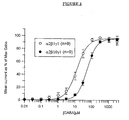
- Non-cumulative concentration-response curves to GABA were constructed.
- the GABA EC 50 of HEK 293 cells transiently expressing the GABA A receptor subunit combination ⁇ 2 ⁇ 1 ⁇ 1 is significantly lower than that of HEK 293 cells transiently expressing the GABA A receptor subunit combination ⁇ 2 ⁇ 1 ⁇ 1 (see Figure 3).
- ⁇ 2 ⁇ 1 ⁇ 1 ⁇ 2 ⁇ 1 ⁇ 1 EC 50 16.7 ⁇ 3.7 nM 62.7 ⁇ 6.7 nM Slope 1.6 ⁇ 0.2 1.5 ⁇ 0.1
Landscapes
- Health & Medical Sciences (AREA)
- Life Sciences & Earth Sciences (AREA)
- Chemical & Material Sciences (AREA)
- Organic Chemistry (AREA)
- Medicinal Chemistry (AREA)
- Engineering & Computer Science (AREA)
- General Health & Medical Sciences (AREA)
- Biomedical Technology (AREA)
- Neurology (AREA)
- General Chemical & Material Sciences (AREA)
- Nuclear Medicine, Radiotherapy & Molecular Imaging (AREA)
- Chemical Kinetics & Catalysis (AREA)
- Pharmacology & Pharmacy (AREA)
- Neurosurgery (AREA)
- Animal Behavior & Ethology (AREA)
- Bioinformatics & Cheminformatics (AREA)
- Public Health (AREA)
- Veterinary Medicine (AREA)
- Cell Biology (AREA)
- Proteomics, Peptides & Aminoacids (AREA)
- Molecular Biology (AREA)
- Immunology (AREA)
- Toxicology (AREA)
- Zoology (AREA)
- Gastroenterology & Hepatology (AREA)
- Biochemistry (AREA)
- Biophysics (AREA)
- Genetics & Genomics (AREA)
- Anesthesiology (AREA)
- Pain & Pain Management (AREA)
- Peptides Or Proteins (AREA)
- Micro-Organisms Or Cultivation Processes Thereof (AREA)
- Acyclic And Carbocyclic Compounds In Medicinal Compositions (AREA)
- Medicines Containing Material From Animals Or Micro-Organisms (AREA)
- Nitrogen Condensed Heterocyclic Rings (AREA)
- Medicines That Contain Protein Lipid Enzymes And Other Medicines (AREA)
- Electrotherapy Devices (AREA)
- Measuring Pulse, Heart Rate, Blood Pressure Or Blood Flow (AREA)
- Radio Relay Systems (AREA)
- Saccharide Compounds (AREA)
Claims (13)
- Lignée cellulaire eucaryote co-transfectée de façon stable, comprenant un vecteur codant pour une sous-unité thêta du récepteur GABA humain telle que représentée dans SEQ ID n° 2 ou 4, ladite lignée cellulaire étant capable d'exprimer un récepteur GABA recombinant, lequel récepteur comprend une sous-unité de récepteur thêta telle que représentée dans SEQ ID n° 2 ou 4, au moins une sous-unité de récepteur alpha et éventuellement une ou plusieurs sous-unités de récepteur choisies parmi les sous-unités bêta, gamma, delta et epsilon.
- Lignée cellulaire selon la revendication 1, qui est une lignée de fibroblastes de rongeur.
- Procédé pour la production d'une lignée cellulaire eucaryote capable d'exprimer un récepteur GABA, comprenant la co-transfection de façon stable d'une cellule hôte eucaryote avec au moins deux vecteurs d'expression, un de ces vecteurs hébergeant la séquence d'ADNc codant pour la sous-unité de récepteur GABA thêta telle que représentée dans SEQ ID n° 1 ou 3, un autre de ces vecteurs hébergeant la séquence d'ADNc codant pour une sous-unité de récepteur GABA alpha, et éventuellement un ou plusieurs vecteurs supplémentaires hébergeant la séquence d'ADNc codant pour une sous-unité de récepteur GABA bêta, gamma, delta ou epsilon.
- Procédé selon la revendication 3, dans lequel la lignée cellulaire est une lignée de fibroblastes de rongeur.
- Molécule d'ADN isolée codant pour la sous-unité thêta du récepteur GABA humain, comprenant la séquence représentée dans SEQ ID n° 1 ou SEQ ID n°3.
- Vecteur d'expression recombinant, comprenant la séquence nucléotidique de la sous-unité thêta du récepteur GABA humain représentée dans SEQ ID n° 1 ou 3 conjointement avec des séquences supplémentaires capables de diriger la synthèse de ladite sous-unité thêta du récepteur GABA humain dans des cultures de cellules eucaryotes co-transfectées de façon stable.
- Préparation de protéine d'une association de sous-unités de récepteur GABA recombinantes, comprenant une sous-unité de récepteur thêta telle que représentée dans SEQ ID n° 2 ou 4, issue d'une lignée cellulaire selon la revendication 1 ou 2.
- Préparation de membrane contenant des associations de sous-unités de récepteur GABA recombinantes, comprenant une sous-unité de récepteur thêta telle que représentée dans SEQ ID n° 2 ou 4, issue d'une lignée cellulaire selon la revendication 1 ou 2.
- Préparation selon la revendication 7 ou 8, dans laquelle l'association de sous-unités issue est l'association de sous-unités α1γ2, α2β1γ1 ou α2β3γ2 du récepteur GABA.
- Utilisation d'une cellule selon la revendication 1 ou 2 ou d'une préparation de membrane provenant de celle-ci selon la revendication 8, dans le criblage à la recherche de et l'élaboration de médicaments agissant sur un récepteur GABA comprenant la sous-unité thêta.
- Procédé pour déterminer si un ligand, non connu comme étant capable de se fixer à un récepteur GABAA humain comprenant la sous-unité thêta, peut se fixer à un récepteur GABAA humain comprenant la sous-unité thêta, qui comprend la mise en contact d'une cellule de mammifère comprenant des molécules d'ADN codant pour au moins une sous-unité de récepteur alpha, la sous-unité de récepteur thêta, telle que représentée dans SEQ ID n° 1 ou 3, et éventuellement une ou plusieurs sous-unités de récepteur bêta, gamma, delta ou epsilon, avec le ligand dans des conditions permettant la fixation de ligands connus comme se fixant au récepteur GABAA, la détection de la présence de toute partie du ligand lié au récepteur GABAA comprenant la sous-unité thêta, ce qui permet de déterminer si le ligand se fixe au récepteur GABAA comprenant la sous-unité thêta.
- Procédé de criblage à la recherche de substances actives pour identifier des substances actives qui interagissent spécifiquement avec et se fixent à un récepteur GABAA humain comprenant la sous-unité thêta à la surface d'une cellule, qui comprend la mise en contact d'une cellule de mammifère comprenant une molécule d'ADN codant pour au moins une sous-unité de récepteur alpha, la sous-unité de récepteur thêta, telle que représentée dans SEQ ID n° 1 ou 3, et éventuellement une ou plusieurs sous-unités de récepteur bêta, gamma, delta ou epsilon, à la surface d'une cellule, avec une pluralité de substances actives, la détermination des substances actives qui se fixent à la cellule de mammifère, et ainsi l'identification de substances actives qui interagissent spécifiquement avec les et se fixent aux récepteurs GABAA humains comprenant la sous-unité thêta.
- Polypeptide isolé de sous-unité thêta de récepteur GABAA, qui a la séquence d'aminoacides SEQ ID n° 2 ou SEQ ID n° 4.
Applications Claiming Priority (3)
| Application Number | Priority Date | Filing Date | Title |
|---|---|---|---|
| GB9708479 | 1997-04-25 | ||
| GBGB9708479.2A GB9708479D0 (en) | 1997-04-25 | 1997-04-25 | Nucleic acids |
| PCT/GB1998/001206 WO1998049293A1 (fr) | 1997-04-25 | 1998-04-24 | Sous-unite theta humaine du recepteur de gaba-a |
Publications (2)
| Publication Number | Publication Date |
|---|---|
| EP0977848A1 EP0977848A1 (fr) | 2000-02-09 |
| EP0977848B1 true EP0977848B1 (fr) | 2005-07-27 |
Family
ID=10811405
Family Applications (1)
| Application Number | Title | Priority Date | Filing Date |
|---|---|---|---|
| EP98917470A Expired - Lifetime EP0977848B1 (fr) | 1997-04-25 | 1998-04-24 | Sous-unite theta humaine du recepteur de gaba-a |
Country Status (11)
| Country | Link |
|---|---|
| US (1) | US6555341B1 (fr) |
| EP (1) | EP0977848B1 (fr) |
| JP (1) | JP2002501382A (fr) |
| AT (1) | ATE300612T1 (fr) |
| AU (1) | AU7069498A (fr) |
| CA (1) | CA2287782A1 (fr) |
| DE (1) | DE69830989T2 (fr) |
| DK (1) | DK0977848T3 (fr) |
| ES (1) | ES2244057T3 (fr) |
| GB (1) | GB9708479D0 (fr) |
| WO (1) | WO1998049293A1 (fr) |
Families Citing this family (4)
| Publication number | Priority date | Publication date | Assignee | Title |
|---|---|---|---|---|
| AU7151601A (en) * | 2000-06-27 | 2002-01-08 | Lexicon Genetics Inc | Novel human gaba receptors and polynucleotides encoding the same |
| EP1500703A3 (fr) * | 2000-06-27 | 2005-02-16 | Lexicon Genetics Incorporated | Récepteurs gaba humains et polynucléotides les codant |
| WO2007002359A2 (fr) * | 2005-06-24 | 2007-01-04 | The Regents Of The University Of California | Methodes d'identification d'agents modulateurs du recepteur gaba contenant la sous-unite delta |
| US20100311610A1 (en) * | 2008-02-01 | 2010-12-09 | Chromocell Corporation | CELL LINES AND METHODS FOR MAKING AND USING THEM (As Amended) |
Family Cites Families (2)
| Publication number | Priority date | Publication date | Assignee | Title |
|---|---|---|---|---|
| DE69333923T2 (de) | 1992-12-10 | 2006-08-03 | Merck Sharp & Dohme Ltd., Hoddesdon | Stabil transfizierte Zelllinien welche Gaba-A- Rezeptoren mit der Untereinheitenzusammensetzung alpha-3, beta-3 und gamma-2 exprimieren |
| GB9408064D0 (en) | 1994-04-22 | 1994-06-15 | Merck Sharp & Dohme | Nucleic acids |
-
1997
- 1997-04-25 GB GBGB9708479.2A patent/GB9708479D0/en active Pending
-
1998
- 1998-04-24 US US09/403,667 patent/US6555341B1/en not_active Expired - Fee Related
- 1998-04-24 DK DK98917470T patent/DK0977848T3/da active
- 1998-04-24 CA CA002287782A patent/CA2287782A1/fr not_active Abandoned
- 1998-04-24 AT AT98917470T patent/ATE300612T1/de not_active IP Right Cessation
- 1998-04-24 DE DE69830989T patent/DE69830989T2/de not_active Expired - Fee Related
- 1998-04-24 WO PCT/GB1998/001206 patent/WO1998049293A1/fr not_active Ceased
- 1998-04-24 JP JP54672598A patent/JP2002501382A/ja not_active Ceased
- 1998-04-24 AU AU70694/98A patent/AU7069498A/en not_active Abandoned
- 1998-04-24 EP EP98917470A patent/EP0977848B1/fr not_active Expired - Lifetime
- 1998-04-24 ES ES98917470T patent/ES2244057T3/es not_active Expired - Lifetime
Non-Patent Citations (1)
| Title |
|---|
| TYNDALE R.F. ET AL: "Distinctive patterns of GABA-A receptor subunit mRNAs in 13 cell lines", JOURNAL OF NEUROSCIENCE, vol. 14, no. 9, September 1994 (1994-09-01), US, pages 5417 - 5428 * |
Also Published As
| Publication number | Publication date |
|---|---|
| EP0977848A1 (fr) | 2000-02-09 |
| DE69830989D1 (de) | 2005-09-01 |
| CA2287782A1 (fr) | 1998-11-05 |
| WO1998049293A1 (fr) | 1998-11-05 |
| JP2002501382A (ja) | 2002-01-15 |
| ES2244057T3 (es) | 2005-12-01 |
| DE69830989T2 (de) | 2006-04-20 |
| DK0977848T3 (da) | 2005-11-14 |
| US6555341B1 (en) | 2003-04-29 |
| ATE300612T1 (de) | 2005-08-15 |
| GB9708479D0 (en) | 1997-06-18 |
| AU7069498A (en) | 1998-11-24 |
Similar Documents
| Publication | Publication Date | Title |
|---|---|---|
| JPH09509041A (ja) | ヒトカルシウムチャンネル組成物及びその使用方法 | |
| EP1605046B1 (fr) | Lignées cellulaires transfectées de manière stable exprimant des récepteurs GABA-A avec une combinaison de sous-unités alpha-2, beta-3 et gamma-2 | |
| JPH11505701A (ja) | プロスタグランジン受容体fp及び該受容体をコードするdna | |
| US6391561B1 (en) | Protein that enhances expression of potassium channels on cell surfaces and nucleic acids that encode the same | |
| EP0977848B1 (fr) | Sous-unite theta humaine du recepteur de gaba-a | |
| US7094877B2 (en) | Human vanilloid receptor VR3 protein | |
| US6753177B1 (en) | P-glycoproteins and uses thereof | |
| WO2002000719A2 (fr) | Nouveaux recepteurs | |
| US20150250854A1 (en) | Voltage gated calcium channel beta-subunit anchoring regulator protein and uses thereof | |
| KR100977824B1 (ko) | Epf 수용체 에세이, 화합물 및 치료학적 조성물 | |
| US7084259B2 (en) | G-protein coupled receptors | |
| US6635741B1 (en) | G-protein coupled receptor BCA-GPCR-3 | |
| EP0948617A1 (fr) | Nouvelle sequence d'adn-c clonee codant la sous-unite du recepteur gaba-a et lignees cellulaires co-transfectees de maniere stable | |
| AU2001245675A1 (en) | G-protein coupled receptors | |
| US20030083245A1 (en) | Novel receptors | |
| US20040002114A1 (en) | Nucleic acids encoding a G-protein coupled receptor involved in islet cell signaling | |
| US6548270B1 (en) | DNA encoding human acid-sensing ion channel BNaC4 (ASIC4) | |
| JPH10117791A (ja) | ヒトgタンパク質結合受容体hlyaz61 | |
| MXPA01000902A (en) | Nucleic acids encoding a g-protein coupled receptor involved in sensory transduction |
Legal Events
| Date | Code | Title | Description |
|---|---|---|---|
| PUAI | Public reference made under article 153(3) epc to a published international application that has entered the european phase |
Free format text: ORIGINAL CODE: 0009012 |
|
| 17P | Request for examination filed |
Effective date: 19991125 |
|
| AK | Designated contracting states |
Kind code of ref document: A1 Designated state(s): AT BE CH CY DE DK ES FI FR GB GR IE IT LI LU NL PT SE |
|
| 17Q | First examination report despatched |
Effective date: 20031126 |
|
| GRAP | Despatch of communication of intention to grant a patent |
Free format text: ORIGINAL CODE: EPIDOSNIGR1 |
|
| GRAS | Grant fee paid |
Free format text: ORIGINAL CODE: EPIDOSNIGR3 |
|
| GRAA | (expected) grant |
Free format text: ORIGINAL CODE: 0009210 |
|
| AK | Designated contracting states |
Kind code of ref document: B1 Designated state(s): AT BE CH CY DE DK ES FI FR GB GR IE IT LI LU NL PT SE |
|
| PG25 | Lapsed in a contracting state [announced via postgrant information from national office to epo] |
Ref country code: NL Free format text: LAPSE BECAUSE OF FAILURE TO SUBMIT A TRANSLATION OF THE DESCRIPTION OR TO PAY THE FEE WITHIN THE PRESCRIBED TIME-LIMIT Effective date: 20050727 Ref country code: FI Free format text: LAPSE BECAUSE OF FAILURE TO SUBMIT A TRANSLATION OF THE DESCRIPTION OR TO PAY THE FEE WITHIN THE PRESCRIBED TIME-LIMIT Effective date: 20050727 Ref country code: BE Free format text: LAPSE BECAUSE OF FAILURE TO SUBMIT A TRANSLATION OF THE DESCRIPTION OR TO PAY THE FEE WITHIN THE PRESCRIBED TIME-LIMIT Effective date: 20050727 Ref country code: AT Free format text: LAPSE BECAUSE OF FAILURE TO SUBMIT A TRANSLATION OF THE DESCRIPTION OR TO PAY THE FEE WITHIN THE PRESCRIBED TIME-LIMIT Effective date: 20050727 |
|
| REG | Reference to a national code |
Ref country code: GB Ref legal event code: FG4D |
|
| REG | Reference to a national code |
Ref country code: CH Ref legal event code: EP |
|
| REG | Reference to a national code |
Ref country code: IE Ref legal event code: FG4D |
|
| REF | Corresponds to: |
Ref document number: 69830989 Country of ref document: DE Date of ref document: 20050901 Kind code of ref document: P |
|
| PG25 | Lapsed in a contracting state [announced via postgrant information from national office to epo] |
Ref country code: SE Free format text: LAPSE BECAUSE OF FAILURE TO SUBMIT A TRANSLATION OF THE DESCRIPTION OR TO PAY THE FEE WITHIN THE PRESCRIBED TIME-LIMIT Effective date: 20051027 Ref country code: GR Free format text: LAPSE BECAUSE OF FAILURE TO SUBMIT A TRANSLATION OF THE DESCRIPTION OR TO PAY THE FEE WITHIN THE PRESCRIBED TIME-LIMIT Effective date: 20051027 |
|
| REG | Reference to a national code |
Ref country code: DK Ref legal event code: T3 |
|
| REG | Reference to a national code |
Ref country code: CH Ref legal event code: NV Representative=s name: E. BLUM & CO. PATENTANWAELTE |
|
| REG | Reference to a national code |
Ref country code: ES Ref legal event code: FG2A Ref document number: 2244057 Country of ref document: ES Kind code of ref document: T3 |
|
| PG25 | Lapsed in a contracting state [announced via postgrant information from national office to epo] |
Ref country code: PT Free format text: LAPSE BECAUSE OF FAILURE TO SUBMIT A TRANSLATION OF THE DESCRIPTION OR TO PAY THE FEE WITHIN THE PRESCRIBED TIME-LIMIT Effective date: 20051227 |
|
| NLV1 | Nl: lapsed or annulled due to failure to fulfill the requirements of art. 29p and 29m of the patents act | ||
| ET | Fr: translation filed | ||
| PG25 | Lapsed in a contracting state [announced via postgrant information from national office to epo] |
Ref country code: IE Free format text: LAPSE BECAUSE OF NON-PAYMENT OF DUE FEES Effective date: 20060424 |
|
| PLBE | No opposition filed within time limit |
Free format text: ORIGINAL CODE: 0009261 |
|
| STAA | Information on the status of an ep patent application or granted ep patent |
Free format text: STATUS: NO OPPOSITION FILED WITHIN TIME LIMIT |
|
| 26N | No opposition filed |
Effective date: 20060428 |
|
| REG | Reference to a national code |
Ref country code: IE Ref legal event code: MM4A |
|
| REG | Reference to a national code |
Ref country code: CH Ref legal event code: PFA Owner name: MERCK SHARP & DOHME LTD. Free format text: MERCK SHARP & DOHME LTD.#HERTFORD ROAD#HODDESDON, HERTFORDSHIRE EN11 9BU (GB) -TRANSFER TO- MERCK SHARP & DOHME LTD.#HERTFORD ROAD#HODDESDON, HERTFORDSHIRE EN11 9BU (GB) |
|
| PG25 | Lapsed in a contracting state [announced via postgrant information from national office to epo] |
Ref country code: LU Free format text: LAPSE BECAUSE OF NON-PAYMENT OF DUE FEES Effective date: 20060424 |
|
| PG25 | Lapsed in a contracting state [announced via postgrant information from national office to epo] |
Ref country code: CY Free format text: LAPSE BECAUSE OF FAILURE TO SUBMIT A TRANSLATION OF THE DESCRIPTION OR TO PAY THE FEE WITHIN THE PRESCRIBED TIME-LIMIT Effective date: 20050727 |
|
| PGFP | Annual fee paid to national office [announced via postgrant information from national office to epo] |
Ref country code: GB Payment date: 20090213 Year of fee payment: 12 |
|
| PGFP | Annual fee paid to national office [announced via postgrant information from national office to epo] |
Ref country code: ES Payment date: 20090508 Year of fee payment: 12 Ref country code: DK Payment date: 20090415 Year of fee payment: 12 |
|
| PGFP | Annual fee paid to national office [announced via postgrant information from national office to epo] |
Ref country code: IT Payment date: 20090421 Year of fee payment: 12 Ref country code: FR Payment date: 20090417 Year of fee payment: 12 Ref country code: DE Payment date: 20090420 Year of fee payment: 12 |
|
| PGFP | Annual fee paid to national office [announced via postgrant information from national office to epo] |
Ref country code: CH Payment date: 20090416 Year of fee payment: 12 |
|
| REG | Reference to a national code |
Ref country code: CH Ref legal event code: PL |
|
| REG | Reference to a national code |
Ref country code: DK Ref legal event code: EBP |
|
| GBPC | Gb: european patent ceased through non-payment of renewal fee |
Effective date: 20100424 |
|
| REG | Reference to a national code |
Ref country code: FR Ref legal event code: ST Effective date: 20101230 |
|
| PG25 | Lapsed in a contracting state [announced via postgrant information from national office to epo] |
Ref country code: LI Free format text: LAPSE BECAUSE OF NON-PAYMENT OF DUE FEES Effective date: 20100430 Ref country code: DE Free format text: LAPSE BECAUSE OF NON-PAYMENT OF DUE FEES Effective date: 20101103 Ref country code: CH Free format text: LAPSE BECAUSE OF NON-PAYMENT OF DUE FEES Effective date: 20100430 |
|
| PG25 | Lapsed in a contracting state [announced via postgrant information from national office to epo] |
Ref country code: IT Free format text: LAPSE BECAUSE OF NON-PAYMENT OF DUE FEES Effective date: 20100424 Ref country code: GB Free format text: LAPSE BECAUSE OF NON-PAYMENT OF DUE FEES Effective date: 20100424 |
|
| PG25 | Lapsed in a contracting state [announced via postgrant information from national office to epo] |
Ref country code: DK Free format text: LAPSE BECAUSE OF NON-PAYMENT OF DUE FEES Effective date: 20100503 |
|
| REG | Reference to a national code |
Ref country code: ES Ref legal event code: FD2A Effective date: 20110715 |
|
| PG25 | Lapsed in a contracting state [announced via postgrant information from national office to epo] |
Ref country code: ES Free format text: LAPSE BECAUSE OF NON-PAYMENT OF DUE FEES Effective date: 20110705 |
|
| PG25 | Lapsed in a contracting state [announced via postgrant information from national office to epo] |
Ref country code: ES Free format text: LAPSE BECAUSE OF NON-PAYMENT OF DUE FEES Effective date: 20100425 |
|
| PG25 | Lapsed in a contracting state [announced via postgrant information from national office to epo] |
Ref country code: FR Free format text: LAPSE BECAUSE OF NON-PAYMENT OF DUE FEES Effective date: 20100430 |