EP1002100B1 - Verfahren zur herstellung und identifizierung von neuen hydrolasen mit verbesserten eigenschaften - Google Patents
Verfahren zur herstellung und identifizierung von neuen hydrolasen mit verbesserten eigenschaften Download PDFInfo
- Publication number
- EP1002100B1 EP1002100B1 EP98938701A EP98938701A EP1002100B1 EP 1002100 B1 EP1002100 B1 EP 1002100B1 EP 98938701 A EP98938701 A EP 98938701A EP 98938701 A EP98938701 A EP 98938701A EP 1002100 B1 EP1002100 B1 EP 1002100B1
- Authority
- EP
- European Patent Office
- Prior art keywords
- hydrolase
- lipase
- process according
- mutants
- dsm
- Prior art date
- Legal status (The legal status is an assumption and is not a legal conclusion. Google has not performed a legal analysis and makes no representation as to the accuracy of the status listed.)
- Expired - Lifetime
Links
- 108090000604 Hydrolases Proteins 0.000 title claims abstract description 51
- 102000004157 Hydrolases Human genes 0.000 title claims abstract description 23
- 238000004519 manufacturing process Methods 0.000 title abstract description 12
- 238000006243 chemical reaction Methods 0.000 claims abstract description 44
- 108090001060 Lipase Proteins 0.000 claims description 90
- 239000004367 Lipase Substances 0.000 claims description 79
- 102000004882 Lipase Human genes 0.000 claims description 79
- 235000019421 lipase Nutrition 0.000 claims description 79
- 238000000034 method Methods 0.000 claims description 66
- 238000003752 polymerase chain reaction Methods 0.000 claims description 60
- 108090000623 proteins and genes Proteins 0.000 claims description 47
- 108020004414 DNA Proteins 0.000 claims description 44
- 238000012360 testing method Methods 0.000 claims description 38
- 239000012634 fragment Substances 0.000 claims description 30
- 108090000371 Esterases Proteins 0.000 claims description 29
- 230000035772 mutation Effects 0.000 claims description 29
- 230000008569 process Effects 0.000 claims description 28
- 150000001413 amino acids Chemical class 0.000 claims description 27
- 102000004169 proteins and genes Human genes 0.000 claims description 21
- 238000010998 test method Methods 0.000 claims description 15
- 150000001875 compounds Chemical class 0.000 claims description 13
- 239000013598 vector Substances 0.000 claims description 10
- 108091028043 Nucleic acid sequence Proteins 0.000 claims description 9
- 238000002703 mutagenesis Methods 0.000 claims description 9
- 231100000350 mutagenesis Toxicity 0.000 claims description 9
- 238000012163 sequencing technique Methods 0.000 claims description 9
- 239000000203 mixture Substances 0.000 claims description 8
- 150000001735 carboxylic acids Chemical class 0.000 claims description 6
- 230000002255 enzymatic effect Effects 0.000 claims description 6
- 238000000926 separation method Methods 0.000 claims description 6
- KDYFGRWQOYBRFD-UHFFFAOYSA-N Succinic acid Natural products OC(=O)CCC(O)=O KDYFGRWQOYBRFD-UHFFFAOYSA-N 0.000 claims description 5
- 108020004705 Codon Proteins 0.000 claims description 4
- JLVVSXFLKOJNIY-UHFFFAOYSA-N Magnesium ion Chemical compound [Mg+2] JLVVSXFLKOJNIY-UHFFFAOYSA-N 0.000 claims description 4
- 229910001425 magnesium ion Inorganic materials 0.000 claims description 4
- 238000002360 preparation method Methods 0.000 claims description 4
- 108010014303 DNA-directed DNA polymerase Proteins 0.000 claims description 3
- 102000016928 DNA-directed DNA polymerase Human genes 0.000 claims description 3
- 150000001408 amides Chemical class 0.000 claims description 3
- 239000007795 chemical reaction product Substances 0.000 claims description 3
- 238000012258 culturing Methods 0.000 claims description 3
- 238000013467 fragmentation Methods 0.000 claims description 3
- 238000006062 fragmentation reaction Methods 0.000 claims description 3
- 230000008859 change Effects 0.000 claims description 2
- 239000001384 succinic acid Substances 0.000 claims description 2
- 235000021588 free fatty acids Nutrition 0.000 claims 2
- 238000001712 DNA sequencing Methods 0.000 claims 1
- 108010053770 Deoxyribonucleases Proteins 0.000 claims 1
- 102000016911 Deoxyribonucleases Human genes 0.000 claims 1
- KDYFGRWQOYBRFD-NUQCWPJISA-N butanedioic acid Chemical compound O[14C](=O)CC[14C](O)=O KDYFGRWQOYBRFD-NUQCWPJISA-N 0.000 claims 1
- 125000003262 carboxylic acid ester group Chemical class [H]C([H])([*:2])OC(=O)C([H])([H])[*:1] 0.000 claims 1
- 125000000524 functional group Chemical group 0.000 claims 1
- 230000004807 localization Effects 0.000 claims 1
- 229910001437 manganese ion Inorganic materials 0.000 claims 1
- 238000005497 microtitration Methods 0.000 claims 1
- 230000002285 radioactive effect Effects 0.000 claims 1
- 239000001226 triphosphate Substances 0.000 claims 1
- 235000011178 triphosphate Nutrition 0.000 claims 1
- 125000002264 triphosphate group Chemical class [H]OP(=O)(O[H])OP(=O)(O[H])OP(=O)(O[H])O* 0.000 claims 1
- 230000003197 catalytic effect Effects 0.000 abstract description 4
- 108090000790 Enzymes Proteins 0.000 description 28
- 102000004190 Enzymes Human genes 0.000 description 27
- 229940088598 enzyme Drugs 0.000 description 25
- 101800001311 Capsid protein VP2 Proteins 0.000 description 23
- 238000000338 in vitro Methods 0.000 description 19
- 239000000047 product Substances 0.000 description 18
- 101800001092 Protein 3B Proteins 0.000 description 16
- 101800003106 VPg Proteins 0.000 description 16
- 101800001133 Viral protein genome-linked Proteins 0.000 description 16
- 230000006798 recombination Effects 0.000 description 16
- 238000005215 recombination Methods 0.000 description 16
- 238000012216 screening Methods 0.000 description 16
- 239000000758 substrate Substances 0.000 description 16
- 239000013612 plasmid Substances 0.000 description 15
- 239000002773 nucleotide Substances 0.000 description 14
- 125000003729 nucleotide group Chemical group 0.000 description 14
- 241000588724 Escherichia coli Species 0.000 description 11
- LFQSCWFLJHTTHZ-UHFFFAOYSA-N Ethanol Chemical compound CCO LFQSCWFLJHTTHZ-UHFFFAOYSA-N 0.000 description 11
- 239000007790 solid phase Substances 0.000 description 11
- 101800001065 Protein 2B Proteins 0.000 description 10
- 150000002148 esters Chemical class 0.000 description 10
- VEXZGXHMUGYJMC-UHFFFAOYSA-N Hydrochloric acid Chemical compound Cl VEXZGXHMUGYJMC-UHFFFAOYSA-N 0.000 description 9
- 150000001298 alcohols Chemical class 0.000 description 9
- 150000001412 amines Chemical class 0.000 description 9
- 239000012228 culture supernatant Substances 0.000 description 9
- 239000002609 medium Substances 0.000 description 9
- 230000036438 mutation frequency Effects 0.000 description 9
- IAZDPXIOMUYVGZ-UHFFFAOYSA-N Dimethylsulphoxide Chemical compound CS(C)=O IAZDPXIOMUYVGZ-UHFFFAOYSA-N 0.000 description 8
- 230000000875 corresponding effect Effects 0.000 description 8
- 230000000694 effects Effects 0.000 description 8
- ZMXDDKWLCZADIW-UHFFFAOYSA-N N,N-Dimethylformamide Chemical compound CN(C)C=O ZMXDDKWLCZADIW-UHFFFAOYSA-N 0.000 description 7
- 239000007983 Tris buffer Substances 0.000 description 7
- 235000014113 dietary fatty acids Nutrition 0.000 description 7
- 239000000194 fatty acid Substances 0.000 description 7
- 229930195729 fatty acid Natural products 0.000 description 7
- 238000004817 gas chromatography Methods 0.000 description 7
- 230000007062 hydrolysis Effects 0.000 description 7
- 238000006460 hydrolysis reaction Methods 0.000 description 7
- 238000005457 optimization Methods 0.000 description 7
- LENZDBCJOHFCAS-UHFFFAOYSA-N tris Chemical compound OCC(N)(CO)CO LENZDBCJOHFCAS-UHFFFAOYSA-N 0.000 description 7
- 241000894006 Bacteria Species 0.000 description 6
- 108010006785 Taq Polymerase Proteins 0.000 description 6
- 210000004027 cell Anatomy 0.000 description 6
- 238000004925 denaturation Methods 0.000 description 6
- 230000036425 denaturation Effects 0.000 description 6
- 238000011534 incubation Methods 0.000 description 6
- 108010042407 Endonucleases Proteins 0.000 description 5
- 102000004533 Endonucleases Human genes 0.000 description 5
- 230000008901 benefit Effects 0.000 description 5
- 150000004665 fatty acids Chemical class 0.000 description 5
- 108020004707 nucleic acids Proteins 0.000 description 5
- 150000007523 nucleic acids Chemical class 0.000 description 5
- 102000039446 nucleic acids Human genes 0.000 description 5
- 239000000243 solution Substances 0.000 description 5
- HBAQYPYDRFILMT-UHFFFAOYSA-N 8-[3-(1-cyclopropylpyrazol-4-yl)-1H-pyrazolo[4,3-d]pyrimidin-5-yl]-3-methyl-3,8-diazabicyclo[3.2.1]octan-2-one Chemical class C1(CC1)N1N=CC(=C1)C1=NNC2=C1N=C(N=C2)N1C2C(N(CC1CC2)C)=O HBAQYPYDRFILMT-UHFFFAOYSA-N 0.000 description 4
- 125000003275 alpha amino acid group Chemical group 0.000 description 4
- 238000013459 approach Methods 0.000 description 4
- 230000001580 bacterial effect Effects 0.000 description 4
- 239000000872 buffer Substances 0.000 description 4
- 238000012217 deletion Methods 0.000 description 4
- 230000037430 deletion Effects 0.000 description 4
- 239000007788 liquid Substances 0.000 description 4
- 238000005259 measurement Methods 0.000 description 4
- SAOSCTYRONNFTC-UHFFFAOYSA-N methyl-capric acid Natural products CCCCCCCCC(C)C(O)=O SAOSCTYRONNFTC-UHFFFAOYSA-N 0.000 description 4
- 230000008092 positive effect Effects 0.000 description 4
- 239000006228 supernatant Substances 0.000 description 4
- TVYAJJQTTAXNFA-AWEZNQCLSA-N (4-nitrophenyl) (2s)-2-methyldecanoate Chemical compound CCCCCCCC[C@H](C)C(=O)OC1=CC=C([N+]([O-])=O)C=C1 TVYAJJQTTAXNFA-AWEZNQCLSA-N 0.000 description 3
- FWMNVWWHGCHHJJ-SKKKGAJSSA-N 4-amino-1-[(2r)-6-amino-2-[[(2r)-2-[[(2r)-2-[[(2r)-2-amino-3-phenylpropanoyl]amino]-3-phenylpropanoyl]amino]-4-methylpentanoyl]amino]hexanoyl]piperidine-4-carboxylic acid Chemical compound C([C@H](C(=O)N[C@H](CC(C)C)C(=O)N[C@H](CCCCN)C(=O)N1CCC(N)(CC1)C(O)=O)NC(=O)[C@H](N)CC=1C=CC=CC=1)C1=CC=CC=C1 FWMNVWWHGCHHJJ-SKKKGAJSSA-N 0.000 description 3
- 241001301450 Crocidium multicaule Species 0.000 description 3
- YMWUJEATGCHHMB-UHFFFAOYSA-N Dichloromethane Chemical compound ClCCl YMWUJEATGCHHMB-UHFFFAOYSA-N 0.000 description 3
- 108091034117 Oligonucleotide Proteins 0.000 description 3
- 239000002253 acid Substances 0.000 description 3
- 239000011543 agarose gel Substances 0.000 description 3
- 238000000246 agarose gel electrophoresis Methods 0.000 description 3
- 150000001732 carboxylic acid derivatives Chemical class 0.000 description 3
- 238000006555 catalytic reaction Methods 0.000 description 3
- 238000005119 centrifugation Methods 0.000 description 3
- -1 fatty acid esters Chemical class 0.000 description 3
- 230000006872 improvement Effects 0.000 description 3
- 238000002955 isolation Methods 0.000 description 3
- 244000005700 microbiome Species 0.000 description 3
- SAOSCTYRONNFTC-SNVBAGLBSA-N (2r)-2-methyldecanoic acid Chemical compound CCCCCCCC[C@@H](C)C(O)=O SAOSCTYRONNFTC-SNVBAGLBSA-N 0.000 description 2
- ZKHQWZAMYRWXGA-KQYNXXCUSA-N Adenosine triphosphate Chemical compound C1=NC=2C(N)=NC=NC=2N1[C@@H]1O[C@H](COP(O)(=O)OP(O)(=O)OP(O)(O)=O)[C@@H](O)[C@H]1O ZKHQWZAMYRWXGA-KQYNXXCUSA-N 0.000 description 2
- ZKHQWZAMYRWXGA-UHFFFAOYSA-N Adenosine triphosphate Natural products C1=NC=2C(N)=NC=NC=2N1C1OC(COP(O)(=O)OP(O)(=O)OP(O)(O)=O)C(O)C1O ZKHQWZAMYRWXGA-UHFFFAOYSA-N 0.000 description 2
- 229920001817 Agar Polymers 0.000 description 2
- 241000283690 Bos taurus Species 0.000 description 2
- UDMBCSSLTHHNCD-UHFFFAOYSA-N Coenzym Q(11) Natural products C1=NC=2C(N)=NC=NC=2N1C1OC(COP(O)(O)=O)C(O)C1O UDMBCSSLTHHNCD-UHFFFAOYSA-N 0.000 description 2
- JPXZQMKKFWMMGK-KQYNXXCUSA-K IDP(3-) Chemical compound O[C@@H]1[C@H](O)[C@@H](COP([O-])(=O)OP([O-])([O-])=O)O[C@H]1N1C(N=CNC2=O)=C2N=C1 JPXZQMKKFWMMGK-KQYNXXCUSA-K 0.000 description 2
- HAEJPQIATWHALX-KQYNXXCUSA-J ITP(4-) Chemical compound O[C@@H]1[C@H](O)[C@@H](COP([O-])(=O)OP([O-])(=O)OP([O-])([O-])=O)O[C@H]1N1C(N=CNC2=O)=C2N=C1 HAEJPQIATWHALX-KQYNXXCUSA-J 0.000 description 2
- JLCPHMBAVCMARE-UHFFFAOYSA-N [3-[[3-[[3-[[3-[[3-[[3-[[3-[[3-[[3-[[3-[[3-[[5-(2-amino-6-oxo-1H-purin-9-yl)-3-[[3-[[3-[[3-[[3-[[3-[[5-(2-amino-6-oxo-1H-purin-9-yl)-3-[[5-(2-amino-6-oxo-1H-purin-9-yl)-3-hydroxyoxolan-2-yl]methoxy-hydroxyphosphoryl]oxyoxolan-2-yl]methoxy-hydroxyphosphoryl]oxy-5-(5-methyl-2,4-dioxopyrimidin-1-yl)oxolan-2-yl]methoxy-hydroxyphosphoryl]oxy-5-(6-aminopurin-9-yl)oxolan-2-yl]methoxy-hydroxyphosphoryl]oxy-5-(6-aminopurin-9-yl)oxolan-2-yl]methoxy-hydroxyphosphoryl]oxy-5-(6-aminopurin-9-yl)oxolan-2-yl]methoxy-hydroxyphosphoryl]oxy-5-(6-aminopurin-9-yl)oxolan-2-yl]methoxy-hydroxyphosphoryl]oxyoxolan-2-yl]methoxy-hydroxyphosphoryl]oxy-5-(5-methyl-2,4-dioxopyrimidin-1-yl)oxolan-2-yl]methoxy-hydroxyphosphoryl]oxy-5-(4-amino-2-oxopyrimidin-1-yl)oxolan-2-yl]methoxy-hydroxyphosphoryl]oxy-5-(5-methyl-2,4-dioxopyrimidin-1-yl)oxolan-2-yl]methoxy-hydroxyphosphoryl]oxy-5-(5-methyl-2,4-dioxopyrimidin-1-yl)oxolan-2-yl]methoxy-hydroxyphosphoryl]oxy-5-(6-aminopurin-9-yl)oxolan-2-yl]methoxy-hydroxyphosphoryl]oxy-5-(6-aminopurin-9-yl)oxolan-2-yl]methoxy-hydroxyphosphoryl]oxy-5-(4-amino-2-oxopyrimidin-1-yl)oxolan-2-yl]methoxy-hydroxyphosphoryl]oxy-5-(4-amino-2-oxopyrimidin-1-yl)oxolan-2-yl]methoxy-hydroxyphosphoryl]oxy-5-(4-amino-2-oxopyrimidin-1-yl)oxolan-2-yl]methoxy-hydroxyphosphoryl]oxy-5-(6-aminopurin-9-yl)oxolan-2-yl]methoxy-hydroxyphosphoryl]oxy-5-(4-amino-2-oxopyrimidin-1-yl)oxolan-2-yl]methyl [5-(6-aminopurin-9-yl)-2-(hydroxymethyl)oxolan-3-yl] hydrogen phosphate Polymers Cc1cn(C2CC(OP(O)(=O)OCC3OC(CC3OP(O)(=O)OCC3OC(CC3O)n3cnc4c3nc(N)[nH]c4=O)n3cnc4c3nc(N)[nH]c4=O)C(COP(O)(=O)OC3CC(OC3COP(O)(=O)OC3CC(OC3COP(O)(=O)OC3CC(OC3COP(O)(=O)OC3CC(OC3COP(O)(=O)OC3CC(OC3COP(O)(=O)OC3CC(OC3COP(O)(=O)OC3CC(OC3COP(O)(=O)OC3CC(OC3COP(O)(=O)OC3CC(OC3COP(O)(=O)OC3CC(OC3COP(O)(=O)OC3CC(OC3COP(O)(=O)OC3CC(OC3COP(O)(=O)OC3CC(OC3COP(O)(=O)OC3CC(OC3COP(O)(=O)OC3CC(OC3COP(O)(=O)OC3CC(OC3COP(O)(=O)OC3CC(OC3CO)n3cnc4c(N)ncnc34)n3ccc(N)nc3=O)n3cnc4c(N)ncnc34)n3ccc(N)nc3=O)n3ccc(N)nc3=O)n3ccc(N)nc3=O)n3cnc4c(N)ncnc34)n3cnc4c(N)ncnc34)n3cc(C)c(=O)[nH]c3=O)n3cc(C)c(=O)[nH]c3=O)n3ccc(N)nc3=O)n3cc(C)c(=O)[nH]c3=O)n3cnc4c3nc(N)[nH]c4=O)n3cnc4c(N)ncnc34)n3cnc4c(N)ncnc34)n3cnc4c(N)ncnc34)n3cnc4c(N)ncnc34)O2)c(=O)[nH]c1=O JLCPHMBAVCMARE-UHFFFAOYSA-N 0.000 description 2
- 150000007513 acids Chemical class 0.000 description 2
- UDMBCSSLTHHNCD-KQYNXXCUSA-N adenosine 5'-monophosphate Chemical compound C1=NC=2C(N)=NC=NC=2N1[C@@H]1O[C@H](COP(O)(O)=O)[C@@H](O)[C@H]1O UDMBCSSLTHHNCD-KQYNXXCUSA-N 0.000 description 2
- 229950006790 adenosine phosphate Drugs 0.000 description 2
- 229960001456 adenosine triphosphate Drugs 0.000 description 2
- 239000008272 agar Substances 0.000 description 2
- AVKUERGKIZMTKX-NJBDSQKTSA-N ampicillin Chemical compound C1([C@@H](N)C(=O)N[C@H]2[C@H]3SC([C@@H](N3C2=O)C(O)=O)(C)C)=CC=CC=C1 AVKUERGKIZMTKX-NJBDSQKTSA-N 0.000 description 2
- 229960000723 ampicillin Drugs 0.000 description 2
- 238000000137 annealing Methods 0.000 description 2
- 239000011942 biocatalyst Substances 0.000 description 2
- 238000010170 biological method Methods 0.000 description 2
- 239000000969 carrier Substances 0.000 description 2
- 238000012219 cassette mutagenesis Methods 0.000 description 2
- 238000013375 chromatographic separation Methods 0.000 description 2
- 238000010367 cloning Methods 0.000 description 2
- 238000013461 design Methods 0.000 description 2
- 208000001848 dysentery Diseases 0.000 description 2
- 230000012010 growth Effects 0.000 description 2
- 238000009396 hybridization Methods 0.000 description 2
- 150000002500 ions Chemical class 0.000 description 2
- 229950006238 nadide Drugs 0.000 description 2
- 229930027945 nicotinamide-adenine dinucleotide Natural products 0.000 description 2
- BOPGDPNILDQYTO-NNYOXOHSSA-N nicotinamide-adenine dinucleotide Chemical compound C1=CCC(C(=O)N)=CN1[C@H]1[C@H](O)[C@H](O)[C@@H](COP(O)(=O)OP(O)(=O)OC[C@@H]2[C@H]([C@@H](O)[C@@H](O2)N2C3=NC=NC(N)=C3N=C2)O)O1 BOPGDPNILDQYTO-NNYOXOHSSA-N 0.000 description 2
- 239000003960 organic solvent Substances 0.000 description 2
- 210000000496 pancreas Anatomy 0.000 description 2
- 229920000136 polysorbate Polymers 0.000 description 2
- 238000000746 purification Methods 0.000 description 2
- 239000011541 reaction mixture Substances 0.000 description 2
- 108091008146 restriction endonucleases Proteins 0.000 description 2
- 238000002741 site-directed mutagenesis Methods 0.000 description 2
- 238000003786 synthesis reaction Methods 0.000 description 2
- 230000009466 transformation Effects 0.000 description 2
- TVYAJJQTTAXNFA-CQSZACIVSA-N (4-nitrophenyl) (2r)-2-methyldecanoate Chemical compound CCCCCCCC[C@@H](C)C(=O)OC1=CC=C([N+]([O-])=O)C=C1 TVYAJJQTTAXNFA-CQSZACIVSA-N 0.000 description 1
- QKNYBSVHEMOAJP-UHFFFAOYSA-N 2-amino-2-(hydroxymethyl)propane-1,3-diol;hydron;chloride Chemical compound Cl.OCC(N)(CO)CO QKNYBSVHEMOAJP-UHFFFAOYSA-N 0.000 description 1
- BFSVOASYOCHEOV-UHFFFAOYSA-N 2-diethylaminoethanol Chemical compound CCN(CC)CCO BFSVOASYOCHEOV-UHFFFAOYSA-N 0.000 description 1
- BTJIUGUIPKRLHP-UHFFFAOYSA-M 4-nitrophenolate Chemical compound [O-]C1=CC=C([N+]([O-])=O)C=C1 BTJIUGUIPKRLHP-UHFFFAOYSA-M 0.000 description 1
- 241001136792 Alle Species 0.000 description 1
- 240000007124 Brassica oleracea Species 0.000 description 1
- 102000012410 DNA Ligases Human genes 0.000 description 1
- 108010061982 DNA Ligases Proteins 0.000 description 1
- 102000007260 Deoxyribonuclease I Human genes 0.000 description 1
- 108010008532 Deoxyribonuclease I Proteins 0.000 description 1
- KCXVZYZYPLLWCC-UHFFFAOYSA-N EDTA Chemical compound OC(=O)CN(CC(O)=O)CCN(CC(O)=O)CC(O)=O KCXVZYZYPLLWCC-UHFFFAOYSA-N 0.000 description 1
- 241000196324 Embryophyta Species 0.000 description 1
- 230000005526 G1 to G0 transition Effects 0.000 description 1
- 241001465754 Metazoa Species 0.000 description 1
- 102000016943 Muramidase Human genes 0.000 description 1
- 108010014251 Muramidase Proteins 0.000 description 1
- 108010062010 N-Acetylmuramoyl-L-alanine Amidase Proteins 0.000 description 1
- BAWFJGJZGIEFAR-NNYOXOHSSA-N NAD zwitterion Chemical compound NC(=O)C1=CC=C[N+]([C@H]2[C@@H]([C@H](O)[C@@H](COP([O-])(=O)OP(O)(=O)OC[C@@H]3[C@H]([C@@H](O)[C@@H](O3)N3C4=NC=NC(N)=C4N=C3)O)O2)O)=C1 BAWFJGJZGIEFAR-NNYOXOHSSA-N 0.000 description 1
- 239000004793 Polystyrene Substances 0.000 description 1
- VYPSYNLAJGMNEJ-UHFFFAOYSA-N Silicium dioxide Chemical compound O=[Si]=O VYPSYNLAJGMNEJ-UHFFFAOYSA-N 0.000 description 1
- 239000004098 Tetracycline Substances 0.000 description 1
- 238000010521 absorption reaction Methods 0.000 description 1
- 230000003321 amplification Effects 0.000 description 1
- 238000004458 analytical method Methods 0.000 description 1
- 239000003242 anti bacterial agent Substances 0.000 description 1
- 229940088710 antibiotic agent Drugs 0.000 description 1
- 239000007864 aqueous solution Substances 0.000 description 1
- WHGYBXFWUBPSRW-FOUAGVGXSA-N beta-cyclodextrin Chemical compound OC[C@H]([C@H]([C@@H]([C@H]1O)O)O[C@H]2O[C@@H]([C@@H](O[C@H]3O[C@H](CO)[C@H]([C@@H]([C@H]3O)O)O[C@H]3O[C@H](CO)[C@H]([C@@H]([C@H]3O)O)O[C@H]3O[C@H](CO)[C@H]([C@@H]([C@H]3O)O)O[C@H]3O[C@H](CO)[C@H]([C@@H]([C@H]3O)O)O3)[C@H](O)[C@H]2O)CO)O[C@@H]1O[C@H]1[C@H](O)[C@@H](O)[C@@H]3O[C@@H]1CO WHGYBXFWUBPSRW-FOUAGVGXSA-N 0.000 description 1
- 230000008033 biological extinction Effects 0.000 description 1
- 230000033228 biological regulation Effects 0.000 description 1
- 230000015572 biosynthetic process Effects 0.000 description 1
- 230000036983 biotransformation Effects 0.000 description 1
- 238000004364 calculation method Methods 0.000 description 1
- FPPNZSSZRUTDAP-UWFZAAFLSA-N carbenicillin Chemical compound N([C@H]1[C@H]2SC([C@@H](N2C1=O)C(O)=O)(C)C)C(=O)C(C(O)=O)C1=CC=CC=C1 FPPNZSSZRUTDAP-UWFZAAFLSA-N 0.000 description 1
- 229960003669 carbenicillin Drugs 0.000 description 1
- 125000003178 carboxy group Chemical group [H]OC(*)=O 0.000 description 1
- 150000001733 carboxylic acid esters Chemical class 0.000 description 1
- 239000003054 catalyst Substances 0.000 description 1
- 238000004113 cell culture Methods 0.000 description 1
- 239000006285 cell suspension Substances 0.000 description 1
- 210000002421 cell wall Anatomy 0.000 description 1
- 238000003889 chemical engineering Methods 0.000 description 1
- 239000007805 chemical reaction reactant Substances 0.000 description 1
- 238000004587 chromatography analysis Methods 0.000 description 1
- 210000000349 chromosome Anatomy 0.000 description 1
- 238000004140 cleaning Methods 0.000 description 1
- 239000005515 coenzyme Substances 0.000 description 1
- 230000002596 correlated effect Effects 0.000 description 1
- 238000010580 coupled enzyme reaction Methods 0.000 description 1
- 230000008878 coupling Effects 0.000 description 1
- 238000010168 coupling process Methods 0.000 description 1
- 238000005859 coupling reaction Methods 0.000 description 1
- 230000009089 cytolysis Effects 0.000 description 1
- SUYVUBYJARFZHO-RRKCRQDMSA-N dATP Chemical compound C1=NC=2C(N)=NC=NC=2N1[C@H]1C[C@H](O)[C@@H](COP(O)(=O)OP(O)(=O)OP(O)(O)=O)O1 SUYVUBYJARFZHO-RRKCRQDMSA-N 0.000 description 1
- SUYVUBYJARFZHO-UHFFFAOYSA-N dATP Natural products C1=NC=2C(N)=NC=NC=2N1C1CC(O)C(COP(O)(=O)OP(O)(=O)OP(O)(O)=O)O1 SUYVUBYJARFZHO-UHFFFAOYSA-N 0.000 description 1
- RGWHQCVHVJXOKC-SHYZEUOFSA-J dCTP(4-) Chemical compound O=C1N=C(N)C=CN1[C@@H]1O[C@H](COP([O-])(=O)OP([O-])(=O)OP([O-])([O-])=O)[C@@H](O)C1 RGWHQCVHVJXOKC-SHYZEUOFSA-J 0.000 description 1
- HAAZLUGHYHWQIW-KVQBGUIXSA-N dGTP Chemical compound C1=NC=2C(=O)NC(N)=NC=2N1[C@H]1C[C@H](O)[C@@H](COP(O)(=O)OP(O)(=O)OP(O)(O)=O)O1 HAAZLUGHYHWQIW-KVQBGUIXSA-N 0.000 description 1
- NHVNXKFIZYSCEB-XLPZGREQSA-N dTTP Chemical compound O=C1NC(=O)C(C)=CN1[C@@H]1O[C@H](COP(O)(=O)OP(O)(=O)OP(O)(O)=O)[C@@H](O)C1 NHVNXKFIZYSCEB-XLPZGREQSA-N 0.000 description 1
- 238000001514 detection method Methods 0.000 description 1
- 238000009826 distribution Methods 0.000 description 1
- 229940079593 drug Drugs 0.000 description 1
- 239000003814 drug Substances 0.000 description 1
- 238000004520 electroporation Methods 0.000 description 1
- 238000010828 elution Methods 0.000 description 1
- 238000010931 ester hydrolysis Methods 0.000 description 1
- DNJIEGIFACGWOD-UHFFFAOYSA-N ethyl mercaptane Natural products CCS DNJIEGIFACGWOD-UHFFFAOYSA-N 0.000 description 1
- 230000010429 evolutionary process Effects 0.000 description 1
- 238000002474 experimental method Methods 0.000 description 1
- 239000013604 expression vector Substances 0.000 description 1
- 210000001723 extracellular space Anatomy 0.000 description 1
- 239000003925 fat Substances 0.000 description 1
- 238000010359 gene isolation Methods 0.000 description 1
- 238000010353 genetic engineering Methods 0.000 description 1
- 239000001963 growth medium Substances 0.000 description 1
- 125000002887 hydroxy group Chemical group [H]O* 0.000 description 1
- 210000003000 inclusion body Anatomy 0.000 description 1
- 238000003780 insertion Methods 0.000 description 1
- 230000037431 insertion Effects 0.000 description 1
- BPHPUYQFMNQIOC-NXRLNHOXSA-N isopropyl beta-D-thiogalactopyranoside Chemical compound CC(C)S[C@@H]1O[C@H](CO)[C@H](O)[C@H](O)[C@H]1O BPHPUYQFMNQIOC-NXRLNHOXSA-N 0.000 description 1
- 235000019626 lipase activity Nutrition 0.000 description 1
- 238000009630 liquid culture Methods 0.000 description 1
- 229960000274 lysozyme Drugs 0.000 description 1
- 239000004325 lysozyme Substances 0.000 description 1
- 235000010335 lysozyme Nutrition 0.000 description 1
- 230000000873 masking effect Effects 0.000 description 1
- 239000012528 membrane Substances 0.000 description 1
- 230000000813 microbial effect Effects 0.000 description 1
- 238000010369 molecular cloning Methods 0.000 description 1
- 231100000219 mutagenic Toxicity 0.000 description 1
- 230000003505 mutagenic effect Effects 0.000 description 1
- 239000005445 natural material Substances 0.000 description 1
- 230000007935 neutral effect Effects 0.000 description 1
- 238000003199 nucleic acid amplification method Methods 0.000 description 1
- 239000003921 oil Substances 0.000 description 1
- 230000003287 optical effect Effects 0.000 description 1
- 239000012074 organic phase Substances 0.000 description 1
- 125000000636 p-nitrophenyl group Chemical group [H]C1=C([H])C(=C([H])C([H])=C1*)[N+]([O-])=O 0.000 description 1
- 239000012188 paraffin wax Substances 0.000 description 1
- 239000008188 pellet Substances 0.000 description 1
- 210000001322 periplasm Anatomy 0.000 description 1
- 229920000642 polymer Polymers 0.000 description 1
- 229920002223 polystyrene Polymers 0.000 description 1
- 150000003138 primary alcohols Chemical class 0.000 description 1
- 150000003141 primary amines Chemical class 0.000 description 1
- 239000011814 protection agent Substances 0.000 description 1
- 230000012846 protein folding Effects 0.000 description 1
- 230000035484 reaction time Effects 0.000 description 1
- 230000001105 regulatory effect Effects 0.000 description 1
- 230000010076 replication Effects 0.000 description 1
- 150000003333 secondary alcohols Chemical class 0.000 description 1
- 150000003335 secondary amines Chemical class 0.000 description 1
- 230000035945 sensitivity Effects 0.000 description 1
- 239000000741 silica gel Substances 0.000 description 1
- 229910002027 silica gel Inorganic materials 0.000 description 1
- 239000002904 solvent Substances 0.000 description 1
- 239000007858 starting material Substances 0.000 description 1
- 230000000707 stereoselective effect Effects 0.000 description 1
- 239000000126 substance Substances 0.000 description 1
- 150000003509 tertiary alcohols Chemical class 0.000 description 1
- 229960002180 tetracycline Drugs 0.000 description 1
- 229930101283 tetracycline Natural products 0.000 description 1
- 235000019364 tetracycline Nutrition 0.000 description 1
- 150000003522 tetracyclines Chemical class 0.000 description 1
- 238000005809 transesterification reaction Methods 0.000 description 1
- 230000007704 transition Effects 0.000 description 1
- 238000000870 ultraviolet spectroscopy Methods 0.000 description 1
- DGVVWUTYPXICAM-UHFFFAOYSA-N β‐Mercaptoethanol Chemical compound OCCS DGVVWUTYPXICAM-UHFFFAOYSA-N 0.000 description 1
Images





Classifications
-
- C—CHEMISTRY; METALLURGY
- C12—BIOCHEMISTRY; BEER; SPIRITS; WINE; VINEGAR; MICROBIOLOGY; ENZYMOLOGY; MUTATION OR GENETIC ENGINEERING
- C12N—MICROORGANISMS OR ENZYMES; COMPOSITIONS THEREOF; PROPAGATING, PRESERVING, OR MAINTAINING MICROORGANISMS; MUTATION OR GENETIC ENGINEERING; CULTURE MEDIA
- C12N15/00—Mutation or genetic engineering; DNA or RNA concerning genetic engineering, vectors, e.g. plasmids, or their isolation, preparation or purification; Use of hosts therefor
- C12N15/09—Recombinant DNA-technology
- C12N15/10—Processes for the isolation, preparation or purification of DNA or RNA
- C12N15/102—Mutagenizing nucleic acids
-
- C—CHEMISTRY; METALLURGY
- C12—BIOCHEMISTRY; BEER; SPIRITS; WINE; VINEGAR; MICROBIOLOGY; ENZYMOLOGY; MUTATION OR GENETIC ENGINEERING
- C12N—MICROORGANISMS OR ENZYMES; COMPOSITIONS THEREOF; PROPAGATING, PRESERVING, OR MAINTAINING MICROORGANISMS; MUTATION OR GENETIC ENGINEERING; CULTURE MEDIA
- C12N9/00—Enzymes; Proenzymes; Compositions thereof; Processes for preparing, activating, inhibiting, separating or purifying enzymes
- C12N9/14—Hydrolases (3)
- C12N9/16—Hydrolases (3) acting on ester bonds (3.1)
- C12N9/18—Carboxylic ester hydrolases (3.1.1)
- C12N9/20—Triglyceride splitting, e.g. by means of lipase
-
- C—CHEMISTRY; METALLURGY
- C12—BIOCHEMISTRY; BEER; SPIRITS; WINE; VINEGAR; MICROBIOLOGY; ENZYMOLOGY; MUTATION OR GENETIC ENGINEERING
- C12Q—MEASURING OR TESTING PROCESSES INVOLVING ENZYMES, NUCLEIC ACIDS OR MICROORGANISMS; COMPOSITIONS OR TEST PAPERS THEREFOR; PROCESSES OF PREPARING SUCH COMPOSITIONS; CONDITION-RESPONSIVE CONTROL IN MICROBIOLOGICAL OR ENZYMOLOGICAL PROCESSES
- C12Q1/00—Measuring or testing processes involving enzymes, nucleic acids or microorganisms; Compositions therefor; Processes of preparing such compositions
- C12Q1/34—Measuring or testing processes involving enzymes, nucleic acids or microorganisms; Compositions therefor; Processes of preparing such compositions involving hydrolase
- C12Q1/44—Measuring or testing processes involving enzymes, nucleic acids or microorganisms; Compositions therefor; Processes of preparing such compositions involving hydrolase involving esterase
Definitions
- the present invention relates to a method for producing and Identification of hydrolase mutants with improved properties with regard to their stereo or regioselectivity, catalytic activity or stability in chemical reactions.
- Hydrolases are among the most widely used enzymes in organic synthesis. As a subgroup of hydrolases, esterases and lipases in particular catalyze a large number of reactions, such as the hydrolysis of carboxylic acid esters, or the synthesis of esters or transesterifications in organic solvents. Their high stereoselectivity, stability and good availability make them interesting for numerous industrial processes. For example, lipases are already used industrially for the resolution of chiral alcohols, acids or amines, for the preparation of enantiomerically pure drugs, natural substances, crop protection agents or high-quality fats and oils (K. Faber, Biotransformations in Organic Chemistry, Springer-Verlag, Berlin, 2nd ed 1995).
- cassette mutagenesis cassette mutagenesis
- oligonucleotides are used with partially randomized sequences. This results in a limited library of mutants, which can then be tested for their properties.
- the invention was therefore based on the object of a simple method for producing mutated hydrolases, in particular lipases or esterases, with improved stereo or Regioselectivity, catalytic activity and stability towards given substrates (e.g. To develop carboxylic acids, alcohols, amines and their derivatives), which also a Rapid identification of positive mutants from extensive mutant libraries enables, as well as the use of the enzymes thus produced in the resolution of racemates of chiral alcohols, acids and amines and their derivatives.
- the production of the new biocatalysts usually begins with the isolation of a lipase or esterase gene from the original organism. All microbial, plant and animal organisms that carry a lipase or esterase gene are suitable for this. Gene isolation can be carried out according to the methods known from the literature (J. Sambrook, EF Fritsch, T. Maniatis, Molecular Cloning: A Laboratory Manual , Cold Spring Harbor Laboratory Press, 1989, New York). For this purpose, the genomic DNA is generally fragmented with the aid of restriction endonucleases and the gene fragments obtained are cloned in a host organism (for example E. coli ). In hybridization experiments, the gene is then identified in the library and subsequently isolated using oligonucleotides which are sequence-homologous to a section of the lipase or esterase gene.
- PCR polymerase chain reaction
- the purified PCR products are used to determine the mutation frequency sequenced. By comparing the sequences obtained with the Sequence of the wild-type gene allows the mutation frequency to be determined.
- Table 1 shows the dependence of the mutation frequency on the concentration of the above-mentioned PCR reaction components in the amplification of the lipase gene from P. aeruginosa (lipA) .
- attempt Mg 2+ (mM) Mn 2+ (mM) dATP / dGTP (mM) dTTP / dCTP (mM) Frequency of mutations (mutations / 1000 bp ) 1 6.1 - 0.2 0.2 1-2 2 7.0 0.5 0.2 1.0 15-20
- the mutated lipase or esterase genes obtained by the described method are ligated into a suitable expression vector and then transformed into a host organism, for example E. coli .
- the transformed cells are then spread out on agar plates and cultivated. If there is a sufficiently high expression rate, the colonies obtained can be transferred to microtiter plates provided with liquid medium and can be used directly for the screening test after the growth.
- the individual bacterial clones which contain a mutated lipase or esterase gene, are transferred from the agar plates into the troughs of commercially available microtiter plates, where they are grown in liquid medium. Microtiter plates with 96 troughs per plate are preferably used for this.
- the growth of the bacteria can be controlled by measuring the cell density (OD 600 value). It is advantageous to inoculate a second microtiter plate in this way in order to have a reference for the later identification of positive clones. This is expediently mixed with gycerin after the bacteria have grown and stored at -80 ° C. until identification. If the bacteria secrete the enzyme into the extracellular space (eg in the case of the P.
- the cells are centrifuged off in the microtiter plates and the supernatant with the lipase or esterase activity is used for the screening test.
- the bacteria eg E. coli
- cell wall lysis must be carried out beforehand, and methods known from the literature, such as lysozyme treatment, can be used.
- the isolated lipase or esterase gene is used again in a PCR ( mutagenizing PCR ) modified according to the conditions specified above. This procedure can be repeated until the properties of the lipase or esterase mutant meet the requirements for stereoselective implementation.
- the method described can be expanded such that the DNA of several positive mutants is first fragmented and then in a combinatorial process according to WPC Stemmer (Nature, 1994, 370, 389) to functional lipase or esterase -Gen can be reassembled.
- the in vitro recombinant library obtained in this way is then expressed and the recombinant gene products are examined for improved enantioselectivity using the test methods according to the invention.
- the advantage of this method is that, due to the recombination, the positive properties of different lipase or esterase mutants can add up in a new recombinant gene, which can ultimately lead to a further improvement of the lipase or esterase.
- the procedure described is as follows:
- the lipase or esterase genes are first cleaved into fragments with the aid of the enzyme DNAse I (eg from bovine pancreas) with a preferred length between 25 bp and 100 bp.
- the size of the fragments can be separated by means of agarose gel electrophoresis and compare with corresponding DNA length markers.
- the DNA fragments obtained in this way are purified in order to free them from adhering DNAse.
- the in vitro recombination is carried out under the conditions of a conventional PCR, with no PCR primers being added. As with conventional PCR, a cycle is divided into three steps: a) denaturation, b) annealing and c) elongation.
- annealing there is a hybridization of sequence homologous fragments, which can come from different mutated lipase or esterase genes.
- the strands are completed by the DNA polymerase, so that new, recombinant lipase genes are finally obtained.
- the optimal number of cycles is determined in a preliminary test. For this purpose, a small sample of the reaction mixture is separated after every 5 cycles by means of agarose gel electrophoresis and the cycle is determined from this, in which the maximum size distribution of the recombinants is in the range of the size of the enzyme gene. A number of cycles between 30 and 45 is preferably selected.
- the band obtained in the agarose gel which corresponds in size to the lipase or esterase gene, is purified and amplified by a conventional PCR.
- the PCR product is purified and, after ligation, transformed into a suitable vector (plasmid) for E. coli .
- plasmid plasmid
- the recombinants obtained are grown for the test for enantioselectivity in microtiter plates.
- the described methods of mutagenizing PCR and in vitro recombination for generating mutation or recombinant libraries can be carried out or repeated in succession in any order and frequency in order to optimize the enantioselectivity of the lipase or esterase.
- At least one mutation cycle is preferably carried out at the beginning by means of mutagenizing PCR .
- An in vitro recombination cycle can then follow, using the best positive mutant clones in each case.
- the optimization process can be followed by checking the enantioselectivity of the enzyme mutants obtained.
- library can then be expressed and screened for improved enantioselectivity.
- Positive lipase or esterase mutants which are screened by Mutant or recombinant libraries have been identified can be further optimized with the help of site-directed saturation mutagenesis.
- the positive mutation in the lipase or esterase gene first localized by sequencing. Then this gene using any site-directed mutagenesis method that allows multiple base changes, changed so that all possible Codons arise at the site of the gene that are to be optimized for Position encoded. In this way you get a limited size Library of mutants in which the amino acid position to be optimized the originally present amino acid through the remaining 19 Amino acids is replaced. The limited mutant library thus obtained can then be expressed and after improved enantioselectivity be screened.
- the lipase or esterase gene of the wild-type enzyme is used together with the positive mutants found for in vitro recombination. This can lead to backcrosses in which mutations with neutral or negative properties can be eliminated.
- the obtained recombinant library can be examined for improved enantioselectivity after expression.
- hydrolase genes from different organisms are used for in vitro recombination, provided that they have sufficient sequence homology to the hydrolase gene originally used.
- the in vitro recombination is carried out under the conditions of the modified PCR described.
- the concentration of the Mg 2+ or Mn 2+ ions and that of the deoxynucleotides (dNTPs) are changed in order to specifically set the mutation frequency during the in vitro recombination.
- the invention further relates to test methods that identify of enzyme mutants with improved stereoselectivity or Enable regioselectivity from extensive mutant libraries. For this, two identical aliquots of the enzyme-containing supernatant are made up the centrifugation of the bacterial cells into adjacent troughs transferred to a new microtiter plate. After adding the two enantiomers The activity of the lipase or Esterase determined spectrophotometrically. The measurements are in one commercial spectrophotometer for microtiter plates performed. This enables a high sample throughput.
- the choice of Substrates depends on the type of chiral compound for which one Optimization of the lipase or esterase should be made. In particular the process is suitable for chiral carboxylic acids, alcohols and Amines.
- E app apparent enantioselectivities
- fatty acid esters of the two enantiomerically pure alcohols are used for the test for stereoselectivity.
- the chain length of the fatty acids is in the range from C 2 to.
- Primary, secondary and tertiary alcohols and their derivatives with at least one asymmetry center can be used as the alcohol component.
- Solutions of the esters of the (R) and (S) alcohols are hydrolyzed in adjacent troughs of a microtiter plate with culture supernatants of the hydrolase mutants.
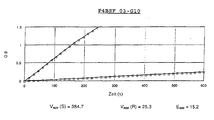
- the hydrolysis rates V app (R) and V app (S) of the (R) and (S) esters are a measure of the enantioselectivity of the enzyme mutant investigated.
- Detection takes place via a coupled enzyme reaction (HU Bergmeyer, Fundamentals of Enzymatic Analysis, Verlag Chemie, Weinheim, 1977), in which the continuous release of the fatty acid is monitored.
- the concentrations of the enzymes, cofactors and coenzymes of auxiliary reactions 2 and 3 (see formula 2) and indicator reaction 4 must be selected so that the lipase or esterase-catalyzed reaction to be determined is rate-determining.
- the quotient of the hydrolysis rates of the (R) - and (S) -ester corresponds to the apparent enantioselectivity (E app ).
- the fatty acid amides of chiral amines or NH 2 - or NHR-functionalized compounds are used instead of the enantiomerically pure esters.
- Formula 2 shows the scheme of the test system.
- the corresponding esters and amides of succinic acid can be used instead of the fatty acid esters or amides.
- these have the advantage of better solubility in aqueous solutions or aqueous-organic solvents.
- the hydrolase-catalyzed reaction 1 determines the rate.
- the quotient of the hydrolysis rates V app (R) and V app (S) of the (R) and (S) esters corresponds to the apparent enantioselectivity (E app ).
- the fatty acid amides of chiral amines are used instead of the enantiomerically pure esters. Both primary and secondary amines can be used as the amine component.
- the scheme of the test procedure is shown in Formula 3.
- the carrier modified in this way can be placed in small reaction vessels be distributed (e.g. into the troughs of microtiter plates) and then the culture supernatants of the hydrolase mutants are added.
- the radioactively labeled components (Carboxylic acid or alcohol) hydrolyzed from the solid phase and released into the liquid medium.
- An aliquot of the medium is then created removed and in a scintillation meter for the amount of radioactivity examined. From the ratio of the two different ones The enantiomeric excess and the conversion of the Reaction and thus the enantioselectivity of the mutated esterase or Lipase can be calculated.
- the tests described can also be used for identification of hydrolase mutants with improved regioselectivity.
- Hydrolase mutants can also use other catalysts to determine stereo or regioselectivity.
- the test for enantioselectivity using the method described Hydrolase mutants can also be produced by capillary electrophoretic Separation takes place using chirally modified capillaries, which is a direct separation of the enantiomeric substrates or products enable the hydrolase-catalyzed test reaction.
- the Test substrates can be used as a racemate.
- the separation can be both in capillaries as well as using prepared microchips, which is an electrophoretic separation and parallelization of the analyzes enable for the purpose of a high sample throughput. requirement is in both cases that the enantiomers are capillary electrophoretic are separable.
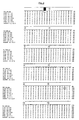
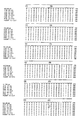
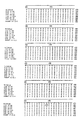
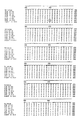
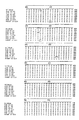
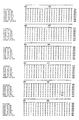
- Fig. 2 Comparison of the DNA sequences of the lipase mutants P1B 01-H1, P1B 01-E4, P2B 08-H3, P3B 13-D10, P4B 04-H3, P5B 14-C11 and P4BSF 03-G10 S155F with that Sequence of the wild-type lipase from P. aeruginosa (the mutated bases relative to the wild-type are boxed, the start of the mature lipase mutants is at base 163 or at base 162 in the wild-type).
- the gene of the lipase from P. aeruginosa was used for an optimization.
- the substrate on which the enantioselectivity of the lipase was to be improved was (R, S) -2-methyldecanoic acid.
- a mutant lipase should be developed with a preference for the (S) -enantiomer.
- the screening test was carried out with (R) - or (S) -2-methyl-decanoic acid p-nitrophenyl ester.
- E. coli JM109 is grown overnight (16h) at 37 ° C in 5 ml LB medium on a test tube roller.
- P. aeruginosa PABST7.1 1mM IPTG is added to the medium.
- P. aeruginosa PABST7.1 is grown in microtiter plates on a rotary shaker, the culture volume being 200 ⁇ l and the incubation being extended to 36-48 hours.
- Antibiotics are added in the following concentrations: E. coli JM109: ampicillin 100 ⁇ g / ml; P.aeruginosa PABST7.1: Carbenicillin 200 ⁇ g / ml, tetracycline 50 ⁇ g / ml
- the lipase gene lipA is amplified using the plasmid pMut5 linearized by endonuclease Xmn I and the following PCR primers: After cleaning the PCR product using a Qiagen Qiaquick Column®, it serves as a template in a mutagenic PCR reaction.
- reaction conditions are as follows: a 100 ⁇ l reaction volume contains 16.6 mM (NH 4 ) 2 SO 4 ; 67 mM Tris-HCl (pH 8.8); 6.1 mM MgCl 2 ; 6.7 ⁇ M EDTA (pH 8.0); 0.2 mM dNTPs; 10 mM mercaptoethanol; 10 ⁇ l DMSO; 10 pmol each of the primers; 0.1 ng template DNA and 1U Taq polymerase (Goldstar, Eurogentec).
- the reaction volume is covered with 100 ⁇ l paraffin. 10 parallel reactions were carried out, which were combined after the end of the reaction.
- the cycle protocol is as follows: after a 2 min denaturation at 98 ° C., 25 cycles with 1 min 94 ° C., 2 min 64 ° C. 1 min 72 ° C. on a Robocycler 40 (from Stratagen) follow, followed by a 7 min incubation at 72 ° C.
- the Taq polymerase is added after denaturation of the 1st cycle.
- the sequencing of the PCR products results in an error rate of approx. 1-2 base exchanges per 1000 bp.
- the PCR products are precipitated with ethanol and resuspended in A. dest. After restriction with Apal and BamHI , the resulting 1046 bp fragment is purified using a Qiagen Qiaquick Column® and ligated into the correspondingly prepared vector pUCPL6A for 2 h at RT using T4-DNA ligase (MBI Fermentas).
- the reaction volume is diluted 1: 5 and in 200 ul competent cells from E. coli JM109, which are prepared by the method of Hanahan ( J. Mol. Biol. 1983, 166, 557), are transformed. For this, DNA and cells are stored on ice for 1 h, incubated for 2 min at 42 ° C.
- the cell suspension is then plated onto LB (ampicillin 100 ⁇ g / ml) plates.
- 60 ng of the PCR product used in the ligation reaction yield approximately 1500 colonies. All colonies are resuspended in sterile LB medium, the plasmid DNA is purified and transformed into P. aeruginosa PABST7.1 by electroporation using the method of Farinha and Kropinski ( FEMS Microbiol. Lett. 1990, 70, 221).
- the 96 wells of the microtiter plates are inoculated with one colony each and treated as described in the section "Culturing Bacteria".
- the microtiter plates are centrifuged at 4000 rpm for 30 min.
- the lipase-containing culture supernatants obtained by centrifugation are pipetted into two equal aliquots in adjacent troughs of a microtiter plate.
- the test volume is 100 ⁇ l and consists of the following components (Table 2): Composition of the reaction mixture for the test for improved enantioselectivity of lipase mutants (R) approach (S) approach 50 ⁇ l culture supernatant 50 ⁇ l culture supernatant 40 ⁇ l 10 mM Tris / HCl buffer, pH 7.5 40 ⁇ l 10 mM Tris / HCl buffer, pH 7.5 10 ⁇ l substrate solution [10 mg / ml (R) -2-methyldecanoic acid p-nitrophenyl ester in DMF] 10 ⁇ l substrate solution [10 mg / ml (S) -2-methyldecanoic acid p-nitrophenyl ester in DMF]
- the microtiter plate After adding the Tris / HCl buffer to the supernatants, the microtiter plate is incubated at 30 ° C. for about 5 minutes. After the addition of the substrate solution, the reaction is monitored spectrophotometrically at 410 nm and 30 ° C. continuously for 10 minutes. Apparent enantioselectivity (E app ) is determined from the linear increase in the absorption curve, which is a measure of the constant initial rate of hydrolysis. For this purpose, the measured gradients are divided in the linear range of the initial rates of the reactions of the enantiomer pair and the value for the apparent enantioselectivity of the corresponding lipase mutant is obtained.
- E app Apparent enantioselectivity
- Selected positive clones are grown in 5 ml liquid cultures (LB medium) and the lipase-containing supernatant is used for the reaction after centrifugation and removal of the bacterial pellet.
- 100 ⁇ l of a solution of racemic (R , S) -2-methyldecanoic acid p -nitrophenyl ester (10 mg / ml in dimethylformamide) are used as the substrate. This is mixed with 700 ul 10 mM Tris / HCl buffer pH 7.5.
- the reaction is started by adding 100 ⁇ l of culture supernatant and carried out at 30 ° C. and 1000 rpm in Eppendorf reaction vessels.
- the DNA of clone P1B 01-E4 served as the starting point for a new round of PCR mutagenization.
- the plasmid pUCPL6A was isolated from the clone and, as described above, according to E. coli JM109 transformed. After preparation of the plasmid DNA, the 1046 bp fragment was obtained by restriction with Apal and BamHI and subsequent purification and ligated into the correspondingly prepared plasmid pMut5. After transformation and plasmid isolation, this plasmid served as template DNA in a mutagenizing PCR reaction under the conditions described above. The DNA obtained from the mutagenizing PCR was used to produce a new mutant library (2nd generation).
- the clone P2B 08-H3 was used for the next round of mutations (3rd generation) used.
- the clone P4B 04-H3 was used for the next round of mutations (5th generation) used.
- the mutations in the lipase genes could be localized by sequencing the positive mutants (see FIG. 2). After assigning the base triplets to the corresponding amino acids, the following amino acid exchanges result from the wild-type lipase from P. aeruginosa : P1B 01-H1 T103I (Thr 103 ⁇ Ile 103 ), S149G (Sen 149 ⁇ Gly 149 ) P1B 01-E4 S149G (Ser 149 ⁇ Gly 149 ) P2B 08-H3 S149G (Ser 149 ⁇ Gly 149 ), S155L (Ser 155 ⁇ Leu 155 ) P3B 13-D10 S149G (Ser 149 ⁇ Gly 149 ), S155L (Ser 155 ⁇ Leu 155 ), V47G (Val 47 ⁇ Gly 47 ) P4B 04-H3 S149G (Ser 149 ⁇ Gly 149 ), S155L (Ser 155 ⁇ Le
- Mutants P1B 01-E4, P2B 08-H3 and P3B 13-D10 were among the Designations DSM 11 658, DSM 11 659 and DSM 11 659 am July 16, 1997 at the DSMZ - German Collection of Microorganisms und Zellkulturen GmbH, D-38124 Braunschweig, Mascheroder Weg 1b, deposited.
- the mutants P5B 14-C11 and P4B 04-H3 were named DSM 12 320 and DSM 12 322 on July 20, 1998 at the DSMZ - German Collection of microorganisms and cell cultures GmbH, D-38124 Braunschweig, Mascheroder Weg 1b, deposited.
- Example 1 The regulations for the cultivation of the bacteria, the mutagenizing PCR and the test method for enantioselectivity are analogous to Example 1. In this example, however, extensive mutant libraries are produced by in vitro recombination.
- the DNA used for the in vitro recombination is either generated by mutagenizing PCR or is obtained by combining the DNA from any number of clones from one or more generations of clones which are produced by repeated mutagenizing PCR . If the PCR products of a mutagenizing PCR were the starting point for obtaining DNA for in vitro recombination, the procedure is as follows: The PCR products of the mutagenizing PCR (see Example 1) are purified and cut with the restriction endonucleases Apa I and BamH I , ligated into the correspondingly cut vector pMUTS and then according to E. coli JM 109 transformed. The plasmid DNA from all transformation clones is isolated.
- the plasmid DNA of the vector pMUT5 is isolated and combined with the respective variants of the P. aeruginosa lipase gene.
- the procedure is as follows: By restriction with the endonuclease Pvu II, a 1430 bp fragment is obtained which, in addition to the structural gene for the P. aeruginosa lipase, comprises the binding sites of the primers A and B already used in the mutagenizing PCR .
- This fragment is purified and divided into randomly generated fragments by incubation with deoxyribonuclease I (DNAse I from bovine pancreas ).
- deoxyribonuclease I DNAse I from bovine pancreas .
- the size of the fragments and the error rate of the subsequent reassembly can be influenced by the choice of the incubation conditions.
- these fragments can be obtained from agarose gels by selective electrotransfer to DEAE membrane (according to FM Ausubel, et al ., eds., Current Protocols in Molecular Biology , John Wiley and Sons, 1989). After the fragments have been cleaned by the Qiagen Nucleotide Removal Kit® (from Qiagen), the subsequent reassembly reaction is carried out.
- 1 ⁇ l from the reassembly reaction is used in a subsequent PCR reaction, which is composed of the following differences, as described for the reassembly reaction: Instead of the DNAse I-generated fragments, 1 ⁇ l of the reassembly reaction is used as template DNA.
- primers A and B are added in a concentration of 0.2 mM and 10% dimethyl sulfoxide.
- the cycle log is as follows: 2 min 98 ° C, 30 cycles of 1 min 94 ° C, 2 min 64 ° C, 1 min 72 ° C and finally 7 min 72 ° C; Parallel approaches are carried out.
- the PCR products resulting from these reactions are purified, restricted with the restriction donor apa I and Bam HI and cloned as described in the section "mutagenizing PCR" of Example 1.
- reaction conditions are as follows: a 50 ⁇ l reaction volume contains 75 mM Tris / HCl pH9.0 (at 25 ° C); 20 mM (NH 4 ) 2 SO 4 ; 1.5 mM MgCl 2 ; 0.01% (w / v) Tween® 20; 10% (v / v) DMSO; 10 pmol each of the primers; 0.1 ng of the template DNA and 2U Taq polymerase (Goldstar, Eurogentec).
- the cycle protocol is as follows: after 2 min denaturation at 98 ° C, 30 cycles with 1 min 94 ° C, 2 min 64 ° C, 1 min 72 ° C on a Robocycler 40 (from Stratagen) followed, followed by 7 min incubation at 72 ° C.
- the Taq polymerase is added after denaturation of the 1st cycle.
- the lipase gene is amplified on the plasmid pMut5 ⁇ AK 13D10 linearized by the endonuclease Xmnl using the following PCR primers and the reaction conditions described above:
- reaction conditions and the cycle protocol are as described above with the difference that the reaction batch 1-10 ng of Megaprimer can be added.
- the PCR products are cloned as described under cloning the PCR products.
- the mutant P4BSF 03-G10 was named DSM 12 321 on July 20, 1998 at the DSMZ - German Collection of Microorganisms and Zellkulturen GmbH, D-38124 Braunschweig, Mascheroder Path 1b, deposited.
Landscapes
- Chemical & Material Sciences (AREA)
- Life Sciences & Earth Sciences (AREA)
- Health & Medical Sciences (AREA)
- Organic Chemistry (AREA)
- Engineering & Computer Science (AREA)
- Wood Science & Technology (AREA)
- Genetics & Genomics (AREA)
- Zoology (AREA)
- Bioinformatics & Cheminformatics (AREA)
- General Engineering & Computer Science (AREA)
- Biotechnology (AREA)
- Biomedical Technology (AREA)
- Biochemistry (AREA)
- Molecular Biology (AREA)
- General Health & Medical Sciences (AREA)
- Microbiology (AREA)
- Biophysics (AREA)
- Proteomics, Peptides & Aminoacids (AREA)
- Physics & Mathematics (AREA)
- Plant Pathology (AREA)
- Crystallography & Structural Chemistry (AREA)
- Analytical Chemistry (AREA)
- Medicinal Chemistry (AREA)
- Immunology (AREA)
- Enzymes And Modification Thereof (AREA)
- Micro-Organisms Or Cultivation Processes Thereof (AREA)
- Preparation Of Compounds By Using Micro-Organisms (AREA)
- Chemical Or Physical Treatment Of Fibers (AREA)
- Measuring Or Testing Involving Enzymes Or Micro-Organisms (AREA)
Applications Claiming Priority (3)
| Application Number | Priority Date | Filing Date | Title |
|---|---|---|---|
| DE19731990A DE19731990A1 (de) | 1997-07-25 | 1997-07-25 | Verfahren zur Herstellung und Identifizierung von neuen Hydrolasen mit verbesserten Eigenschaften |
| DE19731990 | 1997-07-25 | ||
| PCT/EP1998/004612 WO1999005288A2 (de) | 1997-07-25 | 1998-07-23 | Verfahren zur herstellung und identifizierung von neuen hydrolasen mit verbesserten eigenschaften |
Publications (2)
| Publication Number | Publication Date |
|---|---|
| EP1002100A2 EP1002100A2 (de) | 2000-05-24 |
| EP1002100B1 true EP1002100B1 (de) | 2003-07-02 |
Family
ID=7836844
Family Applications (1)
| Application Number | Title | Priority Date | Filing Date |
|---|---|---|---|
| EP98938701A Expired - Lifetime EP1002100B1 (de) | 1997-07-25 | 1998-07-23 | Verfahren zur herstellung und identifizierung von neuen hydrolasen mit verbesserten eigenschaften |
Country Status (8)
| Country | Link |
|---|---|
| EP (1) | EP1002100B1 (da) |
| JP (1) | JP2001512663A (da) |
| AT (1) | ATE244309T1 (da) |
| CA (1) | CA2298069A1 (da) |
| DE (2) | DE19731990A1 (da) |
| DK (1) | DK1002100T3 (da) |
| ES (1) | ES2202883T3 (da) |
| WO (1) | WO1999005288A2 (da) |
Families Citing this family (4)
| Publication number | Priority date | Publication date | Assignee | Title |
|---|---|---|---|---|
| DE19913858A1 (de) * | 1999-03-26 | 2000-09-28 | Studiengesellschaft Kohle Mbh | High-Throughput-Screening-Verfahren zur Bestimmung der Enantioselektivität asymmetrisch verlaufender Reaktionen |
| AU4211600A (en) * | 1999-04-10 | 2000-11-14 | Maxygen, Inc. | Modified lipid production |
| DE10042451A1 (de) * | 2000-08-29 | 2002-03-14 | Studiengesellschaft Kohle Mbh | High-Throughput Verfahren zur Bestimmung der Enantiomereneinheit von chiralen Verbindungen |
| ES2713526T3 (es) * | 2009-07-17 | 2019-05-22 | Korea Advanced Inst Sci & Tech | Procedimiento de producción de ésteres alquílicos de ácidos grasos usando microorganismos que tienen capacidad de producir aceite |
Family Cites Families (11)
| Publication number | Priority date | Publication date | Assignee | Title |
|---|---|---|---|---|
| US4238195A (en) * | 1979-01-18 | 1980-12-09 | Miles Laboratories, Inc. | Fluorescer-labeled specific binding assays |
| DE3923921A1 (de) * | 1989-07-19 | 1991-01-24 | Biotechnolog Forschung Gmbh | Optischer biosensor |
| EP0443063A1 (en) * | 1990-02-22 | 1991-08-28 | Henkel Research Corporation | Pseudomonas lipase gene, vectors for the expression thereof, production of the lipase by transformed microorganisms and uses of this enzyme |
| CA2079802C (en) * | 1990-04-05 | 2001-09-18 | Roberto Crea | Walk-through mutagenesis |
| DE4210970C2 (de) * | 1992-04-02 | 1996-10-17 | Markus Dipl Chem Sauer | Verfahren zur simultanen optischen qualitativen und quantitativen Erfassung von verschiedenen mit Fluorochromen oder Fluorogenen markierten Molekülen eines Gemisches mittels Laserspektroskopie |
| JP3093039B2 (ja) * | 1992-06-30 | 2000-10-03 | 長瀬産業株式会社 | 新規エステル分解酵素aおよびその製造方法 |
| US5605793A (en) * | 1994-02-17 | 1997-02-25 | Affymax Technologies N.V. | Methods for in vitro recombination |
| DE4408152A1 (de) * | 1994-03-11 | 1995-09-14 | Studiengesellschaft Kohle Mbh | Immobilisierte Lipasen in hydrophoben Sol-Gel-Materialien |
| DE4413121A1 (de) * | 1994-04-17 | 1995-02-16 | Volker Prof Dr Schurig | Verfahren zur Enantiomerentrennung an chiralen Stationärphasen durch Flüssigchromatographie in Kapilarsäulen |
| FR2722798B1 (fr) * | 1994-07-25 | 1996-09-13 | Toulouse Inst Nat Polytech | 1procede de production d'acides gras2plantes oleagineuses |
| WO1997020918A1 (en) * | 1995-12-07 | 1997-06-12 | Recombinant Biocatalysis, Inc. | Method of screening for enzyme activity |
-
1997
- 1997-07-25 DE DE19731990A patent/DE19731990A1/de not_active Withdrawn
-
1998
- 1998-07-23 CA CA002298069A patent/CA2298069A1/en not_active Abandoned
- 1998-07-23 ES ES98938701T patent/ES2202883T3/es not_active Expired - Lifetime
- 1998-07-23 DE DE59808919T patent/DE59808919D1/de not_active Expired - Fee Related
- 1998-07-23 EP EP98938701A patent/EP1002100B1/de not_active Expired - Lifetime
- 1998-07-23 WO PCT/EP1998/004612 patent/WO1999005288A2/de not_active Ceased
- 1998-07-23 JP JP2000504261A patent/JP2001512663A/ja not_active Withdrawn
- 1998-07-23 AT AT98938701T patent/ATE244309T1/de not_active IP Right Cessation
- 1998-07-23 DK DK98938701T patent/DK1002100T3/da active
Also Published As
| Publication number | Publication date |
|---|---|
| ATE244309T1 (de) | 2003-07-15 |
| DE59808919D1 (de) | 2003-08-07 |
| WO1999005288A3 (de) | 1999-07-08 |
| CA2298069A1 (en) | 1999-02-04 |
| DE19731990A1 (de) | 1999-01-28 |
| JP2001512663A (ja) | 2001-08-28 |
| ES2202883T3 (es) | 2004-04-01 |
| WO1999005288A2 (de) | 1999-02-04 |
| DK1002100T3 (da) | 2003-10-27 |
| EP1002100A2 (de) | 2000-05-24 |
Similar Documents
| Publication | Publication Date | Title |
|---|---|---|
| EP1546405B1 (en) | Method for screening of a lipase having improved enzymatic activity using yeast surface display vector and the lipase | |
| DE69636721T2 (de) | Screeningverfahren für enzyme und enzymkits | |
| Nagata et al. | Cloning and sequencing of a dehalogenase gene encoding an enzyme with hydrolase activity involved in the degradation of gamma-hexachlorocyclohexane in Pseudomonas paucimobilis | |
| EP1409667B2 (en) | Process for preparing variant polynucleotides | |
| DE69631787T2 (de) | Verfahren zum screening enzymatischer aktivität | |
| EP0909821B1 (de) | Verfahren zur Änderung der Substratspezifität von Enzymen | |
| EP1002100B1 (de) | Verfahren zur herstellung und identifizierung von neuen hydrolasen mit verbesserten eigenschaften | |
| EP2267007B1 (de) | Neue, Polyaminosäuren bildende oder abbauende Genprodukte von Bacillus licheniformis und darauf aufbauende verbesserte biotechnologische Produktionsverfahren | |
| US6218167B1 (en) | Stable biocatalysts for ester hydrolysis | |
| DE10160066A1 (de) | Amidase aus Variovorax | |
| EP1343902A2 (de) | Rekombinante schweineleberesterasen, deren verwendung sowie ein verfahren zu deren herstellung | |
| JP2002515736A (ja) | エステル加水分解のための安定した生体触媒 | |
| EP0687736B1 (de) | Verfahren zur Herstellung von enantiomerenreinen Lactamen | |
| DE69920814T2 (de) | Thermostabile Esterase und deren Gen | |
| DE60126767T2 (de) | Neuartige (r)-2-hydroxy-3-phenylpropionat (d-phenyllaktat) dehydrogenase und für diese kodierendes gen | |
| US6218163B1 (en) | Stable biocatalysts for ester hydrolysis | |
| DE10149714A1 (de) | Esterase EstA aus Rhodococcus sp. | |
| DE10130169A1 (de) | Aktivierte rec-D-Hydantoinasen | |
| DE102004032995A1 (de) | Neue, sekretierte Genprodukte von Bacillus licheniformis und darauf aufbauende verbesserte biotechnologische Produktionsverfahren | |
| KR100479902B1 (ko) | 아시네토박토종 sy-01 리파제 변이체 코딩 유전자 및 이로부터 발현되는 리파제 | |
| EP0585767A2 (en) | Pseudomonas Lipase | |
| Fernández Álvaro | Engineering and analysis of the enantioselectivity of esterases | |
| WO2004013321A1 (de) | ESTERASE ESTA (XC4a) AUS XANTHOMONAS VESICATORIA | |
| CA2286481A1 (en) | Stable biocatalysts for ester hydrolysis | |
| WO2003018789A1 (de) | Esterase est4b1 aus bacillus subtilis |
Legal Events
| Date | Code | Title | Description |
|---|---|---|---|
| PUAI | Public reference made under article 153(3) epc to a published international application that has entered the european phase |
Free format text: ORIGINAL CODE: 0009012 |
|
| 17P | Request for examination filed |
Effective date: 20000122 |
|
| AK | Designated contracting states |
Kind code of ref document: A2 Designated state(s): AT BE CH DE DK ES FR GB IE IT LI NL SE |
|
| 17Q | First examination report despatched |
Effective date: 20010717 |
|
| GRAH | Despatch of communication of intention to grant a patent |
Free format text: ORIGINAL CODE: EPIDOS IGRA |
|
| GRAH | Despatch of communication of intention to grant a patent |
Free format text: ORIGINAL CODE: EPIDOS IGRA |
|
| GRAA | (expected) grant |
Free format text: ORIGINAL CODE: 0009210 |
|
| AK | Designated contracting states |
Designated state(s): AT BE CH DE DK ES FR GB IE IT LI NL SE |
|
| PG25 | Lapsed in a contracting state [announced via postgrant information from national office to epo] |
Ref country code: IT Free format text: LAPSE BECAUSE OF FAILURE TO SUBMIT A TRANSLATION OF THE DESCRIPTION OR TO PAY THE FEE WITHIN THE PRESCRIBED TIME-LIMIT;WARNING: LAPSES OF ITALIAN PATENTS WITH EFFECTIVE DATE BEFORE 2007 MAY HAVE OCCURRED AT ANY TIME BEFORE 2007. THE CORRECT EFFECTIVE DATE MAY BE DIFFERENT FROM THE ONE RECORDED. Effective date: 20030702 Ref country code: IE Free format text: LAPSE BECAUSE OF FAILURE TO SUBMIT A TRANSLATION OF THE DESCRIPTION OR TO PAY THE FEE WITHIN THE PRESCRIBED TIME-LIMIT Effective date: 20030702 |
|
| REG | Reference to a national code |
Ref country code: GB Ref legal event code: FG4D Free format text: NOT ENGLISH |
|
| REG | Reference to a national code |
Ref country code: CH Ref legal event code: NV Representative=s name: A. BRAUN, BRAUN, H?RITIER, ESCHMANN AG PATENTANWAE Ref country code: CH Ref legal event code: EP |
|
| REG | Reference to a national code |
Ref country code: IE Ref legal event code: FG4D Free format text: GERMAN |
|
| REF | Corresponds to: |
Ref document number: 59808919 Country of ref document: DE Date of ref document: 20030807 Kind code of ref document: P |
|
| PG25 | Lapsed in a contracting state [announced via postgrant information from national office to epo] |
Ref country code: SE Free format text: LAPSE BECAUSE OF FAILURE TO SUBMIT A TRANSLATION OF THE DESCRIPTION OR TO PAY THE FEE WITHIN THE PRESCRIBED TIME-LIMIT Effective date: 20031002 |
|
| GBT | Gb: translation of ep patent filed (gb section 77(6)(a)/1977) |
Effective date: 20031119 |
|
| REG | Reference to a national code |
Ref country code: IE Ref legal event code: FD4D |
|
| REG | Reference to a national code |
Ref country code: ES Ref legal event code: FG2A Ref document number: 2202883 Country of ref document: ES Kind code of ref document: T3 |
|
| PLBE | No opposition filed within time limit |
Free format text: ORIGINAL CODE: 0009261 |
|
| STAA | Information on the status of an ep patent application or granted ep patent |
Free format text: STATUS: NO OPPOSITION FILED WITHIN TIME LIMIT |
|
| ET | Fr: translation filed | ||
| 26N | No opposition filed |
Effective date: 20040405 |
|
| PGFP | Annual fee paid to national office [announced via postgrant information from national office to epo] |
Ref country code: FR Payment date: 20050721 Year of fee payment: 8 |
|
| PGFP | Annual fee paid to national office [announced via postgrant information from national office to epo] |
Ref country code: GB Payment date: 20050725 Year of fee payment: 8 Ref country code: DK Payment date: 20050725 Year of fee payment: 8 |
|
| PGFP | Annual fee paid to national office [announced via postgrant information from national office to epo] |
Ref country code: NL Payment date: 20050726 Year of fee payment: 8 Ref country code: AT Payment date: 20050726 Year of fee payment: 8 |
|
| PGFP | Annual fee paid to national office [announced via postgrant information from national office to epo] |
Ref country code: DE Payment date: 20050812 Year of fee payment: 8 Ref country code: CH Payment date: 20050812 Year of fee payment: 8 |
|
| PGFP | Annual fee paid to national office [announced via postgrant information from national office to epo] |
Ref country code: BE Payment date: 20050914 Year of fee payment: 8 |
|
| PGFP | Annual fee paid to national office [announced via postgrant information from national office to epo] |
Ref country code: ES Payment date: 20050920 Year of fee payment: 8 |
|
| PG25 | Lapsed in a contracting state [announced via postgrant information from national office to epo] |
Ref country code: GB Free format text: LAPSE BECAUSE OF NON-PAYMENT OF DUE FEES Effective date: 20060723 Ref country code: AT Free format text: LAPSE BECAUSE OF NON-PAYMENT OF DUE FEES Effective date: 20060723 |
|
| PG25 | Lapsed in a contracting state [announced via postgrant information from national office to epo] |
Ref country code: LI Free format text: LAPSE BECAUSE OF NON-PAYMENT OF DUE FEES Effective date: 20060731 Ref country code: DK Free format text: LAPSE BECAUSE OF NON-PAYMENT OF DUE FEES Effective date: 20060731 Ref country code: CH Free format text: LAPSE BECAUSE OF NON-PAYMENT OF DUE FEES Effective date: 20060731 Ref country code: BE Free format text: LAPSE BECAUSE OF NON-PAYMENT OF DUE FEES Effective date: 20060731 |
|
| PG25 | Lapsed in a contracting state [announced via postgrant information from national office to epo] |
Ref country code: NL Free format text: LAPSE BECAUSE OF NON-PAYMENT OF DUE FEES Effective date: 20070201 Ref country code: DE Free format text: LAPSE BECAUSE OF NON-PAYMENT OF DUE FEES Effective date: 20070201 |
|
| REG | Reference to a national code |
Ref country code: DK Ref legal event code: EBP |
|
| REG | Reference to a national code |
Ref country code: CH Ref legal event code: PL |
|
| GBPC | Gb: european patent ceased through non-payment of renewal fee |
Effective date: 20060723 |
|
| NLV4 | Nl: lapsed or anulled due to non-payment of the annual fee |
Effective date: 20070201 |
|
| REG | Reference to a national code |
Ref country code: FR Ref legal event code: ST Effective date: 20070330 |
|
| REG | Reference to a national code |
Ref country code: ES Ref legal event code: FD2A Effective date: 20060724 |
|
| BERE | Be: lapsed |
Owner name: STUDIENG.- *KOHLE M.B.H. Effective date: 20060731 |
|
| PG25 | Lapsed in a contracting state [announced via postgrant information from national office to epo] |
Ref country code: ES Free format text: LAPSE BECAUSE OF NON-PAYMENT OF DUE FEES Effective date: 20060724 |
|
| PG25 | Lapsed in a contracting state [announced via postgrant information from national office to epo] |
Ref country code: FR Free format text: LAPSE BECAUSE OF NON-PAYMENT OF DUE FEES Effective date: 20060731 |