EP1004670B1 - Hepatitis C Virus Genotypsequenzen sowie ihre Verwendung als Behandlungs- und Nachweismittel - Google Patents
Hepatitis C Virus Genotypsequenzen sowie ihre Verwendung als Behandlungs- und Nachweismittel Download PDFInfo
- Publication number
- EP1004670B1 EP1004670B1 EP99118783A EP99118783A EP1004670B1 EP 1004670 B1 EP1004670 B1 EP 1004670B1 EP 99118783 A EP99118783 A EP 99118783A EP 99118783 A EP99118783 A EP 99118783A EP 1004670 B1 EP1004670 B1 EP 1004670B1
- Authority
- EP
- European Patent Office
- Prior art keywords
- seq
- type
- hcv
- sequence
- topology
- Prior art date
- Legal status (The legal status is an assumption and is not a legal conclusion. Google has not performed a legal analysis and makes no representation as to the accuracy of the status listed.)
- Expired - Lifetime
Links
Images













































Classifications
-
- C—CHEMISTRY; METALLURGY
- C07—ORGANIC CHEMISTRY
- C07K—PEPTIDES
- C07K14/00—Peptides having more than 20 amino acids; Gastrins; Somatostatins; Melanotropins; Derivatives thereof
- C07K14/005—Peptides having more than 20 amino acids; Gastrins; Somatostatins; Melanotropins; Derivatives thereof from viruses
-
- A—HUMAN NECESSITIES
- A61—MEDICAL OR VETERINARY SCIENCE; HYGIENE
- A61P—SPECIFIC THERAPEUTIC ACTIVITY OF CHEMICAL COMPOUNDS OR MEDICINAL PREPARATIONS
- A61P1/00—Drugs for disorders of the alimentary tract or the digestive system
- A61P1/16—Drugs for disorders of the alimentary tract or the digestive system for liver or gallbladder disorders, e.g. hepatoprotective agents, cholagogues, litholytics
-
- A—HUMAN NECESSITIES
- A61—MEDICAL OR VETERINARY SCIENCE; HYGIENE
- A61P—SPECIFIC THERAPEUTIC ACTIVITY OF CHEMICAL COMPOUNDS OR MEDICINAL PREPARATIONS
- A61P31/00—Antiinfectives, i.e. antibiotics, antiseptics, chemotherapeutics
- A61P31/12—Antivirals
-
- A—HUMAN NECESSITIES
- A61—MEDICAL OR VETERINARY SCIENCE; HYGIENE
- A61P—SPECIFIC THERAPEUTIC ACTIVITY OF CHEMICAL COMPOUNDS OR MEDICINAL PREPARATIONS
- A61P31/00—Antiinfectives, i.e. antibiotics, antiseptics, chemotherapeutics
- A61P31/12—Antivirals
- A61P31/14—Antivirals for RNA viruses
-
- A—HUMAN NECESSITIES
- A61—MEDICAL OR VETERINARY SCIENCE; HYGIENE
- A61P—SPECIFIC THERAPEUTIC ACTIVITY OF CHEMICAL COMPOUNDS OR MEDICINAL PREPARATIONS
- A61P31/00—Antiinfectives, i.e. antibiotics, antiseptics, chemotherapeutics
- A61P31/12—Antivirals
- A61P31/20—Antivirals for DNA viruses
-
- A—HUMAN NECESSITIES
- A61—MEDICAL OR VETERINARY SCIENCE; HYGIENE
- A61K—PREPARATIONS FOR MEDICAL, DENTAL OR TOILETRY PURPOSES
- A61K38/00—Medicinal preparations containing peptides
-
- A—HUMAN NECESSITIES
- A61—MEDICAL OR VETERINARY SCIENCE; HYGIENE
- A61K—PREPARATIONS FOR MEDICAL, DENTAL OR TOILETRY PURPOSES
- A61K39/00—Medicinal preparations containing antigens or antibodies
-
- C—CHEMISTRY; METALLURGY
- C12—BIOCHEMISTRY; BEER; SPIRITS; WINE; VINEGAR; MICROBIOLOGY; ENZYMOLOGY; MUTATION OR GENETIC ENGINEERING
- C12N—MICROORGANISMS OR ENZYMES; COMPOSITIONS THEREOF; PROPAGATING, PRESERVING, OR MAINTAINING MICROORGANISMS; MUTATION OR GENETIC ENGINEERING; CULTURE MEDIA
- C12N2770/00—MICROORGANISMS OR ENZYMES; COMPOSITIONS THEREOF; PROPAGATING, PRESERVING, OR MAINTAINING MICROORGANISMS; MUTATION OR GENETIC ENGINEERING; CULTURE MEDIA ssRNA viruses positive-sense
- C12N2770/00011—Details
- C12N2770/24011—Flaviviridae
- C12N2770/24211—Hepacivirus, e.g. hepatitis C virus, hepatitis G virus
- C12N2770/24222—New viral proteins or individual genes, new structural or functional aspects of known viral proteins or genes
-
- Y—GENERAL TAGGING OF NEW TECHNOLOGICAL DEVELOPMENTS; GENERAL TAGGING OF CROSS-SECTIONAL TECHNOLOGIES SPANNING OVER SEVERAL SECTIONS OF THE IPC; TECHNICAL SUBJECTS COVERED BY FORMER USPC CROSS-REFERENCE ART COLLECTIONS [XRACs] AND DIGESTS
- Y02—TECHNOLOGIES OR APPLICATIONS FOR MITIGATION OR ADAPTATION AGAINST CLIMATE CHANGE
- Y02A—TECHNOLOGIES FOR ADAPTATION TO CLIMATE CHANGE
- Y02A50/00—TECHNOLOGIES FOR ADAPTATION TO CLIMATE CHANGE in human health protection, e.g. against extreme weather
- Y02A50/30—Against vector-borne diseases, e.g. mosquito-borne, fly-borne, tick-borne or waterborne diseases whose impact is exacerbated by climate change
Definitions
- the present invention relates more particularly to a composition
- a composition comprising or consisting of at least one polynucleic acid containing 8 or more contiguous nucleotides selected from at least one of the following HCV sequences:
- This adenine is designated as position 1 at the nucleic acid level, and this methionine is designated as position 1 at the amino acid level, in the present invention.
- type 1a isolates contain 1 extra amino acid in the NS5a region
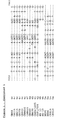
- coding sequences of type 1a and 1b have identical numbering in the Core, E1, NS3, and NS4 region, but will differ in the NS5b region as indicated in Table 1.
- Type 2 isolates have 4 extra amino acids in the E2 region, and 17 or 18 extra amino acids in the NS5 region compared to type 1 isolates, and will differ in numbering from type 1 isolates in the NS3/4 region and NS5b regions as indicated in Table 1.
- subtype corresponds to a group of HCV isolates of which the complete polyprotein shows a homology of more than 90% both at the nucleic acid and amino acid levels, or of which the NS5 region between nucleotide positions 7932 and 8271 shows a homology of more than 90% at the nucleic acid level to the corresponding parts of the genomes of the other isolates of the same group, with said numbering beginning with the adenine residue of the initiation codon of the HCV polyprotein.
- Isolates belonging to the same type but different subtypes of HCV show homologies of more than 74% at the nucleic acid level and of more than 78% at the amino acid level.
- the present invention relates to a polynucleic acid composition as defined above, wherein said polynucleic acids correspond to a nucleotide sequence selected from any of the following HCV type 5 genomic sequences:
- genomic HCV sequences depict sequences from the coding regions of all the above-mentioned sequences.
- said sequences of said composition are selected from:
- sequence variants of the polynucleic acids as selected from any of the nucleotide sequences as given in any of the above given SEQ ID numbers with said sequence variants containing either deletion and/or insertions of one or more nucleotides, mainly at the extremities of oligonucleotides (either 3' or 5'), or substitutions of some non-essential nucleotides (i.e.
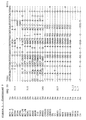
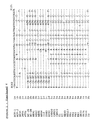
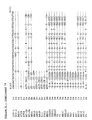
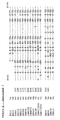
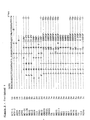
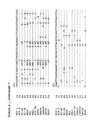
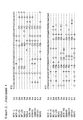
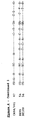
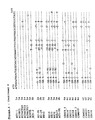
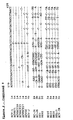
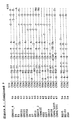
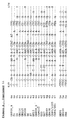
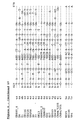
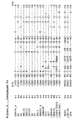
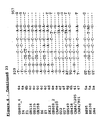
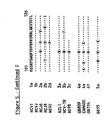
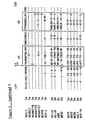
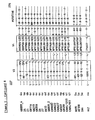
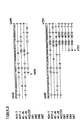
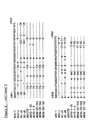
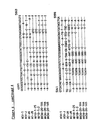
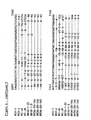
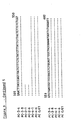
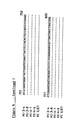
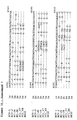
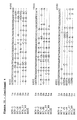
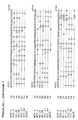
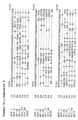
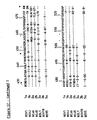
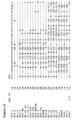
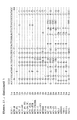
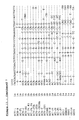
- nucleotides not essential to discriminate between different genotypes of HCV by others (including modified nucleotides, an/or inosine), for example, a type 1 or 2 sequence might be modified into a type 5 sequence by replacing some nucleotides of the type 1 or 2 sequence with type-specific nucleotides of type 5 as shown in Figure 3 (Core region), Figure 4 (Core/E1 region), Figure 10 (NS3 / NS4 region), Figure 14 (E1/E2 region).
- Polynucleic acid sequences According to the present invention which are homologous to the sequences as represented by a SEQ ID NO can be characterized and isolated according to any of the techniques known in the art, such as amplification by means of sequence-specific primers, hybridization with sequence-specific probes under more or less stringent conditions, serological screening methods (see examples 4 and 11) or via the LiPA typing system.
- the present invention relates also to a composition as defined above, wherein said polynucleic acid is liable to act as a primer for amplifying the nucleic acid of a certain isolate belonging to the genotype from which the primer is derived.
- primer refers to a single stranded DNA oligonucleotide sequence capable of acting as a point of initiation for synthesis of a primer extension product which is complementary to the nucleic acid strand to be copied.
- the length and the sequence of the primer must be such that they allow to prime the synthesis of the extension products.
- the primer is about 5-50 nucleotides. Specific length and sequence will depend on the complexity of the required DNA or RNA targets, as well as on the conditions of primer use such as temperature and ionic strength.
- the amplified products can be conveniently labelled either using labelled primers or by incorporating labelled nucleotides. Labels may be isotopic ( 32 P, 35 S, etc.) or non-isotopic (biotin, digoxigenin, etc.).
- the amplification reaction is repeated between 20 and 80 times, advantageously between 30 and 50 times.
- these probes are about 5 to 50 nucleotides long, more preferably from about 10 to 25 nucleotides.
- this technique could be performed in the Core or NS5B region.
- nucleic acid can also be referred to as analyte strand and corresponds to a single- or double-stranded nucleic acid molecule.
- This analyte strand is preferentially positive- or negative stranded RNA, cDNA or amplified cDNA.
- HCV subtype 2d primer refers to a primer which specifically amplifies HCV subtype 2d sequences present in a sample (see Examples section and figures).
- HCV type 4 primer refers to a primer which specifically amplifies HCV type 4 genomes present in a sample.
- universal HCV primer refers to oligonucleotide sequences complementary to any of the conserved regions of the HCV genome.
- labelled refers to the use of labelled nucleic acids. This may include the use of labelled nucleotides incorporated during the polymerase step of the amplification such as illustrated by Saiki et al. (1988) or Bej et al. (1990) or labelled primers, or by any other method known to the person skilled in the art.
- the expression "inferring the presence of one or more HCV genotypes present from the observed hybridization pattern” refers to the identification of the presence of HCV genomes in the sample by analyzing the pattern of binding of a panel of oligonucleotide probes. Single probes may provide useful information concerning the presence or absence of HCV genomes in a sample. On the other hand, the variation of the HCV genomes is dispersed in nature, so rarely is any one probe able to identify uniquely a specific HCV genome. Rather, the identity of an HCV genotype may be inferred from the pattern of binding of a panel of oligonucleotide probes, which are specific for (different) segments of the different HCV genomes.
- each known HCV genotype will correspond to a specific hybridization pattern upon use of a specific combination of probes.
- Each HCV genotype will also be able to be discriminated from, any other HCV genotype amplified with the same primers depending on the choice of the oligonucleotide probes. Comparison of the generated pattern of positively hybridizing probes for a sample containing one or more unkown HCV sequences to a scheme of expected hybridization patterns, allows one to clearly infer the HCV genotypes present in said sample.
- the target polynucleic acids are hybridized to a set of sequence-specific DNA probes targetting HCV genotypic regions located in the HCV polynucleic acids.
- An alternative and preferred method is a "reverse" dot-blot format, in which the amplified sequence contains a label.
- the unlabelled oligonucleotide probes are bound to a solid support and exposed to the labelled sample under appropriate stringent hybridization and subsequent washing conditions. It is to be understood that also any other assay method which relies on the formation of a hybrid between the nucleic acids of the sample and the oligonucleotide probes according to the present invention may be used.
- the process of detecting one or more HCV genotypes contained in a biological sample comprises the steps of contacting amplified HCV nucleic acid copies derived from the biological sample, with oligonucleotide probes which have been immobilized as parallel lines on a solid support.
- the probes are immobilized in a Line Probe Assay (LiPA) format.
- LiPA Line Probe Assay
- This is a reverse hybridization format (Saiki et al., 1989) using membrane strips onto which several oligonucleotide probes (including negative or positive control oligonucleotides) can be conveniently applied as parallel lines.
- Table 4 gives an overview of the amino acid substitutions which could be the basis of some of the muteins as defined above.
- polypeptides of the invention and particularly the fragments, can be prepared by classical chemical synthesis.
- the synthesis can be carried out in homogeneous solution or in solid phase.
- polypeptides of the invention can also be prepared in solid phase according to the methods described by Atherton and Shepard in their book entitled “Solid phase peptide synthesis” (IRL Press, Oxford, 1989 ).
- polypeptides according to this invention can be prepared by means of recombinant DNA techniques as described by Maniatis et al., Molecular Cloning: A Laboratory Manual, New York, Cold Spring Harbor Laboratory, 1982 ).
- the present invention relates particularly to a polypeptide or peptide composition as defined above, wherein said contiguous sequence contains in its sequence at least one of the following amino acid residues:
- M231 (detected in type 5) refers to a methionine at position 231.
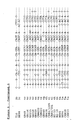
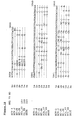
- a glutamine (Q) is present at the same position 231 in type 3 isolates, whereas this position is occupied by an arginine in type 1 isolates and by a lysine (K) or asparagine (N) in type 2 isolates (see Figure 5 ).
- the peptide or polypeptide according to this embodiment of the invention may be possibly labelled, or attached to a solid substrate, or coupled to a carrier molecule such as biotin, or mixed with a proper adjuvant.
- variable region in the core protein (V-CORE in Fig. 5 ) has been shown to be useful for serotyping (Machida et al., 1992).
- sequence of the disclosed type 5 sequence in this region shows type-specific features.
- the peptide from amino acid 70 to 78 shows the following unique sequence for the sequences of the present invention (see figure 5 ):
- V1 to V5 Five type-specific variable regions (V1 to V5) can be identified after aligning E1 amino acid sequences of the 4 genotypes, as shown in Figure 5 .
- Region V2 encompasses amino acids 213 to 223. The following unique sequences can be found in the V2 region as shown in Figure 5 :
- variable region in the E2 region (HVR-2) of type 5a as shown in Figure 12 spanning amino acid positions 471 to 484 is also a preferred peptide according to the present invention with the following sequence:
- Also comprised in the present invention is any synthetic peptide or polypeptide containing at least 5 contiguous amino acids derived from the above-defined peptides in their peptidic chain.
- the present invention relates to a composition as defined above, wherein said contiguous sequence is selected from any of the following HCV amino acid type 5 sequences:
- vector may comprise a plasmid, a cosmid, a phage, or a virus.
- the present invention also relates to a composition as defined above, wherein said polypeptide is a recombinant polypeptide expressed by means of an expression vector as defined above.
- the present invention also relates to a composition as defined above, for use in a method for immunizing a mammal, preferably humans, against HCV comprising administering a sufficient amount of the composition possibly accompanied by pharmaceutically acceptable adjuvants, to produce an immune response, more particularly, a vaccine composition including HCV type 5 polypeptides
- a vaccine composition including HCV type 5 polypeptides
- the present invention also relates to an antibody raised upon immunization with a composition as defined above by means of a process as defined above, with said antibody being reactive with any of the polypeptides as defined above, and with said antibody being preferably a monoclonal antibody.
- the monoclonal antibodies of the invention can be produced by any hybridoma liable to be formed according to classical methods from splenic cells of an animal, particularly from a mouse or rat, immunized against the HCV polypeptides according to the invention, or muteins thereof, or fragments thereof as defined above on the one hand, and of cells of a myeloma cell line on the other hand, and to be selected by the ability of the hybridoma to produce the monoclonal antibodies recognizing the polypeptides which has been initially used for the immunization of the animals.
- the antibodies involved in the invention can be labelled by an appropriate label of the enzymatic, fluorescent, or radioactive type.
- the monoclonal antibodies according to this preferred embodiment of the invention may be humanized versions of mouse monoclonal antibodies made by means of recombinant DNA technology, departing from parts of mouse and/or human genomic DNA sequences coding for H and L chains or from cDNA clones coding for H and L chains.
- the monoclonal antibodies according to this preferred embodiment of the invention may be human monoclonal antibodies.
- These antibodies according to the present embodiment of the invention can also be derived from human peripheral blood lymphocytes of patients infected with type 5 HCV, or vaccinated against HCV.
- Such human monoclonal antibodies are prepared, for instance, by means of human peripheral blood lymphocytes (PBL) repopulation of severe combined immune deficiency (SCID) mice (for recent review, see Duchosal et al. 1992).
- PBL peripheral blood lymphocytes
- SCID severe combined immune deficiency
- the invention also relates to the use of the proteins of the invention, muteins thereof, or peptides derived therefrom for the selection of recombinant antibodies by the process of repertoire cloning (Persson et al., 1991).
- Antibodies directed to peptides derived from a certaing genotype may be used either for the detection of such HCV genotypes, or as therapeutic agents.
- the present invention also relates to the use of a composition as defined above for incorporation into an immunoassay for detecting HCV, present in biological sample liable to contain it, comprising at least the following steps:
- the present invention also relates to the use of a composition as defined above, for incorporation into a serotyping assay for detecting one or more serological types of HCV present in a biological sample liable to contain it, more particularly for detecting E1 and NS4 antigens or antibodies of the different types to be detected combined in one assay format, comprising at least the following steps:
- the present invention also relates to the use of a composition as defined above, for immobilization on a solid substrate and incorporation into a reversed phase hybridization assay, preferably for immobilization as parallel lines onto a solid support such as a membrane strip, for determining the presence or the genotype of HCV according to a method as defined above.
- the present invention thus also relates to a kit for determining the presence of HCV genotypes as defined above present in a biological sample liable to contain them, comprising:
- genotype may also be detected by means of a type-specific antibody as defined above, which is linked to any polynucleotide sequence that can afterwards be amplified by PCR to detect the immune complex formed (immuno-PCR, Sano et al., 1992);
- the present invention also relates to a kit for determining the presence of HCV antibodies as defined above present in a biological sample liable to contain them, comprising:
- Example 1 The NS5b region of HCV type 3
- Type 3 sera selected by means of the INNO-LiPA HCV research kit (Stuyver et al., 1993) from a number of Brazilian blood donors, were positive in the HCV antibody ELISA (Innotest HCV Ab II; Innogenetics) and/or in the INNO-LIA HCV Ab II confirmation test (Innogenetics). Only those sera that were positive after the first round of PCR reactions (Stuyver et al., 1993) were retained for further study.
- Type 3a and 3b-specific primers in the NS5 region were selected from the published sequences (Mori et al., 1992) as follows:
- Example 2 The Core/E1 region of HCV type 3
- PCR primers were chosen in those regions of little sequence variation.
- This set of primers was selected to amplify the sequence from nucleotide 397 to 957 encoding amino acids 140 to 319 (Kato et al., 1990): 52 amino acids from the carboxyterminus of core and 128 amino acids of E1 (Kato et al., 1990).
- the amplification products BR36-9, BRR33-1, and HD10-2 were cloned as described (Stuyver et al., 1993). The following clones were obtained from the PCR fragments:
- hypervariable regions can be delineated: V1 from aa 192 to 203 (numbering according to Kato et al., 1990), V2 (213-223), V3 (230-242), V4 (248-257), and V5 (294-303).
- Such hydrophilic regions are thought to be exposed to the host defense mechanisms. This variability might therefore have been induced by the host's immune response.
- Additional putative N-linked glycosylation sites in the V4 region in all type 1b isolates known today and in the V5 region of HC-J8 (type 2b) possibly further contribute to modulation of the immune response. Therefore, analysis of this region, in the present invention, for type 3 and 4 sequences has been instrumental in the delineation of epitopes that reside in the V-regions of E1, which will be critical for future vaccine and diagnostics development.
- Example 3 The NS3/NS4 region of HCV Type 3
- the folllowing sets of primers were selected in the regions of little sequence variability after aligning the sequences of HCV-1 (Choo et al., 1991), HCV-J (Kato et al., 1990), HC-J6 (Okamoto et al., 1991), and HC-J8 (Okamoto et al., 1992) (smaller case lettering is used for nucleotides added for cloning purposes):
- the 464-bp HCPr152/66 fragment was obtained from serum BR36 (BR36-20) and serum HD10 (HD10-1). The following clones were obtained from these PCR products:
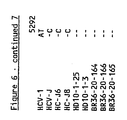
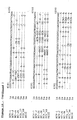
- nucleotide sequences obtained from clones with SEQ ID NO 29, 31, 33, 35, 37 or 39 are shown aligned with the sequences of prototype isolates of other types of HCV in Figure 6 .
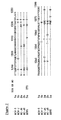
- one 2nd letter mutation resulted in an E to G substitution at position 175 of the deduced amino acid sequence of BR36 ( Fig. 7 ).
- Serum HD10 clones were completely identical.
- the two type 3 isolates were nearly 94% homologous in this NS4 region.
- the homologies with other types are presented in Table 5.
- NS4 sequence contains the information for an important epitope cluster, and since antibodies towards this region seem to exhibit little cross-reactivity (Chan et al., 1991), it was worthwhile to investigate the type-specific antibody response to this region.
- HCV-1 Choo et al., 1991
- HC-J6 Okamoto et al., 1991
- BR36 present invention
- three 20-mer peptides were synthesized covering the epitope region between amino acids 1688 and 1743 (as depicted in table 6). The synthetic peptides were applied as parallel lines onto membrane strips.
- genotype-specific synthetic peptides might be employed to develop serotyping assays, for example a mixture of the nine peptides as indicated above, or combined with the NS4 peptides from the HCV type 4 or 6 genotype or from new genotypes corresponding to the region between amino acids 1688 and 1743, or synthetic peptides of the NS4 region between amino acids 1688 and 1743 of at least one of the 6 genotypes, combined with the E1 protein or deletion mutants thereof, or synthetic E1 peptides of at least one of the genotypes.
- Such compositions could be further extended with type-specific peptides or proteins, including for example the region between amino acids 68 and 91 of the core protein, or more preferably the region between amino acids 68 and 78.
- type-specific antigens may be advantageously used to improve current diagnostic screening and confirmation assays and/or HCV vaccines.
- Example 5 The Core and E1 regions of HCV type 5
- Sample BE95 was selected from a group of sera that reacted positive in a prototype Line Probe Assay as described earlier (Stuyver et al., 1993), because a high-titer of HCV RNA could be detected, enabling cloning of fragments by a single round of PCR.
- the three sets of primers were employed to amplify the regions of the type 5 isolate PC as described (Stuyver et al., 1993).
- Set 1 was used to amplify the E1 region and yielded fragment PC-4
- set 2 was designed to yield the Core region and yielded fragment PC-2
- Set 3 was used to amplify the Core and E1 region and yielded fragment PC-3.
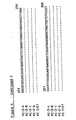
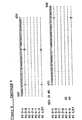
- the sequences obtained from the 5' and 3' ends of the clones are given in SEQ ID NOS 55, 57, 59, and 61, and the complete sequences with SEQ ID NO 197 and 199 are shown aligned with the sequences of prototype isolates of other types of HCV in Figure 10 and the alignment of the deduced amino acid sequences is shown in Figure 11 and 7 .
- the PCR artifact clone contained HCV information.
- the positions of the sequences within the HCV genome are compatible with a contiguous HCV sequence of 1437 nucleotides, which was the estimated size of the cloned PCR artifact fragment.
- Primer HCPr66 primed correctly at the expected position in the HCV genome. Therefore, primer HCPr3 must have incidentally misprimed at a position 809 nucleotide upstream of its legitimate position in the HCV genome. This could not be expected since no sequence information was available from a coding region of type 5.
- Example 7 The E2 region of HCV type 5
- Serum BE95 was chosen for experiments aimed at amplifying a part of the E2 region of HCV type 5.
- Primers HCPr109(+): 5'-TGGGATATGATGATGAACTGGTC-3' (SEQ ID NO 141) and HCPr14(-): 5'-CCAGGTACAACCGAACCAATTGCC-3' (SEQ ID NO 142) were combined to amplify the aminoterminal region of the E2/NS1 region, and were synthesized on a 392 DNA/RNA synthesizer (Applied Biosystems). With primers HCPr109 and HCPr14, a PCR fragment of 661 bp was generated, containing 169 nucleodtides corresponding to the E1 carboxyterminus and 492 bases from the region encoding the E2 aminoterminus.
- Example 8 The NS5b region of HCV type 4.
- RNA was isolated from the sera and cDNA synthesized as described in example 1.
- the sequence obtained from sera GB549 and GB809 also show similar homologies with genotypes 1, 2, and 3 (65.9 to 68.8% for GB549 and 65.0 to 68.5% for GB809, Table 4), but an intermediate homology of 79.7 to 86.8% (often observed between subtypes of the same type) exists between GB549 or GB809 with the group of isolates consisting of GB48, GB116, GB215, and GB358, or between GB549 and GB809.
- subtype 4c represented by isolates GB48, GB116, GB215, and GB358
- subtype 4g represented by isolate GB549
- subtype 4e represented by isolate GB809.
- the homologies observed between subtypes in the NS5 region seem to indicate a closer relationship between subtypes 4c and 4e
- the homologies observed in the E1 region indicate that subtypes 4g and 4e show the closest relation (see example 8)
- Example 9 The Core/E1 region of HCV type 4.
- PCR primers were chosen in those regions of little sequence variation.
- the sets of primers HCPr23154 and HCPr52154 were used, but only with the primer set HCPr52/54, PCR fragments could be obtained.
- This set of primers amplified the sequence from nucleotide 379 to 957 encoding amino acids 127 to 319: 65 amino acids from the carboxyterminus of core and 128 amino acids of E1.
- the amplification products GB358-4, GB549-4, and GB809-4 were cloned as described in example 1. The following clones were obtained from the PCR fragments:
- Example 10 The Core/E1 and NS5b regions of new HCV type 2,3 and 4 subtypes
- Samples NE92 (subtype 2d), BE98 (subtype 3c), CAM600 and GB809 (subtype 4e), CAMG22 and CAMG27 (subtype 4f), GB438 (subtype 4h), CAR4/1205 subtype (4i), CAR1/501 (subtype 4j), CAR1/901 (subtype 4?), and GB724 (subtype 4?) were selected from a group of sera that reacted positive but aberrantly In a prototype Line Probe Assay as described earlier (Stuyver et al., 1993).
- Another type 5a isolate BE100 was also analyzed in the C/E1 region, and yet another type 5a isolate BE96 in the NS5b region.
- HCV RNA A high-titer of HCV RNA could be detected, enabling cloning of fragments by a single round of PCR.
- synthetic oligonucleotides for PCR amplification were chosen in the regions of little sequence variation after aligning the sequences of HCV-1 (Choo et al., 1991), HCV-J(Kato et al., 1990), HC-J6 (Okamoto et al., 1991), HC-J8 (Okamoto et al., 1992), and the other new sequences of the present invention.
- the NS5b region of isolates NE92, BE98, CAM600, CAMG22, GB438, CAR4/1205, CAR1/501, and BE96 was amplified with primers HCPr206 and HCPr207 (Table 7).
- the corresponding clones were cloned and sequenced as in example 1 and the corresponding sequences (of which BE98 was partly sequenced) received the following identification numbers:
- E1 proteins were expressed from vaccinia virus constructs containing a core/E1 region extending from nucleotide positions 355 to 978 (Core/E1 clones described in previous examples including the primers HCPr52 and HCPr54), and expressed proteins from L119 (after the initiator methionine) to W326 of the HCV polyprotein.
- the expressed protein was modified upon expression in the appropriate host cells (e.g. HeLa, RK13, HuTK-, HepG2) by cleavage between amino acids 191 and 192 of the HCV polyprotein and by the addition of high-mannose type carbohydrate motifs. Therefore, a 30 to 32 kDa glycoprotein could be observed on western blot by means of detection with serum from patients with hepatitis C.
- a genotype 1 b clone obtained form the isolate HCV-B was also expressed in an identical way as described above, and was expressed from recombinant vaccinia virus wHCV-11A.
- a panel of 104 genotyped sera was first tested for reactivity with a cell lysate containing type 1b protein expressed from the recombinant vaccinia virus vvHCV-11A, and compared with cell lysate of RK13 cells infected with a wild type vaccinia virus ('E1/WT').
- the lysates were coated as a 1/20 dilution on a normal ELISA microtiter plate (Nunc maxisorb) and left to react with a 1/20 diluation of the respective sera.
- the panel consisted of 14 type 1a, 38 type 1b, 21 type 2, 21 type 3a, and 9 type 4 sera.
- Core/E1 clones of isolates BR36 (type 3a) and BE95 (type 5a) were subsequently recombined into the viruses HCV-62 and vvHCV-63, respectively.
- a genotyped panel of sera was subsequently tested onto cell lysates obtained from RK13 cells infected with the recombinant viruses vvHCV-62 and vvHCV-63. Tests were carried out as described above and the results are given in the table given below. From these results, it can clearly be seen that , although some cross-reacdvity occurs (especially between type 1 and 3), the obtained values of a given serum are usually higher on its homologous E1 protein than on an E1 protein of another genotype.
- the epitopes evoking cross-reactivity may be left out of the composition to be included in the serotyping assay or may be included in sample diluent to outcompete cross-reactive antibodies.
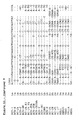
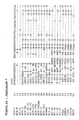
- NS4 sequences of the different genotypes prototype TYPE SYNTHETIC (NS4a) PEPTIDE NS4-1 SYNTHETIC (NS4b) PEPTIDE NS4-5 SYNTHETIC (NS4b) PEPTIDE NS4-7 1 1 1 1 1 1 6 7 7 7 7 7 Position-> 9 0 2 3 3 4 0 0 0 0 0 0 HCV-1 1a HCV-J 1b LSG RPAVIPDREVL YQ E FDE AS H LPYIEQG MQL AEQFK Q K L AEQFK Q K A LGLLQTAT KQA HC-J6 2a VNQ R AV V A PDKEV LYEAFDE ASRAALIEE GQ R IAE ML K S K IAE ML K S K IQ GLLQ Q AS KQA HC-J8 2b LND R VV V A PDKEI LYEAFDE AS K A AL IEE GQ R MAE M LK S K MA
Landscapes
- Health & Medical Sciences (AREA)
- Life Sciences & Earth Sciences (AREA)
- Chemical & Material Sciences (AREA)
- Organic Chemistry (AREA)
- Virology (AREA)
- General Health & Medical Sciences (AREA)
- Medicinal Chemistry (AREA)
- Veterinary Medicine (AREA)
- Chemical Kinetics & Catalysis (AREA)
- General Chemical & Material Sciences (AREA)
- Nuclear Medicine, Radiotherapy & Molecular Imaging (AREA)
- Pharmacology & Pharmacy (AREA)
- Animal Behavior & Ethology (AREA)
- Molecular Biology (AREA)
- Public Health (AREA)
- Communicable Diseases (AREA)
- Oncology (AREA)
- Gastroenterology & Hepatology (AREA)
- Engineering & Computer Science (AREA)
- Biophysics (AREA)
- Genetics & Genomics (AREA)
- Proteomics, Peptides & Aminoacids (AREA)
- Biochemistry (AREA)
- Bioinformatics & Cheminformatics (AREA)
- Biotechnology (AREA)
- Peptides Or Proteins (AREA)
- Measuring Or Testing Involving Enzymes Or Micro-Organisms (AREA)
- Medicines Containing Antibodies Or Antigens For Use As Internal Diagnostic Agents (AREA)
- Medicines That Contain Protein Lipid Enzymes And Other Medicines (AREA)
- Pharmaceuticals Containing Other Organic And Inorganic Compounds (AREA)
- Investigating Or Analysing Biological Materials (AREA)
- Medicines Containing Material From Animals Or Micro-Organisms (AREA)
- Micro-Organisms Or Cultivation Processes Thereof (AREA)
Claims (23)
- HCV-Typ-5-Polynukleinsäure, die als Primer für die spezifische Amplifikation einer HCV-Typ-5-Nukleinsäure eines bestimmten Isolats, das zu dem Genotyp, von dem sich der Primer ableitet, gehört, dienen kann und/oder als Hybridisierungssonde für den spezifischen Nachweis und/oder die spezifische Einteilung in Typen einer HCV-Typ-5-Nukleinsäure dienen kann, wobei die Polynukleinsäure ausgewählt ist aus der Gruppe:- genomische HCV-Sequenz mit mehr als 85% Homologie zu einem beliebigen Segment der SEQ ID NO 41, 43, 45, 47, 49, 51, 53 oder 151, die sich über die Positionen 1 bis 573 der Core-Region wie in Figuren 9 und 3 gezeigt erstrecken;- genomische HCV-Sequenz mit mehr als 63% Homologie zu einem beliebigen Segment der SEQ ID NO 41, 43, 45, 47, 49, 51, 53, 153 oder 155, die sich über die Nukleotidpositionen 574 bis 957 der E1-Region wie in Figur 4 gezeigt erstrecken,- genomische HCV-Sequenz mit mehr als 78% Homologie zu einem beliebigen Segment der SEQ ID NO 55, 57, 197 oder 199, die sich über die Positionen 3856 bis 4209 der NS3-Region wie in Figur 6 oder 10 gezeigt erstrecken;- genomische HCV-Sequenz mit mehr als 68% Homologie zu einem beliebigen Segment der SEQ ID NO 157, die sich über die Positionen 980 bis 1179 der El/E2-Region wie in Figur 13 gezeigt erstrecken;- genomische HCV-Sequenz mit mehr als 63% Homologie zu einem beliebigen Segment der SEQ ID NO 59 oder 61, die sich über die Positionen 4936 bis 5292 der NS4-Region wie in Figur 6 oder 10 gezeigt erstrecken;- genomische HCV-Sequenz mit mehr als 93% Homologie zu einem beliebigen Segment der SEQ ID NO 159 oder 161, die sich über die Positionen 7932 bis 8271 der NS5B-Region wie in Figur 1 gezeigt erstrecken;oder eine Sequenz mit 8 oder mehr durchgehenden Nukleotiden der Polynukleinsäure, wobei die Sequenz für eine genomische HCV-Sequenz, wie sie durch die Polynukleinsäure dargestellt wird, spezifisch ist;
oder deren Komplement. - Verwendung einer Polynukleinsäure nach Anspruch 1 für den in-vitro-Nachweis des Vorliegens von einem oder mehreren HCV-Genotypen, die in einer biologischen Probe, die diese(n) enthalten kann, vorliegen, die mindestens die folgenden Schritte umfaßt :(i) Hybridisieren der Nukleinsäuren der biologischen Probe mit einer oder mehreren Sonden nach Anspruch 1 unter geeigneten stringenten Bedingungen, um ausreichende Spezifität zu erzielen,(ii) Waschen unter geeigneten Bedingungen, um ausreichende Spezifität zu erzielen,(iii) Nachweisen der gebildeten Hybride,(iv) Schließen auf das Vorliegen von einem oder mehreren vorhandenen HCV-Genotypen aufgrund des beobachteten Hybridisierungsmusters.
- Verwendung einer Polynukleinsäure nach Anspruch 2 für den in-vitro-Nachweis des Vorliegens von einem oder mehreren HCV-Genotypen, die in einer biologischen Probe, die diese(n) enthalten kann, vorliegen, die die Schritte nach Anspruch 2 sowie einen zuvor durchgeführten Schritt, in dem Probenukleinsäure extrahiert wird, umfaßt.
- Verwendung einer Polynukleinsäure nach Anspruch 2 für den in-vitro-Nachweis des Vorliegens von einem oder mehreren HCV-Genotypen, die in einer biologischen Probe, die diese(n) enthalten kann, vorliegen, die die Schritte nach Anspruch 2 sowie zuvor durchgeführtes Extrahieren der Probenukleinsäure extrahiert wird, sowie Amplifikation der Nukleinsäuren mit mindestens einem der Primer nach Anspruch 1 oder einem beliebigen sonstigen HCV-Typ-2-Primer, HCV-Typ-3-Primer, HCV-Typ-4-Primer, HCV-Typ-5-Primer oder HCV-Universalprimer umfaßt.
- Peptid oder Polypeptid, das in seiner Sequenz eine durchgehende Sequenz von mindestens 5 Aminosäuren eines HCV-Polyproteins, das von einer beliebigen Polynukleinsäure nach Anspruch 1 codiert wird, enthält, wobei diese durchgehende Sequenz in ihrer Sequenz mindestens einen der folgenden Aminosäurereste enthält: M44, Q70, A87, N106, K115, V134, G142, P165, 1178, V192, P193, Y194, A197, D217, N218, L219, M231, T232, K232, 1242, S247, S250, F251, V254, A256, A261, Y264, A266, G268, L284, Y293, R294, Q297, A299, N303, Q317, L333, S351, A358, A359, A363, S364, A366, T369, L373, F376, Q386, 1387, S392, 1399, F402, 1403, R405, D454, A461, A463, T464, K484, Q500, E501, S521, K522, H524, N528, S531, S532, F536, M539, 1546, H1310, V1312, Q1321, P1368, V1373, K1405, Q1406, S1409, A1424, A1429, C1435, S1436, S1456, H1496, A1504, D1510, D1529, I1543, N1567, M1572, V1595, T1606, M1611, L1612, 11656, V1667, A1681, A1700, Q1704, A1713, S1714, M1718, D1719, T1721, R1722, A1723, G1726, E1730, V1732, F1735, 11736, S1737, T1739, G1740, Q1741, K1742, T1745, L1746, K1747, A1750, T1751, V1753, N1755, A1757, T1763, Y1764, A2647, L2653, S2664, F2680, T2724, R2726, H2739 oder K2752,
wobei diese Bezeichnung aus einem Buchstaben, der den Aminosäurerest gemäß seinem Einbuchstaben-Code darstellt, und einer Ziffer, die die Aminosäurenumerierung in Tabelle 1 darstellt, besteht. - Peptid oder Polypeptid nach Anspruch 5 wobei die durchgehende Sequenz aus der Reihe der folgenden Peptide stammt:QPTGRSWGQ (SEQ ID NO 93)VPYRNASGIYHV (SEQ ID NO 84)VYEADNLILHA (SEQ ID NO 86)VRKDNVSRCWVQI (SEQ ID NO 249)APSLGAVTAP (SEQ ID NO 90)APSFGAVTAP (SEQ ID NO 250)RPRQHATVQN (SEQ ID NO 92)RPRQHATVQD (SEQ ID NO 263) undTISYANGSGPSDDK (SEQ ID NO 267).
- Rekombinanter Vektor, der eine Vektorsequenz, eine entsprechende prokaryontische, eukaryontische oder Virus-Promotorsequenz und im Anschluß daran die Polynukleinsäuresequenzen nach Anspruch 1 enthält, wobei der rekombinante Vektor, wenn er als nackte DNA injiziert wird, die Expression eines vom HCV-Typ 5 abgeleiteten Polypeptids nach Anspruch 5 oder 6 in einem prokaryontischen oder eukaryontischen Wirt oder in lebenden Säugetieren ermöglicht.
- Rekombinanter Vektor nach Anspruch 7, der die Expression von einem beliebigen der folgenden HCV-Typ-5-Polypeptide, die sich über die folgenden Aminosäurepositionen erstrecken, ermöglicht:- ein Polypeptid, das bei der Position 1 beginnt und bei einer beliebigen Position in der Region zwischen den Positionen 70 und 326 endet, für die Expression des Core-Proteins und des E1-Proteins;- ein Polypeptid, das an einer beliebigen Position der Region zwischen den Positionen 117 und 192 beginnt und an einer beliebigen Position in der Region zwischen den Positionen 263 und 326 endet, für die Expression von E1, oder Formen, bei denen der mutmaßliche Membrananker deletiert ist (Positionen 264 bis 293 plus bzw. minus 8 Aminosäuren);- ein Polypeptid, das bei einer beliebigen Position in der Region zwischen den Positionen 1556 bis 1688 beginnt und bei einer beliebigen Position zwischen den Positionen 1739 und 1764 endet, für die Expression der NS4-Regionen oder Teilen davon.
- Rekombinanter Vektor nach Anspruch 7, der die Expression von einem beliebigen der folgenden HCV-Typ-5-Polypeptide, die sich über die folgenden Aminosäurepositionen erstrecken, ermöglicht:ein Polypeptid, das sich über die Positionen 1 bis 70, 1 bis 85, Positionen 1 bis 120, Positionen 1 bis 150, Positionen 1 bis 191 oder Positionen 1 bis 200, für die Expression des Core-Proteins, und Positionen 1 bis 263, Positionen 1 bis 326, für die Expression des Core- und E1-Proteins, erstreckt.
- Rekombinanter Vektor nach Anspruch 7, der die Expression von einem der folgenden HCV-Typ-5-Polypeptide, die sich über die folgenden Aminosäurepositionen erstrecken, ermöglicht:ein Polypeptid, das bei Position 1658 beginnt und bei Position 1711 endet, für die Expression des NS4a-Antigens, und ein Polypeptid, das bei Position 1902 beginnt und bei Position 1972 endet, für die Expression des NS4b-Proteins oder Teilen davon.
- Rekombinanter Vektor nach Anspruch 7, der die Expression von einem der folgenden HCV-Typ-5-Polypeptide, die sich über die folgenden Aminosäurepositionen erstrecken, ermöglicht:das Polypeptid für die Expression des NS4a-Antigens, ausgewählt aus der Gruppe der Polypeptide, die sich über die Positionen 1712-1743, 1712-1764, 1712-1782, 1712-1972, 1712 bis 1782 oder Teilen davon.
- Peptid oder Polypeptid nach einem der Ansprüche 5 bis 6, wobei es sich bei dem Polypeptid um ein rekombinantes Polypeptid handelt, das mittels eines Expressionsvektors wie in einem der Ansprüche 7 bis 11 definiert exprimiert wird.
- Peptid oder Polypeptid nach einem der Ansprüche 5, 6 oder 12 oder eine Zusammensetzung, enthaltend mindestens ein Peptid oder Polypeptid nach einem der Ansprüche 5, 6 oder 12 für die Verwendung in einem Verfahren zur Immunisierung eines Säugetiers gegen HCV, bei dem man eine ausreichende Menge dieses Peptids oder Polypeptids oder dieser Zusammensetzung, damit eine Immunreaktion hervorgerufen wird, verabreicht.
- Peptid oder Polypeptid nach einem der Ansprüche 5, 6 oder 12 oder eine Zusammensetzung, enthaltend mindestens ein Peptid oder Polypeptid nach einem der Ansprüche 5, 6 oder 12 für die Verwendung in einem Verfahren zur Immunisierung eines Säugetiers gegen HCV, bei dem man eine ausreichende Menge dieses Peptids oder Polypeptids oder dieser Zusammensetzung, damit eine Immunreaktion hervorgerufen wird, sowie pharmazeutisch unbedenkliche Hilfsstoffe verabreicht.
- Antikörper, der bei Immunisierung mit einem Peptid oder Polypeptid nach einem der Ansprüche 5 bis 6 mittels eines Verfahrens wie in den Ansprüchen 13 oder 14 definiert erzeugt wird, wobei der Antikörper spezifisch mit einem der Polypeptide wie in einem der Ansprüche 5 bis 6 definiert reaktionsfähig ist.
- Verfahren für den in-vitro-Nachweis von HCV, das in einer biologischen Probe, die dieses enthalten kann, vorliegt, das mindestens die folgenden Schritte umfaßt:(i) Inkontaktbringen der biologischen Probe, die auf das Vorliegen von HCV-Antikörpern zu analysieren ist, mit einem beliebigen Peptid oder Polypeptid nach Anspruch 5 oder 6 oder 12,(ii) Entfernen von nichtgebundenen Komponenten,(iii)Inkubieren der mit heterologen Antikörpern, die spezifisch an die in der zu analysierenden Probe vorliegenden Antikörper binden, gebildeten Immunkomplexe, wobei die heterologen Antikörper mit einem nachweisbaren Marker konjugiert sind, und(iv) Nachweisen des Vorliegens der Immunkomplexe, und zwar entweder visuell oder densitometrisch, und Schließen auf das Vorliegen von HCV.
- Verfahren nach Anspruch 16, wobei das Polypeptid in Form eines biotinmarkierten Polypeptids vorliegt und mittels Streptavidin- oder Avidinkomplexen kovalent an ein festes Substrat gebunden ist.
- Verwendung eines Peptids oder Polypeptids nach einem der Ansprüche 5 oder 6 oder 12 in einem Serotypbestimmungsassay zum Nachweisen von einem oder mehreren Serotypen von HCV, die in einer biologischen Probe, die diese(n) enthalten kann, vorliegen, die mindestens die folgenden Schritte umfaßt:(i) Inkontaktbringen der biologischen Probe, die auf das Vorliegen von HCV-Antikörpern oder HCV-Antigenen eines oder mehrerer serologischer Typen zu analysieren ist, mit einem beliebigen Peptid oder Polypeptid nach Anspruch 5 oder 6 oder 12, in immobilisierter Form unter entsprechenden Bedingungen, die die Bildung eines Immunkomplexes gestatten,(ii) Entfernen von nichtgebundenen Komponenten,(iii) Inkubieren der mit heterologen Antikörpern, die spezifisch an die in der zu analysierenden Probe vorliegenden Antikörper binden, gebildeten Immunkomplexe, wobei die heterologen Antikörper unter geeigneten Bedingungen mit einem nachweisbaren Marker konjugiert sind, und(iv) Nachweisen des Vorliegens der Immunkomplexe, und zwar entweder visuell oder densitometrisch, und Schließen auf die vorliegenden HCV-Serotypen aufgrund des beobachteten Bindungsmusters.
- Kit zur Bestimmung des Vorliegens von HCV-Genotypen, die in einer biologischen Probe, die diese enthalten kann, vorliegen, das folgendes umfaßt:- mindestens eine Sonde nach Anspruch 1,- einen Puffer oder Komponenten, die für die Herstellung des Puffers erforderlich sind, wobei dieser Puffer eine Hybridisierungsreaktion zwischen diesen Sonden und dem HCV-Genotyp ermöglicht,- ein Mittel zum Nachweisen der aus der oben genannten Hybridisierung hervorgegangenen Hybride.
- Kit zur Bestimmung des Vorliegens von HCV-Genotypen, die in einer biologischen Probe, die diese enthalten kann, vorliegen, das folgendes umfaßt :- mindestens eine Primerzusammensetzung, die einen beliebigen Primer aus der Reihe der in Anspruch 1 definierten Primer oder einen beliebigen anderen HCV-Typ-5 oder HCV-Universalprimer enthält,- mindestens eine Sonde nach Anspruch 1,- einen Puffer oder Komponenten, die für die Herstellung des Puffers erforderlich sind, wobei dieser Puffer eine Hybridisierungsreaktion zwischen diesen Sonden und dem HCV-Genotyp ermöglicht,- ein Mittel zum Nachweisen der aus der oben genannten Hybridisierung hervorgegangenen Hybride.
- Kit zur Bestimmung des Vorliegens von HCV-Genotypen, die in einer biologischen Probe, die diese enthalten kann, vorliegen, das folgendes umfaßt :- mindestens ein Peptid oder Polypeptid nach einem der Ansprüche 5 oder 6 oder 12,- einen Puffer oder Komponenten, die für die Herstellung des Puffers erforderlich sind, wobei der Puffer eine Bindungsreaktion zwischen diesen Peptiden oder Polypeptiden und den Antikörpern gegen HCV, die in der biologischen Probe vorliegen, ermöglicht, und- ein Mittel zum Nachweisen des in der vorhergehenden Bindungsreaktion gebildeten Immunkomplexes.
- Verfahren für den in-vitro-Nachweis für HCV-Genotypen, die in einer biologischen Probe vorliegen, das die folgenden Schritte umfaßt:(i) Bereitstellen einer Nukleinsäureprobe,(ii) Amplifizieren einer Polynukleinsäure nach Anspruch 1, und(iii)Bestimmen der Sequenz einer Polynukleinsäure nach Anspruch 1.
- Zusammensetzung, die mindestens ein Peptid oder Polypeptid nach einem der Ansprüche 5,6 oder 12 oder eine Polynukleinsäure nach Anspruch 1 umfaßt.
Priority Applications (1)
| Application Number | Priority Date | Filing Date | Title |
|---|---|---|---|
| EP99118783A EP1004670B1 (de) | 1993-04-27 | 1994-04-27 | Hepatitis C Virus Genotypsequenzen sowie ihre Verwendung als Behandlungs- und Nachweismittel |
Applications Claiming Priority (6)
| Application Number | Priority Date | Filing Date | Title |
|---|---|---|---|
| EP93401099 | 1993-04-27 | ||
| EP93401099 | 1993-04-27 | ||
| EP93402019 | 1993-08-05 | ||
| EP93402019 | 1993-08-05 | ||
| EP94915550A EP0651807B1 (de) | 1993-04-27 | 1994-04-27 | Sequenzen der genotype des hepatitis-c-virus sowie ihre verwendung als arzneimitteln und diagnostika |
| EP99118783A EP1004670B1 (de) | 1993-04-27 | 1994-04-27 | Hepatitis C Virus Genotypsequenzen sowie ihre Verwendung als Behandlungs- und Nachweismittel |
Related Parent Applications (2)
| Application Number | Title | Priority Date | Filing Date |
|---|---|---|---|
| EP94915550A Division EP0651807B1 (de) | 1993-04-27 | 1994-04-27 | Sequenzen der genotype des hepatitis-c-virus sowie ihre verwendung als arzneimitteln und diagnostika |
| EP94915550.1 Division | 1994-11-10 |
Publications (3)
| Publication Number | Publication Date |
|---|---|
| EP1004670A2 EP1004670A2 (de) | 2000-05-31 |
| EP1004670A3 EP1004670A3 (de) | 2000-09-20 |
| EP1004670B1 true EP1004670B1 (de) | 2012-04-11 |
Family
ID=26134679
Family Applications (4)
| Application Number | Title | Priority Date | Filing Date |
|---|---|---|---|
| EP99118784A Expired - Lifetime EP0984068B1 (de) | 1993-04-27 | 1994-04-27 | Sequenzen von Hepatitis C Virus-Genotypen sowie ihre Verwendungen als Therapeutika und Diagnostika |
| EP99118783A Expired - Lifetime EP1004670B1 (de) | 1993-04-27 | 1994-04-27 | Hepatitis C Virus Genotypsequenzen sowie ihre Verwendung als Behandlungs- und Nachweismittel |
| EP94915550A Expired - Lifetime EP0651807B1 (de) | 1993-04-27 | 1994-04-27 | Sequenzen der genotype des hepatitis-c-virus sowie ihre verwendung als arzneimitteln und diagnostika |
| EP99118785A Expired - Lifetime EP0984067B1 (de) | 1993-04-27 | 1994-04-27 | Hepatitis C Virus Genotypsequenzen sowie ihre Verwendung als Behandlungs- und Nachweismitteln |
Family Applications Before (1)
| Application Number | Title | Priority Date | Filing Date |
|---|---|---|---|
| EP99118784A Expired - Lifetime EP0984068B1 (de) | 1993-04-27 | 1994-04-27 | Sequenzen von Hepatitis C Virus-Genotypen sowie ihre Verwendungen als Therapeutika und Diagnostika |
Family Applications After (2)
| Application Number | Title | Priority Date | Filing Date |
|---|---|---|---|
| EP94915550A Expired - Lifetime EP0651807B1 (de) | 1993-04-27 | 1994-04-27 | Sequenzen der genotype des hepatitis-c-virus sowie ihre verwendung als arzneimitteln und diagnostika |
| EP99118785A Expired - Lifetime EP0984067B1 (de) | 1993-04-27 | 1994-04-27 | Hepatitis C Virus Genotypsequenzen sowie ihre Verwendung als Behandlungs- und Nachweismitteln |
Country Status (15)
| Country | Link |
|---|---|
| US (3) | US6762024B2 (de) |
| EP (4) | EP0984068B1 (de) |
| JP (5) | JPH07508423A (de) |
| CN (1) | CN1108030A (de) |
| AT (4) | ATE551423T1 (de) |
| AU (1) | AU688323B2 (de) |
| BR (1) | BR9405334A (de) |
| CA (2) | CA2662090A1 (de) |
| DE (1) | DE69435023T2 (de) |
| ES (1) | ES2294779T3 (de) |
| FI (1) | FI946066L (de) |
| NO (1) | NO944967L (de) |
| NZ (1) | NZ266148A (de) |
| SG (1) | SG50563A1 (de) |
| WO (1) | WO1994025601A2 (de) |
Families Citing this family (47)
| Publication number | Priority date | Publication date | Assignee | Title |
|---|---|---|---|---|
| ES2065863T3 (es) | 1991-11-21 | 2003-09-01 | Common Services Agency | Analisis para la deteccion de virus de la hepatitis c. |
| US6709828B1 (en) | 1992-03-06 | 2004-03-23 | N.V. Innogenetics S.A. | Process for the determination of peptides corresponding to immunologically important epitopes and their use in a process for determination of antibodies or biotinylated peptides corresponding to immunologically important epitopes, a process for preparing them and compositions containing them |
| US6667387B1 (en) | 1996-09-30 | 2003-12-23 | N.V. Innogenetics S.A. | HCV core peptides |
| US6380376B1 (en) * | 1992-10-30 | 2002-04-30 | Iowa State University Research Foundation | Proteins encoded by polynucleic acids of porcine reproductive and respiratory syndrome virus (PRRSV) |
| US7258977B1 (en) * | 1992-11-27 | 2007-08-21 | Innogenetics N.V. | Process for typing of HCV isolates |
| US7255997B1 (en) | 1993-04-27 | 2007-08-14 | N.V. Innogenetics S.A. | Sequences of hepatitis C virus genotypes and their use as therapeutic and diagnostic agents |
| ATE551423T1 (de) | 1993-04-27 | 2012-04-15 | Innogenetics Nv | Sequenzen von hepatitis c virus-genotypen sowie ihre verwendungen als therapeutika und diagnostika |
| ES2231773T3 (es) | 1993-05-05 | 2005-05-16 | Common Services Agency | Virus de la hepatitis c de tipo 4, 5 y 6. |
| US5514539A (en) * | 1993-06-29 | 1996-05-07 | The United States Of America As Represented By The Department Of Health And Human Services | Nucleotide and deduced amino acid sequences of the envelope 1 gene of 51 isolates of hepatitis C virus and the use of reagents derived from these sequences in diagnostic methods and vaccines |
| US5882852A (en) * | 1993-06-29 | 1999-03-16 | The United States Of America As Represented By The Secretary Of The Department Of Health And Human Services | Hepatitic C virus (HCV) core gene nucleotide sequences and related methods of detecting major and minor genotypes of HCV isolates |
| US7070790B1 (en) | 1993-06-29 | 2006-07-04 | The United States Of America As Represented By The Department Of Health And Human Services | Nucleotide and deduced amino acid sequences of the envelope 1 and core genes of isolates of hepatitis C virus and the use of reagents derived from these sequences in diagnostic methods and vaccines |
| DE69526973T3 (de) * | 1994-10-21 | 2010-01-07 | Innogenetics N.V. | Sequenzen von hepatitis-c-virus genotype 7, und deren verwendung als vorbeugende, therapeutische und diagnostische mittel |
| US5851759A (en) * | 1996-04-19 | 1998-12-22 | Chiron Corporation | Heteroduplex tracking assay (HTA) for genotyping HCV |
| CA2266656A1 (en) * | 1996-09-17 | 1998-03-26 | Chiron Corporation | Compositions and methods for treating intracellular diseases |
| CZ298268B6 (cs) | 1998-04-17 | 2007-08-08 | Innogenetics N. V. | Imunodiagnostický test používající redukující cinidla |
| DE19980730D2 (de) * | 1998-04-28 | 2001-05-10 | Wolfgang Bergter | Radioimmunpharmaka zur Therapie der Hepatitis C |
| ES2281179T3 (es) * | 1998-06-09 | 2007-09-16 | Andrea D. Branch | Nuevos peptidos del virus de la hepatitis c y usos de los mismos. |
| US7052830B1 (en) | 1998-06-09 | 2006-05-30 | Branch Andrea D | Hepatitis C virus peptides and uses thereof |
| SK287694B6 (sk) | 2000-06-15 | 2011-06-06 | Novartis Vaccines & Diagnostics, Inc. | Pevný nosič imunoeseje a spôsob jeho prípravy, spôsob detekcie infekcie HIV a súprava na imunodiagnostickú skúšku |
| US6680059B2 (en) * | 2000-08-29 | 2004-01-20 | Tripep Ab | Vaccines containing ribavirin and methods of use thereof |
| US7022830B2 (en) * | 2000-08-17 | 2006-04-04 | Tripep Ab | Hepatitis C virus codon optimized non-structural NS3/4A fusion gene |
| US6858590B2 (en) | 2000-08-17 | 2005-02-22 | Tripep Ab | Vaccines containing ribavirin and methods of use thereof |
| AU2001292151B2 (en) * | 2000-08-17 | 2006-05-04 | Tripep Ab | Vaccines containing ribavirin and methods of use thereof |
| US7196183B2 (en) | 2001-08-31 | 2007-03-27 | Innogenetics N.V. | Hepatitis C virus genotype, and its use as prophylactic, therapeutic and diagnostic agent |
| MD2149G2 (ro) * | 2001-11-23 | 2003-10-31 | Институт Генетики И Физиологии Растений Академии Наук Молдовы | Primer oligonucleotidic pentru depistarea ARN-ului virusului hepatitei C |
| DE60326327D1 (de) * | 2002-03-11 | 2009-04-09 | Lab 21 Ltd | Verfahren und zusammensetzungen zur identifikation und charakterisierung von hepatitis c |
| CA2484941A1 (en) | 2002-07-24 | 2004-02-05 | Intercell Ag | Antigens encoded by alternative reading frame from pathogenic viruses |
| WO2004024182A2 (en) | 2002-09-13 | 2004-03-25 | Intercell Ag | Method for isolating hepatitis c virus peptides |
| ES2562456T3 (es) | 2003-03-24 | 2016-03-04 | Valneva Austria Gmbh | Uso de un adyuvante que induce una respuesta inmune Th1 para mejorar las respuestas inmunes |
| CA2530062A1 (en) | 2003-07-11 | 2005-01-20 | Intercell Ag | Hcv vaccines |
| ES2596753T3 (es) * | 2003-08-29 | 2017-01-11 | Fujirebio Europe N.V. | Nuevo clado del virus de la hepatitis C y secuencias prototipo del mismo |
| JP5138230B2 (ja) | 2004-01-07 | 2013-02-06 | サード・ウェーブ・テクノロジーズ・インク | C型肝炎ウイルスの遺伝子型の決定方法 |
| US20060162667A1 (en) * | 2005-01-26 | 2006-07-27 | Papadoyianis Ernest D | Aquatic habitat and ecological tank |
| WO2007031867A2 (en) * | 2005-05-25 | 2007-03-22 | Tripep Ab | A hepatitis c virus non-stru tural ns3/4a fusion gene |
| US7919242B2 (en) | 2005-06-30 | 2011-04-05 | Roche Molecular Systems, Inc. | Light emission modifiers and their uses in nucleic acid detection, amplification and analysis |
| MD3300G2 (ro) * | 2006-09-28 | 2007-11-30 | Институт Генетики, Физиологии И Защиты Растений Академии Наук Молдовы | Primer oligonucleotidic pentru depistarea ARN-ului virusului hepatitei C |
| WO2008046922A2 (en) * | 2006-10-20 | 2008-04-24 | Innogenetics N.V. | Methodology for anaysis of sequence variations within the hcv ns5b genomic region |
| EP2463390A1 (de) | 2006-10-20 | 2012-06-13 | Innogenetics N.V. | Methodik zur Analyse von Sequenzvariationen innerhalb des HCV-NS5B-Genombereichs |
| WO2008046923A2 (en) | 2006-10-20 | 2008-04-24 | Innogenetics N.V. | Methodology for analysis of sequence variations within the hcv ns3/4a genomic region |
| WO2009022939A1 (en) * | 2007-08-09 | 2009-02-19 | Uchrezhdenie Rossiiskoi Akademii Nauk Institut Molekulyarnoi Biologii Im. V.A. Engelgardta Ran (Imb Ran) | Method for identifying the genotype and subtype of hepatitis c virus on a biological microchip |
| WO2009022236A2 (en) * | 2007-08-16 | 2009-02-19 | Tripep Ab | Immunogen platform |
| CN101842498A (zh) * | 2007-10-30 | 2010-09-22 | 英特芒尼公司 | Hcv基因型分型和表型分型 |
| WO2009130588A2 (en) * | 2008-04-22 | 2009-10-29 | Tripep Ab | Immunogen platform |
| WO2010112733A1 (fr) * | 2009-03-30 | 2010-10-07 | bioMérieux | Support solide de détection du vhc |
| WO2013150450A1 (en) * | 2012-04-02 | 2013-10-10 | Universidade Do Porto | Hcv homolog fragments, cell-lines and applications thereof |
| EP3274478B1 (de) * | 2015-03-27 | 2020-09-23 | Ortho-Clinical Diagnostics, Inc. | Hcv-ns4a/modifizierte ns3-polypeptide und verwendungen davon |
| US10443095B2 (en) * | 2016-08-02 | 2019-10-15 | Roche Molecular Systems, Inc. | Helper oligonucleotide for improved efficiency of amplification and detection/quantitation of nucleic acids |
Family Cites Families (25)
| Publication number | Priority date | Publication date | Assignee | Title |
|---|---|---|---|---|
| US5350671A (en) | 1987-11-18 | 1994-09-27 | Chiron Corporation | HCV immunoassays employing C domain antigens |
| BR8807310A (pt) * | 1987-11-18 | 1990-03-13 | Chiron Corp | Polinucleotidio,polinucleotidio recombinante,vetor recombinante,celula hospedeira,sistema de expressao recombinante,celula transformada,polipeptidio,hcv,preparacao de polipeptidio,polipeptidio de hcv,polipeptidio purificado,polipeptidio recombinante,polipeptidio de fusao,anticorpo monoclonal,preparacao purificada de anticorpos policlonais,particula,sonda de polinucleotidio,kit anticorpo para epetopo de hcv,metodo para producao de polipeptidio,metodo para deteccao de acidos nucleicos de hcv,imunoensaio para detectar antigeno de hcv,imunoensaio para detectar anticorpos dirigidos contra antigeno de hcv,vacina para tratamento de infeccao de hcv,celula,celula infectada com hcv,metodo para producao de anticorpos para hcv e metodo para isolar cdna derivado do genoma de um agente infeccioso nao identificado |
| GB2236819B (en) * | 1989-09-14 | 1993-07-14 | Gen Motors France | Dual master cylinder |
| JP3156200B2 (ja) * | 1989-09-15 | 2001-04-16 | 国立予防衛生研究所長 | 新規のhcv分離株 |
| US5372928A (en) * | 1989-09-15 | 1994-12-13 | Chiron Corporation | Hepatitis C virus isolates |
| CA2032381C (en) | 1989-12-18 | 2006-02-21 | Peter E. Highfield | Viral agent |
| EP0435229A1 (de) * | 1989-12-27 | 1991-07-03 | Sanwa Kagaku Kenkyusho Co., Ltd. | DNS-Gen von einem Non-A Non-B Hepatitis-Virus, seine Klonierung und Verwendung |
| WO1991014779A1 (fr) * | 1990-03-28 | 1991-10-03 | Mitsui Toatsu Chemicals, Incorporated | Diagnostic du virus de l'hepatite |
| EP0461863A1 (de) * | 1990-06-12 | 1991-12-18 | Immuno Japan Inc. | Oligonukleotid-Primer und ihre Anwendung zum Nachweis von non-A, non-B-Hepatitisvirus mit grosser Genauigkeit |
| NZ238681A (en) | 1990-06-25 | 1992-03-26 | Univ Osaka Res Found | Non-a, non-b hepatitis virus particles and their production |
| ATE144993T1 (de) | 1990-12-14 | 1996-11-15 | Innogenetics Nv | Synthetische antigene zum nachweis von antikörpern gegen hepatitis c-virus |
| EP0510952A1 (de) * | 1991-04-26 | 1992-10-28 | Immuno Japan Inc. | Oligonukleotid-Primer und ihre Anwendung zum Nachweis von Non-A, Non-B-Hepatitis mit höchster Genauigkeit |
| HU227548B1 (en) | 1991-05-08 | 2011-08-29 | Novartis Vaccines & Diagnostic | Process for production of non-naturally occuring non-hcv-1 nucleic acids, forming a hybridization product, and detecting hcv genotypes |
| KR0185426B1 (ko) | 1991-06-24 | 1999-04-01 | 로버트 피. 블랙버언 | 씨형 간염 바이러스 폴리펩티드 |
| EP0532167A3 (en) * | 1991-08-09 | 1993-03-31 | Immuno Japan Inc. | Non-a, non-b hepatitis virus genome, polynucleotides, polypeptides, antigen, antibody and detection systems |
| JPH06510191A (ja) * | 1991-08-21 | 1994-11-17 | アボツト・ラボラトリーズ | Ns1に対する組換え抗原を利用したc型肝炎アッセイ |
| DE69232859T2 (de) | 1991-09-13 | 2003-04-10 | Chiron Corp. (N.D.Ges.D. Staates Delaware), Emeryville | Zusammensetzung aus mehreren immunreaktiven hepatitis-c-virus-polypeptiden |
| ES2065863T3 (es) * | 1991-11-21 | 2003-09-01 | Common Services Agency | Analisis para la deteccion de virus de la hepatitis c. |
| ES2133529T3 (es) * | 1992-11-27 | 1999-09-16 | Innogenetics Nv | Procedimiento para tipificar aislamientos de hcv. |
| ATE551423T1 (de) | 1993-04-27 | 2012-04-15 | Innogenetics Nv | Sequenzen von hepatitis c virus-genotypen sowie ihre verwendungen als therapeutika und diagnostika |
| ES2232815T5 (es) | 1993-05-10 | 2009-06-15 | Novartis Vaccines And Diagnostics, Inc. | Metodos de tipado del virus de la hepatitis c y reactivos para usar en los mismos. |
| JPH06319563A (ja) | 1993-05-13 | 1994-11-22 | Imuno Japan:Kk | C型肝炎ウイルス遺伝子、オリゴヌクレオチド、並びにc型 肝炎ウイルス遺伝子型判定方法 |
| US5514539A (en) * | 1993-06-29 | 1996-05-07 | The United States Of America As Represented By The Department Of Health And Human Services | Nucleotide and deduced amino acid sequences of the envelope 1 gene of 51 isolates of hepatitis C virus and the use of reagents derived from these sequences in diagnostic methods and vaccines |
| US5882852A (en) | 1993-06-29 | 1999-03-16 | The United States Of America As Represented By The Secretary Of The Department Of Health And Human Services | Hepatitic C virus (HCV) core gene nucleotide sequences and related methods of detecting major and minor genotypes of HCV isolates |
| JP2687852B2 (ja) * | 1993-10-13 | 1997-12-08 | 日本電気株式会社 | 半導体メモリ装置 |
-
1994
- 1994-04-27 AT AT99118784T patent/ATE551423T1/de active
- 1994-04-27 AU AU67222/94A patent/AU688323B2/en not_active Expired
- 1994-04-27 EP EP99118784A patent/EP0984068B1/de not_active Expired - Lifetime
- 1994-04-27 JP JP6523877A patent/JPH07508423A/ja active Pending
- 1994-04-27 US US09/878,281 patent/US6762024B2/en not_active Expired - Fee Related
- 1994-04-27 CA CA002662090A patent/CA2662090A1/en not_active Abandoned
- 1994-04-27 EP EP99118783A patent/EP1004670B1/de not_active Expired - Lifetime
- 1994-04-27 NZ NZ266148A patent/NZ266148A/en not_active IP Right Cessation
- 1994-04-27 BR BR9405334A patent/BR9405334A/pt not_active Application Discontinuation
- 1994-04-27 ES ES94915550T patent/ES2294779T3/es not_active Expired - Lifetime
- 1994-04-27 EP EP94915550A patent/EP0651807B1/de not_active Expired - Lifetime
- 1994-04-27 EP EP99118785A patent/EP0984067B1/de not_active Expired - Lifetime
- 1994-04-27 AT AT99118783T patent/ATE553201T1/de active
- 1994-04-27 CN CN94190232A patent/CN1108030A/zh active Pending
- 1994-04-27 US US08/362,455 patent/US7157226B1/en not_active Expired - Fee Related
- 1994-04-27 WO PCT/EP1994/001323 patent/WO1994025601A2/en not_active Ceased
- 1994-04-27 CA CA002139100A patent/CA2139100C/en not_active Expired - Lifetime
- 1994-04-27 AT AT94915550T patent/ATE373093T1/de active
- 1994-04-27 AT AT99118785T patent/ATE552340T1/de active
- 1994-04-27 SG SG1996005012A patent/SG50563A1/en unknown
- 1994-04-27 FI FI946066A patent/FI946066L/fi unknown
- 1994-04-27 DE DE69435023T patent/DE69435023T2/de not_active Expired - Lifetime
- 1994-12-21 NO NO944967A patent/NO944967L/no not_active Application Discontinuation
-
2001
- 2001-07-06 US US09/899,046 patent/US7195765B2/en not_active Expired - Fee Related
- 2001-11-21 JP JP2001356707A patent/JP2002233389A/ja active Pending
- 2001-11-21 JP JP2001355654A patent/JP2002233388A/ja active Pending
-
2003
- 2003-07-08 JP JP2003272022A patent/JP2004041206A/ja not_active Withdrawn
- 2003-07-09 JP JP2003272151A patent/JP2004041207A/ja not_active Withdrawn
Also Published As
Similar Documents
| Publication | Publication Date | Title |
|---|---|---|
| EP0984068B1 (de) | Sequenzen von Hepatitis C Virus-Genotypen sowie ihre Verwendungen als Therapeutika und Diagnostika | |
| EP0804584B2 (de) | Sequenzen von hepatitis-c-virus genotype 7, und deren verwendung als vorbeugende, therapeutische und diagnostische mittel | |
| JP2693908B2 (ja) | Nanbvの診断用薬 | |
| EP0419182B2 (de) | HCV-Isolat J-1 | |
| IE83377B1 (en) | New HCV isolate J-1 | |
| US7122306B2 (en) | Sequences of hepatitis C virus genotypes and their use as therapeutic and diagnostic agents |
Legal Events
| Date | Code | Title | Description |
|---|---|---|---|
| PUAI | Public reference made under article 153(3) epc to a published international application that has entered the european phase |
Free format text: ORIGINAL CODE: 0009012 |
|
| 17P | Request for examination filed |
Effective date: 19991018 |
|
| AC | Divisional application: reference to earlier application |
Ref document number: 651807 Country of ref document: EP |
|
| AK | Designated contracting states |
Kind code of ref document: A2 Designated state(s): AT BE CH DE DK ES FR GB GR IE IT LI LU MC NL PT SE |
|
| AX | Request for extension of the european patent |
Free format text: SI PAYMENT 19991018 |
|
| PUAL | Search report despatched |
Free format text: ORIGINAL CODE: 0009013 |
|
| AK | Designated contracting states |
Kind code of ref document: A3 Designated state(s): AT BE CH DE DK ES FR GB GR IE IT LI LU MC NL PT SE |
|
| AX | Request for extension of the european patent |
Free format text: SI PAYMENT 19991018 |
|
| RIC1 | Information provided on ipc code assigned before grant |
Free format text: 7C 12N 15/40 A, 7C 07K 14/18 B, 7A 61K 39/29 B, 7C 12Q 1/68 B, 7C 12Q 1/70 B, 7G 01N 33/576 B, 7C 07K 16/10 B, 7A 61P 31/14 B |
|
| 17Q | First examination report despatched |
Effective date: 20001218 |
|
| AKX | Designation fees paid |
Free format text: AT BE CH DE DK ES FR GB GR IE IT LI LU MC NL PT SE |
|
| AXX | Extension fees paid |
Free format text: SI PAYMENT 19991018 |
|
| GRAP | Despatch of communication of intention to grant a patent |
Free format text: ORIGINAL CODE: EPIDOSNIGR1 |
|
| GRAS | Grant fee paid |
Free format text: ORIGINAL CODE: EPIDOSNIGR3 |
|
| GRAA | (expected) grant |
Free format text: ORIGINAL CODE: 0009210 |
|
| AC | Divisional application: reference to earlier application |
Ref document number: 0651807 Country of ref document: EP Kind code of ref document: P |
|
| AK | Designated contracting states |
Kind code of ref document: B1 Designated state(s): AT BE CH DE DK ES FR GB GR IE IT LI LU MC NL PT SE |
|
| AX | Request for extension of the european patent |
Extension state: SI |
|
| REG | Reference to a national code |
Ref country code: GB Ref legal event code: FG4D |
|
| REG | Reference to a national code |
Ref country code: CH Ref legal event code: EP |
|
| REG | Reference to a national code |
Ref country code: AT Ref legal event code: REF Ref document number: 553201 Country of ref document: AT Kind code of ref document: T Effective date: 20120415 |
|
| REG | Reference to a national code |
Ref country code: IE Ref legal event code: FG4D |
|
| REG | Reference to a national code |
Ref country code: DE Ref legal event code: R096 Ref document number: 69435373 Country of ref document: DE Effective date: 20120606 |
|
| REG | Reference to a national code |
Ref country code: NL Ref legal event code: VDEP Effective date: 20120411 |
|
| REG | Reference to a national code |
Ref country code: AT Ref legal event code: MK05 Ref document number: 553201 Country of ref document: AT Kind code of ref document: T Effective date: 20120411 |
|
| PG25 | Lapsed in a contracting state [announced via postgrant information from national office to epo] |
Ref country code: SE Free format text: LAPSE BECAUSE OF FAILURE TO SUBMIT A TRANSLATION OF THE DESCRIPTION OR TO PAY THE FEE WITHIN THE PRESCRIBED TIME-LIMIT Effective date: 20120411 |
|
| PG25 | Lapsed in a contracting state [announced via postgrant information from national office to epo] |
Ref country code: MC Free format text: LAPSE BECAUSE OF NON-PAYMENT OF DUE FEES Effective date: 20120430 Ref country code: GR Free format text: LAPSE BECAUSE OF FAILURE TO SUBMIT A TRANSLATION OF THE DESCRIPTION OR TO PAY THE FEE WITHIN THE PRESCRIBED TIME-LIMIT Effective date: 20120712 Ref country code: PT Free format text: LAPSE BECAUSE OF FAILURE TO SUBMIT A TRANSLATION OF THE DESCRIPTION OR TO PAY THE FEE WITHIN THE PRESCRIBED TIME-LIMIT Effective date: 20120813 |
|
| REG | Reference to a national code |
Ref country code: CH Ref legal event code: PL |
|
| PG25 | Lapsed in a contracting state [announced via postgrant information from national office to epo] |
Ref country code: BE Free format text: LAPSE BECAUSE OF FAILURE TO SUBMIT A TRANSLATION OF THE DESCRIPTION OR TO PAY THE FEE WITHIN THE PRESCRIBED TIME-LIMIT Effective date: 20120411 |
|
| PG25 | Lapsed in a contracting state [announced via postgrant information from national office to epo] |
Ref country code: LI Free format text: LAPSE BECAUSE OF NON-PAYMENT OF DUE FEES Effective date: 20120430 Ref country code: NL Free format text: LAPSE BECAUSE OF FAILURE TO SUBMIT A TRANSLATION OF THE DESCRIPTION OR TO PAY THE FEE WITHIN THE PRESCRIBED TIME-LIMIT Effective date: 20120411 Ref country code: DK Free format text: LAPSE BECAUSE OF FAILURE TO SUBMIT A TRANSLATION OF THE DESCRIPTION OR TO PAY THE FEE WITHIN THE PRESCRIBED TIME-LIMIT Effective date: 20120411 Ref country code: AT Free format text: LAPSE BECAUSE OF FAILURE TO SUBMIT A TRANSLATION OF THE DESCRIPTION OR TO PAY THE FEE WITHIN THE PRESCRIBED TIME-LIMIT Effective date: 20120411 Ref country code: CH Free format text: LAPSE BECAUSE OF NON-PAYMENT OF DUE FEES Effective date: 20120430 |
|
| REG | Reference to a national code |
Ref country code: DE Ref legal event code: R119 Ref document number: 69435373 Country of ref document: DE Effective date: 20121101 |
|
| PLBE | No opposition filed within time limit |
Free format text: ORIGINAL CODE: 0009261 |
|
| STAA | Information on the status of an ep patent application or granted ep patent |
Free format text: STATUS: NO OPPOSITION FILED WITHIN TIME LIMIT |
|
| PG25 | Lapsed in a contracting state [announced via postgrant information from national office to epo] |
Ref country code: IT Free format text: LAPSE BECAUSE OF FAILURE TO SUBMIT A TRANSLATION OF THE DESCRIPTION OR TO PAY THE FEE WITHIN THE PRESCRIBED TIME-LIMIT Effective date: 20120411 |
|
| REG | Reference to a national code |
Ref country code: FR Ref legal event code: ST Effective date: 20130204 |
|
| 26N | No opposition filed |
Effective date: 20130114 |
|
| GBPC | Gb: european patent ceased through non-payment of renewal fee |
Effective date: 20120711 |
|
| PG25 | Lapsed in a contracting state [announced via postgrant information from national office to epo] |
Ref country code: IE Free format text: LAPSE BECAUSE OF NON-PAYMENT OF DUE FEES Effective date: 20120427 Ref country code: FR Free format text: LAPSE BECAUSE OF NON-PAYMENT OF DUE FEES Effective date: 20120611 Ref country code: GB Free format text: LAPSE BECAUSE OF NON-PAYMENT OF DUE FEES Effective date: 20120711 Ref country code: ES Free format text: LAPSE BECAUSE OF FAILURE TO SUBMIT A TRANSLATION OF THE DESCRIPTION OR TO PAY THE FEE WITHIN THE PRESCRIBED TIME-LIMIT Effective date: 20120722 |
|
| PG25 | Lapsed in a contracting state [announced via postgrant information from national office to epo] |
Ref country code: LU Free format text: LAPSE BECAUSE OF NON-PAYMENT OF DUE FEES Effective date: 20120427 |
|
| PG25 | Lapsed in a contracting state [announced via postgrant information from national office to epo] |
Ref country code: DE Free format text: LAPSE BECAUSE OF NON-PAYMENT OF DUE FEES Effective date: 20121101 |