EP1004690A1 - Steuerung der Einkristall-Konversion - Google Patents
Steuerung der Einkristall-Konversion Download PDFInfo
- Publication number
- EP1004690A1 EP1004690A1 EP99308918A EP99308918A EP1004690A1 EP 1004690 A1 EP1004690 A1 EP 1004690A1 EP 99308918 A EP99308918 A EP 99308918A EP 99308918 A EP99308918 A EP 99308918A EP 1004690 A1 EP1004690 A1 EP 1004690A1
- Authority
- EP
- European Patent Office
- Prior art keywords
- article
- conversion
- temperature
- heat
- profiles
- Prior art date
- Legal status (The legal status is an assumption and is not a legal conclusion. Google has not performed a legal analysis and makes no representation as to the accuracy of the status listed.)
- Withdrawn
Links
- 238000006243 chemical reaction Methods 0.000 title claims abstract description 48
- 239000013078 crystal Substances 0.000 title claims abstract description 22
- 238000000034 method Methods 0.000 claims abstract description 30
- 230000000694 effects Effects 0.000 claims abstract description 9
- 238000002844 melting Methods 0.000 claims abstract description 6
- 230000008018 melting Effects 0.000 claims abstract description 6
- PNEYBMLMFCGWSK-UHFFFAOYSA-N aluminium oxide Inorganic materials [O-2].[O-2].[O-2].[Al+3].[Al+3] PNEYBMLMFCGWSK-UHFFFAOYSA-N 0.000 claims description 9
- 229910052594 sapphire Inorganic materials 0.000 claims description 4
- 239000010980 sapphire Substances 0.000 claims description 4
- 230000004907 flux Effects 0.000 claims description 3
- 230000008569 process Effects 0.000 abstract description 18
- 230000002123 temporal effect Effects 0.000 description 6
- 230000035939 shock Effects 0.000 description 5
- CURLTUGMZLYLDI-UHFFFAOYSA-N Carbon dioxide Chemical compound O=C=O CURLTUGMZLYLDI-UHFFFAOYSA-N 0.000 description 4
- 238000000280 densification Methods 0.000 description 3
- CPLXHLVBOLITMK-UHFFFAOYSA-N magnesium oxide Inorganic materials [Mg]=O CPLXHLVBOLITMK-UHFFFAOYSA-N 0.000 description 3
- 239000000463 material Substances 0.000 description 3
- XKRFYHLGVUSROY-UHFFFAOYSA-N Argon Chemical compound [Ar] XKRFYHLGVUSROY-UHFFFAOYSA-N 0.000 description 2
- 239000001569 carbon dioxide Substances 0.000 description 2
- 229910002092 carbon dioxide Inorganic materials 0.000 description 2
- 239000000395 magnesium oxide Substances 0.000 description 2
- 238000012986 modification Methods 0.000 description 2
- 230000004048 modification Effects 0.000 description 2
- 238000013519 translation Methods 0.000 description 2
- 229910052786 argon Inorganic materials 0.000 description 1
- 230000015556 catabolic process Effects 0.000 description 1
- 230000008859 change Effects 0.000 description 1
- 230000007423 decrease Effects 0.000 description 1
- 238000006731 degradation reaction Methods 0.000 description 1
- 238000002405 diagnostic procedure Methods 0.000 description 1
- 239000007789 gas Substances 0.000 description 1
- 238000010438 heat treatment Methods 0.000 description 1
- 238000003384 imaging method Methods 0.000 description 1
- 230000006872 improvement Effects 0.000 description 1
- 230000004941 influx Effects 0.000 description 1
- 230000000977 initiatory effect Effects 0.000 description 1
- AXZKOIWUVFPNLO-UHFFFAOYSA-N magnesium;oxygen(2-) Chemical compound [O-2].[Mg+2] AXZKOIWUVFPNLO-UHFFFAOYSA-N 0.000 description 1
- 230000007246 mechanism Effects 0.000 description 1
- 238000012544 monitoring process Methods 0.000 description 1
- 230000000704 physical effect Effects 0.000 description 1
- 230000000750 progressive effect Effects 0.000 description 1
- 230000001737 promoting effect Effects 0.000 description 1
- 230000001902 propagating effect Effects 0.000 description 1
- 230000004044 response Effects 0.000 description 1
- 230000009897 systematic effect Effects 0.000 description 1
- 238000012546 transfer Methods 0.000 description 1
Images
Classifications
-
- C—CHEMISTRY; METALLURGY
- C30—CRYSTAL GROWTH
- C30B—SINGLE-CRYSTAL GROWTH; UNIDIRECTIONAL SOLIDIFICATION OF EUTECTIC MATERIAL OR UNIDIRECTIONAL DEMIXING OF EUTECTOID MATERIAL; REFINING BY ZONE-MELTING OF MATERIAL; PRODUCTION OF A HOMOGENEOUS POLYCRYSTALLINE MATERIAL WITH DEFINED STRUCTURE; SINGLE CRYSTALS OR HOMOGENEOUS POLYCRYSTALLINE MATERIAL WITH DEFINED STRUCTURE; AFTER-TREATMENT OF SINGLE CRYSTALS OR A HOMOGENEOUS POLYCRYSTALLINE MATERIAL WITH DEFINED STRUCTURE; APPARATUS THEREFOR
- C30B33/00—After-treatment of single crystals or homogeneous polycrystalline material with defined structure
- C30B33/02—Heat treatment
-
- C—CHEMISTRY; METALLURGY
- C30—CRYSTAL GROWTH
- C30B—SINGLE-CRYSTAL GROWTH; UNIDIRECTIONAL SOLIDIFICATION OF EUTECTIC MATERIAL OR UNIDIRECTIONAL DEMIXING OF EUTECTOID MATERIAL; REFINING BY ZONE-MELTING OF MATERIAL; PRODUCTION OF A HOMOGENEOUS POLYCRYSTALLINE MATERIAL WITH DEFINED STRUCTURE; SINGLE CRYSTALS OR HOMOGENEOUS POLYCRYSTALLINE MATERIAL WITH DEFINED STRUCTURE; AFTER-TREATMENT OF SINGLE CRYSTALS OR A HOMOGENEOUS POLYCRYSTALLINE MATERIAL WITH DEFINED STRUCTURE; APPARATUS THEREFOR
- C30B1/00—Single-crystal growth directly from the solid state
- C30B1/02—Single-crystal growth directly from the solid state by thermal treatment, e.g. strain annealing
- C30B1/06—Recrystallisation under a temperature gradient
-
- C—CHEMISTRY; METALLURGY
- C30—CRYSTAL GROWTH
- C30B—SINGLE-CRYSTAL GROWTH; UNIDIRECTIONAL SOLIDIFICATION OF EUTECTIC MATERIAL OR UNIDIRECTIONAL DEMIXING OF EUTECTOID MATERIAL; REFINING BY ZONE-MELTING OF MATERIAL; PRODUCTION OF A HOMOGENEOUS POLYCRYSTALLINE MATERIAL WITH DEFINED STRUCTURE; SINGLE CRYSTALS OR HOMOGENEOUS POLYCRYSTALLINE MATERIAL WITH DEFINED STRUCTURE; AFTER-TREATMENT OF SINGLE CRYSTALS OR A HOMOGENEOUS POLYCRYSTALLINE MATERIAL WITH DEFINED STRUCTURE; APPARATUS THEREFOR
- C30B1/00—Single-crystal growth directly from the solid state
-
- C—CHEMISTRY; METALLURGY
- C30—CRYSTAL GROWTH
- C30B—SINGLE-CRYSTAL GROWTH; UNIDIRECTIONAL SOLIDIFICATION OF EUTECTIC MATERIAL OR UNIDIRECTIONAL DEMIXING OF EUTECTOID MATERIAL; REFINING BY ZONE-MELTING OF MATERIAL; PRODUCTION OF A HOMOGENEOUS POLYCRYSTALLINE MATERIAL WITH DEFINED STRUCTURE; SINGLE CRYSTALS OR HOMOGENEOUS POLYCRYSTALLINE MATERIAL WITH DEFINED STRUCTURE; AFTER-TREATMENT OF SINGLE CRYSTALS OR A HOMOGENEOUS POLYCRYSTALLINE MATERIAL WITH DEFINED STRUCTURE; APPARATUS THEREFOR
- C30B1/00—Single-crystal growth directly from the solid state
- C30B1/02—Single-crystal growth directly from the solid state by thermal treatment, e.g. strain annealing
-
- C—CHEMISTRY; METALLURGY
- C30—CRYSTAL GROWTH
- C30B—SINGLE-CRYSTAL GROWTH; UNIDIRECTIONAL SOLIDIFICATION OF EUTECTIC MATERIAL OR UNIDIRECTIONAL DEMIXING OF EUTECTOID MATERIAL; REFINING BY ZONE-MELTING OF MATERIAL; PRODUCTION OF A HOMOGENEOUS POLYCRYSTALLINE MATERIAL WITH DEFINED STRUCTURE; SINGLE CRYSTALS OR HOMOGENEOUS POLYCRYSTALLINE MATERIAL WITH DEFINED STRUCTURE; AFTER-TREATMENT OF SINGLE CRYSTALS OR A HOMOGENEOUS POLYCRYSTALLINE MATERIAL WITH DEFINED STRUCTURE; APPARATUS THEREFOR
- C30B29/00—Single crystals or homogeneous polycrystalline material with defined structure characterised by the material or by their shape
- C30B29/10—Inorganic compounds or compositions
- C30B29/16—Oxides
- C30B29/20—Aluminium oxides
Definitions
- the present invention relates generally to the conversion of a polycrystalline article into a single crystal, and, more specifically, to the control thereof.
- U.S. Patent 5,427,051-Maxwell et al. discloses an apparatus and method for the solid-state conversion of polycrystalline alumina to single crystal sapphire.
- a local energy source such as a carbon dioxide laser
- laser heat is applied in a ring around the tube by rotating the tube, and in one trial the tube is slightly translated in addition.
- a polycrystalline article is converted to a single crystal in a solid-state process.
- Heat is applied at a first end of the article to effect a predetermined spatial temperature profile thereat having a maximum temperature approaching a melting temperature of the article.
- the temperature profile is maintained to initiate conversion at the first end.
- the heat is moved along the article toward an opposite second end to correspondingly propagate the conversion along the article.
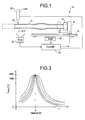
- FIG. 1 Illustrated schematically in Figure 1 is an apparatus 10 for effecting the single crystal conversion of a polycrystalline article 12 in accordance with an exemplary embodiment of the present invention.
- Article 12 may have any suitable configuration such as an elongate tube, which configuration, for example, may have a length of about 100 mm, with an outer diameter of about 5.5 mm and a wall thickness of about 0.5 mm.
- Article 12 is shown as having a central enlarged portion or bulge to exemplify structural variations within article 12.
- Article 12 may be formed, for example, of a suitable polycrystalline material that may be converted to single crystal material in a solid-state conversion process.
- article 12 may be in the initial form of polycrystalline alumina, such as that available under the LucaloxTM brand available from The General Electric CompanyTM typically pre-processed for driving out therefrom magnesium oxide for achieving a magnesia level preferably below 70 wppm.
- Polycrystalline alumina may be converted into a single crystal alumina or sapphire in a solid-state process.
- One example of this conversion is disclosed in U.S. Patent 5,427,051, which patent is incorporated herein by reference.
- the present invention is an improvement over the solid-state crystal conversion process of that patent for improving the repeatability of conversion for a batch of tubes, and for extending the process to larger or longer articles, and articles having varying configurations.
- Article 12 is preferably mounted in a chuck 14 driven by a motor 16 for effecting a suitable rotary speed of article 12.
- Chuck 14 and motor 16 are typically mounted on a translation carriage or table 18 for translating the supported article 12 along an axial or centerline axis as article 12 is rotated by motor 16.
- a heater in the exemplary form of a carbon dioxide laser 20, and associated optics, is provided for emitting a heating or laser beam 22 at the surface of a first end of article 12, with an opposite or second end of article 12 being supported in chuck 14.
- article 12 is rotated so that laser 20 may initially heat the first end of article 12 with a uniform ring of heat therearound in a suitable environment, such as argon gas. Since the process conditions leading to the onset of solid-state crystal conversion, and the speed with which the conversion takes place are not well understood, the present invention provides a diagnostic method for evaluating the progressive stages of conversion using controlled temperature profiles. From this, predetermined temperature profiles are used to generate spatially selective and temporally controlled densification and conversion of article 12.
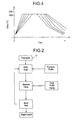
- apparatus 10 is configured for controlling the solid-state crystal conversion of polycrystalline article 12 in a process illustrated in the exemplary flowchart of Figure 2.
- the process begins by applying heat at the first end of article 12 using laser 20 to effect a predetermined spatial temperature distribution or profile thereat having a maximum temperature approaching, and preferably not exceeding, the melting temperature of article 12.
- Figure 3 is a graph of an exemplary family of spatial temperature profiles at the surface of article 12 directly below laser 20.
- the temperature is maximum at the location of the incident laser beam 22, which location corresponds with a Z-axis dimension of zero.
- Laser beam 22 is concentrated at one axial plane of article 12 and therefore the temperature profile decreases on opposite sides thereof due to heat transfer mechanisms associated with the particular article 12.
- the maximum temperature is typically less than the melting temperature of 2,050°C and typically greater than about 1,800°C.
- the spatial temperature profile is effected using a suitable temporal profile that gradually increases the local temperature of article 12 below laser beam 22 by controlling the power laser 20 until the desired maximum temperature is reached without effecting undesirable thermal shock in article 12.
- the resulting spatial temperature profile is maintained for a suitable time to initiate the solid-state crystal conversion of article 12 at a first end directly below the incident laser beam 22.
- the heat imparted by laser beam 22 may then be moved along the longitudinal axis of article 12 toward an opposite end to correspondingly propagate the solid-state conversion therealong.
- the incident heat is preferably moved to correspondingly move the spatial temperature profile along article 12 for a predetermined exposure time to propagate the conversion therealong.
- Carriage 18 allows the entire article 12 to be translated axially relative to laser 20, which laser 20 is typically stationary, so that the desired spatial temperature profile may be moved along article 12 for promoting the single crystal conversion as article 12 is correspondingly translated.
- laser 20 may be moved relative to the stationary article.
- an imaging pyrometer 24 may be aimed or directed at article 12 in the region of the applied laser beam 22 for measuring the surface temperature of article 12 at the heated portion thereof.
- Pyrometer 24 is operatively joined to a controller 26 that in turn is joined to laser 20 for adjusting the power thereof.
- Controller 26 may have any conventional form, such as a digitally programmable computer, preferably operated in a feedback closed-loop for controlling the spatial temperature profile of article 12 at incident laser beam 22 in response to the measured temperature thereat.
- the power of laser 20 may be adjusted for controlling heat flux of the applied heat for in turn effecting the spatial temperature profile.
- Figure 3 illustrates a family of predetermined spatial temperature profiles all having a common maximum temperature at the point of heat application, but differing in temperature profile forward and aft thereof.
- the family of spatial temperature profiles is center-peaked and varies in spatial extent forward and aft of the incident beam, and may also vary in local temperature gradient.
- Figure 4 is a graph of a family of predetermined temporal temperature profiles associated with the spatial profiles of Figure 3.
- the initial application of heat to article 12 begins at low power and increases gradually to correspondingly increase the maximum temperature of article 12 without introducing undesirable thermal shock therein.
- the heat influx may be maintained constant for a predetermined time for initiating and propagating the solid-state conversion process.
- the physical properties of article 12 change, including the thermal conductivity thereof, and the amount of heat input may be correspondingly reduced to again protect article 12 from undesirable degradation such as thermal shock.
- the conversion process may be optimized by applying the heat to article 12 to effect a corresponding one of the spatial temperature profiles at different locations along article 12 from the beginning at the first end, to the middle of article 12, and finally to the opposite or second end thereof.
- the spatial temperature profiles are preferably the same or equal at the different axial locations along article 12. Where article 12 changes in configuration along an axis, the spatial temperature profiles are preferably different at the different axial locations along article 12 to promote the conversion thereat.
- the exposure time at the maximum temperature is preferably equal at the different axial locations along article 12.
- the exposure time at the maximum temperature is preferably different at the different axial locations along article 12.
- the spatial and temporal temperature profiles illustrated in Figures 3 and 4 are merely examples of corresponding profiles families whose local temperature, local temperature gradient, and exposure time may be optimized for specific configurations of article 12 and the specific material composition thereof.
- a thermal model 28, as shown schematically in Figure 1, may be conventionally developed for the specific article 12 and laser 20 heat source. Model 28 may be used to analytically determine the power and heat flux required by laser 20 and the corresponding scan rate of axial translation of article 12 relative thereto for producing a desired family of temperature profiles such as those illustrated in Figures 3 and 4.
- the family of temperature profiles may be developed or obtained by correspondingly applying heat to a plurality of article 12 in a systematic development program to determine onset of the conversion and speed of single crystal propagation.
- the use of different temperature profiles and exposure times combined with radiometric monitoring of article 12 surface temperature distribution will enable the determination of the process conditions associated with various stages of densification and conversion.
- spatially selective and temporally controlled densification and conversion of article 12 may be controlled using predetermined temperature profiles maintained in corresponding schedules in controller 26. Either open-loop or closed-loop control of the conversion process may be effected in controller 26 for optimizing the single crystal conversion of article 12 without thermal shock over the entire length of article 12.
- the invention has particular utility for the solid-state conversion of polycrystalline alumina, with the maximum temperature in the spatial profiles being greater than about 1,800°C, with the conversion effecting single crystal sapphire along the entire length of article 12 irrespective of the particular configuration of article 12.
- optimum temperature control may be effected by controller 26 to improve the solid-state conversion process along the length of article 12.
Landscapes
- Chemical & Material Sciences (AREA)
- Engineering & Computer Science (AREA)
- Crystallography & Structural Chemistry (AREA)
- Materials Engineering (AREA)
- Metallurgy (AREA)
- Organic Chemistry (AREA)
- Physics & Mathematics (AREA)
- Thermal Sciences (AREA)
- Inorganic Chemistry (AREA)
- Crystals, And After-Treatments Of Crystals (AREA)
Applications Claiming Priority (2)
| Application Number | Priority Date | Filing Date | Title |
|---|---|---|---|
| US09/200,562 US6299681B1 (en) | 1998-11-27 | 1998-11-27 | Single crystal conversion control |
| US200562 | 1998-11-27 |
Publications (1)
| Publication Number | Publication Date |
|---|---|
| EP1004690A1 true EP1004690A1 (de) | 2000-05-31 |
Family
ID=22742233
Family Applications (1)
| Application Number | Title | Priority Date | Filing Date |
|---|---|---|---|
| EP99308918A Withdrawn EP1004690A1 (de) | 1998-11-27 | 1999-11-09 | Steuerung der Einkristall-Konversion |
Country Status (6)
| Country | Link |
|---|---|
| US (1) | US6299681B1 (de) |
| EP (1) | EP1004690A1 (de) |
| JP (1) | JP2000256089A (de) |
| KR (1) | KR100789005B1 (de) |
| CN (1) | CN1255556A (de) |
| TW (1) | TW591126B (de) |
Families Citing this family (2)
| Publication number | Priority date | Publication date | Assignee | Title |
|---|---|---|---|---|
| US6475942B1 (en) * | 2000-09-05 | 2002-11-05 | General Electric Company | Conversion of polycrystalline alumina to single crystal sapphire using molybdenum doping |
| GB2593950A (en) * | 2020-04-08 | 2021-10-13 | Corning Inc | Solid state conversion of polycrystalline material |
Citations (6)
| Publication number | Priority date | Publication date | Assignee | Title |
|---|---|---|---|---|
| JPS6418985A (en) * | 1987-07-14 | 1989-01-23 | Matsushita Electric Industrial Co Ltd | Production of oxide single crystal |
| EP0625594A2 (de) * | 1993-05-21 | 1994-11-23 | General Electric Company | Feststoff-Verfahren zur Umwandlung eines polykristallinen keramischen Materials in einen Einkristall, insbesondere Saphir |
| EP0645477A2 (de) * | 1993-09-24 | 1995-03-29 | General Electric Company | Umwandlung von polykristallinem Material in einkristallines Material unter Verwendung von Stoffen mit bestimmter Oberflächenbeschaffenheit |
| EP0645475A1 (de) * | 1993-09-24 | 1995-03-29 | General Electric Company | Thermische Umwandlung von polykristallinem Aluminiumoxid in festem Zustand zu Saphir unter Verwendung eines Kristallkeimes |
| EP0667404A1 (de) * | 1994-02-14 | 1995-08-16 | General Electric Company | Umwandlung eines dotierten polykristallinen Materials in einen Einkristall |
| DE19546992A1 (de) * | 1995-08-25 | 1997-02-27 | Fraunhofer Ges Forschung | Hochfrequenz-Induktionsofen mit Faserführung |
Family Cites Families (10)
| Publication number | Priority date | Publication date | Assignee | Title |
|---|---|---|---|---|
| US4234358A (en) * | 1979-04-05 | 1980-11-18 | Western Electric Company, Inc. | Patterned epitaxial regrowth using overlapping pulsed irradiation |
| DE3040661C2 (de) * | 1980-10-29 | 1990-05-10 | W. Schlafhorst & Co, 4050 Mönchengladbach | Fadenspleißvorrichtung |
| DE3164887D1 (en) * | 1980-09-18 | 1984-08-23 | Belge Etat | Process for crystallising films, and films thus obtained |
| JPH04294523A (ja) * | 1991-03-22 | 1992-10-19 | Toshiba Corp | 半導体装置の製造方法 |
| US5365875A (en) * | 1991-03-25 | 1994-11-22 | Fuji Xerox Co., Ltd. | Semiconductor element manufacturing method |
| KR100269350B1 (ko) * | 1991-11-26 | 2000-10-16 | 구본준 | 박막트랜지스터의제조방법 |
| JP3194021B2 (ja) * | 1992-07-03 | 2001-07-30 | 経済産業省産業技術総合研究所長 | レ−ザアニ−リング装置 |
| US5451553A (en) * | 1993-09-24 | 1995-09-19 | General Electric Company | Solid state thermal conversion of polycrystalline alumina to sapphire |
| JPH07249591A (ja) * | 1994-03-14 | 1995-09-26 | Matsushita Electric Ind Co Ltd | 半導体薄膜のレーザーアニール方法及び薄膜半導体素子 |
| US6071308A (en) | 1997-10-01 | 2000-06-06 | Boston Scientific Corporation | Flexible metal wire stent |
-
1998
- 1998-11-27 US US09/200,562 patent/US6299681B1/en not_active Expired - Fee Related
-
1999
- 1999-11-09 EP EP99308918A patent/EP1004690A1/de not_active Withdrawn
- 1999-11-15 TW TW088119877A patent/TW591126B/zh not_active IP Right Cessation
- 1999-11-25 KR KR1019990052783A patent/KR100789005B1/ko not_active Expired - Fee Related
- 1999-11-25 CN CN99124353A patent/CN1255556A/zh active Pending
- 1999-11-26 JP JP11335243A patent/JP2000256089A/ja active Pending
Patent Citations (6)
| Publication number | Priority date | Publication date | Assignee | Title |
|---|---|---|---|---|
| JPS6418985A (en) * | 1987-07-14 | 1989-01-23 | Matsushita Electric Industrial Co Ltd | Production of oxide single crystal |
| EP0625594A2 (de) * | 1993-05-21 | 1994-11-23 | General Electric Company | Feststoff-Verfahren zur Umwandlung eines polykristallinen keramischen Materials in einen Einkristall, insbesondere Saphir |
| EP0645477A2 (de) * | 1993-09-24 | 1995-03-29 | General Electric Company | Umwandlung von polykristallinem Material in einkristallines Material unter Verwendung von Stoffen mit bestimmter Oberflächenbeschaffenheit |
| EP0645475A1 (de) * | 1993-09-24 | 1995-03-29 | General Electric Company | Thermische Umwandlung von polykristallinem Aluminiumoxid in festem Zustand zu Saphir unter Verwendung eines Kristallkeimes |
| EP0667404A1 (de) * | 1994-02-14 | 1995-08-16 | General Electric Company | Umwandlung eines dotierten polykristallinen Materials in einen Einkristall |
| DE19546992A1 (de) * | 1995-08-25 | 1997-02-27 | Fraunhofer Ges Forschung | Hochfrequenz-Induktionsofen mit Faserführung |
Non-Patent Citations (1)
| Title |
|---|
| PATENT ABSTRACTS OF JAPAN vol. 013, no. 199 (C - 594) 11 May 1989 (1989-05-11) * |
Also Published As
| Publication number | Publication date |
|---|---|
| KR20000057021A (ko) | 2000-09-15 |
| CN1255556A (zh) | 2000-06-07 |
| TW591126B (en) | 2004-06-11 |
| US6299681B1 (en) | 2001-10-09 |
| KR100789005B1 (ko) | 2007-12-26 |
| JP2000256089A (ja) | 2000-09-19 |
Similar Documents
| Publication | Publication Date | Title |
|---|---|---|
| US6344634B2 (en) | Hybrid method for firing of ceramics | |
| US6537481B2 (en) | Hybrid method for firing of ceramics | |
| JP2011528995A5 (de) | ||
| CN109047599A (zh) | 一种用于镦锻的棒料加热装置及方法 | |
| CN102554401A (zh) | 一种炼钢用氧枪铜端头与钢质管短节焊接方法 | |
| US6220057B1 (en) | Apparatus and method for drawing a glass ingot | |
| US6299681B1 (en) | Single crystal conversion control | |
| US6344635B2 (en) | Hybrid method for firing of ceramics | |
| CN103717541B (zh) | 用于制造具有由掺杂氟的石英玻璃制成的护套玻璃层的、光学预制体的等离子体沉积方法 | |
| US20020008334A1 (en) | Method for controlling the firing of ceramics | |
| CN107056041A (zh) | 一种预制棒拉双锥的方法 | |
| KR100817987B1 (ko) | 광 파이버 모재의 연신 방법 및 연신 장치 | |
| JP5579759B2 (ja) | 溶融シリカ本体における硝子質状の内層の生成装置及びその動作方法 | |
| CN102086090B (zh) | 玻璃预型体拉伸装置 | |
| CN111233315B (zh) | 预制棒延伸装置及其延伸方法 | |
| RU2407710C1 (ru) | Заготовка оптического волокна, способ получения заготовки оптического волокна и стеклянный стержень для получения заготовки оптического волокна | |
| US7886561B2 (en) | Method for drawing glass parent material and drawing machine for use therein | |
| CN209778655U (zh) | 预制棒延伸装置 | |
| JP4062410B2 (ja) | 光ファイバ用ガラスパイプの製造方法および製造装置 | |
| WO2023075975A1 (en) | Methods and apparatuses for homogenizing glass workpieces | |
| JP2004115286A (ja) | ガラス母材の延伸方法 | |
| KR20260056170A (ko) | 기판 본체 예열 방법, 피가공물 적층 가공 방법, 공작기계 및 제어 디바이스 | |
| JP2003212576A (ja) | ガラス母材の延伸方法 | |
| JPH1078400A (ja) | 材料の焼結制御方法及びその装置 | |
| JP2004018341A (ja) | ガラス母材の延伸方法 |
Legal Events
| Date | Code | Title | Description |
|---|---|---|---|
| PUAI | Public reference made under article 153(3) epc to a published international application that has entered the european phase |
Free format text: ORIGINAL CODE: 0009012 |
|
| AK | Designated contracting states |
Kind code of ref document: A1 Designated state(s): DE FR GB IT |
|
| AX | Request for extension of the european patent |
Free format text: AL;LT;LV;MK;RO;SI |
|
| 17P | Request for examination filed |
Effective date: 20001130 |
|
| AKX | Designation fees paid |
Free format text: DE FR GB IT |
|
| 17Q | First examination report despatched |
Effective date: 20020819 |
|
| STAA | Information on the status of an ep patent application or granted ep patent |
Free format text: STATUS: THE APPLICATION IS DEEMED TO BE WITHDRAWN |
|
| 18D | Application deemed to be withdrawn |
Effective date: 20021231 |