EP1011648B1 - Inhibiteur de tyrosine kinase combine a une castration chimique pour traiter un cancer de la prostate - Google Patents
Inhibiteur de tyrosine kinase combine a une castration chimique pour traiter un cancer de la prostate Download PDFInfo
- Publication number
- EP1011648B1 EP1011648B1 EP98942057A EP98942057A EP1011648B1 EP 1011648 B1 EP1011648 B1 EP 1011648B1 EP 98942057 A EP98942057 A EP 98942057A EP 98942057 A EP98942057 A EP 98942057A EP 1011648 B1 EP1011648 B1 EP 1011648B1
- Authority
- EP
- European Patent Office
- Prior art keywords
- composition
- tyrosine kinase
- compound
- kinase inhibitor
- chemical castration
- Prior art date
- Legal status (The legal status is an assumption and is not a legal conclusion. Google has not performed a legal analysis and makes no representation as to the accuracy of the status listed.)
- Expired - Lifetime
Links
Images


Classifications
-
- A—HUMAN NECESSITIES
- A61—MEDICAL OR VETERINARY SCIENCE; HYGIENE
- A61K—PREPARATIONS FOR MEDICAL, DENTAL OR TOILETRY PURPOSES
- A61K33/00—Medicinal preparations containing inorganic active ingredients
-
- A—HUMAN NECESSITIES
- A61—MEDICAL OR VETERINARY SCIENCE; HYGIENE
- A61K—PREPARATIONS FOR MEDICAL, DENTAL OR TOILETRY PURPOSES
- A61K45/00—Medicinal preparations containing active ingredients not provided for in groups A61K31/00 - A61K41/00
- A61K45/06—Mixtures of active ingredients without chemical characterisation, e.g. antiphlogistics and cardiaca
-
- A—HUMAN NECESSITIES
- A61—MEDICAL OR VETERINARY SCIENCE; HYGIENE
- A61K—PREPARATIONS FOR MEDICAL, DENTAL OR TOILETRY PURPOSES
- A61K31/00—Medicinal preparations containing organic active ingredients
- A61K31/33—Heterocyclic compounds
- A61K31/395—Heterocyclic compounds having nitrogen as a ring hetero atom, e.g. guanethidine or rifamycins
- A61K31/55—Heterocyclic compounds having nitrogen as a ring hetero atom, e.g. guanethidine or rifamycins having seven-membered rings, e.g. azelastine, pentylenetetrazole
-
- A—HUMAN NECESSITIES
- A61—MEDICAL OR VETERINARY SCIENCE; HYGIENE
- A61K—PREPARATIONS FOR MEDICAL, DENTAL OR TOILETRY PURPOSES
- A61K31/00—Medicinal preparations containing organic active ingredients
- A61K31/56—Compounds containing cyclopenta[a]hydrophenanthrene ring systems; Derivatives thereof, e.g. steroids
- A61K31/565—Compounds containing cyclopenta[a]hydrophenanthrene ring systems; Derivatives thereof, e.g. steroids not substituted in position 17 beta by a carbon atom, e.g. estrane, estradiol
-
- A—HUMAN NECESSITIES
- A61—MEDICAL OR VETERINARY SCIENCE; HYGIENE
- A61K—PREPARATIONS FOR MEDICAL, DENTAL OR TOILETRY PURPOSES
- A61K38/00—Medicinal preparations containing peptides
- A61K38/04—Peptides having up to 20 amino acids in a fully defined sequence; Derivatives thereof
-
- A—HUMAN NECESSITIES
- A61—MEDICAL OR VETERINARY SCIENCE; HYGIENE
- A61K—PREPARATIONS FOR MEDICAL, DENTAL OR TOILETRY PURPOSES
- A61K38/00—Medicinal preparations containing peptides
- A61K38/04—Peptides having up to 20 amino acids in a fully defined sequence; Derivatives thereof
- A61K38/08—Peptides having 5 to 11 amino acids
- A61K38/09—Luteinising hormone-releasing hormone [LHRH], i.e. Gonadotropin-releasing hormone [GnRH]; Related peptides
-
- A—HUMAN NECESSITIES
- A61—MEDICAL OR VETERINARY SCIENCE; HYGIENE
- A61P—SPECIFIC THERAPEUTIC ACTIVITY OF CHEMICAL COMPOUNDS OR MEDICINAL PREPARATIONS
- A61P13/00—Drugs for disorders of the urinary system
- A61P13/08—Drugs for disorders of the urinary system of the prostate
-
- A—HUMAN NECESSITIES
- A61—MEDICAL OR VETERINARY SCIENCE; HYGIENE
- A61P—SPECIFIC THERAPEUTIC ACTIVITY OF CHEMICAL COMPOUNDS OR MEDICINAL PREPARATIONS
- A61P35/00—Antineoplastic agents
-
- A—HUMAN NECESSITIES
- A61—MEDICAL OR VETERINARY SCIENCE; HYGIENE
- A61P—SPECIFIC THERAPEUTIC ACTIVITY OF CHEMICAL COMPOUNDS OR MEDICINAL PREPARATIONS
- A61P43/00—Drugs for specific purposes, not provided for in groups A61P1/00-A61P41/00
-
- A—HUMAN NECESSITIES
- A61—MEDICAL OR VETERINARY SCIENCE; HYGIENE
- A61P—SPECIFIC THERAPEUTIC ACTIVITY OF CHEMICAL COMPOUNDS OR MEDICINAL PREPARATIONS
- A61P5/00—Drugs for disorders of the endocrine system
Definitions
- the invention relates to oncology, endocrinology, andrology, and pharmacology.
- Prostate cancer is the most frequently diagnosed cancer in men and is responsible for approximately 41,000 deaths in the United States annually (Parker, S.L., et al. (1996) CA Cancer J. Clin ., 65:5-27). Early stage, organ-confined, prostate cancer is often managed with surgery or radiation therapy until the patient dies from unrelated causes.
- Carcinomas such as breast cancer, colon cancer and adenocarcinoma are characterized by rapid cell division. Consequently, these cancers are amenable to treatment with chemotherapeutic agents that inhibit rapid cell division.
- prostate cancer is not characterized by rapid cell division. Therefore, conventional chemotherapeutic agents generally display low efficacy against prostatic carcinomas.
- Prostatic carcinomas are often sensitive to hormonal manipulation.
- Currently approved treatment of prostrate cancer includes surgical castration, chemical castration, or a combination of surgical and chemical castration. Removal of the testes, the primary testosterone producing organ, reduces the levels of circulating androgens, to less than 5% of normal levels. This reduction in androgen levels inhibits prostate tumor growth.
- the anti-tumor effects of surgical castration are direct, the anti-tumor effects can be temporary.
- Surgical castration often leads to clonal selection of androgen-independent prostate tumor cells. This results in re-growth of the prostate tumor in a form that proliferates without testosterone or DHT stimulation (Isaacs et al. (1981) Cancer Res. 41:5070-5075; Crawford et al. (1989) N. Eng. J . Med. 321:419-424).
- Chemical castration (also called medical castration) is often substituted for surgical castration, as an initial treatment. Chemical castration can be achieved by administration of estrogens, e.g., diethylstilbestrol (DES); LHRH analogues, e.g., leuprolide acetate (LUPRON® ) or goserelin acetate (ZOLADEX® ); steroidal antiandrogens, e.g., cyproterone acetate (CPA); nonsteroidal antiandrogens, e.g., flutamide, nilutamide, or CASODEX® ; or a combination of such agents.
- estrogens e.g., diethylstilbestrol (DES); LHRH analogues, e.g., leuprolide acetate (LUPRON® ) or goserelin acetate (ZOLADEX® ); steroidal antiandrogens, e.g., cyproterone
- Receptor-linked tyrosine kinases are transmembrane proteins that contain an extracellular ligand binding domain, a transmembrane sequence, and a cytoplasmic tyrosine kinase domain. Tyrosine kinases function in cellular signal transduction. Cell proliferation, differentiation, migration, metabolism and programmed death are examples of tyrosine kinase-mediated cellular responses.
- Tyrosine kinases have been implicated in prostate epithelial cell transformation and tumor progression. Implicated tyrosine kinases include Fibroblast Growth Factor (FGF) receptors. Epidermal Growth Factor (EGF) receptors, and Platelet-Derived Growth Factor (PDGF) receptors. Also implicated are Nerve Growth Factor (NGF) receptors, Brain-Derived Neurotrophic Factor (BDNF) receptors, and Neurotrophin-3 (NT-3) receptors, and Neurotrophin-4 (NT-4) receptors.
- FGF Fibroblast Growth Factor
- EGF Epidermal Growth Factor
- PDGF Platelet-Derived Growth Factor
- NGF Nerve Growth Factor
- BDNF Brain-Derived Neurotrophic Factor
- NT-3 Neurotrophin-3 receptors
- NT-4 Neurotrophin-4
- U.S. Patent Nos. 5,516,771, 5,654,427 and 5,650,407 discuss indolocarbazole-type tyrosine kinase inhibitors and prostate cancer.
- U.S. Patent Nos. 5,475,110; 5,591,855; and 5,594,009; and WO 96/11933 discuss fused pyrrolocarbazole-type tyrosine kinase inhibitors and prostate cancer.
- tyrosine kinase inhibitors exert their anti-tumor effects against mammalian prostate cancer by a hormone-independent mechanism. It has been further discovered that the combination of tyrosine kinase inhibitor and a chemical castration agent can be synergistic.
- the invention features a composition for treating prostate cancer progression in a mammal, e.g., a human.
- the composition includes an administerable therapeutically effective amount of a tyrosine kinase inhibitor and a chemical castration agent, to the mammal.
- the tyrosine kinase inhibitor and the chemical castration agent can inhibit prostate tumor progression synergistically.
- Preferred tyrosine kinase inhibitors include indolocarbazoles.
- Preferred indolocarbazoles include the following compounds:
- Compound II-4-LAE is the lysyl- ⁇ -alaninate ester of Compound II-4, or a pharmacologically acceptable salt of the ester, e.g., the dihydrochloride salt.
- Compound II-12 is described in U.S. Pat. No. 4,923,986 ("Compound 20").
- Compound II-4 is described in U.S. Pat. No. 5,461,146.
- Compound II-4-LAE is described in U.S. Pat. No. 5,650,407 (Example 14).
- the tyrosine kinase inhibitor also can be be a fused pyrrolocarbazole.
- the tyrosine kinase inhibitor can be administered by any suitable route, e.g., orally or parenterally.
- Chemical castration agents useful in the invention include estrogens; LHRH agonists, e.g., leuprolide acetate (LUPRON® ) and goserelin acetate (ZOLADEX® ); LHRH antagonists, e.g., ANTIDE® (Ares-Serono) and GANIRELIX® (Akzo Nobel); and antiandrogens, e.g., flutamide and nilutamide.
- LHRH agonists e.g., leuprolide acetate (LUPRON® ) and goserelin acetate (ZOLADEX®
- LHRH antagonists e.g., ANTIDE® (Ares-Serono) and GANIRELIX® (Akzo Nobel
- antiandrogens e.g., flutamide and nilutamide.
- the tyrosine kinase inhibitor and the chemical castration agent are administerable in separate formulations. Alternatively, they can be formulated together and administerable in a single composition.
- the invention also features a composition comprising a tyrosine kinase inhibitor and a chemical castration agent.
- the tyrosine kinase inhibitor in the composition is a trkA inhibitor, a trkB inhibitor, or a trkC inhibitor.
- the tyrosine kinase inhibitor in the compositioin is an indolocarbazole. Preferred indolocarbazoles are
- the tyrosine kinase inhibitor in the composition can be a fused pyrrolocarbazole.
- the composition can be formulated for oral administration or parenteral administration.
- the chemical castration agent can be an estrogen, an LHRH analog, or an antiandrogen, or a combination of two or more such compounds.
- a preferred LHRH analog for inclusion in the composition is leuprolide acetate.
- a preferred antiandrogen for inclusion in the composition is flutamide.
- the chemical castration agent included in the composition can be a combination of an LHRH analog and an antiandrogen, for example, leuprolide acetate and flutamide.
- chemical castration agent means a compound that: (1) inhibits the production of serum androgens, (2) blocks binding of serum androgens to androgen receptors, or (3) inhibits the conversion of testosterone to DHT, or a combination of two or more such compounds.
- the co-administrable tyrosine kinase inhibitor and a chemical castration agent can be by concurrent administrable in separate formulations, i.e., a tyrosine kinase formulation and a chemical castration agent formulation.
- Separate formulations is "concurrent" administrable if the timing of their administrability is such that the pharmacological activities of the tyrosine kinase inhibitor and the chemical castration agent occur simultaneously in the mammal undergoing treatment.
- a tyrosine kinase inhibitor and a chemical castration agent are formulated into a single composition.
- the dosage of the tyrosine kinase inhibitor is from 1 ⁇ g/kg to 1 g/kg of body weight per day. More preferably, the dosage of the tyrosine kinase inhibitor is from 0.01 mg/kg to 100 mg/kg of body weight per day.
- the optimal dosage of the tyrosine kinase inhibitor will vary, depending on factors such as type and extent of progression of the prostate cancer, the overall health status of the patient, the potency of the tyrosine kinase inhibitor, and route of administration. Optimization of the tyrosine kinase dosage is within ordinary skill in the art.
- the tyrosine kinase inhibitor used in this invention is a trk A inhibitor, a trk B inhibitor, or a trk C inhibitor.
- Suitable indolocarbazole-type tyrosine kinase inhibitors can be obtained using information found in documents such as Dionne et al., U.S. Patent No. 5,516,771, Dionne et al., U.S. Patent No. 5,654,427, Lewis et al., U.S. Patent No. 5,461,146, and Mallamo et al., U.S. Patent No. 5,650,407.
- Compound II-4-LAE is prepared and administerable to a human patient according to the following procedure.
- Compound II-4-LAE (dihydrochloride) and an osmotically suitable amount of mannitol are dissolved in distilled water, and the pH is adjusted to approximately 3.5. This solution is lyophilized to produce a powder. For storage and convenient use, aliquots of the lyophilized powder containing 27.5 mg of Compound II-4-LAE and 55 mg of mannitol are prepared.
- an aliquot of lyophilized powder is redissolved in sterile water for injection, USP, to yield 1.1 ml containing 50 mg/ml mannitol and 25 mg/ml of Compound II-4-LAE (dihydrochloride).
- This reconstituted solution is then diluted with an appropriate volume of 5% Dextrose Injection, USP, for administration of the desired Compound II-4-LAE dose by intravenous infusion over a period of approximately one hour.
- the dosage of Compound II-4-LAE in this procedure can be conveniently initiated at 1 mg/meter 2 /day and gradually increased, for example to 64 mg/meter 2 /day, or 501 mg/meter 2 /day, as the patient's progress is monitored.
- Known chemical castration agents useful in this invention are sometimes categorized as follows: estrogens, leuteinizing hormone-releasing hormone (LHRH) agonists, LHRH antagonists, and antiandrogens.
- Antiandrogens can be further categorized as steroidal or nonsteroidal.
- Estrogens e.g., diethylstilbestrol (DES) raise sex hormone-binding globulin levels and plasma prolactin levels. This reduces LH secretion and testicular testosterone synthesis through a negative feedback response.
- Dosage of DES is often from 1 mg/day to 5 mg/day. Preferably, higher dosages of DES are avoided because of possible complications relating to cardiovascular risk.
- LHRH agonist preferred for use in this invention is leuprolide acetate, commercially available as LUPRON® (Takeda Abbott Pharmaceuticals, Inc.).
- the chemical name of leuprolide acetate is 5-oxo-L-prolyl-L-histidyl-L-tryptophyl-L-seryl-L-tyrosyl-D-leucyl-L-leucyl-L-arginyl-N-ethyl-L-prolinamide acetate (salt).
- Leuprolide acetate, an LHRH agonist is a potent inhibitor of gonadotropin secretion when administered continuously and in therapeutic doses. This effect is reversible upon discontinuation of leuprolide acetate administration.
- Leuprolide acetate e.g., LUPRON DEPOT®
- LH leuteining hormone
- leuprolide acetate When used in this invention, leuprolide acetate is administerable subcutaneously, intramuscularly, or intravenously. Leuprolide acetate is administerable for example, by subcutaneous injection of 1 mg per day. In some embodiments of the invention, leuprolide acetate is administerable in a depot formulation.
- a depot formulation conveniently provides sustained release of the drug over an extended time period, e.g., 1 to 4 months.
- An exemplary depot formulation includes a suspension of microspheres containing leuprolide acetate, purified gelatin, DL-lactic and glycolic acids copolymer, and D-mannitol. The microspheres can be suspended in a carrier containing carboxymethylcellulose sodium, D-mannitol, and water.
- Such a depot formulation is commercially available as LUPRON DEPOTTM (Takeda Abbott Pharmaceuticals) and is suitable for intramuscular injection.
- Another LHRH agonist useful in this invention is goserelin acetate, commercially available as ZOLADEX® (Zeneca).
- the chemical structure of goserelin acetate is pyro-Glu-His-Trp-Ser-Tyr-D-Ser(Bu t )-Leu-Arg-Pro-Azgly-NH 2 acetate.
- ZOLADEX® is supplied as a formulation designed for subcutaneous injection with continuous release over a 28-day period.
- an LHRH antagonist useful in this invention is ANTIDE® (Ares-Serono), whose chemical name is D-alaninamide N-acetyl-3-(2-naphthalenyl)-D-alanyl-4-chloro-D-phenylalanyl-3-(3-pyridinyl)-D-alanyl-L-seryl-N6- (3-pyridinylcarbonyl)-L-lysyl-N6-(3-pyridinylcarbonyl)-D-lysyl-L-leucyl-N6-(1-methylethyl)-L-lysyl-L-prolyl.
- LHRH antagonist Another example of a useful LHRH antagonist is GANIRELIX® (Roche/Akzo Nobel), whose chemical name is N-Ac-D-Nal,D-pCl-Phe,D-Pal,D-hArg(Et)2,hArg(Et)2,D-Ala.
- CPA cyproterone acetate
- MEGACE® Bristol-Myers Oncology
- Steroidal antiandrogens may block prostatic androgen receptors. They may also inhibit the releast of LH.
- CPA is preferably administered to human patients at dosages of 100 mg/day to 250 mg/day.
- Nonsteroidal antiandrogens block androgen receptors. They may also cause an increase in serum LH levels and serum testosterone levels.
- a preferred nonsteroidal antiandrogen is flutamide (2-methyl- N -[4-nitro-3-(trifluoromethyl)phenyl] propanamide), commercially available as EULEXIN® (Schering Corp.). Flutamide exerts is antiandrogenic action by inhibiting androgen uptake, by inhibiting nuclear binding of androgen in target tissues, or both. Flutamide is typically administered orally, e.g., in capsule form. An exemplary flutamide dosage is 250 mg, three times per day, i.e., 750 mg per day.
- nilutamide Another nonsteroidal antiandrogen is nilutamide, whose chemical name is 5,5-dimethyl-3-[4-nitro-3-(trifluoromethyl-4'-nitrophenyl)-4,4-dimethylimidazolidine-dione.
- the chemical castration agent is a combination of an LHRH agonist such as leuprolide acetate, and an antiandrogen such as flutamide or nilutamide.
- an LHRH agonist such as leuprolide acetate
- an antiandrogen such as flutamide or nilutamide.
- leuprolide acetate can be administered by subcutaneous, intramuscular or intravenous injection, and concurrently the flutamide can be administered orally.
- the tyrosine kinase inhibitor can be administered separately in a third formulation, or it can be formulated together with the LHRH agonist or the antiandrogen.
- CASODEX® Another nonsteroid antiandrogen useful in this invention is CASODEX® .
- An exemplary dosage of CASODEX® is from 5 mg to 500 mg per day, preferably about 50 mg per day.
- An exemplary combined formulation according to this invention includes 1-20 mg of Compound II-12 and 100-1000 mg of flutamide in a capsule for oral administration to a human patient, once, twice, or three times per day.
- the formulation includes a vehicle containing polysorbate 80 and polyethylene glycol in a ratio of 1:1 (v/v), to enhance bioavailability of Compound II-12.
- this Compound II-12/flutamide oral formulation is supplemented by an intramuscular injection of a leuprolide acetate depot injection, e.g., LUPRON DEPOT® .
- Another tyrosine kinase such as Compound II-4 or Compound II-4-LAE can be substituted for Compound II-12 in this formulation.
- Other exemplary combined formulations according to this invention include Compound II-12, Compound II-4 or Compound II-4-LAE, and a chemical castration agent, in a single solution suitable for intravenous infusion.
- Tyrosine kinase inhibitors and chemical castration agents can be formulated, individually or in combination, into pharmaceutical compositions by admixture with pharmaceutically acceptable nontoxic exipients and carriers.
- Such compositions can be prepared for use in parenteral administration, particularly in the form of liquid solutions or suspensions; for oral administration, particularly in the form of liquid, tablets or capsules; or intranasally, particularly in the form of powders, nasal drops, or aerosols.
- composition is administerable conveniently in unit dosage form and can be prepared by any of the methods known in the art. Such methods are described, for example, in Remington's Pharmaceutical Sciences (Mack Pub. Co., Easton, Pa., 1980).
- Liquid dosage forms for oral administration include pharmaceutically acceptable emulsions, microemulsions, solutions, suspensions, syrups and elixirs.
- the liquid dosage forms may contain inert diluents commonly used in the art such as, for example, water or other solvents, solubilizing agents and emulsifiers such as ethyl alcohol, isopropyl alcohol, ethyl carbonate, ethyl acetate, benzyl alcohol, benzyl benzoate, propylene glycol, 1,3-butylene glycol, dimethylformamide, oils (in particular, cottonseed, groundnut, corn, germ, olive, castor, and sesame oils), glycerol, tetrahydrofurfuryl alcohol, polyethylene glycols and fatty acid esters of sorbitan, and mixtures thereof.
- the oral compositions can also include adjuvants such as wetting agents, e
- Injectable depot forms are made by forming microencapusule matrices of the drug in biodegradable polymers such as polylactide-polyglycolide. Depending upon the ratio of drug to polymer and the nature of the particular polymer employed, the rate of drug release can be controlled. Examples of other biodegradable polymers include poly(orthoesters) and poly(anhydrides) Depot injectable formulations are also prepared by entrapping the drug in liposomes or microemulsions which are compatible with body tissues.
- Solid dosage forms for oral administration include capsules, tablets, pills, powders, and granules.
- the active compound is mixed with at least one inert, pharmaceutically acceptable excipient or carrier such as sodium citrate or dicalcium phosphate and/or a) fillers or extenders such as starches, lactose, sucrose, glucose, mannitol, and silicic acid, b) binders such as, for example, carboxymethylcellulose, alginates, gelatin, polyvinylpyrrolidinone, sucrose, and acacia, c) humectants such as glycerol, d) disintegrating agents such as agar-agar, calcium carbonate, potato or tapioca starch, alginic acid, certain silicates, and sodium carbonate, 3) solution retarding agents such as paraffin, f) absorption accelerators such as quaternary ammonium compounds, g) wetting agents such as, for example, cetyl alcohol and glycerol,
- the dosage form may also comprise buffering agents.
- Solid compositions of a similar type may also be employed as fillers in soft and hard-filled gelatin capsules using such excipients as lactose or milk sugar as well as high molecular weight polyethylene glycols and the like.
- the solid dosage forms of tablets, dragees, capsules, pills, and granules can be prepared with coatings and shells such as enteric coatings and other coatings well known in the pharmaceutical formulating art. They may optionally contain opacifying agents and can also be of a composition that they release the active ingredient(s) only, or preferentially, in a certain part of the intestinal tract, optionally, in a delayed manner. Examples of embedding compositions which can be used include polymeric substances and waxes.
- compositions of a similar type may also be employed as fillers in soft and hard-filled gelatin capsules using such excipients as lactose or milk sugar as well as high molecular weight polyethylene glycols and the like.
- the active compounds can also be in micro-encapsulated form with one or more excipients as noted above.
- the active compound may be admixed with at least one inert diluent such as sucrose, lactose or starch.
- Such dosage forms may also comprise, as is normal practice, additional substances other than inert diluents, e.g., tableting lubricants and other tableting aids such a magnesium stearate and microcrystalline cellulose.
- the dosage forms may also comprise buffering agents.
- opacifying agents may optionally contain opacifying agents and can also be of a composition that they release the active ingredient(s) only, or preferentially, in a certain part of the intestinal tract, optionally, in a delayed manner.
- embedding compositions which can be used include polymeric substances and waxes.
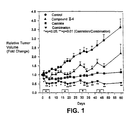
- Example 1 Compound II-4 Combined with Surgical Castration
- the Dunning R-3327 H tumor (derived from a spontaneous prostate tumor in an aged Copenhagen rat) was used in these experiments because of its androgensensitivity and its slow growth rate (Isaacs, 1989, Cancer Res . 49:6290-6294).
- a consideration in the experimental design was that surgical castration of rats harboring Dunning H tumors leads to almost immediate cessation of tumor growth followed by androgen-insensitive tumor regression at about 5-6 weeks postcastration (Isaacs et al. (1981) Cancer Res .41:5070-5075).
- the Dunning H tumor regression induced by Compound II-4 was not due to an effect on androgen levels, because the experiments were performed in rats implanted with testosterone-releasing silastic capsules.
- the implanted capsules were designed to maintain circulating testosterone at physiological levels. Serum testosterone levels measured at the end of the experiment confirmed that testosterone was ⁇ 1-2 ng/ml.
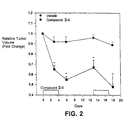
- the following experiment had three objectives: 1) to determine whether the combination of Compound II-4 with surgical castration would provide greater anti-tumor efficacy than Compound II-4 or surgical castration alone; 2) to determine whether Compound II-4 could cause regression of Dunning H tumors that had been selected hormone insensitivity by prior castration of the host animals; and 3) to determine if tumors treated with Compound II-4 for several dosing cycles were still sensitive to surgical castration.
- Compound II-4 was synthesized at Cephalon, Inc. and formulated (10 mg/ml) in a vehicle containing 40% polyethylene glycol (PEG 1000, Spectrum, Los Angeles, CA), 10% polyvinylpyrrolidone (C30, ISP Boundbrook, NJ), 2% benzyl alcohol (Spectrum, Los Angeles, CA) in water (48%).
- PEG 1000 Polyethylene glycol
- C30 Polyvinylpyrrolidone
- benzyl alcohol Specific, Los Angeles, CA
- Rats (200-240 g) obtained from Harlan Sprague Dawley (Indianapolis, IN) were maintained three rats/cage and give a commercial diet (Purina Formulab 5001) and water ad libitum . Animals were housed under humidity-controlled, temperature-controlled conditions, with a light/dark cycle of 12-hour intervals. Rats were quarantined for one week before experimental manipulation. Rat prostate cancer Dunning R-3327 H tumors were transplanted using trocar pieces. An adult male Copenhagen rat bearing a Dunning H tumor was sacrificed and the tumor was isolated. The tumor was cut, and small pieces were inoculated subcutaneously in adult, male Copenhagen rats.
- KETAMINETM 4.1 mg/100 g body weight
- XYLAZINETM XYLAZINETM (0.85 mg/100 g body weight).
- Each rat was placed on its back.
- a small incision 0.5-1 cm was made through the skin at the posterior tip of the scrotum.
- Another incision was made to break the connective membrane surrounding the testes.
- the epididymis, testes, vas deferens, the spermatic blood vessels, and the fat were pulled out and severed. Any remaining tissues were pushed back into the sac, and the incision was closed with autoclips. The autoclips were removed 5-7 days following surgery.
- Group 1 served as a vehicle control.
- Group 2 was castrated on Day 1.
- Group 3 received injections of Compound II-4 (10 mg/kg, sc) as described below.
- Group 4 was castrated on Day 1 and given injections of Compound II-4 as described below.
- Groups 1 and 3 were implanted subcutaneously (in the flank) with a 2 cm long sealed silastic tube filled with testosterone on Day 1.
- a silastic implant of this size was suitable to maintain serum testosterone in the physiological range of 1-3 ng/ml chronically for a duration of six months.
- Compound II-4 was administered sub-cutaneously (10 mg/kg/day) to Groups 3 and 4 on a periodic, 5-day dosing cycle with approximately 10 days between cycles.
- the drug was administered on Days 1-5, 14-18, 29-33 and 42-46.
- the drug vehicle was administered to Groups 1 and 2 on the same schedule as the Compound II-4-treated groups.
- Eight rats from Group 2 were divided into two groups of four rats each on Day 60.
- One group was treated with Compound II-4, 10 mg/kg, (subcutaneous) for 5 days, followed by drug withdrawal for 9 days, followed by a second five-day dosing regime at 10 mg/kg/day (subcutaneous).
- the second group received vehicle on the same dosing schedule.
- mice derived from Group 3 of the preceding experiment were divided into two groups on Day 60.
- Compound II-4 alone (10 mg/kg, sc; 4 independent cycles of Compound II-4 treatment: 5 days of drug treatment followed by drug withdrawal for approximately 10 days) caused complete tumor growth inhibition or induced tumor regression.
- the average tumor volume in drug-treated animals was significantly smaller (p ⁇ 0.01) than in vehicle treated control animals after each cycle of Compound II-4 administration (days 5, 19, 34 and 47; data not shown).
- each cycle of Compound II-4 administration caused regression relative to tumor volume at the start of each dosing cycle (data not shown).
- Compound II-4 can be used in combination with surgical castration to maximize degree and/or duration of regression of tumors in an accepted in vivo model of prostate cancer.
- Castration, Compound II-4 treatment, and the combination of Compound II-4 with surgical castration was well tolerated. Limited mortality was observed in control and castrated groups of animals treated with vehicle or Compound II-4. In each case, mortality occurred at the time of tumor measurement, presumably due to anesthesia overdose.
- Compound II-12 was synthesized at Cephalon, Inc.
- Compound II-12 dihydrochloride was formulated (10 mg/ml) in a vehicle containing 3:2 (v/v) Gelucire (Gattefosse, Saint-Priest, France) in propylene glycol (Spectrum, Gardena, CA).
- the Compound II-12/leuprolide combination was significantly more effective (p. ⁇ 0.05) in maintaining a reduced rate of tumor growth than either treatment alone (Fig. 4). Tumorregrowth was observed in the Compound II-12 treatment group and the leuprolide treatment group, approximately thirty days after initiation of treatments. In contrast, the combination treatment group exhibited a longer duration of reduced tumor growth and was statistically different from the Compound II-12 group and the leuprolide group from days 35 and 39 respectively, until termination of the experiment on Day 54 (p. ⁇ 0.05; Fig. 4).
Landscapes
- Health & Medical Sciences (AREA)
- Life Sciences & Earth Sciences (AREA)
- Pharmacology & Pharmacy (AREA)
- Veterinary Medicine (AREA)
- Chemical & Material Sciences (AREA)
- Public Health (AREA)
- General Health & Medical Sciences (AREA)
- Medicinal Chemistry (AREA)
- Animal Behavior & Ethology (AREA)
- Epidemiology (AREA)
- Bioinformatics & Cheminformatics (AREA)
- Engineering & Computer Science (AREA)
- Gastroenterology & Hepatology (AREA)
- Immunology (AREA)
- General Chemical & Material Sciences (AREA)
- Nuclear Medicine, Radiotherapy & Molecular Imaging (AREA)
- Chemical Kinetics & Catalysis (AREA)
- Proteomics, Peptides & Aminoacids (AREA)
- Organic Chemistry (AREA)
- Endocrinology (AREA)
- Reproductive Health (AREA)
- Urology & Nephrology (AREA)
- Diabetes (AREA)
- Inorganic Chemistry (AREA)
- Pharmaceuticals Containing Other Organic And Inorganic Compounds (AREA)
- Medicines That Contain Protein Lipid Enzymes And Other Medicines (AREA)
- Nitrogen And Oxygen Or Sulfur-Condensed Heterocyclic Ring Systems (AREA)
- Medicines Containing Plant Substances (AREA)
Claims (18)
- Composition comprenant un inhibiteur de tyrosine kinase et un agent de castration chimique choisi dans le groupe constitué d'un oestrogène, d'un agoniste de LH-RH, d'un antagoniste de LH-RH, et d'un anti-androgène.
- Utilisation d'un inhibiteur de tyrosine kinase et d'un agent de castration chimique choisi dans le groupe constitué d'un oestrogène, d'un agoniste de LH-RH, d'un antagoniste de LH-RH, et d'un anti-androgène, dans la fabrication d'un médicament destiné à inhiber la progression d'une tumeur de la prostate.
- Composition de la revendication 1 ou utilisation de la revendication 2, dans laquelle l'inhibiteur de tyrosine kinase est un inhibiteur de trkA, un inhibiteur de trkB, ou un inhibiteur de trkC.
- Composition de la revendication 1 ou utilisation de la revendication 2, dans laquelle l'inhibiteur de tyrosine kinase est un indolocarbazole.
- Composition ou utilisation de la revendication 4, dans laquelle l'indolocarbazole est choisi dans le groupe constitué de :un indolocarbazole dont la structure est :
 un indolocarbazole dont la structure est :et
 un indolocarbazole dont la structure est :
- Composition de la revendication 1 ou utilisation de la revendication 2, dans laquelle l'inhibiteur de tyrosine kinase est un pyrrolocarbazole condensé.
- Composition de la revendication 1 ou utilisation de la revendication 2, dans laquelle la composition de la revendication 1 ou le médicament de la revendication 2 est formulé(e) pour une administration orale.
- Composition de la revendication 1 ou utilisation de la revendication 2, dans laquelle la composition de la revendication 1 ou le médicament de la revendication 2 est formulé(e) pour une administration parentérale.
- Composition ou utilisation de la revendication 8, dans laquelle l'agoniste de LH-RH est l'acétate de leuprolide.
- Composition ou utilisation de la revendication 8, dans laquelle l'anti-androgène est le flutamide.
- Composition de la revendication 1 ou utilisation de la revendication 2, dans laquelle l'agent de castration chimique est une combinaison d'un agoniste de LH-RH et d'un anti-androgène.
- Composition ou utilisation de la revendication 3, dans laquelle l'agoniste de LH-RH est l'acétate de leuprolide, et l'anti-androgène est, le flutamide.
- Composition de la revendication 1 ou utilisation de la revendication 2, dans laquelle l'inhibiteur de tyrosine kinase et l'agent de castration chimique inhibent la progression tumorale d'une manière synergique.
- Composition de la revendication 1 ou utilisation de la revendication 2, dans laquelle l'inhibiteur de tyrosine kinase et l'agent de castration chimique sont administrés dans des formulations séparées.
- Composition de la revendication 1 ou utilisation de la revendication 2, dans laquelle l'inhibiteur de tyrosine kinase et l'agent de castration chimique sont formulés ensemble dans une composition unique.
- Composition de l'une quelconque des revendications 1, 3 à 15 destinée à être utilisée en thérapeutique.
- Composition de l'une quelconque des revendications 1, 3 à 15 destinée à être utilisée pour inhiber la progression d'une tumeur de la prostate.
- Utilisation de la composition de l'une quelconque des revendications 1, 3 à 15 dans la fabrication d'un médicament destiné à inhiber la progression d'une tumeur de la prostate.
Applications Claiming Priority (3)
| Application Number | Priority Date | Filing Date | Title |
|---|---|---|---|
| US5589197P | 1997-08-15 | 1997-08-15 | |
| US55891P | 1997-08-15 | ||
| PCT/US1998/016849 WO1999008668A2 (fr) | 1997-08-15 | 1998-08-13 | Inhibiteur de tyrosine kinase combine a une castration chimique pour traiter un cancer de la prostate |
Publications (3)
| Publication Number | Publication Date |
|---|---|
| EP1011648A2 EP1011648A2 (fr) | 2000-06-28 |
| EP1011648B1 true EP1011648B1 (fr) | 2001-11-07 |
| EP1011648B2 EP1011648B2 (fr) | 2005-07-20 |
Family
ID=22000842
Family Applications (1)
| Application Number | Title | Priority Date | Filing Date |
|---|---|---|---|
| EP98942057A Expired - Lifetime EP1011648B2 (fr) | 1997-08-15 | 1998-08-13 | Inhibiteur de tyrosine kinase combine a une castration chimique pour traiter un cancer de la prostate |
Country Status (22)
| Country | Link |
|---|---|
| US (1) | US5985877A (fr) |
| EP (1) | EP1011648B2 (fr) |
| JP (1) | JP2001515032A (fr) |
| KR (1) | KR100612161B1 (fr) |
| CN (1) | CN1147317C (fr) |
| AT (1) | ATE208210T1 (fr) |
| AU (1) | AU737092B2 (fr) |
| BR (1) | BR9812122A (fr) |
| CA (1) | CA2299471C (fr) |
| CZ (1) | CZ297198B6 (fr) |
| DE (1) | DE69802422T3 (fr) |
| DK (1) | DK1011648T4 (fr) |
| EA (1) | EA002525B1 (fr) |
| ES (1) | ES2163293T5 (fr) |
| HU (1) | HUP0003194A3 (fr) |
| NO (1) | NO325526B1 (fr) |
| NZ (2) | NZ502646A (fr) |
| PL (1) | PL193375B1 (fr) |
| PT (1) | PT1011648E (fr) |
| TR (1) | TR200000415T2 (fr) |
| UA (1) | UA61970C2 (fr) |
| WO (1) | WO1999008668A2 (fr) |
Families Citing this family (48)
| Publication number | Priority date | Publication date | Assignee | Title |
|---|---|---|---|---|
| EP1136079A4 (fr) * | 1998-10-08 | 2004-09-22 | Takeda Chemical Industries Ltd | Agents destines a retarder le passage d'un cancer hormono-dependant a un cancer hormono-independant |
| GB0007371D0 (en) * | 2000-03-28 | 2000-05-17 | Astrazeneca Uk Ltd | Chemical compounds |
| GB0008368D0 (en) * | 2000-04-06 | 2000-05-24 | Astrazeneca Ab | Combination product |
| US20020169154A1 (en) * | 2001-04-04 | 2002-11-14 | Cephalon, Inc. | Novel methods and compositions involving trk tyrosine kinase inhibitors and antineoplastic agents |
| EP1385546A1 (fr) * | 2001-05-08 | 2004-02-04 | MERCK PATENT GmbH | Therapie combinee utilisant des anticorps anti-egfr et des agents anti-hormonaux |
| SE0101697D0 (sv) * | 2001-05-14 | 2001-05-14 | Astrazeneca Ab | Pharmaceutical combination |
| IL144583A0 (en) * | 2001-07-26 | 2002-05-23 | Peptor Ltd | Chimeric protein kinase inhibitors |
| ATE498408T1 (de) * | 2001-08-10 | 2011-03-15 | Takeda Pharmaceutical | Gnrh-agonistische kombinationsmittel |
| JP4319908B2 (ja) * | 2001-08-24 | 2009-08-26 | ユニバーシティ オブ ビクトリア イノベーション アンド ディベロップメント コーポレーション | プロテアーゼ活性化配列を含むプロアエロリシンおよび前立腺癌の治療のための使用方法 |
| US7425618B2 (en) | 2002-06-14 | 2008-09-16 | Medimmune, Inc. | Stabilized anti-respiratory syncytial virus (RSV) antibody formulations |
| US7132100B2 (en) | 2002-06-14 | 2006-11-07 | Medimmune, Inc. | Stabilized liquid anti-RSV antibody formulations |
| US7563810B2 (en) | 2002-11-06 | 2009-07-21 | Celgene Corporation | Methods of using 3-(4-amino-1-oxo-1,3-dihydroisoindol-2-yl)-piperidine-2,6-dione for the treatment and management of myeloproliferative diseases |
| US8034831B2 (en) | 2002-11-06 | 2011-10-11 | Celgene Corporation | Methods for the treatment and management of myeloproliferative diseases using 4-(amino)-2-(2,6-Dioxo(3-piperidyl)-isoindoline-1,3-dione in combination with other therapies |
| AU2004229501B2 (en) | 2003-04-11 | 2011-08-18 | Medimmune, Llc | Recombinant IL-9 antibodies and uses thereof |
| US20040224000A1 (en) * | 2003-05-05 | 2004-11-11 | Romano Deghenghi | Implants for non-radioactive brachytherapy of hormonal-insensitive cancers |
| IL156429A0 (en) * | 2003-06-12 | 2004-01-04 | Peptor Ltd | Cell permeable conjugates of peptides for inhibition of protein kinases |
| EP2272566A3 (fr) | 2003-08-18 | 2013-01-02 | MedImmune, LLC | Humanisation d'anticorps |
| CA2585717A1 (fr) | 2004-10-27 | 2006-05-04 | Medimmune Inc. | Modulation d'une specificite d'anticorps par adaptation sur mesure de son affinite a un antigene apparente |
| CA2602035C (fr) | 2005-03-18 | 2015-06-16 | Medimmune, Inc. | Rearrangement de l'infrastructure d'anticorps |
| ATE502954T1 (de) | 2005-06-14 | 2011-04-15 | Protox Therapeutics Inc | Verfahren zur behandlung oder prävention gutartiger prostatahyperplasie unter verwendung modifizierter porenbildender proteine |
| KR20080025174A (ko) | 2005-06-23 | 2008-03-19 | 메디뮨 인코포레이티드 | 응집 및 단편화 프로파일이 최적화된 항체 제제 |
| AP2008004569A0 (en) * | 2006-02-03 | 2008-08-31 | Imclone Systems Inc | IGR-IR antagonists as adjuvants for treatment of prostrate cancer |
| US20080021013A1 (en) * | 2006-07-21 | 2008-01-24 | Cephalon, Inc. | JAK inhibitors for treatment of myeloproliferative disorders |
| AU2007290570C1 (en) | 2006-08-28 | 2013-08-15 | Kyowa Kirin Co., Ltd. | Antagonistic human LIGHT-specific human monoclonal antibodies |
| CA2682292A1 (fr) | 2007-03-30 | 2008-10-09 | Medimmune, Llc | Formulation aqueuse comportant un anticorps anti-interferon alpha humain |
| US20090130195A1 (en) * | 2007-10-17 | 2009-05-21 | Mildred Acevedo-Duncan | Prostate carcinogenesis predictor |
| US12161734B2 (en) | 2009-07-02 | 2024-12-10 | Sloan-Kettering Institute For Cancer Research | Multimodal silica-based nanoparticles |
| US9540443B2 (en) | 2011-01-26 | 2017-01-10 | Kolltan Pharmaceuticals, Inc. | Anti-kit antibodies |
| NZ630363A (en) | 2012-07-25 | 2018-09-28 | Celldex Therapeutics Inc | Anti-kit antibodies and uses thereof |
| CA2887129A1 (fr) | 2012-10-09 | 2014-04-17 | Igenica, Inc. | Anticorps anti-c16orf54 et leurs methodes d'utilisation |
| SG11201509982UA (fr) | 2013-06-06 | 2016-04-28 | Igenica Biotherapeutics Inc | |
| AU2014332442B2 (en) | 2013-08-26 | 2019-12-19 | Biontech Research And Development, Inc. | Nucleic acids encoding human antibodies to Sialyl-Lewis |
| GB201403775D0 (en) | 2014-03-04 | 2014-04-16 | Kymab Ltd | Antibodies, uses & methods |
| US9856324B2 (en) | 2014-06-04 | 2018-01-02 | MabVax Therapeutics, Inc. | Human monoclonal antibodies to ganglioside GD2 |
| JP6800853B2 (ja) | 2014-12-11 | 2020-12-16 | ピエール、ファーブル、メディカマン | 抗c10orf54抗体およびその使用 |
| KR20250005465A (ko) | 2015-03-03 | 2025-01-09 | 키맵 리미티드 | 항체, 용도 및 방법 |
| US10736972B2 (en) | 2015-05-29 | 2020-08-11 | Memorial Sloan Kettering Cancer Center | Methods of treatment using ultrasmall nanoparticles to induce cell death of nutrient-deprived cancer cells via ferroptosis |
| EP3383908A1 (fr) | 2015-12-02 | 2018-10-10 | Stsciences, Inc. | Anticorps spécifiques au btla glycosylé (atténuateur de lymphocytes b et t) |
| EP3383911B1 (fr) | 2015-12-02 | 2021-01-20 | STCube & Co. Inc. | Anticorps et molécules se liant de manière immunospécifique à btn1a1 et leurs utilisations thérapeutiques |
| EP3534947A1 (fr) | 2016-11-03 | 2019-09-11 | Kymab Limited | Anticorps, combinaisons comprenant des anticorps, biomarqueurs, utilisations et procédés |
| WO2018217528A1 (fr) | 2017-05-25 | 2018-11-29 | Memorial Sloan Kettering Cancer Center | Nanoparticules ultra-petites marquées avec du zirconium-89 et leurs procédés |
| CN111051346A (zh) | 2017-05-31 | 2020-04-21 | 斯特库伯株式会社 | 使用免疫特异性结合btn1a1的抗体和分子治疗癌症的方法 |
| KR20200015602A (ko) | 2017-05-31 | 2020-02-12 | 주식회사 에스티큐브앤컴퍼니 | Btn1a1에 면역특이적으로 결합하는 항체 및 분자 및 이의 치료적 용도 |
| KR20200026209A (ko) | 2017-06-06 | 2020-03-10 | 주식회사 에스티큐브앤컴퍼니 | Btn1a1 또는 btn1a1-리간드에 결합하는 항체 및 분자를 사용하여 암을 치료하는 방법 |
| RU2667906C1 (ru) * | 2017-09-11 | 2018-09-25 | Федеральное государственное бюджетное учреждение "Национальный медицинский исследовательский центр онкологии имени Н.Н. Блохина" Министерства здравоохранения Российской Федерации (ФГБУ "НМИЦ онкологии им. Н.Н. Блохина" Минздрава России) | Производное класса N-гликозидов индоло[2,3-а]пирроло[3,4-с]карбазол-5,7-дионов - N-{ 12-(β-D-ксилопиранозил)-5,7-диоксо-индоло[2,3-а]пирроло[3,4-с] карбазол-6-ил} пиридин-2-карбоксамид, обладающее цитотоксической и противоопухолевой активностью |
| WO2019073069A1 (fr) | 2017-10-13 | 2019-04-18 | Boehringer Ingelheim International Gmbh | Anticorps humains dirigés contre l'antigène thomsen-nouveau (tn) |
| CN112740043A (zh) | 2018-07-20 | 2021-04-30 | 皮埃尔法布雷医药公司 | Vista受体 |
| US12441707B2 (en) | 2019-12-30 | 2025-10-14 | Tyra Biosciences, Inc. | Indazole compounds |
Family Cites Families (15)
| Publication number | Priority date | Publication date | Assignee | Title |
|---|---|---|---|---|
| US4659695A (en) * | 1985-02-08 | 1987-04-21 | Fernand Labrie | Method of treatment of prostate cancer |
| US4923986A (en) † | 1987-03-09 | 1990-05-08 | Kyowa Hakko Kogyo Co., Ltd. | Derivatives of physiologically active substance K-252 |
| GB9300059D0 (en) * | 1992-01-20 | 1993-03-03 | Zeneca Ltd | Quinazoline derivatives |
| US5461146A (en) * | 1992-07-24 | 1995-10-24 | Cephalon, Inc. | Selected protein kinase inhibitors for the treatment of neurological disorders |
| AU679752B2 (en) * | 1993-05-28 | 1997-07-10 | Cephalon, Inc. | Use of indolocarbazole derivatives to treat a pathological condition of the prostate |
| WO1995024190A2 (fr) * | 1994-03-07 | 1995-09-14 | Sugen, Inc. | Inhibiteurs de tyrosine-kinase receptrice destines a inhiber les troubles lies a la proliferation cellulaire et compositions les contenant |
| SE506019C2 (sv) * | 1994-05-17 | 1997-11-03 | Forskarpatent I Linkoeping Ab | Ljuskälla av konjugerade polymerer med spänningsstyrd färg samt metod för tillverkning av ljuskällan |
| US5475110A (en) * | 1994-10-14 | 1995-12-12 | Cephalon, Inc. | Fused Pyrrolocarbazoles |
| US5594009A (en) * | 1994-10-14 | 1997-01-14 | Cephalon, Inc. | Fused pyrrolocarbazoles |
| US5591855A (en) * | 1994-10-14 | 1997-01-07 | Cephalon, Inc. | Fused pyrrolocarbazoles |
| US5705511A (en) * | 1994-10-14 | 1998-01-06 | Cephalon, Inc. | Fused pyrrolocarbazoles |
| US5650407A (en) * | 1995-04-05 | 1997-07-22 | Cephalon, Inc. | Selected soluble esters of hydroxyl-containing indolocarbazoles |
| GB9508538D0 (en) * | 1995-04-27 | 1995-06-14 | Zeneca Ltd | Quinazoline derivatives |
| US5659407A (en) * | 1995-06-06 | 1997-08-19 | Apple Computer, Inc. | Method and system for rendering achromatic image data for image output devices |
| US6211215B1 (en) † | 1996-07-19 | 2001-04-03 | Takeda Chemical Industries, Ltd. | Heterocyclic compounds, their production and use |
-
1998
- 1998-08-13 CA CA002299471A patent/CA2299471C/fr not_active Expired - Fee Related
- 1998-08-13 NZ NZ502646A patent/NZ502646A/en unknown
- 1998-08-13 AT AT98942057T patent/ATE208210T1/de not_active IP Right Cessation
- 1998-08-13 KR KR1020007001481A patent/KR100612161B1/ko not_active Expired - Fee Related
- 1998-08-13 CZ CZ20000469A patent/CZ297198B6/cs not_active IP Right Cessation
- 1998-08-13 UA UA2000031438A patent/UA61970C2/uk unknown
- 1998-08-13 DE DE69802422T patent/DE69802422T3/de not_active Expired - Lifetime
- 1998-08-13 ES ES98942057T patent/ES2163293T5/es not_active Expired - Lifetime
- 1998-08-13 JP JP2000509408A patent/JP2001515032A/ja active Pending
- 1998-08-13 CN CNB988081741A patent/CN1147317C/zh not_active Expired - Fee Related
- 1998-08-13 PL PL98338885A patent/PL193375B1/pl not_active IP Right Cessation
- 1998-08-13 PT PT98942057T patent/PT1011648E/pt unknown
- 1998-08-13 US US09/133,567 patent/US5985877A/en not_active Expired - Fee Related
- 1998-08-13 WO PCT/US1998/016849 patent/WO1999008668A2/fr not_active Ceased
- 1998-08-13 EP EP98942057A patent/EP1011648B2/fr not_active Expired - Lifetime
- 1998-08-13 AU AU90192/98A patent/AU737092B2/en not_active Ceased
- 1998-08-13 EA EA200000220A patent/EA002525B1/ru not_active IP Right Cessation
- 1998-08-13 HU HU0003194A patent/HUP0003194A3/hu unknown
- 1998-08-13 NZ NZ517497A patent/NZ517497A/en unknown
- 1998-08-13 DK DK98942057T patent/DK1011648T4/da active
- 1998-08-13 TR TR2000/00415T patent/TR200000415T2/xx unknown
- 1998-08-13 BR BR9812122-7A patent/BR9812122A/pt not_active IP Right Cessation
-
2000
- 2000-02-14 NO NO20000732A patent/NO325526B1/no not_active IP Right Cessation
Also Published As
Similar Documents
| Publication | Publication Date | Title |
|---|---|---|
| EP1011648B1 (fr) | Inhibiteur de tyrosine kinase combine a une castration chimique pour traiter un cancer de la prostate | |
| KR100209825B1 (ko) | 인체 전립선 아데노카르시노마의 치료용 약제조성물 | |
| AU738306B2 (en) | Means for treating prostate hypertrophy and prostate cancer | |
| MXPA04009455A (es) | Aumento de produccion endogena de gonadotropina. | |
| US5773032A (en) | Long-acting injection suspensions and a process for their preparation | |
| EP0732934B1 (fr) | Suspensions pour injection a action prolongee d'un analogue de lhrh et procede de preparation | |
| US6274573B1 (en) | Method of treatment for uterine leiomyoma | |
| HK1028565B (en) | Combination of tyrosine kinase inhibitor and chemical castration to treat prostate cancer | |
| MXPA00001592A (en) | Combination of tyrosine kinase inhibitor and chemical castration to treat prostate cancer | |
| Moghissi | Clinical applications of gonadotropin-releasing hormones in reproductive disorders | |
| HK1031340A (en) | Combination of tyrosine kinase inhibitor and chemical castration to treat prostate cancer | |
| EP0005074A1 (fr) | Matière et composition pour réduire la pression sanguine | |
| KR100344330B1 (ko) | 지속성주사현탁제 | |
| HK1021937B (en) | Use of luteinizing hormone releasing hormone in the manufacture of a medicament for treating benign hypertrophy and prostate cancer | |
| JPH10279483A (ja) | 骨密度増加剤 |
Legal Events
| Date | Code | Title | Description |
|---|---|---|---|
| PUAI | Public reference made under article 153(3) epc to a published international application that has entered the european phase |
Free format text: ORIGINAL CODE: 0009012 |
|
| 17P | Request for examination filed |
Effective date: 20000313 |
|
| AK | Designated contracting states |
Kind code of ref document: A2 Designated state(s): AT BE CH DE DK ES FI FR GB IE IT LI LU NL PT SE |
|
| GRAG | Despatch of communication of intention to grant |
Free format text: ORIGINAL CODE: EPIDOS AGRA |
|
| RIC1 | Information provided on ipc code assigned before grant |
Free format text: 7A 61K 45/06 A |
|
| 17Q | First examination report despatched |
Effective date: 20010110 |
|
| GRAG | Despatch of communication of intention to grant |
Free format text: ORIGINAL CODE: EPIDOS AGRA |
|
| GRAH | Despatch of communication of intention to grant a patent |
Free format text: ORIGINAL CODE: EPIDOS IGRA |
|
| GRAH | Despatch of communication of intention to grant a patent |
Free format text: ORIGINAL CODE: EPIDOS IGRA |
|
| GRAA | (expected) grant |
Free format text: ORIGINAL CODE: 0009210 |
|
| AK | Designated contracting states |
Kind code of ref document: B1 Designated state(s): AT BE CH DE DK ES FI FR GB IE IT LI LU NL PT SE |
|
| REF | Corresponds to: |
Ref document number: 208210 Country of ref document: AT Date of ref document: 20011115 Kind code of ref document: T |
|
| REG | Reference to a national code |
Ref country code: CH Ref legal event code: EP |
|
| REG | Reference to a national code |
Ref country code: IE Ref legal event code: FG4D |
|
| REF | Corresponds to: |
Ref document number: 69802422 Country of ref document: DE Date of ref document: 20011213 |
|
| REG | Reference to a national code |
Ref country code: CH Ref legal event code: NV Representative=s name: PATENTANWAELTE SCHAAD, BALASS, MENZL & PARTNER AG |
|
| REG | Reference to a national code |
Ref country code: GB Ref legal event code: IF02 |
|
| REG | Reference to a national code |
Ref country code: ES Ref legal event code: FG2A Ref document number: 2163293 Country of ref document: ES Kind code of ref document: T3 |
|
| ET | Fr: translation filed | ||
| REG | Reference to a national code |
Ref country code: PT Ref legal event code: SC4A Free format text: AVAILABILITY OF NATIONAL TRANSLATION Effective date: 20011219 |
|
| PLBQ | Unpublished change to opponent data |
Free format text: ORIGINAL CODE: EPIDOS OPPO |
|
| PLBI | Opposition filed |
Free format text: ORIGINAL CODE: 0009260 |
|
| PLBF | Reply of patent proprietor to notice(s) of opposition |
Free format text: ORIGINAL CODE: EPIDOS OBSO |
|
| 26 | Opposition filed |
Opponent name: TAKEDA CHEMICAL INDUSTRIES, LTD. Effective date: 20020807 |
|
| NLR1 | Nl: opposition has been filed with the epo |
Opponent name: TAKEDA CHEMICAL INDUSTRIES, LTD. |
|
| PLBF | Reply of patent proprietor to notice(s) of opposition |
Free format text: ORIGINAL CODE: EPIDOS OBSO |
|
| PLBF | Reply of patent proprietor to notice(s) of opposition |
Free format text: ORIGINAL CODE: EPIDOS OBSO |
|
| PLBF | Reply of patent proprietor to notice(s) of opposition |
Free format text: ORIGINAL CODE: EPIDOS OBSO |
|
| RIC2 | Information provided on ipc code assigned after grant |
Ipc: 7A 61P 35/00 B Ipc: 7A 61K 45/06 A |
|
| PUAH | Patent maintained in amended form |
Free format text: ORIGINAL CODE: 0009272 |
|
| STAA | Information on the status of an ep patent application or granted ep patent |
Free format text: STATUS: PATENT MAINTAINED AS AMENDED |
|
| 27A | Patent maintained in amended form |
Effective date: 20050720 |
|
| AK | Designated contracting states |
Kind code of ref document: B2 Designated state(s): AT BE CH DE DK ES FI FR GB IE IT LI LU NL PT SE |
|
| REG | Reference to a national code |
Ref country code: CH Ref legal event code: AEN Free format text: AUFRECHTERHALTUNG DES PATENTES IN GEAENDERTER FORM |
|
| NLR2 | Nl: decision of opposition |
Effective date: 20050720 |
|
| REG | Reference to a national code |
Ref country code: DK Ref legal event code: T4 |
|
| REG | Reference to a national code |
Ref country code: SE Ref legal event code: RPEO |
|
| NLR3 | Nl: receipt of modified translations in the netherlands language after an opposition procedure | ||
| REG | Reference to a national code |
Ref country code: ES Ref legal event code: DC2A Date of ref document: 20051010 Kind code of ref document: T5 |
|
| ET3 | Fr: translation filed ** decision concerning opposition | ||
| PLAB | Opposition data, opponent's data or that of the opponent's representative modified |
Free format text: ORIGINAL CODE: 0009299OPPO |
|
| PGFP | Annual fee paid to national office [announced via postgrant information from national office to epo] |
Ref country code: IE Payment date: 20090825 Year of fee payment: 12 Ref country code: FR Payment date: 20090817 Year of fee payment: 12 Ref country code: ES Payment date: 20090826 Year of fee payment: 12 Ref country code: DK Payment date: 20090827 Year of fee payment: 12 |
|
| PGFP | Annual fee paid to national office [announced via postgrant information from national office to epo] |
Ref country code: SE Payment date: 20090827 Year of fee payment: 12 Ref country code: PT Payment date: 20090723 Year of fee payment: 12 Ref country code: NL Payment date: 20090824 Year of fee payment: 12 Ref country code: LU Payment date: 20090831 Year of fee payment: 12 Ref country code: GB Payment date: 20090825 Year of fee payment: 12 Ref country code: FI Payment date: 20090828 Year of fee payment: 12 Ref country code: CH Payment date: 20090825 Year of fee payment: 12 Ref country code: AT Payment date: 20090721 Year of fee payment: 12 |
|
| PGFP | Annual fee paid to national office [announced via postgrant information from national office to epo] |
Ref country code: DE Payment date: 20090827 Year of fee payment: 12 |
|
| PGFP | Annual fee paid to national office [announced via postgrant information from national office to epo] |
Ref country code: BE Payment date: 20090915 Year of fee payment: 12 |
|
| PGFP | Annual fee paid to national office [announced via postgrant information from national office to epo] |
Ref country code: IT Payment date: 20090827 Year of fee payment: 12 |
|
| BERE | Be: lapsed |
Owner name: *CEPHALON INC. Effective date: 20100831 |
|
| REG | Reference to a national code |
Ref country code: NL Ref legal event code: V1 Effective date: 20110301 |
|
| REG | Reference to a national code |
Ref country code: DK Ref legal event code: EBP |
|
| EUG | Se: european patent has lapsed | ||
| REG | Reference to a national code |
Ref country code: CH Ref legal event code: PL |
|
| GBPC | Gb: european patent ceased through non-payment of renewal fee |
Effective date: 20100813 |
|
| PG25 | Lapsed in a contracting state [announced via postgrant information from national office to epo] |
Ref country code: LI Free format text: LAPSE BECAUSE OF NON-PAYMENT OF DUE FEES Effective date: 20100831 Ref country code: CH Free format text: LAPSE BECAUSE OF NON-PAYMENT OF DUE FEES Effective date: 20100831 |
|
| REG | Reference to a national code |
Ref country code: FR Ref legal event code: ST Effective date: 20110502 |
|
| REG | Reference to a national code |
Ref country code: IE Ref legal event code: MM4A |
|
| PG25 | Lapsed in a contracting state [announced via postgrant information from national office to epo] |
Ref country code: FI Free format text: LAPSE BECAUSE OF NON-PAYMENT OF DUE FEES Effective date: 20100813 Ref country code: AT Free format text: LAPSE BECAUSE OF NON-PAYMENT OF DUE FEES Effective date: 20100813 Ref country code: NL Free format text: LAPSE BECAUSE OF NON-PAYMENT OF DUE FEES Effective date: 20110301 Ref country code: IT Free format text: LAPSE BECAUSE OF NON-PAYMENT OF DUE FEES Effective date: 20100813 Ref country code: PT Free format text: LAPSE BECAUSE OF NON-PAYMENT OF DUE FEES Effective date: 20110214 |
|
| REG | Reference to a national code |
Ref country code: DE Ref legal event code: R119 Ref document number: 69802422 Country of ref document: DE Effective date: 20110301 |
|
| PG25 | Lapsed in a contracting state [announced via postgrant information from national office to epo] |
Ref country code: IE Free format text: LAPSE BECAUSE OF NON-PAYMENT OF DUE FEES Effective date: 20100813 Ref country code: DE Free format text: LAPSE BECAUSE OF NON-PAYMENT OF DUE FEES Effective date: 20110301 Ref country code: BE Free format text: LAPSE BECAUSE OF NON-PAYMENT OF DUE FEES Effective date: 20100831 Ref country code: FR Free format text: LAPSE BECAUSE OF NON-PAYMENT OF DUE FEES Effective date: 20100831 |
|
| PG25 | Lapsed in a contracting state [announced via postgrant information from national office to epo] |
Ref country code: DK Free format text: LAPSE BECAUSE OF NON-PAYMENT OF DUE FEES Effective date: 20100831 Ref country code: GB Free format text: LAPSE BECAUSE OF NON-PAYMENT OF DUE FEES Effective date: 20100813 |
|
| REG | Reference to a national code |
Ref country code: ES Ref legal event code: FD2A Effective date: 20111019 |
|
| PG25 | Lapsed in a contracting state [announced via postgrant information from national office to epo] |
Ref country code: ES Free format text: LAPSE BECAUSE OF NON-PAYMENT OF DUE FEES Effective date: 20100814 |
|
| PG25 | Lapsed in a contracting state [announced via postgrant information from national office to epo] |
Ref country code: LU Free format text: LAPSE BECAUSE OF NON-PAYMENT OF DUE FEES Effective date: 20100813 Ref country code: SE Free format text: LAPSE BECAUSE OF NON-PAYMENT OF DUE FEES Effective date: 20100814 |