EP1025253B1 - Selection par gene marqueur positif ou negatif lors d'une recombinaison homologue - Google Patents
Selection par gene marqueur positif ou negatif lors d'une recombinaison homologue Download PDFInfo
- Publication number
- EP1025253B1 EP1025253B1 EP98955483A EP98955483A EP1025253B1 EP 1025253 B1 EP1025253 B1 EP 1025253B1 EP 98955483 A EP98955483 A EP 98955483A EP 98955483 A EP98955483 A EP 98955483A EP 1025253 B1 EP1025253 B1 EP 1025253B1
- Authority
- EP
- European Patent Office
- Prior art keywords
- selection marker
- negative selection
- cell
- gene
- vector
- Prior art date
- Legal status (The legal status is an assumption and is not a legal conclusion. Google has not performed a legal analysis and makes no representation as to the accuracy of the status listed.)
- Expired - Lifetime
Links
Images



Classifications
-
- C—CHEMISTRY; METALLURGY
- C12—BIOCHEMISTRY; BEER; SPIRITS; WINE; VINEGAR; MICROBIOLOGY; ENZYMOLOGY; MUTATION OR GENETIC ENGINEERING
- C12N—MICROORGANISMS OR ENZYMES; COMPOSITIONS THEREOF; PROPAGATING, PRESERVING, OR MAINTAINING MICROORGANISMS; MUTATION OR GENETIC ENGINEERING; CULTURE MEDIA
- C12N15/00—Mutation or genetic engineering; DNA or RNA concerning genetic engineering, vectors, e.g. plasmids, or their isolation, preparation or purification; Use of hosts therefor
- C12N15/09—Recombinant DNA-technology
- C12N15/87—Introduction of foreign genetic material using processes not otherwise provided for, e.g. co-transformation
- C12N15/90—Stable introduction of foreign DNA into chromosome
-
- C—CHEMISTRY; METALLURGY
- C07—ORGANIC CHEMISTRY
- C07K—PEPTIDES
- C07K14/00—Peptides having more than 20 amino acids; Gastrins; Somatostatins; Melanotropins; Derivatives thereof
- C07K14/435—Peptides having more than 20 amino acids; Gastrins; Somatostatins; Melanotropins; Derivatives thereof from animals; from humans
- C07K14/705—Receptors; Cell surface antigens; Cell surface determinants
- C07K14/71—Receptors; Cell surface antigens; Cell surface determinants for growth factors; for growth regulators
-
- C—CHEMISTRY; METALLURGY
- C12—BIOCHEMISTRY; BEER; SPIRITS; WINE; VINEGAR; MICROBIOLOGY; ENZYMOLOGY; MUTATION OR GENETIC ENGINEERING
- C12N—MICROORGANISMS OR ENZYMES; COMPOSITIONS THEREOF; PROPAGATING, PRESERVING, OR MAINTAINING MICROORGANISMS; MUTATION OR GENETIC ENGINEERING; CULTURE MEDIA
- C12N15/00—Mutation or genetic engineering; DNA or RNA concerning genetic engineering, vectors, e.g. plasmids, or their isolation, preparation or purification; Use of hosts therefor
- C12N15/09—Recombinant DNA-technology
- C12N15/87—Introduction of foreign genetic material using processes not otherwise provided for, e.g. co-transformation
- C12N15/90—Stable introduction of foreign DNA into chromosome
- C12N15/902—Stable introduction of foreign DNA into chromosome using homologous recombination
- C12N15/907—Stable introduction of foreign DNA into chromosome using homologous recombination in mammalian cells
Definitions
- the invention relates to a method for introducing a foreign DNA into the genome of a target cell by homologous recombination as well as for the homologous recombination of suitable DNA constructs.
- WO 90/11354 Procedure for the introduction of foreign DNA into the genome of eukaryotic cells by homologous recombination are known (see e.g. WO 90/11354, WO 91/09955).
- This is a starting cell with a DNA construct transfected, which has at least one, preferably two DNA sequence segments contains homologous areas of the genome to be transfected Are a positive selection marker gene and if necessary a negative selection marker gene.
- the DNA construct can be a contain heterologous expression control sequence if one in the transfected Cell normally silent gene should be activated.
- the transfected cells are cultured under conditions where one Selection for the presence of the positive selection marker gene takes place, which leads to a selectable phenotype when expressed.
- HSV-TK HSV thymidine kinase gene
- HSV-TK / Ganciclovir preferentially uses cells that do not contain functional thymidine kinase gene (e.g. CEM tk from Ogden Bioservices Corp., Rockville MD, USA, Cat. No. 491).
- polypeptides localized on the cell surface as positive transfection marker is known.
- WO 95/06723 a method of labeling cells using a partial deleted cell surface recipe morning.
- Selection marker gene used which for a on the cell surface localized polypeptide encoded.
- the present invention thus relates to a method for Introduction of foreign DNA into a host cell by homologous recombination, wherein the host cell is transfected with a recombinant vector is, comprising two flanking, to a target sequence in the genome of Host cell homologous nucleotide sequences within which there is one for one positive selection marker coding nucleotide sequence, and outside the flanking sequences one for a negative selection marker coding nucleotide sequence, the for the positive and the negative selection markers encoding nucleotide sequences in each case are operatively linked to an expression control sequence active in the host cell, with at least one as a negative selection marker gene for a nucleotide sequence coding for a polypeptide located on the cell surface used so that after integration of the DNA construct by homologous recombination in the genome of the cell's negative selection marker gene is not expressed and after a random integration of the Vector into the genome of the cell the negative selection marker gene expressed and its gene product is presented on the
- a coding for a surface-localized polypeptide negative selection marker gene at a corresponding point in the vector used for homologous recombination in which one uses a selection agent that is toxic to the cell works, a coding for a surface-localized polypeptide negative selection marker gene at a corresponding point in the vector used for homologous recombination.
- a negative selection marker gene which is for a in the host cell encodes normally non-occurring polypeptide.
- Another advantage of the method according to the invention is that the number of transfected cells responsible for expression of the target gene must be examined, is significantly lowered.
- the host cell is preferably a eukaryotic cell, especially preferably a mammalian cell and most preferably a human cell.
- the selection step for the presence of the positive selection marker gene can be done in the usual way.
- a positive selection marker gene you can use any one, especially for eukaryotic ones Use suitable selection marker gene cells, which in expression leads to a selectable phenotype, e.g. Antibiotic resistance, or Auxotrophy.
- Antibiotic resistance genes are preferably used, e.g. the neomycin, kanamycin, geneticin or hygromycin resistance gene.
- a particularly preferred positive selection marker gene is the neomycin phosphotransferase gene.
- the negative selection marker gene used for the method according to the invention encodes a gene product which is on the surface of the Host cell is presented, preferably for a membrane Polypeptide.
- membrane-bound polypeptides are, for example, the LNGF, the CD24, the LDL or the trk receptor or a membrane-bound, the ligand binding domain of the respective receptor containing receptor fragment.
- Suitable receptor fragments where the intracellular domain is completely or partially deleted or on is modified in such a way that the one presented on the surface Receptor can not cause signal transduction are in WO 95/06723 described.
- a particularly preferred example of such a receptor fragment is a deletion mutant of the LNGF receptor (dLNGFR) in which it is a fragment of the human low affinity receptor of Nerve growth factor, its intracellular and signal transducing Domain was deleted (WO 95/06723).
- dLNGFR LNGF receptor
- dLNGFR The principle of homologous recombination is shown schematically in Figure 1 shown by negative selection by dLNGFR. This selection principle can of course also be used on others, for surface-associated Selection marker genes encoding polypeptides are transferred.
- a plasmid As recombinant vector, a plasmid is used which has two flanking nucleic acid segments homologous to the desired target sequence (HR1, HR2) and in between the positive selection marker gene, the neomycin resistance gene (NeoR) contains. Outside of the two flanking homologues Nucleotide sequences on the plasmid are encoding dLNGFR Arranged nucleotide sequence.
- binding molecules are preferably used which do not interfere with cross-reactivity with other surface components of the host cell.
- binding molecules are antibodies, e.g. polyclonal or monoclonal antibodies, antibody fragments etc., the are directed against the gene product of the negative selection marker gene. Suitable antibodies against dLNGFR are, for example, from WO 95/06723 known.
- a receptor as a negative selection marker can of course also be a natural binding partner as a binding molecule the receptor, e.g. the receptor ligand, or an analogue thereof become.
- An example of such a receptor ligand are NGF as a ligand by LNGFR.
- a binding molecule that attaches to a solid phase is coupled, this coupling by adsorption, covalent binding or via a high affinity binding pair (e.g. streptavidin / biotin) can be done.
- the type of solid phase is for the invention Processes are generally not critical, but are preferred Solid phases are used, which is a slight separation of the negative Enable selection marker presenting cells from unlabeled cells.
- the solid phase can therefore, for example, in the form of a Chromatography column are present, but are particularly preferred particulate solid phases such as microbeads, especially magnetic ones Microbeads, which allow a particularly simple separation.
- the transfected cells can also contain free binding molecules be brought into contact.
- the free binding molecules carry preferably a label or / and a solid phase binding group.
- suitable labeling and / or solid phase binding groups are Biotin, biotin derivatives, e.g. Iminobiotin, aminobiotin or desthiobiotin, Haptens, e.g. Digoxigenin, fluorescein, enzymes, e.g. Peroxidase or alkaline phosphatase or dyes, e.g. Fluorescent dyes such as Fluorescein, phycoerythrin, rhodamine, peridinin-chlorophyll protein, Texas red or derivatives thereof.
- Binding molecule labeled cell can be coupled to a solid phase, which can react with the solid phase binding group of the binding molecule.
- a binding molecule that carries a biotin group can one expresses, for example, the negative selection marker Cells by binding to an avidin or streptavidin-coated Identify solid phase and separate from unlabeled cells.
- the negative selection marker Cells When using a binding molecule that has an enzymatic labeling group carries, can express the negative selection marker Cells after adding an enzyme substrate by an enzyme-catalyzed Color reaction identified and possibly from unlabeled cells be separated. This identification can be done, for example, by Apply the cells to a slide and then microscopic Analysis done.
- the cells expressing the negative selection marker identified by flow cytometric analysis and from unlabelled Cells are separated. This separation process is quick and easy and can be carried out in common FACS devices, which the Enable fluorescence windows and cell sorting.
- the recombinant vector activates one in the host cell endogenously present gene when the recombinant vector activates one in the host cell endogenously present gene is to be used, it contains between the two flanking homologous nucleotide sequences still a heterologous one Expression control sequence that is active in the host cell.
- This expression control sequence comprises a promoter and preferably others expression enhancing sequences, e.g. an enhancer.
- the promoter can be an adjustable or a consecutive promoter.
- the promoter is a strong viral promoter, e.g. an SV40 or a CMV promoter.
- the CMV promoter / enhancer is particularly preferred.
- the recombinant vector contains an amplification gene between the two flanking sequences.
- Amplification genes are dihydrofolate reductase, adenosine deaminase, Ornithine decarboxylase etc. is a particularly preferred amplification gene the dihydrofolate reductase gene, especially one for a dihydrofolate reductase arginine mutant coding gene that is less sensitive to the selective agent (methotrexate) has as the wild type polypeptide (Simonsen et al., Proc. Natl. Acad. Sci. USA 80 (1983), 2495).
- the nucleotide sequence coding for the negative selection marker can - as previously explained - preferably from membrane-bound receptors or membrane-bound, the ligand binding domain of the respective receptor containing receptor fragments are selected.
- flanking nucleotide sequences homologous to a target sequence can be from any chromosomal areas of the genome transfecting cell, preferably a eukaryotic cell, most preferably a mammalian cell and most preferably one human cell is selected.
- the flanking homologous nucleotide sequences preferably from the Range of genes for human factors, e.g. EPO, tPA, G-CSF, GM-CSF, TPO, interleukins, interferons, growth factors, insulin, insulin-like Growth factor, etc.
- flanking homologous nucleotide sequences can be the coding Include region or part of the target gene. In this part you can they are selected so that they have a homologous recombination Mutation in the coding region of the mature target polypeptide compared to the endogenously present in the cell sequence. This mutation can substitutions, deletions and insertions of single amino acids or include entire amino acid segments.
- Another object of the present invention is the use of membrane-based surface receptors as more negative Selection marker in a homologous recombination procedure.
- the vector was dissolved in a concentration of 1 ⁇ g / ⁇ l bidistilled water.
- the cells were transfected with the help of electroporation (BioRad, Genepulser TM) under previously determined optimal conditions (960 ⁇ F / 260 MV / 18-22 ⁇ S).
- the adherently growing human fibrosarcoma line HT1080 (ATCC CCL 121) was used as a suitable cell line in a concentration of 10 7 cells / 0.8 ml. Before and after the transfection, the cells were kept on ice for about 10 minutes in order to reconstitute the cell membrane.
- Transfected cells were sown in T-175 culture bottles and cultivated at 37 ° C and 7% CO 2 in the incubator. After 24 h, selection pressure was applied by adding G418 (0.8 ⁇ g / ml).
- the staining steps were carried out with 10 5 cells / batch on ice.
- the anti-dLNGFR antibody from the mouse added as the primary antibody was detected by adding a secondary antibody from the goat ( ⁇ -mIgG-FITC, 1:25, Caltag).
- a secondary antibody from the goat ⁇ -mIgG-FITC, 1:25, Caltag
- the cells were stained with the secondary antibody alone.
- Dead cells were detected by adding propidium iodide (10 ⁇ g / ml).
- the analyzes were carried out on a FACS-Vantage (from Becton Dickinson) according to the manufacturer's instructions.
- the specific fluorescence of the cells expressing dLNGFR was recorded in the FL-1 channel, the dead cells in the FL-3 channel.
- the gene for dLNGFR (WO 95/06723, Boehringer Mannheim GmbH), the 965 bp was amplified using the PCR technique. Through the Primers used were interfaces for the enzymes at both ends EcoRI or Sall introduced. After amplification, the PCR fragments were cut with both enzymes.
- the vector pSV1, the early SV40 promoter and the SV40 polyA signal contains (Okayama and Berg, Mol. Cell. Biol. 3 (1983), 280-289; Mulligan and Berg, Proc. Natl, Acad. Sci. USA 78 (1981), 2072-2076) was also cut with EcoRI and Sall.
- the isolated vector has a size of 3490 bp.
- the dLNGFR fragment was inserted into the vector pSV1 ligated.
- the dLNGFR gene is under early expression control SV40 promoter and the SV40 poly signal.
- the entire expression cassette comprises 1900 bp.
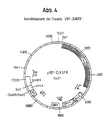
- the resulting vector pSV-DLNGR is shown in Fig. 2 shown.
- HT1080 line cells were plasmid pSV-DLNGFR as above described transiently transfected. After two days of growth, the Cells for expression of dLNGFR using the anti-dLNGFR monoclonal antibody analyzed. The result is shown in Figure 3, the shows that dLNGFR-expressing and non-expressing cells by FACS analysis are distinguishable. It further shows that the reaction of the Anti-dLNGFR antibody is specific for transfected cells.
- the dLNGFR expression cassette was loaded with the restriction enzymes Notl and Pvull isolated from pSV-DLNGFR.
- the targeting vector 'p187' for that human EPO gene (described in EP 97 112 649.5 and EP 97 112 640.5 see Fig. 4b) was cut with NotI and EcoRV.
- the 14551 bp Large vector fragment was isolated and with the dLNGFR expression cassette ligated (Fig.4)
- the resulting plasmid 'p187-DLNGFR' was in E.coli transferred and propagated in it.
- HT1080 cells were transfected with p187-DLNGFR and found to be stable Integration selected, i.e. 24 hours after transfection, G418 was added to the medium.
- the first FACS analysis was carried out after approx. 3 Weeks of growth carried out after the formation of the first foci, whose cells have been pooled.
- dLNGFR-negative cells here 14% of the population, of which cells expressing dLNGFR can be distinguished by FACS analysis.
- Event of homologous recombination also includes those cells that have a have low receptor density on their surface and therefore from Detection system cannot be recognized. In this way, however Number of clones that were then tested for expression of the target gene must be reduced significantly (here 14 out of 100%).
Landscapes
- Health & Medical Sciences (AREA)
- Life Sciences & Earth Sciences (AREA)
- Genetics & Genomics (AREA)
- Chemical & Material Sciences (AREA)
- Organic Chemistry (AREA)
- Engineering & Computer Science (AREA)
- Zoology (AREA)
- Molecular Biology (AREA)
- Biomedical Technology (AREA)
- Biotechnology (AREA)
- General Engineering & Computer Science (AREA)
- Bioinformatics & Cheminformatics (AREA)
- Wood Science & Technology (AREA)
- Biophysics (AREA)
- Biochemistry (AREA)
- General Health & Medical Sciences (AREA)
- Cell Biology (AREA)
- Microbiology (AREA)
- Plant Pathology (AREA)
- Physics & Mathematics (AREA)
- Mycology (AREA)
- Immunology (AREA)
- Toxicology (AREA)
- Gastroenterology & Hepatology (AREA)
- Medicinal Chemistry (AREA)
- Proteomics, Peptides & Aminoacids (AREA)
- Micro-Organisms Or Cultivation Processes Thereof (AREA)
- Measuring Or Testing Involving Enzymes Or Micro-Organisms (AREA)
- Preparation Of Compounds By Using Micro-Organisms (AREA)
Abstract
Claims (29)
- Procédé pour introduire un ADN étranger dans une cellule hôte par recombinaison homologue, où la cellule hôte est transfectée avec un vecteur recombiné comprenant deux séquences nucléotidiques flanquantes, homologues d'une séquence cible dans le génome de la cellule hôte, à l'intérieur desquelles se trouve une séquence nucléotidique codant un marqueur de sélection positif, et à l'extérieur des séquences flanquantes une séquence nucléotidique codant un marqueur de sélection négatif, qui sont liées chacune de manière opérationnelle avec une séquence de contrôle de l'expression active dans la cellule hôte, caractérisé en ce qu'au moins une séquence nucléotidique codant un polypeptide localisé sur la surface cellulaire est utilisée comme gène marqueur de sélection négatif, où après une intégration du vecteur par recombinaison homologue dans le génome de la cellule, le gène marqueur de sélection négatif n'est pas exprimé et après une intégration fortuite du vecteur dans le génome de la cellule, le gène marqueur de sélection négatif est exprimé et son produit génique est présenté sur la surface cellulaire.
- Procédé selon la revendication 1 caractérisé en ce que l'on réalise une étape de sélection concernant la présence du gène marqueur de sélection positif et une autre étape de sélection concernant l'absence du gène marqueur de sélection négatif.
- Procédé selon la revendication 2 caractérisé en ce que la sélection concernant l'absence du gène marqueur de sélection négatif comprend les étapes :(a) mise en contact des cellules transfectées avec une molécule de liaison qui se lie au produit génique du gène marqueur de sélection négatif, et(b) séparation des cellules contenant la molécule de liaison liée.
- Procédé selon l'une des revendications précédentes caractérisé en ce que l'on utilise un gène marqueur de sélection négatif qui code un récepteur de LNGF, CD24, LDL, trk ou un fragment membranaire du récepteur contenant le domaine de liaison de ligand.
- Procédé selon l'une des revendications 3 à 4 caractérisé en ce que l'on utilise comme molécule de liaison un anticorps qui est dirigé contre le produit génique du gène marqueur de sélection négatif.
- Procédé selon l'une des revendications 3 à 4 caractérisé en ce que l'on utilise comme molécule de liaison un partenaire de liaison naturel du marqueur de sélection négatif ou un analogue de celui-ci.
- Procédé selon l'une des revendications 3 à 6 caractérisé en ce que l'on utilise une molécule de liaison qui est couplée à une phase solide.
- Procédé selon la revendication 7 caractérisé en ce que l'on utilise des microbilles magnétiques comme phase solide.
- Procédé selon l'une des revendications 3 à 8 caractérisé en ce que l'on utilise une molécule de liaison qui porte un groupe de marquage et/ou un groupe de liaison à une phase solide.
- Procédé selon la revendication 9
caractérisé en ce que le groupe de marquage et/ou le groupe de liaison à une phase solide est choisi parmi la biotine, les dérivés de la biotine, les haptènes, les enzymes et les colorants. - Procédé selon la revendication 10 caractérisé en ce que l'on utilise la biotine ou un dérivé de la biotine choisi parmi l'iminobiotine, l'aminobiotine et la desthiobiotine.
- Procédé selon la revendication 10 caractérisé en ce que l'on utilise comme enzyme une phosphatase alcaline ou une peroxydase.
- Procédé selon la revendication 10 caractérisé en ce que l'on utilise un colorant fluorescent comme colorant.
- Procédé selon la revendication 13 caractérisé en ce que l'on utilise comme colorant fluorescent la fluorescéine, le phycoérythrine, la rhodamine, la protéine péridinine-chlorophylle ou le rouge Texas.
- Procédé selon la revendication 11 caractérisé en ce que les cellules exprimant le marqueur de sélection négatif sont identifiées par liaison à une phase solide recouverte d'avidine ou de streptavidine.
- Procédé selon la revendication 12 caractérisé en ce que les cellules exprimant le marqueur de sélection négatif sont identifiées par une réaction colorée catalysée par une enzyme.
- Procédé selon l'une des revendications 13 ou 14 caractérisé en ce que les cellules exprimant le marqueur de sélection négatif sont identifiées par analyse par cytométrie de flux.
- Procédé selon l'une des revendications précédentes caractérisé en ce que la cellule est une cellule eucaryote, de préférence une cellule de mammifère et de manière particulièrement préférée une cellule humaine.
- Vecteur recombiné comprenant(a) deux séquences nucléotidiques flanquantes, homologues d'une séquence cible dans une cellule,(b) une séquence nucléotidique codant un marqueur de sélection positif sous le contrôle d'une séquence de contrôle de l'expression active dans la cellule, qui se trouve à l'intérieur des séquences flanquantes selon (a), et(c) une séquence nucléotidique codant un marqueur de sélection négatif sous le contrôle d'une séquence de contrôle de l'expression active dans la cellule, qui se trouve à l'extérieur des séquences nucléotidiques homologues flanquantes et dont le produit d'expression est un polypeptide localisé à la surface de la cellule.
- Vecteur selon la revendication 19 caractérisé en ce que les séquences nucléotidiques homologues flanquantes sont choisies dans le domaine d'un gène pour EPO, tPA, G-CSF, GM-CSF, TPO, une interleukine, un interféron, un facteur de croissance, l'insuline ou un facteur de croissance de type insuline.
- Vecteur selon l'une des revendications 19 ou 20 caractérisé en ce que la séquence nucléotidique codant le marqueur de sélection positif est un gène de résistance à la néomycine, la kanamycine, la généticine ou l'hygromycine.
- Vecteur selon l'une des revendications 19 à 21 caractérisé en ce que la séquence nucléotidique codant le marqueur de sélection négatif est une séquence codant un récepteur de LNGF, CD24, LDL, trk ou un fragment membranaire contenant le domaine de liaison de ligand de celui-ci.
- Vecteur selon l'une des revendications 19 à 22 caractérisé en ce qu'il contient en outre une séquence de contrôle de l'expression hétérologue à l'intérieur des séquences flanquantes.
- Vecteur selon la revendication 23 caractérisé en ce que la séquence de contrôle de l'expression comprend un promoteur de CMV.
- Vecteur selon l'une des revendications 19 à 24 caractérisé en ce qu'il contient en outre un gène d'amplification à l'intérieur des séquences flanquantes.
- Vecteur selon l'une des revendications 19 à 25 caractérisé en ce que les séquences nucléotidiques homologues flanquantes comprennent le domaine codant du gène cible ou une partie de celui-ci.
- Vecteur selon la revendication 26 caractérisé en ce que les séquences nucléotidiques homologues flanquantes sont choisies de telle manière que, lors d'une recombinaison homologue, il se produit une mutation dans le domaine codant du polypeptide cible mature.
- Utilisation d'un vecteur selon l'une des revendications 19 à 27 dans un procédé de recombinaison homologue.
- Utilisation de récepteurs de surface membranaires comme marqueur de sélection négatif dans un procédé de recombinaison homologue.
Priority Applications (1)
| Application Number | Priority Date | Filing Date | Title |
|---|---|---|---|
| EP98955483A EP1025253B2 (fr) | 1997-10-20 | 1998-10-20 | Selection par gene marqueur positif ou negatif lors d'une recombinaison homologue |
Applications Claiming Priority (4)
| Application Number | Priority Date | Filing Date | Title |
|---|---|---|---|
| EP97118175 | 1997-10-20 | ||
| EP97118175 | 1997-10-20 | ||
| EP98955483A EP1025253B2 (fr) | 1997-10-20 | 1998-10-20 | Selection par gene marqueur positif ou negatif lors d'une recombinaison homologue |
| PCT/EP1998/006616 WO1999020780A1 (fr) | 1997-10-20 | 1998-10-20 | Selection par gene marqueur positif ou negatif lors d'une recombinaison homologue |
Publications (3)
| Publication Number | Publication Date |
|---|---|
| EP1025253A1 EP1025253A1 (fr) | 2000-08-09 |
| EP1025253B1 true EP1025253B1 (fr) | 2004-03-03 |
| EP1025253B2 EP1025253B2 (fr) | 2009-07-29 |
Family
ID=8227499
Family Applications (1)
| Application Number | Title | Priority Date | Filing Date |
|---|---|---|---|
| EP98955483A Expired - Lifetime EP1025253B2 (fr) | 1997-10-20 | 1998-10-20 | Selection par gene marqueur positif ou negatif lors d'une recombinaison homologue |
Country Status (17)
| Country | Link |
|---|---|
| US (1) | US6284541B1 (fr) |
| EP (1) | EP1025253B2 (fr) |
| JP (1) | JP4417549B2 (fr) |
| KR (1) | KR100566702B1 (fr) |
| CN (1) | CN1146666C (fr) |
| AR (1) | AR017368A1 (fr) |
| AT (1) | ATE260982T1 (fr) |
| AU (1) | AU730466B2 (fr) |
| BR (1) | BR9813099B1 (fr) |
| CA (1) | CA2306229C (fr) |
| DE (1) | DE59810925D1 (fr) |
| DK (1) | DK1025253T4 (fr) |
| ES (1) | ES2213925T5 (fr) |
| PT (1) | PT1025253E (fr) |
| TR (1) | TR200001046T2 (fr) |
| WO (1) | WO1999020780A1 (fr) |
| ZA (1) | ZA989497B (fr) |
Families Citing this family (16)
| Publication number | Priority date | Publication date | Assignee | Title |
|---|---|---|---|---|
| US7220221B2 (en) * | 2000-05-03 | 2007-05-22 | Nautilus, Inc. | Exercise device with body extension mechanism |
| AU2001289104A1 (en) | 2000-09-15 | 2002-03-26 | Deltagen, Inc. | Methods of producing cells and animals comprising targeted gene modifications |
| WO2002055687A2 (fr) * | 2000-12-13 | 2002-07-18 | Deltagen Inc | Souris transgeniques presentant des disruptions geniques cibles |
| AU2002337769A1 (en) * | 2001-09-27 | 2003-04-07 | Functional Genetics, Inc. | Methods and compositions for gene targeting by homologous recombination |
| PT1652920E (pt) | 2001-10-01 | 2010-11-08 | Deutsches Krebsforsch | Processo para a produção de bibliotecas de proteínas e para a selecção de proteínas a partir da mesma |
| US20030135872A1 (en) * | 2001-12-04 | 2003-07-17 | Burgess Robert M. | Gene targeting methods and vectors |
| IL164687A0 (en) * | 2002-05-02 | 2005-12-18 | Univ North Carolina | Cellular libraries and methods for the preparationthereof |
| FR2860517B1 (fr) * | 2003-10-03 | 2006-02-10 | Evologic Sa | Procedes et outils pour la modification chromosomique de bacteries |
| EP2166100B1 (fr) | 2005-03-08 | 2012-07-18 | BASF Plant Science GmbH | Séquences introniques facilitant l'expression |
| PE20081216A1 (es) | 2006-09-01 | 2008-09-04 | Therapeutic Human Polyclonals Inc | Expresion mejorada de la inmunoglobulina humana o humanizada en animales transgenicos no humanos |
| UA100692C2 (ru) | 2007-05-02 | 2013-01-25 | Мериал Лимитед | Днк-плазмиды, имеющие повышенную экспрессию и стабильность |
| US20110136236A1 (en) * | 2008-04-21 | 2011-06-09 | Unitargeting Research As | Genetically modified eukaryotic cells |
| CN102618453A (zh) * | 2011-10-31 | 2012-08-01 | 四川农业大学 | 猪传染性胸膜肺炎放线杆菌Apx I C基因缺失突变株、构建方法、疫苗及应用 |
| US9303272B2 (en) | 2011-12-13 | 2016-04-05 | Public University Corporation Yokohama City University | Gene targeting vector, and method for using same |
| DE102014116334A1 (de) * | 2014-11-10 | 2016-05-12 | Eberhard Karls Universität Tübingen Medizinische Fakultät | Herstellung von rekombinanten Expressionsvektoren |
| JP7585015B2 (ja) | 2020-12-04 | 2024-11-18 | 株式会社東芝 | 核酸構築物のセット、キット、検出方法及び薬剤効果予測方法 |
Family Cites Families (13)
| Publication number | Priority date | Publication date | Assignee | Title |
|---|---|---|---|---|
| JPH01203975A (ja) * | 1988-02-09 | 1989-08-16 | Konica Corp | 流体試料中の特定成分の測定方法 |
| DE3907679A1 (de) * | 1989-03-09 | 1990-09-13 | Max Planck Gesellschaft | Verfahren zur gezielten veraenderung eines gens |
| US5464764A (en) * | 1989-08-22 | 1995-11-07 | University Of Utah Research Foundation | Positive-negative selection methods and vectors |
| EP0945515A3 (fr) † | 1989-11-06 | 2002-08-21 | Cell Genesys, Inc. | Production de protéines par recombinaison homologue |
| CA2040099A1 (fr) * | 1990-05-01 | 1991-11-02 | Mariano Barbacid | Tyrosine-kinase-negative trkb |
| EP0559834A1 (fr) | 1990-11-30 | 1993-09-15 | Abbott Laboratories | Immunoanalyse et anticorps monoclonaux utilises dans la detection de recepteur de facteur de croissance de nerfs tronques |
| US5641670A (en) * | 1991-11-05 | 1997-06-24 | Transkaryotic Therapies, Inc. | Protein production and protein delivery |
| PT101031B (pt) † | 1991-11-05 | 2002-07-31 | Transkaryotic Therapies Inc | Processo para o fornecimento de proteinas por terapia genetica |
| ATE293686T1 (de) | 1993-06-04 | 2005-05-15 | Us Navy | Verfahren zur selektiven stimulierung der t- zellproliferation. |
| IT1261847B (it) | 1993-09-01 | 1996-06-03 | San Romanello Centro Fond | Metodo per marcare cellule eucariote. |
| US6066322A (en) * | 1995-03-03 | 2000-05-23 | Millennium Pharmaceuticals, Inc. | Methods for the treatment of immune disorders |
| US5633161A (en) * | 1995-03-29 | 1997-05-27 | Millennium Pharmaceuticals, Inc. | Murine gene fomy030 coding for tumor progression inhibitor |
| US6017754A (en) * | 1995-08-24 | 2000-01-25 | Invitrogen Corporation | System for isolating and identifying eukaryotic cells transfected with genes and vectors, host cells and methods thereof |
-
1998
- 1998-10-19 ZA ZA9809497A patent/ZA989497B/xx unknown
- 1998-10-20 DE DE59810925T patent/DE59810925D1/de not_active Expired - Lifetime
- 1998-10-20 CN CNB98810394XA patent/CN1146666C/zh not_active Expired - Lifetime
- 1998-10-20 EP EP98955483A patent/EP1025253B2/fr not_active Expired - Lifetime
- 1998-10-20 AU AU12293/99A patent/AU730466B2/en not_active Expired
- 1998-10-20 BR BRPI9813099-4A patent/BR9813099B1/pt not_active IP Right Cessation
- 1998-10-20 ES ES98955483T patent/ES2213925T5/es not_active Expired - Lifetime
- 1998-10-20 JP JP2000517100A patent/JP4417549B2/ja not_active Expired - Lifetime
- 1998-10-20 AR ARP980105211A patent/AR017368A1/es active IP Right Grant
- 1998-10-20 US US09/509,560 patent/US6284541B1/en not_active Expired - Lifetime
- 1998-10-20 WO PCT/EP1998/006616 patent/WO1999020780A1/fr not_active Ceased
- 1998-10-20 DK DK98955483T patent/DK1025253T4/da active
- 1998-10-20 TR TR2000/01046T patent/TR200001046T2/xx unknown
- 1998-10-20 AT AT98955483T patent/ATE260982T1/de active
- 1998-10-20 KR KR1020007004264A patent/KR100566702B1/ko not_active Expired - Lifetime
- 1998-10-20 CA CA2306229A patent/CA2306229C/fr not_active Expired - Lifetime
- 1998-10-20 PT PT98955483T patent/PT1025253E/pt unknown
Also Published As
| Publication number | Publication date |
|---|---|
| AU730466B2 (en) | 2001-03-08 |
| TR200001046T2 (tr) | 2001-07-23 |
| PT1025253E (pt) | 2004-07-30 |
| CA2306229C (fr) | 2011-03-22 |
| CA2306229A1 (fr) | 1999-04-29 |
| AR017368A1 (es) | 2001-09-05 |
| WO1999020780A1 (fr) | 1999-04-29 |
| ES2213925T3 (es) | 2004-09-01 |
| DE59810925D1 (de) | 2004-04-08 |
| JP4417549B2 (ja) | 2010-02-17 |
| US6284541B1 (en) | 2001-09-04 |
| EP1025253B2 (fr) | 2009-07-29 |
| BR9813099B1 (pt) | 2010-02-09 |
| KR100566702B1 (ko) | 2006-04-03 |
| DK1025253T3 (da) | 2004-07-12 |
| KR20010031277A (ko) | 2001-04-16 |
| JP2001523442A (ja) | 2001-11-27 |
| ATE260982T1 (de) | 2004-03-15 |
| ZA989497B (en) | 2000-04-19 |
| CN1146666C (zh) | 2004-04-21 |
| DK1025253T4 (da) | 2009-08-31 |
| BR9813099A (pt) | 2000-08-22 |
| AU1229399A (en) | 1999-05-10 |
| CN1276836A (zh) | 2000-12-13 |
| EP1025253A1 (fr) | 2000-08-09 |
| ES2213925T5 (es) | 2009-11-11 |
Similar Documents
| Publication | Publication Date | Title |
|---|---|---|
| EP1025253B1 (fr) | Selection par gene marqueur positif ou negatif lors d'une recombinaison homologue | |
| DE69027526T2 (de) | Herstellung von proteinen mittels homologer rekombination | |
| EP0986644B1 (fr) | Production d'erythropoietine par activation genique endogene avec des promoteurs viraux | |
| DE69830312T2 (de) | Methode zur spezifischen integration von genen in säugetierzellen durch homologe rekombination, und vektoren zu deren durchführung | |
| DE69730592T2 (de) | Expressionssteigernde sequenzelemente (ease) für eukaryontische expressionssysteme | |
| DE3588199T2 (de) | Lymphokin-Herstellung und -Reinigung | |
| DE3751846T2 (de) | Hybrid-Rezeptoren, diese kodierende Nukleinsäure, ihre Herstellung und ihre Verwendung zur Bestimmung von Liganden sowie deren Antagonisten oder Agonisten | |
| DE69535389T2 (de) | Methode zur selektion hoch-exprimierender wirtszellen | |
| DE69733121T2 (de) | Morphologische mutanten von filamentösen pilzen | |
| DE3884610T2 (de) | Durch sterole regulierbare promoterelemente. | |
| DE69030740T2 (de) | Rekombinantes DNS-Verfahren und Wirtszellen | |
| DE69432901T2 (de) | Expressionssystem von antikörpern bei homologischer rekombinierung in murinezellen | |
| EP0494702B1 (fr) | Production de facteur XIIIa par technologie génétique | |
| DE68927104T2 (de) | Gentherapie unter verwendung von genschmelzen für genetische und erworbene störungen | |
| EP1000154A1 (fr) | Identification de lignees cellulaires humaines pour la production de proteines humaines par activation genique endogene | |
| DE3688816T2 (de) | Dns-sequenz. | |
| DE3685985T2 (de) | Mutanten von saccharomyces cerevisiae mit stark vermehrter sekretion. | |
| DE3853479T2 (de) | Ausgeglichenes, konstitutives, induzierbares transkriptionssystem. | |
| EP0289936B1 (fr) | Méthode pour la préparation de protéines étrangères dans les streptomycètes | |
| WO1995026401A1 (fr) | Procede pour l'expression permanente de recepteurs du glutamate | |
| DE10056899A1 (de) | Promotor zur funktionellen Charakterisierung von G-Protein gekoppelten Rezeptoren in der Hefe Saccharomyces cerevisiae | |
| EP1084231A1 (fr) | Lignees cellulaires transformees, exprimant des recepteurs heterologues lies a la proteine g | |
| WO2003010334A1 (fr) | Procede d'identification de mutations de phase de lecture | |
| DD297445A5 (de) | Verfahren zur herstellung von humanem tumornekrosefaktor alpha in e. coli | |
| DE4103952A1 (de) | Suppressor-trna-gentranskriptionssysteme |
Legal Events
| Date | Code | Title | Description |
|---|---|---|---|
| PUAI | Public reference made under article 153(3) epc to a published international application that has entered the european phase |
Free format text: ORIGINAL CODE: 0009012 |
|
| 17P | Request for examination filed |
Effective date: 20000413 |
|
| AK | Designated contracting states |
Kind code of ref document: A1 Designated state(s): AT BE CH DE DK ES FI FR GB GR IE IT LI LU NL PT SE |
|
| GRAP | Despatch of communication of intention to grant a patent |
Free format text: ORIGINAL CODE: EPIDOSNIGR1 |
|
| GRAS | Grant fee paid |
Free format text: ORIGINAL CODE: EPIDOSNIGR3 |
|
| GRAA | (expected) grant |
Free format text: ORIGINAL CODE: 0009210 |
|
| AK | Designated contracting states |
Kind code of ref document: B1 Designated state(s): AT BE CH DE DK ES FI FR GB GR IE IT LI LU NL PT SE |
|
| REG | Reference to a national code |
Ref country code: GB Ref legal event code: FG4D |
|
| RIN1 | Information on inventor provided before grant (corrected) |
Inventor name: HONOLD, KONRAD Inventor name: SPRENGER, RAIMUND Inventor name: AUER, JOHANNES |
|
| REG | Reference to a national code |
Ref country code: CH Ref legal event code: NV Representative=s name: A. BRAUN, BRAUN, HERITIER, ESCHMANN AG PATENTANWAE Ref country code: CH Ref legal event code: EP |
|
| GBT | Gb: translation of ep patent filed (gb section 77(6)(a)/1977) |
Effective date: 20040308 |
|
| REG | Reference to a national code |
Ref country code: GB Ref legal event code: FG4C Free format text: NOTIFICATION RECEIVED FROM THE EUROPEAN PATENT OFFICE THAT THE PUBLICATION LANGUAGE IS ACTUALLY GERMAN. |
|
| REG | Reference to a national code |
Ref country code: IE Ref legal event code: FG4D Free format text: GERMAN |
|
| REF | Corresponds to: |
Ref document number: 59810925 Country of ref document: DE Date of ref document: 20040408 Kind code of ref document: P |
|
| REG | Reference to a national code |
Ref country code: GR Ref legal event code: EP Ref document number: 20040401388 Country of ref document: GR |
|
| REG | Reference to a national code |
Ref country code: SE Ref legal event code: TRGR |
|
| REG | Reference to a national code |
Ref country code: DK Ref legal event code: T3 |
|
| REG | Reference to a national code |
Ref country code: PT Ref legal event code: SC4A Free format text: AVAILABILITY OF NATIONAL TRANSLATION Effective date: 20040602 |
|
| REG | Reference to a national code |
Ref country code: ES Ref legal event code: FG2A Ref document number: 2213925 Country of ref document: ES Kind code of ref document: T3 |
|
| ET | Fr: translation filed | ||
| PLBI | Opposition filed |
Free format text: ORIGINAL CODE: 0009260 |
|
| PLBQ | Unpublished change to opponent data |
Free format text: ORIGINAL CODE: EPIDOS OPPO |
|
| PLAB | Opposition data, opponent's data or that of the opponent's representative modified |
Free format text: ORIGINAL CODE: 0009299OPPO |
|
| PLAX | Notice of opposition and request to file observation + time limit sent |
Free format text: ORIGINAL CODE: EPIDOSNOBS2 |
|
| PLBQ | Unpublished change to opponent data |
Free format text: ORIGINAL CODE: EPIDOS OPPO |
|
| 26 | Opposition filed |
Opponent name: INSTITUT PASTEUR Effective date: 20041130 |
|
| PLAB | Opposition data, opponent's data or that of the opponent's representative modified |
Free format text: ORIGINAL CODE: 0009299OPPO |
|
| R26 | Opposition filed (corrected) |
Opponent name: INSTITUT PASTEUR Effective date: 20041130 |
|
| NLR1 | Nl: opposition has been filed with the epo |
Opponent name: INSTITUT PASTEUR |
|
| R26 | Opposition filed (corrected) |
Opponent name: INSTITUT PASTEUR Effective date: 20041130 |
|
| NLR1 | Nl: opposition has been filed with the epo |
Opponent name: INSTITUT PASTEUR |
|
| NLR1 | Nl: opposition has been filed with the epo |
Opponent name: INSTITUT PASTEUR |
|
| PLBB | Reply of patent proprietor to notice(s) of opposition received |
Free format text: ORIGINAL CODE: EPIDOSNOBS3 |
|
| REG | Reference to a national code |
Ref country code: HK Ref legal event code: WD Ref document number: 1025794 Country of ref document: HK |
|
| REG | Reference to a national code |
Ref country code: CH Ref legal event code: PFA Owner name: ROCHE DIAGNOSTICS GMBH Free format text: ROCHE DIAGNOSTICS GMBH#SANDHOFER STRASSE 116#68305 MANNHEIM (DE) -TRANSFER TO- ROCHE DIAGNOSTICS GMBH#SANDHOFER STRASSE 116#68305 MANNHEIM (DE) |
|
| PLAB | Opposition data, opponent's data or that of the opponent's representative modified |
Free format text: ORIGINAL CODE: 0009299OPPO |
|
| PUAH | Patent maintained in amended form |
Free format text: ORIGINAL CODE: 0009272 |
|
| STAA | Information on the status of an ep patent application or granted ep patent |
Free format text: STATUS: PATENT MAINTAINED AS AMENDED |
|
| 27A | Patent maintained in amended form |
Effective date: 20090729 |
|
| AK | Designated contracting states |
Kind code of ref document: B2 Designated state(s): AT BE CH DE DK ES FI FR GB GR IE IT LI LU NL PT SE |
|
| REG | Reference to a national code |
Ref country code: CH Ref legal event code: AEN Free format text: AUFRECHTERHALTUNG DES PATENTES IN GEAENDERTER FORM |
|
| REG | Reference to a national code |
Ref country code: DK Ref legal event code: T4 |
|
| REG | Reference to a national code |
Ref country code: GR Ref legal event code: EP Ref document number: 20090402053 Country of ref document: GR |
|
| NLR2 | Nl: decision of opposition |
Effective date: 20090729 |
|
| REG | Reference to a national code |
Ref country code: ES Ref legal event code: DC2A Date of ref document: 20090903 Kind code of ref document: T5 |
|
| REG | Reference to a national code |
Ref country code: SE Ref legal event code: RPEO |
|
| NLR3 | Nl: receipt of modified translations in the netherlands language after an opposition procedure | ||
| REG | Reference to a national code |
Ref country code: CH Ref legal event code: PCAR Free format text: NEW ADDRESS: HOLBEINSTRASSE 36-38, 4051 BASEL (CH) |
|
| REG | Reference to a national code |
Ref country code: FR Ref legal event code: PLFP Year of fee payment: 18 |
|
| REG | Reference to a national code |
Ref country code: FR Ref legal event code: PLFP Year of fee payment: 19 |
|
| REG | Reference to a national code |
Ref country code: FR Ref legal event code: PLFP Year of fee payment: 20 |
|
| PGFP | Annual fee paid to national office [announced via postgrant information from national office to epo] |
Ref country code: LU Payment date: 20171019 Year of fee payment: 20 |
|
| PGFP | Annual fee paid to national office [announced via postgrant information from national office to epo] |
Ref country code: DK Payment date: 20171019 Year of fee payment: 20 Ref country code: FR Payment date: 20171024 Year of fee payment: 20 Ref country code: FI Payment date: 20171020 Year of fee payment: 20 Ref country code: DE Payment date: 20171026 Year of fee payment: 20 |
|
| PGFP | Annual fee paid to national office [announced via postgrant information from national office to epo] |
Ref country code: GR Payment date: 20171013 Year of fee payment: 20 Ref country code: CH Payment date: 20171019 Year of fee payment: 20 Ref country code: SE Payment date: 20171019 Year of fee payment: 20 Ref country code: IT Payment date: 20171023 Year of fee payment: 20 Ref country code: IE Payment date: 20171025 Year of fee payment: 20 Ref country code: AT Payment date: 20171020 Year of fee payment: 20 Ref country code: BE Payment date: 20171019 Year of fee payment: 20 Ref country code: PT Payment date: 20171017 Year of fee payment: 20 Ref country code: GB Payment date: 20171019 Year of fee payment: 20 Ref country code: ES Payment date: 20171121 Year of fee payment: 20 Ref country code: NL Payment date: 20171019 Year of fee payment: 20 |
|
| REG | Reference to a national code |
Ref country code: DE Ref legal event code: R071 Ref document number: 59810925 Country of ref document: DE |
|
| REG | Reference to a national code |
Ref country code: NL Ref legal event code: MK Effective date: 20181019 |
|
| REG | Reference to a national code |
Ref country code: DK Ref legal event code: EUP Effective date: 20181020 |
|
| REG | Reference to a national code |
Ref country code: CH Ref legal event code: PL |
|
| REG | Reference to a national code |
Ref country code: GB Ref legal event code: PE20 Expiry date: 20181019 |
|
| REG | Reference to a national code |
Ref country code: IE Ref legal event code: MK9A |
|
| REG | Reference to a national code |
Ref country code: SE Ref legal event code: EUG |
|
| REG | Reference to a national code |
Ref country code: BE Ref legal event code: MK Effective date: 20181020 |
|
| REG | Reference to a national code |
Ref country code: AT Ref legal event code: MK07 Ref document number: 260982 Country of ref document: AT Kind code of ref document: T Effective date: 20181020 |
|
| PG25 | Lapsed in a contracting state [announced via postgrant information from national office to epo] |
Ref country code: PT Free format text: LAPSE BECAUSE OF EXPIRATION OF PROTECTION Effective date: 20181029 Ref country code: IE Free format text: LAPSE BECAUSE OF EXPIRATION OF PROTECTION Effective date: 20181020 |
|
| PG25 | Lapsed in a contracting state [announced via postgrant information from national office to epo] |
Ref country code: GB Free format text: LAPSE BECAUSE OF EXPIRATION OF PROTECTION Effective date: 20181019 |
|
| REG | Reference to a national code |
Ref country code: ES Ref legal event code: FD2A Effective date: 20200904 |
|
| PG25 | Lapsed in a contracting state [announced via postgrant information from national office to epo] |
Ref country code: ES Free format text: LAPSE BECAUSE OF EXPIRATION OF PROTECTION Effective date: 20181021 |