EP1031612A2 - Additive anti-tache et composition de polyorganosiloxane réticulable à température ambiante - Google Patents
Additive anti-tache et composition de polyorganosiloxane réticulable à température ambiante Download PDFInfo
- Publication number
- EP1031612A2 EP1031612A2 EP00301508A EP00301508A EP1031612A2 EP 1031612 A2 EP1031612 A2 EP 1031612A2 EP 00301508 A EP00301508 A EP 00301508A EP 00301508 A EP00301508 A EP 00301508A EP 1031612 A2 EP1031612 A2 EP 1031612A2
- Authority
- EP
- European Patent Office
- Prior art keywords
- component
- oil
- silicon
- aliphatic acid
- acid ester
- Prior art date
- Legal status (The legal status is an assumption and is not a legal conclusion. Google has not performed a legal analysis and makes no representation as to the accuracy of the status listed.)
- Withdrawn
Links
Images
Classifications
-
- C—CHEMISTRY; METALLURGY
- C08—ORGANIC MACROMOLECULAR COMPOUNDS; THEIR PREPARATION OR CHEMICAL WORKING-UP; COMPOSITIONS BASED THEREON
- C08G—MACROMOLECULAR COMPOUNDS OBTAINED OTHERWISE THAN BY REACTIONS ONLY INVOLVING UNSATURATED CARBON-TO-CARBON BONDS
- C08G63/00—Macromolecular compounds obtained by reactions forming a carboxylic ester link in the main chain of the macromolecule
- C08G63/68—Polyesters containing atoms other than carbon, hydrogen and oxygen
-
- C—CHEMISTRY; METALLURGY
- C08—ORGANIC MACROMOLECULAR COMPOUNDS; THEIR PREPARATION OR CHEMICAL WORKING-UP; COMPOSITIONS BASED THEREON
- C08L—COMPOSITIONS OF MACROMOLECULAR COMPOUNDS
- C08L83/00—Compositions of macromolecular compounds obtained by reactions forming in the main chain of the macromolecule a linkage containing silicon with or without sulfur, nitrogen, oxygen or carbon only; Compositions of derivatives of such polymers
- C08L83/04—Polysiloxanes
-
- C—CHEMISTRY; METALLURGY
- C08—ORGANIC MACROMOLECULAR COMPOUNDS; THEIR PREPARATION OR CHEMICAL WORKING-UP; COMPOSITIONS BASED THEREON
- C08G—MACROMOLECULAR COMPOUNDS OBTAINED OTHERWISE THAN BY REACTIONS ONLY INVOLVING UNSATURATED CARBON-TO-CARBON BONDS
- C08G77/00—Macromolecular compounds obtained by reactions forming a linkage containing silicon with or without sulfur, nitrogen, oxygen or carbon in the main chain of the macromolecule
- C08G77/04—Polysiloxanes
- C08G77/38—Polysiloxanes modified by chemical after-treatment
-
- C—CHEMISTRY; METALLURGY
- C09—DYES; PAINTS; POLISHES; NATURAL RESINS; ADHESIVES; COMPOSITIONS NOT OTHERWISE PROVIDED FOR; APPLICATIONS OF MATERIALS NOT OTHERWISE PROVIDED FOR
- C09D—COATING COMPOSITIONS, e.g. PAINTS, VARNISHES OR LACQUERS; FILLING PASTES; CHEMICAL PAINT OR INK REMOVERS; INKS; CORRECTING FLUIDS; WOODSTAINS; PASTES OR SOLIDS FOR COLOURING OR PRINTING; USE OF MATERIALS THEREFOR
- C09D183/00—Coating compositions based on macromolecular compounds obtained by reactions forming in the main chain of the macromolecule a linkage containing silicon, with or without sulfur, nitrogen, oxygen, or carbon only; Coating compositions based on derivatives of such polymers
- C09D183/04—Polysiloxanes
-
- C—CHEMISTRY; METALLURGY
- C08—ORGANIC MACROMOLECULAR COMPOUNDS; THEIR PREPARATION OR CHEMICAL WORKING-UP; COMPOSITIONS BASED THEREON
- C08G—MACROMOLECULAR COMPOUNDS OBTAINED OTHERWISE THAN BY REACTIONS ONLY INVOLVING UNSATURATED CARBON-TO-CARBON BONDS
- C08G77/00—Macromolecular compounds obtained by reactions forming a linkage containing silicon with or without sulfur, nitrogen, oxygen or carbon in the main chain of the macromolecule
- C08G77/04—Polysiloxanes
- C08G77/12—Polysiloxanes containing silicon bound to hydrogen
-
- C—CHEMISTRY; METALLURGY
- C08—ORGANIC MACROMOLECULAR COMPOUNDS; THEIR PREPARATION OR CHEMICAL WORKING-UP; COMPOSITIONS BASED THEREON
- C08G—MACROMOLECULAR COMPOUNDS OBTAINED OTHERWISE THAN BY REACTIONS ONLY INVOLVING UNSATURATED CARBON-TO-CARBON BONDS
- C08G77/00—Macromolecular compounds obtained by reactions forming a linkage containing silicon with or without sulfur, nitrogen, oxygen or carbon in the main chain of the macromolecule
- C08G77/04—Polysiloxanes
- C08G77/14—Polysiloxanes containing silicon bound to oxygen-containing groups
- C08G77/16—Polysiloxanes containing silicon bound to oxygen-containing groups to hydroxy groups
Definitions
- This invention relates to an anti-staining additive and to a room-temperature-curable polyorganosiloxane composition. More particularly, this invention relates to an anti-staining additive that comprises a higher unsaturated aliphatic acid ester-modified organosilicon compound and to a room-temperature-curable polyorganosiloxane composition that contains said additive.
- the polyorganosiloxane composition cures to give a cured product that has a staining-resistant surface and that also prevents the staining of substrate in contact with said cured product.
- Room-temperature-curable (RTC) polyorganosiloxane compositions that comprise hydroxyl-endblocked polyorganosiloxane as base component in combination with a crosslinker bearing silicon-bonded hydrolyzable groups are known in the art. These compositions are widely used as sealants, coatings, electrical insulation, and moldmaking materials.
- RTC compositions One problem associated with the application of these RTC compositions as, for example, a sealant or coating, has been the loss of aesthetics that occurs due to staining or soiling of the surface of the cured product and its surroundings.
- various additives have been proposed in order to improve the resistance of these RTC polyorganosiloxane compositions to staining.
- Japanese Laid Open (Kokai or Unexamined) Patent Application Number Sho 62-1750 (1,750/1987) teaches an RTC polyorganosiloxane composition that contains an ester from an alcohol and an unsaturated higher aliphatic acid.
- this ester is poorly compatible with the hydroxyl-endblocked polyorganosiloxane that is the base component of this composition.
- the ester When such a composition is deployed in a one-package formulation, the ester will undergo phase separation within the container with elapsed time during storage. This results in a deterioration in storage stability and a decline in the anti-staining activity. While deployment as a two-package formulation (e.g.
- An object of this invention is to provide an anti-staining additive that is highly compatible with polyorganosiloxanes and that has a long-term ability to inhibit staining of the surface of the cured product and to inhibit staining of substrate in contact with the cured product.
- An additional object of this invention is to provide a room-temperature-curable polyorganosiloxane composition that contains this anti-staining additive.
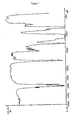
- Figure 1 contains the infrared spectra (IR) chart of the tung oil-modified polydimethylsiloxane synthesized in Reference Example 1.
- This invention is an anti-staining additive that characteristically comprises the higher unsaturated aliphatic acid ester-modified organosilicon compound that is produced by carrying out an addition reaction between
- the component (a) used for the anti-staining additive of this invention is a higher unsaturated aliphatic acid ester that contains more than one aliphatically unsaturated bond in each molecule.
- This is preferably an ester that contains 10 or more carbon atoms in the higher unsaturated aliphatic acid moiety. While this ester must contain at least 2 aliphatically unsaturated bonds in each molecule, there is no particular upper limit on the number of such bonds in each molecule. The positions of these bonds are not critical, and the plural number of aliphatically unsaturated bonds may be present in an isolated or conjugated configuration.
- Component (a) can take the form of a component whose main constituent is the aforesaid higher unsaturated aliphatic acid ester.
- natural oils whose main constituent is triglyceride composed of the esters of glycerol with higher unsaturated aliphatic acids that contain more than one aliphatically unsaturated bond in each molecule.
- These natural oils can be exemplified by tung oil, linseed oil, soybean oil, castor oil, rapeseed oil, and cottonseed oil. While these natural oils are mixtures of higher unsaturated aliphatic acid esters with saturated aliphatic acid esters, alcohols, unsaturated aliphatic acids, and saturated aliphatic acids, when used for the component (a) under consideration such mixtures must contain at least 80 wt. % of the subject higher unsaturated aliphatic acid esters.
- the higher unsaturated aliphatic acid ester (a) can be synthesized by a condensation reaction between an alcohol and a higher unsaturated aliphatic acid that contains more than one aliphatically unsaturated bond in each molecule.
- the higher unsaturated aliphatic acid can be exemplified by linoleic acid, linolenic acid, eleostearic acid, licanic acid, and arachidonic acid.
- the alcohol can be exemplified by monohydric alcohols such as methanol and ethanol; dihydric alcohols such as ethylene glycol and propylene glycol; trihydric alcohols such as trimethylolpropane, glycerol, and trimethylolethane; tetrahydric alcohols such as pentaerythritol; hexahydric alcohols such as sorbitol; and organosilicon compounds that contain an OH-functional organic group bonded to silicon.
- monohydric alcohols such as methanol and ethanol
- dihydric alcohols such as ethylene glycol and propylene glycol
- trihydric alcohols such as trimethylolpropane, glycerol, and trimethylolethane
- tetrahydric alcohols such as pentaerythritol
- hexahydric alcohols such as sorbitol
- organosilicon compounds that contain an OH-functional organic group bonded to silicon.
- the organosilicon compound (b) used for the anti-staining additive of this invention must contain Si-bonded hydrogen and must not contain a substituent that during the addition reaction with component (a) would cause side reactions or inhibit the reaction, but otherwise there are no particular restrictions on the organosilicon compound (b).
- Component (b) may have a straight-chain, branched-chain, or cyclic molecular structure.
- organosilicon compounds (b) can be used that have a number-average molecular weight within the broad range from ten to several hundred thousand.
- Component (b) can be exemplified by the various heretofore known organosilicon compounds, but is preferably polyorganosiloxane free of amino-, epoxy-, and OH-functional organic groups bonded to the silicon.
- An example in this regard is the polyorganosiloxane bearing Si-H in molecular chain terminal or pendant position as defined by the following general formula in which R denotes monovalent hydrocarbon groups, R 1 is the hydrogen atom or a monovalent hydrocarbon group, n is 0 or an integer with a value of at least 1, m is an integer with a value of at least 1, and m + n is an integer with a value between 1 and 20,000, inclusive.
- the higher unsaturated aliphatic acid ester-modified organosilicon compound constituting the anti-staining additive of this invention is produced by addition reacting the above-defined components (a) and (b) in the presence of a hydrosilylation catalyst using a molar excess of aliphatically unsaturated bonds in (a) over silicon-bonded hydrogen in (b). Gelation of the reaction product can occur during this reaction and is related to the ratio of moles of aliphatically unsaturated bonds in (a) to moles of silicon-bonded hydrogen in (b).
- the ratio of moles of aliphatically unsaturated bonds in (a) to moles of silicon-bonded hydrogen in (b) must be suitably controlled to avoid gelation when component (b) is an organosilicon compound containing on average more than one silicon-bonded hydrogens in each molecule.
- tung oil as component (a) and dimethylhydrogensiloxy-endblocked polydimethylsiloxane with an average degree of polymerization of 20 as component (b)
- gelation will occur when the ratio of moles of aliphatically unsaturated bonds in (a) to moles of silicon-bonded hydrogen in (b) is less than or equal to 5.5. Therefore, the ratio should be set under these circumstances to a value greater than 5.5.
- the hydrosilylation catalyst used in the addition reaction under consideration is a catalyst that accelerates the addition reaction between aliphatically unsaturated bonds and silicon-bonded hydrogen, such as platinum group catalysts.
- Alcohol solutions of chloroplatinic acid and complexes between platinum and an alkenyl compound or phosphorus compound are useful as this catalyst, but non-platinum catalysts such as rhodium catalysts and palladium catalysts can also be used as the hydrosilylation catalyst under consideration.
- Specific examples of usable catalysts are platinum black, chloroplatinic acid, chloroplatinic acid-olefin complexes, chloroplatinic acid-alcohol coordination compounds, rhodium, and rhodium-olefin complexes.
- catalyst addition preferably provides from 0.1 to 500 weight parts and more preferably from 1 to 300 weight parts platinum metal or rhodium metal for each 1,000,000 weight parts of the total of components (a) and (b).
- addition reaction under consideration can be run even at room temperature, it is preferably run at a temperature of at least 30°C in order to obtain good reaction rates. The temperature range of 80 to 120°C is particularly preferred.
- the addition reaction under consideration can be run in the presence or absence of solvent. Any solvent can be used here as long as it does not induce side reactions during the addition reaction or poison the addition reaction catalyst.
- Useful solvents include aromatic hydrocarbons such as benzene, toluene, and xylene; aliphatic hydrocarbons such as hexane, heptane, octane, and cyclohexane; and ethers such as tetrahydrofuran, dioxane, and diethyl ether.
- aromatic hydrocarbons such as benzene, toluene, and xylene
- aliphatic hydrocarbons such as hexane, heptane, octane, and cyclohexane
- ethers such as tetrahydrofuran, dioxane, and diethyl ether.
- the natural oils that are candidates for component (a) may contain small amounts of water, in which case they are preferably dried prior to the addition reaction. This drying can be effected, for example, by mixing component (a) with hexane or toluene followed by heating in order
- the progress and completion of the addition reaction can be confirmed by monitoring the remaining amount of silicon-bonded hydrogen using, for example, infrared spectrochemical analysis (IR) or nuclear magnetic resonance analysis (NMR).
- IR infrared spectrochemical analysis
- NMR nuclear magnetic resonance analysis
- the desired higher unsaturated aliphatic acid ester-modified organosilicon compound can be obtained by distilling off any low boilers or solvent by heating under reduced pressure.
- Higher unsaturated aliphatic acid ester-modified polyorganosiloxane with a number-average molecular weight (polystyrene basis) from 900 to 100,000 is preferred for use as the higher unsaturated aliphatic acid ester-modified organosilicon compound constituting the anti-staining additive of this invention.
- the anti-staining additive of the invention contains the polysiloxane segment, it is far more compatible with polyorganosiloxanes than the prior-art higher unsaturated aliphatic acid/alcohol esters.
- the additive of this invention when blended into a room-temperature-curable polyorganosiloxane composition, the additive of this invention is characteristically present in the polyorganosiloxane phase in a microdispersed state both before and after curing.
- the higher unsaturated aliphatic acid ester-modified organosilicon compound constituting the anti-staining additive of this invention develops an excellent anti-staining activity because its molecule contains the aliphatically unsaturated bond.
- this anti-staining additive offers the advantage of providing a long-term anti-staining activity.
- the anti-staining additive of this invention is useful for application in single-package and two-package RTC polyorganosiloxane compositions. It is also useful as an anti-staining additive for RTC silicone-modified polymer compositions such as RTC compositions based on alkoxysilyl-terminated polyoxyalkylenes and RTC compositions based on alkoxysilyl-functional polyisobutylenes.
- the RTC polyorganosiloxane composition according to the present invention is an polyorganosiloxane composition that cures at room temperature by a condensation reaction and that characteristically contains from 0.01 to 50 wt. % of the above-described higher unsaturated aliphatic acid ester-modified organosilicon compound.
- a specific example of this composition is the RTC polyorganosiloxane composition comprising the following components:
- the component (A) used in the composition of this invention can be exemplified by a polydiorganosiloxane with the following general formula.
- Each R 4 in this formula is independently selected from substituted and unsubstituted monovalent hydrocarbons and can be specifically exemplified by alkyl such as methyl, ethyl, propyl, butyl, and pentyl; alkenyl such as vinyl, allyl, methacryl, butenyl, and pentenyl; aryl such as phenyl, tolyl, and xylyl; aralkyl such as benzyl and phenethyl; and halogenated hydrocarbon groups such as trifluoropropyl, nonafluorohexyl, chloropropyl, and chloromethylphenethyl.
- the subscript p is an integer with a value of at least 10.
- polydiorganosiloxane (A) polydiorganosiloxane in which one of the endblocking silanol groups in the preceding general formula has been substituted by the siloxy group R 4 3 SiO-; silanol-endblocked polyorganosiloxane that has a partially branched structure; trialkoxysilylethylene-endblocked polydiorganosiloxane; methyldialkoxysiloxy-endblocked polydiorganosiloxane; and vinyldi(methyl ethyl ketoximo)siloxy-endblocked polydiorganosiloxane.
- the polyorganosiloxane (A) preferably has a viscosity (25°C) from 25 to 500,000 mm 2 /s and more preferably from 1,000 to 100,000 mm 2 /s in order to maintain workability during application of the invention composition while at the same time equipping the cured product with good physical properties and particularly with flexibility and a high elongation.
- the crosslinker (B) used in the composition of this invention functions to induce crosslinking of component (A) at room temperature.
- component (B) are silanes that contain at least 2 silicon-bonded hydrolyzable groups in each molecule and oligosiloxanes that contain at least 2 silicon-bonded hydrolyzable groups in each molecule.
- Such a silicon-bonded hydrolyzable group can be exemplified by alkoxysilyl, acyloxysilyl, N,N-dialkylaminosilyl, N-alkylamidosilyl, N,N-dialkylaminoxysilyl, ketoximosilyl, and alkenoxysilyl.
- Component (B) can be specifically exemplified by methyltrimethoxysilane, methyltriethoxysilane, vinyltrimethoxysilane, methylphenyldimethoxysilane, 3,3,3-trifluoropropyltrimethoxysilane, methyltriacetoxysilane, vinyltriacetoxysilane, ethyltris(N,N-diethylammo)silane, vinyltris(N-methyl-N-cyclohexylamino)silane, dimethylbis(N,N-dibutylamino)silane, methyltris(N-methylacetamido)silane, methylvinylbis(N-ethylacetamido)silane, methyltris(N,N-diethylaminoxy)silane, phenyltris(N,N-diethylaminoxy)silane, methyltris(methyl ethyl keto
- Component (B) can be a single silane, or oligosiloxane bearing 2, 3, 4, or more silicon-bonded hydrolyzable groups, or can be a mixture of these compounds.
- Component (B) should be added in an amount such that the moles of silicon-bonded hydrolyzable group in component (B) are greater than or equal to moles of silanol group or silicon-bonded hydrolyzable group in component (A).
- component (B) will be added at from 0.1 to 40 weight parts and preferably at from 1 to 20 weight parts, in each case per 100 weight parts component (A).
- the anti-staining additive component (C) used in the invention composition is the higher unsaturated aliphatic acid ester-modified organosilicon compound already described above.
- Component (C) is used at from 0.01 to 40 weight parts and preferably at from 0.1 to 20 weight parts, in each case per 100 weight parts component (A).
- An acceptable anti-staining activity cannot be imparted to the surface of the cured product with the use of less than 0.01 weight part component (C), while the use of more than 40 weight parts results in such problems as a slow cure and a reduction in the elasticity of the cured product.
- composition of this invention comprises the components (A), (B), and (C) as described above, it may also contain a cure-accelerating catalyst.
- This catalyst can be exemplified by metal carboxylates such as dibutyltin diacetate, dibutyltin dioctoate, dibutyltin dilaurate, cobalt naphthoate, tin octoate, iron octoate, and manganese octoate; metal alcoholates such as tetrabutyl titanate, tetraisopropyl titanate, bis(acetylacetonate)diisopropyl titanate, and tetrabutyl zirconate; and amine compounds such as guanidine.
- metal carboxylates such as dibutyltin diacetate, dibutyltin dioctoate, dibutyltin dilaurate, cobalt naphthoate, tin octoate, iron
- composition of this invention may also contain the following as necessary or desired: fillers such as fumed silica, hydrophobicized fumed silica, hydrophobicized precipitated silica, quartz micropowder, diatomaceous earth, calcium carbonate, and carbon black; pigments such as iron oxide red, titanium dioxide, zinc white, ultramarine blue, iron black, and carbon black; as well as a nonsag agent, antibacterial agent, organic solvent, surfactant, antimold, antimicrobial, and drying oil.
- fillers such as fumed silica, hydrophobicized fumed silica, hydrophobicized precipitated silica, quartz micropowder, diatomaceous earth, calcium carbonate, and carbon black
- pigments such as iron oxide red, titanium dioxide, zinc white, ultramarine blue, iron black, and carbon black
- nonsag agent antibacterial agent
- organic solvent such as well as a nonsag agent, antibacterial agent, organic solvent, surfactant, antimold, antimicrobial, and drying oil.
- composition of this invention can be prepared simply by mixing components (A), (B), and (C) along with any optional components to homogeneity.
- the composition of this invention is used preferably after a defoaming step, which may be carried out during or after mixing.
- the RTC polyorganosiloxane composition of this invention as described above, because it contains the specified higher unsaturated aliphatic acid ester-modified organosilicon compound as its anti-staining additive, is characterized by an excellent compatibility among its various components. As a result, this composition does not suffer from a loss of anti-staining activity even when its one-package formulation is subjected to long-term storage prior to cure. Moreover, because the anti-staining additive gradually bleeds out after curing, substrate in contact with the cured product and the surface of the cured product itself are provided with long-term protection from staining and soiling. These advantageous features make the RTC polyorganosiloxane composition of this invention very well suited for application as a sealant or coating.
- the anti-staining additive according to the present invention because it is an organosilicon compound with the special structure described above, is highly compatible with polyorganosiloxanes and also develops an excellent anti-staining activity.
- the room-temperature-curable polyorganosiloxane composition according to the present invention which contains this anti-staining additive, provides long-term resistance to staining of the surface of the cured product afforded by the composition and long-term resistance to staining of substrate in contact with this cured product. This performance is obtained because the anti-staining additive according to the present invention separates out gradually in small amounts on the surface of the cured product.
- the temperature was then set to 90°C and sufficient platinum complexed with 1,3-divinyltetramethyldisiloxane was introduced to provide 10 ppm platinum metal calculated on the sum of the tung oil and polydimethylsiloxane.
- Introduction of the complex was followed by stirring for 2 hours while heating at 90 to 100°C. After this 2 hour period the reaction mixture was sampled and analyzed by infrared absorption spectroscopic analysis (IR), it was found that the absorption characteristic of silicon-bonded hydrogen had disappeared and thus that the reaction was complete.
- IR spectra is displayed in Figure 1. Distillation of the low boilers by heating gave 9.7 g of a transparent liquid.
- tung oil 0.34 g was mixed into 7.5 g silanol-endblocked polydimethylsiloxane with a viscosity of 80 mPa ⁇ s. The appearance of the resulting mixture was visually evaluated: in this case the mixture presented a pure white turbidity and the transparency seen in Example 1 was entirely absent. This mixture was then held for 3 days at room temperature, after which period it was observed that the tung oil had undergone complete phase separation from the polydimethylsiloxane and had formed large oil drops.
- a test specimen was prepared as described in Example 3. The test specimen was then held outdoors as described for the test specimen in Example 3. After about one month, staining had developed on the surface of the cured product; after about two months, streak-like staining had developed on the surface of the Glasal boards.
Landscapes
- Chemical & Material Sciences (AREA)
- Organic Chemistry (AREA)
- Chemical Kinetics & Catalysis (AREA)
- Health & Medical Sciences (AREA)
- Medicinal Chemistry (AREA)
- Polymers & Plastics (AREA)
- Engineering & Computer Science (AREA)
- Life Sciences & Earth Sciences (AREA)
- General Chemical & Material Sciences (AREA)
- Materials Engineering (AREA)
- Wood Science & Technology (AREA)
- Compositions Of Macromolecular Compounds (AREA)
- Paints Or Removers (AREA)
- Silicon Polymers (AREA)
- Inks, Pencil-Leads, Or Crayons (AREA)
Applications Claiming Priority (2)
| Application Number | Priority Date | Filing Date | Title |
|---|---|---|---|
| JP5101499 | 1999-02-26 | ||
| JP11051014A JP2000248261A (ja) | 1999-02-26 | 1999-02-26 | 防汚添加剤および室温硬化性オルガノポリシロキサン組成物 |
Publications (2)
| Publication Number | Publication Date |
|---|---|
| EP1031612A2 true EP1031612A2 (fr) | 2000-08-30 |
| EP1031612A3 EP1031612A3 (fr) | 2001-12-12 |
Family
ID=12874945
Family Applications (1)
| Application Number | Title | Priority Date | Filing Date |
|---|---|---|---|
| EP00301508A Withdrawn EP1031612A3 (fr) | 1999-02-26 | 2000-02-25 | Additive anti-tache et composition de polyorganosiloxane réticulable à température ambiante |
Country Status (9)
| Country | Link |
|---|---|
| US (1) | US6265516B1 (fr) |
| EP (1) | EP1031612A3 (fr) |
| JP (1) | JP2000248261A (fr) |
| KR (1) | KR20000058211A (fr) |
| CN (1) | CN1275589A (fr) |
| AU (1) | AU1953300A (fr) |
| BR (1) | BR0007343A (fr) |
| CA (1) | CA2299539A1 (fr) |
| TW (1) | TW508364B (fr) |
Cited By (9)
| Publication number | Priority date | Publication date | Assignee | Title |
|---|---|---|---|---|
| EP3239257A4 (fr) * | 2014-12-26 | 2018-07-18 | Nitto Denko Corporation | Matériau de revêtement d'argent et procédé de fabrication associé |
| CN109384925A (zh) * | 2018-10-28 | 2019-02-26 | 湖南斯洛柯有机硅有限公司 | 一种天然油脂改性有机硅弹性体 |
| US10472483B2 (en) | 2014-12-26 | 2019-11-12 | Nitto Denko Corporation | Silicone porous body and method of producing the same |
| US11460610B2 (en) | 2015-07-31 | 2022-10-04 | Nitto Denko Corporation | Optical laminate, method of producing optical laminate, optical element, and image display |
| US11505667B2 (en) | 2014-12-26 | 2022-11-22 | Nitto Denko Corporation | Laminated film roll and method of producing the same |
| US11524481B2 (en) | 2015-09-07 | 2022-12-13 | Nitto Denko Corporation | Low refractive index layer, laminated film, method for producing low refractive index layer, method for producing laminated film, optical element, and image display device |
| US11536877B2 (en) | 2015-08-24 | 2022-12-27 | Nitto Denko Corporation | Laminated optical film, method of producing laminated optical film, optical element, and image display |
| US11618807B2 (en) | 2014-12-26 | 2023-04-04 | Nitto Denko Corporation | Film with void spaces bonded through catalysis and method of producing the same |
| US11674004B2 (en) | 2015-07-31 | 2023-06-13 | Nitto Denko Corporation | Laminated film, optical element, and image display |
Families Citing this family (12)
| Publication number | Priority date | Publication date | Assignee | Title |
|---|---|---|---|---|
| JP2002265785A (ja) * | 2001-03-06 | 2002-09-18 | Shin Etsu Chem Co Ltd | 型取り用室温硬化性オルガノポリシロキサン組成物 |
| JP3858976B2 (ja) * | 2001-10-11 | 2006-12-20 | 信越化学工業株式会社 | 非汚染性シリコーンゴム組成物 |
| JP4054980B2 (ja) * | 2002-11-14 | 2008-03-05 | 信越化学工業株式会社 | 防汚性コーティング剤組成物 |
| WO2008086402A1 (fr) * | 2007-01-09 | 2008-07-17 | Inframat Corporation | Compositions de revêtements pour applications maritimes et leurs procédés de fabrication et d'utilisation |
| WO2008150947A2 (fr) * | 2007-05-30 | 2008-12-11 | Dow Corning Corporation | Copolymère et élastomère de silicone dérivés d'huiles naturelles |
| JP4255088B1 (ja) * | 2008-06-06 | 2009-04-15 | 鈴鹿富士ゼロックス株式会社 | ハイブリッド組成物 |
| US8110036B2 (en) * | 2008-10-06 | 2012-02-07 | Board Of Trustees Of Michigan State Univeristy | Moisture curable oil and fat compositions and processes for preparing the same |
| CN102702533A (zh) * | 2012-05-23 | 2012-10-03 | 北京化工大学常州先进材料研究院 | 一种高效含硅防污油及其制备方法 |
| US9617373B2 (en) * | 2015-02-13 | 2017-04-11 | LCY Chemical Corp. | Curable resin composition, article, and method for fabricating the same |
| US10883028B2 (en) | 2017-12-26 | 2021-01-05 | Nano And Advanced Materials Institute Limited | Room temperature curable polyoranopolysloxane silicone sealant composition, the silicone sealant and method for preparing thereof |
| CN111393991A (zh) * | 2020-05-16 | 2020-07-10 | 刘翠芬 | 一种桐油改性有机硅多功能涂料及其制备方法 |
| CN114230602B (zh) * | 2021-12-21 | 2023-06-02 | 广州市白云化工实业有限公司 | 一种硅烷改性蓖麻油、室温固化密封胶及其制备方法 |
Family Cites Families (6)
| Publication number | Priority date | Publication date | Assignee | Title |
|---|---|---|---|---|
| DE3126845A1 (de) * | 1981-07-08 | 1983-01-27 | Chemische Werke Hüls AG, 4370 Marl | Verfahren zur silylierung ungesaettigter natuerlich vorkommender oele oder deren umesterungsprodukte |
| JPS621750A (ja) | 1985-06-27 | 1987-01-07 | Toray Silicone Co Ltd | 室温硬化性オルガノポリシロキサン組成物 |
| JPH03264512A (ja) * | 1990-03-15 | 1991-11-25 | Kao Corp | エステル変性シリコーン誘導体及びこれを含有する化粧料 |
| US5188903A (en) * | 1991-07-30 | 1993-02-23 | The Dow Chemical Company | Siloxane-containing glycidyl esters, curable compositions and cured products |
| US5807922A (en) * | 1996-10-30 | 1998-09-15 | University Of Southern Mississippi | Multifunctional surface active agents, syntheses and applications thereof |
| US6071977A (en) * | 1996-10-31 | 2000-06-06 | Ck Witco Corporation | Hydrosilation in high boiling natural vegetable oils |
-
1999
- 1999-02-26 JP JP11051014A patent/JP2000248261A/ja active Pending
-
2000
- 2000-02-18 US US09/507,716 patent/US6265516B1/en not_active Expired - Fee Related
- 2000-02-25 EP EP00301508A patent/EP1031612A3/fr not_active Withdrawn
- 2000-02-25 CA CA002299539A patent/CA2299539A1/fr not_active Abandoned
- 2000-02-26 KR KR1020000009657A patent/KR20000058211A/ko not_active Withdrawn
- 2000-02-28 CN CN00105304A patent/CN1275589A/zh active Pending
- 2000-02-28 AU AU19533/00A patent/AU1953300A/en not_active Abandoned
- 2000-02-28 BR BR0007343-1A patent/BR0007343A/pt not_active Application Discontinuation
- 2000-03-28 TW TW089103490A patent/TW508364B/zh not_active IP Right Cessation
Cited By (11)
| Publication number | Priority date | Publication date | Assignee | Title |
|---|---|---|---|---|
| EP3239257A4 (fr) * | 2014-12-26 | 2018-07-18 | Nitto Denko Corporation | Matériau de revêtement d'argent et procédé de fabrication associé |
| US10472483B2 (en) | 2014-12-26 | 2019-11-12 | Nitto Denko Corporation | Silicone porous body and method of producing the same |
| US10494546B2 (en) | 2014-12-26 | 2019-12-03 | Nitto Denko Corporation | Coating material and method of producing the same |
| US10815355B2 (en) | 2014-12-26 | 2020-10-27 | Nitto Denko Corporation | Silicone porous body and method of producing the same |
| US11505667B2 (en) | 2014-12-26 | 2022-11-22 | Nitto Denko Corporation | Laminated film roll and method of producing the same |
| US11618807B2 (en) | 2014-12-26 | 2023-04-04 | Nitto Denko Corporation | Film with void spaces bonded through catalysis and method of producing the same |
| US11460610B2 (en) | 2015-07-31 | 2022-10-04 | Nitto Denko Corporation | Optical laminate, method of producing optical laminate, optical element, and image display |
| US11674004B2 (en) | 2015-07-31 | 2023-06-13 | Nitto Denko Corporation | Laminated film, optical element, and image display |
| US11536877B2 (en) | 2015-08-24 | 2022-12-27 | Nitto Denko Corporation | Laminated optical film, method of producing laminated optical film, optical element, and image display |
| US11524481B2 (en) | 2015-09-07 | 2022-12-13 | Nitto Denko Corporation | Low refractive index layer, laminated film, method for producing low refractive index layer, method for producing laminated film, optical element, and image display device |
| CN109384925A (zh) * | 2018-10-28 | 2019-02-26 | 湖南斯洛柯有机硅有限公司 | 一种天然油脂改性有机硅弹性体 |
Also Published As
| Publication number | Publication date |
|---|---|
| KR20000058211A (ko) | 2000-09-25 |
| EP1031612A3 (fr) | 2001-12-12 |
| BR0007343A (pt) | 2001-11-27 |
| CN1275589A (zh) | 2000-12-06 |
| AU1953300A (en) | 2000-08-31 |
| JP2000248261A (ja) | 2000-09-12 |
| TW508364B (en) | 2002-11-01 |
| US6265516B1 (en) | 2001-07-24 |
| CA2299539A1 (fr) | 2000-08-26 |
Similar Documents
| Publication | Publication Date | Title |
|---|---|---|
| US6265516B1 (en) | Anti-staining additive and room-temperature-curable polyorganosiloxane composition | |
| EP1866366B1 (fr) | Composition d'organosiloxane | |
| KR101866723B1 (ko) | 충전 실리콘 조성물, 그의 제조 및 용도 | |
| US6020449A (en) | Alkoxy-crosslinking RTV1 silicone rubber mixtures | |
| EP3119847B1 (fr) | Silicones comprenant des groupes alkoxy et des groupes fonctionels ayant une réactivité spécifique | |
| EP1177253A1 (fr) | Compositions a base d'organosiloxane | |
| KR20000069773A (ko) | 가교결합성 혼합물 및 그의 제조 방법 | |
| EP0626426B1 (fr) | Composition d'organopolysiloxane réticulable à température ambiante | |
| CN110922600A (zh) | 一类羟烃基有机硅化合物及其制备方法和应用 | |
| JP2006131824A (ja) | 室温硬化性オルガノポリシロキサン組成物 | |
| EP1641870B1 (fr) | Composition polyorganosiloxane monocomposante reticulant en elastomere silicone | |
| JP2023541359A (ja) | ポリジオルガノシロキサンの調製 | |
| EP3824868B1 (fr) | Composition durcissable pour empreinte dentaire | |
| JP2000129131A (ja) | ガラス及びセラミック材に接着性を有するシリカ充填、室温硬化組成物 | |
| JPH0686574B2 (ja) | 室温硬化性オルガノポリシロキサン組成物 | |
| KR100442012B1 (ko) | 상온경화형 오르가노폴리실록산의 조성물 | |
| JP2007106946A (ja) | 室温硬化性ポリオルガノシロキサン組成物の製造方法 | |
| US10858518B2 (en) | Arylene group-containing organopolysiloxane and curable organopolysiloxane composition using same | |
| JP2025120520A (ja) | 好気硬化型液状シリコーン組成物の製造方法及び一液保存性の改善方法 | |
| JP5734567B2 (ja) | 室温硬化性ポリオルガノシロキサン組成物 | |
| JPH06220329A (ja) | 室温硬化性オルガノポリシロキサン組成物 | |
| JPH111618A (ja) | 室温硬化性オルガノポリシロキサン組成物の製造方法 | |
| JPH06220325A (ja) | 室温硬化性オルガノポリシロキサン組成物 |
Legal Events
| Date | Code | Title | Description |
|---|---|---|---|
| PUAI | Public reference made under article 153(3) epc to a published international application that has entered the european phase |
Free format text: ORIGINAL CODE: 0009012 |
|
| AK | Designated contracting states |
Kind code of ref document: A2 Designated state(s): DE ES FR GB IT NL Kind code of ref document: A2 Designated state(s): AT BE CH CY DE DK ES FI FR GB GR IE IT LI LU MC NL PT SE |
|
| AX | Request for extension of the european patent |
Free format text: AL;LT;LV;MK;RO;SI |
|
| PUAL | Search report despatched |
Free format text: ORIGINAL CODE: 0009013 |
|
| AK | Designated contracting states |
Kind code of ref document: A3 Designated state(s): AT BE CH CY DE DK ES FI FR GB GR IE IT LI LU MC NL PT SE |
|
| AX | Request for extension of the european patent |
Free format text: AL;LT;LV;MK;RO;SI |
|
| AKX | Designation fees paid |
Free format text: DE ES FR GB IT NL |
|
| STAA | Information on the status of an ep patent application or granted ep patent |
Free format text: STATUS: THE APPLICATION IS DEEMED TO BE WITHDRAWN |
|
| 18D | Application deemed to be withdrawn |
Effective date: 20020613 |