EP1035863B1 - An over-expressing homologous antigen vaccine and a method of making the same - Google Patents
An over-expressing homologous antigen vaccine and a method of making the same Download PDFInfo
- Publication number
- EP1035863B1 EP1035863B1 EP97953216A EP97953216A EP1035863B1 EP 1035863 B1 EP1035863 B1 EP 1035863B1 EP 97953216 A EP97953216 A EP 97953216A EP 97953216 A EP97953216 A EP 97953216A EP 1035863 B1 EP1035863 B1 EP 1035863B1
- Authority
- EP
- European Patent Office
- Prior art keywords
- gene
- vaccine
- pathogen
- antigen
- attenuated
- Prior art date
- Legal status (The legal status is an assumption and is not a legal conclusion. Google has not performed a legal analysis and makes no representation as to the accuracy of the status listed.)
- Expired - Lifetime
Links
Images


Classifications
-
- C—CHEMISTRY; METALLURGY
- C07—ORGANIC CHEMISTRY
- C07K—PEPTIDES
- C07K14/00—Peptides having more than 20 amino acids; Gastrins; Somatostatins; Melanotropins; Derivatives thereof
- C07K14/195—Peptides having more than 20 amino acids; Gastrins; Somatostatins; Melanotropins; Derivatives thereof from bacteria
- C07K14/23—Peptides having more than 20 amino acids; Gastrins; Somatostatins; Melanotropins; Derivatives thereof from bacteria from Brucella (G)
-
- A—HUMAN NECESSITIES
- A61—MEDICAL OR VETERINARY SCIENCE; HYGIENE
- A61P—SPECIFIC THERAPEUTIC ACTIVITY OF CHEMICAL COMPOUNDS OR MEDICINAL PREPARATIONS
- A61P31/00—Antiinfectives, i.e. antibiotics, antiseptics, chemotherapeutics
- A61P31/04—Antibacterial agents
-
- A—HUMAN NECESSITIES
- A61—MEDICAL OR VETERINARY SCIENCE; HYGIENE
- A61P—SPECIFIC THERAPEUTIC ACTIVITY OF CHEMICAL COMPOUNDS OR MEDICINAL PREPARATIONS
- A61P37/00—Drugs for immunological or allergic disorders
- A61P37/02—Immunomodulators
- A61P37/04—Immunostimulants
-
- C—CHEMISTRY; METALLURGY
- C12—BIOCHEMISTRY; BEER; SPIRITS; WINE; VINEGAR; MICROBIOLOGY; ENZYMOLOGY; MUTATION OR GENETIC ENGINEERING
- C12N—MICROORGANISMS OR ENZYMES; COMPOSITIONS THEREOF; PROPAGATING, PRESERVING, OR MAINTAINING MICROORGANISMS; MUTATION OR GENETIC ENGINEERING; CULTURE MEDIA
- C12N15/00—Mutation or genetic engineering; DNA or RNA concerning genetic engineering, vectors, e.g. plasmids, or their isolation, preparation or purification; Use of hosts therefor
- C12N15/09—Recombinant DNA-technology
- C12N15/63—Introduction of foreign genetic material using vectors; Vectors; Use of hosts therefor; Regulation of expression
- C12N15/74—Vectors or expression systems specially adapted for prokaryotic hosts other than E. coli, e.g. Lactobacillus, Micromonospora
-
- A—HUMAN NECESSITIES
- A61—MEDICAL OR VETERINARY SCIENCE; HYGIENE
- A61K—PREPARATIONS FOR MEDICAL, DENTAL OR TOILETRY PURPOSES
- A61K39/00—Medicinal preparations containing antigens or antibodies
- A61K2039/51—Medicinal preparations containing antigens or antibodies comprising whole cells, viruses or DNA/RNA
- A61K2039/52—Bacterial cells; Fungal cells; Protozoal cells
- A61K2039/522—Bacterial cells; Fungal cells; Protozoal cells avirulent or attenuated
-
- A—HUMAN NECESSITIES
- A61—MEDICAL OR VETERINARY SCIENCE; HYGIENE
- A61K—PREPARATIONS FOR MEDICAL, DENTAL OR TOILETRY PURPOSES
- A61K39/00—Medicinal preparations containing antigens or antibodies
Definitions
- the invention pertains to an over-expressing homologous antigen vaccine, a method of producing the same, and a method of using the vaccine for prophylaxis or treatment of a vertebrate suffering from or at risk from a pathogen.
- the vaccine is derived from an attenuated or avirulent version of the pathogen, and over-expresses one or more genes from the pathogen, thereby providing immunity greater than that induced by a vaccine of the same pathogen without over-expression of a gene.
- Vaccines are used to protect against diseases, which are caused by pathogens. These pathogens are microbial organisms, such as bacteria and viruses, which affect animals, including humans. Vaccines are primarily derived from a pathogen by producing and administering either: a) an attenuated or avirulent version of the pathogen; b) the killed pathogen; c) extracted protective antigens or antigen mixes of the pathogen (homologous antigens); or d) a micro-organism expressing one or more protective antigens encoded by cloned genes originating in a microbial pathogen different from the vaccine strain (heterologous antigens) .
- Vaccines for both bacteria and viruses are engineered from microorganisms expressing one or more protective antigens, as described by K. Jones and M. Sheppard in Designer Vaccines, CRC Press (1997).
- Vaccines are intended to produce an immune response in the recipient consisting of at least one of an antibody mediated or T cell mediated immune response, thereby preventing future infection by a pathogen, or fighting a current pathogenic infection.
- vaccines against facultative intracellular pathogens those growing inside the cells of the infected host, need to induce a strong and appropriate cell mediated immune response.
- vaccines against obligate extracellular pathogens need to induce an appropriate antibody mediated immune response.
- vaccines may express one or more homologous antigens, heterologous antigens, or a combination of both.
- Vaccines may be administered to vertebrates both to prevent and treat infection by pathogens.
- vaccines are frequently administered to prevent the spread of a disease caused by a pathogen.
- herd animals such as cows, goats, sheep and swine
- herd animals are often vaccinated to prevent the spread of a disease among members of the herd.
- vaccines are used to prevent the spread of disease between various species, usually by administration to the infected animal and other uninfected animals in the immediate vicinity.
- other animals in the area which are less likely to contract the disease may also be vaccinated as a prophylactic measure.
- an infected cow and its as yet uninfected herd may be vaccinated to treat a disease and prevent its further spread.
- other animals which are likely to contract the disease from the infected cow such as neighboring cows, sheep or humans, may be vaccinated as well.
- vaccines derived from an attenuated or avirulent version of a pathogen are highly effective in preventing or fighting disease caused by that pathogen.
- attenuated or avirulent pathogens can be modified to express heterologous antigens (antigens which are derived from a pathogen of a different species).
- heterologous antigens antigens which are derived from a pathogen of a different species.
- a gene encoding an antigen capable of providing protection against the pathogen is identified from the deoxyribonucleic acid of a heterologous species.
- the desired gene is isolated and then inserted into a plasmid capable of replication and expression in the attenuated or avirulent pathogen.
- the plasmid is then introduced into the attenuated or avirulent pathogen, and causes expression of the heterologous antigen upon administration to a subject vertebrate.
- an heterologous antigen is the bacterial vaccine Salmonella , which expresses a Streptococcus spaA protein. See U.S.. Patent 4,888,170.
- This vaccine comprises an avirulent derivative of a pathogenic microbe of the genus Salmonella, which in turn expresses a recombinant gene derived from a pathogen of the species Streptococcus mutans , thereby producing an antigen capable of inducing an immune response in a vertebrate against the pathogen.
- a further example of heterologous expression is Vibrio cholera vaccines.
- a number of live attenuated strains of Vibrio cholera have been developed to vaccinate humans against cholera. See Kaper, J.B., et al., New and improved vaccines against cholera in New Generation Vaccines (eds. MM Levin et al.) Marcel Deker, Inc., NY, 1997. Some of these strains over-express heterologous antigens. See Butterton, J.R. and S.B. Calderwood, Attenuated Vibrio cholera as a live vector for expression of foreign antigens in New Generation Vaccines (eds.
- the immunity induced by the attenuated vaccine strains is the result of inducing antibodies which have either antibacterial and/or antitoxic activities.
- Some strains have been attenuated by the deletion of a number of genes encoding toxigenic components, including the A subunit of the cholera toxin encoded by the ctx A gene.
- the ctx B gene encoding the B subunit (to which the A subunit binds) be expressed to allow for the production of antibodies that neutralize the cholera toxin.
- the ctx B gene has been over-expressed in Vibrio cholera for the purpose of producing large amounts of the antigen cholera toxin B (CTB).
- CTB antigen cholera toxin B
- the over-expressed antigen CTB is collected, purified and used as a subunit vaccine which is the extracted CTB antigen. See Lebens M., et al., 1993, Biotechnology (NY) Dec; 11:1574-1578.
- an over-expressed antigen has itself been used as a vaccine, an attenuated or avirulent pathogen of Vibrio cholera which over-expresses the ctx B gene, or any other homologous gene, has not been used as a live vaccine.
- Mycobacterium tuberculosis GroEL protein induces protective immunity when expressed by the groEL gene transfected into macrophages (Silva, C.L. and Lowrie, D.B., 1994, Immunology 84:244-248), indicating that GroEL protein is a protective antigen if presented to T cells by this type of antigen presenting cell (APC).
- APC antigen presenting cell
- Antigen vaccines developed against Brucellosis provide examples of homologous antigen expression, wherein the antigen is derived from the same species as the attenuated pathogen. In addition, homologous antigen expression has also been demonstrated in Shigella flexneri by Barzu, S. et al., 1996, Infection and immunity 64(4):1190.
- Brucellosis is an infectious bacterial disease which can be transmitted to human beings by animals. It is caused by any of a variety of species of pathogenic aerobic bacteria of the genus Brucella. In animals, Brucellosis can result in abortion and infertility. In humans, it causes fever, malaise and headaches. This disease has been extensively studied, resulting in the development of numerous vaccines.
- New B . melitensis strain VTRM1 and B. suis strain VTRSl also cross protect against various Brucella species. See Winter, A. J. et al., Am. J. Vet. Res., 57:677.
- B. abortus strain 19 As described by P. Nicoletti in Animal Brucellosis, CRC Press (1990), pages 284-296.
- This particular strain of B. abortus provided immunity in cattle with a range of protection from 65 to 75% depending upon a number of variables, such as the age of the cattle at vaccination, the dose administered, the route of administration and prevalence of Brucellosis in the vaccinated herd.
- strain RB51 has been shown in single vaccination protocols to be similarly protective in cattle. See Cheville, N.F. et al., 1993, Amer. J. Vet Research 53:1881; and Cheville, N.F. et al., 1996, Amer. J. Vet Research, 57:1153. Further, oral administration of strain RB51 in mice and cattle has indicated protective immunity. See Stevens, M.G.
- the mouse model indicates that the protective immunity to Brucellosis induced by strain RB51 is solely T cell mediated because a passive transfer of RB51-induced antibodies does not protect against the disease, whereas adoptive T cell transfer does. See.Bagchi, T., 1.990, M.Sc. Thesis, Virginia Tech, Blacksburg, Va; Jimenez deBagues, M.P. et al. , 1.994, Infect. Immun. 62:4990. It is believed that vaccination with RB-51® confers protection by inducing production of interferon gamma able to activate macrophages and specific cytotoxic T cells in the subject which are able to kill Brucella infected macrophages.
- B. abortus strain RB51 derived from B. abortus strain 2308
- B. abortus strain RB51 expression of heterologous antigens by B. abortus strain RB51 has been described by S. Cravero, et al., 1995, Proceedings 4th Intl. Vet. Immunol. Symposium, July, Davis, Ca., Abstract # 276; and S. Cravero et al., 1996, Conference of Research Workers in Animal Diseases, Nov., Chicago, Abstract # 150.
- the invention is directed to a vaccine, a means of producing the vaccine, and its use for prophylaxis and treatment of a pathogenic disease wherein the vaccine is an attenuated or avirulent pathogen which over-expresses at least one homologous antigen, thereby providing greater protection against and treatment of the disease caused by the unattenuated pathogen in the subject vertebrate.
- the invention is directed to a live vaccine which is an attenuated or avirulent pathogen which over-expresses one or more homologous antigens of a pathogen, a method of producing the same, and a method of treating animals, including humans, with the vaccine.
- This vaccine increases the level of protection against the unattenuated pathogen in comparison to vaccines of attenuated pathogens expressing wild type levels of homologous antigens of the pathogen.
- the over-expressing homologous antigen vaccine will induce a strong cellular mediated immune response and/or a strong humoral antibody response against the unattenuated pathogen in the vaccinated subject.
- this invention provides a method of producing a vaccine which is an attenuated or avirulent pathogen over-expressing a homologous antigen, and immunizing an animal, including humans, with the vaccine such that the vaccine induces a strong cell mediated or antibody mediated immune response against a virulent pathogen, thereby providing complete protection, such as sterile immunity, against a challenge by the virulent pathogen.
- the invention is directed to a vaccine for the immunization of vertebrates against disease caused by a pathogen, wherein the vaccine comprises an attenuated or avirulent pathogen that over-expresses one or more homologous antigens encoded by at least one gene from the pathogen, wherein each antigen is capable of inducing a protective immune response against the pathogen.
- This over-expressing homologous antigen vaccine is produced by genetic engineering of live, attenuated microbes by a process having the steps of: a) selecting a gene encoding an homologous antigen capable of directly or indirectly stimulating protective immunity against a pathogenic micro-organism (pathogen), and b) inserting said gene into an attenuated or avirulent version of the pathogen such that the homologous antigen is over-expressed.
- the resultant over-expressing homologous antigen vaccine is more specifically prepared by the following steps:
- the resultant vaccine synthesizes the antigen as a result of transcription and translation of the gene located in at least two sites, i.e., the genome and the plasmid.
- the plasmid be a multicopy type, so that it may produce a greater number of the protective antigen than the single genomic copy otherwise generated.
- the above method may be used to create over-expressing homologous antigen vaccines for many different diseases.
- the over-expression of the antigen usually increases both the T cell and antibody immune response, thereby greatly increasing the level of protection in the subject. Because both types of immune response are improved, both intracellular and extracellular pathogens are affected, thereby providing greater protection against the pathogen.
- a vaccine against the pathogenic micro-organism Brucella may be produced.
- the pathogen may be selected from any species of Brucella , including B. abortus , B. melitensis , B. ovis , B. suis , B. canis and B. neotomae .
- the pathogen used to produce the vaccine is preferably selected from a specific strain of Brucella, such as B. abortus strain 19, B. abortus strain RB51, B. melitensis strain VTRM1, B. suis strain VTRS1 and B . melitensis strain REV1.
- the vaccine be prepared with one or more of a Cu/Zn SOD gene, a GroES gene or a GroEL gene of B. abortus strain RB51.
- the above genes be obtained from a pUC19 genomic library of B. abortus strain 2308.
- a vaccine produced according to the above specifications is particularly effective for prophylaxis or treatment of diseases such as Brucellosis.
- an effective vaccine for prophylaxis or treatment of a bovine animal against Brucellosis according to the invention is an attenuated or avirulent derivative of B. abortus strain RB51 capable of over-expressing at least one homologous antigen.
- the antigen be encoded by one or more of a Cu/Zn SOD gene, a GroES gene or a GroEL gene, preferably selected from a pUC19 genomic library of B. abortus strain 2308. It is even more preferable that the attenuated or avirulent derivative also express a heterologous antigen capable of inducing protective immunity against B. abortus .
- the method of prophylaxis or treatment of a vertebrate suffering from a pathogenic micro-organism is as follows:
- the vaccine used for the method for prophylaxis and treatment may be an original vaccine strain or a modified existing vaccine strain.
- B . abortus strain RB51 can be modified to over-express a homologous antigen, thereby producing a new strain capable of use in a vaccine for the prophylaxis or treatment of Brucellosis, particularly in bovine animals.
- a new Brucella vaccine can be prepared by: 1) selecting a gene encoding a protective antigen from a strain of Brucella; 2) inserting the gene from the pathogen into a multicopy plasmid capable of replication and expression in Brucella; and 3) introducing the plasmid into Brucella by means such as transformation.
- One or more homologous antigens may be over-expressed in this manner.
- one or more heterologous antigens may be expressed in the vaccine by methods known in the art.
- the resultant over-expressing homologous antigen vaccine may be administered in a dose effective to promote prophylaxis or treatment of a disease caused by the pathogen in the desired subject vertebrate.
- dosages should be adjusted for each subject based on factors such as weight, age, and environmental factors.
- the effective dose may be administered in any effective manner based on the type of animal being treated, its age and condition.
- Two OHAVs were constructed by over-expressing either the Cu/Zn SOD gene or the GroES and GroEL genes in B. abortus strain RB51.
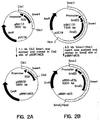
- the genes for Cu/Zn SOD, GroES and GroEL were initially obtained from a pUC19 genomic library of B. abortus strain 2308. As shown in Fig. 2, the inserts containing these genes along with their own promoters were excised from the pBA113 (SOD) and pBA2131 (GroES and GroEL) regions and subcloned into pBBRIMCS, a broad-host range plasmid which has routinely been used in Brucella research.
- the resulting recombinant plasmids were termed as pBBSOD and pBBGroES/EL (Fig. 2).
- the B. abortus strain RB51 was transformed with these plasmids by electroporation.
- Brucella containing the plasmids were selected by plating the transformed bacteria on trypticase soy agar plates containing 30 ⁇ g/mL of chloramphenicol.
- the antibiotic resistant colonies were individually grown in trypticase soya broth and the bacterial extracts used as antigens in an immunoblot analysis.
- mice were vaccinated by inoculating, intraperitoneally, 4 x 10 8 colony forming units (cfu) of either strain RB51SOD, RBS1GroESL, RB51pBB or RB51 in 0.5mL of saline.
- One group of mice was inoculated with 0.5m L of saline as a control.
- 5 mice in each group were challenged intraperitoneally with 2.5 x 10 4 cfu of virulent strain 2308. The remaining three mice in each group were used to characterize the immune responses.
- mice were euthanized and the cfu of strain 2308 per spleen were determined.
- mice immunized with strain RB51SOD had a significantly lower number of bacteria as compared to those immunized with strain RB51.
- the number of bacteria observable was at the lower limit ( ⁇ 20 cfu/spleen) of the detection method.
- mice vaccinated with strain RB51 developed antibodies to GroEL but did not develop antibodies to Cu/Zn SOD.
- mice vaccinated with strain RB51SOD developed a strong antibody response to Cu/Zn SOD
- mice vaccinated with strain RB51GroESL developed a stronger antibody response to GroEL protein (Fig. 3) than that exhibited by strain RB51 vaccinated mice.
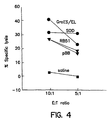
- the cell mediated immune response caused was characterized by determining the cytotoxic activity of lymphocytes toward Brucella infected cells. Specific splenic lymphocyte activity was enhanced in vitro by co-culturing with mitomycin C treated Brucella infected macrophages as stimulator cells. A cytotoxicity assay was performed using enhanced lymphocytes as effector cells (E) and Brucella infected macrophages as target cells (T). In the assay, E and T cells were mixed in two different ratios, 10:1 and 5:1. The percent specific lysis of target cells was calculated for each E:T ratio using standard methods (Fig 4).
- Lymphocytes from mice vaccinated with RB51SOD or RB51GroESL showed enhanced cytotoxic activity relative to saline or strain RB51 vaccinated mice.
- This increased cytotoxic lymphocyte activity (indicated by the increased % specific lysis) directly correlates with the observed enhanced protection of mice against challenge with virulent B. abortus strain 2308; the higher the protective level, the higher the specific cytotoxic activity.
- An OHAV is constructed by over-expressing the ctxB gene in Vibrio cholera .
- the gene is obtained from the deoxyribonucleic acid of the pathogen and inserted into a plasmid capable of replicating and expressing in the pathogen.
- the resulting recombinant plasmid is used to transform Vibrio cholera by means of electroporation. Plasmids are plated and selected by means known in the art.
- the resultant over-expressing homologous antigen vaccine strain promotes overproduction of antibodies that neutralize the cholera toxin, thereby providing greater protection for prophylaxis and treatment of cholera in humans.
- An OHAV is constructed by over-expressing the groEL gene of Mycobacterium tuberculosis in a Mycobacterium species.
- the gene is obtained from the deoxyribonucleic acid of the pathogen and inserted into a plasmid capable of replicating and expressing in the pathogen.
- the resulting recombinant plasmid is used to transform a Mycobacterium species by means of electroporation. Plasmids are plated and selected by means known in the art.
- the resultant over-expressing homologous antigen vaccine strain promotes overproduction of GroEL proteins, thereby providing greater protection for prophylaxis and treatment of tuberculosis in humans.
- over-expression of the groEL gene encoding the GroEL protein in M . bovis BCG provides greater protective immunity against tuberculosis because BCG vaccines are known to target antigen protecting cells, such as macrophages, thereby providing a means of introducing the antigens into the T cells, inducing protective cell
Landscapes
- Health & Medical Sciences (AREA)
- Chemical & Material Sciences (AREA)
- Genetics & Genomics (AREA)
- Organic Chemistry (AREA)
- Life Sciences & Earth Sciences (AREA)
- Engineering & Computer Science (AREA)
- General Health & Medical Sciences (AREA)
- Bioinformatics & Cheminformatics (AREA)
- Molecular Biology (AREA)
- Medicinal Chemistry (AREA)
- Biotechnology (AREA)
- General Engineering & Computer Science (AREA)
- Wood Science & Technology (AREA)
- Zoology (AREA)
- Biophysics (AREA)
- Biochemistry (AREA)
- Biomedical Technology (AREA)
- Immunology (AREA)
- General Chemical & Material Sciences (AREA)
- Veterinary Medicine (AREA)
- Chemical Kinetics & Catalysis (AREA)
- Microbiology (AREA)
- Plant Pathology (AREA)
- Nuclear Medicine, Radiotherapy & Molecular Imaging (AREA)
- Pharmacology & Pharmacy (AREA)
- Animal Behavior & Ethology (AREA)
- Public Health (AREA)
- Physics & Mathematics (AREA)
- Proteomics, Peptides & Aminoacids (AREA)
- Gastroenterology & Hepatology (AREA)
- Oncology (AREA)
- Communicable Diseases (AREA)
- Medicines Containing Antibodies Or Antigens For Use As Internal Diagnostic Agents (AREA)
- Micro-Organisms Or Cultivation Processes Thereof (AREA)
- Preparation Of Compounds By Using Micro-Organisms (AREA)
- Peptides Or Proteins (AREA)
Applications Claiming Priority (4)
| Application Number | Priority Date | Filing Date | Title |
|---|---|---|---|
| CNB971825173A CN1321693C (zh) | 1997-12-05 | 1997-12-05 | 一种过量表达的同源抗原疫苗及其制备方法 |
| PCT/US1997/023032 WO1999029340A1 (en) | 1997-12-05 | 1997-12-05 | An over-expressing homologous antigen vaccine and a method of making the same |
| OA1200000163A OA11421A (en) | 1997-12-05 | 2000-06-05 | An over-expressing homologous antigen vaccine and a method of making the same. |
| US09/692,623 US6811787B1 (en) | 1997-12-05 | 2000-10-20 | Over-expressing homologous antigen vaccine and a method of making the same |
Publications (3)
| Publication Number | Publication Date |
|---|---|
| EP1035863A1 EP1035863A1 (en) | 2000-09-20 |
| EP1035863A4 EP1035863A4 (en) | 2003-04-16 |
| EP1035863B1 true EP1035863B1 (en) | 2006-03-15 |
Family
ID=39591168
Family Applications (1)
| Application Number | Title | Priority Date | Filing Date |
|---|---|---|---|
| EP97953216A Expired - Lifetime EP1035863B1 (en) | 1997-12-05 | 1997-12-05 | An over-expressing homologous antigen vaccine and a method of making the same |
Country Status (12)
| Country | Link |
|---|---|
| US (2) | US6149920A (pt) |
| EP (1) | EP1035863B1 (pt) |
| CN (1) | CN1321693C (pt) |
| AT (1) | ATE320264T1 (pt) |
| AU (1) | AU759776C (pt) |
| BR (1) | BR9714904B1 (pt) |
| CA (1) | CA2317806A1 (pt) |
| ES (1) | ES2259449T3 (pt) |
| NZ (1) | NZ504993A (pt) |
| OA (1) | OA11421A (pt) |
| PT (1) | PT1035863E (pt) |
| WO (1) | WO1999029340A1 (pt) |
Families Citing this family (6)
| Publication number | Priority date | Publication date | Assignee | Title |
|---|---|---|---|---|
| ATE320264T1 (de) | 1997-12-05 | 2006-04-15 | Virginia Tech Intell Prop | Ein impfstoff mit einem überexprimierenden homologen antigen sowie verfahren zu dessen herstellung |
| WO2002080964A1 (en) * | 2001-04-06 | 2002-10-17 | Institut Pasteur | Conjugate vaccine composed of the polysaccharide moiety of the lipopolysaccharide of vibrio cholerae 0139 bound to tetanus toxoid |
| US7416878B2 (en) * | 2002-12-12 | 2008-08-26 | The United States Of America As Represented By The Secretary Of The Army | Immunogenic compositions including rough phenotype Brucella host strains and complementation DNA fragments |
| US7364745B2 (en) * | 2004-02-06 | 2008-04-29 | Virginia Tech Intellectual Properties, Inc. | Development of a live, attenuated, recombinant vaccine for Brucellosis |
| WO2005084706A1 (en) * | 2004-03-03 | 2005-09-15 | Walter Reed Army Institute Of Research | Mutant strains of brucella melitensis and immunogenic compositions |
| US20060115494A1 (en) * | 2004-12-01 | 2006-06-01 | Ronggai Sun | Recombinant BCG strains with attenuated immunosuppressive properties |
Family Cites Families (9)
| Publication number | Priority date | Publication date | Assignee | Title |
|---|---|---|---|---|
| US4888170A (en) * | 1981-10-22 | 1989-12-19 | Research Corporation | Vaccines obtained from antigenic gene products of recombinant genes |
| US5468485A (en) * | 1987-06-04 | 1995-11-21 | Washington University | Avirulent microbes and uses therefor |
| US6043057A (en) | 1988-09-16 | 2000-03-28 | Vitec Aktiebolag | Recombinant systems for expression of the cholera B-sub-unit with the aid of foreign promoters and/or leader peptides |
| CA2156191A1 (en) | 1993-02-22 | 1994-09-01 | Stephen B. Calderwood | Heterologous antigens in live cell vaccine strains |
| ATE335083T1 (de) * | 1993-02-26 | 2006-08-15 | Novozymes As | Methode und system zur erhöhten produktion von kommerziell wichtigen exoproteinen in gram- positiven bakterien |
| ES2171454T3 (es) | 1993-06-04 | 2002-09-16 | Whitehead Biomedical Inst | Proteinas de estres y sus usos. |
| WO1998023763A1 (en) | 1996-11-29 | 1998-06-04 | The General Hospital Corporation | Heterologous antigens in live cell v. cholerae strains |
| AU6969798A (en) * | 1997-04-15 | 1998-11-11 | Baylor College Of Medicine | (pasteurella haemolytica) vaccine |
| ATE320264T1 (de) * | 1997-12-05 | 2006-04-15 | Virginia Tech Intell Prop | Ein impfstoff mit einem überexprimierenden homologen antigen sowie verfahren zu dessen herstellung |
-
1997
- 1997-12-05 AT AT97953216T patent/ATE320264T1/de not_active IP Right Cessation
- 1997-12-05 CA CA002317806A patent/CA2317806A1/en not_active Abandoned
- 1997-12-05 AU AU57013/98A patent/AU759776C/en not_active Ceased
- 1997-12-05 NZ NZ504993A patent/NZ504993A/xx unknown
- 1997-12-05 WO PCT/US1997/023032 patent/WO1999029340A1/en not_active Ceased
- 1997-12-05 PT PT97953216T patent/PT1035863E/pt unknown
- 1997-12-05 ES ES97953216T patent/ES2259449T3/es not_active Expired - Lifetime
- 1997-12-05 US US09/091,521 patent/US6149920A/en not_active Expired - Lifetime
- 1997-12-05 CN CNB971825173A patent/CN1321693C/zh not_active Expired - Lifetime
- 1997-12-05 EP EP97953216A patent/EP1035863B1/en not_active Expired - Lifetime
- 1997-12-05 BR BRPI9714904-7A patent/BR9714904B1/pt not_active IP Right Cessation
-
2000
- 2000-06-05 OA OA1200000163A patent/OA11421A/en unknown
- 2000-10-20 US US09/692,623 patent/US6811787B1/en not_active Expired - Lifetime
Also Published As
| Publication number | Publication date |
|---|---|
| EP1035863A4 (en) | 2003-04-16 |
| OA11421A (en) | 2004-04-21 |
| AU759776B2 (en) | 2003-05-01 |
| EP1035863A1 (en) | 2000-09-20 |
| BR9714904A (pt) | 2001-11-27 |
| AU5701398A (en) | 1999-06-28 |
| AU759776C (en) | 2004-05-20 |
| US6149920A (en) | 2000-11-21 |
| US6811787B1 (en) | 2004-11-02 |
| CN1290173A (zh) | 2001-04-04 |
| CA2317806A1 (en) | 1999-06-17 |
| BR9714904B1 (pt) | 2010-07-13 |
| ATE320264T1 (de) | 2006-04-15 |
| WO1999029340A1 (en) | 1999-06-17 |
| ES2259449T3 (es) | 2006-10-01 |
| CN1321693C (zh) | 2007-06-20 |
| NZ504993A (en) | 2002-11-26 |
| PT1035863E (pt) | 2006-07-31 |
Similar Documents
| Publication | Publication Date | Title |
|---|---|---|
| Lauer et al. | Construction, characterization, and use of two Listeria monocytogenes site-specific phage integration vectors | |
| US20080069843A1 (en) | Salmonella vaccine | |
| US20080254062A1 (en) | Use of an avirulent bordetella mutant as a live vaccine vector | |
| CA2429120C (en) | Salmonella vaccine | |
| Shimoji et al. | Construction and vaccine potential of acapsular mutants of Erysipelothrix rhusiopathiae: use of excision of Tn 916 to inactivate a target gene | |
| Liu et al. | Immune responses and protection induced by Brucella suis S2 bacterial ghosts in mice | |
| KR101382215B1 (ko) | 마이코박테리움의 일렉트로포레이션 및 마이코박테리움에서항원의 과발현 | |
| EP1035863B1 (en) | An over-expressing homologous antigen vaccine and a method of making the same | |
| US20030044431A1 (en) | Over-expressing homologous antigen vaccine and a method of making the same | |
| JPH11514878A (ja) | アクチノバシラス・プリゥロニュウモニエrtx毒素apxに対する免疫 | |
| US8932846B2 (en) | Unmarked recombinant intracellular pathogen immunogenic compositions expressing high levels of recombinant proteins | |
| EP4720275A2 (en) | Vaccine for cats to block toxoplasma oocyst shedding and transmission | |
| Yang et al. | Studies on construction of a recombinant Eimeria tenella SO7 gene expressing Escherichia coli and its protective efficacy against homologous infection | |
| Yin et al. | Protective immunity induced by a LLO‐deficient Listeria monocytogenes | |
| PL188925B1 (pl) | Szczepionka przeciwko brucelozie, osłabiona lub awirulentna odmiana szczepu RB51 B. abortus, zastosowanie szczepionki, sposób wytwarzania szczepionki | |
| MXPA00005513A (en) | An over-expressing homologous antigen vaccine and a method of making the same | |
| Schurig et al. | In search of a combined brucellosis and tuberculosis vaccine for cattle | |
| US7332324B2 (en) | Attenuated vaccine useful for immunizations against Coccidioides spp. infections | |
| CN119173621A (zh) | 减毒的成熟缺陷的衣原体疫苗 | |
| World Health Organization | The development of new/improved brucellosis vaccines: report of a WHO meeting, Geneva, Switzerland, 11-12 December 1997 | |
| Splitter | Identification of Brucella Melitensis Antigens by T Lymphocytes and Oral Immunization Potential of the Antigens. | |
| World Health Organization | The Development of new | |
| JPH06501847A (ja) | ワクチンベクターとしてのコリネバクテリウム及び関連する生物 | |
| Whitehead | Development and assessment of an attenuated Rhodococcus equi oral vaccine that produces VapA | |
| US20040241190A1 (en) | Vaccine preparations |
Legal Events
| Date | Code | Title | Description |
|---|---|---|---|
| PUAI | Public reference made under article 153(3) epc to a published international application that has entered the european phase |
Free format text: ORIGINAL CODE: 0009012 |
|
| 17P | Request for examination filed |
Effective date: 20000629 |
|
| AK | Designated contracting states |
Kind code of ref document: A1 Designated state(s): AT BE CH DE DK ES FI FR GB GR IE IT LI LU MC NL PT SE |
|
| RAP1 | Party data changed (applicant data changed or rights of an application transferred) |
Owner name: THE REGENTS OF THE UNIVERSITY OF CALIFORNIA Owner name: VIRGINIA TECH INTELLECTUAL PROPERTIES, INC. |
|
| A4 | Supplementary search report drawn up and despatched |
Effective date: 20030304 |
|
| 17Q | First examination report despatched |
Effective date: 20041213 |
|
| GRAP | Despatch of communication of intention to grant a patent |
Free format text: ORIGINAL CODE: EPIDOSNIGR1 |
|
| GRAS | Grant fee paid |
Free format text: ORIGINAL CODE: EPIDOSNIGR3 |
|
| GRAA | (expected) grant |
Free format text: ORIGINAL CODE: 0009210 |
|
| AK | Designated contracting states |
Kind code of ref document: B1 Designated state(s): AT BE CH DE DK ES FI FR GB GR IE IT LI LU MC NL PT SE |
|
| PG25 | Lapsed in a contracting state [announced via postgrant information from national office to epo] |
Ref country code: NL Free format text: LAPSE BECAUSE OF FAILURE TO SUBMIT A TRANSLATION OF THE DESCRIPTION OR TO PAY THE FEE WITHIN THE PRESCRIBED TIME-LIMIT Effective date: 20060315 Ref country code: LI Free format text: LAPSE BECAUSE OF FAILURE TO SUBMIT A TRANSLATION OF THE DESCRIPTION OR TO PAY THE FEE WITHIN THE PRESCRIBED TIME-LIMIT Effective date: 20060315 Ref country code: FI Free format text: LAPSE BECAUSE OF FAILURE TO SUBMIT A TRANSLATION OF THE DESCRIPTION OR TO PAY THE FEE WITHIN THE PRESCRIBED TIME-LIMIT Effective date: 20060315 Ref country code: CH Free format text: LAPSE BECAUSE OF FAILURE TO SUBMIT A TRANSLATION OF THE DESCRIPTION OR TO PAY THE FEE WITHIN THE PRESCRIBED TIME-LIMIT Effective date: 20060315 Ref country code: BE Free format text: LAPSE BECAUSE OF FAILURE TO SUBMIT A TRANSLATION OF THE DESCRIPTION OR TO PAY THE FEE WITHIN THE PRESCRIBED TIME-LIMIT Effective date: 20060315 Ref country code: AT Free format text: LAPSE BECAUSE OF FAILURE TO SUBMIT A TRANSLATION OF THE DESCRIPTION OR TO PAY THE FEE WITHIN THE PRESCRIBED TIME-LIMIT Effective date: 20060315 |
|
| REG | Reference to a national code |
Ref country code: GB Ref legal event code: FG4D Ref country code: CH Ref legal event code: EP |
|
| REG | Reference to a national code |
Ref country code: IE Ref legal event code: FG4D |
|
| REF | Corresponds to: |
Ref document number: 69735506 Country of ref document: DE Date of ref document: 20060511 Kind code of ref document: P |
|
| PG25 | Lapsed in a contracting state [announced via postgrant information from national office to epo] |
Ref country code: SE Free format text: LAPSE BECAUSE OF FAILURE TO SUBMIT A TRANSLATION OF THE DESCRIPTION OR TO PAY THE FEE WITHIN THE PRESCRIBED TIME-LIMIT Effective date: 20060615 Ref country code: DK Free format text: LAPSE BECAUSE OF FAILURE TO SUBMIT A TRANSLATION OF THE DESCRIPTION OR TO PAY THE FEE WITHIN THE PRESCRIBED TIME-LIMIT Effective date: 20060615 |
|
| PG25 | Lapsed in a contracting state [announced via postgrant information from national office to epo] |
Ref country code: DE Free format text: LAPSE BECAUSE OF FAILURE TO SUBMIT A TRANSLATION OF THE DESCRIPTION OR TO PAY THE FEE WITHIN THE PRESCRIBED TIME-LIMIT Effective date: 20060617 |
|
| REG | Reference to a national code |
Ref country code: PT Ref legal event code: SC4A Effective date: 20060531 |
|
| REG | Reference to a national code |
Ref country code: GR Ref legal event code: EP Ref document number: 20060401958 Country of ref document: GR |
|
| NLV1 | Nl: lapsed or annulled due to failure to fulfill the requirements of art. 29p and 29m of the patents act | ||
| REG | Reference to a national code |
Ref country code: CH Ref legal event code: PL |
|
| REG | Reference to a national code |
Ref country code: ES Ref legal event code: FG2A Ref document number: 2259449 Country of ref document: ES Kind code of ref document: T3 |
|
| PG25 | Lapsed in a contracting state [announced via postgrant information from national office to epo] |
Ref country code: MC Free format text: LAPSE BECAUSE OF NON-PAYMENT OF DUE FEES Effective date: 20061231 |
|
| PLBE | No opposition filed within time limit |
Free format text: ORIGINAL CODE: 0009261 |
|
| STAA | Information on the status of an ep patent application or granted ep patent |
Free format text: STATUS: NO OPPOSITION FILED WITHIN TIME LIMIT |
|
| 26N | No opposition filed |
Effective date: 20061218 |
|
| EN | Fr: translation not filed | ||
| GBPC | Gb: european patent ceased through non-payment of renewal fee |
Effective date: 20061205 |
|
| PG25 | Lapsed in a contracting state [announced via postgrant information from national office to epo] |
Ref country code: GB Free format text: LAPSE BECAUSE OF NON-PAYMENT OF DUE FEES Effective date: 20061205 |
|
| PG25 | Lapsed in a contracting state [announced via postgrant information from national office to epo] |
Ref country code: FR Free format text: LAPSE BECAUSE OF FAILURE TO SUBMIT A TRANSLATION OF THE DESCRIPTION OR TO PAY THE FEE WITHIN THE PRESCRIBED TIME-LIMIT Effective date: 20070309 |
|
| PG25 | Lapsed in a contracting state [announced via postgrant information from national office to epo] |
Ref country code: LU Free format text: LAPSE BECAUSE OF NON-PAYMENT OF DUE FEES Effective date: 20061205 |
|
| PG25 | Lapsed in a contracting state [announced via postgrant information from national office to epo] |
Ref country code: FR Free format text: LAPSE BECAUSE OF FAILURE TO SUBMIT A TRANSLATION OF THE DESCRIPTION OR TO PAY THE FEE WITHIN THE PRESCRIBED TIME-LIMIT Effective date: 20060315 |
|
| PGFP | Annual fee paid to national office [announced via postgrant information from national office to epo] |
Ref country code: IE Payment date: 20091215 Year of fee payment: 13 |
|
| PGFP | Annual fee paid to national office [announced via postgrant information from national office to epo] |
Ref country code: GR Payment date: 20101115 Year of fee payment: 14 Ref country code: IT Payment date: 20101218 Year of fee payment: 14 |
|
| PG25 | Lapsed in a contracting state [announced via postgrant information from national office to epo] |
Ref country code: IE Free format text: LAPSE BECAUSE OF NON-PAYMENT OF DUE FEES Effective date: 20101206 |
|
| REG | Reference to a national code |
Ref country code: GR Ref legal event code: ML Ref document number: 20060401958 Country of ref document: GR Effective date: 20120704 |
|
| PG25 | Lapsed in a contracting state [announced via postgrant information from national office to epo] |
Ref country code: GR Free format text: LAPSE BECAUSE OF NON-PAYMENT OF DUE FEES Effective date: 20120704 Ref country code: IT Free format text: LAPSE BECAUSE OF NON-PAYMENT OF DUE FEES Effective date: 20111205 |
|
| PGFP | Annual fee paid to national office [announced via postgrant information from national office to epo] |
Ref country code: PT Payment date: 20130605 Year of fee payment: 17 |
|
| PGFP | Annual fee paid to national office [announced via postgrant information from national office to epo] |
Ref country code: ES Payment date: 20141111 Year of fee payment: 18 |
|
| REG | Reference to a national code |
Ref country code: PT Ref legal event code: MM4A Free format text: LAPSE DUE TO NON-PAYMENT OF FEES Effective date: 20150605 |
|
| PG25 | Lapsed in a contracting state [announced via postgrant information from national office to epo] |
Ref country code: PT Free format text: LAPSE BECAUSE OF NON-PAYMENT OF DUE FEES Effective date: 20150605 |
|
| REG | Reference to a national code |
Ref country code: ES Ref legal event code: FD2A Effective date: 20170127 |
|
| PG25 | Lapsed in a contracting state [announced via postgrant information from national office to epo] |
Ref country code: ES Free format text: LAPSE BECAUSE OF NON-PAYMENT OF DUE FEES Effective date: 20151206 |