EP1038967A2 - Virus mit veränderten Bindungseigenschaften und Spezifität für Zieltellen - Google Patents
Virus mit veränderten Bindungseigenschaften und Spezifität für Zieltellen Download PDFInfo
- Publication number
- EP1038967A2 EP1038967A2 EP00304480A EP00304480A EP1038967A2 EP 1038967 A2 EP1038967 A2 EP 1038967A2 EP 00304480 A EP00304480 A EP 00304480A EP 00304480 A EP00304480 A EP 00304480A EP 1038967 A2 EP1038967 A2 EP 1038967A2
- Authority
- EP
- European Patent Office
- Prior art keywords
- adenovirus
- virus
- particle
- fibre
- binding moiety
- Prior art date
- Legal status (The legal status is an assumption and is not a legal conclusion. Google has not performed a legal analysis and makes no representation as to the accuracy of the status listed.)
- Withdrawn
Links
Images









Classifications
-
- C—CHEMISTRY; METALLURGY
- C12—BIOCHEMISTRY; BEER; SPIRITS; WINE; VINEGAR; MICROBIOLOGY; ENZYMOLOGY; MUTATION OR GENETIC ENGINEERING
- C12N—MICROORGANISMS OR ENZYMES; COMPOSITIONS THEREOF; PROPAGATING, PRESERVING, OR MAINTAINING MICROORGANISMS; MUTATION OR GENETIC ENGINEERING; CULTURE MEDIA
- C12N7/00—Viruses; Bacteriophages; Compositions thereof; Preparation or purification thereof
-
- A—HUMAN NECESSITIES
- A61—MEDICAL OR VETERINARY SCIENCE; HYGIENE
- A61K—PREPARATIONS FOR MEDICAL, DENTAL OR TOILETRY PURPOSES
- A61K48/00—Medicinal preparations containing genetic material which is inserted into cells of the living body to treat genetic diseases; Gene therapy
-
- C—CHEMISTRY; METALLURGY
- C07—ORGANIC CHEMISTRY
- C07K—PEPTIDES
- C07K14/00—Peptides having more than 20 amino acids; Gastrins; Somatostatins; Melanotropins; Derivatives thereof
- C07K14/005—Peptides having more than 20 amino acids; Gastrins; Somatostatins; Melanotropins; Derivatives thereof from viruses
-
- C—CHEMISTRY; METALLURGY
- C07—ORGANIC CHEMISTRY
- C07K—PEPTIDES
- C07K16/00—Immunoglobulins [IG], e.g. monoclonal or polyclonal antibodies
-
- C—CHEMISTRY; METALLURGY
- C12—BIOCHEMISTRY; BEER; SPIRITS; WINE; VINEGAR; MICROBIOLOGY; ENZYMOLOGY; MUTATION OR GENETIC ENGINEERING
- C12N—MICROORGANISMS OR ENZYMES; COMPOSITIONS THEREOF; PROPAGATING, PRESERVING, OR MAINTAINING MICROORGANISMS; MUTATION OR GENETIC ENGINEERING; CULTURE MEDIA
- C12N15/00—Mutation or genetic engineering; DNA or RNA concerning genetic engineering, vectors, e.g. plasmids, or their isolation, preparation or purification; Use of hosts therefor
- C12N15/09—Recombinant DNA-technology
- C12N15/63—Introduction of foreign genetic material using vectors; Vectors; Use of hosts therefor; Regulation of expression
- C12N15/79—Vectors or expression systems specially adapted for eukaryotic hosts
- C12N15/85—Vectors or expression systems specially adapted for eukaryotic hosts for animal cells
- C12N15/86—Viral vectors
-
- C—CHEMISTRY; METALLURGY
- C12—BIOCHEMISTRY; BEER; SPIRITS; WINE; VINEGAR; MICROBIOLOGY; ENZYMOLOGY; MUTATION OR GENETIC ENGINEERING
- C12N—MICROORGANISMS OR ENZYMES; COMPOSITIONS THEREOF; PROPAGATING, PRESERVING, OR MAINTAINING MICROORGANISMS; MUTATION OR GENETIC ENGINEERING; CULTURE MEDIA
- C12N15/00—Mutation or genetic engineering; DNA or RNA concerning genetic engineering, vectors, e.g. plasmids, or their isolation, preparation or purification; Use of hosts therefor
- C12N15/09—Recombinant DNA-technology
- C12N15/87—Introduction of foreign genetic material using processes not otherwise provided for, e.g. co-transformation
-
- A—HUMAN NECESSITIES
- A61—MEDICAL OR VETERINARY SCIENCE; HYGIENE
- A61K—PREPARATIONS FOR MEDICAL, DENTAL OR TOILETRY PURPOSES
- A61K38/00—Medicinal preparations containing peptides
-
- C—CHEMISTRY; METALLURGY
- C07—ORGANIC CHEMISTRY
- C07K—PEPTIDES
- C07K2319/00—Fusion polypeptide
-
- C—CHEMISTRY; METALLURGY
- C07—ORGANIC CHEMISTRY
- C07K—PEPTIDES
- C07K2319/00—Fusion polypeptide
- C07K2319/01—Fusion polypeptide containing a localisation/targetting motif
- C07K2319/035—Fusion polypeptide containing a localisation/targetting motif containing a signal for targeting to the external surface of a cell, e.g. to the outer membrane of Gram negative bacteria, GPI- anchored eukaryote proteins
-
- C—CHEMISTRY; METALLURGY
- C07—ORGANIC CHEMISTRY
- C07K—PEPTIDES
- C07K2319/00—Fusion polypeptide
- C07K2319/33—Fusion polypeptide fusions for targeting to specific cell types, e.g. tissue specific targeting, targeting of a bacterial subspecies
-
- C—CHEMISTRY; METALLURGY
- C12—BIOCHEMISTRY; BEER; SPIRITS; WINE; VINEGAR; MICROBIOLOGY; ENZYMOLOGY; MUTATION OR GENETIC ENGINEERING
- C12N—MICROORGANISMS OR ENZYMES; COMPOSITIONS THEREOF; PROPAGATING, PRESERVING, OR MAINTAINING MICROORGANISMS; MUTATION OR GENETIC ENGINEERING; CULTURE MEDIA
- C12N2710/00—MICROORGANISMS OR ENZYMES; COMPOSITIONS THEREOF; PROPAGATING, PRESERVING, OR MAINTAINING MICROORGANISMS; MUTATION OR GENETIC ENGINEERING; CULTURE MEDIA dsDNA viruses
- C12N2710/00011—Details
- C12N2710/10011—Adenoviridae
- C12N2710/10311—Mastadenovirus, e.g. human or simian adenoviruses
- C12N2710/10322—New viral proteins or individual genes, new structural or functional aspects of known viral proteins or genes
-
- C—CHEMISTRY; METALLURGY
- C12—BIOCHEMISTRY; BEER; SPIRITS; WINE; VINEGAR; MICROBIOLOGY; ENZYMOLOGY; MUTATION OR GENETIC ENGINEERING
- C12N—MICROORGANISMS OR ENZYMES; COMPOSITIONS THEREOF; PROPAGATING, PRESERVING, OR MAINTAINING MICROORGANISMS; MUTATION OR GENETIC ENGINEERING; CULTURE MEDIA
- C12N2710/00—MICROORGANISMS OR ENZYMES; COMPOSITIONS THEREOF; PROPAGATING, PRESERVING, OR MAINTAINING MICROORGANISMS; MUTATION OR GENETIC ENGINEERING; CULTURE MEDIA dsDNA viruses
- C12N2710/00011—Details
- C12N2710/10011—Adenoviridae
- C12N2710/10311—Mastadenovirus, e.g. human or simian adenoviruses
- C12N2710/10323—Virus like particles [VLP]
-
- C—CHEMISTRY; METALLURGY
- C12—BIOCHEMISTRY; BEER; SPIRITS; WINE; VINEGAR; MICROBIOLOGY; ENZYMOLOGY; MUTATION OR GENETIC ENGINEERING
- C12N—MICROORGANISMS OR ENZYMES; COMPOSITIONS THEREOF; PROPAGATING, PRESERVING, OR MAINTAINING MICROORGANISMS; MUTATION OR GENETIC ENGINEERING; CULTURE MEDIA
- C12N2710/00—MICROORGANISMS OR ENZYMES; COMPOSITIONS THEREOF; PROPAGATING, PRESERVING, OR MAINTAINING MICROORGANISMS; MUTATION OR GENETIC ENGINEERING; CULTURE MEDIA dsDNA viruses
- C12N2710/00011—Details
- C12N2710/10011—Adenoviridae
- C12N2710/10311—Mastadenovirus, e.g. human or simian adenoviruses
- C12N2710/10341—Use of virus, viral particle or viral elements as a vector
- C12N2710/10343—Use of virus, viral particle or viral elements as a vector viral genome or elements thereof as genetic vector
-
- C—CHEMISTRY; METALLURGY
- C12—BIOCHEMISTRY; BEER; SPIRITS; WINE; VINEGAR; MICROBIOLOGY; ENZYMOLOGY; MUTATION OR GENETIC ENGINEERING
- C12N—MICROORGANISMS OR ENZYMES; COMPOSITIONS THEREOF; PROPAGATING, PRESERVING, OR MAINTAINING MICROORGANISMS; MUTATION OR GENETIC ENGINEERING; CULTURE MEDIA
- C12N2710/00—MICROORGANISMS OR ENZYMES; COMPOSITIONS THEREOF; PROPAGATING, PRESERVING, OR MAINTAINING MICROORGANISMS; MUTATION OR GENETIC ENGINEERING; CULTURE MEDIA dsDNA viruses
- C12N2710/00011—Details
- C12N2710/10011—Adenoviridae
- C12N2710/10311—Mastadenovirus, e.g. human or simian adenoviruses
- C12N2710/10341—Use of virus, viral particle or viral elements as a vector
- C12N2710/10345—Special targeting system for viral vectors
-
- C—CHEMISTRY; METALLURGY
- C12—BIOCHEMISTRY; BEER; SPIRITS; WINE; VINEGAR; MICROBIOLOGY; ENZYMOLOGY; MUTATION OR GENETIC ENGINEERING
- C12N—MICROORGANISMS OR ENZYMES; COMPOSITIONS THEREOF; PROPAGATING, PRESERVING, OR MAINTAINING MICROORGANISMS; MUTATION OR GENETIC ENGINEERING; CULTURE MEDIA
- C12N2810/00—Vectors comprising a targeting moiety
- C12N2810/50—Vectors comprising as targeting moiety peptide derived from defined protein
- C12N2810/80—Vectors comprising as targeting moiety peptide derived from defined protein from vertebrates
- C12N2810/85—Vectors comprising as targeting moiety peptide derived from defined protein from vertebrates mammalian
- C12N2810/854—Vectors comprising as targeting moiety peptide derived from defined protein from vertebrates mammalian from hormones
-
- C—CHEMISTRY; METALLURGY
- C12—BIOCHEMISTRY; BEER; SPIRITS; WINE; VINEGAR; MICROBIOLOGY; ENZYMOLOGY; MUTATION OR GENETIC ENGINEERING
- C12N—MICROORGANISMS OR ENZYMES; COMPOSITIONS THEREOF; PROPAGATING, PRESERVING, OR MAINTAINING MICROORGANISMS; MUTATION OR GENETIC ENGINEERING; CULTURE MEDIA
- C12N2810/00—Vectors comprising a targeting moiety
- C12N2810/50—Vectors comprising as targeting moiety peptide derived from defined protein
- C12N2810/80—Vectors comprising as targeting moiety peptide derived from defined protein from vertebrates
- C12N2810/85—Vectors comprising as targeting moiety peptide derived from defined protein from vertebrates mammalian
- C12N2810/859—Vectors comprising as targeting moiety peptide derived from defined protein from vertebrates mammalian from immunoglobulins
-
- C—CHEMISTRY; METALLURGY
- C12—BIOCHEMISTRY; BEER; SPIRITS; WINE; VINEGAR; MICROBIOLOGY; ENZYMOLOGY; MUTATION OR GENETIC ENGINEERING
- C12N—MICROORGANISMS OR ENZYMES; COMPOSITIONS THEREOF; PROPAGATING, PRESERVING, OR MAINTAINING MICROORGANISMS; MUTATION OR GENETIC ENGINEERING; CULTURE MEDIA
- C12N2830/00—Vector systems having a special element relevant for transcription
- C12N2830/008—Vector systems having a special element relevant for transcription cell type or tissue specific enhancer/promoter combination
Definitions
- the present invention relates to delivery vehicles for genes to target cells, especially in the fields of gene therapy and cancer treatment.
- the delivery of genes to target cells has many uses, for example in the fields of gene therapy, cancer treatment and in areas of genetic manipulation still to be discovered.
- the gene to be delivered may encode a molecule, such as a protein or RNA, which is cytotoxic to the target cell, or it may encode a functional copy of a gene that is defective in the target cell. In this latter case the product of the aforementioned functional copy of the gene will replace that of the defective copy, and the target cell will be able to perform its proper function.
- viruses or virus-like particles
- the targeting of the virus or virus-like particles containing the desired gene to the cell has relied on the natural host-virus specificity or on local application of the virus to the cells to be targeted, for example direct application of viruses to lung cells by inhalation.
- the human adenovirus 5 (Ad5) genome consists of a double-stranded linear DNA molecule of 36 kilo-basepair.
- the virus replication cycle has two phases: an early phase, during which four transcriptional units E1, E2, E3, and E4 are expressed, and a late phase occurring after the onset of viral DNA synthesis when late transcripts are expressed from the major late promoter (MLP). These late messages encode most of the viral structural proteins.
- E1, E2, and E4 gene products of human adenoviruses (Ads) are involved in transcriptional activation, cell transformation, and viral DNA replication as well as other viral functions, and are essential for viral growth. In contrast, E3 gene products are not required for viral replication in cultured cells or for acute lung infection of cotton rats, but appear to be involved in evading immune surveillance in vivo.
- virus-like particle we mean a nucleoprotein particle containing a core of nucleic acid surrounded by protein which (i) is not infective and (ii) can only be propagated in a suitable cell system following transformation by its nucleic acid.
- a virus-like particle of mammalian origin may be propagated in Saccharomyces cerevisiae or in insect cells via a baculovirus expression system.
- retroelement particles including retroviral vectors
- retroviral vectors may be modified to target specific cells, for example see Kingsman et al (1991) Tibtech 9 , 303-309.
- NIP-derivatised human cells were tested as a method for targeted gene delivery, but became permissive for both modified (displaying an anti-NIP antibody) and unmodified ecotropic viral particles.
- NIP is 4-hydroxy-3-iodo-5-nitrophenylacetic acid.
- WO 92/06180 discusses in general terms adding a binding moiety to the surface of a virus and gives examples of modified Moloney murine leukaemia virus and hepatitis B virus.
- WO 92/14829 discusses that specific membrane-associated protein from an unrelated virus can be incorporated into retroviral particles to provide an altered host range.
- EP 0 508 809 describes a lipid-containing virus-like particle based on a retroelement such as a retrovirus.
- WO 93/09221 discusses in general terms modifications to a cell-binding receptor of a virus. Epstein-Barr Virus, Influenza A virus, paramyxovirus and retroviruses are specifically mentioned.
- viruses and virus-like particles may be able to target cells using the binding moiety displayed on their surface but they can also still target their natural host cells.
- viruses and virus-like particles at least some of which can bind the target cell with high specificity and may deliver genetic material to the target cell; at least some of the viruses and virus-like particles may bind and deliver genetic material to the target cell without substantially binding to the natural host cell of the virus.
- One aspect of the present invention provides an adenovirus, or adenovirus-like particle, or a replication defective derivative thereof comprising a modified binding specificity conferred by a binding moiety allowing the adenovirus or adenovirus-like particle to bind to a target cell, wherein the binding moiety is a peptide and is fused to the penton fibre of the adenovirus or adenovirus-like particle.
- the virus or virus-like particle may be substantially incapable of binding its host cell.
- substantially incapable of binding its host cell we mean that the modified virus has no more than 1% of the binding affinity of the unmodified virus for the host cell.
- the binding specificity of a natural virus or virus-like particle is conferred by the specific interaction between a receptor-like molecule expressed on the surface of the virus or virus-like particle and a cognate receptor-like molecule expressed on the surface of its host cell.
- the invention provides a beneficial modification of the binding specificity, so that the virus or virus-like particle can bind to a different specific target cell.
- the introduction of the modified binding moiety may be such as to achieve the said removal of the native binding specificity.
- binding moiety we mean a molecule that is exposed on the surface of the virus or virus-like particle which is able to bind to a molecule on the target cell.
- the "binding moiety” may be a molecule on the virus or virus-like particle modified in such a way that its binding specificity is changed, or it may be a molecule added to, and exposed on the surface of, the virus or virus-like particle to provide a new binding specificity.
- the binding moiety is external to the receptor for its host cell of the naive, unmodified virus.
- binding moiety is joined or fused to the virus or virus-like particles directly or indirectly by a spacer group.
- host cell we mean the cell that an unmodified, naive virus can bind to using its receptor-like molecule and the cognate receptor-like molecule on the cell.
- target cell we mean the cell that the modified virus can bind to using its binding moiety. In some circumstances in the context of the second aspect of the invention, such as when the binding moiety recognises an entity on the host cell which is not the cognate receptor-like molecule, then the host cell may be the target cell.
- virus or virus-like particle is “replication-defective”.
- replication defective we mean a virus whose genetic material has been manipulated so that it cannot divide or proliferate in the cell it infects.
- the binding moiety of the virus or virus-like particle of the invention provides the target cell binding specificity.
- Any cell-binding protein or peptide may be useful for targeting the virus or virus-like particle to the cell.
- short linear stretches of amino acids, such as those constituting a peptide hormone are useful, as are domains of polypeptides that can fold independently into a structure that can bind to the target cell.
- the binding moiety has the property of any one of a monoclonal antibody, ScFv (single chain Fv fragment), a dAb (single domain antibody) or a minimal recognition unit of an antibody.
- the binding site on the target cell may be a target cell-specific antigen.
- antigens are listed in Table 1.
- Other binding moieties, targets on cells, and diseases which could usefully be treated using reagents delivered by the modified viruses or virus-like particles are given in Table 2.
- Tumour Associated Antigens Antigen Antibody Existing Uses Carcino-embryonic Antigen ⁇ C46 (Amersham) ⁇ 85A12 (Unipath) Imaging & Therapy of colon/rectum tumours. Placental Alkaline Phosphatase H17E2 (ICRF, Travers & Bodmer) Imaging & Therapy of testicular and ovarian cancers.
- Pan Carcinoma NR-LU-10 Imaging & Therapy of various carcinomas incl. small cell lung cancer.
- Polymorphic Epithelial Mucin Human milk fat globule
- HMFG1 Teylor-Papadimitriou, ICRF
- ⁇ -human Chorionic Gonadotropin W14 Targeting of enzyme (CPG2) to human xenograft choriocarcinoma in nude mice.
- CPG2 enzyme
- a Carbohydrate on Human Carcinomas L6 IgG2a
- B-lymphocyte Surface Antigen CD22
- RFB4 Janossy, Royal Free Hospital
- Immunotoxin therapy of B cell lymphoma Pan T lymphocyte Surface Antigen (CD5) H65 (Bodmer, Knowles ICRF, Licensed to Xoma Corp., USA)
- Infectious Agent-Related Antigens Mumps virus-related Anti-mumps polyclonal antibody Antibody conjugated to Diphtheria toxin for treatment of mumps.
- Binding moieties for tumour-specific targets and tumour associated antigens Target Binding moiety Disease
- Breast cancer c-erb B2 mAbs Breast cancer IL-2 receptor IL-2 anti-Tac mAb Lymphomas and leukaemias IL-4 receptor IL-4 Lymphomas and leukaemias IL-6 receptor IL-6 Lymphomas and leukaemias
- MSH melanocyte-stimulating hormone
- MSH melanocyte-stimulating hormone
- Gliomas gp95/gp97 mAbs Melanomas p-glycoprotein cells
- N-CAM drug-resistant cluster-1 antigen
- the binding moiety may be a monoclonal antibody.
- Monoclonal antibodies which will bind to many of these antigens are already known but in any case, with today's techniques in relation to monoclonal antibody technology, antibodies can be prepared to most antigens.
- the binding moiety may be a part of an antibody (for example a Fab fragment) or a synthetic antibody fragment (for example, ScFv).
- Suitable monoclonal antibodies to selected antigens may be prepared by known techniques, for example those disclosed in "Monoclonal Antibodies: A manual of techniques", H Zola (CRC Press, 1988) and in “Monoclonal Hybridoma Antibodies: Techniques and Applications", J G R Hurrell (CRC Press, 1982).
- Non-human antibodies can be "humanized” in known ways, for example by inserting the CDR regions of mouse antibodies into the framework of human antibodies.
- variable heavy (V H ) and variable light (V L ) domains of the antibody are involved in antigen recognition, a fact first recognised by early protease digestion experiments. Further confirmation was found by "humanization" of rodent antibodies. Variable domains of rodent origin may be fused to constant domains of human origin such that the resultant antibody retains the antigenic specificity of the rodent parental antibody (Morrison et al (1984) Proc. Nail. Acad. Sci. USA 81 , 6851-6855).
- variable domains that antigenic specificity is conferred by variable domains and is independent of the constant domains is known from experiments involving the bacterial expression of antibody fragments, all containing one or more variable domains.
- variable domains include Fab-like molecules (Better et al (1988) Science 240 , 1041); Fv molecules (Skerra et al (1988) Science 240 , 1038); ScFv molecules where the V H and V L partner domains are linked via a flexible oligopeptide (Bird et al (1988) Science 242 , 423; Huston et al (1988) Proc. Natl. Acad. Sci.
- ScFv molecules we mean molecules wherein the V H and V L partner domains are linked via a flexible oligopeptide.
- antibody fragments rather than whole antibodies. Effector functions of whole antibodies, such as complement binding, are removed. ScFv and dAb antibody fragments can be expressed as fusions with other polypeptides.
- Minimal recognition units may be derived from the sequence of one or more of the complementary-determining regions (CDR) of the Fv fragment.
- Whole antibodies, and F(ab') 2 fragments are "bivalent”.
- bivalent we mean that the said antibodies and F(ab') 2 fragments have two antigen combining sites.
- Fab, Fv, ScFv, dAb fragments and minimal recognition units are monovalent, having only one antigen combining sites.
- the binding moiety is at least part of a ligand of a target cell-specific cell-surface receptor.
- the target cell-specific cell-surface receptor is the receptor for human gonadotrophin releasing hormone (GnRH).
- GnRH human gonadotrophin releasing hormone
- the binding moiety is GnRH, and its binding specificity is for human cancer cells that express the GnRH receptors on their surface. Examples of such human cancer cells are prostate, breast and endometrial cancer cells.
- the target cell-specific cell-surface receptor is the receptor for melanocyte-stimulating hormone (MSH) which is expressed in high number in melanoma cells.
- MSH melanocyte-stimulating hormone
- the binding moiety is MSH, and its binding specificity is for melanoma cells.
- the target cell-specific cell-surface receptor is the receptor for somatostatin.
- the receptors for GnRH, MSH and somatostatin may themselves be target cell-specific antigens and may be recognised by binding moieties which have the property of any one of a monoclonal antibody, a ScFv, a dAb or a minimal recognition unit.
- the binding site on the target cell may be a cell-surface receptor it may also act as a target cell-specific cell-surface antigen for recognition by the binding moiety.
- binding moieties which are polypeptides may be conveniently made using recombinant DNA techniques.
- the binding moiety may be fused to a protein on the surface of the virus or virus-like protein as disclosed below or they may be synthesised independently of the virus or virus-like particle, by expression from a suitable vector in a suitable host and then joined to the virus or virus-like particle as disclosed below.
- Nucleic acid sequences encoding many of the targeting moieties are known, for example those for peptide hormones, growth factors, cytokines and the like and may readily be found by reference to publicly accessible nucleotide sequence databases such as EMBL and GenBank. Once the nucleotide sequence is known it is obvious to the person skilled in the art how to make DNA encoding the chosen binding moiety using, for example, chemical DNA synthetic techniques or by using the polymerase chain reaction to amplify the required DNA from genomic DNA or from tissue-specific cDNA.
- cDNAs encoding peptide hormones, growth factors, cytokines and the like, all of which may be useful as binding moieties, are generally available from, for example British Biotechnology Ltd, Oxford, UK.
- the virus or virus-like particle of the invention binds to its target cell it delivers its nucleic acid to the said target cell, that is the target cell is infected by the virus or virus-like particle.
- Target cells especially cancer cells, that are infected in this manner by the virus or virus-like particle may express viral molecules on their surface and may be recognised by the immune system and destroyed. Of course, other cytotoxic functions of the virus may also kill the cell.
- the adenovinus E1B gene is substantially deleted or modified so that its gene product no longer interacts with the E1A protein.
- E1A protein stimulates apoptosis but normally its action is inhibited by E1B.
- the E1B gene is inactivated by insertion; preferably a cytotoxic gene, as defined below, is inserted at or near the E1B gene.
- E1, E3 and a site upstream of E4 may be used as sites for insertion of foreign DNA sequences in the generation of recombinant adenoviruses for example see Berkner and Sharp (1984) Nucl. Acids Res. 12 , 1925-1941; Chanda et al (1990) Virology 175 , 535-547; Haj-Ahmad and Graham (1986) J. Virol. 57 , 267-274; Saito et al (1985) J. Virol. 54 , 711-719; all incorporated herein by reference.
- E1 is essential for virus replication in cell culture, foreign DNA can be substituted for E1 sequences when the virus is grown in 293 cells which are transformed by Ad5 DNA and constitutively express E1 (Graham et al (1977) J. Gen. Virol. 36 , 59-72, incorporated herein by reference).
- Ad5 DNA Several vectors having 1.9 kb deleted from E3 of Ad5 have been constructed without interfering with virus replication in cell culture (reviewed by Graham and Prevec (1992) in "Vaccines: New Approaches to Immunological Problems" R.W.
- Substantially replication-defective adenoviruses may be made by creating a deficiency of the E1A protein. Suitably this is achieved by deleting the E1A gene or by making mutations within the E1A gene that prevent expression of the E1A protein. Examples of suitable mutations are deletions within the E1A coding region; nonsense mutations; and frameshift mutations.
- virus or virus-like particle is modified further to contain a gene suitable for gene therapy.
- the gene encodes a molecule having a directly or indirectly cytotoxic function.
- directly or indirectly cytotoxic we mean that the molecule encoded by the gene may itself be toxic (for example ricin; tumour necrosis factor; interleukin-2; interferon-gamma; ribonuclease; deoxyribonuclease; Pseudomonas exotoxin A) or it may be metabolised to form a toxic product, or it may act on something else to form a toxic product.
- the sequence of ricin cDNA is disclosed in Lamb et al (1985) Eur. J. Biochem. 148 , 265-270 incorporated herein by reference.
- cytosine deaminase converts 5-fluorocytosine (5FC) to 5-fluorouracil (5FU) (Mullen et al (1922) PNAS 89, 33); the herpes simplex enzyme thymidine kinase sensitises cells to treatment with the antiviral agent ganciclovir (GCV) or aciclovir (Moolten (1986) Cancer Res. 46 , 5276; Ezzedine et al (1991) New Biol 3 , 608).
- the cytosine deaminase of any organism for example E. coli or Saccharomyces cerevisiae, may be used.
- the gene encodes a cytosine deaminase and the patient is concomitantly given 5FC.
- concomitantly we mean that the 5FC is administered at such a time, in relation to the transformation of the tumour cells, that 5FC is converted into 5FU in the target cells by the cytosine deaminase expressed from the said gene.
- a dosage of approximately 0.001 to 100.0 mg 5FC/kg body weight/day, preferably 0.1 to 10.0 mg/kg/day is suitable.
- pro-drugs Components, such as 5FC, which are converted from a relatively non-toxic form into a cytotoxic form by the action of an enzyme are termed "pro-drugs".
- pro-drug/enzyme combinations include those disclosed by Bagshawe et al (WO 88/07378), namely various alkylating agents and the Pseudomonas spp. CPG2 enzyme, and those disclosed by Epenetos & Rowlinson-Busza (WO 91/11201), namely cyanogenic pro-drugs (for example amygdalin) and plant-derived ⁇ -glucosidases.
- Enzymes that are useful in this embodiment of the invention include, but are not limited to, alkaline phosphatase useful for converting phosphate-containing prodrugs into free drugs; arylsulfatase useful for converting sulfate-containing prodrugs into free drugs; cytosine deaminase useful for converting non-toxic 5-fluorocytosine into the anti-cancer drug, 5-fluorouracil; proteases, such as serratia protease, thermolysin, subtilisin, carboxypeptidases and cathepsins (such as cathepsins B and L), that are useful for converting peptide-containing prodrugs into free drugs; D-alanylcarboxypeptidases, useful for converting prodrugs that contain D-amino acid substituents; carbohydrate-cleaving enzymes such as ⁇ -galactosidase and neuraminidase useful for converting glycosylated prodrugs into free drugs; ⁇
- antibodies with enzymatic activity also known in the art as abzymes, can be used to convert the prodrugs of the invention into free active drugs [see, e.g. R J Massey, Nature, 328, pp. 457-458 (1987)].
- the prodrugs of this invention include, but are not limited to, the above-listed prodrugs, e.g., phosphate-containing prodrugs, thiophosphate-containing prodrugs, sulfate-containing prodrugs, peptide-containing prodrugs, D-amino acid-modified prodrugs, glycosylated prodrugs, ⁇ -lactam-containing prodrugs, optionally substituted phenoxyacetamide-containing prodrugs or optionally substituted phenylacetamide-containing prodrugs, 5-fluorocytosine and other 5-fluorouridine prodrugs which can be converted by the enzyme of the conjugate into the more active, cytotoxic free drug.
- the above-listed prodrugs e.g., phosphate-containing prodrugs, thiophosphate-containing prodrugs, sulfate-containing prodrugs, peptide-containing prodrugs, D-amino acid-modified prodrugs, glycosylated prodrugs, ⁇ -
- the gene delivered to the target cell encodes a ribozyme capable of cleaving targeted RNA or DNA.
- the targeted RNA or DNA to be cleaved may be RNA or DNA which is essential to the function of the cell and cleavage thereof results in cell death or the RNA or DNA to be cleaved may be RNA or DNA which encodes an undesirable protein, for example an oncogene product, and cleavage of this RNA or DNA may prevent the cell from becoming cancerous.
- Ribozymes which may be encoded in the genomes of the viruses or virus-like particles herein disclosed are described in Cech and Herschlag "Site-specific cleavage of single stranded DNA” US 5,180,818; Altman et al "Cleavage of targeted RNA by RNAse P" US 5,168,053, Cantin et al "Ribozyme cleavage of HIV-1 RNA” US 5,149,796; Cech et al “RNA ribozyme restriction endoribonucleases and methods", US 5,116,742; Been et al "RNA ribozyme polymerases, dephosphorylases, restriction endonucleases and methods, US 5,093,246; and Been et al "RNA ribozyme polymerases, dephosphorylases, restriction endoribonucleases and methods; cleaves single-stranded RNA at specific site by transesterification", US 4,987,071, all incorporated herein
- the gene delivered to the target cell encodes an antisense RNA.
- antisense RNA we mean an RNA molecule which hybridises to, and interferes with the expression from a mRNA molecule encoding a protein or to another RNA molecule within the cell such as pre-mRNA or tRNA or rRNA, or hybridises to, and interferes with the expression from a gene.
- a gene expressing an antisense RNA may be constructed by inserting a coding sequence encoding a protein adjacent a promoter in the appropriate orientation such that the RNA complementary to mRNA.
- the antisense RNA blocks expression of undesirable polypeptides such as oncogenes, for example ras, bcl, src or tumour suppressor genes such as p53 and Rb .
- DNA sequences suitable for expressing as antisense RNA may be readily derived from publicly accessible databases such as GenBank and EMBL.
- the gene replaces the function of a defective gene in the target cell.
- genetic diseases of mammals including humans, that are caused by defective genes.
- diseases include cystic fibrosis, where there is known to be a mutation in the CFTR gene; Duchenne muscular dystrophy, where there is known to be a mutation in the dystrophin gene; sickle cell disease, where there is known to be a mutation in the HbA gene.
- Many types of cancer are caused by defective genes, especially protooncogenes, and tumour-suppressor genes that have undergone mutation.
- the virus or virus-like particle of the invention which may be useful in the treatment of cystic fibrosis, contains a functional CFTR gene to replace the function of the defective CFTR gene.
- the virus or virus-like particle of the invention which may be useful in the treatment of cancer, contains a functional protooncogene, or tumour-suppressor gene to replace the function of the defective protooncogene or tumour-suppressor gene.
- protooncogenes are ras, src, bcl and so on; examples of tumour-suppressor genes are p53 and Rb .
- gene we mean a nucleic acid coding sequence that may contain introns, or fragment thereof, or cDNA, or fragment thereof.
- the gene will be introduced into a convenient place within the genome of the virus or virus-like particle and will contain a promoter and/or enhancer element to drive its expression.
- the promoter and/or enhancer is selective for the cells to be targeted.
- tissue or tumour specific promoters are given below but new ones are being discovered all of the time which will be useful in this embodiment of the invention.
- the tyrosinase and TRP-1 genes both encode proteins which play key roles in the synthesis of the pigment melanin, a specific product of melanocytic cells.
- the 5' ends of the tyrosinase and tyrosinase-related protein (TRP-1) genes confer tissue specificity of expression on genes cloned downstream of these promoter elements.
- Prostate-specific antigen is one of the major protein constituents of the human prostate secretion. It has become a useful marker for the detection and monitoring of prostate cancer.
- the gene encoding PSA and its promoter region which directs the prostate-specific expression of PSA have been described (Lundwall (1989) Biochem. Biophys. Res. Comm. 161 , 1151-1159; Riegman et al (1989) Biochem. Biophys. Res. Comm. 159 , 95-102; Brawer (1991) Acta Oncol. 30 , 161-168).
- Carcinoembryonic antigen is a widely used tumour marker, especially in the surveillance of colonic cancer patients. Although CEA is also present in some normal tissues, it is apparently expressed at higher levels in tumorous tissues than in corresponding normal tissues.
- the complete gene encoding CEA has been cloned and its promoter region analysed.
- a CEA gene promoter construct containing approximately 400 nucleotides upstream from the translational start, showed nine times higher activity in the adenocarcinoma cell line SW303, compared with the HeLa cell line. This indicates that cis -acting sequences which convey cell type specific expression are contained within this region (Schrewe et al (1990) Mol. Cell. Biol. 10 , 2738-2748).
- c-erbB-2 gene and promoter have been characterised previously and the gene product has been shown to be over-expressed in tumour cell lines (Kraus et al (1987) EMBO J. 6 , 605-610).
- the mucin gene, MUC1 contains 5' flanking sequences which are able to direct expression selectively in breast and pancreatic cell lines, but not in non-epithelial cell lines as taught in WO 91/09867.
- the binding moiety allowing the virus or virus-like particle to bind to a target cell may be a polypeptide capable of binding specifically to the target cell.
- the binding moiety is a polypeptide.
- the binding moiety and the molecule on the surface of the virus or virus-like particle are both polypeptides that may be produced as a fusion by the techniques of genetic engineering.
- the use of genetic engineering allows for the precise control over the fusion of such polypeptides.
- a further embodiment of the invention is a nucleotide sequence encoding the fusion of the binding moiety and the protein on the surface of the virus or virus-like particle.
- the nucleotide sequence encoding the fusion of the binding moiety and the protein on the surface of the virus or virus-like particle is preferably made by an alteration of the viral genome.
- the nucleotide sequence may be synthesised de novo using solid phase phosphoramidite chemistry, but it is more usual for the nucleotide sequence to be constructed from two parts, the first encoding the binding moiety and the second the protein on the surface of the virus or virus-like particle.
- the two parts may be derived from their respective genes by restriction endonuclease digestion or by other methods known by those skilled in the art such as the polymerase chain reaction.
- the combination of these activities therefore generates blunt-ended DNA segments.
- the blunt-ended segments are then incubated with a large molar excess of linker molecules in the presence of an enzyme that is able to catalyze the ligation of blunt-ended DNA molecules, such as bacteriophage T4 DNA ligase.
- an enzyme that is able to catalyze the ligation of blunt-ended DNA molecules, such as bacteriophage T4 DNA ligase.
- the products of the reaction are DNA segments carrying polymeric linker sequences at their ends. These DNA segments are then cleaved with the appropriate restriction enzyme and lifted to an expression vector that has been cleaved with an enzyme that produces termini compatible with those of the DNA segment.
- Synthetic linkers containing a variety of restriction endonuclease sites are commercially available from a number of sources including International Biotechnologies Inc, New Haven, CN, USA.
- a desirable way to generate the DNA encoding the fusion polypeptide of the invention is to use the polymerase chain reaction as disclosed by Saiki et al (1988) Science 239 , 487-491.
- each of the DNA molecules encoding the two polypeptides to be fused are enzymatically amplified using two specific oligonucleotide primers which themselves become incorporated into the amplified DNA.
- the said specific primers may contain restriction endonuclease recognition sites which may then be used to join the said two DNA molecules using T4 DNA ligase as disclosed.
- a particular feature of one aspect of the present invention is the modification of the virus or virus-like particle of the invention so that it no longer binds its host cell and so that it binds the target cell by virtue of its binding moiety.
- the penton fibre may be modified by the insertion or deletion or substitution of amino acid residues that disrupt their host-cell binding function. It is preferred that the binding moiety for the target cell is joined to the host-cell receptor in such a manner that the binding moiety is capable of binding the target cell, the host-cell receptor is unable to bind to the host cell and therefore the binding specificity of the virus or virus-like particle is modified. A further preference is that the portion of the penton fibre that is exposed on the surface of the virus or virus-like particle is replaced by the binding moiety, and that the portion of the penton fibre which promotes the uptake of viral DNA by the target cell is retained.
- the binding moiety is joined directly or indirectly to the host-cell receptor by a spacer group.
- spacer groups are polypeptide sequences of between 4 and 1000 amino acid residues.
- the gene encoding the penton fibre in adenovirus is modified in such a way that the DNA encoding the surface-exposed portion is replaced by a DNA fragment encoding a ScFv, the ScFv being derived from an antibody which binds to a target cell surface antigen.
- the adenovirus fibre is a trimer composed of three protomers.
- the amino terminal end (40 amino acids or so) of each participates in the formation of a tail that is closely associated with the penton (as opposed to the hexon) subunit of the capsid. High amino acid conservation is maintained between the different characterised serotypes.
- This shaft is of variable length, depending upon serotype, and is composed of repeating units of 15 amino acids (for examples, serotypes have been identified with 6, 15 and 21 repeat units). These repeating units are not duplicates: rather than strict conservation of amino acid structure, there is a general conservation of relative hydrophobicity.
- the carboxy-terminal ends (some 200 amino acids) associate to form a knob that is held erect a great distance (in molecular terms) from the capsid.
- knob Whilst the cellular receptor(s) and mechanisms of docking have not been firmly identified and elucidated, we propose that the most likely candidate structure for cell binding is the knob. Thus, in one embodiment the whole knob of the penton fibre has been replaced with single chain antibody (ScFv) domains.
- the triplex structure implies that each fibre will thus end in three ScFvs.
- the ScFv regions can be replaced with CDRs, or by non-antibody derived peptides, of known specificity or other molecules that are capable of interacting specifically with the target cell.
- Suitable fusion sites are therefore at the native junction between shaft and knob domains, or (should the DNA sequence prove to be more amenable) at any junction between repetitive units of the shaft.
- the minimum shaft length is not reduced beyond the smallest size naturally identified. There are thus at least 15 potential sites at which fusion could be contemplated.
- the binding moiety forms the end of the fibre thereby replacing the knob
- the binding moiety may also be fused within the penton fibre sequence but still display its binding surfaces and bind to the target cell.
- the binding moiety may be fused to the knob and extend externally to the knob structure.
- a further aspect of the invention provides a method of producing in cell culture a virus or virus-like particle and then joining the binding moiety, as defined above, to the virus or virus-like particle.
- a further aspect of the invention provides a method of producing in cell culture a virus or virus-like particle which has been genetically modified to express a binding moiety on its surface.
- the virus or virus-like particle is grown in its host prior to modification, but once the modification that alters the binding specificity is made, the virus or virus-like particle is grown in the target cell.
- the binding moiety recognises a breast tumour cell antigen
- the virus or virus-like particle is grown in breast tumour cell culture.
- virus or virus-like particles of the invention are administered in any suitable way, usually parenterally, for example intravenously, intraperitoneally or intravesically, in standard sterile, non-pyrogenic formulations of diluents and carriers, for example isotonic saline (when administered intravenously).
- a further aspect of the invention provides a method of delivery of the virus or virus-like particle which contains a gene encoding a molecule having an indirectly cytotoxic function.
- the indirectly cytotoxic function is an enzyme that converts a prodrug to a toxic drug.
- a virus or virus-like particle once the virus or virus-like particle has bound to the target cells, delivered its nucleic acid to the cells, and expressed the indirectly cytotoxic functions, which typically takes a day or so, the pro-drug is administered.
- the timing between administration of the virus or virus-like particle and the pro-drug may be optimised in a non-inventive way.
- the dosage of the pro-drug will be chosen by the physician according to the usual criteria.
- the dosage of the virus or virus-like particle will similarly be chosen according to normal criteria, and in the case of tumour treatment, particularly with reference to the type, stage and location of tumour and the weight of the patient.
- the duration of treatment will depend in part upon the rapidity and extent of any immune reaction to the virus or virus-like particle.
- viruses or virus-like particles either in themselves, or together with an appropriate pro-drug, are in principle suitable for the destruction of cells in any tumour or other defined class of cells selectively exhibiting a recognisable (surface) entity.
- types of cancer that may be treated using the viruses or virus-like particles are cancer of the breast, prostate, colon, rectum, ovary, testicle and brain.
- the compounds are principally intended for human use but could be used for treating other mammals including dogs, cats, cattle, horses, pigs and sheep.
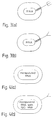
- Figure 1 shows (a) an unmodified (i.e. "naive") virus or virus-like particle able to bind to and infect its host cell but not a non-host cell, such as a target cell; and (b) a virus or virus-like particle with a modified binding specificity does not bind and infect its host cell but binds and infects a target cell; and (c) a virus or virus-like particle as in (b) modified further to contain a gene for gene therapy or cancer treatment.
- an unmodified virus or virus-like particle able to bind to and infect its host cell but not a non-host cell, such as a target cell
- a virus or virus-like particle with a modified binding specificity does not bind and infect its host cell but binds and infects a target cell
- a virus or virus-like particle as in (b) modified further to contain a gene for gene therapy or cancer treatment i.e. "naive virus or virus-like particle
- Figure 2 shows (a) unmodified (naive) adenovirus; (b) adenovirus modified so that its penton fibres, which recognise the host cell, are replaced in part by antibody fragments which recognise the target cell; and (c) adenovirus as in (b) with further genetic material added to the viral DNA for gene therapy of cancer.
- Figure 3 shows (a) influenza virus and (b) genetically-modified influenza virus wherein at least part of the haemagglutinin binding site is replaced by an antibody with anti-cancer cell binding activity.
- the virus shown in Figure 3 does not fall within the scope of the claims.
- Figure 4 shows (a) a retrovirus virus; and (b) as in (a) except the retrovirus has been modified further to express on its surface an anticancer cell-binding antibody fragment or an anticancer cell-binding peptide.
- the virus shown in Figure 4 does not fall within the scope of the claims.
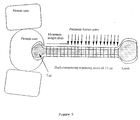
- Figure 5 is a diagrammatic representation of a penton fibre indicating potential fusion sites within the fibre.
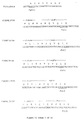
- Figure 6 shows fusions between the DNA encoding the Ad5 fibre and an ScFv.
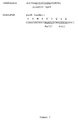
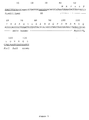
- Figure 7 shows sequences of oligonucleotides used for amplifying the ScFv. All oligonucleotides are presented 5' to 3', the reverse complement of FOR primers are shown and derived amino acid sequences are shown where relevant.
- Figure 8 shows the construction of plasmid pRAS117.
- Figure 9 shows the nucleotide and derived amino acid sequence between the Hin dIII and Eco RI sites of pRAS117.
- Figure 10 shows a map of plasmid pRAS117.
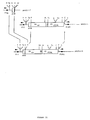
- Figure 11 is a diagrammatic representation of the construction of plasmid pRAS118.
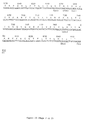
- Figure 12 shows the sequences of oligonucleotides for amplifying Ad5 fibre DNA fragments. All oligonucleotides are presented 5' ⁇ 3'. The reverse complements of FOR primers are shown. Derived amino acid sequences are shown where relevant.
- Figure 13 shows the nucleotide sequence and deduced amino acid sequence between the Hin dIII site and Eco RI site of pRAs111.
- Figure 14 gives a diagrammatic representation of constructing adenovirus carrying a cytotoxic gene.
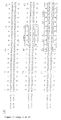
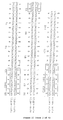
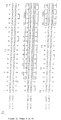
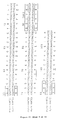
- Figure 15 gives the nucleotide and amino acid sequences of mouse and humanised HMFG1 variable regions.
- Example 1 Fusion sites within the adenovirus Ad5 fibre for binding moieties including single chain Fv (ScFv)
- Ad5 DNA sequence co-ordinates used here are taken from: ADRCOMPGE_1: residues 1 to 32760 and ADRCOMPGE_2: residues 32761-35935
- Ad5 fibre can also be found in Chroboczek, J. and Jacrot, B. (1987) "The sequence of adenovirus fiber: Similarities and differences between serotypes 2 and 5" Virology 161 , 549-554 and is available from the EMBL Database, Heidelberg, Germany under accession name ADEFIB.
- Fusion sequences between the shaft and the ScFv are shown in Fig. 6.
- the fusion sites are at the junctions of the repetitive units of the shaft.
- Shaft sequences are shown in normal typescript; ScFv sequences are shown in italics.
- the DNA sequence between the Pst I and Xho I sites is unique to the ScFv used.
- Fusion A is at the end of the first repetitive unit of the shaft (co-ordinates 31218-9), fusion B at the end of the second (31266-7), fusion C at the third (31323-4), fusion D at the fourth (31368-9), fusion E at the fifth (31413-4), fusion F at the sixth (31458-9), fusion G at the seventh (31503-4), fusion H at the eighth (31551-2), fusion I at the ninth (31596-7), fusion J at the tenth (31641-2), fusion K at the eleventh (31692-3), fusion L at the twelfth (31737-8), fusion M at the thirteenth (31787-8), fusion N at the fourteenth (31836-7), fusion O at the fifteenth (31884-5), fusion P at the sixteenth (31929-30), fusion Q at the seventeenth (31995-6), fusion R at the eighteenth (32040-1), fusion S at the nineteenth (32103-4), fusion T at the twentieth (32151-2), fusion U at the twenty-first (32
- Example 2 Preparation of adenovirus expressing an ScFv on its surface
- the genetically modified fibre is introduced into the Ad5 genome by: (a) replacing the fibre gene of plasmid pE4 with the modified fibre by standard recombinant DNA technology and (b) reconstituting the virus by recombination.
- pE4 is a plasmid containing the right hand half of the Ad5 genome, and which has served as the source of the Ad5 fibre gene that we have used. It was provided by Dr Keith Leppard, Biological Sciences, University of Warwick, Coventry, CV4 7AL who has supplied details of its structure. If it is introduced into mammalian cells that contain the remainder of the Ad5 genome, then it is possible to obtain recombinants containing the modification. Most human cell lines can be used for the recombination but HeLa cells are preferred.
- the plasmid pE4 is readily made in the following way.
- a derivative of pBR322 is made by digesting with Bst N1 and rejoining using Xho I linkers such that the Bst N1 fragment corresponding to positions; 442-2502 in the pBR322 sequence is removed.
- DNA from the adenovirus Ad5 strain 309 described by Jones & Shenk (1979) Cell 17 , 683-689 is isolated and deproteinated. This DNA is then ligated to Cla I linkers and cut with Eco RI and Cla I.
- the Cla I -Eco RI fragment corresponding to the region of 76% of the Ad5 genome to the right hand end is isolated and cloned into the EcoR I -Cla I sites of the above-mentioned pBR322 derivative to form pE4.
- Adenovirus Type 5 and HeLa cells are available from the American Type Culture Collection, 12301 Packlawn Drive, Rockville, MD 20852-1776, USA under accession numbers ATCC VR-5 and ATCC CCL-2.
- Oligonucleotide primers LEADHBACK and LEADbFOR ( Figure 7) were used for PCR-mediated amplification of the DNA segment extending from the Hin dIII site of plasmid pRAS111, over the Shine-Dalgarno sequence and the pel B leader sequence to the Pst I site in the ScFv.
- LEADbFOR directs the incorporation of a Bgl II site immediately after the pel B leader sequence.
- DNA (100 ng) from plasmid pRASlll was subjected to 24 rounds of amplification, (94°C, 1 min; 65°C, 1.5 min and 72°C, 2 min) in a 50 ⁇ l reaction volume containing 25 pmol of each primer, 250 mM of each dNTP, 67 mM Tris-HCl (pH 8.8), 17 mM (NH 4 ) 2 SO 4 , 1.5 mM MgCl 2 , 200 mg.ml -1 gelatine and 5 units of Thermos aquaticus (Taq) polymerase (Cetus) overlaid with 25 ⁇ l paraffin oil. After the reaction, oil was removed by extraction with 500 ⁇ l chloroform.
- the sample was loaded on a 2% agarose gel, and the amplified fragment was electrophoresed on to a piece of NA45 paper (Schleicher and Schuell). Bound DNA was subsequently eluted by immersion in 400 ⁇ l 1M NaCI made in TE (10 mM Tris-HCl, pH 7.5, 1 mM EDTA) for 30 min at 70°C. To this was added 800 ⁇ l ethanol, and after incubation (2 h, - 20°C) the DNA was collected by centrifugation. The pellet was taken up in 50 ⁇ l T/E.
- One fifth (10 ⁇ l) of the purified amplified fragment was cut with the restriction enzymes HindIII and Pst I, in a total volume of 20 ⁇ l 50 inM Tris-HCl, pH 7.5, 10 MgC12, 100 mM NaCl, 1 mM dithioerythreitol containing 10 units of each enzyme. After incubation (1 h, 37°C) the reaction was stopped by incubation at 70°C for 15 minutes.
- the trimmed amplified fragment was cloned between the Hin dIII and Pst I sites of pUC8, to generate plasmid pRAS117.
- Plasmid pUC8 (1 ⁇ g) was cut with Hin dIII and Pst I, in a total volume of 20 ⁇ l 50 mM Tris-HCl, pH 7.5, 10 MgCl 2 , 100 mM NaCl, 1 mM dithioerythreitol containing 10 units of each enzyme. After incubation (1 h, 37°C) the reaction was stopped by incubation at 70°C for 15 minutes.
- the ligation reaction contained 1.5 ⁇ l of pUC8/ Hin dIII, Pst I and 3 ⁇ l of the amplified leader/ Hin dIII, Pst I in a total volume of 15 ⁇ l containing 70 mM Tris-HCl pH 7.5, 7 mM MgCl 2 , 0.7 mM rATP, 4 mM dithiothreitol, 0.5 mg.ml -1 BSA and 10 units of T4 DNA ligase. After incubation (2 h, at room temperature), the reaction was stopped by the addition of 1 ⁇ l 500 mM EDTA, pH 8.0 and 14 ⁇ l H 2 O.
- This ligation mix was used to transform E. coli.
- Nucleic acids were precipitated by addition of 720 ⁇ l cold (-20°C) isopropanol and centrifugation (14,000 x g, 10 min). After rinsing the pellets with ethanol and drying, DNA was solubilised in 60 ⁇ l TE containing 170 ⁇ g.ml -1 RNase A.
- the 130bp Hin dIII- Pst I fragment of pRAS117 was used to replace the corresponding fragment of pRAS111, to generate plasmid pRAS118.
- An aliquot (2 ⁇ g) of pRASlll DNA was cut with Hin dIII and Pst I in the conditions used previously, the large fragment was isolated by electrophoresis onto NA45 paper, as described previously, and the DNA was supended in 10 ⁇ l of TE.
- An aliquot (10 ⁇ l) of pRAS117 DNA was cut with Hin dIII and Pst I in the conditions used previously, and the small fragment was isolated by electrophoresis onto NA45 paper, as described previously, and the DNA was suspended in 10 ⁇ l of TE.
- the isolated pRAS111/ Hin dIII Pst I large fragment (1.5 ⁇ l) and the isolated pRAS117/ Hin dIII Pst I small fragment (3 ⁇ l) were mixed and ligated in the conditions previously described.
- Fragments of DNA from Ad5 fibre were amplified by PCR using oligonucleotide TAILbBACK and oligonucleotide FIBREPFOR, FIBRE3FOR, FIBRE6FOR, FIBRE9FOR, FIBRE12FOR, FIBRE15FOR, FIBRE18FOR, FIBRE21FOR or FIBRE22FOR. Oligonucleotide sequences can be found in Fig. 12.
- TAILdBACK directs the incorporation of a Bgl II site at the base of the fibre
- FIBREnFOR series primers direct the incorporation of a Pst I site at the junctions of repetitive shaft units 3-4 (FIBRE3FOR), 6-7 (FIBRE6FOR), 9-10 (FIBRE9FOR), 12-13 (FIBRE12FOR), 15-16 (FIBRE15FOR), 18-19 (FIBRE18FOR), 21-22 (FIBRE21FOR), between unit 22 and the knob (FIBRE22FOR) or at the end of the knob sequence (FIBREPFOR).
- the amplified segments of fibre are trimmed with Bgl II and Pst I and ligated between the Bgl II and Pst I sites of plasmid pRAS118. This gives a range of fusions under the transcriptional control of the T7 promoter. Colonies are recovered after transformation of a suitable E. coli strain, such as DH5, which does not permit expression of the fusions.
- Colonies containing candidates for fusion are identified by restriction digestion of their plasmid DNAs. These candidate DNAs are used to transform a suitable E. coli strain, such as BL21 (DE3), that contains a chromosomal insertion of T7 polymerase under lac control. In these cells, induction of expression of T7 polymerase using the gratuitous inducer IPTG causes expression of the fusion proteins. Soluble NIP-reactive material is identified in colonies with correctly assembled fusions. The DNA of these is identified and the NIP-reactive ScFv derived from pRAS111 are replaced with a cell-binding ScFv.
- Hin dIII site approximately half-way along the fibre gene. Fusions with long fibres also contain this Hin dIII site. The fusion is introduced at this site.
- virus particles expressing the ScFv on the penton fibre are cotransfected with plasmid pE4-ScFv and plasmid pFG173 as described in Mittal et al (1993) Virus Res. 28 , 67-90, incorporated herein by reference. Since neither pFG173 nor pE4-ScFv individually is able to generate virus progeny, on transfection of 293 cells viable virus progeny are only produced by in vivo recombination between these two plasmids resulting in rescue of the penton fibre-ScFv fusion into the Ad5 genome.
- 293 cells are human transformed primary embryonal cells available from the ATCC under accession number ATCC CRL 1573.
- the adenovirus particles made in this way express a NIP-binding ScFv on their surface.
- Such particles are useful in a two-step targeting approach wherein a target-cell specific binding moiety, such as those identified in Tables 1 and 2, are joined to NIP molecule and targeted to a cell. Once they have localized to the target cell within the patient, the adenovirus displaying NIP-binding ScFv is administered to the patient and binds to the NIP.
- Example 3 Insertion of a cytotoxic gene into the E3 region of adenovirus Ad5
- the cytotoxic coding sequences were first inserted into a cassette containing the SV40 early promoter and poly A addition sequences to give plasmid pTOX as shown in Figure 14.
- the plasmid pFG173 is constructed from pFG140, an infectious plasmid containing the Ad5 d1309 genome in circular form by inserting a kan r gene at the Eco RI site as 75.9 m.u. as described in Grahm (1984) EMBO J. 3, 2917-2922 and Mitall et al (1993) Virus Res. 28 , 67-90.
- Viral plaques obtained after cotransfection are isolated and expanded in 293 cells and viral DNA was analyzed on an agarose gel after digestion with Hin dIII. The structure of the desired Ad5-cytotoxic gene recombinant is verified by the presence of diagnostic fragments. One recombinant is plaque purified and used for further study.
- the plasmid pFG173 contains the entire Ad5 genome, except for a 3.2 kb sequence spontaneously deleted between m.u. 75.9-84.9. Plasmids pTOX and pFG173 were used for cotransfection of 293 cells to rescue, by in vivo recombination, the cytotoxic gene flanked by SV40 regulatory sequences in the E3 region of Ad5. The resulting Ad5-cytotoxic gene recombinant was named Ad5-TOX. The relative positions of Hin dIII and Xba I restriction sites of the Ad5-TOX genome are shown. The position and orientation of the SV40 promoter, the cytotoxic gene, and the SV40 polyadenylation signal are shown below. Solid bars: luciferase gene; open bars: SV40 promoter and SV40 polyadenylation signal; hatched bars: amp r and kan r genes.
- the cytotoxic gene is the cDNA for thymidine kinase.
- cytotoxic genes are inserted into the E3 region of Ad5 in an analogous manner.
- Example 4 Single chain Fv from the mouse monoclonal antibody HMFG1 and humanised monoclonal antibody Hu HMFG1
- Nucleotide and amino acid sequences of mouse and reshaped HMFG1 variable regions Nucleotide and amino acid sequences of mouse and reshaped HMFG1 variable regions.
- (b) mouse and reshaped light chain variable regions respectively (Mo V K -HMFG1 and Hu V K -HMFG1).
- Amino acids numbering and definition of the CDR and framework regions are from Kabat et al (1987) Sequences of Proteins of Immunological Interest, Edn 4, US Dept of Health and Human Services Public Health Service, NIH, Bethesda, MD 20892, USA.
- Nucleotide sequences encoding the V H and V L chains are readily derived from the amino acid sequence using the genetic code and an ScFv can be made from the sequences using the methods of Bird et al or Huston et al as described above. Key to Sequence Listing Name SEQ ID No .
Landscapes
- Health & Medical Sciences (AREA)
- Life Sciences & Earth Sciences (AREA)
- Chemical & Material Sciences (AREA)
- Genetics & Genomics (AREA)
- Organic Chemistry (AREA)
- Engineering & Computer Science (AREA)
- General Health & Medical Sciences (AREA)
- Biotechnology (AREA)
- Bioinformatics & Cheminformatics (AREA)
- Zoology (AREA)
- Wood Science & Technology (AREA)
- General Engineering & Computer Science (AREA)
- Biochemistry (AREA)
- Molecular Biology (AREA)
- Biomedical Technology (AREA)
- Biophysics (AREA)
- Medicinal Chemistry (AREA)
- Virology (AREA)
- Microbiology (AREA)
- Physics & Mathematics (AREA)
- Immunology (AREA)
- Proteomics, Peptides & Aminoacids (AREA)
- Plant Pathology (AREA)
- Animal Behavior & Ethology (AREA)
- Epidemiology (AREA)
- Pharmacology & Pharmacy (AREA)
- Public Health (AREA)
- Veterinary Medicine (AREA)
- Gastroenterology & Hepatology (AREA)
- Micro-Organisms Or Cultivation Processes Thereof (AREA)
- Medicines That Contain Protein Lipid Enzymes And Other Medicines (AREA)
- Peptides Or Proteins (AREA)
- Medicines Containing Material From Animals Or Micro-Organisms (AREA)
- Medicines Containing Antibodies Or Antigens For Use As Internal Diagnostic Agents (AREA)
- Pharmaceuticals Containing Other Organic And Inorganic Compounds (AREA)
Applications Claiming Priority (3)
| Application Number | Priority Date | Filing Date | Title |
|---|---|---|---|
| GB9223084 | 1992-11-04 | ||
| GB929223084A GB9223084D0 (en) | 1992-11-04 | 1992-11-04 | Compounds to target cells |
| EP93924692A EP0672158B1 (de) | 1992-11-04 | 1993-11-04 | Adenovirus mit genetischer Fusion des Penton Fibers zu einem Peptid das zu einer veränderten Bindungseigenschaft und Spezifität für Zielzellen führt |
Related Parent Applications (1)
| Application Number | Title | Priority Date | Filing Date |
|---|---|---|---|
| EP93924692A Division EP0672158B1 (de) | 1992-11-04 | 1993-11-04 | Adenovirus mit genetischer Fusion des Penton Fibers zu einem Peptid das zu einer veränderten Bindungseigenschaft und Spezifität für Zielzellen führt |
Publications (2)
| Publication Number | Publication Date |
|---|---|
| EP1038967A2 true EP1038967A2 (de) | 2000-09-27 |
| EP1038967A3 EP1038967A3 (de) | 2006-02-01 |
Family
ID=10724509
Family Applications (2)
| Application Number | Title | Priority Date | Filing Date |
|---|---|---|---|
| EP93924692A Revoked EP0672158B1 (de) | 1992-11-04 | 1993-11-04 | Adenovirus mit genetischer Fusion des Penton Fibers zu einem Peptid das zu einer veränderten Bindungseigenschaft und Spezifität für Zielzellen führt |
| EP00304480A Withdrawn EP1038967A3 (de) | 1992-11-04 | 1993-11-04 | Virus mit veränderten Bindungseigenschaften und Spezifität für Zieltellen |
Family Applications Before (1)
| Application Number | Title | Priority Date | Filing Date |
|---|---|---|---|
| EP93924692A Revoked EP0672158B1 (de) | 1992-11-04 | 1993-11-04 | Adenovirus mit genetischer Fusion des Penton Fibers zu einem Peptid das zu einer veränderten Bindungseigenschaft und Spezifität für Zielzellen führt |
Country Status (11)
| Country | Link |
|---|---|
| US (1) | US5885808A (de) |
| EP (2) | EP0672158B1 (de) |
| JP (1) | JPH08506239A (de) |
| AT (1) | ATE198769T1 (de) |
| DE (1) | DE69329879T2 (de) |
| DK (1) | DK0672158T3 (de) |
| ES (1) | ES2155074T3 (de) |
| GB (2) | GB9223084D0 (de) |
| GR (1) | GR3035728T3 (de) |
| PT (1) | PT672158E (de) |
| WO (1) | WO1994010323A1 (de) |
Families Citing this family (237)
| Publication number | Priority date | Publication date | Assignee | Title |
|---|---|---|---|---|
| US6410010B1 (en) | 1992-10-13 | 2002-06-25 | Board Of Regents, The University Of Texas System | Recombinant P53 adenovirus compositions |
| US5747469A (en) * | 1991-03-06 | 1998-05-05 | Board Of Regents, The University Of Texas System | Methods and compositions comprising DNA damaging agents and p53 |
| AU663702B2 (en) * | 1991-03-06 | 1995-10-19 | Board Of Regents, The University Of Texas System | Methods and compositions for the selective inhibition of gene expression |
| DE4311651A1 (de) * | 1993-04-08 | 1994-10-13 | Boehringer Ingelheim Int | Virus für den Transport von Fremd-DNA in höhere eukaryotische Zellen |
| FR2704234B1 (fr) * | 1993-04-22 | 1995-07-21 | Centre Nat Rech Scient | Virus recombinants, preparation et utilisation en therapie genique. |
| US5543328A (en) * | 1993-08-13 | 1996-08-06 | Genetic Therapy, Inc. | Adenoviruses having modified fiber proteins |
| US6312699B1 (en) * | 1994-03-28 | 2001-11-06 | Uab Research Foundation | Ligands added to adenovirus fiber |
| US7252989B1 (en) | 1994-04-04 | 2007-08-07 | Board Of Regents, The University Of Texas System | Adenovirus supervector system |
| GB9410922D0 (en) * | 1994-06-01 | 1994-07-20 | Townsend Alain R M | Vaccines |
| US6465253B1 (en) | 1994-09-08 | 2002-10-15 | Genvec, Inc. | Vectors and methods for gene transfer to cells |
| US5965541A (en) * | 1995-11-28 | 1999-10-12 | Genvec, Inc. | Vectors and methods for gene transfer to cells |
| US5962311A (en) * | 1994-09-08 | 1999-10-05 | Genvec, Inc. | Short-shafted adenoviral fiber and its use |
| US5559099A (en) * | 1994-09-08 | 1996-09-24 | Genvec, Inc. | Penton base protein and methods of using same |
| US5846782A (en) * | 1995-11-28 | 1998-12-08 | Genvec, Inc. | Targeting adenovirus with use of constrained peptide motifs |
| FR2724320B1 (fr) * | 1994-09-13 | 1996-12-20 | Transgene Sa | Nouvel implant pour le traitement des maladies acquises |
| AU780164B2 (en) * | 1994-09-13 | 2005-03-03 | Transgene S.A. | Novel implant and novel vector for the treatment of acquired diseases |
| US5518042A (en) * | 1994-09-16 | 1996-05-21 | Huyck Licensco, Inc. | Papermaker's forming fabric with additional cross machine direction locator and fiber supporting yarns |
| US5770442A (en) * | 1995-02-21 | 1998-06-23 | Cornell Research Foundation, Inc. | Chimeric adenoviral fiber protein and methods of using same |
| US6127525A (en) * | 1995-02-21 | 2000-10-03 | Cornell Research Foundation, Inc. | Chimeric adenoviral coat protein and methods of using same |
| US6783980B2 (en) | 1995-06-15 | 2004-08-31 | Crucell Holland B.V. | Packaging systems for human recombinant adenovirus to be used in gene therapy |
| US6379669B1 (en) * | 1995-08-04 | 2002-04-30 | Akhouri A. Sinha | Targeting of organs by immunoconjugates |
| WO1997018318A1 (fr) | 1995-11-13 | 1997-05-22 | Takara Shuzo Co., Ltd. | Procede d'introduction de genes dans des cellules cibles au moyen de retrovirus |
| JP3420586B2 (ja) * | 1995-11-28 | 2003-06-23 | ジェンベク、インコーポレイティッド | 細胞への遣伝子導入のためのベクターおよび方法 |
| US5871727A (en) * | 1995-12-08 | 1999-02-16 | Uab Research Foundation | Targeted adenovirus vectors |
| US20030027250A1 (en) * | 1995-12-15 | 2003-02-06 | Mitchell Lloyd G. | Methods and compositions for use in spliceosome mediated RNA trans-splicing |
| US20060088938A1 (en) * | 1995-12-15 | 2006-04-27 | Mitchell Lloyd G | Methods and compositions for use in spliceosome mediated RNA trans-splicing in plants |
| US20020193580A1 (en) * | 1995-12-15 | 2002-12-19 | Mitchell Lloyd G. | Methods and compositions for use in spliceosome mediated RNA trans-splicing |
| WO1997023608A1 (en) * | 1995-12-22 | 1997-07-03 | Chiron Corporation | Compositions and methods for targeting gene delivery vehicles using covalently bound targeting elements |
| AU2678097A (en) * | 1996-04-16 | 1997-11-07 | Immusol Incorporated | Targeted viral vectors |
| US5958892A (en) | 1996-07-30 | 1999-09-28 | Board Of Regents, The University Of Texas System | 2-methoxyestradiol-induced apoptosis in cancer cells |
| AU742018B2 (en) * | 1996-08-21 | 2001-12-13 | Genvec, Inc. | Alternatively targeted adenovirus |
| EP0973926A1 (de) * | 1997-03-14 | 2000-01-26 | Selective Genetics, Inc. | Adenovirale vektoren mit verändertem tropismus |
| EP2008664B1 (de) | 1997-04-10 | 2012-08-29 | University Of Southern California | Modifizierte Proteine zur Bindung extrazellulärer Matrixkomponenten |
| WO1998049195A1 (en) * | 1997-04-29 | 1998-11-05 | Universiteit Utrecht | Corona virus-like particles as tools for vaccination and therapy |
| GB9709421D0 (en) | 1997-05-10 | 1997-07-02 | Zeneca Ltd | Chemical compounds |
| US6004798A (en) * | 1997-05-14 | 1999-12-21 | University Of Southern California | Retroviral envelopes having modified hypervariable polyproline regions |
| NZ501140A (en) * | 1997-05-28 | 2001-07-27 | Genvec Inc | Adenoviral fiber trimer with reduced affinity for native cell surface receptors |
| WO1999006583A1 (en) * | 1997-07-31 | 1999-02-11 | University Of Pittsburgh Of The Commonwealth System Of Higher Education | Targeted hsv vectors |
| US20030125278A1 (en) * | 1997-08-13 | 2003-07-03 | Tang De-Chu C. | Immunization of animals by topical applications of a salmonella-based vector |
| US6716823B1 (en) | 1997-08-13 | 2004-04-06 | The Uab Research Foundation | Noninvasive genetic immunization, expression products therefrom, and uses thereof |
| US6706693B1 (en) | 1997-08-13 | 2004-03-16 | The Uab Research Foundation | Vaccination by topical application of genetic vectors |
| US6348450B1 (en) | 1997-08-13 | 2002-02-19 | The Uab Research Foundation | Noninvasive genetic immunization, expression products therefrom and uses thereof |
| US20030045492A1 (en) * | 1997-08-13 | 2003-03-06 | Tang De-Chu C. | Vaccination by topical application of recombinant vectors |
| EP1030684A4 (de) * | 1997-11-14 | 2004-09-15 | Euro Celtique Sa | Modifizierte antikörper mit verstärkter fähigkeit eine anti-idiotypische antwort auszulösen |
| EP1053013A4 (de) * | 1998-02-06 | 2004-12-22 | Uab Research Foundation | Adenovirus vektor enthaltend ein heterologes peptidepitop in der hi schleife des faserknopfes |
| US20050095231A1 (en) * | 1998-02-17 | 2005-05-05 | Curiel David T. | Modified adenovirus containing a fiber replacement protein |
| US6815200B1 (en) | 1998-02-17 | 2004-11-09 | The Uab Research Foundation | Modified adenovirus containing a fiber replacement protein |
| ATE342350T1 (de) * | 1998-02-17 | 2006-11-15 | Uab Research Foundation | Modifizierte adenoviren welche ein faserersatzprotein enthalten |
| WO1999047180A1 (en) * | 1998-03-20 | 1999-09-23 | Genzyme Corporation | Chimeric adenoviral vectors for targeted gene delivery |
| US7078483B2 (en) | 1998-04-29 | 2006-07-18 | University Of Southern California | Retroviral vectors including modified envelope escort proteins |
| AU4070499A (en) | 1998-04-30 | 1999-11-16 | Cornell Research Foundation Inc. | Adenoviral vectors with tandem fiber proteins |
| US20030017138A1 (en) | 1998-07-08 | 2003-01-23 | Menzo Havenga | Chimeric adenoviruses |
| US6455314B1 (en) | 1998-09-11 | 2002-09-24 | Genvec, Inc. | Alternatively targeted adenovirus |
| US6524571B1 (en) * | 1998-10-16 | 2003-02-25 | Anticancer, Inc. | Methioninase gene therapy for tumor treatment |
| US6303362B1 (en) * | 1998-11-19 | 2001-10-16 | The Board Of Trustees Of The Leland Stanford Junior University | Adenoviral vector and methods for making and using the same |
| US6929946B1 (en) | 1998-11-20 | 2005-08-16 | Crucell Holland B.V. | Gene delivery vectors provided with a tissue tropism for smooth muscle cells, and/or endothelial cells |
| US6380364B1 (en) * | 1998-11-23 | 2002-04-30 | Loyola University Of Chicago | Chimeric biotin-binding papillomavirus protein |
| JP2000279178A (ja) * | 1999-02-24 | 2000-10-10 | Japan Found Cancer Res | ウイルスベクター |
| US20040009936A1 (en) * | 1999-05-03 | 2004-01-15 | Tang De-Chu C. | Vaccine and drug delivery by topical application of vectors and vector extracts |
| US6913922B1 (en) | 1999-05-18 | 2005-07-05 | Crucell Holland B.V. | Serotype of adenovirus and uses thereof |
| US6492169B1 (en) | 1999-05-18 | 2002-12-10 | Crucell Holland, B.V. | Complementing cell lines |
| US20040014033A1 (en) * | 1999-06-30 | 2004-01-22 | Evotec Biosystems Ag, A Corporation Of Germany | Virus like particles, their preparation and their use preferably in pharmaceutical screening and functional genomics |
| US7476517B2 (en) | 1999-06-30 | 2009-01-13 | Evotec Ag | Virus like particles, their preparation and their use preferably in pharmaceutical screening and functional genomics |
| WO2001002551A2 (en) * | 1999-06-30 | 2001-01-11 | Evotec Oai Ag | Virus like particles, preparation and use in screening and functional genomics |
| US6461869B1 (en) * | 1999-07-20 | 2002-10-08 | Board Of Supervisors Of Louisiana State University And Agricultural And Mechanical College | Purging leukemia cells from hematopoietic stem cells |
| EP1220914A1 (de) * | 1999-09-16 | 2002-07-10 | Solvay Pharmaceuticals B.V. | Menschlicher, an ein g-protein gekoppelter rezeptor |
| DE1221490T1 (de) * | 1999-09-17 | 2003-05-28 | Tgt Lab S A De C V | Rekombinante, adenovirale vektoren und ihre verwendung zur behandlung von unterschiedlichen typen der leber-, nieren- und lungenfibrose und hypertrophischen narben |
| CA2386626A1 (en) * | 1999-10-15 | 2001-04-26 | Richard Murphy | Targeted vectors |
| GB0008966D0 (en) | 2000-04-13 | 2000-05-31 | Imp College Innovations Ltd | Vectors for gene therapy |
| US7348014B2 (en) | 2000-04-14 | 2008-03-25 | Transgene, S.A. | Poxvirus with targeted infection specificity |
| CA2341356C (en) * | 2000-04-14 | 2011-10-11 | Transgene S.A. | Poxvirus with targeted infection specificity |
| AU2001252766A1 (en) * | 2000-04-26 | 2001-11-07 | Crucell Holland B.V. | Adenovirus vectors with knobless fibers, and their uses |
| US6680172B1 (en) | 2000-05-16 | 2004-01-20 | Regents Of The University Of Michigan | Treatments and markers for cancers of the central nervous system |
| AU2001265154A1 (en) * | 2000-05-31 | 2001-12-11 | Genvec, Inc. | Method and composition for targeting an adenoviral vector |
| US6762031B2 (en) | 2000-06-16 | 2004-07-13 | University Of Medicine And Dentistry Of New Jersey | Targeting viral vectors to specific cells |
| GB0017720D0 (en) * | 2000-07-19 | 2000-09-06 | Got A Gene Ab | Modified virus |
| US6984522B2 (en) * | 2000-08-03 | 2006-01-10 | Regents Of The University Of Michigan | Isolation and use of solid tumor stem cells |
| US20080194022A1 (en) * | 2000-08-03 | 2008-08-14 | Clarke Michael F | Isolation and use of solid tumor stem cells |
| US8044259B2 (en) | 2000-08-03 | 2011-10-25 | The Regents Of The University Of Michigan | Determining the capability of a test compound to affect solid tumor stem cells |
| GB0019302D0 (en) * | 2000-08-08 | 2000-09-27 | Univ Nottingham Trent | Biological materials and the use thereof for the treatment of disease |
| DE60138403D1 (de) | 2000-09-26 | 2009-05-28 | Crucell Holland Bv | Adenovirale vektoren für die übertragung von genen in zellen der skelettmuskulatur oder myoblasten |
| JP4802401B2 (ja) * | 2000-11-07 | 2011-10-26 | トランスジェン・ソシエテ・アノニム | 標的化感染特異性を有するポックスウイルス |
| MXPA00011713A (es) * | 2000-11-28 | 2002-05-31 | Tgt Lab S A De C V | Vectores recombinantes virales y no virales conteniendo el gen humano del activador de plasminogeno derivado de urocinasa y su utilidad en el tratamiento de diversos tipos de fibrosis hepatica, renal, pulmonar, pancreatica, cardiaca y cicatrices hipe |
| AU2002216245A1 (en) | 2000-12-22 | 2002-07-08 | Synovis Limited | Methods of modulating toll-related receptor (trr) signaling |
| US20040126774A1 (en) * | 2001-01-08 | 2004-07-01 | Mitchell Lioyd G. | Correction of factor VIII genetic defects using spliceosome mediated RNA trans splicing |
| ATE527375T1 (de) | 2001-04-12 | 2011-10-15 | Imp Innovations Ltd | Diagnose und behandlung von brustkrebs mit scn5a |
| GB0111324D0 (en) | 2001-05-09 | 2001-07-04 | Unilever Plc | Ambient stable beverage |
| WO2002094318A1 (en) * | 2001-05-18 | 2002-11-28 | University Of Southern California | Vector for targeted delivery to cells |
| WO2003002746A2 (en) * | 2001-06-29 | 2003-01-09 | Novartis Ag | Perv screening method and use thereof |
| US7229774B2 (en) | 2001-08-02 | 2007-06-12 | Regents Of The University Of Michigan | Expression profile of prostate cancer |
| GB0119852D0 (en) * | 2001-08-15 | 2001-10-10 | Univ York | Baculovirus |
| EP1427816A4 (de) | 2001-09-18 | 2004-12-01 | Clontech Lab Inc | Auf stellenspezifischer rekombinase beruhendes verfahren zur herstellung von adenovirusvektoren |
| WO2003057916A2 (en) | 2002-01-09 | 2003-07-17 | Riken | Cancer profiles |
| US7399753B2 (en) * | 2002-02-25 | 2008-07-15 | Virxsys Corporation | Trans-splicing mediated photodynamic therapy |
| PL215165B1 (pl) | 2002-04-25 | 2013-10-31 | Crucell Holland Bv | Rekombinowany wektor adenowirusowy oraz sposób wytwarzania rekombinowanego wektora adenowirusowego |
| US7094399B2 (en) * | 2002-05-08 | 2006-08-22 | Intronn, Inc. | Use of spliceosome mediated RNA trans-splicing to confer cell selective replication to adenoviruses |
| EP1579004B1 (de) * | 2002-10-23 | 2010-06-16 | VIRxSYS Corporation | Screening-verfahren zur identifizierung wirksamer prä-trans-spleissmoleküle |
| US20040166091A1 (en) | 2003-02-24 | 2004-08-26 | Genvec, Inc. | Materials and methods for treating disorders of the ear |
| AU2004238979B2 (en) | 2003-05-14 | 2008-12-18 | Istituto Di Ricerche Di Biologia Molecolare P Angeletti Spa | Broadening adenovirus tropism |
| CA2528669A1 (en) * | 2003-06-09 | 2005-01-20 | The Regents Of The University Of Michigan | Compositions and methods for treating and diagnosing cancer |
| DE602004031681D1 (de) | 2003-07-21 | 2011-04-14 | Transgene Sa | Multifunktionelle Cytokine |
| ES2391975T3 (es) * | 2003-07-25 | 2012-12-03 | Genvec, Inc. | Vacunas a base de vector adenovírico |
| WO2005037856A2 (en) | 2003-10-15 | 2005-04-28 | Board Of Regents, The University Of Texas System | Multifunctional biomaterials as scaffolds for electronic, optical, magnetic, semiconducting, and biotechnological applications |
| AU2004282563A1 (en) * | 2003-10-15 | 2005-04-28 | Board Of Regents, The University Of Texas System | Viral fibers |
| EP2168603A1 (de) | 2003-11-14 | 2010-03-31 | GenVec, Inc. | Therapeutisches Programm zur Behandlung von Krebs |
| US7923109B2 (en) | 2004-01-05 | 2011-04-12 | Board Of Regents, The University Of Texas System | Inorganic nanowires |
| WO2005075506A1 (en) * | 2004-01-09 | 2005-08-18 | The Scripps Research Institute | Identification of endogenous trimerization domains in the adenovirus fiber protein that allow detargeting and retargeting of viral vectors |
| US7968334B2 (en) * | 2004-01-23 | 2011-06-28 | Virxsys Corporation | Expression of apoAI and variants thereof using spliceosome mediated RNA trans-splicing |
| AU2005207053A1 (en) * | 2004-01-23 | 2005-08-04 | Virxsys Corporation | Expression of ApoA-1 and variants thereof using spliceosome mediated RNA trans-splicing |
| WO2005070948A1 (en) * | 2004-01-23 | 2005-08-04 | Intronn, Inc. | Correction of alpha-1-antitrypsin genetic defects using spliceosome mediated rna trans splicing |
| CA2554779A1 (en) * | 2004-02-03 | 2005-08-18 | The Regents Of The University Of Michigan | Compositions and methods for characterizing, regulating, diagnosing, and treating cancer |
| JP2007532656A (ja) | 2004-04-12 | 2007-11-15 | アメリカ合衆国 | アデノウイルスベクターを用いて免疫応答を誘導するための方法 |
| JP2008505853A (ja) | 2004-04-13 | 2008-02-28 | クインテセンス バイオサイエンシーズ インコーポレーティッド | 細胞傷害性薬剤としての非天然のリボヌクレアーゼ複合体 |
| WO2006076027A2 (en) * | 2004-05-17 | 2006-07-20 | Cambrios Technology Corp. | Biofabrication of transistors including field effect transistors |
| US7858323B2 (en) | 2004-06-09 | 2010-12-28 | The Regents Of The University Of Michigan | Phage microarray profiling of the humoral response to disease |
| US20060094110A1 (en) * | 2004-07-30 | 2006-05-04 | Mcgarrity Gerard J | Use of spliceosome mediated RNA trans-splicing for immunotherapy |
| US20060134658A1 (en) * | 2004-08-09 | 2006-06-22 | Garcia-Blanco Mariano A | Use of RNA trans-splicing for generation of interfering RNA molecules |
| JP2008511336A (ja) * | 2004-09-01 | 2008-04-17 | アメリカ合衆国 | 免疫原性が増加したアデノウイルスベクターをインビボで用いる方法 |
| DE102004047492B4 (de) * | 2004-09-23 | 2006-07-20 | Jost-Werke Gmbh & Co. Kg | Verfahren zum Übertragen von elektrischer, pneumatischer oder hydraulischer Energie sowie ein Energieübertragungssystem |
| AU2005294265A1 (en) | 2004-10-06 | 2006-04-20 | University Of Rochester | Treatment of pulmonary hypertension using an agent that inhibits a tissue factor pathway |
| US7871795B2 (en) | 2004-10-08 | 2011-01-18 | Virxsys Corporation | Targeted trans-splicing of highly abundant transcripts for in vivo production of recombinant proteins |
| AU2005326784B2 (en) * | 2004-10-08 | 2012-03-15 | Virxsys Corporation | Use of RNA trans-splicing for antibody gene transfer and antibody polypeptide production |
| CA2593956A1 (en) | 2004-12-22 | 2006-06-29 | Lipopeptide Ab | Agents inhibiting the cathelin-like protein cap18/ll-37 |
| US8999944B2 (en) | 2005-01-20 | 2015-04-07 | University Of Rochester | Thioredoxin interacting protein (TXNIP) as regulator of vascular function |
| US7524510B2 (en) * | 2005-02-23 | 2009-04-28 | The Uab Research Foundation | Alkyl-glycoside enhanced vaccination |
| US20070099209A1 (en) * | 2005-06-13 | 2007-05-03 | The Regents Of The University Of Michigan | Compositions and methods for treating and diagnosing cancer |
| US20070105133A1 (en) * | 2005-06-13 | 2007-05-10 | The Regents Of The University Of Michigan | Compositions and methods for treating and diagnosing cancer |
| AU2006284756B2 (en) * | 2005-08-31 | 2012-06-07 | Genvec, Inc. | Adenoviral vector-based malaria vaccines |
| JP5512125B2 (ja) | 2005-09-12 | 2014-06-04 | ザ リージェンツ オブ ザ ユニバーシティ オブ ミシガン | 前立腺癌における再発性遺伝子融合 |
| WO2007047907A2 (en) * | 2005-10-14 | 2007-04-26 | The Regents Of The University Of Michigan | Dek protein compositions and methods of using the same |
| US7794951B2 (en) * | 2005-10-18 | 2010-09-14 | University Of Massachusetts Medical School | SREBP2gc transcription factors and uses thereof |
| US7723477B2 (en) | 2005-10-31 | 2010-05-25 | Oncomed Pharmaceuticals, Inc. | Compositions and methods for inhibiting Wnt-dependent solid tumor cell growth |
| US7723112B2 (en) | 2005-10-31 | 2010-05-25 | The Regents Of The University Of Michigan | Compositions and methods for treating and diagnosing cancer |
| EP2511298B1 (de) | 2005-10-31 | 2019-01-16 | Oncomed Pharmaceuticals, Inc. | Zusammensetzungen und Verfahren zur Behandlung von Krebs unter Verwendung von menschlichen FZD Rezeptoren |
| CA2629163C (en) * | 2005-11-10 | 2017-03-21 | Genvec, Inc. | Adenoviral vector-based foot-and-mouth disease vaccine |
| US9274108B2 (en) * | 2006-02-06 | 2016-03-01 | Massachusetts Institute Of Technology | Self-assembly of macromolecules on multilayered polymer surfaces |
| GB0607354D0 (en) | 2006-04-12 | 2006-05-24 | Bioinvent Int Ab | Agent, Composition And Method |
| US7393699B2 (en) | 2006-06-12 | 2008-07-01 | Tran Bao Q | NANO-electronics |
| US8840882B2 (en) * | 2006-06-23 | 2014-09-23 | Quintessence Biosciences, Inc. | Modified ribonucleases |
| US8298801B2 (en) | 2006-07-17 | 2012-10-30 | Quintessence Biosciences, Inc. | Methods and compositions for the treatment of cancer |
| WO2008030605A2 (en) * | 2006-09-08 | 2008-03-13 | The Regents Of The University Of Michigan | Herv group ii viruses in lymphoma and cancer |
| US20080248060A1 (en) * | 2007-01-09 | 2008-10-09 | Genvec, Inc. | Adenoviral vector-based malaria vaccines |
| WO2008092002A2 (en) | 2007-01-24 | 2008-07-31 | The Regents Of The University Of Michigan | Compositions and methods for treating and diagnosing pancreatic cancer |
| PE20081723A1 (es) | 2007-01-30 | 2008-12-14 | Transgene Sa | Vacuna contra el papilomavirus |
| US10745701B2 (en) | 2007-06-28 | 2020-08-18 | The Trustees Of Princeton University | Methods of identifying and treating poor-prognosis cancers |
| US20090324596A1 (en) * | 2008-06-30 | 2009-12-31 | The Trustees Of Princeton University | Methods of identifying and treating poor-prognosis cancers |
| CA2814246A1 (en) | 2007-07-06 | 2009-01-15 | The Regents Of The University Of Michigan | Solute carrier family 45 member 3 (slc45a3) and erg family gene fusions in prostate cancer |
| CA2695674A1 (en) | 2007-08-16 | 2009-02-26 | Metabolon, Inc. | Metabolomic profiling of prostate cancer |
| JP2010540681A (ja) * | 2007-10-08 | 2010-12-24 | クインテッセンス バイオサイエンシズ,インコーポレーテッド | リボヌクレアーゼに基づく治療のための組成物及び方法 |
| US8518884B2 (en) | 2008-04-25 | 2013-08-27 | Northwestern University | Methods for treating atrial or ventricular arrhythmias by administering a G-protein alpha inhibitor |
| US8193151B2 (en) * | 2008-04-25 | 2012-06-05 | Northwestern University | Methods for treating atrial or ventricular arrhythmias |
| JP2011523551A (ja) * | 2008-05-15 | 2011-08-18 | ザ・ユニヴァーシティ・オヴ・ノース・キャロライナ・アト・チャペル・ヒル | 血管形成の調節の新規ターゲット |
| CA2726990C (en) | 2008-06-04 | 2020-09-08 | Cellular Dynamics International, Inc. | Methods for the production of ips cells using extra-chromosomal vectors |
| TWI506037B (zh) | 2008-09-26 | 2015-11-01 | Oncomed Pharm Inc | 捲曲結合劑類及彼等之用途 |
| CN102227443B (zh) | 2008-10-01 | 2014-05-14 | 昆特森斯生物科学公司 | 治疗性核糖核酸酶 |
| CN102239249A (zh) | 2008-10-24 | 2011-11-09 | 威斯康星校友研究基金会 | 通过非病毒重编程获得的多潜能干细胞 |
| EP2382328A2 (de) | 2009-01-09 | 2011-11-02 | The Regents of the University of Michigan | Rezidivierende genfusionen bei krebs |
| WO2010085665A2 (en) | 2009-01-23 | 2010-07-29 | Cedars-Sinai Medical Center | Targeted delivery system |
| US8772238B2 (en) | 2009-03-18 | 2014-07-08 | The United States Of America, As Represented By The Secretary Of The Department Of Health And Human Services | Use of ixolaris, a tissue factor inhibitor, for the treatment of cancer |
| ES2385251B1 (es) | 2009-05-06 | 2013-05-06 | Fundació Privada Institut D'investigació Biomèdica De Bellvitge | Adenovirus oncolíticos para el tratamiento del cáncer. |
| CA2952805C (en) | 2009-06-05 | 2021-06-01 | Cellular Dynamics International, Inc. | Reprogramming t cells and hematopoietic cells |
| CA3239368A1 (en) | 2009-06-10 | 2010-12-16 | New York University | Immunological targeting of pathological tau proteins |
| GB0910620D0 (en) | 2009-06-19 | 2009-08-05 | Immunovia Ab | Agents and uses thereof |
| WO2011005849A1 (en) | 2009-07-08 | 2011-01-13 | Cellular Dynamics International, Inc. | Modified ips cells having a mutant form of human immunodeficiency virus (hiv) cellular entry gene |
| GB0912624D0 (en) | 2009-07-21 | 2009-08-26 | Imp Innovations Ltd | Methods |
| BR112012002628B1 (pt) | 2009-08-07 | 2021-09-08 | Transgene Sa | Composição imunogênica, molécula de ácido nucleico, vetor, partícula viral infecciosa, micro-organismo transgênico, composição, usos da composição imunogênica e kit de partes |
| WO2011025852A1 (en) | 2009-08-28 | 2011-03-03 | Cellular Dynamics International, Inc. | Identifying genetic variation in affected tissues |
| US9605844B2 (en) * | 2009-09-01 | 2017-03-28 | Cree, Inc. | Lighting device with heat dissipation elements |
| HUE028878T2 (en) | 2009-09-03 | 2017-01-30 | Cancer Res Tech Ltd | CLEC14A inhibitors |
| US20120219583A1 (en) | 2009-10-16 | 2012-08-30 | Los Alamos National Security, Llc | Nucleic acid sequences encoding expandable hiv mosaic proteins |
| CA2777552C (en) | 2009-10-19 | 2019-05-21 | Cellular Dynamics International, Inc. | Cardiomyocyte production |
| WO2011057254A2 (en) | 2009-11-09 | 2011-05-12 | The United States Of America, As Represented By The Secretary, Department Of Health And Human Services | Simian adenoviral vector-based vaccines |
| PH12012500908A1 (en) | 2009-11-09 | 2017-08-23 | Genvec Inc | Methods of propagating monkey adenoviral vectors |
| TWI535445B (zh) | 2010-01-12 | 2016-06-01 | 安可美德藥物股份有限公司 | Wnt拮抗劑及治療和篩選方法 |
| EP2547328B1 (de) * | 2010-02-11 | 2017-06-07 | Ecole Polytechnique Fédérale de Lausanne (EPFL) | Ccr7-liganden-verabreichung und co-verabreichung in einer immuntherapie |
| WO2011116209A2 (en) | 2010-03-17 | 2011-09-22 | The Regents Of The University Of Michigan | Using phage epitopes to profile the immune response |
| WO2011119524A1 (en) * | 2010-03-22 | 2011-09-29 | The University Of North Carolina At Chapel Hill | Novel targets for regulation of angiogenesis |
| WO2011123785A2 (en) | 2010-04-01 | 2011-10-06 | Oncomed Pharmaceuticals, Inc. | Frizzled-binding agents and uses thereof |
| GB201105584D0 (en) | 2011-04-01 | 2011-05-18 | Imp Innovations Ltd | Cancer methods |
| WO2011159684A2 (en) | 2010-06-15 | 2011-12-22 | Cellular Dynamics International, Inc. | Generation of induced pluripotent stem cells from small volumes of peripheral blood |
| EP2582792B1 (de) | 2010-06-18 | 2018-10-31 | FUJIFILM Cellular Dynamics, Inc. | Kardiomyozytenmedium mit dialysiertem serum |
| WO2011162733A1 (ru) * | 2010-06-23 | 2011-12-29 | Rozenfeld Vladislav | Антибактериальный и/или противогрибковый компонент, обладающий свойством специфически связываться с бактериями и/или грибами |
| WO2012006440A2 (en) | 2010-07-07 | 2012-01-12 | Cellular Dynamics International, Inc. | Endothelial cell production by programming |
| JP6017422B2 (ja) | 2010-08-10 | 2016-11-02 | エコール・ポリテクニーク・フェデラル・ドゥ・ローザンヌ(ウペエフエル)Ecole Polytechnique Federale de Lausanne (EPFL) | 赤血球結合療法 |
| US9517257B2 (en) | 2010-08-10 | 2016-12-13 | Ecole Polytechnique Federale De Lausanne (Epfl) | Erythrocyte-binding therapeutics |
| US9850296B2 (en) | 2010-08-10 | 2017-12-26 | Ecole Polytechnique Federale De Lausanne (Epfl) | Erythrocyte-binding therapeutics |
| WO2012021730A2 (en) | 2010-08-11 | 2012-02-16 | Genvec, Inc. | Respiratory syncytial virus (rsv) vaccine |
| WO2012083297A2 (en) | 2010-12-17 | 2012-06-21 | Genvec, Inc. | Adenoviral vectors with modified hexon regions |
| WO2012088041A1 (en) | 2010-12-20 | 2012-06-28 | Genvec, Inc. | Adenoviral vector-based dengue fever vaccine |
| EP2658567A4 (de) | 2010-12-28 | 2014-09-24 | Univ Rochester | Verfahren zur modifikation einer insulinsignalübertragung mittels biliverdinreduktase (bvr) und bvr-abgeleiteten peptiden |
| WO2012135621A2 (en) | 2011-03-30 | 2012-10-04 | Cellular Dynamics International. Inc | Priming of pluripotent stem cells for neural differentiation |
| WO2013001372A2 (en) | 2011-06-30 | 2013-01-03 | University Of Oslo | Methods and compositions for inhibition of activation of regulatory t cells |
| JP2014520792A (ja) | 2011-07-06 | 2014-08-25 | スィーケフス ソールラン ホーエフ | Egfr標的治療 |
| GB201115280D0 (en) | 2011-09-05 | 2011-10-19 | Alligator Bioscience Ab | Antibodies, uses and methods |
| EP3741384A1 (de) | 2011-09-07 | 2020-11-25 | Mount Sinai School Of Medicine | Ceramidase und zelldifferenzierung |
| BR112014010091B1 (pt) | 2011-10-27 | 2022-11-08 | Wellstat Ophthalmics Corporation | Ácido nucleico, vetor viral, preparação farmacêutica, uso destes, método para produção de uma proteína rdcvf, e método in vitro ou ex vivo de secreção de uma proteína rdcvf a partir de uma célula |
| WO2013079973A1 (en) | 2011-12-02 | 2013-06-06 | Di Cara Danielle Marie | Antibodies against hgf - receptor and uses |
| NZ722352A (en) | 2012-02-15 | 2022-05-27 | Ecole Polytechnique Fed Lausanne Epfl | Erythrocyte-binding therapeutics |
| RS65875B1 (sr) | 2012-03-30 | 2024-09-30 | Insulet Corp | Sredstvo za isporučivanje tečnosti sa alatom za transkutani pristup, mehanizmom za inserciju i praćenje nivoa glukoze u krvi za istovremenu upotrebu |
| WO2013181128A1 (en) | 2012-05-29 | 2013-12-05 | Genvec, Inc. | Modified serotype 28 adenoviral vectors |
| CA2881582A1 (en) | 2012-08-03 | 2014-02-06 | Cedars-Sinai Medical Center | Isolating traffic-enhancing mutants of drug delivery protein |
| WO2014063155A1 (en) | 2012-10-21 | 2014-04-24 | University Of Rochester | Thy1 (cd90) as a novel therapy to control adipose tissue accumulation |
| EP3587455A1 (de) | 2012-10-23 | 2020-01-01 | Emory University | Gm-csf- und il-4-konjugate, zusammensetzungen und zugehörige verfahren |
| EP2911691B1 (de) | 2012-10-23 | 2018-10-10 | OncoMed Pharmaceuticals, Inc. | Verfahren zur behandlung von neuroendokrinen tumoren mit wnt-pad-bindemitteln |
| AU2013362134B2 (en) | 2012-12-21 | 2018-07-05 | Sykehuset Sorlandet Hf | EGFR targeted therapy of neurological disorders and pain |
| JP2016510411A (ja) | 2013-02-04 | 2016-04-07 | オンコメッド ファーマシューティカルズ インコーポレイテッド | Wnt経路インヒビターによる処置の方法およびモニタリング |
| CN105229144A (zh) | 2013-02-22 | 2016-01-06 | 细胞动力学国际有限公司 | 通过组合的遗传工程和化学工程经由正向编程产生肝细胞 |
| US9168300B2 (en) | 2013-03-14 | 2015-10-27 | Oncomed Pharmaceuticals, Inc. | MET-binding agents and uses thereof |
| US10266807B2 (en) | 2013-04-03 | 2019-04-23 | FUJIFILM Cellular Dynamics, Inc. | Methods and compositions for culturing endoderm progenitor cells in suspension |
| WO2014176259A1 (en) | 2013-04-22 | 2014-10-30 | Icahn School Of Medicine At Mount Sinai | Mutations in pdgfrb and notch3 as causes of autosomal dominant infantile myofibromatosis |
| US10590459B2 (en) | 2013-12-20 | 2020-03-17 | The Regents Of The University Of California | Biomimetic virus-based colorimetric sensors |
| US10953101B2 (en) | 2014-02-21 | 2021-03-23 | École Polytechnique Fédérale De Lausanne (Epfl) | Glycotargeting therapeutics |
| US10946079B2 (en) | 2014-02-21 | 2021-03-16 | Ecole Polytechnique Federale De Lausanne | Glycotargeting therapeutics |
| US10046056B2 (en) | 2014-02-21 | 2018-08-14 | École Polytechnique Fédérale De Lausanne (Epfl) | Glycotargeting therapeutics |
| KR20240154672A (ko) | 2014-02-21 | 2024-10-25 | 에꼴 뽈리떼끄닉 뻬데랄 드 로잔느 (으뻬에프엘) | 글리코타겟팅 치료제 |
| DK3119881T3 (da) | 2014-03-21 | 2023-04-03 | Fujifilm Cellular Dynamics Inc | Production of midbrain dopaminergic neurons and methods for the use thereof |
| WO2015164228A1 (en) | 2014-04-21 | 2015-10-29 | Cellular Dynamics International, Inc. | Hepatocyte production via forward programming by combined genetic and chemical engineering |
| TWI710635B (zh) | 2014-10-09 | 2020-11-21 | 美商珍維克公司 | 編碼人類無調同源物-1(hath1)之腺病毒載體 |
| US10377801B2 (en) | 2015-11-04 | 2019-08-13 | Northwestern University | Amelioration of chronic kidney disease |
| EP3371211B1 (de) | 2015-11-04 | 2025-01-01 | Icahn School of Medicine at Mount Sinai | Rho-assoziierte proteinkinasehemmer zur behandlung von tumoren und krebs sowie identifizierung von kandidatenpatienten für solch eine behandlung |
| US10413665B2 (en) | 2015-11-25 | 2019-09-17 | Insulet Corporation | Wearable medication delivery device |
| WO2017189730A1 (en) | 2016-04-26 | 2017-11-02 | Icahn School Of Medicine At Mount Sinai | Treatment of hippo pathway mutant tumors and methods of identifying subjects as candidates for treatment |
| WO2018013509A1 (en) | 2016-07-11 | 2018-01-18 | Arizona Board Of Regents On Behalf Of The University Of Arizona | Compositions and methods for diagnosing and treating arrhythmias |
| CA3038968A1 (en) | 2016-09-30 | 2018-04-05 | Genvec, Inc. | Adenovectors for delivery of therapeutic genetic material into t cells |
| WO2018140630A1 (en) | 2017-01-25 | 2018-08-02 | Northwestern University | Autophagy inducers for treatment of cns conditions |
| US11045603B2 (en) | 2017-02-22 | 2021-06-29 | Insulet Corporation | Needle insertion mechanisms for drug containers |
| EP3638296A1 (de) | 2017-06-16 | 2020-04-22 | The University Of Chicago | Zusammensetzungen und verfahren zur herbeiführung einer immuntoleranz |
| EP3687600B1 (de) | 2017-09-26 | 2022-04-27 | Insulet Corporation | Nadelmechanismusmodul für wirkstofffreisetzungsvorrichtung |
| US11147931B2 (en) | 2017-11-17 | 2021-10-19 | Insulet Corporation | Drug delivery device with air and backflow elimination |
| US10815484B2 (en) | 2017-11-22 | 2020-10-27 | The Regents Of The University Of Michigan | Compositions and methods for treating cancer |
| SG11202011078VA (en) | 2018-05-09 | 2020-12-30 | Univ Chicago | Compositions and methods concerning immune tolerance |
| CN113710810A (zh) | 2019-02-21 | 2021-11-26 | 安利舒免疫溶瘤技术公司 | 溶瘤腺病毒载体和使用方法 |
| CN114981298B (zh) | 2019-12-12 | 2024-08-20 | 听治疗有限责任公司 | 用于预防和治疗听力损失的组合物和方法 |
| WO2022035863A1 (en) | 2020-08-11 | 2022-02-17 | Musculoskeletal Transplant Foundation | Method for treating cardiac conditions with placenta-derived compositions |
| KR20250044385A (ko) | 2022-08-04 | 2025-03-31 | 인슐렛 코포레이션 | 이중 저장조 및 고정 유체 포트를 갖는 펌프 기구 |
| US20240342313A1 (en) | 2023-03-30 | 2024-10-17 | Pharma Cinq, Llc | Vector encoding rod-derived cone viability factor and human igk signal sequence |
| WO2024233783A1 (en) | 2023-05-09 | 2024-11-14 | Cornell University | Expression cassette coding for vascular endothelial growth factor |
Family Cites Families (12)
| Publication number | Priority date | Publication date | Assignee | Title |
|---|---|---|---|---|
| EP0330661B1 (de) * | 1986-11-01 | 1994-01-12 | British Bio-Technology Limited | Fusionsproteine und -partikel |
| WO1990007936A1 (en) * | 1989-01-23 | 1990-07-26 | Chiron Corporation | Recombinant therapies for infection and hyperproliferative disorders |
| WO1990012087A1 (en) * | 1989-04-05 | 1990-10-18 | Novacell Corporation | Infectious targetted replication-defective virion |
| MY109299A (en) * | 1990-08-15 | 1996-12-31 | Virogenetics Corp | Recombinant pox virus encoding flaviviral structural proteins |
| CA2092323A1 (en) * | 1990-10-01 | 1992-04-02 | George Y. Wu | Targeting viruses and cells for selective internalization by cells |
| DE69131908T3 (de) * | 1991-02-19 | 2008-04-03 | Oxford Biomedica (Uk) Ltd. | Viruspartikel mit veraendertem wirtspektrum |
| GB9107631D0 (en) * | 1991-04-10 | 1991-05-29 | British Bio Technology | Proteinaceous particles |
| EP0592546B1 (de) * | 1991-06-14 | 2003-05-28 | Virogenetics Corporation | Rekombinanter hiv-spezifischer impfstoff aus poxviru |
| IL103059A0 (en) * | 1991-09-30 | 1993-02-21 | Boehringer Ingelheim Int | Conjugates for introducing nucleic acid into higher eucaryotic cells |
| SE503225C2 (sv) * | 1991-10-30 | 1996-04-22 | Leif Lindholm Konsult Ab | Virus-antikroppskomplex för införing av virus i mammalieceller |
| US5543328A (en) * | 1993-08-13 | 1996-08-06 | Genetic Therapy, Inc. | Adenoviruses having modified fiber proteins |
| US5559099A (en) * | 1994-09-08 | 1996-09-24 | Genvec, Inc. | Penton base protein and methods of using same |
-
1992
- 1992-11-04 GB GB929223084A patent/GB9223084D0/en active Pending
-
1993
- 1993-11-04 PT PT93924692T patent/PT672158E/pt unknown
- 1993-11-04 JP JP6510853A patent/JPH08506239A/ja active Pending
- 1993-11-04 EP EP93924692A patent/EP0672158B1/de not_active Revoked
- 1993-11-04 GB GB9508947A patent/GB2286593B/en not_active Expired - Fee Related
- 1993-11-04 DE DE69329879T patent/DE69329879T2/de not_active Revoked
- 1993-11-04 ES ES93924692T patent/ES2155074T3/es not_active Expired - Lifetime
- 1993-11-04 WO PCT/GB1993/002267 patent/WO1994010323A1/en not_active Ceased
- 1993-11-04 DK DK93924692T patent/DK0672158T3/da active
- 1993-11-04 US US08/428,257 patent/US5885808A/en not_active Expired - Fee Related
- 1993-11-04 EP EP00304480A patent/EP1038967A3/de not_active Withdrawn
- 1993-11-04 AT AT93924692T patent/ATE198769T1/de not_active IP Right Cessation
-
2001
- 2001-04-06 GR GR20010400580T patent/GR3035728T3/el not_active IP Right Cessation
Also Published As
| Publication number | Publication date |
|---|---|
| GR3035728T3 (en) | 2001-07-31 |
| US5885808A (en) | 1999-03-23 |
| DK0672158T3 (da) | 2001-01-29 |
| DE69329879D1 (de) | 2001-02-22 |
| GB2286593A (en) | 1995-08-23 |
| PT672158E (pt) | 2001-07-31 |
| JPH08506239A (ja) | 1996-07-09 |
| GB9508947D0 (en) | 1995-06-21 |
| EP0672158A1 (de) | 1995-09-20 |
| ES2155074T3 (es) | 2001-05-01 |
| WO1994010323A1 (en) | 1994-05-11 |
| GB2286593B (en) | 1997-01-15 |
| DE69329879T2 (de) | 2001-06-07 |
| GB9223084D0 (en) | 1992-12-16 |
| EP1038967A3 (de) | 2006-02-01 |
| ATE198769T1 (de) | 2001-02-15 |
| EP0672158B1 (de) | 2001-01-17 |
Similar Documents
| Publication | Publication Date | Title |
|---|---|---|
| EP0672158B1 (de) | Adenovirus mit genetischer Fusion des Penton Fibers zu einem Peptid das zu einer veränderten Bindungseigenschaft und Spezifität für Zielzellen führt | |
| ES2246533T3 (es) | Fibra adenovirica modificada y adenovirus dianas. | |
| Gomez-Navarro et al. | Gene therapy for cancer | |
| JP6639412B2 (ja) | アルブミン結合部分を含んでなるアデノウイルス | |
| CN105624193B (zh) | 重组载体 | |
| CN113456812B (zh) | 用于联合免疫治疗的方法和组合物 | |
| Roth et al. | Gene therapy for cancer: what have we done and where are we going? | |
| JP4350800B2 (ja) | 高キャパシティーアデノウイルスベクターの開発の促進に使用するためのパッケージング細胞系 | |
| US20080213220A1 (en) | Cancer-targeted viral vectors | |
| US8980282B2 (en) | Viruses | |
| JP2010509223A (ja) | 癌および他の疾患のための向病巣性標的化遺伝子送達系 | |
| US6555368B1 (en) | Capsid-modified recombinant adenovirus and methods of use | |
| JP4386971B2 (ja) | スプライシング配列を含んでなる組換えアデノウイルスベクター | |
| JP2002522090A (ja) | 抗体エンベロープ融合タンパク質および野生型エンベロープタンパク質を含有するレトロウイルスベクターを用いる細胞型特異的遺伝子移入 | |
| KR20220097440A (ko) | 변형된 캡시드 단백질을 갖는 바이러스 | |
| JP4080423B2 (ja) | アデノウイルスタンパク質ix、ならびにキャプシドアセンブリー、転写活性および核再組織化に関与するそのドメイン | |
| JP2009112314A (ja) | 疾患を処置するための方法および組成物 | |
| STUBENRAUCH et al. | Conjugation of an antibody Fv fragment to a virus coat protein: cell-specific targeting of recombinant polyoma-virus-like particles | |
| JP2003508057A (ja) | 改変アデノウイルスファイバーおよび用途 | |
| ES2249773T3 (es) | Nuevo implante y nuevo vector para el tratamiento de enfermedades adquiridas. | |
| Rocconi et al. | Targeted gene therapy for ovarian cancer | |
| CA2494245A1 (en) | Methods of making viral particles having a modified cell binding activity and uses thereof | |
| JP4508656B2 (ja) | 腫瘍を死滅させるための組成物および方法 | |
| US11970708B2 (en) | Gene therapy vector with minimizing recombination, recombinant retrovirus comprising the vector, and pharmaceutical composition for preventing or treating cancer comprising the recombinant retrovirus | |
| Kuroki et al. | Targeting of cancer gene therapy with antibodies or their genes against tumor-associated antigens |
Legal Events
| Date | Code | Title | Description |
|---|---|---|---|
| PUAI | Public reference made under article 153(3) epc to a published international application that has entered the european phase |
Free format text: ORIGINAL CODE: 0009012 |
|
| 17P | Request for examination filed |
Effective date: 20000608 |
|
| AC | Divisional application: reference to earlier application |
Ref document number: 672158 Country of ref document: EP |
|
| AK | Designated contracting states |
Kind code of ref document: A2 Designated state(s): AT BE CH DE DK ES FR GB GR IE IT LI LU MC NL PT SE |
|
| PUAL | Search report despatched |
Free format text: ORIGINAL CODE: 0009013 |
|
| RIC1 | Information provided on ipc code assigned before grant |
Ipc: C07K 14/075 19950101ALI20051207BHEP Ipc: C12N 15/861 20000101ALI20051207BHEP Ipc: C12N 15/13 19900101ALI20051207BHEP Ipc: C12N 15/62 19900101ALI20051207BHEP Ipc: C12N 7/04 19800101ALI20051207BHEP Ipc: C12N 15/86 19900101ALI20051207BHEP Ipc: C12N 15/34 19900101ALI20051207BHEP Ipc: A61K 48/00 19900101ALI20051207BHEP Ipc: C12N 15/87 19900101AFI20000804BHEP |
|
| AK | Designated contracting states |
Kind code of ref document: A3 Designated state(s): AT BE CH DE DK ES FR GB GR IE IT LI LU MC NL PT SE |
|
| AKX | Designation fees paid |
Designated state(s): AT BE CH DE DK ES FR GB GR IE IT LI LU MC NL PT SE |
|
| 17Q | First examination report despatched |
Effective date: 20060913 |
|
| 17Q | First examination report despatched |
Effective date: 20060913 |
|
| STAA | Information on the status of an ep patent application or granted ep patent |
Free format text: STATUS: THE APPLICATION IS DEEMED TO BE WITHDRAWN |
|
| 18D | Application deemed to be withdrawn |
Effective date: 20080826 |