EP1044209B1 - Verfahren zur herstellung von 6-o-methylerythromycin a unter verwendung von 9-hydroxyerythromycinderativen - Google Patents
Verfahren zur herstellung von 6-o-methylerythromycin a unter verwendung von 9-hydroxyerythromycinderativen Download PDFInfo
- Publication number
- EP1044209B1 EP1044209B1 EP98959481A EP98959481A EP1044209B1 EP 1044209 B1 EP1044209 B1 EP 1044209B1 EP 98959481 A EP98959481 A EP 98959481A EP 98959481 A EP98959481 A EP 98959481A EP 1044209 B1 EP1044209 B1 EP 1044209B1
- Authority
- EP
- European Patent Office
- Prior art keywords
- erythromycin
- hydroxy
- protected
- methyl
- derivative
- Prior art date
- Legal status (The legal status is an assumption and is not a legal conclusion. Google has not performed a legal analysis and makes no representation as to the accuracy of the status listed.)
- Expired - Lifetime
Links
- 238000000034 method Methods 0.000 title claims abstract description 29
- 229960002626 clarithromycin Drugs 0.000 title claims abstract description 28
- AGOYDEPGAOXOCK-KCBOHYOISA-N clarithromycin Chemical compound O([C@@H]1[C@@H](C)C(=O)O[C@@H]([C@@]([C@H](O)[C@@H](C)C(=O)[C@H](C)C[C@](C)([C@H](O[C@H]2[C@@H]([C@H](C[C@@H](C)O2)N(C)C)O)[C@H]1C)OC)(C)O)CC)[C@H]1C[C@@](C)(OC)[C@@H](O)[C@H](C)O1 AGOYDEPGAOXOCK-KCBOHYOISA-N 0.000 title claims abstract description 27
- 230000008569 process Effects 0.000 title claims abstract description 19
- 238000002360 preparation method Methods 0.000 title claims description 8
- ULGZDMOVFRHVEP-RWJQBGPGSA-N Erythromycin Chemical compound O([C@@H]1[C@@H](C)C(=O)O[C@@H]([C@@]([C@H](O)[C@@H](C)C(=O)[C@H](C)C[C@@](C)(O)[C@H](O[C@H]2[C@@H]([C@H](C[C@@H](C)O2)N(C)C)O)[C@H]1C)(C)O)CC)[C@H]1C[C@@](C)(OC)[C@@H](O)[C@H](C)O1 ULGZDMOVFRHVEP-RWJQBGPGSA-N 0.000 claims abstract description 35
- 229960003276 erythromycin Drugs 0.000 claims abstract description 29
- 125000002887 hydroxy group Chemical group [H]O* 0.000 claims abstract description 19
- 229930006677 Erythromycin A Natural products 0.000 claims abstract description 18
- 230000001035 methylating effect Effects 0.000 claims abstract description 8
- 230000001590 oxidative effect Effects 0.000 claims abstract description 5
- 239000003153 chemical reaction reagent Substances 0.000 claims description 32
- 150000001875 compounds Chemical class 0.000 claims description 20
- 229910052739 hydrogen Inorganic materials 0.000 claims description 20
- 239000001257 hydrogen Substances 0.000 claims description 20
- 125000002496 methyl group Chemical group [H]C([H])([H])* 0.000 claims description 14
- 125000000217 alkyl group Chemical group 0.000 claims description 13
- 125000004435 hydrogen atom Chemical class [H]* 0.000 claims description 11
- 125000003118 aryl group Chemical group 0.000 claims description 10
- 125000003808 silyl group Chemical group [H][Si]([H])([H])[*] 0.000 claims description 9
- 125000004178 (C1-C4) alkyl group Chemical group 0.000 claims description 6
- 125000003545 alkoxy group Chemical group 0.000 claims description 5
- 125000000753 cycloalkyl group Chemical class 0.000 claims description 5
- 125000003107 substituted aryl group Chemical group 0.000 claims description 5
- 125000003342 alkenyl group Chemical class 0.000 claims description 4
- 125000004183 alkoxy alkyl group Chemical group 0.000 claims description 4
- 125000005415 substituted alkoxy group Chemical group 0.000 claims description 4
- 125000000547 substituted alkyl group Chemical group 0.000 claims description 4
- NKLCNNUWBJBICK-UHFFFAOYSA-N dess–martin periodinane Chemical group C1=CC=C2I(OC(=O)C)(OC(C)=O)(OC(C)=O)OC(=O)C2=C1 NKLCNNUWBJBICK-UHFFFAOYSA-N 0.000 claims description 3
- 150000004820 halides Chemical class 0.000 claims description 2
- JOXIMZWYDAKGHI-UHFFFAOYSA-N toluene-4-sulfonic acid Chemical group CC1=CC=C(S(O)(=O)=O)C=C1 JOXIMZWYDAKGHI-UHFFFAOYSA-N 0.000 claims description 2
- QAOWNCQODCNURD-UHFFFAOYSA-L sulfate group Chemical group S(=O)(=O)([O-])[O-] QAOWNCQODCNURD-UHFFFAOYSA-L 0.000 claims 1
- ZMANZCXQSJIPKH-UHFFFAOYSA-N Triethylamine Chemical compound CCN(CC)CC ZMANZCXQSJIPKH-UHFFFAOYSA-N 0.000 description 29
- WYURNTSHIVDZCO-UHFFFAOYSA-N Tetrahydrofuran Chemical compound C1CCOC1 WYURNTSHIVDZCO-UHFFFAOYSA-N 0.000 description 26
- -1 benzyloxycarbonyl (cbz) Chemical class 0.000 description 22
- WEVYAHXRMPXWCK-UHFFFAOYSA-N Acetonitrile Chemical compound CC#N WEVYAHXRMPXWCK-UHFFFAOYSA-N 0.000 description 20
- IAZDPXIOMUYVGZ-UHFFFAOYSA-N Dimethylsulphoxide Chemical compound CS(C)=O IAZDPXIOMUYVGZ-UHFFFAOYSA-N 0.000 description 18
- OKKJLVBELUTLKV-UHFFFAOYSA-N Methanol Chemical compound OC OKKJLVBELUTLKV-UHFFFAOYSA-N 0.000 description 18
- YMWUJEATGCHHMB-UHFFFAOYSA-N Dichloromethane Chemical compound ClCCl YMWUJEATGCHHMB-UHFFFAOYSA-N 0.000 description 17
- HEDRZPFGACZZDS-MICDWDOJSA-N Trichloro(2H)methane Chemical compound [2H]C(Cl)(Cl)Cl HEDRZPFGACZZDS-MICDWDOJSA-N 0.000 description 16
- 125000006239 protecting group Chemical group 0.000 description 15
- 238000003786 synthesis reaction Methods 0.000 description 15
- 239000000047 product Substances 0.000 description 14
- 239000000243 solution Substances 0.000 description 14
- YLQBMQCUIZJEEH-UHFFFAOYSA-N tetrahydrofuran Natural products C=1C=COC=1 YLQBMQCUIZJEEH-UHFFFAOYSA-N 0.000 description 13
- 230000015572 biosynthetic process Effects 0.000 description 12
- 239000000203 mixture Substances 0.000 description 12
- 239000002585 base Substances 0.000 description 10
- 238000007069 methylation reaction Methods 0.000 description 10
- CSCPPACGZOOCGX-UHFFFAOYSA-N Acetone Chemical compound CC(C)=O CSCPPACGZOOCGX-UHFFFAOYSA-N 0.000 description 9
- XEKOWRVHYACXOJ-UHFFFAOYSA-N Ethyl acetate Chemical compound CCOC(C)=O XEKOWRVHYACXOJ-UHFFFAOYSA-N 0.000 description 9
- VLKZOEOYAKHREP-UHFFFAOYSA-N n-Hexane Chemical compound CCCCCC VLKZOEOYAKHREP-UHFFFAOYSA-N 0.000 description 9
- SECXISVLQFMRJM-UHFFFAOYSA-N N-Methylpyrrolidone Chemical compound CN1CCCC1=O SECXISVLQFMRJM-UHFFFAOYSA-N 0.000 description 8
- JUJWROOIHBZHMG-UHFFFAOYSA-N Pyridine Chemical compound C1=CC=NC=C1 JUJWROOIHBZHMG-UHFFFAOYSA-N 0.000 description 8
- QTBSBXVTEAMEQO-UHFFFAOYSA-N Acetic acid Chemical compound CC(O)=O QTBSBXVTEAMEQO-UHFFFAOYSA-N 0.000 description 7
- ZMXDDKWLCZADIW-UHFFFAOYSA-N N,N-Dimethylformamide Chemical compound CN(C)C=O ZMXDDKWLCZADIW-UHFFFAOYSA-N 0.000 description 7
- PMZURENOXWZQFD-UHFFFAOYSA-L Sodium Sulfate Chemical compound [Na+].[Na+].[O-]S([O-])(=O)=O PMZURENOXWZQFD-UHFFFAOYSA-L 0.000 description 7
- 238000006243 chemical reaction Methods 0.000 description 7
- 230000011987 methylation Effects 0.000 description 7
- 239000012044 organic layer Substances 0.000 description 7
- 229910052938 sodium sulfate Inorganic materials 0.000 description 7
- MWBJRTBANFUBOX-SQYJNGITSA-N (3r,4s,5s,6r,7r,9r,10e,11s,12r,13s,14r)-6-[(2s,3r,4s,6r)-4-(dimethylamino)-3-hydroxy-6-methyloxan-2-yl]oxy-14-ethyl-12,13-dihydroxy-10-hydroxyimino-4-[(2r,4r,5s,6s)-5-hydroxy-4-methoxy-4,6-dimethyloxan-2-yl]oxy-7-methoxy-3,5,7,9,11,13-hexamethyl-oxacyclot Chemical compound O([C@@H]1[C@@H](C)C(=O)O[C@@H]([C@@]([C@H](O)[C@@H](C)C(=N/O)/[C@H](C)C[C@](C)([C@H](O[C@H]2[C@@H]([C@H](C[C@@H](C)O2)N(C)C)O)[C@H]1C)OC)(C)O)CC)[C@H]1C[C@@](C)(OC)[C@@H](O)[C@H](C)O1 MWBJRTBANFUBOX-SQYJNGITSA-N 0.000 description 6
- HZNVUJQVZSTENZ-UHFFFAOYSA-N 2,3-dichloro-5,6-dicyano-1,4-benzoquinone Chemical compound ClC1=C(Cl)C(=O)C(C#N)=C(C#N)C1=O HZNVUJQVZSTENZ-UHFFFAOYSA-N 0.000 description 6
- XTHFKEDIFFGKHM-UHFFFAOYSA-N Dimethoxyethane Chemical compound COCCOC XTHFKEDIFFGKHM-UHFFFAOYSA-N 0.000 description 6
- JRNVZBWKYDBUCA-UHFFFAOYSA-N N-chlorosuccinimide Chemical compound ClN1C(=O)CCC1=O JRNVZBWKYDBUCA-UHFFFAOYSA-N 0.000 description 6
- KRKNYBCHXYNGOX-UHFFFAOYSA-N citric acid Chemical compound OC(=O)CC(O)(C(O)=O)CC(O)=O KRKNYBCHXYNGOX-UHFFFAOYSA-N 0.000 description 6
- 150000002431 hydrogen Chemical class 0.000 description 6
- RAXXELZNTBOGNW-UHFFFAOYSA-N imidazole Natural products C1=CNC=N1 RAXXELZNTBOGNW-UHFFFAOYSA-N 0.000 description 6
- 239000011541 reaction mixture Substances 0.000 description 6
- 230000009467 reduction Effects 0.000 description 6
- 239000012279 sodium borohydride Substances 0.000 description 6
- 229910000033 sodium borohydride Inorganic materials 0.000 description 6
- 125000000026 trimethylsilyl group Chemical group [H]C([H])([H])[Si]([*])(C([H])([H])[H])C([H])([H])[H] 0.000 description 6
- WFDIJRYMOXRFFG-UHFFFAOYSA-N Acetic anhydride Chemical compound CC(=O)OC(C)=O WFDIJRYMOXRFFG-UHFFFAOYSA-N 0.000 description 5
- 239000007832 Na2SO4 Substances 0.000 description 5
- UIIMBOGNXHQVGW-UHFFFAOYSA-M Sodium bicarbonate Chemical compound [Na+].OC([O-])=O UIIMBOGNXHQVGW-UHFFFAOYSA-M 0.000 description 5
- FFUAGWLWBBFQJT-UHFFFAOYSA-N hexamethyldisilazane Chemical compound C[Si](C)(C)N[Si](C)(C)C FFUAGWLWBBFQJT-UHFFFAOYSA-N 0.000 description 5
- 230000003647 oxidation Effects 0.000 description 5
- 238000007254 oxidation reaction Methods 0.000 description 5
- 239000007787 solid Substances 0.000 description 5
- 239000002904 solvent Substances 0.000 description 5
- LHJCZOXMCGQVDQ-UHFFFAOYSA-N tri(propan-2-yl)silyl trifluoromethanesulfonate Chemical compound CC(C)[Si](C(C)C)(C(C)C)OS(=O)(=O)C(F)(F)F LHJCZOXMCGQVDQ-UHFFFAOYSA-N 0.000 description 5
- GZUXJHMPEANEGY-UHFFFAOYSA-N bromomethane Chemical compound BrC GZUXJHMPEANEGY-UHFFFAOYSA-N 0.000 description 4
- GNOIPBMMFNIUFM-UHFFFAOYSA-N hexamethylphosphoric triamide Chemical compound CN(C)P(=O)(N(C)C)N(C)C GNOIPBMMFNIUFM-UHFFFAOYSA-N 0.000 description 4
- 239000000543 intermediate Substances 0.000 description 4
- BDAGIHXWWSANSR-UHFFFAOYSA-N methanoic acid Natural products OC=O BDAGIHXWWSANSR-UHFFFAOYSA-N 0.000 description 4
- 125000000956 methoxy group Chemical group [H]C([H])([H])O* 0.000 description 4
- NROKBHXJSPEDAR-UHFFFAOYSA-M potassium fluoride Chemical compound [F-].[K+] NROKBHXJSPEDAR-UHFFFAOYSA-M 0.000 description 4
- UMJSCPRVCHMLSP-UHFFFAOYSA-N pyridine Natural products COC1=CC=CN=C1 UMJSCPRVCHMLSP-UHFFFAOYSA-N 0.000 description 4
- 125000000999 tert-butyl group Chemical group [H]C([H])([H])C(*)(C([H])([H])[H])C([H])([H])[H] 0.000 description 4
- FPGGTKZVZWFYPV-UHFFFAOYSA-M tetrabutylammonium fluoride Chemical compound [F-].CCCC[N+](CCCC)(CCCC)CCCC FPGGTKZVZWFYPV-UHFFFAOYSA-M 0.000 description 4
- 239000004215 Carbon black (E152) Substances 0.000 description 3
- RTZKZFJDLAIYFH-UHFFFAOYSA-N Diethyl ether Chemical compound CCOCC RTZKZFJDLAIYFH-UHFFFAOYSA-N 0.000 description 3
- UFHFLCQGNIYNRP-UHFFFAOYSA-N Hydrogen Chemical compound [H][H] UFHFLCQGNIYNRP-UHFFFAOYSA-N 0.000 description 3
- KFZMGEQAYNKOFK-UHFFFAOYSA-N Isopropanol Chemical compound CC(C)O KFZMGEQAYNKOFK-UHFFFAOYSA-N 0.000 description 3
- KWYUFKZDYYNOTN-UHFFFAOYSA-M Potassium hydroxide Chemical compound [OH-].[K+] KWYUFKZDYYNOTN-UHFFFAOYSA-M 0.000 description 3
- CDBYLPFSWZWCQE-UHFFFAOYSA-L Sodium Carbonate Chemical compound [Na+].[Na+].[O-]C([O-])=O CDBYLPFSWZWCQE-UHFFFAOYSA-L 0.000 description 3
- HEMHJVSKTPXQMS-UHFFFAOYSA-M Sodium hydroxide Chemical compound [OH-].[Na+] HEMHJVSKTPXQMS-UHFFFAOYSA-M 0.000 description 3
- 125000001584 benzyloxycarbonyl group Chemical group C(=O)(OCC1=CC=CC=C1)* 0.000 description 3
- 229940093499 ethyl acetate Drugs 0.000 description 3
- 235000019439 ethyl acetate Nutrition 0.000 description 3
- 239000012467 final product Substances 0.000 description 3
- 239000006260 foam Substances 0.000 description 3
- 229930195733 hydrocarbon Natural products 0.000 description 3
- 125000001997 phenyl group Chemical group [H]C1=C([H])C([H])=C(*)C([H])=C1[H] 0.000 description 3
- 239000003880 polar aprotic solvent Substances 0.000 description 3
- 150000003839 salts Chemical group 0.000 description 3
- 239000007858 starting material Substances 0.000 description 3
- MEKOFIRRDATTAG-UHFFFAOYSA-N 2,2,5,8-tetramethyl-3,4-dihydrochromen-6-ol Chemical compound C1CC(C)(C)OC2=C1C(C)=C(O)C=C2C MEKOFIRRDATTAG-UHFFFAOYSA-N 0.000 description 2
- OSWFIVFLDKOXQC-UHFFFAOYSA-N 4-(3-methoxyphenyl)aniline Chemical compound COC1=CC=CC(C=2C=CC(N)=CC=2)=C1 OSWFIVFLDKOXQC-UHFFFAOYSA-N 0.000 description 2
- LFQSCWFLJHTTHZ-UHFFFAOYSA-N Ethanol Chemical compound CCO LFQSCWFLJHTTHZ-UHFFFAOYSA-N 0.000 description 2
- KRHYYFGTRYWZRS-UHFFFAOYSA-N Fluorane Chemical compound F KRHYYFGTRYWZRS-UHFFFAOYSA-N 0.000 description 2
- 239000012448 Lithium borohydride Substances 0.000 description 2
- KDLHZDBZIXYQEI-UHFFFAOYSA-N Palladium Chemical compound [Pd] KDLHZDBZIXYQEI-UHFFFAOYSA-N 0.000 description 2
- ZLMJMSJWJFRBEC-UHFFFAOYSA-N Potassium Chemical compound [K] ZLMJMSJWJFRBEC-UHFFFAOYSA-N 0.000 description 2
- GSEJCLTVZPLZKY-UHFFFAOYSA-N Triethanolamine Chemical compound OCCN(CCO)CCO GSEJCLTVZPLZKY-UHFFFAOYSA-N 0.000 description 2
- 125000002777 acetyl group Chemical group [H]C([H])([H])C(*)=O 0.000 description 2
- 239000002253 acid Substances 0.000 description 2
- 229910052783 alkali metal Inorganic materials 0.000 description 2
- 150000001340 alkali metals Chemical class 0.000 description 2
- 150000008064 anhydrides Chemical class 0.000 description 2
- 125000001797 benzyl group Chemical group [H]C1=C([H])C([H])=C(C([H])=C1[H])C([H])([H])* 0.000 description 2
- 239000012267 brine Substances 0.000 description 2
- 125000004432 carbon atom Chemical group C* 0.000 description 2
- 239000003795 chemical substances by application Substances 0.000 description 2
- 239000013058 crude material Substances 0.000 description 2
- 238000010511 deprotection reaction Methods 0.000 description 2
- HPNMFZURTQLUMO-UHFFFAOYSA-N diethylamine Chemical compound CCNCC HPNMFZURTQLUMO-UHFFFAOYSA-N 0.000 description 2
- VAYGXNSJCAHWJZ-UHFFFAOYSA-N dimethyl sulfate Chemical compound COS(=O)(=O)OC VAYGXNSJCAHWJZ-UHFFFAOYSA-N 0.000 description 2
- 235000019253 formic acid Nutrition 0.000 description 2
- 125000000524 functional group Chemical group 0.000 description 2
- 229910000040 hydrogen fluoride Inorganic materials 0.000 description 2
- INQOMBQAUSQDDS-UHFFFAOYSA-N iodomethane Chemical compound IC INQOMBQAUSQDDS-UHFFFAOYSA-N 0.000 description 2
- 125000001449 isopropyl group Chemical group [H]C([H])([H])C([H])(*)C([H])([H])[H] 0.000 description 2
- 150000002576 ketones Chemical class 0.000 description 2
- 239000010410 layer Substances 0.000 description 2
- VUQUOGPMUUJORT-UHFFFAOYSA-N methyl 4-methylbenzenesulfonate Chemical compound COS(=O)(=O)C1=CC=C(C)C=C1 VUQUOGPMUUJORT-UHFFFAOYSA-N 0.000 description 2
- 229940102396 methyl bromide Drugs 0.000 description 2
- 150000007530 organic bases Chemical class 0.000 description 2
- CTSLXHKWHWQRSH-UHFFFAOYSA-N oxalyl chloride Chemical compound ClC(=O)C(Cl)=O CTSLXHKWHWQRSH-UHFFFAOYSA-N 0.000 description 2
- 150000002923 oximes Chemical class 0.000 description 2
- 229920001467 poly(styrenesulfonates) Polymers 0.000 description 2
- 239000011591 potassium Substances 0.000 description 2
- 229910052700 potassium Inorganic materials 0.000 description 2
- BWHMMNNQKKPAPP-UHFFFAOYSA-L potassium carbonate Chemical compound [K+].[K+].[O-]C([O-])=O BWHMMNNQKKPAPP-UHFFFAOYSA-L 0.000 description 2
- 239000011698 potassium fluoride Substances 0.000 description 2
- 235000003270 potassium fluoride Nutrition 0.000 description 2
- 239000011347 resin Substances 0.000 description 2
- 229920005989 resin Polymers 0.000 description 2
- 150000003333 secondary alcohols Chemical class 0.000 description 2
- 238000011935 selective methylation Methods 0.000 description 2
- 238000010898 silica gel chromatography Methods 0.000 description 2
- 229910000030 sodium bicarbonate Inorganic materials 0.000 description 2
- HRZFUMHJMZEROT-UHFFFAOYSA-L sodium disulfite Chemical compound [Na+].[Na+].[O-]S(=O)S([O-])(=O)=O HRZFUMHJMZEROT-UHFFFAOYSA-L 0.000 description 2
- 229910000104 sodium hydride Inorganic materials 0.000 description 2
- 235000011152 sodium sulphate Nutrition 0.000 description 2
- HPALAKNZSZLMCH-UHFFFAOYSA-M sodium;chloride;hydrate Chemical compound O.[Na+].[Cl-] HPALAKNZSZLMCH-UHFFFAOYSA-M 0.000 description 2
- 125000001424 substituent group Chemical group 0.000 description 2
- ILMRJRBKQSSXGY-UHFFFAOYSA-N tert-butyl(dimethyl)silicon Chemical group C[Si](C)C(C)(C)C ILMRJRBKQSSXGY-UHFFFAOYSA-N 0.000 description 2
- FYSNRJHAOHDILO-UHFFFAOYSA-N thionyl chloride Chemical compound ClS(Cl)=O FYSNRJHAOHDILO-UHFFFAOYSA-N 0.000 description 2
- ITMCEJHCFYSIIV-UHFFFAOYSA-M triflate Chemical compound [O-]S(=O)(=O)C(F)(F)F ITMCEJHCFYSIIV-UHFFFAOYSA-M 0.000 description 2
- 125000002221 trityl group Chemical group [H]C1=C([H])C([H])=C([H])C([H])=C1C([*])(C1=C(C(=C(C(=C1[H])[H])[H])[H])[H])C1=C([H])C([H])=C([H])C([H])=C1[H] 0.000 description 2
- XLYOFNOQVPJJNP-UHFFFAOYSA-N water Substances O XLYOFNOQVPJJNP-UHFFFAOYSA-N 0.000 description 2
- YJTKZCDBKVTVBY-UHFFFAOYSA-N 1,3-Diphenylbenzene Chemical group C1=CC=CC=C1C1=CC=CC(C=2C=CC=CC=2)=C1 YJTKZCDBKVTVBY-UHFFFAOYSA-N 0.000 description 1
- CYNYIHKIEHGYOZ-UHFFFAOYSA-N 1-bromopropane Chemical compound CCCBr CYNYIHKIEHGYOZ-UHFFFAOYSA-N 0.000 description 1
- 125000006420 1-fluorocyclopropyl group Chemical group [H]C1([H])C([H])([H])C1(F)* 0.000 description 1
- 125000000453 2,2,2-trichloroethyl group Chemical group [H]C([H])(*)C(Cl)(Cl)Cl 0.000 description 1
- HUHXLHLWASNVDB-UHFFFAOYSA-N 2-(oxan-2-yloxy)oxane Chemical class O1CCCCC1OC1OCCCC1 HUHXLHLWASNVDB-UHFFFAOYSA-N 0.000 description 1
- 125000003821 2-(trimethylsilyl)ethoxymethyl group Chemical group [H]C([H])([H])[Si](C([H])([H])[H])(C([H])([H])[H])C([H])([H])C(OC([H])([H])[*])([H])[H] 0.000 description 1
- NGNBDVOYPDDBFK-UHFFFAOYSA-N 2-[2,4-di(pentan-2-yl)phenoxy]acetyl chloride Chemical compound CCCC(C)C1=CC=C(OCC(Cl)=O)C(C(C)CCC)=C1 NGNBDVOYPDDBFK-UHFFFAOYSA-N 0.000 description 1
- 125000004172 4-methoxyphenyl group Chemical group [H]C1=C([H])C(OC([H])([H])[H])=C([H])C([H])=C1* 0.000 description 1
- QTBSBXVTEAMEQO-UHFFFAOYSA-M Acetate Chemical compound CC([O-])=O QTBSBXVTEAMEQO-UHFFFAOYSA-M 0.000 description 1
- CPELXLSAUQHCOX-UHFFFAOYSA-M Bromide Chemical compound [Br-] CPELXLSAUQHCOX-UHFFFAOYSA-M 0.000 description 1
- 0 CC[C@@](*C([C@](C)[C@]([C@@](C)C(*[C@]1[C@@](*)[C@@](CN)C[C@@](C)*1)[C@](C)(C[C@@](C)C(*)[C@](C)[C@]1O)O*)O[C@](C2)*[C@@](C)[C@@](*)[C@]2(C)OC)=O)[C@@]1(C)O* Chemical compound CC[C@@](*C([C@](C)[C@]([C@@](C)C(*[C@]1[C@@](*)[C@@](CN)C[C@@](C)*1)[C@](C)(C[C@@](C)C(*)[C@](C)[C@]1O)O*)O[C@](C2)*[C@@](C)[C@@](*)[C@]2(C)OC)=O)[C@@]1(C)O* 0.000 description 1
- VEXZGXHMUGYJMC-UHFFFAOYSA-M Chloride anion Chemical compound [Cl-] VEXZGXHMUGYJMC-UHFFFAOYSA-M 0.000 description 1
- 238000006646 Dess-Martin oxidation reaction Methods 0.000 description 1
- QMMFVYPAHWMCMS-UHFFFAOYSA-N Dimethyl sulfide Chemical compound CSC QMMFVYPAHWMCMS-UHFFFAOYSA-N 0.000 description 1
- PLUBXMRUUVWRLT-UHFFFAOYSA-N Ethyl methanesulfonate Chemical compound CCOS(C)(=O)=O PLUBXMRUUVWRLT-UHFFFAOYSA-N 0.000 description 1
- KRHYYFGTRYWZRS-UHFFFAOYSA-M Fluoride anion Chemical compound [F-] KRHYYFGTRYWZRS-UHFFFAOYSA-M 0.000 description 1
- DGAQECJNVWCQMB-PUAWFVPOSA-M Ilexoside XXIX Chemical compound C[C@@H]1CC[C@@]2(CC[C@@]3(C(=CC[C@H]4[C@]3(CC[C@@H]5[C@@]4(CC[C@@H](C5(C)C)OS(=O)(=O)[O-])C)C)[C@@H]2[C@]1(C)O)C)C(=O)O[C@H]6[C@@H]([C@H]([C@@H]([C@H](O6)CO)O)O)O.[Na+] DGAQECJNVWCQMB-PUAWFVPOSA-M 0.000 description 1
- 101100189356 Mus musculus Papolb gene Proteins 0.000 description 1
- 229910004879 Na2S2O5 Inorganic materials 0.000 description 1
- XBDQKXXYIPTUBI-UHFFFAOYSA-M Propionate Chemical compound CCC([O-])=O XBDQKXXYIPTUBI-UHFFFAOYSA-M 0.000 description 1
- CZPWVGJYEJSRLH-UHFFFAOYSA-N Pyrimidine Chemical compound C1=CN=CN=C1 CZPWVGJYEJSRLH-UHFFFAOYSA-N 0.000 description 1
- KEAYESYHFKHZAL-UHFFFAOYSA-N Sodium Chemical compound [Na] KEAYESYHFKHZAL-UHFFFAOYSA-N 0.000 description 1
- 238000006859 Swern oxidation reaction Methods 0.000 description 1
- HCHKCACWOHOZIP-UHFFFAOYSA-N Zinc Chemical compound [Zn] HCHKCACWOHOZIP-UHFFFAOYSA-N 0.000 description 1
- 230000000397 acetylating effect Effects 0.000 description 1
- 125000003158 alcohol group Chemical group 0.000 description 1
- 150000001350 alkyl halides Chemical class 0.000 description 1
- 230000002152 alkylating effect Effects 0.000 description 1
- 239000003242 anti bacterial agent Substances 0.000 description 1
- 150000004945 aromatic hydrocarbons Chemical class 0.000 description 1
- 150000001500 aryl chlorides Chemical class 0.000 description 1
- 125000005228 aryl sulfonate group Chemical group 0.000 description 1
- WPYMKLBDIGXBTP-UHFFFAOYSA-N benzoic acid Chemical compound OC(=O)C1=CC=CC=C1 WPYMKLBDIGXBTP-UHFFFAOYSA-N 0.000 description 1
- 230000003115 biocidal effect Effects 0.000 description 1
- RDHPKYGYEGBMSE-UHFFFAOYSA-N bromoethane Chemical compound CCBr RDHPKYGYEGBMSE-UHFFFAOYSA-N 0.000 description 1
- HQABUPZFAYXKJW-UHFFFAOYSA-N butan-1-amine Chemical compound CCCCN HQABUPZFAYXKJW-UHFFFAOYSA-N 0.000 description 1
- GCSVCUMDOQKEMT-UHFFFAOYSA-N butan-1-amine;hydrofluoride Chemical compound [H+].[F-].CCCCN GCSVCUMDOQKEMT-UHFFFAOYSA-N 0.000 description 1
- ICXXXLGATNSZAV-UHFFFAOYSA-N butylazanium;chloride Chemical compound [Cl-].CCCC[NH3+] ICXXXLGATNSZAV-UHFFFAOYSA-N 0.000 description 1
- 239000003054 catalyst Substances 0.000 description 1
- 239000003638 chemical reducing agent Substances 0.000 description 1
- IJOOHPMOJXWVHK-UHFFFAOYSA-N chlorotrimethylsilane Chemical compound C[Si](C)(C)Cl IJOOHPMOJXWVHK-UHFFFAOYSA-N 0.000 description 1
- ZCDOYSPFYFSLEW-UHFFFAOYSA-N chromate(2-) Chemical compound [O-][Cr]([O-])(=O)=O ZCDOYSPFYFSLEW-UHFFFAOYSA-N 0.000 description 1
- 238000001816 cooling Methods 0.000 description 1
- 125000001995 cyclobutyl group Chemical group [H]C1([H])C([H])([H])C([H])(*)C1([H])[H] 0.000 description 1
- 125000000582 cycloheptyl group Chemical group [H]C1([H])C([H])([H])C([H])([H])C([H])([H])C([H])(*)C([H])([H])C1([H])[H] 0.000 description 1
- 125000000113 cyclohexyl group Chemical group [H]C1([H])C([H])([H])C([H])([H])C([H])(*)C([H])([H])C1([H])[H] 0.000 description 1
- 125000001511 cyclopentyl group Chemical group [H]C1([H])C([H])([H])C([H])([H])C([H])(*)C1([H])[H] 0.000 description 1
- 125000001559 cyclopropyl group Chemical group [H]C1([H])C([H])([H])C1([H])* 0.000 description 1
- 239000012351 deprotecting agent Substances 0.000 description 1
- DENRZWYUOJLTMF-UHFFFAOYSA-N diethyl sulfate Chemical compound CCOS(=O)(=O)OCC DENRZWYUOJLTMF-UHFFFAOYSA-N 0.000 description 1
- 229940008406 diethyl sulfate Drugs 0.000 description 1
- JYCKNDWZDXGNBW-UHFFFAOYSA-N dipropyl sulfate Chemical compound CCCOS(=O)(=O)OCCC JYCKNDWZDXGNBW-UHFFFAOYSA-N 0.000 description 1
- KPUWHANPEXNPJT-UHFFFAOYSA-N disiloxane Chemical class [SiH3]O[SiH3] KPUWHANPEXNPJT-UHFFFAOYSA-N 0.000 description 1
- 238000001035 drying Methods 0.000 description 1
- 230000000694 effects Effects 0.000 description 1
- 238000010828 elution Methods 0.000 description 1
- 150000002148 esters Chemical class 0.000 description 1
- QQFBQBDINHJDMN-UHFFFAOYSA-N ethyl 2-trimethylsilylacetate Chemical compound CCOC(=O)C[Si](C)(C)C QQFBQBDINHJDMN-UHFFFAOYSA-N 0.000 description 1
- 125000001495 ethyl group Chemical group [H]C([H])([H])C([H])([H])* 0.000 description 1
- BLHLJVCOVBYQQS-UHFFFAOYSA-N ethyllithium Chemical compound [Li]CC BLHLJVCOVBYQQS-UHFFFAOYSA-N 0.000 description 1
- 238000001914 filtration Methods 0.000 description 1
- 229910052736 halogen Inorganic materials 0.000 description 1
- 125000005843 halogen group Chemical group 0.000 description 1
- 150000002367 halogens Chemical class 0.000 description 1
- UQEAIHBTYFGYIE-UHFFFAOYSA-N hexamethyldisiloxane Chemical compound C[Si](C)(C)O[Si](C)(C)C UQEAIHBTYFGYIE-UHFFFAOYSA-N 0.000 description 1
- XMBWDFGMSWQBCA-UHFFFAOYSA-N hydrogen iodide Chemical compound I XMBWDFGMSWQBCA-UHFFFAOYSA-N 0.000 description 1
- RCBVKBFIWMOMHF-UHFFFAOYSA-L hydroxy-(hydroxy(dioxo)chromio)oxy-dioxochromium;pyridine Chemical compound C1=CC=NC=C1.C1=CC=NC=C1.O[Cr](=O)(=O)O[Cr](O)(=O)=O RCBVKBFIWMOMHF-UHFFFAOYSA-L 0.000 description 1
- JMMWKPVZQRWMSS-UHFFFAOYSA-N isopropanol acetate Natural products CC(C)OC(C)=O JMMWKPVZQRWMSS-UHFFFAOYSA-N 0.000 description 1
- 229940011051 isopropyl acetate Drugs 0.000 description 1
- GWYFCOCPABKNJV-UHFFFAOYSA-N isovaleric acid Chemical compound CC(C)CC(O)=O GWYFCOCPABKNJV-UHFFFAOYSA-N 0.000 description 1
- 125000000468 ketone group Chemical group 0.000 description 1
- 239000003120 macrolide antibiotic agent Substances 0.000 description 1
- 238000004519 manufacturing process Methods 0.000 description 1
- 229910052987 metal hydride Inorganic materials 0.000 description 1
- 150000004681 metal hydrides Chemical class 0.000 description 1
- IZDROVVXIHRYMH-UHFFFAOYSA-N methanesulfonic anhydride Chemical compound CS(=O)(=O)OS(C)(=O)=O IZDROVVXIHRYMH-UHFFFAOYSA-N 0.000 description 1
- 125000004184 methoxymethyl group Chemical group [H]C([H])([H])OC([H])([H])* 0.000 description 1
- 150000005217 methyl ethers Chemical class 0.000 description 1
- 125000004108 n-butyl group Chemical group [H]C([H])([H])C([H])([H])C([H])([H])C([H])([H])* 0.000 description 1
- 125000004123 n-propyl group Chemical group [H]C([H])([H])C([H])([H])C([H])([H])* 0.000 description 1
- 125000001971 neopentyl group Chemical group [H]C([*])([H])C(C([H])([H])[H])(C([H])([H])[H])C([H])([H])[H] 0.000 description 1
- 230000007935 neutral effect Effects 0.000 description 1
- 230000000269 nucleophilic effect Effects 0.000 description 1
- 239000003960 organic solvent Substances 0.000 description 1
- 125000001181 organosilyl group Chemical group [SiH3]* 0.000 description 1
- 125000004430 oxygen atom Chemical group O* 0.000 description 1
- 125000003854 p-chlorophenyl group Chemical group [H]C1=C([H])C(*)=C([H])C([H])=C1Cl 0.000 description 1
- 125000000636 p-nitrophenyl group Chemical group [H]C1=C([H])C(=C([H])C([H])=C1*)[N+]([O-])=O 0.000 description 1
- 229910052763 palladium Inorganic materials 0.000 description 1
- 125000000286 phenylethyl group Chemical group [H]C1=C([H])C([H])=C(C([H])=C1[H])C([H])([H])C([H])([H])* 0.000 description 1
- UYWQUFXKFGHYNT-UHFFFAOYSA-N phenylmethyl ester of formic acid Natural products O=COCC1=CC=CC=C1 UYWQUFXKFGHYNT-UHFFFAOYSA-N 0.000 description 1
- 229920000642 polymer Polymers 0.000 description 1
- 229910000027 potassium carbonate Inorganic materials 0.000 description 1
- NTTOTNSKUYCDAV-UHFFFAOYSA-N potassium hydride Chemical compound [KH] NTTOTNSKUYCDAV-UHFFFAOYSA-N 0.000 description 1
- 229910000105 potassium hydride Inorganic materials 0.000 description 1
- CUQOHAYJWVTKDE-UHFFFAOYSA-N potassium;butan-1-olate Chemical compound [K+].CCCC[O-] CUQOHAYJWVTKDE-UHFFFAOYSA-N 0.000 description 1
- 230000003389 potentiating effect Effects 0.000 description 1
- 239000000843 powder Substances 0.000 description 1
- 125000001436 propyl group Chemical group [H]C([*])([H])C([H])([H])C([H])([H])[H] 0.000 description 1
- DKORSYDQYFVQNS-UHFFFAOYSA-N propyl methanesulfonate Chemical compound CCCOS(C)(=O)=O DKORSYDQYFVQNS-UHFFFAOYSA-N 0.000 description 1
- JUJWROOIHBZHMG-UHFFFAOYSA-O pyridinium Chemical compound C1=CC=[NH+]C=C1 JUJWROOIHBZHMG-UHFFFAOYSA-O 0.000 description 1
- 238000010791 quenching Methods 0.000 description 1
- 230000000171 quenching effect Effects 0.000 description 1
- 230000002829 reductive effect Effects 0.000 description 1
- 229920006395 saturated elastomer Polymers 0.000 description 1
- 125000002914 sec-butyl group Chemical group [H]C([H])([H])C([H])([H])C([H])(*)C([H])([H])[H] 0.000 description 1
- 229910052708 sodium Inorganic materials 0.000 description 1
- 239000011734 sodium Substances 0.000 description 1
- 229910000029 sodium carbonate Inorganic materials 0.000 description 1
- ZVCDLGYNFYZZOK-UHFFFAOYSA-M sodium cyanate Chemical compound [Na]OC#N ZVCDLGYNFYZZOK-UHFFFAOYSA-M 0.000 description 1
- 239000012312 sodium hydride Substances 0.000 description 1
- 235000010262 sodium metabisulphite Nutrition 0.000 description 1
- 238000010561 standard procedure Methods 0.000 description 1
- 238000003756 stirring Methods 0.000 description 1
- 230000004083 survival effect Effects 0.000 description 1
- 239000000725 suspension Substances 0.000 description 1
- 230000002194 synthesizing effect Effects 0.000 description 1
- NHGXDBSUJJNIRV-UHFFFAOYSA-M tetrabutylammonium chloride Substances [Cl-].CCCC[N+](CCCC)(CCCC)CCCC NHGXDBSUJJNIRV-UHFFFAOYSA-M 0.000 description 1
- 238000004448 titration Methods 0.000 description 1
- 230000009466 transformation Effects 0.000 description 1
- 125000000025 triisopropylsilyl group Chemical group C(C)(C)[Si](C(C)C)(C(C)C)* 0.000 description 1
- SIOVKLKJSOKLIF-HJWRWDBZSA-N trimethylsilyl (1z)-n-trimethylsilylethanimidate Chemical compound C[Si](C)(C)OC(/C)=N\[Si](C)(C)C SIOVKLKJSOKLIF-HJWRWDBZSA-N 0.000 description 1
- DGIJAZGPLFOQJE-UHFFFAOYSA-N trimethylsilyl n-trimethylsilylcarbamate Chemical compound C[Si](C)(C)NC(=O)O[Si](C)(C)C DGIJAZGPLFOQJE-UHFFFAOYSA-N 0.000 description 1
- 229910052725 zinc Inorganic materials 0.000 description 1
- 239000011701 zinc Substances 0.000 description 1
Classifications
-
- C—CHEMISTRY; METALLURGY
- C07—ORGANIC CHEMISTRY
- C07H—SUGARS; DERIVATIVES THEREOF; NUCLEOSIDES; NUCLEOTIDES; NUCLEIC ACIDS
- C07H1/00—Processes for the preparation of sugar derivatives
-
- C—CHEMISTRY; METALLURGY
- C07—ORGANIC CHEMISTRY
- C07H—SUGARS; DERIVATIVES THEREOF; NUCLEOSIDES; NUCLEOTIDES; NUCLEIC ACIDS
- C07H17/00—Compounds containing heterocyclic radicals directly attached to hetero atoms of saccharide radicals
- C07H17/04—Heterocyclic radicals containing only oxygen as ring hetero atoms
- C07H17/08—Hetero rings containing eight or more ring members, e.g. erythromycins
-
- A—HUMAN NECESSITIES
- A61—MEDICAL OR VETERINARY SCIENCE; HYGIENE
- A61P—SPECIFIC THERAPEUTIC ACTIVITY OF CHEMICAL COMPOUNDS OR MEDICINAL PREPARATIONS
- A61P31/00—Antiinfectives, i.e. antibiotics, antiseptics, chemotherapeutics
- A61P31/04—Antibacterial agents
Definitions
- the present invention relates to a novel process for the preparation of 6-O-methyl erythromycin A via 9-hydroxy erythromycin derivatives.
- 6-O-methyl erythromycin A is a potent macrolide useful as an antibiotic.
- the process of synthesizing 6-O-methyl erythromycin A poses many significant challenges.
- the starting material, erythromycin A is unstable and possesses many functional groups that require protection and deprotection during synthesis.
- Simple methylation of the 6-position of 2'- and 4"-protected erythromycin A derivatives commonly results in a mixture of methylation products. For this reason, it is difficult to develop an approach to 6-O-methyl erythromycin synthesis that allows for selective methylation at the 6-position and under reaction conditions that are compatible with the survival of erythromycin A.
- European Patent No. 0 272 110 discloses a process for making 6-O-methyl erythromycin A via a bis-TMS, 9-cyclohexyl ketal oxime.
- the ketal reagent is used in the presence of formic acid and in acetonitrile to form a protected 9-oxime-erythromycin A derivative.
- European Patent No. 0 180 415 discloses a process using 9-benzyl oxime derivatives to form the 6-O-methyl erythromycin product.
- a substituted aryl chloride reagent is used to protect the 9-oxime and removed with palladium catalyst and hydrogen after methylation of the 6-position.
- U.S. Patent No. 4,311,803 discloses preparation of 6-O-methyl erythromycin A involving protection of 2'-hydroxyl and 3'-dimethylamino groups.
- the process involves using benzyloxycarbonyl (cbz) for protection of the 2'-hydroxyl and 3'-dimethylamino groups.
- cbz benzyloxycarbonyl
- the 3'-dimethylamino group must be regenerated by reductive N-methylation after removal of the cbz protecting group.
- European Patent No. 0 195 960 discloses a process of synthesis for 6-O-methyl erythromycin A requiring a quaternary salt.
- An aryl chloride reacts with a 9-oxime derivative to form a quaternary salt.
- the salt is subsequently eliminated after 6-O-methylation.
- the present invention relates to a process for the preparation of 6-O-methyl erythromycin A. comprising:
- the 4"-hydroxyl group is optionally protected to form a 2',4"-protected erythromycin A derivative which is treated in accordance with steps (b) - (f).
- the present invention provides certain intermediates formed during a process of this invention.
- Such intermediates correspond to the structure below, wherein either:
- alkyl refers to saturated, straight or branched-chain hydrocarbon radicals containing between one and ten carbon atoms including, but not limited to, methyl, ethyl, propyl, isopropyl, n- butyl, tert -butyl and neopentyl. Preferably, alkyl is limited to 1-4 carbons.
- aryl refers to an aromatic hydrocarbon of 1-6 carbons, as for example benzyl, diphenylbenzyl, trityl and phenylethyl.
- alkoxy refers to a hydrocarbon radical which is joined to the rest of the molecule via an ether linkage ( i . e ., through an oxygen atom), as for example methoxy, ethoxy, butoxy, and the like.
- cycloalkyl refers to a saturated monocyclic hydrocarbon radical having from three to eight carbon atoms in the ring and optionally substituted with between one and three additional radicals selected from among lower alkyl, halo(lower alkyl), loweralkoxy, and halogen.
- cycloalkyl radicals include, but are not limited to, cyclopropyl, cyclobutyl, cyclopentyl, cyclohexyl, cycloheptyl, 1-fluoro-cyclopropyl, and 2-fluorocyclopropyl.
- deprotecting reagent refers to a reagent which reacts with a protecting group to remove the group used to protect hydroxy groups against undesirable reactions during synthesis of the desired final product.
- deprotecting agents include but are not limited to n -tetraburylammonium fluoride, acetic acid/THF/water, citric acid/methanol, Dowex resin/methanol, potassium carbonate/methanol, n -tetrabutylammonium chloride/potassium fluoride, hydrogen fluoride/acetonitrile.
- hydroxy-protecting group or "O-protecting group” as used herein refers to a substituent which protects hydroxyl functionalities against undesirable reactions during synthetic procedures such as those O-protecting groups disclosed in Greene, “Protective Groups in Organic Synthesis,” (John Wiley & Sons, New York (1981)).
- O-protecting groups comprise substituted methyl ethers, for example, methoxymethyl, benzyloxymethyl, 2-methoxyethoxymethyl, 2-(trimethylsilyl)ethoxymethyl, t -butyl, benzyl, and triphenylmethyl; tetrahydropyranyl ethers; substituted ethyl ethers, for example, 2,2,2-trichloroethyl; silyl ethers, for example trimethylsilyl, t -butyldimethylsilyl and t -butyldiphenylsilyl; and esters prepared by reacting the hydroxyl group with acid chloride or anhydride, for example, acetate, propionate, benzoate and the like.
- substituted methyl ethers for example, methoxymethyl, benzyloxymethyl, 2-methoxyethoxymethyl, 2-(trimethylsilyl)ethoxymethyl, t -butyl, benzyl, and trip
- hydroxy-protecting reagent refers to those reagents which react with the hydroxy functionality to give the hydroxy protected groups described above.
- the hydroxy-protecting reagent acetic anhydride affords the acetyl hydroxy-protecting group.
- alkylating reagent refers to a reagent capable of placing an alkyl group onto a nucleophilic site, including, but not limited to, alkyl halides such as methyl bromide, ethyl bromide, n-propyl bromide, dimethyl sulfate, diethyl sulfate, and di-n-propyl sulfate, and alkyl or aryl sulfonates such as methyl- p -toluenesulfonate, ethyl methanesulfonate, n -propylmethanesulfonate, and the like.
- alkyl halides such as methyl bromide, ethyl bromide, n-propyl bromide, dimethyl sulfate, diethyl sulfate, and di-n-propyl sulfate
- alkyl or aryl sulfonates such
- reducing reagent refers to a reagent which reacts with a keto moiety to yield a compound with an alcohol functionality. Examples include but are not limited to sodium borohydride, lithium borohydride, potassium borohydride, tert -tetraethylammonium borohydride, n -butylammonium borohydride, and the like.
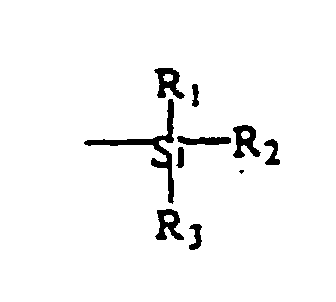
- sil refers to a group of the formula Si (R 1 )(R 2 )(R 3 ) such as triisopropylsilyl, t -butyldimethylsilyl, triethylsilyl, isopropyldimethylsilyl, t -butyldiphenylsilyl, methyldiisopropylsilyl, methyldi- t -butylsilyl, tribenzylsilyl, or triphenylsilyl.
- IPA isopropyl alcohol
- TMS trimethylsilyl
- cbz for benzyloxycarbonyl
- DMSO dimethyl sulfoxide
- THF for tetrahydrofuran
- TIPSOTf triisopropylsilyl trifluoromethanesulfonate
- HMDS hexamethyldisilazane
- OTf for trifluoromethanesulfonate
- NMP for N-methyl-2-pyrrolidone
- HMPA hexamethylphosphoric triamide
- DME for 1,2 dimethoxyethane
- NCS for N-chlorosuccinimide
- DDQ 2,3-dichloro-5,6-dicyano-1,4-benzoquinone
- PDC pyridinium dichromate
- PCC pyridinium chlorochromatelpyridine
- py for pyridinium chlorochromatelpyridine
- the process of the claimed invention relates to the preparation of 6-O-methyl erythromycin A.
- the process comprises protecting the 2'-hydroxyl or both the 2' and 4"-hydroxyl groups of erythromycin A and reducing the 9-ketone to a hydroxyl group.
- the 9-hydroxyl is protected and the protected erythromycin derivative thus obtained is methylated at the 6-position. Deprotection of the protected hydroxy groups and oxidation of the 9-hydroxyl group yields 6-O-methyl erythromycin A, as the final product.
- the erythromycin A starting material Compound (1)
- Compound (2) a protected erythromycin A derivative wherein R p is independently hydrogen or a hydroxy protecting at each occurrence.
- R p is independently hydrogen or a hydroxy protecting at each occurrence.
- both the 2'- and the 4"-hydroxyl groups are protected and R p at each occurrence is a hydroxy protecting group. Protection of both moieties is accomplished using a reagent having a silyl group.
- exemplary and preferred silyl groups have the formula: wherein R 1 , R 2 , and R 3 are each independently hydrogen, lower alkyl, aryl, phenyl, phenyl substituted lower alkyl, cycloalkyl or alkenyl.
- R 1 , R 2 , and R 3 are methyl.
- Silyl groups can be positioned at the 2'- and 4"- positions by reacting erythromycin A with HMDS in the presence of a suitable solvent, e . g . acetonitrile.
- trimethylsilyl reagents are also suitable for protection of both the 2'- and 4"-hydroxyl functionalities, including for example: trimethylsilyl chloride in the presence of triethylamine, pyridine, imidazole, or di-trimethylsilyl amine; hexamethyldisiloxane/ethylamino- p -toluenesulfonate; N,O-bis(trimethylsilyl)acetamide/DMF; ethyl(trimethylsilyl)acetate/ n -butylammonium fluoride; trimethylsilyl-N-trimethylsilyl carbamate; and trimethylsilyl-N-trimethylsilyl sulfamide.
- trimethylsilyl chloride in the presence of triethylamine, pyridine, imidazole, or di-trimethylsilyl amine
- O-protecting groups commonly known in the art are used to protect only the 2'-hydroxyl group. Suitable O-protecting groups are reacted with the erythromycin A in the presence of a base and a solvent.
- Suitable bases are organic bases such as triethylamine, pyridine, and diethylamine.
- An exemplary and preferred solvent is an organic solvent, such as methylene chloride. Exemplary and preferred protecting groups are described in Green and Wuts' Protective Groups in Organic Synthesis, 2d. Ed. John Wiley & Sons, Inc., New York, 1991.
- an acetyl group can be positioned at the 2'-position by reacting erythromycin A with an acetylating reagent and a base. Presence of the base is not essential to the protection of the hydroxyl group.
- suitable bases include but are not limited to organic bases such as triethylamine, pyridine, diethylamine, and the like.
- Suitable protecting groups can be derived from compounds which include but are not limited to compounds having the formula -O-C(O)n-R wherein n is 0, 1, 2, and R is an alkyl, substituted alkyl, alkoxy, substituted alkoxy, alkoxyalkyl, aryl, or substituted aryl group.
- preferred protecting groups can be derived from compounds which include anhydride and acid halide compounds of the particular formula (RCO) 2 O or RCOCl, where R is hydrogen or a substituent group such as lower alkyl ( e .
- aryl e . g ., phenyl, p -methoxyphenyl, p -chlorophenyl, m -nitrophenyl, p -nitrophenyl, benzylhydryl, 1-naphyl and the like).
- Reduction of the 9-ketone group of Compound (2) forms a 9-hydroxyl erythromycin A derivative, Compound (3).
- Reduction of the 9-ketone to a 9-hydroxyl is accomplished using a reducing agent known in the art.
- exemplary and preferred reagents include sodium borohydride, lithium borohydride, potassium borohydride, tert -tetraethylammonium borohydride, n -tetraethylbutylammonium borohydride, zinc borohydride, trimethoxy sodium borohydride, triisoproxy sodium hydroboride, tri- tert -butoxy sodium borohydride, sodium cyanate borohydride, triisopropylpotassium borohydride, triethyllithium borohydride, triethylpotassium borohydride, ethyllithium borohydride, and the like.
- borohydride reagents offer certain advantages in selectivity and control of the ketone reduction
- other reagents such as complex metal hydrides
- complex metal hydrides are also suitable to reduce the secondary alcohol.
- the mixture of 2'-4"-bis-OTMS erythromycin A is added to sodium borohydride at room temperature in the presence of THF.'
- the reactive mixture is quenched with sodium carbonate solution and triethanolamine.
- the mixture is extracted with ethylacetate, drying the product over sodium sulfate to yield 2',4"-O-bis(trimethylsilyl)-9-hydroxyl-erythromycin A.
- one equivalent of the 9-keto erythromycin A derivative is reacted with 5 to 10 equivalents of a suitable reducing reagent.
- ketone reduction is accomplished before protection of the 2'- and optional 4"-hydroxyl groups.
- R p of Compound (3) is hydrogen at each occurrence.
- protection of the 9-hydroxyl and the 2'- and/or 4"- hydroxyl groups is achieved in either a stepwise manner, i . e . protecting the 9-hydroxyl and the 2'- or 2'- and 4"- hydroxyl groups using different reagents or reaction conditions, or simultaneously, i.e. protecting the 9-, 2'-, and 4"-hydroxyl groups with the same reagent and under the same conditions.
- Protection of the 9-hydroxy group of Compound (3) yields Compound (4), an erythromycin A derivative wherein R p is a hydroxy protecting group at the 9- and 2'- position, and either hydrogen or a hydroxy protecting group at the 4"- position. Protection of the 9-hydroxyl group is achieved in a manner similar to the protection of the 2'- and optionally the 4"- hydroxyl groups. Preferably, the 9-hydroxyl protection is accomplished using a silyl group.
- the 9-hydroxyl can be protected by reacting the 9-hydroxyl with a silylating agent triisopropylsilyl trifluoromethanesulfonate (TIPSOTf) in the presence triethylamine and tetrahydrofuran (THF).
- a silylating agent triisopropylsilyl trifluoromethanesulfonate (TIPSOTf) in the presence triethylamine and tetrahydrofuran (THF).
- exemplary and preferred silylating agents have the formula R 1 R 2 R 3 SiOTf, wherein R 1 R 2 R 3 may be selected from triisopropyl, tert -butyldimethyl, triethyl, isopropyldimethyl, t -butyldiphenyl, methyldiisopropyl, methyldi- tert -butyl, tribenzyl, and triphenyl.
- R 1 R 2 R 3 is triisopropyl.
- Other conditions for the transformation include reacting the 9-hydroxyl erythromycin A derivative with a reagent of the formula R 1 R 2 R 3 Si-X, where X is a halide, including chloride, bromide, iodide, p -toluenesulfonate or trifluoromethanesulfonate.
- reagents are used in the presence of triethylamine, pyridine, imidazole, di-trimethylsilyl amine.
- other conventional hydroxyl protection groups such as those used for the protection of the erythromycin 2'-hydroxyl group, are also suitable for protecting the 9-position alcohol of the 9-hydroxy erythromycin A derivative.
- Methylation of Compound ( 4 ) yields Compound ( 5 ), a 6-O-methyl erythromycin A derivative. Methylation is achieved by reacting the protected derivative, Compound ( 4 ), with a methylating reagent in the presence of a suitable base. The reaction is carried out with the methylating reagent in the presence of a strong alkali metal base, stirred or agitated in a polar aprotic solvent of a mixture thereof, and maintained at a reaction temperature for a period of time sufficient to effect methylation. Preferably, the methylation reaction will be carried out at a temperature from -15°C to room temperature for a period of 1 to 8 hours.
- Suitable methylating reagents include methyl iodide, methyl bromide, dimethylsulfate, methyl- p -toluenesulfonate, and the like.
- the amount of methylating reagent used is from 1 to 10 molar equivalents relative to the protected 9-hydroxy erythromycin derivative.
- the alkali metal base is selected from the group comprising sodium hydride, sodium hydroxide, potassium hydride, potassium hydroxide, and potassium butoxide.
- the amount of the base used is usually 1 to 10 equivalents relative to the starting compound.
- Exemplary and preferred solvents are polar aprotic solvents such as N,N-dimethylformamide (DMF), dimethylsulfoxide (DMSO), N-methyl-2-pyrrolidone (NMP), hexamethylphosphorictriamide (HMPA), tetrahydrofuran (THF), 1,2-dimethoxyethane (DME), acetonitrile methyl- t -butyl or ethyl acetate, or a mixture of such polar aprotic solvents.
- polar aprotic solvents such as N,N-dimethylformamide (DMF), dimethylsulfoxide (DMSO), N-methyl-2-pyrrolidone (NMP), hexamethylphosphorictriamide (HMPA), tetrahydrofuran (THF), 1,2-dimethoxyethane (DME), acetonitrile methyl- t -butyl or ethyl acetate, or a mixture of such polar
- 6-O-methyl erythromycin A proceeds by removing the O-protecting silyl groups from the 2'-position and the 4"-position, if protected, as well as the 9-position of the erythromycin derivative Compound (5) to afford Compound (6).
- Means for removing the O-protecting groups are well known in the art.
- the 2' ,4"-bis-OTMS-9-triisopropylsilyloxy-6-O-methyl erythromycin A can be reacted with tetrabutylammonium fluoride in THF.
- exemplary and preferred means of removing the silyl groups include but are not limited to (a) acetyl alcohol/THF/water, (b) citric acid/methanol, (c) Dowex resin/methanol, (d) n -butylammonium chloride/potassium fluoride or (d) hydrogen fluoride/acetonitrile.
- the protecting groups can be removed simultaneously as described above or in a multi-stage manner using a weak acid, such as formic acid, acetic acid and the like, in the presence of a hydroxylic solvent, such as methanol.
- Oxidation of the hydroxyl group at the 9-position of Compound (6) yields the 6-O-methyl erythromycin A product, Compound (7).
- the oxidation is carried out under typical conditions suitable for oxidizing the secondary alcohol functionpnal group.
- the oxidation methods include but are not limited to: (a) TPAP oxidation, (b) Swern oxidation, (c) methyl sulfide, N-chlorosuccinimide/TEA, (d) DMSO, acetyl acetate, (e) DMSO, thionyl chloride/TEA, (f) DMSO, oxalyl chloride/TEA, (g) DMSO, methanesulfonic anhydride/TEA, (h) DDQ, (i) PDC, (j) PCC, py, (k) chromate-polymer, (l) chromate.2py, and (m) Dess Martin oxidation.
- Dess Martin reagent is added to a solution of 9-hydroxy-6-O-methyl erythromycin A in dichloromethane at ambient temperature and quenched with a saturated sodium carbonate solution followed by sodium disulfite solution. The aqueous layer is extracted with dichoromethane and the organic layers are dried over sodium sulfate. Once the product is evaporated to dryness the final product 6-O-methyl erythromycin is, collected.
- erythromycin A 73g, 99.5 mmol
- HMDS 48g, 297 mmol
- the solution was further stirred for 20 hours at room temperature.
- the product was precipitated our from the solution results.
- the product was filtered, washed with acetonitrile (50ml) and dried in vacuum oven at 40 °C for 24 hours to yield 45.93g of 2', 4"-O-bis(trimethylsilyl)-erythromycin A (2) as a white solid.
- Desired product was purified via flash silica gel column chromatography. Product was eluted with 10% acetone/hexane/0.2% triethylamine mixture. Desired fractions were collected and evaporated to dryness to obtain 190mg of 2',4"-O-bis(trimethylsilyl)-9-triisopropylsilyloxy -6-O-methyl erythromycin A (5) as a white solid. MS(ESI): m/z 1051 (m+H).
Landscapes
- Chemical & Material Sciences (AREA)
- Organic Chemistry (AREA)
- Health & Medical Sciences (AREA)
- General Health & Medical Sciences (AREA)
- Life Sciences & Earth Sciences (AREA)
- Engineering & Computer Science (AREA)
- Biochemistry (AREA)
- Molecular Biology (AREA)
- Genetics & Genomics (AREA)
- Biotechnology (AREA)
- Chemical Kinetics & Catalysis (AREA)
- Animal Behavior & Ethology (AREA)
- Oncology (AREA)
- Public Health (AREA)
- Veterinary Medicine (AREA)
- Communicable Diseases (AREA)
- Medicinal Chemistry (AREA)
- Pharmacology & Pharmacy (AREA)
- General Chemical & Material Sciences (AREA)
- Nuclear Medicine, Radiotherapy & Molecular Imaging (AREA)
- Saccharide Compounds (AREA)
- Pharmaceuticals Containing Other Organic And Inorganic Compounds (AREA)
- Heterocyclic Carbon Compounds Containing A Hetero Ring Having Oxygen Or Sulfur (AREA)
Claims (7)
- Ein Verfahren für die Herstellung von 6-O-Methylerythromycin A, das folgendes umfaßt:a) Schützen der 2'-Hydroxylgruppe von Erythromycin A, um ein 2'-geschütztes Erythromycin A Derivat zu bilden;b) Reduzieren der 9-Ketogruppe des 2'-geschützten Erythromycin A Derivats, um ein 9-Hydroxy-2'-geschütztes Erythromycin A Derivat zu bilden;c) Schützen des 9-Hydroxy 2'-geschützten Erythromycins A, um ein 9-geschütztes 2'-geschütztes Erythromycin A Derivat zu bilden;d) Methylieren der 6-Position des 9-geschützten-2'-geschützten Erythromycin A Derivats, um ein 9-geschütztes-2'-geschütztes 6-O-Methylerythromycin A Derivat zu bilden;e) Deprotektieren des 9-geschützten-2'-geschützten 6-O-Methylerythromycin A Derivats, um ein 9-Hydroxy 6-0-methyliertes Erythromycin A Derivat zu bilden; undf) Oxidieren des 9-Hydroxy's von dem 9-Hydroxy 6-Omethylierten Erythromycin A, um 6-0-Methylerythromycin A zu bilden.
- Das Verfahren gemäß Anspruch 1, worin die Hydroxyschutzgruppe gewählt ist aus der Gruppe bestehend aus (a) einer Silylgruppe der Formel:worin R1, R2 und R3 bei jedem Auftreten gewählt ist aus Wasserstoff, C1-C4 Alkyl, Aryl, Phenyl-substituiertem C1-C4 Alkyl, Cycloalkyl und Alkenyl, und (b) -C(O)n-R, worin n 0, 1 oder 2 ist, und R ist ein Alkyl, substituiertes Alkyl, Alkoxy, substituiertes Alkoxy, Alkoxyalkyl, Aryl oder substituiertes Aryl.
- Das Verfahren gemäß Anspruch 1, worin das Reduktionsmittel ein Borhydridreagens ist.
- Das Verfahren gemäß Anspruch 1, worin das Methylierungsreagens Me-X ist, worin X ein Halogenid ist, oder Me-R4, worin R4 ein Sulfat oder ein p-Toluensulfonat ist.
- Das Verfahren gemäß Anspruch 1, worin das Oxidierungsreagens Dess-Martin-Reagens ist.
- Das Verfahren gemäß Anspruch 1, das weiterhin den Schritt Schützen der 4''-Hydroxylgruppe von Erythromycin A umfasst.
- Eine Verbindung mit der Formel:worin entweder:
 wobei die Hydroxyschutzgruppen unabhängig bei jedem Auftreten gewählt sind aus der Gruppe bestehend aus (a) einer Silylgruppe der Formel:(i) Ra Wasserstoff ist, Rb, Rc und Rd Hydroxyschutzgruppen sind;(ii) Ra, Rd Wasserstoff sind, Rb und Rc Hydroxyschutzgruppen sind;(iii) Ra Methyl ist, Rb, Rc und Rd Hydroxyschutzgruppen sind;(iv) Ra Methyl ist, Rb, Rc Hydroxyschutzgruppen sind und Rd Wasserstoff ist;(v) Ra, Rb Wasserstoff sind, Rc und Rd Hydroxyschutzgruppen sind; oder(vi) Ra, Rb, Rd Wasserstoff sind und Rc eine Hydroxyschutzgruppe ist;worin R1, R2 und R3 bei jedem Auftreten gewählt sind aus Wasserstoff, C1-C4 Alkyl, Aryl, Phenyl-substituiertem C1-C4 Alkyl, Cycloalkyl und Alkenyl, und (b) -C(O)n-R, worin n 0, 1 oder 2 ist, und R ist ein Alkyl, substituiertes Alkyl, Alkoxy, substituiertes Alkoxy, Alkoxyalkyl, Aryl oder substituiertes Aryl.
Priority Applications (1)
| Application Number | Priority Date | Filing Date | Title |
|---|---|---|---|
| DK98959481T DK1044209T3 (da) | 1997-12-16 | 1998-11-17 | Fremgangsmåde till fremstilling af 6-O-methylerythromycin A ved at anvende derivater af 9-hydroxyerythromycin |
Applications Claiming Priority (3)
| Application Number | Priority Date | Filing Date | Title |
|---|---|---|---|
| US991648 | 1997-12-16 | ||
| US08/991,648 US5892008A (en) | 1997-12-16 | 1997-12-16 | Process for the preparation of 6-O-methyl erythromycin a using 9-hydroxy erythromycin derivatives |
| PCT/US1998/024498 WO1999031114A1 (en) | 1997-12-16 | 1998-11-17 | Process for the preparation of 6-o-methyl erythromycin a using 9-hydroxy erythromycin derivatives |
Publications (2)
| Publication Number | Publication Date |
|---|---|
| EP1044209A1 EP1044209A1 (de) | 2000-10-18 |
| EP1044209B1 true EP1044209B1 (de) | 2004-08-18 |
Family
ID=25537423
Family Applications (1)
| Application Number | Title | Priority Date | Filing Date |
|---|---|---|---|
| EP98959481A Expired - Lifetime EP1044209B1 (de) | 1997-12-16 | 1998-11-17 | Verfahren zur herstellung von 6-o-methylerythromycin a unter verwendung von 9-hydroxyerythromycinderativen |
Country Status (13)
| Country | Link |
|---|---|
| US (1) | US5892008A (de) |
| EP (1) | EP1044209B1 (de) |
| JP (1) | JP2002508385A (de) |
| KR (1) | KR20010033178A (de) |
| AT (1) | ATE273988T1 (de) |
| AU (1) | AU1526999A (de) |
| CA (2) | CA2315209C (de) |
| DE (1) | DE69825785T2 (de) |
| DK (1) | DK1044209T3 (de) |
| ES (1) | ES2229552T3 (de) |
| IL (1) | IL136237A0 (de) |
| PT (1) | PT1044209E (de) |
| WO (1) | WO1999031114A1 (de) |
Families Citing this family (25)
| Publication number | Priority date | Publication date | Assignee | Title |
|---|---|---|---|---|
| JP3054699B2 (ja) * | 1998-08-07 | 2000-06-19 | 工業技術院長 | O−シリル化含水酸基環状エーテルの製造方法 |
| US6437106B1 (en) | 1999-06-24 | 2002-08-20 | Abbott Laboratories | Process for preparing 6-o-substituted erythromycin derivatives |
| KR100336447B1 (ko) * | 1999-11-24 | 2002-05-15 | 민경윤 | 클라리스로마이신의 개선된 제조방법 |
| PT1254146E (pt) * | 1999-12-16 | 2005-10-31 | Teva Pharma | Processos de preparacao de polimeros de claritromicina e novo polimorfo iv |
| PL356645A1 (en) | 2000-01-11 | 2004-06-28 | Teva Pharmaceutical Industries Ltd. | Processes for preparing clarithromycin polymorphs |
| US6544555B2 (en) | 2000-02-24 | 2003-04-08 | Advancis Pharmaceutical Corp. | Antibiotic product, use and formulation thereof |
| US6565882B2 (en) * | 2000-02-24 | 2003-05-20 | Advancis Pharmaceutical Corp | Antibiotic composition with inhibitor |
| AU2578701A (en) | 2000-02-29 | 2001-09-12 | Teva Pharma | Processes for preparing clarithromycin and clarithromycin intermediate, essentially oxime-free clarithromycin, and pharmaceutical composition comprising the same |
| US6605707B1 (en) | 2000-03-23 | 2003-08-12 | Abbott Laboratories | Process for the preparation of 6-O-propargyl erythromycin derivatives |
| US6541014B2 (en) * | 2000-10-13 | 2003-04-01 | Advancis Pharmaceutical Corp. | Antiviral product, use and formulation thereof |
| US20020068078A1 (en) * | 2000-10-13 | 2002-06-06 | Rudnic Edward M. | Antifungal product, use and formulation thereof |
| US20020197314A1 (en) * | 2001-02-23 | 2002-12-26 | Rudnic Edward M. | Anti-fungal composition |
| ITMI20021726A1 (it) * | 2002-08-01 | 2004-02-02 | Zambon Spa | Macrolidi ad attivita' antiinfiammatoria. |
| EP1648415A4 (de) * | 2003-07-21 | 2011-11-16 | Middlebrook Pharmaceuticals Inc | Antibiotisches produkt, seine verwendung und formulierung |
| EP1648418A4 (de) * | 2003-07-21 | 2011-11-16 | Middlebrook Pharmaceuticals Inc | Antibiotisches produkt, seine verwendung und formulierung |
| CA2533292C (en) | 2003-07-21 | 2013-12-31 | Advancis Pharmaceutical Corporation | Antibiotic product, use and formulation thereof |
| WO2005016311A1 (en) * | 2003-08-11 | 2005-02-24 | Advancis Pharmaceutical Corporation | Robust pellet |
| CA2535398C (en) * | 2003-08-12 | 2013-11-12 | Advancis Pharmaceuticals Corporation | Antibiotic product, use and formulation thereof |
| EP1658034A4 (de) * | 2003-08-29 | 2011-06-22 | Middlebrook Pharmaceuticals Inc | Antibiotisches produkt, seine verwendung und formulierung |
| WO2005027877A1 (en) * | 2003-09-15 | 2005-03-31 | Advancis Pharmaceutical Corporation | Antibiotic product, use and formulation thereof |
| US8715727B2 (en) * | 2004-07-02 | 2014-05-06 | Shionogi Inc. | Tablet for pulsed delivery |
| US8778924B2 (en) * | 2006-12-04 | 2014-07-15 | Shionogi Inc. | Modified release amoxicillin products |
| US8357394B2 (en) | 2005-12-08 | 2013-01-22 | Shionogi Inc. | Compositions and methods for improved efficacy of penicillin-type antibiotics |
| US8299052B2 (en) | 2006-05-05 | 2012-10-30 | Shionogi Inc. | Pharmaceutical compositions and methods for improved bacterial eradication |
| US20090054634A1 (en) * | 2007-08-09 | 2009-02-26 | Vinod Kumar Kansal | Process for the preparation of clarithromycin |
Family Cites Families (6)
| Publication number | Priority date | Publication date | Assignee | Title |
|---|---|---|---|---|
| US4331803A (en) * | 1980-06-04 | 1982-05-25 | Taisho Pharmaceutical Co., Ltd. | Novel erythromycin compounds |
| JPS61103890A (ja) * | 1984-10-26 | 1986-05-22 | Taisho Pharmaceut Co Ltd | 6−0−メチルエリスロマイシンa誘導体 |
| US4670549A (en) * | 1985-03-18 | 1987-06-02 | Taisho Pharmaceutical Co., Ltd. | Method for selective methylation of erythromycin a derivatives |
| US4640910A (en) * | 1985-11-12 | 1987-02-03 | Abbott Laboratories | Erythromycin A silylated compounds and method of use |
| KR960000434B1 (ko) * | 1986-12-17 | 1996-01-06 | 다이쇼 세이야꾸 가부시끼가이샤 | 에리스로마이신 a유도체 및 그의 제조 방법 |
| US5872229A (en) * | 1995-11-21 | 1999-02-16 | Abbott Laboratories | Process for 6-O-alkylation of erythromycin derivatives |
-
1997
- 1997-12-16 US US08/991,648 patent/US5892008A/en not_active Expired - Lifetime
-
1998
- 1998-11-17 KR KR1020007006561A patent/KR20010033178A/ko not_active Withdrawn
- 1998-11-17 EP EP98959481A patent/EP1044209B1/de not_active Expired - Lifetime
- 1998-11-17 PT PT98959481T patent/PT1044209E/pt unknown
- 1998-11-17 ES ES98959481T patent/ES2229552T3/es not_active Expired - Lifetime
- 1998-11-17 CA CA002315209A patent/CA2315209C/en not_active Expired - Fee Related
- 1998-11-17 JP JP2000539037A patent/JP2002508385A/ja active Pending
- 1998-11-17 WO PCT/US1998/024498 patent/WO1999031114A1/en not_active Ceased
- 1998-11-17 AT AT98959481T patent/ATE273988T1/de not_active IP Right Cessation
- 1998-11-17 DK DK98959481T patent/DK1044209T3/da active
- 1998-11-17 CA CA002615701A patent/CA2615701A1/en not_active Abandoned
- 1998-11-17 AU AU15269/99A patent/AU1526999A/en not_active Abandoned
- 1998-11-17 DE DE69825785T patent/DE69825785T2/de not_active Expired - Fee Related
- 1998-11-17 IL IL13623798A patent/IL136237A0/xx unknown
Also Published As
| Publication number | Publication date |
|---|---|
| ES2229552T3 (es) | 2005-04-16 |
| CA2315209A1 (en) | 1999-06-24 |
| PT1044209E (pt) | 2004-11-30 |
| JP2002508385A (ja) | 2002-03-19 |
| AU1526999A (en) | 1999-07-05 |
| DE69825785T2 (de) | 2005-08-18 |
| CA2615701A1 (en) | 1999-06-24 |
| US5892008A (en) | 1999-04-06 |
| DK1044209T3 (da) | 2004-11-22 |
| KR20010033178A (ko) | 2001-04-25 |
| IL136237A0 (en) | 2001-05-20 |
| EP1044209A1 (de) | 2000-10-18 |
| DE69825785D1 (de) | 2004-09-23 |
| WO1999031114A1 (en) | 1999-06-24 |
| CA2315209C (en) | 2008-04-08 |
| ATE273988T1 (de) | 2004-09-15 |
Similar Documents
| Publication | Publication Date | Title |
|---|---|---|
| US5892008A (en) | Process for the preparation of 6-O-methyl erythromycin a using 9-hydroxy erythromycin derivatives | |
| US5872229A (en) | Process for 6-O-alkylation of erythromycin derivatives | |
| US5929219A (en) | 9-hydrazone and 9-azine erythromycin derivatives and a process of making the same | |
| CA2250771C (en) | 9-oximesilyl erythromycin a derivatives | |
| US5852180A (en) | Chemical synthesis of 6-O-alkyl erythromycin A | |
| CA2309977A1 (en) | 6-o-alkyl derivatives of erythronolide b | |
| US4933439A (en) | Tylosin derivatives and processes for producing the same | |
| US6642364B2 (en) | Process to obtain clarithromycin | |
| JP2004536075A (ja) | O−アリルエリスロマイシン誘導体を機能化するためのアリール化方法 | |
| US20030191295A1 (en) | Process for producing erythromycin derivative | |
| AU2002357482B2 (en) | Method for the production of desclarithromycin, and intermediate products | |
| KR100244732B1 (ko) | 에리트로마이신 a의 선택적 메틸화 방법 | |
| BOBILLOT et al. | Chemical modification of tylosin | |
| JP2005015459A (ja) | クラリスロマイシンの製法 | |
| MXPA00004840A (en) | Chemical synthesis of 6-o-alkyl erythromycin a | |
| JPH10251291A (ja) | 新規マイカミノシルタイロノライド誘導体 |
Legal Events
| Date | Code | Title | Description |
|---|---|---|---|
| PUAI | Public reference made under article 153(3) epc to a published international application that has entered the european phase |
Free format text: ORIGINAL CODE: 0009012 |
|
| 17P | Request for examination filed |
Effective date: 20000529 |
|
| AK | Designated contracting states |
Kind code of ref document: A1 Designated state(s): AT BE CH CY DE DK ES FI FR GB GR IE IT LI LU NL PT SE |
|
| 17Q | First examination report despatched |
Effective date: 20021002 |
|
| GRAP | Despatch of communication of intention to grant a patent |
Free format text: ORIGINAL CODE: EPIDOSNIGR1 |
|
| GRAS | Grant fee paid |
Free format text: ORIGINAL CODE: EPIDOSNIGR3 |
|
| GRAA | (expected) grant |
Free format text: ORIGINAL CODE: 0009210 |
|
| AK | Designated contracting states |
Kind code of ref document: B1 Designated state(s): AT BE CH CY DE DK ES FI FR GB GR IE IT LI LU NL PT SE |
|
| REG | Reference to a national code |
Ref country code: GB Ref legal event code: FG4D |
|
| REG | Reference to a national code |
Ref country code: CH Ref legal event code: EP |
|
| REG | Reference to a national code |
Ref country code: IE Ref legal event code: FG4D |
|
| REF | Corresponds to: |
Ref document number: 69825785 Country of ref document: DE Date of ref document: 20040923 Kind code of ref document: P |
|
| REG | Reference to a national code |
Ref country code: SE Ref legal event code: TRGR |
|
| REG | Reference to a national code |
Ref country code: DK Ref legal event code: T3 |
|
| REG | Reference to a national code |
Ref country code: GR Ref legal event code: EP Ref document number: 20040403484 Country of ref document: GR |
|
| REG | Reference to a national code |
Ref country code: PT Ref legal event code: SC4A Free format text: AVAILABILITY OF NATIONAL TRANSLATION Effective date: 20040920 |
|
| REG | Reference to a national code |
Ref country code: CH Ref legal event code: NV Representative=s name: A. BRAUN, BRAUN, HERITIER, ESCHMANN AG PATENTANWAE |
|
| REG | Reference to a national code |
Ref country code: ES Ref legal event code: FG2A Ref document number: 2229552 Country of ref document: ES Kind code of ref document: T3 |
|
| PLBE | No opposition filed within time limit |
Free format text: ORIGINAL CODE: 0009261 |
|
| STAA | Information on the status of an ep patent application or granted ep patent |
Free format text: STATUS: NO OPPOSITION FILED WITHIN TIME LIMIT |
|
| ET | Fr: translation filed | ||
| 26N | No opposition filed |
Effective date: 20050519 |
|
| REG | Reference to a national code |
Ref country code: CH Ref legal event code: PFA Owner name: ABBOTT LABORATORIES Free format text: ABBOTT LABORATORIES#CHAD 0377/AP6D-2, 100 ABBOTT PARK ROAD#ABBOTT PARK, ILLINOIS 60064-3500 (US) -TRANSFER TO- ABBOTT LABORATORIES#CHAD 0377/AP6D-2, 100 ABBOTT PARK ROAD#ABBOTT PARK, ILLINOIS 60064-3500 (US) |
|
| PGFP | Annual fee paid to national office [announced via postgrant information from national office to epo] |
Ref country code: NL Payment date: 20081015 Year of fee payment: 11 Ref country code: LU Payment date: 20081021 Year of fee payment: 11 Ref country code: IE Payment date: 20081016 Year of fee payment: 11 Ref country code: DK Payment date: 20081008 Year of fee payment: 11 Ref country code: CH Payment date: 20081028 Year of fee payment: 11 |
|
| PGFP | Annual fee paid to national office [announced via postgrant information from national office to epo] |
Ref country code: PT Payment date: 20081006 Year of fee payment: 11 Ref country code: FI Payment date: 20081107 Year of fee payment: 11 Ref country code: ES Payment date: 20081117 Year of fee payment: 11 Ref country code: AT Payment date: 20081008 Year of fee payment: 11 |
|
| PGFP | Annual fee paid to national office [announced via postgrant information from national office to epo] |
Ref country code: SE Payment date: 20081107 Year of fee payment: 11 Ref country code: IT Payment date: 20081124 Year of fee payment: 11 Ref country code: BE Payment date: 20081128 Year of fee payment: 11 |
|
| PGFP | Annual fee paid to national office [announced via postgrant information from national office to epo] |
Ref country code: FR Payment date: 20081106 Year of fee payment: 11 |
|
| PGFP | Annual fee paid to national office [announced via postgrant information from national office to epo] |
Ref country code: DE Payment date: 20081128 Year of fee payment: 11 |
|
| PGFP | Annual fee paid to national office [announced via postgrant information from national office to epo] |
Ref country code: GR Payment date: 20081014 Year of fee payment: 11 Ref country code: GB Payment date: 20081008 Year of fee payment: 11 |
|
| PGFP | Annual fee paid to national office [announced via postgrant information from national office to epo] |
Ref country code: CY Payment date: 20081112 Year of fee payment: 11 |
|
| REG | Reference to a national code |
Ref country code: PT Ref legal event code: MM4A Free format text: LAPSE DUE TO NON-PAYMENT OF FEES Effective date: 20100517 |
|
| BERE | Be: lapsed |
Owner name: *ABBOTT LABORATORIES Effective date: 20091130 |
|
| REG | Reference to a national code |
Ref country code: NL Ref legal event code: V1 Effective date: 20100601 |
|
| EUG | Se: european patent has lapsed | ||
| REG | Reference to a national code |
Ref country code: CH Ref legal event code: PL |
|
| REG | Reference to a national code |
Ref country code: DK Ref legal event code: EBP |
|
| GBPC | Gb: european patent ceased through non-payment of renewal fee |
Effective date: 20091117 |
|
| PG25 | Lapsed in a contracting state [announced via postgrant information from national office to epo] |
Ref country code: PT Free format text: LAPSE BECAUSE OF NON-PAYMENT OF DUE FEES Effective date: 20100517 |
|
| REG | Reference to a national code |
Ref country code: IE Ref legal event code: MM4A |
|
| REG | Reference to a national code |
Ref country code: FR Ref legal event code: ST Effective date: 20100730 |
|
| PG25 | Lapsed in a contracting state [announced via postgrant information from national office to epo] |
Ref country code: FI Free format text: LAPSE BECAUSE OF NON-PAYMENT OF DUE FEES Effective date: 20091117 Ref country code: AT Free format text: LAPSE BECAUSE OF NON-PAYMENT OF DUE FEES Effective date: 20091117 |
|
| PG25 | Lapsed in a contracting state [announced via postgrant information from national office to epo] |
Ref country code: NL Free format text: LAPSE BECAUSE OF NON-PAYMENT OF DUE FEES Effective date: 20100601 Ref country code: LI Free format text: LAPSE BECAUSE OF NON-PAYMENT OF DUE FEES Effective date: 20091130 Ref country code: IE Free format text: LAPSE BECAUSE OF NON-PAYMENT OF DUE FEES Effective date: 20091117 Ref country code: GR Free format text: LAPSE BECAUSE OF NON-PAYMENT OF DUE FEES Effective date: 20100602 Ref country code: FR Free format text: LAPSE BECAUSE OF NON-PAYMENT OF DUE FEES Effective date: 20091130 Ref country code: CY Free format text: LAPSE BECAUSE OF NON-PAYMENT OF DUE FEES Effective date: 20091117 Ref country code: CH Free format text: LAPSE BECAUSE OF NON-PAYMENT OF DUE FEES Effective date: 20091130 Ref country code: BE Free format text: LAPSE BECAUSE OF NON-PAYMENT OF DUE FEES Effective date: 20091130 |
|
| PG25 | Lapsed in a contracting state [announced via postgrant information from national office to epo] |
Ref country code: DE Free format text: LAPSE BECAUSE OF NON-PAYMENT OF DUE FEES Effective date: 20100601 |
|
| PG25 | Lapsed in a contracting state [announced via postgrant information from national office to epo] |
Ref country code: GB Free format text: LAPSE BECAUSE OF NON-PAYMENT OF DUE FEES Effective date: 20091117 |
|
| PG25 | Lapsed in a contracting state [announced via postgrant information from national office to epo] |
Ref country code: DK Free format text: LAPSE BECAUSE OF NON-PAYMENT OF DUE FEES Effective date: 20091130 |
|
| PG25 | Lapsed in a contracting state [announced via postgrant information from national office to epo] |
Ref country code: IT Free format text: LAPSE BECAUSE OF NON-PAYMENT OF DUE FEES Effective date: 20091117 |
|
| REG | Reference to a national code |
Ref country code: ES Ref legal event code: FD2A Effective date: 20110405 |
|
| PG25 | Lapsed in a contracting state [announced via postgrant information from national office to epo] |
Ref country code: LU Free format text: LAPSE BECAUSE OF NON-PAYMENT OF DUE FEES Effective date: 20091117 |
|
| PG25 | Lapsed in a contracting state [announced via postgrant information from national office to epo] |
Ref country code: SE Free format text: LAPSE BECAUSE OF NON-PAYMENT OF DUE FEES Effective date: 20091118 |
|
| PG25 | Lapsed in a contracting state [announced via postgrant information from national office to epo] |
Ref country code: ES Free format text: LAPSE BECAUSE OF NON-PAYMENT OF DUE FEES Effective date: 20110323 |
|
| PG25 | Lapsed in a contracting state [announced via postgrant information from national office to epo] |
Ref country code: ES Free format text: LAPSE BECAUSE OF NON-PAYMENT OF DUE FEES Effective date: 20091118 |