EP1048218A2 - Verfahren zur Herstellung von Käse unter Verwendung von Transglutaminase und einer Protease ausser Rennin - Google Patents
Verfahren zur Herstellung von Käse unter Verwendung von Transglutaminase und einer Protease ausser Rennin Download PDFInfo
- Publication number
- EP1048218A2 EP1048218A2 EP00303301A EP00303301A EP1048218A2 EP 1048218 A2 EP1048218 A2 EP 1048218A2 EP 00303301 A EP00303301 A EP 00303301A EP 00303301 A EP00303301 A EP 00303301A EP 1048218 A2 EP1048218 A2 EP 1048218A2
- Authority
- EP
- European Patent Office
- Prior art keywords
- protease
- transglutaminase
- cheese
- rennet
- cheese curd
- Prior art date
- Legal status (The legal status is an assumption and is not a legal conclusion. Google has not performed a legal analysis and makes no representation as to the accuracy of the status listed.)
- Withdrawn
Links
Images
Classifications
-
- A—HUMAN NECESSITIES
- A23—FOODS OR FOODSTUFFS; TREATMENT THEREOF, NOT COVERED BY OTHER CLASSES
- A23C—DAIRY PRODUCTS, e.g. MILK, BUTTER OR CHEESE; MILK OR CHEESE SUBSTITUTES; PREPARATION THEREOF
- A23C19/00—Cheese; Cheese preparations; Making thereof
- A23C19/02—Making cheese curd
- A23C19/032—Making cheese curd characterised by the use of specific microorganisms, or enzymes of microbial origin
- A23C19/0326—Rennet produced by fermentation, e.g. microbial rennet; Rennet produced by genetic engineering
-
- A—HUMAN NECESSITIES
- A23—FOODS OR FOODSTUFFS; TREATMENT THEREOF, NOT COVERED BY OTHER CLASSES
- A23C—DAIRY PRODUCTS, e.g. MILK, BUTTER OR CHEESE; MILK OR CHEESE SUBSTITUTES; PREPARATION THEREOF
- A23C19/00—Cheese; Cheese preparations; Making thereof
- A23C19/02—Making cheese curd
- A23C19/032—Making cheese curd characterised by the use of specific microorganisms, or enzymes of microbial origin
- A23C19/0328—Enzymes other than milk clotting enzymes, e.g. lipase, beta-galactosidase
-
- A—HUMAN NECESSITIES
- A23—FOODS OR FOODSTUFFS; TREATMENT THEREOF, NOT COVERED BY OTHER CLASSES
- A23C—DAIRY PRODUCTS, e.g. MILK, BUTTER OR CHEESE; MILK OR CHEESE SUBSTITUTES; PREPARATION THEREOF
- A23C19/00—Cheese; Cheese preparations; Making thereof
- A23C19/02—Making cheese curd
- A23C19/04—Making cheese curd characterised by the use of specific enzymes of vegetable or animal origin
- A23C19/041—Proteolytic or milk clotting enzymes from plants or vegetables, e.g. papain, ficin, bromelain
-
- A—HUMAN NECESSITIES
- A23—FOODS OR FOODSTUFFS; TREATMENT THEREOF, NOT COVERED BY OTHER CLASSES
- A23C—DAIRY PRODUCTS, e.g. MILK, BUTTER OR CHEESE; MILK OR CHEESE SUBSTITUTES; PREPARATION THEREOF
- A23C19/00—Cheese; Cheese preparations; Making thereof
- A23C19/02—Making cheese curd
- A23C19/05—Treating milk before coagulation; Separating whey from curd
- A23C19/052—Acidifying only by chemical or physical means
-
- C—CHEMISTRY; METALLURGY
- C12—BIOCHEMISTRY; BEER; SPIRITS; WINE; VINEGAR; MICROBIOLOGY; ENZYMOLOGY; MUTATION OR GENETIC ENGINEERING
- C12Y—ENZYMES
- C12Y203/00—Acyltransferases (2.3)
- C12Y203/02—Aminoacyltransferases (2.3.2)
- C12Y203/02013—Protein-glutamine gamma-glutamyltransferase (2.3.2.13), i.e. transglutaminase or factor XIII
Definitions
- This invention relates to a method that increases the incorporation of whey protein in cheese.
- the method combines the use of transglutaminase and a non-rennet protease to prepare cheese curd incorporating a significant proportion of whey protein.
- Cheese compositions are generally prepared from dairy liquids by processes that include treating the liquid with a coagulating or clotting agent.
- the coagulating agent may be a curding enzyme, an acid, or a suitable bacterial culture or it may include such a culture.
- the coagulum or curd that results generally incorporates transformed casein, fats including natural butter fat, and flavorings that arise especially when a bacterial culture is used.
- the curd is usually separated from the whey.
- the resulting liquid whey generally contains soluble proteins not affected by the coagulation; such proteins are, of course, not incorporated into the coagulum.
- whey proteins have been concentrated or dried from whey, and then recombined with cheese (see, e.g., Kosikowski, Cheese and Fermented Foods, 2nd ed., Edwards Brothers, Inc., Ann Arbor, MI, 1977, pp. 451-458).
- whey recovered from such procedures does not have the appropriate physical and chemical properties conducive to making good quality natural cheeses or process cheeses.
- a further attempt to incorporate whey proteins into cheese products has employed ultrafiltration of milk to concentrate all the components, such as the casein, the whey protein, and the butterfat, that do not permeate the ultrafiltration membrane.
- a curd forms. This curd, however, loses considerable quantities of the whey protein during compaction.
- An example of such a process is provided in U.S. Patent 4,205,090 wherein the milk is concentrated to about one-fifth of its original volume.
- the resulting curd could only be used to provide soft cheeses such as Camembert or Roblechon. Hard cheeses, such as cheddar, Colby, and the like, could not be prepared using this product.
- Japanese Patent 59059151 discloses treating an emulsion containing proteins, oils or fats, and water with transglutaminase to produce a gelatinous, crosslinked gel.
- Japanese Patent 02276541 discloses a food protein with a fiber texture having heat-resistance. The fiber texture is developed by treatment of a protein hydrogel with a transglutaminase in the presence of calcium ion to induce crosslinking of the surface of a fiber bundle.
- Japanese Patent 2131539 used transglutaminase to work on a fused cheese product containing milk solids to product a cheese food having a texture similar to boiled fish paste.
- U.S. Patent 5,156,956 discloses a transglutaminase purified from strains of the genus Streptoverticillium, as well as its chemical, physical, and enzymatic properties. This transglutaminase catalyzes formation of protein gelation products from protein solutions to produce conventional gel foodstuffs such as yoghurt, jelly, cheese, gel cosmetics, and the like. This method did not use transglutaminase and enzymatic clotting agents to produce cheese.
- U.S. Patent 5,356,639 discloses a process for the production of a fermented concentrate from milk, including, whole milk, skim milk, and milk with added milk components.
- the concentrate could be used to make cheese.
- the process includes the steps of (1) selectively concentrating milk; (2) increasing the ionic strength of the concentrate to maintain the milk in a the liquid phase (coagulum formation is prevented both during and after fermentation); (3) fermenting the concentrate with lactic acid producing bacteria; and (4) removing water from the fermented liquid concentrate.
- the final product includes substantially all of the whey proteins originally present in the milk.
- U.S. Patent 5,681,598 describes a process for producing cheese with transglutaminase.
- the process includes (1) adding a transglutaminase to a milk or milk protein solution, (2) heat-treating the mixture, (3) adding a milk clotting enzyme for a fixed time, and (4) recovering a cheese.
- This process provides a large amount of cheese curd compared to conventional methods. Additionally, processes in which conventional cheese fermentation occurs first and transglutaminase treatment occurs subsequently, as well as simultaneous treatments, are disclosed.
- the milk clotting enzyme is preferably an animal rennet. Increases in total weight, but not in dry weight, of the curd when transglutaminase is used were observed.
- U.S. Patent 5,731,183 discloses a transglutaminase purified from strains of Bacillus subtilis , having particular physical and enzymatic characteristics, and a method for producing protein, peptide, or non-protein amino acid polymers that are cross-linked via their glutamine and lysine residues to form intermolecular or intramolecular conjugates.
- the transglutaminase may be used to produce crosslinked protein polymers that can be used in a variety of food substances including cheese.
- This reference differs from the instant disclosure in characterizing a bacterial transglutaminase while not disclosing process steps utilizing transglutaminase and cloning agents that are involved in producing cheese.
- U.S. Patent 5,523,237 discloses a plastein material which is defined as one made by reversing the activity of a protease enzyme (e.g., a serine protease) acting on proteinaceous material.
- the proteinaceous substrate is present at a concentration of 5-50%, and is preferably whey, casein, or soy protein.
- the enzyme preparation is substantially free of subtilisin A activity, and is specific for glutamic acid and aspartic acid residues.
- This protease is obtained from Bacillus licheniformis and is designated SP 446; its proteolytic activity is characterized in considerable detail. The viscosity of whey protein containing solutions is shown to increase as a result of the action of the enzyme.
- International patent WO 93/22930 discloses treating milk with a transglutaminase (preferably mammalian activated Factor XIII) and then with an enzyme having milk cloning activity to provide a milk-like product.
- the product has microparticulated protein that has been aggregated by means of the enzyme with milk cloning activity, and has mouthfeel that resembles a fat emulsion.
- the milk cloning enzyme is a cheese rennet enzyme. This method, like that of U.S. Patent 5,356,639, does not provide a cheese curd.
- International patent WO 94/21129 discloses a process for forming an acidified edible gel from milk. Transglutaminase is added to milk or a milk-like product, the pH is adjusted to 4.8 to 5.8, and the resulting composition is exposed to a heat treatment. The resulting edible gel is reported to have a pleasant consistency and mouthfeel.
- International patent WO 94/21130 discloses a similar process for forming an edible gel from milk. Transglutaminase is added to milk or a milk-like product, rennet is then added, and the resulting composition is exposed to a heat treatment. Only a single phase gel (rather than separate curd and whey) was obtained. This gel is reported to have satisfactory organoleptic properties.
- Guinee et al. reviewed the state of the art relating to incorporation of whey protein into cheese. High-heat treatment of milk impairs rennet coagulation, curd syneresis, curd structure and texture, as well as functional properties such as meltability and stretchability. Guinee et al. discuss physical and chemical factors that may be responsible for these effects. In heat treatments that denature whey protein in milk compositions, they found that, in semi-hard cheeses that result from curding such treated compositions, the curd has higher whey protein levels, but also higher moisture level, lower pH value, poorer curd fusion and lower yield (fracture) values during ripening.
- the present invention provides a cheese curd that contains protein products originating from a dairy liquid containing casein and whey protein.
- the dairy liquid is acted upon by a transglutaminase and a non-rennet protease, resulting in a substantial proportion of whey protein products being retained in the cheese curd.
- the invention also provides a method of making such cheese curd.
- the method employed to prepare the cheese curd includes the sequential steps of
- This invention also provides cheese products (soft, semi-soft, or hard) containing protein products originating from a dairy liquid containing casein and whey protein.
- the use of transglutaminase and a non-rennet protease allows retention of a substantial proportion of whey protein products in the cheese curd.
- the invention also provides a method of making the cheese product that retains a substantial proportion of whey protein products.
- the transglutaminase may be isolated from various sources, including, for example, bacteria, fungi, molds, fish, or mammals.
- the transglutaminase is preferably isolated from a microbial source, most preferably from the genus Streptoverticillium.
- the non-rennet protease is a bacterial protease, a plant protease, a fish intestinal protease, or an animal protease other than mammalian rennet.
- non-rennet protease is a bacterial protease, such as the protease Novo SP 446 isolated from Bacillus licheniformis , and the microbial protease Coralase PN-L produced by Aspergillus soja e (Rohm GmbH, Germany).
- the protease Novo SP 446 is especially preferred.
- the temperature used in the heating step is preferably between about 65 and about 85°C, and most preferably between about 75 and about 77°C.
- the cheese curd resulting from this method may be used to provide soft, semi-soft, or hard cheeses.
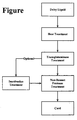
- the Figure provides a schematic flow chart of the present process for making a cheese curd containing a substantial proportion of whey protein products.
- the present invention provides a cheese curd from dairy liquids containing casein and whey protein.
- the curd composition contains protein products provided by the action of, first, a heat treatment, then a transglutaminase treatment, and, subsequently, a treatment using a non-rennet protease; these treatment steps appear to act directly on the proteins in the dairy liquid.
- the resulting cheese curd retains a substantial proportion of whey protein products.
- This curd can be further processed to provide cheese products including soft, semi-soft, or hard cheeses.
- the invention also provides methods for making the cheese curd and the cheese product.
- the retention of the whey protein products in the cheese curd, and in the cheese products provides a significant enhancement in the efficiency of utilization of the total protein in the starting raw material (i.e., the dairy liquid), while retaining desired organoleptic properties. This property also provides a higher yield of edible, nutritive solids in the products than is found in cheeses currently available.
- the Figure provides a general schematic flow chart for the process of this invention leading to the production of a curd which retains a substantial proportion of the whey proteins.
- the starting material of the present invention is a dairy liquid that includes casein and whey protein.
- dairy liquid relates to milk, milk products obtained by fractionating raw milk to provide a liquid fraction, or a solid milk fraction that is reconstituted to a liquid.
- the milk may be treated to remove some or all of the butterfat, providing low fat milk or skim milk, respectively.
- whole milk, low fat milk, or skim milk may be concentrated by methods such as evaporation and/or ultrafiltration (with or without diafiltration) and the like.
- Evaporation provides dairy liquids containing a higher concentration of all the nonvolatile components, whereas ultrafiltration provides dairy liquids with a higher concentration of the components that are nonpermeable to the ultrafiltration membrane.
- the dairy proteins including casein and whey protein are included among the retained solids, such that their concentrations in the resulting liquids are increased.
- any of the above dairy liquids may be evaporated to dryness, providing milk solids originating from whole milk, low fat milk, or skim milk. Any of these solids may be reconstituted by the addition of water or a suitable aqueous composition including milk or a milk fraction. Reconstitution of dry milks thus provides dairy liquids that in general may have a broad range of final concentrations of the component proteins, butterfat, and other components. All the above liquids are included in the designation of "dairy liquids" as used herein.
- the dairy liquids employed in the present invention may originate from any lactating livestock animal whose milk is useful as a source of human food.
- livestock animals include, by way of nonlimiting example, cows, buffalo, other ruminants, goats, sheep, and the like.
- cows' milk is the preferred dairy liquid used in the practice of the invention.
- casein relates to any, or all, of the phosphoproteins in milk.
- An important characteristic of casein is that it forms micelles in naturally occurring milk and in the dairy liquids employed in the present invention, and that clotting a dairy liquid containing casein by any suitable means provides a coagulated curd phase and a liquid whey phase that are separable from one another.
- Many casein components have been identified, including, but not limited to, ⁇ -casein (including ⁇ s1 -casein and ⁇ s2 -casein , ⁇ -casein, ⁇ -casein, their genetic variants, and mixtures thereof.
- Whey protein relates to the proteins contained in a dairy liquid obtained as a supernatant of the curd when milk or a dairy liquid containing milk components are curded to produce a cheese-making curd as a semisolid.
- Whey protein is generally understood to include principally the globular proteins ⁇ -lactoglobulin and ⁇ -lactalbumin. It may also include significantly lower concentrations of immunoglobulin and other globulins.
- Transglutaminases are enzymes which catalyze the transfer of the ⁇ -carboxamide group of a glutaminyl residue in a protein or peptide to the ⁇ -amino of a lysyl residue of the same or a different protein or peptide, thereby forming a ⁇ -carboxyl- ⁇ -amino crosslink.
- Transglutaminases have a broad occurrence in living systems, and may be obtained, for example, from microorganisms such as those belonging to the genus Streptoverticillium, Bacillus subtilis , various Actinomycetes and Myxomycetes, or from plants, fish species, and mammalian sources including pig liver and the blood clotting protein activated Factor XIII.
- transglutaminases from animal sources require calcium ions for activity.
- Recombinant forms of transglutaminase enzymes may be obtained by genetic engineering methods as heterologous proteins produced in bacterial, yeast, and insect or mammalian cell culture systems.
- transglutaminase employed in the instant invention has the crosslinking activity discussed above. Any enzyme having transglutaminase activity may be employed in the methods of the present invention. In a preferred embodiment, the transglutaminase is obtained from the genus Streptoverticillium.
- Transglutaminase activity may be determined using known procedures.
- One such colorimetric procedure uses benzyloxycarbonyl-L-glutaminyl-glycine and hydroxylamine to form a ⁇ -carboxyl-hydroxamic acid if transglutaminase is present.
- An iron complex of the hydroxamic acid can be formed in the presence of ferric chloride and trichloroacetic acid.
- the activity of enzyme present may be determined. See, for example, U.S. Patent 5,681,598.
- Rennet is a generic term used in the field of dairy science and in the field of cheese making, to designate an activity obtained from the lining of the stomachs of immature mammals that consume maternal milk.
- the natural function of rennet is to initiate the digestion of the milk in order to provide the nutrition contained in the milk protein to the young mammal.
- cheese making rennet is used to clot the dairy liquids, thereby forming cheese curd and whey.
- the term “renneting” relates to the process of treating a dairy liquid with a rennet to provide a cheese curd and whey. Synonyms for "renneting" include “curding", "clotting", and "setting".
- rennet connotes the enzyme earlier called “rennin” and now termed "chymosin”. Chymosin is a member of the family of proteases known as aspartyl endopeptidases.
- the activity of chymosin on dairy liquids includes at least the proteolytic cleavage of the peptide bond between the phenylalanyl residue that occurs at about position numbered 105 and the methionine that occurs at about position numbered 106 in ⁇ -casein to release a soluble macropeptide and induce the coagulation of the remainder of the molecule, termed para- ⁇ -casein, with all the components of the casein micelles.
- Common natural sources of chymosin include, but are not limited to, the stomachs of calves, buffalo, other ruminants, kid goats, lambs, piglets, and the like.
- Chymosin is the activated form produced when the proenzyme prochymosin is activated.
- Prochymosin likewise may be a recombinant product, and may be a genetically engineered mutant protein which upon activation provides renneting activity. As used herein, all such chymosins having renneting activity, and prochymosins activatable to such chymosins, are included in the term "rennet”.
- non-rennet enzymes have coagulating activity.
- Nonlimiting examples include other aspartyl proteases such as various pepsins, and a large number of proteases from nonmammalian sources, including plants, microorganisms, and marine fishes.
- a "non-rennet protease” relates to any such protease having milk-clotting activity that is not a rennet as defined herein.
- various natural non-rennet proteases, as well as genetically engineered mutant proteins derived from such natural proteases and having the corresponding protease activity are available as recombinant protein products, obtained upon introducing genes encoding these proteins as heterologous genes into suitable host organisms to produce the protein products.
- all such recombinant non-rennet proteases having milk-clotting activity are included in the term "non-rennet protease”.
- non-rennet proteases that may be used in the present invention are the bacterial protease obtained from Bacillus licheniformis and designated SP 446 (Novo Nordisk), the bacterial protease from Bacillus thermoproteolyticus , the microbial protease Coralase PN-L produced by Aspergillus sojae (Rohm GmbH, Germany), a plant protease such as papain, animal proteases such as a protease from the intestines of fishes.
- the protease employed is SP 446.
- the proteases that may be used in the process of the invention include proteases that are capable of functioning at relatively high temperature.
- the temperature range in which the coagulation may be carried out is from about 20 to about 75°C, and more preferably is in the range from about 35 to about 65°C.
- the pH may be in the range from about 5.5 to about 9.0, and more preferably may be in the range from about 6.0 to about 8.0.
- the duration of treatment is a very important aspect of the invention, and is related in a complex way to the specific conditions of temperature and pH chosen from the broad ranges established herein. In general, as the temperature is increased (as long as the transglutaminase is not inactivated), and as the pH approaches the pH optimum of the transglutaminase, the activity of the enzyme is expected to increase, and correspondingly the duration of treatment may be expected to decrease.
- the pH optimum as about 6 to 7. It also is related to the actual clotting activity to which a given dairy liquid already treated with transglutaminase is exposed.
- the time of digestion may vary from about 5 to about 120 minutes or longer. It is preferred to specify digestion conditions such that the digestion time is kept to a convenient duration, such as about 30 to about 60 minutes.
- the duration of treatment under a given set of conditions may be readily determined by a worker of skill in the field of cheese making by optimizing the incorporation of whey protein digestion products into cheese curd using those conditions.
- the coagulation procedure provided by the present invention unexpectedly yields a cheese curd that retains a significant proportion of the whey protein originally present in the dairy liquid as a whey protein product.
- a first important step is the heating of the dairy liquid at a temperature between about 55 and about 90°C.
- this temperature is limited at the upper end of its range in order to avoid, for example, detrimental occurrences such as foaming or precipitation of the proteins in the liquid, or development of excessive vapor pressure if the heating is done in a closed system, or the like.
- the temperature is between about 65 and about 85°C, and in a more preferred embodiment, the temperature is between about 75 and about 77°C.
- This heating step relates to a sustained heating for an extended period of time sufficient to alter the state of the proteins in the dairy liquid in such a way as to permit the final curd or cheese product to be successfully prepared.
- this heating step is continued for at least 2 minutes, preferably for about 10 to about 20 minutes.
- this heat treatment effects a partial denaturation or unfolding of the proteins in the dairy liquid.
- the heating step is to be distinguished from a transient heating, such as a pasteurization heating, which in general may be carried out at a temperature of about 72°C to about 120°C, and may last for only a brief time interval (generally from about 2 sec to about 90 sec); such a pasteurization step should not significantly effect the structure of the dairy liquid.
- this heating step is required to provide the cheese curd and the cheese product of the present invention.
- the dairy liquid is cooled to a temperature suitable for the introduction of a transglutaminase. Generally, such cooling is to a temperature below about 65°C, and preferably between about 30°C and about 60°C.
- the next step involves treatment of the heat treated and cooled dairy liquid with a transglutaminase.
- An amount having sufficient transglutaminase activity to modify the dairy liquid as described herein is required.
- the known enzymatic activity of transglutaminase involves the catalytic transfer of the ⁇ -carboxamide group of a glutaminyl residue in a protein or peptide to the ⁇ -amino of a lysyl residue of the same or a different protein or peptide.
- the modified dairy liquid produced by the action of the transglutaminase may include protein molecules crosslinked in this fashion.
- the treatment with transglutaminase is continued for about 10 to about 300 minutes, and preferably for about 40 to about 120 minutes.
- the transglutaminase may optionally be inactivated by, for example, a brief exposure of the modified dairy liquid to an elevated temperature (generally about 70°C to about 80°C for about 5 to about 10 minutes) sufficient to achieve inactivation. Such inactivation is not, however, required.
- a significant further step in the present methods is treatment of the modified dairy liquid with a non-rennet protease.
- the non-rennet protease may be a bacterial protease or it may be an animal protease other than a rennet as defined herein.
- the non-rennet protease may be a bacterial protease such as the glutamyl endopeptidase produced by Bacillus licheniformi s (SP 446) obtained from Novo Nordisk, a microbial protease such as Coralase PN-L produced by Aspergillus sojae , obtained from Rohm GmbH, Germany, a plant protease such as papain, or a protease from fish intestines.
- the non-rennet protease is Novo SP 446.
- the properties and optimal conditions for using Novo SP 446 are set forth, for example, in U.S. Patent 5,523,237.
- the non-rennet protease brings about coagulation of the modified dairy liquid to form a cheese curd and the corresponding whey liquid.
- These components resolve into separable phases which may be separated from each other by suitable conventional procedures such as centrifugation, filtration, application of pressure, or the like.
- the dairy liquid is transformed, according to the methods of the invention, by virtue of the treatment at an elevated temperature and the activities of the transglutaminase and the non-rennet protease.
- the starting dairy liquid contains dairy proteins whose properties and structures are well known to the skilled artisan, the products obtained by the sequential action of these activities are not clearly understood.
- both the curd and the whey liquid may contain a large variety of protein and peptide components, as well as proteins of the starting dairy liquid that may not have been altered by the enzymatic activities applied in the process.
- protein products originating from a dairy composition comprising casein and whey protein are used herein to designate the products, currently uncharacterized, that may constitute the cheese curd and that may be present in the whey liquid.
- whey protein products are used herein to designate the products, currently uncharacterized, that may constitute the cheese curd and that may be present in the whey liquid.
- a substantial proportion of the original whey protein, present as whey protein products, is retained in the cheese curd of the invention rather than being found in the whey liquid. This result is heretofore uncharacterized in the field of cheese making and is therefore surprising to a worker of skill in the art.
- the cheese curd retaining a substantial proportion of whey protein products may be processed further to make a large variety of cheese products, including, for example, soft, semi-soft, and/or hard cheeses.
- processing contributes factors of flavor, consistency, organoleptic properties, and the like, and is accomplished by processes such as fermentation with selected cheese-making microorganisms, subjecting the curd to additional enzymatic activities, and the like, in ways that are known to a person skilled in dairy science and cheese making.
- sample 1 The conditions used in sample 1 were selected to enhance transglutaminase-catalyzed crosslinking of milk proteins. Incubation at 50°C for this step provides for rapid crosslinking. The absence of clot formation suggests that crosslinking of milk protein by transglutaminase and subsequent renneting are incompatible in a process intended to provide cheese curd.
- Sample 4 used transglutaminase inactivated by heat treatment before being added to the milk; inactivated transglutaminase had no inhibitory effect on curd formation. In Sample 3, the reversal of the order of treatments with rennet and transglutaminase did not affect curd formation.
- the preheating step in which the milk is incubated at an elevated temperature, is also not commonly applied in conventional renneting processes.
- Sample 2 indicates that the milk does not clot even if there is no heat treatment prior to the enzyme treatments.
- Samples 3 and 4 show that even when the preheating step was applied, curd formation could proceed unhindered. Therefore, the preheating step used in Sample 1 cannot be the reason that clot formation does not occur.
- the crosslinking activity of transglutaminase applied prior to conventional renneting, interferes with the rennet-catalyzed clotting process, and prevents curd formation.
- Example 1 Preparation of Cheese Curds Treated with Transglutaminase and Non-rennet Protease .
- Samples of skim milk (about 40 mL) with a pH of about 6.6 were incubated at 32°C for 20 minutes.
- the samples were supplemented with 62 ⁇ L of a 1:25 dilution of Cal-SolTM (45% CaCl 2 from Chr. Hansen, Milwaukee, WI), and with 0.12 g glucono-delta-lactone, and pre-incubated at 55°C for 5 minutes.
- the samples were then incubated at 75°C for 10, 20, or 30 minutes, and cooled to about 55°C.
- control provides the normal amount of whey protein product from a conventional cheddaring process; the amount of curd in the control was assigned a value of zero and all other measurements were made relative to the control. As shown in Table 2, more whey protein product is retained in the cheese curd formed using SP 446 as the incubation time and the transglutaminase activity is increased.
- Example 2 Effects of Heat, Transglutaminase and Non-rennet Protease on Incorporation of Whey Protein Products into cheese Curd .
- Skim milk samples 40 mL having a pH of about 6.6 were incubated at 32°C for 20 minutes. The samples were supplemented with 62 ⁇ L of a 1:25 dilution of Cal-SolTM (45% CaCl 2 from Chr. Hansen), and with 0.12 g glucono-delta-lactone, and then pre-incubated at 55°C for 5 minutes. The samples were incubated at 75°C for 10, 20, or 30 minutes, and cooled.
- Cal-SolTM 45% CaCl 2 from Chr. Hansen
- transglutaminase (Ajinomoto, 100 units per gram enzyme) were added to experimental samples. No transglutaminase was added to control samples. All samples were incubated at 55°C for 30 minutes. Then 3.0 ⁇ L of Novo SP 446 protease (Novo Nordisk) solution (containing 1.28 units/mL) were added to experimental samples and certain controls, and 6.0 ⁇ L of rennet (Chr.
- IMCU International Milk Clotting Units
- Sample 1 in Table 3 establishes a control level of protein products in whey liquid based on a conventional cheddaring process.
- Samples 2 and 3 provide controls under the conditions of a method of the invention, but in which no transglutaminase is used, and in which the dairy liquid is clotted using rennet, respectively. It is seen that a modest amount of whey protein product is retained in the curd. When only non-rennet protease is applied (Samples 4 and 5), virtually no protein products are retained.
- Inventive samples 6-8 of Table 3 use both transglutaminase and non-rennet protease treatment steps. Incubation for 30 minutes at 75°C (Sample 8) provides a substantial proportion of whey protein product in the cheese curd. It is also seen, however, that in the absence of the incubation step (Sample 6), essentially no protein product is incorporated into the curd. This experiment, therefore, establishes that an important inventive aspect of the present method is the incubation at an elevated temperature. This incubation step incorporated into the present method is uncharacterized in the field of cheese making and dairy science. It is therefore an unexpected feature of the instantly claimed invention.
- Example 3 Effects of the Length of Heat Treatment on Incorporation of Whey Protein Products into cheese Curd .
- Experiments were conducted as described in Example 2, except that the incubation temperature was raised to 77°C. No control experiments investigating the effect of transglutaminase alone, or of SP 446 alone, were carried out in this Example. The results (average values based on three runs) are presented in Table 4. Effect of incubation time on incorporation of whey protein product into cheese curd.
- Example 4 Effects of the Amount of Transglutaminase Activity on Incorporation of Whey Protein Products into Cheese Curd .
- the amount of transglutaminase activity was varied by adding from 0.1 g to 1.5 g of transglutaminase (about 0.25% to about 3.5% of the total sample). No control experiments investigating the effect of transglutaminase alone, or of SP 446 alone, were carried out in this Example. The results (average based on three runs) are presented in Table 5.
- transglutaminase is an important feature of the processes of the invention.
- the proportion of whey protein product incorporated into the cheese curd increases essentially monotonically as the amount of transglutaminase added is increased.
Landscapes
- Life Sciences & Earth Sciences (AREA)
- Chemical & Material Sciences (AREA)
- Engineering & Computer Science (AREA)
- Polymers & Plastics (AREA)
- Food Science & Technology (AREA)
- Genetics & Genomics (AREA)
- Zoology (AREA)
- Organic Chemistry (AREA)
- Health & Medical Sciences (AREA)
- Microbiology (AREA)
- Biochemistry (AREA)
- Botany (AREA)
- Biotechnology (AREA)
- Bioinformatics & Cheminformatics (AREA)
- General Engineering & Computer Science (AREA)
- General Health & Medical Sciences (AREA)
- Molecular Biology (AREA)
- Wood Science & Technology (AREA)
- Dairy Products (AREA)
Applications Claiming Priority (2)
| Application Number | Priority Date | Filing Date | Title |
|---|---|---|---|
| US09/300,136 US6093424A (en) | 1999-04-27 | 1999-04-27 | Process for making cheese using transglutaminase and a non-rennet protease |
| US300136 | 1999-04-27 |
Publications (2)
| Publication Number | Publication Date |
|---|---|
| EP1048218A2 true EP1048218A2 (de) | 2000-11-02 |
| EP1048218A3 EP1048218A3 (de) | 2002-10-30 |
Family
ID=23157864
Family Applications (1)
| Application Number | Title | Priority Date | Filing Date |
|---|---|---|---|
| EP00303301A Withdrawn EP1048218A3 (de) | 1999-04-27 | 2000-04-19 | Verfahren zur Herstellung von Käse unter Verwendung von Transglutaminase und einer Protease ausser Rennin |
Country Status (4)
| Country | Link |
|---|---|
| US (2) | US6093424A (de) |
| EP (1) | EP1048218A3 (de) |
| AU (1) | AU772183B2 (de) |
| CA (1) | CA2306597C (de) |
Cited By (4)
| Publication number | Priority date | Publication date | Assignee | Title |
|---|---|---|---|---|
| EP1254601A1 (de) * | 2001-05-02 | 2002-11-06 | Kraft Foods Holdings, Inc. | Verbessertes Verfahren zur Herstellung eines Käseproduktes unter Verwendung von Transglutaminase |
| WO2005013710A1 (en) * | 2003-08-07 | 2005-02-17 | Fonterra Co-Operative Group Limited | Production of milk protein ingredient with high whey protein content |
| RU2616282C2 (ru) * | 2011-06-16 | 2017-04-13 | Валио Лтд | Сыр и его получение |
| FR3115436A1 (fr) | 2020-10-26 | 2022-04-29 | Ingredia | Procede de fabrication d’un ingredient solide, ingredient solide susceptible d’etre obtenu par la mise en œuvre dudit procede de fabrication, et utilisations dudit ingredient |
Families Citing this family (39)
| Publication number | Priority date | Publication date | Assignee | Title |
|---|---|---|---|---|
| US6726930B1 (en) * | 1993-09-09 | 2004-04-27 | Penwest Pharmaceuticals Co. | Sustained release heterodisperse hydrogel systems for insoluble drugs |
| US5773025A (en) * | 1993-09-09 | 1998-06-30 | Edward Mendell Co., Inc. | Sustained release heterodisperse hydrogel systems--amorphous drugs |
| CA2287708A1 (en) * | 1998-10-27 | 2000-04-27 | Kraft Foods, Inc. | Continuous manufacture of process cheese |
| US6183804B1 (en) * | 1998-10-27 | 2001-02-06 | Kraft Foods, Inc. | Continuous on-demand manufacture of process cheese |
| US6093424A (en) * | 1999-04-27 | 2000-07-25 | Kraft Foods, Inc. | Process for making cheese using transglutaminase and a non-rennet protease |
| US6413569B1 (en) | 1999-09-29 | 2002-07-02 | Archer-Daniels-Midland Company | Use of isolated soy protein for making fresh, unripened cheese analogs |
| US6399135B2 (en) | 1999-09-29 | 2002-06-04 | Archer-Daniels-Midland Company | Use of soy isolated protein for making fresh cheese |
| CN1228043C (zh) * | 1999-09-30 | 2005-11-23 | 爱德华·孟岱尔股份有限公司 | 用于高溶解度药物的缓释基质 |
| JP3951584B2 (ja) * | 2000-10-10 | 2007-08-01 | 味の素株式会社 | 改質された原料乳の製造方法及びそれを用いた乳製品 |
| AU1142001A (en) * | 2000-10-19 | 2002-04-29 | Dsm N.V. | Protein hydrolysates |
| US6416797B1 (en) * | 2001-02-14 | 2002-07-09 | Kraft Foods Holdings, Inc. | Process for making a wheyless cream cheese using transglutaminase |
| EP1370147A1 (de) * | 2001-03-21 | 2003-12-17 | DSM IP Assets B.V. | Käseherstellungsverfahren |
| JP3643932B2 (ja) * | 2001-10-31 | 2005-04-27 | 味の素株式会社 | チーズカードの製造方法 |
| AU2003213671A1 (en) * | 2002-03-04 | 2003-09-22 | Schreiber Foods, Inc. | Processed cheese with improved firmness using cross-linking enzymes |
| US6861080B2 (en) * | 2002-05-24 | 2005-03-01 | Kraft Foods Holdings, Inc. | Dairy products with reduced average particle size |
| US7741438B2 (en) * | 2003-06-20 | 2010-06-22 | Wisconsin Alumni Research Foundation | Methods and compositions involving endopeptidases PepO2 and PepO3 |
| US7550279B2 (en) * | 2003-07-30 | 2009-06-23 | Nickel Gary B | Amylose and amylopectin derivatives |
| US20060239956A1 (en) * | 2005-04-26 | 2006-10-26 | Lulu Henson | Preparation and use of hydrogels |
| WO2007012069A2 (en) * | 2005-07-20 | 2007-01-25 | Brophy James S | Modification of particle morphology to improve product functionality |
| US20110183050A1 (en) * | 2006-07-20 | 2011-07-28 | Brophy James S | Modification of particle morphology to improve product functionality |
| WO2008017499A1 (en) * | 2006-08-11 | 2008-02-14 | Technische Universität München | Preparation of a food stuff from a protein enriched substrate under the simultaneous use of transglutaminase and protease |
| NZ577510A (en) * | 2006-12-20 | 2012-06-29 | Danisco | Milk protein hydrolyzates with reduced immunogenic potential |
| EP1946656A1 (de) * | 2006-12-22 | 2008-07-23 | Unilever N.V. | Säuerliche essbare Zusammensetzung mit Käsestücken und Herstellungsverfahren dafür |
| JP2008266178A (ja) * | 2007-04-19 | 2008-11-06 | Fujifilm Corp | 経粘膜吸収用組成物 |
| US20100316764A1 (en) * | 2009-06-10 | 2010-12-16 | Engrain, LLC | Flour supplement compositions and methods for preparing wheat flour |
| PL228081B1 (pl) * | 2010-12-02 | 2018-02-28 | P M T Trading Społka Z Ograniczoną Odpowiedzialnością | Sposób wytwarzania sera twarogowego |
| US10039306B2 (en) | 2012-03-16 | 2018-08-07 | Impossible Foods Inc. | Methods and compositions for consumables |
| CN105724726A (zh) | 2011-07-12 | 2016-07-06 | 非凡食品有限公司 | 用于消费品的方法和组合物 |
| PL2731451T3 (pl) | 2011-07-12 | 2019-03-29 | Impossible Foods Inc. | Sposoby i kompozycje dla produktów żywnościowych |
| US20140220217A1 (en) | 2011-07-12 | 2014-08-07 | Maraxi, Inc. | Method and compositions for consumables |
| FI126558B (en) | 2012-06-27 | 2017-02-15 | Valio Oy | New casein protein product and process for its preparation |
| PT2943078T (pt) | 2013-01-11 | 2021-06-16 | Impossible Foods Inc | Métodos e composições para consumíveis |
| BR112015016651A2 (pt) | 2013-01-11 | 2017-07-11 | Impossible Foods Inc | réplica de queijo não láctea compreendendo um coacervado |
| JP6759103B2 (ja) | 2014-03-31 | 2020-09-23 | インポッシブル フーズ インコーポレイテッド | ひき肉レプリカ |
| WO2016049591A1 (en) | 2014-09-25 | 2016-03-31 | Aladdin Foods, Llc | Formulations for use in food products |
| CN109068680A (zh) | 2016-02-19 | 2018-12-21 | 皆食得公司 | 功能性绿豆衍生的组合物 |
| CN108697117A (zh) | 2016-02-19 | 2018-10-23 | 就是公司 | 功能性红小豆衍生的组合物 |
| JP7088030B2 (ja) * | 2017-02-16 | 2022-06-21 | 味の素株式会社 | チーズ改質用製剤 |
| US20200260753A1 (en) * | 2019-02-19 | 2020-08-20 | South Dakota Board Of Regents | Process for Manufacture of Process Cheese Without Emulsifying Salt |
Family Cites Families (16)
| Publication number | Priority date | Publication date | Assignee | Title |
|---|---|---|---|---|
| GB1151879A (en) * | 1965-09-17 | 1969-05-14 | Commw Scient Ind Res Org | Process for Manufacture of Co-Procipitates of Milk Proteins |
| US4205090A (en) * | 1969-07-18 | 1980-05-27 | Etablissement Public: Institut National de la Recherche Agronomique | Preparation of cheese using ultrafiltration |
| US5356639A (en) * | 1981-07-31 | 1994-10-18 | Commonwealth Scientific And Industrial Research Organization/Australian Dairy Corporation | Process for producing cheese containing substantially all the casein and whey proteins in milk |
| JPS5959151A (ja) * | 1982-09-29 | 1984-04-04 | Ajinomoto Co Inc | 新規なゲル状食品の製造法 |
| JPH0665280B2 (ja) * | 1987-03-04 | 1994-08-24 | 味の素株式会社 | タンパクゲル化剤及びそれを用いるタンパクのゲル化方法 |
| JPH02276541A (ja) * | 1989-04-19 | 1990-11-13 | Nagase Sangyo Kk | 蛋白質繊維組織物の製造方法 |
| DK19991D0 (da) * | 1991-02-06 | 1991-02-06 | Novo Nordisk As | Proteinpraeparationer |
| US5205235A (en) * | 1992-03-13 | 1993-04-27 | Hodges Christopher A | External rail system for boats |
| DK60192D0 (de) * | 1992-05-08 | 1992-05-08 | Novo Nordisk As | |
| DK31293D0 (de) * | 1993-03-19 | 1993-03-19 | Novo Nordisk As | |
| DK31193D0 (de) * | 1993-03-19 | 1993-03-19 | Novo Nordisk As | |
| JP3387267B2 (ja) * | 1994-10-26 | 2003-03-17 | 味の素株式会社 | トランスグルタミナーゼを用いるチーズの製造方法 |
| US5629037A (en) * | 1995-02-09 | 1997-05-13 | Gaffney; Bernard J. | Process for making cheeses from enzyme curds |
| JP3669390B2 (ja) * | 1995-02-09 | 2005-07-06 | 味の素株式会社 | バチルス属細菌由来のトランスグルタミナーゼ |
| AU695309B2 (en) * | 1995-06-30 | 1998-08-13 | Novozymes A/S | A process for making cheese |
| US6093424A (en) * | 1999-04-27 | 2000-07-25 | Kraft Foods, Inc. | Process for making cheese using transglutaminase and a non-rennet protease |
-
1999
- 1999-04-27 US US09/300,136 patent/US6093424A/en not_active Expired - Lifetime
-
2000
- 2000-04-19 EP EP00303301A patent/EP1048218A3/de not_active Withdrawn
- 2000-04-26 AU AU30130/00A patent/AU772183B2/en not_active Ceased
- 2000-04-26 CA CA002306597A patent/CA2306597C/en not_active Expired - Fee Related
- 2000-06-05 US US09/587,305 patent/US6242036B1/en not_active Expired - Lifetime
Cited By (7)
| Publication number | Priority date | Publication date | Assignee | Title |
|---|---|---|---|---|
| EP1254601A1 (de) * | 2001-05-02 | 2002-11-06 | Kraft Foods Holdings, Inc. | Verbessertes Verfahren zur Herstellung eines Käseproduktes unter Verwendung von Transglutaminase |
| US6572901B2 (en) | 2001-05-02 | 2003-06-03 | Kraft Foods Holdings, Inc. | Process for making a cheese product using transglutaminase |
| WO2005013710A1 (en) * | 2003-08-07 | 2005-02-17 | Fonterra Co-Operative Group Limited | Production of milk protein ingredient with high whey protein content |
| RU2616282C2 (ru) * | 2011-06-16 | 2017-04-13 | Валио Лтд | Сыр и его получение |
| US10080374B2 (en) | 2011-06-16 | 2018-09-25 | Valio Ltd. | Cheese and preparing the same |
| FR3115436A1 (fr) | 2020-10-26 | 2022-04-29 | Ingredia | Procede de fabrication d’un ingredient solide, ingredient solide susceptible d’etre obtenu par la mise en œuvre dudit procede de fabrication, et utilisations dudit ingredient |
| WO2022090175A1 (fr) | 2020-10-26 | 2022-05-05 | Ingredia | Procede de fabrication d'un ingredient solide, ingredient solide susceptible d'etre obtenu par la mise en oeuvre dudit procede de fabrication, et utilisations dudit ingredient |
Also Published As
| Publication number | Publication date |
|---|---|
| AU3013000A (en) | 2000-11-02 |
| US6093424A (en) | 2000-07-25 |
| EP1048218A3 (de) | 2002-10-30 |
| US6242036B1 (en) | 2001-06-05 |
| CA2306597A1 (en) | 2000-10-27 |
| CA2306597C (en) | 2003-02-18 |
| AU772183B2 (en) | 2004-04-08 |
Similar Documents
| Publication | Publication Date | Title |
|---|---|---|
| US6093424A (en) | Process for making cheese using transglutaminase and a non-rennet protease | |
| US6572901B2 (en) | Process for making a cheese product using transglutaminase | |
| JP3764170B2 (ja) | チーズを作るための方法 | |
| US6224914B1 (en) | Process for incorporating whey proteins into cheese using transglutaminase | |
| AU772468B2 (en) | Incorporation of whey into process cheese | |
| CA2306664C (en) | Whey protein digestion products in cheese | |
| US7504119B2 (en) | Process for producing cheese curd | |
| EP1186238B1 (de) | Verfahren zur Erhöhung der Ausbeute von Käse | |
| AU2003227525B2 (en) | Whey protein hydrolysate |
Legal Events
| Date | Code | Title | Description |
|---|---|---|---|
| PUAI | Public reference made under article 153(3) epc to a published international application that has entered the european phase |
Free format text: ORIGINAL CODE: 0009012 |
|
| AK | Designated contracting states |
Kind code of ref document: A2 Designated state(s): AT BE CH CY DE DK ES FI FR GB GR IE IT LI LU MC NL PT SE |
|
| AX | Request for extension of the european patent |
Free format text: AL;LT;LV;MK;RO;SI |
|
| RIN1 | Information on inventor provided before grant (corrected) |
Inventor name: SPRADLIN, JOSEPH EDGAR Inventor name: HAN, XIAO-QING |
|
| RIN1 | Information on inventor provided before grant (corrected) |
Inventor name: SPRADLIN, JOSEPH EDGAR Inventor name: HAN, XIAO-QING |
|
| PUAL | Search report despatched |
Free format text: ORIGINAL CODE: 0009013 |
|
| AK | Designated contracting states |
Kind code of ref document: A3 Designated state(s): AT BE CH CY DE DK ES FI FR GB GR IE IT LI LU MC NL PT SE |
|
| AX | Request for extension of the european patent |
Free format text: AL;LT;LV;MK;RO;SI |
|
| RAP1 | Party data changed (applicant data changed or rights of an application transferred) |
Owner name: KRAFT FOODS NORTH AMERICA, INC. |
|
| 17P | Request for examination filed |
Effective date: 20030411 |
|
| AKX | Designation fees paid |
Designated state(s): BE DE ES IT |
|
| GRAP | Despatch of communication of intention to grant a patent |
Free format text: ORIGINAL CODE: EPIDOSNIGR1 |
|
| STAA | Information on the status of an ep patent application or granted ep patent |
Free format text: STATUS: THE APPLICATION IS DEEMED TO BE WITHDRAWN |
|
| 18D | Application deemed to be withdrawn |
Effective date: 20050201 |