EP1049933B1 - Mesure d'hydrure par utilisation de composes chimioluminescents d'acridinium - Google Patents
Mesure d'hydrure par utilisation de composes chimioluminescents d'acridinium Download PDFInfo
- Publication number
- EP1049933B1 EP1049933B1 EP99972738A EP99972738A EP1049933B1 EP 1049933 B1 EP1049933 B1 EP 1049933B1 EP 99972738 A EP99972738 A EP 99972738A EP 99972738 A EP99972738 A EP 99972738A EP 1049933 B1 EP1049933 B1 EP 1049933B1
- Authority
- EP
- European Patent Office
- Prior art keywords
- hydride
- acridinium
- chemiluminescent
- compound
- chemiluminescence
- Prior art date
- Legal status (The legal status is an assumption and is not a legal conclusion. Google has not performed a legal analysis and makes no representation as to the accuracy of the status listed.)
- Expired - Lifetime
Links
- 150000004678 hydrides Chemical class 0.000 title claims abstract description 97
- 238000005259 measurement Methods 0.000 title claims abstract description 6
- DZBUGLKDJFMEHC-UHFFFAOYSA-N acridine Chemical class C1=CC=CC2=CC3=CC=CC=C3N=C21 DZBUGLKDJFMEHC-UHFFFAOYSA-N 0.000 title abstract description 76
- 238000003556 assay Methods 0.000 claims abstract description 86
- LFQSCWFLJHTTHZ-UHFFFAOYSA-N Ethanol Chemical compound CCO LFQSCWFLJHTTHZ-UHFFFAOYSA-N 0.000 claims abstract description 60
- -1 acridinium compound Chemical class 0.000 claims abstract description 40
- 238000006243 chemical reaction Methods 0.000 claims abstract description 36
- 239000003153 chemical reaction reagent Substances 0.000 claims abstract description 31
- 239000012491 analyte Substances 0.000 claims abstract description 28
- RXNXLAHQOVLMIE-UHFFFAOYSA-N phenyl 10-methylacridin-10-ium-9-carboxylate Chemical compound C12=CC=CC=C2[N+](C)=C2C=CC=CC2=C1C(=O)OC1=CC=CC=C1 RXNXLAHQOVLMIE-UHFFFAOYSA-N 0.000 claims abstract description 28
- 150000001875 compounds Chemical class 0.000 claims abstract description 25
- 238000000034 method Methods 0.000 claims abstract description 25
- 239000000126 substance Substances 0.000 claims abstract description 13
- 238000006555 catalytic reaction Methods 0.000 claims abstract description 3
- ZFXYFBGIUFBOJW-UHFFFAOYSA-N theophylline Chemical group O=C1N(C)C(=O)N(C)C2=C1NC=N2 ZFXYFBGIUFBOJW-UHFFFAOYSA-N 0.000 claims description 36
- LOUPRKONTZGTKE-LHHVKLHASA-N quinidine Chemical compound C([C@H]([C@H](C1)C=C)C2)C[N@@]1[C@H]2[C@@H](O)C1=CC=NC2=CC=C(OC)C=C21 LOUPRKONTZGTKE-LHHVKLHASA-N 0.000 claims description 28
- 229960000278 theophylline Drugs 0.000 claims description 21
- 229940102566 valproate Drugs 0.000 claims description 20
- 229960001404 quinidine Drugs 0.000 claims description 17
- AEQFSUDEHCCHBT-UHFFFAOYSA-M sodium valproate Chemical compound [Na+].CCCC(C([O-])=O)CCC AEQFSUDEHCCHBT-UHFFFAOYSA-M 0.000 claims description 17
- LOUPRKONTZGTKE-UHFFFAOYSA-N cinchonine Natural products C1C(C(C2)C=C)CCN2C1C(O)C1=CC=NC2=CC=C(OC)C=C21 LOUPRKONTZGTKE-UHFFFAOYSA-N 0.000 claims description 14
- 239000011541 reaction mixture Substances 0.000 claims description 13
- 102000004190 Enzymes Human genes 0.000 claims description 12
- 108090000790 Enzymes Proteins 0.000 claims description 12
- DZBUGLKDJFMEHC-UHFFFAOYSA-O acridine;hydron Chemical compound C1=CC=CC2=CC3=CC=CC=C3[NH+]=C21 DZBUGLKDJFMEHC-UHFFFAOYSA-O 0.000 claims description 8
- 239000007790 solid phase Substances 0.000 claims description 8
- JEGZRTMZYUDVBF-UHFFFAOYSA-N Benz[a]acridine Chemical compound C1=CC=C2C3=CC4=CC=CC=C4N=C3C=CC2=C1 JEGZRTMZYUDVBF-UHFFFAOYSA-N 0.000 claims description 7
- 150000002148 esters Chemical class 0.000 claims description 6
- 238000011534 incubation Methods 0.000 claims description 6
- 210000002966 serum Anatomy 0.000 claims description 5
- OICLSZBCQVLHKI-UHFFFAOYSA-N N=S(=O)=O.C1=CC=CC2=CC3=CC=CC=C3N=C21 Chemical compound N=S(=O)=O.C1=CC=CC2=CC3=CC=CC=C3N=C21 OICLSZBCQVLHKI-UHFFFAOYSA-N 0.000 claims description 4
- 210000004369 blood Anatomy 0.000 claims description 4
- 239000008280 blood Substances 0.000 claims description 4
- 230000002452 interceptive effect Effects 0.000 claims description 4
- QECVIPBZOPUTRD-UHFFFAOYSA-N N=S(=O)=O Chemical class N=S(=O)=O QECVIPBZOPUTRD-UHFFFAOYSA-N 0.000 claims description 3
- BAWFJGJZGIEFAR-NNYOXOHSSA-O NAD(+) Chemical group NC(=O)C1=CC=C[N+]([C@H]2[C@@H]([C@H](O)[C@@H](COP(O)(=O)OP(O)(=O)OC[C@@H]3[C@H]([C@@H](O)[C@@H](O3)N3C4=NC=NC(N)=C4N=C3)O)O2)O)=C1 BAWFJGJZGIEFAR-NNYOXOHSSA-O 0.000 claims description 3
- 230000021615 conjugation Effects 0.000 claims description 3
- FVTCRASFADXXNN-SCRDCRAPSA-N flavin mononucleotide Chemical compound OP(=O)(O)OC[C@@H](O)[C@@H](O)[C@@H](O)CN1C=2C=C(C)C(C)=CC=2N=C2C1=NC(=O)NC2=O FVTCRASFADXXNN-SCRDCRAPSA-N 0.000 claims description 2
- KNJDBYZZKAZQNG-UHFFFAOYSA-N lucigenin Chemical compound [O-][N+]([O-])=O.[O-][N+]([O-])=O.C12=CC=CC=C2[N+](C)=C(C=CC=C2)C2=C1C1=C(C=CC=C2)C2=[N+](C)C2=CC=CC=C12 KNJDBYZZKAZQNG-UHFFFAOYSA-N 0.000 claims description 2
- 238000006479 redox reaction Methods 0.000 claims description 2
- SMWDFEZZVXVKRB-UHFFFAOYSA-O hydron;quinoline Chemical compound [NH+]1=CC=CC2=CC=CC=C21 SMWDFEZZVXVKRB-UHFFFAOYSA-O 0.000 claims 4
- 238000007398 colorimetric assay Methods 0.000 claims 2
- 230000008030 elimination Effects 0.000 claims 2
- 238000003379 elimination reaction Methods 0.000 claims 2
- 238000005406 washing Methods 0.000 claims 2
- HPYATOOFIONMDN-UHFFFAOYSA-N N=S(=O)=O.C1=CC=C2C3=CC4=CC=CC=C4N=C3C=CC2=C1 Chemical compound N=S(=O)=O.C1=CC=C2C3=CC4=CC=CC=C4N=C3C=CC2=C1 HPYATOOFIONMDN-UHFFFAOYSA-N 0.000 claims 1
- XJLXINKUBYWONI-NNYOXOHSSA-O NADP(+) Chemical compound NC(=O)C1=CC=C[N+]([C@H]2[C@@H]([C@H](O)[C@@H](COP(O)(=O)OP(O)(=O)OC[C@@H]3[C@H]([C@@H](OP(O)(O)=O)[C@@H](O3)N3C4=NC=NC(N)=C4N=C3)O)O2)O)=C1 XJLXINKUBYWONI-NNYOXOHSSA-O 0.000 claims 1
- 238000011088 calibration curve Methods 0.000 claims 1
- 229960004756 ethanol Drugs 0.000 claims 1
- 238000004020 luminiscence type Methods 0.000 claims 1
- 239000012071 phase Substances 0.000 claims 1
- 229930027945 nicotinamide-adenine dinucleotide Natural products 0.000 abstract description 57
- BOPGDPNILDQYTO-NNYOXOHSSA-N nicotinamide-adenine dinucleotide Chemical compound C1=CCC(C(=O)N)=CN1[C@H]1[C@H](O)[C@H](O)[C@@H](COP(O)(=O)OP(O)(=O)OC[C@@H]2[C@H]([C@@H](O)[C@@H](O2)N2C3=NC=NC(N)=C3N=C2)O)O1 BOPGDPNILDQYTO-NNYOXOHSSA-N 0.000 abstract description 43
- 230000009467 reduction Effects 0.000 abstract description 31
- XJLXINKUBYWONI-DQQFMEOOSA-N [[(2r,3r,4r,5r)-5-(6-aminopurin-9-yl)-3-hydroxy-4-phosphonooxyoxolan-2-yl]methoxy-hydroxyphosphoryl] [(2s,3r,4s,5s)-5-(3-carbamoylpyridin-1-ium-1-yl)-3,4-dihydroxyoxolan-2-yl]methyl phosphate Chemical compound NC(=O)C1=CC=C[N+]([C@@H]2[C@H]([C@@H](O)[C@H](COP([O-])(=O)OP(O)(=O)OC[C@@H]3[C@H]([C@@H](OP(O)(O)=O)[C@@H](O3)N3C4=NC=NC(N)=C4N=C3)O)O2)O)=C1 XJLXINKUBYWONI-DQQFMEOOSA-N 0.000 abstract description 10
- 230000002255 enzymatic effect Effects 0.000 abstract description 10
- 238000001514 detection method Methods 0.000 abstract description 9
- 102000007698 Alcohol dehydrogenase Human genes 0.000 abstract description 7
- 108010021809 Alcohol dehydrogenase Proteins 0.000 abstract description 7
- 108020005199 Dehydrogenases Proteins 0.000 abstract description 6
- 102000004316 Oxidoreductases Human genes 0.000 abstract description 5
- 108090000854 Oxidoreductases Proteins 0.000 abstract description 5
- 239000012279 sodium borohydride Substances 0.000 abstract description 5
- 229910000033 sodium borohydride Inorganic materials 0.000 abstract description 5
- 101710088194 Dehydrogenase Proteins 0.000 abstract description 4
- 238000002965 ELISA Methods 0.000 abstract description 2
- 230000004044 response Effects 0.000 abstract description 2
- 230000011664 signaling Effects 0.000 abstract description 2
- 238000006722 reduction reaction Methods 0.000 description 33
- 230000000694 effects Effects 0.000 description 25
- OKKJLVBELUTLKV-UHFFFAOYSA-N Methanol Chemical compound OC OKKJLVBELUTLKV-UHFFFAOYSA-N 0.000 description 18
- MHAJPDPJQMAIIY-UHFFFAOYSA-N Hydrogen peroxide Chemical compound OO MHAJPDPJQMAIIY-UHFFFAOYSA-N 0.000 description 16
- 108091003079 Bovine Serum Albumin Proteins 0.000 description 15
- 230000015572 biosynthetic process Effects 0.000 description 15
- 229940098773 bovine serum albumin Drugs 0.000 description 15
- 238000003018 immunoassay Methods 0.000 description 15
- 125000001424 substituent group Chemical group 0.000 description 15
- 102100031126 6-phosphogluconolactonase Human genes 0.000 description 14
- 108010029731 6-phosphogluconolactonase Proteins 0.000 description 14
- 108010018962 Glucosephosphate Dehydrogenase Proteins 0.000 description 14
- DHMQDGOQFOQNFH-UHFFFAOYSA-N Glycine Chemical compound NCC(O)=O DHMQDGOQFOQNFH-UHFFFAOYSA-N 0.000 description 14
- BAWFJGJZGIEFAR-NNYOXOHSSA-N NAD zwitterion Chemical compound NC(=O)C1=CC=C[N+]([C@H]2[C@@H]([C@H](O)[C@@H](COP([O-])(=O)OP(O)(=O)OC[C@@H]3[C@H]([C@@H](O)[C@@H](O3)N3C4=NC=NC(N)=C4N=C3)O)O2)O)=C1 BAWFJGJZGIEFAR-NNYOXOHSSA-N 0.000 description 13
- 230000002829 reductive effect Effects 0.000 description 13
- HEMHJVSKTPXQMS-UHFFFAOYSA-M Sodium hydroxide Chemical compound [OH-].[Na+] HEMHJVSKTPXQMS-UHFFFAOYSA-M 0.000 description 12
- ZMXDDKWLCZADIW-UHFFFAOYSA-N N,N-Dimethylformamide Chemical compound CN(C)C=O ZMXDDKWLCZADIW-UHFFFAOYSA-N 0.000 description 11
- 230000002596 correlated effect Effects 0.000 description 10
- HJCUTNIGJHJGCF-UHFFFAOYSA-N 9,10-dihydroacridine Chemical class C1=CC=C2CC3=CC=CC=C3NC2=C1 HJCUTNIGJHJGCF-UHFFFAOYSA-N 0.000 description 9
- 239000013610 patient sample Substances 0.000 description 9
- 239000000243 solution Substances 0.000 description 9
- 125000000217 alkyl group Chemical group 0.000 description 8
- 239000008366 buffered solution Substances 0.000 description 8
- 125000000524 functional group Chemical group 0.000 description 8
- 229950006238 nadide Drugs 0.000 description 8
- 229910052757 nitrogen Inorganic materials 0.000 description 8
- 239000004471 Glycine Substances 0.000 description 7
- 239000000047 product Substances 0.000 description 7
- IKHGUXGNUITLKF-UHFFFAOYSA-N Acetaldehyde Chemical compound CC=O IKHGUXGNUITLKF-UHFFFAOYSA-N 0.000 description 6
- UHOVQNZJYSORNB-UHFFFAOYSA-N Benzene Chemical compound C1=CC=CC=C1 UHOVQNZJYSORNB-UHFFFAOYSA-N 0.000 description 6
- SMWDFEZZVXVKRB-UHFFFAOYSA-N Quinoline Chemical class N1=CC=CC2=CC=CC=C21 SMWDFEZZVXVKRB-UHFFFAOYSA-N 0.000 description 6
- 238000004458 analytical method Methods 0.000 description 6
- 230000003197 catalytic effect Effects 0.000 description 6
- 229940079593 drug Drugs 0.000 description 6
- 239000003814 drug Substances 0.000 description 6
- 239000000758 substrate Substances 0.000 description 6
- FDDDEECHVMSUSB-UHFFFAOYSA-N sulfanilamide Chemical compound NC1=CC=C(S(N)(=O)=O)C=C1 FDDDEECHVMSUSB-UHFFFAOYSA-N 0.000 description 6
- 229940124530 sulfonamide Drugs 0.000 description 6
- 125000003118 aryl group Chemical group 0.000 description 5
- 238000007871 hydride transfer reaction Methods 0.000 description 5
- 229910052739 hydrogen Inorganic materials 0.000 description 5
- 239000001257 hydrogen Substances 0.000 description 5
- 239000003446 ligand Substances 0.000 description 5
- 229940101270 nicotinamide adenine dinucleotide (nad) Drugs 0.000 description 5
- IJGRMHOSHXDMSA-UHFFFAOYSA-N nitrogen Substances N#N IJGRMHOSHXDMSA-UHFFFAOYSA-N 0.000 description 5
- 239000002824 redox indicator Substances 0.000 description 5
- 238000003786 synthesis reaction Methods 0.000 description 5
- XLYOFNOQVPJJNP-UHFFFAOYSA-N water Substances O XLYOFNOQVPJJNP-UHFFFAOYSA-N 0.000 description 5
- WEVYAHXRMPXWCK-UHFFFAOYSA-N Acetonitrile Chemical compound CC#N WEVYAHXRMPXWCK-UHFFFAOYSA-N 0.000 description 4
- NBSCHQHZLSJFNQ-GASJEMHNSA-N D-Glucose 6-phosphate Chemical compound OC1O[C@H](COP(O)(O)=O)[C@@H](O)[C@H](O)[C@H]1O NBSCHQHZLSJFNQ-GASJEMHNSA-N 0.000 description 4
- RTZKZFJDLAIYFH-UHFFFAOYSA-N Diethyl ether Chemical compound CCOCC RTZKZFJDLAIYFH-UHFFFAOYSA-N 0.000 description 4
- YPZRHBJKEMOYQH-UYBVJOGSSA-L FADH2(2-) Chemical compound C1=NC2=C(N)N=CN=C2N1[C@@H]([C@H](O)[C@@H]1O)O[C@@H]1COP([O-])(=O)OP([O-])(=O)OC[C@@H](O)[C@@H](O)[C@@H](O)CN1C(NC(=O)NC2=O)=C2NC2=C1C=C(C)C(C)=C2 YPZRHBJKEMOYQH-UYBVJOGSSA-L 0.000 description 4
- YTNIXZGTHTVJBW-SCRDCRAPSA-L FMNH2(2-) Chemical compound [O-]P(=O)([O-])OC[C@@H](O)[C@@H](O)[C@@H](O)CN1C=2C=C(C)C(C)=CC=2NC2=C1NC(=O)NC2=O YTNIXZGTHTVJBW-SCRDCRAPSA-L 0.000 description 4
- VFRROHXSMXFLSN-UHFFFAOYSA-N Glc6P Natural products OP(=O)(O)OCC(O)C(O)C(O)C(O)C=O VFRROHXSMXFLSN-UHFFFAOYSA-N 0.000 description 4
- UFHFLCQGNIYNRP-UHFFFAOYSA-N Hydrogen Chemical compound [H][H] UFHFLCQGNIYNRP-UHFFFAOYSA-N 0.000 description 4
- 241001529936 Murinae Species 0.000 description 4
- GRYLNZFGIOXLOG-UHFFFAOYSA-N Nitric acid Chemical compound O[N+]([O-])=O GRYLNZFGIOXLOG-UHFFFAOYSA-N 0.000 description 4
- VFRROHXSMXFLSN-KCDKBNATSA-N aldehydo-D-galactose 6-phosphate Chemical compound OP(=O)(O)OC[C@@H](O)[C@H](O)[C@H](O)[C@@H](O)C=O VFRROHXSMXFLSN-KCDKBNATSA-N 0.000 description 4
- 125000003342 alkenyl group Chemical group 0.000 description 4
- 125000000304 alkynyl group Chemical group 0.000 description 4
- WOWHHFRSBJGXCM-UHFFFAOYSA-M cetyltrimethylammonium chloride Chemical compound [Cl-].CCCCCCCCCCCCCCCC[N+](C)(C)C WOWHHFRSBJGXCM-UHFFFAOYSA-M 0.000 description 4
- 239000000975 dye Substances 0.000 description 4
- 238000007824 enzymatic assay Methods 0.000 description 4
- 125000002496 methyl group Chemical group [H]C([H])([H])* 0.000 description 4
- 229910017604 nitric acid Inorganic materials 0.000 description 4
- 239000002245 particle Substances 0.000 description 4
- 102000004169 proteins and genes Human genes 0.000 description 4
- 108090000623 proteins and genes Proteins 0.000 description 4
- 238000006862 quantum yield reaction Methods 0.000 description 4
- 230000000171 quenching effect Effects 0.000 description 4
- PYWVYCXTNDRMGF-UHFFFAOYSA-N rhodamine B Chemical compound [Cl-].C=12C=CC(=[N+](CC)CC)C=C2OC2=CC(N(CC)CC)=CC=C2C=1C1=CC=CC=C1C(O)=O PYWVYCXTNDRMGF-UHFFFAOYSA-N 0.000 description 4
- 239000000523 sample Substances 0.000 description 4
- 239000004094 surface-active agent Substances 0.000 description 4
- QTBSBXVTEAMEQO-UHFFFAOYSA-N Acetic acid Chemical compound CC(O)=O QTBSBXVTEAMEQO-UHFFFAOYSA-N 0.000 description 3
- 102000002260 Alkaline Phosphatase Human genes 0.000 description 3
- 108020004774 Alkaline Phosphatase Proteins 0.000 description 3
- YMWUJEATGCHHMB-UHFFFAOYSA-N Dichloromethane Chemical compound ClCCl YMWUJEATGCHHMB-UHFFFAOYSA-N 0.000 description 3
- XEKOWRVHYACXOJ-UHFFFAOYSA-N Ethyl acetate Chemical compound CCOC(C)=O XEKOWRVHYACXOJ-UHFFFAOYSA-N 0.000 description 3
- KWYHDKDOAIKMQN-UHFFFAOYSA-N N,N,N',N'-tetramethylethylenediamine Chemical compound CN(C)CCN(C)C KWYHDKDOAIKMQN-UHFFFAOYSA-N 0.000 description 3
- 238000013459 approach Methods 0.000 description 3
- 125000003710 aryl alkyl group Chemical group 0.000 description 3
- 230000008901 benefit Effects 0.000 description 3
- 238000005415 bioluminescence Methods 0.000 description 3
- 230000029918 bioluminescence Effects 0.000 description 3
- 230000003247 decreasing effect Effects 0.000 description 3
- 230000002950 deficient Effects 0.000 description 3
- 238000006911 enzymatic reaction Methods 0.000 description 3
- 125000005842 heteroatom Chemical group 0.000 description 3
- 230000007246 mechanism Effects 0.000 description 3
- 239000000203 mixture Substances 0.000 description 3
- QJGQUHMNIGDVPM-UHFFFAOYSA-N nitrogen group Chemical group [N] QJGQUHMNIGDVPM-UHFFFAOYSA-N 0.000 description 3
- 238000007826 nucleic acid assay Methods 0.000 description 3
- 238000002165 resonance energy transfer Methods 0.000 description 3
- 238000012360 testing method Methods 0.000 description 3
- CBEHDFCQWQWSOL-UHFFFAOYSA-N 10-methylacridin-10-ium-9-carboxylate;trifluoromethanesulfonic acid Chemical compound OS(=O)(=O)C(F)(F)F.C1=CC=C2[N+](C)=C(C=CC=C3)C3=C(C([O-])=O)C2=C1 CBEHDFCQWQWSOL-UHFFFAOYSA-N 0.000 description 2
- NXXYKOUNUYWIHA-UHFFFAOYSA-N 2,6-Dimethylphenol Chemical compound CC1=CC=CC(C)=C1O NXXYKOUNUYWIHA-UHFFFAOYSA-N 0.000 description 2
- NGNBDVOYPDDBFK-UHFFFAOYSA-N 2-[2,4-di(pentan-2-yl)phenoxy]acetyl chloride Chemical compound CCCC(C)C1=CC=C(OCC(Cl)=O)C(C(C)CCC)=C1 NGNBDVOYPDDBFK-UHFFFAOYSA-N 0.000 description 2
- AAYSIOJYGRABGS-UHFFFAOYSA-N 3-[9-[4-(2,5-dioxopyrrolidin-1-yl)oxycarbonyl-2,6-dimethylphenoxy]carbonylacridin-10-ium-10-yl]propane-1-sulfonate Chemical compound C=1C(C)=C(OC(=O)C=2C3=CC=CC=C3[N+](CCCS([O-])(=O)=O)=C3C=CC=CC3=2)C(C)=CC=1C(=O)ON1C(=O)CCC1=O AAYSIOJYGRABGS-UHFFFAOYSA-N 0.000 description 2
- 108010001336 Horseradish Peroxidase Proteins 0.000 description 2
- BOPGDPNILDQYTO-NNYOXOHSSA-L NADH(2-) Chemical compound C1=CCC(C(=O)N)=CN1[C@H]1[C@H](O)[C@H](O)[C@@H](COP([O-])(=O)OP([O-])(=O)OC[C@@H]2[C@H]([C@@H](O)[C@@H](O2)N2C3=NC=NC(N)=C3N=C2)O)O1 BOPGDPNILDQYTO-NNYOXOHSSA-L 0.000 description 2
- DFPAKSUCGFBDDF-UHFFFAOYSA-N Nicotinamide Chemical compound NC(=O)C1=CC=CN=C1 DFPAKSUCGFBDDF-UHFFFAOYSA-N 0.000 description 2
- 229910019142 PO4 Inorganic materials 0.000 description 2
- 102000003992 Peroxidases Human genes 0.000 description 2
- 102000004160 Phosphoric Monoester Hydrolases Human genes 0.000 description 2
- 108090000608 Phosphoric Monoester Hydrolases Proteins 0.000 description 2
- 108010076181 Proinsulin Proteins 0.000 description 2
- JUJWROOIHBZHMG-UHFFFAOYSA-N Pyridine Chemical compound C1=CC=NC=C1 JUJWROOIHBZHMG-UHFFFAOYSA-N 0.000 description 2
- NINIDFKCEFEMDL-UHFFFAOYSA-N Sulfur Chemical group [S] NINIDFKCEFEMDL-UHFFFAOYSA-N 0.000 description 2
- IYRYQBAAHMBIFT-UHFFFAOYSA-M acridine-9-carboxylate Chemical compound C1=CC=C2C(C(=O)[O-])=C(C=CC=C3)C3=NC2=C1 IYRYQBAAHMBIFT-UHFFFAOYSA-M 0.000 description 2
- 239000012670 alkaline solution Substances 0.000 description 2
- 125000003545 alkoxy group Chemical group 0.000 description 2
- 150000001356 alkyl thiols Chemical class 0.000 description 2
- 125000003277 amino group Chemical group 0.000 description 2
- QVGXLLKOCUKJST-UHFFFAOYSA-N atomic oxygen Chemical group [O] QVGXLLKOCUKJST-UHFFFAOYSA-N 0.000 description 2
- 229920001222 biopolymer Polymers 0.000 description 2
- 229910052799 carbon Inorganic materials 0.000 description 2
- 238000004587 chromatography analysis Methods 0.000 description 2
- 238000012875 competitive assay Methods 0.000 description 2
- 230000000875 corresponding effect Effects 0.000 description 2
- 230000008878 coupling Effects 0.000 description 2
- 238000010168 coupling process Methods 0.000 description 2
- 238000005859 coupling reaction Methods 0.000 description 2
- ZUOUZKKEUPVFJK-UHFFFAOYSA-N diphenyl Chemical group C1=CC=CC=C1C1=CC=CC=C1 ZUOUZKKEUPVFJK-UHFFFAOYSA-N 0.000 description 2
- 231100000673 dose–response relationship Toxicity 0.000 description 2
- 238000001952 enzyme assay Methods 0.000 description 2
- 238000001914 filtration Methods 0.000 description 2
- 150000004820 halides Chemical class 0.000 description 2
- 238000004128 high performance liquid chromatography Methods 0.000 description 2
- 150000002500 ions Chemical class 0.000 description 2
- 239000011159 matrix material Substances 0.000 description 2
- 229910052987 metal hydride Inorganic materials 0.000 description 2
- 150000004681 metal hydrides Chemical class 0.000 description 2
- 230000004048 modification Effects 0.000 description 2
- 238000012986 modification Methods 0.000 description 2
- 238000012544 monitoring process Methods 0.000 description 2
- VLKZOEOYAKHREP-UHFFFAOYSA-N n-Hexane Chemical class CCCCCC VLKZOEOYAKHREP-UHFFFAOYSA-N 0.000 description 2
- 102000039446 nucleic acids Human genes 0.000 description 2
- 108020004707 nucleic acids Proteins 0.000 description 2
- 150000007523 nucleic acids Chemical class 0.000 description 2
- 239000003960 organic solvent Substances 0.000 description 2
- 230000003647 oxidation Effects 0.000 description 2
- 238000007254 oxidation reaction Methods 0.000 description 2
- 229910052760 oxygen Inorganic materials 0.000 description 2
- 239000001301 oxygen Chemical group 0.000 description 2
- 108040007629 peroxidase activity proteins Proteins 0.000 description 2
- 150000002978 peroxides Chemical class 0.000 description 2
- 125000000951 phenoxy group Chemical group [H]C1=C([H])C([H])=C(O*)C([H])=C1[H] 0.000 description 2
- NBIIXXVUZAFLBC-UHFFFAOYSA-K phosphate Chemical compound [O-]P([O-])([O-])=O NBIIXXVUZAFLBC-UHFFFAOYSA-K 0.000 description 2
- 239000010452 phosphate Substances 0.000 description 2
- 239000000843 powder Substances 0.000 description 2
- 238000010791 quenching Methods 0.000 description 2
- 150000003839 salts Chemical class 0.000 description 2
- 230000035945 sensitivity Effects 0.000 description 2
- 238000006467 substitution reaction Methods 0.000 description 2
- 229910052717 sulfur Chemical group 0.000 description 2
- 239000011593 sulfur Chemical group 0.000 description 2
- FYSNRJHAOHDILO-UHFFFAOYSA-N thionyl chloride Chemical compound ClS(Cl)=O FYSNRJHAOHDILO-UHFFFAOYSA-N 0.000 description 2
- 238000012546 transfer Methods 0.000 description 2
- 229920003169 water-soluble polymer Polymers 0.000 description 2
- MASUWVVNWALEEM-UHFFFAOYSA-M 1-methoxy-5-methylphenazin-5-ium;methyl sulfate Chemical compound COS([O-])(=O)=O.C1=CC=C2N=C3C(OC)=CC=CC3=[N+](C)C2=C1 MASUWVVNWALEEM-UHFFFAOYSA-M 0.000 description 1
- INUMMPHTUPBOEU-UHFFFAOYSA-N 1-phenylacridine Chemical class C1=CC=CC=C1C1=CC=CC2=NC3=CC=CC=C3C=C12 INUMMPHTUPBOEU-UHFFFAOYSA-N 0.000 description 1
- VDWAQPIHXBRGGA-UHFFFAOYSA-N 10-methyl-9h-acridine Chemical compound C1=CC=C2N(C)C3=CC=CC=C3CC2=C1 VDWAQPIHXBRGGA-UHFFFAOYSA-N 0.000 description 1
- HNAXAAHLAIJALB-UHFFFAOYSA-N 10-methyl-9h-acridine-9-carboxylic acid Chemical compound C1=CC=C2N(C)C3=CC=CC=C3C(C(O)=O)C2=C1 HNAXAAHLAIJALB-UHFFFAOYSA-N 0.000 description 1
- GXYLXFITCXXCQV-UHFFFAOYSA-N 10-methylacridin-10-ium Chemical class C1=CC=C2[N+](C)=C(C=CC=C3)C3=CC2=C1 GXYLXFITCXXCQV-UHFFFAOYSA-N 0.000 description 1
- LDXJRKWFNNFDSA-UHFFFAOYSA-N 2-(2,4,6,7-tetrahydrotriazolo[4,5-c]pyridin-5-yl)-1-[4-[2-[[3-(trifluoromethoxy)phenyl]methylamino]pyrimidin-5-yl]piperazin-1-yl]ethanone Chemical compound C1CN(CC2=NNN=C21)CC(=O)N3CCN(CC3)C4=CN=C(N=C4)NCC5=CC(=CC=C5)OC(F)(F)F LDXJRKWFNNFDSA-UHFFFAOYSA-N 0.000 description 1
- YLZOPXRUQYQQID-UHFFFAOYSA-N 3-(2,4,6,7-tetrahydrotriazolo[4,5-c]pyridin-5-yl)-1-[4-[2-[[3-(trifluoromethoxy)phenyl]methylamino]pyrimidin-5-yl]piperazin-1-yl]propan-1-one Chemical compound N1N=NC=2CN(CCC=21)CCC(=O)N1CCN(CC1)C=1C=NC(=NC=1)NCC1=CC(=CC=C1)OC(F)(F)F YLZOPXRUQYQQID-UHFFFAOYSA-N 0.000 description 1
- 229930024421 Adenine Natural products 0.000 description 1
- GFFGJBXGBJISGV-UHFFFAOYSA-N Adenine Chemical compound NC1=NC=NC2=C1N=CN2 GFFGJBXGBJISGV-UHFFFAOYSA-N 0.000 description 1
- 101000950981 Bacillus subtilis (strain 168) Catabolic NAD-specific glutamate dehydrogenase RocG Proteins 0.000 description 1
- 238000009010 Bradford assay Methods 0.000 description 1
- VEXZGXHMUGYJMC-UHFFFAOYSA-M Chloride anion Chemical compound [Cl-] VEXZGXHMUGYJMC-UHFFFAOYSA-M 0.000 description 1
- 229910016861 F9SO3 Inorganic materials 0.000 description 1
- 102000016901 Glutamate dehydrogenase Human genes 0.000 description 1
- 102000003886 Glycoproteins Human genes 0.000 description 1
- 108090000288 Glycoproteins Proteins 0.000 description 1
- 206010019837 Hepatocellular injury Diseases 0.000 description 1
- 241000192130 Leuconostoc mesenteroides Species 0.000 description 1
- AFCARXCZXQIEQB-UHFFFAOYSA-N N-[3-oxo-3-(2,4,6,7-tetrahydrotriazolo[4,5-c]pyridin-5-yl)propyl]-2-[[3-(trifluoromethoxy)phenyl]methylamino]pyrimidine-5-carboxamide Chemical compound O=C(CCNC(=O)C=1C=NC(=NC=1)NCC1=CC(=CC=C1)OC(F)(F)F)N1CC2=C(CC1)NN=N2 AFCARXCZXQIEQB-UHFFFAOYSA-N 0.000 description 1
- PQBAWAQIRZIWIV-UHFFFAOYSA-N N-methylpyridinium Chemical group C[N+]1=CC=CC=C1 PQBAWAQIRZIWIV-UHFFFAOYSA-N 0.000 description 1
- AUNGANRZJHBGPY-SCRDCRAPSA-N Riboflavin Chemical compound OC[C@@H](O)[C@@H](O)[C@@H](O)CN1C=2C=C(C)C(C)=CC=2N=C2C1=NC(=O)NC2=O AUNGANRZJHBGPY-SCRDCRAPSA-N 0.000 description 1
- XHQYBDSXTDXSHY-UHFFFAOYSA-N Semicarbazide hydrochloride Chemical compound Cl.NNC(N)=O XHQYBDSXTDXSHY-UHFFFAOYSA-N 0.000 description 1
- VYPSYNLAJGMNEJ-UHFFFAOYSA-N Silicium dioxide Chemical compound O=[Si]=O VYPSYNLAJGMNEJ-UHFFFAOYSA-N 0.000 description 1
- 238000002835 absorbance Methods 0.000 description 1
- IYRYQBAAHMBIFT-UHFFFAOYSA-N acridine-9-carboxylic acid Chemical compound C1=CC=C2C(C(=O)O)=C(C=CC=C3)C3=NC2=C1 IYRYQBAAHMBIFT-UHFFFAOYSA-N 0.000 description 1
- 125000000641 acridinyl group Chemical group C1(=CC=CC2=NC3=CC=CC=C3C=C12)* 0.000 description 1
- FZEYVTFCMJSGMP-UHFFFAOYSA-N acridone Chemical group C1=CC=C2C(=O)C3=CC=CC=C3NC2=C1 FZEYVTFCMJSGMP-UHFFFAOYSA-N 0.000 description 1
- 230000006978 adaptation Effects 0.000 description 1
- 229960000643 adenine Drugs 0.000 description 1
- 150000001299 aldehydes Chemical class 0.000 description 1
- 239000002168 alkylating agent Substances 0.000 description 1
- 229940100198 alkylating agent Drugs 0.000 description 1
- 230000003321 amplification Effects 0.000 description 1
- 150000001450 anions Chemical class 0.000 description 1
- 239000012736 aqueous medium Substances 0.000 description 1
- 239000007864 aqueous solution Substances 0.000 description 1
- 238000002820 assay format Methods 0.000 description 1
- 238000003149 assay kit Methods 0.000 description 1
- 239000004305 biphenyl Substances 0.000 description 1
- 235000010290 biphenyl Nutrition 0.000 description 1
- 238000004364 calculation method Methods 0.000 description 1
- 125000004432 carbon atom Chemical group C* 0.000 description 1
- 150000003857 carboxamides Chemical class 0.000 description 1
- 125000003178 carboxy group Chemical group [H]OC(*)=O 0.000 description 1
- 230000008859 change Effects 0.000 description 1
- 239000003638 chemical reducing agent Substances 0.000 description 1
- 238000003776 cleavage reaction Methods 0.000 description 1
- 230000000052 comparative effect Effects 0.000 description 1
- LDHQCZJRKDOVOX-NSCUHMNNSA-N crotonic acid Chemical compound C\C=C\C(O)=O LDHQCZJRKDOVOX-NSCUHMNNSA-N 0.000 description 1
- 239000012043 crude product Substances 0.000 description 1
- 125000004093 cyano group Chemical group *C#N 0.000 description 1
- 230000001627 detrimental effect Effects 0.000 description 1
- 238000002405 diagnostic procedure Methods 0.000 description 1
- UXGNZZKBCMGWAZ-UHFFFAOYSA-N dimethylformamide dmf Chemical compound CN(C)C=O.CN(C)C=O UXGNZZKBCMGWAZ-UHFFFAOYSA-N 0.000 description 1
- 230000005518 electrochemistry Effects 0.000 description 1
- 239000003480 eluent Substances 0.000 description 1
- 238000005516 engineering process Methods 0.000 description 1
- 238000003094 enzyme-multiplied immunoassay technique Methods 0.000 description 1
- 238000002474 experimental method Methods 0.000 description 1
- 238000003818 flash chromatography Methods 0.000 description 1
- 239000012530 fluid Substances 0.000 description 1
- 150000004676 glycans Chemical class 0.000 description 1
- 125000000623 heterocyclic group Chemical group 0.000 description 1
- 150000002431 hydrogen Chemical group 0.000 description 1
- 238000010348 incorporation Methods 0.000 description 1
- 230000005764 inhibitory process Effects 0.000 description 1
- 238000003780 insertion Methods 0.000 description 1
- 230000037431 insertion Effects 0.000 description 1
- 230000003993 interaction Effects 0.000 description 1
- 238000000670 ligand binding assay Methods 0.000 description 1
- 229920002521 macromolecule Polymers 0.000 description 1
- 238000001840 matrix-assisted laser desorption--ionisation time-of-flight mass spectrometry Methods 0.000 description 1
- 230000001404 mediated effect Effects 0.000 description 1
- MYWUZJCMWCOHBA-VIFPVBQESA-N methamphetamine Chemical compound CN[C@@H](C)CC1=CC=CC=C1 MYWUZJCMWCOHBA-VIFPVBQESA-N 0.000 description 1
- JZMJDSHXVKJFKW-UHFFFAOYSA-M methyl sulfate(1-) Chemical compound COS([O-])(=O)=O JZMJDSHXVKJFKW-UHFFFAOYSA-M 0.000 description 1
- OIRDBPQYVWXNSJ-UHFFFAOYSA-N methyl trifluoromethansulfonate Chemical compound COS(=O)(=O)C(F)(F)F OIRDBPQYVWXNSJ-UHFFFAOYSA-N 0.000 description 1
- VMGAPWLDMVPYIA-HIDZBRGKSA-N n'-amino-n-iminomethanimidamide Chemical compound N\N=C\N=N VMGAPWLDMVPYIA-HIDZBRGKSA-N 0.000 description 1
- PSHKMPUSSFXUIA-UHFFFAOYSA-N n,n-dimethylpyridin-2-amine Chemical compound CN(C)C1=CC=CC=N1 PSHKMPUSSFXUIA-UHFFFAOYSA-N 0.000 description 1
- WNDODLWNKGDSDZ-UHFFFAOYSA-N n-sulfonylacridine-1-carboxamide Chemical class C1=CC=C2C=C3C(C(N=S(=O)=O)=O)=CC=CC3=NC2=C1 WNDODLWNKGDSDZ-UHFFFAOYSA-N 0.000 description 1
- 125000001624 naphthyl group Chemical group 0.000 description 1
- 229960003966 nicotinamide Drugs 0.000 description 1
- 235000005152 nicotinamide Nutrition 0.000 description 1
- 239000011570 nicotinamide Substances 0.000 description 1
- 239000012299 nitrogen atmosphere Substances 0.000 description 1
- 125000004433 nitrogen atom Chemical group N* 0.000 description 1
- IQZPDFORWZTSKT-UHFFFAOYSA-N nitrosulphonic acid Chemical compound OS(=O)(=O)[N+]([O-])=O IQZPDFORWZTSKT-UHFFFAOYSA-N 0.000 description 1
- 230000036963 noncompetitive effect Effects 0.000 description 1
- 238000003199 nucleic acid amplification method Methods 0.000 description 1
- 230000000269 nucleophilic effect Effects 0.000 description 1
- 230000033116 oxidation-reduction process Effects 0.000 description 1
- 230000005298 paramagnetic effect Effects 0.000 description 1
- 230000036961 partial effect Effects 0.000 description 1
- 150000002988 phenazines Chemical class 0.000 description 1
- 125000001484 phenothiazinyl group Chemical class C1(=CC=CC=2SC3=CC=CC=C3NC12)* 0.000 description 1
- 125000001644 phenoxazinyl group Chemical class C1(=CC=CC=2OC3=CC=CC=C3NC12)* 0.000 description 1
- 125000001997 phenyl group Chemical group [H]C1=C([H])C([H])=C(*)C([H])=C1[H] 0.000 description 1
- 150000003014 phosphoric acid esters Chemical class 0.000 description 1
- 229920001282 polysaccharide Polymers 0.000 description 1
- 239000005017 polysaccharide Substances 0.000 description 1
- 239000002244 precipitate Substances 0.000 description 1
- 238000001556 precipitation Methods 0.000 description 1
- 238000002360 preparation method Methods 0.000 description 1
- 238000002953 preparative HPLC Methods 0.000 description 1
- 238000000159 protein binding assay Methods 0.000 description 1
- 238000000746 purification Methods 0.000 description 1
- UMJSCPRVCHMLSP-UHFFFAOYSA-N pyridine Natural products COC1=CC=CN=C1 UMJSCPRVCHMLSP-UHFFFAOYSA-N 0.000 description 1
- 239000002516 radical scavenger Substances 0.000 description 1
- 239000000700 radioactive tracer Substances 0.000 description 1
- 238000010992 reflux Methods 0.000 description 1
- BOLDJAUMGUJJKM-LSDHHAIUSA-N renifolin D Natural products CC(=C)[C@@H]1Cc2c(O)c(O)ccc2[C@H]1CC(=O)c3ccc(O)cc3O BOLDJAUMGUJJKM-LSDHHAIUSA-N 0.000 description 1
- 230000007017 scission Effects 0.000 description 1
- 238000013207 serial dilution Methods 0.000 description 1
- 239000000741 silica gel Substances 0.000 description 1
- 229910002027 silica gel Inorganic materials 0.000 description 1
- 150000003384 small molecules Chemical class 0.000 description 1
- 239000001488 sodium phosphate Substances 0.000 description 1
- 229910000162 sodium phosphate Inorganic materials 0.000 description 1
- 239000002904 solvent Substances 0.000 description 1
- 238000001228 spectrum Methods 0.000 description 1
- 125000003107 substituted aryl group Chemical group 0.000 description 1
- 125000004964 sulfoalkyl group Chemical group 0.000 description 1
- 239000000725 suspension Substances 0.000 description 1
- 229920001059 synthetic polymer Polymers 0.000 description 1
- 125000003831 tetrazolyl group Chemical group 0.000 description 1
- 229940126585 therapeutic drug Drugs 0.000 description 1
- LDHQCZJRKDOVOX-UHFFFAOYSA-N trans-crotonic acid Natural products CC=CC(O)=O LDHQCZJRKDOVOX-UHFFFAOYSA-N 0.000 description 1
- 230000026683 transduction Effects 0.000 description 1
- 238000010361 transduction Methods 0.000 description 1
- 230000009466 transformation Effects 0.000 description 1
- RYFMWSXOAZQYPI-UHFFFAOYSA-K trisodium phosphate Chemical compound [Na+].[Na+].[Na+].[O-]P([O-])([O-])=O RYFMWSXOAZQYPI-UHFFFAOYSA-K 0.000 description 1
- 238000000825 ultraviolet detection Methods 0.000 description 1
- 238000000870 ultraviolet spectroscopy Methods 0.000 description 1
- 238000010626 work up procedure Methods 0.000 description 1
Images



Classifications
-
- C—CHEMISTRY; METALLURGY
- C12—BIOCHEMISTRY; BEER; SPIRITS; WINE; VINEGAR; MICROBIOLOGY; ENZYMOLOGY; MUTATION OR GENETIC ENGINEERING
- C12Q—MEASURING OR TESTING PROCESSES INVOLVING ENZYMES, NUCLEIC ACIDS OR MICROORGANISMS; COMPOSITIONS OR TEST PAPERS THEREFOR; PROCESSES OF PREPARING SUCH COMPOSITIONS; CONDITION-RESPONSIVE CONTROL IN MICROBIOLOGICAL OR ENZYMOLOGICAL PROCESSES
- C12Q1/00—Measuring or testing processes involving enzymes, nucleic acids or microorganisms; Compositions therefor; Processes of preparing such compositions
- C12Q1/008—Measuring or testing processes involving enzymes, nucleic acids or microorganisms; Compositions therefor; Processes of preparing such compositions for determining co-enzymes or co-factors, e.g. NAD, ATP
-
- G—PHYSICS
- G01—MEASURING; TESTING
- G01N—INVESTIGATING OR ANALYSING MATERIALS BY DETERMINING THEIR CHEMICAL OR PHYSICAL PROPERTIES
- G01N33/00—Investigating or analysing materials by specific methods not covered by groups G01N1/00 - G01N31/00
- G01N33/48—Biological material, e.g. blood, urine; Haemocytometers
- G01N33/50—Chemical analysis of biological material, e.g. blood, urine; Testing involving biospecific ligand binding methods; Immunological testing
- G01N33/58—Chemical analysis of biological material, e.g. blood, urine; Testing involving biospecific ligand binding methods; Immunological testing involving labelled substances
- G01N33/581—Chemical analysis of biological material, e.g. blood, urine; Testing involving biospecific ligand binding methods; Immunological testing involving labelled substances with enzyme label (including co-enzymes, co-factors, enzyme inhibitors or substrates)
-
- G—PHYSICS
- G01—MEASURING; TESTING
- G01N—INVESTIGATING OR ANALYSING MATERIALS BY DETERMINING THEIR CHEMICAL OR PHYSICAL PROPERTIES
- G01N33/00—Investigating or analysing materials by specific methods not covered by groups G01N1/00 - G01N31/00
- G01N33/48—Biological material, e.g. blood, urine; Haemocytometers
- G01N33/50—Chemical analysis of biological material, e.g. blood, urine; Testing involving biospecific ligand binding methods; Immunological testing
- G01N33/58—Chemical analysis of biological material, e.g. blood, urine; Testing involving biospecific ligand binding methods; Immunological testing involving labelled substances
- G01N33/582—Chemical analysis of biological material, e.g. blood, urine; Testing involving biospecific ligand binding methods; Immunological testing involving labelled substances with fluorescent label
Definitions
- Acridinium esters have provided for an extremely sensitive method of detection and have been used extensively as chemiluminescent labels in both immuno- and nucleic acid assays.
- Hydrolytically stable, Polysubstituted Aryl Acridinium Esters have proven useful as analytical labels (U.S. Patent Nos. 4,745,181; 4,918,192; and 5,110,932) with a variety of linkages (U.S. Patent Nos. 5,241,070; 5,538,901; and 5,663,074) and were the first chemiluminescent, acridinium compounds to satisfy the stringent requirements of commercial ligand binding assays.
- the utility of PAAE was further enhanced with the advent of Functionalized Hydrophilic PAAE (U.S.
- Patent No. 5,656,426 which increased the quantum yield of PAAE and enhanced the performance of PAAE-labeled binding partners in terms of the observed signal to noise ratios and the sensitivities of various binding assays. Additionally, introduction of ionizable groups at the phenoxy moiety produced another sub-class of hydrophilic PAAE (U.S. Patent Nos. 5,227,489; 5,449,556; and 5,595,875).
- EP 0324,202 A1 and subsequently EP 0609,885 A1 both describe acridinium esters with functional groups substituted at the nitrogen atom of the acridinium nucleus.
- the latter application further describes alternate substituents such as the biphenyl or naphthyl moieties as possible replacements for the phenyl group.
- Mattingly, et al. (U.S. Patent Nos. 5,468,646 and 5,543,524) describe chemiluminescent acridinium salts, and their applications in immunoassays. These acridinium salts belong to another class of compounds termed acridinium sulfonylamides (or N-sulfonylacridinium carboxamides).
- the acridinium sulfonylamides (AS) have aqueous stabilities which are comparable with PAAE. Mattingly, et al. further describe and claim the analogous chemiluminescent phenanthridinium salts, and their applications in immunoassays, in U.S. Patent Nos.
- N-Alkylacridan esters obtained from the reduction of acridinium esters have been used as enzyme substrate indicators for the determination of phosphatases and oxidases and their substrates or products.
- N-alkylacridan phosphate esters have been engineered as substrates for the direct detection of minute concentrations of alkaline phosphatase (Akhavan-Tafti, H et al. "LumagenTM APS: New Substrates for the Chemiluminescent Detection of Phosphatase Enzymes"; Proc. 9th. Internat'l. Symp. Bioluminescence and Chemiluminescence; (1996); Hastings, J. W.; Kricka, L. J.; Stanley; P.
- N-alkylacridancarboxylate esters have been applied as oxidizable indicators for horseradish peroxidase, where the chemiluminescence from the oxidized acridinium ester product was used to quantify either horseradish peroxidase or oxidases and their substrates in coupled enzymatic reactions (Akhavan-Tafti, H et al.; Chemiluminescent Detection of Oxidase Enzymes by Peroxidase-mediated Oxidation of Acridan Compounds; Proc. 9th. Internat'l. Symp.
- Luminols along with peroxidase have been used as chemiluminescent detectors of hydrogen peroxide generated from dehydrogenase and its cofactors (WO 95/29255).
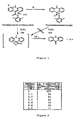
- the present invention discloses a method for the measurement of hydride using a chemiluminescent compound.
- the preferred chemiluminescent molecule is an acridinium compound.
- the source of hydride for the reduction of acridinium compound may be of chemical or biochemical origin, or the result of enzymatic catalysis.
- the chemical source of hydride for example, might be metal hydrides, such as NaBH 4 .
- a biochemical source of hydride might be that derived from NADH, NADPH, FMNH 2 or FADH 2
- an enzymatic source would be the class of oxidoreductases termed dehydrogenases which convert in redox reactions NADH, NADPH, FMNH 2 or FADH 2 from NAD, NADP, FMN or FAD.
- acridinium compounds as chemiluminescent indicators of hydride.
- Such tests which could encompass many different formats as discussed below in detail, may involve the quantitation or detection of metal hydrides, or enzyme cofactors such as NADH, NADPH, FMNH 2 , or FADH 2 .
- diagnostic assays which might use dehydrogenases as reagents, indicators, diagnostic markers or as labels.
- Ethanol for example, might be detected with acridinium ester chemiluminescence through the reaction of alcohol dehydrogenase on ethanol, said reaction producing NADH.
- dehydrogenase might be used in an ELISA for the detection of a specific analyte with acridinium ester providing the signaling response.
- Nucleic acid assays using dehydrogenase as a label are also envisioned.
- Assays for the detection of clinically relevant dehydrogenases such as elevated glutamate dehydrogenase as an indicator of hepatocellular damage might also be developed.
- chemiluminescent activity of an acridinium compound can be modulated (increased or decreased) by hydride.
- chemiluminescence can be increased when the detector is sensitive to a selective range of emission wavelength. If the reaction results in a shift of the emission to a wavelength where a detector is more sensitive, increased chemiluminescence will be observed.
- an increase is observed because the moiety causing quenching is reduced and inactivated by the hydride.
- These structures include not only blue-emitting (about 420-490 nm), but also green (about 490-570 nm), yellow (about 570-580 nm), orange (about 580-595 nm) and red (about 595-780 nm)-emitting acridinium compounds and said analogs.
- R 1 is an alkyl, alkenyl, alkynyl or aralkyl containing optionally up to 20 heteroatoms; preferably R 1 is methyl or sulfoalkyl group.
- R 2 , R 2 ', and R 3 are identical or different, selected from hydrogen, -R, substituted or unsubstituted aryl (ArR or Ar), halide, amino, hydroxyl, nitro, sulfonate, -CN, -COOH, -SCN, -OR, -SR, -SSR, -C(O)R, - C(O)OR, -C(O)NHR, or -NHC(O)R;
- R is selected from the group consisting of alkyl, alkenyl, alkynyl, aryl, and aralkyl containing optionally up to 20 heteroatoms;
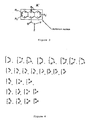
- R 2 and R 3 can be linked as shown in Figure 4, so as to form an additional ring fused to the attached acridinium nucleus.
- the C 1 , C 2 , C 3 , C 4 , C 5 , and C 8 , peri-positions of the acridinium nucleus are optionally substituted as represented by R 2 '.
- a - is a counter ion which is introduced to pair with the quaternary nitrogen of the acridinium nucleus either as a result of quarternarizing the acridine ring nitrogen by the use of alkylating agents during the synthesis, modification of the R 1 , or subsequent exchange that occurs during the work-up of reaction mixtures and purification of desired compounds in a solution or fluid containing excess amount of other anions.
- Examples of the counter ions include CH 3 SO 4 - , FSO 3 - , CF 3 SO 3 - , C 4 F 9 SO 3 - , CH 3 C 6 H 4 SO 3 - , halide, CF 3 COO - , CH 3 COO - , and NO 3 - , X is nitrogen, oxygen or sulfur;
- R 4 and R 8 can be (1) hydrogen or (2) alkyl, alkenyl, alkynyl, alkoxyl (-OR), alkylthiol (-SR), or substituted amino groups that serve to stabilize the -COX- linkage between the acridinium nucleus and the Y moiety, through steric and/or electronic effects.
- R 4 and R 8 can be (1) hydrogen or (2) alkyl, alkenyl, alkynyl, alkoxyl (-OR), alkylthiol (-SR), or substituted amino groups that serve to stabilize the -COX- linkage between the acridinium nucleus and the Y moiety, through steric and/or electronic effects.
- one of them is as defined below while the other is a hydrogen, if the C 1 or C 8 position of the acridinium nucleus is substituted with a lower alkyl group, preferably methyl.
- R 4 and R 8 are alkyl, alkenyl, alkynyl, alkoxyl (-OR), alkylthiol (-SR), or substituted amino groups that serve to stabilize the -COX- linkage between the acridinium nucleus and the Y moiety, through steric and/or electronic effect. Most preferably R 4 and R 8 are lower alkyl (e.g., a methyl group).
- R 5 and R 7 are any of R 2 , R 2 ', and R 3 defined above; R 6 is also any of R 2 , R 2 ', and R 3 defined above, when the acridinium compound is used as a free chemiluminescent indicator.
- the acridinium compounds can be covalently attached to a more water-soluble polymer (natural or synthetic) or biopolymers (e.g. proteins, polysaccharides, glycoproteins, and nucleic acids) in a conjugate form to enhance its water solubility for practical, commercial utility as chemiluminescent indicator. It will then be necessary to impart a reactive functional group, preferably, onto R 6 to facilitate covalent linkage formation between the acridinium compound and the water soluble polymer or biopolymer of choice.
- a more water-soluble polymer naturally or synthetic
- biopolymers e.g. proteins, polysaccharides, glycoproteins, and nucleic acids
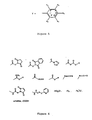
- R 6 can also be -R 9 -R 10 , where R 9 is not required but optionally can be branched or straight-chained alkyl, substituted or unsubstituted aryl or aralkyl containing optionally up to 20 heteroatoms, and R10 is a leaving group or an electrophilic functional group attached with a leaving group including but not limited to those shown in Figure 6.
- R 10 can also be -Q-R-Nu, -Q-R-(I)nNu-, -Q-Nu, -R-Nu, or -Nu, where n is a number of at least 1, Nu is a nucleophilic group, Q is a functional linkage, I is an ionic or ionizable group; detailed definitions of Nu, Q, and I can be found in the US Patent #5,241,070, column 3, line 45 to column 3, line 16. The reactions contemplated for Nu were also described in the same patent, column 3, line 48 to column 4, line 18.
- R 5 and R 6 , and R 6 and R 7 are interchangeable;
- Y When X is nitrogen, then Z is -SO 2 -Y', Y' has the same definition of Y as described above, and both can be the same or different. Additionally, Y itself can be a branched or straight-chained alkyl containing optionally up to 20 carbon atoms, halogenated or unhalogenated, or a substituted aryl, or heterocyclic ring system.
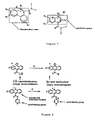
- the general structure of the phenanthridinium and quinolinium compounds useful as the chemiluminescent indicators of the present invention can be schematically represented as shown in Figure 7.
- All the definitions of the substituents and counter-ion of the phenanthridinium and quinolinium nucleus discussed above are the same as those described for the acridinium compounds earlier, except for the possible peri-positions for R 2 ' substituent have to be re-designated at the C 1 , C 2 , C 3 , C 4 , C 6 , and C 9 positions of the phenanthridinium nucleus and C 2 , C 3 , C 5 , and C 8 positions of the quinolinium nucleus.
- hydride such as NADH can also be employed to modulate the chemiluminescent activity of acridinium compounds in other novel and interesting ways which can be potentially useful.
- Several such approaches are summarized below all of which require chemical selectivity (regioselectivity) in the reduction reaction.
- hydride can be directed to the ester or sulfonylamide moiety (instead of the acridinium nucleus) of the acridinium compound to effect a change in the emission characteristics of the compound.
- ester or sulfonylamide moiety instead of the acridinium nucleus
- Poor leaving groups are typically electron-rich and can be generated by hydride addition to electron-poor functional groups.
- an acridinium ester or sulfonylamide that contains an electron-deficient ester or sulfonylamide moiety can be converted to one which is electron-rich, thereby converting a strongly chemiluminescent compound to a weak one.
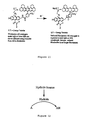
- Figure 8 illustrates how this is achieved. While carrying some of the necessary basic substituents and the counter-ion as defined in section A above, the acridinium nucleus in the illustration is deliberately engineered to be electron-rich by the attachment of one or more desired electron-donating groups (relative to hydrogen and designated with letter D), which are as defined in "Advanced Organic Chemistry” Jerry March Ed., 4 th edition, page 18-19, at one or more optimal positions of the acridinium nucleus, so that reduction of the N-methylpyridinium moiety is achieved preferentially. If more than one electron-donating groups (D's) are substituted at the acridinium nucleus, the D's can be the same or different. To impart other important or desirable structural characteristics (e.g.
- Reduction can also be used to alter the emission-wavelength of an acridinium compound.
- the emission-wavelength of blue-emitting acridinium compounds can be shifted to long wavelengths by creating an extended electronic conjugation system at the acridinium nucleus as discussed in PCT application WO 0 009 487.
- emission wavelength of the acridinium compound can be shifted from long to short wavelength, hence varying the chemiluminescent intensity of the selected wavelength range under monitoring.
- Figure 9 illustrates the above principle.
- the acridinium nucleus in the illustration is also deliberately engineered to be electron-rich by the attachment of one or more desired electron-donating groups (relative to hydrogen and designated with letter D), at one or more optimal positions of the acridinium nucleus, so that reduction of the side chain extended conjugation system is achieved preferentially. If more than one electron-donating groups (D's) are substituted at the acridinium nucleus, the D's can be the same or different. To impart other important or desirable structural characteristics (e.g.
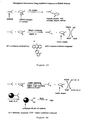
- the acridinium nucleus in Figure 10 can be attached with one or more desired electron-donating groups, D's at one or more optimal positions of the acridinium nucleus, so that reduction of the side chain quencher is achieved preferentially. If more than one electron-donating groups (D's) are substituted at the acridinium nucleus, the D's can be the same or different. Similarly, to impart other important or desirable structural characteristics (e.g.
- An alternative mode similar to the use of the acridinium compound-quencher conjugate is to replace the quencher with a fluorophore to form the AE-fluorophore conjugate.
- Acridinium-fluorophore conjugates where the fluorophore is linked to the acridinium nucleus, in their chemiluminescent reactions, emit light in a region of the spectrum characteristic of the fluorophore. This occurs via resonance energy transfer from the electronically excited, acridone moiety to the fluorophore.
- the principle and examples of the AE-fluorophore conjugates are disclosed in more detail in PCT Application WO 9 854 574.
- One of the examples of this novel class of compounds is the conjugate of acridinium ester with rhodamine as shown below.
- the conjugate emits light at 628 nm due to efficient energy transfer from the AE moiety to rhodamine after it is treated with hydrogen peroxide in strong alkaline solution.
- the acridinium moiety can be modified by varying the D group so that the rhodamine moiety is selectively or preferentially reduced by hydride. As the result of the reduction, the light emission intensity at long wavelength due to the rhodamine moiety can decrease and the emission intensity at short wavelength due the acridinium moiety can increase.
- the quantitation of hydride is made possible either by detecting the decrease of the long emission signal or by detecting the increase of the short emission signal.
- the acridinium nucleus in Figure 11 can be attached with one or more desired electron-donating groups, D's at one or more optimal positions of the acridinium nucleus, so that reduction of the side chain fluorophore moiety is achieved preferentially. If more than one electron-donating groups (D's) are substituted at the acridinium nucleus, the D's can be the same or different. Similarly, to impart other important or desirable structural characteristics (e.g.
- acridinium ester and by analogy any acridinium-type compound
- the present invention discloses an analytical procedure as shown in Figure 12.
- a and AH represent oxidized and reduced forms of an acridinium compound whose chemiluminescent-emission properties are distinguishable.
- the hydride source can be chemical or biological.
- the hydride can be transferred either directly to the acridinium compound or indirectly through the intervention of an enzyme such as diaphorase.
- One additional benefit of using the instant invention is that it allows a laboratory to measure hydride generation via the use of an instrument that measures chemiluminescence, thus eliminating the need to use a UV-visible spectrophotomer, which was needed in the past to measure hydride generation.
- Emit® is a registered trademark of Behring Diagnostics GmBH and is defined below, Schneider, R. S. "Recent Advances in Enzyme Immunoassay” in Ligand Assay; Langan, J. and Clapp, J., Editors: Masson Publishing USA, Inc. 1981) employs a homogeneous immunoassay format and monitors and quantifies the formation of NADH (directly by UV spectrophotometry) whose concentration is correlated ultimately to the concentration of analyte.
- acridinium compounds as an excellent, quantitative indicator of NADH
- the model chemiluminescent hydride indicators used for this study were 2',6'-dimethylphenyl-10-methylacridinium-9-carboxylate (DMAE- ⁇ ) free label and 2',6'-dimethylphenyl-10-(3'-sulfopropyl)-acridinium-9-carboxylate (NSP-DMAE) conjugated via a carboxamide linkage to bovine serum albumin (BSA).
- DMAE- ⁇ 2',6'-dimethylphenyl-10-methylacridinium-9-carboxylate
- NSP-DMAE 2',6'-dimethylphenyl-10-(3'-sulfopropyl)-acridinium-9-carboxylate conjugated via a carboxamide linkage to bovine serum albumin (BSA).
- BSA bovine serum albumin
- chemiluminescent signal from NSP-DMAE or DMAE- ⁇ is used in an enzyme-immunoassay for the quantitation of theophylline, quinidine and valproate in serum and also in an enzymatic assay for the quantitation of ethanol in serum.
- a prototype assay has been developed on the Bayer Diagnostics Corp.
- ACS:180® (ACS:180® is a registered trademark of Bayer Corporation for the Automated Chemiluminescence Analyzer: a fully automated immunodiagnostic assay system) using Behring Diagnostics Emit® 2000 Theophylline and Model 1 Vaproate Assay reagents and also Bayer Corporation Immuno 1TM Emit® 2000 Quinidine Assay reagents as well as an enzymatic assay for the determination of ethanol in serum with the inclusion of an additional Chemiluminescent Redox Indicator reagent.
- DMAE- ⁇ or NSP-DMAE-BSA conjugates are useful for applications in both organic and aqueous media.
- the users of the present invention can select a highly water soluble acridinium compound to eliminate the use of organic solvents which are potentially detrimental to assay. Therefore, the user is provided with a number of options for selection of the chemiluminescent hydride indicator with appropriate solubility for application in an assay matrix with a given polarity.
- the acridinium compound selected as the chemiluminescent indicator for hydride might be conjugated to any number of small molecules, macromolecules or particulates, covalently or otherwise, to improve or impart properties such as, but not limited to, solubility, quantum yield, stability and resonance energy transfer.
- Enzyme-multiplied immunoassay technique was originally developed by Syva Co., Inc. as a bioanalytical technology and is currently marketed in kits by Dade-Behring, Inc., chiefly for therapeutic drug monitoring (TDM) with some minor application for the detection of drugs of abuse.
- TDM therapeutic drug monitoring
- the automated, homogeneous Behring Diagnostics, Inc. Emit® assay series is currently one of several preferred diagnostics systems for TDM analytes. In these assays, a drug present in a patient sample will compete with a drug-enzyme conjugate for a limited quantity of antibody, directed against the drug.
- the conjugate's enzymatic activity which in this case is that of the glucose-6-phosphate dehydrogenase (G6PDH) from Leuconostoc mesenteroides , is partially inhibited when bound to the drug-specific antibody.
- G6PDH catalyzes the reduction of oxidized nicotinamide adenine dinucleotide (NAD) to the reduced form, NADH, by hydride transfer from glucose-6-phosphate (G6P) and is monitored by the increased UV absorbance at 340 nm due to NADH formation.
- Endogenous sample G6PDH requires NADP, not NAD, for catalytic activity and will, therefore, not interfere with NAD reduction.
- the G6PDH catalytic activity of the conjugate is correlated to the drug concentration in the patient sample through the rate of NADH formation, for example ⁇ A 340 nm /minute.
- a Behring Diagnostics, Inc. Emit® assay kit holds two reagents: Reagent A contains a buffered solution of G6P (substrate), NAD (enzyme cofactor), and murine monoclonal antibodies reactive to a particular drug analyte, while Reagent B consists of a buffered solution of drug-G6PDH conjugate.
- Bayer Diagnostics ACS:180® readout system employs a photomultiplier tube to quantitate chemiluminescent signal
- adaptation of a Behring Diagnostics, Inc. Emit® assay to the Bayer Diagnostics ACS:180® requires an additional reagent for transduction of the colorimetric signal to chemiluminescence.
- This additional reagent is termed a chemiluminescent redox indicator of hydride (CHI), and the CHI is an acridinium compound.
- CHI chemiluminescent redox indicator of hydride
- the following experiments have indicated that several acridinium ester derivatives are reduced by hydride transfer (most likely to the C-9 position of the N-methylacridinium nucleus) from an equimolar concentration of NADH in the milli- and micromolar range.
- DMAE- ⁇ should, therefore, function as a chemiluminescent redox indicator of hydride in an Emit® type assay, where increased analyte concentrations would increase the rate of NADH formation, thereby decreasing the chemiluminescence of a fixed quantity of acridinium compound included within the assay reaction.
- FIG. 13 A schematic representation of the above assay is shown in Figure 13 and examples of three analytes (theophylline, quinidine and valproate) measured using the aforementioned technique are described in detail in example 5-8 as well as for an enzymatic assay for the quantitation of ethanol.
- the data clearly indicate that acridinium compounds are indeed excellent, quantitative indicators of hydride.
- the homogenous assay described above measures the residual chemiluminescent activity in the assay mixture i.e. increasing concentrations of analyte lead to decreasing levels of chemiluminescent activity remaining in the assay mixture. Since the assay is homogenous, extraneous substances in the sample e.g. from a whole blood sample, could potentially interfere or inhibit the chemiluminescent reaction of the acridinium compound with hydrogen peroxide. In the event this is observed, it is possible to manipulate the assay so that this interference/inhibition is removed. This can be accomplished in a most direct way as illustrated in Figure 14. In this assay, a solid phase such as paramagnetic particles are introduced at the end of the homogenous assay.
- the particles are coated with an antibody which is specific for the acridinium compounds (Ref: U. Piran, et al., U.S. Patent No. 5,445,936, "Method for Non-Competitive Binding Assays"). Following completion of the homogenous assay, the particles are introduced to capture the acridinium compound. The particles can then be washed to remove interfering substances prior to triggering the chemiluminescent reaction with hydrogen peroxide.
- an antibody which is specific for the acridinium compounds
- Assays that employ a heterogeneous format can also be coupled to the present invention.
- Figure 15 illustrate how this may be performed.
- the hydride generating system such as G6PDH, alcohol dehydrogenase etc.
- the concentration of the enzyme label in the assay is then measured by using the NADH generated by the enzyme to reduce the acridinium compound indicator molecule.
- the hydride generating system such as G6PDH can be coupled to the analyte for use in the assay as a tracer.
- Signal readout in the assay is accomplished in a similar manner as the sandwich assay.
- the acid chloride (5.3 g) was mixed with 2,6-dimethylphenol, dimethylaminopyridine (0.5 g) in anhydrous pyridine (40 mL). The reaction was heated in an oil-bath at 100°C for 3 hours. The reaction was then cooled to room temperature and the crude product was purified by flash chromatography on silica gel using 1:4, ethyl acetate in hexanes as eluent. Concentration of the flash fractions afforded the product as a bright yellow powder.
- Bovine serum albumin (1.65 mg, 25 nmol) was dissolved in 475 ⁇ L of 0.20 M NaHCO 2 , pH 9.0.
- NSP-DMAE-NHS US Patent 5,656,426) (0.61 mg, 1.03 ⁇ mol) was dissolved in 103 ⁇ L of N,N-dimethylformamide DMF to make a 10 mM solution. Twenty-five microliters of the 10 mM NSP-DMAE-NHS was mixed with the 475 ⁇ L of BSA solution and incubated at 4°C for 16 hours. The conjugate was isolated in water by SEC. NSP-DMAE incorporation onto BSA was approximately four labels per protein molecule as calculated from the known chemiluminescent specific activity of the label and protein determination using the Bradford protein assay (6.4 ⁇ M).
- theophylline present in a patient sample will compete with a theophylline-G6PDH conjugate for binding to a limited quantity of anti-theophylline, murine, monoclonal antibody. Binding of the anti-theophylline antibody to the theophylline-G6PDH conjugate partially inhibits enzymatic activity.
- G6PDH catalyzes the reduction of oxidized nicotinamide adenine dinucleotide (NAD) to the reduced form NADH by hydride transfer from glucose-6-phosphate (G6P).
- the following assay was run in entirety by the Bayer Diagnostics ACS:180® (Bayer Diagnostics Corp., Walpole, MA). Cuvettes were loaded into the track, then 10 ⁇ Ls of Bayer Diagnostics ACS Theophylline Assay standards or controls were added to their respective cuvettes in replicates of three.
- the standards contained theophylline in concentrations of 0.00, 13.9, 27.8, 55.5, 111 and 222 ⁇ M.
- the Bayer Diagnostics Ligand Controls 1, 2 and 3 contained theophylline in concentrations specified in the following table.
- the cuvettes were incubated at 37°C for another 2 minutes and 40 seconds, then 20 ⁇ Ls of the Chemiluminescent Indicator, containing either 10 mM NMA and 125 nM DMAE- ⁇ in aqueous 10% ( v / v ) DMF and 25% ( v / v ) methanol or 12 nM NSP-DMAE 4 -BSA conjugate, 0.20 M glycine, 1.0 %( w / v ) BSA, pH 7.4, was added for a final incubation at 37°C for 5 minutes. Since the assay is homogeneous Washes 1 and 2, as well as, Vacuums 1, 2 and 3 were switched off.
- reaction mixtures were sequentially mixed with Bayer Diagnostics ACS Reagents 1 (0.1 N HNO 3 , 0.5 %( w / v ) H 2 O 2 ) and Reagent 2 (0.25 N NaOH, 0.5 % ( w / v ) N,N,N,N-hexadecyltrimethylammonium chloride surfactant) to initiate the chemiluminescent reaction.
- Bayer Diagnostics ACS Reagents 1 0.1 N HNO 3 , 0.5 %( w / v ) H 2 O 2
- Reagent 2 (0.25 N NaOH, 0.5 % ( w / v ) N,N,N,N-hexadecyltrimethylammonium chloride surfactant
- valproate present in a patient sample will compete with a valproate-G6PDH conjugate for binding to a limited quantity of anti-valproate, murine, monoclonal antibody. Binding of the anti-valproate antibody to the valproate-G6PDH conjugate partially inhibits enzymatic activity.
- G6PDH catalyzes the reduction of oxidized nicotinamide adenine dinucleotide (NAD) to the reduced form NADH by hydride transfer from glucose-6-phosphate (G6P). Hydride is then chemically transferred from the NADH to DMAE- ⁇ or NSP-DMAE conjugated to BSA. Consequently, the G6PDH catalytic activity of the conjugate is correlated to the valproate concentration in the patient sample and inversely correlated to the residual chemiluminescence of the assay reaction.
- NAD nicotinamide adenine dinucleotide
- G6P glucose-6-phosphate
- the following assay was run in entirety by the Bayer Diagnostics ACS:180® (Bayer Diagnostics Corp., Walpole, MA). Cuvettes were loaded into the track, then 10 ⁇ Ls of Bayer Diagnostics in-house ACS Valproate Assay standards or controls were added to their respective cuvettes in replicates of three.
- the standards contained valproate in concentrations of 0.000, 86.7, 173, 347, 693 and 1387 ⁇ M.
- the Bayer Diagnostics in-house TDM Controls A, B and C contained valproate in concentrations specified in the following table.
- the cuvettes were incubated at 37°C for another 2 minutes and 40 seconds, then 20 ⁇ Ls of the Chemiluminescent Indicator, containing either 10 mM NMA and 125 nM DMAE- ⁇ in aqueous 10% ( v / v ) DMF and 25% ( v / v ) methanol or 12 nM NSP-DMAE 4 -BSA conjugate, 0.20 M glycine, 1.0 %( w / v ) BSA, pH 7.4, was added for a final incubation at 37°C for 5 minutes. Since the assay is homogeneous Washes 1 and 2, as well as, Vacuums 1, 2 and 3 were switched off.
- reaction mixtures were sequentially mixed with Bayer Diagnostics ACS Reagents 1 (0.1 N HNO 3 , 0.5 %( w / v ) H 2 O 2 ) and Reagent 2 (0.25 N NaOH, 0.5 %( w / v ) N,N,N,N-hexadecyltrimethylammonium chloride surfactant) to initiate the chemiluminescent reaction.
- Chemiluminescence data were collected for five seconds as photons detected by ACS luminometer and expressed in relative light units (RLUs).
- quinidine present in a patient sample will compete with a quinidine-G6PDH conjugate for binding to a limited quantity of anti-quinidine, murine, monoclonal antibody. Binding of the anti-quinidine antibody to the quinidine-G6PDH conjugate partially inhibits enzymatic activity.
- G6PDH catalyzes the reduction of oxidized nicotinamide adenine dinucleotide (NAD) to the reduced form NADH by hydride transfer from glucose-6-phosphate (G6P). Hydride is then chemically transferred from the NADH to NSP-DMAE conjugated to BSA. Consequently, the G6PDH catalytic activity of the conjugate is correlated to the quinidine concentration in the patient sample and inversely correlated to the residual chemiluminescence of the assay reaction.
- NAD nicotinamide adenine dinucleotide
- G6P glucose-6-phosphate
- the following assay was run in entirety by the Bayer Diagnostics ACS:180® (Bayer Diagnostics Corp., Walpole, MA). Cuvettes were loaded into the track, then 10 ⁇ Ls of Bayer Diagnostics in-house ACS Quinidine Assay standards were added to their respective cuvettes in replicates of three. The standards contained quinidine in concentrations of 0.00, 0.77, 1.5, 3.1, 6.2, 12, 18 and 25 ⁇ M. To each cuvette, 160 ⁇ Ls of Bayer Corporation Emit® 2000 Quinidine Assay Reagent A, containing a buffered solution of G6P, NAD, and anti-quinidine antibody, was added and incubated at 37°C for 2 minutes and 40 seconds.
- reaction mixtures were sequentially mixed with Bayer Diagnostics ACS Reagents 1 (0.1 N HNO 3 , 0.5 %( w / v ) H 2 O 2 ) and Reagent 2 (0.25 N NaOH, 0.5 %( w / v ) N,N,N,N-hexadecyltrimethylammonium chloride surfactant) to initiate the chemiluminescent reaction.
- Chemiluminescence data were collected for five seconds as photons detected by ACS luminometer and expressed in relative light units (RLUs).
- ethanol from the patient sample is oxidized to acetaldehyde through the specific catalytic action of a fixed quantity of yeast alcohol dehydrogenase (ADH) with concurrent hydride reduction of the cofactor nicotinamide adenine dinucleotide (NAD) to NADH.
- ADH yeast alcohol dehydrogenase
- NAD cofactor nicotinamide adenine dinucleotide
- Equilibrium in favor of oxidation of ethanol to acetaldehyde is further promoted with the addition of a hydrazide aldehyde scavenger. Hydride is chemically transferred from the NADH to NSP-DMAE conjugated to BSA. Consequently, the ethanol concentration is correlated to NADH formation and inversely related to the residual chemiluminescence of the assay reaction.
- the following assay was run in entirety by the Bayer Diagnostics ACS:180® (Bayer Diagnostics Corp., Walpole, MA). Cuvettes were loaded into the track, then 10 ⁇ Ls of standards prepared by serial dilution of ethanol in serum were added to their respective cuvettes in replicates of three. The standards contained ethanol in concentrations of 0.00, 0.025, 0.050, 0.10, 0.20, and 0.40 %( w / v ). To each cuvette, 150 ⁇ Ls of Ethanol Assay Reagent A, containing 0.15 M sodium phosphate, 0.15 M hydrazinecarboxamide hydrochloride, pH 9.0, was added and incubated at 37°C for 2 minutes and 40 seconds.
- Ethanol Assay Reagent B consisting of 22 mM glycine, 12 mM NAD, 14 ⁇ M ADH, 1.0 mg/mL BSA, pH7.0.
- the cuvettes were incubated at 37°C for another 2 minutes and 40 seconds, then 20 ⁇ Ls of the Chemiluminescent Indicator, containing 12 nM NSP-DMAE 4 -BSA conjugate, 0.20 M glycine, 1.0 %( w / v ) BSA, pH 7.4, was added for a final incubation at 37°C for 5 minutes. Since the assay is homogeneous Washes 1 and 2, as well as, Vacuums 1, 2 and 3 were switched off.
- reaction mixtures were sequentially mixed with Bayer Diagnostics ACS Reagents 1 (0.1 N HNO 3 , 0.5 %( w / v ) H 2 O 2 ) and Reagent 2 (0.25 N NaOH, 0.5 %( w / v ) N, N, N, N-hexadecyltrimethylammonium chloride surfactant) to initiate the chemiluminescent reaction.
- Chemiluminescence data were collected for five seconds as photons detected by ACS luminometer and expressed in relative light units (RLUs). Method of Calculation for Assay Parameters. Arithmetic means for RLUs resulting from a specific analyte concentration, represented here as ⁇ , were calculated from three replicates.
- the regression constant, b the regression coefficient, m
- the asymptotic limit at infinite dose y ⁇
- the asymptotic limit for the zero dose y 0
- the latter three of these parameters were calculated directly using the iterative, standard, four-parameter logistic (4PL-STD) analysis function of the DOSECALC.EXE Rev.1.73 program (Bayer Diagnostics Corp., Walpole, MA).
- acridinium compounds will function as chemiluminescent indicators of hydride either as free indicators dissolved in organic solvent or as hydrophilic conjugates when covalently linked to protein.
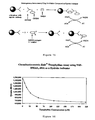
- a plot of the RLUs versus analyte concentration illustrates the inverse, non-linear relationship between chemiluminescence and analyte concentration.
- precision in the ethanol assay was good being under 5 % C.V. for all points.
Landscapes
- Life Sciences & Earth Sciences (AREA)
- Health & Medical Sciences (AREA)
- Chemical & Material Sciences (AREA)
- Engineering & Computer Science (AREA)
- Immunology (AREA)
- Molecular Biology (AREA)
- Biomedical Technology (AREA)
- Hematology (AREA)
- Urology & Nephrology (AREA)
- Biotechnology (AREA)
- Microbiology (AREA)
- General Health & Medical Sciences (AREA)
- Organic Chemistry (AREA)
- Physics & Mathematics (AREA)
- Analytical Chemistry (AREA)
- Biochemistry (AREA)
- Food Science & Technology (AREA)
- Medicinal Chemistry (AREA)
- Pathology (AREA)
- General Physics & Mathematics (AREA)
- Zoology (AREA)
- Cell Biology (AREA)
- Wood Science & Technology (AREA)
- Proteomics, Peptides & Aminoacids (AREA)
- Biophysics (AREA)
- General Engineering & Computer Science (AREA)
- Genetics & Genomics (AREA)
- Bioinformatics & Cheminformatics (AREA)
- Investigating Or Analysing Materials By The Use Of Chemical Reactions (AREA)
- Measuring Or Testing Involving Enzymes Or Micro-Organisms (AREA)
- Plural Heterocyclic Compounds (AREA)
- Investigating Or Analyzing Non-Biological Materials By The Use Of Chemical Means (AREA)
- Investigating Or Analysing Biological Materials (AREA)
Claims (19)
- Méthode d'analyse de chimioluminescence pour détecter ou quantifier un hydrure, ladite analyse comprenant la mesure de la quantité de chimioluminescence engendrée par un composé chimioluminescent dans une réaction dans laquelle ledit composé chimioluminescent réagit avec un hydrure engendré par une réaction chimique, biochimique ou à catalyse enzymatique.
- Méthode suivant la revendication 1, dans laquelle ledit composé chimioluminescent est un dérivé d'acridinium, de benzacridinium, de phénanthridinium, de quinolinium ou de lucigénine, ou le conjugué dudit composé d'acridinium, de benzacridinium, de phénanthridinium, de quinolinium ou de lucigénine.
- Méthode suivant la revendication 1, dans laquelle ledit hydrure réagit avec le noyau dudit composé chimioluminescent.
- Méthode suivant la revendication 1, dans laquelle ledit hydrure réagit avec le conjugué dudit composé chimioluminescent.
- Méthode suivant la revendication 1, dans laquelle ledit hydrure réagit avec le dérivé consistant en ester ou sulfonylamide dudit composé chimioluminescent.
- Méthode suivant la revendication 1, dans laquelle ledit hydrure réagit avec ledit composé chimioluminescent contenant(a) un système de conjugaison électronique étendu,(b) un agent de désactivation réductible par un hydrure,(c) un ou plusieurs groupes cédant des électrons ou(d) un accepteur d'énergie de résonance de fluorescence.
- Méthode pour déterminer la quantité d'un hydrure produite dans une réaction, comprenant les étapes consistant à(a) ajouter une quantité connue de composé chimioluminescent audit mélange réactionnel,(b) mesurer la quantité de chimioluminescence émise par ledit mélange réactionnel après l'addition de réactifs qui libèrent ladite chimioluminescence,(c) comparer la quantité de chimioluminescence produite avec la chimioluminescence prévue en l'absence d'hydrure et(d) calculer la quantité dudit hydrure présente par comparaison avec une courbe d'étalonnage.
- Méthode suivant la revendication 7, dans laquelle ledit hydrure est engendré dans une méthode d'analyse pour un analyte.
- Méthode suivant la revendication 7, dans laquelle ledit composé chimioluminescent est un dérivé d'acridinium, de benzacridinium, de phénanthridinium, de quinolinium ou de lucigénine, ou bien le conjugué dudit dérivé d'acridinium, de benzacridinium, de phénanthridinium, de quinolinium ou de lucigénine.
- Méthode suivant la revendication 9, dans laquelle ledit dérivé d'acridinium ou de benzacridinium est un ester d'acridinium ou ester de benzacridinium, un acridinium-sulfonylamide ou un benzàcridinium-sulfonylamide.
- Méthode suivant la revendication 7, dans laquelle ledit hydrure est produit dans une réaction redox biochimique d'un cofacteur enzymatique.
- Méthode suivant la revendication 11, dans laquelle ledit cofacteur est le NAD+, le NADP+, le FMN ou le FAD.
- Méthode pour déterminer la quantité d'un analyte dans un échantillon déterminant la quantité d'hydrure produite dans une réaction, comprenant les étapes consistant à(a) ajouter une quantité connue d'un composé chimioluminescent audit mélange réactionnel,(b) mesurer la quantité de chimioluminescence émise par ledit mélange réactionnel après l'addition de réactifs qui libèrent ladite chimioluminescence,(c) comparer la quantité de chimioluminescence produite avec la chimioluminescence prévue en l'absence d'hydrure et(d) calculer la quantité dudit analyte présente par comparaison avec une courbe d'étalonnage.
- Méthode suivant la revendication 13, dans laquelle ledit analyte est la théophylline, le valproate, la quinidine ou l'éthanol et ledit échantillon est un échantillon de sérum.
- Méthode pour la détermination par chimioluminescence d'un analyte dans un échantillon, comprenant les étapes consistant à(a) ajouter de manière séquentielle audit échantillon les réactifs d'une analyse colorimétrique d'hydrure et un indicateur chimioluminescent d'hydrure,(b) mesurer la chimioluminescence engendrée et(c) comparer ladite luminescence engendrée avec une courbe d'étalonnage pour déterminer la quantité d'analyte dans ledit échantillon.
- Kit comprenant(a) les réactifs pour une analyse colorimétrique d'hydrure et(b) un indicateur chimioluminescent d'hydrure.
- Méthode suivant la revendication 15, dans laquelle ladite chimioluminescence engendrée est mesurée sur un analyseur de chimioluminescence ou système de diagnostic automatisé.
- Méthode suivant la revendication 13, pour la suppression de l'interférence résultant de la présence de sang entier, comprenant, avant la mesure de chimioluminescence,(a) l'addition d'une phase solide revêtue d'un anticorps spécifique d'un dérivé d'acridinium,(b) la mise en incubation du mélange réactionnel pour permettre la capture dudit dérivé d'acridinium,(c) la séparation de ladite phase solide et le lavage de ladite phase solide séparée pour éliminer ladite substance interférente.
- Méthode suivant la revendication 15 pour supprimer l'interférence résultant de la présence de sang entier, comprenant, avant la mesure de chimioluminescence(a) l'addition d'une phase solide revêtue d'un anticorps spécifique d'un dérivé d'acridinium,(b) la mise en incubation du mélange réactionnel pour permettre la capture dudit dérivé d'acridinium,(c) la séparation de ladite phase solide et le lavage de ladite phase solide séparée pour éliminer ladite substance interférente.
Applications Claiming Priority (3)
| Application Number | Priority Date | Filing Date | Title |
|---|---|---|---|
| US10982398P | 1998-11-25 | 1998-11-25 | |
| US109823P | 1998-11-25 | ||
| PCT/IB1999/001894 WO2000031543A1 (fr) | 1998-11-25 | 1999-11-24 | Mesure d'hydrure par utilisation de composes chimioluminescents d'acridinium |
Publications (2)
| Publication Number | Publication Date |
|---|---|
| EP1049933A1 EP1049933A1 (fr) | 2000-11-08 |
| EP1049933B1 true EP1049933B1 (fr) | 2005-09-14 |
Family
ID=22329751
Family Applications (1)
| Application Number | Title | Priority Date | Filing Date |
|---|---|---|---|
| EP99972738A Expired - Lifetime EP1049933B1 (fr) | 1998-11-25 | 1999-11-24 | Mesure d'hydrure par utilisation de composes chimioluminescents d'acridinium |
Country Status (10)
| Country | Link |
|---|---|
| EP (1) | EP1049933B1 (fr) |
| JP (2) | JP2002530678A (fr) |
| AT (1) | ATE304711T1 (fr) |
| AU (1) | AU1173400A (fr) |
| BR (1) | BR9907248A (fr) |
| CA (1) | CA2319187A1 (fr) |
| DE (1) | DE69927240T2 (fr) |
| ES (1) | ES2249065T3 (fr) |
| IL (1) | IL136929A0 (fr) |
| WO (1) | WO2000031543A1 (fr) |
Families Citing this family (12)
| Publication number | Priority date | Publication date | Assignee | Title |
|---|---|---|---|---|
| US6573043B1 (en) | 1998-10-07 | 2003-06-03 | Genentech, Inc. | Tissue analysis and kits therefor |
| US6127140A (en) * | 1999-06-18 | 2000-10-03 | Abbott Laboratories | Assay for quantitative measurement of analytes in biological samples |
| DE10051220A1 (de) * | 2000-10-16 | 2002-04-25 | Mettler Toledo Gmbh | Optischer Sensor zur Bestimmung eines Analyten und Verfahren zu dessen Herstellung |
| US6664043B2 (en) * | 2001-07-03 | 2003-12-16 | Bayer Corporation | Acridinium ester labels having hydrophilic modifiers |
| ATE553089T1 (de) * | 2002-08-20 | 2012-04-15 | Quest Diagnostics Invest Inc | Hydrophile, chemilumineszente acridiniummarkierungsreagenzien |
| US6924154B2 (en) | 2002-08-20 | 2005-08-02 | Quest Diagnostics Investments Incorporated | Hydrophilic chemilumescent acridinium labeling reagents |
| US7319041B2 (en) * | 2002-09-27 | 2008-01-15 | Siemens Medical Solutions Diagnostic | Applications of acridinium compounds and derivatives in homogeneous assays |
| JPWO2005103676A1 (ja) * | 2004-04-23 | 2008-03-13 | 独立行政法人科学技術振興機構 | 水素分布の可視化方法、水素分布の可視化システム、水素分布の可視化用発光試薬、水素検出方法および水素検出試薬 |
| US7906293B2 (en) | 2007-04-09 | 2011-03-15 | Abbott Laboratories | Acridinium phenyl esters useful in the analysis of biological |
| JP6270127B2 (ja) * | 2014-01-17 | 2018-01-31 | 国立研究開発法人物質・材料研究機構 | ニコチンアデニンジヌクレオチド誘導体を検出する方法 |
| EP3183246B1 (fr) | 2014-08-22 | 2020-09-23 | Roche Diagnostics GmbH | Indicateurs rédox |
| WO2026046220A1 (fr) * | 2024-08-29 | 2026-03-05 | 中元汇吉生物技术股份有限公司 | Procédé et système de détection de haute précision de type à détermination multi-étapes, et kit associé |
Family Cites Families (3)
| Publication number | Priority date | Publication date | Assignee | Title |
|---|---|---|---|---|
| DE3750503T2 (de) * | 1986-10-22 | 1995-02-09 | Abbott Lab | Chemilumineszierende Acridinium- und Phenantridiniumsalze. |
| US5656426A (en) * | 1988-08-01 | 1997-08-12 | Chiron Diagnostics Corporation | Functionaized hydrophilic acridinium esters |
| AU634716B2 (en) * | 1988-08-01 | 1993-03-04 | Ciba Corning Diagnostics Corp. | Method for detection of an analyte using acridinium esters and liposomes |
-
1999
- 1999-11-24 JP JP2000584306A patent/JP2002530678A/ja active Pending
- 1999-11-24 ES ES99972738T patent/ES2249065T3/es not_active Expired - Lifetime
- 1999-11-24 BR BR9907248-3A patent/BR9907248A/pt not_active Application Discontinuation
- 1999-11-24 DE DE69927240T patent/DE69927240T2/de not_active Expired - Lifetime
- 1999-11-24 IL IL13692999A patent/IL136929A0/xx unknown
- 1999-11-24 AU AU11734/00A patent/AU1173400A/en not_active Abandoned
- 1999-11-24 EP EP99972738A patent/EP1049933B1/fr not_active Expired - Lifetime
- 1999-11-24 WO PCT/IB1999/001894 patent/WO2000031543A1/fr not_active Ceased
- 1999-11-24 AT AT99972738T patent/ATE304711T1/de not_active IP Right Cessation
- 1999-11-24 CA CA002319187A patent/CA2319187A1/fr not_active Abandoned
-
2010
- 2010-06-28 JP JP2010146986A patent/JP2010237226A/ja active Pending
Also Published As
| Publication number | Publication date |
|---|---|
| DE69927240T2 (de) | 2006-06-22 |
| AU1173400A (en) | 2000-06-13 |
| ATE304711T1 (de) | 2005-09-15 |
| EP1049933A1 (fr) | 2000-11-08 |
| BR9907248A (pt) | 2000-10-17 |
| JP2002530678A (ja) | 2002-09-17 |
| JP2010237226A (ja) | 2010-10-21 |
| IL136929A0 (en) | 2001-06-14 |
| ES2249065T3 (es) | 2006-03-16 |
| DE69927240D1 (de) | 2005-10-20 |
| CA2319187A1 (fr) | 2000-06-02 |
| WO2000031543A1 (fr) | 2000-06-02 |
Similar Documents
| Publication | Publication Date | Title |
|---|---|---|
| US5445944A (en) | Methods for determining peroxidately active substances | |
| JP2010237226A (ja) | 化学発光性アクリジニウム化合物を使用するヒドリドの測定 | |
| US4230797A (en) | Heterogenous specific binding assay employing a coenzyme as label | |
| US4380580A (en) | Heterogenous chemiluminescent specific binding assay | |
| CA1078712A (fr) | Epreuve biologique d'agglutination specifique, heterogene; methode et moyens d'emploi | |
| US4318980A (en) | Heterogenous specific binding assay employing a cycling reactant as label | |
| US4492751A (en) | Heterogenous specific binding assay employing an enzyme substrate as label | |
| US5532138A (en) | Method and kits for determining peroxidatively active catalysts | |
| US5804400A (en) | Electrochemiluminescent assay | |
| CA2742025C (fr) | Methode pour accroitre et reguler l'emission lumineuse d'une reaction chimiluminescente | |
| US4468469A (en) | Substituted phenylacetic acids and salts as TBP blocking agents in iodothyronine immunoassays | |
| NO314946B1 (no) | Fremgangsmåte og analysesett for analyse av homocystein | |
| Carrico et al. | A method for monitoring specific binding reactions with cofactor labeled ligands | |
| JPH10130247A (ja) | レドックス活性化合物およびその使用 | |
| US6673560B1 (en) | Measurement of hydride using chemiluminescent acridinium compounds and applications thereof | |
| JPH063447B2 (ja) | 化学的触媒の調節剤によるイムノアッセイの信号強化法 | |
| EP1651958B1 (fr) | Nouveaux composes chimioluminescents et leur utilisation | |
| Scorilas et al. | Novel biotinylated acridinium derivatives: new reagents for fluorescence immunoassays and proteomics | |
| EP0195320B1 (fr) | Essai diagnostique utilisant la microperoxidase | |
| JPH05115300A (ja) | 増強されたケミルミネセンス法,キツト,及び組成物 | |
| US5168047A (en) | Method for improvement of sensitivity of enzyme detection by photo irradiation | |
| EP0292171A2 (fr) | Essai immunologique enzymatique | |
| Li et al. | Fluorescence and immunodiagnostic methods |
Legal Events
| Date | Code | Title | Description |
|---|---|---|---|
| PUAI | Public reference made under article 153(3) epc to a published international application that has entered the european phase |
Free format text: ORIGINAL CODE: 0009012 |
|
| AK | Designated contracting states |
Kind code of ref document: A1 Designated state(s): AT BE CH CY DE DK ES FI FR GB GR IE IT LI LU MC NL PT SE |
|
| 17P | Request for examination filed |
Effective date: 20001204 |
|
| 17Q | First examination report despatched |
Effective date: 20040902 |
|
| GRAP | Despatch of communication of intention to grant a patent |
Free format text: ORIGINAL CODE: EPIDOSNIGR1 |
|
| GRAS | Grant fee paid |
Free format text: ORIGINAL CODE: EPIDOSNIGR3 |
|
| GRAA | (expected) grant |
Free format text: ORIGINAL CODE: 0009210 |
|
| AK | Designated contracting states |
Kind code of ref document: B1 Designated state(s): AT BE CH CY DE DK ES FI FR GB GR IE IT LI LU MC NL PT SE |
|
| PG25 | Lapsed in a contracting state [announced via postgrant information from national office to epo] |
Ref country code: NL Free format text: LAPSE BECAUSE OF FAILURE TO SUBMIT A TRANSLATION OF THE DESCRIPTION OR TO PAY THE FEE WITHIN THE PRESCRIBED TIME-LIMIT Effective date: 20050914 Ref country code: LI Free format text: LAPSE BECAUSE OF FAILURE TO SUBMIT A TRANSLATION OF THE DESCRIPTION OR TO PAY THE FEE WITHIN THE PRESCRIBED TIME-LIMIT Effective date: 20050914 Ref country code: FI Free format text: LAPSE BECAUSE OF FAILURE TO SUBMIT A TRANSLATION OF THE DESCRIPTION OR TO PAY THE FEE WITHIN THE PRESCRIBED TIME-LIMIT Effective date: 20050914 Ref country code: CH Free format text: LAPSE BECAUSE OF FAILURE TO SUBMIT A TRANSLATION OF THE DESCRIPTION OR TO PAY THE FEE WITHIN THE PRESCRIBED TIME-LIMIT Effective date: 20050914 Ref country code: BE Free format text: LAPSE BECAUSE OF FAILURE TO SUBMIT A TRANSLATION OF THE DESCRIPTION OR TO PAY THE FEE WITHIN THE PRESCRIBED TIME-LIMIT Effective date: 20050914 Ref country code: AT Free format text: LAPSE BECAUSE OF FAILURE TO SUBMIT A TRANSLATION OF THE DESCRIPTION OR TO PAY THE FEE WITHIN THE PRESCRIBED TIME-LIMIT Effective date: 20050914 |
|
| REG | Reference to a national code |
Ref country code: GB Ref legal event code: FG4D |
|
| REG | Reference to a national code |
Ref country code: CH Ref legal event code: EP |
|
| REG | Reference to a national code |
Ref country code: IE Ref legal event code: FG4D |
|
| REF | Corresponds to: |
Ref document number: 69927240 Country of ref document: DE Date of ref document: 20051020 Kind code of ref document: P |
|
| PG25 | Lapsed in a contracting state [announced via postgrant information from national office to epo] |
Ref country code: IE Free format text: LAPSE BECAUSE OF NON-PAYMENT OF DUE FEES Effective date: 20051124 Ref country code: CY Free format text: LAPSE BECAUSE OF FAILURE TO SUBMIT A TRANSLATION OF THE DESCRIPTION OR TO PAY THE FEE WITHIN THE PRESCRIBED TIME-LIMIT Effective date: 20051124 |
|
| PG25 | Lapsed in a contracting state [announced via postgrant information from national office to epo] |
Ref country code: MC Free format text: LAPSE BECAUSE OF NON-PAYMENT OF DUE FEES Effective date: 20051130 Ref country code: LU Free format text: LAPSE BECAUSE OF NON-PAYMENT OF DUE FEES Effective date: 20051130 |
|
| PG25 | Lapsed in a contracting state [announced via postgrant information from national office to epo] |
Ref country code: SE Free format text: LAPSE BECAUSE OF FAILURE TO SUBMIT A TRANSLATION OF THE DESCRIPTION OR TO PAY THE FEE WITHIN THE PRESCRIBED TIME-LIMIT Effective date: 20051214 Ref country code: GR Free format text: LAPSE BECAUSE OF FAILURE TO SUBMIT A TRANSLATION OF THE DESCRIPTION OR TO PAY THE FEE WITHIN THE PRESCRIBED TIME-LIMIT Effective date: 20051214 Ref country code: DK Free format text: LAPSE BECAUSE OF FAILURE TO SUBMIT A TRANSLATION OF THE DESCRIPTION OR TO PAY THE FEE WITHIN THE PRESCRIBED TIME-LIMIT Effective date: 20051214 |
|
| ET | Fr: translation filed | ||
| PG25 | Lapsed in a contracting state [announced via postgrant information from national office to epo] |
Ref country code: PT Free format text: LAPSE BECAUSE OF FAILURE TO SUBMIT A TRANSLATION OF THE DESCRIPTION OR TO PAY THE FEE WITHIN THE PRESCRIBED TIME-LIMIT Effective date: 20060214 |
|
| NLV1 | Nl: lapsed or annulled due to failure to fulfill the requirements of art. 29p and 29m of the patents act | ||
| REG | Reference to a national code |
Ref country code: ES Ref legal event code: FG2A Ref document number: 2249065 Country of ref document: ES Kind code of ref document: T3 |
|
| REG | Reference to a national code |
Ref country code: CH Ref legal event code: PL |
|
| PLBE | No opposition filed within time limit |
Free format text: ORIGINAL CODE: 0009261 |
|
| STAA | Information on the status of an ep patent application or granted ep patent |
Free format text: STATUS: NO OPPOSITION FILED WITHIN TIME LIMIT |
|
| 26N | No opposition filed |
Effective date: 20060615 |
|
| REG | Reference to a national code |
Ref country code: IE Ref legal event code: MM4A |
|
| REG | Reference to a national code |
Ref country code: GB Ref legal event code: 732E Free format text: REGISTERED BETWEEN 20101104 AND 20101110 |
|
| REG | Reference to a national code |
Ref country code: FR Ref legal event code: TP |
|
| REG | Reference to a national code |
Ref country code: FR Ref legal event code: PLFP Year of fee payment: 17 |
|
| REG | Reference to a national code |
Ref country code: FR Ref legal event code: PLFP Year of fee payment: 18 |
|
| REG | Reference to a national code |
Ref country code: FR Ref legal event code: PLFP Year of fee payment: 19 |
|
| PGFP | Annual fee paid to national office [announced via postgrant information from national office to epo] |
Ref country code: IT Payment date: 20181127 Year of fee payment: 20 Ref country code: FR Payment date: 20181120 Year of fee payment: 20 Ref country code: GB Payment date: 20181106 Year of fee payment: 20 |
|
| PGFP | Annual fee paid to national office [announced via postgrant information from national office to epo] |
Ref country code: DE Payment date: 20190118 Year of fee payment: 20 Ref country code: ES Payment date: 20190226 Year of fee payment: 20 |
|
| REG | Reference to a national code |
Ref country code: DE Ref legal event code: R071 Ref document number: 69927240 Country of ref document: DE |
|
| REG | Reference to a national code |
Ref country code: GB Ref legal event code: PE20 Expiry date: 20191123 |
|
| PG25 | Lapsed in a contracting state [announced via postgrant information from national office to epo] |
Ref country code: GB Free format text: LAPSE BECAUSE OF EXPIRATION OF PROTECTION Effective date: 20191123 |
|
| REG | Reference to a national code |
Ref country code: ES Ref legal event code: FD2A Effective date: 20201201 |
|
| PG25 | Lapsed in a contracting state [announced via postgrant information from national office to epo] |
Ref country code: ES Free format text: LAPSE BECAUSE OF EXPIRATION OF PROTECTION Effective date: 20191125 |