EP1068802A2 - Appareil et procédé de sèchage de matière sensible à la chaleur - Google Patents
Appareil et procédé de sèchage de matière sensible à la chaleur Download PDFInfo
- Publication number
- EP1068802A2 EP1068802A2 EP00115262A EP00115262A EP1068802A2 EP 1068802 A2 EP1068802 A2 EP 1068802A2 EP 00115262 A EP00115262 A EP 00115262A EP 00115262 A EP00115262 A EP 00115262A EP 1068802 A2 EP1068802 A2 EP 1068802A2
- Authority
- EP
- European Patent Office
- Prior art keywords
- energy
- transport medium
- drying
- fluid
- heat
- Prior art date
- Legal status (The legal status is an assumption and is not a legal conclusion. Google has not performed a legal analysis and makes no representation as to the accuracy of the status listed.)
- Withdrawn
Links
Images



Classifications
-
- A—HUMAN NECESSITIES
- A23—FOODS OR FOODSTUFFS; TREATMENT THEREOF, NOT COVERED BY OTHER CLASSES
- A23B—PRESERVATION OF FOODS, FOODSTUFFS OR NON-ALCOHOLIC BEVERAGES; CHEMICAL RIPENING OF FRUIT OR VEGETABLES
- A23B2/00—Preservation of foods or foodstuffs, in general
- A23B2/90—Preservation of foods or foodstuffs, in general by drying or kilning; Subsequent reconstitution
-
- F—MECHANICAL ENGINEERING; LIGHTING; HEATING; WEAPONS; BLASTING
- F26—DRYING
- F26B—DRYING SOLID MATERIALS OR OBJECTS BY REMOVING LIQUID THEREFROM
- F26B21/00—Arrangements for supplying or controlling air or other gases for drying solid materials or objects
- F26B21/20—Circulating air or gases in closed cycles, e.g. wholly within the drying enclosure
- F26B21/25—Circulating air or gases in closed cycles, e.g. wholly within the drying enclosure partly outside the drying enclosure
-
- F—MECHANICAL ENGINEERING; LIGHTING; HEATING; WEAPONS; BLASTING
- F26—DRYING
- F26B—DRYING SOLID MATERIALS OR OBJECTS BY REMOVING LIQUID THEREFROM
- F26B21/00—Arrangements for supplying or controlling air or other gases for drying solid materials or objects
- F26B21/30—Controlling, e.g. regulating, parameters of gas supply
-
- F—MECHANICAL ENGINEERING; LIGHTING; HEATING; WEAPONS; BLASTING
- F26—DRYING
- F26B—DRYING SOLID MATERIALS OR OBJECTS BY REMOVING LIQUID THEREFROM
- F26B21/00—Arrangements for supplying or controlling air or other gases for drying solid materials or objects
- F26B21/40—Arrangements for supplying or controlling air or other gases for drying solid materials or objects using gases other than air
-
- F—MECHANICAL ENGINEERING; LIGHTING; HEATING; WEAPONS; BLASTING
- F26—DRYING
- F26B—DRYING SOLID MATERIALS OR OBJECTS BY REMOVING LIQUID THEREFROM
- F26B23/00—Heating arrangements
- F26B23/001—Heating arrangements using waste heat
-
- Y—GENERAL TAGGING OF NEW TECHNOLOGICAL DEVELOPMENTS; GENERAL TAGGING OF CROSS-SECTIONAL TECHNOLOGIES SPANNING OVER SEVERAL SECTIONS OF THE IPC; TECHNICAL SUBJECTS COVERED BY FORMER USPC CROSS-REFERENCE ART COLLECTIONS [XRACs] AND DIGESTS
- Y02—TECHNOLOGIES OR APPLICATIONS FOR MITIGATION OR ADAPTATION AGAINST CLIMATE CHANGE
- Y02P—CLIMATE CHANGE MITIGATION TECHNOLOGIES IN THE PRODUCTION OR PROCESSING OF GOODS
- Y02P60/00—Technologies relating to agriculture, livestock or agroalimentary industries
- Y02P60/80—Food processing, e.g. use of renewable energies or variable speed drives in handling, conveying or stacking
- Y02P60/85—Food storage or conservation, e.g. cooling or drying
-
- Y—GENERAL TAGGING OF NEW TECHNOLOGICAL DEVELOPMENTS; GENERAL TAGGING OF CROSS-SECTIONAL TECHNOLOGIES SPANNING OVER SEVERAL SECTIONS OF THE IPC; TECHNICAL SUBJECTS COVERED BY FORMER USPC CROSS-REFERENCE ART COLLECTIONS [XRACs] AND DIGESTS
- Y02—TECHNOLOGIES OR APPLICATIONS FOR MITIGATION OR ADAPTATION AGAINST CLIMATE CHANGE
- Y02P—CLIMATE CHANGE MITIGATION TECHNOLOGIES IN THE PRODUCTION OR PROCESSING OF GOODS
- Y02P70/00—Climate change mitigation technologies in the production process for final industrial or consumer products
- Y02P70/10—Greenhouse gas [GHG] capture, material saving, heat recovery or other energy efficient measures, e.g. motor control, characterised by manufacturing processes, e.g. for rolling metal or metal working
Definitions
- the present invention relates to a plant and a method for drying heat-sensitive Goods.
- the invention relates to a drying plant with which heat-sensitive goods such as freshly harvested parts of plants, e.g. B. leaves, flowers, Stems and / or roots of crops, or food gentle and under Use of renewable energy sources or largely heat loss-free management of the Energy flows dried and thus conditioned for later processing can, without damaging their ingredients, as well as a method for gentle Drying of such materials.
- Such a technology can, for example, without being understood as a limitation used to gently harvest freshly grown plants or parts of plants preserve if they are to be processed in a place different from the place of harvest, the transport of the fresh plant material, however, leads to a deterioration in quality the fresh parts of the plant or reducing the yield of desired / desired Ingredient (s) of fresh plant parts would result in later processing.
- Another conceivable area of application could be the drying of meat or cheese for ripening and / or for the removal of water, for example for preservation.
- Meat such as ham
- cheese are matured under simultaneous Withdrawal of water hung or erected.
- Aroma or composition of the ingredients on moderate conditions when the withdrawal Water in order not to suffer a loss in quality of the products.
- This moderate Conditions could only be ensured in previously known processes if considerable expenditures of an apparatus and energy type have been made. Drying crops in particular has always been a problem, especially because the contained plant ingredients are very sensitive to increased Temperatures or lying times too long (as a result of drying times that are too long) are and easily convert into unwanted derivatives (fission or oxidation products) that the Impair the quality of the ingredients obtained from the plant parts.
- the document EP-A 0 556 101 describes a method for sterilizing and optionally Drying herbal products such as spices and aromatic herbs.
- the herbal product is treated with steam in the first step before it is fed to a cooling zone, where the steam and possibly expelled plant ingredients be put down again on the herbal product.
- the herbal product is dried to its original moisture content, for example, by means of one in US Patent No. 4,844,933 or in document WO Method described 90/00865.
- the goal of the present Invention not achieved, freshly harvested plants or parts of plants or others drying heat-sensitive goods in such a way that their moisture / water content after drying for preservation or maturation purposes well below that of the respective goods before the start of the drying process.
- EP-B 0 564 573 describes a method for treating a fresh one Plant product (e.g. herbs) immersed in an aqueous liquid that is an osmotic Agents such as monosaccharides, disaccharides, corn syrup or Contains derivatives thereof, which penetrate or soak the plant tissue and form an amorphous solid during the subsequent drying, and then (conventional) Drying the plants treated in this way.
- This procedure is intended to achieve the desired Properties or qualities of natural plant products such as those found in fresh ones Plants are found, especially their appearance (color, texture, overall appearance), their taste or aroma are obtained, their shelf life being improved.
- a disadvantage of this method is that with numerous plants or parts of plants with such a treatment, a change in their ingredients is accepted must be and thus such a process is excluded, one does not want to yield and Accept a major deterioration in quality.
- the document DE-A 41 31 209 discloses a method for producing dried Clove slices as an addition to tobacco cuts for smoking.
- the cloves harvested are added to increase the moisture content subjected to steam and water to avoid clove dust formation, after which they are cut into particles (slices) of the desired size.
- Latter are dried in several stages before being added to the tobacco cut, the cut clove particles of a variety of different airflow directions and exposed to air temperatures.
- the plant parts are also in this process (here: the dried flower buds) first moistened to certain disadvantages to be avoided in a processing process (here: dust formation). After that, the previous one Moisture content in (carried out with conventional technology) Drying process set again. This is in contrast to the tasks of the present one Invention.
- Document EP-B 0 356 240 (corresponding to document DE-A 33 68 001) describes a method for drying a biological material.
- biological material "means, according to the cited document, aqueous liquids which are diluted, such as are obtained by squeezing or extracting from plants.
- the document is not concerned with the direct drying of plants or their parts or the removal of water from other heat-sensitive goods such as, for example, food when ripening .
- DE 195 08 400 A1 discloses an apparatus and a method for Drying damp material.
- the known device comprises a Device for the production of energy in the form of a collector array, several Devices for moving the medium with which the energy is transported, in the form of fans, and a drying device to accommodate the drying heat-sensitive goods.
- the ones to be dried Heat sensitive goods are through an entry opening in the Drying device introduced and guided through this in order Connected to it through a discharge opening.
- the well-known Device can only dry one type of moist material at a time become.
- the invention is based on the object, a device and to provide a process for drying heat sensitive goods allows the simultaneous drying of different heat-sensitive goods; the in different conditions, such as B. humidity, temperature etc., need to be dried.
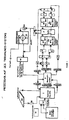
- the invention relates to a system for drying heat-sensitive goods at least one device (11, 42) for generating energy for drying, at least one device (4, 12a) for moving the energy transport medium, with which the energy gained can be transported for drying, and is characterized in that several separate devices (2, 2a) for Inclusion of the heat-sensitive goods to be dried, at least one Device (1) for storing and delivering the energy obtained for Drying and at least one device (12, 13, 43) for removing the Moisture from the energy transport medium and / or recovery of the in residual energy contained in the energy transport medium are provided.
- the system according to the invention has the particular advantage that in the separate Devices (2, 2a) for receiving the heat-sensitive to be dried Goods different goods can be dried at the same time. Each can different drying conditions in the individual facilities for receiving the goods to be dried become.
- These independent devices for moving the Energy transport medium can each be set so that in each facility for receiving the goods different Drying conditions result. The removal of the by the facilities Absorption of the heat-sensitive goods to be conducted can be conducted in the air Followed up together again.
- the drying system comprises heat-sensitive Goods also known control devices for the moisture content of the Medium with which the energy obtained is transported for drying, and / or devices for monitoring and / or adjusting the flow velocity and -Direction of the medium with which the energy obtained is transported.
- energy is obtained in a first step by one or more device (s) 11, 42 for obtaining energy for drying.
- one such device or several such devices can be used.
- any energy generating device can be used without restriction for the purpose of obtaining the energy required to dry the heat-sensitive goods.
- preference is given to a facility with which energy can be obtained from environmentally friendly energy sources.
- These can include, for example, a solar plant, a wind power plant, a motor that runs on renewable fuel such as vegetable oil (e.g.
- rapeseed oil a fermentation plant that can be used to ferment plant waste and the digestate gases are then burned , etc., be.
- the generation of energy in this way is particularly advantageous because it can completely conserve conventional energy sources and the energy sources used can either be regenerated (vegetable oils such as rapeseed oil) or are available in a natural way (sun, wind).
- the choice of the respective system for energy generation is left to the specialist in coordination with the local conditions, in particular the climatic conditions and the availability of the conceivable energy sources. In this way, the economic and ecological aspects can be combined ( Energy cycle economy ").
- the device for the extraction of Energy for drying solar panels air panels (solar air panels) and Vegetable oil-powered engines or combinations of the facilities mentioned.
- engines particularly preferably vegetable oil engines
- facilities with which different proportions of the gained energy can be used for drying.
- These close the through the Engine directly obtained energy, the energy of the engine exhaust gas, the energy of the cooling water for the engine and the radiated (thermal) energy of the running engine.
- This also includes the radiant heat of the generator, which is preferably operated by the engine; the generator is cooled in this way, and this energy component can also be used for other purposes be used, for example for heating purposes.
- the specialist known devices air-encapsulated motor encapsulation to discharge the radiated Heat and its feed into the energy cycle, heat exchanger exhaust gas / air to take the exhaust gas heat into the energy circuit, heat exchanger coolant / air to take over the coolant heat in the energy circuit)
- the thermal energy obtained or taken over in the ways described above is transferred to a fluid carrier suitable for the drying process.
- a fluid carrier suitable for the drying process can be air, which is preferred according to the invention, since this is regularly sufficient Quantity and quality is available or (for example through filtration, conditioning such as dehumidification etc.) can be made available.
- gaseous carriers are used, for example a gas with which a maturation process is promoted, a corruption process or the infestation of the goods to be dried is prevented by pests (such as mold) or a drying process can be accelerated.
- gases are Noble gases (helium, argon), gases which do not react under the selected conditions (Nitrogen, hydrogen) or other gases (oxygen).
- the drying medium can in a special embodiment preferred according to the invention also be loaded with substances that are specific to the goods to be dried Give aroma.
- substances that are specific to the goods to be dried Give aroma.
- natural or artificial flavors are fed into the gaseous dry medium, so that they come into contact with the goods to be dried and this has a certain aroma to lend.
- It can be spice flavors, smoke flavors or other flavors according to the requirements known to the person skilled in the art in the individual fields act.
- the system according to the invention can in principle be equipped with a closed energy carrier system, for example a closed air system.
- a closed energy carrier system for example a closed air system.
- the Energy preferably air
- the Drying process freed energy sources preferably the dry ones again Air can be fed directly back into the circuit. This will be more advantageous Wise an exchange of the thermal energy contained in the energy source, the regular leads to losses, avoided.
- the closed routing of the energy source has a further advantage: In cases in which the drying process is associated with the removal of odors, the pollution of the surroundings of the drying system with odors can be avoided. As is known to a person skilled in the art in this technical field, this is of course also possible when the energy carrier is guided openly, when the energy carrier is released into the environment, for example when Ventilation "of the system, the energy source like the air is passed through a suitable filter.
- the circulating energy source preferably air
- each circulation Mixed air operation ".
- one or more devices are provided with which energy sources can be released to the outside environment and / or energy sources can be fed into the circulation system from the outside environment.
- this device can / are supply air openings or flaps and, if appropriate, associated ones Filter or conditioning devices for the energy source or the air.
- the fluid carrier charged with the energy flows through the Plant for the production of energy for drying and takes the (heat) Energy on. It is possible to design the system according to the invention so that it transfers the energy to the fluid carrier as much as possible and thereby for example, creates a very hot, fluid carrier. This can later with lower temperature mixed carrier and so a fluid medium Temperature can be created, which is more sensitive to heat for gentle drying Goods is suitable. In the same way, it is also possible to produce a fluid carrier which (due to high flow rates, for example) only has a lower temperature and thus directly for contact with heat-sensitive goods to be dried suitable is.
- the first embodiment is particularly preferred when the fluid energy-laden carriers, for example the hot air, first a device for storage and to release the energy gained to dry through before he / she goes with it drying, heat-sensitive goods comes into contact.
- the plant according to the invention for drying heat-sensitive goods has, as an essential device, one or more device (s) 1 for storing and delivering the energy obtained for drying.
- the advantage of having one or more such devices is that the operation of the system is not dependent on the actual energy generation, but rather energy at favorable times, for example at the time of day, when the solar radiation can be used for energy generation in solar collectors or solar systems, or at times , if wind energy from the operation of a wind power plant can be used, is obtained and can be supplied to a storage device by means of a suitable fluid medium, and the stored energy later successively by means of the fluid medium can be called up "and fed into the drying process.
- the system according to the invention can have such a storage device 1 or more such storage devices 1; the latter is preferred because the storage devices can then be operated in alternating operation, ie a storage device becomes Absorption of generated energy is fed with hot fluid energy carrier medium and thus heated up, while another is loaded with cold fluid energy carrier medium which is heated before contact with the material to be dried.
- a storage device becomes Absorption of generated energy is fed with hot fluid energy carrier medium and thus heated up, while another is loaded with cold fluid energy carrier medium which is heated before contact with the material to be dried.
- the latter may also be used to condition the fluid energy carrier medium with regard to other parameters that go beyond the temperature, for example with regard to the moisture contained therein (see the following description of suitable M materials for the energy storage device 1).
- an energy storage device 1 is dry "and can be flowed through by the fluid energy carrier medium in order to heat it up and then to lead it into the drying cycle.
- the or another energy storage device 1, in which moisture has collected, dried ", ie stored moisture is removed, for example by charging the energy storage device with a dry conditioned, possibly even warm, fluid medium in order to remove the stored moisture. This could happen in an ecologically sensible manner, for example, when the sun is shining -Phases a solar energy heating system delivers excess energy and this is to be stored in memory 1.
- Such devices for storing and delivering the energy obtained for drying may be disk storage in preferred embodiments of the invention, for example those made of metal with good thermal conductivity.
- You can preferred in other Embodiments can also be liquid storage devices with one or more Liquid (s) are filled with good heat storage capacity.
- Other preferred embodiments relate to chemical stores in which salts or graphite as the actual Storage media are used.
- Further embodiments which are particularly preferred according to the invention include solid storage such as natural stone as facilities 1 for storing and releasing the energy obtained for drying. The latter are especially preferred because they have a high heat storage capacity and can also naturally remove moisture from the fluid carrier so that the latter is optimally conditioned for the drying process.
- the fluid energy source is closed or open circuit.
- the system for drying is more sensitive to heat Goods according to the invention several devices: 4, 12a for moving of the medium or carrier with which the energy obtained transports to dry can be.
- These devices are in preferred embodiments of the plant Fans or pumps, preferably fans with which the energy source, for example the air through which the system's flow paths can be driven or pumped.
- a system is preferred in which a plurality of fans pass through the energy source drive the flow paths of the system.
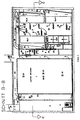
- the system according to the invention further comprises several separate devices 2, 2a for Inclusion of the heat-sensitive goods to be dried.
- this must be the case be designed as it is the respective drying process or the respective to be dried Require good, and can have a variety of shapes and arrangements.
- these recording devices are such that they are the can safely absorb the respective goods to be dried without transporting them and Losing transport, but on the other hand the fluid used for drying Medium to provide the best possible access to the goods to be dried.
- the drying box has holes in its bottom has different diameters, particularly preferably holes which are in the middle of the Box bottom are larger than at the edge of the box bottom.
- holes in its bottom has different diameters, particularly preferably holes which are in the middle of the Box bottom are larger than at the edge of the box bottom.
- the plant according to the invention further comprises, as an essential part of the plant, one or more Device (s) 12, 13 for removing the moisture from the energy transport medium and / or for the recovery of those contained in the energy transport medium Residual energy.
- Devices There may be one or more such devices Facilities are used.
- one or more facilities provide for the removal of moisture separately from the recovery which energy is achieved.
- Another preferred embodiment is conceivable the system that only operates the device for removing moisture or is passed by the energy source, after which - in the dried state - without Heat exchange is fed back into the drying cycle. This embodiment can under certain conditions particularly advantageous and therefore particularly preferred be because every energy exchange is associated with energy losses, which are avoided as far as possible should be.
- the device (s) 13 can be found to remove moisture from the energy source, for example from the air, in Flow path of the air downstream after the devices for receiving the to be dried heat sensitive goods.
- Said devices 12, 13 can have capacitors 13 for cooling the fluid Be below the dew point. Not only the energy of the energy source, for example, the heat of the air, largely recovered, but also achieved that moisture components condense on the condenser, because the air stores less moisture or with it at the lower temperature can lead.
- This device thus combines the processes of drying the energy source or the air with the step of recovering the energy.
- a device can also correspond to other preferred embodiments of the system be provided in which the moisture is removed from the energy source by this passes through a dry medium that adsorbs or absorbs the moisture
- the fluid energy source for example the air
- the fluid energy source for example the air
- more or less completely dry energy sources for example completely dry air
- the energy source or the air can be directly after the separate drying be returned to the cycle. It is also possible to use suitable heat exchangers carry out an energy exchange and the used air out of the system to be discharged, while at other points in the system already described above, fresh ones Dry and cool air, or even air that has already been heated by heat exchange, is fed in becomes.
- the system according to the invention is particularly advantageous over the known prior art. This is due to the advantageous combination the characteristics of the plant, namely that an ecologically sound and overall due advanced technology also economically feasible energy production with a largely loss-free storage of this energy for the time the system is in operation is connected in which generating energy is not sensible or not possible (Night with solar systems) is. It continues with the guidance of the fluid energy carrier the energy storage and efficient drying above or through the material to be dried reached. There are no product losses due to excessive temperatures, and that too Drying heat-sensitive goods can later be used elsewhere efficiently and without Loss or degradation of any ingredients can be processed.
- the system also allows extensive use of the energy used the energy loss-free line of the energy source between the system parts.
- the system for drying heat-sensitive goods can comprise mechanical devices for controlling the flow of the fluid medium, for example the air flow.
- Such mechanical devices can for example devices for steering, reducing or blocking the fluid medium such. B. the air, which are arranged at such points of the system where these functions are important.
- Examples of such devices are flaps, panels. Blinds or doors that can be operated mechanically; These can be operated, for example, with an electronic control system, which is triggered by sensors and optionally operated centrally.
- such devices can be found, for example, as a device 19 for controlling the fluid flow between a device 43 for dehumidifying the fluid medium, e.g. B.
- the fluid medium (z. B. the air) has been dehumidified after the drying process, it can - depending on the temperature and moisture content (and if necessary also other conditionable parameters) - are first supplied to the energy store 1, for example in order to be heated and / or with respect to one or more other parameters (e.g. moisture content in the case in which the material of the energy store also contributes to setting the parameter can) be conditioned.
- the one in FIG 19 "device for directing the fluid medium.
- the device 19 can Steering of the fluid medium can be closed, and the fluid medium flows directly into the device 6 for mixing the fluid medium, for example an air mixing chamber 2.
- the fluid medium can also flow directly into the device 6 flow for mixing the fluid medium, for example when the devices 5 and 21 for guiding the fluid medium are open.
- cooled fluid medium from the previous drying process via the device 43 for drying the fluid medium
- the flow of the fluid medium for example the air
- the device 6 for mixing the fluid medium and the drying chambers 2, 2a steer, reduce or block in a variety of ways. From figure are for example Means 41, 22 and 16 for directing, reducing or blocking the fluid flow can be seen.
- Devices 4 for moving the fluid medium for example fans, provide the necessary flow of the fluid medium.
- the device 44 has a similar function to the device 19: it also controls the device Flow of the fluid medium, when it is open, at least partially into the device 13 for heat recovery, whereas when it is closed, the Fluid flow past this device 13 and directly to the device 43 for dehumidification of the fluid medium.
- the invention also relates to a method for drying heat sensitive goods.
- the invention relates to such a method Use of the above Facility, however, is not based on the application or use of the Limited plant described above in detail.
- the method makes it more sensitive to heat Goods dried.
- plants, parts of plants, Food (such as meat or cheese) or other goods without restrictions is subjected, which result from the inventive method.
- the Drying must be done to maintain the quality, especially the ingredients of the mentioned goods, for example those obtainable from the plants or parts of plants Plant ingredients, carried out under mild conditions, in particular under gentle temperature conditions.
- Above one (for each of those to be treated heat sensitive goods special) critical temperature occurs deterioration Quality or even thermal degradation or thermal change of the ingredients on.
- the temperature of the treatment are always below the critical temperature.
- the fluid energy transport medium is used or fluid medium a gas or a gas mixture. This is special preferred because in this case larger amounts of the fluid medium are simple and efficient can be guided through the system and thus a gentle, nonetheless however, efficient drying process is achieved.
- Gases or gas mixtures which are selected from the Group air, noble gases such as Hellum or Argon, less reactive gases such as Nitrogen or hydrogen or oxygen. However, other gases can also be used. Air or an air-containing gas mixture is preferably used, since air is everywhere is available and through simple processes in the required purity and with the required Properties (moisture content, etc.) can be provided.
- Energy sources manufactured This generally means energy sources which are either present in a natural environment and - harmless to nature - Can be converted into energy using suitable systems (solar energy, Solar air collectors, wind energy) or which naturally regenerate, such as regenerable combustible substances such as vegetable oils, e.g. B. rapeseed oil, or by Natural fermentation of plants (parts) of recoverable fermentation gas (e.g. methane).
- suitable systems solar energy, Solar air collectors, wind energy
- regenerable combustible substances such as vegetable oils, e.g. B. rapeseed oil
- recoverable fermentation gas e.g. methane
- the fluid energy transport medium preferably the air
- the fluid energy transport medium is preferably conditioned with regard to certain physical parameters, for example with regard to the parameter Temperature ".
- Other parameters are conceivable, such as pressure or moisture; temperature conditioning is preferred according to the invention.
- This takes place, for example, in the device 6 for mixing the fluid medium, for example in a mixing chamber 6 for mixing air.
- the fluid heated in the energy store 1 The medium is mixed with air that is already circulated, if necessary, and then fed to the devices 2, 2a for receiving the heat-sensitive goods to be dried.
- the driving force for this comes from devices 4, 12a for moving the fluid energy transport medium, for example fans or pumps.
- the devices 2, 2a are equipped with heat-sensitive goods to be dried, which may be the above-mentioned goods, the method according to the invention not only allowing to dry goods of only one type, but also goods of different sensitivity, different contexts drying, different degrees of dryness, etc., as long as the critical temperature of the most sensitive type of goods is not exceeded.
- the actual drying process can be carried out continuously or in batches.
- Continuous drying ie. H. it continuously becomes a fluid energy transport medium led over the goods to be dried and thus a continuous Dehydration ensured.
- a preferably three-step drying process possible and when the goods to be dried require this.
- the fluid energy transport medium to circulate. This is recommended especially if there is no deterioration in the quality of the fluid medium in the course of the drying process adjusts itself and the one absorbed on contact with the material to be dried Moisture can be largely or even completely removed again. This procedure is particularly economical because of the reusability of the fluid drying medium. It is also achieved that smells from the environment which may have an adverse effect on the environment Plant can not be carried out.
- the fluid energy transport medium is conditioned with regard to various parameters become.
- the fluid medium is particularly preferred with regard to the moisture content to condition. This is particularly preferred because it increases the efficiency of the fluid medium, drying goods to be dried in the next cycle is retained. For example this can be done by passing the fluid medium over a material that Moisture adsorbs or absorbs. Another way is to lower the temperature of the fluid medium below the dew point. However, since this is a reheating of the fluid Medium is required before the next drying step, this embodiment is less prefers.
- the degree of dryness of the dried ones which can be achieved with the method according to the invention Goods are not restricted in any way and are primarily based on the requirements, which are specified by the goods to be dried. For example, plants or parts of plants whose ingredients are to be obtained later, on one Dried to the degree of dryness that their transportation or storage is possible without that this affects the yield or quality of the plant ingredients in any way. Specifications for the degree of drying can also result from the economy of the Drying process result: Complete drying may be achieved in individual cases the goal of maintaining quality may not be necessary. However, this is the one on the Expert in the field of drying heat-sensitive goods. he can adjust the degree of dryness to the necessary circumstances.
- the method according to the invention becomes one for the ones to be dried Goods are much gentler, wider and more universally applicable drying. It will not only preserve or even promote the aromas of the goods to be dried; much more degrees of drying can also be achieved without loss of quality. like they did before common procedures were not available.
- the present method feasible on a scale with good success, which is an industrial drying heat-sensitive goods better than previously possible. Thereby regenerable or natural energy sources are advantageously used for energy generation.
- regenerable or natural energy sources are advantageously used for energy generation.
- the process and the structure of the system according to the invention that a far better utilization of the energy is possible than is possible in the prior art was.
Landscapes
- Engineering & Computer Science (AREA)
- Mechanical Engineering (AREA)
- General Engineering & Computer Science (AREA)
- Life Sciences & Earth Sciences (AREA)
- Wood Science & Technology (AREA)
- Zoology (AREA)
- Chemical & Material Sciences (AREA)
- Food Science & Technology (AREA)
- Polymers & Plastics (AREA)
- Sustainable Development (AREA)
- Drying Of Solid Materials (AREA)
Applications Claiming Priority (2)
| Application Number | Priority Date | Filing Date | Title |
|---|---|---|---|
| DE19933477 | 1999-07-16 | ||
| DE19933477A DE19933477A1 (de) | 1999-07-16 | 1999-07-16 | Anlage und Verfahren zum Trocknen wärmeempfindlicher Güter |
Publications (2)
| Publication Number | Publication Date |
|---|---|
| EP1068802A2 true EP1068802A2 (fr) | 2001-01-17 |
| EP1068802A3 EP1068802A3 (fr) | 2003-10-01 |
Family
ID=7915076
Family Applications (1)
| Application Number | Title | Priority Date | Filing Date |
|---|---|---|---|
| EP00115262A Withdrawn EP1068802A3 (fr) | 1999-07-16 | 2000-07-14 | Appareil et procédé de sèchage de matière sensible à la chaleur |
Country Status (2)
| Country | Link |
|---|---|
| EP (1) | EP1068802A3 (fr) |
| DE (1) | DE19933477A1 (fr) |
Cited By (3)
| Publication number | Priority date | Publication date | Assignee | Title |
|---|---|---|---|---|
| WO2009011607A3 (fr) * | 2007-07-17 | 2009-04-16 | Pane Kondic | Système d'énergie pour sécher des produits humides |
| WO2011092224A1 (fr) * | 2010-01-26 | 2011-08-04 | Dürr Systems GmbH | Système de séchage à moteur thermique |
| WO2011141106A1 (fr) * | 2010-04-15 | 2011-11-17 | Ziemann Energy Gmbh | Installation de combustion de drêches humides et similaires |
Family Cites Families (12)
| Publication number | Priority date | Publication date | Assignee | Title |
|---|---|---|---|---|
| US3775863A (en) * | 1972-07-20 | 1973-12-04 | Day H Co | Method and apparatus for drying particulate materials |
| DE2625072A1 (de) * | 1976-06-04 | 1977-12-15 | Heinrich Ing Grad Peters | Anlage zur trocknung von heu, getreide und anderen guetern im dauerbetrieb durch sammeln und speichern der sonnenenergie zur erwaermung der trocknungsluft |
| US4069593A (en) * | 1976-06-07 | 1978-01-24 | Huang Barney K | Solar curing and drying structure and method of utilizing solar energy associated with available solar radiation in curing and drying various materials |
| US4227375A (en) * | 1977-08-30 | 1980-10-14 | Leo Tompkins | Desiccant thermal energy storage system for compact heating and cooling |
| GB2158930B (en) * | 1983-12-23 | 1987-09-23 | Afp Consultants | Drying tea with solar heat |
| SU1187778A1 (ru) * | 1984-04-24 | 1985-10-30 | Bukharskij Znak Pocheta G Ped | Солнечная сушилка для 0в0:щей и фруктов |
| ES2245775T3 (es) * | 1993-08-23 | 2006-01-16 | Gabor Gode | Dispositivo que utiliza energia solar, especialmente para secar y tostar productos agricolas, asi como productos de procesamiento de alimentos, finalizar la destilacion y la evaporacion y separar compuestos complejos. |
| EP0669510B1 (fr) * | 1994-02-25 | 1998-12-02 | Motan Holding GmbH | Séchoir |
| DE19508400B4 (de) * | 1995-03-09 | 2011-07-07 | GRAMMER Solar GmbH, 92224 | Vorrichtung zum Trocknen von feuchtem Material |
| JP2740146B2 (ja) * | 1995-11-20 | 1998-04-15 | アサヒ動熱株式会社 | 乾燥装置 |
| DE19651210C2 (de) * | 1996-12-10 | 1999-11-25 | Michael Rossmann | Verfahren zur Erwärmung des Substrates in einer Biogasanlage durch Wärmerückgewinnung aus einem Ernteguttrockner |
| NO307162B1 (no) * | 1998-05-18 | 2000-02-21 | Ewos Innovation As | Fremgangsmåte og anlegg for tørking av oppdelt/pelletert materiale, særlig animalsk og/eller vegetabilsk fôrstoff, næringsmiddel etc. |
-
1999
- 1999-07-16 DE DE19933477A patent/DE19933477A1/de not_active Ceased
-
2000
- 2000-07-14 EP EP00115262A patent/EP1068802A3/fr not_active Withdrawn
Cited By (4)
| Publication number | Priority date | Publication date | Assignee | Title |
|---|---|---|---|---|
| WO2009011607A3 (fr) * | 2007-07-17 | 2009-04-16 | Pane Kondic | Système d'énergie pour sécher des produits humides |
| WO2011092224A1 (fr) * | 2010-01-26 | 2011-08-04 | Dürr Systems GmbH | Système de séchage à moteur thermique |
| US9228781B2 (en) | 2010-01-26 | 2016-01-05 | Duerr Systems Gmbh | Drying system having a thermal engine |
| WO2011141106A1 (fr) * | 2010-04-15 | 2011-11-17 | Ziemann Energy Gmbh | Installation de combustion de drêches humides et similaires |
Also Published As
| Publication number | Publication date |
|---|---|
| EP1068802A3 (fr) | 2003-10-01 |
| DE19933477A1 (de) | 2001-01-25 |
Similar Documents
| Publication | Publication Date | Title |
|---|---|---|
| DE2729379C2 (de) | Verfahren zur Herstellung eines Düngemittels aus Traubentrester | |
| EP3187807B1 (fr) | Dispositif de séchage de foin | |
| EP0322424B1 (fr) | Procede pour le compostage de substances organiques et dispositif permettant la mise en uvre de ce procede | |
| DE60007611T2 (de) | Trockner mit mechanischer verdichtung des dampfes, anlage und verfahren zur chemischen reinigung des dampfes | |
| WO2015055178A1 (fr) | Procédé de nettoyage et installation de nettoyage d'une eau contenant des impuretés | |
| DE102008046299B4 (de) | Verfahren und Vorrichtung zum Trocknen von Biomasse | |
| EP0606119B1 (fr) | Procédé de compostage de déchets | |
| DE4301993A1 (de) | Gegenstrom-Gradienten-Bandtrockner | |
| DE3130671C2 (de) | "Verfahren zur Erhöhung der Temperatur von gasförmigen, inertem Trägermedium beim Abziehen von Nutzwärme aus einem mittels Wassersorption arbeitenden Speichermedium" | |
| DE19933477A1 (de) | Anlage und Verfahren zum Trocknen wärmeempfindlicher Güter | |
| DE4447311C1 (de) | Verfahren zur energieeinsparenden und umweltverträglichen Trocknung von Futterstoffen und/oder feuchten Erntegütern in Anlagen mit Bandförderung und Vorrichtung zur Durchführung dieses Verfahrens | |
| EP0316294A1 (fr) | Procédé pour la fabrication de bois haché sec | |
| EP2546595A1 (fr) | Dispositif et procédé de refroidissement | |
| DE3149672C2 (de) | Verfahren zum Klimatisieren unter Anwendung von mittels Wassersorption arbeitenden Speichermedien | |
| DE2729337A1 (de) | Kuehleinrichtung | |
| DE2731931C2 (fr) | ||
| DE102005003754A1 (de) | Ein Verfahren zur solaren Meerwasserentsalzung unter Einbeziehung von Gewächshäusern | |
| EP0741669B1 (fr) | Procede et dispositif pour la separation thermique de composants d'un liquide | |
| DE3925905A1 (de) | Verfahren und vorrichtung zur aeroben, fermentativen hydrolyse, insbesondere zur kompostierung von organischen stoffen | |
| DE1692955A1 (de) | Vorrichtung zur Behandlung von pflanzlichen Stoffen,insbesondere von Tabak | |
| DE2947759A1 (de) | Verfahren zur vorrichtung zum trocknen von schuettgut, insbesondere getreide | |
| AT514695B1 (de) | Vorrichtung und Verfahren zum Trocknen von Trocknungsgut | |
| DE102012011269A1 (de) | Trocknungsvorrichtung für eine Biogasanlage und ein Verfahren zum Trocknen eines Flüssigproduktes mit einer solchen Trocknungsvorrichtung | |
| AT344210B (de) | Verfahren zur herstellung von hochwertigem duenger aus obstrueckstaenden durch deren aerobe vergaerung | |
| DE637167C (de) | Verfahren und Einrichtung zur Trocknung von feuchten Stoffen durch Luft |
Legal Events
| Date | Code | Title | Description |
|---|---|---|---|
| PUAI | Public reference made under article 153(3) epc to a published international application that has entered the european phase |
Free format text: ORIGINAL CODE: 0009012 |
|
| AK | Designated contracting states |
Kind code of ref document: A2 Designated state(s): AT BE CH CY DE DK ES FI FR GB GR IE IT LI LU MC NL PT SE |
|
| AX | Request for extension of the european patent |
Free format text: AL;LT;LV;MK;RO;SI |
|
| PUAL | Search report despatched |
Free format text: ORIGINAL CODE: 0009013 |
|
| RIC1 | Information provided on ipc code assigned before grant |
Ipc: 7A 23L 3/42 B Ipc: 7F 26B 3/28 B Ipc: 7F 26B 23/00 B Ipc: 7A 23L 3/40 B Ipc: 7A 23B 9/08 B Ipc: 7A 23B 7/02 A |
|
| AK | Designated contracting states |
Kind code of ref document: A3 Designated state(s): AT BE CH CY DE DK ES FI FR GB GR IE IT LI LU MC NL PT SE |
|
| AX | Request for extension of the european patent |
Extension state: AL LT LV MK RO SI |
|
| PUAJ | Public notification under rule 129 epc |
Free format text: ORIGINAL CODE: 0009425 |
|
| AKX | Designation fees paid | ||
| 32PN | Public notification |
Free format text: NOTIFICATION OF LOSS OF RIGHTS PERSUANT TO RULE 69(1) EPO (EPO FORM 2524 SENT ON 21.04.04) |
|
| REG | Reference to a national code |
Ref country code: DE Ref legal event code: 8566 |
|
| STAA | Information on the status of an ep patent application or granted ep patent |
Free format text: STATUS: THE APPLICATION IS DEEMED TO BE WITHDRAWN |
|
| 18D | Application deemed to be withdrawn |
Effective date: 20040203 |