EP1068868A2 - Synergistische Aufbau, der Ascorbat und Lysin für Zustände enthält zur Behandlung extrazellularer Matrixdegeneration - Google Patents
Synergistische Aufbau, der Ascorbat und Lysin für Zustände enthält zur Behandlung extrazellularer Matrixdegeneration Download PDFInfo
- Publication number
- EP1068868A2 EP1068868A2 EP00115643A EP00115643A EP1068868A2 EP 1068868 A2 EP1068868 A2 EP 1068868A2 EP 00115643 A EP00115643 A EP 00115643A EP 00115643 A EP00115643 A EP 00115643A EP 1068868 A2 EP1068868 A2 EP 1068868A2
- Authority
- EP
- European Patent Office
- Prior art keywords
- ascorbate
- lysine
- acid
- composition according
- group
- Prior art date
- Legal status (The legal status is an assumption and is not a legal conclusion. Google has not performed a legal analysis and makes no representation as to the accuracy of the status listed.)
- Withdrawn
Links
Images


Classifications
-
- A—HUMAN NECESSITIES
- A61—MEDICAL OR VETERINARY SCIENCE; HYGIENE
- A61K—PREPARATIONS FOR MEDICAL, DENTAL OR TOILETRY PURPOSES
- A61K31/00—Medicinal preparations containing organic active ingredients
- A61K31/70—Carbohydrates; Sugars; Derivatives thereof
- A61K31/715—Polysaccharides, i.e. having more than five saccharide radicals attached to each other by glycosidic linkages; Derivatives thereof, e.g. ethers, esters
- A61K31/726—Glycosaminoglycans, i.e. mucopolysaccharides
-
- A—HUMAN NECESSITIES
- A61—MEDICAL OR VETERINARY SCIENCE; HYGIENE
- A61K—PREPARATIONS FOR MEDICAL, DENTAL OR TOILETRY PURPOSES
- A61K31/00—Medicinal preparations containing organic active ingredients
- A61K31/33—Heterocyclic compounds
- A61K31/335—Heterocyclic compounds having oxygen as the only ring hetero atom, e.g. fungichromin
- A61K31/365—Lactones
- A61K31/375—Ascorbic acid, i.e. vitamin C; Salts thereof
-
- A—HUMAN NECESSITIES
- A61—MEDICAL OR VETERINARY SCIENCE; HYGIENE
- A61K—PREPARATIONS FOR MEDICAL, DENTAL OR TOILETRY PURPOSES
- A61K31/00—Medicinal preparations containing organic active ingredients
- A61K31/33—Heterocyclic compounds
- A61K31/395—Heterocyclic compounds having nitrogen as a ring hetero atom, e.g. guanethidine or rifamycins
- A61K31/40—Heterocyclic compounds having nitrogen as a ring hetero atom, e.g. guanethidine or rifamycins having five-membered rings with one nitrogen as the only ring hetero atom, e.g. sulpiride, succinimide, tolmetin, buflomedil
-
- A—HUMAN NECESSITIES
- A61—MEDICAL OR VETERINARY SCIENCE; HYGIENE
- A61K—PREPARATIONS FOR MEDICAL, DENTAL OR TOILETRY PURPOSES
- A61K33/00—Medicinal preparations containing inorganic active ingredients
- A61K33/04—Sulfur, selenium or tellurium; Compounds thereof
-
- A—HUMAN NECESSITIES
- A61—MEDICAL OR VETERINARY SCIENCE; HYGIENE
- A61K—PREPARATIONS FOR MEDICAL, DENTAL OR TOILETRY PURPOSES
- A61K45/00—Medicinal preparations containing active ingredients not provided for in groups A61K31/00 - A61K41/00
- A61K45/06—Mixtures of active ingredients without chemical characterisation, e.g. antiphlogistics and cardiaca
-
- A—HUMAN NECESSITIES
- A61—MEDICAL OR VETERINARY SCIENCE; HYGIENE
- A61P—SPECIFIC THERAPEUTIC ACTIVITY OF CHEMICAL COMPOUNDS OR MEDICINAL PREPARATIONS
- A61P17/00—Drugs for dermatological disorders
-
- A—HUMAN NECESSITIES
- A61—MEDICAL OR VETERINARY SCIENCE; HYGIENE
- A61P—SPECIFIC THERAPEUTIC ACTIVITY OF CHEMICAL COMPOUNDS OR MEDICINAL PREPARATIONS
- A61P29/00—Non-central analgesic, antipyretic or antiinflammatory agents, e.g. antirheumatic agents; Non-steroidal antiinflammatory drugs [NSAID]
-
- A—HUMAN NECESSITIES
- A61—MEDICAL OR VETERINARY SCIENCE; HYGIENE
- A61P—SPECIFIC THERAPEUTIC ACTIVITY OF CHEMICAL COMPOUNDS OR MEDICINAL PREPARATIONS
- A61P35/00—Antineoplastic agents
-
- A—HUMAN NECESSITIES
- A61—MEDICAL OR VETERINARY SCIENCE; HYGIENE
- A61P—SPECIFIC THERAPEUTIC ACTIVITY OF CHEMICAL COMPOUNDS OR MEDICINAL PREPARATIONS
- A61P9/00—Drugs for disorders of the cardiovascular system
- A61P9/10—Drugs for disorders of the cardiovascular system for treating ischaemic or atherosclerotic diseases, e.g. antianginal drugs, coronary vasodilators, drugs for myocardial infarction, retinopathy, cerebrovascula insufficiency, renal arteriosclerosis
Definitions
- the present invention relates to substances and compositions for the prevention and treatment of diseases or pathological states related to the degradation of the extracellular matrix, such as including but not limited to degenerative diseases, particularly arteriosclerosis, cancer, infections or other inflammatory diseases.
- PA plasminogen activator
- PA is also secreted by cancer cells, macrophages and virally transformed cells in a manner similar to follicle cells that have been hormonally stimulated (Unkeless, et al . (1974) J. Biol. Chem. 249: 4295-4305) ( Figure 2).
- PA has been found in high concentrations in metastasizing lung tumors (Skriver, et al. (1984) J. Cell Biol. 99 : 753-758). PA has also been found in association with a variety of human tumors, as well as kidney and bladder carcinomas (Corasanti, et al . (1980) J. Natl. Canc. Inst. 65 :345 ⁇ 351 Ladehoff, A. (1962) Act. Path. Micro. Scand. 55:273 ⁇ 280).
- lipoprotein(a) Lp(a)
- apoprotein (a) a low-density-lipoprotein-like particle that carries a unique glycoprotein, called apoprotein (a) (apo(a)). It has been proposed that this particle participates in wound healing and general cell repair (Brown, M., et. al. , (1987) Nature 330: 113-114).
- the cDNA sequence of apo(a) shows a striking homology to plasminogen, with multiple repeats of kringle 4, one kringle 5, and a protease domain.
- the isoforms of apo(a) vary in the range of 300 to 800 kDa and differ mainly in their genetically determined number of kringle 4 structures (McLean, J.W., et al . (1987) Nature 300 :132 ⁇ 137). While apo(a) has no plasmin-like protease activity (Eaton, D.L., et al., (1987) Proc. Natl. Acad. Sci. USA 84 :3224-3228), serine protease activity has been demonstrated (Salonen, E., et al. (1989) EMBO J. 8 :4035 ⁇ A040).
- Lp(a) has been shown to bind lysine ⁇ sepharose, immobilized fibrin and fibrinogen, and the plasminogen receptor on endothelial cells (Harpel, P.C. et al . (1989) Proc. Natl. Acad. Sci. USA 86:3847-3851; Gonzalez ⁇ Gronow, M. et al . (1989) Biochemistry 28 :2374 ⁇ 2377 Miles, L. et al .
- Lp(a) has been shown to bind to other components of the arterial wall such as fibronectin and glycosaminoglycans. The precise nature of these bindings, however, is poorly understood. Lp(a) plasma levels are found to be elevated in cancer, atherosclerosis and other diseases. Inversely, low levels of ascorbate have been associated with high incidences of these diseases (Knox, E.A. (1973) Lancet, i.e. 1465 ⁇ 1467; Wright, L.C. et al. (1989) Int. J. Cancer 43: 241-244).
- Lp(a) is a surrogate for ascorbate (Rath, M. & L. Pauling (1990) Proc. Natl. Acad. Sci. USA 87: 6204 ⁇ 6207).
- a therapeutic composition to reduce the degradation of the extracellular matrix, particularly due to plasmin-induced and free radical-induced proteolysis respectively fibrinolysis.
- a composition that simultaneously reduces degradation and enhances collagen synthesis, the primary component of the extracellular matrix, and thereby help prevent the proliferation of diseases.
- a pharmaceutical composition for the treatment of degenerative diseases having their origins in the destruction of the extracellular matrix comprising administering a therapeutic composition comprising at least one fibrinolysis inhibitor in an amount sufficient to decrease plasmin - and free radical - mediated production of collagenase to a subject in need of such treatment.
- Another aspect of the invention is a composition which comprises an activator suitable for the enhancement of collagen synthesis.
- compositions comprising ascorbate, and optionally one or more antioxidants.
- antioxidant throughout the specification and the claims is intended to exclude ascorbate, which itself is a powerful antioxidant.
- a therapeutic composition comprising at least one fibrinolysis inhibitor, one collagen synthesis activator, ascorbate, and optionally one or more antioxidants, in amounts sufficient to decrease plasmin - and free radical - mediated production of collagenase.
- the present invention relates to methods and compositions that slow or inhibit extracellular matrix degradation, thereby proving useful for the treatment of cancer, degenerative diseases, infections or other inflammatory diseases or pathological states related to the degradation of the extracellular matrix.
- a number of diseases appear to arise or become exacerbated as a result of degradation of the extracellular matrix.
- Cancer for instance, becomes most life threatening after an individual tumor has metastasized, that is, after individual cells have broken free of the extracellular matrix and been carried away to other parts of the body where they can proliferate.
- Beside cancer, other degenerative diseases like advanced atherosclerosis have similar mechanisms by which the disease proliferates.
- the term "collagenase-linked degenerative diseases” includes degenerative diseases, neoplastic diseases, infections or other inflammatory diseases or pathological states related to the degradation of the extracellular matrix.
- two basic pathomechanisms are plasmin-induced and free radical-induced proteolysis, which may well act synergistically in fulminant disease progression.
- treatment has focused on removing or killing tumors and little attention has been paid to inhibiting proliferation or finding methods of tumor containment, other than surgery. This containment can be achieved by substances interfering with or blocking these pathomechanisms, such as fibrinolysis inhibitors.
- tranexamic acid has been administered in an attempt to stop cancer proliferation, with inconclusive results (Marcus, G. (1984) Sem. Thromb. Hemost. 10 :61 ⁇ 70).
- the present invention is based in part on the discovery that plasmin-induced proteolysis is a fundamental physiological feature in humans responsible for the regulation of many different, seemingly unrelated physiological processes.
- cancer cells and normal tissues alike within the body secrete PA which activates plasmin and thereby results in collagen degradation where a degeneration of the extracellular matrix is beneficial to the secreting tissue.
- the stroma of the follicle of the human ovary must degenerate in order to release the ovum into the reproductive tract.
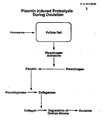
- Follicle cells secrete PA which activates plasminogen to form plasmin. Plasmin promotes the collagenase which then proteolyses the extracellular matrix of the stroma allowing the follicle to expand, rupture and discharge the ovum.
- fibrinolysis inhibitors are antagonistic to plasmin in its conversion of procollagenase to collagenase.
- fibrinolysis inhibitors especially in combination with ascorbate which promotes collagen synthesis, can prevent or at least retard the degradation of the extracellular matrix due to an increased activation of plasmin.
- fibrinolysis inhibitor throughout the specification and claims is intended to include all substances that act as an antagonist for plasmin- induced proteolytic activity, particularly fibrinolysis induced production of collagenase. Some of these compounds, in high doses, are in clinical use for the treatment of hyperfibrinolytic states.
- activated macrophages play an important role. When activated, these cells secrete a variety of products including enzymes such as procollagenases. Moreover, as shown in Figure 2, they secrete reactive oxygen intermediates such as superoxide, hydrogen peroxide, and hydroxyl radical, hereinafter called “free radicals.” Nathan, C. (1987) J. Clin. Invest. 79: 319-326. Thus, another mechanism of disease proliferation is mediated by peroxyl free radicals. These oxidative radicals can be generated by activated macrophages and other cells, particularly under pathological conditions. Similar to plasmin-induced proteolysis, free radicals induce the degradation of the extracellular matrix and thereby promote disease progression.
- Free radicals are known to induce proteolysis in several ways, an important one being the activation of procollagenase to collagenase.
- Ascorbate is a powerful antioxidant and is thus an important therapeutic agent for limiting free radical proteolysis.
- the beneficial effects of ascorbate suggest that ascorbate in combination with these fibrinolysis inhibitors has a synergistic effect and inhibits plasmin induced as well as free radical-induced proteolysis.
- Ascorbate promotes the production of collagen (Murad, et al . 1981 Proc. Natl. Acad. Sci. USA 78 :2879-2882), and also stimulates production of lymphocytes which may be of use in combating cancer cells already formed (Yonemoto, et al . 1976 Proc. Amer. Assoc. Canc. Res. 17: 288).
- Fibrinolysis inhibitors inhibit the dissolution of blood clots, thus having a pro-coagulative effect. These properties so far have limited or prevented the use of these agents in the treatment of cancer and other diseases, since it is known that neoplasms are frequently associated with thromboembolic complications. Ascorbate is known to have anti-coagulative properties by stimulating for example prostracyclin and inhibiting thromboxane formation. Thus the aspect of the invention wherein fibrinolysis inhibitors are combined with ascorbate would greatly increase the use of this therapy by eliminating undesired side-effects of a mono ⁇ therapy.
- the present invention provides methods and compositions for both the treatment and prevention of diseases associated with the degradation of extracellular matrix. Each of these embodiments is discussed in turn below.
- the present invention provides a method and composition for the treatment and prevention of collagen-linked degenerative diseases like cancer and many others by administering to a subject an effective amount of at least one fibrinolysis inhibitor which inhibit plasmin- and free radical-mediated conversion of procollagenase to collagenase. In this way, destruction of the extracellular matrix, which is predominantly formed of collagen, is reduced or eliminated.
- Preferred fibrinolysis inhibitors include, but are not limited to ⁇ -aminocaproic acid (EACA), lysine, tranexamic acid (4-aminomethylcyclohexane carboxylic acid), p-aminomethylbenzoic acid (PAMBA), p-benzylamine sulfuric acid, ⁇ -N-acetyl-lysine-methyl ester, cis/trans-4-aminomethylcyclohexane carboxylic acid- (1) (AMCHA), trans-4-aminomethylcyclohexane carboxylic acid (AMCA), and 4-aminomethyl-bicyclo-2, 2,2 ⁇ octane carboxylic acid (AMBOCA).
- EACA ⁇ -aminocaproic acid
- PAMBA p-aminomethylbenzoic acid
- AMCHA trans-4-aminomethylcyclohexane carboxylic acid
- AMBOCA 4-aminomethyl-bicyclo-2, 2,2 ⁇ octane carboxy
- an effective amount of a fibrinolysis inhibitor or a mixture of one or more fibrinolysis inhibitors may also be used.
- a fibrinolysis inhibitor or a mixture of one or more fibrinolysis inhibitors may also be used.
- the present method and composition can include ascorbate in combination with the fibrinolysis inhibitors.
- ascorbate includes any pharmaceutically acceptable salt of ascorbate, including sodium ascorbate, as well as ascorbic acid itself.
- antioxidants such as tocopherol, carotene, selenium, N-acetylcysteine, probucol and related substances; vitamins; provitamins; and trace elements.
- ascorbate can be used alone because of its stimulating effects on collagen synthesis, it is preferred when treating a pre-existing degenerative disease to combine ascorbate with at least one each of the fibrinolysis inhibitors and antioxidants in the dosages (per kilogram of body weight per day (/kg BW/d) provided in Table 2. It should be noted that Table 2 provides differing concentration ranges of each constituent, depending upon whether the composition is to be administered orally or parenterally.
- the variance in dosages is reflective of variation in disease severity. It will be realized therefore that if the subject has been diagnosed for advanced stages of a particular degenerative disease, dosages at the higher end of this range could be utilized. However, if prevention of collagen degradation is desired prior to onset of severe symptoms, dosages at the lower end of this range may be utilized.
- a pharmaceutical composition identical to the one just described, but omitting ascorbate may be employed.
- ascorbate and fibrinolysis inhibitors are utilized in the same composition, they may simply be mixed or may be chemically combined using synthesis methods well known in the art, such as compounds in which ascorbate and the inhibitor are covalently linked, or form ionically-bound salts.
- ascorbate may be bound covalently to lysine, other amino acids, or ⁇ -aminocaproic acid by ester linkages.
- Ascorbyl ⁇ -aminocaproate or ascorbyl-aminomethylcyclohexane carboxylic acid are such examples.
- the ascorbate moiety may be particularly effective in also preventing undesirable lipid peroxidation.
- Ascorbate and fibrinolysis inhibitors alone or in any combination may be used together with other agents used in the chemotherapeutic treatment of cancer.
- agents include, but are not limited to, compounds from the groups of antibiotic derivatives, anti-estrogens, antimetabolics, hormones, cytotoxic agents, nitrogen-mustard derivatives or steroids and combinations of these.
- a pharmaceutically acceptable and otherwise inert carrier may be employed.
- the active ingredients may be administered in tablet form.
- the tablet may contain a binder such as tragacanth, corn starch or gelatin; a disintegrating agent, such as alginic acid, and/or a lubricant such as magnesium stearate.
- sweetening and/or flavoring agents may be used. If administration is by parenteral injection, in isotonic saline, a phosphate buffered solution or the like, may be used as pharmaceutically acceptable carrier.
- amino acid proline proline salts or synthetic proline analogs may be used in the prevention and treatment of the pathological conditions described in this patent.
- Collagen and other extracellular matrix proteins are particularly rich in lysine and proline residudes, which make up about 25 % of the total mass of collagen.
- proline - as opposed to lysine - can be synthesized in the body, the synthesis rate of this amino acid is suboptimal especially in chronic diseases.
- proline In these pathological states, where there is an excess of collagen degradation lasting over months or even years the synthesis of collagen and other extracellular matrix molecules, sufficient availability of proline becomes a critical factor, determining optimum production of new collagen and, thereby, containing the progression of diseases.
- proline proline salts and proline analogs
- fibrinolysis inhibitors in treating cancer, angiohematoma and other such diseases will depend to some extent on the subject's general health, particularly with regard to hyperfibrinolytic conditions. Most fibrinolysis inhibitors (except lysine) are used clinically to treat such conditions. As a result, monitoring of the subject's coagulation and fibrinolytic system is recommended before and during treatment. It should however be noted that hemostatic complications are unlikely, since these fibrinolysis inhibitors are general protease inhibitors which have also been shown to inhibit coagulation. Aoki, N. et al . (1978) Blood 52: 1-12.
- fibrinolysis inhibitors Long-term administration of fibrinolysis inhibitors will require formulations in which the dosages of fibrinolysis inhibitors are in the lower ranges of the dosages given in Table 2.
- ascorbate is known to stimulate prostaglandin and prostacyclin synthesis and decrease thromboxane levels, thus exerting an anti-aggregatory effect. These properties may be particularly desireable in combination with the use of fibrinolytic inhibitors to counteract potential coagulative side-effects.
- the ascorbate and the fibrinolysis inhibitors described above may be separately administered. Further optimization of therapeutic effect can be gained by using a time release composition to achieve relatively constant serum concentrations of the agent through time.
- Dosages of Components in the Compositions of the Present Invention Oral Administration Parenteral Administration Ascorbate: 5-0500 mg/kg BW/d 25 ⁇ 2500 mg/kg EACA 1-1500 mg/kg BW/d same Tranexamic Acid 1-500 mg/kg BW/d same Para-aminomethyl benzoic acid 1-500 mg/kg BW/d same Lysine 1-1500 mg/kg BW/d same Proline 1-1500 mg/kg BW/d same
- Antioxidants Tocopherol 0.1-500 lU/kg BW/d same Carotene 0,1-10.000 lU/kg BW/d same N-acetyl cysteine 0,1-5000 mg/kg BW/d same
- Lp(a) is a co-regulator of plasmin-induced proteolysis critically involved in tissue transformation and repair. Due to its homology to plasminogen and plasmin, it is a physiological competitive inhibitor of plasmin-induced proteolysis. Moreover, apoprotein(a) has over 100 disulfide bonds and therefore functions as an antioxidant like other protein-thiols.
Landscapes
- Health & Medical Sciences (AREA)
- Life Sciences & Earth Sciences (AREA)
- Chemical & Material Sciences (AREA)
- Medicinal Chemistry (AREA)
- Animal Behavior & Ethology (AREA)
- General Health & Medical Sciences (AREA)
- Veterinary Medicine (AREA)
- Public Health (AREA)
- Pharmacology & Pharmacy (AREA)
- Epidemiology (AREA)
- General Chemical & Material Sciences (AREA)
- Chemical Kinetics & Catalysis (AREA)
- Organic Chemistry (AREA)
- Nuclear Medicine, Radiotherapy & Molecular Imaging (AREA)
- Engineering & Computer Science (AREA)
- Bioinformatics & Cheminformatics (AREA)
- Dermatology (AREA)
- Pain & Pain Management (AREA)
- Rheumatology (AREA)
- Inorganic Chemistry (AREA)
- Heart & Thoracic Surgery (AREA)
- Cardiology (AREA)
- Urology & Nephrology (AREA)
- Molecular Biology (AREA)
- Vascular Medicine (AREA)
- Medicines That Contain Protein Lipid Enzymes And Other Medicines (AREA)
- Pharmaceuticals Containing Other Organic And Inorganic Compounds (AREA)
- Acyclic And Carbocyclic Compounds In Medicinal Compositions (AREA)
Priority Applications (4)
| Application Number | Priority Date | Filing Date | Title |
|---|---|---|---|
| CA 2330719 CA2330719C (en) | 1997-07-08 | 2001-01-11 | Synergistic compositions comprising an ascorbate and lysine for states related to extra cellular matrix degeneration |
| HU0100188A HUP0100188A3 (en) | 1997-07-08 | 2001-01-16 | Ascorbate and lysine containing synergic pharmaceutical composition for the treatment of degenerative diseases of extracellular matrix |
| CZ2001193A CZ2001193A3 (cs) | 1997-07-08 | 2001-01-16 | Synergistické preparáty obsahující askorbát a lysin pro stavy spojené s degenerací extracelulární matrix |
| IL140947A IL140947A (en) | 1997-07-08 | 2001-01-17 | Synergistic preparations containing ascorbate and lysine for conditions related to extracellular matrix degeneration |
Applications Claiming Priority (6)
| Application Number | Priority Date | Filing Date | Title |
|---|---|---|---|
| EP97304994 | 1997-07-08 | ||
| EP97304994A EP0891771A1 (de) | 1997-07-08 | 1997-07-08 | Lysin und Ascorbat oder ihre Derivate zur Behandlung von kardiovaskulären Erkrankungen |
| DE10101522A DE10101522B4 (de) | 1997-07-08 | 2001-01-15 | Neue pharmazeutische Verwendung einer Kombination aus Ascorbat und mindestens einem Fibrinolysehemmer |
| GB0101090A GB2370988A (en) | 1997-07-08 | 2001-01-16 | Synergistic compositions comprising ascorbate and lysine for states related to extra cellular matrix degeneration |
| BE2001/0041A BE1013921A3 (fr) | 1997-07-08 | 2001-01-17 | Composition pharmaceutique pour traiter les maladies degeneratives. |
| FR0100595A FR2819413B1 (fr) | 1997-07-08 | 2001-01-17 | Composition synergique comprenant un ascorbate et un inhibiteru de fibrinolyse, utilisable dans des etats pathologiques lies a la degradation de la matrice extracellulaire |
Related Parent Applications (1)
| Application Number | Title | Priority Date | Filing Date |
|---|---|---|---|
| EP97304994A Division EP0891771A1 (de) | 1997-07-08 | 1997-07-08 | Lysin und Ascorbat oder ihre Derivate zur Behandlung von kardiovaskulären Erkrankungen |
Publications (2)
| Publication Number | Publication Date |
|---|---|
| EP1068868A2 true EP1068868A2 (de) | 2001-01-17 |
| EP1068868A3 EP1068868A3 (de) | 2001-01-31 |
Family
ID=27507798
Family Applications (1)
| Application Number | Title | Priority Date | Filing Date |
|---|---|---|---|
| EP00115643A Withdrawn EP1068868A3 (de) | 1997-07-08 | 1997-07-08 | Synergistischer Zusammensetzung, der Ascorbat und Lysin für Zustände enthält zur Behandlung extrazellularer Matrixdegeneration |
Country Status (5)
| Country | Link |
|---|---|
| EP (1) | EP1068868A3 (de) |
| BE (1) | BE1013921A3 (de) |
| DE (1) | DE10101522B4 (de) |
| FR (1) | FR2819413B1 (de) |
| GB (1) | GB2370988A (de) |
Cited By (8)
| Publication number | Priority date | Publication date | Assignee | Title |
|---|---|---|---|---|
| GB2370988A (en) * | 1997-07-08 | 2002-07-17 | Matthias Rath | Synergistic compositions comprising ascorbate and lysine for states related to extra cellular matrix degeneration |
| WO2003018003A1 (en) * | 2001-08-24 | 2003-03-06 | Matthias Rath | Ascorbic acid derivatives with essential amino acids, nonessential amino acids that do not occur in protein |
| ES2184593A1 (es) * | 2001-01-16 | 2003-04-01 | Rath Matthias | Composiciones que comprenden lisina y compuestos de ascorbato para el tratamiento y la prevencion de enfermedades cardiovasculares. |
| WO2003051371A1 (en) * | 2001-12-14 | 2003-06-26 | Matthias Rath | Composition of estrogen and other hormones with ascorbate, lysine, proline and other substances |
| US6693129B2 (en) * | 2000-10-03 | 2004-02-17 | Matthias Rath | Compositions and methods for lowering plasma lipoprotein(A) and risk factors of cardiovascular diseases |
| US6974833B2 (en) | 2001-01-16 | 2005-12-13 | Matthias Rath | Synergistic compositions comprising ascobate and lysine for states related to extra cellular matrix degeneration |
| JP2007500754A (ja) * | 2003-06-11 | 2007-01-18 | ラス,マシアス | エストロゲン補充療法の副作用を軽減する医薬組成物及び方法 |
| EP2316449A4 (de) * | 2008-08-06 | 2011-08-10 | Daiichi Sankyo Healthcare Co | Stabile pharmazeutische zusammensetzung mit tranexamsäure und ascorbinsäure |
Families Citing this family (1)
| Publication number | Priority date | Publication date | Assignee | Title |
|---|---|---|---|---|
| RU2282449C2 (ru) * | 2001-12-14 | 2006-08-27 | Маттиас Рат | Композиция с эстрогеном и другими гормонами, содержащая аскорбат, лизин, пролин и другие вещества |
Family Cites Families (20)
| Publication number | Priority date | Publication date | Assignee | Title |
|---|---|---|---|---|
| JPS5535049A (en) * | 1978-09-04 | 1980-03-11 | Otsuka Pharmaceut Factory Inc | Amino acid transfusion for cancerous patient |
| DE3440090A1 (de) * | 1984-11-02 | 1986-05-07 | Novo-Med AG, Appenzell | Aminosaeureloesungen enthaltendes arzneimittel zur therapie von krebserkrankungen und verfahren zu seiner herstellung |
| JPS6248622A (ja) * | 1985-08-28 | 1987-03-03 | Grelan Pharmaceut Co Ltd | 癌転移抑制剤 |
| US5650418A (en) * | 1990-06-04 | 1997-07-22 | Therapy 2000 | Therapeutic lysine salt composition and method of use |
| EP0532706B1 (de) * | 1990-06-04 | 1995-05-10 | Health Now | Verminderung von kardiovaskulären gefässverschlüssen mit ascorbat und hemmstoffen der bindung von lipoprotein (a) |
| US5278189A (en) * | 1990-06-04 | 1994-01-11 | Rath Matthias W | Prevention and treatment of occlusive cardiovascular disease with ascorbate and substances that inhibit the binding of lipoprotein (A) |
| JPH04243825A (ja) * | 1991-01-25 | 1992-08-31 | Ss Pharmaceut Co Ltd | 色素沈着症治療剤 |
| US5198465A (en) * | 1991-06-19 | 1993-03-30 | Dioguardi Francesco S | Compositions based on amino acids for preventing and treating precursor deficiencies in the synthesis of collagen |
| GB2268871A (en) * | 1992-07-04 | 1994-01-26 | Bio Nutritional Health Service | Composition for use as a food or food supplement |
| DE9213939U1 (de) * | 1992-10-15 | 1993-03-11 | Kübler, Ulrich, Dr.med. | Pharmazeutische Mischung |
| DE4243363A1 (de) * | 1992-12-21 | 1994-06-23 | Ulrich Dr Med Kuebler | Behandlungsverfahren für Hauttrockenheit |
| JPH06256184A (ja) * | 1993-03-05 | 1994-09-13 | Morishita Roussel Kk | 癌患者用アミノ酸製剤 |
| US5891459A (en) * | 1993-06-11 | 1999-04-06 | The Board Of Trustees Of The Leland Stanford Junior University | Enhancement of vascular function by modulation of endogenous nitric oxide production or activity |
| US5626883A (en) * | 1994-04-15 | 1997-05-06 | Metagenics, Inc. | Ascorbic acid compositions providing enhanced human immune system activity |
| US5639787A (en) * | 1995-02-28 | 1997-06-17 | The Center For The Improvement Of Human Functioning Int'l, Inc. | Therapeutic method for the treatment of cancer |
| FR2753098B1 (fr) * | 1996-09-06 | 1998-11-27 | Sod Conseils Rech Applic | Composition pharmaceutique comprenant au moins un inhibiteur de no synthase et au moins un piegeur des formes reactives de l'oxygene |
| EP1068868A3 (de) * | 1997-07-08 | 2001-01-31 | Rath, Matthias, Dr. med. | Synergistischer Zusammensetzung, der Ascorbat und Lysin für Zustände enthält zur Behandlung extrazellularer Matrixdegeneration |
| EP0891771A1 (de) * | 1997-07-08 | 1999-01-20 | Health Now, Inc. | Lysin und Ascorbat oder ihre Derivate zur Behandlung von kardiovaskulären Erkrankungen |
| CA2339473A1 (en) * | 1998-08-04 | 2000-02-17 | John V. Kosbab | Nutrient and therapeutic compositions for the treatment of cancer |
| GB9922751D0 (en) * | 1999-09-27 | 1999-11-24 | Kenton Corp Limited | A pharmaceutical composition for stabilising atherosclerotic plaques |
-
1997
- 1997-07-08 EP EP00115643A patent/EP1068868A3/de not_active Withdrawn
-
2001
- 2001-01-15 DE DE10101522A patent/DE10101522B4/de not_active Expired - Fee Related
- 2001-01-16 GB GB0101090A patent/GB2370988A/en not_active Withdrawn
- 2001-01-17 FR FR0100595A patent/FR2819413B1/fr not_active Expired - Fee Related
- 2001-01-17 BE BE2001/0041A patent/BE1013921A3/fr not_active IP Right Cessation
Cited By (9)
| Publication number | Priority date | Publication date | Assignee | Title |
|---|---|---|---|---|
| GB2370988A (en) * | 1997-07-08 | 2002-07-17 | Matthias Rath | Synergistic compositions comprising ascorbate and lysine for states related to extra cellular matrix degeneration |
| US6693129B2 (en) * | 2000-10-03 | 2004-02-17 | Matthias Rath | Compositions and methods for lowering plasma lipoprotein(A) and risk factors of cardiovascular diseases |
| US7244749B2 (en) | 2000-10-03 | 2007-07-17 | Matthias Rath | Compositions and methods for lowering plasma lipoprotein(a) and risk factors of cardiovascular diseases |
| ES2184593A1 (es) * | 2001-01-16 | 2003-04-01 | Rath Matthias | Composiciones que comprenden lisina y compuestos de ascorbato para el tratamiento y la prevencion de enfermedades cardiovasculares. |
| US6974833B2 (en) | 2001-01-16 | 2005-12-13 | Matthias Rath | Synergistic compositions comprising ascobate and lysine for states related to extra cellular matrix degeneration |
| WO2003018003A1 (en) * | 2001-08-24 | 2003-03-06 | Matthias Rath | Ascorbic acid derivatives with essential amino acids, nonessential amino acids that do not occur in protein |
| WO2003051371A1 (en) * | 2001-12-14 | 2003-06-26 | Matthias Rath | Composition of estrogen and other hormones with ascorbate, lysine, proline and other substances |
| JP2007500754A (ja) * | 2003-06-11 | 2007-01-18 | ラス,マシアス | エストロゲン補充療法の副作用を軽減する医薬組成物及び方法 |
| EP2316449A4 (de) * | 2008-08-06 | 2011-08-10 | Daiichi Sankyo Healthcare Co | Stabile pharmazeutische zusammensetzung mit tranexamsäure und ascorbinsäure |
Also Published As
| Publication number | Publication date |
|---|---|
| DE10101522A1 (de) | 2002-07-25 |
| BE1013921A3 (fr) | 2002-12-03 |
| DE10101522B4 (de) | 2007-02-22 |
| EP1068868A3 (de) | 2001-01-31 |
| GB2370988A (en) | 2002-07-17 |
| FR2819413A1 (fr) | 2002-07-19 |
| FR2819413B1 (fr) | 2004-11-26 |
| GB0101090D0 (en) | 2001-02-28 |
Similar Documents
| Publication | Publication Date | Title |
|---|---|---|
| US6139847A (en) | Combined use of angiotensin inhibitors and nitric oxide stimulators to treat fibrosis | |
| US5278189A (en) | Prevention and treatment of occlusive cardiovascular disease with ascorbate and substances that inhibit the binding of lipoprotein (A) | |
| US5912346A (en) | Treatment and prevention of neoplasms with salts of aminoimidazole carboxamide and 5-amino or substituted amino 1,2,3-triazoles | |
| Tessitore et al. | Pharmacological interference with tissue hypercatabolism in tumour-bearing rats | |
| Pollack | Wound healing: a review. IV. Systemic medications affecting wound healing | |
| EP1068868A2 (de) | Synergistische Aufbau, der Ascorbat und Lysin für Zustände enthält zur Behandlung extrazellularer Matrixdegeneration | |
| EP1886691A2 (de) | Pharmazeutische Formulierung mit einem Thrombinhemmer mit niedrigem Molekulargewicht und ihre Prodrug | |
| EP1719526A2 (de) | Pharmazeutische Zubereitungen enthaltend einen P2T Rezeptor Antagonist und ein antithrombotisches Mittel | |
| KR20030007495A (ko) | 13-에이치오디이의 혈관 생체적합성 조절제 및 세포이상증식 억제제로서의 용도 | |
| KR0154523B1 (ko) | 면역억제제로서의 트랜스글루타미나제의 용도 | |
| US6974833B2 (en) | Synergistic compositions comprising ascobate and lysine for states related to extra cellular matrix degeneration | |
| KR20010101492A (ko) | 멜라가트란의 신규 용도 | |
| US5326562A (en) | Pharmaceutical dosage unit for treating inflammation comprising protease nexin-I | |
| AU783520B2 (en) | Synergistic compositions comprising ascorbate and lysine for states related to extra cellular matrix degeneration | |
| CA2330719C (en) | Synergistic compositions comprising an ascorbate and lysine for states related to extra cellular matrix degeneration | |
| Nozaki et al. | Activity of biphenyl matrix metalloproteinase inhibitor BAY 12-9566 in a human breast cancer orthotopic model | |
| Caraco et al. | Enhanced anticoagulant effect of coumarin derivatives induced by doxycycline coadministration | |
| RU2268038C2 (ru) | Синергичные композиции, содержащие аскорбат и лизин, для лечения состояний, связанных с деструкцией внеклеточного матрикса | |
| CN1365665A (zh) | 用于与细胞外基质退化相关疾病的含有抗坏血酸盐和赖氨酸的协同组合物 | |
| NL1017114C1 (nl) | Synergetische samenstellingen die ascorbaat en lysine bevatten, voor toestanden die in verband staan met de degeneratie van de extracellulaire matrix. | |
| MXPA01000491A (es) | Composiciones sinergeticas que comprenden ascorbato y lisina para los estados relacionados a la degeneracion de la matriz extracelular. | |
| Sakamoto et al. | Inhibitory Effect of Argatroban on Thrombin-Antithrombin III Complex after Percutaneous Transluminal Coronary Angloplasty | |
| KR20020061130A (ko) | 아스코르베이트 및 리신을 포함하는 세포외 매트릭스퇴행성 증상 치료용 상승효과 조성물 | |
| JP2002212072A (ja) | 細胞外マトリックス変性に関連する状態のための、アスコルビン酸類及びリジンを含有する相乗作用調合物 | |
| ES2184593B2 (es) | Uso de composiciones que comprenden inhibidores de la fibrinolisis y compuestos de ascorbato para el tratamiento del cancer. |
Legal Events
| Date | Code | Title | Description |
|---|---|---|---|
| PUAI | Public reference made under article 153(3) epc to a published international application that has entered the european phase |
Free format text: ORIGINAL CODE: 0009012 |
|
| PUAL | Search report despatched |
Free format text: ORIGINAL CODE: 0009013 |
|
| AC | Divisional application: reference to earlier application |
Ref document number: 891771 Country of ref document: EP |
|
| AK | Designated contracting states |
Kind code of ref document: A2 Designated state(s): AT BE CH DE ES FR GB IT LI LU NL SE |
|
| AK | Designated contracting states |
Kind code of ref document: A3 Designated state(s): AT BE CH DE ES FR GB IT LI LU NL SE |
|
| RIC1 | Information provided on ipc code assigned before grant |
Free format text: 7A 61K 31/195 A, 7A 61K 31/375 B, 7A 61P 35/00 B, 7A 61K 31/195 J, 7A 61K 31:375 J, 7A 61K 31:40 J, 7A 61K 31:59 J |
|
| 17P | Request for examination filed |
Effective date: 20010227 |
|
| 17Q | First examination report despatched |
Effective date: 20010709 |
|
| AKX | Designation fees paid |
Free format text: AT BE CH DE ES FR GB IT LI LU NL SE |
|
| STAA | Information on the status of an ep patent application or granted ep patent |
Free format text: STATUS: THE APPLICATION HAS BEEN WITHDRAWN |
|
| 18W | Application withdrawn |
Withdrawal date: 20020129 |