EP1091971B1 - Polyketide-synthese - Google Patents
Polyketide-synthese Download PDFInfo
- Publication number
- EP1091971B1 EP1091971B1 EP99928126A EP99928126A EP1091971B1 EP 1091971 B1 EP1091971 B1 EP 1091971B1 EP 99928126 A EP99928126 A EP 99928126A EP 99928126 A EP99928126 A EP 99928126A EP 1091971 B1 EP1091971 B1 EP 1091971B1
- Authority
- EP
- European Patent Office
- Prior art keywords
- plasmid
- pks
- streptomyces
- domain
- module
- Prior art date
- Legal status (The legal status is an assumption and is not a legal conclusion. Google has not performed a legal analysis and makes no representation as to the accuracy of the status listed.)
- Expired - Lifetime
Links
- 0 CC(CCCC*CC(C1)[*@]2*)C1(C1C3)C1C3*2=C(C)N* Chemical compound CC(CCCC*CC(C1)[*@]2*)C1(C1C3)C1C3*2=C(C)N* 0.000 description 1
Images






Classifications
-
- C—CHEMISTRY; METALLURGY
- C12—BIOCHEMISTRY; BEER; SPIRITS; WINE; VINEGAR; MICROBIOLOGY; ENZYMOLOGY; MUTATION OR GENETIC ENGINEERING
- C12N—MICROORGANISMS OR ENZYMES; COMPOSITIONS THEREOF; PROPAGATING, PRESERVING, OR MAINTAINING MICROORGANISMS; MUTATION OR GENETIC ENGINEERING; CULTURE MEDIA
- C12N9/00—Enzymes; Proenzymes; Compositions thereof; Processes for preparing, activating, inhibiting, separating or purifying enzymes
- C12N9/10—Transferases (2.)
- C12N9/1025—Acyltransferases (2.3)
- C12N9/1029—Acyltransferases (2.3) transferring groups other than amino-acyl groups (2.3.1)
-
- A—HUMAN NECESSITIES
- A61—MEDICAL OR VETERINARY SCIENCE; HYGIENE
- A61P—SPECIFIC THERAPEUTIC ACTIVITY OF CHEMICAL COMPOUNDS OR MEDICINAL PREPARATIONS
- A61P31/00—Antiinfectives, i.e. antibiotics, antiseptics, chemotherapeutics
- A61P31/04—Antibacterial agents
-
- C—CHEMISTRY; METALLURGY
- C07—ORGANIC CHEMISTRY
- C07D—HETEROCYCLIC COMPOUNDS
- C07D313/00—Heterocyclic compounds containing rings of more than six members having one oxygen atom as the only ring hetero atom
-
- C—CHEMISTRY; METALLURGY
- C07—ORGANIC CHEMISTRY
- C07H—SUGARS; DERIVATIVES THEREOF; NUCLEOSIDES; NUCLEOTIDES; NUCLEIC ACIDS
- C07H17/00—Compounds containing heterocyclic radicals directly attached to hetero atoms of saccharide radicals
- C07H17/04—Heterocyclic radicals containing only oxygen as ring hetero atoms
- C07H17/08—Hetero rings containing eight or more ring members, e.g. erythromycins
-
- C—CHEMISTRY; METALLURGY
- C12—BIOCHEMISTRY; BEER; SPIRITS; WINE; VINEGAR; MICROBIOLOGY; ENZYMOLOGY; MUTATION OR GENETIC ENGINEERING
- C12N—MICROORGANISMS OR ENZYMES; COMPOSITIONS THEREOF; PROPAGATING, PRESERVING, OR MAINTAINING MICROORGANISMS; MUTATION OR GENETIC ENGINEERING; CULTURE MEDIA
- C12N15/00—Mutation or genetic engineering; DNA or RNA concerning genetic engineering, vectors, e.g. plasmids, or their isolation, preparation or purification; Use of hosts therefor
- C12N15/09—Recombinant DNA-technology
- C12N15/11—DNA or RNA fragments; Modified forms thereof; Non-coding nucleic acids having a biological activity
- C12N15/52—Genes encoding for enzymes or proenzymes
-
- C—CHEMISTRY; METALLURGY
- C12—BIOCHEMISTRY; BEER; SPIRITS; WINE; VINEGAR; MICROBIOLOGY; ENZYMOLOGY; MUTATION OR GENETIC ENGINEERING
- C12P—FERMENTATION OR ENZYME-USING PROCESSES TO SYNTHESISE A DESIRED CHEMICAL COMPOUND OR COMPOSITION OR TO SEPARATE OPTICAL ISOMERS FROM A RACEMIC MIXTURE
- C12P17/00—Preparation of heterocyclic carbon compounds with only O, N, S, Se or Te as ring hetero atoms
- C12P17/02—Oxygen as only ring hetero atoms
- C12P17/06—Oxygen as only ring hetero atoms containing a six-membered hetero ring, e.g. fluorescein
-
- C—CHEMISTRY; METALLURGY
- C12—BIOCHEMISTRY; BEER; SPIRITS; WINE; VINEGAR; MICROBIOLOGY; ENZYMOLOGY; MUTATION OR GENETIC ENGINEERING
- C12P—FERMENTATION OR ENZYME-USING PROCESSES TO SYNTHESISE A DESIRED CHEMICAL COMPOUND OR COMPOSITION OR TO SEPARATE OPTICAL ISOMERS FROM A RACEMIC MIXTURE
- C12P19/00—Preparation of compounds containing saccharide radicals
- C12P19/44—Preparation of O-glycosides, e.g. glucosides
- C12P19/60—Preparation of O-glycosides, e.g. glucosides having an oxygen of the saccharide radical directly bound to a non-saccharide heterocyclic ring or a condensed ring system containing a non-saccharide heterocyclic ring, e.g. coumermycin, novobiocin
- C12P19/62—Preparation of O-glycosides, e.g. glucosides having an oxygen of the saccharide radical directly bound to a non-saccharide heterocyclic ring or a condensed ring system containing a non-saccharide heterocyclic ring, e.g. coumermycin, novobiocin the hetero ring having eight or more ring members and only oxygen as ring hetero atoms, e.g. erythromycin, spiramycin, nystatin
-
- C—CHEMISTRY; METALLURGY
- C07—ORGANIC CHEMISTRY
- C07K—PEPTIDES
- C07K2319/00—Fusion polypeptide
Definitions
- the present invention relates to processes for preparing 14-membered macrolides by recombinant synthesis.
- Polyketide biosynthetic genes or portions of them which may be derived from different polyketide biosynthetic gene clusters are manipulated to allow the production of specific novel polyketides, of predicted structure.
- This invention is particularly concerned with the replacement of genetic material encoding the natural starter unit with other genes in order to prepare 14-membered macrolides with preferentially an acetate starter unit, whilst minimising the formation of by-products containing a different starter unit.
- Polyketides are a large and structurally diverse class of natural products that includes many compounds possessing antibiotic or other pharmacological properties, such as erythromycin, tetracyclines, rapamycin, avermectin, monensin, epothilones and FK506.
- polyketides are abundantly produced by Streptomyces and related actinomycete bacteria. They are synthesised by the repeated stepwise condensation of acylthioesters in a manner analogous to that of fatty acid biosynthesis.
- the greater structural diversity found among natural polyketides arises from the selection of (usually) acetate or propionate as starter or "extender” units; and from the differing degree of processing of the ⁇ -keto group observed after each condensation. Examples of processing steps include reduction to ⁇ -hydroxyacyl-, reduction followed by dehydration to 2-enoyl-, and complete reduction to the saturated acylthioester. The stereochemical outcome of these processing steps is also specified for each cycle of chain extension.
- PKS polyketide synthase
- extension module refers to the set of contiguous domains, from a ⁇ -ketoacyl-ACP synthase (“AKS") domain to the next acyl carrier protein (“ACP”) domain, which accomplishes one cycle of polyketide chain extension.
- ACP acyl carrier protein
- loading module is used to refer to any group of contiguous domains which accomplishes the loading of the starter unit onto the PKS and thus renders it available to the KS domain of the first extension module.
- the length of polyketide formed has been altered, in the case of erythromycin biosynthesis, by specific relocation using genetic engineering of the enzymatic domain of the erythromycin-producing_PKS that contains the chain releasing thioesterase/cyclase activity ( Cortés et al. Science (1995) 268:1487-1489 ; Kao, C.M. et al. J. Am. Chem. Soc. (1995) 117:9105-9106 ).
- Type II PKSs The second class of PKS, named Type II PKSs, is represented by the synthases for aromatic compounds.
- Type II PKSs contain only a single set of enzymatic activities for chain extension and these are re-used as appropriate in successive cycles ( Bibb, M. J. et al. EMBO J. (1989) 8:2727-2736 ; Sherman, D. H. et al. EMBO J. (1989) 8:2717-2725 ; Fernandez-Moreno, M.A. et al. J. Biol. Chem. (1992) 267:19278-19290 ).
- the "extender" units for the Type II pKSs are usually acetate units, and the presence of specific cyclases dictates the preferred pathway for cyclisation of the completed chain into an aromatic product ( Hutchinson, C. R. and Fujii, I. Annu. Rev. Microbiol. (1995) 49:201-238 ).
- Hybrid polyketides have been obtained by the introduction of clones Type II PKS gene-containing DNA into another strain containing a different Type II PKS gene cluster, for example by introduction of DNA derived from the gene cluster for actinorhodin, a blue-pigmented polyketide from Streptomyces coelicolor, into an anthraquinone polyketide-producing strain of Streptomyces galileus ( Bartel, P. L. et al. J. Bacteriol. (1990) 172:4816-4826 ).
- the minimal number of domains required for polyketide chain extension on a Type II PKS when expressed in a Streptomyces coelicolor host cell has been defined for example in International Patent Application Number WO 95/08548 as containing the following three polypeptides which are products of the act I genes: first KS; secondly a polypeptide termed the CLF with end-to-end amino acid sequence similarity to the KS but in which the essential active site residue of the KS, namely a cysteine residue, is substituted either by a glutamine residue, or in the case of the PKS for a spore pigment such as the whiE gene product ( Chater, K. F. and Davis, N. K. Mol. Microbiol.
- International Patent Application Number WO 95/08548 describes the replacement of actinorhodin PKS genes by heterologous DNA from other Type II PKS gene clusters, to obtain hybrid polyketides.
- the same International Patent Application WO 95/08548 describes the construction of a strain of Streptomyces coelicolor which substantially lacks the native gene cluster for actinorhodin, and the use in that strain of a plasmid vector pRM5 derived from the low-copy number vector SCP2* isolated from Streptomyces coelicolor ( Bibb, M. J. and Hopwood, D. A. J. Gen. Microbiol.
- heterologous PKS-encoding DNA may be expressed under the control of the divergent act I / act III promoter region of the actinorhodin gene cluster ( Fernandez-Moreno, M.A. et al. J. Biol. Chem. (1992) 267:19278-19290 ).
- the plasmid pRM5 also contains DNA from the actinorhodin biosynthetic gene cluster encoding the gene for a specific activator protein, ActII-orf4.
- the Act II-orf4 protein is required for transcription of the genes placed under the control of the actI/ act II bidirectional promoter and activates gene expression during the transition from growth to stationary phase in the vegetative mycelium ( Hallam, S. E. et al. Gene (1988) 74:305-320 ).
- Type II clusters in Streptomyces are known to be activated by pathway-specific activator genes ( Narva, K. E. and Feitelson, J. S. J. Bacteriol. (1990) 172:326-333 ; Stutzman-Engwall, K. J. et al. J. Bacteriol. (1992) 174:144-154 ; Fernandez-Moreno, M.A. et al. Cell (1991) 66:769-780 ; Takano, E. et al. Mol. Microbiol. (1992) 6:2797-2804 ; Takano, E. et al. Mol. Microbiol.
- the DnrI gene product complements a mutation in the actII -orf4 gene of S. coelicolor , implying that DnrI and ActII-orf4 proteins act on similar targets.
- a gene ( srmR ) has been described ( EP 0 524 832 A2 ) that is located near the Type I PKS gene cluster for the macrolide polyketide spiramycin. This gene specifically activates the production of the macrolide antibiotic spiramycin, but no other examples have been found of such a gene. Also, no homologues of the ActII-orf4/DnrI/RedD family of activators have been described that act on Type I PKS genes.
- Type I PKSs are particularly valuable, in that they include compounds with known utility as anthelminthics, insecticides, immunosuppressants, antifungal or antibacterial agents. Because of their structural complexity, such novel polyketides are not readily obtainable by total chemical synthesis, or by chemical modifications of known polyketides.
- PKS gene assembly (particularly of Type I) encodes a loading module which is followed by at least one extension module.
- Figure 1 shows the organisation of the DEBS genes.
- the first open reading frame encodes the first multi-enzyme or cassette (DEBS 1) which consists of three modules: the loading module (ery-load) and two extension modules (modules 1 and 2).
- the loading module comprises an acyltransferase and an acyl carrier protein. This may be contrasted with Fig. 1 of WO 93/13663 (referred to above).
- WO 98/01546 describes in general terms the production of a hybrid PKS gene assembly comprising a loading module and at least one extension module.
- WO 98/01546 also describes (see also Marsden, A. F. A. et al. Science (1998) 279:199-202 ) construction of a hybrid PKS gene assembly by grafting the wide-specificity loading module for the avermectin-producing polyketide synthase onto the first multienzyme component (DEBS 1) for the erythromycin PKS in place of the normal loading module.
- Certain novel polyketides can be prepared using the hybrid PKS gene assembly, as described for example in pending International Patent Application WO 98/01571 , number ( PCT/GB97/01810 ).
- Patent Application WO 98/01546 further describes the construction of a hybrid PKS gene assembly by grafting the loading module for the rapamycin-producing polyketide synthase onto the first multienzyme component (DEBS 1) for the erythromycin PKS in place of the normal loading module.
- DEBS 1 first multienzyme component
- the loading module of the rapamycin PKS differs from the loading modules of DEBS and the avermectin PKS in that it comprises a CoA ligase domain, an enoylreductase ("ER") domain and an ACP, so that suitable organic acids including the natural starter unit 3,4-dihydroxycyclohexane carboxylic acid may be activated in situ on the PKS loading domain, and with or without reduction by the ER domain transferred to the ACP for intramolecular loading of the KS of extension module 1 ( Schwecke, T. et al. Proc. Natl. Acad. Sci. USA (1995) 92:7839-7843 ).
- the DNA sequences have been disclosed for several Type I PKS gene clusters that govern the production of 16-membered macrolide polyketides, including the tylosin PKS from Streptomyces fradiae (EP 0 791 655 A2 ), the niddamycin PKS from Streptomyces caelestis ( Kavakas, S. J. et al. J. Bacteriol. (1998) 179:7515-7522 ) and the spiramycin PKS from Streptomyces ambofaciens ( EP 0791 655 A2 ).
- the tylosin PKS from Streptomyces fradiae EP 0 791 655 A2
- the niddamycin PKS from Streptomyces caelestis Kavakas, S. J. et al. J. Bacteriol. (1998) 179:7515-7522
- the spiramycin PKS from Streptomyces ambofaciens EP 0791
- the DEBS loading module has a slightly broader specificity than propionate only, and in particular acetate starter units are used both in vitro and in vivo, when the PKS containing this loading module is part of a PKS that is expressed either in Sacch. erythraea the natural host for erythromycin production (see for example Cortés, J. et al. Science (1995) 268:1487-1489 ), or in an heterologous host such as S. coelicolor ( Kao, C. M. et al. J. Am. Chem. Soc. (1994) 116:11612-11613 ; Brown, M. J. B. et al. J. Chem. Soc. Chem. Commun.
- WO 91/16334 discloses the production of G-deoxy-15 nor-erythromycins by genetically modifying the region responsible for G-hydroxylation.
- Liu et al., JACS 1997 (119) 10559-10554 disclose G-deoxy-2 nor-15 nor erythronolide B produced by a process in which AT in module G is replaced by a malonyl-specific AT.
- the KSq domain of the tylosin PKS and the associated AT domain which is named here ATq, together are responsible for the highly specific production of propionate starter units because the ATq is specific for the loading of methylmalonyl-CoA and not propionyl-CoA as previously thought; and the KSq is responsible for the highly specific decarboxylation of the enzyme-bound methylmalonate unit to form propionate unit attached to the ACP domain of the loading module and appropriately placed to be transferred to the KS of extension module 1 for the initiation of chain extension.
- the ATq of the spiramycin and niddamycin PKSs, and the adjacent KSq are responsible for the specific loading of malonate units rather than acetate units as previously believed, and for their subsequent specific decarboxylation to provide acetate starter units for polyketide chain extension.
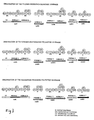
- FIG 4 is shown a sequence alignment of the KSq domains and of the adjacent linked ATq domains that have been identified, showing the conserved active site glutamine (Q) residue in the KSq domains, and an arginine residue which is conserved in all extension AT domains and is also completely conserved in ATq domains.
- This residue is characteristically not arginine in the AT domains of either DEBS or of the avermectin PKS loading modules, where the substrate for the AT is a non-carboxylated acyl-CoA ester ( Haydock, S. F. et al. FEBS Letters (1995) 374:246-248 ) .
- the abbreviation ATq is used here to simply to distinguish the AT domains found immediately C-terminal of Ksq from extension ATs, and the label has no other significance.
- This invention provides a process for producing a 14-membered macrolide having a 13-methyl group as set out in claim 1.
- the KSq domain may be "natural" or genetically engineered, e.g. resulting from site-directed mutagenesis of nucleic acid encoding a different KS such as a KS of an extension module.
- the loading functionality is provided by an AT (acyltransferase)-type domain which resembles an AT domain of a conventional extension module in having an arginine residue in the active site, which is not the case with the AT domains of loader modules which load acetate or propionate, e.g. in DEBS or avermectin PKS systems. It may be termed Atq. Once again, it may be "natural” or genetically engineered, e.g. by mutagenesis of an AT of an extension module.
- the loading module is of the form: Ksq-ATq-ACP where ACP is acyl carrier protein.
- ACP is acyl carrier protein.
- a preferred embodiment uses a culture which produces a 14-membered polyketide having a desired acetate starter unit characterised by the substantial absence of polyketides with different starter units.
- C13-methyl-erythromycin can be produced substantially free from natural analogues resulting from the incorporation of propionate starter units.
- PKSs for this purpose are the components of PKSs for the biosynthesis of erythromycin, methymycin, oleandomycin, tylosin, spiramycin, midecamycin, and niddamycin for all of which the gene and modular organisation is known at least in part.
- Particularly suitable sources of the genes encoding a loading module of the type KSq - ATq-ACP are the loading modules of oleandomycin, spiramycin, niddamycin, methymycin and monensin which are specific for the loading of malonate units which are then decarboxylated to acetate starter units.
- the domains or portions of them may be derived from the same or from different sources, and comprise either natural or engineered domains.
- the ATq domain can be replaced by an AT domain derived from any extension module of a Type I PKS, having specificity for loading of malonate units, so long as the KSq domain is chosen to have a matching specificity towards malonate units.
- the loading module of the type KSq - ATq-ACP may be linked to a hybrid PKS produced for example as in WO 98/01546 and WO 98/01571 . It is particularly useful to link such a loading module to gene assemblies that encode hybrid PKSs that produce novel derivatives of as described for example in WO 98/01546 and WO 98/01571 .
- Transformant organisms used in the invention may harbour recombinant plasmids, or the plasmids may integrate.
- a plasmid with an int sequence will integrate into a specific attachment site (att) of the host's chromosome.
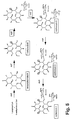
- Transformant organisms may be capable of modifying the initial products, eg by carrying out all or some of the biosynthetic modifications normal in the production of erythromycins (as shown in Figure 5 ) and for other polyketides. Use may be made of mutant organisms such that some of the normal pathways are blocked, e.g. to produce products without one or more "natural" hydroxy-groups or sugar groups.
- the invention can be used to provide both previously-obtained 14-membered ring macrolides and novel 14-membered ring macrolides in a purer form with respect to the nature of the acetate starter unit, than was hitherto possible.
- 14-membered ring macrolides which are either "natural” or may differ from the corresponding "natural” compound:
- Derivatives of any of the afore-mentioned polyketides which have undergone further processing by non-PKS enzymes eg one or more of hydroxylation, epoxidation, glycosylation and methylation may also be prepared.
- the present invention provides a novel method of obtaining both known and novel complex 14-membered macrolides having an acetate starter unit substantively free of products differing only in having a propionate starter unit.
- Suitable plasmid vectors and genetically engineered cells suitable for expression of PKS genes incorporating an altered loading module are those described in WO 98/01546 as being suitable for expression of hybrid PKS genes of Type I.
- effective hosts are Saccharopolyspora erythraea, Streptomyces coelicolor, Streptomyces avermitilis, Streptomyces griseofuscus, Streptomyces cinnamonensis, Streptomyces fradiae, Streptomyces longisporoflavus, Streptomyces hygroscopicus, Micromonospora griseorubida, Streptomyces lasaliensis, Streptomyces venezuelae, Streptomyces antibioticus, Streptomyces lividans, Streptomyces rimosus, Streptomyces albus, Amycolatopsis mediterranei, and Streptomyces tsukubaensis .
- SCP2*-derived plasmids include hosts in which SCP2*-derived plasmids are known to replicate autonomously, such as for example S. coelicolor, S. avermitilis and S. griseofuscus ; and other hosts such as Saccharopolyspora erythraea in which SCP2*-derived plasmids become integrated into the chromosome through homologous recombination between sequences on the plasmid insert and on the chromosome; and all such vectors which are integratively transformed by suicide plasmid vectors.
- WO 98/01546 describes in general terms the production of novel polyketides through recombinant DNA technologies, and the use of these technologies to generate novel erythromycins, many of which have different starter units to the propionate starter unit characteristic of the "natural" erythromycins, are described in pending International Patent Application WO 98/01546 , Some chemical modification of these novel erythromycins are also described in co-pending International Patent Applications PCT/IB98/02100 and PCT/IB98/02099 , i.e. WO 99/35157 and WO 99/35156 .
- Plasmid pCJR24 was prepared as described in PCT/GB97/01819 .
- pPFL43 is a pCJR24-based plasmid containing the gene encoding a hybrid polyketide synthase that contains the putative monensin PKS loading module (isolated from S. cinnamonensis ) the DEBS extension modules 1 and 2 and the chain-terminating thioesterase. Plasmid pPFL43 was constructed as follows:
- Plasmid pHD30His is a derivative of pNEWAVETE ( PCT/GB97/01810 ) which contains the avermectin loading module, erythromycin extension modules 1 and 2 and the ery thioesterase domain. Plasmid pNEWAVETE was cut with EcoRI and HinDIII and a synthetic oligonucleotide linker was inserted that encodes the addition of a C-terminal polyhistidine tail to the polypeptide. The following oligonucleotides:
- Plasmid pPFL40 was digested with Nde I and Nhe I and the 3.3 kbp fragment was purified by gel electrophoresis and ligated to pND30-His previously digested with Nde I and Nhe I and treated with alkaline phosphatase. The ligation mixture was used to transform electrocompetent E.coli DH10B cells and individual clones were checked for the desired plasmid pPFL43. Plasmid pPFL43 was identified by restriction analysis.
- Plasmid pPFL43 was used to transform S. erythraea NRRL2338 protoplasts. Thiostrepton resistant colonies were selected in R2T20 medium containing 10 ⁇ g/ml of thiostrepton. Several clones were tested for the presence of pPFL43 integrated into the chromosome by Southern blot hybridisation of their genomic DNA with DIG-labelled DNA containing the mon PKS fragment encoding for the loading module. A clone with an integrated copy of pPFL43 was selected in this way.
- Saccharopolyspora erythraea NRRL2338 (pPFL43) was inoculated into 1000mls Tap Water medium with 50 ⁇ g/ml thiostrepton in a 2.81 Fernbach flask. After three days incubation at 29°C, this flask was used to inoculate 81 of ERY-P medium in a 141 Microferm fermentor jar (New Brunswick Scientific Co., Inc., Edison, NJ). The broth was incubated at 28°C with an aeration rate of 81/min, stirring at 800 rpm and with pH maintained between 6.9 a nd 7.3 with NaOH or H 2 SO 4 (15%). Water was added to maintain volume at the 24 hour volume level.
- Elution with 50% methanol/water achieved chromatographic separation of the product from the two major impurities, 13-methyl-erythromycin B and a degradation product, 13-methyl-dehydroerythromycin A.
- the purest cuts were combined and reduced in volume by approximately 75% using evaporation to achieve ⁇ 10% methanol concentration.
- solid sodium bicarbonate was added until a total concentration of 250mM was obtained.
- the aqueous product layer was extracted 2x with methylene chloride, using one-half the total volume each time. The volume was reduced to light yellow solids by evaporation.
- the 13-methyl-erythromycin A was purified by dissolving the crude crystals into methylene chloride at ambient temperature and diluting to 15% methylene chloride with hexane. The cloudy solution is placed at -10°C for ⁇ 30 minutes when the liquid is decanted to a 2 nd flask, leaving the majority of impurities behind as an oil. The flask is left overnight at -10°C, followed by filtration of off-white13-methyl-erythromycin A crystals the next day. Approximately 300 milligrams of 13-methyl-erythromycin A were isolated from the partial work-up of the 351 broth volume.
- the 13-methyl-erythromycin B was eluted at 2 bed volumes per hour with 40% methanol in deionized water. One bed volume fractions were collected and assayed by LC/MS. Fractions 42 through 62 were combined, diluted to ⁇ 20% methanol with deionized water, and neutralized to pH 7.5 with sodium bicarbonate. The resulting solution was extracted once with 41 of methylene chloride, concentrated to ⁇ 500 ml, and dried over anhydrous magnesium sulfate. After removal of the MgS04 by filtration the filtrate was evaporated to give ⁇ 110 mg of light brown solids.
- the 110 mg of crude 13-methyl-erythromycin B was dissolved in ⁇ 3.0 milliliters of HPLC grade acetonitrile and loaded onto a 20cm x 20cm, 2mm thick, silica gel preparative thin layer chromatography (PTLC) plate.
- the plate was developed with 60:40 methanol:acetonitrile.
- the desired portion of silica from the PTLC plate was removed and extracted with HPLC grade acetone. The acetone extract was evaporated to give 12.1 mg of clear solid.
- the 13-methyl-erythromycin A sample peak had a 4.7 min retention time, with m/z value of 720 (M+H) + , required for 13-methyl-erythromycin A.
- the 13-methyl-erythromycin B sample peak had a 7.6 min retention time, with m/z value of 704 (M+H) + , required for 13-methyl-erythromycin B.
- Plasmid pPFL35 is a pCJR24-based plasmid containing a PKS gene comprising a loading module, the first and second extension modules of DEBS and the chain terminating thioesterase.
- the loading module comprises the KSq domain DNA from the loading module of the oleandomycin PKS fused to the malonyl-CoA-specific AT of module 2 of the rapamycin PKS, in turn linked to the DEBS loading domain ACP.
- Plasmid pPFL35 was constructed via several intermediate plasmids as follows:
- the DNA from a plasmid designated pKSW was used as a template.
- the 441 bp PCR product was treated with T4 polynucleotide kinase and ligated to plasmid pUC18, which had been linearised by digestion with Sma I and then treated with alkaline phosphatase.
- the ligation mixture was used to transform electrocompetent E.coli DH10B cells and individual clones were checked for the desired plasmid, pPFL26.
- the new Mfe I/ Avr II sites bordering the insert are adjacent to the Eco RI site in the polylinker of pUC18. Plasmid pPFL26 was identified by restriction pattern and sequence analysis.
- An Mfe I restriction site is located 112 bp from the 5' end of the DNA encoding the propionyl-CoA:ACP transferase of the loading module of DEBS.
- Plasmid pKSW was digested with Mfe I and Pst I and ligated with the 411 bp insert obtained by digesting plasmid pPFL26 with Mfe I and Pst I. The ligation mixture was used to transform electrocompetent E.coli DH10B cells and individual clones were checked for the desired plasmid, pPFL27.
- Plasmid pPFL27 contains a PKS gene comprising the DEBS loading module, the first and second extension modules of DEBS and the DEBS chain terminating thioesterase. Plasmid pPFL27 was identified by its restriction pattern.
- Plasmid pPFL27 was digested with Nde I and Avr II and ligated to a 4.6kbp insert derived from digesting plasmid pMO6 ( PCT/GB97/01819 ) with Nde I and Avr II.
- Plasmid pMO6 contains a PKS gene comprising the DEBS loading module, the first and second extension modules of DEBS and the DEBS chain terminating thioesterase, except that the DNA segment encoding the methylmalonate-specific AT within the first extension module has been specifically substituted by the DNA encoding the malonate-specific AT of module 2 of the rap PKS.
- the ligation mixture was used to transform electrocompetent E.
- Plasmid pPFL28 contains a hybrid PKS gene comprising the DEBS loading module, the malonate-specific AT of module 2 of the rap PKS, the ACP of the DEBS loading module, followed by the first and second extension modules of DEBS and the DEBS chain terminating thioesterase. Plasmid pPFL28 was identified by restriction analysis.
- a DNA segment encoding the KSq domain from the oleAI gene of S. antibioticus extending from nucleotide 1671 to nucleotide 3385 was amplified by PCR using the following synthetic oligonucleotide primers:-
- Plasmid pPFL31 was digested with Nde I and Avr II and the insert was ligated with plasmid pPFL28 that had been digested with Nde I and Avr II. The ligation mixture was used to transform electrocompetent E.coli DH10B cells and individual clones were checked for the desired plasmid, pPFL32. Plasmid pPFL32 was identified by restriction analysis.
- Plasmid pPFL32 was digested with Nde I and Xba I and the insert was ligated to plasmid pCJR24, which had been digested with Nde I and Xba I and purified by gel electrophoresis. The ligation mixture was used to transform electrocompetent E.coli DH10B cells and individual clones were checked for the desired plasmid, pPFL35. Plasmid pPFL35 was identified by restriction analysis.
- Plasmid pPFL35 was used to transform S.erythraea NRRL2338 protoplasts. Thiostrepton resistant colonies were selected in R2T20 medium (Yamamoto et al .) containing 10 ⁇ g/ml of thiostrepton. Several clones were tested for the presence of pPFL35 integrated into the chromosome by Southern blot hybridisation of their genomic DNA with DIG-labelled DNA containing the rap PKS fragment encoding for module 2 AT. A clone with an integrated copy of pPFL35 was identified in this way.
- Plasmid pPFL44 is a pCJR24- based plasmid containing the gene encoding a hybrid polyketide synthase that contains the spiramycin PKS loading module, the erythromycin extension modules 1 and 2 and the chain-terminating thioesterase. Plasmid pPFL44 was constructed as follows:
- Plasmid pPFL41 was digested with Nde I and Nhe I and the 3.3 kbp fragment was purified by gel electrophoresis and ligated to pND30 ( a plasmid derived from plasmid pCJR24 having as insert the ave PKS loading module and extension modules 1 and 2 or DEBS and the DEBS thioesterase) (PCTGB97/01810) previously digested with Nde I and Nhe I and treated with alkaline phosphatase. The ligation mixture was used to transform electrocompetent E.coli DH10B cells and individual clones checked for the desired plasmid pPFL44. Plasmid pPFL44 was identified by restriction analysis.
- Plasmid pPFL44 was used to transform S.erythraea NRRL2338 protoplasts. Thiostrepton resistant colonies were selected in R2T20 medium containing 10 ⁇ g/ml of thiostrepton. Several clones were tested for the presence of pPFL44 integrated into the chromosome by Southern blot hybridisation of their genomic DNA with DIG-labelled DNA containing the spiramycin PKS fragment encoding for the loading module. A clone with an integrated copy of pPFL44 was identified in this way.
- the culture Saccharopolyspora erythraea NRRL2338 (pPFL44), constructed with the wild-type loading domain displaced by spiramycin loader-D1TE DNA insert, was inoculated into 30ml Tap Water medium with 50 ug/ml thiostrepton in a 300ml Erlenmeyer flask. After three days incubation at 29°C, this flask was used to inoculate 300 ml of ERY-P medium in a 300 ml flask. The broth was incubated at 29°C at 200 rpm for 6 days. After this time, the whole broth was adjusted to pH 8.5 with NaOH, then extracted with equal volume of ethyl acetate.
- the ethyl acetate extract was evaporated to dryness at 45°C under a nitrogen stream using a Zymark TurboVap LV Evaporator, then reconstituted in 0.0625 volumes methanol to concentrate the extract 16-fold.
- the structures of the products were confirmed by LC/MS, Method A.
- a 4.0 min retention time peak was observed as the major component, with m/z value of 720 (M+H) + , required for 13-methyl-erythromycin A (C 36 H 65 NO 13 ).
- a second peak was observed with a retention time of 6.4 min and with m/z value of 704 (M+H) + , required for 13-methyl-erythromycin B (C 36 H 65 NO 12 ).
- Plasmid pJLK114 is a pCJR24 based plasmid containing a PKS gene comprising the ery loading module, the first and the second extension modules of the ery PKS and the ery chain-terminating thioesterase except that the DNA segment between the end of the acyltransferase and the beginning of the ACP of the second ery extension module has been substituted by a synthetic oligonucleotide linker containing the recognition sites of the following restriction enzymes: AvrII, BglII, SnaBI, PstI, SpeI, NsiI, Bsu36I and HpaI. It was constructed via several intermediate plasmids as follows ( Figure 6 ).
- the approximately 1.47 kbp DNA fragment of the eryAI gene of S. erythraea was amplified by PCR using as primers the synthetic oligonucleotides:
- the approximately 1.12 kbp DNA fragment of the eryAI gene of S. erythraea was amplified by PCR using as primers the synthetic oligonucleotides:
- Plasmid pJLK02 was digested with PstI and HpaI and the 1.47 kbp insert was ligated with plasmid pJLK03 which had been digested with PstI and HpaI.
- the ligation mixture was used to transform electrocompetent E. coli DH10B cells and individual colonies were checked for their plasmid content.
- the desired plasmid pJLK04 was identified by its restriction pattern.
- Plasmid pJLK01 ( PCT/GB97/01819 ) was digested with PstI and AvrII and the 460 bp insert was ligated with plasmid pJLK04 which had been digested with PstI and AvrII.
- the ligation mixture was used to transform electrocompetent E. coli DH10B cells and individual colonies were checked for their plasmid content.
- the desired plasmid pJLK05 was identified by its restriction pattern.
- Plasmid pJLK05 was digested with ScaI and XbaI and plasmid pNTEPH was digested with NdeI and ScaI and these two fragments were ligated with plasmid pCJR24 which had been digested with NdeI and XbaI.
- the ligation mixture was used to transform electrocompetent E. coli DH10B cells and individual colonies were checked for their plasmid content.
- the desired plasmid pJLK07 was identified by its restriction pattern.
- the two synthetic oligonucleotides Plf and Plb ( Figure 7 ) were each dissolved in TE-buffer. 10 ⁇ l of each solution (0.5nmol/ ⁇ l) were mixed and heated for 2 minutes to 65C and then slowly cooled down to room temperature. Plasmid pJLK07 was digested with AvrII and HpaI and ligated with the annealed oligonucleotides. The ligation mixture was used to transform electrocompetent E. coli DH10B cells and individual colonies were checked for their plasmid content. The desired plasmid pJLK114 was identified by its restriction pattern.
- Plasmid pJLK117 is a pCJR24 based plasmid containing a PKS gene comprising the ery loading module, the first and the second extension modules of the ery PKS and the ery chain-terminating thioesterase except that the DNA segment between the end of the acyltransferase and the beginning of the ACP of the second ery extension module has been substituted by a synthetic oligonucleotide linker containing the recognition sites of the following restriction enzymes.
- Plasmid pJLK114 was digested with NdeI and XbaI and the approximately 9.9 kbp insert was ligated with plasmid pUC18 which had been digested with NdeI and XbaI. The ligation mixture was used to transform electrocompetent E. coli DH10B cells and individual colonies were checked for their plasmid content. The desired plasmid pJLK115 was identified by its restriction pattern.
- Plasmid pJLK13 ( PCT/GB97/01819 ) was digested with Bsu36I and XbaI and the 1.1 kbp fragment was ligated with plasmid pJLK115 which had been digested with Bsu36I and XbaI.
- the ligation mixture was used to transform electrocompetent E. coli DH10B cells and individual colonies were checked for their plasmid content.
- the desired plasmid pJLK116 was identified by its restriction pattern.
- Plasmid pJLK116 was digested with NdeI and XbaI and the 9.9 kbp fragment was ligated with plasmid pCJR24 which had been digested with NdeI and XbaI.
- the ligation mixture was used to transform electrocompetent E. coli DH10B cells and individual colonies were checked for their plasmid content.
- the desired plasmid pJLK117 was identified by its restriction pattern.
- Plasmid pJLK29 is a pJLK117 based plasmid except that the DNA fragment encoding the reductive loop of module 10 of the rap PKS has been inserted into the mcs. It was constructed via several intermediate plasmids as follows. ( Figure 5 )
- the approximately 2.2 kbp DNA segment of the rapB gene of S. hygroscopicus encoding the reductive loop of module 10 was amplified by PCR using as primers the synthetic oligonucleotides:
- Plasmid pJLK121.1 was digested with BglII and NheI and the 2.2 kbp fragment was ligated with plasmid pJLK117 which had been digested with BglII and NheI.
- the ligation mixture was used to transform electrocompetent E. coli DH10B cells and individual colonies were checked for their plasmid content.
- the desired plasmid pJLK29 was identified by its restriction pattern.
- the approximately 6.1 kbp DNA segment of the erythromycin PKS gene cluster of S. erythraea encoding the DNA fragment from the beginning of the ACP of module 2 to the beginning of the ACP of module 3 was amplified by PCR using as primers the synthetic oligonucleotides:
- Strain JLK10 is a variant of strain NRRL2338 in which the reductive loop of ery module 2 (i.e. the KR domain) is replaced by the reductive loop of the rapamycin module 10. It was constructed using plasmid pJLK54 which was constructed as follows.
- Plasmid pJLK54 is a pJLK29 based plasmid containing a PKS gene comprising the ery loading module, the first, the second and the third extension modules of the ery cluster and the ery chain-terminating thioesterase except that the DNA segment between the end of the acyltransferase and the beginning of the ACP of the second ery extension module has been substituted by the equivalent segment of module 10 of the rapamycin PKS. It was constructed as follows.
- Plasmid pJLK50 was digested with NheI and the 6.1 kbp insert was ligated with plasmid pJLK29 which had been digested with NheI.
- the ligation mixture was used to transform electrocompetent E. coli DH10B cells and individual colonies were checked for their plasmid content.
- the desired plasmid pJLK54 was identified by its restriction pattern.
- plasmid pJLK54 Approximately 5 ⁇ g plasmid pJLK54 were used to transform protoplasts of S. erythraea NRRL2338 and stable thiostrepton resistant colonies were isolated. From several colonies total DNA is obtained and analysed by Southern blot hybridisation, to confirm that the plasmid has integrated into the TE.
- S. erythraea strain JLK10 Construction of S.erythraea strain JLK10 and its use in production of 13-methyl-10,11-dehydro-erythromycin A
- S. erythraea strain JLK10 is a mutant of S. erythraea NRRL2338 in which the 'reductive loop' of ery module 2 i.e. the ketoreductase domain is substituted by the 'reductive loop' of rapamycin module 10. It was constructed starting from S. erythraea NRRL2338 into which plasmid pJLK54 had been integrated.
- S. erythraea NRRL2338 into which plasmid pJLK54 had been integrated.
- erythraea NRRL2338/pJLK54 was subjected to several rounds of non-selective growth which resulted in second crossover concomitant with the loss of the integrated plasmid.
- S. erythraea strain JLK10 was used to inoculate SM3 medium (eryP medium gave similar results), and allowed to grow for seven to ten days at 28-30°C. After this time the broth was centrifuged and the pH of the supernatant adjusted to pH 9.
- Plasmid pPFL50 is a pPFL43-based plasmid from which a DNA fragment encoding KR1 (in part), ACP1 and module 2 of the erythromycin PKS and the erythromycin TE, has been removed. It was constructed as follows. Plasmid pPFL43 was digested with SfuI and XbaI to remove a 6.5 kb fragment. The 5' overhangs were filled in with Klenow fragment DNA Polymerase I and the plasmid was recircularised. The ligation mixture was used to transform electrocompetent E. coli DH10B cells and individual colonies were checked for their plasmid content. The desired plasmid pPFL50 was identified by its restriction pattern.
- plasmid pPFL50 Approximately 5 ⁇ g plasmid pPFL50 were used to transform protoplasts of S. erythraea strain JLK10 and stable thiostrepton resistant colonies were isolated. From several colonies total DNA was obtained and analysed by Southern blot hybridisation, to confirm that the plasmid had integrated into the homologous chromosomal DNA region.
- S. erythraea strain JLK10/pPFL50 was used to inoculate SM3 medium containing 5 ⁇ g/ml thiostrepton (eryP medium containing 5 ⁇ g/ml thiostrepton gave similar results)and allowed to grow for seven to ten days at 28-30oC.
- plasmid pPFL50 Approximately 5 ⁇ g plasmid pPFL50 were used to transform protoplasts of S. erythraea NRRL2338 and stable thiostrepton resistant colonies were isolated. From several colonies total DNA was obtained and analysed by Southern blot hybridisation, to confirm that the plasmid had integrated into the homologous region of the chromosomal DNA.
- S. erythraea NRRL2338/pPFL50 was used to inoculate SM3 medium containing 5 ⁇ g/ml thiostrepton (eryP medium containing 5 ⁇ g/ml thiostrepton gives similar results) and allowed to grow for seven to ten days at 28-30oC.
- Plasmid pCB121 is a plasmid containing the monensin loading module and KS of monensin module 1 followed by the erythromycin module 1 AT and part of the erythromycin modulel KR. It was constructed via several intermediate plasmids as follows.
- Plasmid pPFL45 was digested with NdeI and Bsu36I and the approximately 2.6 kbp fragment was ligated into plasmid pPFL43 which had been digested with NdeI and Bsu36I.
- the ligation mixture was used to transform electrocompetent E. coli DH10B cells and individual colonies were checked for their plasmid content.
- the desired plasmid pPFL47 was identified by its restriction pattern.
- Plasmid pCJR24 was digested with HindIII, the 5' overhang was filled in with Klenow fragment DNA Polymerase I and religated. The ligation mixture was used to transform electrocompetent E. coli DH10B cells and individual colonies were checked for their plasmid content. The desired plasmid pCB135 was identified by its restriction pattern, lacking the recognition site for HindIII.
- Plasmid pKSlW is a pNTEP2 ( GB97/01810 )-derived vector containing a DEBSITE-derived triketide synthase with the unique restriction sites introduced at the limits of KS1. Plasmid pKS1W is obtained via several intermediate plasmids as follows.
- PCR was carried out on pNTEP2 ( GB97/01810 ) as template using Pwo DNA polymerase and one cycle of: 96°C (1min); annealing at 50°C (3min); and extension at 72°C (1min), and 25 cycles of: 96°C (1min); annealing at 50°C (1min); and extension at 72°C (1min) in the presence of 10% (vol/vol) dimethylsulphoxide.
- the products were end-repaired and cloned into pUC18 digested with SmaI and the ligation mixture was transformed into E. coli DH 10B. Plasmid DNA was prepared from individual colonies. The desired plasmids for pMO09 (3.8kbp), pMO10 (3.9 kbp) and pMO13 (4.3 kbp) were identified by their restriction pattern and DNA sequencing.
- Plasmid pMO13 was digested with HindIII, and the 1.2 kbp insert was cloned into pMO10 which had been digested with HindIII.
- the ligation mixture was transformed into E. coli DH 10B.
- the desired plasmid (5.0 kbp) was identified by its restriction pattern and designated pMO11.
- Plasmid pMO09 was digested with PstI, and the 1.6 kbp insert was cloned into pMO11 which had been digested with PstI.
- the ligation mixture was transformed into E. coli DH 10B.
- the desired plasmid (6.6 kbp) was identified by its restriction pattern and designated pMO12.
- Plasmid pMO12 was digested with MunI and EcoRV, and the 3.9 kbp fragment was cloned into pNTEPH (see below) which had been digested with MunI and EcoRV.
- the ligation mixture was transformed into E. coli DH 10B.
- the desired plasmid 13. kbp was identified by its restriction pattern and designated pKS1W.
- Plasmid pNTEPH was obtained from pNTEP2 by removing the HindIII site. pNTEP2 was digested with HindIII, the 5' overhang was filled in with Klenow Fragment DNA Polymerase I and religated. The desired plasmid (13.6 kbp) was identified by its restriction pattern.
- Plasmid pKSW1 was digested with NdeI and XbaI and the approximately 11.2 kbp fragment was ligated with plasmid pCB135 which had been digested with NdeI and XbaI.
- the ligation mixture was used to transform electrocompetent E. coli DH10B cells and individual colonies were checked for their plasmid content.
- the desired plasmid pCB136 was identified by its restriction pattern.
- Plasmid pCB136 was digested with SfuI and XbaI to remove a 6.5 kb fragment, the 5' overhangs were filled in with Klenow Fragment DNA Polymerase I and religated. The ligation mixture was used to transform electrocompetent E. coli DH10B cells and individual colonies were checked for their plasmid content. The desired plasmid pCB137 was identified by its restriction pattern.
- Plasmid pPFL47 was digested with NdeI and HindIII and the approximately 4.4 kbp insert was ligated with plasmid pCB137 which had been digested with NdeI and HindIII.
- the ligation mixture was used to transform electrocompetent E. coli DH10B cells and individual colonies were checked for their plasmid content.
- the desired plasmid pCB121 was identified by its restriction pattern.
- plasmid pCB121 Approximately 5 ⁇ g plasmid pCB121 were used to transform protoplasts of S. erythraea JLK10 and stable thiostrepton resistant colonies were isolated. From several colonies total DNA was obtained and analysed by Southern blot hybridisation, to confirm that the plasmid had integrated into the homologous chromosomal DNA region.
- S. erythraea strain JLK10/pCB121 was used to inoculate SM3 medium containing 5 ⁇ g/ml thiostrepton (eryP medium containing 5 ⁇ g/ml thiostrepton gave similar results) and allowed to grow for seven to ten days at 28-30 ° C.
- plasmid pCB121 Approximately 5 ⁇ g plasmid pCB121 were used to transform protoplasts of S. erythraea NRRL2338 and stable thiostrepton resistant colonies were isolated. From several colonies total DNA was obtained and analysed by Southern blot hybridisation, to confirm that the plasmid had integrated into the homologous chromosomal DNA region.
- S. erythraea NRRL2338/pPFL50 was used to inoculate SM3 medium containing 5 ⁇ g/ml thiostrepton (eryP medium containing 5 ⁇ g/ml thiostrepton gave similar results) and allowed to grow for seven to ten days at 28-30oC.
Landscapes
- Chemical & Material Sciences (AREA)
- Organic Chemistry (AREA)
- Life Sciences & Earth Sciences (AREA)
- Health & Medical Sciences (AREA)
- Engineering & Computer Science (AREA)
- Genetics & Genomics (AREA)
- Wood Science & Technology (AREA)
- Zoology (AREA)
- Bioinformatics & Cheminformatics (AREA)
- Biotechnology (AREA)
- General Engineering & Computer Science (AREA)
- General Health & Medical Sciences (AREA)
- Biochemistry (AREA)
- Microbiology (AREA)
- Biomedical Technology (AREA)
- Molecular Biology (AREA)
- Chemical Kinetics & Catalysis (AREA)
- General Chemical & Material Sciences (AREA)
- Medicinal Chemistry (AREA)
- Plant Pathology (AREA)
- Physics & Mathematics (AREA)
- Biophysics (AREA)
- Animal Behavior & Ethology (AREA)
- Public Health (AREA)
- Pharmacology & Pharmacy (AREA)
- Nuclear Medicine, Radiotherapy & Molecular Imaging (AREA)
- Oncology (AREA)
- Communicable Diseases (AREA)
- Veterinary Medicine (AREA)
- Micro-Organisms Or Cultivation Processes Thereof (AREA)
- Preparation Of Compounds By Using Micro-Organisms (AREA)
- Saccharide Compounds (AREA)
- Polymers With Sulfur, Phosphorus Or Metals In The Main Chain (AREA)
- Polyesters Or Polycarbonates (AREA)
- Enzymes And Modification Thereof (AREA)
- Plural Heterocyclic Compounds (AREA)
- Polyoxymethylene Polymers And Polymers With Carbon-To-Carbon Bonds (AREA)
- Pharmaceuticals Containing Other Organic And Inorganic Compounds (AREA)
- Peptides Or Proteins (AREA)
- Catalysts (AREA)
Claims (10)
- Verfahren zur Herstellung eines 14-gliedrigen Makrolids mit einer 13-Methylgruppe, wobei das Verfahren das Kultivieren eines transformierten Organismus, der DNA enthält, die für ein PKS-Multienzym (Polyketidsynthase) kodiert, das ein 14-gliedriges Makrolid erzeugt, und zur Expression des PKS-Multienzyms angeordnet ist, wobei das PKS-Multienzym ein Beladungsmodul und eine Vielzahl an Extensionsmodulen umfasst, worin das Beladungsmodul angepasst ist, um einen Malonylrest zu laden und anschließend eine Decarboxylierung des geladenen Rests durchzuführen, um eine Acetatausgangseinheit bereitzustellen, die auf ein benachbartes Extensionsmodul übertragen wird, worin das Lademodul die Form KSq-ATq-ACP aufweist, wobei:(a) KSq für eine Domäne vom Ketosynthasetyp steht, die sich von einer KS-Domäne eines Extensionsmodul dadurch unterscheidet, dass sie einen Glutaminrest anstelle eines Cysteins im aktiven Zentrum aufweist;(b) ATq für eine Acyltransferasedomäne steht, die ein Malonyl lädt und einen Argininrest im aktiven Zentrum aufweist; und(c) ACP für ein Acylträgerprotein steht;
und worin die Extensionsmodule nicht natürlich mit einem Lademodul assoziiert sind, das eine Decarboxylierung eines Malonylrests durchführt. - Verfahren nach Anspruch 1, worin die hergestellte Verbindung eine Verbindung der Formel 1 ist:

R1 H oder OH ist; R2 bis R4 jeweils unabhängig voneinander H, CH3 oder CH2CH3 sind; R5 H oder OH ist; R6 H, CH3 oder CH2CH3 ist; R7 H oder Desosamin ist; R8 H, CH3 oder CH2CH3 ist; R9 OH, Mycarose (R12 ist H) oder Cladinose (R12 ist CH3) ist; R10 H ist; oder R9 = R10 = O ist; R11 H, CH3 oder CH2CH3 ist, mit der Maßgabe, dass, wenn R2 bis R4 CH3 sind, R6 CH3 ist, R8 CH3 ist und R11 CH3 ist, dann R1 und R5 nicht H sind und R12 nicht H ist; oder auch dass, wenn R2 bis R4 CH3 sind, R6 CH3 ist, R8 CH3 ist und R11CH3 ist, dann R1 und R5 nicht OH sind und R12 nicht H ist. - Verfahren nach Anspruch 1, worin die hergestellte Verbindung 15-Norerythromycin A ist.
- Verfahren nach Anspruch 1, worin die hergestellte Verbindung 15-Norerythromycin B ist.
- Verfahren nach einem der vorangegangenen Ansprüche, worin die KSq-Domäne durch Mutagenese von einer KS-Domäne eines Extensionsmoduls abgeleitet ist.
- Verfahren nach einem der vorangegangenen Ansprüche, worin die ATq-Domäne eine natürliche Extensionsmodul-AT-Domäne von einer Typ-I-PKS ist.
- Verfahren nach einem der vorangegangenen Ansprüche, worin das Lademodul dem Lademodul des PKS-Multienzyms von Oleandomycin, Spiramycin, Niddamycin, Methymycin oder Monensin entspricht.
- Verfahren nach einem der vorangegangenen Ansprüche, worin die Vielzahl an Extensionsmodulen den Extensionsmodulen einer aus Erythromycin, Narbomycin, Pikromycin, Lankamycin, Kujimycin oder Megalomycin ausgewählten PKS entspricht.
- Verfahren nach Anspruch 8, worin die Vielzahl an Extensionsmodulen den Extensionsmodulen der Erythromycin-PKS entspricht.
- Verfahren nach einem der vorangegangenen Ansprüche, worin der transformierte Organismus aus folgenden ausgewählt ist: Saccharopolyspora erythraea, Streptomyces coelicolor, Streptomyces avermitilis, Streptomyces griseofuscus, Streptomyces cinnamonensis, Streptomyces fradiea, Streptomyces longisporoflavus, Streptomyces hygroscopicus, Micromonospora griseorubida, Streptomyces lasaliensis, Streptomyces venezuelae, Streptomyces antibioticus, Streptomyces lividans, Streptomyces rimosus, Streptomyces albus, Amycolatopsis mideiterranei und Streptomyces tsukubaensis.
Applications Claiming Priority (3)
| Application Number | Priority Date | Filing Date | Title |
|---|---|---|---|
| GB9814006 | 1998-06-29 | ||
| GBGB9814006.4A GB9814006D0 (en) | 1998-06-29 | 1998-06-29 | Polyketides and their synthesis |
| PCT/GB1999/002042 WO2000000500A2 (en) | 1998-06-29 | 1999-06-29 | Polyketides and their synthesis |
Publications (2)
| Publication Number | Publication Date |
|---|---|
| EP1091971A2 EP1091971A2 (de) | 2001-04-18 |
| EP1091971B1 true EP1091971B1 (de) | 2010-03-17 |
Family
ID=10834580
Family Applications (2)
| Application Number | Title | Priority Date | Filing Date |
|---|---|---|---|
| EP99928128A Expired - Lifetime EP1090123B1 (de) | 1998-06-29 | 1999-06-29 | Polyketide und ihre herstellung |
| EP99928126A Expired - Lifetime EP1091971B1 (de) | 1998-06-29 | 1999-06-29 | Polyketide-synthese |
Family Applications Before (1)
| Application Number | Title | Priority Date | Filing Date |
|---|---|---|---|
| EP99928128A Expired - Lifetime EP1090123B1 (de) | 1998-06-29 | 1999-06-29 | Polyketide und ihre herstellung |
Country Status (22)
| Country | Link |
|---|---|
| US (3) | US7148045B1 (de) |
| EP (2) | EP1090123B1 (de) |
| JP (2) | JP4489947B2 (de) |
| KR (2) | KR20010071684A (de) |
| CN (2) | CN1316001A (de) |
| AT (2) | ATE461289T1 (de) |
| AU (2) | AU763230B2 (de) |
| BR (2) | BR9911710A (de) |
| CA (2) | CA2335523A1 (de) |
| CZ (2) | CZ20004913A3 (de) |
| DE (2) | DE69930510T2 (de) |
| ES (1) | ES2341403T3 (de) |
| GB (1) | GB9814006D0 (de) |
| HU (2) | HUP0105179A2 (de) |
| ID (2) | ID27419A (de) |
| IL (2) | IL140438A0 (de) |
| MX (2) | MXPA00012936A (de) |
| NZ (2) | NZ509600A (de) |
| PL (2) | PL345578A1 (de) |
| TR (2) | TR200003770T2 (de) |
| WO (2) | WO2000000618A2 (de) |
| YU (2) | YU82700A (de) |
Families Citing this family (29)
| Publication number | Priority date | Publication date | Assignee | Title |
|---|---|---|---|---|
| US7738015B2 (en) * | 1997-10-09 | 2010-06-15 | Fotonation Vision Limited | Red-eye filter method and apparatus |
| US7630006B2 (en) * | 1997-10-09 | 2009-12-08 | Fotonation Ireland Limited | Detecting red eye filter and apparatus using meta-data |
| GB9814622D0 (en) * | 1998-07-06 | 1998-09-02 | Biotica Tech Ltd | Polyketides,their preparation,and materials for use therein |
| CA2370743A1 (en) | 1999-04-16 | 2000-10-26 | Dennis Hlasta | Ketolide antibacterials |
| US6590083B1 (en) | 1999-04-16 | 2003-07-08 | Ortho-Mcneil Pharmaceutical, Inc. | Ketolide antibacterials |
| GB9912563D0 (en) * | 1999-05-28 | 1999-07-28 | Biotica Tech Ltd | Polyketides and their synthesis |
| US6524841B1 (en) * | 1999-10-08 | 2003-02-25 | Kosan Biosciences, Inc. | Recombinant megalomicin biosynthetic genes and uses thereof |
| US7033818B2 (en) | 1999-10-08 | 2006-04-25 | Kosan Biosciences, Inc. | Recombinant polyketide synthase genes |
| AU4858801A (en) | 2000-04-13 | 2001-10-30 | Biotica Tech Ltd | Hybrid glycosylated products and their production and use |
| IL163529A0 (en) * | 2002-02-19 | 2005-12-18 | Dow Agrosciences Llc | Novel spinosyn-producing polyketidesynthases |
| CA2492153C (en) | 2002-07-16 | 2012-05-08 | Biotica Technology Limited | Production of polyketide fkbp-ligand analogues |
| GB0327720D0 (en) * | 2003-11-28 | 2003-12-31 | Biotica Tech Ltd | Erythromycins and process for their preparation |
| GB0327721D0 (en) * | 2003-11-28 | 2003-12-31 | Biotica Tech Ltd | Polyketides and their synthesis |
| GB0417852D0 (en) | 2004-08-11 | 2004-09-15 | Biotica Tech Ltd | Production of polyketides and other natural products |
| BRPI0909839A2 (pt) | 2008-03-28 | 2017-06-13 | Univ California | produção de ácidos dicarboxílicos usando policetídeo sintases |
| BRPI0909059A2 (pt) * | 2008-04-29 | 2019-09-24 | Univ California | produção de biocombustíveis usando sintases de policetídeo. |
| GB0904540D0 (en) | 2009-03-17 | 2009-04-29 | Biotica Tech Ltd | Novel compounds and methods for their production |
| US8765431B2 (en) * | 2009-07-23 | 2014-07-01 | The Regents Of The University Of Michigan | Method for enzymatic production of decarboxylated polyketides and fatty acids |
| US8664186B2 (en) | 2009-07-24 | 2014-03-04 | Universite De Lorraine | Stambomycin and derivatives, their production and their uses as drugs |
| GB0914589D0 (en) | 2009-08-20 | 2009-09-30 | Biotica Tech Ltd | Novel compounds and methods for their production |
| US8852902B2 (en) | 2010-11-22 | 2014-10-07 | The Regents Of The University Of California | Producing a trimethylpentanoic acid using hybrid polyketide synthases |
| JP6437523B2 (ja) | 2013-04-04 | 2018-12-12 | プレジデント アンド フェローズ オブ ハーバード カレッジ | マクロライドならびにそれらの調製および使用の方法 |
| CN106998685A (zh) * | 2014-10-08 | 2017-08-01 | 哈佛大学的校长及成员们 | 14‑元酮内酯及其制备和使用方法 |
| EP3273969A4 (de) | 2015-03-25 | 2018-11-21 | President and Fellows of Harvard College | Makrolide mit modifizierten desosaminzuckern und verwendungen davon |
| CN106591388A (zh) * | 2016-10-13 | 2017-04-26 | 中国农业科学院生物技术研究所 | 具有聚酮类化合物合成功能的基因Dr2091 |
| CN110741011A (zh) | 2017-02-22 | 2020-01-31 | 免疫系统调节控股有限公司 | 新型免疫刺激大环内酯 |
| JP7100652B2 (ja) | 2017-02-22 | 2022-07-13 | アイエスアール イミューン システム レギュレイション ホールディング アクチエボラグ(パブル) | 新規免疫刺激マクロライド |
| WO2018226893A2 (en) | 2017-06-06 | 2018-12-13 | Zymergen Inc. | A high-throughput (htp) genomic engineering platform for improving saccharopolyspora spinosa |
| CA3094747A1 (en) | 2018-03-23 | 2019-09-26 | ISR Immune System Regulation Holding AB (publ) | Combinations of macrolide compounds and immune checkpoint inhibitors |
Family Cites Families (9)
| Publication number | Priority date | Publication date | Assignee | Title |
|---|---|---|---|---|
| US5141926A (en) * | 1990-04-18 | 1992-08-25 | Abbott Laboratories | Erythromycin derivatives |
| CA2171629A1 (en) * | 1993-09-20 | 1995-03-30 | Chaitan Khosla | Recombinant production of novel polyketides |
| US5712146A (en) * | 1993-09-20 | 1998-01-27 | The Leland Stanford Junior University | Recombinant combinatorial genetic library for the production of novel polyketides |
| US5672491A (en) * | 1993-09-20 | 1997-09-30 | The Leland Stanford Junior University | Recombinant production of novel polyketides |
| ATE286133T1 (de) * | 1995-07-06 | 2005-01-15 | Univ Leland Stanford Junior | Zellfreie synthese von polyketiden |
| ES2244001T3 (es) * | 1996-07-05 | 2005-12-01 | Biotica Technology Limited | Eritromicinas y procedimiento para su preparacion. |
| JPH10303641A (ja) * | 1997-04-23 | 1998-11-13 | Mitsubishi Electric Corp | 発振器及び無線機 |
| NZ500693A (en) * | 1997-04-30 | 2004-01-30 | Kosan Biosciences Inc | Combinatorial polyketide libraries produced using a modular PKS gene cluster as scaffold |
| AP1060A (en) * | 1998-01-02 | 2002-04-23 | Pfizer Prod Inc | Novel erythromycin derivatives. |
-
1998
- 1998-06-29 GB GBGB9814006.4A patent/GB9814006D0/en not_active Ceased
-
1999
- 1999-06-29 CA CA002335523A patent/CA2335523A1/en not_active Abandoned
- 1999-06-29 YU YU82700A patent/YU82700A/sh unknown
- 1999-06-29 HU HU0105179A patent/HUP0105179A2/hu unknown
- 1999-06-29 PL PL99345578A patent/PL345578A1/xx not_active Application Discontinuation
- 1999-06-29 MX MXPA00012936A patent/MXPA00012936A/es not_active IP Right Cessation
- 1999-06-29 WO PCT/GB1999/002044 patent/WO2000000618A2/en not_active Ceased
- 1999-06-29 AT AT99928126T patent/ATE461289T1/de not_active IP Right Cessation
- 1999-06-29 TR TR2000/03770T patent/TR200003770T2/xx unknown
- 1999-06-29 NZ NZ509600A patent/NZ509600A/xx unknown
- 1999-06-29 KR KR1020007015000A patent/KR20010071684A/ko not_active Withdrawn
- 1999-06-29 JP JP2000557371A patent/JP4489947B2/ja not_active Expired - Fee Related
- 1999-06-29 CN CN99810073A patent/CN1316001A/zh active Pending
- 1999-06-29 HU HU0102945A patent/HUP0102945A2/hu unknown
- 1999-06-29 DE DE69930510T patent/DE69930510T2/de not_active Expired - Lifetime
- 1999-06-29 KR KR1020007014999A patent/KR20010071683A/ko not_active Withdrawn
- 1999-06-29 US US09/720,840 patent/US7148045B1/en not_active Expired - Fee Related
- 1999-06-29 CZ CZ20004913A patent/CZ20004913A3/cs unknown
- 1999-06-29 EP EP99928128A patent/EP1090123B1/de not_active Expired - Lifetime
- 1999-06-29 DE DE69942149T patent/DE69942149D1/de not_active Expired - Lifetime
- 1999-06-29 PL PL99345575A patent/PL345575A1/xx not_active Application Discontinuation
- 1999-06-29 MX MXPA00012885A patent/MXPA00012885A/es not_active IP Right Cessation
- 1999-06-29 TR TR2000/03771T patent/TR200003771T2/xx unknown
- 1999-06-29 ES ES99928126T patent/ES2341403T3/es not_active Expired - Lifetime
- 1999-06-29 AT AT99928128T patent/ATE321137T1/de not_active IP Right Cessation
- 1999-06-29 AU AU45247/99A patent/AU763230B2/en not_active Ceased
- 1999-06-29 IL IL14043899A patent/IL140438A0/xx unknown
- 1999-06-29 EP EP99928126A patent/EP1091971B1/de not_active Expired - Lifetime
- 1999-06-29 AU AU45245/99A patent/AU765257B2/en not_active Ceased
- 1999-06-29 IL IL14044099A patent/IL140440A0/xx unknown
- 1999-06-29 CA CA002331764A patent/CA2331764C/en not_active Expired - Fee Related
- 1999-06-29 YU YU82500A patent/YU82500A/sh unknown
- 1999-06-29 CZ CZ20004912A patent/CZ20004912A3/cs unknown
- 1999-06-29 ID IDW20010220A patent/ID27419A/id unknown
- 1999-06-29 BR BR9911710-0A patent/BR9911710A/pt not_active Application Discontinuation
- 1999-06-29 BR BR9911712-6A patent/BR9911712A/pt not_active Application Discontinuation
- 1999-06-29 ID IDW20010219A patent/ID28285A/id unknown
- 1999-06-29 WO PCT/GB1999/002042 patent/WO2000000500A2/en not_active Ceased
- 1999-06-29 JP JP2000557261A patent/JP2002519014A/ja active Pending
- 1999-06-29 CN CN99810052A patent/CN1315956A/zh active Pending
- 1999-06-29 NZ NZ509601A patent/NZ509601A/en unknown
-
2004
- 2004-02-19 US US10/782,257 patent/US7198922B2/en not_active Expired - Fee Related
-
2006
- 2006-04-21 US US11/408,536 patent/US20060240528A1/en not_active Abandoned
Also Published As
Similar Documents
| Publication | Publication Date | Title |
|---|---|---|
| EP1091971B1 (de) | Polyketide-synthese | |
| EP0910633B1 (de) | Hybridpolyketidesynthase I Gen | |
| CA2332491A1 (en) | Polyketides, their preparation, and materials for use therein | |
| US6960453B1 (en) | Hybrid polyketide synthases combining heterologous loading and extender modules | |
| EP1183369A1 (de) | Polyketide und ihre herstellung | |
| HK1034536B (en) | Polyketides and their synthesis | |
| EP1045912A1 (de) | Polyketide und ihre herstellung | |
| JP2009213479A (ja) | ポリケチド類及びそれらの合成 |
Legal Events
| Date | Code | Title | Description |
|---|---|---|---|
| PUAI | Public reference made under article 153(3) epc to a published international application that has entered the european phase |
Free format text: ORIGINAL CODE: 0009012 |
|
| 17P | Request for examination filed |
Effective date: 20010123 |
|
| AK | Designated contracting states |
Kind code of ref document: A2 Designated state(s): AT BE CH CY DE DK ES FI FR GB GR IE IT LI LU NL PT SE |
|
| RAP1 | Party data changed (applicant data changed or rights of an application transferred) |
Owner name: BIOTICA TECHNOLOGY LIMITED |
|
| REG | Reference to a national code |
Ref country code: HK Ref legal event code: WD Ref document number: 1034518 Country of ref document: HK |
|
| RIC1 | Information provided on ipc code assigned before grant |
Ipc: C12P 19/62 20060101AFI20090717BHEP |
|
| RTI1 | Title (correction) |
Free format text: POLYKETIDE SYNTHESIS |
|
| GRAP | Despatch of communication of intention to grant a patent |
Free format text: ORIGINAL CODE: EPIDOSNIGR1 |
|
| GRAS | Grant fee paid |
Free format text: ORIGINAL CODE: EPIDOSNIGR3 |
|
| GRAA | (expected) grant |
Free format text: ORIGINAL CODE: 0009210 |
|
| AK | Designated contracting states |
Kind code of ref document: B1 Designated state(s): AT BE CH CY DE DK ES FI FR GB GR IE IT LI LU NL PT SE |
|
| REG | Reference to a national code |
Ref country code: GB Ref legal event code: FG4D |
|
| REG | Reference to a national code |
Ref country code: CH Ref legal event code: EP |
|
| REG | Reference to a national code |
Ref country code: IE Ref legal event code: FG4D |
|
| REF | Corresponds to: |
Ref document number: 69942149 Country of ref document: DE Date of ref document: 20100429 Kind code of ref document: P |
|
| REG | Reference to a national code |
Ref country code: ES Ref legal event code: FG2A Ref document number: 2341403 Country of ref document: ES Kind code of ref document: T3 |
|
| REG | Reference to a national code |
Ref country code: NL Ref legal event code: VDEP Effective date: 20100317 |
|
| PG25 | Lapsed in a contracting state [announced via postgrant information from national office to epo] |
Ref country code: FI Free format text: LAPSE BECAUSE OF FAILURE TO SUBMIT A TRANSLATION OF THE DESCRIPTION OR TO PAY THE FEE WITHIN THE PRESCRIBED TIME-LIMIT Effective date: 20100317 Ref country code: AT Free format text: LAPSE BECAUSE OF FAILURE TO SUBMIT A TRANSLATION OF THE DESCRIPTION OR TO PAY THE FEE WITHIN THE PRESCRIBED TIME-LIMIT Effective date: 20100317 |
|
| PG25 | Lapsed in a contracting state [announced via postgrant information from national office to epo] |
Ref country code: SE Free format text: LAPSE BECAUSE OF FAILURE TO SUBMIT A TRANSLATION OF THE DESCRIPTION OR TO PAY THE FEE WITHIN THE PRESCRIBED TIME-LIMIT Effective date: 20100317 Ref country code: NL Free format text: LAPSE BECAUSE OF FAILURE TO SUBMIT A TRANSLATION OF THE DESCRIPTION OR TO PAY THE FEE WITHIN THE PRESCRIBED TIME-LIMIT Effective date: 20100317 Ref country code: GR Free format text: LAPSE BECAUSE OF FAILURE TO SUBMIT A TRANSLATION OF THE DESCRIPTION OR TO PAY THE FEE WITHIN THE PRESCRIBED TIME-LIMIT Effective date: 20100618 Ref country code: CY Free format text: LAPSE BECAUSE OF FAILURE TO SUBMIT A TRANSLATION OF THE DESCRIPTION OR TO PAY THE FEE WITHIN THE PRESCRIBED TIME-LIMIT Effective date: 20100317 |
|
| PLBE | No opposition filed within time limit |
Free format text: ORIGINAL CODE: 0009261 |
|
| STAA | Information on the status of an ep patent application or granted ep patent |
Free format text: STATUS: NO OPPOSITION FILED WITHIN TIME LIMIT |
|
| PG25 | Lapsed in a contracting state [announced via postgrant information from national office to epo] |
Ref country code: PT Free format text: LAPSE BECAUSE OF FAILURE TO SUBMIT A TRANSLATION OF THE DESCRIPTION OR TO PAY THE FEE WITHIN THE PRESCRIBED TIME-LIMIT Effective date: 20100719 Ref country code: DK Free format text: LAPSE BECAUSE OF FAILURE TO SUBMIT A TRANSLATION OF THE DESCRIPTION OR TO PAY THE FEE WITHIN THE PRESCRIBED TIME-LIMIT Effective date: 20100317 |
|
| REG | Reference to a national code |
Ref country code: CH Ref legal event code: PL |
|
| 26N | No opposition filed |
Effective date: 20101220 |
|
| PG25 | Lapsed in a contracting state [announced via postgrant information from national office to epo] |
Ref country code: CH Free format text: LAPSE BECAUSE OF NON-PAYMENT OF DUE FEES Effective date: 20100630 Ref country code: LI Free format text: LAPSE BECAUSE OF NON-PAYMENT OF DUE FEES Effective date: 20100630 Ref country code: IE Free format text: LAPSE BECAUSE OF NON-PAYMENT OF DUE FEES Effective date: 20100629 |
|
| PGFP | Annual fee paid to national office [announced via postgrant information from national office to epo] |
Ref country code: FR Payment date: 20110603 Year of fee payment: 13 Ref country code: ES Payment date: 20110621 Year of fee payment: 13 |
|
| PGFP | Annual fee paid to national office [announced via postgrant information from national office to epo] |
Ref country code: GB Payment date: 20110523 Year of fee payment: 13 |
|
| PGFP | Annual fee paid to national office [announced via postgrant information from national office to epo] |
Ref country code: IT Payment date: 20110620 Year of fee payment: 13 |
|
| PGFP | Annual fee paid to national office [announced via postgrant information from national office to epo] |
Ref country code: DE Payment date: 20110630 Year of fee payment: 13 |
|
| PGFP | Annual fee paid to national office [announced via postgrant information from national office to epo] |
Ref country code: BE Payment date: 20110705 Year of fee payment: 13 |
|
| PG25 | Lapsed in a contracting state [announced via postgrant information from national office to epo] |
Ref country code: LU Free format text: LAPSE BECAUSE OF NON-PAYMENT OF DUE FEES Effective date: 20100629 |
|
| BERE | Be: lapsed |
Owner name: BIOTICA TECHNOLOGY LTD Effective date: 20120630 |
|
| GBPC | Gb: european patent ceased through non-payment of renewal fee |
Effective date: 20120629 |
|
| PG25 | Lapsed in a contracting state [announced via postgrant information from national office to epo] |
Ref country code: IT Free format text: LAPSE BECAUSE OF NON-PAYMENT OF DUE FEES Effective date: 20120629 |
|
| REG | Reference to a national code |
Ref country code: FR Ref legal event code: ST Effective date: 20130228 |
|
| PG25 | Lapsed in a contracting state [announced via postgrant information from national office to epo] |
Ref country code: DE Free format text: LAPSE BECAUSE OF NON-PAYMENT OF DUE FEES Effective date: 20130101 Ref country code: GB Free format text: LAPSE BECAUSE OF NON-PAYMENT OF DUE FEES Effective date: 20120629 Ref country code: BE Free format text: LAPSE BECAUSE OF NON-PAYMENT OF DUE FEES Effective date: 20120630 Ref country code: FR Free format text: LAPSE BECAUSE OF NON-PAYMENT OF DUE FEES Effective date: 20120702 |
|
| REG | Reference to a national code |
Ref country code: DE Ref legal event code: R119 Ref document number: 69942149 Country of ref document: DE Effective date: 20130101 |
|
| REG | Reference to a national code |
Ref country code: ES Ref legal event code: FD2A Effective date: 20131018 |
|
| PG25 | Lapsed in a contracting state [announced via postgrant information from national office to epo] |
Ref country code: ES Free format text: LAPSE BECAUSE OF NON-PAYMENT OF DUE FEES Effective date: 20120630 |