EP1117814B1 - Isoformes de l'enzyme de ramification de l'amidon ii (sbe-iia et sbe-iib) provenant du ble - Google Patents
Isoformes de l'enzyme de ramification de l'amidon ii (sbe-iia et sbe-iib) provenant du ble Download PDFInfo
- Publication number
- EP1117814B1 EP1117814B1 EP99946307A EP99946307A EP1117814B1 EP 1117814 B1 EP1117814 B1 EP 1117814B1 EP 99946307 A EP99946307 A EP 99946307A EP 99946307 A EP99946307 A EP 99946307A EP 1117814 B1 EP1117814 B1 EP 1117814B1
- Authority
- EP
- European Patent Office
- Prior art keywords
- sbeii
- sequence
- plant
- wheat
- starch
- Prior art date
- Legal status (The legal status is an assumption and is not a legal conclusion. Google has not performed a legal analysis and makes no representation as to the accuracy of the status listed.)
- Expired - Lifetime
Links
Images




















Classifications
-
- C—CHEMISTRY; METALLURGY
- C12—BIOCHEMISTRY; BEER; SPIRITS; WINE; VINEGAR; MICROBIOLOGY; ENZYMOLOGY; MUTATION OR GENETIC ENGINEERING
- C12N—MICROORGANISMS OR ENZYMES; COMPOSITIONS THEREOF; PROPAGATING, PRESERVING, OR MAINTAINING MICROORGANISMS; MUTATION OR GENETIC ENGINEERING; CULTURE MEDIA
- C12N9/00—Enzymes; Proenzymes; Compositions thereof; Processes for preparing, activating, inhibiting, separating or purifying enzymes
- C12N9/10—Transferases (2.)
- C12N9/1048—Glycosyltransferases (2.4)
- C12N9/1051—Hexosyltransferases (2.4.1)
- C12N9/107—1,4-Alpha-glucan branching enzyme (2.4.1.18)
-
- C—CHEMISTRY; METALLURGY
- C12—BIOCHEMISTRY; BEER; SPIRITS; WINE; VINEGAR; MICROBIOLOGY; ENZYMOLOGY; MUTATION OR GENETIC ENGINEERING
- C12N—MICROORGANISMS OR ENZYMES; COMPOSITIONS THEREOF; PROPAGATING, PRESERVING, OR MAINTAINING MICROORGANISMS; MUTATION OR GENETIC ENGINEERING; CULTURE MEDIA
- C12N15/00—Mutation or genetic engineering; DNA or RNA concerning genetic engineering, vectors, e.g. plasmids, or their isolation, preparation or purification; Use of hosts therefor
- C12N15/09—Recombinant DNA-technology
- C12N15/63—Introduction of foreign genetic material using vectors; Vectors; Use of hosts therefor; Regulation of expression
- C12N15/79—Vectors or expression systems specially adapted for eukaryotic hosts
- C12N15/82—Vectors or expression systems specially adapted for eukaryotic hosts for plant cells, e.g. plant artificial chromosomes (PACs)
- C12N15/8241—Phenotypically and genetically modified plants via recombinant DNA technology
- C12N15/8242—Phenotypically and genetically modified plants via recombinant DNA technology with non-agronomic quality (output) traits, e.g. for industrial processing; Value added, non-agronomic traits
- C12N15/8243—Phenotypically and genetically modified plants via recombinant DNA technology with non-agronomic quality (output) traits, e.g. for industrial processing; Value added, non-agronomic traits involving biosynthetic or metabolic pathways, i.e. metabolic engineering, e.g. nicotine, caffeine
- C12N15/8245—Phenotypically and genetically modified plants via recombinant DNA technology with non-agronomic quality (output) traits, e.g. for industrial processing; Value added, non-agronomic traits involving biosynthetic or metabolic pathways, i.e. metabolic engineering, e.g. nicotine, caffeine involving modified carbohydrate or sugar alcohol metabolism, e.g. starch biosynthesis
Definitions
- This invention concerns novel polynucleotides; polypeptides encoded thereby; vectors and host cells and host organisms comprising one or more of the novel polynucleotides; a method of altering one or more characteristics of a plant and a plant having altered characteristics.
- Starch is the major form of carbon reserve in plants, constituting 50% or more of the dry weight of many storage organs, e.g. tubers, seeds of cereals. Starch is used in numerous food and industrial applications. In many cases, however, it is necessary to modify the native starches, via chemical or physical means, in order to produce distinct properties to suit particular applications. It would be highly desirable to be able to produce starches with the required properties directly in the plant, thereby removing the need for additional modification. To achieve this via genetic engineering requires knowledge of the metabolic pathway of starch biosynthesis. This includes characterisation of genes and encoded gene products which catalyse the synthesis of starch. Knowledge about the regulation of starch biosynthesis raises the possibility of "re-programming" biosynthetic pathways to create starches with novel properties that could have new commercial applications.
- starch The most significant property of starch derives from the ability of the native granular form to lose its order and to swell and absorb water upon suitable treatment, thereby conferring viscosity and texture, in a process known as gelatinisation.
- Gelatinisation has been defined (W A Atwell et al , 1988) as "... the collapse (disruption) of molecular orders within the starch granule manifested in irreversible changes in properties such as granular swelling, native crystallite melting, loss of birefringence, and starch solubilisation.
- the point of initial gelatinisation and the range over which it occurs is governed by starch concentration, method of observation, granule type, and heterogeneities within the granule population under observation”.
- Starch gelatinisation is usually caused by heat, but can be caused by physical damage and some chaotropic agents, mainly dimethylsulphoxide (DMSO), urea, calcium chloride, strong base and acid.
- DMSO dimethylsulphoxide
- the various events taking place during gelatinisation can be followed by various methods, including birefringence, X-ray diffraction, differential scanning calorimetry (DSC), 13 C NMR. Swelling can be monitored by various methods, particularly rheology.
- DSC Differential scanning calorimetry
- Viscosity increase on heating can be conveniently measured by a Brabender amylograph (Brabender is a Trade Mark) (Kennedy and Cabalda, 1991) or using a Rapid Visco analyser (Rapid Visco is a Trade Mark from Newport Scientific, Australia).
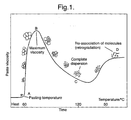
- Figure 1 is a typical viscoamylgraph profile for wheat starch, produced in this way, showing changes in starch during and after cooking. As starch granules swell on uptake of water, in a process known as pasting, their phase volume increases, causing an increase in viscosity.
- Retrogradation or set-back viscosity is therefore indicative of the amount of amylose leached out of the granules.
- wheat starch The properties of wheat starch are useful in a large number of applications and also non-food (paper, textiles, adhesives etc.) applications. However, for many applications, properties are not optimum and various chemical and physical modifications well known in the art are undertaken in order to improve useful properties. Two types of property manipulation which would be of use are: the controlled alteration of gelatinisation and pasting temperatures; and starches which suffer less granular fragmentation during pasting than conventional starches.
- Starch consists of two main glucose polysaccharides: amylose and amylopectin.
- Amylose is a generally linear polymer comprising ⁇ -1,4 linked glucose units, while amylopectin is a highly branched polymer consisting of an ⁇ -1,4 linked glucan backbone with ⁇ -1,6 linked glucan branches.
- amylopectin constitutes approximately 70 % of the total starch content, with the balance being amylose.
- Amylopectin is synthesised through the concerted action of several enzymes, including soluble starch synthase(s) (SSS), starch branching enzyme(s) (SBE), starch de-branching enzyme(s) (DBE).
- starch The physical properties of starch are strongly affected by the relative abundance of amylose and amylopectin, therefore SSSs, SBEs and DBEs play a key role in determining both starch quantity and quality.
- SSSs, SBEs and DBEs play a key role in determining both starch quantity and quality.
- one approach to manipulating starch structure would be to modify the expression of the enzymes involved in starch biosynthesis in the endosperm using a transgenic approach.
- SBE catalyses the formation of the ⁇ -1,6 linkages, creating branch points in the growing starch molecule, via hydrolysis of an ⁇ -1,4 linkage followed by reattachment of the released ⁇ -1,4-glucan chain to the same or another glucosyl chain. This reaction also provides a new non-reducing end for further elongation of the original ⁇ -1,4-glucan chain.
- starch branching enzyme has been described, biochemically, from a number of species including maize (Boyer and Preiss, 1978), rice (Nakamura et al., 1992), pea (Smith, 1988), potato (Khoshnoodi et al., 1993) and wheat (Morell et al., 1997). More recently, genomic and cDNA sequences for SBE have been characterised from several species including maize (Baba et al., 1991; Fisher et al ., 1993; Gao et al.
- Maize is unusual in that the maize SBEII family is thought to comprise two different members, known as SBEIIa and SBEIIb. There has been controversy over whether the SBEIIa and IIb enzymes are in fact a) encoded by genes at two different loci, and b) whether the genes represent different alleles at a single locus. Fisher et al (1996) and Gao et al (1997) have provided evidence that SBEIIa and SBEIIb are encoded by independent genes. However, there is no conclusive evidence that both isoforms exist together in any one maize genotype.
- SBEI is distinct from SBEIIa and SBEIIb in amino acid composition, substrate specificity, kinetic properties, and immunological reactivities, whereas SBEIIa and SBEIIb are similar in these respects (Guan and Preiss, 1993; Preiss 1991; Takeda et al., 1993).
- SBEIIa and SBEIIb exhibit approximately 80% homology to each other.
- maize Prior to the present invention, maize was unique in having SBEIIa- and SBEIIb-type enzymes.
- Arabidopsis has two SBEII family members, the sub-division in Arabidopsis does not appear to conform to that seen in maize: the Arabidopsis sub-family members do not obviously fall into the IIa and IIb categories as do the maize sequences.
- Both of the Arabidopsis SBEII genes have similar levels of homology to both the maize SBEII genes, SBEIIa and SBEIIb, but the similarities are not sufficient to be able to place the Arabidopsis genes into the same SBEIIa and SBEIIb categories as for maize.
- SBEI and SBEII demonstrate that these isoforms differ in their specificity for a substrate with respect to both chain length and degree of branching.
- SBEI and SBEII show distinct branching activities in vitro, with SBEI showing a higher rate of branching of an amylose substrate when compared to SBEII whereas both SBEIIa and IIb show higher rates of branching than SBEI when acting upon an amylopectin substrate (Guan and Preiss, 1993).
- the present invention is based on the unexpected discovery of a novel class of SBEII genes in wheat, referred to herein as SBEII-1.
- SBEII-1 novel class of SBEII genes in wheat, referred to herein as SBEII-1.
- the novel SBEII-1 gene sequence has strong homology with the maize SBEIIb gene.
- the wheat SBEII-1 genes are thought to be functionally equivalent to the maize SBEIIb gene, and on this basis it is believed that manipulation of the wheat SBEII-1 gene is likely to influence starch properties including starch gelatinisation temperature, in a manner analogous to manipulation of the maize SBEIIb gene as described in WO 97/22703 .
- the present inventors have used the high degree of sequence conservation between several SBE gene sequences to design oligonucleotide primers to motifs which are specific to either SBEI or SBEII families and have used these primers to amplify cDNA sequences from developing endosperm of wheat.
- the invention provides a polynucleotide encoding the polypeptide having the amino acid sequence shown in Figure 10 (SEQ ID No: 2).
- sequences which are sufficiently homologous to the sequence of the invention that they can hybridise to the complement thereof under stringent hybridisation conditions (eg as described by Sambrook et al 1989, ie washing with 0.1xSSC, 0.5% SDS at 68°C); such equivalents will preferably possess at least 86%, more preferably at least 90%, and most preferably at least 95%, sequence homology (ie sequence similarity) with the sequence of the invention. Sequence homology is suitably determined using the 'MEGALIGN' program of the software package DNAStar (MEGALIGN and DNAStar are Trade Marks).
- polynucleotide sequence of the invention may also find useful application when present as an "antisense” sequence.
- functionally equivalent sequences will also include those sequences which can hybridise, under stringent hybridisation conditions, to the sequence of the invention (rather than the complement thereof).
- Such "antisense” equivalents will preferably possess at least 86 % , more preferably at least 90%, and most preferably 95 % sequence homology with the complement of the sequence of the invention.
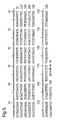
- the invention provides a polynucleotide consisting of the sequence of B2 shown in Figure 3 (SEQ ID No: 3).
- the invention provides a polynucleotide consisting of the sequence of B4 shown in Figure 3 (SEQ ID No: 4).
- Another aspect of the invention provides a polynucleotide consisting of the sequence of B10 shown in Figure 3 (SEQ ID No: 5).
- Yet a further aspect of the invention provides a polynucleotide consisting of the sequence of B1 shown in Figure 3 (SEQ ID No: 6).
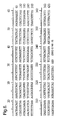
- the invention provides a polynucleotide encoding the polypeptide having the amino acid sequence of B6 shown in Figure 4 (SEQ ID No: 7).
- the polynucleotides of the invention are part of novel wheat SBEII genes, with B1 being a novel subclass of the known class of SBEII genes, referred to herein as SBEII-2, with the novel subclass being called SBEII-2B.
- SBEII-2 a novel subclass of the known class of SBEII genes
- SBEII-2B novel subclass of the novel subclass of SBEII-2B.
- the remaining polynucleotides are all of a completely new class of wheat SBEII genes, referred to herein as SBEII-1.
- the polynucleotides have been found to fall into 3 sub-classes, to be discussed below.
- novel wheat SBEII-1 genes that are the subject of this invention have strong sequence homology with the maize SBEIIb gene.
- the wheat SBEII-1 genes are thought to have similar functional properties to the maize SBEIIb gene.
- a functional equivalent in this context has the same general meaning as discussed above, but with equivalents preferably at least 32%, more preferably at least 40%, 50%, 60%, 70%, 80% or 90% sequence homology with the sequence of the relevant Figure.
- the sequence may include further nucleotides at the 5' or 3' end.
- the sequence desirably also comprises an in-frame ATG start code, and may also encode a leader sequence.
- the invention also covers a nucleic acid construct comprising a polynucleotide in accordance with the invention conveniently operably linked, in sense or antisense orientation, to a promoter sequence.
- polypeptide encoded by any of the polynucleotide, of the invention are also include within the scope of the invention.
- the invention also provides vectors, particularly expression vectors, comprising the polynucleotide of the invention.
- the vector will typically comprise a promoter and one or more regulatory signals of the type well known to those skilled in the art.
- the invention also includes provision of cells transformed (which term encompasses transduction and transfection) with and thus comprising a vector comprising the polynucleotide of the invention.
- Polynucleotides in accordance with the invention may be introduced into plants, particularly but not exclusively wheat plants, and it is expected that this can be used to affect expression of SBE in the plant and hence affect the properties of starch produced by the plant.
- use of polynucleotides in antisense orientation is expected to reduce or suppress enzyme expression.
- "sense suppression" can also occur (i.e. expression of an introduced sequence operably linked in the sense orientation can interfere, by some unknown mechanism, with the expression of the native gene), as described by Matzke & Matzke 1995. Any one of the methods mentioned by Matzke & Matzke could, in theory, be used to affect the expression in a host of a homologous SBE gene.
- antisense methods are mainly operable by the production of antisense mRNA which hybridises to the sense mRNA, preventing its translation into functional polypeptide, possibly by causing the hybrid RNA to be degraded (e.g. Sheehy et al., 1988; Van der Krol et al .,).
- Sense suppression also requires homology between the introduced sequence and the target gene, but the exact mechanism is unclear. It is apparent however that, in relation to both antisense and sense suppression, neither a full length polynucleotide, nor a "native" polynucleotide is essential.
- the "effective portion" used in the method will comprise at least one third of the full length sequence, but by simply trial and error other fragments (smaller or larger) may be found which are functional in altering the characteristics of the plant.
- the invention provides a method of transforming a plant, comprising introducing into the plant the polynucleotide of the invention operably linked to a suitable promoter active in the plant so as to affect expression of a gene present in the plant.
- the polynucleotide will be linked in the antisense orientation to the promoter.
- the plant is a wheat plant.
- the characteristic altered relates to the starch content and/or starch composition of the plant (i.e. amount and/or type of starch present in the plant).
- the method of transformation of the plant will also comprise the introduction of one or more further polynucleotides in addition to the polynucleotide of the invention.
- the introduced polynucleotide of the invention and the one or more further polynucleotides may be operably linked to a single promoter (which would ensure both were transcribed at essentially the same time), or may be operably linked to separate promoters (which may be necessary for optimal expression). Where separate promoters are employed they may be identical to each other or different. Suitable promoters are well known to those skilled in the art and include both constitutive and inducible types. Examples include the CaMV 35S promoter (e.g. single or tandem repeat) and the ubiquitin promoter.
- the promoter will be tissue-specific. Desirably the promoter will cause expression of the operably linked polynucleotide at substantial levels only in the tissue of the plant where starch synthesis and/or starch storage mainly occurs.
- the polynucleotide of the invention and the one or more further polynucleotides if desired, can be introduced into the plant by any one of a number of well-known techniques (e.g. Agrobacterium -mediated transformation, or by "biolistic” methods).
- the polynucleotides are likely to be most effective in affecting SBE activity in wheat plants, but theoretically could be introduced into any plant. Desirable examples include pea, tomato, maize, rice, barley, sweet potato and cassava plants.
- the plant will comprise a natural gene encoding an SBE molecule which exhibits reasonable homology with the introduced polynucleotide of the invention.
- the invention provides a plant cell, or a plant which has been transformed by the method defined above.
- the progeny of the transformed plant may be obtained, for example, by vegetative propagation, or by crossing the transformed and reserving the seed so obtained.
- the invention also covers parts of the transformed plant. Conveniently, for example, the invention covers grain comprising altered starch, said grain being obtained from a transformed plant or the progeny thereof. Grain obtained from transformed plants (or the progeny thereof) will be particularly useful materials in certain industrial applications and for the preparation and/or processing of foodstuffs and may be used, for example, in bakery products.
- the invention provides a wheat plant or part thereof which, in its wild type possesses an effective SBEII-1 gene, but which plant has been transformed such that there is either reduced, increased or no effective expression of an SBEII-1 polypeptide within the cells of at least part of the plant.
- the plant may have been transformed by the method defined above, or may have been selected by conventional breeding to be deleted for the SBEII-1 gene, the presence or absence of which can be readily determined by screening samples of the plants with a nucleic acid probe or antibody specific for the wheat gene or gene product respectively.
- Starch may be extracted from a transformed plant, or from the progeny of such a plant, the starch having altered properties compared to starch extracted from equivalent, but unaltered, plants. It is believed that use of polynucleotides in accordance with the invention will enable the production of starches, particularly wheat starches, having a wide variety of novel properties. For example, it may be anticipated that plants altered to give a reduction in SBEII activity will give rise to a starch with a relatively higher proportion of amylose and a lower proportion of amylopectin compared with that from unaltered plants.
- the invention provides the following: a plant (especially a wheat plant) transformed by the method defined above and comprising a vector of the invention, containing starch which, when extracted from the plant, has an elevated gelatinisation onset and/or peak temperature as measured by DSC, compared to starch extracted from a similar, but unaltered, plant; a plant (especially a wheat plant) transformed by the method defined above, containing starch which, when extracted from the plant, has a elevated gelatinisation onset temperature (conveniently elevated by at least 3°C, possibly by at least 7°C.
- Figure 2 also shows sequence information for a novel wheat SBEII-1 sequence of the invention, identified as OsbeII-1ALL (SEQ ID No: 11).
- both the SBEII-1 and SBEII-2 classes may each be further subdivided into three sub-classes, based on sequence differences (Table 1). It is thought the sub-division into three sub-classes probably arises because wheat comprises three homoeologous genomes.
- Table 1 Class Sub-Class Clone Number SBEII-1 A B2, B5, B6, B7, B12 SBEII-1 B B10 SBEII-1 C A1, A13, B4 SBEII-2 A B11 SBEII-2 B B1, B9 SBEII-2 C A2, C5
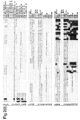
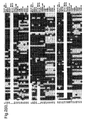
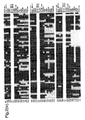
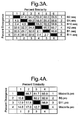
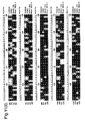
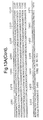
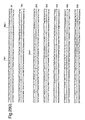
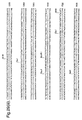
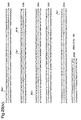
- sequence similarity between representatives of SBEII-1 and SBEII-2 classes only display between 58.8 and 60.0% homology in the region of comparison ( Figures 3 and 3a ).
- Triticum aestivum cultivar Rialto was grown in a glass house under supplementary lighting and temperature control to maintain a 16 hour day-length at 18+/-1°C.
- Flowgen Purescript RNA isolation kit
- Protein and DNA were precipitated from the cell lysate by adding 0.4ml of 'Protein-DNA Precipitation Solution' and mixing by inversion before centrifuging at 13,000 x g at 4°C for 20 minutes. The supernatant was divided between two fresh 1.5ml tubes each containing 600 ⁇ l of iso -propanol. The RNA precipitate was pelleted by centrifugation at 13,000 x g at 4°C for 10 minutes, the supernatant was discarded and the pellets washed with 70% ethanol by inverting the tube several times. The ethanol was discarded and the pellet air dried for 15-20 minutes before the RNA was resuspended in 7.5ml of 'RNA Hydration Solution'.
- Wheat endosperm cDNA pool was prepared from total RNA, extracted as described above, using SuperscriptTM reverse transcriptase (Life Technologies) essentially according to manufacturers instructions. Briefly, five microgrammes of RNA, 10pMol RoRidT17 [AAGGATCCGTCGACATCGATAATACGACTCACTATAGGGA(T17)] (SEQ ID No: 37) and sterile distilled water to a reaction volume of 12 ⁇ l, in a 500 ⁇ l microcentrifuge tube, was heated to 70°C for 10 minutes before being quick chilled on ice.
- the contents of the tube were collected by brief centrifugation before adding 4 ⁇ l 5x First Strand Buffer, 2 ⁇ l 0.1M DTT and 1 ⁇ l 10mM dNTPs and, after mixing, incubating at 42°C for 2 min. 1 ⁇ l of Superscript TM was added and, after mixing, incubation continued for 1 hour. The reaction was inactivated by heating to 70°C for 15 min. 150 ⁇ l of T 10 E 1 was added to the reaction mix and the resulting cDNA pool was used as a template for amplification in PCR.
- SBEII sequences were amplified from the endosperm cDNA pool using primers Ro [AAGGATCCGTCGACATC] (SEQ ID No: 38), which is complementary to the Ro region of the RoRidT17 primer used to synthesise the cDNA pool, and the SBEII specific primer, SBEA [ATGGACAAGGATATGTATGA] (SEQ ID No: 39).
- SBEA was designed to be homologous to the MDKDMYD (SEQ ID No: 36) motif which is situated approx. 1kb from the 3'end of the mature peptide coding sequence.
- PCR was carried out in a 50 ⁇ l reaction, comprising 5 ⁇ l of the cDNA pool, 25pmol Ro, 50pmol SBEA, 5 ⁇ l 5x Taq buffer, 4 ⁇ l 25mM Mg 2+ , 0.5 ⁇ l 20mM dNTPs, and 1.25u Taq polymerase. All of the reaction components were mixed, except for the Taq polymerase, before being pre-heated to 94°C for 7 min and then cooled to 75°C for 5 min.
- PCR products were purified by phenol/chloroform and chloroform extraction before ligation with pT7 Blue (Novagen) according to manufacturers recommendations.
- Putative SBE clones were initially characterised by standard plasmid DNA purification methods and restriction digestion. Representative clones harbouring a range of different sized inserts were selected for sequencing.
- FIG. 9a shows the hybridisation obtained with an SBEII-2 (clone B1) probe on HindIII digested DNA.
- SBEII-2 clone B1 probe on HindIII digested DNA.
- the euploid Chinese Spring gives 3 bands, one of which is missing in turn in the lines nullisomic for chromosomes 2A, 2B and 2D.
- the same blot was re-probed with a SBEII-1 specific probe (clone B2). This yields an entirely different hybridisation profile ( Figure 9b ), demonstrating the specificity of the probe used.
- Barley addition lines were used to determine whether homologous sequences are present in barley. These showed that sequences homologous to the wheat SBEII-1 and SBEII-2 sequences are located on the long arms of barley chromosome 2H.
- RNA 15 ⁇ g was electrophoresed on a 1% agarose, 2.21M Formaldehyde, 40mM MOPS pH7.0, 10mM sodium acetate, 1mM EDTA gel, in a 40mM MOPS pH7, 10mM sodium acetate, 1mM EDTA running buffer at 1 V/cm overnight.
- Gels were placed in a 50ng/ml solution of Ethidium Bromide in water for 30 minutes, de-stained in water for 2 hours, and visualised and photographs under UV light. The gels were then washed briefly in sterile distilled H 2 O, then blotted onto HyBond N +TM (Amersham International), according to standard protocols (Sambrook et al, 1989) overnight. Blots were then dismantled and air-dried before UV fixing at 312nm for 2 minutes.
- 5-10 ⁇ g of the plasmids pUN1 and pSR98-29 were digested with Sst1 (Life Technologies Ltd) according to the manufacturers instructions, to release fragments of approximately 0.8kb (NptII) and 1kb (SBEII-1) respectively.
- 5-10 ⁇ g of the plasmid pVT96-54 was digested with BamH1 to release a SBEII-2 fragment of approximately 1.2kb.
- Digests were electrophoresed on 1 % low melting point agarose gels. The gene specific fragments were excised and the DNA purified using a WizardTM Gel Purification Kit (Promega).
- 25ng of the appropriate probe (Maize Waxy promoter, NptII, Wheat SBEII-1 or Wheat SBEII-2 fragments) were radiolabelled using the Rediprime 11TM system (Amersham International) using ⁇ 32 PdCTP (Amersham International) according to manufacturers instructions. Blots were.hybridized overnight at 65°C in 0.6M NaCl, 20mM Pipes, 4mM Na 2 EDTA2H 2 O, 0.2% gelatin, 0.2% Ficoll 400, 0.2% PVP-360, 10mM Na 4 P 2 O 7 10H 2 O, 0.8% SDS, 0.5mg/ml denatured salmon sperm DNA.
- Post hybridization washes were carried out in 30mM NaCl, 2Mm NaH 2 PO 4 .2H 2 O, 0.2mM Na 2 EDTA.2H 2 O, 0.1 % SDS at room temperature for 7 minutes, then 65°C for 10 minutes. Filters were exposed to Kodak BioMax MRTM (Amersham International) film at -70°C. Blots were stripped by washing in 15mM NaCl, 1mM NaH 2 PO 4 .2H 2 O, 0.1mM EDTA at 90°C for 10 minutes, or until no counts above background remained.
- AGSBEI oligonucleotide sense primer
- the partial sequence represents about 70% of the coding sequence.
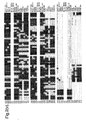
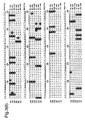
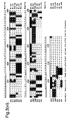
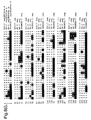
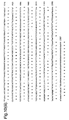
- Multiple sequence alignment of this SBEII-1 sequence with recently published wheat SBEII-2 (Nair et al., 1997), SBEI (Rapellin et al ., 1997) and SBEI-D2 (Rahman et al., 1997) sequences showed that the SBEII-1 sequence has similarity indices of 69.6 %, 31.2 % and 46.7% to SBEII-2, SBEI and SBEI-D2 respectively ( Figures 11 and 11a ). This demonstrates that the SBEII-1 sequence differs from the published wheat SBE sequences, and confirms the analysis of the 3' sequence alignment ( Figure 3 ).
- SBEII-1 sequences were extended toward the 5'end of the mature peptide by amplification from the endosperm cDNA pool using the SBEII-1 specific primer Sb4 [TTTTCTTCACAACGCCCTGGG] (SEQ ID No: 40) in conjunction with the primer AGSBEI [TGTTTGGGAGATCTTCCTCCC] (SEQ ID No: 41).
- AGSBEI was designed to be homologous to the GVWEIFLP (SEQ ID No: 42) motif which is conserved in all known SBE sequences and is situated toward the 5'end of the mature peptide coding sequence.
- PCR was carried out in a 50 ⁇ l reaction, comprising 5 ⁇ l of the cDNA pool, 50pmol Sb4, 50pmol SBEA1, 5 ⁇ l 5x Taq buffer, 4 ⁇ l 25mM Mg 2+ , 0.5 ⁇ l 20mM dNTPs, and 1.25u Taq polymerase. All of the reaction components were mixed, before thermocycling at (94°C-45sec, 55°C-30sec, 72°C-1min 30sec) x 30 cycles, followed by a final 10 min extension step at 72°C. Amplification products were separated by electrophoresis through a 1% (w/v) agarose gel and specific amplification products of the predicted size were excised from the gel.
- the DNA was eluted from the gel slice using QIAGEN's gel extraction kit according to the manufacturers recommendations before ligation with pT7 Blue (Novagen). Ligation was carried out in a 10 ⁇ l reaction volume comprising 7.5 ⁇ l purified amplification product, 1 ⁇ l 10x ligation buffer, 1 ⁇ l pT7Blue and 0.5 ⁇ l T4 DNA ligase (Amersham). The reaction components were mixed well before being placed at 4°C overnight. Following overnight incubation, half of the ligation reaction was used to transform competent Novablue E.coli cells (Novagen).
- Transformed cells were plated out onto LB plates supplemented with X-gal (40 ⁇ gml -1 ), IPTG (0.1mM), Carbenicillin (100 ⁇ gml -1 ), and Tetracycline (12.5 ⁇ gml -1 ), before placing at 37°C overnight.
- Putative recombinant clones were initially screened for the presence of an insert by colony PCR using the vector specific primers T7B and U19. Insert positive clones were then screened using an insert specific primer in conjunction with either T7B or U19 primers to determine the orientation of the insert within the multiple cloning site prior to sequencing.
- FIG. 12 shows a northern blot of RNA from wheat grains of the cultivar Bobwhite grown in the glasshouse as described and harvested between 5 and 29 days after anthesis. The blot was probed with the 1kb Sac1 SBEII-1 fragment and subsequently (following blot stripping) with the 1.2kb BamH1 SBEII-2 fragment, both fragments purified and labelled as described.
- panel A shows the Ethidium Bromide-stained RNA gel prior to northern transfer.
- Panel B shows the results of probing with the SBEII-1 probe and panel C shows the results of probing with the SBEII-2 probe.
- pWxGS + ( Figure 13 ) comprising a maize granule bound starch synthase gene (Shure et al 1983) promoter-GUS-Nos fusion was obtained as a gift to Unilever Research from Sue Wessler (University of Georgia, Athens, USA) and may be obtained on request from that source.
- the promoter in pWxGS+ is approximately 1.5kb in length and represents a truncated version of a similar, but larger promoter fragment described in Russell & Fromm (1997).
- the sequence of the promoter (HindIII - BamH1 fragment) in pWxGS+ is presented in Figure 13A (SEQ ID No: 55).
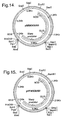
- pSRWXGUS1 ( Figure 14 ) was produced by inserting a Sac 1 linker [d(pCGAGCTCG)0] (New England Biolabs [NEB]) (NEB catalogue No 1044) into the Smal site in pWxGS+.
- pVTWXGUS2 ( Figure 15 ) was produced by inserting a BamH1 linker [d(pCGGGATCCCG)] (SEQ ID No: 43) (NEB catalogue No. 1071) into the Ecl136II (an isoschizomer of Sac1 which gives blunt ends) site of pWxGS+
- a Sac1 linker was inserted at the XbaI site (which had been blunted using Klenow + dNTps) of the SBEII-1 Clone B6 in the plasmid pT7Blue to produce an intermediate clone.
- the SBE sequence was then purified from this intermediate clone as a Sac1 fragment and ligated into the Sac1 sites of pSRWXGUS1 replacing the GUS gene sequence to produce the plasmids pSR96-26 and pSR96-29 representing antisense and sense orientations of the SBEII-1 sequence downstream of the Waxy promoter, respectively.
- a BamH1 linker was inserted at the XbaI site (which had been blunted using Klenow + dNTps) of the SBEII-2 Clone B11 in pT7Blue to produce an intermediate clone.
- the SBE sequence was then purified from this intermediate as a BamH1 fragment and inserted into the BamH1 sites of pVTWXGUS2, replacing the GUS gene sequence, to produce the plasmids pVT96-50 and pVT96-53 representing antisense and sense orientations, respectively, of the SBEII-2 sequence downstream of the Waxy promoter.
- pVT96-54 A BamH1 linker was inserted at the Xba1 site (which had been blunted using Klenow + dNTPs) of the SBEII-2 clone B9 (equivalent to clone B1) in pT7Blue to produce an intermediate clone.
- the SBEII-2 sequence was then purified from this intermediate clone as a BamH1 fragment and inserted into the BamH1 sites of pVTWXGUS2, replacing the GUS gene sequence, to produce the plasmid pVT96-54.
- Waxy-SBE-NOS sequences in the plasmids pSR96-26 and pSR96-29 and pVT96-50 and pVT96-53 were purified as HindIII/EcoRI fragments and inserted into the EcoRI/HindIII sites of plasmid pPBI-97-2 (also known as p97-2) ( Figure 16 ). Plasmid pPBI-97-2 is described in European Patent Application No. 97305694.8 (published as WO 99/06570 ).
- plasmids were designated pSR97-26A- (clone B6 (SBEII-1, sub-class A) in antisense orientation), pSR97-29A- (clone B6 in sense orientation), and pSR97-50A- (clone B11 (SBEII-2, sub-class A) in antisense orientation) and pSR97-53A- (clone B11 in sense orientation) as illustrated in Figures 17 , 18 , 19 and 20 , respectively.
- p97-2C ( Figure 21 ) was produced by digesting the polylinker sites Ecl136 II to SmaI in the plasmid pPBI97-2 ( Figure 16 ), ligating and selecting recombinants in which the polylinker region from SmaI to Ecl136 II had reinserted in the opposite orientation.
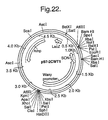
- Waxy-NOS sequences in pSRWXGUS1 were transferred as a HindIII/EcoRI fragment into the HindIII/EcoRI sites of plasmid p97-2C to produce the plasmid p97-2CWT1 ( Figure 22 ).
- the 5' extended SBEII-1 clone 5A1 in pT7Blue (comprising SBE sequence from coordinate 43 to 2003bp in Figure 10 ) was digested with EcoRI and Xbal, followed by 'in-fill' of overhangs using Klenow polymerase and dNTPs.
- the resulting blunt ended SBE fragment was gel purified and ligated to p97-2CWT1 ( Figure 22 ) which had been digested with Ecl136II and dephophorylated using calf intestinal phosphatase.
- pSC98-1 Figure 23
- pSC98-2 Figure 24
- pSC98-1A- and pSC98-2A- were designated pSC98-1A- and pSC98-2A- respectively.
- pUN1 was made in the following way:
- pUN1 includes the wild-type ubiquitin promoter (Ubi promoter), which is also referred to as the ubiquitin regulatory system (abbreviated to URS).
- Ubi promoter wild-type ubiquitin promoter
- URS ubiquitin regulatory system
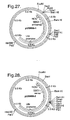
- the SBEII-1 (clone B6) sequence was purified as a Sac1 fragment from the plasmid pSR96-26 and inserted at the Sac1 site of pPBI96-23 to produce the plasmids pUSN99-1 and pUSN99-2 ( Figures 27 and 28 ) representing sense and antisense orientations of the SBEII-1 sequences respectively.
- pPBI97-2BdUN1 (also sometimes referred to as p97-2BdUN1) comprises a reconstituted ubiquitin regulatory system (referred to hereafter as a modified ubiquitin promoter or a modified ubiquitin regulatory system (mURS)) which lacks the two overlapping 'consensus heatshock elements' discussed in EP 0342926 and US 5614399 .
- the modified ubiquitin promoter was prepared via PCR amplification of two DNA fragments using maize genomic DNA as template, followed by ligation of the two fragments to produce a single fragment lacking the consensus heatshock (HS) elements.
- HS consensus heatshock
- the primers used were designed from sequence information published by Liu et al 1995 (EMBL DNA database accession ZMU29159). To delete the HS elements and to replace with a diagnostic Kpn1 site the ubiquitin promoter and intron sequences were amplified as two fragments using the primer combinations HS1 + Ubi3-3 and HS2 + Ubi5-2, the sequences of which are given below.
- Primers Ubi5-2 and Ubi3-3 are homologous to sequences in the sequence published by Liu et al 1995.
- Primers HS1 and HS2 are homologous to sequences located immediately 3' and 5' respectively of the two overlapping HS elements in the ubiquitin promoter as described in EP 0342926 and US 5361399 . Both of these primers have a Kpn1 tail at their 5' ends.
- the amplified products were subcloned into pGEM TEasy (Promega) to produce the plasmids p97-U1 and p97-U2.
- the full-length (approx. 2Kb) modified ubiquitin promoter was reconstructed by subcloning the Kpn1 - Sac1 fragment from p97-U1 into the Kpn1/Sac1 sites of p97-U2 to produce p97-U3.
- a partial restriction map of the predicted sequence (SEQ ID No: 52) of the cloned fragment in p97-U3 is presented in Figure 29 .
- the modified ubiquitin promotor (or mURS) is the subject of a copending European Patent Application filed by the present applicants on the same day as the present application, under the reference C1235.01/M).
- the modified ubiquitin promoter was transferred as a PstI fragment from p97-U3 into plasmid pPBI96-36.
- the plasmid pBI96-36 ( Figure 30 ) comprises the GUS-Nos reporter gene fusion under the control of the wild-type ubiquitin promoter (derived from pAHC25) in a pUC plasmid backbone.
- the promoter replaces the wild-type ubiquitin regulatory system in pPBI96-36 to produce an intermediary plasmid p97-dUG1 ( Figure 31 ).
- the Ubi-Nos sequences in pPBI96-23 were transferred as an EcoRI - HindIII fragment into the EcoRI and HindIII sites of p97-2B (plasmid p97-2B is described in European Patent Application No. 97305694.8 published as WO 99/06570 ) to produce the plasmid p97-2BUbiNos.
- the modified ubiquitin promoter was purified as a HindIII/SacI fragment from p97-dUG1 ( Figure 31 ) and transferred into the HindIII and SacI sites of p97-2BUbiNos, replacing the wild-type ubiquitin promoter to produce p97-2BdUbiNos.
- the NptII sequence in pUNI was purified as a SacI fragment and transferred into the SacI site of p97-2BdUbiNos to produce pPBI97-2BdUN1 ( Figure 32 ). Following removal of the ampicillin resistance marker using the method as described in WO 99/06570 , the resulting plasmid as used for wheat transformation was designated p97-2BdUN1A-
- pCaiNeo comprises the NptII gene under control of a CaMV35S promoter and maize Adh1 intron.
- the plasmid is described in Fromm et al 1986.
- Plasmid combinations used in wheat transformation experiments Starch gene construct/s Selection marker construct pAHC25 pWXGS+ pUN1 pSR97-26A- antisense pUN1 or p97-2BdUN1 pSR97-29A- sense p97-2BdUN1 or pCaiNeo pSC98-1A- antisense p97-2BdUN1 pUSN-1 sense p97-2BdUN1 pUSN-2 antisense p97-2BdUN1 pUSN-1 sense & pUSN-2 antisense pUN1 pSC98-2A- sense p97-2BdUN1
- Embryo wheat plants of the spring cultivar Bobwhite and the winter cultivar Florida were grown in a glasshouse with 16hr day length supplemented with lights to maintain a minimum light intensity of 500 umol m- 2 s- 1 at 0.5M above flag leaf. Glasshouse temperatures were maintained at 19°C+/-1°C during the day and 14°C+/-1°C at night.
- Immature embryos of wheat were harvested from developing grain. The seeds were harvested and embryos were cultured at approximately 12 days after anthesis when the embryos were approximately 1mm in length. Seeds were first rinsed in 70% ethanol for 5 minutes and then sterilised in a 10% solution of Domestos bleach (Domestos is a Trade Mark) for 15 minutes followed by 6 washes with sterile distilled water. Following removal of the embryonic axis the embryos were placed axis surface face down on agargel (Sigma catalogue no. A-3301) solidified MM1 media. The general recipe for MM1 is given in Appendix 1, and the recipes for the various constituents in Appendix 2. The embryos were maintained in darkness for one to two days at 24°C +/-1°C prior to bombardment.
- Domestos bleach Domestos is a Trade Mark
- pAHC25 (Christensen and Quail 1996) contains a chimeric Ubi-BAR gene which provides selection of transformants to phosphinothricin, the active ingredient in herbicides BASTATM and Bialophos (see Block, M.de. et al 1987).
- the plasmids pCAiNeo (Fromm et al ., 1986), pUN1 and p97-2BdUN1 contain chimeric promoter-NptII gene fusions and provide selection of transformants against a range of aminoglycoside antibiotics including kanamycin, neomycin, geneticin and paromycin.
- Particle bombardments was used to introduce plasmids into plant cells.
- the following method was used to precipitate plasmid DNA onto 0.6 ⁇ m gold particles (BIO-RAD catalogue number 165-2262): A total of 5 ⁇ g of plasmid DNA was added to a 50 ⁇ l sonicated for one minute suspension of gold particle (10mg/ml) in a 1.5ml microfuge tube. Following a brief vortex for three seconds 50 ⁇ l of a 0.5M solution of calcium chloride and 20 ⁇ l of a 0.05M solution of spermidine free base were added to the opposite sides of the microfuge tube lid. The tube contents were mixed together by closing the lid and tapping the calcium chloride and spermidine to the bottom of the tube.
- Particle bombardment was performed by using a BiolisitcTM PDS-1000/He (BIO-RAD Instruments, Hercules CA) chamber which is illustrated schematically in Figure 33 , using helium pressure of 650 and 900 psi (rupture discs: BIO-RAD catalogue numbers 165-2327 and 165-2328 respectively).
- the illustrated vacuum chamber comprises a housing 10, the inner side walls of which include a series of recesses 12 for receiving shelves such as sample shelf 14 shown at the fourth level down from the top of the housing.
- a rupture disc 16 is supported in a He pressure shock tube 18 near the top of the housing.
- Macrocarrier 26 is supported at the top of unit 22.
- the approximate distance from the rupture disc 16 to the macrocarrier 26 is 25mm, with the approximate distance from the macrocarrier 26 to the stopping screen being 7mm, and the approximate distance from the stopping screen to the sample shelf 14 being 67mm.
- the top of unit 22 is about 21mm from the bottom of the shock tube 18, and the bottom unit 22 is about 31mm from the top of sample shelf 14.
- Immature embryos were bombarded between 1 and 2 days after culture. For bombardment the immature embryos were grouped into a circular area of approximately 1cm in diameter comprising 20-100 embryos, axis side face down on the MM1 media.
- the Petri dish (not shown) containing the tissue was placed in the chamber on shelf 14, on the fourth shelf level down from the top, as illustrated in Figure 33 .
- the air in the chamber was then evacuated to a vacuum of 28.5 inches of Hg.
- the macrocarrier 26 was accelerated with a helium shock wave using rupture membranes that burst when the He pressure in the shock tube 18 reaches 650 or 900 psi.
- R media agar-solidified regeneration media
- the general recipe for R media is given in Appendix 1. Embryos were transferred on fresh plates at 2-3 week intervals. The composition of the regeneration media varied depending on which selection regime was to be used. For transformants bombarded with the BAR gene the 3 amino solution was omitted and PPT (phosphinothricin) at 1mg/L, rising to 3mg/L over a period of three 2-3 week transfers was used for selection. For selection of transformants using the NptII gene three different regimes were used: 1) Geneticin (GIBCO-BRL catalogue no.
- Southern analyses of primary transformants and progeny material were carried out as follows: Freeze dried leaf tissues were ground briefly in a Kontes TM pestle and mortar, and genomic DNA extracted as described in Fulton et al, 1995. 5 ⁇ g of DNA were digested with an appropriate restriction enzyme according to the manufacturers instructions, and electrophoresed overnight on a 1% agarose gel, after which the gel was then photographed, washed and blotted onto Hybond N+ TM (Amersham International) according to the method of Southern using standard procedures (Sambrook et al 1989). Following blotting, the filters were air dried, baked at 65°C for 1-2 hours and UV fixed at 312nm for 2 minutes.
- the plasmid pAHC25 (Christensen and Quail, 1996) was transformed into wheat as described in previous sections. Transformants were selected on the basis of resistance to phosphinothricin. Southern blot analyses were carried out on the primary transformants to confirm integration of the plasmid sequences (data not shown). GUS histochemical analyses were also carried out and demonstrated that the ubiquitin promoter is capable of mediating high levels of GUS expression in a range of wheat tissues.
- Figure 34 A, B, C & D show histochemical localisation of GUS expression in the seed, stem, floral and leaf tissues respectively.
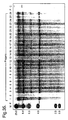
- FIG. 35 shows a Southern blot of 26 progeny plants of transformant BW119 which had been transformed with pAHC25.
- genomic DNA from the progeny plants was digested with the restriction enzyme Sac1 and the blot was probed with the GUS gene coding sequence.
- the Southern blot results are suggestive of the presence of two independently segregating integration loci, each comprising concatamers of pAHC25 plasmid sequences.
- the plasmids pWxGS+ and pUN1 were co-transformed into wheat as described in previous sections. Transformants were selected on the basis of resistance to geneticin. Southern blot analyses were carried out on the primary transformants to confirm integration of the plasmid sequences (data not shown). Gus histochemical analyses were also carried out to determine the expression profile mediated by the maize waxy promoter. The majority of the transformants that expressed GUS exhibited expression specifically in endosperm tissue, demonstrating the suitability of this promoter for mediating endosperm expression of associated transgenes.
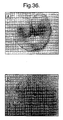
- Figure 36 A & B shows endosperm specific expression of GUS in seeds from two independent transformants. We did not observe GUS expression in pollen grains as was seen by Russell and Fromm (1997), however the construct they used also incorporated the maize hsp 70 intron which may conceivably have influenced expression both quantitatively and qualitatively.
- Lanes marked with an asterisk correspond to transformants which give a positive signal with the NptII probe.
- the blot shown in Figure 37 was probed with the SBEII-1 1kb Sac1 fragment.
- the Sac1 digest is expected to release a 1kb SBEII-1 hybridising band from both pSR97-29A- and pSR97-26A- plasmid sequences, and the intensity of this band will vary depending on the copy number of inserted plasmid sequences.
- several additional SBEII-1 hybridising bands are also observed. Five of these bands are present in all lanes and result from hybridisation to endogenous wheat SBEII-1 sequences.
- DSC Differential scanning calorimetry
- DSC analyses were carried out on single grains or pools of 5 grains from primary transformants generated through transformation using each of the gene construct combinations detailed in Table 2.
- transformant BW727 exhibits a 9.8°C, 8.7°C and 9.1°C increase in onset, peak and end temperatures (respectively) compared to the BW control sample 3, and a 7.6°C, 6.8°C and 7.8°C increase in onset, peak and end temperatures (respectively) compared to the BW control sample 2.
- Table 3 Results of DSC analyses on single grains using method 1. Data shown are the averages of between 2 and 6 individual grain samples (T o , T p and T f are onset, peak and end temperatures respectively).
- T o , T p and T f are onset, peak and end temperatures respectively Plasmid combination Line Code T o (°C) T p (°C) T f (°C) ⁇ H (J/g) F control sample 1 60.1 63.9 68.0 6.30 BW control sample 2 59.3 64.0 68.4 5.94 BW control sample 3 57.08 62.09 67.08 4.28 pSC98-1A-/p97-2BdUN1 BW449 59.3 62.9 67.9 3.95 BW477 57.7 63.6 70.6 8.30 F492 62.3 66.4 70.2 7.60 F494 63.6 67.3 71.0 5.73 BW511 59.6 63.8 67.2 0.98 BW518 60.2 64.9 69.2 3.57 BW519 58.4 63.6 68.5 4.13 BW527 58.7 63.7 69.0 6.38 BW549 59.9 64.8 69.3 4.48 BW550 60.2 64.6 68
Landscapes
- Health & Medical Sciences (AREA)
- Life Sciences & Earth Sciences (AREA)
- Genetics & Genomics (AREA)
- Engineering & Computer Science (AREA)
- Chemical & Material Sciences (AREA)
- Wood Science & Technology (AREA)
- Organic Chemistry (AREA)
- Molecular Biology (AREA)
- Bioinformatics & Cheminformatics (AREA)
- Biotechnology (AREA)
- Zoology (AREA)
- General Engineering & Computer Science (AREA)
- Biomedical Technology (AREA)
- Nutrition Science (AREA)
- Biochemistry (AREA)
- General Health & Medical Sciences (AREA)
- Microbiology (AREA)
- Biophysics (AREA)
- Cell Biology (AREA)
- Physics & Mathematics (AREA)
- Medicinal Chemistry (AREA)
- Plant Pathology (AREA)
- Breeding Of Plants And Reproduction By Means Of Culturing (AREA)
- Noodles (AREA)
- Cereal-Derived Products (AREA)
- Bakery Products And Manufacturing Methods Therefor (AREA)
- Polysaccharides And Polysaccharide Derivatives (AREA)
- Preparation Of Compounds By Using Micro-Organisms (AREA)
- Enzymes And Modification Thereof (AREA)
Claims (16)
- Polynucléotide codant pour le polypeptide ayant la séquence d'acides aminés présentée sous SEQ ID NO: 2.
- Polynucléotide constitué de la séquence de B2 présentée sous SEQ ID NO: 3.
- Polynucléotide constitué de la séquence de B4 présentée sous SEQ ID NO: 4.
- Polynucléotide constitué de la séquence de B10 présentée sous SEQ ID NO: 5.
- Polynucléotide constitué de la séquence de B1 présentée sous SEQ ID NO: 6.
- Polynucléotide codant pour le polypeptide ayant la séquence d'acides aminés de B6 présentée sous SEQ ID NO: 7.
- Construction d'acide nucléique comprenant un polynucléotide selon l'une quelconque des revendications précédentes.
- Construction selon la revendication 7, dans laquelle le polynucléotide est fonctionnellement lié, dans une orientation sens ou antisens, à une séquence promotrice.
- Vecteur d'expression comprenant une construction selon la revendication 7 ou 8.
- Polypeptide codé par le polynucléotide selon l'une quelconque des revendications 1 à 6.
- Procédé de transformation d'une plante, comprenant l'introduction dans la plante du polynucléotide selon l'une quelconque des revendications 1 à 6 fonctionnellement lié à un promoteur convenable actif dans la plante de sorte à affecter l'expression d'un gène présent dans la plante.
- Procédé selon la revendication 11, dans lequel le polynucléotide est lié dans l'orientation antisens au promoteur.
- Procédé selon la revendication 11 ou 12, dans lequel la plante est un plant de blé.
- Procédé selon la revendication 11, 12 ou 13, dans lequel la caractéristique modifiée concerne la teneur en amidon et/ou la composition de l'amidon de la plante.
- Plante ou cellule végétale ou partie d'une telle plante comprenant un vecteur selon la revendication 9.
- Plante, cellule végétale ou partie de plante selon la revendication 15, dans laquelle la plante est un plant de blé.
Priority Applications (1)
| Application Number | Priority Date | Filing Date | Title |
|---|---|---|---|
| EP99946307A EP1117814B1 (fr) | 1998-09-10 | 1999-09-09 | Isoformes de l'enzyme de ramification de l'amidon ii (sbe-iia et sbe-iib) provenant du ble |
Applications Claiming Priority (4)
| Application Number | Priority Date | Filing Date | Title |
|---|---|---|---|
| EP98307337 | 1998-09-10 | ||
| EP98307337 | 1998-09-10 | ||
| EP99946307A EP1117814B1 (fr) | 1998-09-10 | 1999-09-09 | Isoformes de l'enzyme de ramification de l'amidon ii (sbe-iia et sbe-iib) provenant du ble |
| PCT/GB1999/003011 WO2000015810A1 (fr) | 1998-09-10 | 1999-09-09 | Isoformes de l'enzyme de ramification de l'amidon ii (sbe-iia et sbe-iib) provenant du ble |
Publications (2)
| Publication Number | Publication Date |
|---|---|
| EP1117814A1 EP1117814A1 (fr) | 2001-07-25 |
| EP1117814B1 true EP1117814B1 (fr) | 2010-02-17 |
Family
ID=8235051
Family Applications (1)
| Application Number | Title | Priority Date | Filing Date |
|---|---|---|---|
| EP99946307A Expired - Lifetime EP1117814B1 (fr) | 1998-09-10 | 1999-09-09 | Isoformes de l'enzyme de ramification de l'amidon ii (sbe-iia et sbe-iib) provenant du ble |
Country Status (9)
| Country | Link |
|---|---|
| US (3) | US6730825B1 (fr) |
| EP (1) | EP1117814B1 (fr) |
| AT (1) | ATE458061T1 (fr) |
| AU (1) | AU767103B2 (fr) |
| CZ (1) | CZ2001759A3 (fr) |
| DE (1) | DE69942032D1 (fr) |
| HU (1) | HUP0103618A3 (fr) |
| PL (1) | PL205884B1 (fr) |
| WO (1) | WO2000015810A1 (fr) |
Families Citing this family (20)
| Publication number | Priority date | Publication date | Assignee | Title |
|---|---|---|---|---|
| AUPQ005299A0 (en) | 1999-04-29 | 1999-05-27 | Commonwealth Scientific And Industrial Research Organisation | Novel genes encoding wheat starch synthases and uses therefor |
| ES2265978T3 (es) | 1999-09-09 | 2007-03-01 | Monsanto Uk Ltd. | Sistema regulador de ubiquitina modificado. |
| US7041484B1 (en) * | 1999-10-29 | 2006-05-09 | National Research Council Of Canada | Starch branching enzymes |
| WO2001032897A2 (fr) * | 1999-11-05 | 2001-05-10 | South African Sugar Association | Element promoteur constitutif stable de haut niveau pour vegetaux |
| AUPQ574200A0 (en) * | 2000-02-21 | 2000-03-16 | Commonwealth Scientific And Industrial Research Organisation | Starch branching enzyme |
| US20020002713A1 (en) * | 2000-03-01 | 2002-01-03 | Allen Stephen M. | Starch branching enzyme IIb |
| WO2001094394A2 (fr) * | 2000-06-09 | 2001-12-13 | Prodigene, Inc. | Nouvelles sequences de promoteurs de plantes et procedes permettant de les utiliser |
| CN1482856A (zh) | 2000-11-09 | 2004-03-17 | ����Ƽ���ҵ�о���֯ | 降低了ssii活性的大麦和降低了支链淀粉含量的淀粉和淀粉制品 |
| AUPS219802A0 (en) * | 2002-05-09 | 2002-06-06 | Commonwealth Scientific And Industrial Research Organisation | Barley with altered branching enzyme activity and starch and starch containing products with a reduced amylopectin content |
| WO2004065537A2 (fr) * | 2003-01-20 | 2004-08-05 | Sungene Gmbh & Co. Kgaa | Cassette d'expression d'acides nucleiques dans des tissus vegetaux amylaces |
| WO2005001098A1 (fr) * | 2003-06-30 | 2005-01-06 | Commonwealth Scientific And Industrial Research Organisation | Ble avec activite modifiee d'enzyme ramifiant, amidon et produits contenant de l'amidon derives dudit ble |
| AU2004284112B2 (en) * | 2003-10-27 | 2010-07-08 | Commonwealth Scientific And Industrial Research Organisation | Rice and products thereof having starch with an increased proportion of amylose |
| PL1833291T3 (pl) * | 2004-12-30 | 2017-05-31 | Commonwealth Scientific And Industrial Research Organisation | Metoda i środki poprawy stanu zdrowia jelit |
| US7993686B2 (en) | 2004-12-30 | 2011-08-09 | Commonwealth Scientific And Industrial Organisation | Method and means for improving bowel health |
| CA2653883C (fr) | 2008-07-17 | 2022-04-05 | Colin Leslie Dow Jenkins | Plantes cerealieres a taux eleve de fructosane |
| WO2011011833A1 (fr) | 2009-07-30 | 2011-02-03 | Commonwealth Scientific And Industrial Research Organisation | Lorge et ses utilisations |
| US9585413B2 (en) | 2010-11-04 | 2017-03-07 | Arista Cereal Technology Pty Limited | Food ingredients produced from high amylose wheat |
| AU2012212404B2 (en) | 2011-02-03 | 2016-05-12 | The Healthy Grain Pty Limited | Barley with modified SSIII |
| CA2850490C (fr) | 2011-10-04 | 2023-10-10 | Arcadia Biosciences, Inc. | Mutations sbeiia-a, sbeiia-b et sbeiia-d qui produisent des grains qui germent et qui ont une teneur elevee en amylose |
| ES3000665T3 (en) | 2011-11-04 | 2025-03-03 | Arista Cereal Tech Pty Ltd | High amylose wheat - ii |
Family Cites Families (2)
| Publication number | Priority date | Publication date | Assignee | Title |
|---|---|---|---|---|
| DE69637816D1 (de) * | 1995-12-20 | 2009-03-05 | Du Pont | Der expression von genen, welche spezifisch sind für die stärkebiosynthese |
| WO1999014314A1 (fr) * | 1997-09-12 | 1999-03-25 | Commonwealth Scientific And Industrial Research Organisation | Regulation de l'expression genique dans les plantes |
-
1999
- 1999-09-09 CZ CZ2001759A patent/CZ2001759A3/cs unknown
- 1999-09-09 US US09/786,480 patent/US6730825B1/en not_active Expired - Lifetime
- 1999-09-09 PL PL346568A patent/PL205884B1/pl unknown
- 1999-09-09 AU AU58725/99A patent/AU767103B2/en not_active Expired
- 1999-09-09 DE DE69942032T patent/DE69942032D1/de not_active Expired - Lifetime
- 1999-09-09 AT AT99946307T patent/ATE458061T1/de not_active IP Right Cessation
- 1999-09-09 WO PCT/GB1999/003011 patent/WO2000015810A1/fr not_active Ceased
- 1999-09-09 EP EP99946307A patent/EP1117814B1/fr not_active Expired - Lifetime
- 1999-09-09 HU HU0103618A patent/HUP0103618A3/hu unknown
-
2004
- 2004-04-06 US US10/818,770 patent/US7217857B2/en not_active Expired - Lifetime
-
2007
- 2007-04-19 US US11/788,837 patent/US7465851B2/en not_active Expired - Lifetime
Also Published As
| Publication number | Publication date |
|---|---|
| US7465851B2 (en) | 2008-12-16 |
| AU5872599A (en) | 2000-04-03 |
| CZ2001759A3 (cs) | 2001-09-12 |
| AU767103B2 (en) | 2003-10-30 |
| US6730825B1 (en) | 2004-05-04 |
| US20040216188A1 (en) | 2004-10-28 |
| WO2000015810A1 (fr) | 2000-03-23 |
| PL346568A1 (en) | 2002-02-11 |
| ATE458061T1 (de) | 2010-03-15 |
| US7217857B2 (en) | 2007-05-15 |
| HUP0103618A2 (hu) | 2002-01-28 |
| HUP0103618A3 (en) | 2003-12-29 |
| DE69942032D1 (de) | 2010-04-01 |
| EP1117814A1 (fr) | 2001-07-25 |
| PL205884B1 (pl) | 2010-06-30 |
| US20080064864A1 (en) | 2008-03-13 |
Similar Documents
| Publication | Publication Date | Title |
|---|---|---|
| US7465851B2 (en) | Isoforms of starch branching enzyme II (SBE-IIa and SBE-IIb) from wheat | |
| US7153674B2 (en) | Nucleic acid molecules encoding enzymes having fructosyl polymerase activity | |
| EP2222855B1 (fr) | Plantes ayant un métabolisme de l'amidon modifié | |
| Harn et al. | Isolation and characterization of the zSSIIa and zSSIIb starch synthase cDNA clones from maize endosperm | |
| CA2505776C (fr) | Cellules vegetales et vegetaux synthesisant un amidon a viscosite finale accrue | |
| EP2121908B1 (fr) | Molecules d'acide nucleique codant une alternane-sucrase tronquee | |
| US7667114B2 (en) | Starch branching enzyme | |
| EP0719338A1 (fr) | Combinaison de sequences d'adn permettant la formation d'amidon modifie dans des cellules vegetales et des vegetaux, procedes de production de ces plantes et de l'amidon modifie obtenu a partir de ladite combinaison | |
| CZ20001680A3 (cs) | Molekuly nukleové kyseliny kódující enzymy, které mají fruktosyltransferázovou aktivitu, a způsoby přípravy inulinu s dlouhým řetězcem | |
| WO1995007355A1 (fr) | Combinaison de sequences d'adn permettant la formation d'amidon modifie dans des cellules vegetales et des vegetaux, procedes de production de ces plantes et de l'amidon modifie obtenu a partir de ladite combinaison | |
| US20070261136A1 (en) | High Amylopectin Maize | |
| AU761419B2 (en) | (dull1) coding for a starch synthase and uses thereof | |
| AU720418B2 (en) | Modified plants and plant products | |
| AU777455B2 (en) | Nucleic acid molecules from artichoke (cynara scolymus) encoding enzymes having fructosyl polymerase activity | |
| Ohyama et al. | Introducing an antisense gene for a cell-wall-bound acid invertase to tomato (Lycopersicon esculentum) plants reduces carbohydrate content in leaves and fertility |
Legal Events
| Date | Code | Title | Description |
|---|---|---|---|
| PUAI | Public reference made under article 153(3) epc to a published international application that has entered the european phase |
Free format text: ORIGINAL CODE: 0009012 |
|
| 17P | Request for examination filed |
Effective date: 20010222 |
|
| AK | Designated contracting states |
Kind code of ref document: A1 Designated state(s): AT BE CH CY DE DK ES FI FR GB GR IE IT LI LU MC NL PT SE |
|
| AX | Request for extension of the european patent |
Free format text: AL;LT;LV;MK;RO;SI |
|
| 17Q | First examination report despatched |
Effective date: 20041018 |
|
| 17Q | First examination report despatched |
Effective date: 20041018 |
|
| GRAP | Despatch of communication of intention to grant a patent |
Free format text: ORIGINAL CODE: EPIDOSNIGR1 |
|
| GRAS | Grant fee paid |
Free format text: ORIGINAL CODE: EPIDOSNIGR3 |
|
| GRAA | (expected) grant |
Free format text: ORIGINAL CODE: 0009210 |
|
| AK | Designated contracting states |
Kind code of ref document: B1 Designated state(s): AT BE CH CY DE DK ES FI FR GB GR IE IT LI LU MC NL PT SE |
|
| REG | Reference to a national code |
Ref country code: GB Ref legal event code: FG4D |
|
| REG | Reference to a national code |
Ref country code: CH Ref legal event code: EP |
|
| REG | Reference to a national code |
Ref country code: IE Ref legal event code: FG4D |
|
| REF | Corresponds to: |
Ref document number: 69942032 Country of ref document: DE Date of ref document: 20100401 Kind code of ref document: P |
|
| REG | Reference to a national code |
Ref country code: NL Ref legal event code: VDEP Effective date: 20100217 |
|
| PG25 | Lapsed in a contracting state [announced via postgrant information from national office to epo] |
Ref country code: PT Free format text: LAPSE BECAUSE OF FAILURE TO SUBMIT A TRANSLATION OF THE DESCRIPTION OR TO PAY THE FEE WITHIN THE PRESCRIBED TIME-LIMIT Effective date: 20100617 Ref country code: ES Free format text: LAPSE BECAUSE OF FAILURE TO SUBMIT A TRANSLATION OF THE DESCRIPTION OR TO PAY THE FEE WITHIN THE PRESCRIBED TIME-LIMIT Effective date: 20100528 |
|
| PG25 | Lapsed in a contracting state [announced via postgrant information from national office to epo] |
Ref country code: FI Free format text: LAPSE BECAUSE OF FAILURE TO SUBMIT A TRANSLATION OF THE DESCRIPTION OR TO PAY THE FEE WITHIN THE PRESCRIBED TIME-LIMIT Effective date: 20100217 Ref country code: AT Free format text: LAPSE BECAUSE OF FAILURE TO SUBMIT A TRANSLATION OF THE DESCRIPTION OR TO PAY THE FEE WITHIN THE PRESCRIBED TIME-LIMIT Effective date: 20100217 |
|
| PG25 | Lapsed in a contracting state [announced via postgrant information from national office to epo] |
Ref country code: SE Free format text: LAPSE BECAUSE OF FAILURE TO SUBMIT A TRANSLATION OF THE DESCRIPTION OR TO PAY THE FEE WITHIN THE PRESCRIBED TIME-LIMIT Effective date: 20100217 Ref country code: NL Free format text: LAPSE BECAUSE OF FAILURE TO SUBMIT A TRANSLATION OF THE DESCRIPTION OR TO PAY THE FEE WITHIN THE PRESCRIBED TIME-LIMIT Effective date: 20100217 Ref country code: GR Free format text: LAPSE BECAUSE OF FAILURE TO SUBMIT A TRANSLATION OF THE DESCRIPTION OR TO PAY THE FEE WITHIN THE PRESCRIBED TIME-LIMIT Effective date: 20100518 Ref country code: CY Free format text: LAPSE BECAUSE OF FAILURE TO SUBMIT A TRANSLATION OF THE DESCRIPTION OR TO PAY THE FEE WITHIN THE PRESCRIBED TIME-LIMIT Effective date: 20100217 Ref country code: BE Free format text: LAPSE BECAUSE OF FAILURE TO SUBMIT A TRANSLATION OF THE DESCRIPTION OR TO PAY THE FEE WITHIN THE PRESCRIBED TIME-LIMIT Effective date: 20100217 |
|
| PLBE | No opposition filed within time limit |
Free format text: ORIGINAL CODE: 0009261 |
|
| STAA | Information on the status of an ep patent application or granted ep patent |
Free format text: STATUS: NO OPPOSITION FILED WITHIN TIME LIMIT |
|
| 26N | No opposition filed |
Effective date: 20101118 |
|
| PG25 | Lapsed in a contracting state [announced via postgrant information from national office to epo] |
Ref country code: DK Free format text: LAPSE BECAUSE OF FAILURE TO SUBMIT A TRANSLATION OF THE DESCRIPTION OR TO PAY THE FEE WITHIN THE PRESCRIBED TIME-LIMIT Effective date: 20100217 |
|
| PG25 | Lapsed in a contracting state [announced via postgrant information from national office to epo] |
Ref country code: IT Free format text: LAPSE BECAUSE OF FAILURE TO SUBMIT A TRANSLATION OF THE DESCRIPTION OR TO PAY THE FEE WITHIN THE PRESCRIBED TIME-LIMIT Effective date: 20100217 |
|
| PG25 | Lapsed in a contracting state [announced via postgrant information from national office to epo] |
Ref country code: MC Free format text: LAPSE BECAUSE OF NON-PAYMENT OF DUE FEES Effective date: 20100930 |
|
| REG | Reference to a national code |
Ref country code: CH Ref legal event code: PL |
|
| PG25 | Lapsed in a contracting state [announced via postgrant information from national office to epo] |
Ref country code: LI Free format text: LAPSE BECAUSE OF NON-PAYMENT OF DUE FEES Effective date: 20100930 Ref country code: IE Free format text: LAPSE BECAUSE OF NON-PAYMENT OF DUE FEES Effective date: 20100909 Ref country code: CH Free format text: LAPSE BECAUSE OF NON-PAYMENT OF DUE FEES Effective date: 20100930 |
|
| PG25 | Lapsed in a contracting state [announced via postgrant information from national office to epo] |
Ref country code: LU Free format text: LAPSE BECAUSE OF NON-PAYMENT OF DUE FEES Effective date: 20100909 |
|
| REG | Reference to a national code |
Ref country code: FR Ref legal event code: PLFP Year of fee payment: 18 |
|
| REG | Reference to a national code |
Ref country code: FR Ref legal event code: PLFP Year of fee payment: 19 |
|
| REG | Reference to a national code |
Ref country code: FR Ref legal event code: PLFP Year of fee payment: 20 |
|
| PGFP | Annual fee paid to national office [announced via postgrant information from national office to epo] |
Ref country code: DE Payment date: 20180927 Year of fee payment: 20 Ref country code: FR Payment date: 20180925 Year of fee payment: 20 |
|
| PGFP | Annual fee paid to national office [announced via postgrant information from national office to epo] |
Ref country code: GB Payment date: 20180927 Year of fee payment: 20 |
|
| REG | Reference to a national code |
Ref country code: DE Ref legal event code: R071 Ref document number: 69942032 Country of ref document: DE |
|
| REG | Reference to a national code |
Ref country code: GB Ref legal event code: PE20 Expiry date: 20190908 |
|
| PG25 | Lapsed in a contracting state [announced via postgrant information from national office to epo] |
Ref country code: GB Free format text: LAPSE BECAUSE OF EXPIRATION OF PROTECTION Effective date: 20190908 |