EP1120423B1 - 1,2-dioxétanes chimioluminescents améliorés - Google Patents
1,2-dioxétanes chimioluminescents améliorés Download PDFInfo
- Publication number
- EP1120423B1 EP1120423B1 EP01104600A EP01104600A EP1120423B1 EP 1120423 B1 EP1120423 B1 EP 1120423B1 EP 01104600 A EP01104600 A EP 01104600A EP 01104600 A EP01104600 A EP 01104600A EP 1120423 B1 EP1120423 B1 EP 1120423B1
- Authority
- EP
- European Patent Office
- Prior art keywords
- dioxetane
- group
- enzyme
- assay
- kit
- Prior art date
- Legal status (The legal status is an assumption and is not a legal conclusion. Google has not performed a legal analysis and makes no representation as to the accuracy of the status listed.)
- Expired - Lifetime
Links
- 0 CSC(C1)(CC(C2)C(C3[O+][O+]C3(*)C3=CC=CC(CN)C(N=O)=C3)C1C1)CC21S Chemical compound CSC(C1)(CC(C2)C(C3[O+][O+]C3(*)C3=CC=CC(CN)C(N=O)=C3)C1C1)CC21S 0.000 description 6
Images










Classifications
-
- G—PHYSICS
- G01—MEASURING; TESTING
- G01N—INVESTIGATING OR ANALYSING MATERIALS BY DETERMINING THEIR CHEMICAL OR PHYSICAL PROPERTIES
- G01N33/00—Investigating or analysing materials by specific methods not covered by groups G01N1/00 - G01N31/00
- G01N33/48—Biological material, e.g. blood, urine; Haemocytometers
- G01N33/50—Chemical analysis of biological material, e.g. blood, urine; Testing involving biospecific ligand binding methods; Immunological testing
- G01N33/58—Chemical analysis of biological material, e.g. blood, urine; Testing involving biospecific ligand binding methods; Immunological testing involving labelled substances
- G01N33/582—Chemical analysis of biological material, e.g. blood, urine; Testing involving biospecific ligand binding methods; Immunological testing involving labelled substances with fluorescent label
-
- A—HUMAN NECESSITIES
- A43—FOOTWEAR
- A43B—CHARACTERISTIC FEATURES OF FOOTWEAR; PARTS OF FOOTWEAR
- A43B1/00—Footwear characterised by the material
- A43B1/0027—Footwear characterised by the material made at least partially from a material having special colours
- A43B1/0036—Footwear characterised by the material made at least partially from a material having special colours with fluorescent or phosphorescent parts
-
- A—HUMAN NECESSITIES
- A43—FOOTWEAR
- A43B—CHARACTERISTIC FEATURES OF FOOTWEAR; PARTS OF FOOTWEAR
- A43B1/00—Footwear characterised by the material
- A43B1/0072—Footwear characterised by the material made at least partially of transparent or translucent materials
-
- A—HUMAN NECESSITIES
- A43—FOOTWEAR
- A43B—CHARACTERISTIC FEATURES OF FOOTWEAR; PARTS OF FOOTWEAR
- A43B3/00—Footwear characterised by the shape or the use
- A43B3/0031—Footwear characterised by the shape or the use provided with a pocket, e.g. for keys or a card
-
- C—CHEMISTRY; METALLURGY
- C07—ORGANIC CHEMISTRY
- C07C—ACYCLIC OR CARBOCYCLIC COMPOUNDS
- C07C205/00—Compounds containing nitro groups bound to a carbon skeleton
- C07C205/27—Compounds containing nitro groups bound to a carbon skeleton the carbon skeleton being further substituted by etherified hydroxy groups
- C07C205/35—Compounds containing nitro groups bound to a carbon skeleton the carbon skeleton being further substituted by etherified hydroxy groups having nitro groups and etherified hydroxy groups bound to carbon atoms of six-membered aromatic rings of the carbon skeleton
- C07C205/36—Compounds containing nitro groups bound to a carbon skeleton the carbon skeleton being further substituted by etherified hydroxy groups having nitro groups and etherified hydroxy groups bound to carbon atoms of six-membered aromatic rings of the carbon skeleton to carbon atoms of the same non-condensed six-membered aromatic ring or to carbon atoms of six-membered aromatic rings being part of the same condensed ring system
- C07C205/37—Compounds containing nitro groups bound to a carbon skeleton the carbon skeleton being further substituted by etherified hydroxy groups having nitro groups and etherified hydroxy groups bound to carbon atoms of six-membered aromatic rings of the carbon skeleton to carbon atoms of the same non-condensed six-membered aromatic ring or to carbon atoms of six-membered aromatic rings being part of the same condensed ring system the oxygen atom of at least one of the etherified hydroxy groups being further bound to an acyclic carbon atom
-
- C—CHEMISTRY; METALLURGY
- C07—ORGANIC CHEMISTRY
- C07C—ACYCLIC OR CARBOCYCLIC COMPOUNDS
- C07C205/00—Compounds containing nitro groups bound to a carbon skeleton
- C07C205/44—Compounds containing nitro groups bound to a carbon skeleton the carbon skeleton being further substituted by —CHO groups
-
- C—CHEMISTRY; METALLURGY
- C07—ORGANIC CHEMISTRY
- C07C—ACYCLIC OR CARBOCYCLIC COMPOUNDS
- C07C217/00—Compounds containing amino and etherified hydroxy groups bound to the same carbon skeleton
- C07C217/78—Compounds containing amino and etherified hydroxy groups bound to the same carbon skeleton having amino groups and etherified hydroxy groups bound to carbon atoms of six-membered aromatic rings of the same carbon skeleton
- C07C217/80—Compounds containing amino and etherified hydroxy groups bound to the same carbon skeleton having amino groups and etherified hydroxy groups bound to carbon atoms of six-membered aromatic rings of the same carbon skeleton having amino groups and etherified hydroxy groups bound to carbon atoms of non-condensed six-membered aromatic rings
- C07C217/82—Compounds containing amino and etherified hydroxy groups bound to the same carbon skeleton having amino groups and etherified hydroxy groups bound to carbon atoms of six-membered aromatic rings of the same carbon skeleton having amino groups and etherified hydroxy groups bound to carbon atoms of non-condensed six-membered aromatic rings of the same non-condensed six-membered aromatic ring
- C07C217/84—Compounds containing amino and etherified hydroxy groups bound to the same carbon skeleton having amino groups and etherified hydroxy groups bound to carbon atoms of six-membered aromatic rings of the same carbon skeleton having amino groups and etherified hydroxy groups bound to carbon atoms of non-condensed six-membered aromatic rings of the same non-condensed six-membered aromatic ring the oxygen atom of at least one of the etherified hydroxy groups being further bound to an acyclic carbon atom
-
- C—CHEMISTRY; METALLURGY
- C07—ORGANIC CHEMISTRY
- C07C—ACYCLIC OR CARBOCYCLIC COMPOUNDS
- C07C233/00—Carboxylic acid amides
- C07C233/01—Carboxylic acid amides having carbon atoms of carboxamide groups bound to hydrogen atoms or to acyclic carbon atoms
- C07C233/16—Carboxylic acid amides having carbon atoms of carboxamide groups bound to hydrogen atoms or to acyclic carbon atoms having the nitrogen atom of at least one of the carboxamide groups bound to a carbon atom of a hydrocarbon radical substituted by singly-bound oxygen atoms
- C07C233/17—Carboxylic acid amides having carbon atoms of carboxamide groups bound to hydrogen atoms or to acyclic carbon atoms having the nitrogen atom of at least one of the carboxamide groups bound to a carbon atom of a hydrocarbon radical substituted by singly-bound oxygen atoms with the substituted hydrocarbon radical bound to the nitrogen atom of the carboxamide group by an acyclic carbon atom
- C07C233/18—Carboxylic acid amides having carbon atoms of carboxamide groups bound to hydrogen atoms or to acyclic carbon atoms having the nitrogen atom of at least one of the carboxamide groups bound to a carbon atom of a hydrocarbon radical substituted by singly-bound oxygen atoms with the substituted hydrocarbon radical bound to the nitrogen atom of the carboxamide group by an acyclic carbon atom having the carbon atom of the carboxamide group bound to a hydrogen atom or to a carbon atom of an acyclic saturated carbon skeleton
-
- C—CHEMISTRY; METALLURGY
- C07—ORGANIC CHEMISTRY
- C07C—ACYCLIC OR CARBOCYCLIC COMPOUNDS
- C07C271/00—Derivatives of carbamic acids, i.e. compounds containing any of the groups, the nitrogen atom not being part of nitro or nitroso groups
- C07C271/06—Esters of carbamic acids
- C07C271/08—Esters of carbamic acids having oxygen atoms of carbamate groups bound to acyclic carbon atoms
- C07C271/26—Esters of carbamic acids having oxygen atoms of carbamate groups bound to acyclic carbon atoms with the nitrogen atom of at least one of the carbamate groups bound to a carbon atom of a six-membered aromatic ring
- C07C271/28—Esters of carbamic acids having oxygen atoms of carbamate groups bound to acyclic carbon atoms with the nitrogen atom of at least one of the carbamate groups bound to a carbon atom of a six-membered aromatic ring to a carbon atom of a non-condensed six-membered aromatic ring
-
- C—CHEMISTRY; METALLURGY
- C07—ORGANIC CHEMISTRY
- C07C—ACYCLIC OR CARBOCYCLIC COMPOUNDS
- C07C271/00—Derivatives of carbamic acids, i.e. compounds containing any of the groups, the nitrogen atom not being part of nitro or nitroso groups
- C07C271/06—Esters of carbamic acids
- C07C271/40—Esters of carbamic acids having oxygen atoms of carbamate groups bound to carbon atoms of six-membered aromatic rings
- C07C271/58—Esters of carbamic acids having oxygen atoms of carbamate groups bound to carbon atoms of six-membered aromatic rings with the nitrogen atom of at least one of the carbamate groups bound to a carbon atom of a six-membered aromatic ring
-
- C—CHEMISTRY; METALLURGY
- C07—ORGANIC CHEMISTRY
- C07C—ACYCLIC OR CARBOCYCLIC COMPOUNDS
- C07C43/00—Ethers; Compounds having groups, groups or groups
- C07C43/02—Ethers
- C07C43/03—Ethers having all ether-oxygen atoms bound to acyclic carbon atoms
- C07C43/14—Unsaturated ethers
- C07C43/178—Unsaturated ethers containing hydroxy or O-metal groups
- C07C43/1788—Unsaturated ethers containing hydroxy or O-metal groups containing six-membered aromatic rings and other rings
-
- C—CHEMISTRY; METALLURGY
- C07—ORGANIC CHEMISTRY
- C07C—ACYCLIC OR CARBOCYCLIC COMPOUNDS
- C07C43/00—Ethers; Compounds having groups, groups or groups
- C07C43/02—Ethers
- C07C43/18—Ethers having an ether-oxygen atom bound to a carbon atom of a ring other than a six-membered aromatic ring
- C07C43/196—Ethers having an ether-oxygen atom bound to a carbon atom of a ring other than a six-membered aromatic ring containing hydroxy or O-metal groups
-
- C—CHEMISTRY; METALLURGY
- C07—ORGANIC CHEMISTRY
- C07C—ACYCLIC OR CARBOCYCLIC COMPOUNDS
- C07C43/00—Ethers; Compounds having groups, groups or groups
- C07C43/02—Ethers
- C07C43/20—Ethers having an ether-oxygen atom bound to a carbon atom of a six-membered aromatic ring
- C07C43/215—Ethers having an ether-oxygen atom bound to a carbon atom of a six-membered aromatic ring having unsaturation outside the six-membered aromatic rings
-
- C—CHEMISTRY; METALLURGY
- C07—ORGANIC CHEMISTRY
- C07C—ACYCLIC OR CARBOCYCLIC COMPOUNDS
- C07C43/00—Ethers; Compounds having groups, groups or groups
- C07C43/02—Ethers
- C07C43/20—Ethers having an ether-oxygen atom bound to a carbon atom of a six-membered aromatic ring
- C07C43/225—Ethers having an ether-oxygen atom bound to a carbon atom of a six-membered aromatic ring containing halogen
-
- C—CHEMISTRY; METALLURGY
- C07—ORGANIC CHEMISTRY
- C07C—ACYCLIC OR CARBOCYCLIC COMPOUNDS
- C07C43/00—Ethers; Compounds having groups, groups or groups
- C07C43/02—Ethers
- C07C43/20—Ethers having an ether-oxygen atom bound to a carbon atom of a six-membered aromatic ring
- C07C43/23—Ethers having an ether-oxygen atom bound to a carbon atom of a six-membered aromatic ring containing hydroxy or O-metal groups
-
- C—CHEMISTRY; METALLURGY
- C07—ORGANIC CHEMISTRY
- C07C—ACYCLIC OR CARBOCYCLIC COMPOUNDS
- C07C43/00—Ethers; Compounds having groups, groups or groups
- C07C43/30—Compounds having groups
- C07C43/315—Compounds having groups containing oxygen atoms singly bound to carbon atoms not being acetal carbon atoms
-
- C—CHEMISTRY; METALLURGY
- C07—ORGANIC CHEMISTRY
- C07C—ACYCLIC OR CARBOCYCLIC COMPOUNDS
- C07C45/00—Preparation of compounds having >C = O groups bound only to carbon or hydrogen atoms; Preparation of chelates of such compounds
- C07C45/61—Preparation of compounds having >C = O groups bound only to carbon or hydrogen atoms; Preparation of chelates of such compounds by reactions not involving the formation of >C = O groups
- C07C45/67—Preparation of compounds having >C = O groups bound only to carbon or hydrogen atoms; Preparation of chelates of such compounds by reactions not involving the formation of >C = O groups by isomerisation; by change of size of the carbon skeleton
- C07C45/673—Preparation of compounds having >C = O groups bound only to carbon or hydrogen atoms; Preparation of chelates of such compounds by reactions not involving the formation of >C = O groups by isomerisation; by change of size of the carbon skeleton by change of size of the carbon skeleton
-
- C—CHEMISTRY; METALLURGY
- C07—ORGANIC CHEMISTRY
- C07C—ACYCLIC OR CARBOCYCLIC COMPOUNDS
- C07C47/00—Compounds having —CHO groups
- C07C47/52—Compounds having —CHO groups bound to carbon atoms of six—membered aromatic rings
- C07C47/56—Compounds having —CHO groups bound to carbon atoms of six—membered aromatic rings containing hydroxy groups
- C07C47/565—Compounds having —CHO groups bound to carbon atoms of six—membered aromatic rings containing hydroxy groups all hydroxy groups bound to the ring
-
- C—CHEMISTRY; METALLURGY
- C07—ORGANIC CHEMISTRY
- C07C—ACYCLIC OR CARBOCYCLIC COMPOUNDS
- C07C47/00—Compounds having —CHO groups
- C07C47/52—Compounds having —CHO groups bound to carbon atoms of six—membered aromatic rings
- C07C47/575—Compounds having —CHO groups bound to carbon atoms of six—membered aromatic rings containing ether groups, groups, groups, or groups
-
- C—CHEMISTRY; METALLURGY
- C07—ORGANIC CHEMISTRY
- C07C—ACYCLIC OR CARBOCYCLIC COMPOUNDS
- C07C65/00—Compounds having carboxyl groups bound to carbon atoms of six—membered aromatic rings and containing any of the groups OH, O—metal, —CHO, keto, ether, groups, groups, or groups
- C07C65/01—Compounds having carboxyl groups bound to carbon atoms of six—membered aromatic rings and containing any of the groups OH, O—metal, —CHO, keto, ether, groups, groups, or groups containing hydroxy or O-metal groups
- C07C65/03—Compounds having carboxyl groups bound to carbon atoms of six—membered aromatic rings and containing any of the groups OH, O—metal, —CHO, keto, ether, groups, groups, or groups containing hydroxy or O-metal groups monocyclic and having all hydroxy or O-metal groups bound to the ring
-
- C—CHEMISTRY; METALLURGY
- C07—ORGANIC CHEMISTRY
- C07C—ACYCLIC OR CARBOCYCLIC COMPOUNDS
- C07C65/00—Compounds having carboxyl groups bound to carbon atoms of six—membered aromatic rings and containing any of the groups OH, O—metal, —CHO, keto, ether, groups, groups, or groups
- C07C65/21—Compounds having carboxyl groups bound to carbon atoms of six—membered aromatic rings and containing any of the groups OH, O—metal, —CHO, keto, ether, groups, groups, or groups containing ether groups, groups, groups, or groups
-
- C—CHEMISTRY; METALLURGY
- C07—ORGANIC CHEMISTRY
- C07D—HETEROCYCLIC COMPOUNDS
- C07D321/00—Heterocyclic compounds containing rings having two oxygen atoms as the only ring hetero atoms, not provided for by groups C07D317/00 - C07D319/00
-
- C—CHEMISTRY; METALLURGY
- C07—ORGANIC CHEMISTRY
- C07F—ACYCLIC, CARBOCYCLIC OR HETEROCYCLIC COMPOUNDS CONTAINING ELEMENTS OTHER THAN CARBON, HYDROGEN, HALOGEN, OXYGEN, NITROGEN, SULFUR, SELENIUM OR TELLURIUM
- C07F9/00—Compounds containing elements of Groups 5 or 15 of the Periodic Table
- C07F9/02—Phosphorus compounds
- C07F9/06—Phosphorus compounds without P—C bonds
- C07F9/08—Esters of oxyacids of phosphorus
- C07F9/09—Esters of phosphoric acids
- C07F9/12—Esters of phosphoric acids with hydroxyaryl compounds
-
- C—CHEMISTRY; METALLURGY
- C07—ORGANIC CHEMISTRY
- C07F—ACYCLIC, CARBOCYCLIC OR HETEROCYCLIC COMPOUNDS CONTAINING ELEMENTS OTHER THAN CARBON, HYDROGEN, HALOGEN, OXYGEN, NITROGEN, SULFUR, SELENIUM OR TELLURIUM
- C07F9/00—Compounds containing elements of Groups 5 or 15 of the Periodic Table
- C07F9/02—Phosphorus compounds
- C07F9/28—Phosphorus compounds with one or more P—C bonds
- C07F9/38—Phosphonic acids [RP(=O)(OH)2]; Thiophosphonic acids ; [RP(=X1)(X2H)2(X1, X2 are each independently O, S or Se)]
- C07F9/40—Esters thereof
- C07F9/4003—Esters thereof the acid moiety containing a substituent or a structure which is considered as characteristic
- C07F9/4056—Esters of arylalkanephosphonic acids
-
- C—CHEMISTRY; METALLURGY
- C07—ORGANIC CHEMISTRY
- C07F—ACYCLIC, CARBOCYCLIC OR HETEROCYCLIC COMPOUNDS CONTAINING ELEMENTS OTHER THAN CARBON, HYDROGEN, HALOGEN, OXYGEN, NITROGEN, SULFUR, SELENIUM OR TELLURIUM
- C07F9/00—Compounds containing elements of Groups 5 or 15 of the Periodic Table
- C07F9/02—Phosphorus compounds
- C07F9/547—Heterocyclic compounds, e.g. containing phosphorus as a ring hetero atom
- C07F9/655—Heterocyclic compounds, e.g. containing phosphorus as a ring hetero atom having oxygen atoms, with or without sulfur, selenium, or tellurium atoms, as the only ring hetero atoms
- C07F9/6551—Heterocyclic compounds, e.g. containing phosphorus as a ring hetero atom having oxygen atoms, with or without sulfur, selenium, or tellurium atoms, as the only ring hetero atoms the oxygen atom being part of a four-membered ring
- C07F9/65512—Heterocyclic compounds, e.g. containing phosphorus as a ring hetero atom having oxygen atoms, with or without sulfur, selenium, or tellurium atoms, as the only ring hetero atoms the oxygen atom being part of a four-membered ring condensed with carbocyclic rings or carbocyclic ring systems
-
- C—CHEMISTRY; METALLURGY
- C07—ORGANIC CHEMISTRY
- C07F—ACYCLIC, CARBOCYCLIC OR HETEROCYCLIC COMPOUNDS CONTAINING ELEMENTS OTHER THAN CARBON, HYDROGEN, HALOGEN, OXYGEN, NITROGEN, SULFUR, SELENIUM OR TELLURIUM
- C07F9/00—Compounds containing elements of Groups 5 or 15 of the Periodic Table
- C07F9/02—Phosphorus compounds
- C07F9/547—Heterocyclic compounds, e.g. containing phosphorus as a ring hetero atom
- C07F9/6564—Heterocyclic compounds, e.g. containing phosphorus as a ring hetero atom having phosphorus atoms, with or without nitrogen, oxygen, sulfur, selenium or tellurium atoms, as ring hetero atoms
- C07F9/6571—Heterocyclic compounds, e.g. containing phosphorus as a ring hetero atom having phosphorus atoms, with or without nitrogen, oxygen, sulfur, selenium or tellurium atoms, as ring hetero atoms having phosphorus and oxygen atoms as the only ring hetero atoms
- C07F9/6574—Esters of oxyacids of phosphorus
- C07F9/65742—Esters of oxyacids of phosphorus non-condensed with carbocyclic rings or heterocyclic rings or ring systems
-
- C—CHEMISTRY; METALLURGY
- C07—ORGANIC CHEMISTRY
- C07G—COMPOUNDS OF UNKNOWN CONSTITUTION
- C07G3/00—Glycosides
-
- C—CHEMISTRY; METALLURGY
- C07—ORGANIC CHEMISTRY
- C07H—SUGARS; DERIVATIVES THEREOF; NUCLEOSIDES; NUCLEOTIDES; NUCLEIC ACIDS
- C07H15/00—Compounds containing hydrocarbon or substituted hydrocarbon radicals directly attached to hetero atoms of saccharide radicals
- C07H15/20—Carbocyclic rings
- C07H15/203—Monocyclic carbocyclic rings other than cyclohexane rings; Bicyclic carbocyclic ring systems
-
- C—CHEMISTRY; METALLURGY
- C07—ORGANIC CHEMISTRY
- C07H—SUGARS; DERIVATIVES THEREOF; NUCLEOSIDES; NUCLEOTIDES; NUCLEIC ACIDS
- C07H15/00—Compounds containing hydrocarbon or substituted hydrocarbon radicals directly attached to hetero atoms of saccharide radicals
- C07H15/26—Acyclic or carbocyclic radicals, substituted by hetero rings
-
- C—CHEMISTRY; METALLURGY
- C12—BIOCHEMISTRY; BEER; SPIRITS; WINE; VINEGAR; MICROBIOLOGY; ENZYMOLOGY; MUTATION OR GENETIC ENGINEERING
- C12Q—MEASURING OR TESTING PROCESSES INVOLVING ENZYMES, NUCLEIC ACIDS OR MICROORGANISMS; COMPOSITIONS OR TEST PAPERS THEREFOR; PROCESSES OF PREPARING SUCH COMPOSITIONS; CONDITION-RESPONSIVE CONTROL IN MICROBIOLOGICAL OR ENZYMOLOGICAL PROCESSES
- C12Q1/00—Measuring or testing processes involving enzymes, nucleic acids or microorganisms; Compositions therefor; Processes of preparing such compositions
- C12Q1/34—Measuring or testing processes involving enzymes, nucleic acids or microorganisms; Compositions therefor; Processes of preparing such compositions involving hydrolase
-
- C—CHEMISTRY; METALLURGY
- C12—BIOCHEMISTRY; BEER; SPIRITS; WINE; VINEGAR; MICROBIOLOGY; ENZYMOLOGY; MUTATION OR GENETIC ENGINEERING
- C12Q—MEASURING OR TESTING PROCESSES INVOLVING ENZYMES, NUCLEIC ACIDS OR MICROORGANISMS; COMPOSITIONS OR TEST PAPERS THEREFOR; PROCESSES OF PREPARING SUCH COMPOSITIONS; CONDITION-RESPONSIVE CONTROL IN MICROBIOLOGICAL OR ENZYMOLOGICAL PROCESSES
- C12Q1/00—Measuring or testing processes involving enzymes, nucleic acids or microorganisms; Compositions therefor; Processes of preparing such compositions
- C12Q1/34—Measuring or testing processes involving enzymes, nucleic acids or microorganisms; Compositions therefor; Processes of preparing such compositions involving hydrolase
- C12Q1/37—Measuring or testing processes involving enzymes, nucleic acids or microorganisms; Compositions therefor; Processes of preparing such compositions involving hydrolase involving peptidase or proteinase
-
- C—CHEMISTRY; METALLURGY
- C12—BIOCHEMISTRY; BEER; SPIRITS; WINE; VINEGAR; MICROBIOLOGY; ENZYMOLOGY; MUTATION OR GENETIC ENGINEERING
- C12Q—MEASURING OR TESTING PROCESSES INVOLVING ENZYMES, NUCLEIC ACIDS OR MICROORGANISMS; COMPOSITIONS OR TEST PAPERS THEREFOR; PROCESSES OF PREPARING SUCH COMPOSITIONS; CONDITION-RESPONSIVE CONTROL IN MICROBIOLOGICAL OR ENZYMOLOGICAL PROCESSES
- C12Q1/00—Measuring or testing processes involving enzymes, nucleic acids or microorganisms; Compositions therefor; Processes of preparing such compositions
- C12Q1/34—Measuring or testing processes involving enzymes, nucleic acids or microorganisms; Compositions therefor; Processes of preparing such compositions involving hydrolase
- C12Q1/42—Measuring or testing processes involving enzymes, nucleic acids or microorganisms; Compositions therefor; Processes of preparing such compositions involving hydrolase involving phosphatase
-
- G—PHYSICS
- G01—MEASURING; TESTING
- G01N—INVESTIGATING OR ANALYSING MATERIALS BY DETERMINING THEIR CHEMICAL OR PHYSICAL PROPERTIES
- G01N21/00—Investigating or analysing materials by the use of optical means, i.e. using sub-millimetre waves, infrared, visible or ultraviolet light
- G01N21/75—Systems in which material is subjected to a chemical reaction, the progress or the result of the reaction being investigated
- G01N21/76—Chemiluminescence; Bioluminescence
-
- G—PHYSICS
- G01—MEASURING; TESTING
- G01N—INVESTIGATING OR ANALYSING MATERIALS BY DETERMINING THEIR CHEMICAL OR PHYSICAL PROPERTIES
- G01N33/00—Investigating or analysing materials by specific methods not covered by groups G01N1/00 - G01N31/00
- G01N33/48—Biological material, e.g. blood, urine; Haemocytometers
- G01N33/50—Chemical analysis of biological material, e.g. blood, urine; Testing involving biospecific ligand binding methods; Immunological testing
- G01N33/58—Chemical analysis of biological material, e.g. blood, urine; Testing involving biospecific ligand binding methods; Immunological testing involving labelled substances
- G01N33/581—Chemical analysis of biological material, e.g. blood, urine; Testing involving biospecific ligand binding methods; Immunological testing involving labelled substances with enzyme label (including co-enzymes, co-factors, enzyme inhibitors or substrates)
-
- C—CHEMISTRY; METALLURGY
- C07—ORGANIC CHEMISTRY
- C07C—ACYCLIC OR CARBOCYCLIC COMPOUNDS
- C07C2603/00—Systems containing at least three condensed rings
- C07C2603/56—Ring systems containing bridged rings
- C07C2603/58—Ring systems containing bridged rings containing three rings
- C07C2603/70—Ring systems containing bridged rings containing three rings containing only six-membered rings
- C07C2603/74—Adamantanes
-
- C—CHEMISTRY; METALLURGY
- C12—BIOCHEMISTRY; BEER; SPIRITS; WINE; VINEGAR; MICROBIOLOGY; ENZYMOLOGY; MUTATION OR GENETIC ENGINEERING
- C12Q—MEASURING OR TESTING PROCESSES INVOLVING ENZYMES, NUCLEIC ACIDS OR MICROORGANISMS; COMPOSITIONS OR TEST PAPERS THEREFOR; PROCESSES OF PREPARING SUCH COMPOSITIONS; CONDITION-RESPONSIVE CONTROL IN MICROBIOLOGICAL OR ENZYMOLOGICAL PROCESSES
- C12Q2334/00—O-linked chromogens for determinations of hydrolase enzymes, e.g. glycosidases, phosphatases, esterases
-
- Y—GENERAL TAGGING OF NEW TECHNOLOGICAL DEVELOPMENTS; GENERAL TAGGING OF CROSS-SECTIONAL TECHNOLOGIES SPANNING OVER SEVERAL SECTIONS OF THE IPC; TECHNICAL SUBJECTS COVERED BY FORMER USPC CROSS-REFERENCE ART COLLECTIONS [XRACs] AND DIGESTS
- Y10—TECHNICAL SUBJECTS COVERED BY FORMER USPC
- Y10S—TECHNICAL SUBJECTS COVERED BY FORMER USPC CROSS-REFERENCE ART COLLECTIONS [XRACs] AND DIGESTS
- Y10S435/00—Chemistry: molecular biology and microbiology
- Y10S435/81—Packaged device or kit
-
- Y—GENERAL TAGGING OF NEW TECHNOLOGICAL DEVELOPMENTS; GENERAL TAGGING OF CROSS-SECTIONAL TECHNOLOGIES SPANNING OVER SEVERAL SECTIONS OF THE IPC; TECHNICAL SUBJECTS COVERED BY FORMER USPC CROSS-REFERENCE ART COLLECTIONS [XRACs] AND DIGESTS
- Y10—TECHNICAL SUBJECTS COVERED BY FORMER USPC
- Y10S—TECHNICAL SUBJECTS COVERED BY FORMER USPC CROSS-REFERENCE ART COLLECTIONS [XRACs] AND DIGESTS
- Y10S435/00—Chemistry: molecular biology and microbiology
- Y10S435/975—Kit
Definitions
- This invention pertains to chemiluminescent 1,2-dioxetane derivatives which can be enzymatically activated to decompose and, through decomposition, release light.
- the dioxetanes are particularly characterized by the presence of an aromatic (phenyl or naphthyl) ring bonded to the dioxetane, which ring bears a meta-substituted or disjoint enzymatically cleavable group, which when cleaved, leaves the phenoxyanion or naphthyloxyanion of the dioxetane, and, at the four or the five position in the case of the phenyl, for example, an electron donating or electron withdrawing group.
- 1,2-dioxetane enzyme substrates have been well established as highly efficient chemiluminescent reporter molecules for use in enzyme immunoassays and nucleic acid probe assays of a wide variety of types. These assays provide a preferred alternative to conventional assays that rely on radioisotopes, fluorophores, complicated color shifting, secondary reactions and the like. Dioxetanes developed for this purpose include those disclosed in U.S. Patent 4,978,614 as well as U.S. Patent 5,112,960. U.S.
- Patent 4,978,614 discloses, among others, 3-(2'-spiroadamantane)4-methoxy-4-(3''-phosphoryloxy)phenyl-1,2-dioxetane, which has received world-wide attention, and is commercially available under the trade name AMPPD.
- U.S. Patent 5,112,960 discloses compounds, wherein the adamantyl stabilizing ring is substituted, at either bridgehead position, with a variety of substituents, including hydroxy, halogen, and the like, which convert the otherwise static or passive adamantyl stabilizing group into an active group involved in the kinetics of decomposition of the dioxetane ring.
- CSPD is a spiroadamantyl phenylphosphate dioxetane bearing a chlorine substituent on the adamantyl group, and, like AMPPD, is available from Tropix, Inc. of Bedford, Mass.
- Enhancement agents which include natural and synthetic water-soluble macromolecules, are disclosed in detail in U.S. Patent 5,145,772.
- Preferred enhancement agents include water-soluble polymeric quaternary ammonium salts, such as poly(vinylbenzyltrimethylammonium chloride) (TMQ), poly(vinylbenzyltributylammonium chloride) (TBQ) and poly(vinylbenzyldimethylbenzylammonium chloride) (BDMQ).
- enhancement agents improve the chemiluminescent signal of the dioxetane reporter molecules, apparently by providing a hydrophobic environment in which the dioxetane is sequestered.
- Water an unavoidable aspect of most assays, due to the use of body fluids, is a natural "quencher" of the dioxetane chemiluminescence.
- the enhancement molecules apparently exclude water from the microenvironment in which the dioxetane molecules, or at least the excited state emitter species reside, resulting in enhanced chemiluminescence.
- Other effects associated with the enhancer-dioxetane interaction could also contribute to the chemiluminescence enhancement.
- the enzymatically-activated dioxetanes are used as reporter molecules, as substrates for enzymes which cleave the enzyme-labile group bonded to an aromatic substituent on the dioxetane ring.
- the enzyme e.g., alkaline phosphatase is present alone or is covalently linked or otherwise complexed with either an antigen or antibody, in conventional antigen/antibody ligand binding assays, or a nucleic acid probe in nucleic acid assays.
- the enzyme-bearing antigen or antibody, or nucleic acid probe is then admixed with the analyte suspected of containing the target antigen, or nucleic acid sequence, under conditions which permit complexing or hybridization between the antigen/antibody or probe/nucleic acid sequence.
- the dioxetane substrate is added. If the suspected analyte is present, the enzyme will cleave the enzyme-labile group on the aromatic substituent on the dioxetane, e.g., phenyl or naphthyl, yielding the phenoxy or naphthyloxy anion intermediate. This anion decomposes, by electron transfer through the aromatic ring, cleaving the dioxetane ring, and yielding two carbonyl-based products.
- the cleavage/decomposition event is the light-releasing event.
- T 1/2 of the dioxetane As well as a reduction in the amount of time required to reach the maximum emission of light of the reporter molecule, is desirable.
- T 1/2 of the dioxetane As well as a reduction in the amount of time required to reach the maximum emission of light of the reporter molecule, is desirable.
- further improvements in chemiluminescent dioxetane reporter molecules are sought.
- Y 1 and Y 2 are independently H, a hydroxyl group, a halogen, an unsubstituted C 1 -C 12 -alkyl group, a hydroxy C 1 -C 12 -alkyl group, a halo-C 1 -C 12 -alkyl group, a phenyl group, a halo phenyl group, a C 1 -C 12 -alkoxy phenyl group, a C 1 -C 12 -alkoxy phenoxy group, a hydroxy-C 1 -C 12 -alkoxy group, a cyano group, an amide group, a C 1 -C 12 -alkoxy group or a carboxyl group, wherein R is C 1 -C 12 alkyl, phenyl, naphthyl, phenyl C 1 -C 12 -alkyl or naphthyl C 1 -C 12 -alkyl, wherein X is an enzyme
- phenyl dioxetanes of the invention have the following and generalized structure (I).
- the adamantyl-stabilized dioxetanes of the claimed invention bear two substituents on the phenyl ring in addition to the point of attachment of the dioxetane, as well as 0, 1 or 2 non-hydrogen substituents on the adamantyl ring. These substituents critically characterize the electronic characteristics of the dioxetane, the oxyanion, and its decomposition behavior. The identities of each substituent are set forth in the attached claims.
- R may be alkyl, aralkyl, cycloalkyl, or aryl, having 1-12 carbon atoms.
- R is preferably C1-C4 alkyl, more preferably C1-3 alkyl, most preferably methyl.
- the identity of R may be optimized with regard to solubility concerns, where unusual analytes, or buffers, may pose particular problems.
- Each of Y 1 and Y 2 represent, individually, and independently hydrogen, a hydroxyl group, a halo substituent, a hydroxy lower alkyl group, a halo lower alkyl group, a phenyl group, a halophenyl group, an alkoxy phenyl group, an alkoxy phenoxy group, a hydroxyalkoxy group, a cyano group, an amide group, a carboxyl group or substituted carboxyl group, an alkoxy group and other similar electron-active species.
- Preferred identities for one of Y 1 and Y 2 are chlorine, hydroxy, and methoxy where the other is hydrogen.
- X is an enzyme-cleavable moiety. Thus, upon proper contact with a suitable enzyme, X is cleaved from the molecule, leaving the oxygen attached to the phenyl ring, and thus, the phenoxy anion.
- X is ideally phosphate, galactoside, acetate, 1-phospho-2,3-diacylglyceride, 1-thio-D-glucoside, adenosine triphosphate, adenosine diphosphate, adenosine monophosphate, adenosine, ⁇ -D-glucoside, ⁇ -D-glucoside, ⁇ -D- glucuronide, ⁇ -D-mannoside, ⁇ -D-mannoside, ⁇ -D-fructofuranoside, ⁇ -glucosiduronate, P-toluenesulfonyl-L-arginine ester, and P-toluenesulfonyl-L-argin
- Z may occupy either the four or five position.
- Z is an electron-active substituent, the character of the electron-active species (electron-donating or electron-withdrawing), optimizing various aspects of the dioxetane moiety.
- an electron-donating group such as a methoxy group, may enhance the dioxetane phenoxy anion decomposition process, by facilitating the transferability of the free electrons from the aromatic ring O - donor group, to the dioxetane ring.
- an electron-withdrawing group would reduce or impair the ability to transfer the free electrons to the dioxetane, thus slowing the decomposition reaction and light emission, although ultimately giving a light signal of greater intensity.
- Phenyl meta-substituted dioxetanes may generally be expected to give higher quantum yields than the corresponding para and conjugated systems.
- alkyl or R, R', etc. the alkyl moiety should have 1-12 carbon atoms.
- Suitable aryl moieties include phenyl and naphthyl as exemplary moieties. Particularly preferred species include chloro and alkoxy.
- Dioxetanes of the type described above, without the inclusion of the Z substituent, as previously noted, are disclosed in patents commonly assigned herewith. Patents addressing dioxetanes of this type without the inclusion of the Y and Z substituents have also been assigned to Wayne State University, such as 4,962,192. Substitution of the Z substituent on the dioxetanes required development of the synthesis of trisubstituted phenyl phosphonates which is described below, under the title Novel Tri-substituted Phenyl 1,2-Dioxetane Phosphates. The same general synthesis route can be employed for naphthyl dioxetanes embraced herein, bearing in mind the substitution patterns required, as discussed above.
- Triflate 5 (9 g, 28 mmol), palladium(II) acetate (120 mg, 0.5 mmol), 1,1'-bis(diphenylphosphino)ferrocene (620 mg, 1 mmol) and hplc grade CH 3 CN (10 ml) were mixed well in a teflon-lined stainless steel bomb. After adding freshly made, pulverized proton sponge formate 2 (7.84 g, 30 mmol), the bomb was sealed and heated at 90°C for 4 h.
- Triethyl phosphite (3.2 ml, 19 mmol) was added dropwise to a solution of acetal 7 (4.0 g, 18.5 mmol), boron trifluoride etherate (2.3 ml, 19 mmol) and CH 2 Cl 2 (20 ml) at 0°C. After slowly warming the reaction to room temperature (30 min), the solution was partitioned with dilute NaHCO 3 , dried over Na 2 SO 4 . evaporated and purified on silica gel (40%-100% EtOAc/hexanes) to give 4.6 g (77.5%) of phosphonate 8 as a light yellow oil.
- Phosphonate 8 (4.62 g. 14 mmol) and 2-adamantanone (2.58 g, 17 mmol) were dissolved in anhydrous THF (35 ml) under argon and cooled to -68°C.
- the reaction was slowly warmed to room temperature over 2 h and then stirred at 75°C for 1 h.
- the solution was partitioned between EtOAc/NH 4 Cl, cried over Na 2 SO 4 .
- Triethylamine (450 ⁇ l, 3.2 mmol) was added under an argon atmosphere to enol ether 10 (709 mg. 2.3 mmol) dissolved in anhydrous THF (10 ml).
- the solution was cooled to 0°C, at which time 2-chloro-2-oxo-1,3,2-dioxaphospholane (Fluka. 285 ⁇ l, 3.0 mmol) was added dropwise.
- the reaction was warmed to room temperature, quickly passed through an argon-flushed column under inert atmosphere to remove triethylammonium hydrochloride crystals. After rinsing the crystal cake once with THF, the solution was evaporated and pumped dry to give crude phospholane 11a .
- Phenol 12 (2.7 g, 13.3 mmol)) and triethylamine (2.8 ml, 20 mmol) in CH 2 Cl 2 (20 ml) were stirred at 0°C. Addition of trimethylacetyl chloride (1.64 ml, 13.3 mmol) cleanly yielded the pivaloyl ester. Standard workup provided crude pivaloate 13 as an oil which was carried on to the next reaction without purification: no weight was taken. A small sample was purified by prep TLC for spectral characterization.
- Phosphonate 14 (2.4 g, 6.1 mmol) was dissolved in anhydrous THF (10 ml) under argon and cooled to -68°C. Dropwise addition of lithium diisopropylamide (6.6 mmol) in anhydrous THF (7 ml) at low temperature generated the ylid, evident by deep coloration. After 5 min, a THF solution of 5-chloro-2-adamantanone (941 mg, 5 mmol) was added and the reaction was slowly warmed to room temperature over 40 min, followed by heating at 75° for 1 h to complete olefination.
- Triethylamine (230 ⁇ l, 1.65 mmol) was added under an argon atmosphere to enol ether 16 (356 mg, 1.05 mmol) dissolved in anhydrous THF (5 ml).
- the solution was cooled to 0°C, at which time 2-chloro-2-oxo-1,3,2-dioxaphospholane (Fluka, 143 ⁇ l, 1.55 mmol) was added dropwise.
- the reaction was warmed to room temperature and quickly passed through an argon-flushed column under inert atmosphere to remove triethylammonium hydrochloride crystals. After rinsing the crystal cake once with THF the solution was evaporated and pumped dry to give crude phospholane 17a .
- the reaction was quenched with triethylamine to pH 8, evaporated to a small volume and partitioned between EtOAc and NaHCO 3 .
- the aqueous layer was washed once with EtOAc.
- the organic layers were dried over Na 2 SO 4 , decanted and evaporated to an orange-red oil that crystallized upon pumping.
- 5-Nitrophenyl triflate 26 (7 g, 18.7 mmol), palladium (II) acetate (88 mg, 0.39 mmol), 1,1'-bis(diphenylphosphino)terrocene (430 mg, 0.78 mmol) and hplc grade CH 3 CN (10 ml) were mixed well in a teflon-lined stainless steel bomb. After adding freshly made, pulverized proton sponge formate (5.1 g, 19.6 mmol), the bomb was sealed and heated at 90°C for 2 h.
- Triethyl phosphite (0.98 ml, 5.7 mmol) was added dropwise to a solution of dimethyl acetal 27 (1.08 g. 4.7 mmol), boron trifluoride etherate (1.2 ml, 9.8 mmol) and CH 2 Cl 2 (10 ml) at 0°C. After warming the reaction to room temperature overnight, the solution was partitioned with 3N HCl and the aqueous layer was washed with CH 2 Cl 2 twice. The organic layers were washed with dilute NaHCO 3 , dried over Na 2 SO 4 . decanted and evaporated.
- Nitro phosphonate 28 is dissolved in methylene chloride and added to a 1M NaOH solution containing nBu 4 NBr and sodium hydrosulfite. The biphasic solution is stirred vigorously, with warming if necessary, until reduction of the nitro substituent to aniline 29 is complete. The cooled solution is partitioned between CH 2 Cl 2 and minimal water, and the aqueous layer is washed with CH 2 Cl 2 as needed to obtain the crude aniline. The combined organic layers are dried, decanted and evaporated. The residue is then passed through a short silica gel plug to give aniline 29 .
- Phosphonate 29 is quantitatively acetylated by addition of trifluoroacetic anhydride (1 eq) and triethylamine (1.3 eq) in 10 ml CH 2 Cl 2 at 0°C. Evaporation of solvents, followed by silical gel column purification yields trifluoroacetamide 30 .
- Phosphonate 30 dissolved in anhydrous THF, is cooled to -68°C under an argon atmosphere.
- 2-adamantanone 1.1 eq
- 2-adamantanone 1.1 eq
- To the phosphonate solution is added 2.5M nBuLi at -68°C under argon until the red color of the ylid persists.
- 1.2 eq nBuLi is added to complete the ylid formation and the resulting colored solution is stirred at -68°C for 5 min. While maintaining the low temperature, 2-adamantanone in THF is Slowly added to the ylid over an hour.
- Trifluoroacetamide enol ether 31 is hydrolyzed at 60°C with finely ground K 2 CO 2 (3 eq) in MeOH containing trace water. Work up by partitioning the mixture with EtOAc/H 2 O. followed by silica gel chromatography provides enol ether aniline 32 .
- Enol ether aniline 32 in methylene chloride is carboxylated with 4-methoxyphenyl chloroformate (1.1 eq) in the presence of triethylamine (2.0 eq) at 0°C.
- the reaction mixture is partitioned with CH 2 Cl 2 /H 2 O, washed with dilute NaHCO 3 , dried over Na 2 SO 4 , evaporated and chromatographed on silica gel to yield enol ether p -methoxyphenylcarbamate 33 .
- a particularly preferred compound has the structure:
- CDP-Star This compound is generally referred to as CDP-Star. It can be synthesized as shown in the following reaction scheme.
- Phosphonate 4 (3.2 g, 10 mmol) was dissolved in 30 ml dry THF under argon and cooled to -78°C. Dropwise addition of nBuLi (2.3M, 4.4 ml, 10.1 mmol) generated a yellow-orange phosphonate ylid.
- the crude oil was purified on a silica gel column, eluting with 50% CH 2 Cl 2 /hexanes, to give 3.6 g of phenol 6 as a crude oil. Further purification by two crystallizations from a cooled 15% CH 2 Cl 2 /hexanes solution provided phenol 6 as a solid (2.18 g, 68%).
- the foam was dissolved in anhydrous DMF (4 ml) and stirred with dry NaCN (140 mg, 2.8 mmol) at room temperature for 24 h to form the ⁇ -cyanoethyl phosphate diester.
- the reaction mixture was pumped at high vacuum at 55°C to remove DMF, leaving phosphate diester 7 as a gum.
- the crude phosphate diester was photooxygenated without further purification.
- Phosphate diester 7 was dissolved in 20 ml 10% MeOH/CHCl 3 to which was added 5,10,15,20-tetraphenyl-21 H , 23 H -porphine (TPP, 0.8 ml of a 2 mg/ml CHCl 3 solution).
- TPP 5,10,15,20-tetraphenyl-21 H , 23 H -porphine
- the reaction mixture was saturated with oxygen and irradiated with a 250W, high pressure sodium vapor lamp wrapped with Kapton film at 5°C while passing oxygen through the solution.
- Analytical reverse phase HPLC analysis showed complete dioxetane formation upon irradiating 20 min. The solvents were stripped in vacuo at room temperature, the residue was pumped to a gum under high vacuum, and stored at -20°C.
- the solution volume was adjusted to 40 ml with HPLC grade water and purified by preparative HPLC, using a CH 3 CN/H 2 O gradient through a polystyrene column (PLRP-S, Polymer Laboratories).
- the freeze-dried fractions yielded 0.81 g (74% from phenol 6) of dioxetane 1.
- dioxetanes within the scope of this invention have been prepared and tested for essential properties. Included as prepared and tested dioxetanes are those where R is methyl, X is phosphate and Y 2 is chlorine, and the Z is at the 4 or 5 position on a phenyl ring. In the tests below, those dioxetanes are compared against commercial standards CSPD ® and AMPPD TM .
- Alkaline phosphatase (5.25 X 10 -17 moles) was incubated in 0.5 ml of 0.1 M diethanolamine, 1 mM MgCl 2 , pH 10, containing 0.4 mM dioxetane at room temperature.
- the chemiluminescence (5 second integral) was measured in a Berthold LB952T luminometer at 5, 10, 20, 30, 44, 50 and 60 minutes.
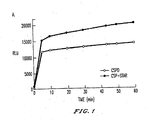
- Figures 1 and 2 compare the performance of CSPD ® and CDP-Star TM .
- Figure 1 shows the comparison of CSPD ® and CDP-Star TM plotted as relative light units (RLU) vs time. The average of three replicates are plotted.
- Figure 2 shows the results obtained from another set of samples containing 1 mg/ml of the chemiluminescence enhancing polymer polyvinylbenzyltributylammonium chloride.
- Biotinylated pBR322 35-mer (13.1 pg in 1 ⁇ l) was spotted onto a small piece of positively charged nylon membrane (Tropilon-Plus TM ). The membrane was dried completely and DNA was fixed to the membrane by UV cross-linking (120 mJ/cm 2 ).
- the membrane was wetted with PBS and then incubated in Blocking Buffer (0.2% 1-Block TM , 0.5% SDS in PBS) for 10 minutes, in streptavidin-alkaline phosphatase conjugate (Avidx-AP TM , Tropix; diluted 1:5000 in Blocking Buffer) for 20 minutes, and washed once for 5 minutes with Blocking Buffer and three times for 5 minute with Wash Buffer (0.5% SDS in PBS). Membranes were then washed twice for 5 minutes with Assay Buffer (0.1 M DEA, 1 mM MgCl 2 , pH 10.0).
- Purified human transferrin (Boehringer/Mannheim cat #1317 415) was serially diluted with 1X SDS-PAGE loading buffer (0.06 M Tris-HCl, pH 6.8, 2.25% glycerol, 0.5% ⁇ -mercaptoethanol, 2% SDS, 0.05% bromophenol blue). Dilutions were heated at 95°C for 5 minutes and 5 ⁇ l of diluted sample was loaded per gel lane. Samples were electrophoretically separated by SDS-PAGE on 10% polyacrylamide minigels, using a Hoefer SE250 minigel apparatus. Each blot contains 10, 3.3, 1.1, 0.37, 0.12 and 0.04 ng amounts of transferrin.
- Blots were then incubated with rabbit polyclonal antihuman transferrin (Boehringer/Mannheim cat #615 015; diluted 1:5000 in the appropriate Blocking Buffer) for 30 minutes, and then washed twice for 5 minutes (PVDF with BB-1, and nylon with Wash Buffer [0.1% Tween-20 in PBS]).
- blots were incubated with goat anti-rabbit IgG alkaline phosphatase conjugate (Tropix; diluted 1:10,000 in the appropriate Blocking Buffer) for 30 minutes, and then washed twice for 5 minutes as above. Blots were then washed twice for 5 minutes in Assay Buffer (0.1 M DEA, 1 mM MgCl 2 , pH 10.0).
- Total genomic DNA from the yeast Saccharomyces cerevisiae was digested with EcoR 1 and Bgl 11 restriction endonucleases. 5.0, 0.5, and 0.05 ⁇ g quantities of each DNA digest were separated by electrophoresis in a horizontal 0.8% agarose 1X TBE gel. Following electrophoresis, the gel was soaked in 1.5 M NaCl, 0.5 M NaOH for 45 minutes to denature the DNA and then incubated in neutralization buffer (1 M Tris, 1.5 M NaCl, pH 7.4) for 45 minutes. DNA was transferred to positively charged nylon membranes (Tropilon-Plus TM ) by overnight capillary transfer using 20X SSC.
- the membranes were air dried and the DNA was UV cross linked to the membranes at 120 mJ/cm 2 .
- the membranes were prehybridized for 30 minutes at 68°C in hybridization solution (7% SDS, 0.25 M Na 2 PO 4 , 1.0 mM EDTA), hybridized overnight at 68°C with 5 ml of fresh hybridization solution containing 5 ng/ml of denatured probe and then removed from the hybridization solution and washed as follows: twice for 5 minutes with 2X SSC, 1% SDS at room temperature: twice for 15 minutes in 0.1XSSC, 1% SDS at 68°C; and twice for 5 minutes in 1X SSC at room temperature.
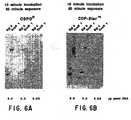
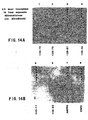
- the membranes were then incubated for 10 minutes in blocking buffer (0.2% cassein, 0.5% SDS, PBS), and 20 minutes with 1:5000 dilution AVIDx-AP TM in blocking buffer. They were then washed in blocking buffer for 5 minutes, three times for 10 minutes in wash buffer (0.5% SDS, PBS), and twice for 2 minutes in assay buffer (0.1 M diethanolamine, 1.0 mM MgCl 2 , pH 10.0) followed by incubation for 5 minutes in 0.25 mM dioxetane in assay buffer. After draining excess substrate solution, the membranes were wrapped in plastic and exposed to X-ray film. 60 minute exposures taken 10 minutes, 70 minutes, and 19 hours respectively after substrate incubation are reflected in the following exposures. Comparisons of CSDP and CDP-Star are shown in Figures 6, 7 and 8.
- DNA sequencing reactions were performed with the Tropix SEQ-light TM kit using biotinylated (-20) universal primer and single stranded M13 mp18 template DNA. Reaction products were separated on a 6% polyacrylamide 8 M urea gel, transferred to Tropilon-Plus TM nylon membranes by capillary action, and UV crosslinked to the membrane (total irradiation - 120mJ/cm 2 ).
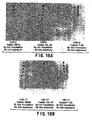
- Chemiluminescent detection was performed by incubating the membrane for 10 minutes in blocking buffer (0.2% i-Block TM , 0.5% SDS, PBS), for 20 minutes in conjugate solution (1/5000 dilution of Avidx-AP streptavidin alkaline phosphatase conjugate in blocking buffer), then washing 1X5 minutes with blocking buffer, 3X5 minutes with wash buffer (0.5% SDS, PBS), and 2X2 minutes with assay buffer (0.1 M diethanolamine, 1 mM MgCl 2 , pH 10). Each membrane strip was incubated for 5 minutes with either 0.25 mM CSPD or CDP-Star in assay buffer. All steps were performed at room temperature in a large heat sealed plastic bag with moderate shaking (140-170 rpm). Comparison of CSPD and CDP-Star at three time points is provided. The time after incubation with substrate and exposure time to Kodak XAR-5 x-ray film are indicated on Figure 9.
- Additional testing reflects values such as quantum yield (performed by an independent laboratory according to the procedure listed below), T 1/2 and the emission wavelength maxima. These dioxetanes are identified by number, and in the tables following after the number, the identity of the substituent on the adamantyl ring, if any followed by the identity of the Z substituent is given.
- X is phosphate. Values for quantum yield and T 1/2 are obtained both for the dioxetane alone in 0.1 molar DEA, and in the presence of an enhancement agent, Sapphire II.
- the total counts for the dioxetane were determined from the intensity data. Total counts observed for a given concentration of dioxetane is the product of Photon Detection Efficiency (PDE) of the luminometer, the quantum yield of dioxetane and the number of molecules capable of emitting light (concentration of dephosphorylated dioxetanes). PDE for the MGM Optocomp I luminometer was determined to be 2.56 x 10 -3 , measured with a Biolink ® absolute standard and utilizing the known spectral response of the luminometer's PMT and the known emission spectrum of the dioxetanes. The quantum yield is calculated by dividing the total counts measured by the PDE and the concentration of the dioxetane.
- PDE Photon Detection Efficiency
- the maximum signal was measured.
- the maximum signal minus the Turner light unit readings at 30, 150, 300, or 600 second intervals was calculated and graphed vs. time in seconds. From the graphs, an exponential equation was calculated to determine the half life.
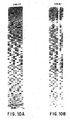
- DNA sequencing with chemiluminescent detection was performed as described in the Tropix SEQ-Light TM protocol. Briefly, DNA sequencing reactions were initiated with biotinylated primers using M13 single stranded phage DNA as a template. The reactions were separated by 8 M urea denaturing PAGE, transferred horizontally to Tropilon-Plus nylon membrane by capillary action, and cross-linked to the membrane by exposure to UV light using a Spectronics SpectroLinker XL-1500 at 200 mJ/cm 2 .
- the membranes were incubated with blocking buffer (0.2% I-Block TM , 0.5% sodium, dodecyl sulphate/SDS, in phosphate buffered saline/PBS [20 mM sodium phosphate, pH 7.2, 150 mM NaCl]) for 10 minutes, incubated with a 1/5000 dilution of Avidx-AP streptavidin-alkaline phosphatase in blocking buffer for 20 minutes, washed for 5 minutes in blocking buffer, washed 3 x 5 minutes with wash buffer (0.5% SDS, PBS), washed 2 x 5 minutes with assay buffer (0.1 M diethanolamine, 1mM MgCl 2 pH 10), and then incubated with dioxetane solution (either CSPD, 140-17 or 128-87 diluted to 0.25 mM in assay buffer) for 5 minutes.
- blocking buffer 0.2% I-Block TM , 0.5% sodium, dodecyl sulphate/SDS,
- the membranes were drained, sealed in a plastic folder and exposed to Kodak XAR-5 X-ray film.
- the exposure time was 70 minutes and for 140-17, 80 minutes, both 65 minutes after substrate addition.
- the membrane exposure time was 5 minutes after a 24 hour incubation with substrate.
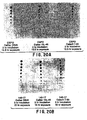
- Figures 10 and 11. The details of this type of protocol are reflected in Tropix SEQ-Light TM DNA sequencing system, commercially available from Tropix, Inc.
- the dioxetanes of this invention are suitable for use in dot blot assays.
- the dioxetanes synthesized according to the synthesis route described above were employed in dot blot assays.
- Compound 140-62 gave a consistent absence of signal, or, under optimum conditions, a barely detectable signal.
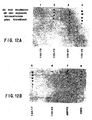
- Nitrocellulose and nylon membranes were spotted with a biotinylated 35 base oligonucleotide probe.
- the probe was diluted in 1X SSC to yield a starting dilution of 210 pg. Successive 1:2 dilutions of the starting dilution were spotted on the membranes, 12 spots total.
- the membranes were dried, subjected to optimum U.V.
- dioxetanes can be used for assays of all types in which an enzyme capable of cleaving the dioxetane is present alone or can be attached to one element of the ultimate complex which the analyte, if present, will form.
- Conventional assay formats are known to those of skill in the art, and are described in the patents set forth above in the Background of the Invention. Exemplary disclosure of suitable assays appears in U.S. Patent 5,112,960, and the same is incorporated herein by reference.
- the assay format, per se, save for the enhanced performance therein by the dioxetanes of this invention, does not constitute an aspect of the invention.
Landscapes
- Chemical & Material Sciences (AREA)
- Organic Chemistry (AREA)
- Life Sciences & Earth Sciences (AREA)
- Health & Medical Sciences (AREA)
- Engineering & Computer Science (AREA)
- Molecular Biology (AREA)
- Biochemistry (AREA)
- General Health & Medical Sciences (AREA)
- Immunology (AREA)
- Biotechnology (AREA)
- Physics & Mathematics (AREA)
- Wood Science & Technology (AREA)
- Zoology (AREA)
- Analytical Chemistry (AREA)
- Proteomics, Peptides & Aminoacids (AREA)
- Microbiology (AREA)
- Genetics & Genomics (AREA)
- Hematology (AREA)
- Biomedical Technology (AREA)
- Urology & Nephrology (AREA)
- General Engineering & Computer Science (AREA)
- Pathology (AREA)
- Biophysics (AREA)
- General Physics & Mathematics (AREA)
- Bioinformatics & Cheminformatics (AREA)
- Food Science & Technology (AREA)
- Medicinal Chemistry (AREA)
- Cell Biology (AREA)
- Chemical Kinetics & Catalysis (AREA)
- Plasma & Fusion (AREA)
- Luminescent Compositions (AREA)
- Measuring Or Testing Involving Enzymes Or Micro-Organisms (AREA)
- Heterocyclic Compounds That Contain Two Or More Ring Oxygen Atoms (AREA)
- Investigating Or Analysing Materials By The Use Of Chemical Reactions (AREA)
- Investigating Or Analysing Biological Materials (AREA)
- Saccharide Compounds (AREA)
- Heterocyclic Carbon Compounds Containing A Hetero Ring Having Oxygen Or Sulfur (AREA)
- Electroluminescent Light Sources (AREA)
Claims (21)
- Dioxétane de formule (I) :

dans laquelle R est un groupe alkyle en C1 à C12, phényle, naphtyle, phényl-alkyle en C1 à C12 ou napthyl-alkyle en C1 à C12,
dans laquelle X est un groupe labile par enzyme choisi dans le groupe consistant en un phosphate, un galactoside, un acétate, un 1-phospho-2,3-diacylglycéride, un 1-thio-D-glucoside, un triphosphate d'adénosine, un diphosphate d'adénosine, un monophosphate d'adénosine, une adénosine, un α-D-glucoside, un β-D-glucoside, un β-D-glucuronide, un α-D-mannoside, un β-D-mannoside, un β-D-fructofuranoside, un β-glucosiduronate, un ester de p-toluènesulfonyl-L-arginine et un p-toluènesulfonyl-L-arginine amide,
dans laquelle Z est un groupe électroactif choisi dans le groupe consistant en Cl, OAr, NM3 +, NHCOM, NMCOM1, NHCOAr, NHCOOAr, NHCOOM, NMCOOM1, CM3, NO2, COOM, COOAr, NHSO2OM, NHSO2Ar, CF3, Ar, SiM3, SiAr2, SiArM2, SO2NHCOM, SO2NHCOAr, SO2M, SO2Ar, SM et SAr, dans lesquels M et M1 sont indépendamment un groupe alkyle en C1 à 6, et Ar est un groupe phényle ou napthyle,
et dans laquelle Z occupe la position quatre ou cinq sur le cycle phényle. - Dioxétane selon la revendication 1, dans lequel Z est un substituant chloro ou amido en position cinq.
- Dioxétane selon la revendication 2, dans lequel Z est le chlore.
- Dioxétane selon la revendication 1, dans lequel Z est le chlore et est en position quatre.
- Dioxétane selon l'une quelconque des revendications 1 à 4, dans lequel X est une fraction phosphate.
- Dioxétane selon la revendication 5, dans lequel R est un groupe alkyle en C1 à 4.
- Trousse pour conduire un dosage employant une molécule de rapporteur dioxétane chimioluminescent, comprenant le dioxétane selon l'une quelconque des revendications 1 à 6, et une enzyme capable de cliver, en solution aqueuse, la fraction X dudit dioxétane.
- Trousse selon la revendication 7, comprenant en outre une substance d'amplification destinée à augmenter le signal chimioluminescent obtenu à partir dudit dioxétane lors du clivage de ladite fraction X en solution aqueuse.
- Trousse selon la revendication 7, dans lequel ledit dosage est un immunodosage, et ladite enzyme est complexée avec un agent capable de se lier à un analyte, ledit dosage étant conduit pour détecter la présence ou la concentration de l'analyte.
- Trousse selon la revendication 7, dans lequel ledit dosage est un dosage à sonde d'ADN, et ladite trousse comprend en outre une membrane sur laquelle ledit dosage peut être conduit.
- Trousse selon la revendication 10, comprenant en outre une substance d'amplification destinée à augmenter le signal chimioluminescent obtenu à partir dudit dioxétane lors du clivage de ladite fraction X en solution aqueuse.
- Trousse selon la revendication 10, dans lequel ladite enzyme est complexée avec un agent qui à son tour peut être complexé avec un analyte présent dans un échantillon, la présence ou la concentration dudit analyte étant celle pour laquelle le dosage est conduit.
- Trousse selon la revendication 7, dans lequel ledit dosage est un dosage d'analyse de séquence d'ADN, et ladite trousse comprend en outre une membrane sur laquelle ledit dosage d'analyse de séquence peut être conduit.
- Trousse selon la revendication 13, dans lequel ladite trousse comprend en outre une substance d'amplification destinée à augmenter le signal chimioluminescent obtenu à partir dudit dioxétane lors du clivage de ladite fraction X en solution aqueuse.
- Trousse selon la revendication 13, dans lequel ladite enzyme est complexée avec un agent permettant l'attache de l'enzyme à l'ADN pour qu'il soit séquencé dans ledit dosage.
- Composé de formule :

- Procédé de détection de la présence d'une enzyme dans un échantillon comprenant les étapes consistant à mettre en contact ledit échantillon avec un dioxétane selon les revendications 1 à 6, et détecter la libération de la lumière ainsi induite, dans lequel ladite enzyme clive ledit groupe X labile par enzyme et dans lequel la détection de lumière libérée indique la présence de ladite enzyme dans un échantillon.
- Procédé selon la revendication 17, dans lequel ledit groupe X est un phosphate et ladite enzyme est une phosphatase alcaline.
- Procédé de détection d'un premier élément d'une paire de liaison spécifique ayant des premier et second éléments, comprenant l'étape consistant à :détecter optiquement la chimioluminescence produite par la réaction d'un dioxétane selon l'une quelconque des revendications 1 à 6, avec une enzyme qui clive ledit groupe X labile par enzyme dudit dioxétane, dans lequel ladite enzyme est complexée avec un second élément de ladite paire de liaison spécifique.
- Procédé selon la revendication 19, dans lequel ledit procédé comprend un immunodosage.
- Procédé selon la revendication 19, dans lequel ledit procédé comprend un dosage à sonde d'acide nucléique.
Applications Claiming Priority (5)
| Application Number | Priority Date | Filing Date | Title |
|---|---|---|---|
| US08/057,903 US5538847A (en) | 1989-07-17 | 1993-05-07 | Chemiluminescent 1,2-dioxetanes |
| US231673 | 1994-04-25 | ||
| US08/231,673 US5582980A (en) | 1989-07-17 | 1994-04-25 | Chemiluminescent 1,2-dioxetanes |
| EP94915887A EP0649417B1 (fr) | 1993-05-07 | 1994-05-06 | 1,2-dioxetannes chimioluminescents ameliores |
| US57903 | 1998-04-09 |
Related Parent Applications (2)
| Application Number | Title | Priority Date | Filing Date |
|---|---|---|---|
| EP94915887A Division EP0649417B1 (fr) | 1993-05-07 | 1994-05-06 | 1,2-dioxetannes chimioluminescents ameliores |
| EP94915887A Division-Into EP0649417B1 (fr) | 1993-05-07 | 1994-05-06 | 1,2-dioxetannes chimioluminescents ameliores |
Publications (2)
| Publication Number | Publication Date |
|---|---|
| EP1120423A1 EP1120423A1 (fr) | 2001-08-01 |
| EP1120423B1 true EP1120423B1 (fr) | 2007-03-14 |
Family
ID=26737008
Family Applications (3)
| Application Number | Title | Priority Date | Filing Date |
|---|---|---|---|
| EP01104599A Expired - Lifetime EP1120422B1 (fr) | 1993-05-07 | 1994-05-06 | 1,2-dioxétanes chimioluminescents améliorés |
| EP01104600A Expired - Lifetime EP1120423B1 (fr) | 1993-05-07 | 1994-05-06 | 1,2-dioxétanes chimioluminescents améliorés |
| EP94915887A Expired - Lifetime EP0649417B1 (fr) | 1993-05-07 | 1994-05-06 | 1,2-dioxetannes chimioluminescents ameliores |
Family Applications Before (1)
| Application Number | Title | Priority Date | Filing Date |
|---|---|---|---|
| EP01104599A Expired - Lifetime EP1120422B1 (fr) | 1993-05-07 | 1994-05-06 | 1,2-dioxétanes chimioluminescents améliorés |
Family Applications After (1)
| Application Number | Title | Priority Date | Filing Date |
|---|---|---|---|
| EP94915887A Expired - Lifetime EP0649417B1 (fr) | 1993-05-07 | 1994-05-06 | 1,2-dioxetannes chimioluminescents ameliores |
Country Status (11)
| Country | Link |
|---|---|
| US (3) | US5582980A (fr) |
| EP (3) | EP1120422B1 (fr) |
| JP (1) | JP2837276B2 (fr) |
| KR (1) | KR0154209B1 (fr) |
| AT (3) | ATE205839T1 (fr) |
| AU (2) | AU676327B2 (fr) |
| CA (1) | CA2139348C (fr) |
| DE (3) | DE69428321T2 (fr) |
| FI (1) | FI950075A7 (fr) |
| NO (2) | NO309143B1 (fr) |
| WO (1) | WO1994026726A1 (fr) |
Families Citing this family (37)
| Publication number | Priority date | Publication date | Assignee | Title |
|---|---|---|---|---|
| USRE36536E (en) * | 1986-07-24 | 2000-01-25 | Tropix. Inc. | Method of detecting a substance using enzymatically-induced decomposition of dioxetanes |
| DE3788203T2 (de) | 1986-07-24 | 1994-03-31 | Tropix Inc | Verfahren zum nachweis einer verbindung unter verwendung des enzymatisch induzierten zerfalls von dioxethanen. |
| US6022964A (en) | 1989-07-17 | 2000-02-08 | Tropix, Inc. | Chemiluminescent 1,2-dioxetanes |
| US5603868A (en) * | 1992-10-30 | 1997-02-18 | Abbott Laboratories | Chemiluminescent electron-rich aryl-substituted 1,2-dioxetanes |
| WO1995017672A1 (fr) * | 1993-12-23 | 1995-06-29 | Tropix, Inc. | Dosages chimioluminescents par transfert d'energie |
| US5777135A (en) * | 1995-07-31 | 1998-07-07 | Lumigen, Inc. | Di-substituted 1,2-dioxetane compounds having increased water solubility and assay compositions |
| US5631167A (en) * | 1995-07-31 | 1997-05-20 | Bayer Corporation | Capsule chemistry analytical methods employing dioxetane chemiluminescence |
| US5721370A (en) * | 1995-07-31 | 1998-02-24 | Lumigen Inc. | Water soluble tri-substituted 1,2-dioxetane compounds and assay compositions having increased storage stability |
| DE69622605T2 (de) * | 1995-10-17 | 2003-03-13 | Tropix, Inc. | Chemilumineszente 1,2-dioxetane mit verbesserter leistung |
| US5783381A (en) * | 1995-10-19 | 1998-07-21 | Tropix, Inc. | Chemiluminescent 1,2-dioxetanes |
| US5834456A (en) * | 1996-02-23 | 1998-11-10 | The Dow Chemical Company | Polyazamacrocyclofluoromonoalkylphosphonic acids, and their complexes, for use as contrast agents |
| EP1574495A1 (fr) * | 1997-01-14 | 2005-09-14 | Daicel Chemical Industries, Ltd. | Derives d'adamantanes |
| US6660529B2 (en) | 1998-07-28 | 2003-12-09 | Pe Corporation | Heteroaryl substituted benzothiazole dioxetanes |
| AU5237699A (en) * | 1998-07-28 | 2000-02-21 | Tropix, Inc. | Benzothiazole dioxetanes |
| US6555698B1 (en) * | 1998-11-17 | 2003-04-29 | Tropix, Inc. | Chemiluminescent substrates for neuraminidase, assays for detection of neuraminidase and kits therefor |
| ATE441725T1 (de) * | 1998-12-15 | 2009-09-15 | Applera Corp | Multienzym-nachweisverfahren |
| EP1185710A2 (fr) * | 1999-04-16 | 2002-03-13 | Zymetx, Inc. | Procede de detection de virus utilisant des enzymes codees par des virus et des substrats chimioluminescents |
| US6893827B1 (en) * | 2000-02-07 | 2005-05-17 | Applera Corporation | Receptor function assay for G-protein coupled receptors and orphan receptors by reporter enzyme mutant complementation |
| ATE371747T1 (de) * | 2001-01-08 | 2007-09-15 | Applera Corp | Dendritische chemilumineszierende substrate |
| US7368296B2 (en) | 2002-01-17 | 2008-05-06 | Applied Biosystems | Solid phases optimized for chemiluminescent detection |
| AU2004210982B2 (en) * | 2003-02-12 | 2008-12-18 | Promega Corporation | Methods and kits for dual enzymatic assays whereby light is quenched from luminescent reactions |
| US7390670B2 (en) * | 2003-02-20 | 2008-06-24 | Lumigen, Inc. | Signalling compounds and methods for detecting hydrogen peroxide |
| US20060079699A1 (en) * | 2004-08-27 | 2006-04-13 | Brooks Edwards | Intermediate compounds and methods for synthesizing chemiluminescent dioxetane substrates |
| EP1787365A4 (fr) * | 2004-09-09 | 2009-10-21 | Applera Corp | Assemblages de nanoparticules de dioxetane pour des systemes de detection de transfert d'energie, methodes de fabrication de ces assemblages, et methodes d'utilisation de ces assemblages dans des bioanalyses |
| US7451802B2 (en) * | 2006-01-25 | 2008-11-18 | Nabco Entrances, Inc. | Slidable door assemblies with automatic pivot latching |
| JP2007225547A (ja) * | 2006-02-27 | 2007-09-06 | Fujifilm Corp | 標的物質の疎水部位の検出方法 |
| US20080248511A1 (en) * | 2007-03-26 | 2008-10-09 | Promega Corporation | Methods to quench light from optical reactions |
| CN101462316A (zh) * | 2007-12-19 | 2009-06-24 | 维斯塔斯风力系统有限公司 | 预成型件的制备方法 |
| EP2403843B1 (fr) | 2009-03-02 | 2018-11-07 | Life Technologies Corporation | Compositions chimioluminescentes, procédés, dosages et kits pour enzymes oxydatives |
| WO2012006351A1 (fr) | 2010-07-08 | 2012-01-12 | Life Technologies Corporation | Substrats chimioluminescents in situ et dosages |
| JP2014516947A (ja) * | 2011-05-03 | 2014-07-17 | ライフ テクノロジーズ コーポレーション | フラッシュ・グロー型の1,2−ジオキセタン |
| CN103772433A (zh) * | 2012-10-18 | 2014-05-07 | 深圳市美凯特科技有限公司 | 一种用于免疫分析的化学发光试剂amppd的合成方法 |
| CN103073589A (zh) * | 2012-12-30 | 2013-05-01 | 杭州师范大学 | 一种1,2-二氧环乙烷类化合物的合成方法 |
| CN104557890A (zh) * | 2015-01-12 | 2015-04-29 | 王国平 | 一种碳碳氧氧四元环化合物及其在质谱检测中的应用 |
| DE102016119810A1 (de) * | 2016-10-18 | 2018-04-19 | Hamilton Bonaduz Ag | Schichten zum Nachweis von Sauerstoff |
| JP2023110666A (ja) | 2022-01-28 | 2023-08-09 | シスメックス株式会社 | 化合物またはその塩、組成物、化学発光方法、化学発光シグナル測定方法、試薬、試薬キットおよび被検物質測定方法 |
| WO2026020407A1 (fr) * | 2024-07-25 | 2026-01-29 | 深圳华大智造科技股份有限公司 | Sonde moléculaire à résolution améliorée, acide nucléique modifié associé et son application dans le séquençage de gènes |
Family Cites Families (19)
| Publication number | Priority date | Publication date | Assignee | Title |
|---|---|---|---|---|
| GB1521089A (en) * | 1975-11-12 | 1978-08-09 | Valeas Srl | Aminoethanol derivatives |
| JPS59501589A (ja) * | 1982-08-23 | 1984-09-06 | ジ・オ−ストラリアン・ナシヨナル・ユニバ−シテイ | 3−アミノ−5−ヒドロオキシ安息香酸及びその誘導体ならびに類似体の合成方法 |
| US4983779A (en) * | 1986-07-17 | 1991-01-08 | The Board Of Governors Of Wayne State University | Process for the preparation of vinyl ethers |
| US5616729A (en) * | 1986-07-17 | 1997-04-01 | Board Of Governors Of Wayne State University | Enhanced chemiluminescence from 1,2-dioxetanes through energy transfer to tethered fluorescers |
| US4956477A (en) * | 1987-12-31 | 1990-09-11 | Tropix, Inc. | Synthesis of 1,2-dioxetanes |
| CA1340590C (fr) * | 1986-07-24 | 1999-06-08 | John C. Voyta | Amelioration de la chimioluminescence |
| US4978614A (en) * | 1988-10-26 | 1990-12-18 | Tropix, Inc. | Method of detecting a substance using enzymatically-induced decomposition of dioxetanes |
| US5112960A (en) * | 1989-07-17 | 1992-05-12 | Bronstein Irena Y | Chemiluminescent 3-(substituted adamant-2'-ylidene) 1,2-dioxetanes |
| US5220005A (en) * | 1986-07-24 | 1993-06-15 | Tropix, Inc. | Substituted adamantyl dioxetanes |
| US4931223A (en) * | 1986-07-24 | 1990-06-05 | Tropix, Inc. | Methods of using chemiluminescent 1,2-dioxetanes |
| US5330900A (en) * | 1987-12-31 | 1994-07-19 | Tropix, Inc. | Chemiluminescent 3-(substituted adamant-2'-ylidene) 1,2-dioxetanes |
| US5538847A (en) * | 1989-07-17 | 1996-07-23 | Tropix, Inc. | Chemiluminescent 1,2-dioxetanes |
| US5089630A (en) * | 1987-12-31 | 1992-02-18 | Bronstein Irena Y | Dioxetanes for use in assays |
| US4952707A (en) * | 1988-06-30 | 1990-08-28 | Tropix, Inc. | Enzymatically-cleavable chemiluminescent fused polycyclic ring-containing 1,2-dioxetanes |
| US5132204A (en) * | 1989-05-31 | 1992-07-21 | Chiron Corporation | Chemiluminescent double-triggered 1, 2-dioxetanes |
| US5326882A (en) * | 1989-07-17 | 1994-07-05 | Tropix, Inc. | Chemiluminescent 3-(substituted Adamant-2'-Ylidene) 1,2-dioxetanes |
| JP2552413B2 (ja) * | 1990-08-30 | 1996-11-13 | トロピックス・インコーポレーテッド | 化学発光性3ー(置換アダマントー2′ーイリデン)1,2ージオキセタン |
| US5336596A (en) * | 1991-12-23 | 1994-08-09 | Tropix, Inc. | Membrane for chemiluminescent blotting applications |
| US5603868A (en) * | 1992-10-30 | 1997-02-18 | Abbott Laboratories | Chemiluminescent electron-rich aryl-substituted 1,2-dioxetanes |
-
1994
- 1994-04-25 US US08/231,673 patent/US5582980A/en not_active Expired - Lifetime
- 1994-05-06 EP EP01104599A patent/EP1120422B1/fr not_active Expired - Lifetime
- 1994-05-06 AU AU67741/94A patent/AU676327B2/en not_active Expired
- 1994-05-06 EP EP01104600A patent/EP1120423B1/fr not_active Expired - Lifetime
- 1994-05-06 DE DE69428321T patent/DE69428321T2/de not_active Expired - Lifetime
- 1994-05-06 EP EP94915887A patent/EP0649417B1/fr not_active Expired - Lifetime
- 1994-05-06 JP JP6525458A patent/JP2837276B2/ja not_active Expired - Lifetime
- 1994-05-06 AT AT94915887T patent/ATE205839T1/de not_active IP Right Cessation
- 1994-05-06 WO PCT/US1994/004555 patent/WO1994026726A1/fr not_active Ceased
- 1994-05-06 AT AT01104600T patent/ATE356822T1/de not_active IP Right Cessation
- 1994-05-06 CA CA002139348A patent/CA2139348C/fr not_active Expired - Lifetime
- 1994-05-06 AT AT01104599T patent/ATE334996T1/de not_active IP Right Cessation
- 1994-05-06 DE DE69434814T patent/DE69434814T2/de not_active Expired - Lifetime
- 1994-05-06 DE DE69434940T patent/DE69434940T2/de not_active Expired - Lifetime
-
1995
- 1995-01-05 KR KR1019950700026A patent/KR0154209B1/ko not_active Expired - Fee Related
- 1995-01-05 FI FI950075A patent/FI950075A7/fi unknown
- 1995-01-06 NO NO950065A patent/NO309143B1/no not_active IP Right Cessation
- 1995-10-17 US US08/544,172 patent/US5840919A/en not_active Expired - Lifetime
-
1996
- 1996-01-19 US US08/588,810 patent/US5851771A/en not_active Expired - Fee Related
-
1997
- 1997-06-06 AU AU24749/97A patent/AU695229B2/en not_active Expired
-
2000
- 2000-07-06 NO NO20003485A patent/NO20003485D0/no not_active Application Discontinuation
Also Published As
Similar Documents
| Publication | Publication Date | Title |
|---|---|---|
| EP1120423B1 (fr) | 1,2-dioxétanes chimioluminescents améliorés | |
| US5538847A (en) | Chemiluminescent 1,2-dioxetanes | |
| US5981768A (en) | 1,2 chemiluminescent dioxetanes of improved performance | |
| US5112960A (en) | Chemiluminescent 3-(substituted adamant-2'-ylidene) 1,2-dioxetanes | |
| US5543295A (en) | Chemiluminescent 3--(Substituted adamant--2'--Ylidene) 1,2--Dioxetanes | |
| US5326882A (en) | Chemiluminescent 3-(substituted Adamant-2'-Ylidene) 1,2-dioxetanes | |
| US5220005A (en) | Substituted adamantyl dioxetanes | |
| EP0497972B1 (fr) | 1,2-dioxetanes d'adamant-2'-ylidene a substitution en position 3 chimioluminescents | |
| US6852548B2 (en) | Benzothiazole dioxetanes | |
| US6346615B1 (en) | Chemiluminescent 1,2-dioxetanes | |
| US5605795A (en) | Assays using chemiluminescent, enzymatically cleavable substituted 1,2-dioxetanes and kits therefor | |
| EP1019390B1 (fr) | Dioxetanes 1,2 chemiluminescents a rendement ameliore | |
| US5831102A (en) | Chemiluminescent 3-(substituted adamant-2'-ylidene) 1,2-dioxetanes | |
| US7112413B2 (en) | Heteroaryl substituted benzothiazole dioxetanes | |
| CA2231199C (fr) | Dioxetanes 1,2 chemiluminescents a rendement ameliore | |
| US20060024762A1 (en) | Heteroaryl substituted benzothiazole dioxetanes |
Legal Events
| Date | Code | Title | Description |
|---|---|---|---|
| PUAI | Public reference made under article 153(3) epc to a published international application that has entered the european phase |
Free format text: ORIGINAL CODE: 0009012 |
|
| AC | Divisional application: reference to earlier application |
Ref document number: 649417 Country of ref document: EP |
|
| AK | Designated contracting states |
Kind code of ref document: A1 Designated state(s): AT BE CH DE DK ES FR GB GR IE IT LI LU MC NL PT SE |
|
| 17P | Request for examination filed |
Effective date: 20020115 |
|
| AKX | Designation fees paid |
Free format text: AT BE CH DE DK ES FR GB GR IE IT LI LU MC NL PT SE |
|
| 17Q | First examination report despatched |
Effective date: 20030829 |
|
| RAP1 | Party data changed (applicant data changed or rights of an application transferred) |
Owner name: APPLERA CORPORATION |
|
| GRAP | Despatch of communication of intention to grant a patent |
Free format text: ORIGINAL CODE: EPIDOSNIGR1 |
|
| GRAS | Grant fee paid |
Free format text: ORIGINAL CODE: EPIDOSNIGR3 |
|
| GRAA | (expected) grant |
Free format text: ORIGINAL CODE: 0009210 |
|
| AC | Divisional application: reference to earlier application |
Ref document number: 0649417 Country of ref document: EP Kind code of ref document: P |
|
| AK | Designated contracting states |
Kind code of ref document: B1 Designated state(s): AT BE CH DE DK ES FR GB GR IE IT LI LU MC NL PT SE |
|
| PG25 | Lapsed in a contracting state [announced via postgrant information from national office to epo] |
Ref country code: BE Free format text: LAPSE BECAUSE OF FAILURE TO SUBMIT A TRANSLATION OF THE DESCRIPTION OR TO PAY THE FEE WITHIN THE PRESCRIBED TIME-LIMIT Effective date: 20070314 Ref country code: NL Free format text: LAPSE BECAUSE OF FAILURE TO SUBMIT A TRANSLATION OF THE DESCRIPTION OR TO PAY THE FEE WITHIN THE PRESCRIBED TIME-LIMIT Effective date: 20070314 Ref country code: AT Free format text: LAPSE BECAUSE OF FAILURE TO SUBMIT A TRANSLATION OF THE DESCRIPTION OR TO PAY THE FEE WITHIN THE PRESCRIBED TIME-LIMIT Effective date: 20070314 |
|
| REG | Reference to a national code |
Ref country code: GB Ref legal event code: FG4D |
|
| REG | Reference to a national code |
Ref country code: CH Ref legal event code: EP Ref country code: CH Ref legal event code: NV Representative=s name: RENTSCH & PARTNER |
|
| REF | Corresponds to: |
Ref document number: 69434940 Country of ref document: DE Date of ref document: 20070426 Kind code of ref document: P |
|
| REG | Reference to a national code |
Ref country code: IE Ref legal event code: FG4D |
|
| REG | Reference to a national code |
Ref country code: SE Ref legal event code: TRGR |
|
| PG25 | Lapsed in a contracting state [announced via postgrant information from national office to epo] |
Ref country code: ES Free format text: LAPSE BECAUSE OF FAILURE TO SUBMIT A TRANSLATION OF THE DESCRIPTION OR TO PAY THE FEE WITHIN THE PRESCRIBED TIME-LIMIT Effective date: 20070625 |
|
| PG25 | Lapsed in a contracting state [announced via postgrant information from national office to epo] |
Ref country code: PT Free format text: LAPSE BECAUSE OF FAILURE TO SUBMIT A TRANSLATION OF THE DESCRIPTION OR TO PAY THE FEE WITHIN THE PRESCRIBED TIME-LIMIT Effective date: 20070814 |
|
| NLV1 | Nl: lapsed or annulled due to failure to fulfill the requirements of art. 29p and 29m of the patents act | ||
| ET | Fr: translation filed | ||
| PLBE | No opposition filed within time limit |
Free format text: ORIGINAL CODE: 0009261 |
|
| STAA | Information on the status of an ep patent application or granted ep patent |
Free format text: STATUS: NO OPPOSITION FILED WITHIN TIME LIMIT |
|
| PG25 | Lapsed in a contracting state [announced via postgrant information from national office to epo] |
Ref country code: DK Free format text: LAPSE BECAUSE OF FAILURE TO SUBMIT A TRANSLATION OF THE DESCRIPTION OR TO PAY THE FEE WITHIN THE PRESCRIBED TIME-LIMIT Effective date: 20070314 Ref country code: MC Free format text: LAPSE BECAUSE OF NON-PAYMENT OF DUE FEES Effective date: 20070531 |
|
| 26N | No opposition filed |
Effective date: 20071217 |
|
| PG25 | Lapsed in a contracting state [announced via postgrant information from national office to epo] |
Ref country code: GR Free format text: LAPSE BECAUSE OF FAILURE TO SUBMIT A TRANSLATION OF THE DESCRIPTION OR TO PAY THE FEE WITHIN THE PRESCRIBED TIME-LIMIT Effective date: 20070615 |
|
| PG25 | Lapsed in a contracting state [announced via postgrant information from national office to epo] |
Ref country code: IE Free format text: LAPSE BECAUSE OF NON-PAYMENT OF DUE FEES Effective date: 20070508 |
|
| REG | Reference to a national code |
Ref country code: GB Ref legal event code: 732E Free format text: REGISTERED BETWEEN 20090514 AND 20090520 |
|
| PG25 | Lapsed in a contracting state [announced via postgrant information from national office to epo] |
Ref country code: LU Free format text: LAPSE BECAUSE OF NON-PAYMENT OF DUE FEES Effective date: 20070506 |
|
| REG | Reference to a national code |
Ref country code: CH Ref legal event code: PCAR Free format text: RENTSCH & PARTNER;FRAUMUENSTERSTRASSE 9, POSTFACH 2441;8022 ZUERICH (CH) |
|
| REG | Reference to a national code |
Ref country code: GB Ref legal event code: 732E Free format text: REGISTERED BETWEEN 20100121 AND 20100127 |
|
| REG | Reference to a national code |
Ref country code: CH Ref legal event code: PUE Owner name: PPLIED BIOSYSTEMS, LLC Free format text: APPLIED BIOSYSTEMS INC.#35 WIGGINS AVENUE#BEDFORD, MA 01730 (US) -TRANSFER TO- APPLIED BIOSYSTEMS, LLC#5791 VAN ALLEN WAY#CARLSBAD, CA 92008 (US) Ref country code: CH Ref legal event code: PFA Owner name: PPLIED BIOSYSTEMS INC. Free format text: APPLERA CORPORATION#35 WIGGINS AVENUE#BEDFORD, MA 01730 (US) -TRANSFER TO- APPLIED BIOSYSTEMS INC.#35 WIGGINS AVENUE#BEDFORD, MA 01730 (US) |
|
| REG | Reference to a national code |
Ref country code: FR Ref legal event code: CA Ref country code: FR Ref legal event code: TP Ref country code: FR Ref legal event code: CD |
|
| PGFP | Annual fee paid to national office [announced via postgrant information from national office to epo] |
Ref country code: CH Payment date: 20130530 Year of fee payment: 20 Ref country code: DE Payment date: 20130530 Year of fee payment: 20 Ref country code: GB Payment date: 20130528 Year of fee payment: 20 Ref country code: SE Payment date: 20130530 Year of fee payment: 20 |
|
| PGFP | Annual fee paid to national office [announced via postgrant information from national office to epo] |
Ref country code: IT Payment date: 20130524 Year of fee payment: 20 Ref country code: FR Payment date: 20130606 Year of fee payment: 20 |
|
| REG | Reference to a national code |
Ref country code: DE Ref legal event code: R071 Ref document number: 69434940 Country of ref document: DE |
|
| REG | Reference to a national code |
Ref country code: DE Ref legal event code: R071 Ref document number: 69434940 Country of ref document: DE |
|
| REG | Reference to a national code |
Ref country code: CH Ref legal event code: PL |
|
| REG | Reference to a national code |
Ref country code: GB Ref legal event code: PE20 Expiry date: 20140505 |
|
| REG | Reference to a national code |
Ref country code: SE Ref legal event code: EUG |
|
| PG25 | Lapsed in a contracting state [announced via postgrant information from national office to epo] |
Ref country code: GB Free format text: LAPSE BECAUSE OF EXPIRATION OF PROTECTION Effective date: 20140505 |
|
| PG25 | Lapsed in a contracting state [announced via postgrant information from national office to epo] |
Ref country code: DE Free format text: LAPSE BECAUSE OF EXPIRATION OF PROTECTION Effective date: 20140507 |