EP1123918B1 - Derives d'amine aromatique, procede de preparation de ces derives et agents les contenant - Google Patents
Derives d'amine aromatique, procede de preparation de ces derives et agents les contenant Download PDFInfo
- Publication number
- EP1123918B1 EP1123918B1 EP99947962A EP99947962A EP1123918B1 EP 1123918 B1 EP1123918 B1 EP 1123918B1 EP 99947962 A EP99947962 A EP 99947962A EP 99947962 A EP99947962 A EP 99947962A EP 1123918 B1 EP1123918 B1 EP 1123918B1
- Authority
- EP
- European Patent Office
- Prior art keywords
- group
- mmols
- phenyl
- alkyl
- tert
- Prior art date
- Legal status (The legal status is an assumption and is not a legal conclusion. Google has not performed a legal analysis and makes no representation as to the accuracy of the status listed.)
- Expired - Lifetime
Links
- 0 C*1CCC(*C2C(*(*)C(C3*)C3OCCNN)=CC=CC=C2)CCC1 Chemical compound C*1CCC(*C2C(*(*)C(C3*)C3OCCNN)=CC=CC=C2)CCC1 0.000 description 2
Classifications
-
- C—CHEMISTRY; METALLURGY
- C07—ORGANIC CHEMISTRY
- C07D—HETEROCYCLIC COMPOUNDS
- C07D207/00—Heterocyclic compounds containing five-membered rings not condensed with other rings, with one nitrogen atom as the only ring hetero atom
- C07D207/02—Heterocyclic compounds containing five-membered rings not condensed with other rings, with one nitrogen atom as the only ring hetero atom with only hydrogen or carbon atoms directly attached to the ring nitrogen atom
- C07D207/18—Heterocyclic compounds containing five-membered rings not condensed with other rings, with one nitrogen atom as the only ring hetero atom with only hydrogen or carbon atoms directly attached to the ring nitrogen atom having one double bond between ring members or between a ring member and a non-ring member
- C07D207/22—Heterocyclic compounds containing five-membered rings not condensed with other rings, with one nitrogen atom as the only ring hetero atom with only hydrogen or carbon atoms directly attached to the ring nitrogen atom having one double bond between ring members or between a ring member and a non-ring member with hetero atoms or with carbon atoms having three bonds to hetero atoms with at the most one bond to halogen, e.g. ester or nitrile radicals, directly attached to ring carbon atoms
- C07D207/24—Oxygen or sulfur atoms
- C07D207/26—2-Pyrrolidones
- C07D207/263—2-Pyrrolidones with only hydrogen atoms or radicals containing only hydrogen and carbon atoms directly attached to other ring carbon atoms
- C07D207/27—2-Pyrrolidones with only hydrogen atoms or radicals containing only hydrogen and carbon atoms directly attached to other ring carbon atoms with substituted hydrocarbon radicals directly attached to the ring nitrogen atom
-
- A—HUMAN NECESSITIES
- A61—MEDICAL OR VETERINARY SCIENCE; HYGIENE
- A61P—SPECIFIC THERAPEUTIC ACTIVITY OF CHEMICAL COMPOUNDS OR MEDICINAL PREPARATIONS
- A61P5/00—Drugs for disorders of the endocrine system
- A61P5/02—Drugs for disorders of the endocrine system of the hypothalamic hormones, e.g. TRH, GnRH, CRH, GRH, somatostatin
-
- C—CHEMISTRY; METALLURGY
- C07—ORGANIC CHEMISTRY
- C07C—ACYCLIC OR CARBOCYCLIC COMPOUNDS
- C07C233/00—Carboxylic acid amides
- C07C233/01—Carboxylic acid amides having carbon atoms of carboxamide groups bound to hydrogen atoms or to acyclic carbon atoms
- C07C233/02—Carboxylic acid amides having carbon atoms of carboxamide groups bound to hydrogen atoms or to acyclic carbon atoms having nitrogen atoms of carboxamide groups bound to hydrogen atoms or to carbon atoms of unsubstituted hydrocarbon radicals
- C07C233/04—Carboxylic acid amides having carbon atoms of carboxamide groups bound to hydrogen atoms or to acyclic carbon atoms having nitrogen atoms of carboxamide groups bound to hydrogen atoms or to carbon atoms of unsubstituted hydrocarbon radicals with carbon atoms of carboxamide groups bound to acyclic carbon atoms of an acyclic saturated carbon skeleton
- C07C233/06—Carboxylic acid amides having carbon atoms of carboxamide groups bound to hydrogen atoms or to acyclic carbon atoms having nitrogen atoms of carboxamide groups bound to hydrogen atoms or to carbon atoms of unsubstituted hydrocarbon radicals with carbon atoms of carboxamide groups bound to acyclic carbon atoms of an acyclic saturated carbon skeleton having the nitrogen atom of at least one of the carboxamide groups bound to a carbon atom of a ring other than a six-membered aromatic ring
-
- C—CHEMISTRY; METALLURGY
- C07—ORGANIC CHEMISTRY
- C07C—ACYCLIC OR CARBOCYCLIC COMPOUNDS
- C07C233/00—Carboxylic acid amides
- C07C233/01—Carboxylic acid amides having carbon atoms of carboxamide groups bound to hydrogen atoms or to acyclic carbon atoms
- C07C233/16—Carboxylic acid amides having carbon atoms of carboxamide groups bound to hydrogen atoms or to acyclic carbon atoms having the nitrogen atom of at least one of the carboxamide groups bound to a carbon atom of a hydrocarbon radical substituted by singly-bound oxygen atoms
- C07C233/17—Carboxylic acid amides having carbon atoms of carboxamide groups bound to hydrogen atoms or to acyclic carbon atoms having the nitrogen atom of at least one of the carboxamide groups bound to a carbon atom of a hydrocarbon radical substituted by singly-bound oxygen atoms with the substituted hydrocarbon radical bound to the nitrogen atom of the carboxamide group by an acyclic carbon atom
- C07C233/18—Carboxylic acid amides having carbon atoms of carboxamide groups bound to hydrogen atoms or to acyclic carbon atoms having the nitrogen atom of at least one of the carboxamide groups bound to a carbon atom of a hydrocarbon radical substituted by singly-bound oxygen atoms with the substituted hydrocarbon radical bound to the nitrogen atom of the carboxamide group by an acyclic carbon atom having the carbon atom of the carboxamide group bound to a hydrogen atom or to a carbon atom of an acyclic saturated carbon skeleton
-
- C—CHEMISTRY; METALLURGY
- C07—ORGANIC CHEMISTRY
- C07C—ACYCLIC OR CARBOCYCLIC COMPOUNDS
- C07C233/00—Carboxylic acid amides
- C07C233/01—Carboxylic acid amides having carbon atoms of carboxamide groups bound to hydrogen atoms or to acyclic carbon atoms
- C07C233/16—Carboxylic acid amides having carbon atoms of carboxamide groups bound to hydrogen atoms or to acyclic carbon atoms having the nitrogen atom of at least one of the carboxamide groups bound to a carbon atom of a hydrocarbon radical substituted by singly-bound oxygen atoms
- C07C233/24—Carboxylic acid amides having carbon atoms of carboxamide groups bound to hydrogen atoms or to acyclic carbon atoms having the nitrogen atom of at least one of the carboxamide groups bound to a carbon atom of a hydrocarbon radical substituted by singly-bound oxygen atoms with the substituted hydrocarbon radical bound to the nitrogen atom of the carboxamide group by a carbon atom of a six-membered aromatic ring
- C07C233/25—Carboxylic acid amides having carbon atoms of carboxamide groups bound to hydrogen atoms or to acyclic carbon atoms having the nitrogen atom of at least one of the carboxamide groups bound to a carbon atom of a hydrocarbon radical substituted by singly-bound oxygen atoms with the substituted hydrocarbon radical bound to the nitrogen atom of the carboxamide group by a carbon atom of a six-membered aromatic ring having the carbon atom of the carboxamide group bound to a hydrogen atom or to a carbon atom of an acyclic saturated carbon skeleton
-
- C—CHEMISTRY; METALLURGY
- C07—ORGANIC CHEMISTRY
- C07C—ACYCLIC OR CARBOCYCLIC COMPOUNDS
- C07C255/00—Carboxylic acid nitriles
- C07C255/49—Carboxylic acid nitriles having cyano groups bound to carbon atoms of six-membered aromatic rings of a carbon skeleton
- C07C255/58—Carboxylic acid nitriles having cyano groups bound to carbon atoms of six-membered aromatic rings of a carbon skeleton containing cyano groups and singly-bound nitrogen atoms, not being further bound to other hetero atoms, bound to the carbon skeleton
- C07C255/60—Carboxylic acid nitriles having cyano groups bound to carbon atoms of six-membered aromatic rings of a carbon skeleton containing cyano groups and singly-bound nitrogen atoms, not being further bound to other hetero atoms, bound to the carbon skeleton at least one of the singly-bound nitrogen atoms being acylated
-
- C—CHEMISTRY; METALLURGY
- C07—ORGANIC CHEMISTRY
- C07D—HETEROCYCLIC COMPOUNDS
- C07D209/00—Heterocyclic compounds containing five-membered rings, condensed with other rings, with one nitrogen atom as the only ring hetero atom
- C07D209/02—Heterocyclic compounds containing five-membered rings, condensed with other rings, with one nitrogen atom as the only ring hetero atom condensed with one carbocyclic ring
- C07D209/04—Indoles; Hydrogenated indoles
- C07D209/08—Indoles; Hydrogenated indoles with only hydrogen atoms or radicals containing only hydrogen and carbon atoms, directly attached to carbon atoms of the hetero ring
-
- C—CHEMISTRY; METALLURGY
- C07—ORGANIC CHEMISTRY
- C07D—HETEROCYCLIC COMPOUNDS
- C07D209/00—Heterocyclic compounds containing five-membered rings, condensed with other rings, with one nitrogen atom as the only ring hetero atom
- C07D209/02—Heterocyclic compounds containing five-membered rings, condensed with other rings, with one nitrogen atom as the only ring hetero atom condensed with one carbocyclic ring
- C07D209/04—Indoles; Hydrogenated indoles
- C07D209/10—Indoles; Hydrogenated indoles with substituted hydrocarbon radicals attached to carbon atoms of the hetero ring
- C07D209/14—Radicals substituted by nitrogen atoms, not forming part of a nitro radical
-
- C—CHEMISTRY; METALLURGY
- C07—ORGANIC CHEMISTRY
- C07D—HETEROCYCLIC COMPOUNDS
- C07D211/00—Heterocyclic compounds containing hydrogenated pyridine rings, not condensed with other rings
- C07D211/04—Heterocyclic compounds containing hydrogenated pyridine rings, not condensed with other rings with only hydrogen or carbon atoms directly attached to the ring nitrogen atom
- C07D211/06—Heterocyclic compounds containing hydrogenated pyridine rings, not condensed with other rings with only hydrogen or carbon atoms directly attached to the ring nitrogen atom having no double bonds between ring members or between ring members and non-ring members
- C07D211/36—Heterocyclic compounds containing hydrogenated pyridine rings, not condensed with other rings with only hydrogen or carbon atoms directly attached to the ring nitrogen atom having no double bonds between ring members or between ring members and non-ring members with hetero atoms or with carbon atoms having three bonds to hetero atoms with at the most one bond to halogen, e.g. ester or nitrile radicals, directly attached to ring carbon atoms
- C07D211/60—Carbon atoms having three bonds to hetero atoms with at the most one bond to halogen, e.g. ester or nitrile radicals
- C07D211/62—Carbon atoms having three bonds to hetero atoms with at the most one bond to halogen, e.g. ester or nitrile radicals attached in position 4
-
- C—CHEMISTRY; METALLURGY
- C07—ORGANIC CHEMISTRY
- C07D—HETEROCYCLIC COMPOUNDS
- C07D211/00—Heterocyclic compounds containing hydrogenated pyridine rings, not condensed with other rings
- C07D211/92—Heterocyclic compounds containing hydrogenated pyridine rings, not condensed with other rings with a hetero atom directly attached to the ring nitrogen atom
- C07D211/96—Sulfur atom
-
- C—CHEMISTRY; METALLURGY
- C07—ORGANIC CHEMISTRY
- C07D—HETEROCYCLIC COMPOUNDS
- C07D213/00—Heterocyclic compounds containing six-membered rings, not condensed with other rings, with one nitrogen atom as the only ring hetero atom and three or more double bonds between ring members or between ring members and non-ring members
- C07D213/02—Heterocyclic compounds containing six-membered rings, not condensed with other rings, with one nitrogen atom as the only ring hetero atom and three or more double bonds between ring members or between ring members and non-ring members having three double bonds between ring members or between ring members and non-ring members
- C07D213/04—Heterocyclic compounds containing six-membered rings, not condensed with other rings, with one nitrogen atom as the only ring hetero atom and three or more double bonds between ring members or between ring members and non-ring members having three double bonds between ring members or between ring members and non-ring members having no bond between the ring nitrogen atom and a non-ring member or having only hydrogen or carbon atoms directly attached to the ring nitrogen atom
- C07D213/24—Heterocyclic compounds containing six-membered rings, not condensed with other rings, with one nitrogen atom as the only ring hetero atom and three or more double bonds between ring members or between ring members and non-ring members having three double bonds between ring members or between ring members and non-ring members having no bond between the ring nitrogen atom and a non-ring member or having only hydrogen or carbon atoms directly attached to the ring nitrogen atom with substituted hydrocarbon radicals attached to ring carbon atoms
- C07D213/36—Radicals substituted by singly-bound nitrogen atoms
- C07D213/40—Acylated substituent nitrogen atom
-
- C—CHEMISTRY; METALLURGY
- C07—ORGANIC CHEMISTRY
- C07D—HETEROCYCLIC COMPOUNDS
- C07D213/00—Heterocyclic compounds containing six-membered rings, not condensed with other rings, with one nitrogen atom as the only ring hetero atom and three or more double bonds between ring members or between ring members and non-ring members
- C07D213/02—Heterocyclic compounds containing six-membered rings, not condensed with other rings, with one nitrogen atom as the only ring hetero atom and three or more double bonds between ring members or between ring members and non-ring members having three double bonds between ring members or between ring members and non-ring members
- C07D213/04—Heterocyclic compounds containing six-membered rings, not condensed with other rings, with one nitrogen atom as the only ring hetero atom and three or more double bonds between ring members or between ring members and non-ring members having three double bonds between ring members or between ring members and non-ring members having no bond between the ring nitrogen atom and a non-ring member or having only hydrogen or carbon atoms directly attached to the ring nitrogen atom
- C07D213/60—Heterocyclic compounds containing six-membered rings, not condensed with other rings, with one nitrogen atom as the only ring hetero atom and three or more double bonds between ring members or between ring members and non-ring members having three double bonds between ring members or between ring members and non-ring members having no bond between the ring nitrogen atom and a non-ring member or having only hydrogen or carbon atoms directly attached to the ring nitrogen atom with hetero atoms or with carbon atoms having three bonds to hetero atoms with at the most one bond to halogen, e.g. ester or nitrile radicals, directly attached to ring carbon atoms
- C07D213/72—Nitrogen atoms
- C07D213/74—Amino or imino radicals substituted by hydrocarbon or substituted hydrocarbon radicals
-
- C—CHEMISTRY; METALLURGY
- C07—ORGANIC CHEMISTRY
- C07D—HETEROCYCLIC COMPOUNDS
- C07D213/00—Heterocyclic compounds containing six-membered rings, not condensed with other rings, with one nitrogen atom as the only ring hetero atom and three or more double bonds between ring members or between ring members and non-ring members
- C07D213/02—Heterocyclic compounds containing six-membered rings, not condensed with other rings, with one nitrogen atom as the only ring hetero atom and three or more double bonds between ring members or between ring members and non-ring members having three double bonds between ring members or between ring members and non-ring members
- C07D213/04—Heterocyclic compounds containing six-membered rings, not condensed with other rings, with one nitrogen atom as the only ring hetero atom and three or more double bonds between ring members or between ring members and non-ring members having three double bonds between ring members or between ring members and non-ring members having no bond between the ring nitrogen atom and a non-ring member or having only hydrogen or carbon atoms directly attached to the ring nitrogen atom
- C07D213/60—Heterocyclic compounds containing six-membered rings, not condensed with other rings, with one nitrogen atom as the only ring hetero atom and three or more double bonds between ring members or between ring members and non-ring members having three double bonds between ring members or between ring members and non-ring members having no bond between the ring nitrogen atom and a non-ring member or having only hydrogen or carbon atoms directly attached to the ring nitrogen atom with hetero atoms or with carbon atoms having three bonds to hetero atoms with at the most one bond to halogen, e.g. ester or nitrile radicals, directly attached to ring carbon atoms
- C07D213/72—Nitrogen atoms
- C07D213/75—Amino or imino radicals, acylated by carboxylic or carbonic acids, or by sulfur or nitrogen analogues thereof, e.g. carbamates
-
- C—CHEMISTRY; METALLURGY
- C07—ORGANIC CHEMISTRY
- C07D—HETEROCYCLIC COMPOUNDS
- C07D215/00—Heterocyclic compounds containing quinoline or hydrogenated quinoline ring systems
- C07D215/02—Heterocyclic compounds containing quinoline or hydrogenated quinoline ring systems having no bond between the ring nitrogen atom and a non-ring member or having only hydrogen atoms or carbon atoms directly attached to the ring nitrogen atom
- C07D215/16—Heterocyclic compounds containing quinoline or hydrogenated quinoline ring systems having no bond between the ring nitrogen atom and a non-ring member or having only hydrogen atoms or carbon atoms directly attached to the ring nitrogen atom with hetero atoms or with carbon atoms having three bonds to hetero atoms with at the most one bond to halogen, e.g. ester or nitrile radicals, directly attached to ring carbon atoms
- C07D215/20—Oxygen atoms
-
- C—CHEMISTRY; METALLURGY
- C07—ORGANIC CHEMISTRY
- C07D—HETEROCYCLIC COMPOUNDS
- C07D217/00—Heterocyclic compounds containing isoquinoline or hydrogenated isoquinoline ring systems
- C07D217/02—Heterocyclic compounds containing isoquinoline or hydrogenated isoquinoline ring systems with only hydrogen atoms or radicals containing only carbon and hydrogen atoms, directly attached to carbon atoms of the nitrogen-containing ring; Alkylene-bis-isoquinolines
- C07D217/04—Heterocyclic compounds containing isoquinoline or hydrogenated isoquinoline ring systems with only hydrogen atoms or radicals containing only carbon and hydrogen atoms, directly attached to carbon atoms of the nitrogen-containing ring; Alkylene-bis-isoquinolines with hydrocarbon or substituted hydrocarbon radicals attached to the ring nitrogen atom
-
- C—CHEMISTRY; METALLURGY
- C07—ORGANIC CHEMISTRY
- C07D—HETEROCYCLIC COMPOUNDS
- C07D217/00—Heterocyclic compounds containing isoquinoline or hydrogenated isoquinoline ring systems
- C07D217/02—Heterocyclic compounds containing isoquinoline or hydrogenated isoquinoline ring systems with only hydrogen atoms or radicals containing only carbon and hydrogen atoms, directly attached to carbon atoms of the nitrogen-containing ring; Alkylene-bis-isoquinolines
- C07D217/06—Heterocyclic compounds containing isoquinoline or hydrogenated isoquinoline ring systems with only hydrogen atoms or radicals containing only carbon and hydrogen atoms, directly attached to carbon atoms of the nitrogen-containing ring; Alkylene-bis-isoquinolines with the ring nitrogen atom acylated by carboxylic or carbonic acids, or with sulfur or nitrogen analogues thereof, e.g. carbamates
-
- C—CHEMISTRY; METALLURGY
- C07—ORGANIC CHEMISTRY
- C07D—HETEROCYCLIC COMPOUNDS
- C07D221/00—Heterocyclic compounds containing six-membered rings having one nitrogen atom as the only ring hetero atom, not provided for by groups C07D211/00 - C07D219/00
- C07D221/02—Heterocyclic compounds containing six-membered rings having one nitrogen atom as the only ring hetero atom, not provided for by groups C07D211/00 - C07D219/00 condensed with carbocyclic rings or ring systems
- C07D221/20—Spiro-condensed ring systems
-
- C—CHEMISTRY; METALLURGY
- C07—ORGANIC CHEMISTRY
- C07D—HETEROCYCLIC COMPOUNDS
- C07D277/00—Heterocyclic compounds containing 1,3-thiazole or hydrogenated 1,3-thiazole rings
- C07D277/02—Heterocyclic compounds containing 1,3-thiazole or hydrogenated 1,3-thiazole rings not condensed with other rings
- C07D277/20—Heterocyclic compounds containing 1,3-thiazole or hydrogenated 1,3-thiazole rings not condensed with other rings having two or three double bonds between ring members or between ring members and non-ring members
- C07D277/22—Heterocyclic compounds containing 1,3-thiazole or hydrogenated 1,3-thiazole rings not condensed with other rings having two or three double bonds between ring members or between ring members and non-ring members with only hydrogen atoms, hydrocarbon or substituted hydrocarbon radicals, directly attached to ring carbon atoms
- C07D277/30—Radicals substituted by carbon atoms having three bonds to hetero atoms with at the most one bond to halogen, e.g. ester or nitrile radicals
-
- C—CHEMISTRY; METALLURGY
- C07—ORGANIC CHEMISTRY
- C07D—HETEROCYCLIC COMPOUNDS
- C07D277/00—Heterocyclic compounds containing 1,3-thiazole or hydrogenated 1,3-thiazole rings
- C07D277/60—Heterocyclic compounds containing 1,3-thiazole or hydrogenated 1,3-thiazole rings condensed with carbocyclic rings or ring systems
- C07D277/62—Benzothiazoles
- C07D277/68—Benzothiazoles with hetero atoms or with carbon atoms having three bonds to hetero atoms with at the most one bond to halogen, e.g. ester or nitrile radicals, directly attached in position 2
- C07D277/70—Sulfur atoms
- C07D277/74—Sulfur atoms substituted by carbon atoms
-
- C—CHEMISTRY; METALLURGY
- C07—ORGANIC CHEMISTRY
- C07D—HETEROCYCLIC COMPOUNDS
- C07D285/00—Heterocyclic compounds containing rings having nitrogen and sulfur atoms as the only ring hetero atoms, not provided for by groups C07D275/00 - C07D283/00
- C07D285/01—Five-membered rings
- C07D285/02—Thiadiazoles; Hydrogenated thiadiazoles
- C07D285/04—Thiadiazoles; Hydrogenated thiadiazoles not condensed with other rings
- C07D285/12—1,3,4-Thiadiazoles; Hydrogenated 1,3,4-thiadiazoles
- C07D285/125—1,3,4-Thiadiazoles; Hydrogenated 1,3,4-thiadiazoles with oxygen, sulfur or nitrogen atoms, directly attached to ring carbon atoms, the nitrogen atoms not forming part of a nitro radical
-
- C—CHEMISTRY; METALLURGY
- C07—ORGANIC CHEMISTRY
- C07D—HETEROCYCLIC COMPOUNDS
- C07D295/00—Heterocyclic compounds containing polymethylene-imine rings with at least five ring members, 3-azabicyclo [3.2.2] nonane, piperazine, morpholine or thiomorpholine rings, having only hydrogen atoms directly attached to the ring carbon atoms
- C07D295/04—Heterocyclic compounds containing polymethylene-imine rings with at least five ring members, 3-azabicyclo [3.2.2] nonane, piperazine, morpholine or thiomorpholine rings, having only hydrogen atoms directly attached to the ring carbon atoms with substituted hydrocarbon radicals attached to ring nitrogen atoms
- C07D295/12—Heterocyclic compounds containing polymethylene-imine rings with at least five ring members, 3-azabicyclo [3.2.2] nonane, piperazine, morpholine or thiomorpholine rings, having only hydrogen atoms directly attached to the ring carbon atoms with substituted hydrocarbon radicals attached to ring nitrogen atoms substituted by singly or doubly bound nitrogen atoms
- C07D295/125—Heterocyclic compounds containing polymethylene-imine rings with at least five ring members, 3-azabicyclo [3.2.2] nonane, piperazine, morpholine or thiomorpholine rings, having only hydrogen atoms directly attached to the ring carbon atoms with substituted hydrocarbon radicals attached to ring nitrogen atoms substituted by singly or doubly bound nitrogen atoms with the ring nitrogen atoms and the substituent nitrogen atoms attached to the same carbon chain, which is not interrupted by carbocyclic rings
- C07D295/13—Heterocyclic compounds containing polymethylene-imine rings with at least five ring members, 3-azabicyclo [3.2.2] nonane, piperazine, morpholine or thiomorpholine rings, having only hydrogen atoms directly attached to the ring carbon atoms with substituted hydrocarbon radicals attached to ring nitrogen atoms substituted by singly or doubly bound nitrogen atoms with the ring nitrogen atoms and the substituent nitrogen atoms attached to the same carbon chain, which is not interrupted by carbocyclic rings to an acyclic saturated chain
-
- C—CHEMISTRY; METALLURGY
- C07—ORGANIC CHEMISTRY
- C07D—HETEROCYCLIC COMPOUNDS
- C07D295/00—Heterocyclic compounds containing polymethylene-imine rings with at least five ring members, 3-azabicyclo [3.2.2] nonane, piperazine, morpholine or thiomorpholine rings, having only hydrogen atoms directly attached to the ring carbon atoms
- C07D295/16—Heterocyclic compounds containing polymethylene-imine rings with at least five ring members, 3-azabicyclo [3.2.2] nonane, piperazine, morpholine or thiomorpholine rings, having only hydrogen atoms directly attached to the ring carbon atoms acylated on ring nitrogen atoms
- C07D295/18—Heterocyclic compounds containing polymethylene-imine rings with at least five ring members, 3-azabicyclo [3.2.2] nonane, piperazine, morpholine or thiomorpholine rings, having only hydrogen atoms directly attached to the ring carbon atoms acylated on ring nitrogen atoms by radicals derived from carboxylic acids, or sulfur or nitrogen analogues thereof
- C07D295/182—Radicals derived from carboxylic acids
- C07D295/185—Radicals derived from carboxylic acids from aliphatic carboxylic acids
-
- C—CHEMISTRY; METALLURGY
- C07—ORGANIC CHEMISTRY
- C07D—HETEROCYCLIC COMPOUNDS
- C07D307/00—Heterocyclic compounds containing five-membered rings having one oxygen atom as the only ring hetero atom
- C07D307/02—Heterocyclic compounds containing five-membered rings having one oxygen atom as the only ring hetero atom not condensed with other rings
- C07D307/34—Heterocyclic compounds containing five-membered rings having one oxygen atom as the only ring hetero atom not condensed with other rings having two or three double bonds between ring members or between ring members and non-ring members
- C07D307/56—Heterocyclic compounds containing five-membered rings having one oxygen atom as the only ring hetero atom not condensed with other rings having two or three double bonds between ring members or between ring members and non-ring members with hetero atoms or with carbon atoms having three bonds to hetero atoms with at the most one bond to halogen, e.g. ester or nitrile radicals, directly attached to ring carbon atoms
- C07D307/68—Carbon atoms having three bonds to hetero atoms with at the most one bond to halogen
-
- C—CHEMISTRY; METALLURGY
- C07—ORGANIC CHEMISTRY
- C07D—HETEROCYCLIC COMPOUNDS
- C07D307/00—Heterocyclic compounds containing five-membered rings having one oxygen atom as the only ring hetero atom
- C07D307/77—Heterocyclic compounds containing five-membered rings having one oxygen atom as the only ring hetero atom ortho- or peri-condensed with carbocyclic rings or ring systems
- C07D307/78—Benzo [b] furans; Hydrogenated benzo [b] furans
- C07D307/79—Benzo [b] furans; Hydrogenated benzo [b] furans with only hydrogen atoms, hydrocarbon or substituted hydrocarbon radicals, directly attached to carbon atoms of the hetero ring
- C07D307/81—Radicals substituted by nitrogen atoms not forming part of a nitro radical
-
- C—CHEMISTRY; METALLURGY
- C07—ORGANIC CHEMISTRY
- C07D—HETEROCYCLIC COMPOUNDS
- C07D327/00—Heterocyclic compounds containing rings having oxygen and sulfur atoms as the only ring hetero atoms
- C07D327/02—Heterocyclic compounds containing rings having oxygen and sulfur atoms as the only ring hetero atoms one oxygen atom and one sulfur atom
- C07D327/04—Five-membered rings
-
- C—CHEMISTRY; METALLURGY
- C07—ORGANIC CHEMISTRY
- C07D—HETEROCYCLIC COMPOUNDS
- C07D333/00—Heterocyclic compounds containing five-membered rings having one sulfur atom as the only ring hetero atom
- C07D333/02—Heterocyclic compounds containing five-membered rings having one sulfur atom as the only ring hetero atom not condensed with other rings
- C07D333/04—Heterocyclic compounds containing five-membered rings having one sulfur atom as the only ring hetero atom not condensed with other rings not substituted on the ring sulphur atom
- C07D333/06—Heterocyclic compounds containing five-membered rings having one sulfur atom as the only ring hetero atom not condensed with other rings not substituted on the ring sulphur atom with only hydrogen atoms, hydrocarbon or substituted hydrocarbon radicals, directly attached to the ring carbon atoms
- C07D333/14—Radicals substituted by singly bound hetero atoms other than halogen
- C07D333/20—Radicals substituted by singly bound hetero atoms other than halogen by nitrogen atoms
-
- C—CHEMISTRY; METALLURGY
- C07—ORGANIC CHEMISTRY
- C07D—HETEROCYCLIC COMPOUNDS
- C07D401/00—Heterocyclic compounds containing two or more hetero rings, having nitrogen atoms as the only ring hetero atoms, at least one ring being a six-membered ring with only one nitrogen atom
- C07D401/02—Heterocyclic compounds containing two or more hetero rings, having nitrogen atoms as the only ring hetero atoms, at least one ring being a six-membered ring with only one nitrogen atom containing two hetero rings
- C07D401/04—Heterocyclic compounds containing two or more hetero rings, having nitrogen atoms as the only ring hetero atoms, at least one ring being a six-membered ring with only one nitrogen atom containing two hetero rings directly linked by a ring-member-to-ring-member bond
-
- C—CHEMISTRY; METALLURGY
- C07—ORGANIC CHEMISTRY
- C07D—HETEROCYCLIC COMPOUNDS
- C07D405/00—Heterocyclic compounds containing both one or more hetero rings having oxygen atoms as the only ring hetero atoms, and one or more rings having nitrogen as the only ring hetero atom
- C07D405/02—Heterocyclic compounds containing both one or more hetero rings having oxygen atoms as the only ring hetero atoms, and one or more rings having nitrogen as the only ring hetero atom containing two hetero rings
- C07D405/12—Heterocyclic compounds containing both one or more hetero rings having oxygen atoms as the only ring hetero atoms, and one or more rings having nitrogen as the only ring hetero atom containing two hetero rings linked by a chain containing hetero atoms as chain links
-
- C—CHEMISTRY; METALLURGY
- C07—ORGANIC CHEMISTRY
- C07D—HETEROCYCLIC COMPOUNDS
- C07D409/00—Heterocyclic compounds containing two or more hetero rings, at least one ring having sulfur atoms as the only ring hetero atoms
- C07D409/02—Heterocyclic compounds containing two or more hetero rings, at least one ring having sulfur atoms as the only ring hetero atoms containing two hetero rings
- C07D409/12—Heterocyclic compounds containing two or more hetero rings, at least one ring having sulfur atoms as the only ring hetero atoms containing two hetero rings linked by a chain containing hetero atoms as chain links
-
- C—CHEMISTRY; METALLURGY
- C07—ORGANIC CHEMISTRY
- C07C—ACYCLIC OR CARBOCYCLIC COMPOUNDS
- C07C2602/00—Systems containing two condensed rings
- C07C2602/02—Systems containing two condensed rings the rings having only two atoms in common
- C07C2602/04—One of the condensed rings being a six-membered aromatic ring
- C07C2602/08—One of the condensed rings being a six-membered aromatic ring the other ring being five-membered, e.g. indane
-
- C—CHEMISTRY; METALLURGY
- C07—ORGANIC CHEMISTRY
- C07C—ACYCLIC OR CARBOCYCLIC COMPOUNDS
- C07C2603/00—Systems containing at least three condensed rings
- C07C2603/02—Ortho- or ortho- and peri-condensed systems
- C07C2603/04—Ortho- or ortho- and peri-condensed systems containing three rings
- C07C2603/06—Ortho- or ortho- and peri-condensed systems containing three rings containing at least one ring with less than six ring members
- C07C2603/10—Ortho- or ortho- and peri-condensed systems containing three rings containing at least one ring with less than six ring members containing five-membered rings
- C07C2603/12—Ortho- or ortho- and peri-condensed systems containing three rings containing at least one ring with less than six ring members containing five-membered rings only one five-membered ring
- C07C2603/18—Fluorenes; Hydrogenated fluorenes
Definitions
- the present invention relates to novel aromatic amine derivatives having a somatostatin receptor function-regulating effect, and a method for producing them, as well as pharmaceutical compositions containing them.
- Somatostatin was isolated from ovine hypothalmic tissue, as a peptide (SST-14) composed of 14 amino acids and having a growth hormone secretion-inhibiting effect.
- SST-28 composed of 28 amino acids has been isolated and identified.
- These somatostatins are brain and enteric canal peptides broadly distributed not only in hypothalami but also, for example, cerebra, limbic systems, spinal cords, vagal nerves, autonomic ganglia, mucous membranes of digestive tubes, pancreatic Langerhans' islands, etc. , and they inhibit the secretion of pituitary and digestive canal hormones such as growth hormone, thyrotropin, gastrin, insulin, glucagon, etc.
- type I to type V somatostatin receptors SSTR1, SSTR2, SSTR3, SSTR4, SSTR5 are known, and it is recognized that they express different functions in central and peripheral sites of bodies.
- JP-A-10-148905 discloses silver-halide photosensitive materials which include certain leuco compounds which have a substituted diphenylamine structure.
- Compounds heretofore developed for somatostatin receptor function-regulating agents are peptidic compounds and carry many problems in point of their activity duration, administration route, specificity, side effects, etc. For solving the problems, it is extremely meaningful to create and develop non-peptidic compounds having an excellent somatostatin receptor function-regulating effect.
- Ring A represents a benzene or pyridine ring, optionally substituted by 1 to 4 substituents selected from a halogen atom, a C 1-6 alkyl group, a halogeno-C 1-6 alkyl group, a phenyl group, a benzyl group, a C 1-6 alkoxy group, a halogeno-C 1-6 alkoxy group, a phenoxy group, a C 7-14 aralkyloxy group, a formyloxy group, a C 1-6 alkyl-carbonyloxy group, a C 1-6 alkylthio group, a halogeno-C 1-6 alkylthio group, a hydroxy group, a mercapto group, a cyano group, a nitro group, a carboxyl group, a formyl group, a C 1-6 alkyl-carbonyl group, a benzoyl group, a C 1-6 alkoxy-carbonyl group, a
- the invention relates to the following:
- Ring A represents an optionally-substituted benzene or pyridine ring.
- the substituents which Ring A may have include, for example, a halogen atom (e.g., fluorine, chlorine, bromine, iodine, etc.), a C 1-6 alkyl group (e.g., methyl, ethyl, propyl, butyl, sec-butyl, t-butyl, isopropyl, etc.), a halogeno-C 1-6 alkyl group (e.g., a C 1-6 alkyl group substituted by from 1 to 5 halogen atoms such as those mentioned above, etc.; e.g., trifluoromethyl, etc.), a phenyl group, a benzyl group, a C 1-6 alkoxy group (e.g., methoxy, ethoxy, propoxy, butoxy, sec-butoxy, t-butoxy
- Ring A When the one carbon atom of Ring A bonding to X is referred to as a 1-positioned carbon, and its another carbon atom bonding to N is referred to as a 2-positioned carbon, Ring A preferably has a substituent in the 4-position or 5-position, and the number of the substituents is preferably one or two.
- Ring A is an optionally-substituted benzene ring, more preferably a benzene ring optionally substituted by any of a halogen atom, a hydroxy group, a C 1-6 alkoxy group, a halogeno-C 1-6 alkoxy group, a C 7-14 aralkyloxy group, a benzoyl-C 1-6 alkoxy group, a hydroxy-C 1-6 alkoxy group, a C 1-6 alkoxy-carbonyl-C 1-6 alkoxy group, a C 3-14 cycloalkyl-C 1-6 alkoxy group, an imidazol-1-yl-C 1-6 alkoxy group, a C 7-14 aralkyloxycarbonyl-C 1-6 alkoxy group or a hydroxyphenyl-C 1-6 alkoxy group, most preferably a benzene ring substituted by a halogen atom (preferably, chlorine), a hydroxy group or a C
- Ring B is a benzene ring optionally substituted by a C 1-6 alkoxy group (preferably, methoxy, etc.); and most preferred is an unsubstituted benzene ring; or Ring B is a tetrahydroisoquinoline (e.g., 1,2,3,4-tetrahydroisoquinoline) or isoindoline ring formed along with R 2 bonded thereto.
- a benzene ring optionally substituted by a C 1-6 alkoxy group (preferably, methoxy, etc.); and most preferred is an unsubstituted benzene ring; or Ring B is a tetrahydroisoquinoline (e.g., 1,2,3,4-tetrahydroisoquinoline) or isoindoline ring formed along with R 2 bonded thereto.
- Z is a C 6-14 aryl (e.g., phenyl, naphthyl, anthranyl, phenanthryl, etc., more preferably, phenyl), C 3-10 cycloalkyl (e.g., cyclopropyl, cyclobutyl, cyclopentyl, cyclohexyl, etc.), piperidyl, thienyl, furyl, pyridyl, thiazolyl, indanyl or indolyl group optionally having from 1 to 3 substituents selected from halogens and formyl, halogeno-C 1-6 alkyl, C 1-6 alkoxy, C 1-6 alkyl-carbonyl, oxo and pyrrolidinyl groups.
- a halogen preferably, fluorine
- Z when Z is a phenyl group, it is substituted preferably at the ortho-position. Also preferably, it is substituted by one substituent.
- D represents a C 1-6 alkylene group (e.g., methylene, ethylene, propylene, butylene, pentamethylene, hexamethylene, etc.).
- G represents a chemical bond or a C 1-6 alkylene group (e.g., methylene, ethylene, propylene, etc.).
- R 1 is (a) a hydrogen atom, (b) a C 1-6 alkyl, C 2-6 alkenyl, C 6-14 aryl or C 7-14 aralkyl group optionally substituted by substituent(s) selected from (1) a halogen atom, (2) a nitro group, (3) an amino group optionally substituted by one or two substituents selected from a C 1-6 alkyl-carbonyl group, a C 6-14 aryl-carbonyl group, a C 1-6 alkyl group, a C 1-6 alkyloxy-carbonyl group, a C 7-14 aralkyloxy-carbonyl group, a C 1-6 alkyl-sulfonyl group and a C 6-14 aryl-sulfonyl group, (4) (i) a C 1-6 alkyl group optionally substituted by a hydroxy group, a C 1-6 alkyl-carbonyl group, a C 6-14 aryl
- R 1 is (a) a C 1-6 alkyl or C 7-14 aralkyl group optionally substituted by substituent(s) selected from (1) a hydroxy group, (2) a phenyl group, (3) a thienyl, furyl, thiazolyl, indanyl, indolyl or benzyloxycarbonylpiperidyl group, and (4) an . amino group optionally substituted by a C 1-6 alkyl-carbonyl, C 6-14 aryl-carbonyl, C 1-6 alkyl-sulfonyl or C 6-14 aryl-sulfonyl group, or (b) an acyl group.
- the substituent on the aralkyl group for R 1 is in the para-position.
- the C 1-6 alkyl group for R 1 includes, for example, methyl, ethyl, propyl, isopropyl, butyl, isobutyl, sec-butyl, t-butyl, pentyl, isopentyl, neopentyl, 1-methylpropyl, hexyl, isohexyl, 1,1-dimethylbutyl, 2,2-dimethylbutyl, 3,3-dimethylbutyl, 3,3-dimethylpropyl, 2-ethylbutyl.
- it is a C 3-5 alkyl group (e.g., propyl, isopropyl, isobutyl, neopentyl, etc.), more preferably, isobutyl or neopentyl.
- a C 3-5 alkyl group e.g., propyl, isopropyl, isobutyl, neopentyl, etc.
- isobutyl or neopentyl isobutyl or neopentyl.
- the C 2-6 alkenyl group includes, for example, vinyl, allyl, isopropenyl, 2-methylallyl, 1-propenyl, 2-methyl-1-propenyl, 2-methyl-2-propenyl, 1-butenyl, 2-butenyl, 3-butenyl, 2-ethyl-1-butenyl, 2-methyl-1-butenyl, 3-methyl-2-butenyl, 1-pentenyl, 2-pentenyl, 3-pentenyl, 4-pentenyl, 4-methyl-3-pentenyl, 1-hexenyl, 2-hexenyl, 3-hexenyl, 4-hexenyl, 5-hexenyl, etc. and is preferably vinyl, allyl, isopropenyl, 2-methylallyl, 2-methyl-1-propenyl, 2-methyl-2-propenyl, 3-methyl-2-butenyl, etc.
- the C 6-14 aryl group for R 1 may be, for example, phenyl, naphthyl, anthryl, phenanthryl, acenaphthylenyl, etc.
- the C 7-14 aralkyl group for R 1 may be, for example, benzyl, phenethyl, 3-phenylpropyl, 4-phenylbutyl, 2-naphthylmethyl, etc.
- the hydrocarbon group for R 1 may have from 1 to 5 (preferably, from 1 to 3) substituents.
- the halogen atom one of the substituents for the hydrocarbon group for R 1 , includes, for example, fluorine, chlorine, bromine and iodine atoms, etc.
- the optionally-substituted amino group, one of the substituents for the hydrocarbon group for R 1 includes, for example, an amino group optionally having one or two substituents selected from a C 1-6 alkyl group (e.g., methyl, ethyl, propyl, isopropyl), a C 1-6 alkyl-carbonyl group (e.g., acetyl, propionyl, butyryl, etc.), a C 6-14 aryl-carbonyl group (e.g., benzoyl, etc.), a C 1-6 alkoxy-carbonyl group (e.g., methoxycarbonyl, ethoxycarbonyl, propoxycarbonyl, sec-propoxycarbonyl, butoxycarbonyl, etc.), a C 7-14 aralkyloxy-carbonyl group (e.g., benzyloxycarbonyl, phenethyloxycarbonyl, phenylpropyloxycarbonyl
- the acyl group may be represented by any of the following formula: -COR 3 , -COOR 4 , -SO 2 R 5 , -CONR 6 R 7 , -CSNR 8 R 9 , -SOR 10 or -PO 3 R 11 R 12 [in which R 3 , R 4 , R 5 , R 6 , R 7 , R 8 , R 9 , R 10 , R 11 and R 12 may be the same or different, and each represents a hydrogen atom, an optionally-substituted hydrocarbon group, or an optionally-substituted heterocyclic group].
- hydrocarbon group of the optionally-substituted hydrocarbon group for R 3 , R 4 , R 5 , R 6 , R 7 , R 8 , R 9 , R 10 , R 11 and R 12 referred to are the same as those mentioned hereinabove for the hydrocarbon group for R 1 .
- the substituents which the hydrocarbon group for R 3 , R 4 , R 5 , R 6 , R 7 , R 8 , R 9 , R 10 , R 11 and R 12 may have include, for example, a halogen atom, a nitro group, a cyano group, an imino group, an optionally-substituted amino group, an optionally-substituted hydroxy group, an optionally-esterified carboxyl group, an optionally-substituted carbamoyl group, an optionally-substituted thiocarbamoyl group, a cycloalkyl group, a cycloalkenyl group, an optionally-substituted heterocyclic group, an alkyl group, a halogenoalkyl group, an optionally-substituted aryl group, an indanyl group, a fluorenyl group, etc.
- the optionally-substituted amino group, the optionally-esterified carboxyl group, the optionally-substituted carbamoyl group, the optionally-substituted thiocarbamoyl group, the cycloalkyl group, the cycloalkenyl group, the optionally-substituted heterocyclic group, the alkyl group, the halogenoalkyl group and the optionally-substituted aryl group, referred to are the same as those mentioned hereinabove for the substituents which the hydrocarbon group for R 1 may have, or that is, those mentioned for the optionally-substituted amino group, the optionally-esterified carboxyl group, the optionally-substituted carbamoyl group, the optionally-substituted thiocarbamoyl group, the cycloalkyl group, the cycloalkenyl group, the optionally-substituted heterocyclic group, the al
- the substituents for the optionally-substituted hydroxy group include, for example, (i) a C 1-6 alkyl group, (ii) a C 6-10 aryl group, (iii) a C 7-14 aralkyl group, (iv) a formyl group, (v) a C 1-6 alkyl-carbonyl group (e.g., acetyl, propionyl, butyryl, t-butylcarbonyl, etc.), (vi) a C 6-14 aryl-carbonyl group (e.g., benzoyl, naphthalenecarbonyl, anthracenecarbonyl, etc.), (vii) a C 1-6 alkoxy-carbonyl group (e.g., methoxycarbonyl, ethoxycarbonyl, propoxycarbonyl, sec-propoxycarbonyl, butoxycarbonyl, t-butoxycarbonyl, etc.), (viii) a C 7-14
- These (i) to (xvi) may have from 1 to 3 substituents selected from, for example, a halogen atom (e.g., fluorine, chlorine, bromine, iodine, etc.), a hydroxy group, a C 1-6 alkoxy group (e.g., methoxy, ethoxy, propoxy, isopropoxy, etc.), a formyl group, a C 1-6 alkyl-carbonyl group (e.g., acetyl, propionyl, butyryl, etc.), a carboxyl group, a C 1-6 alkoxy-carbonyl group (e.g., methoxycarbonyl, ethoxycarbonyl, propoxycarbonyl, sec-propoxycarbonyl, butoxycarbonyl, etc.), an amino group, a mono- or di-C 1-6 alkylamino group (e.g., methylamino, ethylamino, dimethylamino, diethyla
- heterocyclic group of the optionally-substituted heterocyclic group for R 3 , R 4 , R 5 , R 6 , R 7 , R 8 , R 9 , R 10 , R 11 and R 12 referred to are the same as those mentioned hereinabove for the heterocyclic group for Z.
- substituents which the heterocyclic group for R 3 , R 4 , R 5 , R 6 , R 7 , R 8 , R 9 , R 10 , R 11 and R 12 may have, referred to are the same as those mentioned hereinabove for the substituents for the cyclic group for Z.
- the heterocyclic group for them may have from 1 to 3 substituents selected from a formyl group, a C 1-6 alkyl-carbonyl group (e.g., acetyl, propionyl, butyryl, 5-butylcarbonyl, etc.), a C 6-14 aryl-carbonyl group (e.g., benzoyl, naphthalenecarbonyl, anthracenecarbonyl, etc.), a C 1-6 alkoxy-carbonyl group (e.g., methoxycarbonyl, ethoxycarbonyl, propoxycarbonyl, sec-propoxycarbonyl, butoxycarbonyl, t-butoxycarbonyl, etc.), a C 7-14 aralkyloxy-carbonyl group (e.g., benzyloxycarbonyl, phenethyloxycarbonyl, phenylpropyloxycarbonyl, etc.), a C 6-14 cyclic hydrocarbon
- substituents selected from, for example, a halogen atom (e.g., fluorine, chlorine, bromine, iodine, etc.), a hydroxy group, a C 1-6 alkoxy group (e.g., methoxy, ethoxy, propoxy, isopropoxy, etc.), a formyl group, a C 1-6 alkyl-carbonyl group (e.g., acetyl, propionyl, butyryl, etc.), a carboxyl group, a C 1-6 alkoxy-carbonyl group (e.g., methoxycarbonyl, ethoxycarbonyl, propoxycarbonyl, sec-propoxycarbonyl, butoxycarbonyl, etc.), an amino group, a mono- or di-C 1-6 alkylamino group (e.g., methylamino, ethylamino, dimethylamino, diethylamino, etc.), a halogen atom (e
- the acyl group includes (1) an optionally-substituted 5- or 6-membered aromatic ring such as benzene, furan, thiophene or pyridine ring, or (2) an optionally-substituted, bicyclic or tricyclic condensed ring that contains one or two 5- or 6-membered aromatic rings such as benzene, furan, thiophene or pyridine ring (e.g., benzofuran, benzothiophene, quinoline, carbazole, dibenzofuran, fluorene, etc.), bonded to a carbonyl group directly or via a linear or branched C 1-6 alkylene group.
- an optionally-substituted 5- or 6-membered aromatic ring such as benzene, furan, thiophene or pyridine ring
- an optionally-substituted, bicyclic or tricyclic condensed ring that contains one or two 5- or 6-membered aromatic rings such as benz
- the C 3-6 cycloalkyl group, one of the substituents for the hydrocarbon group for R 1 may be, for example, a cycloalkyl group that includes, for example, cyclopropyl, cyclobutyl, cyclopentyl, cyclohexyl, etc.
- the C 1-6 alkyl group, one of the substituents for the hydrocarbon group for R 1 may be, for example, methyl, ethyl, propyl, isopropyl, butyl, isobutyl, sec-butyl, t-butyl, etc.
- the phenyl group, one of the substituents for the hydrocarbon group for R 1 may have from 1 to 5 substituents selected from a halogeno-C 1-6 alkyl group (e.g., a C 1-6 alkyl group substituted by from 1 to 5 halogen atoms such as those mentioned above; e.g., trifluoromethyl, etc.), and a hydroxy group.
- a halogeno-C 1-6 alkyl group e.g., a C 1-6 alkyl group substituted by from 1 to 5 halogen atoms such as those mentioned above; e.g., trifluoromethyl, etc.
- a halogeno-C 1-6 alkyl group e.g., a C 1-6 alkyl group substituted by from 1 to 5 halogen atoms such as those mentioned above; e.g., trifluoromethyl, etc.
- R 2 is an unsubstituted amino group.
- E represents -CON(R a )- (in which R a represents a hydrogen atom or a C 1-6 alkyl group).
- R a is a hydrogen atom
- E is -CONH-.
- L represents a C 1-6 alkylene group.
- the C 1-6 alkylene group includes, for example, methylene, ethylene, propylene, butylene, etc. (preferably methylene).
- X represents an oxygen atom
- Y represents two hydrogen atoms, or an oxygen atom or a sulfur atom.
- Y is two hydrogen atoms or an oxygen atom.
- R 1 is preferably an acyl group; and when Y is an oxygen atom, R 1 is preferably an optionally-substituted hydrocarbon group or an optionally-substituted heterocyclic group.
- Ring A is an optionally-substituted benzene or pyridine ring
- Ring B is a benzene ring optionally substituted by a C 1-6 alkoxy group, or is a tetrahydroisoquinoline or isoindoline ring formed along with R 2 bonded thereto
- Z is a C 6-14 aryl, C 3-10 cycloalkyl, piperidyl, thienyl, furyl, pyridyl, thiazolyl, indanyl or indolyl group optionally having from 1 to 3 substituents selected from a halogen atom, a formyl group, a halogeno-C 1-6 alkyl group, a C 1-6 alkoxy group, a C 1-6 alkyl-carbonyl group, an oxo group and a pyrrolidinyl group
- D is a C 1-6 alkylene group
- G is a chemical bond
- Z is a phenyl group optionally substituted by a halogen atom
- D is a C 1-6 alkylene group
- G is a C 1-6 alkylene group
- those of formula (Ia-a) or their salts may be produced, for example, by reacting an intermediate compound of formula (IIa), or its reactive derivative or salt with a compound of formula (III) or its salt, as in the following reaction scheme 1.
- R 2a corresponds to R 2 and may be optionally protected (for example, with t-butoxycarbonyl. benzyloxycarbonyl, trityl, etc.); and the other symbols have the same meanings as above.
- Compounds of formula (Ia-a) or their salts may be produced by reacting a compound of formula (IIa) or its salt with a compound of formula (III) or its salt in a solvent, optionally in the presence of a base, and by the use of a condensation agent.
- the reactive derivative of the compound of formula (IIa) includes, for example, acid anhydrides, acid halides (acid chlorides, acid bromides), imidazolides, mixed acid anhydrides (e.g., anhydrides with methyl carbonate, anhydrides with ethyl carbonate, etc.), etc.
- the solvent to be used in the reaction of Scheme 1 includes, for example, ether solvents (e.g., diethyl ether, tetrahydrofuran, dioxane, etc.), hydrocarbon solvents (e.g., benzene, toluene, hexane, heptane, etc.), halogen-containing solvents (e.g., dichloromethane, dichloroethane, chloroform, carbon tetrachloride, etc.), acetonitrile, dimethylformamide, etc.
- the base usable therein includes triethylamine, 4-dimethylaminopyridine, triethylenediamine, tetramethylethylenediamine, etc.
- the condensation agent also usable therein may be any one employable for peptide production. Concretely, it includes, for example, dicyclohexylcarbodiimide, diethyl cyanophosphate, 1-ethyl-3-(3-dimethylaminopropyl)carbodiimide, etc.
- For the reaction for example, from 0.5 to 2 molar equivalents, preferably from 1 to 1.2 molar equivalents of a compound (III) or its salt is reacted with one mol of a compound (IIa) or its salt in the presence of from 0.5 to 5 molar equivalents, preferably from 1 to 2 molar equivalents of a condensation agent.
- the reaction temperature may fall between 0 and 100 °C, but preferably between 20 and 50°C; and the reaction time may fall between 0.5 and 24 hours, but preferably between 1 and 5 hours.
- X' indicates a halogen atom (e.g., fluorine, chlorine, bromine, iodine, etc.);
- Le indicates a leaving group (e.g., chlorine, bromine, iodine, methanesulfonyloxy, toluenesulfonyloxy, etc.);
- R 1' and R 1" each indicate a group derived from the optionally-substituted hydrocarbon group of R 1 by removing one methylene chain from it;
- R indicates a C 1-6 alkyl, C 7-14 aralkyl or phenyl group optionally substituted by a halogen atom or a C 1-6 alkoxy group; and the other symbols have the same meanings as above.
- a compound of formula (IIa-1) or its salt is reacted with a compound of formula (IIa-2) to give a compound of formula (IIa-3) or its salt.
- the reaction may be effected in the absence or presence of a solvent, and optionally in the presence of a base.
- the solvent includes, for example, ether solvents (e.g., diethyl ether, tetrahydrofuran, dioxane, etc.), halogen-containing solvents (e.g., dichloromethane, dichloroethane, chloroform, carbon tetrachloride, etc.), hydrocarbon solvents (e.g., benzene, toluene, hexane, heptane, etc.), dimethylformamide, dimethylsulfoxide, ester solvents (e.g., ethyl acetate, methyl acetate, etc.), etc.
- ether solvents e.g., diethyl ether, tetrahydrofuran, dioxane, etc.
- halogen-containing solvents e.g., dichloromethane, dichloroethane, chloroform, carbon tetrachloride, etc.
- hydrocarbon solvents e.g.,
- the base includes, for example, sodium hydrogencarbonate, potassium hydrogencarbonate, sodium carbonate, potassium carbonate, sodium hydride, potassium hydride, etc.
- the reaction temperature may fall between 0 and 200°C, but preferably between 80 and 150°C.
- the amount of the base, if used, may fall between 0.5 and 5 molar equivalents, but preferably between 1 and 1.5 molar equivalents, relative to one mol of the compound (IIa-2).
- the reaction time may fall between 0.5 and 48 hours, but preferably between 0.5 and 24 hours.
- the reaction to convert the compound (IIa-3) or its into a compound (IIa-4) or its salt may be catalytic reduction that requires hydrogen and a metal catalyst such as a palladium catalyst (e.g., metal palladium, palladium held on carbon, etc.), a Raney nickel, platinum or the like, or simple reduction that requires a metal or a metal salt such as iron chloride, tin chloride or the like; and it may be effected in a solvent.
- a metal catalyst such as a palladium catalyst (e.g., metal palladium, palladium held on carbon, etc.), a Raney nickel, platinum or the like, or simple reduction that requires a metal or a metal salt such as iron chloride, tin chloride or the like; and it may be effected in a solvent.
- the solvent includes, for example, ether solvent (e.g., diethyl ether, tetrahydrofuran, dioxane, etc.), hydrocarbon solvents (e.g., benzene, toluene, hexane, heptane, etc.), alcohol solvents (e.g., methanol, ethanol, propanol, etc.), acetone, dimethylformamide, etc.
- the hydrogen pressure may fall between 1 and 100 atmospheres, but preferably between 1 and 10 atmospheres; the reaction temperature may fall between 0 and 200 °C, but preferably between 10 and 50°C; and the reaction time may fall between 0.5 and 100 hours, but preferably between 0.5 and 24 hours.
- the reaction to convert the compound (IIa-4) or its salt to a compound (IIa-5) or its salt may be nitrogen-carbon bonding reaction of the compound (IIa-4) or its salt with a halogenohydrocarbon, a sulfonate or the like, or reductive alkylation thereof with an aldehyde or a ketone.
- the nitrogen-carbon bonding reaction may be effected, for example, in a solvent, such as an ether solvent (e.g., diethyl ether, tetrahydrofuran, dioxane, etc.), a halogen-containing solvent (e.g., dichloromethane, dichloroethane, chloroform, carbon tetrachloride, etc.), a hydrocarbon solvent (e.g., benzene, toluene, hexane, heptane, etc.), an alcohol solvent (e.g., methanol, ethanol, propanol, butanol, etc.), acetonitrile, dimethylformamide, dimethylsulfoxide, an ester solvent (e.g., ethyl acetate, methyl acetate, etc.) or the like, or a mixed solvent of any of them, optionally in the presence of a phase-transfer catalyst (e.g., quaternary ammonium
- reaction temperature may fall between 0°C and 200°C, but preferably between 20 and 80°C.
- amount of the base, if used, may fall between 0.5 and 5 molar equivalents, but preferably between 1 and 1.5 molar equivalents, relative to one mol of the compound (IIa-4).
- the reaction time may fall between 0.5 and 24 hours.
- the compound (IIa-4) or its salt may be reacted with a compound of a formula R 1' -CHO or R 1' -CO-R 1" or its salt, for example, through catalytic reduction or in the presence of a metal hydride complex compound (e.g., sodium borohydride, sodium borocyanohydride, etc.), in a solvent such as an ether solvent (e.g., diethyl ether, tetrahydrofuran, dioxane, etc.), a halogen-containing solvent (e.g., dichloromethane, dichloroethane, chloroform, carbon tetrachloride, etc.), a hydrocarbon solvent (e.g., benzene, toluene, hexane, heptane, etc.), an alcohol solvent (e.g., methanol, ethanol, propanol, butanol, etc.) or the like,
- a metal hydride complex compound
- reaction temperature may fall between 0 and 100 °C, but preferably between 10 and 70°C; and the reaction time may fall between 1 and 24 hours, preferably between 3 and 15 hours.
- the compound (IIa-5) may be reacted with a dicarboxylic acid monoester chloride (e.g., ethylmalonyl chloride, ethylsuccinyl chloride, ethylglutaryl chloride, etc.) in a solvent such as an ether solvent (e.g., diethyl ether, tetrahydrofuran, dioxane, etc.), a halogen-containing solvent (such as dichloromethane, dichloroethane, chloroform, carbon tetrachloride, etc.), a hydrocarbon solvent (e.g., benzene, toluene, hexane, heptane, etc.), dimethylformamide, dimethylsulfoxide, an ester solvent (e.g., ethyl acetate, methyl
- reaction temperature may fall between -20 and 100 °C, but preferably between 0 and 50°C; and the reaction time may fall between 0.5 and 24 hours, preferably between 1 and 3 hours.
- the reaction to convert the compound (IIa-4) or its salt into a compound (IIa-8) or its salt in Scheme 3 may be nitrogen-carbon bonding reaction of the compound (IIa-4) or its salt with a halogenohydrocarbon, a sulfonate or the like, or reductive alkylation thereof with an aldehyde.
- the nitrogen-carbon bonding reaction may be effected, for example, in a solvent, such as an ether solvent (e.g., diethyl ether, tetrahydrofuran, dioxane, etc.), a halogen-containing solvent (e.g., dichloromethane, dichloroethane, chloroform, carbon tetrachloride, etc.), a hydrocarbon solvent (e.g., benzene, toluene, hexane, heptane, etc.), an alcohol solvent (e.g., methanol, ethanol, propanol, butanol, etc.), acetonitrile, dimethylformamide, dimethylsulfoxide, an ester solvent (e.g., ethyl acetate, methyl acetate, etc.) or the like, or a mixed solvent of any of them, optionally in the presence of a phase-transfer catalyst or a base (e.g., sodium hydrogencarbon
- reaction temperature may fall between 0 and 200°C, but preferably between 20 and 80°C.
- amount of the base if used, may fall between 0.5 and 5 molar equivalents, but preferably between 1 and 1.5 molar equivalents, relative to one mol of the compound (IIa-4).
- the reaction time may fall between 0.5 and 24 hours, but preferably between 0.5 and 24 hours.
- the compound (IIa-4) or its salt may be reacted with a compound of a formula OHC-D-COOR or its salt, for example, through catalytic reduction or in the presence of sodium borohydride, sodium borocyanohydride, in a solvent such as an ether solvent (e.g., diethyl ether, tetrahydrofuran, dioxane, etc.), a hydrocarbon solvent (e.g., benzene, toluene, hexane, heptane, etc.), an alcohol solvent (e.g., methanol, ethanol, propanol, butanol, etc.) or the like, or a mixed solvent of any of them.
- a solvent such as an ether solvent (e.g., diethyl ether, tetrahydrofuran, dioxane, etc.), a hydrocarbon solvent (e.g., benzene, toluene, hexane,
- reaction temperature may fall between 0 and 100°C, but preferably between 10 and 70°C; and the reaction time may fall between 1 and 24 hours, preferably between 3 and 15 hours.
- the compound (IIa-8) may be reacted with an acyl chloride (e.g., a carboxylic acid chloride, a sulfonic acid chloride, etc.), an isocyanate, a carboxylic acid or the like, in a solvent such as an ether solvent (e.g., diethyl ether, tetrahydrofuran, dioxane, etc.), a halogen-containing solvent (e.g., dichloromethane, dichloroethane, chloroform, carbon tetrachloride, etc.), a hydrocarbon solvent (e.g., benzene, toluene, hexane, heptane, etc.), dimethylformamide, dimethylsulfoxide, an ester solvent (e.g., ethylacetate, methylacetate, etc.),
- an acyl chloride e.g., a carboxylic acid chloride, a sulfonic acid
- the reaction temperature may fall between -20 and 100°C, but preferably between 0 and 50°C; and the reaction time may fall between 0.5 and 24 hours, preferably between 1 and 3 hours.
- a base may be present in the reaction.
- the compound (IIa-7) or its salt in Scheme 2, and the compound (IIa-10) or its salt in Scheme 3 may be produced by processing the compound (IIa-6) or its salt, or the compound (IIa-9) or its salt with an acid or a base, respectively.
- the intended compounds may be produced by processing the compound (IIa-6) or (IIa-9) or its salt in an aqueous solution of, for example, a mineral acid (e.g., nitric acid, hydrochloric acid, hydrobromic acid, hydroiodic acid, sulfuric acid, etc.) or an alkali metal hydroxide (e.g., sodium hydroxide, potassium hydroxide, barium hydroxide, lithium hydroxide, etc.) or the like, at a temperature falling between 0 and 150°C, preferably between 20 and 50°C.
- the acid and the base to be used may have from 1 to 10 normalities or so, but preferably from 4 to 10 normalities.
- the reaction time may fall between 1 and 24 hours, but preferably between 2 and 10 hours.
- the compound (IIa-9) or its salt in Scheme 3 may also be produced by converting a compound (IIa-4) or its salt into a compound (IIa-5) or its salt followed by further converting the resulting compound (IIa-5) or its salt into the compound (IIa-9) or its salt, as in Scheme 4 mentioned below.
- the reaction to convert the compound (IIa-4) or its salt into the compound (IIa-5) or its salt may be effected under the same condition as that for the reaction to convert the compound (IIa-8) or its salt into the compound (IIa-9) or its salt in Scheme 3.
- reaction of the compound (IIa-5) or its salt with a compound, Le-CH 2 -D-COOR may be effected under the same condition as that for the reaction of the compound (IIa-4) or its salt with the compound Le-CH 2 -D-COOR in Scheme 3. wherein the symbols all have the same meanings as above.
- compounds of formula (I) those of formula (Ia-c) and their salts may be produced according to the process of the following Scheme 5.
- compounds of formula (Ia-c) or their salts may be produced by reacting the compound (IV) or its salt with a compound (III-2) or its salt.
- the reaction may be effected in a solvent optionally in the presence of a base.
- the solvent includes, for example, ether solvents (e.g., diethyl ether, tetrahydrofuran, dioxane, etc.), halogen-containing solvents (e.g., dichloromethane, dichloroethane, chloroform, etc.), acetonitrile, dimethylformamide, etc.
- the base includes, for example, triethylamine, 4-dimethylaminopyridine, triethylenediamine, tetramethylethylenediamine, etc.
- the amount of the compound (III-2) or its salt to be used may fall between 1 and 10 molar equivalents, but preferably between 1 and 2 molar equivalents, relative to one mol of the compound (IV) or its salt to be reacted therewith.
- the reaction temperature may fall between 0 and 100°C, but preferably between 20 and 50°C; and the reaction time may fall between 1 and 24 hours, preferably between 3 and 10 hours.
- R 2b indicates a de-protected R 2a ;
- R 2c and R 2d each indicate an optionally-substituted hydrocarbon group, an optionally-substituted heterocyclic group, a hydrogen atom, or an acyl group; and the other symbols have the same meanings as above.
- the reaction for de-protecting the compound (Ia) is described.
- the protective group is a t-butoxycarbonyl, trityl or benzyloxycarbonyl group
- the protected compound is processed with an acid (e.g., hydrogen chloride, hydrogen bromide, hydrochloric acid, hydrobromic acid, nitric acid, sulfuric acid, trifluoroacetic acid, etc.) in a solvent to remove the protective group.
- an acid e.g., hydrogen chloride, hydrogen bromide, hydrochloric acid, hydrobromic acid, nitric acid, sulfuric acid, trifluoroacetic acid, etc.
- the solvent includes, for example, ether solvents (e.g., diethyl ether, tetrahydrofuran, dioxane, etc.), alcohol solvents (e.g., methanol, ethanol, propanol, etc.), halogen-containing solvents (e.g., dichloromethane, dichloroethane, chloroform, etc.), etc.
- ether solvents e.g., diethyl ether, tetrahydrofuran, dioxane, etc.
- alcohol solvents e.g., methanol, ethanol, propanol, etc.
- halogen-containing solvents e.g., dichloromethane, dichloroethane, chloroform, etc.
- the protective group is a benzyloxycarbonyl group
- the protected compound is hydrolyzed in a solvent in the presence of a palladium catalyst (e.g., metal palladium, palladium/carbon,
- the solvent includes, for example, ether solvents (e.g., diethyl ether, tetrahydrofuran, dioxane, etc.), alcohol solvents (e.g., methanol, ethanol, propanol, etc.), dimethylformamide, ethyl acetate, acetic acid, etc.
- ether solvents e.g., diethyl ether, tetrahydrofuran, dioxane, etc.
- alcohol solvents e.g., methanol, ethanol, propanol, etc.
- dimethylformamide ethyl acetate
- acetic acid etc.
- the reaction temperature may fall between -20 and 100 °C, but preferably between 0 and 30°C
- the reaction time may fall between 0.1 and 5 hours, preferably between 0.5 and 1 hour.
- the reaction temperature may fall between -20 and 150°C, but preferably between 0 and 50°C; the reaction time may fall between 0.1 and 10 hours, preferably between 0.5 and 3 hours; and the hydrogen pressure may fall between 1 and 100 atmospheres, preferably between 1 and 3 atmospheres.
- the amount of the catalyst for the reaction may fall between 0.001 and 0.5 molar equivalents, but preferably between 0.01 and 0.1 molar equivalents, relative to one mol of the compound (Ia) or its salt.
- reaction of the compound (Ib) or its salt with the compound (XII) or its salt may be effected under the same condition as that for the reaction of the compound (IIa-4) or its salt with the compound, R 1 -Le or its salt in the above-mentioned Scheme 2.
- the reaction of the compound (Ib) or its salt with the compound (XIII) or its salt may be effected under the same condition as that for the reaction of the compound (IV) or its salt with the compound (111-2) or its salt to give the compound (Ia-c) or its salt in the above-mentioned Scheme 5.
- the solvent includes, for example, ether solvents (e.g., diethyl ether, tetrahydrofuran, dioxane, etc.), hydrocarbon solvents (e.g., benzene, toluene, hexane, heptane, etc.), alcohol solvents (e.g., methanol, ethanol, propanol), halogen-containing solvents (e.g., dichloromethane, chloroform, etc.), hexamethylphosphoric triamide, dimethylsulfoxide, etc.
- ether solvents e.g., diethyl ether, tetrahydrofuran, dioxane, etc.
- hydrocarbon solvents e.g., benzene, toluene, hexane, heptane, etc.
- alcohol solvents e.g., methanol, ethanol, propanol
- halogen-containing solvents e.g.,
- the amount of the Lawson reagent or phosphorus pentasulfide to be used in the reaction may fall between 1 and 10 molar equivalents, but preferably between 1 and 3 molar equivalents, relative to one mol of the compound (I) having an oxygen atom for X or its salt.
- the reaction temperature may fall between 0 and 150°C, but preferably between 50 and 100°C; and the reaction time may fall between 1 and 24 hours, preferably between 3 and 10 hours.
- the compound (IIa-2) or its salt in the above-mentioned Scheme 2 may be produced by protecting a compound (IIb-1) or its salt according to a method known in the field of organic synthesis, or by converting the substituent X a in a compound (IIb-4) or its salt into a substituent H-X according to a method known in the field of organic synthesis, for example, as in Scheme 7 mentioned below.
- the compound (IIb-1) or its salt may be produced by converting the substituent x a in a compound (IIb-2) or its salt into a substituent H-X according to a method known in the field of organic synthesis.
- the compound (IIb-2) or its salt may be produced by converting the substituent R 2e in a compound (IIb-3) or its salt into a substituent R 2b according to a method known in the field of organic synthesis.
- the compound (IIb-4) or its salt may be produced by converting the substituent R 2e in a compound (IIb-3) or its salt into a substituent R 2a according to a method known in the field of organic synthesis.
- R 2b indicates a de-protected R 2a
- R 2e indicates a substituent convertible into R 2a or R 2b
- X a indicates a substituent convertible into H-X; and the other symbols have the same meanings as above.
- the starting compounds and the process intermediates in the invention may form salts, and are not specifically defined so far as they are processed to give the intended products.
- Salts of the compounds includes, for example, inorganic acid salts (e.g., hydrochlorides, sulfates, hydrobromides, phosphates, etc.), organic acid salts (e.g., acetates, trifluoroacetates, succinates, maleates, fumarates, propionates, citrates, tartrates, malates, lactates, oxalates, methanesulfonates, o-toluenesulfonates, etc.).
- inorganic acid salts e.g., hydrochlorides, sulfates, hydrobromides, phosphates, etc.
- organic acid salts e.g., acetates, trifluoroacetates, succinates, maleates, fumarates, propionates, citrates, tartrates
- alkali metal salts e.g., sodium salts, potassium salts, etc.
- alkaline earth metal salts e.g., calcium salts, magnesium salts, etc.
- organic base salts e.g., trimethylamine salts, triethylamine salts, pyridine salts, piperidine salts, ethanolamine salts, etc.
- aluminium salts ammonium salts, etc.
- the starting compounds and the process intermediates in the invention may be isolated in any known manner, but may be directly used in the next reaction without being isolated.
- the group when the compounds have an amino group, a carboxyl group or a hydroxy group as their substituent, the group may be protected in any ordinary manner generally employed in the field of peptide chemistry, and the protected group may be removed, if desired, after the reaction of the compounds to give the intended products.
- the protective group for amino groups includes, for example, a formyl group, a C 1-6 alkyl-carbonyl group (e.g., acetyl, ethylcarbonyl, etc.), a benzyl group, a t-butyloxycarbonyl group, a benzyloxycarbonyl group, a 9-fluorenylmethyloxycarbonyl group, an allyloxycarbonyl group, a phenylcarbonyl group, a C 1-6 alkyloxy-carbonyl group (e.g., methoxycarbonyl, ethoxycarbonyl, etc.), a C 7-10 aralkyl-carbonyl group (e.g., benzylcarbonyl, etc.), a trityl group, a phthaloyl group, an N,N-dimethylaminomethylene group, etc. These groups may be substituted by from 1 to 3 substituents selected from a halogen atom (e
- the protective group for carboxyl groups includes, for example, a C 1-6 alkyl group (e.g., methyl, ethyl, propyl, isopropyl, butyl, t-butyl, etc.), a phenyl group, a silyl group, a benzyl group, an allyl group, etc. These groups may be substituted by from 1 to 3 substituents selected from a halogen atom (e.g., fluorine, chlorine, bromine, etc.), a nitro group, etc.
- a halogen atom e.g., fluorine, chlorine, bromine, etc.
- the protective group for hydroxy groups includes, for example, a methoxymethyl group, an allyl group, at-butyl group, a C 7-10 aralkyl group (e.g., benzyl, etc.), a formyl group, a C 1-6 alkyl-carbonyl group (e.g., acetyl, ethylcarbonyl, etc.), a benzoyl group, a C 7-10 aralkyl-carbonyl group (e.g., benzylcarbonyl, etc.), a pyranyl group, a furanyl group, a trialkylsilyl group, etc.
- These groups may be substituted by from 1 to 3 substituents selected from a halogen atom (e.g., fluorine, chlorine, bromine, etc.), a C 1-6 alkyl group (e.g., methyl, ethyl, propyl, isopropyl, butyl, t-butyl, etc.), a phenyl group, a C 7-10 aralkyl group (e.g., benzyl, etc.), a nitro group, etc.
- a halogen atom e.g., fluorine, chlorine, bromine, etc.
- a C 1-6 alkyl group e.g., methyl, ethyl, propyl, isopropyl, butyl, t-butyl, etc.
- a phenyl group e.g., a C 7-10 aralkyl group (e.g., benzyl, etc.), a nitro group, etc.
- Removing the protective group may be effected in any known method or in accordance with such a known method.
- the protected compounds may be reduced or may be exposed to UV rays, or may be processed with any of acids, bases, hydrazine, phenylhydrazine, sodium N-methyldithiocarbamate, tetrabutylammonium fluoride, palladium acetate or the like.
- the compounds (I) or their salts of the invention thus obtained may be isolated from the reaction solvent used and may be purified in any known method, for example, through trans-solvation, concentration, solvent extraction, distillation, crystallization, recrystallization, chromatography, etc.
- the compounds (I) or their salts of the invention include different types of diastereomers, conformers, etc., they may be separated into individual ones through known isolation or purification, if desired.
- the compounds (I) or their salts of the invention are racemates, they may be separated into d- and 1-forms through known optical resolution.
- the compounds and their prodrugs having a somatostatin receptor function-regulating effect for use in the invention may be as they are or may also be in the form of their pharmaceutically-acceptable salts.
- the compounds having a somatostatin receptor function-regulating effect may form salts with inorganic bases (e.g., alkali metals such as sodium, potassium, etc.; alkaline earth metals such as calcium, magnesium, etc.; transition metals such as zinc, iron, copper, etc.), or with organic bases (e.g., organic amines such as trimethylamine, triethylamine, pyridine, picoline, ethanolamine, diethanolamine, triethanolamine, dicyclohexylamine, N,N'-dibenzylethylenediamine, etc.; basic amino acids such as arginine, lysine, ornithine, etc.).
- inorganic bases e.g., alkali metals such as sodium, potassium, etc.; alkaline earth metals such as
- the compounds having a somatostatin receptor function-regulating effect may form salts with inorganic acids or organic acids (e.g., hydrochloric acid, nitric acid, sulfuric acid, phosphoric acid, carbonic acid, bicarbonic acid, formic acid, acetic acid, propionic acid, trifluoroacetic acid, fumaric acid, oxalic acid, tartaric acid, maleic acid, citric acid, succinic acid, malic acid, methanesulfonic acid, benzenesulfonic acid, p-toluenesulfonic acid, etc.), or with acidic amino acids such as aspartic acid, glutamic acid, etc.
- inorganic acids or organic acids e.g., hydrochloric acid, nitric acid, sulfuric acid, phosphoric acid, carbonic acid, bicarbonic acid, formic acid, acetic acid, propionic acid, trifluoroacetic acid, fumaric acid, oxalic acid,
- Prodrugs of the compounds having a somatostatin receptor function-regulating effect for use in the invention are meant to indicate compounds capable of being converted into the intended compounds having a somatostatin receptor function-regulating effect through reaction with enzymes, gastric acids or the like in vivo or in physiological conditions, including, for example, those capable of being enzymatically oxidized, reduced or hydrolyzed to give the intended compounds having a somatostatin receptor function-regulating effect, those capable of being hydrolyzed with gastric acids to give the intended compounds having a somatostatin receptor function-regulating effect.
- such prodrugs of the compounds having a somatostatin receptor function-regulating effect include those derived from the compounds having a somatostatin receptor function-regulating effect by acylating, alkylating of phosphorylating the amino group of the compounds (e.g., those derived from the compounds having a somatostatin receptor function-regulating effect by eicosanoylating. alanylating, pentylmaminocarbonylating, (5-methyl-2-oxo-1,3-dioxolen-1-yl)methoxycarbonylating.
- the prodrugs of the compounds having a somatostatin receptor function-regulating effect may be those capable of being converted into the intended the compounds having a somatostatin receptor function-regulating effect under physiological conditions, for example, as in Development of Medicines, Vol. 7, Molecular Planning, pp. 163-198 (published by Hirokawa Shoten, 1990).
- the compounds having a somatostatin receptor function-regulating effect may be in any form of hydrates or non-hydrates.
- the compounds having a somatostatin receptor function-regulating effect may be labeled with isotopes (e.g., 3 H, 14 C, 35 S, 125 I, etc.), etc.
- the somatostatin receptor function-regulating (controlling) referred to herein is meant to indicate that the compounds activate or suppress the function of somatostatin receptors.
- the somatostatin receptor function activation means that the compounds activate the somatostatin receptor transmission system.
- Substances having the activity are usable as somatostatin receptor ligands, somatostatin receptor ligand agonists, somatostatin receptor agonists, somatostatin receptor co-activator agonists, etc.; and they all enjoy the same response as that to be produced by somatostatin receptors acting on ligands.
- the somatostatin receptor function suppression means that the compounds suppress the somatostatin receptor transmission system.
- Substances having the activity are usable as somatostatin receptor antagonists, etc.; and they all suppress the response to be produced by somatostatin receptors acting on ligands.
- the compounds (I) or their salts of the invention preferably have the somatostatin receptor agonistic effect.
- the compounds (I) or their salts of the invention are non-toxic and have few side effects, and are therefore usable as various preventive agents, diagnostic agents or treating agents for mammals (e.g., men, bovines, equines, dogs, cats, monkeys, mice, rats, etc.; especially men).
- the compounds (I) or their salts of the invention suppress or regulate the production or secretion of various hormones, growth factors, physiologically-active substances, etc.
- the hormones include, for example, growth hormone (GH), thyroid-stimulating hormone (TSH), prolactin, insulin, glucagon, etc.
- the growth factors include, for example. IGF-1, etc.
- the physiologically-active substances include, for example, vasoactive intestinal polypeptide (VIP), gastrin, glucagon-like peptide-1, amylin, substance-P, CGRP. CCK (cholecystokinin), amylase, etc.
- the physiologically-active substances further include interleukins and cytokines such as TNF- ⁇ , etc. These compounds act via various somatostatin-related intracellular information transmission systems.
- Various transfer factors participate in the intracellular information transmission systems, including, for example, adenylate cyclase, K + channeil, Ca 2+ channel, protein dephosphorylation.
- the compounds (I) or their salts of the invention are effective for disorders accompanied by abnormal production or secretion of these hormones, growth factors, physiologically-active substances, etc.; disorders accompanied by the abnormality of these intracellular information transmission systems (for example, excessive promotion or suppression of the systems); or disorders accompanied by abnormal cell growth control.
- the compounds (I) or their salts of the invention can be used for (1) treating medicines for acromegaly and for various tumors such as TSH-producing tumor, non-secreting (non-functional) pituitary tumor, ectopic ACTH (adrenocorticotropin)-producing tumor, medullary thyroid carcinoma, VIP-producing tumor, glucagon-producing tumor, gastrin-producing tumor, insulinoma, carcinoid, etc.; (2) treating medicines for insulin-dependent or independent diabetes, or various disorders associated with such diabetes, for example, diabetic retinopathy, diabetic nephropathy, diabetic neuropathy, Down's syndrome, orthostatic hypotension, etc.; (3) treating medicines for obesity caused by relief of hyperinsulinemia or suppression of appetite, or for hyperphagia, etc.; (4) treating medicines for acute pancreatitis, chronic pancreatitis, pancreatic and intestinal fistulae, hematoid ulcer, digestive ulcer, gastritis, gastroxynsis, etc
- the treating medicines for these cancers may be used singly or as combined with any other carcinostatics such as, for example, tamoxifen, LHRH agonist, LHRH antagonist, interferon- ⁇ , interferon- ⁇ , interferon- ⁇ , interleukin-2, etc.); (10) preventive and treating medicines for hypergenic myocardosis, arteriosclerosis, cardiovalvulitis, myocardial infarction (especially, myocardial infarction after percutaneous intravascular coronary arteriplasty), and revascularization; (11) treating medicines for esophageal varices hemorrhage, hepatocirrhosis, and distal angiopathy; (12) treating medicines for disorders caused by systemic or local inflammations, for example, polyarteritis, rheumatic arthritis, lepra, sunburn, eczema, allergy (e.g., asthma, atopic dermatitis, allergic rhinitis; etc.), etc.
- carcinostatics such as
- Alzheimer's disease e.g., Alzheimer's disease, Alzheimer-type senile dementia, vascular polydementia, etc.
- headache migraine
- schizophrenia, epilepsy, melancholia general anxiety neurosis, sleep disorder, polyscleroma, etc.
- the compounds (I) or their salts of the invention may be used directly as they are, but, in general, they may be formulated into pharmaceutical compositions along with suitable doses of pharmaceutical carriers in some known manner.
- the pharmaceutical carriers include vehicles (e.g., calcium carbonate, kaolin, sodium hydrogencarbonate, lactose, D-mannitol, starches, crystalline cellulose, talc, granular sugar, porous substances, etc.), binders (e.g., dextrin, rubbers, alpha starch, gelatin, hydroxypropyl cellulose, hydroxypropylmethyl cellulose, pullulan, etc.), thickeners (e.g., natural gums, cellulose derivatives, acrylic acid derivatives, etc.), disintegrators (e.g., calcium carboxymethyl cellulose, sodium cross-carmellose, cross-povidone, low-substitution hydroxypropyl cellulose, partial-alpha starch, etc.), solvents (e.g., water for injection, alcohol, propylene glyco
- the preventive and treating medicines of the invention that optionally contain pharmaceutical carriers such as those mentioned above contain a necessary amount of any of the compounds (I) or their pharmaceutically-acceptable salts of the invention for preventing and treating the intended disorders.
- the amount of the compounds (I) or their pharmaceutically-acceptable salts of the invention in the pharmaceutical compositions of the invention may be generally from 0.1 to 100 % by weight of the total composition.
- compositions are tablets (including sugar-coated tablets, film-coated tablets), pills, capsules (including microcapsules), granules, powdery granules, powders, intravenous drip injections, syrups, emulsions, suspensions, injections, inhalations, ointments, suppositories, troches, cataplasms, etc.
- tablets including sugar-coated tablets, film-coated tablets
- pills including microcapsules
- granules powdery granules, powders, intravenous drip injections, syrups, emulsions, suspensions, injections, inhalations, ointments, suppositories, troches, cataplasms, etc.
- capsules including microcapsules
- granules powdery granules
- powders including intravenous drip injections, syrups, emulsions, suspensions, injections, inhalations, ointments, suppositories, troches
- the compound of the invention is directly or after having been uniformly mixed with a vehicle, a binder, a disintegrator or any other suitable additives, formulated into granules in a suitable manner, to which is added a lubricant, etc.
- the resulting mixture is shaped into tablets under pressure.
- they may be coated with a coating agent for taste masking, for enteric disintegration or for duration.
- a predetermined amount of the compound of the invention is optionally mixed with a stabilizer, a dissolution promoter, a suspending agent, an emulsifier, a buffer, a preservative, etc., and dissolved, suspended or emulsified in water for injection, etc. to be a predetermined dose.
- An oily or fatty base, a water-soluble base or any other suitable base is prepared, to which an emulsifier, a suspending agent or the like is optionally added. This is uniformly mixed with the compound of the invention, and shaped into suppositories.
- the compound of the invention is uniformly mixed with a suitable vehicle and other additives, or is granulated in any suitable manner, or the resulting granules are coated with a suitable coating agent. They are directly or lightly encapsulated.
- compositions of the invention are non-toxic and are safe, and have an excellent somatostatin receptor agonistic effect. Therefore, they are useful as preventive and treating agents for the above-mentioned disorders.
- the dose of the compound of the invention to be in the pharmaceutical compositions varies, depending on the compound selected, the type of animals (including men) to which the compositions are administered, and the dosage frequency, but is efficacious in a broad range.
- the pharmaceutical composition is orally administered to adult cases of acromegaly, diabetic complications, intractable diarrhea, diabetes or obesity
- its dose a day may fall generally between about 0.001 and 20 mg/kg body weight, but preferably between about 0.2 and 3 mg/kg body weight, in terms of the effective dose of the compound (I) of the invention: but when it is non-orally administered or when it is combined with any other active ingredient or any other pharmaceutical composition, its dose will be smaller than its oral dose mentioned above.
- the clinical dose shall be determined, depending on the compound selected, the form of the composition, the age, the body weight, the sex and the condition of the patient, the administration route, the administration period and frequency, and other various parameters. Anyhow, it could be varied by the doctor for each patient.
- the administration route of the pharmaceutical compositions of the invention is not specifically defined, as varying depending on various conditions.
- the compositions may be orally or non-orally administered.
- the non-oral administration includes intravenous, intramuscular, subcutaneous, intranasal, intrarectal, intravaginal and intra-abdominal administration, etc.
- the administration period and frequency of the pharmaceutical compositions shall be varied in various conditions, and shall be suitably determined by the doctor for each patient.
- the composition may be divided into plural portions for plural times of administration, or may be continuously administered every day, or may be administered intermittently; or a large amount thereof may be administered within a short period of time, or it may be administered repeatedly.
- the composition is administered once a day, or in a few portions a day (especially, once a day or in two or three portions a day).
- Long-term intravenous dripping injection can apply to the pharmaceutical compositions of the invention.
- P-hydroxymethylphenoxymethylpolystyrene (hereinafter referred to as Wang - Polymer Laboratories, 250-300 ⁇ m, 1.7 mmols/g) (1.00 g, 1.7 mmols) was suspended in a mixture of dichloromethane (15 ml) and pyridine (1.65 ml), to which were added p-nitrophenyl chloroformate (1.03 g, 5.11 mmols) and N,N-diisopropylethylamine (0.86 ml, 5.11 mmols). The resulting mixture was stirred at room temperature for 20 hours, and the solvent was removed through filtration.
- 3-(2-Nitrophenoxy)benzylcarbamate-Wang (1.3 g, 1.4 mmols) was suspended in 2 M tin(II) chloride/N,N-dimethylformamide solution (20 ml), and stirred for 14 hours. The solvent was removed through filtration, and the resulting resin was washed with N,N-dimethylformamide, tetrahydrofuran and methanol three times each, and dried under reduced pressure to give 3-(2-aminophenoxy)benzylcarbamate-Wang (1.4 g).
- DNA oligomers S1-1 and S1-2 were produced.
- the sequence of S1-1 is 5'-GGTCGACCTCAGCTAGGATGTTCCCCAATG-3' (sequence No. 1); and that of S1-2 is 5'-GGTCGACCCGGGCTCAGAGCGTCGTGAT-3' (sequence No. 2).
- the template used is a human chromosomal DNA (Clonetec's catalogue No. CL6550-1).
- 25 pmols of the DNA oligomer was added to 0.5 ng of the DNA, and subjected to polymerase chain reaction with 2.5 units of Pfu DNA polymerase (from Stratagene) added thereto.
- Pfu DNA polymerase from Stratagene
- the reaction needed 35 cycles, one cycle comprising 94 °C for 1 minute, 63°C for 1 minute and 75°C for 2 minutes.
- the reaction mixture was subjected to 1 % agarose gel electrophoresis, which showed specific amplification of the intended size (about 1.2 kb) DNA fragment.
- the DNA fragment was recovered from the agarose gel in an ordinary manner, and linked to pUC118 cleaved at the HincII site. This was transformed into competent cells, Escherichia coli JM109. The transformed cells having the DNA fragment-containing plasmid were selected through screening, and the base sequence of the insert DNA fragment therein was analyzed by the use of an automatic base sequence analyzer, ALF DNA Sequencer (from Pharmacia) in which was used a fluorescent dye. The data confirmed that the amino acid sequence of the DNA fragment estimated from the base sequence thereof is entirely the same as that described in the above-mentioned reference.
- pAKKO-111 was constructed as follows: A 1.4 kb DNA fragment containing an SP ⁇ promoter and a poly A-addition signal was obtained from pTB1417 described in Japanese Patent Laid-Open No. 076385/1993, through HindIII and ClaI processing. A 4.5 kb DNA fragment containing a dihydrofolate reductase (DHFR) gene was obtained from pTB348 (Biochem. Biophys. Res. Commun., 128, pp. 256-264, 1985), through ClaI and SalI processing.
- DHFR dihydrofolate reductase
- the expression vector fragment and the 1.2 kb DNA fragment were ligated with a T4 DNA ligase, and the reaction mixture was introduced into cells of E . coli JM109 according to a calcium chloride method. From the thus-transformed cells, obtained was an expression plasmid pA1-11-SSTR1 having a human SSTR1 DNA fragment inserted thereinto in the stream direction of the promoter therein.
- the transformant is referred to as E. coli JM109/pA-1-11-SSTR1.
- the thus-selected single cells were separately cloned according to a limiting dilution-culture method, and their somatostatin receptor protein activity was determined according to the method mentioned below.
- the human SSTR cDNA-expressing cell strain was diluted with an incubationbuffer (50mMtris-HCl, 1mMEDTA, 5mMmagnesiumchloride, 0.1%BSA,0.2mg/mlbacitracin,10 ⁇ g/mlleupeptin,1 ⁇ g/mlpepstatin, 200 units/ml aprotinin, pH, 7.5) to have a controlled cell number of 2 ⁇ 10 4 cells/200 ⁇ l.
- the cell dilution was put into a plurality of 200 ⁇ l tubes.
- DNA oligomers PT-1 and PT-2 were produced.
- the sequence of PT-1 is 5'-GGTCGACACCATGGACATGGCGGATGA-3' (sequence No. 3); and that of PT-2 is 5'-GGTCGACAGTTCAGATACTGGTTTGG-3' (sequence No. 4).
- the template used is a human pituitary cDNA (Clonetec's catalogue No. 7173-1).
- 25 pmols of the DNA oligomer was added to 1 ng of the cDNA, and subjected to polymerase chain reaction with 2.5 units of Taq DNA polymerase (from Takara Shuzo) added thereto.
- Taq DNA polymerase from Takara Shuzo
- the reaction needed 30 cycles, one cycle comprising 94°C for 30 seconds, 52°C for 20 seconds and 72°C for 60 seconds.
- the reaction mixture was subjected to 1 % agarose gel electrophoresis, which showed specific amplification of the intended size (about 1.1 kb) DNA fragment.
- the DNA fragment was recovered from the agarose gel in an ordinary manner, and linked to pUC118 cleaved at the HincII site. This was transformed into competent cells, E. coli JM109.
- the transformed cells two strains, No. 5 and No. 7 having the DNA fragment-containing plasmid were selected through screening, and the base sequence of the insert DNA fragment therein was analyzed by the use of an automatic base sequence analyzer, 373A DNA Sequencer (from Applied Biosystems) in which was used a fluorescent dye.
- the data confirmed one point mutation in the sequence of the 770 base fragment between SalI-BstPI in the cells of the strain No. 5, and one point mutation in the sequence of the 360 base fragment between BstPI-SalI in the cells of the strain No.
- the fragment of the cell strain No. 5 from which the BstPI-SalI fragment had been removed and the fragment of the cell strain No. 7 from which the BstPI-SalI fragment had been removed were purified through agarose electrophoresis, and these were ligated to construct a plasmid.
- the base sequence of the insert DNA fragment in this plasmid was identified, and it was entirely the same as that described in the above-mentioned reference.
- CHO Choinese hamster ovary
- pAKKO-111 For the expression vector in CHO (Chinese hamster ovary) cells, used was the pAKKO-111 described in the above (2). 5 ⁇ g of the human SSTR2 cDNA fragment-having plasmid that had been prepared in the previous step (4) was digested with a restriction enzyme SalI, and then subjected to 1 % agarose gel electrophoresis to recover the 1.1 kb DNA fragment coding for human SSTR2. Then, 1 ⁇ g of the expression vector pAKKO-111 (5.5 kb) was digested with SalI to form a cloning site for human SSTR2 DNA fragment insertion thereinto.
- SalI restriction enzyme
- the expression vector fragment and the 1.1 kb DNA fragment were ligated with a T4 DNA ligase, and the reaction mixture was introduced into cells of E. coli JM109 according to a calcium chloride method. From the thus-transformed cells, obtained was an expression plasmid pAC01 having a human SSTR2 DNA fragment inserted thereinto in the stream direction of the promoter therein.
- the transformant is referred to as E . coli JM109/pAC01.
- DNA oligomers S3-1 and S3-2 were produced.
- the sequence of S3-1 is 5'-GGTCGACCTCAACCATGGACATGCTTCATC-3' (sequence No. 5); and that of S3-2 is 5'-GGTCGACTTTCCCGAGGCCCCTACAGGTA-3' (sequence No. 6).
- the template used is a human chromosomal DNA (Clonetec's catalogue No. CL6550-1).
- DNA oligomer 25 pmols of the DNA oligomer was added to 0.5 ng of the DNA, and subjected to polymerase chain reaction with 2.5 units of Pfu DNA polymerase (from Stratagene) added thereto.
- Pfu DNA polymerase from Stratagene
- the reaction needed 35 cycles, one cycle comprising 94°C for 1 minute, 63°C for 1 minute and 75°C for 2 minutes.
- the reaction mixture was subjected to 1 % agarose gel electrophoresis, which showed specific amplification of the intended size (about 1.3 kb) DNA fragment.
- the amino acid sequence of the DNA fragment estimated from the base sequence thereof is entirely the same as that described in the above-mentioned reference.
- the expression vector in CHO cells used was the pAKKO-111 described in the above (2).
- 5 ⁇ g of the human SSTR3 DNA fragment-having plasmid that had been prepared in the previous step (7) was digested with a restriction enzyme SaiI, and then subjected to 1 % agarose gel electrophoresis to recover the 1.3 kb DNA fragment coding for human SSTR3.
- 1 ⁇ g of the expression vector pAKKO-111 (5.5 kb) was digested with SalI to form a cloning site for human SSTR3 DNA fragment insertion thereinto.
- the expression vector fragment and the 1.3 kb DNA fragment were ligated with a T4 DNA ligase, and the reaction mixture was introduced into cells of E . coli JM109 according to a calcium chloride method. From the thus-transformed cells, obtained was an expression plasmid pA1-11-SSTR3 having a human SSTR3 DNA fragment inserted thereinto in the stream direction of the promoter therein.
- the transformant is referred to as E. coli JM109/pA-1-11-SSTR3.
- the thus-selected single cells were separately cloned according to a limiting dilution-culture method, and their somatostatin receptor protein expression ability was measured through binding assay of above (3). Through the process, the somatostatin-binding cell strain. SSTR3-15-19 was selected.
Landscapes
- Chemical & Material Sciences (AREA)
- Organic Chemistry (AREA)
- Health & Medical Sciences (AREA)
- Engineering & Computer Science (AREA)
- Bioinformatics & Cheminformatics (AREA)
- Diabetes (AREA)
- Endocrinology (AREA)
- Chemical Kinetics & Catalysis (AREA)
- General Chemical & Material Sciences (AREA)
- Medicinal Chemistry (AREA)
- Nuclear Medicine, Radiotherapy & Molecular Imaging (AREA)
- Pharmacology & Pharmacy (AREA)
- Life Sciences & Earth Sciences (AREA)
- Animal Behavior & Ethology (AREA)
- General Health & Medical Sciences (AREA)
- Public Health (AREA)
- Veterinary Medicine (AREA)
- Pharmaceuticals Containing Other Organic And Inorganic Compounds (AREA)
- Organic Low-Molecular-Weight Compounds And Preparation Thereof (AREA)
- Indole Compounds (AREA)
- Thiazole And Isothizaole Compounds (AREA)
Claims (12)
- Composé de formule suivante, ou sel d'un tel composé :dans laquelle formule :
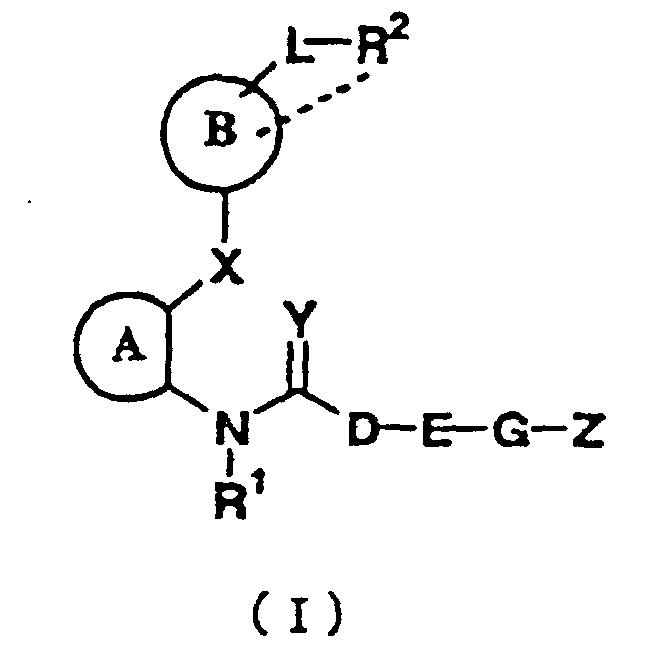 le cycle A représente un cycle benzénique ou pyridinique, portant éventuellement 1 à 4 substituants choisis parmi les atomes d'halogène et les groupes alkyle en C1-6, halogénoalkyle en C1-6, phényle, benzyle, alcoxy en C1-6, halogénoalcoxy en C1-6, phénoxy, aralcoxy en C7-14, formyloxy, (alkyle en C1-6)carbonyloxy, alkylthio en C1-6, halogénoalkylthio en C1-6, hydroxy, mercapto, cyano, nitro, carboxyle, formyle, (alkyle en C1-6)car-bonyle, benzoyle, (alcoxy en C1-6)carbonyle, phénoxycarbonyle, amino, mono(alkyle en C1-6)amino, di(alkyle en C1-6)amino, formylamino, (al-kyle en C1-6)carbonylamino, carbamyle, thiocarbamyle, mono(alkyle en C1-6)carbamyle, di(alkyle en C1-6)carbamyle, mono(alkyle en C1-6)thio-carbamyle, di(alkyle en C1-6)thiocarbamyle, sulfo, (alkyle en C1-6)sulfo-nyle, benzoyl-alcoxy en C1-6, hydroxy-alcoxy en C1-6, (alcoxy en C1-6)-carbonyl-alcoxy en C1-6, (cycloalkyle en C3-14)alcoxy en C1-6, imidazol-1-yl-alcoxy en C1-6, (aralcoxy en C7-14)carbonyl-alcoxy en C1-6, hydroxy-phényl-alcoxy en C1-6, (aralcoxy en C7-14)carbonyle, mono(alkyle en C1-6)-amino-alcoxy en C1-6, di(alkyle en C1-6)amino-alcoxy en C1-6, mono(al-kyle en C1-6)carbonyloxy et di(alkyle en C1-6)carbonyloxy ;le cycle B représente un cycle benzénique, portant éventuellement un substituant alcoxy en C1-6, ou un cycle de tétrahydroisoquinoléine ou d'isoindoline, constitué avec le groupe représenté par R2, qui y est alors lié ;Z représente un groupe aryle en C6-14, cycloalkyle en C3-10, pipéridyle, thiényle, furyle, pyridyle, thiazolyle, indanyle ou indolyle, qui peut éventuellement porter 1 à 3 substituants choisis parmi les atomes d'halogène, les groupes formyle, halogénoalkyle en C1-6, alcoxy en C1-6, (alkyle en C1-6)carbonyle et pyrrolidinyle, et le substituant oxo ;R1 représentea) un atome d'hydrogène,b) un groupe alkyle en C1-6, alcényle en C2-6, aryle en C6-14 ou aralkyle en C7-14, portant éventuellement un ou des substituant(s) choisi(s) parmi :1) un atome d'halogène,2) un groupe nitro,3) un groupe amino, portant éventuellement un ou deux substituants choisis parmi les groupes (alkyle en C1-6)carbonyle, (aryle en C6-14)carbonyle, alkyle en C1-6, (alcoxy en C1-6)carbonyle, (aralcoxy en C7-14)carbonyle, (alkyle en C1-6)sulfonyle et (aryle en C6-14)sulfonyle,4)i) un groupe alkyle en C1-6, portant éventuellement un substituant hydroxy, (alkyle en C1-6)carbonyle, (aryle en C6-14)carbonyle, carboxyle ou (alcoxy en C1-6)carbonyle,ii) un groupe phényle, portant éventuellement un substituant hydroxy,iii) un groupe benzoyle,iv) ou un groupe hydroxyle, portant éventuellement un substituant mono(alkyle en C1-6)aminocarbonyle ou di(alkyle en C1-6)aminocarbonyle,5) un groupe cycloalkyle en C3-6,6) un groupe phényle, portant éventuellement un substituant hydroxy ou halogénoalkyle en C1-6,7) et un groupe thiényle, furyle, thiazolyle, indanyle, indolyle ou benzyloxycarbonylpipéridyle,c) ou un groupe acyle ;R2 représente un groupe amino sans substituant ;D représente un groupe alkylène en C1-6 ;E représente un groupe de formule -CON(Ra)- où Ra représente un atome d'hydrogène ou un groupe alkyle en C1-6 ;G représente une liaison chimique ou un groupe alkylène en C1-6 ;L représente un groupe alkylène en C1-6 ;X représente un atome d'oxygène ;Y représente une paire d'atomes d'hydrogène, un atome d'oxygène ou un atome de soufre ;et le trait interrompu - - - - signifie que le groupe représenté par R2 peut être lié à un atome du cycle B, et ainsi former un cycle.
- Composé conforme à la revendication 1, dans lequel G représente un groupe alkylène en C1-6.
- Composé conforme à la revendication 1, dans lequel G représente un groupe alkylène en C1-6, et le cycle B ne forme pas avec R2 un hétérocycle azoté.
- Composé conforme à la revendication 1, dans lequel G représente un groupe alkylène en C1-6, Y représente une paire d'atomes d'hydrogène, R1 représente un groupe acyle, et le cycle B ne forme pas avec R2 un hétérocycle azoté.
- Composé conforme à la revendication 1, dans lequel :Z représente un groupe phényle, portant éventuellement un substituant halogéno ;R1 représentea) un groupe alkyle en C1-6 ou aralkyle en C7-14, portant éventuellement un ou des substituant(s) choisi(s) parmi :1) un groupe hydroxyle,2) un groupe phényle,3) un groupe thiényle, furyle, thiazolyle, indanyle, indolyle ou benzyloxycarbonylpipéridyle,4) et un groupe amino, portant éventuellement un substituant (alkyle en C1-6)carbonyle, (aryle en C6-14)carbonyle, (alkyle en C1-6)sulfonyle ou (aryle en C6-14)sulfonyle,b) ou un groupe acyle ;et Y représente une paire d'atomes d'hydrogène.
- Prodrogue comprenant un composé conforme à la revendication 1 ou un sel d'un tel composé.
- Procédé de préparation d'un composé de formule (I-a) :dans laquelle tous les symboles ont les mêmes significations que celles indiquées dans la revendication 1,
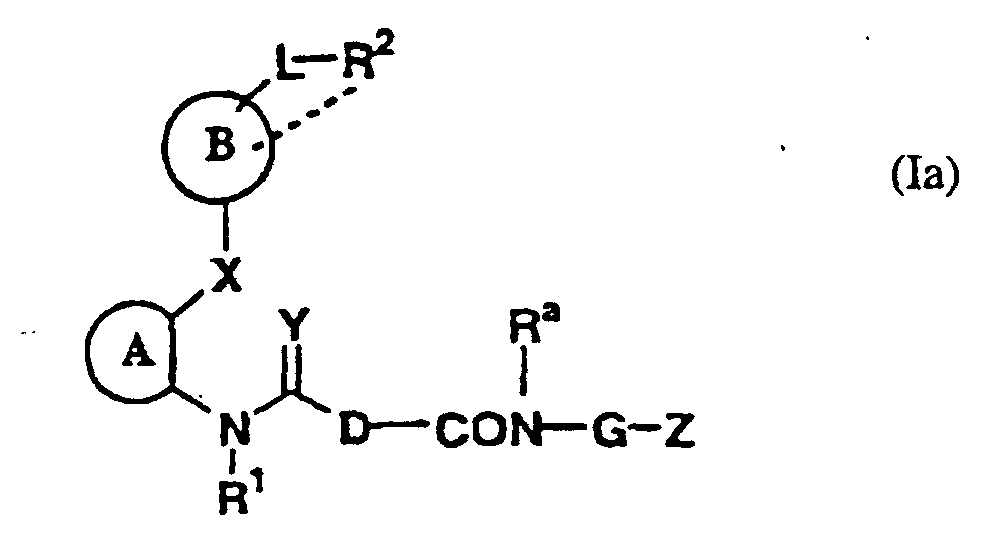
ou d'un sel d'un tel composé, lequel procédé comporte le fait de faire réagir un composé de formule (IIa) :dans laquelle R2a représente un groupe amino, éventuellement protégé, et les autres symboles ont les mêmes significations que celles indiquées dans la revendication 1,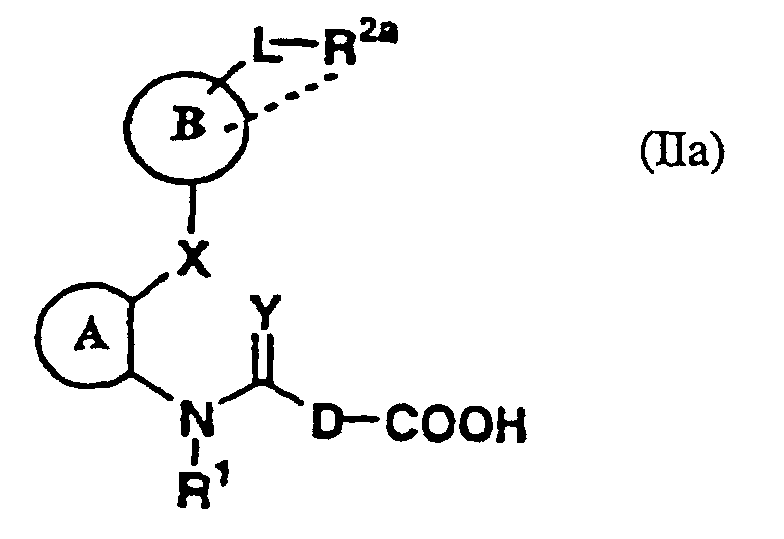
ou un dérivé réactif ou un sel d'un tel composé, avec un composé de formule (III) :dans laquelle tous les symboles ont les mêmes significations que celles indiquées dans la revendication 1,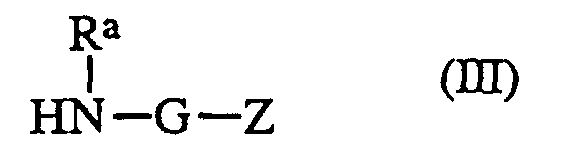
ou avec un sel d'un tel composé, de manière à obtenir un composé de formule (Ia-a) :dans laquelle tous les symboles ont les mêmes significations que celles indiquées ci-dessus,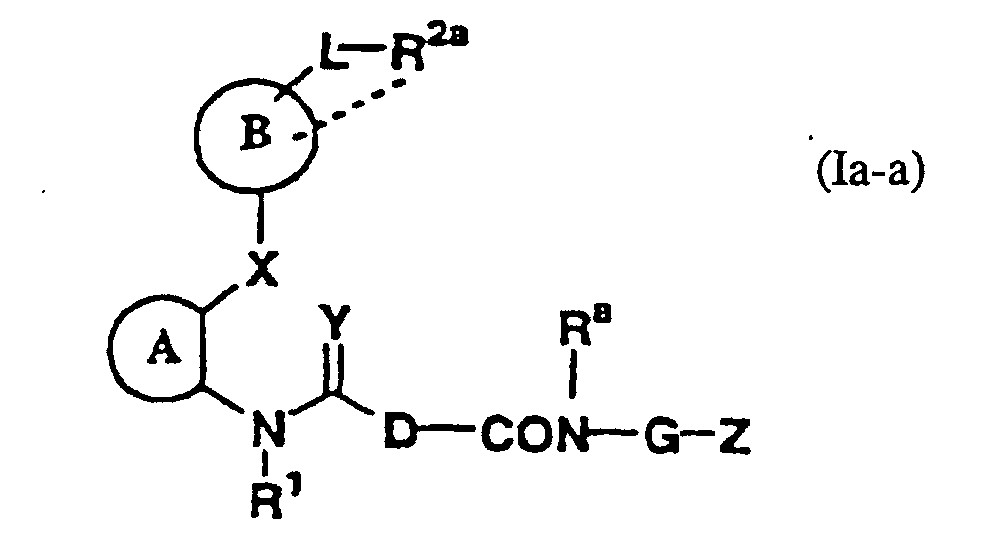
ou un sel d'un tel composé, et le cas échéant, le fait de déprotéger ensuite ce composé ou son sel. - Composition pharmaceutique comprenant un composé conforme à la revendication 1 ou un sel d'un tel composé.
- Composition pharmaceutique conforme à la revendication 8, qui est un agent de régulation de la fonction des récepteurs de somatostatine.
- Composition pharmaceutique conforme à la revendication 9, dans laquelle l'agent de régulation de la fonction des récepteurs de somatostatine est un agoniste des récepteurs de somatostatine.
- Composition pharmaceutique conforme à la revendication 8, qui est destinée à la prévention ou au traitement du diabète, de l'obésité, des complications du diabète, ou des diarrhées rebelles.
- Emploi d'un composé de formule (I), définie dans la revendication 1, ou d'un sel d'un tel composé; pour produire une composition pharmaceutique servant à réguler la fonction des récepteurs de somatostatine.
Applications Claiming Priority (3)
| Application Number | Priority Date | Filing Date | Title |
|---|---|---|---|
| JP29894098 | 1998-10-20 | ||
| JP29894098 | 1998-10-20 | ||
| PCT/JP1999/005755 WO2000023420A1 (fr) | 1998-10-20 | 1999-10-19 | Derives d'amine aromatique, procede de preparation de ces derives et agents les contenant |
Publications (3)
| Publication Number | Publication Date |
|---|---|
| EP1123918A1 EP1123918A1 (fr) | 2001-08-16 |
| EP1123918A4 EP1123918A4 (fr) | 2002-08-07 |
| EP1123918B1 true EP1123918B1 (fr) | 2005-03-09 |
Family
ID=17866164
Family Applications (1)
| Application Number | Title | Priority Date | Filing Date |
|---|---|---|---|
| EP99947962A Expired - Lifetime EP1123918B1 (fr) | 1998-10-20 | 1999-10-19 | Derives d'amine aromatique, procede de preparation de ces derives et agents les contenant |
Country Status (7)
| Country | Link |
|---|---|
| US (1) | US7160887B1 (fr) |
| EP (1) | EP1123918B1 (fr) |
| AT (1) | ATE290524T1 (fr) |
| AU (1) | AU6124699A (fr) |
| CA (1) | CA2348159A1 (fr) |
| DE (1) | DE69924132T2 (fr) |
| WO (1) | WO2000023420A1 (fr) |
Families Citing this family (19)
| Publication number | Priority date | Publication date | Assignee | Title |
|---|---|---|---|---|
| US6664291B2 (en) | 2000-03-31 | 2003-12-16 | Pfizer, Inc. | Malonamic acids and derivatives thereof as thyroid receptor ligands |
| SE0103325D0 (sv) | 2001-10-04 | 2001-10-04 | Astrazeneca Ab | Novel compounds |
| FI20031454A0 (fi) * | 2003-10-06 | 2003-10-06 | Juvantia Pharma Ltd Oy | Selektiivisiä somatostatiinireseptori 1 ja/tai 4 -agonisteja ja -antagonisteja |
| JP5231707B2 (ja) * | 2004-03-31 | 2013-07-10 | 大日本印刷株式会社 | フェノール置換環状アミンの新規アシル化法 |
| AU2005245389A1 (en) | 2004-05-12 | 2005-12-01 | Bristol-Myers Squibb Company | Urea antagonists of P2Y1 receptor useful in the treatment of thrombotic conditions |
| US7550499B2 (en) | 2004-05-12 | 2009-06-23 | Bristol-Myers Squibb Company | Urea antagonists of P2Y1 receptor useful in the treatment of thrombotic conditions |
| MX2007008434A (es) | 2005-01-19 | 2007-07-25 | Squibb Bristol Myers Co | Derivados de 2-fenoxi-n-(1,3,4-tiadizol-2il)piridin-3-amina y compuestos relacionados como inhibidores del receptor p2y1 para el tratamiento de trastornos tromboembolicos. |
| WO2007002584A1 (fr) | 2005-06-27 | 2007-01-04 | Bristol-Myers Squibb Company | Mimetiques lineaires de l’uree antagonistes du recepteur p2y1, utilises dans le traitement des troubles thrombotiques |
| ATE485269T1 (de) | 2005-06-27 | 2010-11-15 | Bristol Myers Squibb Co | C-verknüpfte zyklische antagonisten des p2y1- rezeptors mit eignung bei der behandlung thrombotischer leiden |
| AR056867A1 (es) | 2005-06-27 | 2007-10-31 | Bristol Myers Squibb Co | Antagonistas heterociclicos n- enlazados del receptor de p2y1 utiles en el tratamiento de condiciones tromboticas. composiciones farmaceuticas. |
| WO2007002634A1 (fr) | 2005-06-27 | 2007-01-04 | Bristol-Myers Squibb Company | Antagonistes carbocycliques et heherocycliques du recepteur p2y1, utiles pour traiter des etats pathologiques thrombotiques |
| US7960569B2 (en) | 2006-10-17 | 2011-06-14 | Bristol-Myers Squibb Company | Indole antagonists of P2Y1 receptor useful in the treatment of thrombotic conditions |
| GB0722779D0 (en) | 2007-11-20 | 2008-01-02 | Sterix Ltd | Compound |
| EP2744807A4 (fr) | 2011-08-15 | 2015-03-04 | Intermune Inc | Antagonistes des récepteurs d'acide lysophosphatidique |
| RU2764243C2 (ru) | 2017-09-22 | 2022-01-14 | ДЖУБИЛАНТ ЭПИПЭД ЭлЭлСи | Гетероциклические соединения в качестве ингибиторов PAD |
| CN111225915B (zh) | 2017-10-18 | 2023-03-07 | 朱比兰特埃皮帕德有限公司 | 作为pad抑制剂的咪唑并吡啶化合物 |
| US11629135B2 (en) | 2017-11-06 | 2023-04-18 | Jubilant Prodell Llc | Pyrimidine derivatives as inhibitors of PD1/PD-L1 activation |
| RS65576B1 (sr) | 2017-11-24 | 2024-06-28 | Jubilant Episcribe Llc | Heterociklična jedinjenja kao inhibitori prmt5 |
| CN112105610B (zh) | 2018-03-13 | 2024-01-26 | 朱比连特普罗德尔有限责任公司 | 作为pd1/pd-l1相互作用/活化的抑制剂的双环化合物 |
Family Cites Families (9)
| Publication number | Priority date | Publication date | Assignee | Title |
|---|---|---|---|---|
| CA1134818A (fr) | 1977-12-23 | 1982-11-02 | Philip T.S. Lau | Copulants et emulsions, et elements et procedes photographiques utilisant ceux-ci |
| US4668757A (en) * | 1984-03-26 | 1987-05-26 | Gus Nichols | Use of aromatic amines for setting epoxide resins |
| JPH0680458B2 (ja) | 1985-04-05 | 1994-10-12 | 富士写真フイルム株式会社 | ハロゲン化銀カラ−写真感光材料 |
| JPH0799427B2 (ja) | 1986-01-28 | 1995-10-25 | コニカ株式会社 | ハロゲン化銀写真感光材料 |
| AU2764797A (en) | 1996-05-14 | 1997-12-05 | Novo Nordisk A/S | Somatostatin agonists and antagonists |
| JP2001502712A (ja) | 1996-10-31 | 2001-02-27 | ノボ ノルディスク アクティーゼルスカブ | 束縛されたソマトスタチン・アゴニスト及びアンタゴニスト |
| JPH10148905A (ja) | 1996-11-21 | 1998-06-02 | Konica Corp | ハロゲン化銀写真感光材料 |
| US6057338A (en) | 1997-04-04 | 2000-05-02 | Merck & Co., Inc. | Somatostatin agonists |
| ATE309993T1 (de) | 1997-04-21 | 2005-12-15 | Takeda Pharmaceutical | 4,1-benzoxazepine, ihre analoga, und ihre verwendung als somatostatin-agonisten |
-
1999
- 1999-10-19 EP EP99947962A patent/EP1123918B1/fr not_active Expired - Lifetime
- 1999-10-19 AT AT99947962T patent/ATE290524T1/de not_active IP Right Cessation
- 1999-10-19 CA CA002348159A patent/CA2348159A1/fr not_active Abandoned
- 1999-10-19 WO PCT/JP1999/005755 patent/WO2000023420A1/fr not_active Ceased
- 1999-10-19 AU AU61246/99A patent/AU6124699A/en not_active Abandoned
- 1999-10-19 US US09/807,081 patent/US7160887B1/en not_active Expired - Fee Related
- 1999-10-19 DE DE69924132T patent/DE69924132T2/de not_active Expired - Lifetime
Also Published As
| Publication number | Publication date |
|---|---|
| ATE290524T1 (de) | 2005-03-15 |
| DE69924132D1 (de) | 2005-04-14 |
| EP1123918A1 (fr) | 2001-08-16 |
| AU6124699A (en) | 2000-05-08 |
| EP1123918A4 (fr) | 2002-08-07 |
| CA2348159A1 (fr) | 2000-04-27 |
| DE69924132T2 (de) | 2006-04-06 |
| US7160887B1 (en) | 2007-01-09 |
| WO2000023420A1 (fr) | 2000-04-27 |
Similar Documents
| Publication | Publication Date | Title |
|---|---|---|
| EP1123918A1 (fr) | Derives d'amine aromatique, procede de preparation de ces derives et agents les contenant | |
| US5455258A (en) | Arylsulfonamido-substituted hydroxamic acids | |
| EP1214292B1 (fr) | Derives de tyrosine | |
| US5236921A (en) | Arylalkylamines, process for preparing them and pharmaceutical compositions containing them | |
| US20060264415A1 (en) | Inhibitors of histone deacetylase | |
| US20100144732A1 (en) | Pyrimidine kinase inhibitors | |
| EP1219294A1 (fr) | Antagonistes de l'hormone de concentration de la melanine | |
| CZ296915B6 (cs) | Slouceniny inhibující proteázy retroviru | |
| KR20030017548A (ko) | 신규 화합물 | |
| IL114171A (en) | Arylsulfonamido- substituted hydroxamic acids parmaceutical compositions containing them and process for their preparation | |
| US5475106A (en) | N-phenylglycinamide CCK antagonists and pharmaceutical compositions containing them | |
| EP2334637B1 (fr) | Nouveaux bloquants du canal potassique | |
| BG65177B1 (bg) | Инхибиращи клетъчната адхезия противовъзпалителнии имуноподтискащи съединения, използването им, фармацевтичен състав и метод за получаването им | |
| EP2148865A1 (fr) | Inhibiteurs pyrazolés de la signalisation des wnt | |
| DE69832376T2 (de) | 4,1-benzoxazepine, ihre analoga, und ihre verwendung als somatostatin-agonisten | |
| HU226395B1 (en) | Acylaminoalkenylene-amide derivatives as nk1 and nk2 antagonists, pharmaceutical compositions containing them and process for producing them | |
| US7015323B2 (en) | Thiocarbamate inhibitors of alpha-4 integrins | |
| US20030149027A1 (en) | 1,5-benzodiazepine compounds, their production and use | |
| KR101099328B1 (ko) | GlyT-1용 억제제로서의 이-방향족 치환된 아마이드 | |
| JP2000191615A (ja) | 芳香族アミン誘導体、その製造法および剤 | |
| JP2004536788A (ja) | Mmp阻害剤としての使用のためのアザシクロアルキル置換酢酸誘導体 | |
| JPWO2000023420A1 (ja) | 芳香族アミン誘導体、その製造法および剤 | |
| JP2000191648A (ja) | 縮合環化合物、その製造法および剤 | |
| JPWO2000023428A1 (ja) | 1,5−ベンゾジアゼピン化合物、その製法及び医薬 | |
| JPH08231516A (ja) | ジアザ環式化合物 |
Legal Events
| Date | Code | Title | Description |
|---|---|---|---|
| PUAI | Public reference made under article 153(3) epc to a published international application that has entered the european phase |
Free format text: ORIGINAL CODE: 0009012 |
|
| 17P | Request for examination filed |
Effective date: 20010516 |
|
| AK | Designated contracting states |
Kind code of ref document: A1 Designated state(s): AT BE CH CY DE DK ES FI FR GB GR IE IT LI LU MC NL PT SE |
|
| AX | Request for extension of the european patent |
Free format text: AL;LT;LV;MK;RO;SI |
|
| A4 | Supplementary search report drawn up and despatched |
Effective date: 20020626 |
|
| AK | Designated contracting states |
Kind code of ref document: A4 Designated state(s): AT BE CH CY DE DK ES FI FR GB GR IE IT LI LU MC NL PT SE |
|
| 17Q | First examination report despatched |
Effective date: 20021021 |
|
| GRAP | Despatch of communication of intention to grant a patent |
Free format text: ORIGINAL CODE: EPIDOSNIGR1 |
|
| GRAS | Grant fee paid |
Free format text: ORIGINAL CODE: EPIDOSNIGR3 |
|
| GRAA | (expected) grant |
Free format text: ORIGINAL CODE: 0009210 |
|
| RAP1 | Party data changed (applicant data changed or rights of an application transferred) |
Owner name: TAKEDA PHARMACEUTICAL COMPANY LIMITED |
|
| AK | Designated contracting states |
Kind code of ref document: B1 Designated state(s): AT BE CH CY DE DK ES FI FR GB GR IE IT LI LU MC NL PT SE |
|
| PG25 | Lapsed in a contracting state [announced via postgrant information from national office to epo] |
Ref country code: NL Free format text: LAPSE BECAUSE OF FAILURE TO SUBMIT A TRANSLATION OF THE DESCRIPTION OR TO PAY THE FEE WITHIN THE PRESCRIBED TIME-LIMIT Effective date: 20050309 Ref country code: IT Free format text: LAPSE BECAUSE OF FAILURE TO SUBMIT A TRANSLATION OF THE DESCRIPTION OR TO PAY THE FEE WITHIN THE PRESCRIBED TIME-LIMIT;WARNING: LAPSES OF ITALIAN PATENTS WITH EFFECTIVE DATE BEFORE 2007 MAY HAVE OCCURRED AT ANY TIME BEFORE 2007. THE CORRECT EFFECTIVE DATE MAY BE DIFFERENT FROM THE ONE RECORDED. Effective date: 20050309 Ref country code: FI Free format text: LAPSE BECAUSE OF FAILURE TO SUBMIT A TRANSLATION OF THE DESCRIPTION OR TO PAY THE FEE WITHIN THE PRESCRIBED TIME-LIMIT Effective date: 20050309 Ref country code: BE Free format text: LAPSE BECAUSE OF FAILURE TO SUBMIT A TRANSLATION OF THE DESCRIPTION OR TO PAY THE FEE WITHIN THE PRESCRIBED TIME-LIMIT Effective date: 20050309 Ref country code: AT Free format text: LAPSE BECAUSE OF FAILURE TO SUBMIT A TRANSLATION OF THE DESCRIPTION OR TO PAY THE FEE WITHIN THE PRESCRIBED TIME-LIMIT Effective date: 20050309 |
|
| REG | Reference to a national code |
Ref country code: GB Ref legal event code: FG4D |
|
| REG | Reference to a national code |
Ref country code: CH Ref legal event code: EP |
|
| REG | Reference to a national code |
Ref country code: IE Ref legal event code: FG4D |
|
| REF | Corresponds to: |
Ref document number: 69924132 Country of ref document: DE Date of ref document: 20050414 Kind code of ref document: P |
|
| REG | Reference to a national code |
Ref country code: CH Ref legal event code: NV Representative=s name: A. BRAUN, BRAUN, HERITIER, ESCHMANN AG PATENTANWAE |
|
| PG25 | Lapsed in a contracting state [announced via postgrant information from national office to epo] |
Ref country code: GR Free format text: LAPSE BECAUSE OF FAILURE TO SUBMIT A TRANSLATION OF THE DESCRIPTION OR TO PAY THE FEE WITHIN THE PRESCRIBED TIME-LIMIT Effective date: 20050609 Ref country code: DK Free format text: LAPSE BECAUSE OF FAILURE TO SUBMIT A TRANSLATION OF THE DESCRIPTION OR TO PAY THE FEE WITHIN THE PRESCRIBED TIME-LIMIT Effective date: 20050609 |
|
| PG25 | Lapsed in a contracting state [announced via postgrant information from national office to epo] |
Ref country code: ES Free format text: LAPSE BECAUSE OF FAILURE TO SUBMIT A TRANSLATION OF THE DESCRIPTION OR TO PAY THE FEE WITHIN THE PRESCRIBED TIME-LIMIT Effective date: 20050620 |
|
| NLV1 | Nl: lapsed or annulled due to failure to fulfill the requirements of art. 29p and 29m of the patents act | ||
| PG25 | Lapsed in a contracting state [announced via postgrant information from national office to epo] |
Ref country code: PT Free format text: LAPSE BECAUSE OF FAILURE TO SUBMIT A TRANSLATION OF THE DESCRIPTION OR TO PAY THE FEE WITHIN THE PRESCRIBED TIME-LIMIT Effective date: 20050907 |
|
| PG25 | Lapsed in a contracting state [announced via postgrant information from national office to epo] |
Ref country code: IE Free format text: LAPSE BECAUSE OF NON-PAYMENT OF DUE FEES Effective date: 20051019 Ref country code: CY Free format text: LAPSE BECAUSE OF FAILURE TO SUBMIT A TRANSLATION OF THE DESCRIPTION OR TO PAY THE FEE WITHIN THE PRESCRIBED TIME-LIMIT Effective date: 20051019 |
|
| PG25 | Lapsed in a contracting state [announced via postgrant information from national office to epo] |
Ref country code: MC Free format text: LAPSE BECAUSE OF NON-PAYMENT OF DUE FEES Effective date: 20051031 Ref country code: LU Free format text: LAPSE BECAUSE OF NON-PAYMENT OF DUE FEES Effective date: 20051031 |
|
| PLBE | No opposition filed within time limit |
Free format text: ORIGINAL CODE: 0009261 |
|
| STAA | Information on the status of an ep patent application or granted ep patent |
Free format text: STATUS: NO OPPOSITION FILED WITHIN TIME LIMIT |
|
| ET | Fr: translation filed | ||
| 26N | No opposition filed |
Effective date: 20051212 |
|
| REG | Reference to a national code |
Ref country code: IE Ref legal event code: MM4A |
|
| PG25 | Lapsed in a contracting state [announced via postgrant information from national office to epo] |
Ref country code: SE Free format text: LAPSE BECAUSE OF FAILURE TO SUBMIT A TRANSLATION OF THE DESCRIPTION OR TO PAY THE FEE WITHIN THE PRESCRIBED TIME-LIMIT Effective date: 20050609 |
|
| REG | Reference to a national code |
Ref country code: CH Ref legal event code: PFA Owner name: TAKEDA PHARMACEUTICAL COMPANY LIMITED Free format text: TAKEDA PHARMACEUTICAL COMPANY LIMITED#1-1, DOSHOMACHI 4-CHOME, CHUO-KU#OSAKA (JP) -TRANSFER TO- TAKEDA PHARMACEUTICAL COMPANY LIMITED#1-1, DOSHOMACHI 4-CHOME, CHUO-KU#OSAKA (JP) |
|
| PGFP | Annual fee paid to national office [announced via postgrant information from national office to epo] |
Ref country code: DE Payment date: 20101013 Year of fee payment: 12 |
|
| PGFP | Annual fee paid to national office [announced via postgrant information from national office to epo] |
Ref country code: GB Payment date: 20101013 Year of fee payment: 12 |
|
| PGFP | Annual fee paid to national office [announced via postgrant information from national office to epo] |
Ref country code: FR Payment date: 20111103 Year of fee payment: 13 Ref country code: CH Payment date: 20111012 Year of fee payment: 13 |
|
| REG | Reference to a national code |
Ref country code: CH Ref legal event code: PL |
|
| GBPC | Gb: european patent ceased through non-payment of renewal fee |
Effective date: 20121019 |
|
| REG | Reference to a national code |
Ref country code: FR Ref legal event code: ST Effective date: 20130628 |
|
| PG25 | Lapsed in a contracting state [announced via postgrant information from national office to epo] |
Ref country code: GB Free format text: LAPSE BECAUSE OF NON-PAYMENT OF DUE FEES Effective date: 20121019 Ref country code: DE Free format text: LAPSE BECAUSE OF NON-PAYMENT OF DUE FEES Effective date: 20130501 Ref country code: CH Free format text: LAPSE BECAUSE OF NON-PAYMENT OF DUE FEES Effective date: 20121031 Ref country code: LI Free format text: LAPSE BECAUSE OF NON-PAYMENT OF DUE FEES Effective date: 20121031 |
|
| REG | Reference to a national code |
Ref country code: DE Ref legal event code: R119 Ref document number: 69924132 Country of ref document: DE Effective date: 20130501 |
|
| PG25 | Lapsed in a contracting state [announced via postgrant information from national office to epo] |
Ref country code: FR Free format text: LAPSE BECAUSE OF NON-PAYMENT OF DUE FEES Effective date: 20121031 |