EP1124590B1 - Modification enzymatique de la fibrine destinee au genie tissulaire - Google Patents
Modification enzymatique de la fibrine destinee au genie tissulaire Download PDFInfo
- Publication number
- EP1124590B1 EP1124590B1 EP98919729A EP98919729A EP1124590B1 EP 1124590 B1 EP1124590 B1 EP 1124590B1 EP 98919729 A EP98919729 A EP 98919729A EP 98919729 A EP98919729 A EP 98919729A EP 1124590 B1 EP1124590 B1 EP 1124590B1
- Authority
- EP
- European Patent Office
- Prior art keywords
- seq
- peptide
- domain
- composition
- factor
- Prior art date
- Legal status (The legal status is an assumption and is not a legal conclusion. Google has not performed a legal analysis and makes no representation as to the accuracy of the status listed.)
- Expired - Lifetime
Links
Images



Classifications
-
- A—HUMAN NECESSITIES
- A61—MEDICAL OR VETERINARY SCIENCE; HYGIENE
- A61L—METHODS OR APPARATUS FOR STERILISING MATERIALS OR OBJECTS IN GENERAL; DISINFECTION, STERILISATION OR DEODORISATION OF AIR; CHEMICAL ASPECTS OF BANDAGES, DRESSINGS, ABSORBENT PADS OR SURGICAL ARTICLES; MATERIALS FOR BANDAGES, DRESSINGS, ABSORBENT PADS OR SURGICAL ARTICLES
- A61L31/00—Materials for other surgical articles, e.g. stents, stent-grafts, shunts, surgical drapes, guide wires, materials for adhesion prevention, occluding devices, surgical gloves, tissue fixation devices
- A61L31/04—Macromolecular materials
- A61L31/043—Proteins; Polypeptides; Degradation products thereof
- A61L31/046—Fibrin; Fibrinogen
-
- A—HUMAN NECESSITIES
- A61—MEDICAL OR VETERINARY SCIENCE; HYGIENE
- A61L—METHODS OR APPARATUS FOR STERILISING MATERIALS OR OBJECTS IN GENERAL; DISINFECTION, STERILISATION OR DEODORISATION OF AIR; CHEMICAL ASPECTS OF BANDAGES, DRESSINGS, ABSORBENT PADS OR SURGICAL ARTICLES; MATERIALS FOR BANDAGES, DRESSINGS, ABSORBENT PADS OR SURGICAL ARTICLES
- A61L24/00—Surgical adhesives or cements; Adhesives for colostomy devices
- A61L24/04—Surgical adhesives or cements; Adhesives for colostomy devices containing macromolecular materials
- A61L24/10—Polypeptides; Proteins
- A61L24/106—Fibrin; Fibrinogen
-
- A—HUMAN NECESSITIES
- A61—MEDICAL OR VETERINARY SCIENCE; HYGIENE
- A61L—METHODS OR APPARATUS FOR STERILISING MATERIALS OR OBJECTS IN GENERAL; DISINFECTION, STERILISATION OR DEODORISATION OF AIR; CHEMICAL ASPECTS OF BANDAGES, DRESSINGS, ABSORBENT PADS OR SURGICAL ARTICLES; MATERIALS FOR BANDAGES, DRESSINGS, ABSORBENT PADS OR SURGICAL ARTICLES
- A61L27/00—Materials for grafts or prostheses or for coating grafts or prostheses
- A61L27/14—Macromolecular materials
- A61L27/22—Polypeptides or derivatives thereof, e.g. degradation products
- A61L27/225—Fibrin; Fibrinogen
-
- A—HUMAN NECESSITIES
- A61—MEDICAL OR VETERINARY SCIENCE; HYGIENE
- A61L—METHODS OR APPARATUS FOR STERILISING MATERIALS OR OBJECTS IN GENERAL; DISINFECTION, STERILISATION OR DEODORISATION OF AIR; CHEMICAL ASPECTS OF BANDAGES, DRESSINGS, ABSORBENT PADS OR SURGICAL ARTICLES; MATERIALS FOR BANDAGES, DRESSINGS, ABSORBENT PADS OR SURGICAL ARTICLES
- A61L27/00—Materials for grafts or prostheses or for coating grafts or prostheses
- A61L27/14—Macromolecular materials
- A61L27/22—Polypeptides or derivatives thereof, e.g. degradation products
- A61L27/227—Other specific proteins or polypeptides not covered by A61L27/222, A61L27/225 or A61L27/24
-
- C—CHEMISTRY; METALLURGY
- C12—BIOCHEMISTRY; BEER; SPIRITS; WINE; VINEGAR; MICROBIOLOGY; ENZYMOLOGY; MUTATION OR GENETIC ENGINEERING
- C12N—MICROORGANISMS OR ENZYMES; COMPOSITIONS THEREOF; PROPAGATING, PRESERVING, OR MAINTAINING MICROORGANISMS; MUTATION OR GENETIC ENGINEERING; CULTURE MEDIA
- C12N5/00—Undifferentiated human, animal or plant cells, e.g. cell lines; Tissues; Cultivation or maintenance thereof; Culture media therefor
- C12N5/0068—General culture methods using substrates
-
- A—HUMAN NECESSITIES
- A61—MEDICAL OR VETERINARY SCIENCE; HYGIENE
- A61F—FILTERS IMPLANTABLE INTO BLOOD VESSELS; PROSTHESES; DEVICES PROVIDING PATENCY TO, OR PREVENTING COLLAPSING OF, TUBULAR STRUCTURES OF THE BODY, e.g. STENTS; ORTHOPAEDIC, NURSING OR CONTRACEPTIVE DEVICES; FOMENTATION; TREATMENT OR PROTECTION OF EYES OR EARS; BANDAGES, DRESSINGS OR ABSORBENT PADS; FIRST-AID KITS
- A61F2310/00—Prostheses classified in A61F2/28 or A61F2/30 - A61F2/44 being constructed from or coated with a particular material
- A61F2310/00005—The prosthesis being constructed from a particular material
- A61F2310/00365—Proteins; Polypeptides; Degradation products thereof
- A61F2310/00377—Fibrin
-
- C—CHEMISTRY; METALLURGY
- C07—ORGANIC CHEMISTRY
- C07K—PEPTIDES
- C07K2319/00—Fusion polypeptide
-
- C—CHEMISTRY; METALLURGY
- C12—BIOCHEMISTRY; BEER; SPIRITS; WINE; VINEGAR; MICROBIOLOGY; ENZYMOLOGY; MUTATION OR GENETIC ENGINEERING
- C12N—MICROORGANISMS OR ENZYMES; COMPOSITIONS THEREOF; PROPAGATING, PRESERVING, OR MAINTAINING MICROORGANISMS; MUTATION OR GENETIC ENGINEERING; CULTURE MEDIA
- C12N2533/00—Supports or coatings for cell culture, characterised by material
- C12N2533/50—Proteins
- C12N2533/56—Fibrin; Thrombin
Definitions
- Fibrin is a natural gel with several biomedical applications. Fibrin gel has been used as a sealant because of its ability to bind to many tissues and its natural role in wound healing. Some specific applications include use as a sealant for vascular graft attachment, heart valve attachment, bone positioning in fractures and tendon repair ( Sierra. D.H., Journal of Biomaterials Applications, 7:309-352,1993 ). Additionally, these gels have been used as drug delivery devices, and for neuronal regeneration ( Williams, et al., Journal of Comparative Neurobiology, 264:284-290,1987 ).
- fibrinogen The process by which fibrinogen is polymerized into fibrin has also been characterized.
- a protease cleaves the dimeric fibrinogen molecule at the two symmetric sites.
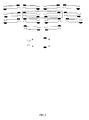
- proteases There are several possible proteases that can cleave fibrinogen, including thrombin, reptilase, and protease III, and each one severs the protein at a different site ( Francis, et al., Blood Cells, 19:291-307. 1993 ). Each of these cleavage sites have been located ( FIG 1 ).
- a self-polymerization step occurs in which the fibrinogen monomers come together and form a non-covalently crosslinked polymer gel (Sierra. 1993).
- FIG 2 A schematic representation of the fibrin polymer is shown in FIG 2 .
- This self-assembly happens because binding sites become exposed after protease cleavage occurs. Once they are exposed, these binding sites in the center of the molecule can bind to other sites on the fibrinogen chains, these sites being present at the ends of the peptide chains ( Stryer, L. In Biochemistry, W.H. Freeman & Company, NY, 1975 ). In this manner, a polymer network is formed.
- Factor XIIIa a transglutaminase activated from factor XIII by thrombin proteolysis, may then covalently cross-link the polymer network.
- Other transglutaminases exist and may also be involved in covalent crosslinking and grafting to the fibrin network.
- ⁇ 2-plasmin inhibitor Aoki, N., Progress in Cardiovascular Disease, 21:267-286, 1979 . This molecule acts by crosslinking to the ⁇ chain of fibrin through the action of factor XIIIa ( Sakata, et al., Journal of Clinical Investigation, 65:290-297, 1980 ). By attaching itself to the gel, a high concentration of inhibitor can be localized to the gel.
- the inhibitor then acts by preventing the binding of plasminogen to fibrin ( Aoki, et al., Thrombosis and Haemostasis, 39:22-31, 1978 ) and inactivating plasmin (Aoki, 1979).
- the ⁇ -2 plasmin inhibitor contains a glutamine substrate. The exact sequence has been identified as NQEQVSPL (SEQ ID NO: 15), with the first glutamine being the active amino acid for crosslinking.
- the components required for making fibrin gels can be obtained in two ways.
- One method is to cryoprecipitate the fibrinogen from plasma. In this process, factor XIII precipitates with the fibrinogen, so it is already present.
- the proteases are purified from plasma using similar methods.
- Another technique is to make recombinant forms of these proteins either in culture or with transgene animals. The advantage of this is that the purity is much higher, and the concentrations of each of these components can be controlled.
- Extracellular matrix proteins provide a host of bioactive signals to the cell. This dense network is required to support the cells, and many proteins in the matrix have been shown to control cell adhesion, spreading, migration and differentiation ( Carey, Annual Review of Physiology, 53:161-177, 1991 ). Some of the specific proteins that have shown to be particularly active include laminin, vitronectin, fibronectin, fibrin, fibrinogen and collagen ( Lander, Journal of Trends in Neurological Science, 12:189-195, 1989 ).
- laminin plays a vital role in the development and regeneration of nerves in vivo and nerve cells in vitro ( Williams, Neurochemical Research, 12:851-869, 1987 ; Williams, et al., 1993), as well as in angiogenesis.
- receptor-binding domains include the YIGSR (SEQ ID NO: 1) sequence of the laminin B1 chain ( Graf, et al., Cell, 48:989-996, 1987 ; Kleinman, et al., Archives of Biochemistry and Biophysics, 272:39-45, 1989 ; and Massia, et al., J. of Biol. Chem., 268:8053-8059, 1993 ), LRGDN (SEQ ID NO: 2) of the laminin A chain ( Ignatius, et al., J of Cell Biology, 111:709-720, 1990 ) and PDGSR (SEQ ID NO: 3) of the laminin B1 chain (Kleinman, et al., 1989).
- Integrins are protein heterodimers that consist of ⁇ and ⁇ subunits.
- RGD binds to several ⁇ 1 and ⁇ 3 integrins ( Hynes, R.O., Cell, 69:1-25, 1992 ; Yamada, K.M., J. of Biol. Chem., 266:12809-12812, 1991 ), IKVAV(SEQ ID NO: 4) binds to a 110 kDa receptor ( Tashiro, et al., J. of Biol.
- YIGSR (SEQ ID NO: 1) binds to a 67 kDa receptor (Graf, et al., 1987) and DGEA (SEQ ID NO: 6), a collagen sequence, binds to the ⁇ 2 , ⁇ 1 integrin ( Zutter & Santaro, Amer. J. of Pathology, 137:113-120, 1990 ).
- the receptor for the RNIAEIIKDI (SEQ ID NO: 5) sequence has not been reported.
- WO 95/23611 teaches polymers that take the place of fibrinogen and mimic materials like fibrin. Synthetic polymer compositions are disclosed which crosslink to form a matrix. The polymers achieve the necessary crosslinking by having two or more enzyme reactive sites. It is also disclosed that fibrin glues break easily, may resolve quickly, and when derived from heterologous human and animal sources, may provoke undesirable immune responses in a patient.
- WO 89/00051 discloses peptides that bind to fibrin clots formed by the human or animal body and which are often life threatening.
- the peptides are injected into the body after formation of the fibrin clot for targeting and localization of the clot to enable start of the treatment.
- Subject-matter of the present invention is a composition as claimed in claim 1 and a composition as claimed in claim 8.
- Subject-matter of the present invention is also the use of a composition as claimed in claim 9.
- Subject-matter of the present invention is further an implantable device as claimed in claim 13.
- subject-matter of the present invention is a method for forming a matrix as claimed in claim 20.
- the present invention in a general and overall sense, provides compositions comprising unique fusion proteins and other factors, either synthetically or recombinantly, that contain both a transglutaminase domain such as a Factor XIII, a substrate domain and a bioactive factor, these peptides being covalently attached to a fibrin substrate having a three-dimensional structure capable of supporting cell growth.
- bioactive properties found in extracellular matrix proteins and surface proteins are confined to a structurally favorable matrix that can readily be remodeled by cell-associated proteolytic activity.
- the fibrin is gel matrix.
- a bioactive means is also included to facilitate the incorporation of an exogenous signal into the substrate. In addition to retaining the bioactivity of the exogenous signal molecule, the overall structural characteristics of the fibrin gel is maintained.
- the invention in another aspect provides for compositions comprising a fibrin matrix comprising short peptides covalently crosslinked thereto, as well as bioactive factors.
- the fibrin matrix may be further defined as a fibrin gel.
- the matrix chosen is fibrin, since it provides a suitable three dimensional structure for tissue growth and is the native matrix for tissue healing. It is anticipated that other, fibrin-like matrices may also be similarly prepared.
- the crosslinking was accomplished enzymatically by using the native Factor XIII to attach the exogenous factors to the gels. In order to do this, a sequence that mimics a crosslinking site was incorporated into the peptide so that the enzyme recognized and crosslinked it into the matrix.
- Novel activity will be conferred to these fibrin gels by adding a peptide sequence, or other bioactive factor, which is attached to the crosslinking sequence.
- a peptide sequence or other bioactive factor, which is attached to the crosslinking sequence.
- These materials may be useful in the promotion of healing and tissue regeneration, in the creation of neovascular beds for cell transplantation and in numerous other aspects of tissue engineering.
- the invention in yet other aspects provides compositions created and adapted for these specific uses.
- SEQ ID NO: DESCRIPTION SEQ ID NO: 1 YIGSR - Peptide that binds to a 67 kDa receptor SEQ ID NO: 2 LRGDN - Peptide of the laminin A chain SEQ ID NO: 3 PDGSR - Peptide of the laminin B1 chain SEQ ID NO: 4 IKVAV - Peptide that binds to a 110 kDa receptor SEQ ID NO: 5 RNIAEIIKDI - Peptide of the laminin B2 chain SEQ ID NO: 6 DGEA - A collagen peptide that binds to the ⁇ 2 , ⁇ 1 integrin SEQ ID NO: 7 PRRARV - A sequence from fibronectin is also a heparin sulfate binding sequence SEQ ID NO: 8 YRGD TIGEGQQHHLGG - A peptide with glutamine at the transglutaminase coupling site,
- the invention provides a composition that comprises a protein network and a peptide having an amino acid sequence that comprises a transglutaminase substrate domain and a bioactive factor (e.g., peptide, protein, or fragment thereof) is provided.
- the peptide is covalently or at least substantially covalently bound to the protein network.
- the protein network is fibrin or a fibrin-like molecule.
- the transglutaminase substrate domain is a factor XIIIa substrate domain.
- This factor XIIIa substrate domain may be further defined as comprising an amino acid sequence SEQ ID NO: 12, SEQ ID NO: 13, SEQ ID NO: 14, SEQ ID NO: 15, a fragment thereof, a combination thereof, or a bioactive fragment of said combination.
- Some embodiments may be defined as comprising a bioactive factor that comprises an amino acid sequence of SEQ ID NO: 1, SEQ ID NO: 2, SEQ ID NO: 3, SEQ ID NO: 4, SEQ ID NO: 5; SEQ ID NO: 6, a fragment thereof, a combination thereof, or a bioactive fragment of said combination.
- the invention provides an implantable device having at least one surface or portion of at least one surface that comprises the composition of any one of the above compositions described herein.
- the implantable device may be fashioned as an artificial joint device, such as a knee replacement.
- the invention may also take the form of a porous vascular graft, wherein at least one region or a portion of at least one region of the porous vascular graft comprises a porous wall that includes the composition of the protein network and covalently attached peptide/protein described herein.
- the invention as a device may be further defined in other embodiments as a scaffold for skin, bone, nerve or other cell growth, comprising a surface that includes at least one region or area that comprises the composition of the protein matrix and covalently, attached peptide described herein.
- the invention provides for a surgical sealant or adhesive comprising a surface that includes the composition of the peptide matrix and covalently attached peptide on at least one region of the surface.
- the invention further provides methods for promoting cell growth or tissue regeneration.
- This method comprises in some embodiments, covalently attaching or producing a covalently attached bioactive complex molecule comprising a bioactive factor and a transglutaminase substrate, covalently coupling the bioactive complex molecule to a peptide network capable of having covalently attached thereto the bioactive factor or a fragment thereof, to provide a treated peptide substrate; and exposing said treated peptide substrate to a composition comprising cells or tissue to promote cell growth or tissue regeneration.
- This method may be used in conjunction with a variety of different cell types and tissue types.
- such cell types include nerve cells, skin cells, and bone cells.
- the peptide network may be further defined as a protein network, such as a fibrin network.
- the transglutaminase substrate may be further defined as a factor XIII a substrate, while the transglutaminase may be further defined as factor XIIIa.
- the factor XII a substrate may be further defined as having an amino acid sequence of SEQ ID NO. 12, SEQ ID NO. 13, SEQ ID NO. 14, SEQ ID NO. 15, a fragment thereof, a combination thereof, or a bioactive peptide fragment of said composition.
- the peptide may, in some embodiments, be further defined as comprising an amino acid sequence of SEQ ID NO.1, SEQ ID NO. 2, SEQ ID NO. 3, SEQ ID NO.4, SEQ ID NO. 5, SEQ ID NO. 6, a fragment thereof, a combination thereof or a bioactive peptide fragment thereof.
- the invention in yet another aspect may be defined as a composition comprising a biosupportive matrix material.
- This material in some aspects, comprises a peptide network and a bioactive factor, wherein said bioactive factor is covalently attached to the peptide substrate.
- This peptide substrate may be further defined as a protein network.
- the bioactive factor is covalently attached to the substrate through a transglutaminase or a similar enzyme.
- the peptide that may be used in conjunction with the invention may comprise any variety of peptides capable of being covalently attached to the fibrin substrate or biosupportive matrix as described herein.
- the peptide may be further defined as comprising an amino acid sequence of SEQ ID NO. 1, SEQ ID NO. 4, SEQ ID NO. 5, SEQ ID NO. 10, a fragment thereof, a combination thereof, or a bioactive fragment thereof.
- the calculated moles of peptide that is to be included may be defined or described for those devices/surfaces that include them, as virtually any amount of peptide that falls within a physiologically relevant concentration of the particular peptide/protein selected.
- I mg of fibrinogen would typically be included.
- the concentration of fibrinogen in this standard gel may be described as about 3x10 -6 mM.
- the ratio of the amount of peptide to fibrinogen could be expressed as about 3 x 10 -6 mM to about 24 x 10 -6 mM.
- peptides with sequences that combine crosslinking sites from fibrinogen or another protein that crosslinks to fibrin gels, and active sequences, such as RGD or IKVAV (SEQ ID NO: 4) were created.
- active sequences such as RGD or IKVAV (SEQ ID NO: 4)
- a dansyl group was added to the primary amine of the peptide so that the molecule could be detected when in the presence of other proteins.
- the peptides were syringe filtered and freeze dried to purify.
- Fibrin gels were created using thrombin as the enzyme. Thrombin, calcium, dansylated peptide and Tris Buffered Saline (pH 7) were mixed to achieve the proper concentration of all components. Dialyzed fibrinogen that contains residual factor XIII was added and the gels were polymerized in an incubator. The final gel concentrations for each component were 4 mg/ml of fibrinogen, 2.5 mM CA ++ , 2 NIH units/ml of thrombin and various amounts of peptide. The gels were then covered with Phosphate Buffered Saline, and the buffer was changed until all the free peptide had diffused from the gel. The gels were then degraded with the minimal amount of plasmin necessary to achieve complete degradation.
- One method used to analyze the results is as follows.
- the resulting products were run out on a gel permeation chromatography column and analyzed using a photodiode array detector. With this detector, we can collect and analyze data at many wavelengths at the same time. Chromatograms of each run were made at 280 nm (this signal is proportional to the total protein present. 205 rim can be used as well).
- the results were compared to a standard curve created from degraded fibrinogen and the total fibrin concentration was calculated.
- a fluorescence detector was used to measure the presence of peptide. The sample was excited at a wavelength of 330 nm and the emitted energy at 530 rim was measured (this is proportional to the total amount of dansyl groups present).
- a second method used to analyze the substrates of the present invention for amount of peptide was as follows. Each gel was washed several times, and the amount of peptide present in each wash was measured on a spectofluorimeter. The gels were then degraded with plasmin and then the amount of fluor present was measured. The percent of fluor in the gel compared to the washes was calculated and since the initial peptide mass is known, the mass of peptide in the gels was calculated from this. When the fibrinogen was dissolved, the total mass dissolved was known and this was used to determine the mass of fibrinogen present in the gel. A different concentration of peptide was used in each series of studies and curves relating the total peptide incorporated with the initial peptide used were made.
- sequences tested include two that mimic the crosslinking site in the ⁇ chain of fibrinogen, *YRGD TIGEGQQHHLGG (SEQ ID NO: 8) (* indicates the dansyl group and the section in italics is the native sequence of the crosslinking region of fibrinogen), a peptide with glutamine at the transglutaminase coupling site, and * LRGD GAKDV (SEQ ID NO: 9), a mimic of the lysine coupling site.
- peptide with a polylysine at a random coupling site *LRGDKKKKG (SEQ ID NO: 10)
- a sequence that mimics the crosslinking site in ⁇ 2-plasmin inhibitor *L NQEQVSPLR GD (SEQ ID NO: 11) were also used.
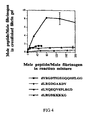
- the amount of peptide covalently bound to the fibrin gels was measured while varying the initial excess of peptide for each of the four sequences.
- a concentration dependent curve was created ( FIG 3 ) and the maximum crosslinking ratio and the molar excess needed to achieve a 1:1 ratio are shown below in Table 1. Since a particular active sequence is usually present once in each protein, the excess of peptide required to achieve this concentration provides an interesting benchmark.
- This table shows the amount of peptide needed to covalently bind one peptide molecule per fibrinogen molecule in a fibrin gel.
- a collection of peptides utilizing the crosslinking sequence from ⁇ 2-plasmin inhibitor have been made using active peptide sequences from the basement membrane molecules laminin and collagen SEQ ID NO: 11, and 16-20).
- Eight day chicken dorsal root ganglia were polymerized inside gels that had enough peptide to achieve the highest crosslinked concentration possible (8 moles peptide/mole fibrinogen).
- the extension of neurites from the ganglia was measured at 24 and 48 hours. The 48 hour data is shown in FIG 5 . The average neurite length for each experimental condition was normalized against growth in unmodified fibrin.
- IKVAV SEQ ID NO: 4
- RNIAEIIKDI SEQ ID NO: 5
- YIGSR SEQ ID NO: 1
- RGD demonstrated statistically different neurine growth, proving that not only can different factors be attached to the fibrin gels, but they retain biologically significant activity. Soluble inhibitor experiments were completed as well, and in each trial, the neurite growth was statistically the same as unmodified fibrin. This result demonstrates that the activity is interrupted, then the presence of crosslinked peptide does not inhibit neural extension, the growth in RDG crosslinked fibrin also supports this conclusion, as the neurites are able to attain similar growth with this nonactive peptide presence as is achieved in unmodified fibrin.
- the present example is provided to demonsrate the utility of the present invention for provising the covalent attachment of a bioactive factor to a peptide matrix, the amount of the bioactive factor, such as a peptide, being quantitatively determinable.
- the amount of peptide bound per molecule of fibrinogen was calculated for a series of peptide concentrations and for four separate peptide sequences.
- the sequences tested include two that mimic the crosslinking site in the ⁇ chain of fibrinogen, *YRGD TIGEGQQHHLGG (SEQ ID NO: 8) (* indicates the dansyl group and the section in italics is the native sequence of the crosslinking region of fibrinogen), a peptide with glutamine at the transglutaminase coupling site, and *LRGD GAKDV (SEQ ID NO: 9), a mimic of the lysine coupling site.
- Table 2 shows the amount of peptide needed to covalently bind one peptide molecule per fibrinogen molecule in a fibrin gel.
- a Factor XIIIa substrate has been synthetically coupled to a bioactive peptide sought for incorporation into the fibrin matrix, and it is clear that this bioactive factor need not have been a peptide. While not intending to be limited to any particular mechanism of action or theory of operation, any bioactive or biologically or medically useful molecule or macromolecule could be the bioactive factor. Likewise, the coupling between the bioactive factor and the transglutaminase substrate domain could have been performed by recombinant DNA methodology or any other means. For example, a protein growth factor could be incorporated by recombinantly expressing a fusion protein comprising both a transglutaminase substrate domain and the growth factor domain.
- transglutaminase substrate domain could be targeted for a translutaminase other than factor XIIIa.
- a recombinant form of fibrinogen could be used to form the fibrin network.
- other proteins that transglutaminase recognizes such as fibronectin for example, could be coupled to the transglutaminase substrate peptide.
- Fibrin is a natural matrix found in the body and is utilized in many ways. Although fibrin does provide a solid support for tissue regeneration and cell ingrowth, there are few active sequences in the monomer that directly enhance these processes. However, other studies have shown that many proteins, including basement membrane proteins such as laminin and growth factors such as basic fibroblast growth factor, have sequences which directly enhance regeneration or migration. Our method allows us to incorporate an active sequence or entire factor into the gels and create gels which possess specific bioactive properties.
- the present invention provides the first description of a means by which to effectively incorporate bioactive factors into fibrin, a therapeutically important material in wound healing and tissue engineering have been provided. Hence a previously unaccomplished goal is presented that provides an important therapeutic material.
- Bioactivity can be quantified using cell studies based on the 8-day chicken dorsal root ganglia model. With this model, addition of neuronally active sequences to the peptide can be tested for their ability in vitro to enhance neurite extension.
- Ganglia were dissected from eight day old chicken embryos and fibrin gels were polymerized around them. Peptide with different active sequences was crosslinked into these gels and the unbound peptide was washed out by periodically changing the neuronal media on top of the gels. These ganglia then extend neurites in three dimensions and the projection of these neurites can be captured using imaging software. This image can then be used to calculate the average neurite length.
- Three control experiments were done. Neurites were grown in fibrin gels without any peptide crosslinked, in fibrin gels with a nonactive peptide crosslinked in and in gels with active peptide crosslinked and soluble peptide present in the media as an inhibitor.
- the present example demonstrates the utility of the present invention as a tissue regenerational supportive material.
- the data here demonstrates the utility of the invention for supporting the effective regeneration of nerve tissue.
- a collection of peptides utilizing the crosslinking sequence from ⁇ 2-plasmin inhibitor have been made using active peptide sequences from the basement membrane molecules laminin and collagen.
- Eight day chicken dorsal root ganglia were polymerized inside gels that had enough peptide to achieve the highest crosslinked concentration possible (8 moles peptide/mole fibrinogen).
- the extension of neurites from the ganglia was measured at 24 and 48 hours, the 48 hour data is shown in FIG 5 .
- the average neurite length for each experimental condition was normalized against growth in unmodified fibrin.
- compositions and methods disclosed and claimed herein can be made and executed without undue experimentation in light of the present disclosure. While the compositions and methods of this invention have been described in terms of preferred embodiments, it will be apparent to those of skill in the art that variations may be applied to the composition, methods and in the steps or in the sequence of steps of the method described herein without departing from the concept and scope of the invention. More specifically, it will be apparent that certain agents which are both chemically and physiologically related may be substituted for the agents described herein while the same or similar results would be achieved. All such similar substitutes and modifications apparent to those skilled in the art are deemed to be within the scope and concept of the invention as defined by the appended claims.
Landscapes
- Health & Medical Sciences (AREA)
- Life Sciences & Earth Sciences (AREA)
- General Health & Medical Sciences (AREA)
- Epidemiology (AREA)
- Animal Behavior & Ethology (AREA)
- Public Health (AREA)
- Veterinary Medicine (AREA)
- Chemical & Material Sciences (AREA)
- Engineering & Computer Science (AREA)
- Biomedical Technology (AREA)
- Wood Science & Technology (AREA)
- Oral & Maxillofacial Surgery (AREA)
- Transplantation (AREA)
- Dermatology (AREA)
- Surgery (AREA)
- Biotechnology (AREA)
- Organic Chemistry (AREA)
- Bioinformatics & Cheminformatics (AREA)
- Genetics & Genomics (AREA)
- Zoology (AREA)
- Medicinal Chemistry (AREA)
- Microbiology (AREA)
- Biochemistry (AREA)
- General Engineering & Computer Science (AREA)
- Cell Biology (AREA)
- Heart & Thoracic Surgery (AREA)
- Vascular Medicine (AREA)
- Peptides Or Proteins (AREA)
- Medicines That Contain Protein Lipid Enzymes And Other Medicines (AREA)
- Materials For Medical Uses (AREA)
Claims (27)
- Composition comprenant au moins du fibrinogène et une thrombine qui sont appropriés pour produire un gel de fibrine, ladite composition comprenant en outre au moins un peptide de fusion, où ledit peptide de fusion est adapté pour se lier de façon covalente à la fibrine, et ledit peptide de fusion comprend au moins un premier et un second domaine où le premier domaine comprend un facteur bioactif et le second domaine comprend un domaine de substrat de transglutaminase.
- Composition selon la revendication 1, où ledit domaine de substrat de transglutaminase est un domaine de substrat du facteur XIIIa.
- Composition selon la revendication 2, où le domaine de substrat du facteur XIIIa comprend une séquence d'acides aminés sélectionnée dans le groupe consistant en SEQ ID NO: 13, SEQ ID NO: 14, SEQ ID NO: 15, un fragment ou des combinaisons de celles-ci.
- Composition selon l'une quelconque des revendications 1 à 3, où ledit facteur bioactif est un peptide.
- Composition selon la revendication 4, où le peptide comprend une séquence d'acides aminés sélectionnée dans le groupe consistant en SEQ ID NO: 1, SEQ ID NO: 2, SEQ ID NO: 3, SEQ ID NO: 4, SEQ ID NO: 5, SEQ ID NO: 6, une combinaison de celles-ci, ou un fragment bioactif de celles-ci.
- Composition selon l'une quelconque des revendications 1 à 3, où le facteur bioactif est une protéine.
- Composition selon la revendication 6, où ladite protéine est un facteur de croissance.
- Composition comprenant un matériau de matrice et un peptide de fusion, ledit peptide de fusion comprenant au moins un premier et un second domaine où le premier domaine comprend un facteur bioactif et le second domaine comprend un domaine de substrat de transglutaminase, et où ledit peptide de fusion est adapté pour se réticuler de façon covalente avec le matériau de matrice par l'intermédiaire du second domaine, pour une utilisation en tant que matériau utile dans la promotion de la cicatrisation et de la régénération tissulaire, dans la création de lits néovasculaires pour une greffe de cellules et/ou d'autres aspects du génie tissulaire.
- Utilisation d'une composition comprenant un matériau de matrice et un peptide de fusion, ledit peptide de fusion comprenant au moins un premier et un second domaines où le premier domaine comprend un facteur bioactif et le second domaine comprend un domaine de substrat de transglutaminase, où ledit peptide de fusion est adapté pour se réticuler de façon covalente avec le matériau de matrice par l'intermédiaire du second domaine, pour la fabrication d'un matériau pour le génie tissulaire ou d'un agent de scellement chirurgical.
- Composition selon la revendication 9, destinée à être utilisée en tant que matériau pour la promotion de la cicatrisation et de la régénération tissulaire.
- Composition selon la revendication 8 ou 9, où le matériau de matrice est un gel de fibrine.
- Composition selon la revendication 8 ou 9, où le matériau de matrice comprend du fibrinogène et une thrombine.
- Dispositif implantable ayant au moins une surface comprenant une composition comprenant un gel de fibrine et un peptide de fusion, ledit peptide de fusion ayant au moins un premier et un second domaine où le premier domaine comprend un facteur bioactif et le second domaine comprend un domaine de substrat de transglutaminase, où le peptide de fusion est lié de façon covalente au gel de fibrine par l'intermédiaire du second domaine.
- Composition selon l'une quelconque des revendications 8 à 13, où ledit domaine de substrat de transglutaminase est un domaine de substrat du facteur XIIIa.
- Composition selon la revendication 14, où le domaine de substrat du facteur XIIIa comprend une séquence d'acides aminés sélectionnée dans le groupe consistant en SEQ ID NO: 13, SEQ ID NO: 14, SEQ ID NO: 15, un fragment ou des combinaisons de celles-ci.
- Composition selon l'une quelconque des revendications 8 à 15, où ledit facteur bioactif est un peptide.
- Composition selon la revendication 16, où le peptide comprend une séquence d'acides aminés sélectionnée dans le groupe consistant en SEQ ID NO: 1, SEQ ID NO: 2, SEQ ID NO: 3, SEQ ID NO: 4, SEQ ID NO: 5, SEQ ID NO: 6, une combinaison de celles-ci, ou un fragment bioactif de celles-ci.
- Composition selon l'une quelconque des revendications 8 à 15, où le facteur bioactif est une protéine.
- Composition selon la revendication 18, où ladite protéine est un facteur de croissance.
- Procédé pour former une matrice adaptée pour promouvoir la croissance cellulaire ou la régénération tissulaire, consistant à :(a) mettre à disposition un matériau de matrice et un peptide de fusion, ledit peptide de fusion comprenant au moins un premier et un second domaines où le premier domaine comprend un facteur bioactif et le second domaine comprend un domaine de substrat de transglutaminase ;(b) réticuler de façon covalente ledit peptide de fusion avec le matériau de matrice par l'intermédiaire du second domaine.
- Procédé selon la revendication 20, où le matériau de matrice est un gel de fibrine.
- Procédé selon la revendication 20, où le matériau de matrice comprend du fibrinogène et une thrombine.
- Procédé selon l'une quelconque des revendications 20 à 22, où ledit domaine de substrat de transglutaminase est un domaine de substrat du facteur XIIIa.
- Procédé selon la revendication 23, où le domaine de substrat du facteur XIIIa comprend une séquence d'acides aminés sélectionnée dans le groupe consistant en SEQ ID NO: 13, SEQ ID NO: 14, SEQ ID NO: 15, un fragment ou des combinaisons de celles-ci.
- Procédé selon l'une quelconque des revendications 20 à 24, où ledit facteur bioactif est un peptide.
- Procédé selon la revendication 25, où le peptide comprend une séquence d'acides aminés sélectionnée dans le groupe consistant en SEQ ID NO: 1, SEQ ID NO: 2, SEQ ID NO: 3, SEQ ID NO: 4, SEQ ID NO: 5, SEQ ID NO: 6, une combinaison de celles-ci, ou un fragment bioactif de celles-ci.
- Procédé selon l'une quelconque des revendications 20 à 24, où le facteur bioactif est un facteur de croissance.
Applications Claiming Priority (4)
| Application Number | Priority Date | Filing Date | Title |
|---|---|---|---|
| US4214397P | 1997-04-03 | 1997-04-03 | |
| US42143P | 1997-04-03 | ||
| PCT/US1998/006617 WO1998043686A1 (fr) | 1997-04-03 | 1998-04-02 | Modification enzymatique de la fibrine destinee au genie tissulaire |
| US09/057,052 US6331422B1 (en) | 1997-04-03 | 1998-04-08 | Enzyme-mediated modification of fibrin for tissue engineering |
Publications (2)
| Publication Number | Publication Date |
|---|---|
| EP1124590A1 EP1124590A1 (fr) | 2001-08-22 |
| EP1124590B1 true EP1124590B1 (fr) | 2009-06-17 |
Family
ID=26718917
Family Applications (1)
| Application Number | Title | Priority Date | Filing Date |
|---|---|---|---|
| EP98919729A Expired - Lifetime EP1124590B1 (fr) | 1997-04-03 | 1998-04-02 | Modification enzymatique de la fibrine destinee au genie tissulaire |
Country Status (7)
| Country | Link |
|---|---|
| US (2) | US6331422B1 (fr) |
| EP (1) | EP1124590B1 (fr) |
| AU (1) | AU7245598A (fr) |
| CA (1) | CA2307954C (fr) |
| DE (1) | DE19882746T1 (fr) |
| GB (1) | GB2348426B (fr) |
| WO (1) | WO1998043686A1 (fr) |
Cited By (5)
| Publication number | Priority date | Publication date | Assignee | Title |
|---|---|---|---|---|
| US8367388B2 (en) | 2008-06-18 | 2013-02-05 | Lifebond Ltd. | Cross-linked compositions |
| US8722039B2 (en) | 2006-12-15 | 2014-05-13 | Lifebond Ltd. | Gelatin-transglutaminase hemostatic dressings and sealants |
| US8961544B2 (en) | 2010-08-05 | 2015-02-24 | Lifebond Ltd. | Dry composition wound dressings and adhesives comprising gelatin and transglutaminase in a cross-linked matrix |
| US9066991B2 (en) | 2009-12-22 | 2015-06-30 | Lifebond Ltd. | Modification of enzymatic crosslinkers for controlling properties of crosslinked matrices |
| US11998654B2 (en) | 2018-07-12 | 2024-06-04 | Bard Shannon Limited | Securing implants and medical devices |
Families Citing this family (75)
| Publication number | Priority date | Publication date | Assignee | Title |
|---|---|---|---|---|
| US7485440B2 (en) | 1995-09-27 | 2009-02-03 | The United States Of America As Represented By The Department Of Health And Human Services | Production of attenuated respiratory syncytial virus vaccines involving modification of M2 ORF2 |
| US20020168718A1 (en) * | 1997-04-03 | 2002-11-14 | California Institute Of Technology | Enzyme-mediated modification of fibrin for tissue engineering |
| US6894022B1 (en) * | 1998-08-27 | 2005-05-17 | Eidgenossische Technische Hochschule Zurich | Growth factor modified protein matrices for tissue engineering |
| US7241730B2 (en) | 1998-08-27 | 2007-07-10 | Universitat Zurich | Enzyme-mediated modification of fibrin for tissue engineering: fibrin formulations with peptides |
| US7601685B2 (en) * | 1998-08-27 | 2009-10-13 | Eidgenossische Technische Hochschule Zurich | Growth factor modified protein matrices for tissue engineering |
| RU2157233C1 (ru) * | 1999-05-11 | 2000-10-10 | Санкт-Петербургская общественная организация "Институт биорегуляции и геронтологии" | Тетрапептид, обладающий геропротекторной активностью, фармакологическое средство на его основе и способ его применения |
| DE19945487A1 (de) * | 1999-09-22 | 2001-03-29 | Henkel Kgaa | Verfahren zur Restrukturierung keratinischer Fasern |
| GB0011356D0 (en) * | 2000-05-12 | 2000-06-28 | Univ Nottingham Trent | Medical implant materials |
| WO2001089584A2 (fr) * | 2000-05-23 | 2001-11-29 | Amersham Health As | Agents de contraste |
| US6506365B1 (en) | 2000-09-25 | 2003-01-14 | Baxter Aktiengesellschaft | Fibrin/fibrinogen binding conjugate |
| CA2681952A1 (fr) | 2001-04-25 | 2002-10-31 | Eidgenoessische Technische Hochschule Zurich | Matrices pour l'administration de medicaments destinees a ameliorer la cicatrisation |
| NL1017994C2 (nl) * | 2001-05-04 | 2002-11-05 | Tno | Hechting van vlees- en visproducten. |
| JP2002369877A (ja) * | 2001-06-14 | 2002-12-24 | Japan Science & Technology Corp | 神経再建生体材料およびその製造方法 |
| IL144446A0 (en) | 2001-07-19 | 2002-05-23 | Prochon Biotech Ltd | Plasma protein matrices and methods for their preparation |
| US7858679B2 (en) | 2001-07-20 | 2010-12-28 | Northwestern University | Polymeric compositions and related methods of use |
| US8815793B2 (en) | 2001-07-20 | 2014-08-26 | Northwestern University | Polymeric compositions and related methods of use |
| US7618937B2 (en) | 2001-07-20 | 2009-11-17 | Northwestern University | Peptidomimetic polymers for antifouling surfaces |
| JP2003126125A (ja) * | 2001-10-24 | 2003-05-07 | Katsuko Sakai | 人工血管及びその製造方法 |
| FI20012082A0 (fi) | 2001-10-26 | 2001-10-26 | Paeivi Liesi | Biologisesti aktiiviset peptidit hermovauroiden korjaamiseksi |
| WO2003045973A2 (fr) * | 2001-11-28 | 2003-06-05 | Becton, Dickinson And Company | Peptides a action inhibitrice de la croissance |
| US7247609B2 (en) | 2001-12-18 | 2007-07-24 | Universitat Zurich | Growth factor modified protein matrices for tissue engineering |
| EP1864681A1 (fr) | 2001-12-18 | 2007-12-12 | Eidgenössische Technische Hochschule Zürich | Matrices de protéines modifiées de facteur de croissance pour ingénierie de tissus |
| WO2003070749A2 (fr) | 2002-02-15 | 2003-08-28 | Northwestern University | Auto-assemblage de nanofibres amphiphiles peptidiques dans des conditions physiologiques |
| US8911831B2 (en) | 2002-07-19 | 2014-12-16 | Northwestern University | Surface independent, surface-modifying, multifunctional coatings and applications thereof |
| WO2004016167A1 (fr) * | 2002-08-16 | 2004-02-26 | The General Hospital Corporation | Imagerie fonctionnelle non invasive de l'activation du systeme nerveux peripherique chez les humains et les animaux |
| US20060140914A1 (en) * | 2002-10-31 | 2006-06-29 | The General Hospital Corporation | Repairing or replacing tissues or organs |
| EP1562630A4 (fr) * | 2002-10-31 | 2009-02-18 | Univ Northwestern | Hydrogels polymeriques bioadhesifs pouvant etre injectes ainsi que procedes associes de preparation enzymatique |
| US7554021B2 (en) | 2002-11-12 | 2009-06-30 | Northwestern University | Composition and method for self-assembly and mineralization of peptide amphiphiles |
| US7067123B2 (en) | 2003-04-29 | 2006-06-27 | Musculoskeletal Transplant Foundation | Glue for cartilage repair |
| US7901457B2 (en) | 2003-05-16 | 2011-03-08 | Musculoskeletal Transplant Foundation | Cartilage allograft plug |
| EP1641481A4 (fr) * | 2003-05-30 | 2008-10-15 | Centocor Inc | Formation de nouveaux conjugues d'erythropoietine au moyen d'une transglutaminase |
| EP1634077A4 (fr) | 2003-05-30 | 2007-03-28 | Univ Texas | Positionnement micrometrique des cellules pour le genie cellulaire |
| US20080050812A1 (en) * | 2003-05-30 | 2008-02-28 | Cox James W | Micropositioning Cells For Tissue Engineering |
| CA2528134C (fr) * | 2003-06-04 | 2015-05-12 | University Of South Carolina | Support tissulaire dote de fibrilles alignees, appareil et procede pour sa production, tissu artificiel et ses procedes d'utilisation |
| ATE541580T1 (de) | 2003-12-05 | 2012-02-15 | Univ Northwestern | Selbst anordnende peptid-amphiphile und relevante verfahren für die abgabe von wachstumsfaktor |
| WO2005072764A2 (fr) * | 2004-01-16 | 2005-08-11 | Novocell, Inc. | Procede d'utilisation de facteurs angiogeniques lies a la fibrine afin de stimuler la vascularisation d'un site de transplantation de cellules encapsulees |
| ES2293753B1 (es) * | 2004-04-28 | 2009-03-16 | Lipotec, S.A. | Uso de peptidos xikvav en preparacion de composiciones cosmeticas para mejorar la firmeza de la piel mediante el aumento de la adhesion celular. |
| US7837740B2 (en) | 2007-01-24 | 2010-11-23 | Musculoskeletal Transplant Foundation | Two piece cancellous construct for cartilage repair |
| US20060111778A1 (en) * | 2004-10-29 | 2006-05-25 | Michalow Alexander E | Methods of promoting healing of cartilage defects and method of causing stem cells to differentiate by the articular chondrocyte pathway |
| WO2006064381A2 (fr) | 2004-12-10 | 2006-06-22 | Straumann Holding Ag | Nouvelle preparation de proteine |
| EP1828244A2 (fr) * | 2004-12-22 | 2007-09-05 | Kuros Biosurgery AG | Biomateriaux synthetiques comprenant des facteurs bioactifs incorpores au moyen de liaisons degradables par voie enzymatique |
| WO2006073711A2 (fr) * | 2005-01-06 | 2006-07-13 | Kuros Biosurgery Ag | Traitement local des deficits osseux |
| US8575101B2 (en) | 2005-01-06 | 2013-11-05 | Kuros Biosurgery Ag | Supplemented matrices for the repair of bone fractures |
| BRPI0606409A2 (pt) * | 2005-01-06 | 2009-06-23 | Kuros Biosurgery Ag | matrizes suplementadas para o reparo de fraturas ósseas |
| US7815926B2 (en) | 2005-07-11 | 2010-10-19 | Musculoskeletal Transplant Foundation | Implant for articular cartilage repair |
| CA2623106C (fr) | 2005-09-19 | 2013-12-24 | Histogenics Corporation | Matrice support de cellules dont la densite des pores et la porosite sont definies specifiquement de maniere uniforme verticalement et organisees de maniere non aleatoire, et procede de preparation de celle-ci |
| US7732539B2 (en) | 2006-02-16 | 2010-06-08 | National Science Foundation | Modified acrylic block copolymers for hydrogels and pressure sensitive wet adhesives |
| WO2007109137A1 (fr) | 2006-03-20 | 2007-09-27 | Worcester Polytechnic Institute | Microfils de fibrine |
| WO2008091386A2 (fr) | 2006-08-04 | 2008-07-31 | Northwestern University | Matériau biomimétique modulaire complexe et adhésif, procédés et applications de ce dernier |
| WO2008019352A1 (fr) | 2006-08-04 | 2008-02-14 | Nerites Corporation | Composés biomimétiques et leurs procédés de synthèse |
| US8383092B2 (en) * | 2007-02-16 | 2013-02-26 | Knc Ner Acquisition Sub, Inc. | Bioadhesive constructs |
| US8673286B2 (en) | 2007-04-09 | 2014-03-18 | Northwestern University | DOPA-functionalized, branched, poly(aklylene oxide) adhesives |
| US8435551B2 (en) | 2007-03-06 | 2013-05-07 | Musculoskeletal Transplant Foundation | Cancellous construct with support ring for repair of osteochondral defects |
| EP2136850B1 (fr) | 2007-04-13 | 2012-02-01 | Kuros Biosurgery AG | Agent de scellement tissulaire polymère |
| US8076295B2 (en) * | 2007-04-17 | 2011-12-13 | Nanotope, Inc. | Peptide amphiphiles having improved solubility and methods of using same |
| JP4966084B2 (ja) | 2007-04-25 | 2012-07-04 | エスアイアイ・プリンテック株式会社 | インクジェットヘッドの駆動方法、インクジェットヘッドおよびインクジェット記録装置 |
| KR20100061680A (ko) * | 2007-09-11 | 2010-06-08 | 몬도바이오테크 래보래토리즈 아게 | 치료제로서의 gly-pro-glu-oh(gpe)의 용도 |
| WO2009047361A2 (fr) * | 2007-10-12 | 2009-04-16 | Kuros Biosurgery Ag | Compositions radio-opaques injectables pour une augmentation de tissu |
| JP2012512812A (ja) | 2007-12-28 | 2012-06-07 | クロス・バイオサージェリー・アクチェンゲゼルシャフト | フィブリンフォームに組込まれたpdgf融合タンパク質 |
| CA2717725A1 (fr) | 2008-03-05 | 2009-09-11 | Musculoskeletal Transplant Foundation | Produits de recombinaison spongieux, particules de cartilage et associations de produits de recombinaison spongieux et de particules de cartilage |
| CA2721477A1 (fr) * | 2008-04-18 | 2009-12-03 | Kuros Biosurgery Ag | Dispositif de distribution, ensemble contenant le dispositif, et procede d'utilisation du dispositif |
| AU2010236584A1 (en) | 2009-04-13 | 2011-11-10 | Northwestern University | Novel peptide-based scaffolds for cartilage regeneration and methods for their use |
| US20100316764A1 (en) * | 2009-06-10 | 2010-12-16 | Engrain, LLC | Flour supplement compositions and methods for preparing wheat flour |
| EP2547328B1 (fr) * | 2010-02-11 | 2017-06-07 | Ecole Polytechnique Fédérale de Lausanne (EPFL) | Administration et co-administration de ligands de ccr7 en immunothérapie |
| ITPD20100155A1 (it) | 2010-05-19 | 2011-11-20 | Univ Padova | Metodo per la preparazione di coniugati mediante transglutaminasi |
| WO2012064821A2 (fr) | 2010-11-09 | 2012-05-18 | Knc Ner Acquisition Sub, Inc. | Composés adhésifs et leurs procédés d'utilisation pour la réparation d'hernies |
| WO2012123028A1 (fr) | 2011-03-16 | 2012-09-20 | Kuros Biosurgery Ag | Formulation pharmaceutique destinée à être utilisée dans une fusion des vertèbres |
| US20150104427A1 (en) * | 2011-11-10 | 2015-04-16 | The Regents Of The University Of California | Enzyme-assisted spatial decoration of biomaterials |
| US9879062B2 (en) | 2012-07-03 | 2018-01-30 | Ecole Polytechnique Federale De Lausanne | Protein-binding peptide isolated from placenta growth factor |
| US9540428B2 (en) | 2012-07-03 | 2017-01-10 | Ecole Polytechnique Federale De Lausanne (Epfl) | Extracellular matrix heparin-binding domains |
| US10077420B2 (en) | 2014-12-02 | 2018-09-18 | Histogenics Corporation | Cell and tissue culture container |
| US10322206B2 (en) | 2016-03-29 | 2019-06-18 | Worcester Polytechnic Institute | Compositions and methods for wound healing |
| EP3453722A1 (fr) * | 2017-09-06 | 2019-03-13 | Julius-Maximilians-Universität Würzburg | Produits pharmaceutiques et dispositifs pour l'immobilisation covalente à la matrice extracellulaire par la transglutaminase |
| WO2019094938A2 (fr) | 2017-11-13 | 2019-05-16 | The University Of Chicago | Méthodes et compositions pour le traitement des plaies |
| EP3569614A1 (fr) * | 2018-05-18 | 2019-11-20 | Julius-Maximilians-Universität Würzburg | Composés et procédés pour l'immobilisation des inhibiteurs de myostatine sur la matrice extracellulaire par la transglutaminase |
Family Cites Families (12)
| Publication number | Priority date | Publication date | Assignee | Title |
|---|---|---|---|---|
| SE8200751L (sv) | 1982-02-09 | 1983-08-10 | Olle Larm | Forfarande for kovalent koppling for framstellning av konjugat och hervid erhallna produkter |
| WO1989000005A1 (fr) | 1987-07-06 | 1989-01-12 | Cytrx Biopool Ltd. | Analyses ameliorees d'activateur plasminogene et d'inhibiteur d'activateur plasminogene |
| AU2258788A (en) * | 1987-07-07 | 1989-01-30 | Cytrx Biopool Ltd. | Fibrin-binding compound and method |
| US5504001A (en) * | 1987-11-25 | 1996-04-02 | Zymogenetics, Inc. | Hybrid plasminogen activator |
| US5100668A (en) | 1988-06-14 | 1992-03-31 | Massachusetts Institute Of Technology | Controlled release systems containing heparin and growth factors |
| AU630643B2 (en) * | 1988-11-09 | 1992-11-05 | Protein Polymers Technologies, Inc. | Functional recombinantly prepared synthetic protein polymer |
| SE9101853D0 (sv) * | 1991-06-17 | 1991-06-17 | Jonas Wadstroem | Improved tissue ashesive |
| US5428014A (en) * | 1993-08-13 | 1995-06-27 | Zymogenetics, Inc. | Transglutaminase cross-linkable polypeptides and methods relating thereto |
| US5773577A (en) * | 1994-03-03 | 1998-06-30 | Protein Polymer Technologies | Products comprising substrates capable of enzymatic cross-linking |
| US5693341A (en) | 1995-03-16 | 1997-12-02 | Collagen Corporation | Affinity bound collagen matrices for the delivery of biologically active agents |
| US5561982A (en) | 1995-05-02 | 1996-10-08 | Universal Vortex, Inc. | Method for energy separation and utilization in a vortex tube which operates with pressure not exceeding atmospheric pressure |
| US5958874A (en) * | 1998-02-18 | 1999-09-28 | The Research Foundation Of State University Of New York | Recombinant fibronectin-based extracellular matrix for wound healing |
-
1998
- 1998-04-02 CA CA2307954A patent/CA2307954C/fr not_active Expired - Lifetime
- 1998-04-02 DE DE19882746T patent/DE19882746T1/de not_active Withdrawn
- 1998-04-02 WO PCT/US1998/006617 patent/WO1998043686A1/fr not_active Ceased
- 1998-04-02 AU AU72455/98A patent/AU7245598A/en not_active Abandoned
- 1998-04-02 GB GB0009882A patent/GB2348426B/en not_active Expired - Fee Related
- 1998-04-02 EP EP98919729A patent/EP1124590B1/fr not_active Expired - Lifetime
- 1998-04-08 US US09/057,052 patent/US6331422B1/en not_active Expired - Lifetime
-
2000
- 2000-10-24 US US09/695,466 patent/US6607740B1/en not_active Expired - Lifetime
Cited By (8)
| Publication number | Priority date | Publication date | Assignee | Title |
|---|---|---|---|---|
| US8722039B2 (en) | 2006-12-15 | 2014-05-13 | Lifebond Ltd. | Gelatin-transglutaminase hemostatic dressings and sealants |
| US9017664B2 (en) | 2006-12-15 | 2015-04-28 | Lifebond Ltd. | Gelatin-transglutaminase hemostatic dressings and sealants |
| US8367388B2 (en) | 2008-06-18 | 2013-02-05 | Lifebond Ltd. | Cross-linked compositions |
| US8703117B2 (en) | 2008-06-18 | 2014-04-22 | Lifebond Ltd. | Cross-linked compositions |
| US9044456B2 (en) | 2008-06-18 | 2015-06-02 | Lifebond Ltd. | Cross-linked compositions |
| US9066991B2 (en) | 2009-12-22 | 2015-06-30 | Lifebond Ltd. | Modification of enzymatic crosslinkers for controlling properties of crosslinked matrices |
| US8961544B2 (en) | 2010-08-05 | 2015-02-24 | Lifebond Ltd. | Dry composition wound dressings and adhesives comprising gelatin and transglutaminase in a cross-linked matrix |
| US11998654B2 (en) | 2018-07-12 | 2024-06-04 | Bard Shannon Limited | Securing implants and medical devices |
Also Published As
| Publication number | Publication date |
|---|---|
| EP1124590A1 (fr) | 2001-08-22 |
| US6331422B1 (en) | 2001-12-18 |
| GB2348426A (en) | 2000-10-04 |
| GB0009882D0 (en) | 2000-06-07 |
| DE19882746T1 (de) | 2001-10-18 |
| CA2307954C (fr) | 2010-07-13 |
| CA2307954A1 (fr) | 1998-10-08 |
| WO1998043686A1 (fr) | 1998-10-08 |
| AU7245598A (en) | 1998-10-22 |
| US6607740B1 (en) | 2003-08-19 |
| GB2348426B (en) | 2001-06-27 |
Similar Documents
| Publication | Publication Date | Title |
|---|---|---|
| US6331422B1 (en) | Enzyme-mediated modification of fibrin for tissue engineering | |
| SAKIYAMA et al. | Incorporation of heparin‐binding peptides into fibrin gels enhances neurite extension: an example of designer matrices in tissue engineering | |
| US8034618B2 (en) | PTH containing cell growth matrix | |
| Twardowski et al. | Type I collagen and collagen mimetics as angiogenesis promoting superpolymers | |
| AU2009201588B2 (en) | Growth factor modified protein matrices for tissue engineering | |
| Pratt et al. | Synthetic extracellular matrices for in situ tissue engineering | |
| CA2124583C (fr) | Composes et compositions synthetiques a proprietes de fixation cellulaire ameliorees | |
| US6268348B1 (en) | Synthetic compounds and compositions with enhanced cell binding | |
| Park et al. | In situ SVVYGLR peptide conjugation into injectable gelatin-poly (ethylene glycol)-tyramine hydrogel via enzyme-mediated reaction for enhancement of endothelial cell activity and neo-vascularization | |
| US5677276A (en) | Immobilization of peptides to hyaluronate | |
| Ramshaw et al. | Recent progress with recombinant collagens produced in Escherichia coli | |
| JPH03500046A (ja) | フィブロネクチン活性を有するポリペプチド | |
| JP2003525916A5 (fr) | ||
| US8691944B2 (en) | Fibronectin polypeptides and methods of use | |
| EP3202781A1 (fr) | Domaines de liaison à l'héparine de matrice extracellulaire | |
| US20040082513A1 (en) | Enzyme-mediated modification of fibrin for tissue engineering | |
| CN101249278A (zh) | 骨诱导材料及其制备方法和应用 | |
| AU782233B2 (en) | Novel haptotactic peptides | |
| Hörmann | Interaction with fibrinogen and fibrin | |
| EP1465989B1 (fr) | Matrices proteiques modifiees de facteur de croissance pour des applications en genie tissulaire | |
| KR100925070B1 (ko) | 성장인자로 변형된 조직 엔지니어링용 단백질 메트릭스 | |
| KR100869837B1 (ko) | 테나신 타입ⅲ 3 절편을 이용한 신경세포 부착능 향상 방법 | |
| Nimni et al. | Collagen and collagen-glycosaminoglycan matrices as carriers for growth factors | |
| EP1864681A1 (fr) | Matrices de protéines modifiées de facteur de croissance pour ingénierie de tissus | |
| HK1067147B (en) | Growth factor modified protein matrices for tissue engineering |
Legal Events
| Date | Code | Title | Description |
|---|---|---|---|
| PUAI | Public reference made under article 153(3) epc to a published international application that has entered the european phase |
Free format text: ORIGINAL CODE: 0009012 |
|
| 17P | Request for examination filed |
Effective date: 20000428 |
|
| AK | Designated contracting states |
Kind code of ref document: A1 Designated state(s): CH DE FR GB IT LI |
|
| 17Q | First examination report despatched |
Effective date: 20031111 |
|
| GRAP | Despatch of communication of intention to grant a patent |
Free format text: ORIGINAL CODE: EPIDOSNIGR1 |
|
| RIC1 | Information provided on ipc code assigned before grant |
Ipc: C07K 14/47 20060101ALI20081201BHEP Ipc: A61L 27/22 20060101ALI20081201BHEP Ipc: A61L 24/10 20060101AFI20081201BHEP |
|
| GRAS | Grant fee paid |
Free format text: ORIGINAL CODE: EPIDOSNIGR3 |
|
| GRAA | (expected) grant |
Free format text: ORIGINAL CODE: 0009210 |
|
| AK | Designated contracting states |
Kind code of ref document: B1 Designated state(s): CH DE FR GB IT LI |
|
| REG | Reference to a national code |
Ref country code: GB Ref legal event code: FG4D |
|
| REG | Reference to a national code |
Ref country code: CH Ref legal event code: EP |
|
| REF | Corresponds to: |
Ref document number: 69840919 Country of ref document: DE Date of ref document: 20090730 Kind code of ref document: P |
|
| REG | Reference to a national code |
Ref country code: CH Ref legal event code: NV Representative=s name: PATENTANWAELTE SCHAAD, BALASS, MENZL & PARTNER AG |
|
| PLBE | No opposition filed within time limit |
Free format text: ORIGINAL CODE: 0009261 |
|
| STAA | Information on the status of an ep patent application or granted ep patent |
Free format text: STATUS: NO OPPOSITION FILED WITHIN TIME LIMIT |
|
| 26N | No opposition filed |
Effective date: 20100318 |
|
| REG | Reference to a national code |
Ref country code: FR Ref legal event code: PLFP Year of fee payment: 19 |
|
| REG | Reference to a national code |
Ref country code: FR Ref legal event code: PLFP Year of fee payment: 20 |
|
| REG | Reference to a national code |
Ref country code: DE Ref legal event code: R082 Ref document number: 69840919 Country of ref document: DE Representative=s name: SCHMITT-NILSON SCHRAUD WAIBEL WOHLFROM PATENTA, DE |
|
| PGFP | Annual fee paid to national office [announced via postgrant information from national office to epo] |
Ref country code: CH Payment date: 20170427 Year of fee payment: 20 Ref country code: GB Payment date: 20170427 Year of fee payment: 20 Ref country code: DE Payment date: 20170427 Year of fee payment: 20 Ref country code: FR Payment date: 20170426 Year of fee payment: 20 |
|
| PGFP | Annual fee paid to national office [announced via postgrant information from national office to epo] |
Ref country code: IT Payment date: 20170421 Year of fee payment: 20 |
|
| REG | Reference to a national code |
Ref country code: DE Ref legal event code: R071 Ref document number: 69840919 Country of ref document: DE |
|
| REG | Reference to a national code |
Ref country code: CH Ref legal event code: PL |
|
| REG | Reference to a national code |
Ref country code: GB Ref legal event code: PE20 Expiry date: 20180401 |
|
| PG25 | Lapsed in a contracting state [announced via postgrant information from national office to epo] |
Ref country code: GB Free format text: LAPSE BECAUSE OF EXPIRATION OF PROTECTION Effective date: 20180401 |