EP1150367B1 - Aktives Positivelektrodenmaterial und elektrochemische Zelle mit nichtwässrigem Elektrolyten - Google Patents
Aktives Positivelektrodenmaterial und elektrochemische Zelle mit nichtwässrigem Elektrolyten Download PDFInfo
- Publication number
- EP1150367B1 EP1150367B1 EP01109945.4A EP01109945A EP1150367B1 EP 1150367 B1 EP1150367 B1 EP 1150367B1 EP 01109945 A EP01109945 A EP 01109945A EP 1150367 B1 EP1150367 B1 EP 1150367B1
- Authority
- EP
- European Patent Office
- Prior art keywords
- positive electrode
- active material
- electrode active
- limn
- cell
- Prior art date
- Legal status (The legal status is an assumption and is not a legal conclusion. Google has not performed a legal analysis and makes no representation as to the accuracy of the status listed.)
- Expired - Lifetime
Links
Images










Classifications
-
- H—ELECTRICITY
- H01—ELECTRIC ELEMENTS
- H01M—PROCESSES OR MEANS, e.g. BATTERIES, FOR THE DIRECT CONVERSION OF CHEMICAL ENERGY INTO ELECTRICAL ENERGY
- H01M4/00—Electrodes
- H01M4/02—Electrodes composed of, or comprising, active material
- H01M4/13—Electrodes for accumulators with non-aqueous electrolyte, e.g. for lithium-accumulators; Processes of manufacture thereof
- H01M4/136—Electrodes based on inorganic compounds other than oxides or hydroxides, e.g. sulfides, selenides, tellurides, halogenides or LiCoFy
-
- H—ELECTRICITY
- H01—ELECTRIC ELEMENTS
- H01M—PROCESSES OR MEANS, e.g. BATTERIES, FOR THE DIRECT CONVERSION OF CHEMICAL ENERGY INTO ELECTRICAL ENERGY
- H01M4/00—Electrodes
- H01M4/02—Electrodes composed of, or comprising, active material
- H01M4/36—Selection of substances as active materials, active masses, active liquids
- H01M4/362—Composites
-
- H—ELECTRICITY
- H01—ELECTRIC ELEMENTS
- H01M—PROCESSES OR MEANS, e.g. BATTERIES, FOR THE DIRECT CONVERSION OF CHEMICAL ENERGY INTO ELECTRICAL ENERGY
- H01M4/00—Electrodes
- H01M4/02—Electrodes composed of, or comprising, active material
- H01M4/36—Selection of substances as active materials, active masses, active liquids
- H01M4/58—Selection of substances as active materials, active masses, active liquids of inorganic compounds other than oxides or hydroxides, e.g. sulfides, selenides, tellurides, halogenides or LiCoFy; of polyanionic structures, e.g. phosphates, silicates or borates
- H01M4/5825—Oxygenated metallic salts or polyanionic structures, e.g. borates, phosphates, silicates, olivines
-
- H—ELECTRICITY
- H01—ELECTRIC ELEMENTS
- H01M—PROCESSES OR MEANS, e.g. BATTERIES, FOR THE DIRECT CONVERSION OF CHEMICAL ENERGY INTO ELECTRICAL ENERGY
- H01M4/00—Electrodes
- H01M4/02—Electrodes composed of, or comprising, active material
- H01M4/62—Selection of inactive substances as ingredients for active masses, e.g. binders, fillers
- H01M4/624—Electric conductive fillers
- H01M4/625—Carbon or graphite
-
- H—ELECTRICITY
- H01—ELECTRIC ELEMENTS
- H01M—PROCESSES OR MEANS, e.g. BATTERIES, FOR THE DIRECT CONVERSION OF CHEMICAL ENERGY INTO ELECTRICAL ENERGY
- H01M4/00—Electrodes
- H01M4/02—Electrodes composed of, or comprising, active material
- H01M4/62—Selection of inactive substances as ingredients for active masses, e.g. binders, fillers
- H01M4/624—Electric conductive fillers
- H01M4/626—Metals
-
- H—ELECTRICITY
- H01—ELECTRIC ELEMENTS
- H01M—PROCESSES OR MEANS, e.g. BATTERIES, FOR THE DIRECT CONVERSION OF CHEMICAL ENERGY INTO ELECTRICAL ENERGY
- H01M10/00—Secondary cells; Manufacture thereof
- H01M10/05—Accumulators with non-aqueous electrolyte
- H01M10/052—Li-accumulators
-
- H—ELECTRICITY
- H01—ELECTRIC ELEMENTS
- H01M—PROCESSES OR MEANS, e.g. BATTERIES, FOR THE DIRECT CONVERSION OF CHEMICAL ENERGY INTO ELECTRICAL ENERGY
- H01M4/00—Electrodes
- H01M4/02—Electrodes composed of, or comprising, active material
- H01M2004/021—Physical characteristics, e.g. porosity, surface area
-
- H—ELECTRICITY
- H01—ELECTRIC ELEMENTS
- H01M—PROCESSES OR MEANS, e.g. BATTERIES, FOR THE DIRECT CONVERSION OF CHEMICAL ENERGY INTO ELECTRICAL ENERGY
- H01M4/00—Electrodes
- H01M4/02—Electrodes composed of, or comprising, active material
-
- Y—GENERAL TAGGING OF NEW TECHNOLOGICAL DEVELOPMENTS; GENERAL TAGGING OF CROSS-SECTIONAL TECHNOLOGIES SPANNING OVER SEVERAL SECTIONS OF THE IPC; TECHNICAL SUBJECTS COVERED BY FORMER USPC CROSS-REFERENCE ART COLLECTIONS [XRACs] AND DIGESTS
- Y02—TECHNOLOGIES OR APPLICATIONS FOR MITIGATION OR ADAPTATION AGAINST CLIMATE CHANGE
- Y02E—REDUCTION OF GREENHOUSE GAS [GHG] EMISSIONS, RELATED TO ENERGY GENERATION, TRANSMISSION OR DISTRIBUTION
- Y02E60/00—Enabling technologies; Technologies with a potential or indirect contribution to GHG emissions mitigation
- Y02E60/10—Energy storage using batteries
Definitions
- This invention relates to a positive electrode active material, capable of reversibly doping/undoping lithium, and to a non-aqueous electrolyte cell which uses this positive electrode active material.
- LiCoO 2 As the positive electrode active material, having the potential of 4V with respect to lithium, LiCoO 2 is being put to extensive use.
- This LiCoO 2 is an ideal positive electrode in many respects in that it has a high energy density and a high voltage.
- the positive electrode containing LiNiO 2 has a large theoretical capacity and a high discharging potential. However, it has such a defect that, with the progress in the charging/discharging cycle, the crystal structure of LiNiO 2 is collapsed to lower the discharging capacity as well as the thermal stability.
- the cell formed using LiMn 2 O 4 has a drawback that it undergoes serious deterioratiuon in capacity on storage at elevated temperatures, while it is insufficient in stability and cyclic characteristics, with Mn being dissolved in an electrolytic solution.
- Mn-based phosphoric acid compound having the olivinic structure
- Mn has a high redox potential and hence the compound is expected to manifest excellent properties.
- only a few of the compounds may be used in a cell.
- a demand is raised towards development of the phosphoric acid compound having the olivinic structure.
- EP 0 728 701 A concerns a lithium-manganese oxide composite suitable for use in lithium secondary batteries as an active material for positive electrodes, said oxide having a spinel type crystal structure.
- the present invention provides a positive electrode active material as defined in claim 1 containing a compound represented by the general formula Li x Mn y Fe 1-y PO 4 , where 0 ⁇ x ⁇ 1 and 0.5 ⁇ y ⁇ 0.95.
- this positive electrode active material Fe is substituted for a portion of Mn of Li x Mn y Fe 1-y PO 4 . Since this Fe is able to dilute the Jahn- Teller effect ascribable to Mn 3+ , it is possible to suppress distortion of the crystal structure of Li x Mn y Fe 1-y PO 4 . Since the proportion y of Mn is in a range of 0.5 ⁇ y ⁇ 0.95, a high discharge voltage can be achieved without lowering the cell capacity.
- the present invention provides a non-aqueous electrolyte cell including a positive electrode containing a positive electrode active material, a negative electrode containing a negative electrode active material and an electrolyte interposed between the positive and negative electrodes, wherein the positive electrode active material contains a compound represented by the general formula Li x Mn y Fe 1-y PO 4 where 0 ⁇ x ⁇ 1 and 0.5 ⁇ y ⁇ 0.95.
- the Jahn- Teller effect ascribable to Mn 3+ is diluted to enable Mn to be yielded by the redox reaction. So, the non-aqueous electrolyte cell employing this positive electrode active material exhibits superior charging/discharging characteristics.
- the present inventors also have conducted eager searches towards accomplishing the above object, and have found that Mn redox is difficult because the Jahn-Teller effect is produced due to Mn 3+ generated in the charged state to cause distortion of the crystal structure of the phosphoric acid compound having the olivinic structure. This finding has led to the concept of a positive electrode active material according to the present invention.
- part of Mn of Li x Mn y Fe 1-y PO 4 , used as a positive electrode active material, is replaced by Fe. Since this Fe is able to dilute the Jahn -Teller effect ascribable to Mn 3+ , distortion of the crystal structure of Li x Mn y Fe 1-y PO 4 may be prevented from occurring. Moreover, since the proportion y of Mn is such that 0.5 ⁇ y ⁇ 0.95, the range of the high discharge voltage area in the vicinity of 4V can be enlarged without decreasing the capacity. Thus, Mn can be produced by a redox reaction to allow to furnish a positive electrode active material capable of realizing a high capacity and a high discharge capacity.
- Li x Mn y Fe 1-x PO 4 in which Mn can be produced on redox and which achieves a high capacity and a high discharge voltage, is used as the positive electrode active material of the non-aqueous electrolyte cell.
- a non-aqueous electrolyte cell may be furnished having superior charging/discharging characteristics and which may be made compatible with the customary lithium cell.
- a positive electrode active material has an olivinic structure and contains a compound represented by the general formula Li x Mn y Fe 1-y PO 4 , where 0 ⁇ x ⁇ 1 and 0.5 ⁇ y ⁇ 0.95.
- a positive electrode active material having an olivinic structure and containing compound represented by the general formula Li x Mn y B 1-y PO 4 , where 0 ⁇ x ⁇ 2, 0 ⁇ y ⁇ 1 and B is a metal element selected from the group of Ti, Fe, Zn, Mg and Co.
- the compound represented by Li x Mn y B 1-y PO 4 may specifically be enumerated by Li x Mn y Ti 1-y PO 4 , Li x Mn y Zn 1-y PO 4 , Li x Mn y Mg 1-y PO 4 and Li x Mn y Co 1-y PO 4 .
- LiMnPO 4 of an olivinic structure mainly composed of Mn
- the resulting lithium secondary cell is difficult to operate as a cell.
- the positive electrode active material according to the present invention contains Li x Mn y Fe 1-y PO 4 , corresponding to Mn-based LiMnPO 4 of the olivinic structure in which part of Mn is replaced by Fe.
- the Fe partially replacing Mn is able to sever the interaction between elements of Mn 3+ -O- Mn 3+ which is produced when Li x Mn y Fe 1-y PO 4 is in the electrically charged state. That is, since the Jahn -Tellereffect by Mn 3+ is diluted, the distortion of the Li x Mn y Fe 1-y PO 4 as the entire crystal structure is suppressed to a level capable of yielding Mn by the redox reaction. So, the positive electrode active material, containing the compound of the olivinic structure represented by Li x Mn y Fe 1-y PO 4 is able to yield Mn by the redox reaction to realize the cell operation.
- Li x Mn y Fe 1-y PO 4 synthesized by a technique as described subsequently, a high discharge capacity can be maintained even in a range in which the proportion y of Mn exceeds 0.5. Since the proportion of Mn, as an element having a high redox potential, in Li x Mn y Fe 1-y PO 4 , can be increased with respect to Fe, the capacity of the discharge voltage in the vicinity of 4V as a higher voltage can be increased. That is, Li x Mn y Fe 1-y PO 4 is able to realize a high discharging voltage, as a high capacity is maintained, if the proportion y of Mn exceeds 0.5.
- Li x Mn y Fe 1-y PO 4 it is also desirable for a portion of Li x Mn y Fe 1-y PO 4 to be not larger than 10 ⁇ m in crystal grain size. If Li x Mn y Fe 1-y PO 4 contained in the positive electrode active material in its entirety is of a crystal grain size 10 ⁇ m in crystal grain size or larger, crystallization proceeds excessively such that coarse crystal grains are liable to be predominant in Li x Mn y Fe 1-y PO 4 . The result is that lithium as charge carrier cannot be diffused smoothly in the crystal grains of the positive electrode active material.
- Li x Mn y Fe 1-y PO 4 contains crystals with crystal grain size not larger than 10 ⁇ m in size, it is possible to assure smooth lithium ion diffusion in the positive electrode active material.
- the positive electrode active material containing a compound of the olivinic structure, represented by Li x Mn y Fe z A 1-(y+z) PO 4 , enables Mn to be generated by a redox reaction to assure the operation as a cell.
- the present inventors directed attention to the relation between the temperature of firing the precursor in synthesizing Li x Mn y Fe 1-y PO 4 and the capacity of the cell which uses this Li x Mn y Fe 1-y PO 4 as an active material, and conducted researches into the optimum temperature for synthesizing Li x Mn y Fe 1-y PO 4 for realizing the high capacity.
- Fe 2+ in iron oxalate as a bivalent iron compound, is oxidized to Fe 3+ with oxygen in air contained in the precursor
- the iron powder, contained in the precursor reduces the Fe 3+ to Fe 2+ .
- the iron powder is preferably added to the precursor in an amount ranging between 1 and 30 wt% to the sum total of Fe in the starting iron material. If the amount of addition of iron powders is less than 1 wt%, there is a risk that oxidation of Fe 2+ cannot be prevented sufficiently.
- the iron powders Fe are low in reactivity as compared to Fe 2+ contained in iron oxalate FeC 2 O 4 , so that, if the amount of addition of the iron powders is morethan 30 wt%, the synthesis reaction of Li x Mn y Fe 1-y PO 4 is not likely to progress sufficiently.
- lithium ions can be doped/undoped satisfactorily to enable a non-aqueous electrolyte cell to be produced which has a high capacity and superior cyclic characteristics.
- the Li x Mn y Fe 1-y PO 4 which poves the positive electrode active material, may also be produced by the following method.
- the precursor, freed of air in the de-airing step is fired and reacted by way of a sintering step to yield Li x Mn y Fe 1-y PO 4 .
- iron acetate Fe(CH 3 COO) 2 , manganese carbonate MnCO 3 , ammonium dihydrogen phosphate NH 4 H 2 PO 4 and lithium carbonate Li 2 CO 3 are mixed together at a pre-set ratio to give a precursor.
- the precursor de-aired as described above is sintered at a pre-set temperature in an inert gas atmosphere, such as nitrogen to synthesize Li x Mn y Fe 1-y PO 4 .
- the sintering temperature that is the temperature at which the precursor is sintered in synthesizing Li x Mn y Fe 1-y PO 4 , is preferably 350°C to 790°C, as in the above-mentioned sintering temperature.
- the precursor is de-aired in synthesizing Li x Mn y Fe 1-y PO 4 , thus preventing oxidation of Fe 2+ .
- Li x Mn y Fe 1-y PO 4 can be synthesized at a lower sintering temperature.
- Li x Mn y Fe 1-y PO 4 capable of achieving a high capacity may be produced.
- the Li x Mn y Fe 1-y PO 4 used as the positive electrode active material, may also be produced as now explained.
- the positive electrode active material, containing Li x Mn y Fe 1-y PO 4 is synthesized as a composite sample formed of Li x Mn y Fe 1-y PO 4 and an electrification agent.
- the electrification agents may be enumerated by carbon, copper and electrically conductive high polymer material.
- the carbon may be exemplified by a variety of carbon blacks, such as graphite or acetylene black.
- the electrification agent is preferably added in an amount range of 0.5 to 20 parts by weight to 100 parts by weight of Li x Mn y Fe 1-y PO 4 . If the amount of the electrification agent is less than 0.5 wt%, no favorable effect is likely to be produced. If the amount of the electrification agent exceeds 20 wt%, the proportion of Li x Mn y Fe 1-y PO 4 , as a main partner to the oxidation, in the positive electrode active material, is small, such that the non-aqueous electrolyte cell produced tends to be only low in energy density.
- carbon is added at the outset to a starting material for synthesis, comprised of iron oxalate FeC 2 O 4 , ammonium dihydrogen phosphate NH 4 H 2 PO 4 lithium carbonate Li 2 CO 3 and manganese acetate tetrahydride Mn(CH 3 CO) 2 ⁇ 4H 2 O or manganese carbonate MnCO 3 and mixed together.
- a starting material for synthesis comprised of iron oxalate FeC 2 O 4 , ammonium dihydrogen phosphate NH 4 H 2 PO 4 lithium carbonate Li 2 CO 3 and manganese acetate tetrahydride Mn(CH 3 CO) 2 ⁇ 4H 2 O or manganese carbonate MnCO 3 and mixed together.
- the resulting mixture is then sintered at a pre-set temperature in an inert gas atmosphere, such as nitrogen, to produce a Li x Mn y Fe 1-y PO 4 carbon compound material.
- the starting materials for synthessis are mixed sufficientlyto prepare a precursor.
- the respective starting materials are mixed together homogeneously to prepare a precursor having increased contact points.
- This precursor is sintered in a nitrogen atmosphere and synthesized to render it possible to sinter the precursor to synthesize a compoud sample at a temperature of, for example, 300°C, which is appreciably lower than 800°C as the sintering temperature used in synthesizing Li x Mn y Fe 1-y PO 4 by the conventional method.
- Li x Mn y Fe 1-y PO 4 carbon compound material can be synthesized in a temperature range broader than that hitherto used to increase the latitude of selection of the temperature used for synthesis.
- This sintering temperature is preferably not lower than 350°C and not higher than 790°C and more preferably not lower than 450°C and not higher than 700°C.
- a positive electrode active material having load characteristics and electrode moldability better than those of the positive electrode active material formed solely of Li x Mn y Fe 1-y PO 4 can be synthesized. If the electrification agent newly added in preparing the electrode is of minor quantity, the positive electrode active material, thus prepared, exhibits optimum load characteristics and electrode moldability. Moreover, the positive electrode active material, thus prepared, enables the use of an electrification agent of a higher volumetric density, such as graphite,
- the non-aqueous electrolyte cell containing the compound sample as the positive electrode active material, enables smooth electron migration in the electrode, thus being of high capacity and of optimum cyclic characteristics.
- the non-aqueous electrolyte cell may be of a large electrode volume, since there is no necessity of adding new electrification agent to the positive electrode mixture, thus assuring a high energy density.
- the metal element B is another element, or is comprised of plural elements
- corresponding compounds can be synthesized in a manner similar to synthesis of Li x Mn y Ti 1-y PO 4 described above.
- a compound containing the metal element B, the aforementioned manganese carbonate MnCO 3 , ammonium dihydrogen phosphate NH 4 H 2 PO 4 and lithium carbonate Li 2 CO 3 are mixed together at a pre-set ratio to form a precursor.
- This precursor then is heated at a pre-set temperature in an inert gas atmosphere, such as nitrogen, to form Li x Mn y B 1-y PO 4 .
- the compounds containing metal elements B may be enumerated by, for example, magnesium oxalate MgC 2 O 4 ⁇ 2H 2 O, zinc oxide ZnO, cobalt oxalate CoC 2 O 4 ⁇ 2H 2 O and iron oxalate FeC 2 O 4 ⁇ 2H 2 O.
- the specified heating temperature for the precursor is preferably not lower than 300°C and not higher than 790°C.
- the olivinic single-phase Li x Mn y B 1-y PO 4 can be obtained by heating the precursor within this temperature range. If the synthesis temperature of Li x Mn y B 1-y PO 4 is lower than 300°C, it may be feared that neither the chemical reaction nor the crystallization proceeds sufficiently such that homogeneous Li x Mn y B 1-y PO 4 cannot be produced. Moreover, if the synthesizing temperature for Li x Mn y B 1-y PO 4 is higher than 790°C, it may be feared that crystallization proceeds excessively to render it impossible to suppress precipitation of impurities.
- the non-aqueous electrolyte cell 1, employing Li x Mn y Fe 1-y PO 4 or Li x Mn y B 1-y PO 4 as positive electrode active material may, for example, be produced as follows:
- Such a negative electrode active material is used which is able to dope/undope lithium.
- metal lithium, lithium alloys, lithium-doped electrically conductive high molecular material, or a laminate compound, such as a carbon material or metal oxide, are used.
- any suitable known resin material routinely used as a binder for this sort of the non-aqueous electrolyte cell, may be used.
- a metal lithium foil for example, which proves a negative electrode active material, may also be used.
- the positive electrode 4 includes a layer of the positive electrode active material, containing the positive electrode active material.
- This non-aqueous electrolyte cell 1 contains the aforementioned compound represented by the general formula Li x Mn y Fe 1-y PO 4 or Li x Mn y Fe 1-(y+z) PO 4 as the positive electrode active material.
- the non-aqueous electrolyte cell 1 contains a compound represented by the general formula Li x Mn y B 1-y PO 4 , where 0 ⁇ x ⁇ 2, 0 ⁇ y ⁇ 1 and B is a metal element selected from among Ti, Zn, Mg and Co, or a compound represented by the general formula Li x Mn y B 1-y PO 4 , where 0 ⁇ x ⁇ 2,0 ⁇ y ⁇ 1 and B is a metal element selected from among Ti, Fe, Zn, Mg and Co, as the positive electrode active material.
- the positive electrode current collector an aluminum foil, for example, may be used.
- the separator 6, used for separating the positive electrode 4 and the negative electrode 2 from each other may be formed of any suitable known material for use as the separator for this sort of the non-aqueous electrolyte cell, and may, for example, be a film of a high molecular material, such as polypropylene. In view of the relation between the lithium ion conductivity and the energy density, the separator must be as thin as possible. Specifically, the separator thickness may, for example, be not larger than 50 ⁇ m.
- the insulating gasket 7, built into and unified to the negative electrode can 3, is used for preventing leakage of the non-aqueous electrolytic solution charged into the negative electrode can 3 and into the positive electrode can 5.
- non-aqueous electrolytic solution a solution obtained on dissolving an electrolyte in a non-protonic non-aqueous solvent is used.
- lithium salts such as, for example, LiPF 6 , LiClO 4 , LiAsF 6 , LiBF 4 , LiCF 3 SO 3 , LiN(CF 3 SO 2 ) 2 .
- LiPF 6 and LiBF 4 are preferred.
- the non-aqueous electrolyte cell 1 contains a compound represented by Li x Mn y Fe 1-y PO 4 or a compound represented by Li x Mn y Fe 1-(y+z) PO4, as the positive electrode active material. Since the proportion y of Mn in these compounds Li x Mn y Fe 1-y PO 4 or Li x Mn y Fe 1-(y+z) PO 4 is set to a range of 0.5 ⁇ y ⁇ 0.95, a high discharge voltage is realized without lowering the discharge capacity.
- the non-aqueous electrolytic solution is prepared by dissolving an electrolytic salt in a non-aqueous solvent.
- the positive electrode active material contains a compound represented by the general formula Li x Mn y Fe 1-y PO 4 where 0 ⁇ x ⁇ 1 and 0.5 ⁇ x ⁇ 0.95, or a compound represented by the general formula (Li x Mn y Fe z A 1-(y+z) PO 4 , where 0 ⁇ x ⁇ 2, 0.5 ⁇ x ⁇ 0.95 and 0.5 ⁇ y+z ⁇ 1, A being at least one metal element selected from the group of Ti and Mg.
- This positive electrode mixture was coated on an aluminum mesh, as a current collector, and dried at 100°C for one hour in an argon atmosphere to form a layer of a positive electrode active material.
- the aluminum mesh now carrying the layer of the positive electrode active material thereon, was punched to a disc shape 15 mm in diameter to form a pellet-like positive electrode. Meanwhile, 60 mg of the active material was carried by one positive electrode.
- a foil of metal lithium then was punched to substantially the same shape as the positive electrode for use as a negative electrode.
- LiPF 6 was dissolved at a concentration of 1 mol/l in a solvent mixture containing propylene carbonate and dimethyl carbonate in an equal volume ratio to prepare a non-aqueous electrolytic solution.
- the positive electrode prepared as described above, was housed in the positive electrode can, while the negative electrode was housed in the negative electrode can 3, and separator was arranged between the positive and negative electrodes.
- the non-aqueous solvent is poured into the negative and positive electrode cans 3, 5, which were then caulked and secured together via the insulating gasket 7 to complete a 2025 type coin-shaped test cell.
- LiMnPO 4 was synthesized as a positive electrode active material.
- manganese carbonate MnCO 3 ammonium dihydrogen phosphate NH 4 H 2 PO 4 and lithium carbonate Li 2 CO 3 were mixed together to a molar ratio of 2:2:1 and pulverized sufficiently in a ball mill for mixing.
- the resulting mixture then was calcined in a nitrogen atmosphere at 300°C for three hours to prepare an intermediate synthesized product.
- This intermediate synthesized product was further pulverized sufficiently in a ball mill for mixing.
- the resulting mixture was heated in a nitrogen atmosphere at 600°C for 24 hours to synthesize LiMnPO 4 .
- a powder X-ray diffraction pattern was measured of each of LiMn 0.6 Fe 0.4 PO 4 of Example 1 and of LiMnPO 4 of Comparative Example 1, synthesized as described above, under the following conditions:
- Fig.2 shows respective X-ray diffraction patterns of LiMn 0.6 Fe 0.4 PO 4 , synthesized in Example 1 on heating at 450°, 500°, 600° or 700°C. It is seen from Fig.2 that no impurities other than LiMn 0.6 Fe 0.4 PO 4 are identified in the product such that LiMn 0.6 Fe 0.4 PO 4 having the single-phase olivinic structure has been produced.
- Fig.3 shows a powder X-ray diffraction pattern of LiMnPO 4 synthesized in Comparative Example 1. It is seen from Fig.3 that a single-phase LiMnPO 4 has been produced.
- a charging/discharging test was conducted on the test cell fabricated as described above.
- the constant current charging was carried out on each test cell. At a time point when the cell voltage reached 4.5V, constant current charging was switched to constant voltage charging and charging was carried out as the voltage of 4.5V was maintained. The charging was finished at a time point the current reached a value not larger than 0.05 mA/cm 2 . The discharging then was carried out at a time point when the cell voltage was lowered to 2.0 V. Meanwhile, charging and discharging were carried our at an ambient temperature of 23°C.
- Fig.4 shows charging/discharging characteristics of a cell, which uses LiMn 0.6 Fe 0.4 PO 4 , synthesized on heating at 600°C, as a positive electrode active material.
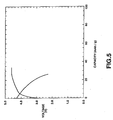
- Fig. 5 shows charging/discharging characteristics of a cell which uses LiMnPO 4 synthesized in Comparative Example 1 as a positive electrode active material.
- the cell which uses LiMn 0.6 Fe 0.4 PO 4 as the positive electrode active material has flat potentials in the vicinity of 4V and 3.4V in the former and latter halves of a discharging area to generate the reversible charging/discharging capacity of approximately 146 mAh/g. It is also seen from Fig. 5 that, although single-phase LiMnPO 4 having the olivinic structure is used as the positive electrode active material, this cell is not provided with a flat discharging area such that no Mn is generated by the redox reaction.
- LiMn 0.6 Fe 0.4 PO 4 in which Fe has been substituted for part of Mn, and Mn is generated by the redox reaction, can be used as the positive electrode active material having a high discharge voltage and a high capacity.
- Li x Mn y Fe 1-y PO 4 Li x Mn y Fe 1-y PO 4 , with an increased proportion y of Mn, was synthesized. Using the Li x Mn y Fe 1-y PO 4 , thus produced, a cell was prepared to evaluate its characteristics.
- a cell was prepared using the LiMn 0.7 Fe 0.3 PO 4 , prepared as described above, as a positive electrode active material.
- This intermediate synthesized product was mixed with acetylene black to a weight ratio of 90:10 and pulverized sufficiently in a ball mill for mixing.
- the resulting mixture was heated in a nitrogen atmosphere for 24 hours at 600°C to synthesize LiMn 0.75 Fe 0.25 PO 4 .
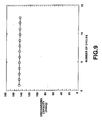
- Fig.9 shows cyclic characteristics of the cell of Example 2.
- Li x Mn y Fe z A 1-(y+z) PO 4 corresponding to Li x Mn y Fe 1-y PO 4 Mn and Fe of which have been partially replaced with Fe and with at least one metal element A selected from among Ti and Mg, used in combination with Fe, was synthesized.
- a cell was prepared, using the so-obtained Li x Mn y Fe z A 1-(y+z) PO 4 as the positive electrode active material, to evaluate its characteristics.
- LiMn 0.7 Fe 0.2 Ti 0.1 PO 4 was prepared as a positive electrode active material.
- manganese carbonate MnCO 3 manganese carbonate MnCO 3 , iron oxalate: dihydride FeC 2 O 4 ⁇ 2H 2 O, titanum oxide TiO 2 , ammonium dihydrogen phosphate NH 4 H 2 PO 4 and lithium carbonate Li 2 CO 3 were mixed together to a molar ratio of 1.4:0.4:0.2:2:1 and pulverized sufficiently in a ball mill for mixing.
- the resulting mixture then was calcined in a nitrogen atmosphere at 300 °C for three hours to prepare an intermediate synthesized product. This intermediate synthesized product was further pulverized sufficiently in a ball mill for mixing.
- the resulting mixture was heated in a nitrogen atmosphere for 24 hours at 600°C to synthesize LiMn 0.7 Fe 0.2 Ti 0.1 PO 4 .
- a test cell was prepared using the LiMn 0.7 Fe 0.2 Ti 0.1 PO 4 , prepared as described above, as a positive electrode active material.
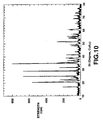
- a powder X-ray diffraction pattern was measured of LiMn 0.7 Fe 0.2 Ti 0.1 PO 4 of Example 4 synthesized by the above-described method under the same measurement conditions as those of Example 1.
- the powder X-ray diffraction pattern of LiMn 0.7 Fe 0.2 Ti 0.1 PO 4 is shown in Fig. 10 .
- a charging/discharging test was conducted on the test cell, thus prepared, in the same way as in Example 1.
- Fig. 11 shows charging/discharging characteristics of a cell which uses LiMn 0.7 Fe 0.2 Ti 0.1 PO 4 as the positive electrode active material.
- LiMn 0.7 Fe 0.2 Ti 0.1 PO 4 having the single-phase olivinic structure that has been produced.
- the cell which uses this LiMn 0.7 Fe 0.2 Ti 0.1 PO 4 as the positive electrode active material has a flat potential in the vicinity of 4V. From this it is seen that LiMn 0.7 Fe 0.2 Ti 0.1 PO 4 . Mn and Fe of which have been replaced by Ti, realizes redox.generation of Mn and can be used as a positive electrode active material having a high discharging potential.
- a test cell was prepared using the LiMn 0.7 Fe 0.25 Mg 0.05 PO 4 , prepared as described above, as a positive electrode active material.
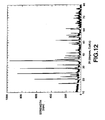
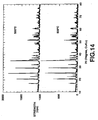
- a powder X-ray diffraction pattern was measured of LiMn 0.7 Fe 0.25 Mg 0.05 PO 4 of Example 5 synthesized by the above-described method, under the same measurement conditions as those of Example 1.
- the powder X-ray diffraction pattern of LiMn 0.7 Fe 0.25 Mg 0.05 PO 4 is shown in Fig.12 .
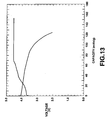
- a charging/discharging test was conducted on the test cell, thus prepared, in the same way as in Example 1: Fig. 13 shows charging/discharging characteristics of a cell which uses LiMn 0.7 Fe 0.25 Mg 0.05 PO 4 as the positive electrode active material.
- LiMn 0.7 Fe 0.25 Mg 0.05 PO 4 having the single-phase olivinic structure, that has been produced.
- the cell prepared using this LiMn 0.7 Fe 0.25 Mg 0.05 PO 4 as the positive electrode active material has a flat potential in the vicinity of 4V. It may be seen from thus that LiMn 0.7 Fe 0.25 Mg 0.05 PO 4 , obtained on replacing part of Mn and Fe with Mg, is able to realize Mn generation by a redox reaction and hence may be used as a positive electrode active material having a high discharge voltage.
- LiMn 0.8 Ti 0.2 PO 4 titanium oxide TiO 2 , manganese carbonate MnCO 3 , ammonium dihydrogen phosphate NH 4 H 2 PO 4 and lithium carbonate Li 2 CO 3 were mixed together to a molar ratio of 0.4:1.6:2:1 and pulverized sufficiently in a ball mill for mixing.
- the resulting mixture then was calcined in a nitrogen atmosphere at 300°C for three hours to prepare an intermediate synthesized product.
- This intermediate synthesized product was further pulverized sufficiently in a ball mill for mixing.
- the resulting mixture was heated in a nitrogen atmosphere for 24 hours at 600°C to synthesize LiMn 0.8 Ti 0.2 PO 4 .
- a paste-like positive electrode mixture was prepared by homogeneously mixing 85 wt% of dried LiMn 0.8 Ti 0.2 PO 4 , 10 wt% of acetylene black, as an electrification agent, and 5 wt% of polyvinylidene fluoride, as a binder, in N-methyl-2-pyrrolidone, as a solvent. Meanwhile, #1300 manufactured by Aldrich Inc. was used as polyvinylidene fluoride.
- LiPF 6 was dissolved at a concentration of 1 mol/l in a solvent mixture containing propylene carbonate and dimethyl carbonate in an equal volume ratio to prepare a non-aqueous electrolytic solution.
- LiMnPO 4 was synthesized as a positive electrode active material.
- Example 6 Using LiMnPO 4 as a positive electrode active material, a test cell was prepared in the same way as in Example 6.
- a cell was prepared in the same way as in Example 6, using so-prepared LiMn 0.8 Mg 0.2 PO 4 as a positive electrode active material.
- LiMn 0.8 Mg 0.2 PO 4 of the single-phase olivinic structure that has been produced.
- the cell which uses this LiMn 0.8 Mg 0.2 PO 4 as the positive electrode active material has a flat potential in the vicinity of 4V. It is seen from this that LiMn 0.8 Mg 0.2 PO 4 , obtained on substituting Mg for part of Mn, is able to yield Mn by the redox such that it may be used as a positive electrode active material having a high discharge voltage.
- LiMn 0.8 Zn 0.2 PO 4 of the single-phase olivinic structure that has been produced.
- the cell which uses this LiMn 0.8 Zn 0.2 PO 4 as the positive electrode active material has a flat potential in the vicinity of 4V. It is seen from this that LiMn 0.8 Zn 0.2 PO 4 , obtained on substituting Mg for part of Mn, is able to realize Mn redox generation such that it may be used as a positive electrode active material having a high discharge voltage.
- a cell was prepared using so-prepared LiMn 0.8 Zn 0.2 PO 4 as a positive electrode active material.
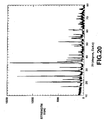
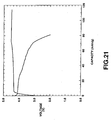
- LiMn 0.8 Co 0.2 PO 4 of the single-phase olivinic structure As may be seen from Fig.22 , it is LiMn 0.8 Co 0.2 PO 4 of the single-phase olivinic structure that has been produced. As may be seen from Fig.23 , the cell which uses this LiMn 0.8 Co 0.2 PO 4 as the positive electrode active material has a flat potential in the vicinity of 4V. It is seen from this that LiMn 0.8 Co 0.2 PO 4 , obtained on substituting Co for part of Mn, is able to realize Mn redox generation such that it may be used as a positive electrode active material having a high discharge voltage.
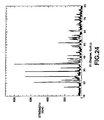
- a powder X-ray diffraction pattern was measured of LiMn 0.7 Fe 0.2 Ti 0.1 PO 4 of Example 10 synthesized by the above-described method under the same measurement conditions as those of Example 6.
- the powder X-ray diffraction pattern of LiMn 0.7 Fe 0.2 Ti 0.1 PO 4 is shown in Fig.24 .
- a charging/discharging test was conducted on the test cell, thus prepared, in the same way as in Example 6.
- Fig.25 shows charging/discharging characteristics of a cell which uses LiMn 0.7 Fe 0.25 Mg 0.05 PO 4 as the positive electrode active material.
- a discharge voltage as high as 155 mAh/g may be achieved by replacing Mn with plural metal elements Fe and Ti.
- LiMn 0.7 Fe 0.25 Mg 0.05 PO 4 was synthesized as a positive electrode active material.
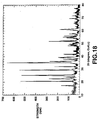
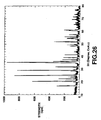
- a powder X-ray diffraction pattern was measured of LiMn 0.7 Fe 0.25 Mg 0.05 PO 4 , of Example 11 synthesized by the above-described method under the same measurement conditions as those of Example 6.
- the powder X-ray diffraction pattern of LiMn 0.7 Fe 0.25 Mg 0.05 PO 4 is shown in Fig.26 .
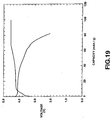
- a charging/discharging test was conducted on the test cell, thus prepared, in the same way as in Example 6.
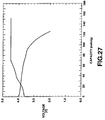
- Fig.27 shows charging/discharging characteristics of a cell which uses LiMn 0.7 Fe 0.25 Mg 0.05 PO 4 as the positive electrode active material.
- LiMn 0.7 Fe 0.25 Mg 0.05 PO 4 having the single-phase olivinic structure, that has been produced.
- the cell prepared using this LiMn 0.7 Fe 0.25 Mg 0.05 PO 4 as the positive electrode active material has a flat potential in the vicinity of 4V. It may be seen from thus that LiMn 0.7 Fe 0.25 Mg 0.05 PO 4 , obtained on replacing part of Mn with Fe and Mg, is able to yield Mn 3+ by a redox reaction and hence may be used as a positive electrode active material having a high discharge voltage.
Landscapes
- Chemical & Material Sciences (AREA)
- Chemical Kinetics & Catalysis (AREA)
- Electrochemistry (AREA)
- General Chemical & Material Sciences (AREA)
- Inorganic Chemistry (AREA)
- Engineering & Computer Science (AREA)
- Crystallography & Structural Chemistry (AREA)
- Composite Materials (AREA)
- Materials Engineering (AREA)
- Manufacturing & Machinery (AREA)
- Battery Electrode And Active Subsutance (AREA)
- Secondary Cells (AREA)
Claims (3)
- Aktivmaterial für positive Elektroden, das eine olivinische Struktur aufweist und einen Verbund aus einer Verbindung der allgemeinen Formel LixMnyFe1-yPO4 mit 0 < x ≤ 1 und 0,5 < y < 0,95 und einem Elektrifizierungsmittel in einer Menge von 0,5 bis 20 Gewichtsteilen auf 100 Gewichtsteile LixMnyFe1-yPO4 enthält, wobei das LixMnyFe1-yPO4 eine Korngröße von höchstens 10 µm aufweist, wobei die spezifische Brunauer-Emmett-Teller-Oberfläche mindestens 0,5 m2/g beträgt.
- Aktivmaterial für positive Elektroden nach Anspruch 1, wobei das Elektrifizierungsmittel aus Kohlenstoff, Kupfer oder einem elektrisch leitfähigen Hochpolymermaterial besteht.
- Zelle mit nichtwässrigem Elektrolyt, umfassend:eine positive Elektrode, die ein Aktivmaterial für positive Elektroden gemäß Anspruch 1 oder 2 enthält;eine negative Elektrode, die ein Aktivmaterial für negative Elektroden enthält; undeinen Elektrolyt, der zwischen der positiven Elektrode und der negativen Elektrode angeordnet ist.
Priority Applications (1)
| Application Number | Priority Date | Filing Date | Title |
|---|---|---|---|
| EP15183337.3A EP2985822B1 (de) | 2000-04-25 | 2001-04-24 | Aktives positivelektrodenmaterial und zelle mit nichtwässrigem elektrolyt |
Applications Claiming Priority (4)
| Application Number | Priority Date | Filing Date | Title |
|---|---|---|---|
| JP2000129000 | 2000-04-25 | ||
| JP2000128999A JP4432203B2 (ja) | 2000-04-25 | 2000-04-25 | 正極活物質及び非水電解質電池 |
| JP2000128999 | 2000-04-25 | ||
| JP2000129000A JP4461566B2 (ja) | 2000-04-25 | 2000-04-25 | 正極活物質及び非水電解質電池 |
Related Child Applications (2)
| Application Number | Title | Priority Date | Filing Date |
|---|---|---|---|
| EP15183337.3A Division EP2985822B1 (de) | 2000-04-25 | 2001-04-24 | Aktives positivelektrodenmaterial und zelle mit nichtwässrigem elektrolyt |
| EP15183337.3A Division-Into EP2985822B1 (de) | 2000-04-25 | 2001-04-24 | Aktives positivelektrodenmaterial und zelle mit nichtwässrigem elektrolyt |
Publications (3)
| Publication Number | Publication Date |
|---|---|
| EP1150367A2 EP1150367A2 (de) | 2001-10-31 |
| EP1150367A3 EP1150367A3 (de) | 2007-04-11 |
| EP1150367B1 true EP1150367B1 (de) | 2016-04-13 |
Family
ID=26591066
Family Applications (2)
| Application Number | Title | Priority Date | Filing Date |
|---|---|---|---|
| EP01109945.4A Expired - Lifetime EP1150367B1 (de) | 2000-04-25 | 2001-04-24 | Aktives Positivelektrodenmaterial und elektrochemische Zelle mit nichtwässrigem Elektrolyten |
| EP15183337.3A Expired - Lifetime EP2985822B1 (de) | 2000-04-25 | 2001-04-24 | Aktives positivelektrodenmaterial und zelle mit nichtwässrigem elektrolyt |
Family Applications After (1)
| Application Number | Title | Priority Date | Filing Date |
|---|---|---|---|
| EP15183337.3A Expired - Lifetime EP2985822B1 (de) | 2000-04-25 | 2001-04-24 | Aktives positivelektrodenmaterial und zelle mit nichtwässrigem elektrolyt |
Country Status (7)
| Country | Link |
|---|---|
| US (1) | US6749967B2 (de) |
| EP (2) | EP1150367B1 (de) |
| KR (1) | KR100809854B1 (de) |
| CN (1) | CN1223030C (de) |
| CA (2) | CA2344903C (de) |
| MX (1) | MXPA01004028A (de) |
| TW (1) | TW525313B (de) |
Families Citing this family (79)
| Publication number | Priority date | Publication date | Assignee | Title |
|---|---|---|---|---|
| US8057769B2 (en) * | 2000-04-27 | 2011-11-15 | Valence Technology, Inc. | Method for making phosphate-based electrode active materials |
| US6964827B2 (en) * | 2000-04-27 | 2005-11-15 | Valence Technology, Inc. | Alkali/transition metal halo- and hydroxy-phosphates and related electrode active materials |
| US6777132B2 (en) * | 2000-04-27 | 2004-08-17 | Valence Technology, Inc. | Alkali/transition metal halo—and hydroxy-phosphates and related electrode active materials |
| US7524584B2 (en) | 2000-04-27 | 2009-04-28 | Valence Technology, Inc. | Electrode active material for a secondary electrochemical cell |
| JP3988374B2 (ja) * | 2000-10-06 | 2007-10-10 | ソニー株式会社 | 非水電解液二次電池 |
| JP4348854B2 (ja) * | 2000-11-09 | 2009-10-21 | ソニー株式会社 | 正極材料およびそれを用いた二次電池 |
| CA2340798A1 (fr) * | 2001-03-13 | 2002-09-13 | Universite De Montreal | Compositions cathodiques et leurs utilisations, notamment dans les generateurs electrochimiques |
| US6984470B2 (en) * | 2001-03-26 | 2006-01-10 | Kabushiki Kaisha Toshiba | Positive electrode active material and nonaqueous electrolyte secondary battery |
| EP1261050A1 (de) * | 2001-05-23 | 2002-11-27 | n.v. Umicore s.a. | Lithium-Übergangsmetall-Phosphatpulver für wiederaufladbaren Batterien |
| KR101209358B1 (ko) | 2001-12-21 | 2012-12-07 | 메사추세츠 인스티튜트 오브 테크놀로지 | 전도성 리튬 저장 전극 |
| JP4207434B2 (ja) * | 2002-02-14 | 2009-01-14 | ソニー株式会社 | 正極活物質及び非水電解質電池の製造方法 |
| US6815122B2 (en) | 2002-03-06 | 2004-11-09 | Valence Technology, Inc. | Alkali transition metal phosphates and related electrode active materials |
| US7422823B2 (en) * | 2002-04-03 | 2008-09-09 | Valence Technology, Inc. | Alkali-iron-cobalt phosphates and related electrode active materials |
| US20030190527A1 (en) * | 2002-04-03 | 2003-10-09 | James Pugh | Batteries comprising alkali-transition metal phosphates and preferred electrolytes |
| US7482097B2 (en) * | 2002-04-03 | 2009-01-27 | Valence Technology, Inc. | Alkali-transition metal phosphates having a +3 valence non-transition element and related electrode active materials |
| CN100448071C (zh) * | 2003-03-18 | 2008-12-31 | 黄穗阳 | 锂电池正极材料及其制备方法 |
| US7815708B2 (en) * | 2003-09-29 | 2010-10-19 | Umicore | Process and apparatus for recovery of non-ferrous metals from zinc residues |
| US7008726B2 (en) * | 2004-01-22 | 2006-03-07 | Valence Technology, Inc. | Secondary battery electrode active materials and methods for making the same |
| US20050170256A1 (en) * | 2004-01-30 | 2005-08-04 | John Cummings | Electrical power source apparatuses, electrical power source operational methods, and electrochemical device charging methods |
| US7719227B2 (en) * | 2004-02-13 | 2010-05-18 | Valence Technology, Inc. | Electrical energy supply methods and electrical energy power supplies |
| FR2872633B1 (fr) * | 2004-07-02 | 2006-09-15 | Commissariat Energie Atomique | Procede de charge d'un accumulateur lithium-ion a electrode negative |
| US7842420B2 (en) | 2005-02-03 | 2010-11-30 | A123 Systems, Inc. | Electrode material with enhanced ionic transport properties |
| JP4273422B2 (ja) * | 2005-03-09 | 2009-06-03 | ソニー株式会社 | 正極材料および電池 |
| US8158090B2 (en) * | 2005-08-08 | 2012-04-17 | A123 Systems, Inc. | Amorphous and partially amorphous nanoscale ion storage materials |
| US7939201B2 (en) * | 2005-08-08 | 2011-05-10 | A123 Systems, Inc. | Nanoscale ion storage materials including co-existing phases or solid solutions |
| US8323832B2 (en) * | 2005-08-08 | 2012-12-04 | A123 Systems, Inc. | Nanoscale ion storage materials |
| EP1936721B1 (de) * | 2005-09-21 | 2015-11-11 | Kanto Denka Kogyo Co., Ltd. | Positiv-elektroden-aktivmaterial, herstellungsverfahren dafür und batterie mit wasserfreiem elektrolyt mit das positiv-elektrodenaktivmaterial enthaltender positiv-elektrode |
| EP1939959B8 (de) * | 2005-09-21 | 2012-09-26 | Kanto Denka Kogyo Co., Ltd. | Verfahren zum herstellen eines positiv-elektrodenaktivmaterials und batterie mit wasserfreiem elektrolyt damit |
| JP5084131B2 (ja) * | 2005-10-28 | 2012-11-28 | トヨタ自動車株式会社 | LiMnPO4の製造方法 |
| US8133616B2 (en) * | 2006-02-14 | 2012-03-13 | Dow Global Technologies Llc | Lithium manganese phosphate positive material for lithium secondary battery |
| US7494744B2 (en) * | 2006-03-08 | 2009-02-24 | Changs-Ascending Enterprise Co. | Cathode material for Li-ion battery applications |
| JP5479096B2 (ja) * | 2006-08-21 | 2014-04-23 | エルジー・ケム・リミテッド | リチウム金属リン酸化物の製造方法 |
| CA2672954C (en) * | 2006-12-22 | 2014-07-22 | Umicore | Synthesis of crystalline nanometric lifempo4 |
| KR101401797B1 (ko) * | 2006-12-22 | 2014-05-29 | 썽뜨르 나쇼날르 드 라 르쉐르쉐 씨엉띠삐끄 | 전기활성 결정성 나노메트릭 LiMnPO₄분말 |
| CA2672952C (en) | 2006-12-22 | 2014-08-05 | Umicore | Synthesis of electroactive crystalline nanometric limnpo4 powder |
| EP2130248B1 (de) * | 2007-03-19 | 2011-06-15 | Umicore | Zimmertemperatur-einphasen-li-einfüge-/-extraktionsmaterial zur verwendung in einer batterie auf li-basis |
| TW200838983A (en) * | 2007-03-22 | 2008-10-01 | Univ Nat Central | Phosphate compound fluorescent material |
| US20080241645A1 (en) * | 2007-03-26 | 2008-10-02 | Pinnell Leslie J | Lithium ion secondary batteries |
| US20080248375A1 (en) * | 2007-03-26 | 2008-10-09 | Cintra George M | Lithium secondary batteries |
| US20080240480A1 (en) * | 2007-03-26 | 2008-10-02 | Pinnell Leslie J | Secondary Batteries for Hearing Aids |
| CN102037601B (zh) * | 2007-07-12 | 2014-04-23 | A123系统公司 | 用于锂离子电池的多功能混合金属橄榄石 |
| EP2015382A1 (de) * | 2007-07-13 | 2009-01-14 | High Power Lithium S.A. | Kohlenstoffbeschichtetes Lithium-Mangan-Phosphat-Kathodenmaterial |
| JP2009048981A (ja) * | 2007-08-23 | 2009-03-05 | Sony Corp | 非水電解液二次電池 |
| TWI466370B (zh) | 2008-01-17 | 2014-12-21 | A123 Systems Inc | 鋰離子電池的混合式金屬橄欖石電極材料 |
| WO2009127901A1 (en) | 2008-04-14 | 2009-10-22 | High Power Lithium S.A. | Lithium metal phosphate/carbon nanocomposites as cathode active materials for secondary lithium batteries |
| EP2287947B1 (de) * | 2008-05-22 | 2014-04-16 | GS Yuasa International Ltd. | Aktives positivelektrodenmaterial für eine lithiumsekundärbatterie und lithiumsekundärbatterie |
| JP5376894B2 (ja) | 2008-10-20 | 2013-12-25 | 古河電池株式会社 | オリビン構造を有する多元系リン酸型リチウム化合物粒子、その製造方法及びこれを正極材料に用いたリチウム二次電池 |
| US8999576B2 (en) | 2009-05-22 | 2015-04-07 | Sharp Kabushiki Kaisha | Cathode active material, cathode and nonaqueous secondary battery |
| KR101607233B1 (ko) * | 2009-08-25 | 2016-03-29 | 삼성전자주식회사 | 양극 활물질, 이를 포함하는 양극 및 상기 양극을 채용한 리튬 전지 |
| US9178215B2 (en) | 2009-08-25 | 2015-11-03 | A123 Systems Llc | Mixed metal olivine electrode materials for lithium ion batteries having improved specific capacity and energy density |
| US9660267B2 (en) | 2009-09-18 | 2017-05-23 | A123 Systems, LLC | High power electrode materials |
| TWI496737B (zh) * | 2009-09-18 | 2015-08-21 | A123 Systems Llc | 磷酸鐵及其製備方法 |
| US8603367B2 (en) * | 2009-09-24 | 2013-12-10 | Valence Technology, Inc. | Manganese phosphates and related electrode active materials |
| US9269955B2 (en) * | 2009-09-24 | 2016-02-23 | Valence Technology Inc. | Manganese phosphates and related electrode active materials |
| DE102010006083B4 (de) * | 2010-01-28 | 2014-12-11 | Süd-Chemie Ip Gmbh & Co. Kg | Substituiertes Lithium-Mangan-Metallphosphat |
| DE102010006077B4 (de) * | 2010-01-28 | 2014-12-11 | Süd-Chemie Ip Gmbh & Co. Kg | Substituiertes Lithium-Mangan-Metallphosphat |
| US20110236736A1 (en) * | 2010-03-26 | 2011-09-29 | Semiconductor Energy Laboratory Co., Ltd. | Energy storage device and manufacturing method thereof |
| US9318741B2 (en) | 2010-04-28 | 2016-04-19 | Semiconductor Energy Laboratory Co., Ltd. | Positive electrode active material of power storage device, power storage device, electrically propelled vehicle, and method for manufacturing power storage device |
| US20110294005A1 (en) * | 2010-05-28 | 2011-12-01 | Semiconductor Energy Laboratory Co., Ltd. | Power storage device, electrode, and electric device |
| US9373844B2 (en) | 2010-07-01 | 2016-06-21 | Sharp Kabushiki Kaisha | Positive electrode active substance containing lithium-containing metal oxide |
| CN103069624B (zh) | 2010-07-01 | 2016-06-22 | 夏普株式会社 | 正极活性材料、正极和非水二次电池 |
| JP5132727B2 (ja) | 2010-07-12 | 2013-01-30 | シャープ株式会社 | 正極活物質、正極及び非水電解質二次電池 |
| CN101997118A (zh) * | 2010-11-02 | 2011-03-30 | 天津斯特兰能源科技有限公司 | 一种锂离子电池正极材料磷酸铁锰锂及其制备方法 |
| JP5451671B2 (ja) | 2011-03-23 | 2014-03-26 | シャープ株式会社 | 正極活物質、正極及び非水系二次電池 |
| EP2792005A1 (de) * | 2011-12-14 | 2014-10-22 | Dow Global Technologies LLC | Lithiumbatterieelektroden mit lithiumoxalat |
| EP2835849A4 (de) * | 2012-04-05 | 2015-11-25 | Hitachi Metals Ltd | Verfahren zur herstellung eines positivelektroden-aktivmaterials für wasserfreie sekundärbatterien, positivelektrode für wasserfreie sekundärbatterien und wasserfreie sekundärbatterie |
| CN102769138A (zh) * | 2012-08-07 | 2012-11-07 | 天津优量锂能科技有限公司 | 掺杂其他金属离子的磷酸锰锂溶胶凝胶合成方法 |
| KR101498971B1 (ko) * | 2012-10-17 | 2015-03-04 | 한화케미칼 주식회사 | 포름산 유도체를 이용한 새로운 올리빈계 전극재료의 제조방법 |
| WO2014098937A1 (en) * | 2012-12-21 | 2014-06-26 | Dow Global Technologies Llc | Lmfp cathode materials with improved electrochemical performance |
| WO2015006058A1 (en) | 2013-07-09 | 2015-01-15 | Dow Global Technologies Llc | Mixed positive active material comprising lithium metal oxide and lithium metal phosphate |
| CN104425845A (zh) * | 2013-09-09 | 2015-03-18 | 北京国能电池科技有限公司 | 一种高能量密度锂离子动力电池及其制造方法 |
| JP5846453B2 (ja) * | 2013-09-11 | 2016-01-20 | 株式会社デンソー | 正極活物質の製造方法 |
| EP3235028B1 (de) | 2014-12-18 | 2021-05-12 | Dow Global Technologies LLC | Lithiumionenbatterie mit erhöhter wärmestabilität |
| WO2016208770A1 (ja) * | 2015-06-26 | 2016-12-29 | 日本碍子株式会社 | 空気極材料、空気極及び金属空気電池 |
| CN106848221B (zh) * | 2017-01-18 | 2019-09-27 | 昆明理工大学 | 一种水热法制备磷酸锰锂基复合正极材料的方法 |
| CN108832099B (zh) * | 2018-06-15 | 2021-01-29 | 中南大学 | 一种富钠相钠离子电池正极材料及其制备和应用 |
| US11804601B2 (en) * | 2019-09-12 | 2023-10-31 | Saft America | Cathode materials for lithium ion batteries |
| CN116565472A (zh) * | 2022-01-28 | 2023-08-08 | 通用汽车环球科技运作有限责任公司 | 高功率凝胶辅助式双极固态电池组 |
| CN116553755A (zh) * | 2023-03-21 | 2023-08-08 | 南昌大学 | 一种双碳型废酸资源化成套设备及应用 |
Family Cites Families (17)
| Publication number | Priority date | Publication date | Assignee | Title |
|---|---|---|---|---|
| US4049879A (en) * | 1976-04-19 | 1977-09-20 | Exxon Research & Engineering Co. | Intercalated transition metal phosphorus trisulfides |
| EP0390185B1 (de) * | 1989-03-30 | 1994-06-22 | Matsushita Electric Industrial Co., Ltd. | Sekundärzelle mit nichtwässerigem Elektrolyten |
| DE69303980T2 (de) | 1992-05-18 | 1997-01-23 | Mitsubishi Cable Ind Ltd | Sekundäre Lithiumbatterie |
| JP3230893B2 (ja) * | 1993-04-28 | 2001-11-19 | 富士写真フイルム株式会社 | 非水電解質二次電池 |
| JPH0714579A (ja) * | 1993-06-25 | 1995-01-17 | Fuji Photo Film Co Ltd | 非水電解質二次電池 |
| US5807646A (en) | 1995-02-23 | 1998-09-15 | Tosoh Corporation | Spinel type lithium-mangenese oxide material, process for preparing the same and use thereof |
| JP3523397B2 (ja) | 1995-11-07 | 2004-04-26 | 日本電信電話株式会社 | 非水電解質二次電池 |
| JP3319258B2 (ja) | 1995-12-21 | 2002-08-26 | ソニー株式会社 | リチウム二次電池用正極活物質の製造方法及びリチウム二次電池の製造方法 |
| US5910382A (en) * | 1996-04-23 | 1999-06-08 | Board Of Regents, University Of Texas Systems | Cathode materials for secondary (rechargeable) lithium batteries |
| JPH10188985A (ja) * | 1996-12-27 | 1998-07-21 | Ricoh Co Ltd | 非水電解質二次電池 |
| TW434187B (en) * | 1997-05-07 | 2001-05-16 | Fuji Chem Ind Co Ltd | A process for preparing a spinel type of lithium manganese complex oxide |
| JPH1125983A (ja) * | 1997-07-04 | 1999-01-29 | Japan Storage Battery Co Ltd | リチウム電池用活物質 |
| JPH11219722A (ja) * | 1998-02-03 | 1999-08-10 | Matsushita Electric Ind Co Ltd | リチウム二次電池 |
| JP2000021411A (ja) * | 1998-07-03 | 2000-01-21 | Hitachi Ltd | 非水電解液二次電池 |
| CA2305837C (en) * | 1999-04-14 | 2011-05-31 | Sony Corporation | Material for negative electrode and nonaqueous-electrolyte battery incorporating the same |
| JP3913941B2 (ja) * | 1999-10-14 | 2007-05-09 | 株式会社日立製作所 | リチウム二次電池用正極活物質およびリチウム二次電池 |
| JP3997702B2 (ja) * | 2000-10-06 | 2007-10-24 | ソニー株式会社 | 非水電解質二次電池 |
-
2001
- 2001-04-23 MX MXPA01004028A patent/MXPA01004028A/es active IP Right Grant
- 2001-04-23 CA CA2344903A patent/CA2344903C/en not_active Expired - Lifetime
- 2001-04-23 TW TW090109594A patent/TW525313B/zh not_active IP Right Cessation
- 2001-04-23 CA CA2796903A patent/CA2796903C/en not_active Expired - Lifetime
- 2001-04-24 EP EP01109945.4A patent/EP1150367B1/de not_active Expired - Lifetime
- 2001-04-24 EP EP15183337.3A patent/EP2985822B1/de not_active Expired - Lifetime
- 2001-04-25 CN CNB011212438A patent/CN1223030C/zh not_active Expired - Lifetime
- 2001-04-25 US US09/842,483 patent/US6749967B2/en not_active Expired - Lifetime
- 2001-04-25 KR KR1020010022364A patent/KR100809854B1/ko not_active Expired - Lifetime
Also Published As
| Publication number | Publication date |
|---|---|
| TW525313B (en) | 2003-03-21 |
| EP2985822A1 (de) | 2016-02-17 |
| MXPA01004028A (es) | 2003-08-20 |
| US6749967B2 (en) | 2004-06-15 |
| US20010055718A1 (en) | 2001-12-27 |
| CA2796903A1 (en) | 2001-10-25 |
| CN1322023A (zh) | 2001-11-14 |
| CN1223030C (zh) | 2005-10-12 |
| EP1150367A2 (de) | 2001-10-31 |
| EP1150367A3 (de) | 2007-04-11 |
| CA2344903C (en) | 2013-03-05 |
| KR100809854B1 (ko) | 2008-03-04 |
| EP2985822B1 (de) | 2017-06-14 |
| KR20010098878A (ko) | 2001-11-08 |
| CA2344903A1 (en) | 2001-10-25 |
| CA2796903C (en) | 2015-03-31 |
Similar Documents
| Publication | Publication Date | Title |
|---|---|---|
| EP1150367B1 (de) | Aktives Positivelektrodenmaterial und elektrochemische Zelle mit nichtwässrigem Elektrolyten | |
| JP5445315B2 (ja) | 正極活物質の製造方法及び非水電解質二次電池の製造方法 | |
| JP4985640B2 (ja) | 正極活物質の製造方法 | |
| CN1280932C (zh) | 正电极材料和使用它的电池 | |
| EP2508476A1 (de) | Pyrophosphatverbindung und verfahren zu ihrer herstellung | |
| JPWO2000060680A1 (ja) | 正極活物質及び非水電解質二次電池、正極活物質の製造方法 | |
| JP2000294238A (ja) | LiFePO4の合成方法及び非水電解質電池の製造方法 | |
| JPWO2000060679A1 (ja) | 正極活物質の製造方法及び非水電解質二次電池の製造方法 | |
| JP4432203B2 (ja) | 正極活物質及び非水電解質電池 | |
| JP4207434B2 (ja) | 正極活物質及び非水電解質電池の製造方法 | |
| EP2287947A1 (de) | Positives aktives elektrodenmaterial für eine lithiumsekundärbatterie und lithiumsekundärbatterie | |
| JP4461566B2 (ja) | 正極活物質及び非水電解質電池 | |
| JP2002117847A (ja) | 正極活物質及び非水電解質電池、ならびにこれらの製造方法 | |
| JP5287593B2 (ja) | 正極活物質の製造方法。 | |
| JP2001250555A (ja) | 正極活物質の製造方法及び非水電解質電池の製造方法 | |
| JP4724911B2 (ja) | 非水電解質二次電池 | |
| JP5600904B2 (ja) | 非水電解質電池用の正極活物質及び非水電解質電池 | |
| JP2002117831A (ja) | 正極活物質の製造方法及び非水電解質二次電池の製造方法 | |
| KR20130022018A (ko) | 리튬 이차 전지용 양극 활물질, 이의 제조 방법 및 이를 포함하는 리튬 이차 전지 | |
| JP2003157843A (ja) | 正極材料およびその製造方法並びにそれを用いた電池 | |
| JP2002063904A (ja) | 正極活物質及び非水電解質電池並びにそれらの製造方法 | |
| KR102228749B1 (ko) | 리튬 이차 전지용 양극 활물질, 이의 제조 방법 및 이를 포함하는 리튬 이차 전지 | |
| JPH10270012A (ja) | 非水電解質二次電池 |
Legal Events
| Date | Code | Title | Description |
|---|---|---|---|
| PUAI | Public reference made under article 153(3) epc to a published international application that has entered the european phase |
Free format text: ORIGINAL CODE: 0009012 |
|
| AK | Designated contracting states |
Kind code of ref document: A2 Designated state(s): AT BE CH CY DE DK ES FI FR GB GR IE IT LI LU MC NL PT SE TR |
|
| AX | Request for extension of the european patent |
Free format text: AL;LT;LV;MK;RO;SI |
|
| PUAL | Search report despatched |
Free format text: ORIGINAL CODE: 0009013 |
|
| AK | Designated contracting states |
Kind code of ref document: A3 Designated state(s): AT BE CH CY DE DK ES FI FR GB GR IE IT LI LU MC NL PT SE TR |
|
| AX | Request for extension of the european patent |
Extension state: AL LT LV MK RO SI |
|
| 17P | Request for examination filed |
Effective date: 20070919 |
|
| AKX | Designation fees paid |
Designated state(s): DE FI FR GB SE |
|
| 17Q | First examination report despatched |
Effective date: 20080121 |
|
| RIC1 | Information provided on ipc code assigned before grant |
Ipc: H01M 4/02 20060101ALN20150324BHEP Ipc: H01M 10/052 20100101ALN20150324BHEP Ipc: H01M 4/58 20100101ALI20150324BHEP Ipc: H01M 4/136 20100101AFI20150324BHEP Ipc: H01M 4/62 20060101ALI20150324BHEP Ipc: H01M 4/36 20060101ALI20150324BHEP |
|
| GRAP | Despatch of communication of intention to grant a patent |
Free format text: ORIGINAL CODE: EPIDOSNIGR1 |
|
| INTG | Intention to grant announced |
Effective date: 20150520 |
|
| RIC1 | Information provided on ipc code assigned before grant |
Ipc: H01M 4/36 20060101ALI20150924BHEP Ipc: H01M 4/58 20100101ALI20150924BHEP Ipc: H01M 4/62 20060101ALI20150924BHEP Ipc: H01M 10/052 20100101ALN20150924BHEP Ipc: H01M 4/02 20060101ALN20150924BHEP Ipc: H01M 4/136 20100101AFI20150924BHEP |
|
| REG | Reference to a national code |
Ref country code: DE Ref legal event code: R079 Ref document number: 60149870 Country of ref document: DE Free format text: PREVIOUS MAIN CLASS: H01M0004500000 Ipc: H01M0004136000 |
|
| GRAP | Despatch of communication of intention to grant a patent |
Free format text: ORIGINAL CODE: EPIDOSNIGR1 |
|
| RIC1 | Information provided on ipc code assigned before grant |
Ipc: H01M 4/62 20060101ALI20151022BHEP Ipc: H01M 4/02 20060101ALN20151022BHEP Ipc: H01M 10/052 20100101ALN20151022BHEP Ipc: H01M 4/58 20100101ALI20151022BHEP Ipc: H01M 4/36 20060101ALI20151022BHEP Ipc: H01M 4/136 20100101AFI20151022BHEP |
|
| INTG | Intention to grant announced |
Effective date: 20151118 |
|
| RIC1 | Information provided on ipc code assigned before grant |
Ipc: H01M 4/58 20100101ALI20151110BHEP Ipc: H01M 4/02 20060101ALN20151110BHEP Ipc: H01M 10/052 20100101ALN20151110BHEP Ipc: H01M 4/136 20100101AFI20151110BHEP Ipc: H01M 4/62 20060101ALI20151110BHEP Ipc: H01M 4/36 20060101ALI20151110BHEP |
|
| GRAS | Grant fee paid |
Free format text: ORIGINAL CODE: EPIDOSNIGR3 |
|
| GRAA | (expected) grant |
Free format text: ORIGINAL CODE: 0009210 |
|
| RAP1 | Party data changed (applicant data changed or rights of an application transferred) |
Owner name: SONY CORPORATION |
|
| RIN1 | Information on inventor provided before grant (corrected) |
Inventor name: YAMADA, ATSUO Inventor name: LI, GUOHUA |
|
| AK | Designated contracting states |
Kind code of ref document: B1 Designated state(s): DE FI FR GB SE |
|
| REG | Reference to a national code |
Ref country code: GB Ref legal event code: FG4D |
|
| REG | Reference to a national code |
Ref country code: DE Ref legal event code: R096 Ref document number: 60149870 Country of ref document: DE |
|
| PG25 | Lapsed in a contracting state [announced via postgrant information from national office to epo] |
Ref country code: FI Free format text: LAPSE BECAUSE OF FAILURE TO SUBMIT A TRANSLATION OF THE DESCRIPTION OR TO PAY THE FEE WITHIN THE PRESCRIBED TIME-LIMIT Effective date: 20160413 |
|
| PG25 | Lapsed in a contracting state [announced via postgrant information from national office to epo] |
Ref country code: SE Free format text: LAPSE BECAUSE OF FAILURE TO SUBMIT A TRANSLATION OF THE DESCRIPTION OR TO PAY THE FEE WITHIN THE PRESCRIBED TIME-LIMIT Effective date: 20160413 |
|
| REG | Reference to a national code |
Ref country code: DE Ref legal event code: R097 Ref document number: 60149870 Country of ref document: DE |
|
| PLBE | No opposition filed within time limit |
Free format text: ORIGINAL CODE: 0009261 |
|
| STAA | Information on the status of an ep patent application or granted ep patent |
Free format text: STATUS: NO OPPOSITION FILED WITHIN TIME LIMIT |
|
| REG | Reference to a national code |
Ref country code: FR Ref legal event code: ST Effective date: 20170203 |
|
| 26N | No opposition filed |
Effective date: 20170116 |
|
| GBPC | Gb: european patent ceased through non-payment of renewal fee |
Effective date: 20160713 |
|
| PG25 | Lapsed in a contracting state [announced via postgrant information from national office to epo] |
Ref country code: FR Free format text: LAPSE BECAUSE OF NON-PAYMENT OF DUE FEES Effective date: 20160613 |
|
| PG25 | Lapsed in a contracting state [announced via postgrant information from national office to epo] |
Ref country code: GB Free format text: LAPSE BECAUSE OF NON-PAYMENT OF DUE FEES Effective date: 20160713 |
|
| REG | Reference to a national code |
Ref country code: DE Ref legal event code: R081 Ref document number: 60149870 Country of ref document: DE Owner name: MURATA MANUFACTURING CO., LTD., NAGAOKAKYO-SHI, JP Free format text: FORMER OWNER: SONY CORPORATION, TOKIO/TOKYO, JP Ref country code: DE Ref legal event code: R081 Ref document number: 60149870 Country of ref document: DE Owner name: MURATA MANUFACTURING CO., LTD., NAGAOKAKYO-SHI, JP Free format text: FORMER OWNER: TOHOKU MURATA MANUFACTURING CO., LTD, KORIYAMA-SHI, JP |
|
| PGFP | Annual fee paid to national office [announced via postgrant information from national office to epo] |
Ref country code: DE Payment date: 20200420 Year of fee payment: 20 |
|
| REG | Reference to a national code |
Ref country code: DE Ref legal event code: R071 Ref document number: 60149870 Country of ref document: DE |