EP1175372B1 - Procede permettant de convertir le monoxyde de carbone et l'eau d'un flux de reformat et appareil utilise a cet effet - Google Patents
Procede permettant de convertir le monoxyde de carbone et l'eau d'un flux de reformat et appareil utilise a cet effet Download PDFInfo
- Publication number
- EP1175372B1 EP1175372B1 EP00928761A EP00928761A EP1175372B1 EP 1175372 B1 EP1175372 B1 EP 1175372B1 EP 00928761 A EP00928761 A EP 00928761A EP 00928761 A EP00928761 A EP 00928761A EP 1175372 B1 EP1175372 B1 EP 1175372B1
- Authority
- EP
- European Patent Office
- Prior art keywords
- reformate
- catalyst
- reacting
- temperature
- platinum
- Prior art date
- Legal status (The legal status is an assumption and is not a legal conclusion. Google has not performed a legal analysis and makes no representation as to the accuracy of the status listed.)
- Expired - Lifetime
Links
Images


Classifications
-
- B—PERFORMING OPERATIONS; TRANSPORTING
- B01—PHYSICAL OR CHEMICAL PROCESSES OR APPARATUS IN GENERAL
- B01J—CHEMICAL OR PHYSICAL PROCESSES, e.g. CATALYSIS OR COLLOID CHEMISTRY; THEIR RELEVANT APPARATUS
- B01J21/00—Catalysts comprising the elements, oxides, or hydroxides of magnesium, boron, aluminium, carbon, silicon, titanium, zirconium, or hafnium
- B01J21/06—Silicon, titanium, zirconium or hafnium; Oxides or hydroxides thereof
- B01J21/066—Zirconium or hafnium; Oxides or hydroxides thereof
-
- B—PERFORMING OPERATIONS; TRANSPORTING
- B01—PHYSICAL OR CHEMICAL PROCESSES OR APPARATUS IN GENERAL
- B01J—CHEMICAL OR PHYSICAL PROCESSES, e.g. CATALYSIS OR COLLOID CHEMISTRY; THEIR RELEVANT APPARATUS
- B01J19/00—Chemical, physical or physico-chemical processes in general; Their relevant apparatus
- B01J19/0006—Controlling or regulating processes
- B01J19/0013—Controlling the temperature of the process
-
- B—PERFORMING OPERATIONS; TRANSPORTING
- B01—PHYSICAL OR CHEMICAL PROCESSES OR APPARATUS IN GENERAL
- B01J—CHEMICAL OR PHYSICAL PROCESSES, e.g. CATALYSIS OR COLLOID CHEMISTRY; THEIR RELEVANT APPARATUS
- B01J21/00—Catalysts comprising the elements, oxides, or hydroxides of magnesium, boron, aluminium, carbon, silicon, titanium, zirconium, or hafnium
- B01J21/06—Silicon, titanium, zirconium or hafnium; Oxides or hydroxides thereof
-
- B—PERFORMING OPERATIONS; TRANSPORTING
- B01—PHYSICAL OR CHEMICAL PROCESSES OR APPARATUS IN GENERAL
- B01J—CHEMICAL OR PHYSICAL PROCESSES, e.g. CATALYSIS OR COLLOID CHEMISTRY; THEIR RELEVANT APPARATUS
- B01J23/00—Catalysts comprising metals or metal oxides or hydroxides, not provided for in group B01J21/00
- B01J23/38—Catalysts comprising metals or metal oxides or hydroxides, not provided for in group B01J21/00 of noble metals
- B01J23/40—Catalysts comprising metals or metal oxides or hydroxides, not provided for in group B01J21/00 of noble metals of the platinum group metals
-
- B—PERFORMING OPERATIONS; TRANSPORTING
- B01—PHYSICAL OR CHEMICAL PROCESSES OR APPARATUS IN GENERAL
- B01J—CHEMICAL OR PHYSICAL PROCESSES, e.g. CATALYSIS OR COLLOID CHEMISTRY; THEIR RELEVANT APPARATUS
- B01J35/00—Catalysts, in general, characterised by their form or physical properties
- B01J35/60—Catalysts, in general, characterised by their form or physical properties characterised by their surface properties or porosity
- B01J35/61—Surface area
- B01J35/613—10-100 m2/g
-
- B—PERFORMING OPERATIONS; TRANSPORTING
- B01—PHYSICAL OR CHEMICAL PROCESSES OR APPARATUS IN GENERAL
- B01J—CHEMICAL OR PHYSICAL PROCESSES, e.g. CATALYSIS OR COLLOID CHEMISTRY; THEIR RELEVANT APPARATUS
- B01J35/00—Catalysts, in general, characterised by their form or physical properties
- B01J35/60—Catalysts, in general, characterised by their form or physical properties characterised by their surface properties or porosity
- B01J35/63—Pore volume
- B01J35/633—Pore volume less than 0.5 ml/g
-
- B—PERFORMING OPERATIONS; TRANSPORTING
- B01—PHYSICAL OR CHEMICAL PROCESSES OR APPARATUS IN GENERAL
- B01J—CHEMICAL OR PHYSICAL PROCESSES, e.g. CATALYSIS OR COLLOID CHEMISTRY; THEIR RELEVANT APPARATUS
- B01J35/00—Catalysts, in general, characterised by their form or physical properties
- B01J35/60—Catalysts, in general, characterised by their form or physical properties characterised by their surface properties or porosity
- B01J35/64—Pore diameter
- B01J35/647—2-50 nm
-
- B—PERFORMING OPERATIONS; TRANSPORTING
- B01—PHYSICAL OR CHEMICAL PROCESSES OR APPARATUS IN GENERAL
- B01J—CHEMICAL OR PHYSICAL PROCESSES, e.g. CATALYSIS OR COLLOID CHEMISTRY; THEIR RELEVANT APPARATUS
- B01J8/00—Chemical or physical processes in general, conducted in the presence of fluids and solid particles; Apparatus for such processes
- B01J8/02—Chemical or physical processes in general, conducted in the presence of fluids and solid particles; Apparatus for such processes with stationary particles, e.g. in fixed beds
- B01J8/04—Chemical or physical processes in general, conducted in the presence of fluids and solid particles; Apparatus for such processes with stationary particles, e.g. in fixed beds the fluid passing successively through two or more beds
-
- C—CHEMISTRY; METALLURGY
- C01—INORGANIC CHEMISTRY
- C01B—NON-METALLIC ELEMENTS; COMPOUNDS THEREOF; METALLOIDS OR COMPOUNDS THEREOF NOT COVERED BY SUBCLASS C01C
- C01B3/00—Hydrogen; Gaseous mixtures containing hydrogen; Separation of hydrogen from mixtures containing it; Purification of hydrogen; Reversible storage of hydrogen
- C01B3/02—Production of hydrogen; Production of gaseous mixtures containing hydrogen
- C01B3/32—Production of hydrogen; Production of gaseous mixtures containing hydrogen by reaction of gaseous or liquid organic compounds with gasifying agents, e.g. water, carbon dioxide or air
- C01B3/34—Production of hydrogen; Production of gaseous mixtures containing hydrogen by reaction of gaseous or liquid organic compounds with gasifying agents, e.g. water, carbon dioxide or air by reaction of hydrocarbons with gasifying agents
- C01B3/38—Production of hydrogen; Production of gaseous mixtures containing hydrogen by reaction of gaseous or liquid organic compounds with gasifying agents, e.g. water, carbon dioxide or air by reaction of hydrocarbons with gasifying agents using catalysts
- C01B3/382—Processes with two or more reaction steps, of which at least one is catalytic, e.g. steam reforming and partial oxidation
-
- C—CHEMISTRY; METALLURGY
- C01—INORGANIC CHEMISTRY
- C01B—NON-METALLIC ELEMENTS; COMPOUNDS THEREOF; METALLOIDS OR COMPOUNDS THEREOF NOT COVERED BY SUBCLASS C01C
- C01B3/00—Hydrogen; Gaseous mixtures containing hydrogen; Separation of hydrogen from mixtures containing it; Purification of hydrogen; Reversible storage of hydrogen
- C01B3/02—Production of hydrogen; Production of gaseous mixtures containing hydrogen
- C01B3/32—Production of hydrogen; Production of gaseous mixtures containing hydrogen by reaction of gaseous or liquid organic compounds with gasifying agents, e.g. water, carbon dioxide or air
- C01B3/34—Production of hydrogen; Production of gaseous mixtures containing hydrogen by reaction of gaseous or liquid organic compounds with gasifying agents, e.g. water, carbon dioxide or air by reaction of hydrocarbons with gasifying agents
- C01B3/38—Production of hydrogen; Production of gaseous mixtures containing hydrogen by reaction of gaseous or liquid organic compounds with gasifying agents, e.g. water, carbon dioxide or air by reaction of hydrocarbons with gasifying agents using catalysts
- C01B3/386—Catalytic partial combustion
-
- C—CHEMISTRY; METALLURGY
- C01—INORGANIC CHEMISTRY
- C01B—NON-METALLIC ELEMENTS; COMPOUNDS THEREOF; METALLOIDS OR COMPOUNDS THEREOF NOT COVERED BY SUBCLASS C01C
- C01B3/00—Hydrogen; Gaseous mixtures containing hydrogen; Separation of hydrogen from mixtures containing it; Purification of hydrogen; Reversible storage of hydrogen
- C01B3/02—Production of hydrogen; Production of gaseous mixtures containing hydrogen
- C01B3/32—Production of hydrogen; Production of gaseous mixtures containing hydrogen by reaction of gaseous or liquid organic compounds with gasifying agents, e.g. water, carbon dioxide or air
- C01B3/34—Production of hydrogen; Production of gaseous mixtures containing hydrogen by reaction of gaseous or liquid organic compounds with gasifying agents, e.g. water, carbon dioxide or air by reaction of hydrocarbons with gasifying agents
- C01B3/48—Production of hydrogen; Production of gaseous mixtures containing hydrogen by reaction of gaseous or liquid organic compounds with gasifying agents, e.g. water, carbon dioxide or air by reaction of hydrocarbons with gasifying agents followed by reaction of water vapour with carbon monoxide
-
- B—PERFORMING OPERATIONS; TRANSPORTING
- B01—PHYSICAL OR CHEMICAL PROCESSES OR APPARATUS IN GENERAL
- B01J—CHEMICAL OR PHYSICAL PROCESSES, e.g. CATALYSIS OR COLLOID CHEMISTRY; THEIR RELEVANT APPARATUS
- B01J2208/00—Processes carried out in the presence of solid particles; Reactors therefor
- B01J2208/00008—Controlling the process
- B01J2208/00017—Controlling the temperature
- B01J2208/00106—Controlling the temperature by indirect heat exchange
- B01J2208/00115—Controlling the temperature by indirect heat exchange with heat exchange elements inside the bed of solid particles
- B01J2208/00141—Coils
-
- B—PERFORMING OPERATIONS; TRANSPORTING
- B01—PHYSICAL OR CHEMICAL PROCESSES OR APPARATUS IN GENERAL
- B01J—CHEMICAL OR PHYSICAL PROCESSES, e.g. CATALYSIS OR COLLOID CHEMISTRY; THEIR RELEVANT APPARATUS
- B01J2208/00—Processes carried out in the presence of solid particles; Reactors therefor
- B01J2208/00008—Controlling the process
- B01J2208/00548—Flow
-
- B—PERFORMING OPERATIONS; TRANSPORTING
- B01—PHYSICAL OR CHEMICAL PROCESSES OR APPARATUS IN GENERAL
- B01J—CHEMICAL OR PHYSICAL PROCESSES, e.g. CATALYSIS OR COLLOID CHEMISTRY; THEIR RELEVANT APPARATUS
- B01J35/00—Catalysts, in general, characterised by their form or physical properties
- B01J35/30—Catalysts, in general, characterised by their form or physical properties characterised by their physical properties
- B01J35/31—Density
-
- B—PERFORMING OPERATIONS; TRANSPORTING
- B01—PHYSICAL OR CHEMICAL PROCESSES OR APPARATUS IN GENERAL
- B01J—CHEMICAL OR PHYSICAL PROCESSES, e.g. CATALYSIS OR COLLOID CHEMISTRY; THEIR RELEVANT APPARATUS
- B01J35/00—Catalysts, in general, characterised by their form or physical properties
- B01J35/30—Catalysts, in general, characterised by their form or physical properties characterised by their physical properties
- B01J35/34—Mechanical properties
- B01J35/37—Crush or impact strength
-
- C—CHEMISTRY; METALLURGY
- C01—INORGANIC CHEMISTRY
- C01B—NON-METALLIC ELEMENTS; COMPOUNDS THEREOF; METALLOIDS OR COMPOUNDS THEREOF NOT COVERED BY SUBCLASS C01C
- C01B2203/00—Integrated processes for the production of hydrogen or synthesis gas
- C01B2203/02—Processes for making hydrogen or synthesis gas
- C01B2203/0205—Processes for making hydrogen or synthesis gas containing a reforming step
- C01B2203/0227—Processes for making hydrogen or synthesis gas containing a reforming step containing a catalytic reforming step
- C01B2203/0233—Processes for making hydrogen or synthesis gas containing a reforming step containing a catalytic reforming step the reforming step being a steam reforming step
-
- C—CHEMISTRY; METALLURGY
- C01—INORGANIC CHEMISTRY
- C01B—NON-METALLIC ELEMENTS; COMPOUNDS THEREOF; METALLOIDS OR COMPOUNDS THEREOF NOT COVERED BY SUBCLASS C01C
- C01B2203/00—Integrated processes for the production of hydrogen or synthesis gas
- C01B2203/02—Processes for making hydrogen or synthesis gas
- C01B2203/0205—Processes for making hydrogen or synthesis gas containing a reforming step
- C01B2203/0227—Processes for making hydrogen or synthesis gas containing a reforming step containing a catalytic reforming step
- C01B2203/0244—Processes for making hydrogen or synthesis gas containing a reforming step containing a catalytic reforming step the reforming step being an autothermal reforming step, e.g. secondary reforming processes
-
- C—CHEMISTRY; METALLURGY
- C01—INORGANIC CHEMISTRY
- C01B—NON-METALLIC ELEMENTS; COMPOUNDS THEREOF; METALLOIDS OR COMPOUNDS THEREOF NOT COVERED BY SUBCLASS C01C
- C01B2203/00—Integrated processes for the production of hydrogen or synthesis gas
- C01B2203/02—Processes for making hydrogen or synthesis gas
- C01B2203/025—Processes for making hydrogen or synthesis gas containing a partial oxidation step
-
- C—CHEMISTRY; METALLURGY
- C01—INORGANIC CHEMISTRY
- C01B—NON-METALLIC ELEMENTS; COMPOUNDS THEREOF; METALLOIDS OR COMPOUNDS THEREOF NOT COVERED BY SUBCLASS C01C
- C01B2203/00—Integrated processes for the production of hydrogen or synthesis gas
- C01B2203/02—Processes for making hydrogen or synthesis gas
- C01B2203/0283—Processes for making hydrogen or synthesis gas containing a CO-shift step, i.e. a water gas shift step
- C01B2203/0288—Processes for making hydrogen or synthesis gas containing a CO-shift step, i.e. a water gas shift step containing two CO-shift steps
-
- C—CHEMISTRY; METALLURGY
- C01—INORGANIC CHEMISTRY
- C01B—NON-METALLIC ELEMENTS; COMPOUNDS THEREOF; METALLOIDS OR COMPOUNDS THEREOF NOT COVERED BY SUBCLASS C01C
- C01B2203/00—Integrated processes for the production of hydrogen or synthesis gas
- C01B2203/08—Methods of heating or cooling
- C01B2203/0805—Methods of heating the process for making hydrogen or synthesis gas
- C01B2203/0811—Methods of heating the process for making hydrogen or synthesis gas by combustion of fuel
-
- C—CHEMISTRY; METALLURGY
- C01—INORGANIC CHEMISTRY
- C01B—NON-METALLIC ELEMENTS; COMPOUNDS THEREOF; METALLOIDS OR COMPOUNDS THEREOF NOT COVERED BY SUBCLASS C01C
- C01B2203/00—Integrated processes for the production of hydrogen or synthesis gas
- C01B2203/08—Methods of heating or cooling
- C01B2203/0805—Methods of heating the process for making hydrogen or synthesis gas
- C01B2203/0838—Methods of heating the process for making hydrogen or synthesis gas by heat exchange with exothermic reactions, other than by combustion of fuel
- C01B2203/0844—Methods of heating the process for making hydrogen or synthesis gas by heat exchange with exothermic reactions, other than by combustion of fuel the non-combustive exothermic reaction being another reforming reaction as defined in groups C01B2203/02 - C01B2203/0294
-
- C—CHEMISTRY; METALLURGY
- C01—INORGANIC CHEMISTRY
- C01B—NON-METALLIC ELEMENTS; COMPOUNDS THEREOF; METALLOIDS OR COMPOUNDS THEREOF NOT COVERED BY SUBCLASS C01C
- C01B2203/00—Integrated processes for the production of hydrogen or synthesis gas
- C01B2203/08—Methods of heating or cooling
- C01B2203/0872—Methods of cooling
- C01B2203/0883—Methods of cooling by indirect heat exchange
-
- C—CHEMISTRY; METALLURGY
- C01—INORGANIC CHEMISTRY
- C01B—NON-METALLIC ELEMENTS; COMPOUNDS THEREOF; METALLOIDS OR COMPOUNDS THEREOF NOT COVERED BY SUBCLASS C01C
- C01B2203/00—Integrated processes for the production of hydrogen or synthesis gas
- C01B2203/10—Catalysts for performing the hydrogen forming reactions
- C01B2203/1005—Arrangement or shape of catalyst
- C01B2203/1011—Packed bed of catalytic structures, e.g. particles, packing elements
- C01B2203/1017—Packed bed of catalytic structures, e.g. particles, packing elements characterised by the form of the structure
-
- C—CHEMISTRY; METALLURGY
- C01—INORGANIC CHEMISTRY
- C01B—NON-METALLIC ELEMENTS; COMPOUNDS THEREOF; METALLOIDS OR COMPOUNDS THEREOF NOT COVERED BY SUBCLASS C01C
- C01B2203/00—Integrated processes for the production of hydrogen or synthesis gas
- C01B2203/10—Catalysts for performing the hydrogen forming reactions
- C01B2203/1005—Arrangement or shape of catalyst
- C01B2203/1023—Catalysts in the form of a monolith or honeycomb
-
- C—CHEMISTRY; METALLURGY
- C01—INORGANIC CHEMISTRY
- C01B—NON-METALLIC ELEMENTS; COMPOUNDS THEREOF; METALLOIDS OR COMPOUNDS THEREOF NOT COVERED BY SUBCLASS C01C
- C01B2203/00—Integrated processes for the production of hydrogen or synthesis gas
- C01B2203/10—Catalysts for performing the hydrogen forming reactions
- C01B2203/1005—Arrangement or shape of catalyst
- C01B2203/1029—Catalysts in the form of a foam
-
- C—CHEMISTRY; METALLURGY
- C01—INORGANIC CHEMISTRY
- C01B—NON-METALLIC ELEMENTS; COMPOUNDS THEREOF; METALLOIDS OR COMPOUNDS THEREOF NOT COVERED BY SUBCLASS C01C
- C01B2203/00—Integrated processes for the production of hydrogen or synthesis gas
- C01B2203/10—Catalysts for performing the hydrogen forming reactions
- C01B2203/1041—Composition of the catalyst
- C01B2203/1047—Group VIII metal catalysts
- C01B2203/1064—Platinum group metal catalysts
- C01B2203/107—Platinum catalysts
-
- C—CHEMISTRY; METALLURGY
- C01—INORGANIC CHEMISTRY
- C01B—NON-METALLIC ELEMENTS; COMPOUNDS THEREOF; METALLOIDS OR COMPOUNDS THEREOF NOT COVERED BY SUBCLASS C01C
- C01B2203/00—Integrated processes for the production of hydrogen or synthesis gas
- C01B2203/10—Catalysts for performing the hydrogen forming reactions
- C01B2203/1041—Composition of the catalyst
- C01B2203/1082—Composition of support materials
-
- C—CHEMISTRY; METALLURGY
- C01—INORGANIC CHEMISTRY
- C01B—NON-METALLIC ELEMENTS; COMPOUNDS THEREOF; METALLOIDS OR COMPOUNDS THEREOF NOT COVERED BY SUBCLASS C01C
- C01B2203/00—Integrated processes for the production of hydrogen or synthesis gas
- C01B2203/12—Feeding the process for making hydrogen or synthesis gas
- C01B2203/1205—Composition of the feed
-
- C—CHEMISTRY; METALLURGY
- C01—INORGANIC CHEMISTRY
- C01B—NON-METALLIC ELEMENTS; COMPOUNDS THEREOF; METALLOIDS OR COMPOUNDS THEREOF NOT COVERED BY SUBCLASS C01C
- C01B2203/00—Integrated processes for the production of hydrogen or synthesis gas
- C01B2203/14—Details of the flowsheet
- C01B2203/142—At least two reforming, decomposition or partial oxidation steps in series
-
- C—CHEMISTRY; METALLURGY
- C01—INORGANIC CHEMISTRY
- C01B—NON-METALLIC ELEMENTS; COMPOUNDS THEREOF; METALLOIDS OR COMPOUNDS THEREOF NOT COVERED BY SUBCLASS C01C
- C01B2203/00—Integrated processes for the production of hydrogen or synthesis gas
- C01B2203/16—Controlling the process
- C01B2203/1604—Starting up the process
-
- C—CHEMISTRY; METALLURGY
- C01—INORGANIC CHEMISTRY
- C01B—NON-METALLIC ELEMENTS; COMPOUNDS THEREOF; METALLOIDS OR COMPOUNDS THEREOF NOT COVERED BY SUBCLASS C01C
- C01B2203/00—Integrated processes for the production of hydrogen or synthesis gas
- C01B2203/16—Controlling the process
- C01B2203/1614—Controlling the temperature
-
- C—CHEMISTRY; METALLURGY
- C01—INORGANIC CHEMISTRY
- C01B—NON-METALLIC ELEMENTS; COMPOUNDS THEREOF; METALLOIDS OR COMPOUNDS THEREOF NOT COVERED BY SUBCLASS C01C
- C01B2203/00—Integrated processes for the production of hydrogen or synthesis gas
- C01B2203/16—Controlling the process
- C01B2203/169—Controlling the feed
-
- C—CHEMISTRY; METALLURGY
- C01—INORGANIC CHEMISTRY
- C01B—NON-METALLIC ELEMENTS; COMPOUNDS THEREOF; METALLOIDS OR COMPOUNDS THEREOF NOT COVERED BY SUBCLASS C01C
- C01B2203/00—Integrated processes for the production of hydrogen or synthesis gas
- C01B2203/80—Aspect of integrated processes for the production of hydrogen or synthesis gas not covered by groups C01B2203/02 - C01B2203/1695
- C01B2203/82—Several process steps of C01B2203/02 - C01B2203/08 integrated into a single apparatus
-
- Y—GENERAL TAGGING OF NEW TECHNOLOGICAL DEVELOPMENTS; GENERAL TAGGING OF CROSS-SECTIONAL TECHNOLOGIES SPANNING OVER SEVERAL SECTIONS OF THE IPC; TECHNICAL SUBJECTS COVERED BY FORMER USPC CROSS-REFERENCE ART COLLECTIONS [XRACs] AND DIGESTS
- Y02—TECHNOLOGIES OR APPLICATIONS FOR MITIGATION OR ADAPTATION AGAINST CLIMATE CHANGE
- Y02P—CLIMATE CHANGE MITIGATION TECHNOLOGIES IN THE PRODUCTION OR PROCESSING OF GOODS
- Y02P20/00—Technologies relating to chemical industry
- Y02P20/50—Improvements relating to the production of bulk chemicals
- Y02P20/52—Improvements relating to the production of bulk chemicals using catalysts, e.g. selective catalysts
Definitions
- the present invention relates to methods for producing hydrogen from hydrocarbon fuels and reactors for carrying out the methods; and more particularly to methods, apparatuses, and catalysts for conducting water gas shift reactions on a reactant stream of hydrocarbon fuels having been previously reformed by partial oxidation, steam reforming, or both.
- the proposed integrated systems should be able to use existing infrastructure fuels such as gasoline or diesel fuels. These fuels were not designed as a feed stock for generating hydrogen. Because of this. integrated systems are challenged to be able to handle the wide variety of hydrocarbons in the feed stock. For example, certain reforming byproducts such as olefins, benzene, methyl amide, and higher molecular weight aromatics can cause harm to catalysts used in reforming or purifying steps and may harm the fuel cell itself. Impurities in these fuels such as sulfur and chlorine can also be harmful to reactor catalysts and to the fuel cell.
- reforming byproducts such as olefins, benzene, methyl amide, and higher molecular weight aromatics can cause harm to catalysts used in reforming or purifying steps and may harm the fuel cell itself.
- Impurities in these fuels such as sulfur and chlorine can also be harmful to reactor catalysts and to the fuel cell.
- PSA pressure swing adsorption
- hydrogen permeable membrane separation techniques which separate carbon monoxide from hydrogen, such as pressure swing adsorption ("PSA") or hydrogen permeable membrane separation, have the deficit of having to provide an alternate means for disposal or storage of the carbon monoxide. Both of the aforementioned techniques also suffer in efficiency as neither converts the carbon monoxide (in the presence of water) to maximize hydrogen production. PSA also suffers from high cost and space requirements. Most notably, PSA presents a likely unacceptable parasitic power burden for portable power or transportation applications. At the same time, hydrogen permeable membranes are expensive, are sensitive to fouling from impurities in the reformate, and reduce the total volume of hydrogen provided to the fuel cell.
- PROX preferential oxidation
- selective methanation may both be appropriate as a secondary, or clean up, process at suitably low carbon monoxide levels.
- PROX appears to be suitable for oxidizing carbon monoxide at residuals of 20,000 PPM or less.
- Reformation of hydrocarbons may be subjected to some form of partial oxidation to create a reformate enriched in hydrogen.
- This partial oxidation can be accomplished by a flame-type gas-phase reaction or can be catalytically promoted, for example by a nickel-containing catalyst.
- Water in the form of steam may be added to prevent coking of the hydrocarbons during oxidation. Reformate composition varies widely with the type of hydrocarbon fuel or feed stock and with the efficacy of the particular partial oxidation process employed.
- reformate generated in this way generally includes varying amounts of carbon monoxide, carbon dioxide, water, nitrogen, trace amounts of hydrogen sulfide, and in the case of partial oxidation, ammonia. Beyond these chemicals, the remainder of the reformate being methane, ethane and depending on the fuel, other higher molecular weight hydrocarbons including: unsaturated and aromatic species; oxygenated species such as ethers, esthers, alcohols, aldehydes, etc.
- reformate composition resulting from the steam reforming process varies widely with the type of hydrocarbon fuel or feed stock and with the efficacy of the particular catalyst and process parameters employed.
- the reformate generated in this way generally includes (in addition to hydrogen) varying amounts of carbon monoxide, carbon dioxide, and water, with the remainder being methane, ethane and potentially higher molecular weight hydrocarbons including unsaturated and aromatic species, ethers. esters, alcohols, aldehydes, etc.
- the reformate can include trace amounts of hydrogen sulfide.
- Carbon monoxide produced from either partial oxidation or steam reforming can react with water (present from the prior oxidation process or intentionally added to the system) according to the following water-gas-shift (WGS) reaction of Equation 3 to generate more hydrogen:
- WGS water-gas-shift
- these conventional copper and zinc catalysts must be reduced (usually in situ) by a controlled atmosphere artificially being fed into the reactor to control the rate of reduction to avoid excessive heat which can spoil the catalyst.
- a controlled atmosphere artificially being fed into the reactor to control the rate of reduction to avoid excessive heat which can spoil the catalyst.
- further burdensome care during manufacture and maintenance of the reactor is needed to avoid contact with oxygen in the air, because these catalysts spontaneously oxidize in the presence of air and release heat during the process. When this happens, the catalyst needs to be reduced again. The subsequent reduction of the catalyst is also exothermic. Ultimately, the heat from exothermic reduction and/or oxidation reduces the catalyst life.
- the present invention addresses the above mentioned deficiencies in the art and provides additional advantages as will be disclosed more fully below.
- the present invention is directed to processes and reactors for converting carbon monoxide and steam in a reformate stream into carbon dioxide and hydrogen while employing an improved catalyst.
- the process includes generating a reformate by reacting a hydrocarbon fuel via partial oxidation, steam reforming, or both.
- the reformate is then reacted in the presence of a platinum group metal selected from the group consisting of platinum, palladium, iridium, osmium, rhodium or mixtures thereof.
- the platinum group metal is supported on a material selected from the group consisting of an oxide of zirconium, titanium and mixtures thereof.
- the preferable catalyst and support is Pt/ZrO 2 .
- a water gas shift reaction can be accomplished in a reformate over a wide range of temperatures (for example, between about 200°C. to about 650°C.) using a single shift catalyst.
- an advantageous process enhancement includes the step of introducing a predetermined amount of oxygen into the reformate for a desired period of time, oxidizing hydrocarbons, carbon monoxide and hydrogen, in the presence of the catalyst to generate heat to produce a desired temperature in the catalyst. This takes advantage of the heating value of the reformate at start up, when the reformate may not yet be acceptably pure for delivery to the fuel cell.
- a reactor according to the invention includes a first reactor section configured to produce reformate by a process selected from the group of partial oxidation, steam reforming, or a combination thereof.
- a second reactor section is put in communication with the first reactor section so as to receive the reformate.
- a catalyst is located in the second reactor section.
- the catalyst comprises a platinum group metal selected from the group consisting of platinum, palladium, iridium, osmium, rhodium and mixtures thereof, and a support material, for the platinum group metal, selected from the group consisting of an oxide of zirconium, titanium and mixtures thereof.
- the catalyst of the invention can be operated at higher temperatures than conventional "high temperature" shift catalysts containing iron. Catalysts according to the invention are also expected to have a higher activity than iron-containing catalysts. Also, as noted above, commercial Cu/ZnO catalysts or so called “low temperature shift" catalysts can undergo exothermic oxidation and reduction reactions, which in turn, can cause the catalyst temperature to rise to undesirable levels. This is not the case for the catalyst of the invention, because it can be used at relatively lower metal loading due to its activity. The low metal content in the Pt/ZrO2 catalyst, for example, minimizes any temperature rise.
- SMSI metal support interaction
- Cu/ZnO catalysts are also susceptible to sintering promoted by Chlorine and other halogens.
- the Pt/ZrO 2 catalyst should be resistant to this form of deactivation because the melting point of PtCl 2 is much higher than the melting point of CuCl 2 .
- the metal catalyst is deployed on the support without the use a halide salt.
- the preparation method eliminates the possibility of any leftover halogen on the catalyst. This will prevent any possible problems to the WGS catalyst or any downstream processes caused by halogens.
- Platinum on ZrO 2 (as discussed below) has been tested to date, but other Platinum Group Metals are also expected to work. Transition metals may also benefit from the ZrO 2 support and result in a more cost-efficient solution (e.g., Cu/ZrO 2 ).
- the catalyst of the invention does not need a special controlled reducing atmosphere for initial reduction as do the Cu/Zn catalysts.
- the catalysts of the invention can be reduced (if needed) by the constituents in the reformate stream during normal operation.
- a test catalyst of 1%Pt/ZrO 2 was prepared by incipient wetness impregnation.
- the platinum salt used in preparing catalysts of the invention would preferably be generally free of halogens, sulfur, arsenic, etc. as these species will not be completely removed by calcination and could cause problems in a fuel processor.
- tetra-amine platinum (II) nitrate, Pt(NH 3 ) 4 (NO 3 ) 2 (“TAPN”)
- Traditional platinum compounds used for catalyst synthesis are hexachloroplatinic acid hexahydrate and Platinum(II) Chloride. These are an inexpensive source of platinum and are more readily available than TAPN. However, these also contain chlorine which could cause system problems.
- the TAPN was acquired and is commercially available from Aldrich Chemical Company, U.S.A.
- the ZrO 2 is available from Norton CPPC (Chemical Process Product Corp.) in 3mm pellets (Part No. XZ16075).
- Table 1 provides physical properties of the zirconium oxide used. Physical Properties of Zirconium Oxide Used in Test Surface Area ⁇ 50 m. 2 /g. Pore Volume ⁇ 0.3 cm. 3 /g. Median Pore Diameter >15 nm. Crush Strength ⁇ 25 lbs. (110 Newtons) (11kgs.) Packing Density 78.4 lbs./ft. 3 (1250 kg./m. 3 )
- the 3 mm. spheres of the zirconium oxide were broken into Tyler 12-14 mesh particles. These particles were then calcined overnight at 400°C. to remove the moisture and other volatile impurities.
- the water saturation capacity of the pellets was determined as follows. To 3.91 g. of ZrO 2 pellets, water was added drop-wise until all of it was absorbed by the pellets. A total of 2.76 g. of water was absorbed. Thus, the water saturation capacity of the ZrO 2 was found to be 0.706 g. per g. of ZrO 2 .
- the surface area, pore volume, and median pore diameter are important to allow an optimum amount of Pt to be accessible to reactant molecules.
- Test samples with 0.5%, and 5.0% platinum loading were also prepared in the same manner although the process was scaled appropriately for each metal loading.
- the WGS catalyst testing was performed in a single pass tubular reactor.
- the reactor itself was a 1 ⁇ 2" OD (10 mm ID) quartz tube.
- a quartz frit centered in the tube held the catalyst in place.
- Catalyst particles were crushed to an average particle diameter of 1.3 mm.
- a bed volume of approximately 0.75 cm. 3 was used, corresponding to a catalyst mass of 0.98 g.
- the reactor tube was located and controlled within a shell oven. The location of the catalyst bed allowed 6 inches of the tube to provide a preheat for the reactant gases.
- Mass flow controllers set a dry composition and flow rate of the reactant mixture.
- the gas passed through a humidifier, where humidity level was set by saturating the gas with water at a set temperature.
- a water dropout trap maintained at 0°C removed moisture from the product stream before entering the gas chromatograph for analysis.
- a gas chromatograph gave continuous TCD analysis of the product stream, at two-minute intervals.
- the average concentrations of constituents comprising the test reformate used in the tests described below are disclosed TABLE 2 as volume percent. Test Reformate by Volume Percent %CO %H 2 %CO 2 %N 2 %H 2 O 2.0 29.0 14.3 31.7 23.0
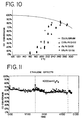
- the catalyst used in these tests contained 0.5%, 1.0%, and 5% Pt on ZrO 2 by weight. Three tests were conducted to find the optimal precious metal loading. The percentage of carbon monoxide conversion for each metal loading is graphically depicted in FIG. 10. The percentage conversion at 215°C. is tabulated in TABLE 3 for comparison. %Pt %CO conversion Normalized Activity 0.5% 18% 1 1% 33% 0.9 5% 61% 0.3
- Normalized activity was calculated by choosing the 215°C as a temperature that is not in the equilibrium-controlled regime and shows significant differences in conversion. Values shown are in units of (% conversion) per (weight % Pt). The data show a preferred effective range of loading exists between 0.5% and 5.0%. An even better range with a higher ratio of carbon monoxide conversion to weight of platinum appears to be between 0.5% and 1% platinum. It was also noted that a small amount of methane was detected above 260°C during the 5% Pt runs, where the Dry Gas Hourly Space Velocity was 8,000/hour.
- a 0.5% PtZrO 2 catalyst was made according to the above-described process. Tests were run on the catalyst to determine if: (1) the catalyst would be stable upon cycling between run and shutdown cycles, where water condenses on the catalyst upon cooling after shutdown; and, (2) whether the catalyst would be stable in a reformate stream containing certain species which can routinely appear and are known to be harmful to conventional water-gas-shift catalysts, namely ethylene, benzene, and sulfur.
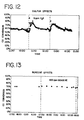
- the 0.5% platinum catalyst was then run in the test reactor separately with each of ethylene, benzene, and hydrogen sulfide. The results are shown in FIGS 11, 12 and 13.
- FIG. 11 graphically shows that exposure to ethylene did not lower catalyst activity, as is seen with conventional WGS catalysts. It was determined by chromatographic analysis that the WGS catalyst hydrogenated the ethylene to ethane, which is less detrimental to downstream processes.
- FIG. 1 discloses a reactor 10 having a first reactor section 12 configured to produce reformate first by partial oxidation of the hydrocarbon ("POX") in a subsection 14 and next a steam reforming of the resultant reaction stream in subsection 16.
- a second reactor section 18 is in communication with the first reactor section 12 so as to receive the resulting reformate.
- FIG. 2 discloses another exemplary reformer reactor 20.
- Reactor 20 includes a first reactor section 22 configured to produce reformate first by partial oxidation of the hydrocarbon(s).
- a second reactor section 24 is in communication with the first reactor section 22 so as to receive the resulting reformate.
- FIG. 3 discloses a reactor 26 having a first reactor section 28 configured to produce reformate by steam reforming of the hydrocarbon feedstock.
- a second reactor section 30 is in communication with the first reactor section 28 so as to receive the resulting reformate.
- FIG. 4 discloses a reactor 32 having a first reactor section 34 configured to produce reformate first by partial oxidation of the hydrocarbon in a subsection 36 and next a steam reforming of the resultant reaction stream in subsection 38.
- a second reactor section 40 is in communication with a third reactor section 42 which is in turn in communication with the first reactor section 34 so as to receive the resulting reformate.
- FIG. 5 discloses a reactor 44 having a first reactor section 46 configured to produce reformate by partial oxidation of the hydrocarbons.
- a second reactor section 48 is in communication with a third reactor section 50 which is in turn in communication with the first reactor section 44 so as to receive the resulting reformate.
- FIG. 6 discloses a reactor 52 having a first reactor section 54 configured to produce reformate by steam reforming of the hydrocarbons.
- a second reactor section 56 is in communication with a third reactor section 58 which is in turn in communication with the first reactor section 54 so as to receive the resulting reformate.
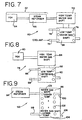
- FIG. 7 discloses a reactor 60 having a first reactor section 62 configured to produce reformate first by partial oxidation of hydrocarbons in a subsection 64 and next a steam reforming of the resultant reaction stream (reformate) in subsection 66.
- a second reactor section 68 is in communication with a third reactor section 70 which is in turn in communication with the first reactor section 62 so as to receive the resulting reformate.
- FIG. 8 discloses a reactor 78 having a first reactor section 80 configured to produce reformate by partial oxidation of the hydrocarbons.
- a second reactor section 82 is in communication with a third reactor section 84 which is in turn in communication with the first reactor section 80 so as to receive the resulting reformate.
- FIG. 9 discloses a reactor 92 having a first reactor section 94 configured to produce reformate by steam reforming of the hydrocarbons.
- a second reactor section 96 is in communication with the first reactor section 94 so as to receive the resulting reformate.
- a catalyst is disposed in the second reactor sections 18, 24, 30, 40, 48, 56, 76, 90 and 96.
- the catalyst is a platinum group metal ("PGM") selected from the group consisting of platinum, palladium, iridium, osmium, rhodium and mixtures thereof (but preferably is platinum).
- PGM platinum group metal
- the PGM is supported on a support material selected from the group consisting of an oxide of zirconium, titanium and mixtures thereof, but preferably zirconium oxide.
- the metal loading is preferably between 0.5% to 1.0%, platinum.
- the catalyst and support in reactor sections 18, 24, 30, 40, 48, 56, 76, 90 and 96 may be dispersed upon a monolithic base, or may he deployed on, or in, any other well accepted form of support or base such as a powder, granules, pellets, foam, etc.
- granules appear to be preferable.
- a monolithic base is thought to be preferable.
- Preferable monoliths are believed to include: foam or reticulate type; cellular or straight channel honeycomb type; and, extruded channel-type.
- a monolithic substrate may be fabricated of zirconium oxide.
- the PGM may be support directly on the substrate.
- a monolithic base may be wash-coated with zirconium oxide upon which the metal is then dispersed.
- the metal may be dispersed by any known method such as an incipient wetness method. Regardless of the form in which the catalyst (PGM and support) are deployed (granules, powder, monolith, etc.) the aggregate of the catalyst defines a "body of catalyst" to which reformate can be exposed.
- the zirconium support of the preferred embodiment has a surface area approximately about 50 m. 2 /g., a pore volume of approximately about 0.3 cm. 3 /g., and a median pore diameter greater than about 15 nm.
- a catalyst employed in the second reactor section is resistant to poisoning by sulfur, hydrogen sulfide, ethylene, benzene, air and condensed water. The catalyst is stable and active at converting carbon monoxide to carbon dioxide, at temperatures between about 200°C. and 650°C.
- the third reactor sections 42, 50, and 58, (FIGS 4-6) each contain a catalyst other than the catalyst disclosed herein, such as a conventional catalyst suitable for promoting a water gas shift reaction in the reformate.
- a catalyst is an iron-containing catalyst, capable of effective carbon monoxide conversion in the temperature range of about 300°C. and 650°C.
- the second and third reactor sections 42, 50, 58 and 40, 48, 56 can be used cooperatively in a two-part shift process.
- the reformate can be exposed to the iron-containing catalyst in the third reactor sections 42, 50, and 58 at a relatively high temperature, preferably between 300°C. and 650°C., more preferably between 350°C. and 540°C., and even more preferably between 370°C. and 480°C.
- the process can take advantage of relatively high temperature reaction kinetics as the reformate passes through the "high temperature shift" reactor section.
- the reactor thus takes advantage of the lower cost of the iron-containing catalysts which are relatively less expensive than the PGM catalysts disclosed.
- the reformate can be exposed to a PGM catalyst of the invention in the second reaction sections at relatively a lower temperature range, preferably between 150°C. and 320°C., more preferably between 200°C. and 320°C., and even more preferably between 230-290°C. at an inlet of the second reactor section and 200-240°C. at an outlet end of the second reactor section.
- a more favorable water gas shift reaction equilibrium can be obtained at the lower temperatures, hence providing a lower level of carbon monoxide.
- the PGM catalysts of the invention will have the advantages discussed herein over conventional "low temperature shift" catalysts such as those containing copper or zinc.
- FIGS 7-9 disclose alternate reformer reactors according to other aspects of the invention.
- both the second and third reactor sections 76, 90 and 70, 84 contain a catalyst comprising a platinum group metal ("PGM") selected from the group consisting of platinum, palladium, iridium, osmium, rhodium and mixtures thereof (but preferably is platinum).
- PGM platinum group metal
- the PGM is supported on a support material selected from the group consisting of an oxide of zirconium, titanium and mixtures thereof, but preferably zirconium oxide (ZrO 2 ).
- FIGS 7 and 8 also disclose optional heat exchange tubes 76 and 90 with inlets 72, 88 and outlets 74, 86, respectively, for reactors 60 and 78 to provide for active cooling in the second reactor section. This is to provide a means for controlling the temperature of the catalyst and reformate to a desired range. It should be understood that the third reactor sections could also deploy such heat exchangers for the same purpose. It will also be understood by those in the art that depending on the desired effect, the coolant can be routed co-current with the reformate flow or counter-flow, depending on the desired control or conditions.
- FIG 9 discloses another exemplary embodiment according to the invention.
- the second reactor section 96 includes a helical heat exchange tube 102 throughout a major extent of the PGM catalyst bed.
- the essential distinction from the other disclosed reactors is that the reactor section 96 is configured as necessary (i.e. the form of catalyst (granules, monolith, etc.), the direction of coolant flow (co-current, counter-current), flow rates of reformate and coolant, etc.) to provide a relatively continuous gradient of temperature from an inlet end 103 of the second reactor section to the end 104 near the outlet 106 of the second reactor section. This is again to take advantage of the wide temperature range of the catalysts of the invention.
- the continuous gradient will be most advantageous to the extent it tracks a carbon monoxide concentration gradient through the second reactor section to give the optimal reaction kinetics/favorable equilibrium balance at all times.
- the catalysts of the invention are stable in the presence of air.
- the PGM catalysts in particular platinum
- the PGM catalysts can also be used to oxidize hydrocarbons, carbon monoxide, and the hydrogen enriched stream, upon start-up of a reactor to speed the process of bringing the WGS catalyst to an effective operating temperature through the exothermic oxidation reaction.
- Significant hydrogen is produced at startup in a partial oxidation reaction, a steam reforming reaction or ATR. Since the hydrogen produced in the reformate during startup can not be used while carbon monoxide levels are still high, it is advantageous to use the heating value of that hydrogen to directly heat the WGS catalyst bed responsible for reducing carbon monoxide levels.
- FIG 1 discloses such an arrangement.
- An inlet 19 is provided to the second reactor section 18 to permit a flow of an oxygen containing gas, such as air.
- the air can be added to the reformate stream through the inlet 19 for a predetermined time until a desired temperature is achieved in the catalyst and/or the reformate during start up.
- Such a reactor configuration would be particularly useful in transportation applications where speed to full power delivery is important. In such applications it would be advantageous to be able to provide comparable speed to full power delivery now provided by internal combustion engines.
- reactors described herein are described in terms of “reactor sections.” It is contemplated that these sections will provide benefits according to the invention whether or not these sections are incorporated into integrated unitary structures having multiple sections or are configured as stand alone, modular sections as is desired.
- the inventions disclosed and claimed herein are concerned with providing reactor configurations and structures wherein “reactor sections” are coordinated and arranged to provide the sequencing of reactions necessary to accommodate the process contemplated.
Landscapes
- Chemical & Material Sciences (AREA)
- Chemical Kinetics & Catalysis (AREA)
- Organic Chemistry (AREA)
- Engineering & Computer Science (AREA)
- Materials Engineering (AREA)
- Combustion & Propulsion (AREA)
- Health & Medical Sciences (AREA)
- General Health & Medical Sciences (AREA)
- Inorganic Chemistry (AREA)
- Hydrogen, Water And Hydrids (AREA)
- Catalysts (AREA)
- Carbon And Carbon Compounds (AREA)
Claims (30)
- Processus pour convertir du monoxyde de carbone et de l'eau au sein d'un écoulement de reformat en dioxyde de carbone et en hydrogène, comprenant :dans lequel le métal du groupe platine est supporté sur un matériau sélectionné parmi le groupe consistant en un oxyde de zirconium, du titane et des mélanges de ceux-ci.la génération d'un reformat en faisant réagir un hydrocarbure via un processus choisi parmi le groupe consistant en une oxydation partielle, un reformage à la vapeur, et un reformage autothermique ; etune réaction, principalement à l'aide d'une réaction de conversion de gaz à l'eau en présence d'un catalyseur comprenant un métal du groupe platine sélectionné parmi le groupe consistant en platine, palladium, iridium, osmium, rhodium et des mélanges de ceux-ci ;
- Processus selon la revendication 1, dans lequel le métal du groupe platine est du platine et dans lequel le platine est supporté sur un oxyde de zirconium.
- Processus selon la revendication 1 ou la revendication 2, dans lequel l'étape de réaction du reformat comprend le maintien de la réaction à une température située entre environ 200°C et environ 650°C.
- Processus selon la revendication 1 ou la revendication 2, dans lequel l'étape de réaction du reformat comprend le maintien de la réaction à une température de l'ordre d'environ 150°C à environ 320°C.
- Processus selon la revendication 2, dans lequel l'étape de réaction du reformat comprend le maintien de la réaction à une température située entre environ 200°C et environ 320°C.
- Processus selon la revendication 1 ou la revendication 2, dans lequel l'étape de réaction du reformat comprend le maintien de la réaction à une première température située entre environ 230°C et environ 290°C à une entrée d'une section de réacteur contenant le catalyseur et à une seconde température située entre environ 200°C et environ 240°C à une extrémité de sortie de la section de réacteur.
- Processus selon l'une quelconque des revendications 1 à 3 comprenant l'étape de réaction du reformat en présence d'un catalyseur contenant du fer avant la réaction du reformat en présence du métal du groupe platine.
- Processus selon la revendication 7, dans lequel l'étape de réaction du reformat en présence d'un catalyseur contenant du fer comprend le maintien de la réaction à une température située entre environ 300°C et environ 650°C.
- Processus selon la revendication 7, dans lequel l'étape de réaction du reformat en présence d'un catalyseur contenant du fer comprend le maintien de la réaction à une température située entre environ 350°C et 540°C.
- Processus selon l'une quelconque des revendications 1 à 5 comprenant les étapes consistant à :faire réagir le reformat en présence d'un catalyseur contenant du fer avant de faire réagir le reformat en présence du métal du groupe platine ; et,maintenir la réaction en présence du catalyseur contenant du fer à une température située entre environ 300°C et environ 650°C lorsque l'on est en présence du catalyseur contenant du fer.
- Processus selon la revendication 1 ou la revendication 2, dans lequel la réaction du reformat en présence d'un métal du groupe platine sélectionné parmi le groupe consistant en platine, palladium, iridium, osmium, rhodium et des mélanges de ceux-ci comprend la réaction du reformat tout d'abord en présence d'une première partie dudit catalyseur à une première température située entre environ 300°C et environ 650°C puis la réaction du reformat résultant en présence d'une seconde partie dudit catalyseur tout en maintenant la réaction à une seconde température située entre environ 200°C et environ 400°C.
- Processus selon la revendication 1, dans lequel la réaction du reformat en présence d'un métal du groupe platine sélectionné parmi le groupe consistant en platine, palladium, iridium, osmium, rhodium et des mélanges de ceux-ci comprend la réaction du reformat tout d'abord en présence d'une première partie d'un corps dudit catalyseur à une première température située entre environ 350°c et environ 540°C puis la réaction du reformat résultant en présence d'une deuxième partie du corps dudit catalyseur tout en maintenant la réaction à une seconde température située entre environ 200°C et environ 400°C.
- Processus selon la revendication 2, dans lequel la réaction du reformat en présence d'un métal du groupe platine sélectionné parmi le groupe consistant en platine, palladium, iridium, osmium, rhodium et des mélanges de ceux-ci comprend la réaction du reformat tout d'abord en présence d'une première partie dudit catalyseur à une première température située entre environ 300°c et environ 540°C puis la réaction du reformat résultant en présence d'une deuxième partie dudit catalyseur tout en maintenant la réaction à une seconde température située entre environ 200°C et environ 400°C.
- Processus selon la revendication 2, dans lequel la réaction du reformat en présence d'un métal du groupe platine sélectionné parmi le groupe consistant en platine, palladium, iridium, osmium, rhodium et des mélanges de ceux-ci comprend :la fourniture d'un corps dudit catalyseur pour traverser le reformat depuis un début du corps du catalyseur jusqu'à une extrémité du corps du catalyseur ; et,le maintien d'un gradient des températures de réaction le long du corps, le gradient diminuant en température depuis le début du corps jusqu'à l'extrémité du corps.
- Processus selon la revendication 14, dans lequel le gradient est défini par une première température près du début du corps située entre environ 260°C et environ 650°C et une seconde température près de l'extrémité du corps située entre environ 175°c et environ 345°C.
- Processus selon la revendication 14, dans lequel le gradient est défini par une première température près du début du corps située entre environ 260°c et environ 650°C et une seconde température près de l'extrémité du corps située entre environ 175°C et environ 300°C.
- Processus selon la revendication 14, dans lequel le gradient est défini par une première température près du début du corps située entre environ 350°C et environ 650°C et une seconde température près de l'extrémité du corps située entre environ 175°C et environ 275°C.
- Processus selon la revendication 2, dans lequel l'étape de réaction du reformat comprend le maintien de la réaction à une température située entre environ 150°C et environ 250°C.
- Processus selon la revendication 1 ou la revendication 2, dans lequel l'étape de réaction du reformat en présence d'un métal du groupe platine sélectionné parmi le groupe consistant en platine, palladium, iridium, osmium, rhodium et des mélanges de ceux-ci comprend :l'introduction d'une quantité prédéterminée d'oxygène dans le reformat pendant une période de temps désirée ; et,la promotion de l'oxydation des constituants dans le reformat en présence du catalyseur afin de générer de la chaleur à une température désirée dans le catalyseur.
- Processus selon la revendication 2, dans lequel l'étape de génération d'un reformat fournit un reformat résultant possédant du monoxyde de carbone, du dioxyde de carbone, de l'azote, de l'hydrogène, et de l'eau, et dans lequel l'eau constitue plus de 10 % du reformat en volume.
- Processus selon la revendication 1 ou la revendication 2, dans lequel l'étape de génération comprend la génération d'un reformat possédant une concentration en monoxyde de carbone supérieure à environ 10 % en volume.
- Processus selon la revendication 1 ou la revendication 2, dans lequel l'étape de génération comprend la génération d'un reformat possédant une concentration en eau supérieure à environ 15 % en volume.
- Processus selon la revendication 21, dans lequel l'étape de génération comprend la génération d'un reformat possédant une concentration en eau supérieure à environ 15 % en volume.
- Processus selon les revendications 1, 2 ou 23,
dans lequel l'étape de génération comprend la génération d'un reformat possédant une concentration en hydrocarbures aliphatiques située entre environ 0,01 % et environ 0,50 % en volume. - Processus selon la revendication 1, dans lequel l'étape de génération comprend la génération d'un reformat possédant un ou plusieurs constituant(s) d'hydrocarbures aliphatiques choisi(s) parmi le groupe : d'un alcool, d'un ester, d'un éther, d'un acide, d'un aldéhyde, d'un non aromatique insaturé, d'un aromatique et d'un cyclique.
- Processus selon la revendication 1 ou la revendication 2, dans lequel l'étape de génération comprend la génération d'un reformat possédant un ou plusieurs constituant(s) d'hydrocarbures non aliphatiques choisi(s) parmi le groupe consistant en : un alcool, un ester, un éther, un acide, un aldéhyde, un non aromatique insaturé, un aromatique et un cyclique.
- Processus selon la revendication 2, dans lequel l'étape de génération comprend la génération d'un reformat possédant un ou plusieurs constituant(s) non aliphatique(s) à base de carbone choisi(s) parmi le groupe consistant en : un alcool, un ester, un éther, un acide, un aldéhyde, un non aromatique insaturé, un aromatique et un cyclique.
- Processus selon la revendication 24 ou 25, dans lequel l'étape de génération comprend la génération d'un reformat possédant un ou plusieurs constituant(s) d'hydrocarbures non aliphatiques choisi(s) parmi le groupe consistant en : un alcool, un ester, un éther, un acide, un aldéhyde, un non aromatique insaturé, un aromatique et un cyclique.
- Processus selon la revendication 1 ou la revendication 2, dans lequel l'étape de génération comprend la génération d'un reformat qui comprend du sulfure d'hydrogène.
- Processus selon la revendication 1 ou la revendication 2, dans lequel l'étape de génération comprend une oxydation partielle et dans lequel le reformat comprend de l'ammoniac.
Applications Claiming Priority (7)
| Application Number | Priority Date | Filing Date | Title |
|---|---|---|---|
| US13218399P | 1999-05-03 | 1999-05-03 | |
| US132183P | 1999-05-03 | ||
| US15862699P | 1999-10-06 | 1999-10-06 | |
| US158626P | 1999-10-06 | ||
| US562789 | 2000-05-02 | ||
| US09/562,789 US6524550B1 (en) | 1999-05-03 | 2000-05-02 | Process for converting carbon monoxide and water in a reformate stream |
| PCT/US2000/012012 WO2000066486A1 (fr) | 1999-05-03 | 2000-05-03 | Procede permettant de convertir le monoxyde de carbone et l'eau d'un flux de reformat et appareil utilise a cet effet |
Publications (2)
| Publication Number | Publication Date |
|---|---|
| EP1175372A1 EP1175372A1 (fr) | 2002-01-30 |
| EP1175372B1 true EP1175372B1 (fr) | 2004-07-28 |
Family
ID=27384257
Family Applications (1)
| Application Number | Title | Priority Date | Filing Date |
|---|---|---|---|
| EP00928761A Expired - Lifetime EP1175372B1 (fr) | 1999-05-03 | 2000-05-03 | Procede permettant de convertir le monoxyde de carbone et l'eau d'un flux de reformat et appareil utilise a cet effet |
Country Status (8)
| Country | Link |
|---|---|
| US (2) | US6524550B1 (fr) |
| EP (1) | EP1175372B1 (fr) |
| JP (1) | JP2002543032A (fr) |
| AT (1) | ATE272025T1 (fr) |
| AU (1) | AU768826B2 (fr) |
| CA (1) | CA2372543A1 (fr) |
| DE (1) | DE60012499D1 (fr) |
| WO (1) | WO2000066486A1 (fr) |
Families Citing this family (51)
| Publication number | Priority date | Publication date | Assignee | Title |
|---|---|---|---|---|
| JP3473898B2 (ja) * | 1999-04-22 | 2003-12-08 | 松下電器産業株式会社 | 水素精製装置 |
| DE10013894A1 (de) * | 2000-03-21 | 2001-10-04 | Dmc2 Degussa Metals Catalysts | Verfahren zur katalytischen Umsetzung von Kohlenmonoxid in einem Wasserstoff enthaltenden Gasgemisch mit verbessertem Kaltstartverhalten und Katalysator hierfür |
| DE10013895A1 (de) | 2000-03-21 | 2001-10-04 | Dmc2 Degussa Metals Catalysts Cerdec Ag | Verfahren zur katalytischen Umsetzung von Kohlenmonoxid in einem Wasserstoff enthaltenden Gasgemisch |
| FR2807746B1 (fr) * | 2000-04-13 | 2002-12-13 | Air Liquide | Procede de production d'un melange comportant de l'hydrogene et du co |
| EP1274650A1 (fr) * | 2000-04-17 | 2003-01-15 | Shell Internationale Researchmaatschappij B.V. | Processeur de combustible |
| DE10025032A1 (de) * | 2000-05-20 | 2001-11-29 | Dmc2 Degussa Metals Catalysts | Verfahren zur autothermen, katalytischen Dampfreformierung von Kohlenwasserstoffen |
| US20020061277A1 (en) * | 2000-09-25 | 2002-05-23 | Engelhard Corporation | Non-pyrophoric water-gas shift reaction catalysts |
| CA2423399A1 (fr) | 2000-09-25 | 2002-04-04 | Engelhard Corporation | Suppression de l'activite de methanation par un catalyseur de conversion catalytique |
| JP2002173370A (ja) * | 2000-12-01 | 2002-06-21 | Toyota Central Res & Dev Lab Inc | チタニア系多孔体及び触媒 |
| CN101712461A (zh) * | 2001-01-26 | 2010-05-26 | 松下电器产业株式会社 | 氢气提纯装置和燃料电池发电系统 |
| US6652830B2 (en) * | 2001-02-16 | 2003-11-25 | Battelle Memorial Institute | Catalysts reactors and methods of producing hydrogen via the water-gas shift reaction |
| US6713040B2 (en) * | 2001-03-23 | 2004-03-30 | Argonne National Laboratory | Method for generating hydrogen for fuel cells |
| US20020174603A1 (en) * | 2001-03-23 | 2002-11-28 | Shabbir Ahmed | Method for generating hydrogen for fuel cells |
| US6967063B2 (en) * | 2001-05-18 | 2005-11-22 | The University Of Chicago | Autothermal hydrodesulfurizing reforming method and catalyst |
| US6821494B2 (en) * | 2001-07-31 | 2004-11-23 | Utc Fuel Cells, Llc | Oxygen-assisted water gas shift reactor having a supported catalyst, and method for its use |
| US6881703B2 (en) | 2001-08-08 | 2005-04-19 | Corning Incorporated | Thermally conductive honeycombs for chemical reactors |
| DE10157155A1 (de) * | 2001-11-22 | 2003-06-12 | Omg Ag & Co Kg | Verfahren zur katalytischen autothermen Dampfreformierung von höheren Alkoholen, insbesondere Ethanol |
| US6846585B2 (en) * | 2002-03-08 | 2005-01-25 | General Motors Corporation | Method for quick start-up of a fuel processing system using controlled staged oxidation |
| DE10225945A1 (de) * | 2002-06-11 | 2003-12-24 | Basf Ag | Verfahren zur Herstellung von wasserstoffhaltigen Gasen |
| US6790432B2 (en) * | 2002-06-12 | 2004-09-14 | Engelhard Corporation | Suppression of methanation activity of platinum group metal water-gas shift catalysts |
| US7041271B2 (en) * | 2002-10-10 | 2006-05-09 | Praxair Technology, Inc. | Integrated olefin recovery and hydrogen production from refinery off-gases |
| US7105148B2 (en) * | 2002-11-26 | 2006-09-12 | General Motors Corporation | Methods for producing hydrogen from a fuel |
| US7459224B1 (en) | 2002-11-26 | 2008-12-02 | General Motors Corporation | Methods, apparatus, and systems for producing hydrogen from a fuel |
| EP1578529A2 (fr) * | 2002-12-20 | 2005-09-28 | Honda Giken Kogyo Kabushiki Kaisha | Preparations catalytiques contenant du platine et du rhodium et/ou du fer destinees a la production d'hydrogene |
| CA2511017A1 (fr) * | 2002-12-20 | 2004-07-15 | Honda Giken Kogyo Kabushiki Kaisha | Preparations catalysantes de ruthenium-cobalt exemptes de platine destinees a la production d'hydrogene |
| US7160533B2 (en) * | 2002-12-20 | 2007-01-09 | Honda Giken Kogyo Kabushiki Kaisha | Platinum-ruthenium containing catalyst formulations for hydrogen generation |
| CA2511018A1 (fr) * | 2002-12-20 | 2004-07-15 | Honda Giken Kogyo Kabushiki Kaisha | Formulations de catalyseur contenant des metaux du groupe 11 pour le production d'hydrogene |
| US20040197246A1 (en) * | 2003-04-04 | 2004-10-07 | Texaco Inc. | Fuel processing reactor with internal heat exchange for low pressure gas stream |
| US7153334B2 (en) * | 2003-05-21 | 2006-12-26 | General Motors Corporation | Fuel reforming system and method of operation |
| DE102004002477A1 (de) * | 2004-01-16 | 2005-08-11 | Viessmann Werke Gmbh & Co Kg | Vorrichtung zur Erzeugung von Wasserstoff |
| DE112005000369T5 (de) * | 2004-02-17 | 2007-01-11 | Modine Manufacturing Co., Racine | Integrierte Brennstoffverarbeitungsanlage für eine dezentrale Wasserstoffproktion |
| US7399326B2 (en) * | 2004-03-04 | 2008-07-15 | General Motors Corporation | Carbon monoxide clean-up in a PEM fuel cell system |
| EP1723074A1 (fr) * | 2004-03-12 | 2006-11-22 | Hyradix Inc. | Appareil generateur d'hydrogene et procedes de demarrage associes |
| US7510696B2 (en) * | 2005-02-07 | 2009-03-31 | Air Products And Chemicals, Inc. | Method and apparatus for the production of hydrogen-rich gas |
| GB2423489A (en) * | 2005-02-25 | 2006-08-30 | Johnson Matthey Plc | Water gas shift reactor |
| EP1919823A1 (fr) * | 2005-08-03 | 2008-05-14 | Genesis Fueltech, Inc. | Catalyseur de conversion du co et de reformage ainsi que procede permettant de reformer l'alcool |
| US7435275B2 (en) * | 2005-08-11 | 2008-10-14 | Delphi Technologies, Inc. | System and method of heating an exhaust treatment device |
| KR100762685B1 (ko) | 2005-11-10 | 2007-10-04 | 삼성에스디아이 주식회사 | 개질기 및 이를 채용한 연료전지 시스템 |
| JP4813169B2 (ja) * | 2005-12-14 | 2011-11-09 | 株式会社ティラド | 改質器 |
| US20070175094A1 (en) * | 2006-01-30 | 2007-08-02 | Reinke Michael J | Integrated autothermal reformer recuperator |
| US20080035252A1 (en) * | 2006-02-27 | 2008-02-14 | Mallery Carl F | Solid hydrogen fuel elements and methods of making the same |
| WO2008006210A1 (fr) * | 2006-07-11 | 2008-01-17 | Tekion, Inc. | Catalyseurs incluant de l'oxyde métallique pour piles à combustible organiques |
| US20080069765A1 (en) * | 2006-09-19 | 2008-03-20 | Weibin Jiang | Catalyst configuration and methods for syngas production |
| US20080128655A1 (en) * | 2006-12-05 | 2008-06-05 | Diwakar Garg | Process and apparatus for production of hydrogen using the water gas shift reaction |
| US20080131361A1 (en) * | 2006-12-05 | 2008-06-05 | Diwakar Garg | Process and apparatus for the production of hydrogen gas |
| US8577503B2 (en) * | 2007-11-13 | 2013-11-05 | Panasonic Corporation | Apparatus for treating fuel and method of starting the same |
| JP5818502B2 (ja) * | 2011-04-28 | 2015-11-18 | 本田技研工業株式会社 | 燃料電池モジュール |
| CN103143347B (zh) * | 2013-02-26 | 2015-02-04 | 四川中自尾气净化有限公司 | 一种耐硫型氧化催化剂及其制备方法 |
| RU2561077C2 (ru) * | 2013-07-11 | 2015-08-20 | Общество с ограниченной ответственностью "ВТР" | Способ получения водорода из углеводородного сырья |
| KR101771303B1 (ko) * | 2015-02-16 | 2017-08-24 | 한국가스공사 | 연료처리장치 |
| CN107816730B (zh) * | 2016-09-14 | 2019-03-26 | 中国石油化工股份有限公司 | 一种催化燃烧脱除voc的装置及方法 |
Family Cites Families (39)
| Publication number | Priority date | Publication date | Assignee | Title |
|---|---|---|---|---|
| US3088919A (en) * | 1958-09-10 | 1963-05-07 | Engelhard Ind Inc | Treatment of gases |
| US3471399A (en) | 1967-06-09 | 1969-10-07 | Universal Oil Prod Co | Hydrodesulfurization catalyst and process for treating residual fuel oils |
| US3830752A (en) | 1968-09-20 | 1974-08-20 | Union Oil Co | Hydrocarbon conversion catalysts |
| US3609099A (en) | 1969-09-08 | 1971-09-28 | Union Oil Co | Method of activating impregnated catalyst |
| CA979180A (en) * | 1972-04-12 | 1975-12-09 | Janice L. Stiles | Process for depositing noble metal catalysts |
| US3900646A (en) * | 1973-02-21 | 1975-08-19 | Robert A Clyde | Method of plating metal uniformly on and throughout porous structures |
| US3965040A (en) * | 1974-09-25 | 1976-06-22 | Gulf Research & Development Company | Process for preparing catalyst |
| US4238468A (en) * | 1978-08-30 | 1980-12-09 | Engelhard Minerals And Chemicals Corporation | Ammonia manufacturing process |
| US4743570A (en) | 1979-12-21 | 1988-05-10 | Varian Associates, Inc. | Method of thermal treatment of a wafer in an evacuated environment |
| US4844837A (en) | 1982-09-30 | 1989-07-04 | Engelhard Corporation | Catalytic partial oxidation process |
| JPS59199042A (ja) | 1983-04-28 | 1984-11-12 | Nissan Motor Co Ltd | メタノ−ル改質用触媒 |
| DE3340569A1 (de) | 1983-11-09 | 1985-05-23 | Sued Chemie Ag | Katalysator zur herstellung von synthesegas bzw. von wasserstoff und verfahren zu dessen herstellung |
| GB8521649D0 (en) * | 1985-08-30 | 1985-10-02 | Ici Plc | Hydrogen production |
| US4721611A (en) | 1984-03-02 | 1988-01-26 | Imperial Chemical Industries Plc | Hydrogen production |
| JPS63272136A (ja) | 1987-04-30 | 1988-11-09 | Tokyo Electric Power Co Inc:The | 時分割多重多元接続通信方式 |
| US5312789A (en) | 1987-05-27 | 1994-05-17 | Minnesota Mining And Manufacturing Company | Abrasive grits formed of ceramic, impregnation method of making the same and products made therewith |
| JPS6434443A (en) | 1987-07-14 | 1989-02-03 | Lonza Ag | Catalyst for oxidizing carbon compound |
| EP0361648B1 (fr) * | 1988-07-22 | 1993-04-07 | Imperial Chemical Industries Plc | Production d'hydrogène comprenant un procédé de conversion de monoxyde de carbone par de la vapeur d'eau |
| US5061464A (en) | 1988-11-14 | 1991-10-29 | Johnson Matthey, Inc. | Oxidation process and catalyst for use therefor |
| US5223236A (en) | 1988-12-16 | 1993-06-29 | Tosoh Corporation | Method for exhaust gas cleaning |
| US5134109A (en) | 1989-07-07 | 1992-07-28 | Idemitsu Kosan Company Limited | Catalyst for reforming hydrocarbon with steam |
| JPH0380937A (ja) | 1989-08-25 | 1991-04-05 | Tonen Corp | 炭化水素の水蒸気改質触媒及びその製造方法 |
| JPH0492945A (ja) | 1990-08-06 | 1992-03-25 | Fujitsu Ltd | 入出力制御装置の接続制御方式 |
| US5259754A (en) | 1990-11-26 | 1993-11-09 | Catalytica, Inc. | Partial combustion catalyst of palladium on a zirconia support and a process for using it |
| JP2848970B2 (ja) | 1990-12-21 | 1999-01-20 | 日本碍子株式会社 | ハニカムヒーター及び触媒コンバーター |
| JPH0558159A (ja) | 1991-08-30 | 1993-03-09 | Iseki & Co Ltd | 移動車両キヤビン室の換気装置 |
| GB9226453D0 (en) * | 1992-12-18 | 1993-02-10 | Johnson Matthey Plc | Metal oxide catalyst |
| EP0609840B1 (fr) * | 1993-02-02 | 1996-12-18 | Nippon Paint Co., Ltd. | Composition de résine de polyurée |
| DK0695279T3 (da) | 1993-04-22 | 1997-10-27 | Kti Group Bv | Anvendelse af en katalysator til fremstilling af syntesegas |
| US5877377A (en) * | 1993-08-14 | 1999-03-02 | Johnson Matthey Public Limited Company | Metal oxide catalyst and use thereof in chemical reactions |
| US5500198A (en) | 1993-10-26 | 1996-03-19 | Massachusetts Institute Of Technology | Composite catalyst for carbon monoxide and hydrocarbon oxidation |
| JP3479941B2 (ja) * | 1993-11-30 | 2003-12-15 | ヤマハマリン株式会社 | 船舶推進装置 |
| US5945369A (en) | 1994-12-09 | 1999-08-31 | Kabushiki Kaisha Toyota Chuo Kenkyusho | Catalyst for purifying exhaust gases and process for producing the same |
| DE19603222C1 (de) | 1996-01-30 | 1997-08-28 | Daimler Benz Ag | Verfahren und Vorrichtung zur Gewinnung eines wasserstoffreichen, kohlenmonoxidarmen Gases |
| DE19625093A1 (de) * | 1996-06-24 | 1998-01-02 | Bayer Ag | Verfahren zur Gewinnung von Kohlenmonoxid und Wasserstoff |
| US6409974B1 (en) * | 1998-12-11 | 2002-06-25 | Uop Llc | Water gas shift process and apparatus for purifying hydrogen for use with fuel cells |
| US6254807B1 (en) * | 1998-01-12 | 2001-07-03 | Regents Of The University Of Minnesota | Control of H2 and CO produced in partial oxidation process |
| EP0950636A3 (fr) * | 1998-04-16 | 2000-03-29 | Haldor Topsoe A/S | Procédé de production combinée de gaz riche en hydrogène et de puissance électrique |
| US6342197B1 (en) * | 2000-03-29 | 2002-01-29 | Uop Llc | Multi-stage combustion for fuel processing for use with fuel cell |
-
2000
- 2000-05-02 US US09/562,789 patent/US6524550B1/en not_active Expired - Lifetime
- 2000-05-03 AU AU46945/00A patent/AU768826B2/en not_active Ceased
- 2000-05-03 CA CA002372543A patent/CA2372543A1/fr not_active Abandoned
- 2000-05-03 AT AT00928761T patent/ATE272025T1/de not_active IP Right Cessation
- 2000-05-03 JP JP2000615329A patent/JP2002543032A/ja active Pending
- 2000-05-03 EP EP00928761A patent/EP1175372B1/fr not_active Expired - Lifetime
- 2000-05-03 DE DE60012499T patent/DE60012499D1/de not_active Expired - Lifetime
- 2000-05-03 WO PCT/US2000/012012 patent/WO2000066486A1/fr not_active Ceased
-
2003
- 2003-02-24 US US10/373,396 patent/US20030154655A1/en not_active Abandoned
Also Published As
| Publication number | Publication date |
|---|---|
| US20030154655A1 (en) | 2003-08-21 |
| EP1175372A1 (fr) | 2002-01-30 |
| AU768826B2 (en) | 2004-01-08 |
| DE60012499D1 (de) | 2004-09-02 |
| AU4694500A (en) | 2000-11-17 |
| CA2372543A1 (fr) | 2000-11-09 |
| JP2002543032A (ja) | 2002-12-17 |
| ATE272025T1 (de) | 2004-08-15 |
| US6524550B1 (en) | 2003-02-25 |
| WO2000066486A1 (fr) | 2000-11-09 |
Similar Documents
| Publication | Publication Date | Title |
|---|---|---|
| US6524550B1 (en) | Process for converting carbon monoxide and water in a reformate stream | |
| AU2002226039B2 (en) | Apparatus and method for heating catalyst for start-up of a compact fuel processor | |
| US7150866B2 (en) | Catalyst for autothermal reforming of hydrocarbons with increased water gas shift activity | |
| US6790247B2 (en) | Compact fuel processor | |
| US6992112B2 (en) | Selective removal of oxygen from syngas | |
| US12559368B2 (en) | Steam reforming | |
| WO2000048261A1 (fr) | Convertisseur de co et systeme de production pour pile a combustible | |
| US6949683B2 (en) | Process for catalytic autothermal steam reforming of alcohols | |
| AU2002226039A1 (en) | Apparatus and method for heating catalyst for start-up of a compact fuel processor | |
| Gallucci et al. | Hydrogen recovery from methanol steam reforming in a dense membrane reactor: simulation study | |
| US20220250043A1 (en) | Catalysts for hydrogen production | |
| Bernardo et al. | Hydrogen purification from carbon monoxide by means of selective oxidation using zeolite catalytic membranes | |
| TWI381993B (zh) | 反應器室溫啟動甲醇氧化蒸氣重組之低溫製氫製程 | |
| WO1997043207A1 (fr) | Purification de l'hydrogene | |
| Galletti et al. | Activity of rhodium-based catalysts for CO preferential oxidation in H2-rich gases | |
| US8877674B2 (en) | Selective CO methanation catalysis | |
| RU2211081C1 (ru) | Способ очистки водородсодержащей газовой смеси от оксида углерода | |
| KR100448683B1 (ko) | 연료전지 자동차용 가솔린 개질촉매 및 이의 제조방법 | |
| US20040220052A1 (en) | Water gas shift reaction catalysts | |
| US20050257426A1 (en) | Hydrogen production method | |
| JP2005082409A6 (ja) | 水素生成装置 | |
| US7871961B2 (en) | Catalyst for production of hydrogen and synthesis gas | |
| JP2005082409A (ja) | 水素生成装置 | |
| Ciambelli et al. | Autothermal reforming case study | |
| JP2002128507A (ja) | 水素精製装置 |
Legal Events
| Date | Code | Title | Description |
|---|---|---|---|
| PUAI | Public reference made under article 153(3) epc to a published international application that has entered the european phase |
Free format text: ORIGINAL CODE: 0009012 |
|
| 17P | Request for examination filed |
Effective date: 20011025 |
|
| AK | Designated contracting states |
Kind code of ref document: A1 Designated state(s): AT BE CH CY DE DK ES FI FR GB GR IE IT LI LU MC NL PT SE |
|
| AX | Request for extension of the european patent |
Free format text: AL;LT;LV;MK;RO;SI |
|
| 17Q | First examination report despatched |
Effective date: 20020220 |
|
| GRAP | Despatch of communication of intention to grant a patent |
Free format text: ORIGINAL CODE: EPIDOSNIGR1 |
|
| GRAS | Grant fee paid |
Free format text: ORIGINAL CODE: EPIDOSNIGR3 |
|
| GRAA | (expected) grant |
Free format text: ORIGINAL CODE: 0009210 |
|
| AK | Designated contracting states |
Kind code of ref document: B1 Designated state(s): AT BE CH CY DE DK ES FI FR GB GR IE IT LI LU MC NL PT SE |
|
| PG25 | Lapsed in a contracting state [announced via postgrant information from national office to epo] |
Ref country code: IT Free format text: LAPSE BECAUSE OF FAILURE TO SUBMIT A TRANSLATION OF THE DESCRIPTION OR TO PAY THE FEE WITHIN THE PRE;WARNING: LAPSES OF ITALIAN PATENTS WITH EFFECTIVE DATE BEFORE 2007 MAY HAVE OCCURRED AT ANY TIME BEFORE 2007. THE CORRECT EFFECTIVE DATE MAY BE DIFFERENT FROM THE ONE RECORDED.SCRIBED TIME-LIMIT Effective date: 20040728 Ref country code: BE Free format text: LAPSE BECAUSE OF FAILURE TO SUBMIT A TRANSLATION OF THE DESCRIPTION OR TO PAY THE FEE WITHIN THE PRESCRIBED TIME-LIMIT Effective date: 20040728 Ref country code: FR Free format text: LAPSE BECAUSE OF FAILURE TO SUBMIT A TRANSLATION OF THE DESCRIPTION OR TO PAY THE FEE WITHIN THE PRESCRIBED TIME-LIMIT Effective date: 20040728 Ref country code: NL Free format text: LAPSE BECAUSE OF FAILURE TO SUBMIT A TRANSLATION OF THE DESCRIPTION OR TO PAY THE FEE WITHIN THE PRESCRIBED TIME-LIMIT Effective date: 20040728 Ref country code: LI Free format text: LAPSE BECAUSE OF FAILURE TO SUBMIT A TRANSLATION OF THE DESCRIPTION OR TO PAY THE FEE WITHIN THE PRESCRIBED TIME-LIMIT Effective date: 20040728 Ref country code: CH Free format text: LAPSE BECAUSE OF FAILURE TO SUBMIT A TRANSLATION OF THE DESCRIPTION OR TO PAY THE FEE WITHIN THE PRESCRIBED TIME-LIMIT Effective date: 20040728 Ref country code: ES Free format text: LAPSE BECAUSE OF FAILURE TO SUBMIT A TRANSLATION OF THE DESCRIPTION OR TO PAY THE FEE WITHIN THE PRESCRIBED TIME-LIMIT Effective date: 20040728 Ref country code: FI Free format text: LAPSE BECAUSE OF FAILURE TO SUBMIT A TRANSLATION OF THE DESCRIPTION OR TO PAY THE FEE WITHIN THE PRESCRIBED TIME-LIMIT Effective date: 20040728 Ref country code: AT Free format text: LAPSE BECAUSE OF FAILURE TO SUBMIT A TRANSLATION OF THE DESCRIPTION OR TO PAY THE FEE WITHIN THE PRESCRIBED TIME-LIMIT Effective date: 20040728 |
|
| REG | Reference to a national code |
Ref country code: GB Ref legal event code: FG4D |
|
| REG | Reference to a national code |
Ref country code: CH Ref legal event code: EP |
|
| REG | Reference to a national code |
Ref country code: IE Ref legal event code: FG4D |
|
| REF | Corresponds to: |
Ref document number: 60012499 Country of ref document: DE Date of ref document: 20040902 Kind code of ref document: P |
|
| PG25 | Lapsed in a contracting state [announced via postgrant information from national office to epo] |
Ref country code: SE Free format text: LAPSE BECAUSE OF FAILURE TO SUBMIT A TRANSLATION OF THE DESCRIPTION OR TO PAY THE FEE WITHIN THE PRESCRIBED TIME-LIMIT Effective date: 20041028 Ref country code: DK Free format text: LAPSE BECAUSE OF FAILURE TO SUBMIT A TRANSLATION OF THE DESCRIPTION OR TO PAY THE FEE WITHIN THE PRESCRIBED TIME-LIMIT Effective date: 20041028 Ref country code: GR Free format text: LAPSE BECAUSE OF FAILURE TO SUBMIT A TRANSLATION OF THE DESCRIPTION OR TO PAY THE FEE WITHIN THE PRESCRIBED TIME-LIMIT Effective date: 20041028 |
|
| PG25 | Lapsed in a contracting state [announced via postgrant information from national office to epo] |
Ref country code: DE Free format text: LAPSE BECAUSE OF FAILURE TO SUBMIT A TRANSLATION OF THE DESCRIPTION OR TO PAY THE FEE WITHIN THE PRESCRIBED TIME-LIMIT Effective date: 20041029 |
|
| NLV1 | Nl: lapsed or annulled due to failure to fulfill the requirements of art. 29p and 29m of the patents act | ||
| LTIE | Lt: invalidation of european patent or patent extension |
Effective date: 20040728 |
|
| REG | Reference to a national code |
Ref country code: CH Ref legal event code: PL |
|
| PLAQ | Examination of admissibility of opposition: information related to despatch of communication + time limit deleted |
Free format text: ORIGINAL CODE: EPIDOSDOPE2 |
|
| PLBQ | Unpublished change to opponent data |
Free format text: ORIGINAL CODE: EPIDOS OPPO |
|
| PLBI | Opposition filed |
Free format text: ORIGINAL CODE: 0009260 |
|
| PLAQ | Examination of admissibility of opposition: information related to despatch of communication + time limit deleted |
Free format text: ORIGINAL CODE: EPIDOSDOPE2 |
|
| PLAR | Examination of admissibility of opposition: information related to receipt of reply deleted |
Free format text: ORIGINAL CODE: EPIDOSDOPE4 |
|
| PLBQ | Unpublished change to opponent data |
Free format text: ORIGINAL CODE: EPIDOS OPPO |
|
| PG25 | Lapsed in a contracting state [announced via postgrant information from national office to epo] |
Ref country code: CY Free format text: LAPSE BECAUSE OF FAILURE TO SUBMIT A TRANSLATION OF THE DESCRIPTION OR TO PAY THE FEE WITHIN THE PRESCRIBED TIME-LIMIT Effective date: 20050503 Ref country code: LU Free format text: LAPSE BECAUSE OF NON-PAYMENT OF DUE FEES Effective date: 20050503 Ref country code: IE Free format text: LAPSE BECAUSE OF NON-PAYMENT OF DUE FEES Effective date: 20050503 |
|
| PLAB | Opposition data, opponent's data or that of the opponent's representative modified |
Free format text: ORIGINAL CODE: 0009299OPPO |
|
| PG25 | Lapsed in a contracting state [announced via postgrant information from national office to epo] |
Ref country code: MC Free format text: LAPSE BECAUSE OF NON-PAYMENT OF DUE FEES Effective date: 20050531 |
|
| PLAX | Notice of opposition and request to file observation + time limit sent |
Free format text: ORIGINAL CODE: EPIDOSNOBS2 |
|
| 26 | Opposition filed |
Opponent name: SUED-CHEMIE AG Effective date: 20050421 |
|
| R26 | Opposition filed (corrected) |
Opponent name: SUED-CHEMIE AG Effective date: 20050421 |
|
| EN | Fr: translation not filed | ||
| PLAF | Information modified related to communication of a notice of opposition and request to file observations + time limit |
Free format text: ORIGINAL CODE: EPIDOSCOBS2 |
|
| PLBB | Reply of patent proprietor to notice(s) of opposition received |
Free format text: ORIGINAL CODE: EPIDOSNOBS3 |
|
| REG | Reference to a national code |
Ref country code: IE Ref legal event code: MM4A |
|
| PG25 | Lapsed in a contracting state [announced via postgrant information from national office to epo] |
Ref country code: PT Free format text: LAPSE BECAUSE OF NON-PAYMENT OF DUE FEES Effective date: 20041228 |
|
| PLBD | Termination of opposition procedure: decision despatched |
Free format text: ORIGINAL CODE: EPIDOSNOPC1 |
|
| PLBM | Termination of opposition procedure: date of legal effect published |
Free format text: ORIGINAL CODE: 0009276 |
|
| STAA | Information on the status of an ep patent application or granted ep patent |
Free format text: STATUS: OPPOSITION PROCEDURE CLOSED |
|
| 27C | Opposition proceedings terminated |
Effective date: 20081121 |
|
| PGFP | Annual fee paid to national office [announced via postgrant information from national office to epo] |
Ref country code: GB Payment date: 20090522 Year of fee payment: 10 |
|
| GBPC | Gb: european patent ceased through non-payment of renewal fee |
Effective date: 20100503 |
|
| PG25 | Lapsed in a contracting state [announced via postgrant information from national office to epo] |
Ref country code: GB Free format text: LAPSE BECAUSE OF NON-PAYMENT OF DUE FEES Effective date: 20100503 |