EP1189242A2 - Röntgenstrahlbelichtungsapparat und -verfahren, Halbleiter-Herstellungsvorrichtung und Mikrostruktur - Google Patents
Röntgenstrahlbelichtungsapparat und -verfahren, Halbleiter-Herstellungsvorrichtung und Mikrostruktur Download PDFInfo
- Publication number
- EP1189242A2 EP1189242A2 EP01307880A EP01307880A EP1189242A2 EP 1189242 A2 EP1189242 A2 EP 1189242A2 EP 01307880 A EP01307880 A EP 01307880A EP 01307880 A EP01307880 A EP 01307880A EP 1189242 A2 EP1189242 A2 EP 1189242A2
- Authority
- EP
- European Patent Office
- Prior art keywords
- ray
- rays
- exposure
- wavelength
- mirror
- Prior art date
- Legal status (The legal status is an assumption and is not a legal conclusion. Google has not performed a legal analysis and makes no representation as to the accuracy of the status listed.)
- Withdrawn
Links
Images



Classifications
-
- G—PHYSICS
- G03—PHOTOGRAPHY; CINEMATOGRAPHY; ANALOGOUS TECHNIQUES USING WAVES OTHER THAN OPTICAL WAVES; ELECTROGRAPHY; HOLOGRAPHY
- G03F—PHOTOMECHANICAL PRODUCTION OF TEXTURED OR PATTERNED SURFACES, e.g. FOR PRINTING, FOR PROCESSING OF SEMICONDUCTOR DEVICES; MATERIALS THEREFOR; ORIGINALS THEREFOR; APPARATUS SPECIALLY ADAPTED THEREFOR
- G03F7/00—Photomechanical, e.g. photolithographic, production of textured or patterned surfaces, e.g. printing surfaces; Materials therefor, e.g. comprising photoresists; Apparatus specially adapted therefor
- G03F7/20—Exposure; Apparatus therefor
-
- G—PHYSICS
- G21—NUCLEAR PHYSICS; NUCLEAR ENGINEERING
- G21K—HANDLING OF PARTICLES OR IONISING RADIATION NOT OTHERWISE PROVIDED FOR; IRRADIATION DEVICES; GAMMA RAY OR X-RAY MICROSCOPES
- G21K1/00—Arrangements for handling particles or ionising radiation, e.g. focusing or moderating
- G21K1/10—Scattering devices; Absorbing devices; Ionising radiation filters
-
- G—PHYSICS
- G03—PHOTOGRAPHY; CINEMATOGRAPHY; ANALOGOUS TECHNIQUES USING WAVES OTHER THAN OPTICAL WAVES; ELECTROGRAPHY; HOLOGRAPHY
- G03F—PHOTOMECHANICAL PRODUCTION OF TEXTURED OR PATTERNED SURFACES, e.g. FOR PRINTING, FOR PROCESSING OF SEMICONDUCTOR DEVICES; MATERIALS THEREFOR; ORIGINALS THEREFOR; APPARATUS SPECIALLY ADAPTED THEREFOR
- G03F7/00—Photomechanical, e.g. photolithographic, production of textured or patterned surfaces, e.g. printing surfaces; Materials therefor, e.g. comprising photoresists; Apparatus specially adapted therefor
- G03F7/70—Microphotolithographic exposure; Apparatus therefor
- G03F7/70008—Production of exposure light, i.e. light sources
-
- G—PHYSICS
- G03—PHOTOGRAPHY; CINEMATOGRAPHY; ANALOGOUS TECHNIQUES USING WAVES OTHER THAN OPTICAL WAVES; ELECTROGRAPHY; HOLOGRAPHY
- G03F—PHOTOMECHANICAL PRODUCTION OF TEXTURED OR PATTERNED SURFACES, e.g. FOR PRINTING, FOR PROCESSING OF SEMICONDUCTOR DEVICES; MATERIALS THEREFOR; ORIGINALS THEREFOR; APPARATUS SPECIALLY ADAPTED THEREFOR
- G03F7/00—Photomechanical, e.g. photolithographic, production of textured or patterned surfaces, e.g. printing surfaces; Materials therefor, e.g. comprising photoresists; Apparatus specially adapted therefor
- G03F7/70—Microphotolithographic exposure; Apparatus therefor
- G03F7/70058—Mask illumination systems
- G03F7/70191—Optical correction elements, filters or phase plates for controlling intensity, wavelength, polarisation, phase or the like
-
- G—PHYSICS
- G03—PHOTOGRAPHY; CINEMATOGRAPHY; ANALOGOUS TECHNIQUES USING WAVES OTHER THAN OPTICAL WAVES; ELECTROGRAPHY; HOLOGRAPHY
- G03F—PHOTOMECHANICAL PRODUCTION OF TEXTURED OR PATTERNED SURFACES, e.g. FOR PRINTING, FOR PROCESSING OF SEMICONDUCTOR DEVICES; MATERIALS THEREFOR; ORIGINALS THEREFOR; APPARATUS SPECIALLY ADAPTED THEREFOR
- G03F7/00—Photomechanical, e.g. photolithographic, production of textured or patterned surfaces, e.g. printing surfaces; Materials therefor, e.g. comprising photoresists; Apparatus specially adapted therefor
- G03F7/70—Microphotolithographic exposure; Apparatus therefor
- G03F7/708—Construction of apparatus, e.g. environment aspects, hygiene aspects or materials
- G03F7/70908—Hygiene, e.g. preventing apparatus pollution, mitigating effect of pollution or removing pollutants from apparatus
- G03F7/70941—Stray fields and charges, e.g. stray light, scattered light, flare, transmission loss
-
- G—PHYSICS
- G21—NUCLEAR PHYSICS; NUCLEAR ENGINEERING
- G21K—HANDLING OF PARTICLES OR IONISING RADIATION NOT OTHERWISE PROVIDED FOR; IRRADIATION DEVICES; GAMMA RAY OR X-RAY MICROSCOPES
- G21K1/00—Arrangements for handling particles or ionising radiation, e.g. focusing or moderating
- G21K1/06—Arrangements for handling particles or ionising radiation, e.g. focusing or moderating using diffraction, refraction or reflection, e.g. monochromators
Definitions
- the present invention relates to an X-ray exposure apparatus and method using X-rays in the short wavelength range as exposure light, a semiconductor manufacturing apparatus, and a microstructure.
- the present invention is particularly suitable for manufacturing semiconductor devices (e.g., an IC and LSI), image sensing devices (e.g., a CCD), display devices (e.g., a liquid crystal display panel), and a variety of high-resolution devices (e.g., a magnetic head) in accordance with X-ray proximity exposure techniques using X-rays as exposure light.
- semiconductor devices e.g., an IC and LSI
- image sensing devices e.g., a CCD
- display devices e.g., a liquid crystal display panel
- high-resolution devices e.g., a magnetic head
- Proximity X-ray lithography has conventionally been known in which a mask pattern is transferred to a wafer by exposure, disposed near the mask, in a one-to-one size using as a light source X-rays having a wavelength of 7 to 10 ⁇ (0.7 to 1 nm) emitted from an electron storage ring (to be referred to as an SR hereinafter) serving as a synchrotron radiation apparatus.
- a light source X-rays having a wavelength of 7 to 10 ⁇ (0.7 to 1 nm) emitted from an electron storage ring (to be referred to as an SR hereinafter) serving as a synchrotron radiation apparatus.
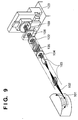
- Fig. 9 is a view showing the arrangement of an X-ray exposure apparatus disclosed in, e.g., NTT R&D, Vol. 43, P. 501 (1994).
- the X-ray exposure apparatus shown in Fig. 9 is comprised of a synchrotron radiation source 101, an X-ray mirror 103, a heat removal filter 104, a beryllium window 105, a window 122 formed from a silicon nitride film, an X-ray mask 106, and a vertical X-Y stage 123 on which a semiconductor wafer 109 is placed.
- Light or synchrotron radiation 102 emitted from the synchrotron radiation source 101 passes through the X-ray mirror 103, heat removal filter 104, beryllium window 105, and window 122 formed from the silicon nitride film and reaches the X-ray mask 106.
- a circuit pattern to be transferred to the semiconductor wafer 109 is formed on the X-ray mask 106 from an X-ray absorber.
- the light 102 passes through the X-ray mask 106 to transfer the circuit pattern onto the resist applied to the semiconductor wafer 109.
- the light 102 is continuous spectral light having wavelengths in the wide range from the X-ray range to the infrared range.
- X-rays required in the X-ray exposure process for transferring the pattern onto the semiconductor wafer 109 must have an appropriate wavelength range. For this reason, in a conventional X-ray exposure apparatus, X-ray components having wavelengths of about 0.7 nm or less are absorbed and cut using the reflection characteristics of the X-ray mirror 103.
- the heat removal filter 104 most of the X-ray components of 1.5 nm or longer are absorbed and cut by the heat removal filter 104 in accordance with the properties of the beryllium material.
- the wavelength of the light 102 is adjusted to fall within the range of about 0.7 to 1.5 nm.
- the light sequentially passes through the beryllium window 105 and window 122 formed from the silicon nitride film. In this case, almost no heat is generated by the beryllium window 105 and the window 122 formed from the silicon nitride film.
- the space between the beryllium window 105 and the window 122 formed from the silicon nitride film is filled with atmospheric helium.
- the beryllium window 105 serves as a partition wall between the vacuum area upstream of the beryllium window 105 and the atmospheric pressure area downstream of the beryllium window 105. Unwanted X-ray components are cut by the heat removal filter 104 to suppress heat generation of the beryllium window 105. As a result, this keeps the mechanical strength of the beryllium window 105 high.
- the window 122 formed from the silicon nitride film serves as a partition wall between the helium layer and outer air.
- the window 122 formed from the silicon nitride film can be omitted.
- the circuit pattern to be transferred to the semiconductor wafer is formed on the X-ray mask 106.
- the predetermined area of the resist applied to the semiconductor wafer 109 is irradiated with the light 102 through the X-ray mask-106, thereby transferring this circuit pattern onto the semiconductor wafer 109.
- the surface of a heavy metal such as gold or platinum has been used as the conventional material of an oblique incident mirror (X-ray mirror). This is because a reflectance of about 60% can be obtained at an exposure wavelength of 0.7 nm even if the oblique incident angle of the light 102 is set as large as about 2°.
- the viability of converging a larger amount of X-rays by forming an X-ray mirror having a larger convergence angle using a material such as gold or platinum has been examined.
- Silicon carbide makes it possible to increase the X-ray reflectance as very high as about 90% at an X-ray wavelength of 0.7 nm or more by setting the oblique incident angle as relatively small as 1°.
- a beryllium thin film is proposed as the material of the heat removal filter 104 for absorbing and cutting X-rays having longer wavelengths (wavelengths: 1.5 nm or more).
- a silicon nitride or diamond thin film is also proposed as an additional thin film. This thin film aims at increasing the heat absorption efficiency and preventing oxidation of the beryllium thin film.
- the X-ray mask 106 is comprised of a membrane generally made of silicon carbide and an X-ray absorber formed on the membrane. Silicon carbide is used because it has a relatively small absorbance of exposure X-rays having wavelengths of about 0.7 to 1.5 nm.
- X-ray mirror surface for reflecting X-rays gold, platinum, silicon carbide, and molten quartz are proposed.
- window material beryllium, silicon nitride, and diamond are proposed.
- X-rays having a peak wavelength of about 0.75 nm which have been said to be optimal for X-ray exposure, are used as exposure light.
- the reason why X-rays having the peak wavelength of about 0.75 nm are suitable as optimal exposure light is as follows.
- the shorter the X-ray wavelength the higher the resolution of an optical image. This makes it possible to form a finer pattern.
- the shorter the X-ray wavelength the higher the X-ray energy.
- the resist is photosensitized with the photoelectrons.
- the wavelength of the X-ray becomes shorter, the resist area photosensitized with the photoelectrons generated in the resist increases.
- a pattern formed in the resist blurs due to the influence of the photoelectrons. That is, the range of photoelectrons determines the resolution limit.
- the optimal peak wavelength of X-rays used in exposure has conventionally been said to be about 0.75 nm.
- the range of photoelectrons is assumed to determine the resolution limit.
- a pattern having a line width or line spacing of 100 nm (0.1 ⁇ m) or less cannot be formed.
- a technique for shifting the wavelength of X-rays used for exposure to a shorter wavelength range and transferring a circuit pattern to obtain a higher resolution has not conventionally been examined in the technical field of semiconductor manufacturing apparatuses due to the above-mentioned problem of the range of photoelectrons.
- the X-ray energy is higher than the conventional one, so the X-rays are readily transmitted through the absorber of an X-ray mask.
- the thickness of an X-ray absorber must be increased.
- the transmission characteristics of X-rays degrade due to the waveguide effect to result in a decrease in resolution of the circuit pattern to be transferred. It has conventionally been difficult to downsize the transfer pattern by shortening the X-ray wavelength.
- an example using an exposure wavelength of about 0.3 nm is available in the field of micromachine technique.
- the use of short-wavelength X-rays aims at high-aspect patterning in which a pattern of several ⁇ m is formed at a height of several hundred ⁇ m by increasing the transmission of X-rays in the resist.
- the pattern size required in the field of micromachine technique is larger than that in the field of semiconductor manufacturing apparatuses by one or two orders of magnitude.
- an X-ray absorber in an X-ray mask used in the field of micromachine technique is larger than that in the field of semiconductor manufacturing apparatuses.
- an X-ray mask substrate is made of a metal such as titanium.
- the above technique is not to transfer an ultrafine circuit pattern and belongs to a technical field entirely different from that of the present invention.
- an experimental example has been reported in which a mask obtained by forming an absorber on a boron nitride substrate with gold plating is used in an exposure apparatus using an electron excitation type point source using a palladium target to perform exposure using X-rays having a wavelength range of 0.415 nm to 0.44 nm.
- This technique also belongs to a technical field basically different from that of the present invention using a synchrotron radiation source.
- a conventional X-ray exposure apparatus and method for forming a pattern using X-ray proximity exposure techniques demand has arisen for widening a pattern application limit to a finer pattern range and transferring a high-resolution fine pattern onto a substrate at high speed.
- problems in short-wavelength exposure in the X-ray proximity exposure techniques fogging occurs in a resist or on a substrate due to photoelectrons and Auger electrons due to exposure light.
- the pattern resolution decreases to make it impossible to form finer patterns.
- the resolution limit is determined by the range of photoelectrons generated in the resist by exposure light, and a system having a configuration optimized on the basis of the above assumption has been employed.
- the present inventors found that a 50-nm line pattern could experimentally be formed using a nonchemical amplification type resist. In this case, photoelectrons blurred an optical image, but did not become a decisive factor that determines the resolution limit.
- the present inventors found that the use of a resist having a high dissolution rate ratio of a resist portion influenced by photoelectrons and a resist portion directly irradiated with an X-ray did not cause the range of photoelectrons to become the main factor that determines the resolution limit. As a result, the present inventors found that X-rays in a shorter wavelength range than the conventional one could be used, as in the X-ray exposure apparatus of the present invention.
- an X-ray exposure apparatus uses an X-ray mirror containing a material having an absorption edge in at least one of a wavelength range of less than 0.45 nm and a wavelength range exceeding 0.7 nm.
- the X-ray mirror contains at least one material selected from the group consisting of iron, cobalt, nickel, copper, manganese, chromium, and an alloy, a nitride, a carbide, and a boride thereof.
- X-rays are obtained from light emitted from a synchrotron radiation source.
- the X-ray mirror absorbs at least 90% of X-rays in a wavelength range of less than 0.3 nm.
- the substrate is exposed through an X-ray mask
- the X-ray mask includes a membrane and an X-ray absorber formed on the membrane
- the membrane contains at least one material selected from the group consisting of diamond, diamond-like carbon, boron nitride, and beryllium.
- the substrate is exposed through an X-ray mask
- the X-ray mask includes a membrane and an X-ray absorber formed on the membrane
- the membrane contains a material having an absorption edge in at least one of a wavelength range of less than 0.45 nm and a wavelength range exceeding 0.7 nm
- the X-ray absorber contains a material having an absorption edge in a wavelength range of 0.6 nm (inclusive) to 0.85 nm (inclusive).
- An X-ray exposure method comprises sending light onto an X-ray mirror containing a material having an absorption edge in at least one of a wavelength range of less than 0.45 nm and a wavelength range exceeding 0.7 nm, and exposing a substrate using X-rays emerging from an optical path including the X-ray mirror.
- the X-ray mirror contains at least one material selected from the group consisting of iron, cobalt, nickel, copper, manganese, chromium, and an alloy, a nitride, a carbide, and a boride thereof.
- the light is obtained by light emitted from a synchrotron radiation source.
- the X-ray mirror includes a short-wavelength cutting X-ray mirror for absorbing at least 90% of X-rays in a range of less than 0.3 nm.
- the substrate is exposed through an X-ray mask
- the X-ray mask includes a membrane and an X-ray absorber formed on the membrane
- the membrane contains at least one material selected from the group consisting of diamond, diamond-like carbon, boron nitride, and beryllium.
- the substrate is exposed through an X-ray mask
- the X-ray mask includes a membrane and an X-ray absorber formed on the membrane
- the membrane contains a material having an absorption edge in at least one of a wavelength range of less than 0.45 nm and a wavelength range exceeding 0.7 nm
- the X-ray absorber contains a material having an absorption edge in a wavelength range of 0.6 nm (inclusive) to 0.85 nm (inclusive).
- a semiconductor manufacturing apparatus for manufacturing a semiconductor device by using the above X-ray exposure method.
- a device manufacturing method of manufacturing a device using the above X-ray exposure method there is provided a device manufacturing method of manufacturing a device using the above X-ray exposure method.
- an exposure apparatus and method for performing exposure using X-rays having a peak intensity profile in a wavelength range of 0.45 to 0.7 nm there are provided an exposure apparatus and method for performing exposure using X-rays having a peak intensity profile in a wavelength range of 0.45 to 0.7 nm.
- the present invention incorporates an X-ray exposure apparatus and method for basically extracting optimal X-rays in a shorter wavelength range than a conventional one from a synchrotron radiation source as exposure light, irradiating an X-ray mask with the X-rays, and forming a pattern on a substrate, and an X-ray mask which is exposed to the extracted X-rays as exposure light.
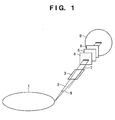
- Fig. 1 is a view showing the X-ray exposure apparatus according to the first embodiment of the present invention. The X-ray exposure apparatus shown in Fig.
- the first layer 1 is comprised of a synchrotron radiation source 1 for emitting X-rays, an X-ray mirror 3 for reflecting X-rays, a heat removal filter 4, a beryllium window 5, and an X-ray mask 6 on which a pattern is formed.
- the heat removal filter 4 is made of beryllium and has a function of cutting X-rays in the long wavelength range of 1.5 nm or more.
- the beryllium window 5 serves as a partition wall between a vacuum area and an atmospheric area.
- a circuit pattern to be transferred to a semiconductor wafer 9 is made of an X-ray absorber on the X-ray mask 6.
- Fig. 8 is a sectional view showing the main part of the X-ray mask.
- Fig. 8 shows the X-ray mask 8 and an Si wafer 21 serving as a substrate.
- Reference numeral 22 denotes a membrane containing a material having an absorption edge in a wavelength range outside the range 0.45 to 0.7 nm.
- the membrane 22 contains at least one material selected from diamond, diamond-like carbon, boron nitride, and beryllium.
- Reference numeral 23 denotes an X-ray transmission film such as an ITO film or SiO 2 film.
- Reference numeral 24 denotes an X-ray absorber containing a material having an absorption edge in a wavelength range of 0.6 nm or more to less than 0.85 nm. Examples of this material are tungsten and a tantalum-based material.
- Reference numeral 25 denotes an opening; and 26, a mask frame (frame).
- the X-ray mirror 3 contains a material having an absorption edge in the wavelength range of less than 0.45 nm and the wavelength range exceeding 0.7 nm. That is, the X-ray mirror 3 is formed of a material having an absorption edge in a wavelength range outside the range 0.45 to 0.7 nm.
- the X-ray mirror 3 contains at least one material selected from the group consisting of iron, cobalt, nickel, copper, manganese, chromium, and their alloys, nitrides, carbides, and borides.
- the absorption edge is defined as a wavelength at which the absorption coefficient of a substance abruptly changes.
- the absorption coefficient is larger on the short-wavelength side, while it is smaller on the long-wavelength side.
- the absorption edge changes depending on substances. Note that the absorption coefficient decreases again in a shorter wavelength range away from the absorption edge.
- a short-wavelength cutting X-ray mirror which absorbs at least 90% of X-rays in the wavelength range of less than 0.3 nm is arranged.
- X-rays in the wavelength range of less than 0.3 nm are mixed in exposure light, the adverse influence of photoelectrons generated on a semiconductor wafer cannot be neglected.
- Light or synchrotron radiation 2 emitted from the synchrotron radiation source 1 is incident on the X-ray mirror 3.
- An angle formed by the optical axis (central axis) for the light 2 and the X-ray reflection surface is defined as an oblique incident angle 7.
- An angle for converging the light 2 in the X-ray mirror 3 is represented as a convergence angle 8.
- the light 2 reflected by the X-ray mirror 3 reaches the semiconductor wafer 9 through the heat removal filter 4, beryllium window 5, and X-ray mask 6.
- the pattern of the X-ray mask 6 is formed on the semiconductor wafer 9 using this light 2.
- Semiconductor devices are formed on the exposed semiconductor wafer 9 by a known developing process.
- An X-ray exposure method comprises sending light from the synchrotron radiation source onto an X-ray mirror containing a material having an absorption edge in at least one of a wavelength range of less than 0.45 nm and a wavelength range exceeding 0.7 nm, and exposing a substrate using X-rays emerging from an optical path including the X-ray mirror.
- the X-ray mirror 3 may have a function as a convergence mirror for converging the light 2 and a function as a divergence mirror for increasing the area (irradiation area) of the X-ray mask 6 to be irradiated with the light from the X-ray mirror 3 at once.
- another convergence mirror or another divergence mirror may be arranged in addition to the X-ray mirror 3.
- the X-ray mirror 3 used in the X-ray exposure apparatus of this embodiment has a surface roughness of about 0.4 nm (rms) obtained by mechanically cutting and polishing cobalt.
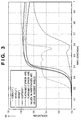
- the light 2 was sent to become incident on the X-ray mirror 3 having the above structure at an oblique incident angle of about 1°, and the X-ray reflection characteristics (characteristics for cutting X-rays in the short wavelength range) of the X-ray mirror 3 were evaluated.
- the results are shown in Figs. 2 and 3.
- Figs. 2 and 3 are graphs showing the relationship between the X-ray wavelengths and reflectances XR of X-ray mirror materials (to be described later).
- the present inventors confirmed that X-rays in a shorter wavelength range than a conventional one could be used in the X-ray exposure process by appropriately selecting a material used for the X-ray mirror.
- Various examinations were made to implement an X-ray exposure apparatus using such X-rays in the short wavelength range. According to one of the examinations, the material of a short-wavelength cutting X-ray mirror used in a beam line for extracting X-rays optimal as exposure light in the short wavelength range from the synchrotron radiation source was examined.
- the present inventors examined the X-ray reflection characteristics on the surfaces of various materials. As a result, even in a mirror using a heavy element such as platinum conventionally examined as the material of an X-ray mirror, the present inventors found that the wavelength range of X-rays to be cut could be shifted to the shorter wavelength side than the conventional one by reducing the oblique incident angle. However, when platinum as a conventional material is used, the reflectance is as low as about 50% at a wavelength of 0.3 to 0.55 nm even with an oblique incident angle of 1° (see Fig. 3).
- the present inventors examined cobalt, nickel, iron, copper, chromium, and manganese as the group IV materials of the periodic table at an oblique incident angle of 1°. As a result, these materials reflected X-rays up to the short wavelength range of about 0.4 nm with high reflectances (Figs. 2 and 3). Similar reflectances were obtained for their alloys. For example, the reflectances of Constantan as an alloy of copper and nickel, Kovar as an alloy of cobalt, nickel, and iron, and nichrome as an alloy of nickel and chromium are shown in Fig. 2. Although not shown, similar characteristics can be obtained for nitrides, carbides, and borides of cobalt, nickel, iron, copper, chromium, and manganese.
- exposure light can have a shorter wavelength and a higher output can be obtained as compared with a conventional X-ray exposure apparatus. This will be described below.
- a conventional X-ray exposure apparatus system a system comprised of a synchrotron radiation source having a critical wavelength of 1.8 nm, two platinum X-ray mirrors, a heat removal filter, a beryllium window, and a window formed from a silicon nitride film.
- the oblique incident angles on the two platinum X-ray mirrors are 1.75° and 1.45°, respectively.
- the heat removal filter is made of 1- ⁇ m silicon carbide, the thickness of the beryllium window is 15 ⁇ m, and the thickness of the silicon nitride film is 1.5 ⁇ m.
- the X-ray spectra, i.e., X-ray irradiation spectra (relative intensities) of X-rays passing through an X-ray mask membrane made of 2- ⁇ m thick silicon carbide in the X-ray exposure apparatus using the above X-ray mirror are shown as a conventional example in Fig. 4.
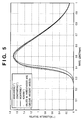
- X-ray spectra i.e., X-ray irradiation spectra of X-rays passing through the X-ray mask membrane made of 4- ⁇ m thick diamond in the X-ray exposure apparatus having the above arrangement are shown in Figs. 4 and 5.
- the irradiation intensity is 4.6 to 4.9 times the conventional example.
- X-rays having a peak intensity profile in the wavelength range of 0.45 to 0.7 nm can be obtained.
- finer exposure is implemented.
- the material of the X-ray mask membrane is changed from silicon carbide as the conventional material to diamond due to the following reason. That is, the absorption edge of silicon carbide is near 0.65 nm, and the X-ray transmission intensity at wavelengths near 0.65 nm are greatly attenuated. Diamond having an absorption edge of 4.4 nm falling outside the exposure wavelength range is used for the X-ray mask membrane to prevent extreme attenuation of the exposure intensity.
- the thickness of the X-ray membrane made of diamond is set to 4 ⁇ m because the thickness of the membrane must be large to maintain positional precision of a fine pattern.
- the irradiation intensity can be 4.6 to 4.9 times that obtained in the conventional X-ray exposure apparatus.
- the attenuation of X-rays in a wavelength range of 0.7nm or more in Figs. 4 and 5 is caused by the penetration of X-rays of the heat removal filter, the beryllium window and the X-ray mask membrane in the above X-ray exposure apparatus.
- the X-ray exposure apparatus of the first embodiment uses one X-ray mirror
- a mirror arrangement using two X-ray mirrors to form a beam shape is also applicable to the present invention.
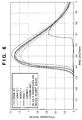
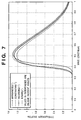
- the irradiation X-ray spectra obtained when two X-ray mirrors are used and the conventional mirror is used are shown in Figs. 6 and 7.
- the two X-ray mirrors are held at an oblique incident angle of 1°.
- the X-ray mirrors are formed using the materials shown in Figs. 2 and 3.
- the irradiation intensity of the X-ray exposure apparatus of the present invention can be 3.1 to 3.6 times that in the arrangement using the conventional mirror.
- the present invention incorporates an aspect pertaining to an X-ray exposure apparatus for extracting optimal X-rays as short-wavelength exposure light from a radiation source and an X-ray exposure method using such X-rays, and an aspect pertaining to a mask material using the short-wavelength light from the radiation source as exposure light.
- X-rays optimal for short-wavelength exposure X-rays having an intensity profile with a peak in the wavelength range of 0.45 nm to 0.7 nm as shown in Figs. 4 and 5 are used. By using X-rays in this wavelength range, high-resolution exposure processing can be achieved without adverse influences of photoelectrons.
- X-rays optimal for short-wavelength exposure can be extracted by appropriately selecting the material of a short-wavelength cutting oblique incident mirror used in a beam line for extracting light from the radiation source to the exposure apparatus.
- a range for cutting short-wavelength components can be shifted to the short-wavelength side by reducing an oblique incident angle even in a mirror using a heavy element such as gold or platinum considered even in the conventional case.
- the short-side wavelength components cannot be perfectly cut off, and X-rays in the range of 0.3 to 0.5 nm mix in exposure light in a considerable amount. Pattern formation is adversely affected by generation of photoelectrons or the like (see Fig. 3).
- the absorption edge of platinum is near 0.55 nm.
- the reflectances in the range of 0.45 to 0.6 nm are lower than those in the range of 0.6 nm or more.
- the X-rays in this range cannot be effectively used.
- the oblique incident angle for platinum is 1°
- the X-ray reflectances in the range of 0.3 to 0.45 nm are almost equal to those in the range of 0.45 to 0.6 nm, which indicates that X-rays in the range of 0.3 to 0.45 nm mix in a large amount.
- the reflectances in the range of 0.3 to 0.45 nm are certainly reduced.
- the reflectances in the range of 0.45 to 0.6 nm are reduced accordingly.
- the reflectances in the range of 0.6 to 0.7 nm are slightly lower than those in the range of 0.7 nm or more. As a result, the X-rays in the range of 0.45 to 0.7 nm cannot be effectively used.
- X-rays having a peak intensity profile in the range of 0.45 to 0.7 nm can be obtained.
- the X-ray mirror of each embodiment described above has an almost constant reflectance from the long wavelength side to 0.45 nm. Only the reflectances of X-rays in the wavelength range of less than 0.45 nm can be reduced. As described with reference to the above embodiments, X-rays having the intensity profiles shown in Figs. 4 and 5 can be obtained.
- the reflectance for a wavelength of less than 0.45 nm is reduced by setting the incident angle to 1°.
- the incident angle is slightly increased larger than 1°, the reflectances for X-rays in the range of less than 0.5 nm can be reduced.
- the incident angle is further slightly increased, the reflectances of X-rays in the range of less than 0.6 nm can be reduced.
- the incident angle is set larger than 1°, the reflectances for X-rays in the range of less than 0.45 nm are naturally reduced as compared with the incident angle of 1°.
- the mixing ratio of X-rays in the range of less than 0.45 nm can be further reduced.
- Figs. 4 and 5 show the X-ray intensity profiles obtained by the system (Fig. 1) of the above embodiment when the incident angle of the X-ray mirror is set to 1°.
- Figs. 4 and 5 show the X-ray intensity profiles obtained by the system (Fig. 1) of the above embodiment when the incident angle of the X-ray mirror is set to 1°.
- Figs. 4 and 5 show the X-ray intensity profiles obtained by the system (Fig. 1) of the above embodiment when the incident angle of the X-ray mirror is set to 1°.
- Figs. 4 and 5 show the X-ray intensity profiles obtained by the system (Fig. 1) of the above embodiment when the incident angle of the X-ray mirror is set to 1°.
- Figs. 4 and 5 show the X-ray intensity profiles obtained by the system (Fig. 1) of the above embodiment when the incident angle of the X-ray mirror is set to 1°.
- Figs. 4 and 5 show the X-ray intensity profiles obtained by the system (Fig. 1) of
- a curved surface mirror such as a spherical mirror, cylindrical surface, or troidal surface
- an aspherical mirror surface such as an ellipsoidal surface or paraboloid
- a material containing silicon such as silicon nitride or silicon carbide serves as a preferable material with higher perfection including defect level in practical use.
- the absorption edge of silicon is close to 0.7 nm, and transmission performance abruptly changes near 0.7 nm, it is difficult to sufficiently enhance the characteristics as a short-wavelength exposure membrane.
- a thin film not containing silicon i.e., a thin film made of a light element such as a material having carbon as a major constituent, diamond, diamond-like carbon, boron nitride, and beryllium was used for the membrane. These materials did not have absorption edges falling within the exposure wavelength range of 1.5 nm or less and exhibit flat transmission characteristics. In particular, some diamond samples had modulus of elasticity twice or more that of silicon carbide and exhibit excellent characteristics as a microregion substrate. The beryllium thin film had excellent X-ray transmission performance, but had not been examined as an X-ray proximity exposure mask substrate because it did not transmit alignment light and had a large thermal expansion coefficient.
- a light element such as a material having carbon as a major constituent, diamond, diamond-like carbon, boron nitride, and beryllium was used for the membrane.
- the absorber In the X-ray proximity exposure techniques, a heavy metal, and its compound and alloy are proposed as X-ray absorbers for masks (24 in Fig. 8).
- the absorber has a wavelength band with a high absorption capability for tungsten or a tantalum-based material conventionally used.
- the absorber can properly absorb X-rays and allows excellent exposure.
- the reflectance for X-rays can be increased and the aspect ratio of the absorber can be reduced.
- the surface of a material described with reference to Figs. 2 and 3 is used as the short-wavelength cutting oblique incident mirror.
- Light which has a peak wavelength in a shorter wavelength range of 0.45 to 0.7 nm than the wavelength of 0.75 nm having regarded as the conventional optimal exposure wavelength contains a smaller content of short-wavelength light components, and can be used for short-wavelength X-ray proximity exposure can be extracted using such a material, thereby performing X-ray lithography.
- a method of forming such mirror materials on substrates is developed to form a larger mirror, thereby implementing an exposure system having a high convergence efficiency and high throughput.
- a thin film of diamond, diamond-like carbon, boron nitride, or beryllium as the material of the mask membrane was used to develop an excellent X-ray mask for short-wavelength X-ray proximity exposure, as described above. Without using a conventional bored stencil mask, light in the short wavelength range of 0.45 to 0.7 nm can be used as exposure light in X-ray proximity exposure.
- X-rays in a shorter wavelength range than the conventional one can be obtained using appropriate members to implement an X-ray exposure apparatus and method capable of obtaining a higher-resolution pattern, and a device manufacturing method using the X-ray exposure apparatus and method.
- an X-ray exposure system capable of using X-rays in a shorter wavelength range than the conventional wavelength, increasing the irradiation intensity, and facilitating a high throughput in order to obtain a higher-resolution pattern.
Landscapes
- Physics & Mathematics (AREA)
- General Physics & Mathematics (AREA)
- Engineering & Computer Science (AREA)
- Public Health (AREA)
- Health & Medical Sciences (AREA)
- Epidemiology (AREA)
- Spectroscopy & Molecular Physics (AREA)
- General Engineering & Computer Science (AREA)
- High Energy & Nuclear Physics (AREA)
- Environmental & Geological Engineering (AREA)
- Atmospheric Sciences (AREA)
- Life Sciences & Earth Sciences (AREA)
- Exposure And Positioning Against Photoresist Photosensitive Materials (AREA)
- Exposure Of Semiconductors, Excluding Electron Or Ion Beam Exposure (AREA)
- Preparing Plates And Mask In Photomechanical Process (AREA)
- Particle Accelerators (AREA)
Applications Claiming Priority (2)
| Application Number | Priority Date | Filing Date | Title |
|---|---|---|---|
| JP2000281862A JP2002093684A (ja) | 2000-09-18 | 2000-09-18 | X線露光装置、x線露光方法、半導体製造装置および微細構造体 |
| JP2000281862 | 2000-09-18 |
Publications (2)
| Publication Number | Publication Date |
|---|---|
| EP1189242A2 true EP1189242A2 (de) | 2002-03-20 |
| EP1189242A3 EP1189242A3 (de) | 2006-11-08 |
Family
ID=18766459
Family Applications (1)
| Application Number | Title | Priority Date | Filing Date |
|---|---|---|---|
| EP01307880A Withdrawn EP1189242A3 (de) | 2000-09-18 | 2001-09-17 | Röntgenstrahlbelichtungsapparat und -verfahren, Halbleiter-Herstellungsvorrichtung und Mikrostruktur |
Country Status (5)
| Country | Link |
|---|---|
| US (1) | US6947519B2 (de) |
| EP (1) | EP1189242A3 (de) |
| JP (1) | JP2002093684A (de) |
| KR (1) | KR100493860B1 (de) |
| TW (1) | TW517294B (de) |
Families Citing this family (4)
| Publication number | Priority date | Publication date | Assignee | Title |
|---|---|---|---|---|
| JP2000338299A (ja) * | 1999-05-28 | 2000-12-08 | Mitsubishi Electric Corp | X線露光装置、x線露光方法、x線マスク、x線ミラー、シンクロトロン放射装置、シンクロトロン放射方法および半導体装置 |
| US7118449B1 (en) * | 2004-09-20 | 2006-10-10 | Carl Zeiss Smt Ag | Method of manufacturing an optical element |
| JP2011222958A (ja) * | 2010-03-25 | 2011-11-04 | Komatsu Ltd | ミラーおよび極端紫外光生成装置 |
| DE102013107192A1 (de) * | 2013-07-08 | 2015-01-08 | Carl Zeiss Laser Optics Gmbh | Reflektives optisches Element für streifenden Einfall im EUV-Wellenlängenbereich |
Family Cites Families (52)
| Publication number | Priority date | Publication date | Assignee | Title |
|---|---|---|---|---|
| US4110625A (en) | 1976-12-20 | 1978-08-29 | International Business Machines Corporation | Method and apparatus for monitoring the dose of ion implanted into a target by counting emitted X-rays |
| JPS5571311A (en) | 1978-11-24 | 1980-05-29 | Seiko Instr & Electronics Ltd | Vibrator |
| JPS5945135B2 (ja) | 1979-06-15 | 1984-11-05 | 富士写真フイルム株式会社 | ハロゲン化銀写真感光材料 |
| JPS60220933A (ja) | 1984-04-18 | 1985-11-05 | Nec Corp | X線露光マスク及びその製造方法 |
| JPS62291027A (ja) * | 1986-06-10 | 1987-12-17 | Nec Corp | X線露光装置 |
| US5012500A (en) * | 1987-12-29 | 1991-04-30 | Canon Kabushiki Kaisha | X-ray mask support member, X-ray mask, and X-ray exposure process using the X-ray mask |
| EP0345097B1 (de) | 1988-06-03 | 2001-12-12 | Canon Kabushiki Kaisha | Verfahren und Vorrichtung zur Belichtung |
| JP2770960B2 (ja) | 1988-10-06 | 1998-07-02 | キヤノン株式会社 | Sor−x線露光装置 |
| US5003567A (en) * | 1989-02-09 | 1991-03-26 | Hawryluk Andrew M | Soft x-ray reduction camera for submicron lithography |
| JP2731955B2 (ja) | 1989-09-07 | 1998-03-25 | キヤノン株式会社 | X線露光装置 |
| JPH03120714A (ja) | 1989-10-04 | 1991-05-22 | Toshiba Corp | X線露光装置 |
| EP0424134B1 (de) | 1989-10-19 | 1998-01-07 | Canon Kabushiki Kaisha | Röntgenbelichtungsvorrichtung |
| US5258091A (en) | 1990-09-18 | 1993-11-02 | Sumitomo Electric Industries, Ltd. | Method of producing X-ray window |
| JP3025545B2 (ja) | 1991-03-18 | 2000-03-27 | キヤノン株式会社 | X線リソグラフィ用マスクおよびx線リソグラフィ露光装置 |
| US5214685A (en) | 1991-10-08 | 1993-05-25 | Maxwell Laboratories, Inc. | X-ray lithography mirror and method of making same |
| DE69322345T2 (de) | 1992-09-14 | 1999-05-20 | Canon K.K., Tokio/Tokyo | Synchrotron-Röntgenbelichtungsverfahren |
| JPH06152027A (ja) | 1992-11-12 | 1994-05-31 | Matsushita Electric Ind Co Ltd | 半導体レーザ駆動回路 |
| JP2995371B2 (ja) * | 1992-11-12 | 1999-12-27 | セイコーインスツルメンツ株式会社 | X線反射鏡用材料 |
| JPH06194497A (ja) | 1992-12-24 | 1994-07-15 | Univ Tohoku | Bnを用いた高耐熱性軟x線多層膜反射鏡 |
| US5356662A (en) | 1993-01-05 | 1994-10-18 | At&T Bell Laboratories | Method for repairing an optical element which includes a multilayer coating |
| US5374974A (en) | 1993-04-30 | 1994-12-20 | Lsi Logic Corporation | High speed shuttle for gating a radiation beam, particularly for semiconductor lithography apparatus |
| JPH075296A (ja) * | 1993-06-14 | 1995-01-10 | Canon Inc | 軟x線用多層膜 |
| JP3167074B2 (ja) * | 1993-06-30 | 2001-05-14 | キヤノン株式会社 | Sor露光システム及びこれを用いて製造されたマスク |
| JPH0720293A (ja) | 1993-06-30 | 1995-01-24 | Canon Inc | X線ミラー及びこれを用いたx線露光装置とデバイス製造方法 |
| BE1007281A3 (nl) | 1993-07-12 | 1995-05-09 | Philips Electronics Nv | Werkwijze voor het polijsten van een oppervlak van koper of een in hoofdzaak koper bevattende legering, magneetkop vervaardigbaar met gebruikmaking van de werkwijze, röntgenstralingcollimerend element en röntgenstralingreflecterend element, beide voorzien van een volgens de werkwijze gepolijst oppervlak en polijstmiddel geschikt voor toepassing in de werkwijze. |
| US5677939A (en) | 1994-02-23 | 1997-10-14 | Nikon Corporation | Illuminating apparatus |
| JPH07240364A (ja) | 1994-03-02 | 1995-09-12 | Canon Inc | 反射型マスク、その製造方法及び該マスクを用いた露光装置 |
| US5835560A (en) | 1994-05-24 | 1998-11-10 | Canon Kabushiki Kaisha | Exposure apparatus |
| US5503958A (en) | 1994-05-27 | 1996-04-02 | Motorola Inc. | Method for forming a circuit pattern |
| JPH08152499A (ja) | 1994-11-30 | 1996-06-11 | Kyocera Corp | X線ミラー |
| JP3278317B2 (ja) | 1995-03-24 | 2002-04-30 | キヤノン株式会社 | 露光装置及びデバイス製造方法 |
| JP3267471B2 (ja) | 1995-08-02 | 2002-03-18 | キヤノン株式会社 | マスク、これを用いた露光装置やデバイス生産方法 |
| JP3232232B2 (ja) | 1996-02-08 | 2001-11-26 | キヤノン株式会社 | X線取り出し窓およびその製造方法ならびに前記x線取り出し窓を用いたx線露光装置 |
| JP3416373B2 (ja) * | 1996-02-20 | 2003-06-16 | キヤノン株式会社 | 反射型x線マスク構造体、x線露光装置、x線露光方法ならびに該反射型x線マスク構造体を用いて作製されるデバイス |
| JP3211147B2 (ja) | 1996-05-29 | 2001-09-25 | 株式会社荏原製作所 | 装置の排気構造 |
| JP3255849B2 (ja) | 1996-07-19 | 2002-02-12 | キヤノン株式会社 | 露光装置 |
| JP3450622B2 (ja) | 1996-07-19 | 2003-09-29 | キヤノン株式会社 | 露光装置およびこれを用いたデバイス製造方法 |
| US6101237A (en) | 1996-08-28 | 2000-08-08 | Canon Kabushiki Kaisha | X-ray mask and X-ray exposure method using the same |
| KR19980017722A (ko) * | 1996-08-31 | 1998-06-05 | 구자홍 | 엑스(x)-선 리소그래피용 마스크 및 그 제조방법 |
| JPH10172883A (ja) | 1996-12-09 | 1998-06-26 | Sumitomo Heavy Ind Ltd | シンクロトロン放射装置及びx線露光装置 |
| JPH113858A (ja) | 1997-04-17 | 1999-01-06 | Canon Inc | X線光学装置、x線露光装置および半導体デバイス製造方法 |
| JPH1114800A (ja) | 1997-06-23 | 1999-01-22 | Nippon Telegr & Teleph Corp <Ntt> | X線反射鏡及びx線反射光学系 |
| US6167111A (en) | 1997-07-02 | 2000-12-26 | Canon Kabushiki Kaisha | Exposure apparatus for synchrotron radiation lithography |
| US6049588A (en) | 1997-07-10 | 2000-04-11 | Focused X-Rays | X-ray collimator for lithography |
| JPH1184098A (ja) | 1997-07-11 | 1999-03-26 | Canon Inc | X線照明装置およびx線照明方法、x線露光装置ならびにデバイス製造方法 |
| DE19741492A1 (de) | 1997-09-19 | 1999-03-25 | Microparts Gmbh | Verfahren zur Herstellung von Mikrostrukturkörpern |
| JPH11233436A (ja) | 1997-12-10 | 1999-08-27 | Canon Inc | X線照明装置及び方法、並びにこれを用いたx線露光装置やデバイス製造方法 |
| US6377655B1 (en) * | 1998-05-08 | 2002-04-23 | Nikon Corporation | Reflective mirror for soft x-ray exposure apparatus |
| US6366639B1 (en) | 1998-06-23 | 2002-04-02 | Kabushiki Kaisha Toshiba | X-ray mask, method of manufacturing the same, and X-ray exposure method |
| JP3363110B2 (ja) | 1998-06-23 | 2003-01-08 | 株式会社東芝 | X線露光用マスク |
| JP3387834B2 (ja) * | 1998-10-29 | 2003-03-17 | キヤノン株式会社 | X線露光方法およびデバイス製造方法 |
| JP2000338299A (ja) * | 1999-05-28 | 2000-12-08 | Mitsubishi Electric Corp | X線露光装置、x線露光方法、x線マスク、x線ミラー、シンクロトロン放射装置、シンクロトロン放射方法および半導体装置 |
-
2000
- 2000-09-18 JP JP2000281862A patent/JP2002093684A/ja active Pending
-
2001
- 2001-09-14 US US09/951,456 patent/US6947519B2/en not_active Expired - Fee Related
- 2001-09-17 EP EP01307880A patent/EP1189242A3/de not_active Withdrawn
- 2001-09-17 KR KR10-2001-0057337A patent/KR100493860B1/ko not_active Expired - Fee Related
- 2001-09-19 TW TW090123420A patent/TW517294B/zh not_active IP Right Cessation
Also Published As
| Publication number | Publication date |
|---|---|
| KR20020022031A (ko) | 2002-03-23 |
| US20020048341A1 (en) | 2002-04-25 |
| EP1189242A3 (de) | 2006-11-08 |
| TW517294B (en) | 2003-01-11 |
| US6947519B2 (en) | 2005-09-20 |
| KR100493860B1 (ko) | 2005-06-10 |
| JP2002093684A (ja) | 2002-03-29 |
Similar Documents
| Publication | Publication Date | Title |
|---|---|---|
| US5521031A (en) | Pattern delineating apparatus for use in the EUV spectrum | |
| US6833223B2 (en) | Multilayer-film reflective mirrors and optical systems comprising same | |
| JP4805997B2 (ja) | ミラー、リソグラフィ機器、及びデバイスの製造方法 | |
| US6333961B1 (en) | Reflection masks, microlithography apparatus using same, and integrated circuit manufacturing methods employing same | |
| US5989776A (en) | Photoresist composition for extreme ultraviolet lithography | |
| US6947518B2 (en) | X-ray exposure apparatus, X-ray exposure method, X-ray mask, X-ray mirror, synchrotron radiation apparatus, synchrotron radiation method and semiconductor device | |
| US7203275B2 (en) | Multilayer film reflector and X-ray exposure system | |
| US4980563A (en) | VUV lithography | |
| US11703752B2 (en) | Method of accelerated hazing of mask assembly | |
| JP2000338299A5 (de) | ||
| US20240377720A1 (en) | EUV Lithography Mask With A Porous Reflective Multilayer Structure | |
| US6947519B2 (en) | X-ray exposure apparatus and method, semiconductor manufacturing apparatus, and microstructure | |
| US6150060A (en) | Defect tolerant transmission lithography mask | |
| Kitayama et al. | Proposal for a 50 nm proximity x-ray lithography system and extension to 35 nm by resist material selection | |
| KR100211012B1 (ko) | 리소그래픽마스크구조체와 그 생산방법 및 디바이스제조방법 | |
| JP3219619B2 (ja) | X線マスクと該マスクの製造方法、ならびに該マスクを用いたデバイス生産方法 | |
| Stulen | Progress in the development of extreme ultraviolet lithography exposure systems | |
| KR20070108677A (ko) | 엑스선 노광방법 | |
| KR20230028013A (ko) | 초극자외선용 펠리클 프레임 및 이를 포함하는 초극자외선용 펠리클 | |
| JPH10208999A (ja) | 露光方法および露光装置 | |
| JPH05243125A (ja) | X線マスクおよびその製造方法 |
Legal Events
| Date | Code | Title | Description |
|---|---|---|---|
| PUAI | Public reference made under article 153(3) epc to a published international application that has entered the european phase |
Free format text: ORIGINAL CODE: 0009012 |
|
| AK | Designated contracting states |
Kind code of ref document: A2 Designated state(s): AT BE CH CY DE DK ES FI FR GB GR IE IT LI LU MC NL PT SE TR |
|
| AX | Request for extension of the european patent |
Free format text: AL;LT;LV;MK;RO;SI |
|
| RAP1 | Party data changed (applicant data changed or rights of an application transferred) |
Owner name: MITSUBISHI DENKI KABUSHIKI KAISHA Owner name: CANON KABUSHIKI KAISHA |
|
| PUAL | Search report despatched |
Free format text: ORIGINAL CODE: 0009013 |
|
| AK | Designated contracting states |
Kind code of ref document: A3 Designated state(s): AT BE CH CY DE DK ES FI FR GB GR IE IT LI LU MC NL PT SE TR |
|
| AX | Request for extension of the european patent |
Extension state: AL LT LV MK RO SI |
|
| RIC1 | Information provided on ipc code assigned before grant |
Ipc: G03F 1/14 20060101ALI20060929BHEP Ipc: G03F 7/20 20060101ALI20060929BHEP Ipc: G21K 1/06 20060101AFI20011218BHEP |
|
| STAA | Information on the status of an ep patent application or granted ep patent |
Free format text: STATUS: THE APPLICATION HAS BEEN WITHDRAWN |
|
| 18W | Application withdrawn |
Effective date: 20070207 |