EP1207699A2 - Verfahren und Vorrichtung zur Bereitstellung von Werbung - Google Patents
Verfahren und Vorrichtung zur Bereitstellung von Werbung Download PDFInfo
- Publication number
- EP1207699A2 EP1207699A2 EP01120652A EP01120652A EP1207699A2 EP 1207699 A2 EP1207699 A2 EP 1207699A2 EP 01120652 A EP01120652 A EP 01120652A EP 01120652 A EP01120652 A EP 01120652A EP 1207699 A2 EP1207699 A2 EP 1207699A2
- Authority
- EP
- European Patent Office
- Prior art keywords
- information
- advertisement
- advertisement information
- receiver terminal
- broadcasting receiver
- Prior art date
- Legal status (The legal status is an assumption and is not a legal conclusion. Google has not performed a legal analysis and makes no representation as to the accuracy of the status listed.)
- Withdrawn
Links
Images







Classifications
-
- H—ELECTRICITY
- H04—ELECTRIC COMMUNICATION TECHNIQUE
- H04H—BROADCAST COMMUNICATION
- H04H20/00—Arrangements for broadcast or for distribution combined with broadcast
- H04H20/65—Arrangements characterised by transmission systems for broadcast
- H04H20/76—Wired systems
-
- G—PHYSICS
- G06—COMPUTING OR CALCULATING; COUNTING
- G06Q—INFORMATION AND COMMUNICATION TECHNOLOGY [ICT] SPECIALLY ADAPTED FOR ADMINISTRATIVE, COMMERCIAL, FINANCIAL, MANAGERIAL OR SUPERVISORY PURPOSES; SYSTEMS OR METHODS SPECIALLY ADAPTED FOR ADMINISTRATIVE, COMMERCIAL, FINANCIAL, MANAGERIAL OR SUPERVISORY PURPOSES, NOT OTHERWISE PROVIDED FOR
- G06Q30/00—Commerce
- G06Q30/02—Marketing; Price estimation or determination; Fundraising
-
- G—PHYSICS
- G06—COMPUTING OR CALCULATING; COUNTING
- G06Q—INFORMATION AND COMMUNICATION TECHNOLOGY [ICT] SPECIALLY ADAPTED FOR ADMINISTRATIVE, COMMERCIAL, FINANCIAL, MANAGERIAL OR SUPERVISORY PURPOSES; SYSTEMS OR METHODS SPECIALLY ADAPTED FOR ADMINISTRATIVE, COMMERCIAL, FINANCIAL, MANAGERIAL OR SUPERVISORY PURPOSES, NOT OTHERWISE PROVIDED FOR
- G06Q30/00—Commerce
- G06Q30/02—Marketing; Price estimation or determination; Fundraising
- G06Q30/0207—Discounts or incentives, e.g. coupons or rebates
- G06Q30/0224—Discounts or incentives, e.g. coupons or rebates based on user history
-
- G—PHYSICS
- G06—COMPUTING OR CALCULATING; COUNTING
- G06Q—INFORMATION AND COMMUNICATION TECHNOLOGY [ICT] SPECIALLY ADAPTED FOR ADMINISTRATIVE, COMMERCIAL, FINANCIAL, MANAGERIAL OR SUPERVISORY PURPOSES; SYSTEMS OR METHODS SPECIALLY ADAPTED FOR ADMINISTRATIVE, COMMERCIAL, FINANCIAL, MANAGERIAL OR SUPERVISORY PURPOSES, NOT OTHERWISE PROVIDED FOR
- G06Q30/00—Commerce
- G06Q30/02—Marketing; Price estimation or determination; Fundraising
- G06Q30/0241—Advertisements
- G06Q30/0251—Targeted advertisements
- G06Q30/0254—Targeted advertisements based on statistics
-
- G—PHYSICS
- G06—COMPUTING OR CALCULATING; COUNTING
- G06Q—INFORMATION AND COMMUNICATION TECHNOLOGY [ICT] SPECIALLY ADAPTED FOR ADMINISTRATIVE, COMMERCIAL, FINANCIAL, MANAGERIAL OR SUPERVISORY PURPOSES; SYSTEMS OR METHODS SPECIALLY ADAPTED FOR ADMINISTRATIVE, COMMERCIAL, FINANCIAL, MANAGERIAL OR SUPERVISORY PURPOSES, NOT OTHERWISE PROVIDED FOR
- G06Q30/00—Commerce
- G06Q30/02—Marketing; Price estimation or determination; Fundraising
- G06Q30/0241—Advertisements
- G06Q30/0251—Targeted advertisements
- G06Q30/0255—Targeted advertisements based on user history
-
- G—PHYSICS
- G06—COMPUTING OR CALCULATING; COUNTING
- G06Q—INFORMATION AND COMMUNICATION TECHNOLOGY [ICT] SPECIALLY ADAPTED FOR ADMINISTRATIVE, COMMERCIAL, FINANCIAL, MANAGERIAL OR SUPERVISORY PURPOSES; SYSTEMS OR METHODS SPECIALLY ADAPTED FOR ADMINISTRATIVE, COMMERCIAL, FINANCIAL, MANAGERIAL OR SUPERVISORY PURPOSES, NOT OTHERWISE PROVIDED FOR
- G06Q30/00—Commerce
- G06Q30/02—Marketing; Price estimation or determination; Fundraising
- G06Q30/0241—Advertisements
- G06Q30/0251—Targeted advertisements
- G06Q30/0269—Targeted advertisements based on user profile or attribute
-
- H—ELECTRICITY
- H04—ELECTRIC COMMUNICATION TECHNIQUE
- H04H—BROADCAST COMMUNICATION
- H04H20/00—Arrangements for broadcast or for distribution combined with broadcast
- H04H20/65—Arrangements characterised by transmission systems for broadcast
- H04H20/71—Wireless systems
- H04H20/74—Wireless systems of satellite networks
-
- H—ELECTRICITY
- H04—ELECTRIC COMMUNICATION TECHNIQUE
- H04H—BROADCAST COMMUNICATION
- H04H60/00—Arrangements for broadcast applications with a direct linking to broadcast information or broadcast space-time; Broadcast-related systems
- H04H60/29—Arrangements for monitoring broadcast services or broadcast-related services
- H04H60/31—Arrangements for monitoring the use made of the broadcast services
-
- H—ELECTRICITY
- H04—ELECTRIC COMMUNICATION TECHNIQUE
- H04H—BROADCAST COMMUNICATION
- H04H60/00—Arrangements for broadcast applications with a direct linking to broadcast information or broadcast space-time; Broadcast-related systems
- H04H60/35—Arrangements for identifying or recognising characteristics with a direct linkage to broadcast information or to broadcast space-time, e.g. for identifying broadcast stations or for identifying users
- H04H60/46—Arrangements for identifying or recognising characteristics with a direct linkage to broadcast information or to broadcast space-time, e.g. for identifying broadcast stations or for identifying users for recognising users' preferences
-
- H—ELECTRICITY
- H04—ELECTRIC COMMUNICATION TECHNIQUE
- H04N—PICTORIAL COMMUNICATION, e.g. TELEVISION
- H04N21/00—Selective content distribution, e.g. interactive television or video on demand [VOD]
- H04N21/20—Servers specifically adapted for the distribution of content, e.g. VOD servers; Operations thereof
- H04N21/25—Management operations performed by the server for facilitating the content distribution or administrating data related to end-users or client devices, e.g. end-user or client device authentication, learning user preferences for recommending movies
- H04N21/254—Management at additional data server, e.g. shopping server, rights management server
- H04N21/2543—Billing, e.g. for subscription services
- H04N21/25435—Billing, e.g. for subscription services involving characteristics of content or additional data, e.g. video resolution or the amount of advertising
-
- H—ELECTRICITY
- H04—ELECTRIC COMMUNICATION TECHNIQUE
- H04N—PICTORIAL COMMUNICATION, e.g. TELEVISION
- H04N21/00—Selective content distribution, e.g. interactive television or video on demand [VOD]
- H04N21/40—Client devices specifically adapted for the reception of or interaction with content, e.g. set-top-box [STB]; Operations thereof
- H04N21/41—Structure of client; Structure of client peripherals
- H04N21/418—External card to be used in combination with the client device, e.g. for conditional access
- H04N21/4182—External card to be used in combination with the client device, e.g. for conditional access for identification purposes, e.g. storing user identification data, preferences, personal settings or data
-
- H—ELECTRICITY
- H04—ELECTRIC COMMUNICATION TECHNIQUE
- H04N—PICTORIAL COMMUNICATION, e.g. TELEVISION
- H04N21/00—Selective content distribution, e.g. interactive television or video on demand [VOD]
- H04N21/40—Client devices specifically adapted for the reception of or interaction with content, e.g. set-top-box [STB]; Operations thereof
- H04N21/43—Processing of content or additional data, e.g. demultiplexing additional data from a digital video stream; Elementary client operations, e.g. monitoring of home network or synchronising decoder's clock; Client middleware
- H04N21/433—Content storage operation, e.g. storage operation in response to a pause request, caching operations
- H04N21/4331—Caching operations, e.g. of an advertisement for later insertion during playback
-
- H—ELECTRICITY
- H04—ELECTRIC COMMUNICATION TECHNIQUE
- H04N—PICTORIAL COMMUNICATION, e.g. TELEVISION
- H04N21/00—Selective content distribution, e.g. interactive television or video on demand [VOD]
- H04N21/40—Client devices specifically adapted for the reception of or interaction with content, e.g. set-top-box [STB]; Operations thereof
- H04N21/43—Processing of content or additional data, e.g. demultiplexing additional data from a digital video stream; Elementary client operations, e.g. monitoring of home network or synchronising decoder's clock; Client middleware
- H04N21/442—Monitoring of processes or resources, e.g. detecting the failure of a recording device, monitoring the downstream bandwidth, the number of times a movie has been viewed, the storage space available from the internal hard disk
- H04N21/44204—Monitoring of content usage, e.g. the number of times a movie has been viewed, copied or the amount which has been watched
-
- H—ELECTRICITY
- H04—ELECTRIC COMMUNICATION TECHNIQUE
- H04N—PICTORIAL COMMUNICATION, e.g. TELEVISION
- H04N21/00—Selective content distribution, e.g. interactive television or video on demand [VOD]
- H04N21/40—Client devices specifically adapted for the reception of or interaction with content, e.g. set-top-box [STB]; Operations thereof
- H04N21/45—Management operations performed by the client for facilitating the reception of or the interaction with the content or administrating data related to the end-user or to the client device itself, e.g. learning user preferences for recommending movies, resolving scheduling conflicts
- H04N21/4508—Management of client data or end-user data
- H04N21/4532—Management of client data or end-user data involving end-user characteristics, e.g. viewer profile, preferences
-
- H—ELECTRICITY
- H04—ELECTRIC COMMUNICATION TECHNIQUE
- H04N—PICTORIAL COMMUNICATION, e.g. TELEVISION
- H04N21/00—Selective content distribution, e.g. interactive television or video on demand [VOD]
- H04N21/40—Client devices specifically adapted for the reception of or interaction with content, e.g. set-top-box [STB]; Operations thereof
- H04N21/45—Management operations performed by the client for facilitating the reception of or the interaction with the content or administrating data related to the end-user or to the client device itself, e.g. learning user preferences for recommending movies, resolving scheduling conflicts
- H04N21/458—Scheduling content for creating a personalised stream, e.g. by combining a locally stored advertisement with an incoming stream; Updating operations, e.g. for OS modules ; time-related management operations
-
- H—ELECTRICITY
- H04—ELECTRIC COMMUNICATION TECHNIQUE
- H04N—PICTORIAL COMMUNICATION, e.g. TELEVISION
- H04N21/00—Selective content distribution, e.g. interactive television or video on demand [VOD]
- H04N21/40—Client devices specifically adapted for the reception of or interaction with content, e.g. set-top-box [STB]; Operations thereof
- H04N21/47—End-user applications
- H04N21/475—End-user interface for inputting end-user data, e.g. personal identification number [PIN], preference data
- H04N21/4755—End-user interface for inputting end-user data, e.g. personal identification number [PIN], preference data for defining user preferences, e.g. favourite actors or genre
-
- H—ELECTRICITY
- H04—ELECTRIC COMMUNICATION TECHNIQUE
- H04N—PICTORIAL COMMUNICATION, e.g. TELEVISION
- H04N21/00—Selective content distribution, e.g. interactive television or video on demand [VOD]
- H04N21/60—Network structure or processes for video distribution between server and client or between remote clients; Control signalling between clients, server and network components; Transmission of management data between server and client, e.g. sending from server to client commands for recording incoming content stream; Communication details between server and client
- H04N21/65—Transmission of management data between client and server
- H04N21/658—Transmission by the client directed to the server
- H04N21/6582—Data stored in the client, e.g. viewing habits, hardware capabilities, credit card number
-
- H—ELECTRICITY
- H04—ELECTRIC COMMUNICATION TECHNIQUE
- H04N—PICTORIAL COMMUNICATION, e.g. TELEVISION
- H04N21/00—Selective content distribution, e.g. interactive television or video on demand [VOD]
- H04N21/80—Generation or processing of content or additional data by content creator independently of the distribution process; Content per se
- H04N21/81—Monomedia components thereof
- H04N21/812—Monomedia components thereof involving advertisement data
-
- H—ELECTRICITY
- H04—ELECTRIC COMMUNICATION TECHNIQUE
- H04N—PICTORIAL COMMUNICATION, e.g. TELEVISION
- H04N7/00—Television systems
- H04N7/16—Analogue secrecy systems; Analogue subscription systems
- H04N7/173—Analogue secrecy systems; Analogue subscription systems with two-way working, e.g. subscriber sending a programme selection signal
- H04N7/17309—Transmission or handling of upstream communications
- H04N7/17318—Direct or substantially direct transmission and handling of requests
Definitions
- the present invention relates to a method for providing advertisement and the apparatus thereof, and particularly to a method for providing suitable services to the commercial sponsor and viewers by sending advertisement information by radio wave via satellite or terrestrial radio wave, and the apparatus thereof.
- a broadcasting receiver is considered where advertisements alone are stored in advance, and those conforming to the taste of viewers are selected from them and are played.
- Such a receiver is disclosed in Japanese Application Patent Laid-Open Publication NO. Hei 11-55636, for example.
- the object of the present invention is to provide a means for promoting the advertisement to be watched by viewers and for collecting appropriate advertisement charges by making sponsors know the type of advertisement which conforms to the taste of viewers.
- the above object can be attained by the present invention which sends advertisement information by radio wave via satellite or terrestrial radio wave, receives history information from the broadcasting receiver having played the advertisement information and calculates the advertisement charge to be paid by a sponsor.
- Fig. 1 is a diagram representing the system as a first embodiment of the present invention.
- a sponsor 110 desiring to publicize an advertisement 108 an advertisement administration firm 112 to broadcast the advertisement 108 for the sponsor, and a end user 120 to receive and view the broadcast 142 containing the advertisement via satellite or the like:
- Fig. 2 is a diagram representing the business relationship according to the present embodiment.
- the present embodiment is a form of business which provides a means for an economical rental of receiver terminal 150 by the end user 120 viewing the advertisement.
- a rental contract on receiver terminal 150 is signed between the advertisement administration firm 112 and end user 120 based on a certain advertisement watch rating. If the advertisement watch rating fails to meet a specified condition, the rental charge is transferred to the next month. If the watch rating has exceeded a certain level, discount is applied to the rental charge as a merit charge.
- An advertisement administration firm 112 calling for advertisement information.
- a commercial sponsor 110 provides advertisement information to the advertisement administration firm 112 (Step 1).
- the information can be provided via a cable communications line including Internet, ISDN (Integrated Services Digital Network), DSL (Digital Subscriber Line), or fiber-optic cable, radio communications, or recording media including CD-ROM.
- an agreement may be signed between the advertisement administration firm and commercial sponsor regarding the term of validity of the advertisement, method for advertisement charge calculation or the like.
- the advertisement administration firm 112 signs a specified agreement with an end user 120 desiring to rent a terminal as well (Step 202). For example, a one-month rental agreement is signed, and the rental charge for viewing of the advertisement consisting of a specified amount and time of data is paid in advance (Step 203).
- the type of the advertisement to be viewed and timing can be set by the end user 120 as desired.
- the end user 120 provides personal information to advertisement administration firm (Step 204). For example, it provides such information as the address, name, age and telephone number as well as the field of the product, the name of the company and name of the television personality as required. Furthermore, information on general hobbies is also provided in some cases if the end user permits. As more information is provided, the rental charge is reduced or the end user can specify the information which may be disclosed.
- a new IC card recording the user ID or the like is issued. This is used for user identification when the terminal is used.
- IC cards including the already issued CAS card (a card intended for conditional access) are updated to view the paid broadcasting channel.
- the advertisement administration firm 112 takes charge of the administration of personal information provided.
- it may provide the personal information (Step 206).
- the personal information provided is determined based on the agreement with the end user 120.
- a communications line or recording media such as CD-ROM can be used to send personal information.
- every time personal information is obtained it can be supplied to commercial sponsor 110.
- multiple pieces of personal information can be provided collectively at a certain interval.
- the commercial sponsor 110 pays the price for the amount and quality of received personal information to advertisement administration firm 112 (Step 207). It is also possible to make sure that user information can be provided if the price is paid, even when the commercial sponsor does not provide information. Payment can be made by allowing such a price to be included in advertisement charge.
- advertisement information is sent to the end user 120 after payment of the user information supply charge by commercial sponsor 110. It is also possible to request the advertisement administration firm 112 to send advertisement information alone, without user information being supplied.
- the advertisement administration firm 112 sends advertisement information to end user 120 by broadcasting (Step 208).
- terrestrial radio wave, satellite broadcasting or a satellite on highly elliptical orbit in particular is used as a means of broadcasting.
- This advertisement information can be received and viewed without using the terminal by rental.
- the receiver terminal 150 owned by the end user 120 receives advertisement information and record it on the hard disk in the form of an advertisement storage data file.
- the end user can select a desired one from the recorded advertisements and play it.
- the advertisement assigned in advance is to be played by replacement, the original advertisement is required to be the advertisement of the advertisement administration firm.
- the commercial sponsor, content, classification and time of play of the played advertisement are recorded and stored on a hard disk.
- the history of played advertisement stored in the receiver terminal 150 is sent to the advertisement administration firm 112 by uplinking (144) via the satellite used for broadcasting receiver (Step 209).
- the history can also be sent to the advertisement administration firm by the Internet of the wired communications line, in addition to uplinking via the satellite.
- the advertisement administration firm 112 sorts out the received histories for each commercial sponsor or advertisement, and edits it into statistic information on the number of viewers, viewing rating and average viewing time per person. Based on this statistic information, advertisement charge paid by the sponsor is calculate, and a bill is sent to the sponsor together with the statistic history information (Step 210). In this case, a bill or its CD-ROM may be sent by mail or wired or wireless communications line may be used.
- the commercial sponsor 110 pays advertisement charges to the advertisement administration firm 112 (Step 211).
- discount of the rental charge or other privileges are awarded to the end user 120 as a merit change by the advertisement administration firm 112 if advertisement information has been viewed in excess of the amount determined in advance (Step 212). If viewing of the advertisement information fails to reach a specified level, that amount is added to the rental charge is paid in the next month based on the agreement. Needless to say, deferred payment of the rental charge can be employed so that actual rental charge reflecting the advertisement viewing is paid by the end user 120 every month.
- advertisement created by the commercial sponsor 110 is sent to the receiver terminal 150 of the end user 120 through the advertisement administration firm 112, and is viewed.
- the viewing history of the end user 120 and information on the end user are collected by the advertisement administration firm and are sent to commercial sponsor 110.
- Fig. 3 shows an example of the system configuration.
- This embodiment indicates the system configurations of a commercial sponsor 110, advertisement administration firm 112 and 111 program provider.
- the advertisement 108 created by the commercial sponsor 110 and desired to be publicized is stored in the advertisement server 354 of the advertisement administration firm 112 via the transmission means 104.
- the transmission means 104 used here can be a wired or wireless telecommunications means or a recording medium such as CD-ROM.
- the advertisement administration firm 112 determines the user to whom advertisement is distributed at the advertisement administration division 356 according to the user information stored in the user information server 362 administered by a user information administration division 358.
- the advertisement administration division 356 stores the advertisement stored in the advertisement server 354 via the transmission line A 402 in the storage unit such as a hard disk in the receiver terminal 150 as an advertisement data file 414. Broadcasting by satellite or terrestrial radio wave, communications by satellite or terrestrial radio wave, the ground line such as an optical fiber cable, ISDN, DSL, or telephone, or the Internet is used as the transmission line A 402 for this advertisement distribution.
- the program stored in the program server 364 is sent from the program provider 111 to the receiver terminal 150 by the transmission line C 404, the same transmission line as the transmission line A 402 or different from it. This program is stored in the storage unit such as a hard ware in the receiver terminal 150 as a program data file 408.
- an end user wants to view the receiver terminal 150, he is checked by an IC card 482 to see if he is authorized to get information or not.
- user information such as the ID, age and sex of the end user is input into the broadcasting receiver terminal. More detailed information of the end user can be input and set by the remote control 480 or touch panel 450.
- the remote control 480 or touch panel 450 is also used for input and setting.
- User information input and setting include information on tastes and hobbies in advertisement viewing and are used for setting in advertisement viewing. Based on this setting, user information and advertisement viewing information are input into the interest storage 444.
- the advertisement suited to the user's taste is selected by the interest comparator 442 from multiple advertisements stored in the advertisement data file 414, and this advertisement is played during viewing of the program whenever appropriate and indicated on the display 152 via the indicator 432. In this way, the user can view the program with advertisement.
- This advertisement is shown on the display 152 through indicator 432 when the receiver terminal 150 has started, when the program has been downloaded or when radio frequency interference has occurred due to a drop in reception level.
- This example shows a flow of the lease of an information receiver terminal and supply of statistic user information among the commercial sponsor, advertisement administration firm and end user.
- the advertisement administration firm 112 issues an IC card 482 (Step 370), and signs a rental agreement of information receiver terminal with an end user 12 (Step 371).
- application form for this agreement is sent or distributed to the end user by the advertisement administration firm 112.
- the end user 120 fill out this application form for agreement (Step 373) and sends it to the advertisement administration firm 112 (Step 374) to be accepted (Step 375).
- the user profile of the end user 120 is sent to the advertisement administration firm 112 and is registered as an individual file (Step 377).
- the registered individual profile is separated into two types of information; one is personal information which can identify the individual and the other is statistic information which cannot (Step 378). They are independently recorded (Steps 379 and 380).
- the advertisement administration firm 112 issues an IC recording the user ID corresponding to the user based on the registered information, or matching is found between the IC card created in Step 370 and user information.
- the information receiver terminal 150 matched with the IC card is sent to the end user. When it is accepted by the end user, lease agreement starts.
- the statistic information which can identify the individual is processed by the advertisement administration firm 112 at the request of user information supply by the commercial sponsor 110 (Step 381), and sends statistic user information to the commercial sponsor 110 (Step 382).
- the commercial sponsor 110 receives the statistic user information and makes a payment to the advertisement administration firm 112 (Step 385).
- the information receiver terminal where advertisement is stored in advance is given to an end user or commercial sponsor acquires a statistic individual user profile. After advertisement expenses have been received from the commercial sponsor, the information receiver terminal displays the advertisement.
- an advertisement administration firm 112 signs a specified agreement with an end user 120 desiring to lease a terminal (Step 202). Subsequently or simultaneously with the agreement, the end user 120 supplies an individual user profile containing personal information to the advertisement administration firm 112 (Step 522). The advertisement administration firm 112 leases the information receiver terminal 150 with advertisement 150 stored therein to the end user 120, or supplies it free of charge, depending on the case (Step 205). The advertisement administration firm 112 processes the statistic user profile and sends the statistic user profile to the commercial sponsor 110 (Step 524).
- the commercial sponsor 110 pays the user information supply charge to the advertisement administration firm 112 for the acquisition of the statistic user profile (Step 207).
- the commercial sponsor 110 having evaluated this statistic user profile requests the advertisement administration firm 112 to publicize the advertisement (Step 526), and pays the advertisement publication expenses 528 for display of the advertisement 108 stored in the information receiver terminal 150 (Step 528).
- the advertisement administration firm 112 sends to the information receiver terminal 150 owned by the end user the advertisement display command signal for allowing advertisement to be displayed, and the advertisement sent thereafter is stored and displayed (Step 530).
- the commercial sponsor 110 requests the advertisement administration firm 112 to update the advertisement (Step 532), and pays advertisement updating expenses for updating advertisement (Step 534).
- the advertisement administration firm 112 sends new advertisement information to the information receiver terminal 150 in order to update the advertisement stored in the information receiver terminal 150 owned by the end user (Step 536).
- This embodiment shows a flow of publication, updating and deletion of advertisement among the commercial sponsor, advertisement administration firm and end user.
- the advertisement administration firm 112 requests the commercial sponsor 110 to publicize or update the advertisement (Step 540).
- publication or updating of advertisement is consigned to the advertisement administration firm 112 (Step 542).
- the commercial sponsor 110 sends the advertisement data to be publicized to the advertisement administration firm 112 (Step 544) and the advertisement administration firm registers this advertisement in the advertisement server (Step 546).
- the commercial sponsor 110 makes a payment to the advertisement administration firm for publication of the advertisement (Step 548) and the advertisement administration firm accepts it (Step 550).
- the advertisement registered in the advertisement server (Step 552) is recorded in advance as an advertisement data file 414 in a new information receiver terminal 150 to be leased to the end user before it is leased to the end user.
- Step 205 In the phase (Step 205) of leasing the information receiver terminal 150 to the end user shown in Fig. 5, advertisement is stored in the information receiver terminal 150 in advance, as described above.
- the information receiver terminal 150 with the advertisement recorded therein is leased to the end user (Step 556) and the end user accepts it (Step 558).
- the end user enters and sets personal information such as age and sex as well as related information into the user terminal.
- Product groups, companies and advertisement performers the watching of which are not liked or disliked are set up (Step 560). Based on this setting, the programs containing the advertisement which the viewer wants to watch are viewed (Step 562).
- the advertisement administration firm 112 advertisement adds or updates the advertisement data file 414 stored in the information receiver terminal 150 already distributed to the end user (Step 566). This updating is performed via the transmission line (Step 564). Furthermore, from the information receiver terminal 150, the advertisement administration firm 112 deletes the data file 414 of the advertisement whose publication term has already expired (Step 568). This deletion is carried out via the transmission line or automatically by the calendar function in the user terminal when the term of publication has expired (Step 570).
- Fig. 7 shows the system as one example of advertisement administration firm.
- This system comprises as a receiver 302 at least one radio receiver for receiving the information sent through a wired communications line such as the Internet, ISDN, DSL, or optical fiber cable or a wireless means such as satellite wave or terrestrial radio wave.
- a wired communications line such as the Internet, ISDN, DSL, or optical fiber cable
- a wireless means such as satellite wave or terrestrial radio wave.
- the receiver 302 for receiving personal information of the end user 120 has an antenna for receiving radio wave from the satellite.
- the receiver 302 has a receiver circuit for receiving the information sent from the information receiver terminal 150 via the network such as the Internet and a recording medium read-out circuit for reading the recording medium such as CD-ROM storing the advertisement information sent from the commercial sponsor 110.
- History information, personal information and advertisement information received by the above-mentioned receiver are stored in the recording circuit such as a hard disk as a personal history data file 306, individual user data file 304 and advertisement information data file 330 respectively, from time to time.
- the statistic history information creation division 308 files the information in order to get the statistic history information which maintains individual privacy without allowing the individual to be identified, and records the statistic history data file 310 into the recording circuit such as a hard disk.
- the statistic user information creation division 312 files the information in order to get the statistic history information which maintains individual privacy without allowing the individual to be identified, and records it as a statistic user data file 314 into the recording circuit such as a hard disk.
- data files are stored after having been filtered, and data file information is sent to the commercial sponsor on a periodic basis. Furthermore, it can be supplied at the request of the commercial sponsor whenever necessary, or at a certain period of time every month. Old information can be deleted or overwritten. Alternatively, it can be stored and used as cumulative statistic information or annual statistic information.
- the statistic history information contained in the statistic history data file contains at least information on the number of people having played the information in a certain time period and the total hours spent for play. Whenever required, there can be additional information on the average viewing hour per person, viewing rate and the percentage of the people viewed.
- the statistic user information stored in the statistic user data file contains the age, sex and residential area of the end user 120 in terms of statistic percentage, and the field of users' interest in terms of statistic percentage, as well as information on the end user having approved of providing personal information.
- This system is preferred to have a statistic overall information creation division 316.
- this statistic overall information creation division 316 uses the statistic history information and individual user information stored in the data file to edit and create the advertisement trend information which indicates the type of the users watching the relevant advertisement. This information is recorded in the recording circuit in the form of a statistic overall data file 318.
- Information recorded in the statistic history data file 310 is used to calculate the advertisement charge in the advertisement expense computation division 320. To put it more specifically, it is used to calculate the charge proportional to the total play time of all viewers for one month, for example, for each commercial sponsor or for each type of advertisement. Actually, it is also possible to perform calibration by assigning appropriate weights based on the information on the amount of advertisement information and the number of viewers in addition to the play time.
- the transmission data selection division 322 extracts the information recorded in the statistic user data file 314, statistic overall data file 318 and statistic history data file 310 for each commercial sponsor, and send them to the transmitter 324. Furthermore, with consideration given to the contents of agreement signed between the end user 120 and commercial sponsor 110, the information stored in individual user data file 304 and the personal history data file 306 are sent to the commercial sponsor 110 only when approved by the end user 120, depending on the terms of the agreement.
- the transmitter 324 adds information extracted by the transmission data selection division 322 to the information on the charge calculated by advertisement expense computation division 320, and send it to the commercial sponsor.
- a charge statement is mailed to the commercial sponsor, or is transmitted by a wireless means or communications network including the Internet.
- the information recorded in the advertisement information data file 330 is broadcast by the broadcasting administration division 332 through the uplink unit 114 by means of a broadcasting system 334 such as broadcasting satellite 100.
- the broadcasting schedule is determined by priority setting; for example, the advertisement with a high viewing rate or the one requested by the commercial sponsor 110 is broadcast on a priority basis.
- the time limit for advertisement publication is specified by the commercial sponsor 110, the information is sent together with advertisement information.
- the present invention is also provided with a system for editing the advertisement of the advertisement administration firm 112 itself and providing it to general broadcasting stations, although it is not illustrated.
- This advertisement is broadcast in the form of being inserted between general broadcasting programs. This enables the end user 120 to watch the advertisement by replacing it with others at the terminal.
- Fig. 8 shows an example of the broadcasting receiver terminal used by the end user.
- This terminal comprises a receiver A 402 and receiver B 404 containing antennas for receiving satellite broadcasting such as BS/CS digital broadcasting. It is used to receive the content such as paid or free programs as well as advertisement information.
- satellite broadcasting such as BS/CS digital broadcasting. It is used to receive the content such as paid or free programs as well as advertisement information.
- the received program information s recorded and stored in the recording circuit such as hard disk as a program data file 408 through the program administration division 406.
- the advertisement information is also recorded and stored in the recording circuit such as hard disk as an advertisement data file 414 through the advertisement administration division 412.
- the received advertisement information has a function of automatically deleting the stored advertisement information in conformity to the term of validity specified in advance or the command from the calendar of the terminal 150 or the clock circuit (not illustrated).
- the program read-out 420 plays the programs stored in the program data file 408 and specified by a remote control 480. However, when the program read-out 420 has detected a portion allowing insertion of advertisement, reading of the program is stopped, and it is sent to a data multiplexing division 428, together with the advertisement obtained through an advertisement insertion administration division 424. The multiplex data is decoded at the player 430, and is displayed on the screen of the indicator 432.
- the portion allowing insertion of advertisement is preferred to consist of the advertisement of the advertisement administration firm. It can be sent when the advertisement contracted in advanced or an advertisement insertion tag has been detected.
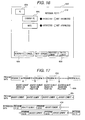
- the advertisement insertion tag is an advertisement identifier assigned to the header of a program data packet 652, and includes the information on time. As shown in Fig. 17, advertisement can be inserted during this time as desired. If advertisement is not inserted in the program stored in the program data file 408, advertisement can be inserted when the image is switched or the timer is set. Advertisement can be played during the time of conditional access for decoding the coded program information. Further, it can be played when the terminal is started up, radio frequency interference has occurred, a menu including electronic program list is displayed or the program recorded in advance is searched.
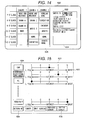
- Fig. 14 shows an example where advertisement 624 is inserted and displayed when the information of movie B in the program guide 626 is selected and outputted on the display screen 620.
- the advertisement insertion administration division 424 extracts the information of higher level of interest from the advertisement stored in the advertisement data file 414 through the advertisement read-out division 426. Whether information is of a higher level of interest or not is determined the interest comparator 442 according to the information on the level of interest stored in the interest storage 444.
- the information stored in the interest storage 444 is the one stored in advance by input means such as the touch panel 450 or remote control 480, or the IC card 482.
- interest level 632 is changed for each advertisement product classification 634, and is set by Determine 636.
- Fig. 16 shows the screen for checking the level of interest regarding more detailed information on product classification 634.
- the level of interest can be set automatically for each product classification by inputting the entry.
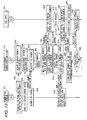
- Fig. 18 indicates a processing flow showing how to enter the level of interest.
- the level of interest can be set with consideration given to the history of advertisements and programs viewed so far, in addition to the information entered by the viewer.
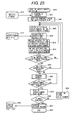
- Fig. 19 employs Fig. 19 to describe the processing by an interest comparator 442 for selecting the advertisement of a higher level of interest, using the information on the level of interest stored in the interest storage 444 according to the method discussed above.
- Step 741 Information on the level of interest is read out from the interest storage 444 (Step 741) and the advertisement related data is extracted from the advertisement data file 414 (Step 742).
- weight is assigned to each item by multiplying the read level of interest by a certain coefficient for each related information item for each commercial sponsor.
- the top priority is given to the item having the greatest total.
- the related information items includes a product classification, performer, manufacturer and season. In this way, priority is determined for each advertisement.
- advertisements to be played are selected in the order of priority.
- the advertisement in question is played by the advertisement read-out division 426. After play of the advertisement of the lowest priority, the order goes back to the advertisement of the top priority, and advertisements are played in the descending order of priority. The above-mentioned step is repeated hereafter.
- the viewing of a program has come to an end, the history of watching the program and advertisement is stored in the viewing history data file 422.
- Fig. 20 shows a processing flow representing advertisements higher than a certain order are played repeatedly instead of all stored advertisements being played. Otherwise, Fig. 20 is the same as Fig. 19.
- Fig. 22 shows a processing flow representing the play of random advertisements from advertisements of a certain order.
- the already played advertisements must be recorded to avoid continued play of the same advertisement.
- advertisements selected from the advertisements of lower order are played at random.
- Fig. 23 shows a case of random selection from the stored advertisements without any order assigning to advertisement play. It shows that the advertisements in excess of the total of specified weights are played. In this case, the already played advertisements must be recorded temporarily in order to avoid continued play of the same advertisement.
- the history administration division 452 selects the advertisement viewing history for a certain time period and sends it to the uplink unit 454. It can be sent collectively every month by the operation of the end user, or can be sent from time to time or automatically by the terminal every play of the advertisement.
- the advertisement viewing history is sent to the advertisement administration firm by an information transmission function for the satellite provided on the uplink unit 454.
- a satellite on highly elliptical orbit capable of two-way communications is used.
- it can be sent by a network such as the Internet.
- the system of this terminal can be a terminal for real-time broadcasting without meeting the requirements of storage-based broadcasting, where the terminal is provided with only the receiving antenna for terrestrial radio wave according to the form of use.
- the history need not be stored in the terminal.
- Fig. 9 shows a form of business where the end user 120 receives such privileges as coupons or points from the commercial sponsor by viewing the advertisement.
- the system according to the present embodiment is basically the same as that of the above-mentioned first embodiment.
- the following describes only the differences from the first embodiment:
- a privilege service contract is signed between the advertisement administration firm 112 and end user 120 (Step 502). However, to sign this contract, it is essential to own a broadcasting receiver terminal for storing advertisement. An end user 120 without this contract can view this advertisement, but the privilege as one of the services of the advertisement administration firm is not granted even when the play history is returned to the advertisement administration firm 112.
- the contract can be concluded by mailing a contract form or by e-mailing via the communications line.
- the user receives a contract form from the sales representative when purchasing the terminal at a sales representative, or receives it by mail.
- the contract form enclosed in the terminal package can be used.
- the contract form is filled out and mailed at the time of purchase or on a later date.
- Such privileges as coupons and points are preferred to be granted electronically. For example, they are recorded on the IC card 482 on the side of the terminal. These privileges can be issued by the advertisement administration firm 112 on behalf of the commercial sponsor 110, and use of such privileges can be shared among the products of various commercial sponsors.
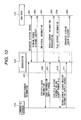
- Fig. 10 shows an embodiment where a broadcaster also serves as an advertisement administration firm 112. It shows a form business wherein a discount is made off the paid broadcasting viewing charge as the merit charge as a result of the end user 120 having watched the advertisement.
- the system according to the present embodiment is basically the same as that of the above-mentioned first embodiment.
- the following describes only the differences from the first embodiment:
- the position of the broadcaster in the present embodiment is almost the same as that of the advertisement administration firm in the first embodiment.
- the space for replacement of the advertisement on the terminal side and broadcasting of a program guide is provided between the self-broadcast programs.
- a specified contract must be concluded in order for the end user 120 to get a discount of broadcasting viewing charge. So viewing discount service contract is concluded between the broadcaster 612 and end user 120 (Step 602). To sign this contract, it is necessary to own a broadcasting receiver terminal for storing advertisements, similarly to the case of the above-mentioned embodiment. An end user 120 without this contract can view this advertisement, but services of the broadcaster 612 are not granted even when the play history is returned to the broadcaster 612.
- the contract is concluded by mailing or communications line, as described above.
- the discount of broadcasting viewing charge (Step 603) as merit charge is provided by obtaining the discount conditions based on the advertisement information viewed at a certain interval in a month, and by requesting the viewing charge to be paid by the end user in the following month as the amount resulting from deduction of the discount rate, or by reimbursing that amount as a discount of viewing charge in cash.
- Fig. 11 shows the form of business where the advertisement administration firm sells to the end user the broadcasting receiver terminal which is cheaper by advertisement viewing charge.
- the system according to the present embodiment is basically the same as that of the above-mentioned first embodiment.
- the following describes only the differences from the first embodiment:
- the advertisement administration firm 112 collectively purchased the information receiver terminal 150 from the manufacturer 710 (Step 712), and transfers it to the end user 120 at a cheaper price.
- the price difference is covered by the advertisement charge from the commercial sponsor 110 paid by the end user for viewing the advertisement.
- a specified contract is required for the end user 120 to get an economical information receiver terminal 150.
- a terminal transfer contract is concluded between the advertisement administration firm 112 and end user 120 (Step 702). In this case, transfer the information receiver terminal 150 is transferred to the end user 120 on condition that services cannot be canceled for a certain time period. In some cases, it is sold more economically to the end user 120 by the manufacturer 710 serving also as an advertisement administration firm 112 and by storing the advertisement of its own products in the terminal in advance.
- Fig. 12 shows an embodiment according to the present invention, where the information receiver terminal is used by the end user selecting whether the same program is viewed as a free broadcasting with advertisement or as paid broadcasting without advertisement.
- Fig. 12 The embodiment in Fig. 12 is the same as that of Fig. 5 up to the point where new advertisement information is sent to the information receiver terminal 150 by the advertisement administration firm 112 (Step 536).
- the end user 120 uses the remote control 480 or touch panel 450 of the information receiver terminal 150 to enter the command which indicates that the end user desires paid broadcasting for watching the program without viewing the advertisement (Step 537). Then the end user 120 uses the information receiver terminal 150 to send to the advertisement administration firm 112 the command that the paid viewing charge be paid from the specified bank account (Step 538).
- the advertisement administration firm 112 pays to the commercial sponsor 110 the charge for the unwatched advertisement when the advertisement is not viewed (Step 539).
- Fig. 13 is a diagram representing the business relation of the embodiment. It is the same as Fig. 12 up to the point where the end user 120 receives the terminal where advertisement has been stored (Step 558).
- Step 572 After the end user 120 has received the information receiver terminal 150, he determines if the program is to be watched for pay or not (Step 572). When he had determined to view the program without advertisement by paying a specified charge, he reports to the advertisement administration firm 112 that he wants to use paid viewing. In this case, use of the information receiver terminal 150 allows this communication to be sent to the advertisement administration firm 112 from the information receiver terminal.
- the advertisement administration firm 112 After the advertisement administration firm 112 has received the viewing charge from the end user 120 for viewing the program on a paid basis (Step 574), the advertisement administration firm 112 calculates the amount of the charge for the unwatched advertisement to be returned to the commercial sponsor when the advertisement is not viewed (Step 576), and pays it back to the commercial sponsor 110 (Step 578).
- the advertisement administration firm 112 adds new advertisement to the advertisement data file 414 already distributed to the end user and recorded on the information receiver terminal 150, and updates it at the request of the commercial sponsor 110 (Step 580). This updating is carried out via the transmission line (Step 584).
- the advertisement administration firm 112 deletes data file 414 for the advertisement past the term of validity for publication from the information receiver terminal 150 having been distributed to the end user (Step 588). In this case, the date file is deleted through the transmission line or automatically by the calendar function built in the user terminal when the term of validity for publication has expired (Step 586).
- the information transmission line mainly used for transmission and reception has been used to describe the information transmission line using a satellite.
- the transmission line used is not restricted thereto.
- the communications line including the Internet, ISDN, DSL, or optical fiber cable, terrestrial radio wave, satellite or free combination thereof can be used as a wired or wireless information transmission line used for transmission or reception.
- the present invention allows a viewer to select the advertisement to be played and to get various services by viewing the selected advertisement. It also allows a commercial sponsor to get a correct picture on the tendency of advertisement conforming to the taste of the viewer, to pay the advertisement charge almost accurately corresponding to the advertisement actually watched by the end user. This, the present invention greatly improves the efficiency of advertisement business.
Landscapes
- Engineering & Computer Science (AREA)
- Business, Economics & Management (AREA)
- Signal Processing (AREA)
- Multimedia (AREA)
- Strategic Management (AREA)
- Finance (AREA)
- Development Economics (AREA)
- Accounting & Taxation (AREA)
- Physics & Mathematics (AREA)
- Marketing (AREA)
- Databases & Information Systems (AREA)
- General Physics & Mathematics (AREA)
- General Business, Economics & Management (AREA)
- Entrepreneurship & Innovation (AREA)
- Game Theory and Decision Science (AREA)
- Economics (AREA)
- Theoretical Computer Science (AREA)
- Computer Networks & Wireless Communication (AREA)
- Probability & Statistics with Applications (AREA)
- Computing Systems (AREA)
- General Engineering & Computer Science (AREA)
- Astronomy & Astrophysics (AREA)
- Human Computer Interaction (AREA)
- Management, Administration, Business Operations System, And Electronic Commerce (AREA)
- Two-Way Televisions, Distribution Of Moving Picture Or The Like (AREA)
- Information Transfer Between Computers (AREA)
- Television Systems (AREA)
Applications Claiming Priority (2)
| Application Number | Priority Date | Filing Date | Title |
|---|---|---|---|
| JP2000355628 | 2000-11-17 | ||
| JP2000355628A JP2002157516A (ja) | 2000-11-17 | 2000-11-17 | 広告情報提供方法及びその装置 |
Publications (2)
| Publication Number | Publication Date |
|---|---|
| EP1207699A2 true EP1207699A2 (de) | 2002-05-22 |
| EP1207699A3 EP1207699A3 (de) | 2005-12-14 |
Family
ID=18828015
Family Applications (1)
| Application Number | Title | Priority Date | Filing Date |
|---|---|---|---|
| EP01120652A Withdrawn EP1207699A3 (de) | 2000-11-17 | 2001-08-30 | Verfahren und Vorrichtung zur Bereitstellung von Werbung |
Country Status (3)
| Country | Link |
|---|---|
| US (1) | US20020062250A1 (de) |
| EP (1) | EP1207699A3 (de) |
| JP (1) | JP2002157516A (de) |
Cited By (1)
| Publication number | Priority date | Publication date | Assignee | Title |
|---|---|---|---|---|
| WO2021188077A1 (en) * | 2020-03-19 | 2021-09-23 | Armoya Yuksek Teknoloji Anonim Sirketi | Sign board control system with data transmitted by terrestrial or satellite broadcast |
Families Citing this family (32)
| Publication number | Priority date | Publication date | Assignee | Title |
|---|---|---|---|---|
| JP2003189284A (ja) * | 2001-12-17 | 2003-07-04 | Dentsu Inc | レスポンスに応じて変更可能なデジタル広告生成方法 |
| US20030128229A1 (en) * | 2002-01-08 | 2003-07-10 | International Business Machines Corporation | Allowing a user to determine whether to view web content based on cost |
| AU2003296114A1 (en) * | 2002-12-25 | 2004-07-22 | Mekiki Creates Co., Ltd. | Content information processing system and method |
| JP2006048658A (ja) * | 2004-07-07 | 2006-02-16 | Defacto:Kk | 広告システム、広告制御方法、及び、広告評価方法 |
| US8712831B2 (en) * | 2004-11-19 | 2014-04-29 | Repucom America, Llc | Method and system for quantifying viewer awareness of advertising images in a video source |
| US8036932B2 (en) * | 2004-11-19 | 2011-10-11 | Repucom America, Llc | Method and system for valuing advertising content |
| US20060277098A1 (en) * | 2005-06-06 | 2006-12-07 | Chung Tze D | Media playing system and method for delivering multimedia content with up-to-date and targeted marketing messages over a communication network |
| JP4815162B2 (ja) * | 2005-07-08 | 2011-11-16 | パナソニック株式会社 | コンテンツ放映装置 |
| US20070204002A1 (en) * | 2006-02-27 | 2007-08-30 | Calderone Michael A | Method and system for dynamic updating of network based advertising messages |
| US8789078B2 (en) * | 2006-08-24 | 2014-07-22 | At&T Intellectual Property I, Lp | Method and apparatus for sending stored advertising data from an internet protocol television end user network interface device |
| US8127325B2 (en) | 2007-04-03 | 2012-02-28 | Google Inc. | Log processing to determine impression values using reliable durations |
| US8516515B2 (en) | 2007-04-03 | 2013-08-20 | Google Inc. | Impression based television advertising |
| US8966369B2 (en) * | 2007-05-24 | 2015-02-24 | Unity Works! Llc | High quality semi-automatic production of customized rich media video clips |
| US8893171B2 (en) * | 2007-05-24 | 2014-11-18 | Unityworks! Llc | Method and apparatus for presenting and aggregating information related to the sale of multiple goods and services |
| JP5213217B2 (ja) * | 2007-06-08 | 2013-06-19 | 楽天株式会社 | 情報提供装置および方法、プログラム、情報処理装置、並びに情報処理システム |
| JP2009088777A (ja) * | 2007-09-28 | 2009-04-23 | Dentsu Inc | 広告選択最適化処理装置及びその処理方法 |
| US8973028B2 (en) * | 2008-01-29 | 2015-03-03 | Samsung Electronics Co., Ltd. | Information storage medium storing metadata and method of providing additional contents, and digital broadcast reception apparatus |
| US20120072286A1 (en) * | 2008-03-10 | 2012-03-22 | Hulu Llc | Method and apparatus for providing a user-editable playlist of advertisements |
| US20090328205A1 (en) * | 2008-04-28 | 2009-12-31 | International Business Machines Corporation | User established group-based security for user created restful resources |
| KR101001803B1 (ko) * | 2008-11-04 | 2010-12-15 | 엔에이치엔비즈니스플랫폼 주식회사 | 클릭이나 노출에 따른 입찰가 및 기간에 따른 입찰가를 이용한 경매 방법 및 시스템, 광고 제공 방법 및 시스템 그리고 과금 방법 및 시스템 |
| KR101056214B1 (ko) * | 2008-11-04 | 2011-08-11 | 엔에이치엔비즈니스플랫폼 주식회사 | 클릭이나 노출에 따른 입찰가 및 기간에 따라 고정된 단가를 이용한 경매 방법 및 시스템, 광고 제공 방법 및 시스템 그리고 과금 방법 및 시스템 |
| KR101092810B1 (ko) * | 2009-12-31 | 2011-12-12 | 김기연 | 시청자의 광고허용에 따라 유료 방송콘텐츠를 무상으로 제공하는 방송서비스 방법 |
| US9898499B2 (en) * | 2010-08-16 | 2018-02-20 | Iheartmedia Management Services, Inc. | Multimedia scheduling for airplay with alternate category support |
| US20130060601A1 (en) * | 2011-09-06 | 2013-03-07 | Alcatel-Lucent Usa Inc. | Privacy-preserving advertisement targeting using randomized profile perturbation |
| JP5863423B2 (ja) * | 2011-11-30 | 2016-02-16 | キヤノン株式会社 | 情報処理装置、情報処理方法及びプログラム |
| JP5808433B2 (ja) * | 2011-12-16 | 2015-11-10 | 株式会社ソニー・コンピュータエンタテインメント | 放送番組処理装置、放送番組処理方法、放送局装置、情報配信サーバ、プログラム及び情報記憶媒体 |
| US9633375B2 (en) * | 2012-02-09 | 2017-04-25 | Surewaves Mediatech Private Limited | System and method for recommending online multimedia content |
| JP2013235400A (ja) * | 2012-05-08 | 2013-11-21 | Brother Ind Ltd | 広告登録装置、及び広告登録方法 |
| US9055343B1 (en) * | 2013-06-07 | 2015-06-09 | Google Inc. | Recommending content based on probability that a user has interest in viewing the content again |
| JP5898132B2 (ja) * | 2013-06-19 | 2016-04-06 | ヤフー株式会社 | 広告選択装置、広告処理システム、広告選択方法、及びプログラム |
| EP4066196A1 (de) | 2019-11-26 | 2022-10-05 | Telefonaktiebolaget LM Ericsson (publ) | Just-in-time nutzdaten mit privatsphäre |
| JP7659807B2 (ja) * | 2021-03-09 | 2025-04-10 | 国立大学法人京都大学 | 時刻認証システム、cm放送実績記録システム、時刻認証方法、cm放送実績記録方法、およびコンピュータプログラム |
Family Cites Families (31)
| Publication number | Priority date | Publication date | Assignee | Title |
|---|---|---|---|---|
| US6463585B1 (en) * | 1992-12-09 | 2002-10-08 | Discovery Communications, Inc. | Targeted advertisement using television delivery systems |
| JPH0832530A (ja) * | 1994-07-15 | 1996-02-02 | Sony Corp | データ放送システムおよびデータ受信装置 |
| JPH0983991A (ja) * | 1995-09-18 | 1997-03-28 | Toshiba Corp | 通信システムおよび番組視聴料徴収方法 |
| JP3442214B2 (ja) * | 1996-03-12 | 2003-09-02 | シャープ株式会社 | キーワード抽出方法、概念抽出方法、キーワード抽出装置、及び概念抽出装置 |
| US6223019B1 (en) * | 1996-03-14 | 2001-04-24 | Sirius Satellite Radio Inc. | Efficient high latitude service area satellite mobile broadcasting systems |
| JPH09261169A (ja) * | 1996-03-21 | 1997-10-03 | Sony Corp | 通信システム、通信システムの基地局、通信システムの携帯通信端末 |
| US5848397A (en) * | 1996-04-19 | 1998-12-08 | Juno Online Services, L.P. | Method and apparatus for scheduling the presentation of messages to computer users |
| JPH1049583A (ja) * | 1996-08-05 | 1998-02-20 | Nippon Steel Corp | 暗号化送信システム |
| JP3495198B2 (ja) * | 1996-09-02 | 2004-02-09 | 株式会社東芝 | コマーシャル情報選択再生方法および放送システム |
| JPH10254850A (ja) * | 1997-03-10 | 1998-09-25 | Digital Vision Lab:Kk | 情報流通システム及び同システムに適用する情報作成方法 |
| JPH10293793A (ja) * | 1997-04-21 | 1998-11-04 | Mitsubishi Electric Corp | ショッピング端末装置とオンラインショッピング装置 |
| JP2000082985A (ja) * | 1997-05-21 | 2000-03-21 | Hitachi Ltd | 天頂方向での滞在時間が長い軌道の人工衛星とその軌道制御方法及びそれを用いた通信システム |
| JP3609590B2 (ja) * | 1997-08-13 | 2005-01-12 | 株式会社日立製作所 | 情報提供システム、端末における情報の出力方法、移動情報端末及び情報提供装置 |
| JP3439092B2 (ja) * | 1997-10-07 | 2003-08-25 | 株式会社日立製作所 | 放送信号受信装置 |
| US6173271B1 (en) * | 1997-11-26 | 2001-01-09 | California Institute Of Technology | Television advertising automated billing system |
| JPH11187324A (ja) * | 1997-12-19 | 1999-07-09 | Matsushita Electric Ind Co Ltd | 番組情報作成装置および方法と受信装置 |
| JPH11275543A (ja) * | 1998-03-19 | 1999-10-08 | Nippon Telegr & Teleph Corp <Ntt> | マルチメディア情報提供方法及びシステム装置 |
| JP3665509B2 (ja) * | 1998-06-19 | 2005-06-29 | 松下電器産業株式会社 | 送信方法、受信方法、およびそれらの装置 |
| JP2000035966A (ja) * | 1998-07-17 | 2000-02-02 | Matsushita Electric Ind Co Ltd | 情報選択加工出力方法、情報選択加工出力装置、情報送信方法および媒体 |
| JP2000138915A (ja) * | 1998-10-30 | 2000-05-16 | Nec Corp | 有料放送課金制御方法、装置及び有料方法課金制御処理をコンピュータに実現させるためのプログラムを記録した記録媒体 |
| AU1473800A (en) * | 1998-11-13 | 2000-06-05 | Discovery Communications, Inc. | Digital broadcast program ordering |
| AU1517499A (en) * | 1998-11-27 | 2000-06-19 | Kent Ridge Digital Labs | Method and apparatus for content-linking supplemental information with time-sequence data |
| WO2000033228A1 (en) * | 1998-12-03 | 2000-06-08 | Expanse Networks, Inc. | Consumer profiling and advertisement selection system |
| WO2000033160A2 (en) * | 1998-12-03 | 2000-06-08 | Expanse Networks, Inc. | Subscriber characterization and advertisement monitoring system |
| JP2000250944A (ja) * | 1998-12-28 | 2000-09-14 | Toshiba Corp | 情報提供方法、情報提供装置、情報受信装置、並びに情報記述方法 |
| US20020059218A1 (en) * | 1999-01-26 | 2002-05-16 | Katherine Grace August | System and method for obtaining real time survey information for media programming using input device |
| JP2002537732A (ja) * | 1999-02-17 | 2002-11-05 | インデックス システムズ インコーポレイテッド | 広告のようなテレビおよび/または電子的番組ガイド機能を調整するシステムおよび方法 |
| US6334110B1 (en) * | 1999-03-10 | 2001-12-25 | Ncr Corporation | System and method for analyzing customer transactions and interactions |
| KR100747420B1 (ko) * | 1999-03-11 | 2007-08-09 | 소니 가부시끼 가이샤 | 정보 수신 장치 및 정보 수신 방법 |
| EP1192514A4 (de) * | 1999-05-03 | 2002-07-17 | Streetspace Inc | Verfahren und system um personifizierte onlinedienste und werbung in öffentlichen räumen zur verfügung zu stellen |
| CN1415165A (zh) * | 1999-12-27 | 2003-04-30 | 三星电子株式会社 | 数字电视和视频业务网及接收机的交互业务方法和装置 |
-
2000
- 2000-11-17 JP JP2000355628A patent/JP2002157516A/ja active Pending
-
2001
- 2001-08-30 US US09/941,698 patent/US20020062250A1/en not_active Abandoned
- 2001-08-30 EP EP01120652A patent/EP1207699A3/de not_active Withdrawn
Cited By (1)
| Publication number | Priority date | Publication date | Assignee | Title |
|---|---|---|---|---|
| WO2021188077A1 (en) * | 2020-03-19 | 2021-09-23 | Armoya Yuksek Teknoloji Anonim Sirketi | Sign board control system with data transmitted by terrestrial or satellite broadcast |
Also Published As
| Publication number | Publication date |
|---|---|
| JP2002157516A (ja) | 2002-05-31 |
| EP1207699A3 (de) | 2005-12-14 |
| US20020062250A1 (en) | 2002-05-23 |
Similar Documents
| Publication | Publication Date | Title |
|---|---|---|
| EP1207699A2 (de) | Verfahren und Vorrichtung zur Bereitstellung von Werbung | |
| USRE43207E1 (en) | Decision support method for planning broadcast transmissions | |
| EP1182879A2 (de) | Kommunikationssystem | |
| KR100778814B1 (ko) | 텔레비전 장치 | |
| USRE46338E1 (en) | Data-providing system, transmission server, data terminal, apparatus, authoring apparatus and data-providing method | |
| US7493648B2 (en) | Data transmission device, data receiving device, data transmitting method, data receiving method, recording device, playback device, recording method, and playback method | |
| US20050289630A1 (en) | Apparatus, method and system for self service digital media broadcast | |
| US20030158789A1 (en) | Electronic merchandise distribution system, electronic merchandise distribution method, and program | |
| US20050283401A1 (en) | Method and system for targeting incentives | |
| US20030110497A1 (en) | Micro-auction on television using multiple rewards to benefit the viewer of commercials | |
| JP2003522437A (ja) | ディジタル・ビデオ・ストリームのための広告管理システム | |
| US8429010B2 (en) | CM data management apparatus/method, pay-program reception terminal/method, pay-program transmission/reception system, and computer-readable storage medium storing computer program to realize these methods | |
| CN103262527B (zh) | 广播广告数据输出管理系统及其方法 | |
| US20030149665A1 (en) | Contents distribution system | |
| US20060149617A1 (en) | Content information processing system and method | |
| KR20000063733A (ko) | 인터넷을 통해 멀티미디어 시청시 적립금 지급 방법 및시스템 | |
| US20010042018A1 (en) | Bi-directional broadcasting and delivering system | |
| JP2003244671A (ja) | コンテンツ提供方法、コンテンツ提供装置及びプログラム | |
| JP2002369171A (ja) | 広告付き完全パッケージ番組提供方法及び広告付き完全パッケージ番組利用方法 | |
| JP2003016338A (ja) | データ受信装置、情報提供、プログラムおよび媒体 | |
| JP2004133884A (ja) | 商品及びサービスの支払いを管理するソフトウェアシステム、特にオンデマンド通信に対応し、電子財布に対応するソフトウェアシステム | |
| US20020055895A1 (en) | Accounting processing method | |
| EP1414242A1 (de) | Punktgebrauchtes-e-handelssystem, punktgebrauchtes-e-handelsverfahren, rundsendeempfangsvorrichtung und rundsendeempfangsverfahren | |
| JP2004213340A (ja) | 情報管理システム | |
| JP2003078902A (ja) | Cm情報管理装置、有料番組受信端末、有料番組送受信システム、cm情報管理方法、有料番組受信方法、及びこれらの方法をコンピュータに実現させるプログラム並びにそのプログラムを記録したコンピュータ読み取り可能な記録媒体 |
Legal Events
| Date | Code | Title | Description |
|---|---|---|---|
| PUAI | Public reference made under article 153(3) epc to a published international application that has entered the european phase |
Free format text: ORIGINAL CODE: 0009012 |
|
| AX | Request for extension of the european patent |
Free format text: AL;LT;LV;MK;RO;SI |
|
| PUAL | Search report despatched |
Free format text: ORIGINAL CODE: 0009013 |
|
| AK | Designated contracting states |
Kind code of ref document: A3 Designated state(s): AT BE CH CY DE DK ES FI FR GB GR IE IT LI LU MC NL PT SE TR |
|
| AX | Request for extension of the european patent |
Extension state: AL LT LV MK RO SI |
|
| RIC1 | Information provided on ipc code assigned before grant |
Ipc: 7H 04N 7/16 B Ipc: 7H 04N 7/173 A |
|
| 17P | Request for examination filed |
Effective date: 20060518 |
|
| 17Q | First examination report despatched |
Effective date: 20060630 |
|
| AKX | Designation fees paid |
Designated state(s): DE FR GB |
|
| STAA | Information on the status of an ep patent application or granted ep patent |
Free format text: STATUS: THE APPLICATION IS DEEMED TO BE WITHDRAWN |
|
| 18D | Application deemed to be withdrawn |
Effective date: 20061111 |