EP1215210A2 - Benzufurane - Google Patents
Benzufurane Download PDFInfo
- Publication number
- EP1215210A2 EP1215210A2 EP02006144A EP02006144A EP1215210A2 EP 1215210 A2 EP1215210 A2 EP 1215210A2 EP 02006144 A EP02006144 A EP 02006144A EP 02006144 A EP02006144 A EP 02006144A EP 1215210 A2 EP1215210 A2 EP 1215210A2
- Authority
- EP
- European Patent Office
- Prior art keywords
- formula
- compound
- group
- acid
- piperazinyl
- Prior art date
- Legal status (The legal status is an assumption and is not a legal conclusion. Google has not performed a legal analysis and makes no representation as to the accuracy of the status listed.)
- Granted
Links
- 0 *c1cc2cc([N+](O)=O)ccc2[o]1 Chemical compound *c1cc2cc([N+](O)=O)ccc2[o]1 0.000 description 2
Classifications
-
- C—CHEMISTRY; METALLURGY
- C07—ORGANIC CHEMISTRY
- C07D—HETEROCYCLIC COMPOUNDS
- C07D405/00—Heterocyclic compounds containing both one or more hetero rings having oxygen atoms as the only ring hetero atoms, and one or more rings having nitrogen as the only ring hetero atom
- C07D405/02—Heterocyclic compounds containing both one or more hetero rings having oxygen atoms as the only ring hetero atoms, and one or more rings having nitrogen as the only ring hetero atom containing two hetero rings
- C07D405/12—Heterocyclic compounds containing both one or more hetero rings having oxygen atoms as the only ring hetero atoms, and one or more rings having nitrogen as the only ring hetero atom containing two hetero rings linked by a chain containing hetero atoms as chain links
-
- A—HUMAN NECESSITIES
- A61—MEDICAL OR VETERINARY SCIENCE; HYGIENE
- A61K—PREPARATIONS FOR MEDICAL, DENTAL OR TOILETRY PURPOSES
- A61K31/00—Medicinal preparations containing organic active ingredients
- A61K31/33—Heterocyclic compounds
- A61K31/335—Heterocyclic compounds having oxygen as the only ring hetero atom, e.g. fungichromin
- A61K31/34—Heterocyclic compounds having oxygen as the only ring hetero atom, e.g. fungichromin having five-membered rings with one oxygen as the only ring hetero atom, e.g. isosorbide
-
- A—HUMAN NECESSITIES
- A61—MEDICAL OR VETERINARY SCIENCE; HYGIENE
- A61P—SPECIFIC THERAPEUTIC ACTIVITY OF CHEMICAL COMPOUNDS OR MEDICINAL PREPARATIONS
- A61P25/00—Drugs for disorders of the nervous system
-
- C—CHEMISTRY; METALLURGY
- C07—ORGANIC CHEMISTRY
- C07D—HETEROCYCLIC COMPOUNDS
- C07D307/00—Heterocyclic compounds containing five-membered rings having one oxygen atom as the only ring hetero atom
- C07D307/77—Heterocyclic compounds containing five-membered rings having one oxygen atom as the only ring hetero atom ortho- or peri-condensed with carbocyclic rings or ring systems
- C07D307/78—Benzo [b] furans; Hydrogenated benzo [b] furans
- C07D307/82—Benzo [b] furans; Hydrogenated benzo [b] furans with hetero atoms or with carbon atoms having three bonds to hetero atoms with at the most one bond to halogen, e.g. ester or nitrile radicals, directly attached to carbon atoms of the hetero ring
- C07D307/84—Carbon atoms having three bonds to hetero atoms with at the most one bond to halogen
- C07D307/85—Carbon atoms having three bonds to hetero atoms with at the most one bond to halogen attached in position 2
-
- Y—GENERAL TAGGING OF NEW TECHNOLOGICAL DEVELOPMENTS; GENERAL TAGGING OF CROSS-SECTIONAL TECHNOLOGIES SPANNING OVER SEVERAL SECTIONS OF THE IPC; TECHNICAL SUBJECTS COVERED BY FORMER USPC CROSS-REFERENCE ART COLLECTIONS [XRACs] AND DIGESTS
- Y02—TECHNOLOGIES OR APPLICATIONS FOR MITIGATION OR ADAPTATION AGAINST CLIMATE CHANGE
- Y02P—CLIMATE CHANGE MITIGATION TECHNOLOGIES IN THE PRODUCTION OR PROCESSING OF GOODS
- Y02P20/00—Technologies relating to chemical industry
- Y02P20/50—Improvements relating to the production of bulk chemicals
- Y02P20/55—Design of synthesis routes, e.g. reducing the use of auxiliary or protecting groups
Definitions
- the object of the invention was to find new compounds, which in particular as intermediates in the synthesis of drugs can be used, but also directly for the production of Medicines can be used.
- the invention relates to the benzofuran derivatives of the formula I and their salts.
- radicals R 1 , R 2 , R 3 , R 4 , R 5 , R 6 , X, X 1 , A, Ph, Het and Py have the meanings given in the formulas I to VI, if not expressly something else is specified.
- A has 1 to 4, preferably 1, 2, or 3 carbon atoms.
- A is preferably methyl or ethyl, furthermore propyl, Isopropyl, also butyl, isobutyl, sec-butyl or tert-butyl.
- the rest Ph means phenyl
- the rest Het means an imidazole, triazole, substituted in the 1-position or tetrazole.
- the Py radical preferably denotes a pyridin-2-yl radical, furthermore also a pyridin-4-yl residue.
- radical X denotes CN, COOH, COOA, COOPh, COOCH 2 Ph, COOPy, CONR 4 R 5 or CO-Het.
- the radical R 1 is NH 2 , 1-piperazinyl or a 1-piperazinyl radical substituted in the 4-position by R 3 .
- R 2 denotes H, Cl, Br, OH or OA.
- the radical R 3 denotes benzyl, but preferably an amino protecting group known per se.
- amino protecting group is well known and refers to on groups that are suitable, an amino group before chemical reactions to protect (block) but which are easily removable after the desired chemical reaction elsewhere in the molecule has been carried out. Typical of such groups are in particular unsubstituted acyl, aryl, aralkoxymethyl or aralkyl groups. There the amino protecting groups after the desired reaction (or reaction sequence) their type and size are not critical; however, preference is given to those having 1-20, in particular 1-8, carbon atoms.
- acyl group is related to the present Process and the present compounds in the broadest sense.
- the compounds of formula I can have one or more chiral centers possess and therefore occur in different stereoisomeric forms.
- Formula I encompasses all of these forms.
- the compounds of formula I and also the starting materials for their preparation are otherwise manufactured according to methods known per se, as described in literature (e.g. in standard works such as Houben-Weyl, Methods of organic chemistry, Georg-Thieme-Verlag, Stuttgart) are, and under reaction conditions for the above Implementations are known and suitable. You can also from use known per se, not mentioned here in more detail do.
- the starting materials can also be formed in situ, so that they are not isolated from the reaction mixture, but immediately further reacted to the compounds of formula I.
- the radical X 1 preferably denotes Cl or Br; however, it can also contain I, OH or a reactively modified OH group such as alkylsulfonyloxy with 1-6 C atoms (preferably methylsulfonyloxy) or arylsulfonyloxy with 6-10 C atoms (preferably phenyl, p-tolylsulfonyloxy, 1- or 2- Naphthalenesulfonyloxy) mean.
- a reactively modified OH group such as alkylsulfonyloxy with 1-6 C atoms (preferably methylsulfonyloxy) or arylsulfonyloxy with 6-10 C atoms (preferably phenyl, p-tolylsulfonyloxy, 1- or 2- Naphthalenesulfonyloxy) mean.
- the radical R 6 denotes H or benzyl.
- reaction of the compounds of the formula II with compounds of the formula I in which R 1 is NH 2 proceeds according to methods known from the literature for the alkylation of amines.
- the components can be melted together without the presence of a solvent, if appropriate in a closed tube or in an autoclave.
- Suitable inert solvents are e.g. Hydrocarbons like hexane, Petroleum ether, benzene, toluene or xylene; chlorinated hydrocarbons such as Trichlorethylene, 1,2-dichloroethane, carbon tetrachloride, chloroform or dichloromethane; Alcohols such as methanol, ethanol, isopropanol, n-propanol, n-butanol or tert-butanol; Ethers such as diethyl ether, diisopropyl ether, Tetrahydrofuran (THF) or dioxane; Glycol ethers such as ethylene glycol monomethyl or monoethyl ether (methyl glycol or ethyl glycol), Ethylene glycol dimethyl ether (diglyme); Ketones such as acetone or butanone; Amides such as acetamide, dimethylacetamide or dimethylformamide (DMF); Nitri
- an acid-binding agent for example an alkali or Alkaline earth metal hydroxides, carbonates or bicarbonates or one other weak acid salt of the alkali or alkaline earth metals, preferably potassium, sodium or calcium, or the addition of a organic base such as triethylamine, dimethylamine, pyridine or quinoline or an excess of the amine component may be beneficial.
- the Response time is between depending on the conditions used a few minutes and 14 days, the reaction temperature between 0 and 150 °, usually between 20 and 130 °.
- the conversion of a compound of the formula I in which R 1 is a nitro group into a compound of the formula I in which R 1 is an amino group is preferably carried out using hydrogen gas with transition metal catalysis (for example by hydrogenation on Raney nickel or Pd carbon in an inert solvent such as methanol or ethanol).
- a radical R 3 is split off from a compound of the formula I, for example using strong acids, expediently using TFA (trifluoroacetic acid) or perchloric acid, but also using other strong inorganic acids such as hydrochloric acid or sulfuric acid, strong organic carboxylic acids such as Trichloroacetic acid or sulfonic acids such as benzene or p-toluenesulfonic acid.
- strong acids expediently using TFA (trifluoroacetic acid) or perchloric acid, but also using other strong inorganic acids such as hydrochloric acid or sulfuric acid, strong organic carboxylic acids such as Trichloroacetic acid or sulfonic acids such as benzene or p-toluenesulfonic acid.
- strong acids expediently using TFA (trifluoroacetic acid) or perchloric acid
- other strong inorganic acids such as hydrochloric acid or sulfuric acid
- strong organic carboxylic acids such as T
- Suitable inert solvents are preferably organic, for example carboxylic acids such as acetic acid, ethers such as tetrahydrofuran or dioxane, amides such as dimethylformamide, halogenated hydrocarbons such as dichloromethane, and also alcohols such as methanol, ethanol or isopropanol and water. Mixtures of the abovementioned solvents are also suitable. TFA is preferably used in excess without the addition of another solvent, perchloric acid in the form of a mixture of acetic acid and 70% perchloric acid in a ratio of 9: 1.
- the reaction temperatures are advantageously between about 0 and about 50 °, preferably between 15 and 30 ° ,
- the BOC group is preferred with TFA in dichloromethane or with about 3 split off up to 5N hydrochloric acid in dioxane at 15-30 °.
- Hydrogenolytically removable protective groups can e.g. by treatment with hydrogen in the presence of a catalyst (e.g. a noble metal catalyst such as palladium a carrier such as coal) can be split off.
- a catalyst e.g. a noble metal catalyst such as palladium a carrier such as coal
- the hydrogenolysis is in usually at temperatures between about 0 and 100 ° and printing between about 1 and 200 bar, preferably at 20-30 ° and 1-10 bar carried out.
- a base of formula I can with an acid in the associated acid addition salt be transferred, for example by implementing equivalents Amounts of the base and acid in an inert solvent such as ethanol and subsequent evaporation.
- an inert solvent such as ethanol and subsequent evaporation.
- acids are considered, the physiologically harmless Deliver salts.
- So inorganic acids can be used, e.g. Sulfuric acid, nitric acid, hydrohalic acids such as hydrochloric acid or hydrobromic acid, phosphoric acids such as Orthophosphoric acid, sulfamic acid, also organic acids, in particular aliphatic, alicyclic, araliphatic, aromatic or heterocyclic mono- or polybasic carboxylic, sulfonic or sulfuric acids, e.g.
- Formic acid acetic acid, propionic acid, pivalic acid, Diethyl acetic acid, malonic acid, succinic acid, pimelic acid, fumaric acid, Maleic acid, lactic acid, tartaric acid, malic acid, citric acid, Gluconic acid, ascorbic acid, nicotinic acid, isonicotinic acid, methane or Ethanesulfonic acid, ethanedisulfonic acid, 2-hydroxyethanesulfonic acid, Benzenesulfonic acid, p-toluenesulfonic acid, naphthalene mono- and disulfonic acids, Lauryl sulfuric acid. Salts with physiologically harmless Acids, e.g. Picrates, can be used for isolation and / or purification of the compounds of formula I can be used.
- Acids e.g. Picrates
- the invention also relates to medicaments of the formula I and their physiologically acceptable salts.
- the invention furthermore relates to the use of the compounds of formula I as intermediates for the synthesis of drugs.
- Corresponding drugs are for example in DE 4333254 described.
- the invention further relates to the use of the compounds of formula I as intermediates for the synthesis of drugs that Show effects on the central nervous system.
- the invention further relates to the use of the compounds of the formula I and / or their physiologically acceptable salts for Manufacture of pharmaceutical preparations, especially non-chemical ones Ways. You can do this together with at least one solid, liquid and / or semi-liquid carrier or auxiliary and optionally in combination with one or more others Active ingredients are brought into a suitable dosage form.
- the invention furthermore relates to pharmaceutical preparations, containing at least one compound of formula I and / or one of them physiologically acceptable salts.
- Organic come as carriers or inorganic substances that are suitable for enteral (e.g. oral), parenteral or topical application and with the new Compounds do not react, e.g. water, vegetable oils, Benzyl alcohols, alkylene glycols, polyethylene glycols, glycerol triacetate, Gelatin, carbohydrates such as lactose or starch, magnesium stearate, talc, Vaseline.
- the new compounds can also be lyophilized and the obtained lyophilisates e.g. for the production of injectables be used.
- the specified preparations can be sterilized be and / or auxiliary substances such as lubricants, preservatives, stabilizers and / or wetting agents, emulsifiers, salts for influencing the osmotic Pressure, buffer substances, color, taste and / or contain several other active substances, e.g. one or more vitamins.
- auxiliary substances such as lubricants, preservatives, stabilizers and / or wetting agents, emulsifiers, salts for influencing the osmotic Pressure, buffer substances, color, taste and / or contain several other active substances, e.g. one or more vitamins.
- the compounds of formula I and their physiologically acceptable Salts can be used to fight diseases.
- Example A Injection glasses
- a solution of 100 g of an active ingredient of the formula I and 5 g of disodium hydrogen phosphate is in 3 l of double distilled water with 2 N hydrochloric acid adjusted to pH 6.5, sterile filtered, filled into injection glasses, lyophilized under sterile conditions and sealed sterile. Every injection jar contains 5 mg of active ingredient.
- a mixture of 20 g of an active ingredient of the formula I is melted with 100 g soy lecithin and 1400 g cocoa butter, pour into molds and leave cool. Each suppository contains 20 mg of active ingredient.
- a solution of 1 g of an active ingredient is prepared of the formula I, 9.38 g of NaH 2 PO 4 ⁇ 2 H 2 O, 28.48 g Na 2 HPO 4 ⁇ 12 H 2 O and 0.1 g of benzalkonium chloride in 940 ml of double- distilled water. It is adjusted to pH 6.8, made up to 1 I and sterilized by irradiation. This solution can be used in the form of eye drops.
- Example D ointment
- 500 mg of an active ingredient of the formula I are mixed with 99.5 g of petroleum jelly under aseptic conditions.
- a mixture of 1 kg of active ingredient of the formula I, 4 kg of lactose, 1.2 kg of potato starch, 0.2 kg talc and 0.1 kg magnesium stearate is more common Formed into tablets in such a way that each tablet contains 10 mg of active ingredient contains.
- Example F coated tablets
- Example E Analogously to Example E, tablets are pressed, which are then made in the usual manner Wise with a coating of sucrose, potato starch, talc, tragacanth and dye are coated.
- Example G capsules
- a solution of 1 kg of active ingredient of the formula I in 60 I of double distillation Water is sterile filtered, filled into ampoules, under sterile conditions lyophilized and sealed sterile. Each ampoule contains 10 mg Active ingredient.
Landscapes
- Chemical & Material Sciences (AREA)
- Organic Chemistry (AREA)
- Health & Medical Sciences (AREA)
- Veterinary Medicine (AREA)
- Public Health (AREA)
- General Health & Medical Sciences (AREA)
- Animal Behavior & Ethology (AREA)
- Life Sciences & Earth Sciences (AREA)
- Pharmacology & Pharmacy (AREA)
- Medicinal Chemistry (AREA)
- Neurosurgery (AREA)
- Nuclear Medicine, Radiotherapy & Molecular Imaging (AREA)
- General Chemical & Material Sciences (AREA)
- Chemical Kinetics & Catalysis (AREA)
- Neurology (AREA)
- Biomedical Technology (AREA)
- Bioinformatics & Cheminformatics (AREA)
- Engineering & Computer Science (AREA)
- Epidemiology (AREA)
- Pharmaceuticals Containing Other Organic And Inorganic Compounds (AREA)
- Plural Heterocyclic Compounds (AREA)
- Furan Compounds (AREA)
Abstract
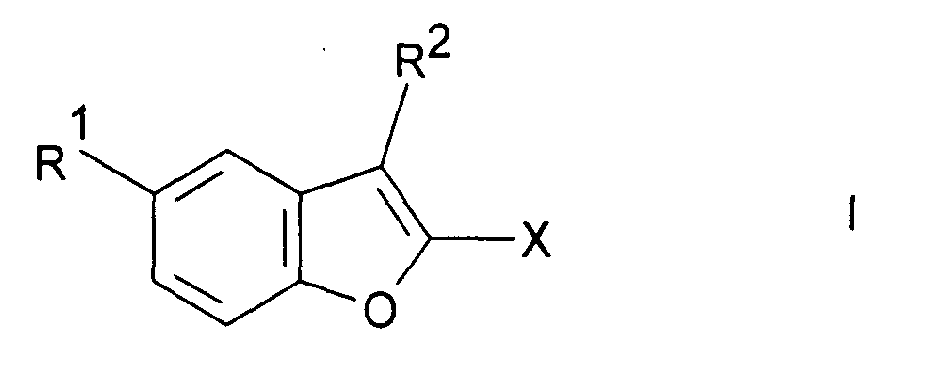
worin
R1, R2 und X die in Anspruch 1 angegebenen Bedeutungen haben, eignen sich als Zwischenprodukte bei der Synthese von Arzneimitteln und zeigen Wirkungen auf das Zentralnervensystem.
Description

- R1
- NH2, 1-Piperazinyl oder 4-R3-piperazinyl,
- R2
- H, Cl, Br, OH oder OA,
- R3
- Benzyl oder eine an sich bekannte Aminoschutzgruppe,
- X
- CN, COOH, COOA, COOPh, COOCH2Ph, COOPy, CONR4R5 oder CO-Het,
- R4 und R5
- jeweils unabhängig voneinander H, A oder Benzyl,
- A
- Alkyl mit 1-4 C-Atomen,
- Ph
- Phenyl,
- Het
- Imidazol-1-yl, Triazol-1-yl oder Tetrazol-1-yl und
- Py
- Pyridyl
sowie deren Salze.
oder
daß man eine Verbindung, die der Formel I entspricht,
worin R1 eine NH2-Gruppe ist,
mit einer Verbindung der Formel II
- R6
- H oder Benzyl und
- X1
- Cl, Br, I, OH oder eine reaktionsfähig funktionell abgewandelte OH-Gruppe bedeutet,
oder
daß man eine Verbindung, die der Formel I entspricht,
worin R1 ein 1-Piperazinylrest ist, durch Einführung einer an sich bekannten Aminoschutzgruppe in eine andere Verbindung der Formel I umwandelt, in der R1 den 4-R3-Piperazinylrest bedeutet,
worin R3 die angegebene Bedeutung besitzt,
oder
daß man eine Verbindung, die der Formel I entspricht,
worin X eine COOA-Gruppe ist, worin A die angegenene Bedeutung besitzt,
in eine andere Verbindung der Formel I umwandelt, in der X
CONR4R5 bedeutet, worin R4 und R5 die angegebenen Bedeutungen besitzen,
oder
daß man eine Verbindung, die der Formel I entspricht,
worin X eine COOH-Gruppe ist,
in eine andere Verbindung der Formel I umwandelt, in der X
CO-Het bedeutet, worin Het die angegebene Bedeutung besitzt,
oder
daß man eine Verbindung, die der Formel I entspricht,
worin R1 eine 4-R3-Piperazinylgruppe ist, worin R3 die angegebene Bedeutung besitzt,
durch Abspaltung der Schutzgruppe in eine Verbindung der Formel I umwandelt, in der R1 1-Piperazinyl bedeutet
und/oder.
daß man eine Base der Formel I durch Behandeln mit einer Säure in eines ihrer Salze umwandelt.
1-[4-(5-Cyan-indol-3-yl)-butyl]-4-(2-carbamoyl-benzofuran-5-yl)-piperazin und dessen Salzen, dadurch gekennzeichnet, daß man 2-(2-Formylphenoxy)-essigsäure nitriert, daß man die so erhaltene 2-(2-Formyl-4-nitrophenoxy)-essigsäure cyclisiert,
daß man die so erhaltene 5-Nitrobenzofuran-2-carbonsäure verestert,
daß man die so erhaltene Verbindung der Formel III

- X
- COOA, COOPh oder COOCH2Ph
reduziert,
daß man die so erhaltene Verbindung der Formel I, worin
- R1
- NH2 und
- X
- COOA, COOPh oder COOCH2Ph bedeutet
Säureadditionssalz einer Verbindung der Formel II
- X1
- Cl, Br, I, OH oder eine reaktionsfähig funktionell
zu einem Piperazinderivat der Formel IV

- X
- COOA, COOPh oder COOCH2Ph bedeutet
daß man die so erhaltene Verbindung der Formel IV
in ihr Säureadditionssalz umwandelt,
daß man dieses mit einer Verbindung umsetzt, die zur Einführung einer Aminoschutzgruppe geeignet ist,
daß man die so erhaltene Verbindung der Formel V

in eine Verbindung der Formel VI

umwandelt,
daß man die so erhaltene Verbindung der Formel VI durch Abspaltung der Aminoschutzgruppe in 5-(1-Piperazinyl)-benzofuran-2-carboxamid oder ein Säureadditionssalz umwandelt und
daß man 5-(1-Piperazinyl)-benzofuran-2-carboxamid oder ein entsprechendes Salz mit 3-(4-Chlorbutyl)-5-cyan-indol zu 1-[4-(5-Cyan-indol-3-yl)-butyl]-4-(2-carbamoyl-benzofuran-5-yl)-piperazin umsetzt und gegebenenfalls anschließend in ein Säureadditionssalz überführt.
3-(4-Chlorbutyl)-5-cyan-indol ist bekannt aus DE 4101686, 1-[4-(5-Cyanindol-3-yl)-butyl]-4-(2-carbamoyl-benzofuran-5-yl)-piperazin ist bekannt aus DE 4333254.
Claims (10)
- Benzofurane der Formel Iworin

- R1
- NH2 oder 1-Piperazinyl,
- R2
- H, Cl, Br, OH oder OA,
- X
- CONR4R5 oder CO-Het,
- R4 und R5
- jeweils unabhängig voneinander H, A oder Benzyl,
- A
- Alkyl mit 1-4 C-Atomen,
- Het
- Imidazol-1-yl, Triazol-1-yl oder Tetrazol-1-yl und
sowie deren Salze. - Verbindungen nach Anspruch 1:a) 5-(1-Piperazinyl)-benzofuran-2-carboxamid,b) 5-Amino-benzofuran-2-carboxamid
sowie deren Salze. - Verfahren zur Herstellung von Benzofuranen der Formel I nach Anspruch 1 sowie von deren Salzen, dadurch gekennzeichnet, daß man eine Verbindung, die der Formel I entspricht,
worin R1 eine Nitrogruppe ist,
auf übliche Weise reduziert,
oder
daß man eine Verbindung, die der Formel I entspricht,
worin R1 eine NH2-Gruppe ist,
mit einer Verbindung der Formel II- R6
- H oder Benzyl und
- X1
- Cl, Br, I, OH oder eine reaktionsfähig funktionell abgewandelte OH-Gruppe bedeutet,
oder
daß man eine Verbindung, die der Formel I entspricht,
worin X eine COOA-Gruppe ist, worin A die angegebene Bedeutung besitzt,
in eine andere Verbindung der Formel I umwandelt, in der X CONR4R5 bedeutet, worin R4 und R5 die angegebenen Bedeutungen besitzen,
oder
daß man eine Verbindung, die der Formel I entspricht,
worin X eine COOH-Gruppe ist,
in eine andere Verbindung der Formel I umwandelt, in der X CO-Het bedeutet, worin Het die angegebene Bedeutung besitzt,
oder
daß man eine Verbindung, die der Formel I entspricht,
worin R1 eine 4-R3-Piperazinylgruppe ist, worin R3 Benzyl oder eine Aminoschutzgruppe bedeutet,
durch Abspaltung der Schutzgruppe in eine Verbindung der Formel I umwandelt, in der R1 1-Piperazinyl bedeutet
und/oder
daß man eine Base der Formel I durch Behandeln mit einer Säure in eines ihrer Salze umwandelt. - Arzneimittel der Formel I nach Anspruch 1 und ihre physiologisch unbedenklichen Salze.
- Verwendung der Verbindungen der Formel I nach Anspruch 1 als Zwischenprodukte zur Synthese von Arzneimitteln.
- Verwendung der Verbindungen der Formel I nach Anspruch 1 als Zwischenprodukte zur Synthese von Arzneimitteln, die Wirkungen auf das Zentralnervensystem zeigen.
- Verwendung der Verbindungen der Formel I nach Anspruch 1 bei der Synthese von
1-[4-(5-Cyan-indol-3-yl)-butyl]-4-(2-carbamoyl-benzofuran-5-yl)-piperazin und dessen Salzen, dadurch gekennzeichnet, daß man 2-(2-Formylphenoxy)-essigsäure nitriert,
daß man die so erhaltene 2-(2-Formyl-4-nitrophenoxy)-essigsäure cyclisiert,
daß man die so erhaltene 5-Nitrobenzofuran-2-carbonsäure verestert,
daß man die so erhaltene Verbindung der Formel IIIworin
- X
- COOA, COOPh oder COOCH2Ph
reduziert,
daß man die so erhaltene Verbindung der Formel I, worin- R1
- NH2 und
- X
- COOA, COOPh oder COOCH2Ph bedeutet
- X1
- Cl, Br, I, OH oder eine reaktionsfähig funktionell
zu einem Piperazinderivat der Formel IVworin
- X
- COOA, COOPh oder COOCH2Ph bedeutet
daß man die so erhaltene Verbindung der Formel IV in ihr Säureadditionssalz umwandelt,
daß man dieses mit einer Verbindung umsetzt, die zur Einführung einer Aminoschutzgruppe geeignet ist,
daß man die so erhaltene Verbindung der Formel Vworin R3 Aminoschutzgruppe bedeutet und X2 die angegebene Bedeutung besitzt,
in eine Verbindung der Formel VIworin R3 die obige Bedeutung hat,
umwandelt,
daß man die so erhaltene Verbindung der Formel VI durch Abspaltung der Aminoschutzgruppe in 5-(1-Piperazinyl)-benzofuran-2-carboxamid oder ein Säureadditionssalz umwandelt, und daß man 5-(1-Piperazinyl)-benzofuran-2-carboxamid mit 3-(4-Chlorbutyl)-5-cyan-indol zu 1-[4-(5-Cyan-indol-3-yl)-butyl]-4-(2-carbamoyl-benzofuran-5-yl)-piperazin umsetzt und gegebenenfalls in sein Säureadditionssalz überführt. - Verfahren zur Herstellung pharmazeutischer Zubereitungen, dadurch gekennzeichnet, daß man eine Verbindung der Formel I nach Anspruch 1 und/oder eines ihrer physiologischen unbedenklichen Salze zusammen mit mindestens einem festen, flüssigen oder halbflüssigen Träger- oder Hilfsstoff in eine geeignete Dosierungsform bringt.
- Pharmazeutische Zubereitung, gekennzeichnet durch einen Gehalt an mindestens einer Verbindung der Formel I nach Anspruch 1 und/oder einem ihrer physiologisch unbedenklichen Salze.
- Verwendung von Verbindungen der Formel I nach Anspruch 1 und ihre physiologisch unbedenklichen Salze zur Herstellung einer pharmazeutischen Zubereitung zur Bekämpfung von Krankheiten.
Applications Claiming Priority (3)
| Application Number | Priority Date | Filing Date | Title |
|---|---|---|---|
| DE19514567 | 1995-04-20 | ||
| DE19514567A DE19514567A1 (de) | 1995-04-20 | 1995-04-20 | Benzofurane |
| EP96105701A EP0738722B1 (de) | 1995-04-20 | 1996-04-11 | 5-Amino-benzofuran-2-carbonsäurederivate |
Related Parent Applications (1)
| Application Number | Title | Priority Date | Filing Date |
|---|---|---|---|
| EP96105701A Division EP0738722B1 (de) | 1995-04-20 | 1996-04-11 | 5-Amino-benzofuran-2-carbonsäurederivate |
Publications (3)
| Publication Number | Publication Date |
|---|---|
| EP1215210A2 true EP1215210A2 (de) | 2002-06-19 |
| EP1215210A3 EP1215210A3 (de) | 2002-06-26 |
| EP1215210B1 EP1215210B1 (de) | 2006-10-18 |
Family
ID=7759973
Family Applications (2)
| Application Number | Title | Priority Date | Filing Date |
|---|---|---|---|
| EP96105701A Expired - Lifetime EP0738722B1 (de) | 1995-04-20 | 1996-04-11 | 5-Amino-benzofuran-2-carbonsäurederivate |
| EP02006144A Expired - Lifetime EP1215210B1 (de) | 1995-04-20 | 1996-04-11 | Benzofurane |
Family Applications Before (1)
| Application Number | Title | Priority Date | Filing Date |
|---|---|---|---|
| EP96105701A Expired - Lifetime EP0738722B1 (de) | 1995-04-20 | 1996-04-11 | 5-Amino-benzofuran-2-carbonsäurederivate |
Country Status (22)
| Country | Link |
|---|---|
| US (2) | US5723614A (de) |
| EP (2) | EP0738722B1 (de) |
| JP (2) | JP3874837B2 (de) |
| KR (1) | KR100444385B1 (de) |
| CN (1) | CN1181067C (de) |
| AT (2) | ATE243689T1 (de) |
| AU (1) | AU704495B2 (de) |
| CA (1) | CA2174494C (de) |
| CZ (1) | CZ294697B6 (de) |
| DE (3) | DE19514567A1 (de) |
| DK (2) | DK1215210T3 (de) |
| ES (2) | ES2201143T3 (de) |
| HU (1) | HU226684B1 (de) |
| NO (1) | NO961579L (de) |
| PL (1) | PL189175B1 (de) |
| PT (2) | PT738722E (de) |
| RU (1) | RU2159238C2 (de) |
| SI (1) | SI0738722T1 (de) |
| SK (2) | SK284862B6 (de) |
| TW (1) | TW335396B (de) |
| UA (1) | UA45958C2 (de) |
| ZA (1) | ZA963155B (de) |
Cited By (3)
| Publication number | Priority date | Publication date | Assignee | Title |
|---|---|---|---|---|
| WO2014061004A3 (en) * | 2012-10-19 | 2014-06-19 | Ranbaxy Laboratories Limited | Process for the preparation of vilazodone or pharmaceutically acceptable salt thereof |
| CN104045608A (zh) * | 2013-03-11 | 2014-09-17 | 天津药物研究院 | 一种取代哌嗪化合物及制备维拉佐酮中间体的方法 |
| US9533949B2 (en) | 2012-09-12 | 2017-01-03 | Apotex Pharmachem Inc. | Processes for the preparation of 3-alkyl indoles |
Families Citing this family (31)
| Publication number | Priority date | Publication date | Assignee | Title |
|---|---|---|---|---|
| US5942489A (en) * | 1996-05-03 | 1999-08-24 | The Administrators Of The Tulane Educational Fund | HGH-RH(1-29)NH2 analogues having antagonistic activity |
| TW518218B (en) * | 1999-05-27 | 2003-01-21 | Merck Patent Gmbh | Pharmaceutical compositions comprising 1-[4-(5-cyanoindol-3-yl)butyl]-4-(2-carbamoylbenzofuran-5-yl)piperazine or its physiologically acceptable salts for use in the treatment of sub-type anxiety disorders |
| DE19932314A1 (de) * | 1999-07-10 | 2001-01-11 | Merck Patent Gmbh | Benzofuranderivate |
| DE19958496A1 (de) * | 1999-12-04 | 2001-06-07 | Merck Patent Gmbh | Verfahren zur Herstellung von 5-(1-Piperazinyl)-benzofuran-2-carboxamid durch Übergangsmetallkatalysierte Aminierung |
| UA76758C2 (uk) * | 2001-06-19 | 2006-09-15 | Мерк Патент Гмбх | Поліморфні форми гідрохлориду 1-'4-(5-ціаноіндол-3-іл)бутил-4-(2-карбамоїлбензофуран-5-іл)піперазину |
| DE10305739A1 (de) * | 2003-02-11 | 2004-08-19 | Merck Patent Gmbh | Benzofuranderivate |
| DE102005019670A1 (de) * | 2005-04-26 | 2006-11-02 | Merck Patent Gmbh | Verfahren zur Herstellung von (5-(4-[4-(5-Cyano-3-indolyl)-butyl)-1-piperazinyl)-benzofuran-2-carboxamid |
| EP2110374A1 (de) * | 2008-04-18 | 2009-10-21 | Merck Sante | Benzofuran, Benzothiophen, Benzothiazolderivate als FXR-Modulatoren |
| KR20110128913A (ko) * | 2009-03-10 | 2011-11-30 | 다케다 야쿠힌 고교 가부시키가이샤 | 벤조푸란 유도체 |
| RU2446143C2 (ru) * | 2010-05-19 | 2012-03-27 | Федеральное государственное бюджетное образовательное учреждение высшего профессионального образования "Ярославский государственный технический университет" (ЯГТУ) | Способ получения эфиров замещенных 5,6-дицианобензофуран-2-карбоновых кислот |
| CN102267985B (zh) * | 2011-06-15 | 2015-12-09 | 上海医药工业研究院 | 维拉佐酮或其盐酸盐的制备方法 |
| US20140350255A1 (en) * | 2012-02-01 | 2014-11-27 | Ranbaxy Laboratories Limited | Process for the preparation of vilazodone or its pharmaceutically acceptable salts |
| WO2013153492A2 (en) * | 2012-04-12 | 2013-10-17 | Alembic Pharmaceuticals Limited | Process for the preparation of vilazodone hydrochloride and its amorphous form |
| WO2013175499A2 (en) * | 2012-04-20 | 2013-11-28 | Cadila Healthcare Limited | Polymorphic form of 5-(4-[4-(5-cyano-1h-indol-3- yl)butyl]piperazin-1-yl) benzofuran-2-carboxamide |
| WO2013175361A1 (en) * | 2012-05-24 | 2013-11-28 | Ranbaxy Laboratories Limited | Process for the preparation of vilazodone hydrochloride |
| CN102702180A (zh) * | 2012-05-25 | 2012-10-03 | 吉林三善恩科技开发有限公司 | 一种维拉佐酮有机药物共晶及其制备方法 |
| WO2013182946A2 (en) * | 2012-06-06 | 2013-12-12 | Ranbaxy Laboratories Limited | Process for the preparation of vilazodone hydrochloride |
| WO2014006637A2 (en) | 2012-07-02 | 2014-01-09 | Symed Labs Limited | Improved process for preparing benzofuran-2-carboxamide derivatives |
| ITMI20121576A1 (it) * | 2012-09-21 | 2014-03-22 | Olon Spa | Procedimento per la preparazione di vilazodone |
| WO2014049609A2 (en) | 2012-09-26 | 2014-04-03 | Cadila Healthcare Limited | Novel salts of vilazodone |
| WO2014061000A1 (en) | 2012-10-19 | 2014-04-24 | Ranbaxy Laboratories Limited | Process for the preparation of vilazodone or pharmaceutically acceptable salt thereof |
| WO2014064715A2 (en) * | 2012-10-22 | 2014-05-01 | Cadila Healthcare Limited | Amorphous form of vilazodone hydrochloride and process for preparing thereof |
| CN103044370A (zh) * | 2012-12-28 | 2013-04-17 | 山东邹平大展新材料有限公司 | 一种5-(哌嗪-1-基)苯并呋喃-2-甲酰胺的制备方法 |
| WO2014199313A1 (en) | 2013-06-12 | 2014-12-18 | Lupin Limited | Substantially pure vilazodone hydrochloride and a process thereof |
| CN103360373B (zh) * | 2013-07-12 | 2016-06-15 | 苏州永健生物医药有限公司 | 维拉唑酮中间体及其盐的合成方法 |
| RU2538982C1 (ru) * | 2013-11-19 | 2015-01-10 | Федеральное Государственное Бюджетное Образовательное Учреждение Высшего Профессионального Образования "Нижегородский Государственный Университет Им. Н.И. Лобачевского" | Производное n-(1s)-1',2',3'-триметокси-6,7-дигидро-1н-бензо[5',6':5,4]циклогепта-[3,2-f]бензофуран-1-ил)ацетамида и его применение |
| CN103819433A (zh) * | 2013-11-27 | 2014-05-28 | 上海威翼化工有限公司 | 一种哌嗪-苯并呋喃类化合物的合成方法 |
| CN105801566A (zh) * | 2014-12-30 | 2016-07-27 | 山东方明药业集团股份有限公司 | 一种盐酸维拉佐酮的制备方法 |
| CN107540646B (zh) * | 2017-08-29 | 2020-12-01 | 连云港恒运药业有限公司 | 维拉佐酮中间体合成方法 |
| CN109438403A (zh) * | 2018-12-28 | 2019-03-08 | 凯瑞斯德生化(苏州)有限公司 | 一种5-氨基苯并呋喃-2-甲酸乙酯的制备方法 |
| EP4213832A4 (de) * | 2020-09-18 | 2024-10-16 | Merck Sharp & Dohme LLC | Modifizierte benzofurancarboxamide als glucosylceramidsynthasehemmer |
Family Cites Families (3)
| Publication number | Priority date | Publication date | Assignee | Title |
|---|---|---|---|---|
| DE4333254A1 (de) * | 1993-09-30 | 1995-04-06 | Merck Patent Gmbh | Piperidine und Piperazine |
| JP2990042B2 (ja) * | 1994-06-06 | 1999-12-13 | 吉富製薬株式会社 | 新規縮合環カルボン酸誘導体またはその塩、およびその医薬用途 |
| EP0712844A4 (de) * | 1994-06-06 | 1996-11-06 | Green Cross Corp | Neue kondensierte carbonsäureverbindung oder ihr salz und ihre medizinische verwendung |
-
1995
- 1995-04-20 DE DE19514567A patent/DE19514567A1/de not_active Withdrawn
-
1996
- 1996-03-04 TW TW085102640A patent/TW335396B/zh not_active IP Right Cessation
- 1996-04-11 EP EP96105701A patent/EP0738722B1/de not_active Expired - Lifetime
- 1996-04-11 PT PT96105701T patent/PT738722E/pt unknown
- 1996-04-11 ES ES96105701T patent/ES2201143T3/es not_active Expired - Lifetime
- 1996-04-11 EP EP02006144A patent/EP1215210B1/de not_active Expired - Lifetime
- 1996-04-11 DK DK02006144T patent/DK1215210T3/da active
- 1996-04-11 DK DK96105701T patent/DK0738722T3/da active
- 1996-04-11 DE DE59610549T patent/DE59610549D1/de not_active Expired - Lifetime
- 1996-04-11 AT AT96105701T patent/ATE243689T1/de active
- 1996-04-11 SI SI9630633T patent/SI0738722T1/xx unknown
- 1996-04-11 PT PT02006144T patent/PT1215210E/pt unknown
- 1996-04-11 ES ES02006144T patent/ES2275765T3/es not_active Expired - Lifetime
- 1996-04-11 DE DE59611393T patent/DE59611393D1/de not_active Expired - Lifetime
- 1996-04-11 AT AT02006144T patent/ATE342893T1/de active
- 1996-04-16 CN CNB961049839A patent/CN1181067C/zh not_active Expired - Fee Related
- 1996-04-17 AU AU50734/96A patent/AU704495B2/en not_active Ceased
- 1996-04-17 SK SK486-96A patent/SK284862B6/sk not_active IP Right Cessation
- 1996-04-17 SK SK117-2003A patent/SK285224B6/sk not_active IP Right Cessation
- 1996-04-17 RU RU96107419/04A patent/RU2159238C2/ru not_active IP Right Cessation
- 1996-04-18 CA CA002174494A patent/CA2174494C/en not_active Expired - Fee Related
- 1996-04-19 JP JP12078196A patent/JP3874837B2/ja not_active Expired - Fee Related
- 1996-04-19 PL PL96313861A patent/PL189175B1/pl not_active IP Right Cessation
- 1996-04-19 NO NO961579A patent/NO961579L/no not_active Application Discontinuation
- 1996-04-19 KR KR1019960011858A patent/KR100444385B1/ko not_active Expired - Fee Related
- 1996-04-19 US US08/634,825 patent/US5723614A/en not_active Expired - Lifetime
- 1996-04-19 HU HU9601033A patent/HU226684B1/hu not_active IP Right Cessation
- 1996-04-19 ZA ZA963155A patent/ZA963155B/xx unknown
- 1996-04-19 UA UA96041563A patent/UA45958C2/uk unknown
- 1996-04-19 CZ CZ19961131A patent/CZ294697B6/cs not_active IP Right Cessation
-
1997
- 1997-10-29 US US08/960,459 patent/US5977112A/en not_active Expired - Lifetime
-
2006
- 2006-08-07 JP JP2006214860A patent/JP4795889B2/ja not_active Expired - Fee Related
Cited By (4)
| Publication number | Priority date | Publication date | Assignee | Title |
|---|---|---|---|---|
| US9533949B2 (en) | 2012-09-12 | 2017-01-03 | Apotex Pharmachem Inc. | Processes for the preparation of 3-alkyl indoles |
| WO2014061004A3 (en) * | 2012-10-19 | 2014-06-19 | Ranbaxy Laboratories Limited | Process for the preparation of vilazodone or pharmaceutically acceptable salt thereof |
| CN104045608A (zh) * | 2013-03-11 | 2014-09-17 | 天津药物研究院 | 一种取代哌嗪化合物及制备维拉佐酮中间体的方法 |
| CN104045608B (zh) * | 2013-03-11 | 2016-06-01 | 天津药物研究院有限公司 | 一种取代哌嗪化合物及制备维拉佐酮中间体的方法 |
Also Published As
Similar Documents
| Publication | Publication Date | Title |
|---|---|---|
| EP0738722B1 (de) | 5-Amino-benzofuran-2-carbonsäurederivate | |
| EP0648767B1 (de) | Piperidine und Piperazine, die Wirkungen auf das z.n.s. Zeigen | |
| EP0136658B1 (de) | 1-Benzyl-aminoalkyl-pyrrolidinone und ihre Säureadditionssalze, Verfahren zu ihrer Herstellung und Arzneimittel | |
| DE69127260T2 (de) | Therapeutische heterocyclische verbindungen | |
| EP0922036B1 (de) | Arylalkanoylpyridazine | |
| EP0736525B1 (de) | Benzonitrile als 5-HT Agonisten und Antagonisten | |
| EP0569802A1 (de) | Arylacetamide | |
| DE10315572A1 (de) | Substituierte Pyrazole | |
| EP1140898B1 (de) | Amid- und harnstoffderivate als 5-ht reuptakeinhibitoren und als 5-ht1b/1d liganden | |
| EP1611107B1 (de) | 1,3,4-substituierte pyrazole als 5-ht rezeptor-antagonisten zur behandlung von psychosen und neurologischen störungen | |
| DE60219009T2 (de) | Pyrazol-derivative als inhibitoren der reversen hiv-transkriptase | |
| EP0670318A2 (de) | Acetamide mit analgetischer und neuroprotektiver Wirkung | |
| EP1611094B1 (de) | Pyrazolverbindungen | |
| DD263772A5 (de) | Verfahren zur herstellung neuer 1h, 3h-pyrrolo[1,2-c]thiazolderivate | |
| DE19615232A1 (de) | Neue Carbamoylderivate und deren Verwendung als 5-HT ¶1¶¶A¶-Antagonisten | |
| DD235256A5 (de) | Verfahren zur herstellung neuer substituierter pyrrolidinone | |
| EP0964863A1 (de) | Oxazolidinone als 5-ht2a-antagonisten | |
| DE10315569A1 (de) | Substituierte Pyrazolverbindungen | |
| DE19602505A1 (de) | 1-(Pyrazol-4-Indol-3-yl)-Piperidine | |
| EP1194426B1 (de) | Benzofuranderivate | |
| EP0763535B1 (de) | Piperidinylmethyloxazolidin-2-on Derivate, deren Herstellung und deren Verwendung als ZNS wirksame Verbindungen | |
| DE68913167T2 (de) | Indol-Derivate, Verfahren zu ihrer Herstellung und sie enthaltende pharmazeutische Präparate. | |
| EP0110298A1 (de) | Acridanon-Derivate | |
| EP0287988A2 (de) | Pyrrolaldehyde, ihre Herstellung und ihre Verwendung | |
| DE19609597A1 (de) | Endothelin-Rezeptor-Antagonisten |
Legal Events
| Date | Code | Title | Description |
|---|---|---|---|
| PUAI | Public reference made under article 153(3) epc to a published international application that has entered the european phase |
Free format text: ORIGINAL CODE: 0009012 |
|
| PUAL | Search report despatched |
Free format text: ORIGINAL CODE: 0009013 |
|
| AC | Divisional application: reference to earlier application |
Ref document number: 738722 Country of ref document: EP |
|
| AK | Designated contracting states |
Kind code of ref document: A2 Designated state(s): AT BE CH DE DK ES FR GB GR IE IT LI LU NL PT SE |
|
| AX | Request for extension of the european patent |
Free format text: LT;LV;SI PAYMENT 20020319 |
|
| AK | Designated contracting states |
Kind code of ref document: A3 Designated state(s): AT BE CH DE DK ES FR GB GR IE IT LI LU NL PT SE |
|
| AX | Request for extension of the european patent |
Free format text: LT;LV;SI PAYMENT 20020319 |
|
| 17P | Request for examination filed |
Effective date: 20021206 |
|
| AKX | Designation fees paid |
Designated state(s): AT BE CH DE DK ES FR GB GR IE IT LI LU NL PT SE |
|
| AXX | Extension fees paid |
Extension state: LV Payment date: 20020319 Extension state: LT Payment date: 20020319 Extension state: SI Payment date: 20020319 |
|
| 17Q | First examination report despatched |
Effective date: 20050322 |
|
| GRAP | Despatch of communication of intention to grant a patent |
Free format text: ORIGINAL CODE: EPIDOSNIGR1 |
|
| GRAS | Grant fee paid |
Free format text: ORIGINAL CODE: EPIDOSNIGR3 |
|
| GRAA | (expected) grant |
Free format text: ORIGINAL CODE: 0009210 |
|
| AC | Divisional application: reference to earlier application |
Ref document number: 0738722 Country of ref document: EP Kind code of ref document: P |
|
| AK | Designated contracting states |
Kind code of ref document: B1 Designated state(s): AT BE CH DE DK ES FR GB GR IE IT LI LU NL PT SE |
|
| AX | Request for extension of the european patent |
Extension state: LT LV SI |
|
| REG | Reference to a national code |
Ref country code: GB Ref legal event code: FG4D Free format text: NOT ENGLISH |
|
| REG | Reference to a national code |
Ref country code: CH Ref legal event code: EP Ref country code: IE Ref legal event code: FG4D Free format text: LANGUAGE OF EP DOCUMENT: GERMAN |
|
| REF | Corresponds to: |
Ref document number: 59611393 Country of ref document: DE Date of ref document: 20061130 Kind code of ref document: P |
|
| REG | Reference to a national code |
Ref country code: GR Ref legal event code: EP Ref document number: 20060404441 Country of ref document: GR |
|
| REG | Reference to a national code |
Ref country code: SE Ref legal event code: TRGR |
|
| REG | Reference to a national code |
Ref country code: DK Ref legal event code: T3 |
|
| GBT | Gb: translation of ep patent filed (gb section 77(6)(a)/1977) |
Effective date: 20070123 |
|
| REG | Reference to a national code |
Ref country code: PT Ref legal event code: SC4A Free format text: AVAILABILITY OF NATIONAL TRANSLATION Effective date: 20070116 |
|
| LTIE | Lt: invalidation of european patent or patent extension |
Effective date: 20061018 |
|
| ET | Fr: translation filed | ||
| REG | Reference to a national code |
Ref country code: ES Ref legal event code: FG2A Ref document number: 2275765 Country of ref document: ES Kind code of ref document: T3 |
|
| PLBE | No opposition filed within time limit |
Free format text: ORIGINAL CODE: 0009261 |
|
| STAA | Information on the status of an ep patent application or granted ep patent |
Free format text: STATUS: NO OPPOSITION FILED WITHIN TIME LIMIT |
|
| 26N | No opposition filed |
Effective date: 20070719 |
|
| PGFP | Annual fee paid to national office [announced via postgrant information from national office to epo] |
Ref country code: AT Payment date: 20120327 Year of fee payment: 17 |
|
| PGFP | Annual fee paid to national office [announced via postgrant information from national office to epo] |
Ref country code: GR Payment date: 20130326 Year of fee payment: 18 Ref country code: LU Payment date: 20130409 Year of fee payment: 18 |
|
| PGFP | Annual fee paid to national office [announced via postgrant information from national office to epo] |
Ref country code: PT Payment date: 20130306 Year of fee payment: 18 |
|
| PGFP | Annual fee paid to national office [announced via postgrant information from national office to epo] |
Ref country code: BE Payment date: 20130415 Year of fee payment: 18 Ref country code: IE Payment date: 20130417 Year of fee payment: 18 Ref country code: DK Payment date: 20130410 Year of fee payment: 18 Ref country code: CH Payment date: 20130412 Year of fee payment: 18 Ref country code: SE Payment date: 20130412 Year of fee payment: 18 |
|
| PGFP | Annual fee paid to national office [announced via postgrant information from national office to epo] |
Ref country code: NL Payment date: 20130416 Year of fee payment: 18 |
|
| REG | Reference to a national code |
Ref country code: PT Ref legal event code: MM4A Free format text: LAPSE DUE TO NON-PAYMENT OF FEES Effective date: 20141013 |
|
| REG | Reference to a national code |
Ref country code: DK Ref legal event code: EBP Effective date: 20140430 |
|
| REG | Reference to a national code |
Ref country code: NL Ref legal event code: V1 Effective date: 20141101 |
|
| PG25 | Lapsed in a contracting state [announced via postgrant information from national office to epo] |
Ref country code: LU Free format text: LAPSE BECAUSE OF NON-PAYMENT OF DUE FEES Effective date: 20140411 |
|
| REG | Reference to a national code |
Ref country code: CH Ref legal event code: PL |
|
| REG | Reference to a national code |
Ref country code: SE Ref legal event code: EUG |
|
| REG | Reference to a national code |
Ref country code: AT Ref legal event code: MM01 Ref document number: 342893 Country of ref document: AT Kind code of ref document: T Effective date: 20140411 |
|
| REG | Reference to a national code |
Ref country code: GR Ref legal event code: ML Ref document number: 20060404441 Country of ref document: GR Effective date: 20141104 |
|
| REG | Reference to a national code |
Ref country code: IE Ref legal event code: MM4A |
|
| PG25 | Lapsed in a contracting state [announced via postgrant information from national office to epo] |
Ref country code: SE Free format text: LAPSE BECAUSE OF NON-PAYMENT OF DUE FEES Effective date: 20140412 Ref country code: PT Free format text: LAPSE BECAUSE OF NON-PAYMENT OF DUE FEES Effective date: 20141013 Ref country code: CH Free format text: LAPSE BECAUSE OF NON-PAYMENT OF DUE FEES Effective date: 20140430 Ref country code: LI Free format text: LAPSE BECAUSE OF NON-PAYMENT OF DUE FEES Effective date: 20140430 Ref country code: GR Free format text: LAPSE BECAUSE OF NON-PAYMENT OF DUE FEES Effective date: 20141104 |
|
| PG25 | Lapsed in a contracting state [announced via postgrant information from national office to epo] |
Ref country code: AT Free format text: LAPSE BECAUSE OF NON-PAYMENT OF DUE FEES Effective date: 20140411 Ref country code: NL Free format text: LAPSE BECAUSE OF NON-PAYMENT OF DUE FEES Effective date: 20141101 |
|
| REG | Reference to a national code |
Ref country code: FR Ref legal event code: PLFP Year of fee payment: 20 |
|
| PG25 | Lapsed in a contracting state [announced via postgrant information from national office to epo] |
Ref country code: DK Free format text: LAPSE BECAUSE OF NON-PAYMENT OF DUE FEES Effective date: 20140430 Ref country code: IE Free format text: LAPSE BECAUSE OF NON-PAYMENT OF DUE FEES Effective date: 20140411 |
|
| PGFP | Annual fee paid to national office [announced via postgrant information from national office to epo] |
Ref country code: ES Payment date: 20150310 Year of fee payment: 20 |
|
| PGFP | Annual fee paid to national office [announced via postgrant information from national office to epo] |
Ref country code: GB Payment date: 20150408 Year of fee payment: 20 Ref country code: DE Payment date: 20150408 Year of fee payment: 20 |
|
| PGFP | Annual fee paid to national office [announced via postgrant information from national office to epo] |
Ref country code: IT Payment date: 20150409 Year of fee payment: 20 Ref country code: FR Payment date: 20150408 Year of fee payment: 20 |
|
| REG | Reference to a national code |
Ref country code: DE Ref legal event code: R071 Ref document number: 59611393 Country of ref document: DE |
|
| REG | Reference to a national code |
Ref country code: GB Ref legal event code: PE20 Expiry date: 20160410 |
|
| REG | Reference to a national code |
Ref country code: ES Ref legal event code: FD2A Effective date: 20160727 |
|
| PG25 | Lapsed in a contracting state [announced via postgrant information from national office to epo] |
Ref country code: GB Free format text: LAPSE BECAUSE OF EXPIRATION OF PROTECTION Effective date: 20160410 |
|
| PG25 | Lapsed in a contracting state [announced via postgrant information from national office to epo] |
Ref country code: ES Free format text: LAPSE BECAUSE OF EXPIRATION OF PROTECTION Effective date: 20160412 |
|
| PG25 | Lapsed in a contracting state [announced via postgrant information from national office to epo] |
Ref country code: BE Free format text: LAPSE BECAUSE OF NON-PAYMENT OF DUE FEES Effective date: 20140430 |