EP1217030A2 - Optische Polycarbonat-Nanoverbundgegenstände und Verfahren zu deren Herstellung - Google Patents
Optische Polycarbonat-Nanoverbundgegenstände und Verfahren zu deren Herstellung Download PDFInfo
- Publication number
- EP1217030A2 EP1217030A2 EP01204764A EP01204764A EP1217030A2 EP 1217030 A2 EP1217030 A2 EP 1217030A2 EP 01204764 A EP01204764 A EP 01204764A EP 01204764 A EP01204764 A EP 01204764A EP 1217030 A2 EP1217030 A2 EP 1217030A2
- Authority
- EP
- European Patent Office
- Prior art keywords
- polycarbonate
- nanoparticles
- optical
- temperature sensitive
- nanocomposite
- Prior art date
- Legal status (The legal status is an assumption and is not a legal conclusion. Google has not performed a legal analysis and makes no representation as to the accuracy of the status listed.)
- Withdrawn
Links
- 230000003287 optical effect Effects 0.000 title claims abstract description 95
- 229920003023 plastic Polymers 0.000 title claims abstract description 71
- 239000004033 plastic Substances 0.000 title claims abstract description 71
- 239000002114 nanocomposite Substances 0.000 title claims abstract description 54
- 238000004519 manufacturing process Methods 0.000 title claims abstract description 12
- 239000004417 polycarbonate Substances 0.000 title claims description 43
- 229920000515 polycarbonate Polymers 0.000 title claims description 43
- 239000000463 material Substances 0.000 claims abstract description 111
- 239000013598 vector Substances 0.000 claims abstract description 30
- 239000002105 nanoparticle Substances 0.000 claims description 69
- 239000000395 magnesium oxide Substances 0.000 claims description 22
- CPLXHLVBOLITMK-UHFFFAOYSA-N magnesium oxide Inorganic materials [Mg]=O CPLXHLVBOLITMK-UHFFFAOYSA-N 0.000 claims description 22
- AXZKOIWUVFPNLO-UHFFFAOYSA-N magnesium;oxygen(2-) Chemical compound [O-2].[Mg+2] AXZKOIWUVFPNLO-UHFFFAOYSA-N 0.000 claims description 22
- 230000008859 change Effects 0.000 claims description 15
- TWNQGVIAIRXVLR-UHFFFAOYSA-N oxo(oxoalumanyloxy)alumane Chemical compound O=[Al]O[Al]=O TWNQGVIAIRXVLR-UHFFFAOYSA-N 0.000 claims description 14
- VTYYLEPIZMXCLO-UHFFFAOYSA-L Calcium carbonate Chemical compound [Ca+2].[O-]C([O-])=O VTYYLEPIZMXCLO-UHFFFAOYSA-L 0.000 claims description 4
- 229910000019 calcium carbonate Inorganic materials 0.000 claims description 2
- 239000000945 filler Substances 0.000 abstract description 11
- 238000000034 method Methods 0.000 description 18
- 239000011234 nano-particulate material Substances 0.000 description 16
- 239000011521 glass Substances 0.000 description 15
- 229920003229 poly(methyl methacrylate) Polymers 0.000 description 14
- 239000004926 polymethyl methacrylate Substances 0.000 description 14
- 239000006185 dispersion Substances 0.000 description 13
- 239000002904 solvent Substances 0.000 description 12
- 230000008569 process Effects 0.000 description 10
- -1 cyclic olefins Chemical class 0.000 description 9
- 238000013329 compounding Methods 0.000 description 8
- 239000004793 Polystyrene Substances 0.000 description 6
- JRZJOMJEPLMPRA-UHFFFAOYSA-N olefin Natural products CCCCCCCC=C JRZJOMJEPLMPRA-UHFFFAOYSA-N 0.000 description 6
- 229920002223 polystyrene Polymers 0.000 description 6
- 229920001519 homopolymer Polymers 0.000 description 5
- 239000002245 particle Substances 0.000 description 5
- 239000008188 pellet Substances 0.000 description 5
- GWEVSGVZZGPLCZ-UHFFFAOYSA-N Titan oxide Chemical compound O=[Ti]=O GWEVSGVZZGPLCZ-UHFFFAOYSA-N 0.000 description 4
- 238000010586 diagram Methods 0.000 description 4
- 238000001746 injection moulding Methods 0.000 description 4
- 230000035945 sensitivity Effects 0.000 description 4
- 229920001187 thermosetting polymer Polymers 0.000 description 4
- VYPSYNLAJGMNEJ-UHFFFAOYSA-N Silicium dioxide Chemical class O=[Si]=O VYPSYNLAJGMNEJ-UHFFFAOYSA-N 0.000 description 3
- YXFVVABEGXRONW-UHFFFAOYSA-N Toluene Chemical compound CC1=CC=CC=C1 YXFVVABEGXRONW-UHFFFAOYSA-N 0.000 description 3
- 230000005540 biological transmission Effects 0.000 description 3
- 230000000694 effects Effects 0.000 description 3
- 238000002156 mixing Methods 0.000 description 3
- 239000002086 nanomaterial Substances 0.000 description 3
- 238000012545 processing Methods 0.000 description 3
- 238000011160 research Methods 0.000 description 3
- FVAUCKIRQBBSSJ-UHFFFAOYSA-M sodium iodide Chemical compound [Na+].[I-] FVAUCKIRQBBSSJ-UHFFFAOYSA-M 0.000 description 3
- 239000000243 solution Substances 0.000 description 3
- FAPWRFPIFSIZLT-UHFFFAOYSA-M Sodium chloride Chemical compound [Na+].[Cl-] FAPWRFPIFSIZLT-UHFFFAOYSA-M 0.000 description 2
- XLOMVQKBTHCTTD-UHFFFAOYSA-N Zinc monoxide Chemical compound [Zn]=O XLOMVQKBTHCTTD-UHFFFAOYSA-N 0.000 description 2
- 239000000654 additive Substances 0.000 description 2
- 230000000996 additive effect Effects 0.000 description 2
- 238000000748 compression moulding Methods 0.000 description 2
- 238000000227 grinding Methods 0.000 description 2
- 229910010272 inorganic material Inorganic materials 0.000 description 2
- 239000011147 inorganic material Substances 0.000 description 2
- PQXKHYXIUOZZFA-UHFFFAOYSA-M lithium fluoride Chemical compound [Li+].[F-] PQXKHYXIUOZZFA-UHFFFAOYSA-M 0.000 description 2
- 238000011068 loading method Methods 0.000 description 2
- 238000012986 modification Methods 0.000 description 2
- 230000004048 modification Effects 0.000 description 2
- 238000005498 polishing Methods 0.000 description 2
- 229920002492 poly(sulfone) Polymers 0.000 description 2
- JHJLBTNAGRQEKS-UHFFFAOYSA-M sodium bromide Chemical compound [Na+].[Br-] JHJLBTNAGRQEKS-UHFFFAOYSA-M 0.000 description 2
- PUZPDOWCWNUUKD-UHFFFAOYSA-M sodium fluoride Chemical compound [F-].[Na+] PUZPDOWCWNUUKD-UHFFFAOYSA-M 0.000 description 2
- 238000004381 surface treatment Methods 0.000 description 2
- 229920001169 thermoplastic Polymers 0.000 description 2
- 239000012815 thermoplastic material Substances 0.000 description 2
- 239000004416 thermosoftening plastic Substances 0.000 description 2
- 239000004408 titanium dioxide Substances 0.000 description 2
- JHQVCQDWGSXTFE-UHFFFAOYSA-N 2-(2-prop-2-enoxycarbonyloxyethoxy)ethyl prop-2-enyl carbonate Chemical compound C=CCOC(=O)OCCOCCOC(=O)OCC=C JHQVCQDWGSXTFE-UHFFFAOYSA-N 0.000 description 1
- WBPWDGRYHFQTRC-UHFFFAOYSA-N 2-ethoxycyclohexan-1-one Chemical compound CCOC1CCCCC1=O WBPWDGRYHFQTRC-UHFFFAOYSA-N 0.000 description 1
- CPELXLSAUQHCOX-UHFFFAOYSA-M Bromide Chemical compound [Br-] CPELXLSAUQHCOX-UHFFFAOYSA-M 0.000 description 1
- VEXZGXHMUGYJMC-UHFFFAOYSA-M Chloride anion Chemical compound [Cl-] VEXZGXHMUGYJMC-UHFFFAOYSA-M 0.000 description 1
- 229920000089 Cyclic olefin copolymer Polymers 0.000 description 1
- 239000004713 Cyclic olefin copolymer Substances 0.000 description 1
- KRHYYFGTRYWZRS-UHFFFAOYSA-M Fluoride anion Chemical compound [F-] KRHYYFGTRYWZRS-UHFFFAOYSA-M 0.000 description 1
- 229920000426 Microplastic Polymers 0.000 description 1
- CTQNGGLPUBDAKN-UHFFFAOYSA-N O-Xylene Chemical compound CC1=CC=CC=C1C CTQNGGLPUBDAKN-UHFFFAOYSA-N 0.000 description 1
- 229910019142 PO4 Inorganic materials 0.000 description 1
- 239000005083 Zinc sulfide Substances 0.000 description 1
- 239000000853 adhesive Substances 0.000 description 1
- 230000001070 adhesive effect Effects 0.000 description 1
- 238000013459 approach Methods 0.000 description 1
- OYLGJCQECKOTOL-UHFFFAOYSA-L barium fluoride Chemical compound [F-].[F-].[Ba+2] OYLGJCQECKOTOL-UHFFFAOYSA-L 0.000 description 1
- 229910001632 barium fluoride Inorganic materials 0.000 description 1
- 230000004888 barrier function Effects 0.000 description 1
- LYQFWZFBNBDLEO-UHFFFAOYSA-M caesium bromide Chemical compound [Br-].[Cs+] LYQFWZFBNBDLEO-UHFFFAOYSA-M 0.000 description 1
- XQPRBTXUXXVTKB-UHFFFAOYSA-M caesium iodide Chemical compound [I-].[Cs+] XQPRBTXUXXVTKB-UHFFFAOYSA-M 0.000 description 1
- WUKWITHWXAAZEY-UHFFFAOYSA-L calcium difluoride Chemical compound [F-].[F-].[Ca+2] WUKWITHWXAAZEY-UHFFFAOYSA-L 0.000 description 1
- 229910001634 calcium fluoride Inorganic materials 0.000 description 1
- 238000005266 casting Methods 0.000 description 1
- 239000011248 coating agent Substances 0.000 description 1
- 238000000576 coating method Methods 0.000 description 1
- 239000002131 composite material Substances 0.000 description 1
- 229920001577 copolymer Polymers 0.000 description 1
- 239000006059 cover glass Substances 0.000 description 1
- 238000013461 design Methods 0.000 description 1
- 238000011161 development Methods 0.000 description 1
- 230000018109 developmental process Effects 0.000 description 1
- 239000010432 diamond Substances 0.000 description 1
- 229910003460 diamond Inorganic materials 0.000 description 1
- 238000005516 engineering process Methods 0.000 description 1
- 150000002118 epoxides Chemical class 0.000 description 1
- 238000011049 filling Methods 0.000 description 1
- 229920002313 fluoropolymer Polymers 0.000 description 1
- 239000004811 fluoropolymer Substances 0.000 description 1
- 230000009477 glass transition Effects 0.000 description 1
- XMBWDFGMSWQBCA-UHFFFAOYSA-N hydrogen iodide Chemical compound I XMBWDFGMSWQBCA-UHFFFAOYSA-N 0.000 description 1
- 238000002347 injection Methods 0.000 description 1
- 239000007924 injection Substances 0.000 description 1
- 239000010954 inorganic particle Substances 0.000 description 1
- 238000011835 investigation Methods 0.000 description 1
- 229910052749 magnesium Inorganic materials 0.000 description 1
- 239000011777 magnesium Substances 0.000 description 1
- 238000012423 maintenance Methods 0.000 description 1
- 238000003801 milling Methods 0.000 description 1
- 239000000203 mixture Substances 0.000 description 1
- 239000013307 optical fiber Substances 0.000 description 1
- SIWVEOZUMHYXCS-UHFFFAOYSA-N oxo(oxoyttriooxy)yttrium Chemical compound O=[Y]O[Y]=O SIWVEOZUMHYXCS-UHFFFAOYSA-N 0.000 description 1
- BPUBBGLMJRNUCC-UHFFFAOYSA-N oxygen(2-);tantalum(5+) Chemical compound [O-2].[O-2].[O-2].[O-2].[O-2].[Ta+5].[Ta+5] BPUBBGLMJRNUCC-UHFFFAOYSA-N 0.000 description 1
- NBIIXXVUZAFLBC-UHFFFAOYSA-K phosphate Chemical compound [O-]P([O-])([O-])=O NBIIXXVUZAFLBC-UHFFFAOYSA-K 0.000 description 1
- 239000010452 phosphate Substances 0.000 description 1
- 229920000728 polyester Polymers 0.000 description 1
- 229920000642 polymer Polymers 0.000 description 1
- 239000011253 protective coating Substances 0.000 description 1
- 238000012797 qualification Methods 0.000 description 1
- 239000010453 quartz Substances 0.000 description 1
- 239000011347 resin Substances 0.000 description 1
- 229920005989 resin Polymers 0.000 description 1
- 229910052814 silicon oxide Inorganic materials 0.000 description 1
- 239000011780 sodium chloride Substances 0.000 description 1
- 239000011775 sodium fluoride Substances 0.000 description 1
- 235000013024 sodium fluoride Nutrition 0.000 description 1
- 235000009518 sodium iodide Nutrition 0.000 description 1
- 239000000758 substrate Substances 0.000 description 1
- 229910001936 tantalum oxide Inorganic materials 0.000 description 1
- 230000000930 thermomechanical effect Effects 0.000 description 1
- 238000011282 treatment Methods 0.000 description 1
- RIUWBIIVUYSTCN-UHFFFAOYSA-N trilithium borate Chemical compound [Li+].[Li+].[Li+].[O-]B([O-])[O-] RIUWBIIVUYSTCN-UHFFFAOYSA-N 0.000 description 1
- 239000008096 xylene Substances 0.000 description 1
- 239000011787 zinc oxide Substances 0.000 description 1
- 229910052984 zinc sulfide Inorganic materials 0.000 description 1
- DRDVZXDWVBGGMH-UHFFFAOYSA-N zinc;sulfide Chemical compound [S-2].[Zn+2] DRDVZXDWVBGGMH-UHFFFAOYSA-N 0.000 description 1
Images

Classifications
-
- C—CHEMISTRY; METALLURGY
- C08—ORGANIC MACROMOLECULAR COMPOUNDS; THEIR PREPARATION OR CHEMICAL WORKING-UP; COMPOSITIONS BASED THEREON
- C08L—COMPOSITIONS OF MACROMOLECULAR COMPOUNDS
- C08L69/00—Compositions of polycarbonates; Compositions of derivatives of polycarbonates
-
- C—CHEMISTRY; METALLURGY
- C08—ORGANIC MACROMOLECULAR COMPOUNDS; THEIR PREPARATION OR CHEMICAL WORKING-UP; COMPOSITIONS BASED THEREON
- C08K—Use of inorganic or non-macromolecular organic substances as compounding ingredients
- C08K3/00—Use of inorganic substances as compounding ingredients
- C08K3/18—Oxygen-containing compounds, e.g. metal carbonyls
- C08K3/24—Acids; Salts thereof
- C08K3/26—Carbonates; Bicarbonates
-
- B—PERFORMING OPERATIONS; TRANSPORTING
- B82—NANOTECHNOLOGY
- B82Y—SPECIFIC USES OR APPLICATIONS OF NANOSTRUCTURES; MEASUREMENT OR ANALYSIS OF NANOSTRUCTURES; MANUFACTURE OR TREATMENT OF NANOSTRUCTURES
- B82Y30/00—Nanotechnology for materials or surface science, e.g. nanocomposites
-
- C—CHEMISTRY; METALLURGY
- C08—ORGANIC MACROMOLECULAR COMPOUNDS; THEIR PREPARATION OR CHEMICAL WORKING-UP; COMPOSITIONS BASED THEREON
- C08K—Use of inorganic or non-macromolecular organic substances as compounding ingredients
- C08K3/00—Use of inorganic substances as compounding ingredients
- C08K3/18—Oxygen-containing compounds, e.g. metal carbonyls
- C08K3/20—Oxides; Hydroxides
- C08K3/22—Oxides; Hydroxides of metals
-
- B—PERFORMING OPERATIONS; TRANSPORTING
- B82—NANOTECHNOLOGY
- B82Y—SPECIFIC USES OR APPLICATIONS OF NANOSTRUCTURES; MEASUREMENT OR ANALYSIS OF NANOSTRUCTURES; MANUFACTURE OR TREATMENT OF NANOSTRUCTURES
- B82Y40/00—Manufacture or treatment of nanostructures
-
- C—CHEMISTRY; METALLURGY
- C08—ORGANIC MACROMOLECULAR COMPOUNDS; THEIR PREPARATION OR CHEMICAL WORKING-UP; COMPOSITIONS BASED THEREON
- C08K—Use of inorganic or non-macromolecular organic substances as compounding ingredients
- C08K3/00—Use of inorganic substances as compounding ingredients
- C08K3/18—Oxygen-containing compounds, e.g. metal carbonyls
- C08K3/20—Oxides; Hydroxides
- C08K3/22—Oxides; Hydroxides of metals
- C08K2003/2217—Oxides; Hydroxides of metals of magnesium
- C08K2003/222—Magnesia, i.e. magnesium oxide
-
- C—CHEMISTRY; METALLURGY
- C08—ORGANIC MACROMOLECULAR COMPOUNDS; THEIR PREPARATION OR CHEMICAL WORKING-UP; COMPOSITIONS BASED THEREON
- C08K—Use of inorganic or non-macromolecular organic substances as compounding ingredients
- C08K3/00—Use of inorganic substances as compounding ingredients
- C08K3/18—Oxygen-containing compounds, e.g. metal carbonyls
- C08K3/20—Oxides; Hydroxides
- C08K3/22—Oxides; Hydroxides of metals
- C08K2003/2227—Oxides; Hydroxides of metals of aluminium
-
- C—CHEMISTRY; METALLURGY
- C08—ORGANIC MACROMOLECULAR COMPOUNDS; THEIR PREPARATION OR CHEMICAL WORKING-UP; COMPOSITIONS BASED THEREON
- C08K—Use of inorganic or non-macromolecular organic substances as compounding ingredients
- C08K3/00—Use of inorganic substances as compounding ingredients
- C08K3/18—Oxygen-containing compounds, e.g. metal carbonyls
- C08K3/24—Acids; Salts thereof
- C08K3/26—Carbonates; Bicarbonates
- C08K2003/265—Calcium, strontium or barium carbonate
-
- C—CHEMISTRY; METALLURGY
- C08—ORGANIC MACROMOLECULAR COMPOUNDS; THEIR PREPARATION OR CHEMICAL WORKING-UP; COMPOSITIONS BASED THEREON
- C08K—Use of inorganic or non-macromolecular organic substances as compounding ingredients
- C08K2201/00—Specific properties of additives
- C08K2201/011—Nanostructured additives
Definitions
- the invention relates generally to the field of polymeric optical articles. More particularly, the invention concerns polymeric optical materials and articles, such as plastic lenses, that maintain stable performance characteristics over a broad temperature range.
- Plastic lenses and glass lenses often perform the same function in optical systems, such as in cameras, microscopes, telescopes and opthalmic wear.
- the two main attributes that separate plastic lenses from glass lenses are cost and optical stability.
- Plastic lenses typically cost 1/100 th the price of a similar glass lens.
- the stability of the refractive index of a glass lens with respect to temperature and humidity is typically 100 times better than that of a plastic lens.
- the difference in cost is due largely to the difference in manufacturing processes that are required for the two materials and the relative temperatures that the materials are formed at.
- Plastic lenses are typically produced at 230" C using injection molding at cycle times that are 10 times faster than glass lenses that are largely produced by grinding and polishing or compression molding at 625° C. Grinding and polishing are labor intensive while the high temperatures that glass is formed at requires expensive mold materials and extensive maintenance costs.
- optical stability In contrast, the difference in optical stability between plastic and glass is due to differences in their basic material properties. This difference in optical stability results in substantially more variation in focus and image quality in articles such as cameras when plastic lenses are used in place of glass. What is desired, and a remaining challenge in the art, is a material with the optical stability of glass that processes like a plastic. While optical plastic materials such as cyclic olefins greatly improve the refractive index stability with respect to humidity, improving the refractive index stability with respect to temperature has remained an opportunity.
- Nanoparticulate fillers have been used to modify the index of refraction of optical plastics. By using a filler small enough that it is well below the wavelength of visible light (400-700 nm), the filler will not scatter the light and the filled plastic can retain its transparency.
- WIPO Patent WO97/10527 describes the use of nanoparticles to increase the refractive index of plastics for opthalmic applications.
- technical references that describe the addition of nanoparticles to increase the refractive index of plastics include: C. Becker, P Mueller, H. Schmidt; "Optical and Thermomechanical Investigations on Thermoplastic Nanocomposites with Surface-Modified Silica Nanoparticles," SPIE Proceedings Vol. 3469, pp. 88-98, July 1998; and, B.
- U.S. Patent 6,020,419 issued to M. Bock, et al. discloses the use of nanoparticulate fillers in a resin based coating for improved scratch resistance.
- U.S. Patent 5,726,247 issued to M. Michalczyk, et al. also describes a protective coating that incorporates inorganic nanoparticles into a fluoropolymer. While scratch resistance is important in plastic optics, the nanoparticles that would be suitable for scratch resistance would be very different from those with the specific properties needed to improve refractive index stability with respect to temperature.
- U.S. Patent 3,915,924 issued to J. H. Wright describes a nanoparticulate filled clear material for filling voids.
- U.S. Patent 5,910,522 issued to H. Schmidt, et al. describes an adhesive for optical elements that includes nanoscale inorganic particles to reduce thermal expansion and improved structural properties at elevated temperatures. While the inventions described in these patents represents some progress in the art, none of them address specific optical properties of the modified plastic material particularly as these properties relate to temperature sensitivity.
- WIPO Patent WO9961383a1 discloses a method for producing multilayered optical systems that uses at least one layer that contains nanoparticulate fillers to form a layer with a different refractive index than the substrate to create an interference filter or an antireflection layer. Obviously, this patent is addressing another form of modification of the index of refraction and such is not concerned with the stability of the index of refraction with respect to temperature.
- Another object of the invention is to provide an optical article, such as a plastic lens, that maintains stability over a broad range of temperatures.
- Yet another object of the invention is to provide a method of manufacturing an optical article having reduced temperature sensitivity.
- a polycarbonate nanocomposite optical plastic article comprising: a polycarbonate host material having a temperature sensitive optical vector x 1 and nanoparticles dispersed in said polycarbonate host material having a temperature sensitive optical vector x 2 , wherein said temperature sensitive optical vector x 1 is directionally opposed to temperature sensitive optical vector x 2
- the present invention has numerous advantageous effects over existing developments, including: (1) the resulting nanocomposite has a significantly lower dn/dT (change in refractive index with temperature); (2) lenses made with the nanocomposite material have more stable focal length over a given temperature range; (3) low levels of dn/dT are achievable in the nanocomposite material with reduced loading of the nanoparticulate; (4) the viscosity of the nanocomposite material is not significantly higher than the base plastic so that conventional plastic processing techniques can be used; and, (5) the nanocomposite material has improved barrier properties so that the change of refractive index with respect to humidity will be reduced compared to the base plastic.
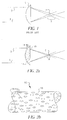
- f R/(n-1); wherein (f) is the focal length of the lens 1 produced as incident light 3 goes through the lens 1 and is focused at focal point 5, (R) is the radius of the lens surface, and (n) is the refractive index of the lens material.
- T temperature
- f the focal length of the lens 1 produced as incident light 3 goes through the lens 1 and is focused at focal point 5
- R the radius of the lens surface
- n the refractive index of the lens material.
- the temperature range of operation can easily be 50° C when used to photograph a tropical island and then later used to photograph a snowy mountain.
- the change in refractive index (dn) over the temperature range of operation is 0.0055 and the change in focal point 5 shown as the change in focal length 7 (Fig. 1) of the lens from Equation 1 is 0.225 or 1%.
- dn refractive index
- Fig. 1 change in focal length 7
- the nanocomposite optical article or lens 10 is composed of a plastic host material 16 and a select nanoparticulate material dispersed in the plastic host material 16.
- Polymeric host material 16 may be either a thermoplastic or thermoset material. It is important to the invention that the polymeric host material be selected based on a predetermined temperature sensitive optical vector x 1 , for instance refractive index n. Similarly, the selection of the nanoparticulate material dispersed in the polymeric host material 16 is based on a corresponding predetermined temperature sensitive optical vector x 2 , specifically refractive index.
- temperature sensitive optical vectors x 1 and x 2 are defined by a change in refractive index (dn) of the polymeric host material 16 and the nanoparticulate material, respectively, with respect to a change in temperature (dT). It is further important to our invention that x 1 is directionally opposed to x 2 .
- a nanoparticulate material having a dn/dT i.e., a rate of change of refractive index with respect to temperature, that has a sign that is directionally opposed to the dn/dT of the polymeric host material 16
- the viscosity of the nanocomposite material is not drastically increased and the processing characteristics will be similar to other optical plastics. Consequently, the resulting optical nanocomposite lens 10 has a focal length range 12 (Fig. 2a) over the operating temperature range that is much less than that exhibited by the prior art lens 1 shown in Fig. 1.
- Fig. 2a focal length range 12
- Tables I and II several select dn/dT values for polymeric host materials (plastics) and inorganic nanoparticulate fillers that comprise the nanocomposite material used in the invention are illustrated.
- the invention contemplates other qualifications for the nanoparticulate material to make the useful, novel and unobvious optical nanocomposite material used in the invention.
- the nanoparticulate material is transparent in the wavelength region of interest to maintain high optical transmission levels.
- the nanoparticulate is available in a particle size range that is less than 40 nm to avoid scattering light. Most preferred is a particle size range below 20 nm. Further, it is possible to disperse the nanoparticles into the base or host plastic such that no significant amounts of agglomerates and/or voids larger than 40 nm occur which would scatter light.
- Figure 2b shows a representative view 15 of the nanoparticles 14 dispersed into the plastic host material 16.
- the nanoparticles 14 are shown dispersed evenly throughout the host material 16.
- the nanoparticles 14 do not have any larger agglomerates or voids associated with them.
- the cost of the nanoparticulate and any associated surface treatments of the nanoparticles to improve dispersibility is enough that the total cost of the optical article is significantly less than a glass article.
- a nanocomposite material with significantly improved refractive index stability with respect to temperature can be formulated by dispersing a select nanoparticulate material into a polymeric host material 16 that have directionally opposed (or opposite signs) dn/dT.
- a method of manufacturing a reduced temperature sensitive optical article or lens 10 includes the step of selecting a polymeric host material 16, such as one described in Table 1.
- the selected polymeric host material 16 has a temperature sensitive optical vector x 1 or dn/dT, as described above.
- a nanoparticulate material (Table II) is selected for dispersing in the plastic host material 16.
- the select nanoparticulate material is required to have a compatible corresponding temperature sensitive optical vector x 2, .
- x 1 is directionally opposed to x 2 , i.e., one of the two is negative and the other positive.
- the nanoparticulate material is selected, it is then dispersed in the host material 16 using suitable dispersion techniques, such as compounding or solvent dispersion. Once the nanoparticulate material is dispersed into the polymeric host material 16, a nanocomposite material is formed. The nanocomposite material can then be used to form an array of optical articles such as the lens 10 used in the invention having reduced temperature sensitivity.
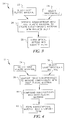
- a diagram of the method 20 for making the reduced dn/dT nanocomposite material for optical articles, such as lens 10, is depicted.
- the polymeric host plastic material 22 is selected based on optical, structural and thermal design considerations such as % transmission, % haze, index of refraction, yield strength at a temperature, impact strength, scratch resistance, glass transition temperature, etc.
- the nanoparticulate material 24 is preferably selected based on dn/dT, transparency in the wavelength region of interest, particle size, cost, and availability. As disclosed in this invention, selecting suitable nanoparticulate materials 24 requires selecting materials having a dn/dT that has a sign that is opposite to the host plastic material being used and an average particle size less than 40 nm.
- the nanoparticles are preferably dispersed 26 into the host material although other mixing processes could be used, such as roll milling. Dispersion 26 can be accomplished through preferably compounding (refer to Fig. 4) even though solvent dispersion (refer to Fig. 5) can be used with good results.
- the optically modified material 28 is formed into an optical article or lens 10 used in the invention.
- a compounder 40 such as a twin screw extruder or a Farrell continuous mixer
- the optically modified material is pelletized 42 for use in an injection molding machine (not shown).
- a surface treatment 38 and 52 may be needed to make the nanoparticles 36 compatible with the host material 34. Skilled artisans will appreciate that this treatment could be applied to the nanoparticles 36 directly or added as an additive to the compounder 40 along with the nanoparticles 36 and the host material 34.
- the selected host plastic material 46 and the selected nanoparticles 48 are dispersed in solvents 50, 54, respectively, prior to mixing 56 the two solvent solutions.
- the selected nanoparticles 48 are preferably exposed to an intermediate solvent dispersion step 54 to insure that a good dispersion is obtained and all agglomerates are broken up.
- the solvents are removed in step 58 and the optically modified material is pelletized 60 for use in an injection molding machine (not shown).
- plastic pellets which contain fully dispersed nanoparticles such as shown in Fig. 2b with the nanoparticles being present in sufficient quantity to deliver the reduced dn/dT desired.
- Injection molding, compression molding and casting are the three preferred techniques for forming the optical article 10 (refer to Fig. 3 step 28) used in the invention.
- the nanocomposite optical article of manufacture 10 is comprised of a polymeric host material selected from the group consisting of thermoplastic materials and thermoset materials.
- Thermoplastic materials used in optical articles include: polymethylmethacrylate, polycarbonate, polystyrene, polysulfone, cyclic olefins, and blends and copolymers of those listed.
- Thermoset materials used in optical articles include: diallyl glycolcarbonate, epoxides, and thermoset polyesters.
- the reduced dn/dT article of manufacture 10 produced within the contemplation of the invention are simple lenses, an array of lenses, opthalmic lenses, window glazing, optical fibers, cover glasses for digital imagers, microlenses on digital imagers, and other optical devices of the like.
- modification of the optical properties of the host material is achieved, in accordance with the method of the invention, by reducing the dn/dT of the nanocomposite material. In our preferred embodiment, this is achieved by dispersing a nanoparticulate material filler having a dn/dT with a sign that is opposite that of the base plastic.
- Polymethylmethacrylate nanocomposite optical plastic comprises a polymethylmethacrylate host material having a temperature sensitive optical vector x 1 and a magnesium oxide nanoparticles having a temperature sensitive optical vector x 2 dispersed in the polymethylmethacrylate host material.
- x 1 is directionally opposed to x 2 .
- a polymethylmethacrylate host material is optically modified with the addition of magnesium oxide nanoparticles.
- Polymethylmethacrylate has a dn/dT of approximately -110E-6/° C as shown in Table 1.
- Magnesium oxide has a dn/dT of approximately +19E-6/° C.
- Magnesium oxide nanoparticles are available from Nano Materials Research in the 10 nm size. Magnesium oxide is transparent in the region 0.35-6.8 micron which includes the visible light region.
- the volume (%) of magnesium oxide nanoparticles required in the polymethylmethacrylate host material to reduce the dn/dT by 50% can be calculated based on volume using Equation 2, below.
- ⁇ 50 0.5( ⁇ p / ⁇ p - ⁇ n )
- ⁇ 50 is the volume % of the nanoparticles needed to reduce the dn/dT of the nanocomposite by 50% compared to the host plastic
- ⁇ p is the dn/dT of the host plastic (See Fig. 1)
- ⁇ n is the dn/dT of the nanoparticle material.
- the volume (%) of nanoparticles needed to reduce the dn/dT of the nanocomposite by 50% compared to the dn/dT of the polymethylmethacrylate is approximately 42%.
- magnesium oxide nanoparticles were compounded into polymethylmethacrylate.
- a compatibilizer additive Solsperse 21000 from Avecia Ltd. at 10% by weight of the nanoparticles was mixed in with the polymethylmethacrylate pellets to aid in dispersing the magnesium oxide nanoparticles.
- Compounding was done in a twin screw extruder. Lenses were then molded from the pellets produced from compounding. The resulting dispersion of the nanoparticles in the lenses was quite good when examined under the scanning electron microscope.
- the nanocomposite material above was prepared using a solvent based dispersion process as shown schematically in Fig. 5, with toluene or xylene.
- the solvent based dispersion process has been successful for wide variety of polymers (polymethylmethacrylate, polystyrene, polycarbonate and cyclic olefin) as well as a variety of nanoparticles (titanium dioxide, magnesium oxide and zinc oxide).
- the dispersion of the nanoparticles is accomplished in a mill to break up the agglomerates. As a result, well-dispersed solutions have been produced.
- solvent removal 58 can be accomplished at moderate temperature with vacuum.
- the dried material is then run through an extruder to form pellets.
- the pellets are then injection molded into optical articles using the process in Example 1.
- a polycarbonate host material is optically modified with the addition of aluminum oxide nanoparticles.
- Polycarbonate has a dn/dT of approximately -114E-6/° C as shown in Table 1.
- Aluminum oxide has a dn/dT of approximately +14E-6/° C.
- Aluminum oxide nanoparticles are available from Kemco International Associates in the 37 nm size. Aluminum oxide is transparent in the region 0.19-5.0 micron which includes the visible light region.
- the volume (%) of aluminum oxide nanoparticles required in the polycarbonate host material to reduce the dn/dT by 50% can be calculated based on volume using Equation 2, below.
- ⁇ 50 0.5( ⁇ p / ⁇ p - ⁇ n )
- ⁇ 50 is the volume % of the nanoparticles needed to reduce the dn/dT of the nanocomposite by 50% compared to the host plastic
- ⁇ p is the dn/dT of the host plastic (See Fig. 1)
- ⁇ n is the dn/dT of the nanoparticle material.
- the volume (%) of nanoparticles needed to reduce the dn/dT of the nanocomposite by 50% compared to the dn/dT of the polycarbonate is approximately 45%.
- a polystyrene host material is optically modified with the addition of aluminum oxide nanoparticles.
- Polystyrene has a dn/dT of approximately -127E-6/° C as shown in Table 1.
- Aluminum oxide has a dn/dT of approximately +14E-6/° C.
- Aluminum oxide nanoparticles are available from Kemco International Associates in the 37 nm size. Aluminum oxide is transparent in the region 0.19-5.0 micron which includes the visible light region.
- the volume (%) of aluminum oxide nanoparticles required in the polycarbonate host material to reduce the dn/dT by 50% can be calculated based on volume using Equation 2, below.
- ⁇ 50 0.5( ⁇ p / ⁇ p - ⁇ n )
- ⁇ 50 is the volume % of the nanoparticles needed to reduce the dn/dT of the nanocomposite by 50% compared to the host plastic
- ⁇ p is the dn/dT of the host plastic (See Fig. 1)
- ⁇ n is the dn/dT of the nanoparticle material.
- the volume (%) of nanoparticles needed to reduce the dn/dT of the nanocomposite by 50% compared to the dn/dT of the polycarbonate is approximately 45%.
- a cyclic olefin homopolymer host material is optically modified with the addition of magnesium oxide nanoparticles.
- Cyclic olefin homopolymer has a dn/dT of approximately -110E-6/° C as shown in Table 1.
- Magnesium oxide has a dn/dT of approximately +14E-6/° C.
- Magnesium oxide nanoparticles are available from Nano Materials Research in the 10 nm size. Magnesium oxide is transparent in the region 0.35-6.8 micron which includes the visible light region.
- the volume (%) of magnesium oxide nanoparticles required in the cyclic olefin homopolymer host material to reduce the dn/dT by 50% can be calculated based on volume using Equation 2, below.
- ⁇ 50 0.5( ⁇ p / ⁇ p - ⁇ n )
- ⁇ 50 is the volume % of the nanoparticles needed to reduce the dn/dT of the nanocomposite by 50% compared to the host plastic
- ⁇ p is the dn/dT of the host plastic (See Fig. 1)
- ⁇ n is the dn/dT of the nanoparticle material.
- the volume (%) of nanoparticles needed to reduce the dn/dT of the nanocomposite by 50% compared to the dn/dT of the cyclic olefin homopolymer is approximately 43%.
Landscapes
- Chemical & Material Sciences (AREA)
- Engineering & Computer Science (AREA)
- Health & Medical Sciences (AREA)
- Chemical Kinetics & Catalysis (AREA)
- Medicinal Chemistry (AREA)
- Polymers & Plastics (AREA)
- Organic Chemistry (AREA)
- Nanotechnology (AREA)
- Composite Materials (AREA)
- Condensed Matter Physics & Semiconductors (AREA)
- General Physics & Mathematics (AREA)
- Materials Engineering (AREA)
- Crystallography & Structural Chemistry (AREA)
- Physics & Mathematics (AREA)
- Compositions Of Macromolecular Compounds (AREA)
- Manufacture Of Macromolecular Shaped Articles (AREA)
Applications Claiming Priority (2)
| Application Number | Priority Date | Filing Date | Title |
|---|---|---|---|
| US09/747,706 US6759452B2 (en) | 2000-12-22 | 2000-12-22 | Polycarbonate nanocomposite optical plastic article and method of making same |
| US747706 | 2000-12-22 |
Publications (2)
| Publication Number | Publication Date |
|---|---|
| EP1217030A2 true EP1217030A2 (de) | 2002-06-26 |
| EP1217030A3 EP1217030A3 (de) | 2003-06-04 |
Family
ID=25006278
Family Applications (1)
| Application Number | Title | Priority Date | Filing Date |
|---|---|---|---|
| EP01204764A Withdrawn EP1217030A3 (de) | 2000-12-22 | 2001-12-10 | Optische Polycarbonat-Nanoverbundgegenstände und Verfahren zu deren Herstellung |
Country Status (5)
| Country | Link |
|---|---|
| US (1) | US6759452B2 (de) |
| EP (1) | EP1217030A3 (de) |
| JP (1) | JP2002303701A (de) |
| KR (1) | KR20020051862A (de) |
| TW (1) | TW583238B (de) |
Cited By (9)
| Publication number | Priority date | Publication date | Assignee | Title |
|---|---|---|---|---|
| WO2006036390A1 (en) * | 2004-09-27 | 2006-04-06 | 3M Innovative Properties Company | Method of making a composition and nanocomposites therefrom |
| WO2006038735A1 (en) * | 2004-10-07 | 2006-04-13 | Nippon Shokubai Co., Ltd. | Resin composition for optical packaging material and process for preparing the same, and optical packaging material, optical packaging component, and optical module |
| US7329702B2 (en) | 2004-09-27 | 2008-02-12 | 3M Innovative Properties Company | Composition and method of making the same |
| WO2009080974A3 (fr) * | 2007-12-13 | 2009-08-20 | Essilor Int | Procédé de préparation d'un matériau polymère transparent comprenant un polycarbonate thermoplastique et des nanoparticules minérales |
| CN102378773A (zh) * | 2009-01-30 | 2012-03-14 | 惠普开发有限公司 | 聚合物和聚合物-纳米粒子组合物 |
| WO2012036051A1 (en) * | 2010-09-13 | 2012-03-22 | Canon Kabushiki Kaisha | Organic-inorganic composite, molded product, and optical element |
| WO2012036049A1 (en) * | 2010-09-13 | 2012-03-22 | Canon Kabushiki Kaisha | Organic-inorganic composite, molded product, and optical element |
| US8193270B2 (en) | 2004-12-14 | 2012-06-05 | 3M Innovative Properties Company | Method of making composites and nanocomposites |
| CN109943048A (zh) * | 2017-12-20 | 2019-06-28 | 杨运海 | 一种高清晰度镜片及其制作方法 |
Families Citing this family (25)
| Publication number | Priority date | Publication date | Assignee | Title |
|---|---|---|---|---|
| US6642295B2 (en) * | 2001-12-21 | 2003-11-04 | Eastman Kodak Company | Photoresist nanocomposite optical plastic article and method of making same |
| KR20060030510A (ko) | 2003-07-11 | 2006-04-10 | 코니카 미놀타 옵토 인코포레이티드 | 광 픽업장치, 광 픽업장치에 이용되는 광학 소자, 및 광학소자의 제조 방법 |
| ATE498144T1 (de) * | 2003-07-23 | 2011-02-15 | Konica Minolta Opto Inc | Abbildungslinse und abbildungseinrichtung |
| US7081295B2 (en) * | 2003-08-18 | 2006-07-25 | Eastman Kodak Company | Method of manufacturing a polymethylmethacrylate core shell nanocomposite optical plastic article |
| JP4241340B2 (ja) * | 2003-11-25 | 2009-03-18 | 日東電工株式会社 | 樹脂シート、液晶セル基板、液晶表示装置、エレクトロルミネッセンス表示装置用基板、エレクトロルミネッセンス表示装置および太陽電池用基板 |
| US20050134164A1 (en) * | 2003-12-18 | 2005-06-23 | 3M Innovative Properties Company | Optical coupler for projection display |
| JP2005298717A (ja) * | 2004-04-14 | 2005-10-27 | Konica Minolta Opto Inc | 熱可塑性樹脂材料とその製造方法及びそれを用いた光学素子 |
| JP2005325349A (ja) * | 2004-04-16 | 2005-11-24 | Konica Minolta Opto Inc | 熱可塑性樹脂材料及びそれを用いた光学素子 |
| JP2006161000A (ja) | 2004-12-10 | 2006-06-22 | Konica Minolta Opto Inc | 熱可塑性複合材料及び光学素子 |
| JP2006299183A (ja) * | 2005-04-25 | 2006-11-02 | Konica Minolta Opto Inc | 非水系微粒子分散液、熱可塑性複合材料及び光学素子 |
| US7504472B2 (en) * | 2005-06-02 | 2009-03-17 | E. I. Du Pont De Nemours + Company | Rapidly crystallizing polycarbonate composition |
| JP2007047452A (ja) * | 2005-08-10 | 2007-02-22 | Konica Minolta Holdings Inc | 光学素子 |
| KR100761799B1 (ko) * | 2005-08-24 | 2007-10-05 | 제일모직주식회사 | 나노복합체 및 이를 이용한 열가소성 나노복합재 수지조성물 |
| DE102005044529A1 (de) * | 2005-09-16 | 2007-03-22 | Technische Universität Clausthal | Verfahren zur Herstellung eines Nanopartikel-Polymer-Komposits und daraus produzierter optisch transparenter Kunststoffartikel |
| FR2891546B1 (fr) | 2005-10-04 | 2010-09-03 | Solvay | Utilisation de particules de carbonate de calcium dans des compositions polymeriques transparentes, compositions polymeriques transparentes et procede de fabrication de ces compositions |
| KR100717514B1 (ko) * | 2005-12-30 | 2007-05-11 | 제일모직주식회사 | 유기/무기 혼성 나노복합체 및 이를 이용한 열가소성나노복합재 수지 조성물 |
| US20070298110A1 (en) * | 2006-06-22 | 2007-12-27 | Xerox Corporation | Methods for embedding nanoparticles |
| US20080167414A1 (en) * | 2006-09-29 | 2008-07-10 | Amit Biswas | Polycarbonate composition comprising nanomaterials |
| US20080081865A1 (en) * | 2006-09-29 | 2008-04-03 | Amit Biswas | Method of making polycarbonate nanocomposites |
| KR100762298B1 (ko) * | 2006-12-29 | 2007-10-04 | 제일모직주식회사 | 내스크래치성이 향상된 열가소성 나노복합체 수지 조성물 |
| FR2939441B1 (fr) * | 2008-12-08 | 2010-12-24 | Solvay | Procede de preparation d'un materiau polymere transparent comprenant des nanoparticules minerales ayant un facteur de forme strictement superieur a 1,0 |
| US8785004B2 (en) | 2009-01-30 | 2014-07-22 | Hewlett-Packard Development Company, L.P. | UV light-emissive fluorene-based copolymers |
| WO2010087841A1 (en) | 2009-01-30 | 2010-08-05 | Hewlett-Packard Development Company | Block copolymers and block copolymer nanoparticle compositions |
| US10520720B2 (en) * | 2017-06-05 | 2019-12-31 | United States Of America, As Represented By The Secretary Of The Army | Large format biocular lens |
| FR3119103B1 (fr) * | 2021-01-28 | 2023-12-08 | Commissariat Energie Atomique | Procede de fabrication d’un materiau composite comprenant un polymere et des nanomateriaux |
Family Cites Families (14)
| Publication number | Priority date | Publication date | Assignee | Title |
|---|---|---|---|---|
| FR2102024A5 (de) | 1970-09-04 | 1972-03-31 | Huels Chemische Werke Ag | |
| US4172859A (en) * | 1975-05-23 | 1979-10-30 | E. I. Du Pont De Nemours And Company | Tough thermoplastic polyester compositions |
| US5639546A (en) * | 1991-09-03 | 1997-06-17 | Minnesota Mining And Manufacturing Company | Coated article having improved adhesion to organic coatings |
| DE4133621A1 (de) * | 1991-10-10 | 1993-04-22 | Inst Neue Mat Gemein Gmbh | Nanoskalige teilchen enthaltende kompositmaterialien, verfahren zu deren herstellung und deren verwendung fuer optische elemente |
| US5307438A (en) * | 1992-08-13 | 1994-04-26 | Minnesota Mining And Manufacturing Company | Index matching compositions with improved DNG/DT |
| US5367021A (en) * | 1993-01-14 | 1994-11-22 | General Electric Company | Polymer mixture composed of an aromatic polycarbonate, optionally a polyalkyleneterephthalate and a graft copolymer |
| US5433906A (en) * | 1993-07-09 | 1995-07-18 | General Motors Corporation | Composite of small carbon fibers and thermoplastics and method for making same |
| DE19512427A1 (de) | 1995-04-03 | 1996-10-10 | Inst Neue Mat Gemein Gmbh | Kompositklebstoff für optische und optoelektronische Anwendungen |
| US5726247A (en) | 1996-06-14 | 1998-03-10 | E. I. Du Pont De Nemours And Company | Fluoropolymer nanocomposites |
| WO1997010527A1 (en) | 1995-09-14 | 1997-03-20 | The Regents Of The University Of California | Structured index optics and ophthalmic lenses for vision correction |
| US5925447A (en) * | 1996-07-18 | 1999-07-20 | Mitsubishi Polyester Film, Llc | Permanent antistatic coating and coated polymeric film |
| WO1998056854A1 (en) * | 1997-06-09 | 1998-12-17 | Nanomaterials Research Corporation | Nanostructured fillers and carriers |
| DE19811790A1 (de) | 1998-03-18 | 1999-09-23 | Bayer Ag | Nanopartikel enthaltende transparente Lackbindemittel mit verbesserter Verkratzungsbeständigkeit, ein Verfahren zur Herstellung sowie deren Verwendung |
| DE19823732A1 (de) | 1998-05-27 | 1999-12-02 | Inst Neue Mat Gemein Gmbh | Verfahren zur Herstellung optischer Mehrschichtsysteme |
-
2000
- 2000-12-22 US US09/747,706 patent/US6759452B2/en not_active Expired - Lifetime
-
2001
- 2001-10-30 TW TW090126891A patent/TW583238B/zh not_active IP Right Cessation
- 2001-12-10 EP EP01204764A patent/EP1217030A3/de not_active Withdrawn
- 2001-12-21 JP JP2001390343A patent/JP2002303701A/ja active Pending
- 2001-12-21 KR KR1020010082396A patent/KR20020051862A/ko not_active Withdrawn
Cited By (12)
| Publication number | Priority date | Publication date | Assignee | Title |
|---|---|---|---|---|
| WO2006036390A1 (en) * | 2004-09-27 | 2006-04-06 | 3M Innovative Properties Company | Method of making a composition and nanocomposites therefrom |
| US7329702B2 (en) | 2004-09-27 | 2008-02-12 | 3M Innovative Properties Company | Composition and method of making the same |
| US7691932B2 (en) | 2004-09-27 | 2010-04-06 | 3M Innovative Properties Company | Method of making a composition and nanocomposites therefrom |
| CN101027347B (zh) * | 2004-09-27 | 2012-06-06 | 3M创新有限公司 | 一种组合物的制备方法以及由此获得的纳米级复合材料 |
| WO2006038735A1 (en) * | 2004-10-07 | 2006-04-13 | Nippon Shokubai Co., Ltd. | Resin composition for optical packaging material and process for preparing the same, and optical packaging material, optical packaging component, and optical module |
| US8193270B2 (en) | 2004-12-14 | 2012-06-05 | 3M Innovative Properties Company | Method of making composites and nanocomposites |
| WO2009080974A3 (fr) * | 2007-12-13 | 2009-08-20 | Essilor Int | Procédé de préparation d'un matériau polymère transparent comprenant un polycarbonate thermoplastique et des nanoparticules minérales |
| CN102378773A (zh) * | 2009-01-30 | 2012-03-14 | 惠普开发有限公司 | 聚合物和聚合物-纳米粒子组合物 |
| WO2012036051A1 (en) * | 2010-09-13 | 2012-03-22 | Canon Kabushiki Kaisha | Organic-inorganic composite, molded product, and optical element |
| WO2012036049A1 (en) * | 2010-09-13 | 2012-03-22 | Canon Kabushiki Kaisha | Organic-inorganic composite, molded product, and optical element |
| US9000081B2 (en) | 2010-09-13 | 2015-04-07 | Canon Kabushiki Kaisha | Organic-inorganic composite, molded product, and optical element |
| CN109943048A (zh) * | 2017-12-20 | 2019-06-28 | 杨运海 | 一种高清晰度镜片及其制作方法 |
Also Published As
| Publication number | Publication date |
|---|---|
| JP2002303701A (ja) | 2002-10-18 |
| KR20020051862A (ko) | 2002-06-29 |
| US20020123550A1 (en) | 2002-09-05 |
| TW583238B (en) | 2004-04-11 |
| EP1217030A3 (de) | 2003-06-04 |
| US6759452B2 (en) | 2004-07-06 |
Similar Documents
| Publication | Publication Date | Title |
|---|---|---|
| US6759452B2 (en) | Polycarbonate nanocomposite optical plastic article and method of making same | |
| US6518353B2 (en) | Reduced temperature sensitive polymeric optical article and method of making same | |
| US6586096B2 (en) | Polymethylmethacrylate nanocomposite optical article and method of making same | |
| US7091271B2 (en) | Core shell nanocomposite optical plastic article | |
| US6498208B2 (en) | Polystyrene nanocomposite optical plastic article and method of making same | |
| US6441077B1 (en) | Polysulfone nanocomposite optical plastic article and method of making same | |
| US6642295B2 (en) | Photoresist nanocomposite optical plastic article and method of making same | |
| US6552111B2 (en) | Cyclic olefin polymeric nanocomposite optical plastic article and method of making same | |
| US7081295B2 (en) | Method of manufacturing a polymethylmethacrylate core shell nanocomposite optical plastic article | |
| US6497957B1 (en) | Antireflection article of manufacture | |
| EP1195622A1 (de) | Verfahren zur optischen Modifizierung eines Polymermaterials |
Legal Events
| Date | Code | Title | Description |
|---|---|---|---|
| PUAI | Public reference made under article 153(3) epc to a published international application that has entered the european phase |
Free format text: ORIGINAL CODE: 0009012 |
|
| AK | Designated contracting states |
Kind code of ref document: A2 Designated state(s): AT BE CH CY DE DK ES FI FR GB GR IE IT LI LU MC NL PT SE TR |
|
| AX | Request for extension of the european patent |
Free format text: AL;LT;LV;MK;RO;SI |
|
| PUAL | Search report despatched |
Free format text: ORIGINAL CODE: 0009013 |
|
| AK | Designated contracting states |
Designated state(s): AT BE CH CY DE DK ES FI FR GB GR IE IT LI LU MC NL PT SE TR |
|
| AX | Request for extension of the european patent |
Extension state: AL LT LV MK RO SI |
|
| 17P | Request for examination filed |
Effective date: 20031128 |
|
| AKX | Designation fees paid |
Designated state(s): CH DE FR LI NL |
|
| 17Q | First examination report despatched |
Effective date: 20040114 |
|
| STAA | Information on the status of an ep patent application or granted ep patent |
Free format text: STATUS: THE APPLICATION IS DEEMED TO BE WITHDRAWN |
|
| 18D | Application deemed to be withdrawn |
Effective date: 20040525 |