EP1221443B1 - Substituierte imidazolin-derivate - Google Patents
Substituierte imidazolin-derivate Download PDFInfo
- Publication number
- EP1221443B1 EP1221443B1 EP00966483A EP00966483A EP1221443B1 EP 1221443 B1 EP1221443 B1 EP 1221443B1 EP 00966483 A EP00966483 A EP 00966483A EP 00966483 A EP00966483 A EP 00966483A EP 1221443 B1 EP1221443 B1 EP 1221443B1
- Authority
- EP
- European Patent Office
- Prior art keywords
- dihydro
- benzimidazol
- piperidin
- methoxycarbonylpiperidin
- methylsulfonyl
- Prior art date
- Legal status (The legal status is an assumption and is not a legal conclusion. Google has not performed a legal analysis and makes no representation as to the accuracy of the status listed.)
- Expired - Lifetime
Links
Classifications
-
- C—CHEMISTRY; METALLURGY
- C07—ORGANIC CHEMISTRY
- C07D—HETEROCYCLIC COMPOUNDS
- C07D401/00—Heterocyclic compounds containing two or more hetero rings, having nitrogen atoms as the only ring hetero atoms, at least one ring being a six-membered ring with only one nitrogen atom
- C07D401/14—Heterocyclic compounds containing two or more hetero rings, having nitrogen atoms as the only ring hetero atoms, at least one ring being a six-membered ring with only one nitrogen atom containing three or more hetero rings
-
- A—HUMAN NECESSITIES
- A61—MEDICAL OR VETERINARY SCIENCE; HYGIENE
- A61P—SPECIFIC THERAPEUTIC ACTIVITY OF CHEMICAL COMPOUNDS OR MEDICINAL PREPARATIONS
- A61P1/00—Drugs for disorders of the alimentary tract or the digestive system
- A61P1/04—Drugs for disorders of the alimentary tract or the digestive system for ulcers, gastritis or reflux esophagitis, e.g. antacids, inhibitors of acid secretion, mucosal protectants
-
- A—HUMAN NECESSITIES
- A61—MEDICAL OR VETERINARY SCIENCE; HYGIENE
- A61P—SPECIFIC THERAPEUTIC ACTIVITY OF CHEMICAL COMPOUNDS OR MEDICINAL PREPARATIONS
- A61P1/00—Drugs for disorders of the alimentary tract or the digestive system
- A61P1/16—Drugs for disorders of the alimentary tract or the digestive system for liver or gallbladder disorders, e.g. hepatoprotective agents, cholagogues, litholytics
-
- A—HUMAN NECESSITIES
- A61—MEDICAL OR VETERINARY SCIENCE; HYGIENE
- A61P—SPECIFIC THERAPEUTIC ACTIVITY OF CHEMICAL COMPOUNDS OR MEDICINAL PREPARATIONS
- A61P13/00—Drugs for disorders of the urinary system
- A61P13/02—Drugs for disorders of the urinary system of urine or of the urinary tract, e.g. urine acidifiers
-
- A—HUMAN NECESSITIES
- A61—MEDICAL OR VETERINARY SCIENCE; HYGIENE
- A61P—SPECIFIC THERAPEUTIC ACTIVITY OF CHEMICAL COMPOUNDS OR MEDICINAL PREPARATIONS
- A61P17/00—Drugs for dermatological disorders
- A61P17/04—Antipruritics
-
- A—HUMAN NECESSITIES
- A61—MEDICAL OR VETERINARY SCIENCE; HYGIENE
- A61P—SPECIFIC THERAPEUTIC ACTIVITY OF CHEMICAL COMPOUNDS OR MEDICINAL PREPARATIONS
- A61P25/00—Drugs for disorders of the nervous system
- A61P25/04—Centrally acting analgesics, e.g. opioids
-
- A—HUMAN NECESSITIES
- A61—MEDICAL OR VETERINARY SCIENCE; HYGIENE
- A61P—SPECIFIC THERAPEUTIC ACTIVITY OF CHEMICAL COMPOUNDS OR MEDICINAL PREPARATIONS
- A61P25/00—Drugs for disorders of the nervous system
- A61P25/06—Antimigraine agents
-
- A—HUMAN NECESSITIES
- A61—MEDICAL OR VETERINARY SCIENCE; HYGIENE
- A61P—SPECIFIC THERAPEUTIC ACTIVITY OF CHEMICAL COMPOUNDS OR MEDICINAL PREPARATIONS
- A61P25/00—Drugs for disorders of the nervous system
- A61P25/18—Antipsychotics, i.e. neuroleptics; Drugs for mania or schizophrenia
-
- A—HUMAN NECESSITIES
- A61—MEDICAL OR VETERINARY SCIENCE; HYGIENE
- A61P—SPECIFIC THERAPEUTIC ACTIVITY OF CHEMICAL COMPOUNDS OR MEDICINAL PREPARATIONS
- A61P25/00—Drugs for disorders of the nervous system
- A61P25/28—Drugs for disorders of the nervous system for treating neurodegenerative disorders of the central nervous system, e.g. nootropic agents, cognition enhancers, drugs for treating Alzheimer's disease or other forms of dementia
-
- A—HUMAN NECESSITIES
- A61—MEDICAL OR VETERINARY SCIENCE; HYGIENE
- A61P—SPECIFIC THERAPEUTIC ACTIVITY OF CHEMICAL COMPOUNDS OR MEDICINAL PREPARATIONS
- A61P25/00—Drugs for disorders of the nervous system
- A61P25/30—Drugs for disorders of the nervous system for treating abuse or dependence
- A61P25/36—Opioid-abuse
-
- A—HUMAN NECESSITIES
- A61—MEDICAL OR VETERINARY SCIENCE; HYGIENE
- A61P—SPECIFIC THERAPEUTIC ACTIVITY OF CHEMICAL COMPOUNDS OR MEDICINAL PREPARATIONS
- A61P27/00—Drugs for disorders of the senses
- A61P27/02—Ophthalmic agents
- A61P27/06—Antiglaucoma agents or miotics
Definitions
- substituted imidazolidinone derivatives of the present invention have an action to stimulate muscarinic acetylcholine receptors M4, and are useful as analgesic for diseases accompanying pain such as cancerous pain, postoperative pain, migraine, gout, chronic rheumatism, chronic pain or neuralgia; or as agents for treating tolerance to narcotic analgesics represented by morphine, dependence on narcotic analgesics represented by morphine, itching, dementia, irritable bowel syndrome, schizophrenia, glaucoma, pollakiuria, urinary incontinence, cholelithiasis, cholecystitis, functional dyspepsia and reflux esophagitis.
- Muscarinic agonists represented by acetylcholine are those which stimulate muscarinic acetylcholine receptors. Muscarinic agonists exhibit various pharmacological actions such as analgetic action, mnemonic action and intraocular tension reducing action. Hence they are potential analgesic, agents for ameliorating symptoms of dementia, treating agents for glaucoma, or the like. However, conventional muscarinic agonists exhibit many side-effects and their clinical application is limited.
- M4 receptor subtype among muscarinic acetylcholine receptors For example, it was reported that the analgesic action of muscarinic agonists was blocked by administration of m4 toxin which is an M4-selective antagonist, and also that intracerebral administration of m4 toxin alome caused memory defects [cf. Neuroreport, Vol.9,No.7,pp.1407-1411(1998)]. It is also suggested, furthermore, that M4 receptors participate in various physiological activities such as amelioration of schizophrenia symptoms, contraction of the gallbladder or relaxation of smooth muscle of the bladder [cf. e.g.
- substances which selectively stimulate M4 receptors can be expected to have utilities as, for example, analgesic for diseases accompanying pain such as cancerous pain, postoperative pain, migraine, gout, chronic rheumatism, chronic pain or neuralgia; or as agents for treating tolerance to narcotic analgesics represented by morphine, dependence on narcotic analgesics represented by morphine, itching, dementia, irritable bowel syndrome, schizophrenia, glaucoma, pollakiuria, urinary incontinence, cholelithiasis, cholecystitis, functional dyspepsia and reflux esophagitis.
- analgesic for diseases accompanying pain such as cancerous pain, postoperative pain, migraine, gout, chronic rheumatism, chronic pain or neuralgia
- agents for treating tolerance to narcotic analgesics represented by morphine dependence on narcotic analgesics represented by morphine, itching, dementia, irritable bowel
- the object of the present invention is to provide novel analgesic and agents for treating tolerance to narcotic analgesics represented by morphine, dependence on narcotic analgesics represented by morphine, itching, dementia, irritable bowel syndrome, schizophrenia, glaucoma, pollakiuria, urinary incontinence, cholelithiasis, cholecystitis, functional dyspepsia and reflux esophagitis, which have M4 receptors-stimulating action.
- the present invention relates to those compounds represented by Formula [I], salts thereof, their production processes and uses.
- Halogen means fluorine, chlorine, bromine and iodine atoms.
- “Lower alkyl” means a C 1 -C 6 linear or branched alkyl group, examples of which include methyl, ethyl, propyl, isopropyl, butyl, isobutyl, sec-butyl, tert-butyl, pentyl, isopentyl, neopentyl, tert-pentyl, 1-methylbutyl, 2-methylbutyl, 1,2-dimethylpropyl, 1-ethylpropyl, hexyl, isohexyl, 1-methylpentyl, 2-methylpentyl, 3-methylpentyl, 1,1-dimethylbutyl, 1,2-dimethylbutyl, 2,2-dimethylbutyl, 1-ethylbutyl, 1,1,2-trimethylpropyl, 1,2,2-trimethylpropyl, 1-ethyl-2-methylpropyl and 1-ethyl-1-methylpropyl groups.
- “Lower alkenyl” means a C 2 -C 6 linear or branched alkenyl group, examples of which include vinyl, 1-propenyl, 2-propenyl, isopropenyl, 3-butenyl, 2-butenyl, 1-butenyl, 1-methyl-2-propenyl, 1-methyl-1-propenyl, 1-ethyl-1-ethenyl, 2-methyl-2-propenyl, 2-methyl-1-propenyl, 3-methyl-2-butenyl and 4-pentenyl groups.
- “Lower alkynyl” means a C 2 -C 6 linear or branched alkynyl group, examples of which include ethynyl, 2-propynyl, 1-methyl-2-propynyl, 2-butynyl, 1-methyl-2-butynyl, 2-pentynyl, 3-pentynyl and 4-pentynyl groups.
- Cyclo(lower alkyl) means a C 3 -C 6 cycloalkyl group, examples of which include cyclopropyl, cyclobutyl, cyclopentyl and cyclohexyl groups.
- “Lower alkylamino” means an amino group which is mono-substituted with an above-named lower alkyl group, examples of which include methylamino, ethylamino, propylamino, isopropylamino, butylamino, sec-butylamino and tert-butylamino groups.
- Di(lower alkyl)amino means an amino group which is di-substituted with above-named lower alkyl group(s), examples of which include dimethylamino, diethylamino, ethylmethylamino, dipropylamino, methylpropylamino and diisopropylamino groups.
- “Lower alkythio” means an alkylthio group having an above-named lower alkyl group, examples of which include methylthio, ethylthio, propylthio, isopropylthio, butylthio, sec-butylthio and tert-butylthio groups.
- “Lower alkylsulfinyl” means an alkylsulfinyl group having an aforesaid lower alkyl group, examples of which include methylsulfinyl, ethylsulfinyl, propylsulfinyl, isopropylsulfinyl, butylsulfinyl, see-butylsulfinyl and tert-butylsulfinyl groups.
- “Lower alkylsulfonyl” means an alkylsulfonyl group having an aforesaid lower alkyl group, examples of which include methylsulfonyl, ethylsulfonyl, propylsulfonyl, isopropylsulfonyl, butylsulfonyl, sec-butylsulfonyl and tert-butylsulfonyl.
- “Lower alkoxy” means an alkoxy group having an aforesaid alkyl group, i.e., a C 1 -C 6 alkoxy group, examples of which include methoxy, ethoxy, propoxy, isopropoxy, butoxy, isobutoxy, tert-butoxy and pentyloxy groups.
- Optionally fluorine-substituted lower alkoxy means an aforesaid lower alkoxy group whose substitutable, optional position(s) may be substituted with one or two or more, preferably 1-3, fluorine atoms, examples of which include, in addition to the above-exemplified alkoxy groups, fluoromethoxy, difluoromethoxy, trifluoromethoxy, 1,2-difuoroethoxy and 2,2-difluoroethoxy groups.
- “Lower alkanoyl” means an alkanoyl group having an aforesaid lower alkyl group, i.e., a C 2 -C 7 alkanoyl group, examples of which include acetyl, propionyl, butyryl, isobutyryl, valeryl, isovaleryl and pivaloyl groups.
- “Lower alkoxycarbonyl” means an alkoxycarbonyl group having an aforesaid lower alkoxy group, i.e., a C 2 -C 7 alkoxycarbonyl group, examples of which include methoxycarbonyl, ethoxycarbonyl, propoxycarbonyl, isopropoxycarbonyl, butoxycarbonyl, isobutoxycarbonyl, tert-butoxycarbonyl and pentyloxycarbonyl groups.
- “Lower alkylcarbamoyl” means a carbamoyl group which is mono-substituted with an aforesaid lower alkyl group, examples of which include methylcabamoyl, ethylcarbamoyl, propylcarbamoyl, isopropylcarbamoyl, butylcarbamoyl, see-butylcarbamoyl and tert-butylcarbamoyl groups.
- Di(lower alkyl)carbamoyl means a carbamoyl group which is di-substituted with aforesaid lower alkyl group(s), examples of which include dimethylcarbamoyl, diethylcarbamoyl, ethylmethylcarbamoyl, dipropylcarbamoyl, methylpropylcarbamoyl and diisopropylcarbamoyl groups.
- “Lower alkylaminosulfonyl” means an alkylaminosulfonyl group having an aforesaid lower alkylamino group, examples of which include methylaminosulfonyl, ethylaminosulfonyl, propylaminosulfonyl, isopropylaminosulfonyl, butylaminosulfonyl, sec-butylaminosulfonyl and tert-butylaminosulfonyl groups.
- Dia(lower alkyl)aminosulfonyl means a dialkylaminosulfonyl group having an aforesaid di-lower alkylamino group, examples of which include dimethylaminosulfonyl, diethylaminosulfonyl, ethylmethylaminosulfonyl, dipropylaminosulfonyl, methylpropylaminosulfonyl and diisopropylaminosulfonyl groups.
- “Lower alkylcarbamoyloxy” means an alkylcarbamoyloxy group having an aforesaid lower alkylcarbamoyl group, examples of which include methylcarbamoyloxy, ethylcarbamoyloxy, propyl-carbamoyloxy, isopropylcarbamoyloxy, butylcarbamoyloxy, sec-butylcarbamoyloxy and tert-butylcarbamoyloxy groups.
- Dia(lower alkyl)carbamoyloxy means a dialkylcarbamoyloxy group having an aforesaid di-lower alkylcarbamoyl group, examples of which include dimethylcarbamoyloxy, diethylcarbamoyloxy, ethylmethylcarbamoyloxy, dipropylcarbamoyloxy, methylpropyl-carbamoyloxy and diisopropylcarbamoyloxy groups.
- “Lower alkoxycarbonylamino” means an amino group which is mono-substituted with an aforesaid lower alkoxycarbonyl group, examples of which include methoxycarbonylamino, ethoxy-carbonylamino, propoxycarbonylamino, isopropoxycarbonylamino, butoxycarbonylaino, isobutoxycarbonylamino, tert-butoxycarbony-lamino and pentyloxycarbonylamino groups.
- “(Lower alkylamino)sulfonylamino” means an amino group which is mono-substituted with an aforesaid lower alkylaminosulfonyl group, examples of which include (methylamino)sulfonylamino, (ethylamino)sulfonylamino, (propylamino)sulfonylamino, (isopropylamino)sulfonylamino, (butylamino),sulfonylamino, (sec-butylamino)sulfonylamino and (tert-butylamino)sulfonylamino groups.
- (Di-lower alkylamino)sulfonylamino means an amino group which is mono-substituted with an aforesaid di-lower alkylaminosulfonyl group, examples of which include (dimethylamino)sulfonylamino, (diethylamino)sulfonylamino, (ethylmethylamino)sulfonylamino, (dipropylamino)sulfonylamino, (methylpropylamino)sulfonylamino and (diisopropylamino)sulfonylamino groups.
- (Lower alkylaminosulfonyl)(lower alkyl)amino means an amino group which is substituted with an aforesaid lower alkylaminosulfonyl group and an aforesaid lower alkyl group, examples of which include methyl(methylaminosulfonyl)amino, (ethylamino- sulfonyl)methylamino groups.
- (Di-lower alkylaminosulfonyl)(lower alkyl)amino means an amino group which is substituted with an aforesaid di-lower alkylaminosulfonyl group and an aforesaid lower alkyl group, examples of which include (dimethylaminosulfonyl)methylamino and (diethylaminosulfonyl)methylamino groups.
- “Monocyclic aliphatic nitrogen-containing heterocyclic group” means a monocyclic group which is a saturated aliphatic heterocyclic group containing at least one nitrogen atom as a ring-forming member, examples of which include those groups expressed by the following formula: (in which m signifies an integer of 3-7).
- “Lower alkylsulfonylamino” means an amino group which is mono-substituted with an aforesaid lower alkylsulfonyl group, examples of which include methylsulfonylamino, ethylsulfonylamino, propylsulfonylamino, isopropylsulfonylamino, butylsulfonylamino, sec-butylsulfonylamino and tert-butylsulfonylamino groups.
- (Lower alkylcarbamoyl)amino means an amino group which is mono-substituted with an aforesaid lower alkylcarbamoyl group, examples of which include (methylcarbamoyl)amino, (ethylcarbamoyl)amino, (propylcarbamoyl)amino, (isopropy]carbamoyl)amino, (butylcarbamoyl)amino, (sec-butylcarbamoyl)amino and (tert-butylcarbamoyl)amino groups.
- (Di-lower alkylcarbamoyl)amino means an amino group which is mono-substituted with an aforesaid di-lower alkylcarbamoyl group, examples of which include (dimethylcarbamoyl)amino, (diethylcarbamoyl)amino, (ethylmethylcarbamoy))amino, (dipropylcarbamoyl)amino, (methylpropylcarbamoyl) amino and (diisopropylcarbamoyl)amino groups.
- Salts of those compounds which are represented by the general formula [I] means customary, pharmaceutically acceptable ones, for examples, acid addition salts at the basic heterocyclic groups.
- acid addition salts for example, inorganic acid salts, e.g., hydrochloride, hydrobromide, sulfate, nitrate, phosphate, perchlorate and the like; organic acid salts such as maleate, fumarate, tartarate, citrate, ascorbate, benzoate, trifluoroacetate and the like; and sulfonic acid salts such as methanesulfonate, isethionate, benzenesulfonate, p-toluenesulfonate and the like may be named.
- Treating agent means drugs which are used for treatment and/or prophylaxis of various diseases.
- Those compounds of the general formula [I] of the present invention in occasions may have stereoisomers such as optical isomers, diastereomers, geometrical isomers and the like, depending on the conditions of their substituents.
- the compounds of the general formula [I] of the present invention cover all of these stereoisomers and their mixtures.
- position numbers of the 2-oxoimidazole ring moiety of the compounds of the present invention are set as in the following formula [a] throughout in the specification, for nominating individual compounds and providing other explanations.
- a , B, C and D are same or differtent and signify methine group(s) or nitrogen atom, said methine group(s) being optionally substituted with halogen, hydroxyl or lower alkyl.
- substituent halogen atom for example, fluorine, chlorine and bromine atoms are preferred.
- substituent lower alkyl for example, methyl, ethyl, propyl, in particular, methyl, are preferred.
- the groups represented by the formula preferred are those formed from, for example, 1,3-dihydro-2H-benzimidazol-2-one, 4-fluoro-1,3-dihydro-2H-benzimidazol-2-one, 5-fluoro-1,3-dihydro-2H-benzimidazol-2-one, 6-fluoro-1,3-dihydro-2H-benzimidazol-2-one, 7-fluoro-1,3-dihydro-2H-benzimidazol-2-one, 4-chloro-1,3-dihydro-2H-benzimidazol-2-one, 5-chloro- 1,3-dihydro-2H-benzimidazol-2-one, 6-chlor-1,3-dihydro-2H-benzimidazol-2-one, 7-chloro-1,3-dihydro-2H-benzimidazol-2-one, 5-bromo-1,3-dihydro-2H-benzimidazol-2-one,
- groups formed of 1,3-dihydro-2H-benzimidazol-2-one, 4-fluoro-1,3-dihydro-2H-benzimidazol-2-one, 5-fluoro-1,3-dihydro-2H-benzimidazol-2-one, 6-fluoro-1,3-dihydro-2H-benzimidazol-2-one, 5-bromo-1,3-dihydro-2H-benzimidazol-2-one, 4-hydroxy-1,3-dihydro-2H-benzimidazol-2-one, 5-hydroxy-1,3-dihydro-2H-benzimidazol-2-one, 6-hydroxy-1,3-dihydro-2H-benzimidazol-2-one, and 5-methyl-1,3-dlhydro-2H-benzimidazol-2-one are particularly preferred.
- C 3 -C 9 monocyclic aliphatic nitrogen-containing heterocyclic group(s) means named C 3 -C 9 monocyclic aliphatic nitrogen-containing heterocyclic groups.
- C 3 -C 9 monocyclic aliphatic nitrogen-containing heterocyclic groups of which may be same or different, for example, those groups represented by (in which m has the earlier given significations), more specifically, for example, azetidine-1,3-di-yl, piperidine-1,4-di-yl, and hexahydroazepine- 1,4-di-yl groups are preferred.
- piperidine-1,4-di-yl group is preferred.
- azetidine-1,3-di-yl, pyrrolidine-1,3-di-yl, piperidine-1,3-di-yl, piperidine-1,4-di-yl, hexahydroazepine-1,3-di-yl, and hexahydroazepine-1,4-di-yl groups are preferred.
- azetidine-1,3-di-yl, piperidine-1,4-di-yl, and hexahydroazepine-1,4-di-yl groups are preferred. It is particularly preferred that both of are piperidine-1,4-di-yl groups.
- R 1 signifies lower alkenyl, lower alkynyl, lower alkanoyl, lower alkoxycarbonyl, carbamoyl, or di(lower alkyl)aminosulfonyl, or lower alkylsulfonyl which may be substituted with halogen or lower alkyl which may have a substituent selected from the group consisting of halogen, hydroxyl, oxo, amino, lower alkoxy, lower alkylthio, lower alkylsulfonyl, lower alkoxycarbonyl.
- R 1 is lower alkenyl, for example, vinyl, 1-propenyl, 2-propenyl and 3-methyl-2-butenyl groups are preferred.
- R 1 is lower alkynyl, for example, ethynyl and 2-propynyl groups are preferred.
- R 1 is lower alkanoyl, for example, acetyl and propionyl groups are preferred.
- R 1 is lower alkoxycarbonyl, for example, methoxycarbonyl, ethoxycarbonyl, propoxycarbonyl and isopropoxycarbonyl groups are preferred.
- R 1 is di(lower alkyl)aminosulfonyl, for example, dimethylaminosulfonyl and diethylaminosulfonyl groups are preferred.
- Lower alkylsulfonyl which may be substituted with halogen as R 1 means unsubstituted lower alkylsulfonyl groups as above-named, and those lower alkylsulfonyl groups having one or two or more, preferably one to three, substituents which may be same or different and are selected from the group consisting of halogen at their substitutable, oprional position(s).
- substituent halogen for example, fluorine atom is preferred.
- lower alkylsulfonyl per se of said optionally substituted lower alkylsulfonyl, for example, methylsulfonyl, ethylsulfonyl, propylsulfonyl, isopropylsulfonyl and butylsulfonyl groups are preferred.
- optionally substituted lower alkylsulfonyl for example, methylsulfonyl, ethylsulfonyl, propylsulfonyl, isopropylsulfonyl, butylsulfonyl, fluoromethylsulfonyl, trifluoromethylsulfonyl, (2-chloroethyl)sulfonyl, (2,2,2-trifluoroethyl)sulfonyl and (3,3,3-trifluoropropyl)sulfonyl groups can be named.
- methylsulfonyl ethylsulfonyl, isopropylsulfonyl, butylsulfonyl, and (2,2,2-trifluoroethyl)sulfonyl groups, inter alia, methylsulfonyl group.
- “Lower alkyl which may have a substituent selected from the group consisting of halogen, hydroxyl, oxo, amino, lower alkoxy, lower alkylthio, lower alkylsulfonyl, and lower alkoxycarbonyl” as R 1 means unsubstituted lower alkyl groups as above-named, and those lower alkyl groups having one, two or more, preferably one to three, substituents which may be same or different, at their substitutable, optional position(s), said substituent(s) being selected from the group consisting of cyano, halogen, hydroxyl, oxo, amino, lower alkoxy, lower alkylthio, lower alkylsulfonyl, and lower alkoxycarbonyl.
- substituent halogen for example, fluorine atom is preferred.
- substituent lower alkoxy for example, methoxy, ethoxy, and propoxy groups are preferred.
- substituent lower alkylthio for example, methylthio and ethylthio groups are preferred.
- substituent lower alkylsulfonyl for example, methylsulfonyl and ethylsulfonyl groups are preferred.
- substituent lower alkoxycarbonyl for example, methoxycarbonyl and ethoxycarbonyl groups are preferred.
- R 1 lower alkyl
- substituent(s) on R 1 lower alkyl for example, halogen, hydroxyl, oxo, amino, lower alkoxy, lower alkylthio, lower alkylsulfonyl, and lower alkoxycarbonyl groups are preferred.
- R 1 lower alkyl for example, methyl, ethyl, propyl, isopropyl, butyl and isobutyl groups are preferred.
- R 1 for example, methyl, ethyl, propyl, isopropyl, butyl, isobutyl, 2-fluoroethyl, 2,2-difluoroethyl, 2,2,2-trifluoroethyl, 3,3,3-trifluoropropyl, 2-hydroxyethyl, 3-hydroxypropyl, 2-oxopropyl, 2-oxobutyl, 2-aminoethyl, methoxymethyl, 2-methoxyethyl, 2-ethoxyethyl, methylthiomethyl, 2-methylthioethyl, methylsulfonylmethyl, and 2-methylsulfonylethyl, ethoxycarbonylmethyl, groups may be named.
- methyl, ethyl, propyl, isopropyl, butyl, isobutyl, 2-fluoroethyl, 2,2-difluoroethyl, 3,3,3-trifluoropropyl, 2-hydroxyethyl, 2-oxopropyl, 2-oxobutyl, 2-aminoethyl, 2-ethoxyethyl, methylthiomethyl, 2-methylthioethyl, methylsulfonylmethyl, 2-imethylsulfonylethyl, and ethoxycarbonylmethyl groups are preferred.
- R 1 for example, lower alkenyl, lower alkoxycarbonyl or carbamoyl; lower alkylsulfonyl which may be substituted with halogen; and above optionally substituted lower alkyl groups are preferred.
- lower alkylsulfonyl which may be substituted with halogen are preferred.
- 3-methyl-2-butenyl, ethoxycarbonyl, methylsulfonyl, ethylsulfonyl, isopropylsulfonyl, butylsulfonyl, (2,2,2-trifluoroethyl)sulfonyl, methyl, ethyl, propyl, isopropyl, butyl, isobutyl, 2-fluoroethyl, 2,2-difluoroethyl, 3,3,3-trifluoropropyl, 2-hydroxyethyl, 2-oxopropyl, 2-oxobutyl, 2-aminoethyl, 2-ethoxyethyl, methylthiomethyl, 2-methylthioethyl, methylsulfonylmethyl, 2-methylsulfonylethyl, and ethoxycarbonylmethyl groups are preferred.
- R 2 signifies lower alkyl
- R 2 for example, methyl, ethyl propyl and isopropyl, in particular, methyl and ethyl, are preferred.
- a , B , C and D are same or differtent and signify methine group(s) which may be substituted with halogen, hydroxyl, or lower alkyl; both are 1,4-piperidine-di-yl; and R 1 is a lower alkenyl, lower alkoxycarbonyl or carbamoyl, or lower alkylsulfonyl which may be substituted with halogen, or lower alkyl which may have a substituent selected from the group consisting of halogen, hydroxyl, oxo, amino, lower alkoxy, lower alkylthio, lower alkylsulfonyl, lower alkoxycarbonyl, can be named.
- a compound represented by the general formula [I] or a salt thereof can be prepared by a process comprising reacting a compound of a general formula [II] [in which a, b , c and d are same or differtent and signify methine group(s) or nitrogen atom, said methine group(s) being optionally substituted with halogen, optionally protected hydroxyl or lower alkyl;
- R 1p signifies lower alkenyl, lower alkynyl; lower alkanoyl, lower alkoxycarbonyl, carbamoyl or di(lower alkyl)aminosulfonyl, or lower alkylsulfonyl which may be substituted with halogen, or lower alkyl which may have a substituent selected from the group consisting of halogen, oxo, lower alkoxy, lower alkylthio, lower alkylsulfonyl, lower alkoxycarbonyl; and R 2 have the earlier given significations] with a
- Examples of the leaving group L 1 include halogen atoms such as chlorine, bromine or iodine; organic sulfonyl groups such as methanesulfonyl, ethanesulfonyl and benzenesulfonyl; organic sulfonyloxy groups such as methanesulfonyloxy, trifluoromethanesulfonyloxy and p-toluenesulfonyloxy; and 1-imidazolyl group.
- reaction between a compound of the formula [II] and a compound of the formula [III] is usually conducted by using equimolar amounts of the two or using either one of them in slight molar excess, in an inert solvent which is not detrimental to the reaction.
- ethers such as tetrahydrofuran and dioxane
- halogenated hydrocarbons such as methylene chloride and chloroform
- aprotic polar solvents such as dimethylformamide, N,N-dimethylacetamide and acetonitrile are preferred.
- a base for example, organic bases such as triethylamine, diisopropylethylamine, pyridine, 4-dimethylaminopyridine and lithium diisopropylamide; or inorganic bases such as sodium hydride, sodium hydroxide, sodium carbonate, potassium carbonate and sodium hydrogencarbonate are preferred.
- the use rate of the base is 1 mole or molar excess, preferably 1 to 3 moles, per mole of the compound represented by the general formula [II].
- the reaction temperature is usually from -78°C to 150°C, preferably from 0°C to 80°C.
- the reaction time is usually from 5 minutes to 7 days, preferably from 30 minutes to 24 hours.
- amino, hydroxyl or a like group(s) which do not participate in the reaction are present in the above reaction, such amino or hydroxyl groups are preferably protected with suitable amino- or hydroxyl-protective groups before conducting the reaction, which protective group(s) are removed after the reaction.
- amino -protective groups for example, aralkyl groups such as benzyl, p-methoxybenzyl, 3,4-dimethoxybenzyl, o-nitrobenzyl, p-nitrobenzyl, benzhydryl and trityl; lower alkanoyl groups such as formyl, acetyl, propionyl, butyryl and pivaloyl; benzoyl; arylalkanoyl groups such as phenylacetyl and phenoxyacetyl; lower alkoxycarbonyl groups such as methoxycarbonyl, ethoxycarbonyl, propyloxycarbonyl and tert-butoxycarbonyl; aralkyloxycarbonyl groups such as benzyloxycarbonyl, p-nitrobenzyloxycarbonyl and phenethyloxycarbonyl; lower alkylsilyl groups such as trimethylsilyl and tert-butyldimethylsilyl
- hydroxyl-protective groups for example, substituted silyl groups such as trimethylsilyl, tert-butyldimethylsilyl and tert-butyldiphenylsilyl; lower alkoxymethyl groups such as methoxymethyl and 2-methoxyethoxymethyl; tetrahydropyranyl; trimethylsilylethoxymethyl; aralkyl groups such as benzyl, p-methoxybenzyl, 2,3-dimethoxybenzyl, o-nitrobenzyl, p-nitrobenzyl and trityl; and acyl groups such as formyl and acetyl may be named.
- methoxymethyl, tetrahydropyranyl, trityl, trimethylsilylethoxymethyl, thert-butyldimethylsilyl and acetyl groups are preferred.
- a compound represented by the general formula [I] can be prepared therefrom by removing the protective group(s).
- Deprotection of said functional group(s) can be effected following a method known per se, for example, the method described in Protective Groups in Organic Synthesis, T.W. Greene, John Wiley & Sons, (1981) or a method analogous thereto such as, for example, solvolysis using an acid or a base, chemical reduction using metal hydride complex or the like, or catalytic reduction using palladium-on-carbon catalyst, Raney nickel catalyst or the like.
- a compound represented by the general formula [I] or a salt thereof can be prepared by a process comprising subjecting a compound of a general formula [V] [in which a, b, c, d, and R 1p have the earlier given significations] and a compound of a general formula [VI] [in which E, and R 2 have the earlier given significations] to a reducting aminaton reaction to form a compound of a general formula [IV] [in which a, b, c , d , E, R 1p and R 2 have the earlier given significations], and if necessary removing the protective group(s).
- the reducing amination reaction between a compound of the formula [V] and a compound of the formula [VI] is usually conducted using equimolar amounts of the two or using either one of them in slight molar excess.
- the reaction is usually conducted in an inert solvent.
- the inert solvent for example, alcohols such as methanol, ethanol, propanol and 2-propanol; ethers such as ethyl ether, tetrahydrofuran and dioxane; halogenated hydrocarbons such as methylene chloride, chloroform and 1,2-dichloroethane; aromatic hydrocarbons such as benzene, toluene, chlorobenzene and xylene; aprotic polar solvents such as dimethylformamide, ethyl acetate, acetonitrile and hexamethylphosphoric triamide: and mixtures of the foregoing may be named.
- the reaction temperature is usually from 0°C to the boiling point of used solvent, preferably from room temperature to 100°C.
- the reaction time usually ranges from 5 minutes to 48 hours, preferably from 10 minutes to 24 hours.
- the reaction liquid may be used in the subsequent reducing reaction as it is or distilled off, or a compound which is expressed by a general formula [X] [in which signifies a C 3 -C 9 monocyclic aliphatic nitrogen-containing heterocyclic group which has a double bond between the ring carbon binding with and another ring carbon adjacent to said carbon; and a , b , c , d , E, R 1p and R 2 have the earlier given significations] is isolated by using customary separation means and subjected to the subsequent reducing reaction.
- a general formula [X] in which signifies a C 3 -C 9 monocyclic aliphatic nitrogen-containing heterocyclic group which has a double bond between the ring carbon binding with and another ring carbon adjacent to said carbon; and a , b , c , d , E, R 1p and R 2 have the earlier given significations
- Said reducing reaction can be performed by using, for example, metal hydride complex such as lithium borohydride, sodium borohydride, sodium cyanoborohydride, sodium triacetoxyborohydride, lithium aluminum hydride and the like, or by catalytic reduction using, for example, palladium-on-carbon catalyst, Raney-nickel catalyst and the like.
- metal hydride complex such as lithium borohydride, sodium borohydride, sodium cyanoborohydride, sodium triacetoxyborohydride, lithium aluminum hydride and the like
- catalytic reduction using, for example, palladium-on-carbon catalyst, Raney-nickel catalyst and the like.
- reaction liquid when a reducing agent which predominantly reduces imine/enamine, such as sodium cyanoborohydride, sodium triacetoxyborohydride or the like is used, the reaction liquid can be subjected to the reducing reaction as it is, without isolating the compound represented by the general formula [IX].
- a reducing agent which predominantly reduces imine/enamine such as sodium cyanoborohydride, sodium triacetoxyborohydride or the like
- the use rate of the reducing agent usually ranges from 1 mole to molar excess, preferably from 1 to 5 moles, per mole of said imine.
- a solvent may be used, for example, an inert solvent selected from alcohols such as methanol and ethanol; ethers such as dimethyl ether, ethyl ether, diisopropyl ether, dibutyl ether, dimethoxyethane, dioxane, tetrahydrofuran and diglyme; halogenated hydrocarbons such as methylene chloride, chloroform and dichloroethane; aliphatic hydrocarbons such as pentane, hexane, heptane and cyclohexane; aromatic hydrocarbons such as benzene and toluene; and their mixtures.
- alcohols such as methanol and ethanol
- ethers such as dimethyl ether, ethyl ether, diisopropyl ether, dibutyl ether, dimethoxyethane, dioxane, tetrahydrofuran and diglyme
- halogenated hydrocarbons
- the reaction temperature usually ranges from -20°C to 100°C, preferably from 0°C to room temperature.
- the reaction time usually ranges from 5 minutes to 7 days, preferably from 1 to 6 hours.
- the hydrogen pressure in the catalytic reducing reaction is preferably from atmospheric to 5 atmospheres, and the use rate of the catalyst usually ranges from 1/100 to 1, preferably from 1/100 to 1/10, per 1 of the starting compound [X], by weight.
- amino, hydroxyl or like group(s) which do not participate in the reaction are present in the above reaction, such amino or hydroxyl groups are preferably protected with a suitable amino- or hydroxyl-protective groups before conducting the reaction, which protective group(s) are removed after the reaction.
- a compound represented by the formula [IV] contains protected amino or hydroxyl group(s)
- a compound represented by the general formula [I] can be prepared therefrom by removing the protective group(s).
- a compound represented by the general formula [I] or a salt thereof can be prepared by a process comprising reacting a compound represented by a general formula [VII] [in which a , b , c , d , E , and R 2 have the earlier given significations] with a compound represented by a general formula [VIII] R 1p - L 2 [in which L 2 signifies a leaving group, and R 1p has the earlier given signification], to form a compound represented by the general formula [IV] [in which a , b , c , d , E , R 1p and R 2 have the earlier given significations] and if necessary removing protective group(s).
- reaction of a compound of the general formula [VII] with a compound of the general formula [VIII] can be performed in the analogous manner to that of a compound of the general formula [II] with a compound of the general formula [III] as in the production method 1, applying similar reaction conditions and other features.
- amino, hydroxyl or a like group(s) which do not participate in the reaction are present in the above reaction, such amino or hydroxyl groups are preferably protected with suitable amino- or hydroxyl-protective groups before conducting the reaction, which protective group(s) are removed after the reaction.
- a compound represented by the formula [IV] contains protected amino or hydroxyl group(s)
- a compound represented by the general formula [I] can be prepared therefrom by removing the protective group(s).
- a compound represented by the general formula [I] or a salt thereof can be prepared by a process comprising reacting a compound of a general formula [IX] [in which a, b, c, d, E, R 1p and R 2 have the earlier given significations], with a compound selected from the group consisting of carbonyldiimidazole, triphosgene, diphosgene, methyl chloroformate, ethyl chloroformate, dimethyl carbonate and diethyl carbonate, to form a compound represented by the general formula [IV], [in which a , b , c , d , E , R 1p and R 2 have the earlier given significations], and if necessary removing protective group(s).
- reaction of a compound of the general formula [IX] with a compound selected from the group consisting of carbonyldiimidazole, triphosgene, diphosgene, methyl chloroformate, ethyl chloroformate, dimethyl carbonate and diethyl carbonate is usually conducted using a chemical equivalent or excessive amount of the compound selected from the group consisting of carbonyldiimidazole, triphosgene, diphosgene, methyl chloroformate, ethyl chloroformate, dimethyl carbonate and diethyl carbonate, to the compound of the general formula [IX].
- This reaction may be conducted in the presence of a base, if necessary, preferred examples of the base including organic bases such as triethylamine, diisopropylethylamine and 4-dimethylaminopyridine; and inorganic bases such as sodium hydride, sodium carbonate, potassium carbonate and sodium hydrogenecarbonate.
- organic bases such as triethylamine, diisopropylethylamine and 4-dimethylaminopyridine
- inorganic bases such as sodium hydride, sodium carbonate, potassium carbonate and sodium hydrogenecarbonate.
- the reaction is usually conducted in an inert solvent
- the inert solvent including alcohols such as methanol, ethanol, propanol and 2-propanol; ethers such as ethyl ether, tetrahydrofuran and dioxane; halogenated hydrocarbons such as methylene chloride, chloroform and 1,2-dichloroethane; aromatic hydrocarbons such as benzene, toluene, chlorobenzene and xylene; aprotic polar solvents such as dimethylformamide, ethyl acetate, acetonitrile and hexamethylphosphoric triamide; and mixtures of the foregoing.
- alcohols such as methanol, ethanol, propanol and 2-propanol
- ethers such as ethyl ether, tetrahydrofuran and dioxane
- halogenated hydrocarbons such as methylene chloride, chloroform and 1,2-dichlor
- the reaction temperature is usually from 0°C to the boiling point of used solvent, preferably from room temperature to 100°C.
- the reaction time usually ranges from 5 minutes to 48 hours, preferably from 10 minutes to 24 hours.
- amino, hydroxyl or a like group(s) which do not participate in the reaction are present in the above reaction, such amino or hydroxyl groups are preferably protected with suitable amino- or hydroxyl-protective groups before conducting the reaction, which protective group(s) are removed after the reaction.
- a compound represented by the formula [IV] contains protected amino or hydroxyl group(s)
- a compound represented by the general formula [I] can be prepared therefrom by removing the protective group(s).
- Isolation and purification of those compounds expressed by the general formula [I], [IV] or [X], which are obtained by the above-described methods, can be accomplished by customary separation means such as column chromatography using silica gel, adsorption resin and the like, liquid column chromatography, solvent extraction or recrystallization, reprecipitation and the like, conducted either singly or in combination.
- cDNA which codes a human m4 receptor gene [cf. Science, Vol.237, pp.527-532 (1987)] was cloned into an expression vector pcDNA3 (Invitrogen Co.) in which the promoter was modified to human EF-1a, to prepare pEFcDNA3/hm4. Also cDNA which codes a-subunit gene of GTP-bound protein Gi2 was cloned into an expression vector pIRESpuro (CLONTECH Co.) to prepare pIRES-puro/Gi.
- pEFcDNA3/hm4 and pIRES puro/Gi were introduced into CHO cells, together with pCRE-Luc(CLONTECH Co.) and pcDNAhyg (Invitrogen Co.), to provide a stable strain (hm4/Gi/Luc/CHO) which was resistant to selective drugs G418, puromysin and hygromysin B for selection.
- This cell strain was cultured overnight to confluent in 96 well view plate (PACKARD CO.).
- This cell strain was loaded with calcium indicator Fluo-3 acetoxymethyl ester (Molecular Probes Co.), then the intracellular calcium concentration was measured by transient increase in intracellular fluorescence intensity, elicited by each test compound in the presence of ATP (10nM), using FLIPR TM (Molecular Device Co.). The maximum intracellular fluorescence intensity of each test compound (10 mm) was determined as % agonist activity, the rise in the intracellular fluorescence intensity elicited by carbachol (10 mm) as the control drug being set as 100% value. The results are shown in Table 1.
- Example 1 M4 Receptors-Stimulating Activity Compound Agonist Activity (%) Example 1 91 Example 2 96 Example 3 101 Example 4 96 Example 5 90 Example 6 92 Example 7 97 Example 8 95 Example 10 94 Example 11 101 Example 12 95 Example 13 95 Example 14 95 Example 20 94
- Analgesic action of compounds of the invention was evaluated by tail pinch method (Haffner method).
- male mice of ICR strain (5-6 weeks old, Nippon SLC Co.). Root protions of mice' tails were pinched with an arterial Kle mme, and latency until each mouse bit at the Kle mme was measured.
- the analgetic effect was recorded based on the following equation. For preventing tissue damage, the cut-off time was set to be 6 seconds.
- Test compounds were subcutaneously administered at a dosage of 1 mg/kg each, and their analgetic action was examined according to the above-described method. In consequence, for example, as for the compounds of Examples 4, 10, 11, 13 and 14, 18%-100% analgetic effect was observed.
- compounds of the present invention are found to stimulate muscarinic acetylcholine receptors M4 and are useful as, for example, analgesics for diseases accompanying pain such as cancerous pain, postoperative pain, migraine, gout, chronic rheumatism, chronic pain or neuralgia; or as agents for treating tolerance to narcotic analgesics represented by morphine, dependence on narcotic analgesics represented by morphine, itching, dementia, irritable bowel syndrome, schizophrenia, glaucoma, pollakiuria, urinary incontinence, cholelithiasis, cholecystitis, functional dyspepsia and reflux esophagitis.
- Those compounds represented by the general formula [I] can be administered orally or parenterally, and when they are formulated into preparation forms suitable for such administration, they can be offered as, for example, analgesic or as agents for treating tolerance to narcotic analgesics represented by morphine, dependence on narcotic analgesics represented by morphine, itching, dementia, irritable bowel syndrome, schizophrenia, glaucoma, pollakiuria, urinary incontinence, cholelithiasis, cholecystitis, functional dyspepsia and reflux esophagitis.
- adjuvants in accordance with individual form of administration and formulate them into various preparation forms before administration.
- various adjuvants customarily used in the field of pharmaceutical preparations can be used, which include, for example, gelatin, lactose, white sugar, titanium dioxide, starch, crystalline cellulose, hydroxypropylmethyl cellulose, carboxymethyl cellulose, corn starch, microcrystalline wax, white vaseline, magnesiu mmetasilicate aluminate, anhydrous calcium phosphate, citric acid, trisodium citrate, hydroxypropyl cellulose, sorbitol, sorbitan fatty acid esters, polysorbate, sucrose fatty acid esters, polyoxyethylene, hardened castor oil, polyvinylpyrrolidone, magnesium stearate, light silicic anhydride, talc, vegetable oil, benzyl alcohol, gum arabic, propylene glycol, poly
- the forms of the pharmaceutical preparations obtained in the form of the mixtures with these adjuvants include solid pharmaceutical preparations such as, for example, tablets, capsules, granules, powders and suppositories; and liquid pharmaceutical preparations such as, for example, syrups, elixirs and parenteral solutions, and they can be prepared according to conventional methods in the pharmaceutical preparation field.
- liquid pharmaceutical preparations they may be dissolved or suspended in water or other suitable media at the time of use.
- parenteral solutions they may be dissolved or suspended, if necessary, in a physiological saline solution or a glucose solution, and a buffer or a preservative may also be added.
- These pharmaceutical preparations can contain the compounds of the present invention in a proportion of 0.1 to 100% by weight, preferably 0.1 to 50% by weight based on the whole pharmaceutical components. These pharmaceutical preparations may contain other compounds which are therapeutically active.
- the compounds of the present invention are used as analgesic or agents for treating tolerance to a narcotic analgesics represented by morphine, dependence on a narcotic analgesics represented by morphine, itching, dementia, irritable bowel syndrome, schizophrenia, glaucoma, pollakiuria, urinary incontinence, cholelithiasis, cholecystitis, functional dyspepsia and reflux esophagitis, their dosages and administration frequency differ depending on sex, age, body weight and conditions of individual patients and also on the kind and extent of intended therapeuric effect.
- oral administration it is preferred to administer 0.01-10 mg/kg/day for adult in single or divided doses, and for parenteral administration, 0.003-3 mg/kg/day, in single or divided doses.
- parenteral administration 0.003-3 mg/kg/day, in single or divided doses.
- prophylactic administration is permissible.
- Example 1 was repeated except that the propargyl bromide was replaced with allyl iodide, and the title compound was obtained as a colorless oil.
- 1 H-NMR(CDCl 3 ) ⁇ :1.38-1.56(2H, m), 1.76-1.92(5H, m), 2.30-2.60 (4H, m), 2.77(2H, brt, J 12.6Hz), 2.98-3.08 (2H, m), 3.69(3H, s), 4.05-4.47(3H, m), 4.47-4.53(2H, m), 5.17-5.21(1H, m), 5.22-5.25(1H, m), 5.82-5.97(1H, m), 6.93-7.14(3H, m), 7.20-7.38(1H, m) ESI-MS(M+H) + : 399
- Example 1 was repeated except that the propargyl bromide was replaced with n-butyl iodide, and the title compound was obtained as a colorless oil.
- Example 1 was repeated except that the propargyl bromide was replaced with methyl iodide, and the title compound was obtained as a colorless oil.
- Example 1 was repeated except that the propargyl bromide was replaced with (2,2,2-trifluoroethyl) iodide, and the title compound was obtained as a colorless oil.
- Example 1 was repeated except that the propargyl bromide was replaced with methyl bromoacetate, and the title compound was obtained as a pale yellow oil.
- Example 1 was repeated except that the propargyl bromide was replaced with 1-(methanesulfonyloxy)acetone which was prepared by the method of Referential Example 2, and the title compound was obtained as a pale yellow oil.
- Example 1 was repeated except that the propargyl bromide was replaced with 2-[bis(tert-butoxycarbonyl)amino]ethyl bromide, and from 40 mg of 1-[1-(1-methoxycarbonylpiperidin-4-yl)piperidin-4-yl]-1,3-dihydro-2H-benzimidazol-2-one, 51 mg of 1-[1-(1-methoxy-carbonylpiperidin-4-yl)piperidin-4-yl]-3- ⁇ 2-[bis(tert-butoxycarbonyl)-amino]ethyl ⁇ -1,3-dihydro-2H-benzimidazol-2-one was obtained.
- Example 1 was repeated except that the propargyl bromide was replaced with dimethylsulfamoyl chloride, and the title compound was obtained as yellow-tinted oil.
- Example 1 was repeated except that the propargyl bromide was replaced with ethyl iodide, and the title compound was obtained as a colorless oil.
- Example 1 was repeated except that the propargyl bromide was replaced with n-propyl iodide, and the title compound was obtained as a colorless oil.
- Example 12 was repeated except that the acetyl chloride was replaced with methanesulfonyl chloride, and the title compound was obtained as a pale yellow solid.
- Example 12 was repeated except that the acetyl chloride was replaced with methyl chloroformate, and the title compound was obtained as a colorless solid.
- Example 12 was repeated except that 1-[1-(1-methoxy-carbonylpiperidin-4-yl) piperidin-4-yl]-1,3-dihydro-2H-benzimidazol-- 2-one was replaced with 1-[1-(1-methoxycarbonylazetidin-3-yl)-piperidin-4-yl]-1,3-dihydro-2H-benzimidazol-2-one which was prepared by the method of Referential Example 3, and the acetyl chloride was replaced with methanesulfonyl chloride. The title compound was obtained as a colorless oil.
- Example 12 was repeated except that the 1-[1-(1-methoxy-carbonylpiperidin-4-yl)piperidin-4-yl]-1,3-dihydro-2H-benzimidazol-2-one was replaced with 1-[1-(1-methoxycarbonyl-piperidin-4-yl)-azetidin-3-yl]-1,3-dihydro-2H-benzimidazol-2-one which was synthesized by the method of Referential Example 4 and that acetyl chloride was replaced with methanesulfonyl chloride. The title compound was obtained which was colorless and amorphous.
- Example 12 was repeated except that the 1-[1-(1-methoxy-carbonylpiperidin-4-yl)piperidin-4-yl]-1,3-dihydro-2H-benzimidazol-2-one was replaced with 1-[1-(1-methoxycarbonylpiperidin-4-yl)-piperidin-4-yl]-5-methyl-1,3-dihydro-2H-benzimidazol-2-one which was synthesized by the method of Referential Example 5 and that acetyl chloride was replaced with methanesulfonyl chloride. The title compound was obtained as a colorless oil.
- Example 12 was repeated except that the 1-[1-(1-methoxy-carbonylpiperidin-4-yl)piperidin-4-yl] -1,3-dihydro-2H-benzimidazol-2-one was replaced with 1-[1-(1-methoxycarbonylpiperidin-4-yl)-piperidin-4-yl]-4-fluoro-1,3-dihydro-2H-benzimidazol-2-one which was synthesized by the method of Referential Example 6 and that acetyl chloride was replaced with methanesulfonyl chloride. The title compound was obtained as a colorless oil.
- Example 12 was repeated except that the 1-[1-(1-methoxy-carbonylpiperidin-4-yl)piperidin-4-yl]- 1,3-dihydro-2H-benzimidazol-2-one was replaced with 1-[1-(1-methoxycarbonylpiperidin-4-yl)-piperidin-4-yl]-1,3-dihydro-2H-imidazo[4,5-b]pyridin-2-one which was prepared by the method of Referential Example 7 and that acetyl chloride was replaced with methanesulfonyl chloride. The title compound was obtained as a colorless solid.
- Example 12 was repeated except that the acetyl chloride was replaced with ethanesulfonyl chloride.
- the title compound was obtained as a pale yellow solid.
- Example 12 was repeated except that the acetyl chloride was replaced with 1-butanesulfonyl chloride.
- the title compound was obtained as a pale yellow solid.
- Example 12 was repeated except that the acetyl chloride was replaced with (2,2,2-trifluoroethanesulfonyl) chloride.
- the title compound was obtained as a colorless oil.
- Example 12 was repeated except that the 1-[1-(1-methoxy-carbonylpiperidin-4-yl)piperidin-4-yl]-1,3-dihydro-2H-benzimidazol-2-one was replaced with 1-[1-(1-methoxycarbonylpiperidin-4-yl)-piperidin-4-yl]-5-fluoro-1,3-dihydro-2H-benzimidazol-2-one which was synthesized by the method of Referential Example 11 and that acetyl chloride was replaced with methanesulfonyl chloride. The title compound was obtained as a colorless oil.
- Example 12 was repeated except that the 1-[1-(1-methoxy-carbonylpiperidin-4-yl)-piperidin-4-yl]-1,3-dihydro-2H-benzimidazol-2-one was replaced with 1-[1-(1-methoxycarbonylpiperidin-4-yl)-piperidin-4-yl]-5-bromo-1,3-dihydro-2H-benzimidazol-2-one which was synthesized by the method of Referential Example 12 and that acetyl chloride was replaced with methanesulfonyl chloride. The title compound was obtained as a colorless oil.
- Example 12 was repeated except that the 1-[1-(1-methoxy-carbonylpiperidin-4-yl)piperidin-4-yl]-1,3-dihydro-2H-benzimidazol-2-one was replaced with 1-[1-(1-methoxycarbonylpiperidin-4-yl)-piperidin-4-yl]-6-fluoro-1,3-dihydro-2H-imidazol-2-one which was synthesized by the method of Referential Example 13 and that acetyl chloride was replaced with methanesulfonyl chloride. The title compound was obtained as a colorless oil.
- Example 12 was repeated except that the 1-[1-(1-methoxy-carbonylpiperidin-4-yl)piperidin-4-yl]-1,3-dihydro-2H-benzimidazol-2-one was replaced with 1-[1-(1-methoxycarbonylpiperidin-4-yl)-piperidin-4-yl]-6-methoxymethyloxy-1,3-dihydro-2H-benzimidazol-2-one which was synthesized by the method of Referential Example 14 and that acetyl chloride was replaced with methanesulfonyl chloride. Thereafter the product was dissolved in 10% hydrochloric acid-methanol and stirred for 12 hours at room temperature.
- Example 1 was repeated except that the propargyl bromide was replaced with (isopropylsulfonyl) chloride, and the title compound was obtained as a colorless oil.
- Example 1 was repeated except that the propargyl bromide was replaced with 3-bromo-1,1,1-trifluoropropane, and the title compound was obtained as a colorless oil.
- Example 1 was repeated except that the propargyl bromide was replaced with 1-bromo-2-fluoroethane, and the title compound was obtained as an orange-tinted oil.
- Example 1 was repeated except that the propargyl bromide was replaced with 2-bromo-1,1-difluoroethane, and the title compound was obtained as an orange-tinted oil.
- Example 1 was repeated except that the propargyl bromide was replaced with prenyl bromide, and the title compound was obtained as a colorless oil.
- 1 H-NMR(CDCl 3 ) ⁇ :1.30-1.60(2H, m), 1.72(3H, s), 1.75-1.95(8H, m), 2.25-2.60(4H, m), 2.70-2.85(2H, t-like), 2.95-3.10(2H, m), 3.69(3H, s), 4.10-4.50(3H, m), 4.47 (2H, d, J 6.6Hz), 5.20-5.30(1H, m), 6.90-7.10(3H, m), 7.20-7.35(1H, m) ESI-MS(M+H) + : 427
- Example 1 was repeated except that the propargyl bromide was replaced with ethyl (2-bromoethyl) ether, and the title compound was obtained as a colorless oil.
- Example 1 was repeated except that the propargyl bromide was replaced with ethyl bromoacetate, and the title compound was obtained as a colorless oil.
- Example 1 was repeated except that the propargyl bromide was replaced with 1-(methylsulfonyloxy)-2-butanone, and the title compound was obtained as a colorless oil.
- Example 1 was repeated except that the propargyl bromide was replaced with methyl iodide and 1-[1-(1-methoxy-carbonylpiperidin-4-yl)-piperidin-4-yl]-1,3-dihydro-2H-benzimidazol-2-one was replaced with 1-[1-(1-ethoxycarbonylpiperidin-4-yl)-piperidin-4-yl]-1,3-dihydro-2H-benzimidazol-2-one which was synthesized by the method of Referential Example 16, and the title compound was obtained as a colorless oil.
- the chloroform layer was dried over anhydrous sodium sulfate and then concentrated.
- Example 1 was repeated except that the propargyl bromide was replaced with (chloromethyl)methyl sulfide, and the title compound was obtained as a red-tinted oil.
- Example 1 was repeated except that the propargyl bromide was replaced with methanesulfonic acid 2-(methylsulfonyl)ethyl ester, and the title compound was obtained as a colorless oil.
- Example 1 was repeated except that the propargyl bromide was replaced with methanesulfonic acid 2-(methylthio)ethyl ester, and the title compound was obtained as a colorless oil.
- reaction solution was poured into saturated aqueous sodium hydrogencabonate solution and extracted with ethyl acetate.
- Said product was dissolved in methanol, 1N-aqueous hydrochloric acid and 60 mg of palladium hydroxide/carbon were added, and shaken overnight in hydrogen atmosphere of 4 atmospheres. Filtering the catalyst off and distilling off the methanol in the filtrate, 484 mg of black residue was obtained. Thirty (30) mg of the product was dissolved in 2 ml of chloroform, to which 36 mg of 1-(methoxycarbonyl)piperidone was added, followed by an hour's stirring at room temperature. Further 42 mg of sodium triacetoxyborohydride was added, followed by stirring overnight. The reaction solution was poured into saturated aqueous sodium hydrogencarbonate solution and extracted with chloroform three times.
- the extract was washed with saturated brine, dried over anhydrous sodium sulfate, and the solvent was distilled off to provide an yellow residue.
- reaction liquid was filtered, concentrated, dissolved in 15 ml of chloroform and to which 300 mg of carbonyldiimidazole was added, followed by 30 minutes' stirring.
- the product was dissolved in methanol, and into which a catalytic amount of palladium hydroxide/ carbon was added, followed by 0.5 hour's stirring in hydrogen atmosphere.
- the compounds of the present invention are useful as analgesic for diseases accompanying pain such as cancerous pain, postoperative pain, migraine, gout, chronic rheumatism, chronic pain or neuralgia; or as agents for treating tolerance to narcotic analgesics represented by morphine, dependence on narcotic analgesics represented by morphine, itching, dementia, irritable bowel syndrome, schizophrenia, glaucoma, pollakiuria, urinary incontinence, cholelithiasis, cholecystitis, functional dyspepsia and reflex esophagitis.
- diseases accompanying pain such as cancerous pain, postoperative pain, migraine, gout, chronic rheumatism, chronic pain or neuralgia
- agents for treating tolerance to narcotic analgesics represented by morphine dependence on narcotic analgesics represented by morphine, itching, dementia, irritable bowel syndrome, schizophrenia, glaucoma, pollakiuria, urinar
Landscapes
- Health & Medical Sciences (AREA)
- Chemical & Material Sciences (AREA)
- Organic Chemistry (AREA)
- Engineering & Computer Science (AREA)
- Bioinformatics & Cheminformatics (AREA)
- Veterinary Medicine (AREA)
- General Chemical & Material Sciences (AREA)
- Medicinal Chemistry (AREA)
- Nuclear Medicine, Radiotherapy & Molecular Imaging (AREA)
- Pharmacology & Pharmacy (AREA)
- Life Sciences & Earth Sciences (AREA)
- Animal Behavior & Ethology (AREA)
- General Health & Medical Sciences (AREA)
- Public Health (AREA)
- Chemical Kinetics & Catalysis (AREA)
- Neurosurgery (AREA)
- Biomedical Technology (AREA)
- Neurology (AREA)
- Psychiatry (AREA)
- Pain & Pain Management (AREA)
- Addiction (AREA)
- Ophthalmology & Optometry (AREA)
- Dermatology (AREA)
- Gastroenterology & Hepatology (AREA)
- Urology & Nephrology (AREA)
- Hospice & Palliative Care (AREA)
- Pharmaceuticals Containing Other Organic And Inorganic Compounds (AREA)
- Plural Heterocyclic Compounds (AREA)
- Nitrogen Condensed Heterocyclic Rings (AREA)
Claims (15)
- Verbindungen der allgemeinen Formel [I][bei der A, B, C und D gleich oder unterschiedlich sind und eine Methin-Gruppe bzw. Methin-Gruppen oder ein Stickstoffatom bedeuten, wobei die Methin-Gruppe bzw. die Methin-Gruppen wahlweise mit Halogen, Hydroxyl oder C1-C6-Alkyl substituiert ist/sind; E Sauerstoff bedeutet;
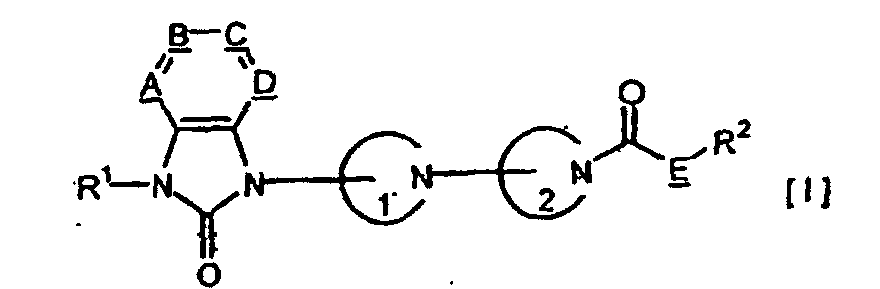 gleich oder unterschiedlich sind und C3-C9 monocyclische aliphatische Stickstoff-enthaltende heterocyclische Gruppen bedeuten; R1 C2-C6-Alkenyl, C2-C6-Alkinyl, C2-C7-Alkanoyl, C2-C7-Alkoxycarbonyl, Carbamoyl oder Di(C1-C6-alkyl)aminosulfonyl oder C1-C6-Alkylsulfonyl bedeutet, welches mit Halogen oder C1-C6-Alkyl substituiert sein kann, welches einen Substituenten ausgewählt aus der Gruppe bestehend aus Halogen, Hydroxyl, Oxo, Amino, C1-C6-Alkoxy, C1-C6-Alkylthio, C1-C6-Alkylsulfonyl und C2-C7-Alkoxycarbonyl aufweisen kann; und R2 C1-C6-Alkyl bedeutet],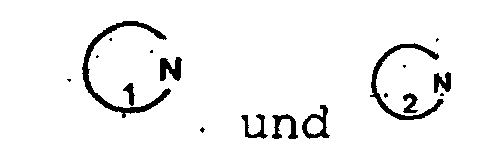
oder deren Salze. - Die Verbindungen nach Anspruch 1, bei denen A, B, C und D gleich oder unterschiedlich sind und eine Methin-Gruppe bzw. Methin-Gruppen bedeuten, welche mit Halogen, Hydroxyl oder C1-C6-Alkyl substituiert sein kann/können.
- Die Verbindungen nach Anspruch 1, bei denen die C3-C9 monocyclischen aliphatischen Stickstoff-enthaltenden heterocyclischen Gruppenwelche gleich oder unterschiedlich sind, Azetidin-1,3-diyl oder Piperidin-1,4-diyl Gruppen bedeuten.

- Die Verbindungen nach Anspruch 1, bei denen beide GruppenPiperidin-1,4-diyl Gruppen sind.
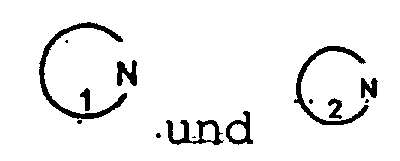
- Die Verbindungen nach Anspruch 1, bei denen R1 C2-C6-Alkenyl, C2-C7-Alkoxycarbonyl oder Carbamoyl; C1-C6-Alkylsulfonyl, welches mit Halogen substituiert sein kann; oder C1-C6-Alkyl, welches einen Substituenten ausgewählt aus der Gruppe, bestehend aus Halogen, Hydroxyl, Oxo, Amino, C1-C6-Alkoxy, C1-C6-Alkylthio, C1-C6-Alkylsulfonyl und C2-C7-Alkoxycarbonyl, aufweisen kann, bedeutet.
- Die Verbindungen nach Anspruch 1, bei denen R1 C1-C6-Alkylsulfonyl, welches mit Halogen substituiert sein kann, bedeutet.
- Die Verbindungen nach Anspruch 1, bei denen A, B, C und D gleich oder unterschiedlich sind und eine Methin-Gruppe bzw. Methin-Gruppen bedeuten, welche mit Halogen, Hydroxyl oder C1-C6-Alkyl substituiert sein kann/können; beide Gruppen1,4-Piperidin-diyl bedeuten; und R1 eine C2-C6-Alkyl, C2-C7-Alkoxycarbonyl oder Carbamoyl, oder C1-C6-Alkylsulfonyl, welches mit Halogen substituiert sein kann, oder C1-C6-Alkyl, welches einen Substituenten, ausgewählt aus der Gruppe bestehend aus Halogen, Hydroxyl, Oxo, Amino, C1-C6-Alkoxy, C1-C6-Alkylthio, C1-C6-Alkylsulfonyl und C2-C7-Alkoxycarbonyl aufweisen kann, bedeutet.

- Die Verbindungen nach Anspruch 7, bei denen R1 C1-C6-Alkylsulfonyl, welches mit Halogen substituiert sein kann, bedeutet.
- Die Verbindungen nach Anspruch 1, und zwar die folgenden:1-[1-(1-Methoxycarbonylpiperidin-4-yl)piperiding-4-yl]-3-(2-propinyl)-1,3-dihydro-2H-benzimidazol-2-on,1-[1-(1-Methoxycarbonylpiperidin-4-yl)piperidin-4-yl]-3-(2-propenyl)-1,3-dihydro-2H-benzimidazol-2-on,1-[1-(1-Methoxycarbonylpiperidin-4-yl)piperidin-4-yl]-3-n-butyl-1,3-dihydro-2H-benzimidazol-2-on,1-[1-(1-Methoxycarbonylpiperidin-4-yl)piperidin-4-yl]-3-methyl-1,3-dihydro-2H-benzimidazol-2-on,1-[1-(1-Methoxycarbonylpiperidin-4-yl)piperidin-4-yl]-3-(2,2,2-trifluorethyl)-1,3-dihydro-2H-benzimidazol-2-on,1-[1-(1-Methoxycarbonylpiperidin-4-yl)piperidin-4-yl]-3-(methoxycarbonylmethyl)-1,3-dihydro-2H-benzimidazol-2-on,1-[1-(1-Methoxycarbonylpiperidin-4-yl)piperidin-4-yl]-3-(2-oxopropyl)-1,3-dihydro-2H-benzimidazol-2-on,1-[1-(1-Methoxycarbonylpiperidin-4-yl)piperidin-4-yl]-3-(2-aminoethyl)-1,3-dihydro-2H-benzimidazol-2-on,1-[1-(1-Methoxycarbonylpiperidin-4-yl) piperidin-4-yl]-3-(dimethylaminosulfonyl)-1,3-dihydro-2H-benzimidazol-2-on,1-[1-(1-methoxycarbonylpiperidin-4-yl)piperidin-4-yl]-3-ethyl-1,3-dihydro-2H-benzimidazol-2-on,1-[1-(1-Methoxycarbonylpiperidin-4-yl)piperidin-4-yl]-3-n-propyl-1,3-dihydro-2H-benzimidazol-2-on,1-[1-(1-Methoxycarbonylpiperidin-4-yl)piperidin-4-yl]-3-acetyl-1,3-dihydro-2H-benzimidazol-2-on,1-[1-(1-Methoxycarbonylpiperidin-4-yl)piperidin-4-yl]-3-(methylsulfonyl)-1,3-dihydro-2H-benzimidazol-2-on,1-[1-(1-Methoxycarbonylpiperidin-4-yl)piperidin-4-yl]-3-(methoxycarbonyl)-1,3-dihydro-2H-benzimidazol-2-on,1-[1-(1-Methoxycarbonylpiperidin-4-yl)azetidin-3-yl]-3-(methylsulfonyl)-1,3-dihydro-2H-benzimidazol-2-on,1-[1-(1-Methoxycarbonylpiperidin-4-yl)piperidin-4-yl]-5-methyl-3-(methylsulfonyl)-1,3-dihydro-2H-benzimidazol-2-on,1-[1-(1-Methoxycarbonylpiperidin-4-yl)piperidin-4-yl]-4-fluor-3-(methylsulfonyl)-1,3-dihydro-2H-benzimidazol-2-on,1-[1-(1-Methoxycarbonylpiperidin-4-yl)piperidin-4-yl]-3-(methylsulfonyl)-1,3-dihydro-2H-imidazol[4,5-b]pyridin-2-on,1-[1-(1-Ethoxycarbonylpiperidin-4-yl)piperidin-4-yl]-3-(methylsulfonyl)-1,3-dihydro-2H-benzimidazol-2-on,1-[1-(1-Methoxycarbonylpiperidin-4-yl)piperidin-4-yl]-3-(2-fluorethyl)-1,3-dihydro-2H-benzimidazol-2-on,1-[1-(1-Methoxycarbonylpiperidin-4-yl)piperidin-4-yl]-3-(2,2-difluorethyl)-1,3-dihydro-2H-benzimidazol-2-on,1-[1-(1-Methoxycarbonylpiperidin-4-yl)piperidin-4-yl]-3-(3,3,3-trifluorpropyl)-1,3-dihydro-2H-benzimidazol-2-on,1-[1-(1-Methoxycarbonylpiperidin-4-yl)piperidin-4-yl]-3-(2-hydroxyethyl)-1,3-dihydro-2H-benzimidazol-2-on,1-[1-(1-Methoxycarbonylpiperidin-4-yl)piperidin-4-yl]-3-prenyl-1,3-dihydro-2H-benzimidazol-2-on,1-[1-(1-Methoxycarbonylpiperidin-4-yl)piperidin-4-yl]-3-(ethylsulfonyl)-1,3-dihydro-2H-benzimidazol-2-on,1-[1-(1-Methoxycarbonylpiperidin-4-yl)piperidin-4-yl]-3-(isopropylsulfonyl)-1,3-dihydro-2H-benzimidazol-2-on,1-[1-(1-Methoxycarbonylpiperidin-4-yl)piperidin-4-yl]-3-(n-butylsulfonyl)-1,3-dihydro-2H-benzimidazol-2-on,1-[1-(1-Methoxycarbonylpiperidin-4-yl)piperidin-4-yl]-3-carbamoyl-1,3-dihydro-2H-benzimidazol-2-on,1-[1-(1-Methoxycarbonylpiperidin-4-yl)piperidin-4-yl]-3-(ethoxycarbonylmethyl)-1,3-dihydro-2H-benzimidazol-2-on,1-[1-(1-Methoxycarbonylpiperidin-4-yl)piperidin-4-yl]-3-(2-oxo-n-butyl)-1,3-dihydro-2H-benzimidazol-2-on,1-[1-(1-Methoxycarbonylpiperidin-4-yl)piperidin-4-yl]-3-(methylsulfonylmethyl)-1,3-dihydro-2H-benzimidazol-2-on,1-[1-(1-Methoxycarbonylpiperidin-4-yl)piperidin-4-yl]-3-(methylthiomethyl)-1,3-dihydro-2H-benzimidazol-2-on,1-[1-(1-Methoxycarbonylpiperidin-4-yl)piperidin-4-yl]-3-(2-methylsulfonylethyl)-1,3-dihydro-2H-benzimidazol-2-on,1-[1-(1-Methoxycarbonylpiperidin-4-yl)piperidin-4-yl]-3-(2-methylthioethyl)-1,3-dihydro-2H-benzimidazol-2-on,1-[1(1-Methoxycarbonylpiperidin-4-yl)piperidin-4-yl]-3-(2-ethoxyethyl)-1,3-dihydro-2H-benzimidazol-2-on,1-[1-(1-Ethoxycarbonylpiperidin-4-yl)piperidin-9-yl]-3-methyl-1,3-dihydro-2H-benzimidazol-2-on,1-[1-(1-Methoxycarbonylpiperidin-4-yl)piperidin-4-yl]-3-(methylsulfonyl)-4-hydroxy-1,3-dihydro-2H-benzimidazol-2-on,1-[1-(1-Methoxycarbonylpiperidin-4-yl)piperidin-4-yl]-3-(methylsulfonyl)-5-hydroxy-1,3-dihydro-2H-benzimidazol-2-on,1-[1-(1-Methoxycarbonylpiperidin-4-yl)piperidin-4-yl]-3-(methylsulfonyl)-6-hydroxy-1,3-dihydro-2H-benzimidazol-2-on,1-[1-(1-Methoxycarbonylpiperidin-9-yl)piperidin-4-yl]-3-(methylsulfonyl)-5-brom-1,3-dihydro-2H-benzimidazol-2-on,1-[1-(1-Methoxycarbonylpiperidin-4-yl)piperidin-4-yl]-3-(methylsulfonyl)-5-fluor-1,3-dihydro-2H-benzimidazol-2-on,1-[1-(1-Methoxycarbonylpiperidin-4-yl)piperidin-4-yl]-3-(methylsulfonyl)-6-fluor-1,3-dihydro-2H-benzimidazol-2-on, und1-[1-(1-ethoxycarbonylpiperidin-4-yl)piperidin-4-yl]-3-(ethoxycarbonyl)-1,3-dihydro-2H-benzimidazol-2-on.
- Die Verbindungen nach Anspruch 1, und zwar die folgenden:1-[1-(1-Methoxycarbonylpiperidin-4-yl)piperidin-4-yl]-3-methyl-1,3-dihydro-2H-benzimidazol-2-on,1-[1-(1-Methoxycarbonylpiperidin-4-yl)piperidin-4-yl]-3-(methoxycarbonylmethyl)-1,3-dihydro-2H-benzimidazol-2-on,1-[1-(1-methoxycarbonylpiperidin-4-yl)piperidin-4-yl]-3-ethyl-1,3-dihydro-2H-benzimidazol-2-on,1-[1-(1-Methoxycarbonylpiperidin-4-yl)piperidin-4-yl]-3-n-propyl-1,3-dihydro-2H-benzimidazol-2-on,1-[1-(1-Methoxycarbonylpiperidin-4-yl)piperidin-4-yl]-3-(2-hydroxyethyl)-1,3-dihydro-2H-benzimidazol-2-on,1-[1-(1-Methoxycarbonylpiperidin-4-yl)piperidin-4-yl]-3-(2-aminoethyl)-1,3-dihydro-2H-benzimidazol-2-on,1-[1-(1-Methoxycarbonylpiperidin-4-yl)piperidin-4-yl]-3-(methoxycarbonyl)-1,3-dihydro-2H-benzimidazol-2-on,1-[1-(1-Methoxycarbonylpiperidin-4-yl)piperidin-4-yl]-3-(methylsulfonyl)-1,3-dihydro-2H-benzimidazol-2-on,1-[1-(1-Methoxycarbonylpiperidin-4-yl)piperidin-4-yl]-3-(ethylsulfonyl)-1,3-dihydro-2H-benzimidazol-2-on,1-[1-(1-Methoxycarbonylpiperidin-4-yl)piperidin-4-yl]-5-methyl-3-(methylsulfonyl)-1,3-dihydro-2H-benzimidazol-2-on,1-[1-(1-Methoxycarbonylpiperidin-4-yl)piperidin-4-yl]-4-fluor-3-(methylsulfonyl)-1,3-dihydro-2H-benzimidazol-2-on,1-[1-(1-Methoxycarbonylpiperidin-4-yl)piperidin-4-yl]-3-(methylsulfonyl)-5-fluor-1,3-dihydro-2H-benzimidazol-2-on,1-[1-(1-Ethoxycarbonylpiperidin-4-yl)piperidin-4-yl]-3-(methylsulfonyl)-6-fluor-1,3-dihydro-2H-benzimidazol-2-on,1-[1-(1-Methoxycarbonylpiperidin-4-yl)piperidin-4-yl]-3-(2-fluorethyl)-1,3-dihydro-2H-benzimidazol-2-on, und1-[1-(1-Methoxycarbonylpiperidin-4-yl)piperidin-4-yl]-3-(2,2-difluorethyl)-1,3-dihydro-2H-benzimidazol-2-on.
- Verfahren zur Herstellung einer Verbindung der allgemeinen Formel [I] wie in Anspruch 1 beschrieben, oder ein Salz davon, welches das Umsetzen einer Verbindung der allgemeinen Formel [VII][bei der a, b, c und d dieselben oder unterschiedlich sind und eine Methin-Gruppe bzw. Methin-Gruppen oder ein Stickstoffatom bedeuten, wobei die Methin-Gruppe bzw. die Methin-Gruppen wahlweise mit Halogen, wahlweise geschützten Hydroxyl-Gruppen oder C1-C6-Alkyl substituiert sind; E Sauerstoff bedeutet;
 gleich oder unterschiedlich sind und C3-C9 monocyclische aliphatische Stickstoff-enthaltende heterocyclische Gruppen bedeuten; und R2 C1-C6-Alkyl ist],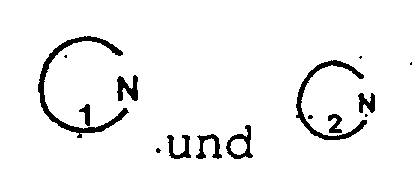
mit einer Verbindung der allgemeinen Formel [VIII]
unter Bildung einer Verbindung der allgemeinen Formel [IV][bei der a, b, c, d, E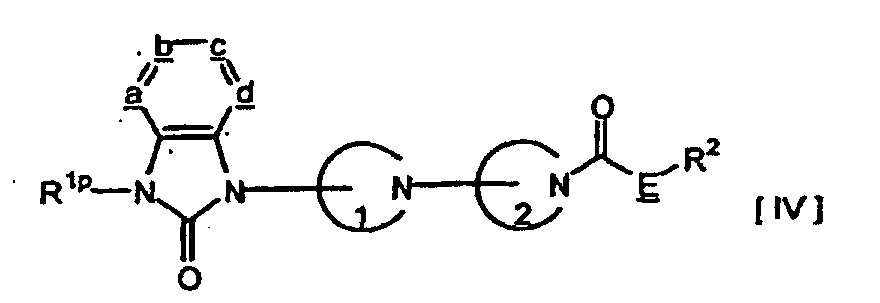 R1p und R2 die zuvor zugewiesenen Bedeutungen haben], und wenn notwendig das Entfernen der Schutzgruppe(n), umfasst.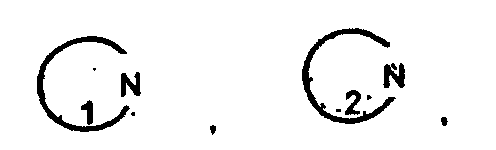
- Verfahren zur Herstellung einer Verbindung der allgemei nen Formel [I] wie in Anspruch 1 beschrieben, oder eines Sal zes davon, welches das Umsetzen einer Verbindung der allge meinen Formel [IX][bei der a, b, c und d gleich oder unterschiedlich sind und eine Methin-Gruppe bzw. Methin-Gruppen oder ein Stickstoffatom bedeuten, wobei die Methin-Gruppe bzw. die Methin-Gruppen wahlweise mit Halogen, wahlweise geschütztem Hydroxyl oder C1-C6-Alkyl substituiert ist/sind; E Sauerstoff bedeutet;
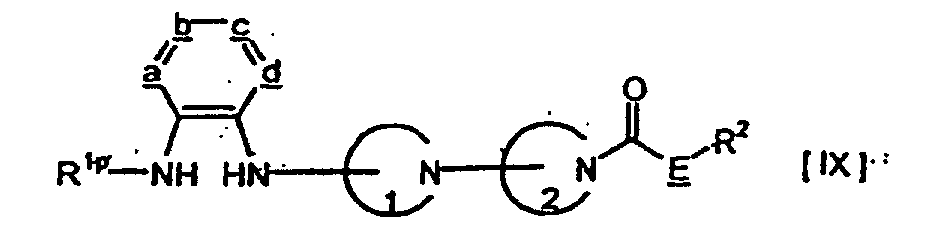 gleich oder unterschiedlich sind und C3-C9 monocyclische aliphatische Stickstoff-enthaltende heterocyclische Gruppen bedeuten; R1p C2-C6-Alkenyl, C2-C6-Alkinyl, C2-C-7-Alkanoyl, C2-C7-Alkoxycarbonyl, Carbamoyl oder Di (C1-C6-alkyl) aminosulfonyl, oder C1-C6-Alkylsulfonyl, welches mit Halogen substituiert sein kann, oder C1-C6-Alkyl, welches einen Substituenten aufweisen kann, ausgewählt aus der Gruppe bestehend aus Halogen, Oxo, C1-C6-Alkoxy, C1-C6-Alkylthio, C1-C6-Alkylsulfonyl und C2-C7-Alkoxycarbonyl und wahlweise geschütztes Hydroxyl und Amino bedeuten; und R2 C1-C6-Alkyl bedeutet]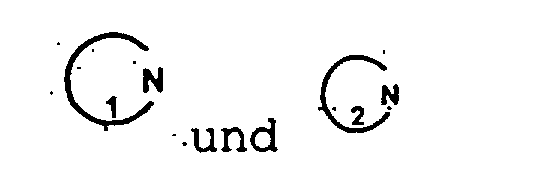
mit einer Verbindung ausgewählt aus der Gruppe, bestehend aus Carbonyldiimidazol, Triphosgen, Diphosgen, Methylchlorformiat, Ethylchlorformiat, Dimethylcarbonat und Diethylcarbonat, unter Bildung einer Verbindung der allgemeinen Formel [IV],[bei der a, b, c, d, E R1p und R2 die zuvor zugewiesenen Bedeutungen besitzen], und wenn notwendig das Entfernen der Schutzgruppe(n) umfasst.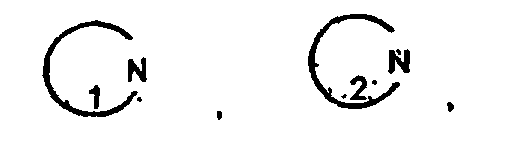
- Pharmazeutische Zusammensetzung umfassend eine Verbindung der allgemeinen Formel [I], wie in Anspruch 1 beschrieben, oder ein Salz davon, und mindestens ein pharmazeutisch annehmbares Adjuvanz.
- Agonist des muscarinischen M4-Rezeptors, welcher als aktiven Inhaltsstoff eine Verbindung der allgemeinen Formel [I] wie in Anspruch 1 beschrieben, oder ein Salz davon, umfasst.
- Analgetikum oder Mittel für die Behandlung einer Toleranz gegenüber narkotisierenden Analgetika vertreten durch Morphin, Abhängigkeit von narkotisierenden Analgetika, vertreten durch Morphin, Juckreiz, Demenz, Reizkolon, Schizophrenie, Glaukom, Pollakiurie, Harninkontinenz, Cholelithiasis, Cholecystitis, funktionelle Dyspepsie und Refluxösophagitis, welches als aktiven Inhaltsstoff eine Verbindung der allgemeinen Formel [I] wie in Anspruch 1 beschrieben, oder ein Salz davon, enthält.
Applications Claiming Priority (3)
| Application Number | Priority Date | Filing Date | Title |
|---|---|---|---|
| JP29123299 | 1999-10-13 | ||
| JP29123299 | 1999-10-13 | ||
| PCT/JP2000/007133 WO2001027104A1 (en) | 1999-10-13 | 2000-10-13 | Substituted imidazolidinone derivatives |
Publications (3)
| Publication Number | Publication Date |
|---|---|
| EP1221443A1 EP1221443A1 (de) | 2002-07-10 |
| EP1221443A4 EP1221443A4 (de) | 2002-11-04 |
| EP1221443B1 true EP1221443B1 (de) | 2004-09-01 |
Family
ID=17766196
Family Applications (1)
| Application Number | Title | Priority Date | Filing Date |
|---|---|---|---|
| EP00966483A Expired - Lifetime EP1221443B1 (de) | 1999-10-13 | 2000-10-13 | Substituierte imidazolin-derivate |
Country Status (8)
| Country | Link |
|---|---|
| US (1) | US6699880B1 (de) |
| EP (1) | EP1221443B1 (de) |
| AT (1) | ATE275141T1 (de) |
| AU (1) | AU766233B2 (de) |
| CA (1) | CA2387535A1 (de) |
| DE (1) | DE60013464T2 (de) |
| ES (1) | ES2223588T3 (de) |
| WO (1) | WO2001027104A1 (de) |
Cited By (3)
| Publication number | Priority date | Publication date | Assignee | Title |
|---|---|---|---|---|
| CN102015688A (zh) * | 2008-03-03 | 2011-04-13 | 阿斯利康(瑞典)有限公司 | 毒蕈碱性受体激动剂、组合物、治疗方法及其制备方法 |
| US7956069B2 (en) | 2006-06-09 | 2011-06-07 | Astrazeneca Ab | Compounds |
| US8119661B2 (en) | 2007-09-11 | 2012-02-21 | Astrazeneca Ab | Piperidine derivatives and their use as muscarinic receptor modulators |
Families Citing this family (63)
| Publication number | Priority date | Publication date | Assignee | Title |
|---|---|---|---|---|
| WO2001087354A2 (en) | 2000-05-17 | 2001-11-22 | Bristol-Myers Squibb Pharma Company | Use of small molecule radioligands for diagnostic imaging |
| NZ533566A (en) * | 2001-12-28 | 2007-03-30 | Acadia Pharm Inc | Tetrahydroquinoline analogues as muscarinic agonists |
| US7550459B2 (en) | 2001-12-28 | 2009-06-23 | Acadia Pharmaceuticals, Inc. | Tetrahydroquinoline analogues as muscarinic agonists |
| CA2488845A1 (en) | 2002-06-17 | 2003-12-24 | Merck & Co., Inc. | Opthalmic compositions containing selective m1 muscarinic agonists for treating ocular hypertension |
| WO2004064835A1 (en) * | 2003-01-17 | 2004-08-05 | Neurosearch A/S | Use of ion channel modulating agents for treating pain |
| JPWO2004069828A1 (ja) * | 2003-02-04 | 2006-05-25 | 三菱ウェルファーマ株式会社 | ピペリジン化合物およびその医薬用途 |
| WO2004071392A2 (en) * | 2003-02-11 | 2004-08-26 | Bayer Healthcare Ag | Diagnostics and therapeutics for diseases associated with acetylcholine receptor, muscarinic 4(m4) |
| EP1654258A1 (de) | 2003-07-23 | 2006-05-10 | Wyeth | Sulfonyldihydrobenzimidazolonverbindungen als 5-hydroxytryptamin-6-liganden |
| WO2005010003A1 (en) * | 2003-07-23 | 2005-02-03 | Wyeth | Sulfonyldihydroimid- azopyridinone compounds as 5-hydroxytryptamine-6 ligands |
| CA2469512A1 (en) | 2004-06-02 | 2005-12-02 | Jeffrey Harrison | Fish feed apparatus for underwater feeding |
| EP1943230B1 (de) | 2005-09-30 | 2010-12-22 | Glaxo Group Limited | Verbindungen mit aktivität am m1-rezeptor und ihre verwendung in der medizin |
| EP1937670A1 (de) | 2005-09-30 | 2008-07-02 | Glaxo Group Limited | Benzimidazolone mit aktivität am m1-rezeptor |
| ES2391107T3 (es) | 2005-09-30 | 2012-11-21 | Glaxo Group Limited | Compuestos que tienen actividad en el receptor M1 y sus usos en medicina |
| CN103214484B (zh) | 2005-12-13 | 2016-07-06 | 因塞特控股公司 | 作为两面神激酶抑制剂的杂芳基取代的吡咯并[2,3-b]吡啶和吡咯并[2,3-b]嘧啶 |
| GB0605785D0 (en) * | 2006-03-22 | 2006-05-03 | Glaxo Group Ltd | Compounds |
| TW200815405A (en) * | 2006-06-09 | 2008-04-01 | Astrazeneca Ab | Novel compounds |
| EP2155724A1 (de) * | 2007-03-23 | 2010-02-24 | Abbott GmbH & Co. KG | Zur behandlung von erkrankungen, die auf eine modulation des serotonin-5-ht6-rezeptors ansprechen, geeignete azetidinverbindungen |
| GB0706187D0 (en) * | 2007-03-29 | 2007-05-09 | Glaxo Group Ltd | Compounds |
| GB0706174D0 (en) * | 2007-03-29 | 2007-05-09 | Glaxo Group Ltd | Compounds |
| GB0706165D0 (en) * | 2007-03-29 | 2007-05-09 | Glaxo Group Ltd | Compounds |
| GB0706167D0 (en) * | 2007-03-29 | 2007-05-09 | Glaxo Group Ltd | Compounds |
| HUE029236T2 (en) | 2007-06-13 | 2017-02-28 | Incyte Holdings Corp | (R) -3- (4- (7H-Pyrrolo [2,3-d] pyrimidin-4-yl) -1H-pyrazol-1-yl) -3-cyclopentylpropanenitrile Crystalline salts of Janus kinase inhibitor |
| GB0718415D0 (en) | 2007-09-20 | 2007-10-31 | Glaxo Group Ltd | Compounds |
| MY156727A (en) | 2009-05-22 | 2016-03-15 | Incyte Corp | N-(hetero)aryl-pyrrolidine derivatives of pyrazol-4-yl-pyrrolo[2,3-d]pyrimidines and pyrrol-3-yl-pyrrolo[2,3-d]pyrimidines as janus kinase inhibitors |
| EP2432472B1 (de) | 2009-05-22 | 2019-10-02 | Incyte Holdings Corporation | 3-[4-(7h-pyrrolo[2,3-d]pyrimidin-4-yl)-1h-pyrazol-1-yl]octan- oder heptannitril als jak-inhibitoren |
| TW201113285A (en) | 2009-09-01 | 2011-04-16 | Incyte Corp | Heterocyclic derivatives of pyrazol-4-yl-pyrrolo[2,3-d]pyrimidines as janus kinase inhibitors |
| EP3354652B1 (de) | 2010-03-10 | 2020-05-06 | Incyte Holdings Corporation | Piperidin-4-yl azetidin-derivate als jak1-inhibitoren |
| AR084691A1 (es) | 2010-05-21 | 2013-06-05 | Incyte Corp | Formulacion de uso topico para un inhibidor de jak y metodo para tratar trastorno de la piel |
| WO2011163594A2 (en) * | 2010-06-24 | 2011-12-29 | Alkermes, Inc. | Prodrugs of nh-acidic compounds: ester, carbonate, carbamate and phosphonate derivatives |
| CA2818542A1 (en) | 2010-11-19 | 2012-05-24 | Incyte Corporation | Cyclobutyl substituted pyrrolopyridine and pyrrolopyrimidine derivatives as jak inhibitors |
| MY165963A (en) | 2011-06-20 | 2018-05-18 | Incyte Holdings Corp | Azetidinyl phenyl, pyridyl or pyrazinyl carboxamide derivatives as jak inhibitors |
| TW201313721A (zh) | 2011-08-18 | 2013-04-01 | Incyte Corp | 作為jak抑制劑之環己基氮雜環丁烷衍生物 |
| UA111854C2 (uk) | 2011-09-07 | 2016-06-24 | Інсайт Холдінгс Корпорейшн | Способи і проміжні сполуки для отримання інгібіторів jak |
| CN104039321B (zh) | 2011-11-18 | 2017-02-22 | 赫普泰雅治疗有限公司 | 药物化合物 |
| JP2015083543A (ja) * | 2012-02-14 | 2015-04-30 | 大日本住友製薬株式会社 | 新規縮環ピロリジン誘導体 |
| TW201348231A (zh) * | 2012-02-29 | 2013-12-01 | Amgen Inc | 雜雙環化合物 |
| TW201406761A (zh) | 2012-05-18 | 2014-02-16 | Incyte Corp | 做爲jak抑制劑之哌啶基環丁基取代之吡咯并吡啶及吡咯并嘧啶衍生物 |
| TWI761825B (zh) | 2012-11-15 | 2022-04-21 | 美商英塞特控股公司 | 盧梭利替尼之緩釋性劑型 |
| CN103030580A (zh) * | 2012-12-13 | 2013-04-10 | 山东铂源药业有限公司 | 一种拉帕替尼中间体的制备方法 |
| CN105189482A (zh) * | 2013-02-07 | 2015-12-23 | 武田药品工业株式会社 | 作为毒蕈碱m4受体激动剂的哌啶-1-基羧酸酯和氮杂卓-1-基羧酸酯 |
| MX384910B (es) | 2013-03-06 | 2025-03-14 | Incyte Holdings Corp | Procesos e intermedios para hacer un inhibidor de jak. |
| SG11201600815WA (en) | 2013-08-07 | 2016-03-30 | Incyte Corp | Sustained release dosage forms for a jak1 inhibitor |
| GB201404922D0 (en) | 2014-03-19 | 2014-04-30 | Heptares Therapeutics Ltd | Pharmaceutical compounds |
| WO2015184305A1 (en) | 2014-05-30 | 2015-12-03 | Incyte Corporation | TREATMENT OF CHRONIC NEUTROPHILIC LEUKEMIA (CNL) AND ATYPICAL CHRONIC MYELOID LEUKEMIA (aCML) BY INHIBITORS OF JAK1 |
| GB201513743D0 (en) | 2015-08-03 | 2015-09-16 | Heptares Therapeutics Ltd | Muscarinic agonists |
| GB201519352D0 (en) | 2015-11-02 | 2015-12-16 | Heptares Therapeutics Ltd | Pharmaceutical compounds |
| ES2789756T3 (es) | 2015-12-23 | 2020-10-26 | Merck Sharp & Dohme | Moduladores alostéricos de 6,7-dihidro-5H-pirrolo[3,4-b]piridin-5-ona del receptor de acetilcolina muscarínico M4 |
| WO2017107089A1 (en) | 2015-12-23 | 2017-06-29 | Merck Sharp & Dohme Corp. | 3- (1h-pyrazol-4-yl) pyridineallosteric modulators of the m4 muscarinic acetylcholine receptor |
| GB201617454D0 (en) | 2016-10-14 | 2016-11-30 | Heptares Therapeutics Limited | Pharmaceutical compounds |
| WO2018112842A1 (en) | 2016-12-22 | 2018-06-28 | Merck Sharp & Dohme Corp. | 6,6-fused heteroaryl piperidine ether allosteric modulators of m4 muscarinic acetylcholine receptor |
| WO2018112840A1 (en) | 2016-12-22 | 2018-06-28 | Merck Sharp & Dohme Corp. | 6, 5-fused heteroaryl piperidine ether allosteric modulators of the m4 muscarinic acetylcholine receptor |
| WO2018112843A1 (en) | 2016-12-22 | 2018-06-28 | Merck Sharp & Dohme Corp. | Heteroaryl piperidine ether allosteric modulators of the m4 muscarinic acetylcholine receptor |
| WO2019000236A1 (en) | 2017-06-27 | 2019-01-03 | Merck Sharp & Dohme Corp. | ALLOSTERIC MODULATORS OF 3- (1H-PYRAZOL-4-YL) PYRIDINE FROM THE M4 ACETYLCHOLINE MUSCARINIC RECEPTOR |
| WO2019000238A1 (en) | 2017-06-27 | 2019-01-03 | Merck Sharp & Dohme Corp. | 5- (PYRIDIN-3-YL) OXAZOLE ALLOSTERIC MODULATORS OF M4 ACETYLCHOLINE MUSCARINIC RECEPTOR |
| WO2019000237A1 (en) | 2017-06-27 | 2019-01-03 | Merck Sharp & Dohme Corp. | ALLOSTERIC MODULATORS OF 3- (1H-PYRAZOL-4-YL) PYRIDINE FROM THE M4 ACETYLCHOLINE MUSCARINIC RECEPTOR |
| US10596161B2 (en) | 2017-12-08 | 2020-03-24 | Incyte Corporation | Low dose combination therapy for treatment of myeloproliferative neoplasms |
| JP7393348B2 (ja) | 2018-01-30 | 2023-12-06 | インサイト・コーポレイション | (1-(3-フルオロ-2(トリフルオロメチル)イソニコチニル)ピぺリジン―4-オン)を作製するためのプロセス及び中間体 |
| CN113768934A (zh) | 2018-03-30 | 2021-12-10 | 因赛特公司 | 使用jak抑制剂治疗化脓性汗腺炎 |
| GB201810239D0 (en) | 2018-06-22 | 2018-08-08 | Heptares Therapeutics Ltd | Pharmaceutical compounds |
| GB201819960D0 (en) | 2018-12-07 | 2019-01-23 | Heptares Therapeutics Ltd | Pharmaceutical compounds |
| GB201819961D0 (en) | 2018-12-07 | 2019-01-23 | Heptares Therapeutics Ltd | Pharmaceutical compounds |
| GB202020191D0 (en) | 2020-12-18 | 2021-02-03 | Heptares Therapeutics Ltd | Pharmaceutical compounds |
| US11833155B2 (en) | 2020-06-03 | 2023-12-05 | Incyte Corporation | Combination therapy for treatment of myeloproliferative neoplasms |
Family Cites Families (6)
| Publication number | Priority date | Publication date | Assignee | Title |
|---|---|---|---|---|
| EP0786997A4 (de) | 1994-10-27 | 1998-03-11 | Merck & Co Inc | Muscarinantagonisten |
| GB9603457D0 (de) | 1996-02-19 | 1996-04-17 | Merck & Co Inc | |
| US5756508A (en) * | 1995-10-31 | 1998-05-26 | Merck & Co., Inc. | Muscarine antagonists |
| TW531537B (en) * | 1995-12-27 | 2003-05-11 | Janssen Pharmaceutica Nv | 1-(1,2-disubstituted piperidinyl)-4-substituted piperidine derivatives |
| WO1999032481A1 (en) * | 1997-12-23 | 1999-07-01 | Alcon Laboratories, Inc. | Muscarinic agents and use thereof to treat glaucoma, myopia and various other conditions |
| ES2175925T3 (es) * | 1998-01-19 | 2002-11-16 | Pfizer | Compuestos 4-(2-ceto-1-benzilimidazolinil)piperidina como agonistas del receptor orl1. |
-
2000
- 2000-10-13 ES ES00966483T patent/ES2223588T3/es not_active Expired - Lifetime
- 2000-10-13 DE DE60013464T patent/DE60013464T2/de not_active Expired - Fee Related
- 2000-10-13 EP EP00966483A patent/EP1221443B1/de not_active Expired - Lifetime
- 2000-10-13 US US10/110,638 patent/US6699880B1/en not_active Expired - Fee Related
- 2000-10-13 CA CA002387535A patent/CA2387535A1/en not_active Abandoned
- 2000-10-13 WO PCT/JP2000/007133 patent/WO2001027104A1/ja not_active Ceased
- 2000-10-13 AU AU76865/00A patent/AU766233B2/en not_active Ceased
- 2000-10-13 AT AT00966483T patent/ATE275141T1/de not_active IP Right Cessation
Cited By (3)
| Publication number | Priority date | Publication date | Assignee | Title |
|---|---|---|---|---|
| US7956069B2 (en) | 2006-06-09 | 2011-06-07 | Astrazeneca Ab | Compounds |
| US8119661B2 (en) | 2007-09-11 | 2012-02-21 | Astrazeneca Ab | Piperidine derivatives and their use as muscarinic receptor modulators |
| CN102015688A (zh) * | 2008-03-03 | 2011-04-13 | 阿斯利康(瑞典)有限公司 | 毒蕈碱性受体激动剂、组合物、治疗方法及其制备方法 |
Also Published As
| Publication number | Publication date |
|---|---|
| DE60013464D1 (de) | 2004-10-07 |
| AU7686500A (en) | 2001-04-23 |
| ES2223588T3 (es) | 2005-03-01 |
| US6699880B1 (en) | 2004-03-02 |
| EP1221443A1 (de) | 2002-07-10 |
| ATE275141T1 (de) | 2004-09-15 |
| AU766233B2 (en) | 2003-10-09 |
| EP1221443A4 (de) | 2002-11-04 |
| WO2001027104A1 (en) | 2001-04-19 |
| CA2387535A1 (en) | 2001-04-19 |
| DE60013464T2 (de) | 2005-09-15 |
Similar Documents
| Publication | Publication Date | Title |
|---|---|---|
| US6699880B1 (en) | Substituted imidazolidinone derivatives | |
| US7164024B2 (en) | Benzimidazolone derivatives | |
| KR102449652B1 (ko) | Rock의 억제제로서의 스피로-융합 시클릭 우레아 | |
| JP4366532B2 (ja) | 2−オキソイミダゾール誘導体 | |
| AU2009331179B2 (en) | Novel bicyclic heterocyclic compound | |
| JP4854970B2 (ja) | 療法において有用なトロパン誘導体 | |
| JPWO1998054168A1 (ja) | 2−オキソイミダゾール誘導体 | |
| WO2007055418A1 (ja) | アザ置換スピロ誘導体 | |
| NO20023750L (no) | 1H-imidazopyridinderivater | |
| TWI643850B (zh) | 作為呼吸道融合病毒之抗病毒劑的新穎經雜環取代之1,3-二氫-2h-苯并咪唑-2-酮衍生物 | |
| WO2002040019A1 (en) | Benzimidazole derivatives | |
| TW200403242A (en) | Tropane derivatives useful in therapy | |
| US20030236267A1 (en) | Benzimidazole derivatives | |
| WO2019205983A1 (zh) | 氧杂螺环类化合物及其制备方法和用途 | |
| JP6492105B2 (ja) | Rsv抗ウイルス化合物としてのスピロウレア化合物 | |
| US20230027198A1 (en) | Inhibitors of enl/af9 yeats | |
| CN102639526B (zh) | 作为5-ht4受体配体的1,2-二氢-2-氧代喹啉化合物 | |
| WO2007049798A1 (ja) | 新規ベンゾオキサチイン誘導体 | |
| CA2713412A1 (en) | Amide derivative and pharmaceutical composition containing the same | |
| CA2750699A1 (en) | Oxyindole derivatives with motilin receptor agonistic activity | |
| JP2000169476A (ja) | 4−オキソイミダゾリジン−5−スピロ−含窒素複素環式化合物 | |
| EP2464646B1 (de) | Verfahren zur herstellung von cathepsin-s-hemmern | |
| WO2000034280A1 (en) | 4-oxoimidazolidine-2-spiro-nitrogenous heterocycle compounds | |
| JPWO2001027104A1 (ja) | 置換イミダゾリジノン誘導体 | |
| WO2000031061A1 (en) | 2-oxoimidazole derivatives |
Legal Events
| Date | Code | Title | Description |
|---|---|---|---|
| PUAI | Public reference made under article 153(3) epc to a published international application that has entered the european phase |
Free format text: ORIGINAL CODE: 0009012 |
|
| 17P | Request for examination filed |
Effective date: 20020416 |
|
| AK | Designated contracting states |
Kind code of ref document: A1 Designated state(s): AT BE CH CY DE DK ES FI FR GB GR IE IT LI LU MC NL PT SE |
|
| AX | Request for extension of the european patent |
Free format text: AL;LT;LV;MK;RO;SI |
|
| A4 | Supplementary search report drawn up and despatched | ||
| AK | Designated contracting states |
Kind code of ref document: A4 Designated state(s): AT BE CH CY DE DK ES FI FR GB GR IE IT LI LU MC NL PT SE |
|
| A4 | Supplementary search report drawn up and despatched |
Effective date: 20021104 |
|
| RIC1 | Information provided on ipc code assigned before grant |
Free format text: 7C 07D 401/14 A, 7A 61K 31/4545 B, 7A 61P 25/04 B, 7A 61P 25/06 B, 7A 61P 25/36 B, 7A 61P 25/28 B, 7A 61P 25/18 B, 7A 61P 17/04 B, 7A 61P 1/04 B, 7A 61P 27/06 B, 7C 07D 471/04 B, 7A 61K 31/435 B, 7A 61K 31/445 B, 7C 07D 401/14 J, 7C 07D 235:00 J, 7C 07D 211:00 J, 7C 07D 211:00 J, 7C 07D 401/14 K, 7C 07D 235:00 K, 7C 07D 211:00 K, 7C 07D 207:00 K, 7C 07D 471/04 L, 7C 07D 235:00 L, 7C 07D 221:00 L |
|
| 17Q | First examination report despatched |
Effective date: 20030228 |
|
| GRAP | Despatch of communication of intention to grant a patent |
Free format text: ORIGINAL CODE: EPIDOSNIGR1 |
|
| GRAS | Grant fee paid |
Free format text: ORIGINAL CODE: EPIDOSNIGR3 |
|
| GRAA | (expected) grant |
Free format text: ORIGINAL CODE: 0009210 |
|
| AK | Designated contracting states |
Kind code of ref document: B1 Designated state(s): AT BE CH CY DE DK ES FI FR GB GR IE IT LI LU MC NL PT SE |
|
| PG25 | Lapsed in a contracting state [announced via postgrant information from national office to epo] |
Ref country code: CY Free format text: LAPSE BECAUSE OF FAILURE TO SUBMIT A TRANSLATION OF THE DESCRIPTION OR TO PAY THE FEE WITHIN THE PRESCRIBED TIME-LIMIT Effective date: 20040901 Ref country code: NL Free format text: LAPSE BECAUSE OF FAILURE TO SUBMIT A TRANSLATION OF THE DESCRIPTION OR TO PAY THE FEE WITHIN THE PRESCRIBED TIME-LIMIT Effective date: 20040901 Ref country code: FI Free format text: LAPSE BECAUSE OF FAILURE TO SUBMIT A TRANSLATION OF THE DESCRIPTION OR TO PAY THE FEE WITHIN THE PRESCRIBED TIME-LIMIT Effective date: 20040901 Ref country code: BE Free format text: LAPSE BECAUSE OF FAILURE TO SUBMIT A TRANSLATION OF THE DESCRIPTION OR TO PAY THE FEE WITHIN THE PRESCRIBED TIME-LIMIT Effective date: 20040901 Ref country code: CH Free format text: LAPSE BECAUSE OF FAILURE TO SUBMIT A TRANSLATION OF THE DESCRIPTION OR TO PAY THE FEE WITHIN THE PRESCRIBED TIME-LIMIT Effective date: 20040901 Ref country code: LI Free format text: LAPSE BECAUSE OF FAILURE TO SUBMIT A TRANSLATION OF THE DESCRIPTION OR TO PAY THE FEE WITHIN THE PRESCRIBED TIME-LIMIT Effective date: 20040901 Ref country code: AT Free format text: LAPSE BECAUSE OF FAILURE TO SUBMIT A TRANSLATION OF THE DESCRIPTION OR TO PAY THE FEE WITHIN THE PRESCRIBED TIME-LIMIT Effective date: 20040901 |
|
| REG | Reference to a national code |
Ref country code: GB Ref legal event code: FG4D |
|
| REG | Reference to a national code |
Ref country code: CH Ref legal event code: EP |
|
| REG | Reference to a national code |
Ref country code: IE Ref legal event code: FG4D |
|
| REF | Corresponds to: |
Ref document number: 60013464 Country of ref document: DE Date of ref document: 20041007 Kind code of ref document: P |
|
| PG25 | Lapsed in a contracting state [announced via postgrant information from national office to epo] |
Ref country code: LU Free format text: LAPSE BECAUSE OF NON-PAYMENT OF DUE FEES Effective date: 20041013 Ref country code: IE Free format text: LAPSE BECAUSE OF NON-PAYMENT OF DUE FEES Effective date: 20041013 |
|
| PG25 | Lapsed in a contracting state [announced via postgrant information from national office to epo] |
Ref country code: MC Free format text: LAPSE BECAUSE OF NON-PAYMENT OF DUE FEES Effective date: 20041031 |
|
| PG25 | Lapsed in a contracting state [announced via postgrant information from national office to epo] |
Ref country code: GR Free format text: LAPSE BECAUSE OF FAILURE TO SUBMIT A TRANSLATION OF THE DESCRIPTION OR TO PAY THE FEE WITHIN THE PRESCRIBED TIME-LIMIT Effective date: 20041201 Ref country code: SE Free format text: LAPSE BECAUSE OF FAILURE TO SUBMIT A TRANSLATION OF THE DESCRIPTION OR TO PAY THE FEE WITHIN THE PRESCRIBED TIME-LIMIT Effective date: 20041201 Ref country code: DK Free format text: LAPSE BECAUSE OF FAILURE TO SUBMIT A TRANSLATION OF THE DESCRIPTION OR TO PAY THE FEE WITHIN THE PRESCRIBED TIME-LIMIT Effective date: 20041201 |
|
| LTIE | Lt: invalidation of european patent or patent extension |
Effective date: 20040901 |
|
| NLV1 | Nl: lapsed or annulled due to failure to fulfill the requirements of art. 29p and 29m of the patents act | ||
| REG | Reference to a national code |
Ref country code: ES Ref legal event code: FG2A Ref document number: 2223588 Country of ref document: ES Kind code of ref document: T3 |
|
| REG | Reference to a national code |
Ref country code: CH Ref legal event code: PL |
|
| ET | Fr: translation filed | ||
| PLBE | No opposition filed within time limit |
Free format text: ORIGINAL CODE: 0009261 |
|
| STAA | Information on the status of an ep patent application or granted ep patent |
Free format text: STATUS: NO OPPOSITION FILED WITHIN TIME LIMIT |
|
| REG | Reference to a national code |
Ref country code: IE Ref legal event code: MM4A |
|
| 26N | No opposition filed |
Effective date: 20050602 |
|
| PGFP | Annual fee paid to national office [announced via postgrant information from national office to epo] |
Ref country code: ES Payment date: 20061009 Year of fee payment: 7 |
|
| PGFP | Annual fee paid to national office [announced via postgrant information from national office to epo] |
Ref country code: IT Payment date: 20061031 Year of fee payment: 7 |
|
| PGFP | Annual fee paid to national office [announced via postgrant information from national office to epo] |
Ref country code: GB Payment date: 20070328 Year of fee payment: 7 |
|
| PGFP | Annual fee paid to national office [announced via postgrant information from national office to epo] |
Ref country code: DE Payment date: 20070329 Year of fee payment: 7 |
|
| PG25 | Lapsed in a contracting state [announced via postgrant information from national office to epo] |
Ref country code: PT Free format text: LAPSE BECAUSE OF NON-PAYMENT OF DUE FEES Effective date: 20050201 |
|
| PGFP | Annual fee paid to national office [announced via postgrant information from national office to epo] |
Ref country code: FR Payment date: 20070329 Year of fee payment: 7 |
|
| GBPC | Gb: european patent ceased through non-payment of renewal fee |
Effective date: 20071013 |
|
| PG25 | Lapsed in a contracting state [announced via postgrant information from national office to epo] |
Ref country code: DE Free format text: LAPSE BECAUSE OF NON-PAYMENT OF DUE FEES Effective date: 20080501 |
|
| REG | Reference to a national code |
Ref country code: FR Ref legal event code: ST Effective date: 20080630 |
|
| PG25 | Lapsed in a contracting state [announced via postgrant information from national office to epo] |
Ref country code: GB Free format text: LAPSE BECAUSE OF NON-PAYMENT OF DUE FEES Effective date: 20071013 |
|
| REG | Reference to a national code |
Ref country code: ES Ref legal event code: FD2A Effective date: 20071015 |
|
| PG25 | Lapsed in a contracting state [announced via postgrant information from national office to epo] |
Ref country code: ES Free format text: LAPSE BECAUSE OF NON-PAYMENT OF DUE FEES Effective date: 20071015 Ref country code: FR Free format text: LAPSE BECAUSE OF NON-PAYMENT OF DUE FEES Effective date: 20071031 |
|
| PG25 | Lapsed in a contracting state [announced via postgrant information from national office to epo] |
Ref country code: IT Free format text: LAPSE BECAUSE OF NON-PAYMENT OF DUE FEES Effective date: 20071013 |