EP1223799B2 - Nicht-transgene, herbizidresistente pflanzen - Google Patents
Nicht-transgene, herbizidresistente pflanzen Download PDFInfo
- Publication number
- EP1223799B2 EP1223799B2 EP00970716.7A EP00970716A EP1223799B2 EP 1223799 B2 EP1223799 B2 EP 1223799B2 EP 00970716 A EP00970716 A EP 00970716A EP 1223799 B2 EP1223799 B2 EP 1223799B2
- Authority
- EP
- European Patent Office
- Prior art keywords
- leu
- amino acid
- epsps
- ser
- plant
- Prior art date
- Legal status (The legal status is an assumption and is not a legal conclusion. Google has not performed a legal analysis and makes no representation as to the accuracy of the status listed.)
- Expired - Lifetime
Links
- 239000004009 herbicide Substances 0.000 title claims description 30
- 230000002363 herbicidal effect Effects 0.000 title claims description 29
- 241000196324 Embryophyta Species 0.000 claims description 152
- 125000003729 nucleotide group Chemical group 0.000 claims description 78
- 239000002773 nucleotide Substances 0.000 claims description 77
- 108010020183 3-phosphoshikimate 1-carboxyvinyltransferase Proteins 0.000 claims description 61
- 101150111720 EPSPS gene Proteins 0.000 claims description 61
- 125000003275 alpha amino acid group Chemical group 0.000 claims description 56
- XDDAORKBJWWYJS-UHFFFAOYSA-N glyphosate Chemical compound OC(=O)CNCP(O)(O)=O XDDAORKBJWWYJS-UHFFFAOYSA-N 0.000 claims description 46
- 238000000034 method Methods 0.000 claims description 46
- 230000035772 mutation Effects 0.000 claims description 33
- 239000005562 Glyphosate Substances 0.000 claims description 32
- 229940097068 glyphosate Drugs 0.000 claims description 32
- 230000009261 transgenic effect Effects 0.000 claims description 20
- 241000894007 species Species 0.000 claims description 18
- 240000008042 Zea mays Species 0.000 claims description 15
- 125000000539 amino acid group Chemical group 0.000 claims description 15
- 239000012634 fragment Substances 0.000 claims description 15
- 240000002791 Brassica napus Species 0.000 claims description 12
- 235000007244 Zea mays Nutrition 0.000 claims description 11
- 230000003197 catalytic effect Effects 0.000 claims description 11
- 241000219194 Arabidopsis Species 0.000 claims description 10
- 108090000790 Enzymes Proteins 0.000 claims description 10
- 102000004190 Enzymes Human genes 0.000 claims description 10
- 240000007377 Petunia x hybrida Species 0.000 claims description 10
- 235000011293 Brassica napus Nutrition 0.000 claims description 9
- 238000004520 electroporation Methods 0.000 claims description 9
- 238000011161 development Methods 0.000 claims description 8
- 238000004519 manufacturing process Methods 0.000 claims description 8
- 235000006008 Brassica napus var napus Nutrition 0.000 claims description 6
- 229940046166 oligodeoxynucleotide Drugs 0.000 claims description 6
- 239000013598 vector Substances 0.000 claims description 5
- 235000002017 Zea mays subsp mays Nutrition 0.000 claims description 4
- 241000219310 Beta vulgaris subsp. vulgaris Species 0.000 claims description 3
- 235000014698 Brassica juncea var multisecta Nutrition 0.000 claims description 3
- 240000000385 Brassica napus var. napus Species 0.000 claims description 3
- 235000006618 Brassica rapa subsp oleifera Nutrition 0.000 claims description 3
- 235000004977 Brassica sinapistrum Nutrition 0.000 claims description 3
- 229920000742 Cotton Polymers 0.000 claims description 3
- 244000068988 Glycine max Species 0.000 claims description 3
- 235000010469 Glycine max Nutrition 0.000 claims description 3
- 244000020551 Helianthus annuus Species 0.000 claims description 3
- 235000003222 Helianthus annuus Nutrition 0.000 claims description 3
- 240000005979 Hordeum vulgare Species 0.000 claims description 3
- 235000007340 Hordeum vulgare Nutrition 0.000 claims description 3
- 235000003228 Lactuca sativa Nutrition 0.000 claims description 3
- 240000008415 Lactuca sativa Species 0.000 claims description 3
- 235000004431 Linum usitatissimum Nutrition 0.000 claims description 3
- 240000006240 Linum usitatissimum Species 0.000 claims description 3
- 235000007688 Lycopersicon esculentum Nutrition 0.000 claims description 3
- 235000011430 Malus pumila Nutrition 0.000 claims description 3
- 235000015103 Malus silvestris Nutrition 0.000 claims description 3
- 240000004658 Medicago sativa Species 0.000 claims description 3
- 235000017587 Medicago sativa ssp. sativa Nutrition 0.000 claims description 3
- 235000002637 Nicotiana tabacum Nutrition 0.000 claims description 3
- 244000061176 Nicotiana tabacum Species 0.000 claims description 3
- 240000007594 Oryza sativa Species 0.000 claims description 3
- 235000007164 Oryza sativa Nutrition 0.000 claims description 3
- 240000004713 Pisum sativum Species 0.000 claims description 3
- 235000010582 Pisum sativum Nutrition 0.000 claims description 3
- 241000209504 Poaceae Species 0.000 claims description 3
- 241000219000 Populus Species 0.000 claims description 3
- 240000003768 Solanum lycopersicum Species 0.000 claims description 3
- 244000061456 Solanum tuberosum Species 0.000 claims description 3
- 235000002595 Solanum tuberosum Nutrition 0.000 claims description 3
- 235000021536 Sugar beet Nutrition 0.000 claims description 3
- 235000021307 Triticum Nutrition 0.000 claims description 3
- 244000098338 Triticum aestivum Species 0.000 claims description 3
- 235000009754 Vitis X bourquina Nutrition 0.000 claims description 3
- 235000012333 Vitis X labruscana Nutrition 0.000 claims description 3
- 240000006365 Vitis vinifera Species 0.000 claims description 3
- 235000014787 Vitis vinifera Nutrition 0.000 claims description 3
- 230000000869 mutational effect Effects 0.000 claims description 3
- 235000009566 rice Nutrition 0.000 claims description 3
- 230000018109 developmental process Effects 0.000 claims 3
- 230000001172 regenerating effect Effects 0.000 claims 3
- 235000011331 Brassica Nutrition 0.000 claims 1
- 241000220243 Brassica sp. Species 0.000 claims 1
- 244000004281 Eucalyptus maculata Species 0.000 claims 1
- 244000299507 Gossypium hirsutum Species 0.000 claims 1
- 240000004322 Lens culinaris Species 0.000 claims 1
- 235000014647 Lens culinaris subsp culinaris Nutrition 0.000 claims 1
- 244000070406 Malus silvestris Species 0.000 claims 1
- 235000008331 Pinus X rigitaeda Nutrition 0.000 claims 1
- 241000018646 Pinus brutia Species 0.000 claims 1
- 235000011613 Pinus brutia Nutrition 0.000 claims 1
- 235000005824 Zea mays ssp. parviglumis Nutrition 0.000 claims 1
- 235000005822 corn Nutrition 0.000 claims 1
- 235000001014 amino acid Nutrition 0.000 description 56
- 210000004027 cell Anatomy 0.000 description 47
- 108020004414 DNA Proteins 0.000 description 42
- 229940024606 amino acid Drugs 0.000 description 36
- 108090000623 proteins and genes Proteins 0.000 description 36
- 150000001413 amino acids Chemical class 0.000 description 35
- 108091034117 Oligonucleotide Proteins 0.000 description 26
- 241000219195 Arabidopsis thaliana Species 0.000 description 24
- 238000006467 substitution reaction Methods 0.000 description 22
- 210000001519 tissue Anatomy 0.000 description 21
- 125000003295 alanine group Chemical group N[C@@H](C)C(=O)* 0.000 description 18
- 125000001424 substituent group Chemical group 0.000 description 14
- DTBNBXWJWCWCIK-UHFFFAOYSA-N phosphoenolpyruvic acid Chemical compound OC(=O)C(=C)OP(O)(O)=O DTBNBXWJWCWCIK-UHFFFAOYSA-N 0.000 description 12
- 108091032973 (ribonucleotides)n+m Proteins 0.000 description 11
- 101000768857 Arabidopsis thaliana 3-phosphoshikimate 1-carboxyvinyltransferase, chloroplastic Proteins 0.000 description 10
- 210000000056 organ Anatomy 0.000 description 10
- 230000000295 complement effect Effects 0.000 description 8
- 102000004169 proteins and genes Human genes 0.000 description 8
- 239000003658 microfiber Substances 0.000 description 7
- 239000003471 mutagenic agent Substances 0.000 description 7
- 235000018102 proteins Nutrition 0.000 description 7
- LFQSCWFLJHTTHZ-UHFFFAOYSA-N Ethanol Chemical compound CCO LFQSCWFLJHTTHZ-UHFFFAOYSA-N 0.000 description 6
- 229920001410 Microfiber Polymers 0.000 description 6
- 108091028664 Ribonucleotide Proteins 0.000 description 6
- WIIZWVCIJKGZOK-RKDXNWHRSA-N chloramphenicol Chemical compound ClC(Cl)C(=O)N[C@H](CO)[C@H](O)C1=CC=C([N+]([O-])=O)C=C1 WIIZWVCIJKGZOK-RKDXNWHRSA-N 0.000 description 6
- 229960005091 chloramphenicol Drugs 0.000 description 6
- 238000012217 deletion Methods 0.000 description 6
- 230000037430 deletion Effects 0.000 description 6
- 239000000975 dye Substances 0.000 description 6
- 230000002255 enzymatic effect Effects 0.000 description 6
- 125000005647 linker group Chemical group 0.000 description 6
- 239000002609 medium Substances 0.000 description 6
- 150000004713 phosphodiesters Chemical class 0.000 description 6
- 210000001938 protoplast Anatomy 0.000 description 6
- 239000002336 ribonucleotide Substances 0.000 description 6
- 125000002652 ribonucleotide group Chemical group 0.000 description 6
- ATHGHQPFGPMSJY-UHFFFAOYSA-N spermidine Chemical compound NCCCCNCCCN ATHGHQPFGPMSJY-UHFFFAOYSA-N 0.000 description 6
- JLCPHMBAVCMARE-UHFFFAOYSA-N [3-[[3-[[3-[[3-[[3-[[3-[[3-[[3-[[3-[[3-[[3-[[5-(2-amino-6-oxo-1H-purin-9-yl)-3-[[3-[[3-[[3-[[3-[[3-[[5-(2-amino-6-oxo-1H-purin-9-yl)-3-[[5-(2-amino-6-oxo-1H-purin-9-yl)-3-hydroxyoxolan-2-yl]methoxy-hydroxyphosphoryl]oxyoxolan-2-yl]methoxy-hydroxyphosphoryl]oxy-5-(5-methyl-2,4-dioxopyrimidin-1-yl)oxolan-2-yl]methoxy-hydroxyphosphoryl]oxy-5-(6-aminopurin-9-yl)oxolan-2-yl]methoxy-hydroxyphosphoryl]oxy-5-(6-aminopurin-9-yl)oxolan-2-yl]methoxy-hydroxyphosphoryl]oxy-5-(6-aminopurin-9-yl)oxolan-2-yl]methoxy-hydroxyphosphoryl]oxy-5-(6-aminopurin-9-yl)oxolan-2-yl]methoxy-hydroxyphosphoryl]oxyoxolan-2-yl]methoxy-hydroxyphosphoryl]oxy-5-(5-methyl-2,4-dioxopyrimidin-1-yl)oxolan-2-yl]methoxy-hydroxyphosphoryl]oxy-5-(4-amino-2-oxopyrimidin-1-yl)oxolan-2-yl]methoxy-hydroxyphosphoryl]oxy-5-(5-methyl-2,4-dioxopyrimidin-1-yl)oxolan-2-yl]methoxy-hydroxyphosphoryl]oxy-5-(5-methyl-2,4-dioxopyrimidin-1-yl)oxolan-2-yl]methoxy-hydroxyphosphoryl]oxy-5-(6-aminopurin-9-yl)oxolan-2-yl]methoxy-hydroxyphosphoryl]oxy-5-(6-aminopurin-9-yl)oxolan-2-yl]methoxy-hydroxyphosphoryl]oxy-5-(4-amino-2-oxopyrimidin-1-yl)oxolan-2-yl]methoxy-hydroxyphosphoryl]oxy-5-(4-amino-2-oxopyrimidin-1-yl)oxolan-2-yl]methoxy-hydroxyphosphoryl]oxy-5-(4-amino-2-oxopyrimidin-1-yl)oxolan-2-yl]methoxy-hydroxyphosphoryl]oxy-5-(6-aminopurin-9-yl)oxolan-2-yl]methoxy-hydroxyphosphoryl]oxy-5-(4-amino-2-oxopyrimidin-1-yl)oxolan-2-yl]methyl [5-(6-aminopurin-9-yl)-2-(hydroxymethyl)oxolan-3-yl] hydrogen phosphate Polymers Cc1cn(C2CC(OP(O)(=O)OCC3OC(CC3OP(O)(=O)OCC3OC(CC3O)n3cnc4c3nc(N)[nH]c4=O)n3cnc4c3nc(N)[nH]c4=O)C(COP(O)(=O)OC3CC(OC3COP(O)(=O)OC3CC(OC3COP(O)(=O)OC3CC(OC3COP(O)(=O)OC3CC(OC3COP(O)(=O)OC3CC(OC3COP(O)(=O)OC3CC(OC3COP(O)(=O)OC3CC(OC3COP(O)(=O)OC3CC(OC3COP(O)(=O)OC3CC(OC3COP(O)(=O)OC3CC(OC3COP(O)(=O)OC3CC(OC3COP(O)(=O)OC3CC(OC3COP(O)(=O)OC3CC(OC3COP(O)(=O)OC3CC(OC3COP(O)(=O)OC3CC(OC3COP(O)(=O)OC3CC(OC3COP(O)(=O)OC3CC(OC3CO)n3cnc4c(N)ncnc34)n3ccc(N)nc3=O)n3cnc4c(N)ncnc34)n3ccc(N)nc3=O)n3ccc(N)nc3=O)n3ccc(N)nc3=O)n3cnc4c(N)ncnc34)n3cnc4c(N)ncnc34)n3cc(C)c(=O)[nH]c3=O)n3cc(C)c(=O)[nH]c3=O)n3ccc(N)nc3=O)n3cc(C)c(=O)[nH]c3=O)n3cnc4c3nc(N)[nH]c4=O)n3cnc4c(N)ncnc34)n3cnc4c(N)ncnc34)n3cnc4c(N)ncnc34)n3cnc4c(N)ncnc34)O2)c(=O)[nH]c1=O JLCPHMBAVCMARE-UHFFFAOYSA-N 0.000 description 5
- 230000000903 blocking effect Effects 0.000 description 5
- 230000000694 effects Effects 0.000 description 5
- 230000001580 bacterial effect Effects 0.000 description 4
- 239000002299 complementary DNA Substances 0.000 description 4
- 238000002474 experimental method Methods 0.000 description 4
- 239000000499 gel Substances 0.000 description 4
- 230000004077 genetic alteration Effects 0.000 description 4
- 231100000118 genetic alteration Toxicity 0.000 description 4
- 238000003780 insertion Methods 0.000 description 4
- 230000037431 insertion Effects 0.000 description 4
- 238000000520 microinjection Methods 0.000 description 4
- 238000002703 mutagenesis Methods 0.000 description 4
- 231100000350 mutagenesis Toxicity 0.000 description 4
- 239000002777 nucleoside Substances 0.000 description 4
- 125000003835 nucleoside group Chemical group 0.000 description 4
- 239000013612 plasmid Substances 0.000 description 4
- KDCGOANMDULRCW-UHFFFAOYSA-N 7H-purine Chemical compound N1=CNC2=NC=NC2=C1 KDCGOANMDULRCW-UHFFFAOYSA-N 0.000 description 3
- 241000193830 Bacillus <bacterium> Species 0.000 description 3
- UXVMQQNJUSDDNG-UHFFFAOYSA-L Calcium chloride Chemical compound [Cl-].[Cl-].[Ca+2] UXVMQQNJUSDDNG-UHFFFAOYSA-L 0.000 description 3
- 108091026890 Coding region Proteins 0.000 description 3
- 108091028043 Nucleic acid sequence Proteins 0.000 description 3
- CZPWVGJYEJSRLH-UHFFFAOYSA-N Pyrimidine Chemical compound C1=CN=CN=C1 CZPWVGJYEJSRLH-UHFFFAOYSA-N 0.000 description 3
- 108010055016 Rec A Recombinases Proteins 0.000 description 3
- 235000016383 Zea mays subsp huehuetenangensis Nutrition 0.000 description 3
- 239000001110 calcium chloride Substances 0.000 description 3
- 229910001628 calcium chloride Inorganic materials 0.000 description 3
- 210000002421 cell wall Anatomy 0.000 description 3
- 230000008859 change Effects 0.000 description 3
- 238000006243 chemical reaction Methods 0.000 description 3
- 238000010367 cloning Methods 0.000 description 3
- 235000013399 edible fruits Nutrition 0.000 description 3
- 239000013604 expression vector Substances 0.000 description 3
- 230000002068 genetic effect Effects 0.000 description 3
- 125000003630 glycyl group Chemical group [H]N([H])C([H])([H])C(*)=O 0.000 description 3
- -1 glyphosate anion Chemical class 0.000 description 3
- 238000002955 isolation Methods 0.000 description 3
- 239000007788 liquid Substances 0.000 description 3
- 235000009973 maize Nutrition 0.000 description 3
- 229920000642 polymer Polymers 0.000 description 3
- 108090000765 processed proteins & peptides Proteins 0.000 description 3
- 238000000746 purification Methods 0.000 description 3
- 229940063673 spermidine Drugs 0.000 description 3
- 230000009466 transformation Effects 0.000 description 3
- YBJHBAHKTGYVGT-ZKWXMUAHSA-N (+)-Biotin Chemical compound N1C(=O)N[C@@H]2[C@H](CCCCC(=O)O)SC[C@@H]21 YBJHBAHKTGYVGT-ZKWXMUAHSA-N 0.000 description 2
- 235000007173 Abies balsamea Nutrition 0.000 description 2
- 244000291564 Allium cepa Species 0.000 description 2
- 235000002732 Allium cepa var. cepa Nutrition 0.000 description 2
- 244000144730 Amygdalus persica Species 0.000 description 2
- 244000075850 Avena orientalis Species 0.000 description 2
- 235000007319 Avena orientalis Nutrition 0.000 description 2
- 239000004857 Balsam Substances 0.000 description 2
- 240000007124 Brassica oleracea Species 0.000 description 2
- 235000003899 Brassica oleracea var acephala Nutrition 0.000 description 2
- 235000011301 Brassica oleracea var capitata Nutrition 0.000 description 2
- 235000001169 Brassica oleracea var oleracea Nutrition 0.000 description 2
- 235000004936 Bromus mango Nutrition 0.000 description 2
- 101000583086 Bunodosoma granuliferum Delta-actitoxin-Bgr2b Proteins 0.000 description 2
- 235000005881 Calendula officinalis Nutrition 0.000 description 2
- 235000002566 Capsicum Nutrition 0.000 description 2
- 235000005633 Chrysanthemum balsamita Nutrition 0.000 description 2
- 244000260524 Chrysanthemum balsamita Species 0.000 description 2
- 241000207199 Citrus Species 0.000 description 2
- 241000219112 Cucumis Species 0.000 description 2
- 235000015510 Cucumis melo subsp melo Nutrition 0.000 description 2
- 240000008067 Cucumis sativus Species 0.000 description 2
- 235000010799 Cucumis sativus var sativus Nutrition 0.000 description 2
- 235000002767 Daucus carota Nutrition 0.000 description 2
- 244000000626 Daucus carota Species 0.000 description 2
- 235000009355 Dianthus caryophyllus Nutrition 0.000 description 2
- 240000006497 Dianthus caryophyllus Species 0.000 description 2
- 241000588724 Escherichia coli Species 0.000 description 2
- 235000016623 Fragaria vesca Nutrition 0.000 description 2
- 240000009088 Fragaria x ananassa Species 0.000 description 2
- 235000011363 Fragaria x ananassa Nutrition 0.000 description 2
- 230000010558 Gene Alterations Effects 0.000 description 2
- 241000219146 Gossypium Species 0.000 description 2
- 244000018716 Impatiens biflora Species 0.000 description 2
- 240000001549 Ipomoea eriocarpa Species 0.000 description 2
- 235000005146 Ipomoea eriocarpa Nutrition 0.000 description 2
- 241000234435 Lilium Species 0.000 description 2
- 241000220225 Malus Species 0.000 description 2
- 235000014826 Mangifera indica Nutrition 0.000 description 2
- 240000007228 Mangifera indica Species 0.000 description 2
- YNAVUWVOSKDBBP-UHFFFAOYSA-N Morpholine Chemical compound C1COCCN1 YNAVUWVOSKDBBP-UHFFFAOYSA-N 0.000 description 2
- 240000005561 Musa balbisiana Species 0.000 description 2
- 235000018290 Musa x paradisiaca Nutrition 0.000 description 2
- 240000002853 Nelumbo nucifera Species 0.000 description 2
- 235000006508 Nelumbo nucifera Nutrition 0.000 description 2
- 235000006510 Nelumbo pentapetala Nutrition 0.000 description 2
- 239000006002 Pepper Substances 0.000 description 2
- 101100056487 Petunia hybrida EPSPS gene Proteins 0.000 description 2
- OAICVXFJPJFONN-UHFFFAOYSA-N Phosphorus Chemical compound [P] OAICVXFJPJFONN-UHFFFAOYSA-N 0.000 description 2
- 235000016761 Piper aduncum Nutrition 0.000 description 2
- 240000003889 Piper guineense Species 0.000 description 2
- 235000017804 Piper guineense Nutrition 0.000 description 2
- 235000008184 Piper nigrum Nutrition 0.000 description 2
- 235000006040 Prunus persica var persica Nutrition 0.000 description 2
- 235000014443 Pyrus communis Nutrition 0.000 description 2
- 240000001987 Pyrus communis Species 0.000 description 2
- 102000001218 Rec A Recombinases Human genes 0.000 description 2
- 102000006382 Ribonucleases Human genes 0.000 description 2
- 108010083644 Ribonucleases Proteins 0.000 description 2
- 240000000111 Saccharum officinarum Species 0.000 description 2
- 235000007201 Saccharum officinarum Nutrition 0.000 description 2
- 241000607142 Salmonella Species 0.000 description 2
- 241000209056 Secale Species 0.000 description 2
- 235000007238 Secale cereale Nutrition 0.000 description 2
- BQCADISMDOOEFD-UHFFFAOYSA-N Silver Chemical compound [Ag] BQCADISMDOOEFD-UHFFFAOYSA-N 0.000 description 2
- 235000002597 Solanum melongena Nutrition 0.000 description 2
- 244000061458 Solanum melongena Species 0.000 description 2
- 240000003829 Sorghum propinquum Species 0.000 description 2
- 235000011684 Sorghum saccharatum Nutrition 0.000 description 2
- 235000009184 Spondias indica Nutrition 0.000 description 2
- 108091081024 Start codon Proteins 0.000 description 2
- 240000000785 Tagetes erecta Species 0.000 description 2
- 241000722921 Tulipa gesneriana Species 0.000 description 2
- 235000002096 Vicia faba var. equina Nutrition 0.000 description 2
- FJJCIZWZNKZHII-UHFFFAOYSA-N [4,6-bis(cyanoamino)-1,3,5-triazin-2-yl]cyanamide Chemical compound N#CNC1=NC(NC#N)=NC(NC#N)=N1 FJJCIZWZNKZHII-UHFFFAOYSA-N 0.000 description 2
- 125000003118 aryl group Chemical group 0.000 description 2
- 238000003556 assay Methods 0.000 description 2
- 230000032823 cell division Effects 0.000 description 2
- 239000013592 cell lysate Substances 0.000 description 2
- 239000003153 chemical reaction reagent Substances 0.000 description 2
- 125000001309 chloro group Chemical group Cl* 0.000 description 2
- HVYWMOMLDIMFJA-DPAQBDIFSA-N cholesterol Chemical compound C1C=C2C[C@@H](O)CC[C@]2(C)[C@@H]2[C@@H]1[C@@H]1CC[C@H]([C@H](C)CCCC(C)C)[C@@]1(C)CC2 HVYWMOMLDIMFJA-DPAQBDIFSA-N 0.000 description 2
- 235000020971 citrus fruits Nutrition 0.000 description 2
- 150000001875 compounds Chemical class 0.000 description 2
- 235000005489 dwarf bean Nutrition 0.000 description 2
- 244000013123 dwarf bean Species 0.000 description 2
- 239000000835 fiber Substances 0.000 description 2
- 239000004459 forage Substances 0.000 description 2
- 239000001963 growth medium Substances 0.000 description 2
- 238000009830 intercalation Methods 0.000 description 2
- BPHPUYQFMNQIOC-NXRLNHOXSA-N isopropyl beta-D-thiogalactopyranoside Chemical compound CC(C)S[C@@H]1O[C@H](CO)[C@H](O)[C@H](O)[C@H]1O BPHPUYQFMNQIOC-NXRLNHOXSA-N 0.000 description 2
- 239000012528 membrane Substances 0.000 description 2
- 229910052698 phosphorus Inorganic materials 0.000 description 2
- 239000011574 phosphorus Substances 0.000 description 2
- 230000004044 response Effects 0.000 description 2
- 229910052709 silver Inorganic materials 0.000 description 2
- 239000004332 silver Substances 0.000 description 2
- 239000000725 suspension Substances 0.000 description 2
- 235000013311 vegetables Nutrition 0.000 description 2
- STGXGJRRAJKJRG-JDJSBBGDSA-N (3r,4r,5r)-5-(hydroxymethyl)-3-methoxyoxolane-2,4-diol Chemical compound CO[C@H]1C(O)O[C@H](CO)[C@H]1O STGXGJRRAJKJRG-JDJSBBGDSA-N 0.000 description 1
- QAPSNMNOIOSXSQ-YNEHKIRRSA-N 1-[(2r,4s,5r)-4-[tert-butyl(dimethyl)silyl]oxy-5-(hydroxymethyl)oxolan-2-yl]-5-methylpyrimidine-2,4-dione Chemical compound O=C1NC(=O)C(C)=CN1[C@@H]1O[C@H](CO)[C@@H](O[Si](C)(C)C(C)(C)C)C1 QAPSNMNOIOSXSQ-YNEHKIRRSA-N 0.000 description 1
- ASJSAQIRZKANQN-CRCLSJGQSA-N 2-deoxy-D-ribose Chemical compound OC[C@@H](O)[C@@H](O)CC=O ASJSAQIRZKANQN-CRCLSJGQSA-N 0.000 description 1
- QYOJSKGCWNAKGW-PBXRRBTRSA-N 3-phosphoshikimic acid Chemical compound O[C@@H]1CC(C(O)=O)=C[C@@H](OP(O)(O)=O)[C@H]1O QYOJSKGCWNAKGW-PBXRRBTRSA-N 0.000 description 1
- ZXICIFDEGMIMJY-UHFFFAOYSA-N 4-[2-[3-[3,3-dimethyl-1-(4-sulfobutyl)indol-2-ylidene]prop-1-enyl]-3,3-dimethylindol-1-ium-1-yl]butane-1-sulfonate Chemical class OS(=O)(=O)CCCCN1C2=CC=CC=C2C(C)(C)\C1=C\C=C\C1=[N+](CCCCS([O-])(=O)=O)C2=CC=CC=C2C1(C)C ZXICIFDEGMIMJY-UHFFFAOYSA-N 0.000 description 1
- PVFOHMXILQEIHX-UHFFFAOYSA-N 8-[(6-bromo-1,3-benzodioxol-5-yl)sulfanyl]-9-[2-(2-bromophenyl)ethyl]purin-6-amine Chemical compound C=1C=2OCOC=2C=C(Br)C=1SC1=NC=2C(N)=NC=NC=2N1CCC1=CC=CC=C1Br PVFOHMXILQEIHX-UHFFFAOYSA-N 0.000 description 1
- HRPVXLWXLXDGHG-UHFFFAOYSA-N Acrylamide Chemical compound NC(=O)C=C HRPVXLWXLXDGHG-UHFFFAOYSA-N 0.000 description 1
- 244000063299 Bacillus subtilis Species 0.000 description 1
- 235000014469 Bacillus subtilis Nutrition 0.000 description 1
- OKTJSMMVPCPJKN-UHFFFAOYSA-N Carbon Chemical compound [C] OKTJSMMVPCPJKN-UHFFFAOYSA-N 0.000 description 1
- 108091033380 Coding strand Proteins 0.000 description 1
- 108020004705 Codon Proteins 0.000 description 1
- HMFHBZSHGGEWLO-SOOFDHNKSA-N D-ribofuranose Chemical compound OC[C@H]1OC(O)[C@H](O)[C@@H]1O HMFHBZSHGGEWLO-SOOFDHNKSA-N 0.000 description 1
- DHMQDGOQFOQNFH-UHFFFAOYSA-N Glycine Natural products NCC(O)=O DHMQDGOQFOQNFH-UHFFFAOYSA-N 0.000 description 1
- 239000004471 Glycine Substances 0.000 description 1
- 108091006054 His-tagged proteins Proteins 0.000 description 1
- 206010020649 Hyperkeratosis Diseases 0.000 description 1
- 102000008300 Mutant Proteins Human genes 0.000 description 1
- 108010021466 Mutant Proteins Proteins 0.000 description 1
- 206010028980 Neoplasm Diseases 0.000 description 1
- 229910019142 PO4 Inorganic materials 0.000 description 1
- 108091093037 Peptide nucleic acid Proteins 0.000 description 1
- 102000018120 Recombinases Human genes 0.000 description 1
- 108010091086 Recombinases Proteins 0.000 description 1
- PYMYPHUHKUWMLA-LMVFSUKVSA-N Ribose Natural products OC[C@@H](O)[C@@H](O)[C@@H](O)C=O PYMYPHUHKUWMLA-LMVFSUKVSA-N 0.000 description 1
- 101150098533 SOST gene Proteins 0.000 description 1
- 241000293871 Salmonella enterica subsp. enterica serovar Typhi Species 0.000 description 1
- 108020005038 Terminator Codon Proteins 0.000 description 1
- 239000011543 agarose gel Substances 0.000 description 1
- 239000003905 agrochemical Substances 0.000 description 1
- 235000004279 alanine Nutrition 0.000 description 1
- 150000001294 alanine derivatives Chemical class 0.000 description 1
- 125000003545 alkoxy group Chemical group 0.000 description 1
- HMFHBZSHGGEWLO-UHFFFAOYSA-N alpha-D-Furanose-Ribose Natural products OCC1OC(O)C(O)C1O HMFHBZSHGGEWLO-UHFFFAOYSA-N 0.000 description 1
- 230000004075 alteration Effects 0.000 description 1
- 150000001491 aromatic compounds Chemical class 0.000 description 1
- 125000004429 atom Chemical group 0.000 description 1
- 238000000211 autoradiogram Methods 0.000 description 1
- 230000009286 beneficial effect Effects 0.000 description 1
- 230000015572 biosynthetic process Effects 0.000 description 1
- 235000020958 biotin Nutrition 0.000 description 1
- 229960002685 biotin Drugs 0.000 description 1
- 239000011616 biotin Substances 0.000 description 1
- 125000001246 bromo group Chemical group Br* 0.000 description 1
- 229910052799 carbon Inorganic materials 0.000 description 1
- 125000002091 cationic group Chemical group 0.000 description 1
- 210000000170 cell membrane Anatomy 0.000 description 1
- 229920002678 cellulose Polymers 0.000 description 1
- 239000001913 cellulose Substances 0.000 description 1
- 210000003763 chloroplast Anatomy 0.000 description 1
- 235000012000 cholesterol Nutrition 0.000 description 1
- 230000002759 chromosomal effect Effects 0.000 description 1
- 230000002860 competitive effect Effects 0.000 description 1
- 235000009508 confectionery Nutrition 0.000 description 1
- 239000005547 deoxyribonucleotide Substances 0.000 description 1
- 125000002637 deoxyribonucleotide group Chemical group 0.000 description 1
- 238000001514 detection method Methods 0.000 description 1
- 210000002257 embryonic structure Anatomy 0.000 description 1
- 210000003527 eukaryotic cell Anatomy 0.000 description 1
- 239000007850 fluorescent dye Substances 0.000 description 1
- 125000001153 fluoro group Chemical group F* 0.000 description 1
- 229910052736 halogen Inorganic materials 0.000 description 1
- 150000002367 halogens Chemical class 0.000 description 1
- HNDVDQJCIGZPNO-UHFFFAOYSA-N histidine Natural products OC(=O)C(N)CC1=CN=CN1 HNDVDQJCIGZPNO-UHFFFAOYSA-N 0.000 description 1
- 229940088597 hormone Drugs 0.000 description 1
- 239000005556 hormone Substances 0.000 description 1
- 125000002887 hydroxy group Chemical group [H]O* 0.000 description 1
- 230000001771 impaired effect Effects 0.000 description 1
- 238000010348 incorporation Methods 0.000 description 1
- 238000011534 incubation Methods 0.000 description 1
- 125000001041 indolyl group Chemical group 0.000 description 1
- 230000001939 inductive effect Effects 0.000 description 1
- 239000003112 inhibitor Substances 0.000 description 1
- 230000002401 inhibitory effect Effects 0.000 description 1
- 238000011835 investigation Methods 0.000 description 1
- 125000001449 isopropyl group Chemical group [H]C([H])([H])C([H])(*)C([H])([H])[H] 0.000 description 1
- 230000003902 lesion Effects 0.000 description 1
- 230000002101 lytic effect Effects 0.000 description 1
- 239000000463 material Substances 0.000 description 1
- 230000000442 meristematic effect Effects 0.000 description 1
- 125000000325 methylidene group Chemical group [H]C([H])=* 0.000 description 1
- 239000004005 microsphere Substances 0.000 description 1
- 235000013336 milk Nutrition 0.000 description 1
- 239000008267 milk Substances 0.000 description 1
- 210000004080 milk Anatomy 0.000 description 1
- 239000000203 mixture Substances 0.000 description 1
- 238000012986 modification Methods 0.000 description 1
- 230000004048 modification Effects 0.000 description 1
- 230000001338 necrotic effect Effects 0.000 description 1
- 239000013642 negative control Substances 0.000 description 1
- 229910052757 nitrogen Inorganic materials 0.000 description 1
- 231100000252 nontoxic Toxicity 0.000 description 1
- 230000003000 nontoxic effect Effects 0.000 description 1
- 238000009377 nuclear transmutation Methods 0.000 description 1
- 238000000424 optical density measurement Methods 0.000 description 1
- 230000003287 optical effect Effects 0.000 description 1
- 210000001672 ovary Anatomy 0.000 description 1
- 238000012261 overproduction Methods 0.000 description 1
- 230000037361 pathway Effects 0.000 description 1
- 230000035515 penetration Effects 0.000 description 1
- 239000010452 phosphate Substances 0.000 description 1
- 125000002467 phosphate group Chemical group [H]OP(=O)(O[H])O[*] 0.000 description 1
- 150000008300 phosphoramidites Chemical class 0.000 description 1
- SXADIBFZNXBEGI-UHFFFAOYSA-N phosphoramidous acid Chemical class NP(O)O SXADIBFZNXBEGI-UHFFFAOYSA-N 0.000 description 1
- 238000002360 preparation method Methods 0.000 description 1
- 238000001742 protein purification Methods 0.000 description 1
- IGFXRKMLLMBKSA-UHFFFAOYSA-N purine Chemical compound N1=C[N]C2=NC=NC2=C1 IGFXRKMLLMBKSA-UHFFFAOYSA-N 0.000 description 1
- 150000003230 pyrimidines Chemical class 0.000 description 1
- 230000006798 recombination Effects 0.000 description 1
- 238000005215 recombination Methods 0.000 description 1
- 230000009467 reduction Effects 0.000 description 1
- 230000010076 replication Effects 0.000 description 1
- 230000001850 reproductive effect Effects 0.000 description 1
- 238000011160 research Methods 0.000 description 1
- 150000008223 ribosides Chemical class 0.000 description 1
- 150000003839 salts Chemical class 0.000 description 1
- 239000006152 selective media Substances 0.000 description 1
- JXOHGGNKMLTUBP-HSUXUTPPSA-N shikimic acid Chemical compound O[C@@H]1CC(C(O)=O)=C[C@@H](O)[C@H]1O JXOHGGNKMLTUBP-HSUXUTPPSA-N 0.000 description 1
- JXOHGGNKMLTUBP-JKUQZMGJSA-N shikimic acid Natural products O[C@@H]1CC(C(O)=O)=C[C@H](O)[C@@H]1O JXOHGGNKMLTUBP-JKUQZMGJSA-N 0.000 description 1
- HBMJWWWQQXIZIP-UHFFFAOYSA-N silicon carbide Chemical compound [Si+]#[C-] HBMJWWWQQXIZIP-UHFFFAOYSA-N 0.000 description 1
- 229910010271 silicon carbide Inorganic materials 0.000 description 1
- 238000004162 soil erosion Methods 0.000 description 1
- 239000007787 solid Substances 0.000 description 1
- 150000003431 steroids Chemical class 0.000 description 1
- 238000003860 storage Methods 0.000 description 1
- 238000004114 suspension culture Methods 0.000 description 1
- RYYWUUFWQRZTIU-UHFFFAOYSA-K thiophosphate Chemical compound [O-]P([O-])([O-])=S RYYWUUFWQRZTIU-UHFFFAOYSA-K 0.000 description 1
- 238000003971 tillage Methods 0.000 description 1
- 238000001890 transfection Methods 0.000 description 1
- 230000002792 vascular Effects 0.000 description 1
- 238000012800 visualization Methods 0.000 description 1
- 239000011782 vitamin Substances 0.000 description 1
- 235000013343 vitamin Nutrition 0.000 description 1
- 229940088594 vitamin Drugs 0.000 description 1
- 229930003231 vitamin Natural products 0.000 description 1
- 238000003260 vortexing Methods 0.000 description 1
- 238000001262 western blot Methods 0.000 description 1
Images




Classifications
-
- A—HUMAN NECESSITIES
- A01—AGRICULTURE; FORESTRY; ANIMAL HUSBANDRY; HUNTING; TRAPPING; FISHING
- A01H—NEW PLANTS OR NON-TRANSGENIC PROCESSES FOR OBTAINING THEM; PLANT REPRODUCTION BY TISSUE CULTURE TECHNIQUES
- A01H1/00—Processes for modifying genotypes ; Plants characterised by associated natural traits
- A01H1/12—Processes for modifying agronomic input traits, e.g. crop yield
- A01H1/122—Processes for modifying agronomic input traits, e.g. crop yield for stress resistance, e.g. heavy metal resistance
- A01H1/123—Processes for modifying agronomic input traits, e.g. crop yield for stress resistance, e.g. heavy metal resistance for herbicide resistance
- A01H1/1235—Processes for modifying agronomic input traits, e.g. crop yield for stress resistance, e.g. heavy metal resistance for herbicide resistance to glyphosate
-
- A—HUMAN NECESSITIES
- A01—AGRICULTURE; FORESTRY; ANIMAL HUSBANDRY; HUNTING; TRAPPING; FISHING
- A01H—NEW PLANTS OR NON-TRANSGENIC PROCESSES FOR OBTAINING THEM; PLANT REPRODUCTION BY TISSUE CULTURE TECHNIQUES
- A01H1/00—Processes for modifying genotypes ; Plants characterised by associated natural traits
- A01H1/06—Processes for producing mutations, e.g. treatment with chemicals or with radiation
-
- A—HUMAN NECESSITIES
- A01—AGRICULTURE; FORESTRY; ANIMAL HUSBANDRY; HUNTING; TRAPPING; FISHING
- A01H—NEW PLANTS OR NON-TRANSGENIC PROCESSES FOR OBTAINING THEM; PLANT REPRODUCTION BY TISSUE CULTURE TECHNIQUES
- A01H5/00—Angiosperms, i.e. flowering plants, characterised by their plant parts; Angiosperms characterised otherwise than by their botanic taxonomy
- A01H5/10—Seeds
-
- C—CHEMISTRY; METALLURGY
- C12—BIOCHEMISTRY; BEER; SPIRITS; WINE; VINEGAR; MICROBIOLOGY; ENZYMOLOGY; MUTATION OR GENETIC ENGINEERING
- C12N—MICROORGANISMS OR ENZYMES; COMPOSITIONS THEREOF; PROPAGATING, PRESERVING, OR MAINTAINING MICROORGANISMS; MUTATION OR GENETIC ENGINEERING; CULTURE MEDIA
- C12N15/00—Mutation or genetic engineering; DNA or RNA concerning genetic engineering, vectors, e.g. plasmids, or their isolation, preparation or purification; Use of hosts therefor
- C12N15/09—Recombinant DNA-technology
- C12N15/63—Introduction of foreign genetic material using vectors; Vectors; Use of hosts therefor; Regulation of expression
- C12N15/79—Vectors or expression systems specially adapted for eukaryotic hosts
- C12N15/82—Vectors or expression systems specially adapted for eukaryotic hosts for plant cells, e.g. plant artificial chromosomes (PACs)
- C12N15/8201—Methods for introducing genetic material into plant cells, e.g. DNA, RNA, stable or transient incorporation, tissue culture methods adapted for transformation
- C12N15/8213—Targeted insertion of genes into the plant genome by homologous recombination
-
- C—CHEMISTRY; METALLURGY
- C12—BIOCHEMISTRY; BEER; SPIRITS; WINE; VINEGAR; MICROBIOLOGY; ENZYMOLOGY; MUTATION OR GENETIC ENGINEERING
- C12N—MICROORGANISMS OR ENZYMES; COMPOSITIONS THEREOF; PROPAGATING, PRESERVING, OR MAINTAINING MICROORGANISMS; MUTATION OR GENETIC ENGINEERING; CULTURE MEDIA
- C12N15/00—Mutation or genetic engineering; DNA or RNA concerning genetic engineering, vectors, e.g. plasmids, or their isolation, preparation or purification; Use of hosts therefor
- C12N15/09—Recombinant DNA-technology
- C12N15/63—Introduction of foreign genetic material using vectors; Vectors; Use of hosts therefor; Regulation of expression
- C12N15/79—Vectors or expression systems specially adapted for eukaryotic hosts
- C12N15/82—Vectors or expression systems specially adapted for eukaryotic hosts for plant cells, e.g. plant artificial chromosomes (PACs)
- C12N15/8241—Phenotypically and genetically modified plants via recombinant DNA technology
- C12N15/8261—Phenotypically and genetically modified plants via recombinant DNA technology with agronomic (input) traits, e.g. crop yield
- C12N15/8271—Phenotypically and genetically modified plants via recombinant DNA technology with agronomic (input) traits, e.g. crop yield for stress resistance, e.g. heavy metal resistance
- C12N15/8274—Phenotypically and genetically modified plants via recombinant DNA technology with agronomic (input) traits, e.g. crop yield for stress resistance, e.g. heavy metal resistance for herbicide resistance
- C12N15/8275—Glyphosate
-
- C—CHEMISTRY; METALLURGY
- C12—BIOCHEMISTRY; BEER; SPIRITS; WINE; VINEGAR; MICROBIOLOGY; ENZYMOLOGY; MUTATION OR GENETIC ENGINEERING
- C12N—MICROORGANISMS OR ENZYMES; COMPOSITIONS THEREOF; PROPAGATING, PRESERVING, OR MAINTAINING MICROORGANISMS; MUTATION OR GENETIC ENGINEERING; CULTURE MEDIA
- C12N9/00—Enzymes; Proenzymes; Compositions thereof; Processes for preparing, activating, inhibiting, separating or purifying enzymes
- C12N9/10—Transferases (2.)
- C12N9/1085—Transferases (2.) transferring alkyl or aryl groups other than methyl groups (2.5)
- C12N9/1092—3-Phosphoshikimate 1-carboxyvinyltransferase (2.5.1.19), i.e. 5-enolpyruvylshikimate-3-phosphate synthase
Definitions
- the present invention relates to the production of a non-transgenic plant resistant or tolerant to a herbicide of the phosphonomethylglycine family, e.g ., glyphosate.
- the present invention also relates to the use of a recombinagenic oligonucleobase to make a desired mutation in the chromosomal or episomal sequences of a plant in the gene encoding for 5-enol pyruvylshikimate-3-phosphate synthase (EPSPS).
- EPSPS 5-enol pyruvylshikimate-3-phosphate synthase
- the mutated protein which substantially maintains the catalytic activity of the wild-type protein, allows for increased resistance or tolerance of the plant to a herbicide of the phosphonomethylglycine family, and allows for the substantially normal growth or development of the plant, its organs, tissues or cells as compared to the wild-type plant irrespective of the presence or absence of the herbicide.
- the present invention also relates to a non-transgenic plant cell in which the EPSPS gene has been mutated, a non-transgenic plant regenerated therefrom, as well as a plant resulting from a cross using a regenerated non-transgenic plant having a mutated EPSPS gene.
- Herbicide-tolerant plants may reduce the need for tillage to control weeds thereby effectively reducing soil erosion.
- One herbicide which is the subject of much investigation in this regard is N-phosphonomethylglycine, commonly referred to as glyphosate.
- Glyphosate inhibits the shikimic acid pathway which leads to the biosynthesis of aromatic compounds including amino acids, hormones and vitamins.
- glyphosate curbs the conversion of phosphoenolpyruvic acid (PEP) and 3-phosphoshikimic acid to 5-enolpyruvyl-3-phosphoshikimic acid by inhibiting the enzyme 5-enolpyruvylshikimate-3-phosphate synthase (hereinafter referred to as EPSP synthase or EPSPS).
- PEP phosphoenolpyruvic acid
- EPSP synthase enzyme 5-enolpyruvylshikimate-3-phosphate synthase
- glyphosate includes any herbicidally effective form of N-phosphonomethylglycine (including any salt thereof), other forms which result in the production of the glyphosate anion in plants and any other herbicides of the phosphonomethlyglycine family.
- Tolerance of plants to glyphosate can be increased by introducing a mutant EPSPS gene having an alteration in the EPSPS amino acid coding sequence into the genome of the plant.
- Examples of some of the mutations in the EPSPS gene for inducing glyphosate tolerance are described in the following patents: U.S. Patent No. 5,310,667 ; U.S. Patent No. 5,866,775 ; U.S. Patent No. 5,312,910 ; U.S. Patent No. 5,145,783 .
- the EPSPS enzyme produced by the mutated EPSPS gene has a significantly lower enzymatic activity than the wild-type EPSPS.
- the apparent K m for PEP and the apparent K i for glyphosate for the wild-type EPSPS from E. coli are 10 ⁇ M and 0.5 ⁇ M, while for a glyphosate-tolerant isolate having a single amino acid substitution of alanine for glycine at position 96, these values are 220 ⁇ M and 4.0 mM, respectively.
- glyphosate-tolerant EPSPS genes have been constructed by mutagenesis. Again, the glyphosate-tolerant EPSPS had lower catalytic efficiency (V max /K m ), as shown by an increase in the K m for PEP, and a slight reduction of the V max of the wild-type plant enzyme ( Kishore et al., 1988, Ann. Rev. Biochem. 57:627-663 ).
- Kmiec I Recombinagenic oligonucleobases and their use to effect genetic changes in eukaryotic cells are described in United States patent No. 5,565,350 to Kmiec (Kmiec I). Kmiec I teaches a method for introducing specific genetic alterations into a target gene. Kmiec I discloses, inter alia, recombinagenic oligonucleobases having two strands, in which a first strand contains two segments of at least 8 RNA-like nucleotides that are separated by a third segment of from 4 to about 50 DNA-like nucleotides, termed an "interposed DNA segment.” The nucleotides of the first strand are base paired to DNA-like nucleotides of a second strand.
- the first and second strands are additionally linked by a segment of single stranded nucleotides so that the first and second strands are parts of a single oligonucleotide chain.
- Kmiec I further teaches a method for introducing specific genetic alterations into a target gene. According to Kmiec I, the sequences of the RNA segments are selected to be homologous, i.e ., identical, to the sequence of a first and a second fragment of the target gene.
- the sequence of the interposed DNA segment is homologous with the sequence of the target gene between the first and second fragment except for a region of difference, termed the "heterologous region.”
- the heterologous region can effect an insertion or deletion, or can contain one or more bases that are mismatched with the sequence of target gene so as to effect a substitution.
- the sequence of the target gene is altered as directed by the heterologous region, such that the target gene becomes homologous with the sequence of the recombinagenic oligonucleobase.
- ribose and 2'-O-methylribose, i.e ., 2'-methoxyribose, containing nucleotides can be used in recombinagenic oligonucleobases and that naturally-occurring deoxyribose-containing nucleotides can be used as DNA-like nucleotides.
- U.S. Patent No. 5,731,181 to Kmiec specifically disclose the use of recombinagenic oligonucleobases to effect genetic changes in plant cells and discloses further examples of analogs and derivatives of RNA-like and DNA-like nucleotides that can be used to effect genetic changes in specific target genes.
- Other patents discussing the use of recombinagenic oligonucleobases include: U.S. Patent Nos. 5,756,325 ; 5,871,984 ; 5,760,012 ; 5,888,983 ; 5,795,972 ; 5, 780,296 ; 5,945,339 ; 6,004,804 ; and 6,010,907 and in International Patent No.
- Recombinagenic oligonucleobases include mixed duplex oligonucleotides, non-nucleotide containing molecules taught in Kmiec II and other molecules taught in the above-noted patents and patent publications.
- the present invention is directed to a method of producing a non-transgenic plant or plant cell having one or more mutations in the EPSPS gene, which plant has increased resistance or tolerance to a member of the phosphonomethylglycine family and which plant exhibits substantially normal growth or development of the plant, its organs, tissues or cells, as compared to the corresponding wild-type plant or cell.
- the present invention is also directed to a method of producing a non-transgenic plant having a mutation in the EPSPS gene, which plant is resistant to or has an increased tolerance to a member of the phosphonomethylglycine family, e.g ., glyphosate, wherein the mutated EPSPS protein has substantially the same catalytic activity as compared to the wild-type EPSPS protein.
- the present invention is also directed to a method for producing a non-transgenic plant having a mutated EPSPS gene that substantially maintains the catalytic activity of the wild-type protein irrespective of the presence or absence of a herbicide of the phosphonomethylglycine family.
- the method comprises introducing into a plant cell a recombinagenic oligonucleobase with a targeted mutation in the EPSPS gene and identifying a cell, seed, or plant having a mutated EPSPS gene.
- the plant can be of any species of dicotyledonous, monocotyledonous or gymnospermous plant, including any woody plant species that grows as a tree or shrub, any herbaceous species, or any species that produces edible fruits, seeds or vegetables, or any species that produces colorful or aromatic flowers.
- the plant may be selected from a species of plant from the group consisting of canola, sunflower, tobacco, sugar beet, cotton, maize, wheat, barley, rice, sorghum, tomato, mango, peach, apple, pear, strawberry, banana, melon, potato, carrot, lettuce, onion, soya spp, sugar cane, pea, field beans, poplar, grape, citrus, alfalfa, rye, oats, turf and forage grasses, flax, oilseed rape, cucumber, morning glory, balsam, pepper, eggplant, marigold, lotus, cabbage, daisy, carnation, tulip, iris, lily, and nut producing plants insofar as they are not already specifically mentioned.
- the recombinagenic oligonucleobase can be introduced into a plant cell using any method commonly used in the art, including but not limited to, microcarriers (biolistic delivery), microfibers, electroporation, microinjection.
- novel mutations in the EPSPS gene that confer resistance or tolerance to a member of the phosphonomethylglycine family, e.g., glyphosate, to a plant or wherein the mutated EPSPS has substantially the same enzymatic activity as compared to wild-type EPSPS.
- An oligonucleobase is a polymer of nucleobases, which polymer can hybridize by Watson-Crick base pairing to a DNA having the complementary sequence.
- Nucleobases comprise a base, which is a purine, pyrimidine, or a derivative or analog thereof.
- Nucleobases include peptide nucleobases, the subunits of peptide nucleic acids, and morpholine nucleobases as well as nucleosides and nucleotides.
- Nucleosides are nucleobases that contain a pentosefuranosyl moiety, e.g., an optionally substituted riboside or 2'-deoxyriboside.
- Nucleosides can be linked by one of several linkage moieties, which may or may not contain a phosphorus. Nucleosides that are linked by unsubstituted phosphodiester linkages are termed nucleotides.
- An oligonucleobase chain has a single 5' and 3' terminus, which are the ultimate nucleobases of the polymer.
- a particular oligonucleobase chain can contain nucleobases of all types.
- An oligonucleobase compound is a compound comprising one or more oligonucleobase chains that are complementary and hybridized by Watson-Crick base pairing.
- Nucleobases are either deoxyribo-type or ribo-type.
- Ribo-type nucleobases are pentosefuranosyl containing nucleobases wherein the 2' carbon is a methylene substituted with a hydroxyl, alkyloxy or halogen.
- Deoxyribo-type nucleobases are nucleobases other than ribo-type nucleobases and include all nucleobases that do not contain a pentosefuranosyl moiety.
- An oligonucleobase strand generically includes both oligonucleobase chains and segments or regions of oligonucleobase chains.
- An oligonucleobase strand has a 3' end and a 5' end. When a oligonucleobase strand is coextensive with a chain, the 3' and 5' ends of the strand are also 3' and 5' termini of the chain.
- substantially normal growth of a plant, plant organ, plant tissue or plant cell is defined as a growth rate or rate of cell division of the plant, plant organ, plant tissue, or plant cell that is at least 35%, at least 50%, at least 60%, or at least 75% of the growth rate or rate of cell division in a corresponding plant, plant organ, plant tissue or plant cell expressing the wild type EPSPS protein.
- substantially normal development of a plant, plant organ, plant tissue or plant cell is defined as the occurrence of one or more developmental events in the plant, plant organ, plant tissue or plant cell that are substantially the same as those occurring in a corresponding plant, plant organ, plant tissue or plant cell expressing the wild type EPSPS protein.
- plant organs include, but are not limited to, leaves, stems, roots, vegetative buds, floral buds, meristems, embryos, cotyledons, endosperm, sepals, petals, pistils, carpels, stamens, anthers, microspores, pollen, pollen tubes, ovules, ovaries and fruits, or sections, slices or discs taken therefrom.
- Plant tissues include, but are not limited to, callus tissues, ground tissues, vascular tissues, storage tissues, meristematic tissues, leaf tissues, shoot tissues, root tissues, gall tissues, plant tumor tissues, and reproductive tissues.
- Plant cells include, but are not limited to, isolated cells with cell walls, variously sized aggregates thereof, and protoplasts.
- Plants are substantially "tolerant” to glyphosate when they are subjected to it and provide a dose/response curve which is shifted to the right when compared with that provided by similarly subjected non-tolerant like plant.
- Such dose/response curves have "dose” plotted on the X-axis and “percentage kill", "herbicidal effect”, etc., plotted on the y-axis. Tolerant plants will require more herbicide than non-tolerant like plants in order to produce a given herbicidal effect.
- Plants which are substantially "resistant” to the glyphosate exhibit few, if any, necrotic, lytic, chlorotic or other lesions, when subjected to glyphosate at concentrations and rates which are typically employed by the agrochemical community to kill weeds in the field. Plants which are resistant to a herbicide are also tolerant of the herbicide.
- resistant and tolerant are to be construed as “tolerant and/or resistant” within the context of the present application.
- the present invention is directed to a method of producing a non-transgenic plant or plant cell having a mutation in the EPSPS gene, which plant has increased resistance or tolerance to a member of the phosphonomethylglycine family and which plant exhibits substantially normal growth or development of the plant, its organs, tissues or cells, as compared to the corresponding wild-type plant or cell.
- the present invention is also directed to a non-transgenic plant having a mutation in the EPSPS gene, which plant is resistant to or has an increased tolerance to a member of the phosphonomethylglycine family, e.g ., glyphosate, wherein the mutated EPSPS protein has substantially the same catalytic activity as compared to the wild-type EPSPS protein.
- the present invention is also directed to a method for producing a non-transgenic plant having a mutated EPSPS gene that substantially maintains the catalytic activity of the wild-type protein irrespective of the presence or absence of a herbicide of the phosphonomethylglycine family.
- the method comprises introducing into a plant cell a recombinagenic oligonucleobase with a targeted mutation in the EPSPS gene and identifying a cell, seed, or plant having a mutated EPSPS gene.
- the plant can be of any species of dicotyledonous, monocotyledonous or gymnospermous plant, including any woody plant species that grows as a tree or shrub, any herbaceous species, or any species that produces edible fruits, seeds or vegetables, or any species that produces colorful or aromatic flowers.
- the plant may be selected from a species of plant from the group consisting of canola, sunflower, tobacco, sugar beet, cotton, maize, wheat, barley, rice, sorghum, tomato, mango, peach, apple, pear, strawberry, banana, melon, potato, carrot, lettuce, onion, soya spp, sugar cane, pea, field beans, poplar, grape, citrus, alfalfa, rye, oats, turf and forage grasses, flax, oilseed rape, cucumber, morning glory, balsam, pepper, eggplant, marigold, lotus, cabbage, daisy, carnation, tulip, iris, lily, and nut producing plants insofar as they are not already specifically mentioned.
- the recombinagenic oligonucleobase can be introduced into a plant cell using any method commonly used in the art, including but not limited to, microcarriers (biolistic delivery), microfibers, electroporation, microinjection.
- novel mutations in the EPSPS gene that confer resistance or tolerance to a member of the phosphonomethylglycine family, e.g., glyphosate, to a plant or wherein the mutated EPSPS has substantially the same enzymatic activity as compared to wild-type EPSPS.
- the invention can be practiced with recombinagenic oligonucleobases having the conformations and chemistries described in United States patent No. 5,565,350 to Kmiec (Kmiec I) and U.S. patent No. 5,731,181 (Kmiec II ) gene .
- Kmiec I teaches a method for introducing specific genetic alterations into a target gene.
- the recombinagenic oligonucleobases in Kmiec I and/or Kmiec II contain two complementary strands, one of which contains at least one segment of RNA-type nucleotides (an "RNA segment”) that are base paired to DNA-type nucleotides of the other strand.
- Kmiec II discloses that purine and pyrimidine base-containing non-nucleotides can be substituted for nucleotides.
- WO 98/49350 disclose additional recombinagenic molecules that can be used for the present invention.
- the term "recombinagenic oligonucleobase” is used herein to denote the molecules that can be used in the methods of the present invention and include mixed duplex oligonucleotides, non-nucleotide containing molecules taught in Kmiec II, single stranded oligodeoxynucleotides and other recombinagenic molecules taught in the above noted patents and patent publications.
- the recombinagenic oligonucleobase is a mixed duplex oligonucleotide in which the RNA-type nucleotides of the mixed duplex oligonucleotide are made RNase resistant by replacing the 2'-hydroxyl with a fluoro, chloro or bromo functionality or by placing a substituent on the 2'-O.
- Suitable substituents include the substituents taught by the Kmiec II.
- Alternative substituents include the substituents taught by U.S. Patent No. 5,334,711 (Sproat ) and the substituents taught by patent publications EP 629 387 and EP 679 657 (collectively, the Martin Applications) .
- RNA-type nucleotide means a 2'-hydroxyl or 2'-Substituted Nucleotide that is linked to other nucleotides of a mixed duplex oligonucleotide by an unsubstituted phosphodiester linkage or any of the non-natural linkages taught by Kmiec I or Kmiec II.
- deoxyribo-type nucleotide means a nucleotide having a 2'-H, which can be linked to other nucleotides of a MDON by an unsubstituted phosphodiester linkage or any of the non-natural linkages taught by Kmiec I or Kmiec II.
- the recombinagenic oligonucleobase is a mixed duplex oligonucleotide that is linked solely by unsubstituted phosphodiester bonds.
- the linkage is by substituted phosphodiesters, phosphodiester derivatives and non-phosphorus-based linkages as taught by Kmiec II.
- each RNA-type nucleotide in the mixed duplex oligonucleotide is a 2'-Substituted Nucleotide.
- the 2'-Substituted Ribonucleotides may be, 2'-fluoro, 2'-methoxy, 2'-propyloxy, 2'-allyloxy, 2'-hydroxylethyloxy, 2'-methoxyethyloxy, 2'-fluoropropyloxy and 2'-trifluoropropyloxy substituted ribonucleotides.
- Preferred 2'-Substituted Ribonucleotides are 2'-fluoro, 2'-methoxy, 2'-methoxyethyloxy, and 2'-allyloxy substituted nucleotides.
- the mixed duplex oligonucleotide is linked by unsubstituted phosphodiester bonds.
- RNA segment may not be affected by an interruption caused by the introduction of a deoxynucleotide between two RNA-type trinucleotides, accordingly, the term RNA segment encompasses such an "interrupted RNA segment.”
- An uninterrupted RNA segment is termed a contiguous RNA segment.
- an RNA segment can contain alternating RNase-resistant and unsubstituted 2'-OH nucleotides.
- the mixed duplex oligonucleotides preferably have fewer than 100 nucleotides and more preferably fewer than 85 nucleotides, but more than 50 nucleotides.
- the first and second strands are Watson-Crick base paired.
- the strands of the mixed duplex oligonucleotide are covalently bonded by a linker, such as a single stranded hexa, penta or tetranucleotide so that the first and second strands are segments of a single oligonucleotide chain having a single 3' and a single 5' end.
- the 3' and 5' ends can be protected by the addition of a "hairpin cap" whereby the 3' and 5' terminal nucleotides are Watson-Crick paired to adjacent nucleotides.
- a second hairpin cap can, additionally, be placed at the junction between the first and second strands distant from the 3' and 5' ends, so that the Watson-Crick pairing between the first and second strands is stabilized.
- the first and second strands contain two regions that are homologous with two fragments of the target EPSPS gene, i.e., have the same sequence as the target gene.
- a homologous region contains the nucleotides of an RNA segment and may contain one or more DNA-type nucleotides of connecting DNA segment and may also contain DNA-type nucleotides that are not within the intervening DNA segment.
- the two regions of homology are separated by, and each is adjacent to, a region having a sequence that differs from the sequence of the target gene, termed a "heterologous region.”
- the heterologous region can contain one, two or three mismatched nucleotides.
- the mismatched nucleotides can be contiguous or alternatively can be separated by one or two nucleotides that are homologous with the target gene.
- the heterologous region can also contain an insertion or one, two, three or of five or fewer nucleotides.
- the sequence of the mixed duplex oligonucleotide may differ from the sequence of the target gene only by the deletion of one, two , three, or five or fewer nucleotides from the mixed duplex oligonucleotide.
- the length and position of the heterologous region is, in this case, deemed to be the length of the deletion, even though no nucleotides of the mixed duplex oligonucleotide are within the heterologous region.
- the distance between the fragments of the target gene that are complementary to the two homologous regions is identically the length of the heterologous region when a substitution or substitutions is intended.
- the heterologous region contains an insertion, the homologous regions are thereby separated in the mixed duplex oligonucleotide farther than their complementary homologous fragments are in the gene, and the converse is applicable when the heterologous region encodes a deletion.
- RNA segments of the mixed duplex oligonucleotides are each a part of a homologous region, i.e ., a region that is identical in sequence to a fragment of the target gene, which segments together preferably contain at least 13 RNA-type nucleotides and preferably from 16 to 25 RNA-type nucleotides or yet more preferably 18-22 RNA-type nucleotides or most preferably 20 nucleotides.
- RNA segments of the homology regions are separated by and adjacent to, i.e ., "connected by" an intervening DNA segment.
- each nucleotide of the heterologous region is a nucleotide of the intervening DNA segment.
- An intervening DNA segment that contains the heterologous region of a mixed duplex oligonucleotide is termed a "mutator segment.”
- the change to be introduced into the target EPSPS gene is encoded by the heterologous region.
- the change to be introduced into the EPSPS gene may be a change in one or more bases of the EPSPS gene sequence or the addition or deletion of one or more bases.
- the recombinagenic oligonucleobase is a single stranded oligodeoxynucleotide mutational vector or SSOMV, which is disclosed in International Patent Application PCT/US00/23457 .
- SSOMV single stranded oligodeoxynucleotide mutational vector
- the sequence of the SSOMV is based on the same principles as the mutational vectors described in U.S. Patent Nos. 5,756,325 ; 5,871,984 ; 5,760,012 ; 5,888,983 ; 5,795,972 ; 5, 780,296 ; 5,945,339 ; 6,004,804 ; and 6,010,907 and in International Publication Nos.
- the sequence of the SSOMV contains two regions that are homologous with the target sequence separated by a region that contains the desired genetic alteration termed the mutator region.
- the mutator region can have a sequence that is the same length as the sequence that separates the homologous regions in the target sequence, but having a different sequence. Such a mutator region can cause a substitution.
- the homolgous regions in the SSOMV can be contiguous to each other, while the regions in the target gene having the same sequence are separated by one, two or more nucleotides.
- Such a SSOMV causes a deletion from the target gene of the nucleotides that are absent from the SSOMV.
- sequence of the target gene that is identical to the homologous regions may be adjacent in the target gene but separated by one two or more nucleotides in the sequence of the SSOMV.
- Such an SSOMV causes an insertion in the sequence of target gene.
- the nucleotides of the SSOMV are deoxyribonucleotides that are linked by unmodified phosphodiester bonds except that the 3' terminal and/or 5' terminal internucleotide linkage or alternatively the two 3' terminal and/or 5' terminal internucleotide linkages can be a phosphorothioate or phosphoamidate.
- an internucleotide linkage is the linkage between nucleotides of the SSOMV and does not include the linkage between the 3' end nucleotide or 5' end nucleotide and a blocking substituent, see supra.
- the length of the SSOMV is between 21 and 55 deoxynucleotides and the lengths of the homology regions are, accordingly, a total length of at least 20 deoxynucleotides and at least two homology regions should each have lengths of at least 8 deoxynucleotides.
- the SSOMV can be designed to be complementary to either the coding or the non-coding strand of the target gene.
- both the mutator nucleotide be a pyrimidine.
- both the mutator nucleotide and the targeted nucleotide in the complementary strand be pyrimidines.
- Particularly preferred are SSOMV that encode transversion mutations, i.e., a C or T mutator nucleotide is mismatched, respectively, with a C or T nucleotide in the complementary strand.
- the SSOMV can contain a 5' blocking substituent that is attached to the 5' terminal carbons through a linker.
- the chemistry of the linker is not critical other than its length, which should preferably be at least 6 atoms long and that the linker should be flexible.
- a variety of non-toxic substituents such as biotin, cholesterol or other steroids or a non-intercalating cationic fluorescent dye can be used.
- reagents to make SSOMV are the reagents sold as Cy3TM and CySTM by Glen Research, Sterling VA, which are blocked phosphoroamidites that upon incorporation into an oligonucleotide yield 3,3,3',3'-tetramethyl N,N'-isopropyl substituted indomonocarbocyanine and indodicarbocyanine dyes, respectively. Cy3 is the most preferred. When the indocarbocyanine is N-oxyalkyl substituted it can be conveniently linked to the 5' terminal of the oligodeoxynucleotide through as a phosphodiester with a 5' terminal phosphate.
- the chemistry of the dye linker between the dye and the oligodeoxynucleotide is not critical and is chosen for synthetic convenience.
- the resulting 5' modification consists of a blocking substituent and linker together which are a N-hydroxypropyl, N'-phosphatidylpropyl 3,3,3',3'-tetramethyl indomonocarbocyanine.
- the indocarbocyanine dye may be tetra substituted at the 3 and 3' positions of the indole rings. Without limitation as to theory these substitutions prevent the dye from being an intercalating dye. The identity of the substituents at these positions are not critical.
- the SSOMV can in addition have a 3' blocking substituent. Again the chemistry of the 3' blocking substituent is not critical.
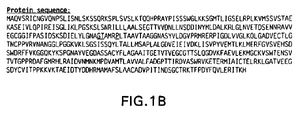
- the Arabidopsis thaliana EPSPS gene (see Figure 1A ) and corresponding EPSPS enzyme (see Figure 1B ) comprises a mutation at one or more amino acid residues selected from the group consisting of Leu 173 , Gly 177 , Thr 178 , Ala 179 , Met 180 , Arg 181 , Pro 182 , Ser 98 , Ser 225 and Leu 198 , or at an analogous amino acid residue in an EPSPS gene of another species, and the mutation results in one or more of the following amino acid substitutions in the EPSPS enzyme in comparison with the wild-type sequence:
- the amino acid residue to be changed is Leu within the contiguous sequence Leu-Tyr-Leu-Gly-Asn (SEQ ID NO:29) and is changed to Phe; or the amino acid residue to be changed is Gly within the contiguous sequence Asn-Ala-Gly-Thr-Ala (SEQ ID NO:30) and is changed to Ala or Ile; or the amino acid to be changed is Thr within the contiguous sequence Ala-Gly-Thr-Ala-Met (SEQ ID NO:31) and is changed to Ile, Val or Leu; or the amino acid to be changed is Ala within the contiguous sequence Gly-Thr-Ala-Met-Arg (SEQ ID NO:32) and is changed to Gly; or the amino acid to be changed is Met within the contiguous sequence Thr-Ala-Met-Arg-Pro (SEQ ID NO:33) and is changed to Cys; or the amino acid to be changed is Arg within the contiguous sequence Thr-Ala-Met-Arg-Pro (
- the mutation may result in the replacement of any amino acid at positions corresponding to 256, 284-288 and 353-356 with respect to the EPSPS protein depicted in Figure 1B (SEQ ID NO.2).
- the the EPSPS gene is mutated at amino acid position 177 in which Gly is replaced by Ala.
- the substitution of Thr at amino acid position 178 by Ile Alternatively a mutation at amino acid position 177 in which Gly is replaced by Ala, plus the additional substitution ofThr at amino acid position 178 by Ile.
- mutated EPSPS sequences comprise the substitution of Gly at position 177 by Ala, plus the substitution at position 178, in which Thr is replaced by Ile, plus the additional substitution of Pro at amino acid position 182 by Ser.
- the substitution ofThr at position 178 by Leu is included plus the mutation at amino acid position 182, in which Pro is replaced by Ser.
- a further embodiment includes, the substitution at amino acid position 177 in which Gly is replaced by Ala, plus the substitution of Thr at position 178 by Val.
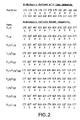
- the substitution at amino acid position 177 in which Gly is replaced by Ala, plus the replacement of Thr at amino acid position 178 by Leu see Figure 2 ).
- the foregoing mutations in the EPSPS gene were described using the Arabidopsis thaliana EPSPS gene (SEQ ID NO:1) and protein (SEQ ID NO:2).
- the present invention also encompasses mutant EPSPS genes of other species .
- the number of the amino acid residue to be changed in one species may be different in another species.
- the analogous position is readily identified by one of skill in the art by sequence homology.
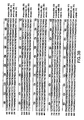
- Figure 3A-C shows the aligned nucleotide sequences
- Figure 4 shows the aligned amino acid sequences of four EPSPS genes of Arabidopsis thaliana, Zea mays, Petunia hybrida , and Brassica napus .
- the analogous positions in Zea mays are Leu 97 , Gly 101 , Thr 102 , Ala 103 , Met 104 , Arg 105 , Pro 106 , Ser 23 , Ser 179 and Leu 122 .
- the Zea mays EPSPS amino acid sequence is mutated at one or more of the following amino acid positions and results in one or more of the following substitutions:
- the amino acid residue to be changed is Leu within the contiguous sequence Leu-Phe-Leu-Gly-Asn (SEQ ID NO:39) and is changed to Phe; or the amino acid residue to be changed is Gly within the contiguous sequence Asn-Ala-Gly-Thr-Ala (SEQ ID NO:30) and is changed to Ala or Ile; or the amino acid to be changed is Thr within the contiguous sequence Ala-Gly-Thr-Ala-Met (SEQ ID NO:31) and is changed to Ile, Val or Leu; or the amino acid to be changed is Ala within the contiguous sequence Gly-Thr-Ala-Met-Arg (SEQ ID NO:32) and is changed to Gly; or the amino acid to be changed is Met within the contiguous sequence Thr-Ala-Met-Arg-Pro (SEQ ID NO:33) and is changed to Cys; or the amino acid to be changed is Arg within the contiguous sequence Ala-
- the analogous amino acid positions are Leu 169 , Gly 173 , Thr 174 , Ala 175 , Met 176 , Arg 177 , Pro 178 , Ser 94 , Ser 251 , and Leu 194 .
- the Brassica napus EPSPS amino acid sequence is mutated at one or more of the following amino acid positions and results in one or more of the following substitutions:
- the amino acid residue to be changed is Leu within the contiguous sequence Leu-Tyr-Leu-Gly-Asn (SEQ ID NO:29) and is changed to Phe; or the amino acid residue to be changed is Gly within the contiguous sequence Asn-Ala-Gly-Thr-Ala (SEQ ID NO:30) and is changed to Ala or Ile; or the amino acid to be changed is Thr within the contiguous sequence Ala-Gly-Thr-Ala-Met (SEQ ID NO:31) and is changed to Ile, Val or Leu; or the amino acid to be changed is Ala within the contiguous sequence Gly-Thr-Ala-Met-Arg (SEQ ID NO:32) and is changed to Gly; or the amino acid to be changed is Met within the contiguous sequence Thr-Ala-Met-Arg-Pro (SEQ ID NO:33) and is changed to Cys; or the amino acid to be changed is Arg within the contiguous sequence Ala
- Petunia hybrida the analogous positions are Leu 169 , Gly 173 , Thr 174 , Ala 175 , Met 176 , Arg 177 , Pro 178 Ser 94 , Ser 251 and Leu 194 .
- the Petunia hybrida EPSPS amino acid sequence is mutated at one or more of the following amino acid positions and results in one or more of the following substitutions:
- the amino acid residue to be changed is Leu within the contiguous sequence Leu-Phe-Leu-Gly-Asn (SEQ ID NO:39) and is changed to Phe; or the amino acid residue to be changed is Gly within the contiguous sequence Asn-Ala-Gly-Thr-Ala (SEQ ID NO:30) and is changed to Ala or Ile; or the amino acid to be changed is Thr within the contiguous sequence Ala-Gly-Thr-Ala-Met (SEQ ID NO:31) and is changed to Ile, Val or Leu; or the amino acid to be changed is Ala within the contiguous sequence Gly-Thr-Ala-Met-Arg (SEQ ID NO:32) and is changed to Gly; or the amino acid to be changed is Met within the contiguous sequence Thr-Ala-Met-Arg-Pro (SEQ ID NO:33) and is changed to Cys; or the amino acid to be changed is Arg within the contiguous sequence Al
- Any commonly known method can be used in the methods of the present invention to transform a plant cell with a recombinagenic oligonucleobases. Illustrative methods are listed below.
- microcarriers microspheres
- U States Patent Nos. 4,945,050 ; 5,100,792 and 5,204,253 describe general techniques for selecting microcarriers and devices for projecting them.
- microcarriers in the methods of the present invention are described in International Publication WO 99/07865 .
- ice cold microcarriers 60 mg/ml
- mixed duplex oligonucleotide 60 mg/ml
- CaCl 2 2.5 M
- spermidine 0.1 M
- the mixture gently agitated, e.g., by vortexing, for 10 minutes and let stand at room temperature for 10 minutes, whereupon the microcarriers are diluted in 5 volumes of ethanol, centrifuged and resuspended in 100% ethanol.
- Recombinagenic oligonucleobases can also be introduced into plant cells for the practice of the present invention using microfibers to penetrate the cell wall and cell membrane.
- U.S. Patent No. 5,302,523 to Coffee et al. describes the use of 30 x 0.5 ⁇ m and 10 x 0.3 ⁇ m silicon carbide fibers to facilitate transformation of suspension maize cultures of Black Mexican Sweet. Any mechanical technique that can be used to introduce DNA for transformation of a plant cell using microfibers can be used to deliver recombinagenic oligonucleobases for transmutation.
- An illustrative technique for microfiber delivery of a recombinagenic oligonucleobase is as follows: Sterile microfibers (2 ⁇ g) are suspended in 150 ⁇ l of plant culture medium containing about 10 ⁇ g of a mixed duplex oligonucleotide. A suspension culture is allowed to settle and equal volumes of packed cells and the sterile fiber/nucleotide suspension are vortexed for 10 minutes and plated. Selective media are applied immediately or with a delay of up to about 120 hours as is appropriate for the particular trait.
- the recombinagenic oligonucleobases can be delivered to the plant cell by electroporation of a protoplast derived from a plant part.
- the protoplasts are formed by enzymatic treatment of a plant part, particularly a leaf, according to techniques well known to those skilled in the art. See, e.g., Gallois et al., 1996, in Methods in Molecular Biology 55:89-107, Humana Press, Totowa, NJ ; Kipp et al., 1999, in Methods in Molecular Biology 133:213-221, Humana Press, Totowa, NJ .
- the protoplasts need not be cultured in growth media prior to electroporation.
- Illustrative conditions for electroporation are 3 x 10 5 protoplasts in a total volume of 0.3 ml with a concentration of recombinagenic oligonucleobase of between 0.6 - 4 ⁇ g/mL.
- the recombinagenic oligonucleobase can be delivered to the plant cell by whiskers or microinjection of the plant cell.
- the so called whiskers technique is performed essentially as described in Frame et al., 1994, Plant J. 6:941-948 .
- the recombinagenic oligonucleobase is added to the whiskers and used to transform the plant cells.
- the recombinagenic oligonucleobase may be co-incubated with plasmids comprising sequences encoding proteins capable of forming recombinase complexes in plant cells such that recombination is catalyzed between the oligonucleotide and the target sequence in the EPSPS gene.
- Plants or plant cells can be tested for resistance or tolerance to a herbicide using commonly known methods in the art, e.g., by growing the plant or plant cell in the presence of a herbicide and measuring the rate of growth as compared to the growth rate in the absence of the herbicide.
- a 1.3 kb DNA fragment was amplified by PCR from an Arabidopsis cDNA library using the primers AtEXPEXPM1 and AtEXPEXP2CM-2.
- the two primers were designed to amplify the cDNA from the mature peptide to the termination codon.
- the 5' primer AtEXPEXPM1 contains an XbaI site (underlined) and the 3' primer AtEXPEXP2CM-2 contains a BgIII site (underlined), sites which will be of use for cloning of the fragment into the expression vector.
- the PCR band was excised from the agarose gel and purified (GeneClean, Biol). Its sequence was then confirmed as the mature peptide sequence of Arabidopsis thaliana EPSPS gene.
- the EPSPS coding region of the AroE Bacillus subtilis gene was obtained by PCR using the following primers:
- PACLacIMH6RecA contained the LacI region of Pet21 at positions 1440 to 3176, the MH6 RecA at positions 3809 to 5188, chloramphenicol resistance gene at positions 5445-218 (5446 to 5885 and 1 to 218), and the p15A origin of replication at positions 581 1 to 1424.
- the coding region of RecA gene was cloned from E. coli in-frame with the start codon and 6 histidine linker (MH6) behind the LacZ promoter of pUC19.
- the Arabidopsis 1.3 kb PCR fragment was digested with XbaI and BamHI (compatible with BgIII) and cloned into the plasmid pACYCLacIMH6EPSPS, in place of the Bacillus gene.
- the clones obtained were then sequenced and confirmed positive.
- One of the confirmed clones (pAtEPS-12) was selected and the junctions between the cDNA and the cloning plasmid were also confirmed to be identical to the expected sequences.
- PCR primers were designed with one, two or three mutations. The PCR reactions were performed using a regular flanking primer (5'ATEPS-198: 5'- GAAAGCGTCGGAGATTGTAC-3' (SEQ ID NO:44)) and one of the mutation-carrying primers (see Figure 5 ).
- the 353bp PCR fragments obtained were purified (Qiagen PCR Purification kit) and their sequence confirmed. The fragments were then digested with PstI (underlined in the primer sequences) and BamHI and ligated to the pAtEPS-12 vector, which had itself been previously digested with PstI and BamHI.JM 109 (Promega) competent cells were used for the transformation and plated onto chloramphenicol-containing LB plates. Clones from each mutagenesis experiment were then isolated and their sequence confirmed.
- Electrocompetent cells of SA4247, a LacZ - Salmonella typhi strain were prepared according to well known procedures (see Current Protocols in Molecular Biology, (Wiley and Sons, Inc. )). 30 ⁇ l of SA4247 competent cells were electroporated with 20 ng of each plasmid DNA encoding Arabidopsis wild-type and mutant EPSPS proteins, Bacillus wild-type EPSPS, along with a mock transfection as a control. The settings for electroporation were 25 ⁇ F, 2.5KV and 200 ohms. After electroporation, the cells were transferred into 15 mls culture tube and supplemented with 970 ⁇ l of SOC medium.
- the cultures were incubated for 1 1 ⁇ 2 hours at 37°C at 225 rpm. 50 ⁇ l of each culture were plated onto LB plates containing 17 ⁇ g/ml chloramphenicol (in duplicates) and incubated overnight at 37°C. On the following day, 5 colonies of each plate were picked and transferred onto M9 plates and incubated overnight at 37°C.
- One milliliter of overnight culture of each of the bacterial clones is inoculated into 100 ml of liquid LB medium containing chloramphenicol.
- the cells were allowed to grow at 37°C until they reached an OD of 0.5-0.7 (approximately 3 1 ⁇ 2 hours).
- IPTG was then added to the cultures to a concentration of 1.0 mM.
- the cells were grown five additional hours. They were then pelleted at 4000 rpm for 20 minutes at 4°C.
- the isolation and the purification of the His-tagged proteins were performed following the Qiagen Ni-NTA Protein Purification System. Cell lysates and eluates were run in duplicates on 12.5% acrylamide gels. One of the gels was silver-stained for immediate visualization, the second gel was transferred onto Millipore Immobilon-P membrane, and blocked overnight in 5% milk in TBS-T. The membrane was then exposed to Anti-His primary antibody solution (Amersham Pharmacia biotech, cat# 37-4710), followed by exposure to Anti-Mouse-IgG secondary antibody solution. (NIF825, from Amersham Pharmacia biotech ECLWestern blotting anlysis system, cat# RPN2108). Washes and detection reactions were performed according to the manufacturer instructions. Autoradiograms were developed after 5 minutes exposure.
- Cells containing a mutation in the EPSPS gene produced cells that were both resistant to the herbicide glyphosate and that had a substantially similar growth rate in the absence or presence of glyphosate, as compared to the wild-type cells, irrespective of the presence of glyphosate (see Figure 6 ).
Landscapes
- Life Sciences & Earth Sciences (AREA)
- Health & Medical Sciences (AREA)
- Genetics & Genomics (AREA)
- Engineering & Computer Science (AREA)
- Chemical & Material Sciences (AREA)
- Biomedical Technology (AREA)
- Zoology (AREA)
- Wood Science & Technology (AREA)
- Organic Chemistry (AREA)
- Biotechnology (AREA)
- Bioinformatics & Cheminformatics (AREA)
- Molecular Biology (AREA)
- General Engineering & Computer Science (AREA)
- General Health & Medical Sciences (AREA)
- Microbiology (AREA)
- Biochemistry (AREA)
- Environmental Sciences (AREA)
- Developmental Biology & Embryology (AREA)
- Botany (AREA)
- Cell Biology (AREA)
- Physics & Mathematics (AREA)
- Biophysics (AREA)
- Plant Pathology (AREA)
- Medicinal Chemistry (AREA)
- Physiology (AREA)
- Breeding Of Plants And Reproduction By Means Of Culturing (AREA)
- Micro-Organisms Or Cultivation Processes Thereof (AREA)
- Enzymes And Modification Thereof (AREA)
- Peptides Or Proteins (AREA)
Claims (16)
- Verfahren zum Produzieren einer nicht-transgenen Pflanze, die resistent gegen oder tolerant für ein Herbizid der Phosphonomethylglycin-Familie ist, umfassend:(a) das Einschleusen einer rekombinagenen Oligonukleobase mit einer zielgerichteten Mutation im EPSPS-Gen in Pflanzenzellen, um Pflanzenzellen mit einem mutanten EPSPS-Gen zu produzieren, welches ein EPSPS-Protein exprimiert, das an einer oder mehreren Aminosäurepositionen mutiert ist, wobei die Positionen ausgewählt sind aus der Gruppe, bestehend aus Leu173, Ala179, Met180, Arg181, Ser98, Ser255 und Leu198 im Arabidopsis-EPSPS-Protein, oder einem analogen Aminosäurerest in einem EPSPS-Gen einer anderen Spezies;(b) das Identifizieren einer Pflanzenzelle, die im Vergleich zu einer entsprechenden Wildtyp-Pflanzenzelle in der Gegenwart von Glyphosat ein normales Wachstum hat; und(c) das Regenerieren aus der Pflanzenzelle einer nicht-transgenen herbizidresistenten oder herbizidtoleranten Pflanze mit dem mutierten EPSPS-Gen;wobei die nicht-transgene, herbizidresistente oder herbizidtolerante Pflanze im Vergleich zu entsprechenden Wildtyp-Pflanzen ein normales Wachstum und eine normale Entwicklung aufweist, und wobei das mutierte EPSPS-Enzym im Vergleich zum Wildtyp-Enzym dieselbe katalytische Aktivität hat.
- Verfahren zum Produzieren einer nicht-transgenen Pflanze, die resistent gegen oder tolerant für ein Herbizid der Phosphonomethylglycin-Familie ist, umfassend:(a) das Einschleusen einer rekombinagenen Oligonukleobase mit einer zielgerichteten Mutation im EPSPS-Gen in Pflanzenzellen, um Pflanzenzellen mit einem mutanten EPSPS-Gen zu produzieren, welches ein EPSPS-Protein exprimiert, das an einer oder mehreren Aminosäurepositionen mutiert ist, wobei die Positionen ausgewählt sind aus der Gruppe, bestehend aus Leu173, Ala179, Met180, Arg181, Ser98, Ser255 und Leu198 im Arabidopsis-EPSPS-Protein, oder einem analogen Aminosäurerest in einem EPSPS-Gen einer anderen Spezies;(b) das Identifizieren einer Pflanzenzelle mit einem mutierten EPSPS-Protein, das im Vergleich zu einem entsprechenden Wildtyp-EPSPS-Protein in der Gegenwart von Glyphosat dieselbe katalytische Aktivität hat; und(c) das Regenerieren aus der Pflanzenzelle einer nicht-transgenen herbizidresistenten oder herbizidtoleranten Pflanze mit dem mutierten EPSPS-Gen;wobei die nicht-transgene, herbizidresistente oder herbizidtolerante Pflanze im Vergleich zu entsprechenden Wildtyp-Pflanzen ein normales Wachstum und eine normale Entwicklung aufweist, und wobei das mutierte EPSPS-Enzym im Vergleich zum Wildtyp-Enzym dieselbe katalytische Aktivität hat.
- Verfahren nach Anspruch 1 oder 2, bei dem die rekombinagene Oligonukleobase ein gemischtes Doppelstrang-Nukleotid oder ein einzelsträngiger Oligodesoxynukleotid-Mutationsvektor (SSMOV) ist.
- Verfahren nach Anspruch 3, bei dem das gemischte Doppelstrang-Nukleotid einen ersten homologen Bereich enthält, welcher eine Sequenz aufweist, die identisch zu der Sequenz von mindestens 6 Basenpaaren des ersten Fragments des Ziel-EPSPS-Gens ist, und einen zweiten homologen Bereich, welcher eine Sequenz aufweist, die identisch zu der Sequenz von mindestens 6 Basenpaaren eines zweiten Fragments des Ziel-EPSPS-Gens ist, und einen intervenierenden Bereich, welcher mindestens eine Nukleobase enthält, die heterolog zum Ziel-EPSPS-Gen ist, wobei der intervenierende Bereich den ersten und den zweiten homologen Bereich verbindet.
- Verfahren nach Anspruch 1 oder 2, bei dem die rekombinagene Oligonukleobase durch Elektroporation eingeschleust wird.
- Verfahren nach Anspruch 1, bei dem die Aminosäurepositionen ausgewählt sind aus der Gruppe, bestehend aus Leu97, Ala103, Met104, Arg105, Ser23, Ser179 und Leu122 im EPSPS-Gen von Zea mays.
- Verfahren nach Anspruch 1, bei dem die Aminosäurepositionen ausgewählt sind aus der Gruppe, bestehend aus Leu169, Ala175, Met176, Arg177, Ser94, Ser251 und Leu194 im EPSPS-Gen von Brassica napus.
- Verfahren nach Anspruch 1, bei dem die Aminosäurepositionen ausgewählt sind aus der Gruppe, bestehend aus Leu169, Ala175, Met176, Arg177, Ser94, Ser251 und Leu194 im EPSPS-Gen von Petunia hybrida.
- Verfahren nach Anspruch 1 oder 2, bei dem die Pflanzenzellen ausgewählt sind aus der Gruppe, bestehend aus Mais, Weizen, Reis, Gerste, Soja, Baumwolle, Zuckerrübe, Ölraps, Canola, Leinsaat, Sonnenblume, Kartoffel, Tabak, Tomate, Alfalfa, Pappel, Kiefer, Eukalyptus, Apfel, Lattich, Erbsen, Linsen, Weintraube, Rasengräsern und Brassica sp.
- Verfahren nach Anspruch 2, bei dem die Aminosäurepositionen ausgewählt sind aus der Gruppe, bestehend aus Leu97, Ala103, Met104, Arg105, Ser23, Ser179 und Leu122 im EPSPS-Gen von Zea mays.
- Verfahren nach Anspruch 2, bei dem die Aminosäurepositionen ausgewählt sind aus der Gruppe, bestehend aus Leu169, Ala175, Met176, Arg177, Ser94, Ser251 und Leu194 im EPSPS-Gen von Brassica napus.
- Verfahren nach Anspruch 2, bei dem die Aminosäurepositionen ausgewählt sind aus der Gruppe, bestehend aus Leu169, Ala175, Met176, Arg177, Ser94, Ser251 und Leu194 im EPSPS-Gen von Petunia hybrida.
- Verfahren zum Produzieren einer nicht-transgenen Pflanze, die resistent gegen oder tolerant für ein Herbizid der Phosphonomethylglycin-Familie ist, umfassend:(a) das Einschleusen einer rekombinagenen Oligonukleobase mit einer zielgerichteten Mutation im EPSPS-Gen in Pflanzenzellen, um Pflanzenzellen mit einem mutanten EPSPS-Gen zu produzieren, welches ein EPSPS-Protein exprimiert, das an zwei Aminosäurepositionen mutiert ist, wobei die Positionen ausgewählt sind aus der Gruppe, bestehend aus Thr178 und Pro182 im Arabidopsis-EPSPS-Protein, oder einem analogen Aminosäurerest in einem EPSPS-Gen einer anderen Spezies, wobei Thr178 durch Val oder Leu ersetzt ist und Pro182 durch Ser ersetzt ist;(b) das Identifizieren einer Pflanzenzelle, die im Vergleich zu einer entsprechenden Wildtyp-Pflanzenzelle in der Gegenwart von Glyphosat ein normales Wachstum hat; und(c) das Regenerieren aus der Pflanzenzelle einer nicht-transgenen herbizidresistenten oder herbizidtoleranten Pflanze mit dem mutierten EPSPS-Gen;wobei die nicht-transgene, herbizidresistente oder herbizidtolerante Pflanze im Vergleich zu entsprechenden Wildtyp-Pflanzen ein normales Wachstum und eine normale Entwicklung aufweist, und wobei das mutierte EPSPS-Enzym im Vergleich zum Wildtyp-Enzym dieselbe katalytische Aktivität hat.
- Verfahren nach Anspruch 13, bei dem die Aminosäurepositionen Thr102 und Pro106 im EPSPS-Gen von Zea mays sind.
- Verfahren nach Anspruch 13, bei dem die Aminosäurepositionen Thr174 und Pro178 im EPSPS-Gen von Brassica napus sind.
- Verfahren nach Anspruch 13, bei dem die Aminosäurepositionen Thr174 und Pro178 im EPSPS-Gen von Petunia hybrida sind.
Priority Applications (4)
| Application Number | Priority Date | Filing Date | Title |
|---|---|---|---|
| EP10183984A EP2294914A3 (de) | 1999-10-07 | 2000-10-10 | Nichttransgene, herbizidresistente Pflanzen |
| EP09172695A EP2135504B1 (de) | 1999-10-07 | 2000-10-10 | Nichttransgene, herbizidresistente Pflanzen |
| DK09172695.0T DK2135504T3 (da) | 1999-10-07 | 2000-10-10 | Ikke-transgene herbicidresistente planter |
| EP12197905.8A EP2617830A3 (de) | 1999-10-07 | 2000-10-10 | Nichttransgene, herbizidresistente Pflanzen |
Applications Claiming Priority (5)
| Application Number | Priority Date | Filing Date | Title |
|---|---|---|---|
| US15802799P | 1999-10-07 | 1999-10-07 | |
| US158027P | 1999-10-07 | ||
| US17356499P | 1999-12-30 | 1999-12-30 | |
| US173564P | 1999-12-30 | ||
| PCT/US2000/027941 WO2001024615A1 (en) | 1999-10-07 | 2000-10-10 | Non-transgenic herbicide resistant plants |
Related Child Applications (4)
| Application Number | Title | Priority Date | Filing Date |
|---|---|---|---|
| EP09172695A Division-Into EP2135504B1 (de) | 1999-10-07 | 2000-10-10 | Nichttransgene, herbizidresistente Pflanzen |
| EP09172695A Division EP2135504B1 (de) | 1999-10-07 | 2000-10-10 | Nichttransgene, herbizidresistente Pflanzen |
| EP10183984A Division-Into EP2294914A3 (de) | 1999-10-07 | 2000-10-10 | Nichttransgene, herbizidresistente Pflanzen |
| EP12197905.8A Division-Into EP2617830A3 (de) | 1999-10-07 | 2000-10-10 | Nichttransgene, herbizidresistente Pflanzen |
Publications (4)
| Publication Number | Publication Date |
|---|---|
| EP1223799A1 EP1223799A1 (de) | 2002-07-24 |
| EP1223799A4 EP1223799A4 (de) | 2004-11-17 |
| EP1223799B1 EP1223799B1 (de) | 2009-12-02 |
| EP1223799B2 true EP1223799B2 (de) | 2015-12-23 |
Family
ID=26854680
Family Applications (4)
| Application Number | Title | Priority Date | Filing Date |
|---|---|---|---|
| EP00970716.7A Expired - Lifetime EP1223799B2 (de) | 1999-10-07 | 2000-10-10 | Nicht-transgene, herbizidresistente pflanzen |
| EP10183984A Withdrawn EP2294914A3 (de) | 1999-10-07 | 2000-10-10 | Nichttransgene, herbizidresistente Pflanzen |
| EP09172695A Expired - Lifetime EP2135504B1 (de) | 1999-10-07 | 2000-10-10 | Nichttransgene, herbizidresistente Pflanzen |
| EP12197905.8A Withdrawn EP2617830A3 (de) | 1999-10-07 | 2000-10-10 | Nichttransgene, herbizidresistente Pflanzen |
Family Applications After (3)
| Application Number | Title | Priority Date | Filing Date |
|---|---|---|---|
| EP10183984A Withdrawn EP2294914A3 (de) | 1999-10-07 | 2000-10-10 | Nichttransgene, herbizidresistente Pflanzen |
| EP09172695A Expired - Lifetime EP2135504B1 (de) | 1999-10-07 | 2000-10-10 | Nichttransgene, herbizidresistente Pflanzen |
| EP12197905.8A Withdrawn EP2617830A3 (de) | 1999-10-07 | 2000-10-10 | Nichttransgene, herbizidresistente Pflanzen |
Country Status (12)
| Country | Link |
|---|---|
| US (4) | US6870075B1 (de) |
| EP (4) | EP1223799B2 (de) |
| JP (3) | JP2003513618A (de) |
| AR (1) | AR025996A1 (de) |
| AT (1) | ATE450141T2 (de) |
| AU (1) | AU784889B2 (de) |
| CA (1) | CA2386834A1 (de) |
| DE (1) | DE60043449D1 (de) |
| DK (2) | DK1223799T4 (de) |
| ES (2) | ES2401721T3 (de) |
| PT (2) | PT1223799E (de) |
| WO (1) | WO2001024615A1 (de) |
Families Citing this family (225)
| Publication number | Priority date | Publication date | Assignee | Title |
|---|---|---|---|---|
| AR025996A1 (es) | 1999-10-07 | 2002-12-26 | Valigen Us Inc | Plantas no transgenicas resistentes a los herbicidas. |
| US6936467B2 (en) * | 2000-03-27 | 2005-08-30 | University Of Delaware | Targeted chromosomal genomic alterations with modified single stranded oligonucleotides |
| BR0114322A (pt) * | 2000-09-29 | 2004-06-15 | Syngenta Ltd | Enzima de epsps resistente a glifosato, polinucleotìdeo isolado, vetor, material de plantas, plantas completas férteis, morfologicamente normais, soja, canola, brassica, algodão, beterraba sacarina, girassol, ervilhas, batatas e beterrabas de forragem, métodos para controlar seletivamente ervas daninhas em um campo, e para produzir plantas que sejam substancialmente tolerantes ou substancialmente resistentes a herbicida de glifosato, uso do polinucleotìdeo, métodos para selecionar material biológico transformado de modo a expressar um gene de interesse, e para regenerar uma planta fértil transformada para conter dna estranho, e, kit diagnóstico |
| EP1446503A2 (de) | 2001-09-27 | 2004-08-18 | University Of Delaware | Zusammensetzung und verfahren zur verbesserung der oligonukleotidgesteuerten veränderung von nukleinsäuresequenzen |
| IL163875A0 (en) | 2002-03-07 | 2005-12-18 | Univ Delaware | Methods, compositions, and kits for enhancing oli gonucleotide mediated nucleic acid sequence alteration using compositions comprising a histone de |
| CN1922323A (zh) * | 2002-12-26 | 2007-02-28 | 先正达合作有限公司 | 应激相关多肽及其用途 |
| EP1594961B1 (de) | 2003-02-18 | 2013-12-25 | Monsanto Technology LLC | Glyphosat-resistente klasse i 5-enolpyruvylshikimat-3-phosphat synthase (epsps) |
| AU2005208712A1 (en) * | 2004-01-21 | 2005-08-11 | Omega Genetics, Llc | Glyphosate tolerant plants and methods of making and using the same |
| US7842856B2 (en) | 2005-08-25 | 2010-11-30 | The Board Of Trustees Of The University Of Illinois | Herbicide resistance gene, compositions and methods |
| NZ613267A (en) | 2006-01-12 | 2015-02-27 | Incima Ipco B V | Epsps mutants |
| CN101437843B (zh) * | 2006-01-23 | 2013-08-07 | 密歇根州立大学评议会 | 抗草甘膦植物的育种方法及组合物 |
| CL2007003743A1 (es) | 2006-12-22 | 2008-07-11 | Bayer Cropscience Ag | Composicion que comprende fenamidona y un compuesto insecticida; y metodo para controlar de forma curativa o preventiva hongos fitopatogenos de cultivos e insectos. |
| CL2007003744A1 (es) | 2006-12-22 | 2008-07-11 | Bayer Cropscience Ag | Composicion que comprende un derivado 2-piridilmetilbenzamida y un compuesto insecticida; y metodo para controlar de forma curativa o preventiva hongos fitopatogenos de cultivos e insectos. |
| EP1969934A1 (de) | 2007-03-12 | 2008-09-17 | Bayer CropScience AG | 4-Cycloalkyl-oder 4-arylsubstituierte Phenoxyphenylamidine und deren Verwendung als Fungizide |
| JP2010520900A (ja) | 2007-03-12 | 2010-06-17 | バイエル・クロツプサイエンス・アクチエンゲゼルシヤフト | フェノキシ置換されたフェニルアミジン誘導体及び殺真菌剤としてのその使用 |
| BRPI0808798A2 (pt) | 2007-03-12 | 2014-10-07 | Bayer Cropscience Ag | Fenoxifenilamidinas 3,5-dissubstituídas e seu uso como fungicidas |
| JP2010520899A (ja) | 2007-03-12 | 2010-06-17 | バイエル・クロツプサイエンス・アクチエンゲゼルシヤフト | ジハロフェノキシフェニルアミジン及び殺真菌剤としてのその使用 |
| EP1969929A1 (de) | 2007-03-12 | 2008-09-17 | Bayer CropScience AG | Substituierte Phenylamidine und deren Verwendung als Fungizide |
| EP1969931A1 (de) * | 2007-03-12 | 2008-09-17 | Bayer CropScience Aktiengesellschaft | Fluoalkylphenylamidine und deren Verwendung als Fungizide |
| WO2008128639A1 (de) | 2007-04-19 | 2008-10-30 | Bayer Cropscience Aktiengesellschaft | Thiadiazolyloxyphenylamidine und deren verwendung als fungizide |
| DE102007045922A1 (de) | 2007-09-26 | 2009-04-02 | Bayer Cropscience Ag | Wirkstoffkombinationen mit insektiziden und akariziden Eigenschaften |
| DE102007045955A1 (de) | 2007-09-26 | 2009-04-09 | Bayer Cropscience Ag | Wirkstoffkombinationen mit insektiziden und akariziden Eigenschaften |
| DE102007045920B4 (de) | 2007-09-26 | 2018-07-05 | Bayer Intellectual Property Gmbh | Synergistische Wirkstoffkombinationen |
| DE102007045956A1 (de) | 2007-09-26 | 2009-04-09 | Bayer Cropscience Ag | Wirkstoffkombination mit insektiziden und akariziden Eigenschaften |
| DE102007045957A1 (de) | 2007-09-26 | 2009-04-09 | Bayer Cropscience Ag | Wirkstoffkombinationen mit insektiziden und akarziden Eigenschaften |
| DE102007045919B4 (de) | 2007-09-26 | 2018-07-05 | Bayer Intellectual Property Gmbh | Wirkstoffkombinationen mit insektiziden und akariziden Eigenschaften |
| DE102007045953B4 (de) | 2007-09-26 | 2018-07-05 | Bayer Intellectual Property Gmbh | Wirkstoffkombinationen mit insektiziden und akariziden Eigenschaften |
| EP2090168A1 (de) | 2008-02-12 | 2009-08-19 | Bayer CropScience AG | Methode zur Verbesserung des Pflanzenwachstums |
| LT2700722T (lt) * | 2007-10-05 | 2019-09-25 | Cibus Europe B.V. | Mutuoti brassica acetohiodroksirūgšties sintazės genai |
| EP2072506A1 (de) | 2007-12-21 | 2009-06-24 | Bayer CropScience AG | Thiazolyloxyphenylamidine oder Thiadiazolyloxyphenylamidine und deren Verwendung als Fungizide |
| EP2168434A1 (de) | 2008-08-02 | 2010-03-31 | Bayer CropScience AG | Verwendung von Azolen zur Steigerung der Resistenz von Pflanzen oder Pflanzenteilen gegenüber abiotischem Stress |
| CA2733134A1 (en) | 2008-08-08 | 2010-02-11 | Bayer Bioscience N.V. | Methods for plant fiber characterization and identification |
| MX2011001601A (es) | 2008-08-14 | 2011-03-29 | Bayer Cropscience Ag | 4-fenil-1h-pirazoles insecticidas. |
| DE102008041695A1 (de) | 2008-08-29 | 2010-03-04 | Bayer Cropscience Ag | Methoden zur Verbesserung des Pflanzenwachstums |
| AP2011005671A0 (en) | 2008-09-26 | 2011-04-30 | Basf Agrochemical Products Bv | Herbicide-resistant AHAS-mutants and methods of use. |
| EP2201838A1 (de) | 2008-12-05 | 2010-06-30 | Bayer CropScience AG | Wirkstoff-Nützlings-Kombinationen mit insektiziden und akariziden Eigenschaften |
| EP2198709A1 (de) | 2008-12-19 | 2010-06-23 | Bayer CropScience AG | Verfahren zur Bekämpfung resistenter tierischer Schädlinge |
| EP2204094A1 (de) | 2008-12-29 | 2010-07-07 | Bayer CropScience AG | Verfahren zur verbesserten Verwendung des Herstellungspotentials von transgenen Pflanzen |
| CN102333445B (zh) | 2008-12-29 | 2014-09-03 | 拜尔农作物科学股份公司 | 改善利用转基因植物生产潜力的方法 |
| EP2223602A1 (de) | 2009-02-23 | 2010-09-01 | Bayer CropScience AG | Verfahren zur verbesserten Nutzung des Produktionspotentials genetisch modifizierter Pflanzen |
| EP2039771A2 (de) | 2009-01-06 | 2009-03-25 | Bayer CropScience AG | Verfahren zur verbesserten Nutzung des Produktionspotentials transgener Pflanzen |
| EP2039770A2 (de) | 2009-01-06 | 2009-03-25 | Bayer CropScience AG | Verfahren zur verbesserten Nutzung des Produktionspotentials transgener Pflanzen |
| EP2039772A2 (de) | 2009-01-06 | 2009-03-25 | Bayer CropScience AG | Verfahren zur verbesserten Nutzung des Produktionspotentials transgener Pflanzen |
| EP2387309A2 (de) | 2009-01-19 | 2011-11-23 | Bayer CropScience AG | Cyclische dione und ihre verwendung als insektizide, akarizide und/oder fungizide |
| EP2227951A1 (de) | 2009-01-23 | 2010-09-15 | Bayer CropScience AG | Verwendung von Enaminocarbonylverbindungen zur Bekämpfung von durch Insekten übertragenen Viren |
| PL2391608T3 (pl) | 2009-01-28 | 2013-08-30 | Bayer Ip Gmbh | Pochodne N-cykloalkilo-N-bicyklometyleno-karboksyamidów jako środki grzybobójcze |
| AR075126A1 (es) | 2009-01-29 | 2011-03-09 | Bayer Cropscience Ag | Metodo para el mejor uso del potencial de produccion de plantas transgenicas |
| EP2218717A1 (de) | 2009-02-17 | 2010-08-18 | Bayer CropScience AG | Fungizide N-((HET)Arylethyl)Thiocarboxamid-Derivative |
| WO2010094666A2 (en) | 2009-02-17 | 2010-08-26 | Bayer Cropscience Ag | Fungicidal n-(phenylcycloalkyl)carboxamide, n-(benzylcycloalkyl)carboxamide and thiocarboxamide derivatives |
| TW201031331A (en) | 2009-02-19 | 2010-09-01 | Bayer Cropscience Ag | Pesticide composition comprising a tetrazolyloxime derivative and a fungicide or an insecticide active substance |
| DE102009001469A1 (de) | 2009-03-11 | 2009-09-24 | Bayer Cropscience Ag | Verfahren zur verbesserten Nutzung des Produktionspotentials transgener Pflanzen |
| DE102009001681A1 (de) | 2009-03-20 | 2010-09-23 | Bayer Cropscience Ag | Verfahren zur verbesserten Nutzung des Produktionspotentials transgener Pflanzen |
| DE102009001732A1 (de) | 2009-03-23 | 2010-09-30 | Bayer Cropscience Ag | Verfahren zur verbesserten Nutzung des Produktionspotentials transgener Pflanzen |
| DE102009001730A1 (de) | 2009-03-23 | 2010-09-30 | Bayer Cropscience Ag | Verfahren zur verbesserten Nutzung des Produktionspotentials transgener Pflanzen |
| DE102009001728A1 (de) | 2009-03-23 | 2010-09-30 | Bayer Cropscience Ag | Verfahren zur verbesserten Nutzung des Produktionspotentials transgener Pflanzen |
| EP2232995A1 (de) | 2009-03-25 | 2010-09-29 | Bayer CropScience AG | Verfahren zur verbesserten Nutzung des Produktionspotentials transgener Pflanzen |
| MA33140B1 (fr) | 2009-03-25 | 2012-03-01 | Bayer Cropscience Ag | Combinaisons d'agents actifs ayant des proprietes insecticides et acaricides |
| EP2410849A1 (de) | 2009-03-25 | 2012-02-01 | Bayer CropScience AG | Wirkstoffkombinationen mit insektiziden und akariziden eigenschaften |
| WO2010108504A1 (de) | 2009-03-25 | 2010-09-30 | Bayer Cropscience Ag | Wirkstoffkombinationen mit insektiziden und akariziden eigenschaften |
| EP2410850A2 (de) | 2009-03-25 | 2012-02-01 | Bayer Cropscience AG | Synergistische wirkstoffkombinationen |
| EP2410848A1 (de) | 2009-03-25 | 2012-02-01 | Bayer CropScience AG | Wirkstoffkombinationen mit insektiziden und akariziden eigenschaften |
| EP2239331A1 (de) | 2009-04-07 | 2010-10-13 | Bayer CropScience AG | Verfahren zur verbesserten Verwendung des Herstellungspotentials von transgenen Pflanzen |
| US8835657B2 (en) | 2009-05-06 | 2014-09-16 | Bayer Cropscience Ag | Cyclopentanedione compounds and their use as insecticides, acaricides and/or fungicides |
| EP2251331A1 (de) | 2009-05-15 | 2010-11-17 | Bayer CropScience AG | Fungizide Pyrazolcarboxamid-Derivate |
| AR076839A1 (es) | 2009-05-15 | 2011-07-13 | Bayer Cropscience Ag | Derivados fungicidas de pirazol carboxamidas |
| EP2255626A1 (de) | 2009-05-27 | 2010-12-01 | Bayer CropScience AG | Verwendung von Succinat Dehydrogenase Inhibitoren zur Steigerung der Resistenz von Pflanzen oder Pflanzenteilen gegenüber abiotischem Stress |
| WO2010139410A2 (de) | 2009-06-02 | 2010-12-09 | Bayer Cropscience Ag | Verwendung von succinat dehydrogenase inhibitoren zur kontrolle von sclerotinia ssp |
| BR112012001080A2 (pt) | 2009-07-16 | 2015-09-01 | Bayer Cropscience Ag | Combinações de substâncias ativas sinérgicas contendo feniltriazóis |
| WO2011015524A2 (en) | 2009-08-03 | 2011-02-10 | Bayer Cropscience Ag | Fungicide heterocycles derivatives |
| US11096345B2 (en) | 2009-09-01 | 2021-08-24 | Basf Se | Method for treating post-emergent rice |
| EP2292094A1 (de) | 2009-09-02 | 2011-03-09 | Bayer CropScience AG | Wirkstoffkombinationen |
| EP2343280A1 (de) | 2009-12-10 | 2011-07-13 | Bayer CropScience AG | Fungizid-Chinolinderivate |
| EP2813572B1 (de) * | 2009-12-21 | 2016-04-27 | Keygene N.V. | Verbesserte Verfahren zur Transfektion von Protoplasten |
| MX2012007540A (es) | 2009-12-28 | 2012-07-23 | Bayer Cropscience Ag | Derivados de hidroximoil-tetrazol fungicidas. |
| MX336392B (es) | 2009-12-28 | 2016-01-18 | Bayer Cropscience Ag | Derivados de hidroximoil-heterociclos fungicidas. |
| CN102724879B (zh) | 2009-12-28 | 2015-10-21 | 拜尔农科股份公司 | 杀真菌剂肟基-四唑衍生物 |
| EP2525658B1 (de) | 2010-01-22 | 2017-03-01 | Bayer Intellectual Property GmbH | Akarizide und/oder insektizide wirkstoffkombinationen |
| US20110218103A1 (en) | 2010-03-04 | 2011-09-08 | Bayer Cropscience Ag | Fluoroalkyl-substituted 2-amidobenzimidazoles |
| AR080684A1 (es) | 2010-03-18 | 2012-05-02 | Bayer Cropscience Ag | Aril- y hetarilsulfonamidas como sustancias activas contra un estres abiotico de plantas |
| JP2013523795A (ja) | 2010-04-06 | 2013-06-17 | バイエル・インテレクチユアル・プロパテイー・ゲー・エム・ベー・ハー | 植物のストレス耐性を増強させるための4−フェニル酪酸及び/又はその塩の使用 |
| AU2011237909B2 (en) | 2010-04-09 | 2015-08-20 | Bayer Intellectual Property Gmbh | Use of derivatives of the (1-cyanocyclopropyl)phenylphosphinic acid, the esters thereof and/or the salts thereof for enhancing the tolerance of plants to abiotic stress |
| EP2563772A1 (de) | 2010-04-28 | 2013-03-06 | Bayer Cropscience AG | Fungizide hydroximoyl-heterozyklusderivate |
| WO2011134911A2 (en) | 2010-04-28 | 2011-11-03 | Bayer Cropscience Ag | Fungicide hydroximoyl-tetrazole derivatives |
| BR112012027559A2 (pt) | 2010-04-28 | 2015-09-08 | Bayer Cropscience Ag | composto, composição fungicida e método para controlar os fungos fitopatogênicos de culturas |
| CN101864403A (zh) * | 2010-05-14 | 2010-10-20 | 中国农业大学 | 高粱epsp合酶突变体及其编码基因与应用 |
| JP5730992B2 (ja) | 2010-06-03 | 2015-06-10 | バイエル・クロップサイエンス・アーゲーBayer Cropscience Ag | N−[(ヘタ)アリールエチル)]ピラゾール(チオ)カルボキサミド類及びそれらのヘテロ置換された類似体 |
| PL2576517T3 (pl) | 2010-06-03 | 2015-06-30 | Bayer Ip Gmbh | N-[(het)aryloalkilo)]pirazolo(tio)karboksyamidy i ich analogi heteropodstawione |
| UA110703C2 (uk) | 2010-06-03 | 2016-02-10 | Байєр Кропсайнс Аг | Фунгіцидні похідні n-[(тризаміщений силіл)метил]-карбоксаміду |
| CA2801836A1 (en) | 2010-06-09 | 2011-12-15 | Bayer Cropscience Nv | Methods and means to modify a plant genome at a nucleotide sequence commonly used in plant genome engineering |
| AU2011264074B2 (en) | 2010-06-09 | 2015-01-22 | Bayer Cropscience Nv | Methods and means to modify a plant genome at a nucleotide sequence commonly used in plant genome engineering |
| CN103003246B (zh) | 2010-07-20 | 2015-11-25 | 拜尔农科股份公司 | 作为抗真菌剂的苯并环烯烃 |
| EP2426204A1 (de) | 2010-09-02 | 2012-03-07 | Ludwig-Maximilians-Universität München | Spontane Knöllchenorganogenese in Pflanzen |
| WO2012028673A1 (en) | 2010-09-02 | 2012-03-08 | Ludwig-Maximilians-Universitaet Muenchen | Spontaneous organogenesis in plants |
| RU2013114710A (ru) | 2010-09-03 | 2014-10-10 | Байер Интеллектуэль Проперти Гмбх | Замещенные конденсированные пиримидиноны и дигидропиримидиноны |
| EP2460406A1 (de) | 2010-12-01 | 2012-06-06 | Bayer CropScience AG | Verwendung von Fluopyram zum Steuern von Nematoden in nematodresistentem Pflanzen |
| CN103442575A (zh) | 2010-09-22 | 2013-12-11 | 拜耳知识产权有限责任公司 | 生物或化学防治剂用于在抗性作物中防治昆虫和线虫的用途 |
| EP2624699B1 (de) | 2010-10-07 | 2018-11-21 | Bayer CropScience Aktiengesellschaft | Fungizide zusammensetzung mit einem tetrazolyloximderivat und einem thiazolylpiperidinderivat |
| CA2815105A1 (en) | 2010-10-21 | 2012-04-26 | Bayer Intellectual Property Gmbh | N-benzyl heterocyclic carboxamides |
| AR083501A1 (es) | 2010-10-21 | 2013-02-27 | Bayer Cropscience Ag | 1-(heterociclo carbonil)piperidinas |
| BR112013010683B1 (pt) | 2010-11-02 | 2018-06-26 | Bayer Intellectual Property Gmbh | Composto, composição fungicida e método para controlar fungos fitopatogênicos de safras |
| US9375004B2 (en) | 2010-11-15 | 2016-06-28 | Bayer Intellectual Property Gmbh | 5-halogenopyrazolecarboxamides |
| CN103369962A (zh) | 2010-11-15 | 2013-10-23 | 拜耳知识产权有限责任公司 | 5-卤代吡唑(硫代)甲酰胺 |
| AR083875A1 (es) | 2010-11-15 | 2013-03-27 | Bayer Cropscience Ag | N-aril pirazol(tio)carboxamidas |
| EP2460407A1 (de) | 2010-12-01 | 2012-06-06 | Bayer CropScience AG | Wirkstoffkombinationen umfassend Pyridylethylbenzamide und weitere Wirkstoffe |
| KR20130123416A (ko) | 2010-12-01 | 2013-11-12 | 바이엘 인텔렉쳐 프로퍼티 게엠베하 | 작물에서 선충류를 구제하고 수확량을 증가시키기 위한 플루오피람의 용도 |
| EP2474542A1 (de) | 2010-12-29 | 2012-07-11 | Bayer CropScience AG | Fungizide Hydroximoyl-Tetrazol-Derivate |
| BR112013016755A2 (pt) | 2010-12-29 | 2016-07-12 | Bayer Intelectual Property Gmbh | derivado de tetrazoiloxima de fórmula (i), composto e método para controlar fungos fitopatogênicos de culturas |
| EP2471363A1 (de) | 2010-12-30 | 2012-07-04 | Bayer CropScience AG | Verwendung von Aryl-, Heteroaryl- und Benzylsulfonamidocarbonsäuren, -carbonsäureestern, -carbonsäureamiden und -carbonitrilen oder deren Salze zur Steigerung der Stresstoleranz in Pflanzen |
| EP2494867A1 (de) | 2011-03-01 | 2012-09-05 | Bayer CropScience AG | Halogen-substituierte Verbindungen in Kombination mit Fungiziden |
| EP2683239A1 (de) | 2011-03-10 | 2014-01-15 | Bayer Intellectual Property GmbH | Verwendung von lipochito-oligosaccharid-verbindungen zur sicherung der saatgutsicherheit von behandeltem saatgut |
| WO2012123434A1 (en) | 2011-03-14 | 2012-09-20 | Bayer Cropscience Ag | Fungicide hydroximoyl-tetrazole derivatives |
| JP2014512358A (ja) | 2011-04-08 | 2014-05-22 | バイエル・インテレクチユアル・プロパテイー・ゲー・エム・ベー・ハー | 殺菌剤ヒドロキシモイル−テトラゾール誘導体 |
| AR090010A1 (es) | 2011-04-15 | 2014-10-15 | Bayer Cropscience Ag | 5-(ciclohex-2-en-1-il)-penta-2,4-dienos y 5-(ciclohex-2-en-1-il)-pent-2-en-4-inos sustituidos como principios activos contra el estres abiotico de las plantas, usos y metodos de tratamiento |
| AR085585A1 (es) | 2011-04-15 | 2013-10-09 | Bayer Cropscience Ag | Vinil- y alquinilciclohexanoles sustituidos como principios activos contra estres abiotico de plantas |
| EP2511255A1 (de) | 2011-04-15 | 2012-10-17 | Bayer CropScience AG | Substituierte Prop-2-in-1-ol- und Prop-2-en-1-ol-Derivate |
| AR085568A1 (es) | 2011-04-15 | 2013-10-09 | Bayer Cropscience Ag | 5-(biciclo[4.1.0]hept-3-en-2-il)-penta-2,4-dienos y 5-(biciclo[4.1.0]hept-3-en-2-il)-pent-2-en-4-inos sustituidos como principios activos contra el estres abiotico de las plantas |
| MX388266B (es) | 2011-04-22 | 2025-03-19 | Bayer Cropscience Ag | Combinaciones de compuestos activos que comprenden un derivado de (tio) carboxamida y un compuesto fungicida. |
| MX348785B (es) | 2011-06-06 | 2017-06-28 | Bayer Cropscience Nv | Metodos y medios para modificar un genoma vegetal en un sitio preseleccionado. |
| CN103957711A (zh) | 2011-07-04 | 2014-07-30 | 拜耳知识产权有限责任公司 | 取代的异喹啉酮、异喹啉二酮、异喹啉三酮和二氢异喹啉酮或其各自的盐作为活性剂对抗植物非生物胁迫的用途 |
| JP6121998B2 (ja) | 2011-07-22 | 2017-04-26 | ライステック アクチェンゲゼルシャフト | Accアーゼ阻害性除草剤に対して抵抗性のイネを生成するための方法および組成物 |
| US9303270B2 (en) | 2011-07-22 | 2016-04-05 | Ricetec Aktiengesellschaft | Rice resistant to HPPD and accase inhibiting herbicides |
| US9265252B2 (en) | 2011-08-10 | 2016-02-23 | Bayer Intellectual Property Gmbh | Active compound combinations comprising specific tetramic acid derivatives |
| US20140215655A1 (en) | 2011-08-12 | 2014-07-31 | Bayer Cropscience Nv | Guard cell-specific expression of transgenes in cotton |
| CN103748092A (zh) | 2011-08-22 | 2014-04-23 | 拜耳知识产权有限责任公司 | 杀真菌剂肟基-四唑衍生物 |
| WO2013026740A2 (en) | 2011-08-22 | 2013-02-28 | Bayer Cropscience Nv | Methods and means to modify a plant genome |
| EP2561759A1 (de) | 2011-08-26 | 2013-02-27 | Bayer Cropscience AG | Fluoralkyl-substituierte 2-amidobenzimidazole und ihre Wirkung auf das Pflanzenwachstum |
| WO2013034621A1 (en) | 2011-09-09 | 2013-03-14 | Bayer Intellectual Property Gmbh | Acyl-homoserine lactone derivatives for improving plant yield |
| MX347562B (es) | 2011-09-12 | 2017-05-03 | Bayer Ip Gmbh | Derivados fungicidas de 3-fenil[(heterociclilmetoxi)imino]metil}-1 ,2,4-oxadiazol-5(4h)-ona sustituidos en 4. |
| US9840715B1 (en) * | 2011-09-13 | 2017-12-12 | Monsanto Technology Llc | Methods and compositions for delaying senescence and improving disease tolerance and yield in plants |
| US9920326B1 (en) * | 2011-09-14 | 2018-03-20 | Monsanto Technology Llc | Methods and compositions for increasing invertase activity in plants |
| US10301257B2 (en) | 2011-09-16 | 2019-05-28 | Bayer Intellectual Property Gmbh | Use of acylsulfonamides for improving plant yield |
| AU2012307324A1 (en) | 2011-09-16 | 2014-03-06 | Bayer Intellectual Property Gmbh | Use of phenylpyrazolin-3-carboxylates for improving plant yield |
| CN103917097A (zh) | 2011-09-16 | 2014-07-09 | 拜耳知识产权有限责任公司 | 5-苯基-或5-苄基-2-异噁唑啉-3-甲酸酯用于改善植物产量的用途 |
| BR112014006940A2 (pt) | 2011-09-23 | 2017-04-04 | Bayer Ip Gmbh | uso de derivados de ácido 1-fenilpirazol-3-carboxílico 4-substituído como agentes contra estresse abiótico em plantas |
| CN103842507A (zh) | 2011-10-04 | 2014-06-04 | 拜耳知识产权有限责任公司 | 通过抑制酵母氨酸脱氢酶基因控制真菌和卵菌的RNAi |
| WO2013050324A1 (de) | 2011-10-06 | 2013-04-11 | Bayer Intellectual Property Gmbh | Abiotischen pflanzenstress-reduzierende kombination enthaltend 4- phenylbuttersäure (4-pba) oder eines ihrer salze (komponente (a)) und eine oder mehrere ausgewählte weitere agronomisch wirksame verbindungen (komponente(n) (b) |
| WO2013075817A1 (en) | 2011-11-21 | 2013-05-30 | Bayer Intellectual Property Gmbh | Fungicide n-[(trisubstitutedsilyl)methyl]-carboxamide derivatives |
| KR20140096391A (ko) | 2011-11-30 | 2014-08-05 | 바이엘 인텔렉쳐 프로퍼티 게엠베하 | 살진균성 n-바이시클로알킬 및 n-트리시클로알킬 피라졸-4-(티오)카르복사미드 유도체 |
| IN2014CN04325A (de) | 2011-12-19 | 2015-09-04 | Bayer Cropscience Ag | |
| CN104039769B (zh) | 2011-12-29 | 2016-10-19 | 拜耳知识产权有限责任公司 | 杀真菌的3-[(1,3-噻唑-4-基甲氧基亚氨基)(苯基)甲基]-2-取代的-1,2,4-噁二唑-5(2h)-酮衍生物 |
| KR102028903B1 (ko) | 2011-12-29 | 2019-10-07 | 바이엘 인텔렉쳐 프로퍼티 게엠베하 | 살진균 3-[(피리딘-2-일메톡시이미노)(페닐)메틸]-2-치환-1,2,4-옥사디아졸-5(2h)-온 유도체 |
| AR090416A1 (es) | 2012-02-01 | 2014-11-12 | Dow Agrosciences Llc | Peptidos sinteticos de transito al cloroplastos derivados de brassica |
| NZ722692A (en) | 2012-02-22 | 2018-02-23 | Bayer Ip Gmbh | Use of succinate dehydrogenase inhibitors (sdhis) for controlling wood diseases in grape |
| PT2819518T (pt) | 2012-02-27 | 2017-12-11 | Bayer Ip Gmbh | Combinações de compostos activos contendo uma tiazoilisoxazolina e um fungicida |
| WO2013139949A1 (en) | 2012-03-23 | 2013-09-26 | Bayer Intellectual Property Gmbh | Compositions comprising a strigolactame compound for enhanced plant growth and yield |
| WO2013153143A1 (en) | 2012-04-12 | 2013-10-17 | Bayer Cropscience Ag | N-acyl- 2 - (cyclo) alkylpyrrolidines and piperidines useful as fungicides |
| AU2013205557B2 (en) * | 2012-04-17 | 2016-04-21 | Corteva Agriscience Llc | Synthetic brassica-derived chloroplast transit peptides |
| EP2838363A1 (de) | 2012-04-20 | 2015-02-25 | Bayer Cropscience AG | N-cycloalkyl-n-[(trisubstituiertes silylphenyl)methylen]-(thio)carboxamidderivate |
| EP2838893B1 (de) | 2012-04-20 | 2019-03-13 | Bayer Cropscience AG | N-cycloalkyl-n-[(heterocyclylphenyl)methylen)methylen]-(thio)carboxamid-derivate |
| WO2013160230A1 (en) | 2012-04-23 | 2013-10-31 | Bayer Cropscience Nv | Targeted genome engineering in plants |
| EP2662364A1 (de) | 2012-05-09 | 2013-11-13 | Bayer CropScience AG | Pyrazol-Tetrahydronaphthyl-Carboxamide |
| EP2662370A1 (de) | 2012-05-09 | 2013-11-13 | Bayer CropScience AG | 5-Halogenpyrazol-Benzofuranyl-Carboxamide |
| US9249104B2 (en) | 2012-05-09 | 2016-02-02 | Bayer Cropscience Ag | Pyrazole indanyl carboxamides |
| EP2662362A1 (de) | 2012-05-09 | 2013-11-13 | Bayer CropScience AG | Pyrazol-Indanyl-Carboxamide |
| EP2662363A1 (de) | 2012-05-09 | 2013-11-13 | Bayer CropScience AG | 5-Halogenpyrazol-Biphenyl-Carboxamide |
| BR112014027644A2 (pt) | 2012-05-09 | 2017-06-27 | Bayer Cropscience Ag | 5-halogenopirazol-indanil-carboxamidas |
| EP2662360A1 (de) | 2012-05-09 | 2013-11-13 | Bayer CropScience AG | 5-Halogenpyrazol-Indanyl-Carboxamide |
| EP2662361A1 (de) | 2012-05-09 | 2013-11-13 | Bayer CropScience AG | Pyrazol-Indanyl-Carboxamide |
| AR091104A1 (es) | 2012-05-22 | 2015-01-14 | Bayer Cropscience Ag | Combinaciones de compuestos activos que comprenden un derivado lipo-quitooligosacarido y un compuesto nematicida, insecticida o fungicida |
| EP2871958A1 (de) | 2012-07-11 | 2015-05-20 | Bayer CropScience AG | Verwendung von fungiziden kombinationen zur erhöhung der toleranz von pflanzen gegenüber abiotischem stress |
| CA2883574A1 (en) | 2012-09-05 | 2014-03-13 | Bayer Cropscience Ag | Use of substituted 2-amidobenzimidazoles, 2-amidobenzoxazoles and 2-amidobenzothiazoles or salts thereof as active substances against abiotic plant stress |
| EP2908620A4 (de) | 2012-10-18 | 2016-07-27 | Monsanto Technology Llc | Verfahren und zusammensetzungen zur schädlingsbekämpfung bei pflanzen |
| AU2013333845B2 (en) | 2012-10-19 | 2017-06-08 | Bayer Cropscience Ag | Method of plant growth promotion using carboxamide derivatives |
| MX381528B (es) | 2012-10-19 | 2025-03-12 | Bayer Cropscience Ag | Método para mejorar la tolerancia al estrés abiótico en plantas usando derivados de carboxamida o tiocarboxamida. |
| PT2908641T (pt) | 2012-10-19 | 2018-04-16 | Bayer Cropscience Ag | Método para o tratamento de plantas contra fungos resistentes a fungicidas utilizando derivados de carboxamida ou tiocarboxamida |
| EA026839B1 (ru) | 2012-10-19 | 2017-05-31 | Байер Кропсайенс Аг | Комбинации активных соединений, содержащие карбоксамидные соединения |
| EP2735231A1 (de) | 2012-11-23 | 2014-05-28 | Bayer CropScience AG | Wirkstoffkombinationen |
| WO2014079957A1 (de) | 2012-11-23 | 2014-05-30 | Bayer Cropscience Ag | Selektive inhibition der ethylensignaltransduktion |
| WO2014083089A1 (en) | 2012-11-30 | 2014-06-05 | Bayer Cropscience Ag | Ternary fungicidal and pesticidal mixtures |
| CA3082683A1 (en) | 2012-11-30 | 2014-06-05 | Bayer Cropscience Ag | Binary fungicidal mixtures |
| CA2892702A1 (en) | 2012-11-30 | 2014-06-05 | Bayer Cropscience Ag | Binary fungicidal or pesticidal mixture |
| EP2925135A2 (de) | 2012-11-30 | 2015-10-07 | Bayer CropScience AG | Binäre pestizid- und fungizidmischungen |
| WO2014082950A1 (en) | 2012-11-30 | 2014-06-05 | Bayer Cropscience Ag | Ternary fungicidal mixtures |
| EP2928296A1 (de) | 2012-12-05 | 2015-10-14 | Bayer CropScience AG | Verwendung substituierter 1-(arylethinyl)-, 1-(heteroarylethinyl)-, 1-(heterocyclylethinyl)- und 1-(cyloalkenylethinyl)-cyclohexanole als wirkstoffe gegen abiotischen pflanzenstress |
| EP2740356A1 (de) | 2012-12-05 | 2014-06-11 | Bayer CropScience AG | Substituierte (2Z)-5(1-Hydroxycyclohexyl)pent-2-en-4-insäure-Derivate |
| EP2740720A1 (de) | 2012-12-05 | 2014-06-11 | Bayer CropScience AG | Substituierte bicyclische- und tricyclische Pent-2-en-4-insäure -Derivate und ihre Verwendung zur Steigerung der Stresstoleranz in Pflanzen |
| AR093909A1 (es) | 2012-12-12 | 2015-06-24 | Bayer Cropscience Ag | Uso de ingredientes activos para controlar nematodos en cultivos resistentes a nematodos |
| AR093996A1 (es) | 2012-12-18 | 2015-07-01 | Bayer Cropscience Ag | Combinaciones bactericidas y fungicidas binarias |
| CN104995174A (zh) | 2012-12-19 | 2015-10-21 | 拜耳作物科学股份公司 | 二氟甲基-烟酰-四氢萘基胺 |
| US10000767B2 (en) | 2013-01-28 | 2018-06-19 | Monsanto Technology Llc | Methods and compositions for plant pest control |
| TW201446759A (zh) | 2013-03-07 | 2014-12-16 | Bayer Cropscience Ag | 殺真菌之3-{苯基[(雜環基甲氧基)亞胺]甲基}-雜環衍生物 |
| CA2905289C (en) | 2013-03-12 | 2023-03-07 | Pioneer Hi-Bred International, Inc. | Methods for the identification of variant recognition sites for rare-cutting engineered double-strand-break-inducing agents and compositions and uses thereof |
| US20140283211A1 (en) | 2013-03-14 | 2014-09-18 | Monsanto Technology Llc | Methods and Compositions for Plant Pest Control |
| CN114703210B (zh) * | 2013-03-14 | 2025-01-28 | 希博斯美国有限公司 | 突变的丙二烯氧合酶2(aos2)基因 |
| CA2905135C (en) | 2013-03-15 | 2022-10-25 | Cibus Us Llc | Targeted gene modification using oligonucleotide-mediated gene repair |
| CN103205404B (zh) * | 2013-03-26 | 2014-08-27 | 上海市农业科学院 | 来源于苹果的epsp合酶多位点突变体及其编码基因与应用 |
| CN105121650A (zh) | 2013-04-02 | 2015-12-02 | 拜尔作物科学公司 | 真核生物中的靶向基因组工程 |
| EP2984080B1 (de) | 2013-04-12 | 2017-08-30 | Bayer CropScience Aktiengesellschaft | Neuartige triazolderivate |
| US9822099B2 (en) | 2013-04-12 | 2017-11-21 | Bayer Cropscience Aktiengesellschaft | Triazole derivatives |
| EP2986117A1 (de) | 2013-04-19 | 2016-02-24 | Bayer CropScience Aktiengesellschaft | Binäre insektizide oder pestizide mischung |
| AR095867A1 (es) | 2013-04-19 | 2015-11-18 | Bayer Cropscience Ag | Método para una utilización mejorada del potencial de producción de plantas transgénicas |
| TW201507722A (zh) | 2013-04-30 | 2015-03-01 | Bayer Cropscience Ag | 做為殺線蟲劑及殺體內寄生蟲劑的n-(2-鹵素-2-苯乙基)-羧醯胺類 |
| WO2014177514A1 (en) | 2013-04-30 | 2014-11-06 | Bayer Cropscience Ag | Nematicidal n-substituted phenethylcarboxamides |
| EP3013802B1 (de) | 2013-06-26 | 2019-08-14 | Bayer Cropscience AG | N-cycloalkyl-n-[(bicyclylphenyl)methylen]-(thio)carboxamid-derivate |
| CA2917559A1 (en) | 2013-07-09 | 2015-01-15 | Bayer Cropscience Aktiengesellschaft | Use of selected pyridone carboxamides or salts thereof as active substances against abiotic plant stress |
| EP2837287A1 (de) | 2013-08-15 | 2015-02-18 | Bayer CropScience AG | Verwendung von Prothioconazol zur Erhöhung des Wurzelwachstums von Brassicaceae-Pflanzen |
| AU2014327258B2 (en) | 2013-09-24 | 2020-05-07 | Basf Se | Hetero-transglycosylase and uses thereof |
| CN105873907B (zh) | 2013-12-05 | 2019-03-12 | 拜耳作物科学股份公司 | N-环烷基-n-{[2-(1-取代的环烷基)苯基]亚甲基}-(硫代)甲酰胺衍生物 |
| CA2932484A1 (en) | 2013-12-05 | 2015-06-11 | Bayer Cropscience Aktiengesellschaft | N-cycloalkyl-n-{[2-(1-substitutedcycloalkyl)phenyl]methylene}-(thio)carboxamide derivatives |
| AR101214A1 (es) | 2014-07-22 | 2016-11-30 | Bayer Cropscience Ag | Ciano-cicloalquilpenta-2,4-dienos, ciano-cicloalquilpent-2-en-4-inas, ciano-heterociclilpenta-2,4-dienos y ciano-heterociclilpent-2-en-4-inas sustituidos como principios activos contra el estrés abiótico de plantas |
| AR103024A1 (es) | 2014-12-18 | 2017-04-12 | Bayer Cropscience Ag | Piridoncarboxamidas seleccionadas o sus sales como sustancias activas contra estrés abiótico de las plantas |
| CN107531676A (zh) | 2015-04-13 | 2018-01-02 | 拜耳作物科学股份公司 | N‑环烷基‑n‑(双杂环基亚乙基)‑(硫代)羧酰胺衍生物 |
| JP2018518983A (ja) * | 2015-07-02 | 2018-07-19 | アルカディア バイオサイエンシズ,インコーポレイテッド | 5−エノールピルビルシキメート−3ホスフェートシンターゼの変化に起因するグリホサート抵抗性を有するコムギ |
| CA2999903C (en) * | 2015-09-30 | 2023-10-24 | Pioneer Hi-Bred International, Inc. | Plant epsp synthases and methods of use |
| CA3032030A1 (en) | 2016-07-29 | 2018-02-01 | Bayer Cropscience Aktiengesellschaft | Active compound combinations and methods to protect the propagation material of plants |
| PT3494224T (pt) | 2016-08-05 | 2022-06-02 | Ricetec Inc | Métodos e composições para combinações de mutações associadas à resistência/tolerância a herbicidas em arroz |
| WO2018054829A1 (en) | 2016-09-22 | 2018-03-29 | Bayer Cropscience Aktiengesellschaft | Novel triazole derivatives and their use as fungicides |
| US20190211002A1 (en) | 2016-09-22 | 2019-07-11 | Bayer Cropscience Aktiengesellschaft | Novel triazole derivatives |
| US20190225974A1 (en) | 2016-09-23 | 2019-07-25 | BASF Agricultural Solutions Seed US LLC | Targeted genome optimization in plants |
| AU2017351474A1 (en) | 2016-10-26 | 2019-04-18 | Bayer Cropscience Aktiengesellschaft | Use of pyraziflumid for controlling Sclerotinia spp in seed treatment applications |
| RU2755433C2 (ru) | 2016-12-08 | 2021-09-16 | Байер Кропсайенс Акциенгезельшафт | Применение инсектицидов для борьбы с проволочниками |
| WO2018108627A1 (de) | 2016-12-12 | 2018-06-21 | Bayer Cropscience Aktiengesellschaft | Verwendung substituierter indolinylmethylsulfonamide oder deren salze zur steigerung der stresstoleranz in pflanzen |
| EP3332645A1 (de) | 2016-12-12 | 2018-06-13 | Bayer Cropscience AG | Verwendung substituierter pyrimidindione oder jeweils deren salze als wirkstoffe gegen abiotischen pflanzenstress |
| WO2019025153A1 (de) | 2017-07-31 | 2019-02-07 | Bayer Cropscience Aktiengesellschaft | Verwendung von substituierten n-sulfonyl-n'-aryldiaminoalkanen und n-sulfonyl-n'-heteroaryldiaminoalkanen oder deren salzen zur steigerung der stresstoleranz in pflanzen |
| UA128937C2 (uk) | 2018-01-09 | 2024-12-04 | Сайбас Юес Ллс | Рослина brassica napus, що має знижену сприйнятливість до розстріскування плодів до збирання урожаю, та спосіб її одержання |
| PL3772905T3 (pl) | 2018-04-04 | 2026-08-31 | Cibus Us Llc | Geny i mutacje fad2 |
| JP2021525774A (ja) | 2018-06-04 | 2021-09-27 | バイエル アクチェンゲゼルシャフトBayer Aktiengesellschaft | 除草活性二環式ベンゾイルピラゾール |
| EP3821008A1 (de) | 2018-07-12 | 2021-05-19 | Keygene N.V. | Typ-v-crispr/nuklease-system zum genomediting in pflanzenzellen |
| CA3107382A1 (en) | 2018-07-26 | 2020-01-30 | Bayer Aktiengesellschaft | Use of the succinate dehydrogenase inhibitor fluopyram for controlling root rot complex and/or seedling disease complex caused by rhizoctonia solani, fusarium species and pythium species in brassicaceae species |
| EP3852531A1 (de) | 2018-09-17 | 2021-07-28 | Bayer Aktiengesellschaft | Verwendung des succinatdehydrogenase-inhibitors fluopyram zur bekämpfung von claviceps purpurea und zur reduzierung von sclerotia in getreide |
| BR112021004865A2 (pt) | 2018-09-17 | 2021-06-01 | Bayer Aktiengesellschaft | uso do fungicida isoflucypram para controlar claviceps purpurea e reduzir esclerócios em cereais |
| EP3628160A1 (de) * | 2018-09-25 | 2020-04-01 | KWS SAAT SE & Co. KGaA | Verwendung von glyphosat-herbizid zur bekämpfung unerwünschter vegetation in beta vulgaris-anbaugebieten |
| EP3628738A1 (de) * | 2018-09-25 | 2020-04-01 | KWS SAAT SE & Co. KGaA | Verfahren zur bekämpfung von unkrautrüben und anderen unkrautarten |
| JP2022505440A (ja) | 2018-11-01 | 2022-01-14 | キージーン ナムローゼ フェンノートシャップ | 植物細胞におけるCRISPR/Casゲノム編集のためのデュアルガイドRNA |
| CN114586676B (zh) * | 2022-03-14 | 2023-03-28 | 陕西省杂交油菜研究中心 | 一种高效选育高亚麻酸甘蓝型油菜细胞质雄性不育系的方法 |
Family Cites Families (37)
| Publication number | Priority date | Publication date | Assignee | Title |
|---|---|---|---|---|
| US4545060A (en) | 1983-09-19 | 1985-10-01 | Northern Telecom Limited | Decision feedback adaptive equalizer acting on zero states following a non-zero state |
| US4945050A (en) | 1984-11-13 | 1990-07-31 | Cornell Research Foundation, Inc. | Method for transporting substances into living cells and tissues and apparatus therefor |
| US5100792A (en) | 1984-11-13 | 1992-03-31 | Cornell Research Foundation, Inc. | Method for transporting substances into living cells and tissues |
| US4940835A (en) * | 1985-10-29 | 1990-07-10 | Monsanto Company | Glyphosate-resistant plants |
| US4971908A (en) * | 1987-05-26 | 1990-11-20 | Monsanto Company | Glyphosate-tolerant 5-enolpyruvyl-3-phosphoshikimate synthase |
| US5145783A (en) | 1987-05-26 | 1992-09-08 | Monsanto Company | Glyphosate-tolerant 5-endolpyruvyl-3-phosphoshikimate synthase |
| US5312910A (en) | 1987-05-26 | 1994-05-17 | Monsanto Company | Glyphosate-tolerant 5-enolpyruvyl-3-phosphoshikimate synthase |
| US5302523A (en) | 1989-06-21 | 1994-04-12 | Zeneca Limited | Transformation of plant cells |
| US5310667A (en) | 1989-07-17 | 1994-05-10 | Monsanto Company | Glyphosate-tolerant 5-enolpyruvyl-3-phosphoshikimate synthases |
| US5204253A (en) | 1990-05-29 | 1993-04-20 | E. I. Du Pont De Nemours And Company | Method and apparatus for introducing biological substances into living cells |
| US5633435A (en) * | 1990-08-31 | 1997-05-27 | Monsanto Company | Glyphosate-tolerant 5-enolpyruvylshikimate-3-phosphate synthases |
| US5866775A (en) * | 1990-09-28 | 1999-02-02 | Monsanto Company | Glyphosate-tolerant 5-enolpyruvyl-3-phosphoshikimate synthases |
| DE4216134A1 (de) | 1991-06-20 | 1992-12-24 | Europ Lab Molekularbiolog | Synthetische katalytische oligonukleotidstrukturen |
| US6136601A (en) * | 1991-08-21 | 2000-10-24 | Epoch Pharmaceuticals, Inc. | Targeted mutagenesis in living cells using modified oligonucleotides |
| IT230274Y1 (it) | 1993-06-11 | 1999-06-02 | Silc Spa | Pannolone assorbente sagomato per incontinenza |
| EP0733059B1 (de) | 1993-12-09 | 2000-09-13 | Thomas Jefferson University | Verbindungen und verfahren zur ortsspezifischen mutation in eukaryotischen zellen |
| DK0679657T3 (da) | 1994-04-27 | 2003-10-27 | Novartis Ag | Nukleosider og oligonukleotider med 2'-ethergrupper |
| US5780296A (en) | 1995-01-17 | 1998-07-14 | Thomas Jefferson University | Compositions and methods to promote homologous recombination in eukaryotic cells and organisms |
| FR2736926B1 (fr) * | 1995-07-19 | 1997-08-22 | Rhone Poulenc Agrochimie | 5-enol pyruvylshikimate-3-phosphate synthase mutee, gene codant pour cette proteine et plantes transformees contenant ce gene |
| US5731181A (en) | 1996-06-17 | 1998-03-24 | Thomas Jefferson University | Chimeric mutational vectors having non-natural nucleotides |
| US5760012A (en) | 1996-05-01 | 1998-06-02 | Thomas Jefferson University | Methods and compounds for curing diseases caused by mutations |
| US5888983A (en) | 1996-05-01 | 1999-03-30 | Thomas Jefferson University | Method and oligonucleobase compounds for curing diseases caused by mutations |
| NZ334646A (en) | 1996-09-11 | 2001-01-26 | Univ Jefferson | Mammalian REC2 genes and their promoters |
| EP0852992B1 (de) | 1997-01-08 | 2004-04-21 | Dow Corning Corporation | Konservierung von organischen und inorganischen Materialien |
| ES2289776T3 (es) * | 1997-04-03 | 2008-02-01 | Dekalb Genetics Corporation | Utilizacion de lineas de maiz resistentes al glifosato. |
| US6524613B1 (en) * | 1997-04-30 | 2003-02-25 | Regents Of The University Of Minnesota | Hepatocellular chimeraplasty |
| CA2288209A1 (en) | 1997-04-30 | 1998-11-05 | Regents Of The University Of Minnesota | In vivo use of recombinagenic oligonucleobases to correct genetic lesions in hepatocytes |
| GB9711015D0 (en) * | 1997-05-28 | 1997-07-23 | Zeneca Ltd | Improvements in or relating to organic compounds |
| CA2298886A1 (en) | 1997-08-05 | 1999-02-18 | Kimeragen, Inc. | The use of mixed duplex oligonucleotides to effect localized genetic changes in plants |
| CA2309719A1 (en) * | 1997-11-18 | 1999-05-27 | Pioneer Hi-Bred International, Inc. | Targeted manipulation of genes in plants |
| US6004804A (en) | 1998-05-12 | 1999-12-21 | Kimeragen, Inc. | Non-chimeric mutational vectors |
| US6010907A (en) | 1998-05-12 | 2000-01-04 | Kimeragen, Inc. | Eukaryotic use of non-chimeric mutational vectors |
| US6066786A (en) | 1998-06-17 | 2000-05-23 | Pure Seed Testing, Inc. | Glyphosate tolerant fescue grasses |
| US6174694B1 (en) | 1998-09-21 | 2001-01-16 | Thomas Jefferson University | REC2 kinase |
| US6271360B1 (en) | 1999-08-27 | 2001-08-07 | Valigen (Us), Inc. | Single-stranded oligodeoxynucleotide mutational vectors |
| AR025996A1 (es) | 1999-10-07 | 2002-12-26 | Valigen Us Inc | Plantas no transgenicas resistentes a los herbicidas. |
| RU2010101882A (ru) | 2007-06-22 | 2011-07-27 | Киджин Н.В. (Nl) | Направленная нуклеотидная замена при применении улучшенных модифицированных олигонуклеотидов |
-
2000
- 2000-10-09 AR ARP000105318A patent/AR025996A1/es unknown
- 2000-10-10 PT PT00970716T patent/PT1223799E/pt unknown
- 2000-10-10 AT AT00970716T patent/ATE450141T2/de active
- 2000-10-10 EP EP00970716.7A patent/EP1223799B2/de not_active Expired - Lifetime
- 2000-10-10 DE DE60043449T patent/DE60043449D1/de not_active Expired - Lifetime
- 2000-10-10 PT PT91726950T patent/PT2135504E/pt unknown
- 2000-10-10 CA CA002386834A patent/CA2386834A1/en not_active Abandoned
- 2000-10-10 ES ES09172695T patent/ES2401721T3/es not_active Expired - Lifetime
- 2000-10-10 EP EP10183984A patent/EP2294914A3/de not_active Withdrawn
- 2000-10-10 JP JP2001527631A patent/JP2003513618A/ja active Pending
- 2000-10-10 EP EP09172695A patent/EP2135504B1/de not_active Expired - Lifetime
- 2000-10-10 AU AU80052/00A patent/AU784889B2/en not_active Expired
- 2000-10-10 EP EP12197905.8A patent/EP2617830A3/de not_active Withdrawn
- 2000-10-10 US US09/685,403 patent/US6870075B1/en not_active Expired - Lifetime
- 2000-10-10 ES ES00970716.7T patent/ES2337762T5/es not_active Expired - Lifetime
- 2000-10-10 DK DK00970716.7T patent/DK1223799T4/en active
- 2000-10-10 WO PCT/US2000/027941 patent/WO2001024615A1/en not_active Ceased
- 2000-10-10 DK DK09172695.0T patent/DK2135504T3/da active
-
2005
- 2005-02-04 US US11/051,955 patent/US20050177899A1/en not_active Abandoned
-
2007
- 2007-11-16 US US11/941,666 patent/US10035991B2/en not_active Expired - Fee Related
-
2014
- 2014-12-02 JP JP2014243991A patent/JP2015096068A/ja active Pending
-
2017
- 2017-05-10 JP JP2017093508A patent/JP2018027076A/ja active Pending
-
2018
- 2018-07-30 US US16/049,561 patent/US11160224B2/en not_active Expired - Lifetime
Also Published As
| Publication number | Publication date |
|---|---|
| EP2294914A2 (de) | 2011-03-16 |
| US6870075B1 (en) | 2005-03-22 |
| US20050177899A1 (en) | 2005-08-11 |
| US20080256668A1 (en) | 2008-10-16 |
| PT2135504E (pt) | 2013-02-28 |
| EP2617830A2 (de) | 2013-07-24 |
| EP2617830A3 (de) | 2013-12-11 |
| EP1223799B1 (de) | 2009-12-02 |
| ES2337762T3 (es) | 2010-04-29 |
| EP1223799A1 (de) | 2002-07-24 |
| DE60043449D1 (de) | 2010-01-14 |
| ES2401721T3 (es) | 2013-04-23 |
| JP2003513618A (ja) | 2003-04-15 |
| DK1223799T3 (da) | 2010-04-19 |
| US11160224B2 (en) | 2021-11-02 |
| CA2386834A1 (en) | 2001-04-12 |
| AU8005200A (en) | 2001-05-10 |
| WO2001024615A1 (en) | 2001-04-12 |
| EP1223799A4 (de) | 2004-11-17 |
| EP2135504A1 (de) | 2009-12-23 |
| DK1223799T4 (en) | 2016-03-14 |
| US20180355327A1 (en) | 2018-12-13 |
| EP2294914A3 (de) | 2011-06-08 |
| ATE450141T2 (de) | 2009-12-15 |
| DK2135504T3 (da) | 2013-03-25 |
| AU784889B2 (en) | 2006-07-20 |
| US10035991B2 (en) | 2018-07-31 |
| EP2135504B1 (de) | 2012-12-19 |
| PT1223799E (pt) | 2010-03-08 |
| AR025996A1 (es) | 2002-12-26 |
| JP2018027076A (ja) | 2018-02-22 |
| JP2015096068A (ja) | 2015-05-21 |
| ES2337762T5 (es) | 2016-04-22 |
Similar Documents
| Publication | Publication Date | Title |
|---|---|---|
| US11160224B2 (en) | Non-transgenic herbicide resistant plants | |
| CA3077776C (en) | Epsps mutants | |
| US20030084473A1 (en) | Non-transgenic herbicide resistant plants |
Legal Events
| Date | Code | Title | Description |
|---|---|---|---|
| PUAI | Public reference made under article 153(3) epc to a published international application that has entered the european phase |
Free format text: ORIGINAL CODE: 0009012 |
|
| 17P | Request for examination filed |
Effective date: 20020510 |
|
| AK | Designated contracting states |
Kind code of ref document: A1 Designated state(s): AT BE CH CY DE DK ES FI FR GB GR IE IT LI LU MC NL PT SE |
|
| AX | Request for extension of the european patent |
Free format text: AL;LT;LV;MK;RO;SI |
|
| A4 | Supplementary search report drawn up and despatched |
Effective date: 20041001 |
|
| 17Q | First examination report despatched |
Effective date: 20050429 |
|
| 17Q | First examination report despatched |
Effective date: 20050429 |
|
| GRAP | Despatch of communication of intention to grant a patent |
Free format text: ORIGINAL CODE: EPIDOSNIGR1 |
|
| GRAS | Grant fee paid |
Free format text: ORIGINAL CODE: EPIDOSNIGR3 |
|
| GRAA | (expected) grant |
Free format text: ORIGINAL CODE: 0009210 |
|
| AK | Designated contracting states |
Kind code of ref document: B1 Designated state(s): AT BE CH CY DE DK ES FI FR GB GR IE IT LI LU MC NL PT SE |
|
| REG | Reference to a national code |
Ref country code: GB Ref legal event code: FG4D |
|
| REG | Reference to a national code |
Ref country code: CH Ref legal event code: EP |
|
| REG | Reference to a national code |
Ref country code: IE Ref legal event code: FG4D |
|
| REF | Corresponds to: |
Ref document number: 60043449 Country of ref document: DE Date of ref document: 20100114 Kind code of ref document: P |
|
| REG | Reference to a national code |
Ref country code: SE Ref legal event code: TRGR |
|
| REG | Reference to a national code |
Ref country code: PT Ref legal event code: SC4A Free format text: AVAILABILITY OF NATIONAL TRANSLATION Effective date: 20100301 |
|
| REG | Reference to a national code |
Ref country code: DK Ref legal event code: T3 |
|
| REG | Reference to a national code |
Ref country code: GR Ref legal event code: EP Ref document number: 20100400621 Country of ref document: GR |
|
| REG | Reference to a national code |
Ref country code: ES Ref legal event code: FG2A Ref document number: 2337762 Country of ref document: ES Kind code of ref document: T3 |
|
| PG25 | Lapsed in a contracting state [announced via postgrant information from national office to epo] |
Ref country code: FI Free format text: LAPSE BECAUSE OF FAILURE TO SUBMIT A TRANSLATION OF THE DESCRIPTION OR TO PAY THE FEE WITHIN THE PRESCRIBED TIME-LIMIT Effective date: 20091202 |
|
| PG25 | Lapsed in a contracting state [announced via postgrant information from national office to epo] |
Ref country code: CY Free format text: LAPSE BECAUSE OF FAILURE TO SUBMIT A TRANSLATION OF THE DESCRIPTION OR TO PAY THE FEE WITHIN THE PRESCRIBED TIME-LIMIT Effective date: 20091202 |
|
| PLBI | Opposition filed |
Free format text: ORIGINAL CODE: 0009260 |
|
| 26 | Opposition filed |
Opponent name: KEYGENE NV Effective date: 20100901 |
|
| PLAX | Notice of opposition and request to file observation + time limit sent |
Free format text: ORIGINAL CODE: EPIDOSNOBS2 |
|
| PLAF | Information modified related to communication of a notice of opposition and request to file observations + time limit |
Free format text: ORIGINAL CODE: EPIDOSCOBS2 |
|
| PLAF | Information modified related to communication of a notice of opposition and request to file observations + time limit |
Free format text: ORIGINAL CODE: EPIDOSCOBS2 |
|
| PLBB | Reply of patent proprietor to notice(s) of opposition received |
Free format text: ORIGINAL CODE: EPIDOSNOBS3 |
|
| PG25 | Lapsed in a contracting state [announced via postgrant information from national office to epo] |
Ref country code: MC Free format text: LAPSE BECAUSE OF NON-PAYMENT OF DUE FEES Effective date: 20101031 |
|
| REG | Reference to a national code |
Ref country code: CH Ref legal event code: PL |
|
| RAP2 | Party data changed (patent owner data changed or rights of a patent transferred) |
Owner name: CIBUS INTERNATIONAL LP |
|
| REG | Reference to a national code |
Ref country code: NL Ref legal event code: SD Effective date: 20110623 |
|
| PG25 | Lapsed in a contracting state [announced via postgrant information from national office to epo] |
Ref country code: CH Free format text: LAPSE BECAUSE OF NON-PAYMENT OF DUE FEES Effective date: 20101031 Ref country code: LI Free format text: LAPSE BECAUSE OF NON-PAYMENT OF DUE FEES Effective date: 20101031 |
|
| REG | Reference to a national code |
Ref country code: DE Ref legal event code: R082 Ref document number: 60043449 Country of ref document: DE Representative=s name: ZIMMERMANN & PARTNER, DE |
|
| REG | Reference to a national code |
Ref country code: PT Ref legal event code: PC4A Owner name: CIBUS INTERNATIONAL LP, VG Effective date: 20110622 |
|
| REG | Reference to a national code |
Ref country code: DE Ref legal event code: R081 Ref document number: 60043449 Country of ref document: DE Owner name: CIBUS INTERNATIONAL LP, ROAD TOWN, VG Free format text: FORMER OWNER: VALIGEN (US), INC., NEWTOWN, PA., US Effective date: 20110803 Ref country code: DE Ref legal event code: R082 Ref document number: 60043449 Country of ref document: DE Representative=s name: ZIMMERMANN & PARTNER, DE Effective date: 20110803 Ref country code: DE Ref legal event code: R082 Ref document number: 60043449 Country of ref document: DE Representative=s name: ZIMMERMANN & PARTNER PATENTANWAELTE MBB, DE Effective date: 20110803 |
|
| PG25 | Lapsed in a contracting state [announced via postgrant information from national office to epo] |
Ref country code: IE Free format text: LAPSE BECAUSE OF NON-PAYMENT OF DUE FEES Effective date: 20101010 |
|
| PG25 | Lapsed in a contracting state [announced via postgrant information from national office to epo] |
Ref country code: LU Free format text: LAPSE BECAUSE OF NON-PAYMENT OF DUE FEES Effective date: 20101010 |
|
| APAH | Appeal reference modified |
Free format text: ORIGINAL CODE: EPIDOSCREFNO |
|
| APBM | Appeal reference recorded |
Free format text: ORIGINAL CODE: EPIDOSNREFNO |
|
| APBP | Date of receipt of notice of appeal recorded |
Free format text: ORIGINAL CODE: EPIDOSNNOA2O |
|
| APBQ | Date of receipt of statement of grounds of appeal recorded |
Free format text: ORIGINAL CODE: EPIDOSNNOA3O |
|
| REG | Reference to a national code |
Ref country code: GB Ref legal event code: 732E Free format text: REGISTERED BETWEEN 20130801 AND 20130807 |
|
| APBU | Appeal procedure closed |
Free format text: ORIGINAL CODE: EPIDOSNNOA9O |
|
| PLAB | Opposition data, opponent's data or that of the opponent's representative modified |
Free format text: ORIGINAL CODE: 0009299OPPO |
|
| R26 | Opposition filed (corrected) |
Opponent name: KEYGENE NV Effective date: 20100901 |
|
| REG | Reference to a national code |
Ref country code: FR Ref legal event code: PLFP Year of fee payment: 16 |
|
| PUAH | Patent maintained in amended form |
Free format text: ORIGINAL CODE: 0009272 |
|
| STAA | Information on the status of an ep patent application or granted ep patent |
Free format text: STATUS: PATENT MAINTAINED AS AMENDED |
|
| 27A | Patent maintained in amended form |
Effective date: 20151223 |
|
| AK | Designated contracting states |
Kind code of ref document: B2 Designated state(s): AT BE CH CY DE DK ES FI FR GB GR IE IT LI LU MC NL PT SE |
|
| REG | Reference to a national code |
Ref country code: DE Ref legal event code: R102 Ref document number: 60043449 Country of ref document: DE |
|
| REG | Reference to a national code |
Ref country code: DK Ref legal event code: T4 Effective date: 20160310 |
|
| REG | Reference to a national code |
Ref country code: SE Ref legal event code: RPEO |
|
| REG | Reference to a national code |
Ref country code: NL Ref legal event code: FP |
|
| REG | Reference to a national code |
Ref country code: ES Ref legal event code: DC2A Ref document number: 2337762 Country of ref document: ES Kind code of ref document: T5 Effective date: 20160422 |
|
| REG | Reference to a national code |
Ref country code: GR Ref legal event code: EP Ref document number: 20160400538 Country of ref document: GR Effective date: 20160505 |
|
| REG | Reference to a national code |
Ref country code: FR Ref legal event code: PLFP Year of fee payment: 17 |
|
| REG | Reference to a national code |
Ref country code: AT Ref legal event code: PC Ref document number: 450141 Country of ref document: AT Kind code of ref document: T Owner name: CIBUS INTERNATIONAL LP, VG Effective date: 20170119 Ref country code: AT Ref legal event code: UEP Ref document number: 450141 Country of ref document: AT Kind code of ref document: T Effective date: 20151223 |
|
| REG | Reference to a national code |
Ref country code: FR Ref legal event code: PLFP Year of fee payment: 18 |
|
| REG | Reference to a national code |
Ref country code: FR Ref legal event code: PLFP Year of fee payment: 19 |
|
| REG | Reference to a national code |
Ref country code: DE Ref legal event code: R082 Ref document number: 60043449 Country of ref document: DE Representative=s name: ZIMMERMANN & PARTNER PATENTANWAELTE MBB, DE Ref country code: DE Ref legal event code: R081 Ref document number: 60043449 Country of ref document: DE Owner name: CIBUS EUROPE B.V., NL Free format text: FORMER OWNER: CIBUS INTERNATIONAL LP, ROAD TOWN, TORTOLA, VG |
|
| REG | Reference to a national code |
Ref country code: ES Ref legal event code: PC2A Owner name: CIBUS EUROPE, B.V. Effective date: 20191129 |
|
| REG | Reference to a national code |
Ref country code: NL Ref legal event code: PD Owner name: CIBUS EUROPE B.V.; NL Free format text: DETAILS ASSIGNMENT: CHANGE OF OWNER(S), ASSIGNMENT; FORMER OWNER NAME: CIBUS INTERNATIONAL LP Effective date: 20191205 |
|
| REG | Reference to a national code |
Ref country code: BE Ref legal event code: PD Owner name: CIBUS EUROPE B.V.; NL Free format text: DETAILS ASSIGNMENT: CHANGE OF OWNER(S), CESSION; FORMER OWNER NAME: CIBUS INTERNATIONAL LP Effective date: 20191122 |
|
| REG | Reference to a national code |
Ref country code: GB Ref legal event code: 732E Free format text: REGISTERED BETWEEN 20191212 AND 20191218 |
|
| PGFP | Annual fee paid to national office [announced via postgrant information from national office to epo] |
Ref country code: PT Payment date: 20191009 Year of fee payment: 20 Ref country code: DE Payment date: 20191203 Year of fee payment: 20 Ref country code: NL Payment date: 20191014 Year of fee payment: 20 Ref country code: SE Payment date: 20191010 Year of fee payment: 20 |
|
| PGFP | Annual fee paid to national office [announced via postgrant information from national office to epo] |
Ref country code: BE Payment date: 20191017 Year of fee payment: 20 Ref country code: IT Payment date: 20191009 Year of fee payment: 20 Ref country code: DK Payment date: 20191010 Year of fee payment: 20 Ref country code: GR Payment date: 20191011 Year of fee payment: 20 Ref country code: FR Payment date: 20191014 Year of fee payment: 20 |
|
| REG | Reference to a national code |
Ref country code: AT Ref legal event code: PC Ref document number: 450141 Country of ref document: AT Kind code of ref document: T Owner name: CIBUS EUROPE B.V., NL Effective date: 20200204 |
|
| PGFP | Annual fee paid to national office [announced via postgrant information from national office to epo] |
Ref country code: AT Payment date: 20191009 Year of fee payment: 20 |
|
| PGFP | Annual fee paid to national office [announced via postgrant information from national office to epo] |
Ref country code: GB Payment date: 20191107 Year of fee payment: 20 Ref country code: ES Payment date: 20191227 Year of fee payment: 20 |
|
| REG | Reference to a national code |
Ref country code: DE Ref legal event code: R071 Ref document number: 60043449 Country of ref document: DE |
|
| REG | Reference to a national code |
Ref country code: DK Ref legal event code: EUP Expiry date: 20201010 |
|
| REG | Reference to a national code |
Ref country code: NL Ref legal event code: MK Effective date: 20201009 |
|
| REG | Reference to a national code |
Ref country code: BE Ref legal event code: MK Effective date: 20201010 |
|
| REG | Reference to a national code |
Ref country code: GB Ref legal event code: PE20 Expiry date: 20201009 |
|
| REG | Reference to a national code |
Ref country code: AT Ref legal event code: MK07 Ref document number: 450141 Country of ref document: AT Kind code of ref document: T Effective date: 20201010 |
|
| REG | Reference to a national code |
Ref country code: ES Ref legal event code: FD2A Effective date: 20210126 |
|
| PG25 | Lapsed in a contracting state [announced via postgrant information from national office to epo] |
Ref country code: PT Free format text: LAPSE BECAUSE OF EXPIRATION OF PROTECTION Effective date: 20201021 Ref country code: GB Free format text: LAPSE BECAUSE OF EXPIRATION OF PROTECTION Effective date: 20201009 |
|
| PG25 | Lapsed in a contracting state [announced via postgrant information from national office to epo] |
Ref country code: ES Free format text: LAPSE BECAUSE OF EXPIRATION OF PROTECTION Effective date: 20201011 |
|
| P01 | Opt-out of the competence of the unified patent court (upc) registered |
Effective date: 20230424 |