EP1231236B1 - Film polypropylene et lamine multicouche - Google Patents
Film polypropylene et lamine multicouche Download PDFInfo
- Publication number
- EP1231236B1 EP1231236B1 EP20000970017 EP00970017A EP1231236B1 EP 1231236 B1 EP1231236 B1 EP 1231236B1 EP 20000970017 EP20000970017 EP 20000970017 EP 00970017 A EP00970017 A EP 00970017A EP 1231236 B1 EP1231236 B1 EP 1231236B1
- Authority
- EP
- European Patent Office
- Prior art keywords
- heat
- propylene
- propylene homopolymer
- measured
- dimethylsilylene
- Prior art date
- Legal status (The legal status is an assumption and is not a legal conclusion. Google has not performed a legal analysis and makes no representation as to the accuracy of the status listed.)
- Expired - Lifetime
Links
- 0 CNNNI#I* Chemical compound CNNNI#I* 0.000 description 1
Classifications
-
- B—PERFORMING OPERATIONS; TRANSPORTING
- B32—LAYERED PRODUCTS
- B32B—LAYERED PRODUCTS, i.e. PRODUCTS BUILT-UP OF STRATA OF FLAT OR NON-FLAT, e.g. CELLULAR OR HONEYCOMB, FORM
- B32B27/00—Layered products comprising a layer of synthetic resin
- B32B27/32—Layered products comprising a layer of synthetic resin comprising polyolefins
-
- B—PERFORMING OPERATIONS; TRANSPORTING
- B32—LAYERED PRODUCTS
- B32B—LAYERED PRODUCTS, i.e. PRODUCTS BUILT-UP OF STRATA OF FLAT OR NON-FLAT, e.g. CELLULAR OR HONEYCOMB, FORM
- B32B27/00—Layered products comprising a layer of synthetic resin
- B32B27/06—Layered products comprising a layer of synthetic resin as the main or only constituent of a layer, which is next to another layer of the same or of a different material
- B32B27/08—Layered products comprising a layer of synthetic resin as the main or only constituent of a layer, which is next to another layer of the same or of a different material of synthetic resin
-
- C—CHEMISTRY; METALLURGY
- C08—ORGANIC MACROMOLECULAR COMPOUNDS; THEIR PREPARATION OR CHEMICAL WORKING-UP; COMPOSITIONS BASED THEREON
- C08F—MACROMOLECULAR COMPOUNDS OBTAINED BY REACTIONS ONLY INVOLVING CARBON-TO-CARBON UNSATURATED BONDS
- C08F10/00—Homopolymers and copolymers of unsaturated aliphatic hydrocarbons having only one carbon-to-carbon double bond
- C08F10/04—Monomers containing three or four carbon atoms
- C08F10/06—Propene
-
- C—CHEMISTRY; METALLURGY
- C08—ORGANIC MACROMOLECULAR COMPOUNDS; THEIR PREPARATION OR CHEMICAL WORKING-UP; COMPOSITIONS BASED THEREON
- C08J—WORKING-UP; GENERAL PROCESSES OF COMPOUNDING; AFTER-TREATMENT NOT COVERED BY SUBCLASSES C08B, C08C, C08F, C08G or C08H
- C08J5/00—Manufacture of articles or shaped materials containing macromolecular substances
- C08J5/18—Manufacture of films or sheets
-
- B—PERFORMING OPERATIONS; TRANSPORTING
- B32—LAYERED PRODUCTS
- B32B—LAYERED PRODUCTS, i.e. PRODUCTS BUILT-UP OF STRATA OF FLAT OR NON-FLAT, e.g. CELLULAR OR HONEYCOMB, FORM
- B32B2307/00—Properties of the layers or laminate
- B32B2307/30—Properties of the layers or laminate having particular thermal properties
- B32B2307/308—Heat stability
-
- B—PERFORMING OPERATIONS; TRANSPORTING
- B32—LAYERED PRODUCTS
- B32B—LAYERED PRODUCTS, i.e. PRODUCTS BUILT-UP OF STRATA OF FLAT OR NON-FLAT, e.g. CELLULAR OR HONEYCOMB, FORM
- B32B2307/00—Properties of the layers or laminate
- B32B2307/40—Properties of the layers or laminate having particular optical properties
- B32B2307/412—Transparent
-
- B—PERFORMING OPERATIONS; TRANSPORTING
- B32—LAYERED PRODUCTS
- B32B—LAYERED PRODUCTS, i.e. PRODUCTS BUILT-UP OF STRATA OF FLAT OR NON-FLAT, e.g. CELLULAR OR HONEYCOMB, FORM
- B32B2307/00—Properties of the layers or laminate
- B32B2307/50—Properties of the layers or laminate having particular mechanical properties
- B32B2307/558—Impact strength, toughness
-
- B—PERFORMING OPERATIONS; TRANSPORTING
- B32—LAYERED PRODUCTS
- B32B—LAYERED PRODUCTS, i.e. PRODUCTS BUILT-UP OF STRATA OF FLAT OR NON-FLAT, e.g. CELLULAR OR HONEYCOMB, FORM
- B32B2307/00—Properties of the layers or laminate
- B32B2307/70—Other properties
- B32B2307/704—Crystalline
-
- B—PERFORMING OPERATIONS; TRANSPORTING
- B32—LAYERED PRODUCTS
- B32B—LAYERED PRODUCTS, i.e. PRODUCTS BUILT-UP OF STRATA OF FLAT OR NON-FLAT, e.g. CELLULAR OR HONEYCOMB, FORM
- B32B2323/00—Polyalkenes
- B32B2323/10—Polypropylene
-
- B—PERFORMING OPERATIONS; TRANSPORTING
- B32—LAYERED PRODUCTS
- B32B—LAYERED PRODUCTS, i.e. PRODUCTS BUILT-UP OF STRATA OF FLAT OR NON-FLAT, e.g. CELLULAR OR HONEYCOMB, FORM
- B32B2439/00—Containers; Receptacles
- B32B2439/70—Food packaging
-
- B—PERFORMING OPERATIONS; TRANSPORTING
- B32—LAYERED PRODUCTS
- B32B—LAYERED PRODUCTS, i.e. PRODUCTS BUILT-UP OF STRATA OF FLAT OR NON-FLAT, e.g. CELLULAR OR HONEYCOMB, FORM
- B32B2439/00—Containers; Receptacles
- B32B2439/80—Medical packaging
-
- C—CHEMISTRY; METALLURGY
- C08—ORGANIC MACROMOLECULAR COMPOUNDS; THEIR PREPARATION OR CHEMICAL WORKING-UP; COMPOSITIONS BASED THEREON
- C08F—MACROMOLECULAR COMPOUNDS OBTAINED BY REACTIONS ONLY INVOLVING CARBON-TO-CARBON UNSATURATED BONDS
- C08F110/00—Homopolymers of unsaturated aliphatic hydrocarbons having only one carbon-to-carbon double bond
- C08F110/04—Monomers containing three or four carbon atoms
- C08F110/06—Propene
-
- C—CHEMISTRY; METALLURGY
- C08—ORGANIC MACROMOLECULAR COMPOUNDS; THEIR PREPARATION OR CHEMICAL WORKING-UP; COMPOSITIONS BASED THEREON
- C08J—WORKING-UP; GENERAL PROCESSES OF COMPOUNDING; AFTER-TREATMENT NOT COVERED BY SUBCLASSES C08B, C08C, C08F, C08G or C08H
- C08J2323/00—Characterised by the use of homopolymers or copolymers of unsaturated aliphatic hydrocarbons having only one carbon-to-carbon double bond; Derivatives of such polymers
- C08J2323/02—Characterised by the use of homopolymers or copolymers of unsaturated aliphatic hydrocarbons having only one carbon-to-carbon double bond; Derivatives of such polymers not modified by chemical after treatment
- C08J2323/10—Homopolymers or copolymers of propene
-
- Y—GENERAL TAGGING OF NEW TECHNOLOGICAL DEVELOPMENTS; GENERAL TAGGING OF CROSS-SECTIONAL TECHNOLOGIES SPANNING OVER SEVERAL SECTIONS OF THE IPC; TECHNICAL SUBJECTS COVERED BY FORMER USPC CROSS-REFERENCE ART COLLECTIONS [XRACs] AND DIGESTS
- Y10—TECHNICAL SUBJECTS COVERED BY FORMER USPC
- Y10T—TECHNICAL SUBJECTS COVERED BY FORMER US CLASSIFICATION
- Y10T428/00—Stock material or miscellaneous articles
- Y10T428/28—Web or sheet containing structurally defined element or component and having an adhesive outermost layer
- Y10T428/2852—Adhesive compositions
- Y10T428/2878—Adhesive compositions including addition polymer from unsaturated monomer
-
- Y—GENERAL TAGGING OF NEW TECHNOLOGICAL DEVELOPMENTS; GENERAL TAGGING OF CROSS-SECTIONAL TECHNOLOGIES SPANNING OVER SEVERAL SECTIONS OF THE IPC; TECHNICAL SUBJECTS COVERED BY FORMER USPC CROSS-REFERENCE ART COLLECTIONS [XRACs] AND DIGESTS
- Y10—TECHNICAL SUBJECTS COVERED BY FORMER USPC
- Y10T—TECHNICAL SUBJECTS COVERED BY FORMER US CLASSIFICATION
- Y10T428/00—Stock material or miscellaneous articles
- Y10T428/31504—Composite [nonstructural laminate]
- Y10T428/31855—Of addition polymer from unsaturated monomers
- Y10T428/31909—Next to second addition polymer from unsaturated monomers
- Y10T428/31913—Monoolefin polymer
-
- Y—GENERAL TAGGING OF NEW TECHNOLOGICAL DEVELOPMENTS; GENERAL TAGGING OF CROSS-SECTIONAL TECHNOLOGIES SPANNING OVER SEVERAL SECTIONS OF THE IPC; TECHNICAL SUBJECTS COVERED BY FORMER USPC CROSS-REFERENCE ART COLLECTIONS [XRACs] AND DIGESTS
- Y10—TECHNICAL SUBJECTS COVERED BY FORMER USPC
- Y10T—TECHNICAL SUBJECTS COVERED BY FORMER US CLASSIFICATION
- Y10T428/00—Stock material or miscellaneous articles
- Y10T428/31504—Composite [nonstructural laminate]
- Y10T428/31855—Of addition polymer from unsaturated monomers
- Y10T428/31938—Polymer of monoethylenically unsaturated hydrocarbon
Definitions
- the present invention relates to a novel polypropylene film usable as a substitute for soft vinyl chloride films. More particularly, the present invention relates to a novel polypropylene-based film that is less tacky, well-balanced between a tensile modulus and a heat seal temperature, and excellent in processability, transparency and impact resistance.
- the present invention further relates to a multilayered polyolefin resin laminate, more particularly, to a multilayered polyolefin resin laminate that exhibits excellent low-temperature heat sealability and attains sufficient interlaminar strength without using an adhesive or the like.
- Vinyl chloride resins are widely used as soft resin. However, it is known that the vinyl chloride resins generate harmful substances upon burning. For this reason, it has been strongly required to develop a substitute resin. Recently, there have been used, as a substitute resin, olefin polymers produced by using a metallocene catalyst. Example of these olefin polymers include a copolymer of ethylene and ⁇ -olefin. However, such a copolymer poses a problem that it becomes too tacky when softened. Further, shaped articles, such as film, produced from the copolymer have poor surface properties because of deteriorated transparency, rigidity and low-temperature heat sealability, thereby rendering it unsatisfactory. The copolymer is also poor in processability.
- Propylene homopolymers and copolymers are described in WO 1997-10300 A , EP -A- 1 231 226 , EP -A- 1 243 612 , EP -A- 0 987 290 , EP -A- 0 716 121 , EP - A- 1 227 112 , EP -A- 1 241 206 , WO A1 1999-09098 A , JP -A-11-106433 , JP -A-11-060833 , JP -A- 11-001584 , JP -A- 9-208629 , JP -A- 7-329260 , JP -A- 60-55046 , JP -A- 9-151213 , JP -A- 4-097853 , and EP -A- 1 095 951 .
- Crystalline propylene polymer films are widely used as a packaging film owing to their excellent rigidity, transparency and moisture resistance.
- the crystalline propylene polymer films may be used alone as monolayered films, or in combination with films of ethylene-vinyl acetate copolymer, linear polyethylene or the like as multilayered laminate films.
- the packaging films are often processed into bags, regardless of whether the films are monolayered or multilayered.
- a series of processes for forming a film into a bag and closing the opening of the bag after putting contents therein is generally carried out by pressing the film edges with a heated rod and melt-welding the edges to each other (so called "heat sealing").
- films of propylene homopolymers are defective in that, when heat sealed, the films need to be pressed at high temperature for a long time.
- a technique of copolymerizing propylene with ethylene, 1-butene or any other ⁇ -olefin has been commonly used.
- tacky low-crystalline component that makes the copolymers tacky
- tacky component such a component is hereinafter referred to as "tacky component"
- films of the copolymers fails to show a good rigidity that is intrinsic to polypropylene films, and tend to cause blocking between films, thereby impeding the fabrication process.
- the whitening of films due to bleeding occurs to deteriorate the appearance of films.
- the copolymers are not applicable to practical use.
- the film forming process has come to be conducted by using a large film forming machine to speed up the process for increased productivity, this changing the film-forming conditions.
- the quality of films needs to be maintained regardless the change in the film-forming conditions.
- multilayered laminates fail to show sufficient interlaminar strength when produced without using an adhesive and the like. It is therefore necessary to adhere films by using an adhesive in order to impart excellent properties of low-temperature heat sealability, rigidity, transparency, moisture resistance and the like to the multilayered laminates.
- a first object of the present invention is to provide a polypropylene film that is less tacky, well-balanced between a tensile modulus and a heat seal temperature, and excellent in processability, transparency and impact resistance.
- a second object of the present invention is to provide a multilayered polyolefin resin laminate having an excellent low-temperature heat sealability and exhibiting a sufficient interlaminar strength without using an adhesive or the like.
- the inventors have found that the above objects are achieved by a polypropylene film satisfying a specific relationship between a tensile modulus TM (MPa) and a heat seal temperature HST (°C).
- the inventors have further found that the above object is achieved by a multilayered polyolefin resin laminate in which at least one outermost layer is produced from a specific propylene polymer.
- the present invention has been accomplished based on these findings.
- a polypropylene film satisfying the following formula: TM ⁇ 12.5 x HST - 900 wherein TM is a tensile modulus (MPa) and HST is a heat seal temperature (°C).
- the polypropylene film mentioned above may be produced from a propylene polymer (A) satisfying the following requirements of:
- the polypropylene film may be preferably produced from a propylene homopolymer (A-1) having:
- the propylene polymer (A) and propylene homopolymer (A-1) are produced by polymerizing propylene in the presence of a polymerization catalyst comprising:
- a multilayered polyolefin resin laminate wherein at least one outermost layer is produced from a propylene polymer (A) satisfying the following requirements of:
- the at least one outermost layer is preferably produced from the propylene polymer (A-1) described below.
- the polypropylene film is, as described above, well-balanced between the tensile modulus and the heat seal temperature, i.e., exhibits a high rigidity and an excellent low-temperature heat sealability, so that the film is suitably used as food packaging films, agricultural films (for use in, e.g., a vinyl plastic greenhouse) and sealant films.
- the polypropylene film incapable of satisfying the above formula fails to be balanced in the tensile modulus and the heat sealability, thereby rendering it unsatisfactory.
- the polypropylene film prevents the tacky component from bleeding out into the surface and is therefore less tacky, when produced from a propylene polymer having, as described below in detail, a limited H25, a narrow molecular weight distribution (Mw/Mn), and a small amount of a fraction extractable with boiling diethyl ether.
- the propylene film exhibits not only excellent surface properties but also an excellent processability because of its less stickiness.
- the polypropylene film has an internal haze of 5% or less, preferably 3% or less as determined from its haze value measured according to JIS K-7105, and therefore, exhibits excellent transparency. Also, the polypropylene film has an impact resistance of 10,000 J/m 2 or higher, preferably 15,000 J/m 2 or higher as measured by a film impact tester available from Toyo Seiki Seisaku-Sho, Co., Ltd. using a 1/2 inch impact head, and therefore, exhibits an excellent impact resistance.
- polypropylene film of the present invention there may be exemplified a film produced from a propylene polymer (A) described below.
- the propylene polymer (A) satisfies the following requirements of:
- the use of the propylene polymer (A) satisfying the above requirements (1) to (3) enables the production of a polypropylene film that is less tacky, well-balanced between the tensile modulus and the heat seal temperature, and excellent in processability, transparency and impact resistance.
- the content (H25) of 25°C hexane soluble of the propylene polymer (A) used in the present invention is 0 to 80% by weight, preferably 0 to 50% by weight , more preferably 0 to 25% by weight, still more preferably 0 to 10% by weight, and most preferably 0 to 5% by weight.
- H25 is an index showing a content of so-called tacky components that is responsible for the tackiness and the deterioration of transparency. A higher H25 means a larger content of the tacky components.
- H25 exceeds 80% by weight, the film tends to be deteriorated in anti-blocking properties and transparency because of a large content of the tacky components.
- the propylene polymer (A) used in the present invention shows, when measurable by DSC, no melting point or a melting point Tm (°C) satisfying the following relationship with the melting endotherm ⁇ H (J/g) represented by the following formula:
- Tm (°C) Showing no melting point Tm (°C) in DSC measurement suggests that the heat seal temperature can be lowered, i.e., means an excellent low-temperature heat sealability. Also, showing a melting point Tm (°C) satisfying the above relationship between Tm and the melting endotherm ⁇ H (J/g) means that the melting endotherm is high for the melting point and shaped articles such as films are excellent in rigidity such as a tensile modulus and an impact resistance. Tm and ⁇ H are determined by DSC measurement.
- the propylene polymer (A) used in the present invention also has an intrinsic viscosity [ ⁇ ] of 0.5 to 15 dL/g as measured at 135°C in tetralin.
- the intrinsic viscosity [ ⁇ ] is preferably 1 to 3 dL/g, more preferably 1 to 2.5 dL/g.
- the intrinsic viscosity is less than 0.5 dL/g, the polymer becomes sticky.
- the intrinsic viscosity exceeds 15 dL/g, the polymer has a poor processability due to deteriorated melt fluidity.
- the propylene polymer (A) used in the present invention preferably has a molecular weight distribution (Mw/Mn) of 1.5 to 4.0, more preferably 1.5 to 3.5, most preferably 1.5 to 3.0 as measured by gel permeation chromatography (GPC).
- Mw/Mn molecular weight distribution
- GPC gel permeation chromatography
- the propylene polymers (A) used in the present invention are propylene homopolymers
- propylene homopolymer preferred is a propylene homopolymer (A-1) satisfying (1) and (2):
- the meso pentad fraction [mmmm] described herein means a meso fraction in pentad units in polypropylene molecular chain as measured using methyl signals in 13 C-NMR spectra according to the method proposed by A. Zambelli et al., "Macromolecules", 6, 925 (1973).
- the larger value of the meso pentad fraction means a higher stereoregularity.
- the meso pentad fraction [mmmm] of the propylene homopolymer (A-1) used in the present invention is preferably 30 to 80 mol%.
- the racemic pentad fraction [rrrr] means a racemic fraction in pentad units in polypropylene molecular chain.
- the value of [rrrr]/(1 - [mmmm]) is determined from the above fractions in pentad units, and is an index indicating uniformity of the regularity distribution of the propylene homopolymer (A-1).
- the regularity distribution is broadened to give a polymer comprising a mixture of a high-stereoregular polypropylene and an amorphous polypropylene as in the case of a conventional polypropylene produced in the presence of a known catalyst system, thereby causing a film to have an increased tackiness and a reduced transparency.
- the value of [rrrr]/(1 - [mmmm]) of the propylene homopolymer (A-1) used in the present invention is preferably 0.08 or less, more preferably 0.06 or less, most preferably 0.04 or less.
- the value of [rrrr]/(1 - [mmmm]) exceeds 0.1, the polymer tends to become sticky.
- the measuring method by 13 C-NMR spectra is described in detail in Examples below.
- the polymerization of propylene usually proceeds by so-called 1,2-insertion in which the carbon atom located on the methylene side of a propylene monomer is bonded to the active site of a catalyst and propylene monomers are sequentially coordinated in the same manner to cause polymerization.
- 1,2-insertion in which the carbon atom located on the methylene side of a propylene monomer is bonded to the active site of a catalyst and propylene monomers are sequentially coordinated in the same manner to cause polymerization.
- 2,1-insertion or 1,3-insertion abnormal insertion
- it is preferred that the 2,1-insertion or 1,3-insertion is minimized.
- the ratio of these insertions is preferred to satisfy the relationship represented by the following formula (1): m - 2 , 1 + r - 2 , 1 + 1 3 ⁇ 5.0 % wherein (m-2,1) is a content (%) of meso 2,1-insertion as measured by 13 C-NMR; (r-2,1) is a content (%) of racemic 2,1-insertion as measured by 13 C-NMR; and (1,3) is a content (%) of 1,3-insertion as measured by 13 C-NMR, more preferably by the following formula (2): m - 2 , 1 + r - 2 , 1 + 1 3 ⁇ 1.0 % and most preferably by the following formula (3): m - 2 , 1 + r - 2 , 1 + 1 3 ⁇ 0.1 %
- a polymer not satisfying the formula (1) may, in some cases, be deteriorated in crystallinity more than expected to cause tackiness.
- the insertion contents (m-2,1), (r-2,1) and (1,3) are calculated from integral intensities of respective peaks of 13 C-NMR spectra which are assigned to the respective insertions according to the method reported in Grassi, et al., "Macromolecules", 21, p. 617 (1988) and Busico, et al., "Macromolecules", 27, p. 7538 (1994).
- (m-2,1) is a meso 2,1-insertion content (%) calculated from a ratio of the integral intensity of the P ⁇ , ⁇ threo peak at around 17.2 ppm to the integral intensity of a whole methyl carbon region.
- the content (r-2,1) is a racemic 2,1-insertion content (%) calculated from a ratio of the integral intensity of the P ⁇ , ⁇ threo peak at around 15.0 ppm to the integral intensity of a whole methyl carbon region.
- the content (1,3) is a 1,3-insertion content (%) calculated from a ratio of the integral intensity of the T ⁇ , ⁇ + peak at around 31.0 ppm to the integral intensity of a whole methyl carbon region.
- the propylene homopolymer (A-1) used in the present invention shows substantially no peak attributable to a molecular chain end derived from the 2,1-insertion (n-butyl) when measured by 13 C-NMR.
- the respective insertion contents are calculated from the integral intensities of peaks of 13 C-NMR spectra which are assigned to the respective insertions according to the method reported in Jungling, et al., "J. Polym. Sci.: Part A: Polym. Chem.”, 33, p. 1305 (1995).
- the propylene polymer (A) used in the present invention is preferably produced by polymerizing propylene, or polymerizing propylene with ethylene and/or C 4 -C 20 ⁇ -olefin, in the presence of the following polymerization catalyst.
- the polymerization catalyst comprise:
- M represents a metal element belonging to Groups 3 to 10 or lanthanum series of the Period Table.
- the metal elements include titanium, zirconium, hafnium, yttrium, vanadium, chromium, manganese, nickel, cobalt, palladium and lanthanoid metals. Of these metal elements, preferred are titanium, zirconium and hafnium in view of the activity to olefin polymerization.
- E 1 and E 2 form a cross-linked structure via A 1 and A 2 and each independently is a ligand selected from the group consisting of substituted cyclopentadienyl, indenyl, substituted indenyl, heterocyclopentadienyl, substituted heterocyclopentadienyl, amido (-N ⁇ ), phosphide (-P ⁇ ), ⁇ -bonding hydrocarbyl (>CR 12 -, >C ⁇ ) and silicon-containing group (>SiR 12 -, >Si ⁇ ) wherein R 12 is hydrogen, C 1 -C 20 hydrocarbyl or hetero atom-containing group.
- Examples of ⁇ -bonding hydrocarbyl include pentadienyl and boratabenzenyl.
- Examples of silicon-containing group include -CH 2 -Si(CH 3 ) ⁇ and -Si(CH 3 ) ⁇ .
- the ligands E 1 and E 2 may be same or different from each other. Of these ligands, preferred are substituted cyclopentadienyl, indenyl and substituted indenyl.
- X represents a ⁇ -bonding ligand.
- a plurality of X, if any, may be same or different, and may be cross-linked with another X, E 1 , E 2 or Y.
- the ligand X include halogen, C 1 -C 20 hydrocarbyl, C 1 -C 20 alkoxy, C 6 -C 20 aryloxy, a C 1 -C 20 amide, C 1 -C 20 silicon-containing group, C 1 -C 20 phosphide, a C 1 -C 20 sulfide, C 1 -C 20 sulfoxide and C 1 -C 20 acyl.
- halogen examples include chlorine, fluorine, bromine and iodine.
- C 1 -C 20 hydrocarbyl include alkyl such as methyl, ethyl, propyl, butyl, hexyl, cyclohexyl and octyl; alkenyl such as vinyl, propenyl and cyclohexenyl; arylalkyl such as benzyl, phenylethyl and phenylpropyl and aryl such as phenyl, tolyl, dimethylphenyl, trimethylphenyl, ethylphenyl, propylphenyl, biphenyl, naphthyl, methylnaphthyl, anthracenyl and phenathryl.
- alkyl such as methyl, ethyl and propyl
- aryl such as phenyl
- Examples of C 1 -C 20 alkoxy include methoxy, ethoxy, propoxy, butoxy, phenylmethoxy and phenylethoxy.
- Examples of C 6 -C 20 aryloxy include phenoxy, methylphenoxy and dimethylphenoxy.
- C 1 -C 20 amido examples include alkylamido such as dimethylamido, diethylamido, dipropylamido, dibutylamido, dicyclohexylamido and methylethylamido; arylalkylamido such as dibenzylamido, phenylethylamido and phenylpropylamido; alkenylamido such as divinylamido, dipropenylamido and dicyclohexenylamido; arylalkylamido such as dibenzylamido, phenylethylamido and phenylpropylamido; and arylamido such as diphenylamido and dinaphthylamido.
- alkylamido such as dimethylamido, diethylamido, dipropylamido, dibutylamido, dicyclohexylamido and methylethylamido
- C 1 -C 20 silicon-containing group examples include monohydrocarbylsilyl such as methylsilyl and phenylsilyl; dihydrocarbylsilyl such as dimethylsilyl and diphenylsilyl; trihydrocarbylsilyl such as trimethylsilyl, triethylsilyl, tripropylsilyl, tricyclohexylsilyl, triphenylsilyl, dimethylphenylsilyl, methyldiphenylsilyl, tritolylsilyl and trinaphthylsilyl; hydrocarbylsilyl ether such as trimethylsilyl ether; silicon-substituted alkyl such as trimethylsilylmethyl; and silicon-substituted aryl such as trimethylsilylphenyl.
- monohydrocarbylsilyl such as methylsilyl and phenylsilyl
- dihydrocarbylsilyl such as di
- C 1 -C 20 phosphide examples include alkylphosphide such as methylphosphide, ethylphosphide, propylphosphide, butylphosphide, cyclohexylphosphide, hexylphosphide and octylphosphide; alkenylphosphide such as vinylphosphide, benzylphosphide and propenylphosphide; and aryl phosphide such as phenylphosphide.
- alkylphosphide such as methylphosphide, ethylphosphide, propylphosphide, butylphosphide, cyclohexylphosphide, hexylphosphide and octylphosphide
- alkenylphosphide such as vinylphosphide, benzylphosphide and propenylphosphide
- C 1 -C 20 sulfide examples include alkylsulfide such as methylsulfide, ethylsulfide, propylsulfide, butylsulfide, hexylsulfide, cyclohexylsulfiede and octylsulfide; alkenylsulfide such as vinylsulfide, propenylsulfide and cyclohexenylsulfide; arylalkylsulfide such as benzylsulfide, phenylethylsulfide and phenylpropylsulfide; and arylsulfide such as phenylsulfide, tolylsulfide, dimethylphenylsulfide, trimethylphenylsulfide, ethylphenylsulfide, propylphenylsulfide, biphenylsulfide, naphth
- C 1 -C 20 sulfoxide examples include alkylsulfoxide such as methylsulfoxide, ethylsulfoxide, propylsulfoxide, butylsulfoxide, hexylsulfoxide, cyclohexysulfoxide and octylsulfoxide; alkenylsulfoxide such as vinylsulfoxide, propenylsulfoxide and cyclohexenylsulfoxide; arylalkylsulfoxide such as benzylsulfoxide, phenylethylsulfoxide and phenylpropylsulfoxide; and arylsulfoxide such as phenylsulfoxide, tolylsulfoxide, dimethylphenylsulfoxide, trimethylphenylsulfoxide, ethylphenylsulfoxide, propylphenylsulfoxide, biphenylsulfoxide, naphthy
- C 1 -C 20 acyl examples include alkylacyl such as formyl, acetyl, propionyl, butyryl, valeryl, palmitoyl, stearoyl and oleyl; arylacyl such as benzoyl, toluoyl, salicyloyl, cinnamoyl, naphthoyl and phthaloyl; and oxalyl, malonyl and succinyl derived from dicarboxylic acids such as oxalic acid, malonic acid and succinic acid.
- alkylacyl such as formyl, acetyl, propionyl, butyryl, valeryl, palmitoyl, stearoyl and oleyl
- arylacyl such as benzoyl, toluoyl, salicyloyl, cinnamoyl, naphthoyl and phthaloyl
- Y represents a Lewis base.
- a plurality of Y, if nay, may be the same or different, and may be cross-linked with another Y, E 1 , E 2 or X.
- the Lewis base may be amine, ether, phosphine and thioether.
- the amine may be C 1 -C 20 amine exemplified by alkylamines such as methylamine, ethylamine, propylamine, butylamine, cyclohexylamine, methylethylamine, dimethylamine, diethylamine, dipropylamine, dibutylamine, dicyclohexylamine and methylethylamine; alkenylamines such as vinylamine, propenylamine, cyclohexenylamine, divinylamine, dipropenylamine and dicyclohexenylamine; arylalkylamines such as phenylmethylamine, phenylethylamine and phenylpropylamine; and arylamines such as diphenylamine and dinaphthylamine.
- alkylamines such as methylamine, ethylamine, propylamine, butylamine, cyclohexylamine, methylethy
- ethers examples include aliphatic simple ethers such as methyl ether, ethyl ether, propyl ether, isopropyl ether, butyl ether, isobutyl ether, n-amyl ether and isoamyl ether; aliphatic mixed ethers such as methyl ethyl ether, methyl propyl ether, methyl isopropyl ether, methyl n-amyl ether, methyl isoamyl ether, ethyl propyl ether, ethyl isopropyl ether, ethyl butyl ether, ethyl isobutyl ether, ethyl n-amyl ether and ethyl isoamyl ether; aliphatic unsaturated ethers such as vinyl ether, allyl ether, methyl vinyl ether, methyl allyl ether, ethyl vinyl ether and
- the phosphines may be C 1 -C 20 (cyclo)alkylphosphines, alkenylphosphines, (arylalkyl)phosphines, arylalkylphosphines and aromatic phosphines.
- Examples of (cyclo)alkylphosphines include mono(cyclo)alkylphosphines such as methylphosphine, ethylphosphine, propylphosphine, butylphosphine, hexylphosphine, cyclohexylphosphine and octylphosphine; di(cyclo)alkylphosphines such as dimethylphosphine, diethylphosphine, dipropylphosphine, dibutylphosphine, dihexylphosphine, dicyclohexylphosphine and dioctylphosphine; and tri(cyclo)alkylphosphines such as trimethylphosphine, triethylphosphine, tripropylphosphine, tributylphosphine, trihexylphosphine, tricyclohexylphosphine and trioc
- alkenylphosphines include monoalkenylphosphines such as vinyl phosphine, propenyl phosphine and cyclohexenyl phosphine; dialkenylphosphines in which two hydrogen atoms of phosphine are replaced by alkenyl groups; and trialkenylphosphines in which three hydrogen atoms of phosphine are replaced by alkenyl groups.
- Examples of (arylalkyl)phosphines include benzylphosphine, (phenylethyl)phosphine and (phenylpropyl)phosphine.
- arylalkylphosphines include diarylalkylphosphine and aryldialkylphosphine in which three hydrogen atoms of phosphine are replaced by three of aryl and alkyl.
- aromaticphosphines include arylphosphines such as phenylphosphine, tolylphosphine, dimethylphenylphosphine, trimethylphenylphosphine, ethylphenylphosphine, propylphenylphosphine, biphenylphosphine, naphthylphosphine, methylnaphthylphosphine, anthracenyl phosphine and phenathryl phosphine; di(alkylaryl)phosphines in which two hydrogen atoms of phosphine are replaced by alkylaryl groups; and tri(alkylaryl)phosphines in which three hydrogen atoms of phosphin
- a 1 and A 2 are divalent groups for cross-linking two ligands, and may be the same or different from each other.
- a 1 and A 2 are each independently silicon-containing group selected from dimethylsilylene, diphenylsilylene, methylphenylsilylene, tetramethyldisilylene, and diphenyldisilylene.
- the suffix q is an integer of 1 to 5 given by the formula, [(valence of M) - 2], and the suffix r is an integer of 0 to 3.
- the cross-linking groups A 1 and A 2 preferably form (1,2') (2,1') double bridge.
- the transition metal compounds of the general formula (I) having such a structure preferred are those having, as a ligand, a doubly bridged biscyclopentadienyl derivative represented by the following formula (I-a):
- M, A 1 , A 2 , q and r are the same as defined above.
- X is a ⁇ -bonding ligand, and a plurality of X, if any, may be the same or different and may be cross-linked with another X group or Y. Examples of X are the same as exemplified above with respect to X of the general formula (I).
- Y is a Lewis base, and a plurality of Y, if any, may be the same or different and may be cross-linked with another Y or X. Examples of Y are the same as exemplified above with respect to Y of the general formula (I).
- R 15 to R 20 are each independently hydrogen, halogen, C 1 -C 20 hydrocarbyl, C 1 -C 20 halogen-containing hydrocarbyl, silicon-containing group or hetero atom-containing group, with the proviso that, at least one of R 15 to R 20 is required to be other than hydrogen.
- R 15 to R 20 may be the same or different, and adjacent pair may be bonded to each other to form a ring.
- R 16 and R 17 as well as R 19 and R 20 are preferably bonded to each other to form a ring. More preferably, each pair forms indenyl group together with cyclopentadienyl to which each pair is attached.
- R 15 and R 18 are each preferably a group having a hetero atom such as oxygen, halogen and silicon, because the polymerization activity is enhanced.
- the doubly bridged biscyclopentadienyl ligand of the transition metal compound is preferred to be (1,2') (2,1') double bridge.
- transition metal compounds represented by the general formula (I) include (1,2'-dimethylsilylene)(2,1'-dimethylsilylene)-bis(indenyl)zirconium dichloride, (1,2'-dimethylsilylene)(2, 1'-dimethylsilylene)-bis(indenyl)zirconium dichloride, (1,2'-dimethylsilylene)(2,1'-dimethylsilylene)-bis(3-methylindenyl)zirconium dichloride, (1,2'-dimethylsilylene)(2,1'-dimethylsilylene)-bis(3-n-butylindenyl)zirconium dichloride, (1,2'-dimethylsilylene)(2,1'-dimethylsilylene)-bis(3-isopropylindenyl)zirconium dichloride, (1,2'-dimethylsilylene)(2,1'-dimethylsilylene)-bis(
- any compounds can be used as long as they form ionic complex by reacting with the above transition metal compound (A).
- Suitable compounds are represented by the following general formulae (III) or (IV): ([L 1 -R 21 ] k+ ) a ([Z] - ) b (III) ([L 2k+ ) a ([Z] - ) b (IV)
- L 1 represents a Lewis base
- [Z] - represents a non-coordinating anion [Z 1 ] - or [Z 2 ] - .
- [Z 1 ] - is an anion comprising an element and a plurality of groups bonded to the element, i.e., [M4G 1 G 2 ---G f ] - wherein M 4 is an element belonging to Groups 5 to 15, preferably Groups 13 to 15 of the Periodic Table;
- G 1 to G f are each hydrogen, halogen, C 1 -C 20 alkyl, C 2 -C 40 dialkylamino, C 1 -C 20 alkoxy, C 6 -C 20 aryl, C 6 -C 20 aryloxy, C 7 -C 40 alkylaryl, C 7 -C 40 arylalkyl, C 1 -C 20 halogen-substituted hydrocarbyl, C 1 -C 20 acylalkoxy, organometalloid or C 2 -C 20 hetero atom-containing hydrocarby
- [Z 2 ] - is a conjugated base of Br ⁇ nsted acid having a logarithm of reciprocal of acid dissociation constant (pKa) of -10 or lower, a conjugated base of a combination of the Br ⁇ nsted acid and a Lewis acid, or a conjugated base of an acid generally defined as superstrong acid, and may be coordinated with a Lewis base.
- pKa acid dissociation constant
- R 21 is hydrogen, C 1 -C 20 alkyl, C 6 -C 20 aryl, C 6 -C 20 alkylaryl or C 6 -C 20 arylalkyl.
- L 2 is M 2 , R 22 R 23 M 3 , R 24 3 C or R 25 M 3 wherein R 22 and R 23 are each cyclopentadienyl, substituted cyclopentadienyl, indenyl or fluorenyl; R 24 is C 1 -C 20 alkyl, aryl, alkylaryl or arylalkyl; R 25 is a macrocyclic ligand such as tetraphenylporphyrin and phthalocyanine; M 2 is an element belonging to Groups 1 to 3, 11 to 13 and 17 of the Periodic Table; and M 3 is an element belonging to Groups 7 to 12 of the Periodic Table.
- Superscript k represents an ionic valence of [L 1 -R 21 ] or [L 2 ], i.e., an integer of 1 to 3.
- L 1 examples include amines such as ammonia, methylamine, aniline, dimethylamine, diethylamine, N-methylaniline, diphenylamine, N,N-dimethylaniline, trimethylamine, triethylamine, tri-n-butylamine, methyldiphenylamine, pyridine, p-bromo-N,N-dimethylaniline and p-nitro-N,N-dimethylaniline; phosphines such as triethylphosphine, triphenylphosphine and diphenylphosphine; thioethers such as tetrahydrothiophene; esters such as ethyl benzoate; and nitriles such as acetonitrile and benzonitrile.
- amines such as ammonia, methylamine, aniline, dimethylamine, diethylamine, N-methylaniline, diphenylamine, N,N-dimethylaniline,
- R 21 examples include hydrogen, methyl, ethyl, benzyl, and trityl.
- examples of R 22 and R 23 include cyclopentadienyl, methylcyclopentadienyl, ethylcyclopentadienyl, and pentamethylcyclopentadienyl.
- examples of R 24 include phenyl, p-tolyl, and p-methoxyphenyl.
- R 25 examples include tetraphenylporphyrin, phthalocyanine, allyl, and methallyl.
- Examples of M 2 include Li, Na, K, Ag, Cu, Br, I, and I 3 .
- Examples of M 3 include Mn, Fe, Co, Ni, and Zn.
- M 4 examples include B, Al, Si, P, As, and Sb with B and Al being preferred.
- G 1 to G f include dialkylamino such as dimethylamino and diethylamino; alkoxy or aryloxy such as methoxy, ethoxy, n-butoxy and phenoxy; hydrocarbyl such as methyl, ethyl, n-propyl, isopropyl, n-butyl, isobutyl, n-octyl, n-eicosyl, phenyl, p-tolyl, benzyl, 4-t-butylphenyl and 3,5-dimethylphenyl halogen such as fluorine, chlorine, bromine and iodine; hetero atom-containing hydrocarbyl such as p-fluorophenyl, 3,5-di
- non-coordinating anion i.e., the conjugated base [Z 2 ] - of Br ⁇ nsted acid having a pKa of -10 or lower or the conjugated base of a combination of the Br ⁇ nsted acid and a Lewis acid
- trifluoromethanesulfonic acid anion [(CF 3 SO 3 ) - ], bis(trifluoromethanesulfonyl)methyl anion, bis(trifluoromethanesulfonyl)benzyl anion, bis(trifluoromethanesulfonyl)amide, perchloric acid anion [(ClO 4 ) - ], trifluoroacetic acid anion [(CF 3 CO 2 ) - ], hexafluoroantimony anion [(SbF 6 ) - ], fluorosulfonic acid anion [(FSO 3 ) - ], chlorosulfonic acid anion [(CISO 3 ) - ], fluorosulfonic
- Examples of the ionic compound (B-1) capable of forming an ionic complex by reacting with the transition metal compound (A) include triethylammonium tetraphenylborate, tri-n-butylammonium tetraphenylborate, trimethylammonium tetraphenylborate, tetraethylammonium tetraphenylborate, methyl(tri-n-butyl)ammonium tetraphenylborate, benzyl(tri-n-butyl)ammonium tetraphenylborate, dimethyldiphenylammonium tetraphenylborate, triphenyl(methyl)ammonium tetraphenylborate, trimethylanilinium tetraphenylborate, methylpyridinium tetraphenylborate, benzylpyridinium tetraphenylborate, methyl(2-cyanopyridinium
- ionic compounds (B-1) which are capable of forming an ionic complex by reacting with the transition metal compound (A) may be used alone or in combination of two or more.
- the aluminoxane (B-2) may be a linear aluminoxane represented by the following general formula (V): wherein R 26 is C 1 -C 20 , preferably C 1 -C 12 hydrocarbyl such as alkyl, alkenyl, aryl and arylalkyl or halogen; w is an average polymerization degree, i.e., an integer of usually 2 to 50, preferably 2 to 40; and R 26 groups may be the same or different, or a cyclic aluminoxane represented by the following general formula (VI): wherein R 26 and w are the same as defined above.
- V linear aluminoxane represented by the following general formula (V): wherein R 26 is C 1 -C 20 , preferably C 1 -C 12 hydrocarbyl such as alkyl, alkenyl, aryl and arylalkyl or halogen; w is an average polymerization degree, i.e., an integer of
- the above aluminoxanes may be produced by contacting an alkyl aluminum with a condensing agent such as water.
- a condensing agent such as water.
- the contact method is not particularly restricted, and may be conducted by any known methods. For example, there may be used:
- the molar ratio of the catalyst component (A) to the catalyst component (B) is preferably 10:1 to 1:100, more preferably 2:1 to 1:10.
- the cost performance of the catalyst per unit weight of the polymer is low and therefore not practical.
- the molar ratio of the catalyst component (A) to the catalyst component (B) is preferably 1:1 to 1:1,000,000, more preferably 1:10 to 1:10,000.
- the cost performance of the catalyst per unit weight of the polymer is low and therefore not practical.
- the compounds (B-1) and (B-2) may be used alone or in combination.
- the polymerization catalyst used in the present invention may further contain, in addition to the components (A) and (B), an organoaluminum compound as the component (C).
- the organoaluminum compound (C) usable in the present invention is represented by the general formula (VII): R 27 v AlJ 3-v (VII) wherein R 27 is C 1 -C 10 alkyl; J is hydrogen, C 1 -C 20 alkoxy, C 6 -C 20 aryl or halogen; v is an integer of 1 to 3.
- Examples of the compounds represented by the general formula (VII) include trimethylaluminum, triethylaluminum, triisopropylaluminum, triisobutylaluminum, dimethylaluminum chloride, diethylaluminum chloride, methylaluminum dichloride, ethylaluminum dichloride, dimethylaluminum fluoride, diisobutylaluminum hydride, diethylaluminum hydride, and ethylaluminum sesquichloride. These organoaluminum compounds may be used alone or in combination of two or more.
- the components (A), (B) and (C) may be preliminarily contacted with each other.
- the preliminary contact may be performed, for example, by contacting the component (B) with the component (A).
- the contacting method is not particularly restricted and may be conducted by any known method.
- the preliminary contact is effective to reduce the catalyst cost because the catalytic activity is improved and the use amount of the co-catalyst component (B) is reduced.
- the preliminary contact is usually carried out at -20 to 200°C, preferably -10 to 150°C, more preferably 0 to 80°C optionally using a solvent such as inert hydrocarbons, aliphatic hydrocarbons and aromatic hydrocarbons with the aliphatic hydrocarbons being preferred.
- a solvent such as inert hydrocarbons, aliphatic hydrocarbons and aromatic hydrocarbons with the aliphatic hydrocarbons being preferred.
- the molar ratio of the catalyst component (A) to the catalyst component (C) is preferably 1:1 to 1:10,000, more preferably 1:5 to 1:2,000, still more preferably 1:10 to 1:1,000.
- the component (C) increases the polymerization activity per unit transition metal. However, an excessively large amount is useless and a large amount of the component (C) remains in the polymer.
- At least one of the catalyst components may be carried on a suitable support.
- the catalyst support usable in the present invention may be, but not limited to, inorganic oxide supports, other inorganic supports and organic supports with the inorganic oxide supports and other inorganic supports being preferred.
- inorganic oxides for the catalyst support include SiO 2 , Al 2 O 3 , MgO, ZrO 2 , TiO 2 , Fe 2 O 3 , B 2 O 3 , CaO, ZnO, BaO, ThO 2 and mixtures thereof such as silica alumina, zeolite, ferrite and glass fibers with SiO 2 and Al 2 O 3 being particularly preferred.
- the inorganic oxide supports may contain a small amount of carbonates, nitrates, sulfates, etc.
- MgCl 2 and Mg(OC 2 H 5 ) 2 As the other support, usable is a magnesium compound or its complex salt, such as MgCl 2 and Mg(OC 2 H 5 ) 2 , represented by the general formula: MgR 28 x X 1 y wherein R 28 is C 1 -C 20 alkyl, C 1 -C 20 alkoxy or C 6 -C 20 aryl; X 1 is a halogen atom or C 1 -C 20 alkyl; x is an integer of 0 to 2, and y is an integer of 0 to 2 with x + y being 2. R 28 groups or X 1 groups may be the same or different, respectively.
- organic supports examples include polymers such as polystyrene, styrene-divinylbenzene copolymer, polyethylene, polypropylene, substituted polystyrene and polyarylate, starch, and carbon.
- the average particle size of the catalyst support is usually 1 to 300 ⁇ m, preferably 10 to 200 ⁇ m, more preferably 20 to 100 ⁇ m.
- An excessively small particle size of the catalyst support leads to increase in the amount of fine powder in the polymer, and an excessively large particle size leads to increase in the amount of coarse particles in the polymer to reduce the bulk density of the polymer or clog a hopper.
- the specific surface area of the catalyst support is usually 1 to 1,000 m 2 /g, preferably 50 to 500 m 2 /g, and the pore volume is usually 0.1 to 5 cm 3 /g, preferably 0.3 to 3 cm 3 /g.
- the specific surface area or the pore volume When the specific surface area or the pore volume is out of the above range, the catalyst activity tends to be lowered.
- the specific surface area and the pore volume are determined, for example, from a volume of nitrogen gas absorbed according to BET method.
- the inorganic oxide support is preferably used after calcined usually at 150 to 1,000°C, preferably 200 to 800°C.
- At least one, preferably both, of the catalyst components (A) and (B) may be supported thereon.
- the method for supporting at least one of the catalyst components (A) and (B) is not particularly limited, the supporting may be effected, for example, by:
- the catalyst used in the present invention may be prepared by irradiating the components (A), (B) and (C) with an elastic wave during the contact treatment.
- the elastic wave may be a sound wave, preferably an ultrasonic wave having a frequency of 1 to 1,000 kHz, preferably 10 to 500 kHz.
- the catalyst thus obtained may be used for the polymerization in as-produced state or in a solid state after distilling off the solvent.
- the catalyst may be directly prepared in the polymerization system by supporting at least one of the component (A) and the component (B) on the catalyst support therein.
- catalyst particles can be formed by placing at least one of the component (A) and the component (B), the catalyst support and an optional organoaluminum compound (component (C)) in a reactor, and then, pre-polymerizing an olefin such as ethylene at -20 to 200°C for about one minute to about two hours under ordinary pressure to 2 MPa (Gauge).
- the weight ratio of the compound (B-1) to the catalyst support is preferably 1:5 to 1:10,000, more preferably 1:10 to 1:500, and the weight ratio of the compound (B-2) to the catalyst support is preferably 1:0.5 to 1:1000, more preferably 1:1 to 1:50.
- the weight ratio of each component (B) to the catalyst support preferably lies within the above range.
- the weight ratio of the component (A) to the catalyst support is preferably 1:5 to 1:10,000, more preferably 1:10 to 1:500.
- the average particle size of the polymerization catalyst thus prepared is usually 2 to 200 ⁇ m, preferably 10 to 150 ⁇ m, more preferably 20 to 100 ⁇ m.
- the specific surface area is usually 20 to 1,000 m 2 /g, preferably 50 to 500 m 2 /g.
- the average particle size is less than 2 ⁇ m, the amount of fine powder in the polymer tends to be increased.
- the average particle size exceeds 200 ⁇ m, the amount of coarse particles in the polymer tends to be increased.
- the specific surface area When the specific surface area is less than 20 m 2 /g, the catalytic activity tends to be lowered. When the specific surface area exceeds 1,000 m 2 /g, the bulk density of the polymer tends to be lowered.
- the amount of the transition metal in the catalyst is usually 0.05 to 10 g, preferably 0,1 to 2 g based on 100 g of the catalyst support. When out of the above range, the catalytic activity tends to be lowered.
- the use of the supported catalyst enables the production of industrially useful polymers having an high bulk density and a desired particle size distribution.
- the polymer (A) may be produced by any polymerization method of, but not particularly restricted, slurry polymerization, gas-phase polymerization, bulk polymerization, solution polymerization, and suspension polymerization with slurry polymerization and gas-phase polymerization being preferred.
- the polymerization temperature is usually -100 to 250°C, preferably -50 to 200°C, more preferably 0 to 130°C.
- the molar ratio of the starting monomer to the component (A) is preferably 1 to 10 8 , more preferably 100 to 10 5 .
- the polymerization time is usually 5 min to 10 h, and the polymerization reaction pressure is preferably from ordinary pressure to 20 MPa (Gauge), more preferably from ordinary pressure to 10 MPa (Gauge).
- the molecular weight of the polymer may be controlled by appropriately selecting kinds and amounts of the catalyst components and polymerization temperature, or by polymerizing in the presence of a chain transfer agent such as hydrogen; silane compounds such as phenylsilane and phenyldimethylsilane; and organoaluminum compounds such as trimethyl aluminum with hydrogen being preferred.
- a chain transfer agent such as hydrogen
- silane compounds such as phenylsilane and phenyldimethylsilane
- organoaluminum compounds such as trimethyl aluminum with hydrogen being preferred.
- the addition amount of the chain transfer agent is 10 mol or more, preferably 50 mol or more per one mol of the transition metal in the catalyst.
- the polymerization may be carried out using a solvent, for example, aromatic hydrocarbons such as benzene, toluene, xylene and ethyl benzene; alicyclic hydrocarbons such as cyclopentane, cyclohexane and methylcyclohexane; aliphatic hydrocarbons such as pentane, hexane, heptane and octane; and halogenated hydrocarbons such as chloroform and dichloromethane.
- aromatic hydrocarbons such as benzene, toluene, xylene and ethyl benzene
- alicyclic hydrocarbons such as cyclopentane, cyclohexane and methylcyclohexane
- aliphatic hydrocarbons such as pentane, hexane, heptane and octane
- halogenated hydrocarbons such as chloroform and dichloromethan
- a pre-polymerization may be conducted using the polymerization catalyst.
- the pre-polymerization can be carried out, for example, by contacting a small amount of olefins with the solid catalyst component.
- the contact method is not particularly restricted, and may be any known method.
- the temperature of the pre-polymerization is usually from -20 to 200°C, preferably from -10 to 130°C, more preferably from 0 to 80°C.
- the pre-polymerization may be carried out using a solvent such as inert hydrocarbons, aliphatic hydrocarbons, aromatic hydrocarbons and monomers with aliphatic hydrocarbons being preferred.
- the pre-polymerization may be conducted in the absence of a solvent.
- the pre-polymerization conditions are preferably controlled such that the resultant prepolymerization product has an intrinsic viscosity [ ⁇ ] of 0.2 dL/g or higher, preferably 0.5 dL/g or higher when measured at 135°C in tetralin, and the yield thereof is 1 to 10,000 g, preferably 10 to 1,000 g per 1 mmol of the transition metal in the catalyst.
- the propylene polymer (A) and propylene homopolymer (A-1) are formed into films having a thickness of usually 1 to 10,000 ⁇ m by any suitable molding method of compression molding, extrusion, blow molding, casting, or the like.
- the film-forming conditions are easily determined by one of those skilled in the art. Films produced by a cast molding are preferred.
- the surface of film may be treated, if necessary, to increase the surface energy and polarize the surface.
- the treating method includes, for example, corona discharge treatment, chromic acid treatment, flame treatment, hot-air treatment, ozone irradiation, and ultraviolet irradiation.
- the surface of film may be roughened, for example, by sandblasting treatment, solvent treatment or the like.
- the film may contain, if desired, a nucleating agent, an anti-oxidant, a neutralizer, a slipping agent, an anti-blocking agent, an anti-fogging agent, an anti-static agent, etc..
- the nucleating agent is not particularly limited as far as it can accelerate the nucleation process. Examples of substances having such effect are those capable of facilitating the orientation of molecular chains through the adsorption of the molecular chains.
- the nucleating agents may be high-melting polymers, carboxylic acids or metal salts thereof, aromatic sulfonic acids or metal salts thereof, organophosphoric acids or metal salts thereof, dibenzylidenesorbitol or derivatives thereof, partial metal salts of rosin acids, inorganic fine particles, imides, amides, quinacridones, quinones, or mixtures thereof.
- high-melting polymers examples include polyolefins such as polyethylene and polypropylene; polyvinylcycloalkanes such as polyvinylcyclohexane and polyvinylcyclopentane; syndiotactic polystyrene; poly(3-methylpentene-1); poly(3-methylbutene-1); and polyalkenylsilanes.
- metal salts include aluminum benzoate, aluminum p-tert-butylbenzoate, sodium adipate, sodium thiophenecarboxylate, and sodium pyrrolecarboxylate.
- dibenzylidenesorbitol and its derivatives examples include dibenzylidenesorbitol, 1,3:2,4-bis(o-3,4-dimethylbenzylidene) sorbitol, 1,3:2,4-bis(o-2,4-dimethylbenzylidene)sorbitol, 1,3:2,4-bis(o-4-ethylbenzylidene sorbitol, 1,3:2,4-bis(o-4-chlorobenzylidene sorbitol, and 1,3:2,4-dibenzylidenesorbitol.
- the dibenzylidenesorbitol or its derivatives are commercially available as Gelol MD and Gelol MD-LM30 (product names) from New Japan Chemical Co., Ltd.
- Examples of the partial metal salts of rosin acids include Pinecrystal KM1600, Pinecrystal KM1500 and Pinecrystal KM1300 (product names) available from Arakawa Chemical Industries Ltd.
- examples of the inorganic particles include talc, clay, mica, asbestos, glass fibers, glass flakes, glass beads, calcium silicate, montmorillonite, bentonite, graphite, aluminum powder, alumina, silica, diatomaceous earth, titanium oxide, magnesium oxide, pumice stone powder, pumice balloons, aluminum hydroxide, magnesium hydroxide, basic magnesium carbonate, dolomite, calcium sulfate, potassium titanate, barium sulfate, calcium sulfite, and molybdenum sulfide.
- examples of the amides include adipic acid dianilide and suberic acid dianilide. These nucleating agents may be used alone or in combination of two or more.
- the nucleating agents are inorganic fine particles of talc and a metal salt of an organophosphoric acid represented by the following general formula: wherein R 29 is hydrogen or C 1 -C 4 alkyl; R 30 and R 31 are each individually hydrogen, C 1 -C 12 alkyl, cycloalkyl, aryl or aralkyl; M 5 is alkali metal, alkaline earth metal, aluminum or zinc; m is 0 and n is 1 when M 5 is alkali metal; n is 1 and m is 1, or n is 2 and m is 0 when M 5 is alkaline earth metal or zinc; and m is 1 and n is 2 when M 5 is aluminum, because these nucleating agents generate little odor, rendering the films suitable for food applications.
- the organophosphoric acid metal salt may be available from Asahi Denka Kogyo K.K. under trade names of Adekastab NA-11 and Adekastab NA-21.
- Films including, as the nucleating agent, the inorganic particles such as talc improve the workability of fabrication such as bag-forming and printing because excellent in slip properties, and are suitable for producing general-purpose packaging films by a high-speed production machine such as various types of automatic filling and packaging laminators.
- Films including, as the nucleating agent, the dibenzylidenesorbitol or its derivatives are suitable for producing packaging films for toys, stationery, etc. because excellent in transparency and display effect.
- Films including, as the nucleating agent, the amides are suitable for producing any types of general-purpose packaging films by high-speed bag making machines because capable of preventing defects such as winding wrinkle owing to their excellent rigidity.
- the nucleating agents and additives used optionally may be dry-blended with the propylene polymer in a Henschel mixer or the like, or may be melt-kneaded with the propylene polymer in a single- or twin-screw extruder, a Banbury mixer or the like.
- the high-melting polymers may be added to a reactor at once or gradually during the production of the propylene polymer.
- the addition amount of the nucleating agent is usually 10 ppm or more, preferably 10 to 10,000 ppm, more preferably 10 to 5,000 ppm, still more preferably 10 to 2,500 ppm based on the propylene polymer (A) or the propylene homopolymer (A-1).
- the amount is less than 10 ppm, the processability of the film cannot be improved. The use exceeding 10,000 ppm creates no additional effect.
- the propylene polymer (A) or the propylene homopolymer (A-1) may contain, as described above, other additives such as anti-oxidants, neutralizers, slipping agents, anti-blocking agents, anti-fogging agents, anti-static agents.
- the anti-oxidants may be phosphorus anti-oxidants, phenol anti-oxidants and sulfur anti-oxidants.
- Examples of the phosphorus anti-oxidants include tris(nonylphenyl) phosphite, tris(2,4-di-tert-butylphenyl) phosphite, distearylpentaerythritol diphosphite, bis(2,4-di-tert-butylphenyl)pentaerythritol phosphite, bis(2,6-di-tert-butyl-4-methylphenyl)pentaerythritol phosphite, 2,2-methylenebis(4,6-di-tert-butylphenyl)octyl phosphite, tetrakis(2,4-di-tert-butylphenyl)-4,4-biphenylene diphosphonite, Adekastab 1178(Asahi Denka Kogyo K.K.), Sumiriser TNP (Sumitomo Chemical Company Ltd.
- phenol anti-oxidants examples include 2,6-di-t-butyl-4-methyl phenol, n-octadecyl-3-(3',5'-di-tert-butyl-4'-hydroxyphenyl) propionate, tetrakis[methylene-3-(3,5-di-tert-butyl-4-hydroxyphenyl) propionate] methane, tris(3,5-di-tert-butyl-4-hydroxybenzyl) isocyanurate, 4,4'-butylidenebis-(3-methyl-6-tert-butyl phenol), triethylene glycol-bis[3-(3-tert-butyl-4-hydroxy-5-methylphenyl) propionate], 3,9-bis ⁇ 2-[3-(3-tert-butyl-4-hydroxy-5-methylphenyl) propionyloxy]-1,1-dimethylethyl ⁇ -2,4,8,10-tetraoxaspiro[
- sulfur anti-oxidants examples include dilauryl-3,3'-thiodipropionate, dimyristyl-3,3'-thiodipropionate, distearyl-3,3'-thiodipropionate, pentaerythritol tetrakis(3-laurylthiopropionate), SUMIRISER TPL (Sumitomo Chemical Company Ltd.), Yoshinox DLTP (Yoshitomi Seiyaku Co., Ltd.), Antiox L (NOF Corporation), Sumiriser TPM (Sumitomo Chemical Company Ltd.), Yoshinox DMTP (Yoshitomi Seiyaku Co., Ltd.), Antiox M (NOF Corporation), Sumiriser TPS (Sumitomo Chemical Company Ltd.), Yoshinox DSTP (Yoshitomi Seiyaku Co., Ltd.), Antiox S (NOF Corporation), Ltd., Adekastab AO-412S (Asa
- Preferred phenol anti-oxidants are:
- Preferred phosphorus anti-oxidants are:
- the amount of the anti-oxidant, when used, is about 0.001 to about 1 part by weight based on 100 parts by weight of the propylene polymer (A) or the propylene homopolymer (A-1).
- the addition of the anti-oxidant preferably prevents the yellowing, etc. of the polymer.
- neutralizers particularly preferred are calcium stearate, zinc stearate, magnesium stearate, hydrotalcite such as DHT-4A (composition: Mg 4.5 Al 2 OH) 13 CO 3 ⁇ 3.5H 2 O) available from Kyowa Kagaku Kogyo Co., Ltd., and lithium-aluminum composite hydroxide such as Mizukalac ([Li 2 Al 4 OH) 12 ]CO 3 ⁇ mH 2 O wherein m is ca. 3) available from Mizusawa Kagaku Kogyo Co., Ltd.
- DHT-4A composition: Mg 4.5 Al 2 OH) 13 CO 3 ⁇ 3.5H 2 O
- Li-aluminum composite hydroxide such as Mizukalac ([Li 2 Al 4 OH) 12 ]CO 3 ⁇ mH 2 O wherein m is ca. 3) available from Mizusawa Kagaku Kogyo Co., Ltd.
- anti-blocking agents particularly preferred are a synthetic silica anti-blocking agent "SAILICIA” available from Fuji Silysia Co., Ltd., and a synthetic silica anti-blocking agent "MIZUKASIL” available from Mizusawa Kagaku Kogyo Co., Ltd.
- Particularly preferred slipping agents are erucamide, oleamide, stearamide, behenamide, ethylene bisstearamide, ethylene bisoleamide, stearyl erucamide, and oleyl palmitamide.
- the addition amount of each additive is about 0.001 to about 1 part by weight based on 100 parts by weight of the propylene polymer (A) or the propylene homopolymer (A-1). Examples of the additive formulation are shown below.
- At least one outermost layer is produced from the propylene polymer (A).
- the multilayered polyolefin resin laminate of the present invention has excellent low-temperature heat sealability and attains sufficient interlaminar strength without the use of an adhesive and the like, because at least one outermost layer is produced from the propylene polymer (A) being less tacky and excellent in transparency.
- the multilayered polyolefin resin laminate is well-balanced between the amount of the tacky component, low elastic modulus and transparency. That is, the multilayered polyolefin resin laminate is advantageously low in the elastic modulus, excellent in the softness (flexibility) and transparency, and small in the amount of tacky component which results in excellent surface properties (little bleeding of tacky component, little migration of tacky component to other articles).
- the fraction (W25) eluted at 25°C or lower of the propylene polymer (A) for producing the multilayered polyolefin resin laminate is preferably from 20 to 100% by weight, more preferably from 30 to 100% by weight, most preferably from 50 to 100% by weight when measured by temperature programmed chromatography.
- W25 is an index showing whether the propylene polymer is soft or not. Higher W25 means a larger amount of high elastic modulus component and a broader stereoregularity distribution. When W25 is less than 20 wt%, the propylene polymer tends to be undesirably reduced in flexibility.
- W25 is defined as the amount (% by weight) of the fraction that is eluted at a column temperature of 25°C without being adsorbed to fillers of a TREF column, as determined by an elution curve of temperature programmed chromatography using the measuring method, apparatus and conditions described below.
- the propylene polymer (A) for the multilayered laminate is the above propylene homopolymer (A-1).
- the propylene homopolymer (A-1) mentioned above may be used for producing the multilayered laminate.
- the meso pentad fraction [mmmm] thereof is preferably from 20 to 60 mol%, more preferably from 30 to 50 mol%.
- the multilayered polyolefin resin laminate is advantageously low in the elastic modulus, excellent in the softness (flexibility) and transparency, and small in the amount of tacky component which results in excellent surface properties (little bleeding of tacky component, little migration of tacky component to other articles).
- a multilayered polyolefin resin laminate having an excellent low-temperature heat sealability and a sufficient interlaminar strength without the use of an adhesive and the like can be obtained.
- the melting endotherm ⁇ H of the propylene homopolymer (A-1) is 20 J/g or less when measured by DSC.
- the ⁇ H is an index showing whether the polymer is soft or not. Larger ⁇ H means a higher elastic modulus and the reduction in flexibility. ⁇ H is determined by the method as described above.
- the propylene homopolymer (A-1) may or may not have a melting point (Tm) and a crystallization temperature (Tc). From the standpoint of flexibility, it is preferable that the propylene homopolymer (A-1) has either no Tm and Tc or low Tm and Tc. Particularly, Tm is preferred to be 100°C or lower.
- Tc is determined by DSC measurement. Namely, by using a differential scanning colorimeter ("DSC-7" available from Perkin-Elmer Corp.), 10 mg of a sample was melted by heating at 230°C for 3 min in nitrogen atmosphere, and then cooled to 0°C at a rate of 10°C/min. The peak top of the maximum peak in the crystallization endotherm curve is the crystallization temperature Tc.
- the propylene homopolymer (A-1) preferably contains a fraction extractable with boiling diethyl ether, as an index of elastic modulus, in an amount of 5% by weight or more.
- a fraction extractable with boiling diethyl ether as an index of elastic modulus
- the tensile modulus of the propylene homopolymer (A-1) is preferably 100 MPa or lower, more preferably 70 MPa or lower.
- the propylene polymer (A), and the propylene homopolymer (A-1) preferably have a molecular weight distribution (Mw/Mn) of 4 or less as measured by gel permeation chromatography (GPC) and/or an intrinsic viscosity [ ⁇ ] of 0.5 to 15.0 dL/g as measured at 135°C in tetralin, more preferably have Mw/Mn of 3.5 or less and/or [ ⁇ ] of 1.0 to 5.0 dL/g, and most preferably have Mw/Mn of 3 or less and/or [ ⁇ ] of 1.0 to 3.0.
- Mw/Mn molecular weight distribution
- GPC gel permeation chromatography
- the propylene polymer (A) and the propylene homopolymer (A-1) are preferably produced by polymerizing propylene, or polymerizing propylene with ethylene and/or C 4 -C 20 ⁇ -olefin, in the presence of the above polymerization catalyst under the polymerization conditions as described above.
- additives may be added to the propylene polymer (A), and the propylene homopolymer (A-1), if necessary.
- the optional additives include, as mentioned above, nucleating agents, anti-oxidants, neutralizers, slipping agents, anti-blocking agents, anti-fogging agents, and anti-static agents. These additives may be used alone or in combination of two or more in respective amounts as described above.
- the multilayered polyolefin resin laminate of the present invention is a laminate in which at least one outermost layer (hereinafter referred to as "heat-seal layer”) is produced from any of the propylene polymer (A), and the propylene homopolymer (A-1), without particular limitations on any other layers (hereinafter referred to as “intermediate layer” or “laminate layer”).
- the other layers may be produced from various polymers other than the propylene polymer (A) and the propylene homopolymer (A-1) . Of such various polymers, preferred is a propylene polymer.
- any propylene polymer having crystallinity (hereinafter referred to as "crystalline propylene polymer”) can be used without particular limitation.
- the crystalline propylene polymer include propylene homopolymers, propylene-ethylene random copolymers, propylene-ethylene-1-butene random copolymers, and propylene-ethylene block copolymers.
- the molecular weight of any of the crystalline propylene polymers is determined according to the desired processability.
- the melt index (at 230°C, 2160 gf) is preferably about 2 to 20 g/10min for T-die cast film-forming, and preferably about 1 to 10 g/10min for sheet forming.
- a suitable polymer is selected from those having various melt indices.
- a propylene homopolymer of high melting point and high crystallinity is suitable for the application in which heat resistance and heat seal strength are important.
- Such a polymer is disclosed in Japanese Patent Application Laid-Open No. 8-85711 .
- the proposed polymer satisfies:
- Preferred polymer satisfies:
- propylene-ethylene random copolymer a propylene-ethylene-1-butene random copolymer (hereinafter referred to as "propylene random copolymers") excellent in low-temperature heat sealability, which are disclosed in, e.g., Japanese Patent Application Laid-Open Nos. 9-208629, 9-272718 and 10-130336.
- the propylene random polymer proposed in Japanese Patent Application Laid-Open No. 9-208629 is a propylene-ethylene random copolymer and satisfies the following requirements (1) to (5):
- the propylene random polymer proposed in Japanese Patent Application Laid-Open No. 9-272718 is a propylene-ethylene random copolymer and satisfies the following requirements (1) to (5):
- the propylene random polymer proposed in Japanese Patent Application Laid-Open No. 11-60639 is a propylene-ethylene-1-butene random copolymer and satisfies the following requirements (1) to (6):
- the multilayered polyolefin resin laminate of the present invention has at least one intermediate or laminate layer produced from the crystalline propylene polymer other than the propylene polymers (A), and (A-1).
- the intermediate or laminate layer may be produced from a dry blend of the crystalline propylene polymer and the propylene random copolymer prepared using a Henschel mixer or the like, or may be produced from a melt-kneaded mixture prepared using a single- or twin-screw extruder, a Banbury mixer or the like.
- the mixing ratio of the propylene random copolymer is usually from 1 to 99% by weight, preferably from 10 to 90% by weight, most preferably from 20 to 80% by weight. When the mixing ratio of the propylene random copolymer is less than 1% by weight, the intermediate layer or laminate layer tends to be deteriorated in transparency and impact resistance.
- the multilayered polyolefin resin laminate of the present invention may be produced by any suitable production method without particular limitation, for example, by a melt co-extrusion. Particularly, a T-die casting method is preferable because a high-speed forming using a large forming machine is applicable. The high-speed film forming may be conducted under conditions of a take-off speed of about 50 m/min or higher.
- the thickness of the multilayered laminate is not particularly restricted, and is usually about 10 to 5,000 ⁇ m.
- the multilayered polyolefin resin laminate of the present invention is not particularly limited as long as it is produced as described above.
- the multilayered polyolefin resin laminate satisfies the following relationship between a tensile modulus TM (MPa) and a heat seal temperature HST (°C): TM ⁇ 12.5 x HST - 700.
- TM tensile modulus
- HST heat seal temperature
- the resins properties of polymers, films and multilayer laminates were evaluated by the following methods.
- the intrinsic viscosity of the polymer was measured at 135°C in tetralin using an automatic viscometer "VMR-053 Model” available from Rigosha Co., Ltd.
- Mw/Mn was calculated from the weight-average molecular weight Mw and the number-average molecular weight Mn which were measured by GPC under the following conditions and calibrated based on polyethylene standard.
- a differential scanning calorimeter (“DSC-7" available from Perkin Elmer Co., Ltd.) was used. After melting 10 mg sample by heating at 230°C for 3 min in nitrogen atmosphere, the sample was cooled to 0°C at a rate of 10 °C/min. The cooed sample was kept at 0°C for 3 min, and then heated at a temperature rise rate of 10 °C/min to obtain a melting endotherm curve. The melting endotherm was expressed as ⁇ H. The peak top of the maximum peak of the melting endotherm curve was taken as the melting point Tm (°C).
- a sample solution was introduced into a TREF column at 135°C, and then gradually cooled to 0°C at 5°C/min. The temperature was kept at 0°C for 30 min to adsorb the sample on the packed adsorbent. The temperature was then raised to 135°C at 40°C/h to obtain an elution curve. The amount of a fraction eluted in a temperature range of Tp ⁇ 5°C, wherein Tp is a peak temperature appeared in the elution curve, was determined.
- the measurement was performed using a Soxhlet extractor under the following conditions.
- films were subjected to aging at 40°C for 24 h and then to conditioning at 23 ⁇ 2°C and a humidity of 50 ⁇ 10%. The measurements were conducted under the same temperature and humidity conditions.
- the haze of a sample with its surface coated with oil was measured according to JIS K-7105. The measured value was taken as the internal haze.
- the heat-seal temperature was measured according to JIS Z-1707.
- the heat-sealing conditions were shown below.
- the temperature of the heat seal bar was calibrated by a surface thermometer.
- the heat-sealed films were left overnight at room temperature, and then, the peel strength (sealing strength) was measured by T-peel test at room temperature at a peeling speed of 200 mm/min.
- the heat-seal temperature was expressed by a temperature at which the peel strength was 2.94 N/15 mm calculated from a seal temperature-peel strength curve.
- the laminates were annealed at 40°C for 24 h and then conditioned at 23 ⁇ 2°C and a humidity of 50 ⁇ 10% for 16 h or more. The measurements were conducted at the same temperature and humidity.
- the interlaminar strength was rated as “poor” when the heat-seal layer was separated from the other layer by pulling with tweezers, and rated as "good” when not separated from the other layer.
- the dilithium salt was dissolved in 50 mL of dehydrated tetrahydrofuran, and cooled to -78°C. After adding dropwise 10 mL of a tetrahydrofuran solution containing 0.42 mL (6.74 mmol) of methyl iodide to the solution over 20 min, the temperature was raised to room temperature and the stirring was continued for 8 h. The solvent was removed by distillation under reduced pressure and the residue was extracted with ethyl acetate. The extract was washed with water and the organic phase was dried over anhydrous magnesium sulfate, and then filtered.
- the resin properties of the polypropylene were examined by the above evaluation methods. After compounding the following additives, the propylene homopolymer was extruded into pellets through a single-screw extruder "TLC 35-20 Model” available from Tsukada Juki Seisakusho Co., Ltd.
- the pellets were formed into film of a thickness of 50 ⁇ m by using a film-forming machine "TLC35-20 Model” (20 mm ⁇ ) available from Tsukada Juki Seisakusho Co., Ltd under the following conditions:
- Example 1 Comparative Example 1 Resin Properties [ ⁇ ] (dL/g) 1.0 1.7 [mmmm] (mol%) 63.5 - [rrrr] (mol%) 0.7 - [rrrr]/(1-[mmmm]) 0.019 - 2,1-Insertion (mol%) 0 - 1,3-Insertion (mol%) 0 - Mw/Mn 1.8 4.3 Tm (°C) 102 134 ⁇ H (J/g) 48 81 6 ⁇ (Tm-140) -228 -36 Boiling ether extract (wt %) 5.0 2.0 H25 (wt %) 1 0 Properties of Single-Layered Film Tensile Modulus TM (MPa) 580 655 Impact Resistance (MPa) 580 655 Impact Resistance (Ti/Mg catalyst).
- the lithium salt was dissolved in 50 mL of THF and cooled to -78°C. Then, the solution was stirred at room temperature for 12 h while slowly dropping 0.57 mL (5.3 mmol) of n-butyl bromide. By following the removal of the solvent by distillation, the extraction with 50 mL of hexane, and the removal of the solvent by distillation, 0.81 g (1.77 mmol) of (1,2'-dimethylsilylene) (2,1'-dimethylsilylene)-bis(3-n-butylindene) was obtained (yield:74%).
- the lithium salt was dissolved in 50 mL of toluene under nitrogen flow. After the solution was cooled to -78°C, a suspension, which was cooled to -78°C in advance, of 0.33 g (1.42 mmol) of zirconium tetrachloride in 50 mL of toluene was dropped into the solution. After dropping, the mixture was stirred at room temperature for 6 h and then filtered.
- a multilayered laminate forming machine equipped with a feed block type T-die was used for forming resin into laminates.
- the feed block type T-die was provided with a T-die available from Koshin Engineering Co., Ltd., a feed block available from Tawaraya Tekkosho Co., Ltd., an extruder "EX40 Model” available from Placo. Co., Ltd. (No. 1), an extruder "VS30-26 Model” available from Tanabe Plastics Machinery Co., Ltd. (No. 2), and an extruder "RT-3-30 Model” available from Rikua Co., Ltd. (No. 3).
- Example 2 The procedure of Example 2 was repeated except for using ethylene-vinylacetate copolymer (P250JC available from Du-Pont-Mitsui Polychemicals Co., Ltd) in place of polypropylene and using E-304 GP (polypropylene available for Idemitsu Petrochemical Co., Ltd.) in place of E-105 GM. The results are shown in Table 3.
- ethylene-vinylacetate copolymer P250JC available from Du-Pont-Mitsui Polychemicals Co., Ltd
- E-304 GP polypropylene available for Idemitsu Petrochemical Co., Ltd.
- Example 2 Resin Properties H25 (wt %) 17 Tm (°C) not shown 6 ⁇ (Tm-140) - ⁇ H (J/g) not shown [ ⁇ ] (dL/g) 2.5 [mmmm] (mol%) 41 [rrrr]/(1-[mmmm]) 0.049 2,1-Insertion (mol%) 0 1,3-Insertion (mol%) 0 Mw/Mn 2.4 Table 3
- the polypropylene film of the invention is well-balanced between a tensile modulus and a heat seal temperature, less tacky and excellent in processability, transparency and impact resistance, and is therefore suitably applicable to the food packaging field and the medical fields. Further, the multilayered polyolefin resin laminate of the invention exhibits excellent heat sealability at low temperature as well as sufficient interlaminar strength without the use of an adhesive, and is therefore suitable as packaging films and sheets and the like.
Landscapes
- Chemical & Material Sciences (AREA)
- Engineering & Computer Science (AREA)
- Manufacturing & Machinery (AREA)
- Health & Medical Sciences (AREA)
- Chemical Kinetics & Catalysis (AREA)
- Medicinal Chemistry (AREA)
- Polymers & Plastics (AREA)
- Organic Chemistry (AREA)
- Materials Engineering (AREA)
- Addition Polymer Or Copolymer, Post-Treatments, Or Chemical Modifications (AREA)
- Transition And Organic Metals Composition Catalysts For Addition Polymerization (AREA)
- Laminated Bodies (AREA)
Claims (12)
- Film thermoscellable comprenant un homopolymère de propylène, dans lequel le film thermoscellable satisfait à la formule suivante

dans laquelle TM est le module de traction (MPa) qui est mesuré selon l'essai de traction JIS-K-7127 et HST est la température de thermoscellage (°C) mesurée selon JIS Z-1707 et dans lequel l'homopolymére de propylène est produit par la polymérisation du propylène en présence d'un catalyseur de polymérisation comprenant :(A) un composé de métal de transition représenté par la formule générale (1) suivante :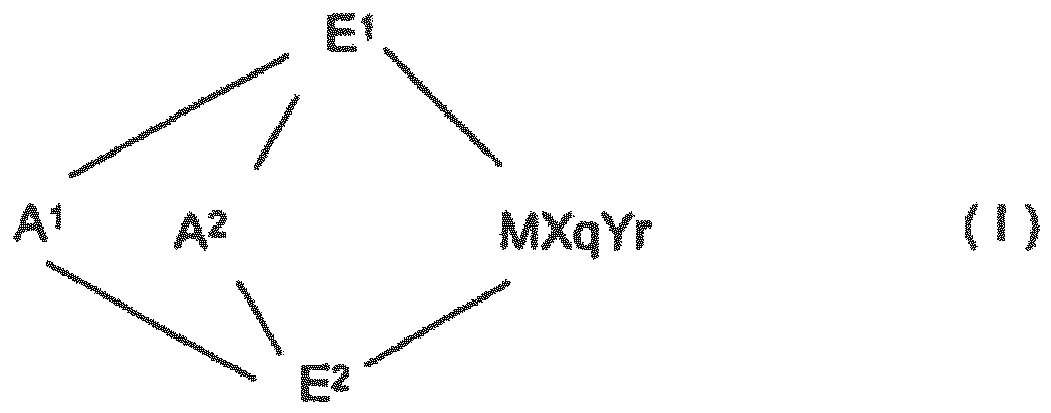
E1 et E2 sont identiques ou différents et chacun est indépendamment un ligand sélectionné parmi le groupe consistant en du cyclopentadiényle substitué, de l'indényle et de l'indényle substitué et E1 et E2 sont réticulés par A1 et A2 ;
X est un ligand à liaison σ ; et plusieurs X, s'ils existent, peuvent être identiques ou différentes et chaque X peut être réticulé avec un autre X, E1, E2 ou Y ;
1° est une base de Lewis ; et plusieurs Y, s'ils existent, peuvent être identiques ou différentes et chaque Y peut être réticulé avec un autre Y, E1, E2 ou X ;
A1 et A2 peuvent être identiques ou différents et chacun est indépendamment un groupe contenant de la silicone sélectionné parmi le groupe consistant en du diméthylsilylène, du diphénylsilylène, du méthylphénylsilylène, du tétraméthyldisilylène et du diphényldisilylène pour réticuler les deux ligands E1 et E2;
q est un entier de 1 à 5 indiqué par la formule [(valence de M) - 2] ; et
r est un entier de 0 à 3, et(B) au moins un composant sélectionné parmi le groupe consistant en un composé (B-1) capable de former un complexe ironique en réagissant avec ledit composé de métal de transition (A) ou un dérivé de celui-ci et un aluminoxane (B-2). - Film thermoscellable selon la revendication 1, dans lequel l'homopolymère de propylène satisfait aux exigences suivantes :(1) avoir un composant soluble dans l'hexane à 25 °C à une teneur (H25) de 0 à 80 % en poids ;(2) ne pas avoir, en mesurant par calorimétrie à balayage différentiel (DSC), de point de fusion ou un point de fusion Tm (°C) satisfaisant à la formule suivante :

dans laquelle ΔH est un endotherme de fusion (J/g) ; et(3) avoir une viscosité intrinsèque [η] de 1 à 3 dL/g mesurée à 135°C dans de la tétraline. - Film thermoscellable selon la revendication 2, dans lequel l'homopolymére de propylène possède :(1) une fraction méso en pentade [mmmm] de 20 à 80 % en mole ; et(2) une fraction racémique en pentade [rrrr] satisfaisant, conjointement avec 1 -[mmmm], à la formule suivante :

- Film thermoscellable selon l'une des revendjcations 1 à 3 ayant un voile interne mesuré selon JIS K-7105 égal ou inférieur à 5 %.
- Film thermoscellable selon l'une des revendications 1 à 4, dans lequel le film est un film coulé.
- Stratifié multicouche de résine de polyoléfine, dans lequel au moins une couche extérieure est faite d'un homopolymère de propylène satisfaisant aux exigences suivantes :(1) avoir un composant soluble dans l'hexane à 25 °C à une teneur (H25) de 0 à 80 % en poids ; et(2) ne pas avoir, en mesurant par calorimétrie à balayage différentiel (DSC), de point de fusion ou un point de fusion Tm (°C) satisfaisant à la formule suivante :

dans laquelle ΔH est un endotherme de fusion (J/g) ; et dans lequel l'homopolymère de propylène est produit par la polymérisation du propylène en présence d'un catalyseur de polymérisation comprenant :(A) un composé de métal de transition représenté par la formule générale (1) suivante :
E1 et E2 sont identiques ou différents et chacun est indépendamment un ligand sélectionné parmi le groupe consistant en du cyclopentadiényle substitué, de l'indényle et de l'indényle substitué ; et E1 et E2 sont réticulés par A1 et A2 ;
X est un ligand à liaison σ ; et plusieurs X, s'ils existent, peuvent être identiques ou différents et chaque X peut être réticulé avec un autre X, E1, E2 ou Y ;
Y est une base de Lewis ; et plusieurs Y, s'ils existent, peuvent être identiques ou différents et chaque Y peut être réticulé avec un autre Y, E1, E2 ou X ;
A1 et A2 peuvent être identiques ou différents et chacun est indépendamment un groupe silylène sélectionné parmi le groupe consistant en du diméthylsilylène, du diphénylsilylène, du méthylphénylsilylène, du tétraméthyldisilylène et du diphényldisilylène pour réticuler les deux ligands E1 et E2;
q est un entier de 1 à 5 indiqué par la formule [(valence de M) - 2] ; et
r est un entier de 0 à 3, et(B) au moins un composant sélectionné parmi le groupe consistant en un composé (B-1) capable de former un complexe ironique en réagissant avec ledit composé de métal de transition (A) ou un dérivé de celui-ci et un aluminoxane (B-2). - Stratifié multicouche de résine de polyoléfine selon la revendication 6, dans lequel l'homopolymère de propylène thermoscellable continent une fraction (W25) éluée à 25 °C ou moins déterminée par chromatographie à programme de température à une teneur de 20 à 100 % en poids.
- Stratifié multicouche de résine de polyoléfine selon l'une des revendications 6 ou 7, dans lequel l'homopolymére de propylène thermoscellable est un homopolymére de propylène (A-1) ayant :(1) une fraction méso en pentade [mmmm] de 20 à 80 % en mole ; et(2) une fraction racémique en pentade [rrrr] satisfaisant, conjointement avec 1-[mmmm], à la formule suivante :

- Stratifié multicouche de résine de polyoléfine selon l'une des revendications 6 à 8, dans lequel l'homopolymère de propylène thermoscellable présente une distribution des masses moléculaires (Mw/Mn) égale ou inférieure à 4 telle que mesurée par chromatographie par perméation de gel (GPC) et/ou une viscosité intrinsèque [η] de 0,5 à 15,0 dL/g telle que mesurée à 135 °C dans de la tétraline.
- Stratifié multicouche de résine de polyoléfine selon l'une des revendications 6 à 9 ayant au moins une couche qui est faite d'un polymère cristalline de propylène autre que l'homopolymère de propylène thermoscellable.
- Stratifié multicouche de résine de polyoléfine selon l'une des revendications 6 à 1 0, qui est produit par la coulée en T sous pression.
- Stratifié multicouche de résine de polyoléfine selon l'une des revendications 6 à 1 1 satisfaisant à la formule suivante :

dans laquelle TM est le module de traction (MPa) qui est mesuré selon l'essai de fraction JIS K-7105 et HST est la température de thermoscellage (°C).
Applications Claiming Priority (7)
| Application Number | Priority Date | Filing Date | Title |
|---|---|---|---|
| JP30352299A JP4730990B2 (ja) | 1999-10-26 | 1999-10-26 | ポリプロピレン系フィルム |
| JP30352299 | 1999-10-26 | ||
| JP31512699 | 1999-11-05 | ||
| JP31512699 | 1999-11-05 | ||
| JP2000037617 | 2000-02-16 | ||
| JP2000037617A JP4620205B2 (ja) | 2000-02-16 | 2000-02-16 | ポリプロピレン系フィルム |
| PCT/JP2000/007409 WO2001030891A1 (fr) | 1999-10-26 | 2000-10-24 | Film polypropylene et lamine multicouche |
Publications (3)
| Publication Number | Publication Date |
|---|---|
| EP1231236A1 EP1231236A1 (fr) | 2002-08-14 |
| EP1231236A4 EP1231236A4 (fr) | 2003-01-02 |
| EP1231236B1 true EP1231236B1 (fr) | 2012-12-05 |
Family
ID=27338609
Family Applications (1)
| Application Number | Title | Priority Date | Filing Date |
|---|---|---|---|
| EP20000970017 Expired - Lifetime EP1231236B1 (fr) | 1999-10-26 | 2000-10-24 | Film polypropylene et lamine multicouche |
Country Status (6)
| Country | Link |
|---|---|
| US (1) | US7250211B1 (fr) |
| EP (1) | EP1231236B1 (fr) |
| KR (1) | KR100733187B1 (fr) |
| CN (1) | CN1322034C (fr) |
| TW (1) | TW527385B (fr) |
| WO (1) | WO2001030891A1 (fr) |
Cited By (1)
| Publication number | Priority date | Publication date | Assignee | Title |
|---|---|---|---|---|
| US8957159B2 (en) | 2002-10-15 | 2015-02-17 | Exxonmobil Chemical Patents Inc. | Multiple catalyst system for olefin polymerization and polymers produced therefrom |
Families Citing this family (17)
| Publication number | Priority date | Publication date | Assignee | Title |
|---|---|---|---|---|
| EP1865007B1 (fr) * | 1998-06-25 | 2009-03-25 | Idemitsu Kosan Co., Ltd. | Polymère de propylène et composition le contenant, objet moulé et stratifié les comprenant, et procédés pour la fabrication de polymère de propylène et composition le contenant |
| GB0102228D0 (en) | 2001-01-29 | 2001-03-14 | Gluco Ltd | Adhesive |
| JP2004082469A (ja) * | 2002-08-26 | 2004-03-18 | Mitsubishi Plastics Ind Ltd | ストレッチ包装用積層フィルム |
| US7550528B2 (en) | 2002-10-15 | 2009-06-23 | Exxonmobil Chemical Patents Inc. | Functionalized olefin polymers |
| US7223822B2 (en) | 2002-10-15 | 2007-05-29 | Exxonmobil Chemical Patents Inc. | Multiple catalyst and reactor system for olefin polymerization and polymers produced therefrom |
| US7700707B2 (en) | 2002-10-15 | 2010-04-20 | Exxonmobil Chemical Patents Inc. | Polyolefin adhesive compositions and articles made therefrom |
| US7541402B2 (en) | 2002-10-15 | 2009-06-02 | Exxonmobil Chemical Patents Inc. | Blend functionalized polyolefin adhesive |
| CN101056919B (zh) * | 2004-11-24 | 2012-05-09 | 日立化成工业株式会社 | 聚丙烯聚合物薄膜及使用其的粘着薄膜 |
| CN101326235B (zh) * | 2005-12-09 | 2012-04-04 | 三井化学株式会社 | 振动控制用材料、振动控制用成形体和振动控制用多层叠层体 |
| US8563566B2 (en) * | 2007-08-01 | 2013-10-22 | Valeant Pharmaceuticals International | Naphthyridine derivatives as potassium channel modulators |
| US20140106638A1 (en) * | 2011-06-02 | 2014-04-17 | Idemitsu Kosan Co., Ltd | Multilayer elastic film |
| JP6181662B2 (ja) * | 2012-10-25 | 2017-08-16 | 出光興産株式会社 | ポリオレフィン系成形体 |
| KR101637026B1 (ko) * | 2013-11-18 | 2016-07-07 | 주식회사 엘지화학 | 메탈로센 담지 촉매 및 이를 이용하는 폴리올레핀의 제조방법 |
| KR101843680B1 (ko) * | 2014-07-31 | 2018-03-29 | 미쓰이 가가쿠 가부시키가이샤 | 콘덴서 필름용 프로필렌 단독중합체 조성물 및 그의 제조 방법, 및 콘덴서 필름 |
| JP6445562B2 (ja) * | 2014-07-31 | 2018-12-26 | 三井化学株式会社 | コンデンサフィルム用プロピレン単独重合体組成物およびその製造方法、並びにコンデンサフィルム |
| US20160237318A1 (en) * | 2015-02-18 | 2016-08-18 | Inteplast Group Corporation | Sealant film with controlled slip system |
| US9701801B2 (en) * | 2015-11-05 | 2017-07-11 | Fina Technology, Inc. | Use of nucleation to improve slip bloom in metallocene polypropylene resins |
Family Cites Families (28)
| Publication number | Priority date | Publication date | Assignee | Title |
|---|---|---|---|---|
| JPS6055046B2 (ja) * | 1981-09-10 | 1985-12-03 | ダイキン工業株式会社 | 含フツ素カルビノ−ルの製造方法 |
| JPS6055046A (ja) | 1983-09-07 | 1985-03-29 | Idemitsu Petrochem Co Ltd | プロピレン共重合体組成物 |
| JPS6411584A (en) * | 1987-07-06 | 1989-01-17 | Kai Cutlery Center Co | Scissors |
| DE3937941A1 (de) * | 1989-11-15 | 1991-05-16 | Hoechst Ag | Dreheinschlagsfolie aus polypropylen |
| JP2964581B2 (ja) * | 1990-08-14 | 1999-10-18 | 東洋紡績株式会社 | 高速製袋可能な鮮度保持用包装フィルム |
| JPH0497853A (ja) | 1990-08-14 | 1992-03-30 | Canon Inc | インクジェット記録装置 |
| DE69434709T2 (de) * | 1993-06-07 | 2006-10-19 | Mitsui Chemicals, Inc. | Propylenelastomere |
| ES2199966T3 (es) * | 1994-02-21 | 2004-03-01 | Basell Polyolefine Gmbh | Lamina de varias capas poliolefinica sellable, un procedimiento para su obtencion y su empleo. |
| JPH07329260A (ja) | 1994-06-06 | 1995-12-19 | Gunze Ltd | ヒートシーラブル延伸積層フィルム |
| US5693414A (en) * | 1994-07-23 | 1997-12-02 | Hoechst Aktiengesellschaft | Heat-sealable or non-heat-sealable, oriented, layered olefin polymer film comprising amorphous polymer particles |
| CA2164461C (fr) | 1994-12-06 | 2000-08-08 | Tatsuya Tanizaki | Composition a base de propylene et utilisations |
| WO1996030380A1 (fr) * | 1995-03-30 | 1996-10-03 | Idemitsu Kosan Co., Ltd. | Compose de metaux de transition, catalyseur de polymerisation pour olefines et procede d'elaboration de polymeres d'olefines |
| WO1997010300A1 (fr) | 1995-09-14 | 1997-03-20 | Exxon Chemical Patents Inc. | Melanges contenant un polymere de propylene, films et articles realises avec ceux-ci |
| JPH09151213A (ja) | 1995-11-29 | 1997-06-10 | Chisso Corp | ポリプロピレンフィルム及びその素材樹脂を製造する方法 |
| JP3569737B2 (ja) | 1996-02-05 | 2004-09-29 | 出光石油化学株式会社 | プロピレン系ランダム共重合体の製造方法 |
| JPH10259207A (ja) * | 1997-03-21 | 1998-09-29 | Idemitsu Kosan Co Ltd | オレフィン重合体の製造方法 |
| JP4033947B2 (ja) * | 1997-04-16 | 2008-01-16 | 出光興産株式会社 | プロピレン系重合体組成物及びそれからなるフィルム |
| JP3569740B2 (ja) | 1997-08-04 | 2004-09-29 | 出光石油化学株式会社 | プロピレン系ランダム共重合体並びにそれを用いたフィルム及び積層体 |
| DE69841203D1 (de) * | 1997-08-19 | 2009-11-12 | Idemitsu Kosan Co | Filme aus nukleierten propylenpolymerzusammensetzungen |
| JPH1160833A (ja) | 1997-08-19 | 1999-03-05 | Idemitsu Petrochem Co Ltd | ポリプロピレン系組成物及びそのフィルム |
| JP4204676B2 (ja) * | 1998-02-23 | 2009-01-07 | 出光興産株式会社 | プロピレン系樹脂並びにそれを用いたフィルム及び積層体 |
| WO1999051665A1 (fr) | 1998-04-02 | 1999-10-14 | Chisso Corporation | film perméable au gaz |
| EP1865007B1 (fr) * | 1998-06-25 | 2009-03-25 | Idemitsu Kosan Co., Ltd. | Polymère de propylène et composition le contenant, objet moulé et stratifié les comprenant, et procédés pour la fabrication de polymère de propylène et composition le contenant |
| EP1227112A4 (fr) | 1999-10-05 | 2004-07-14 | Idemitsu Petrochemical Co | Polymeres de propylene, composition de resine et objet moule contenant ces polymeres |
| EP1231226B1 (fr) * | 1999-10-06 | 2006-08-02 | Idemitsu Kosan Co., Ltd. | Article en polypropylene claendre ou moule par injection |
| CN1320037C (zh) | 1999-10-26 | 2007-06-06 | 出光兴产株式会社 | 聚丙烯薄膜和多层层压材料 |
| JP4931269B2 (ja) * | 2000-05-30 | 2012-05-16 | 出光興産株式会社 | α−オレフィン重合体の製造方法及び潤滑油 |
| US7351478B2 (en) | 2001-03-16 | 2008-04-01 | Fina Technology, Inc. | Heat-seal films and method of manufacture |
-
2000
- 2000-10-24 KR KR1020027005301A patent/KR100733187B1/ko not_active Expired - Fee Related
- 2000-10-24 US US10/110,193 patent/US7250211B1/en not_active Expired - Fee Related
- 2000-10-24 WO PCT/JP2000/007409 patent/WO2001030891A1/fr not_active Ceased
- 2000-10-24 CN CNB008149046A patent/CN1322034C/zh not_active Expired - Fee Related
- 2000-10-24 EP EP20000970017 patent/EP1231236B1/fr not_active Expired - Lifetime
- 2000-10-25 TW TW89122461A patent/TW527385B/zh not_active IP Right Cessation
Cited By (1)
| Publication number | Priority date | Publication date | Assignee | Title |
|---|---|---|---|---|
| US8957159B2 (en) | 2002-10-15 | 2015-02-17 | Exxonmobil Chemical Patents Inc. | Multiple catalyst system for olefin polymerization and polymers produced therefrom |
Also Published As
| Publication number | Publication date |
|---|---|
| US7250211B1 (en) | 2007-07-31 |
| KR20020060216A (ko) | 2002-07-16 |
| CN1384849A (zh) | 2002-12-11 |
| EP1231236A1 (fr) | 2002-08-14 |
| KR100733187B1 (ko) | 2007-06-27 |
| WO2001030891A1 (fr) | 2001-05-03 |
| EP1231236A4 (fr) | 2003-01-02 |
| TW527385B (en) | 2003-04-11 |
| CN1322034C (zh) | 2007-06-20 |
Similar Documents
| Publication | Publication Date | Title |
|---|---|---|
| US6770355B1 (en) | Polypropylene film and multilayered laminate | |
| EP1867662B2 (fr) | Polymère de propylène et composition le contenant, objet moulé et stratifié les comprenant, et procédés pour la fabrication de polymère de propylène et composition le contenant | |
| EP1231236B1 (fr) | Film polypropylene et lamine multicouche | |
| US6734270B1 (en) | Polypropylene-based calendered article and injection-molded article | |
| EP1524278B1 (fr) | Polymeres de propylene, composition de resine et objet moule contenant ces polymeres | |
| JP2009293040A (ja) | ポリオレフィン系樹脂組成物とフィルムおよび多層積層体 | |
| KR100733191B1 (ko) | 1-부텐계 중합체 및 상기 중합체로 이루어진 성형체 | |
| JPWO2001025299A1 (ja) | ポリプロピレン系圧延成形体及び射出成形体 | |
| US6930160B2 (en) | 1-Butene polymer and molded product consisting of the polymer | |
| US20040204552A1 (en) | 1-Butene polymer and molded product consisting of the polymer | |
| JP4620205B2 (ja) | ポリプロピレン系フィルム | |
| JP4902050B2 (ja) | ポリオレフィン系樹脂組成物とその成形体及びフィルム | |
| JP2010265473A (ja) | プロピレン系共重合体、及び該共重合体からなる樹脂組成物並びに成形体 | |
| JP2000095820A (ja) | プロピレン系重合体及びこれを含む組成物 | |
| JP4418099B2 (ja) | ポリオレフィン樹脂多層積層体 | |
| JP4252698B2 (ja) | ポリオレフィン樹脂多層積層体 | |
| JP4730990B2 (ja) | ポリプロピレン系フィルム | |
| JP2002371162A (ja) | 1−ブテン系樹脂組成物および成形体 | |
| JP2009013424A (ja) | プロピレン系重合体及びこれを含む組成物 |
Legal Events
| Date | Code | Title | Description |
|---|---|---|---|
| PUAI | Public reference made under article 153(3) epc to a published international application that has entered the european phase |
Free format text: ORIGINAL CODE: 0009012 |
|
| 17P | Request for examination filed |
Effective date: 20020410 |
|
| AK | Designated contracting states |
Kind code of ref document: A1 Designated state(s): AT BE CH CY DE DK ES FI FR GB GR IE IT LI LU MC NL PT SE |
|
| AX | Request for extension of the european patent |
Free format text: AL;LT;LV;MK;RO;SI |
|
| A4 | Supplementary search report drawn up and despatched |
Effective date: 20021108 |
|
| AK | Designated contracting states |
Kind code of ref document: A4 Designated state(s): AT BE CH CY DE DK ES FI FR GB GR IE IT LI LU MC NL PT SE |
|
| RBV | Designated contracting states (corrected) |
Designated state(s): AT DE |
|
| RAP1 | Party data changed (applicant data changed or rights of an application transferred) |
Owner name: IDEMITSU KOSAN CO., LTD. |
|
| 17Q | First examination report despatched |
Effective date: 20041222 |
|
| GRAP | Despatch of communication of intention to grant a patent |
Free format text: ORIGINAL CODE: EPIDOSNIGR1 |
|
| RBV | Designated contracting states (corrected) |
Designated state(s): DE |
|
| GRAS | Grant fee paid |
Free format text: ORIGINAL CODE: EPIDOSNIGR3 |
|
| GRAA | (expected) grant |
Free format text: ORIGINAL CODE: 0009210 |
|
| AK | Designated contracting states |
Kind code of ref document: B1 Designated state(s): DE |
|
| REG | Reference to a national code |
Ref country code: DE Ref legal event code: R096 Ref document number: 60047678 Country of ref document: DE Effective date: 20130131 |
|
| PLBE | No opposition filed within time limit |
Free format text: ORIGINAL CODE: 0009261 |
|
| STAA | Information on the status of an ep patent application or granted ep patent |
Free format text: STATUS: NO OPPOSITION FILED WITHIN TIME LIMIT |
|
| 26N | No opposition filed |
Effective date: 20130906 |
|
| REG | Reference to a national code |
Ref country code: DE Ref legal event code: R097 Ref document number: 60047678 Country of ref document: DE Effective date: 20130906 |
|
| PGFP | Annual fee paid to national office [announced via postgrant information from national office to epo] |
Ref country code: DE Payment date: 20151020 Year of fee payment: 16 |
|
| REG | Reference to a national code |
Ref country code: DE Ref legal event code: R119 Ref document number: 60047678 Country of ref document: DE |
|
| PG25 | Lapsed in a contracting state [announced via postgrant information from national office to epo] |
Ref country code: DE Free format text: LAPSE BECAUSE OF NON-PAYMENT OF DUE FEES Effective date: 20170503 |