EP1233775B2 - Tyrosin- und tryptophanhaltige peptide als antioxidantien - Google Patents
Tyrosin- und tryptophanhaltige peptide als antioxidantien Download PDFInfo
- Publication number
- EP1233775B2 EP1233775B2 EP00987344A EP00987344A EP1233775B2 EP 1233775 B2 EP1233775 B2 EP 1233775B2 EP 00987344 A EP00987344 A EP 00987344A EP 00987344 A EP00987344 A EP 00987344A EP 1233775 B2 EP1233775 B2 EP 1233775B2
- Authority
- EP
- European Patent Office
- Prior art keywords
- peptides
- tryptophan
- tyrosine
- residues
- previous
- Prior art date
- Legal status (The legal status is an assumption and is not a legal conclusion. Google has not performed a legal analysis and makes no representation as to the accuracy of the status listed.)
- Expired - Lifetime
Links
Images





Classifications
-
- A—HUMAN NECESSITIES
- A61—MEDICAL OR VETERINARY SCIENCE; HYGIENE
- A61K—PREPARATIONS FOR MEDICAL, DENTAL OR TOILETRY PURPOSES
- A61K38/00—Medicinal preparations containing peptides
- A61K38/04—Peptides having up to 20 amino acids in a fully defined sequence; Derivatives thereof
-
- A—HUMAN NECESSITIES
- A61—MEDICAL OR VETERINARY SCIENCE; HYGIENE
- A61K—PREPARATIONS FOR MEDICAL, DENTAL OR TOILETRY PURPOSES
- A61K38/00—Medicinal preparations containing peptides
- A61K38/04—Peptides having up to 20 amino acids in a fully defined sequence; Derivatives thereof
- A61K38/08—Peptides having 5 to 11 amino acids
- A61K38/09—Luteinising hormone-releasing hormone [LHRH], i.e. Gonadotropin-releasing hormone [GnRH]; Related peptides
-
- A—HUMAN NECESSITIES
- A61—MEDICAL OR VETERINARY SCIENCE; HYGIENE
- A61P—SPECIFIC THERAPEUTIC ACTIVITY OF CHEMICAL COMPOUNDS OR MEDICINAL PREPARATIONS
- A61P39/00—General protective or antinoxious agents
- A61P39/06—Free radical scavengers or antioxidants
Definitions
- the invention relates to the use of tryptophan-containing, in particular tryptophan and tyrosine-containing peptides as antioxidants.
- the compounds may be used for the therapy or prophylaxis of syndromes or diseases associated with unwanted oxidative processes in the extracellular space.
- the extracellular space can be affected by oxidative processes in its structure and functionality, which can lead to adverse biochemical and physiological changes.
- oxidative processes in its structure and functionality, which can lead to adverse biochemical and physiological changes. Examples are the oxidation of low-density lipoprotein (LDL), which is causally involved in atherosclerotic processes (Heinecke, J. Clin Invest 104 (1999), 135, Parthasarathy, Annu Rev. Med. 43 (1992), 219). , leading to cataract changes in the aggregation behavior of lens proteins (Christen, Proc. Assoc. Am. Physicians 111 (1999), 16; Taylor and Nowell, Adv. Pharmacol. 3B (1997), 515) or oxidative cross-linking of collagen at Diabetes, arthritis or aging processes (Bailey et al., Mech.
- LDL low-density lipoprotein
- the antioxidants of the present invention are chemically simple and inexpensive to produce in large amounts, while known extracellular antioxidants (e.g., ascorbate, tocopherol, ubiquinol) are either significantly more expensive (tocopherol, ubiquinol) or less effective (ascorbate).
- the compounds of the present invention are also much more stable than the known antioxidants because they are substantially stable to atmospheric oxygen but exhibit high reactivity to tissue damaging oxygen-based radicals.
- the compounds are amphiphilic, i. they are water-soluble, but can also be used e.g. by sonication in lipophilic formulations e.g. Install liposomes in a technically simple way.
- Yet another advantage is that the compounds of the invention do not penetrate intact cells, i.
- the invention thus relates to the use of compounds which contain (a) at least one tryptophan residue and at least one tyrosine residue or at least two tryptophan residues or / and contain analogous aromatic residues or / and (b) at least two tyrosine residues and / or analogous aromatic residues and have a molecular mass of up to 2,500 Da, for the production of an agent for the inhibition of oxidative processes in the extracellular space.
- the compounds are suitable for the therapy or prophylaxis of diseases associated with oxidative processes in the extracellular space, for example of degenerative diseases such as atherosclerosis, diabetes, cataracts, arthritis and aging processes in joints or skin.
- the compounds are particularly preferably used in skin creams for slowing skin aging, in particular before, during or after UV exposure, as well as a prophylactic or medicament in arthritic or rheumatic oxidative processes and in atherosclerosis.
- the compounds are capable of inhibiting the onset or progression of oxidative processes on physiological components of the extracellular space, such as soluble proteins, fibrillar proteins, eg, collagen, glycoproteins, proteoglycans, lipoproteins, eg, lipoprotein particles, such as LDL, and membrane lipids.
- soluble proteins such as soluble proteins, fibrillar proteins, eg, collagen, glycoproteins, proteoglycans, lipoproteins, eg, lipoprotein particles, such as LDL, and membrane lipids.
- low molecular weight peptides are used with amphiphilic properties, ie compounds which are on the one hand water-soluble, on the other hand have an affinity for nonpolar organic radicals.
- the peptides contain at least one tryptophan residue or an analogous aromatic residue and additionally at least one tyrosine residue or an analogous aromatic residue.
- the peptides contain at least two tyrosine residues or analogous aromatic residues and optionally additionally at least one tryptophan residue or an analogous aromatic residue.
- suitable analogous residues are in particular aromatic amino acid residues with a phenol or a tryptophan-analogous indole ring system such as an alkyloxy phenol or alkyloxy indole ring, especially a methoxy phenol or methoxy indole ring.
- the antioxidant amino acid residues may be in the L- and / or D-conformation. The L-conformation is preferred.
- the compounds are selected from peptides having a length of 2 to 15, preferably 2 to 10 and more preferably 2 to 7 amino acids.
- Peptides within the meaning of the present invention are composed essentially of amino acids, in particular ⁇ -aminocarboxylic acids, e.g. from natural genetically encoded amino acids but also from other amino acids, built-up compounds, wherein the amino acid residues are linked together via peptide bonds.
- the peptides may optionally be N- or / and C-terminal modifications, e.g. have an N-terminal acylation or a C-terminal esterification or amidation or a cyclic structure.
- the compounds contain at least two tyrosine, tryptophan and / or analogous aromatic residues, e.g. at least two tyrosine residues, at least one tryptophan residue and one tyrosine residue or at least two tryptophan residues. It has been found that a spatial proximity of these residues may be desirable, e.g. in the case of peptidic compounds, the antioxidant residues are preferably either directly adjacent or separated by one or at most two intervening amino acid residues. Furthermore, it is preferred that the compounds contain up to four of the antioxidant radicals. However, there are cases in which the compounds may also contain a higher number of antioxidant residues.
- the investigations leading to the present inventions were carried out on physiologically active peptide hormones with tryptophan residues, preferably tryptophan and tyrosine residues. It was found that the antioxidant effect is not correlated with other structure-specific physiological effects of these peptide hormones, but only with the presence of Tryptophanresten, especially tryptophan and tyrosine residues.
- the compounds according to the invention e.g. Peptides selected to have substantially no structural specific physiological effect, e.g. have a hormone effect.
- Examples of synthetic and anti-oxidant peptides, but without hormonal activity, are WY, WGY, WGGY, WGGGY, WW and YY.
- the administration of the compounds is dependent on the type or severity of the disease to be treated as well as on the mode of administration.
- the administration is preferably carried out in such a way that an active substance concentration in the range from 1 nM to 100 ⁇ M, in particular 2 nM to 20 ⁇ M, is present at the destination.
- the administration may be systemic, e.g. by intravascular injection, but especially by oral administration. On the other hand, however, administration may also be local, e.g. by intramuscular or subcutaneous injection, but especially by topical application.
- the antioxidant substances are added to a sunscreen formulation in order to avoid damage to the skin by UV exposure.
- An object of the invention is thus also a sunscreen formulation which, in addition to conventional ingredients, an antioxidant effective proportion of peptides having at least one Tryptophanrest and at least one tyrosine residue or at least two Tryptophanresten and / or analog aromatic Rests and / or at least two tyrosine residues and / or analogous aromatic residues and a molecular mass of up to 2500 Da contains.
- the proportion of antioxidant peptides in the sunscreen formulation is preferably from 0.5 to 10% by weight.
Landscapes
- Health & Medical Sciences (AREA)
- Life Sciences & Earth Sciences (AREA)
- Chemical & Material Sciences (AREA)
- Pharmacology & Pharmacy (AREA)
- Veterinary Medicine (AREA)
- Public Health (AREA)
- General Health & Medical Sciences (AREA)
- Medicinal Chemistry (AREA)
- Animal Behavior & Ethology (AREA)
- Immunology (AREA)
- Bioinformatics & Cheminformatics (AREA)
- Epidemiology (AREA)
- Proteomics, Peptides & Aminoacids (AREA)
- Gastroenterology & Hepatology (AREA)
- Engineering & Computer Science (AREA)
- Reproductive Health (AREA)
- Endocrinology (AREA)
- Toxicology (AREA)
- Biochemistry (AREA)
- Organic Chemistry (AREA)
- Chemical Kinetics & Catalysis (AREA)
- General Chemical & Material Sciences (AREA)
- Nuclear Medicine, Radiotherapy & Molecular Imaging (AREA)
- Medicines That Contain Protein Lipid Enzymes And Other Medicines (AREA)
- Anti-Oxidant Or Stabilizer Compositions (AREA)
- Food Preservation Except Freezing, Refrigeration, And Drying (AREA)
Description
- Die Erfindung betrifft die Verwendung von tryptophanhaltigen, insbesondere tryptophan- und tyrosinhaltigen Peptiden als Antioxidantien. Die Verbindungen können zur Therapie oder Prophylaxe von Syndromen oder Erkrankungen dienen, die mit unerwünschten oxidativen Prozessen im Extrazellulärraum einhergehen.
- Viele Erkrankungen stehen mit einer erhöhten oxidativen Belastung in Zusammenhang. Diese kann zu unterschiedlichen zellulären Reaktionen wie etwa Differenzierung, Apoptose, Nekrose oder oxidative Zellyse führen (Irani et al., Science 275 (1997), 1649; Burdon, Free Radic. Biol. Med. 18 (1995), 775; Anderson et al., Med. Hypotheses 52 (1999), 451; Hampton und Orrenius, Toxicol. Lett. 102-103 (1998), 355; Kowaltowski und Vercesi, Free Radic. Biol. Med. 26 (1999), 463; Beal, Ann. Neurol. 38 (1995), 357).
- Auch der Extrazellulärraum kann durch oxidative Prozesse in seiner Struktur und Funktionalität beeinflußt werden, was zu nachteiligen biochemischen und physiologischen Veränderungen führen kann. Beispiele sind die Oxidation von Low Density Lipoprotein (LDL), die ursächlich an artherosklerotischen Prozessen beteiligt ist (Heinecke, J. Clin. Invest. 104 (1999), 135; Parthasarathy, Annu. Rev. Med. 43 (1992), 219), die zu Katarakten führenden Veränderungen im Aggregationsverhalten von Linsenproteinen (Christen, Proc. Assoc. Am. Physicians 111 (1999), 16; Taylor und Nowell, Adv. Pharmacol. 3B (1997), 515) oder oxidative Quervemetzungen von Kollagen, die bei Diabetes, Arthritis oder Alterungsprozessen gefunden werden (Bailey et al., Mech. Ageing Dev. 106 (1998), 1; Beckmann und Ames, Physiol. Rev. 78 (1998), 547). Hinzu kommt, dass die Anzahl bekannter Antioxidationssysteme im Extrazellulärraum geringer als innerhalb der Zelle ist (van der Vlies et al., Am. J. Physiol. 276 (1999), L289; Frei et al., Proc. Natl. Acad. Sci. USA 85 (1988), 9748; Mimic-Oka et al., Clin. Nephrol. 51 (1999), 233; Cross et al., Environ. Health Perspect. 106 Suppl 5 (1998), 1241; Wilson, Can. J. Physiol. Pharmacol. 75 (1997),1149; Grootveld et al., Fee Radic. Res. 30 (1999), 351; Sies, Exp. Physiol. 82 (1997), 291).
- Es besteht daher ein großes Bedürfnis nach Substanzen, die einerseits als Antioxidationsmittel im Extrazellulärraum eine hohe Wirkung aufweisen und andererseits physiologisch verträglich sind.
- In den zur vorliegenden Erfindung vorliegenden Untersuchungen wurde eine neue Klasse biochemischer Antioxidationsmittel des Extrazellulärraums identifiziert. Dabei handelt es sich um niedermolekulare lösliche Peptide, die aromatische Ringsysteme, mit der Fähigkeit zur Ausbildung stabiler Radikale, insbesondere Tryptophanreste, bevorzugt Tryptophan- und Tyrosinreste enthalten. Diese Peptide verhindern bzw. verringern die Oxidation von physiologisch bedeutsamen Komponenten des extrazellulären Raums, z.B. gelösten Proteinen, fibrillären Proteinen, Lipoproteinpartikeln und Membranlipiden. Da eine Oxidation dieser biologischen Komponenten bei einer Vielzahl von degenerativen Erkrankungen auftritt, stellt die Erfindung eine wichtige neue Erkenntnis auf dem Gebiet der Medizin dar.
- Die erfindungsgemäßen Antioxidationsmittel sind chemisch einfach und preiswert in großen Mengen herzustellen, während bekannte extrazellulär wirksame Antioxidantien (z.B. Ascorbat, Tocopherol, Ubichinol) entweder erheblich teurer (Tocopherol, Ubichinol) oder weniger wirksam sind (Ascorbat). Die erfindungsgemäßen Verbindungen sind auch wesentlich beständiger als die bekannten Antioxidantien, da sie gegenüber Luftsauerstoff im wesentlichen stabil sind, aber gegenüber gewebsschädigenden, auf Sauerstoff basierenden Radikalen eine hohe Reaktivität zeigen. Weiterhin sind die Verbindungen amphiphil, d.h. sie sind wasserlöslich, lassen sich aber auch z.B. durch Ultraschallbehandlung in lipophile Formulierungen z.B. Liposomen auf technisch einfache Weise einbauen. Noch ein weiterer Vorteil ist, dass die erfindungsgemäßen Verbindungen intakte Zellen nicht penetrieren, d.h. sie lassen sich bereits bei geringen Dosierungen im Extrazellulärraum anreichern. Außerdem können natürliche, vollständig aus endogen vorkommenen Aminosäuren bestehende Verbindungen eingesetzt werden, die keine metabolisch akkumulativen oder toxischen Effekte aufweisen. Schließlich zeigen die Verbindungen nur geringe Neigung zur Plasmaproteinbindung, so dass die frei diffusiblen, wirksamen Konzentrationen höher sind.
- Ein Gegenstand der Erfindung ist somit die Verwendung von Verbindungen, die (a) mindestens einen Tryptophanrest und mindestens einen Tyrosinrest oder mindestens zwei Tryptophanreste enthalten oder/und analoge aromatische Reste oder/und (b) mindestens zwei Tyrosinreste oder/und analoge aromatische Reste enthalten und eine Molekularmasse von bis zu 2.500 Da aufweisen, zur Herstellung eines Mittels für die Hemmung oxidativer Prozesse im Extrazellulärraum. Insbesondere eignen sich die Verbindungen zur Therapie oder Prophylaxe von Erkrankungen, die mit oxidativen Prozessen im Extrazellulärraum einhergehen, beispielsweise von degenerativen Erkrankungen, wie etwa Artherosklerose, Diabetes, Katarakten, Arthritis und Alterungsprozessen in Gelenken oder Haut. Besonders bevorzugt werden die Verbindungen in Hautcremes zur Verlangsamung der Hautalterung, insbesondere vor, während, oder nach UV-Exposition sowie als Prophylaktikum oder Medikament bei arthritischen oder rheumatischen oxidativen Prozessen sowie bei Artherosklerose eingesetzt.
- Die Verbindungen sind in der Lage, den Beginn oder das Fortschreiten oxidativer Prozesse an physiologischen Komponenten des Extrazellulärraumes wie etwa löslichen Proteinen, fibrillären Proteinen, z.B. Kollagen, Glykoproteinen, Proteoglykanen, Lipoproteinen, z.B. Lipoproteinpartikeln wie LDL, und Membranlipiden zu hemmen. Vorzugsweise werden niedermolekulare Peptide mit amphiphilen Eigenschaften eingesetzt, d.h. Verbindungen, die einerseits wasserlöslich sind, andererseits eine Affinität für unpolare organische Reste aufweisen. In einer Ausführungsform enthalten die Peptide mindestens einen Tryptophanrest oder einen analogen aromatischen Rest und zusätzlich mindestens einen Tyrosinrest oder einen analogen aromatischen Rest. In einer weiteren Ausführungsform enthalten die Peptide mindestens zwei Tyrosinreste oder analoge aromatische Reste und gegebenenfalls zusätzlich mindestens einen Tryptophanrest oder einen analogen aromatischen Rest. Beispiele für geeignete analoge Reste sind insbesondere aromatische Aminosäurereste mit einem Phenol- oder einem Tryptophan-analogen Indol-Ringsystem, wie etwa einen Alkyloxy-Phenol- oder Alkyloxy-Indol-Ring, insbesondere einen Methoxy-Phenol- oder Methoxy-Indol-Ring. Die antioxidativ wirksamen Aminosäurereste können in der L- oder/und in der D-Konformation vorliegen. Bevorzugt ist die L-Konformation.
- In einer Ausführungsform der Erfindung werden die Verbindungen aus Peptiden mit einer Länge von 2 bis 15, vorzugsweise 2 bis 10 und besonders bevorzugt 2 bis 7 Aminosäuren ausgewählt. Peptide im Sinne der vorliegenden Erfindungen sind im wesentlichen aus Aminosäuren, insbesondere aus α-Aminocarbonsäuren, z.B. aus natürlichen genetisch kodierten Aminosäuren aber auch aus anderen Aminosäuren, aufgebaute Verbindungen, wobei die Aminosäurereste über Peptidbindungen miteinander verknüpft sind. Weiterhin können die Peptide gegebenenfalls N- oder/und C-terminale Modifikationen, z.B. eine N-terminale Acylierung oder eine C-terminale Veresterung oder Amidierung oder eine cyclische Struktur aufweisen.
- Die Verbindungen enthalten mindestens zwei Tyrosin-, Tryptophan- oder/und analoge aromatische Reste, z.B. mindestens zwei Tyrosinreste, mindestens einen Tryptophan-und einen Tyrosinrest oder mindestens zwei Tryptophanreste. Dabei hat sich gezeigt, dass eine räumliche Nachbarschaft dieser Reste wünschenswert sein kann, z.B. im Falle von peptidischen Verbindungen sind die antioxidativ wirkenden Reste vorzugsweise entweder direkt benachbart bzw. durch eine oder maximal zwei dazwischenliegende Aminosäurereste getrennt. Weiterhin ist bevorzugt, dass die Verbindungen bis zu vier der antioxidativ wirksamen Reste enthalten. Es gibt jedoch Fälle, in denen die Verbindungen auch eine höhere Anzahl an antioxidativ wirksamen Resten enthalten können.
- Die zur vorliegenden Erfindungen führenden Untersuchungen wurden an physiologisch wirksamen Peptidhormonen mitTryptophanresten, bevorzugt Tryptophan- und Tyrosinresten, durchgeführt. Dabei wurde gefunden, dass die antioxidative Wirkung nicht mit anderen strukturspezifischen physiologischen Wirkungen dieser Peptidhormone, sondern lediglich mit dem Vorhandensein von Tryptophanresten, insbesondere Tryptophan- und Tyrosinresten, in Korrelation steht. Um unerwünschte physiologische Nebenwirkungen im Rahmen einer medizinischen Behandlung mit den erfindungsgemäßen Verbindungen möglichst weitgehend zu vermeiden, werden daher die erfindungsgemäßen Verbindungen, z.B. Peptide so ausgewählt, dass sie im wesentlichen keine strukturspezffische physiologische Wirkung, z.B. eine Hormonwirkung aufweisen.
- Beispiele für antioxidativ wirksame sekretorische Peptide sind in der folgenden Tabelle aufgelistet.
Tabelle Peptid Aminosäuresequenz GnRH (gonadotrophin-releasing hormone) (Mensch) cyEHWSYGLRPG-amid GnRH (gonadotrophin-releasing hormone) (Lachs) cyEHWSYGWLPG-amid GnRH (gonadotrophin-releasing hormone) (Neunauge) cyEHWSHDWKPG-amid Dermorphin YD-AFGY PS-amid cyE = cyclisches Glutamat XD = D-Aminosäure - Neben diesen Peptiden sind auch alle trunkierten Fragmente davon wirksam, soweit deren Tyrosin- oder Tryptophan-Gehalt nicht verringert ist.
- Beispiele von synthetischen und als Antioxidationsmittel wirksamen Peptiden, die jedoch keine Hormonwirkung besitzen, sind WY, WGY, WGGY, WGGGY, WW und YY.
- Die Verabreichung der Verbindungen erfolgt in Abhängigkeit von der Art bzw. Schwere der zu behandelnden Erkrankung sowie von der Art der Verabreichung. Vorzugsweise erfolgt die Verabreichung so, dass am Zielort eine Wirkstoffkonzentration im Bereich von 1 nM bis 100 µM, insbesondere 2 nM bis 20 µM vorliegt. Die Verabreichung kann systemisch, z.B. durch intravaskuläre Injektion, insbesondere jedoch durch orale Gabe erfolgen. Andererseits kann die Verabreichung jedoch auch lokal, z.B. durch intramuskuläre oder subkutane Injektion, insbesondere jedoch durch topische Applikation erfolgen.
- In einer besonders bevorzugten Ausführungsform der Erfindung werden die antioxidativ wirksamen Substanzen einer Sonnencreme-Formulierung zugesetzt, um Schädigungen der Haut durch UV-Exposition zu vermeiden. Ein Gegenstand der Erfindung ist somit auch eine Sonnencreme-Formulierung, die neben üblichen Bestandteilen einen antioxidativ wirksamen Anteil von Peptiden mit mindestens einem Tryptophanrest und mindestens einem Tyrosinrest oder mindestens zwei Tryptophanresten oder/und analogen aromatischen Resten oder/und mindestens zwei Tyrosinresten oder/und analogen aromatischen Resten und einer Molekularmasse von bis zu 2500 Da enthält. Der Anteil der antioxidativ wirksamen Peptide in der Sonnencreme-Formulierung ist vorzugsweise von 0,5 bis 10 Gew.%.
- Weiterhin soll die Erfindung durch die nachfolgenden Figuren und Beispiele erläutert werden. Es zeigen:
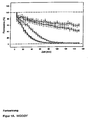
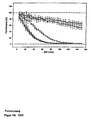
- Figur 1
- die antioxidative Wirkung von tryptophanhaltigen, insbesondere tryptophan- und tyrosinhaltigen Peptiden beim Abfang von Peroxyradikalen (A), bei der Verhinderung der LDL-Oxidation (B) und bei der Verhinderung der Peroxidation von Gehirnlipiden (C), und .
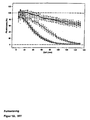
- Figur 2
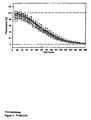
- die essentielle Bedeutung von Tryptophanresten, insbesondere Tryptophan- und Tyrosinresten für die antioxidative Wirkung von Peptiden, und
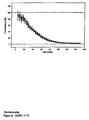
- Figur 3
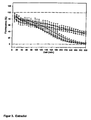
- die antioxidative Wirkung von Vergleichssubstanzen.
-
- 1.
Es wurde die Fähigkeit von Peptiden, das globuläre Protein B-Phycoerythrin vor einer Zerstörung durch Peroxyradikale zu schützen, getestet. Hierzu wurde eine Oxidation von B-Phycoerythrin von Porphyrium cruentum (10 nM) in Phosphatgepufferte Salzlösung unter Verwendung von 2,2'-Azo-bis-2-methylpropionamidin (500 µM) bei 37°C als Quelle freier Peroxyradikale durchgeführt. Die Zerstörung des Proteins wurde durch Beobachtung der Abnahme der Proteinfluoreszenz bei steigender Inkubationsdauer gemessen (Flash-Fluorimetrie, Anregungsfenster 340±50 nm, Emissionsfenster 572±6 nm). Die Ergebnisse dieses Versuchs für das sekretorische Peptide GnRH (Mensch) sowie für die synthetischen Peptide WY, WGGGY, WW und YY sind in Figur 1A dargestellt. In den einzelnen Abbildungen bedeutet ● die Kontrolle und ◊ eine Konzentration von 20 nM, o 200 nM, ▼2 µM bzw. ∇20 µM des jeweiligen Peptids (Vierfachbestimmungen). Bei den sekretorischen Peptiden GnRH (Lachs), GnRH (Neunauge) und Dermorphin sowie für die synthetischen Peptide WGY und WGGY wurden analoge Ergebnisse erhalten.
In einem weiteren Test wurde die Fähigkeit der Peptide zum Schutz von LDL vor einer Kupfer-katalysierten Oxidation getestet. Hierzu wurde frisches humanes LDL (0,1 mg/ml Protein) mit 10 µM CuSO4 bei 37°C inkubiert. Die Reaktionsprodukte der LDL-Zersetzung (konjugierte Diene) wurden photometrisch bei 234 nm wie bei Moosmann und Behl (Proc. Natl. Acad. Sci. USA 96 (1999), 8867) beschrieben, gemessen. Die Ergebnisse für das sekretorische Peptid GnRH (Mensch) sind in Figur 1 B zu erkennen. Die drei Kurven zeigen die Kontrolle, eine Konzentration von 20 µM sowie eine Konzentration von 100 µM des jeweiligen Peptids (Doppelbestimmungen).
Sekretorische Peptide können Gehirnmembranen vor einer oxidativen Zerstörung durch Ascorbat schützen. Hierzu wurde native Rattenhimmembran (0,5 mg/ml Protein) durch Zugabe von 50 µM Ascorbat bei 37°C oxidiert. Eine Einzelphotonenmessung der Chemilumineszenz (als Maß für auftretende Peroxidationsreaktionen) wurde zur quantitativen Bestimmung der Lipidperoxidation wie bei Moosmann und Behl (supra) beschrieben gemessen. Die Ergebnisse für GnRH (Mensch) sind in Figur 1C gezeigt. ● bedeutet die Kontrolle und 0 eine Konzentration von 20 µM und ■ eine Konzentration von 100 µM des jeweiligen Peptids (Doppelbestimmungen).
Aus Figur 1 ist ersichtlich, dass kurze, lösliche, tryptophanhaltige, insbesondere tryptophan- und tyrosinhaltige sekretorische Peptide wie Gonadotrophin-freisetzendes Hormon (GnRH) sowie synthetische Peptide antioxidative Eigenschaften aufweisen. - 2.
Um nachzuweisen, dass Tryptophan, insbesondere Tryptophan und Tyrosin, die Antioxidationswirkung der sekretorischen Peptide vermitteln, wurde das Verhalten von modifizierten odertrunkierten Peptiden im Peroxyradikal-Abfangtest gemäß Beispiel 1 untersucht. Die Ergebnisse sind in Figur 2 gezeigt. ● bedeutet die Kontrolle, ○bedeutet eine Konzentration von 200 nM, ▼ bedeutet eine Konzentration von 2 µM und ∇ eine Konzentration von 20 µM des jeweiligen Peptids (Vierfachbestimmungen).
Figur 2 zeigt auch die antioxidative Wirkung von trunkierten GnRH-Fragmenten. Während bei GnRH 3-10 (WSYGLRPG-amid) eine ähnliche Wirkung wie bei GnRH (cy-EHWSYGLRPG-amid) auftritt, wird die Antioxidationswirkung bei GnRH 4-10 (SYGLRPG-amid), dem der Tryptophanrest fehlt, deutlich verringert. Eine weitere Verkürzung verbunden mit einem Fehlen des Tyrosinrests wie bei GnRH 7-10 (LRPG-amid) führt zu einem vollständigen Aktivitätsverlust. - 3.
Es wurden Versuche durchgeführt, in denen die antioxidative Wirkung anderer Substanzen im Peroxyradikal-Abfangtest gemäß Beispiel 1 getestet wurde. Die Ergebnisse sind in Figur 3 gezeigt (Erläuterung siehe Figur 1 A). Dabei wurde gefunden, dass die Peptide eine höhere antioxidative Wirkung als bekannte Antioxidationsmittel wie Tocopherol und Probucol und eine mindestens vergleichbare Wirkung wie Melatonin und 17β-Estradiol haben.
Claims (20)
- Verwendung von Peptiden, die (a) mindestens einen Tryptophanrest und mindestens einen Tyrosinrest oder mindestens zwei Tryptophanreste enthalten oder/und analoge aromatische Reste oder/und (b) mindestens zwei Tyrosinreste oder/und analoge aromatische Reste enthalten und eine Molekularmasse von bis zu 2500 Da aufweisen, zur Herstellung eines Mittels für die Hemmung oxidativer Prozesse im Extrazellulärraum.
- Verwendung nach Anspruch 1 zur Therapie oder Prophylaxe von Erkrankungen, die mit oxidativen Prozessen im Extrazellulärraum einhergehen.
- Verwendung nach Anspruch 2 zur Therapie oder Prophylaxe von degenerativen Erkrankungen.
- Verwendung nach Anspruch 2 oder 3 zur Therapie oder Prophylaxe von Erkrankungen ausgewählt aus Artherosklerose, Diabetes, Katarakten, Arthritis und Alterungsprozessen in Gelenken oder in Haut.
- Verwendung nach einem der vorhergehenden Ansprüche,
dadurch gekennzeichnet,
dass oxidative Prozesse an physiologischen Komponenten des Extrazellulärraumes gehemmt werden. - Verwendung nach Anspruch 5,
dadurch gekennzeichnet,
dass die physiologischen Komponenten ausgewählt werden aus löslichen Proteinen, fibrillären Proteinen, Lipoproteinen, Glykoproteinen, Proteoglykanen und Membranlipiden. - Verwendung nach einem der vorhergehenden Ansprüche,
dadurch gekennzeichnet,
dass die Peptide amphiphile Eigenschaften haben. - Verwendung nach einem der vorhergehenden Ansprüche,
dadurch gekennzeichnet,
dass die Peptide eine Länge von 2 bis 15 Aminosäuren besitzen und gegebenenfalls N- oder/und C-terminale Modifikationen oder eine cyclische Struktur aufweisen. - Verwendung nach Anspruch 8,
dadurch gekennzeichnet,
dass die Peptide eine Länge von 2 bis 10 Aminosäuren aufweisen. - Verwendung nach einem der Ansprüche 1 bis 9,
dadurch gekennzeichnet,
dass die Peptide eine Länge von 2 bis 7 Aminosäuren aufweisen. - Verwendung nach einem der vorhergehenden Ansprüche,
dadurch gekennzeichnet,
dass die Verbindungen mindestens zwei Tyrosin-, Tryptophan- oder/und analoge aromatische Reste enthalten. - Verwendung nach Anspruch 11,
dadurch gekennzeichnet,
dass die Verbindungen bis zu vier Tyrosin-, Tryptophan- oder/und analoge aromatische Reste enthalten. - Verwendung nach einem der Ansprüche 8 bis 12,
dadurch gekennzeichnet,
dass die Peptide so ausgewählt werden, dass sie im wesentlichen keine strukturspezifische physiologische Wirkung aufweisen. - Verwendung nach einem der Ansprüche 8 bis 13,
dadurch gekennzeichnet,
dass die Peptide ausgewählt werden aus Gonadotrophin-freisetzendem Hormon, Dermorphin sowie N- oder/und C-terminal trunkierten Fragmenten davon. - Verwendung nach einem der Ansprüche 8 bis 13,
dadurch gekennzeichnet,
dass die Peptide ausgewählt werden aus der Gruppe bestehend aus WY, WGY, WGGY, WGGGY, WW und YY. - Verwendung nach einem der vorhergehenden Ansprüche,
dadurch gekennzeichnet,
dass eine Verabreichung der Verbindungen derart erfolgt, dass am Zielort eine Wirkstoffkonzentration im Bereich von 1 nM bis 100 µM vorliegt. - Verwendung nach einem der vorhergehenden Ansprüche,
dadurch gekennzeichnet,
dass die Verabreichung systemisch, insbesondere durch orale Gabe erfolgt. - Verwendung nach einem der vorhergehenden Ansprüche,
dadurch gekennzeichnet,
dass die Verabreichung lokal, insbesondere durch topische Applikation erfolgt. - Sonnencreme-Formulierung,
dadurch gekennzeichnet,
dass sie neben üblichen Bestandteilen einen antioxidativ wirksamen Anteil von Peptiden mit (a) mindestens einem Tryptophanrest und mindestens einem Tyrosinrest oder mindestens zwei Tryptophanresten oder/und analogen aromatischen Resten oder/und (b) mindestens zwei Tyrosinresten oder/und analogen aromatischen Resten und einer Molekularmasse von bis zu 2500 Da enthält. - Formulierung nach Anspruch 19,
dadurch gekennzeichnet,
dass die Peptide in einem Anteil von 0,5 bis 10 Gew.-% bezogen auf das Gesamtgewicht der Formulierung vorliegen.
Applications Claiming Priority (3)
| Application Number | Priority Date | Filing Date | Title |
|---|---|---|---|
| DE19958121A DE19958121A1 (de) | 1999-12-02 | 1999-12-02 | Tyrosin- und tryptophanhaltige Peptide als Antioxidantien |
| DE19958121 | 1999-12-02 | ||
| PCT/EP2000/012177 WO2001039791A2 (de) | 1999-12-02 | 2000-12-04 | Tyrosin- und tryptophanhaltige peptide als antioxidantien |
Publications (3)
| Publication Number | Publication Date |
|---|---|
| EP1233775A2 EP1233775A2 (de) | 2002-08-28 |
| EP1233775B1 EP1233775B1 (de) | 2003-05-21 |
| EP1233775B2 true EP1233775B2 (de) | 2006-10-25 |
Family
ID=7931187
Family Applications (1)
| Application Number | Title | Priority Date | Filing Date |
|---|---|---|---|
| EP00987344A Expired - Lifetime EP1233775B2 (de) | 1999-12-02 | 2000-12-04 | Tyrosin- und tryptophanhaltige peptide als antioxidantien |
Country Status (6)
| Country | Link |
|---|---|
| US (1) | US8232243B2 (de) |
| EP (1) | EP1233775B2 (de) |
| AT (1) | ATE240741T1 (de) |
| CA (1) | CA2394676C (de) |
| DE (2) | DE19958121A1 (de) |
| WO (1) | WO2001039791A2 (de) |
Families Citing this family (5)
| Publication number | Priority date | Publication date | Assignee | Title |
|---|---|---|---|---|
| FR2826268B1 (fr) * | 2001-06-22 | 2005-01-28 | Soc Extraction Principes Actif | Utilisation de tyrosine sulfatee dans une composition destinee a traiter les manifestations cutanees du vieillissement |
| US20090136438A1 (en) * | 2007-07-25 | 2009-05-28 | Dermaplus, Inc. | Photo-protective dermatological formulations and methods of using the same |
| JP5714206B2 (ja) * | 2008-12-02 | 2015-05-07 | 株式会社明治 | 抗酸化剤 |
| EP3082837B1 (de) * | 2013-12-18 | 2020-09-09 | DSM IP Assets B.V. | Zusammensetzungen enthaltend lysozymhydrolysat zur anwendung auf keratin-enthaltendem gewebe |
| CN109456395A (zh) * | 2018-12-21 | 2019-03-12 | 南京财经大学 | 一种降糖肽及其应用 |
Citations (6)
| Publication number | Priority date | Publication date | Assignee | Title |
|---|---|---|---|---|
| GB536406A (en) † | 1939-07-26 | 1941-05-14 | Sidney Musher | Improvements in wrapping material such as paper, paperboard and containers made therefrom |
| EP0173181A1 (de) † | 1984-08-16 | 1986-03-05 | Akio Fujikawa | Antioxydierungszusammensetzung |
| US5736509A (en) † | 1990-12-14 | 1998-04-07 | Texas Biotechnology Corporation | Cyclic peptide surface feature mimics of endothelin |
| US5807830A (en) † | 1987-12-30 | 1998-09-15 | Cytoven J.V. | Method for treatment of purulent inflammatory diseases |
| WO1999002163A1 (en) † | 1997-07-10 | 1999-01-21 | Eli Lilly And Company | Inhibitors of neutrophil mediated oxidant production |
| EP0871611B1 (de) † | 1995-01-19 | 2000-09-13 | Pierre Fabre Medicament | Neue gylcylanilid-derivate, deren herstellung und deren verwendung zur behandlung von hypercholesterolämie und atherosklerose |
Family Cites Families (9)
| Publication number | Priority date | Publication date | Assignee | Title |
|---|---|---|---|---|
| DE2932923C2 (de) * | 1979-08-10 | 1984-08-30 | Helena Rubinstein Inc., New York, N.Y. | Kosmetisches Mittel zur örtlichen Anwendung zum Schützen der Haut gegen Sonnenbrand und zum Beschleunigen des Bräunens |
| JPS5865785A (ja) * | 1981-10-16 | 1983-04-19 | Riyoushiyoku Kenkyukai | 抗酸化剤の製法 |
| CH675967A5 (de) * | 1987-12-09 | 1990-11-30 | Induchem Ag | |
| EP0436611A4 (en) * | 1988-09-28 | 1992-03-11 | Peptide Technology Ltd | Compound and method for the retardation of collagen cross-linking |
| US5182258A (en) | 1989-03-20 | 1993-01-26 | Orbon Corporation | Systemic delivery of polypeptides through the eye |
| US5118665A (en) * | 1990-02-09 | 1992-06-02 | Procyte Corporation | Anti-oxidative and anti-inflammatory metal:peptide complexes and uses thereof |
| WO1992013549A1 (en) | 1991-02-07 | 1992-08-20 | Research Corporation Technologies, Inc. | Inhibition of cell proliferation by hydrophobic peptides |
| FR2729855A1 (fr) * | 1995-01-26 | 1996-08-02 | Oreal | Utilisation d'un antagoniste de cgrp dans une composition cosmetique, pharmaceutique ou dermatologique et composition obtenue |
| DE19616926A1 (de) * | 1996-04-27 | 1997-10-30 | Beiersdorf Ag | Kosmetische und dermatologische Lichtschutzformulierungen mit einem Gehalt an Triazinderivaten und Monoester und Diester aus verzweigten Alkancarbonsäuren und dem Diglycerin oder Triglycerin |
-
1999
- 1999-12-02 DE DE19958121A patent/DE19958121A1/de not_active Ceased
-
2000
- 2000-12-04 AT AT00987344T patent/ATE240741T1/de not_active IP Right Cessation
- 2000-12-04 WO PCT/EP2000/012177 patent/WO2001039791A2/de not_active Ceased
- 2000-12-04 EP EP00987344A patent/EP1233775B2/de not_active Expired - Lifetime
- 2000-12-04 CA CA2394676A patent/CA2394676C/en not_active Expired - Fee Related
- 2000-12-04 DE DE50002304T patent/DE50002304D1/de not_active Expired - Lifetime
- 2000-12-04 US US10/148,557 patent/US8232243B2/en not_active Expired - Fee Related
Patent Citations (6)
| Publication number | Priority date | Publication date | Assignee | Title |
|---|---|---|---|---|
| GB536406A (en) † | 1939-07-26 | 1941-05-14 | Sidney Musher | Improvements in wrapping material such as paper, paperboard and containers made therefrom |
| EP0173181A1 (de) † | 1984-08-16 | 1986-03-05 | Akio Fujikawa | Antioxydierungszusammensetzung |
| US5807830A (en) † | 1987-12-30 | 1998-09-15 | Cytoven J.V. | Method for treatment of purulent inflammatory diseases |
| US5736509A (en) † | 1990-12-14 | 1998-04-07 | Texas Biotechnology Corporation | Cyclic peptide surface feature mimics of endothelin |
| EP0871611B1 (de) † | 1995-01-19 | 2000-09-13 | Pierre Fabre Medicament | Neue gylcylanilid-derivate, deren herstellung und deren verwendung zur behandlung von hypercholesterolämie und atherosklerose |
| WO1999002163A1 (en) † | 1997-07-10 | 1999-01-21 | Eli Lilly And Company | Inhibitors of neutrophil mediated oxidant production |
Non-Patent Citations (7)
| Title |
|---|
| Abstract von Adv. Exp. Med. Biol., 1999, 467:541-52 † |
| Camoretti-Mercado,B. et al.; Eur. J. Biochem., 156:317-325, 1986 † |
| Chen et al.; J. Agric. Food Chem., 1995, 43, pp. 574-578 † |
| Chen et al.; J. Agric. Food Chem., 1996, 44, pp. 2619-2623 † |
| JP-A-06/345797 (Derwent Abstract) † |
| Klinguer, C. et al.; Vaccine, 18:259-267, 1999 † |
| Prasad, G. et al.; J. Neurochemistry, 73(4):1660, 1999 † |
Also Published As
| Publication number | Publication date |
|---|---|
| EP1233775B1 (de) | 2003-05-21 |
| WO2001039791A3 (de) | 2001-12-13 |
| DE50002304D1 (en) | 2003-06-26 |
| EP1233775A2 (de) | 2002-08-28 |
| US20030054976A1 (en) | 2003-03-20 |
| WO2001039791A2 (de) | 2001-06-07 |
| CA2394676A1 (en) | 2001-06-07 |
| CA2394676C (en) | 2012-10-02 |
| US8232243B2 (en) | 2012-07-31 |
| ATE240741T1 (de) | 2003-06-15 |
| DE19958121A1 (de) | 2001-06-28 |
Similar Documents
| Publication | Publication Date | Title |
|---|---|---|
| DE3855970T2 (de) | Verwendung von Amylin oder CGRP zur Behandlung des Diabetes mellitus | |
| DE3851152T2 (de) | Cyclosporin-augenmittel. | |
| DE60130791T2 (de) | Amphiphile lipid-nanopartikel zur peptid- und/oder proteininkorporation | |
| DE102004045186B9 (de) | Liposomen, die die intrazelluläre Penetration von Wirkstoffen stimulieren, deren Verwendung zur Herstellung von topischen pharmazeutischen bzw. kosmetischen Zusammensetzungen, die diese Liposomen enthalten sowie ein Screening-Verfahren zum Auffinden von Substanzen zur Stimulierung der intrazellulären Penetration | |
| DE69528258T2 (de) | Haiknorpelextrakte mit antiangiogenischer wirkung und einem effekt auf tumorregression und verfahren zur herstellung derselben | |
| EP0582239B1 (de) | Pharmazeutische und/oder kosmetische Zubereitung | |
| DE69529300T2 (de) | Haiknorpel extrakte,verfahren zur herstellung und verwendungen desselben | |
| DE69932414T2 (de) | Indol-3-propionsäure, salze und ester davon als arzneimittel # | |
| DE69010162T2 (de) | Zusammensetzung zur Behandlung von Entzündung. | |
| DE10196213B4 (de) | Verwendung von Tetrahydropiperin zur Erhöhung der Bioverfügbarkeit von Nährstoffen und pharmazeutischen Präparationen | |
| EP1028725B1 (de) | Verwendung von vasopressin-antagonisten zur behandlung von störungen oder erkrankungen des innenohres | |
| EP0711557A1 (de) | Pharmazeutische Formulierungsgrundlage | |
| EP1455810B1 (de) | Arzneiformulierung enthaltend ciclosporin und deren verwendung | |
| DE2914789C2 (de) | ||
| DE60210101T2 (de) | Behandlung von Haarfollikeln insbesondere gegen Haarausfall | |
| EP1233775B2 (de) | Tyrosin- und tryptophanhaltige peptide als antioxidantien | |
| DE3883246T2 (de) | Auf tocopherol basierte arzneimittelsysteme. | |
| DE10141018A1 (de) | Verwendung von negativ geladenen Phospholipiden, sowie Zusammensetzungen umfassend Phospholipide zur Behandlung des Auges | |
| EP0753300A1 (de) | Verwendung von Steroiden mit antioxidativen Eigenschaften zur Herstellung von pharmazeutischen Präparaten zur medikamentösen Substitution beim Mann | |
| DE69500490T2 (de) | Glattmuskelrelaxierende Arzneizubereitungen | |
| DE19810999A1 (de) | Verwendung von Sphingosin, Sphingosin-1-Phosphat, Sphingosin-1-Phosphat-Derivaten und/oder deren Gemischen zur Behandlung von entzündlichen Hautkrankheiten | |
| DE10029404B4 (de) | Arzneiformulierung enthaltend Ciclosporin und deren Verwendung | |
| DE69926633T2 (de) | Injizierbare arzneiformulierungen von partricin derivaten | |
| DE3827953C2 (de) | ||
| DE69231968T2 (de) | Behandlung eines durch uv-strahlung verursachten erythems |
Legal Events
| Date | Code | Title | Description |
|---|---|---|---|
| PUAI | Public reference made under article 153(3) epc to a published international application that has entered the european phase |
Free format text: ORIGINAL CODE: 0009012 |
|
| 17P | Request for examination filed |
Effective date: 20020529 |
|
| AK | Designated contracting states |
Kind code of ref document: A2 Designated state(s): AT BE CH CY DE DK ES FI FR GB GR IE IT LI LU MC NL PT SE TR |
|
| GRAH | Despatch of communication of intention to grant a patent |
Free format text: ORIGINAL CODE: EPIDOS IGRA |
|
| RAP1 | Party data changed (applicant data changed or rights of an application transferred) |
Owner name: MAX-PLANCK-GESELLSCHAFT ZUR FOERDERUNG DER WISSENS |
|
| GRAH | Despatch of communication of intention to grant a patent |
Free format text: ORIGINAL CODE: EPIDOS IGRA |
|
| GRAA | (expected) grant |
Free format text: ORIGINAL CODE: 0009210 |
|
| AK | Designated contracting states |
Designated state(s): AT BE CH CY DE DK ES FI FR GB GR IE IT LI LU MC NL PT SE TR |
|
| PG25 | Lapsed in a contracting state [announced via postgrant information from national office to epo] |
Ref country code: TR Free format text: LAPSE BECAUSE OF FAILURE TO SUBMIT A TRANSLATION OF THE DESCRIPTION OR TO PAY THE FEE WITHIN THE PRESCRIBED TIME-LIMIT Effective date: 20030521 Ref country code: FI Free format text: LAPSE BECAUSE OF FAILURE TO SUBMIT A TRANSLATION OF THE DESCRIPTION OR TO PAY THE FEE WITHIN THE PRESCRIBED TIME-LIMIT Effective date: 20030521 Ref country code: IE Free format text: LAPSE BECAUSE OF FAILURE TO SUBMIT A TRANSLATION OF THE DESCRIPTION OR TO PAY THE FEE WITHIN THE PRESCRIBED TIME-LIMIT Effective date: 20030521 Ref country code: NL Free format text: LAPSE BECAUSE OF FAILURE TO SUBMIT A TRANSLATION OF THE DESCRIPTION OR TO PAY THE FEE WITHIN THE PRESCRIBED TIME-LIMIT Effective date: 20030521 |
|
| REG | Reference to a national code |
Ref country code: GB Ref legal event code: FG4D Free format text: NOT ENGLISH |
|
| REG | Reference to a national code |
Ref country code: CH Ref legal event code: EP |
|
| REG | Reference to a national code |
Ref country code: IE Ref legal event code: FG4D Free format text: GERMAN |
|
| REF | Corresponds to: |
Ref document number: 50002304 Country of ref document: DE Date of ref document: 20030626 Kind code of ref document: P |
|
| GBT | Gb: translation of ep patent filed (gb section 77(6)(a)/1977) | ||
| REG | Reference to a national code |
Ref country code: CH Ref legal event code: NV Representative=s name: A. BRAUN, BRAUN, HERITIER, ESCHMANN AG PATENTANWAE |
|
| PG25 | Lapsed in a contracting state [announced via postgrant information from national office to epo] |
Ref country code: SE Free format text: LAPSE BECAUSE OF FAILURE TO SUBMIT A TRANSLATION OF THE DESCRIPTION OR TO PAY THE FEE WITHIN THE PRESCRIBED TIME-LIMIT Effective date: 20030821 Ref country code: PT Free format text: LAPSE BECAUSE OF FAILURE TO SUBMIT A TRANSLATION OF THE DESCRIPTION OR TO PAY THE FEE WITHIN THE PRESCRIBED TIME-LIMIT Effective date: 20030821 Ref country code: GR Free format text: LAPSE BECAUSE OF FAILURE TO SUBMIT A TRANSLATION OF THE DESCRIPTION OR TO PAY THE FEE WITHIN THE PRESCRIBED TIME-LIMIT Effective date: 20030821 Ref country code: DK Free format text: LAPSE BECAUSE OF FAILURE TO SUBMIT A TRANSLATION OF THE DESCRIPTION OR TO PAY THE FEE WITHIN THE PRESCRIBED TIME-LIMIT Effective date: 20030821 |
|
| PG25 | Lapsed in a contracting state [announced via postgrant information from national office to epo] |
Ref country code: ES Free format text: LAPSE BECAUSE OF FAILURE TO SUBMIT A TRANSLATION OF THE DESCRIPTION OR TO PAY THE FEE WITHIN THE PRESCRIBED TIME-LIMIT Effective date: 20030901 |
|
| NLV1 | Nl: lapsed or annulled due to failure to fulfill the requirements of art. 29p and 29m of the patents act | ||
| PG25 | Lapsed in a contracting state [announced via postgrant information from national office to epo] |
Ref country code: CY Free format text: LAPSE BECAUSE OF FAILURE TO SUBMIT A TRANSLATION OF THE DESCRIPTION OR TO PAY THE FEE WITHIN THE PRESCRIBED TIME-LIMIT Effective date: 20031204 Ref country code: AT Free format text: LAPSE BECAUSE OF NON-PAYMENT OF DUE FEES Effective date: 20031204 Ref country code: LU Free format text: LAPSE BECAUSE OF NON-PAYMENT OF DUE FEES Effective date: 20031204 |
|
| PG25 | Lapsed in a contracting state [announced via postgrant information from national office to epo] |
Ref country code: BE Free format text: LAPSE BECAUSE OF NON-PAYMENT OF DUE FEES Effective date: 20031231 Ref country code: MC Free format text: LAPSE BECAUSE OF NON-PAYMENT OF DUE FEES Effective date: 20031231 |
|
| REG | Reference to a national code |
Ref country code: IE Ref legal event code: FD4D Ref document number: 1233775E Country of ref document: IE |
|
| ET | Fr: translation filed | ||
| PLBI | Opposition filed |
Free format text: ORIGINAL CODE: 0009260 |
|
| PLBQ | Unpublished change to opponent data |
Free format text: ORIGINAL CODE: EPIDOS OPPO |
|
| PLAZ | Examination of admissibility of opposition: despatch of communication + time limit |
Free format text: ORIGINAL CODE: EPIDOSNOPE2 |
|
| PLBA | Examination of admissibility of opposition: reply received |
Free format text: ORIGINAL CODE: EPIDOSNOPE4 |
|
| PLAX | Notice of opposition and request to file observation + time limit sent |
Free format text: ORIGINAL CODE: EPIDOSNOBS2 |
|
| 26 | Opposition filed |
Opponent name: CAMPINA NEDERLAND HOLDING B.V. Effective date: 20040220 |
|
| BERE | Be: lapsed |
Owner name: *MAX-PLANCK-GESELLSCHAFT ZUR FORDERUNG DER WISSENS Effective date: 20031231 |
|
| PLBB | Reply of patent proprietor to notice(s) of opposition received |
Free format text: ORIGINAL CODE: EPIDOSNOBS3 |
|
| PLAZ | Examination of admissibility of opposition: despatch of communication + time limit |
Free format text: ORIGINAL CODE: EPIDOSNOPE2 |
|
| PLBA | Examination of admissibility of opposition: reply received |
Free format text: ORIGINAL CODE: EPIDOSNOPE4 |
|
| PLBQ | Unpublished change to opponent data |
Free format text: ORIGINAL CODE: EPIDOS OPPO |
|
| PLAB | Opposition data, opponent's data or that of the opponent's representative modified |
Free format text: ORIGINAL CODE: 0009299OPPO |
|
| R26 | Opposition filed (corrected) |
Opponent name: CAMPINA NEDERLAND HOLDING B.V. Effective date: 20040220 |
|
| RIC2 | Information provided on ipc code assigned after grant |
Ipc: A61Q 17/00 20060101ALI20060622BHEP Ipc: A61P 39/06 20060101ALI20060622BHEP Ipc: A61K 38/09 20060101ALI20060622BHEP Ipc: A61K 38/04 20060101AFI20060622BHEP |
|
| PUAH | Patent maintained in amended form |
Free format text: ORIGINAL CODE: 0009272 |
|
| STAA | Information on the status of an ep patent application or granted ep patent |
Free format text: STATUS: PATENT MAINTAINED AS AMENDED |
|
| 27A | Patent maintained in amended form |
Effective date: 20061025 |
|
| AK | Designated contracting states |
Kind code of ref document: B2 Designated state(s): AT BE CH CY DE DK ES FI FR GB GR IE IT LI LU MC NL PT SE TR |
|
| GBTA | Gb: translation of amended ep patent filed (gb section 77(6)(b)/1977) | ||
| REG | Reference to a national code |
Ref country code: CH Ref legal event code: AEN Free format text: AUFRECHTERHALTUNG DES PATENTES IN GEAENDERTER FORM |
|
| REG | Reference to a national code |
Ref country code: ES Ref legal event code: FD2A Effective date: 20031205 |
|
| ET3 | Fr: translation filed ** decision concerning opposition | ||
| REG | Reference to a national code |
Ref country code: CH Ref legal event code: PFA Owner name: MAX-PLANCK-GESELLSCHAFT ZUR FOERDERUNG DER WISSEN Free format text: MAX-PLANCK-GESELLSCHAFT ZUR FOERDERUNG DER WISSENSCHAFTEN E.V.#HOFGARTENSTRASSE 8#80539 MUENCHEN (DE) -TRANSFER TO- MAX-PLANCK-GESELLSCHAFT ZUR FOERDERUNG DER WISSENSCHAFTEN E.V.#HOFGARTENSTRASSE 8#80539 MUENCHEN (DE) |
|
| PLAB | Opposition data, opponent's data or that of the opponent's representative modified |
Free format text: ORIGINAL CODE: 0009299OPPO |
|
| PGFP | Annual fee paid to national office [announced via postgrant information from national office to epo] |
Ref country code: GB Payment date: 20131230 Year of fee payment: 14 |
|
| PGFP | Annual fee paid to national office [announced via postgrant information from national office to epo] |
Ref country code: DE Payment date: 20131231 Year of fee payment: 14 Ref country code: CH Payment date: 20140121 Year of fee payment: 14 |
|
| PGFP | Annual fee paid to national office [announced via postgrant information from national office to epo] |
Ref country code: FR Payment date: 20131230 Year of fee payment: 14 Ref country code: IT Payment date: 20131230 Year of fee payment: 14 |
|
| REG | Reference to a national code |
Ref country code: CH Ref legal event code: PCAR Free format text: NEW ADDRESS: HOLBEINSTRASSE 36-38, 4051 BASEL (CH) |
|
| REG | Reference to a national code |
Ref country code: DE Ref legal event code: R119 Ref document number: 50002304 Country of ref document: DE |
|
| REG | Reference to a national code |
Ref country code: CH Ref legal event code: PL |
|
| GBPC | Gb: european patent ceased through non-payment of renewal fee |
Effective date: 20141204 |
|
| REG | Reference to a national code |
Ref country code: FR Ref legal event code: ST Effective date: 20150831 |
|
| PG25 | Lapsed in a contracting state [announced via postgrant information from national office to epo] |
Ref country code: GB Free format text: LAPSE BECAUSE OF NON-PAYMENT OF DUE FEES Effective date: 20141204 Ref country code: LI Free format text: LAPSE BECAUSE OF NON-PAYMENT OF DUE FEES Effective date: 20141231 Ref country code: CH Free format text: LAPSE BECAUSE OF NON-PAYMENT OF DUE FEES Effective date: 20141231 Ref country code: DE Free format text: LAPSE BECAUSE OF NON-PAYMENT OF DUE FEES Effective date: 20150701 |
|
| PG25 | Lapsed in a contracting state [announced via postgrant information from national office to epo] |
Ref country code: FR Free format text: LAPSE BECAUSE OF NON-PAYMENT OF DUE FEES Effective date: 20141231 |
|
| PG25 | Lapsed in a contracting state [announced via postgrant information from national office to epo] |
Ref country code: IT Free format text: LAPSE BECAUSE OF NON-PAYMENT OF DUE FEES Effective date: 20141204 |
|
| REG | Reference to a national code |
Ref country code: CH Ref legal event code: PK Free format text: DIE INTERNATIONALE PATENTKLASSIFIKATION WURDE BERICHTIGT: A61Q-0017/00 |