EP1235501B1 - Procede de conditionnement de vin ou boisson similaire, produits obtenus par ce procede et dispositif pour la mise en oevre du procede - Google Patents
Procede de conditionnement de vin ou boisson similaire, produits obtenus par ce procede et dispositif pour la mise en oevre du procede Download PDFInfo
- Publication number
- EP1235501B1 EP1235501B1 EP00988881A EP00988881A EP1235501B1 EP 1235501 B1 EP1235501 B1 EP 1235501B1 EP 00988881 A EP00988881 A EP 00988881A EP 00988881 A EP00988881 A EP 00988881A EP 1235501 B1 EP1235501 B1 EP 1235501B1
- Authority
- EP
- European Patent Office
- Prior art keywords
- glass
- wine
- receptacle
- oxygen
- capsule
- Prior art date
- Legal status (The legal status is an assumption and is not a legal conclusion. Google has not performed a legal analysis and makes no representation as to the accuracy of the status listed.)
- Expired - Lifetime
Links
- 235000014101 wine Nutrition 0.000 title claims abstract description 40
- 238000000034 method Methods 0.000 title claims abstract description 23
- 235000013361 beverage Nutrition 0.000 title claims abstract 5
- 238000012856 packing Methods 0.000 title 1
- 239000011521 glass Substances 0.000 claims abstract description 56
- QVGXLLKOCUKJST-UHFFFAOYSA-N atomic oxygen Chemical compound [O] QVGXLLKOCUKJST-UHFFFAOYSA-N 0.000 claims abstract description 20
- 239000001301 oxygen Substances 0.000 claims abstract description 20
- 229910052760 oxygen Inorganic materials 0.000 claims abstract description 20
- 238000004806 packaging method and process Methods 0.000 claims abstract description 17
- 239000002775 capsule Substances 0.000 claims abstract description 14
- 230000035699 permeability Effects 0.000 claims abstract description 11
- 230000035622 drinking Effects 0.000 claims abstract description 9
- CURLTUGMZLYLDI-UHFFFAOYSA-N Carbon dioxide Chemical compound O=C=O CURLTUGMZLYLDI-UHFFFAOYSA-N 0.000 claims description 38
- 239000001569 carbon dioxide Substances 0.000 claims description 17
- 229910002092 carbon dioxide Inorganic materials 0.000 claims description 17
- 238000007789 sealing Methods 0.000 claims description 8
- 229910052751 metal Inorganic materials 0.000 claims description 6
- 239000002184 metal Substances 0.000 claims description 6
- 239000000463 material Substances 0.000 claims description 5
- 239000004698 Polyethylene Substances 0.000 claims description 3
- 229910052782 aluminium Inorganic materials 0.000 claims description 3
- XAGFODPZIPBFFR-UHFFFAOYSA-N aluminium Chemical compound [Al] XAGFODPZIPBFFR-UHFFFAOYSA-N 0.000 claims description 3
- -1 polyethylene Polymers 0.000 claims description 3
- 229920000573 polyethylene Polymers 0.000 claims description 3
- 239000004033 plastic Substances 0.000 claims description 2
- 229920003023 plastic Polymers 0.000 claims description 2
- 239000012815 thermoplastic material Substances 0.000 claims description 2
- IJGRMHOSHXDMSA-UHFFFAOYSA-N Atomic nitrogen Chemical compound N#N IJGRMHOSHXDMSA-UHFFFAOYSA-N 0.000 description 12
- 241001639412 Verres Species 0.000 description 9
- 239000000203 mixture Substances 0.000 description 5
- 230000003750 conditioning effect Effects 0.000 description 4
- 238000010438 heat treatment Methods 0.000 description 4
- 239000011261 inert gas Substances 0.000 description 4
- 229910052757 nitrogen Inorganic materials 0.000 description 3
- 230000008901 benefit Effects 0.000 description 2
- 238000007664 blowing Methods 0.000 description 2
- 229910052799 carbon Inorganic materials 0.000 description 2
- 238000000151 deposition Methods 0.000 description 2
- 229910001873 dinitrogen Inorganic materials 0.000 description 2
- 230000000694 effects Effects 0.000 description 2
- 239000007789 gas Substances 0.000 description 2
- 239000002648 laminated material Substances 0.000 description 2
- 230000007774 longterm Effects 0.000 description 2
- JCXJVPUVTGWSNB-UHFFFAOYSA-N nitrogen dioxide Inorganic materials O=[N]=O JCXJVPUVTGWSNB-UHFFFAOYSA-N 0.000 description 2
- 230000003647 oxidation Effects 0.000 description 2
- 238000007254 oxidation reaction Methods 0.000 description 2
- OKTJSMMVPCPJKN-UHFFFAOYSA-N Carbon Chemical compound [C] OKTJSMMVPCPJKN-UHFFFAOYSA-N 0.000 description 1
- 235000013334 alcoholic beverage Nutrition 0.000 description 1
- 230000005587 bubbling Effects 0.000 description 1
- 239000004020 conductor Substances 0.000 description 1
- 239000000470 constituent Substances 0.000 description 1
- 230000008021 deposition Effects 0.000 description 1
- 239000000284 extract Substances 0.000 description 1
- 230000002431 foraging effect Effects 0.000 description 1
- 235000015203 fruit juice Nutrition 0.000 description 1
- 230000006698 induction Effects 0.000 description 1
- 238000003780 insertion Methods 0.000 description 1
- 230000037431 insertion Effects 0.000 description 1
- 238000009434 installation Methods 0.000 description 1
- 239000007788 liquid Substances 0.000 description 1
- 239000000419 plant extract Substances 0.000 description 1
- 239000002985 plastic film Substances 0.000 description 1
- 229920006255 plastic film Polymers 0.000 description 1
- 229920001296 polysiloxane Polymers 0.000 description 1
- 230000008961 swelling Effects 0.000 description 1
- 230000009466 transformation Effects 0.000 description 1
- 238000000844 transformation Methods 0.000 description 1
Images

Classifications
-
- B—PERFORMING OPERATIONS; TRANSPORTING
- B65—CONVEYING; PACKING; STORING; HANDLING THIN OR FILAMENTARY MATERIAL
- B65D—CONTAINERS FOR STORAGE OR TRANSPORT OF ARTICLES OR MATERIALS, e.g. BAGS, BARRELS, BOTTLES, BOXES, CANS, CARTONS, CRATES, DRUMS, JARS, TANKS, HOPPERS, FORWARDING CONTAINERS; ACCESSORIES, CLOSURES, OR FITTINGS THEREFOR; PACKAGING ELEMENTS; PACKAGES
- B65D81/00—Containers, packaging elements, or packages, for contents presenting particular transport or storage problems, or adapted to be used for non-packaging purposes after removal of contents
- B65D81/18—Containers, packaging elements, or packages, for contents presenting particular transport or storage problems, or adapted to be used for non-packaging purposes after removal of contents providing specific environment for contents, e.g. temperature above or below ambient
- B65D81/20—Containers, packaging elements, or packages, for contents presenting particular transport or storage problems, or adapted to be used for non-packaging purposes after removal of contents providing specific environment for contents, e.g. temperature above or below ambient under vacuum or superatmospheric pressure, or in a special atmosphere, e.g. of inert gas
- B65D81/2069—Containers, packaging elements, or packages, for contents presenting particular transport or storage problems, or adapted to be used for non-packaging purposes after removal of contents providing specific environment for contents, e.g. temperature above or below ambient under vacuum or superatmospheric pressure, or in a special atmosphere, e.g. of inert gas in a special atmosphere
- B65D81/2076—Containers, packaging elements, or packages, for contents presenting particular transport or storage problems, or adapted to be used for non-packaging purposes after removal of contents providing specific environment for contents, e.g. temperature above or below ambient under vacuum or superatmospheric pressure, or in a special atmosphere, e.g. of inert gas in a special atmosphere in an at least partially rigid container
-
- A—HUMAN NECESSITIES
- A47—FURNITURE; DOMESTIC ARTICLES OR APPLIANCES; COFFEE MILLS; SPICE MILLS; SUCTION CLEANERS IN GENERAL
- A47G—HOUSEHOLD OR TABLE EQUIPMENT
- A47G19/00—Table service
- A47G19/22—Drinking vessels or saucers used for table service
- A47G19/2205—Drinking glasses or vessels
-
- B—PERFORMING OPERATIONS; TRANSPORTING
- B65—CONVEYING; PACKING; STORING; HANDLING THIN OR FILAMENTARY MATERIAL
- B65B—MACHINES, APPARATUS OR DEVICES FOR, OR METHODS OF, PACKAGING ARTICLES OR MATERIALS; UNPACKING
- B65B31/00—Packaging articles or materials under special atmospheric or gaseous conditions; Adding propellants to aerosol containers
-
- B—PERFORMING OPERATIONS; TRANSPORTING
- B65—CONVEYING; PACKING; STORING; HANDLING THIN OR FILAMENTARY MATERIAL
- B65B—MACHINES, APPARATUS OR DEVICES FOR, OR METHODS OF, PACKAGING ARTICLES OR MATERIALS; UNPACKING
- B65B7/00—Closing containers or receptacles after filling
- B65B7/16—Closing semi-rigid or rigid containers or receptacles not deformed by, or not taking-up shape of, contents, e.g. boxes or cartons
- B65B7/28—Closing semi-rigid or rigid containers or receptacles not deformed by, or not taking-up shape of, contents, e.g. boxes or cartons by applying separate preformed closures, e.g. lids, covers
- B65B7/2842—Securing closures on containers
- B65B7/2878—Securing closures on containers by heat-sealing
-
- B—PERFORMING OPERATIONS; TRANSPORTING
- B29—WORKING OF PLASTICS; WORKING OF SUBSTANCES IN A PLASTIC STATE IN GENERAL
- B29C—SHAPING OR JOINING OF PLASTICS; SHAPING OF MATERIAL IN A PLASTIC STATE, NOT OTHERWISE PROVIDED FOR; AFTER-TREATMENT OF THE SHAPED PRODUCTS, e.g. REPAIRING
- B29C65/00—Joining or sealing of preformed parts, e.g. welding of plastics materials; Apparatus therefor
- B29C65/02—Joining or sealing of preformed parts, e.g. welding of plastics materials; Apparatus therefor by heating, with or without pressure
- B29C65/18—Joining or sealing of preformed parts, e.g. welding of plastics materials; Apparatus therefor by heating, with or without pressure using heated tools
-
- B—PERFORMING OPERATIONS; TRANSPORTING
- B29—WORKING OF PLASTICS; WORKING OF SUBSTANCES IN A PLASTIC STATE IN GENERAL
- B29C—SHAPING OR JOINING OF PLASTICS; SHAPING OF MATERIAL IN A PLASTIC STATE, NOT OTHERWISE PROVIDED FOR; AFTER-TREATMENT OF THE SHAPED PRODUCTS, e.g. REPAIRING
- B29C65/00—Joining or sealing of preformed parts, e.g. welding of plastics materials; Apparatus therefor
- B29C65/02—Joining or sealing of preformed parts, e.g. welding of plastics materials; Apparatus therefor by heating, with or without pressure
- B29C65/18—Joining or sealing of preformed parts, e.g. welding of plastics materials; Apparatus therefor by heating, with or without pressure using heated tools
- B29C65/24—Joining or sealing of preformed parts, e.g. welding of plastics materials; Apparatus therefor by heating, with or without pressure using heated tools characterised by the means for heating the tool
- B29C65/30—Electrical means
-
- B—PERFORMING OPERATIONS; TRANSPORTING
- B29—WORKING OF PLASTICS; WORKING OF SUBSTANCES IN A PLASTIC STATE IN GENERAL
- B29C—SHAPING OR JOINING OF PLASTICS; SHAPING OF MATERIAL IN A PLASTIC STATE, NOT OTHERWISE PROVIDED FOR; AFTER-TREATMENT OF THE SHAPED PRODUCTS, e.g. REPAIRING
- B29C66/00—General aspects of processes or apparatus for joining preformed parts
- B29C66/01—General aspects dealing with the joint area or with the area to be joined
- B29C66/05—Particular design of joint configurations
- B29C66/10—Particular design of joint configurations particular design of the joint cross-sections
- B29C66/11—Joint cross-sections comprising a single joint-segment, i.e. one of the parts to be joined comprising a single joint-segment in the joint cross-section
- B29C66/112—Single lapped joints
-
- B—PERFORMING OPERATIONS; TRANSPORTING
- B29—WORKING OF PLASTICS; WORKING OF SUBSTANCES IN A PLASTIC STATE IN GENERAL
- B29C—SHAPING OR JOINING OF PLASTICS; SHAPING OF MATERIAL IN A PLASTIC STATE, NOT OTHERWISE PROVIDED FOR; AFTER-TREATMENT OF THE SHAPED PRODUCTS, e.g. REPAIRING
- B29C66/00—General aspects of processes or apparatus for joining preformed parts
- B29C66/01—General aspects dealing with the joint area or with the area to be joined
- B29C66/05—Particular design of joint configurations
- B29C66/10—Particular design of joint configurations particular design of the joint cross-sections
- B29C66/11—Joint cross-sections comprising a single joint-segment, i.e. one of the parts to be joined comprising a single joint-segment in the joint cross-section
- B29C66/114—Single butt joints
-
- B—PERFORMING OPERATIONS; TRANSPORTING
- B29—WORKING OF PLASTICS; WORKING OF SUBSTANCES IN A PLASTIC STATE IN GENERAL
- B29C—SHAPING OR JOINING OF PLASTICS; SHAPING OF MATERIAL IN A PLASTIC STATE, NOT OTHERWISE PROVIDED FOR; AFTER-TREATMENT OF THE SHAPED PRODUCTS, e.g. REPAIRING
- B29C66/00—General aspects of processes or apparatus for joining preformed parts
- B29C66/50—General aspects of joining tubular articles; General aspects of joining long products, i.e. bars or profiled elements; General aspects of joining single elements to tubular articles, hollow articles or bars; General aspects of joining several hollow-preforms to form hollow or tubular articles
- B29C66/51—Joining tubular articles, profiled elements or bars; Joining single elements to tubular articles, hollow articles or bars; Joining several hollow-preforms to form hollow or tubular articles
- B29C66/53—Joining single elements to tubular articles, hollow articles or bars
- B29C66/534—Joining single elements to open ends of tubular or hollow articles or to the ends of bars
- B29C66/5346—Joining single elements to open ends of tubular or hollow articles or to the ends of bars said single elements being substantially flat
- B29C66/53461—Joining single elements to open ends of tubular or hollow articles or to the ends of bars said single elements being substantially flat joining substantially flat covers and/or substantially flat bottoms to open ends of container bodies
-
- B—PERFORMING OPERATIONS; TRANSPORTING
- B29—WORKING OF PLASTICS; WORKING OF SUBSTANCES IN A PLASTIC STATE IN GENERAL
- B29C—SHAPING OR JOINING OF PLASTICS; SHAPING OF MATERIAL IN A PLASTIC STATE, NOT OTHERWISE PROVIDED FOR; AFTER-TREATMENT OF THE SHAPED PRODUCTS, e.g. REPAIRING
- B29C66/00—General aspects of processes or apparatus for joining preformed parts
- B29C66/70—General aspects of processes or apparatus for joining preformed parts characterised by the composition, physical properties or the structure of the material of the parts to be joined; Joining with non-plastics material
- B29C66/72—General aspects of processes or apparatus for joining preformed parts characterised by the composition, physical properties or the structure of the material of the parts to be joined; Joining with non-plastics material characterised by the structure of the material of the parts to be joined
- B29C66/723—General aspects of processes or apparatus for joining preformed parts characterised by the composition, physical properties or the structure of the material of the parts to be joined; Joining with non-plastics material characterised by the structure of the material of the parts to be joined being multi-layered
- B29C66/7232—General aspects of processes or apparatus for joining preformed parts characterised by the composition, physical properties or the structure of the material of the parts to be joined; Joining with non-plastics material characterised by the structure of the material of the parts to be joined being multi-layered comprising a non-plastics layer
- B29C66/72321—General aspects of processes or apparatus for joining preformed parts characterised by the composition, physical properties or the structure of the material of the parts to be joined; Joining with non-plastics material characterised by the structure of the material of the parts to be joined being multi-layered comprising a non-plastics layer consisting of metals or their alloys
-
- B—PERFORMING OPERATIONS; TRANSPORTING
- B29—WORKING OF PLASTICS; WORKING OF SUBSTANCES IN A PLASTIC STATE IN GENERAL
- B29C—SHAPING OR JOINING OF PLASTICS; SHAPING OF MATERIAL IN A PLASTIC STATE, NOT OTHERWISE PROVIDED FOR; AFTER-TREATMENT OF THE SHAPED PRODUCTS, e.g. REPAIRING
- B29C66/00—General aspects of processes or apparatus for joining preformed parts
- B29C66/70—General aspects of processes or apparatus for joining preformed parts characterised by the composition, physical properties or the structure of the material of the parts to be joined; Joining with non-plastics material
- B29C66/74—Joining plastics material to non-plastics material
- B29C66/746—Joining plastics material to non-plastics material to inorganic materials not provided for in groups B29C66/742 - B29C66/744
- B29C66/7465—Glass
-
- B—PERFORMING OPERATIONS; TRANSPORTING
- B29—WORKING OF PLASTICS; WORKING OF SUBSTANCES IN A PLASTIC STATE IN GENERAL
- B29C—SHAPING OR JOINING OF PLASTICS; SHAPING OF MATERIAL IN A PLASTIC STATE, NOT OTHERWISE PROVIDED FOR; AFTER-TREATMENT OF THE SHAPED PRODUCTS, e.g. REPAIRING
- B29C66/00—General aspects of processes or apparatus for joining preformed parts
- B29C66/80—General aspects of machine operations or constructions and parts thereof
- B29C66/81—General aspects of the pressing elements, i.e. the elements applying pressure on the parts to be joined in the area to be joined, e.g. the welding jaws or clamps
- B29C66/812—General aspects of the pressing elements, i.e. the elements applying pressure on the parts to be joined in the area to be joined, e.g. the welding jaws or clamps characterised by the composition, by the structure, by the intensive physical properties or by the optical properties of the material constituting the pressing elements, e.g. constituting the welding jaws or clamps
- B29C66/8126—General aspects of the pressing elements, i.e. the elements applying pressure on the parts to be joined in the area to be joined, e.g. the welding jaws or clamps characterised by the composition, by the structure, by the intensive physical properties or by the optical properties of the material constituting the pressing elements, e.g. constituting the welding jaws or clamps characterised by the intensive physical properties or by the optical properties of the material constituting the pressing elements, e.g. constituting the welding jaws or clamps
- B29C66/81261—Thermal properties, e.g. thermal conductivity, thermal expansion coefficient
-
- B—PERFORMING OPERATIONS; TRANSPORTING
- B29—WORKING OF PLASTICS; WORKING OF SUBSTANCES IN A PLASTIC STATE IN GENERAL
- B29C—SHAPING OR JOINING OF PLASTICS; SHAPING OF MATERIAL IN A PLASTIC STATE, NOT OTHERWISE PROVIDED FOR; AFTER-TREATMENT OF THE SHAPED PRODUCTS, e.g. REPAIRING
- B29C66/00—General aspects of processes or apparatus for joining preformed parts
- B29C66/80—General aspects of machine operations or constructions and parts thereof
- B29C66/81—General aspects of the pressing elements, i.e. the elements applying pressure on the parts to be joined in the area to be joined, e.g. the welding jaws or clamps
- B29C66/814—General aspects of the pressing elements, i.e. the elements applying pressure on the parts to be joined in the area to be joined, e.g. the welding jaws or clamps characterised by the design of the pressing elements, e.g. of the welding jaws or clamps
- B29C66/8145—General aspects of the pressing elements, i.e. the elements applying pressure on the parts to be joined in the area to be joined, e.g. the welding jaws or clamps characterised by the design of the pressing elements, e.g. of the welding jaws or clamps characterised by the constructional aspects of the pressing elements, e.g. of the welding jaws or clamps
- B29C66/81457—General aspects of the pressing elements, i.e. the elements applying pressure on the parts to be joined in the area to be joined, e.g. the welding jaws or clamps characterised by the design of the pressing elements, e.g. of the welding jaws or clamps characterised by the constructional aspects of the pressing elements, e.g. of the welding jaws or clamps comprising a block or layer of deformable material, e.g. sponge, foam, rubber
-
- B—PERFORMING OPERATIONS; TRANSPORTING
- B29—WORKING OF PLASTICS; WORKING OF SUBSTANCES IN A PLASTIC STATE IN GENERAL
- B29C—SHAPING OR JOINING OF PLASTICS; SHAPING OF MATERIAL IN A PLASTIC STATE, NOT OTHERWISE PROVIDED FOR; AFTER-TREATMENT OF THE SHAPED PRODUCTS, e.g. REPAIRING
- B29C66/00—General aspects of processes or apparatus for joining preformed parts
- B29C66/80—General aspects of machine operations or constructions and parts thereof
- B29C66/81—General aspects of the pressing elements, i.e. the elements applying pressure on the parts to be joined in the area to be joined, e.g. the welding jaws or clamps
- B29C66/818—General aspects of the pressing elements, i.e. the elements applying pressure on the parts to be joined in the area to be joined, e.g. the welding jaws or clamps characterised by the cooling constructional aspects, or by the thermal or electrical insulating or conducting constructional aspects of the welding jaws or of the clamps ; comprising means for compensating for the thermal expansion of the welding jaws or of the clamps
- B29C66/8183—General aspects of the pressing elements, i.e. the elements applying pressure on the parts to be joined in the area to be joined, e.g. the welding jaws or clamps characterised by the cooling constructional aspects, or by the thermal or electrical insulating or conducting constructional aspects of the welding jaws or of the clamps ; comprising means for compensating for the thermal expansion of the welding jaws or of the clamps characterised by the thermal conducting constructional aspects
- B29C66/81831—General aspects of the pressing elements, i.e. the elements applying pressure on the parts to be joined in the area to be joined, e.g. the welding jaws or clamps characterised by the cooling constructional aspects, or by the thermal or electrical insulating or conducting constructional aspects of the welding jaws or of the clamps ; comprising means for compensating for the thermal expansion of the welding jaws or of the clamps characterised by the thermal conducting constructional aspects of the welding jaws
-
- B—PERFORMING OPERATIONS; TRANSPORTING
- B29—WORKING OF PLASTICS; WORKING OF SUBSTANCES IN A PLASTIC STATE IN GENERAL
- B29C—SHAPING OR JOINING OF PLASTICS; SHAPING OF MATERIAL IN A PLASTIC STATE, NOT OTHERWISE PROVIDED FOR; AFTER-TREATMENT OF THE SHAPED PRODUCTS, e.g. REPAIRING
- B29C66/00—General aspects of processes or apparatus for joining preformed parts
- B29C66/80—General aspects of machine operations or constructions and parts thereof
- B29C66/83—General aspects of machine operations or constructions and parts thereof characterised by the movement of the joining or pressing tools
- B29C66/832—Reciprocating joining or pressing tools
- B29C66/8322—Joining or pressing tools reciprocating along one axis
-
- B—PERFORMING OPERATIONS; TRANSPORTING
- B29—WORKING OF PLASTICS; WORKING OF SUBSTANCES IN A PLASTIC STATE IN GENERAL
- B29C—SHAPING OR JOINING OF PLASTICS; SHAPING OF MATERIAL IN A PLASTIC STATE, NOT OTHERWISE PROVIDED FOR; AFTER-TREATMENT OF THE SHAPED PRODUCTS, e.g. REPAIRING
- B29C66/00—General aspects of processes or apparatus for joining preformed parts
- B29C66/90—Measuring or controlling the joining process
- B29C66/91—Measuring or controlling the joining process by measuring or controlling the temperature, the heat or the thermal flux
- B29C66/914—Measuring or controlling the joining process by measuring or controlling the temperature, the heat or the thermal flux by controlling or regulating the temperature, the heat or the thermal flux
- B29C66/9141—Measuring or controlling the joining process by measuring or controlling the temperature, the heat or the thermal flux by controlling or regulating the temperature, the heat or the thermal flux by controlling or regulating the temperature
- B29C66/91421—Measuring or controlling the joining process by measuring or controlling the temperature, the heat or the thermal flux by controlling or regulating the temperature, the heat or the thermal flux by controlling or regulating the temperature of the joining tools
-
- B—PERFORMING OPERATIONS; TRANSPORTING
- B29—WORKING OF PLASTICS; WORKING OF SUBSTANCES IN A PLASTIC STATE IN GENERAL
- B29C—SHAPING OR JOINING OF PLASTICS; SHAPING OF MATERIAL IN A PLASTIC STATE, NOT OTHERWISE PROVIDED FOR; AFTER-TREATMENT OF THE SHAPED PRODUCTS, e.g. REPAIRING
- B29C66/00—General aspects of processes or apparatus for joining preformed parts
- B29C66/90—Measuring or controlling the joining process
- B29C66/92—Measuring or controlling the joining process by measuring or controlling the pressure, the force, the mechanical power or the displacement of the joining tools
- B29C66/924—Measuring or controlling the joining process by measuring or controlling the pressure, the force, the mechanical power or the displacement of the joining tools by controlling or regulating the pressure, the force, the mechanical power or the displacement of the joining tools
- B29C66/9241—Measuring or controlling the joining process by measuring or controlling the pressure, the force, the mechanical power or the displacement of the joining tools by controlling or regulating the pressure, the force, the mechanical power or the displacement of the joining tools by controlling or regulating the pressure, the force or the mechanical power
-
- B—PERFORMING OPERATIONS; TRANSPORTING
- B29—WORKING OF PLASTICS; WORKING OF SUBSTANCES IN A PLASTIC STATE IN GENERAL
- B29C—SHAPING OR JOINING OF PLASTICS; SHAPING OF MATERIAL IN A PLASTIC STATE, NOT OTHERWISE PROVIDED FOR; AFTER-TREATMENT OF THE SHAPED PRODUCTS, e.g. REPAIRING
- B29C66/00—General aspects of processes or apparatus for joining preformed parts
- B29C66/90—Measuring or controlling the joining process
- B29C66/94—Measuring or controlling the joining process by measuring or controlling the time
- B29C66/944—Measuring or controlling the joining process by measuring or controlling the time by controlling or regulating the time
-
- B—PERFORMING OPERATIONS; TRANSPORTING
- B29—WORKING OF PLASTICS; WORKING OF SUBSTANCES IN A PLASTIC STATE IN GENERAL
- B29L—INDEXING SCHEME ASSOCIATED WITH SUBCLASS B29C, RELATING TO PARTICULAR ARTICLES
- B29L2031/00—Other particular articles
- B29L2031/712—Containers; Packaging elements or accessories, Packages
- B29L2031/7132—Bowls, Cups, Glasses
Definitions
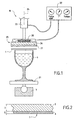
- the device 6 of packaging includes a belt conveyor 7 driven by two rollers 8; the glasses 9 arranged on the upper strand of the conveyor belt, are conveyed by it from station 10 of storage of empty glasses at glass storage station 11 full.
Landscapes
- Engineering & Computer Science (AREA)
- Mechanical Engineering (AREA)
- Chemical & Material Sciences (AREA)
- Dispersion Chemistry (AREA)
- Packages (AREA)
- Closures For Containers (AREA)
- Peptides Or Proteins (AREA)
- Distillation Of Fermentation Liquor, Processing Of Alcohols, Vinegar And Beer (AREA)
- Vacuum Packaging (AREA)
- Packging For Living Organisms, Food Or Medicinal Products That Are Sensitive To Environmental Conditiond (AREA)
- Immobilizing And Processing Of Enzymes And Microorganisms (AREA)
- Preparation Of Compounds By Using Micro-Organisms (AREA)
- Container Filling Or Packaging Operations (AREA)
- Alcoholic Beverages (AREA)
- Auxiliary Devices For And Details Of Packaging Control (AREA)
- Control And Other Processes For Unpacking Of Materials (AREA)
- General Preparation And Processing Of Foods (AREA)
Description
- un convoyeur de transport des verres,
- un poste de remplissage des verres par une boisson,
- un poste de fermeture du verre par thermoscellage d'un opercule,
- un poste de soufflage de gaz inerte comprenant de préférence du dioxyde de carbone et/ou un mélange d'azote et de dioxyde de carbone ou de mise sous vide,
- un poste 12 de remplissage du verre par un gaz inerte, de préférence du dioxyde de carbone ou un mélange de dioxyde de carbone et d'azote gazeux provenant d'un réservoir 13 ;
- un poste 14 de remplissage du verre par du vin provenant d'un conteneur 15 ;
- un poste de dépôt d'une capsule 1 sur le verre 9 plein ; ce dépôt est effectué par un manipulateur à ventouse (schématiquement représenté par la flèche 16) qui extrait les capsules une à une du magasin 17 ;
- un poste 18 de thermoscellage de la capsule (ou opercule) 1 sur le buvant du verre 9 ; et
- un poste 19 de post formage des bords de l'opercule pour les rabattre contre les parois du verre ; à cet effet ce poste comporte un vérin déplaçant un outil 20 de forme adaptée à celle du buvant du verre.
Claims (11)
- Procédé de conditionnement du vin ou boisson similaire dans un récipient en forme de verre à boire (9), qui est constitué de verre, dans lequel on ferme ledit récipient en verre par un opercule (1) jetable, procédé caractérisé en ce que la perméabilité globale à l'oxygène de l'opercule après thermoscellage sur ledit récipient est inférieure ou égale à 10cm3/m2/24heures, en ce que on appauvrit en oxygène l'atmosphère gazeuse emprisonnée dans le récipient, et en ce que on provoque une dépression dans le récipient.
- Procédé selon la revendication 1, dans lequel on choisit un opercule (1) comportant une couche (2) métallique revêtue d'une couche (4) de matière thermoplastique thermoscellable.
- Procédé selon la revendication 1 ou 2, dans lequel on remplit le verre de vin sous une atmosphère inerte comprenant du dioxyde de carbone.
- Procédé selon l'une quelconque des revendications 1 à 3, caractérisé en ce qu'on réduit la teneur en dioxyde de carbone dissout dans le vin avant conditionnement à une valeur inférieure à 400 mg/ml.
- Procédé selon l'une quelconque des revendications 1 à 3, caractérisé en ce qu'on réduit la teneur en dioxyde de carbone dissout dans le vin avant conditionnement à une valeur inférieure à 200 mg/ml.
- Procédé selon l'une quelconque des revendications 1 à 5, dans lequel on choisit un opercule dont la perméabilité globale à l'oxygène après fermeture sur ledit récipient est inférieure à 5 cm3 par m2 / 24 heures, et dans lequel on conditionne le vin sous une atmosphère inerte comprenant du dioxyde de carbone.
- Procédé selon la revendication 1 à 6, dans lequel pour la réalisation de l'opercule, on utilise un matériau stratifié comportant une couche d'aluminium pur revêtu d'une couche de polyéthylène.
- Procédé selon l'une quelconque des revendications 1 à 7, dans lequel l'épaisseur de la couche métallique est située dans une plage allant de 10 à 100 microns, et dans lequel l'épaisseur du film plastique est également située dans cette plage de valeurs.
- Procédé selon l'une quelconque des revendications 1 à 8, dans lequel on chauffe l'opercule jusqu'à une température maximale de 80°C à 180°C, en quelques secondes ou dixièmes de secondes.
- Procédé selon l'une quelconque des revendications 1 à 9, dans lequel on exerce un effort d'appui de l'opercule sur le verre qui est situé dans une plage allant de 10 à 250 décaNewtons, de préférence de 30 à 100 décaNewtons.
- Colis pouvant être obtenu par un procédé selon l'une des revendications 1 à 10, comportant du vin ou boisson similaire conditionné dans un récipient en forme verre à boire, l'atmosphère gazeuse présente dans le verre étant appauvrie en oxygène, caractérisé en ce que ledit récipient est constitué de verre et est obturé par une capsule ou opercule (1) thermo-adhérée dont la perméabilité globale à l'oxygène après thermoscellage est inférieure ou égale à 10 cm3/m2/24heures, et en ce que ladite atmosphère gazeuse à l'intérieur du récipient comprend du dioxyde de carbone et se trouve en dépression par rapport à l'atmosphère.
Applications Claiming Priority (3)
| Application Number | Priority Date | Filing Date | Title |
|---|---|---|---|
| FR9915593A FR2802177B1 (fr) | 1999-12-09 | 1999-12-09 | Procede de conditionnement de vin ou similaire, produits obtenus par ce procede et dispositif pour la mise en oeuvre du procede |
| FR9915593 | 1999-12-09 | ||
| PCT/FR2000/003416 WO2001042087A2 (fr) | 1999-12-09 | 2000-12-06 | Procede de conditionnement de vin ou boisson similaire, produits obtenus par ce procede et dispositif pour la mise en oeuvre du procede |
Publications (2)
| Publication Number | Publication Date |
|---|---|
| EP1235501A2 EP1235501A2 (fr) | 2002-09-04 |
| EP1235501B1 true EP1235501B1 (fr) | 2004-06-30 |
Family
ID=9553104
Family Applications (1)
| Application Number | Title | Priority Date | Filing Date |
|---|---|---|---|
| EP00988881A Expired - Lifetime EP1235501B1 (fr) | 1999-12-09 | 2000-12-06 | Procede de conditionnement de vin ou boisson similaire, produits obtenus par ce procede et dispositif pour la mise en oevre du procede |
Country Status (12)
| Country | Link |
|---|---|
| US (3) | US20030019364A1 (fr) |
| EP (1) | EP1235501B1 (fr) |
| JP (1) | JP2003516280A (fr) |
| AT (1) | ATE270064T1 (fr) |
| AU (1) | AU2523201A (fr) |
| CA (1) | CA2430159C (fr) |
| DE (1) | DE60011927T2 (fr) |
| ES (1) | ES2221867T3 (fr) |
| FR (1) | FR2802177B1 (fr) |
| PT (1) | PT1235501E (fr) |
| TR (1) | TR200402197T4 (fr) |
| WO (1) | WO2001042087A2 (fr) |
Cited By (3)
| Publication number | Priority date | Publication date | Assignee | Title |
|---|---|---|---|---|
| EP2256040A2 (fr) | 2009-04-14 | 2010-12-01 | Wine Innovations Ltd. | Remplissage et scellage de conteneurs pour boisson |
| CN102356028A (zh) * | 2009-03-16 | 2012-02-15 | 1/4葡萄酒公司 | 酒具、装酒方法和酒容器 |
| WO2012042188A1 (fr) | 2010-09-30 | 2012-04-05 | Wine Innovations Ltd | Remplissage et scellement de récipients de boisson |
Families Citing this family (19)
| Publication number | Priority date | Publication date | Assignee | Title |
|---|---|---|---|---|
| US20050139570A1 (en) * | 2003-06-04 | 2005-06-30 | Snapdragon | Sealed single serve containers for wine |
| USD509993S1 (en) | 2003-06-04 | 2005-09-27 | Snapdragon | Wine glass |
| US20040247749A1 (en) * | 2003-06-04 | 2004-12-09 | Snapdragon | Sealed single serve containers for wine |
| US20050129807A1 (en) * | 2003-12-12 | 2005-06-16 | Yuan James T.C. | Method and process of preserving alcoholic and carbonated beverage |
| BRPI0418632A (pt) * | 2004-03-04 | 2007-11-20 | Thomas Franck | método para tratamento de vinho, medir sua aptidão para envelhecimento e dispositivo para implementar dito método |
| FR2873276A1 (fr) | 2004-07-23 | 2006-01-27 | Eos Sarl | Recipient contenant au moins une dose d'un liquide a boire et procede de stockage d'un tel recipient |
| FR2887524A1 (fr) | 2005-06-23 | 2006-12-29 | 1 4 Vin Sarl | Moyen d'inertage a faible vitesse et dispositif mettant en oeuvre ce moyen d'inertage pour conditionner un produit alimentaire |
| WO2007056815A1 (fr) * | 2005-11-18 | 2007-05-24 | Refode Pty Ltd | Recipient pour boissons et procede de distribution de boissons |
| US20080023348A1 (en) * | 2006-07-28 | 2008-01-31 | Mystique Brands, Llc | Liquid seal arrangement for use in a pre-filled cocktail glass |
| US10604336B1 (en) | 2011-09-22 | 2020-03-31 | Celebrate Everywhere, LLC | Pre-filled wine glass product |
| US10791857B2 (en) | 2011-09-22 | 2020-10-06 | Celebrate Everywhere, LLC | Drinking vessel having engagement features and camouflaging non-engagement elements in intaglio |
| SG11201403508VA (en) * | 2011-12-23 | 2014-07-30 | Barokes Pty Ltd | Wine packaged in aluminium containers |
| FR3018513B1 (fr) | 2014-03-14 | 2016-08-26 | 1/4 Vin | Procede et dispositif de conditionnement de boisson |
| FR3022222B1 (fr) * | 2014-06-17 | 2019-04-12 | 1/4 Vin | Procede et dispositif de thermoscellage d'un opercule sur le buvant d'un verre |
| PT108225A (pt) * | 2015-02-13 | 2016-08-16 | Tomás Fraústo De Mascarenhas Gaivão João | Matéria plástica multicamadas com revestimento exterior de cortiça |
| FR3044000B1 (fr) | 2015-11-24 | 2017-12-15 | Gregoire Henry | Dispositif et procede d'echantillonnage d'un liquide |
| US10889411B2 (en) * | 2017-02-03 | 2021-01-12 | Berry Plastics Corporation | Container with lid and detachable lid collar |
| ES2880484T3 (es) * | 2018-05-18 | 2021-11-24 | Ken Coates | Un envase sellado para bebidas |
| IT201900007195A1 (it) * | 2019-05-24 | 2020-11-24 | Gd Spa | Stazione di tappatura di flaconi, in particolare per prodotti del settore farmaceutico. |
Family Cites Families (33)
| Publication number | Priority date | Publication date | Assignee | Title |
|---|---|---|---|---|
| US1739581A (en) * | 1926-05-03 | 1929-12-17 | Ellis Foster Co | Container and hood cap therefor |
| US1778937A (en) * | 1927-03-23 | 1930-10-21 | Ellis Foster Co | Beverage container |
| US2391354A (en) * | 1944-05-05 | 1945-12-18 | Continental Can Co | Method of testing filled sealed cans for leaks |
| US2542702A (en) * | 1947-05-29 | 1951-02-20 | Rca Corp | Dielectric heat sealer |
| US2753268A (en) * | 1952-07-24 | 1956-07-03 | Swift & Co | Cheese packaging |
| US2894844A (en) * | 1956-10-31 | 1959-07-14 | Pabst Brewing Co | Canning process and product |
| US2967777A (en) * | 1957-10-31 | 1961-01-10 | Paul E Grindrod | Method of packaging food products to inhibit growth of molds and bacteria |
| US2955045A (en) * | 1957-11-18 | 1960-10-04 | Nat Dairy Prod Corp | Packaging cheese |
| US3439587A (en) * | 1962-03-26 | 1969-04-22 | Grace W R & Co | Closure and methods and apparatus for making same |
| US3343331A (en) * | 1964-04-30 | 1967-09-26 | David M French | Method for cling packaging an object |
| US3393077A (en) * | 1964-12-04 | 1968-07-16 | Canada Packers Ltd | Packaging of comminuted meat products |
| US3922363A (en) * | 1971-03-17 | 1975-11-25 | Japan Foods Storage & Packagin | Method for packing free-flowing materials |
| US4109815A (en) * | 1976-12-08 | 1978-08-29 | Aluminum Company Of America | Induction heat sealed containers |
| US4389266A (en) * | 1981-02-10 | 1983-06-21 | Brockway Glass Co., Inc. | Preparation of glass container for thermoplastic closure |
| US4260438A (en) * | 1979-10-19 | 1981-04-07 | Brockway Glass Company, Inc. | Preparation of glass container for thermoplastic closure |
| GB2089191B (en) * | 1980-12-10 | 1985-03-20 | Toyo Seikan Kaisha Ltd | Method and apparatus for making a hermetically sealed food container |
| US4542029A (en) * | 1981-06-19 | 1985-09-17 | American Can Company | Hot filled container |
| US4396655A (en) * | 1982-03-08 | 1983-08-02 | Owens-Illinois, Inc. | Method of sealing a glass container with a thin membrane closure |
| AU546250B2 (en) * | 1982-11-19 | 1985-08-22 | Owens-Illinois Glass Container Inc. | Sealing a glass container with a thin closure |
| FR2572708B1 (fr) * | 1984-11-02 | 1990-02-09 | Jujo Paper Co Ltd | Recipient en papier pour liquides, et procede et appareil pour remplir et sceller ce recipient |
| FR2581027B1 (fr) * | 1985-04-29 | 1987-11-20 | Air Liquide | Procede d'inertage d'emballages etanches et installation de mise en oeuvre |
| FR2625179B1 (fr) * | 1987-12-29 | 1990-06-15 | Arques Verrerie Cristallerie | Conditionnement, tel que bouteille, bocal ou autre recipient et joint d'etancheite pour ledit conditionnement |
| DE3814937C1 (en) * | 1988-05-03 | 1989-06-22 | Gerhard 6370 Oberursel De Steuding | Vessel for wine or for drinks which contain wine or are similar to it |
| US5731023A (en) * | 1988-11-08 | 1998-03-24 | Valle Spluga S.P.A. | Method for packaging carbon dioxide absorbing food products |
| US5033254A (en) * | 1990-04-19 | 1991-07-23 | American National Can Company | Head-space calibrated liquified gas dispensing system |
| JPH05330515A (ja) * | 1992-05-25 | 1993-12-14 | Toppan Printing Co Ltd | 充填密封容器ヘッドスペースのガス置換方法 |
| GB2289252A (en) * | 1994-05-10 | 1995-11-15 | H & A Bottlers Ltd | Sealed drinking vessel containing a beverage |
| AUPM738494A0 (en) * | 1994-08-10 | 1994-09-01 | Quality Capital Management Limited | Alcoholic beverage container |
| FR2735003B1 (fr) * | 1995-06-08 | 1998-01-09 | Carvin Pascal | Conteneur pour une dose individuelle d'un liquide a boire |
| US5804237A (en) * | 1995-10-16 | 1998-09-08 | George B. Diamond | Method of and package for sterilized edible material |
| US6277422B1 (en) * | 1999-08-30 | 2001-08-21 | Regale Corporation | Beverage container and closure therefor which can serve as a coaster |
| NL1004001C2 (nl) * | 1996-09-11 | 1998-03-12 | Thomassen & Drijver | Werkwijze en inrichting voor het vullen en sluiten van een houder, alsmede met de werkwijze verkregen houder. |
| JPH1179246A (ja) * | 1997-09-04 | 1999-03-23 | Nagoya Seiraku Kk | 容器、容器の密封方法、および容器の密封装置 |
-
1999
- 1999-12-09 FR FR9915593A patent/FR2802177B1/fr not_active Expired - Fee Related
-
2000
- 2000-12-06 PT PT00988881T patent/PT1235501E/pt unknown
- 2000-12-06 EP EP00988881A patent/EP1235501B1/fr not_active Expired - Lifetime
- 2000-12-06 AT AT00988881T patent/ATE270064T1/de not_active IP Right Cessation
- 2000-12-06 DE DE60011927T patent/DE60011927T2/de not_active Expired - Fee Related
- 2000-12-06 JP JP2001543398A patent/JP2003516280A/ja active Pending
- 2000-12-06 ES ES00988881T patent/ES2221867T3/es not_active Expired - Lifetime
- 2000-12-06 AU AU25232/01A patent/AU2523201A/en not_active Abandoned
- 2000-12-06 TR TR2004/02197T patent/TR200402197T4/xx unknown
- 2000-12-06 WO PCT/FR2000/003416 patent/WO2001042087A2/fr not_active Ceased
- 2000-12-06 CA CA002430159A patent/CA2430159C/fr not_active Expired - Fee Related
- 2000-12-06 US US10/148,202 patent/US20030019364A1/en not_active Abandoned
-
2007
- 2007-09-05 US US11/850,066 patent/US20070294983A1/en not_active Abandoned
-
2009
- 2009-07-30 US US12/462,202 patent/US20100092623A1/en not_active Abandoned
Cited By (5)
| Publication number | Priority date | Publication date | Assignee | Title |
|---|---|---|---|---|
| CN102356028A (zh) * | 2009-03-16 | 2012-02-15 | 1/4葡萄酒公司 | 酒具、装酒方法和酒容器 |
| CN102356028B (zh) * | 2009-03-16 | 2013-07-17 | 1/4葡萄酒公司 | 酒具、装酒方法和酒容器 |
| EP2256040A2 (fr) | 2009-04-14 | 2010-12-01 | Wine Innovations Ltd. | Remplissage et scellage de conteneurs pour boisson |
| EP2256040A3 (fr) * | 2009-04-14 | 2011-10-12 | Wine Innovations Ltd. | Remplissage et scellage de conteneurs pour boisson |
| WO2012042188A1 (fr) | 2010-09-30 | 2012-04-05 | Wine Innovations Ltd | Remplissage et scellement de récipients de boisson |
Also Published As
| Publication number | Publication date |
|---|---|
| AU2523201A (en) | 2001-06-18 |
| CA2430159C (fr) | 2009-11-03 |
| WO2001042087A3 (fr) | 2001-12-27 |
| ATE270064T1 (de) | 2004-07-15 |
| US20030019364A1 (en) | 2003-01-30 |
| DE60011927T2 (de) | 2005-08-25 |
| US20100092623A1 (en) | 2010-04-15 |
| WO2001042087A2 (fr) | 2001-06-14 |
| JP2003516280A (ja) | 2003-05-13 |
| PT1235501E (pt) | 2004-10-29 |
| ES2221867T3 (es) | 2005-01-16 |
| FR2802177B1 (fr) | 2002-03-01 |
| CA2430159A1 (fr) | 2001-06-14 |
| EP1235501A2 (fr) | 2002-09-04 |
| US20070294983A1 (en) | 2007-12-27 |
| DE60011927D1 (de) | 2004-08-05 |
| FR2802177A1 (fr) | 2001-06-15 |
| TR200402197T4 (tr) | 2004-10-21 |
Similar Documents
| Publication | Publication Date | Title |
|---|---|---|
| EP1235501B1 (fr) | Procede de conditionnement de vin ou boisson similaire, produits obtenus par ce procede et dispositif pour la mise en oevre du procede | |
| EP0597741B1 (fr) | Récipient étanche au gaz | |
| EP2303571A1 (fr) | Scellage d'un opercule sur un recipient en verre | |
| NZ516801A (en) | A plastic beverage container with a peelable top with reduced headspace volume between the seal and the alcoholic beverage to exclude oxygen for long term storage | |
| FR2472381A1 (fr) | Dispositif de transvasement d'un produit medicinal adjuvant | |
| FR2572708A1 (fr) | Recipient en papier pour liquides, et procede et appareil pour remplir et sceller ce recipient | |
| EP2501616B1 (fr) | Procédé de conditionnement d'un produit liquide | |
| FR2613321A1 (fr) | Installation d'inertage d'emballages etanches pour produits alimentaires | |
| EP0678457A1 (fr) | Conteneur avec un dispositif de fermeture comportant un clapet et un bloc de matériau thermo-fusible | |
| FR2695108A1 (fr) | Emballage, procédé et dispositif de conditionnement pour produit liquide, solide ou pâteux pasteurisé ou stérilisé. | |
| EP1349793B1 (fr) | Dispositif de bouchage et recipient equipe d'un tel dispositif | |
| EP2938558B1 (fr) | Dispositif de transfert contrôlé de gaz ou de molécules gazeuses volatiles dans un récipient destiné à contenir un produit alimentaire liquide ou semi-liquide | |
| EP2068619B1 (fr) | Procede de conditionnement de cellules en culture, et conditionnement de cellules correspondant. | |
| FR2818615A1 (fr) | Installation de remplissage de recipients comportant une unite de nettoyage sous atmosphere inerte | |
| FR2638432A1 (fr) | Procede et dispositif pour ameliorer la conservation de tout produit sujet a l'oxydation et/ou l'evaporation par l'air | |
| EP3265389B1 (fr) | Boite de conserve a fond souple et procédé de fabrication correspondant | |
| FR2826948A1 (fr) | Procede de conditionnement, poste et installation correspondants | |
| EP2288689B1 (fr) | Procede de conditionnement de levure seche | |
| EP3126258A1 (fr) | Contenant pour liquide comportant une poche | |
| FR2617500A1 (fr) | Boite en matiere synthetique pour milieu de culture | |
| EP1751028B1 (fr) | Emballage pour aliments, conserve et procede pour obtenir et utiliser un tel emballage | |
| FR2795055A1 (fr) | Procede de conservation et conserves obtenues selon ce procede | |
| FR2867758A1 (fr) | Emballage longue conservation et procede pour obtenir un tel emballage | |
| FR3069233A1 (fr) | Boite de conserve a fond souple, fond souple de boite et procede de fabrication correspondant | |
| FR3011230A1 (fr) | Paquet d'articles enveloppes dans un film et procede de fabrication d'un tel paquet |
Legal Events
| Date | Code | Title | Description |
|---|---|---|---|
| PUAI | Public reference made under article 153(3) epc to a published international application that has entered the european phase |
Free format text: ORIGINAL CODE: 0009012 |
|
| 17P | Request for examination filed |
Effective date: 20020619 |
|
| AK | Designated contracting states |
Kind code of ref document: A2 Designated state(s): AT BE CH CY DE DK ES FI FR GB GR IE IT LI LU MC NL PT SE TR |
|
| AX | Request for extension of the european patent |
Free format text: AL;LT;LV;MK;RO;SI |
|
| 17Q | First examination report despatched |
Effective date: 20021017 |
|
| GRAP | Despatch of communication of intention to grant a patent |
Free format text: ORIGINAL CODE: EPIDOSNIGR1 |
|
| GRAS | Grant fee paid |
Free format text: ORIGINAL CODE: EPIDOSNIGR3 |
|
| GRAA | (expected) grant |
Free format text: ORIGINAL CODE: 0009210 |
|
| AK | Designated contracting states |
Kind code of ref document: B1 Designated state(s): AT BE CH CY DE DK ES FI FR GB GR IE IT LI LU MC NL PT SE TR |
|
| PG25 | Lapsed in a contracting state [announced via postgrant information from national office to epo] |
Ref country code: CY Free format text: LAPSE BECAUSE OF FAILURE TO SUBMIT A TRANSLATION OF THE DESCRIPTION OR TO PAY THE FEE WITHIN THE PRESCRIBED TIME-LIMIT Effective date: 20040630 Ref country code: IE Free format text: LAPSE BECAUSE OF FAILURE TO SUBMIT A TRANSLATION OF THE DESCRIPTION OR TO PAY THE FEE WITHIN THE PRESCRIBED TIME-LIMIT Effective date: 20040630 Ref country code: FI Free format text: LAPSE BECAUSE OF FAILURE TO SUBMIT A TRANSLATION OF THE DESCRIPTION OR TO PAY THE FEE WITHIN THE PRESCRIBED TIME-LIMIT Effective date: 20040630 |
|
| REG | Reference to a national code |
Ref country code: GB Ref legal event code: FG4D Free format text: NOT ENGLISH Ref country code: CH Ref legal event code: EP |
|
| REG | Reference to a national code |
Ref country code: IE Ref legal event code: FG4D Free format text: FRENCH |
|
| REF | Corresponds to: |
Ref document number: 60011927 Country of ref document: DE Date of ref document: 20040805 Kind code of ref document: P |
|
| REG | Reference to a national code |
Ref country code: CH Ref legal event code: NV Representative=s name: BOVARD AG PATENTANWAELTE |
|
| GBT | Gb: translation of ep patent filed (gb section 77(6)(a)/1977) |
Effective date: 20040817 |
|
| PG25 | Lapsed in a contracting state [announced via postgrant information from national office to epo] |
Ref country code: DK Free format text: LAPSE BECAUSE OF FAILURE TO SUBMIT A TRANSLATION OF THE DESCRIPTION OR TO PAY THE FEE WITHIN THE PRESCRIBED TIME-LIMIT Effective date: 20040930 Ref country code: SE Free format text: LAPSE BECAUSE OF FAILURE TO SUBMIT A TRANSLATION OF THE DESCRIPTION OR TO PAY THE FEE WITHIN THE PRESCRIBED TIME-LIMIT Effective date: 20040930 |
|
| REG | Reference to a national code |
Ref country code: GR Ref legal event code: EP Ref document number: 20040403057 Country of ref document: GR |
|
| REG | Reference to a national code |
Ref country code: PT Ref legal event code: SC4A Free format text: AVAILABILITY OF NATIONAL TRANSLATION Effective date: 20040819 |
|
| PG25 | Lapsed in a contracting state [announced via postgrant information from national office to epo] |
Ref country code: LU Free format text: LAPSE BECAUSE OF NON-PAYMENT OF DUE FEES Effective date: 20041206 |
|
| LTIE | Lt: invalidation of european patent or patent extension |
Effective date: 20040630 |
|
| PG25 | Lapsed in a contracting state [announced via postgrant information from national office to epo] |
Ref country code: MC Free format text: LAPSE BECAUSE OF NON-PAYMENT OF DUE FEES Effective date: 20041231 |
|
| REG | Reference to a national code |
Ref country code: ES Ref legal event code: FG2A Ref document number: 2221867 Country of ref document: ES Kind code of ref document: T3 |
|
| REG | Reference to a national code |
Ref country code: IE Ref legal event code: FD4D |
|
| PLBE | No opposition filed within time limit |
Free format text: ORIGINAL CODE: 0009261 |
|
| STAA | Information on the status of an ep patent application or granted ep patent |
Free format text: STATUS: NO OPPOSITION FILED WITHIN TIME LIMIT |
|
| 26N | No opposition filed |
Effective date: 20050331 |
|
| PGFP | Annual fee paid to national office [announced via postgrant information from national office to epo] |
Ref country code: NL Payment date: 20071122 Year of fee payment: 8 |
|
| PGFP | Annual fee paid to national office [announced via postgrant information from national office to epo] |
Ref country code: CH Payment date: 20071213 Year of fee payment: 8 Ref country code: AT Payment date: 20071119 Year of fee payment: 8 |
|
| PGFP | Annual fee paid to national office [announced via postgrant information from national office to epo] |
Ref country code: GR Payment date: 20071129 Year of fee payment: 8 Ref country code: PT Payment date: 20071120 Year of fee payment: 8 |
|
| PGFP | Annual fee paid to national office [announced via postgrant information from national office to epo] |
Ref country code: TR Payment date: 20071126 Year of fee payment: 8 |
|
| PGFP | Annual fee paid to national office [announced via postgrant information from national office to epo] |
Ref country code: ES Payment date: 20081222 Year of fee payment: 9 |
|
| PGFP | Annual fee paid to national office [announced via postgrant information from national office to epo] |
Ref country code: DE Payment date: 20081222 Year of fee payment: 9 |
|
| REG | Reference to a national code |
Ref country code: PT Ref legal event code: MM4A Free format text: LAPSE DUE TO NON-PAYMENT OF FEES Effective date: 20090608 |
|
| PGFP | Annual fee paid to national office [announced via postgrant information from national office to epo] |
Ref country code: GB Payment date: 20081222 Year of fee payment: 9 |
|
| PGFP | Annual fee paid to national office [announced via postgrant information from national office to epo] |
Ref country code: BE Payment date: 20090107 Year of fee payment: 9 |
|
| REG | Reference to a national code |
Ref country code: CH Ref legal event code: PL |
|
| PG25 | Lapsed in a contracting state [announced via postgrant information from national office to epo] |
Ref country code: PT Free format text: LAPSE BECAUSE OF NON-PAYMENT OF DUE FEES Effective date: 20090608 Ref country code: AT Free format text: LAPSE BECAUSE OF NON-PAYMENT OF DUE FEES Effective date: 20081206 |
|
| PGFP | Annual fee paid to national office [announced via postgrant information from national office to epo] |
Ref country code: IT Payment date: 20081230 Year of fee payment: 9 |
|
| NLV4 | Nl: lapsed or anulled due to non-payment of the annual fee |
Effective date: 20090701 |
|
| PG25 | Lapsed in a contracting state [announced via postgrant information from national office to epo] |
Ref country code: LI Free format text: LAPSE BECAUSE OF NON-PAYMENT OF DUE FEES Effective date: 20081231 Ref country code: CH Free format text: LAPSE BECAUSE OF NON-PAYMENT OF DUE FEES Effective date: 20081231 |
|
| PG25 | Lapsed in a contracting state [announced via postgrant information from national office to epo] |
Ref country code: NL Free format text: LAPSE BECAUSE OF NON-PAYMENT OF DUE FEES Effective date: 20090701 |
|
| PG25 | Lapsed in a contracting state [announced via postgrant information from national office to epo] |
Ref country code: GR Free format text: LAPSE BECAUSE OF NON-PAYMENT OF DUE FEES Effective date: 20090703 |
|
| BERE | Be: lapsed |
Owner name: *CARVIN PASCAL Effective date: 20091231 |
|
| GBPC | Gb: european patent ceased through non-payment of renewal fee |
Effective date: 20091206 |
|
| PG25 | Lapsed in a contracting state [announced via postgrant information from national office to epo] |
Ref country code: BE Free format text: LAPSE BECAUSE OF NON-PAYMENT OF DUE FEES Effective date: 20091231 |
|
| PG25 | Lapsed in a contracting state [announced via postgrant information from national office to epo] |
Ref country code: DE Free format text: LAPSE BECAUSE OF NON-PAYMENT OF DUE FEES Effective date: 20100701 |
|
| PG25 | Lapsed in a contracting state [announced via postgrant information from national office to epo] |
Ref country code: GB Free format text: LAPSE BECAUSE OF NON-PAYMENT OF DUE FEES Effective date: 20091206 |
|
| PG25 | Lapsed in a contracting state [announced via postgrant information from national office to epo] |
Ref country code: IT Free format text: LAPSE BECAUSE OF NON-PAYMENT OF DUE FEES Effective date: 20091206 |
|
| REG | Reference to a national code |
Ref country code: ES Ref legal event code: FD2A Effective date: 20110406 |
|
| PG25 | Lapsed in a contracting state [announced via postgrant information from national office to epo] |
Ref country code: ES Free format text: LAPSE BECAUSE OF NON-PAYMENT OF DUE FEES Effective date: 20110324 |
|
| PG25 | Lapsed in a contracting state [announced via postgrant information from national office to epo] |
Ref country code: TR Free format text: LAPSE BECAUSE OF NON-PAYMENT OF DUE FEES Effective date: 20100928 Ref country code: ES Free format text: LAPSE BECAUSE OF NON-PAYMENT OF DUE FEES Effective date: 20091207 |
|
| PG25 | Lapsed in a contracting state [announced via postgrant information from national office to epo] |
Ref country code: TR Free format text: LAPSE BECAUSE OF NON-PAYMENT OF DUE FEES Effective date: 20081206 |
|
| REG | Reference to a national code |
Ref country code: FR Ref legal event code: PLFP Year of fee payment: 16 |
|
| REG | Reference to a national code |
Ref country code: FR Ref legal event code: PLFP Year of fee payment: 17 |
|
| PGFP | Annual fee paid to national office [announced via postgrant information from national office to epo] |
Ref country code: FR Payment date: 20161214 Year of fee payment: 17 |
|
| REG | Reference to a national code |
Ref country code: FR Ref legal event code: ST Effective date: 20180831 |
|
| PG25 | Lapsed in a contracting state [announced via postgrant information from national office to epo] |
Ref country code: FR Free format text: LAPSE BECAUSE OF NON-PAYMENT OF DUE FEES Effective date: 20180102 |