EP1276384B1 - Black tea manufacture - Google Patents
Black tea manufacture Download PDFInfo
- Publication number
- EP1276384B1 EP1276384B1 EP01919447A EP01919447A EP1276384B1 EP 1276384 B1 EP1276384 B1 EP 1276384B1 EP 01919447 A EP01919447 A EP 01919447A EP 01919447 A EP01919447 A EP 01919447A EP 1276384 B1 EP1276384 B1 EP 1276384B1
- Authority
- EP
- European Patent Office
- Prior art keywords
- tea
- ctc
- leaves
- leaf
- dhool
- Prior art date
- Legal status (The legal status is an assumption and is not a legal conclusion. Google has not performed a legal analysis and makes no representation as to the accuracy of the status listed.)
- Expired - Lifetime
Links
- 244000269722 Thea sinensis Species 0.000 title claims description 134
- 238000004519 manufacturing process Methods 0.000 title claims description 21
- 235000006468 Thea sinensis Nutrition 0.000 title claims description 13
- 235000020279 black tea Nutrition 0.000 title claims description 11
- 235000013616 tea Nutrition 0.000 claims description 145
- 238000000034 method Methods 0.000 claims description 92
- 230000008569 process Effects 0.000 claims description 73
- 239000000203 mixture Substances 0.000 claims description 30
- SNICXCGAKADSCV-UHFFFAOYSA-N nicotine Chemical compound CN1CCCC1C1=CC=CN=C1 SNICXCGAKADSCV-UHFFFAOYSA-N 0.000 claims description 15
- 238000001035 drying Methods 0.000 claims description 13
- 239000000796 flavoring agent Substances 0.000 claims description 11
- 235000019634 flavors Nutrition 0.000 claims description 11
- 108010038851 tannase Proteins 0.000 claims description 10
- 238000002156 mixing Methods 0.000 claims description 8
- 238000005096 rolling process Methods 0.000 claims description 7
- MHAJPDPJQMAIIY-UHFFFAOYSA-N Hydrogen peroxide Chemical compound OO MHAJPDPJQMAIIY-UHFFFAOYSA-N 0.000 claims description 4
- 230000002879 macerating effect Effects 0.000 claims description 2
- 238000000855 fermentation Methods 0.000 description 37
- 230000004151 fermentation Effects 0.000 description 37
- LNTHITQWFMADLM-UHFFFAOYSA-N gallic acid Chemical compound OC(=O)C1=CC(O)=C(O)C(O)=C1 LNTHITQWFMADLM-UHFFFAOYSA-N 0.000 description 28
- 235000014620 theaflavin Nutrition 0.000 description 27
- CURLTUGMZLYLDI-UHFFFAOYSA-N Carbon dioxide Chemical compound O=C=O CURLTUGMZLYLDI-UHFFFAOYSA-N 0.000 description 13
- 235000004515 gallic acid Nutrition 0.000 description 13
- 229940074391 gallic acid Drugs 0.000 description 13
- 239000000428 dust Substances 0.000 description 12
- 239000002245 particle Substances 0.000 description 11
- 239000000047 product Substances 0.000 description 11
- 235000005487 catechin Nutrition 0.000 description 10
- ADRVNXBAWSRFAJ-UHFFFAOYSA-N catechin Natural products OC1Cc2cc(O)cc(O)c2OC1c3ccc(O)c(O)c3 ADRVNXBAWSRFAJ-UHFFFAOYSA-N 0.000 description 10
- 108090000790 Enzymes Proteins 0.000 description 9
- 102000004190 Enzymes Human genes 0.000 description 9
- IPMYMEWFZKHGAX-UHFFFAOYSA-N Isotheaflavin Natural products OC1CC2=C(O)C=C(O)C=C2OC1C(C1=C2)=CC(O)=C(O)C1=C(O)C(=O)C=C2C1C(O)CC2=C(O)C=C(O)C=C2O1 IPMYMEWFZKHGAX-UHFFFAOYSA-N 0.000 description 9
- UXRMWRBWCAGDQB-UHFFFAOYSA-N Theaflavin Natural products C1=CC(C2C(CC3=C(O)C=C(O)C=C3O2)O)=C(O)C(=O)C2=C1C(C1OC3=CC(O)=CC(O)=C3CC1O)=CC(O)=C2O UXRMWRBWCAGDQB-UHFFFAOYSA-N 0.000 description 9
- 238000004458 analytical method Methods 0.000 description 9
- IPMYMEWFZKHGAX-ZKSIBHASSA-N theaflavin Chemical compound C1=C2C([C@H]3OC4=CC(O)=CC(O)=C4C[C@H]3O)=CC(O)=C(O)C2=C(O)C(=O)C=C1[C@@H]1[C@H](O)CC2=C(O)C=C(O)C=C2O1 IPMYMEWFZKHGAX-ZKSIBHASSA-N 0.000 description 9
- 229940026509 theaflavin Drugs 0.000 description 9
- 150000001765 catechin Chemical class 0.000 description 8
- 238000001802 infusion Methods 0.000 description 8
- 239000003039 volatile agent Substances 0.000 description 8
- 230000003993 interaction Effects 0.000 description 7
- 239000000463 material Substances 0.000 description 7
- QTBSBXVTEAMEQO-UHFFFAOYSA-N Acetic acid Chemical compound CC(O)=O QTBSBXVTEAMEQO-UHFFFAOYSA-N 0.000 description 6
- OKKJLVBELUTLKV-UHFFFAOYSA-N Methanol Chemical compound OC OKKJLVBELUTLKV-UHFFFAOYSA-N 0.000 description 6
- 239000001569 carbon dioxide Substances 0.000 description 6
- 229910002092 carbon dioxide Inorganic materials 0.000 description 6
- 238000012545 processing Methods 0.000 description 6
- 230000008901 benefit Effects 0.000 description 5
- 239000000758 substrate Substances 0.000 description 5
- 238000011282 treatment Methods 0.000 description 5
- XLYOFNOQVPJJNP-UHFFFAOYSA-N water Substances O XLYOFNOQVPJJNP-UHFFFAOYSA-N 0.000 description 5
- CIWBSHSKHKDKBQ-JLAZNSOCSA-N Ascorbic acid Chemical compound OC[C@H](O)[C@H]1OC(=O)C(O)=C1O CIWBSHSKHKDKBQ-JLAZNSOCSA-N 0.000 description 4
- 230000000694 effects Effects 0.000 description 4
- 239000007788 liquid Substances 0.000 description 4
- 238000002803 maceration Methods 0.000 description 4
- HNSDLXPSAYFUHK-UHFFFAOYSA-N 1,4-bis(2-ethylhexyl) sulfosuccinate Chemical compound CCCCC(CC)COC(=O)CC(S(O)(=O)=O)C(=O)OCC(CC)CCCC HNSDLXPSAYFUHK-UHFFFAOYSA-N 0.000 description 3
- WEVYAHXRMPXWCK-UHFFFAOYSA-N Acetonitrile Chemical compound CC#N WEVYAHXRMPXWCK-UHFFFAOYSA-N 0.000 description 3
- RTZKZFJDLAIYFH-UHFFFAOYSA-N Diethyl ether Chemical compound CCOCC RTZKZFJDLAIYFH-UHFFFAOYSA-N 0.000 description 3
- QVGXLLKOCUKJST-UHFFFAOYSA-N atomic oxygen Chemical compound [O] QVGXLLKOCUKJST-UHFFFAOYSA-N 0.000 description 3
- 230000009286 beneficial effect Effects 0.000 description 3
- 238000005520 cutting process Methods 0.000 description 3
- 239000012530 fluid Substances 0.000 description 3
- 229930182470 glycoside Natural products 0.000 description 3
- 150000002338 glycosides Chemical class 0.000 description 3
- 230000001590 oxidative effect Effects 0.000 description 3
- 239000001301 oxygen Substances 0.000 description 3
- 229910052760 oxygen Inorganic materials 0.000 description 3
- 230000001953 sensory effect Effects 0.000 description 3
- 239000002904 solvent Substances 0.000 description 3
- PFTAWBLQPZVEMU-DZGCQCFKSA-N (+)-catechin Chemical compound C1([C@H]2OC3=CC(O)=CC(O)=C3C[C@@H]2O)=CC=C(O)C(O)=C1 PFTAWBLQPZVEMU-DZGCQCFKSA-N 0.000 description 2
- 240000006914 Aspalathus linearis Species 0.000 description 2
- 235000012984 Aspalathus linearis Nutrition 0.000 description 2
- 102000030523 Catechol oxidase Human genes 0.000 description 2
- 108010031396 Catechol oxidase Proteins 0.000 description 2
- 241000037488 Coccoloba pubescens Species 0.000 description 2
- 241000196324 Embryophyta Species 0.000 description 2
- OFBQJSOFQDEBGM-UHFFFAOYSA-N Pentane Chemical compound CCCCC OFBQJSOFQDEBGM-UHFFFAOYSA-N 0.000 description 2
- ZEASWHWETFMWCV-ISBUVJFSSA-N Theaflavin 3,3'-digallate Chemical compound O([C@@H]1CC2=C(O)C=C(C=C2O[C@@H]1C=1C2=CC(=CC(=O)C(O)=C2C(O)=C(O)C=1)[C@@H]1[C@@H](CC2=C(O)C=C(O)C=C2O1)OC(=O)C=1C=C(O)C(O)=C(O)C=1)O)C(=O)C1=CC(O)=C(O)C(O)=C1 ZEASWHWETFMWCV-ISBUVJFSSA-N 0.000 description 2
- 230000009471 action Effects 0.000 description 2
- 239000000654 additive Substances 0.000 description 2
- 230000000996 additive effect Effects 0.000 description 2
- 229950001002 cianidanol Drugs 0.000 description 2
- 150000001875 compounds Chemical class 0.000 description 2
- 238000002474 experimental method Methods 0.000 description 2
- 238000000605 extraction Methods 0.000 description 2
- 238000010304 firing Methods 0.000 description 2
- 239000008187 granular material Substances 0.000 description 2
- 238000004128 high performance liquid chromatography Methods 0.000 description 2
- 230000035939 shock Effects 0.000 description 2
- 241000894007 species Species 0.000 description 2
- 239000000126 substance Substances 0.000 description 2
- 238000010257 thawing Methods 0.000 description 2
- 235000008118 thearubigins Nutrition 0.000 description 2
- 235000003884 Aspalathus contaminatus Nutrition 0.000 description 1
- UXVMQQNJUSDDNG-UHFFFAOYSA-L Calcium chloride Chemical class [Cl-].[Cl-].[Ca+2] UXVMQQNJUSDDNG-UHFFFAOYSA-L 0.000 description 1
- 235000014143 Camellia sinensis var assamica Nutrition 0.000 description 1
- 240000008441 Camellia sinensis var. assamica Species 0.000 description 1
- ZZZCUOFIHGPKAK-UHFFFAOYSA-N D-erythro-ascorbic acid Natural products OCC1OC(=O)C(O)=C1O ZZZCUOFIHGPKAK-UHFFFAOYSA-N 0.000 description 1
- KCXVZYZYPLLWCC-UHFFFAOYSA-N EDTA Chemical compound OC(=O)CN(CC(O)=O)CCN(CC(O)=O)CC(O)=O KCXVZYZYPLLWCC-UHFFFAOYSA-N 0.000 description 1
- 108090000371 Esterases Proteins 0.000 description 1
- LFQSCWFLJHTTHZ-UHFFFAOYSA-N Ethanol Chemical compound CCO LFQSCWFLJHTTHZ-UHFFFAOYSA-N 0.000 description 1
- OEIJRRGCTVHYTH-UHFFFAOYSA-N Favan-3-ol Chemical compound OC1CC2=CC=CC=C2OC1C1=CC=CC=C1 OEIJRRGCTVHYTH-UHFFFAOYSA-N 0.000 description 1
- CITFYDYEWQIEPX-UHFFFAOYSA-N Flavanol Natural products O1C2=CC(OCC=C(C)C)=CC(O)=C2C(=O)C(O)C1C1=CC=C(O)C=C1 CITFYDYEWQIEPX-UHFFFAOYSA-N 0.000 description 1
- 108010031186 Glycoside Hydrolases Proteins 0.000 description 1
- 102000005744 Glycoside Hydrolases Human genes 0.000 description 1
- 101000600766 Homo sapiens Podoplanin Proteins 0.000 description 1
- 101000914496 Homo sapiens T-cell antigen CD7 Proteins 0.000 description 1
- 108700020962 Peroxidase Proteins 0.000 description 1
- 102000003992 Peroxidases Human genes 0.000 description 1
- 102100027208 T-cell antigen CD7 Human genes 0.000 description 1
- 229930003268 Vitamin C Natural products 0.000 description 1
- 238000009825 accumulation Methods 0.000 description 1
- 239000003963 antioxidant agent Substances 0.000 description 1
- 235000006708 antioxidants Nutrition 0.000 description 1
- 125000003118 aryl group Chemical group 0.000 description 1
- 235000010323 ascorbic acid Nutrition 0.000 description 1
- 239000011668 ascorbic acid Substances 0.000 description 1
- 229960005070 ascorbic acid Drugs 0.000 description 1
- 235000011089 carbon dioxide Nutrition 0.000 description 1
- 210000004027 cell Anatomy 0.000 description 1
- 210000002421 cell wall Anatomy 0.000 description 1
- 238000006243 chemical reaction Methods 0.000 description 1
- 239000003086 colorant Substances 0.000 description 1
- 238000011437 continuous method Methods 0.000 description 1
- KVFDZFBHBWTVID-UHFFFAOYSA-N cyclohexanecarbaldehyde Chemical compound O=CC1CCCCC1 KVFDZFBHBWTVID-UHFFFAOYSA-N 0.000 description 1
- 239000008367 deionised water Substances 0.000 description 1
- 230000001419 dependent effect Effects 0.000 description 1
- 238000001514 detection method Methods 0.000 description 1
- 239000012467 final product Substances 0.000 description 1
- 235000011987 flavanols Nutrition 0.000 description 1
- 230000008014 freezing Effects 0.000 description 1
- 238000007710 freezing Methods 0.000 description 1
- 239000007789 gas Substances 0.000 description 1
- 235000009569 green tea Nutrition 0.000 description 1
- 238000010438 heat treatment Methods 0.000 description 1
- 230000007062 hydrolysis Effects 0.000 description 1
- 238000006460 hydrolysis reaction Methods 0.000 description 1
- 238000010348 incorporation Methods 0.000 description 1
- 230000000977 initiatory effect Effects 0.000 description 1
- 238000002347 injection Methods 0.000 description 1
- 239000007924 injection Substances 0.000 description 1
- 230000010354 integration Effects 0.000 description 1
- 239000004570 mortar (masonry) Substances 0.000 description 1
- 230000003647 oxidation Effects 0.000 description 1
- 238000007254 oxidation reaction Methods 0.000 description 1
- 239000008188 pellet Substances 0.000 description 1
- 239000000843 powder Substances 0.000 description 1
- 230000009467 reduction Effects 0.000 description 1
- 230000004044 response Effects 0.000 description 1
- 235000020330 rooibos tea Nutrition 0.000 description 1
- 239000000243 solution Substances 0.000 description 1
- 238000001228 spectrum Methods 0.000 description 1
- 238000003860 storage Methods 0.000 description 1
- 239000006228 supernatant Substances 0.000 description 1
- 239000012134 supernatant fraction Substances 0.000 description 1
- FJYGFTHLNNSVPY-BBXLVSEPSA-N theaflavin digallate Chemical compound C1=C([C@@H]2[C@@H](CC3=C(O)C=C(O)C=C3O2)O)C=C(OC(=O)C=2C=C(O)C(O)=C(O)C=2)C(=O)C2=C1C([C@H]1OC3=CC(O)=CC(O)=C3C[C@H]1O)=CC(O)=C2OC(=O)C1=CC(O)=C(O)C(O)=C1 FJYGFTHLNNSVPY-BBXLVSEPSA-N 0.000 description 1
- 238000012546 transfer Methods 0.000 description 1
- 230000000007 visual effect Effects 0.000 description 1
- 235000019154 vitamin C Nutrition 0.000 description 1
- 239000011718 vitamin C Substances 0.000 description 1
Images


Classifications
-
- A—HUMAN NECESSITIES
- A23—FOODS OR FOODSTUFFS; TREATMENT THEREOF, NOT COVERED BY OTHER CLASSES
- A23F—COFFEE; TEA; THEIR SUBSTITUTES; MANUFACTURE, PREPARATION, OR INFUSION THEREOF
- A23F3/00—Tea; Tea substitutes; Preparations thereof
- A23F3/06—Treating tea before extraction; Preparations produced thereby
- A23F3/08—Oxidation; Fermentation
- A23F3/10—Fermentation with addition of microorganisms or enzymes
-
- A—HUMAN NECESSITIES
- A23—FOODS OR FOODSTUFFS; TREATMENT THEREOF, NOT COVERED BY OTHER CLASSES
- A23F—COFFEE; TEA; THEIR SUBSTITUTES; MANUFACTURE, PREPARATION, OR INFUSION THEREOF
- A23F3/00—Tea; Tea substitutes; Preparations thereof
- A23F3/06—Treating tea before extraction; Preparations produced thereby
- A23F3/08—Oxidation; Fermentation
-
- C—CHEMISTRY; METALLURGY
- C12—BIOCHEMISTRY; BEER; SPIRITS; WINE; VINEGAR; MICROBIOLOGY; ENZYMOLOGY; MUTATION OR GENETIC ENGINEERING
- C12Y—ENZYMES
- C12Y301/00—Hydrolases acting on ester bonds (3.1)
- C12Y301/01—Carboxylic ester hydrolases (3.1.1)
- C12Y301/0102—Tannase (3.1.1.20)
Definitions
- the present invention relates to tea processing, or more specifically, a process for manufacturing a black leaf tea that resembles orthodox processed tea but possesses infusion characteristics more akin to CTC processed tea.
- Leaf tea may be prepared as green leaf tea or black leaf tea.
- Camellia sinensis are withered (subjected to mild drying), comminuted, fermented (in which process enzymes in the tea leaf use atmospheric oxygen to oxidise various substrates to produce brown-coloured products) and then fired (to dry the tea leaves). Green leaf tea is not exposed to the fermentation process. Partial fermentation may be used to produce intermediate-type teas known as "oolong" tea.
- orthodox manufacture involves rolling preweighed batches of withered tea leaves prior to fermenting, firing and drying steps.
- orthodox tea is typically characterised by leaf particles that are aesthetically pleasing to many (resemble dried leaves rather than “granules” of CTC tea - see below) but produce lighter liquors due to less extensive fermentation.
- the second method is the most popular of a number of non-orthodox, continuous methods that involves using a machine resembling a mangle that cuts, tears and curls tea leaves.
- the original machine was invented by W. McKercher in 1930 and is commonly referred to as a CTC (cut-tear-curl) machine.
- the finely cut product is known generically as "CTC tea” and is characterised by a fast infusion rate and strong colour. This method tends to produce tea that is more consistent and uniform in quality and than the orthodox method.
- the present inventors have developed a third method for manufacturing black leaf teas that resemble orthodox processed tea but infuse like CTC processed tea.
- This method provides at least a useful alternative to those methods, and has the advantage of potentially utilising existing tea manufacturing equipment (but in a novel fashion; although novel equipment can also be utilised to roll and/or mix the two dhool streams).
- the present invention relates to a process for manufacturing black tea comprising the steps of: withering a first supply of freshly plucked tea leaves, macerating the withered leaves, allowing the macerated withered leaves to ferment to produce macerated dhool; withering a second supply of freshly plucked tea leaves; mixing the macerated dhool obtained from said first supply of leaves with the withered leaves obtained from said second supply of leaves, rolling the mixture, allowing the rolled mixture to ferment; and drying the fermented mixture to yield black leaf tea.
- Black leaf tea made in this way resembles orthodox processed leaf tea but infuses in freshly boiled water at a rate in excess of that of the equivalent mass of the same size grade tea that has undergone orthodox processing.
- the tea preferably infuses at a rate that is comparable to that of the equivalent mass of the same tea that has undergone CTC processing.
- the first supply of freshly plucked tea leaves is preferably macerated using a CTC machine. It is especially preferable to pass the leaves through a rotorvane machine and then a CTC machine.
- the macerated dhool preferably comprises between 10 and 50% of the mixture on a dry weight basis, especially between 15 and 40%, more especially about 35%.
- the mixture of the macerated dhool obtained from said first supply of leaves and the withered leaves obtained from said second supply of leaves is preferably rolled using a rotorvane machine.
- Tea for the purposes of the present invention means leaf material from Camellia sinensis or Camellia assamica. It also includes rooibos tea obtained from Aspalathus linearis however that is a poor source of endogenous fermenting enzymes. "Tea” is also intended to include the product of blending two or more of any of these teas.
- Leaf tea means tea that contains one or more tea origins in an uninfused form.
- Black leaf tea means substantially fermented leaf tea.
- the process of the present invention combines steps normally associated with CTC manufacture with those normally associated with orthodox manufacture in a way that allows the consumer to enjoy the best of both worlds.
- a first supply of freshly plucked tea leaves (so called green leaf) is withered in a conventional manner. This involves storing the tea leaves for a period of time, usually perhaps up to 24 hours, during which time they undergo various biochemical and physical changes and typically lose moisture (from about 74 to 85% in freshly plucked leaves, depending on the climate and the amount of surface moisture, to between 68% or less up to 74 to 78%).
- the withered leaves are then macerated by some suitable means. This involves cutting and tearing the leaves in order to liberate the fermentable substrates and fermenting enzymes such as polyphenol oxidase (PPO) that are contained in the plant cells and tissue.
- CTC cut-tear-curl machines are typically used for this purpose and are the machines of choice for the present inventors too. It is preferable to pass the leaves thorough a rotorvane machine first as the rolling and coarse cutting that is gives conditions the leaves for a more fine cutting and tearing by the CTC machine.
- the macerated leaves are then left to ferment.
- Fermentation is commonly used in the context of brewing alcohol to describe the action of exogenous enzymes.
- tea world it is used to refer to the oxidative process that tea undergoes when certain endogenous enzymes and substrates are brought together following the disruption of the cell walls and tissues. During this process colourless catechins in the leaves are converted to a complex mixture of yellow and orange to dark-brown substances and a large number of aromatic volatile compounds are also produced.
- the macerated leaves should preferably be allowed to ferment for at least 30 minutes, more preferably at least 90 minutes, and ideally for 100 to 160 minutes. Leaving the leaves to ferment for longer than three hours can detrimentally effect the quality of the final product. It can also have cost implications. These times are dependent on the ambient temperatures, but are comparable to conventional times for fermentation of CTC tea.
- Fermentation is preferably conducted at ambient temperature, i.e. about 25 °C, although 18 °C or even 15 °C can be suitable. If desired, fermentation can be accelerated at slightly higher temperatures such as 30 to 40 °C.
- the use of an oxygen-enriched atmosphere in a fermentation vessel is also beneficial.
- the mass of fermented leaf macerate is known as known as dhool. It typically has a high moisture content, for example about 62 to 74%.
- the dhool can be treated with tannase (flavanol gallate esterase) to generate degallated catechins and gallic acid (which subsequently leads to the generation of high levels of theaflavins and non-gallated thearubigins during fermentation) or treated with tannase followed by hydrogen peroxide in a quantity that is sufficient for the endogenous peroxidases to oxidise gallic acid liberated by the tannase treatment.
- tannase flanol gallate esterase
- hydrogen peroxide in a quantity that is sufficient for the endogenous peroxidases to oxidise gallic acid liberated by the tannase treatment.
- a second supply of freshly plucked tea leaves is withered in a conventional manner, preferably to a moisture level of 62 to 68% (that is a "harder” wither than the leaf in the first stream).
- Such a method is described in our international patent application WO 00/10401.
- a further alternative method of disrupting the leaves and initiating fermentation of rolled leaves is to subject the leaves to cycles of freezing and thawing.
- the withered leaves obtained from the second supply of tea leaves are mixed with the fermented dhool that has been obtained from the first supply of tea leaves.
- the macerated dhool preferably comprises between 10 and 50% of the mixture on a dry weight basis, especially between 15 and 40%, more especially about 35%.
- the mixture is then rolled (as opposed to macerated) using machinery that one might otherwise use to manufacture orthodox tea.
- a rotorvane machine is ideally suited to this purpose. It is also envisaged that alternative equipment (such as an extruder) could perform this task, performing the key actions of mixing and squeezing/rolling the dhool and withered leaves.
- the rolled mixture is left to ferment.
- the present inventors have found that the mixture should be left to ferment for at least more than one hour, preferably more than two hours but again not more than 3 hours.
- a fermentation time of about 140 minutes is especially preferred.
- the fermentation is preferably conducted at ambient temperature, i.e. about 25 °C, although 18 °C or even 15 °C can be suitable. If desired, fermentation can be accelerated at slightly higher temperatures such as 30 to 40 °C.
- the use of an oxygen-enriched atmosphere in a fermentation vessel is also beneficial.
- Example 2 illustrates the advantage of "co-rolling" CTC dhool and withered leaf, with the generation of greater than expected levels of theaflavins (one of the key components of black tea liquors).
- An additional benefit from the process of the present invention is that smaller grades of tea tend to be generated. Those grades have been assessed by professional tea tasters and judged to deliver a surprising combination of colour and quality, both being very high. In conventional black tea manufacture such colour only tends to be found in small particles made using the CTC method, usually in combination with a long fermentation time and/or fermentation at high temperature. However under those conditions the tea tends to be of low quality, i.e. often dull and lacking flavour).
- the mixture can be sifted or sieved prior to drying, and any material judged to be larger then required can be either rolled again or cut in any fashion to reduce its size.
- the fermented mixture is fired and dried to yield a black leaf tea that resembles orthodox processed leaf tea but infuses in freshly boiled water at a rate in excess of that of the equivalent mass of the same tea that has undergone orthodox processing.
- the tea preferably infuses at a rate that is comparable to that of the equivalent mass of the same tea that has undergone CTC processing.
- the firing involves heating and drying the tea to destroy the fermenting enzymes and thereby arrest fermentation. It results in a reduction of moisture content to below 5%, and also leads to further chemical/biochemical oxidation and changes in tea aroma. This generally involves exposing the tea to a blast of hot, dry air in a dryer, for example a fluid bed dryer.
- the black leaf tea that is manufactured by the process of the present invention can be blended with traditionally processed black tea or tea granules in order to meet predetermined liquor characteristics.
- Black leaf tea was manufactured according by the process of the invention (Process A; Figure 1). Certain characteristics of infusions made from that tea were judged by a panel of experienced tea tasters (using the ISO methods for tea tasting, where each attribute is scored on a scale of 0.6 to 9.4, with differences of 0.2 being judged as significant) against the characteristics of infusions made from black leaf teas that were manufactured by the same process without any addition of CTC fermented dhool (Process B) and the same process with tea dust added rather than CTC fermented dhool (Process C).
- Process A the first supply of leaf was withered to a moisture content of 72%, macerated by passing through three CTC machines and fermented for 140 minutes at 22 °C. This was mixed with a second supply of withered leaf (68% moisture content), in a ratio of 35% CTC dhool : 65% withered leaf (dry weight basis). The mixture was passed through a 15" rotorvane, and then fermented for 140 minutes at 22 °C, before drying in a conventional fluid bed dryer.
- Process B was the same as A but with no addition of CTC dhool (i.e. 100% withered leaf passed through the rotorvane).
- Process C was the same as A but with 35% wetted primary grade CTC dust (i.e. good quality material that had been dried and sorted as in conventional tea manufacture) added in place of the CTC fermented dhool.
- CTC dust i.e. good quality material that had been dried and sorted as in conventional tea manufacture
- Colour scores virtually match the CTC tea (4.2 vs. 4.4), compared to 3.2 where dust was used and only 2.6 for rotorvane only tea.
- the quality score which includes an assessment of flavour, also matches the target blend (the rotorvane only tea scores higher here, as expected due to the naturally higher flavours seen in rolled, orthodox-type teas).
- adding dhool rather than wetted dust gives a significant advantage in terms of colour delivery (due to the biochemical interactions discussed earlier).
- Figure 2 shows infusion curves as measured by colour delivery (2 g tea infused in 200 ml water at 90 °C, infusion monitored at 445 nm) of a range of teas manufactured according to the process of the present invention (as in A above), with levels of CTC dhool addition ranging from 0 to 40%.
- the benefit of adding CTC dhool can clearly be seen, with a step-change in colour delivery, which increases with increasing percentage CTC dhool addition.
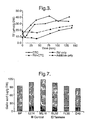
- Black leaf tea was manufactured according to the process of the invention (Process A), by the same process minus the addition of fermented CTC dhool (Process B), and by a standard CTC method (Process C). Starting green leaf was from the same batch for all three manufacturing runs. Levels of theaflavins (TF) were analysed throughout fermentation. Theaflavins are key components of black tea liquors, being generated during oxidative reactions in fermentation, contributing to both liquor appearance (colour and brightness) and taste.
- Process A the first supply of leaf was withered to a moisture content of 72%, macerated by passing through three CTC machines and fermented for 140 minutes at 22 °C.
- the fermented macerated leaves were mixed with a second supply of withered leaf (68% moisture content), in a ratio of 35% CTC dhool : 65% withered leaf (dry weight basis).
- the mixture was passed through a 15" rotorvane, and then fermented for 140 minutes at 22 °C, before drying in a conventional fluid bed dryer.
- Process B was the same but with no addition of CTC dhool (i.e. 100% withered leaf passed through the rotorvane).
- Process C the leaves were withered to a moisture content of 72%, macerated by passing through three CTC machines and fermented for 140 minutes at 22 °C.
- Figure 3 shows levels of total theaflavins or TFs (i.e. theaflavin, theaflavin 3 monogallate, theaflavin 3'monogallate and theaflavin digallate) through fermentation.
- Theaflavins accumulated at a faster rate and to a higher end level when leaf was manufactured according to Processes A and C than when manufactured by Process B.
- Processes A and C Given that theaflavin species contribute significantly to liquor colour, this data supports tasting results from Example 1 showing that addition of fermented CTC dhool before rotorvane maceration leads to enhancement of infusion colour.
- the inventors speculate that this unexpected increase in theaflavins may be due to either addition of extra oxidative enzymes in the CTC dhool and/or a physical disruption of rotorvaned leaf by the CTC particles, leading to an enhanced rate of fermentation
- Samples of approximately 10 g fresh weight dhool were taken at various points through fermentation and quick frozen on dry ice before being freeze-dried. Freeze-dried material was ground to a fine powder in a pestle and mortar. Approximately 0.2 g ground material was extracted with 5 ml 70% (v/v) methanol for 10 minutes at 70 °C, cooled and centrifuged at 2,500 rpm for 10 minutes. The supernatant was decanted and the pellet re-extracted. The two supernatant fractions were then combined, made up to 10 ml with 70% methanol before the addition of 250 ppm EDTA and 250 ppm ascorbic acid to stabilise the sample.
- High Performance Liquid Chromatography was performed on a DIONEX TM system with a AS3500 autosampler and GP40 gradient pump.
- a photodiode array detector (DIONEX PD40) was used to record spectra of compounds eluting from the column on-line. Peak purity, identification and integration were carried out on DIONEX EZChrom TM software (version 2).
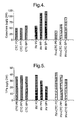
- Catechin and theaflavin analysis was also performed on various fractions of the made teas from these trials. The results are shown in Table 3 below and Figures 4 and 5. Analysis of catechins and theaflavins Method Catechins ⁇ g/g DW Theaflavins ⁇ g/g DW CTC PD 50.00 36.30 CTC PF1 50.04 38.22 CTC BP1 60.01 36.26 RV PD 58.39 38.77 RV PF1 113.62 29.99 PV BP1 120.66 21.26 RV + CTC PD 38.08 42.45 RV + CTC PF1 64.91 38.63 RV + CTC BP1 93.94 31.93
- Example 2 The experiments in Example 2 were repeated, and macerated leaf samples were taken for volatile (aroma) analysis (40.0 g of leaf was blended in 250 ml saturated CaCl 2 solution in order to arrest any enzyme activity during thawing. Lickens Nickersen extraction was then carried out into 25 ml of a 50:50 n-pentane / diethyl ether mixture. 5 ml of the cyclohexanal internal standard (100 ppm) was added to the leaf/water mixture prior to extraction. Each sample was extracted in duplicate for 3 hours. The solvent extract was concentrated to a final volume of 1.0 ml of which 3 ⁇ l was injected onto the gas chromatographic column). The results are shown in Figure 6.
- Figure 6 shows the levels of glycoside derived volatiles in the leaf taken from the process of the invention (Process A), by the same process minus the addition of fermented CTC dhool (Process B) and from a standard CTC process (Process C).
- the amount of volatiles expected from the combination of the RV only and CTC only is also shown (i.e. the amount expected in the current process of the invention if there were no interaction between the two leaf sources).
- Green CTC dhool was treated with either tannase (80 mg/kg dhool), or water only (control) and fermented for 120 min. Tannase treatment facilitates the hydrolysis of gallate esters to release free gallic acid. As a consequence the resulting fermented dhool contained either 146 mg gallic acid / g DW (tannase treated) or 21 mg gallic acid / g DW (control).
- This fermented dhool was used in the process of the invention, added to fresh (withered) green leaf at a ratio of 35% dhool: 65% leaf before undergoing subsequent processing in the RV.
- Dried tea was size graded and the gallic acid content analysed using HPLC.
- Example 2 The experiments in Example 2 were repeated, and in addition a second CTC trial was carried out, with a fermentation time of 280 min (equivalent to the "standard" 150 minutes of the CTC component of the RV + CTC process, and the subsequent fermentation of the leaf / CTC dhool mixture post-maceration). Sensory analysis was performed by a trained panel. The results revealed that significant changes were found between CTC tea fermented for 150 minutes and 280 minutes in terms of liquor appearance (increases in redness, darkness and opacity) and flavour (increases in non-desirable attributes such as fruity and jammy).
- Conventional teas typically have a Q score of 1.0 to 1.4 units lower than teas made according to the process of the present invention with the same C score.
Landscapes
- Life Sciences & Earth Sciences (AREA)
- Engineering & Computer Science (AREA)
- Chemical & Material Sciences (AREA)
- Biotechnology (AREA)
- Organic Chemistry (AREA)
- Food Science & Technology (AREA)
- Polymers & Plastics (AREA)
- Biochemistry (AREA)
- Health & Medical Sciences (AREA)
- Bioinformatics & Cheminformatics (AREA)
- General Engineering & Computer Science (AREA)
- General Health & Medical Sciences (AREA)
- Genetics & Genomics (AREA)
- Microbiology (AREA)
- Wood Science & Technology (AREA)
- Zoology (AREA)
- Tea And Coffee (AREA)
Applications Claiming Priority (3)
| Application Number | Priority Date | Filing Date | Title |
|---|---|---|---|
| GBGB0010315.0A GB0010315D0 (en) | 2000-04-27 | 2000-04-27 | Black tea manufacture |
| GB0010315 | 2000-04-27 | ||
| PCT/EP2001/004127 WO2001082713A1 (en) | 2000-04-27 | 2001-04-11 | Black tea manufacture |
Publications (2)
| Publication Number | Publication Date |
|---|---|
| EP1276384A1 EP1276384A1 (en) | 2003-01-22 |
| EP1276384B1 true EP1276384B1 (en) | 2005-10-26 |
Family
ID=9890643
Family Applications (1)
| Application Number | Title | Priority Date | Filing Date |
|---|---|---|---|
| EP01919447A Expired - Lifetime EP1276384B1 (en) | 2000-04-27 | 2001-04-11 | Black tea manufacture |
Country Status (13)
| Country | Link |
|---|---|
| US (1) | US6632462B2 (da) |
| EP (1) | EP1276384B1 (da) |
| AR (1) | AR028043A1 (da) |
| AT (1) | ATE307490T1 (da) |
| AU (1) | AU2001246538A1 (da) |
| CA (1) | CA2407322C (da) |
| DE (1) | DE60114398T2 (da) |
| DK (1) | DK1276384T3 (da) |
| ES (1) | ES2250372T3 (da) |
| GB (1) | GB0010315D0 (da) |
| PL (1) | PL199171B1 (da) |
| RU (1) | RU2259753C2 (da) |
| WO (1) | WO2001082713A1 (da) |
Families Citing this family (27)
| Publication number | Priority date | Publication date | Assignee | Title |
|---|---|---|---|---|
| DE60214680T2 (de) * | 2001-03-05 | 2007-09-20 | Unilever N.V. | Herstellung von schwarzem tee |
| JP3403400B1 (ja) * | 2001-09-28 | 2003-05-06 | 花王株式会社 | 容器詰飲料 |
| EP1574136B1 (en) * | 2004-03-12 | 2007-11-14 | Nippon Supplement, Inc. | Process for preparing fermented tea and composition |
| US20060062886A1 (en) * | 2004-09-22 | 2006-03-23 | Brian Takeda | Instant tea powder |
| ATE553659T1 (de) * | 2006-07-24 | 2012-05-15 | Unilever Nv | Ausgangsstoff für ein getränk |
| RU2432087C2 (ru) * | 2006-10-06 | 2011-10-27 | Унилевер Н.В. | Продукт из листьев зеленого чая и способ его получения |
| WO2008065006A1 (en) * | 2006-12-01 | 2008-06-05 | Unilever Plc | Process for the preparation of theaflavin-enhanced tea products |
| JP2010510787A (ja) * | 2006-12-01 | 2010-04-08 | ユニリーバー・ナームローゼ・ベンノートシヤープ | テアフラビン類の製造方法 |
| ATE503391T1 (de) | 2007-11-05 | 2011-04-15 | Unilever Nv | Verfahren zur herstellung von teeprodukten und hierdurch erhältliche produkte |
| PT2211630E (pt) | 2007-11-05 | 2012-10-31 | Unilever Nv | Processo para a preparação de produtos à base de chá |
| DE102008059676A1 (de) * | 2008-11-26 | 2010-05-27 | Bayer Schering Pharma Aktiengesellschaft | Arzneimittelspender und dessen Verwendung |
| WO2011047991A1 (en) * | 2009-10-20 | 2011-04-28 | Unilever Plc | Process for manufacturing leaf tea |
| WO2013160097A1 (en) | 2012-04-27 | 2013-10-31 | Unilever N.V. | A process for producing a tea product |
| CN102687769A (zh) * | 2012-06-18 | 2012-09-26 | 安徽省祁门县祁红茶业有限公司 | 红茶初制工艺 |
| RU2520328C2 (ru) * | 2012-09-11 | 2014-06-20 | Государственное научное учреждение Всероссийский научно-исследовательский институт цветоводства и субтропических культур Россельхозакадемии | Способ производства черного чая |
| CN104822274A (zh) * | 2013-01-30 | 2015-08-05 | 阿里夫·米莉亚拉勒·帕沙耶夫 | 茶发酵方法和用于实现该方法的装置 |
| US20160330991A1 (en) * | 2014-02-17 | 2016-11-17 | Ito En, Ltd. | Tea leaves and process for producing same |
| BR102017010844B1 (pt) * | 2017-05-24 | 2021-09-14 | Juliana Montagner - Me | Processo de preparo de chá preto a partir de brotos de erva-mate |
| CN107668229A (zh) * | 2017-10-19 | 2018-02-09 | 湖南省茶叶研究所(湖南省茶叶检测中心) | 一种提高黑毛茶品质的工艺 |
| RU2679191C1 (ru) * | 2017-10-23 | 2019-02-06 | Бюджетное учреждение высшего образования Ханты-Мансийского автономного округа - Югры "Ханты-Мансийская государственная медицинская академия" (ХМГМА) | Способ производства чая из листьев осины обыкновенной |
| CN109329459A (zh) * | 2018-10-16 | 2019-02-15 | 广东省农业科学院茶叶研究所 | 一种炒黄茶的制作工艺 |
| CN111034816A (zh) * | 2019-12-25 | 2020-04-21 | 西南大学 | 一种工夫红茶及其制备方法 |
| CN111084245A (zh) * | 2020-02-20 | 2020-05-01 | 黔南民族医学高等专科学校 | 一种都匀中小叶黑毛茶制作方法 |
| CN111480708A (zh) * | 2020-05-11 | 2020-08-04 | 余庆县玉笏春茶业有限责任公司 | 一种红茶加工制备方法 |
| CN113303379A (zh) * | 2021-04-27 | 2021-08-27 | 广西南亚热带农业科学研究所 | 一种花果香红茶的加工方法 |
| CN113467530B (zh) * | 2021-07-23 | 2024-03-26 | 广东省现代农业装备研究所 | 一种茶叶萎凋速率控制方法 |
| CN116649450B (zh) * | 2023-07-26 | 2023-10-10 | 昆明木开食品有限公司 | 一种具有特殊香气和口感的茶及其制备方法 |
Family Cites Families (13)
| Publication number | Priority date | Publication date | Assignee | Title |
|---|---|---|---|---|
| US3438785A (en) * | 1966-08-09 | 1969-04-15 | Lipton Inc Thomas J | Instant tea from fresh green leaf |
| US3812266A (en) * | 1972-01-31 | 1974-05-21 | Lipton T Inc | Green tea conversion using tannase and natural tea enzymes |
| US4051264A (en) * | 1975-09-05 | 1977-09-27 | Thomas J. Lipton, Inc. | Cold water extractable tea leaf and process |
| SU562260A1 (ru) | 1975-09-24 | 1977-06-25 | Способ производства байхового ча | |
| JPS6222549A (ja) | 1985-07-24 | 1987-01-30 | Yoshiaki Okamoto | 緑茶等の製法 |
| US5250317A (en) * | 1990-10-15 | 1993-10-05 | Nestec S.A. | Products from treatment of black tea |
| EP0906027A1 (en) * | 1996-04-25 | 1999-04-07 | Unilever Plc | Tea processing with zeolites |
| WO1998023164A1 (en) * | 1996-11-29 | 1998-06-04 | Unilever Plc | Black leaf tea |
| EP1054600B1 (en) * | 1998-02-13 | 2006-07-19 | Unilever Plc | Tea manufacture |
| WO2000010401A1 (en) | 1998-08-17 | 2000-03-02 | Unilever Plc | Treatment of tea with carbone dioxide |
| GB9902777D0 (en) * | 1999-02-08 | 1999-03-31 | Unilever Plc | Cold water infusing leaf tea |
| GB2350047B (en) * | 1999-05-06 | 2002-07-17 | Unilever Plc | Black tea manufacture |
| ES2238303T3 (es) * | 1999-08-12 | 2005-09-01 | Unilever N.V. | Producto de te. |
-
2000
- 2000-04-27 GB GBGB0010315.0A patent/GB0010315D0/en not_active Ceased
-
2001
- 2001-04-11 AT AT01919447T patent/ATE307490T1/de not_active IP Right Cessation
- 2001-04-11 AU AU2001246538A patent/AU2001246538A1/en not_active Abandoned
- 2001-04-11 RU RU2002131798/13A patent/RU2259753C2/ru not_active IP Right Cessation
- 2001-04-11 EP EP01919447A patent/EP1276384B1/en not_active Expired - Lifetime
- 2001-04-11 DE DE60114398T patent/DE60114398T2/de not_active Expired - Lifetime
- 2001-04-11 CA CA2407322A patent/CA2407322C/en not_active Expired - Fee Related
- 2001-04-11 DK DK01919447T patent/DK1276384T3/da active
- 2001-04-11 ES ES01919447T patent/ES2250372T3/es not_active Expired - Lifetime
- 2001-04-11 WO PCT/EP2001/004127 patent/WO2001082713A1/en not_active Ceased
- 2001-04-11 PL PL359339A patent/PL199171B1/pl not_active IP Right Cessation
- 2001-04-25 US US09/841,823 patent/US6632462B2/en not_active Expired - Fee Related
- 2001-04-26 AR ARP010101954A patent/AR028043A1/es active IP Right Grant
Also Published As
| Publication number | Publication date |
|---|---|
| US6632462B2 (en) | 2003-10-14 |
| US20010048956A1 (en) | 2001-12-06 |
| AR028043A1 (es) | 2003-04-23 |
| AU2001246538A1 (en) | 2001-11-12 |
| DE60114398D1 (de) | 2005-12-01 |
| CA2407322A1 (en) | 2001-11-08 |
| GB0010315D0 (en) | 2000-06-14 |
| CA2407322C (en) | 2010-09-14 |
| WO2001082713A1 (en) | 2001-11-08 |
| EP1276384A1 (en) | 2003-01-22 |
| ATE307490T1 (de) | 2005-11-15 |
| PL359339A1 (en) | 2004-08-23 |
| ES2250372T3 (es) | 2006-04-16 |
| DK1276384T3 (da) | 2006-01-02 |
| DE60114398T2 (de) | 2006-06-01 |
| PL199171B1 (pl) | 2008-08-29 |
| RU2259753C2 (ru) | 2005-09-10 |
Similar Documents
| Publication | Publication Date | Title |
|---|---|---|
| EP1276384B1 (en) | Black tea manufacture | |
| AU748109B2 (en) | Cold water infusing leaf tea | |
| EP1054600B1 (en) | Tea manufacture | |
| EP1104996B1 (en) | Treatment of tea with carbon dioxide | |
| WO2007039049A1 (en) | Tea process | |
| WO2010037769A1 (en) | Process for manufacturing tea products | |
| CA2403396C (en) | Cold water soluble tea | |
| JP5385243B2 (ja) | リーフティーの製造方法 | |
| EP4021194B1 (en) | A black leaf tea product | |
| CN102781248B (zh) | 生产茶产品的方法 |
Legal Events
| Date | Code | Title | Description |
|---|---|---|---|
| PUAI | Public reference made under article 153(3) epc to a published international application that has entered the european phase |
Free format text: ORIGINAL CODE: 0009012 |
|
| 17P | Request for examination filed |
Effective date: 20020910 |
|
| AK | Designated contracting states |
Kind code of ref document: A1 Designated state(s): AT BE CH CY DE DK ES FI FR GB GR IE IT LI LU MC NL PT SE TR |
|
| AX | Request for extension of the european patent |
Free format text: AL;LT;LV;MK;RO;SI |
|
| RIN1 | Information on inventor provided before grant (corrected) |
Inventor name: STABLER, PETER JOSEPH Inventor name: PARRY, ANDREW DAVID,UNILEVER RESEARCH COLWORTH Inventor name: BLAIR, RUTH LOUISA,UNILEVER RESEARCH COLWORTH Inventor name: MAYAKA, ROBERT ONG'ONDI,BROOKE BOND KENYA LTD |
|
| GRAP | Despatch of communication of intention to grant a patent |
Free format text: ORIGINAL CODE: EPIDOSNIGR1 |
|
| GRAS | Grant fee paid |
Free format text: ORIGINAL CODE: EPIDOSNIGR3 |
|
| GRAA | (expected) grant |
Free format text: ORIGINAL CODE: 0009210 |
|
| AK | Designated contracting states |
Kind code of ref document: B1 Designated state(s): AT BE CH CY DE DK ES FI FR GB GR IE IT LI LU MC NL PT SE TR |
|
| REG | Reference to a national code |
Ref country code: GB Ref legal event code: FG4D |
|
| REG | Reference to a national code |
Ref country code: CH Ref legal event code: EP |
|
| REG | Reference to a national code |
Ref country code: IE Ref legal event code: FG4D |
|
| REF | Corresponds to: |
Ref document number: 60114398 Country of ref document: DE Date of ref document: 20051201 Kind code of ref document: P |
|
| REG | Reference to a national code |
Ref country code: SE Ref legal event code: TRGR |
|
| REG | Reference to a national code |
Ref country code: GR Ref legal event code: EP Ref document number: 20050403477 Country of ref document: GR |
|
| REG | Reference to a national code |
Ref country code: DK Ref legal event code: T3 |
|
| REG | Reference to a national code |
Ref country code: CH Ref legal event code: NV Representative=s name: R. A. EGLI & CO. PATENTANWAELTE |
|
| REG | Reference to a national code |
Ref country code: ES Ref legal event code: FG2A Ref document number: 2250372 Country of ref document: ES Kind code of ref document: T3 |
|
| PG25 | Lapsed in a contracting state [announced via postgrant information from national office to epo] |
Ref country code: MC Free format text: LAPSE BECAUSE OF NON-PAYMENT OF DUE FEES Effective date: 20060430 |
|
| ET | Fr: translation filed | ||
| PLBE | No opposition filed within time limit |
Free format text: ORIGINAL CODE: 0009261 |
|
| STAA | Information on the status of an ep patent application or granted ep patent |
Free format text: STATUS: NO OPPOSITION FILED WITHIN TIME LIMIT |
|
| 26N | No opposition filed |
Effective date: 20060727 |
|
| PGFP | Annual fee paid to national office [announced via postgrant information from national office to epo] |
Ref country code: AT Payment date: 20070321 Year of fee payment: 7 |
|
| PGFP | Annual fee paid to national office [announced via postgrant information from national office to epo] |
Ref country code: PT Payment date: 20070322 Year of fee payment: 7 |
|
| PGFP | Annual fee paid to national office [announced via postgrant information from national office to epo] |
Ref country code: NL Payment date: 20070424 Year of fee payment: 7 |
|
| PGFP | Annual fee paid to national office [announced via postgrant information from national office to epo] |
Ref country code: ES Payment date: 20070426 Year of fee payment: 7 Ref country code: IE Payment date: 20070426 Year of fee payment: 7 |
|
| PGFP | Annual fee paid to national office [announced via postgrant information from national office to epo] |
Ref country code: CH Payment date: 20070427 Year of fee payment: 7 Ref country code: SE Payment date: 20070427 Year of fee payment: 7 |
|
| PGFP | Annual fee paid to national office [announced via postgrant information from national office to epo] |
Ref country code: DK Payment date: 20070430 Year of fee payment: 7 Ref country code: FI Payment date: 20070430 Year of fee payment: 7 |
|
| PGFP | Annual fee paid to national office [announced via postgrant information from national office to epo] |
Ref country code: IT Payment date: 20070518 Year of fee payment: 7 |
|
| PGFP | Annual fee paid to national office [announced via postgrant information from national office to epo] |
Ref country code: GR Payment date: 20070430 Year of fee payment: 7 |
|
| PG25 | Lapsed in a contracting state [announced via postgrant information from national office to epo] |
Ref country code: TR Free format text: LAPSE BECAUSE OF FAILURE TO SUBMIT A TRANSLATION OF THE DESCRIPTION OR TO PAY THE FEE WITHIN THE PRESCRIBED TIME-LIMIT Effective date: 20051026 Ref country code: LU Free format text: LAPSE BECAUSE OF NON-PAYMENT OF DUE FEES Effective date: 20060411 |
|
| REG | Reference to a national code |
Ref country code: PT Ref legal event code: MM4A Free format text: LAPSE DUE TO NON-PAYMENT OF FEES Effective date: 20081013 |
|
| PG25 | Lapsed in a contracting state [announced via postgrant information from national office to epo] |
Ref country code: CY Free format text: LAPSE BECAUSE OF FAILURE TO SUBMIT A TRANSLATION OF THE DESCRIPTION OR TO PAY THE FEE WITHIN THE PRESCRIBED TIME-LIMIT Effective date: 20051026 |
|
| REG | Reference to a national code |
Ref country code: CH Ref legal event code: PL |
|
| REG | Reference to a national code |
Ref country code: DK Ref legal event code: EBP |
|
| EUG | Se: european patent has lapsed | ||
| NLV4 | Nl: lapsed or anulled due to non-payment of the annual fee |
Effective date: 20081101 |
|
| REG | Reference to a national code |
Ref country code: IE Ref legal event code: MM4A |
|
| PG25 | Lapsed in a contracting state [announced via postgrant information from national office to epo] |
Ref country code: LI Free format text: LAPSE BECAUSE OF NON-PAYMENT OF DUE FEES Effective date: 20080430 Ref country code: PT Free format text: LAPSE BECAUSE OF NON-PAYMENT OF DUE FEES Effective date: 20081013 Ref country code: CH Free format text: LAPSE BECAUSE OF NON-PAYMENT OF DUE FEES Effective date: 20080430 Ref country code: NL Free format text: LAPSE BECAUSE OF NON-PAYMENT OF DUE FEES Effective date: 20081101 |
|
| PG25 | Lapsed in a contracting state [announced via postgrant information from national office to epo] |
Ref country code: AT Free format text: LAPSE BECAUSE OF NON-PAYMENT OF DUE FEES Effective date: 20080411 Ref country code: FI Free format text: LAPSE BECAUSE OF NON-PAYMENT OF DUE FEES Effective date: 20080411 |
|
| PG25 | Lapsed in a contracting state [announced via postgrant information from national office to epo] |
Ref country code: IE Free format text: LAPSE BECAUSE OF NON-PAYMENT OF DUE FEES Effective date: 20080411 Ref country code: DK Free format text: LAPSE BECAUSE OF NON-PAYMENT OF DUE FEES Effective date: 20080430 |
|
| REG | Reference to a national code |
Ref country code: ES Ref legal event code: FD2A Effective date: 20080412 |
|
| PG25 | Lapsed in a contracting state [announced via postgrant information from national office to epo] |
Ref country code: GR Free format text: LAPSE BECAUSE OF NON-PAYMENT OF DUE FEES Effective date: 20081104 |
|
| PG25 | Lapsed in a contracting state [announced via postgrant information from national office to epo] |
Ref country code: ES Free format text: LAPSE BECAUSE OF NON-PAYMENT OF DUE FEES Effective date: 20080412 |
|
| PG25 | Lapsed in a contracting state [announced via postgrant information from national office to epo] |
Ref country code: IT Free format text: LAPSE BECAUSE OF NON-PAYMENT OF DUE FEES Effective date: 20080411 |
|
| PG25 | Lapsed in a contracting state [announced via postgrant information from national office to epo] |
Ref country code: SE Free format text: LAPSE BECAUSE OF NON-PAYMENT OF DUE FEES Effective date: 20080412 |
|
| PGFP | Annual fee paid to national office [announced via postgrant information from national office to epo] |
Ref country code: GB Payment date: 20130429 Year of fee payment: 13 Ref country code: DE Payment date: 20130429 Year of fee payment: 13 Ref country code: BE Payment date: 20130429 Year of fee payment: 13 |
|
| PGFP | Annual fee paid to national office [announced via postgrant information from national office to epo] |
Ref country code: FR Payment date: 20130506 Year of fee payment: 13 |
|
| REG | Reference to a national code |
Ref country code: DE Ref legal event code: R119 Ref document number: 60114398 Country of ref document: DE |
|
| GBPC | Gb: european patent ceased through non-payment of renewal fee |
Effective date: 20140411 |
|
| REG | Reference to a national code |
Ref country code: FR Ref legal event code: ST Effective date: 20141231 |
|
| REG | Reference to a national code |
Ref country code: DE Ref legal event code: R119 Ref document number: 60114398 Country of ref document: DE Effective date: 20141101 |
|
| PG25 | Lapsed in a contracting state [announced via postgrant information from national office to epo] |
Ref country code: GB Free format text: LAPSE BECAUSE OF NON-PAYMENT OF DUE FEES Effective date: 20140411 Ref country code: DE Free format text: LAPSE BECAUSE OF NON-PAYMENT OF DUE FEES Effective date: 20141101 |
|
| PG25 | Lapsed in a contracting state [announced via postgrant information from national office to epo] |
Ref country code: FR Free format text: LAPSE BECAUSE OF NON-PAYMENT OF DUE FEES Effective date: 20140430 |
|
| PG25 | Lapsed in a contracting state [announced via postgrant information from national office to epo] |
Ref country code: BE Free format text: LAPSE BECAUSE OF NON-PAYMENT OF DUE FEES Effective date: 20140430 |