EP1282394B1 - Utilisation de derives de l'acide n,n'-dibenzyl ethylene diamine n,n'-diacetique comme agent anti-pollution - Google Patents
Utilisation de derives de l'acide n,n'-dibenzyl ethylene diamine n,n'-diacetique comme agent anti-pollution Download PDFInfo
- Publication number
- EP1282394B1 EP1282394B1 EP01934113A EP01934113A EP1282394B1 EP 1282394 B1 EP1282394 B1 EP 1282394B1 EP 01934113 A EP01934113 A EP 01934113A EP 01934113 A EP01934113 A EP 01934113A EP 1282394 B1 EP1282394 B1 EP 1282394B1
- Authority
- EP
- European Patent Office
- Prior art keywords
- composition
- derivative
- agents
- use according
- formula
- Prior art date
- Legal status (The legal status is an assumption and is not a legal conclusion. Google has not performed a legal analysis and makes no representation as to the accuracy of the status listed.)
- Expired - Lifetime
Links
- 0 C*(cc1N)cc(CN)c1N Chemical compound C*(cc1N)cc(CN)c1N 0.000 description 1
Classifications
-
- A—HUMAN NECESSITIES
- A61—MEDICAL OR VETERINARY SCIENCE; HYGIENE
- A61Q—SPECIFIC USE OF COSMETICS OR SIMILAR TOILETRY PREPARATIONS
- A61Q17/00—Barrier preparations; Preparations brought into direct contact with the skin for affording protection against external influences, e.g. sunlight, X-rays or other harmful rays, corrosive materials, bacteria or insect stings
-
- A—HUMAN NECESSITIES
- A61—MEDICAL OR VETERINARY SCIENCE; HYGIENE
- A61K—PREPARATIONS FOR MEDICAL, DENTAL OR TOILETRY PURPOSES
- A61K8/00—Cosmetics or similar toiletry preparations
- A61K8/18—Cosmetics or similar toiletry preparations characterised by the composition
- A61K8/30—Cosmetics or similar toiletry preparations characterised by the composition containing organic compounds
- A61K8/40—Cosmetics or similar toiletry preparations characterised by the composition containing organic compounds containing nitrogen
- A61K8/44—Aminocarboxylic acids or derivatives thereof, e.g. aminocarboxylic acids containing sulfur; Salts; Esters or N-acylated derivatives thereof
-
- A—HUMAN NECESSITIES
- A61—MEDICAL OR VETERINARY SCIENCE; HYGIENE
- A61P—SPECIFIC THERAPEUTIC ACTIVITY OF CHEMICAL COMPOUNDS OR MEDICINAL PREPARATIONS
- A61P17/00—Drugs for dermatological disorders
- A61P17/16—Emollients or protectives, e.g. against radiation
-
- A—HUMAN NECESSITIES
- A61—MEDICAL OR VETERINARY SCIENCE; HYGIENE
- A61K—PREPARATIONS FOR MEDICAL, DENTAL OR TOILETRY PURPOSES
- A61K2800/00—Properties of cosmetic compositions or active ingredients thereof or formulation aids used therein and process related aspects
- A61K2800/40—Chemical, physico-chemical or functional or structural properties of particular ingredients
- A61K2800/51—Chelating agents
-
- A—HUMAN NECESSITIES
- A61—MEDICAL OR VETERINARY SCIENCE; HYGIENE
- A61K—PREPARATIONS FOR MEDICAL, DENTAL OR TOILETRY PURPOSES
- A61K2800/00—Properties of cosmetic compositions or active ingredients thereof or formulation aids used therein and process related aspects
- A61K2800/40—Chemical, physico-chemical or functional or structural properties of particular ingredients
- A61K2800/58—Metal complex; Coordination compounds
Definitions
- the subject of the present invention is the use in application topical N, N'-dibenzyl ethylene diamine N, N'-diacetic acid derivatives as an anti-pollution agent, just like a cosmetic treatment using said derivatives.
- Metal ions are necessary for the body in the form traces as essential nutrients. For example, several functions involving polypeptides such as enzymatic functions, structural and immunological require metallic cofactors.
- Another mechanism responsible for the toxic effects of metals is the competitive substitution of natural physiological co-factors by heavy metals at non-physiological concentrations. So the control of polluting heavy metals in the atmosphere is essential for prevent diseases related to exposure to metals.
- Certain metals and metallic compounds present in industrial manufacturing, chemicals, jewelry, clothing, drug products, dyes and products maintenance agents are involved in primary irritation reactions, allergy and carcinogenicity reactions in the skin tissue.
- Metals particularly incriminated in the environment are copper, cobalt, zinc, manganese, mercury and nickel, lead and cadmium.
- the deposition of metals on the hair is a phenomenon inevitable. Hair is a strong absorbent for metals. The fixation is so strong that once these metals are fixed and captured by the sites anionic of the keratinous fiber, they are difficult to elute.
- the degree of fixing metals on the hair generally depends on several factors such as fiber size, porosity, and exposure time. Metals such as copper, lead and iron can interfere with chemical treatments such as coloring and perming of the hair.
- Certain cosmetic products contain metals such as magnesium, copper or iron. Absorption of these metals by fibers keratin can interfere with chemical treatments like coloring, bleaching or perm effects. These interferences can lead to color problems or precipitation as explained in American patent US-5,635,167.
- compositions which allow to avoid the harmful effects due to these pollutants and which allow protect keratin materials.
- Patent application GB 2333705 A mentions the use ethylene diamine disuccinic acid in compositions for treatment of skin irritations with heavy metals.
- application WO 94/11338 describes the use of N-aryl methylene ethylene diamine triacetate, N-aryl methylene iminodiacetate or N, N'-diaryl methylene ethylene diamine acetate against oxidative stress, namely its therapeutic use for treatment cancers, inflammatory conditions, ischemia / reperfusion, diseases of the nervous system, and its use against aging.
- the problem is therefore to protect the skin against metals and their deleterious effects encountered in urban pollution in selecting active ingredients that are effective in combating these effects and / or prevent the penetration of metals into the skin.
- N, N'-dibenzyl ethylene diamine N, N'-diacetic acid has fewer side effects than other complexing molecules like deferoxamine, EHPG, DTPA.
- this molecule has antioxidant capacities.
- this molecule helps protect materials effects of pollutants and to form iron with complex with a low association constant, which decreases the toxicological risks linked to a disturbance of cellular metabolism.
- Topical application of the molecule in non-esterified form keeps the asset in an extracellular situation, which on the one hand to limit the risks of interaction with divalent ions intracellular and on the other hand to avoid a concentration by chelation metals from pollution in the cell.
- the main object of the invention is the use in topical application of at least one N, N'-dibenzyl acid derivative ethylene diamine N, N'-diacetic as an anti-pollution agent, preferably as an anti-pollution cosmetic agent.
- Cosmetic anti-pollution agent means an agent which protects the skin and keratin materials in order to prevent, reduce and / or eliminate the deleterious effects of metals.
- X represents COOH or a cycle where Z 1 , Z 2 , Z 3 , independently of one another, may be H, OR or R, R representing a C 1 -C 8 alkyl radical, linear or branched, saturated or unsaturated, optionally substituted, or a salt , a metal complex or an ester of such a derivative.
- the C 1 -C 8 alkyl radical is preferably a saturated C 1 -C 4 radical, such as methyl, ethyl, isopropyl and tert-butyl.
- mineral or organic such as sulfuric, hydrochloric acids, nitric, phosphoric or acetic, and addition salts with a base mineral or organic such as soda, potash or triethanolamine.
- metal complexes mention may be made of the complexes formed by the addition of ZnCl 2 or CaCl 2 , for example.
- esters there may be mentioned in particular the methyl ester or ethyl ester.
- the compounds used in the present invention can be prepared according to the methods described in WO 94/11338.
- the derivative of formula (I) is chosen from N, N'-di- (3-hydroxybenzyl) ethylene diamine N, N'-diacetic acid and N, N'-di- (3,4,5-trimethoxybenzyl) ethylene diamine N, N'-diacetic acid.
- the derivatives of formula (I) are used in order to protect keratin materials from the effects of metals or elements polluting metalloids.
- keratin especially the skin, scalp, hair, eyelashes, eyebrows, nails and mucous membranes.
- the derivatives of formula (I) are used for their effect keratinous matter cytoprotector against metals or polluting metalloid elements.
- Another subject of the invention is the use of at least one derivative of formula (I) as defined above or a salt, a complex metallic or an ester of such a derivative, in or for the preparation of a composition, preferably cosmetic, with topical anti-pollution application.
- compositions used according to the invention also have good stability properties and do not have toxicity problems related to a metabolic disturbance cellular.
- the anti-pollutant composition according to the invention can contain from 0.005% to 10% and preferably from 0.1 to 5% by weight of compound of formula (I) relative to the total weight of the composition.
- composition used in the invention may also contain at least one other anti-pollution compound.
- the latter is chosen in particular from anthocyanins and / or its derivatives, compounds containing a thioether, sulfoxide or sulfone, ergothionein and / or its derivatives, metal chelators like, antioxidants, cellular extracts of family plant Pontederiaceae.
- anthocyanins and / or its derivatives compounds containing a thioether, sulfoxide or sulfone, ergothionein and / or its derivatives, metal chelators like, antioxidants, cellular extracts of family plant Pontederiaceae.
- antioxidants we will choose more particularly polyphenols and inter alia ellagic acid.
- composition used in the invention may also contain a cosmetically acceptable medium which is more particularly made up of water and / or possibly of cosmetically acceptable organic solvent.
- Organic solvents may represent from 5 to 98% of the total weight of the composition. They can be chosen from the group consisting of organic solvents hydrophilic, lipophilic organic solvents, amphiphilic solvents or their mixtures.
- hydrophilic organic solvents it is possible to cite for example mono- or polyfunctional alcohols such as lower mono-alcohols, linear or branched, having from 1 to 8 atoms of carbon like ethanol, propanol, butanol, isopropanol, isobutanol, optionally oxyethylenated polyethylene glycols having from 6 to 80 ethylene oxides, polyols such as propylene glycol, isoprene glycol, butylene glycol, glycerol, sorbitol and its derivatives, isosorbide mono- or dialkyls whose alkyl groups have from 1 to 5 carbon atoms like dimethyl isosorbide, glycol ethers such as monoethyl or monoethyl ether diethylene glycol and polypropylene glycol ethers such as dipropylene glycol methyl ether.
- mono- or polyfunctional alcohols such as lower mono-alcohols, linear or branched, having from 1 to 8
- lipophilic organic solvents mention may, for example, be made of fatty esters such as diisopropyl adipate, dioctyl adipate, alkyl benzoates.
- amphiphilic organic solvents cite polyols such as propylene glycol derivatives (PPG), such as polypropylene glycol esters and in particular esters of polypropylene glycol and fatty acids, PPG and fatty alcohols such as PPG-23 oleyl ether and PPG-36 oleate.
- compositions of the invention are more pleasant to use (smoother on application, more nourishing, more emollient), it is possible to add a phase oily in the middle of these compositions.
- the fatty phase preferably represents from 0 to 50% by weight total of the composition.
- It can also include as fat (a) or several fatty alcohols, fatty acids or waxes (paraffin, wax polyethylene, Carnauba, beeswax).
- compositions of the invention can additionally contain adjuvants customary in the cosmetic field and dermatological such as conventional gelling agents and / or thickeners aqueous or lipophilic, hydrophilic or lipophilic active ingredients, preservatives, antioxidants, fragrances, emulsifiers, moisturizers, pigmenting agents, depigmentants, agents keratolytics, vitamins, emollients, sequestrants, surfactants, polymers, basifying or acidifying agents, fillers, anti-free radical agents, ceramides, sunscreens, including ultra-violet, insect repellents, agents slimming, coloring matters, bactericides, dandruff.
- adjuvants customary in the cosmetic field and dermatological such as conventional gelling agents and / or thickeners aqueous or lipophilic, hydrophilic or lipophilic active ingredients, preservatives, antioxidants, fragrances, emulsifiers, moisturizers, pigmenting agents, depigmentants, agents keratolytics,
- compositions according to the invention can be presented under all the dosage forms normally used for an application topical, especially in the form of an aqueous, hydroalcoholic solution or oily, of an oil-in-water or water-in-oil emulsion or multiple, of an aqueous or oily gel, of a liquid, pasty anhydrous product or solid or of an oil dispersion in an aqueous phase using spherules, these spherules possibly being polymeric nanoparticles such as nanospheres and nanocapsules, or better, vesicles lipids of ionic and / or nonionic type.
- compositions according to the invention can be more or less fluids and have the appearance of a white or colored cream, ointment, milk, lotion, serum, paste, foam.
- They can optionally be applied to the skin under aerosol form.
- They can also be in solid form, and by example in the form of a stick.
- They can be used as a care product and / or as makeup product.
- compositions of the invention can have a pH understood between 3 and 8, preferably between 5 and 7.
- Another subject of the invention consists of a method of cosmetic treatment intended to obtain protection for the organism against the effects of pollution, consisting in applying to the material keratin a cosmetically effective amount of at least one derivative of formula (I) as defined above.
- Another cosmetic treatment method according to the invention intended to obtain protection of the organism against the effects of pollution, consists in applying a composition to the keratin material cosmetic according to the invention as defined above.
- the study was carried out on a monolayer culture of human keratinocytes from surgical plasties.
- the cells are seeded on D-3 in 96-well culture dishes at the rate of 25,000 cells / cm 2 in 100 ⁇ l of culture medium (medium defined without calf serum, NR2, Biofluids).
- the incubations are carried out in an oven at 37 ° C in a humid atmosphere and enriched with 5% CO 2 .
- the cells are treated for 24 hours with increasing concentrations (0, 10, 25, 50, 75, 100, 150 and 200 ⁇ M) of cadmium chloride (CdCl 2 ) alone, so as to determine its cytotoxicity.
- a treatment is carried out under the same conditions, but in the presence of N, N'-bis- (3,4,5-trimethoxy benzyl) ethylene diamine N, N'-diacetic acid (100 and 50 ⁇ M).
- Incubations are carried out in an oven at 37 ° C, in a humid atmosphere.
- agent representative of a category of air pollutants such as cadmium
- N, N'-bis- (3,4,5-trimethoxybenzyl) ethylene diamine N, N'-diacetic acid significantly protects cells from the toxicity of this pollutant.
- N N'-di- (3,4,5-trimethoxybenzyl) -ethylene diamine
- N N'-diacetic acid 1 g polyethylene glycol oxyethylenated with 50 moles of ethylene oxide 3 g monodiglycérylstéarate 3 g petrolatum oil 24g cetyl alcohol 5 g water qs 100 g
- an emulsion is prepared according to a conventional technique, from the following compounds: N, N'-di- (3-hydroxybenzyl) ethylene diamine N, N'-diacetic acid 0.1g octylpalmitate 10 g glycérylisostéarate 4 g petrolatum oil 24g Vitamin E 1 g glycerol 3 g water qs 100 g
- composition is formulated: N, N'-di- (3-hydroxybenzyl) ethylene diamine N, N'-diacetic acid 2 g jojoba oil 13 g isopropyl methyl parabenzoxy benzoate 0.05 g potassium sorbate 0.3 g cyclopentadimethylsiloxane 10 g stearyl alcohol 1 g stearic acid 4 g polyethylene glycol stearate 3 g Vitamin E 1 g glycerol 3 g water qs 100 g
- composition is formulated: N, N'-di- (3-hydroxybenzyl) ethylene diamine N, N'-diacetic acid 1.5g paraffin oil 13 g isopropyl methyl parabenzoxy benzoate 0.05 g potassium sorbate 0.3 g cyclopentadimethylsiloxane 10 g ellagic acid 0.1g stearyl alcohol 1 g stearic acid 4 g polyethylene glycol stearate 3 g Vitamin E 1 g glycerol 3 g water qs 100 g
Landscapes
- Health & Medical Sciences (AREA)
- Life Sciences & Earth Sciences (AREA)
- Animal Behavior & Ethology (AREA)
- General Health & Medical Sciences (AREA)
- Public Health (AREA)
- Veterinary Medicine (AREA)
- Dermatology (AREA)
- Birds (AREA)
- Epidemiology (AREA)
- Engineering & Computer Science (AREA)
- Toxicology (AREA)
- Bioinformatics & Cheminformatics (AREA)
- Chemical & Material Sciences (AREA)
- Chemical Kinetics & Catalysis (AREA)
- General Chemical & Material Sciences (AREA)
- Medicinal Chemistry (AREA)
- Nuclear Medicine, Radiotherapy & Molecular Imaging (AREA)
- Organic Chemistry (AREA)
- Pharmacology & Pharmacy (AREA)
- Cosmetics (AREA)
- Organic Low-Molecular-Weight Compounds And Preparation Thereof (AREA)
- Acyclic And Carbocyclic Compounds In Medicinal Compositions (AREA)
Description


- les silicones volatiles ou non-volatiles, linéaires, ramifiées ou cycliques, organo-modifiées ou non, hydrosolubles ou liposolubles,
- les huiles minérales telles que l'huile de paraffine et de vaseline,
- les huiles d'origine animale telles que le perhydrosqualène,
- les huiles d'origine végétale telles que l'huile d'amandes douces, l'huile d'avocat, l'huile de ricin, l'huile d'olive, l'huile de jojoba, l'huile de sésame, l'huile d'arachide, l'huile de macadamia, l'huile de pépins de raisin, l'huile de colza, l'huile de coprah,
- les huiles synthétiques telles que l'huile de Purcellin, les isoparaffines,
- les huiles fluorées et perfluorées,
- les esters d'acides gras tels que l'huile de Purcellin.
| CI.50 du chlorure de cadmium | ||
| sans protecteur | avec protecteur | |
| Moyenne +/- SEM | Moyenne +/- SEM | |
| 50 µM | 100 µM | |
| 39 +/- 1,15 µM | 92 +/- 7,5µM | 122 +/- 4,6 µM |
- à 50 µM de protecteur, la cytotoxicité diminue d'un facteur 2,3.
- à 100 µM de protecteur, la cytotoxicité diminue d'un facteur 3,1.
| l'acide N,N'-di-(3,4,5-triméthoxybenzyle)-éthylène diamine N,N'- diacétique | 1 g |
| polyéthylèneglycol oxyéthyléné par 50 moles d'oxyde d'éthylène | 3 g |
| monodiglycérylstéarate | 3 g |
| huile de vaseline | 24 g |
| alcool cétylique | 5 g |
| eau | qsp 100 g |
| l'acide N,N'-di-(3-hydroxybenzyle)-éthylène diamine N,N'-diacétique | 0,1 g |
| octylpalmitate | 10 g |
| glycérylisostéarate | 4 g |
| huile de vaseline | 24 g |
| vitamine E | 1 g |
| glycérol | 3 g |
| eau | qsp 100 g |
| l'acide N,N'-di-(3-hydroxybenzyle)-éthylène diamine N,N'-diacétique | 2 g |
| huile de jojoba | 13 g |
| parabenzoxy benzoate de méthyle et d'isopropyle | 0,05 g |
| sorbate de potassium | 0,3 g |
| cyclopentadimethylsiloxane | 10 g |
| alcool stéarylique | 1 g |
| acide stéarique | 4 g |
| stéarate de polyéthylèneglycol | 3 g |
| vitamine E | 1 g |
| glycérol | 3 g |
| eau | qsp 100 g |
| l'acide N,N'-di-(3-hydroxybenzyle)-éthylène diamine N,N'-diacétique | 1,5 g |
| huile de paraffine | 13 g |
| parabenzoxy benzoate de méthyle et d'isopropyle | 0,05 g |
| sorbate de potassium | 0,3 g |
| cyclopentadimethylsiloxane | 10 g |
| acide ellagique | 0,1 g |
| alcool stéarylique | 1 g |
| acide stéarique | 4 g |
| stéarate de polyéthylèneglycol | 3 g |
| vitamine E | 1 g |
| glycérol | 3 g |
| eau | qsp 100 g |
Claims (23)
- Utilisation dans la préparation d'un agent topique de protection de la peau et des matières kératiniques de façon à prévenir, atténuer ou supprimer les effets délétères des métaux lourds, d'au moins un dérivé de formule (I) :dans laquelle X représente COOH ou un cycle
 oùZ1, Z2, Z3, indépendamment les uns des autres, peuvent être H, OR ou R, R représentant un radical alkyle en C1-C8, linéaire ou ramifié, saturé ou insaturé, éventuellement substitué,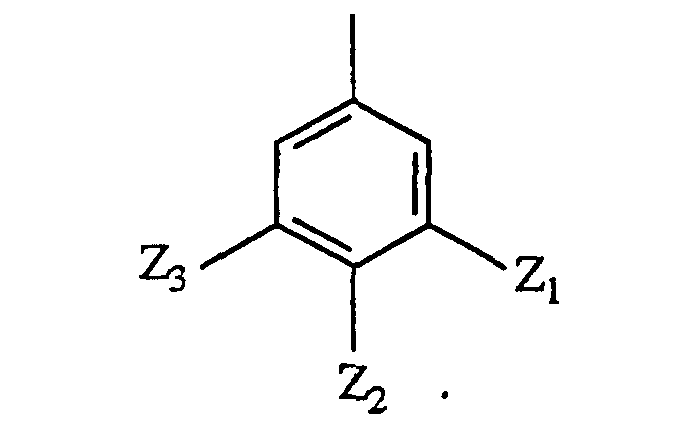
ou un sel, un complexe métallique ou un ester d'un tel dérivé. - Utilisation cosmétique en application topique comme agent de protection de la peau et des matières kératiniques de façon à prévenir, atténuer ou supprimer les effets délétères des métaux lourds, d'au moins un dérivé de formule (I) telle que définie dans la revendication 1.
- Utilisation telle que définie dans la revendication 1 d'au moins un dérivé de formule (I), dans la préparation d'un agent topique de protection de la peau et des matières kératiniques de façon à prévenir, atténuer ou supprimer les effets délétères des métaux lourds, présentant un effet cytoprotecteur des matières kératiniques vis-à-vis des métaux ou éléments métalloïdes polluants.
- Utilisation cosmétique en application topique d'au moins un dérivé de formule (I) telle que définie dans la revendication 1, comme agent présentant un effet cytoprotecteur des matières kératiniques vis-à-vis des métaux ou éléments métalloïdes polluants.
- Utilisation d'au moins un dérivé de formule (I) tel que défini dans la revendication 1 ou 3 dans la préparation d'un agent topique pour augmenter la régénération cellulaire et un retour à une hornéostasie au niveau des matières kératiniques, afin d'obtenir des matières kératiniques plus saines.
- Utilisation cosmétique en application topique d'au moins un dérivé de formule (I) tel que défini dans la revendication 1 ou 3, pour augmenter la régénération cellulaire et un retour à une homéostasie au niveau des matières kératiniques, afin d'obtenir des matières kératiniques plus saines.
- Utilisation selon l'une quelconque des revendications 1 à 5, caractérisée en ce que le dérivé de formule (I) est choisi parmi l'acide N,N'-di-(3-hydroxybenzyle)-éthylène diamine N,N'-diacétique et l'acide N,N'-di-(3,4,5-triméthoxybenzyle)-éthylène diamine N,N'- diacétique.
- Utilisation d'un dérivé de formule (I) telle que définieselon l'une quelconque des revendications 1 à 7, dans la préparation d'une composition, topique de protection de la peau et des matières kératiniques de façon à prévenir, atténuer ou supprimer les effets délétères des métaux lourds.
- Utilisation cosmétique d'un dérivé de formule (I) telle que défini selon l'une quelconque des revendications 1 à 7 dans une composition à application topique de protection de la peau et des matières kératiniques de façon à prévenir, atténuer ou supprimer les effets délétères des métaux lourds.
- Utilisation selon la revendication 8, caractérisée en ce que ladite composition cosmétique anti-polluante contient de 0,005% à 10% et de préférence de 0,1 à 5% en poids de composé de formule (I) par rapport au poids total de la composition.
- Utilisation selon la revendication 8 ou 10, caractérisée en ce que ladite composition contient en outre au moins un autre composé anti-pollution.
- Utilisation selon la revendication 11, caractérisée en ce que ledit composé anti-pollution est choisi parmi les anthocyanes et/ou ses dérivés, les composés contenant une fonction thio-éther, sulfoxide ou sulfone, l'ergothionéine et/ou ses dérivés, les chélateurs de métaux comme, les antioxydants et notamment l'acide ellagique, les extraits cellulaires de végétal de la famille des Pontederiaceae.
- Utilisation selon l'une quelconque des revendications 8 à 12, caractérisée en ce que la composition contient en outre un milieu cosmétiquement acceptable constitué d'eau et/ou d'au moins un solvant organique choisi dans le groupe constitué par les solvants organiques hydrophiles, les solvants organiques lipophiles, les solvants amphiphiles ou leurs mélanges.
- Utilisation selon la revendication 13, caractérisée en ce que les solvants organiques sont choisis dans le groupe constitué par les alcools mono- ou polyfonctionnels, les polyéthylène glycols éventuellement oxyéthylénés, les esters de polypropylène glycol, le sorbitol et ses dérivés, les dialkyls d'isosorbide, les éthers de glycol et des éthers de polypropylène glycol, les esters gras.
- Utilisation selon la revendication 13 ou 14, caractérisée en ce que le ou les solvants organiques représentent de 5 à 98% du poids total de la composition.
- Utilisation selon l'une quelconque des revendications 8 à 15, caractérisée en ce que la composition comprend en outre au moins une phase grasse.
- Utilisation selon la revendication 16, caractérisée en ce que la phase grasse représente de 0 à 50% du poids total de la composition.
- Utilisation selon l'une quelconque des revendications 8 à 17, caractérisée par le fait que la composition contient en outre au moins un additif choisi dans le groupe constitué par les gélifiants et/ou épaississants classiques aqueux ou lipophiles, les actifs hydrophiles ou lipophiles, les conservateurs, des antioxydants, les parfums, les émulsionnants, les agents hydratants, les agents pigmentants, les dépigmentants, les agents kératolytiques, les vitamines, les émollients, les séquestrants, les tensio-actifs, les polymères, les agents alcalinisants ou acidifiants, les charges, les agents anti-radicaux libres, les céramides, les filtres solaires, notamment ultra-violets, les répulsifs pour insectes, les agents amincissants, les matières colorantes, les bactéricides, les antipelliculaires.
- Utilisation selon l'une quelconque des revendications 8 à 18, caractérisée en ce que la composition se présente sous forme d'une solution aqueuse, hydroalcoolique ou huileuse, d'une émulsion huile-dans-eau ou eau-dans-huile ou multiple, d'un gel aqueux ou huileux, d'un produit anhydre liquide, pâteux ou solide ou d'une dispersion d'huile dans une phase aqueuse à l'aide de sphérules.
- Utilisation selon l'une quelconque des revendications 8 à 19, caractérisée en ce que la composition a l'aspect d'une crème blanche ou colorée, d'une pommade, d'un lait, d'une lotion, d'un sérum, d'une pâte, d'une mousse ou d'un solide.
- Utilisation selon l'une quelconque des revendications 8 à 20, caractérisée en ce que la composition présente un pH compris entre 3 et 8, préférentiellement entre 5 et 7.
- Procédé de traitement cosmétique destiné à obtenir une protection de l'organisme contre les effets de la pollution, caractérisé en ce qu'il consiste à appliquer sur la matière kératinique une quantité cosmétiquement efficace d'au moins un dérivé de formule (I) tel que défini dans la revendication 1 ou 7.
- Procédé de traitement cosmétique destiné à obtenir une protection de l'organisme contre les effets de la pollution, caractérisé en ce qu'il consiste à appliquer sur la matière kératinique une composition cosmétique telle que définie dans l'une quelconque des revendications 8 à 21.
Applications Claiming Priority (3)
| Application Number | Priority Date | Filing Date | Title |
|---|---|---|---|
| FR0006381A FR2809002B1 (fr) | 2000-05-18 | 2000-05-18 | Utilisation de derives de l'acide n,n'-dibenzyl ethylene diamine n,n'-diacetique comme agent anti-pollution |
| FR0006381 | 2000-05-18 | ||
| PCT/FR2001/001452 WO2001087253A1 (fr) | 2000-05-18 | 2001-05-14 | Utilisation de derives de l'acide n,n'-dibenzyl ethylene diamine n,n'-diacetique comme agent anti-pollution |
Publications (2)
| Publication Number | Publication Date |
|---|---|
| EP1282394A1 EP1282394A1 (fr) | 2003-02-12 |
| EP1282394B1 true EP1282394B1 (fr) | 2004-09-29 |
Family
ID=8850381
Family Applications (1)
| Application Number | Title | Priority Date | Filing Date |
|---|---|---|---|
| EP01934113A Expired - Lifetime EP1282394B1 (fr) | 2000-05-18 | 2001-05-14 | Utilisation de derives de l'acide n,n'-dibenzyl ethylene diamine n,n'-diacetique comme agent anti-pollution |
Country Status (9)
| Country | Link |
|---|---|
| US (1) | US20040039059A1 (fr) |
| EP (1) | EP1282394B1 (fr) |
| JP (1) | JP2003533458A (fr) |
| AT (1) | ATE277591T1 (fr) |
| AU (1) | AU2001260419A1 (fr) |
| DE (1) | DE60106014T2 (fr) |
| ES (1) | ES2223849T3 (fr) |
| FR (1) | FR2809002B1 (fr) |
| WO (1) | WO2001087253A1 (fr) |
Families Citing this family (7)
| Publication number | Priority date | Publication date | Assignee | Title |
|---|---|---|---|---|
| CA2456035A1 (fr) * | 2003-02-03 | 2004-08-03 | L'oreal | Utilisation de n-arylmethylene ethylenediaminetriacetates, n-arylmethyleneiminodiacetates ou n,n'-diarylmethylene ethylenediamineacetates comme donneurs de no |
| FR2850578B1 (fr) * | 2003-02-03 | 2006-07-28 | Oreal | Utilisation de n-arylmethylene ethylenediaminetriacetates, n-arylmethyleneiminodiacetates ou n,n'-diarylmethylene ethylenediamineacetates comme donneurs de no |
| FR2939650A1 (fr) * | 2008-12-15 | 2010-06-18 | Oreal | Composition cosmetique et/ou dermatologique a base d'ester d'ester(s) de l'acide n,n'-diarylmethylene ethylenediaminediacetique |
| FR2939653A1 (fr) * | 2008-12-15 | 2010-06-18 | Oreal | Emulsion sous la forme d'oleosomes comprenant au moins un ester de l'acide n,n'-diarylmethylene ethylenediaminediacetique |
| FR2939652A1 (fr) * | 2008-12-15 | 2010-06-18 | Oreal | Emulsion cosmetique contenant un ester de l'acide n,n'- diarylmethylene ethylenediaminediacitique. |
| US20100254922A1 (en) * | 2008-12-15 | 2010-10-07 | L'oreal | Cosmetic and/or dermatological composition based on n,n'-diarylmethyleneethylenediaminediacetic acid ester(s) |
| FR2939651B1 (fr) * | 2008-12-15 | 2011-01-14 | Oreal | Composition cosmetique associant un ester de l'acide n,n'-diarylmethylene ethylenediaminediacetique a un emulsionnant |
Family Cites Families (9)
| Publication number | Priority date | Publication date | Assignee | Title |
|---|---|---|---|---|
| FI862881L (fi) * | 1986-07-08 | 1988-01-18 | Suomen Calcusan Oy | Munskoeljningsloesning. |
| FR2674748B1 (fr) * | 1991-04-03 | 1995-01-13 | Oreal | Utilisation de sphingolipides dans la preparation d'une composition cosmetique ou dermopharmaceutique protegeant la peau et les cheveux contre les effets nocifs de la pollution atmospherique. |
| GB9203299D0 (en) * | 1992-02-17 | 1992-04-01 | Indena Spa | Cosmetic and/or pharmaceutical compositions and methods for their use |
| US5703095A (en) * | 1992-11-13 | 1997-12-30 | L'oreal | Use of N-arylmethylene, ethylenediaminetriacetates, N-arymethylene iminodiacetates or N,N'-diarylmethylene ethylenediamineacetates against oxidative stress |
| DE19601060C2 (de) * | 1996-01-04 | 2002-04-25 | Schering Ag | Neue monofunktionalisierte EDTA-, DTPA- und TTHA-Derivate und deren Verwendung in der medizinischen Diagnostik und Therapie |
| FR2751538B1 (fr) * | 1996-07-26 | 1998-09-11 | Oreal | Utilisation de derives de l'acide n,n'-dibenzyl ethylenediamine n,n'-diacetique comme agents depigmentants |
| FR2768145B1 (fr) * | 1997-09-09 | 1999-10-08 | Oreal | Nouveaux composes derives d'acide alkylene diamine di- ou tri-acetique, leur procede de preparation, leur utilisation dans des compositions cosmetiques et pharmaceutiques, et compositions les comprenant |
| DE19802539B4 (de) * | 1998-01-23 | 2006-05-11 | Jarisch, Reinhart, Dr. | Verwendung von Diethylentriamin-Pentaessigsäure zum Herstellen einer Schutzcreme gegen Kontaktdermatitis |
| GB2333705A (en) * | 1998-01-31 | 1999-08-04 | Procter & Gamble | Skin care compositions containing complexing agents (eg ethylenediamine disuccinic acid) for the treatment of skin rash arising from metal dermatitis |
-
2000
- 2000-05-18 FR FR0006381A patent/FR2809002B1/fr not_active Expired - Fee Related
-
2001
- 2001-05-14 AT AT01934113T patent/ATE277591T1/de not_active IP Right Cessation
- 2001-05-14 US US10/276,539 patent/US20040039059A1/en not_active Abandoned
- 2001-05-14 JP JP2001583722A patent/JP2003533458A/ja active Pending
- 2001-05-14 AU AU2001260419A patent/AU2001260419A1/en not_active Abandoned
- 2001-05-14 DE DE60106014T patent/DE60106014T2/de not_active Expired - Fee Related
- 2001-05-14 WO PCT/FR2001/001452 patent/WO2001087253A1/fr not_active Ceased
- 2001-05-14 ES ES01934113T patent/ES2223849T3/es not_active Expired - Lifetime
- 2001-05-14 EP EP01934113A patent/EP1282394B1/fr not_active Expired - Lifetime
Also Published As
| Publication number | Publication date |
|---|---|
| FR2809002A1 (fr) | 2001-11-23 |
| ATE277591T1 (de) | 2004-10-15 |
| FR2809002B1 (fr) | 2003-01-24 |
| JP2003533458A (ja) | 2003-11-11 |
| WO2001087253A1 (fr) | 2001-11-22 |
| AU2001260419A1 (en) | 2001-11-26 |
| EP1282394A1 (fr) | 2003-02-12 |
| DE60106014T2 (de) | 2005-10-06 |
| DE60106014D1 (de) | 2004-11-04 |
| ES2223849T3 (es) | 2005-03-01 |
| US20040039059A1 (en) | 2004-02-26 |
Similar Documents
| Publication | Publication Date | Title |
|---|---|---|
| EP0627909B1 (fr) | Composition cosmetique ou pharmaceutique contenant en association un polyphenol et un extrait de ginkgo | |
| EP2821386B1 (fr) | Composition cosmétique, dermatologique ou pharmaceutique comprenant au moins un dérivé de vanilline comme conservateur | |
| CA2286409C (fr) | Composition cosmetique et/ou dermatologique renfermant au moins un extrait de murier, au moins un extrait de scutellaire et au moins un derive d'acide salicylique | |
| EP1282395B1 (fr) | Utilisation de l'acide ellagique comme agent cosmetique anti-pollution | |
| EP1172091B1 (fr) | Utilisation du 4',5,7-trihydroxyflavylium pour colorer la peau | |
| CA3164351A1 (fr) | Procede d'obtention d'un extrait aqueux de lavande, compositions comprenant un tel extrait et leurs utilisations cosmetiques | |
| EP1123653B1 (fr) | Utilisation de dérivés de polyaminoacides comme agents conservateurs | |
| EP1753393A2 (fr) | Procede d'innoformulation d'une base galenique biocompatible | |
| EP1230912A1 (fr) | Utilisation d'au moins un extrait de légumineuse comme agent anti-pollution, piégeur de métaux lourds. | |
| WO2001087260A1 (fr) | Utilisation d'ergothioneine et/ou de ses derives comme agent anti-pollution | |
| FR2809002A1 (fr) | Utilisation de derives de l'acide n,n'-dibenzyl ethylene diamine n,n'-diacetique comme agent anti-pollution | |
| EP1282397B1 (fr) | Utilisation de composes contenant une fonction thio-ether, sulfoxyde ou sulfone comme agent cosmetique anti-pollution | |
| EP1280542A1 (fr) | Utilisation d'un extrait de cellules d'au moins un vegetal de la famille pontederiaceae comme agent anti-pollution | |
| EP0985409A1 (fr) | Utilisation en cosmétique d'acides gras | |
| FR2809003A1 (fr) | Compositions anti-pollution a base d'anthocyanes | |
| EP0671164B1 (fr) | Compositon pour lutter contre les taches et/ou vieillissement de la peau, ses utilisations | |
| FR2804866A1 (fr) | Composition a base n-cholesteryloxycarbonyl-4-para- aminophenol et d'hydroquinone ou l'un de ses derives | |
| FR3110421A1 (fr) | Extrait de Narcissus poeticus pour son utilisation cosmétique | |
| MC200110A1 (fr) | Utilisation topique de dérivés thiazolidines contre les conséquences du stress oxydatif de la peau | |
| EP2039341A1 (fr) | Utilisation topique de dérivés thiazolidines contre les conséquences du stress oxydatif de la peau |
Legal Events
| Date | Code | Title | Description |
|---|---|---|---|
| PUAI | Public reference made under article 153(3) epc to a published international application that has entered the european phase |
Free format text: ORIGINAL CODE: 0009012 |
|
| 17P | Request for examination filed |
Effective date: 20021114 |
|
| AK | Designated contracting states |
Designated state(s): AT BE CH CY DE DK ES FI FR GB GR IE IT LI LU MC NL PT SE TR |
|
| AX | Request for extension of the european patent |
Extension state: AL LT LV MK RO SI |
|
| GRAP | Despatch of communication of intention to grant a patent |
Free format text: ORIGINAL CODE: EPIDOSNIGR1 |
|
| GRAS | Grant fee paid |
Free format text: ORIGINAL CODE: EPIDOSNIGR3 |
|
| GRAA | (expected) grant |
Free format text: ORIGINAL CODE: 0009210 |
|
| AK | Designated contracting states |
Kind code of ref document: B1 Designated state(s): AT BE CH CY DE DK ES FI FR GB GR IE IT LI LU MC NL PT SE TR |
|
| PG25 | Lapsed in a contracting state [announced via postgrant information from national office to epo] |
Ref country code: TR Free format text: LAPSE BECAUSE OF FAILURE TO SUBMIT A TRANSLATION OF THE DESCRIPTION OR TO PAY THE FEE WITHIN THE PRESCRIBED TIME-LIMIT Effective date: 20040929 Ref country code: NL Free format text: LAPSE BECAUSE OF FAILURE TO SUBMIT A TRANSLATION OF THE DESCRIPTION OR TO PAY THE FEE WITHIN THE PRESCRIBED TIME-LIMIT Effective date: 20040929 Ref country code: IE Free format text: LAPSE BECAUSE OF FAILURE TO SUBMIT A TRANSLATION OF THE DESCRIPTION OR TO PAY THE FEE WITHIN THE PRESCRIBED TIME-LIMIT Effective date: 20040929 Ref country code: FI Free format text: LAPSE BECAUSE OF FAILURE TO SUBMIT A TRANSLATION OF THE DESCRIPTION OR TO PAY THE FEE WITHIN THE PRESCRIBED TIME-LIMIT Effective date: 20040929 Ref country code: AT Free format text: LAPSE BECAUSE OF FAILURE TO SUBMIT A TRANSLATION OF THE DESCRIPTION OR TO PAY THE FEE WITHIN THE PRESCRIBED TIME-LIMIT Effective date: 20040929 |
|
| REG | Reference to a national code |
Ref country code: GB Ref legal event code: FG4D Free format text: NOT ENGLISH |
|
| REG | Reference to a national code |
Ref country code: CH Ref legal event code: EP |
|
| REG | Reference to a national code |
Ref country code: IE Ref legal event code: FG4D Free format text: FRENCH |
|
| REF | Corresponds to: |
Ref document number: 60106014 Country of ref document: DE Date of ref document: 20041104 Kind code of ref document: P |
|
| PG25 | Lapsed in a contracting state [announced via postgrant information from national office to epo] |
Ref country code: SE Free format text: LAPSE BECAUSE OF FAILURE TO SUBMIT A TRANSLATION OF THE DESCRIPTION OR TO PAY THE FEE WITHIN THE PRESCRIBED TIME-LIMIT Effective date: 20041229 Ref country code: GR Free format text: LAPSE BECAUSE OF FAILURE TO SUBMIT A TRANSLATION OF THE DESCRIPTION OR TO PAY THE FEE WITHIN THE PRESCRIBED TIME-LIMIT Effective date: 20041229 Ref country code: DK Free format text: LAPSE BECAUSE OF FAILURE TO SUBMIT A TRANSLATION OF THE DESCRIPTION OR TO PAY THE FEE WITHIN THE PRESCRIBED TIME-LIMIT Effective date: 20041229 |
|
| REG | Reference to a national code |
Ref country code: ES Ref legal event code: FG2A Ref document number: 2223849 Country of ref document: ES Kind code of ref document: T3 |
|
| LTIE | Lt: invalidation of european patent or patent extension |
Effective date: 20040929 |
|
| NLV1 | Nl: lapsed or annulled due to failure to fulfill the requirements of art. 29p and 29m of the patents act | ||
| REG | Reference to a national code |
Ref country code: IE Ref legal event code: FD4D |
|
| PGFP | Annual fee paid to national office [announced via postgrant information from national office to epo] |
Ref country code: GB Payment date: 20050511 Year of fee payment: 5 Ref country code: FR Payment date: 20050511 Year of fee payment: 5 |
|
| PGFP | Annual fee paid to national office [announced via postgrant information from national office to epo] |
Ref country code: DE Payment date: 20050512 Year of fee payment: 5 |
|
| PG25 | Lapsed in a contracting state [announced via postgrant information from national office to epo] |
Ref country code: LU Free format text: LAPSE BECAUSE OF NON-PAYMENT OF DUE FEES Effective date: 20050514 Ref country code: CY Free format text: LAPSE BECAUSE OF FAILURE TO SUBMIT A TRANSLATION OF THE DESCRIPTION OR TO PAY THE FEE WITHIN THE PRESCRIBED TIME-LIMIT Effective date: 20050514 |
|
| PG25 | Lapsed in a contracting state [announced via postgrant information from national office to epo] |
Ref country code: MC Free format text: LAPSE BECAUSE OF NON-PAYMENT OF DUE FEES Effective date: 20050531 Ref country code: LI Free format text: LAPSE BECAUSE OF NON-PAYMENT OF DUE FEES Effective date: 20050531 Ref country code: CH Free format text: LAPSE BECAUSE OF NON-PAYMENT OF DUE FEES Effective date: 20050531 Ref country code: BE Free format text: LAPSE BECAUSE OF NON-PAYMENT OF DUE FEES Effective date: 20050531 |
|
| PGFP | Annual fee paid to national office [announced via postgrant information from national office to epo] |
Ref country code: ES Payment date: 20050624 Year of fee payment: 5 |
|
| PLBE | No opposition filed within time limit |
Free format text: ORIGINAL CODE: 0009261 |
|
| STAA | Information on the status of an ep patent application or granted ep patent |
Free format text: STATUS: NO OPPOSITION FILED WITHIN TIME LIMIT |
|
| 26N | No opposition filed |
Effective date: 20050630 |
|
| BERE | Be: lapsed |
Owner name: L'OREAL Effective date: 20050531 |
|
| REG | Reference to a national code |
Ref country code: CH Ref legal event code: PL |
|
| PG25 | Lapsed in a contracting state [announced via postgrant information from national office to epo] |
Ref country code: GB Free format text: LAPSE BECAUSE OF NON-PAYMENT OF DUE FEES Effective date: 20060514 |
|
| PG25 | Lapsed in a contracting state [announced via postgrant information from national office to epo] |
Ref country code: ES Free format text: LAPSE BECAUSE OF NON-PAYMENT OF DUE FEES Effective date: 20060516 |
|
| PGFP | Annual fee paid to national office [announced via postgrant information from national office to epo] |
Ref country code: IT Payment date: 20060531 Year of fee payment: 6 |
|
| PG25 | Lapsed in a contracting state [announced via postgrant information from national office to epo] |
Ref country code: DE Free format text: LAPSE BECAUSE OF NON-PAYMENT OF DUE FEES Effective date: 20061201 |
|
| GBPC | Gb: european patent ceased through non-payment of renewal fee |
Effective date: 20060514 |
|
| REG | Reference to a national code |
Ref country code: FR Ref legal event code: ST Effective date: 20070131 |
|
| REG | Reference to a national code |
Ref country code: ES Ref legal event code: FD2A Effective date: 20060516 |
|
| BERE | Be: lapsed |
Owner name: L'*OREAL Effective date: 20050531 |
|
| PG25 | Lapsed in a contracting state [announced via postgrant information from national office to epo] |
Ref country code: PT Free format text: LAPSE BECAUSE OF NON-PAYMENT OF DUE FEES Effective date: 20050228 |
|
| PG25 | Lapsed in a contracting state [announced via postgrant information from national office to epo] |
Ref country code: FR Free format text: LAPSE BECAUSE OF NON-PAYMENT OF DUE FEES Effective date: 20060531 |
|
| PG25 | Lapsed in a contracting state [announced via postgrant information from national office to epo] |
Ref country code: IT Free format text: LAPSE BECAUSE OF NON-PAYMENT OF DUE FEES Effective date: 20070514 |