EP1292549B1 - Materiau composite, son utilisation et son mode de production - Google Patents
Materiau composite, son utilisation et son mode de production Download PDFInfo
- Publication number
- EP1292549B1 EP1292549B1 EP01953783A EP01953783A EP1292549B1 EP 1292549 B1 EP1292549 B1 EP 1292549B1 EP 01953783 A EP01953783 A EP 01953783A EP 01953783 A EP01953783 A EP 01953783A EP 1292549 B1 EP1292549 B1 EP 1292549B1
- Authority
- EP
- European Patent Office
- Prior art keywords
- aluminium oxide
- screen printing
- silicate glass
- powder
- metal
- Prior art date
- Legal status (The legal status is an assumption and is not a legal conclusion. Google has not performed a legal analysis and makes no representation as to the accuracy of the status listed.)
- Expired - Lifetime
Links
- 239000000463 material Substances 0.000 title claims abstract description 59
- 239000002131 composite material Substances 0.000 title claims abstract description 37
- 238000004519 manufacturing process Methods 0.000 title abstract description 7
- 229910052594 sapphire Inorganic materials 0.000 claims abstract description 54
- 239000010980 sapphire Substances 0.000 claims abstract description 54
- 229910052751 metal Inorganic materials 0.000 claims abstract description 50
- 239000002184 metal Substances 0.000 claims abstract description 50
- ASTZLJPZXLHCSM-UHFFFAOYSA-N dioxido(oxo)silane;manganese(2+) Chemical compound [Mn+2].[O-][Si]([O-])=O ASTZLJPZXLHCSM-UHFFFAOYSA-N 0.000 claims abstract description 39
- 239000005368 silicate glass Substances 0.000 claims abstract description 39
- 238000000034 method Methods 0.000 claims abstract description 31
- 150000002739 metals Chemical class 0.000 claims abstract description 13
- KDLHZDBZIXYQEI-UHFFFAOYSA-N Palladium Chemical compound [Pd] KDLHZDBZIXYQEI-UHFFFAOYSA-N 0.000 claims abstract description 12
- BASFCYQUMIYNBI-UHFFFAOYSA-N platinum Chemical compound [Pt] BASFCYQUMIYNBI-UHFFFAOYSA-N 0.000 claims abstract description 11
- ZOKXTWBITQBERF-UHFFFAOYSA-N Molybdenum Chemical compound [Mo] ZOKXTWBITQBERF-UHFFFAOYSA-N 0.000 claims abstract description 7
- 229910052750 molybdenum Inorganic materials 0.000 claims abstract description 7
- 239000011733 molybdenum Substances 0.000 claims abstract description 7
- 229910052763 palladium Inorganic materials 0.000 claims abstract description 6
- 229910052721 tungsten Inorganic materials 0.000 claims abstract description 6
- 239000010937 tungsten Substances 0.000 claims abstract description 6
- 229910052697 platinum Inorganic materials 0.000 claims abstract description 5
- WFKWXMTUELFFGS-UHFFFAOYSA-N tungsten Chemical compound [W] WFKWXMTUELFFGS-UHFFFAOYSA-N 0.000 claims abstract description 5
- PNEYBMLMFCGWSK-UHFFFAOYSA-N Alumina Chemical compound [O-2].[O-2].[O-2].[Al+3].[Al+3] PNEYBMLMFCGWSK-UHFFFAOYSA-N 0.000 claims description 122
- 238000007650 screen-printing Methods 0.000 claims description 42
- 239000000843 powder Substances 0.000 claims description 38
- GWEVSGVZZGPLCZ-UHFFFAOYSA-N Titan oxide Chemical compound O=[Ti]=O GWEVSGVZZGPLCZ-UHFFFAOYSA-N 0.000 claims description 28
- 230000008569 process Effects 0.000 claims description 19
- 239000000203 mixture Substances 0.000 claims description 14
- 239000004408 titanium dioxide Substances 0.000 claims description 14
- 229910000679 solder Inorganic materials 0.000 claims description 13
- PXHVJJICTQNCMI-UHFFFAOYSA-N Nickel Chemical compound [Ni] PXHVJJICTQNCMI-UHFFFAOYSA-N 0.000 claims description 12
- 239000000919 ceramic Substances 0.000 claims description 10
- 239000000853 adhesive Substances 0.000 claims description 9
- 230000001070 adhesive effect Effects 0.000 claims description 9
- 238000010304 firing Methods 0.000 claims description 8
- 229910000640 Fe alloy Inorganic materials 0.000 claims description 6
- 229910000990 Ni alloy Inorganic materials 0.000 claims description 6
- RYGMFSIKBFXOCR-UHFFFAOYSA-N Copper Chemical compound [Cu] RYGMFSIKBFXOCR-UHFFFAOYSA-N 0.000 claims description 5
- 229910052802 copper Inorganic materials 0.000 claims description 5
- 239000010949 copper Substances 0.000 claims description 5
- 229910052593 corundum Inorganic materials 0.000 claims description 4
- 239000010431 corundum Substances 0.000 claims description 4
- 239000011521 glass Substances 0.000 claims description 4
- 238000002156 mixing Methods 0.000 claims description 4
- -1 titanium hydride Chemical compound 0.000 claims description 4
- 230000004048 modification Effects 0.000 claims description 3
- 238000012986 modification Methods 0.000 claims description 3
- 229910000048 titanium hydride Inorganic materials 0.000 claims description 3
- 239000001856 Ethyl cellulose Substances 0.000 claims description 2
- ZZSNKZQZMQGXPY-UHFFFAOYSA-N Ethyl cellulose Chemical compound CCOCC1OC(OC)C(OCC)C(OCC)C1OC1C(O)C(O)C(OC)C(CO)O1 ZZSNKZQZMQGXPY-UHFFFAOYSA-N 0.000 claims description 2
- WUOACPNHFRMFPN-UHFFFAOYSA-N alpha-terpineol Chemical compound CC1=CCC(C(C)(C)O)CC1 WUOACPNHFRMFPN-UHFFFAOYSA-N 0.000 claims description 2
- SQIFACVGCPWBQZ-UHFFFAOYSA-N delta-terpineol Natural products CC(C)(O)C1CCC(=C)CC1 SQIFACVGCPWBQZ-UHFFFAOYSA-N 0.000 claims description 2
- 229920001249 ethyl cellulose Polymers 0.000 claims description 2
- 235000019325 ethyl cellulose Nutrition 0.000 claims description 2
- 239000003921 oil Substances 0.000 claims description 2
- 235000019198 oils Nutrition 0.000 claims description 2
- 229940116411 terpineol Drugs 0.000 claims description 2
- 235000015112 vegetable and seed oil Nutrition 0.000 claims description 2
- 239000008158 vegetable oil Substances 0.000 claims description 2
- 239000002245 particle Substances 0.000 claims 2
- 238000007639 printing Methods 0.000 claims 1
- 238000012216 screening Methods 0.000 claims 1
- TWNQGVIAIRXVLR-UHFFFAOYSA-N oxo(oxoalumanyloxy)alumane Chemical compound O=[Al]O[Al]=O TWNQGVIAIRXVLR-UHFFFAOYSA-N 0.000 abstract description 53
- 229910052574 oxide ceramic Inorganic materials 0.000 abstract description 17
- 239000011224 oxide ceramic Substances 0.000 abstract description 17
- 238000005245 sintering Methods 0.000 abstract description 5
- 230000035939 shock Effects 0.000 abstract description 4
- 239000013307 optical fiber Substances 0.000 description 6
- 239000004065 semiconductor Substances 0.000 description 5
- NUJOXMJBOLGQSY-UHFFFAOYSA-N manganese dioxide Chemical compound O=[Mn]=O NUJOXMJBOLGQSY-UHFFFAOYSA-N 0.000 description 4
- VYPSYNLAJGMNEJ-UHFFFAOYSA-N silicon dioxide Inorganic materials O=[Si]=O VYPSYNLAJGMNEJ-UHFFFAOYSA-N 0.000 description 4
- 239000000725 suspension Substances 0.000 description 4
- 229910004298 SiO 2 Inorganic materials 0.000 description 3
- 230000008878 coupling Effects 0.000 description 3
- 238000010168 coupling process Methods 0.000 description 3
- 238000005859 coupling reaction Methods 0.000 description 3
- 238000005476 soldering Methods 0.000 description 3
- 229910010293 ceramic material Inorganic materials 0.000 description 2
- 230000008859 change Effects 0.000 description 2
- 239000004020 conductor Substances 0.000 description 2
- 239000013078 crystal Substances 0.000 description 2
- 238000003780 insertion Methods 0.000 description 2
- 230000037431 insertion Effects 0.000 description 2
- 239000000377 silicon dioxide Substances 0.000 description 2
- 229910052709 silver Inorganic materials 0.000 description 2
- 239000004332 silver Substances 0.000 description 2
- 239000000126 substance Substances 0.000 description 2
- 239000000375 suspending agent Substances 0.000 description 2
- 230000008719 thickening Effects 0.000 description 2
- 229910018072 Al 2 O 3 Inorganic materials 0.000 description 1
- 230000006978 adaptation Effects 0.000 description 1
- 239000000654 additive Substances 0.000 description 1
- 229910052782 aluminium Inorganic materials 0.000 description 1
- 230000009286 beneficial effect Effects 0.000 description 1
- 150000001875 compounds Chemical class 0.000 description 1
- 238000010276 construction Methods 0.000 description 1
- 229910021488 crystalline silicon dioxide Inorganic materials 0.000 description 1
- 238000000354 decomposition reaction Methods 0.000 description 1
- 230000000694 effects Effects 0.000 description 1
- 230000005496 eutectics Effects 0.000 description 1
- 238000000227 grinding Methods 0.000 description 1
- 239000012535 impurity Substances 0.000 description 1
- 238000009413 insulation Methods 0.000 description 1
- 238000002955 isolation Methods 0.000 description 1
- 239000000155 melt Substances 0.000 description 1
- 238000002844 melting Methods 0.000 description 1
- 230000008018 melting Effects 0.000 description 1
- 229910044991 metal oxide Inorganic materials 0.000 description 1
- 150000004706 metal oxides Chemical class 0.000 description 1
- 230000003287 optical effect Effects 0.000 description 1
- 230000009467 reduction Effects 0.000 description 1
- 239000003870 refractory metal Substances 0.000 description 1
- 238000007873 sieving Methods 0.000 description 1
- 235000012239 silicon dioxide Nutrition 0.000 description 1
- 239000002904 solvent Substances 0.000 description 1
- 238000005382 thermal cycling Methods 0.000 description 1
- 230000007704 transition Effects 0.000 description 1
- UDKYUQZDRMRDOR-UHFFFAOYSA-N tungsten Chemical compound [W][W][W][W][W][W][W][W][W][W][W][W][W][W][W][W][W][W][W][W][W][W][W][W][W][W][W][W][W][W][W][W][W][W][W][W][W][W][W][W][W][W][W][W][W][W][W][W] UDKYUQZDRMRDOR-UHFFFAOYSA-N 0.000 description 1
Images


Classifications
-
- C—CHEMISTRY; METALLURGY
- C04—CEMENTS; CONCRETE; ARTIFICIAL STONE; CERAMICS; REFRACTORIES
- C04B—LIME, MAGNESIA; SLAG; CEMENTS; COMPOSITIONS THEREOF, e.g. MORTARS, CONCRETE OR LIKE BUILDING MATERIALS; ARTIFICIAL STONE; CERAMICS; REFRACTORIES; TREATMENT OF NATURAL STONE
- C04B37/00—Joining burned ceramic articles with other burned ceramic articles or other articles by heating
- C04B37/003—Joining burned ceramic articles with other burned ceramic articles or other articles by heating by means of an interlayer consisting of a combination of materials selected from glass, or ceramic material with metals, metal oxides or metal salts
- C04B37/005—Joining burned ceramic articles with other burned ceramic articles or other articles by heating by means of an interlayer consisting of a combination of materials selected from glass, or ceramic material with metals, metal oxides or metal salts consisting of glass or ceramic material
-
- C—CHEMISTRY; METALLURGY
- C04—CEMENTS; CONCRETE; ARTIFICIAL STONE; CERAMICS; REFRACTORIES
- C04B—LIME, MAGNESIA; SLAG; CEMENTS; COMPOSITIONS THEREOF, e.g. MORTARS, CONCRETE OR LIKE BUILDING MATERIALS; ARTIFICIAL STONE; CERAMICS; REFRACTORIES; TREATMENT OF NATURAL STONE
- C04B37/00—Joining burned ceramic articles with other burned ceramic articles or other articles by heating
-
- C—CHEMISTRY; METALLURGY
- C04—CEMENTS; CONCRETE; ARTIFICIAL STONE; CERAMICS; REFRACTORIES
- C04B—LIME, MAGNESIA; SLAG; CEMENTS; COMPOSITIONS THEREOF, e.g. MORTARS, CONCRETE OR LIKE BUILDING MATERIALS; ARTIFICIAL STONE; CERAMICS; REFRACTORIES; TREATMENT OF NATURAL STONE
- C04B35/00—Shaped ceramic products characterised by their composition; Ceramics compositions; Processing powders of inorganic compounds preparatory to the manufacturing of ceramic products
- C04B35/622—Forming processes; Processing powders of inorganic compounds preparatory to the manufacturing of ceramic products
- C04B35/626—Preparing or treating the powders individually or as batches ; preparing or treating macroscopic reinforcing agents for ceramic products, e.g. fibres; mechanical aspects section B
- C04B35/63—Preparing or treating the powders individually or as batches ; preparing or treating macroscopic reinforcing agents for ceramic products, e.g. fibres; mechanical aspects section B using additives specially adapted for forming the products, e.g.. binder binders
- C04B35/632—Organic additives
- C04B35/636—Polysaccharides or derivatives thereof
- C04B35/6365—Cellulose or derivatives thereof
-
- C—CHEMISTRY; METALLURGY
- C04—CEMENTS; CONCRETE; ARTIFICIAL STONE; CERAMICS; REFRACTORIES
- C04B—LIME, MAGNESIA; SLAG; CEMENTS; COMPOSITIONS THEREOF, e.g. MORTARS, CONCRETE OR LIKE BUILDING MATERIALS; ARTIFICIAL STONE; CERAMICS; REFRACTORIES; TREATMENT OF NATURAL STONE
- C04B37/00—Joining burned ceramic articles with other burned ceramic articles or other articles by heating
- C04B37/003—Joining burned ceramic articles with other burned ceramic articles or other articles by heating by means of an interlayer consisting of a combination of materials selected from glass, or ceramic material with metals, metal oxides or metal salts
- C04B37/006—Joining burned ceramic articles with other burned ceramic articles or other articles by heating by means of an interlayer consisting of a combination of materials selected from glass, or ceramic material with metals, metal oxides or metal salts consisting of metals or metal salts
-
- C—CHEMISTRY; METALLURGY
- C04—CEMENTS; CONCRETE; ARTIFICIAL STONE; CERAMICS; REFRACTORIES
- C04B—LIME, MAGNESIA; SLAG; CEMENTS; COMPOSITIONS THEREOF, e.g. MORTARS, CONCRETE OR LIKE BUILDING MATERIALS; ARTIFICIAL STONE; CERAMICS; REFRACTORIES; TREATMENT OF NATURAL STONE
- C04B37/00—Joining burned ceramic articles with other burned ceramic articles or other articles by heating
- C04B37/02—Joining burned ceramic articles with other burned ceramic articles or other articles by heating with metallic articles
- C04B37/023—Joining burned ceramic articles with other burned ceramic articles or other articles by heating with metallic articles characterised by the interlayer used
- C04B37/026—Joining burned ceramic articles with other burned ceramic articles or other articles by heating with metallic articles characterised by the interlayer used consisting of metals or metal salts
-
- C—CHEMISTRY; METALLURGY
- C04—CEMENTS; CONCRETE; ARTIFICIAL STONE; CERAMICS; REFRACTORIES
- C04B—LIME, MAGNESIA; SLAG; CEMENTS; COMPOSITIONS THEREOF, e.g. MORTARS, CONCRETE OR LIKE BUILDING MATERIALS; ARTIFICIAL STONE; CERAMICS; REFRACTORIES; TREATMENT OF NATURAL STONE
- C04B2235/00—Aspects relating to ceramic starting mixtures or sintered ceramic products
- C04B2235/02—Composition of constituents of the starting material or of secondary phases of the final product
- C04B2235/50—Constituents or additives of the starting mixture chosen for their shape or used because of their shape or their physical appearance
- C04B2235/54—Particle size related information
- C04B2235/5418—Particle size related information expressed by the size of the particles or aggregates thereof
- C04B2235/5436—Particle size related information expressed by the size of the particles or aggregates thereof micrometer sized, i.e. from 1 to 100 micron
-
- C—CHEMISTRY; METALLURGY
- C04—CEMENTS; CONCRETE; ARTIFICIAL STONE; CERAMICS; REFRACTORIES
- C04B—LIME, MAGNESIA; SLAG; CEMENTS; COMPOSITIONS THEREOF, e.g. MORTARS, CONCRETE OR LIKE BUILDING MATERIALS; ARTIFICIAL STONE; CERAMICS; REFRACTORIES; TREATMENT OF NATURAL STONE
- C04B2237/00—Aspects relating to ceramic laminates or to joining of ceramic articles with other articles by heating
- C04B2237/02—Aspects relating to interlayers, e.g. used to join ceramic articles with other articles by heating
- C04B2237/10—Glass interlayers, e.g. frit or flux
-
- C—CHEMISTRY; METALLURGY
- C04—CEMENTS; CONCRETE; ARTIFICIAL STONE; CERAMICS; REFRACTORIES
- C04B—LIME, MAGNESIA; SLAG; CEMENTS; COMPOSITIONS THEREOF, e.g. MORTARS, CONCRETE OR LIKE BUILDING MATERIALS; ARTIFICIAL STONE; CERAMICS; REFRACTORIES; TREATMENT OF NATURAL STONE
- C04B2237/00—Aspects relating to ceramic laminates or to joining of ceramic articles with other articles by heating
- C04B2237/02—Aspects relating to interlayers, e.g. used to join ceramic articles with other articles by heating
- C04B2237/12—Metallic interlayers
- C04B2237/122—Metallic interlayers based on refractory metals
-
- C—CHEMISTRY; METALLURGY
- C04—CEMENTS; CONCRETE; ARTIFICIAL STONE; CERAMICS; REFRACTORIES
- C04B—LIME, MAGNESIA; SLAG; CEMENTS; COMPOSITIONS THEREOF, e.g. MORTARS, CONCRETE OR LIKE BUILDING MATERIALS; ARTIFICIAL STONE; CERAMICS; REFRACTORIES; TREATMENT OF NATURAL STONE
- C04B2237/00—Aspects relating to ceramic laminates or to joining of ceramic articles with other articles by heating
- C04B2237/02—Aspects relating to interlayers, e.g. used to join ceramic articles with other articles by heating
- C04B2237/12—Metallic interlayers
- C04B2237/125—Metallic interlayers based on noble metals, e.g. silver
-
- C—CHEMISTRY; METALLURGY
- C04—CEMENTS; CONCRETE; ARTIFICIAL STONE; CERAMICS; REFRACTORIES
- C04B—LIME, MAGNESIA; SLAG; CEMENTS; COMPOSITIONS THEREOF, e.g. MORTARS, CONCRETE OR LIKE BUILDING MATERIALS; ARTIFICIAL STONE; CERAMICS; REFRACTORIES; TREATMENT OF NATURAL STONE
- C04B2237/00—Aspects relating to ceramic laminates or to joining of ceramic articles with other articles by heating
- C04B2237/02—Aspects relating to interlayers, e.g. used to join ceramic articles with other articles by heating
- C04B2237/12—Metallic interlayers
- C04B2237/126—Metallic interlayers wherein the active component for bonding is not the largest fraction of the interlayer
-
- C—CHEMISTRY; METALLURGY
- C04—CEMENTS; CONCRETE; ARTIFICIAL STONE; CERAMICS; REFRACTORIES
- C04B—LIME, MAGNESIA; SLAG; CEMENTS; COMPOSITIONS THEREOF, e.g. MORTARS, CONCRETE OR LIKE BUILDING MATERIALS; ARTIFICIAL STONE; CERAMICS; REFRACTORIES; TREATMENT OF NATURAL STONE
- C04B2237/00—Aspects relating to ceramic laminates or to joining of ceramic articles with other articles by heating
- C04B2237/02—Aspects relating to interlayers, e.g. used to join ceramic articles with other articles by heating
- C04B2237/12—Metallic interlayers
- C04B2237/126—Metallic interlayers wherein the active component for bonding is not the largest fraction of the interlayer
- C04B2237/127—The active component for bonding being a refractory metal
-
- C—CHEMISTRY; METALLURGY
- C04—CEMENTS; CONCRETE; ARTIFICIAL STONE; CERAMICS; REFRACTORIES
- C04B—LIME, MAGNESIA; SLAG; CEMENTS; COMPOSITIONS THEREOF, e.g. MORTARS, CONCRETE OR LIKE BUILDING MATERIALS; ARTIFICIAL STONE; CERAMICS; REFRACTORIES; TREATMENT OF NATURAL STONE
- C04B2237/00—Aspects relating to ceramic laminates or to joining of ceramic articles with other articles by heating
- C04B2237/30—Composition of layers of ceramic laminates or of ceramic or metallic articles to be joined by heating, e.g. Si substrates
-
- C—CHEMISTRY; METALLURGY
- C04—CEMENTS; CONCRETE; ARTIFICIAL STONE; CERAMICS; REFRACTORIES
- C04B—LIME, MAGNESIA; SLAG; CEMENTS; COMPOSITIONS THEREOF, e.g. MORTARS, CONCRETE OR LIKE BUILDING MATERIALS; ARTIFICIAL STONE; CERAMICS; REFRACTORIES; TREATMENT OF NATURAL STONE
- C04B2237/00—Aspects relating to ceramic laminates or to joining of ceramic articles with other articles by heating
- C04B2237/30—Composition of layers of ceramic laminates or of ceramic or metallic articles to be joined by heating, e.g. Si substrates
- C04B2237/32—Ceramic
- C04B2237/34—Oxidic
- C04B2237/343—Alumina or aluminates
-
- C—CHEMISTRY; METALLURGY
- C04—CEMENTS; CONCRETE; ARTIFICIAL STONE; CERAMICS; REFRACTORIES
- C04B—LIME, MAGNESIA; SLAG; CEMENTS; COMPOSITIONS THEREOF, e.g. MORTARS, CONCRETE OR LIKE BUILDING MATERIALS; ARTIFICIAL STONE; CERAMICS; REFRACTORIES; TREATMENT OF NATURAL STONE
- C04B2237/00—Aspects relating to ceramic laminates or to joining of ceramic articles with other articles by heating
- C04B2237/30—Composition of layers of ceramic laminates or of ceramic or metallic articles to be joined by heating, e.g. Si substrates
- C04B2237/40—Metallic
- C04B2237/405—Iron metal group, e.g. Co or Ni
-
- C—CHEMISTRY; METALLURGY
- C04—CEMENTS; CONCRETE; ARTIFICIAL STONE; CERAMICS; REFRACTORIES
- C04B—LIME, MAGNESIA; SLAG; CEMENTS; COMPOSITIONS THEREOF, e.g. MORTARS, CONCRETE OR LIKE BUILDING MATERIALS; ARTIFICIAL STONE; CERAMICS; REFRACTORIES; TREATMENT OF NATURAL STONE
- C04B2237/00—Aspects relating to ceramic laminates or to joining of ceramic articles with other articles by heating
- C04B2237/50—Processing aspects relating to ceramic laminates or to the joining of ceramic articles with other articles by heating
- C04B2237/55—Pre-treatments of a coated or not coated substrate other than oxidation treatment in order to form an active joining layer
-
- C—CHEMISTRY; METALLURGY
- C04—CEMENTS; CONCRETE; ARTIFICIAL STONE; CERAMICS; REFRACTORIES
- C04B—LIME, MAGNESIA; SLAG; CEMENTS; COMPOSITIONS THEREOF, e.g. MORTARS, CONCRETE OR LIKE BUILDING MATERIALS; ARTIFICIAL STONE; CERAMICS; REFRACTORIES; TREATMENT OF NATURAL STONE
- C04B2237/00—Aspects relating to ceramic laminates or to joining of ceramic articles with other articles by heating
- C04B2237/50—Processing aspects relating to ceramic laminates or to the joining of ceramic articles with other articles by heating
- C04B2237/70—Forming laminates or joined articles comprising layers of a specific, unusual thickness
-
- C—CHEMISTRY; METALLURGY
- C04—CEMENTS; CONCRETE; ARTIFICIAL STONE; CERAMICS; REFRACTORIES
- C04B—LIME, MAGNESIA; SLAG; CEMENTS; COMPOSITIONS THEREOF, e.g. MORTARS, CONCRETE OR LIKE BUILDING MATERIALS; ARTIFICIAL STONE; CERAMICS; REFRACTORIES; TREATMENT OF NATURAL STONE
- C04B2237/00—Aspects relating to ceramic laminates or to joining of ceramic articles with other articles by heating
- C04B2237/50—Processing aspects relating to ceramic laminates or to the joining of ceramic articles with other articles by heating
- C04B2237/70—Forming laminates or joined articles comprising layers of a specific, unusual thickness
- C04B2237/704—Forming laminates or joined articles comprising layers of a specific, unusual thickness of one or more of the ceramic layers or articles
-
- C—CHEMISTRY; METALLURGY
- C04—CEMENTS; CONCRETE; ARTIFICIAL STONE; CERAMICS; REFRACTORIES
- C04B—LIME, MAGNESIA; SLAG; CEMENTS; COMPOSITIONS THEREOF, e.g. MORTARS, CONCRETE OR LIKE BUILDING MATERIALS; ARTIFICIAL STONE; CERAMICS; REFRACTORIES; TREATMENT OF NATURAL STONE
- C04B2237/00—Aspects relating to ceramic laminates or to joining of ceramic articles with other articles by heating
- C04B2237/50—Processing aspects relating to ceramic laminates or to the joining of ceramic articles with other articles by heating
- C04B2237/70—Forming laminates or joined articles comprising layers of a specific, unusual thickness
- C04B2237/706—Forming laminates or joined articles comprising layers of a specific, unusual thickness of one or more of the metallic layers or articles
-
- C—CHEMISTRY; METALLURGY
- C04—CEMENTS; CONCRETE; ARTIFICIAL STONE; CERAMICS; REFRACTORIES
- C04B—LIME, MAGNESIA; SLAG; CEMENTS; COMPOSITIONS THEREOF, e.g. MORTARS, CONCRETE OR LIKE BUILDING MATERIALS; ARTIFICIAL STONE; CERAMICS; REFRACTORIES; TREATMENT OF NATURAL STONE
- C04B2237/00—Aspects relating to ceramic laminates or to joining of ceramic articles with other articles by heating
- C04B2237/50—Processing aspects relating to ceramic laminates or to the joining of ceramic articles with other articles by heating
- C04B2237/70—Forming laminates or joined articles comprising layers of a specific, unusual thickness
- C04B2237/708—Forming laminates or joined articles comprising layers of a specific, unusual thickness of one or more of the interlayers
-
- C—CHEMISTRY; METALLURGY
- C04—CEMENTS; CONCRETE; ARTIFICIAL STONE; CERAMICS; REFRACTORIES
- C04B—LIME, MAGNESIA; SLAG; CEMENTS; COMPOSITIONS THEREOF, e.g. MORTARS, CONCRETE OR LIKE BUILDING MATERIALS; ARTIFICIAL STONE; CERAMICS; REFRACTORIES; TREATMENT OF NATURAL STONE
- C04B2237/00—Aspects relating to ceramic laminates or to joining of ceramic articles with other articles by heating
- C04B2237/50—Processing aspects relating to ceramic laminates or to the joining of ceramic articles with other articles by heating
- C04B2237/72—Forming laminates or joined articles comprising at least two interlayers directly next to each other
-
- C—CHEMISTRY; METALLURGY
- C04—CEMENTS; CONCRETE; ARTIFICIAL STONE; CERAMICS; REFRACTORIES
- C04B—LIME, MAGNESIA; SLAG; CEMENTS; COMPOSITIONS THEREOF, e.g. MORTARS, CONCRETE OR LIKE BUILDING MATERIALS; ARTIFICIAL STONE; CERAMICS; REFRACTORIES; TREATMENT OF NATURAL STONE
- C04B2237/00—Aspects relating to ceramic laminates or to joining of ceramic articles with other articles by heating
- C04B2237/50—Processing aspects relating to ceramic laminates or to the joining of ceramic articles with other articles by heating
- C04B2237/76—Forming laminates or joined articles comprising at least one member in the form other than a sheet or disc, e.g. two tubes or a tube and a sheet or disc
-
- C—CHEMISTRY; METALLURGY
- C04—CEMENTS; CONCRETE; ARTIFICIAL STONE; CERAMICS; REFRACTORIES
- C04B—LIME, MAGNESIA; SLAG; CEMENTS; COMPOSITIONS THEREOF, e.g. MORTARS, CONCRETE OR LIKE BUILDING MATERIALS; ARTIFICIAL STONE; CERAMICS; REFRACTORIES; TREATMENT OF NATURAL STONE
- C04B2237/00—Aspects relating to ceramic laminates or to joining of ceramic articles with other articles by heating
- C04B2237/50—Processing aspects relating to ceramic laminates or to the joining of ceramic articles with other articles by heating
- C04B2237/80—Joining the largest surface of one substrate with a smaller surface of the other substrate, e.g. butt joining or forming a T-joint
-
- C—CHEMISTRY; METALLURGY
- C04—CEMENTS; CONCRETE; ARTIFICIAL STONE; CERAMICS; REFRACTORIES
- C04B—LIME, MAGNESIA; SLAG; CEMENTS; COMPOSITIONS THEREOF, e.g. MORTARS, CONCRETE OR LIKE BUILDING MATERIALS; ARTIFICIAL STONE; CERAMICS; REFRACTORIES; TREATMENT OF NATURAL STONE
- C04B2237/00—Aspects relating to ceramic laminates or to joining of ceramic articles with other articles by heating
- C04B2237/50—Processing aspects relating to ceramic laminates or to the joining of ceramic articles with other articles by heating
- C04B2237/82—Two substrates not completely covering each other, e.g. two plates in a staggered position
-
- Y—GENERAL TAGGING OF NEW TECHNOLOGICAL DEVELOPMENTS; GENERAL TAGGING OF CROSS-SECTIONAL TECHNOLOGIES SPANNING OVER SEVERAL SECTIONS OF THE IPC; TECHNICAL SUBJECTS COVERED BY FORMER USPC CROSS-REFERENCE ART COLLECTIONS [XRACs] AND DIGESTS
- Y10—TECHNICAL SUBJECTS COVERED BY FORMER USPC
- Y10T—TECHNICAL SUBJECTS COVERED BY FORMER US CLASSIFICATION
- Y10T428/00—Stock material or miscellaneous articles
- Y10T428/13—Hollow or container type article [e.g., tube, vase, etc.]
- Y10T428/131—Glass, ceramic, or sintered, fused, fired, or calcined metal oxide or metal carbide containing [e.g., porcelain, brick, cement, etc.]
Definitions
- the invention relates to a vacuum-tight and resistant to temperature changes Material composite made of an aluminum oxide sapphire and an alumina ceramic.
- the invention relates further a method for producing this composite material as well as a use of the same.
- An aluminum oxide sapphire is understood to mean the crystalline corundum structure of the aluminum oxide ( ⁇ -Al 2 O 3 ) contaminated with titanium dioxide.
- An aluminum oxide ceramic is understood to mean a ceramic material which has been produced essentially by firing clays (aluminum silicates). As an essential component, this ceramic material has aluminum oxide in the corundum modification, which is embedded in a glass phase. In addition, there may be other metal oxides in this ceramic.
- a translucent aluminum oxide ceramic is example use in high pressure gas discharge lamps, such as for example from EP-A-0 327 049 and from DE-A-23 07 191 can be seen.
- a metallic current conductor In the usually tubular and alumina ceramic provided as a discharge vessel a metallic current conductor must be routed that is vacuum-tight must be connected to the alumina ceramic.
- a metallizing paste is provided on the aluminum oxide ceramic sinter on so that a layer of metal is obtained.
- the metallic current conductor is then, for example vacuum-tight to the metal layer using a hard solder sealed.
- US 3,590,468 is a method for a seal between a pure aluminum oxide and a Metal described. From the prior art is therefore only a composite material made of an aluminum oxide ceramic and a metal, but not a composite material from one Aluminum oxide sapphire and an aluminum oxide ceramic.
- the object of the invention is a vacuum-tight and resistant to temperature changes Material composite made of an aluminum oxide sapphire and to specify an alumina ceramic, where the alumina sapphire with the alumina ceramic and is resistant to changes in temperature. It is a further object of the invention to provide a method for manufacturing to specify such a composite material. Finally, it is also an object of the invention to use to specify for such a composite material.
- the first-mentioned object is achieved by that the alumina sapphire and the alumina ceramic with each other via a first and a second connection layer are sintered, the first connection layer is adjacent to the alumina ceramic and a manganese silicate glass comprises at least one of the metals the group contains molybdenum, tungsten, palladium and platinum, and wherein the second tie layer is the alumina sapphire is adjacent and comprises a manganese silicate glass.
- the manganese-silicate glass of the first connection layer Contain aluminum oxide and / or titanium dioxide.
- the Manganese silicate glass contains the second connection layer Aluminum oxide and / or titanium dioxide, the weight fraction the oxides aluminum oxide and titanium dioxide in manganese silicate glass the second connection layer is overall higher than in the manganese silicate glass of the first connection layer.
- the invention is based on the consideration that the introduction of metals into the manganese silicate glass Adaptation of the coefficient of thermal expansion of the first Connection layer on the thermal expansion coefficient the alumina ceramic can be made.
- the thermal expansion coefficient of manganese silicate glass as this in turn is similar to the coefficient of thermal expansion of alumina sapphire.
- the first and over the second connection layer the thermal Expansion coefficient of the alumina sapphire gradually the thermal expansion coefficient of the alumina ceramic equalized. The at temperature change stress occurring stresses at the material connection points are reduced.
- the first connection layer of aluminum oxide sapphire in the event of thermal cycling on the alumina ceramic. If, on the other hand, the second connection layer is dispensed with, so the aluminum oxide sapphire does not adhere to the metal Enriched manganese silicate glass of the first connection layer.
- alumina sapphire is over the first and over the second connection layer in the manner described sintered with the alumina ceramic, so resists such a composite material of a thermal shock in a wide range. With temperature changes between -60 ° C and +200 ° C the material composite could not be broken can be determined more.
- manganese-silicate glass an additional proportion of up to 6 wt .-% of aluminum oxide and / or titanium dioxide.
- this includes Manganese silicate glass in the second connection layer up to 30% by weight, in particular from 15 to 25% by weight, on aluminum oxide and / or titanium dioxide.
- a first screen printing paste is produced by a1) mixing the powder of a manganese silicate glass with a powder of at least one of the metals from the group that Contains molybdenum, tungsten, palladium and platinum Powder mixture and a2) adding a powder mixture Suspension means and / or with an adhesive that b) a second screen printing paste is produced by b1) offset a powder of a manganese silicate glass, which is aluminum oxide and / or titanium dioxide in a higher proportion than that first contains manganese silicate glass, with a suspending agent and / or with an adhesive that c) by screen printing a sequence of materials for the first and the second screen printing paste Alumina ceramic, first connection layer, second connection layer the alumina sapphire is made, and that finally d) a burning process at 1200 to 1500 ° C takes place.
- the powder of the manganese-silicate glass can either be purchased commercially as a finished product or it can be produced by mixing the powders of manganese dioxide MnO 2 and silica or silicon dioxide SiO 2 , melting the powder mixture, solidifying the melt and then grinding the solidified melt become.
- the proportions by weight in the powder mixture are 55-63% for MnO 2 and 45-37% for SiO 2 .
- the addition of a suspension and / or an adhesive the powder mixture or to the powder is necessary in order to Produce screen printable screen printing paste from the powders can. Due to the screen printing is an even application with a layer thickness of defined thickness of the later intermediate layers possible in a simple way.
- the composite material can first be applied to the alumina ceramic by screen printing the first and then the second screen printing paste can be applied.
- the alumina sapphire and that in this way and Fired sequence of layers fired at 1200 to 1500 ° C, i.e. sintered.
- the reverse is also true Sequence of procedures possible, i.e. that on the alumina sapphire first the second and then applied the first screen printing paste and then the aluminum oxide ceramic is put on. Because usually in such a composite material, however, the alumina ceramic compared to the alumina sapphire as a larger one The workpiece is the first described procedure usually easier to do.
- the powder of the manganese silicate glass is a powder with a average grain size of less than 10 microns, especially less than 2 ⁇ m is used.
- the first screen printing paste with a thickness of 2 to 20 ⁇ m and the second screen printing paste with a thickness of 2 to 200 ⁇ m is applied.
- the composite material for inserting a window from the aluminum oxide sapphire in a housing for a light ignitable Thyristor is used.
- a light ignitable thyristor is not - as the name already expresses - through a voltage signal, but switched or ignited by light.
- a thyristor is typically used to switch high Streams used.
- a thyristor as a so-called Power semiconductors are usually between two metallic contact pieces in a housing with a circumferential Insulating aluminum oxide ceramic wall is used.
- the alumina ceramic is used for electrical Isolation of the two poles of the thyristor, i.e. high at the two metallic contact pieces electrical voltage.
- the interior of the housing is usually evacuated.
- Thyristor now has the problem of coupling in Light through the housing to the photosensitive Location of the thyristor.
- an aluminum oxide sapphire window arranged in the housing on which an optical fiber from the outside is introduced. Since the housing is evacuated inside and also after inserting the thyristor, one or both of the above Contact pieces with the wall made of aluminum oxide ceramic must be soldered, the composite material between the window made of aluminum oxide sapphire and the case durable, firm, vacuum-tight and resistant to temperature changes his. For this reason, it is ideal for such Use of the described composite material.
- the window is advantageously used for this purpose from the aluminum oxide sapphire in the partial area of the case used, which consists of aluminum oxide ceramic.
- the window at its edges over the first and the second connection layer in the manner described and Sintered firmly with the alumina ceramic.
- the window is turned into a part of the housing first metal used.
- This section can, for example be one of the mentioned metallic contact pieces.
- the window is at the edge of the first and the second connection layer firmly with a first piece of material connected from alumina ceramic and the first Piece of material over a metal solder firmly with the first metal of the housing section soldered.
- the composite material is so here to connect the window from the aluminum oxide sapphire with the first metal of the housing section used.
- the connection between the alumina ceramic of the first piece of material with the first metal of the housing section is known per se and corresponds to the method as well as the metallic part of the housing or the metallic contact pieces of the housing with the rotating one Wall made of aluminum oxide ceramics are soldered.
- the metallic contact pieces of a housing for receiving of a power semiconductor are usually made of copper. Regarding a good soldering of the second piece of material with the metallic part of the housing it is advantageous if the second metal is a nickel / iron alloy.
- the "angle connection” creates a lever construction, the relative movements of the first and the second piece of material to each other. Because of the different Thermal expansion coefficient of alumina sapphire and metal occurring during temperature changes Length differences are then determined by relative movements of the first and the second piece of material balanced to each other. Connection of the window with the metal of the metallic Subarea itself will reduce mechanical stress exposed. In this way, the connection stays the window from the alumina sapphire with the metal of the metallic part of the housing also increased thermal shock loads, especially when soldering the metallic Sub-areas with the sub-areas of the housing occur from alumina ceramic.
- Figure 1 shows in a section a composite material 1 an aluminum oxide ceramic 5, which over a first connection layer 3 and a second connection layer 4 with a Alumina sapphire 2 is connected.
- the first link layer 3 comprises a manganese silicate glass which is 70% by weight of embedded molybdenum.
- the second connection layer 4 also includes a manganese silicate glass, which but has 20 wt .-% of embedded aluminum oxide.
- the shown material composite 1 is by sintering the individual Materials made together. It occurs between the Alumina sapphire 2 and the second connection layer 4 and between the first connection layer 3 and the second Connection layer 4 both interlocking the materials as well as a partial glazing.
- the alumina ceramic 5 is after the sintering process with the first connection layer 3 over a surface mixed crystal formed firmly connected.
- FIG 2 the manufacturing process for a composite material according to Figure 1 is shown schematically.
- a powder G of a manganese silicate glass and a powder M of one or more of the refractory metals molybdenum, tungsten, palladium or platinum are provided.
- a powder mixture P is produced by mixing and sieving the powders G and M. Since the powder of a manganese-silicate glass is commercially available, its manufacture is not shown in detail. However, as already mentioned, such a powder can be produced from manganese dioxide MnO 2 and crystalline silicon dioxide SiO 2 .
- the first screen printing paste SP1 is opened by means of screen printing 10 an alumina ceramic is applied. Then the Alumina ceramic with the first screen printing paste applied SP1 burned at a temperature of 1300 ° C 11. Im Connection to this burning process 11 is by means of screen printing the second screen printing paste SP2 on through the burning process 11 first from the first screen printing paste SP1 Connection layer applied 12. Then the aluminum oxide sapphire hung up 13.
- the resulting sequence of materials is finally replaced by a final burning process 15 again at 1300 ° C. sintered.
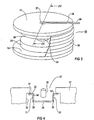
- FIG 3 is a partially broken view in perspective a housing 16 is shown for a power semiconductor.
- the housing 16 has a metallic housing cover 17, which is separated by an insulating wall 18 from a metallic housing base 19 is electrically insulated.
- the housing cover 17 and the housing base 19 are made of copper, the surface of which is nickel-plated.
- Both the housing cover 17 and the housing base 19 are each as one metallic contact piece and each have this purpose a thickening 20 or 22 projecting into the interior of the housing to accommodate the power semiconductor.
- About the thickening 20 and 22 is a light ignitable as a power semiconductor Thyristor 24 between the housing cover 17 and the housing base 19 pinched.
- the insulating wall 18 is made of made of an alumina ceramic.
- the housing cover 17 For igniting the light-ignitable thyristor 24, the housing cover 17 a bore 27 into which (in FIG. 3 not a window made of an aluminum oxide sapphire is used is. Via an introduced into the housing cover 17 Recess 26 is an optical waveguide 28, the Exit in front of the window inserted in hole 27 the alumina sapphire ends. That from the optical fiber 28 emerging light comes through the window from the aluminum oxide sapphire inside the housing 16 and meets there on the light-sensitive point of the light-ignitable thyristor 24. By sending a light pulse over the optical fiber 28 becomes the ignitable in this way Thyristor 24 switched.
- the bore 27 has a recess towards the interior of the housing 30 with a larger diameter to accommodate the fastening materials for the window 29 on.
- the window 29 made of alumina sapphire is designed as a disc that the edge areas with a hollow cylindrical first piece of material 31 is connected from an alumina ceramic.
- the first piece of material 31 made of the alumina ceramic in turn is over a disk-shaped second piece of material 32 made of a nickel / iron alloy with the housing cover 17 soldered.
- the window 29 made of the aluminum oxide sapphire is (in FIG. 4 not shown) via a first and a second connection layer 35 with the first piece of material according to the in Figure 1 shown composite material firmly connected.
- the first Material piece 31 made of alumina ceramic is in turn via a metal solder 36 with the material piece 32 made of the nickel / iron alloy soldered.
- the second piece of material 32 via a metal solder 37 with the housing cover 17 soldered.
- a silver / copper solder is used as the metal solder used.
- the aluminum oxide ceramic 40 of the insulating wall is clearly shown in FIG 18 of the housing 16 shown in FIG. 3.
- the alumina ceramic 40 is over a first connection layer 3 and a second connection layer 4, as they are described in the description associated with FIG. 1, sintered with the window 29 from the aluminum oxide sapphire.
- the composite material shown in Figure 1 also enables such a use a safe, vacuum tight and Connection of the window 29 resistant to temperature changes the aluminum oxide sapphire with the aluminum oxide ceramic Insulating wall 18 of the housing 16. On this relatively simple Way can in turn be elaborately designed Passing the optical fiber into the interior of the no light-sensitive field of the light-ignitable thyristor become.
Landscapes
- Chemical & Material Sciences (AREA)
- Engineering & Computer Science (AREA)
- Ceramic Engineering (AREA)
- Materials Engineering (AREA)
- Structural Engineering (AREA)
- Organic Chemistry (AREA)
- Manufacturing & Machinery (AREA)
- Inorganic Chemistry (AREA)
- Ceramic Products (AREA)
- Glass Compositions (AREA)
- Compositions Of Macromolecular Compounds (AREA)
- Joining Of Building Structures In Genera (AREA)
Claims (20)
- Matériau (1) composite étanche au vide et résistant aux variations de température, dans lequel un saphir (2) d'oxyde d'aluminium et une céramique (5) d'oxyde d'aluminium, qui comprend de l'oxyde d'aluminium sous une forme de corindon incorporé dans une phase vitreuse, sont frittés entre eux par l'intermédiaire d'une première (3) et d'une deuxième (4) couche de liaison, la première couche (3) de liaison étant voisine de la céramique (5) d'oxyde d'aluminium et comprenant un premier verre au manganèse-silicate qui contient au moins l'un des métaux du groupe : molybdène, tungstène, palladium et platine, et la deuxième couche (4) de liaison étant voisine du saphir (2) d'oxyde d'aluminium et comprenant un deuxième verre au manganèse-silicate, qui contient les oxydes : oxyde d'aluminium et dioxyde de titane en une proportion en poids plus grande que le premier verre en manganèse-silicate.
- Matériau (1) composite suivant la revendication 1,
dans lequel la somme des proportions des métaux dans le premier verre au manganèse-silicate est comprise entre 65 et 85% en poids. - Matériau (1) composite suivant la revendication 1 ou 2, dans laquelle le premier verre au manganèse-silicate a une proportion allant jusqu'à 6% en poids d'oxyde d'aluminium et / ou de dioxyde de titane.
- Matériau (1) composite suivant l'une des revendications précédentes, dans lequel le deuxième verre au manganèse-silicate comprend une proportion allant jusqu'à 30% en poids, notamment de 15 à 25% en poids d'oxyde d'aluminium et/ou de dioxyde de titane.
- Procédé de production d'un matériau (1) composite étanche au vide et résistant aux variations de température, en un saphir (2) d'oxyde d'aluminium et en une céramique (5) d'oxyde d'aluminium, qui comprend de l'oxyde d'aluminium sous une forme de corindon incorporé dans une phase vitreuse,
dans lequel,a) on produit une première pâte (SP1) de sérigraphie par :a1) mélange (7) de la poudre (G) d'un premier verre au manganèse-silicate à une poudre (M) d'au moins l'un métaux du groupe qui contient le molybdène, le tungstène, le palladium et le platine, pour obtenir un mélange (P) de poudre
et,a2) mélange (9) du mélange (G) de poudre à un agent (S) de mise en suspension et / ou à un agent (K) adhésif,
dans lequel,b) on produit une deuxième pâte (SP2) de sérigraphie par :b1) mélange (9) d'une poudre (G) d'un deuxième verre au manganèse-silicate qui contient de l'oxyde d'aluminium et / ou du dioxyde de titane en une proportion plus grande que le premier verre au manganèse-silicate, à un agent (S) de mise en suspension et / ou à un agent (K) adhésif,
dans lequel,c) on produit par sérigraphie (10) de la première (SP1) et de la deuxième (SP2) pâte de sérigraphie, une succession de matière céramique (5) d'oxyde d'aluminium, première couche (3) de liaison, deuxième couche (4) de liaison, saphir (2) d'oxyde d'aluminium,
et enfin,d) on effectue une opération (14) de calcination entre 1200° et 1500° C. - Procédé suivant la revendication 5, dans lequel on mélange la poudre (M) du au moins un métal en une proportion représentant de 65 à 85% du poids du mélange (P) de poudre.
- Procédé suivant la revendication 5 ou 6, dans lequel on mélange à la poudre (G) du verre au manganèse-silicate de production de la première pâte (SP1) de sérigraphie, en outre une poudre d'oxyde d'aluminium, de dioxyde de titane et / ou d'hydrure de titane, en une proportion allant jusqu'à 6% en poids.
- Procédé suivant l'une des revendications 5 à 7, dans lequel on mélange à la poudre (G) du verre au manganèse-silicate de la deuxième pâte (SP2) de sérigraphie une poudre d'oxyde de dioxyde, de dioxyde de titane et / ou d'hydrure de titane en une proportion allant jusqu'à 30% en poids notamment, de 15 à 25% en poids.
- Procédé suivant l'une des revendications 5 à 8, dans lequel après la sérigraphie (10) de la première pâte (SP1) de sérigraphie, on effectue une opération (11) distincte de calcination entre 1200° et 1500° C, et après la sérigraphie (12) de la deuxième pâte (SP2) de sérigraphie, on effectue une opération (11) distincte de calcination entre 1200° et 1500° C, ou dans lequel après la sérigraphie (10) de la première pâte (SP1) de sérigraphie, on effectue une opération (11) distincte de calcination entre 1200° et 1500° C ou dans lequel, après la sérigraphie (12) de la deuxième pâte (SP2) de sérigraphie, on effectue une opération (11) distincte de calcination entre 1200° et 1500° C.
- Procédé suivant l'une des revendications 5 à 9, dans lequel on utilise la poudre (G) du premier / ou deuxième verre au manganèse-silicate ayant une granulométrie moyenne de moins de 10 µm, notamment de moins de 2 µm.
- Procédé suivant l'une des revendications 5 à 10, dans lequel on utilise la poudre (M) ayant une granulométrie moyenne de moins de 15 µm notamment de 5 µm.
- Procédé suivant l'une des revendications 5 à 11, dans lequel on utilise comme agent (S) de suspension une essence végétale, notamment de l'essence de muguet.
- Procédé suivant l'une des revendications 5 à 12, dans lequel on utilise comme agent (K) adhésif de l'éthylcellulose.
- Procédé suivant l'une des revendications 5 à 13, dans lequel on dépose la première pâte (SP1) de sérigraphie en une épaisseur de 2 à 20 µm.
- Procédé suivant l'une des revendications 5 à 14, dans lequel on dépose la deuxième pâte (SP2) de sérigraphie en une épaisseur de 2 à 200 µm.
- Utilisation du matériau (1) composite suivant l'une des revendications 1 à 5, pour l'insertion d'une fenêtre (29) en le saphir (2) d'oxyde d'aluminium, dans un boítier (16), pour un thyristor (24) pouvant être amorcé par de la lumière.
- Utilisation suivant la revendication 16, dans laquelle le boítier (16) comprend une sous partie (18) en céramique (15) d'oxyde d'aluminium, dans laquelle la fenêtre (29) est insérée, et la fenêtre (29) est reliée rigidement, sur ses parties de bords, à la céramique (5) d'oxyde d'aluminium par la première (3) et la deuxième couche (4) de liaison.
- Utilisation suivant la revendication 16, dans laquelle le boítier (16) comprend une sous partie (17, 19) en un premier métal, dans lequel la fenêtre (29) est insérée, la fenêtre (29) étant reliée, sur ses parties de bords, à une première pièce (31) de matériau en céramique (5) d'oxyde d'aluminium par l'intermédiaire des première (3) et deuxième (4) couche de liaison et la première pièce (31) de matériau étant brasée par une brasure (6) métallique solidement au premier métal de la sous partie (17) du boítier.
- Utilisation suivant la revendication 16, dans lequel le boítier (16) comprend une sous partie (17, 19) en un premier métal, dans lequel la fenêtre (29) est insérée, la fenêtre (29) étant reliée sur ses parties de bords solidement à une première pièce (31) de matériau en céramique (5) d'oxyde d'aluminium, par l'intermédiaire de la première (3) et de la deuxième (4) couche de liaison, la première pièce (31) en matériau étant reliée rigidement par une brasure (36) métallique à une deuxième pièce (32) de matériau en un deuxième métal, et la deuxième pièce (32) de matériau étant brasée par une brasure (37) métallique, au premier métal de la sous-partie (37) du boítier.
- Utilisation suivant la revendication 19, dans laquelle on utilise comme premier métal du cuivre et comme deuxième métal un alliage de nickel et de fer.
Applications Claiming Priority (3)
| Application Number | Priority Date | Filing Date | Title |
|---|---|---|---|
| DE10026651A DE10026651C1 (de) | 2000-05-29 | 2000-05-29 | Materialverbund sowie Herstellung und Verwendung des Materialverbunds |
| DE10026651 | 2000-05-29 | ||
| PCT/DE2001/002018 WO2001092184A1 (fr) | 2000-05-29 | 2001-05-28 | Materiau composite, son utilisation et son mode de production |
Publications (2)
| Publication Number | Publication Date |
|---|---|
| EP1292549A1 EP1292549A1 (fr) | 2003-03-19 |
| EP1292549B1 true EP1292549B1 (fr) | 2004-08-04 |
Family
ID=7644011
Family Applications (1)
| Application Number | Title | Priority Date | Filing Date |
|---|---|---|---|
| EP01953783A Expired - Lifetime EP1292549B1 (fr) | 2000-05-29 | 2001-05-28 | Materiau composite, son utilisation et son mode de production |
Country Status (13)
| Country | Link |
|---|---|
| US (1) | US7294408B2 (fr) |
| EP (1) | EP1292549B1 (fr) |
| JP (1) | JP2003535482A (fr) |
| KR (1) | KR20030004451A (fr) |
| CN (1) | CN1217880C (fr) |
| AT (1) | ATE272588T1 (fr) |
| BR (1) | BR0111106A (fr) |
| CZ (1) | CZ301207B6 (fr) |
| DE (2) | DE10026651C1 (fr) |
| EE (1) | EE200200668A (fr) |
| RU (1) | RU2273619C2 (fr) |
| TW (1) | TW574175B (fr) |
| WO (1) | WO2001092184A1 (fr) |
Families Citing this family (7)
| Publication number | Priority date | Publication date | Assignee | Title |
|---|---|---|---|---|
| JP3969987B2 (ja) * | 2001-10-01 | 2007-09-05 | Dowaホールディングス株式会社 | セラミックスと合金の接合体 |
| DE10352670A1 (de) * | 2003-11-11 | 2005-06-16 | eupec Europäische Gesellschaft für Leistungshalbleiter mbH | Elektrisches Bauelement |
| DE102009001534B4 (de) * | 2009-03-13 | 2012-10-04 | Infineon Technologies Bipolar Gmbh & Co. Kg | Lichtempfindliches, elektronisches Bauelement und Verfahren zur Herstellung eines Gehäusedeckels |
| CN103864452B (zh) * | 2012-12-10 | 2015-10-21 | 富泰华精密电子(郑州)有限公司 | 面板及其制造方法 |
| CN110972418B (zh) * | 2018-09-30 | 2022-01-07 | 比亚迪股份有限公司 | 电子设备壳体、电子设备和复合体 |
| CN111468713B (zh) * | 2020-04-14 | 2022-06-10 | 湖南省国银新材料有限公司 | 一种电子烟雾化芯用镍浆及其制备方法 |
| CN113955942B (zh) * | 2021-12-22 | 2022-03-15 | 广东简一(集团)陶瓷有限公司 | 一种高硬度釉料及其制备方法 |
Family Cites Families (8)
| Publication number | Priority date | Publication date | Assignee | Title |
|---|---|---|---|---|
| US3590468A (en) | 1969-02-19 | 1971-07-06 | Sperry Rand Corp | Glassy phase method for making pure alumina-to-metal hermetic seals |
| DE1963286C3 (de) * | 1969-12-17 | 1974-03-14 | Siemens Ag, 1000 Berlin Und 8000 Muenchen | Paste zur Herstellung von Dickfilmverdrahtungen |
| BE795682A (fr) | 1972-02-21 | 1973-08-20 | Philips Nv | Lampe a decharge dans le gaz a haute pression |
| SU1437360A1 (ru) * | 1986-11-24 | 1988-11-15 | Предприятие П/Я А-1891 | Способ соединени сапфира с металлом |
| DE3739628A1 (de) | 1987-11-23 | 1989-06-01 | Siemens Ag | Verfahren zur herstellung von mangansilikatpulver |
| DE3803227A1 (de) * | 1988-02-04 | 1989-08-17 | Hoechst Ceram Tec Ag | Verfahren zum vakuumdichten verschliessen eines keramikrohres |
| DE4444681C2 (de) * | 1994-11-26 | 1998-08-27 | Schulz Harder Juergen | Keramik-Substrat sowie Verfahren zu seiner Herstellung |
| DE19502006A1 (de) | 1995-01-24 | 1996-08-01 | Heraeus Noblelight Gmbh | Optisches Bauteil, insbesondere für einen Infrarotstrahler |
-
2000
- 2000-05-29 DE DE10026651A patent/DE10026651C1/de not_active Expired - Fee Related
-
2001
- 2001-05-28 JP JP2002500801A patent/JP2003535482A/ja not_active Withdrawn
- 2001-05-28 EP EP01953783A patent/EP1292549B1/fr not_active Expired - Lifetime
- 2001-05-28 CN CN01810360XA patent/CN1217880C/zh not_active Expired - Fee Related
- 2001-05-28 TW TW90112783A patent/TW574175B/zh not_active IP Right Cessation
- 2001-05-28 US US10/296,824 patent/US7294408B2/en not_active Expired - Fee Related
- 2001-05-28 AT AT01953783T patent/ATE272588T1/de not_active IP Right Cessation
- 2001-05-28 CZ CZ20024196A patent/CZ301207B6/cs not_active IP Right Cessation
- 2001-05-28 RU RU2002135606/03A patent/RU2273619C2/ru not_active IP Right Cessation
- 2001-05-28 BR BR0111106-0A patent/BR0111106A/pt not_active Application Discontinuation
- 2001-05-28 KR KR1020027016160A patent/KR20030004451A/ko not_active Withdrawn
- 2001-05-28 EE EEP200200668A patent/EE200200668A/xx unknown
- 2001-05-28 WO PCT/DE2001/002018 patent/WO2001092184A1/fr not_active Ceased
- 2001-05-28 DE DE50103137T patent/DE50103137D1/de not_active Expired - Lifetime
Also Published As
| Publication number | Publication date |
|---|---|
| BR0111106A (pt) | 2003-03-18 |
| CN1217880C (zh) | 2005-09-07 |
| KR20030004451A (ko) | 2003-01-14 |
| CN1431979A (zh) | 2003-07-23 |
| RU2273619C2 (ru) | 2006-04-10 |
| TW574175B (en) | 2004-02-01 |
| EP1292549A1 (fr) | 2003-03-19 |
| JP2003535482A (ja) | 2003-11-25 |
| ATE272588T1 (de) | 2004-08-15 |
| DE50103137D1 (de) | 2004-09-09 |
| DE10026651C1 (de) | 2001-07-26 |
| EE200200668A (et) | 2004-06-15 |
| WO2001092184A1 (fr) | 2001-12-06 |
| US7294408B2 (en) | 2007-11-13 |
| US20040043225A1 (en) | 2004-03-04 |
| CZ301207B6 (cs) | 2009-12-09 |
| CZ20024196A3 (cs) | 2003-09-17 |
Similar Documents
| Publication | Publication Date | Title |
|---|---|---|
| DE3111808C2 (de) | Elektrisch leitende Paste, ihr Herstellungsverfahren und ihre Verwendung | |
| DE60004924T2 (de) | Zusammensetzung für Keramiksubstrat und Keramikschaltungselement | |
| EP0652586B1 (fr) | Lampe à décharge à halogénure de métal avec récipient de décharge en céramique et son procédé de fabrication | |
| DE2823904C2 (de) | Dichtungsglas des Systems B↓2↓0↓3↓-Pb0-Bi↓2↓0↓3↓ sowie Si0↓2↓ und/oder Al↓2↓0↓3↓, insbesondere für Flüssigkristallanzeigen bei Verwendung von handelsüblichen Na↓2↓0-Ca0-Si0↓2↓-Gläsern | |
| DE3317963A1 (de) | Keramikkondensator mit schichtaufbau | |
| DE69923261T2 (de) | Verbundener Körper, Hochdruckentladungslampen und ein Verfahren zu deren Herstellung | |
| EP0327049B1 (fr) | Procédé de scellement étanche à vide d'un tube en céramique | |
| DE4334438C2 (de) | Composit-Glaslot sowie Verwendung des Composit-Glaslotes | |
| EP0248977B1 (fr) | Elément d'amorçage électrique et son procédé de fabrication | |
| DE10025324A1 (de) | Bleifreie Glasur und Zündkerze | |
| DE60132264T2 (de) | Glasierter keramischer Artikel, Metall-Keramik-Zusammenbau mit glasiertem keramischen Artikel sowie Vakuumschalter mit Metall-Keramik-Zusammenbau | |
| EP1268355B1 (fr) | Vitroceramique, son procede de production et bougie d'allumage comportant une telle vitroceramique | |
| EP1292549B1 (fr) | Materiau composite, son utilisation et son mode de production | |
| DE1596851A1 (de) | Widerstandsmaterial und aus diesem Widerstandsmaterial hergestellter Widerstand | |
| DE2245403C2 (de) | Elektrisch leitende Dichtungsmasse für Zündkerzen, sowie Verfahren zur Herstellung derselben | |
| DE4105596C2 (fr) | ||
| EP1268354B1 (fr) | Verre et melange de poudre de verre, et leur utilisation pour la fabrication d'une vitroceramique | |
| DE3106763C2 (de) | Verfahren zur Herstellung eines Überspannungsableiters mit bariumhaltiger Elektrodenbeschichtung | |
| EP2057103B1 (fr) | Composant catalytiquement actif pour détecteurs de thermo-ionisation en vue de la détection de composés halogénés et procédé de fabrication d'un matériau de céramique d'oxyde pour le composant | |
| DE68910045T2 (de) | Oxid-Gläser mit niedrigen Glas-Transformationstemperaturen. | |
| DE3012322C2 (de) | Glasige Dichtungsmasse aus CaO, BaO, Al↓2↓O↓3↓ und gegebenenfalls MgO zur Verwendung beim Verbinden mit Aluminiumoxidkeramik | |
| DE10234364B4 (de) | Glas-Keramik-Verbundwerkstoff, dessen Verwendung als keramische Folie, Schichtverbund oder Mikrohybrid und Verfahren zu dessen Herstellung | |
| DE602005001222T2 (de) | Schalterbehälter zur hermetischen Kapselung eines Schaltelements und Verfahren zu dessen Herstellung | |
| DE2935447C2 (de) | Direkt beheizte Sinterelektrode | |
| DE2455395B2 (de) | Widerstandszusammensetzung zur Herstellung elektrischer Widerstände |
Legal Events
| Date | Code | Title | Description |
|---|---|---|---|
| PUAI | Public reference made under article 153(3) epc to a published international application that has entered the european phase |
Free format text: ORIGINAL CODE: 0009012 |
|
| 17P | Request for examination filed |
Effective date: 20021104 |
|
| AK | Designated contracting states |
Kind code of ref document: A1 Designated state(s): AT BE CH CY DE DK ES FI FR GB GR IE IT LI LU MC NL PT SE TR |
|
| AX | Request for extension of the european patent |
Extension state: LT LV |
|
| GRAP | Despatch of communication of intention to grant a patent |
Free format text: ORIGINAL CODE: EPIDOSNIGR1 |
|
| RAP1 | Party data changed (applicant data changed or rights of an application transferred) |
Owner name: ARGILLON GMBH |
|
| GRAS | Grant fee paid |
Free format text: ORIGINAL CODE: EPIDOSNIGR3 |
|
| GRAA | (expected) grant |
Free format text: ORIGINAL CODE: 0009210 |
|
| AK | Designated contracting states |
Kind code of ref document: B1 Designated state(s): AT BE CH CY DE DK ES FI FR GB GR IE IT LI LU MC NL PT SE TR |
|
| AX | Request for extension of the european patent |
Extension state: LT LV |
|
| PG25 | Lapsed in a contracting state [announced via postgrant information from national office to epo] |
Ref country code: IT Free format text: LAPSE BECAUSE OF FAILURE TO SUBMIT A TRANSLATION OF THE DESCRIPTION OR TO PAY THE FEE WITHIN THE PRESCRIBED TIME-LIMIT;WARNING: LAPSES OF ITALIAN PATENTS WITH EFFECTIVE DATE BEFORE 2007 MAY HAVE OCCURRED AT ANY TIME BEFORE 2007. THE CORRECT EFFECTIVE DATE MAY BE DIFFERENT FROM THE ONE RECORDED. Effective date: 20040804 Ref country code: NL Free format text: LAPSE BECAUSE OF FAILURE TO SUBMIT A TRANSLATION OF THE DESCRIPTION OR TO PAY THE FEE WITHIN THE PRESCRIBED TIME-LIMIT Effective date: 20040804 Ref country code: IE Free format text: LAPSE BECAUSE OF FAILURE TO SUBMIT A TRANSLATION OF THE DESCRIPTION OR TO PAY THE FEE WITHIN THE PRESCRIBED TIME-LIMIT Effective date: 20040804 Ref country code: FI Free format text: LAPSE BECAUSE OF FAILURE TO SUBMIT A TRANSLATION OF THE DESCRIPTION OR TO PAY THE FEE WITHIN THE PRESCRIBED TIME-LIMIT Effective date: 20040804 Ref country code: TR Free format text: LAPSE BECAUSE OF FAILURE TO SUBMIT A TRANSLATION OF THE DESCRIPTION OR TO PAY THE FEE WITHIN THE PRESCRIBED TIME-LIMIT Effective date: 20040804 |
|
| REG | Reference to a national code |
Ref country code: GB Ref legal event code: FG4D Free format text: NOT ENGLISH |
|
| REG | Reference to a national code |
Ref country code: CH Ref legal event code: EP |
|
| REG | Reference to a national code |
Ref country code: IE Ref legal event code: FG4D Free format text: GERMAN |
|
| REF | Corresponds to: |
Ref document number: 50103137 Country of ref document: DE Date of ref document: 20040909 Kind code of ref document: P |
|
| PG25 | Lapsed in a contracting state [announced via postgrant information from national office to epo] |
Ref country code: GR Free format text: LAPSE BECAUSE OF FAILURE TO SUBMIT A TRANSLATION OF THE DESCRIPTION OR TO PAY THE FEE WITHIN THE PRESCRIBED TIME-LIMIT Effective date: 20041104 Ref country code: SE Free format text: LAPSE BECAUSE OF FAILURE TO SUBMIT A TRANSLATION OF THE DESCRIPTION OR TO PAY THE FEE WITHIN THE PRESCRIBED TIME-LIMIT Effective date: 20041104 Ref country code: DK Free format text: LAPSE BECAUSE OF FAILURE TO SUBMIT A TRANSLATION OF THE DESCRIPTION OR TO PAY THE FEE WITHIN THE PRESCRIBED TIME-LIMIT Effective date: 20041104 |
|
| PG25 | Lapsed in a contracting state [announced via postgrant information from national office to epo] |
Ref country code: ES Free format text: LAPSE BECAUSE OF FAILURE TO SUBMIT A TRANSLATION OF THE DESCRIPTION OR TO PAY THE FEE WITHIN THE PRESCRIBED TIME-LIMIT Effective date: 20041115 |
|
| NLV1 | Nl: lapsed or annulled due to failure to fulfill the requirements of art. 29p and 29m of the patents act | ||
| LTIE | Lt: invalidation of european patent or patent extension |
Effective date: 20040804 |
|
| REG | Reference to a national code |
Ref country code: IE Ref legal event code: FD4D |
|
| PG25 | Lapsed in a contracting state [announced via postgrant information from national office to epo] |
Ref country code: AT Free format text: LAPSE BECAUSE OF NON-PAYMENT OF DUE FEES Effective date: 20050528 Ref country code: LU Free format text: LAPSE BECAUSE OF NON-PAYMENT OF DUE FEES Effective date: 20050528 Ref country code: CY Free format text: LAPSE BECAUSE OF FAILURE TO SUBMIT A TRANSLATION OF THE DESCRIPTION OR TO PAY THE FEE WITHIN THE PRESCRIBED TIME-LIMIT Effective date: 20050528 |
|
| PG25 | Lapsed in a contracting state [announced via postgrant information from national office to epo] |
Ref country code: BE Free format text: LAPSE BECAUSE OF NON-PAYMENT OF DUE FEES Effective date: 20050531 Ref country code: MC Free format text: LAPSE BECAUSE OF NON-PAYMENT OF DUE FEES Effective date: 20050531 Ref country code: CH Free format text: LAPSE BECAUSE OF NON-PAYMENT OF DUE FEES Effective date: 20050531 Ref country code: LI Free format text: LAPSE BECAUSE OF NON-PAYMENT OF DUE FEES Effective date: 20050531 |
|
| PLBE | No opposition filed within time limit |
Free format text: ORIGINAL CODE: 0009261 |
|
| STAA | Information on the status of an ep patent application or granted ep patent |
Free format text: STATUS: NO OPPOSITION FILED WITHIN TIME LIMIT |
|
| ET | Fr: translation filed | ||
| 26N | No opposition filed |
Effective date: 20050506 |
|
| BERE | Be: lapsed |
Owner name: *ARGILLON G.M.B.H. Effective date: 20050531 |
|
| REG | Reference to a national code |
Ref country code: CH Ref legal event code: PL |
|
| BERE | Be: lapsed |
Owner name: *ARGILLON G.M.B.H. Effective date: 20050531 |
|
| PG25 | Lapsed in a contracting state [announced via postgrant information from national office to epo] |
Ref country code: PT Free format text: LAPSE BECAUSE OF NON-PAYMENT OF DUE FEES Effective date: 20050104 |
|
| REG | Reference to a national code |
Ref country code: GB Ref legal event code: 732E Free format text: REGISTERED BETWEEN 20091015 AND 20091021 |
|
| REG | Reference to a national code |
Ref country code: FR Ref legal event code: TP Ref country code: FR Ref legal event code: CD |
|
| REG | Reference to a national code |
Ref country code: FR Ref legal event code: PLFP Year of fee payment: 15 |
|
| PGFP | Annual fee paid to national office [announced via postgrant information from national office to epo] |
Ref country code: DE Payment date: 20150528 Year of fee payment: 15 Ref country code: GB Payment date: 20150521 Year of fee payment: 15 |
|
| PGFP | Annual fee paid to national office [announced via postgrant information from national office to epo] |
Ref country code: FR Payment date: 20150519 Year of fee payment: 15 |
|
| REG | Reference to a national code |
Ref country code: DE Ref legal event code: R119 Ref document number: 50103137 Country of ref document: DE |
|
| GBPC | Gb: european patent ceased through non-payment of renewal fee |
Effective date: 20160528 |
|
| REG | Reference to a national code |
Ref country code: FR Ref legal event code: ST Effective date: 20170131 |
|
| PG25 | Lapsed in a contracting state [announced via postgrant information from national office to epo] |
Ref country code: DE Free format text: LAPSE BECAUSE OF NON-PAYMENT OF DUE FEES Effective date: 20161201 Ref country code: FR Free format text: LAPSE BECAUSE OF NON-PAYMENT OF DUE FEES Effective date: 20160531 |
|
| PG25 | Lapsed in a contracting state [announced via postgrant information from national office to epo] |
Ref country code: GB Free format text: LAPSE BECAUSE OF NON-PAYMENT OF DUE FEES Effective date: 20160528 |