EP1293656A2 - Gasturbine und Operationsmethode eines kombinierten Gasturbinenkraftwerks, und Computerprogram - Google Patents
Gasturbine und Operationsmethode eines kombinierten Gasturbinenkraftwerks, und Computerprogram Download PDFInfo
- Publication number
- EP1293656A2 EP1293656A2 EP02020422A EP02020422A EP1293656A2 EP 1293656 A2 EP1293656 A2 EP 1293656A2 EP 02020422 A EP02020422 A EP 02020422A EP 02020422 A EP02020422 A EP 02020422A EP 1293656 A2 EP1293656 A2 EP 1293656A2
- Authority
- EP
- European Patent Office
- Prior art keywords
- steam
- gas turbine
- generator
- temperature
- casing air
- Prior art date
- Legal status (The legal status is an assumption and is not a legal conclusion. Google has not performed a legal analysis and makes no representation as to the accuracy of the status listed.)
- Granted
Links
- 238000000034 method Methods 0.000 title claims description 74
- 239000002826 coolant Substances 0.000 claims abstract description 85
- 238000001816 cooling Methods 0.000 claims description 74
- 238000011084 recovery Methods 0.000 claims description 18
- 238000004590 computer program Methods 0.000 claims description 5
- 239000007789 gas Substances 0.000 description 242
- 238000010586 diagram Methods 0.000 description 14
- XLYOFNOQVPJJNP-UHFFFAOYSA-N water Substances O XLYOFNOQVPJJNP-UHFFFAOYSA-N 0.000 description 13
- 230000008859 change Effects 0.000 description 7
- 239000000567 combustion gas Substances 0.000 description 7
- 239000000446 fuel Substances 0.000 description 7
- 230000003247 decreasing effect Effects 0.000 description 6
- 238000002347 injection Methods 0.000 description 6
- 239000007924 injection Substances 0.000 description 6
- 239000007921 spray Substances 0.000 description 6
- 239000000725 suspension Substances 0.000 description 4
- 230000007423 decrease Effects 0.000 description 3
- 206010037660 Pyrexia Diseases 0.000 description 2
- 230000008602 contraction Effects 0.000 description 2
- 230000000694 effects Effects 0.000 description 2
- 230000006870 function Effects 0.000 description 2
- 230000000977 initiatory effect Effects 0.000 description 2
- VNWKTOKETHGBQD-UHFFFAOYSA-N methane Chemical compound C VNWKTOKETHGBQD-UHFFFAOYSA-N 0.000 description 2
- 230000004044 response Effects 0.000 description 2
- 230000035939 shock Effects 0.000 description 2
- 230000001360 synchronised effect Effects 0.000 description 2
- 230000009471 action Effects 0.000 description 1
- 230000004913 activation Effects 0.000 description 1
- 238000013459 approach Methods 0.000 description 1
- 230000005540 biological transmission Effects 0.000 description 1
- 238000004364 calculation method Methods 0.000 description 1
- 238000010276 construction Methods 0.000 description 1
- 239000010771 distillate fuel oil Substances 0.000 description 1
- 239000012530 fluid Substances 0.000 description 1
- 239000010763 heavy fuel oil Substances 0.000 description 1
- 239000007788 liquid Substances 0.000 description 1
- 238000005259 measurement Methods 0.000 description 1
- 238000002156 mixing Methods 0.000 description 1
- 238000012986 modification Methods 0.000 description 1
- 230000004048 modification Effects 0.000 description 1
- 239000003345 natural gas Substances 0.000 description 1
- 239000002245 particle Substances 0.000 description 1
- 230000002093 peripheral effect Effects 0.000 description 1
- 230000008569 process Effects 0.000 description 1
- 238000012545 processing Methods 0.000 description 1
- 230000001105 regulatory effect Effects 0.000 description 1
- 238000004904 shortening Methods 0.000 description 1
- 230000007704 transition Effects 0.000 description 1
- 238000009834 vaporization Methods 0.000 description 1
- 230000008016 vaporization Effects 0.000 description 1
Images





Classifications
-
- F—MECHANICAL ENGINEERING; LIGHTING; HEATING; WEAPONS; BLASTING
- F01—MACHINES OR ENGINES IN GENERAL; ENGINE PLANTS IN GENERAL; STEAM ENGINES
- F01D—NON-POSITIVE DISPLACEMENT MACHINES OR ENGINES, e.g. STEAM TURBINES
- F01D19/00—Starting of machines or engines; Regulating, controlling, or safety means in connection therewith
- F01D19/02—Starting of machines or engines; Regulating, controlling, or safety means in connection therewith dependent on temperature of component parts, e.g. of turbine-casing
-
- F—MECHANICAL ENGINEERING; LIGHTING; HEATING; WEAPONS; BLASTING
- F01—MACHINES OR ENGINES IN GENERAL; ENGINE PLANTS IN GENERAL; STEAM ENGINES
- F01D—NON-POSITIVE DISPLACEMENT MACHINES OR ENGINES, e.g. STEAM TURBINES
- F01D25/00—Component parts, details, or accessories, not provided for in, or of interest apart from, other groups
- F01D25/08—Cooling; Heating; Heat-insulation
- F01D25/12—Cooling
-
- F—MECHANICAL ENGINEERING; LIGHTING; HEATING; WEAPONS; BLASTING
- F01—MACHINES OR ENGINES IN GENERAL; ENGINE PLANTS IN GENERAL; STEAM ENGINES
- F01D—NON-POSITIVE DISPLACEMENT MACHINES OR ENGINES, e.g. STEAM TURBINES
- F01D25/00—Component parts, details, or accessories, not provided for in, or of interest apart from, other groups
- F01D25/08—Cooling; Heating; Heat-insulation
- F01D25/14—Casings modified therefor
-
- F—MECHANICAL ENGINEERING; LIGHTING; HEATING; WEAPONS; BLASTING
- F01—MACHINES OR ENGINES IN GENERAL; ENGINE PLANTS IN GENERAL; STEAM ENGINES
- F01D—NON-POSITIVE DISPLACEMENT MACHINES OR ENGINES, e.g. STEAM TURBINES
- F01D25/00—Component parts, details, or accessories, not provided for in, or of interest apart from, other groups
- F01D25/24—Casings; Casing parts, e.g. diaphragms, casing fastenings
- F01D25/26—Double casings; Measures against temperature strain in casings
-
- F—MECHANICAL ENGINEERING; LIGHTING; HEATING; WEAPONS; BLASTING
- F02—COMBUSTION ENGINES; HOT-GAS OR COMBUSTION-PRODUCT ENGINE PLANTS
- F02C—GAS-TURBINE PLANTS; AIR INTAKES FOR JET-PROPULSION PLANTS; CONTROLLING FUEL SUPPLY IN AIR-BREATHING JET-PROPULSION PLANTS
- F02C7/00—Features, components parts, details or accessories, not provided for in, or of interest apart form groups F02C1/00 - F02C6/00; Air intakes for jet-propulsion plants
- F02C7/12—Cooling of plants
- F02C7/16—Cooling of plants characterised by cooling medium
-
- Y—GENERAL TAGGING OF NEW TECHNOLOGICAL DEVELOPMENTS; GENERAL TAGGING OF CROSS-SECTIONAL TECHNOLOGIES SPANNING OVER SEVERAL SECTIONS OF THE IPC; TECHNICAL SUBJECTS COVERED BY FORMER USPC CROSS-REFERENCE ART COLLECTIONS [XRACs] AND DIGESTS
- Y02—TECHNOLOGIES OR APPLICATIONS FOR MITIGATION OR ADAPTATION AGAINST CLIMATE CHANGE
- Y02E—REDUCTION OF GREENHOUSE GAS [GHG] EMISSIONS, RELATED TO ENERGY GENERATION, TRANSMISSION OR DISTRIBUTION
- Y02E20/00—Combustion technologies with mitigation potential
- Y02E20/16—Combined cycle power plant [CCPP], or combined cycle gas turbine [CCGT]
Definitions
- This invention relates to a gas turbine using air or a steam cooling system for cooling hot sections. More specifically, the present invention relates to an operation method of a gas turbine and a gas turbine combined electric generating plant, which can execute a rated operation within a short period of time from the startup of the gas turbine and uses air or steam cooling with respect to hot sections, a computer program which realizes the operation method, and also relates to the gas turbine combined electric generating plant.
- the air from the compressor has been conventionally used for cooling the dynamic and stationary blades of the turbine.
- this compressed air is used for cooling, the work that can be taken out from the turbine decreases.
- steam is used instead of the air, the cooling air for the dynamic and stationary blades can be saved, and the work that can be recovered by the turbine increases by this amount, thereby the generating efficiency can be increased.
- Fig. 9A to Fig. 9C are partial cross sections of a gas turbine in which steam cooling is applied for dynamic and stationary blades.
- Fig. 10 is a schematic diagram showing a gas turbine combined electric generating plant adopting steam cooling for hot sections .
- thermal energy contained in the exhaust gas of the gas turbine is recovered by an HRSG (Heat Recovery Steam Generator) 370.
- Steam is generated by the thermal energy in the recovered exhaust gas of the gas turbine, and the high-temperature and high-pressure steam is first supplied to a high pressure steam turbine 350 to drive it, to thereby generate power by the generator 355 coupled thereto.
- the steam having worked in the high pressure steam turbine 350 is guided to a dynamic blade 321 through a steam supply pipe 311 provided in a turbine main spindle 310 of the gas turbine. Steam is also supplied to a stationary blade 325 from a steam supply port 330 provided outside of the casing of the gas turbine.
- a cooling flow passage is respectively provided in the dynamic blade 321 and the stationary blade 325, and the steam guided to the dynamic blade 321 and the stationary blade 325 absorbs heat of the combustion gas from the internal surface of the flow passage, while passing through this cooling flow passage, and is exhausted outside of the flow passage.
- the steam having cooled the dynamic blade 321 passes through a steam recovery pipe 312 provided in the turbine main spindle 310 and is taken out of the turbine, and the steam having cooled the stationary blade 325 is taken out of the turbine from a steam recovery port 331.
- This cooling steam is guided to a mixing chamber 360 and mixed with the cooling steam having cooled the combustor tail pipe and the like, and the mixed steam is used as a working fluid for driving an intermediate pressure steam turbine 351 and a low pressure steam turbine 352.
- the steam having driven the intermediate pressure steam turbine 351 and the low pressure steam turbine 352 is recovered to a water form by a steam condenser 365, and then supplied again to the HRSG 370 to repeat the above-described process.
- hot members such as the dynamic blade and the stationary blade can be cooled effectively, and as a result, the temperature at the entrance of the turbine can be set high. Therefore, the thermal efficiency of the gas turbine is improved, and the thermal efficiency of the whole plant is also improved.
- the gas turbine using the steam cooling system it is necessary to change the coolant for the dynamic blade from the air to the steam, and to change the coolant for the stationary blade and the combustor tail pipe from the steam of the plant auxiliary steam generator to the steam of the HPSH (High Pressure Super Heater), during the period of from the startup to the rated operation. This is due to the following reasons.
- the HRSG installed in the gas turbine combined electric generating plant has a large heat capacity, and hence it cannot generate the amount of steam necessary for driving the steam turbine and for using it as a coolant for the dynamic blade and the like, for a while from the startup of the gas turbine. Therefore, it is necessary to use the steam supplied from a spare steam generator in the plant and the air in the gas turbine as the coolant, until sufficient steam can be generated by the HRSG.
- the HRSG can supply sufficient amount of steam, it is necessary to change the coolant for the hot members from the steam of the spare steam generator and the air in the gas turbine to the steam supplied from the HRSG.
- the changeover of the coolant should be performed by finishing one operation and then executing the next operation by all means, and two or more operations are not performed at the same time.
- a coolant for cooling hot members in the gas turbine when a coolant for cooling hot members in the gas turbine is changed from the casing air to steam, it comprises, a step of measuring temperatures of the casing air and the steam and comparing the temperatures of these, a step of adjusting at least one of the temperatures of the casing air and the steam to equalize the temperature in the casing air and the temperature of the steam, and a step of changing the coolant for the hot members from the casing air to the steam during the connection period of the gas turbine with a generator, after having equalized the temperature in the casing air and the temperature of the steam.
- the coolant for the hot members of the gas turbine such as the dynamic blade and the turbine main spindle
- the changeover of the coolant is carried out.
- the air for cooling the dynamic blade is changed during the gas turbine is connected to the generator
- a temperature distribution occurs in the gas turbine due to a density difference and a specific heat difference between the cooling air and the cooling steam to cause vibrations of the gas turbine, thereby causing a trip (suspension) of the gas turbine. If such a trip of the gas turbine occurs in the actual electric generating plant, it becomes a big problem for the operation of the electric generating plant, and hence conventionally, after the coolant has been changed to the steam, the gas turbine.
- the spindle vibration of the turbine main spindle occurs because a temperature distribution occurs in the circumferential direction of the turbine main spindle, or a temperature distribution occurs in the circumferential direction of the rotor disk connected to the turbine main spindle. If the temperatures of the casing air and the steam to be changed are equalized, this temperature distribution becomes small, and the spindle vibration of the turbine main spindle can be suppressed within a tolerance. Therefore, even if the coolant is changed during the connection period of the gas turbine with the generator, since the spindle vibration of the turbine main spindle is within the tolerance, the trip of the gas turbine can be avoided. As a result, the time required from the startup to the rated operation of the gas turbine can be shortened, and hence the starting loss can be reduced.
- connection of the gas turbine with the generator means that the generator is connected to the gas turbine or the steam turbine, which have been heretofore singly operated.
- Equalizing the temperatures of the casing air and the steam means that ideally the temperatures of the casing air and the steam become equal, but in the actual operation, if the temperature difference between these is not larger than 15°C, the spindle vibration of the turbine main spindle can be suppressed within the tolerance.
- the condition that the temperature difference is not larger than 15°C is close to the tolerance limit of the spindle vibration. Therefore, to change over the coolant more stably, it is desired that the temperature difference between these be not larger than 12°C to 13°C, and to allow for the safety, it is desired that the temperature difference between these be not larger than 10°C.
- the hot members of the gas turbine include the dynamic blade, the turbine main spindle, the rotor disk and the stationary blade, and in this invention, vibration due to the unbalance of rotating systems attributable to the temperature distribution becomes a problem. Therefore, as the hot members in this invention, particularly the dynamic blade, the turbine main spindle or the rotor disk becomes the object (and so forth).
- the method when a coolant for cooling hot members in the gas turbine is changed from the casing air to steam, the method comprises a step of measuring temperatures of the casing air and the steam and comparing the temperatures of these, a step of adjusting at least one of the temperatures of the casing air and the steam based on the comparing result, to equalize the temperature in the casing air and the temperature of the steam, and a step of changing the coolant for the hot members from the casing air to the steam which is generated by exhaust gas of the gas turbine, when the load of the gas turbine increases to a level at which the gas turbine can generate sufficient steam for cooling hot members thereof by the exhaust gas.
- This operation of the gas turbine is to change the coolant for the dynamic blade from the casing air to the steam at the time of partial load.
- the coolant for hot members of the gas turbine such as the dynamic blade and the turbine main spindle
- the temperatures of the air and the steam are equalized, the spindle vibration is suppressed to a tolerance or below.
- the coolant for the dynamic blade and the like is changed from the casing air to the steam at the time of partial load of the gas turbine, a trip of the gas turbine does not occur. Therefore, the coolant for the dynamic blade and the turbine main spindle can be changed in the state that a load is applied to the gas turbine.
- the transition time from the startup to the rated load of the gas turbine can be shortened, and the starting loss can be also suppressed accompanying thereto.
- the temperatures of the casing air and the steam can be equalized.
- the control for equalizing the temperatures of the casing air and the steam may be carried out before the connection of the gas turbine with the generator, or after shifting to the connection period thereof.
- the program for allowing a computer to execute the operation method of the gas turbine the operation method of the gas turbine can be realized, by using a computer.
- a steam turbine is connected to a generator during the operation period before a rated load is applied to a gas turbine, and during the period when the steam supplied from outside of the gas turbine combined electric generating plant, for example, from a plant steam generator or the like which cools a combustor, is changed to the steam from a heat recovery steam generator equipped in the gas turbine combined plant.
- the steam turbine is connected to the generator. Therefore, after the connection of the steam turbine with the generator, the steam for cooling the combustor can be changed, without waiting for the output of the gas turbine becoming stable, and hence the time required for the rated operation can be shortened, and the starting loss can be reduced. Further, by the program for allowing a computer to execute the operation method of the gas turbine combined electric generating plant, the operation method of the gas turbine can be realized, by using a computer.
- the combustor in this invention also includes the combustor tail pipe in addition to the combustor itself.
- the load of the gas turbine is increased, during the period when the steam supplied for cooling a stationary blade for a certain period from the startup of the gas turbine is changed from auxiliary steam generated by using, as a heat source, other than the exhaust gas of a gas turbine, such as an auxiliary steam generator and the like, to the steam generated by a heat recovery steam generator which generates steam by exhaust gas of the gas turbine.
- the period for changing the coolant for the stationary blade from the steam of the plant auxiliary steam generator or the like to the steam of the HRSG is overlapped on the period for increasing the load of the gas turbine from the partial load to the rated load. It has been heretofore considered that if a coolant having a temperature difference and a density difference is changed, a temperature distribution occurs in the gas turbine, thereby causing a problem in the operation of the gas turbine. Therefore, after one operation has been finished, and the subsequent condition becomes stable, the next operation is carried out.
- this problem is a problem in the rotation system such as the dynamic blade and the turbine main spindle, and hence, even if the coolant having a slight temperature difference and density difference for the stationary blade, the combustor or the combustor tail pipe, being the stationary system, is changed, the rotation system is hardly affected. Therefore, even if the steam for cooling the stationary blade is changed, with an increase of the load of the gas turbine, a trip of the gas turbine does not occur. As a result, the time required for the rated load operation can be shortened, and the starting loss can be reduced accompanying this. Further, by the program for allowing a computer to execute the operation method of the gas turbine combined electric generating plant, the operation method of the gas turbine can be realized, by using a computer.
- the gas turbine combined electric generating plant according to still another aspect of the present invention, a gas turbine connected to a generator to generate power, in which a dynamic blade, a stationary blade, a combustor, a combustor tail pipe and other hot sections are cooled with air or steam, and which is connected to a generator to generate power, a heat recovery steam generator which recovers exhaust heat from the gas turbine to generate steam by the heat recovered therefrom, a temperature adjusting unit which, when a coolant for the hot members is changed from the casing air to the steam from the heat recovery steam generator, controls so as to equalize the temperatures of the air and the steam, and a control unit which changes the coolant for the hot sections from the casing air to the steam generated by the heat recovery steam generator, during the connection period of the gas turbine with the generator.
- This gas turbine combined electric generating plant has such a configuration that when the coolant for the dynamic blade and the like is to be changed from the casing air to the steam, after the temperatures of the casing air and the steam are equalized, the changeover is carried out, during the connection period of the gas turbine with the generator. Therefore, the spindle vibration of the turbine main spindle can be suppressed to a tolerance or below, and a trip of the gas turbine can be avoided. As a result, the time required from the startup to the rated operation of the gas turbine can be shortened, and hence the starting loss can be reduced. Since the time required from the startup to the rated operation of the gas turbine is short, personnel expenses for the operator can be also suppressed.
- the startup initiation time of the gas turbine is the same, the stable operation can be performed for a longer period of time, as compared with the conventional operation method. Further, since a long period of time is not required for reaching the stable operation, even when operation and suspension are repeated often, the constant output can be obtained quickly. Therefore, the demands for electric power can be dealt with in a detailed manner than before.
- FIG. 1 is an explanatory diagram which shows a gas turbine combined electric generating plant according to this invention.
- This gas turbine combined electric generating plant 900 comprises a gas turbine 500 and a generator 600 connected thereto, a steam turbine 200 and a generator 610 connected thereto, and an HRSG (heat recovery steam generator) 400 which generates steam by the exhaust gas of the gas turbine.
- HRSG heat recovery steam generator
- the gas turbine 500 comprises a compressor 60, a combustor 46 and a turbine 50, and high-temperature and high-pressure air compressed by the compressor 60 is guided to the combustor 46.
- the combustor 46 injects a gas fuel such as a natural gas or a liquid fuel such as a light fuel oil or a light heavy fuel oil to the high-temperature and high-pressure air to burn the fuel, to thereby generate a high-temperature combustion gas.
- This combustion gas is injected to the turbine 50 through a combustor tail pipe 45, and the turbine 50 converts the thermal energy contained in the high-temperature and high-pressure combustion gas into rotational energy.
- the compressor 60 is driven by this rotational energy, and the remaining rotational energy left after having driven the compressor 60 drives the generator 600 to thereby generate power.
- the generator 600 When the gas turbine 500 is activated, the generator 600 is rotated as a motor to start the gas turbine, and the gas turbine 500 is separated from the generator 600 by a clutch unit 650 for the gas turbine. The number of revolution is gradually increased, and the gas turbine 500 reaches the constant-velocity operation at a rated number of revolution (3000 or 3600 rpm), to warp up a dynamic blade 1, a turbine main spindle 2 and the like by the casing air extracted from a casing 3. After the warm-up has been finished, a coolant for the dynamic blade 1 is changed from the casing air to the steam from an HP-SH 422, during the connection period of the gas turbine 500 with the generator. At this time, the temperatures of the casing air and the steam are equalized, more specifically, after a temperature difference between the casing air and the steam is adjusted to 10°C or below, the changeover is carried out. This is described later in detail.
- the combustion gas having driven the turbine 50 is guided to the HRSG 400 for recovering the thermal energy therein.
- the HRSG 400 since the HRSG 400 generates steam by the exhaust gas of the gas turbine 500, if the temperature of the exhaust gas of the gas turbine 500 is not sufficiently high, steam for driving the steam turbine 200 cannot be generated.
- load To give a quantity of heat to the HRSG 400, which can generate the steam sufficient for driving the steam turbine 200, it is necessary that load of about 20 to 30% of the rated load is applied to the gas turbine 500. If the exhaust gas of the gas turbine 500 in this condition is provided to the HRSG 400, the HRSG 400 can generate steam sufficient for driving the steam turbine 200. Therefore, after connecting the gas turbine 500 to the generator, the steam turbine 200 is activated, with the gas turbine 500 being driven in the condition of being applied with a certain load (20 to 30% of the rated load).
- the HRSG 400 can generate steam sufficient for driving the steam turbine 200. Therefore, the steam generated by the HRSG 400 is supplied to a high pressure steam turbine 210 and an intermediate pressure steam turbine 220 in the steam turbine 200, by opening a high pressure steam valve 31, an IP-GV 32 and the like.
- the steam turbine 200 is driven to increase the speed up to a certain number of revolution (3000 or 3600 rpm)
- the steam turbine 200 is connected to the generator.
- a clutch unit 660 for steam turbine is operated, to connect the generator 610 and the steam turbine 200.
- the steam for cooling the dynamic blade 1, the combustor tail pipe 45 or the combustor 46 is sequentially changed to the exhausted steam from the high pressure steam turbine 210.
- the load of the gas turbine 500 and the steam turbine 200 is increased, to enter into the rated load operation.
- the gas turbine combined electric generating plant 900 since the exhaust heat of the gas turbine 500 is recovered by the HRSG 400, the thermal energy contained in the combustion gas can be efficiently recovered. Further, since steams having various temperature levels are generated by the HRSG 400, the high pressure steam turbine 210 and the like, the steam having the most suitable temperature level can be used as a medium for cooling the dynamic blade 1, the combustor tail pipe 45 or the combustor 46 in the gas turbine 500. Therefore, the temperature adjustment of the cooling steam can be the necessity minimum, thereby extra energy is not consumed for temperature adjustment, and the thermal efficiency as the whole plant can be increased. Since the gas turbine combined electric generating plant 900 adopts the operation method explained below, the period of from the startup to the rated load operation of the gas turbine can be shortened. As a result, the starting loss can be decreased, thereby enabling economical operation.
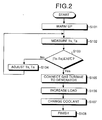
- Fig. 2 is a flowchart which shows the operation method of gas turbines according to a first embodiment of this invention.
- Fig. 3 is an explanatory diagram which shows a control unit which can be applied to this operation method.
- This operation method has a feature in that the cooling air used for cooling the dynamic blade and the like is changed to the backup steam, during the connection period of the gas turbine with the generator.
- the gas turbine is activated, to initiate the operation of the gas turbine, and the speed thereof is increased to the rated speed (3000 or 3600 rpm).
- the gas turbine enters into the constant-speed operation.
- step S101 the air in the casing of the gas turbine is used for cooling the dynamic blade, to warm up the dynamic blade, the turbine main spindle, the rotor disk or the stationary blade.
- the coolant for the dynamic blade and the like is changed from the air to the steam, during the connection period of the gas turbine with the generator.
- HP-SH High Pressure-Super Heater
- the degree of equalization of the temperature of the casing air and the steam temperature is desirably such that the temperatures of the casing air and the steam become the same, ideally.
- the temperature difference between these is not larger than 15°C, the spindle vibration can be suppressed within the tolerance.
- the condition that the temperature difference is not larger than 15°C is close to the tolerance limit of the spindle vibration. Therefore, to change over the coolant more stably, it is desired that the temperature difference between these be not larger than 12°C to 13°C, and to allow for the safety, it is desired that the temperature difference between these be not larger than 10°C.
- the both temperatures are first measured (step S102), to take a difference between these as a step of comparing the both temperatures. If the absolute value ⁇ T is within a predetermined temperature (10°C, herein) (step S103), the gas turbine is connected to the generator (step A105). When ⁇ T is larger than 10°C, at least one of the casing air temperature Ta and the steam temperature Ts is adjusted, for example, by the method explained below, to equalize the temperatures of these (step S104).
- a water injection spray 34 for decreasing the temperature of the high pressure steam by injecting water to the high pressure steam is provided, between the dynamic blade 1 and the HP-SH 422.
- a high pressure feed water pump 37 is connected to this water injection spray 34, to inject water to the high pressure steam supplied from the HP-SH 422.
- the water injected to the high pressure steam becomes minute particles and diffuses in the high pressure steam, and hence the temperature of the high pressure steam can be quickly dropped. Therefore, the steam temperature and the casing air temperature can be equalized quickly.
- Fig. 4A and Fig. 4B are explanatory diagrams which show an adjustment unit of the casing air temperature.
- the temperature of the casing air can be adjusted by changing the amount of air cooled by a TCA cooler 20 by a flow regulating valve 23, or by changing the number of fans 24 to be operated or changing the number of revolution of the fan 24.
- the steam temperature Ts and the casing air temperature Ta are measured by thermometers 40 and 41 (step S102).
- This measurement result is taken into measuring instruments 131 and 132 and converted into electric signals.
- a control signal for connection of the gas turbine is then transmitted from a computer 112 equipped in the processor 110 to a controller 120, being the control section, to connect the gas turbine with the generator. If not, the temperatures of these are adjusted to suppress the temperature difference between these within 10°C. This adjustment method is described below.
- a control signal for temperature adjustment is sent from the computer 112 to the controller 120.
- the controller 120 operates the TCA cooler 20 or the water injection spray 34, to adjust Ta or Ts, to thereby control so that ⁇ T becomes within 10°C (step S104).
- it can be calculated, from the specific heat of the casing air or the cooling steam, how much temperature can be decreased by bypassing how much air or by injecting how much water. Therefore, if this calculation value is used together with the feedback of the temperature, ⁇ T can be suppressed within the predetermined temperature range more quickly.
- the TCA cooler 20 and the water injection spray 34 may be operated at the same time, or only one of these may be operated, so as to suppress ⁇ T to 10°C or below.
- the casing air temperature Ta is higher than the steam temperature Ts, the temperature of the cooling air is decreased by increasing the temperature of the air which passes through the TCA cooler 20 or the like, to thereby suppress ⁇ T to 10°C or below.
- the steam temperature Ts is higher than the casing air temperature Ta, the amount of cooling air which passes through the TCA cooler 20 is decreased to thereby increase the casing air temperature Ta, while decreasing the steam temperature Ts by injecting water to the steam by the water injection spray 34. In this manner, the casing air temperature Ta and the steam temperature Ts approach to each other, and hence ⁇ T can be suppressed to 10°C or below in a shorter period of time.
- a control signal for the connection of the gas turbine is transmitted from the computer 112 in the processor 110 to the controller 120 to connect the gas turbine with the generator (step S105).
- the controller 120 first activates the generator 600, to synchronize the number of revolution of the generator 600 with the number of revolution of the gas turbine 500. This is because if the stationary generator 600 is connected to the gas turbine 500 which is rotating at a high speed, the clutch unit 650 for gas turbine and the turbine shaft (not shown) are damaged.
- the processor 110 After the number of revolution of the gas turbine 500 is synchronized with that of the generator 600, the processor 110 sends a clutch connection signal to the controller 120, so that the controller 120 actuates the clutch unit 650 for gas turbine, to connect the gas turbine 500 and the generator 600, thereby connection is completed.
- the load is gradually increased (step S106), and at the same time, the processor 110 sends a coolant changeover signal to the controller 120.
- the coolant may be changed after the connection has been completed, or at the same time with the connection.
- a dynamic blade steam control valve 10, a pressure control valve 11 and an exhaust valve 13 are then controlled, and the coolant is changed to the steam (step S107), thereby completing the connection of the gas turbine 500 with the generator and the changeover of the coolant (step S108).
- the operation method of the gas turbine according to the first embodiment at the time of connection of the gas turbine and changeover of the coolant, the temperature difference between the casing air and the steam is adjusted within 10°C. Therefore, vibration or the like of the turbine main spindle is suppressed to within a tolerance, and hence even during the connection period of the gas turbine with the generator, a trip thereof does not occur.
- the coolant can be changed from the air to the backup steam, during the connection period of the gas turbine with the generator, and hence the time until the rated load operation is achieved can be shortened considerably than before. As a result, the consumption of the cooling steam and the fuel, that is, the starting loss can be reduced, and the personnel expenses for the operator can be also suppressed.
- the rated load operation can be performed for a longer period of time, as compared with the conventional operation method. Further, since a long period of time is not required for reaching the rated load operation, even when operation and suspension are repeated often, the rated load output can be obtained quickly. Therefore, the demands for electric power can be dealt with in a detailed manner than before.
- the processor 110 may be realized by special-purpose hardware, or the processor 110 may be constituted of a memory and a CPU (central processing unit) , and serves its function by loading a program (not shown) for realizing the function of the processor 110 to the memory and executing the program (and so forth).
- the control unit 100 may be connected to an input unit, a display unit and the like (not shown) as peripheral equipment.
- Fig. 5 is a flowchart which shows the operation method of a gas turbine according to a modified example of the first embodiment.
- This operation method has a feature in that the cooling air having been used for cooling the dynamic blade and the like is changed to the backup steam at the time of part-load operation, after the gas turbine has been connected to the generator.
- the cooling air is changed to the backup steam during the connection period of the gas turbine with the generator, but this changeover may be carried out at the time of the partial load of the gas turbine, as shown in this modified example.
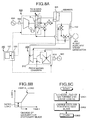
- Fig. 6A and Fig. 6B are explanatory diagrams which show the relation between the load of the gas turbine and the quantity of heat of the exhaust gas from the gas turbine and the generated volume of steam.
- Fig. 6A shows the relation between the load of the gas turbine and the volume of steam generated per hour.
- the load plotted on the X axis shows the ratio when the rated load is assumed to be 100%.
- the generated volume of steam V plotted on the Y axis shows the ratio when the volume of steam generated per hour by the HRSG, when the gas turbine is operated at the rated load, is assumed to be 100%.
- the Y axis in Fig. 6B shows the quantity of heat Q of the exhaust gas from the gas turbine, and is expressed by a ratio when the quantity of heat Q of the exhaust gas when the gas turbine is operated at the rated load is assumed to be 100%.
- the coolant Before changing the coolant to the steam, hot sections such as the dynamic blade and the like are cooled by the casing air.
- the steam after the coolant has been changed is generated by recovering the thermal energy contained in the exhaust gas of the gas turbine itself by the HRSG.
- the cooling air is to be changed to the cooling steam, it is necessary that the volume of steam necessary for cooling the hot sections such as the dynamic blade is generated by the HRSG from the exhaust gas of the gas turbine itself.
- step S201 The gas turbine is activated, and after the dynamic blade and the turbine main spindle are warmed up by the casing air, when the difference between the casing air temperature Ta and the steam temperature Ts becomes within 10°C (step S201), the gas turbine is connected to the generator (step S202). The load of the gas turbine is then increased up to the partial load condition (step S203). On the other hand, it is judged whether the absolute value ⁇ T of the temperature difference between the steam temperature Ts and the casing air temperature Ta is within 10°C (step S204). If ⁇ T is larger than 10°C, adjustment is carried out using the TCA cooler 20 and the water injection spray 34, so that ⁇ T decreases to 10°C or below (step S205).
- a coolant changeover signal is sent from the processor 110 (see Fig. 3) to the controller 120 in the control unit 100, to thereby control the dynamic blade steam control valve 10, the pressure control valve 11 and the exhaust valve 13 (see Fig. 1), and the coolant is changed to the steam (step S206), thereby completing the changeover of the coolant (step S207).
- the reason why it is necessary to equalize the casing air temperature and the steam team is similar to the above-described example.
- the control in the above example is also applicable to the control at that time.
- the time shifting from the startup to the rated load of the gas turbine can be shortened. As a result, the starting loss can be reduced, thereby enabling economical operation.
- Fig. 7A and Fig. 7B are explanatory diagrams which show the operation method of the gas turbine according to a modified example of the second embodiment.
- This operation method has a feature in that during the period of changing the coolant for the combustor tail pipe, the steam turbine is connected to the generator.
- the coolant for the combustor tail pipe 45 and the combustor 46 is changed from the steam of a plant auxiliary steam generator 480 to the steam of an IP-SH (Intermediate Pressure-Super Heater) 423 equipped in the HRSG 400 (step S301).
- IP-SH Intermediate Pressure-Super Heater
- a controller 155 changes over a selector valve 180 from the plant steam side to the IP-SH 423 side.
- This selector valve 180 is formed by combining necessary valves.
- the changeover signal may be issued at the same time with the connection of the steam turbine 200 with the generator, or the timing for issuing the changeover signal may be shifted.
- the processor 153 then sends a steam turbine connection signal to the controller 155 (step S302).
- the controller 155 then activates the generator 610 to synchronize it with the steam turbine 200.
- the processor 153 issues a connection signal of the clutch for the steam turbine to the controller 155, and the controller 155 operates a clutch unit 660 for the steam turbine.
- a generator 610 and the steam turbine 200 are then connected, to thereby complete the connection of the steam turbine 200 (step S303).
- the load of the gas turbine 500 hardly affects the load fluctuation of the HRSG 400.
- the load of the gas turbine 500 hardly affects the load fluctuation of the HRSG 400.
- the coolant for the combustor tail pipe 45 and the combustor 46 is changed, it is desired to equalize the steam temperature from the plant auxiliary steam generator 480 and the steam temperature from the IP-SH 423 as much as possible. If the temperature difference between these steams is too big, the combustor tail pipe 45 may be damaged due to a thermal shock or the like.
- the steam turbine can be connected to the generator, at the same time with the period when the steam for cooling the combustor and the combustor tail pipe in the gas turbine is changed.
- the steam turbine can be connected to the generator, while changing over the steam for cooling the combustor and the combustor.tail pipe, the time required for reaching the rated operation can be shortened, and the starting loss can be also reduced.
- Fig. 8 is an explanatory diagram which shows one example of the operation method of a combined cycle according to a third embodiment of this invention.
- This operation method has a feature in that the time for changing the coolant for the stationary blade from the steam from the plant auxiliary steam generator to the exhaust steam from the high pressure turbine is overlapped on the time when the load of the gas turbine is increased to the rated load.
- Fig. 8C while the load of the gas turbine 500 and the steam turbine 200 is increased to the rated load, the steam for cooling the stationary blade 4 is changed from the steam from the plant auxiliary steam generator 480 to the exhaust steam from the high pressure steam turbine 210.
- a load increase signal is issued from a processor 163 in a control unit 160 to a controller 165, thereby the controller 165 allows the load of the gas turbine 500 and the steam turbine 200 to be increased to the rated load (step S401). Specifically, the load is increased by increasing the fuel and the air supplied to the gas turbine 500 or by increasing the volume of steam supplied to the steam turbine 200.
- a coolant changeover signal for a stationary blade 4 is then issued from the processor 163 to the controller 165 (step S402), at the same time with the transmission of the load increase signal, or during increasing the load.
- the controller 165 receives this signal and operates a selector valve 182, to change over the steam for cooling the stationary blade 4 from the steam of the plant auxiliary steam generator to the exhaust steam from the high pressure steam turbine. As a result, changeover of the coolant for the stationary blade 4 is completed (step S403).
- This selector valve 182 is formed by combining necessary valves.
- the steam for cooling the stationary blade is changed from the plant steam to the exhaust steam from the high pressure steam turbine, but at the same time, the steam for cooling the dynamic blade 1 may be changed from the backup steam of a high pressure super heater 421 to the exhaust steam from the high pressure steam turbine 210.
- the coolant for the rotation system such as the dynamic blade 1 and the turbine main spindle 2
- the coolant for the rotation system is changed, if the temperature difference of the coolant is large before and after the changeover, spindle vibrations occur, causing a trip of the gas turbine 500. Therefore, it is necessary to control so that the temperature of the steam from the high pressure super heater 421 and the exhaust steam from the high pressure steam turbine 210 are equalized.
- the spindle vibration can be suppressed within the tolerance, and a trip of the gas turbine can be prevented.
- the control method explained in the first embodiment can be applied. As described above, with this operation method, since the steam for cooling the dynamic blade can be changed, with an increase of the load of the gas turbine, the time required for the rated load operation can be shortened, and the starting loss can be also reduced.
- the control method according to the first to third embodiments is used alone, the action for shortening the time required from the startup to the rated load operation of the gas turbine can be obtained.
- the time required from the startup to the rated load operation of the gas turbine can be further shortened, and hence the starting loss can be further reduced.
- the coolant for the hot members of the gas turbine such as the dynamic blade and the turbine main spindle
- the coolant for the hot members of the gas turbine is changed from the casing air to the steam, during the connection period of the gas turbine with the generator.
- the changeover of the coolant is carried out. Therefore, at the time of changeover of the coolant, the temperature distribution in the circumferential direction occurring in the turbine main spindle and the rotor disk can be made small, and hence the spindle vibration of the turbine main spindle can be suppressed within the tolerance.
- the operation method of the gas turbine can be realized, by using a computer.
- the coolant for the dynamic blade is changed from the casing air to the steam, after equalizing the casing air temperature and the steam temperature, at the time of the so-called partial load of the gas turbine.
- the coolant for the hot members of the gas turbine such as the dynamic blade and the turbine main spindle
- the temperatures of the casing air and the steam are equalized, the spindle vibration can be suppressed within the tolerance. Therefore, even in the state that the load is applied to the gas turbine, the coolant for the dynamic blade or the like can be changed, and hence the shifting from the startup to the rated load of the gas turbine can be shortened. The starting loss can be also reduced, accompanying this.
- the program for allowing a computer to execute the operation method of the gas turbine the operation method of the gas turbine can be realized, by using a computer.
- the steam turbine is connected to the generator.
- the program for allowing a computer to execute the operation method of the gas turbine combined electric generating plant the operation method of the gas turbine can be realized, by using a computer.
- the period for changing the coolant for the stationary blade from the steam of a plant auxiliary steam generator or the like to the steam of the HRSG is overlapped on the period for increasing the load of the gas turbine from the partial load to the rated load.
- the coolant having a slight temperature difference and density difference for the stationary blade, the combustor or the combustor tail pipe, being the stationary system is changed, the rotation system is hardly affected, and a trip of the gas turbine does not occur. Therefore, since the steam for cooling the stationary blade can be changed, with an increase of the load of the gas turbine, the time required for the rated load operation can be shortened, and the starting loss can be reduced accompanying this.
- the program for allowing a computer to execute the operation method of the gas turbine combined electric generating plant the operation method of the gas turbine can be realized, by using a computer.
- the changeover is carried out, during the connection period of the gas turbine with the generator. Since the time required from the startup to the rated operation of the gas turbine can be shortened, the starting loss can be reduced. Further, since the time required from the startup to the rated load operation is short, personnel expenses for operators can be also suppressed.
Landscapes
- Engineering & Computer Science (AREA)
- Mechanical Engineering (AREA)
- General Engineering & Computer Science (AREA)
- Chemical & Material Sciences (AREA)
- Combustion & Propulsion (AREA)
- Engine Equipment That Uses Special Cycles (AREA)
- Control Of Turbines (AREA)
Applications Claiming Priority (2)
| Application Number | Priority Date | Filing Date | Title |
|---|---|---|---|
| JP2001278824A JP2003083003A (ja) | 2001-09-13 | 2001-09-13 | ガスタービン及びガスタービン複合発電プラントの運転方法 |
| JP2001278824 | 2001-09-13 |
Publications (3)
| Publication Number | Publication Date |
|---|---|
| EP1293656A2 true EP1293656A2 (de) | 2003-03-19 |
| EP1293656A3 EP1293656A3 (de) | 2003-06-25 |
| EP1293656B1 EP1293656B1 (de) | 2005-05-18 |
Family
ID=19103122
Family Applications (1)
| Application Number | Title | Priority Date | Filing Date |
|---|---|---|---|
| EP02020422A Expired - Lifetime EP1293656B1 (de) | 2001-09-13 | 2002-09-11 | Gasturbine und Operationsmethode eines kombinierten Gasturbinenkraftwerks, und Computerprogram |
Country Status (6)
| Country | Link |
|---|---|
| US (1) | US6957541B2 (de) |
| EP (1) | EP1293656B1 (de) |
| JP (1) | JP2003083003A (de) |
| CN (1) | CN1260468C (de) |
| CA (1) | CA2402947C (de) |
| DE (1) | DE60204195D1 (de) |
Cited By (1)
| Publication number | Priority date | Publication date | Assignee | Title |
|---|---|---|---|---|
| US9328633B2 (en) | 2012-06-04 | 2016-05-03 | General Electric Company | Control of steam temperature in combined cycle power plant |
Families Citing this family (11)
| Publication number | Priority date | Publication date | Assignee | Title |
|---|---|---|---|---|
| US7801660B2 (en) * | 2006-07-31 | 2010-09-21 | General Electric Company | Methods and systems for estimating compressor fouling impact to combined cycle power plants |
| JP5834876B2 (ja) * | 2011-12-15 | 2015-12-24 | 株式会社Ihi | インピンジ冷却機構、タービン翼及び燃焼器 |
| JP5927893B2 (ja) * | 2011-12-15 | 2016-06-01 | 株式会社Ihi | インピンジ冷却機構、タービン翼及び燃焼器 |
| US9382810B2 (en) * | 2012-07-27 | 2016-07-05 | General Electric Company | Closed loop cooling system for a gas turbine |
| JP6327941B2 (ja) | 2014-05-15 | 2018-05-23 | 三菱重工業株式会社 | ガスタービンサイクル設備、排ガスのco2回収設備及び燃焼排ガスの排熱回収方法 |
| CN104500153A (zh) * | 2014-11-10 | 2015-04-08 | 国家电网公司 | 燃气-蒸汽联合机组的启动控制方法和装置 |
| JP7325213B2 (ja) * | 2019-04-10 | 2023-08-14 | 三菱重工業株式会社 | 静翼ユニットおよび圧縮機並びにガスタービン |
| CN110905610B (zh) * | 2019-10-24 | 2024-07-12 | 广东粤华发电有限责任公司 | 一种汽轮机暖机系统及暖机方法 |
| US11661866B2 (en) * | 2020-01-30 | 2023-05-30 | Mitsubishi Power Americas, Inc. | Hydrogen and oxygen supplemental firing for combined cycle facility |
| CN112282939B (zh) * | 2020-11-06 | 2024-10-22 | 北京全四维动力科技有限公司 | 一种燃气轮机及提高其响应速度的方法 |
| CN115289449A (zh) * | 2022-06-23 | 2022-11-04 | 东方电气集团东方锅炉股份有限公司 | 一种tca冷却器温差控制系统 |
Family Cites Families (18)
| Publication number | Priority date | Publication date | Assignee | Title |
|---|---|---|---|---|
| JPS6088806A (ja) * | 1983-10-21 | 1985-05-18 | Mitsui Eng & Shipbuild Co Ltd | 内燃機関の廃熱回収装置 |
| JPS611809A (ja) * | 1984-06-13 | 1986-01-07 | Hitachi Ltd | 蒸気タ−ビンのケ−シング |
| US4982564A (en) * | 1988-12-14 | 1991-01-08 | General Electric Company | Turbine engine with air and steam cooling |
| US5340274A (en) * | 1991-11-19 | 1994-08-23 | General Electric Company | Integrated steam/air cooling system for gas turbines |
| JP2954797B2 (ja) * | 1992-10-05 | 1999-09-27 | 株式会社東芝 | 蒸気タ−ビンの強制冷却装置 |
| DE19506787B4 (de) * | 1995-02-27 | 2004-05-06 | Alstom | Verfahren zum Betrieb einer Dampfturbine |
| DE19531562A1 (de) | 1995-08-28 | 1997-03-06 | Abb Management Ag | Verfahren zum Betrieb einer Kraftwerksanlage |
| EP1184541B1 (de) * | 1995-09-22 | 2004-12-08 | Kabushiki Kaisha Toshiba | Kraftanlage mit kombiniertem Kreislauf |
| US6105362A (en) * | 1995-09-22 | 2000-08-22 | Kabushiki Kaisha Toshiba | Combined cycle power plant with gas turbine cooling system |
| JPH10131719A (ja) * | 1996-10-29 | 1998-05-19 | Mitsubishi Heavy Ind Ltd | 蒸気冷却ガスタービンシステム |
| DE69825858T2 (de) * | 1997-06-24 | 2005-09-08 | Mitsubishi Heavy Industries, Ltd. | Dampfkühlungsvorrichtung für gasturbine |
| US6286297B1 (en) * | 1997-07-02 | 2001-09-11 | Mitsubishi Heavy Industries, Ltd. | Steam cooled type combined cycle power generation plant and operation method thereof |
| JP3808987B2 (ja) | 1997-09-18 | 2006-08-16 | 株式会社東芝 | コンバインドサイクル発電プラントの運転方法 |
| JP3977909B2 (ja) * | 1997-11-26 | 2007-09-19 | 三菱重工業株式会社 | 回収式蒸気冷却ガスタービン |
| JP4337960B2 (ja) * | 1998-12-17 | 2009-09-30 | ゼネラル・エレクトリック・カンパニイ | コンバインドサイクルシステムにおいて補助蒸気を供給するための装置及び方法 |
| JP3919966B2 (ja) * | 1999-02-26 | 2007-05-30 | 株式会社東芝 | コンバインドサイクル発電プラントの運転方法 |
| CN1119505C (zh) * | 1999-10-29 | 2003-08-27 | 三菱重工业株式会社 | 带有改进的外壳冷却系统的汽轮机 |
| JP2001263092A (ja) * | 2000-03-15 | 2001-09-26 | Mitsubishi Heavy Ind Ltd | ガスタービン |
-
2001
- 2001-09-13 JP JP2001278824A patent/JP2003083003A/ja active Pending
-
2002
- 2002-09-11 EP EP02020422A patent/EP1293656B1/de not_active Expired - Lifetime
- 2002-09-11 DE DE60204195T patent/DE60204195D1/de not_active Expired - Lifetime
- 2002-09-12 CA CA002402947A patent/CA2402947C/en not_active Expired - Fee Related
- 2002-09-13 CN CN02148239.XA patent/CN1260468C/zh not_active Expired - Fee Related
- 2002-09-13 US US10/242,767 patent/US6957541B2/en not_active Expired - Fee Related
Cited By (1)
| Publication number | Priority date | Publication date | Assignee | Title |
|---|---|---|---|---|
| US9328633B2 (en) | 2012-06-04 | 2016-05-03 | General Electric Company | Control of steam temperature in combined cycle power plant |
Also Published As
| Publication number | Publication date |
|---|---|
| EP1293656A3 (de) | 2003-06-25 |
| CN1260468C (zh) | 2006-06-21 |
| DE60204195D1 (de) | 2005-06-23 |
| JP2003083003A (ja) | 2003-03-19 |
| US6957541B2 (en) | 2005-10-25 |
| CN1408996A (zh) | 2003-04-09 |
| EP1293656B1 (de) | 2005-05-18 |
| CA2402947C (en) | 2006-04-11 |
| US20030065436A1 (en) | 2003-04-03 |
| CA2402947A1 (en) | 2003-03-13 |
Similar Documents
| Publication | Publication Date | Title |
|---|---|---|
| JP2593578B2 (ja) | コンバインドサイクル発電プラント | |
| US6978623B2 (en) | Gas turbine, driving method thereof and gas turbine combined electric power generation plant | |
| JP3716244B2 (ja) | クラッチを備えた一軸コンバインドプラントの運転制御装置及び運転制御方法。 | |
| US5042246A (en) | Control system for single shaft combined cycle gas and steam turbine unit | |
| EP1293656B1 (de) | Gasturbine und Operationsmethode eines kombinierten Gasturbinenkraftwerks, und Computerprogram | |
| US7114915B2 (en) | Gas turbine and turbine rotor for a gas turbine | |
| EP3306043B1 (de) | Kombikraftwerk, vorrichtung zur steuerung dieser anlage und verfahren zum hochfahren dieser anlage | |
| US20040237535A1 (en) | Method of operating a gas turbine | |
| JP2012167571A (ja) | 一軸型複合サイクル発電プラントおよびその運転方法 | |
| CA2843524A1 (en) | Method for starting-up and operating a combined-cycle power plant | |
| US6161385A (en) | Turbomachine and method of use | |
| JPH10115229A (ja) | ガスタービン及びその運転方法 | |
| JP2692973B2 (ja) | 複合サイクルプラントの蒸気サイクル起動方法 | |
| JPH09317495A (ja) | 圧縮空気貯蔵発電装置 | |
| US6286297B1 (en) | Steam cooled type combined cycle power generation plant and operation method thereof | |
| US20120151921A1 (en) | Method for starting a turbomachine | |
| JP4237969B2 (ja) | 蒸気冷却式高性能機械の高圧バイパスの変動設定 | |
| JP2013076388A (ja) | 一軸型複合サイクル発電プラント及びその運転方法 | |
| CA2242073C (en) | Combined cycle power generation plant | |
| JP2000130108A (ja) | 複合サイクル発電プラントの起動方法 | |
| JPH03908A (ja) | コンバインドサイクルプラントの起動方法 | |
| JP2003083004A (ja) | ガスタービン及びその運転方法、並びにガスタービン複合発電プラント | |
| JP2003120328A (ja) | ガスタービンおよびその運転方法、並びにガスタービン複合発電プラント | |
| JPH04246244A (ja) | 加圧流動床コンバインドプラントとその部分負荷運転制御方法及びその制御装置 | |
| JPH10103078A (ja) | ガスタービンサイクル |
Legal Events
| Date | Code | Title | Description |
|---|---|---|---|
| PUAI | Public reference made under article 153(3) epc to a published international application that has entered the european phase |
Free format text: ORIGINAL CODE: 0009012 |
|
| 17P | Request for examination filed |
Effective date: 20020911 |
|
| AK | Designated contracting states |
Kind code of ref document: A2 Designated state(s): AT BE BG CH CY CZ DE DK EE ES FI FR GB GR IE IT LI LU MC NL PT SE SK TR |
|
| AX | Request for extension of the european patent |
Extension state: AL LT LV MK RO SI |
|
| PUAL | Search report despatched |
Free format text: ORIGINAL CODE: 0009013 |
|
| AK | Designated contracting states |
Designated state(s): AT BE BG CH CY CZ DE DK EE ES FI FR GB GR IE IT LI LU MC NL PT SE SK TR |
|
| AX | Request for extension of the european patent |
Extension state: AL LT LV MK RO SI |
|
| 17Q | First examination report despatched |
Effective date: 20031205 |
|
| AKX | Designation fees paid |
Designated state(s): CH DE FR GB IT LI |
|
| GRAP | Despatch of communication of intention to grant a patent |
Free format text: ORIGINAL CODE: EPIDOSNIGR1 |
|
| GRAS | Grant fee paid |
Free format text: ORIGINAL CODE: EPIDOSNIGR3 |
|
| RAP1 | Party data changed (applicant data changed or rights of an application transferred) |
Owner name: MITSUBISHI HEAVY INDUSTRIES, LTD. |
|
| GRAA | (expected) grant |
Free format text: ORIGINAL CODE: 0009210 |
|
| AK | Designated contracting states |
Kind code of ref document: B1 Designated state(s): CH DE FR GB IT LI |
|
| PG25 | Lapsed in a contracting state [announced via postgrant information from national office to epo] |
Ref country code: CH Free format text: LAPSE BECAUSE OF FAILURE TO SUBMIT A TRANSLATION OF THE DESCRIPTION OR TO PAY THE FEE WITHIN THE PRESCRIBED TIME-LIMIT Effective date: 20050518 Ref country code: IT Free format text: LAPSE BECAUSE OF FAILURE TO SUBMIT A TRANSLATION OF THE DESCRIPTION OR TO PAY THE FEE WITHIN THE PRESCRIBED TIME-LIMIT;WARNING: LAPSES OF ITALIAN PATENTS WITH EFFECTIVE DATE BEFORE 2007 MAY HAVE OCCURRED AT ANY TIME BEFORE 2007. THE CORRECT EFFECTIVE DATE MAY BE DIFFERENT FROM THE ONE RECORDED. Effective date: 20050518 Ref country code: LI Free format text: LAPSE BECAUSE OF FAILURE TO SUBMIT A TRANSLATION OF THE DESCRIPTION OR TO PAY THE FEE WITHIN THE PRESCRIBED TIME-LIMIT Effective date: 20050518 |
|
| REG | Reference to a national code |
Ref country code: GB Ref legal event code: FG4D |
|
| REG | Reference to a national code |
Ref country code: CH Ref legal event code: EP |
|
| REG | Reference to a national code |
Ref country code: IE Ref legal event code: FG4D |
|
| REF | Corresponds to: |
Ref document number: 60204195 Country of ref document: DE Date of ref document: 20050623 Kind code of ref document: P |
|
| PG25 | Lapsed in a contracting state [announced via postgrant information from national office to epo] |
Ref country code: DE Free format text: LAPSE BECAUSE OF FAILURE TO SUBMIT A TRANSLATION OF THE DESCRIPTION OR TO PAY THE FEE WITHIN THE PRESCRIBED TIME-LIMIT Effective date: 20050819 |
|
| REG | Reference to a national code |
Ref country code: CH Ref legal event code: PL |
|
| PLBE | No opposition filed within time limit |
Free format text: ORIGINAL CODE: 0009261 |
|
| STAA | Information on the status of an ep patent application or granted ep patent |
Free format text: STATUS: NO OPPOSITION FILED WITHIN TIME LIMIT |
|
| 26N | No opposition filed |
Effective date: 20060221 |
|
| EN | Fr: translation not filed | ||
| PG25 | Lapsed in a contracting state [announced via postgrant information from national office to epo] |
Ref country code: FR Free format text: LAPSE BECAUSE OF NON-PAYMENT OF DUE FEES Effective date: 20050930 |
|
| PG25 | Lapsed in a contracting state [announced via postgrant information from national office to epo] |
Ref country code: FR Free format text: LAPSE BECAUSE OF NON-PAYMENT OF DUE FEES Effective date: 20050518 |
|
| PGFP | Annual fee paid to national office [announced via postgrant information from national office to epo] |
Ref country code: GB Payment date: 20080917 Year of fee payment: 7 |
|
| GBPC | Gb: european patent ceased through non-payment of renewal fee |
Effective date: 20090911 |
|
| PG25 | Lapsed in a contracting state [announced via postgrant information from national office to epo] |
Ref country code: GB Free format text: LAPSE BECAUSE OF NON-PAYMENT OF DUE FEES Effective date: 20090911 |