EP1311680B1 - Molecules d'acide nucleique codant pour des proteines de cycle cellulaire de plantes et leurs utilisations - Google Patents
Molecules d'acide nucleique codant pour des proteines de cycle cellulaire de plantes et leurs utilisations Download PDFInfo
- Publication number
- EP1311680B1 EP1311680B1 EP01949824A EP01949824A EP1311680B1 EP 1311680 B1 EP1311680 B1 EP 1311680B1 EP 01949824 A EP01949824 A EP 01949824A EP 01949824 A EP01949824 A EP 01949824A EP 1311680 B1 EP1311680 B1 EP 1311680B1
- Authority
- EP
- European Patent Office
- Prior art keywords
- ccp
- plant
- seq
- nucleic acid
- sequence
- Prior art date
- Legal status (The legal status is an assumption and is not a legal conclusion. Google has not performed a legal analysis and makes no representation as to the accuracy of the status listed.)
- Expired - Lifetime
Links
- 150000007523 nucleic acids Chemical class 0.000 title claims abstract description 288
- 102000039446 nucleic acids Human genes 0.000 title claims abstract description 274
- 108020004707 nucleic acids Proteins 0.000 title claims abstract description 274
- 102000005483 Cell Cycle Proteins Human genes 0.000 title description 7
- 108010031896 Cell Cycle Proteins Proteins 0.000 title description 7
- 230000009261 transgenic effect Effects 0.000 claims abstract description 66
- 108090000765 processed proteins & peptides Proteins 0.000 claims abstract description 64
- 102000004196 processed proteins & peptides Human genes 0.000 claims abstract description 56
- 229920001184 polypeptide Polymers 0.000 claims abstract description 47
- 230000022131 cell cycle Effects 0.000 claims abstract description 38
- 241000196324 Embryophyta Species 0.000 claims description 347
- 125000003729 nucleotide group Chemical group 0.000 claims description 183
- 239000002773 nucleotide Substances 0.000 claims description 179
- 238000000034 method Methods 0.000 claims description 136
- 125000003275 alpha amino acid group Chemical group 0.000 claims description 122
- 239000013598 vector Substances 0.000 claims description 90
- 230000014509 gene expression Effects 0.000 claims description 84
- 230000004048 modification Effects 0.000 claims description 71
- 238000012986 modification Methods 0.000 claims description 71
- 241000219195 Arabidopsis thaliana Species 0.000 claims description 56
- 230000000977 initiatory effect Effects 0.000 claims description 51
- 108091028043 Nucleic acid sequence Proteins 0.000 claims description 48
- 230000000638 stimulation Effects 0.000 claims description 39
- 239000012634 fragment Substances 0.000 claims description 32
- 210000000056 organ Anatomy 0.000 claims description 29
- 230000000295 complement effect Effects 0.000 claims description 26
- 230000015572 biosynthetic process Effects 0.000 claims description 20
- 230000032823 cell division Effects 0.000 claims description 20
- 240000007594 Oryza sativa Species 0.000 claims description 17
- 230000012010 growth Effects 0.000 claims description 17
- 235000007164 Oryza sativa Nutrition 0.000 claims description 16
- 240000008042 Zea mays Species 0.000 claims description 16
- 235000002017 Zea mays subsp mays Nutrition 0.000 claims description 15
- 230000018109 developmental process Effects 0.000 claims description 15
- 235000006008 Brassica napus var napus Nutrition 0.000 claims description 14
- 238000011161 development Methods 0.000 claims description 14
- 235000016383 Zea mays subsp huehuetenangensis Nutrition 0.000 claims description 12
- 235000009973 maize Nutrition 0.000 claims description 12
- 235000009566 rice Nutrition 0.000 claims description 12
- 102000040430 polynucleotide Human genes 0.000 claims description 11
- 108091033319 polynucleotide Proteins 0.000 claims description 11
- 239000002157 polynucleotide Substances 0.000 claims description 11
- 150000003839 salts Chemical class 0.000 claims description 11
- 240000002791 Brassica napus Species 0.000 claims description 10
- 235000013399 edible fruits Nutrition 0.000 claims description 10
- 235000021307 Triticum Nutrition 0.000 claims description 9
- 241000209140 Triticum Species 0.000 claims description 9
- 230000006353 environmental stress Effects 0.000 claims description 9
- 235000010469 Glycine max Nutrition 0.000 claims description 8
- 244000068988 Glycine max Species 0.000 claims description 8
- 244000020551 Helianthus annuus Species 0.000 claims description 8
- 235000003222 Helianthus annuus Nutrition 0.000 claims description 8
- 235000015097 nutrients Nutrition 0.000 claims description 8
- 241000209510 Liliopsida Species 0.000 claims description 7
- 241001233957 eudicotyledons Species 0.000 claims description 7
- 244000052769 pathogen Species 0.000 claims description 7
- 235000014698 Brassica juncea var multisecta Nutrition 0.000 claims description 6
- 240000000385 Brassica napus var. napus Species 0.000 claims description 6
- 235000006618 Brassica rapa subsp oleifera Nutrition 0.000 claims description 6
- 235000004977 Brassica sinapistrum Nutrition 0.000 claims description 6
- 230000004543 DNA replication Effects 0.000 claims description 6
- 235000007688 Lycopersicon esculentum Nutrition 0.000 claims description 6
- 240000003768 Solanum lycopersicum Species 0.000 claims description 6
- 230000001965 increasing effect Effects 0.000 claims description 6
- 230000000877 morphologic effect Effects 0.000 claims description 6
- 230000035882 stress Effects 0.000 claims description 6
- 235000017587 Medicago sativa ssp. sativa Nutrition 0.000 claims description 5
- 230000008117 seed development Effects 0.000 claims description 5
- 230000007704 transition Effects 0.000 claims description 5
- 230000010190 G1 phase Effects 0.000 claims description 4
- 240000004658 Medicago sativa Species 0.000 claims description 4
- 230000036579 abiotic stress Effects 0.000 claims description 4
- 230000004790 biotic stress Effects 0.000 claims description 4
- 230000001717 pathogenic effect Effects 0.000 claims description 4
- 244000000003 plant pathogen Species 0.000 claims description 4
- 206010013883 Dwarfism Diseases 0.000 claims description 3
- 230000008641 drought stress Effects 0.000 claims description 3
- 208000015181 infectious disease Diseases 0.000 claims description 3
- 230000005087 leaf formation Effects 0.000 claims description 3
- 230000024121 nodulation Effects 0.000 claims description 3
- 230000009758 senescence Effects 0.000 claims description 3
- 101710185445 Cytochrome c peroxidase, mitochondrial Proteins 0.000 abstract description 446
- 102400000112 Katacalcin Human genes 0.000 abstract description 311
- 230000000692 anti-sense effect Effects 0.000 abstract description 46
- 239000013604 expression vector Substances 0.000 abstract description 27
- 239000000203 mixture Substances 0.000 abstract description 26
- 108020001507 fusion proteins Proteins 0.000 abstract description 25
- 102000037865 fusion proteins Human genes 0.000 abstract description 25
- 238000012216 screening Methods 0.000 abstract description 18
- 238000003259 recombinant expression Methods 0.000 abstract description 16
- 101150103259 ccp gene Proteins 0.000 abstract description 15
- 230000000890 antigenic effect Effects 0.000 abstract description 5
- 238000002560 therapeutic procedure Methods 0.000 abstract description 3
- 229920002451 polyvinyl alcohol Polymers 0.000 description 293
- 108090000623 proteins and genes Proteins 0.000 description 228
- 210000004027 cell Anatomy 0.000 description 197
- 102000004169 proteins and genes Human genes 0.000 description 133
- 235000018102 proteins Nutrition 0.000 description 126
- 239000013615 primer Substances 0.000 description 101
- 235000001014 amino acid Nutrition 0.000 description 98
- 150000001413 amino acids Chemical class 0.000 description 94
- 229940024606 amino acid Drugs 0.000 description 93
- 230000000694 effects Effects 0.000 description 88
- 210000001519 tissue Anatomy 0.000 description 69
- 108020004414 DNA Proteins 0.000 description 59
- 238000003752 polymerase chain reaction Methods 0.000 description 57
- 239000002299 complementary DNA Substances 0.000 description 56
- 150000001875 compounds Chemical class 0.000 description 53
- 108050006400 Cyclin Proteins 0.000 description 50
- 230000009466 transformation Effects 0.000 description 50
- 102000016736 Cyclin Human genes 0.000 description 49
- 230000027455 binding Effects 0.000 description 46
- 108091026890 Coding region Proteins 0.000 description 45
- 108091081024 Start codon Proteins 0.000 description 38
- 108091007914 CDKs Proteins 0.000 description 36
- 241001465754 Metazoa Species 0.000 description 31
- 230000001105 regulatory effect Effects 0.000 description 31
- 238000003556 assay Methods 0.000 description 29
- 239000003795 chemical substances by application Substances 0.000 description 29
- 108020004999 messenger RNA Proteins 0.000 description 29
- 125000000539 amino acid group Chemical group 0.000 description 28
- 239000002609 medium Substances 0.000 description 28
- 230000036961 partial effect Effects 0.000 description 28
- 238000012360 testing method Methods 0.000 description 28
- 238000009396 hybridization Methods 0.000 description 25
- 239000013612 plasmid Substances 0.000 description 25
- 230000004568 DNA-binding Effects 0.000 description 24
- 210000000349 chromosome Anatomy 0.000 description 23
- 230000000875 corresponding effect Effects 0.000 description 22
- 208000037265 diseases, disorders, signs and symptoms Diseases 0.000 description 22
- 239000000523 sample Substances 0.000 description 21
- 230000035772 mutation Effects 0.000 description 20
- 241000589158 Agrobacterium Species 0.000 description 19
- 238000000338 in vitro Methods 0.000 description 19
- 230000006378 damage Effects 0.000 description 18
- 230000026731 phosphorylation Effects 0.000 description 18
- 238000006366 phosphorylation reaction Methods 0.000 description 18
- 239000000126 substance Substances 0.000 description 18
- 230000001404 mediated effect Effects 0.000 description 17
- 230000003993 interaction Effects 0.000 description 16
- 108091034117 Oligonucleotide Proteins 0.000 description 15
- 108700026244 Open Reading Frames Proteins 0.000 description 15
- 208000035475 disorder Diseases 0.000 description 15
- 239000000047 product Substances 0.000 description 15
- 239000000758 substrate Substances 0.000 description 15
- 238000013518 transcription Methods 0.000 description 15
- 230000035897 transcription Effects 0.000 description 15
- 238000011282 treatment Methods 0.000 description 15
- 108091032973 (ribonucleotides)n+m Proteins 0.000 description 14
- 108020004705 Codon Proteins 0.000 description 14
- 102000004190 Enzymes Human genes 0.000 description 14
- 108090000790 Enzymes Proteins 0.000 description 14
- 238000006471 dimerization reaction Methods 0.000 description 14
- 229940088598 enzyme Drugs 0.000 description 14
- 238000004519 manufacturing process Methods 0.000 description 14
- 230000008929 regeneration Effects 0.000 description 14
- 238000011069 regeneration method Methods 0.000 description 14
- 108090000266 Cyclin-dependent kinases Proteins 0.000 description 13
- 102000003903 Cyclin-dependent kinases Human genes 0.000 description 13
- 108700019146 Transgenes Proteins 0.000 description 13
- 239000003550 marker Substances 0.000 description 13
- 230000008569 process Effects 0.000 description 13
- 101100181118 Arabidopsis thaliana KIN14A gene Proteins 0.000 description 12
- -1 Yoon et al. (1996) Proteins 0.000 description 12
- 239000003814 drug Substances 0.000 description 12
- 230000006870 function Effects 0.000 description 12
- 239000000463 material Substances 0.000 description 12
- 102100024829 DNA polymerase delta catalytic subunit Human genes 0.000 description 11
- 101000868333 Homo sapiens Cyclin-dependent kinase 1 Proteins 0.000 description 11
- 101000909198 Homo sapiens DNA polymerase delta catalytic subunit Proteins 0.000 description 11
- 239000012472 biological sample Substances 0.000 description 11
- 230000001413 cellular effect Effects 0.000 description 11
- 210000004408 hybridoma Anatomy 0.000 description 11
- 238000002360 preparation method Methods 0.000 description 11
- 238000003786 synthesis reaction Methods 0.000 description 11
- YBJHBAHKTGYVGT-ZKWXMUAHSA-N (+)-Biotin Chemical compound N1C(=O)N[C@@H]2[C@H](CCCCC(=O)O)SC[C@@H]21 YBJHBAHKTGYVGT-ZKWXMUAHSA-N 0.000 description 10
- 241000699666 Mus <mouse, genus> Species 0.000 description 10
- 238000004458 analytical method Methods 0.000 description 10
- 230000004071 biological effect Effects 0.000 description 10
- 229940079593 drug Drugs 0.000 description 10
- 230000001939 inductive effect Effects 0.000 description 10
- 238000003860 storage Methods 0.000 description 10
- 238000013519 translation Methods 0.000 description 10
- 241000589155 Agrobacterium tumefaciens Species 0.000 description 9
- 108090000994 Catalytic RNA Proteins 0.000 description 9
- 102000053642 Catalytic RNA Human genes 0.000 description 9
- 240000004808 Saccharomyces cerevisiae Species 0.000 description 9
- 235000014680 Saccharomyces cerevisiae Nutrition 0.000 description 9
- 108091023040 Transcription factor Proteins 0.000 description 9
- 102000040945 Transcription factor Human genes 0.000 description 9
- 210000004899 c-terminal region Anatomy 0.000 description 9
- 239000012707 chemical precursor Substances 0.000 description 9
- 238000005516 engineering process Methods 0.000 description 9
- 210000003527 eukaryotic cell Anatomy 0.000 description 9
- 230000004927 fusion Effects 0.000 description 9
- 239000011159 matrix material Substances 0.000 description 9
- 239000012071 phase Substances 0.000 description 9
- 210000001938 protoplast Anatomy 0.000 description 9
- 108091092562 ribozyme Proteins 0.000 description 9
- 241000894007 species Species 0.000 description 9
- 238000010561 standard procedure Methods 0.000 description 9
- 241000588724 Escherichia coli Species 0.000 description 8
- DHMQDGOQFOQNFH-UHFFFAOYSA-N Glycine Chemical compound NCC(O)=O DHMQDGOQFOQNFH-UHFFFAOYSA-N 0.000 description 8
- 101000904150 Homo sapiens Transcription factor E2F3 Proteins 0.000 description 8
- 108091000080 Phosphotransferase Proteins 0.000 description 8
- 206010035226 Plasma cell myeloma Diseases 0.000 description 8
- 102100024027 Transcription factor E2F3 Human genes 0.000 description 8
- 230000004913 activation Effects 0.000 description 8
- 238000006243 chemical reaction Methods 0.000 description 8
- 230000002163 immunogen Effects 0.000 description 8
- 201000000050 myeloid neoplasm Diseases 0.000 description 8
- 102000020233 phosphotransferase Human genes 0.000 description 8
- 230000008121 plant development Effects 0.000 description 8
- 230000010076 replication Effects 0.000 description 8
- 238000011160 research Methods 0.000 description 8
- 238000007423 screening assay Methods 0.000 description 8
- 238000012546 transfer Methods 0.000 description 8
- 238000010396 two-hybrid screening Methods 0.000 description 8
- 108091033380 Coding strand Proteins 0.000 description 7
- 102000053602 DNA Human genes 0.000 description 7
- 206010020649 Hyperkeratosis Diseases 0.000 description 7
- 108010077850 Nuclear Localization Signals Proteins 0.000 description 7
- 230000002759 chromosomal effect Effects 0.000 description 7
- 201000010099 disease Diseases 0.000 description 7
- 230000007613 environmental effect Effects 0.000 description 7
- 238000001114 immunoprecipitation Methods 0.000 description 7
- 238000013507 mapping Methods 0.000 description 7
- 238000000520 microinjection Methods 0.000 description 7
- 238000006467 substitution reaction Methods 0.000 description 7
- 101000982010 Homo sapiens Myelin proteolipid protein Proteins 0.000 description 6
- 101001129124 Mannheimia haemolytica Outer membrane lipoprotein 1 Proteins 0.000 description 6
- 102100026784 Myelin proteolipid protein Human genes 0.000 description 6
- 101000761187 Odontomachus monticola U-poneritoxin(01)-Om1a Proteins 0.000 description 6
- 239000002253 acid Substances 0.000 description 6
- 239000000427 antigen Substances 0.000 description 6
- 108091007433 antigens Proteins 0.000 description 6
- 102000036639 antigens Human genes 0.000 description 6
- 230000001580 bacterial effect Effects 0.000 description 6
- 238000010367 cloning Methods 0.000 description 6
- 230000001419 dependent effect Effects 0.000 description 6
- 238000001514 detection method Methods 0.000 description 6
- 230000002255 enzymatic effect Effects 0.000 description 6
- HNDVDQJCIGZPNO-UHFFFAOYSA-N histidine Natural products OC(=O)C(N)CC1=CN=CN1 HNDVDQJCIGZPNO-UHFFFAOYSA-N 0.000 description 6
- 239000011859 microparticle Substances 0.000 description 6
- 230000004044 response Effects 0.000 description 6
- 238000002415 sodium dodecyl sulfate polyacrylamide gel electrophoresis Methods 0.000 description 6
- PZOUSPYUWWUPPK-UHFFFAOYSA-N 4-methyl-1h-indole Chemical compound CC1=CC=CC2=C1C=CN2 PZOUSPYUWWUPPK-UHFFFAOYSA-N 0.000 description 5
- 101710155594 Coiled-coil domain-containing protein 115 Proteins 0.000 description 5
- 102100035027 Cytosolic carboxypeptidase 1 Human genes 0.000 description 5
- 102100025721 Cytosolic carboxypeptidase 2 Human genes 0.000 description 5
- 102100025698 Cytosolic carboxypeptidase 4 Human genes 0.000 description 5
- 102100032406 Cytosolic carboxypeptidase 6 Human genes 0.000 description 5
- 108010070675 Glutathione transferase Proteins 0.000 description 5
- 102000005720 Glutathione transferase Human genes 0.000 description 5
- 101000932634 Homo sapiens Cytosolic carboxypeptidase 2 Proteins 0.000 description 5
- 101000932590 Homo sapiens Cytosolic carboxypeptidase 4 Proteins 0.000 description 5
- 101000868785 Homo sapiens Cytosolic carboxypeptidase 6 Proteins 0.000 description 5
- 101100150889 Homo sapiens SVEP1 gene Proteins 0.000 description 5
- 108060003951 Immunoglobulin Proteins 0.000 description 5
- 102000010638 Kinesin Human genes 0.000 description 5
- 108010063296 Kinesin Proteins 0.000 description 5
- 241000124008 Mammalia Species 0.000 description 5
- 101001033011 Mus musculus Granzyme C Proteins 0.000 description 5
- 101001033003 Mus musculus Granzyme F Proteins 0.000 description 5
- 108090000608 Phosphoric Monoester Hydrolases Proteins 0.000 description 5
- 108020004511 Recombinant DNA Proteins 0.000 description 5
- 108700008625 Reporter Genes Proteins 0.000 description 5
- 102100037409 Sushi, von Willebrand factor type A, EGF and pentraxin domain-containing protein 1 Human genes 0.000 description 5
- JLCPHMBAVCMARE-UHFFFAOYSA-N [3-[[3-[[3-[[3-[[3-[[3-[[3-[[3-[[3-[[3-[[3-[[5-(2-amino-6-oxo-1H-purin-9-yl)-3-[[3-[[3-[[3-[[3-[[3-[[5-(2-amino-6-oxo-1H-purin-9-yl)-3-[[5-(2-amino-6-oxo-1H-purin-9-yl)-3-hydroxyoxolan-2-yl]methoxy-hydroxyphosphoryl]oxyoxolan-2-yl]methoxy-hydroxyphosphoryl]oxy-5-(5-methyl-2,4-dioxopyrimidin-1-yl)oxolan-2-yl]methoxy-hydroxyphosphoryl]oxy-5-(6-aminopurin-9-yl)oxolan-2-yl]methoxy-hydroxyphosphoryl]oxy-5-(6-aminopurin-9-yl)oxolan-2-yl]methoxy-hydroxyphosphoryl]oxy-5-(6-aminopurin-9-yl)oxolan-2-yl]methoxy-hydroxyphosphoryl]oxy-5-(6-aminopurin-9-yl)oxolan-2-yl]methoxy-hydroxyphosphoryl]oxyoxolan-2-yl]methoxy-hydroxyphosphoryl]oxy-5-(5-methyl-2,4-dioxopyrimidin-1-yl)oxolan-2-yl]methoxy-hydroxyphosphoryl]oxy-5-(4-amino-2-oxopyrimidin-1-yl)oxolan-2-yl]methoxy-hydroxyphosphoryl]oxy-5-(5-methyl-2,4-dioxopyrimidin-1-yl)oxolan-2-yl]methoxy-hydroxyphosphoryl]oxy-5-(5-methyl-2,4-dioxopyrimidin-1-yl)oxolan-2-yl]methoxy-hydroxyphosphoryl]oxy-5-(6-aminopurin-9-yl)oxolan-2-yl]methoxy-hydroxyphosphoryl]oxy-5-(6-aminopurin-9-yl)oxolan-2-yl]methoxy-hydroxyphosphoryl]oxy-5-(4-amino-2-oxopyrimidin-1-yl)oxolan-2-yl]methoxy-hydroxyphosphoryl]oxy-5-(4-amino-2-oxopyrimidin-1-yl)oxolan-2-yl]methoxy-hydroxyphosphoryl]oxy-5-(4-amino-2-oxopyrimidin-1-yl)oxolan-2-yl]methoxy-hydroxyphosphoryl]oxy-5-(6-aminopurin-9-yl)oxolan-2-yl]methoxy-hydroxyphosphoryl]oxy-5-(4-amino-2-oxopyrimidin-1-yl)oxolan-2-yl]methyl [5-(6-aminopurin-9-yl)-2-(hydroxymethyl)oxolan-3-yl] hydrogen phosphate Polymers Cc1cn(C2CC(OP(O)(=O)OCC3OC(CC3OP(O)(=O)OCC3OC(CC3O)n3cnc4c3nc(N)[nH]c4=O)n3cnc4c3nc(N)[nH]c4=O)C(COP(O)(=O)OC3CC(OC3COP(O)(=O)OC3CC(OC3COP(O)(=O)OC3CC(OC3COP(O)(=O)OC3CC(OC3COP(O)(=O)OC3CC(OC3COP(O)(=O)OC3CC(OC3COP(O)(=O)OC3CC(OC3COP(O)(=O)OC3CC(OC3COP(O)(=O)OC3CC(OC3COP(O)(=O)OC3CC(OC3COP(O)(=O)OC3CC(OC3COP(O)(=O)OC3CC(OC3COP(O)(=O)OC3CC(OC3COP(O)(=O)OC3CC(OC3COP(O)(=O)OC3CC(OC3COP(O)(=O)OC3CC(OC3COP(O)(=O)OC3CC(OC3CO)n3cnc4c(N)ncnc34)n3ccc(N)nc3=O)n3cnc4c(N)ncnc34)n3ccc(N)nc3=O)n3ccc(N)nc3=O)n3ccc(N)nc3=O)n3cnc4c(N)ncnc34)n3cnc4c(N)ncnc34)n3cc(C)c(=O)[nH]c3=O)n3cc(C)c(=O)[nH]c3=O)n3ccc(N)nc3=O)n3cc(C)c(=O)[nH]c3=O)n3cnc4c3nc(N)[nH]c4=O)n3cnc4c(N)ncnc34)n3cnc4c(N)ncnc34)n3cnc4c(N)ncnc34)n3cnc4c(N)ncnc34)O2)c(=O)[nH]c1=O JLCPHMBAVCMARE-UHFFFAOYSA-N 0.000 description 5
- 230000001594 aberrant effect Effects 0.000 description 5
- 230000004075 alteration Effects 0.000 description 5
- 230000003321 amplification Effects 0.000 description 5
- 239000011324 bead Substances 0.000 description 5
- 229960002685 biotin Drugs 0.000 description 5
- 235000020958 biotin Nutrition 0.000 description 5
- 239000011616 biotin Substances 0.000 description 5
- 239000003153 chemical reaction reagent Substances 0.000 description 5
- 238000004520 electroporation Methods 0.000 description 5
- 210000002257 embryonic structure Anatomy 0.000 description 5
- 239000000499 gel Substances 0.000 description 5
- 238000001415 gene therapy Methods 0.000 description 5
- 239000001963 growth medium Substances 0.000 description 5
- 102000018358 immunoglobulin Human genes 0.000 description 5
- 238000001727 in vivo Methods 0.000 description 5
- 239000003446 ligand Substances 0.000 description 5
- 239000012528 membrane Substances 0.000 description 5
- 238000002703 mutagenesis Methods 0.000 description 5
- 231100000350 mutagenesis Toxicity 0.000 description 5
- 238000003199 nucleic acid amplification method Methods 0.000 description 5
- 210000004940 nucleus Anatomy 0.000 description 5
- 230000005305 organ development Effects 0.000 description 5
- 239000008194 pharmaceutical composition Substances 0.000 description 5
- 230000002974 pharmacogenomic effect Effects 0.000 description 5
- 230000000069 prophylactic effect Effects 0.000 description 5
- 230000022983 regulation of cell cycle Effects 0.000 description 5
- 230000001225 therapeutic effect Effects 0.000 description 5
- 241000219194 Arabidopsis Species 0.000 description 4
- 101100113633 Arabidopsis thaliana CKL9 gene Proteins 0.000 description 4
- 102100031065 Choline kinase alpha Human genes 0.000 description 4
- 108020004635 Complementary DNA Proteins 0.000 description 4
- 108091035707 Consensus sequence Proteins 0.000 description 4
- 102100025707 Cytosolic carboxypeptidase 3 Human genes 0.000 description 4
- 102100025717 Cytosolic carboxypeptidase-like protein 5 Human genes 0.000 description 4
- 239000003155 DNA primer Substances 0.000 description 4
- 102000001388 E2F Transcription Factors Human genes 0.000 description 4
- 108010093502 E2F Transcription Factors Proteins 0.000 description 4
- 239000004471 Glycine Substances 0.000 description 4
- 101000777314 Homo sapiens Choline kinase alpha Proteins 0.000 description 4
- 101000932588 Homo sapiens Cytosolic carboxypeptidase 3 Proteins 0.000 description 4
- 101000932585 Homo sapiens Cytosolic carboxypeptidase-like protein 5 Proteins 0.000 description 4
- 101000866336 Homo sapiens Transcription factor E2F5 Proteins 0.000 description 4
- 240000005979 Hordeum vulgare Species 0.000 description 4
- 235000007340 Hordeum vulgare Nutrition 0.000 description 4
- AGPKZVBTJJNPAG-WHFBIAKZSA-N L-isoleucine Chemical compound CC[C@H](C)[C@H](N)C(O)=O AGPKZVBTJJNPAG-WHFBIAKZSA-N 0.000 description 4
- 108060001084 Luciferase Proteins 0.000 description 4
- TWRXJAOTZQYOKJ-UHFFFAOYSA-L Magnesium chloride Chemical compound [Mg+2].[Cl-].[Cl-] TWRXJAOTZQYOKJ-UHFFFAOYSA-L 0.000 description 4
- 101001033009 Mus musculus Granzyme E Proteins 0.000 description 4
- 206010028980 Neoplasm Diseases 0.000 description 4
- 102000004160 Phosphoric Monoester Hydrolases Human genes 0.000 description 4
- 235000002595 Solanum tuberosum Nutrition 0.000 description 4
- 244000061456 Solanum tuberosum Species 0.000 description 4
- 102100031632 Transcription factor E2F5 Human genes 0.000 description 4
- 238000007792 addition Methods 0.000 description 4
- 239000000556 agonist Substances 0.000 description 4
- 239000005557 antagonist Substances 0.000 description 4
- 239000000074 antisense oligonucleotide Substances 0.000 description 4
- 238000012230 antisense oligonucleotides Methods 0.000 description 4
- 238000013459 approach Methods 0.000 description 4
- 230000033228 biological regulation Effects 0.000 description 4
- 201000011510 cancer Diseases 0.000 description 4
- 230000005714 functional activity Effects 0.000 description 4
- RWSXRVCMGQZWBV-WDSKDSINSA-N glutathione Chemical compound OC(=O)[C@@H](N)CCC(=O)N[C@@H](CS)C(=O)NCC(O)=O RWSXRVCMGQZWBV-WDSKDSINSA-N 0.000 description 4
- 239000004009 herbicide Substances 0.000 description 4
- FDGQSTZJBFJUBT-UHFFFAOYSA-N hypoxanthine Chemical compound O=C1NC=NC2=C1NC=N2 FDGQSTZJBFJUBT-UHFFFAOYSA-N 0.000 description 4
- 230000003053 immunization Effects 0.000 description 4
- 239000003112 inhibitor Substances 0.000 description 4
- 230000002401 inhibitory effect Effects 0.000 description 4
- 238000002347 injection Methods 0.000 description 4
- 239000007924 injection Substances 0.000 description 4
- 210000004698 lymphocyte Anatomy 0.000 description 4
- 210000001161 mammalian embryo Anatomy 0.000 description 4
- 230000011278 mitosis Effects 0.000 description 4
- 238000012544 monitoring process Methods 0.000 description 4
- 238000002823 phage display Methods 0.000 description 4
- 230000000644 propagated effect Effects 0.000 description 4
- 238000000746 purification Methods 0.000 description 4
- 235000007682 pyridoxal 5'-phosphate Nutrition 0.000 description 4
- 108020003175 receptors Proteins 0.000 description 4
- 102000005962 receptors Human genes 0.000 description 4
- PYWVYCXTNDRMGF-UHFFFAOYSA-N rhodamine B Chemical compound [Cl-].C=12C=CC(=[N+](CC)CC)C=C2OC2=CC(N(CC)CC)=CC=C2C=1C1=CC=CC=C1C(O)=O PYWVYCXTNDRMGF-UHFFFAOYSA-N 0.000 description 4
- 230000001131 transforming effect Effects 0.000 description 4
- 239000002023 wood Substances 0.000 description 4
- 102000002260 Alkaline Phosphatase Human genes 0.000 description 3
- 108020004774 Alkaline Phosphatase Proteins 0.000 description 3
- 101000577662 Arabidopsis thaliana Proline-rich protein 4 Proteins 0.000 description 3
- 241000894006 Bacteria Species 0.000 description 3
- 241000219310 Beta vulgaris subsp. vulgaris Species 0.000 description 3
- 108010035563 Chloramphenicol O-acetyltransferase Proteins 0.000 description 3
- LYCAIKOWRPUZTN-UHFFFAOYSA-N Ethylene glycol Chemical compound OCCO LYCAIKOWRPUZTN-UHFFFAOYSA-N 0.000 description 3
- 241000233866 Fungi Species 0.000 description 3
- 102100039556 Galectin-4 Human genes 0.000 description 3
- 108010060309 Glucuronidase Proteins 0.000 description 3
- 102000053187 Glucuronidase Human genes 0.000 description 3
- 102100029880 Glycodelin Human genes 0.000 description 3
- 244000299507 Gossypium hirsutum Species 0.000 description 3
- 108010043121 Green Fluorescent Proteins Proteins 0.000 description 3
- 102000004144 Green Fluorescent Proteins Human genes 0.000 description 3
- FFEARJCKVFRZRR-BYPYZUCNSA-N L-methionine Chemical compound CSCC[C@H](N)C(O)=O FFEARJCKVFRZRR-BYPYZUCNSA-N 0.000 description 3
- QIVBCDIJIAJPQS-VIFPVBQESA-N L-tryptophane Chemical compound C1=CC=C2C(C[C@H](N)C(O)=O)=CNC2=C1 QIVBCDIJIAJPQS-VIFPVBQESA-N 0.000 description 3
- 239000005089 Luciferase Substances 0.000 description 3
- 230000027311 M phase Effects 0.000 description 3
- 241000219823 Medicago Species 0.000 description 3
- 108091092724 Noncoding DNA Proteins 0.000 description 3
- 101710163270 Nuclease Proteins 0.000 description 3
- 238000012408 PCR amplification Methods 0.000 description 3
- 101150043271 PHO85 gene Proteins 0.000 description 3
- 229910019142 PO4 Inorganic materials 0.000 description 3
- 108010076504 Protein Sorting Signals Proteins 0.000 description 3
- 101100083263 Saccharomyces cerevisiae (strain ATCC 204508 / S288c) PHO80 gene Proteins 0.000 description 3
- DBMJMQXJHONAFJ-UHFFFAOYSA-M Sodium laurylsulphate Chemical compound [Na+].CCCCCCCCCCCCOS([O-])(=O)=O DBMJMQXJHONAFJ-UHFFFAOYSA-M 0.000 description 3
- 108010090804 Streptavidin Proteins 0.000 description 3
- 235000021536 Sugar beet Nutrition 0.000 description 3
- QIVBCDIJIAJPQS-UHFFFAOYSA-N Tryptophan Natural products C1=CC=C2C(CC(N)C(O)=O)=CNC2=C1 QIVBCDIJIAJPQS-UHFFFAOYSA-N 0.000 description 3
- 241000700605 Viruses Species 0.000 description 3
- 235000005824 Zea mays ssp. parviglumis Nutrition 0.000 description 3
- JUGOREOARAHOCO-UHFFFAOYSA-M acetylcholine chloride Chemical compound [Cl-].CC(=O)OCC[N+](C)(C)C JUGOREOARAHOCO-UHFFFAOYSA-M 0.000 description 3
- 108010050181 aleurone Proteins 0.000 description 3
- 238000010171 animal model Methods 0.000 description 3
- DZBUGLKDJFMEHC-UHFFFAOYSA-N benzoquinolinylidene Chemical group C1=CC=CC2=CC3=CC=CC=C3N=C21 DZBUGLKDJFMEHC-UHFFFAOYSA-N 0.000 description 3
- CXNPLSGKWMLZPZ-UHFFFAOYSA-N blasticidin-S Natural products O1C(C(O)=O)C(NC(=O)CC(N)CCN(C)C(N)=N)C=CC1N1C(=O)N=C(N)C=C1 CXNPLSGKWMLZPZ-UHFFFAOYSA-N 0.000 description 3
- 230000010261 cell growth Effects 0.000 description 3
- 230000033077 cellular process Effects 0.000 description 3
- 230000001276 controlling effect Effects 0.000 description 3
- 235000005822 corn Nutrition 0.000 description 3
- 230000008878 coupling Effects 0.000 description 3
- 238000010168 coupling process Methods 0.000 description 3
- 238000005859 coupling reaction Methods 0.000 description 3
- 238000013500 data storage Methods 0.000 description 3
- 238000012217 deletion Methods 0.000 description 3
- 230000037430 deletion Effects 0.000 description 3
- 238000013461 design Methods 0.000 description 3
- 239000003937 drug carrier Substances 0.000 description 3
- 230000013020 embryo development Effects 0.000 description 3
- 239000003623 enhancer Substances 0.000 description 3
- GNBHRKFJIUUOQI-UHFFFAOYSA-N fluorescein Chemical compound O1C(=O)C2=CC=CC=C2C21C1=CC=C(O)C=C1OC1=CC(O)=CC=C21 GNBHRKFJIUUOQI-UHFFFAOYSA-N 0.000 description 3
- 230000037433 frameshift Effects 0.000 description 3
- 238000001476 gene delivery Methods 0.000 description 3
- 230000002068 genetic effect Effects 0.000 description 3
- 239000005090 green fluorescent protein Substances 0.000 description 3
- 238000007901 in situ hybridization Methods 0.000 description 3
- 238000011534 incubation Methods 0.000 description 3
- 229960003786 inosine Drugs 0.000 description 3
- 230000010354 integration Effects 0.000 description 3
- 238000002372 labelling Methods 0.000 description 3
- 230000000670 limiting effect Effects 0.000 description 3
- 230000000442 meristematic effect Effects 0.000 description 3
- 229930182817 methionine Natural products 0.000 description 3
- 238000010369 molecular cloning Methods 0.000 description 3
- 230000003287 optical effect Effects 0.000 description 3
- NBIIXXVUZAFLBC-UHFFFAOYSA-K phosphate Chemical compound [O-]P([O-])([O-])=O NBIIXXVUZAFLBC-UHFFFAOYSA-K 0.000 description 3
- 239000010452 phosphate Substances 0.000 description 3
- 239000000590 phytopharmaceutical Substances 0.000 description 3
- 229920001223 polyethylene glycol Polymers 0.000 description 3
- 102000054765 polymorphisms of proteins Human genes 0.000 description 3
- 235000012015 potatoes Nutrition 0.000 description 3
- 239000002987 primer (paints) Substances 0.000 description 3
- 238000000159 protein binding assay Methods 0.000 description 3
- 239000011541 reaction mixture Substances 0.000 description 3
- 230000009467 reduction Effects 0.000 description 3
- 108091008146 restriction endonucleases Proteins 0.000 description 3
- 238000012163 sequencing technique Methods 0.000 description 3
- 230000019491 signal transduction Effects 0.000 description 3
- 150000003384 small molecules Chemical class 0.000 description 3
- 239000000243 solution Substances 0.000 description 3
- 239000002904 solvent Substances 0.000 description 3
- 210000001082 somatic cell Anatomy 0.000 description 3
- 210000004988 splenocyte Anatomy 0.000 description 3
- 230000008685 targeting Effects 0.000 description 3
- 230000002123 temporal effect Effects 0.000 description 3
- 238000001890 transfection Methods 0.000 description 3
- 230000001960 triggered effect Effects 0.000 description 3
- MTCFGRXMJLQNBG-REOHCLBHSA-N (2S)-2-Amino-3-hydroxypropansäure Chemical compound OC[C@H](N)C(O)=O MTCFGRXMJLQNBG-REOHCLBHSA-N 0.000 description 2
- RFLVMTUMFYRZCB-UHFFFAOYSA-N 1-methylguanine Chemical compound O=C1N(C)C(N)=NC2=C1N=CN2 RFLVMTUMFYRZCB-UHFFFAOYSA-N 0.000 description 2
- YSAJFXWTVFGPAX-UHFFFAOYSA-N 2-[(2,4-dioxo-1h-pyrimidin-5-yl)oxy]acetic acid Chemical compound OC(=O)COC1=CNC(=O)NC1=O YSAJFXWTVFGPAX-UHFFFAOYSA-N 0.000 description 2
- FZWGECJQACGGTI-UHFFFAOYSA-N 2-amino-7-methyl-1,7-dihydro-6H-purin-6-one Chemical compound NC1=NC(O)=C2N(C)C=NC2=N1 FZWGECJQACGGTI-UHFFFAOYSA-N 0.000 description 2
- MWBWWFOAEOYUST-UHFFFAOYSA-N 2-aminopurine Chemical compound NC1=NC=C2N=CNC2=N1 MWBWWFOAEOYUST-UHFFFAOYSA-N 0.000 description 2
- OVONXEQGWXGFJD-UHFFFAOYSA-N 4-sulfanylidene-1h-pyrimidin-2-one Chemical compound SC=1C=CNC(=O)N=1 OVONXEQGWXGFJD-UHFFFAOYSA-N 0.000 description 2
- OIVLITBTBDPEFK-UHFFFAOYSA-N 5,6-dihydrouracil Chemical compound O=C1CCNC(=O)N1 OIVLITBTBDPEFK-UHFFFAOYSA-N 0.000 description 2
- ZLAQATDNGLKIEV-UHFFFAOYSA-N 5-methyl-2-sulfanylidene-1h-pyrimidin-4-one Chemical compound CC1=CNC(=S)NC1=O ZLAQATDNGLKIEV-UHFFFAOYSA-N 0.000 description 2
- OZFPSOBLQZPIAV-UHFFFAOYSA-N 5-nitro-1h-indole Chemical compound [O-][N+](=O)C1=CC=C2NC=CC2=C1 OZFPSOBLQZPIAV-UHFFFAOYSA-N 0.000 description 2
- KDCGOANMDULRCW-UHFFFAOYSA-N 7H-purine Chemical class N1=CNC2=NC=NC2=C1 KDCGOANMDULRCW-UHFFFAOYSA-N 0.000 description 2
- 102000007469 Actins Human genes 0.000 description 2
- 108010085238 Actins Proteins 0.000 description 2
- 241000589156 Agrobacterium rhizogenes Species 0.000 description 2
- 244000105624 Arachis hypogaea Species 0.000 description 2
- 240000007124 Brassica oleracea Species 0.000 description 2
- 235000003899 Brassica oleracea var acephala Nutrition 0.000 description 2
- 235000011299 Brassica oleracea var botrytis Nutrition 0.000 description 2
- 235000012905 Brassica oleracea var viridis Nutrition 0.000 description 2
- 240000003259 Brassica oleracea var. botrytis Species 0.000 description 2
- UXVMQQNJUSDDNG-UHFFFAOYSA-L Calcium chloride Chemical compound [Cl-].[Cl-].[Ca+2] UXVMQQNJUSDDNG-UHFFFAOYSA-L 0.000 description 2
- 102000000584 Calmodulin Human genes 0.000 description 2
- 108010041952 Calmodulin Proteins 0.000 description 2
- 241000283707 Capra Species 0.000 description 2
- 102100032346 Cell cycle progression protein 1 Human genes 0.000 description 2
- 244000037364 Cinnamomum aromaticum Species 0.000 description 2
- 235000014489 Cinnamomum aromaticum Nutrition 0.000 description 2
- 206010009944 Colon cancer Diseases 0.000 description 2
- RYGMFSIKBFXOCR-UHFFFAOYSA-N Copper Chemical compound [Cu] RYGMFSIKBFXOCR-UHFFFAOYSA-N 0.000 description 2
- 229920000742 Cotton Polymers 0.000 description 2
- 235000017788 Cydonia oblonga Nutrition 0.000 description 2
- 244000236931 Cydonia oblonga Species 0.000 description 2
- WQZGKKKJIJFFOK-QTVWNMPRSA-N D-mannopyranose Chemical compound OC[C@H]1OC(O)[C@@H](O)[C@@H](O)[C@@H]1O WQZGKKKJIJFFOK-QTVWNMPRSA-N 0.000 description 2
- 108010014303 DNA-directed DNA polymerase Proteins 0.000 description 2
- 102000016928 DNA-directed DNA polymerase Human genes 0.000 description 2
- 238000002965 ELISA Methods 0.000 description 2
- YQYJSBFKSSDGFO-UHFFFAOYSA-N Epihygromycin Natural products OC1C(O)C(C(=O)C)OC1OC(C(=C1)O)=CC=C1C=C(C)C(=O)NC1C(O)C(O)C2OCOC2C1O YQYJSBFKSSDGFO-UHFFFAOYSA-N 0.000 description 2
- 241000206602 Eukaryota Species 0.000 description 2
- 108091029865 Exogenous DNA Proteins 0.000 description 2
- 108010024636 Glutathione Proteins 0.000 description 2
- HVLSXIKZNLPZJJ-TXZCQADKSA-N HA peptide Chemical compound C([C@@H](C(=O)N[C@@H](CC(O)=O)C(=O)N[C@@H](C(C)C)C(=O)N1[C@@H](CCC1)C(=O)N[C@@H](CC(O)=O)C(=O)N[C@@H](CC=1C=CC(O)=CC=1)C(=O)N[C@@H](C)C(O)=O)NC(=O)[C@H]1N(CCC1)C(=O)[C@@H](N)CC=1C=CC(O)=CC=1)C1=CC=C(O)C=C1 HVLSXIKZNLPZJJ-TXZCQADKSA-N 0.000 description 2
- 241000238631 Hexapoda Species 0.000 description 2
- 108010033040 Histones Proteins 0.000 description 2
- 101100059457 Homo sapiens CCPG1 gene Proteins 0.000 description 2
- 101000608765 Homo sapiens Galectin-4 Proteins 0.000 description 2
- 108010001336 Horseradish Peroxidase Proteins 0.000 description 2
- UGQMRVRMYYASKQ-UHFFFAOYSA-N Hypoxanthine nucleoside Natural products OC1C(O)C(CO)OC1N1C(NC=NC2=O)=C2N=C1 UGQMRVRMYYASKQ-UHFFFAOYSA-N 0.000 description 2
- 206010021143 Hypoxia Diseases 0.000 description 2
- SIKJAQJRHWYJAI-UHFFFAOYSA-N Indole Chemical compound C1=CC=C2NC=CC2=C1 SIKJAQJRHWYJAI-UHFFFAOYSA-N 0.000 description 2
- 229930010555 Inosine Natural products 0.000 description 2
- UGQMRVRMYYASKQ-KQYNXXCUSA-N Inosine Chemical compound O[C@@H]1[C@H](O)[C@@H](CO)O[C@H]1N1C2=NC=NC(O)=C2N=C1 UGQMRVRMYYASKQ-KQYNXXCUSA-N 0.000 description 2
- 101100288095 Klebsiella pneumoniae neo gene Proteins 0.000 description 2
- HNDVDQJCIGZPNO-YFKPBYRVSA-N L-histidine Chemical compound OC(=O)[C@@H](N)CC1=CN=CN1 HNDVDQJCIGZPNO-YFKPBYRVSA-N 0.000 description 2
- COLNVLDHVKWLRT-QMMMGPOBSA-N L-phenylalanine Chemical compound OC(=O)[C@@H](N)CC1=CC=CC=C1 COLNVLDHVKWLRT-QMMMGPOBSA-N 0.000 description 2
- AYFVYJQAPQTCCC-GBXIJSLDSA-N L-threonine Chemical compound C[C@@H](O)[C@H](N)C(O)=O AYFVYJQAPQTCCC-GBXIJSLDSA-N 0.000 description 2
- OUYCCCASQSFEME-QMMMGPOBSA-N L-tyrosine Chemical compound OC(=O)[C@@H](N)CC1=CC=C(O)C=C1 OUYCCCASQSFEME-QMMMGPOBSA-N 0.000 description 2
- KZSNJWFQEVHDMF-BYPYZUCNSA-N L-valine Chemical compound CC(C)[C@H](N)C(O)=O KZSNJWFQEVHDMF-BYPYZUCNSA-N 0.000 description 2
- 240000007472 Leucaena leucocephala Species 0.000 description 2
- 235000010643 Leucaena leucocephala Nutrition 0.000 description 2
- 229910021380 Manganese Chloride Inorganic materials 0.000 description 2
- GLFNIEUTAYBVOC-UHFFFAOYSA-L Manganese chloride Chemical compound Cl[Mn]Cl GLFNIEUTAYBVOC-UHFFFAOYSA-L 0.000 description 2
- 235000010624 Medicago sativa Nutrition 0.000 description 2
- 102100038895 Myc proto-oncogene protein Human genes 0.000 description 2
- 101710135898 Myc proto-oncogene protein Proteins 0.000 description 2
- HYVABZIGRDEKCD-UHFFFAOYSA-N N(6)-dimethylallyladenine Chemical compound CC(C)=CCNC1=NC=NC2=C1N=CN2 HYVABZIGRDEKCD-UHFFFAOYSA-N 0.000 description 2
- 102000052812 Ornithine decarboxylases Human genes 0.000 description 2
- 108700005126 Ornithine decarboxylases Proteins 0.000 description 2
- 108091093037 Peptide nucleic acid Proteins 0.000 description 2
- 235000010582 Pisum sativum Nutrition 0.000 description 2
- 240000004713 Pisum sativum Species 0.000 description 2
- 208000020584 Polyploidy Diseases 0.000 description 2
- 238000010240 RT-PCR analysis Methods 0.000 description 2
- 102000006382 Ribonucleases Human genes 0.000 description 2
- 108010083644 Ribonucleases Proteins 0.000 description 2
- 240000000111 Saccharum officinarum Species 0.000 description 2
- 235000007201 Saccharum officinarum Nutrition 0.000 description 2
- 238000012300 Sequence Analysis Methods 0.000 description 2
- FAPWRFPIFSIZLT-UHFFFAOYSA-M Sodium chloride Chemical compound [Na+].[Cl-] FAPWRFPIFSIZLT-UHFFFAOYSA-M 0.000 description 2
- 244000269722 Thea sinensis Species 0.000 description 2
- 108091036066 Three prime untranslated region Proteins 0.000 description 2
- AYFVYJQAPQTCCC-UHFFFAOYSA-N Threonine Natural products CC(O)C(N)C(O)=O AYFVYJQAPQTCCC-UHFFFAOYSA-N 0.000 description 2
- 239000004473 Threonine Substances 0.000 description 2
- IQFYYKKMVGJFEH-XLPZGREQSA-N Thymidine Chemical compound O=C1NC(=O)C(C)=CN1[C@@H]1O[C@H](CO)[C@@H](O)C1 IQFYYKKMVGJFEH-XLPZGREQSA-N 0.000 description 2
- 101710150448 Transcriptional regulator Myc Proteins 0.000 description 2
- ISAKRJDGNUQOIC-UHFFFAOYSA-N Uracil Chemical compound O=C1C=CNC(=O)N1 ISAKRJDGNUQOIC-UHFFFAOYSA-N 0.000 description 2
- KZSNJWFQEVHDMF-UHFFFAOYSA-N Valine Natural products CC(C)C(N)C(O)=O KZSNJWFQEVHDMF-UHFFFAOYSA-N 0.000 description 2
- 241000219873 Vicia Species 0.000 description 2
- 230000002378 acidificating effect Effects 0.000 description 2
- 239000002671 adjuvant Substances 0.000 description 2
- 238000001042 affinity chromatography Methods 0.000 description 2
- 239000011543 agarose gel Substances 0.000 description 2
- 239000003242 anti bacterial agent Substances 0.000 description 2
- 239000002246 antineoplastic agent Substances 0.000 description 2
- 229940041181 antineoplastic drug Drugs 0.000 description 2
- 230000008901 benefit Effects 0.000 description 2
- 230000003115 biocidal effect Effects 0.000 description 2
- 210000004369 blood Anatomy 0.000 description 2
- 239000008280 blood Substances 0.000 description 2
- 239000000872 buffer Substances 0.000 description 2
- 239000001110 calcium chloride Substances 0.000 description 2
- 229910001628 calcium chloride Inorganic materials 0.000 description 2
- 230000003197 catalytic effect Effects 0.000 description 2
- 238000000423 cell based assay Methods 0.000 description 2
- 238000004113 cell culture Methods 0.000 description 2
- 230000018486 cell cycle phase Effects 0.000 description 2
- 230000006369 cell cycle progression Effects 0.000 description 2
- 210000000170 cell membrane Anatomy 0.000 description 2
- 210000002421 cell wall Anatomy 0.000 description 2
- 235000013339 cereals Nutrition 0.000 description 2
- 210000004978 chinese hamster ovary cell Anatomy 0.000 description 2
- HVYWMOMLDIMFJA-DPAQBDIFSA-N cholesterol Chemical compound C1C=C2C[C@@H](O)CC[C@]2(C)[C@@H]2[C@@H]1[C@@H]1CC[C@H]([C@H](C)CCCC(C)C)[C@@]1(C)CC2 HVYWMOMLDIMFJA-DPAQBDIFSA-N 0.000 description 2
- 238000003200 chromosome mapping Methods 0.000 description 2
- 238000003776 cleavage reaction Methods 0.000 description 2
- 238000002742 combinatorial mutagenesis Methods 0.000 description 2
- 230000021615 conjugation Effects 0.000 description 2
- 238000007796 conventional method Methods 0.000 description 2
- 229910052802 copper Inorganic materials 0.000 description 2
- 239000010949 copper Substances 0.000 description 2
- 239000012228 culture supernatant Substances 0.000 description 2
- 238000012258 culturing Methods 0.000 description 2
- 238000005520 cutting process Methods 0.000 description 2
- 229940043378 cyclin-dependent kinase inhibitor Drugs 0.000 description 2
- 230000021953 cytokinesis Effects 0.000 description 2
- 210000004292 cytoskeleton Anatomy 0.000 description 2
- 230000007423 decrease Effects 0.000 description 2
- 230000002950 deficient Effects 0.000 description 2
- 239000012636 effector Substances 0.000 description 2
- VLCYCQAOQCDTCN-UHFFFAOYSA-N eflornithine Chemical compound NCCCC(N)(C(F)F)C(O)=O VLCYCQAOQCDTCN-UHFFFAOYSA-N 0.000 description 2
- 238000001962 electrophoresis Methods 0.000 description 2
- 230000034311 endomitotic cell cycle Effects 0.000 description 2
- 239000000835 fiber Substances 0.000 description 2
- 238000012226 gene silencing method Methods 0.000 description 2
- 230000004077 genetic alteration Effects 0.000 description 2
- 231100000118 genetic alteration Toxicity 0.000 description 2
- 230000035784 germination Effects 0.000 description 2
- 229960003180 glutathione Drugs 0.000 description 2
- 239000003102 growth factor Substances 0.000 description 2
- 238000002744 homologous recombination Methods 0.000 description 2
- 230000006801 homologous recombination Effects 0.000 description 2
- 239000005556 hormone Substances 0.000 description 2
- 229940088597 hormone Drugs 0.000 description 2
- 210000003917 human chromosome Anatomy 0.000 description 2
- 230000002209 hydrophobic effect Effects 0.000 description 2
- 238000002649 immunization Methods 0.000 description 2
- 238000003119 immunoblot Methods 0.000 description 2
- 230000006698 induction Effects 0.000 description 2
- 230000003834 intracellular effect Effects 0.000 description 2
- 238000002955 isolation Methods 0.000 description 2
- AGPKZVBTJJNPAG-UHFFFAOYSA-N isoleucine Natural products CCC(C)C(N)C(O)=O AGPKZVBTJJNPAG-UHFFFAOYSA-N 0.000 description 2
- 229960000310 isoleucine Drugs 0.000 description 2
- 229930027917 kanamycin Natural products 0.000 description 2
- 229960000318 kanamycin Drugs 0.000 description 2
- SBUJHOSQTJFQJX-NOAMYHISSA-N kanamycin Chemical compound O[C@@H]1[C@@H](O)[C@H](O)[C@@H](CN)O[C@@H]1O[C@H]1[C@H](O)[C@@H](O[C@@H]2[C@@H]([C@@H](N)[C@H](O)[C@@H](CO)O2)O)[C@H](N)C[C@@H]1N SBUJHOSQTJFQJX-NOAMYHISSA-N 0.000 description 2
- 229930182823 kanamycin A Natural products 0.000 description 2
- 239000002502 liposome Substances 0.000 description 2
- 238000011068 loading method Methods 0.000 description 2
- 229910001629 magnesium chloride Inorganic materials 0.000 description 2
- 239000011565 manganese chloride Substances 0.000 description 2
- 230000007246 mechanism Effects 0.000 description 2
- 230000031864 metaphase Effects 0.000 description 2
- 230000000394 mitotic effect Effects 0.000 description 2
- 210000000287 oocyte Anatomy 0.000 description 2
- 238000010647 peptide synthesis reaction Methods 0.000 description 2
- 239000000825 pharmaceutical preparation Substances 0.000 description 2
- COLNVLDHVKWLRT-UHFFFAOYSA-N phenylalanine Natural products OC(=O)C(N)CC1=CC=CC=C1 COLNVLDHVKWLRT-UHFFFAOYSA-N 0.000 description 2
- 230000035479 physiological effects, processes and functions Effects 0.000 description 2
- 238000003976 plant breeding Methods 0.000 description 2
- 239000005648 plant growth regulator Substances 0.000 description 2
- 230000008488 polyadenylation Effects 0.000 description 2
- 239000002243 precursor Substances 0.000 description 2
- 210000001236 prokaryotic cell Anatomy 0.000 description 2
- 230000002062 proliferating effect Effects 0.000 description 2
- 108020001580 protein domains Proteins 0.000 description 2
- ZCCUUQDIBDJBTK-UHFFFAOYSA-N psoralen Chemical compound C1=C2OC(=O)C=CC2=CC2=C1OC=C2 ZCCUUQDIBDJBTK-UHFFFAOYSA-N 0.000 description 2
- NGVDGCNFYWLIFO-UHFFFAOYSA-N pyridoxal 5'-phosphate Chemical compound CC1=NC=C(COP(O)(O)=O)C(C=O)=C1O NGVDGCNFYWLIFO-UHFFFAOYSA-N 0.000 description 2
- 239000012857 radioactive material Substances 0.000 description 2
- 230000001850 reproductive effect Effects 0.000 description 2
- 238000003757 reverse transcription PCR Methods 0.000 description 2
- 239000012882 rooting medium Substances 0.000 description 2
- 230000007017 scission Effects 0.000 description 2
- 230000001568 sexual effect Effects 0.000 description 2
- 239000002689 soil Substances 0.000 description 2
- 239000007790 solid phase Substances 0.000 description 2
- 230000004936 stimulating effect Effects 0.000 description 2
- 235000000346 sugar Nutrition 0.000 description 2
- 239000006228 supernatant Substances 0.000 description 2
- 238000002198 surface plasmon resonance spectroscopy Methods 0.000 description 2
- RWQNBRDOKXIBIV-UHFFFAOYSA-N thymine Chemical compound CC1=CNC(=O)NC1=O RWQNBRDOKXIBIV-UHFFFAOYSA-N 0.000 description 2
- 230000002103 transcriptional effect Effects 0.000 description 2
- 230000032258 transport Effects 0.000 description 2
- GPRLSGONYQIRFK-MNYXATJNSA-N triton Chemical compound [3H+] GPRLSGONYQIRFK-MNYXATJNSA-N 0.000 description 2
- OUYCCCASQSFEME-UHFFFAOYSA-N tyrosine Natural products OC(=O)C(N)CC1=CC=C(O)C=C1 OUYCCCASQSFEME-UHFFFAOYSA-N 0.000 description 2
- 239000004474 valine Substances 0.000 description 2
- 239000013603 viral vector Substances 0.000 description 2
- 238000003158 yeast two-hybrid assay Methods 0.000 description 2
- NNJPGOLRFBJNIW-HNNXBMFYSA-N (-)-demecolcine Chemical compound C1=C(OC)C(=O)C=C2[C@@H](NC)CCC3=CC(OC)=C(OC)C(OC)=C3C2=C1 NNJPGOLRFBJNIW-HNNXBMFYSA-N 0.000 description 1
- YMXHPSHLTSZXKH-RVBZMBCESA-N (2,5-dioxopyrrolidin-1-yl) 5-[(3as,4s,6ar)-2-oxo-1,3,3a,4,6,6a-hexahydrothieno[3,4-d]imidazol-4-yl]pentanoate Chemical compound C([C@H]1[C@H]2NC(=O)N[C@H]2CS1)CCCC(=O)ON1C(=O)CCC1=O YMXHPSHLTSZXKH-RVBZMBCESA-N 0.000 description 1
- NLEBIOOXCVAHBD-YHBSTRCHSA-N (2r,3r,4s,5s,6r)-2-[(2r,3s,4r,5r,6s)-6-dodecoxy-4,5-dihydroxy-2-(hydroxymethyl)oxan-3-yl]oxy-6-(hydroxymethyl)oxane-3,4,5-triol Chemical compound O[C@@H]1[C@@H](O)[C@@H](OCCCCCCCCCCCC)O[C@H](CO)[C@H]1O[C@@H]1[C@H](O)[C@@H](O)[C@H](O)[C@@H](CO)O1 NLEBIOOXCVAHBD-YHBSTRCHSA-N 0.000 description 1
- CXNPLSGKWMLZPZ-GIFSMMMISA-N (2r,3r,6s)-3-[[(3s)-3-amino-5-[carbamimidoyl(methyl)amino]pentanoyl]amino]-6-(4-amino-2-oxopyrimidin-1-yl)-3,6-dihydro-2h-pyran-2-carboxylic acid Chemical compound O1[C@@H](C(O)=O)[C@H](NC(=O)C[C@@H](N)CCN(C)C(N)=N)C=C[C@H]1N1C(=O)N=C(N)C=C1 CXNPLSGKWMLZPZ-GIFSMMMISA-N 0.000 description 1
- 101710163045 1,2-dihydroxy-3-keto-5-methylthiopentene dioxygenase 1 Proteins 0.000 description 1
- WJNGQIYEQLPJMN-IOSLPCCCSA-N 1-methylinosine Chemical compound C1=NC=2C(=O)N(C)C=NC=2N1[C@@H]1O[C@H](CO)[C@@H](O)[C@H]1O WJNGQIYEQLPJMN-IOSLPCCCSA-N 0.000 description 1
- VGIRNWJSIRVFRT-UHFFFAOYSA-N 2',7'-difluorofluorescein Chemical compound OC(=O)C1=CC=CC=C1C1=C2C=C(F)C(=O)C=C2OC2=CC(O)=C(F)C=C21 VGIRNWJSIRVFRT-UHFFFAOYSA-N 0.000 description 1
- WJBNIBFTNGZFBW-DJLDLDEBSA-N 2'-deoxynebularine Chemical compound C1[C@H](O)[C@@H](CO)O[C@H]1N1C2=NC=NC=C2N=C1 WJBNIBFTNGZFBW-DJLDLDEBSA-N 0.000 description 1
- HLYBTPMYFWWNJN-UHFFFAOYSA-N 2-(2,4-dioxo-1h-pyrimidin-5-yl)-2-hydroxyacetic acid Chemical compound OC(=O)C(O)C1=CNC(=O)NC1=O HLYBTPMYFWWNJN-UHFFFAOYSA-N 0.000 description 1
- SGAKLDIYNFXTCK-UHFFFAOYSA-N 2-[(2,4-dioxo-1h-pyrimidin-5-yl)methylamino]acetic acid Chemical compound OC(=O)CNCC1=CNC(=O)NC1=O SGAKLDIYNFXTCK-UHFFFAOYSA-N 0.000 description 1
- XMSMHKMPBNTBOD-UHFFFAOYSA-N 2-dimethylamino-6-hydroxypurine Chemical compound N1C(N(C)C)=NC(=O)C2=C1N=CN2 XMSMHKMPBNTBOD-UHFFFAOYSA-N 0.000 description 1
- SMADWRYCYBUIKH-UHFFFAOYSA-N 2-methyl-7h-purin-6-amine Chemical compound CC1=NC(N)=C2NC=NC2=N1 SMADWRYCYBUIKH-UHFFFAOYSA-N 0.000 description 1
- GYJNVSAUBGJVLV-UHFFFAOYSA-N 3-(dimethylazaniumyl)propane-1-sulfonate Chemical compound CN(C)CCCS(O)(=O)=O GYJNVSAUBGJVLV-UHFFFAOYSA-N 0.000 description 1
- UMCMPZBLKLEWAF-BCTGSCMUSA-N 3-[(3-cholamidopropyl)dimethylammonio]propane-1-sulfonate Chemical compound C([C@H]1C[C@H]2O)[C@H](O)CC[C@]1(C)[C@@H]1[C@@H]2[C@@H]2CC[C@H]([C@@H](CCC(=O)NCCC[N+](C)(C)CCCS([O-])(=O)=O)C)[C@@]2(C)[C@@H](O)C1 UMCMPZBLKLEWAF-BCTGSCMUSA-N 0.000 description 1
- GUQQBLRVXOUDTN-XOHPMCGNSA-N 3-[dimethyl-[3-[[(4r)-4-[(3r,5s,7r,8r,9s,10s,12s,13r,14s,17r)-3,7,12-trihydroxy-10,13-dimethyl-2,3,4,5,6,7,8,9,11,12,14,15,16,17-tetradecahydro-1h-cyclopenta[a]phenanthren-17-yl]pentanoyl]amino]propyl]azaniumyl]-2-hydroxypropane-1-sulfonate Chemical compound C([C@H]1C[C@H]2O)[C@H](O)CC[C@]1(C)[C@@H]1[C@@H]2[C@@H]2CC[C@H]([C@@H](CCC(=O)NCCC[N+](C)(C)CC(O)CS([O-])(=O)=O)C)[C@@]2(C)[C@@H](O)C1 GUQQBLRVXOUDTN-XOHPMCGNSA-N 0.000 description 1
- KOLPWZCZXAMXKS-UHFFFAOYSA-N 3-methylcytosine Chemical compound CN1C(N)=CC=NC1=O KOLPWZCZXAMXKS-UHFFFAOYSA-N 0.000 description 1
- LOJNBPNACKZWAI-UHFFFAOYSA-N 3-nitro-1h-pyrrole Chemical compound [O-][N+](=O)C=1C=CNC=1 LOJNBPNACKZWAI-UHFFFAOYSA-N 0.000 description 1
- VXGRJERITKFWPL-UHFFFAOYSA-N 4',5'-Dihydropsoralen Natural products C1=C2OC(=O)C=CC2=CC2=C1OCC2 VXGRJERITKFWPL-UHFFFAOYSA-N 0.000 description 1
- WCKQPPQRFNHPRJ-UHFFFAOYSA-N 4-[[4-(dimethylamino)phenyl]diazenyl]benzoic acid Chemical compound C1=CC(N(C)C)=CC=C1N=NC1=CC=C(C(O)=O)C=C1 WCKQPPQRFNHPRJ-UHFFFAOYSA-N 0.000 description 1
- GJAKJCICANKRFD-UHFFFAOYSA-N 4-acetyl-4-amino-1,3-dihydropyrimidin-2-one Chemical compound CC(=O)C1(N)NC(=O)NC=C1 GJAKJCICANKRFD-UHFFFAOYSA-N 0.000 description 1
- LUCHPKXVUGJYGU-UHFFFAOYSA-N 4-amino-1-[4-hydroxy-5-(hydroxymethyl)oxolan-2-yl]-5-methylpyrimidin-2-one Chemical compound O=C1N=C(N)C(C)=CN1C1OC(CO)C(O)C1 LUCHPKXVUGJYGU-UHFFFAOYSA-N 0.000 description 1
- TVZGACDUOSZQKY-LBPRGKRZSA-N 4-aminofolic acid Chemical compound C1=NC2=NC(N)=NC(N)=C2N=C1CNC1=CC=C(C(=O)N[C@@H](CCC(O)=O)C(O)=O)C=C1 TVZGACDUOSZQKY-LBPRGKRZSA-N 0.000 description 1
- MQJSSLBGAQJNER-UHFFFAOYSA-N 5-(methylaminomethyl)-1h-pyrimidine-2,4-dione Chemical compound CNCC1=CNC(=O)NC1=O MQJSSLBGAQJNER-UHFFFAOYSA-N 0.000 description 1
- WPYRHVXCOQLYLY-UHFFFAOYSA-N 5-[(methoxyamino)methyl]-2-sulfanylidene-1h-pyrimidin-4-one Chemical compound CONCC1=CNC(=S)NC1=O WPYRHVXCOQLYLY-UHFFFAOYSA-N 0.000 description 1
- LQLQRFGHAALLLE-UHFFFAOYSA-N 5-bromouracil Chemical compound BrC1=CNC(=O)NC1=O LQLQRFGHAALLLE-UHFFFAOYSA-N 0.000 description 1
- VKLFQTYNHLDMDP-PNHWDRBUSA-N 5-carboxymethylaminomethyl-2-thiouridine Chemical compound O[C@@H]1[C@H](O)[C@@H](CO)O[C@H]1N1C(=S)NC(=O)C(CNCC(O)=O)=C1 VKLFQTYNHLDMDP-PNHWDRBUSA-N 0.000 description 1
- ZFTBZKVVGZNMJR-UHFFFAOYSA-N 5-chlorouracil Chemical compound ClC1=CNC(=O)NC1=O ZFTBZKVVGZNMJR-UHFFFAOYSA-N 0.000 description 1
- KSNXJLQDQOIRIP-UHFFFAOYSA-N 5-iodouracil Chemical compound IC1=CNC(=O)NC1=O KSNXJLQDQOIRIP-UHFFFAOYSA-N 0.000 description 1
- KELXHQACBIUYSE-UHFFFAOYSA-N 5-methoxy-1h-pyrimidine-2,4-dione Chemical compound COC1=CNC(=O)NC1=O KELXHQACBIUYSE-UHFFFAOYSA-N 0.000 description 1
- LRSASMSXMSNRBT-UHFFFAOYSA-N 5-methylcytosine Chemical compound CC1=CNC(=O)N=C1N LRSASMSXMSNRBT-UHFFFAOYSA-N 0.000 description 1
- DCPSTSVLRXOYGS-UHFFFAOYSA-N 6-amino-1h-pyrimidine-2-thione Chemical compound NC1=CC=NC(S)=N1 DCPSTSVLRXOYGS-UHFFFAOYSA-N 0.000 description 1
- BZTDTCNHAFUJOG-UHFFFAOYSA-N 6-carboxyfluorescein Chemical compound C12=CC=C(O)C=C2OC2=CC(O)=CC=C2C11OC(=O)C2=CC=C(C(=O)O)C=C21 BZTDTCNHAFUJOG-UHFFFAOYSA-N 0.000 description 1
- NXCOIQLTGGBRJE-UHFFFAOYSA-N 7-[4-hydroxy-5-(hydroxymethyl)oxolan-2-yl]-1h-pyrrolo[2,3-d]pyrimidine-2,4-dione Chemical compound C1C(O)C(CO)OC1N1C(NC(=O)NC2=O)=C2C=C1 NXCOIQLTGGBRJE-UHFFFAOYSA-N 0.000 description 1
- CJIJXIFQYOPWTF-UHFFFAOYSA-N 7-hydroxycoumarin Natural products O1C(=O)C=CC2=CC(O)=CC=C21 CJIJXIFQYOPWTF-UHFFFAOYSA-N 0.000 description 1
- NDWAUKFSFFRGLF-KVQBGUIXSA-N 8-Oxo-2'-deoxyadenosine Chemical compound O=C1NC=2C(N)=NC=NC=2N1[C@H]1C[C@H](O)[C@@H](CO)O1 NDWAUKFSFFRGLF-KVQBGUIXSA-N 0.000 description 1
- HCAJQHYUCKICQH-VPENINKCSA-N 8-Oxo-7,8-dihydro-2'-deoxyguanosine Chemical compound C1=2NC(N)=NC(=O)C=2NC(=O)N1[C@H]1C[C@H](O)[C@@H](CO)O1 HCAJQHYUCKICQH-VPENINKCSA-N 0.000 description 1
- MSSXOMSJDRHRMC-UHFFFAOYSA-N 9H-purine-2,6-diamine Chemical compound NC1=NC(N)=C2NC=NC2=N1 MSSXOMSJDRHRMC-UHFFFAOYSA-N 0.000 description 1
- 108091006112 ATPases Proteins 0.000 description 1
- 208000035657 Abasia Diseases 0.000 description 1
- 240000004507 Abelmoschus esculentus Species 0.000 description 1
- 241000208140 Acer Species 0.000 description 1
- RZVAJINKPMORJF-UHFFFAOYSA-N Acetaminophen Chemical compound CC(=O)NC1=CC=C(O)C=C1 RZVAJINKPMORJF-UHFFFAOYSA-N 0.000 description 1
- 102000012440 Acetylcholinesterase Human genes 0.000 description 1
- 108010022752 Acetylcholinesterase Proteins 0.000 description 1
- 108090000104 Actin-related protein 3 Proteins 0.000 description 1
- 241000219068 Actinidia Species 0.000 description 1
- 102000057290 Adenosine Triphosphatases Human genes 0.000 description 1
- 108010000239 Aequorin Proteins 0.000 description 1
- 241000157282 Aesculus Species 0.000 description 1
- 229920001817 Agar Polymers 0.000 description 1
- 229920000936 Agarose Polymers 0.000 description 1
- 241000592335 Agathis australis Species 0.000 description 1
- 108700001731 Agrobacterium rhizogenes RolB Proteins 0.000 description 1
- 101100145102 Agrobacterium rhizogenes rolB gene Proteins 0.000 description 1
- 241000524150 Albizia amara Species 0.000 description 1
- 108010088751 Albumins Proteins 0.000 description 1
- 102000009027 Albumins Human genes 0.000 description 1
- 108700028369 Alleles Proteins 0.000 description 1
- 244000291564 Allium cepa Species 0.000 description 1
- 235000002732 Allium cepa var. cepa Nutrition 0.000 description 1
- 241000962146 Alsophila tricolor Species 0.000 description 1
- 235000009328 Amaranthus caudatus Nutrition 0.000 description 1
- 240000001592 Amaranthus caudatus Species 0.000 description 1
- 108091093088 Amplicon Proteins 0.000 description 1
- 241000744007 Andropogon Species 0.000 description 1
- 206010002660 Anoxia Diseases 0.000 description 1
- 241000976983 Anoxia Species 0.000 description 1
- 240000007087 Apium graveolens Species 0.000 description 1
- 235000015849 Apium graveolens Dulce Group Nutrition 0.000 description 1
- 235000010591 Appio Nutrition 0.000 description 1
- 101100220777 Arabidopsis thaliana CDKB1-1 gene Proteins 0.000 description 1
- 101100497121 Arabidopsis thaliana CYP18-4 gene Proteins 0.000 description 1
- 101100117388 Arabidopsis thaliana DPA gene Proteins 0.000 description 1
- 101100335945 Arabidopsis thaliana GASA1 gene Proteins 0.000 description 1
- 101100288144 Arabidopsis thaliana KNAT1 gene Proteins 0.000 description 1
- 101001125490 Arabidopsis thaliana Proline-rich protein 1 Proteins 0.000 description 1
- 101000619187 Arabidopsis thaliana Proline-rich protein 3 Proteins 0.000 description 1
- 235000003911 Arachis Nutrition 0.000 description 1
- 235000017060 Arachis glabrata Nutrition 0.000 description 1
- 235000010777 Arachis hypogaea Nutrition 0.000 description 1
- 235000018262 Arachis monticola Nutrition 0.000 description 1
- 244000080767 Areca catechu Species 0.000 description 1
- 235000006226 Areca catechu Nutrition 0.000 description 1
- 239000004475 Arginine Substances 0.000 description 1
- 240000003291 Armoracia rusticana Species 0.000 description 1
- DCXYFEDJOCDNAF-UHFFFAOYSA-N Asparagine Natural products OC(=O)C(N)CC(N)=O DCXYFEDJOCDNAF-UHFFFAOYSA-N 0.000 description 1
- 244000003416 Asparagus officinalis Species 0.000 description 1
- 235000005340 Asparagus officinalis Nutrition 0.000 description 1
- 241001465318 Aspergillus terreus Species 0.000 description 1
- 241000243239 Astelia fragrans Species 0.000 description 1
- 241001061305 Astragalus cicer Species 0.000 description 1
- 235000007319 Avena orientalis Nutrition 0.000 description 1
- 244000075850 Avena orientalis Species 0.000 description 1
- 108090001008 Avidin Proteins 0.000 description 1
- 102000040350 B family Human genes 0.000 description 1
- 108091072128 B family Proteins 0.000 description 1
- 241000012950 Baikiaea plurijuga Species 0.000 description 1
- 235000012284 Bertholletia excelsa Nutrition 0.000 description 1
- 244000205479 Bertholletia excelsa Species 0.000 description 1
- DWRXFEITVBNRMK-UHFFFAOYSA-N Beta-D-1-Arabinofuranosylthymine Natural products O=C1NC(=O)C(C)=CN1C1C(O)C(O)C(CO)O1 DWRXFEITVBNRMK-UHFFFAOYSA-N 0.000 description 1
- 102100030981 Beta-alanine-activating enzyme Human genes 0.000 description 1
- 102100029648 Beta-arrestin-2 Human genes 0.000 description 1
- 241000219429 Betula Species 0.000 description 1
- 235000003932 Betula Nutrition 0.000 description 1
- 241000283690 Bos taurus Species 0.000 description 1
- 241000589174 Bradyrhizobium japonicum Species 0.000 description 1
- 235000011331 Brassica Nutrition 0.000 description 1
- 241000219198 Brassica Species 0.000 description 1
- 235000011301 Brassica oleracea var capitata Nutrition 0.000 description 1
- 235000004221 Brassica oleracea var gemmifera Nutrition 0.000 description 1
- 235000017647 Brassica oleracea var italica Nutrition 0.000 description 1
- 235000001169 Brassica oleracea var oleracea Nutrition 0.000 description 1
- 244000064816 Brassica oleracea var. acephala Species 0.000 description 1
- 244000308368 Brassica oleracea var. gemmifera Species 0.000 description 1
- 206010006187 Breast cancer Diseases 0.000 description 1
- 208000026310 Breast neoplasm Diseases 0.000 description 1
- 244000277360 Bruguiera gymnorhiza Species 0.000 description 1
- 241001424028 Burkea africana Species 0.000 description 1
- 241000565319 Butea monosperma Species 0.000 description 1
- 101150023972 CDC2B gene Proteins 0.000 description 1
- 235000008635 Cadaba farinosa Nutrition 0.000 description 1
- 241000628166 Cadaba farinosa Species 0.000 description 1
- 101100126625 Caenorhabditis elegans itr-1 gene Proteins 0.000 description 1
- 101100287651 Caenorhabditis elegans kbp-3 gene Proteins 0.000 description 1
- 102100032216 Calcium and integrin-binding protein 1 Human genes 0.000 description 1
- 101710103933 Calcium and integrin-binding protein 1 Proteins 0.000 description 1
- 241001343295 Calliandra Species 0.000 description 1
- 229920000018 Callose Polymers 0.000 description 1
- 241000282461 Canis lupus Species 0.000 description 1
- 241000282472 Canis lupus familiaris Species 0.000 description 1
- 244000292211 Canna coccinea Species 0.000 description 1
- 235000005273 Canna coccinea Nutrition 0.000 description 1
- 235000002566 Capsicum Nutrition 0.000 description 1
- 240000008574 Capsicum frutescens Species 0.000 description 1
- 102000005600 Cathepsins Human genes 0.000 description 1
- 108010084457 Cathepsins Proteins 0.000 description 1
- 108010001857 Cell Surface Receptors Proteins 0.000 description 1
- 206010008342 Cervix carcinoma Diseases 0.000 description 1
- 241001507936 Chaenomeles Species 0.000 description 1
- 108091092236 Chimeric RNA Proteins 0.000 description 1
- 102000012286 Chitinases Human genes 0.000 description 1
- 108010022172 Chitinases Proteins 0.000 description 1
- 235000021511 Cinnamomum cassia Nutrition 0.000 description 1
- 108700010070 Codon Usage Proteins 0.000 description 1
- 235000007460 Coffea arabica Nutrition 0.000 description 1
- 240000007154 Coffea arabica Species 0.000 description 1
- 241000350000 Colophospermum mopane Species 0.000 description 1
- 108020004394 Complementary RNA Proteins 0.000 description 1
- KQLDDLUWUFBQHP-UHFFFAOYSA-N Cordycepin Natural products C1=NC=2C(N)=NC=NC=2N1C1OCC(CO)C1O KQLDDLUWUFBQHP-UHFFFAOYSA-N 0.000 description 1
- 241001507946 Cotoneaster Species 0.000 description 1
- 241001092040 Crataegus Species 0.000 description 1
- 235000014493 Crataegus Nutrition 0.000 description 1
- 240000005109 Cryptomeria japonica Species 0.000 description 1
- 235000010071 Cucumis prophetarum Nutrition 0.000 description 1
- 244000024469 Cucumis prophetarum Species 0.000 description 1
- 235000009854 Cucurbita moschata Nutrition 0.000 description 1
- 240000001980 Cucurbita pepo Species 0.000 description 1
- 235000009852 Cucurbita pepo Nutrition 0.000 description 1
- 241000723198 Cupressus Species 0.000 description 1
- 241000132493 Cyathea dealbata Species 0.000 description 1
- 101710158103 Cyclin-dependent kinase A-1 Proteins 0.000 description 1
- 101710121785 Cyclin-dependent kinase B1-1 Proteins 0.000 description 1
- 102000011376 Cyclin-like Human genes 0.000 description 1
- 108050001682 Cyclin-like Proteins 0.000 description 1
- 241000514744 Cyclina Species 0.000 description 1
- 241000931332 Cymbopogon Species 0.000 description 1
- FEPOUSPSESUQPD-UHFFFAOYSA-N Cymbopogon Natural products C1CC2(C)C(C)C(=O)CCC2C2(C)C1C1(C)CCC3(C)CCC(C)C(C)C3C1(C)CC2 FEPOUSPSESUQPD-UHFFFAOYSA-N 0.000 description 1
- 244000019459 Cynara cardunculus Species 0.000 description 1
- 235000019106 Cynara scolymus Nutrition 0.000 description 1
- IGXWBGJHJZYPQS-SSDOTTSWSA-N D-Luciferin Chemical compound OC(=O)[C@H]1CSC(C=2SC3=CC=C(O)C=C3N=2)=N1 IGXWBGJHJZYPQS-SSDOTTSWSA-N 0.000 description 1
- 101150074155 DHFR gene Proteins 0.000 description 1
- 102000012410 DNA Ligases Human genes 0.000 description 1
- 108010061982 DNA Ligases Proteins 0.000 description 1
- 101710177611 DNA polymerase II large subunit Proteins 0.000 description 1
- 101710184669 DNA polymerase II small subunit Proteins 0.000 description 1
- 230000033616 DNA repair Effects 0.000 description 1
- 238000001712 DNA sequencing Methods 0.000 description 1
- 230000006820 DNA synthesis Effects 0.000 description 1
- 241000746417 Dalbergia monetaria Species 0.000 description 1
- XPDXVDYUQZHFPV-UHFFFAOYSA-N Dansyl Chloride Chemical compound C1=CC=C2C(N(C)C)=CC=CC2=C1S(Cl)(=O)=O XPDXVDYUQZHFPV-UHFFFAOYSA-N 0.000 description 1
- 235000002767 Daucus carota Nutrition 0.000 description 1
- 244000000626 Daucus carota Species 0.000 description 1
- 241000035389 Davallia divaricata Species 0.000 description 1
- CYCGRDQQIOGCKX-UHFFFAOYSA-N Dehydro-luciferin Natural products OC(=O)C1=CSC(C=2SC3=CC(O)=CC=C3N=2)=N1 CYCGRDQQIOGCKX-UHFFFAOYSA-N 0.000 description 1
- NNJPGOLRFBJNIW-UHFFFAOYSA-N Demecolcine Natural products C1=C(OC)C(=O)C=C2C(NC)CCC3=CC(OC)=C(OC)C(OC)=C3C2=C1 NNJPGOLRFBJNIW-UHFFFAOYSA-N 0.000 description 1
- 241000702421 Dependoparvovirus Species 0.000 description 1
- 241000522190 Desmodium Species 0.000 description 1
- 229920002307 Dextran Polymers 0.000 description 1
- 241000196119 Dicksonia Species 0.000 description 1
- SHIBSTMRCDJXLN-UHFFFAOYSA-N Digoxigenin Natural products C1CC(C2C(C3(C)CCC(O)CC3CC2)CC2O)(O)C2(C)C1C1=CC(=O)OC1 SHIBSTMRCDJXLN-UHFFFAOYSA-N 0.000 description 1
- 241001414368 Diheteropogon amplectens Species 0.000 description 1
- 241000219761 Dioclea Species 0.000 description 1
- 241000219764 Dolichos Species 0.000 description 1
- 241000249436 Dorycnium rectum Species 0.000 description 1
- 238000012286 ELISA Assay Methods 0.000 description 1
- 241000628129 Echinochloa pyramidalis Species 0.000 description 1
- 235000007349 Eleusine coracana Nutrition 0.000 description 1
- 244000078127 Eleusine coracana Species 0.000 description 1
- 244000166124 Eucalyptus globulus Species 0.000 description 1
- 241001175061 Euclea schimperi Species 0.000 description 1
- 241001140636 Eulalia villosa Species 0.000 description 1
- 235000009419 Fagopyrum esculentum Nutrition 0.000 description 1
- 240000008620 Fagopyrum esculentum Species 0.000 description 1
- 244000233576 Feijoa sellowiana Species 0.000 description 1
- 235000012068 Feijoa sellowiana Nutrition 0.000 description 1
- BJGNCJDXODQBOB-UHFFFAOYSA-N Fivefly Luciferin Natural products OC(=O)C1CSC(C=2SC3=CC(O)=CC=C3N=2)=N1 BJGNCJDXODQBOB-UHFFFAOYSA-N 0.000 description 1
- 241001022083 Flemingia Species 0.000 description 1
- GHASVSINZRGABV-UHFFFAOYSA-N Fluorouracil Chemical compound FC1=CNC(=O)NC1=O GHASVSINZRGABV-UHFFFAOYSA-N 0.000 description 1
- 241000220223 Fragaria Species 0.000 description 1
- 235000016676 Freycinetia banksii Nutrition 0.000 description 1
- 240000004719 Freycinetia banksii Species 0.000 description 1
- 230000035519 G0 Phase Effects 0.000 description 1
- 230000005526 G1 to G0 transition Effects 0.000 description 1
- 230000004668 G2/M phase Effects 0.000 description 1
- 101150094690 GAL1 gene Proteins 0.000 description 1
- 102100028501 Galanin peptides Human genes 0.000 description 1
- 108010001515 Galectin 4 Proteins 0.000 description 1
- 241000287828 Gallus gallus Species 0.000 description 1
- 206010071602 Genetic polymorphism Diseases 0.000 description 1
- 244000105059 Geranium thunbergii Species 0.000 description 1
- 235000005491 Geranium thunbergii Nutrition 0.000 description 1
- 229930191978 Gibberellin Natural products 0.000 description 1
- 235000011201 Ginkgo Nutrition 0.000 description 1
- 244000194101 Ginkgo biloba Species 0.000 description 1
- 235000008100 Ginkgo biloba Nutrition 0.000 description 1
- 241000411998 Gliricidia Species 0.000 description 1
- WHUUTDBJXJRKMK-UHFFFAOYSA-N Glutamic acid Natural products OC(=O)C(N)CCC(O)=O WHUUTDBJXJRKMK-UHFFFAOYSA-N 0.000 description 1
- 108010068370 Glutens Proteins 0.000 description 1
- 235000009432 Gossypium hirsutum Nutrition 0.000 description 1
- 241001648387 Grevillea Species 0.000 description 1
- 241000013479 Guibourtia coleosperma Species 0.000 description 1
- 101710140536 H/ACA ribonucleoprotein complex subunit cbf5 Proteins 0.000 description 1
- 102100032606 Heat shock factor protein 1 Human genes 0.000 description 1
- 102000002812 Heat-Shock Proteins Human genes 0.000 description 1
- 108010004889 Heat-Shock Proteins Proteins 0.000 description 1
- 241000214032 Hedysarum Species 0.000 description 1
- 108010066161 Helianthus annuus oleosin Proteins 0.000 description 1
- 229920002488 Hemicellulose Polymers 0.000 description 1
- 240000007860 Heteropogon contortus Species 0.000 description 1
- 102100034523 Histone H4 Human genes 0.000 description 1
- 101000773364 Homo sapiens Beta-alanine-activating enzyme Proteins 0.000 description 1
- 101000728661 Homo sapiens Beta-arrestin-2 Proteins 0.000 description 1
- 101100121078 Homo sapiens GAL gene Proteins 0.000 description 1
- 101000867525 Homo sapiens Heat shock factor protein 1 Proteins 0.000 description 1
- 101000967087 Homo sapiens Metal-response element-binding transcription factor 2 Proteins 0.000 description 1
- 101001071233 Homo sapiens PHD finger protein 1 Proteins 0.000 description 1
- 101000612397 Homo sapiens Prenylcysteine oxidase 1 Proteins 0.000 description 1
- 101000913761 Homo sapiens Serine/threonine-protein kinase ICK Proteins 0.000 description 1
- 101000904152 Homo sapiens Transcription factor E2F1 Proteins 0.000 description 1
- 244000284937 Hyparrhenia rufa Species 0.000 description 1
- 241000782597 Hypericum erectum Species 0.000 description 1
- 241000310653 Hyperthelia dissoluta Species 0.000 description 1
- 208000026350 Inborn Genetic disease Diseases 0.000 description 1
- 240000004343 Indigofera suffruticosa Species 0.000 description 1
- 235000000177 Indigofera tinctoria Nutrition 0.000 description 1
- 108091092195 Intron Proteins 0.000 description 1
- 108010025815 Kanamycin Kinase Proteins 0.000 description 1
- 102000019293 Kinesin-like proteins Human genes 0.000 description 1
- 108050006659 Kinesin-like proteins Proteins 0.000 description 1
- XUJNEKJLAYXESH-REOHCLBHSA-N L-Cysteine Chemical compound SC[C@H](N)C(O)=O XUJNEKJLAYXESH-REOHCLBHSA-N 0.000 description 1
- ONIBWKKTOPOVIA-BYPYZUCNSA-N L-Proline Chemical compound OC(=O)[C@@H]1CCCN1 ONIBWKKTOPOVIA-BYPYZUCNSA-N 0.000 description 1
- QNAYBMKLOCPYGJ-REOHCLBHSA-N L-alanine Chemical compound C[C@H](N)C(O)=O QNAYBMKLOCPYGJ-REOHCLBHSA-N 0.000 description 1
- ODKSFYDXXFIFQN-BYPYZUCNSA-P L-argininium(2+) Chemical compound NC(=[NH2+])NCCC[C@H]([NH3+])C(O)=O ODKSFYDXXFIFQN-BYPYZUCNSA-P 0.000 description 1
- DCXYFEDJOCDNAF-REOHCLBHSA-N L-asparagine Chemical compound OC(=O)[C@@H](N)CC(N)=O DCXYFEDJOCDNAF-REOHCLBHSA-N 0.000 description 1
- CKLJMWTZIZZHCS-REOHCLBHSA-N L-aspartic acid Chemical compound OC(=O)[C@@H](N)CC(O)=O CKLJMWTZIZZHCS-REOHCLBHSA-N 0.000 description 1
- WHUUTDBJXJRKMK-VKHMYHEASA-N L-glutamic acid Chemical compound OC(=O)[C@@H](N)CCC(O)=O WHUUTDBJXJRKMK-VKHMYHEASA-N 0.000 description 1
- ZDXPYRJPNDTMRX-VKHMYHEASA-N L-glutamine Chemical compound OC(=O)[C@@H](N)CCC(N)=O ZDXPYRJPNDTMRX-VKHMYHEASA-N 0.000 description 1
- ROHFNLRQFUQHCH-YFKPBYRVSA-N L-leucine Chemical compound CC(C)C[C@H](N)C(O)=O ROHFNLRQFUQHCH-YFKPBYRVSA-N 0.000 description 1
- KDXKERNSBIXSRK-YFKPBYRVSA-N L-lysine Chemical compound NCCCC[C@H](N)C(O)=O KDXKERNSBIXSRK-YFKPBYRVSA-N 0.000 description 1
- FBOZXECLQNJBKD-ZDUSSCGKSA-N L-methotrexate Chemical compound C=1N=C2N=C(N)N=C(N)C2=NC=1CN(C)C1=CC=C(C(=O)N[C@@H](CCC(O)=O)C(O)=O)C=C1 FBOZXECLQNJBKD-ZDUSSCGKSA-N 0.000 description 1
- 108091026898 Leader sequence (mRNA) Proteins 0.000 description 1
- 108090001090 Lectins Proteins 0.000 description 1
- 102000004856 Lectins Human genes 0.000 description 1
- 101710094902 Legumin Proteins 0.000 description 1
- 235000014647 Lens culinaris subsp culinaris Nutrition 0.000 description 1
- 244000043158 Lens esculenta Species 0.000 description 1
- 241001092400 Leptarrhena pyrolifolia Species 0.000 description 1
- ROHFNLRQFUQHCH-UHFFFAOYSA-N Leucine Natural products CC(C)CC(N)C(O)=O ROHFNLRQFUQHCH-UHFFFAOYSA-N 0.000 description 1
- 235000004431 Linum usitatissimum Nutrition 0.000 description 1
- 240000006240 Linum usitatissimum Species 0.000 description 1
- 241000219743 Lotus Species 0.000 description 1
- 241001329168 Loudetia simplex Species 0.000 description 1
- DDWFXDSYGUXRAY-UHFFFAOYSA-N Luciferin Natural products CCc1c(C)c(CC2NC(=O)C(=C2C=C)C)[nH]c1Cc3[nH]c4C(=C5/NC(CC(=O)O)C(C)C5CC(=O)O)CC(=O)c4c3C DDWFXDSYGUXRAY-UHFFFAOYSA-N 0.000 description 1
- KDXKERNSBIXSRK-UHFFFAOYSA-N Lysine Natural products NCCCCC(N)C(O)=O KDXKERNSBIXSRK-UHFFFAOYSA-N 0.000 description 1
- 239000004472 Lysine Substances 0.000 description 1
- 241000219822 Macrotyloma axillare Species 0.000 description 1
- 101710175625 Maltose/maltodextrin-binding periplasmic protein Proteins 0.000 description 1
- 241000220225 Malus Species 0.000 description 1
- 244000081841 Malus domestica Species 0.000 description 1
- 235000011430 Malus pumila Nutrition 0.000 description 1
- 240000003183 Manihot esculenta Species 0.000 description 1
- 235000004456 Manihot esculenta Nutrition 0.000 description 1
- 108091022912 Mannose-6-Phosphate Isomerase Proteins 0.000 description 1
- 102100040632 Metal-response element-binding transcription factor 2 Human genes 0.000 description 1
- 241000218666 Metasequoia Species 0.000 description 1
- 101100261636 Methanothermobacter marburgensis (strain ATCC BAA-927 / DSM 2133 / JCM 14651 / NBRC 100331 / OCM 82 / Marburg) trpB2 gene Proteins 0.000 description 1
- 102000029749 Microtubule Human genes 0.000 description 1
- 108091022875 Microtubule Proteins 0.000 description 1
- 241001529936 Murinae Species 0.000 description 1
- 101100273648 Mus musculus Ccna2 gene Proteins 0.000 description 1
- 241000699670 Mus sp. Species 0.000 description 1
- 240000008790 Musa x paradisiaca Species 0.000 description 1
- 235000018290 Musa x paradisiaca Nutrition 0.000 description 1
- 102100030176 Muscular LMNA-interacting protein Human genes 0.000 description 1
- 101710195411 Muscular LMNA-interacting protein Proteins 0.000 description 1
- 108010021466 Mutant Proteins Proteins 0.000 description 1
- 102000008300 Mutant Proteins Human genes 0.000 description 1
- SGSSKEDGVONRGC-UHFFFAOYSA-N N(2)-methylguanine Chemical compound O=C1NC(NC)=NC2=C1N=CN2 SGSSKEDGVONRGC-UHFFFAOYSA-N 0.000 description 1
- NQTADLQHYWFPDB-UHFFFAOYSA-N N-Hydroxysuccinimide Chemical compound ON1C(=O)CCC1=O NQTADLQHYWFPDB-UHFFFAOYSA-N 0.000 description 1
- BKAYIFDRRZZKNF-VIFPVBQESA-N N-acetylcarnosine Chemical compound CC(=O)NCCC(=O)N[C@H](C(O)=O)CC1=CN=CN1 BKAYIFDRRZZKNF-VIFPVBQESA-N 0.000 description 1
- 235000006508 Nelumbo nucifera Nutrition 0.000 description 1
- 235000006510 Nelumbo pentapetala Nutrition 0.000 description 1
- 241000244206 Nematoda Species 0.000 description 1
- 229930193140 Neomycin Natural products 0.000 description 1
- 240000002778 Neonotonia wightii Species 0.000 description 1
- 235000002637 Nicotiana tabacum Nutrition 0.000 description 1
- 244000061176 Nicotiana tabacum Species 0.000 description 1
- 101000598243 Nicotiana tabacum Probable aquaporin TIP-type RB7-18C Proteins 0.000 description 1
- 101000655028 Nicotiana tabacum Probable aquaporin TIP-type RB7-5A Proteins 0.000 description 1
- 238000000636 Northern blotting Methods 0.000 description 1
- 102000002488 Nucleoplasmin Human genes 0.000 description 1
- 108700020796 Oncogene Proteins 0.000 description 1
- 241000219830 Onobrychis Species 0.000 description 1
- 229940122060 Ornithine decarboxylase inhibitor Drugs 0.000 description 1
- 241001446528 Ornithopus Species 0.000 description 1
- 241000283973 Oryctolagus cuniculus Species 0.000 description 1
- 241000209094 Oryza Species 0.000 description 1
- 101100327152 Oryza sativa subsp. japonica CYCB2-1 gene Proteins 0.000 description 1
- 101100327155 Oryza sativa subsp. japonica CYCB2-2 gene Proteins 0.000 description 1
- 101100198830 Oryza sativa subsp. japonica ROC5 gene Proteins 0.000 description 1
- 238000009004 PCR Kit Methods 0.000 description 1
- 102100036879 PHD finger protein 1 Human genes 0.000 description 1
- 101150082178 PHO80 gene Proteins 0.000 description 1
- 239000002033 PVDF binder Substances 0.000 description 1
- 101710091688 Patatin Proteins 0.000 description 1
- 241001494479 Pecora Species 0.000 description 1
- 241001618237 Peltophorum africanum Species 0.000 description 1
- 241000209046 Pennisetum Species 0.000 description 1
- 102000057297 Pepsin A Human genes 0.000 description 1
- 108090000284 Pepsin A Proteins 0.000 description 1
- 108010033276 Peptide Fragments Proteins 0.000 description 1
- 102000007079 Peptide Fragments Human genes 0.000 description 1
- 108010067902 Peptide Library Proteins 0.000 description 1
- 244000025272 Persea americana Species 0.000 description 1
- 235000011236 Persea americana var americana Nutrition 0.000 description 1
- 240000007377 Petunia x hybrida Species 0.000 description 1
- 241000219833 Phaseolus Species 0.000 description 1
- 235000010627 Phaseolus vulgaris Nutrition 0.000 description 1
- 244000046052 Phaseolus vulgaris Species 0.000 description 1
- 235000015867 Phoenix canariensis Nutrition 0.000 description 1
- 244000297511 Phoenix canariensis Species 0.000 description 1
- 240000008340 Phormium cookianum Species 0.000 description 1
- IAJOBQBIJHVGMQ-UHFFFAOYSA-N Phosphinothricin Natural products CP(O)(=O)CCC(N)C(O)=O IAJOBQBIJHVGMQ-UHFFFAOYSA-N 0.000 description 1
- 102100035362 Phosphomannomutase 2 Human genes 0.000 description 1
- 241001092035 Photinia Species 0.000 description 1
- 101100124346 Photorhabdus laumondii subsp. laumondii (strain DSM 15139 / CIP 105565 / TT01) hisCD gene Proteins 0.000 description 1
- 108010004729 Phycoerythrin Proteins 0.000 description 1
- 240000000020 Picea glauca Species 0.000 description 1
- 235000008127 Picea glauca Nutrition 0.000 description 1
- 235000005205 Pinus Nutrition 0.000 description 1
- 241000218602 Pinus <genus> Species 0.000 description 1
- 108020005089 Plant RNA Proteins 0.000 description 1
- 235000018794 Podocarpus totara Nutrition 0.000 description 1
- 240000003145 Podocarpus totara Species 0.000 description 1
- 241000133788 Pogonarthria Species 0.000 description 1
- 241000133806 Pogonarthria squarrosa Species 0.000 description 1
- 241000276498 Pollachius virens Species 0.000 description 1
- 239000002202 Polyethylene glycol Substances 0.000 description 1
- 108010021757 Polynucleotide 5'-Hydroxyl-Kinase Proteins 0.000 description 1
- 102000008422 Polynucleotide 5'-hydroxyl-kinase Human genes 0.000 description 1
- 108010068086 Polyubiquitin Proteins 0.000 description 1
- 241000219000 Populus Species 0.000 description 1
- 102100036691 Proliferating cell nuclear antigen Human genes 0.000 description 1
- ONIBWKKTOPOVIA-UHFFFAOYSA-N Proline Natural products OC(=O)C1CCCN1 ONIBWKKTOPOVIA-UHFFFAOYSA-N 0.000 description 1
- 240000000037 Prosopis spicigera Species 0.000 description 1
- 235000006629 Prosopis spicigera Nutrition 0.000 description 1
- 206010060862 Prostate cancer Diseases 0.000 description 1
- 208000000236 Prostatic Neoplasms Diseases 0.000 description 1
- 108010043400 Protamine Kinase Proteins 0.000 description 1
- 101800004937 Protein C Proteins 0.000 description 1
- 102000001253 Protein Kinase Human genes 0.000 description 1
- 102000005569 Protein Phosphatase 1 Human genes 0.000 description 1
- 108010059000 Protein Phosphatase 1 Proteins 0.000 description 1
- 235000008572 Pseudotsuga menziesii Nutrition 0.000 description 1
- 240000001416 Pseudotsuga menziesii Species 0.000 description 1
- 241000350492 Pterolobium stellatum Species 0.000 description 1
- CZPWVGJYEJSRLH-UHFFFAOYSA-N Pyrimidine Chemical class C1=CN=CN=C1 CZPWVGJYEJSRLH-UHFFFAOYSA-N 0.000 description 1
- 235000014443 Pyrus communis Nutrition 0.000 description 1
- 240000001987 Pyrus communis Species 0.000 description 1
- 241000219492 Quercus Species 0.000 description 1
- 108050002653 Retinoblastoma protein Proteins 0.000 description 1
- 206010038997 Retroviral infections Diseases 0.000 description 1
- 241000589180 Rhizobium Species 0.000 description 1
- 235000011129 Rhopalostylis sapida Nutrition 0.000 description 1
- 240000007586 Rhopalostylis sapida Species 0.000 description 1
- 235000011483 Ribes Nutrition 0.000 description 1
- 241000220483 Ribes Species 0.000 description 1
- 244000171263 Ribes grossularia Species 0.000 description 1
- 235000002357 Ribes grossularia Nutrition 0.000 description 1
- 241001493421 Robinia <trematode> Species 0.000 description 1
- 241000283984 Rodentia Species 0.000 description 1
- 235000011449 Rosa Nutrition 0.000 description 1
- 241001092459 Rubus Species 0.000 description 1
- 244000189123 Rumex japonicus Species 0.000 description 1
- 230000018199 S phase Effects 0.000 description 1
- 241000124033 Salix Species 0.000 description 1
- 101800001700 Saposin-D Proteins 0.000 description 1
- 102400000827 Saposin-D Human genes 0.000 description 1
- 241001138409 Sciadopitys verticillata Species 0.000 description 1
- 241001639806 Searsia natalensis Species 0.000 description 1
- 241000209056 Secale Species 0.000 description 1
- 235000007238 Secale cereale Nutrition 0.000 description 1
- 229920002684 Sepharose Polymers 0.000 description 1
- 241001138418 Sequoia sempervirens Species 0.000 description 1
- 241000422846 Sequoiadendron giganteum Species 0.000 description 1
- MTCFGRXMJLQNBG-UHFFFAOYSA-N Serine Natural products OCC(N)C(O)=O MTCFGRXMJLQNBG-UHFFFAOYSA-N 0.000 description 1
- 102100026621 Serine/threonine-protein kinase ICK Human genes 0.000 description 1
- 108020004682 Single-Stranded DNA Proteins 0.000 description 1
- 101100020617 Solanum lycopersicum LAT52 gene Proteins 0.000 description 1
- 240000006394 Sorghum bicolor Species 0.000 description 1
- 235000007230 Sorghum bicolor Nutrition 0.000 description 1
- 241000251131 Sphyrna Species 0.000 description 1
- 241000219315 Spinacia Species 0.000 description 1
- 241000847989 Sporobolus fimbriatus Species 0.000 description 1
- 229920002472 Starch Polymers 0.000 description 1
- 241000408201 Stiburus Species 0.000 description 1
- 101710198996 Sucrose-binding protein Proteins 0.000 description 1
- 108700005078 Synthetic Genes Proteins 0.000 description 1
- 241000505911 Tadehagi Species 0.000 description 1
- 241001138405 Taxodium distichum Species 0.000 description 1
- 239000004098 Tetracycline Substances 0.000 description 1
- 241000223892 Tetrahymena Species 0.000 description 1
- 235000006468 Thea sinensis Nutrition 0.000 description 1
- 244000152045 Themeda triandra Species 0.000 description 1
- RYYWUUFWQRZTIU-UHFFFAOYSA-N Thiophosphoric acid Chemical group OP(O)(S)=O RYYWUUFWQRZTIU-UHFFFAOYSA-N 0.000 description 1
- 108010022394 Threonine synthase Proteins 0.000 description 1
- 102100026043 Transcription factor BTF3 Human genes 0.000 description 1
- 241000219793 Trifolium Species 0.000 description 1
- 108090000631 Trypsin Proteins 0.000 description 1
- 102000004142 Trypsin Human genes 0.000 description 1
- 240000003021 Tsuga heterophylla Species 0.000 description 1
- 235000008554 Tsuga heterophylla Nutrition 0.000 description 1
- 102000004243 Tubulin Human genes 0.000 description 1
- 108090000704 Tubulin Proteins 0.000 description 1
- 108090000848 Ubiquitin Proteins 0.000 description 1
- 102000044159 Ubiquitin Human genes 0.000 description 1
- 208000006105 Uterine Cervical Neoplasms Diseases 0.000 description 1
- 235000012511 Vaccinium Nutrition 0.000 description 1
- 241000736767 Vaccinium Species 0.000 description 1
- 241001002356 Valeriana edulis Species 0.000 description 1
- ZVNYJIZDIRKMBF-UHFFFAOYSA-N Vesnarinone Chemical compound C1=C(OC)C(OC)=CC=C1C(=O)N1CCN(C=2C=C3CCC(=O)NC3=CC=2)CC1 ZVNYJIZDIRKMBF-UHFFFAOYSA-N 0.000 description 1
- 208000036142 Viral infection Diseases 0.000 description 1
- 241000219094 Vitaceae Species 0.000 description 1
- 235000014787 Vitis vinifera Nutrition 0.000 description 1
- 240000006365 Vitis vinifera Species 0.000 description 1
- 241000596981 Watsonia Species 0.000 description 1
- 241000607479 Yersinia pestis Species 0.000 description 1
- 240000001198 Zantedeschia aethiopica Species 0.000 description 1
- 235000007244 Zea mays Nutrition 0.000 description 1
- 229920002494 Zein Polymers 0.000 description 1
- DLYSYXOOYVHCJN-UDWGBEOPSA-N [(2r,3s,5r)-2-[[[(4-methoxyphenyl)-diphenylmethyl]amino]methyl]-5-(5-methyl-2,4-dioxopyrimidin-1-yl)oxolan-3-yl]oxyphosphonamidous acid Chemical compound C1=CC(OC)=CC=C1C(C=1C=CC=CC=1)(C=1C=CC=CC=1)NC[C@@H]1[C@@H](OP(N)O)C[C@H](N2C(NC(=O)C(C)=C2)=O)O1 DLYSYXOOYVHCJN-UDWGBEOPSA-N 0.000 description 1
- ZKHQWZAMYRWXGA-KNYAHOBESA-N [[(2r,3s,4r,5r)-5-(6-aminopurin-9-yl)-3,4-dihydroxyoxolan-2-yl]methoxy-hydroxyphosphoryl] dihydroxyphosphoryl hydrogen phosphate Chemical compound C1=NC=2C(N)=NC=NC=2N1[C@@H]1O[C@H](COP(O)(=O)OP(O)(=O)O[32P](O)(O)=O)[C@@H](O)[C@H]1O ZKHQWZAMYRWXGA-KNYAHOBESA-N 0.000 description 1
- 239000003070 absorption delaying agent Substances 0.000 description 1
- 229940022698 acetylcholinesterase Drugs 0.000 description 1
- 238000005903 acid hydrolysis reaction Methods 0.000 description 1
- 150000007513 acids Chemical class 0.000 description 1
- 125000000641 acridinyl group Chemical group C1(=CC=CC2=NC3=CC=CC=C3C=C12)* 0.000 description 1
- 230000003213 activating effect Effects 0.000 description 1
- 239000012190 activator Substances 0.000 description 1
- 239000013543 active substance Substances 0.000 description 1
- 230000008649 adaptation response Effects 0.000 description 1
- 239000000654 additive Substances 0.000 description 1
- 229960000643 adenine Drugs 0.000 description 1
- 239000008272 agar Substances 0.000 description 1
- 235000004279 alanine Nutrition 0.000 description 1
- 102000004139 alpha-Amylases Human genes 0.000 description 1
- 108090000637 alpha-Amylases Proteins 0.000 description 1
- 229940024171 alpha-amylase Drugs 0.000 description 1
- 235000012735 amaranth Nutrition 0.000 description 1
- 239000004178 amaranth Substances 0.000 description 1
- 150000001412 amines Chemical class 0.000 description 1
- 229940126575 aminoglycoside Drugs 0.000 description 1
- 229960003896 aminopterin Drugs 0.000 description 1
- 229960000723 ampicillin Drugs 0.000 description 1
- AVKUERGKIZMTKX-NJBDSQKTSA-N ampicillin Chemical compound C1([C@@H](N)C(=O)N[C@H]2[C@H]3SC([C@@H](N3C2=O)C(O)=O)(C)C)=CC=CC=C1 AVKUERGKIZMTKX-NJBDSQKTSA-N 0.000 description 1
- 230000019552 anatomical structure morphogenesis Effects 0.000 description 1
- 210000004102 animal cell Anatomy 0.000 description 1
- 230000007953 anoxia Effects 0.000 description 1
- 235000010208 anthocyanin Nutrition 0.000 description 1
- 239000004410 anthocyanin Substances 0.000 description 1
- 229930002877 anthocyanin Natural products 0.000 description 1
- 150000004636 anthocyanins Chemical class 0.000 description 1
- 230000000844 anti-bacterial effect Effects 0.000 description 1
- 230000000340 anti-metabolite Effects 0.000 description 1
- 230000001621 anti-mitogenic effect Effects 0.000 description 1
- 230000005875 antibody response Effects 0.000 description 1
- 210000000628 antibody-producing cell Anatomy 0.000 description 1
- 239000003429 antifungal agent Substances 0.000 description 1
- 229940121375 antifungal agent Drugs 0.000 description 1
- 229940100197 antimetabolite Drugs 0.000 description 1
- 239000002256 antimetabolite Substances 0.000 description 1
- 230000006907 apoptotic process Effects 0.000 description 1
- ODKSFYDXXFIFQN-UHFFFAOYSA-N arginine Natural products OC(=O)C(N)CCCNC(N)=N ODKSFYDXXFIFQN-UHFFFAOYSA-N 0.000 description 1
- 235000016520 artichoke thistle Nutrition 0.000 description 1
- 125000003118 aryl group Chemical group 0.000 description 1
- 230000011681 asexual reproduction Effects 0.000 description 1
- 238000013465 asexual reproduction Methods 0.000 description 1
- 235000009582 asparagine Nutrition 0.000 description 1
- 229960001230 asparagine Drugs 0.000 description 1
- 235000003704 aspartic acid Nutrition 0.000 description 1
- 210000003719 b-lymphocyte Anatomy 0.000 description 1
- 230000010310 bacterial transformation Effects 0.000 description 1
- 235000021028 berry Nutrition 0.000 description 1
- 208000036815 beta tubulin Diseases 0.000 description 1
- IQFYYKKMVGJFEH-UHFFFAOYSA-N beta-L-thymidine Natural products O=C1NC(=O)C(C)=CN1C1OC(CO)C(O)C1 IQFYYKKMVGJFEH-UHFFFAOYSA-N 0.000 description 1
- OQFSQFPPLPISGP-UHFFFAOYSA-N beta-carboxyaspartic acid Natural products OC(=O)C(N)C(C(O)=O)C(O)=O OQFSQFPPLPISGP-UHFFFAOYSA-N 0.000 description 1
- 238000004166 bioassay Methods 0.000 description 1
- 239000003139 biocide Substances 0.000 description 1
- 230000005540 biological transmission Effects 0.000 description 1
- 230000006287 biotinylation Effects 0.000 description 1
- 238000007413 biotinylation Methods 0.000 description 1
- 230000008499 blood brain barrier function Effects 0.000 description 1
- 210000001218 blood-brain barrier Anatomy 0.000 description 1
- 238000009395 breeding Methods 0.000 description 1
- 230000001488 breeding effect Effects 0.000 description 1
- 239000001506 calcium phosphate Substances 0.000 description 1
- 229910000389 calcium phosphate Inorganic materials 0.000 description 1
- 235000011010 calcium phosphates Nutrition 0.000 description 1
- 239000001390 capsicum minimum Substances 0.000 description 1
- CZPLANDPABRVHX-UHFFFAOYSA-N cascade blue Chemical compound C=1C2=CC=CC=C2C(NCC)=CC=1C(C=1C=CC(=CC=1)N(CC)CC)=C1C=CC(=[N+](CC)CC)C=C1 CZPLANDPABRVHX-UHFFFAOYSA-N 0.000 description 1
- 101150014506 ccnb2 gene Proteins 0.000 description 1
- 230000012820 cell cycle checkpoint Effects 0.000 description 1
- 230000033366 cell cycle process Effects 0.000 description 1
- 230000030833 cell death Effects 0.000 description 1
- 230000024245 cell differentiation Effects 0.000 description 1
- 239000006285 cell suspension Substances 0.000 description 1
- 230000010307 cell transformation Effects 0.000 description 1
- 230000036755 cellular response Effects 0.000 description 1
- 230000005754 cellular signaling Effects 0.000 description 1
- 230000004700 cellular uptake Effects 0.000 description 1
- 229920002678 cellulose Polymers 0.000 description 1
- 235000010980 cellulose Nutrition 0.000 description 1
- 201000010881 cervical cancer Diseases 0.000 description 1
- 230000008859 change Effects 0.000 description 1
- 235000013330 chicken meat Nutrition 0.000 description 1
- 235000012000 cholesterol Nutrition 0.000 description 1
- 238000004587 chromatography analysis Methods 0.000 description 1
- 238000012411 cloning technique Methods 0.000 description 1
- 238000000975 co-precipitation Methods 0.000 description 1
- 238000000576 coating method Methods 0.000 description 1
- 238000009694 cold isostatic pressing Methods 0.000 description 1
- 201000002660 colon sarcoma Diseases 0.000 description 1
- 208000029742 colonic neoplasm Diseases 0.000 description 1
- 238000004891 communication Methods 0.000 description 1
- 239000003184 complementary RNA Substances 0.000 description 1
- 230000009918 complex formation Effects 0.000 description 1
- 230000002153 concerted effect Effects 0.000 description 1
- OFEZSBMBBKLLBJ-BAJZRUMYSA-N cordycepin Chemical compound C1=NC=2C(N)=NC=NC=2N1[C@@H]1O[C@H](CO)C[C@H]1O OFEZSBMBBKLLBJ-BAJZRUMYSA-N 0.000 description 1
- OFEZSBMBBKLLBJ-UHFFFAOYSA-N cordycepine Natural products C1=NC=2C(N)=NC=NC=2N1C1OC(CO)CC1O OFEZSBMBBKLLBJ-UHFFFAOYSA-N 0.000 description 1
- 238000012937 correction Methods 0.000 description 1
- 230000002596 correlated effect Effects 0.000 description 1
- 244000038559 crop plants Species 0.000 description 1
- 239000003431 cross linking reagent Substances 0.000 description 1
- 239000000287 crude extract Substances 0.000 description 1
- 125000004122 cyclic group Chemical group 0.000 description 1
- 230000026374 cyclin catabolic process Effects 0.000 description 1
- 239000002875 cyclin dependent kinase inhibitor Substances 0.000 description 1
- 235000018417 cysteine Nutrition 0.000 description 1
- XUJNEKJLAYXESH-UHFFFAOYSA-N cysteine Natural products SCC(N)C(O)=O XUJNEKJLAYXESH-UHFFFAOYSA-N 0.000 description 1
- 210000000805 cytoplasm Anatomy 0.000 description 1
- 244000195896 dadap Species 0.000 description 1
- 230000003247 decreasing effect Effects 0.000 description 1
- 230000018044 dehydration Effects 0.000 description 1
- 238000006297 dehydration reaction Methods 0.000 description 1
- 238000004925 denaturation Methods 0.000 description 1
- 230000036425 denaturation Effects 0.000 description 1
- 239000003599 detergent Substances 0.000 description 1
- 230000009025 developmental regulation Effects 0.000 description 1
- UREBDLICKHMUKA-CXSFZGCWSA-N dexamethasone Chemical compound C1CC2=CC(=O)C=C[C@]2(C)[C@]2(F)[C@@H]1[C@@H]1C[C@@H](C)[C@@](C(=O)CO)(O)[C@@]1(C)C[C@@H]2O UREBDLICKHMUKA-CXSFZGCWSA-N 0.000 description 1
- 229960003957 dexamethasone Drugs 0.000 description 1
- 150000001982 diacylglycerols Chemical class 0.000 description 1
- 238000002405 diagnostic procedure Methods 0.000 description 1
- 230000004069 differentiation Effects 0.000 description 1
- QONQRTHLHBTMGP-UHFFFAOYSA-N digitoxigenin Natural products CC12CCC(C3(CCC(O)CC3CC3)C)C3C11OC1CC2C1=CC(=O)OC1 QONQRTHLHBTMGP-UHFFFAOYSA-N 0.000 description 1
- SHIBSTMRCDJXLN-KCZCNTNESA-N digoxigenin Chemical compound C1([C@@H]2[C@@]3([C@@](CC2)(O)[C@H]2[C@@H]([C@@]4(C)CC[C@H](O)C[C@H]4CC2)C[C@H]3O)C)=CC(=O)OC1 SHIBSTMRCDJXLN-KCZCNTNESA-N 0.000 description 1
- 102000004419 dihydrofolate reductase Human genes 0.000 description 1
- 239000003085 diluting agent Substances 0.000 description 1
- 238000010790 dilution Methods 0.000 description 1
- 239000012895 dilution Substances 0.000 description 1
- 231100000676 disease causative agent Toxicity 0.000 description 1
- NEKNNCABDXGBEN-UHFFFAOYSA-L disodium;4-(4-chloro-2-methylphenoxy)butanoate;4-(2,4-dichlorophenoxy)butanoate Chemical compound [Na+].[Na+].CC1=CC(Cl)=CC=C1OCCCC([O-])=O.[O-]C(=O)CCCOC1=CC=C(Cl)C=C1Cl NEKNNCABDXGBEN-UHFFFAOYSA-L 0.000 description 1
- 239000002612 dispersion medium Substances 0.000 description 1
- 238000009826 distribution Methods 0.000 description 1
- 230000005059 dormancy Effects 0.000 description 1
- 230000003828 downregulation Effects 0.000 description 1
- 238000012377 drug delivery Methods 0.000 description 1
- 241001493065 dsRNA viruses Species 0.000 description 1
- 230000000408 embryogenic effect Effects 0.000 description 1
- 210000002308 embryonic cell Anatomy 0.000 description 1
- 238000007824 enzymatic assay Methods 0.000 description 1
- 238000001976 enzyme digestion Methods 0.000 description 1
- 239000003797 essential amino acid Substances 0.000 description 1
- 235000020776 essential amino acid Nutrition 0.000 description 1
- 238000012869 ethanol precipitation Methods 0.000 description 1
- RTZKZFJDLAIYFH-UHFFFAOYSA-N ether Substances CCOCC RTZKZFJDLAIYFH-UHFFFAOYSA-N 0.000 description 1
- 238000002474 experimental method Methods 0.000 description 1
- 238000010195 expression analysis Methods 0.000 description 1
- 238000000605 extraction Methods 0.000 description 1
- 238000007380 fibre production Methods 0.000 description 1
- 238000011049 filling Methods 0.000 description 1
- MHMNJMPURVTYEJ-UHFFFAOYSA-N fluorescein-5-isothiocyanate Chemical compound O1C(=O)C2=CC(N=C=S)=CC=C2C21C1=CC=C(O)C=C1OC1=CC(O)=CC=C21 MHMNJMPURVTYEJ-UHFFFAOYSA-N 0.000 description 1
- 239000007850 fluorescent dye Substances 0.000 description 1
- 229960002949 fluorouracil Drugs 0.000 description 1
- 235000013305 food Nutrition 0.000 description 1
- 239000004459 forage Substances 0.000 description 1
- ZZUFCTLCJUWOSV-UHFFFAOYSA-N furosemide Chemical compound C1=C(Cl)C(S(=O)(=O)N)=CC(C(O)=O)=C1NCC1=CC=CO1 ZZUFCTLCJUWOSV-UHFFFAOYSA-N 0.000 description 1
- 230000030279 gene silencing Effects 0.000 description 1
- 102000034356 gene-regulatory proteins Human genes 0.000 description 1
- 108091006104 gene-regulatory proteins Proteins 0.000 description 1
- 208000016361 genetic disease Diseases 0.000 description 1
- 238000010353 genetic engineering Methods 0.000 description 1
- IXORZMNAPKEEDV-UHFFFAOYSA-N gibberellic acid GA3 Natural products OC(=O)C1C2(C3)CC(=C)C3(O)CCC2C2(C=CC3O)C1C3(C)C(=O)O2 IXORZMNAPKEEDV-UHFFFAOYSA-N 0.000 description 1
- 239000003448 gibberellin Substances 0.000 description 1
- 239000003365 glass fiber Substances 0.000 description 1
- 239000003862 glucocorticoid Substances 0.000 description 1
- IAJOBQBIJHVGMQ-BYPYZUCNSA-N glufosinate-P Chemical compound CP(O)(=O)CC[C@H](N)C(O)=O IAJOBQBIJHVGMQ-BYPYZUCNSA-N 0.000 description 1
- 235000013922 glutamic acid Nutrition 0.000 description 1
- 239000004220 glutamic acid Substances 0.000 description 1
- ZDXPYRJPNDTMRX-UHFFFAOYSA-N glutamine Natural products OC(=O)C(N)CCC(N)=O ZDXPYRJPNDTMRX-UHFFFAOYSA-N 0.000 description 1
- PCHJSUWPFVWCPO-UHFFFAOYSA-N gold Chemical compound [Au] PCHJSUWPFVWCPO-UHFFFAOYSA-N 0.000 description 1
- 239000010931 gold Substances 0.000 description 1
- 229910052737 gold Inorganic materials 0.000 description 1
- 235000002532 grape seed extract Nutrition 0.000 description 1
- 235000021021 grapes Nutrition 0.000 description 1
- 230000005484 gravity Effects 0.000 description 1
- 235000021384 green leafy vegetables Nutrition 0.000 description 1
- 208000037824 growth disorder Diseases 0.000 description 1
- 210000004209 hair Anatomy 0.000 description 1
- 229910001385 heavy metal Inorganic materials 0.000 description 1
- 230000002363 herbicidal effect Effects 0.000 description 1
- 208000037584 hereditary sensory and autonomic neuropathy Diseases 0.000 description 1
- VKYKSIONXSXAKP-UHFFFAOYSA-N hexamethylenetetramine Chemical compound C1N(C2)CN3CN1CN2C3 VKYKSIONXSXAKP-UHFFFAOYSA-N 0.000 description 1
- 101150113423 hisD gene Proteins 0.000 description 1
- 108091008039 hormone receptors Proteins 0.000 description 1
- 238000003898 horticulture Methods 0.000 description 1
- 102000050313 human E2F1 Human genes 0.000 description 1
- 229910052739 hydrogen Inorganic materials 0.000 description 1
- 239000001257 hydrogen Substances 0.000 description 1
- 125000001165 hydrophobic group Chemical group 0.000 description 1
- 230000007954 hypoxia Effects 0.000 description 1
- 230000003100 immobilizing effect Effects 0.000 description 1
- 238000003365 immunocytochemistry Methods 0.000 description 1
- 230000003308 immunostimulating effect Effects 0.000 description 1
- 230000001976 improved effect Effects 0.000 description 1
- 230000006872 improvement Effects 0.000 description 1
- 238000011065 in-situ storage Methods 0.000 description 1
- 230000002779 inactivation Effects 0.000 description 1
- 229940097275 indigo Drugs 0.000 description 1
- COHYTHOBJLSHDF-UHFFFAOYSA-N indigo powder Natural products N1C2=CC=CC=C2C(=O)C1=C1C(=O)C2=CC=CC=C2N1 COHYTHOBJLSHDF-UHFFFAOYSA-N 0.000 description 1
- RKJUIXBNRJVNHR-UHFFFAOYSA-N indolenine Natural products C1=CC=C2CC=NC2=C1 RKJUIXBNRJVNHR-UHFFFAOYSA-N 0.000 description 1
- 238000001764 infiltration Methods 0.000 description 1
- 230000005764 inhibitory process Effects 0.000 description 1
- 239000000976 ink Substances 0.000 description 1
- 229910052500 inorganic mineral Inorganic materials 0.000 description 1
- 238000012482 interaction analysis Methods 0.000 description 1
- 239000000138 intercalating agent Substances 0.000 description 1
- 239000007951 isotonicity adjuster Substances 0.000 description 1
- 238000005304 joining Methods 0.000 description 1
- 238000000021 kinase assay Methods 0.000 description 1
- 101150066555 lacZ gene Proteins 0.000 description 1
- 239000002523 lectin Substances 0.000 description 1
- 235000021374 legumes Nutrition 0.000 description 1
- 230000004301 light adaptation Effects 0.000 description 1
- 238000001638 lipofection Methods 0.000 description 1
- 239000007788 liquid Substances 0.000 description 1
- XIXADJRWDQXREU-UHFFFAOYSA-M lithium acetate Chemical compound [Li+].CC([O-])=O XIXADJRWDQXREU-UHFFFAOYSA-M 0.000 description 1
- 230000004807 localization Effects 0.000 description 1
- HWYHZTIRURJOHG-UHFFFAOYSA-N luminol Chemical compound O=C1NNC(=O)C2=C1C(N)=CC=C2 HWYHZTIRURJOHG-UHFFFAOYSA-N 0.000 description 1
- 239000006166 lysate Substances 0.000 description 1
- 229920002521 macromolecule Polymers 0.000 description 1
- 235000021073 macronutrients Nutrition 0.000 description 1
- 210000004962 mammalian cell Anatomy 0.000 description 1
- 230000013011 mating Effects 0.000 description 1
- 230000010534 mechanism of action Effects 0.000 description 1
- 201000001441 melanoma Diseases 0.000 description 1
- 102000006240 membrane receptors Human genes 0.000 description 1
- 230000002503 metabolic effect Effects 0.000 description 1
- 239000002207 metabolite Substances 0.000 description 1
- 238000002705 metabolomic analysis Methods 0.000 description 1
- 230000001431 metabolomic effect Effects 0.000 description 1
- 229910052751 metal Inorganic materials 0.000 description 1
- 239000002184 metal Substances 0.000 description 1
- 150000002739 metals Chemical class 0.000 description 1
- 229960000485 methotrexate Drugs 0.000 description 1
- IZAGSTRIDUNNOY-UHFFFAOYSA-N methyl 2-[(2,4-dioxo-1h-pyrimidin-5-yl)oxy]acetate Chemical compound COC(=O)COC1=CNC(=O)NC1=O IZAGSTRIDUNNOY-UHFFFAOYSA-N 0.000 description 1
- 230000011987 methylation Effects 0.000 description 1
- 238000007069 methylation reaction Methods 0.000 description 1
- YACKEPLHDIMKIO-UHFFFAOYSA-N methylphosphonic acid Chemical compound CP(O)(O)=O YACKEPLHDIMKIO-UHFFFAOYSA-N 0.000 description 1
- 239000011785 micronutrient Substances 0.000 description 1
- 235000013369 micronutrients Nutrition 0.000 description 1
- 210000004688 microtubule Anatomy 0.000 description 1
- 239000011707 mineral Substances 0.000 description 1
- 235000010755 mineral Nutrition 0.000 description 1
- 210000003470 mitochondria Anatomy 0.000 description 1
- 230000002297 mitogenic effect Effects 0.000 description 1
- 238000002156 mixing Methods 0.000 description 1
- 238000001823 molecular biology technique Methods 0.000 description 1
- 239000000178 monomer Substances 0.000 description 1
- 230000004660 morphological change Effects 0.000 description 1
- ZTLGJPIZUOVDMT-UHFFFAOYSA-N n,n-dichlorotriazin-4-amine Chemical compound ClN(Cl)C1=CC=NN=N1 ZTLGJPIZUOVDMT-UHFFFAOYSA-N 0.000 description 1
- XJVXMWNLQRTRGH-UHFFFAOYSA-N n-(3-methylbut-3-enyl)-2-methylsulfanyl-7h-purin-6-amine Chemical compound CSC1=NC(NCCC(C)=C)=C2NC=NC2=N1 XJVXMWNLQRTRGH-UHFFFAOYSA-N 0.000 description 1
- UMWKZHPREXJQGR-XOSAIJSUSA-N n-methyl-n-[(2s,3r,4r,5r)-2,3,4,5,6-pentahydroxyhexyl]decanamide Chemical compound CCCCCCCCCC(=O)N(C)C[C@H](O)[C@@H](O)[C@H](O)[C@H](O)CO UMWKZHPREXJQGR-XOSAIJSUSA-N 0.000 description 1
- SBWGZAXBCCNRTM-CTHBEMJXSA-N n-methyl-n-[(2s,3r,4r,5r)-2,3,4,5,6-pentahydroxyhexyl]octanamide Chemical compound CCCCCCCC(=O)N(C)C[C@H](O)[C@@H](O)[C@H](O)[C@H](O)CO SBWGZAXBCCNRTM-CTHBEMJXSA-N 0.000 description 1
- 230000021616 negative regulation of cell division Effects 0.000 description 1
- 230000035407 negative regulation of cell proliferation Effects 0.000 description 1
- 229960004927 neomycin Drugs 0.000 description 1
- 230000001613 neoplastic effect Effects 0.000 description 1
- 230000007935 neutral effect Effects 0.000 description 1
- 101150112302 nifH gene Proteins 0.000 description 1
- FEMOMIGRRWSMCU-UHFFFAOYSA-N ninhydrin Chemical compound C1=CC=C2C(=O)C(O)(O)C(=O)C2=C1 FEMOMIGRRWSMCU-UHFFFAOYSA-N 0.000 description 1
- 108060005597 nucleoplasmin Proteins 0.000 description 1
- 239000002777 nucleoside Substances 0.000 description 1
- 150000003833 nucleoside derivatives Chemical class 0.000 description 1
- 235000003715 nutritional status Nutrition 0.000 description 1
- HEGSGKPQLMEBJL-RKQHYHRCSA-N octyl beta-D-glucopyranoside Chemical compound CCCCCCCCO[C@@H]1O[C@H](CO)[C@@H](O)[C@H](O)[C@H]1O HEGSGKPQLMEBJL-RKQHYHRCSA-N 0.000 description 1
- 238000011275 oncology therapy Methods 0.000 description 1
- 210000003463 organelle Anatomy 0.000 description 1
- 230000008520 organization Effects 0.000 description 1
- 239000002818 ornithine decarboxylase inhibitor Substances 0.000 description 1
- 238000009401 outcrossing Methods 0.000 description 1
- 230000020477 pH reduction Effects 0.000 description 1
- VYNDHICBIRRPFP-UHFFFAOYSA-N pacific blue Chemical compound FC1=C(O)C(F)=C2OC(=O)C(C(=O)O)=CC2=C1 VYNDHICBIRRPFP-UHFFFAOYSA-N 0.000 description 1
- 239000002245 particle Substances 0.000 description 1
- 230000037361 pathway Effects 0.000 description 1
- 235000020232 peanut Nutrition 0.000 description 1
- 229940111202 pepsin Drugs 0.000 description 1
- 239000000816 peptidomimetic Substances 0.000 description 1
- 239000000575 pesticide Substances 0.000 description 1
- 125000002467 phosphate group Chemical group [H]OP(=O)(O[H])O[*] 0.000 description 1
- 150000008300 phosphoramidites Chemical class 0.000 description 1
- 238000003566 phosphorylation assay Methods 0.000 description 1
- 230000027874 photomorphogenesis Effects 0.000 description 1
- 230000029553 photosynthesis Effects 0.000 description 1
- 238000010672 photosynthesis Methods 0.000 description 1
- 230000004962 physiological condition Effects 0.000 description 1
- 229930195732 phytohormone Natural products 0.000 description 1
- 239000000049 pigment Substances 0.000 description 1
- 239000001739 pinus spp. Substances 0.000 description 1
- 210000000745 plant chromosome Anatomy 0.000 description 1
- 230000008635 plant growth Effects 0.000 description 1
- 230000037039 plant physiology Effects 0.000 description 1
- 238000004161 plant tissue culture Methods 0.000 description 1
- 229920003023 plastic Polymers 0.000 description 1
- 239000004033 plastic Substances 0.000 description 1
- 210000002706 plastid Anatomy 0.000 description 1
- 229920002981 polyvinylidene fluoride Polymers 0.000 description 1
- 230000008092 positive effect Effects 0.000 description 1
- 230000004481 post-translational protein modification Effects 0.000 description 1
- 238000001556 precipitation Methods 0.000 description 1
- 125000002924 primary amino group Chemical group [H]N([H])* 0.000 description 1
- 230000019525 primary metabolic process Effects 0.000 description 1
- 238000012545 processing Methods 0.000 description 1
- 230000035755 proliferation Effects 0.000 description 1
- 230000001737 promoting effect Effects 0.000 description 1
- 229940076376 protein agonist Drugs 0.000 description 1
- 229940076372 protein antagonist Drugs 0.000 description 1
- 229960000856 protein c Drugs 0.000 description 1
- 230000020978 protein processing Effects 0.000 description 1
- 238000001742 protein purification Methods 0.000 description 1
- 230000002797 proteolythic effect Effects 0.000 description 1
- 230000002285 radioactive effect Effects 0.000 description 1
- 239000000376 reactant Substances 0.000 description 1
- 238000010188 recombinant method Methods 0.000 description 1
- 238000011084 recovery Methods 0.000 description 1
- 230000000306 recurrent effect Effects 0.000 description 1
- 230000002829 reductive effect Effects 0.000 description 1
- 230000014493 regulation of gene expression Effects 0.000 description 1
- 230000008844 regulatory mechanism Effects 0.000 description 1
- 230000007363 regulatory process Effects 0.000 description 1
- 230000003362 replicative effect Effects 0.000 description 1
- 230000033458 reproduction Effects 0.000 description 1
- 230000000717 retained effect Effects 0.000 description 1
- 210000003660 reticulum Anatomy 0.000 description 1
- 230000001177 retroviral effect Effects 0.000 description 1
- 238000012552 review Methods 0.000 description 1
- 210000000614 rib Anatomy 0.000 description 1
- 238000007363 ring formation reaction Methods 0.000 description 1
- 230000021749 root development Effects 0.000 description 1
- 238000003345 scintillation counting Methods 0.000 description 1
- 238000010845 search algorithm Methods 0.000 description 1
- 230000034655 secondary growth Effects 0.000 description 1
- 230000024053 secondary metabolic process Effects 0.000 description 1
- 230000003248 secreting effect Effects 0.000 description 1
- 230000028327 secretion Effects 0.000 description 1
- 238000005204 segregation Methods 0.000 description 1
- 238000000926 separation method Methods 0.000 description 1
- 210000002966 serum Anatomy 0.000 description 1
- 230000036301 sexual development Effects 0.000 description 1
- 230000014639 sexual reproduction Effects 0.000 description 1
- 230000011869 shoot development Effects 0.000 description 1
- 230000008054 signal transmission Effects 0.000 description 1
- 238000002741 site-directed mutagenesis Methods 0.000 description 1
- 239000011780 sodium chloride Substances 0.000 description 1
- 239000001509 sodium citrate Substances 0.000 description 1
- NLJMYIDDQXHKNR-UHFFFAOYSA-K sodium citrate Chemical compound O.O.[Na+].[Na+].[Na+].[O-]C(=O)CC(O)(CC([O-])=O)C([O-])=O NLJMYIDDQXHKNR-UHFFFAOYSA-K 0.000 description 1
- 239000007787 solid Substances 0.000 description 1
- 239000006104 solid solution Substances 0.000 description 1
- 230000000392 somatic effect Effects 0.000 description 1
- 238000000527 sonication Methods 0.000 description 1
- 125000006850 spacer group Chemical group 0.000 description 1
- 230000020347 spindle assembly Effects 0.000 description 1
- 230000002269 spontaneous effect Effects 0.000 description 1
- 235000020354 squash Nutrition 0.000 description 1
- 239000003381 stabilizer Substances 0.000 description 1
- 238000012409 standard PCR amplification Methods 0.000 description 1
- 235000019698 starch Nutrition 0.000 description 1
- 210000000130 stem cell Anatomy 0.000 description 1
- 210000000352 storage cell Anatomy 0.000 description 1
- 239000010902 straw Substances 0.000 description 1
- 230000036435 stunted growth Effects 0.000 description 1
- 150000008163 sugars Chemical class 0.000 description 1
- 238000004114 suspension culture Methods 0.000 description 1
- 230000001360 synchronised effect Effects 0.000 description 1
- 230000002194 synthesizing effect Effects 0.000 description 1
- 238000007910 systemic administration Methods 0.000 description 1
- 235000013616 tea Nutrition 0.000 description 1
- 238000012956 testing procedure Methods 0.000 description 1
- 229960002180 tetracycline Drugs 0.000 description 1
- 229930101283 tetracycline Natural products 0.000 description 1
- 235000019364 tetracycline Nutrition 0.000 description 1
- 150000003522 tetracyclines Chemical class 0.000 description 1
- ABZLKHKQJHEPAX-UHFFFAOYSA-N tetramethylrhodamine Chemical compound C=12C=CC(N(C)C)=CC2=[O+]C2=CC(N(C)C)=CC=C2C=1C1=CC=CC=C1C([O-])=O ABZLKHKQJHEPAX-UHFFFAOYSA-N 0.000 description 1
- MPLHNVLQVRSVEE-UHFFFAOYSA-N texas red Chemical compound [O-]S(=O)(=O)C1=CC(S(Cl)(=O)=O)=CC=C1C(C1=CC=2CCCN3CCCC(C=23)=C1O1)=C2C1=C(CCC1)C3=[N+]1CCCC3=C2 MPLHNVLQVRSVEE-UHFFFAOYSA-N 0.000 description 1
- 150000003573 thiols Chemical class 0.000 description 1
- 238000003161 three-hybrid assay Methods 0.000 description 1
- 229940104230 thymidine Drugs 0.000 description 1
- 238000012090 tissue culture technique Methods 0.000 description 1
- 231100000331 toxic Toxicity 0.000 description 1
- 230000002588 toxic effect Effects 0.000 description 1
- 231100000419 toxicity Toxicity 0.000 description 1
- 230000001988 toxicity Effects 0.000 description 1
- 108010013500 transcription factor BTF3 Proteins 0.000 description 1
- 230000005030 transcription termination Effects 0.000 description 1
- 238000011426 transformation method Methods 0.000 description 1
- 230000005945 translocation Effects 0.000 description 1
- 230000017105 transposition Effects 0.000 description 1
- 238000011269 treatment regimen Methods 0.000 description 1
- QORWJWZARLRLPR-UHFFFAOYSA-H tricalcium bis(phosphate) Chemical compound [Ca+2].[Ca+2].[Ca+2].[O-]P([O-])([O-])=O.[O-]P([O-])([O-])=O QORWJWZARLRLPR-UHFFFAOYSA-H 0.000 description 1
- 101150081616 trpB gene Proteins 0.000 description 1
- 101150111232 trpB-1 gene Proteins 0.000 description 1
- 239000012588 trypsin Substances 0.000 description 1
- 238000003160 two-hybrid assay Methods 0.000 description 1
- ORHBXUUXSCNDEV-UHFFFAOYSA-N umbelliferone Chemical compound C1=CC(=O)OC2=CC(O)=CC=C21 ORHBXUUXSCNDEV-UHFFFAOYSA-N 0.000 description 1
- HFTAFOQKODTIJY-UHFFFAOYSA-N umbelliferone Natural products Cc1cc2C=CC(=O)Oc2cc1OCC=CC(C)(C)O HFTAFOQKODTIJY-UHFFFAOYSA-N 0.000 description 1
- 241000701161 unidentified adenovirus Species 0.000 description 1
- 241001430294 unidentified retrovirus Species 0.000 description 1
- 230000003827 upregulation Effects 0.000 description 1
- 238000011144 upstream manufacturing Methods 0.000 description 1
- 229940035893 uracil Drugs 0.000 description 1
- 210000003934 vacuole Anatomy 0.000 description 1
- 230000002792 vascular Effects 0.000 description 1
- 210000005167 vascular cell Anatomy 0.000 description 1
- 210000005166 vasculature Anatomy 0.000 description 1
- 235000013311 vegetables Nutrition 0.000 description 1
- 230000008511 vegetative development Effects 0.000 description 1
- 230000017260 vegetative to reproductive phase transition of meristem Effects 0.000 description 1
- 239000003981 vehicle Substances 0.000 description 1
- 230000009385 viral infection Effects 0.000 description 1
- 230000003612 virological effect Effects 0.000 description 1
- 235000013343 vitamin Nutrition 0.000 description 1
- 239000011782 vitamin Substances 0.000 description 1
- 229940088594 vitamin Drugs 0.000 description 1
- 229930003231 vitamin Natural products 0.000 description 1
- 238000005406 washing Methods 0.000 description 1
- XLYOFNOQVPJJNP-UHFFFAOYSA-N water Substances O XLYOFNOQVPJJNP-UHFFFAOYSA-N 0.000 description 1
- WCNMEQDMUYVWMJ-JPZHCBQBSA-N wybutoxosine Chemical compound C1=NC=2C(=O)N3C(CC([C@H](NC(=O)OC)C(=O)OC)OO)=C(C)N=C3N(C)C=2N1[C@@H]1O[C@H](CO)[C@@H](O)[C@H]1O WCNMEQDMUYVWMJ-JPZHCBQBSA-N 0.000 description 1
- 210000005253 yeast cell Anatomy 0.000 description 1
- 238000001086 yeast two-hybrid system Methods 0.000 description 1
- 229940093612 zein Drugs 0.000 description 1
- 239000005019 zein Substances 0.000 description 1
Images


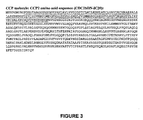


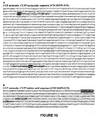
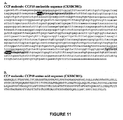

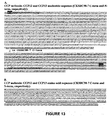


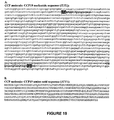

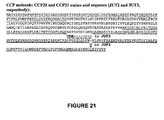
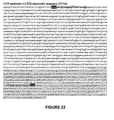


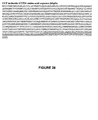

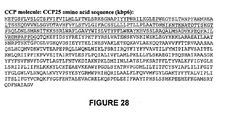
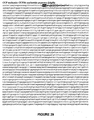

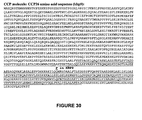

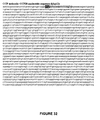


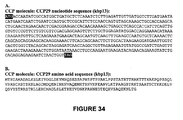


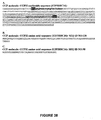
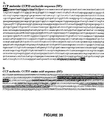

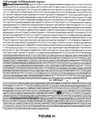



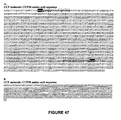

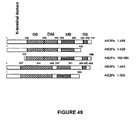

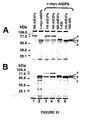
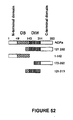

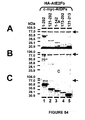
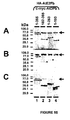
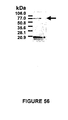


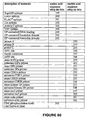

Classifications
-
- C—CHEMISTRY; METALLURGY
- C12—BIOCHEMISTRY; BEER; SPIRITS; WINE; VINEGAR; MICROBIOLOGY; ENZYMOLOGY; MUTATION OR GENETIC ENGINEERING
- C12N—MICROORGANISMS OR ENZYMES; COMPOSITIONS THEREOF; PROPAGATING, PRESERVING, OR MAINTAINING MICROORGANISMS; MUTATION OR GENETIC ENGINEERING; CULTURE MEDIA
- C12N15/00—Mutation or genetic engineering; DNA or RNA concerning genetic engineering, vectors, e.g. plasmids, or their isolation, preparation or purification; Use of hosts therefor
- C12N15/09—Recombinant DNA-technology
- C12N15/63—Introduction of foreign genetic material using vectors; Vectors; Use of hosts therefor; Regulation of expression
- C12N15/79—Vectors or expression systems specially adapted for eukaryotic hosts
- C12N15/82—Vectors or expression systems specially adapted for eukaryotic hosts for plant cells, e.g. plant artificial chromosomes (PACs)
- C12N15/8241—Phenotypically and genetically modified plants via recombinant DNA technology
- C12N15/8261—Phenotypically and genetically modified plants via recombinant DNA technology with agronomic (input) traits, e.g. crop yield
-
- C—CHEMISTRY; METALLURGY
- C07—ORGANIC CHEMISTRY
- C07K—PEPTIDES
- C07K14/00—Peptides having more than 20 amino acids; Gastrins; Somatostatins; Melanotropins; Derivatives thereof
- C07K14/415—Peptides having more than 20 amino acids; Gastrins; Somatostatins; Melanotropins; Derivatives thereof from plants
-
- Y—GENERAL TAGGING OF NEW TECHNOLOGICAL DEVELOPMENTS; GENERAL TAGGING OF CROSS-SECTIONAL TECHNOLOGIES SPANNING OVER SEVERAL SECTIONS OF THE IPC; TECHNICAL SUBJECTS COVERED BY FORMER USPC CROSS-REFERENCE ART COLLECTIONS [XRACs] AND DIGESTS
- Y02—TECHNOLOGIES OR APPLICATIONS FOR MITIGATION OR ADAPTATION AGAINST CLIMATE CHANGE
- Y02A—TECHNOLOGIES FOR ADAPTATION TO CLIMATE CHANGE
- Y02A40/00—Adaptation technologies in agriculture, forestry, livestock or agroalimentary production
- Y02A40/10—Adaptation technologies in agriculture, forestry, livestock or agroalimentary production in agriculture
- Y02A40/146—Genetically Modified [GMO] plants, e.g. transgenic plants
Definitions
- Cell division plays a crucial role during all phases of plant development.
- the continuation of organogenesis and growth responses to a changing environment require precise spatial, temporal, and developmental regulation of cell division.
- cyclins Proteins called cyclins are required for kinase activation. Cyclins are also important for targeting the kinase activity to a given subset of substrate(s). Other factors regulating CDK activity include CDK inhibitors (CKIs or ICKs, KIPs, CIPs, INKs), CDK. activating kinase (CAK) and CDK phosphatase (CDC25) ( Mironov et al. (1999) Plant Cell 11, 509-522 and Won K. et al. (1996) EMBO J. 15, 4182-4193 ).
- CKIs or ICKs CDK inhibitors
- KIPs KIPs
- CIPs CIPs
- INKs CDK activating kinase
- CAK CDK activating kinase
- CDC25 Mironov et al. (1999) Plant Cell 11, 509-522 and Won K. et al. (1996) EMBO J. 15, 4182-4193
- the present invention provides subject matter as set forth in any one and all of (1) to (14) below:
- CCP cell cycle proteins
- a CCP nucleic acid molecule may be at least 60%, 65%, 70%, 75%, 80%, 85%, 90%, 95%, 98% or more identical to the nucleotide sequence ( e.g ., to the entire length of the nucleotide sequence) of SEQ ID NO:1-66 or 228-239, or a complement thereof.
- the isolated nucleic acid molecule may include the nucleotide sequence shown in SEQ ID NO:1-66 or 228-239, or a complement thereof. As described herein, an isolated nucleic acid molecule may encode the amino acid sequence of a plant CCP polypeptide.
- nucleic acid molecules preferably CCP nucleic acid molecules, which specifically detect CCP nucleic acid molecules relative to nucleic acid molecules encoding non-CCP polypeptides.
- a nucleic acid molecule may be at least 15, 20, 25, 30, 40, 50, 100, 150, 200, 250, 300, 350, 400, 450, 500, 550, 600, 650, 700, 750, or 800 nucleotides in length and may hybridize under stringent conditions to a nucleic acid molecule comprising the nucleotide sequence shown in SEQ ID NO:1-66 or 228-239, or a complement thereof.
- the nucleic acid molecule described herein may encode a naturally occurring allelic variant of a plant CCP polypeptide, wherein the nucleic acid molecule hybridizes to the nucleic acid molecule of SEQ ID NO:1-66 or 228-239 under stringent conditions.
- the specification also describes an isolated nucleic acid molecule which is antisense to a CCP nucleic acid molecule, e.g ., the coding strand of a CCP nucleic acid molecule.
- the specification also describes a vector comprising a CCP nucleic acid molecule.
- the vector may be a recombinant expression vector.
- the specification also describes a host cell containing a vector as described herein.
- the specification also describes a method for producing a CCP polypeptide, by culturing in a suitable medium a host cell as described herein, e.g ., a plant host cell such as a host monocot plant cell ( e.g ., rice , wheat or corn) or a dicot host cell ( e.g ., Arabidopsis thaliana, oilseed rape, or soybeans) containing a recombinant expression vector, such that the polypeptide is produced.
- a plant host cell such as a host monocot plant cell ( e.g ., rice , wheat or corn) or a dicot host cell ( e.g ., Arabidopsis thaliana, oilseed rape, or soybeans) containing a
- Isolated CCP polypeptides may have one or more of the following domains: a "cyclin destruction box”, a “cyclin box motif 1", a “cyclin box motif 2", a “CDC2 motif”, a “CDK phosphorylation site”, a "nuclear localization signal”, a "Cy-like box”, an "Rb binding domain”, a “DEF domain”, a "DNA binding domain”, a “DCB1 domain”, a “DCB2 domain” and/or a "SAP domain”.
- a CCP polypeptide as described herein may include at least one or more of the following domains: a "cyclins destruction box”, a “cyclin box motif 1", a “cyclin box motif 2", a “CDC2 motif”, a “CDK phosphorylation site”, a "nuclear localization signal”, a "Cy-like box”, an "Rb binding domain”, a “DEF domain”, a "DNA binding domain”, a “DCB1 domain”, a “DCB2 domain” and/or a “SAP domain”, and has an amino acid sequence at least about 50%, 55%, 60%, 65%, 70%, 75%, 80%, 85%, 90%, 95%, 98%, 99% or more identical to the amino acid sequence of SEQ ID NO:67-132, 205, 211, 215-216, or 220-227.
- a CCP polypeptide as described herein may include at least one or more of the following domains: a "cyclin destruction box”, a “cyclin box motif 1", a “cyclin box motif 2", a “CDC2 motif”, a “CDK phosphorylation site”, a "nuclear localization signal”, a "Cy-like box”, an "Rb binding domain”, a “DEF domain”, a "DNA binding domain”, a “DCB1 domain”, a “DCB2 domain” and/or a SAP domain and has a CCP activity (as described herein).
- a CCP polypeptide as described herein may include one or more of the following domains: a "cyclin destruction box”, a “cyclin box motif 1", a “cyclin box motif 2", a “CDC2 motif', a “CDK phosphorylation site”, a "nuclear localization signal”, a “Cy-like box”, an "Rb binding domain”, a “DEF domain”, a "DNA binding domain”, a “DCB1 domain”, a “DCB2 domain” and/or a SAP domain and is encoded by a nucleic acid molecule having a nucleotide sequence which hybridizes under stringent hybridization conditions to a nucleic acid molecule comprising the nucleotide sequence of SEQ ID NO:1-66 or 228-239.
- the specification also describes fragments of the polypeptide having the amino acid sequence of SEQ ID NO:67-132, 205, 211, 215-216, or 220-227, wherein the fragment comprises at least 15 amino acids (e.g ., contiguous amino acids) of the amino acid sequence of SEQ ID NO:67-132, 205, 211, 215-216, or 220-227.
- the specification also describes a CCP polypeptide having the amino acid sequence of SEQ ID NO:67-132,205, 211,215-216, or 220-227.
- the specification also describes a CCP protein which is encoded by a nucleic acid molecule consisting of a nucleotide sequence at least about 50%, 55%, 60%, 65%, 70%, 75%, 80%, 85%, 90%, 95%, 98%, 99% or more identical to a nucleotide sequence of SEQ ID NO:1-66 or 228-239, or a complement thereof.
- the specification also describes a CCP polypeptide, which is encoded by a nucleic acid molecule consisting of a nucleotide sequence which hybridizes under stringent hybridization conditions to a nucleic acid molecule comprising the nucleotide sequence of SEQ ID NO:1-66 or 228-239, or a complement thereof.
- transgenic plants e.g ., monocot or dicot plants
- transgenic plants containing an isolated nucleic acid molecule as described herein.
- transgenic plants containing a recombinant expression cassette including a plant promoter operably linked to an isolated nucleic acid molecule as described herein.
- the specification also describes transgenic seed from the transgenic plants.
- the specification also describes methods of modulating, in a transgenic plant, the expression of the nucleic acids as described herein.
- the proteins as described herein or portions thereof, e.g ., biologically active portions thereof, can be operatively linked to a non-CCP polypeptide (e.g ., heterologous amino acid sequences) to form fusion proteins.
- a non-CCP polypeptide e.g ., heterologous amino acid sequences
- the specification also describes antibodies, such as monoclonal or polyclonal antibodies, that specifically bind polypeptide as described herein preferably CCP polypeptide.
- the CCP polypeptide or biologically active portions thereof can be incorporated into pharmaceutical compositions, which optionally include pharmaceutically acceptable carriers.
- the specification also describes a method for detecting the presence of a CCP nucleic acid molecule, polypeptide in a biological sample by contacting the biological sample with an agent capable of detecting a CCP nucleic acid molecule, polypeptide such that the presence of a CCP nucleic acid molecule, polypeptide is detected in the biological sample.
- the specification also describes a method for detecting the presence of CCP activity in a biological sample by contacting the biological sample with an agent capable of detecting an indicator of CCP activity such that the presence of CCP activity is detected in the biological sample.
- the specification also describes a method for modulating CCP activity comprising contacting a cell capable of expressing CCP with an agent that modulates CCP activity such that CCP activity in the cell is modulated.
- the agent may inhibit CCP activity, or the agent may stimulate CCP activity.
- the agent may be an antibody that specifically binds to a CCP polypeptide.
- the agent may modulate expression of CCP by modulating transcription of a CCP gene or translation of a CCP mRNA.
- the agent may be a nucleic acid molecule having a nucleotide sequence that is antisense to the coding strand of a CCP mRNA or a CCP gene.
- the methods as described herein may be used to increase crop yield, improve the growth characteristics of a plant (such as growth rate or size of specific tissues or organs in the plant), modify the architecture or morphology of a plant, improve tolerance to environmental stress conditions (such as drought, salt, temperature, nutrient or deprivation), or improve tolerance to plant pathogens (e.g ., pathogens that abuse the cell cycle) by modulating CCP activity in a cell.
- the CCP activity may be modulated by modulating the expression of a CCP nucleic acid molecule.
- the CCP activity may be modulated by modulating the activity of a CCP polypeptide.
- Modulators of CCP activity include, for example, a CCP nucleic acid or polypeptide.
- the specification also describes diagnostic assays for identifying the presence or absence of a genetic alteration characterized by at least one of (i) aberrant modification or mutation of a gene encoding a CCP polypeptide; (ii) mis-regulation of the gene; and (iii) aberrant post-translational modification of a CCP polypeptide, wherein a wild-type form of the gene encodes a protein with a CCP activity.
- the specification also describes methods for identifying a compound that binds to or modulates the activity of a CCP polypeptide, by providing an indicator composition comprising a CCP polypeptide having CCP activity, contacting the indicator composition with a test compound, and determining the effect of the test compound on CCP activity in the indicator composition to identify a compound that modulates the activity of a CCP polypeptide.
- the identified compounds may be used as herbicides or plant growth regulators.
- CCP cell cycle proteins
- the present specification describes the discovery of novel molecules, referred to herein as "cell cycle proteins” or “CCP " nucleic acid and polypeptide molecules.
- the CCP molecules as described herein were identified based on their ability, as determined using yeast two-hybrid assays (described in detail in Example 1), to interact with proteins involved in the cell cycle, such as plant cyclin dependent kinases (e.g ., a dominant negative form of CDC2b, CDC2bAt.N161), cyclin dependent kinase subunits referred herein as "CKS” (such as CKSlAt), cyclin dependent kinase inhibitors referred to herein as "CKI” (such as CKI4), PHO80-like proteins referred to herein as "PLP", E2F, and different domains of kinesin-like proteins referred to herein as "KLPNT.
- plant cyclin dependent kinases e.g ., a
- the CCP molecules as described herein may modulate, e.g ., upregulate or downregulate, the activity of plant CDKs, such as CDC2a or CDC2b; CKSs, CKIs, PLPs and KLPNTs. Furthermore, because of their ability to interact with ( e.g ., bind to) the aforementioned proteins which are proteins involved in cell cycle regulation, the CCP molecules as described herein may also play a role in or function in cell cycle regulation, e.g ., plant or animal cell cycle regulation.
- cell cycle protein includes a polypeptide which is involved in controlling or regulating the cell cycle, or part thereof, in a cell, tissue, organ or whole organism.
- Cell cycle proteins may also be capable of binding to, regulating, or being regulated by cyclin dependent kinases, such as plant cyclin dependent kinases, e.g ., CDC2a or CDC2b, or their subunits.
- cyclin dependent kinases such as plant cyclin dependent kinases, e.g ., CDC2a or CDC2b, or their subunits.
- the term cell cycle protein also includes peptides, polypeptides, fragments,variant, homologs, alleles or precursors ( e.g ., pre-proteins or pro-proteins) thereof.
- the term "cell cycle” includes the cyclic biochemical and structural events associated with growth, division and proliferation of cells, and in particular with the regulation of the replication of DNA and mitosis.
- the cell cycle is divided into periods called: Go, Gap, (G 1 ), DNA synthesis (S), Gap 2 (G 2 ), and mitosis (M). Normally these four phases occur sequentially, however, the cell cycle also includes modified cycles wherein one or more phases are absent resulting in modified cell cycle such as endomitosis, acytokinesis, polyploidy, polyteny, and endoreduplication.
- plant includes reference to whole plants, plant organ (e.g ., leaves, stems, roots), plant tissue, seeds, and plant cells and progeny thereof.
- Plant cell includes, without limitation, seeds, e.g ., seed suspension cultures, embryos, meristematic regions, callus tissue, leaves, roots, shoots, gametophytes, sporophytes, pollen, and microspores.
- the class of plants which can be used in the methods as described herein is generally as broad as the class of higher plants amenable of transformation techniques, including both monocotyledonous and dicotyledonous plants.
- plants are Arabidopsis thaliana, rice, wheat, maize, tomato, alfalfa, oilseed rape, soybean, cotton, sunflower or canola.
- the term plant also includes monocotyledonous (monocot) plants and dicotyledonous (dicot) plants including a fodder or forage legume, ornamental plant, food crop, tree, or shrub selected from the list comprising Acacia spp., Acer spp., Actinidia spp.,Aesculus spp., Agathis australis, Albizia amara, Alsophila tricolor, Andropogon spp., Arachis spp, Areca catechu, Astelia fragrans, Astragalus cicer, Baikiaea plurijuga, Betula spp., Brassica spp., Bruguiera gymnorrhiza ; Burkea africana, Butea frondosa, Cadaba farinosa, Calliandra spp, Camelli
- the cell cycle proteins as described herein are involved in cell cycle regulation which is largely, but not completely, similar in plants and animals. Accordingly, the nucleic acid molecules and polypeptide as described herein, or derivatives thereof, may be used to modulate the cell cycle in a plant or an animal such as by modulating the activity or level or expression of CCP, altering the rate of the cell cycle or phases of the cell cycle, and entry into and out of the various cell cycle phases.
- the molecules as described herein may be used in agriculture to, for example, improve the growth characteristics of plant such as growth rate or size of specific tissues or organs, the architecture or morphology of the plant, increase crop yield, improve tolerance to environmental stress conditions (such as drought, salt, temperature, or nutrient deprivation), improve tolerance to plant pathogens that abuse the cell cycle or as targets to facilitate the identification of inhibitors or activators of CCPs that may be useful as phytopharmaceuticals such as herbicides or plant growth regulators.
- environmental stress conditions such as drought, salt, temperature, or nutrient deprivation
- cell cycle associated disorders includes a disorder, disease or condition which is caused or characterized by a misregulation (e.g ., downregulation or upregulation), abuse, arrest, or modification of the cell cycle.
- cell cycle associated disorders include endomitosis, acytokinesis, polyploidy, polyteny, and endoreduplication which may be caused by external factors such as pathogens (nematodes, viruses, fungi, or insects), chemicals, environmental stress (e.g. , drought, temperature, nutrients, or UV) resulting in for instance neoplastic tissue ( e.g ., galls, root knots) or inhibition of cell division/proliferation ( e.g. , stunted growth).
- Cell cycle associated disorders in animals include proliferative disorders or differentiative disorders, such as cancer, e.g ., melanoma, prostate cancer, cervical cancer, breast cancer, colon cancer, or sarcoma.
- CCP protein and nucleic acid molecules which comprise a family of molecules having certain conserved structural and functional features.
- family when referring to the protein and nucleic acid molecules as described herein is intended to mean two or more proteins or nucleic acid molecules having a common structural domain or motif and having sufficient amino acid or nucleotide sequence homology as defined herein.
- family members can be naturally or non-naturally occurring and can be from either the same or different species.
- a family can contain a first protein of plant, e.g.
- Arabidopsis, origin, as well as other, distinct proteins of plant e.g., Arabidopsis, origin or alternatively, can contain homologues of other plants, e.g ., rice, or of non-plant origin.
- Members of a family may also have common functional characteristics.
- a CCP protein as described herein may be identified based on the presence of at least one or more of the following domains:
- Cyclin destruction box includes a domain of 9-10 amino acid residues in length which typically contains the following consensus pattern: R - X 2 - L - X 2 - [I/V] -X 1-2 - N (SEQ ID NO:267), wherein X can be any amino acid, X n is a stretch of n Xs, X n-m is a stretch of n to m Xs, and wherein [I/V] means that an Ile or Val residue can occur at that position.
- SEQ ID NO:267 depicts the minimal consensus sequence of the cyclin destruction box and
- Cyclin box motif 1 includes a domain of 8 amino acid residues in length and which typically contains the following consensus pattern: MRXIL[I/V]DW (SEQ ID NO:268), wherein X can be any amino acid and wherein [I/V] means that an Ile or Val residue can occur at that position.
- This motif forms part of the helix H1 of the first cyclin fold and is the best conserved motif in the cyclinA/B family ( Renaudin et al. (1998) in Plant Cell Division (Francis, Dudits and Inzé, eds.), Portland Press Research Monograph, Portland Press Ltd. London (1998), pp 67-98 ).
- Cyclin box motif 2 includes a domain of 8 amino acid residues in length and which typically contains the following consensus pattern: KYEE - X 3 - P (SEQ ID NO:269), wherein X can be any amino acid and wherein X n is a stretch of n Xs.
- This motif forms part of the helix H3 of the first cyclin fold wherein the 2 acidic residues are part of the CDK binding site ( Renaudin et al. (1998) in Plant Cell Division (Francis, Dudits and Inzé, eds.), Portland Press Research Monograph, Portland Press Ltd. London (1998), pp 67-98 ).
- the term "CDC2 motifs” includes domains of about 9-12 amino acid residues in length and which typically contain one of the following consensus patterns: GXG -X 2- GXVY (SEQ ID NO:270) HRDXK-X 2 - NXL (SEQ ID NO:271) D-X 1-2 -[W/Y]SXG -X 4 - E (SEQ ID NO:272) wherein wherein X can be any amino acid, X n is a stretch of n Xs, X n-m is a stretch of n to m Xs, and wherein [W/Y] means that an Trp or Tyr residue can occur at that position.
- CDK phosphorylation site includes a domain of about 5-7 amino acids in length and which contains one or more of the following consensus domains: TPX 1-2 [R/K] (SEQ ID NO:273) SPX[R/K] (SEQ ID NO:274) SPX(Hu) (SEQ ID NO:275) SP(Hu)X (SEQ ID NO:276) with Hu being a hydrophobic uncharged amino acid (M, I, L, V) and X any amino acid.
- Hu hydrophobic uncharged amino acid
- cyclin-dependent kinase substrates such as histone kinase, transcription factors such as E2F or transcription regulators like Rb.
- CDK phosphorylation sites are described in, for example, Tamrakar et al. 2000, Frontiers Biosci 5,d121-137.
- CCP proteins as described herein comprising a CDK phosphorylation site can be mutated in said CDK phosphorylation site such that said CCP proteins are no longer able to be phosphorylated on the CDK phosphorylation site.
- Mutations of a CDK phosphorylation site include all mutations of the ser or thr residue in any of SEQ ID NOs:273-276 into a non-phosphorylatable amino acid residue, e.g., an ala or glu residue.
- Mutation of one or more CDK phosphorylation site(s) in a CCP protein as described herein is expected to modulate modifications of the CCP protein by CDKs and, thus, to modulate the biological or biochemical function of the CCP protein.
- nuclear localization signal includes a domain conferring to a protein comprising the NLS domain the ability to be imported into the nucleus and to, for example, accumulate within the nucleus.
- NLS domains include one or more of the following concensus patterns: PKKKRKV (SEQ ID NO:277) KRX 10 KKKK (SEQ ID NO:278) KRPRP (SEQ ID NO:279) PAAKRVKLD (SEQ ID NO:280) NLS domains have been found in the SV40 T antigen, in nucleoplasmin (bipartite NLS), in a Adeno EIA, and in c-Myc. NLS domains are described in, for example, Laskey et al. (1998) Biochem. Soc. Trans. 26, 561-567 .
- Cy-like box includes a domain of 3-6 amino acid residues in length with has the consensus motif R-X-X-F (SEQ ID NO:281) with X being any amino acid and one of two Xs preferably being a hydrophobic residue.
- Rb binding domain includes a domain which when present in a protein confers to the protein the ability to bind the Rb protein.
- Rb binding domains include one or more of the following concensus paterns: LXCXE (SEQ ID NO:282) LXSXE (SEQ ID NO:283) DYX 7 EX 3 DLFD (SEQ ID NO:284) DYX 6 DX 4 DMWE (SEQ ID NO:285)
- Rb binding domains have been found in D-cyclins, in protein phosphatase 1, in human E2F-1, and in plant E2F. Rb binding domains are described in, for example, Rubin et al. (1998) Frontiers Biosci 3, d1209-1219 ; Phelps et al. (1992) J. Virol. 66, 2418-2427 , and Cress et al. (1993) Mol. Cell Biol. 13, 6314-6325 .
- DEF domain includes a protein domain which is required for the formation of heterodimers between DP proteins and E2F proteins.
- DEF domains comprise the following concensus pattern:
- DNA binding domain includes a domain which is involved in the binding of DP proteins and/or DP-E2F heterodimers to DNA.
- DNA binding domains include the following concensus pattern:
- DNA binding domains are described in, for example, Hao et al. (1995) J. Cell Sci. 108, 2945-2954 ; Bandara et al. (1993) EMBO J. 12, 4317-4324 ; and Girling et al. (1994) Mol. Biol. Cells, 1081-1092 .
- DCB 1 domain includes a protein domain which is conserved among DP proteins and has the following concensus patterns: [R/S][IN]X[Q/K]KX 3 [L/S]XE (SEQ ID NO:288) [R/S][I/V]X[Q/K]KX 3 [L/S]XE[L/M]X 2-3 [Q/H]X 4-5 NL[V/I/M][Q/E]RN (SEQ ID NO:289) DCB 1 domains are described in, for example, Hao et al. (1995) J. Cell Sci.108,2945-2954 ; Bandara et al. (1993) EMBO J. 12,4317-4324 ; and Girling et al. (1994) Mol. Biol. Cell 5, 1081-1092 .
- DCB2 domain includes a protein domain which is conserved among DP proteins and has the following concensus patem: [L/I]PFI[L/I][V/L]XTX 3-4 [TNIVX 12-14 FX 3-4 F[E/S][Hu]HDDX 2 [V/I]L[R/K]XM (SEQ ID NO:290)
- DCB2 domains are described in, for example, Hao et al. (1995) J. Cell Sci.108,2945-2954 ; Bandara et al. (1993) EMBO J. 12, 4317-4324 ; and Girling et al. (1994) Mol. Biol. Cell 5,1081-1092 .
- SAP motif includes a protein domain of about 35 amino acid residues which is found in a variety of nuclear proteins involved in transcription, DNA repair, DNA processing or apoptotic chromatin degradation. It was named after SAF-A/B, Acinus and PIAS, three proteins known to contain it.
- the SAP motif reveals a bipartite distribution of strongly conserved hydrophobic, polar and bulky amino acids separated by a region that contains a glycine.
- the SAP domain has been proposed to be a DNA-binding motif ( Aravind and Koonin (2000) Trends Biochem. Sci. 25:112-114 ).
- Isolated CCP proteins as described herein have an amino acid sequence sufficiently identical to the amino acid sequence of SEQ ID NO:67-132,205,211,215-216, or 220-227 or are encoded by a nucleotide sequence sufficiently identical to SEQ ID NO:1-66 or 228-239.
- the term "sufficiently identical" refers to a first amino acid or nucleotide sequence which contains a sufficient or minimum number of identical or equivalent (e.g ., an amino acid residue which has a similar side chain) amino acid residues or nucleotides to a second amino acid or nucleotide sequence such that the first and second amino acid or nucleotide sequences share common structural domains or motifs and/or a common functional activity.
- amino acid or nucleotide sequences which share common structural domains have at least 30%, 40%, or 50% homology, preferably 60% homology, more preferably 70%-80%, and even more preferably 90-95% homology across the amino acid sequences of the domains and contain at least one and preferably two structural domains or motifs, are defined herein as sufficiently identical.
- amino acid or nucleotide sequences which share at least 30%, 40%, or 50%, preferably 60%, more preferably 70-80%, or 90-95% homology and share a common functional activity are defined herein as sufficiently identical.
- an "CCP activity”, “biological activity of CCP” or “functional activity of CCP”, refers to an activity exerted by a CCP protein, polypeptide or nucleic acid molecule on a CCP responsive cell or tissue, or on a CCP protein substrate, as determined in vivo , or in vitro, according to standard techniques.
- a CCP activity may be a direct activity, such as an association with a CCP-target molecule.
- a "target molecule” or “binding partner” is a molecule with which a CCP protein binds or interacts in nature, such that CCP-mediated function is achieved.
- a CCP target molecule can be a non-CCP molecule or a CCP protein or polypeptide as described herein e.g., a plant cyclin dependent kinase, such as CDC2b.
- a CCP target molecule may be CCP ligand.
- a CCP activity is an indirect activity, such as a cellular signaling activity mediated by interaction of the CCP protein with a CCP ligand.
- the biological activities of CCP are described herein.
- the CCP proteins as described herein can have one or more of the following activities: (1) they may interact with a non-CCP protein molecule, e.g.
- a CCP ligand (2) they may modulate a CCP-dependent signal transduction pathway; (3) they may modulate the activity of a plant cyclin dependent kinase, such as CDC2a, CDC2b, or CDC2c, and (4) they may modulate the cell cycle.
- a plant cyclin dependent kinase such as CDC2a, CDC2b, or CDC2c
- CCP proteins and polypeptides having a CCP activity are CCP proteins having at least one or more of the following domains: a "cyclin destruction box”, a “cyclin box motif 1 ", a “cyclin box motif 2", a “CDC2 motifs, a "CDK phosphorylation site”, a "nuclear localization signal”, a "Cy-like box”, an "Rb binding domain”, a “DEF domain”, a "DNA binding domain", a "DCB1 domain”, a “DCB2 domain” and/or a SAP domain, and, preferably, a CCP activity.
- Additional preferred proteins have at least one or more of the following domains: a "cyclin destruction box”, a “cyclin box motif 1", a “cyclin box motif 2", a “CDC2 motif', a "CDK phosphorylation site”, a "nuclear localization signal”, a "Cy-like box”, an "Rb binding domain”, a “DEF domain”, a "DNA binding domain”, a “DCB1 domain”, a “DCB2 domain” and/or a SAP domain and are, preferably, encoded by a nucleic acid molecule having a nucleotide sequence which hybridizes under stringent hybridization conditions to a nucleic acid molecule comprising the nucleotide sequence of SEQ ID NO:1-66 or 228-239.
- N161 Arath CYCA2;2 cyclin box motifs 1 and 2; cyclin destruction box 9 9 75 75 CCP10 CKSBC0 01 CKS1At 10 10 76 76 CCP11 CKSBC0 11 CKS1At gibberellin-regulated protein GASA1 precursor 11 44 77 110 CCP12 CKSBC9 8-7 (Cterm) CKS1At 12 .
- AtDPs a and b forms, SEQ ID NO:114 and SEQ ID NO:127 , respectively
- AtE2Fs a and b forms; GenBank accession numbers AJ294534 and AJ294533, respectively
- AtDPa dimerization domain binds to AtDPa to AtE2Fb.
- the N-terminal domain and the DNA-binding domain of AtDPa do not seem to contribute to the interaction of AtDPa with AtE2Fb (Examples 11,12, Table 5, Figure 54 ).
- AtDPb dimerization domain Neither the region including the N-terminal and DNA-binding domains of AtDPb, nor the C-terminal region of AtDPb seem to contribute to the interaction of AtDPb with AtE2Fb (Examples 11,12, Table 5, Figure 55 ). These observations indicate that modulating the formation of specific E2F/DP-complexes may be useful in modulating cell cycle traversal and the regulation thereof.
- AtDPa and AtDPb do not form homodimers but both interact with either AtE2Fa or AtE2Fb (Example 12, Table 5).
- AtE2Fa is not required for binding AtDPa or AtDPb.
- the Rb-binding domains of AtE2Fa and AtE2Fb, respectively do not seem to' contribute to the binding to either AtDPa or AtDPb.
- the region of AtE2Fa encompassing the dimerization domain and the marked box is sufficient for binding to AtDPa and AtDPb (Examples 11,12, Fig. 50 , Fig. 51 , Table 5).
- the dimerization domain of AtE2Fs appears to be sufficient for binding to AtDPs.
- the minimal DP and E2F proteins or corresponding coding DNA sequences that can be used in modifying E2F/DP-related processes, e.g. , regulation of gene expression by E2F/DP, include:
- nucleic acid molecule that encode CCP proteins or biologically active portions thereof, as well as nucleic acid fragments sufficient for use as hybridization probes to identify CCP-encoding nucleic acids (e.g. , CCP mRNA) and fragments for use as PCR primers for the amplification or mutation of CCP nucleic acid molecules.
- nucleic acid molecule is intended to include DNA molecules (e.g ., cDNA or genomic DNA) and RNA molecules (e.g ., mRNA) and analogs of the DNA or RNA generated using nucleotide analogs.
- the nucleic acid molecule can be single-stranded or double-stranded, but preferably is double-stranded DNA.
- an “isolated” nucleic acid molecule is one which is separated from other nucleic acid molecules which are present in the natural source of the nucleic acid.
- the term “isolated” includes nucleic acid molecules which are separated from the chromosome with which the genomic DNA is naturally associated.
- an “isolated” nucleic acid is free of sequences which naturally flank the nucleic acid (i.e. , sequences located at the 5' and 3' ends of the nucleic acid) in the genomic DNA of the organism from which the nucleic acid is derived.
- the isolated CCP nucleic acid molecule can contain less than about 5 kb, 4kb, 3kb, 2kb, 1 kb, 0.5 kb or 0.1 kb of nucleotide sequences which naturally flank the nucleic acid molecule in genomic DNA of the cell from which the nucleic acid is derived.
- an "isolated" nucleic acid molecule such as a cDNA molecule, can be substantially free of other cellular material, or culture medium when produced by recombinant techniques, or substantially free of chemical precursors or other chemicals when chemically synthesized.
- a nucleic acid molecule as described herein e.g. , a nucleic acid molecule having the nucleotide sequence of SEQ ID NO:1-66 or 228-239, or a portion thereof, can be isolated using standard molecular biology techniques and the sequence information provided herein. For example, using all or portion of the nucleic acid sequence of SEQ ID NO:1-66 or 228-239, as a hybridization probe, CCP nucleic acid molecules can be isolated using standard hybridization and cloning techniques ( e.g. , as described in Sambrook, J., Fritsh, E. F., and Maniatis, T. Molecular Cloning: A Laboratory Manual. 2nd, ed, Cold Spring Harbor Laboratory, Cold Spring Harbor Laboratory Press, Cold Spring Harbor, NY, 1989 ).
- nucleic acid molecule encompassing all or a portion of SEQ ID NO:1-66 or 228-239 can be isolated by the polymerase chain reaction (PCR) using synthetic oligonucleotide primers designed based upon the sequence of SEQ ID NO:1-66 or 228-239, respectively.
- PCR polymerase chain reaction
- a nucleic acid as described herein can be amplified using cDNA, mRNA or alternatively, genomic DNA, as a template and appropriate oligonucleotide primers according to standard PCR amplification techniques.
- the nucleic acid so amplified can be cloned into an appropriate vector and characterized by DNA sequence analysis.
- oligonucleotides corresponding to CCP nucleotide sequences can be prepared by standard synthetic techniques, e.g ., using an automated DNA synthesizer.
- An isolated nucleic acid molecule as described herein may comprise the nucleotide sequence shown in SEQ ID NO:1-66 or 228-239.
- An isolated nucleic acid molecule as described herein may comprise a nucleic acid molecule which is a complement of the nucleotide sequence shown in SEQ ID NO:1-66 or 228-239, or a portion of any of these nucleotide sequences.
- a nucleic acid molecule which is complementary to the nucleotide sequence shown in SEQ ID NO:1-66 or 228-239 is one which is sufficiently complementary to the nucleotide sequence shown in SEQ ID NO:1-66 or 228-239, respectively, such that it can hybridize to the nucleotide sequence shown in SEQ ID NO:1-66 or 228-239, respectively, thereby forming a stable duplex.
- An isolated nucleic acid molecule as described herein may comprise a nucleotide sequence which is at least about 50%, 55%, 60%, 65%, 70%, 75%, 80%, 85%, 90%, 95%, 98% or more homologous to the nucleotide sequence ( e.g ., to the entire length of the nucleotide sequence) shown in SEQ ID NO:1-66 or 228-239, or a portion of any of these nucleotide sequences.
- the nucleic acid molecule as described herein can comprise only a portion of the nucleic acid sequence of SEQ ID NO:1-66 or 228-239, for example a fragment which can be used as a probe or primer or a fragment encoding a biologically active portion of a CCP protein.
- the nucleotide sequence determined from the cloning of the CCP gene allows for the generation of probes and primers designed for use in identifying and/or cloning other CCP family members, as well as CCP homologues from other species.
- the probe/primer typically comprises substantially purified oligonucleotide.
- the oligonucleotide typically comprises a region of nucleotide sequence that hybridizes under stringent conditions to at least about 12 or 15, preferably about 20 or 25, more preferably about 30,35,40,45,50,55,60,65, or 75 consecutive nucleotides of a sense sequence of SEQ ID NO:1-66 or 228-239, or of a naturally occurring allelic variant or mutant of SEQ ID NO:1-66 or 228-239.
- a nucleic acid molecule as described herein may comprise a nucleotide sequence which is at least 100, 150, 200, 250, 300, 350, 400, 450, 500, 550, 600, 650, 700, 750, or 800 nucleotides in length and hybridizes under stringent hybridization conditions to a nucleic acid molecule of SEQ ID NO:1-66 or 228-239.
- Probes based on the CCP nucleotide sequences can be used to detect transcripts or genomic sequences encoding the same or homologous proteins.
- the probe further comprises a label group attached thereto, e.g ., the label group can be a radioisotope, a fluorescent compound, an enzyme, or an enzyme co-factor.
- Such probes can be used as a part of a diagnostic test kit for identifying cells or tissues which misexpress a CCP protein, such as by measuring a level of a CCP-encoding nucleic acid in a sample of cells from a subject e.g., detecting CCP mRNA levels or determining whether a genomic CCP gene has been mutated or deleted.
- a nucleic acid fragment encoding a "biologically active portion of a CCP protein” can be prepared by isolating a portion of the nucleotide sequence of SEQ ID NO: 1-66 or 228-239, which encodes a polypeptide having a CCP biological activity (the biological activities of the CCP proteins are described herein), expressing the encoded portion of the CCP protein ( e.g ., by recombinant expression in vitro ) and assessing the activity of the encoded portion of the CCP protein.
- the specification further describes nucleic acid molecules that differ from the nucleotide sequence shown in SEQ ID NO:1-66 or 228-239, due to the degeneracy of the genetic code and, thus, encode the same CCP proteins as those encoded by the nucleotide sequence shown in SEQ ID NO: 1-66 or 228-239.
- An isolated nucleic acid molecule as described herein may have a nucleotide sequence encoding a CCP protein.
- DNA sequence polymorphisms that lead to changes in the amino acid sequences of the CCP proteins may exist within a population (e.g., an Arabidopsis or rice plant population). Such genetic polymorphism in the CCP genes may exist among individuals within a population due to natural allelic variation.
- the terms "gene” and “recombinant gene” refer to nucleic acid molecules which include an open reading frame encoding an CCP protein, preferably a plant CCP protein, and can further include non-coding regulatory sequences, and introns.
- Such natural allelic variations include both functional and non-functional CCP proteins and can typically result in 1-5% variance in the nucleotide sequence of a CCP gene. Any and all such nucleotide variations and resulting amino acid polymorphisms in CCP genes that are the result of natural allelic variation and that do not alter the functional activity of a CCP protein are described herein. Differences in preferred codon usage are illustrated below for Agrobacterium tumefaciens (a bacterium), Arabidopsis thaliana, Medicago sativa (two dicotyledonous plants) and Oryza sativa (a monocotyledonous plant). These examples were extracted from htt://www.kazusa.or jp/codon.
- the codon GGC (for glycine) is the most frequently used codon in A. tumefaciens (36.2 ⁇ ), is the second most frequently used codon in O . sativa but is used at much lower frequencies in A. thaliana and M sativa (9 ⁇ and 8.4 ⁇ , respectively).
- the GGC codon is most preferably used in A. tumefaciens and O. sativa.
- the GGA (and GGU) codon is most preferably used
- M sativa the GGU (and GGA) codon is most preferably used.
- nucleic acid molecules encoding other CCP family members and, thus, which have a nucleotide sequence which differs from the CCP sequences of SEQ ID NO:1-66 or 228-239 are described herein.
- another CCP cDNA can be identified based on the nucleotide sequence of the plant CCP molecules described herein.
- nucleic acid molecules encoding CCP proteins from different species, and thus which have a nucleotide sequence which differs from the CCP sequences of SEQ ID NO:1-66 or 228-239 are described herein.
- a human CCP cDNA can be identified based on the nucleotide sequence of a plant CCP.
- Nucleic acid molecules corresponding to natural allelic variants and homologues of the CCP cDNAs as described herein can be isolated based on their homology to the CCP nucleic acids disclosed herein using the cDNAs disclosed herein, or a portion thereof, as a hybridization probe according to standard hybridization techniques under stringent hybridization conditions.
- an isolated nucleic acid molecule as described herein may be at least 15, 20, 25, 30 or more nucleotides in length and hybridizes under stringent conditions to the nucleic acid molecule comprising the nucleotide sequence of SEQ ID NO:1-66 or 228-239.
- the nucleic acid may be at least 30, 50, 100, 150,200,250,300,350,400,450, 500, 550, or 600 nucleotides in length.
- hybridizes under stringent conditions is intended to describe conditions for hybridization and washing under which nucleotide sequences at least 30%, 40%, 50%, or 60% homologous to each other typically remain hybridized to each other.
- the conditions are such that sequences at least about 70%, more preferably at least about 80%, even more preferably at least about 85% or 90% homologous to each other typically remain hybridized to each other.
- stringent conditions are known to those skilled in the art and can be found in Current Protocols in Molecular Biology, John Wiley & Sons, N.Y. (1989), 6.3.1-6.3.6.
- a preferred, non-limiting example of stringent hybridization conditions are hybridization in 6X sodium chloride/sodium citrate (SSC) at about 45°C, followed by one or more washes in 0.2 X SSC, 0.1% SDS at about 45°C, followed by one or more washes in 0.2 X SSC, 0.1% SDS at 50°C, preferably at 55°C, more preferably at 60°C, and even more preferably at 65°C. Ranges intermediate to the above-recited values, e.g ., at 60-65 °C or at 55-60°C are also intended to be encompassed by the present invention.
- an isolated nucleic acid molecule as described herein that hybridizes under stringent conditions to the sequence of SEQ ID NO: 1-66 or 228-239 corresponds to a naturally-occurring nucleic acid molecule.
- a "naturally-occurring" nucleic acid molecule refers to an RNA or DNA molecule having a nucleotide sequence that occurs in nature (e.g. , encodes a natural protein).
- allelic variants of the CCP sequences that may exist in nature, the skilled artisan will further appreciate that changes can be introduced by mutation into the nucleotide sequences of SEQ ID NO:1-66 or 228-239, thereby leading to changes in the amino acid sequence of the encoded CCP proteins, without altering the functional ability of the CCP proteins.
- nucleotide substitutions leading to amino acid substitutions at "non-essential" amino acid residues can be made in the sequence of a CCP protein.
- a "non-essential" amino acid residue is a residue that can be altered from the wild-type sequence of CCP without altering the biological activity, whereas an "essential" amino acid residue is required for biological activity.
- amino acid residues that are conserved among the CCP proteins as described herein are predicted to be particularly unamenable to alteration.
- additional amino acid residues that are conserved between the CCP proteins as described herein and other CCP family members are not likely to be amenable to alteration.
- the specification also describes nucleic acid molecules encoding CCP proteins that contain changes in amino acid residues that are not essential for activity.
- An isolated nucleic acid molecule encoding a CCP protein homologous to the CCP proteins as described herein can be created by introducing one or more nucleotide substitutions, additions or deletions into the nucleotide sequence of SEQ ID NO: 1-66 or 228-239, such that one or more amino acid substitutions, additions or deletions are introduced into the encoded protein. Mutations can be introduced into SEQ ID NO: 1-66 or 228-239 by standard techniques, such as site-directed mutagenesis and PCR-mediated mutagenesis. Preferably, conservative amino acid substitutions are made at one or more predicted non-essential amino acid residues. A "conservative amino acid substitution" is one in which the amino acid residue is replaced with an amino acid residue having a similar side chain.
- Families of amino acid residues having similar side chains have been defined in the art. These families include amino acids with basic side chains (e.g , lysine, arginine, histidine), acidic side chains (e.g ., aspartic acid, glutamic acid), uncharged polar side chains (e.g ., glycine, asparagine, glutamine, serine, threonine, tyrosine, cysteine), nonpolar side chains ( e.g ., alanine, valine, leucine, isoleucine, proline, phenylalanine, methionine, tryptophan), beta-branched side chains ( e.g ., threonine, valine, isoleucine) and aromatic side chains ( e.g ., tyrosine, phenylalanine, tryptophan, histidine).
- basic side chains e.g , lysine, arginine, histidine
- a predicted nonessential amino acid residue in a CCP protein is preferably replaced with another amino acid residue from the same side chain family.
- mutations can be introduced randomly along all or part of a CCP coding sequence, such as by saturation mutagenesis, and the resultant mutants can be screened for CCP biological activity to identify mutants that retain activity.
- the encoded protein can be expressed recombinantly and the activity of the protein can be determined.
- Another alternative embodiment comprises targeted in vivo gene correction or modification which can be achieved by chimeric RNA/DNA oligonucleotides (e.g . , Yoon et al. (1996), Proc. Natl. Acad. Sci. USA 93, 2071-2076 ; Arntzen et al. (1999) WO99/07865 ).
- a mutant CCP protein can be assayed for the ability to: (1) regulate transmission of signals from cellular receptors, e.g. hormone receptors; (2) control cell cycle checkpoints, e.g . entry of cells into mitosis; (3) modulate the cell cycle; (4) modulate cell death, e.g ., apoptosis; (5) modulate cytoskeleton function, e.g . actin bundling; (6) phosphorylate a substrate; (7) create dominant negative or dominant positive effects in transgenic plants; (8) interact with other cell cycle control proteins in, e.g .
- a yeast two hybrid assay (9) modulate CDK activity (e.g., cyclin-CDK activity); (10) regulate cyclin-CDK complex assembly; (11) regulate the commitment of cells to divide, e.g ., by integrating mitogenic and antimitogenic signals; (12) regulate cell cycle progression; (13) regulate DNA replication and/or DNA repair; (14) modulate gene transcription, e.g ., regulate E2F/DP-dependent transcription of genes; (15) regulate cyclin degradation; (16) modulate cell cycle withdrawal and/or cell differentiation; (17) control organ ( e.g ., plant organ) and/or organism ( e.g., plant organism) size; (18) control organ ( e.g ., plant organ) and/or organism ( e.g. , plant organism) growth or growth rate; and (19) regulate endoreduplication.
- CDK activity e.g., cyclin-CDK activity
- (10) regulate cyclin-CDK complex assembly (11) regulate the commitment of cells to divide, e.g
- an antisense nucleic acid comprises a nucleotide sequence which is complementary to a "sense" nucleic acid encoding a protein, e.g ., complementary to the coding strand of a double-stranded cDNA molecule or complementary to an mRNA sequence. Accordingly, an antisense nucleic acid can hydrogen bond to a sense nucleic acid.
- the antisense nucleic acid can be complementary to an entire CCP coding strand, or only to a portion thereof.
- An antisense nucleic acid molecule may be antisense to a "coding region" of the coding strand of a nucleotide sequence encoding CCP.
- the term “coding region” refers to the region of the nucleotide sequence comprising codons which are translated into amino acid residues.
- the antisense nucleic acid molecule may be antisense to a "noncoding region” of the coding strand of a nucleotide sequence encoding CCP.
- noncoding region refers to 5' and 3' sequences which flank the coding region that are not translated into amino acids ( i.e., also referred to as 5' and 3' untranslated regions).
- antisense nucleic acids as described herein can be designed according to the rules of Watson and Crick base pairing.
- the antisense nucleic acid molecule can be complementary to the entire coding region of CCP mRNA, but more preferably is an oligonucleotide which is antisense to only a portion of the coding or noncoding region of CCP mRNA.
- the antisense oligonucleotide can be complementary to the region surrounding the translation start site of CCP mRNA.
- An antisense oligonucleotide can be, for example, about 5, 10, 15, 20, 25, 30, 35, 40, 45 or 50 nucleotides in length.
- an antisense nucleic acid as described herein can be constructed using chemical synthesis and enzymatic ligation reactions using procedures known in the art.
- an antisense nucleic acid e.g ., an antisense oligonucleotide
- an antisense nucleic acid can be chemically synthesized using naturally occurring nucleotides or variously modified nucleotides designed to increase the biological stability of the molecules or to increase the physical stability of the duplex formed between the antisense and sense nucleic acids, e.g ., phosphorothioate derivatives and acridine substituted nucleotides can be used.
- modified nucleotides which can be used to generate the antisense nucleic acid include 5-fluorouracil, 5-bromouracil, 5-chlorouracil, 5-iodouracil, hypoxanthine, xantine, 4-acetylcytosine, 5-(carboxyhydroxylmethyl) uracil, 5-carboxymethylaminomethyl-2-thiouridine, 5-carboxymethylaminomethyluracil, dihydrouracil, beta-D-galactosylqueosine, inosine, N6-isopentenyladenine, 1-methylguanine, 1-methylinosine, 2,2-dimethylguanine, 2-methyladenine, 2-methylguanine, 3-methylcytosine, 5-methylcytosine, N6-adenine, 7-methylguanine, 5-methylaminomethyluracil, 5-methoxyaminomethyl-2-thiouracil, beta-D-mannosylqueosine, 5'-methoxycarbox
- the antisense nucleic acid can be produced biologically using an expression vector into which a nucleic acid has been subcloned in an antisense orientation (i.e ., RNA transcribed from the inserted nucleic acid will be of an antisense orientation to a target nucleic acid of interest, described further in the following subsection).
- production of antisense nucleic acids in plants occurs by means of a stably integrated transgene comprising a promoter operative in plants, an antisense oligonucleotide, and a terminator.
- nucleotide modifications include methylation, cyclization and 'caps' and substitution of one or more of the naturally occurring nucleotides with an analog such as inosine.
- Modifications of nucleotides include modifications generated by the addition to nucleotides of acridine, amine, biotin, cascade blue, cholesterol, Cy3 ® , Cy5 ® , Cy5.5 ® Dabcyl, digoxigenin, dinitrophenyl, Edans, 6-FAM, fluorescein, 3'-glyceryl, HEX, IRD-700, IRD-800, JOE, phosphate psoralen, rhodamine, ROX, thiol (SH), spacers, TAMRA, TET, AMCA-S ® , SE, BODIPY ® , Marina Blue ® , Pacific Blue ® , Oregon Green ® , Rhodamine Green ® , Rhodamine Red ® , Rhodo
- Polynucleotide backbone modifications include methylphosphonate, 2'-OMe-methylphosphonate RNA, phosphorothiorate, RNA, 2'-OMeRNA.
- Base modifications include 2-amino-dA, 2-aminopurine, 3'-(ddA), 3'dA(cordycepin), 7-deaza-dA, 8-Br-dA, 8-oxo-dA, N 6 -Me-dA, abasic site (dSpacer), biotin dT, 2'-OMe-5Me-C, 2'-OMe-propynyl-C, 3'-(5-Me-dC), 3'-(ddC), 5-Br-dC, 5-1-dC, 5-Me-dC, 5-F-dC, carboxy-dT, convertible dA, convertible dC, convertible dG, convertible dT, convertible dU, 7-deaza-dG, 8-Br-d
- the antisense nucleic acid molecules as described herein are typically introduced into a plant or administered to a subject or generated in situ such that they hybridize with or bind to cellular mRNA and/or genomic DNA encoding a CCP protein to thereby inhibit expression of the protein, e.g ., by inhibiting transcription and/or translation.
- the hybridization can be by conventional nucleotide complementarity to form a stable duplex, or, for example, in the case of an antisense nucleic acid molecule which binds to DNA duplexes, through specific interactions in the major groove of the double helix.
- An example of a route of introduction or administration of antisense nucleic acid molecules of the invention include transformation in a plant or direct injection at a tissue site in a subject.
- antisense nucleic acid molecules can be modified to target selected cells and then administered systemically.
- antisense molecules can be modified such that they specifically bind to receptors or antigens expressed on a selected cell surface, e.g ., by linking the antisense nucleic acid molecules to peptides or antibodies which bind to cell surface receptors or antigens.
- the antisense nucleic acid molecules can also be delivered to cells using the vectors described herein. To achieve sufficient intracellular concentrations of the antisense molecules, vector constructs in which the antisense nucleic acid molecule is placed under the control of a constitutive promoter or a strong pol II or pol III promoter are preferred.
- the antisense nucleic acid molecule as described herein may be an ⁇ -anomeric nucleic acid molecule.
- An ⁇ -anomeric nucleic acid molecule forms specific double-stranded hybrids with complementary RNA in which, contrary to the usual ⁇ -units, the strands run parallel to each other ( Gaultier et al. (1987) Nucleic Acids. Res. 15:6625-6641 ).
- the antisense nucleic acid molecule can also comprise a 2'-o-methylribonucleotide ( Inoue et al. (1987) Nucleic Acids Res. 15:6131-6148 ) or a chimeric RNA-DNA analogue ( Inoue et al. (1987) FEBS Lett. 215:327-330 ).
- the antisense nucleic acid molecule may further comprise a sense nucleic acid molecule complementary to the antisense nucleic acid molecule.
- Gene silencing methods based on such nucleic acid molecules are well known to the skilled artisan ( e.g ., Grierson et al. (1998) WO 98/53083 ; Waterhouse et al. (1999) WO 99/53050 ).
- An antisense nucleic acid as described herein may be a ribozyme.
- Ribozymes are catalytic RNA molecules with ribonuclease activity which are capable of cleaving a single-stranded nucleic acid, such as an mRNA, to which they have a complementary region.
- ribozymes e.g ., hammerhead ribozymes (described in Haselhoff and Gerlach (1988) Nature 334:585-591 )
- a ribozyme having specificity for a CCP-encoding nucleic acid can be designed based upon the nucleotide sequence of a CCP cDNA disclosed herein (i.e ., SEQ ID NO:1-66 or 228-239).
- a derivative of a Tetrahymena L-19 IVS RNA can be constructed in which the nucleotide sequence of the active site is complementary to the nucleotide sequence to be cleaved in a CCP-encoding mRNA. See, e.g. , Cech et al. U.S. Patent No. 4,987,071 ; and Cech et al. U.S. Patent No. 5,116,742 .
- CCP mRNA can be used to select a catalytic RNA having a specific ribonuclease activity from a pool of RNA molecules. See, e.g ., Bartel, D. and Szostak, J.W. (1993) Science 261:1411-1418 .
- ribozymes for gene silencing in plants is known in the art (e.g., Atkins et al. (1994) WO 94/00012 ; Lenne et al. (1995) WO 95/03404 ; Lutziger et al. (2000) WO 00/00619 ; Prinsen et al. (1997) WO 97/13865 and Scott et al. (1997) WO/ 97/38116 ).
- CCP gene expression can be inhibited by targeting nucleotide sequences complementary to the regulatory region of the CCP (e.g. , the CCP promoter and/or enhancers) to form triple helical structures that prevent transcription of the CCP gene in target cells.
- nucleotide sequences complementary to the regulatory region of the CCP e.g. , the CCP promoter and/or enhancers
- CCP promoter and/or enhancers e.g., the CCP promoter and/or enhancers
- the CCP nucleic acid molecules as described herein can be modified at the base moiety, sugar moiety or phosphate backbone to improve, e.g ., the stability, hybridization, or solubility of the molecule.
- the deoxyribose phosphate backbone of the nucleic acid molecules can be modified to generate peptide nucleic acids (see Hyrup B. et al. (1996) Bioorganic & Medicinal Chemistry 4 (1): 5-23 ).
- peptide nucleic acids refer to nucleic acid mimics, e.g ., DNA mimics, in which the deoxyribose phosphate backbone is replaced by a pseudopeptide backbone and only the four natural nucleobases are retained.
- the neutral backbone of PNAs has been shown to allow for specific hybridization to DNA and RNA under conditions of low ionic strength.
- the synthesis of PNA oligomers can be performed using standard solid phase peptide synthesis protocols as described in Hyrup B. et al. (1996) supra; Perry-O'Keefe et al. Proc. Natl. Acad. Sci. 93: 14670-675 .
- PNAs of CCP nucleic acid molecules can be used for increasing crop yield in plants or in therapeutic and diagnostic applications.
- PNAs can be used as antisense or antigene agents for sequence-specific modulation of gene expression by, for example, inducing transcription or translation arrest or inhibiting replication.
- PNAs of CCP nucleic acid molecules can also be used in the analysis of single base pair mutations in a gene, ( e.g ., by PNA-directed PCR clamping); as 'artificial restriction enzymes' when used in combination with other enzymes, ( e.g ., S1 nucleases (Hyrup B. (1996) supra)); or as probes or primers for DNA sequencing or hybridization (Hyrup B. et al. (1996) supra; Perry-O'Keefe supra).
- PNAs of CCP can be modified, ( e.g ., to enhance their stability or cellular uptake), by attaching lipophilic or other helper groups to PNA, by the formation of PNA-DNA chimeras, or by the use of liposomes or other techniques of drug delivery known in the art.
- PNA-DNA chimeras of CCP nucleic acid molecules can be generated which may combine the advantageous properties of PNA and DNA.
- Such chimeras allow DNA recognition enzymes, (e.g ., RNAse H and DNA polymerases), to interact with the DNA portion while the PNA portion would provide high binding affinity and specificity.
- PNA-DNA chimeras can be linked using linkers of appropriate lengths selected in terms of base stacking, number of bonds between the nucleobases, and orientation (Hyrup B. (1996) supra ) .
- the synthesis of PNA-DNA chimeras can be performed as described in Hyrup B. (1996) supra and Finn P.J. et al. (1996) Nucleic Acids Res. 24 (17): 3357-63 .
- a DNA chain can be synthesized on a solid support using standard phosphoramidite coupling chemistry and modified nucleoside analogs, e.g ., 5'-(4-methoxytrityl)amino-5'-deoxy-thymidine phosphoramidite, can be used as a between the PNA and the 5' end of DNA ( Mag, M. et al. (1989) Nucleic Acid Res. 17: 5973-88 ). PNA monomers are then coupled in a stepwise manner to produce a chimeric molecule with a 5' PNA segment and a 3' DNA segment (Finn P.J. et al. (1996) supra). Alternatively, chimeric molecules can be synthesized with a 5' DNA segment and a 3' PNA segment ( Peterser, K.H. et al. (1975) Bioorganic Med Chem. Lett. 5: 1119-11124 ).
- modified nucleoside analogs e.g ., 5'-
- the oligonucleotide may include other appended groups such as peptides (e.g., for targeting host cell receptors in vivo), or agents facilitating transport across the cell membrane (see, e.g ., Letsinger et al. (1989) Proc. Natl. Acad. Sci. US 86:6553-6556 ; Lemaitre et al. (1987) Proc. Natl. Acad Sci. USA 84:648-652 ; PCT Publication No. W088/09810 ) or the blood-brain barrier (see, e.g. , PCT Publication No. W089/10134 ).
- peptides e.g., for targeting host cell receptors in vivo
- agents facilitating transport across the cell membrane see, e.g ., Letsinger et al. (1989) Proc. Natl. Acad. Sci. US 86:6553-6556 ; Lemaitre et al. (1987)
- oligonucleotides can be modified with hybridization-triggered cleavage agents (See, e.g., Krol et al. (1988) Bio-Techniques 6:958-976 ) or intercalating agents. (See, e.g ., Zon (1988) Pharm. Res. 5:539-549 ).
- the oligonucleotide may be conjugated to another molecule, ( e.g. , a peptide, hybridization triggered crosslinking agent, transport agent, or hybridization-triggered cleavage agent).
- CCP proteins e.g ., the amino acid sequences set forth in SEQ ID N0:67-132, 205, 211, 215-216, or 220-227) and biologically active portions thereof, as well as polypeptide fragments suitable for use as immunogens to raise anti-CCP antibodies.
- Native CCP proteins can be isolated from cells or tissue sources by an appropriate purification scheme using standard protein purification techniques.
- CCP proteins may be produced by recombinant DNA techniques.
- a CCP protein or polypeptide can be synthesized chemically using standard peptide synthesis techniques.
- an “isolated” or “purified” protein or biologically active portion thereof is substantially free of cellular material or other contaminating proteins from the cell or tissue source from which the CCP protein is derived, or substantially free from chemical precursors or other chemicals when chemically synthesized.
- the language “substantially free of cellular material” includes preparations of CCP protein in which the protein is separated from cellular components of the cells from which it is isolated or recombinantly produced.
- the language "substantially free of cellular material” includes preparations of CCP protein having less than about 30% (by dry weight) of non-CCP protein (also referred to herein as a "contaminating protein"), more preferably less than about 20% of non-CCP protein, still more preferably less than about 10% of non-CCP protein, and most preferably less than about 5% non-CCP protein.
- non-CCP protein also referred to herein as a "contaminating protein”
- the CCP protein or biologically active portion thereof is recombinantly produced, it is also preferably substantially free of culture medium, i.e., culture medium represents less than about 20%, more preferably less than about 10%, and most preferably less than about 5% of the volume of the protein preparation.
- the language “substantially free of chemical precursors or other chemicals” includes preparations of CCP protein in which the protein is separated from chemical precursors or other chemicals which are involved in the synthesis of the protein.
- the language “substantially free of chemical precursors or other chemicals” may include preparations of CCP protein having less than about 30% (by dry weight) of chemical precursors or non-CCP chemicals, more preferably less than about 20% chemical precursors or non-CCP chemicals, still more preferably less than about 10% chemical precursors or non-CCP chemicals, and most preferably less than about 5% chemical precursors or non-CCP chemicals.
- Biologically active portions of a CCP protein include peptides comprising amino acid sequences sufficiently homologous to or derived from the amino acid sequence of the CCP protein, which include less amino acids than the full length CCP proteins, and exhibit at least one activity of a CCP protein.
- biologically active portions comprise a domain or motif with at least one activity of the CCP protein.
- a biologically active portion of a CCP protein can be a polypeptide which is, for example, at least 10, 25, 50, 100 or more amino acids in length.
- the sequences are aligned for optimal comparison purposes (e.g. , gaps can be introduced in one or both of a first and a second amino acid or nucleic acid sequence for optimal alignment and non-homologous sequences can be disregarded for comparison purposes).
- the length of a reference sequence aligned for comparison purposes is at least 30%, preferably at least 40%, more preferably at least 50%, even more preferably at least 60%, and even more preferably at least 70%, 80%, or 90% of the length of the reference sequence.
- the amino acid residues or nucleotides at corresponding amino acid positions or nucleotide positions are then compared.
- amino acid or nucleic acid “identity” is equivalent to amino acid or nucleic acid "homology”).
- the percent identity between the two sequences is a function of the number of identical positions shared by the sequences, taking into account the number of gaps, and the length of each gap, which need to be introduced for optimal alignment of the two sequences.
- the comparison of sequences and determination of percent identity between two sequences can be accomplished using a mathematical algorithm.
- the percent identity between two amino acid sequences is determined using the Needleman and Wunsch ( J. Mol. Biol. (48):444-453 (1970 )) algorithm which has been incorporated into the GAP program in the GCG software package (available at http://www.gcg.com), using either a Blosum 62 matrix or a PAM250 matrix, and a gap weight of 16,14,12,10, 8,6, or 4 and a length weight of 1, 2, 3, 4, 5, or 6.
- the percent identity between two nucleotide sequences is determined using the GAP program in the GCG software package (available at http://www.gcg.com), using a NWSgapdna.CMP matrix and a gap weight of 40, 50, 60, 70, or 80 and a length weight of 1, 2, 3, 4, 5, or 6.
- GAP program in the GCG software package (available at http://www.gcg.com)
- NWSgapdna.CMP matrix a gap weight of 40, 50, 60, 70, or 80 and a length weight of 1, 2, 3, 4, 5, or 6.
- parameters to be used in conjunction with the GAP program include a Blosum 62 scoring matrix with a gap penalty of 12, a gap extend penalty of 4, and a frameshift gap penalty of 5.
- the percent identity between two amino acid or nucleotide sequences may be determined using the algorithm of E. Meyers and W. Miller (Comput. Appl. Biosci., 4:11-17 (1988) ) which has been incorporated into the ALIGN program (version 2.0 or version 2.0U), using a PAM120 weight residue table, a gap length penalty of 12 and a gap penalty of 4.
- nucleic acid and polypeptide sequences as disclosed herein can further be used as a "query sequence" to perform a search against public databases to, for example, identify other family members or related sequences.
- search can be performed using the NBLAST and XBLAST programs (version 2.0) of Altschul, et al. (1990) J. Mol. Biol. 215:403-10 .
- Gapped BLAST can be utilized as described in Altschul et al., (1997) Nucleic Acids Res. 25(17):3389-3402 .
- the default parameters of the respective programs e.g. , XBLAST and NBLAST
- the default parameters of the respective programs e.g. , XBLAST and NBLAST
- CCP chimeric or fusion proteins comprises a CCP polypeptide operatively linked to a non-CCP polypeptide.
- An "CCP polypeptide” refers to a polypeptide having an amino acid sequence corresponding to CCP
- a non-CCP polypeptide refers to a polypeptide having an amino acid sequence corresponding to a protein which is not substantially homologous to the CCP protein, e.g ., a protein which is different from the CCP protein and which is derived from the same or a different organism.
- the CCP polypeptide can correspond to all or a portion of a CCP protein.
- a CCP fusion protein comprises at least one biologically active portion of a CCP protein.
- a CCP fusion protein comprises at least two biologically active portions of a CCP protein.
- the term "operatively linked" is intended to indicate that the CCP polypeptide and the non-CCP polypeptide are fused in-frame to each other.
- the non-CCP polypeptide can be fused to the N-terminus or C-terminus of the CCP polypeptide or can be inserted within the CCP polypeptide.
- the non-CCP polypeptide can, for example, be (histidine) 6 -tag, glutathione S-transferase, protein A, maltose-binding protein, dihydrofolate reductase, Tag• 100 epitope (EETARFQPGYRS; SEQ ID NO: 199), c-myc epitope (EQKLISEEDL; SEQ ID NO:200), FLAG ® -epitope (DYKDDDK; SEQ ID NOs:201), lacZ, CMP (calmodulin-binding peptide), HA epitope (YPYDVPDYA; SEQ ID NO:202), protein C epitope (EDQVDPRLIDGK; SEQ ID NO:203) or VSV epitope (YTDIEMNRLGK; SEQ ID NO:204).
- EETARFQPGYRS SEQ ID NO: 199
- c-myc epitope EQKLISEEDL; SEQ ID NO:200
- the fusion protein may be a GST-CCP fusion protein in which the CCP sequences are fused to the C-terminus of the GST sequences.
- Such fusion proteins can facilitate the purification of recombinant CCP.
- the fusion protein may be a CCP protein containing a heterologous signal sequence at its N-terminus.
- CCP a CCP protein containing a heterologous signal sequence at its N-terminus.
- expression and/or secretion of CCP can be increased through use of a heterologous signal sequence.
- the CCP fusion proteins as described herein can be incorporated into pharmaceutical compositions and administered to a plant or a subject in vivo .
- the CCP fusion proteins can be used to affect the bioavailability of a CCP substrate.
- Use of CCP fusion proteins may be useful agriculturally for the increase of crop yields or therapeutically for the treatment of cellular growth related disorders, e.g. , cancer.
- the CCP-fusion proteins as described herein can be used as immunogens to produce anti-CCP antibodies in a subject, to purify CCP ligands and in screening assays to identify molecules which inhibit the interaction of CCP with a CCP substrate, e.g. , a kinase such as CDC2b.
- a CCP chimeric or fusion protein as described herein is produced by standard recombinant DNA techniques.
- DNA fragments coding for the different polypeptide sequences are ligated together in-fiame in accordance with conventional techniques, for example by employing blunt-ended or stagger-ended termini for ligation, restriction enzyme digestion to provide for appropriate termini, filling-in of cohesive ends as appropriate, alkaline phosphatase treatment to avoid undesirable joining, and enzymatic ligation.
- the fusion gene can be synthesized by conventional techniques including automated DNA synthesizers.
- PCR amplification of gene fragments can be carried out using anchor primers which give rise to complementary overhangs between two consecutive gene fragments which can subsequently be annealed and reamplified to generate a chimeric gene sequence (see, for example, Current Protocols in Molecular Biology, eds. Ausubel et al. John Wiley & Sons: 1992 ).
- anchor primers which give rise to complementary overhangs between two consecutive gene fragments which can subsequently be annealed and reamplified to generate a chimeric gene sequence
- many expression vectors are commercially available that already encode a fusion moiety (e.g ., a GST polypeptide).
- a CCP-encoding nucleic acid can be cloned into such an expression vector such that the fusion moiety is linked in-frame to the CCP protein.
- the present specification also describes variants of the CCP proteins which function as either CCP agonists (mimetics) or as CCP antagonists.
- Variants of the CCP proteins can be generated by mutagenesis, e.g ., discrete point mutation or truncation of a CCP protein.
- An agonist of the CCP proteins can retain substantially the same, or a subset, of the biological activities of the naturally occurring form of a CCP protein.
- An antagonist of a CCP protein can inhibit one or more of the activities of the naturally occurring form of the CCP protein by, for example, competitively modulating a cellular activity of a CCP protein.
- specific biological effects can be elicited by treatment with a variant of limited function. Treatment of a subject with a variant having a subset of the biological activities of the naturally occurring form of the protein may have fewer side effects in a subject relative to treatment with the naturally occurring form of the CCP protein.
- Variants of a CCP protein which function as either CCP agonists (mimetics) or as CCP antagonists can be identified by screening combinatorial libraries of mutants, e.g ., truncation mutants, of a CCP protein for CCP protein agonist or antagonist activity.
- a variegated library of CCP variants may be generated by combinatorial mutagenesis at the nucleic acid level and is encoded by a variegated gene library.
- a variegated library of CCP variants can be produced by, for example, enzymatically ligating a mixture of synthetic oligonucleotides into gene sequences such that a degenerate set of potential CCP sequences is expressible as individual polypeptides, or alternatively, as a set of larger fusion proteins ( e.g ., for phage display) containing the set of CCP sequences therein.
- a degenerate set of potential CCP sequences is expressible as individual polypeptides, or alternatively, as a set of larger fusion proteins (e.g ., for phage display) containing the set of CCP sequences therein.
- fusion proteins e.g., for phage display
- degenerate set of genes allows for the provision, in one mixture, of all of the sequences encoding the desired set of potential CCP sequences.
- Methods for synthesizing degenerate oligonucleotides are known in the art (see, e.g ., Narang, S.A. (1983) Tetrahedron 39:3 ; Itakura et al. (1984) Annu. Rev. Biochem. 53:323 ; Itakura et al. (1984) Science 198:1056 ; Ike et al. (1983) Nucleic Acid Res. 11:477 .
- libraries of fragments of a CCP protein coding sequence can be used to generate a variegated population of CCP fragments for screening and subsequent selection of variants of a CCP protein.
- a library of coding sequence fragments can be generated by treating a double stranded PCR fragment of a CCP coding sequence with a nuclease under conditions wherein nicking occurs only about once per molecule, denaturing the double stranded DNA, renaturing the DNA to form double stranded DNA which can include sense/antisense pairs from different nicked products, removing single stranded portions from reformed duplexes by treatment with S1 nuclease, and ligating the resulting fragment library into an expression vector.
- an expression library can be derived which encodes N-terminal, C-terminal and internal fragments of various sizes of the CCP protein.
- Recrusive ensemble mutagenesis (REM), a new technique which enhances the frequency of functional mutants in the libraries, can be used in combination with the screening assays to identify CCP variants ( Arkin and Yourvan (1992) Proc. Natl. Acad Sci. USA 89:7811-7815 ; Delgrave et al. (1993) Protein Engineering 6(3):327-331 ).
- Cell based assays can be exploited to analyze a variegated CCP library.
- a library of expression vectors can be transfected into a cell line which ordinarily synthesizes and secretes CCP.
- the transfected cells are then cultured such that CCP and a particular mutant CCP are secreted and the effect of expression of the mutant on CCP activity in cell supernatants can be detected, e.g ., by any of a number of enzymatic assays.
- Plasmid DNA can then be recovered from the cells which score for inhibition, or alternatively, potentiation of CCP activity, and the individual clones further characterized.
- An isolated CCP protein, or a portion or fragment thereof, can be used as an immunogen to generate antibodies that bind CCP using standard techniques for polyclonal and monoclonal antibody preparation.
- a full-length CCP protein can be used or, alternatively, the specification describes antigenic peptide fragments of CCP for use as immunogens.
- the antigenic peptide of CCP comprises at least 8 amino acid residues and encompasses an epitope of CCP such that an antibody raised against the peptide forms a specific immune complex with CCP.
- the antigenic peptide comprises at least 10 amino acid residues, more preferably at least 15 amino acid residues, even more preferably at least 20 amino acid residues, and most preferably at least 30 amino acid residues.
- Preferred epitopes encompassed by the antigenic peptide are regions of CCP that are located on the surface of the protein, e.g ., hydrophilic regions.
- a CCP immunogen typically is used to prepare antibodies by immunizing a suitable subject, (e.g ., rabbit, goat, mouse or other mammal) with the immunogen.
- An appropriate immunogenic preparation can contain, for example, recombinantly expressed CCP protein or a chemically synthesized CCP polypeptide.
- the preparation can further include an adjuvant, such as Freund's complete or incomplete adjuvant, or similar immunostimulatory agent. Immunization of a suitable subject with an immunogenic CCP preparation induces a polyclonal anti-CCP antibody response.
- antibody refers to immunoglobulin molecules and immunologically active portions of immunoglobulin molecules, i.e ., molecules that contain an antigen binding site which specifically binds (immunoreacts with) an antigen, such as CCP.
- immunologically active portions of immunoglobulin molecules include F(ab) and F(ab') 2 fragments which can be generated by treating the antibody with an enzyme such as pepsin.
- the invention provides polyclonal and monoclonal antibodies that bind CCP.
- monoclonal antibody or “monoclonal antibody composition”, as used herein, refers to a population of antibody molecules that contain only one species of an antigen binding site capable of immunoreacting with a particular epitope of CCP.
- a monoclonal antibody composition thus typically displays a single binding affinity for a particular CCP protein with which it immunoreacts.
- Polyclonal anti-CCP antibodies can be prepared as described above by immunizing a suitable subject with a CCP immunogen.
- the anti-CCP antibody titer in the immunized subject can be monitored over time by standard techniques, such as with an enzyme linked immunosorbent assay (ELISA) using immobilized CCP.
- ELISA enzyme linked immunosorbent assay
- the antibody molecules directed against CCP can be isolated from the mammal (e.g ., from the blood) and further purified by well known techniques, such as protein A chromatography to obtain the IgG fraction.
- antibody-producing cells can be obtained from the subject and used to prepare monoclonal antibodies by standard techniques, such as the hybridoma technique originally described by Kohler and Milstein (1975) Nature 256:495-497 ) (see also, Brown et al. (1981) J. Immunol. 127:539-46 ; Brown et al. (1980) J. Biol. Chem .255:4980-83 ; Yeh et al. (1976) Proc. Natl. Acad Sci. USA 76:2927-31 ; and Yeh et al. (1982) Int. J.
- an immortal cell line typically a myeloma
- lymphocytes typically splenocytes
- the culture supernatants of the resulting hybridoma cells are screened to identify a hybridoma producing a monoclonal antibody that binds CCP.
- the immortal cell line e.g ., a myeloma cell line
- the immortal cell line is derived from the same mammalian species as the lymphocytes.
- murine hybridomas can be made by fusing lymphocytes from a mouse immunized with an immunogenic preparation of the present invention with an immortalized mouse cell line.
- Preferred immortal cell lines are mouse myeloma cell lines that are sensitive to culture medium containing hypoxanthine, aminopterin and thymidine ("HAT medium").
- HAT medium culture medium containing hypoxanthine, aminopterin and thymidine
- Any of a number of myeloma cell lines can be used as a fusion partner according to standard techniques, e.g ., the P3-NS1/1-Ag4-1, P3-x63-Ag8.653 or Sp2/O-Ag14 myeloma lines. These myeloma lines are available from ATCC.
- HAT-sensitive mouse myeloma cells are fused to mouse splenocytes using polyethylene glycol ("PEG").
- PEG polyethylene glycol
- Hybridoma cells resulting from the fusion are then selected using HAT medium, which kills unfused and unproductively fused myeloma cells (unfused splenocytes die after several days because they are not transformed).
- Hybridoma cells producing a monoclonal antibody of the invention are detected by screening the hybridoma culture supernatants for antibodies that bind CCP, e.g ., using a standard ELISA assay.
- a monoclonal anti-CCP antibody can be identified and isolated by screening a recombinant combinatorial immunoglobulin library (e.g ., an antibody phage display library) with CCP to thereby isolate immunoglobulin library members that bind CCP.
- Kits for generating and screening phage display libraries are commercially available (e.g ., the Pharmacia Recombinant Phage Antibody System, Catalog No. 27-9400-01; and the Stratagene SurfZAPTM Phage Display Kit, Catalog No. 240612).
- examples of methods and reagents particularly amenable for use in generating and screening antibody display library can be found in, for example, Ladner et al.
- recombinant anti-CCP antibodies such as chimeric and humanized monoclonal antibodies, comprising both human and non-human portions, which can be made using standard recombinant DNA techniques, are described herein.
- Such chimeric and humanized monoclonal antibodies can be produced by recombinant DNA techniques known in the art, for example using methods described in Robinson et al. International Application No. PCT/US86/02269 ; Akira, et al. European Patent Application 184,187 ; Taniguchi, M., European Patent Application 171,496 ; Morrison et al. European Patent Application 173,494 ; Neuberger et al. PCT International Publication No.
- An anti-CCP antibody (e.g ., monoclonal antibody) can be used to isolate CCP by standard techniques, such as affinity chromatography or immunoprecipitation.
- An anti-CCP antibody can facilitate the purification of natural CCP from cells and of recombinantly produced CCP expressed in host cells.
- an anti-CCP antibody can be used to detect CCP protein (e . g ., in a cellular lysate or cell supernatant) in order to evaluate the abundance and pattern of expression of the CCP protein.
- antibodies can also be used, for example, for the immunoprecipitation and immunolocalization of proteins as described herein as well as for the monitoring of the synthesis of such proteins, for example, in recombinant organisms, and for the identification of compounds interacting with the protein as described herein.
- Anti-CCP antibodies can be used diagnostically to monitor protein levels in tissue as part of a clinical testing procedure, e.g ., to, for example, determine the efficacy of a given treatment regimen. Detection can be facilitated by coupling ( i.e ., physically linking) the antibody to a detectable substance.
- detectable substances include various enzymes, prosthetic groups, fluorescent materials, luminescent materials, bioluminescent materials, and radioactive materials.
- suitable enzymes include horseradish peroxidase, alkaline phosphatase, -galactosidase, or acetylcholinesterase;
- suitable prosthetic group complexes include streptavidin/biotin and avidin/biotin;
- suitable fluorescent materials include umbelliferone, fluorescein, fluorescein isothiocyanate, rhodamine, dichlorotriazinylamine fluorescein, dansyl chloride or phycoerythrin;
- an example of a luminescent material includes luminol;
- examples of bioluminescent materials include luciferase, luciferin, and aequorin, and examples of suitable radioactive material include 125 I, 131 I, 35 S or 3 H .
- the CCP nucleotide sequences e.g ., SEQ ID NO:1-66 or 228-239) or amino acid sequences as described herein (e.g ., SEQ ID NO:67-132,205,211, 215-216, or 220-227) are also provided in a variety of mediums to facilitate use thereof.
- "provided” refers to a manufacture, other than an isolated nucleic acid or amino acid molecule, which contains a nucleotide or amino acid sequences as described herein.
- Such a manufacture provides the nucleotide or amino acid sequences, or a subset thereof (e.g ., a subset of open reading frames (ORI's)) in a form which allows a skilled artisan to examine the manufacture using means not directly applicable to examining the nucleotide or amino acid sequences, or a subset thereof, as they exist in nature or in purified form.
- ORI's open reading frames
- a nucleotide or amino acid sequence as described herein present can be recorded on computer readable media.
- computer readable media includes any medium that can be read and accessed directly by a computer. Such media include, but are not limited to: magnetic storage media, such as floppy discs, hard disc storage medium, and magnetic tape; optical storage media such a CD-ROM; electrical storage media such as RAM and ROM; and hybrids of these categories such as magnetic/optical storage media.
- magnetic storage media such as floppy discs, hard disc storage medium, and magnetic tape
- optical storage media such as CD-ROM
- electrical storage media such as RAM and ROM
- hybrids of these categories such as magnetic/optical storage media.
- recorded refers to a process of storing information on computer readable medium.
- the skilled artisan can readily adopt any of the presently known methods for recording information on a computer readable medium to generate manufactures comprising the nucleotide or amino acid sequence information as described herein.
- a variety of data storage structures are available to a skilled artisan for creating a computer readable medium having recorded thereon a nucleotide or amino acid sequence as described herein. The choice of the data storage structure will generally be based on the means chosen to access the stored information.
- a variety of data processor programs and formats can be used to store the nucleotide sequence information as described herein on computer readable medium.
- the sequence information can be represented in a word processing text file, formatted in commercially-available software such as WordPerfect and Microsoft Word, or represented in the form of an ASCII file, stored in a database application, such as DB2, Sybase Oracle, or the like.
- the skilled artisan can readily adapt any number of dataprocessor structuring formats (e.g ., text file or database) in order to obtain computer readable medium having recorded thereon the nucleotide sequence information as described herein.
- nucleotide or amino acid sequences of the invention can routinely access the sequence information for a variety of purposes.
- one skilled in the art can use the nucleotide or amino acid sequences as described herein in computer readable form to compare a target sequence or target structural motif with the sequence information stored within the data storage means.
- Search means are used to identity fragments or regions of the sequences as described herein which match a particular target sequence or target motif.
- a "target sequence” can be any DNA or amino acid sequence of six or more nucleotide or two or more amino acids.
- a skilled artisan can readily recognize that the longer a target sequence is, the less likely a target sequence will be present as a random occurrence in the database.
- the most preferred sequence length of a target sequence is from about 10 to 100 amino acids or form about 30 to 300 nucleotide residues.
- commercially important fragments such as sequence fragments involved in gene expression and protein processing, may be shorter length.
- a target structural motif refers to any rationally selected sequence or combination of sequences in which the sequence(s) are chosen based on a three-dimensional configuration which is formed upon the folding of the target motif.
- target motifs include, but are not limited to, enzyme active sites and signal sequences.
- Nucleic acid target motifs include, but are not limited to, promoter sequences, hairpin structures and inducible expression elements (protein binding sequences).
- Computer software is publicly available which allows a skilled artisan to access sequence information provided in a computer readable medium for analysis and comparison to other sequences.
- a variety of known algorithms are disclosed publicly and a variety of commercially available software of conducting search means are and can be used in the computer-based systems as described herein. Examples of such software include, but are not limited to, MacPatter (EMBL), BLASTN and BASTX (NCBIA).
- ORFs open reading frames
- Such ORFs are protein encoding fragments and are useful in producing commercially important proteins such as enzyme used in various reactions and in the production of commercially useful metabolites.
- vectors preferably expression vectors, containing a nucleic acid encoding a CCP protein (or a portion thereof).
- vector refers to a nucleic acid molecule capable of transporting another nucleic acid to which it has been linked.
- plasmid refers to a circular double stranded DNA loop into which additional DNA segments can be ligated.
- viral vector Another type of vector is a viral vector, wherein additional DNA segments can be ligated into the viral genome.
- Certain vectors are capable of autonomous replication in a host cell into which they are introduced (e.g ., bacterial vectors having a bacterial origin of replication and episomal mammalian vectors).
- vectors e.g ., non-episomal mammalian vectors
- Other vectors are integrated into the genome of a host cell upon introduction into the host cell, and thereby are replicated along with the host genome.
- certain vectors are capable of directing the expression of genes to which they are operatively linked.
- Such vectors are referred to herein as "expression vectors".
- expression vectors of utility in recombinant DNA techniques are often in the form of plasmids.
- plasmid and vector can be used interchangeably as the plasmid is the most commonly used form of vector.
- viral vectors e.g ., replication defective retroviruses, adenoviruses and adeno-associated viruses
- the recombinant expression vectors as described herein comprise a nucleic acid as described herein in a form suitable for expression of the nucleic acid in a host cell, e.g ., a plant cell, which means that the recombinant expression vectors include one or more regulatory sequences, selected on the basis of the host cells to be used for expression, which is operatively linked to the nucleic acid sequence to be expressed.
- operably linked is intended to mean that the nucleotide sequence of interest is linked to the regulatory sequence(s) in a manner which allows for expression of the nucleotide sequence (e.g., in an in vitro transcription/translation system or in a host cell when the vector is introduced into the host cell).
- regulatory sequence is intended to includes promoters, enhancers and other expression control elements (e.g. , polyadenylation signals). Such regulatory sequences are described, for example, in Goeddel; Gene Expression Technology: Methods in Enzymology 185, Academic Press, San Diego, CA (1990 ).
- Regulatory sequences include those which direct constitutive expression of a nucleotide sequence in many types of host cell and those which direct expression of the nucleotide sequence only in certain host cells (e.g. , tissue-specific regulatory sequences). It will be appreciated by those skilled in the art that the design of the expression vector can depend on such factors as the choice of the host cell to be transformed, the level of expression of protein desired, and the like.
- the expression vectors as described herein can be introduced into host cells to thereby produce proteins or peptides, including fusion proteins or peptides, encoded by nucleic acids as described herein (e.g. , CCP proteins, mutant forms of CCP proteins, fusion proteins, and the like).
- the vectors as described herein comprise a selectable and/or scorable marker.
- Selectable marker genes useful for the selection of transformed plant cells, callus, plant tissue and plants are well known to those skilled in the art and comprise, for example, antimetabolite resistance as the basis of selection for dhfr, which confers resistance to methotrexate ( Reiss, Plant Physiol. (Life Sci. Adv.) 13 (1994), 143-149 ); npt, which confers resistance to the aminoglycosides neomycin, kanamycin and paromycin ( Herrera-Estrella, EMBO J. 2 (1983), 987-995 ) and hygro, which confers resistance to hygromycin ( Marsh, Gene 32 (1984), 481-485 ).
- trpB which allow cells to utilize indole in place of tryptophan
- hisD which allows cells to utilize histinol in place of histidine
- mannose-6-phosphate isomerase which allows cells to utilize mannose ( WO 94/20627 ) and ODC (ornithine decarboxylase) which confers resistance to the ornithine decarboxylase inhibitor, 2-(difluoromethyl)-DL-ornithine, DFMO ( McConlogue, 1987, In: Current Communications in Molecular Biology, Cold Spring Harbor Laboratory ed .) or deaminase from Aspergillus terreus which confers resistance to Blasticidin S ( Tamura, Biosci. Biotechnol. Biochem. 59 (1995), 2336-2338 ).
- the marker is a gene encoding luciferase ( Giacomin, Pl. Sci. 116 (1996), 59-72 ; Scikantha, J. Bact. 178 (1996), 121 ), green fluorescent protein ( Gerdes, FEBS Lett. 389 (1996), 44-47 ) or ⁇ -glucuronidase ( Jefferson, EMBO J. 6 (1987), 3901-3907 ). This is particularly useful for simple and rapid screening of cells, tissues and organisms containing a vector as described herein.
- a "plant promoter” is a promoter capable of initiating transcription in plant cells.
- Exemplary plant promoters include, but are not limited to, those that are obtained from plants, plant viruses, and bacteria.
- Preferred promoters may contain additional copies of one or more specific regulatory elements, to further enhance expression and/or to alter the spatial expression and/or temporal expression of a nucleic acid molecule to which it is operably connected.
- copper-responsive, glucocorticoid-responsive or dexamethasone-responsive regulatory elements may be placed adjacent to a heterologous promoter sequence driving expression of a nucleic acid molecule to confer copper inducible, glucocorticoid-inducible, or dexamethasone-inducible expression respectively, on said nucleic acid molecule.
- promoters under developmental control include promoters that preferentially initiate transcription in certain tissues, such as leaves, roots, seeds, endosperm, embryos, fibers, xylem vessels, tracheids, or sclerenchyma.
- tissue preferred Promoters which initiate transcription only in certain tissue are referred to as "tissue specific.”
- a "cell type” specific promoter primarily drives expression in certain cell types in one or more organs, for example, vascular cells in roots or leaves.
- An “inducible” promoter is a promoter which is under environmental control. Examples of environmental conditions that may effect transcription by inducible promoters include anaerobic conditions or the presence of light.
- Tissue specific, tissue preferred, cell type specific, and inducible promoters constitute the class of "non-constitutive" promoters.
- a “constitutive” promoter is a promoter which is active under most environmental conditions.
- host cell and "recombinant host cell” are used interchangeably herein. It is understood that such terms refer not only to the particular subject cell but to the progeny or potential progeny of such a cell. Because certain modifications may occur in succeeding generations due to either mutation or environmental influences, such progeny may not, in fact, be identical to the parent cell, but are still included within the scope of the term as used herein.
- a host cell can be any prokaryotic or eukaryotic cell.
- a CCP protein can be expressed in plant cells, bacterial cells such as E. coli , insect cells, yeast or mammalian cells (such as Chinese hamster ovary cells (CHO) or COS cells).
- bacterial cells such as E. coli
- insect cells such as E. coli
- yeast or mammalian cells such as Chinese hamster ovary cells (CHO) or COS cells.
- Other suitable host cells are known to those skilled in the art.
- Vector DNA can be introduced into prokaryotic or eukaryotic cells via conventional transformation or transfection techniques.
- transformation and “transfection” are intended to refer to a variety of art-recognized techniques for introducing foreign nucleic acid (e.g. , DNA) into a host cell, including calcium phosphate or calcium chloride co-precipitation, DEAE-dextran-mediated transfection, lipofection, or electroporation. Suitable methods for transforming or transfecting host cells can be found in Sambrook, et al. (Molecular Cloning: A Laboratory Manual. 2nd, ed, Cold Spring Harbor Laboratory, Cold Spring Harbor Laboratory Press, Cold Spring Harbor, NY, 1989 ), and other laboratory manuals.
- Means for introducing a recombinant expression vector of this invention into plant tissue or cells include, but are not limited to; transformation using CaCl 2 and variations thereof, in particular the method described by Hanahan (J. Mol.Biol. 166, 557-560,1983 ), direct DNA uptake into protoplasts ( Krens et al, Nature 296: 72-74, 1982 ; Paszkowski et al, EMBO J. 3:2717-2722, 1984 ), PEG-mediated uptake to protoplasts ( Armstrong et al, Plant Cell Reports 9: 335-339, 1990 ) microparticle bombardment, electroporation ( Fromm et al., Proc. Natl. Acad. Sci.
- Methods for transformation of monocotyledonous plants are well known in the art and include Agrobacterium-mediated transformation (Cheng et al. (1997) WO 97/48814 ; Hansen (1998) WO 98/54961 ; Hiei et al. (1994) WO 94/00977 ; Hiei et al. (1998) WO 98/17813 ; Rikiishi et al. (1999) WO 99/04618 ; Saito et al. (1995) WO 95/06722 ), microprojectile bombardment (Adams et al. (1999) US 5,969,213 ; Bowen et al. (1998) US 5,736,369 ; Chang et al.
- the vector DNA may further comprise a selectable marker gene to facilitate the identification and/or selection of cells which are transfected or transformed with a genetic construct.
- selectable marker genes contemplated herein include the ampicillin resistance (Amp r ), tetracycline resistance gene Tc r ), bacterial kanamycin resistance gene (Kan r ), phosphinothricin resistance gene, neomycin phosphotransferase gene ( npt II) , hygromycin resistance gene, ⁇ -glucuronidase (GUS) gene, chloramphenicol acetyltransferase (CAT) gene, green fluorescent protein ( gfp ) gene (Haseloff et al, 1997), and luciferase gene.
- Amicillin resistance Amicillin resistance
- Tc r tetracycline resistance gene
- Kan r bacterial kanamycin resistance gene
- phosphinothricin resistance gene neomycin phosphotransfer
- a microparticle is propelled into a cell to produce a transformed cell.
- Any suitable ballistic cell transformation methodology and apparatus can be used in performing the present disclosure. Exemplary apparatus and procedures are disclosed by Stomp et al. ( U.S. Patent No. 5,122,466 ) and Sanford and Wolf ( U.S. Patent No. 4,945,050 ).
- the gene construct may incorporate a plasmid capable of replicating in the cell to be transformed. Examples of microparticle suitable for use in such systems include 1 to 5 ⁇ m gold spheres.
- the DNA construct may be deposited on the microparticle by any suitable technique, such as by precipitation.
- a whole plant may be regenerated from the transformed or transfected cell, in accordance with procedures well known in the art.
- Plant tissue capable of subsequent clonal propagation whether by organogenesis or embryogenesis may be transformed with a gene construct as described herein and a whole plant regenerated therefrom.
- the particular tissue chosen will vary depending on the clonal propagation systems available for, and best suited to, the particular species being transformed.
- Exemplary tissue targets include leaf disks, pollen, embryos, cotyledons, hypocotyls, megagametophytes, callus tissue, existing meristematic tissue ( e.g. , apical meristem, axillary buds, and root meristems), and induced meristem tissue ( e.g. , cotyledon meristem and hypocotyl meristem).
- organogenesis includes a process by which shoots and roots are developed sequentially from meristematic centres.
- embryogenesis includes a process by which shoots and roots develop together in a concerted fashion (not sequentially), whether from somatic cells or gametes.
- the plant is produced according to the methods as described herein by transfecting or transforming the plant with a genetic sequence, or by introducing to the plant a protein, by any art-recognized means, such as microprojectile bombardment, microinjection, Agrobacterium -mediated transformation (including in planta transformation), protoplast fusion, or electroporation, amongst others.
- Agrobacterium -mediated transformation or agrolistic transformation of plants, yeast, moulds or filamentous fungi is based on the transfer of part of the transformation vector sequences, called the T-DNA, to the nucleus and on integration of said T-DNA in the genome of said eukaryote.
- Agrobacterium includes a member of the Agrobacteriaceae, more preferably Agrobacterium or Rhizobacterium and most preferably Agrobacterium tumefaciens.
- T-DNA or “transferred DNA”, as used herien, includes the transformation vector flanked by T-DNA borders which is, after activation of the Agrobacterium vir genes, nicked at the T-DNA borders and is transferred as a single stranded DNA to the nucleus of an eukaryotic cell.
- T-DNA borders include either right T-DNA borders (RB) or left T-DNA borders (LB), which comprise a core sequence flanked by a border inner region as part of the T-DNA flanking the border and/or a border outer region as part of the vector backbone flanking the border.
- the core sequences comprise 22 bp in case of octopine-type vectors and 25 bp in case of nopaline-type vectors.
- the core sequences in the right border region and left border region form imperfect repeats.
- T-DNA transformation vector or "T-DNA vector” includes any vector encompassing a T-DNA sequence flanked by a right and left T-DNA border consisting of at least the right and left border core sequences, respectively, and used for transformation of any eukaryotic cell.
- T-DNA vector backbone sequence or "T-DNA vector backbone sequences” includes all DNA of a T-DNA containing vector that lies outside of the T-DNA borders and, more specifically, outside the nicking sites of the border core imperfect repeats.
- the present specification describes optimized T-DNA vectors such that vector backbone integration in the genome of a eukaryotic cell is minimized or absent.
- the term "optimized T-DNA vector” as used herein includes a T-DNA vector designed either to decrease or abolish transfer of vector backbone sequences to the genome of a eukaryotic cell.
- Such T-DNA vectors are known to the one of skill in the art and include those described by Hanson et al. (1999) and by Stuiver et al. (1999 - W09901563 ).
- T-DNA vector comprising binary transformation vectors, super-binary transformation vectors, co-integrate transformation vectors, Ri-derived transformation vectors as well as in T-DNA carrying vectors used in agrolistic transformation.
- the term "binary transformation vector” includes a T-DNA transformation vector comprising: a T-DNA region comprising at least one gene of interest and/or at least one selectable marker active in the eukaryotic cell to be transformed; and a vector backbone region comprising at least origins of replication active in E. coli and Agrobacterium and markers for selection in E. coli and Agrobacterium.
- replication of the binary transformation vector in Agrobacterium is dependent on the presence of a separate helper plasmid.
- the binary vector pGreen and the helper plasmid pSoup form an example of such a system ( Hellens et al. (2000), Plant Mol. Biol. 42, 819-832; http://www.pgreen.ac.uk ).
- the T-DNA borders of a binary transformation vector can be derived from octopine-type or nopaline-type Ti plasmids or from both.
- the T-DNA of a binary vector is only transferred to a eukaryotic cell in conjunction with a helper plasmid.
- helper plasmid includes a plasmid that is stably maintained in Agrobacterium and is at least carrying the set of vir genes necessary for enabling transfer of the T-DNA.
- the set of vir genes can be derived from either octopine-type or nopaline-type Ti plasmids or from both.
- the term "super-binary transformation vector” includes a binary transformation vector additionally carrying in the vector backbone region a vir region of the Ti plasmid pTiBo542 of the super-virulent A. tumefaciens strain A281 ( EP0604662 , EP0687730 ). Super-binary transformation vectors are used in conjunction with a helper plasmid.
- co-integrate transformation vector includes a T-DNA vector at least comprising: a T-DNA region comprising at least one gene of interest and/or at least one selectable marker active in plants; and a vector backbone region comprising at least origins of replication active in Escherichia coli and Agrobacterium, and markers for selection in E. coli and Agrobacterium, and a set of vir genes necessary for enabling transfer of the T-DNA.
- the T-DNA borders and the set of vir genes of the T-DNA vector can be derived from either octopine-type or nopaline-type Ti plasmids or from both.
- Ri-derived plant transformation vector includes a binary transformation vector in which the T-DNA borders are derived from a Ti plasmid and the binary transformation vector being used in conjunction with a 'helper' Ri-plasmid carrying the necessary set of vir genes.
- agrolistics include a transformation method combining features of Agrobacterium- mediated transformation and of biolistic DNA delivery.
- a T-DNA containing target plasmid is co-delivered with DNA/RNA enabling in planta production of VirD1 and VirD2 with or without VirE2 (Hansen and Chilton 1996; Hansen et al. 1997; Hansen and Chilton 1997 - WO9712046 .
- a host cell of the invention such as a prokaryotic or eukaryotic host cell in culture, can be used to produce (i.e., express) a CCP protein.
- the specification further describes methods for producing a CCP protein using the host cells as described herein.
- the method comprises culturing the host cell of invention (into which a recombinant expression vector encoding a CCP protein has been introduced) in a suitable medium such that a CCP protein is produced.
- the method further comprises isolating a CCP protein from the medium or the host cell.
- the host cells as described herein can also be used to produce transgenic plant or non-human transgenic animals in which exogenous CCP sequences have been introduced into their genome or homologous recombinant plants or animals in which endogenous CCP sequences have been altered. Such plants and animals are useful for studying the function and/or activity of a CCP and for identifying and/or evaluating modulators of CCP activity.
- transgenic plant includes a plant which comprises within its genome a heterologous polynucleotide.
- the heterologous polynucleotide is stably integrated within the genome such that the polynucleotide is passed on to successive generations.
- the heteroglogous polynucleotide may be integrated into the genome alone or as part of a recombinant expression cassette.
- Transgenic is used herein to include any cell, cell line, callus, tissue, plant part or plant, the genotype of which has been altered by the presence of heterologous nucleic acid including those transgenics initially so altered as well as those created by sexual crosses as asexual propagation from the initial transgenic.
- transgenic does not encompass the alteration of the genome (chromosomal or extra-chromosomal) by conventional plant breeding methods or by naturally occurring event such as random cross-fertilization, non-recombinant viral infection, non-recombinant bacterial transformation, non-recombinant transposition, or spontaneous mutation.
- a transgenic plant as described herein can be created by introducing a CCP-encoding nucleic acid into the plant by placing it under the control of regulatory elements which ensure the expression in plant cells.
- regulatory elements may be heterologous or homologous with respect to the nucleic acid molecule to be expressed as well with respect to the plant species to be transformed.
- regulatory elements comprise a promoter active in plant cells. These promoters can be used to modulate ( e.g. increase or decrease) CCP content and/or composition in a desired tissue.
- constitutive promoters are used, such as the 35 S promoter of CaMV ( Odell, Nature 313 (1985), 810-812 ) or promoters from such genes as rice actin ( McElroy et al. (1990) Plant Cell 2:163-171 ) maize H3 histone ( Lepetit et al. (1992) Mol. Gen. Genet 231:276-285 ) or promoters of the polyubiquitin genes of maize ( Christensen, Plant Mol. Biol. 18 (1982), 675-689 ).
- tissue specific promoters see, e.g. , Stockhaus, EMBO J.
- Table II GENE SOURCE EXPRESSION PATTERN REFERENCE ⁇ -amylase ( Amy32b ) aleurone Lanahan, M.B., et al., Plant Cell 4:203-211, 1992 ; Skriver, K., et al. Proc. Natl. Acad Sci. (USA) 88: 7266-7270,1991 cathepsin ⁇ -like gene aleurone Cejudo, F.J., et al. Plant Molecular Biology 20:849-856, 1992 . Agrobacterium rhizogenes rolB cambium Nilsson et al., Physiol. Plant.
- PEPC PEP carboxylase
- promoters which are specifically active in tubers of potatoes or in seeds of different plants species, such as maize, Vicia, wheat, barley and the like.
- Inducible promoters may be used in order to be able to exactly control expression under certain environmental or developmental conditions such as pathogens, anaerobia, or light.
- inducible promoters include the promoters of genes encoding heat shock proteins or microspore-specific regulatory elements ( WO96/16182 ).
- the chemically inducible Tet-system may be employed ( Gatz, Mol. Gen. Genes. 227 (1991); 229-237 ).
- Further suitable promoters are known to the person skilled in the art and are described, e.g. , in Ward ( Plant Mol. Biol.
- the regulatory elements may further comprise transcriptional and/or translational enhancers functional in plants cells. Furthermore, the regulatory elements may include transcription termination signals, such as a poly-A signal, which lead to the addition of a poly A tail to the transcript which may improve its stability.
- the coding sequence can be modified such that the protein is located in any desired compartment of the plant cell, e.g. , the nucleus, endoplasmatic reticulum, the vacuole, the mitochondria, the plastids, the apoplast, or the cytoplasm.
- Methods for the introduction of foreign DNA into plants are also well known in the art. These include, for example, the transformation of plant cells or tissues with T-DNA using Agrobacterium tumefaciens or Agrobacterium rhizogenes, the fusion of protoplasts, direct gene transfer (see, e.g. , EP-A 164 575 ), injection, electroporation, biolistic methods like particle bombardment, pollen-mediated transformation, plant RNA virus-mediated transformation, liposome-mediated transformation, transformation using wounded or enzyme-degraded immature embryos, or wounded or enzyme-degraded embryogenic callus and other methods known in the art.
- the vectors used in the method as described herein may contain further functional elements, for example "left border”- and “right border”-sequences of the T-DNA of Agrobacterium which allow for stably integration into the plant genome.
- methods and vectors are known to the person skilled in the art which permit the generation of marker free transgenic plants, i.e., the selectable or scorable marker gene is lost at a certain stage of plant development or plant breeding. This can be achieved by, for example, cotransformation ( Lyznik, Plant Mol. Biol. 13 (1989), 151-161 ; Peg, Plant Mol. Biol.
- Suitable strains of Agrobacterium tumefaciens and vectors, as well as transformation of Agrobacteria, and appropriate growth and selection media are described in, for example, GV3101 (pMK90RK), Koncz, Mol. Gen. Genet. 204 (1986), 383-396 ; C58C1 (pGV 3850kan), Deblaere, Nucl. Acid Res. 13 (1985), 4777 ; Bevan, Nucleic. Acid Res. 12(1984), 8711 ; Koncz, Proc. Natl. Acad. Sci. USA 86 (1989), 8467-8471 ; Koncz, Plant Mol. Biol.
- Agrobacterium tumefaciens Although the use of Agrobacterium tumefaciens is preferred in the method as described herein other Agrobacterium strains, such as Agrobacterium rhizogenes, may be used, for example, if a phenotype conferred by said strain is desired.
- the transformation of most dicotyledonous plants may be performed using the methods described above or using transformation via biolistic methods as, e.g. , described above as well as protoplast transformation, electroporation of partially permeabilized cells, or introduction of DNA using glass fibers.
- the plants which are modified as described herein may be derived from any desired plant species. They can be monocotyledonous plants or dicotyledonous plants, preferably they belong to plant species of interest in agriculture, wood culture or horticulture interest, such as crop plants (e.g. , maize, rice, barley, wheat, rye, oats), potatoes, oil producing plants ( e.g. , oilseed rape, sunflower, pea nut, soy bean), cotton, sugar beet, sugar cane, leguminous plants ( e.g. , beans, peas), or wood producing plants, preferably trees.
- crop plants e.g. , maize, rice, barley, wheat, rye, oats
- potatoes oil producing plants
- oil producing plants e.g. , oilseed rape, sunflower, pea nut, soy bean
- cotton e.g. , sugar beet
- sugar cane e.g. , leguminous plants (
- the present specification also describes a transgenic plant cell which contains (preferably stably integrated into its genome) a nucleic acid molecule as described herein linked to regulatory elements which allow expression of the nucleic acid molecule in plant cells.
- a transgenic plant cell which contains (preferably stably integrated into its genome) a nucleic acid molecule as described herein linked to regulatory elements which allow expression of the nucleic acid molecule in plant cells.
- the presence and expression of the nucleic acid molecule in the transgenic plant cells leads to the synthesis of a CCP protein and may lead to physiological and phenotypic changes in plants containing such cells.
- Transformed plant cells which are derived by any of the above transformation techniques can be cultured to regenerate a whole plant which possesses the transformed genotype.
- Such regeneration techniques often rely on manipulation of certain phytohormones in a tissue culture growth medium, typically relying on a biocide and/or herbicide marker which has been introduced with a polynucleotide as described herein.
- Plant cells transformed with a plant expression vector can be regenerated, e.g. , from single cells, callus tissue or leaf discs according to standard plant tissue culture techniques. It is well known in the art that various cells, tissues, and organs from almost any plant can be successfully cultured to regenerate an entire plant. Plant regeneration from cultured protoplasts is described in Evans et al., Protoplasts Isolation and Culture, Handbook of Plant Cell Culture, Macmillilan Publishing Company, New York, pp. 124-176 (1983 ); and Binding, Regeneration of Plants, Plant Protoplasts, CRC Press, Boca Raton, pp. 21-73 (1985 ).
- Transformed plant cells, calli or explant can be cultured on regeneration medium in the dark for several weeks, generally about 1 to 3 weeks to allow the somatic embryos to mature.
- Preferred regeneration media include media containing MS salts, such as PHI-E and PHI-F media.
- the plant cells, calli or explant are then typically cultured on rooting medium in a light/dark cycle until shoots and roots develop.
- Methods for plant regeneration are known in the art and preferred methods are provided by Kamo et al., (Bot. Gaz. 146(3):324-334, 1985 ), West et al., (The Plant Cell 5:1361-1369. 1993 ), and Duncan et al. (Planta 165:322-332, 1985 ).
- Small plantlets can then be transferred to tubes containing rooting medium and allowed to grow and develop more roots for approximately another week. The plants can then be transplanted to soil mixture in pots in the greenhouse.
- the regeneration of plants containing the foreign gene introduced by Agrobacterium from leaft explants can be achieved as described by Horsch et al., Science, 227:1229-1231 (1985) .
- transformants are grown in the presence of a selection agent and in a medium that induces the regeneration of shoots in the plant species being transformed as described by Fraley et al., Proc. Natl. Acad Sci, U.S.A. 80:4803 (1983 ).
- This procedure typically produces shoots within two to four weeks and these transformant shoots are then transferred to an appropriate root-inducing medium containing the selective agent and an antibiotic to prevent bacterial growth.
- Transgenic plants as described herein may be fertile or sterile.
- Regeneration can also be obtained from plant callus, explants, organs, or parts thereof. Such regeneration techniques are described generally in Klee et al., Ann. Rev. of Plant Phys., 38:467-486(1987) . The regeneration of plants from either single plant protoplasts or various explants is well known in the art. See, from example, Methods for Plant Molecular Biology, A. Weissbach and H. Weissback, eds., Academic Press, Inc., San Diego, Calif. (1988 ). This regeneration and growth process includes the steps of selection of transformant cells and shoots, rooting ht transformant shoots and growth of the plantlets in soil.
- the recombinant expression cassette is stably incorporated in transgenic plants and confirmed to be operable, it can be introduced into other plants by sexual crossing. Any of a number of standard breeding techniques can be used, depending upon the species to be crossed.
- mature transgenic plants can be propagated by the taking of cuttings or by tissue culture techniques to produce multiple identical plants. Selection of desirable transgenics is made and new varieties are obtained and propagated vegetatively for commercial use.
- mature transgenic plants can be self crossed to produce a homozygous inbred plant. The inbred plant produces seed containing the newly introduced heterologous nucleic acid. These seeds can be grown to produce plants that would produce the selected phenotype, ( e.g. , altered cell cycle content or composition).
- Parts obtained from the regenerated plant such as flowers, seeds, leaves, branches, fruit and the like are included in the specification, provided that these parts comprise cells comprising the isolated nucleic acid as described herein. Progeny and variant, and mutants of the regenerated plants are also included within the scope of the invention, provided that these parts comprise the introduced nucleic acid sequences.
- Transgenic plants expressing the selectable marker can be screened for transmission of the nucleic acid as described herein by, for example, standard immunoblot and DNA detection techniques. Transgenic lines are also typically evaluated on levels of expression of the heterologous nucleic acid. Expression at the RNA level can be determined initially to identify and quantitate expression-positive plants. Standard techniques for RNA analysis can be employed and include PCR amplification assays using oligonucleotide primers designed to amplify only the heterologous RNA templates and solution hybridization assays using heterologous nucleic acid-specific probes. The RNA-positive plants can then analyzed for protein expression by Western immunoblot analysis using the specifically reactive antibodies as described herein.
- in situ hybridization and immunocytochemistry can be done using heterologous nucleic acid specific polynucleotide probes and antibodies, respectively, to localize sites of expression within transgenic tissue.
- a number of transgenic lines are usually screened for the incorporated nucleic acid to identify and select plants with the most appropriate expression profiles.
- transgenic plant that is homozygous for the added heterologous nucleic acid; i.e., a transgenic plant that contains two added nucleic acid sequences, one gene at the same locus on each chromosome of a chromosome pair.
- a homozygous transgenic plant can be obtained by sexually mating (selfing) a heterozygous transgenic plant that contains a single added heterologous nucleic acid, germinating some of the seed produced and analyzing the resulting plants produced for altered cell division relative to a control plant ( i.e., native, non-transgenic). Back-crossing to a parental plant and out-crossing with a non-transgenic plant are also contemplated.
- transgenic plants and plant tissue comprising transgenic plant cells according to the invention. Due to the (over)expression of a CCP molecule, e.g. , at developmental stages and/or in plant tissue in which they do not naturally occur, these transgenic plants may show various physiological, developmental and/or morphological modifications in comparison to wild-type plants.
- part of this specification is the use of the CCP molecules to modulate the cell cycle and/or plant cell division and/or growth in plant cells, plant tissues, plant organs and/or whole plants.
- the specification also describes a method for influencing the activity of CDKs such as CDC2a, or CDC2b, CKSs, CKIs, PLPs and KLPNTs in a plant cell by transforming the plant cell with a nucleic acid molecule as described herein and/or manipulation of the expression of the molecule.
- the specification also describes a transgenic plant cell which contains (preferably stably integrated into its genome) a nucleic acid molecule of the invention or part thereof, wherein the transcription and/or expression of the nucleic acid molecule or part thereof leads to reduction of the synthesis of a CCP.
- the reduction may be achieved by an anti-sense, sense, ribozyme, co-suppression and/or dominant mutant effect.
- the reduction of the synthesis of a protein as described herein in the transgenic plant cells can result in an alteration in, e.g. , cell division. In transgenic plants comprising such cells this can lead to various physiological, developmental and/or morphological changes.
- harvestable parts and to propagation material of the transgenic plants as described herein which either contain transgenic plant cells expressing a nucleic acid molecule as described herein or which contain cells which show a reduced level of the described protein.
- Harvestable parts can be in principle any useful parts of a plant, for example, flowers, pollen, seedlings, tubers, leaves, stems, fruit, seeds, roots etc.
- Propagation material includes, for example, seeds, fruits, cuttings, seedlings, tubers, rootstocks, and the like.
- a "transgenic animal” is a non-human animal, preferably a mammal, more preferably a rodent such as a rat or mouse, in which one or more of the cells of the animal includes a transgene.
- Other examples of transgenic animals include non-human primates, sheep, dogs, cows, goats, chickens, amphibians, and the like.
- a transgene is exogenous DNA which is integrated into the genome of a cell from which a transgenic animal develops and which remains in the genome of the mature animal, thereby directing the expression of an encoded gene product in one or more cell types or tissues of the transgenic animal.
- a "homologous recombinant animal” is a non-human animal, preferably a mammal, more preferably a mouse, in which an endogenous CCP gene has been altered by homologous recombination between the endogenous gene and an exogenous DNA molecule introduced into a cell of the animal, e.g. , an embryonic cell of the animal, prior to development of the animal.
- a transgenic animal as described herein can be created by introducing a CCP-encoding nucleic acid into the male pronuclei of a fertilized oocyte, e.g. , by microinjection, retroviral infection, and allowing the oocyte to develop in a pseudopregnant female foster animal.
- the CCP cDNA sequence of SEQ ID NO:1-66 or 228-239 can be introduced as a transgene into the genome of a non-human animal.
- a nonhuman homologue of a human CCP gene such as a mouse or rat CCP gene, can be used as a transgene.
- a CCP gene homologue such as another CCP family member
- a CCP gene homologue can be isolated based on hybridization to the CCP cDNA sequences of SEQ ID NO:1-66 or 228-239 (described further in subsection I above) and used as a transgene.
- Intronic sequences and polyadenylation signals can also be included in the transgene to increase the efficiency of expression of the transgene.
- a tissue-specific regulatory sequence(s) can be operably linked to a CCP transgene to direct expression of a CCP protein to particular cells.
- transgenic founder animal can be identified based upon the presence of a CCP transgene in its genome and/or expression of CCP mRNA in tissues or cells of the animals. A transgenic founder animal can then be used to breed additional animals carrying the transgene. Moreover, transgenic animals carrying a transgene encoding a CCP protein can further be bred to other transgenic animals carrying other transgenes.
- CCP nucleic acid molecules, CCP proteins, and anti-CCP antibodies can be incorporated into compositions useful in agriculture and in plant cell and tissue culture.
- Plant protection compositions can be prepared by conventional means commonly used for the application of, for example, herbicides and pesticides.
- certain additives known to those skilled in the art stabilizers or substances which facilitate the uptake by the plant cell, plant tissue or plant may be used.
- compositions suitable for administration into animals can also be incorporated into pharmaceutical compositions suitable for administration into animals.
- Such compositions typically comprise the nucleic acid molecule, protein, or antibody and a pharmaceutically acceptable carrier.
- pharmaceutically acceptable carrier is intended to include any and all solvents, dispersion media, coatings, antibacterial and antifungal agents, isotonic and absorption delaying agents, and the like, compatible with pharmaceutical administration.
- the use of such media and agents for pharmaceutically active substances is well known in the art. Except insofar as any conventional media or agent is incompatible with the active compound, use thereof in the compositions is contemplated. Supplementary active compounds can also be incorporated into the compositions.
- the nucleic acid molecules as described herein can be inserted into vectors and used as gene therapy vectors.
- Gene therapy vectors can be delivered to a plant or subject by, for example, injection, local administration (see U.S. Patent 5,328,470 ) or by stereotactic injection (see e.g. , Chen et al. (1994) Proc. Natl. Acad Sci. USA 91:3054-3057 ).
- the agricultural or pharmaceutical preparation of the gene therapy vector can include the gene therapy vector in an acceptable diluent, or can comprise a slow release matrix in which the gene delivery vehicle is imbedded.
- the complete gene delivery vector can be produced intact from recombinant cells, e.g. , retroviral vectors
- the agricultural or pharmaceutical preparation can include one or more cells which produce the gene delivery system.
- the agricultural and pharmaceutical compositions can be included in a container, pack, or dispenser together with instructions for administration.
- nucleic acid molecules, proteins, protein homologues, and antibodies described herein can be used in one or more of the following methods: a) agricultural uses (e.g., to increase plant yield and to develop phytopharmaceuticals); b) screening assays; c) predictive medicine (e.g., diagnostic assays, prognostic assays, monitoring clinical trials); d) methods of treatment (e.g., phytotherapeutic, therapeutic and prophylactic); e) transcriptomics; f) proteomics; g) metabolomics; h) ligandomics; and i) pharmacogenetics or pharmacogenomics.
- agricultural uses e.g., to increase plant yield and to develop phytopharmaceuticals
- screening assays e.g., diagnostic assays, prognostic assays, monitoring clinical trials
- methods of treatment e.g., phytotherapeutic, therapeutic and prophylactic
- transcriptomics e.g., transcriptomics
- proteomics e.g., g) metabolomics
- the isolated nucleic acid molecules as described herein can be used, for example, to express CCP protein (e.g., via a recombinant expression vector in a host cell or in gene therapy applications), to detect CCP mRNA (e.g., in a biological sample) or a genetic alteration in a CCP gene, and to modulate CCP activity, as described further below.
- CCP proteins can be used to treat disorders characterized by insufficient or excessive production of a CCP substrate or production of CCP inhibitors.
- the CCP proteins can be used to screen for naturally occurring CCP substrates, to screen for drugs or compounds which modulate CCP activity, as well as to treat disorders characterized by insufficient or excessive production of CCP protein or production of CCP protein forms which have decreased or aberrant activity compared to CCP wild type protein.
- the anti-CCP antibodies as described herein can be used to detect and isolate CCP proteins, regulate the bioavailability of CCP proteins, and modulate CCP activity.
- the specification also describes a method for modifying cell fate and/or plant development and/or plant morphology and/or biochemistry and/or physiology comprising the modification of expression in particular cells, tissues or organs of a plant, of a genetic sequence encoding a CCP, e.g. , a CCP operably connected with a plant-operable promoter sequence.
- a CCP e.g. , a CCP operably connected with a plant-operable promoter sequence.
- Modulation of the expression in a plant of a CCP or a homologue, analogue or derivative thereof as defined herein can produce a range of desirable phenotypes in plants, such as, for example, the modification of one or more morphological, biochemical, or physiological characteristics including: (i) modification of the length of the G1 and/or the S and/or the G2 and/or the M phase of the cell cycle of a plant; (ii) modification of the G1/S and/or S/G2 and/or G2/M and/or M/G1 phase transition of a plant cell; (iii) modification of the initiation, promotion, stimulation or enhancement of cell division; (iv) modification of the initiation, promotion, stimulation or enhancement of DNA replication;(v) modification of the initiation, promotion, stimulation or enhancement of seed set and/or seed size and/or seed development; (vi) modification of the initiation, promotion, stimulation or enhancement of tuber formation; (vii) modification of the initiation, promotion, stimulation or enhancement of fruit formation; (viii) modification of
- Methods to effect expression of a CCP or a homologue, analogue or derivative thereof as defined in the present specification in a plant cell, tissue or organ include either the introduction of the protein directly to a cell, tissue or organ such as by microinjection of ballistic means or, alternatively, introduction of an isolated nucleic acid molecule encoding the protein into the cell, tissue or organ in an expressible format.
- Methods to effect expression of a CCP or a homologue, analogue or derivative thereof as defined in the current specification in whole plants include regeneration of whole plants from the transformed cells in which an isolated nucleic acid molecule encoding the protein was introduced in an expressible format.
- the present specification clearly extends to any plant produced by the method described herein, and any and all plant parts and propagules thereof.
- the present specification extends further to encompass the progeny derived from a primary transformed or transfected cell, tissue, organ or whole plant that has been produced by the inventive method, the only requirement being that the progeny exhibits the same genotypic and/or phenotypic characteristic(s) as those characteristic(s) that (have) been produced in the parent by the performance of the inventive method.
- Cell fate and/or plant development and/or plant morphology and/or biochemistry and/or physiology is meant that one or more developmental and/or morphological and/or biochemical and/or physiological characteristics of a plant is altered by the performance of one or more steps pertaining to the invention described herein.
- Cell fate includes the cell-type or cellular characteristics of a particular cell that are produced during plant development or a cellular process therefor, in particular during the cell cycle or as a consequence of a cell cycle process.
- plant development or the term “plant developmental characteristic” or similar terms shall, when used herein, be taken to mean any cellular process of a plant that is involved in determining the developmental fate of a plant cell, in particular the specific tissue or organ type into which a progenitor cell will develop.
- Cellular processes relevant to plant development will be known to those skilled in the art. Such processes include, for example, morphogenesis, photomorphogenesis, shoot development, root development, vegetative development, reproductive development, stem elongation, flowering, and regulatory mechanisms involved in determining cell fate, in particular a process or regulatory process involving the cell cycle.
- plant morphology or the term “plant morphological characteristic” or similar term will, when used herein, be understood by those skilled in the art to include the external appearance of a plant, including any one or more structural features or combination of structural features thereof.
- Such structural features include the shape, size, number, position, color, texture, arrangement, and patternation of any cell, tissue or organ or groups of cells, tissues or organs of a plant, including the root, stem, leaf, shoot, petiole, trichome, flower, petal, stigma, style, stamen, pollen, ovule, seed, embryo, endosperm, seed coat, aleurone, fibre, fruit, cambium, wood, heartwood, parenchyma, aerenchyma, sieve element, phloem or vascular tissue.
- plant biochemistry or the term "plant biochemical characteristic” or similar term will, when used herein, be understood by those skilled in the art to include the metabolic and catalytic processes of a plant, including primary and secondary metabolism and the products thereof, including any small molecules, macromolecules or chemical compounds, such as but not limited to starches, sugars, proteins, peptides, enzymes, hormones, growth factors, nucleic acid molecules, celluloses, hemicelluloses, calloses, lectins, fibres, pigments such as anthocyanins, vitamins, minerals, micronutrients, or macronutrients, that are produced by plants.
- plant biochemistry or the term “plant biochemical characteristic” or similar term will, when used herein, be understood by those skilled in the art to include the metabolic and catalytic processes of a plant, including primary and secondary metabolism and the products thereof, including any small molecules, macromolecules or chemical compounds, such as but not limited to starches, sugars, proteins, peptides, enzymes, hormones, growth factors, nucleic acid
- plant physiology or the term “plant physiological characteristic” or similar term will, when used herein, be understood to include the functional processes of a plant, including developmental processes such as growth, expansion and differentiation, sexual development, sexual reproduction, seed set, seed development, grain filling, asexual reproduction, cell division, dormancy, germination, light adaptation, photosynthesis, leaf expansion, fibre production, secondary growth or wood production, amongst others; responses of a plant to externally-applied factors such as metals, chemicals, hormones, growth factors, environment and environmental stress factors (e.g. , anoxia, hypoxia, high temperature, low temperature, dehydration, light, daylength, flooding, salt, heavy metals, amongst others), including adaptive responses of plants to said externally-applied factors.
- developmental processes such as growth, expansion and differentiation, sexual development, sexual reproduction, seed set, seed development, grain filling, asexual reproduction, cell division, dormancy, germination, light adaptation, photosynthesis, leaf expansion, fibre production, secondary growth or wood production, amongst others
- the CCP molecules as described herein are useful in agriculture.
- the nucleic acid molecules, proteins, protein homologues, and antibodies described herein can be used to modulate the protein levels or activity of a protein involved in the cell cycle, e.g. , proteins involved in the G1/S and/or the G2/M transition in the cell cycle due to environmental conditions, including abiotic stress such as cold, nutrient deprivation, heat, drought, salt stress, or biotic stress such as a pathogen attack.
- the CCP molecules as described herein may be used to modulate, e.g ., enhance, crop yields; modulate, e.g., attenuate, stress, e.g. heat or nutrient deprivation; modulate tolerance to pests and diseases; modulate plant architecture; modulate plant quality traits; or modulate plant reproduction and seed development.
- the CCP molecules as described herein may also be used to modulate endoreduplication in storage cells, storage tissues, and/or storage organs of plants or parts thereof.
- endoreduplication includes recurrent DNA replication without consequent mitosis and cytokinesis.
- Preferred target storage organs and parts thereof for the modulation of endoreduplication are, for example, seeds (such as from cereals, oilseed crops), roots (such as in sugar beet), tubers (such as in potatoes) and fruits (such as in vegetables and fruit species).
- Increased endoreduplication in storage organs, and parts thereof correlates with enhanced storage capacity and, thus, with improved yield.
- the endoreduplication of a whole plant is modulated.
- the specification describes a method (also referred to herein as a "screening assay") for identifying modulators, i.e. , candidate or test compounds or agents (e.g. , peptides, peptidomimetics, small molecules or other drugs) which bind to CCP proteins, have a stimulatory or inhibitory effect on, for example, CCP expression or CCP activity, or have a stimulatory or inhibitory effect on, for example, the expression or activity of a CCP substrate.
- modulators i.e. , candidate or test compounds or agents (e.g. , peptides, peptidomimetics, small molecules or other drugs) which bind to CCP proteins, have a stimulatory or inhibitory effect on, for example, CCP expression or CCP activity, or have a stimulatory or inhibitory effect on, for example, the expression or activity of a CCP substrate.
- the specification also describes assays for screening candidate or test compounds which are substrates of a CCP protein or polypeptide or biologically active portion thereof.
- the specification also describes assays for screening candidate or test compounds which bind to or modulate the activity of a CCP protein or polypeptide or biologically active portion thereof, e.g. , modulate the ability of CCP to interact with its cognate ligand.
- the test compounds as described herein can be obtained using any of the numerous approaches in combinatorial library methods known in the art, including: biological libraries; spatially addressable parallel solid phase or solution phase libraries; synthetic library methods requiring deconvolution; the 'one-bead one-compound' library method; and synthetic library methods using affinity chromatography selection.
- the biological library approach is limited to peptide libraries, while the other four approaches are applicable to peptide, non-peptide oligomer or small molecule libraries of compounds (Lam, K.S. (1997) Anticancer Drug Des. 12:145).
- the specification also describes a cell-based assay comprising contacting a cell expressing a CCP target molecule (e.g. , a plant cyclin dependent kinase) with a test compound and determining the ability of the test compound to modulate (e.g. stimulate or inhibit) the activity of the CCP target molecule.
- a CCP target molecule e.g. , a plant cyclin dependent kinase
- Determining the ability of the test compound to modulate the activity of a CCP target molecule can be accomplished, for example, by determining the ability of the CCP protein to bind to or interact with the CCP target molecule, or by determining the ability of the target molecule, e.g. , the plant cyclin dependent kinase, to phosphorylate a protein.
- the ability of the target molecule, e.g ., the plant cyclin dependent kinase, to phosphorylate a protein can be determined by, for example, an in vitro kinase assay. Briefly, a protein can be incubated with the target molecule, e.g ., the plant cyclin dependent kinase, and radioactive ATP, e.g ., [ ⁇ - 32 P] ATP, in a buffer containing MgCl 2 and MnCl 2 , e.g ., 10 mM MgCl 2 and 5 mM MnCl 2 .
- radioactive ATP e.g ., [ ⁇ - 32 P] ATP
- the immunoprecipitated protein can be separated by SDS-polyacrylamide gel electrophoresis under reducing conditions, transferred to a membrane, e.g ., a PVDF membrane, and autoradiographed.
- a membrane e.g ., a PVDF membrane
- Phosphoaminoacid analysis of the phosphorylated substrate can also be performed in order to determine which residues on the protein are phosphorylated.
- the radiophosphorylated protein band can be excised from the SDS gel and subjected to partial acid hydrolysis. The products can then be separated by one-dimensional electrophoresis and analyzed on, for example, a phosphoimager and compared to ninhydrin-stained phosphoaminoacid standards.
- Determining the ability of the CCP protein to bind to or interact with a CCP target molecule can be accomplished by determining direct binding. Determining the ability of the CCP protein to bind to or interact with a CCP target molecule can be accomplished, for example, by coupling the CCP protein with a radioisotope or enzymatic label such that binding of the CCP protein to a CCP target molecule can be determined by detecting the labeled CCP protein in a complex.
- CCP molecules e.g ., CCP proteins
- CCP molecules can be enzymatically labeled with, for example, horseradish peroxidase, alkaline phosphatase, or luciferase, and the enzymatic label detected by determination of conversion of an appropriate substrate to product.
- a microphysiometer can be used to detect the interaction of CCP with its target molecule without the labeling of either CCP or the target molecule. McConnell, H. M. et al. (1992) Science 257:1906-1912 .
- a "microphysiometer” e.g ., Cytosensor
- LAPS light-addressable potentiometric sensor
- Determining the ability of the CCP protein to bind to or interact with a CCP target molecule can be accomplished by determining the activity of the target molecule.
- the activity of the target molecule can be determined by detecting induction of a cellular second messenger of the target (e.g ., intracellular Ca 2+ , diacylglycerol, IP 3 , etc.), detecting catalytic/enzymatic activity of the target an appropriate substrate, detecting the induction of a reporter gene (comprising a target-responsive regulatory element operatively linked to a nucleic acid encoding a detectable marker, e.g ., chloramphenicol acetyl transferase), or detecting a target-regulated cellular response.
- a cellular second messenger of the target e.g ., intracellular Ca 2+ , diacylglycerol, IP 3 , etc.
- detecting catalytic/enzymatic activity of the target an appropriate substrate detecting the induction of a reporter gene
- An assay as described herein may be a cell-free assay in which a CCP protein or biologically active portion thereof is contacted with a test compound and the ability of the test compound to bind to the CCP protein or biologically active portion thereof is determined. Binding of the test compound to the CCP protein can be determined either directly or indirectly as described above.
- the assay includes contacting the CCP protein or biologically active portion thereof with a known compound which binds CCP to form an assay mixture, contacting the assay mixture with a test compound, and determining the ability of the test compound to interact with a CCP protein, wherein determining the ability of the test compound to interact with a CCP protein comprises determining the ability of the test compound to preferentially bind to CCP or biologically active portion thereof as compared to the known compound.
- the assay may be a cell free assay in which a CCP protein or biologically active portion thereof is contacted with a test compound and the ability of the test compound to modulate (e.g ., stimulate or inhibit) the activity of the CCP protein or biologically active portion thereof is determined.
- Determining the ability of the test compound to modulate the activity of a CCP protein can be accomplished, for example, by determining the ability of the CCP protein to bind to a CCP target molecule by one of the methods described above for determining direct binding. Determining the ability of the CCP protein to bind to a CCP target molecule can also be accomplished using a technology such as real-time Biomolecular Interaction Analysis (BIA). Sjolander, S. and Urbaniczky, C.
- BIOA is a technology for studying biospecific interactions in real time, without labeling any of the interactants (e.g ., BIAcore). Changes in the optical phenomenon of surface plasmon resonance (SPR) can be used as an indication of real-time reactions between biological molecules.
- SPR surface plasmon resonance
- Determining the ability of the test compound to modulate the activity of a CCP protein can be accomplished by determining the ability of the CCP protein to further modulate the activity of a CCP target molecule (e.g ., a CCP mediated signal transduction pathway component). For example, the activity of the effector molecule on an appropriate target can be determined, or the binding of the effector to an appropriate target can be determined as previously described.
- a CCP target molecule e.g ., a CCP mediated signal transduction pathway component
- the cell-free assay may involve contacting a CCP protein or biologically active portion thereof with a known compound which binds the CCP protein to form an assay mixture, contacting the assay mixture with a test compound, and determining the ability of the test compound to interact with the CCP protein, wherein determining the ability of the test compound to interact with the CCP protein comprises determining the ability of the CCP protein to preferentially bind to or modulate the activity of a CCP target molecule.
- the cell-free assays as described herein are amenable to use of both soluble and/or membrane-bound forms of proteins (e.g ., CCP proteins or biologically active portions thereof).
- a membrane-bound form a protein it may be desirable to utilize a solubilizing agent such that the membrane-bound form of the protein is maintained in solution.
- non-ionic detergents such as n-octyl
- binding of a test compound to a CCP protein, or interaction of a CCP protein with a target molecule in the presence and absence of a candidate compound can be accomplished in any vessel suitable for containing the reactants. Examples of such vessels include microtitre plates, test tubes, and micro-centrifuge tubes.
- a fusion protein can be provided which adds a domain that allows one or both of the proteins to be bound to a matrix.
- glutathione-S-transferase/ CCP fusion proteins or glutathione-S-transferase/target fusion proteins can be adsorbed onto glutathione sepharose beads (Sigma Chemical, St. Louis, MO) or glutathione derivatized microtitre plates, which are then combined with the test compound or the test compound and either the non-adsorbed target protein or CCP protein, and the mixture incubated under conditions conducive to complex formation (e.g ., at physiological conditions for salt and pH). Following incubation, the beads or microtitre plate wells are washed to remove any unbound components, the matrix immobilized in the case of beads, complex determined either directly or indirectly, for example, as described above. Alternatively, the complexes can be dissociated from the matrix, and the level of CCP binding or activity determined using standard techniques.
- CCP protein or a CCP target molecule can be immobilized utilizing conjugation of biotin and streptavidin.
- Biotinylated CCP protein or target molecules can be prepared from biotin-NHS (N-hydroxysuccinimide) using techniques well known in the art (e.g ., biotinylation kit, Pierce Chemicals, Rockford, IL), and immobilized in the wells of streptavidin-coated 96 well plates (Pierce Chemical).
- antibodies reactive with CCP protein or target molecules but which do not interfere with binding of the CCP protein to its target molecule can be derivatized to the wells of the plate, and unbound target or CCP protein trapped in the wells by antibody conjugation.
- Methods for detecting such complexes include immunodetection of complexes using antibodies reactive with the CCP protein or target molecule, as well as enzyme-linked assays which rely on detecting an enzymatic activity associated with the CCP protein or target molecule.
- Modulators of CCP expression may be identified in a method wherein a cell is contacted with a candidate compound and the expression of CCP mRNA or protein in the cell is determined. The level of expression of CCP mRNA or protein in the presence of the candidate compound is compared to the level of expression of CCP mRNA or protein in the absence of the candidate compound. The candidate compound can then be identified as a modulator of CCP expression based on this comparison. For example, when expression of CCP mRNA or protein is greater (statistically significantly greater) in the presence of the candidate compound than in its absence, the candidate compound is identified as a stimulator of CCP mRNA or protein expression.
- the candidate compound when expression of CCP mRNA or protein is less (statistically significantly less) in the presence of the candidate compound than in its absence, the candidate compound is identified as an inhibitor of CCP mRNA or protein expression.
- the level of CCP mRNA or protein expression in the cells can be determined by methods described herein for detecting CCP mRNA or protein.
- CCP proteins can be used as "bait proteins" in a two-hybrid assay or three-hybrid assay (see, e.g ., U.S. Patent No. 5,283,317 ; Zervos et al. (1993) Cell 72:223-232 ; Madura et al. (1993) J. Biol. Chem. 268:12046-12054 ; Bartel et al. (1993) Biotechniques 14:920-924 ; Iwabuchi et al.
- CCP-binding proteins proteins which bind to or interact with CCP
- CCP-binding proteins are also likely to be involved in the propagation of signals by the CCP proteins or CCP targets as, for example, downstream elements of a CCP-mediated signaling pathway.
- CCP-binding proteins are likely to be CCP inhibitors.
- a mammalian two-hybrid system can be used which includes e.g. a chimeric green fluorescent protein encoding reporter gene ( Shioda et al. 2000, Proc. Natl. Acad. Sci.
- Yet another alternative consists of a bacterial two-hybrid system using e.g. HIS as reporter gene ( Joung et al. 2000, Proc. Natl. Acad. Sci. USA 97, 7382-7387 ).
- the two-hybrid system is based on the modular nature of most transcription factors, which consist of separable DNA-binding and activation domains.
- the assay utilizes two different DNA constructs.
- the gene that codes for a CCP protein is fused to a gene encoding the DNA binding domain of a known transcription factor (e.g ., GAL-4).
- a DNA sequence, from a library of DNA sequences, that encodes an unidentified protein (“prey" or "sample”) is fused to a gene that codes for the activation domain of the known transcription factor.
- the DNA-binding and activation domains of the transcription factor are brought into close proximity. This proximity allows transcription of a reporter gene (e.g ., LacZ) which is operably linked to a transcriptional regulatory site responsive to the transcription factor. Expression of the reporter gene can be detected and cell colonies containing the functional transcription factor can be isolated and used to obtain the cloned gene which encodes the protein which interacts with the CCP protein.
- a reporter gene e.g ., LacZ
- an agent identified as described herein e.g ., a CCP modulating agent, an antisense CCP nucleic acid molecule, a CCP-specific antibody, or a CCP-binding partner
- an agent identified as described herein can be used in a plant or animal model to determine the efficacy, toxicity, or side effects of treatment with such an agent.
- an agent identified as described herein can be used in a plant or animal model to determine the mechanism of action of such an agent.
- the specification also describes uses of novel agents identified by the above-described screening assays for the agricultutal and therapeutic uses described herein.
- cDNA sequences identified herein can be used in numerous ways as polynucleotide reagents. For example, these sequences can be used to: map their respective genes on a chromosome; and, thus, locate gene regions associated with genetic disease; identify an individual from a minute biological sample (tissue typing); and aid in forensic identification of a biological sample. Once the sequence (or a portion of the sequence) of a gene has been isolated, this sequence can be used to map the location of the gene on a chromosome. This process is called chromosome mapping.
- portions or fragments of the CCP nucleotide sequences, described herein, can be used to map the location of the CCP genes on a chromosome.
- the mapping of the CCP sequences to chromosomes is an important first step in correlating these sequences with genes associated with disease.
- CCP genes can be mapped to chromosomes by preparing PCR primers (preferably 15-25 bp in length) from the CCP nucleotide sequences. Computer analysis of the CCP sequences can be used to predict primers that do not span more than one exon in the genomic DNA, thus complicating the amplification process. These primers can then be used for PCR screening of cell hybrids containing individual plant or human chromosomes. Only those hybrids containing the plant or human gene corresponding to the CCP sequences will yield an amplified fragment.
- mapping strategies which can similarly be used to map a CCP sequence to its chromosome include in situ hybridization (described in Fan, Y. et al. (1990) Proc. Natl. Acad. Sci. USA, 87:6223-27 ), pre-screening with labeled flow-sorted chromosomes, and pre-selection by hybridization to chromosome specific cDNA libraries.
- Fluorescence in situ hybridization (FISH) of a DNA sequence to a metaphase chromosomal spread can further be used to provide a precise chromosomal location in one step.
- Chromosome spreads can be made using cells whose division has been blocked in metaphase by a chemical such as colcemid that disrupts the mitotic spindle.
- the chromosomes can be treated briefly with trypsin, and then stained with Giemsa. A pattern of light and dark bands develops on each chromosome, so that the chromosomes can be identified individually.
- the FISH technique can be used with a DNA sequence as short as 500 or 600 bases.
- clones larger than 1,000 bases have a higher likelihood of binding to a unique chromosomal location with sufficient signal intensity for simple detection.
- 1,000 bases, and more preferably 2,000 bases will suffice to get good results at a reasonable amount of time.
- Reagents for chromosome mapping can be used individually to mark a single chromosome or a single site on that chromosome, or panels of reagents can be used for marking multiple sites and/or multiple chromosomes. Reagents corresponding to noncoding regions of the genes actually are preferred for mapping purposes. Coding sequences are more likely to be conserved within gene families, thus increasing the chance of cross hybridizations during chromosomal mapping.
- differences in the DNA sequences between plants affected and unaffected with a disease associated with the CCP gene can be determined. If a mutation is observed in some or all of the affected plants but not in any unaffected plants, then the mutation is likely to be the causative agent of the particular disease. Comparison of affected and unaffected plants generally involves first looking for structural alterations in the chromosomes, such as deletions or translocations that are visible from chromosome spreads or detectable using PCR based on that DNA sequence. Ultimately, complete sequencing of genes from several plants can be performed to confirm the presence of a mutation and to distinguish mutations from polymorphisms.
- the present specification also pertains to the field of predictive medicine in which diagnostic assays, prognostic assays, and monitoring clinical trials are used for prognostic (predictive) purposes to thereby treat an individual prophylactically.
- diagnostic assays for determining CCP protein and/or nucleic acid expression as well as CCP activity, in the context of a biological sample (e.g., blood, serum, cells, tissue) to thereby determine whether an individual is afflicted with a disease or disorder, or is at risk of developing a disorder, associated with aberrant CCP expression or activity.
- the specification also describes prognostic (or predictive) assays for determining whether an individual is at risk of developing a disorder associated with CCP protein, nucleic acid expression or activity.
- mutations in a CCP gene can be assayed in a biological sample.
- Such assays can be used for prognostic or predictive purpose to thereby phophylactically treat an individual prior to the onset of a disorder characterized by or associated with CCP protein, nucleic acid expression or activity.
- the specification also describes monitoring the influence of agents (e.g., drugs, compounds) on the expression or activity of CCP in clinical trials.
- agents e.g., drugs, compounds
- the present specification also describes both prophylactic and therapeutic methods of treating a subject at risk of (or susceptible to) a disorder or having a disorder associated with aberrant CCP expression or activity.
- treatments may be specifically tailored or modified, based on knowledge obtained from the field of pharmacogenomics.
- “Pharmacogenomics”, as used herein, refers to the application of genomics technologies such as gene sequencing, statistical genetics, and gene expression analysis to drugs in clinical development and on the market.
- the term refers the study of how a patient's genes determine his or her response to a drug (e.g ., a patient's "drug response phenotype", or “drug response genotype”.)
- a drug e.g ., a patient's "drug response phenotype", or "drug response genotype”.
- the specification also describes methods for tailoring an individual's prophylactic or therapeutic treatment with either the CCP molecules as described herein or CCP modulators according to that individual's drug response genotype.
- Pharmacogenomics allows a clinician or physician to target prophylactic or therapeutic treatments to patients who will most benefit from the treatment and to avoid treatment of patients who will experience toxic drug-related side effects.
- EXAMPLE 1 IDENTIFICATION OF PLANT CCP POLYPEPTIDES USING THE TWO HYBRID SYSTEM WITH CDC2B AS A BAIT
- CDC2bAt.N161 is a dominant negative form of the CDC2bAt protein.
- the D161 residue in CDC2bAt is crucial for ATP binding and, thus, the mutation of this residue results in an inactive kinase.
- the interactions between this mutated CDK and its substrates and regulatory proteins are also more stabilised as a result of this mutation.
- the PHO genes are part of a complex regulatory network linking phosphate availability with the expression of phosphatases.
- PHO80/PHO85 cyclin/CDK complex phosphorylates a transcription factor.
- This transcription factor of phosphatase genes thereby becomes inactive.
- the S. cerevisiae PHO85 protein can interact with the G1 specific cyclins PCL1 and PCL2 (close homologues to the PHO80).
- PHO80 is required for G1 progression. This result suggests that PHO85 is involved in a regulatory pathway that links the nutrient status of the cell with cell division activity.
- the five PLP of A. thaliana show similarity to the yeast cyclin-like PHO80 gene.
- Kinesins use the cytoskeleton to move around vesicles, organelles, chromosomes and the like in the cell. They can also be involved in spindle formation. Kinesins consist of three functional unrelated domains: the motor domain (involved in microtubule binding; contains the ATPase domain), the stalk region (involved in homo- or heterodimirisation of the kinesins), and the tail (involved in the interaction with the 'substrates' of the kinesin). Two hybrid screens were performed using different parts of two-kinesin-related proteins (KLPNT1 and KLPNT2 (being more than 80% identical to KLPNT1). Other information obtained by the two hybrid approach is the dimerization of the kinesins: the KLPNT1 and KLPNT2 interact (stalks and stalks-tail) with and between themselves.
- Bait vectors where constructed by introducing the PCR fragment created from the corresponding cDNA using primers to incorporate EcoRI and BamH1 restriction enzyme sites. The PCR fragment was cut with Eco RI and BamH1 and cloned into the EcoRI and BamH1 sites of pGBT9, resulting in the desired plasmid.
- the GAL4 activation domain cDNA fusion library was constructed as described in De Veylder et al 1999, 208(4) p453-62 from mRNA of Arabidopsis thaliana cell suspensions harvested at various growing stages: early exponential, exponential, early stationary, and stationary phase .
- the rest of the transformation mix was plated on medium to select for histidine prototrophy (Trp-, Leu-, His-). After 5 days of growth at 30°C, the colonies larger than 2 mm were streaked on histidine-lacking medium. At total for each screening at least 10 7 independent cotransformants were screened for there ability to grow on histidine free medium. Of the His + colonies the activation domain plasmids were isolated as described ( Hoffman and Winston, 1987, Gene 57, 267-272 ). The hybriZAP TM inserts were PCR amplified and the PCR fragments were digested with Alu I and fractionized on a 2% agarose gel.
- Plasmid DNA of which the inserts gave rise to different restriction patterns were electroporated into Escherichia coli XL1-Blue, and the DNA sequence of the inserts was determined. Extracted DNA was also used to retransform HF7c to test the specificity of the interaction.
- CCP1 through CCP61 Figures 1-61 .
- EXAMPLE 2 EXTENSION OF CCP ENCODING POLYNUCLEOTIDES TO FULL LENGTH OR TO RECOVER REGULATORY ELEMENTS
- the CCP encoding nucleic acid sequences are used to design oligonucleotide primers for extending a partial nucleotide sequence to full length or for obtaining 5' sequences from genomic or cDNA libraries.
- One primer is synthesized to initiate extension in the antisense direction (XLR) and the other is synthesized to extend sequence in the sense direction (XLF).
- Primers allow the extension of the known CCP encoding sequence "outward" generating amplicons containing new, unknown nucleotide sequence for the region of interest.
- the initial primers are designed from the cDNA using OLIGO® 4.06 Primer Analysis Software (National Biosciences), or another appropriate program, to be preferably 22-30 nucleotides in length, to have a GC content of preferably 50% or more, and to anneal to the target sequence at temperatures preferably about 68°-72°C. Any stretch of nucleotides which would result in hairpin structures and primer-primer dimerizations is avoided.
- the original, selected cDNA libraries prepared from mRNA isolated from actively dividing cells or a plant genomic library are used to extend the sequence; the latter is most useful to obtain 5' upstream regions. If more extension is necessary or desired, additional sets of primers are designed to further extend the known region.
- Sense XLF primers can also be designed based on publicly available genomic sequences.
- GENEMARK.hmm (hidden morkov model) version 2.2a software (default parameters) can e.g . be used to predict open reading frames. The 5' end of the predicted open reading frame is then subsequently used to design the sense XLF primer.
- Said XLF primer and the appropriate XLR primer are then used in an RT-PCR (reverse transcription-polymerase chain reaction) reaction to amplify the predicted cDNA.
- the resulting PCR product is cloned in a suitable vector and subjected to DNA sequence analysis to verify the prediction.
- a sense primer has the attB1 site (SEQ ID NO:246) at its 5' end.
- the attB1 site is followed by a consensus Kozak sequence (SEQ ID NO:247; Kozak (1989) J Cell Biol 108:229-241 ; Lütck et al. (1987) EMBO J 6:43-48 ).
- the 3' end of the sense primer comprises the gene-specific parts as indicated in Figures 1-46 .
- An antisense primer has at the 5' end the attB2 site (SEQ ID NO:248) followed by the inverse complement of the gene/coding region of interest as indicated in Figures 1-46 .
- Primers used for CCP amplification by PCR are given with their SEQ ID NOs in Table 3.
- the sequence of cloned CCP PCR products was or is determined using the sense primer prm1024 (SEQ ID NO:265) and the antisense primer prm1025 (SEQ ID NO:266).
- Step 1 94°C for 1 min (initial denaturation)
- Step 2 65°C for 1 min
- Step 3 68°C for 6 min
- Step 4 94° for 15 sec
- Step 5 65°C for 1 min
- Step 6 68°C for 7 min
- Step 7 Repeat steps 4-6 for 15 additional cycles
- Step 8 94°C for 15 sec
- Step 9 65°C for 1 min
- Step 10 68°C for 7:15 min
- Step 11 Repeat step 8-10 for 12 cycles Step 12 72°C for 8 min Step 13 4°C (and holding)
- a 5-10 ⁇ l aliquot of the reaction mixture is analyzed by electrophoresis on a low concentration (about 0.6-0.8%) agarose mini-gel to determine which reactions were successful in extending the sequence. Bands thought to contain the largest products were selected and cut out of the gel. Further purification involves using a commercial gel extraction method such as QIAQuick TM (QIAGEN Inc). After recovery of the DNA, Klenow enzyme was used to trim single-stranded, nucleotide overhangs creating blunt ends which facilitate religation and cloning.
- the products are redissolved in 13 ⁇ l of ligation buffer, 1 ⁇ l T4-DNA ligase (15 units) and 1 ⁇ l T4 polynucleotide kinase are added, and the mixture is incubated at room temperature for 2-3 hours or overnight at 16°C.
- Competent E. coli cells (in 40 ⁇ l of appropriate media) are transformed with 3 ⁇ l of ligation mixture and cultured in 80 ⁇ l of SOC medium (Sambrook, supra). After incubation for one hour at 37°C, the whole transformation mixture is plated on Luria Bertani (LB)-agar (Sambrook, supra) containing 2xCarb.
- Amplification is performed using the following conditions: Step 1 94°C for 60 sec Step 2 94°C for 20 sec Step 3 55°C for 30 sec Step 4 72°C for 90 sec Step 5 Repeat steps 2-4 for an additional 29 cycles Step 6 72°C for 180 sec Step 7 4°C (and holding) Aliquots of the PCR reactions are run on agarose gels together with molecular weight markers. The sizes of the PCR products are compared to the original partial cDNAs, and appropriate clones are selected, ligated into plasmid and sequenced.
- the CCP molecules of the present invention were expressed in a 35S expression vector in transgenic plants.
- the CCP molecules of this invention were cloned using standard cloning procedures between a suitable promoter, e.g . the CaMV35S promoter or any promoter from e.g . Table II, and a suitable terminator, e.g ., the NOS 3' untranslated region.
- a suitable promoter e.g . the CaMV35S promoter or any promoter from e.g . Table II
- a suitable terminator e.g ., the NOS 3' untranslated region.
- the resulting recombinant gene is subsequently cloned in a suitable binary vector and the resulting plant transformation vector is then transferred to Agrobacterium tumefaciens.
- Arabidopsis thaliana is transformed with this Agrobacterium applying the in planta flower-dip transformation method ( Clough and Bent, Plant J.
- Transgenic plant lines are selected on a growth medium containing the suitable selection agent (e . g ., kanamycin or Basta) or on the basis of scoring the expression of a screenable marker (e . g ., luciferase, green fluorescent protein).
- a suitable selection agent e . g ., kanamycin or Basta
- a screenable marker e . g ., luciferase, green fluorescent protein
- the CCP gene can also be expressed under control of the minimal 35S promoter containing UAS elements. These UAS elements are sites for transcriptional activation by the GAL4-VP16 fusion protein.
- the GAL4-VP16 fusion protein in turn is expressed under control of a tissue-specific promoter.
- the UAS-CCP construct and the GAL4-VP16 construct are combined by co-transformation of both constructs, subsequent transformation of single constructs or by sexual cross of lines that contain the single constructs.
- the advantage of this two-component system is that a wide array of tissue-specific expression patterns can be generated for a specific transgene, by simply crossing selected parent lines expressing the UAS-CCP construct with various tissue-specific GAL4-VP16lines.
- a tissue-specific promoter/CCP combination that gives a desired phenotype can subsequently be recloned in a single expression vector, to avoid stacking of transgene constructs in commercial lines.
- Plant genes can be specifically downregulated by antisense and co-suppression technologies. These technologies are based on the synthesis of antisense transcripts, complementary to the mRNA of a given CCP gene. There are several methods described in literature, that increase the efficiency of this downregulation, for example to express the sense strand with introduced inverted repeats, rather than the antisense strand.
- the constructs for downregulation of target genes are made similarly as those for expression of recombinant proteins, i.e., they are fused to promoter sequences and transcription termination sequences (see example 3). Promoters used for this purpose are constitutive promoters as well as tissue-specific promoters.
- Mature dry seeds of the rice japonica cultivars Nipponbare or Taipei 309 are dehusked, sterilised and germinated on a medium containing 2,4-D (2,4-dichlorophenoxyacetic acid). After incubation in the dark for four weeks, embryogenic, scutellum-derived calli are excised and propagated on the same medium. Selected embryogenic calluses are then co-cultivated with Agrobacterium. Widely used Agrobacterium strains such as LBA4404 or C58 harbouring binary T-DNA vectors can be used. The hpt gene in combination with hygromycin is suitable as a selectable marker system but other systems can be used.
- Co-cultivated callus is grown on 2,4-D-containing medium for 4 to 5 weeks in the dark in the presence of a suitable concentration of the selective agent. During this period, rapidly growing resistant callus islands develop. After transfer of this material to a medium with a reduced concentration of 2,4-D and incubation in the light, the embryogenic potential is released and shoots develop in the next four to five weeks. Shoots are excised from the callus and incubated for one week on an auxin-containing medium from which they can be transferred to the soil. Hardened shoots are grown under high humidity and short days in a phytotron. Seeds can be harvested three to five months after transplanting.
- the method yields single locus transformants at a rate of over 50 % ( Aldemita and Hodges (1996) Planta 199:612-617 ; Chan et al. (1993) Plant Mol. Biol. 22: 491-506 ; Hiei et al. (1994) Plant J. 6 :271-282 ).
- the CCP molecules of the present invention are expressed as a recombinant glutathione-S-transferase (GST) fusion polypeptide in E. coli and the fusion polypeptide is isolated and characterized.
- GST glutathione-S-transferase
- CCP molecules are fused to GST and this fusion polypeptide is expressed in E. coli, e.g., strain PEB199.
- Expression of the GST-CCP fusion protein in PEB 199 is induced with IPTG.
- the recombinant fusion polypeptide is purified from crude bacterial lysates of the induced PEB 199 strain by affinity chromatography on glutathione beads. Using polyacrylamide gel electrophoretic analysis of the polypeptide purified from the bacterial lysates, the molecular weight of the resultant fusion polypeptide is determined.
- the pcDNA/Amp vector by Invitrogen Corporation (San Diego, CA) is used.
- This vector contains an SV40 origin of replication, an ampicillin resistance gene, an E. coli replication origin, a CMV promoter followed by a polylinker region, and an SV40 intron and polyadenylation site.
- a DNA fragment encoding the entire CCP protein and an HA tag ( Wilson et al. (1984) Cell 37:767 ) or a FLAG tag fused in-frame to its 3' end of the fragment is cloned into the polylinker region of the vector, thereby placing the expression of the recombinant protein under the control of the CMV promoter.
- the CCP DNA sequence is amplified by PCR using two primers.
- the 5' primer contains the restriction site of interest followed by approximately twenty nucleotides of the CCP coding sequence starting from the initiation codon; the 3' end sequence contains complementary sequences to the other restriction site of interest, a translation stop codon, the HA tag or FLAG tag and the last 20 nucleotides of the CCP coding sequence.
- the PCR amplified fragment and the pCDNA/Amp vector are digested with the appropriate restriction enzymes and the vector is dephosphorylated using the CIAP enzyme (New England Biolabs, Beverly, MA).
- the two restriction sites chosen are different so that the Kinase and/or Phosphatase gene is inserted in the correct orientation.
- the ligation mixture is transformed into E. coli cells (strains HB101, DH5a, SURE, available from Stratagene Cloning Systems, La Jolla, CA, can be used), the transformed culture is plated on ampicillin media plates, and resistant colonies are selected. Plasmid DNA is isolated from transformants and examined by restriction analysis for the presence of the correct fragment.
- COS cells are subsequently transfected with the CCP-pcDNA/Amp plasmid DNA using the calcium phosphate or calcium chloride co-precipitation methods, DEAE-dextran-mediated transfection, lipofection, or electroporation.
- Other suitable methods for transfecting host cells can be found in Sambrook, J., Fritsh, E. F., and Maniatis, T. Molecular Cloning: A Laboratory Manual. 2nd, ed., Cold Spring Harbor Laboratory, Cold Spring Harbor Laboratory Press, Cold Spring Harbor, NY, 1989 .
- the expression of the CCP polypeptide is detected by radiolabelling ( 35 S-methionine or 35 S-cysteine available from NEN, Boston, MA, can be used) and immunoprecipitation ( Harlow, E. and Lane, D. Antibodies: A Laboratory Manual, Cold Spring Harbor Laboratory Press, Cold Spring Harbor, NY, 1988 ) using an HA specific monoclonal antibody. Briefly, the cells are labelled for 8 hours with 35 S-methionine (or 35 S-cysteine). The culture media are then collected and the cells are lysed using detergents (RIPA buffer, 150 mM NaCl, 1% NP-40, 0.1% SDS, 0.5% DOC, 50 mM Tris, pH 7.5). Both the cell lysate and the culture media are precipitated with an HA specific monoclonal antibody. Precipitated polypeptides are then analyzed by SDS-PAGE.
- DNA containing the Kinase and/or Phosphatase coding sequence is cloned directly into the polylinker of the pCDNA/Amp vector using the appropriate restriction sites.
- the resulting plasmid is transfected into COS cells in the manner described above, and the expression of the CCP polypeptide is detected by radiolabelling and immunoprecipitation using a CCP specific monoclonal antibody.
- EXAMPLE 8 IN VITRO PHOSPHORYLATION OF CDC2bDN-IC26M BY PLANT CDKs.
- the CDC2bDN-IC26M coding region (SEQ ID NO:4) was amplified by PCR with Pfu polymerase (Stratagene, La Jolla, CA). The PCR product was subcloned into pET19b (Novagen, Madison, WI), to obtain CDC2bDN-IC26MpET19b.
- the CDC2bDN-IC26M gene is located downstream of a T71ac promoter, in frame with a sequence encoding a 10-histidine tag followed by an enterokinase recognition site.
- Escherichia coli BL21 (DE3) cells (Novagen) containing the CDC2bDN-IC26MpET19b plasmid were grown at 37 °C in M9 medium (Sambrook and Russel, Molecular Cloning, A Laboratory Manual, 3 rd Edition, CSHL Press, CSH New York, 2001), supplemented with 100 ⁇ g/ml of ampicillin, to obtain a cell density corresponding to an A600 of 0.6. Subsequently, expression of the CDC2bDN-IC26M gene was induced by addition of 0.4 mM isopropyl ⁇ -D-thiogalactoside, and culture was continued for 4 h at 30 °C.
- Cells were collected in lysis buffer containing 50 mM sodium phosphate buffer, pH 8.0, 300 mM NaCl, 0.1% Triton X-100, and 1 mM phenylmethylsulfonyl fluoride (PMSF) and were lysed on ice by sonication.
- the extract was clarified by centrifugation for 20 minutes at 20,000 x g.
- the crude extract was loaded at 4 °C on a nickel-nitrilotriacetic acid-agarose affinity resin (Qiagen), and protein fractionation was performed according to the manufacturer's instructions.
- the fractions containing the CDC2bDN-IC26M fusion protein were pooled.
- CDC2bDN-IC26M kinase assays were performed with CDK complexes purified from total plant (Arabidopsis seedlings) protein extracts by p13 suc1 -Sepharose affinity binding according to Azzi et al. (Eur. J. Biochem. 203: 353-360 ). Briefly, p13 sucl was purified from an overproducing E . coli strain by chromatography in Sephacryl S2000, and' conjugated to CNBr-activated Sepharose 4B (Pharmacia) according to the manufacturer's instructions.
- Total plant protein extracts (300 ⁇ g) were incubated with 50 ⁇ l 50% (v/v) p13 suc1 -Sepharose beads for 2h at 4°C. The washed beads were combined with 30 ⁇ l kinase buffer containing ⁇ 1 mg/ml CDC2bDN-IC26M, 150 mM ATP and 1 ⁇ Ci of [-32P]ATP (Amersham). After 20 minutes of incubation at 30°C, samples were analysed by SDS-PAGE and autoradiographed.
- the purified CDC2bDN-IC26M protein is phosphorylated by CDKs in vitro.
- PCR was performed on an Arabidopsis/yeast two-hybrid suspension culture cDNA library.
- the PCR products were purified, digested with Eco RI and BamHI, and ligated into pCR-XL-TOPO vector (Invitrogen).
- the cloned inserts were sequenced by double-stranded dideoxy sequencing.
- EXAMPLE 10 CONSTRUCTION OF AtDP and AtE2F MUTANTS, IN VITRO TRANSCRIPTION-TRANSLATION SYSTEM AND IMMUNOPRECIPITATION
- Influenza hemagglutinin (HA)-tagged versions of the wild-type and mutant AtE2Fa and AtE2Fb were constructed by cloning into the pSK plasmid (Stratagene) containing the HA-tag (SEQ ID NO:202).
- the AtE2F mutants namely AtE2Fa 1-420 (SEQ ID NO:217), AtE2Fa 162-485 (SEQ ID NO:218), and AtE2Fb 1-385 (SEQ ID NO:206), were obtained by PCR and cloned into the Eco RI and Bam HI sites of HA-pSK.
- the c-myc (SEQ ID NO:200)-tagged versions of wild-type and AtDP mutants (AtDPa 1-292, SEQ ID NO:114; AtDPa 121-292, SEQ ID NO:211; AtDPa 1-142, SEQ ID NO:208; AtDPa 172-292, SEQ ID NO:213; AtDPa 121-213, SEQ ID NO:212; and AtDPb 1-385, SEQ ID NO:127; AtDPb 182-385, SEQ ID NO:216; AtDPb 1-263, SEQ ID NO:223; AtDPb 1-193, SEQ ID NO:214; and AtDPb 182-263, SEQ ID NO:215) were generated by PCR and cloned into the Eco RI and Pst I sites of the pBluescript plasmid (Stratagene) containing a double c-myc tag. All cloning steps were carried out according to standard procedures, and the reading frames were verified by direct sequencing.
- Protein-A-Sepharose (40 ⁇ l 25% (v/v)) was added and incubated for 1 h at 4°C, then the beads were washed four times with Nonidet P40 buffer. Immune complexes were eluted with 10 ⁇ l 2 U sodium dodecyl sulfate (SDS) sample buffer and analyzed by 10% or 15% SDS-PAGE and by autoradiography.
- SDS sodium dodecyl sulfate
- AtDP and AtE2F fragments and their SEQ ID NOs are given in Table 4.
- TABLE IV CCP or partial CCP SEQ ID NO amino acid sequence SEQ ID NO DNA sequence AtE2Fa 226-356 205 228 AtE2Fb 1-385 206 AtE2Fb 1-127 207 AtDPa 1-142 208 AtDPa 42-142 209 AtDPa 42-292 210 AtDPa 121-292 211 229 AtDPa 121-213 212 AtDPa 172-292 213 AtDPb 1-193 214 AtDPb 182-263 215 230 AtDPb 182-385 216 231 AtE2Fa 1-420 217 AtE2Fa 162-485 218 AtE2Fa 1-38 219 AtDPa 1-214 220 239 AtDPa 143-292 221 232 AtDPa 143-213 222 233 AtDPb 1-263 223 234 AtE2Fa 232-282 224 235 AtE2Fa 232-352 225 236 AtE2Fb 19
- the AtDPa and AtDPb can efficiently interact in vitro with AtE2Fa and AtE2Fb.
- the ability of these molecules to heterodimerize with AtE2Fa and AtE2Fb was tested.
- the coupled in vitro transcription-translation system was used in which the c-myc -tagged AtDPa or AtDPb was co-expressed with the HA-tagged AtE2Fa or AtE2Fb.
- One part of each sample was resolved by SDS-PAGE ( Figures 50 and 51 , panels A), while another part was subjected to immunoprecipitation with monoclonal anti- c-myc antibodies ( Figures 50 and 51 , panels B).
- mutant AtDPs and AtE2Fb were analyzed in immunoprecipitation experiments with the specific anti-HA or anti- c-myc antibodies ( Figures A6 and A7, panels B and C, respectively).
- mutant AtDP proteins with deleted DNA-binding domain could bind sufficiently to the co-translated HA-AtE2Fb proteins ( Figure 54 , panel C, lane 2; and Figure 55 , panel C, lane 2).
- No detectable interaction was found between the AtE2Fb protein and mutant DP proteins containing the complete DNA-binding domain, but lacking the putative dimerization domain ( Figure 54 , panel C, lane 3; Figure 55 , panel C, lane 4).
- AtDPb (182-263, SEQ ID NO:215) was constructed and, as expected, it could bind to AtE2Fb ( Figure 56 ).
- EXAMPLE 12 YEAST TWO-HYBRID EXPERIMENTS FOR SHOWING INTERACTION BETWEEN DP AND E2F MUTANTS
- AtE2Fa amino acids 226-356; SEQ ID NO:205
- PCR polymerase chain reaction
- pGBT9 GAL4 DNA-binding domain of pGBT9
- AtE2Fb construct pGBTE2Fb-Rb
- Rb-binding domain amino acids 1-385; SEQ ID NO:206
- yeast two-hybrid prey in pAD-GAL424, plasmids were created by PCR amplification of fragments from the AtDPa (DPa 1-292, SEQ ID NO:114; DPa 1-142, SEQ ID NO:208; DPa 42-142, SEQ ID NO:209; DPa 42-292, SEQ ID NO:210; DPa 121-292, SEQ ID NO:211; DPa 121-213, SEQ ID NO:212; and DPa 172-292, SEQ ID NO:213) and AtDPb (DPb 1-385, SEQ ID NO:127; DPb 1-193, SEQ ID NO:214; DPb 182-263, SEQ ID NO:215; and DPb 182-385, SEQ ID NO:216) genes and confirmed by sequencing.
- AtDPa DPa 1-292, SEQ ID NO:114; DPa 1-142, SEQ ID NO:208; DPa 42-142, SEQ ID NO:209;
- Bait plasmids co-transformed with empty pAD-GAL424 and prey plasmids co-transformed with empty pGBT9 were assessed along as controls for the specificity of the interaction.
- A. thaliana (L.) Heynh. cell suspension cultures were maintained as described previously ( Glab et al. 1994, FEBS Lett. 17, 207-211 ). The cells were partially synchronized by the consecutive addition of aphidicolin (5 ⁇ g/ml) and propyzamide (1.54 ⁇ g/ml). The aphidicolin block was left for 24 hours. The cells were washed for 1 hour in B5 medium before the addition of propyzamide. Samples were taken at the end of the 24 hour aphidicolin block, at the end of a 1 hour washing step, and at 1, 2, 3, and 4 hours after the addition of propyzamide to the culture medium.
- the following primer pairs were used for the amplification: 5' -ATA GAATT CATGTCCGGTGTCGTACGA-3' (SEQ ID NO:249, Eco RI site underlined) and 5'-ATA GGATCC CACCTCCAATGTTTCTGCAGC-3' (SEQ ID NO:250, Bam HI site underlined) for AtE2Fa (GenBank accession number AJ294533); 5' -ATA GAATTC GAGAAGAAAGGGCAAT CAAGA-3' (SEQ ID NO:251, Eco RI site underlined) and 5'-ATA CTGCAG AGAAATCTCGATTTCGACTAC-3' (SEQ ID NO:252, Pst I site underlined) for AtDPa (GenBank accession number AJ294531); 5' -GCCACTCTCATAGGGTTCTC CATCG-3' (SEQ ID NO:253) and 5'-GGCATGCCTCCAAGATCCTTGAAGT-3' (SEQ ID NO:254) for Ar
- EXAMPLE 14 THE AtDPa And The AtE2Fa GENES ARE CO-EXPRESSED IN A CELL CYCLE PHASE-DEPENDENT MANNER
- AtDPa in a yeast two-hybrid screen was a gene encoding an AtE2Fa-associating protein suggesting that it might act cooperatively in the plant cells as a functional heterodimer:
- Tissue-specific expression analysis revealed that both genes were clearly up-regulated in flowers and were very strongly transcribed in actively dividing cell suspension cultures ( Figure 57 ). Expression in these tissues could be a sign for the correlation between the actual proliferation activity of a given tissue and the transcript accumulation, as can be seen from the Arath;CDKB1;1 gene.
- AtDPa transcripts were also detectable in leaf and, to a lesser extent, in root and stem tissues, whereas AtE2Fa transcripts were virtually undetectable in roots and stem with only slight levels of expression in leaf tissues.
- Cell cycle phase-dependent gene transcription was studied using an Arabidopsis cell suspension that was partially synchronized by the sequential treatment with aphidicolin and propyzamide. The Arabidopsis histone H4 and the Arath;CDKB1;1 gene were included to monitor the cell cycle progression ( Figure 58 ) ( Chaubet et al. 1996, Plant J. 10, 425-435 ; Segers et al. 1996, Plant J. 10, 601-612 ).
- Arabidopis plants were transformed (using the in planta flower dip method; Clough and Bent, Plant J. 16:735-743, 1998 ) with a construct containing the DPa gene under the control of the CaMV 35S promoter.
- the lines were molecularly analysed by northern blotting. As can be seen in Figure 59 , all lines showed increased DPa levels in comparison with the untransformed control. Generally, two classes of lines were observed: weakly expressing ( e.g ., 16) and strongly expressing ( e.g ., 23) lines (see Figure 59 ). The plants are subsequently analyzed for phenotypic alterations as described herein.
Landscapes
- Health & Medical Sciences (AREA)
- Genetics & Genomics (AREA)
- Life Sciences & Earth Sciences (AREA)
- Chemical & Material Sciences (AREA)
- Organic Chemistry (AREA)
- Molecular Biology (AREA)
- Engineering & Computer Science (AREA)
- Biomedical Technology (AREA)
- Biochemistry (AREA)
- Biophysics (AREA)
- General Health & Medical Sciences (AREA)
- Wood Science & Technology (AREA)
- Bioinformatics & Cheminformatics (AREA)
- General Engineering & Computer Science (AREA)
- Biotechnology (AREA)
- Zoology (AREA)
- Physics & Mathematics (AREA)
- Botany (AREA)
- Proteomics, Peptides & Aminoacids (AREA)
- Plant Pathology (AREA)
- Medicinal Chemistry (AREA)
- Microbiology (AREA)
- Gastroenterology & Hepatology (AREA)
- Cell Biology (AREA)
- Peptides Or Proteins (AREA)
- Breeding Of Plants And Reproduction By Means Of Culturing (AREA)
- Micro-Organisms Or Cultivation Processes Thereof (AREA)
- Preparation Of Compounds By Using Micro-Organisms (AREA)
- Measuring Or Testing Involving Enzymes Or Micro-Organisms (AREA)
- Saccharide Compounds (AREA)
Claims (14)
- Procédé pour augmenter le rendement des récoltes, améliorer la vitesse de croissance ou la taille de tissus ou d'organes spécifiques de la plante, améliorer la tolérance aux conditions de contrainte environnementale ou améliorer la tolérance aux pathogènes végétaux, comprenant la modification de l'expression dans des cellules, des tissus ou des organes particuliers d'une plante d'une séquence génétique codant pour une CCP, dans lequel ladite séquence génétique est sélectionnée dans le groupe constitué par :(i) une molécule d'acide nucléique comprenant la séquence nucléotidique décrite dans SEQ ID n° : 27 ou SEQ ID n° : 56 ;(ii) une molécule d'acide nucléique codant pour un polypeptide comprenant la séquence d'acides aminés décrite dans SEQ ID n° : 93 ou SEQ ID n° : 122 ;(iii) une molécule d'acide nucléique comprenant une séquence nucléotidique qui est identique à au moins 60 %, 65 %, 70 %, 75 %, 80 %, 85 %, 90 %, 95 %, 98 % ou plus à la séquence nucléotidique de SEQ ID n° : 27 ou SEQ ID n° : 56, ou un complément de celle-ci, dans lequel ladite molécule d'acide nucléique code pour un polypeptide capable d'interagir avec le domaine du cou de KLPTN2 ;(iv) une molécule d'acide nucléique comprenant un fragment d'au moins 50 nucléotides de SEQ ID n° : 27 ou SEQ ID n° : 56, ou un complément de celle-ci, dans lequel ladite molécule d'acide nucléique code pour un polypeptide capable d'interagir avec le domaine du cou de KLPTN2 ;(v) une molécule d'acide nucléique codant pour un polypeptide comprenant une séquence d'acides aminés qui est identique à au moins 60 % à la séquence d' acides aminés de SEQ ID n° : 93 ou SEQ ID n° : 122, dans lequel ledit polypeptide est capable d'interagir avec le domaine du cou de KLPTN2 ;(vi) une molécule d'acide nucléique qui s'hybride à la molécule d'acide nucléique de l'une quelconque de (i) à (v) dans des conditions stringentes, dans lequel ladite molécule d'acide nucléique code pour un polypeptide est capable d'interagir avec le domaine du cou de KLPTN2 ;(vii) une molécule d'acide nucléique comprenant une séquence nucléotidique complémentaire à la séquence nucléotidique de la molécule d'acide nucléique de l'une quelconque de (i) à (vi) ; et(viii) une molécule d'acide nucléique comprenant la molécule d'acide nucléique de l'une quelconque de (i) à (vii) et une séquence nucléotidique codant pour un polypeptide hétérologue.
- Procédé selon la revendication 1, dans lequel ladite séquence génétique est opérationnellement connectée à une séquence promotrice utilisable par une plante.
- Procédé selon la revendication 1 ou 2, dans lequel la modulation de l'expression de ladite séquence génétique entraîne la modification d'une ou plusieurs caractéristiques morphologiques, biochimiques ou physiologiques, notamment : (i) modification de la longueur de la phase G1 et/ou S et/ou G2 et/ou M du cycle cellulaire d'une plante ; (ii) modification de la transition de la phase G1/S et/ou S/G2 et/ou G2/M et/ou M/G1 d'une cellule de plante ; (iii) modification de l'initiation, de la promotion, de la stimulation ou de la facilitation de la division cellulaire ; (iv) modification de l'initiation, de la promotion, de la stimulation ou de la facilitation de la réplication de l'ADN ; (v) modification de l'initiation, de la promotion, de la stimulation ou de la facilitation de la formation de graines et/ou de la dimension des graines et/ou du développement des graines ; (vi) modification de l'initiation, de la promotion, de la stimulation ou de la facilitation de la formation de tubercules ; (vii) modification de l'initiation, de la promotion, de la stimulation ou de la facilitation de la formation de fruits ; (viii) modification de l'initiation, de la promotion, de la stimulation ou de la facilitation de la formation de feuilles ; (ix) modification de l'initiation, de la promotion, de la stimulation ou de la facilitation de l'initiation et/ou du développement de pousses ; (x) modification de l'initiation, de la promotion, de la stimulation ou de la facilitation de l'initiation et/ou du développement de racines ; (xi) modification de l'initiation, de la promotion, de la stimulation ou de la facilitation de l'initiation et/ou du développement de racines secondaires ; (xii) modification de l'initiation, de la promotion, de la stimulation ou de la facilitation de la formation de nodules ; (xiii) modification de l'initiation, de la promotion, de la stimulation ou de la facilitation de la densification de la plante ; (xiv) modification de l'initiation, de la promotion, de la stimulation ou de la facilitation du nanisme de la plante ; (xv) modification de l'initiation, de la promotion, de la stimulation ou de la facilitation de la sénescence ; (xvi) modification des caractéristiques d'épaisseur et/ou de résistance de la tige et/ou de la résistance au vent de la tige et/ou de la longueur de tige ; (xvii) modification de la tolérance et/ou de la résistance aux contraintes biotiques telles que l'infection par des pathogènes ; et (xviii) modification de la tolérance et/ou de la résistance aux contraintes abiotiques telles que la contrainte de sécheresse ou de salinité.
- Procédé selon la revendication 1, dans lequel lesdites conditions de contrainte environnementale comprennent la sécheresse, la salinité, la température ou la carence en nutriments.
- Vecteur comprenant la molécule d'acide nucléique de l'une quelconque de (i) à (viii) de la revendication 1.
- Cellule hôte transfectée avec le vecteur de la revendication 5, laquelle cellule hôte comprend au moins un acide nucléique tel que défini dans l'une quelconque de (i) à (viii) de la revendication 1.
- Plante transgénique comprenant un polynucléotide hétérologue comprenant une molécule d'acide nucléique telle que définie dans l'une quelconque de (i) à (viii) de la revendication 1.
- Plante transgénique de la revendication 7, laquelle plante est une plante monocotylédone.
- Plante transgénique de la revendication 7, laquelle plante est une plante dicotylédone.
- Plante transgénique de la revendication 7, laquelle plante est sélectionnée dans le groupe constitué par Arabidopsis thaliana, le riz, le blé, le maïs, la tomate, la luzerne, l'huile de colza, le soja, le tournesol et le canola.
- Procédé selon la revendication 1, comprenant l'introduction dans la plante d'une molécule d'acide nucléique ou d'un polypeptide de CCP tel que défini dans la revendication 1.
- Procédé selon l'une quelconque des revendications 1 à 4 ou 11, dans lequel la plante est une plante monocotylédone.
- Procédé selon l'une quelconque des revendications 1 à 4 ou 11, dans lequel la plante est une plante dicotylédone.
- Procédé selon l'une quelconque des revendications 1 à 4 ou 11, dans lequel la plante est sélectionnée dans le groupe constitué par Arabidopsis thaliana, le riz, le blé, le maïs, la tomate, la luzerne, l'huile de colza, le soja, le tournesol et le canola.
Applications Claiming Priority (3)
| Application Number | Priority Date | Filing Date | Title |
|---|---|---|---|
| US20404500P | 2000-05-12 | 2000-05-12 | |
| US204045P | 2000-05-12 | ||
| PCT/IB2001/001307 WO2001085946A2 (fr) | 2000-05-12 | 2001-05-14 | Molecules d'acide nucleique codant pour des proteines de cycle cellulaire de plantes et leurs utilisations |
Publications (2)
| Publication Number | Publication Date |
|---|---|
| EP1311680A2 EP1311680A2 (fr) | 2003-05-21 |
| EP1311680B1 true EP1311680B1 (fr) | 2011-02-09 |
Family
ID=22756387
Family Applications (1)
| Application Number | Title | Priority Date | Filing Date |
|---|---|---|---|
| EP01949824A Expired - Lifetime EP1311680B1 (fr) | 2000-05-12 | 2001-05-14 | Molecules d'acide nucleique codant pour des proteines de cycle cellulaire de plantes et leurs utilisations |
Country Status (9)
| Country | Link |
|---|---|
| US (2) | US8193414B2 (fr) |
| EP (1) | EP1311680B1 (fr) |
| JP (1) | JP2003532421A (fr) |
| AT (1) | ATE498013T1 (fr) |
| AU (2) | AU7093601A (fr) |
| CA (1) | CA2408038C (fr) |
| DE (1) | DE60144021D1 (fr) |
| ES (1) | ES2360596T3 (fr) |
| WO (1) | WO2001085946A2 (fr) |
Families Citing this family (17)
| Publication number | Priority date | Publication date | Assignee | Title |
|---|---|---|---|---|
| US20020138868A1 (en) * | 1997-03-14 | 2002-09-26 | Dirk Inze | Method and means for modulating plant cell cycle proteins and their use in plant cell growth control |
| US7897843B2 (en) | 1999-03-23 | 2011-03-01 | Mendel Biotechnology, Inc. | Transcriptional regulation of plant biomass and abiotic stress tolerance |
| IT1304768B1 (it) * | 1998-10-05 | 2001-03-29 | Esaote Spa | Lettino porta paziente o simili, e macchina, in particolare macchinaper il rilevamento d'immagini in risonanza magnetica nucleare in |
| MXPA02004870A (es) * | 1999-11-17 | 2004-09-10 | Mendel Biotechnology Inc | Genes de tolerancia al estres ambiental. |
| PT1546336E (pt) | 2002-09-18 | 2012-04-09 | Mendel Biotechnology Inc | Polinucleótidos e polipéptidos em plantas |
| CN101018864A (zh) * | 2002-12-26 | 2007-08-15 | 先正达合作有限公司 | 细胞增殖相关多肽及其应用 |
| EP1447410A1 (fr) * | 2003-02-06 | 2004-08-18 | Universiteit Leiden | Contrôle de la croissance et des processus de developpement des plantes |
| BRPI0412508A (pt) | 2003-07-14 | 2006-09-19 | Monsanto Technology Llc | materiais e métodos para a modulação de polipeptìdios do tipo de inibidor da cinase dependente da ciclina no milho |
| DE602004024086D1 (de) * | 2003-09-05 | 2009-12-24 | Cropdesign Nv | Pflanzen mit verbesserten wachstumseigenschaften sowie verfahren zu deren herstellung |
| CA2550233A1 (fr) | 2003-12-22 | 2005-07-07 | Cropdesign N.V. | Plantes transgeniques ayant un meilleur rendement comprenant comme transgene un acide nucleique cycline a et methodes pour les produire |
| US7825293B2 (en) * | 2004-05-28 | 2010-11-02 | Cropdesign N.V. | Plants having improved growth characteristics and a method for making the same |
| US7732155B2 (en) | 2006-12-13 | 2010-06-08 | National Research Council Of Canada | Methods for identifying lysophosphatidylcholine acyltransferases |
| BRPI0721100A2 (pt) | 2006-12-21 | 2014-02-11 | Basf Plant Science Gmbh | Método para intensificar características relacionadas a rendimentos em plantas, e para a produção de uma planta transgênica, planta ou parte de mesma, molécula de ácido nucleico isolado, polipeptídio isolado, construção, usos de uma construção, de um ácido nucleico e de uma sequência de ácido nucleico, planta, parte de planta ou célula vegetal, partes colhíveis de uma planta, e, produtos |
| WO2009001315A2 (fr) * | 2007-06-26 | 2008-12-31 | Staahl Ulf | Utilisation d'une classe de gènes codant pour les lysophospholipide acyl transférases pour une application en agriculture, biotechnologie et médecine |
| CA2699066A1 (fr) | 2007-09-14 | 2009-03-19 | Basf Plant Science Gmbh | Vegetaux ayant un rendement ameliore associe aux traits et une methode de fabrication desdits vegetaux renfermant l'expression d'un facteur d'un polypeptide a facteur de regulation de croissance |
| CN104797186B (zh) * | 2013-03-06 | 2016-10-12 | 奥林巴斯株式会社 | 内窥镜系统 |
| CN114807218B (zh) * | 2022-05-12 | 2023-06-02 | 中国科学院海洋研究所 | 一种转入外源基因来提高三角褐指藻藻种高温抗性的方法 |
Family Cites Families (6)
| Publication number | Priority date | Publication date | Assignee | Title |
|---|---|---|---|---|
| WO1992009685A1 (fr) * | 1990-11-29 | 1992-06-11 | The Australian National University | Procede de regulation de la proliferation et de la croissance des cellules vegetales |
| AU754804B2 (en) * | 1997-09-05 | 2002-11-28 | Cropdesign N.V. | Method and means for modulating plant cell cycle proteins and their use in controlling plant cell growth |
| JP2001516582A (ja) | 1997-09-16 | 2001-10-02 | クロップデザイン エヌ.ブイ. | サイクリン依存性キナーゼ阻害物質およびその使用 |
| WO1999022002A1 (fr) * | 1997-10-24 | 1999-05-06 | Cropdesign N.V. | Nouveau cycline mitogene et son utilisation |
| CA2256121A1 (fr) * | 1998-06-08 | 1999-12-08 | Hong Wang | Inhibiteurs de kinase dependante des cyclines en tant que regulateurs de la croissance des plantes |
| US6284947B1 (en) * | 1999-02-25 | 2001-09-04 | Pioneer Hi-Bred International, Inc. | Methods of using viral replicase polynucleotides and polypeptides |
-
2001
- 2001-05-14 EP EP01949824A patent/EP1311680B1/fr not_active Expired - Lifetime
- 2001-05-14 US US10/276,032 patent/US8193414B2/en not_active Expired - Fee Related
- 2001-05-14 CA CA2408038A patent/CA2408038C/fr not_active Expired - Fee Related
- 2001-05-14 AU AU7093601A patent/AU7093601A/xx active Pending
- 2001-05-14 DE DE60144021T patent/DE60144021D1/de not_active Expired - Lifetime
- 2001-05-14 ES ES01949824T patent/ES2360596T3/es not_active Expired - Lifetime
- 2001-05-14 AT AT01949824T patent/ATE498013T1/de not_active IP Right Cessation
- 2001-05-14 WO PCT/IB2001/001307 patent/WO2001085946A2/fr not_active Ceased
- 2001-05-14 AU AU2001270936A patent/AU2001270936C1/en not_active Ceased
- 2001-05-14 JP JP2001582535A patent/JP2003532421A/ja active Pending
-
2012
- 2012-05-07 US US13/465,078 patent/US20120216320A1/en not_active Abandoned
Also Published As
| Publication number | Publication date |
|---|---|
| ATE498013T1 (de) | 2011-02-15 |
| CA2408038A1 (fr) | 2001-11-15 |
| WO2001085946A3 (fr) | 2003-03-13 |
| JP2003532421A (ja) | 2003-11-05 |
| US8193414B2 (en) | 2012-06-05 |
| AU2001270936B2 (en) | 2007-01-11 |
| US20080207449A1 (en) | 2008-08-28 |
| CA2408038C (fr) | 2013-10-01 |
| AU2001270936C1 (en) | 2014-01-16 |
| WO2001085946A2 (fr) | 2001-11-15 |
| DE60144021D1 (de) | 2011-03-24 |
| AU7093601A (en) | 2001-11-20 |
| US20120216320A1 (en) | 2012-08-23 |
| EP1311680A2 (fr) | 2003-05-21 |
| ES2360596T3 (es) | 2011-06-07 |
Similar Documents
| Publication | Publication Date | Title |
|---|---|---|
| US20120216320A1 (en) | Method for modulating plant growth, nucleic acid molecules and polypeptides encoded thereof useful as modulating agent | |
| US20080307546A1 (en) | Cyclin-dependent kinase inhibitors and uses thereof | |
| AU2001270936A1 (en) | Nucleic acid molecules encoding plant cell cycle proteins and uses therefor | |
| EP2121935B1 (fr) | Répresseurs transcriptionnels de la signalisation par cytokinine et leur utilisation | |
| EP1301532B1 (fr) | Inhibiteurs de kinase a dependance de cycline dans des plantes | |
| US7592507B2 (en) | Method to modify cell number, architecture and yield of plants by overexpressing the E2F transcription factor | |
| CA2550233A1 (fr) | Plantes transgeniques ayant un meilleur rendement comprenant comme transgene un acide nucleique cycline a et methodes pour les produire | |
| CA2444087A1 (fr) | Proteines et genes regulateurs de croissance vegetale et utilisations desdits genes et proteines | |
| CN102586276A (zh) | 通过操作信使rna前体加工而提供的针对环境毒性的保护 | |
| US20110145954A1 (en) | Plants Having Improved Growth Characteristics and Method for Making the Same | |
| AU2012200723B2 (en) | Nucleic acid molecules encoding plant cell cycle proteins and uses therefor | |
| AU2007201513B8 (en) | Nucleic acid molecules encoding plant cell cycle proteins and uses therefor | |
| AU2011226827B2 (en) | Nucleic acid molecules encoding plant cell cycle proteins and uses therefor | |
| US20050050591A1 (en) | Novel plant cyclin | |
| WO2002053589A2 (fr) | Molecules d'acides nucleiques codant des interacteurs dim et utilisations | |
| ES2360278T3 (es) | Inhibidores de quinasa dependientes de ciclina de planta. | |
| CA2768046A1 (fr) | Molecules d'acide nucleique codant pour des proteines de cycle cellulaire de plantes et leurs utilisations | |
| US7265267B1 (en) | Cyclin-dependent kinase inhibitors and uses thereof |
Legal Events
| Date | Code | Title | Description |
|---|---|---|---|
| PUAI | Public reference made under article 153(3) epc to a published international application that has entered the european phase |
Free format text: ORIGINAL CODE: 0009012 |
|
| 17P | Request for examination filed |
Effective date: 20021011 |
|
| AK | Designated contracting states |
Designated state(s): AT BE CH CY DE DK ES FI FR GB GR IE IT LI LU MC NL PT SE TR |
|
| AX | Request for extension of the european patent |
Extension state: AL LT LV MK RO SI |
|
| 17Q | First examination report despatched |
Effective date: 20061115 |
|
| GRAC | Information related to communication of intention to grant a patent modified |
Free format text: ORIGINAL CODE: EPIDOSCIGR1 |
|
| GRAP | Despatch of communication of intention to grant a patent |
Free format text: ORIGINAL CODE: EPIDOSNIGR1 |
|
| GRAS | Grant fee paid |
Free format text: ORIGINAL CODE: EPIDOSNIGR3 |
|
| GRAA | (expected) grant |
Free format text: ORIGINAL CODE: 0009210 |
|
| AK | Designated contracting states |
Kind code of ref document: B1 Designated state(s): AT BE CH CY DE DK ES FI FR GB GR IE IT LI LU MC NL PT SE TR |
|
| AX | Request for extension of the european patent |
Extension state: LT LV RO SI |
|
| REG | Reference to a national code |
Ref country code: GB Ref legal event code: FG4D |
|
| REG | Reference to a national code |
Ref country code: CH Ref legal event code: EP |
|
| REG | Reference to a national code |
Ref country code: IE Ref legal event code: FG4D |
|
| REF | Corresponds to: |
Ref document number: 60144021 Country of ref document: DE Date of ref document: 20110324 Kind code of ref document: P |
|
| REG | Reference to a national code |
Ref country code: DE Ref legal event code: R096 Ref document number: 60144021 Country of ref document: DE Effective date: 20110324 |
|
| REG | Reference to a national code |
Ref country code: NL Ref legal event code: T3 |
|
| REG | Reference to a national code |
Ref country code: SE Ref legal event code: TRGR |
|
| REG | Reference to a national code |
Ref country code: ES Ref legal event code: FG2A Ref document number: 2360596 Country of ref document: ES Kind code of ref document: T3 Effective date: 20110607 |
|
| LTIE | Lt: invalidation of european patent or patent extension |
Effective date: 20110209 |
|
| PG25 | Lapsed in a contracting state [announced via postgrant information from national office to epo] |
Ref country code: PT Free format text: LAPSE BECAUSE OF FAILURE TO SUBMIT A TRANSLATION OF THE DESCRIPTION OR TO PAY THE FEE WITHIN THE PRESCRIBED TIME-LIMIT Effective date: 20110609 Ref country code: GR Free format text: LAPSE BECAUSE OF FAILURE TO SUBMIT A TRANSLATION OF THE DESCRIPTION OR TO PAY THE FEE WITHIN THE PRESCRIBED TIME-LIMIT Effective date: 20110510 |
|
| PG25 | Lapsed in a contracting state [announced via postgrant information from national office to epo] |
Ref country code: CY Free format text: LAPSE BECAUSE OF FAILURE TO SUBMIT A TRANSLATION OF THE DESCRIPTION OR TO PAY THE FEE WITHIN THE PRESCRIBED TIME-LIMIT Effective date: 20110209 Ref country code: AT Free format text: LAPSE BECAUSE OF FAILURE TO SUBMIT A TRANSLATION OF THE DESCRIPTION OR TO PAY THE FEE WITHIN THE PRESCRIBED TIME-LIMIT Effective date: 20110209 Ref country code: FI Free format text: LAPSE BECAUSE OF FAILURE TO SUBMIT A TRANSLATION OF THE DESCRIPTION OR TO PAY THE FEE WITHIN THE PRESCRIBED TIME-LIMIT Effective date: 20110209 |
|
| PG25 | Lapsed in a contracting state [announced via postgrant information from national office to epo] |
Ref country code: DK Free format text: LAPSE BECAUSE OF FAILURE TO SUBMIT A TRANSLATION OF THE DESCRIPTION OR TO PAY THE FEE WITHIN THE PRESCRIBED TIME-LIMIT Effective date: 20110209 |
|
| PLBE | No opposition filed within time limit |
Free format text: ORIGINAL CODE: 0009261 |
|
| STAA | Information on the status of an ep patent application or granted ep patent |
Free format text: STATUS: NO OPPOSITION FILED WITHIN TIME LIMIT |
|
| PG25 | Lapsed in a contracting state [announced via postgrant information from national office to epo] |
Ref country code: MC Free format text: LAPSE BECAUSE OF NON-PAYMENT OF DUE FEES Effective date: 20110531 |
|
| 26N | No opposition filed |
Effective date: 20111110 |
|
| REG | Reference to a national code |
Ref country code: IE Ref legal event code: MM4A |
|
| REG | Reference to a national code |
Ref country code: DE Ref legal event code: R097 Ref document number: 60144021 Country of ref document: DE Effective date: 20111110 |
|
| PG25 | Lapsed in a contracting state [announced via postgrant information from national office to epo] |
Ref country code: IE Free format text: LAPSE BECAUSE OF NON-PAYMENT OF DUE FEES Effective date: 20110514 |
|
| PG25 | Lapsed in a contracting state [announced via postgrant information from national office to epo] |
Ref country code: IT Free format text: LAPSE BECAUSE OF FAILURE TO SUBMIT A TRANSLATION OF THE DESCRIPTION OR TO PAY THE FEE WITHIN THE PRESCRIBED TIME-LIMIT Effective date: 20110209 |
|
| PGFP | Annual fee paid to national office [announced via postgrant information from national office to epo] |
Ref country code: ES Payment date: 20120629 Year of fee payment: 12 |
|
| PG25 | Lapsed in a contracting state [announced via postgrant information from national office to epo] |
Ref country code: LU Free format text: LAPSE BECAUSE OF NON-PAYMENT OF DUE FEES Effective date: 20110514 |
|
| PGFP | Annual fee paid to national office [announced via postgrant information from national office to epo] |
Ref country code: GB Payment date: 20130531 Year of fee payment: 13 Ref country code: SE Payment date: 20130528 Year of fee payment: 13 Ref country code: CH Payment date: 20130524 Year of fee payment: 13 |
|
| PGFP | Annual fee paid to national office [announced via postgrant information from national office to epo] |
Ref country code: FR Payment date: 20130621 Year of fee payment: 13 Ref country code: NL Payment date: 20130524 Year of fee payment: 13 |
|
| PG25 | Lapsed in a contracting state [announced via postgrant information from national office to epo] |
Ref country code: TR Free format text: LAPSE BECAUSE OF FAILURE TO SUBMIT A TRANSLATION OF THE DESCRIPTION OR TO PAY THE FEE WITHIN THE PRESCRIBED TIME-LIMIT Effective date: 20110209 |
|
| PGFP | Annual fee paid to national office [announced via postgrant information from national office to epo] |
Ref country code: BE Payment date: 20130626 Year of fee payment: 13 |
|
| PGFP | Annual fee paid to national office [announced via postgrant information from national office to epo] |
Ref country code: DE Payment date: 20130731 Year of fee payment: 13 |
|
| REG | Reference to a national code |
Ref country code: DE Ref legal event code: R119 Ref document number: 60144021 Country of ref document: DE |
|
| REG | Reference to a national code |
Ref country code: NL Ref legal event code: V1 Effective date: 20141201 |
|
| REG | Reference to a national code |
Ref country code: CH Ref legal event code: PL |
|
| GBPC | Gb: european patent ceased through non-payment of renewal fee |
Effective date: 20140514 |
|
| PG25 | Lapsed in a contracting state [announced via postgrant information from national office to epo] |
Ref country code: SE Free format text: LAPSE BECAUSE OF NON-PAYMENT OF DUE FEES Effective date: 20140515 Ref country code: LI Free format text: LAPSE BECAUSE OF NON-PAYMENT OF DUE FEES Effective date: 20140531 Ref country code: CH Free format text: LAPSE BECAUSE OF NON-PAYMENT OF DUE FEES Effective date: 20140531 |
|
| REG | Reference to a national code |
Ref country code: SE Ref legal event code: EUG |
|
| REG | Reference to a national code |
Ref country code: DE Ref legal event code: R119 Ref document number: 60144021 Country of ref document: DE Effective date: 20141202 |
|
| PG25 | Lapsed in a contracting state [announced via postgrant information from national office to epo] |
Ref country code: NL Free format text: LAPSE BECAUSE OF NON-PAYMENT OF DUE FEES Effective date: 20141201 |
|
| REG | Reference to a national code |
Ref country code: FR Ref legal event code: ST Effective date: 20150130 |
|
| PG25 | Lapsed in a contracting state [announced via postgrant information from national office to epo] |
Ref country code: DE Free format text: LAPSE BECAUSE OF NON-PAYMENT OF DUE FEES Effective date: 20141202 |
|
| PG25 | Lapsed in a contracting state [announced via postgrant information from national office to epo] |
Ref country code: GB Free format text: LAPSE BECAUSE OF NON-PAYMENT OF DUE FEES Effective date: 20140514 Ref country code: FR Free format text: LAPSE BECAUSE OF NON-PAYMENT OF DUE FEES Effective date: 20140602 |
|
| REG | Reference to a national code |
Ref country code: ES Ref legal event code: FD2A Effective date: 20150730 |
|
| PG25 | Lapsed in a contracting state [announced via postgrant information from national office to epo] |
Ref country code: ES Free format text: LAPSE BECAUSE OF NON-PAYMENT OF DUE FEES Effective date: 20140515 |
|
| PG25 | Lapsed in a contracting state [announced via postgrant information from national office to epo] |
Ref country code: BE Free format text: LAPSE BECAUSE OF NON-PAYMENT OF DUE FEES Effective date: 20140531 |