EP1312995A1 - Produktionsplanungsmethode und system zur produktionsplanung - Google Patents
Produktionsplanungsmethode und system zur produktionsplanung Download PDFInfo
- Publication number
- EP1312995A1 EP1312995A1 EP01945734A EP01945734A EP1312995A1 EP 1312995 A1 EP1312995 A1 EP 1312995A1 EP 01945734 A EP01945734 A EP 01945734A EP 01945734 A EP01945734 A EP 01945734A EP 1312995 A1 EP1312995 A1 EP 1312995A1
- Authority
- EP
- European Patent Office
- Prior art keywords
- production
- period
- product
- production plan
- amount
- Prior art date
- Legal status (The legal status is an assumption and is not a legal conclusion. Google has not performed a legal analysis and makes no representation as to the accuracy of the status listed.)
- Granted
Links
Images





Classifications
-
- G—PHYSICS
- G05—CONTROLLING; REGULATING
- G05B—CONTROL OR REGULATING SYSTEMS IN GENERAL; FUNCTIONAL ELEMENTS OF SUCH SYSTEMS; MONITORING OR TESTING ARRANGEMENTS FOR SUCH SYSTEMS OR ELEMENTS
- G05B19/00—Program-control systems
- G05B19/02—Program-control systems electric
- G05B19/418—Total factory control, i.e. centrally controlling a plurality of machines, e.g. direct or distributed numerical control [DNC], flexible manufacturing systems [FMS], integrated manufacturing systems [IMS] or computer integrated manufacturing [CIM]
- G05B19/41865—Total factory control, i.e. centrally controlling a plurality of machines, e.g. direct or distributed numerical control [DNC], flexible manufacturing systems [FMS], integrated manufacturing systems [IMS] or computer integrated manufacturing [CIM] characterised by job scheduling, process planning, material flow
-
- G—PHYSICS
- G06—COMPUTING OR CALCULATING; COUNTING
- G06Q—INFORMATION AND COMMUNICATION TECHNOLOGY [ICT] SPECIALLY ADAPTED FOR ADMINISTRATIVE, COMMERCIAL, FINANCIAL, MANAGERIAL OR SUPERVISORY PURPOSES; SYSTEMS OR METHODS SPECIALLY ADAPTED FOR ADMINISTRATIVE, COMMERCIAL, FINANCIAL, MANAGERIAL OR SUPERVISORY PURPOSES, NOT OTHERWISE PROVIDED FOR
- G06Q10/00—Administration; Management
- G06Q10/06—Resources, workflows, human or project management; Enterprise or organisation planning; Enterprise or organisation modelling
-
- G—PHYSICS
- G05—CONTROLLING; REGULATING
- G05B—CONTROL OR REGULATING SYSTEMS IN GENERAL; FUNCTIONAL ELEMENTS OF SUCH SYSTEMS; MONITORING OR TESTING ARRANGEMENTS FOR SUCH SYSTEMS OR ELEMENTS
- G05B2219/00—Program-control systems
- G05B2219/30—Nc systems
- G05B2219/32—Operator till task planning
- G05B2219/32088—Master production planning, highest level
-
- Y—GENERAL TAGGING OF NEW TECHNOLOGICAL DEVELOPMENTS; GENERAL TAGGING OF CROSS-SECTIONAL TECHNOLOGIES SPANNING OVER SEVERAL SECTIONS OF THE IPC; TECHNICAL SUBJECTS COVERED BY FORMER USPC CROSS-REFERENCE ART COLLECTIONS [XRACs] AND DIGESTS
- Y02—TECHNOLOGIES OR APPLICATIONS FOR MITIGATION OR ADAPTATION AGAINST CLIMATE CHANGE
- Y02P—CLIMATE CHANGE MITIGATION TECHNOLOGIES IN THE PRODUCTION OR PROCESSING OF GOODS
- Y02P90/00—Enabling technologies with a potential contribution to greenhouse gas [GHG] emissions mitigation
- Y02P90/02—Total factory control, e.g. smart factories, flexible manufacturing systems [FMS] or integrated manufacturing systems [IMS]
Definitions
- This invention relates to a production planning method and production planning system, to establish production plans for the manufacture of products.
- this invention relates to a production planning method and production planning system to establish production plans which secure the desired product quantities and desired delivery date within a fixed period, for a plurality of products and using a plurality of production facilities, while using new raw materials, energy, workers, and other resources.
- Laid-open Japanese Patent Publication Nos. 6-162057 and 6-162058 a method of manufacture is proposed in which, in order to perform accurate time-to-delivery management of coil-shaped products, an appropriate product inventory is set in advance based on the variability in past fluctuations of the usage plans of customers due to market fluctuations and variability in past fluctuations of scheduled dates of completion of manufacturing due to difficulty of manufacturing, and the shortage relative to the appropriate product inventory is produced as the required replenishment amount each time demand occurs.
- an appropriate product inventory amount computation device capable of setting order point product inventory amounts and replenish point product inventory amounts which minimize product inventory amounts, without the occurrence of excessive product inventory or shortages.
- the sales plan amount used for computation of the order point is a value based on sales records for the previous fiscal year, and depending on the industry, may not be appropriate for use as data to predict sales plan amounts.
- one object of this invention is to provide a production planning method and system to generate production plans which, in production plans for the production of two or more products within the same time period, can smoothly accommodate the occurrence of fluctuations in demand so as to solve the problems of the above-described technologies of the prior art, without large modifications to production plans when demand fluctuates, and without maintaining excessive product inventory in advance in order to accommodate possibly fluctuating demand.
- the basic concept is characterized in that, when creating a plan to produce two or more products within the same time period, a production plan is created for a period longer than the longest procurement period (hereafter called a long production plan period). Further, the period for which the production plan is created is divided into two or more periods which are longer than the shortest procurement period and shorter than the longest procurement period, and production plans are created for each of these periods longer than the shortest procurement period and shorter than the longest procurement period (hereafter called short production plan periods).
- the above object is attained by a production planning method characterized in that amounts of product demand fluctuation possibly occurring within the production planning period and which can be predicted probabilistically are maintained as product inventory target values for the long production planning period, and for fluctuation amounts which cannot be predicted probabilistically, plans for production are created at each short production planning period.
- the above production planning system to attain an object of this invention is characterized in having:
- a preferred embodiment is characterized by the use, in the production planning period, of a period longer than the longest procurement period, and periods obtained by dividing this period longer than the longest procurement period into two or more periods which are longer than the shortest procurement period and shorter than the longest procurement period.
- a period longer than the longest procurement period is adopted as a long production plan period; the above long production plan period is divided into a plurality of short production plan periods; at an arbitrary point in time prior to the beginning of the above long production plan period, products the acquisition of which is desired within the above long production plan period are. divided into those for which demand is finalized within the production plan period, and those for which demand is anticipated within the production plan period; and a plan for production is created, giving priority to the above products for which demand has been finalized, to produce the amounts that are the desired product amounts minus the amount (predicted product inventory amount - product inventory target value) so as to satisfy the desired time for delivery.
- products the acquisition of which is desired during the above short production plan periods are divided into those for which demand during the production plan period is finalized, and those for which demand is anticipated within the production plan period; and a plan for production is created, giving priority to the products for which demand has been finalized, to produce the amounts that are the desired product amounts minus the amount (predicted product inventory amount - product inventory target value) so as to satisfy the desired time for delivery.
- the above long production plan period is characterized as a period which exceeds the longest in-process period.
- a preferred embodiment is characterized in that, when, the amount of the desired product amount minus the amount (predicted product inventory amount - product inventory target value) within the above long production plan period or the above short production plan period exceeds the production capacity in the production plan period, desired product amounts are reduced with priority given to amounts of desired products for which demand is anticipated within the current period (the period in question), until the amount of the desired product amount minus the amount (predicted product inventory amount - product inventory target value) becomes equal to the production capacity within the planning period in question, and the reduced desired product amounts are added to desired product amounts for the next period in question.
- a preferred production system is a system to perform production planning to produce two or more products within the same period, taking a period longer than the longest procurement period as a long production plan period, and having: product inventory prediction information storage means, which stores information related to product inventory prediction amounts within the above long production plan period; desired product information storage means, which stores information relating to the amount and desired time of delivery of products the acquisition of which is desired within the above long production plan period, as well as information relating to whether demand is finalized or is anticipated within this period; product inventory target value setting means, which sets product inventory target values within the above long production plan period; product production instruction information storage means, which computes the amount by which the desired product quantity within the above long production plan period exceeds the amount (predicted product inventory amount - product inventory target value), separated according to desired time of delivery, and whether demand is finalized or is anticipated; product production regulation information storage means, which stores regulation information relating to the production of products within the above long production plan period; production plan creation means, which creates a production plan within the above long production plan period while satisfying both
- a preferred embodiment of the above production planning system is characterized in that short production plan periods obtained by dividing the above long production plan period into a plurality of periods are set, and the above production plan is created for the above long production plan period, while in addition production plans are created for each of the above divided short production plan periods.
- Determination of predicted product inventory amounts, or comparison of desired product amounts and the amount (predicted product inventory amount - product inventory target values), may be performed at any time; however, it is preferable that these actions be performed at the time of the desired time of delivery, so that the amount (predicted product inventory amount - product inventory target values) may be handled as an excess inventory, and the necessary production amounts can be easily estimated.
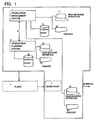
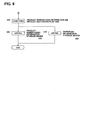
- Fig. 1 shows the entirety of a production planning system to which this invention is applied.
- the production planning system to which this invention is applied has a production management system 1, comprising one or more computers or similar, each comprising a computation device, data storage device and similar, as well as a production planning system 2, comprising one or more computers or similar, each comprising, a computation device, data storage device and similar.
- the production management system 1 and production planning system 2 are connected by a communication circuit, or floppy disks, or minidiscs, or other data transport means 3.
- Production is executed in a plant 4 based on a production plan created by means of this invention.
- Products produced in the plant are warehoused in the warehouse 5.
- Man-machine interfaces 11, 21, 31, and printers and other output devices 12, 22, 32 are connected to the above production management system 1 and production planning system 2. Storage devices 13, 23 are also connected.
- the production management system 1, production planning system 2, and constituent components connected to these do not merely create a production plan specifying the raw materials, facilities, product inspection plans, packing plans, and assignments of personnel engaged in production during the entire period addressed by the production plan, but can also execute various kinds of management and control accompanying the production of products, including facility operation management, production record management, and quality control.
- the former of these, production plans mainly involves the production planning system 2; the latter, various management and control associated with product production, may be executed by the production management system 1, may be executed by the production planning system 2, or may be executed together by the production management system 1 and the production planning system 2.
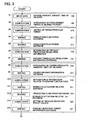
- Fig. 2 shows the entirety of processing step means comprising databases, corresponding to processing steps which are executed in the production planning system of the first embodiment of this invention.
- each of the processing step means is controlled by the execution of programs stored in the production management system 1 and production planning system 2 of Fig. 1.
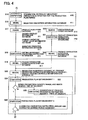
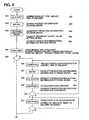
- Figs. 3 through 5 indicate the processing step means of the corresponding reference numbers in Fig. 2, as well as databases (DB).
- processing step S1 of Fig. 3 two or more desired product amounts, acquisition of which is desired, as well as the desired times to delivery, are input via the man-machine interfaces 11, 31 (in Fig. 2, this input means is represented collectively by the reference number 100).
- processing step S1 products for which the desired time of delivery is not finalized are input as having non-finalized desired times to delivery.
- the products acquisition of which is desired, when the products are in the final product form, are items ordered by customers or items for which orders are anticipated; in general, this information is input by a sales or business division.
- sales division A receives an order for "15 tons of product type P for arrival on September 13"
- the data "sales division A, product type P, amount 15 tons, desired arrival date September 13” is input.
- sales division B receives an order for "8 tons of product type Q, for shipment on September 20"
- the data "sales division B, product type Q, amount 8 tons, desired shipment date September 20, desired product amount 10 tons, time of delivery not finalized” is input.
- processing step S2 of Fig. 3 the periods necessary for obtaining raw materials for each of the desired products P, Q, R input in processing step S1, and the periods from the initiation of preparations for the respective production steps until the initiation of warehousing of the respective products, are examined in the production management system 1 based on information stored in the storage device 13, and procurement periods are computed.
- the procurement period for product P is, for example, 4 days; the procurement period for product Q is 15 days; and the procurement period for product R is 7 days.
- the production plan period setting means 300 executes processing steps S3 through S5, and the production plan setting part 310 performs computations to set the production plan period based on the computation results of processing step S2 (processing step S3).
- a period longer than the longest procurement period among the procurement periods for the products P, Q, R is set as a long production plan period; and, periods (called short production plan periods) are set by dividing this long production plan period into two or more periods, which are longer than the shortest procurement period and shorter than the longest procurement period.
- the production plan periods thus set are stored in the production plan period database 311 (processing step S4).
- the short production plan periods are the result of six equal divisions of the long production plan period.
- the long production plan period is set to begin on September 2 and to end on October 1, and six short production plan periods were set, from September 2 to September 6; from September 7 to September 11; from September 12 to September 16; from September 17 to September 21; from September 22 to September 26; and from September 27 to October 1.
- processing step S4 the long production plan period set from September 2 to October 1, and the short production plan periods set from September 2 to September 6, from September 7 to September 11, from September 12 to September 16, from September 17 to September 21, from September 22 to September 26, and from September 27 to October 1, are written to the production plan period database 311.
- the production plan period setting means 300 opens the production plan period database 311, reads the long production plan period and short production plan periods which are the periods (production plan periods) to be addressed in creating production plans, and in processing step S6, the product production regulation information integration part 710 performs computation to integrate the product production regulation information for these periods.
- production plan period refers, as above, to a long production plan period and/or a short production plan period.
- the objects of computation include information related to raw materials used for the production of products, such as for example the constitution of raw materials used, consumption units, product inventory amounts, the period required from order to arrival, and similar; information related to equipment used for the production of products, such as for example the production capacity of the above equipment, production conditions such as temperatures, pressures, and speeds, from when equipment will be available for use, and preparation of auxiliary parts for production using this equipment, and similar; information relating to manpower for production of products, such as for example labor productivity to obtain the products, the number of personnel and the time necessary for preparations for production, the number of personnel and the time necessary for cleanup after completion of production, and similar; information related to product inspections, such as for example inspection items and frequency, and the time required for inspections; and, information related to the time required from the start of production until the warehousing of products, as well as information for determining of the materials required for packing, such as the packing form, gross weight, and similar.
- equipment used for the production of products such as for example the production capacity of the above equipment, production
- processing step S7 the computation results of processing step S6 are written to the product production regulation information database 711.
- processing step S8 the desired product information storage means 200 performs integration of the amount and time of delivery of products whose acquisition is desired input in processing step S1, based on the production plan periods previously written to the production plan period database 311 in processing step S4.
- processing step S1 desired time-to-delivery data has been input in various forms such as in warehousing date, destocking date, and arrival date from various divisions.
- Computation in the processing step S8 is performed, therefore, referring to the product production regulation information database 711. In these computations, standardization on one of the different times to delivery is performed.
- the desired time of delivery (desired time to warehousing) for product type Q in No. 3 is, in processing step S1, input as time of delivery not finalized; hence in the computations of processing step S8, the end of the production plan period is taken to be October 1, and the information that the time of delivery is not finalized is added.
- This computation result is written to the desired product information database 211 in processing step S9.
- processing step S10 information relating to fluctuations is integrated in the demand fluctuation-related information integration part 510 of the product inventory target value setting means 500.
- fluctuations in demand for a product which may occur within the production plan period are changes in demand prediction.
- fluctuations include (1) trend fluctuations such as rising or falling changes over an extended period; (2) cyclical fluctuations over a period of from 3 to 15 years approximately; (3) periodic fluctuations, of which seasonal fluctuations are representative; and (4) other irregular fluctuations the occurrence of which may be regarded as statistically random.
- the extent of fluctuations resulting from the combination of the first three, (1) through (3) can be estimated from time-series analyses of past demand. And, fluctuations can also be estimated through statistical processing of demand records for each of a plurality of production plan unit periods for one product.
- Product inventory target values refer to fluctuation amounts, computed in this way, which there is a need to maintain constantly.
- product inventory target values of 4 tons for product type P and 8 tons for product type Q are computed; production of product type R has just begun, and there is insufficient data for statistical analysis, but if demand grows, it is predicted that it would be sufficient to maintain a product inventory target of 4 tons.
- Table 2 shows the results of computations of product inventory target values by the demand fluctuation-related information integration part 510 in processing step S10.
- processing step S11 the computation results of Table 2 are written to the demand fluctuation-related information database 511.
- the product inventory target setting part 520 opens the production plan period database 311 and demand fluctuation-related information database 511, and reads both the long production plan period and short production plan periods, as well as product inventory target values.
- the product inventory target value setting part 520 computes product inventory target values for the production plan periods, based on these values. Demand for product type R will not grow before September 16, and so computation results are as shown in Table 3.
- Table 3 shows results for short production plan periods.
- the product inventory target values are no more than target values, and do not necessarily mean that the values must be maintained at any given time within the period below.
- This data is written to the product inventory target value information database 521 in processing step S14.
- processing step S15 the product inventory prediction information integration part 410 of the product inventory prediction information storage means 400 performs integration of product inventory prediction information in the production plan period. That is, in the embodiment, daily trends in predicted product inventory amounts are computed, by product type, from September 2 to October 1. Computations at this point, as a matter of course, do not reflect the computation results of processing step S8 at all. The computation results of this processing step S15 are written, as predicted product inventory amounts, to the product inventory prediction information database 411 in processing step S16.
- the product production instruction information setting part 610 of the product production instruction information storage means 600 opens the product plan period database 311, desired product information database 211, product inventory target value information database 521, and product inventory prediction information database 411, reads a production plan period, and further reads desired product information, product inventory target value information, and product inventory prediction information pertaining to this period.
- processing step S18 computations are performed to set product production instruction information.
- the difference between the product amount (desired product amount) AAA acquisition of which is desired within the production plan period, and the predicted product inventory amount BBB at the time of the desired time of delivery less the product inventory target value CCC corresponding to demand fluctuations which may occur within the production plan period, or ⁇ AAA- (BBB-CCC) ⁇ is calculated as the amount which must be produced within the production plan period.
- the production instruction amount for the product is taken to be zero.
- the amount of the deficiency is taken to be the production instruction amount up to the time of the deficiency, and the desired time of delivery is computed as finalized.
- the predicted product inventory amount for product type Q on September 18, the desired time of delivery for No. 2, is 16 tons; even if the product inventory target value is subtracted, it is found that the entire desired product amount of 8 tons can be provided from the expected product inventory amount.
- the production instruction amount is the same 15 tons as the desired product amount.
- No. 6 is the result of computation to secure the product inventory target value stated in Table 3 as the predicted target inventory amount.
- processing step S19 this result is written to the product production instruction information database 611 of the product production instruction information storage means 600.
- processing step S20 the product production regulation information integration part 710 of the product production regulation information storage means 700 opens the production plan period database 311, reads the period for which the production plan is to be created, and in processing step S21 performs integration computations of the product production regulation information for this period.
- the computation result is the same as for processing step S6, there is no need to again perform the same computations in processing step S21, and the computation result of processing step S6 may be used without modification in processing step S21.
- processing step S22 this computation result of processing step S21 is written to the product production regulation information database 711.
- writing is performed to update the product production regulation information database 711 only when the computation result of processing step S21 is different from that of processing step S6.
- the production plan creation part 810 of the production plan creation means 800 opens the production plan period database 311, product production instruction information database 611, and product production regulation information database 711, and reads the period for which the production plan is to be created. Also, product production instruction information and product production regulation information for the period in question are read.
- processing step S24 the production plan creation part 810 of the production plan creation means 800 begins creation of the production plan.
- a check is performed to determine whether the product production instruction amounts and desired times of delivery are legitimate. That is, checks are performed to determine whether the production instruction amounts to satisfy the desired times of delivery within the production plan period do not exceed the production capacity, and if the production capacity is exceeded, how far the times of delivery should be delayed to accommodate this fact; and in processing step S25, the production instruction amounts and times of delivery for the product in question are corrected.
- the order in which times of delivery are corrected is from the latest time of delivery, and from items which, in the desired product information database 211 of the desired product information storage means 200, are described as having a time of delivery which is not finalized.
- the production instruction amounts for which desired times of delivery are finalized within the production plan period are cut down, starting with later desired times of delivery, to perform adjustments such that the total production instruction amounts within the production plan period do not exceed the production capacity.
- the production instruction amount of 10 tons for No. 3 is corrected to 5 tons, and No. 31 is set to be the 5 tons that has been cut down from No. 3, as an amount brought forward to the next production plan period.
- This corrected data is written to the product production instruction information database 611 in processing step S19, and modified items in the desired product information database 211 are marked.
- the product production regulation information database 711 is used to set execution periods indicating from when production of individual products is performed, execution sites indicating where production is to be performed, execution personnel indicating who are to perform the production, what raw materials are to be used, what product inspections performed, and what kind of packing materials are to be used, in such a manner as to satisfy all corrected production instruction amounts and corrected times to delivery. It is preferable that the resulting settings be displayed on, for example, a Gantt chart along a common time axis.
- processing step S27 the production plan created in processing step S26 is written to the product production plan database 811.
- the product warehousing information storage means 900 opens the product production plan database 811, and reads the production plan period in question and the product production plans for that period.
- the product warehousing information setting part 910 computes and sets shipment plans so as to satisfy the packing form for shipment, warehousing plans by each packing unit and desired shipment date or desired arrival date, based on the created production plans.
- the computation results are written to the product warehousing information database 911 and the product inventory prediction information database 411.
- the Sales Division A also inputs the additional data "8 tons of product type P for arrival on September 24"(2).
- Table 6 shows the computation results in processing step S8 on September 6, which is the first occasion for creation of a production plan after September 7 for a period that is longer than the shortest procurement period and shorter than the longest procurement period.
- Next step D R 5 tons Sept. 24 Finalized 5 Current step Q 20 tons Oct. 1 Finalized 31 Sales Division B Q 5 tons Oct. 2 Not finalized
- processing steps S19 through S30 are executed, and a production plan for September 7 through October 1 is created.
- processing steps S19 through S30 are again executed, and a production plan for September 27 through October 1 is created.
- Fig. 6 shows the production plan period used in the above embodiment.
- the period (long production plan period) I longer than the longest procurement period, which is used when creating a plan for production of two or more products within the same period is divided into six equal periods (short production plan periods) II longer than the shortest procurement period and shorter than the longest procurement period, and the production plan is created.
- the present invention is not limited to this, and the number of divisions is not limited to six, nor is it necessary that the division be into equal periods.
- examples of “products” may be filaments, staple fibers, twisted yarns, gray fabrics and woven fabrics in the fiber industry; materials for automobile steel parts, and materials for appliance steel parts in the steel industry; and roll paper, paper sheets and similar in the papermaking industry.
- products are not limited to the above examples.
- the "procurement period" for a certain product is the period from the beginning of preparation of raw materials and processing steps, until the beginning of warehousing of the product; this of course includes normal operation wait time and normal transport wait time. Even if the same production equipment is used, the procurement period can change depending on the mode of production. Hence procurement periods are usually determined according to a production plan already created.
- the extent of fluctuations resulting from the combination of the first three can be estimated from time-series analyses of past demand. And, fluctuations can also be estimated through statistical processing of demand records for each of a plurality of production plan unit periods for one product.
- Demand fluctuations may be estimated based on these fluctuation estimates, with predictions of future fluctuations in business conditions and predictions of market trends included.
- a procurement period be considered that is peculiar to each product when setting product inventory target values.
- a production plan unit period when performing statistical processing of demand records, it is preferable that a short production plan period be used.
- the same values may be employed over a plurality of long production plan periods, or different values may be set at the beginning of each new long production plan period, or they may be changed and reset within a given long production plan period.
- the desired product information storage means 200 is means by which a department desiring acquisition of a product within the production plan period inputs the desired product amount and desired time of delivery, and this data is stored.
- the desired time of delivery the warehousing date, destocking date, arrival date, or other representation method may be used; in order to avoid confusion, it is preferable that data be standardized on one of these for input.
- the end of the production plan period be stored as the desired time of delivery simultaneously with the unfinalized time of delivery information.
- Data may be input at any time before the production plan period and before creation of the production plan.
- input may be performed by the day before the creation of the production plan for a given month, at the latest; and when production plan periods are one-week units, input may be performed by the day before the creation of the production plan for a given week, at the latest.
- the desired product amounts and desired times of delivery are input for each of these weeks by the day before creation of production plans for each of these one-week periods, and more preferably, desired product amounts and desired times of delivery are input and stored for the given weeks and also for subsequent weeks.
- the data previously input for the one-month period corresponding to the second week or to the third week, as well as subsequent weeks, is updated to the latest data.
- items for which the time of delivery is not finalized within the production plan period are handled as having a desired time of delivery at the end of the production plan period.
- the production plan period setting means 300 is means for setting and for storing both long production plan periods and short production plan periods.
- the procurement periods for products production of which is predicted to be desired are stored in advance within the system. Specific periods may be added to these procurement periods, and long and short production plan periods may be set automatically each time in the system; or, after products the acquisition of which is desired are known, the procurement periods for these products may be compared, and long and short production plan periods may be set manually outside the system, and these settings may be stored.
- the production plan period is too long, the extent to which demand in the second half of the production plan period becomes uncertain will be increased, and the probability that demand will change after the production plan is created will be higher. Then the production inventory target value must be maintained at a higher value in order to accommodate fluctuations, and even in this case, fluctuations which cannot be accommodated by the product inventory target value will occur, with the unsatisfactory result that occasions for recreating the production plan will be increased. Conversely, if the production plan period is too short, a single series of production plan periods will be shorter, resulting in production with too often interruptions included therein and reduced production efficiency.
- long production plan periods and short production plan periods are used as production plan periods, and that the long production plan periods be divided into a plurality of short production plan periods.
- the long production plan period must be set to be longer than the longest procurement period.
- the long production plan period is shorter than the procurement period, situations will occur in which warehousing of products is not begun within the long production plan period for which a plan is created, which is undesirable.
- the short production plan period a period of arbitrary length must be set which is longer than the shortest procurement period, and shorter than the longest procurement period. If a short production plan period is shorter than the shortest procurement period, situations will occur in which no warehousing of products is begun within the short production plan period for which a plan is created, so that such a period is undesirable as an object for production plan creation.
- the product inventory prediction information storage means 400 stores trends in product inventory in a time series in past, present, and future production plan periods. Whereas past and present values are definite, the future part is, of course, information predicting product inventories. Hence in production plans related to this invention, because future production is primarily addressed, this is called "product inventory prediction information". Hence where product inventory prediction amounts are concerned, when creating a production plan it is preferable that computations be performed with definite values substituted for past portions.
- product inventory prediction amount information be stored in hourly units. In essence, it is desirable that product inventory prediction amount information be stored in period intervals shorter than the short production plan intervals.
- the output information may be in the form of a table, or may be in the form of a graph, indicating product inventory prediction amounts by the period intervals in which product inventory prediction information is stored. Either form is perfectly acceptable.
- the product inventory target value setting means 500 sets and stores amounts which are maintained as product inventory target values in advance within a long production plan period, in order that the product inventory can be allotted to fluctuation amounts when there occur demand fluctuations which can be predicted probabilistically, addressing fluctuations in demand for products which may occur within a production plan period.
- first demand fluctuations are estimated. That is, among fluctuation trends, which are upward or downward fluctuations over a long period; cyclic fluctuations with a period of from 3 to 15 years approximately; periodic fluctuations, of which seasonal fluctuations are representative; and irregular fluctuations, the occurrence of which may be regarded as probabilistically random, demand fluctuations combining the first three of these are estimated based on time-series analyses of past demand.
- demand fluctuations can be estimated.
- forecasts of future business conditions and forecasts of market fluctuations may be added, and demand fluctuations may be estimated once again.
- demand fluctuations determined in this way are taken to occur probabilistically, and assuming that when demand fluctuations exceed a certain level there will be no product inventory and that the occurrence of shortages will be tolerated, the amount enabling accommodation of demand fluctuations below this level is taken to be the product inventory target value, and this amount is set and stored so as to be maintained for the long production plan period.
- a procurement period be considered that is peculiar to each product, when setting product inventory target values.
- a short production plan period be used as the production plan unit period when performing statistical processing of demand records.
- the same value may be set and stored throughout a plurality of long production plan periods in the product inventory target value setting means, different values may be reset and stored when long production plan periods change, and different values may be reset and stored within a single long production plan period, based on the thus set values to each of the products.
- the product production instruction information storage means 600 computes, as the amount which must be produced within the production plan period, the difference between the product amount acquisition of which is desired within the production plan period, and the predicted product inventory amount at the time of the desired time of delivery less the product inventory target value to accommodate demand fluctuations which may occur within the production plan period, and stores this together with the desired time of delivery.
- the production instruction amount for the product acquisition of which is desired is treated as zero.
- the deficient amount is computed as a production instruction amount up to the time of the deficiency. This means also has means for output of the computed product amount acquisition of which is desired and the desired time of delivery.
- the product production regulation information storage means 700 stores regulation information related to production of the product, which is input prior to creation of the production plan.
- This information is information which must be taken into consideration when creating a production plan, including information related to raw materials used for the production of products, such as for example the constitution of raw materials used, consumption units, product inventory amounts, the period required from order to arrival, and similar; information related to equipment used for the production of products, such as for example the production capacity of the equipment, production conditions such as temperatures, pressures, and speeds, from when equipment will be available for use, and preparation of auxiliary parts for production using this equipment, and similar; information relating to manpower for production of products, such as for example labor productivity to obtain the products, the number of personnel and the time necessary for preparations for production, the number of personnel and the time necessary for cleanup after completion of production, and similar; information related to product inspections, such as for example inspection items and frequency, and the time required for inspections; and, information related to the time required from the start of production until the warehousing of products, as well as information for computation of the materials required for packing, such as the packing form, gross weight, and similar.
- equipment used for the production of products such as
- the production plan creation means 800 specifies the raw materials and equipment used, product inspection plans, packing plans, and the assignment of personnel engaged in production for the entirety of the production plan, creates the production plan, and outputs the results.
- the system for this production plan creation may take the form of an expert system, a decision-making support system, or other forms. In essence, it need only be a system capable of creating production plans.
- This functional device first checks whether product production instruction amounts and times of delivery are legitimate. That is, checks are performed to determine whether production instruction amounts to satisfy desired times of delivery within the production plan period do not exceed production capacities, and if production capacities are exceeded, whether this can be accommodated by delaying times of delivery, to correct production instruction amounts and times of delivery for the product in question.
- the order of correction of times of delivery is from the latest times of delivery, and from items which, in the desired product information storage means, are described as having a time of delivery which is not finalized. If the total production instruction amount exceeds the production capacity even when the production instruction amount with unfinalized desired time of delivery, registered at the end of the production plan period, is cut down, production instruction amounts the desired time of delivery is finalized within the production plan period are cut down, beginning from later desired times of delivery, and adjustments performed until the total production instruction amount within the production plan period does not exceed the production capacity.
- desired times of delivery within the production plan period are also adjusted such that the momentary production instruction amounts within the production plan period do not exceed the upper limit of the momentary production capacity.
- the results of these adjustments are stored in the product production instruction information storage means 600.
- production instruction amounts cut down from the production plan period as a result of adjustments are removed from the production plan period in the desired product information storage means 200, and the cut desired product amounts are stored for the next production plan period.
- the desired times of delivery are at the beginning of the next production plan period.
- the production plan is generated based on the product production instruction information corrected in this way.
- the product warehousing information storage means 900 receives the production plan created by the production plan creation device and creates warehousing plans by packing form and packing unit for shipment, and performs shipment planning so as to satisfy desired times of delivery.
- Fig. 7 is an example of a production planning system which illustrates a second embodiment of this invention; similarly to the first embodiment in Fig. 2, the entirety of processing step means executed in this embodiment is shown.
- Figs. 8 and 9 are flowcharts showing the processing of one embodiment corresponding to the processing steps comprised by each of the processing step means shown in Fig. 7. Similarly, control is performed through execution of programs stored in the production management system 1 and production planning system 2 of Fig. 1.
- Figs. 8 and 9 indicate the processing step means having the corresponding reference numbers in Fig. 7.
- a man-machine interface 100 is used to input one or more desired product amounts for one or more products and the respective desired times of delivery, as well as differentiation between items demand for which is finalized within the production plan period, and items demand for which is anticipated within the production plan period.
- the end of the production plan period is input as the desired time of delivery.
- products acquisition of which is desired within the production plan period when the products are in the final product form, are equivalent to items ordered by customers or items for which orders are anticipated; in general, this information is input by a sales or business division.
- the products are intermediate materials which have not yet undergone final processing, they are equivalent to ordered items or order-anticipated items from the next step, and in general, the division for the next step performs the input.
- stockpiled amounts reserved to deal with urgent equipment problems in the current step or in the preceding step, or to accommodate periodic repair periods for equipment anticipated in advance, are generally input at the current step.
- the man-machine interface 100 has a plurality of input means.
- this data is stored in the desired product information storage means 200.
- a sales division may input "an order for 10 tons of product type A was received, and so shipment by such-and-such date is desired” (1), and "an order for 8 tons of product type B will probably be received, and so shipment by such-and-such date is desired” (2), and from the next step, "shipment of 10 tons of product type B by such-and-such date to the next step is desired” (3) is input.
- (1) and (3) are due to demand which is finalized, and so are input as having finalized demand, while (2) and (4) result from anticipated demand, and so are simultaneously input as having anticipated demand.
- the product types acquisition of which is desired, desired product amounts, desired times of delivery, and whether demand is finalized within the production plan period or is anticipated within the production plan period is input and stored together in the desired product information storage means 200.
- processing step S33 the product inventory prediction information storage means 400 is opened, and files stored at that time in the product inventory prediction information storage means 400 and the product inventory target value setting means 550 are read. Based on information in the product inventory target value setting means 550, product amounts which must be produced by desired times of delivery for each product are computed. And, the computation results are stored in the product production instruction information storage means 600.
- processing step S34 computations are performed to judge whether the desired product amounts can be provided at the desired time of delivery from predicted product inventory amounts exceeding the product inventory target values, or whether new production must be undertaken; this judgment is made in processing step S35.
- processing step S35 the judgment about (desired product amount) ⁇ the amount (predicted product inventory amount - product inventory target value) is performed. If it is judged that a desired product amount can be provided, at the desired time of delivery, from the amount (predicted product inventory amount - product inventory target value) ("Y" in processing step S35), then execution proceeds to processing step S43, the amount which can be provided and the time of delivery are written, and a product shipment plan is created.
- processing step S35 it is judged that provision from the amount (predicted product inventory amount - product inventory target value) is not possible, and that new production must be undertaken in order to satisfy the time of delivery, execution proceeds to processing step S36, and the amount which must be produced by the time of delivery is computed. In place of this, it is also possible to allocate the entirety of the predicted product inventory amount to the desired product amount, and input the deficiency in the product inventory target value resulting from this as the desired product amount for the step in question.
- processing step S37 these computation results are written and stored in the database of the product production instruction information storage means 600.
- files stored in the product production regulation information storage means 700 are read, and information which must be taken into consideration when creating a production plan is read, including information related to raw materials used for the production of products, such as for example the constitution of raw materials used, consumption units, product inventory amounts, the period required from order to arrival, and similar; information related to equipment used for the production of products, such as for example the production capacity of the equipment, production conditions such as temperatures, pressures, and speeds, from when equipment will be available for use, and preparation of auxiliary parts for production using this equipment, and similar; information relating to manpower for production of products, such as for example labor productivity to obtain the products, the number of personnel and the time necessary for preparations for production, the number of personnel and the time necessary for cleanup after completion of production, and similar; information related to product inspections, such as for example inspection items and frequency, and the time required for inspections; and, information related to the time required from the start of production until the warehousing of products, as well as information for computation of the materials required for packing, such as
- processing step S39 computations for creation of a production plan are begun using the production plan creation means 800, and referring to the above-described product production regulation information.
- checks are performed to determine whether the product production instruction amounts and times of delivery are legitimate. That is, in processing step S40, a judgment of whether the production instruction amounts to satisfy desired times of delivery within the production plan period exceed the maximum production capacity registered in the production plan creation means is made.
- the maximum production amount is exceeded, a check is performed to determine by how much the time of delivery should be delayed to cope with this, and the production instruction amount and time of delivery for the product in question are corrected.
- the order of correction of times of delivery is from production instruction information for which demand within the production plan period is anticipated; and if the production capacity is still exceeded, then corrections are also performed for production instruction information for which demand within the production plan period is finalized.
- the correction part is added to the product production instruction information storage means 600. Based on this corrected product production information, the operation to create a production plan is repeated. That is, when correction of times of delivery is completed, execution proceeds to processing step S41, and a more detailed production plan is created.
- the production plan period is divided into periods even shorter than short production plan periods, and production plans are created. That is, if short production plan periods are in week units, then production plans are created for individual days, referring to the product production regulation information.
- processing step S42 a judgment as to whether these production plans satisfy the product production instruction amounts and corrected times of delivery is made; the computation 2 at processing step S41 is performed until they are satisfied, to adjust the production plan.
- the created production plan be output in the form of a Gantt chart.
- processing step S43 shipping plans are created so as to satisfy warehousing plans and desired times of delivery by packing form for shipment and by packing unit, based on the created production plan. And in processing step S44, this information is written to the product warehousing information storage means 900. At the same time, in processing step S45 the product inventory prediction information storage means 400 is updated to have the latest product inventory prediction information, and the processing ends.
- the product warehousing information storage means 900 is opened, and based on product plans created by the production plan creation means, product warehousing plans are created and stored by packing form and by packing units. At this time, changed information regarding deviations from initial desired product amounts and times of delivery as initially requested are output by the production plan creation means 800, employing corrected production instruction amounts and times of delivery as well as packing units for product shipment, and the responsible divisions are notified.
- a product shipping plan is then created and stored in the product warehousing information storage means 900. If there is a need to output this shipping plan, output means 1000 is used for output.
- product inventory prediction information is updated and is stored in the product inventory prediction information storage means 400, based on the latest production plan created by the production plan creation means 800 and on the latest warehousing plan and destocking plan created by the product warehousing information storage means 900.
- the above are first executed for a long production plan period. Thereafter, the long production plan period is subdivided, and the above are executed for each short production plan period.
- a long production plan period I is divided into six short production plan periods II; however, the number of subdivisions is not limited to six, and any number equal to two or greater can be selected.
- the in-process period for a certain product is the period from the beginning of production, according to a production plan already created, until the product can be warehoused.
- this in-process period varies greatly from one product to another, and when producing a plurality of products within the same period, a period which is longer than the longest in-process period is set as the long production plan period.
- the product inventory target value setting means 550 sets and stores product inventory values in advance to accommodate demand fluctuations occurring within the production plan periods; the same value may be used within a production plan period, or the value may be changed within a production plan period.
- this product inventory target value be set in advance, and then set again according to the circumstances of demand fluctuation after the beginning of production. It is preferable that demand fluctuation information necessary to set a production inventory target value be estimated either by statistical inference from records of past demand fluctuations, or by predictions based on records of past demand fluctuations and with future trends in business conditions incorporated; however, the value may also be set based on the intuition of a person having extensive experience in the field. A method appropriate to the case of the application, or a combination of a number of methods, may be used.
- demand fluctuations occurring each season may be estimated based on records'of fluctuations for each season in the past.
- past demand fluctuations may be analyzed statistically to obtain a value.
- market conditions, currency exchange rates, and other external factors vary considerably, it is dangerous to infer future demand from past demand fluctuations alone, and it is preferable to predict and set fluctuation amounts separately, referring to past demand fluctuations, and considering demand-side circumstances and general trends in business conditions.
- the long production plan period is set to 28 days and short production plan periods are set to 7 days; however, application of this invention is not limited to these period settings.
- the numbers in the table are amounts in units of tons; units other than tons may be used instead.
- representations of desired times of delivery are standardized as the date the product is warehoused; but so long as the representation is standardized, the destocking date or the arrival date may be used instead.
- product inventory target values set in advance for each product type and product inventory amounts immediately prior to the production plan period, or the predicted product inventory amounts (based on definitions in this specification, the "product inventory amount or predicted product inventory amount” may simply be called the “predicted product inventory amount”) are used to compute production instruction amounts.
- the difference between a..product amount acquisition of which is desired, and the product inventory at the desired time of delivery or the predicted product inventory amount less the product inventory target value is calculated separately for items for which demand is finalized, and items for which demand is anticipated.
- Production plans are created for the long production plan period and for the first short production plan period so as to satisfy desired times of delivery and production instruction amounts calculated in this way.
- production instruction amounts are computed such that the replenishment is performed by October 23 at the latest, which is the end of the third short production plan period; however, production instruction amounts may also be computed such that replenishment is performed on October 17.
- Replenishment need only be performed within the production plan period; if, for example, replenishment during the third short production plan period from October 17 to October 23 is difficult, replenishment can be performed during the fourth short production plan period.
- replenishment can be performed by the end of the long production plan period. Naturally it is acceptable to perform replenishment earlier than this.
- October 23 there was a request from Sales Division B for production of product P to meet a large anticipated demand, and so production instruction amounts change in a usual manner.
- the fact that the predicted product inventory amount for product P on October 15 is 16 is the result of creation of a production plan based on production instruction amounts for the second short production plan period, and the result of production divided into 10 tons on October 15 and 30 tons on October 16 in response to a production instruction amount (anticipated demand) of 40 tons on October 16.
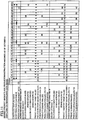
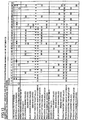
- a production plan was created based on the production instruction amounts in the table of Fig. 12, and on performing production according to the production plan, demand changed due to market fluctuations.
- the table of Fig. 13 summarizes the demand fluctuation subsequent to October 15 as of October 22.
- the production instruction amount for product P from October 22 to October 24 is modified when creating the production plan for the third short production plan period, in order to satisfy the large desired product amount on October 23 without exceeding the production capacity.
- Fluctuation amounts which cannot be predicted probabilistically mean specifically, amounts corresponding to, for example, "(4) other irregular fluctuations the occurrence of which may be regarded as statistically random" as stated in the above-mentioned Juyou no Bunseki to Yosoku, by Yasuo Matsushima, published by The Nikkan Kogyo Shimbun, Ltd.
- a production plan is created for a period longer than the longest procurement period.
- the period for which the production plan is created is divided into two or more periods which are longer than the shortest procurement period and shorter than the longest procurement period, and production plans are created for each of these subdivided periods.
- a quick-response system can be configured which can promptly cope with demand fluctuations, without the need for excessive product inventories, and without excessive interruptions included in production.
- the production plan can be modified efficiently, without changing the production plan each time such a fluctuation occurs.
Landscapes
- Engineering & Computer Science (AREA)
- Business, Economics & Management (AREA)
- Economics (AREA)
- Strategic Management (AREA)
- Human Resources & Organizations (AREA)
- Quality & Reliability (AREA)
- Physics & Mathematics (AREA)
- General Physics & Mathematics (AREA)
- Entrepreneurship & Innovation (AREA)
- Educational Administration (AREA)
- Operations Research (AREA)
- Automation & Control Theory (AREA)
- Game Theory and Decision Science (AREA)
- Manufacturing & Machinery (AREA)
- General Engineering & Computer Science (AREA)
- Marketing (AREA)
- Development Economics (AREA)
- Tourism & Hospitality (AREA)
- General Business, Economics & Management (AREA)
- Theoretical Computer Science (AREA)
- General Factory Administration (AREA)
- Management, Administration, Business Operations System, And Electronic Commerce (AREA)
- Multi-Process Working Machines And Systems (AREA)
Applications Claiming Priority (3)
| Application Number | Priority Date | Filing Date | Title |
|---|---|---|---|
| JP2000197568 | 2000-06-30 | ||
| JP2000197568 | 2000-06-30 | ||
| PCT/JP2001/005678 WO2002003157A1 (en) | 2000-06-30 | 2001-06-29 | Production planning method and system for production planning |
Publications (3)
| Publication Number | Publication Date |
|---|---|
| EP1312995A1 true EP1312995A1 (de) | 2003-05-21 |
| EP1312995A4 EP1312995A4 (de) | 2004-04-14 |
| EP1312995B1 EP1312995B1 (de) | 2006-08-16 |
Family
ID=18695877
Family Applications (1)
| Application Number | Title | Priority Date | Filing Date |
|---|---|---|---|
| EP01945734A Expired - Lifetime EP1312995B1 (de) | 2000-06-30 | 2001-06-29 | Produktionsplanungsmethode und system zur produktionsplanung |
Country Status (6)
| Country | Link |
|---|---|
| US (1) | US20030171963A1 (de) |
| EP (1) | EP1312995B1 (de) |
| AU (1) | AU2001267888A1 (de) |
| DE (1) | DE60122346T2 (de) |
| MX (1) | MXPA02012644A (de) |
| WO (1) | WO2002003157A1 (de) |
Families Citing this family (18)
| Publication number | Priority date | Publication date | Assignee | Title |
|---|---|---|---|---|
| US20040172320A1 (en) * | 2003-02-28 | 2004-09-02 | Performaworks, Incorporated | Method and system for goal management |
| US20050015167A1 (en) * | 2003-07-18 | 2005-01-20 | Searcy Allison Fay | Synchronized production with dynamic logistics routing |
| JP4177280B2 (ja) * | 2004-03-25 | 2008-11-05 | 東芝ソリューション株式会社 | 計画業務管理支援システム、及び計画業務管理支援プログラム |
| US7660730B2 (en) * | 2004-03-31 | 2010-02-09 | Hitachi, Ltd. | Method of creating production plan of demand variation input type and method of creating production plan minimizing risk of demand variations |
| US7840449B2 (en) * | 2004-09-07 | 2010-11-23 | International Business Machines Corporation | Total inventory management |
| US7885857B1 (en) | 2004-11-15 | 2011-02-08 | Kaoru Fukuya | Appearel production method and system |
| JP4705390B2 (ja) * | 2005-03-25 | 2011-06-22 | 富士通株式会社 | 需要予測装置 |
| US20070174146A1 (en) * | 2005-12-29 | 2007-07-26 | Noam Tamarkin | Hierarchical stock allocation system and method |
| JP5202177B2 (ja) * | 2008-08-12 | 2013-06-05 | 株式会社日立製作所 | 生産計画立案方法、その実行プログラム及びその実行装置 |
| US10325241B2 (en) * | 2015-07-14 | 2019-06-18 | Shlomo Uri HAIMI | System and method for tracking shelf-life and after-opening usage life of medicaments, foods and other perishables |
| US10713233B2 (en) * | 2016-09-16 | 2020-07-14 | Kabushiki Kaisha Toshiba | Information management system |
| EP3410363A1 (de) * | 2017-05-31 | 2018-12-05 | Siemens Aktiengesellschaft | Bestimmen eines produktionsplans |
| JP7329942B2 (ja) * | 2019-03-28 | 2023-08-21 | 三菱重工業株式会社 | 運用計画作成装置、運用計画作成方法、及びプログラム |
| US12552035B2 (en) | 2020-12-18 | 2026-02-17 | Strong Force Vcn Portfolio 2019, Ll | Robotic fleet resource provisioning system |
| US20230132449A1 (en) | 2020-12-18 | 2023-05-04 | Strong Force Vcn Portfolio 2019, Llc | Multi-Purpose Robot Configuration in Robotic Fleet |
| US12567082B2 (en) | 2021-04-16 | 2026-03-03 | Strong Force Vcn Portfolio 2019, Llc | Autonomous smart contract execution platform |
| EP4337467A4 (de) | 2021-05-11 | 2025-05-07 | Strong Force VCN Portfolio 2019, LLC | Systeme, verfahren, kits und vorrichtungen für kantenverteilte speicherung und abfrage in wertkettennetzwerken |
| CN114428486B (zh) * | 2021-12-31 | 2023-11-03 | 三一汽车制造有限公司 | 一种沥青站生产控制方法、装置及沥青站 |
Family Cites Families (11)
| Publication number | Priority date | Publication date | Assignee | Title |
|---|---|---|---|---|
| US5299115A (en) * | 1989-09-12 | 1994-03-29 | Mrs. Fields Software Group Inc. | Product demand system and method |
| JP2798299B2 (ja) * | 1990-11-14 | 1998-09-17 | 積水化学工業株式会社 | 在庫シミュレーションシステム |
| JPH077431B2 (ja) * | 1992-02-14 | 1995-01-30 | 三菱電機株式会社 | 順次確定生産計画システム |
| TW283220B (de) * | 1994-09-28 | 1996-08-11 | I2 Technologies Inc | |
| US5970465A (en) * | 1994-10-05 | 1999-10-19 | International Business Machines Corporation | Method for part procurement in a production system with constrained resources |
| US6094603A (en) * | 1995-08-09 | 2000-07-25 | Fuji Photo Film Co., Ltd. | Method of and apparatus for production management |
| EP0770967A3 (de) * | 1995-10-26 | 1998-12-30 | Koninklijke Philips Electronics N.V. | System zur Entscheidungsunterstützung für das Management einer flinken Versorgungskette |
| JPH10118898A (ja) * | 1996-10-18 | 1998-05-12 | Kubota Corp | 機械生産物の生産方法 |
| JPH11232344A (ja) * | 1998-02-13 | 1999-08-27 | Nec Corp | 生産計画立案方法及び生産計画立案システム |
| JPH11235648A (ja) * | 1998-02-17 | 1999-08-31 | Toshiba Corp | 製造計画管理装置、製造計画管理方法、及び、製造計画管理プログラムを記録したコンピュータ読み取り可能な記録媒体 |
| US6233493B1 (en) * | 1998-09-16 | 2001-05-15 | I2 Technologies, Inc. | Computer-implemented product development planning method |
-
2001
- 2001-06-29 US US10/311,800 patent/US20030171963A1/en not_active Abandoned
- 2001-06-29 WO PCT/JP2001/005678 patent/WO2002003157A1/ja not_active Ceased
- 2001-06-29 AU AU2001267888A patent/AU2001267888A1/en not_active Abandoned
- 2001-06-29 DE DE60122346T patent/DE60122346T2/de not_active Expired - Lifetime
- 2001-06-29 EP EP01945734A patent/EP1312995B1/de not_active Expired - Lifetime
- 2001-06-29 MX MXPA02012644A patent/MXPA02012644A/es unknown
Also Published As
| Publication number | Publication date |
|---|---|
| DE60122346T2 (de) | 2007-08-09 |
| AU2001267888A1 (en) | 2002-01-14 |
| DE60122346D1 (de) | 2006-09-28 |
| EP1312995A4 (de) | 2004-04-14 |
| EP1312995B1 (de) | 2006-08-16 |
| WO2002003157A1 (en) | 2002-01-10 |
| US20030171963A1 (en) | 2003-09-11 |
| MXPA02012644A (es) | 2003-09-22 |
Similar Documents
| Publication | Publication Date | Title |
|---|---|---|
| EP1312995B1 (de) | Produktionsplanungsmethode und system zur produktionsplanung | |
| US6393332B1 (en) | Method and system for providing sufficient availability of manufacturing resources to meet unanticipated demand | |
| US6415195B1 (en) | Method and system for providing sufficient availability of manufacturing resources to meet unanticipated demand | |
| US20040210467A1 (en) | Production management system production management method | |
| US20030208389A1 (en) | Production planning method and system for preparing production plan | |
| US20070050069A1 (en) | Constraint based order optimization system and available to promise system | |
| US20110125543A1 (en) | Supply chain optimization system and method for optimizing supply chain | |
| AU769097B2 (en) | System and method of scheduling manufacturing resources | |
| Rohde et al. | Master planning | |
| JP2007140785A (ja) | 在庫管理システム | |
| KR20030024538A (ko) | 생산관리시스템 | |
| US6415194B1 (en) | Method and system for providing sufficient availability of manufacturing resources to meet unanticipated demand | |
| US6397118B1 (en) | Method and system for providing sufficient availability of manufacturing resources to meet unanticipated demand | |
| JP5168481B2 (ja) | 生産スケジュール立案システム、生産スケジュール立案方法及び生産スケジュール立案プログラム | |
| Rohde et al. | Master planning | |
| Stadtler et al. | Hierarchical planning and the supply chain planning matrix | |
| JP2010055258A (ja) | サプライチェーンの効率化支援方法 | |
| JP5056962B2 (ja) | 鋼板鋼帯製品の販売生産納入システムおよび販売生産納入方法 | |
| EP1843232B1 (de) | Produktionskoordinationssystem | |
| JP2008217653A (ja) | 資材調達・生産プロセスの効率的管理支援方法 | |
| JPH0696089A (ja) | 部品生産計画システム | |
| JP2847276B2 (ja) | コイル状製品の納期管理システム | |
| JP4716151B2 (ja) | 鋼板鋼帯製品の販売生産納入システムおよび販売生産納入方法 | |
| Ardiansyah et al. | The Establishment of Decision Making Support Tool for Inventory Control and Production Planning with Periodic Review System and Linear Programming Approach | |
| JP2004021891A (ja) | 生産日程作成システム、部品納入指示システム、生産日程作成方法及び生産日程計画の作成支援方法 |
Legal Events
| Date | Code | Title | Description |
|---|---|---|---|
| PUAI | Public reference made under article 153(3) epc to a published international application that has entered the european phase |
Free format text: ORIGINAL CODE: 0009012 |
|
| 17P | Request for examination filed |
Effective date: 20021227 |
|
| AK | Designated contracting states |
Designated state(s): AT BE CH CY DE DK ES FI FR GB GR IE IT LI LU MC NL PT SE TR |
|
| AX | Request for extension of the european patent |
Extension state: AL LT LV MK RO SI |
|
| RIC1 | Information provided on ipc code assigned before grant |
Ipc: 7G 06F 17/60 B Ipc: 7G 05B 19/418 A |
|
| A4 | Supplementary search report drawn up and despatched |
Effective date: 20040302 |
|
| RBV | Designated contracting states (corrected) |
Designated state(s): AT BE CH DE FR GB LI |
|
| 17Q | First examination report despatched |
Effective date: 20040511 |
|
| GRAP | Despatch of communication of intention to grant a patent |
Free format text: ORIGINAL CODE: EPIDOSNIGR1 |
|
| GRAC | Information related to communication of intention to grant a patent modified |
Free format text: ORIGINAL CODE: EPIDOSCIGR1 |
|
| RBV | Designated contracting states (corrected) |
Designated state(s): DE FR GB |
|
| RIC1 | Information provided on ipc code assigned before grant |
Ipc: G05B 19/418 20060101AFI20060224BHEP |
|
| GRAS | Grant fee paid |
Free format text: ORIGINAL CODE: EPIDOSNIGR3 |
|
| GRAA | (expected) grant |
Free format text: ORIGINAL CODE: 0009210 |
|
| AK | Designated contracting states |
Kind code of ref document: B1 Designated state(s): DE FR GB |
|
| REG | Reference to a national code |
Ref country code: GB Ref legal event code: FG4D |
|
| REF | Corresponds to: |
Ref document number: 60122346 Country of ref document: DE Date of ref document: 20060928 Kind code of ref document: P |
|
| ET | Fr: translation filed | ||
| PLBE | No opposition filed within time limit |
Free format text: ORIGINAL CODE: 0009261 |
|
| STAA | Information on the status of an ep patent application or granted ep patent |
Free format text: STATUS: NO OPPOSITION FILED WITHIN TIME LIMIT |
|
| 26N | No opposition filed |
Effective date: 20070518 |
|
| PGFP | Annual fee paid to national office [announced via postgrant information from national office to epo] |
Ref country code: FR Payment date: 20100608 Year of fee payment: 10 |
|
| PGFP | Annual fee paid to national office [announced via postgrant information from national office to epo] |
Ref country code: DE Payment date: 20100609 Year of fee payment: 10 Ref country code: GB Payment date: 20100526 Year of fee payment: 10 |
|
| GBPC | Gb: european patent ceased through non-payment of renewal fee |
Effective date: 20110629 |
|
| REG | Reference to a national code |
Ref country code: FR Ref legal event code: ST Effective date: 20120229 |
|
| REG | Reference to a national code |
Ref country code: DE Ref legal event code: R119 Ref document number: 60122346 Country of ref document: DE Effective date: 20120103 |
|
| PG25 | Lapsed in a contracting state [announced via postgrant information from national office to epo] |
Ref country code: FR Free format text: LAPSE BECAUSE OF NON-PAYMENT OF DUE FEES Effective date: 20110630 Ref country code: DE Free format text: LAPSE BECAUSE OF NON-PAYMENT OF DUE FEES Effective date: 20120103 |
|
| PG25 | Lapsed in a contracting state [announced via postgrant information from national office to epo] |
Ref country code: GB Free format text: LAPSE BECAUSE OF NON-PAYMENT OF DUE FEES Effective date: 20110629 |