EP1380642B1 - Méthode de séparation et purification des acides nucléiques - Google Patents
Méthode de séparation et purification des acides nucléiques Download PDFInfo
- Publication number
- EP1380642B1 EP1380642B1 EP03008719A EP03008719A EP1380642B1 EP 1380642 B1 EP1380642 B1 EP 1380642B1 EP 03008719 A EP03008719 A EP 03008719A EP 03008719 A EP03008719 A EP 03008719A EP 1380642 B1 EP1380642 B1 EP 1380642B1
- Authority
- EP
- European Patent Office
- Prior art keywords
- nucleic acid
- solid phase
- purification
- isolation
- container
- Prior art date
- Legal status (The legal status is an assumption and is not a legal conclusion. Google has not performed a legal analysis and makes no representation as to the accuracy of the status listed.)
- Expired - Lifetime
Links
- 150000007523 nucleic acids Chemical class 0.000 title claims abstract description 420
- 108020004707 nucleic acids Proteins 0.000 title claims abstract description 341
- 102000039446 nucleic acids Human genes 0.000 title claims abstract description 341
- 238000000034 method Methods 0.000 title claims abstract description 153
- 238000000746 purification Methods 0.000 title claims abstract description 85
- 238000000926 separation method Methods 0.000 title description 3
- 239000007790 solid phase Substances 0.000 claims abstract description 156
- 238000002955 isolation Methods 0.000 claims abstract description 77
- 125000002887 hydroxy group Chemical group [H]O* 0.000 claims abstract description 11
- 238000005406 washing Methods 0.000 claims abstract description 10
- 238000006243 chemical reaction Methods 0.000 claims description 138
- 239000000243 solution Substances 0.000 claims description 84
- XPPKVPWEQAFLFU-UHFFFAOYSA-N diphosphoric acid Chemical compound OP(O)(=O)OP(O)(O)=O XPPKVPWEQAFLFU-UHFFFAOYSA-N 0.000 claims description 75
- 229940005657 pyrophosphoric acid Drugs 0.000 claims description 73
- 239000003153 chemical reaction reagent Substances 0.000 claims description 66
- 239000012488 sample solution Substances 0.000 claims description 65
- 238000001514 detection method Methods 0.000 claims description 52
- 239000012528 membrane Substances 0.000 claims description 51
- 229920002284 Cellulose triacetate Polymers 0.000 claims description 49
- NNLVGZFZQQXQNW-ADJNRHBOSA-N [(2r,3r,4s,5r,6s)-4,5-diacetyloxy-3-[(2s,3r,4s,5r,6r)-3,4,5-triacetyloxy-6-(acetyloxymethyl)oxan-2-yl]oxy-6-[(2r,3r,4s,5r,6s)-4,5,6-triacetyloxy-2-(acetyloxymethyl)oxan-3-yl]oxyoxan-2-yl]methyl acetate Chemical compound O([C@@H]1O[C@@H]([C@H]([C@H](OC(C)=O)[C@H]1OC(C)=O)O[C@H]1[C@@H]([C@@H](OC(C)=O)[C@H](OC(C)=O)[C@@H](COC(C)=O)O1)OC(C)=O)COC(=O)C)[C@@H]1[C@@H](COC(C)=O)O[C@@H](OC(C)=O)[C@H](OC(C)=O)[C@H]1OC(C)=O NNLVGZFZQQXQNW-ADJNRHBOSA-N 0.000 claims description 49
- 238000007127 saponification reaction Methods 0.000 claims description 42
- OAICVXFJPJFONN-UHFFFAOYSA-N Phosphorus Chemical compound [P] OAICVXFJPJFONN-UHFFFAOYSA-N 0.000 claims description 29
- LFQSCWFLJHTTHZ-UHFFFAOYSA-N Ethanol Chemical compound CCO LFQSCWFLJHTTHZ-UHFFFAOYSA-N 0.000 claims description 28
- 239000000523 sample Substances 0.000 claims description 26
- 229910052698 phosphorus Inorganic materials 0.000 claims description 25
- 239000011574 phosphorus Substances 0.000 claims description 25
- 102000003992 Peroxidases Human genes 0.000 claims description 23
- 238000012207 quantitative assay Methods 0.000 claims description 23
- 108040007629 peroxidase activity proteins Proteins 0.000 claims description 22
- 239000011534 wash buffer Substances 0.000 claims description 22
- 230000000295 complement effect Effects 0.000 claims description 18
- 238000007599 discharging Methods 0.000 claims description 17
- 108010017826 DNA Polymerase I Proteins 0.000 claims description 16
- 102000004594 DNA Polymerase I Human genes 0.000 claims description 16
- 239000011324 bead Substances 0.000 claims description 16
- 239000000872 buffer Substances 0.000 claims description 16
- 102000016928 DNA-directed DNA polymerase Human genes 0.000 claims description 15
- 108010014303 DNA-directed DNA polymerase Proteins 0.000 claims description 15
- 102000030764 Purine-nucleoside phosphorylase Human genes 0.000 claims description 15
- 102100033220 Xanthine oxidase Human genes 0.000 claims description 15
- 108010093894 Xanthine oxidase Proteins 0.000 claims description 15
- 101710101148 Probable 6-oxopurine nucleoside phosphorylase Proteins 0.000 claims description 14
- 102000009609 Pyrophosphatases Human genes 0.000 claims description 14
- 108010009413 Pyrophosphatases Proteins 0.000 claims description 14
- 239000002773 nucleotide Substances 0.000 claims description 14
- 125000003729 nucleotide group Chemical group 0.000 claims description 14
- 239000001226 triphosphate Substances 0.000 claims description 11
- 235000011178 triphosphate Nutrition 0.000 claims description 11
- UNXRWKVEANCORM-UHFFFAOYSA-N triphosphoric acid Chemical compound OP(O)(=O)OP(O)(=O)OP(O)(O)=O UNXRWKVEANCORM-UHFFFAOYSA-N 0.000 claims description 11
- 239000007853 buffer solution Substances 0.000 claims description 10
- 239000004094 surface-active agent Substances 0.000 claims description 10
- OKKJLVBELUTLKV-UHFFFAOYSA-N Methanol Chemical compound OC OKKJLVBELUTLKV-UHFFFAOYSA-N 0.000 claims description 9
- 102100034343 Integrase Human genes 0.000 claims description 8
- 108010092799 RNA-directed DNA polymerase Proteins 0.000 claims description 8
- 239000007795 chemical reaction product Substances 0.000 claims description 8
- 238000004737 colorimetric analysis Methods 0.000 claims description 8
- 238000001179 sorption measurement Methods 0.000 claims description 8
- 102000004190 Enzymes Human genes 0.000 claims description 7
- 108090000790 Enzymes Proteins 0.000 claims description 7
- 229930010555 Inosine Natural products 0.000 claims description 7
- UGQMRVRMYYASKQ-KQYNXXCUSA-N Inosine Chemical compound O[C@@H]1[C@H](O)[C@@H](CO)O[C@H]1N1C2=NC=NC(O)=C2N=C1 UGQMRVRMYYASKQ-KQYNXXCUSA-N 0.000 claims description 7
- UBORTCNDUKBEOP-UHFFFAOYSA-N L-xanthosine Natural products OC1C(O)C(CO)OC1N1C(NC(=O)NC2=O)=C2N=C1 UBORTCNDUKBEOP-UHFFFAOYSA-N 0.000 claims description 7
- UBORTCNDUKBEOP-HAVMAKPUSA-N Xanthosine Natural products O[C@@H]1[C@H](O)[C@H](CO)O[C@H]1N1C(NC(=O)NC2=O)=C2N=C1 UBORTCNDUKBEOP-HAVMAKPUSA-N 0.000 claims description 7
- 150000002357 guanidines Chemical class 0.000 claims description 7
- 229960003786 inosine Drugs 0.000 claims description 7
- 230000035772 mutation Effects 0.000 claims description 7
- 239000003960 organic solvent Substances 0.000 claims description 7
- UBORTCNDUKBEOP-UUOKFMHZSA-N xanthosine Chemical compound O[C@@H]1[C@H](O)[C@@H](CO)O[C@H]1N1C(NC(=O)NC2=O)=C2N=C1 UBORTCNDUKBEOP-UUOKFMHZSA-N 0.000 claims description 7
- KFZMGEQAYNKOFK-UHFFFAOYSA-N Isopropanol Chemical compound CC(C)O KFZMGEQAYNKOFK-UHFFFAOYSA-N 0.000 claims description 6
- 150000003839 salts Chemical class 0.000 claims description 6
- 108091005804 Peptidases Proteins 0.000 claims description 5
- 239000004365 Protease Substances 0.000 claims description 5
- 241000700605 Viruses Species 0.000 claims description 4
- 230000000977 initiatory effect Effects 0.000 claims description 4
- 102100037486 Reverse transcriptase/ribonuclease H Human genes 0.000 claims description 3
- BDERNNFJNOPAEC-UHFFFAOYSA-N propan-1-ol Chemical compound CCCO BDERNNFJNOPAEC-UHFFFAOYSA-N 0.000 claims description 3
- 238000005063 solubilization Methods 0.000 claims description 3
- 230000007928 solubilization Effects 0.000 claims description 3
- 238000003795 desorption Methods 0.000 claims 2
- XLYOFNOQVPJJNP-UHFFFAOYSA-N water Chemical group O XLYOFNOQVPJJNP-UHFFFAOYSA-N 0.000 abstract description 14
- 229920000642 polymer Polymers 0.000 abstract description 6
- 239000010410 layer Substances 0.000 description 80
- 210000004027 cell Anatomy 0.000 description 28
- 210000004369 blood Anatomy 0.000 description 24
- 239000008280 blood Substances 0.000 description 24
- 108020004414 DNA Proteins 0.000 description 23
- 239000000203 mixture Substances 0.000 description 22
- 238000003752 polymerase chain reaction Methods 0.000 description 22
- HEMHJVSKTPXQMS-UHFFFAOYSA-M Sodium hydroxide Chemical compound [OH-].[Na+] HEMHJVSKTPXQMS-UHFFFAOYSA-M 0.000 description 21
- 230000008569 process Effects 0.000 description 21
- 239000007788 liquid Substances 0.000 description 19
- 239000007864 aqueous solution Substances 0.000 description 18
- -1 polyethylene Polymers 0.000 description 18
- 239000000126 substance Substances 0.000 description 13
- MHAJPDPJQMAIIY-UHFFFAOYSA-N Hydrogen peroxide Chemical compound OO MHAJPDPJQMAIIY-UHFFFAOYSA-N 0.000 description 11
- 229940081735 acetylcellulose Drugs 0.000 description 11
- 229920002301 cellulose acetate Polymers 0.000 description 11
- 239000000463 material Substances 0.000 description 11
- 230000003321 amplification Effects 0.000 description 10
- 238000003199 nucleic acid amplification method Methods 0.000 description 10
- 235000019441 ethanol Nutrition 0.000 description 9
- 239000004744 fabric Substances 0.000 description 9
- 102100031126 6-phosphogluconolactonase Human genes 0.000 description 8
- 108010029731 6-phosphogluconolactonase Proteins 0.000 description 8
- 108010018962 Glucosephosphate Dehydrogenase Proteins 0.000 description 8
- NBIIXXVUZAFLBC-UHFFFAOYSA-N Phosphoric acid Chemical compound OP(O)(O)=O NBIIXXVUZAFLBC-UHFFFAOYSA-N 0.000 description 8
- 241000589615 Pseudomonas syringae Species 0.000 description 8
- 235000010724 Wisteria floribunda Nutrition 0.000 description 8
- 238000004458 analytical method Methods 0.000 description 8
- 239000012634 fragment Substances 0.000 description 8
- 239000012790 adhesive layer Substances 0.000 description 7
- 108010010803 Gelatin Proteins 0.000 description 6
- HXXFSFRBOHSIMQ-VFUOTHLCSA-N alpha-D-glucose 1-phosphate Chemical compound OC[C@H]1O[C@H](OP(O)(O)=O)[C@H](O)[C@@H](O)[C@@H]1O HXXFSFRBOHSIMQ-VFUOTHLCSA-N 0.000 description 6
- 210000000170 cell membrane Anatomy 0.000 description 6
- 239000003795 chemical substances by application Substances 0.000 description 6
- 230000000881 depressing effect Effects 0.000 description 6
- 229920000159 gelatin Polymers 0.000 description 6
- 239000008273 gelatin Substances 0.000 description 6
- 235000019322 gelatine Nutrition 0.000 description 6
- 235000011852 gelatine desserts Nutrition 0.000 description 6
- 229950010772 glucose-1-phosphate Drugs 0.000 description 6
- 229920001477 hydrophilic polymer Polymers 0.000 description 6
- 238000004519 manufacturing process Methods 0.000 description 6
- 230000003287 optical effect Effects 0.000 description 6
- NBIIXXVUZAFLBC-UHFFFAOYSA-K phosphate Chemical compound [O-]P([O-])([O-])=O NBIIXXVUZAFLBC-UHFFFAOYSA-K 0.000 description 6
- 238000002360 preparation method Methods 0.000 description 6
- 235000002639 sodium chloride Nutrition 0.000 description 6
- 108091032973 (ribonucleotides)n+m Proteins 0.000 description 5
- 238000012408 PCR amplification Methods 0.000 description 5
- 239000004698 Polyethylene Substances 0.000 description 5
- 239000007983 Tris buffer Substances 0.000 description 5
- 238000004040 coloring Methods 0.000 description 5
- 230000000694 effects Effects 0.000 description 5
- 230000014509 gene expression Effects 0.000 description 5
- 210000000633 nuclear envelope Anatomy 0.000 description 5
- 238000007254 oxidation reaction Methods 0.000 description 5
- 150000002989 phenols Chemical class 0.000 description 5
- 229920000573 polyethylene Polymers 0.000 description 5
- 102000054765 polymorphisms of proteins Human genes 0.000 description 5
- 238000010839 reverse transcription Methods 0.000 description 5
- LENZDBCJOHFCAS-UHFFFAOYSA-N tris Chemical compound OCC(N)(CO)CO LENZDBCJOHFCAS-UHFFFAOYSA-N 0.000 description 5
- 238000007397 LAMP assay Methods 0.000 description 4
- LRHPLDYGYMQRHN-UHFFFAOYSA-N N-Butanol Chemical compound CCCCO LRHPLDYGYMQRHN-UHFFFAOYSA-N 0.000 description 4
- 102000009569 Phosphoglucomutase Human genes 0.000 description 4
- 241000589516 Pseudomonas Species 0.000 description 4
- VYPSYNLAJGMNEJ-UHFFFAOYSA-N Silicium dioxide Chemical compound O=[Si]=O VYPSYNLAJGMNEJ-UHFFFAOYSA-N 0.000 description 4
- 108010006785 Taq Polymerase Proteins 0.000 description 4
- 229910000147 aluminium phosphate Inorganic materials 0.000 description 4
- 229920002678 cellulose Polymers 0.000 description 4
- 239000001913 cellulose Substances 0.000 description 4
- 239000011248 coating agent Substances 0.000 description 4
- 238000000576 coating method Methods 0.000 description 4
- 239000012153 distilled water Substances 0.000 description 4
- 238000001035 drying Methods 0.000 description 4
- 238000009396 hybridization Methods 0.000 description 4
- 239000000852 hydrogen donor Substances 0.000 description 4
- FDGQSTZJBFJUBT-UHFFFAOYSA-N hypoxanthine Chemical compound O=C1NC=NC2=C1NC=N2 FDGQSTZJBFJUBT-UHFFFAOYSA-N 0.000 description 4
- 239000012535 impurity Substances 0.000 description 4
- 229930027945 nicotinamide-adenine dinucleotide Natural products 0.000 description 4
- BOPGDPNILDQYTO-NNYOXOHSSA-N nicotinamide-adenine dinucleotide Chemical compound C1=CCC(C(=O)N)=CN1[C@H]1[C@H](O)[C@H](O)[C@@H](COP(O)(=O)OP(O)(=O)OC[C@@H]2[C@H]([C@@H](O)[C@@H](O2)N2C3=NC=NC(N)=C3N=C2)O)O1 BOPGDPNILDQYTO-NNYOXOHSSA-N 0.000 description 4
- 108091000115 phosphomannomutase Proteins 0.000 description 4
- 108090000623 proteins and genes Proteins 0.000 description 4
- 238000004445 quantitative analysis Methods 0.000 description 4
- CSCPPACGZOOCGX-UHFFFAOYSA-N Acetone Chemical compound CC(C)=O CSCPPACGZOOCGX-UHFFFAOYSA-N 0.000 description 3
- ZKHQWZAMYRWXGA-KQYNXXCUSA-N Adenosine triphosphate Chemical compound C1=NC=2C(N)=NC=NC=2N1[C@@H]1O[C@H](COP(O)(=O)OP(O)(=O)OP(O)(O)=O)[C@@H](O)[C@H]1O ZKHQWZAMYRWXGA-KQYNXXCUSA-N 0.000 description 3
- ZKHQWZAMYRWXGA-UHFFFAOYSA-N Adenosine triphosphate Natural products C1=NC=2C(N)=NC=NC=2N1C1OC(COP(O)(=O)OP(O)(=O)OP(O)(O)=O)C(O)C1O ZKHQWZAMYRWXGA-UHFFFAOYSA-N 0.000 description 3
- 108060002716 Exonuclease Proteins 0.000 description 3
- 241001465754 Metazoa Species 0.000 description 3
- 229910019142 PO4 Inorganic materials 0.000 description 3
- 239000004793 Polystyrene Substances 0.000 description 3
- SMEGJBVQLJJKKX-HOTMZDKISA-N [(2R,3S,4S,5R,6R)-5-acetyloxy-3,4,6-trihydroxyoxan-2-yl]methyl acetate Chemical compound CC(=O)OC[C@@H]1[C@H]([C@@H]([C@H]([C@@H](O1)O)OC(=O)C)O)O SMEGJBVQLJJKKX-HOTMZDKISA-N 0.000 description 3
- 238000002835 absorbance Methods 0.000 description 3
- 239000002253 acid Substances 0.000 description 3
- 229960001456 adenosine triphosphate Drugs 0.000 description 3
- 238000000137 annealing Methods 0.000 description 3
- KRKNYBCHXYNGOX-UHFFFAOYSA-N citric acid Chemical compound OC(=O)CC(O)(C(O)=O)CC(O)=O KRKNYBCHXYNGOX-UHFFFAOYSA-N 0.000 description 3
- 230000000052 comparative effect Effects 0.000 description 3
- 150000001875 compounds Chemical class 0.000 description 3
- 229920001577 copolymer Polymers 0.000 description 3
- 230000009089 cytolysis Effects 0.000 description 3
- 238000001962 electrophoresis Methods 0.000 description 3
- 238000005516 engineering process Methods 0.000 description 3
- 210000003743 erythrocyte Anatomy 0.000 description 3
- 102000013165 exonuclease Human genes 0.000 description 3
- 238000000605 extraction Methods 0.000 description 3
- 229960000789 guanidine hydrochloride Drugs 0.000 description 3
- PJJJBBJSCAKJQF-UHFFFAOYSA-N guanidinium chloride Chemical compound [Cl-].NC(N)=[NH2+] PJJJBBJSCAKJQF-UHFFFAOYSA-N 0.000 description 3
- 238000011534 incubation Methods 0.000 description 3
- 210000000265 leukocyte Anatomy 0.000 description 3
- 239000011159 matrix material Substances 0.000 description 3
- 239000011259 mixed solution Substances 0.000 description 3
- 238000001821 nucleic acid purification Methods 0.000 description 3
- 230000003647 oxidation Effects 0.000 description 3
- 239000006174 pH buffer Substances 0.000 description 3
- 239000000123 paper Substances 0.000 description 3
- 229920000139 polyethylene terephthalate Polymers 0.000 description 3
- 239000005020 polyethylene terephthalate Substances 0.000 description 3
- 229920002223 polystyrene Polymers 0.000 description 3
- 239000002243 precursor Substances 0.000 description 3
- 230000009467 reduction Effects 0.000 description 3
- 230000000717 retained effect Effects 0.000 description 3
- FVAUCKIRQBBSSJ-UHFFFAOYSA-M sodium iodide Chemical compound [Na+].[I-] FVAUCKIRQBBSSJ-UHFFFAOYSA-M 0.000 description 3
- 239000004753 textile Substances 0.000 description 3
- JKMHFZQWWAIEOD-UHFFFAOYSA-N 2-[4-(2-hydroxyethyl)piperazin-1-yl]ethanesulfonic acid Chemical compound OCC[NH+]1CCN(CCS([O-])(=O)=O)CC1 JKMHFZQWWAIEOD-UHFFFAOYSA-N 0.000 description 2
- LRFVTYWOQMYALW-UHFFFAOYSA-N 9H-xanthine Chemical compound O=C1NC(=O)NC2=C1NC=N2 LRFVTYWOQMYALW-UHFFFAOYSA-N 0.000 description 2
- WFDIJRYMOXRFFG-UHFFFAOYSA-N Acetic anhydride Chemical compound CC(=O)OC(C)=O WFDIJRYMOXRFFG-UHFFFAOYSA-N 0.000 description 2
- 229930024421 Adenine Natural products 0.000 description 2
- GFFGJBXGBJISGV-UHFFFAOYSA-N Adenine Chemical compound NC1=NC=NC2=C1N=CN2 GFFGJBXGBJISGV-UHFFFAOYSA-N 0.000 description 2
- NLXLAEXVIDQMFP-UHFFFAOYSA-N Ammonia chloride Chemical compound [NH4+].[Cl-] NLXLAEXVIDQMFP-UHFFFAOYSA-N 0.000 description 2
- CIWBSHSKHKDKBQ-JLAZNSOCSA-N Ascorbic acid Chemical compound OC[C@H](O)[C@H]1OC(=O)C(O)=C1O CIWBSHSKHKDKBQ-JLAZNSOCSA-N 0.000 description 2
- 241000894006 Bacteria Species 0.000 description 2
- NBSCHQHZLSJFNQ-GASJEMHNSA-N D-Glucose 6-phosphate Chemical compound OC1O[C@H](COP(O)(O)=O)[C@@H](O)[C@H](O)[C@H]1O NBSCHQHZLSJFNQ-GASJEMHNSA-N 0.000 description 2
- 108010067770 Endopeptidase K Proteins 0.000 description 2
- VFRROHXSMXFLSN-UHFFFAOYSA-N Glc6P Natural products OP(=O)(O)OCC(O)C(O)C(O)C(O)C=O VFRROHXSMXFLSN-UHFFFAOYSA-N 0.000 description 2
- CTKINSOISVBQLD-UHFFFAOYSA-N Glycidol Chemical group OCC1CO1 CTKINSOISVBQLD-UHFFFAOYSA-N 0.000 description 2
- DHMQDGOQFOQNFH-UHFFFAOYSA-N Glycine Chemical compound NCC(O)=O DHMQDGOQFOQNFH-UHFFFAOYSA-N 0.000 description 2
- 239000007995 HEPES buffer Substances 0.000 description 2
- 102000001554 Hemoglobins Human genes 0.000 description 2
- 108010054147 Hemoglobins Proteins 0.000 description 2
- UGQMRVRMYYASKQ-UHFFFAOYSA-N Hypoxanthine nucleoside Natural products OC1C(O)C(CO)OC1N1C(NC=NC2=O)=C2N=C1 UGQMRVRMYYASKQ-UHFFFAOYSA-N 0.000 description 2
- 108010057899 Maltose phosphorylase Proteins 0.000 description 2
- 101710163270 Nuclease Proteins 0.000 description 2
- 108091028043 Nucleic acid sequence Proteins 0.000 description 2
- 102000035195 Peptidases Human genes 0.000 description 2
- WCUXLLCKKVVCTQ-UHFFFAOYSA-M Potassium chloride Chemical compound [Cl-].[K+] WCUXLLCKKVVCTQ-UHFFFAOYSA-M 0.000 description 2
- LCTONWCANYUPML-UHFFFAOYSA-N Pyruvic acid Chemical compound CC(=O)C(O)=O LCTONWCANYUPML-UHFFFAOYSA-N 0.000 description 2
- FAPWRFPIFSIZLT-UHFFFAOYSA-M Sodium chloride Chemical compound [Na+].[Cl-] FAPWRFPIFSIZLT-UHFFFAOYSA-M 0.000 description 2
- LEHOTFFKMJEONL-UHFFFAOYSA-N Uric Acid Chemical compound N1C(=O)NC(=O)C2=C1NC(=O)N2 LEHOTFFKMJEONL-UHFFFAOYSA-N 0.000 description 2
- TVWHNULVHGKJHS-UHFFFAOYSA-N Uric acid Natural products N1C(=O)NC(=O)C2NC(=O)NC21 TVWHNULVHGKJHS-UHFFFAOYSA-N 0.000 description 2
- 238000010521 absorption reaction Methods 0.000 description 2
- 229960000643 adenine Drugs 0.000 description 2
- VFRROHXSMXFLSN-KCDKBNATSA-N aldehydo-D-galactose 6-phosphate Chemical compound OP(=O)(O)OC[C@@H](O)[C@H](O)[C@H](O)[C@@H](O)C=O VFRROHXSMXFLSN-KCDKBNATSA-N 0.000 description 2
- 238000003556 assay Methods 0.000 description 2
- 238000011088 calibration curve Methods 0.000 description 2
- 229910052799 carbon Inorganic materials 0.000 description 2
- 239000003638 chemical reducing agent Substances 0.000 description 2
- 238000009833 condensation Methods 0.000 description 2
- 238000010276 construction Methods 0.000 description 2
- 238000011109 contamination Methods 0.000 description 2
- 238000005520 cutting process Methods 0.000 description 2
- 230000001351 cycling effect Effects 0.000 description 2
- 238000000354 decomposition reaction Methods 0.000 description 2
- 238000004925 denaturation Methods 0.000 description 2
- 230000036425 denaturation Effects 0.000 description 2
- 235000011180 diphosphates Nutrition 0.000 description 2
- 208000028659 discharge Diseases 0.000 description 2
- 241001493065 dsRNA viruses Species 0.000 description 2
- VWWQXMAJTJZDQX-UYBVJOGSSA-N flavin adenine dinucleotide Chemical compound C1=NC2=C(N)N=CN=C2N1[C@@H]([C@H](O)[C@@H]1O)O[C@@H]1CO[P@](O)(=O)O[P@@](O)(=O)OC[C@@H](O)[C@@H](O)[C@@H](O)CN1C2=NC(=O)NC(=O)C2=NC2=C1C=C(C)C(C)=C2 VWWQXMAJTJZDQX-UYBVJOGSSA-N 0.000 description 2
- 235000019162 flavin adenine dinucleotide Nutrition 0.000 description 2
- 239000011714 flavin adenine dinucleotide Substances 0.000 description 2
- 229940093632 flavin-adenine dinucleotide Drugs 0.000 description 2
- 238000009472 formulation Methods 0.000 description 2
- 238000010438 heat treatment Methods 0.000 description 2
- 229910052816 inorganic phosphate Inorganic materials 0.000 description 2
- 238000004020 luminiscence type Methods 0.000 description 2
- 239000002609 medium Substances 0.000 description 2
- 108020004999 messenger RNA Proteins 0.000 description 2
- 239000000178 monomer Substances 0.000 description 2
- 239000002736 nonionic surfactant Substances 0.000 description 2
- 229920003023 plastic Polymers 0.000 description 2
- 239000004033 plastic Substances 0.000 description 2
- 229920000728 polyester Polymers 0.000 description 2
- 239000002491 polymer binding agent Substances 0.000 description 2
- IOLCXVTUBQKXJR-UHFFFAOYSA-M potassium bromide Chemical compound [K+].[Br-] IOLCXVTUBQKXJR-UHFFFAOYSA-M 0.000 description 2
- 102000004169 proteins and genes Human genes 0.000 description 2
- 239000008213 purified water Substances 0.000 description 2
- 229940048084 pyrophosphate Drugs 0.000 description 2
- 238000011002 quantification Methods 0.000 description 2
- 239000011541 reaction mixture Substances 0.000 description 2
- 238000003757 reverse transcription PCR Methods 0.000 description 2
- 210000002966 serum Anatomy 0.000 description 2
- 239000000377 silicon dioxide Substances 0.000 description 2
- 238000002791 soaking Methods 0.000 description 2
- JHJLBTNAGRQEKS-UHFFFAOYSA-M sodium bromide Chemical compound [Na+].[Br-] JHJLBTNAGRQEKS-UHFFFAOYSA-M 0.000 description 2
- 230000003381 solubilizing effect Effects 0.000 description 2
- 238000003860 storage Methods 0.000 description 2
- 239000000758 substrate Substances 0.000 description 2
- 230000005758 transcription activity Effects 0.000 description 2
- 229940116269 uric acid Drugs 0.000 description 2
- 210000002700 urine Anatomy 0.000 description 2
- 125000000391 vinyl group Chemical group [H]C([*])=C([H])[H] 0.000 description 2
- 229920002554 vinyl polymer Polymers 0.000 description 2
- XEFUJGURFLOFAN-UHFFFAOYSA-N 1,3-dichloro-5-isocyanatobenzene Chemical compound ClC1=CC(Cl)=CC(N=C=O)=C1 XEFUJGURFLOFAN-UHFFFAOYSA-N 0.000 description 1
- UMAPFAAAQBMYNJ-UHFFFAOYSA-N 1-n,2-n-dimethylbenzene-1,2-diamine Chemical compound CNC1=CC=CC=C1NC UMAPFAAAQBMYNJ-UHFFFAOYSA-N 0.000 description 1
- OWEGMIWEEQEYGQ-UHFFFAOYSA-N 100676-05-9 Natural products OC1C(O)C(O)C(CO)OC1OCC1C(O)C(O)C(O)C(OC2C(OC(O)C(O)C2O)CO)O1 OWEGMIWEEQEYGQ-UHFFFAOYSA-N 0.000 description 1
- SMZOUWXMTYCWNB-UHFFFAOYSA-N 2-(2-methoxy-5-methylphenyl)ethanamine Chemical compound COC1=CC=C(C)C=C1CCN SMZOUWXMTYCWNB-UHFFFAOYSA-N 0.000 description 1
- NIXOWILDQLNWCW-UHFFFAOYSA-N 2-Propenoic acid Natural products OC(=O)C=C NIXOWILDQLNWCW-UHFFFAOYSA-N 0.000 description 1
- QKNYBSVHEMOAJP-UHFFFAOYSA-N 2-amino-2-(hydroxymethyl)propane-1,3-diol;hydron;chloride Chemical compound Cl.OCC(N)(CO)CO QKNYBSVHEMOAJP-UHFFFAOYSA-N 0.000 description 1
- AOTXQRRUWFSXCN-UHFFFAOYSA-N 3-(3,5-dimethoxyanilino)-2-hydroxypropane-1-sulfonic acid Chemical compound COC1=CC(NCC(O)CS(O)(=O)=O)=CC(OC)=C1 AOTXQRRUWFSXCN-UHFFFAOYSA-N 0.000 description 1
- MENXRDLDYNLDHE-UHFFFAOYSA-N 3-(3,5-dimethoxyanilino)propane-1-sulfonic acid Chemical compound COC1=CC(NCCCS(O)(=O)=O)=CC(OC)=C1 MENXRDLDYNLDHE-UHFFFAOYSA-N 0.000 description 1
- BTIDJAQNJLWPTI-UHFFFAOYSA-N 3-(n-ethyl-3,5-dimethoxyanilino)-2-hydroxypropane-1-sulfonic acid Chemical compound OS(=O)(=O)CC(O)CN(CC)C1=CC(OC)=CC(OC)=C1 BTIDJAQNJLWPTI-UHFFFAOYSA-N 0.000 description 1
- NZAVBNVWEPQSBL-UHFFFAOYSA-N 3-(n-ethyl-3,5-dimethoxyanilino)propane-1-sulfonic acid Chemical compound OS(=O)(=O)CCCN(CC)C1=CC(OC)=CC(OC)=C1 NZAVBNVWEPQSBL-UHFFFAOYSA-N 0.000 description 1
- CDGBQMHYFARRCC-UHFFFAOYSA-N 3-(n-ethyl-3,5-dimethylanilino)-2-hydroxypropane-1-sulfonic acid Chemical compound OS(=O)(=O)CC(O)CN(CC)C1=CC(C)=CC(C)=C1 CDGBQMHYFARRCC-UHFFFAOYSA-N 0.000 description 1
- NPROGRQJOGOVDS-UHFFFAOYSA-N 3-(n-ethyl-3,5-dimethylanilino)propane-1-sulfonic acid Chemical compound OS(=O)(=O)CCCN(CC)C1=CC(C)=CC(C)=C1 NPROGRQJOGOVDS-UHFFFAOYSA-N 0.000 description 1
- IBSUMVZKDLDAEK-UHFFFAOYSA-N 3-(n-ethyl-3-methylanilino)propane-1-sulfonic acid Chemical compound OS(=O)(=O)CCCN(CC)C1=CC=CC(C)=C1 IBSUMVZKDLDAEK-UHFFFAOYSA-N 0.000 description 1
- LHZMSRLULDAWLM-UHFFFAOYSA-N 3-(n-ethylanilino)-2-hydroxypropane-1-sulfonic acid Chemical compound OS(=O)(=O)CC(O)CN(CC)C1=CC=CC=C1 LHZMSRLULDAWLM-UHFFFAOYSA-N 0.000 description 1
- HXITYOAFXWBMLL-UHFFFAOYSA-N 3-(n-ethylanilino)propane-1-sulfonic acid Chemical compound OS(=O)(=O)CCCN(CC)C1=CC=CC=C1 HXITYOAFXWBMLL-UHFFFAOYSA-N 0.000 description 1
- NYLUYMWPXIIXDX-UHFFFAOYSA-N 3-(phenylazaniumyl)propane-1-sulfonate Chemical compound OS(=O)(=O)CCCNC1=CC=CC=C1 NYLUYMWPXIIXDX-UHFFFAOYSA-N 0.000 description 1
- OXSSBLQQJHPOOT-UHFFFAOYSA-N 4-[4-[4-(dimethylamino)phenyl]-5-(2-phenylethyl)-1H-imidazol-2-yl]-2,6-dimethoxyphenol Chemical compound COC1=C(O)C(OC)=CC(C=2NC(CCC=3C=CC=CC=3)=C(N=2)C=2C=CC(=CC=2)N(C)C)=C1 OXSSBLQQJHPOOT-UHFFFAOYSA-N 0.000 description 1
- RXCMFQDTWCCLBL-UHFFFAOYSA-N 4-amino-3-hydroxynaphthalene-1-sulfonic acid Chemical compound C1=CC=C2C(N)=C(O)C=C(S(O)(=O)=O)C2=C1 RXCMFQDTWCCLBL-UHFFFAOYSA-N 0.000 description 1
- HRPVXLWXLXDGHG-UHFFFAOYSA-N Acrylamide Chemical compound NC(=O)C=C HRPVXLWXLXDGHG-UHFFFAOYSA-N 0.000 description 1
- 229920000936 Agarose Polymers 0.000 description 1
- BTBUEUYNUDRHOZ-UHFFFAOYSA-N Borate Chemical compound [O-]B([O-])[O-] BTBUEUYNUDRHOZ-UHFFFAOYSA-N 0.000 description 1
- KRKNYBCHXYNGOX-UHFFFAOYSA-K Citrate Chemical compound [O-]C(=O)CC(O)(CC([O-])=O)C([O-])=O KRKNYBCHXYNGOX-UHFFFAOYSA-K 0.000 description 1
- IGXWBGJHJZYPQS-SSDOTTSWSA-N D-Luciferin Chemical compound OC(=O)[C@H]1CSC(C=2SC3=CC=C(O)C=C3N=2)=N1 IGXWBGJHJZYPQS-SSDOTTSWSA-N 0.000 description 1
- CYCGRDQQIOGCKX-UHFFFAOYSA-N Dehydro-luciferin Natural products OC(=O)C1=CSC(C=2SC3=CC(O)=CC=C3N=2)=N1 CYCGRDQQIOGCKX-UHFFFAOYSA-N 0.000 description 1
- KCXVZYZYPLLWCC-UHFFFAOYSA-N EDTA Chemical compound OC(=O)CN(CC(O)=O)CCN(CC(O)=O)CC(O)=O KCXVZYZYPLLWCC-UHFFFAOYSA-N 0.000 description 1
- 241000196324 Embryophyta Species 0.000 description 1
- BJGNCJDXODQBOB-UHFFFAOYSA-N Fivefly Luciferin Natural products OC(=O)C1CSC(C=2SC3=CC(O)=CC=C3N=2)=N1 BJGNCJDXODQBOB-UHFFFAOYSA-N 0.000 description 1
- 239000004471 Glycine Substances 0.000 description 1
- 229920002527 Glycogen Polymers 0.000 description 1
- 239000006173 Good's buffer Substances 0.000 description 1
- 102000005548 Hexokinase Human genes 0.000 description 1
- 108700040460 Hexokinases Proteins 0.000 description 1
- 239000004354 Hydroxyethyl cellulose Substances 0.000 description 1
- 229920000663 Hydroxyethyl cellulose Polymers 0.000 description 1
- 208000026350 Inborn Genetic disease Diseases 0.000 description 1
- 102000009617 Inorganic Pyrophosphatase Human genes 0.000 description 1
- 108010009595 Inorganic Pyrophosphatase Proteins 0.000 description 1
- 108060001084 Luciferase Proteins 0.000 description 1
- 239000005089 Luciferase Substances 0.000 description 1
- DDWFXDSYGUXRAY-UHFFFAOYSA-N Luciferin Natural products CCc1c(C)c(CC2NC(=O)C(=C2C=C)C)[nH]c1Cc3[nH]c4C(=C5/NC(CC(=O)O)C(C)C5CC(=O)O)CC(=O)c4c3C DDWFXDSYGUXRAY-UHFFFAOYSA-N 0.000 description 1
- 239000006391 Luria-Bertani Medium Substances 0.000 description 1
- GUBGYTABKSRVRQ-PICCSMPSSA-N Maltose Natural products O[C@@H]1[C@@H](O)[C@H](O)[C@@H](CO)O[C@@H]1O[C@@H]1[C@@H](CO)OC(O)[C@H](O)[C@H]1O GUBGYTABKSRVRQ-PICCSMPSSA-N 0.000 description 1
- FSVCELGFZIQNCK-UHFFFAOYSA-N N,N-bis(2-hydroxyethyl)glycine Chemical compound OCCN(CCO)CC(O)=O FSVCELGFZIQNCK-UHFFFAOYSA-N 0.000 description 1
- 108020004711 Nucleic Acid Probes Proteins 0.000 description 1
- 239000004677 Nylon Substances 0.000 description 1
- 108091034117 Oligonucleotide Proteins 0.000 description 1
- 108010073135 Phosphorylases Proteins 0.000 description 1
- 102000009097 Phosphorylases Human genes 0.000 description 1
- 229920002845 Poly(methacrylic acid) Polymers 0.000 description 1
- 239000004743 Polypropylene Substances 0.000 description 1
- 229920001213 Polysorbate 20 Polymers 0.000 description 1
- 239000004372 Polyvinyl alcohol Substances 0.000 description 1
- ZLMJMSJWJFRBEC-UHFFFAOYSA-N Potassium Chemical compound [K] ZLMJMSJWJFRBEC-UHFFFAOYSA-N 0.000 description 1
- 108010042687 Pyruvate Oxidase Proteins 0.000 description 1
- 108010077895 Sarcosine Proteins 0.000 description 1
- 206010040047 Sepsis Diseases 0.000 description 1
- DBMJMQXJHONAFJ-UHFFFAOYSA-M Sodium laurylsulphate Chemical compound [Na+].CCCCCCCCCCCCOS([O-])(=O)=O DBMJMQXJHONAFJ-UHFFFAOYSA-M 0.000 description 1
- 229930006000 Sucrose Natural products 0.000 description 1
- CZMRCDWAGMRECN-UGDNZRGBSA-N Sucrose Chemical compound O[C@H]1[C@H](O)[C@@H](CO)O[C@@]1(CO)O[C@@H]1[C@H](O)[C@@H](O)[C@H](O)[C@@H](CO)O1 CZMRCDWAGMRECN-UGDNZRGBSA-N 0.000 description 1
- QAOWNCQODCNURD-UHFFFAOYSA-L Sulfate Chemical compound [O-]S([O-])(=O)=O QAOWNCQODCNURD-UHFFFAOYSA-L 0.000 description 1
- 102000004523 Sulfate Adenylyltransferase Human genes 0.000 description 1
- 108010022348 Sulfate adenylyltransferase Proteins 0.000 description 1
- 239000007984 Tris EDTA buffer Substances 0.000 description 1
- 230000004308 accommodation Effects 0.000 description 1
- 125000002777 acetyl group Chemical group [H]C([H])([H])C(*)=O 0.000 description 1
- 230000002378 acidificating effect Effects 0.000 description 1
- 150000007513 acids Chemical class 0.000 description 1
- 229920006322 acrylamide copolymer Polymers 0.000 description 1
- 230000009471 action Effects 0.000 description 1
- 239000000654 additive Substances 0.000 description 1
- 239000000853 adhesive Substances 0.000 description 1
- 230000001070 adhesive effect Effects 0.000 description 1
- 239000003463 adsorbent Substances 0.000 description 1
- 238000004220 aggregation Methods 0.000 description 1
- 230000002776 aggregation Effects 0.000 description 1
- BIVUUOPIAYRCAP-UHFFFAOYSA-N aminoazanium;chloride Chemical compound Cl.NN BIVUUOPIAYRCAP-UHFFFAOYSA-N 0.000 description 1
- SWLVFNYSXGMGBS-UHFFFAOYSA-N ammonium bromide Chemical compound [NH4+].[Br-] SWLVFNYSXGMGBS-UHFFFAOYSA-N 0.000 description 1
- 235000019270 ammonium chloride Nutrition 0.000 description 1
- 229940010514 ammonium ferrous sulfate Drugs 0.000 description 1
- 235000018660 ammonium molybdate Nutrition 0.000 description 1
- 239000011609 ammonium molybdate Substances 0.000 description 1
- APUPEJJSWDHEBO-UHFFFAOYSA-P ammonium molybdate Chemical compound [NH4+].[NH4+].[O-][Mo]([O-])(=O)=O APUPEJJSWDHEBO-UHFFFAOYSA-P 0.000 description 1
- 229940010552 ammonium molybdate Drugs 0.000 description 1
- 239000002280 amphoteric surfactant Substances 0.000 description 1
- 239000003945 anionic surfactant Substances 0.000 description 1
- 239000003963 antioxidant agent Substances 0.000 description 1
- 230000003078 antioxidant effect Effects 0.000 description 1
- 235000006708 antioxidants Nutrition 0.000 description 1
- 229960005070 ascorbic acid Drugs 0.000 description 1
- 235000010323 ascorbic acid Nutrition 0.000 description 1
- 239000011668 ascorbic acid Substances 0.000 description 1
- 230000001580 bacterial effect Effects 0.000 description 1
- RCMWGBKVFBTLCW-UHFFFAOYSA-N barium(2+);dioxido(dioxo)molybdenum Chemical compound [Ba+2].[O-][Mo]([O-])(=O)=O RCMWGBKVFBTLCW-UHFFFAOYSA-N 0.000 description 1
- 239000007998 bicine buffer Substances 0.000 description 1
- 239000011230 binding agent Substances 0.000 description 1
- 239000012620 biological material Substances 0.000 description 1
- 239000012472 biological sample Substances 0.000 description 1
- 210000001124 body fluid Anatomy 0.000 description 1
- 239000010839 body fluid Substances 0.000 description 1
- 229910052793 cadmium Inorganic materials 0.000 description 1
- BDOSMKKIYDKNTQ-UHFFFAOYSA-N cadmium atom Chemical compound [Cd] BDOSMKKIYDKNTQ-UHFFFAOYSA-N 0.000 description 1
- 229910001622 calcium bromide Inorganic materials 0.000 description 1
- WGEFECGEFUFIQW-UHFFFAOYSA-L calcium dibromide Chemical compound [Ca+2].[Br-].[Br-] WGEFECGEFUFIQW-UHFFFAOYSA-L 0.000 description 1
- BIOOACNPATUQFW-UHFFFAOYSA-N calcium;dioxido(dioxo)molybdenum Chemical compound [Ca+2].[O-][Mo]([O-])(=O)=O BIOOACNPATUQFW-UHFFFAOYSA-N 0.000 description 1
- 239000003054 catalyst Substances 0.000 description 1
- 230000008859 change Effects 0.000 description 1
- 230000003196 chaotropic effect Effects 0.000 description 1
- 238000010367 cloning Methods 0.000 description 1
- 239000011247 coating layer Substances 0.000 description 1
- 229950001485 cocarboxylase Drugs 0.000 description 1
- 239000005515 coenzyme Substances 0.000 description 1
- 239000002299 complementary DNA Substances 0.000 description 1
- 230000000536 complexating effect Effects 0.000 description 1
- 239000000356 contaminant Substances 0.000 description 1
- 230000008878 coupling Effects 0.000 description 1
- 238000010168 coupling process Methods 0.000 description 1
- 238000005859 coupling reaction Methods 0.000 description 1
- 230000006866 deterioration Effects 0.000 description 1
- 238000003745 diagnosis Methods 0.000 description 1
- 238000010790 dilution Methods 0.000 description 1
- 239000012895 dilution Substances 0.000 description 1
- 238000002845 discoloration Methods 0.000 description 1
- 239000006185 dispersion Substances 0.000 description 1
- 238000004090 dissolution Methods 0.000 description 1
- 238000005370 electroosmosis Methods 0.000 description 1
- 239000003248 enzyme activator Substances 0.000 description 1
- 150000002148 esters Chemical class 0.000 description 1
- 238000002474 experimental method Methods 0.000 description 1
- IMBKASBLAKCLEM-UHFFFAOYSA-L ferrous ammonium sulfate (anhydrous) Chemical compound [NH4+].[NH4+].[Fe+2].[O-]S([O-])(=O)=O.[O-]S([O-])(=O)=O IMBKASBLAKCLEM-UHFFFAOYSA-L 0.000 description 1
- 229960002089 ferrous chloride Drugs 0.000 description 1
- 239000010419 fine particle Substances 0.000 description 1
- 235000013305 food Nutrition 0.000 description 1
- 230000004927 fusion Effects 0.000 description 1
- 208000016361 genetic disease Diseases 0.000 description 1
- 230000002068 genetic effect Effects 0.000 description 1
- 239000003365 glass fiber Substances 0.000 description 1
- 229940096919 glycogen Drugs 0.000 description 1
- 229920000578 graft copolymer Polymers 0.000 description 1
- YQOKLYTXVFAUCW-UHFFFAOYSA-N guanidine;isothiocyanic acid Chemical compound N=C=S.NC(N)=N YQOKLYTXVFAUCW-UHFFFAOYSA-N 0.000 description 1
- ZJYYHGLJYGJLLN-UHFFFAOYSA-N guanidinium thiocyanate Chemical compound SC#N.NC(N)=N ZJYYHGLJYGJLLN-UHFFFAOYSA-N 0.000 description 1
- 229920005669 high impact polystyrene Polymers 0.000 description 1
- 239000004797 high-impact polystyrene Substances 0.000 description 1
- 244000052637 human pathogen Species 0.000 description 1
- 230000036571 hydration Effects 0.000 description 1
- 238000006703 hydration reaction Methods 0.000 description 1
- 229910052739 hydrogen Inorganic materials 0.000 description 1
- 239000001257 hydrogen Substances 0.000 description 1
- 235000019447 hydroxyethyl cellulose Nutrition 0.000 description 1
- 239000001866 hydroxypropyl methyl cellulose Substances 0.000 description 1
- 235000010979 hydroxypropyl methyl cellulose Nutrition 0.000 description 1
- 229920003088 hydroxypropyl methyl cellulose Polymers 0.000 description 1
- UFVKGYZPFZQRLF-UHFFFAOYSA-N hydroxypropyl methyl cellulose Chemical compound OC1C(O)C(OC)OC(CO)C1OC1C(O)C(O)C(OC2C(C(O)C(OC3C(C(O)C(O)C(CO)O3)O)C(CO)O2)O)C(CO)O1 UFVKGYZPFZQRLF-UHFFFAOYSA-N 0.000 description 1
- 108010063679 ice nucleation protein Proteins 0.000 description 1
- 230000006872 improvement Effects 0.000 description 1
- 208000015181 infectious disease Diseases 0.000 description 1
- 230000002458 infectious effect Effects 0.000 description 1
- 239000004615 ingredient Substances 0.000 description 1
- 238000007689 inspection Methods 0.000 description 1
- NMCUIPGRVMDVDB-UHFFFAOYSA-L iron dichloride Chemical compound Cl[Fe]Cl NMCUIPGRVMDVDB-UHFFFAOYSA-L 0.000 description 1
- 238000010030 laminating Methods 0.000 description 1
- 238000003475 lamination Methods 0.000 description 1
- 239000002346 layers by function Substances 0.000 description 1
- NMHMDUCCVHOJQI-UHFFFAOYSA-N lithium molybdate Chemical compound [Li+].[Li+].[O-][Mo]([O-])(=O)=O NMHMDUCCVHOJQI-UHFFFAOYSA-N 0.000 description 1
- 239000006166 lysate Substances 0.000 description 1
- HCWCAKKEBCNQJP-UHFFFAOYSA-N magnesium orthosilicate Chemical compound [Mg+2].[Mg+2].[O-][Si]([O-])([O-])[O-] HCWCAKKEBCNQJP-UHFFFAOYSA-N 0.000 description 1
- 239000000391 magnesium silicate Substances 0.000 description 1
- 229910052919 magnesium silicate Inorganic materials 0.000 description 1
- 235000019792 magnesium silicate Nutrition 0.000 description 1
- FDZZZRQASAIRJF-UHFFFAOYSA-M malachite green Chemical compound [Cl-].C1=CC(N(C)C)=CC=C1C(C=1C=CC=CC=1)=C1C=CC(=[N+](C)C)C=C1 FDZZZRQASAIRJF-UHFFFAOYSA-M 0.000 description 1
- 229940107698 malachite green Drugs 0.000 description 1
- 238000013507 mapping Methods 0.000 description 1
- 239000003550 marker Substances 0.000 description 1
- 238000005259 measurement Methods 0.000 description 1
- FQPSGWSUVKBHSU-UHFFFAOYSA-N methacrylamide Chemical compound CC(=C)C(N)=O FQPSGWSUVKBHSU-UHFFFAOYSA-N 0.000 description 1
- 125000000956 methoxy group Chemical group [H]C([H])([H])O* 0.000 description 1
- 244000005700 microbiome Species 0.000 description 1
- 238000002156 mixing Methods 0.000 description 1
- MEFBJEMVZONFCJ-UHFFFAOYSA-N molybdate Chemical compound [O-][Mo]([O-])(=O)=O MEFBJEMVZONFCJ-UHFFFAOYSA-N 0.000 description 1
- 150000004780 naphthols Chemical class 0.000 description 1
- 239000004745 nonwoven fabric Substances 0.000 description 1
- 239000002853 nucleic acid probe Substances 0.000 description 1
- 238000001668 nucleic acid synthesis Methods 0.000 description 1
- 229920001778 nylon Polymers 0.000 description 1
- 229920002114 octoxynol-9 Polymers 0.000 description 1
- 229920000620 organic polymer Polymers 0.000 description 1
- 238000004806 packaging method and process Methods 0.000 description 1
- IBIRZFNPWYRWOG-UHFFFAOYSA-N phosphane;phosphoric acid Chemical compound P.OP(O)(O)=O IBIRZFNPWYRWOG-UHFFFAOYSA-N 0.000 description 1
- 239000010452 phosphate Substances 0.000 description 1
- 229940085991 phosphate ion Drugs 0.000 description 1
- 239000000049 pigment Substances 0.000 description 1
- 210000002381 plasma Anatomy 0.000 description 1
- 239000013612 plasmid Substances 0.000 description 1
- 229920001495 poly(sodium acrylate) polymer Polymers 0.000 description 1
- 239000004417 polycarbonate Substances 0.000 description 1
- 229920000515 polycarbonate Polymers 0.000 description 1
- 229920002338 polyhydroxyethylmethacrylate Polymers 0.000 description 1
- 108091033319 polynucleotide Proteins 0.000 description 1
- 102000040430 polynucleotide Human genes 0.000 description 1
- 239000002157 polynucleotide Substances 0.000 description 1
- 239000000256 polyoxyethylene sorbitan monolaurate Substances 0.000 description 1
- 235000010486 polyoxyethylene sorbitan monolaurate Nutrition 0.000 description 1
- 229920001155 polypropylene Polymers 0.000 description 1
- 229920002451 polyvinyl alcohol Polymers 0.000 description 1
- 239000001267 polyvinylpyrrolidone Substances 0.000 description 1
- 229920000036 polyvinylpyrrolidone Polymers 0.000 description 1
- 235000013855 polyvinylpyrrolidone Nutrition 0.000 description 1
- 239000011148 porous material Substances 0.000 description 1
- 239000013641 positive control Substances 0.000 description 1
- 239000011591 potassium Substances 0.000 description 1
- 229910052700 potassium Inorganic materials 0.000 description 1
- 239000001103 potassium chloride Substances 0.000 description 1
- 235000011164 potassium chloride Nutrition 0.000 description 1
- 239000000843 powder Substances 0.000 description 1
- 238000003825 pressing Methods 0.000 description 1
- 238000012545 processing Methods 0.000 description 1
- 239000000047 product Substances 0.000 description 1
- 229940107700 pyruvic acid Drugs 0.000 description 1
- 239000002994 raw material Substances 0.000 description 1
- 230000009257 reactivity Effects 0.000 description 1
- 238000003259 recombinant expression Methods 0.000 description 1
- 238000011160 research Methods 0.000 description 1
- 229920005989 resin Polymers 0.000 description 1
- 239000011347 resin Substances 0.000 description 1
- 230000004044 response Effects 0.000 description 1
- 210000003296 saliva Anatomy 0.000 description 1
- 235000012239 silicon dioxide Nutrition 0.000 description 1
- 239000011780 sodium chloride Substances 0.000 description 1
- NRHMKIHPTBHXPF-TUJRSCDTSA-M sodium cholate Chemical compound [Na+].C([C@H]1C[C@H]2O)[C@H](O)CC[C@]1(C)[C@@H]1[C@@H]2[C@@H]2CC[C@H]([C@@H](CCC([O-])=O)C)[C@@]2(C)[C@@H](O)C1 NRHMKIHPTBHXPF-TUJRSCDTSA-M 0.000 description 1
- 235000009518 sodium iodide Nutrition 0.000 description 1
- 235000015393 sodium molybdate Nutrition 0.000 description 1
- 239000011684 sodium molybdate Substances 0.000 description 1
- TVXXNOYZHKPKGW-UHFFFAOYSA-N sodium molybdate (anhydrous) Chemical compound [Na+].[Na+].[O-][Mo]([O-])(=O)=O TVXXNOYZHKPKGW-UHFFFAOYSA-N 0.000 description 1
- BAZAXWOYCMUHIX-UHFFFAOYSA-M sodium perchlorate Chemical compound [Na+].[O-]Cl(=O)(=O)=O BAZAXWOYCMUHIX-UHFFFAOYSA-M 0.000 description 1
- 229910001488 sodium perchlorate Inorganic materials 0.000 description 1
- NNMHYFLPFNGQFZ-UHFFFAOYSA-M sodium polyacrylate Chemical compound [Na+].[O-]C(=O)C=C NNMHYFLPFNGQFZ-UHFFFAOYSA-M 0.000 description 1
- 229940048098 sodium sarcosinate Drugs 0.000 description 1
- YFGAFXCSLUUJRG-WCCKRBBISA-M sodium;(2s)-2-amino-5-(diaminomethylideneamino)pentanoate Chemical compound [Na+].[O-]C(=O)[C@@H](N)CCCN=C(N)N YFGAFXCSLUUJRG-WCCKRBBISA-M 0.000 description 1
- ZUFONQSOSYEWCN-UHFFFAOYSA-M sodium;2-(methylamino)acetate Chemical compound [Na+].CNCC([O-])=O ZUFONQSOSYEWCN-UHFFFAOYSA-M 0.000 description 1
- 239000007787 solid Substances 0.000 description 1
- 108010068698 spleen exonuclease Proteins 0.000 description 1
- 238000003892 spreading Methods 0.000 description 1
- 230000007480 spreading Effects 0.000 description 1
- 238000003756 stirring Methods 0.000 description 1
- 239000005720 sucrose Substances 0.000 description 1
- 238000012360 testing method Methods 0.000 description 1
- AYEKOFBPNLCAJY-UHFFFAOYSA-O thiamine pyrophosphate Chemical compound CC1=C(CCOP(O)(=O)OP(O)(O)=O)SC=[N+]1CC1=CN=C(C)N=C1N AYEKOFBPNLCAJY-UHFFFAOYSA-O 0.000 description 1
- YXVCLPJQTZXJLH-UHFFFAOYSA-N thiamine(1+) diphosphate chloride Chemical compound [Cl-].CC1=C(CCOP(O)(=O)OP(O)(O)=O)SC=[N+]1CC1=CN=C(C)N=C1N YXVCLPJQTZXJLH-UHFFFAOYSA-N 0.000 description 1
- 239000002759 woven fabric Substances 0.000 description 1
- 229940075420 xanthine Drugs 0.000 description 1
Images




Classifications
-
- C—CHEMISTRY; METALLURGY
- C12—BIOCHEMISTRY; BEER; SPIRITS; WINE; VINEGAR; MICROBIOLOGY; ENZYMOLOGY; MUTATION OR GENETIC ENGINEERING
- C12N—MICROORGANISMS OR ENZYMES; COMPOSITIONS THEREOF; PROPAGATING, PRESERVING, OR MAINTAINING MICROORGANISMS; MUTATION OR GENETIC ENGINEERING; CULTURE MEDIA
- C12N15/00—Mutation or genetic engineering; DNA or RNA concerning genetic engineering, vectors, e.g. plasmids, or their isolation, preparation or purification; Use of hosts therefor
- C12N15/09—Recombinant DNA-technology
- C12N15/10—Processes for the isolation, preparation or purification of DNA or RNA
- C12N15/1003—Extracting or separating nucleic acids from biological samples, e.g. pure separation or isolation methods; Conditions, buffers or apparatuses therefor
- C12N15/1017—Extracting or separating nucleic acids from biological samples, e.g. pure separation or isolation methods; Conditions, buffers or apparatuses therefor by filtration, e.g. using filters, frits, membranes
-
- C—CHEMISTRY; METALLURGY
- C12—BIOCHEMISTRY; BEER; SPIRITS; WINE; VINEGAR; MICROBIOLOGY; ENZYMOLOGY; MUTATION OR GENETIC ENGINEERING
- C12N—MICROORGANISMS OR ENZYMES; COMPOSITIONS THEREOF; PROPAGATING, PRESERVING, OR MAINTAINING MICROORGANISMS; MUTATION OR GENETIC ENGINEERING; CULTURE MEDIA
- C12N15/00—Mutation or genetic engineering; DNA or RNA concerning genetic engineering, vectors, e.g. plasmids, or their isolation, preparation or purification; Use of hosts therefor
- C12N15/09—Recombinant DNA-technology
- C12N15/10—Processes for the isolation, preparation or purification of DNA or RNA
- C12N15/1003—Extracting or separating nucleic acids from biological samples, e.g. pure separation or isolation methods; Conditions, buffers or apparatuses therefor
- C12N15/1006—Extracting or separating nucleic acids from biological samples, e.g. pure separation or isolation methods; Conditions, buffers or apparatuses therefor by means of a solid support carrier, e.g. particles, polymers
-
- C—CHEMISTRY; METALLURGY
- C12—BIOCHEMISTRY; BEER; SPIRITS; WINE; VINEGAR; MICROBIOLOGY; ENZYMOLOGY; MUTATION OR GENETIC ENGINEERING
- C12Q—MEASURING OR TESTING PROCESSES INVOLVING ENZYMES, NUCLEIC ACIDS OR MICROORGANISMS; COMPOSITIONS OR TEST PAPERS THEREFOR; PROCESSES OF PREPARING SUCH COMPOSITIONS; CONDITION-RESPONSIVE CONTROL IN MICROBIOLOGICAL OR ENZYMOLOGICAL PROCESSES
- C12Q1/00—Measuring or testing processes involving enzymes, nucleic acids or microorganisms; Compositions therefor; Processes of preparing such compositions
- C12Q1/68—Measuring or testing processes involving enzymes, nucleic acids or microorganisms; Compositions therefor; Processes of preparing such compositions involving nucleic acids
- C12Q1/6844—Nucleic acid amplification reactions
- C12Q1/6846—Common amplification features
-
- C—CHEMISTRY; METALLURGY
- C12—BIOCHEMISTRY; BEER; SPIRITS; WINE; VINEGAR; MICROBIOLOGY; ENZYMOLOGY; MUTATION OR GENETIC ENGINEERING
- C12Q—MEASURING OR TESTING PROCESSES INVOLVING ENZYMES, NUCLEIC ACIDS OR MICROORGANISMS; COMPOSITIONS OR TEST PAPERS THEREFOR; PROCESSES OF PREPARING SUCH COMPOSITIONS; CONDITION-RESPONSIVE CONTROL IN MICROBIOLOGICAL OR ENZYMOLOGICAL PROCESSES
- C12Q1/00—Measuring or testing processes involving enzymes, nucleic acids or microorganisms; Compositions therefor; Processes of preparing such compositions
- C12Q1/68—Measuring or testing processes involving enzymes, nucleic acids or microorganisms; Compositions therefor; Processes of preparing such compositions involving nucleic acids
- C12Q1/6806—Preparing nucleic acids for analysis, e.g. for polymerase chain reaction [PCR] assay
Definitions
- the present invention relates to a method for isolating and purifying nucleic acids, a unit for isolation and purification of nucleic acid, and an analytical method using the same.
- nucleic acids are used in a variety of fields.
- nucleic acids are used in the form of probes, genomic nucleic acids and plasmid nucleic acids.
- nucleic acids are used in various methods. For example, nucleic acid probes are used routinely in the detection and diagnosis of human pathogen. Likewise, nucleic acids are used in the detection of genetic disorders. Nucleic acids are also used in the detection of food contaminants. Further, nucleic acids are used routinely in locating, identifying and isolating nucleic acids of interest for a variety of reasons ranging from genetic mapping to cloning and recombinant expression.
- nucleic acids are available in extremely small amounts, and thus isolation and purification procedures are laborious and time consuming. These often time consuming and laborious operations are likely to lead to the loss of nucleic acids.
- purifying nucleic acids from samples obtained from serum, urine and bacterial cultures there is a risk of contamination and false positive results.
- One widely known purification method is a method of adsorbing nucleic acids onto surfaces of silicon dioxide, silica polymers, magnesium silicate and the like, followed by the procedures such as washing and desorbing to carry out purification (e.g., JP Patent Publication (Examined Application) No. 7-51065 ).
- This method exhibits excellent isolation ability, but industrial mass production of adsorbents with identical performance is difficult. Further, there are other drawbacks, such as inconvenience in handling and difficulty in processing into various shapes.
- US 5,804,684 discloses a method of isolating nucleic acid in a substantially purified form, including the steps of: a) contacting a biological sample which contains aggregated nucleic acid with a matrix comprising a solid hydrophilic organic polymer without an effective positive charge under conditions which permit the nucleic acid to bind to the matrix; and b) recovering nucleic acid from the matrix.
- EP 0 630 974 discloses a method for the detection of a target nucleic acid comprising:
- EP 1316 606 discloses a method for separation and purification of nucleic acid comprising the steps of adsorbing nucleic acid onto a solid phase and desorbing the nucleic acid from the solid phase, wherein the solid phase comprises a base material in which a graft polymer chain having a hydrophilic group is bonded onto the surface.
- nucleic acids in a method for isolating and purifying nucleic acids comprising adsorbing and desorbing nucleic acids onto and from a solid phase, nucleic acids can be isolated with a high purity from a sample solution containing nucleic acids, by using as the solid phase a porous surface-saponified cellulose triacetate membrane having a surface saponification ratio of 50% or 100%, which is present in one piece and using a unit for isolation and purification of nucleic acid which comprises a container having two openings and containing the solid phase.
- nucleic acid analysis with excellent convenience and prompt efficiency can be conducted without the need for any specific apparatus by detecting, by the use of dry analytical element, pyrophosphoric acid produced during polymerase elongation reaction with the use of the nucleic acid isolated in the above method.
- the present invention has been accomplished based on these findings.
- a method for isolating and purifying a nucleic acid comprising the steps of(a) adsorbing a nucleic acid onto a solid phase being a porous surface-saponified cellulose triacetate membrane having a surface saponification ratio of 50% or 100%, which is present in one piece and (b) desorbing the nucleic acid from the solid phase.
- a unit for isolation and purification of nucleic acid comprising a container which has at least two openings and contains a solid phase being a porous surface-saponified cellulose triacetate membrane having a surface saponification ratio of 50% or 100%, which is present in one piece.
- beads having on a surface thereof acetylcellulose membrane into which hydroxyl group is introduced by surface saponification.
- a method for analyzing nucleic acid which comprises the steps of:
- an analytical apparatus for conducting the method for analyzing nucleic acid of the present invention which comprises: (1) means for extracting and purifying nucleic acid, which comprises a unit for isolation and purification of nucleic acid of the present invention; (2) reaction means for conducting polymerase elongation reaction; and (3) means for detecting whether polymerase elongation reaction proceeds or whether the polymerase elongation reaction product hybridizes with another nucleic acid.
- a method for isolating and purifying nucleic acid according to the present invention is characterized in that the method comprises adsorbing and desorbing nucleic acids onto and from a solid phase being a surface-saponified cellulose triacetate membrane having a surface saponification ratio of 50% or 100%, which is present in one piece.
- Nucleic acid in the present invention may be single stranded or double stranded, and there is no limit as to the molecular weight thereof.
- surface-saponification means that only the surface which comes in contact with saponification treatment solution (e.g., NaOH) is saponified.
- saponification treatment solution e.g., NaOH
- the structure of the membrane With the porous membrane, the structure of the membrane remains cellulose acetate, and only a surface of the structure is preferably saponified. This allows the spatial amount (density) of hydroxyl groups to be controlled according to the degree of surface-saponification treatment (surface saponification degree) x pore size. Further, the structure of the membrane is composed of cellulose acetate and therefore a rigid solid phase can be obtained.
- the introduction of hydroxyl groups on only a surface by surface-saponification of cellulose acetate means that the structure remains cellulose acetate and the surface is made into cellulose. It is noted that when cellulose is used as a raw material, a porous membrane or a flat membrane cannot industrially be produced because cellulose cannot be made into a liquid state.
- cellulose triacetate membrane is commercially available from Fuji Photo Film Co., Ltd. under the tradename of "TAC base.”
- TAC base As a porous cellulose triacetate membrane, MICROFILTER FM500 (Fuji Photo Film Co., Ltd.) is available.
- cellulose triacetate membranes are formed on surfaces of polyethylene beads and the resultant beads are surface-saponified so as to have a hydroxyl group on the surface.
- the beads are coated with cellulose triacetate. Any material may be used as beads as long as it does not contaminate nucleic acids, and it is not limited to polyethylene.
- the surface-saponification ratio is preferably 5 % or more, more preferably 10% or more.
- the object to be surface-saponified is soaked in an aqueous solution of sodium hydroxide.
- the surface-saponification ratio may be changed by changing the concentration of sodium hydroxide.
- the surface-saponification ratio is determined by quantifying residual acetyl groups by means of NMR.
- nucleic acids are adsorbed and desorbed by using a unit for isolation and purification of nucleic acid which comprises a container having at least two openings wherein the container contains a solid phase being a porous surface-saponified cellulose triacetate membrane having a surface saponification ratio of 50% or 100%, which is present in one piece.
- nucleic acids can be adsorbed and desorbed by using a unit for isolation and purification of nucleic acid which comprises: (a) a solid phase being a porous surface-saponified cellulose triacetate membrane having a surface saponification ratio of 50% or 100%, which is present in one piece; (b) a container having at least two openings and containing the solid phase; and (c) a differential pressure generator connected to one opening of the container.
- a unit for isolation and purification of nucleic acid which comprises: (a) a solid phase being a porous surface-saponified cellulose triacetate membrane having a surface saponification ratio of 50% or 100%, which is present in one piece; (b) a container having at least two openings and containing the solid phase; and (c) a differential pressure generator connected to one opening of the container.
- a method for isolating and purifying nucleic acids comprises the following steps of
- a method for isolating and purifying nucleic acids comprises the following steps of:
- a sample solution containing nucleic acids is allowed to come into contact with a solid phase being a porous surface-saponified cellulose triacetate membrane having a surface saponification ratio of 50% or 100%, which is present in one piece, and nucleic acids in the sample solution are adsorbed onto the solid phase.
- the nucleic acids adsorbed onto the solid phase are desorbed therefrom using a suitable solution described below.
- the sample solution containing nucleic acids is a solution which is prepared by treating a sample containing cells or viruses with a solution capable of dissolving cell membranes and nuclear membranes so as to disperse nucleic acids into the solution, and then adding a water-soluble organic solvent to the solution.
- sample solutions containing nucleic acids which can be used in the present invention, but examples thereof in the field of diagnostics include body fluids collected as samples, such as whole blood, plasma, serum, urine, stool, sperm, and saliva, or plants (or a part thereof), animals (or a part thereof), solutions prepared from biological materials such as lysates and homogenates of the above samples.
- these samples are treated with an aqueous solution comprising a reagent which dissolves cell membranes and solubilizes nucleic acids. This enables cell membranes and nuclear membranes to be dissolved, and enables nucleic acids to be dispersed into the aqueous solution.
- guanidine hydrochloride, Triton-X100, and protease K are added, and then the mixture is incubated at 60°C for 10 minutes, thereby accomplishing the above (1), (2), and (3) simultaneously.
- a solution comprising a guanidine salt, a surfactant and a protease may be used.
- Guanidine hydrochloride is preferable as the guanidine salt, but other guanidine salts (e.g., guanidine isothiocyanate and guanidine thiocyanate) can be used.
- concentration of guanidine salt in the solution is from 0.5 M to 6 M, preferably from 1M to 5 M.
- Triton-X100 can be used, and also usable are anionic surfactants such as SDS, sodium cholate and sodium sarcosinate, nonionic surfactants such as Tween 20 and MEGAFAC, and other various amphoteric surfactants.
- anionic surfactants such as SDS, sodium cholate and sodium sarcosinate
- nonionic surfactants such as Tween 20 and MEGAFAC
- other various amphoteric surfactants such as polyoxyethylene octyl phenyl ether (Triton-X100) are preferably used.
- the concentration of the surfactant in the solution is usually 0.05 % by weight to 10 % by weight, more preferably 0:1 % by weight to 5 % by weight.
- protean K can be used as a protease, other proteases can also produce the same effect.
- Proteases are preferably heated because they are enzymes, and therefore they are used preferably at 37°C to 70°C, more preferably 50°C to 65°C.
- a water-soluble organic solvent is added to the solution wherein nucleic acids are dispersed as described, thereby enabling contact with the porous surface-saponified cellulose triacetate membrane having a surface saponification ratio of 50% or 100%, which is present in one piece. This operation enables nucleic acids in the sample solution to be adsorbed onto said membrane.
- solubilized nucleic acids onto the solid phase being a porous surface-saponified cellulose triacetate membrane having a surface saponification ratio of 50% or 100%, which is present in one piece in the operations described above, it is necessary to mix a water-soluble organic solvent with a mixed solution of solubilized nucleic acids and to allow salts to be present in the obtained mixed solution of nucleic acids.
- nucleic acids are solubilized under unstable conditions by breaking hydration structure of water molecules existing around nucleic acids.
- nucleic acids under this condition is made to come into contact with the above solid phase, it is considered that polar groups on the surface of nucleic acids interact with polar groups of the solid phase surface, and nucleic acids are adsorbed onto the solid phase surface.
- nucleic acids can be placed under unstable condition by mixing a water-soluble organic solvent with the mixed solution of solubilized nucleic acids and by allowing salts to be present in the obtained mixture solution of nucleic acids.
- water-soluble organic solvent to be used herein examples include ethanol, isopropanol, and propanol. Among these, ethanol is preferable.
- concentration of the water-soluble organic solvent is preferably 5% by weight to 90 % by weight, more preferably 20% by weight to 60% by weight. It is particularly preferable that ethanol is added so as to have as a high concentration as possible, but to such extent that aggregation does not occur.
- chaotropic substances guanidine salts, sodium iodide, and sodium perchlorate
- Guanidine salts are in particular preferable because they exhibit effects for both the dissolution of cell membranes and the solubilization of nuclear acids.
- the porous surface-saponified cellulose triacetate membrane having a surface saponification ratio of 50% or 100%, which is present in one piece, onto which nucleic acids are adsorbed, is made to come into contact with a nucleic acid washing buffer solution.
- This solution washes out impurities which were present in the sample solution and were adsorbed onto the organic high polymer having a hydroxyl group on a surface thereof along with nucleic acids. Therefore, the buffer solution is required to have such a composition that only impurities and not nucleic acids are desorbed from the organic high polymer having a hydroxyl group on a surface thereof.
- the nucleic acid washing buffer solution comprises a solution which contains a base agent and a buffer agent, and if further necessary, a surfactant.
- the base agent include aqueous solutions having approximately 10 to 100 % by weight of methanol, ethanol, isopropanol, n-isopropanol, butanol, actone, or the like (preferably approximately 20 to 100 % by weight, more preferably approximately 40 to 80 % by weight).
- the buffer agents and surfactants include those described above.
- a solution comprising ethanol, Tris, and Triton-X100 is preferable. Tris and Triton-X100 preferably have a concentration of 10 to 100 mM and 0.1 to 10 % by weight, respectively.
- the washed porous surface-saponified cellulose triacetate membrane having a surface saponification ratio of 50% or 100%, which is present in one piece, is made to come into contact with a solution capable of desorbing nucleic acids which have been adsorbed onto the above membrane.
- the solution is collected since it contains nucleic acids of interest, and is then used for the ensuing operations such as PCR (polymerase chain reaction) to amplify nucleic acids.
- the solution capable of desorbing nucleic acids has preferably a low salt concentration, and more preferably the solution having a salt concentration of 0.5 M or lower is used. Examples of the solution to be used include purified distilled water and TE buffer.
- a unit for isolation and purification of nucleic acid of the present invention comprises a container having at least two openings wherein the container contains a solid phase being a porous surface-saponified cellulose triacetate membrane having a surface saponification ratio of 50% or 100%, which is present in one piece.
- a material for the container is not limited, as long as the container can contain the above solid phase and have two or more openings provided thereon.
- Plastics are preferable due to their easy production.
- preferably used are transparent or opaque resins such as polystyrene, polymethacrylic acid ester, polyethylene, polypropylene, polyester, nylon, and polycarbonate.
- Fig. 1 shows a schematic view of the container.
- the container comprises a portion capable of containing the solid phase, and the solid phase is maintained inside the containing portion while sucking and discharging a sample solution and the like.
- the opening of the container may be connectable to a differential pressure generator such as an injector.
- the container originally comprises two separated parts, and after the solid phase is containd the separated parts are incorporated with each other.
- meshes prepared by materials which do not contaminate DNA may be placed on top of and beneath the solid phase.
- porous surface-saponified cellulose triacetate membrane which is contained in the container
- any shape may be employed such as round shape, square shape, rectangle shape, and oval shape, tubulous shape and scrolling shape in the case of membrane, or beads coated with surface-saponified cellulose triacetate.
- a highly symmetric shape such as round, square, tubulous, or scrolling shape, and beads are preferable.
- One opening of the container is inserted into the sample solution containing nucleic acids so as to suck the sample solution and to bring it into contact with the the porous surface-saponified cellulose triacetate membrane, and the sample solution is discharged.
- the nucleic acid washing buffer solution is sucked and discharged.
- the solution capable of desorbing nucleic acids from the porous surface-saponified cellulose triacetate membrane is sucked and discharged, and the discharged solution is collected to obtain nucleic acids of interest.
- the nucleic acids of, interest may be obtained by soaking the porous surface-saponified cellulose triacetate membrane into the sample solution containing nucleic acids, the nucleic acid washing buffer solution, and the solution capable of desorbing nucleic acids from the porous surface-saponified cellulose triacetate membrane in this order
- the unit for isolation and purification of nucleic acid of the present invention preferably comprises: (a) a solid phase being a porous surface-saponified cellulose triacetate membrane having a surface saponification ratio of 50% or 100%, which is present in one piece; (b) a container having at least two openings and containing the solid phase; and (c) a differential pressure generator connected to one opening of the container.
- a solid phase being a porous surface-saponified cellulose triacetate membrane having a surface saponification ratio of 50% or 100%, which is present in one piece
- a container having at least two openings and containing the solid phase
- a differential pressure generator connected to one opening of the container.
- the container is usually prepared in the form of having a separate lid and a main body for containing a solid phase being a porous surface-saponified cellulose triacetate membrane having a surface saponification ratio of 50% or 100%, which is present in one piece, and at least one opening is provided for each of the main body and lid.
- One opening is used as an inlet and outlet for sample solutions containing nucleic acids, a nucleic acid washing buffer solution, and a solution capable of desorbing nucleic acids from the solid phase (hereinafter referred to as "sample solution and the like"), while the other opening is connected to a differential pressure generator which creates a reduced or increased pressure condition in the container.
- the shape of the main body is not particularly limited, it preferably has a round cross section in order to make the production easy and readily disperse the sample solution and the like over the entire face of the solid phase. It is also preferable that the container has a rectangle cross section in order to prevent cutting chips of the solid phase from being produced.
- the lid is required to be joined with the main body so as to enable the inside of the container to have a reduced and increased pressure condition by a differential pressure generator.
- any joint method may be selected Examples of the methods include use of an adhesive, thread-in method, built-in method, screw cramp, and fusion bond by ultrasonic heating.
- the internal volume of the container is determined solely by the amount of the sample solution to be treated. In general, it is represented by a volume of the solid phase to be containd therein. Namely, the container preferably has a size enough to contain approximately 1 to 6 pieces of solid phase which has a thickness of approximately 1 mm or less (e.g., approximately 50 to 500 ⁇ m) and a diameter of approximately 2 mm to 20 mm,
- the end face of solid phase is closely contacted to an inner wall of the container to such extent that the sample solution and the like do not pass through the space between them.
- a member with a hole almost in its center on the solid phase facing the other opening that is the opening connected to the differential pressure generator.
- This member depresses the solid phase and also effectively discharges the sample solution and the like.
- the member preferably has a shape with a slant, for example, like a funnel or a bowl in order to congregate liquid to its center.
- the size of the hole, the degree of the slant, and the thickness of the member may be properly determined by those skilled in the art, considering the amount of sample solution to be treated or the size of container for containing the solid phase.
- this member There is preferably provided a space between this member and the other opening for storing the overflowed sample solution and the like in the space and preventing overflowed sample solution and the like from being sucked into the differential pressure generator.
- the size of this space is also appropriately determined by those skilled in the art. For efficient collection of nucleic acids, it is preferable to suck more amount of the sample solution containing nucleic acids than the amount needed for soaking the entire solid phase.
- a space between the solid phase and this member in order to prevent the sample solution and the like from gathering only directly underneath the opening while sucking and to allow the sample solution and the like to pass through the inside of the solid phase in a relatively even manner.
- plural projections are preferably provided from the member toward the solid phase. Although the size or number of the projections can be determined by those skilled in the art, it is preferable to maintain as large an open area of the solid phase as possible while maintaining the space.
- the differential pressure generator first reduces the pressure inside the container containing the solid phase so as to suck the sample solution containing nucleic acids.
- the differential pressure generator include an injector, a pipette, and a pump such as Perista pump which can conduct suction and pressure increase.
- an injector is preferable for manual operation, and a pump is preferable automatic operation
- a pipette is advantageous since it can easily be handled by one hand.
- the differential pressure generator is detachably connected to one opening of the container.
- one opening of the unit for isolation and purification of nucleic acid is inserted into a sample solution containing nucleic acids.
- the sample solution is sucked into the container by reducing the pressure inside the purification unit by means of the differential pressure generator connected to another opening.
- the sample solution is made to come into contact with the solid phase so that nucleic acids present in the sample solution are adsorbed onto the solid phase.
- the amount of sample solution to be sucked is preferably enough to come into contact with almost the entire solid phase.
- suction of the sample solution into the differential pressure generator would cause contamination, and thus the amount is to be adjusted accordingly.
- the sucked solution is discharged by increasing the pressure inside the container of the unit by means of the differential pressure generator. It is not necessary to provide an interval untill this operation, and thus the solution may be discharged immediately after sucking.
- the nucleic acid washing buffer solution comprises an aqueous solution which contains a base agent and a buffer, and if necessary, a surfactant.
- Examples of the base agent include aqueous solutions having approximately 10 to 90 % (preferably approximately 50 to 90 %) of methyl alcohol, ethyl alcohol, butyl alcohol, acetone, or the like.
- Examples of the buffer and surfactant include those described above. Among those, solutions containing ethyl alcohol, Tris and Triton-X100 are preferable. Preferable concentrations of Tris and Triton-X100 are 10 to 100 mM and 0.1 to 10 %, respectively.
- the solution capable of desorbing nucleic acids from the solid phase is introduced into the container and discharged therefrom by reducing and increasing the pressure in the same manner as described above.
- the discharged solution contains nucleic acids of interest.
- this solution is collected and utilized in the subsequent operations such as nucleic acid amplification by PCR (polymerase chain reaction).
- FIG. 2 is a cross sectional view of one example of a unit for isolation and purification of nucleic acid according to the present invention, but the differential pressure generator is not shown.
- a container 1 containing a solid phase is composed of a main body 10 and a lid 20, and is formed by transparent polystyrene.
- the main body 10 contains surface-saponified cellulose triacetate membranes as solid phases 30.
- it has an opening 101 for sucking a sample solution and the like.
- a bottom face 102 running from the opening is formed in a funnel shape and provides a space 121 from a solid phase 30.
- a frame 103 is provided integrally with the bottom face 102 so as to maintain space 121 by supporting the solid phase 30.
- the main body has an inner diameter of 20.1 mm and a depth of 5.9 mm, and the length from the bottom face 102 to the opening 101 is approximately 70 mm Further, the solid phase 30 contained therein has a diameter of 20.0 mm and a piece of the solid phase has a thickness of approximately 50 to 500 ⁇ m. As one example, the solid phase may have a thickness of 100 ⁇ m.
- a funnel-shaped depressing member 13 is provided above the solid phase.
- the depressing member 13 has a hole 131 in its center and also has a group of projections 132 provided downwardly, and there is provided a space 122 between the depressing member 13 and the solid phase 30.
- the wall 104 is prepared to have a larger diameter of its upper part than the solid phase, and the depressing member 13 has its end placed on a step 105.
- the lid 20 is jointed with the main body 10 by ultrasonic heating.
- the lid 20 has an opening 21 almost on its center, which is used for connecting the differential pressure generator.
- the volume of the space 123 is approximately 0.1 ml.
- a method of analyzing nucleic acid according to the present invention comprises the steps of:
- whether polymerase elongation reaction proceeds can be detected by assaying pyrophosphoric acid which is produced in accordance with polymerase elongation reaction.
- pyrophosphoric acid is analyzed by a colorimetric method, more preferably by use of a dry analytical element.
- a colorimetric method more preferably by use of a dry analytical element.
- the method of analyzing nucleic acid according to the present invention it is possible to detect the presence or abundance of a target nucleic acid fragment, or to detect nucleotide sequences of the target nucleic acid fragment.
- the concept of the expression "to detect the abundance" used herein includes the quantification of the target nucleic acid fragment. Examples of the detection of nucleotide sequences of the target nucleic acid fragment include detection of mutation or polymorphism of the target nucleic acid.
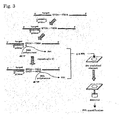
- Fig. 3 is a schematic view illustrating an embodiment of the present invention.
- a first preferable embodiment of the method of analyzing a target nucleic acid fragment according to the present invention is described hereinafter.
- pyrophosphoric acid when whether polymerase elongation reaction proceeds is determined by the detection of pyrophosporic acid which is produced in the polymerse elongation reaction, pyrophosphoric acid is enzymatically converted into inorganic phosphorus. Thereafter, for the detection of pyrophosphoric acid, used is a dry analytical method for quantitative assay of inorganic phosphorus which contains a reagent layer comprising xanthosine or inosine, purine nucleoside phosphorylase, xanthine oxidase, peroxidase and a color developer. A preferable embodiment for this case is described hereinafter.
- a plurality of primers complementary with each different site in the target nucleic acid fragment can be used.
- recognition of the target nucleic acid fragment in a plurality of sites results in improvement in specificity in detecting the existence of the target nucleic acid fragment.
- a part of the target nucleic acid fragment is amplified (e.g., PCR)
- a plurality of primers can be designed in accordance with the amplification methods.
- a primer is designed in accordance with a type of nucleotide corresponding to mutation or polymorphisms so as to contain a portion of mutation or polymorphisms of interest.
- the occurrence of mutation or polymorphisms of the target nucleic acid fragment causes difference in the occurrence of hybridization of the primer to the target nucleic acid fragment, and the detection as difference in polymerase elongation reaction eventually becomes feasible.
- difference in recognition of the polymerase reaction site occurs, and this eventually enables the detection as difference in polymerase elongation reaction.
- reverse transcriptase having reverse transcription activity can be used. Further, reverse transcriptase can be used in combination with Taq DNA polymerase.
- Examples of a representative polymerase elongation reaction and an amplification reaction of a subject site of the target nucleic acid fragment involving polymerase elongation reaction are shown below.
- the simplest case is that only one polymerase elongation reaction in the 5' ⁇ 3' direction is carried out using the target nucleic acid fragment as template.
- This polymerase elongation reaction can be carried out under isothermal conditions.
- the amount of pyrophosphoric acid generated as a result of polymerase elongation reaction is in proportion to the initial amount of the target nucleic acid fragment.
- it is a suitable method for quantitatively detecting the existence of the target nucleic acid fragment.
- a target site of the target nucleic acid is preferably amplified by any means utilizing polymerase elongation reaction.
- amplification of the target nucleic acid various methods which have been heretofore developed, can be used.
- the most general and spread method for amplifying the target nucleic acid is polymerase chain reaction (PCR).
- PCR is a method of amplifying a target portion of the target nucleic acid fragment by repeating periodical processes of denaturing (a step of denaturing a nucleic acid fragment from double-strand to single-strand) ⁇ annealing (a step of hybridizing a primer to a nucleic acid fragment denatured into single-strand) ⁇ polymerase (Taq DNA polymerase) elongation reaction ⁇ denaturing, by periodically controlling the increase and decrease in temperature of the reaction solution.
- the target site of the target nucleic acid fragment can be amplified 1,000,000 times as compared to the initial amount.
- the amount of accumulated pyrophosphoric acid generated upon polymerase elongation reaction in the amplification process in PCR becomes large, and thereby the detection becomes easy.
- a cycling assay method using exonuclease described in Japanese Patent Publication Laying-Open No. 5-130870 is a method for amplifying a target site of the target nucleic acid fragment utilizing polymerase elongation.
- a primer is decomposed from a reverse direction by performing polymerase elongation reaction starting from a primer specifically hybridized with a target site of the target nucleic acid fragment, and allowing 5' ⁇ 3' exonuclease to act.
- a new primer is hybridized, and elongation reaction by DNA polymerase proceeds again.
- This elongation reaction by polymerase and the decomposition reaction by exonuclease for removing the previously elongated strand are successively and periodically repeated.
- the elongation reaction by polymerase and the decomposition reaction by exonuclease can be carried out under isothermal conditions.
- the amount of accumulated pyrophosphoric acid generated in polymerase elongation reaction repeated in this cycling assay method becomes large, and the detection becomes easy.
- the LAMP method is a recently developed method for amplifying a target site of the target nucleic acid fragment. This method is carried out by using at least 4 types of primers, which complimentarily recognize at least 6 specific sites of the target nucleic acid fragment, and strand displacement-type Bst DNA polymerase, which has no nuclease activity in the 5' ⁇ 3' direction and which catalyzes elongation reaction while allowing the double-strand DNA on the template to be released as single-strand DNA.
- a target site of the target nucleic acid fragment is amplified as a special structure under isothermal conditions.
- the amplification efficiency of the LAMP method is high, and the amount of accumulated pyrophosphoric acid generated upon polymerase elongation reaction is very large, and the detection becomes easy.
- elongation reaction can be carried out by using reverse transcriptase having reverse transcription activity and using the RNA strand as template.
- RT-PCR can be utilized where reverse transcriptase is used in combination with Taq DNA polymerase, and reverse transcription (RT) reaction is carried out, followed by PCR. Detection of pyrophosphoric acid generated in the RT reaction or RT-PCR reaction enables the detection of the existence of the RNA fragment of the target nucleic acid fragment. This method is effective when the existence of RNA viruses is detected.
- a method for detecting pyrophosphoric acid suitable for the present invention is a method represented by formula 2 or 3.
- pyrophosphoric acid (PPi) is converted into inorganic phosphate (Pi) with the aid of pyrophosphatase, inorganic phosphate (Pi) is reacted with xanthosine or inosine with the aid of purine nucleoside phosphorylase (PNP), the resulting xanthine or hypoxanthine is oxidated with the aid of xanthine oxidase (XOD) to generate uric acid, and a color developer (a dye precursor) is allowed to develop color with the aid of peroxidase (POD) using hydrogen peroxide (H 2 O 2 ) generated in the oxidation process, followed by colorimetry.
- the result can be detected by colorimetry and, thus, pyrophosphoric acid (PPi) can be detected visually or using a simple colorimetric measuring
- a color developer i.e., a dye precursor
- PNP purine nucleoside phosphorylase
- XOD xanthine oxidase
- POD peroxidase
- a color developer i.e., a dye precursor
- diarylimidazole leuco dye described in Japanese Patent Publication Laying-Open No. 59-193352 ( EP 0122641A )); and a composition (e.g., 4-aminoantipyrines and phenols or naphthols) containing a compound generating a dye by coupling with other compound upon oxidation.
- a composition e.g., 4-aminoantipyrines and phenols or naphthols
- a given amount of liquid sample is spotted onto the surface of a developing layer.
- the liquid sample spread on the developing layer reaches the reagent layer and reacts with the reagent thereon and develops color.
- the dry analytical element is maintained for a suitable period of time at given temperature (for incubation) and a color developing reaction is allowed to thoroughly proceed.
- the reagent layer is irradiated with an illuminating light from, for example, a transparent support side, the amount of reflected light in a specific wavelength region is measured to determine the optical density of reflection, and quantitative analysis is carried out based on the previously determined calibration curve.
- Examples of the dry analytical element to be used in the present invention include a dry analytical element for quantitative assay of pyrophosphoric acid which has a reagent layer comprising a reagent which converts pyrophosphoric acid into inorganic phosphorus, and a group of reagents capable of color reaction depending on the amount of inorganic phosphorus.
- pyrophosphoric acid PPi
- inorganic phosphorus Pi
- the subsequent process that is color reaction depending on the amount of inorganic phosphorus (Pi)
- Quantitative assay method of inorganic phosphorus can be performed using "quantitative assay method of inorganic phosphorus" (and combinations of individual reactions used therefor), described hereinafter, which is known in the field of biochemical inspection.
- Inorganic phosphorus is allowed to react with inosine by purine nucleoside phosphorylase (PNP), and the resultant hypoxanthine is oxidized by xanthine oxidase (XOD) to produce uric acid. During this oxidization process, hydrogen peroxide (H 2 O 2 ) is produced. Using the thus produced hydrogen peroxide, 4-aminoantipyrines (4-AA) and phenols are subjected to oxidization-condensation by peroxidase (POD) to form a quinonimine dye, which is colorimetrically assessed.
- PNP purine nucleoside phosphorylase
- XOD xanthine oxidase
- H 2 O 2 hydrogen peroxide
- 4-aminoantipyrines (4-AA) and phenols are subjected to oxidization-condensation by peroxidase (POD) to form a quinonimine dye, which is colorimetrically assessed.
- Pyruvic acid is oxidized by pyruvic oxidase (POP) in the presence of inorganic phosphorus (Pi), cocarboxylase (TPP), flavin adenine dinucleotide (FAD) and Mg 2+ to produce acetyl acetate.
- POP pyruvic oxidase
- Ti inorganic phosphorus
- TPP cocarboxylase
- FAD flavin adenine dinucleotide
- Mg 2+ Mg 2+
- hydrogen peroxide H 2 O 2
- 4-aminoantipyrines (4-AA) and phenols are subjected to oxidization-condensation by peroxidase (POD) to form a quinonimine dye which is colorimetrically assessed, in the same manner as described in (1-1).
- Examples of these hydrogen donors include N-ethyl-N-sulfopropyl-m-anilidine, N-ethyl-N-sulfopropylaniline, N-ethyl-N-sulfopropyl-3,5-dimethoxyaniline, N-sulfopropyl-3,5-dimethoxyaniline, N-ethyl-N-sulfopropyl-3,5-dimethylaniline, N-ethyl-N-sulfopropyl-m-toluidine, N-ethyl-N-(2-hydroxy-3-sulfopropyl)-m-anilidine, N-ethyl-N-(2-hydroxy-3-sulfopropyl) aniline, N-ethyl-N-(2-hydroxy-3-sulfopropyl)-3,5-dimethoxyaniline, N-(2-hydroxy-3-sulfopropyl)-3,5-dimeth
- Inorganic phosphorus (Pi) is reacted with glycogen with phosphorylase to produce glucose-1-phosphate (G-1-P).
- the produced glucose-1-phosphate is converted into glucose-6-phosphate (G-6-P) with phosphoglucomutase (PGM).
- PGM phosphoglucomutase
- NAD nicotiamide adenine dinucleotide
- G6PDH glucose-6-phosphate dehydrogenase
- Inorganic phosphorus (Pi) is reacted with maltose with maltose phosphorylase (MP) to produce glucose-1-phosphate (G-1-P). Thereafter, the produced glucose-1-phosphate is converted into glucose-6-phosphate (G-6-P) with phosphoglucomutase (PGM) in the same manner as described in (2-1).
- PGM phosphoglucomutase
- NAD glucose-6-phosphate dehydrogenase
- G6PDH glucose-6-phosphate dehydrogenase
- phosphomolybdate methods There are two phosphomolybdate methods. One is a direct method wherein "Phosphomolybdates (H 3 [PO 4 Mo 12 O 36 ])" prepared by complexing inorganic phosphorus (phosphate) and aqueous molybdate ions under acidic condition are directly quantified. The other is a reduction method wherein further to the above direct method, Mo(IV) is reduced to Mo(III) by a reducing agent and molybudenum blue (Mo(III)) is quantified.
- a direct method wherein further to the above direct method, Mo(IV) is reduced to Mo(III) by a reducing agent and molybudenum blue (Mo(III)) is quantified.
- aqueous molybdate ions examples include aluminum molybdate, cadmium molybdate, calcium molybdate, barium molybdate, lithium molybdate, potassium molybdate, sodium molybdate, and ammonium molybdate.
- Representative examples of the reducing agents to be used in the reduction method include 1-amino-2-naphthol-4-sulfonic acid, ammonium ferrous sulfate, ferrous chloride, stannous chloride-hydrazine, p-methylarainophenol sulfate, N,N'-dimethyl-phenylenediamine, ascorbic acid, and malachite green.
- the dry analytical element can be practically constructed as below.
- the scope of the present invention is not limited to these.
- the reagent layer may be constituted by a plurality of different layers.
- a first reagent layer may contain enzyme pyrophosphatase which is required in the pyrophosphatase reaction represented by formula 2 or 3, and substrate xanthosine or substrate inosine and enzyme PNP which are required in the PNP reaction
- a second reagent layer may contain enzyme XOD which is required in the XOD reaction represented by formula 2 or 3
- a third reagent layer may contain enzyme POD which is required in the POD reaction represented by formula 2 or 3, and a coloring dye (dye precursor).
- two reagent layers are provided- On the first reagent layer, the pyrophosphatase reaction and the PNP reaction may be proceeded, and the XOD reaction and the POD reaction may be proceeded on the second reagent layer.
- the pyrophosphatase reaction, the PNP reaction and the XOD reaction may be proceeded on the first reagent layer, and the POD reaction may be proceeded on the second reagent layer.
- a water absorption layer may be provided between a support and a reagent layer or detection layer.
- a filter layer may be provided between each layer.
- a developing layer may be provided on the reagent layer and an adhesive layer may be provided therebetween.
- any of light-nontransmissive (opaque), light-semitransmissive (translucent), or light-transmissive (transparent) support can be used.
- a light-transmissive and water-impervious support is preferred.
- Preferable materials for a light-transmissive and water-impervious support are polyethylene terephthalate or polystyrene.
- an undercoating layer is generally provided or hydrophilization is carried out.
- the porous medium may be a fibrous or nonfibrous substance.
- Fibrous substances used herein include, for example, filter paper, non-woven fabric, textile fabric (e.g. plain-woven fabric), knitted fabric (e.g., tricot knitted fabric), and glass fiber filter paper.
- Nonfibrous substances may be any of a membrane filter comprising cellulose acetate etc., described in Japanese Patent Publication Laying-Open No. 49-53888 , or a particulate structure having mutually interconnected spaces comprising fine particles of inorganic substances or organic substances described in, for example, Japanese Patent Publication Laying-Open No. 49-53888 , Japanese Patent Publication Laying-Open No. 55-90859 ( U.S.
- Patent. No. 4,258,001 Japanese Patent Publication Laying-Open No. 58-70163 ( U.S. Patent. No. 4,486,537 ).
- a porous layer may be a developing layer having so-called measuring action, which spreads liquid in an area substantially in proportion to the amount of the liquid to be supplied.
- a developing layer is textile fabric, knitted fabric, and the like. Textile fabrics and the like may be subjected to glow discharge treatment as described in Japanese Patent Publication Laying-Open No. 57-66359 .
- a developing layer may comprise hydrophilic polymers or surfactants as described in Japanese Patent Publication Laying-Open No. 60-222770 ( EP 0162301A ), Japanese Patent Publication Laying-Open No. 63-219397 (German Publication DE 3717913A ), Japanese Patent Publication Laying-Open No. 63-112999 ( DE 3717913A ), and Japanese Patent Publication Laying-Open No. 62-182652 ( DE 3717913A ) in order to regulate a developing area, a developing speed and the like.
- a method is useful where the reagent of the present invention is previously impregnated into or coated on a porous membrane etc., comprising paper, fabric or polymer, followed by adhesion onto another water-pervious layer provided on a support (e.g., a detection layer) by the method as described in Japanese Patent Publication Laying-Open No. 55-1645356 .
- the thickness of the reagent layer thus prepared is not particularly limited.
- the thickness is suitably in the range of about 1 ⁇ m to 50 ⁇ m, preferably in the range of 2 ⁇ m to 30 ⁇ m.
- the thickness can be significantly varied in the range of several tens of to several hundred ⁇ m.
- hydrophilic polymers which can be used include: gelatin and a derivative thereof (e.g., phthalated gelatin); a cellulose derivative (e.g., hydroxyethyl cellulose); agarose, sodium arginate; an acrylamide copolymer or a methacrylamide copolymer (e.g., a copolymer of acrylamide or methacrylamide and various vinyl monomers); polyhydroxyethyl methacrylate; polyvinyl alcohol; polyvinyl pyrrolidone; sodium polyacrylate; and a copolymer of acrylic acid and various vinyl monomers.
- gelatin and a derivative thereof e.g., phthalated gelatin
- a cellulose derivative e.g., hydroxyethyl cellulose
- agarose sodium arginate
- an acrylamide copolymer or a methacrylamide copolymer e.g., a copolymer of acrylamide or methacrylamide and various vinyl monomers
- a reagent layer composed of hydrophilic polymer binders can be provided by coating an aqueous solution or water dispersion containing the reagent composition of the present invention and hydrophilic polymers on the support or another layer such as a detection layer followed by drying the coating in accordance with the methods described in the specifications of Japanese Patent Examined Publication No. 53-21677 ( U.S. Patent No. 3,992,158 ), Japanese Patent Publication Laying-Open No. 55-164356 ( U.S. Patent. No. 4,292,272 ), Japanese Patent Publication Laying-Open No. 54-101398 ( U.S. Patent. No. 4,132,528 ).
- the thickness of the reagent layer comprising hydrophilic polymers as binders is about 2 ⁇ m to about 50 ⁇ m, preferably about 4 ⁇ m to about ⁇ m on a dry basis, and the coverage is about 2 g/m 2 to about 50 g/m 2 , preferably about 4 g/m 2 to about 30 g/m 2 .
- the reagent layer can further comprise an enzyme activator, a coenzyme, a surfactant, a pH buffer composition, an impalpable powder, an antioxidant, and various additives comprising organic or inorganic substances in addition to the reagent composition represented by formula 2 or 3 in order to improve coating properties and other various properties of diffusible compounds such as diffusibility, reactivity, and storage properties.
- buffers which can be contained in the reagent layer include pH buffer systems described in " Kagaku Binran Kiso (Handbook on Chemistry, Basic),” The Chemical Society of Japan (ed.), Maruzen Co., Ltd. (1996), p.1312-1320 , " Data for Biochemical Research, Second Edition, R. M. C. Dawson et al.
- pH buffer systems include a buffer containing borate; a buffer containing citric acid or citrate; a buffer containing glycine, a buffer containing bicine; a buffer containing HEPES; and Good's buffers such as a buffer containing MES.
- a buffer containing phosphate cannot be used for a dry analytical element for detecting pyrophosphoric acid.
- the dry analytical element for quantifying pyrophosphoric acid which can be used in the present invention can be prepared in accordance with a known method disclosed in the above-described various patent specifications.
- the dry analytical element for quantifying pyrophosphoric acid is cut into small fragments, such as, an about 5 mm to about 30 mm-square or a circle having substantially the same size, accommodated in the slide frame described in, for example, Japanese Patent Examined Publication No. 57-283331 ( U.S. Patent. No. 4,169,751 ), Japanese Utility Model Publication Laying-Open No. 56-142454 ( U.S. Patent. No. 4,387,990 ), Japanese Patent Publication Laying-Open No. 57-63452 , Japanese Utility Model Publication Laying-Open No.
- the analytical element can be accommodated as a long tape in a cassette or magazine, as small pieces accommodated in a container having an opening, as small pieces applied onto or accommodated in an open card, or as small pieces cut to be used in that state.
- the dry analytical element for quantifying pyrophosphoric acid which can be used in the present invention can quantitatively detect pyrophosphoric acid which is a test substance in a liquid sample, by operations similar to that described in the above-described patent specifications and the like. For example, about 2 ⁇ L to about 30 ⁇ L, preferably 4 ⁇ L to 15 ⁇ L of aqueous liquid sample solution is spotted on the reagent layer. The spotted analytical element is incubated at constant temperature of about 20°C to about 45°C; preferably about 30°C to about 40°C for 1 to 10 minutes.
- Coloring or discoloration in the analytical element is measured by the reflection from the light-transmissive support side, and the amount of pyrophosphoric acid in the specimen can be determined based on the principle of colorimetry using the previously prepared calibration curve. Quantitative analysis can be carried out with high accuracy by keeping the amount of liquid sample to be spotted, the incubation time, and the temperate at constant levels..
- Quantitative analysis can be carried out with high accuracy in a very simple operation using chemical analyzers described in, for example, Japanese Patent Publication Laying-Open No. 60-125543 , Japanese Patent Publication Laying-Open No. 60-220862 , Japanese Patent Publication Laying-Open No. 61-294367 , and Japanese Patent Publication Laying-Open No. 58-161867 ( U.S. Patent. No.4,424,191 ).
- Semiquantitative measurement may be carried out by visually judging the level of coloring depending on the purpose and accuracy needed.
- the dry analytical element for quantifying pyrophosphoric acid which can be used in the present invention is stored and kept in a dry state before analysis, it is not necessary that a reagent is prepared for each use, and stability of the reagent is generally higher in a dry state. Thus, in terms of simplicity and swiftness, it is better than a so-called wet process, which requires the preparation of the reagent solution for each use. It is also excellent as an examination method because highly accurate examination can be swiftly carried out with a very small amount of liquid sample.
- the dry analytical element for quantifying inorganic phosphorus which can be used in the second aspect of the present invention can be prepared by removing pyrophosphatase from the reagent layer in the aforementioned dry analytical element for quantifying pyrophosphoric acid.
- the dry analytical element described in Japanese Patent Publication Laying-Open No. 7-197 can also be used.
- the dry analytical element for quantifying inorganic phosphorus is similar to the aforementioned dry analytical element for quantifying pyrophosphoric acid in its layer construction, method of production, and method of application, with the exception that the reagent layer does not comprise pyrophosphatase.
- the form of the kit may be a cartridge comprising: an opening capable of supplying a liquid containing the target nucleic acid fragment, at least a part of its nucleotide sequence being known; at least one primer complementary with a part of the target nucleic acid fragment; at least one deoxynucleoside triphosphate (dNTP), at least one reaction cell unit capable of retaining at least one polymerase; a detection unit capable of retaining a dry analytical element for quantifying pyrophosphoric acid; and a canaliculus or groove capable of connecting the opening, the reaction cell unit, and the detection unit and transferring liquid among them
- kit in the form of a cartridge was shown in Fig. 4 .
- a sample liquid containing the target nucleic acid can be supplied from opening 31. Opening 31 is connected to reaction cell 32 through canaliculus 41.
- Reaction cell 32 maintains in advance at least one primer 81 complementary with a part of the target nucleic acid fragment, at least one deoxynucleoside triphosphate (dNTP) 82, and at least one polymerase 83.
- Reaction cell 32 is further connected to detection unit 33 through canaliculus 42. Detection unit 33 maintains in advance dry analytical element 51.
- dNTP deoxynucleoside triphosphate
- the sample solution in which polymerase elongation reaction has proceeded in reaction cell 32, is transferred through canaliculus 42, supplied on dry analytical element 51 for quantifying pyrophosphoric acid in detection unit 33, and detects pyrophosphoric acid generated by polymerase elongation reaction.
- liquid transference between opening 31 and reaction cell 32 and between reaction cell 32 and detection unit 33 can be carried out by centrifuge force, electrophoresis, electroosmosis, or the like.
- reaction cell 32, canalic-pluses 41 and 42, and detection unit 33 are hermetically sealed with base body 21 and lid 22.
- kit 10 in the form of cartridge as shown in Fig. 4 is used, as shown in Fig. 5 , an apparatus which comprises temperature control units 61 and 62 of reaction cell 32 and detection unit 33 and detection units 71 and 72 capable of detecting coloring or color change in dry analytical element 51 for quantifying pyrophosphoric acid by reflection light, is preferably used in combination.
- the kit in the form of cartridge which can be used in the present invention is not limited to those shown in Fig. 4 .
- Reagents required in polymerase elongation reaction may be respectively retained in separate spaces. In that case, each reagent may be transferred to a reaction cell at the time of reaction. There may be a plurality of reaction cells.
- pyrophosphoric acid generated in polymerase elongation reaction is detected by enzymatically converting pyrophosphoric acid into inorganic phosphoric acid, followed by the use of dry analytical element for quantifying inorganic phosphorus, at least one primer complementary with a part of the target nucleic acid fragment, at least one deoxynucleoside triphosphate (dNTP), and at least one polymerase are previously retained in the first reaction cell, and polymerase elongation reaction is carried out in the first reaction cell.
- dNTP deoxynucleoside triphosphate
- reaction solution generated in the first reaction cell is transferred to the second reaction cell, which is connected to the first reaction cell through a canaliculus and already holding pyrophosphatase, pyrophosphoric acid generated in polymerase elongation reaction in the first reaction cell is converted into inorganic phosphoric acid in the second reaction cell.
- the reaction solution in the second reaction cell is then transferred to the detection unit, which is connected to the second reaction cell through a canaliculus and previously retains a dry analytical element for quantifying inorganic phosphorus, thereby detecting inorganic phosphorus.
- a set of "opening - canaliculus - reaction cell - canaliculus - detection unit" is arranged in parallel on one cartridge, or plural sets thereof can be arranged in concentric circles in the radius direction.
- the nucleotide sequence of at least one primer complementary with a part of the target nucleic acid fragment retained in the reaction cell can be modified in accordance with the type of the targeted nucleic acid to provide a kit capable of simultaneously detecting a plurality of target nucleic acids.
- the present invention provides an analytical apparatus for conducting nucleic acid analyses as described above.
- the analytical apparatus comprises:
- the means for extracting and purifying a nucleic acid comprises the unit for isolation and purification of nucleic acid as described hereinabove, and further comprises a space for setting a sample liquid, a space for setting the unit for isolation and purification of nucleic acid, means for incubating the sample at a constant temperature (e.g., 37°C), and means for sucking and discharging the sample liquid or treated liquid.
- a constant temperature e.g. 37°C
- the reaction means for conducting polymerase elongation reaction is means which allows nucleic acid synthesis reactions such as PCR to be conducted, and it is generally composed of a reaction container for conducting the reaction and dispensing means for adding reagents necessary for the reaction into the reaction container. In addition, it may have temperature adjusting means (e.g., a thermal cycler or an incubator) for adjusting the temperature inside the reaction container.
- temperature adjusting means e.g., a thermal cycler or an incubator
- a nucleic acid fragment comprising a target nucleic acid fragment, which is purified by the unit for isolation and purification of nucleic acid, at least one primer complementary to a portion of the target nucleic acid fragment, at least one deoxynucleoside triphosphate, and at least one polymerase, are added to the reaction container, and polymerase elongation reaction is performed with using the target nucleic acid fragment as a template and using the primer 3' terminal as an initiation site.
- a dry analytical element for quantitative assay of pyrophosphoric acid or a dry analytical element for quantitative assay of inorganic phosphorus, as described hereinabove can be used. Further to these, means for incubating the dry analytical element at a constant temperature and a reflection photometer for measuring the coloring of the dry analytical element can also be provided. Furthermore, as means for detecting whether a polymerase elongation reaction product is hybridized with other nucleic acid, any means which can commonly be used for the detection of presence or absence of hybridization can be utilized.
- the analytical apparatus (particularly in the case of using analytical element for quantitative assay of pyrophosphoric acid) of the present invention can use all of (or some of) the nucleic acid aqueous solution which has been isolated and purified for the following process of polymerase elongation reaction, and thereafter can use all of (or some of) the reaction solution after polymerase elongation reaction for the following detection process by the analytical element for quantitative assay of pyrophosphoric acid (that is, the reaction solution after polymerase elongation reaction can be dispensed as a spot on an analytical element for quantitative assay of pyrophosphoric acid), and therefore the apparatus is very suitable for system automation.
- a container for a unit for isolation and purification of nucleic acid which has with a portion for containing a solid phase for nucleic acid adsorption having an inner diameter of 7 mm and a thickness of 2 mm, was made of high-impact polystyrene
- nucleic acid purification solid phases and comparative solid phases were prepared.
- materials to be surface-saponified were soaked in 0.02 N to 2 N sodium hydroxide aqueous solution for 20 minutes.
- the surface saponification ratio are varied depending on the concentration of sodium hydroxide.
- These solid phases were each contained into the solid phase accommodation portion of the container for unit for isolation and purification of nucleic acid in an amount as indicated in Table 1, thereby preparing a unit for isolation and purification of nucleic acid.
- Table 1 Properties of prepared solid phases solid phases A, B, C, F, G, H, I are for comparative purpose
- a buffer solution for nucleic acid adsorption and a washing buffer solution were prepared according to the formulation indicated in Table 2.
- Table 2 Formulation of adsorption buffer solution for nucleic acid purification and washing buffer solution 1.
- Buffer solution for purifying nucleic acids Component Amount guanidine hydrochloride (Life Technologies, Inc.) 382 g Tris (Life Technologies, Inc.) 12.1 g Triton-X100 (ICN) 10 g Twice Distilled water 1000 ml 2.
- Buffer solution for washing nucleic acids Component 10 mM Tris-HCl 70% ethanol
- the pipette tip was inserted into 1 ml of the buffer solution for washing nucleic acid, and the solution was sucked and discharged to wash the inside of the unit for isolation and purification of nucleic acid. After washing, the pipette tip was inserted into 200 ⁇ l of purified distilled water, and the distilled water was sucked and discharged. Then, the discharged solution was collected.
- the absorbance of the collected discharged solution was measured to quantify the yield and purity of nucleic acids.
- the yield was quantified by measuring the absorbance at a wavelength of 260 nm, and the purity of nucleic acids was determined based on the ratio between the absorbance at 260 nm and at 280 nm. A ratio of 1.8 or more indicates good purity.
- Table 3 Used solid phases, and yield and purity of nucleic acid (solid phases A, B, C, F, G, H, I are for comparative purpose) Solid phase Material Surface saponification ratio No.
- Example 2 Purification of nucleic acid from whole blood sample using 100% surface-saponified porous cellulose triacetate membrane
- nucleic acids As a solid phase for adsorbing nucleic acids, 100% surface-saponified porous cellulose triacetate membrane (Fuji Photo Film Co., Ltd.)(solid phase E of Example 1) was used, and nucleic acids were purified from a whole blood sample in the same manner as Example 1. The ODs were measured on the whole blood sample before purification (OD was measured after 5-time dilution) and after purification. The results are shown in Fig. 6 . From the results of Fig. 6 , it is understood that components other than nucleic acids were completely removed by the isolation and purification method of the present invention.
- the nucleic acids which were purified in Example 2 were amplified with polymerase chain reaction.
- Human DNA manufactured by CLONTECH was used as a positive control.
- the reaction solutions for PCR were purified water (36.5 ⁇ l), 10 ⁇ PCR buffer (5 ⁇ l), 2.5mM of dNTP (4 ⁇ l), Taq FP (0.5 ⁇ l), primers (2 ⁇ l), and sample (nucleic acid) (2 ⁇ l).
- Fig. 7 shows the results of electrophoresis of the reaction products of PCR. 100 bp marker (INVITROGEN) was used. From the results of Fig. 7 , it is confirmed that desired nucleic acids can be amplified by PCR using nucleic acids which were isolated and purified by the method of the present invention.
- Example 4 Detection of Pseudomonas syringae in human whole blood by nucleic acid extraction/amplification (PCR)/detection (dry analytical element for quantitative assay of pyrophosphoric acid) (model experiment of an examination of pseudomonas sepsis)
- Pseudomonas syringae was cultured overnight in LB medium (Luria-Bertani medium), and the culture solution was diluted with PBS so as to prepare solutions having different concentrations. These solutions were added to human whole blood which was prepared by EDTA blood collection, to prepare 6 samples of human whole blood having cell numbers of 0, 5 ⁇ 10 5 , 5 ⁇ 10 6 , 2.5 ⁇ 10 6 , 5 ⁇ 10 7 , 1 ⁇ 10 8 per 1 mL respectively. The numbers of cells were assessed using a spectrophotometer.
- aqueous solution having a composition (a) as described in Table 4 was applied onto a smooth film sheet (a support) made of colorless transparent polyethylene terephthalate (PET) having a thickness of 180 ⁇ m, which was provided with a gelatin under-coating- The application was conducted so that after drying, a reagent layer with the following respective components was obtained.
- a smooth film sheet made of colorless transparent polyethylene terephthalate (PET) having a thickness of 180 ⁇ m
- Table 4 Composition (a) of aqueous solution for reagent layer Gelatin 18.8 g/m 2 p- Nonylphenoxy polyxydol 1.5 g/m 2 (containing 10 glycidol units on average) (C 9 H 19 -Ph-O-(CH 2 CH(OH)-CH 2 -O) 10 H) Xanthosine 1.96 g/m 2 Peroxidase 15000 IU/m 2 Xanthine oxidase 13600 IU/m 2 Purine nucleoside phosphorylase, 3400 IU/m 2 Leuco pigment 0.28 g/m 2 (2-(3,5-dimethoxy-4-hydroxyphenyl)-4-phenethyl-5-(4-dimethylaminophenyl)imidazol) Water 136 g/m 2 (Adjusted to have a pH of 6.8 with a dilute NaOH solution)
- composition (b) of aqueous solution for adhesive layer Gelatin 3.1 g/m 2 p- Nonylphenoxy polyxydol 0.25 g/m 2 (containing 10 glycidol units on average) (C 9 H 19 -Ph-O-(CH 2 CH(OH)-CH 2 -O) 10 H) Water 59 g/m 2
- a porous developing layer was provided by supplying water over the entire surface of the adhesive layer at a rate of 30 g/m 2 to swell the gelatin layer, followed by laminating a broad fabric of pure polyester by uniformly and slightly pressing the fabric onto the adhesive layer.
- Table 6 Composition (c) of aqueous solution for developing layer HEPES 2.3 g/m 2 Sucrose 5.0 g/m 2 Hydroxypropylmethyl Cellulose 0.04 g/m 2 (containing 19% to 24% of methoxy group and 4% to 12% of hydroxypropoxy group) Pyrophosphatase 14000 IU/ m 2 Water 98.6 g/m 2 (Adjusted to have a pH of 7.2 with a dilute NaOH solution)
- nucleic acids were extracted and purified from each sample in the same manner as described in Example 2, thereby obtaining nucleic acid solutions.
- the nucleic acid amounts (estimated amount by a spectrophotometer) obtained from the 6 samples of human whole blood were 20 to 30 ng/ ⁇ l.
- These obtained nucleic acid aqueous solutions were mixed aqueous solutions of human genome nucleic acids and the added Pseudomonas genome nucleic acids, and the most portions are human nucleic acids.
- PCR amplification was performed under the following conditions.
- primers having the following sequences specific (ice nucleation protein (InaK) N-terminal) to Pseudomonas genome nucleic acid were used.
- primer (upper) 5'-GCGATGCTGTAATGACTCTCGACAAGC-3' (SEQ NO: 7)
- primer (lower) 5'-GGTCTGCAAATTCTGCGGCGTCGTC-3' (SEQ ID NO: 8)
- reaction solution having the following composition to perform PCR amplification.
- ⁇ composition of reaction solution > 10 ⁇ PCR buffer 5 ⁇ L 2.5 mM dNTP 4 ⁇ L 20 ⁇ M primer (upper) 1 ⁇ L 20 ⁇ M primer (lower) 1 ⁇ L Pyrobest 0.25 ⁇ L Nucleic acid sample solution obtained in process (3) 5 ⁇ L Purified water 33.75 ⁇ L
- the optical density of reflecting light (OD R ) corresponding to the amount of Pseudomonas syringae present in human whole blood can be obtained by performing PCR with using a nucleic acid sample solution containing a target nucleic acid fragment which was obtained from human whole blood containing Pseudomonas syringae by the method for isolation and purification of nucleic acid according to the present invention and using a set of primers having a sequence specific to Pseudomonas genome nucleic acid; and using the solution obtained by the PCR amplification to measure the produced pyrophosphoric acid in terms of the optical density of reflecting light (OD R ) with a dry analytical element for quantitative assay of pyrophosphoric acid.
- nucleic acids with a high purity from a sample solution containing nucleic acids by the method for isolation and purification of nucleic acid according to the present invention which uses a solid phase which has excellent isolation performance, good washing efficiency, easy workability, and can be mass produced with substantially identical isolation performance. Further, the use of the unit for isolation and purification of nucleic acid of the present invention enables easy operation.
Landscapes
- Chemical & Material Sciences (AREA)
- Health & Medical Sciences (AREA)
- Engineering & Computer Science (AREA)
- Life Sciences & Earth Sciences (AREA)
- Organic Chemistry (AREA)
- Genetics & Genomics (AREA)
- Biomedical Technology (AREA)
- Zoology (AREA)
- Wood Science & Technology (AREA)
- Bioinformatics & Cheminformatics (AREA)
- Biotechnology (AREA)
- General Engineering & Computer Science (AREA)
- Molecular Biology (AREA)
- General Health & Medical Sciences (AREA)
- Biophysics (AREA)
- Microbiology (AREA)
- Physics & Mathematics (AREA)
- Analytical Chemistry (AREA)
- Biochemistry (AREA)
- Plant Pathology (AREA)
- Crystallography & Structural Chemistry (AREA)
- Proteomics, Peptides & Aminoacids (AREA)
- Chemical Kinetics & Catalysis (AREA)
- Immunology (AREA)
- Saccharide Compounds (AREA)
- Apparatus Associated With Microorganisms And Enzymes (AREA)
- Measuring Or Testing Involving Enzymes Or Micro-Organisms (AREA)
Claims (30)
- Procédé pour isoler et purifier un acide nucléique, comprenant les étapes de :(a) adsorber un acide nucléique sur une phase solide qui est une membrane poreuse de triacétate de cellulose saponifiée en surface ayant un taux de saponification de la surface de 50 % ou 100 %, qui est présente en une pièce et(b) désorber l'acide nucléique de la phase solide.
- Procédé pour isoler et purifier un acide nucléique selon la revendication 1 où le triacétate de cellulose est appliqué en revêtement sur des billes.
- Procédé pour isoler et purifier un acide nucléique selon l'une des revendications 1 et 2 où l'acide nucléique est dans une solution d'échantillon.
- Procédé pour isoler et purifier un acide nucléique selon la revendication 3 où la solution d'échantillon est préparée par addition d'un solvant organique aqueux à une solution obtenue par traitement d'un échantillon contenant une cellule ou un virus avec un réactif de solubilisation d'acide nucléique.
- Procédé pour isoler et purifier un acide nucléique selon la revendication 4 où le réactif de solubilisation d'acide nucléique comprend un sel de guanidine, un tensioactif et une protéase.
- Procédé pour isoler et purifier un acide nucléique selon l'une des revendications 1 à 5 comprenant l'étape supplémentaire de lavage de la phase solide avec un tampon de lavage d'acide nucléique entre les étapes (a) et (b) ; et où l'étape (b) est réalisée en utilisant une solution capable de désorber l'acide nucléique de la phase solide.
- Procédé pour isoler et purifier un acide nucléique selon la revendication 6 où le tampon de lavage d'acide nucléique contient du méthanol, de l'éthanol, de l'isopropanol ou du n-propanol en une quantité de 20 à 100 % en poids.
- Procédé pour isoler et purifier un acide nucléique selon l'une des revendications 6 et 7 où la solution capable de désorber l'acide nucléique de la phase solide a une concentration de sels de 0,5 M ou moins.
- Procédé pour isoler et purifier un acide nucléique selon l'une des revendications 1 à 8 où l'adsorption et la désorption de l'acide nucléique sont accomplies au moyen d'une unité pour isoler et purifier un acide nucléique comprenant un récipient qui a au moins deux ouvertures et qui contient la phase solide qui est une membrane poreuse de triacétate de cellulose saponifiée en surface ayant un taux de saponification de la surface de 50 % ou 100 %, qui est présente en une pièce.
- Procédé pour isoler et purifier un acide nucléique selon l'une des revendications 1 à 8 où l'adsorption et la désorption de l'acide nucléique sont réalisées au moyen d'une unité pour isoler et purifier un acide nucléique comprenant :(a) une phase solide qui est une membrane poreuse de triacétate de cellulose saponifiée en surface et ayant un taux de saponification de la surface de 50 % ou 100 %, qui est présente en une pièce ;(b) un récipient ayant au moins deux ouvertures et contenant la phase solide ; et(c) un générateur de pression différentielle relié à une ouverture du récipient.
- Procédé pour isoler et purifier un acide nucléique selon la revendication 10 comprenant les étapes de :(a) préparer une solution d'échantillon contenant des acides nucléiques au moyen d'un échantillon, et insérer une ouverture de l'unité pour isoler et purifier un acide nucléique dans la solution d'échantillon contenant des acides nucléiques ;(b) créer des conditions de pression réduite dans un récipient par un générateur de pression différentielle relié à une autre ouverture de l'unité pour isoler et purifier un acide nucléique, aspirer la solution d'échantillon contenant des acides nucléiques et permettre à la solution d'échantillon de venir en contact avec une phase solide qui est une membrane poreuse de triacétate de cellulose saponifiée en surface ayant un taux de saponification de la surface de 50 % ou 100 %, qui est présente en une pièce ;(c) créer des conditions de pression accrue dans le récipient par le générateur de pression différentielle relié à ladite autre ouverture de l'unité pour isoler et purifier un acide nucléique, et évacuer du récipient la solution d'échantillon contenant des acides nucléiques aspirée ;(d) insérer ladite une ouverture de l'unité pour isoler et purifier un acide nucléique dans une solution de tampon de lavage d'acide nucléique ;(e) créer des conditions de pression réduite dans le récipient par le générateur de pression différentielle relié à ladite autre ouverture de l'unité pour isoler et purifier un acide nucléique, aspirer la solution de tampon de lavage d'acide nucléique et permettre à la solution de tampon de venir en contact avec la phase solide ;(f) créer des conditions de pression accrue dans le récipient par le générateur de pression différentielle relié à ladite autre ouverture de l'unité pour isoler et purifier un acide nucléique, et évacuer du récipient la solution de tampon de lavage d'acide nucléique aspirée ;(g) insérer la une ouverture de l'unité pour isoler et purifier un acide nucléique dans une solution capable de désorber des acides nucléiques de la phase solide ;(h) créer des conditions de pression réduite dans le récipient par le générateur de pression différentielle relié à ladite autre ouverture de l'unité pour isoler et purifier un acide nucléique, aspirer la solution capable de désorber des acides nucléiques de la phase solide, et permettre à la solution de venir en contact avec la phase solide ; et(i) créer des conditions de pression accrue dans le récipient par le générateur de pression différentielle relié à ladite autre ouverture de l'unité pour isoler et purifier un acide nucléique, et évacuer du récipient la solution capable de désorber des acides nucléiques de la phase solide.
- Procédé pour isoler et purifier un acide nucléique selon la revendication 10 comprenant les étapes de :(a) préparer une solution d'échantillon contenant des acides nucléiques à partir d'un échantillon et injecter la solution d'échantillon contenant des acides nucléiques dans une ouverture d'une unité pour isoler et purifier un acide nucléique ;(b) créer des conditions de pression accrue dans le récipient par un générateur de pression différentielle relié à ladite une ouverture de l'unité pour isoler et purifier un acide nucléique, évacuer de l'autre ouverture la solution d'échantillon contenant des acides nucléiques injectée, et permettre ainsi à la solution d'échantillon de venir en contact avec une phase solide qui est une membrane poreuse de triacétate de cellulose saponifiée en surface ayant un taux de saponification de la surface de 50 % ou 100 %, qui est présente en une pièce ;(c) injecter un tampon de lavage d'acide nucléique dans ladite une ouverture de l'unité pour isoler et purifier un acide nucléique ;(d) créer des conditions de pression accrue dans le récipient par le générateur de pression différentielle relié à ladite une ouverture de l'unité pour isoler et purifier un acide nucléique, évacuer de ladite autre ouverture le tampon de lavage d'acide nucléique injecté et permettre ainsi au tampon de venir en contact avec la phase solide ;(e) injecter une solution capable de désorber des acides nucléiques de la phase solide dans la une ouverture de l'unité pour isoler et purifier un acide nucléique ;(f) créer des conditions de pression accrue dans le récipient par le générateur de pression différentielle relié à ladite une ouverture de l'unité pour isoler et purifier un acide nucléique, évacuer de ladite autre ouverture la solution capable de désorber des acides nucléiques injectée, et désorber ainsi les acides nucléiques de la phase solide et évacuer du récipient les acides nucléiques désorbés.
- Unité pour isoler et purifier un acide nucléique comprenant un récipient qui a au moins deux ouvertures et qui contient une phase solide qui est une membrane poreuse de triacétate de cellulose saponifiée en surface ayant un taux de saponification de la surface de 50 % ou 100 %, qui est présente en une pièce.
- Unité pour isoler et purifier un acide nucléique selon la revendication 13 comprenant en outre un générateur de pression différentielle relié à une ouverture du récipient.
- Unité pour isoler et purifier un acide nucléique selon la revendication 14 où le générateur de pression différentielle est relié de manière amovible à une ouverture du récipient.
- Unité pour isoler et purifier un acide nucléique selon la revendication 14 ou 15 où le générateur de pression différentielle est un injecteur, une pipette ou une pompe.
- Procédé pour isoler et purifier un acide nucléique selon la revendication 2 où les billes ont une membrane de triacétate de cellulose sur une surface de celles-ci, où la membrane de triacétate de cellulose a un groupe hydroxyle incorporé dans celle-ci par saponification de la surface, où le taux de saponification de la surface est de 50 % ou 100 %, qui est présente en une pièce.
- Procédé pour analyser un acide nucléique comprenant les étapes de :(1) isoler et purifier un fragment d'acide nucléique contenant un fragment d'acide nucléique cible selon le procédé de la revendication 1 ;(2) permettre au fragment d'acide nucléique cible, à au moins une amorce complémentaire d'une partie du fragment d'acide nucléique cible, à au moins un désoxynucléoside triphosphate et à au moins une polymérase de réagir entre eux, et conduire une réaction d'élongation par polymérase en utilisant le fragment d'acide nucléique cible comme matrice et en utilisant l'extrémité 3' de l'amorce comme site d'initiation ; et(3) détecter si une réaction d'élongation par polymérase se déroule, ou si un produit de réaction d'élongation par polymérase s'hybride avec un autre acide nucléique.
- Procédé pour analyser un acide nucléique selon la revendication 18 où le fait qu'une réaction d'élongation par polymérase se déroule est détecté par détection de l'acide pyrophosphorique qui est produit dans la réaction d'élongation par polymérase.
- Procédé pour analyser un acide nucléique selon la revendication 19 où l'acide pyrophosphorique est détecté par un procédé colorimétrique.
- Procédé pour analyser un acide nucléique selon l'une des revendications 19 et 20 où l'acide pyrophosphorique est détecté par un élément analytique sec.
- Procédé pour analyser un acide nucléique selon la revendication 21 où l'élément analytique sec est un élément analytique sec pour un test quantitatif de l'acide pyrophosphorique comprenant une couche de réactifs qui contient un réactif capable de convertir l'acide pyrophosphorique en phosphore inorganique et un groupe de réactifs qui entraînent une réaction colorée selon la quantité de phosphore inorganique.
- Procédé pour analyser un acide nucléique selon la revendication 22 où l'élément analytique sec pour le test quantitatif de l'acide pyrophosphorique comprend une couche de réactifs qui contient de la xanthosine ou de l'inosine, de la pyrophosphatase, de la purine nucléoside phosphorylase, de la xanthine oxydase, de la peroxydase et un développateur chromogène.
- Procédé pour analyser un acide nucléique selon l'une des revendications 18 à 23 où la polymérase est une polymérase choisie dans le groupe consistant en l'ADN polymérase I, le fragment de Klenow de l'ADN polymérase I, l'ADN polymérase Bst et la transcriptase inverse.
- Procédé pour analyser un acide nucléique selon la revendication 19 où, après la conversion enzymatique de l'acide pyrophosphorique en phosphore inorganique, l'acide pyrophosphorique est détecté au moyen d'un élément analytique sec pour le test quantitatif du phosphore inorganique qui a une couche de réactifs comprenant de la xanthosine ou de l'inosine, de la purine nucléoside phosphorylase, de la xanthine oxydase, de la peroxydase et un développateur chromogène.
- Procédé pour analyser un acide nucléique selon la revendication 25 où l'enzyme pour convertir l'acide pyrophosphique en phosphore inorganique est la pyrophosphatase.
- Procédé pour analyser un acide nucléique selon l'une des revendications 25 et 26 où la polymérase et une polymérase choisie dans le groupe consistant en l'ADN polymérase I, le fragment de Klenow de l'ADN polymérase I, l'ADN polymérase Bst et la transcriptase inverse.
- Procédé pour analyser un acide nucléique selon la revendication 18 où l'acide nucléique est testé par la détection de la présence ou de l'abondance du fragment d'acide nucléique cible, ou la détection de la séquence nucléotidique du fragment d'acide nucléique cible.
- Procédé pour analyser un acide nucléique selon la revendication 28 où la détection de la séquence nucléotidique du fragment d'acide nucléique cible est réalisée par détection d'une mutation ou d'un polymorphisme du fragment d'acide nucléique cible.
- Appareil analytique pour mettre en oeuvre le procédé pour analyser un acide nucléique selon la revendication 18, comprenant :(1) des moyens pour isoler et purifier un acide nucléique qui comprennent l'unité pour isoler et purifier un acide nucléique selon la revendication 13 ;(2) des moyens réactionnels pour conduire une réaction d'élongation par polymérase ; et(3) des moyens pour détecter si une réaction d'élongation par polymérase se déroule ou si un produit de réaction d'élongation par polymérase s'hybride avec un autre acide nucléique.
Applications Claiming Priority (2)
| Application Number | Priority Date | Filing Date | Title |
|---|---|---|---|
| JP2002201106A JP3580801B2 (ja) | 2001-08-01 | 2002-07-10 | 核酸の分離精製方法 |
| JP2002201106 | 2002-07-10 |
Publications (2)
| Publication Number | Publication Date |
|---|---|
| EP1380642A1 EP1380642A1 (fr) | 2004-01-14 |
| EP1380642B1 true EP1380642B1 (fr) | 2010-03-31 |
Family
ID=29728454
Family Applications (1)
| Application Number | Title | Priority Date | Filing Date |
|---|---|---|---|
| EP03008719A Expired - Lifetime EP1380642B1 (fr) | 2002-07-10 | 2003-04-16 | Méthode de séparation et purification des acides nucléiques |
Country Status (3)
| Country | Link |
|---|---|
| EP (1) | EP1380642B1 (fr) |
| AT (1) | ATE462785T1 (fr) |
| DE (1) | DE60331879D1 (fr) |
Cited By (4)
| Publication number | Priority date | Publication date | Assignee | Title |
|---|---|---|---|---|
| US9415392B2 (en) | 2009-03-24 | 2016-08-16 | The University Of Chicago | Slip chip device and methods |
| US9447461B2 (en) | 2009-03-24 | 2016-09-20 | California Institute Of Technology | Analysis devices, kits, and related methods for digital quantification of nucleic acids and other analytes |
| US9464319B2 (en) | 2009-03-24 | 2016-10-11 | California Institute Of Technology | Multivolume devices, kits and related methods for quantification of nucleic acids and other analytes |
| US10196700B2 (en) | 2009-03-24 | 2019-02-05 | University Of Chicago | Multivolume devices, kits and related methods for quantification and detection of nucleic acids and other analytes |
Families Citing this family (5)
| Publication number | Priority date | Publication date | Assignee | Title |
|---|---|---|---|---|
| WO2005093052A1 (fr) | 2004-03-26 | 2005-10-06 | Fuji Photo Film Co., Ltd. | Procede de separation et de purification selectives d’arn et procede de separation et de purification d’acide nucleique |
| JP2006238816A (ja) * | 2005-03-04 | 2006-09-14 | Fuji Photo Film Co Ltd | 核酸の分離精製方法 |
| JP2006238822A (ja) * | 2005-03-04 | 2006-09-14 | Fuji Photo Film Co Ltd | 核酸の分離精製方法 |
| JP4956727B2 (ja) * | 2005-08-30 | 2012-06-20 | 倉敷紡績株式会社 | Rna分離精製方法 |
| CN110564604B (zh) * | 2014-01-31 | 2023-09-29 | 凸版印刷株式会社 | 液滴的形成方法、生物分子分析方法及生物分子分析试剂盒 |
Family Cites Families (6)
| Publication number | Priority date | Publication date | Assignee | Title |
|---|---|---|---|---|
| JPS52117969A (en) * | 1976-03-31 | 1977-10-03 | Nippon Sheet Glass Co Ltd | Method of coating of plastic article belonging to cellulose series |
| CH653043A5 (en) * | 1982-10-05 | 1985-12-13 | Gurit Worbla Ag | Process for the finishing of the surfaces of mouldings made from cellulose esters |
| JPS614959A (ja) * | 1984-06-19 | 1986-01-10 | Fuji Photo Film Co Ltd | 一体型多層分析要素 |
| EP0630974A3 (fr) * | 1993-06-25 | 1995-11-15 | Clinical Diagnostic Syst | Procédé et housse d'essai de détection d'orthophosphate inorganique dans l'amplification d'acides nucléiques cibles. |
| US5804684A (en) * | 1995-08-24 | 1998-09-08 | The Theobald Smith Research Institute, Inc. | Method for isolating nucleic acids |
| JP3890556B2 (ja) * | 2001-11-28 | 2007-03-07 | 富士フイルム株式会社 | 核酸の分離精製方法及び核酸分離精製ユニット |
-
2003
- 2003-04-16 EP EP03008719A patent/EP1380642B1/fr not_active Expired - Lifetime
- 2003-04-16 AT AT03008719T patent/ATE462785T1/de not_active IP Right Cessation
- 2003-04-16 DE DE60331879T patent/DE60331879D1/de not_active Expired - Fee Related
Cited By (5)
| Publication number | Priority date | Publication date | Assignee | Title |
|---|---|---|---|---|
| US9415392B2 (en) | 2009-03-24 | 2016-08-16 | The University Of Chicago | Slip chip device and methods |
| US9447461B2 (en) | 2009-03-24 | 2016-09-20 | California Institute Of Technology | Analysis devices, kits, and related methods for digital quantification of nucleic acids and other analytes |
| US9464319B2 (en) | 2009-03-24 | 2016-10-11 | California Institute Of Technology | Multivolume devices, kits and related methods for quantification of nucleic acids and other analytes |
| US9493826B2 (en) | 2009-03-24 | 2016-11-15 | California Institute Of Technology | Multivolume devices, kits and related methods for quantification and detection of nucleic acids and other analytes |
| US10196700B2 (en) | 2009-03-24 | 2019-02-05 | University Of Chicago | Multivolume devices, kits and related methods for quantification and detection of nucleic acids and other analytes |
Also Published As
| Publication number | Publication date |
|---|---|
| ATE462785T1 (de) | 2010-04-15 |
| EP1380642A1 (fr) | 2004-01-14 |
| DE60331879D1 (de) | 2010-05-12 |
Similar Documents
| Publication | Publication Date | Title |
|---|---|---|
| US20030170664A1 (en) | Method for the separation and purification of nucleic acid | |
| EP1469068B1 (fr) | Dispositif et procedé de separation et de purification d'acides nucleiques | |
| JP4116856B2 (ja) | 1塩基多型の検出方法 | |
| CN107299054B (zh) | Dna测序装置的控制系统及控制方法 | |
| JP5258835B2 (ja) | ポリヌクレオチドの検出及び定量装置 | |
| JP2008546401A (ja) | 自動医療診断用のカートリッジ、システム及び方法 | |
| EP0630974A2 (fr) | Procédé et housse d'essai de détection d'orthophosphate inorganique dans l'amplification d'acides nucléiques cibles | |
| US20050266450A1 (en) | Method for analyzing a target nucleic acid fragment and a kit for analyzing a target nucleic acid fragment | |
| JP2012055311A (ja) | 増幅用一般バッファー | |
| US20240424492A1 (en) | Methods, devices, and systems for detecting two or more analytes within small volumes | |
| EP1380642A1 (fr) | Méthode de séparation et purification des acides nucléiques | |
| JP4130143B2 (ja) | 核酸の分離精製装置 | |
| JP4102149B2 (ja) | 核酸の分離精製装置 | |
| JP2004113043A (ja) | 核酸の分離精製装置 | |
| JP2004180637A (ja) | 核酸の分離精製装置 | |
| EP1435394B1 (fr) | Méthode pour mesurer un acide nucléique | |
| EP1418240B1 (fr) | Procédé et trousse pour analyser un fragment d'acide nucléique cible | |
| JP3819001B2 (ja) | 核酸の分離精製方法 | |
| US20060240430A1 (en) | Method for hybridisation of immobilized genomic dna | |
| US20090023141A1 (en) | Method for detecting bacteria of the genus mycobacterium (acid-fast bacteria) and kit for the same | |
| JP3532907B2 (ja) | ターゲット核酸断片の分析方法及びターゲット核酸断片の分析キット | |
| US20050227261A1 (en) | Method for sequencing-by-synthesis | |
| US20030124560A1 (en) | Method for analyzing a target nucleic acid fragment and a kit for analyzing a target nucleic acid fragment | |
| JP3705499B2 (ja) | ターゲット核酸断片の分析方法及びターゲット核酸断片の分析キット | |
| JPH07298897A (ja) | 2つの標識プライマーを用いた標的核酸の生成、増幅及び検出方法並びにそれらを含有するpcrキット |
Legal Events
| Date | Code | Title | Description |
|---|---|---|---|
| PUAI | Public reference made under article 153(3) epc to a published international application that has entered the european phase |
Free format text: ORIGINAL CODE: 0009012 |
|
| AK | Designated contracting states |
Kind code of ref document: A1 Designated state(s): AT BE BG CH CY CZ DE DK EE ES FI FR GB GR HU IE IT LI LU MC NL PT RO SE SI SK TR |
|
| AX | Request for extension of the european patent |
Extension state: AL LT LV MK |
|
| 17P | Request for examination filed |
Effective date: 20040607 |
|
| AKX | Designation fees paid |
Designated state(s): AT BE BG CH CY CZ DE DK EE ES FI FR GB GR HU IE IT LI LU MC NL PT RO SE SI SK TR |
|
| 17Q | First examination report despatched |
Effective date: 20050922 |
|
| RAP1 | Party data changed (applicant data changed or rights of an application transferred) |
Owner name: FUJIFILM CORPORATION |
|
| GRAP | Despatch of communication of intention to grant a patent |
Free format text: ORIGINAL CODE: EPIDOSNIGR1 |
|
| GRAS | Grant fee paid |
Free format text: ORIGINAL CODE: EPIDOSNIGR3 |
|
| GRAA | (expected) grant |
Free format text: ORIGINAL CODE: 0009210 |
|
| AK | Designated contracting states |
Kind code of ref document: B1 Designated state(s): AT BE BG CH CY CZ DE DK EE ES FI FR GB GR HU IE IT LI LU MC NL PT RO SE SI SK TR |
|
| REG | Reference to a national code |
Ref country code: CH Ref legal event code: EP Ref country code: GB Ref legal event code: FG4D |
|
| REG | Reference to a national code |
Ref country code: IE Ref legal event code: FG4D |
|
| REF | Corresponds to: |
Ref document number: 60331879 Country of ref document: DE Date of ref document: 20100512 Kind code of ref document: P |
|
| PGFP | Annual fee paid to national office [announced via postgrant information from national office to epo] |
Ref country code: FR Payment date: 20100331 Year of fee payment: 8 |
|
| REG | Reference to a national code |
Ref country code: NL Ref legal event code: VDEP Effective date: 20100331 |
|
| PG25 | Lapsed in a contracting state [announced via postgrant information from national office to epo] |
Ref country code: FI Free format text: LAPSE BECAUSE OF FAILURE TO SUBMIT A TRANSLATION OF THE DESCRIPTION OR TO PAY THE FEE WITHIN THE PRESCRIBED TIME-LIMIT Effective date: 20100331 Ref country code: AT Free format text: LAPSE BECAUSE OF FAILURE TO SUBMIT A TRANSLATION OF THE DESCRIPTION OR TO PAY THE FEE WITHIN THE PRESCRIBED TIME-LIMIT Effective date: 20100331 Ref country code: SI Free format text: LAPSE BECAUSE OF FAILURE TO SUBMIT A TRANSLATION OF THE DESCRIPTION OR TO PAY THE FEE WITHIN THE PRESCRIBED TIME-LIMIT Effective date: 20100331 |
|
| PG25 | Lapsed in a contracting state [announced via postgrant information from national office to epo] |
Ref country code: EE Free format text: LAPSE BECAUSE OF FAILURE TO SUBMIT A TRANSLATION OF THE DESCRIPTION OR TO PAY THE FEE WITHIN THE PRESCRIBED TIME-LIMIT Effective date: 20100331 Ref country code: NL Free format text: LAPSE BECAUSE OF FAILURE TO SUBMIT A TRANSLATION OF THE DESCRIPTION OR TO PAY THE FEE WITHIN THE PRESCRIBED TIME-LIMIT Effective date: 20100331 Ref country code: CY Free format text: LAPSE BECAUSE OF FAILURE TO SUBMIT A TRANSLATION OF THE DESCRIPTION OR TO PAY THE FEE WITHIN THE PRESCRIBED TIME-LIMIT Effective date: 20100331 Ref country code: BE Free format text: LAPSE BECAUSE OF FAILURE TO SUBMIT A TRANSLATION OF THE DESCRIPTION OR TO PAY THE FEE WITHIN THE PRESCRIBED TIME-LIMIT Effective date: 20100331 Ref country code: RO Free format text: LAPSE BECAUSE OF FAILURE TO SUBMIT A TRANSLATION OF THE DESCRIPTION OR TO PAY THE FEE WITHIN THE PRESCRIBED TIME-LIMIT Effective date: 20100331 Ref country code: SE Free format text: LAPSE BECAUSE OF FAILURE TO SUBMIT A TRANSLATION OF THE DESCRIPTION OR TO PAY THE FEE WITHIN THE PRESCRIBED TIME-LIMIT Effective date: 20100331 Ref country code: ES Free format text: LAPSE BECAUSE OF FAILURE TO SUBMIT A TRANSLATION OF THE DESCRIPTION OR TO PAY THE FEE WITHIN THE PRESCRIBED TIME-LIMIT Effective date: 20100712 |
|
| PG25 | Lapsed in a contracting state [announced via postgrant information from national office to epo] |
Ref country code: SK Free format text: LAPSE BECAUSE OF FAILURE TO SUBMIT A TRANSLATION OF THE DESCRIPTION OR TO PAY THE FEE WITHIN THE PRESCRIBED TIME-LIMIT Effective date: 20100331 Ref country code: CZ Free format text: LAPSE BECAUSE OF FAILURE TO SUBMIT A TRANSLATION OF THE DESCRIPTION OR TO PAY THE FEE WITHIN THE PRESCRIBED TIME-LIMIT Effective date: 20100331 Ref country code: MC Free format text: LAPSE BECAUSE OF NON-PAYMENT OF DUE FEES Effective date: 20100430 |
|
| REG | Reference to a national code |
Ref country code: CH Ref legal event code: PL |
|
| PG25 | Lapsed in a contracting state [announced via postgrant information from national office to epo] |
Ref country code: DK Free format text: LAPSE BECAUSE OF FAILURE TO SUBMIT A TRANSLATION OF THE DESCRIPTION OR TO PAY THE FEE WITHIN THE PRESCRIBED TIME-LIMIT Effective date: 20100331 Ref country code: IE Free format text: LAPSE BECAUSE OF NON-PAYMENT OF DUE FEES Effective date: 20100416 Ref country code: PT Free format text: LAPSE BECAUSE OF FAILURE TO SUBMIT A TRANSLATION OF THE DESCRIPTION OR TO PAY THE FEE WITHIN THE PRESCRIBED TIME-LIMIT Effective date: 20100802 |
|
| PLBE | No opposition filed within time limit |
Free format text: ORIGINAL CODE: 0009261 |
|
| STAA | Information on the status of an ep patent application or granted ep patent |
Free format text: STATUS: NO OPPOSITION FILED WITHIN TIME LIMIT |
|
| GBPC | Gb: european patent ceased through non-payment of renewal fee |
Effective date: 20100630 |
|
| PG25 | Lapsed in a contracting state [announced via postgrant information from national office to epo] |
Ref country code: LI Free format text: LAPSE BECAUSE OF NON-PAYMENT OF DUE FEES Effective date: 20100430 Ref country code: CH Free format text: LAPSE BECAUSE OF NON-PAYMENT OF DUE FEES Effective date: 20100430 Ref country code: DE Free format text: LAPSE BECAUSE OF NON-PAYMENT OF DUE FEES Effective date: 20101103 |
|
| 26N | No opposition filed |
Effective date: 20110104 |
|
| PG25 | Lapsed in a contracting state [announced via postgrant information from national office to epo] |
Ref country code: IT Free format text: LAPSE BECAUSE OF FAILURE TO SUBMIT A TRANSLATION OF THE DESCRIPTION OR TO PAY THE FEE WITHIN THE PRESCRIBED TIME-LIMIT Effective date: 20100331 |
|
| PG25 | Lapsed in a contracting state [announced via postgrant information from national office to epo] |
Ref country code: GB Free format text: LAPSE BECAUSE OF NON-PAYMENT OF DUE FEES Effective date: 20100630 |
|
| REG | Reference to a national code |
Ref country code: FR Ref legal event code: ST Effective date: 20111125 |
|
| PG25 | Lapsed in a contracting state [announced via postgrant information from national office to epo] |
Ref country code: FR Free format text: LAPSE BECAUSE OF NON-PAYMENT OF DUE FEES Effective date: 20100531 |
|
| PG25 | Lapsed in a contracting state [announced via postgrant information from national office to epo] |
Ref country code: HU Free format text: LAPSE BECAUSE OF FAILURE TO SUBMIT A TRANSLATION OF THE DESCRIPTION OR TO PAY THE FEE WITHIN THE PRESCRIBED TIME-LIMIT Effective date: 20101001 Ref country code: LU Free format text: LAPSE BECAUSE OF NON-PAYMENT OF DUE FEES Effective date: 20100416 Ref country code: BG Free format text: LAPSE BECAUSE OF FAILURE TO SUBMIT A TRANSLATION OF THE DESCRIPTION OR TO PAY THE FEE WITHIN THE PRESCRIBED TIME-LIMIT Effective date: 20100331 |
|
| PG25 | Lapsed in a contracting state [announced via postgrant information from national office to epo] |
Ref country code: TR Free format text: LAPSE BECAUSE OF FAILURE TO SUBMIT A TRANSLATION OF THE DESCRIPTION OR TO PAY THE FEE WITHIN THE PRESCRIBED TIME-LIMIT Effective date: 20100331 |
|
| PG25 | Lapsed in a contracting state [announced via postgrant information from national office to epo] |
Ref country code: BG Free format text: LAPSE BECAUSE OF FAILURE TO SUBMIT A TRANSLATION OF THE DESCRIPTION OR TO PAY THE FEE WITHIN THE PRESCRIBED TIME-LIMIT Effective date: 20100630 |
|
| PG25 | Lapsed in a contracting state [announced via postgrant information from national office to epo] |
Ref country code: GR Free format text: LAPSE BECAUSE OF FAILURE TO SUBMIT A TRANSLATION OF THE DESCRIPTION OR TO PAY THE FEE WITHIN THE PRESCRIBED TIME-LIMIT Effective date: 20100331 |