EP1390280B1 - System und verfahren zum sortieren von stückgut - Google Patents
System und verfahren zum sortieren von stückgut Download PDFInfo
- Publication number
- EP1390280B1 EP1390280B1 EP02738128A EP02738128A EP1390280B1 EP 1390280 B1 EP1390280 B1 EP 1390280B1 EP 02738128 A EP02738128 A EP 02738128A EP 02738128 A EP02738128 A EP 02738128A EP 1390280 B1 EP1390280 B1 EP 1390280B1
- Authority
- EP
- European Patent Office
- Prior art keywords
- articles
- article
- induction
- transport units
- loading
- Prior art date
- Legal status (The legal status is an assumption and is not a legal conclusion. Google has not performed a legal analysis and makes no representation as to the accuracy of the status listed.)
- Expired - Lifetime
Links
- 238000000034 method Methods 0.000 title claims description 150
- 230000006698 induction Effects 0.000 claims abstract description 386
- 230000000903 blocking effect Effects 0.000 claims abstract description 80
- 230000004044 response Effects 0.000 claims description 24
- 238000011144 upstream manufacturing Methods 0.000 claims description 21
- 230000008569 process Effects 0.000 description 110
- 238000012163 sequencing technique Methods 0.000 description 6
- 230000001360 synchronised effect Effects 0.000 description 3
- 230000001934 delay Effects 0.000 description 2
- 230000007704 transition Effects 0.000 description 2
- 229920000298 Cellophane Polymers 0.000 description 1
- 230000001154 acute effect Effects 0.000 description 1
- 230000000712 assembly Effects 0.000 description 1
- 238000000429 assembly Methods 0.000 description 1
- 230000009286 beneficial effect Effects 0.000 description 1
- 230000008901 benefit Effects 0.000 description 1
- 238000004364 calculation method Methods 0.000 description 1
- 230000008878 coupling Effects 0.000 description 1
- 238000010168 coupling process Methods 0.000 description 1
- 238000005859 coupling reaction Methods 0.000 description 1
- 238000007599 discharging Methods 0.000 description 1
- 230000009977 dual effect Effects 0.000 description 1
- 230000002708 enhancing effect Effects 0.000 description 1
- 235000013611 frozen food Nutrition 0.000 description 1
- 230000005484 gravity Effects 0.000 description 1
- 238000010348 incorporation Methods 0.000 description 1
- 238000012986 modification Methods 0.000 description 1
- 230000004048 modification Effects 0.000 description 1
- 238000005096 rolling process Methods 0.000 description 1
Images





Classifications
-
- B—PERFORMING OPERATIONS; TRANSPORTING
- B07—SEPARATING SOLIDS FROM SOLIDS; SORTING
- B07C—POSTAL SORTING; SORTING INDIVIDUAL ARTICLES, OR BULK MATERIAL FIT TO BE SORTED PIECE-MEAL, e.g. BY PICKING
- B07C3/00—Sorting according to destination
- B07C3/02—Apparatus characterised by the means used for distribution
-
- B—PERFORMING OPERATIONS; TRANSPORTING
- B07—SEPARATING SOLIDS FROM SOLIDS; SORTING
- B07C—POSTAL SORTING; SORTING INDIVIDUAL ARTICLES, OR BULK MATERIAL FIT TO BE SORTED PIECE-MEAL, e.g. BY PICKING
- B07C5/00—Sorting according to a characteristic or feature of the articles or material being sorted, e.g. by control effected by devices which detect or measure such characteristic or feature; Sorting by manually actuated devices, e.g. switches
- B07C5/36—Sorting apparatus characterised by the means used for distribution
-
- B—PERFORMING OPERATIONS; TRANSPORTING
- B65—CONVEYING; PACKING; STORING; HANDLING THIN OR FILAMENTARY MATERIAL
- B65G—TRANSPORT OR STORAGE DEVICES, e.g. CONVEYORS FOR LOADING OR TIPPING, SHOP CONVEYOR SYSTEMS OR PNEUMATIC TUBE CONVEYORS
- B65G17/00—Conveyors having an endless traction element, e.g. a chain, transmitting movement to a continuous or substantially-continuous load-carrying surface or to a series of individual load-carriers; Endless-chain conveyors in which the chains form the load-carrying surface
- B65G17/30—Details; Auxiliary devices
- B65G17/32—Individual load-carriers
- B65G17/34—Individual load-carriers having flat surfaces, e.g. platforms, grids, forks
- B65G17/345—Individual load-carriers having flat surfaces, e.g. platforms, grids, forks the surfaces being equipped with a conveyor
-
- B—PERFORMING OPERATIONS; TRANSPORTING
- B65—CONVEYING; PACKING; STORING; HANDLING THIN OR FILAMENTARY MATERIAL
- B65G—TRANSPORT OR STORAGE DEVICES, e.g. CONVEYORS FOR LOADING OR TIPPING, SHOP CONVEYOR SYSTEMS OR PNEUMATIC TUBE CONVEYORS
- B65G43/00—Control devices, e.g. for safety, warning or fault-correcting
- B65G43/08—Control devices operated by article or material being fed, conveyed or discharged
-
- B—PERFORMING OPERATIONS; TRANSPORTING
- B65—CONVEYING; PACKING; STORING; HANDLING THIN OR FILAMENTARY MATERIAL
- B65G—TRANSPORT OR STORAGE DEVICES, e.g. CONVEYORS FOR LOADING OR TIPPING, SHOP CONVEYOR SYSTEMS OR PNEUMATIC TUBE CONVEYORS
- B65G47/00—Article or material-handling devices associated with conveyors; Methods employing such devices
- B65G47/52—Devices for transferring articles or materials between conveyors i.e. discharging or feeding devices
-
- B—PERFORMING OPERATIONS; TRANSPORTING
- B65—CONVEYING; PACKING; STORING; HANDLING THIN OR FILAMENTARY MATERIAL
- B65G—TRANSPORT OR STORAGE DEVICES, e.g. CONVEYORS FOR LOADING OR TIPPING, SHOP CONVEYOR SYSTEMS OR PNEUMATIC TUBE CONVEYORS
- B65G2201/00—Indexing codes relating to handling devices, e.g. conveyors, characterised by the type of product or load being conveyed or handled
- B65G2201/02—Articles
-
- B—PERFORMING OPERATIONS; TRANSPORTING
- B65—CONVEYING; PACKING; STORING; HANDLING THIN OR FILAMENTARY MATERIAL
- B65G—TRANSPORT OR STORAGE DEVICES, e.g. CONVEYORS FOR LOADING OR TIPPING, SHOP CONVEYOR SYSTEMS OR PNEUMATIC TUBE CONVEYORS
- B65G2201/00—Indexing codes relating to handling devices, e.g. conveyors, characterised by the type of product or load being conveyed or handled
- B65G2201/02—Articles
- B65G2201/0288—Signatures, i.e. sections of printed magazines, papers or books
-
- Y—GENERAL TAGGING OF NEW TECHNOLOGICAL DEVELOPMENTS; GENERAL TAGGING OF CROSS-SECTIONAL TECHNOLOGIES SPANNING OVER SEVERAL SECTIONS OF THE IPC; TECHNICAL SUBJECTS COVERED BY FORMER USPC CROSS-REFERENCE ART COLLECTIONS [XRACs] AND DIGESTS
- Y10—TECHNICAL SUBJECTS COVERED BY FORMER USPC
- Y10S—TECHNICAL SUBJECTS COVERED BY FORMER USPC CROSS-REFERENCE ART COLLECTIONS [XRACs] AND DIGESTS
- Y10S209/00—Classifying, separating, and assorting solids
- Y10S209/912—Endless feed conveyor with means for holding each item individually
Definitions
- the present invention relates to a method for sorting articles onto one or more of a plurality of transport units having side by side article support capability and to an article sortation system including a plurality of transport units having side by side article support capability.
- the present invention relates particularly to parcel sortation systems and, more particularly, to parcel sortation systems which support parcels on transport units which are operable to discharge the parcels from the transport units to selected receiving ports.
- the transport units are movable along a conveying path and include a pair of carrying means for carrying side by side articles.
- carrying means includes side by side article supports, such as carrier belts or tilt trays or the like, which are independently operable to receive parcels or articles from induction ports or stations and to discharge the articles to the selected destination ports along either side of the conveying path.
- the invention could be applied to carrying means that position side by side articles on a unitary article support, carrier belt or the like.
- Article sortation systems are known and include a plurality of transport units which are movable along a conveying path between a package induct station and a discharge station or port.
- Some article sortation systems travel in a generally horizontal closed circuit.
- Some carousel sorters include crossbelt transport units, which are able to handle parcels of widely varying characteristics. For example, such systems may be used to sort magazines or envelopes at a postal center, frozen food articles, cellophane wrapped clothing articles, or the like.
- the crossbelt sortation systems are widely adaptable because the parcels are loaded onto article supports or carrier belts of the transport units.
- the carrier belts are movable generally perpendicular to the conveying path of the transport units, and the parcels are discharged from the units via movement of the carrier belts, after the transport unit has carried the parcel to the appropriate destination along the conveying path.
- carousel sorters include tilt tray sorters.
- Parcels may be inducted to the transport units at various separate locations using a plurality of induction stations. However, only one package may be inducted from a given induction station onto a given transport unit at any time. If multiple induction stations are implemented, the throughput of the system may not be significantly enhanced unless one or more discharge stations are positioned between the induction stations to allow at least some of the transport units to empty their packages before arriving at the second induction station. Otherwise, a package may remain on a transport unit as it passes the second induction station, thereby precluding the transport unit from receiving another package at the second induction station.
- Some crossbelt conveyor units can receive two packages on the belt of the conveyor unit. The objects, or packages, may then be discharged at appropriate stations. However, in order to properly position the packages at the appropriate side of the conveyor units, the packages need to be properly arranged and sequenced prior to being inducted onto the conveyor units. This requires an additional process of presorting the packages, which reduces the efficiency of the crossbelt sortation system.
- the object of present invention is to provide significantly improved efficiency and throughput of the sortation system, without the need to presort the articles or packages at the induction station or stations.
- the object of the invention is achieved by the features of the method of claim 1 and by the features of the system of claim 30.
- Each transport unit has side by side support capability and may include a pair of article supports, such as movable carrier belts, tilt trays or the like, which are independently operable to receive an article from an induction station, transfer an article to the other support of the transport unit, and/or discharge an article at an appropriate discharge station.
- the article supports are carrier belts, which are longitudinally aligned on the sorter unit and are movable in a direction generally transverse to the conveying path.
- the sortation system identifies the articles at the induction stations and/or the transport units and may be operable to sort or sequence the loading and/or unloading of the articles in order to limit recirculation of the articles around the conveying path.
- the system includes at least two inducts for loading articles onto transport units from opposite sides of the conveying path.
- the system includes at least one reinduction station positioned along at least one side of the conveying path. The reinduction station is operable to receive articles from the transport units and to reinduct the articles onto transport units moving along the conveying path.
- the control may be operable to load or delay loading of articles in response to the destination and the blocking conditions of the articles, in order to limit unloading of either the articles remote from their respective destinations and/or to limit recirculation of the articles around the conveying path.
- the sortation system effectively sorts the articles by selecting an appropriate one of a plurality of transport units for articles at induction stations along one or both sides of the conveying path and determining whether the articles or packages are to be unloaded, transferred, reinducted or rejected in response to the destination of the article or articles and the desired mode or result of the sortation system.
- the present invention provides an article sortation system which is operable to load articles onto transport units having side by side article support capability from the induction station.
- the transport units of the sortation system thus may receive packages at, transfer packages to, and/or discharge packages from either side of the transport units and the conveying path of the sortation system.
- the present invention thus provides improved throughput and a reduced amount of manual processes over the sorting systems of the prior art.
- an article sortation system 10 includes one or more article induction stations 12 and one or more discharge stations 14 interconnected by a continuous conveying path 16 (FIG. 1).
- a plurality of transport units 18 move continuously along conveying or guide path 16 to transport articles, such as parcels, packages, boxes, and/or the like, between the induction stations 12 and discharge stations 14.
- the sortation system 10 is operable via one or more sortation algorithms or processes, such as processes 100, 300 and/or 500 (FIGS.
- the processes load, move and/or unload the articles in response to a blocking condition, such as no blocking, partial blocking or full or complete blocking, between two articles at opposite induction stations or at opposite cells or sides of a transport unit, as also discussed below.
- a blocking condition such as no blocking, partial blocking or full or complete blocking
- Transport units 18 may be substantially similar to the transport units disclosed in commonly assigned U.S. Pat. Application, Ser. No. 09/675,237, filed Sep. 29, 2000 by Edwards et al., for DOUBLE WIDTH CROSSBELT SORTER (Attorney Docket No. RAP04 P-611). However, the transport units may also be of the type disclosed in International Publication No. WO 00/32502, published June 8, 2000 for A CONVEYOR/SORTER SYSTEM, A LOADING CONVEYOR AND A CONTROL SYSTEM FOR SUCH CONVEYORS; European Pat. Application, published Jan. 11, 1995 as Publication No.
- each transport unit 18 includes a frame 20 and a side by side article support capable of supporting side by side articles, such as a pair of carrier belts 22a and 22b, which are supported on frame 20 and driven by corresponding drive motor(s), such as driving means 24a and 24b, in a direction generally orthogonal to the motion of transport units 18 along conveying path 16 (FIG. 3).
- a side by side article support capable of supporting side by side articles, such as a pair of carrier belts 22a and 22b, which are supported on frame 20 and driven by corresponding drive motor(s), such as driving means 24a and 24b, in a direction generally orthogonal to the motion of transport units 18 along conveying path 16 (FIG. 3).
- Each of the drive motors 24a and 24b of each transport unit 18 are operable independently or in conjunction with each other, such as by using the principles disclosed in commonly assigned U.S. Pat. No. 5,588,520.
- Each carrier belt 22a, 22b of transport unit 18 is movable via actuation of corresponding motors 24a, 24b, which are either directly coupled to a corresponding carrier, or coupled via a belt drive pulley 23 by a cog belt 25.
- transport units 18 are capable of simultaneously discharging a package from each belt to a corresponding side of conveyor path 16, and may further be operable to induct packages from either side, and/or transfer a package onto the other belt of the transport unit, as discussed in detail below.
- transport units 18 are coupled by a coupling means 26 (FIG. 3), in order to move in unison as one or more trains along conveying path 16.
- Transport units 18 are propelled along conveying path 16 via a motorized drive system, such as a linear motor 28 of the type disclosed in U.S. Pat. No. 5,588,520.
- Each transport unit 18 also may include a top shield or plate 44, which extends from one end of each transport unit 18, in order to provide support of an article and to prevent a package or parcel from falling between two adjacent transport units as the transport units and packages are conveyed along conveying path 16.
- top shields 44 comprise a pair of longitudinally extending wings or plates 44a, which partially insert within an adjacent transport unit, thereby providing continuous support between the transport units, with no gaps therebetween.
- the support plates 44a engage the adjacent transport unit, such that the surface is maintained between adjacent transport units even when the transport units are curved around a corner of conveying path 16. This provides improved support and enhanced safety for both users of sortation system 10 and for products being transported therealong.
- a pair of adjacent transport units 18 may be joined as a single transport unit, known as a quad belt transport unit, where each of the pair of adjacent units has side by side carrier belts positioned thereon.
- the quad belt transport unit (not shown) thus comprises four cells or carrier belts 22, each of which may operate in either an independent mode, where each belt may be movable independently of one or more of the other belts, or a synchronized mode, where two or more of the belts are cooperatively operable with one another.
- the quad belt embodiment thus provides a larger surface area to accommodate large and even oversized packages, which may be received and discharged by the transport unit via synchronous actuation of each of the cells or belts 22, using principles similar to those disclosed in U.S. Pat. No. 5,588,520. It should be understood that the incorporation of four carrier belts in a transport unit is for convenience and that two side by side belts may be on each transport unit.
- the processes or algorithms of the present invention are also applicable to other transport units having a pair of article supports or support areas at opposite sides of the transport units.
- the article supports may be tilt trays, rollers, or even a single crossbelt, without affecting the scope of the present invention.
- the article supports are independently operable to load, unload or transfer articles at the transport units, as discussed below.
- Article sortation system 10 is controlled by a computer-based control system 11 which includes a supervision control system, which is joined with an induction control 36 and a sortation control system 34, preferably utilizing the principles disclosed in U.S. Pat. No. 5,588,520.
- the controls are preferably network configured and operable to control the belts of each induction station 12, the linear motor 28 of the conveying path, and the drive motors or means 24a and 24b of each transport unit 18 in response to the location of the transport units, the status of the transport units (booked or not booked) and the articles detected on the induction systems and/or on the transport units, as discussed in detail below.
- the controls may be further operable to control one or more belts or rollers of a reinduction station 50 (FIG. 2), where applicable, as also discussed below.
- transport units 18 travel along conveyor path 16 via rolling engagement of a set of vertical and horizontal guide wheels 42 with corresponding tracks or rails 16a of conveyor path 16.
- An insulated bus (not shown) positioned along conveying path 16 is operable to supply electrical power and data signals to transport units 18 through one or more pickup chute or brush assemblies (also not shown).
- Drive motors 24a, 24b of transport units 18 are actuated and deactuated in response to an electrical signal from control system 11 and are operable to drive carrier belts 22a, 22b independently in either direction to load or unload articles or to transfer an article from one belt to the other of the transport unit as the transport units move along the conveyor path.
- article sortation system 10 includes a plurality of induction stations 12 positioned along both sides of conveyor path 16.
- a loadability sensor 38 such as a photo sensor or the like, is positioned upstream of induction stations 12 along conveying path 16 and is operable to identify or confirm which transport units 18 are not loaded and, therefore, which are available to be selected or "booked” by one of the induction stations for loading of a particular article.
- Each induction station 12 is under the control of induction control 36, and includes a series of individually controlled belts aligned at an angle with conveying path 16.
- the induction station is of the type disclosed in commonly assigned, copending U.S. Pat. application, Ser. No. 09/669,170, filed Sep. 25, 2000 by Affaticati et al. for HIGH RATE INDUCTION SYSTEM.
- other induction stations such as those disclosed in U.S. Pat. No. 5,588,520 or the like, may be used.
- the induction station 12 includes a plurality of conveying units 12a which are arranged in tandem between a receiving end 12b and a discharge end 12c of each induction unit or station 12.
- the sortation system further includes a control 11 which controls induction stations 12 in conjunction with the components of sortation system 10.
- Each conveying unit 12a includes a conveying belt which extends substantially the width of the conveying surface defined by the conveying unit 12.
- Induction station 12 further includes a photo eye or sensor (not shown) which directs a beam between the belts of adjacent conveying units 12a in order to detect passage of a product or article from one belt to a downstream tandem belt.
- a photo eye or sensor (not shown) which directs a beam between the belts of adjacent conveying units 12a in order to detect passage of a product or article from one belt to a downstream tandem belt.
- eight conveying units 12a are utilized with each induction unit belt.
- Each induction unit 12 further includes a transition portion 12d which is oriented in an acute angle, such as 45 degrees, with the continuous conveying path 16 of sortation system 10.
- Each induction station 12 is operable to adjust a gap between articles and book an appropriate and available cell or carrier for each particular article or product on the induction station.
- Induction stations 12 are operable to generate a gap between the articles on the upstream most conveying units and then evaluate the length of the product or article at the next downstream conveying units and book the cell or carrier for that article.
- the remaining conveying units adjust the parcel position to the appropriate cell or carrier which has been booked for that article. Accordingly, the conveying surfaces of the induction units operate in a manner which produces the slowing of an article on the induct and controls the gaps between articles, in order to efficiently load or induct articles onto the transport units 18 of sortation system 10.
- Articles are received by induct stations 12 via a product source or supply conveyor or device 12e at induction or upstream end 12b of induction station 12.
- the articles are then moved or conveyed along the induction station toward the discharge end 12c at the transport units.
- the conveying units 12a are operable to move the articles from one unit to the next downstream unit until the article is moved to the discharge end and loaded onto the available or appropriate transport unit, as discussed below, the articles are conveyed along the induction station and loaded onto the transport units generally in the order in which they are received or supplied at the induction end 12b. Alternately, as shown in FIG.
- the belts of an induction station 12' may include a coding belt 12a', a buffer belt 12b', a synchronisation belt 12c', and a loading or transition belt 12d', similar to the induction belts which are disclosed and described in detail in U.S. Pat. No. 5,588,520.
- Each induction station 12 includes an article or parcel sensor 13, which is positioned at one of the upstream conveying units 12a and is operable to determine the length, width and lateral position of each article on induction station 12.
- an article identification scanner 32 is preferably provided at each of the induct stations 12, as shown in FIGS. 1, 2 and 5, and is operable to provide an input to sortation control 34 which conveys information scanned from each article to either identify the article or confirm the identification of the article, in order to ensure that the articles are discharged at the appropriate receiving port 30.
- an article identification system or scanner 33 may be positioned along the conveying path and is likewise operable to scan articles on the transport units and convey information to induction control 36 with respect to which side of conveying path 16, such as an outer side A or an inner side B, the articles are to be discharged from the transport units.
- Induction control 36 is operable to control the movement of the belts of conveying units 12a of the induction stations 12. Additionally, induction control 36 monitors parcel sensor 13 in order to identify the article and the discharge station or destination associated with the article, and to determine the position of the article on the induction belt and to calculate the article dimensions.
- induction control 36 When an article is received at induction station 12 at one of the conveying units 12a at upstream end 12b, induction control 36 receives identification of the article by the identification system 32. The article.is then transferred from the upstream belt to a downstream adjacent belt, while induction control 36 calculates the article position from the lateral edge of the belt, as well as article length and article width in response to article sensor 13. If other articles are on one or more of the downstream belts and awaiting loading onto one or more transport units 18, one or more of the upstream belts may decrease in speed until the article on the downstream belts is loaded.
- Induction control 36 selects and books one or more of the appropriate support areas or carrier belts 22a, 22b of an available transport unit 18, depending on the size of the article, the destination of the article and/or the status of the approaching transport units, as may be determined by loadability sensor 38, as discussed in detail below with respect to processes 100, 300 and 500.
- induction control 36 Based on the article length and position, induction control 36 performs calculations to establish the location of a loading synchronization point as the booked transport unit or units are approaching the induction station. When the booked cell or cells arrive at the synchronization point, induction control 36 activates the loading belts 12d and correspondingly activates the drive motors for one or more of the support areas of one or more of the booked transport units for that article, in order to accelerate and move the article onto the appropriate cell or cells of the transport unit or units.
- two or more discharge stations 14 may be positioned downstream from several induction stations, and at both sides of the conveying path.
- Each discharge station 14 is made up of a plurality of receiving ports 30, which may be positioned along one side of conveying path 16, or along opposite sides of conveying path 16.
- Receiving ports 30 may include a divided chute (not shown) to control the discharge of the packages, depending on the particular details of the application, as disclosed in commonly assigned U.S. Pat No. 5,588,520.
- the receiving ports may be a gravity or powered conveyor, a cart, a hamper, or the like.
- a recentering station 40 may be provided downstream of each induction station 12 along the conveying path 16.
- the recentering station 40 is operable to verify, by use of photo sensors or other means, that each article is centered on each article support area or areas of the respective transport unit 18, and if the article is not centered, the article support or supports, such as one or more carrier belts, may be jogged or adjusted to re-center the article on the particular article support and/or transport unit, as disclosed in commonly assigned U.S. Pat. No. 5,588,520.
- the article sortation system 10 includes one or more reinduction stations 50 (FIG. 2), which are operable to receive an article or package from the transport unit and to reinduct or reload the article onto a later transport unit with an available or empty carrier belt or cell.
- Reinduction stations 50 may include a belt similar to a carrier belt 22a, 22b or other bi-directional conveying surface that is movable orthogonal to the conveying path 16.
- the reinduction stations 50 allow a package or article to be temporarily removed from the transport units in order to avoid total or partial blocking between articles on a particular transport unit. Total or partial blocking occurs when one or both articles are targeted to be discharged at the opposite side of the transport unit from the side at which they are initially positioned or loaded with another article preventing the discharge thereof.
- a blocking condition exists.
- one or more reinduction stations 50 may be provided at each or both sides of the conveying path, and downstream of the group of induction stations 12 and upstream of a corresponding group of discharge stations 14, as shown in FIG. 2.
- articles in a blocked condition can be momentarily unloaded from a transport unit to a reinduction station and reloaded to a subsequent transport unit in a manner that does not result in a blocked condition.
- Sortation system 10 may further include one or more reject chutes 52 (FIG.2) for receiving articles or packages from the transport units which were unable to be discharged at their appropriate discharge stations or chutes.
- the reject chutes 52 are positioned downstream of the group of discharge stations 14, such that the articles may be discharged into the reject chutes before the transport units move along the conveying path 16 to the next set of induction stations.
- the transport units are thus empty and available for receiving articles from the next set of induction stations.
- the reject chutes 52 allow the transport units to be emptied and assist in avoiding or correcting blocking situations and avoiding recirculation of one or more articles around the loop of the conveying path 16, as discussed below.
- articles, parcels or packages are conveyed along induction station 12 toward transport units 18 moving along conveying path 16.
- Article identification scanner 32 identifies the article and provides the identification to an induction control 36.
- the induction control or control system 11 determines the destination side for the article or parcel, and may identify a particular destination chute, port or location along either side of the conveying path 16.
- Article sensor 13 determines the size and orientation of the parcels as they pass by article sensor 13 at induction stations 12.
- the availability sensor 38 and induction control 36 then determine which cell of which approaching transport unit is to be booked for each particular article on induction station 12, in response to the destination of the articles via scanner 32.
- the destination of each article is communicated to the induction control 36 which side (A or B) of conveying path 16 the articles are to be discharged to, so that induction control 36 may determine which transport unit is appropriate for each article, depending on the available, or unbooked, space on the transport unit, and on any article which may already be positioned on one of the two side by side cells of the unit, as discussed below.
- the present invention provides improved system throughput without the need for presorting of the articles.
- the controls of the present invention effectively sort the articles, which may have a destination at either side of the conveying path 16, by sequencing the loading and/or moving of articles to the appropriate side of the transport units in response to the destination of one or both of the articles to be positioned on the transport unit, thereby achieving a similar throughput as a presorted single cell or single crossbelt system. It is further envisioned that the articles may be presorted at the multiple induction stations or areas, which results in substantially improved throughput over conventional systems.
- each transport unit may transport articles destined for either side of the conveyor path
- the present invention does not require that articles be necessarily accepted and inducted in a strict sequence.
- the articles thus may be scheduled and inducted from whichever induction station provides optimal sequencing of the articles, depending on the destination of the next articles on the induction station or stations and on the application of the sortation system, as discussed below.
- such articles may be loaded onto a transport unit and then unloaded at a recirculation station or reject chute to allow one of the articles to be loaded, transferred and then unloaded at its appropriate discharge station.
- the article at the reinduction station may then be re-inducted onto a cell of a next available and/or appropriate transport unit.
- a control process 60 of the present invention is operable to identify the articles at the induction stations and determine an appropriate loading and unloading sequence for the articles.
- Process 60 starts at 65 and identifies the articles at the induction stations at 70.
- the destinations of the articles are then determined at 75 and any potential blocking condition, such as a partial blocking condition or a full blocking condition, is determined at 80.
- Process 60 then loads or delays loading of the articles at 85, in response to the destinations and/or the blocking conditions between the articles.
- the process may delay loading of one or more articles onto an available transport unit to avoid a full or partial blocking condition between that article and another article at the induction station or at a different induction station.
- the articles that are not loaded may then be loaded onto a subsequent transport unit.
- the articles which are loaded onto the transport units are then unloaded at an appropriate location at 90.
- the appropriate location may be at their destination or discharge port, either at a first or second pass of the discharge port, or at a reinduction station, depending on the particular application, particular process, destination of the articles and/or blocking condition between the articles. If an article is unloaded at a reinduction station, the article is then reinducted onto an available transport unit and then unloaded at its destination downstream from the induction station. Process 60 then continues at 95 by returning to start at 65 and identifying the next articles at the induction stations.
- control system of the present invention may be operable in one or more different modes, depending on the application of the system and desired results.
- the control system may be operable in a blind loading mode, whereby articles are loaded onto the transport unit without regard to their destination, and the control system is then operable to identify and sequence the unloading of the articles to an appropriate discharge chute, reinduction station and/or reject chute, depending on the destination of each article relative to the other article on the particular transport unit, as discussed in detail below with respect to process 100 and FIG. 6.
- a second mode or algorithm referred to as a non-rejection mode or algorithm, may be implemented to control the loading and unloading of the articles by scanning the articles at the induction stations and determining an appropriate cell of the approaching transport units for the articles at each induction station on either side of the conveying path prior to inducting the articles onto the transport units.
- a reject and/or reinduction avoidance mode may be implemented to load, transfer, and unload articles in a manner so as to avoid sending the articles into a reject chute or into a reinduction station.
- This process is operable to determine which article is to be unloaded downstream of the other article and/or at the other side of the conveying path and/or which induction chute has priority over the other, and then load one or more articles onto the transport units or delay loading of one or more articles onto the transport units in response to such determination, as discussed in detail below with respect to process 300 and FIG. 7.
- An additional mode or process of the present invention referred to as an auto adjusting process or algorithm may be provided.
- the control system may load and unload articles in response to the destination of the articles, the availability of the reinduction station, and the priority of the various induction stations.
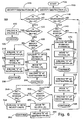
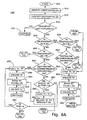
- the articles may be loaded onto an appropriate carrier cell of an appropriate transport unit and unloaded into the targeted discharge chute or into a reinduction station, without requiring manual intervention, as discussed in detail below with respect to process 500 and FIGS. 8A-C.
- the selection or application of one or more of these processes depends on the application of the sortation system and/or on the desired result of the sortation processes, such as maximum throughput, minimal recirculation of articles, availability of a reinduction station and/or the like.
- a blind loading process 100 may be implemented to accommodate blind loading by the induction stations of articles onto cells of transport units as the transport units move past the induction stations on either side of the conveying path.
- the induction stations may be operable to blindly, or sequentially, load articles onto available cells of the approaching transport units without regard to the destinations of the articles.
- the control system is then operable to identify the articles via scanner 33 along conveying path 16 and determine the unloading sequence of articles that are loaded onto the cells of the transport units.
- the blind loading mode or process allows the sortation system to always load available cells at each induction station, which may be beneficial in applications where there is flexibility in the destination of the articles being sorted.
- Process 100 is preferably applicable when the items or articles are loaded with a side destination, such as A or B, and without a particular chute destination.
- the algorithm or process 100 may be configured each time that the item barcode or identification label is read by the scanner 33 on the loop of the conveying path rather than at the induction station. In such an application, articles are loaded onto the first available cell of the transport units from induction stations on both sides of the conveying path, irrespective of the targeted discharge port for either article being loaded onto the transport unit.
- the articles may be loaded from the induction stations if the cell of the particular transport unit is free or empty and not already reserved or booked by a downstream induction station at the same side of the conveying path. This process may provide that between two consecutive articles loaded from the same induction station, a number of free cells or transport units equal to the number of downstream induction stations along the same side not be booked or used by that particular induction station. This prevents the upstream induction station or stations from loading articles onto each transport unit, so transport units are available for loading by the downstream induction stations as well.
- Article unloading process 100 is operable to identify the destination of articles loaded on cells of the transport units via scanner 33 along conveying path 16 and to determine an appropriate unloading sequence of the articles to minimize recirculation of the articles and to correct for partial or full blocking situations which may occur between the articles on the transport units.
- Process 100 starts at 105 and identifies the destination of an article on one side (A) of the transport unit at 110 and further identifies a destination of another article on the other side (B) at 115. It is then determined at 120 whether the destination of the article A is at side A of the conveying path. If the destination of article A is at the same side A, then it is further determined at 125 if the destination of article B is at side B of the conveying path.
- process 100 proceeds to unload articles A and B at the respective ports along the respective sides of the conveying path at 130 and continues at 135 by returning to start at 105 to identify the articles at the next transport unit.
- process 100 proceeds to unload article B at its appropriate discharge chute along side B at 150, move article A over to the opposite side B of the transport unit at 155, and unload article A at the appropriate destination or discharge station or chute along side B at 160. If the discharge chute for article A is upstream of the discharge chute for article B, then the article on side A of the transport unit will be unloaded into the appropriate chute or port on side B during the next lap of the transport unit around the conveying path. Process 100 then continues at 165 by returning to start at 105 to identify the destination of articles on the next transport unit. In this manner, both parcels will be delivered to their destination, but the parcel on the A side will require an extra trip around the carousel.
- article B is unloaded into the reinduction station along side B at 170.
- Article A is then moved to the cell on side B of the transport unit at 175 and unloaded at the appropriate destination or discharge port or chute along side B of the conveying path at 180.
- the reinduction station is upstream of the discharge ports or stations, the article on side A of the transport unit is moved to the other side and unloaded at that side of the conveying path during the first pass of the transport unit by the discharge stations, such that no re-circulation of either of the articles will be required.
- the process then continues at 185 by returning to start at 105.
- Article B will be reinducted onto an available cell of a later transport unit and discharged at its appropriate discharge chute when an appropriate transport unit is available.
- process 100 proceeds in a similar manner as discussed above when both articles are destined for side B of the conveying path. More particularly, it is determined at 190 whether there are operable and available reinduction stations along side A of the conveying path.
- article A is unloaded at the reinduction station at 195, article B is moved to the A side of the transport unit at 200, and article B is unloaded at the appropriate discharge port or chute along side A at 205.
- the process 100 continues at 210 by returning to start.
- process 100 returns to 170 to unload the articles, as also discussed above. However, if it is determined at 235 and 240 that there is no operable and available reinduction station along either side A or B, then process 100 proceeds to unload article A into the reject chute at 245. Article B is then moved to the other side A of the transport at 250 and unloaded at an appropriate discharge port or chute along side A at 255. Because the reject chute is positioned downstream from the appropriate discharge ports or chutes, article B will be unloaded at its appropriate destination during the next lap of the transport unit around the conveying path. Article A will be manually moved from the reject chute to its proper destination at a later time. Process 100 continues at 260. Of course, the system could discharge article B to the reject chute and unload article A to it appropriate destination, without affecting the scope of the present invention.
- blind loading process 100 is operable to determine an optimal unloading sequence of the articles positioned on each side of the transport units with a minimal amount of re-circulation of the articles about the conveying path loop.
- the process may or may not utilize a reinduction station, which facilitates unloading of the articles with no recirculation arising for one or both of the articles.
- process 100 is operable to identify the destination or targeted discharge chute for each of the articles that have already been loaded onto the transport units and as they are transported along the conveying path, yet while they are upstream from the reinduction stations or discharge chutes.
- non-rejection process 300 is operable to sequence the loading and unloading of articles onto the cells of transport units in order to limit or prevent the sending of the items to a reinduction station 50 or reject chute 52.
- the induction station at either side of the conveying path is controlled to load articles onto a corresponding cell of the transport unit if the cell is empty and not already reserved or booked by a downstream induction station on the same side of the conveying path.
- the sortation system may be operable to leave an amount of free or empty cells or transport units between two consecutive articles loaded by the same induction station, which is approximately equal to the number of downstream induction stations along the same side, in order to prevent a back up of articles at the downstream induction stations.
- Process or algorithm 300 is applicable in applications where the item or article barcode or identification label is read by a scanner 32 at the induction station.
- the algorithm functions to delay loading of an article onto a transport unit in order to minimize or avoid offloading of the article into the reinduction station or into a reject chute.
- Process 300 starts at 305 and identifies the destination (destination A) of an article (article A) at an induction station at the A side of the conveying path (induction station A) at 310 and further identifies the destination (destination B) of an article (article B) at an induction station at the B side of the conveying path (induction station B) at 315.
- Process 300 further identifies or determines the available approaching or unbooked cells of the transport unit or units at 320. It is then determined at 325 whether the destination of article A at induction station A is at the same side (side A) as the induction station. If it is determined at 325 that the destination of the article A is on the same side A, then the article A is loaded onto that particular cell of the transport unit at 330.
- Process 300 determines whether the destination of the article B at induction station B of the conveyor path is at the same side (B) of the conveying path. If it is determined at 335 that the destination of the article B is at side B, then article B at induction station B is loaded onto the corresponding cell of the transport unit at 340. The articles on each side of the transport unit are then unloaded at 345 at their appropriate discharge chutes along the respective sides of the conveying path. Process 300 then continues at 350 by returning to start at 305 to identify the destination of other articles at the induction stations.
- article B on induction station B may be loaded onto the corresponding cell of the transport unit at 355.
- the other article (article A) from induction station A is then unloaded at its appropriate destination chute at 360, whereby article B is transferred over to the now empty cell on the A side of the transport unit at 365 and then unloaded at 370 at the appropriate discharge chute along side A of the conveying path.
- article B is to be un-loaded at a downstream chute from the discharge chute of article A, then the unloading at 370 will occur during the same lap or pass of the transport unit about the conveying path. Otherwise, the article B will be transported around the conveying path and will be offloaded at its appropriate chute on the A side during the next lap of the transport unit.
- Process 300 then continues at 375 by returning to start at 305.
- the destination of the article at induction station B is at the same side (B) of the conveying path. If it is determined at 380 that the destination of article B is at the B side of the conveying path, such that both articles are to be discharged along the B side of the conveying path, then both articles may be loaded onto the respective cells of the transport unit at 385. The article B from induction station B is then unloaded at its appropriate discharge chute at 390, whereby the article A from induction station A is moved across the transport unit to the cell of the transport unit on the opposite or B side of the transport unit at 395.
- Article A is then unloaded at its appropriate chute along the B side of the conveying path at 400. If the article A from induction station A is to be discharged downstream from the article B from induction station B, the unloading of article A occurs during the same lap or pass of the transport unit about the conveying path.
- Process 300 then continues at 405 by returning to start.
- control 36 is further operable to increment the induction priority counter for the induction station which could not load the article.
- the induction priority counter thus determines how many times each induction station was unable to load an article, such that an induction station with a higher counter value or induction priority may be selected to load a respective article over an induction station with a lower counter value, in order to avoid a back up or pile up of articles at any one of the induction stations.
- the induction priority counters are thus incremented each time an article is not loaded onto a transport unit by the induction station and are reset to zero each time an article is loaded by the induction station. If it is determined at 410 that the induction priority counter for induction station A is greater than the induction priority counter for induction station B, then article A from induction station A is loaded onto the cell on the A side of the transport unit at 415.
- the process 300 then proceeds to identify the destination of an article at the next downstream induction station along the B side of the conveying path, in order to determine if it is appropriate to load an article onto the B side cell of the transport unit at 420. Otherwise the transport unit proceeds along the conveying path and process 300 returns to 395, where article A is moved across to the B side of the transport unit and unloaded at its appropriate chute, as discussed above.
- the control 36 then increments the induction priority counter for induction station B.
- the induction priority counter for induction station A is not greater than the induction priority counter for induction station B, then it is further determined at 430 whether the induction priority counter for induction station B is greater than the induction priority counter for induction station A. If it is determined at 430 that the induction priority counter for induction station B is greater than the induction priority counter for induction station A, then article B at induction station B is loaded at 435 onto the B side cell of the transport unit. The process then identifies the destination of an article at a downstream induction station along the A side of the conveying path at 440. Process 300 then returns to 365, where article B is transferred over to the other side of the transport unit for unloading at an appropriate discharge chute along the A side of the conveying path. The induction priority counter for induction station A is then incremented by the induction control 36.
- each induction station may be assigned a last minute throughput value, which further prioritizes the loading sequence of the induction stations for situations where the induction priority counters of two induction stations are equal.
- the last minute throughput value may be based on the type of article, destination of the articles or other characteristic of the article or the sortation system.
- the article A at induction station A is loaded onto an appropriate cell of the transport unit at 455.
- the process then returns to 420, as discussed above, to identify other articles at the downstream induction stations along the B side of the conveying path and to move article A to the B side cell of the transport unit and unload article A at its appropriate discharge chute.
- the article B at induction station B may be loaded at 470 onto the appropriate cell of the transport unit. The process then returns to 440, as discussed above, to identify other articles at downstream induction stations along the A side of the conveying path and to move and unload article B.
- articles are loaded onto the cells of the transport units in a sequence or manner that allows the articles to be unloaded at the appropriate side of the respective transport unit downstream from the induction stations.
- one of the induction stations may delay in loading one or both of the articles to avoid the blocking condition and may load an article onto the transport unit depending on a priority value of the induction station or a last minute throughput value associated with the induction station or the article.
- one of the articles may remain on the transport unit for a full lap of the transport unit, prior to being unloaded at its appropriate discharge chute.
- Process 300 functions to reduce the need to unload articles into the reject chutes or reinduction stations of the sortation system, while effectively sorting and loading/unloading articles from induction stations at both sides of the conveying path. Process 300 thus delays loading of some articles in full blocking situations, in order to avoid such situations and thus avoid the need to use a reinduction or reject chute.
- an auto-adjusting process 500 is operable to sort or sequence the loading of articles at induction stations on both sides of the conveying path such that the articles again avoid being discharged into a reject chute.
- Process 500 also avoids or limits recirculation scenarios where an article is transported by the transport unit around the entire lap of the conveying path prior to unloading at its appropriate discharge chute. Similar to the above discussed processes, process 500 is operable to load items from induction stations at either side of the conveying path onto an approaching transport unit if the cell or cells of the transport unit are empty and not reserved or booked by a downstream induction station along the same side of the conveying path.
- the system control may be operable to leave a number of free cells or transport units between loaded cells at each induction station which is equal to the number of downstream induction stations along the same side of the conveying path, in order to avoid a back-up condition at the downstream induction stations, as discussed above with respect to processes 100 and 300.
- the process or algorithm 500 is most suitable for applications where the item or article barcode or identification label is read by a scanner at the induction station and where there are no restrictions regarding recirculation and sending items into a reinduction station or reject chute. This algorithm optimizes balancing of the induction station loading and provides optimal system throughput for the articles at induction stations on both sides of the conveying path.
- Process 500 starts at 505 and identifies the destination of an article (article A) at an induction station (induction station A) on the A side of the conveying path at 510 and identifies the destination of an article (article B) at an induction station (induction station B) on the B side of the conveying path at 515. It is then determined at 520 whether an approaching transport unit or cells of the transport unit are available. If it is determined at 520 that none of the cells are available for loading an article thereon, then process 500 continues at 525 and determines if the next transport unit is available.
- process 500 loads the articles onto the respective cells of the transport unit at 540, and unloads the articles at the respective discharge chutes at 545.
- Process 500 then continues at 550 by returning to start at 505 and identifying the destinations of articles at the induction stations.
- process 500 loads the articles onto the respective cells of the transport unit at 560 and unloads article A at its appropriate discharge chute at 565.
- Article B is then moved across the transport unit onto the cell at the A side of the transport unit at 570 and unloaded at 575 at its appropriate discharge chute. No recirculation arises for article B, since article B is unloaded during the same pass or lap at which it is loaded onto the transport unit.
- Process 500 then continues at 580 by returning to start at 505.
- a reinduction station at side A is present and operable and whether the number of articles or items off loaded onto the reinduction station within a predetermined period of time, such as within the previous five minutes, is lower than a pre-selected threshold value.
- the threshold value is selected to limit excessive use of the reinduction station, in order to avoid over use and to prevent a back up or pile up condition at the reinduction station or station. If it is determined at 585 that the reinduction station on side A is operable and the numbers of articles loaded onto the reinduction station are below the threshold amount, then the articles A and B are loaded onto the respective cells of the transport unit at 590. Article A is unloaded into the reinduction station at side A of the conveying path at 595. Process 500 then returns to 570, where article B is moved to the opposite or side A cell of the transport unit and unloaded at its appropriate discharge chute, as discussed above.
- a threshold value such as a predetermined allowable number of recirculated articles within a set time period of operation. This is determined in order to limit the number of articles that are recirculated around the conveying path. If it is determined at 600 that the number of recirculated items is less than the threshold value, then process 500 returns to 560, and proceeds to load and unload the articles onto and off from the respective cells of the transport unit, as discussed above. The article B will then be unloaded at its appropriate chute at 575 during the next lap of the transport unit around the conveying path.
- a threshold value such as a predetermined allowable number of recirculated articles within a set time period of operation.
- an induction priority counter value for induction station A is greater than an induction priority counter value for induction station B.
- the induction priority counter values are incremented each time an article is unable to be loaded by an induction station and is reset each time an article is loaded by the induction station. If it is determined at 605 that the induction priority counter for induction station A is greater than the induction priority counter for induction station B, then article A from induction station A is loaded at 610 onto its appropriate cell of the transport unit. The induction priority counter for induction station B is then incremented at 615. Article A is unloaded at it appropriate discharge chute at 620 and process 500 continues at 625 by returning to start.
- the induction priority counter for induction station A is not greater than the induction priority counter for induction station B, then it is further determined at 630 whether the induction priority counter for induction station A is equal to the induction priority counter for induction station B. If it is determined at 630 that the induction priority counters are equal, then it is further determined at 635 whether a last minute throughput value for induction station A is less than a last minute throughput value for induction station B. If it is determined at 635 that the last minute throughput value for induction station A is less than the last minute throughput value for B, then process 500 returns to 610 and proceeds to load article A onto the respective cell of the transport unit and proceed as discussed above.
- process 500 is operable in a similar manner as discussed above with respect to the partial blocking scenario where both articles were to be discharged at the A side of the conveying path, except with the sides reversed.
- process 500 returns to 655 and proceeds to load and unload the articles as discussed above.
- an induction priority counter for induction station B is greater than an induction priority counter for induction station A. If the induction priority counter for induction station B is greater than the induction priority counter for induction station A, then article B is loaded onto its respective cell of the transport unit at 710. The induction priority counter for induction station A is then incremented at 715, while the article B is unloaded at its appropriate discharge chute at 720. Process 500 then continues at 725.
- induction priority counter for induction station B is not greater than the induction priority counter for induction station A
- induction priority counters are equal for the two induction stations. If it is determined at 730 that both the of the induction priority counters are equal, then it is further determined at 735 whether a last minute throughput value for induction station B is less than a last minute throughput value for induction station A. If it is determined at 735 that the last minute throughput value for induction station B is less than the last minute throughput value for induction station A, then process 500 returns to 710 to load and unload article B onto its appropriate cell of the transport unit, as discussed above.
- process 500 does not load either article onto that particular transport unit and continues at 740.
- the induction priority counters for both induction stations are then incremented, since the stations are unable to load the articles onto an available transport unit. If it is determined at 730 that the induction priority counters are not equal, such that the induction priority counter for induction station A is greater than the induction priority counter for induction station B, then neither article is loaded onto the transport unit and the process continues at 740. Again, the induction priority counters for both induction stations A and B are incremented, since neither station loads its respective article onto an available transport unit.
- process 500 loads articles A and B onto their respective cells of the transport unit at 760 and unloads article A into a reject chute A at 765.
- Process 500 then returns to 570, where article B is moved to the A side of the transport unit and unloaded at the appropriate discharge chute along side A during the next pass or lap of the transport unit around the conveying path, as discussed above.
- an induction priority counter for induction station A is greater than an induction priority counter for induction station B. If the induction priority counter for induction station A is greater than the induction priority counter for induction station B, then process 500 loads article A onto its respective cell of the transport unit at 775 and increments the induction priority counter for induction station B at 780. Article A is then moved across the transport unit and unloaded at its respective destination at 785 and process 500 continues at 790.
- induction priority counter for induction station A is not greater than the induction priority counter for induction station B
- the induction priority counter for induction station B is not greater than the induction priority counter for induction station A, such that the induction priority counters for the two induction stations are equal. If it is further determined at 820 whether a last minute throughput value for induction station A is less than a last minute throughput value for induction station B. If the last minute throughput value for induction station A is less than the last minute throughput value for induction station B, then process 500 returns to 775 and proceeds to load and unload article A, while incrementing the induction priority counter for induction station B, as discussed above.
- last minute throughput value for induction station A is not less than the last minute throughput value for induction station B, then it is further determined at 825 whether the last minute throughput value for induction station B is less than the last minute throughput value for induction station A. If the last minute throughput value for induction station B is less than the last minute throughput value for induction station A, then process 500 returns to 800 and proceeds to load and unload article B on the transport unit, while incrementing the induction priority counter A at induction station A, as discussed above. Furthermore, if the last minute throughput values for the induction stations are equal, then process 500 does not load either of the articles on that particular transport unit and continues at 830. The induction priority counters for both induction stations are then incremented by the sortation system controls.
- process 500 is operable to determine whether an article at an induction station on either side of the conveying path or articles at induction stations on both sides of the conveying path will be loaded onto one or both cells of an available and approaching transport unit.
- the decision process optimizes throughput of the articles while limiting offloading of the articles into reject chutes and/or offloading of the articles into reinduction stations.
- the process also attempts to minimize loading of articles onto a transport unit that will result in recirculation of one of the articles, where one of the articles is transported entirely around the conveying path before it is unloaded in a subsequent pass by the discharge chutes.
- Each of the processes described above may be simultaneously and continuously performed for each induction station or corresponding pairs of induction stations along one or both sides of the conveying path of the sortation system.
- the status of each transport unit is reviewed to determine if the transport unit is capable of receiving a package from the next induction station or stations, while the induction stations simultaneously determine the destination of the next package, in order to determine whether the package may be inducted onto the approaching transport unit.
- the present invention thus provides improved throughput by having the ability to place two packages on each transport unit, whereby both packages may be discharged to the same side of the conveying path or each package may be discharged to opposite sides of the conveying path, without requiring any presortation of the packages prior to placing the packages on the induction stations.
- the controls of the present invention may further analyze and compare the size and destination of the articles on multiple induction stations to further optimize which of two or more articles at two or more induction stations will be placed on an available cell or carrier belt of a transport unit, thereby further optimizing the sortation system of the present invention.
- the process is further operable to book two adjacent cells, or four contiguous cells arranged in a square, for that article.
- the oversized article may then be loaded onto the adjacent cells using the principles disclosed in U.S. Pat. No. 5,588,520.
- the present invention provides a sortation system which provides improved throughput, without requiring pre-sequencing of the items to the correct side of the sorter or conveyor path.
- the items may be inducted onto a cell or carrier belt of a transport unit and transferred over to the other side of the transport unit if necessary. This allows an induction station to then induct an item onto the now vacant cell on the initial side of the transport unit.
- the processes of the present invention function to optimize throughput of the sortation system and may limit use of reject chutes, depending on the application and/or desired mode or result of the sortation system.
- the present invention is operable to perform a functional equivalent of a presort of the packages as the packages are inducted onto the transport units, the present invention provides substantially improved throughput rates, with greatly reduced manual intervention required.
- the present invention provides for a control-based pre-sequencing of the packages, and allows for two packages to be loaded onto and carried by a single transport unit, thereby substantially increasing the number of items per hour that can be transported from a given induction station or stations to the appropriate chute destination.
- the sortation system effectively pre-sequences the items to the correct side of the transport unit, and thus is capable of achieving substantially the same throughput as a presorted single carrier or crossbelt system. It is further envisioned that if the packages are presorted at the induction stations, then the sortation system may provide additional benefit over the presorted systems of the prior art.
- the sortation system of the present invention may accommodate induction stations which are operable at a higher induction rate than existing induction stations.
- an existing induction station may have a throughput limit of approximately 3300 items per hour, while a high rate induction system may be operable with the present invention to induct approximately 6000 items per hour, thereby further enhancing the throughput of the present invention.
- the induction stations or systems used with the present invention may be of the type disclosed in commonly assigned, co-pending U.S. Pat. Application Ser. No. 09/669,170, entitled HIGH RATE INDUCTION SYSTEM, filed Sept. 25, 2000 by Affaticati et al. (Attorney Docket No. RAP04 P-610).
- the present invention is operable to provide improved throughput capabilities over the prior art, without complex presortation of the packages, such that the packages may be fed to the individual induction units irrespective of the destinations of the articles.
- the processes may be selected for a particular application, such as for a blind loading application or presorting/sequencing application, or to achieve a desired result, such as optimal throughput, minimal recirculation, or avoidance of reinduction or reject chutes.
- the side by side cells or carrier belts of the transport units may also be operable to handle a large range of sizes and weights of packages by utilizing two or more cells or carrier belts which are operable in either a synchronized or concurrent manner.
- the sortation system is thus able to orient large products onto both cells of one transport unit or onto the cells of two adjacent transport units to accommodate oversized products.
Landscapes
- Engineering & Computer Science (AREA)
- Mechanical Engineering (AREA)
- Discharge Of Articles From Conveyors (AREA)
- Branching, Merging, And Special Transfer Between Conveyors (AREA)
- Control Of Conveyors (AREA)
- Warehouses Or Storage Devices (AREA)
- Sorting Of Articles (AREA)
Claims (63)
- Verfahren zum Sortieren von Artikeln auf einer oder mehreren einer Vielzahl von Transporteinheiten (18) mit der Fähigkeit, Artikel nebeneinander zu tragen, wobei die Transporteinheiten (18) entlang eines kontinuierlichen Förderwegs (16) bewegbar sind, wobei das Verfahren umfasst:- Bereitstellen mindestens eines Zuführers (12) zum Laden der Artikel auf die Transporteinheiten;- Zuführen der Artikel zu dem mindestens einen Zuführer (12) ohne Rücksicht auf ein Ziel der Artikel und Bewegen der Artikel entlang des mindestens einen Zuführers (12) zu den Transporteinheiten (18) in der Reihenfolge, in der die Artikel zu dem mindestens einen Zuführer (12) zugeführt wurden;- Bestimmen eines Ziels für die Artikel an dem mindestens einen Zuführer (12);- Laden der Artikel von dem mindestens einen Zuführer (12) auf die Transporteinheit (18);- teilweises oder vollständiges Auflösen von Blockierungszuständen zwischen den Artikeln, wobei die teilweisen oder vollständigen Blockierungszustände eine Behinderung zwischen zwei Artikeln basierend auf dem Ziel der beiden Artikel und der Seite des Förderweges (16) oder der Transporteinheit (18), auf der die beiden Artikel positioniert sind, umfasst, gekennzeichnet, durch Bereitstellen von mindestens einer Wiederzuführstation (50) entlang mindestens einer Seite des Förderweges (16),wobei die mindestens eine Wiederzuführstation (50) betreibbar ist, um Artikel von den Transporteinheiten (18) zu empfangen und Artikel auf die Transporteinheiten (18) wieder zuzuführen und wobei das Auflösen der Blockierungszustände Entladen von auf den Transporteinheiten (18) geladenen Artikeln auf die mindestens eine Wiederzuführstation (50) und Wiederladen von Artikeln von der mindestens einen Wiederzuführstation (50) auf eine Transporteinheit (18) als eine Funktion des Blockierungszustandes und des Ziels der auf die Transporteinheit (18) geladenen Artikel umfasst.
- Verfahren nach Anspruch 1, wobei das Bereitstellen mindestens eines Zuführers das Bereitstellen von mindestens zwei Zuführern (12) für das Laden von Artikeln auf die Transporteinheiten (18) von gegenüberliegenden Seiten des Förderweges (16) umfasst.
- Verfahren nach Anspruch 2, wobei in Antwort auf einen vollständigen Blockierungszustand, wobei die Ziele von zwei Artikeln an gegenüberliegenden Seiten des Förderwegs (16) von den jeweiligen Zuführern (12) der Artikel sind, wobei das Verfahren umfasst:- Bestimmen einer Zuführpriorität für jeden der Zuführer (12) der Artikel und- Auflösen des vollständigen Blockierungszustandes durch Laden eines der Artikel und Verzögern des Ladens des anderen Artikels als eine Funktion der Zuführpriorität der Zuführer (12).
- Verfahren nach Anspruch 3, umfassend:- Bestimmen eines Durchsatzwertes eines letzten Augenblickes für jeden der Zuführer (12) in Antwort auf die Zuführprioritäten für die Zuführer (12), die gleich sind, und- Auflösen des vollständigen Blockierungszustandes durch Laden eines der Artikel als Funktion der Zuführpriorität und des Durchsatzwertes des letzten Augenblicks der Zuführer (12).
- Verfahren nach Anspruch 1, ferner umfassend das Bereitstellen von mindestens zwei Ausschleussausgängen (14) an gegenüberliegenden Seiten des Förderweges (16) für das Aufnehmen von Artikeln an ihren Zielen.
- Verfahren nach Anspruch 1, umfassend das Auflösen der teilweisen oder vollständigen Blockierungszustände durch Laden der Artikel als eine Funktion des Ziels und der Blockierungszustände der Artikel, um das Entladen von jedem dieser Artikel entfernt von ihren jeweiligen Zielen zu begrenzen.
- Verfahren nach Anspruch 1, umfassend das Auflösen der Blockierungszustände durch Laden der Artikel als eine Funktion der Ziele der Artikel und der Blockierungszustände, um das Wiederzuführen der Artikel entlang des Förderweges (16) zu begrenzen.
- Verfahren nach Anspruch 1, wobei die mindestens eine Wiederzuführstation (50) stromabwärts von dem mindestens einen Zuführer und stromaufwärts zu den Zielen der Artikel vorgesehen ist, wobei das Verfahren das Auflösen der Blockierungszustände als eine Funktion der Ziele der Artikel und einer Verfügbarkeit von mindestens einer Wiederzuführstation (50) umfasst.
- Verfahren nach Anspruch 8, umfassend:- Laden der Artikel auf beide Seiten einer der jeweiligen Transporteinheiten (18) und- Auflösen der Blockierungszustände durch Entladen eines der Artikel von einer Seite der Transporteinheit an der mindestens einen Wiederzuführstation (50) in Antwort auf einen vollständigen oder teilweisen Blockierungszustand zwischen den Artikeln.
- Verfahren nach Anspruch 1, umfassend das Bestimmen eines Wiederzuführzustands des Systems und Auflösen der Blockierungszustände als eine Funktion des Wiederzuführzustands.
- Verfahren nach Anspruch 1, umfassend das Bestimmen eines Stromaufwärtsziels der jeweiligen Ziele für erste und zweite Artikel und das Auflösen der Blockierungszustände zwischen den ersten und zweiten Artikeln als eine Funktion der stromaufwärts gelegenen Ziele.
- Verfahren nach Anspruch 1, wobei die Transporteinheiten (18) nebeneinander Aufnahmen für Artikel umfassen, die unabhängig betreibbar sind, um Artikel zu laden, entladen oder zu überführen.
- Verfahren nach Anspruch 12, wobei die Artikelaufnahmen nebeneinander Tragegurte an jedem der Transporteinheiten umfassen.
- Verfahren nach Anspruch 1, umfassend:- Bereitstellen von mindestens zwei Zuführern (12) für das Laden von Artikeln auf die Transporteinheiten (18);- Zuführen von Artikeln zu den mindestens zwei Zuführern (12) ohne Rücksicht auf ein Ziel der Artikel und Bewegen der Artikel entlang der mindestens zwei Zuführer (12) auf die Transporteinheiten (18) in der Reihenfolge, in der die Artikel von den mindestens zwei Zuführern (12) zugeführt wurden;- Bestimmen eines Ziels der Artikel an jeden der mindestens zwei Zuführer (12);- Laden der Artikel von den mindestens zwei Zuführern (12) auf eine Transporteinheit (18) in einer Weise, die die teilweisen oder vollständigen Blockierungszustände zwischen den Artikeln verhindert.
- Verfahren nach Anspruch 14, wobei das Laden der Artikel ein Laden und ein verzögertes Laden der Artikel auf die Transporteinheiten (18) umfasst.
- Verfahren nach Anspruch 15, wobei das Laden und das verzögerte Laden der Artikel ein Laden und ein verzögertes Laden der Artikel als eine Funktion eines Zuführprioritätszustandes der mindestens zwei Zuführer (12) umfasst.
- Verfahren nach Anspruch 14, wobei die mindestens eine Wiederzuführstation (50) stromabwärts von den mindestens zwei Zuführern (12) und stromaufwärts zu den Zielen der Artikel vorgesehen ist, wobei das Verfahren ein Auflösen der Blockierungszustände als eine Funktion der Ziele der Artikel und einer Verfügbarkeit der mindestens einen Wiederzuführstation (50) umfasst.
- Verfahren nach Anspruch 17, umfassend:- Einladen von Artikeln auf beide Seiten eines jeweiligen der Transporteinheiten (18) und- Auflösen der Blockierungszustände durch Entladen eines der Artikel von einer Seite der Transporteinheit (18) an der mindestens einen Wiederzuführstation (50) in Antwort auf einen vollständigen oder teilweisen Blockierungszustand zwischen den Artikeln.
- Verfahren nach Anspruch 14, umfassend ein Bestimmen eines Wiederzuführzustandes des Systems und ein Auflösen der Blockierungszustände als eine Funktion des Wiederzuführzustandes.
- Verfahren nach Anspruch 14, wobei das Bereitstellen von mindestens zwei Zuführern (12) ein Bereitstellen von mindestens einem Zuführer (12) für das Laden der Artikel auf die Transporteinheiten (18) an jeder Seite des Förderweges (16) umfasst.
- Verfahren nach Anspruch 20, umfassend das Bereitstellen von mindestens zwei Ausschleusstationen an gegenüberliegenden Seiten des Förderweges (16) für das Entladen von Artikeln von den Transporteinheiten (18).
- Verfahren nach Anspruch 14, wobei die Transporteinheiten (18) nebeneinander Artikelaufnahmen umfassen, die unabhängig betreibbar sind, um Artikel zu laden, entladen oder zu übergeben.
- Verfahren nach Anspruch 22, wobei die Artikelaufnahmen nebeneinander Tragegurte an jeder der Transporteinheiten (18) umfassen.
- Verfahren nach Anspruch 1, wobei das Bereitstellen mindestens eines Zuführers (12) ein Bereitstellen von mindestens zwei Zuführern (12) umfasst, wobei das Verfahren weiterhin umfasst:- Bestimmen einer Ladesequenz der Artikel als eine Funktion der jeweiligen Ziele, wobei die Ladesequenz ein verzögertes Laden von bestimmten Artikeln umfasst, die den teilweisen oder vollständigen Blockierungszustand mit einem anderen Artikel hervorrufen können und- Laden der Artikel von den mindestens zwei Zuführern (12) auf die Transporteinheit (18) nach der Ladesequenz.
- Verfahren nach Anspruch 24, wobei das Bereitstellen von mindestens zwei Zuführern (12) ein Bereitstellen von mindestens zwei Zuführern (12) für das Laden der Artikel auf die Transporteinheiten (18) von gegenüberliegenden Seiten des Förderwegs (16) umfasst.
- Verfahren nach Anspruch 24, umfassend ein Zuführen von Artikeln zu den mindestens zwei Zuführern (12) unabhängig von dem Ziel der Artikel.
- Verfahren nach Anspruch 26, weiterhin umfassend ein Bereitstellen von mindestens zwei Ausschleusausgängen (14) an gegenüberliegenden Seiten des Förderwegs (16) für das Empfangen von Artikeln an ihren Zielen.
- Verfahren nach Anspruch 24, wobei das Laden der Artikel ein Laden und ein verzögertes Laden der Artikel auf die Transporteinheiten (18) umfasst.
- Verfahren nach Anspruch 28, wobei das Laden und das verzögerte Laden der Artikel ein Laden und ein verzögertes Laden der Artikel als eine Funktion eines Zuführprioritätszustandes von den mindestens zwei Zuführern (12) umfasst.
- Artikelsortiersystem umfassend eine Vielzahl von Transporteinheiten (18) mit einer Aufnahmekapazität für Artikel nebeneinander, wobei die Transporteinheiten (18) entlang eines kontinuierlichen Förderwegs (16) bewegbar sind, wobei das Artikelsortiersystem umfasst:- mindestens einen Zuführer (12) für das Laden der Artikel auf die Transporteinheiten (18), wobei der mindestens eine Zuführer (12) Artikel ohne Rücksicht auf die Ziele der Artikel empfängt und betreibbar ist, um Artikel auf die Transporteinheiten (18) in der Reihenfolge, in der die Artikel durch den mindestens einen Zuführer (12) empfangen wurden, empfängt und einer Steuerung (11) die betreibbar ist, um ein Ziel der Artikel an dem mindestens einen Zuführer (12) zu bestimmen, Artikel von dem mindestens einen Zuführer (12) auf die Transporteinheiten (18) zu laden und- teilweise oder vollständige Blockierzustände zwischen den Artikeln aufzulösen, wobei die teilweisen oder vollständigen Blockierzustände eine Behinderung zwischen zwei Artikeln, die auf dem Ziel der beiden Artikel und der Seite auf dem Förderweg (16) oder der Transporteinheit (18) auf denen die beiden Artikel positioniert sind, basiert, umfasst,gekennzeichnet durch mindestens eine Wiederzuführstation (50) entlang mindestens einer Seite des Förderweges (16) wobei die mindestens eine Wiederzuführstation (50) betreibbar ist, um Artikel von den Transporteinheiten (18) zu empfangen und Artikel auf die Transporteinheiten (18) wieder zuzuführen;
wobei die Steuerung betreibbar ist, um Blockierungszustände durch Entladen von auf den Transporteinheiten (18) geladenen Artikeln auf die mindestens eine Wiederzuführstation (50) aufzulösen und Wiederzuführen von Artikeln von der mindestens einen Wiederzuführstation (50) auf eine Transporteinheit (18) als eine Funktion der Blockierungszustände und der Ziele der auf die Transporteinheit (18) geladenen Artikel. - Artikelsortiersystem nach Anspruch 30, wobei der mindestens eine Zuführer mindestens zwei Zuführer (12) umfasst, die an gegenüberliegenden Seiten des Förderweges (16) positioniert sind und die betreibbar sind, um Artikel auf die Transporteinheiten (18) von gegenüberliegenden Seiten des Förderwegs (16) zu laden.
- Artikelsortiersystem nach Anspruch 31, wobei in Antwort auf einen vollständigen Blockierungszustand, bei dem die Ziele der Artikel an gegenüberliegenden Seiten des Förderwegs (16) von den jeweiligen Zuführern (12) der Artikel sind, die Steuerung weiterhin betreibbar ist, um eine Zuführpriorität für jeden der Zuführer (12) der Artikel zu bestimmen und den vollständigen Blockierungszustand durch Laden eines der Artikel und verzögertes Laden des anderen Artikels als eine Funktion der Zuführpriorität der Zuführer (12) aufzulösen.
- Artikelsortiersystem nach Anspruch 32, wobei die Steuerung ferner betreibbar ist, um einen Durchsatzwert des letzten Augenblicks für jeden der Zuführer (12) in Antwort auf die Zuführprioritäten für diese Zuführer (12), die gleich sind, zu bestimmen, wobei die Steuerung betreibbar ist, um den vollständigen Blockierungszustand durch Laden einer der Artikel als eine Funktion der Zuführpriorität und des Durchsatzwertes des letzten Augenblicks der Zuführer (12) aufzulösen.
- Artikelsortiersystem nach Anspruch 30, weiterhin umfassend mindestens zwei Ausschleusausgänge (14), die an gegenüberliegenden Seiten des Förderwegs (16) für den Empfang der Artikel an ihren Zielen positioniert ist.
- Artikelsortiersystem nach Anspruch 30, wobei die Steuerung betreibbar ist, um die Blockierungszustände durch Laden der Artikel als eine Funktion der Ziele aufzulösen und die Blockierungszustände der Artikel, um das Entladen jedes Artikels entfernt vom jeweiligen Ziel zu begrenzen.
- Artikelsortiersystem nach Anspruch 30, wobei die Steuerung betreibbar ist, um die Blockierungszustände durch Laden der Artikel als eine Funktion der Ziele der Artikel und der Blockierungszustände aufzulösen, um das Wiederzuführen der Artikel entlang des Förderwegs (16) zu begrenzen.
- Artikelsortiersystem nach Anspruch 30, wobei die mindestens eine Zuführstation stromabwärts von dem mindestens einen Zuführer und stromaufwärts zu den Zielen der Artikel positioniert ist, wobei die Steuerung betreibbar ist, um die Blockierzustände als eine Funktion der Ziele der Artikel und einer Verfügbarkeit der mindestens einen Wiederzuführstation (50) aufzulösen.
- Artikelsortierstation nach Anspruch 37, wobei die Steuerung betreibbar ist, um Artikel auf beide Seiten einer jeweiligen der Transporteinheiten (18) zu laden und die Blockierzustände durch Entladen eines der Artikel von einer Seite der Transporteinheiten (18) an der mindestens einen Wiederzuführstation (50) in Antwort auf einen vollständigen oder teilweisen Blockierungszustandes zwischen den Artikeln aufzulösen.
- Artikelsortiersystem nach Anspruch 30, wobei die Steuerung betreibbar ist, um einen Wiederzuführzustand des Systems zu bestimmen und die Blockierungszustände als eine Funktion des Wiederzuführzustandes aufzulösen.
- Artikelsortiersystem nach Anspruch 30, wobei die Steuerung betreibbar ist, um ein von den jeweiligen Zielen für erste und zweite Artikel stromaufwärts gelegenes Ziel zu bestimmen und die Blockierungszustände zwischen den ersten und den zweiten Artikeln als eine Funktion des aufwärts gelegenen Ziels aufzulösen.
- Artikelsortiersystem nach Anspruch 30, wobei die Transporteinheiten Artikelaufnahmen nebeneinander umfassen, die unabhängig betreibbar sind zum Laden, Entladen oder Überführen von Artikeln.
- Artikelsortiersystem nach Anspruch 41, wobei die Artikelaufnahmen nebeneinander Tragegurte an jeder der Transporteinheiten (18) aufweisen.
- Artikelsortiersystem nach Anspruch 30, wobei der mindestens eine Zuführer mindestens zwei Zuführer (12) umfasst, wobei die Steuerung betreibbar ist, um ein Ziel der Artikel an jeden der mindestens zwei Zuführer (12) zu bestimmen und Artikel von den mindestens zwei Zuführern (12) auf die Transporteinheiten (18) in einer Weise zu laden, die teilweise oder vollständige Blockierungszustände zwischen den Artikeln vermeidet.
- Artikelsortiersystem nach Anspruch 43, wobei die Steuerung betreibbar ist, um Artikel auf die Transporteinheiten (18) zu laden und verzögert zu laden.
- Artikelsortiersystem nach Anspruch 44, wobei die Steuerung weiterhin betreibbar ist, um Artikel in einer Funktion eines Zuführprioritätszustandes der mindestens zwei Zuführer (12) zu laden oder verzögert zu laden.
- Artikelsortiersystem nach Anspruch 44, wobei an mindestens einer Wiederzuführstation (50) stromabwärts von den mindestens zwei Zuführern und stromaufwärts zu den Zielen der Artikel positioniert ist, wobei die Steuerung betreibbar ist, um die Blockierungszustände als eine Funktion der Ziele der Artikel und einer Verfügbarkeit der mindestens einen Wiederzuführstation (50) aufzulösen.
- Artikelsortiersystem nach Anspruch 46, wobei die Steuerung betreibbar ist, um Artikel auf beide Seiten einer jeweiligen der Transporteinheiten (18) zu laden und die Blockierzustände durch Entladen einer der Artikel von einer Seite der Transporteinheit (18) an der mindestens einen Wiederzuführstation (50) in Antwort auf mindestens einen teilweisen Blockierzustand zwischen den Artikeln aufzulösen.
- Artikelsortiersystem nach Anspruch 43, wobei die Steuerung betreibbar ist, um einen Wiederzuführzustand eines Systems zu bestimmen und die Blockierzustände als eine Funktion des Wiederzuführzustandes aufzulösen.
- Artikelsortiersystem nach Anspruch 43, wobei die mindestens zwei Zuführer mindestens einen Zuführer (12) umfassen, der an jeder Seite des Förderweges (16) zum Laden der Artikel auf die Transporteinheit (18) an einer jeweiligen Seite des Förderweges (16) positioniert ist.
- Artikelsortiersystem nach Anspruch 49, umfassend mindestens zwei Ausschleusstationen (14) an gegenüberliegenden Seiten des Förderweges (16) zum Entladen von Artikeln von den Transporteinheiten (18).
- Artikelsortiersystem nach Anspruch 43, wobei die Transporteinheiten (18) nebeneinander Artikelaufnahmen umfassen, die unabhängig betreibbar sind, um Artikel zu laden, entladen und zu übergeben.
- Artikelsortiersystem nach Anspruch 51, wobei die Artikelaufnahmen nebeneinander Tragegurte an jedem der Transporteinheiten (18) aufweisen.
- Artikelsortiersystem nach Anspruch 30, wobei der mindestens eine Zuführer mindestens zwei Zuführer (12) umfasst, wobei die Steuerung betreibbar ist, um Ziele der Artikel an den mindestens beiden Zuführern zu bestimmen und eine Ladesequenz der Artikel als eine Funktion der jeweiligen Ziele zu bestimmen, wobei die Steuerung betreibbar ist, um bestimmte Artikel zu laden oder verzögert zu laden, die den teilweisen oder vollständigen Blockierzustand mit einem anderen Artikel in Antwort auf die Ladesequenz hervorrufen können, wobei die Steuerung betreibbar ist, um die Artikel von den mindestens zwei Zuführern auf die Transporteinheiten (18) nach der Ladesequenz zu laden oder verzögert zu laden.
- Artikelsortiersystem nach Anspruch 53, wobei die mindestens zwei Zuführer (12) mindestens zwei Zuführer (12) umfassen, die an gegenüberliegenden Seiten des Förderweges (16) positioniert sind.
- Artikelsortiersystem nach Anspruch 53, wobei die mindestens zwei Zuführer Artikel empfangen unabhängig von den Zielen der Artikel.
- Artikelsortiersystem nach Anspruch 53, ferner umfassend mindestens zwei Ausschleusausgänge, die an gegenüberliegenden Seiten des Förderwegs zum Empfangen von Artikeln von den Transporteinheiten (18) an den Artikelzielen positioniert sind.
- Artikelsortiersystem nach Anspruch 53, wobei die Steuerung betreibbar ist, um die Artikel in Antwort auf einen Zuführprioritätszustand der mindestens zwei Zuführer (12) zu laden oder verzögert zu laden.
- Artikelsortiersystem nach Anspruch 31, wobei die mindestens zwei Zuführer (12) umfassen:- eine erste Zuführstation an einer ersten Seite des Förderweges (16) und- eine zweite Zuführstation an einer zweiten Seite des Förderweges (16), wobei die erste und die zweite Zuführstation betreibbar sind, um Artikel in einer zufälligen Reihenfolge zu empfangen und die empfangenen Artikel auf den Förderweg (16) in der Reihenfolge, in der die Artikel empfangen wurden durch die ersten und zweiten Zuführstationen zu bewegen,- wobei das Artikelsortiersystem mindestens eine Ausschleusstation (14) an jedem der ersten und zweiten Seiten des Förderweges (16) umfasst, wobei die Vielzahl von Transporteinheiten (18) betreibbar ist, um Artikel von der ersten und zweiten Zuführstation (12) zu empfangen und Artikel auf die mindestens eine Ausschleusstation (14) auszuladen, wobei die Steuerung betreibbar ist, um ein Ziel der Artikel und den teilweisen oder vollständigen Blockierungszustand zwischen den Artikeln zu bestimmen, wobei die Steuerung weiterhin betreibbar ist, um eine geeignete Ausschleusstation für die Artikel zu bestimmen und die Artikel von der ersten oder zweiten Zuführstation (12) auf die Transporteinheiten (18) zu laden und die geladenen Artikel von den Transporteinheiten auf die geeignete Ausschleusstation (14) in Antwort auf das Ziel der Artikel und den Blockierungszustand zwischen einem jeweiligen Paar von Artikeln zu entladen.
- Artikelsortiersystem nach Anspruch 58, wobei die mindestens eine Ausschleusstation eine Vielzahl von Ausschleusstationen (14) umfasst, die mit den Zielen der Artikel korrespondieren, die von den ersten und zweiten Zuführstationen (12) empfangen worden sind.
- Artikelsortiersystem nach Anspruch 59, wobei die mindestens eine Ausschleusstation (14) mindestens die eine Wiederzuführstation (50) umfasst, die stromabwärts von den ersten und zweiten Zuführstationen (12) angeordnet ist, wobei die mindestens eine Wiederzuführstation (50) betreibbar ist, um von den Transporteinheiten (18) entladene Artikel zu empfangen und Artikel auf die Transporteinheiten (18) wieder zuzuführen.
- Artikelsortiersystem nach Anspruch 58, wobei die Steuerung betreibbar ist, um Artikel auf die Transporteinheiten (18) unabhängig von den Zielen der Artikel zu laden.
- Artikelsortiersystem nach Anspruch 58, wobei die Steuerung betreibbar ist, um einen an der ersten Zuführstation (12) empfangenen Artikel zu laden und einen anderen an der zweiten Zuführstation (12) empfangenen Artikel verspätet zu laden in Antwort auf die Ziele der Artikel und der Blockierungszustände zwischen den Artikeln.
- Artikelsortiersystem nach Anspruch 58, wobei die Steuerung betreibbar ist, um verfügbare Transporteinheiten (18) der Transporteinheiten (18) zu bestimmen, wenn sich die Transporteinheiten (18) den ersten und zweiten Zuführstationen (12) sich annähern, wobei die Steuerung weiterhin betreibbar ist, um Artikel in Antwort auf die Verfügbarkeit der Transporteinheiten (18) zu laden oder verzögert zu laden.
Applications Claiming Priority (5)
| Application Number | Priority Date | Filing Date | Title |
|---|---|---|---|
| US29431501P | 2001-05-30 | 2001-05-30 | |
| US294315P | 2001-05-30 | ||
| US10/067,599 US6889814B2 (en) | 2001-05-30 | 2002-02-04 | Article sortation system |
| US67599 | 2002-02-04 | ||
| PCT/EP2002/005941 WO2002096785A2 (en) | 2001-05-30 | 2002-05-29 | System and method for sorting articles |
Publications (2)
| Publication Number | Publication Date |
|---|---|
| EP1390280A1 EP1390280A1 (de) | 2004-02-25 |
| EP1390280B1 true EP1390280B1 (de) | 2007-05-23 |
Family
ID=26748053
Family Applications (1)
| Application Number | Title | Priority Date | Filing Date |
|---|---|---|---|
| EP02738128A Expired - Lifetime EP1390280B1 (de) | 2001-05-30 | 2002-05-29 | System und verfahren zum sortieren von stückgut |
Country Status (11)
| Country | Link |
|---|---|
| US (3) | US6889814B2 (de) |
| EP (1) | EP1390280B1 (de) |
| JP (1) | JP4141846B2 (de) |
| AT (1) | ATE362886T1 (de) |
| AU (1) | AU2002312958C1 (de) |
| BR (1) | BR0205444A (de) |
| CA (1) | CA2449143C (de) |
| DE (1) | DE60220273T2 (de) |
| DK (1) | DK1390280T3 (de) |
| MX (1) | MXPA03010892A (de) |
| WO (1) | WO2002096785A2 (de) |
Families Citing this family (105)
| Publication number | Priority date | Publication date | Assignee | Title |
|---|---|---|---|---|
| US6513641B1 (en) * | 1999-10-12 | 2003-02-04 | Rapistan Systems Advertising Corp. | High rate induction system |
| US6889814B2 (en) * | 2001-05-30 | 2005-05-10 | Rapistan Systems Advertising Corp. | Article sortation system |
| JP4036027B2 (ja) * | 2002-05-08 | 2008-01-23 | 日本電気株式会社 | 区分装置 |
| DE60322048D1 (de) * | 2002-05-16 | 2008-08-21 | United Parcel Service Inc | Systemen und verfahren für sortierung und lieferung von paketen unter verwendung von rfid technik |
| US7084365B2 (en) * | 2002-08-19 | 2006-08-01 | Lands' End Direct Merchants, Inc. | Methods and apparatus for a non-discrete sortation process |
| US7250582B2 (en) * | 2002-10-08 | 2007-07-31 | Lockheed Martin Corporation | Method and system for sequentially ordering objects using a single pass delivery point process |
| US7080725B2 (en) * | 2002-12-03 | 2006-07-25 | Sanki Engineering Co., Ltd. | Sorting conveyor provided with cross sorter |
| WO2004065266A2 (en) * | 2003-01-24 | 2004-08-05 | Fki Logistex A/S | Conveyor system with item receiving units and uses of the conveyor system |
| US7353955B2 (en) * | 2003-07-16 | 2008-04-08 | Siemens Energy & Automation, Inc. | Baggage screening system and method |
| DE10340868B4 (de) * | 2003-09-04 | 2005-09-29 | Siemens Ag | Fördersystem, insbesondere eine Flughafengepäckförderanlage, für zum Transport von Stückgut dienenden Behältern |
| JP2007535456A (ja) * | 2004-04-29 | 2007-12-06 | スパン テック エルエルシー | マトリックス型仕分けシステム |
| US20060278501A1 (en) * | 2004-09-02 | 2006-12-14 | Sweazy Eric W | Conveyor/sorter apparatus and method |
| US20060178774A1 (en) * | 2005-02-10 | 2006-08-10 | Dan Reznik | Sortation platforms with in-bulk identification and continuous tracking of items |
| US20070090028A1 (en) * | 2005-10-25 | 2007-04-26 | Lockheed Martin Corporation | Sort mechanism and method of use |
| US7870945B2 (en) * | 2006-02-24 | 2011-01-18 | Northrop Grumman Systems Corporation | Process for sorting objects |
| US7553119B2 (en) * | 2006-02-24 | 2009-06-30 | Northrop Grumman Systems Corporation | Mail tray unloader with shuttle transfer through system comprising tilting |
| WO2008008716A2 (en) * | 2006-07-10 | 2008-01-17 | Dematic Corp. | Conveyor system with dynamic gapping and method of slug building |
| ATE511942T1 (de) * | 2007-12-13 | 2011-06-15 | Eta Sa Mft Horlogere Suisse | Förderbandmodul |
| KR20100136394A (ko) * | 2008-04-21 | 2010-12-28 | 도요 세이칸 가부시키가이샤 | 용기 반송 장치 |
| US7982764B2 (en) * | 2008-07-08 | 2011-07-19 | United Parcel Service Of America, Inc. | Apparatus for monitoring a package handling system |
| WO2010065870A1 (en) * | 2008-12-04 | 2010-06-10 | Element Id, Inc. | Apparatus, system, and method for automated item tracking |
| DE102009003475A1 (de) * | 2009-02-12 | 2010-08-19 | Krones Ag | Förderer und Verfahren zum Beschicken einer Weiterverarbeitungseinheit |
| US8077050B2 (en) * | 2009-03-24 | 2011-12-13 | United Parcel Service Of America, Inc. | Transport system evaluator |
| US8931618B2 (en) * | 2011-02-08 | 2015-01-13 | C.G. Bretting Manufacturing Co., Inc. | Small and bulk pack napkin separator |
| DE102011017111A1 (de) * | 2011-04-14 | 2012-10-18 | Recop Electronic Gmbh | Palettieranlage für Getränkekästen umfassend mindestens eine Zuführbahn |
| DK177381B1 (en) * | 2011-08-16 | 2013-03-04 | Crisplant As | Cross-belt sorting system |
| JP5879443B2 (ja) * | 2011-11-21 | 2016-03-08 | クリスプラント アクティーゼルスカブ | 動的な荷下ろしを伴う仕分け機構 |
| DE102012208578A1 (de) * | 2012-05-22 | 2013-11-28 | Siemens Aktiengesellschaft | Verfahren und Vorrichtung zum Transportieren von verschiedenartigen Gegenständen zu Zielpunkten |
| ES2686698T3 (es) | 2012-07-11 | 2018-10-19 | Dematic Corp. | Sistema clasificador por cintas cruzadas y método de clasificación de artículos |
| WO2014028204A1 (en) * | 2012-08-13 | 2014-02-20 | Laitram, L.L.C. | Parcel handling methods |
| KR20140042993A (ko) | 2012-09-28 | 2014-04-08 | 한국전자통신연구원 | 우편물 구분 시스템 |
| EP2999651B1 (de) * | 2013-05-22 | 2020-04-01 | Dematic S.R.L. | Sortierförderer mit leuchtindikator zum manuellen beladen |
| KR102202232B1 (ko) * | 2014-02-05 | 2021-01-13 | 한국전자통신연구원 | 소포 구분 시스템 및 그 방법 |
| DE102014106400A1 (de) * | 2014-04-25 | 2015-11-12 | Weber Maschinenbau Gmbh Breidenbach | Individueller transport von lebensmittelportionen |
| US9493308B2 (en) * | 2014-08-11 | 2016-11-15 | Datalogic ADC, Inc. | Cross-belt system and automated item diversion |
| CN104973400B (zh) * | 2015-05-11 | 2016-03-02 | 苏州九鲤机电科技有限公司 | 一种用于直线分拣机两侧分拣的装置及分拣方法 |
| ES2669605T3 (es) * | 2015-08-07 | 2018-05-28 | Indag Gesellschaft für Industriebedarf mbH & Co. Betriebs KG | Dispositivo y procedimiento para recoger, transportar y dispensar bolsas de lámina |
| EP3347780B1 (de) | 2015-09-11 | 2023-06-07 | Berkshire Grey Operating Company, Inc. | Robotersysteme und verfahren zur identifikation und verarbeitung von verschiedenen objekten |
| CA3007359C (en) | 2015-12-04 | 2023-03-21 | Berkshire Grey, Inc. | Systems and methods for dynamic processing of objects |
| US10730078B2 (en) | 2015-12-04 | 2020-08-04 | Berkshire Grey, Inc. | Systems and methods for dynamic sortation of objects |
| US9937532B2 (en) | 2015-12-18 | 2018-04-10 | Berkshire Grey Inc. | Perception systems and methods for identifying and processing a variety of objects |
| US12350713B2 (en) | 2015-12-18 | 2025-07-08 | Berkshire Grey Operating Company, Inc. | Perception systems and methods for identifying and processing a variety of objects |
| EP3394690B1 (de) | 2015-12-21 | 2020-04-01 | TGW Logistics Group GmbH | Verfahren zum sortieren von förderobjekten auf einer förderanlage |
| US10941005B2 (en) * | 2015-12-21 | 2021-03-09 | Tgw Logistics Group Gmbh | Method for sorting conveyed objects on a conveyor system using time control |
| DE102016212130A1 (de) * | 2016-07-04 | 2018-01-04 | Multivac Marking & Inspection Gmbh & Co. Kg | Etikettiermaschine und Verfahren zur Herstellung von Multipacks |
| CN110099850B (zh) | 2016-10-24 | 2022-07-26 | 伯曼集团股份公司 | 认领飞机行李的方法 |
| WO2018089486A1 (en) | 2016-11-08 | 2018-05-17 | Berkshire Grey Inc. | Systems and methods for processing objects |
| EP3544911B1 (de) | 2016-11-28 | 2023-10-18 | Berkshire Grey Operating Company, Inc. | System zur vereinzelung von objekten zur verarbeitung |
| US10696489B2 (en) * | 2016-12-01 | 2020-06-30 | Packsize Llc | Balancing load among operational system zones |
| CN110049933A (zh) | 2016-12-06 | 2019-07-23 | 伯克希尔格雷股份有限公司 | 用于提供车辆中的物体处理的系统和方法 |
| CN106743340A (zh) * | 2016-12-09 | 2017-05-31 | 杭州康奋威科技股份有限公司 | 物流上包控制方法及控制系统 |
| US10618745B2 (en) | 2016-12-09 | 2020-04-14 | Berkshire Grey, Inc. | Systems and methods for processing objects provided in vehicles |
| JP6833534B2 (ja) * | 2017-02-02 | 2021-02-24 | 三機工業株式会社 | 仕分けシステム |
| CN110636981B (zh) | 2017-03-08 | 2021-10-26 | 雷勃美国公司 | 包裹分拣传送模块和系统及其方法 |
| US10532894B2 (en) | 2017-03-10 | 2020-01-14 | Regal Beloit America, Inc. | Modular transfer units, systems, and methods |
| CN113460553B (zh) | 2017-03-15 | 2023-12-01 | 伯克希尔格雷运营股份有限公司 | 用于存储、检索和处理包括可堆叠半圆形塔的对象的系统和方法 |
| CN110446671B (zh) | 2017-03-20 | 2021-09-03 | 伯克希尔格雷股份有限公司 | 用于处理物体的包括线性机架系统的系统和方法 |
| EP3601108A1 (de) | 2017-03-20 | 2020-02-05 | Berkshire Grey, Inc. | Systeme und verfahren zur verarbeitung von objekten mit einem auto-shuttle-system |
| CN114852726B (zh) | 2017-03-20 | 2024-01-02 | 伯克希尔格雷营业股份有限公司 | 用于处理包括运输车辆的物体的系统和方法 |
| EP3601113B1 (de) | 2017-03-24 | 2024-12-18 | Berkshire Grey Operating Company, Inc. | Systeme und verfahren zur verarbeitung von objekten mit automatisierter verarbeitung |
| US11200390B2 (en) | 2017-04-18 | 2021-12-14 | Berkshire Grey, Inc. | Systems and methods for separating objects using drop conveyors with one or more object processing systems |
| EP3612472A1 (de) | 2017-04-18 | 2020-02-26 | Berkshire Grey, Inc. | Systeme und verfahren zur verarbeitung von objekten; einschliesslich raumeffizienten verteilungsstationen und automatisierter ausgangsverarbeitung |
| US11080496B2 (en) | 2017-04-18 | 2021-08-03 | Berkshire Grey, Inc. | Systems and methods for separating objects using vacuum diverts with one or more object processing systems |
| US11205059B2 (en) | 2017-04-18 | 2021-12-21 | Berkshire Grey, Inc. | Systems and methods for separating objects using conveyor transfer with one or more object processing systems |
| US11055504B2 (en) | 2017-04-18 | 2021-07-06 | Berkshire Grey, Inc. | Systems and methods for separating objects using a vacuum roller with one or more object processing systems |
| US11416695B2 (en) | 2017-04-18 | 2022-08-16 | Berkshire Grey Operating Company, Inc. | Systems and methods for distributing induction of objects to a plurality of object processing systems |
| US11301654B2 (en) | 2017-04-18 | 2022-04-12 | Berkshire Grey Operating Company, Inc. | Systems and methods for limiting induction of objects to one or more object processing systems |
| WO2018200503A1 (en) | 2017-04-24 | 2018-11-01 | Berkshire Grey, Inc. | Systems and methods for providing singulation of objects for processing using object movement redistribution |
| CN106956887B (zh) * | 2017-05-05 | 2022-09-30 | 北京京东乾石科技有限公司 | 立式分拣机 |
| CN108971006A (zh) * | 2017-06-02 | 2018-12-11 | 南京北人物流有限责任公司 | 一种物流分拣线 |
| EP3658600A4 (de) * | 2017-07-28 | 2021-06-02 | Phillips 66 Company | Hochleistungspolymere mit breiter bandlücke für organische fotovoltaik |
| US10787322B2 (en) * | 2017-08-16 | 2020-09-29 | Siemens Logistics Llc | Synchronized, high efficiency provisioning, handling, and excess recirculation design |
| CN107826647A (zh) * | 2017-09-19 | 2018-03-23 | 浙江工贸职业技术学院 | 电子商务仓储快速货物分配物流车 |
| CN107804664A (zh) * | 2017-09-19 | 2018-03-16 | 浙江工贸职业技术学院 | 电子商务供应链轨道拼接式物流车 |
| KR102393679B1 (ko) * | 2017-09-30 | 2022-05-03 | 베이징 긱플러스 테크놀러지 씨오. 엘티디 | 자동 물류 선별 시스템과 자동 물류 선별 방법 |
| CN107876410A (zh) * | 2017-10-30 | 2018-04-06 | 广东科德智能装备有限公司 | 一种智能环形交叉带分拣装置 |
| AU2018372168B2 (en) | 2017-11-22 | 2024-07-18 | Regal Beloit America, Inc. | Modular sortation units, systems, and methods |
| US10843333B2 (en) | 2018-03-05 | 2020-11-24 | Berkshire Grey, Inc. | Systems and methods for processing objects, including automated re-circulating processing stations |
| CH714814A1 (de) | 2018-03-20 | 2019-09-30 | Ferag Ag | Fördervorrichtung zum Eintakten von Transporteinheiten. |
| CN108816776A (zh) * | 2018-05-21 | 2018-11-16 | 江苏卓威智能科技有限公司 | 一种转盘分拣机的控制系统及控制方法 |
| DE102018210670A1 (de) * | 2018-06-29 | 2020-01-02 | Krones Ag | Behälterbehandlungsanlage und Regelverfahren |
| CA3126766C (en) | 2018-10-23 | 2023-09-19 | Berkshire Grey, Inc. | Systems and methods for dynamic processing of objects with data verification |
| US11407589B2 (en) | 2018-10-25 | 2022-08-09 | Berkshire Grey Operating Company, Inc. | Systems and methods for learning to extrapolate optimal object routing and handling parameters |
| WO2020092548A1 (en) | 2018-10-30 | 2020-05-07 | Berkshire Grey, Inc. | Systems and methods for processing objects including semi-autonomous stations and automated output processing |
| JP7077975B2 (ja) * | 2019-01-23 | 2022-05-31 | 株式会社ダイフク | 物品搬送設備 |
| WO2020263942A1 (en) | 2019-06-24 | 2020-12-30 | Berkshire Grey, Inc. | Systems and methods for providing shipping of orders in an order fulfillment center |
| CN114173944B (zh) | 2019-08-08 | 2023-09-29 | 伯克希尔格雷营业股份有限公司 | 用于将物品分拣到大量订单的系统和方法 |
| US12269681B2 (en) | 2020-03-06 | 2025-04-08 | Berkshire Grey Operating Company, Inc. | Systems and methods for providing order fulfillment using a routing conveyance system |
| EP4114766B1 (de) | 2020-03-06 | 2025-08-20 | Berkshire Grey Operating Company, Inc. | Systeme und verfahren zur auftragserfüllung unter verwendung eines rezirkulationsroutingsystems |
| CN115210153B (zh) | 2020-03-06 | 2024-01-30 | 伯克希尔格雷营业股份有限公司 | 用于使用螺旋塔系统提供订单履行的系统和方法 |
| US12129125B2 (en) | 2020-03-06 | 2024-10-29 | Berkshire Grey Operating Company, Inc. | Systems and methods for providing order fulfillment using a conveyor takeaway system |
| US11679419B2 (en) | 2020-10-02 | 2023-06-20 | AMP Robotics Corporation | Efficient material recovery facility |
| EP4237356A1 (de) | 2020-10-30 | 2023-09-06 | Berkshire Grey Operating Company, Inc. | Systeme und verfahren zur sku-induktion, dekantierung und schätzung der automatisierten eignung |
| CN112830147B (zh) * | 2020-12-31 | 2022-09-20 | 深圳市海柔创新科技有限公司 | 货物搬运方法、仓库管理设备、仓储系统、介质及产品 |
| DE102021105104A1 (de) | 2021-03-03 | 2022-09-08 | Provisur Technologies, Inc. | Bandförderer zum Fördern von Nahrungsmittelprodukten |
| DE102021105098A1 (de) | 2021-03-03 | 2022-09-08 | Provisur Technologies, Inc. | Nahrungsmittelverarbeitungsanlage |
| US12511597B2 (en) * | 2021-03-22 | 2025-12-30 | Tata Consultancy Services Limited | Method and system for dynamically optimizing the operations of logistics management system |
| EP4313813B1 (de) | 2021-03-25 | 2025-05-07 | Dematic S.R.L. | Nachlaufradausrichtungssystem für fördersystem |
| US20240262625A1 (en) * | 2021-05-27 | 2024-08-08 | Aquabot Ltd. | Multi-level sorting system |
| JP7664764B2 (ja) * | 2021-06-09 | 2025-04-18 | 株式会社東芝 | 物品供給システム及び物品処理システム |
| CN115815132B (zh) * | 2021-09-18 | 2024-11-29 | 顺丰科技有限公司 | 分拣小车的控制方法及装置 |
| US11866269B2 (en) | 2021-10-06 | 2024-01-09 | Berkshire Grey Operating Company, Inc. | Dynamic processing of objects provided in elevated vehicles with evacuation systems and methods for receiving objects |
| WO2023064465A1 (en) | 2021-10-13 | 2023-04-20 | Berkshire Grey Operating Company, Inc. | Robotic put wall systems and methods with mobile destination location assemblies |
| EP4496760B1 (de) | 2022-03-23 | 2026-05-06 | Berkshire Grey Operating Company, Inc. | Pufferungssysteme und verfahren zur dynamischen verarbeitung von objekten |
| US20250378416A1 (en) * | 2024-06-06 | 2025-12-11 | Intelligrated Headquarters, Llc | Systems and methods for determining shuttle loading positions for a multi-load shuttle |
Family Cites Families (33)
| Publication number | Priority date | Publication date | Assignee | Title |
|---|---|---|---|---|
| US3254752A (en) | 1963-09-16 | 1966-06-07 | Cutler Hammer Inc | Diverting conveyor system |
| US3550748A (en) | 1968-07-23 | 1970-12-29 | Itt | Conveyor arrangement |
| US3608698A (en) * | 1969-05-26 | 1971-09-28 | Stewart Engineering & Equipmen | Conveyor system and switch conveyor |
| US3752312A (en) | 1971-02-16 | 1973-08-14 | L Soltanoff | Label, method and system for baggage handling |
| US3905491A (en) * | 1972-06-26 | 1975-09-16 | Spra Con Co | Conveyor loading and coding system |
| US3848728A (en) | 1973-02-01 | 1974-11-19 | Butz Eng Corp | Conveyor and sorting system |
| DE2717199A1 (de) | 1977-04-19 | 1978-11-02 | Wagner Kg E | Einrichtung zum uebergeben und/oder uebernehmen von transportgut an ein und/oder von einem transportfahrzeug an eine stationaere aufnahme- bzw. uebergabestation |
| FR2450765A1 (fr) | 1979-03-09 | 1980-10-03 | Lucas Raymond | Installation de manutention et de transfert de charges a chariot mobile devant un convoyeur |
| US4244672A (en) * | 1979-06-04 | 1981-01-13 | Burroughs Corporation | System for sequencing articles including mail |
| GB2123375B (en) * | 1982-07-05 | 1985-10-09 | Post Office | Improved conveyor feeding device |
| IT211603Z2 (it) | 1985-12-20 | 1989-04-07 | Canziani Francesco | Unita' di trasporto e scarico per lo smistamento di oggetti. |
| IT1217694B (it) | 1988-05-23 | 1990-03-30 | Francesco Canziani | Metodo per il controllo dell'esatto posizionamento degli oggetti da smistare in un impianto di smistamento automatico |
| US5038911A (en) * | 1989-02-16 | 1991-08-13 | Rapistan Corporation | Controlled spacing induction from plural lines |
| IT1243453B (it) | 1990-10-17 | 1994-06-10 | Francesco Canziani | Apparecchiatura smistatrice e metodo per il controllo della stessa. |
| DE4033699C1 (en) | 1990-10-19 | 1991-12-19 | Mannesmann Ag, 4000 Duesseldorf, De | Goods transfer unit - has pallet conveyor cooperating with belt and discharge conveyor, and includes support rollers |
| IT1248058B (it) | 1991-06-14 | 1995-01-05 | Francesco Canziani | Dispositivi per raccogliere ed impilare oggetti scaricati da una apparecchiatura smistatrice ed apparecchiatura smistatrice comprendente detti dispositivi. |
| JPH06127662A (ja) | 1992-10-16 | 1994-05-10 | Sandvik Kk | 物品仕分け装置 |
| JPH0725447A (ja) | 1993-07-08 | 1995-01-27 | Toyo Kanetsu Kk | 仕分け方法及び装置 |
| ATE174306T1 (de) | 1994-09-06 | 1998-12-15 | Mannesmann Ag | Sortiersystem mit querband |
| IT1276145B1 (it) | 1995-11-16 | 1997-10-27 | Cml Handling Technology S P A | Apparecchiatura smistatrice con celle di trasporto degli oggetti su piani sovrapposti |
| US5901830A (en) | 1997-01-22 | 1999-05-11 | Electrocom Automation, L.P. | Bi-directional belt sorter |
| US5868238A (en) | 1997-04-25 | 1999-02-09 | United Parcel Service Of America, Inc. | High speed smart diverter for a conveyor sorter |
| IT1297026B1 (it) | 1997-12-29 | 1999-08-03 | Cml Handling Technology S P A | Metodo ed apparecchiatura ad elevata produttivita' per lo smistamento dei pacchi |
| IT1301696B1 (it) | 1998-06-12 | 2000-07-07 | Cml Handling Technology S P A | Metodo ed apparecchiatura per il caricamento automatico di piu'oggetti ordinati, sulla stessa unita' di una macchina smistatrice |
| DE19845527A1 (de) | 1998-10-02 | 2000-04-06 | Beumer Maschf Bernhard | Gliederförderer (Sorter) zum Sortieren von Stückgutteilen |
| AU1503400A (en) | 1998-12-01 | 2000-06-19 | Crisplant A/S | A conveyor/sorter system, a loading conveyor and a control system for such conveyors |
| US6246023B1 (en) * | 1999-02-22 | 2001-06-12 | Siemens Electrocom, L.P. | Segmented tilt tray sorter |
| US6499604B1 (en) | 1999-04-05 | 2002-12-31 | Crisplant Inc. | Compound induction system |
| US6478138B1 (en) * | 1999-10-04 | 2002-11-12 | Rapistan Systems Advertising Corp. | Double width crossbelt sorter |
| US6513641B1 (en) * | 1999-10-12 | 2003-02-04 | Rapistan Systems Advertising Corp. | High rate induction system |
| FR2799995B1 (fr) * | 1999-10-26 | 2003-08-01 | Mannesmann Dematic Postal Automation Sa | Procede et machine pour fusionner des lots d'objets ordonnes notamment des lots d'articles de courrier |
| US6889814B2 (en) | 2001-05-30 | 2005-05-10 | Rapistan Systems Advertising Corp. | Article sortation system |
| US6978192B2 (en) * | 2004-04-02 | 2005-12-20 | Lockheed Martin Corporation | Single pass sequencer and method of use |
-
2002
- 2002-02-04 US US10/067,599 patent/US6889814B2/en not_active Expired - Lifetime
- 2002-05-29 MX MXPA03010892A patent/MXPA03010892A/es active IP Right Grant
- 2002-05-29 DK DK02738128T patent/DK1390280T3/da active
- 2002-05-29 BR BR0205444-2A patent/BR0205444A/pt not_active IP Right Cessation
- 2002-05-29 AT AT02738128T patent/ATE362886T1/de not_active IP Right Cessation
- 2002-05-29 CA CA002449143A patent/CA2449143C/en not_active Expired - Lifetime
- 2002-05-29 WO PCT/EP2002/005941 patent/WO2002096785A2/en not_active Ceased
- 2002-05-29 EP EP02738128A patent/EP1390280B1/de not_active Expired - Lifetime
- 2002-05-29 DE DE60220273T patent/DE60220273T2/de not_active Expired - Lifetime
- 2002-05-29 JP JP2002593266A patent/JP4141846B2/ja not_active Expired - Fee Related
- 2002-05-29 AU AU2002312958A patent/AU2002312958C1/en not_active Expired
-
2005
- 2005-04-26 US US11/114,602 patent/US7145095B2/en not_active Expired - Lifetime
-
2006
- 2006-11-27 US US11/604,541 patent/US7863536B2/en not_active Expired - Lifetime
Also Published As
| Publication number | Publication date |
|---|---|
| US7863536B2 (en) | 2011-01-04 |
| AU2002312958B2 (en) | 2007-10-11 |
| US20050189271A1 (en) | 2005-09-01 |
| US20070068854A1 (en) | 2007-03-29 |
| JP2004526646A (ja) | 2004-09-02 |
| DE60220273D1 (de) | 2007-07-05 |
| MXPA03010892A (es) | 2004-03-26 |
| BR0205444A (pt) | 2003-07-08 |
| ATE362886T1 (de) | 2007-06-15 |
| CA2449143C (en) | 2008-09-23 |
| US20020179502A1 (en) | 2002-12-05 |
| JP4141846B2 (ja) | 2008-08-27 |
| DE60220273T2 (de) | 2008-01-24 |
| US7145095B2 (en) | 2006-12-05 |
| CA2449143A1 (en) | 2002-12-05 |
| WO2002096785A2 (en) | 2002-12-05 |
| US6889814B2 (en) | 2005-05-10 |
| EP1390280A1 (de) | 2004-02-25 |
| AU2002312958C1 (en) | 2008-05-01 |
| DK1390280T3 (da) | 2007-09-24 |
Similar Documents
| Publication | Publication Date | Title |
|---|---|---|
| CA2449143C (en) | System and method for sorting articles | |
| AU2002312958A1 (en) | System and method for sorting articles | |
| EP1220719B1 (de) | Querbandsortiersystem | |
| CA2394783C (en) | Conveyor having variable speed control | |
| US7683285B2 (en) | Method of sorting flat mail items | |
| US7012211B2 (en) | Single pass sequencing assembly | |
| US7728246B2 (en) | Delivery point sequencer and method of use | |
| EP1189707A2 (de) | System zum vereinzeln von elementen | |
| US6499604B1 (en) | Compound induction system | |
| EP4299201A1 (de) | Sortiersystem und -verfahren | |
| US20070090028A1 (en) | Sort mechanism and method of use | |
| KR102271804B1 (ko) | 방향 전환이 가능한 롤러 컨베이어를 이용한 택배 물품 분류 시스템 |
Legal Events
| Date | Code | Title | Description |
|---|---|---|---|
| PUAI | Public reference made under article 153(3) epc to a published international application that has entered the european phase |
Free format text: ORIGINAL CODE: 0009012 |
|
| AK | Designated contracting states |
Kind code of ref document: A1 Designated state(s): AT BE CH CY DE DK ES FI FR GB GR IE IT LI LU MC NL PT SE TR |
|
| AX | Request for extension of the european patent |
Extension state: AL LT LV MK RO SI |
|
| 17P | Request for examination filed |
Effective date: 20031106 |
|
| RIN1 | Information on inventor provided before grant (corrected) |
Inventor name: EDWARDS, STUART Inventor name: CERUTTI, CLAUDIO, C. Inventor name: AFFATICATI, ARTEMIO |
|
| 17Q | First examination report despatched |
Effective date: 20041115 |
|
| GRAP | Despatch of communication of intention to grant a patent |
Free format text: ORIGINAL CODE: EPIDOSNIGR1 |
|
| GRAS | Grant fee paid |
Free format text: ORIGINAL CODE: EPIDOSNIGR3 |
|
| GRAA | (expected) grant |
Free format text: ORIGINAL CODE: 0009210 |
|
| RAP1 | Party data changed (applicant data changed or rights of an application transferred) |
Owner name: DEMATIC CORP. |
|
| AK | Designated contracting states |
Kind code of ref document: B1 Designated state(s): AT BE CH CY DE DK ES FI FR GB GR IE IT LI LU MC NL PT SE TR |
|
| PG25 | Lapsed in a contracting state [announced via postgrant information from national office to epo] |
Ref country code: CH Free format text: LAPSE BECAUSE OF FAILURE TO SUBMIT A TRANSLATION OF THE DESCRIPTION OR TO PAY THE FEE WITHIN THE PRESCRIBED TIME-LIMIT Effective date: 20070523 Ref country code: FI Free format text: LAPSE BECAUSE OF FAILURE TO SUBMIT A TRANSLATION OF THE DESCRIPTION OR TO PAY THE FEE WITHIN THE PRESCRIBED TIME-LIMIT Effective date: 20070523 Ref country code: LI Free format text: LAPSE BECAUSE OF FAILURE TO SUBMIT A TRANSLATION OF THE DESCRIPTION OR TO PAY THE FEE WITHIN THE PRESCRIBED TIME-LIMIT Effective date: 20070523 |
|
| REG | Reference to a national code |
Ref country code: GB Ref legal event code: FG4D |
|
| REG | Reference to a national code |
Ref country code: CH Ref legal event code: EP |
|
| REG | Reference to a national code |
Ref country code: IE Ref legal event code: FG4D |
|
| REF | Corresponds to: |
Ref document number: 60220273 Country of ref document: DE Date of ref document: 20070705 Kind code of ref document: P |
|
| PG25 | Lapsed in a contracting state [announced via postgrant information from national office to epo] |
Ref country code: SE Free format text: LAPSE BECAUSE OF FAILURE TO SUBMIT A TRANSLATION OF THE DESCRIPTION OR TO PAY THE FEE WITHIN THE PRESCRIBED TIME-LIMIT Effective date: 20070823 |
|
| PG25 | Lapsed in a contracting state [announced via postgrant information from national office to epo] |
Ref country code: ES Free format text: LAPSE BECAUSE OF FAILURE TO SUBMIT A TRANSLATION OF THE DESCRIPTION OR TO PAY THE FEE WITHIN THE PRESCRIBED TIME-LIMIT Effective date: 20070903 |
|
| ET | Fr: translation filed | ||
| NLV1 | Nl: lapsed or annulled due to failure to fulfill the requirements of art. 29p and 29m of the patents act | ||
| PG25 | Lapsed in a contracting state [announced via postgrant information from national office to epo] |
Ref country code: AT Free format text: LAPSE BECAUSE OF FAILURE TO SUBMIT A TRANSLATION OF THE DESCRIPTION OR TO PAY THE FEE WITHIN THE PRESCRIBED TIME-LIMIT Effective date: 20070523 |
|
| REG | Reference to a national code |
Ref country code: CH Ref legal event code: PL |
|
| PG25 | Lapsed in a contracting state [announced via postgrant information from national office to epo] |
Ref country code: BE Free format text: LAPSE BECAUSE OF FAILURE TO SUBMIT A TRANSLATION OF THE DESCRIPTION OR TO PAY THE FEE WITHIN THE PRESCRIBED TIME-LIMIT Effective date: 20070523 |
|
| PG25 | Lapsed in a contracting state [announced via postgrant information from national office to epo] |
Ref country code: PT Free format text: LAPSE BECAUSE OF FAILURE TO SUBMIT A TRANSLATION OF THE DESCRIPTION OR TO PAY THE FEE WITHIN THE PRESCRIBED TIME-LIMIT Effective date: 20071023 Ref country code: NL Free format text: LAPSE BECAUSE OF FAILURE TO SUBMIT A TRANSLATION OF THE DESCRIPTION OR TO PAY THE FEE WITHIN THE PRESCRIBED TIME-LIMIT Effective date: 20070523 Ref country code: MC Free format text: LAPSE BECAUSE OF NON-PAYMENT OF DUE FEES Effective date: 20070531 |
|
| PLBE | No opposition filed within time limit |
Free format text: ORIGINAL CODE: 0009261 |
|
| STAA | Information on the status of an ep patent application or granted ep patent |
Free format text: STATUS: NO OPPOSITION FILED WITHIN TIME LIMIT |
|
| 26N | No opposition filed |
Effective date: 20080226 |
|
| PG25 | Lapsed in a contracting state [announced via postgrant information from national office to epo] |
Ref country code: GR Free format text: LAPSE BECAUSE OF FAILURE TO SUBMIT A TRANSLATION OF THE DESCRIPTION OR TO PAY THE FEE WITHIN THE PRESCRIBED TIME-LIMIT Effective date: 20070824 |
|
| PGFP | Annual fee paid to national office [announced via postgrant information from national office to epo] |
Ref country code: FR Payment date: 20070615 Year of fee payment: 6 |
|
| PG25 | Lapsed in a contracting state [announced via postgrant information from national office to epo] |
Ref country code: IE Free format text: LAPSE BECAUSE OF NON-PAYMENT OF DUE FEES Effective date: 20070529 |
|
| REG | Reference to a national code |
Ref country code: FR Ref legal event code: ST Effective date: 20090119 |
|
| PG25 | Lapsed in a contracting state [announced via postgrant information from national office to epo] |
Ref country code: FR Free format text: LAPSE BECAUSE OF NON-PAYMENT OF DUE FEES Effective date: 20080602 |
|
| PG25 | Lapsed in a contracting state [announced via postgrant information from national office to epo] |
Ref country code: CY Free format text: LAPSE BECAUSE OF FAILURE TO SUBMIT A TRANSLATION OF THE DESCRIPTION OR TO PAY THE FEE WITHIN THE PRESCRIBED TIME-LIMIT Effective date: 20070523 |
|
| PG25 | Lapsed in a contracting state [announced via postgrant information from national office to epo] |
Ref country code: LU Free format text: LAPSE BECAUSE OF NON-PAYMENT OF DUE FEES Effective date: 20070529 |
|
| PG25 | Lapsed in a contracting state [announced via postgrant information from national office to epo] |
Ref country code: TR Free format text: LAPSE BECAUSE OF FAILURE TO SUBMIT A TRANSLATION OF THE DESCRIPTION OR TO PAY THE FEE WITHIN THE PRESCRIBED TIME-LIMIT Effective date: 20070523 |
|
| REG | Reference to a national code |
Ref country code: GB Ref legal event code: 732E Free format text: REGISTERED BETWEEN 20120705 AND 20120711 |
|
| PGFP | Annual fee paid to national office [announced via postgrant information from national office to epo] |
Ref country code: DE Payment date: 20210520 Year of fee payment: 20 Ref country code: IT Payment date: 20210527 Year of fee payment: 20 |
|
| PGFP | Annual fee paid to national office [announced via postgrant information from national office to epo] |
Ref country code: DK Payment date: 20210521 Year of fee payment: 20 Ref country code: GB Payment date: 20210520 Year of fee payment: 20 |
|
| REG | Reference to a national code |
Ref country code: DE Ref legal event code: R071 Ref document number: 60220273 Country of ref document: DE |
|
| REG | Reference to a national code |
Ref country code: DK Ref legal event code: EUP Expiry date: 20220529 |
|
| REG | Reference to a national code |
Ref country code: GB Ref legal event code: PE20 Expiry date: 20220528 |
|
| PG25 | Lapsed in a contracting state [announced via postgrant information from national office to epo] |
Ref country code: GB Free format text: LAPSE BECAUSE OF EXPIRATION OF PROTECTION Effective date: 20220528 |