EP1401448B1 - Antibakterielle behandlung von osteoarthritis - Google Patents
Antibakterielle behandlung von osteoarthritis Download PDFInfo
- Publication number
- EP1401448B1 EP1401448B1 EP02730515A EP02730515A EP1401448B1 EP 1401448 B1 EP1401448 B1 EP 1401448B1 EP 02730515 A EP02730515 A EP 02730515A EP 02730515 A EP02730515 A EP 02730515A EP 1401448 B1 EP1401448 B1 EP 1401448B1
- Authority
- EP
- European Patent Office
- Prior art keywords
- osteoarthritis
- bacterial
- bacteria
- treatment
- joint
- Prior art date
- Legal status (The legal status is an assumption and is not a legal conclusion. Google has not performed a legal analysis and makes no representation as to the accuracy of the status listed.)
- Expired - Lifetime
Links
- 201000008482 osteoarthritis Diseases 0.000 title claims abstract description 139
- 238000011282 treatment Methods 0.000 title claims abstract description 58
- 230000000844 anti-bacterial effect Effects 0.000 title description 2
- 239000003242 anti bacterial agent Substances 0.000 claims abstract description 53
- 241000894006 Bacteria Species 0.000 claims abstract description 51
- 238000000034 method Methods 0.000 claims abstract description 48
- 238000001514 detection method Methods 0.000 claims abstract description 18
- 208000035143 Bacterial infection Diseases 0.000 claims abstract description 17
- 208000022362 bacterial infectious disease Diseases 0.000 claims abstract description 17
- 239000003814 drug Substances 0.000 claims abstract description 12
- 238000004519 manufacturing process Methods 0.000 claims abstract description 6
- 230000001580 bacterial effect Effects 0.000 claims description 45
- 108020004465 16S ribosomal RNA Proteins 0.000 claims description 33
- 108090000623 proteins and genes Proteins 0.000 claims description 31
- 210000001179 synovial fluid Anatomy 0.000 claims description 17
- 239000003795 chemical substances by application Substances 0.000 claims description 15
- 241001148465 Janthinobacterium Species 0.000 claims description 13
- MWUXSHHQAYIFBG-UHFFFAOYSA-N Nitric oxide Chemical compound O=[N] MWUXSHHQAYIFBG-UHFFFAOYSA-N 0.000 claims description 12
- 238000012360 testing method Methods 0.000 claims description 8
- NRBJWZSFNGZBFQ-UHFFFAOYSA-N 1-cyclopropyl-6-fluoro-4-oxo-7-piperazin-1-ylquinoline-3-carboxylic acid;2-hydroxypropanoic acid Chemical compound CC(O)C(O)=O.C12=CC(N3CCNCC3)=C(F)C=C2C(=O)C(C(=O)O)=CN1C1CC1 NRBJWZSFNGZBFQ-UHFFFAOYSA-N 0.000 claims description 6
- CEAZRRDELHUEMR-URQXQFDESA-N Gentamicin Chemical compound O1[C@H](C(C)NC)CC[C@@H](N)[C@H]1O[C@H]1[C@H](O)[C@@H](O[C@@H]2[C@@H]([C@@H](NC)[C@@](C)(O)CO2)O)[C@H](N)C[C@@H]1N CEAZRRDELHUEMR-URQXQFDESA-N 0.000 claims description 6
- 229930182566 Gentamicin Natural products 0.000 claims description 6
- 229960002518 gentamicin Drugs 0.000 claims description 6
- 238000002360 preparation method Methods 0.000 claims description 6
- 238000000338 in vitro Methods 0.000 claims description 5
- 108020004707 nucleic acids Proteins 0.000 claims description 5
- 102000039446 nucleic acids Human genes 0.000 claims description 5
- 150000007523 nucleic acids Chemical class 0.000 claims description 5
- 108091034117 Oligonucleotide Proteins 0.000 claims description 4
- 229960003722 doxycycline Drugs 0.000 claims description 4
- 239000005557 antagonist Substances 0.000 claims description 3
- GAPFINWZKMCSBG-UHFFFAOYSA-N 2-(2-sulfanylethyl)guanidine Chemical compound NC(=N)NCCS GAPFINWZKMCSBG-UHFFFAOYSA-N 0.000 claims description 2
- GSDSWSVVBLHKDQ-JTQLQIEISA-N Levofloxacin Chemical compound C([C@@H](N1C2=C(C(C(C(O)=O)=C1)=O)C=C1F)C)OC2=C1N1CCN(C)CC1 GSDSWSVVBLHKDQ-JTQLQIEISA-N 0.000 claims description 2
- 229960004055 ciprofloxacin lactate Drugs 0.000 claims description 2
- 229960003376 levofloxacin Drugs 0.000 claims description 2
- JQXXHWHPUNPDRT-WLSIYKJHSA-N rifampicin Chemical compound O([C@](C1=O)(C)O/C=C/[C@@H]([C@H]([C@@H](OC(C)=O)[C@H](C)[C@H](O)[C@H](C)[C@@H](O)[C@@H](C)\C=C\C=C(C)/C(=O)NC=2C(O)=C3C([O-])=C4C)C)OC)C4=C1C3=C(O)C=2\C=N\N1CC[NH+](C)CC1 JQXXHWHPUNPDRT-WLSIYKJHSA-N 0.000 claims description 2
- 229960001225 rifampicin Drugs 0.000 claims description 2
- 229960005404 sulfamethoxazole Drugs 0.000 claims description 2
- JLKIGFTWXXRPMT-UHFFFAOYSA-N sulphamethoxazole Chemical compound O1C(C)=CC(NS(=O)(=O)C=2C=CC(N)=CC=2)=N1 JLKIGFTWXXRPMT-UHFFFAOYSA-N 0.000 claims description 2
- 229960000707 tobramycin Drugs 0.000 claims description 2
- NLVFBUXFDBBNBW-PBSUHMDJSA-N tobramycin Chemical compound N[C@@H]1C[C@H](O)[C@@H](CN)O[C@@H]1O[C@H]1[C@H](O)[C@@H](O[C@@H]2[C@@H]([C@@H](N)[C@H](O)[C@@H](CO)O2)O)[C@H](N)C[C@@H]1N NLVFBUXFDBBNBW-PBSUHMDJSA-N 0.000 claims description 2
- JLCPHMBAVCMARE-UHFFFAOYSA-N [3-[[3-[[3-[[3-[[3-[[3-[[3-[[3-[[3-[[3-[[3-[[5-(2-amino-6-oxo-1H-purin-9-yl)-3-[[3-[[3-[[3-[[3-[[3-[[5-(2-amino-6-oxo-1H-purin-9-yl)-3-[[5-(2-amino-6-oxo-1H-purin-9-yl)-3-hydroxyoxolan-2-yl]methoxy-hydroxyphosphoryl]oxyoxolan-2-yl]methoxy-hydroxyphosphoryl]oxy-5-(5-methyl-2,4-dioxopyrimidin-1-yl)oxolan-2-yl]methoxy-hydroxyphosphoryl]oxy-5-(6-aminopurin-9-yl)oxolan-2-yl]methoxy-hydroxyphosphoryl]oxy-5-(6-aminopurin-9-yl)oxolan-2-yl]methoxy-hydroxyphosphoryl]oxy-5-(6-aminopurin-9-yl)oxolan-2-yl]methoxy-hydroxyphosphoryl]oxy-5-(6-aminopurin-9-yl)oxolan-2-yl]methoxy-hydroxyphosphoryl]oxyoxolan-2-yl]methoxy-hydroxyphosphoryl]oxy-5-(5-methyl-2,4-dioxopyrimidin-1-yl)oxolan-2-yl]methoxy-hydroxyphosphoryl]oxy-5-(4-amino-2-oxopyrimidin-1-yl)oxolan-2-yl]methoxy-hydroxyphosphoryl]oxy-5-(5-methyl-2,4-dioxopyrimidin-1-yl)oxolan-2-yl]methoxy-hydroxyphosphoryl]oxy-5-(5-methyl-2,4-dioxopyrimidin-1-yl)oxolan-2-yl]methoxy-hydroxyphosphoryl]oxy-5-(6-aminopurin-9-yl)oxolan-2-yl]methoxy-hydroxyphosphoryl]oxy-5-(6-aminopurin-9-yl)oxolan-2-yl]methoxy-hydroxyphosphoryl]oxy-5-(4-amino-2-oxopyrimidin-1-yl)oxolan-2-yl]methoxy-hydroxyphosphoryl]oxy-5-(4-amino-2-oxopyrimidin-1-yl)oxolan-2-yl]methoxy-hydroxyphosphoryl]oxy-5-(4-amino-2-oxopyrimidin-1-yl)oxolan-2-yl]methoxy-hydroxyphosphoryl]oxy-5-(6-aminopurin-9-yl)oxolan-2-yl]methoxy-hydroxyphosphoryl]oxy-5-(4-amino-2-oxopyrimidin-1-yl)oxolan-2-yl]methyl [5-(6-aminopurin-9-yl)-2-(hydroxymethyl)oxolan-3-yl] hydrogen phosphate Polymers Cc1cn(C2CC(OP(O)(=O)OCC3OC(CC3OP(O)(=O)OCC3OC(CC3O)n3cnc4c3nc(N)[nH]c4=O)n3cnc4c3nc(N)[nH]c4=O)C(COP(O)(=O)OC3CC(OC3COP(O)(=O)OC3CC(OC3COP(O)(=O)OC3CC(OC3COP(O)(=O)OC3CC(OC3COP(O)(=O)OC3CC(OC3COP(O)(=O)OC3CC(OC3COP(O)(=O)OC3CC(OC3COP(O)(=O)OC3CC(OC3COP(O)(=O)OC3CC(OC3COP(O)(=O)OC3CC(OC3COP(O)(=O)OC3CC(OC3COP(O)(=O)OC3CC(OC3COP(O)(=O)OC3CC(OC3COP(O)(=O)OC3CC(OC3COP(O)(=O)OC3CC(OC3COP(O)(=O)OC3CC(OC3COP(O)(=O)OC3CC(OC3CO)n3cnc4c(N)ncnc34)n3ccc(N)nc3=O)n3cnc4c(N)ncnc34)n3ccc(N)nc3=O)n3ccc(N)nc3=O)n3ccc(N)nc3=O)n3cnc4c(N)ncnc34)n3cnc4c(N)ncnc34)n3cc(C)c(=O)[nH]c3=O)n3cc(C)c(=O)[nH]c3=O)n3ccc(N)nc3=O)n3cc(C)c(=O)[nH]c3=O)n3cnc4c3nc(N)[nH]c4=O)n3cnc4c(N)ncnc34)n3cnc4c(N)ncnc34)n3cnc4c(N)ncnc34)n3cnc4c(N)ncnc34)O2)c(=O)[nH]c1=O JLCPHMBAVCMARE-UHFFFAOYSA-N 0.000 claims 1
- XQTWDDCIUJNLTR-CVHRZJFOSA-N doxycycline monohydrate Chemical compound O.O=C1C2=C(O)C=CC=C2[C@H](C)[C@@H]2C1=C(O)[C@]1(O)C(=O)C(C(N)=O)=C(O)[C@@H](N(C)C)[C@@H]1[C@H]2O XQTWDDCIUJNLTR-CVHRZJFOSA-N 0.000 claims 1
- 238000002347 injection Methods 0.000 claims 1
- 239000007924 injection Substances 0.000 claims 1
- 238000003745 diagnosis Methods 0.000 abstract description 17
- 210000000845 cartilage Anatomy 0.000 description 61
- XLYOFNOQVPJJNP-UHFFFAOYSA-N water Substances O XLYOFNOQVPJJNP-UHFFFAOYSA-N 0.000 description 52
- 108020004414 DNA Proteins 0.000 description 49
- 239000000499 gel Substances 0.000 description 35
- 239000002299 complementary DNA Substances 0.000 description 30
- 239000000523 sample Substances 0.000 description 29
- 230000003115 biocidal effect Effects 0.000 description 23
- 210000003127 knee Anatomy 0.000 description 20
- 230000003349 osteoarthritic effect Effects 0.000 description 19
- 238000006243 chemical reaction Methods 0.000 description 18
- 238000012163 sequencing technique Methods 0.000 description 18
- 208000024891 symptom Diseases 0.000 description 17
- 208000002193 Pain Diseases 0.000 description 16
- 239000000047 product Substances 0.000 description 16
- 241000894007 species Species 0.000 description 16
- 108091032973 (ribonucleotides)n+m Proteins 0.000 description 15
- 210000004027 cell Anatomy 0.000 description 15
- 210000001519 tissue Anatomy 0.000 description 15
- 241000282414 Homo sapiens Species 0.000 description 14
- 238000001574 biopsy Methods 0.000 description 14
- 239000012634 fragment Substances 0.000 description 13
- 229940088710 antibiotic agent Drugs 0.000 description 12
- 201000010099 disease Diseases 0.000 description 12
- 208000037265 diseases, disorders, signs and symptoms Diseases 0.000 description 12
- 241000588724 Escherichia coli Species 0.000 description 11
- 230000000694 effects Effects 0.000 description 11
- 230000002441 reversible effect Effects 0.000 description 11
- 239000000243 solution Substances 0.000 description 11
- 206010003246 arthritis Diseases 0.000 description 10
- 230000006872 improvement Effects 0.000 description 10
- 108020004999 messenger RNA Proteins 0.000 description 10
- 239000000203 mixture Substances 0.000 description 10
- 239000011543 agarose gel Substances 0.000 description 9
- 210000000988 bone and bone Anatomy 0.000 description 9
- 230000006378 damage Effects 0.000 description 9
- 238000011161 development Methods 0.000 description 9
- 230000018109 developmental process Effects 0.000 description 9
- 208000015181 infectious disease Diseases 0.000 description 9
- 210000001503 joint Anatomy 0.000 description 9
- IJGRMHOSHXDMSA-UHFFFAOYSA-N Atomic nitrogen Chemical compound N#N IJGRMHOSHXDMSA-UHFFFAOYSA-N 0.000 description 8
- 102000004190 Enzymes Human genes 0.000 description 8
- 108090000790 Enzymes Proteins 0.000 description 8
- 206010061218 Inflammation Diseases 0.000 description 8
- 102000008299 Nitric Oxide Synthase Human genes 0.000 description 8
- 108010021487 Nitric Oxide Synthase Proteins 0.000 description 8
- 208000025747 Rheumatic disease Diseases 0.000 description 8
- 229940088598 enzyme Drugs 0.000 description 8
- 230000004054 inflammatory process Effects 0.000 description 8
- 238000003199 nucleic acid amplification method Methods 0.000 description 8
- 238000010839 reverse transcription Methods 0.000 description 8
- 241001148466 Janthinobacterium lividum Species 0.000 description 7
- 241000589516 Pseudomonas Species 0.000 description 7
- 230000003321 amplification Effects 0.000 description 7
- 239000002131 composite material Substances 0.000 description 7
- 230000033001 locomotion Effects 0.000 description 7
- 239000008188 pellet Substances 0.000 description 7
- 239000004098 Tetracycline Substances 0.000 description 6
- 230000008901 benefit Effects 0.000 description 6
- 230000001364 causal effect Effects 0.000 description 6
- 230000036961 partial effect Effects 0.000 description 6
- 230000002829 reductive effect Effects 0.000 description 6
- 238000001356 surgical procedure Methods 0.000 description 6
- 235000019364 tetracycline Nutrition 0.000 description 6
- 102100034343 Integrase Human genes 0.000 description 5
- 108010092799 RNA-directed DNA polymerase Proteins 0.000 description 5
- 238000004458 analytical method Methods 0.000 description 5
- 239000000872 buffer Substances 0.000 description 5
- 239000013599 cloning vector Substances 0.000 description 5
- 239000007788 liquid Substances 0.000 description 5
- 239000000463 material Substances 0.000 description 5
- 230000008439 repair process Effects 0.000 description 5
- 206010039073 rheumatoid arthritis Diseases 0.000 description 5
- 150000003522 tetracyclines Chemical class 0.000 description 5
- 238000012800 visualization Methods 0.000 description 5
- 229920000936 Agarose Polymers 0.000 description 4
- 238000007399 DNA isolation Methods 0.000 description 4
- 102000007260 Deoxyribonuclease I Human genes 0.000 description 4
- 108010008532 Deoxyribonuclease I Proteins 0.000 description 4
- LFQSCWFLJHTTHZ-UHFFFAOYSA-N Ethanol Chemical compound CCO LFQSCWFLJHTTHZ-UHFFFAOYSA-N 0.000 description 4
- NYHBQMYGNKIUIF-UUOKFMHZSA-N Guanosine Chemical compound C1=NC=2C(=O)NC(N)=NC=2N1[C@@H]1O[C@H](CO)[C@@H](O)[C@H]1O NYHBQMYGNKIUIF-UUOKFMHZSA-N 0.000 description 4
- 208000004575 Infectious Arthritis Diseases 0.000 description 4
- 238000012408 PCR amplification Methods 0.000 description 4
- 238000002123 RNA extraction Methods 0.000 description 4
- 102000006382 Ribonucleases Human genes 0.000 description 4
- 108010083644 Ribonucleases Proteins 0.000 description 4
- 208000034189 Sclerosis Diseases 0.000 description 4
- 238000010804 cDNA synthesis Methods 0.000 description 4
- 239000003153 chemical reaction reagent Substances 0.000 description 4
- 210000001612 chondrocyte Anatomy 0.000 description 4
- 229940079593 drug Drugs 0.000 description 4
- 208000014674 injury Diseases 0.000 description 4
- 210000003041 ligament Anatomy 0.000 description 4
- 229910052757 nitrogen Inorganic materials 0.000 description 4
- 201000001223 septic arthritis Diseases 0.000 description 4
- 239000013598 vector Substances 0.000 description 4
- SGKRLCUYIXIAHR-AKNGSSGZSA-N (4s,4ar,5s,5ar,6r,12ar)-4-(dimethylamino)-1,5,10,11,12a-pentahydroxy-6-methyl-3,12-dioxo-4a,5,5a,6-tetrahydro-4h-tetracene-2-carboxamide Chemical compound C1=CC=C2[C@H](C)[C@@H]([C@H](O)[C@@H]3[C@](C(O)=C(C(N)=O)C(=O)[C@H]3N(C)C)(O)C3=O)C3=C(O)C2=C1O SGKRLCUYIXIAHR-AKNGSSGZSA-N 0.000 description 3
- UHHHTIKWXBRCLT-VDBOFHIQSA-N (4s,4ar,5s,5ar,6r,12ar)-4-(dimethylamino)-1,5,10,11,12a-pentahydroxy-6-methyl-3,12-dioxo-4a,5,5a,6-tetrahydro-4h-tetracene-2-carboxamide;ethanol;hydrate;dihydrochloride Chemical compound O.Cl.Cl.CCO.C1=CC=C2[C@H](C)[C@@H]([C@H](O)[C@@H]3[C@](C(O)=C(C(N)=O)C(=O)[C@H]3N(C)C)(O)C3=O)C3=C(O)C2=C1O.C1=CC=C2[C@H](C)[C@@H]([C@H](O)[C@@H]3[C@](C(O)=C(C(N)=O)C(=O)[C@H]3N(C)C)(O)C3=O)C3=C(O)C2=C1O UHHHTIKWXBRCLT-VDBOFHIQSA-N 0.000 description 3
- 108010077805 Bacterial Proteins Proteins 0.000 description 3
- 241001453380 Burkholderia Species 0.000 description 3
- 108010014303 DNA-directed DNA polymerase Proteins 0.000 description 3
- 102000016928 DNA-directed DNA polymerase Human genes 0.000 description 3
- 102000010834 Extracellular Matrix Proteins Human genes 0.000 description 3
- 108010037362 Extracellular Matrix Proteins Proteins 0.000 description 3
- HEMHJVSKTPXQMS-UHFFFAOYSA-M Sodium hydroxide Chemical compound [OH-].[Na+] HEMHJVSKTPXQMS-UHFFFAOYSA-M 0.000 description 3
- 208000027418 Wounds and injury Diseases 0.000 description 3
- 239000004480 active ingredient Substances 0.000 description 3
- 239000013543 active substance Substances 0.000 description 3
- 238000000246 agarose gel electrophoresis Methods 0.000 description 3
- 210000001264 anterior cruciate ligament Anatomy 0.000 description 3
- 230000002917 arthritic effect Effects 0.000 description 3
- 210000001188 articular cartilage Anatomy 0.000 description 3
- 238000010805 cDNA synthesis kit Methods 0.000 description 3
- 150000001875 compounds Chemical class 0.000 description 3
- 238000002405 diagnostic procedure Methods 0.000 description 3
- 238000010790 dilution Methods 0.000 description 3
- 239000012895 dilution Substances 0.000 description 3
- 238000005516 engineering process Methods 0.000 description 3
- 210000002744 extracellular matrix Anatomy 0.000 description 3
- 238000000605 extraction Methods 0.000 description 3
- 239000012530 fluid Substances 0.000 description 3
- 230000002757 inflammatory effect Effects 0.000 description 3
- 102000042567 non-coding RNA Human genes 0.000 description 3
- 239000000843 powder Substances 0.000 description 3
- 238000011160 research Methods 0.000 description 3
- 239000006228 supernatant Substances 0.000 description 3
- 239000003826 tablet Substances 0.000 description 3
- 229960002180 tetracycline Drugs 0.000 description 3
- 229930101283 tetracycline Natural products 0.000 description 3
- 229940040944 tetracyclines Drugs 0.000 description 3
- 229940063678 vibramycin Drugs 0.000 description 3
- 238000003260 vortexing Methods 0.000 description 3
- 208000006820 Arthralgia Diseases 0.000 description 2
- 108020004513 Bacterial RNA Proteins 0.000 description 2
- HEDRZPFGACZZDS-UHFFFAOYSA-N Chloroform Chemical compound ClC(Cl)Cl HEDRZPFGACZZDS-UHFFFAOYSA-N 0.000 description 2
- 102000029816 Collagenase Human genes 0.000 description 2
- 108060005980 Collagenase Proteins 0.000 description 2
- MIKUYHXYGGJMLM-GIMIYPNGSA-N Crotonoside Natural products C1=NC2=C(N)NC(=O)N=C2N1[C@H]1O[C@@H](CO)[C@H](O)[C@@H]1O MIKUYHXYGGJMLM-GIMIYPNGSA-N 0.000 description 2
- NYHBQMYGNKIUIF-UHFFFAOYSA-N D-guanosine Natural products C1=2NC(N)=NC(=O)C=2N=CN1C1OC(CO)C(O)C1O NYHBQMYGNKIUIF-UHFFFAOYSA-N 0.000 description 2
- 238000001712 DNA sequencing Methods 0.000 description 2
- 102000016911 Deoxyribonucleases Human genes 0.000 description 2
- 108010053770 Deoxyribonucleases Proteins 0.000 description 2
- 241000255601 Drosophila melanogaster Species 0.000 description 2
- 101100420769 Drosophila melanogaster scaf gene Proteins 0.000 description 2
- 241001277594 Duganella Species 0.000 description 2
- 241001646716 Escherichia coli K-12 Species 0.000 description 2
- 201000005569 Gout Diseases 0.000 description 2
- 102220480121 H/ACA ribonucleoprotein complex subunit DKC1_R10A_mutation Human genes 0.000 description 2
- 102220465832 La-related protein 1_F10A_mutation Human genes 0.000 description 2
- 241000124008 Mammalia Species 0.000 description 2
- 241000713869 Moloney murine leukemia virus Species 0.000 description 2
- 108020004711 Nucleic Acid Probes Proteins 0.000 description 2
- 108091028043 Nucleic acid sequence Proteins 0.000 description 2
- 208000008558 Osteophyte Diseases 0.000 description 2
- 102000016611 Proteoglycans Human genes 0.000 description 2
- 108010067787 Proteoglycans Proteins 0.000 description 2
- 208000032536 Pseudomonas Infections Diseases 0.000 description 2
- 229920005654 Sephadex Polymers 0.000 description 2
- 239000012507 Sephadex™ Substances 0.000 description 2
- 238000012300 Sequence Analysis Methods 0.000 description 2
- FAPWRFPIFSIZLT-UHFFFAOYSA-M Sodium chloride Chemical compound [Na+].[Cl-] FAPWRFPIFSIZLT-UHFFFAOYSA-M 0.000 description 2
- 239000008049 TAE buffer Substances 0.000 description 2
- 241000700605 Viruses Species 0.000 description 2
- HGEVZDLYZYVYHD-UHFFFAOYSA-N acetic acid;2-amino-2-(hydroxymethyl)propane-1,3-diol;2-[2-[bis(carboxymethyl)amino]ethyl-(carboxymethyl)amino]acetic acid Chemical compound CC(O)=O.OCC(N)(CO)CO.OC(=O)CN(CC(O)=O)CCN(CC(O)=O)CC(O)=O HGEVZDLYZYVYHD-UHFFFAOYSA-N 0.000 description 2
- 238000011882 arthroplasty Methods 0.000 description 2
- 238000003556 assay Methods 0.000 description 2
- 208000006673 asthma Diseases 0.000 description 2
- 244000052616 bacterial pathogen Species 0.000 description 2
- 108010058966 bacteriophage T7 induced DNA polymerase Proteins 0.000 description 2
- 238000010367 cloning Methods 0.000 description 2
- 229960002424 collagenase Drugs 0.000 description 2
- 238000012631 diagnostic technique Methods 0.000 description 2
- 239000003085 diluting agent Substances 0.000 description 2
- ZMMJGEGLRURXTF-UHFFFAOYSA-N ethidium bromide Chemical compound [Br-].C12=CC(N)=CC=C2C2=CC=C(N)C=C2[N+](CC)=C1C1=CC=CC=C1 ZMMJGEGLRURXTF-UHFFFAOYSA-N 0.000 description 2
- 238000002474 experimental method Methods 0.000 description 2
- 210000001508 eye Anatomy 0.000 description 2
- 238000009472 formulation Methods 0.000 description 2
- 229940029575 guanosine Drugs 0.000 description 2
- 238000002513 implantation Methods 0.000 description 2
- 239000004615 ingredient Substances 0.000 description 2
- 238000011835 investigation Methods 0.000 description 2
- 238000002955 isolation Methods 0.000 description 2
- 238000009533 lab test Methods 0.000 description 2
- 238000010841 mRNA extraction Methods 0.000 description 2
- 239000011159 matrix material Substances 0.000 description 2
- 238000002483 medication Methods 0.000 description 2
- 229910052751 metal Inorganic materials 0.000 description 2
- 239000002184 metal Substances 0.000 description 2
- 239000004570 mortar (masonry) Substances 0.000 description 2
- 101150062306 narK gene Proteins 0.000 description 2
- 229940021182 non-steroidal anti-inflammatory drug Drugs 0.000 description 2
- 239000002853 nucleic acid probe Substances 0.000 description 2
- 230000003287 optical effect Effects 0.000 description 2
- 210000000056 organ Anatomy 0.000 description 2
- 230000001717 pathogenic effect Effects 0.000 description 2
- 239000008194 pharmaceutical composition Substances 0.000 description 2
- 239000000546 pharmaceutical excipient Substances 0.000 description 2
- 239000013612 plasmid Substances 0.000 description 2
- 230000008569 process Effects 0.000 description 2
- 230000000750 progressive effect Effects 0.000 description 2
- 230000000069 prophylactic effect Effects 0.000 description 2
- 238000000746 purification Methods 0.000 description 2
- 230000018612 quorum sensing Effects 0.000 description 2
- 108091008146 restriction endonucleases Proteins 0.000 description 2
- 102200160920 rs35304565 Human genes 0.000 description 2
- 210000005065 subchondral bone plate Anatomy 0.000 description 2
- 239000000725 suspension Substances 0.000 description 2
- 230000008961 swelling Effects 0.000 description 2
- 230000009885 systemic effect Effects 0.000 description 2
- 238000002054 transplantation Methods 0.000 description 2
- 230000008733 trauma Effects 0.000 description 2
- 241001300317 uncultured Duganella clone CTHB-18 Species 0.000 description 2
- QKNYBSVHEMOAJP-UHFFFAOYSA-N 2-amino-2-(hydroxymethyl)propane-1,3-diol;hydron;chloride Chemical compound Cl.OCC(N)(CO)CO QKNYBSVHEMOAJP-UHFFFAOYSA-N 0.000 description 1
- HRPVXLWXLXDGHG-UHFFFAOYSA-N Acrylamide Chemical compound NC(=O)C=C HRPVXLWXLXDGHG-UHFFFAOYSA-N 0.000 description 1
- 102000007469 Actins Human genes 0.000 description 1
- 108010085238 Actins Proteins 0.000 description 1
- 102000016284 Aggrecans Human genes 0.000 description 1
- 108010067219 Aggrecans Proteins 0.000 description 1
- 206010053555 Arthritis bacterial Diseases 0.000 description 1
- 206010003267 Arthritis reactive Diseases 0.000 description 1
- BSYNRYMUTXBXSQ-UHFFFAOYSA-N Aspirin Chemical compound CC(=O)OC1=CC=CC=C1C(O)=O BSYNRYMUTXBXSQ-UHFFFAOYSA-N 0.000 description 1
- 208000023275 Autoimmune disease Diseases 0.000 description 1
- 208000017234 Bone cyst Diseases 0.000 description 1
- 206010006187 Breast cancer Diseases 0.000 description 1
- 208000026310 Breast neoplasm Diseases 0.000 description 1
- 206010007710 Cartilage injury Diseases 0.000 description 1
- 102000008186 Collagen Human genes 0.000 description 1
- 108010035532 Collagen Proteins 0.000 description 1
- 102000000503 Collagen Type II Human genes 0.000 description 1
- 108010041390 Collagen Type II Proteins 0.000 description 1
- 241001523681 Dendrobium Species 0.000 description 1
- 206010058314 Dysplasia Diseases 0.000 description 1
- KCXVZYZYPLLWCC-UHFFFAOYSA-N EDTA Chemical compound OC(=O)CN(CC(O)=O)CCN(CC(O)=O)CC(O)=O KCXVZYZYPLLWCC-UHFFFAOYSA-N 0.000 description 1
- 208000010201 Exanthema Diseases 0.000 description 1
- 208000001640 Fibromyalgia Diseases 0.000 description 1
- 241000192125 Firmicutes Species 0.000 description 1
- 206010017076 Fracture Diseases 0.000 description 1
- 102000013382 Gelatinases Human genes 0.000 description 1
- 108010026132 Gelatinases Proteins 0.000 description 1
- 241001235200 Haemophilus influenzae Rd KW20 Species 0.000 description 1
- 101100293613 Haloferax mediterranei (strain ATCC 33500 / DSM 1411 / JCM 8866 / NBRC 14739 / NCIMB 2177 / R-4) nasB gene Proteins 0.000 description 1
- 208000018565 Hemochromatosis Diseases 0.000 description 1
- 101000610557 Homo sapiens U4/U6 small nuclear ribonucleoprotein Prp31 Proteins 0.000 description 1
- HEFNNWSXXWATRW-UHFFFAOYSA-N Ibuprofen Chemical compound CC(C)CC1=CC=C(C(C)C(O)=O)C=C1 HEFNNWSXXWATRW-UHFFFAOYSA-N 0.000 description 1
- 208000012659 Joint disease Diseases 0.000 description 1
- 206010060820 Joint injury Diseases 0.000 description 1
- 208000005137 Joint instability Diseases 0.000 description 1
- 208000003947 Knee Osteoarthritis Diseases 0.000 description 1
- 208000016593 Knee injury Diseases 0.000 description 1
- 206010061223 Ligament injury Diseases 0.000 description 1
- 208000016604 Lyme disease Diseases 0.000 description 1
- 241000243786 Meloidogyne incognita Species 0.000 description 1
- 208000000112 Myalgia Diseases 0.000 description 1
- 208000005268 Neurogenic Arthropathy Diseases 0.000 description 1
- 206010029326 Neuropathic arthropathy Diseases 0.000 description 1
- 101100005280 Neurospora crassa (strain ATCC 24698 / 74-OR23-1A / CBS 708.71 / DSM 1257 / FGSC 987) cat-3 gene Proteins 0.000 description 1
- IOVCWXUNBOPUCH-UHFFFAOYSA-M Nitrite anion Chemical compound [O-]N=O IOVCWXUNBOPUCH-UHFFFAOYSA-M 0.000 description 1
- 201000009859 Osteochondrosis Diseases 0.000 description 1
- 206010031264 Osteonecrosis Diseases 0.000 description 1
- 238000009004 PCR Kit Methods 0.000 description 1
- 239000012807 PCR reagent Substances 0.000 description 1
- 208000006735 Periostitis Diseases 0.000 description 1
- 239000013614 RNA sample Substances 0.000 description 1
- 101001109965 Saccharomyces cerevisiae (strain ATCC 204508 / S288c) 60S ribosomal protein L7-A Proteins 0.000 description 1
- 101001109960 Saccharomyces cerevisiae (strain ATCC 204508 / S288c) 60S ribosomal protein L7-B Proteins 0.000 description 1
- 241000293869 Salmonella enterica subsp. enterica serovar Typhimurium Species 0.000 description 1
- 241000191940 Staphylococcus Species 0.000 description 1
- 208000027077 Stickler syndrome Diseases 0.000 description 1
- 241000194017 Streptococcus Species 0.000 description 1
- 101100241087 Synechococcus sp. (strain ATCC 27264 / PCC 7002 / PR-6) nrtP gene Proteins 0.000 description 1
- 101100132804 Thermus thermophilus narK1 gene Proteins 0.000 description 1
- 208000026062 Tissue disease Diseases 0.000 description 1
- 102000004887 Transforming Growth Factor beta Human genes 0.000 description 1
- 108090001012 Transforming Growth Factor beta Proteins 0.000 description 1
- 102100040118 U4/U6 small nuclear ribonucleoprotein Prp31 Human genes 0.000 description 1
- XSQUKJJJFZCRTK-UHFFFAOYSA-N Urea Chemical compound NC(N)=O XSQUKJJJFZCRTK-UHFFFAOYSA-N 0.000 description 1
- LEHOTFFKMJEONL-UHFFFAOYSA-N Uric Acid Chemical compound N1C(=O)NC(=O)C2=C1NC(=O)N2 LEHOTFFKMJEONL-UHFFFAOYSA-N 0.000 description 1
- TVWHNULVHGKJHS-UHFFFAOYSA-N Uric acid Natural products N1C(=O)NC(=O)C2NC(=O)NC21 TVWHNULVHGKJHS-UHFFFAOYSA-N 0.000 description 1
- 206010052428 Wound Diseases 0.000 description 1
- 210000001015 abdomen Anatomy 0.000 description 1
- 230000005856 abnormality Effects 0.000 description 1
- 229960001138 acetylsalicylic acid Drugs 0.000 description 1
- 230000009471 action Effects 0.000 description 1
- 239000000443 aerosol Substances 0.000 description 1
- 230000032683 aging Effects 0.000 description 1
- 229940035676 analgesics Drugs 0.000 description 1
- 238000000137 annealing Methods 0.000 description 1
- 239000000730 antalgic agent Substances 0.000 description 1
- 230000003172 anti-dna Effects 0.000 description 1
- 230000003460 anti-nuclear Effects 0.000 description 1
- 239000008346 aqueous phase Substances 0.000 description 1
- 230000003305 autocrine Effects 0.000 description 1
- 239000003899 bactericide agent Substances 0.000 description 1
- 239000000022 bacteriostatic agent Substances 0.000 description 1
- 230000032770 biofilm formation Effects 0.000 description 1
- 230000004071 biological effect Effects 0.000 description 1
- 210000004369 blood Anatomy 0.000 description 1
- 239000008280 blood Substances 0.000 description 1
- 210000000601 blood cell Anatomy 0.000 description 1
- 238000004820 blood count Methods 0.000 description 1
- 210000004204 blood vessel Anatomy 0.000 description 1
- 239000001045 blue dye Substances 0.000 description 1
- UDSAIICHUKSCKT-UHFFFAOYSA-N bromophenol blue Chemical compound C1=C(Br)C(O)=C(Br)C=C1C1(C=2C=C(Br)C(O)=C(Br)C=2)C2=CC=CC=C2S(=O)(=O)O1 UDSAIICHUKSCKT-UHFFFAOYSA-N 0.000 description 1
- 239000004202 carbamide Substances 0.000 description 1
- 206010061592 cardiac fibrillation Diseases 0.000 description 1
- 210000003321 cartilage cell Anatomy 0.000 description 1
- 230000015556 catabolic process Effects 0.000 description 1
- 239000004568 cement Substances 0.000 description 1
- 239000007795 chemical reaction product Substances 0.000 description 1
- YTRQFSDWAXHJCC-UHFFFAOYSA-N chloroform;phenol Chemical compound ClC(Cl)Cl.OC1=CC=CC=C1 YTRQFSDWAXHJCC-UHFFFAOYSA-N 0.000 description 1
- 208000002849 chondrocalcinosis Diseases 0.000 description 1
- 210000000349 chromosome Anatomy 0.000 description 1
- 229920001436 collagen Polymers 0.000 description 1
- 238000002648 combination therapy Methods 0.000 description 1
- 230000000052 comparative effect Effects 0.000 description 1
- 208000018631 connective tissue disease Diseases 0.000 description 1
- 239000012050 conventional carrier Substances 0.000 description 1
- 238000007796 conventional method Methods 0.000 description 1
- 239000013078 crystal Substances 0.000 description 1
- 238000005520 cutting process Methods 0.000 description 1
- 208000031513 cyst Diseases 0.000 description 1
- UHDGCWIWMRVCDJ-ZAKLUEHWSA-N cytidine Chemical group O=C1N=C(N)C=CN1[C@H]1[C@H](O)[C@@H](O)[C@H](CO)O1 UHDGCWIWMRVCDJ-ZAKLUEHWSA-N 0.000 description 1
- SUYVUBYJARFZHO-RRKCRQDMSA-N dATP Chemical compound C1=NC=2C(N)=NC=NC=2N1[C@H]1C[C@H](O)[C@@H](COP(O)(=O)OP(O)(=O)OP(O)(O)=O)O1 SUYVUBYJARFZHO-RRKCRQDMSA-N 0.000 description 1
- SUYVUBYJARFZHO-UHFFFAOYSA-N dATP Natural products C1=NC=2C(N)=NC=NC=2N1C1CC(O)C(COP(O)(=O)OP(O)(=O)OP(O)(O)=O)O1 SUYVUBYJARFZHO-UHFFFAOYSA-N 0.000 description 1
- 230000007423 decrease Effects 0.000 description 1
- 230000003247 decreasing effect Effects 0.000 description 1
- 230000007547 defect Effects 0.000 description 1
- 230000002950 deficient Effects 0.000 description 1
- 230000002638 denervation Effects 0.000 description 1
- 235000021045 dietary change Nutrition 0.000 description 1
- 239000003937 drug carrier Substances 0.000 description 1
- 239000000975 dye Substances 0.000 description 1
- 210000005069 ears Anatomy 0.000 description 1
- 239000000839 emulsion Substances 0.000 description 1
- 229960005542 ethidium bromide Drugs 0.000 description 1
- 238000011156 evaluation Methods 0.000 description 1
- 230000003090 exacerbative effect Effects 0.000 description 1
- 201000005884 exanthem Diseases 0.000 description 1
- 201000010934 exostosis Diseases 0.000 description 1
- 238000001125 extrusion Methods 0.000 description 1
- 230000002600 fibrillogenic effect Effects 0.000 description 1
- 238000011010 flushing procedure Methods 0.000 description 1
- 238000001502 gel electrophoresis Methods 0.000 description 1
- 239000007903 gelatin capsule Substances 0.000 description 1
- 230000002068 genetic effect Effects 0.000 description 1
- 210000001255 hallux Anatomy 0.000 description 1
- 238000003306 harvesting Methods 0.000 description 1
- 230000036541 health Effects 0.000 description 1
- 210000002216 heart Anatomy 0.000 description 1
- 238000010438 heat treatment Methods 0.000 description 1
- 238000005534 hematocrit Methods 0.000 description 1
- KIUKXJAPPMFGSW-MNSSHETKSA-N hyaluronan Chemical compound CC(=O)N[C@H]1[C@H](O)O[C@H](CO)[C@@H](O)C1O[C@H]1[C@H](O)[C@@H](O)[C@H](O[C@H]2[C@@H](C(O[C@H]3[C@@H]([C@@H](O)[C@H](O)[C@H](O3)C(O)=O)O)[C@H](O)[C@@H](CO)O2)NC(C)=O)[C@@H](C(O)=O)O1 KIUKXJAPPMFGSW-MNSSHETKSA-N 0.000 description 1
- 229940099552 hyaluronan Drugs 0.000 description 1
- 229920002674 hyaluronan Polymers 0.000 description 1
- 229960001680 ibuprofen Drugs 0.000 description 1
- 238000003384 imaging method Methods 0.000 description 1
- 239000007943 implant Substances 0.000 description 1
- 238000010348 incorporation Methods 0.000 description 1
- 239000012678 infectious agent Substances 0.000 description 1
- 230000002458 infectious effect Effects 0.000 description 1
- 208000027866 inflammatory disease Diseases 0.000 description 1
- 230000028709 inflammatory response Effects 0.000 description 1
- 239000003112 inhibitor Substances 0.000 description 1
- 230000002401 inhibitory effect Effects 0.000 description 1
- 230000000977 initiatory effect Effects 0.000 description 1
- 230000002452 interceptive effect Effects 0.000 description 1
- 238000001990 intravenous administration Methods 0.000 description 1
- 208000018937 joint inflammation Diseases 0.000 description 1
- 208000018934 joint symptom Diseases 0.000 description 1
- 238000002372 labelling Methods 0.000 description 1
- 150000002605 large molecules Chemical class 0.000 description 1
- 230000000670 limiting effect Effects 0.000 description 1
- 239000007937 lozenge Substances 0.000 description 1
- 210000004072 lung Anatomy 0.000 description 1
- 206010025135 lupus erythematosus Diseases 0.000 description 1
- 229920002521 macromolecule Polymers 0.000 description 1
- 238000002595 magnetic resonance imaging Methods 0.000 description 1
- 239000003550 marker Substances 0.000 description 1
- 239000012528 membrane Substances 0.000 description 1
- 230000002503 metabolic effect Effects 0.000 description 1
- 208000018962 mouth sore Diseases 0.000 description 1
- 208000013465 muscle pain Diseases 0.000 description 1
- 101150037810 narT gene Proteins 0.000 description 1
- 210000000653 nervous system Anatomy 0.000 description 1
- 239000000041 non-steroidal anti-inflammatory agent Substances 0.000 description 1
- 238000010606 normalization Methods 0.000 description 1
- 239000002773 nucleotide Substances 0.000 description 1
- 125000003729 nucleotide group Chemical group 0.000 description 1
- 239000002674 ointment Substances 0.000 description 1
- 238000012829 orthopaedic surgery Methods 0.000 description 1
- 208000007656 osteochondritis dissecans Diseases 0.000 description 1
- 238000002559 palpation Methods 0.000 description 1
- 230000003076 paracrine Effects 0.000 description 1
- 210000004417 patella Anatomy 0.000 description 1
- 210000000426 patellar ligament Anatomy 0.000 description 1
- 244000052769 pathogen Species 0.000 description 1
- 231100000915 pathological change Toxicity 0.000 description 1
- 230000036285 pathological change Effects 0.000 description 1
- 230000001575 pathological effect Effects 0.000 description 1
- 239000013610 patient sample Substances 0.000 description 1
- 230000035515 penetration Effects 0.000 description 1
- 210000003460 periosteum Anatomy 0.000 description 1
- 210000003800 pharynx Anatomy 0.000 description 1
- 239000012071 phase Substances 0.000 description 1
- 238000000554 physical therapy Methods 0.000 description 1
- 239000002504 physiological saline solution Substances 0.000 description 1
- 239000006187 pill Substances 0.000 description 1
- 239000013641 positive control Substances 0.000 description 1
- 230000002980 postoperative effect Effects 0.000 description 1
- 230000002265 prevention Effects 0.000 description 1
- 108090000765 processed proteins & peptides Proteins 0.000 description 1
- 102000004196 processed proteins & peptides Human genes 0.000 description 1
- 230000035755 proliferation Effects 0.000 description 1
- 230000002035 prolonged effect Effects 0.000 description 1
- 238000011321 prophylaxis Methods 0.000 description 1
- 108700022487 rRNA Genes Proteins 0.000 description 1
- 206010037844 rash Diseases 0.000 description 1
- 239000011541 reaction mixture Substances 0.000 description 1
- 208000002574 reactive arthritis Diseases 0.000 description 1
- 230000004044 response Effects 0.000 description 1
- 238000003757 reverse transcription PCR Methods 0.000 description 1
- 238000012552 review Methods 0.000 description 1
- 238000000926 separation method Methods 0.000 description 1
- 231100000046 skin rash Toxicity 0.000 description 1
- 238000002791 soaking Methods 0.000 description 1
- 239000007787 solid Substances 0.000 description 1
- 125000006850 spacer group Chemical group 0.000 description 1
- 238000010186 staining Methods 0.000 description 1
- 238000010561 standard procedure Methods 0.000 description 1
- 239000012058 sterile packaged powder Substances 0.000 description 1
- 239000012089 stop solution Substances 0.000 description 1
- 239000000829 suppository Substances 0.000 description 1
- 230000002195 synergetic effect Effects 0.000 description 1
- 210000001258 synovial membrane Anatomy 0.000 description 1
- 210000002437 synoviocyte Anatomy 0.000 description 1
- 201000004595 synovitis Diseases 0.000 description 1
- 230000002194 synthesizing effect Effects 0.000 description 1
- 239000006188 syrup Substances 0.000 description 1
- 235000020357 syrup Nutrition 0.000 description 1
- 201000000596 systemic lupus erythematosus Diseases 0.000 description 1
- 108091035539 telomere Proteins 0.000 description 1
- 102000055501 telomere Human genes 0.000 description 1
- -1 tetracycline compounds Chemical class 0.000 description 1
- ZRKFYGHZFMAOKI-QMGMOQQFSA-N tgfbeta Chemical compound C([C@H](NC(=O)[C@H](C(C)C)NC(=O)CNC(=O)[C@H](CCC(O)=O)NC(=O)[C@H](CCCNC(N)=N)NC(=O)[C@H](CC(N)=O)NC(=O)[C@H](CC(C)C)NC(=O)[C@H]([C@@H](C)O)NC(=O)[C@H](CCC(O)=O)NC(=O)[C@H]([C@@H](C)O)NC(=O)[C@H](CC(C)C)NC(=O)CNC(=O)[C@H](C)NC(=O)[C@H](CO)NC(=O)[C@H](CCC(N)=O)NC(=O)[C@@H](NC(=O)[C@H](C)NC(=O)[C@H](C)NC(=O)[C@@H](NC(=O)[C@H](CC(C)C)NC(=O)[C@@H](N)CCSC)C(C)C)[C@@H](C)CC)C(=O)N[C@@H]([C@@H](C)O)C(=O)N[C@@H](C(C)C)C(=O)N[C@@H](CC=1C=CC=CC=1)C(=O)N[C@@H](C)C(=O)N1[C@@H](CCC1)C(=O)N[C@@H]([C@@H](C)O)C(=O)N[C@@H](CC(N)=O)C(=O)N[C@@H](CCC(O)=O)C(=O)N[C@@H](C)C(=O)N[C@@H](CC=1C=CC=CC=1)C(=O)N[C@@H](CCCNC(N)=N)C(=O)N[C@@H](C)C(=O)N[C@@H](CC(C)C)C(=O)N1[C@@H](CCC1)C(=O)N1[C@@H](CCC1)C(=O)N[C@@H](CCCNC(N)=N)C(=O)N[C@@H](CCC(O)=O)C(=O)N[C@@H](CCCNC(N)=N)C(=O)N[C@@H](CO)C(=O)N[C@@H](CCCNC(N)=N)C(=O)N[C@@H](CC(C)C)C(=O)N[C@@H](CC(C)C)C(O)=O)C1=CC=C(O)C=C1 ZRKFYGHZFMAOKI-QMGMOQQFSA-N 0.000 description 1
- 230000001225 therapeutic effect Effects 0.000 description 1
- 210000002303 tibia Anatomy 0.000 description 1
- 230000000451 tissue damage Effects 0.000 description 1
- 231100000827 tissue damage Toxicity 0.000 description 1
- 208000037816 tissue injury Diseases 0.000 description 1
- 238000011541 total hip replacement Methods 0.000 description 1
- 230000002103 transcriptional effect Effects 0.000 description 1
- 230000026683 transduction Effects 0.000 description 1
- 238000010361 transduction Methods 0.000 description 1
- 230000009466 transformation Effects 0.000 description 1
- 230000000472 traumatic effect Effects 0.000 description 1
- 238000011269 treatment regimen Methods 0.000 description 1
- 229940116269 uric acid Drugs 0.000 description 1
- 238000002562 urinalysis Methods 0.000 description 1
- 210000001635 urinary tract Anatomy 0.000 description 1
- 210000002700 urine Anatomy 0.000 description 1
- 238000012795 verification Methods 0.000 description 1
- 238000007794 visualization technique Methods 0.000 description 1
Images









Classifications
-
- A—HUMAN NECESSITIES
- A61—MEDICAL OR VETERINARY SCIENCE; HYGIENE
- A61K—PREPARATIONS FOR MEDICAL, DENTAL OR TOILETRY PURPOSES
- A61K31/00—Medicinal preparations containing organic active ingredients
- A61K31/33—Heterocyclic compounds
- A61K31/395—Heterocyclic compounds having nitrogen as a ring hetero atom, e.g. guanethidine or rifamycins
- A61K31/495—Heterocyclic compounds having nitrogen as a ring hetero atom, e.g. guanethidine or rifamycins having six-membered rings with two or more nitrogen atoms as the only ring heteroatoms, e.g. piperazine or tetrazines
- A61K31/505—Pyrimidines; Hydrogenated pyrimidines, e.g. trimethoprim
-
- A—HUMAN NECESSITIES
- A61—MEDICAL OR VETERINARY SCIENCE; HYGIENE
- A61K—PREPARATIONS FOR MEDICAL, DENTAL OR TOILETRY PURPOSES
- A61K31/00—Medicinal preparations containing organic active ingredients
- A61K31/33—Heterocyclic compounds
- A61K31/395—Heterocyclic compounds having nitrogen as a ring hetero atom, e.g. guanethidine or rifamycins
- A61K31/495—Heterocyclic compounds having nitrogen as a ring hetero atom, e.g. guanethidine or rifamycins having six-membered rings with two or more nitrogen atoms as the only ring heteroatoms, e.g. piperazine or tetrazines
- A61K31/496—Non-condensed piperazines containing further heterocyclic rings, e.g. rifampin, thiothixene or sparfloxacin
-
- A—HUMAN NECESSITIES
- A61—MEDICAL OR VETERINARY SCIENCE; HYGIENE
- A61K—PREPARATIONS FOR MEDICAL, DENTAL OR TOILETRY PURPOSES
- A61K31/00—Medicinal preparations containing organic active ingredients
- A61K31/63—Compounds containing para-N-benzenesulfonyl-N-groups, e.g. sulfanilamide, p-nitrobenzenesulfonyl hydrazide
- A61K31/635—Compounds containing para-N-benzenesulfonyl-N-groups, e.g. sulfanilamide, p-nitrobenzenesulfonyl hydrazide having a heterocyclic ring, e.g. sulfadiazine
-
- A—HUMAN NECESSITIES
- A61—MEDICAL OR VETERINARY SCIENCE; HYGIENE
- A61K—PREPARATIONS FOR MEDICAL, DENTAL OR TOILETRY PURPOSES
- A61K31/00—Medicinal preparations containing organic active ingredients
- A61K31/65—Tetracyclines
-
- A—HUMAN NECESSITIES
- A61—MEDICAL OR VETERINARY SCIENCE; HYGIENE
- A61K—PREPARATIONS FOR MEDICAL, DENTAL OR TOILETRY PURPOSES
- A61K31/00—Medicinal preparations containing organic active ingredients
- A61K31/70—Carbohydrates; Sugars; Derivatives thereof
- A61K31/702—Oligosaccharides, i.e. having three to five saccharide radicals attached to each other by glycosidic linkages
-
- A—HUMAN NECESSITIES
- A61—MEDICAL OR VETERINARY SCIENCE; HYGIENE
- A61K—PREPARATIONS FOR MEDICAL, DENTAL OR TOILETRY PURPOSES
- A61K31/00—Medicinal preparations containing organic active ingredients
- A61K31/70—Carbohydrates; Sugars; Derivatives thereof
- A61K31/7028—Compounds having saccharide radicals attached to non-saccharide compounds by glycosidic linkages
- A61K31/7034—Compounds having saccharide radicals attached to non-saccharide compounds by glycosidic linkages attached to a carbocyclic compound, e.g. phloridzin
- A61K31/7036—Compounds having saccharide radicals attached to non-saccharide compounds by glycosidic linkages attached to a carbocyclic compound, e.g. phloridzin having at least one amino group directly attached to the carbocyclic ring, e.g. streptomycin, gentamycin, amikacin, validamycin, fortimicins
-
- A—HUMAN NECESSITIES
- A61—MEDICAL OR VETERINARY SCIENCE; HYGIENE
- A61P—SPECIFIC THERAPEUTIC ACTIVITY OF CHEMICAL COMPOUNDS OR MEDICINAL PREPARATIONS
- A61P19/00—Drugs for skeletal disorders
- A61P19/02—Drugs for skeletal disorders for joint disorders, e.g. arthritis, arthrosis
-
- A—HUMAN NECESSITIES
- A61—MEDICAL OR VETERINARY SCIENCE; HYGIENE
- A61P—SPECIFIC THERAPEUTIC ACTIVITY OF CHEMICAL COMPOUNDS OR MEDICINAL PREPARATIONS
- A61P31/00—Antiinfectives, i.e. antibiotics, antiseptics, chemotherapeutics
- A61P31/04—Antibacterial agents
Definitions
- the present invention relates to osteoarthritis and methods for the treatment and diagnosis thereof.
- Osteoarthritis is also known as 'degenerative joint disease' and is the most common type of arthritis, affecting an estimated 20.7 million adults in the United States of America alone (data from www.nih.gov/niams/healthinfo/artrheu.htm). Osteoarthritis primarily affects cartilage, the tissue that cushions the ends of bones within a joint. Osteoarthritis occurs when cartilage begins to fray, wear, and decay. In extreme cases, the cartilage may wear away leaving a bone-on-bone joint. Osteoarthritis (OA) can cause joint pain, reduced joint mobility and disability. Disability results most often when the disease affects the spine and the weight-bearing joints (the knees and hips).
- OA OA ⁇ OA ⁇ OA ⁇ OA ⁇ OA ⁇ OA ⁇ OA ⁇ ⁇ OA ⁇ ⁇ ⁇ ⁇ ⁇ ⁇ ⁇ ⁇ ⁇ ⁇ ⁇ ⁇ ⁇ ⁇ ⁇ ⁇ ⁇ ⁇ ⁇ ⁇ ⁇ ⁇ ⁇ ⁇ ⁇ ⁇ ⁇ ⁇ ⁇ ⁇ ⁇ ⁇ ⁇ ⁇ ⁇ ⁇ ⁇ ⁇ ⁇ ⁇ ⁇ ⁇ ⁇ ⁇ ⁇ ⁇ ⁇ ⁇ ⁇ ⁇ ⁇ ⁇ ⁇ ⁇ ⁇ ⁇ ⁇ ⁇ ⁇ ⁇ ⁇ ⁇ ⁇ ⁇ ⁇ ⁇ ⁇ ⁇ ⁇ ⁇ ⁇ ⁇ ⁇ ⁇ ⁇ ⁇ ⁇ ⁇ ⁇ ⁇ ⁇ ⁇ ⁇ ⁇ ⁇ ⁇ ⁇ ⁇ ⁇ ⁇ ⁇ ⁇ ⁇ ⁇ ⁇ ⁇ ⁇ ⁇ ⁇ ⁇ ⁇ ⁇ ⁇ ⁇ ⁇ ⁇ ⁇ ⁇ ⁇
- Osteoarthritis is known as 'degenerative arthritis' and it may affect the knee, hip, spine and other structures; it is the most common of all human joint disorders.
- OA is classified as a non-inflammatory arthritis and thus can be distinguished from rheumatic diseases like rheumatoid arthritis which is classified as an inflammatory arthritis.
- Rheumatoid arthritis is an inflammatory disease of the lining of the joint (synovium), it is associated with swelling and inflammation of certain joints, muscle pain and eventually the loss of use of the joint altogether. The inflammation tends to be symmetrical which helps in the diagnosis of rheumatoid arthritis.
- rheumatic diseases include gout which most commonly affects the big toe and develops quickly, infectious arthritis which is a general term used to describe the various forms of arthritis caused by infectious agents such as bacteria or viruses, and reactive arthritis which develops after an infection involving the urinary tract, bowel and other organs and is often associated with eye problems, skin rashes and mouth sores.
- 'arthritis' is sometimes used to refer to all rheumatic diseases, however the word literally means joint inflammation, i.e. swelling, redness, heat and pain caused by tissue injury or disease in the joint.
- the different types of arthritis comprise just a part of the rheumatic diseases which also includes diseases described as 'connective tissue diseases' and autoimmune diseases such as fibromyalgia and systemic lupus erythematosus.
- OA is no longer seen as part of this group as it is a non-inflammatory arthritis.
- OA OA ⁇ OA ⁇ OA ⁇ OA ⁇ OA ⁇ OA ⁇ OA ⁇ OA ⁇ OA ⁇ OA ⁇ OA ⁇ OA ⁇ OA ⁇ OA ⁇ OA ⁇ OA ⁇ OA ⁇ OA ⁇ OA ⁇ OA ⁇ OA ⁇ OA ⁇ OA ⁇ OA ⁇ OA ⁇ OA ⁇ OA ⁇ OA ⁇ ⁇ ⁇ ⁇ ⁇ ⁇ ⁇ ⁇ ⁇ ⁇ ⁇ ⁇ ⁇ ⁇ ⁇ ⁇ ⁇ ⁇ ⁇ ⁇ ⁇ ⁇ ⁇ ⁇ ⁇ ⁇ ⁇ ⁇ ⁇ ⁇ ⁇ ⁇ ⁇ ⁇ ⁇ ⁇ ⁇ ⁇ ⁇ ⁇ ⁇ ⁇ ⁇ ⁇ ⁇ ⁇ ⁇ ⁇ ⁇ ⁇ ⁇ ⁇ ⁇ ⁇ ⁇ ⁇ ⁇ ⁇ ⁇ ⁇ ⁇ ⁇ ⁇ ⁇ ⁇ ⁇ ⁇ ⁇ ⁇ ⁇ ⁇
- nitric oxide which is produced by a family of enzymes called nitric oxide synthases, is spontaneously released from human cartilage affected by OA in quantities sufficient to cause cartilage damage.
- NO inhibits matrix production by interfering with important autocrine and paracrine factors and NO has been shown to inhibit the production of TGF- ⁇ .
- Activated articular chondrocytes produce large amounts of NO, and there is increasing evidence that this could be involved in the ethiopathogenesis of osteoarthritis.
- Diagnosing rheumatic diseases or OA can be difficult because some symptoms are common to many different diseases. Diagnosis may require referral to a rheumatologist, as even if diagnosis of one of the rheumatic diseases has been made, it may require a specialist to determine which one.
- a diagnosis will require a full review of the patient's medical history including family history, a physical examination, laboratory tests and X-ray or other imaging techniques.
- the physical examination will typically include investigation of all joints for redress, warmth, deformity, ease of movement and tenderness.
- a complete physical examination including the heart, lungs, abdomen, nervous system, eyes, ears and throat may be necessary.
- Blood, urine and/or synovial fluid may be needed to perform one of a number of laboratory tests including: for antinuclear antibody, complete blood count, a hematocrit, for rheumatoid factor and urinalysis.
- the doctor may need to see the patient more than once in order to make the diagnosis and the final decision will generally be a working diagnosis based on a number of different parameters which relies on the competence and relevant experience of the examining practitioner.
- a less subjective test for OA which was quick and easy to perform would greatly improve the diagnostic process.
- OA is common, it would be useful to identify OA positively but equally if OA could be ruled out at an early stage, this would also be of considerable benefit to the practitioner.
- a typical treatment plan usually combines several types of treatment depending on the stage and severity of the condition and the medical and lifestyle needs of the patient. Treatments may include rest and relaxation, exercise, diet changes and medication, in severe cases surgery may be necessary.
- Medications commonly used to treat OA provide relief from pain.
- Suitable analgesics include aspirin and other non-steroidal anti-inflammatory drugs (NSAID's) such as ibuprofen, (which have the added benefit of decreasing the inflammation associated with tissue damage).
- NSAID's non-steroidal anti-inflammatory drugs
- ibuprofen which have the added benefit of decreasing the inflammation associated with tissue damage.
- the present invention therefore provides the use of an antibacterial agent in the manufacture of a medicament for the treatment of primary bacterial OA, by treatment of a bacterial infection which is responsible for OA.
- the present invention provides an antibacterial agent for use in the treatment of primary bacterial OA, by treatment of a bacterial infection which is responsible for OA.
- OA OA ⁇ OA ⁇ OA ⁇ OA ⁇ OA ⁇ OA ⁇ OA ⁇ ⁇ OA ⁇ ⁇ ⁇ ⁇ ⁇ ⁇ ⁇ ⁇ ⁇ ⁇ ⁇ ⁇ ⁇ ⁇ ⁇ ⁇ ⁇ ⁇ ⁇ ⁇ ⁇ ⁇ ⁇ ⁇ ⁇ ⁇ ⁇ ⁇ ⁇ ⁇ ⁇ ⁇ ⁇ ⁇ ⁇ ⁇ ⁇ ⁇ ⁇ ⁇ ⁇ ⁇ ⁇ ⁇ ⁇ ⁇ ⁇ ⁇ ⁇ ⁇ ⁇ ⁇ ⁇ ⁇ ⁇ ⁇ ⁇ ⁇ ⁇ ⁇ ⁇ ⁇ ⁇ ⁇ ⁇ ⁇ ⁇ ⁇ ⁇ ⁇ ⁇ ⁇ ⁇ ⁇ ⁇ ⁇ ⁇ ⁇ ⁇ ⁇ ⁇ ⁇ ⁇ ⁇ ⁇ ⁇ ⁇ ⁇ ⁇ ⁇ ⁇ ⁇ ⁇ ⁇ ⁇ ⁇ ⁇ ⁇ ⁇ ⁇ ⁇ ⁇ ⁇ ⁇ ⁇ ⁇ ⁇ ⁇ ⁇ ⁇
- Typical changes found in x-ray pictures from patients with OA include a narrow joint space and subchondrial sclerosis.
- OA is characterised by joint pain and loss of function caused by a generally progressive loss of articular cartilage, followed by attempted repair of the articular cartilage and also remodelling and sclerosis of subchondral bone.
- Subchondral bone cysts and osteophytes and secondary synovitis inside the joint may also be found.
- inflammation is not a main aspect of the disease.
- OA may be divided into primary and secondary OA.
- Primary OA is the more common form and occurs with increasing prevalence with increasing age, there is no currently available cure.
- a definition of primary OA is provided by the American College of Rheumatology (ACR) http://www.rheumatology.org/patients/factsheets.html as follows: OA is a heterogenous group of conditions that lead to joint symptoms and signs that are associated with defective integrity of articulate cartilage, in addition to related changes in the underlying bone and joint margins. Diagnosis will typically involve assessment of pathological, radiographical and clinical aspects.
- Secondary OA is less common and causes include metabolic, developmental and genetic abnormalities of articular cartilage. In secondary OA a clear causal condition, event or disease is recognised. Secondary OA often occurs in the following circumstances Stickler's Syndrome (progressive Hereditary Arthro-ophthalmopathy), hemochromatosis, calcium pyrophosphate deposition disease, articular surface injury, joint instability, joint incongruity, denervation (Charcot Joint), epiphyseal dysplasias, following septic arthritis (infection), osteonecrosis, osteochondritis dissecans and years after menisceal damage and/or menisceal removal.
- Stickler's Syndrome progressive Hereditary Arthro-ophthalmopathy
- hemochromatosis calcium pyrophosphate deposition disease
- articular surface injury joint instability
- joint incongruity denervation
- denervation Denervation
- epiphyseal dysplasias following septic arthritis (infection), osteonecrosis,
- the inventors are the first to identify a primary (i.e. causal) role for bacteria in OA, i.e. infection may be a primary event or secondary to an initiating event in OA but is nevertheless responsible for one or more (typically most or all) of the characteristic symptoms of OA and/or for exacerbating such symptoms.
- the term 'responsible for' should therefore be interpreted with this relationship in mind.
- antibiotics have been described previously in a prophylactic context ( Espehaug, B. et al. (1997) J. Bone Joint Surg. Br. July; 79(4) pp 590-5 ).
- antibiotic-containing cement and/or systemic antibiotics were given to osteoarthritic patients who had just received primary cemented total hip replacements.
- Implanting metal during the treatment of fractures or OA means increasing the risk of infection as bacteria may easily cruciate the area around a metal implant.
- the use of antibiotics in this context is not, however, for the treatment of a bacterial infection having a causal role in OA itself.
- the treatments is typically not prophylactic, i.e. an established infection which is responsible for the observed OA is treated.
- the particular bacteria which may cause post-operative problems are different from those now identified to have a causal role in OA and the symptoms thereof.
- the present invention can also be distinguished over publications such as Amin et al. (supra) which suggest a possible role for tetracyclines in the treatment of OA through the ability of such molecules to inhibit endogenous enzymes including 'NOS and collagenase.
- publications such as Amin et al. (supra) which suggest a possible role for tetracyclines in the treatment of OA through the ability of such molecules to inhibit endogenous enzymes including 'NOS and collagenase.
- Clearly, such documents are not concerned with and do not describe the use of tetracyclines in the treatment of a bacterial infection, their antibiotic activity being incidental to the activities of interest. There is no suggestion in these documents of a causal role for bacteria in OA.
- the inventors have been able to make the link between bacteria and OA through a series of experiments. Previously, no bacteria have been found in joints with primary osteoarthritis (except in cases with exchange surgery after loosening). As discussed above, sceptic (infectious) arthritis is a different condition and bacteria such as Streptococcus and Staphylococcus and some gram negative species are normally found in such joints. Only a fortuitous combination of techniques, namely the manner of biopsy taking, modified differential display methods and finally 16s rRNA analysis alerted the inventors to the possibility of bacterial involvement and then confirmed it. It is postulated that the presence of bacteria may have been 'hidden' in the past because the relevant bacteria are difficult to grow in standard culture tests.
- the patients included in the "osteoarthritic" group were all going through arthroplasty procedures in a knee.
- the biopsies were taken during surgery when the joint was being replaced both on the femoral and tibial side.
- the diagnosis of osteoarthritis was based on pain in the joint, a typical gradual wear of the cartilage for years, no signs of arthritic changes as found in rheumatoid arthritis, and typical changes found on x-ray pictures like a narrow joint space and subchondral sclerosis.
- the pathological changes were far advanced; this is supported by the need for the patients to undergo joint arthroplasty.
- Symptoms characteristic of early stage OA include pain during activity and a reduced level of activity. At an advanced stage of OA, pain may be observed at rest and at night, as well as during activity. Activity is very reduced and the use of crutches is common. Also associated with advanced OA are reduced movement of the joint and stiffness in the joint.
- Radiographs generally indicate a narrowing of the joint space because the cartilage is reduced.
- MRI scans are more useful than x-ray images in the early stages as they can identify early changes in the cartilage and subchondral bone.
- Arthroscopy may reveal fibrillation, cracks and defects in the cartilage.
- In advanced OA there is increased joint line pain, palpation of osteophytes and usually increased synovial fluid.
- Radiographs reveal a significant narrowing of the joint space to the joint where it appears like bone on bone with no space for cartilage.
- X-ray also reveals sclerosis and cysts in the subcondral bone, possible deformation of the joint and usually osteophytes around the joint margins.
- Arthroscopy reveals absent and degraded cartilage.
- an antibacterial agent in the manufacture of a medicament for preventing or reducing the development of, or progression to, advanced stage osteoarthritis. If OA is diagnosed at a very early stage, then prophylactic treatment with an antibiotic may be appropriate.
- Differential display is a method which is used to discover genes that are differentially expressed in one situation compared to another. mRNA is reverse transcribed and from the cDNA population a small number of genes are amplified using selected primers and PCR. Separation of the samples under investigation (amplified with the same primer sets) side by side on a high resolution gel yields a pattern of bands, each representing one expressed gene in the original samples. A gene/band that is found in one sample but not in another is said to be differentially expressed.
- biopsies were taken from the knee, in OA patients from the osteoarthritic part of the cartilage and from another patient during repair of the cruciate ligament. In one patient with OA, biopsies from both the osteoarthritic area and an undisturbed area were compared.
- Cartilage tissue is built up of chondrocyte cells surrounded by extracellular matrix. The total number of cells per gram of tissue is low.
- the extracellular matrix consists mainly of collagen (type II, IX, XI), proteoglycans (aggrecan) and other large molecules such as hyaluronan. Extracting mRNA from small cartilage samples yields almost undetectable levels of mRNA.
- the differentially expressed bands on the gel can be cut out, reamplified, cloned and then sequenced.
- This work identified NOS as more highly expressed in osteoarthritic cartilage and sequence analysis indicated that the gene had a greater homology with a bacterial sequence than a human sequence.
- the presence of bacteria was then confirmed by detecting 16S rRNA in osteoarthritic tissues, indicative of pathogenic bacteria in the affected cartilage tissue.
- the species concerned is or is very closely related to Janthinobacterium.
- Duganella is an example of a species very closely related to Janthinobacterium.
- the sequence data indicates that the responsible bacteria is related to Pseudomonas sub-species. Such bacteria are different from the bacteria which cause problems in hospitals due to infection of wounds and surgical sites. There may be a heterogeneous bacterial population causing OA in the joint(s) of some patients.
- 'antibacterial agent is meant any compound or formulation which kills bacteria, prevents or inhibits proliferation of bacteria or otherwise weakens or disables bacteria. Both bactericidal and bacteriostatic agents may be used. The agent may have a specific activity for only one or a small number of bacterial species or it may be active against a broad range of bacteria, such as bacterial membrane affecting peptides.
- Suitable antibacterial agents can be used locally or administered intravenously or orally. Treatment could include one or more of the following:
- antibacterial agents are known and more are being developed all the time.
- Preferred antibacterial agents are those which are effective in the treatment of Pseudomonas infections.
- Antibiotics which are active even against bacterial species which have a tendency to form biofilms by quorum sensing are preferred, as Pseudomonas, Janthinobacterium and Burkholderia have a high tendency to form such biofilms.
- a preferred class of antibiotics are those which are targeted /against the genes or gene products involved in quorum sensing and biofilm formation.
- treatment will be a combined therapy where an antibiotic is co-administered with an agent which can break down DNA, preferably an enzyme e.g. a restriction enzyme or DNase I.
- an enzyme e.g. a restriction enzyme or DNase I.
- DNase I a restriction enzyme or DNase I.
- a synergistic effect occurs as the enzyme or other agent breaks down the DNA and reduces the viscosity of the bio-film enabling more effective penetration of the antibiotic.
- Anti-DNA agents such as DNase I will preferably be injected into the affected joint.
- Suitable antibacterial agents clariththromycin/levofloxacin combination, mercaptoethylguanidine (has been found to inhibit the inflammatory response of Pseudomonas infection due to nitric oxide), ciprofloxacinlactate (effective against Pseudomonas ), tobramycin (has been used against Pseudomonas ), ceftazidimpentathydrate (alone or in combination with other antibiotics), gentamicin (is used locally in orthopaedic surgery for the treatment of infections and could be used in local treatment of osteoarthritis), ciproxin, rifampicin (in combination with ceftazidimpentathydrate and/or gentamicin), doxycycline (a broad-spectrum antibiotic) and trimetroprim/sulfamethoxazole (combination).
- the antibacterial agent will preferably be injected into (or near) the affected osteoarthritic joint.
- Antibacterial agents in this category include gentamicin and Ciproxin.
- 2 or more antibacterial agents will be co-administered e.g. gentamicin and doxycycline.
- one active agent may be orally administered and the other injected locally.
- Particularly preferred embodiment agents are those which are effective against Janthinobacterium and/or Pseudomonas or Psuedomonas -like bacteria.
- nitric oxide synthase (which appeared to be bacterial in origin) was differentially expressed in tissues with OA. Nitric oxide synthase has been found to be inhibited even at the transcriptional level by tetracycline compounds and thus such compounds are a preferred class of antibiotics for use in the invention.
- the antibacterial agents for use according to the present invention have a sufficiently inhibitory effect on the bacteria within the joint that they cause a measurable and significant improvement in osteoarthritis and its associated symptoms. It is not expected that in all cases treatment will be totally successful but "treatment” according to the present invention should include improvement in one or more of the following areas: pain in and around the joint at rest or on movement, inflammation around the joint, movement of the joint and decay of the cartilage in the joint. Treatment will preferably see an improvement in one or more of these areas but may include prevention or slowing in the further decline of the cartilage, joint movement etc.
- the nature of OA means that if the development of the disease is arrested, this could be of significant benefit to the patient. If it is intended to introduce engineered tissue or new cells into the site of damage in the joint, then the site is preferably first treated with an antibacterial agent in accordance with the teaching of the invention.
- antibacterial agent is administered to a patient in need thereof in order to treat osteoarthritis.
- a 'pharmaceutically effective' amount can be determined with reference to the various areas discussed herein in which treatment may provide measurable improvements, and selected with reference to the Examples.
- Also described is a method of improving joint mobility and/or reducing pain and/or inflammation of a joint in a mammal which method comprises administering a pharmaceutically effective amount of an antibacterial agent to said mammal.
- An improvement in joint mobility may be assessed by the patient themselves or their medical adviser. Likewise with pain and inflammation.
- compositions for use in the treatment of primary bacterial OA more particularly a bacterial infection responsible for OA
- said composition comprising an antibacterial agent together with at least one pharmaceutically acceptable carrier, diluent or excipient.
- the active ingredient in such compositions may comprise from 0.05% to 99% by weight of the formulation, more preferably 0.1% to 5.0%.
- pharmaceutically acceptable is meant that the ingredients must be compatible with other ingredients of the composition as well as physiologically acceptable to the recipient.
- the pharmaceutical compositions may be formulated according to any of the conventional methods known in the art and widely described in the literature.
- the active ingredient may be incorporated, optionally together with other active substances, with one or more conventional carriers, diluents and/or excipients, to produce conventional galenic preparations such as tablets, pills, powders, lozenges, sachets, cachets, elixirs, suspensions, emulsions, solutions, syrups, aerosols (as a solid or in a liquid medium), ointments, soft and hard gelatin capsules, suppositories, sterile injectable solutions sterile packaged powders, and the like.
- Other methods of formulating the antibacterial agents e.g. by incorporation into devices for implantation, are discussed above.
- the active agents are preferably formulated into tablets, each tablet containing a predetermined amount of active ingredient. As discussed herein, it may be desirable to inject certain antibiotics into the affected joint.
- Suitable doses will vary from patient to patient and can be determined by the physician in accordance with the weight, age and sex of the patient and the severity of the condition and also the particular antibacterial agent selected.
- a typical total daily dose of antibacterial agent will be in the region of 50-1000 mg, preferably 100-300 mg. This will preferably be administered as a single dose.
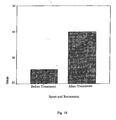
- Improvements in patients treated in accordance with the present invention may be seen within a week or two and treatment should normally be continued for 1 to 2 months or more to achieve maximum benefits. As shown herein, 4 weeks may be sufficient to see significant improvements.
- the identification of a role for bacteria in the development of OA also provides new methods for the accurate diagnosis of OA.
- Biopsies taken from patients suspected of having OA e.g. samples of synovial fluid, can be tested for the presence of pathogenic bacteria.
- the present invention provides an in vitro method of diagnosing osteoarthritis in a patient suspected of having osteoarthritis, which method comprises testing a sample from a joint of said patient for the presence of (pathogenic) bacteria and where bacteria are presend, confirming that said joint is affected by primary bacterial osteoarthritis.
- a particularly preferred method involves the use of nucleic acid probes or primers designed to detect the bacterial species of interest through homology with a target region (sequence) within the bacteria's nucleic acid.
- Suitable primers are described herein in the Examples.
- the primer or primers target a region within the 16S rRNA (or the gene encoding it).
- Primers designated herein as F21- and R21-, particularly F21-4 and R21-4 are specific for Janthinobacterium type sequences and are especially preferred.
- the primer pair F21-2 and R21-4 are also particularly suitable.
- the probes/primers have homology with target sequences, i.e. they are capable of binding to target sequences under standard levels of stringency.
- Methods for obtaining suitable samples from patients suspected of having OA in one or more joints are provided in the Examples herein.
- the diagnostic method described herein provides a useful and reliable test for confirming that a joint is affected by primary bacterial OA and can be used on its own or together with known diagnostic techniques.
- the sample tested will preferably be synovial fluid. If only a little fluid is obtained then saline solution (possibly up to about 30ml) can be injected before further aspiration. These fluid samples can then be spun down to yield a cell sample, e.g. by centrifuging at 13000-rpm (15000g) for 45 mins. The cells in the pellet are preferably washed with a sterile saline solution 2-3 times before being frozen, e.g. at - 70°C.
- the assay for the bacterial gene marker may be based on identification of RNA (e.g. directly for 16S rRNA) or DNA (e.g. the gene encoding 16S rRNA). Where RNA is analysed, a reverse transcription step is required to generate cDNA before PCR can be performed. Methods of analysing RNA are described in the Examples but the DNA from bacteria in the synovial fluid may be analysed instead/as well.
- the DNA may be first isolated from the cells, e.g. using QIAGEN's DNeasy tissue kit (Cat.No. 69504). Alternatively, the DNA may be amplified and analysed without a separate extraction step. Suitable protocols for amplification of DNA in blood cells is described by Nordv g, B. et al. in Methods in Neurosciences Vol.26 [1995] p.15-25 and in BioTechniques [1992] Vol.12 No.4, p.490-491 and the methods apply equally to a cell sample from synovial fluid.
- the assay may quickly and conveniently be performed using only primer set (A) above.
- Cells will preferably lyse in a pre-cycle to the PCR method to make the DNA accessible for primer annealing. After PCR, standard gel visualisation techniques are used.
- the present invention provides a bacterial detection moiety for use in diagnosing primary bacterial osteoarthritis in a patient suspected of having osteoarthritis.
- suitable bacterial detection moieties include nucleic acid probes and primers which may be designed to detect bacteria generally or a particular genus or species.
- Other moieties for bacterial detection include antibodies.
- the 'agent' may simply be a solution, suspension etc. which contains the bacterial detection moiety and is or is capable of being in a form convenient for performing the diagnostic method on a sample.
- the agent will typically be contacted with the sample in order to determine whether or not bacteria are present.
- kits for the diagnosis of primary bacterial OA which comprises a bacterial detection moiety, preferably an agent as defined above.
- the 'bacterial detection moiety' is typically one or more oligonucleotide molecules, e.g. a pair of nucleic acid primers which detect the target bacteria responsible for the OA symptoms.
- the kit may preferably also include one or more of the following a DNA polymerase (which is as free from contaminating DNA as possible), dNTPs, buffers and a reagent to aid RNA/DNA solubilisation.
- the present invention provides a product containing (a) an antibacterial agent as defined herein and (b) a nitric oxide antagonist as a combined preparation for simultaneous, separate or sequential use in the treatment of primary bacterial OA, by treatment of a bacterial infection which is responsible for OA.
- a 'nitric oxide antagonist' is any moiety which serves to lower the local nitric oxide concentration in the area surrounding the joint, for example an inhibitor of nitric oxide synthase.
- the present invention provides a product containing (a) an antibacterial agent as defined herein and (b) an agent which can break down DNA, this agent will preferably be an enzyme such as DNaseI, as a combined preparation for simultaneous, separate or sequential use in the treatment of primary bacterial OA, by treatment of a bacterial infection which is responsible for OA.
- an agent which can break down DNA this agent will preferably be an enzyme such as DNaseI, as a combined preparation for simultaneous, separate or sequential use in the treatment of primary bacterial OA, by treatment of a bacterial infection which is responsible for OA.
- Figure 1 is a sketch showing notchplasty during reconstruction of the anterior cruciate ligament. Cartilage is removed from the lateral wall of the notch.
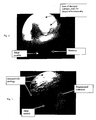
- Figure 2 is a photograph based on optical visualisation showing focally damaged cartilage on the medial femoral condyle. The picture was taken during arthroscopy.
- Figure 3 is a photograph based on optical visualisation showing advanced osteoarthritic changes in a knee, again the picture was taken during arthroscopy.
- Figure 4 a flow chart of SMART technology. The figure is adapted from the Clontech SMART TM PCR cDNA Synthesis Kit user manual.
- Figure 5 is a gel photograph showing the results of re-amplification of differentially expressed bands. The bands between 200-600bp are isolated and used for cloning, sequencing and further verification.
- Figure 6 is the first sequence isolated from patients by differential display. It was a FASTA analysis of this sequence which first lead the inventor to suspect the presence of bacteria.
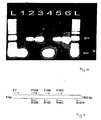
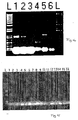
- Figures 8 is a gel photo showing the 16S signal in cartilage biopsies. The lanes were loaded as follows: Lane Sample ID 1 8A 2 8A 3 17A 4 17A 5 20A 6 20A 7 16N 8 16N 9 Treated master mix, + primers but no template. Reverse transcription was performed with primer R1474, PCR with primers F7/R1474 and 6 ⁇ l of each PCR reaction was applied to the gel.
- Figure 9 is a gel photo showing the 16S signal in cartilage biopsies. The lanes were loaded as follows: Lane Sample ID 1 8A 2 17A 3 16N 4 Water control Reverse transcription and PCR were performed using the primers of Fig. 8 .
- Figure 10 is a photograph showing purified amplified 16S DNA fragments prior to sequencing.
- the F7/R1474 pair will amplify the full-length 16s rRNA cDNA but when used for sequencing, these primers will give sequence information for some few hundred base-pairs each, which will not cover the complete sequence.
- the primers F10A, F10B. F10C, R10A, R10B and R10C are used as additional sequencing primers.
- the nucleotide sequences are listed in Table 1. In this way, a composite sequence using overlapping sequence information obtained by sequencing with several forward primers is generated. The same process may be done with the reverse primers to obtain a composite reverse sequence and then the forward and reverse sequences compared to make an even more precise composite sequence.
- Figure 12 is the full length 16s RNA sequence obtained as a forward and reverse composite sequence from patient number 21, A region, using the primers described in the legend to Figure 16 . This sequence was always found in osteoarthritic patents and was found by a Blastn search of the NCBI database to represent Janthinobacterium.
- Figure 13 is a schematic representation of how different primers may be used to differentiate between Janthinobacterium (J) and Burkholderia (B) 16s rRNA sequences. These sequences are generally rather similar but with regions where there is a high percentage of mismatch between the two species.
- FIG. 14 is a gel photograph showing detection of pathogen 16s rRNA genes in synovial fluid. DNA was isolated from synovial fluid from an arthritic knee using the TRIzol kit from Gibco BRL/Life Techologies. The 16s rRNA sequence was amplified using primers designed from the 16s rRNA sequence found in sample 21A.
- FIG. 15 is a gel photograph showing a failure to detect bacterial 16S rRNA in samples from patient 31, normal (N) region and in a water control.
- the lanes were loaded as follows: Lane # Sample Forw.Prim. Rev.Prim. L 1 kb+ ladder 1 31N-SF DNA 1/10 dil.
- F25-1 R25-3 10 Water Ctrl.
- R(reverse) primers R-1492 and R-1474 were used for reverse transcription.
- F forward
- the sequence of the primers is indicated in Table 1 below.
- the primers were bought from Sigma-Genosys. For cDNA synthesis the primers were diluted to 2,5 pmol/ ⁇ l in water. For PCR the primers were diluted to 50 pmol/ ⁇ l in water.
- F-7/R-1474 are preferred for identification of bacterial 16S rRNA (or the gene encoding it) generally as they anneal to a sequence conserved among several studied bacterial species.
- F21-2/R21-4 are suitable for identification of the key causal bacterium Janthinobacterium (or closely related species).
- the Superscript II RNase H - Reverse Transcriptase (Cat.No. 18064-014) from GibcoBRL/Life Technologies were used with its buffer and DTT.
- dNTP's (Cat.No. U1240) were purchased from Promega.
- Thermo Sequenase Cy-5 Dye Terminator Kit (Cat.No. 27-2682-01) from Amersham Pharmacia Biotech were used for the sequencing reactions.
- Sephadex G-50 (Cat.No. 9048-71-9) from Sigma were used for the Sequencing PCR product purification.
- the ABI PRISM BigDye Terminator Cycle Sequencing Kit could also be used.
- HotStarTaq DNA polymerase (Cat.No. 203205) from Qiagen were used for PCR amplification of 16S ribosomal RNA.
- PCR master mixes were treated with RQ1 RNase free DNase I (Cat.No. M610A) from Promega.
- the following technique combines amplification of complete length cDNA with differential display.
- SMART cDNA PCR (Clontech Laboratories Inc., PR304-1) is a technique originally developed to amplify complete cDNA populations/libraries.
- First strand cDNA is synthesized utilizing a oligo-dT primer (CDS primer).
- CDS primer oligo-dT primer
- the reverse transcriptase MMLV, RNase H-
- a second primer anneals to the dC-"tail" and the reverse transcriptase switches template.
- the primers are designed to give the same sequence at both ends of the cDNA and thus by using a primer that will bind to both ends (PCR primer) we can amplify the total mRNA (as cDNA) population exponentially.
- Total cDNA was amplified using the SMART PCR cDNA Synthesis Kit (# K1052-1) from Clontech. The manufacturer's recommended conditions were used. 2 ⁇ l first-strand cDNA were amplified in a total volume of 50 ⁇ l with Advantage 2 KlenTaq Polymerase from Clontech (# 8430-1). After 25 cycles the PCR product were examined on an agarose gel and DNA concentration were determined by measuring Abs 260/280.
- the Delta Differential Display Kit (#K1810-1) from Clontech was used. The manufacturer's recommended conditions were used. The amplified cDNA was diluted to 0.02 ⁇ g/ ⁇ l. Several primer combinations (T and P primers included in the kit) were used to screen for differentially expressed genes.
- Differentially expressed bands were excised from the dried gels by superimposing the film to mark the bands prior to isolate the gel material using a scalpel. 100 ⁇ l water was added to each gel slice in an eppendorf tube. The slices were then incubated at 37°C overnight. The tubes were spun down at 14000g for 15 minutes at 4°C. The eluate were then stored at -20°C. 5 ⁇ l of each eluate was used as template in an amplification reaction using the same conditions as in the Differential Display PCR (no labelling). The PCR products were examined on an agarose gel. Some smear was evident and a larger volume was separated on a larger gel.
- the bands of interest were cut from the agarose gel and the DNA was isolated using the QIAEX II Kit from Qiagen (# 20021). The manufacturer's procedure was followed. DNA was eluted in 20 ⁇ l of water. The DNA was reamplified again using pfu Turbo polymerase (# 600252-51). Each 50 ⁇ l reaction contained 1 ⁇ l template, 40pM primer T and P, 100 ⁇ M dNTP, 10xbuffer and 1,25 U of enzyme. PCR was run with the following conditions: Initial 94°C 9 min, 43 cycles of 94°C for 30 sec and 60°C for 1 min and a final elongation at 60°C for 10 min.
- the reamplified cDNA was cloned into pGEM-T easy cloning vector (#A1360, Promega, Madison, WI, USA). The ligation was performed with a vector concentration of 50ng/ ⁇ l. The presence of a plasmid insert of the expected size was assayed by PCR using the same primers as in the differential display and by cutting the vector with the restriction enzyme Eco RI.
- the cloned PCR fragments were sequenced using the T7 primer. The sequences found showed strong homology with known human gene sequences. They were also 3-4 times longer than the average EST.
- Random 10-mer primers (Operon Technologies, Alameda, CA, USA) were used' to amplify cDNA with no radioactivity.
- Each 50 ⁇ l reaction contained 1 ⁇ l of cDNA, 80 pM of one primer, 200 ⁇ M of each dNTP, 10xbuffer and 2.5 U of HotStarTaq polymerase (Qiagen).
- PCR was run with the following conditions: Initial 95°C 15 min, 40 cycles of 94°C for 2 min, 38°C for 2 min and 68°C for 1 min and 25 sec, and a final elongation at 72°C for 10 min.
- PCR amplification products were separated on a 1.5% agarose gel (agarose 1000, Gibco) in TAE buffer with 1 mM guanosine, and visualized with ethidium bromide. Agarose 1000 is able to resolve bands separated by 10 bp. Differentially expressed bands were excised, isolated and cloned into pGEM-T easy vector without additionally amplification.
- One important aspect of our strategy is to amplify the total cDNA population prior to using it as template in Differential Display PCR reactions using Clontech Smart TM PCR Kit ( Fig. 4 ).
- the cDNA can be eluted from the gel material.
- the cDNA can then be reamplified using the same primers (RT PCR) as in the Differential Display procedure ( Fig. 5 ).
- RNA quality was determined by running a sample on an agarose gel electrophoresis.
- the tube was heated to 90 °C for 5 min, then cooled slowly at room temperature.
- RT-PCR Master-Mix were prepared: /One reaction 4 ⁇ l 1St Strand buffer 2 ⁇ l 0,1 M DTT 1 ⁇ l 10 mM dNTP's
- PCR-MasterMix were incubated at 37 °C for 1 hour, then boiled for 5 minutes and placed on ice. The following reagents were added. 1 rxn 1 ⁇ l PrimerMix (50 pm/ ⁇ l of forward primer + 50 pm/ ⁇ l of reverse primer 0.25 ⁇ l HotStarTaq DNA polymerase
- the PCR products were then stored at -20 °C.
- PCR products were run side-by-side on an 0,8 % agarose gel.
- Mini gels(6x10 cm) were run for 50 min at 90 V in 1X TAE buffer.
- a typical sample was 6 ⁇ l PCR product.
- a 1 kb Plus DNA ladder from Gibco were run parallel to the samples for DNA fragment size determination.
- the gels were stained in EtBr solution (0,5 ⁇ g/ml water) for 20 minutes. They were then destained in several washes of water for about 40 min.
- the gels were visualized on a BioRad Gel Documentation system.
- Cy-5 dNTP mixes were made (A,C,G,T). 4 rxns (MA,MC,MG,MT mixes) 2 ⁇ l 1,1 mM dNTP's 1 ⁇ l Cy-5 dNTP(A,C,G or T) 7 ⁇ l H 2 O 1 ⁇ l 0,55 mM EDTA
- Tubes containing Cy-5 dNTP's must at all times be kept on ice in the dark.
- sequencing reaction products were purified on Sephadex G-50 spin columns (96 well array). The products were then dried in the dark at 37 °C and then resuspended in sequencing stop solution (8 ⁇ l). The samples (4 ⁇ l) were then run on an Amersham-Pharmacia ALF sequencer under standard conditions.
- lanes/tissues are (N) for normal or non-affected regions, (D) for Damaged and (A) for osteoarthritic.
- a joint from one patient may have regions of obviously advanced OA, regions which look quite normal and areas which are not in the advanced stages of OA but where the cartilage is soft and to a certain degree fibrillated, this last area is defined as damaged.
- Table 2 below gives a summary of the detection of 16s rRNA sequences in clinical samples.
- Two types of control were used, H 2 O control (blank) and E. coli total RNA as a positive control.
- Reverse transcription is done with primer R1474.
- PCR amplification was performed using F7 and R1474 primers.
- the numbers in the 'sample' column are the patient numbers. Some samples appear more than once in the table because the sample was analysed on more than one day.
- Table 2 Sample Positive Negative 8A * 17A * 20A * 16N * E .
- the forward and reverse composite sequence from affected tissue of patient 21 was found by Blastn search of the NCBI data-base to represent Janthinobacterium. This sequence was always found in OA patients.
- a composite sequence (705 nucleotides) from affected tissue in patient 17 using forward primer F7 was similarly analysed and the four best allignments from a database containing 671,573 sequences were: gb
- RNA/DNA isolation 1 ml of TRIzol solution was added to the pellet. The pellet was dissolved by vortexing and then incubated at room temperature for 10 minutes. 0.2 ml of chloroform was added to the solution and it was then mixed by vortexing and then incubated at room temperature for 15 minutes.
- the solution was then centrifuged at 13000 rpm for 15 minutes at 4°C.
- the upper, aqueous phase was removed and RNA was isolated as described before.
- 0.3 ml of ethanol was added to the phenol-chloroform phase and the solution was then mixed by vortexing.
- the solution was then incubated at room temperature for 15 minutes. It was then centrifuged at 2000 rpm (approx. 4500 ) for 5 minutes at 4°C.
- the supernatant was removed and the pellet was washed three times in 0.5 ml 0.1 M NaCitrate with 10% ethanol. After each wash it was centrifuged at 2000 rpm (approx. 4500 g) for 5 minutes at 4°C and the supernatant was discarded. After the last wash the pellet was air-dried for 30 minutes at room temperature. The pellet was resuspended in 80 ⁇ l of 8 mM NaOH.
- KOOS These parameters were analysed. Symptoms Activity of daily living Sport Quality of daily living Pain
- Table 3 below show a summary of the response to antibiotic treatment with tetracycline for four weeks as determined by direct questions to the patients on how they felt.
- Sample/Patient Status after 4 weeks of treatment 2 improved 3 unchanged 4 unchanged 5 unchanged 6 improved 7 improved 8 unchanged 9 improved 10 improved 11 unchanged 12 unchanged 13 improved 14 improved 15 unchanged 16 improved 17 unchanged 18 unchanged 19 unchanged 20 unchanged 2.1 unchanged 22 unchanged 23 unchanged 24 unchanged 25 unchanged 26 improved 34 improved
Landscapes
- Health & Medical Sciences (AREA)
- Life Sciences & Earth Sciences (AREA)
- General Health & Medical Sciences (AREA)
- Veterinary Medicine (AREA)
- Medicinal Chemistry (AREA)
- Pharmacology & Pharmacy (AREA)
- Animal Behavior & Ethology (AREA)
- Public Health (AREA)
- Chemical & Material Sciences (AREA)
- Epidemiology (AREA)
- Molecular Biology (AREA)
- Chemical Kinetics & Catalysis (AREA)
- General Chemical & Material Sciences (AREA)
- Nuclear Medicine, Radiotherapy & Molecular Imaging (AREA)
- Organic Chemistry (AREA)
- Bioinformatics & Cheminformatics (AREA)
- Immunology (AREA)
- Orthopedic Medicine & Surgery (AREA)
- Rheumatology (AREA)
- Engineering & Computer Science (AREA)
- Communicable Diseases (AREA)
- Physical Education & Sports Medicine (AREA)
- Oncology (AREA)
- Pharmaceuticals Containing Other Organic And Inorganic Compounds (AREA)
- Measuring Or Testing Involving Enzymes Or Micro-Organisms (AREA)
- Medicines Containing Material From Animals Or Micro-Organisms (AREA)
- Medicines That Contain Protein Lipid Enzymes And Other Medicines (AREA)
Claims (21)
- Verwendung eines antibakteriellen Mittels bei der Herstellung eines Medikaments für die Behandlung von primärer bakterieller Osteoarthritis durch Behandeln einer bakteriellen Infektion, die für Osteoarthritis verantwortlich ist.
- Verwendung nach Anspruch 1, wobei das antibakterielle Mittel gegen Janthinobacterium wirksam ist.
- Verwendung nach einem vorangehenden Anspruch, wobei das antibakterielle Mittel aus der Gruppe ausgewählt ist, die enthält: Clarithromycin, Levofloxacin, Mercaptoethylguanidin, Ciprofloxacinlactat, Tobramycin, Ceftazidimpentathydrat, Gentamicin, Ciproxin, Rifampicin, Doxycyclin, Trimetroprim und Sulfamethoxazol.
- Verwendung nach einem vorangehenden Anspruch, wobei das Medikament zwei oder mehr antibakterielle Mittel enthält.
- Verwendung nach einem vorangehenden Anspruch, wobei die Behandlung des Weiteren die Verabreichung eines zweiten Medikaments aufweist, das ein weiteres antibakterielles Mittel oder ein Mittel, das DNA aufspalten kann, enthält.
- Verwendung nach Anspruch 5, wobei das zweite Medikament Gentamicin, Ciproxin oder DNasel enthält.
- Verwendung nach Anspruch 6, wobei das zweite Medikament in einer Form vorliegt, die zur Injektion geeignet ist.
- Antibakterielles Mittel zur Verwendung bei der Behandlung von primärer bakterieller Osteoarthritis durch Behandeln einer bakteriellen Infektion, die für Osteoarthritis verantwortlich ist.
- Produkt, das (a) ein antibakterielles Mittel und (b) einen Stickoxid-Antagonisten enthält, als kombiniertes Präparat für die gleichzeitige, separate oder aufeinander folgende Verwendung bei der Behandlung von primärer bakterieller Osteoarthritis durch Behandeln einer bakteriellen Infektion, die für die Osteoarthritis verantwortlich ist.
- Produkt, das (a) ein antibakterielles Mittel und (b) ein Mittel, das DNA aufspalten kann, enthält, als kombiniertes Präparat zur gleichzeitigen, separaten oder aufeinander folgenden Verwendung bei der Behandlung von primärer bakterieller Osteoarthritis durch Behandeln einer bakteriellen Infektion, die für Osteoarthritis verantwortlich ist.
- In-vitro-Verfahren zum Diagnostizieren von Osteoarthritis bei einem Patienten, bei dem der Verdacht besteht, dass er Osteoarthritis hat, wobei das Verfahren das Testen einer Probe von einem Gelenk des Patienten auf die Anwesenheit von Bakterien, und wenn Bakterien vorhanden sind, das Bestätigen, dass das Gelenk von primärer bakterieller Osteoarthritis betroffen ist, umfasst.
- Verfahren nach Anspruch 11, wobei die Bakterien durch Binden von einem oder mehreren Oligonukleotiden an die Nukleinsäure der Bakterien nachgewiesen werden.
- Verfahren nach Anspruch 11 oder 12, wobei die Probe mit einem Paar von Primern in Kontakt gebracht wird, die in der Lage sind, an Zielsequenzen innerhalb der Nukleinsäure der Bakterien zu binden.
- Verfahren nach Anspruch 13, wobei die Primer in der Lage sind, an Bereiche innerhalb der 16S rRNA der Bakterien oder des dafür codierenden Gens zu binden.
- Verfahren nach Anspruch 11, wobei die Bakterien unter Verwendung von Antikörpern nachgewiesen werden.
- Verfahren nach einem der Ansprüche 11 bis 15, wobei die Probe eine Probe von Gelenkschmiere bzw. Synovialfluid ist.
- Bakteriennachweiseinheit zur Verwendung beim Diagnostizieren von primärer bakterieller Osteoarthritis bei einem Patienten, bei dem der Verdacht besteht, dass er Osteoarthritis hat.
- Bakteriennachweiseinheit nach Anspruch 17, wobei die Nachweiseinheit ein Oligonukleotid ist.
- Bakteriennachweiseinheit nach Anspruch 18, wobei das Oligonukleotid ein Primer ist, der in der Lage ist, an Zielsequenzen innerhalb der Nukleinsäure der Bakterien zu binden.
- Bakteriennachweiseinheit nach Anspruch 19, wobei der Primer in der Lage ist, an Bereiche innerhalb der 16S rRNA der Bakterien oder des dafür codierenden Gens zu binden.
- Bakteriennachweiseinheit nach Anspruch 17, wobei die Nachweiseinheit ein Antikörper ist.
Applications Claiming Priority (3)
| Application Number | Priority Date | Filing Date | Title |
|---|---|---|---|
| GBGB0114672.9A GB0114672D0 (en) | 2001-06-15 | 2001-06-15 | Pharmaceutical formulations and methods of medical treatment |
| GB0114672 | 2001-06-15 | ||
| PCT/GB2002/002771 WO2002102384A1 (en) | 2001-06-15 | 2002-06-17 | Antibacterial treatment of osteoarthritis |
Publications (2)
| Publication Number | Publication Date |
|---|---|
| EP1401448A1 EP1401448A1 (de) | 2004-03-31 |
| EP1401448B1 true EP1401448B1 (de) | 2010-09-29 |
Family
ID=9916704
Family Applications (1)
| Application Number | Title | Priority Date | Filing Date |
|---|---|---|---|
| EP02730515A Expired - Lifetime EP1401448B1 (de) | 2001-06-15 | 2002-06-17 | Antibakterielle behandlung von osteoarthritis |
Country Status (11)
| Country | Link |
|---|---|
| US (2) | US8318422B2 (de) |
| EP (1) | EP1401448B1 (de) |
| AT (1) | ATE482705T1 (de) |
| AU (1) | AU2002302833B2 (de) |
| CA (1) | CA2456685A1 (de) |
| DE (1) | DE60237821D1 (de) |
| DK (1) | DK1401448T3 (de) |
| ES (1) | ES2349030T3 (de) |
| GB (1) | GB0114672D0 (de) |
| PT (1) | PT1401448E (de) |
| WO (1) | WO2002102384A1 (de) |
Families Citing this family (7)
| Publication number | Priority date | Publication date | Assignee | Title |
|---|---|---|---|---|
| GB0114672D0 (en) * | 2001-06-15 | 2001-08-08 | Orthogenics As | Pharmaceutical formulations and methods of medical treatment |
| US8012950B2 (en) * | 2003-08-29 | 2011-09-06 | Wisconsin Alumni Research Foundation | Method to diagnose and treat degenerative joint disease |
| US20050148553A1 (en) * | 2003-09-05 | 2005-07-07 | Testa Raymond T. | Use of tigecycline, alone, or in combination with rifampin to treat osteomyelitis and/or septic arthritis |
| FI20031927A0 (fi) * | 2003-12-31 | 2003-12-31 | Faron Pharmaceuticals Oy | Terapeuttisesti vaikuttavia aineita ja niiden käyttö |
| JP2007068431A (ja) * | 2005-09-05 | 2007-03-22 | Oji Paper Co Ltd | 細菌叢の解析方法およびキット |
| US20080045485A1 (en) * | 2006-08-17 | 2008-02-21 | Peter Muir | Methods of diagnosing synovial disease in a mammal by detecting bacterial DNA in synovial tissues from dogs with inflammatory knee arthritis and degenerative anterior cruciate ligament rupture |
| WO2012037356A2 (en) * | 2010-09-15 | 2012-03-22 | Rush University Medical Center | Gene expression profiles and products for the diagnosis and prognosis of post-injury synovitis and osteoarthritis |
Family Cites Families (9)
| Publication number | Priority date | Publication date | Assignee | Title |
|---|---|---|---|---|
| US5723597A (en) * | 1983-01-10 | 1998-03-03 | Gen-Probe Incorporated | Ribosomal nucleic acid probes for detecting organisms or groups of organisms |
| CA2136803A1 (en) * | 1993-12-22 | 1995-06-23 | Kazumi Ogata | Steroid derivatives |
| DE69433201T2 (de) * | 1994-02-28 | 2004-07-29 | Shimadzu Corp. | Oligonukleotide und Verfahren zum Nachweis von Bakterien |
| CA2219277A1 (en) * | 1995-05-03 | 1996-11-07 | Pfizer Limited | Novel tetracycline derivatives |
| AUPN771596A0 (en) | 1996-01-25 | 1996-02-15 | Mclean, Allan Joseph | Methods of and compositions for potentiating the action of agents active on cell-wall sites of susceptible bacteria |
| CA2223006A1 (en) * | 1996-04-03 | 1997-10-09 | Kyowa Hakko Kogyo Co., Ltd. | Physiologically active substance ei-2128-1 |
| US5789395A (en) * | 1996-08-30 | 1998-08-04 | The Research Foundation Of State University Of New York | Method of using tetracycline compounds for inhibition of endogenous nitric oxide production |
| GB2375488B (en) | 2001-05-18 | 2004-09-15 | Sarkis Tokatlian | Sub aqua breathing system |
| GB0114672D0 (en) | 2001-06-15 | 2001-08-08 | Orthogenics As | Pharmaceutical formulations and methods of medical treatment |
-
2001
- 2001-06-15 GB GBGB0114672.9A patent/GB0114672D0/en not_active Ceased
-
2002
- 2002-06-17 CA CA002456685A patent/CA2456685A1/en not_active Abandoned
- 2002-06-17 AU AU2002302833A patent/AU2002302833B2/en not_active Ceased
- 2002-06-17 WO PCT/GB2002/002771 patent/WO2002102384A1/en not_active Ceased
- 2002-06-17 ES ES02730515T patent/ES2349030T3/es not_active Expired - Lifetime
- 2002-06-17 US US10/480,775 patent/US8318422B2/en not_active Expired - Fee Related
- 2002-06-17 PT PT02730515T patent/PT1401448E/pt unknown
- 2002-06-17 EP EP02730515A patent/EP1401448B1/de not_active Expired - Lifetime
- 2002-06-17 DE DE60237821T patent/DE60237821D1/de not_active Expired - Lifetime
- 2002-06-17 AT AT02730515T patent/ATE482705T1/de active
- 2002-06-17 DK DK02730515.0T patent/DK1401448T3/da active
-
2007
- 2007-02-07 US US11/703,887 patent/US8349816B2/en not_active Expired - Fee Related
Non-Patent Citations (4)
| Title |
|---|
| "Understanding Arthritis", 2006, pages 1 - 7, XP007912044 * |
| BIRCHFIELD P C: "Osteoarthritis overview.", GERIATRIC NURSING (NEW YORK, N.Y.) 2001 MAY-JUN, vol. 22, no. 3, May 2001 (2001-05-01), pages 124 - 130, ISSN: 0197-4572 * |
| BROWN D E AND NEUMANN RD: "Orthopedic Secrets", 1999, HANLEY AND BELFUS, Philadelphia, PA USA, pages: 1-4, 14 - 18, XP007912046 * |
| CHARD JIRI ET AL: "Update: treatment of osteoarthritis.", ARTHRITIS AND RHEUMATISM 15 DEC 2002, vol. 47, no. 6, 15 December 2002 (2002-12-15), pages 686 - 690, ISSN: 0004-3591 * |
Also Published As
| Publication number | Publication date |
|---|---|
| DK1401448T3 (da) | 2010-12-13 |
| PT1401448E (pt) | 2010-10-27 |
| WO2002102384A1 (en) | 2002-12-27 |
| AU2002302833B2 (en) | 2007-05-17 |
| US20040236074A1 (en) | 2004-11-25 |
| CA2456685A1 (en) | 2002-12-27 |
| ES2349030T3 (es) | 2010-12-22 |
| GB0114672D0 (en) | 2001-08-08 |
| EP1401448A1 (de) | 2004-03-31 |
| US20080027013A1 (en) | 2008-01-31 |
| ATE482705T1 (de) | 2010-10-15 |
| DE60237821D1 (de) | 2010-11-11 |
| US8349816B2 (en) | 2013-01-08 |
| US8318422B2 (en) | 2012-11-27 |
Similar Documents
| Publication | Publication Date | Title |
|---|---|---|
| US8349816B2 (en) | Antibacterial treatment of osteoarthritis | |
| Mann et al. | Nonspecific pyogenic spondylodiscitis: clinical manifestations, surgical treatment, and outcome in 24 patients | |
| Skedros et al. | Subperiosteal orbital abscess in children: diagnosis, microbiology, and management | |
| Mulleman et al. | Streptococcal and enterococcal spondylodiscitis (vertebral osteomyelitis). High incidence of infective endocarditis in 50 cases. | |
| Mariani et al. | Polymerase chain reaction molecular diagnostic technology for monitoring chronic osteomyelitis | |
| AU2002302833A1 (en) | Antibacterial treatment of osteoarthritis | |
| Le Hanneur et al. | Unusual case of paediatric septic arthritis of the lumbar facet joints due to Kingella kingae | |
| Zeller et al. | Group B streptococcal prosthetic joint infections: a retrospective study of 30 cases | |
| Sreckovic et al. | The first case of septic arthritis of the knee caused by Eggerthia catenaformis | |
| Wong et al. | Septic arthritis of the glenohumeral joint: A case series and review of investigative and treatment strategies | |
| Chen et al. | Candida glabrata-induced refractory infectious arthritis: a case report and literature review | |
| Zhou et al. | Comparative study of linezolid and vancomycin regimens in one-stage surgery for treating limb traumatic osteomyelitis caused by methicillin-resistant Staphylococcus aureus | |
| Khetpal et al. | Tuberculous arthritis of the elbow joint: an uncommon location with a diagnostic dilemma | |
| Washington et al. | Abiotrophia defectiva triple threat: A rare case of infective spondylodiscitis, endocarditis, and brain abscess | |
| Congia et al. | Conservative treatment of early-onset tubercular periprosthetic joint infection following total knee arthroplasty | |
| Tang et al. | The clinical characteristics and outcomes of anaerobic spondylodiscitis: a retrospective observational study | |
| Vu et al. | A case of tuberculosis and black-grain eumycetoma co-infection in a non-endemic country: clinical presentation and therapeutic management | |
| Spuck et al. | Rapid manifestation of cervical vertebral osteomyelitis | |
| Lin et al. | Identification of prosthetic joint infection by Candida using metagenomic shotgun sequencing | |
| Mendes et al. | Cervical spondylitis due to Neisseria meningitidis | |
| Myrou et al. | Alternative Treatment without surgery Thyroid Papillary Cancer | |
| Richette et al. | A definite case of spondylodiscitis caused by Streptococcus equisimilis | |
| Elazab et al. | Rare Case of Disseminated Nocardiosis with Simultaneous Lung, Brain, and Spinal Cord Involvement in a Patient with Sarcoidosis | |
| Seo et al. | A Case of Ankle Osteomyelitis Caused by Mycobacterium abscessus | |
| Ramachandran et al. | Internal-Fixation Hardware Infection With Corynebacterium jeikeium |
Legal Events
| Date | Code | Title | Description |
|---|---|---|---|
| PUAI | Public reference made under article 153(3) epc to a published international application that has entered the european phase |
Free format text: ORIGINAL CODE: 0009012 |
|
| 17P | Request for examination filed |
Effective date: 20040114 |
|
| AK | Designated contracting states |
Kind code of ref document: A1 Designated state(s): AT BE CH CY DE DK ES FI FR GB GR IE IT LI LU MC NL PT SE TR |
|
| AX | Request for extension of the european patent |
Extension state: AL LT LV MK RO SI |
|
| 17Q | First examination report despatched |
Effective date: 20071217 |
|
| GRAP | Despatch of communication of intention to grant a patent |
Free format text: ORIGINAL CODE: EPIDOSNIGR1 |
|
| GRAS | Grant fee paid |
Free format text: ORIGINAL CODE: EPIDOSNIGR3 |
|
| GRAA | (expected) grant |
Free format text: ORIGINAL CODE: 0009210 |
|
| AK | Designated contracting states |
Kind code of ref document: B1 Designated state(s): AT BE CH CY DE DK ES FI FR GB GR IE IT LI LU MC NL PT SE TR |
|
| AX | Request for extension of the european patent |
Extension state: AL LT LV MK RO SI |
|
| REG | Reference to a national code |
Ref country code: GB Ref legal event code: FG4D |
|
| REG | Reference to a national code |
Ref country code: CH Ref legal event code: EP |
|
| REG | Reference to a national code |
Ref country code: IE Ref legal event code: FG4D |
|
| REF | Corresponds to: |
Ref document number: 60237821 Country of ref document: DE Date of ref document: 20101111 Kind code of ref document: P |
|
| REG | Reference to a national code |
Ref country code: SE Ref legal event code: TRGR |
|
| REG | Reference to a national code |
Ref country code: GR Ref legal event code: EP Ref document number: 20100402480 Country of ref document: GR |
|
| REG | Reference to a national code |
Ref country code: CH Ref legal event code: NV Representative=s name: BOHEST AG |
|
| REG | Reference to a national code |
Ref country code: DK Ref legal event code: T3 |
|
| REG | Reference to a national code |
Ref country code: ES Ref legal event code: FG2A Effective date: 20101210 Ref country code: NL Ref legal event code: T3 |
|
| LTIE | Lt: invalidation of european patent or patent extension |
Effective date: 20100929 |
|
| PLBE | No opposition filed within time limit |
Free format text: ORIGINAL CODE: 0009261 |
|
| STAA | Information on the status of an ep patent application or granted ep patent |
Free format text: STATUS: NO OPPOSITION FILED WITHIN TIME LIMIT |
|
| 26N | No opposition filed |
Effective date: 20110630 |
|
| REG | Reference to a national code |
Ref country code: DE Ref legal event code: R097 Ref document number: 60237821 Country of ref document: DE Effective date: 20110630 |
|
| PGFP | Annual fee paid to national office [announced via postgrant information from national office to epo] |
Ref country code: NL Payment date: 20120626 Year of fee payment: 11 Ref country code: CH Payment date: 20120627 Year of fee payment: 11 Ref country code: IE Payment date: 20120608 Year of fee payment: 11 Ref country code: DK Payment date: 20120618 Year of fee payment: 11 Ref country code: TR Payment date: 20120607 Year of fee payment: 11 |
|
| PGFP | Annual fee paid to national office [announced via postgrant information from national office to epo] |
Ref country code: SE Payment date: 20120618 Year of fee payment: 11 Ref country code: FI Payment date: 20120618 Year of fee payment: 11 Ref country code: GR Payment date: 20120606 Year of fee payment: 11 |
|
| PGFP | Annual fee paid to national office [announced via postgrant information from national office to epo] |
Ref country code: ES Payment date: 20120613 Year of fee payment: 11 Ref country code: BE Payment date: 20120709 Year of fee payment: 11 |
|
| PGFP | Annual fee paid to national office [announced via postgrant information from national office to epo] |
Ref country code: PT Payment date: 20120531 Year of fee payment: 11 |
|
| PGFP | Annual fee paid to national office [announced via postgrant information from national office to epo] |
Ref country code: AT Payment date: 20120605 Year of fee payment: 11 |
|
| PG25 | Lapsed in a contracting state [announced via postgrant information from national office to epo] |
Ref country code: MC Free format text: LAPSE BECAUSE OF NON-PAYMENT OF DUE FEES Effective date: 20110630 |
|
| PG25 | Lapsed in a contracting state [announced via postgrant information from national office to epo] |
Ref country code: CY Free format text: LAPSE BECAUSE OF FAILURE TO SUBMIT A TRANSLATION OF THE DESCRIPTION OR TO PAY THE FEE WITHIN THE PRESCRIBED TIME-LIMIT Effective date: 20100929 Ref country code: LU Free format text: LAPSE BECAUSE OF NON-PAYMENT OF DUE FEES Effective date: 20110617 |
|
| PGFP | Annual fee paid to national office [announced via postgrant information from national office to epo] |
Ref country code: GB Payment date: 20130605 Year of fee payment: 12 Ref country code: DE Payment date: 20130620 Year of fee payment: 12 |
|
| PGFP | Annual fee paid to national office [announced via postgrant information from national office to epo] |
Ref country code: FR Payment date: 20130726 Year of fee payment: 12 |
|
| REG | Reference to a national code |
Ref country code: PT Ref legal event code: MM4A Free format text: LAPSE DUE TO NON-PAYMENT OF FEES Effective date: 20131217 |
|
| BERE | Be: lapsed |
Owner name: ORTHOGENICS AS Effective date: 20130630 |
|
| PGFP | Annual fee paid to national office [announced via postgrant information from national office to epo] |
Ref country code: IT Payment date: 20130628 Year of fee payment: 12 |
|
| REG | Reference to a national code |
Ref country code: NL Ref legal event code: V1 Effective date: 20140101 |
|
| PG25 | Lapsed in a contracting state [announced via postgrant information from national office to epo] |
Ref country code: SE Free format text: LAPSE BECAUSE OF NON-PAYMENT OF DUE FEES Effective date: 20130618 Ref country code: PT Free format text: LAPSE BECAUSE OF NON-PAYMENT OF DUE FEES Effective date: 20131217 |
|
| REG | Reference to a national code |
Ref country code: CH Ref legal event code: PL |
|
| REG | Reference to a national code |
Ref country code: SE Ref legal event code: EUG |
|
| REG | Reference to a national code |
Ref country code: DK Ref legal event code: EBP Effective date: 20130630 |
|
| REG | Reference to a national code |
Ref country code: AT Ref legal event code: MM01 Ref document number: 482705 Country of ref document: AT Kind code of ref document: T Effective date: 20130617 |
|
| REG | Reference to a national code |
Ref country code: GR Ref legal event code: ML Ref document number: 20100402480 Country of ref document: GR Effective date: 20140103 |
|
| PG25 | Lapsed in a contracting state [announced via postgrant information from national office to epo] |
Ref country code: FI Free format text: LAPSE BECAUSE OF NON-PAYMENT OF DUE FEES Effective date: 20130617 |
|
| REG | Reference to a national code |
Ref country code: IE Ref legal event code: MM4A |
|
| PG25 | Lapsed in a contracting state [announced via postgrant information from national office to epo] |
Ref country code: BE Free format text: LAPSE BECAUSE OF NON-PAYMENT OF DUE FEES Effective date: 20130630 |
|
| PG25 | Lapsed in a contracting state [announced via postgrant information from national office to epo] |
Ref country code: LI Free format text: LAPSE BECAUSE OF NON-PAYMENT OF DUE FEES Effective date: 20130630 Ref country code: NL Free format text: LAPSE BECAUSE OF NON-PAYMENT OF DUE FEES Effective date: 20140101 Ref country code: IE Free format text: LAPSE BECAUSE OF NON-PAYMENT OF DUE FEES Effective date: 20130617 Ref country code: CH Free format text: LAPSE BECAUSE OF NON-PAYMENT OF DUE FEES Effective date: 20130630 |
|
| PG25 | Lapsed in a contracting state [announced via postgrant information from national office to epo] |
Ref country code: AT Free format text: LAPSE BECAUSE OF NON-PAYMENT OF DUE FEES Effective date: 20130617 Ref country code: GR Free format text: LAPSE BECAUSE OF NON-PAYMENT OF DUE FEES Effective date: 20140103 |
|
| PG25 | Lapsed in a contracting state [announced via postgrant information from national office to epo] |
Ref country code: DK Free format text: LAPSE BECAUSE OF NON-PAYMENT OF DUE FEES Effective date: 20130630 |
|
| REG | Reference to a national code |
Ref country code: DE Ref legal event code: R119 Ref document number: 60237821 Country of ref document: DE |
|
| GBPC | Gb: european patent ceased through non-payment of renewal fee |
Effective date: 20140617 |
|
| REG | Reference to a national code |
Ref country code: DE Ref legal event code: R119 Ref document number: 60237821 Country of ref document: DE Effective date: 20150101 |
|
| REG | Reference to a national code |
Ref country code: FR Ref legal event code: ST Effective date: 20150227 |
|
| PG25 | Lapsed in a contracting state [announced via postgrant information from national office to epo] |
Ref country code: DE Free format text: LAPSE BECAUSE OF NON-PAYMENT OF DUE FEES Effective date: 20150101 Ref country code: IT Free format text: LAPSE BECAUSE OF NON-PAYMENT OF DUE FEES Effective date: 20140617 |
|
| PG25 | Lapsed in a contracting state [announced via postgrant information from national office to epo] |
Ref country code: FR Free format text: LAPSE BECAUSE OF NON-PAYMENT OF DUE FEES Effective date: 20140630 Ref country code: GB Free format text: LAPSE BECAUSE OF NON-PAYMENT OF DUE FEES Effective date: 20140617 |
|
| REG | Reference to a national code |
Ref country code: ES Ref legal event code: FD2A Effective date: 20150729 |
|
| PG25 | Lapsed in a contracting state [announced via postgrant information from national office to epo] |
Ref country code: TR Free format text: LAPSE BECAUSE OF NON-PAYMENT OF DUE FEES Effective date: 20130617 |
|
| PG25 | Lapsed in a contracting state [announced via postgrant information from national office to epo] |
Ref country code: ES Free format text: LAPSE BECAUSE OF NON-PAYMENT OF DUE FEES Effective date: 20140618 |