EP1405903B1 - Procédé de traitement d'un vin à l'aide d'un alliage de cuivre, d'or et d'argent, de mesure de l'aptitude au vieillissement et dispositif pour la mise en oeuvre du procédé - Google Patents
Procédé de traitement d'un vin à l'aide d'un alliage de cuivre, d'or et d'argent, de mesure de l'aptitude au vieillissement et dispositif pour la mise en oeuvre du procédé Download PDFInfo
- Publication number
- EP1405903B1 EP1405903B1 EP03368094A EP03368094A EP1405903B1 EP 1405903 B1 EP1405903 B1 EP 1405903B1 EP 03368094 A EP03368094 A EP 03368094A EP 03368094 A EP03368094 A EP 03368094A EP 1405903 B1 EP1405903 B1 EP 1405903B1
- Authority
- EP
- European Patent Office
- Prior art keywords
- wine
- copper
- gold
- silver
- aging
- Prior art date
- Legal status (The legal status is an assumption and is not a legal conclusion. Google has not performed a legal analysis and makes no representation as to the accuracy of the status listed.)
- Expired - Lifetime
Links
- 235000014101 wine Nutrition 0.000 title claims abstract description 72
- PCHJSUWPFVWCPO-UHFFFAOYSA-N gold Chemical compound [Au] PCHJSUWPFVWCPO-UHFFFAOYSA-N 0.000 title claims abstract description 18
- 239000010931 gold Substances 0.000 title claims abstract description 18
- 229910001316 Ag alloy Inorganic materials 0.000 title claims abstract description 4
- 229910001020 Au alloy Inorganic materials 0.000 title claims abstract description 4
- 229910000881 Cu alloy Inorganic materials 0.000 title claims abstract description 4
- 239000004332 silver Substances 0.000 title claims description 17
- 238000000034 method Methods 0.000 title claims description 16
- BQCADISMDOOEFD-UHFFFAOYSA-N Silver Chemical compound [Ag] BQCADISMDOOEFD-UHFFFAOYSA-N 0.000 title claims description 12
- 230000008569 process Effects 0.000 title description 5
- 230000032683 aging Effects 0.000 claims abstract description 40
- RYGMFSIKBFXOCR-UHFFFAOYSA-N Copper Chemical compound [Cu] RYGMFSIKBFXOCR-UHFFFAOYSA-N 0.000 claims abstract description 21
- 239000010949 copper Substances 0.000 claims abstract description 20
- 239000000203 mixture Substances 0.000 claims abstract description 13
- 230000033116 oxidation-reduction process Effects 0.000 claims abstract description 13
- 229910052802 copper Inorganic materials 0.000 claims description 18
- 229910052709 silver Inorganic materials 0.000 claims description 15
- 229910052737 gold Inorganic materials 0.000 claims description 14
- 229910045601 alloy Inorganic materials 0.000 claims description 12
- 239000000956 alloy Substances 0.000 claims description 12
- 230000001590 oxidative effect Effects 0.000 claims description 8
- 230000003647 oxidation Effects 0.000 claims description 5
- 238000007254 oxidation reaction Methods 0.000 claims description 5
- 230000007935 neutral effect Effects 0.000 claims description 3
- 238000002791 soaking Methods 0.000 claims 1
- 239000008188 pellet Substances 0.000 description 10
- 238000005275 alloying Methods 0.000 description 5
- 235000019568 aromas Nutrition 0.000 description 4
- 230000000694 effects Effects 0.000 description 4
- 230000006870 function Effects 0.000 description 4
- 238000005259 measurement Methods 0.000 description 4
- 238000010791 quenching Methods 0.000 description 4
- 230000000171 quenching effect Effects 0.000 description 4
- UCKMPCXJQFINFW-UHFFFAOYSA-N Sulphide Chemical compound [S-2] UCKMPCXJQFINFW-UHFFFAOYSA-N 0.000 description 3
- NINIDFKCEFEMDL-UHFFFAOYSA-N Sulfur Chemical compound [S] NINIDFKCEFEMDL-UHFFFAOYSA-N 0.000 description 2
- 230000003679 aging effect Effects 0.000 description 2
- 239000003963 antioxidant agent Substances 0.000 description 2
- 230000003078 antioxidant effect Effects 0.000 description 2
- 235000006708 antioxidants Nutrition 0.000 description 2
- 238000010586 diagram Methods 0.000 description 2
- 230000002431 foraging effect Effects 0.000 description 2
- 239000011521 glass Substances 0.000 description 2
- 230000009467 reduction Effects 0.000 description 2
- 229910052717 sulfur Inorganic materials 0.000 description 2
- 239000011593 sulfur Substances 0.000 description 2
- 238000011514 vinification Methods 0.000 description 2
- RWSOTUBLDIXVET-UHFFFAOYSA-N Dihydrogen sulfide Chemical class S RWSOTUBLDIXVET-UHFFFAOYSA-N 0.000 description 1
- LSNNMFCWUKXFEE-UHFFFAOYSA-N Sulfurous acid Chemical class OS(O)=O LSNNMFCWUKXFEE-UHFFFAOYSA-N 0.000 description 1
- 235000009754 Vitis X bourquina Nutrition 0.000 description 1
- 235000012333 Vitis X labruscana Nutrition 0.000 description 1
- 240000006365 Vitis vinifera Species 0.000 description 1
- 235000014787 Vitis vinifera Nutrition 0.000 description 1
- 235000013361 beverage Nutrition 0.000 description 1
- 238000009395 breeding Methods 0.000 description 1
- 230000001488 breeding effect Effects 0.000 description 1
- 239000003086 colorant Substances 0.000 description 1
- 230000000295 complement effect Effects 0.000 description 1
- 238000001514 detection method Methods 0.000 description 1
- 239000000284 extract Substances 0.000 description 1
- 238000000855 fermentation Methods 0.000 description 1
- 230000004151 fermentation Effects 0.000 description 1
- 230000006872 improvement Effects 0.000 description 1
- 229910052751 metal Inorganic materials 0.000 description 1
- 239000002184 metal Substances 0.000 description 1
- 150000002739 metals Chemical class 0.000 description 1
- 238000004806 packaging method and process Methods 0.000 description 1
- 235000010603 pastilles Nutrition 0.000 description 1
- 230000000007 visual effect Effects 0.000 description 1
Images

Classifications
-
- C—CHEMISTRY; METALLURGY
- C12—BIOCHEMISTRY; BEER; SPIRITS; WINE; VINEGAR; MICROBIOLOGY; ENZYMOLOGY; MUTATION OR GENETIC ENGINEERING
- C12H—PASTEURISATION, STERILISATION, PRESERVATION, PURIFICATION, CLARIFICATION OR AGEING OF ALCOHOLIC BEVERAGES; METHODS FOR ALTERING THE ALCOHOL CONTENT OF FERMENTED SOLUTIONS OR ALCOHOLIC BEVERAGES
- C12H1/00—Pasteurisation, sterilisation, preservation, purification, clarification, or ageing of alcoholic beverages
- C12H1/12—Pasteurisation, sterilisation, preservation, purification, clarification, or ageing of alcoholic beverages without precipitation
- C12H1/16—Pasteurisation, sterilisation, preservation, purification, clarification, or ageing of alcoholic beverages without precipitation by physical means, e.g. irradiation
-
- C—CHEMISTRY; METALLURGY
- C12—BIOCHEMISTRY; BEER; SPIRITS; WINE; VINEGAR; MICROBIOLOGY; ENZYMOLOGY; MUTATION OR GENETIC ENGINEERING
- C12H—PASTEURISATION, STERILISATION, PRESERVATION, PURIFICATION, CLARIFICATION OR AGEING OF ALCOHOLIC BEVERAGES; METHODS FOR ALTERING THE ALCOHOL CONTENT OF FERMENTED SOLUTIONS OR ALCOHOLIC BEVERAGES
- C12H1/00—Pasteurisation, sterilisation, preservation, purification, clarification, or ageing of alcoholic beverages
- C12H1/22—Ageing or ripening by storing, e.g. lagering of beer
-
- C—CHEMISTRY; METALLURGY
- C22—METALLURGY; FERROUS OR NON-FERROUS ALLOYS; TREATMENT OF ALLOYS OR NON-FERROUS METALS
- C22C—ALLOYS
- C22C9/00—Alloys based on copper
Definitions
- the present invention relates to the field of oenology and in particular a method of accelerated aging of a wine and a device for carrying out the process.
- the aptitude for aging is traditionally assumed according to the vintage of the wines, their colors, the grape varieties used and the vinification method. Some wines are tasted too early or too late and often the user does not consume them at their peak.
- the aging of a wine follows its fermentation, which is mainly a wine reduction operation. Then, it is kept in an atmosphere or an anti-oxidant packaging so as to avoid a too brutal oxidation - worst of the problems for the professional winemaker - and ensure the conditions of slow oxidation to drive the wine to its peak.
- the main antioxidant elements used are based on sulfur, in the form of sulphites or sulphide, so as to allow the wine to undergo the effect of slow oxidation, cellar aging at a constant temperature.
- the wine In general, the wine is left to age for many years in the cellar so as to ensure a slow redox operation and allow the release of aromas and subsequently wine tasting at its peak.
- the object of the present invention is to provide a method for providing an accelerated oxidation-reduction method for wine in a perfectly controlled manner in order to ensure a predetermined organoleptic aging.
- Another object of the present invention is to provide a simple and effective device for treating the wine by means of a perfectly controlled oxidation-reduction operation and, consequently, a predetermined aging of the wine.
- a third object of the present invention is to provide a measurement standard for the aging ability of a wine.
- a well-calibrated, controlled oxidation-reduction operation is thus carried out, ensuring an appropriate organoleptic treatment, very close to aging in the cellar.
- This operation is likely to have many applications, including the determination of the aging ability of a predetermined wine or, simply, tasting under the best conditions of a wine with high potential.
- the alloying element is composed of 60 to 99.9 percent copper, 0.05 to 20 percent silver and 0.05 to 20 percent gold.
- the alloy is 95 percent copper, 3 percent gold, and 2 percent silver.
- the copper is hammered thus ensuring controlled aging under the best conditions.
- the invention also provides a device for oenological use performing accelerated aging of a given wine and nevertheless perfectly controlled.
- the device comprises a neutral support element on the oxidizing plane and an element having a contact surface and a predefined oxidation-reduction power.
- the alloying element is a circular shaped pellet having a composition of 60 to 99.9 percent copper, 0.05 to 20 percent silver, and 0.05 to 20 percent gold.
- the copper is hammered and its composition is preferably 95%, the composition of silver is 3% and that of gold is 2%.
- the invention thus provides, in particular, a measuring element or a standard for measuring the aging ability of a specific wine.
- the device comprises an electronic circuit for measuring the quenching time combined with a warning circuit so as to increase the accuracy of the measurement of the aging ability.
- the wine is, in general, composed of three elements, namely a structure, aromas and fat.
- the aging of the wine results from the control of the redox of the wine, which is generally carried out in a suitable cellar with given hygrometry and temperature characteristics.
- an alloying element comprising three components, namely copper, silver and gold, is used.
- these three components belong to the same classification according to the classification of the elements of Mendeleiv and have a selfoxydant own power that combines with that of others.
- the elements of copper and silver will capture the element suffering, in the state of sulphide or sulphide present in the wine so as to cause the release of the sulfur element and, consequently, cause the release aromas of the wine.
- the three elements of the alloy act in concert, and their effects reinforce each other by ensuring the release of aromas similar to that resulting from an aging wine cellar.
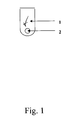
- the figure 1 illustrates a first embodiment of the invention, particularly simple and inexpensive to achieve, in the form of a tool for accelerated aging - and yet perfectly controlled - wine in contact therewith.
- This tool is in the form of a tongue 1 inside which is installed an element 2 of determined surface alloy and composed of an alloy of three metals such as copper, gold and silver .
- the element 2 is in the form of a circular pellet having a copper composition between 60 and 99.9%, silver between 0.05% and 20% and gold between 0.05% and 20%.
- the pellet has a diameter of between 3 millimeters and 50 millimeters in diameter.
- the precise composition of the pellet precisely determines its oxidizing power and the accelerated aging rate of the wine in contact therewith.
- the following precise composition is adopted: 95% copper for the pellet, 3% for silver and 2% for gold.
- the pellet a diameter of 6 millimeters.
- the tool has a shape sufficiently elongated and narrow to allow direct contact with the wine contained in a bottle.
- the tool of the figure 1 can be made in any form to associate with the functional part of the tool a perfectly dissociable aesthetic and that, for the sake of clarity, it is not represented in the figure 1 .
- the device according to the invention produces a true measuring instrument, a standard for the aging ability of the wine.
- this first preferred embodiment particularly simple and inexpensive - the consumer will be able to taste the wine at a certain stage of its aging or appreciate the ability of the same wine to aging in the cellar.
- the method according to the invention is naturally intended to combine with an electronic measurement of time.
- the alloy composition being determined, the oxidation-reduction effect caused on the wine is a function of the time of quenching of the tool in the glass - or in any cuvée - and this time can conveniently be measured by an electronic system associated with the tool.
- the figure 2 illustrates such a realization that is in the form of a new tool - presenting itself as a thermometer, and that the professional winemaker or the consumer will be able to soak in the glass of wine or in the bottle to cause a perfectly controlled oxidation-reduction operation .
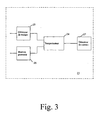
- the tool is in the form of a support member 21, comprising a calibrated alloy pad 22 and an electronic circuit 23 whose block diagram is given in FIG. figure 3 .
- the electronic circuit 23 comprises a timer element 24 - suitably calibrated as a function of the surface of the tablet - and a detector element 25 for the detection of quenching in the wine.
- the circuit 23 furthermore comprises an input device for a setpoint, such as, for example, a pushbutton 26 located on the tool making it possible to generate pulses corresponding to as many years of desired aging, and a warning element 27, either sound is visual.
- a setpoint such as, for example, a pushbutton 26 located on the tool making it possible to generate pulses corresponding to as many years of desired aging
- a warning element 27 either sound is visual.
- the timer element may be replaced, as the case may be, by a microprocessor in the form of an integrated circuit such as VLSI (Very Large Scale Integrated) associated with memory elements for the realization of complementary functions independent of the object of the present invention and which will not, therefore, be developed above.
- VLSI Very Large Scale Integrated
- the delay element As soon as the user - be it the professional winemaker or the consumer - soaks the tool in the wine, a countdown of the time is made by the delay element and, as soon as the appropriate time corresponds to the number of User generated pulses has elapsed, the warning element informs the user that he can extract the tool from the container containing the wine.
- the applications of the invention are numerous, both for professionals and consumers.
- the professional will be able to test the quality of the wine and the aptitude for aging.
- the consumer will be able to taste his wine more quickly at his peak and thus avoid storing it for many years in his wine cellar.
- the process used according to a rigorous protocol, also makes it possible to improve the breeding conditions, to avoid or to suppress certain mercaptans in the wine. It is also a decision-making aid for the oenologist and winemaker in the work of wines from the winemaking phase to bottling.
Landscapes
- Chemical & Material Sciences (AREA)
- Engineering & Computer Science (AREA)
- Organic Chemistry (AREA)
- Health & Medical Sciences (AREA)
- Wood Science & Technology (AREA)
- Zoology (AREA)
- Biochemistry (AREA)
- Bioinformatics & Cheminformatics (AREA)
- General Engineering & Computer Science (AREA)
- General Health & Medical Sciences (AREA)
- Genetics & Genomics (AREA)
- Food Science & Technology (AREA)
- Life Sciences & Earth Sciences (AREA)
- Toxicology (AREA)
- Materials Engineering (AREA)
- Mechanical Engineering (AREA)
- Metallurgy (AREA)
- Investigating Or Analyzing Non-Biological Materials By The Use Of Chemical Means (AREA)
- Distillation Of Fermentation Liquor, Processing Of Alcohols, Vinegar And Beer (AREA)
- Food Preservation Except Freezing, Refrigeration, And Drying (AREA)
- Food-Manufacturing Devices (AREA)
- Measuring Or Testing Involving Enzymes Or Micro-Organisms (AREA)
- Investigating And Analyzing Materials By Characteristic Methods (AREA)
- Surface Acoustic Wave Elements And Circuit Networks Thereof (AREA)
Description
- La présente invention concerne le domaine de l'oenologie et notamment un procédé de vieillissement accéléré d'un vin donné et un dispositif pour la mise en oeuvre du procédé.
- L'aptitude au vieillissement est traditionnellement supposée en fonction du millésime des vins, de leurs couleurs, des cépages employés et de la méthode de vinification. Certains vins sont dégustés trop tôt ou trop tard et, bien souvent, l'utilisateur ne les consomme pas à leur apogée.
- D'une manière générale, le vieillissement d'un vin suit sa fermentation, laquelle est principalement une opération de réduction du vin. Ensuite, ce dernier est conservée dans une atmosphère ou un emballage anti-oxydant de manière à éviter une oxydation trop brutale - pire des maux pour le vinificateur professionnel - et assurer les condition d'une lente oxydation permettant de conduire le vin à son apogée. Les principaux éléments anti-oxydants utilisés sont basé sur le souffre, à l'état de sulfites ou de sulfure, de manière à permettre au vin de subir l'effet d'une lente oxydation, d'un vieillissement en cave à température constante.
- En général, on laisse vieillir le vin durant de nombreuses années en cave de manière à assurer une lente opération d'oxydoréduction et permettre la libération des arômes et par la suite la dégustation du vin à son apogée.
- Cette longue période de vieillissement qui est nécessaire est un inconvénient pour les professionnels mais également pour les consommateurs. Les uns comme les autres devront attendre de nombreuses années avant de s'assurer que le vin pourra être dégusté dans les meilleures conditions. Cependant des procédés de vieillissement accélléré sont connus de l'art (
DE 893 332 ;SU 737 447 - En outre, cette longue période de vieillissement constitue un obstacle supplémentaire à culture de l'oenologie qui, il faut bien le reconnaître, est une science réservée à quelques initiés et reste particulièrement difficile d'accès pour un consommateur moyen qui ne peut s'en remettre à des indications générales diffusée dans les guides ou a presse spécialisée.
- D'une manière générale, il serait souhaitable - aussi bien pour le professionnel que pour le consommateur - de ne pas être contraint d'attendre de nombreuses années avant de pouvoir déguster son vin ou de s'apercevoir que celui-ci est impropre à un vieillissement en cave.
- Il est tout également souhaitable de pouvoir disposer d'un outil spécifique à la science de l'oenologie, permettant de constituer un étalon pour l'appréciation du vin et son aptitude au vieillissement.
- L'on se propose, avec la présente invention, à démocratiser largement l'accès à la culture de l'oenologie et, plus généralement, à offrir à tout un chacun - aux professionnels de l'oenologie comme au grand public, - un outil particulièrement efficace permettant d'apprécier la qualité de ce breuvage plusieurs fois millénaire.
- La présente invention a pour but de proposer un procédé destiné à ménager un procédé d'oxydoréduction accéléré du vin d'une manière parfaitement maîtrisé afin d'en assurer un vieillissement organoleptique prédéterminé.
- Un autre but de la présente invention consiste à réaliser un dispositif simple et efficace permettant de traiter le vin au moyen d'une opération d'oxydoréduction parfaitement maîtrisée et, par suite, un vieillissement prédéterminé du vin.
- Un troisième but de la présente invention consiste à réaliser un étalon de mesure pour l'aptitude au vieillissement d'un vin.
- L'invention réalise ces buts au moyen d'un procédé de vieillissement accéléré d'un vin contenu dans un récipient ouvert ou fermé comportant les étapes suivantes :
- mise en contact du vin à traiter avec un élément d'alliage de cuivre, d'or et d'argent présentant une surface et une composition définie de manière à réaliser une opération d'oxydoréduction accélérée et calibrée du vin.
- On réalise ainsi une opération d'oxydoréduction parfaitement calibrée, maîtrisée assurant un traitement organoleptique approprié, très proche d'un vieillissement en cave. Cette opération est susceptible de nombreuses applications, dont la détermination de l'aptitude au vieillissement d'un vin prédéterminé ou, tout simplement, la dégustation dans les meilleures conditions d'un vin à fort potentiel.
- Dans un mode de réalisation particulier, l'élément d'alliage est composé de 60 à 99.9 pour cent de cuivre, 0.05 à 20 pour cent d'argent et 0.05 à 20 pour cent d'or. De préférence, l'alliage se compose de 95 pour cent de cuivre, de 3 pour cent d'or et de 2 pour cent d'argent.
- Dans un mode de réalisation particulier, le cuivre est martelé assurant ainsi le vieillissement maîtrisé dans les meilleures conditions.
- L'invention réalise également un dispositif à usage oenologique réalisant un vieillissement accéléré d'un vin donné et néanmoins parfaitement maîtrisé. Le dispositif comporte un élément support neutre sur le plan oxydant et un élément présentant une surface de contact et un pouvoir d'oxydoréduction prédéfini.
- Dans un mode de réalisation particulier, l'élément d'alliage est une pastille de forme circulaire et présentant une composition de 60 à 99.9 pour cent de cuivre, 0.05 à 20 pour cent d'argent et 0.05 à 20 pour cent d'or.
- De préférence le cuivre est martelé et sa composition est de préférence 95%, la composition de l'argent est 3% et celle de l'or est 2%.
- L'invention réalise ainsi notamment un élément de mesure ou un étalon servant à la mesure de l'aptitude au vieillissement d'un vin déterminé
- Dans un mode de réalisation spécifique, le dispositif comporte un circuit électronique de mesure du temps de trempe combiné à un circuit avertisseur de manière à accroître la précision de la mesure de l'aptitude au vieillissement.
- D'autres caractéristiques, but et avantages de l'invention apparaîtront à la lecture de la description et des dessins ci-après. Sur les dessins annexés :
- La
figure 1 représente un mode de réalisation préféré d'un dispositif pour réaliser le vieillissement accéléré maîtrisé d'un vin, particulièrement simple à réaliser, à destination des vinificateurs ou même des amateurs de vins. - La
figure 2 représente une seconde réalisation de l'invention comportant un circuit électronique de mesure du temps de trempe. - La
figure 3 est un schéma synoptique du circuit électronique de mesure du temps. - Pour comprendre le fonctionnement du procédé et du dispositif selon l'invention, on rappellera que le vin est, d'une manière générale, composé de trois éléments, à savoir une structure, des arômes et du gras.
- Le vieillissement du vin résulte de la maîtrise de l'oxydoréduction du vin, ce que l'on réalise en général dans une cave appropriée présentant des caractéristiques données d'hygrométrie et de température.
- On s'est aperçu d'une manière surprenante que l'on pouvait obtenir le même effet de vieillissement - d'une manière accéléré - en mettant le vin en contact avec un élément d'alliage présentant un pouvoir d'oxydo-réduction défini et une surface de contact prédéterminée.
- En choisissant judicieusement la surface de contact de l'élément d'alliage avec la composition de cet alliage oxydant, on peut alors réaliser un étalon de mesure de l'aptitude au vieillissement du vin.
- Dans le mode de réalisation préféré, on utilise un élément d'alliage comportant trois composants, à savoir le cuivre, l'argent et l'or. Comme on le sait, ces trois composants appartiennent à la même classification selon la classification des éléments de Mendeleiv et possèdent un pouvoir autooxydant propre qui se combine avec celui des autres.
- On a découvert que le contact de ces trois composants, notamment lorsqu'il est pris dans une combinaison spécifique, permettait de réaliser un effet sur la composition du vin et de procéder à un vieillissement parfaitement maîtrisé.
- Plus spécifiquement, les éléments de cuivre et d'argent vont capter l'élément souffre, à l'état de sulfure ou de sulfide présent dans le vin de manière à provoquer la libération de l'élément souffre et, par conséquent, provoquer la libération des arômes du vin. Les trois éléments de l'alliage agissent de concert, et leurs effets se renforcent mutuellement en assurant la libération des arômes semblable à celle résultant d'un vieillissement du vin en cave.
- On va décrire à présent deux modes de réalisation spécifiques du procédé selon l'invention de manière à réaliser des outils parfaitement utiles et efficaces aussi bien pour le vinificateur professionnel et l'oenologue que pour le consommateur.
- La
figure 1 illustre un premier mode de réalisation de l'invention, particulièrement simple et bon marché à réaliser, sous la forme d'un outil permettant le vieillissement accéléré - et cependant parfaitement maîtrisé - du vin en contact avec celui-ci. - Cet outil se présente sous la forme d'une languette 1 à l'intérieur de laquelle est installée un élément 2 d'alliage de surface déterminée et composée d'un alliage de trois métaux tel que le cuivre, l'or et l'argent.
- De préférence, l'élément 2 se présente sous la forme d'une pastille circulaire présentant une composition de cuivre entre 60 et 99.9 %, d'argent entre 0.05% et 20% et d'or entre 0.05% et 20%. La pastille présente un diamètre compris entre 3 millimètres et 50 millimètres de diamètre.
- La composition précise de la pastille détermine précisément son pouvoir oxydant et le taux de vieillissement accéléré du vin en contact avec celle-ci. En choisissant précisément la surface de contact de l'élément 2, on pourra réaliser ainsi un étalon de vieillissement, par exemple une année de vieillissement par seconde de contact avec la pastille.
- De préférence, on adopte la composition précise suivante : 95% de cuivre pour la pastille, 3% pour l'argent et 2% pour l'or. On adoptera pour la pastille un diamètre de 6 millimètres.
- De préférence, l'outil présente une forme suffisamment allongée et étroite pour permettre le contact direct avec le vin contenu dans une bouteille.
- On notera que l'outil de la
figure 1 pourra être réalisé sous une forme quelconque afin d'associer à la partie fonctionnelle de l'outil une esthétique parfaitement dissociable et que, par souci de clarté, l'on n'a pas représenté dans lafigure 1 . De la même manière, on pourra aisément conférer à la pastille toute forme particulière, parfaitement dissociable de la fonction de cette dernière qui consiste en une surface de contact de l'alliage oxydant avec le vin à traiter. - Comme on le voit, l'outil de la
figure 1 permet de réaliser une opération d'oxydoréduction parfaitement maîtrisée qui permet trois appréciations qui ne pouvaient être effectuées sans l'invention : - 1) décision pour le producteur de soutirer ou non le vin en cas de phénomène de réduction massive
- 2) amélioration des conditions de dégustation et de service d'un vin à fort potentiel ;
- 3) précision de la capacité de garde. On pourra, en choisissant judicieusement la surface de contact de la pastille, adopter l'unité de mesure suivante : dans une quantité de 10 cl de vin, une seconde de contact équivaut à une année de potentiel de vieillissement.
- On constate que dans cette troisième application, le dispositif selon l'invention réalise un véritable instrument de mesure, un étalon de l'aptitude au vieillissement du vin.
- Grâce à ce premier mode de réalisation préféré - particulièrement simple et bon marché - le consommateur pourra déguster le vin à une étape définie de son vieillissement ou apprécier l'aptitude du même vin à un vieillissement en cave.
- Le procédé selon l'invention trouve naturellement vocation à se combiner avec une mesure électronique du temps. En effet, la composition d'alliage étant déterminée, l'effet d'oxydoréduction provoqué sur le vin est fonction du temps de trempe de l'outil dans le verre - ou dans une cuvée quelconque - et ce temps peut être opportunément mesuré par un système électronique associé à l'outil.
- La
figure 2 illustre une telle réalisation qui se présente sous la forme d'un outil nouveau - se présentant tel un thermomètre, et que le vinificateur professionnel ou le consommateur pourra tremper dans le verre de vin ou dans la bouteille pour provoquer une opération d'oxydoréduction parfaitement maîtrisé. Dans un mode de réalisation spécifique, l'outil se présente sous la forme d'un élément de support 21, comportant une pastille d'alliage 22 calibrée ainsi qu'un circuit électronique 23 dont le schéma synoptique est donné enfigure 3 . Le circuit électronique 23 comporte un élément temporisateur 24 - judicieusement calibré en fonction de la surface de la pastille - et un élément détecteur 25 pour la détection de la trempe dans le vin. Le circuit 23 comporte en outre un organe de saisie d'une consigne, telle que par exemple un bouton poussoir 26 situé sur l'outil permettant de générer des impulsions correspondant à autant d'années de vieillissement souhaité, et un élément avertisseur 27, soit sonore soit visuel. L'élément temporisateur pourra être remplacé, selon le cas, par un microprocesseur sous forme de circuit intégré tel que VLSI (Very Large Scale Integrated) associé à des éléments mémoires pour la réalisation de fonctions complémentaires indépendantes de l'objet de la présente invention et qui ne seront, par conséquent, pas développées ci-avant. - Dès lors que l'utilisateur - qu'il s'agisse du vinificateur professionnel ou du consommateur - trempe l'outil dans le vin, un décompte du temps est effectué par l'élément de temporisation et, dès le temps adéquat correspondant au nombre d'impulsions générés par l'utilisateur est écoulé, l'élément avertisseur informe l'utilisateur de ce qu'il peut extraire l'outil du récipient contenant le vin.
- On obtient ainsi un outil particulièrement efficace pour réaliser un effet de vieillissement du vin qui reste parfaitement maîtrisé. L'association de l'électronique avec la pastille suivant l'invention permet d'obtenir une précision particulièrement remarquable.
- Les applications de l'invention, sous ses diverses modes de réalisation sont nombreuses, tant pour les professionnels que pour les consommateurs. Le professionnel pourra tester la qualité du vin et l'aptitude au vieillissement. Le consommateur pourra déguster plus rapidement son vin à son apogée et éviter ainsi de le stocker durant de nombreuses années dans sa cave à vin.
- Le procédé, utilisé selon un protocole rigoureux, permet également d'améliorer les conditions d'élevage, d'éviter ou de supprimer certains mercaptans dans le vin. C'est également un moyen d'aide à la décision pour l'oenologue et le vinificateur dans le travail des vins depuis la phase de vinification jusqu'à la mise en bouteille.
Claims (11)
- Procédé de traitement d'un vin contenu dans un récipient ouvert ou fermé et visant à modifier ses propriétés organoleptiques comportant les étapes suivantes :- mise en contact du vin à traiter avec un élément d'alliage de cuivre, d'or et d'argent présentant une surface et une composition définie de manière à réaliser une opération d'oxydoréduction accélérée et calibrée du vin.
- Procédé de traitement du vin conformément à la revendication 1 caractérisé par un élément d'alliage composé de 60 à 99.9 pour cent de cuivre, 0.05 à 20 pour cent d'argent et 0.05 à 20 pour cent d'or.
- Procédé de traitement du vin selon la revendication 2 caractérisé en ce que ledit élément d'alliage se compose de 95 pour cent de cuivre, de 3 pour cent d'or et de 2 pour cent d'argent.
- Procédé de traitement du vin selon la revendication 2 caractérisé en ce que le cuivre est martelé.
- Dispositif à usage oenologique permettant de réaliser un vieillissement accéléré d'un vin comportant un élément support (1), neutre sur le plan oxydant, et un élément (2) présentant une surface de contact et un pouvoir d'oxydo réduction prédéterminée, de manière à réaliser une opération de vieillissement accélérée maîtrisée, caractérisé en ce que l'élément (2) oxydant se compose dun alliage qui consiste en 60 à 99.9 pour cent de cuivre, 0.05 à 20 pour cent d'argent et 0.05 à 20 pour cent d'or
- Dispositif selon la revendication 5 caractérisé en ce que l'élément oxydant (2) se compose de 95 pour cent de cuivre, de 3 pour cent d'or et de 2 pour cent d'argent.
- Dispositif selon la revendication 6 caractérisé en ce que le cuivre est martelé.
- Dispositif selon l'une des revendications 5 à 7 caractérisé en ce qu'il présente une forme adaptée au goulot d'une bouteille de vin ou à celui d'un tonneau.
- Dispositif selon l'une des revendications 5 à 8 caractérisé en ce qu'il comporte un circuit électronique assurant la mesure d'un temps de trempe prédéterminé de manière à réaliser une opération de vieillissement précise et calibrée.
- Dispositif selon la revendication 5 caractérisé en ce qu'il comporte un instrument de mesure de l'aptitude au vieillissement d'un vin comportant un premier élément support (1), neutre sur le plan oxydant, et un élément (2) présentant une surface de contact et un pouvoir d'oxydo réduction prédéterminée, de manière à réaliser une opération de vieillissement accélérée maîtrisée, caractérisé en ce que l'élément (2) oxydant se compose d'un alliage consistant en 60 à 99.9 pour cent de cuivre, 0.05 à 20 pour cent d'argent et 0.05 à 20 pour cent d'or
- Dispositif selon la revendication 10 caractérisé en ce que l'élément oxydant (2) se compose se compose de 95 pour cent de cuivre, de 3 pour cent d'or et de 2 pour cent d'argent.
Applications Claiming Priority (2)
| Application Number | Priority Date | Filing Date | Title |
|---|---|---|---|
| FR0212302 | 2002-10-04 | ||
| FR0212302A FR2845393B1 (fr) | 2002-10-04 | 2002-10-04 | Dispositif a usage oenologique permettant de donner des indications sur la qualite des vins et leur aptitude au vieillissement |
Publications (2)
| Publication Number | Publication Date |
|---|---|
| EP1405903A1 EP1405903A1 (fr) | 2004-04-07 |
| EP1405903B1 true EP1405903B1 (fr) | 2008-05-14 |
Family
ID=31985435
Family Applications (1)
| Application Number | Title | Priority Date | Filing Date |
|---|---|---|---|
| EP03368094A Expired - Lifetime EP1405903B1 (fr) | 2002-10-04 | 2003-10-03 | Procédé de traitement d'un vin à l'aide d'un alliage de cuivre, d'or et d'argent, de mesure de l'aptitude au vieillissement et dispositif pour la mise en oeuvre du procédé |
Country Status (6)
| Country | Link |
|---|---|
| EP (1) | EP1405903B1 (fr) |
| AT (1) | ATE395409T1 (fr) |
| DE (1) | DE60320909D1 (fr) |
| DK (1) | DK1405903T3 (fr) |
| ES (1) | ES2309290T3 (fr) |
| FR (1) | FR2845393B1 (fr) |
Families Citing this family (4)
| Publication number | Priority date | Publication date | Assignee | Title |
|---|---|---|---|---|
| BRPI0418632A (pt) * | 2004-03-04 | 2007-11-20 | Thomas Franck | método para tratamento de vinho, medir sua aptidão para envelhecimento e dispositivo para implementar dito método |
| ITMI20060547A1 (it) * | 2006-03-24 | 2007-09-25 | Nora Tecnologie Elettrochimiche | Propcedimento per l'evoluzione elettrochimica di vino a potenziale controllato e relativo reattore |
| FR2932186B1 (fr) * | 2008-06-09 | 2010-07-30 | Amuse Cosmetic Co Ltd | Procede d'acceleration du processus de vieillissement d'une liqueur |
| DE102021106875B4 (de) * | 2021-03-19 | 2023-09-28 | Mundorf Eb Gmbh | Kupfer-Silber-Gold-Legierung |
Family Cites Families (7)
| Publication number | Priority date | Publication date | Assignee | Title |
|---|---|---|---|---|
| CH100237A (de) * | 1922-05-31 | 1923-07-16 | Meyer & Stuedeli A G | Metallegierung, besonders zur Herstellung von Uhrgehäusen, Uhrenbestandteilen, Bijouteriewaren usw. |
| DE893332C (de) * | 1951-08-24 | 1953-10-15 | Era Esterator G M B H | Koerniges Kontaktmaterial, insbesondere zum Schnellreifen von alkoholhaltigen Fluessigkeiten |
| SU737447A1 (ru) * | 1978-10-16 | 1980-05-30 | Всесоюзный Заочный Институт Пищевой Промышленности | Способ созревани напитков |
| DE3826744A1 (de) * | 1988-08-05 | 1990-03-08 | Mueller Bernhard | Verfahren zur behandlung von alkoholischen und alkoholfreien getraenken mit einem magnetfeld |
| JP3008443U (ja) * | 1994-08-31 | 1995-03-14 | ゴールデンドリーム販売株式会社 | ゴルフクラブヘッド |
| DE19721920A1 (de) * | 1997-05-26 | 1998-12-03 | Litterst Werner Alfons | Vorrichtung und Verfahren zum Beeinflussen des Aromas von Getränken |
| ITRM20010070A1 (it) * | 2001-02-12 | 2002-08-12 | Ct Sviluppo E Applic Tita Nio | Procedimento di evoluzione controllata di vini e relativo dispositivodi attuazione. |
-
2002
- 2002-10-04 FR FR0212302A patent/FR2845393B1/fr not_active Expired - Fee Related
-
2003
- 2003-10-03 DK DK03368094T patent/DK1405903T3/da active
- 2003-10-03 AT AT03368094T patent/ATE395409T1/de active
- 2003-10-03 DE DE60320909T patent/DE60320909D1/de not_active Expired - Lifetime
- 2003-10-03 ES ES03368094T patent/ES2309290T3/es not_active Expired - Lifetime
- 2003-10-03 EP EP03368094A patent/EP1405903B1/fr not_active Expired - Lifetime
Also Published As
| Publication number | Publication date |
|---|---|
| ES2309290T3 (es) | 2008-12-16 |
| ATE395409T1 (de) | 2008-05-15 |
| FR2845393B1 (fr) | 2005-08-05 |
| DK1405903T3 (da) | 2008-09-08 |
| FR2845393A1 (fr) | 2004-04-09 |
| DE60320909D1 (de) | 2008-06-26 |
| EP1405903A1 (fr) | 2004-04-07 |
Similar Documents
| Publication | Publication Date | Title |
|---|---|---|
| US20090297677A1 (en) | Method for treating a wine measuring its aptitude for ageing and device for implementing said method | |
| AU2021201880A1 (en) | Non-invasive wine taint detector | |
| de Arruda Moura Pietrowski et al. | Influence of fermentation with Hanseniaspora sp. yeast on the volatile profile of fermented apple | |
| EP1405903B1 (fr) | Procédé de traitement d'un vin à l'aide d'un alliage de cuivre, d'or et d'argent, de mesure de l'aptitude au vieillissement et dispositif pour la mise en oeuvre du procédé | |
| Schumaker et al. | Influence of Brettanomyces ethylphenols on red wine aroma evaluated by consumers in the United States and Portugal | |
| Monteiro et al. | Sensory profile of pink port wines: Development of a flavour lexicon | |
| Geffroy et al. | A sensory, chemical and consumer study of the peppery typicality of French Gamay wines from cool-climate vineyards | |
| Wilkinson et al. | Wine of reduced alcohol content: Consumer and society demand vs industry willingness and ability to deliver | |
| Geffroy et al. | Are peppery notes the main negative driver of liking for young French consumers in a Duras red wine made from a cool and wet season? | |
| Roussis et al. | Protective effect of thiols on wine aroma volatiles | |
| RU2411519C2 (ru) | Устройство для обработки вина и измерения его подверженности старению | |
| KR20070020209A (ko) | 와인을 취급하고 그 숙성도를 측정하기 위한 방법 및이러한 방법을 실행하기 위한 장치 | |
| Herjavec et al. | The Influence of maceration on the composition of some volatile compounds and sensory properties of Traminer wines | |
| WO2026022245A1 (fr) | Procédé de détermination d'une signature électrochimique d'un liquide | |
| Aragón-Capone et al. | Sensory patterns and oxygen consumption kinetics in the oxidation of white, rosé and sparkling wines | |
| EP0994351A1 (fr) | Procédé de détection d'une adultération d'un jus de fruit concentré par des sirops de sucres exogènes | |
| Perry et al. | Using Sensory Evaluation and Volatile Analysis to Determine the Enological Potential of Concord Juice Processed by Nanofiltration-Resin | |
| Bosco et al. | Investigation of the effects of oxygen and other considerations on the shelf-life of craft beer | |
| WO2019193018A1 (fr) | Procédé de mesure de la capacité antioxydante d'un liquide alimentaire au moyen d'un dispositif de mesure électrochimique | |
| Howard | Oxygen-Another tool for the winemaker's kit bag | |
| Tozzi | Short term effects of pre-fermentative hyperoxygenation on Chardonnay white wines | |
| FR3163164A1 (fr) | Procédé électrochimique de détection et/ou de quantification du dioxyde de soufre dans un liquide | |
| Van Antwerpen | Chemical and sensory profiling of dry and semi-dry South African Chenin blanc wines | |
| Kyzas et al. | Wine Tasting | |
| FR2755764A1 (fr) | Procede de determination de la presence de pectines dans une solution aqueuse, notamment du type jus de fruits, mout de raisin, liquide alimentaire ou autre |
Legal Events
| Date | Code | Title | Description |
|---|---|---|---|
| PUAI | Public reference made under article 153(3) epc to a published international application that has entered the european phase |
Free format text: ORIGINAL CODE: 0009012 |
|
| AK | Designated contracting states |
Kind code of ref document: A1 Designated state(s): AT BE BG CH CY CZ DE DK EE ES FI FR GB GR HU IE IT LI LU MC NL PT RO SE SI SK TR |
|
| AX | Request for extension of the european patent |
Extension state: AL LT LV MK |
|
| 17P | Request for examination filed |
Effective date: 20041007 |
|
| AKX | Designation fees paid |
Designated state(s): AT BE BG CH CY CZ DE DK EE ES FI FR GB GR HU IE IT LI LU MC NL PT RO SE SI SK TR |
|
| 17Q | First examination report despatched |
Effective date: 20050222 |
|
| GRAP | Despatch of communication of intention to grant a patent |
Free format text: ORIGINAL CODE: EPIDOSNIGR1 |
|
| GRAS | Grant fee paid |
Free format text: ORIGINAL CODE: EPIDOSNIGR3 |
|
| GRAA | (expected) grant |
Free format text: ORIGINAL CODE: 0009210 |
|
| AK | Designated contracting states |
Kind code of ref document: B1 Designated state(s): AT BE BG CH CY CZ DE DK EE ES FI FR GB GR HU IE IT LI LU MC NL PT RO SE SI SK TR |
|
| REG | Reference to a national code |
Ref country code: GB Ref legal event code: FG4D Free format text: NOT ENGLISH |
|
| REG | Reference to a national code |
Ref country code: CH Ref legal event code: EP |
|
| RAP4 | Party data changed (patent owner data changed or rights of a patent transferred) |
Owner name: THOMAS, FRANCK Owner name: ZANON, LORENZO |
|
| REG | Reference to a national code |
Ref country code: IE Ref legal event code: FG4D |
|
| RIN2 | Information on inventor provided after grant (corrected) |
Inventor name: ZANON, LORENZO Inventor name: THOMAS, FRANCK |
|
| REF | Corresponds to: |
Ref document number: 60320909 Country of ref document: DE Date of ref document: 20080626 Kind code of ref document: P |
|
| REG | Reference to a national code |
Ref country code: CH Ref legal event code: PUE Owner name: MICROVISION LTD. Free format text: THOMAS, FRANCK#VILLA 2 147 IMPASSE DE LA BRAGUE#06600 ANTIBES (FR) $ ZANON, LORENZO#1 ROUTE DE VOLNAY#21190 MEURSAULT (FR) -TRANSFER TO- MICROVISION LTD.#36/F, YAT CHAU INTERNATIONAL PLAZA NO. 118 CONNAUGHT ROAD WEST#HONG KONG (CN) Ref country code: CH Ref legal event code: PUE Owner name: LEADER WAVE LIMITED Free format text: MICROVISION LTD.#36/F, YAT CHAU INTERNATIONAL PLAZA NO. 118 CONNAUGHT ROAD WEST#HONG KONG (CN) -TRANSFER TO- LEADER WAVE LIMITED#OFFICE ROOM 3603-9 118 CONNAUGHT ROAD WEST#HONG KONG (CN) |
|
| RAP2 | Party data changed (patent owner data changed or rights of a patent transferred) |
Owner name: MICROVISION LTD. |
|
| RIN2 | Information on inventor provided after grant (corrected) |
Inventor name: ZANON, LORENZO Inventor name: THOMAS, FRANCK |
|
| PG25 | Lapsed in a contracting state [announced via postgrant information from national office to epo] |
Ref country code: SI Free format text: LAPSE BECAUSE OF FAILURE TO SUBMIT A TRANSLATION OF THE DESCRIPTION OR TO PAY THE FEE WITHIN THE PRESCRIBED TIME-LIMIT Effective date: 20080514 |
|
| REG | Reference to a national code |
Ref country code: CH Ref legal event code: NV Representative=s name: SPIERENBURG & PARTNER AG, PATENT- UND MARKENANWAEL |
|
| PG25 | Lapsed in a contracting state [announced via postgrant information from national office to epo] |
Ref country code: FI Free format text: LAPSE BECAUSE OF FAILURE TO SUBMIT A TRANSLATION OF THE DESCRIPTION OR TO PAY THE FEE WITHIN THE PRESCRIBED TIME-LIMIT Effective date: 20080514 |
|
| NLT2 | Nl: modifications (of names), taken from the european patent patent bulletin |
Owner name: MICROVISION LTD. Effective date: 20080827 |
|
| BECA | Be: change of holder's address |
Owner name: LEADER WAVE LTDOFFICE ROOM 3603-9, 118 CONNAUGHT R Effective date: 20081126 |
|
| BECH | Be: change of holder |
Owner name: LEADER WAVE LTD Effective date: 20081126 |
|
| REG | Reference to a national code |
Ref country code: ES Ref legal event code: FG2A Ref document number: 2309290 Country of ref document: ES Kind code of ref document: T3 |
|
| RAP2 | Party data changed (patent owner data changed or rights of a patent transferred) |
Owner name: LEADER WAVE LIMITED |
|
| REG | Reference to a national code |
Ref country code: IE Ref legal event code: FD4D Ref country code: GB Ref legal event code: 732E |
|
| PG25 | Lapsed in a contracting state [announced via postgrant information from national office to epo] |
Ref country code: SE Free format text: LAPSE BECAUSE OF FAILURE TO SUBMIT A TRANSLATION OF THE DESCRIPTION OR TO PAY THE FEE WITHIN THE PRESCRIBED TIME-LIMIT Effective date: 20080814 Ref country code: PT Free format text: LAPSE BECAUSE OF FAILURE TO SUBMIT A TRANSLATION OF THE DESCRIPTION OR TO PAY THE FEE WITHIN THE PRESCRIBED TIME-LIMIT Effective date: 20081014 Ref country code: IE Free format text: LAPSE BECAUSE OF FAILURE TO SUBMIT A TRANSLATION OF THE DESCRIPTION OR TO PAY THE FEE WITHIN THE PRESCRIBED TIME-LIMIT Effective date: 20080514 Ref country code: CZ Free format text: LAPSE BECAUSE OF FAILURE TO SUBMIT A TRANSLATION OF THE DESCRIPTION OR TO PAY THE FEE WITHIN THE PRESCRIBED TIME-LIMIT Effective date: 20080514 |
|
| PG25 | Lapsed in a contracting state [announced via postgrant information from national office to epo] |
Ref country code: SK Free format text: LAPSE BECAUSE OF FAILURE TO SUBMIT A TRANSLATION OF THE DESCRIPTION OR TO PAY THE FEE WITHIN THE PRESCRIBED TIME-LIMIT Effective date: 20080514 Ref country code: RO Free format text: LAPSE BECAUSE OF FAILURE TO SUBMIT A TRANSLATION OF THE DESCRIPTION OR TO PAY THE FEE WITHIN THE PRESCRIBED TIME-LIMIT Effective date: 20080514 |
|
| NLT2 | Nl: modifications (of names), taken from the european patent patent bulletin |
Owner name: LEADER WAVE LIMITED Effective date: 20081224 |
|
| PLBE | No opposition filed within time limit |
Free format text: ORIGINAL CODE: 0009261 |
|
| STAA | Information on the status of an ep patent application or granted ep patent |
Free format text: STATUS: NO OPPOSITION FILED WITHIN TIME LIMIT |
|
| 26N | No opposition filed |
Effective date: 20090217 |
|
| PG25 | Lapsed in a contracting state [announced via postgrant information from national office to epo] |
Ref country code: EE Free format text: LAPSE BECAUSE OF FAILURE TO SUBMIT A TRANSLATION OF THE DESCRIPTION OR TO PAY THE FEE WITHIN THE PRESCRIBED TIME-LIMIT Effective date: 20080514 Ref country code: BG Free format text: LAPSE BECAUSE OF FAILURE TO SUBMIT A TRANSLATION OF THE DESCRIPTION OR TO PAY THE FEE WITHIN THE PRESCRIBED TIME-LIMIT Effective date: 20080814 |
|
| PG25 | Lapsed in a contracting state [announced via postgrant information from national office to epo] |
Ref country code: MC Free format text: LAPSE BECAUSE OF NON-PAYMENT OF DUE FEES Effective date: 20081031 |
|
| NLS | Nl: assignments of ep-patents |
Owner name: MICROVISION LTD. Effective date: 20090327 Owner name: LEADER WAVE LIMITED Effective date: 20090327 |
|
| PG25 | Lapsed in a contracting state [announced via postgrant information from national office to epo] |
Ref country code: HU Free format text: LAPSE BECAUSE OF FAILURE TO SUBMIT A TRANSLATION OF THE DESCRIPTION OR TO PAY THE FEE WITHIN THE PRESCRIBED TIME-LIMIT Effective date: 20081115 Ref country code: CY Free format text: LAPSE BECAUSE OF FAILURE TO SUBMIT A TRANSLATION OF THE DESCRIPTION OR TO PAY THE FEE WITHIN THE PRESCRIBED TIME-LIMIT Effective date: 20080514 |
|
| PG25 | Lapsed in a contracting state [announced via postgrant information from national office to epo] |
Ref country code: TR Free format text: LAPSE BECAUSE OF FAILURE TO SUBMIT A TRANSLATION OF THE DESCRIPTION OR TO PAY THE FEE WITHIN THE PRESCRIBED TIME-LIMIT Effective date: 20080514 |
|
| PG25 | Lapsed in a contracting state [announced via postgrant information from national office to epo] |
Ref country code: GR Free format text: LAPSE BECAUSE OF FAILURE TO SUBMIT A TRANSLATION OF THE DESCRIPTION OR TO PAY THE FEE WITHIN THE PRESCRIBED TIME-LIMIT Effective date: 20080815 |
|
| REG | Reference to a national code |
Ref country code: FR Ref legal event code: TP |
|
| REG | Reference to a national code |
Ref country code: FR Ref legal event code: PLFP Year of fee payment: 13 |
|
| REG | Reference to a national code |
Ref country code: FR Ref legal event code: TP Owner name: PSP, FR Effective date: 20160204 |
|
| REG | Reference to a national code |
Ref country code: CH Ref legal event code: PUE Owner name: PSP SOCIETE EN NOM COLLECTIF, FR Free format text: FORMER OWNER: LEADER WAVE LIMITED, CN |
|
| REG | Reference to a national code |
Ref country code: DE Ref legal event code: R082 Ref document number: 60320909 Country of ref document: DE Representative=s name: RACKETTE PATENTANWAELTE PARTG MBB, DE Ref country code: DE Ref legal event code: R081 Ref document number: 60320909 Country of ref document: DE Owner name: PSP, FR Free format text: FORMER OWNER: LEADER WAVE LTD., HONG KONG, HK |
|
| REG | Reference to a national code |
Ref country code: FR Ref legal event code: PLFP Year of fee payment: 14 |
|
| REG | Reference to a national code |
Ref country code: GB Ref legal event code: 732E Free format text: REGISTERED BETWEEN 20161020 AND 20161026 |
|
| REG | Reference to a national code |
Ref country code: GB Ref legal event code: 732E Free format text: REGISTERED BETWEEN 20170112 AND 20170118 |
|
| REG | Reference to a national code |
Ref country code: FR Ref legal event code: PLFP Year of fee payment: 15 |
|
| REG | Reference to a national code |
Ref country code: ES Ref legal event code: PC2A Owner name: PSP SNC Effective date: 20171108 |
|
| PGFP | Annual fee paid to national office [announced via postgrant information from national office to epo] |
Ref country code: LU Payment date: 20171019 Year of fee payment: 15 |
|
| PGFP | Annual fee paid to national office [announced via postgrant information from national office to epo] |
Ref country code: DE Payment date: 20171019 Year of fee payment: 15 Ref country code: DK Payment date: 20171019 Year of fee payment: 15 |
|
| PGFP | Annual fee paid to national office [announced via postgrant information from national office to epo] |
Ref country code: CH Payment date: 20171019 Year of fee payment: 15 Ref country code: AT Payment date: 20171020 Year of fee payment: 15 Ref country code: NL Payment date: 20171019 Year of fee payment: 15 Ref country code: IT Payment date: 20171023 Year of fee payment: 15 Ref country code: BE Payment date: 20171019 Year of fee payment: 15 Ref country code: ES Payment date: 20171121 Year of fee payment: 15 Ref country code: GB Payment date: 20171019 Year of fee payment: 15 |
|
| REG | Reference to a national code |
Ref country code: FR Ref legal event code: PLFP Year of fee payment: 16 |
|
| REG | Reference to a national code |
Ref country code: DE Ref legal event code: R119 Ref document number: 60320909 Country of ref document: DE |
|
| REG | Reference to a national code |
Ref country code: DK Ref legal event code: EBP Effective date: 20181031 |
|
| REG | Reference to a national code |
Ref country code: CH Ref legal event code: PL |
|
| REG | Reference to a national code |
Ref country code: NL Ref legal event code: MM Effective date: 20181101 |
|
| REG | Reference to a national code |
Ref country code: AT Ref legal event code: MM01 Ref document number: 395409 Country of ref document: AT Kind code of ref document: T Effective date: 20181003 |
|
| GBPC | Gb: european patent ceased through non-payment of renewal fee |
Effective date: 20181003 |
|
| REG | Reference to a national code |
Ref country code: BE Ref legal event code: MM Effective date: 20181031 Ref country code: BE Ref legal event code: PD Owner name: PSP; FR Free format text: DETAILS ASSIGNMENT: CHANGE OF OWNER(S), AFFECTATION / CESSION; FORMER OWNER NAME: LEADER WAVE LIMITED Effective date: 20160830 |
|
| PG25 | Lapsed in a contracting state [announced via postgrant information from national office to epo] |
Ref country code: LU Free format text: LAPSE BECAUSE OF NON-PAYMENT OF DUE FEES Effective date: 20181003 |
|
| PG25 | Lapsed in a contracting state [announced via postgrant information from national office to epo] |
Ref country code: NL Free format text: LAPSE BECAUSE OF NON-PAYMENT OF DUE FEES Effective date: 20181101 Ref country code: DE Free format text: LAPSE BECAUSE OF NON-PAYMENT OF DUE FEES Effective date: 20190501 |
|
| PG25 | Lapsed in a contracting state [announced via postgrant information from national office to epo] |
Ref country code: CH Free format text: LAPSE BECAUSE OF NON-PAYMENT OF DUE FEES Effective date: 20181031 Ref country code: BE Free format text: LAPSE BECAUSE OF NON-PAYMENT OF DUE FEES Effective date: 20181031 Ref country code: LI Free format text: LAPSE BECAUSE OF NON-PAYMENT OF DUE FEES Effective date: 20181031 |
|
| PG25 | Lapsed in a contracting state [announced via postgrant information from national office to epo] |
Ref country code: AT Free format text: LAPSE BECAUSE OF NON-PAYMENT OF DUE FEES Effective date: 20181003 Ref country code: DK Free format text: LAPSE BECAUSE OF NON-PAYMENT OF DUE FEES Effective date: 20181031 Ref country code: IT Free format text: LAPSE BECAUSE OF NON-PAYMENT OF DUE FEES Effective date: 20181003 Ref country code: GB Free format text: LAPSE BECAUSE OF NON-PAYMENT OF DUE FEES Effective date: 20181003 |
|
| REG | Reference to a national code |
Ref country code: ES Ref legal event code: FD2A Effective date: 20191129 |
|
| PG25 | Lapsed in a contracting state [announced via postgrant information from national office to epo] |
Ref country code: ES Free format text: LAPSE BECAUSE OF NON-PAYMENT OF DUE FEES Effective date: 20181004 |
|
| PGFP | Annual fee paid to national office [announced via postgrant information from national office to epo] |
Ref country code: FR Payment date: 20221012 Year of fee payment: 20 |