EP1408121B1 - Genetischer Test zur Bestimmung der Nicht-Wirksamkeit einer Behandlung mit Statinmedikamenten - Google Patents
Genetischer Test zur Bestimmung der Nicht-Wirksamkeit einer Behandlung mit Statinmedikamenten Download PDFInfo
- Publication number
- EP1408121B1 EP1408121B1 EP03028652A EP03028652A EP1408121B1 EP 1408121 B1 EP1408121 B1 EP 1408121B1 EP 03028652 A EP03028652 A EP 03028652A EP 03028652 A EP03028652 A EP 03028652A EP 1408121 B1 EP1408121 B1 EP 1408121B1
- Authority
- EP
- European Patent Office
- Prior art keywords
- seq
- lpl
- sequence
- dna
- homo sapiens
- Prior art date
- Legal status (The legal status is an assumption and is not a legal conclusion. Google has not performed a legal analysis and makes no representation as to the accuracy of the status listed.)
- Expired - Lifetime
Links
Images

Classifications
-
- C—CHEMISTRY; METALLURGY
- C12—BIOCHEMISTRY; BEER; SPIRITS; WINE; VINEGAR; MICROBIOLOGY; ENZYMOLOGY; MUTATION OR GENETIC ENGINEERING
- C12Q—MEASURING OR TESTING PROCESSES INVOLVING ENZYMES, NUCLEIC ACIDS OR MICROORGANISMS; COMPOSITIONS OR TEST PAPERS THEREFOR; PROCESSES OF PREPARING SUCH COMPOSITIONS; CONDITION-RESPONSIVE CONTROL IN MICROBIOLOGICAL OR ENZYMOLOGICAL PROCESSES
- C12Q1/00—Measuring or testing processes involving enzymes, nucleic acids or microorganisms; Compositions therefor; Processes of preparing such compositions
- C12Q1/68—Measuring or testing processes involving enzymes, nucleic acids or microorganisms; Compositions therefor; Processes of preparing such compositions involving nucleic acids
- C12Q1/6876—Nucleic acid products used in the analysis of nucleic acids, e.g. primers or probes
- C12Q1/6883—Nucleic acid products used in the analysis of nucleic acids, e.g. primers or probes for diseases caused by alterations of genetic material
-
- C—CHEMISTRY; METALLURGY
- C12—BIOCHEMISTRY; BEER; SPIRITS; WINE; VINEGAR; MICROBIOLOGY; ENZYMOLOGY; MUTATION OR GENETIC ENGINEERING
- C12Q—MEASURING OR TESTING PROCESSES INVOLVING ENZYMES, NUCLEIC ACIDS OR MICROORGANISMS; COMPOSITIONS OR TEST PAPERS THEREFOR; PROCESSES OF PREPARING SUCH COMPOSITIONS; CONDITION-RESPONSIVE CONTROL IN MICROBIOLOGICAL OR ENZYMOLOGICAL PROCESSES
- C12Q2600/00—Oligonucleotides characterized by their use
- C12Q2600/156—Polymorphic or mutational markers
Definitions
- This invention relates to a method of detecting a genetic predisposition in a human subject for nonresponsiveness to statin drug treatment in accordance with claim 1.
- Statin drugs the most potent lipid-lowering agents currently available--are 3-hydroxy-3-methylglutaryl coenzyme A (HMG-CoA) reductase inhibitors. They include lovastatin, pravastatin, simvastatin, atorvastatin, fluvastatin, and cerivastatin. All these statin drugs share a common mechanism of action and have similar toxicity profiles. ( E. von Kreutz and G. Schluter, Preclinical safety evaluation of cerivastatin, a novel HMG-CoA reductase inhibitor, Am. J. Cardiol. 82(4B):11J-17J [1998 ]; A. G. Ollson [1998]).
- HMG-CoA reductase inhibitors include lovastatin, pravastatin, simvastatin, atorvastatin, fluvastatin, and cerivastatin. All these statin drugs share a common mechanism of action and have similar toxicity profiles. ( E. von Kreutz and
- statin drugs are effective in reducing the primary and secondary risk of coronary artery disease and coronary events, such as heart attack, in middle-aged and older men and women (under 76 years), in both diabetic and non-diabetic patients, and are often prescribed for patients with hyperlipidemia.
- A. G. Ollson Addressing the challenge, Eur. Heart J. Suppl. M:M29-35 [1998 ]; M. Kornitzer, Primary and secondary prevention of coronary artery disease: a follow-up on clinical controlled trials, Curr. Opin. Lipidol. 9(6):557-64 [1998 ]; M. Farnier and J. Davignon, Current and future treatment of hyperlipidemia: the role of statins, Am. J. Cardiol.
- statins used in secondary prevention of coronary artery or heart disease significantly reduce the risk of stroke, total mortality and morbidity and attacks of myocardial ischemia; the use of statins is also associated with improvements in endothelial and fibrinolytic functions and decreased platelet thrombus formation.
- CABG coronary artery bypass graft
- the patient's own saphenous vein, or brachial or mammary artery is used to bypass the affected coronary artery.
- the majority of CABG patients experience good long-term results, but 30-40% require a second CABG within 10-12 years after surgery, and continuing atherosclerosis in the graft is an important factor in late graft failure.
- L. Campeau et al. The effect of aggressive lowering of low-density lipoprotein cholesterol levels and low-dose anticoagulation on obstructive changes in saphenous-vein coronary-artery bypass grafts, N. Eng. J. Med. 336(3):153-62 [1997 ]).
- Atherosclerosis in bypass grafts is associated with elevated serum levels of very low density lipoproteins (VLDL), low density lipoprotein cholesterol (LDL-C), and triglycerides, and low levels of high density lipoprotein cholesterol (HDL-C).
- VLDL very low density lipoproteins
- LDL-C low density lipoprotein cholesterol
- HDL-C high density lipoprotein cholesterol
- Lipid lowering therapy has been demonstrated to delay the progression of atherosclerosis in coronary arteries.
- G. Brown et al. Regression of coronary artery disease as a result of intensive lipid lowering therapy in men with high levels of apolipoprotein B, N. Engl. J. Med. 323:1289-98 [1990 ]; J. P. Kane et al., Regression of coronary atherosclerosis during treatment of familial hypercholesterolemia with combined drug regimens, JAMA 264:3007-12 [1990 ]; Jukema et al., 1995).
- Low-dose anticoagulation therapy prevented emboli after major surgery ( A. G. G. Turpie et al., Randomised comparison of two intensities of oral anticoagulant therapy after tissue heart valve replacement, Lancet 1:1242-45 [1988 ]; L. Poller et al., Fixed minidose warfarin: a new approach to prophylaxis against venous thrombosis after major surgery, Br. Med. J. 295:1309-12 [1987 ]), and this implied that low-dose anticoagulation treatment would also be able to delay graft obstruction.
- Statin drug treatment beneficially affects the long-term outcome for most CABG patients.
- CABG patients received statin drug treatment to lower serum LDL-C; in comparing patients who had received aggressive lovastatin treatment (LDL-C lowered to 93-97 mg/dl) to those who had only received moderate lovastatin treatment (LDL-C lowered to 132-136 mg/dl), the percentages of patients with atherosclerotic worsening of grafts within 4 years were 39% and 51%, respectively,. (L. Campeau et al. [1997]). The number of patients in the aggressive lovastatin-treatment group who required a second CABG procedure was 29% lower than the number in the moderate-treatment group.
- LPL lipoprotein lipase gene
- Lipoprotein lipase (LPL; E.C. 3.1.1.34), also known as triacylglycerol acylhydrolase, is a heparin-releasable glycoprotein enzyme bound to glycosaminoglycan components of macrophages and to the luminal surface of capillary epithelial cells in a variety of human tissues, including heart, skeletal muscle, adipose, lung, and brain.
- K. L. Wion et al. Human lipoprotein lipase complementary DNA sequence, Science 235:1638 [1987 ]
- C. Schumann et al. DNA polymorphism haplotypes of the human lipoprotein lipase gene: possible association with high density lipoprotein levels, Hum.
- Lipoprotein lipase is active as a dimer of identical subunits, each approximately 62,500 D in unglycosylated form.
- M. R. Taskinen et al. Enzymes involved in triglyceride hydrolysis. In: James Shepard (Ed.), Bailliere's Clinical Endocrinology and Metabolism, Vol. 1, No.3, Bailliere Tindall, London, pp.639-66 [1987 ]).
- Lipoprotein lipase is the rate-limiting enzyme for the hydrolysis and removal of triglyceride-rich lipoproteins, such as chylomicrons, VLDL, and LDL-C from the blood stream.
- triglyceride-rich lipoproteins such as chylomicrons, VLDL, and LDL-C from the blood stream.
- the gene sequence of human LPL is known, including the 3' region through exon 10 and the 3' untranslated region (3'-UTR).
- K. L. Wion et al. Human lipoprotein lipase complementary DNA sequence, Science 235:1638-41 [1987 ]; T. G. Kirchgessner et al., The sequence of cDNA encoding lipoprotein lipase, J. Biol. Chem. 262(18):8463-66 [1987 ]; K. Oka et al., Structure and polymorphic map of human lipoprotein lipase gene. Biochim. Biophys. Acta 1049:21-26 [1990 ]; D. A.
- LPL polymorphisms Two LPL polymorphisms are known to affect LPL activity.
- the D9N mutation in exon 2 has been associated with increased triglyceride levels and with the occurrence of coronary atherosclerosis, attenuating the ability of pravastatin to lower LDL-C. (J. Jukema et al. [1996]).
- the N291 S mutation in exon 6 has been associated with reduced HDL-C levels.
- P. Reymer et al., A lipoprotein lipase mutation [asn291 ser] is associated with reduced HDL cholesterol levels in premature atherosclerosis, Nat. Gen. 10:28-34 [1995 ]; H. H.
- LPL polymorphisms Two other LPL polymorphisms have demonstrated association with the development of atherosclerosis, although their functional significance is unknown.
- the first is the PvuII polymorphism in intron 6, which is linked with the number of coronary blood vessels with greater than 50% obstruction.
- the second is the HindIII polymorphism in intron 8, associated with the angiographic severity of coronary artery disease.
- Some genetic variation can be associated with the accumulation of toxic products, for example treatment of TPMT-deficient (thiopurine methyltransferase) patients with 6-mercaptopurine or azathioprine can lead to a potentially fatal hematopoietic toxicity due to higher than normal levels of thioguanine nucleotides.
- TPMT-deficient (thiopurine methyltransferase) patients with 6-mercaptopurine or azathioprine can lead to a potentially fatal hematopoietic toxicity due to higher than normal levels of thioguanine nucleotides.
- the present invention is directed to a method of detecting a genetic predisposition in a human subject for non-responsiveness to statin drug treatment for coronary artery disease or high blood pressure.
- This genetic testing method involves analyzing amplification products of the nucleic acids in a human tissue sample for homozygosity with respect to a variant allele in a non-coding or untranslated region of the 3' end of the human LPL gene.
- the present invention does not rely on and is not committed to any particular mechanism by which a variant allele or LPL polymorphism in a ' non-coding or untranslated region of the 3' end of the human LPL gene produces a phenotype of non-responsiveness to statin drug treatment.
- the LPL gene is located on the short arm of human chromosome 8, at 8p22.
- R.S. Sparkes et al. Human genes involved lipolysis of plasma lipoproteins: Mapping of loci for lipoprotein lipase to 8p22 and hepatic lipase to 15q21, Genomics 1:138-44 [1987 ]).
- the gene is near microsatellite marker D8S 1715 and flanked by microsatellites D8S261 and D8S280. Closer flanking sequences of human LPL are defined by GenBank accession numbers M94221 and M94222 ( S.
- Wood et al. Support for founder effect for two lipoprotein lipase [LPL] gene mutations in French Canadians by analysis of GT microsatellites flanking the LPL gene, unpublished [1992]).
- the gene spans about 30 kb and contains 10 exons encoding a 475 amino acid protein including a 27 amino acid secretory signal peptide.
- S. Deeb and R. Peng Structure of the human lipoprotein lipase gene. Biochemistry 28(10):4131-35 [1989 ]; T. G. Kirchgessner et al., Organization of the human lipoprotein lipase gene and evolution of the lipase gene family, Proc. Natl. Acad. Sci. USA 86:9647-51 [1989 ]).
- the 3' end of the human lipoprotein lipase gene includes nucleotide positions 4801 through 9734 of the Nickerson reference sequence extending from intron 6 into intron 9. (GenBank accession No. AF050163). ( D. A. Nickerson et al.. DNA sequence diversity in a 9.7-kb region of the human lipoprotein lipase gene, Nat. Genet. 19:233-40 [1998 ]).
- the complete Nickerson reference sequence is the following:
- the 3' end of the human lipoprotein lipase gene incudes exon 10 and the 3' untranslated region (3'UTR), at least partially defined by nucleotide positions 1 through 3240 of the reference sequence of Oka et al., (GenBank accession No. X52978 and X53518; K. Oka et al., Structure and polymorphic map of human lipoprotein : lipase gene, Biochim. Biophys. Acta 1049(1):21-26 [1990 ], Erratum:[ Biochim Biophys Acta 1991 Nov 11;1090(3):357 ]).
- the first and second polyadenylation signals arc at nt. 15-20 and 411-416, respectively (in bold), and two analogous AGTAAA sequences are at nt. 468-473 and 529-534 (in bold).
- the poly(A) addition site is at nt. 439.
- the following is the reference sequence of Oka et al .;
- the 3' end of the human lipoprotein lipase gene includes the intervening nucleotide sequence between the end of the Nickerson reference sequence in intron 9 and the beginning of the reference sequence of Oka et al.
- a non-coding or untranslated region of the 3' end of the human LPL gene includes any non-transcribed or untranslated nucleotide sequence within the 3' end, including all intronic sequences. Included are the part of intron 6 extending from Nickerson reference sequence position nt. 4801 through nt. 6086; intron 7 from nt. 6208 through nt. 7729; intron 8 from nt. 7913 through nt. 8941; and intron 9 from nt. 9047 through nt. 9734. Also included is exon 10 and the 3'UTR.
- a variant allele in a non-coding or untranslated region of the 3' end of the human LPL gene is a mutation or polymorphism with respect to the Nickerson or Oka et al. reference sequences, of any class, such as, but not limited to, a single nucleotide polymorphism (SNP). Included among the sources of variant alleles in a non-coding or untranslated region of the 3' end of the human LPL gene are deletion mutations, insertion mutations, inversions, translocations, transitions, tranversions, or repeats.
- homozygous genotypes that indicate a genetic predisposition to non-responsiveness to statin drug treatment, in accordance with the present.method, include, but are not limited to, the Hind III 2/2 and (TTTA) n 4/4 genotypes.
- the Hind III 2 variant allele is created by a T to G transition in the single Hind III recognition site mapped in intron 8, i.e., AAGC T T to AAGC G T, at position 8393 of the Nickerson reference sequence.
- AAGC T T AAGC T T
- AAGC G T AAGC G T
- RFLP for the human lipoprotein lipase [LPL] gene HindIII, Nuc. Acids Res. 15:6763 [1987 ]; D. A. Nickerson et al. [1998]).
- nucleic acids comprising the normal locus of the Hind III recognition site in intron 8 of the human LPL gene are any nucleic acid sequences that overlap the entire six-basepair region at positions 8389-8394 of the Nickerson reference sequence, whether or not the nucleic acid sequence of a particular human subject at that locus is AAGCTT.
- TTTA tetranucleotide
- Allele 4 yields a 131 bp nucleotide fragment when PCR amplification is done using a primer set comprising reverse primer GZ-15 (5'-CCT GGG TAA CTG AGC GAG ACT GTG TC-3'; SEQ. ID. NO.:33) and forward primer GZ-14 (5'- ATC TGA CCA AGG ATA GTG GGA TAT A-3'; SEQ. ID. NO.:34).
- a statin drug is any 3-hydroxy-3-methylglutaryl coenzyme A (HMG-CoA) reductase inhibitor, including, but not limited to, lovastatin, pravastatin, simvastatin, atorvastarin, fluvastatin, and cerivastatin.
- HMG-CoA 3-hydroxy-3-methylglutaryl coenzyme A
- a human subject particularly a CABG patient, who has a genetic predisposition for non-responsiveness to statin drug treatment possesses an hereditary inclination, susceptibility, or tendency to develop atherosclerotic stenosis of coronary blood vessels, including of a native coronary artery, or of any coronary artery bypass graft using a saphenous vein or any other vein or artery, in a manner that does not respond to statin drug treatment. It does not mean that at any time such a person will actually develop stenosis of a coronary blood vessel, or graft worsening (graft lumen narrowing).
- a CABG patient is a human subject who is a candidate for coronary artery bypass graft surgery or one who has undergone a coronary artery bypass graft procedure.
- tissue samples can be sampled and collected for the purpose of practicing the methods of the present invention.
- a most preferred and convenient tissue for collecting is blood.
- Collecting a tissue sample includes in vitro harvest of cultured human cells derived from a subject's tissue or any means of in vivo sampling directly from a subject, for example, by blood draw, spinal tap, tissue smear or tissue biopsy.
- tissue samples are stored before analysis by well known storage means that will preserve a sample's nucleic acids in an analyzable condition, such as quick freezing, or a controlled freezing regime, in the presence of a cryoprotectant, for example, dimethyl sulfoxide (DMSO), glycerol, or propanediol-sucrose.
- DMSO dimethyl sulfoxide
- glycerol glycerol
- propanediol-sucrose propanediol-sucrose.
- Amplifying nucleic acids from a tissue sample of a subject to obtain amplification products includes any conventional means of amassing sufficient nucleic acid material for analysis. Most preferably, amplification is by conventional polymerase chain reaction (PCR) methods. Alternatively, amplification of nucleic acids is by in vitro cell culture and harvest of the subject's cultured cells, or by multiple sampling from the subject's tissues in vivo and pooling of multiple tissue samples from a subject.
- PCR polymerase chain reaction
- Nucleic acids thus amplified are amplification products if they include a non-coding or untranslated nucleotide sequence from the 3' end of the LPL gene, for example, the normal locus of the Hind III recognition site in intron 8, or the tetranucleotide (TTTA) n repeat region of intron 6, of the human LPL gene.
- TTTA tetranucleotide
- nucleotide sequencing is used to analyze the amplification products of the nucleic acids in a tissue sample to detect homozygosity for a mutation in the 3' end of human LPL.
- the skilled artisan can detect the mutation by any nucleotide sequencing means, for example conventional dideoxy sequencing or preferably by using a commercially available automated sequencer, then comparing the subject's nucleotide sequences to other known human LPL sequences available in genomic sequence databases, such as GenBank.
- sequencing of 3' end LPL sequences is accomplished by using fluorescence-based single strand conformation polymorphism analysis (SSCP), a routine and reliable means of identifying point mutations, small insertions or deletions.
- SSCP fluorescence-based single strand conformation polymorphism analysis
- F-SSCP Single-strand conformation polymorphism analysis
- H. Iwahana et al. Multiple fluorescence-based PCR-SSCP analysis using internal fluorescent labeling of PCR products. Biotechniques 21(3):510-14. 516-19 [1996 ]; R. Makino et al.
- F-SSCP fluorescence-based polymerase chain reaction-single-strand conformation polymorphism [PCR-SSCP], PCR Methods Appl. 2(1):10-13 [1992 ]).
- An-automated system may be used, such as an Applied Biosystems DNA sequencer, equipped with GENESCAN 672 ® , Genotyper ® , or another appropriate analytical software package.
- high throughput analysis may be achieved by PCR multiplexing techniques well known in the art. ( E.g., Z. Lin et al., Multiplex genotype determination at a large number of gene loci, Proc. Natl. Acad. Sci. USA 93(6):2582-87 [1996 ]).
- nucleotide sequencing is unnecessary for analyzing, the amplification products.
- heteroduplex analysis on high resolution gel matrices are employed to detect even single nucleotide polymorphisms.
- the PCR/OLA procedure can be used for analyzing amplification products to detect SNPs in the 3' end of the human LPL gene.
- Conformation-sensitive gel electrophoresis of amplification products may also be employed as a means of analysis by the skilled artisan in practicing the methods of the present invention.
- A. Markoff et al. Comparison of conforimation-sensitive gel electrophoresis and single strand conformation polymorphism analysis for detection of mutations in the BRCA1 gene using optimized conformation analysis protocols, Eur. J. Genet. 6(2):145-50 [1998 ]).
- Electrophoresis for analyzing amplification products is done rapidly and with high sensitivity by using any of various methods of conventional slab or capillary electrophoresis, with which the practitioner can optionally choose to employ any facilitating means of nucleic acid fragment detection, including, but not limited to, radionuclides, UV-absorbance or laser-induced fluorescence.
- any facilitating means of nucleic acid fragment detection including, but not limited to, radionuclides, UV-absorbance or laser-induced fluorescence.
- any of diverse fluorescent dyes can optionally be used to label primers of the present invention or amplification products for ease of analysis, including but not limited to, SYBR Green I, YIO-PRO-1, thiazole orange, Hex (i.e., 6-carboxy-2',4',7',4,7-hexachlorofluoroscein), pico green, edans, fluorescein, FAM (i.e., 6-carboxyfluorescein), orTET (i.e., 4,7,2',7'-tetrachloro-6-carboxyfluoroscein).
- SYBR Green I i.e., 6-carboxy-2',4',7',4,7-hexachlorofluoroscein
- Hex i.e., 6-carboxy-2',4',7',4,7-hexachlorofluoroscein
- pico green i.e., 6-carboxy-2',4',7',
- Analyzing the amplification products can also be done by means of restricting the amplification products with one or more restriction enzymes.
- the restriction enzyme employed is preferably Hind III. Restriction of nucleic acids is followed by separation of the resulting fragments and analysis of fragment length or differential fragment migration in denaturing high-performance liquid chromatography (DHPLC) or gel electrophoresis, as above, including restriction-capillary electrophoresis.
- DPLC denaturing high-performance liquid chromatography
- gel electrophoresis as above, including restriction-capillary electrophoresis.
- this can be achieved by techniques known in the art, such as PCR-restriction fragment-SSCP, which can detect single base substitutions, deletions or insertions.
- the present invention also relates to an oligonucleotide primer for detecting a genetic predisposition for non-responsiveness to statin drug treatment in a human.
- Useful oligonucleotide primers for amplifying the nucleic acids include any 15 to 28-mer nucleotide sequence that hybridizes with a nucleic acid fragment of the Nickerson or Oka reference sequences, under conventional conditions of stringency used for hybridization in PCR, and together in a set with another primer sequence amplifies a non-coding or untranslated region within the 3' end of the human LPL gene.
- a preferred primer is a 20 to 24-mer.
- oligonucleotide primers having nucleotide sequences that are fragments of the nucleotide sequences in GenBank accession numbers M76722 (below) and M76723 (opposite strand).
- the nucleotide sequence of M76722 is the following:
- oligonucleotide primer sequences that are useful for amplifying nucleic acids that comprise the normal locus of the Hind III recognition site in LPL intron 8. include but are not limited to the following sequences (designation after the SEQ. ID. NO. includes the nucleotide position within M76722, e.g., 2701 or 2397, at which the 5'-terminus of the primer sequence begins if it is an upper ["U"; i.e., forward] primer, at which position complementary to a position within M76722 its 3'-terminus ends if it is a lower ["L"; i.e., reverse] primer: and the primer length, e.g., 24 bases):
- Any 15- to 28-mer primer sequence overlapping any of SEQ.ID. NOS: 1.32 or 35-79 can also be used to amplify nucleic acids comprising the normal locus of the HindIII recognition site in LPL intron 8.
- the primer sequence can overlap the entire sequence of any of SEQ. ID. NOS.:1-32 and 35-79 or can overlap at one or more contiguous nucleotide positions of any of SEQ. ID. NOS.:1-32 and 35-79 and additional nucleotides adjacent to the position based upon the Nickerson reference sequence.
- primer sequences are useful for amplifying nucleic acid sequences including the (TTTA) n tetranucleotide repeat region in intron 6. These include SEQ. ID. NOS.:33 and 34, described above and the following primer sequences (designation includes the nucleotide position within the Nickerson reference sequence in Genbank accession AF050163, e.g., 4644 or 4934, at which the 5'-terminus of the primer sequence begins if it is an upper ["U"; i.e., forward] primer; or the position complementary to a position in AF050163 at which its 3'-terminus ends if it is a lower ["L”; i.e., reverse] primer; and primer length, e.g., 24 bases):
- Any 15- to 28-mer primer sequence overlapping any of SEQ. ID. NOS:33 and 34 or 82-92 can also be used to amplify nucleic acids comprising the (TTTA) n tetranucleotide repeat region in LPL intron 6.
- the primer sequence can overlap the entire sequence of any of SEQ. ID. NOS.:33-34 and 82-92 or can overlap at one or more contiguous nucleotide positions of any of SEQ. ID. NOS.:33-34 and 82-92 and additional nucleotides adjacent to the position based upon the Nickerson reference sequence.
- primer sequences are useful for amplifying nucleic acid sequences in exon 10 and the 3'-UTR. These include the following primer sequences (SEQ. ID. NOS.:95-106)(designation includes the nucleotide position within the Oka reference sequence in GenBank accession X52978 X53518, e.g., 2564, at which the 5'-terminus of the primer sequence begins if it is an upper ["U”; i.e., forward] primer; or the position complementary to a position in X52978 X53518 at which its 3'-terminus ends if it is a lower ["L”; i.e., reverse] primer; and primer length, e.g., 22 bases):
- Any 15- to 28-mer primer sequence overlapping any of SEQ. ID. NOS: 95-106 with respect to its position on the Oka reference sequence can also be used to amplify nucleic acids comprising LPL exon 10 and the 3'UTR.
- the primer sequence can overlap the entire sequence of any of SEQ. ID. NOS.:95-106 or can overlap at one or more contiguous nucleotide positions of any of SEQ. ID. NOS.:95-106 and additional nucleotides adjacent to the position based upon the Oka reference sequence.
- the present invention also relates to a primer set for detecting a genetic predisposition for non-responsiveness to statin drug treatment in a human.
- the primer set functions to initiate nucleic acid synthesis in PCR from both the 5' and 3' ends of a nucleic acid template comprising a non-coding or untranslated region of the 3' end of the human LPL gene.
- the primer set comprises any two suitable oligonucleotide primers of the present invention, as described herein, as long as the primer set includes both a forward (upper or "U”) and a reverse (lower or "L”) primer.
- a preferred primer set for amplifying nucleic acids comprising the normal locus of the Hind III recognition site in intron 8 of LPL includes any pair lower and upper primers from among SEQ. ID. NOS.:1-32 or 35-79 (described above), or primer sequences overlapping any of them with respect to the Nickerson reference sequence.
- a most preferred set of primers is reverse (lower) primer SEQ. ID. NO.:1 and forward (upper) primer SEQ. ID. NO.:2.
- Additional primer sets that are useful for amplifying the region of the (TTTA) n tetranucleotide repeat include any pair of lower and upper primers from among SEQ. ID. NOS.:33-34 and 82-92 (described above), or primer sequences overlapping any of them with respect to the Nickerson reference sequence.
- a most preferred embodiment of a primer set for detecting the presence of the (TTTA) n 4 allele includes primers comprising SEQ. ID. NOS.:33 and 34.
- Additional primer sets that are useful for amplifying exon 10 and the 3'UTR include any pair of lower and upper primers from among SEQ. ID. NOS.:95-106 (described above), or primer sequences overlapping any of them with respect to the Oka reference sequence.
- the present invention also relates to a genetic testing kit for detecting in a human subject a genetic predisposition for non-responsiveness to statin drug treatment.
- the genetic testing kit is a ready assemblage of materials for facilitating the amplifying of nucleic acids from a human subject comprising a nucleotide sequence from a non-coding or untranslated region of the 3' end of the human LPL gene and/or analyzing amplification products thereof.
- a genetic testing kit of the present invention contains at least one oligonucleotide primer of the present invention and preferably comprises a primer set of the present invention, as described above, together with instructions for the practice of the present method.
- the materials or components assembled in the genetic testing kit are provided to the practitioner stored in any convenient and suitable way that preserves their operability and utility.
- the components can be in dissolved, dehydrated, or lyophilized form; they can be provided at room, refrigerated or frozen temperatures.
- Another preferred embodiment of the genetic testing kit incorporates an array of oligonucleotide primers specific for single nucleotide polymorphisms in the human nucleotide sequence of the 3' end of LPL , particularly of non-coding or untranslated regions, preassembled in a "DNA chip” (or “gene chip") configuration for facilitating the amplifying of nucleic acids and the analyzing of amplification products.
- a "DNA chip” or "gene chip”
- homozygosity for a mutation in a non-coding or untranslated region of the 3' end of the human LPL gene is a risk factor for atherosclerotic stenosis in coronary artery disease independent and additive to the use of statin drugs to reduce LDL.
- the effect of the LPL Hind III 2/2 genotype on atherosclerotic graft worsening is of the same magnitude as the use of moderate rather than aggressive drug therapy to lower LDL.
- Such a genotype apparently does not act via an effect on lipid levels, nor the amount of drug needed to achieve lower levels. However, it is associated with a modest effect on blood pressure.
- the practitioner can identify patients homozygous for a variant allele in a non-coding or untranslated region of the 3' end of LPL, for example those with the Hind III 2/2 or (TTTA), 4/4 genotype. These patients arc predisposed to develop atherosclerotic progression despite their compliance with aggressive lipid lowering therapy with lovastatin or other statin class drugs.
- LDL-C is an important risk factor of heart disease and atherosclerosis, but it is not the sole risk factor.
- the present invention provides the practitioner a valuable tool for better characterizing individual patients and identifying those patients likely to need individualized alternative interventions other than LDL-C lowering therapy with statin class drugs.
- direct blood pressure lowering therapy may be indicated for patients identified as homozygous for a variant genotype in accordance with the present invention, because they tend to have blood pressures at the high end of the normal range.
- Such treatment can include, for example, angiotensinogen converting enzyme (ACE) inhibitors or Ca 2- channel blockers.
- ACE angiotensinogen converting enzyme
- beta blockers, diuretics, or a combination of modalities can be a more appropriate blood pressure lowering therapy for a given patient.
- Blood pressure lowering in conjunction with aspirin treatment can prevent heart disease in some patients.
- HOT hypertension Optimal Treatment
- Thrombosis prevention trial randomised trial of low-intensity oral anticoagulation with warfarin and low-dose aspirin in the primary prevention of ischemic heart disease in men at increased risk, Lancet 351(9098):233-41 [1998 ]).
- LDL-C levels For patients identified as homozygous for a variant allele in accordance with the present invention, the practitioner can look at a variety of other known or suspected atherogenic risk factors, beyond LDL-C levels, that may be amenable to treatment in an individual patient.
- small LDL particle sizes may be amenable to treatment with fibric acid-derivative drugs, e.g., lopid, or high dose niacin.
- fibric acid-derivative drugs e.g., lopid
- High Lp(a) levels may be treatable with niacin, or estrogen replacement therapy in women or testosterone replacement in men.
- the practitioner can appropriately focus on altering atherogenic life style factors such as diet, smoking, and exercise. (E.g., see J.C. LaRosa, The role of diet and exercise in the statin era, Prog. Cardiovasc. Dis. 41(2):137-50 [1998 ]).
- statin drugs In view of the substantial cost of statin drugs, a secondary benefit to be derived from identifying patients having a genetic predisposition to non-responsiveness to statin drug treatment, for coronary artery disease or high blood pressure, is the cost savings to patients and health care systems that can be gained by relying on more individually suited alternative treatments instead of statin treatment regimens, for those individuals for whom statins are likely to be ineffective.
- FIG. 1 See D.M. Huse et al., Cost-effectiveness of statins, Am. J. Cardiol. 82(11):1357-63 [1998 ]; P.N. Durrington, Can we afford to treat hyperlipidaemia as we should? Strategies for rational treatment, Atherosclerosis 139(Suppl. 1):S1-5 [1998 ]; J.A. Farmer, Economic implications of lipid-lowering trials: current considerations in selecting a statin, Am J. Cardiol. 82(6A):26M-3 1M [1998 ]).
- the practitioner can better individualize the treatment and improve the care of patients with coronary artery disease.
- Participants were randomly assigned, following a two by two design, to receive 1) lovastatin therapy to lower the LDL-cholesterol level to within the range of 93-97 mg/dl (aggressive treatment group) or 132-136 mg/dl (moderate treatment group), and 2) placebo or low-dose warfarin (Post-CABG, 1997).
- Coronary angiograms of 1351 subjects at enrollment and an average of 4.3 years later were compared using a quantitative assessment of the severity of graft stenosis. Graft worsening was defined as a decrease in lumen diameter of 0.6mm or more.
- the percentage of subjects with worsening of one or more grafts was 39% in the aggressive treatment group compared to 51% in the moderate treatment group (p ⁇ 0.001) and the mean percentage of grafts per patient showing worsening was 27% in the aggressive treatment group compared to 39% in the moderate treatment group (p ⁇ 0.001).
- Subjects were randomly assigned in a two by two factorial design for treatment to lower LDL-cholesterol levels aggressively (target LDL 93-97 mg/dl) or moderately (target LDL 132-136 mg/dl) with lovastatin and cholestyramine if needed, and for treatment with either placebo or warfarin sufficient to maintain an international normalized ratio of less than 2.
- graft worsening was determined by comparing the initial angiogram at enrollment with a follow-up angiogram repeated an average of 4.3 years later. "Worsening” was defined as a reduction in diameter ⁇ 0.6mm in diameter.
- Subjects with worsening were defined as those subjects with one or more grafts showing worsening.
- Marker genotypes were determined using a PCR with primers listed below as recommended by the manufacturer of Ampli-Taq Gold (Perkin Elmer, Foster City, CA) in a Perkin Elmer 9600 thermocycler. (All PCR runs began with 95 ° for 10 min. to activate the polymerase). After digestion with the appropriate restriction enzyme, PCR products for each subject were pooled from all five genotyping reactions and run together on 6% Long Ranger gels in a semi-automated DNA sequencer (ABI 373 DNA sequencer. Applied Biosystems, Foster City, CA) with gel processing using Genescan and Genotyper software.
- N291S (exon 6) .
- the procedure of Reymer et al. (1995) was followed with Hex added to the forward primer.
- PCR conditions were 35 cycles of 94°C 30 sec, 60°C 30 sec, 72°C 30 sec.
- the reverse primer introduces a partial RsaI site so that the N allele gave a 242 bp fragment (1 allele) and the S allele gave a 218 bp fragment (2 allele) after the Rsa I digestion.
- PCR conditions were 35 cycles of 94°C 30 sec, 55°C 30 sec, 72°C 30 sec. A 155 bp fragment was detected if the Pvu II site was present (1 allele) and a 282 bp fragment was detected if the Pvu II site was absent (2 allele).
- TTTA n , (intron 6) .
- FAM-labeled GZ-15 primer 5'-CCT GGG TAA CTG AGC GAG ACT GTG TC-3'; SEQ. ID. NO.:33
- GZ-14 primer 5'- ATC TGA CCA AGG ATA GTG GGA TAT A-3'; SEQ. ID. NO.:34.
- PCR conditions were 35 cycles of 94°C 30 sec, 68°C 3 min. Allele 1 ran at a size of 119 bp, 2 at 123 bp, 3 at 127 bp, 3 at 127 bp, 4 at 131 bp, and 5 at 135 bp.
- Hind III (intron 8) .
- the assay of Heinzmann et al. (1987) was used for stage 1 and then was redesigned for stage 2 using the sequence in GenBank accession numbers M76722 and M76723.
- Reverse primer was 5'-Fam-GCA TCT GCC TTC AGC TAG ACA TTG (SEQ. ID. NO.:1) and forward primer was 5'-TCT TCC AGA AGG GTG AGA TTC CAA (SEQ. ID. No.:2).
- PCR conditions were the same as described above for Pvu II. Using this primer set of SEQ. ID. NOS.:1 and 2, a 228 bp fragment was detected if the Hind III restriction site was present (1 allele) and a 330 bp fragment if absent (2 allele).
- Adjusted variables for this trait included age, gender, body mass index, smoking status, number of years since CABG, systolic and diastolic blood pressure, current medicine use, and family history as listed in Table 1. All statistical analyses were carried out with SAS software (version 6.12, SAS Institute, Cary, NC).
- a designation of "X” is an abbreviation for "other" genotypes.
- the percent of subjects with graft worsening is the percent of subjects with one or more grafts showing a reduction in diameter ⁇ 0.6 mm.
- the (TTTA) n 4 allele was found to be in strong linkage disequilibrium with the Hind III 2 allele (p ⁇ 0.001, data not shown). Consequently, the combined genotype of (TTTA) n 4/4 and HindIII 2/2 was also associated with graft worsening at a significance level similar to the (TTTA) n 4/4 or HindIII 2/2 genotypes alone.
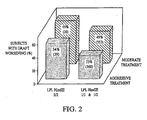
- the highest percentage of subjects with worsening were those with the Hind III 2/2 genotype assigned to the moderate lipid-lowering treatment group (65%). The lowest percentage ofsubjects with worsening were those with the Hind III 1/1 or 1/2 genotype assigned to the aggressive lipid-lowering treatment group (35%).
- the LPL Hind III 2/2 genotype group had a significantly higher percent of subjects with graft worsening, 54% vs.
Landscapes
- Chemical & Material Sciences (AREA)
- Life Sciences & Earth Sciences (AREA)
- Proteomics, Peptides & Aminoacids (AREA)
- Health & Medical Sciences (AREA)
- Organic Chemistry (AREA)
- Wood Science & Technology (AREA)
- Analytical Chemistry (AREA)
- Zoology (AREA)
- Genetics & Genomics (AREA)
- Engineering & Computer Science (AREA)
- Pathology (AREA)
- Immunology (AREA)
- Microbiology (AREA)
- Molecular Biology (AREA)
- Biotechnology (AREA)
- Biophysics (AREA)
- Physics & Mathematics (AREA)
- Biochemistry (AREA)
- Bioinformatics & Cheminformatics (AREA)
- General Engineering & Computer Science (AREA)
- General Health & Medical Sciences (AREA)
- Measuring Or Testing Involving Enzymes Or Micro-Organisms (AREA)
Claims (11)
- Verfahren zum Nachweisen einer genetischen Prädisposition für eine Nonresponsivität auf eine Behandlung mit einem Statinwirkstoff in einem menschlichen Subjekt, umfassend:a) Amplifizieren von Nukleinsäuren, umfassend den normalen Lokus der (TTTA)n-Tetranukleotid-Wiederholungssequenz im Intron 6 des humanen Lipoproteinlipasegens (LPL) aus einer Gewebeprobe, die einem menschlichen Subjekt entnommen wurde, um Amplifikationsprodukte zu enthalten; undb) Analysieren der Amplifikationsprodukte hinsichtlich (TTTA)n-Tetranukleotid-Wiederholungsallelen, die in den Nukleinsäuren vorhanden sind,wobei eine Homozygotie für ein (TTTA)n-4-Allel auf eine genetische Prädisposition für eine Nichtresponsivität auf eine Behandlung mit einem Statinwirkstoff bei einer Koronararterienerkrankung hinweist.
- Verfahren nach Anspruch 1, wobei die Gewebeprobe eine Blutprobe ist.
- Verfahren nach Anspruch 1, wobei zum Amplifizieren der Nukleinsäuren ein Oligonukleotidprimer verwendet wird.
- Verfahren nach Anspruch 1, umfassend die Sequenz 5'-CCT GGG TAA CTG AGC GAG ACT GTG TC-3' (SEQ ID NO: 33), die zum Amplifizieren der Nukleinsäuren verwendet wird.
- Verfahren nach Anspruch 1, wobei ein Oligonukleotidprimer, umfassend die Sequenz 5'-ATC TGA CCA AGG ATA GTG GGA TAT A-3'(SEQ ID NO: 34), zum Amplifizieren der Nukleinsäuren verwendet wird.
- Verfahren nach Anspruch 1, wobei ein Oligonukleotidprimer der Sequenz 5'-CCT GGG TAA CTG AGC GAG ACT GTG TC-3' (SEQ ID NO: 33) oder 5'-ATC TGA CCA AGG ATA GTG GGA TAT A-3' (SEQ ID NO: 34) zum Amplifizieren der Nukleinsäuren verwendet wird.
- Verfahren nach Anspruch 1, wobei ein Rückwärtsoligonukleotidprimer der Sequenz 5'-CCT GGG TAA CTG AGC GAG ACT GTG TC-3' (SEQ ID NO: 33) und ein Vorwärtsoligonukleotidprimer der Sequenz 5'-ATC TGA CCA AGG ATA GTG GGA TAT A-3' (SEQ ID NO: 34) zum Amplifizieren der Nukleinsäuren verwendet werden.
- Verfahren nach Anspruch 1, wobei das Amplifizieren der Nukleinsäuren unter Verwendung eine Oligonukleotidprimers durchgeführt wird, der eine Nukleotidsequenz der Sequenz SEQ ID NO: 33, SEQ ID NO: 34, SEQ ID NO: 82, SEQ ID NO: 83, SEQ ID NO: 84, SEQ ID NO: 85, SEQ ID NO: 86, SEQ ID NO: 87, SEQ ID NO: 88, SEQ ID NO: 89, SEQ ID NO: 90, SEQ ID NO: 91 oder SEQ ID NO: 92, oder eine Sequenz, die eine dieser Sequenzen bezogen auf ihre Position auf der Referenzsequenz SEQ ID NO: 80 (Nickerson Referenzsequenz) überlappt, umfasst.
- Verfahren nach Anspruch 3, wobei der Oligonukleotidprimer mit einem Fluoreszenzfarbstoff markiert ist.
- Verfahren nach Anspruch 9, wobei der Farbstoff SYBR Green I, YO-PRO-1, Thiazol Orange, Hex, PicoGreen, Edans, Fluorescein, FAM oder TET ist.
- Verfahren nach Anspruch 1, wobei der Statinwirkstoff Lovastatin, Pravastatin, Simvastatin, Atorvastatin, Fluvastatin oder Cerivastatin ist.
Applications Claiming Priority (3)
| Application Number | Priority Date | Filing Date | Title |
|---|---|---|---|
| US347114 | 1999-07-02 | ||
| US09/347,114 US6297014B1 (en) | 1999-07-02 | 1999-07-02 | Genetic test to determine non-responsiveness to statin drug treatment |
| EP00945124A EP1228241B1 (de) | 1999-07-02 | 2000-06-30 | Genetischer test zur bestimmung der nicht-wirksamkeit einer behandlung mit statinmedikamenten |
Related Parent Applications (2)
| Application Number | Title | Priority Date | Filing Date |
|---|---|---|---|
| EP00945124A Division EP1228241B1 (de) | 1999-07-02 | 2000-06-30 | Genetischer test zur bestimmung der nicht-wirksamkeit einer behandlung mit statinmedikamenten |
| EP00945124.6 Division | 2000-06-30 |
Publications (3)
| Publication Number | Publication Date |
|---|---|
| EP1408121A2 EP1408121A2 (de) | 2004-04-14 |
| EP1408121A3 EP1408121A3 (de) | 2007-06-06 |
| EP1408121B1 true EP1408121B1 (de) | 2011-06-22 |
Family
ID=23362384
Family Applications (2)
| Application Number | Title | Priority Date | Filing Date |
|---|---|---|---|
| EP03028652A Expired - Lifetime EP1408121B1 (de) | 1999-07-02 | 2000-06-30 | Genetischer Test zur Bestimmung der Nicht-Wirksamkeit einer Behandlung mit Statinmedikamenten |
| EP00945124A Expired - Lifetime EP1228241B1 (de) | 1999-07-02 | 2000-06-30 | Genetischer test zur bestimmung der nicht-wirksamkeit einer behandlung mit statinmedikamenten |
Family Applications After (1)
| Application Number | Title | Priority Date | Filing Date |
|---|---|---|---|
| EP00945124A Expired - Lifetime EP1228241B1 (de) | 1999-07-02 | 2000-06-30 | Genetischer test zur bestimmung der nicht-wirksamkeit einer behandlung mit statinmedikamenten |
Country Status (9)
| Country | Link |
|---|---|
| US (2) | US6297014B1 (de) |
| EP (2) | EP1408121B1 (de) |
| AT (2) | ATE513922T1 (de) |
| AU (1) | AU5911100A (de) |
| DE (1) | DE60007352T2 (de) |
| DK (1) | DK1228241T3 (de) |
| ES (1) | ES2211568T3 (de) |
| PT (1) | PT1228241E (de) |
| WO (1) | WO2001002606A2 (de) |
Families Citing this family (16)
| Publication number | Priority date | Publication date | Assignee | Title |
|---|---|---|---|---|
| WO2002083862A2 (en) * | 2001-04-13 | 2002-10-24 | Johns Hopkins University School Of Medicine | Methods and compositions for identifying disease genes using nonsense-mediated decay inhibition |
| US20020164598A1 (en) * | 2001-05-03 | 2002-11-07 | Ihc Health Services, Inc. | Method for evaluating and applying an individual's genetic characteristics to determine response to cardiovascular medication therapy |
| US20030215819A1 (en) * | 2001-06-29 | 2003-11-20 | Frudakis Tony N. | Compositions and methods for inferring a response to statin |
| US6723527B2 (en) * | 2001-10-26 | 2004-04-20 | Board Of Regents, The University Of Texas System | Methods for determining toxicity reversing agents |
| AU2003276727A1 (en) * | 2002-06-14 | 2003-12-31 | Cedars-Sinai Medical Center | Method of haplotype-based genetic analysis for determining risk for developing insulin resistance, coronary artery disease and other phenotypes |
| US8178294B2 (en) * | 2002-06-14 | 2012-05-15 | Cedars-Sinai Medical Center | Method of haplotype-based genetic analysis for determining risk for developing insulin resistance, coronary artery disease and other phenotypes |
| US20040110241A1 (en) * | 2002-12-06 | 2004-06-10 | Segal Mark S. | Materials and methods for monitoring vascular endothelial function |
| EP1592706A2 (de) * | 2003-02-03 | 2005-11-09 | Bayer HealthCare AG | Genetischepolymorphismen als diagnostika, mit denen sich nebenreaktionen aufarzneimittel und arzneimittelwirksamkeit vorhersagenlassen |
| US8401801B2 (en) | 2003-02-20 | 2013-03-19 | Mayo Foundation For Medical Education And Research | Methods for selecting medications |
| US8688385B2 (en) * | 2003-02-20 | 2014-04-01 | Mayo Foundation For Medical Education And Research | Methods for selecting initial doses of psychotropic medications based on a CYP2D6 genotype |
| EP1704253A1 (de) * | 2004-01-15 | 2006-09-27 | THE GOVERNMENT OF THE UNITED STATES OF AMERICA, as represented by THE SECRETARY, DEPARTMENT OF HEALTH AND HUMAN SERVICES | Zur erkennung von thrombophilie entwickeltes verfahren (mert) |
| DE602005013947D1 (de) * | 2004-04-16 | 2009-05-28 | Idexx Lab Inc | Antikörper gegen hundepankreaslipase |
| CA2566257A1 (en) * | 2004-05-07 | 2005-11-24 | Applera Corporation | Genetic polymorphisms associated with vascular diseases, methods of detection and uses thereof |
| US8589175B2 (en) * | 2005-11-29 | 2013-11-19 | Children's Hospital Medical Center | Optimization and individualization of medication selection and dosing |
| US20100130600A1 (en) * | 2007-03-30 | 2010-05-27 | Cedars-Sinai Medical Center | Lipoprotein lipase and its effect on statin treatments |
| WO2009052179A2 (en) * | 2007-10-15 | 2009-04-23 | Idexx Laboratories, Inc. | Feline pancreatic lipase |
Family Cites Families (4)
| Publication number | Priority date | Publication date | Assignee | Title |
|---|---|---|---|---|
| US4683195A (en) | 1986-01-30 | 1987-07-28 | Cetus Corporation | Process for amplifying, detecting, and/or-cloning nucleic acid sequences |
| US4683202A (en) | 1985-03-28 | 1987-07-28 | Cetus Corporation | Process for amplifying nucleic acid sequences |
| US4988617A (en) | 1988-03-25 | 1991-01-29 | California Institute Of Technology | Method of detecting a nucleotide change in nucleic acids |
| CA2013317A1 (en) | 1989-04-17 | 1990-10-17 | Fred T. Oakes | Diagnostic kit, primer composition and their use for replication or detection of nucleic acids |
-
1999
- 1999-07-02 US US09/347,114 patent/US6297014B1/en not_active Expired - Fee Related
-
2000
- 2000-06-30 DK DK00945124T patent/DK1228241T3/da active
- 2000-06-30 DE DE60007352T patent/DE60007352T2/de not_active Expired - Fee Related
- 2000-06-30 AT AT03028652T patent/ATE513922T1/de not_active IP Right Cessation
- 2000-06-30 EP EP03028652A patent/EP1408121B1/de not_active Expired - Lifetime
- 2000-06-30 ES ES00945124T patent/ES2211568T3/es not_active Expired - Lifetime
- 2000-06-30 AU AU59111/00A patent/AU5911100A/en not_active Abandoned
- 2000-06-30 PT PT00945124T patent/PT1228241E/pt unknown
- 2000-06-30 AT AT00945124T patent/ATE256753T1/de not_active IP Right Cessation
- 2000-06-30 EP EP00945124A patent/EP1228241B1/de not_active Expired - Lifetime
- 2000-06-30 WO PCT/US2000/018308 patent/WO2001002606A2/en not_active Ceased
-
2001
- 2001-07-03 US US09/898,779 patent/US20020106657A1/en not_active Abandoned
Also Published As
| Publication number | Publication date |
|---|---|
| EP1408121A3 (de) | 2007-06-06 |
| US20020106657A1 (en) | 2002-08-08 |
| ATE256753T1 (de) | 2004-01-15 |
| AU5911100A (en) | 2001-01-22 |
| US6297014B1 (en) | 2001-10-02 |
| WO2001002606A2 (en) | 2001-01-11 |
| EP1228241A2 (de) | 2002-08-07 |
| ES2211568T3 (es) | 2004-07-16 |
| EP1408121A2 (de) | 2004-04-14 |
| DE60007352D1 (de) | 2004-01-29 |
| WO2001002606A3 (en) | 2002-06-13 |
| DE60007352T2 (de) | 2004-09-02 |
| PT1228241E (pt) | 2004-05-31 |
| DK1228241T3 (da) | 2004-04-19 |
| EP1228241B1 (de) | 2003-12-17 |
| ATE513922T1 (de) | 2011-07-15 |
Similar Documents
| Publication | Publication Date | Title |
|---|---|---|
| EP1228241B1 (de) | Genetischer test zur bestimmung der nicht-wirksamkeit einer behandlung mit statinmedikamenten | |
| Carlini et al. | Sulfation pharmacogenetics: SULT1A1 and SULT1A2 allele frequencies in Caucasian, Chinese and African-American subjects | |
| EP1186672B1 (de) | Polymorphismen im Gen für den humanen organischen Anionentransporter C (OATP-C) | |
| WO2011062258A1 (ja) | Mthfr遺伝子増幅用プライマーセット、それを含むmthfr遺伝子増幅用試薬およびその用途 | |
| Xie et al. | Haplotype analysis of the CYP8A1 gene associated with myocardial infarction | |
| WO2004001037A1 (ja) | 心筋梗塞のリスク診断方法 | |
| WO2000079003A1 (en) | Polymorphisms in the human hmg-coa reductase gene | |
| EP2584036B1 (de) | Sonden zur Identifizierung von SULT1A1-Genpolymorphismen, Sondensätze und Reagenzien damit und Verwendungen davon | |
| Yamamoto et al. | Association of plasma PAF acetylhydrolase gene polymorphism with IMT of carotid arteries in Japanese type 2 diabetic patients | |
| US20030032099A1 (en) | Methods for predicting susceptibility to obesity and obesity-associated health problems | |
| Araz et al. | Association between polymorphism of the angiotensin I converting enzyme gene and hypertension in Turkish type II diabetic patients | |
| EP1294934A2 (de) | Polimorphismen des very-low-density-lipoproteinrezeptors und deren verwendung | |
| US20100130600A1 (en) | Lipoprotein lipase and its effect on statin treatments | |
| Mamiyaa et al. | Association of polymorphisms in the cytochrome P450 (CYP) 2C19 and 2C18 genes in Japanese epileptic patients | |
| US20100291554A1 (en) | Compositions and methods for determining genotypes | |
| Dzhuryak et al. | Dependence of metabolic disorders on aldosterone synthase cyp11b2 (-344C/T) gene polymorphism in hypertensive patients | |
| Dzhuryak et al. | Endothelial nitric oxide synthase gene polymorphism (894G> T, 786T> C) contribute to hypertension risk and lipids profile disorders | |
| Sydorchuk et al. | ARE METABOLIC DISORDERS IN HYPERTENSIVE PATIENTS ASSOCIATED WITH GNB3 (RS5443) GENETIC POLYMORPHISMS? | |
| US8080374B2 (en) | Methods of diagnosing cardiovascular disease | |
| JP2004097088A (ja) | Sod3遺伝子プロモーター中の変異を検出することによる高血圧症の遺伝子診断およびこれに用いるための核酸分子 | |
| JP2008528054A (ja) | 血圧降下剤のファーマコゲノミクス | |
| FR2730745A1 (fr) | Procede de detection d'une mutation intervenant dans la maladie d'alzheimer et sequences nucleotidiques pour sa mise en oeuvre | |
| US20090220954A1 (en) | Methods of diagnosing cardiovascular disease | |
| EP1629111A1 (de) | Verfahren und zusammensetzungen zur vorhersage der irinotecantoxizität | |
| WO2005117859A2 (en) | Methods of diagnosing cardiovascular disease |
Legal Events
| Date | Code | Title | Description |
|---|---|---|---|
| PUAI | Public reference made under article 153(3) epc to a published international application that has entered the european phase |
Free format text: ORIGINAL CODE: 0009012 |
|
| 17P | Request for examination filed |
Effective date: 20031215 |
|
| AC | Divisional application: reference to earlier application |
Ref document number: 1228241 Country of ref document: EP Kind code of ref document: P |
|
| AK | Designated contracting states |
Kind code of ref document: A2 Designated state(s): AT BE CH CY DE DK ES FI FR GB GR IE IT LI LU MC NL PT SE |
|
| RIN1 | Information on inventor provided before grant (corrected) |
Inventor name: YANG, HUIYING Inventor name: TAYLOR, KENT D. Inventor name: ROTTER, JEROME Inventor name: SCHEUNER, MAREN |
|
| PUAL | Search report despatched |
Free format text: ORIGINAL CODE: 0009013 |
|
| AK | Designated contracting states |
Kind code of ref document: A3 Designated state(s): AT BE CH CY DE DK ES FI FR GB GR IE IT LI LU MC NL PT SE |
|
| AKX | Designation fees paid |
Designated state(s): AT BE CH CY DE DK ES FI FR GB GR IE IT LI LU MC NL PT SE |
|
| 17Q | First examination report despatched |
Effective date: 20090218 |
|
| GRAP | Despatch of communication of intention to grant a patent |
Free format text: ORIGINAL CODE: EPIDOSNIGR1 |
|
| GRAS | Grant fee paid |
Free format text: ORIGINAL CODE: EPIDOSNIGR3 |
|
| GRAA | (expected) grant |
Free format text: ORIGINAL CODE: 0009210 |
|
| RAP1 | Party data changed (applicant data changed or rights of an application transferred) |
Owner name: CEDARS-SINAI MEDICAL CENTER |
|
| AC | Divisional application: reference to earlier application |
Ref document number: 1228241 Country of ref document: EP Kind code of ref document: P |
|
| AK | Designated contracting states |
Kind code of ref document: B1 Designated state(s): AT BE CH CY DE DK ES FI FR GB GR IE IT LI LU MC NL PT SE |
|
| REG | Reference to a national code |
Ref country code: GB Ref legal event code: FG4D |
|
| REG | Reference to a national code |
Ref country code: CH Ref legal event code: EP |
|
| REG | Reference to a national code |
Ref country code: IE Ref legal event code: FG4D |
|
| REG | Reference to a national code |
Ref country code: DE Ref legal event code: R096 Ref document number: 60046116 Country of ref document: DE Effective date: 20110728 |
|
| REG | Reference to a national code |
Ref country code: NL Ref legal event code: VDEP Effective date: 20110622 |
|
| PG25 | Lapsed in a contracting state [announced via postgrant information from national office to epo] |
Ref country code: SE Free format text: LAPSE BECAUSE OF FAILURE TO SUBMIT A TRANSLATION OF THE DESCRIPTION OR TO PAY THE FEE WITHIN THE PRESCRIBED TIME-LIMIT Effective date: 20110622 |
|
| PG25 | Lapsed in a contracting state [announced via postgrant information from national office to epo] |
Ref country code: CY Free format text: LAPSE BECAUSE OF FAILURE TO SUBMIT A TRANSLATION OF THE DESCRIPTION OR TO PAY THE FEE WITHIN THE PRESCRIBED TIME-LIMIT Effective date: 20110622 Ref country code: FI Free format text: LAPSE BECAUSE OF FAILURE TO SUBMIT A TRANSLATION OF THE DESCRIPTION OR TO PAY THE FEE WITHIN THE PRESCRIBED TIME-LIMIT Effective date: 20110622 Ref country code: GR Free format text: LAPSE BECAUSE OF FAILURE TO SUBMIT A TRANSLATION OF THE DESCRIPTION OR TO PAY THE FEE WITHIN THE PRESCRIBED TIME-LIMIT Effective date: 20110923 Ref country code: AT Free format text: LAPSE BECAUSE OF FAILURE TO SUBMIT A TRANSLATION OF THE DESCRIPTION OR TO PAY THE FEE WITHIN THE PRESCRIBED TIME-LIMIT Effective date: 20110622 |
|
| PG25 | Lapsed in a contracting state [announced via postgrant information from national office to epo] |
Ref country code: BE Free format text: LAPSE BECAUSE OF FAILURE TO SUBMIT A TRANSLATION OF THE DESCRIPTION OR TO PAY THE FEE WITHIN THE PRESCRIBED TIME-LIMIT Effective date: 20110622 Ref country code: NL Free format text: LAPSE BECAUSE OF FAILURE TO SUBMIT A TRANSLATION OF THE DESCRIPTION OR TO PAY THE FEE WITHIN THE PRESCRIBED TIME-LIMIT Effective date: 20110622 |
|
| PG25 | Lapsed in a contracting state [announced via postgrant information from national office to epo] |
Ref country code: PT Free format text: LAPSE BECAUSE OF FAILURE TO SUBMIT A TRANSLATION OF THE DESCRIPTION OR TO PAY THE FEE WITHIN THE PRESCRIBED TIME-LIMIT Effective date: 20111024 |
|
| REG | Reference to a national code |
Ref country code: CH Ref legal event code: PL |
|
| REG | Reference to a national code |
Ref country code: DE Ref legal event code: R082 Ref document number: 60046116 Country of ref document: DE Representative=s name: WINTER, BRANDL, FUERNISS, HUEBNER, ROESS, KAIS, DE |
|
| REG | Reference to a national code |
Ref country code: IE Ref legal event code: MM4A |
|
| PLBE | No opposition filed within time limit |
Free format text: ORIGINAL CODE: 0009261 |
|
| STAA | Information on the status of an ep patent application or granted ep patent |
Free format text: STATUS: NO OPPOSITION FILED WITHIN TIME LIMIT |
|
| PG25 | Lapsed in a contracting state [announced via postgrant information from national office to epo] |
Ref country code: LI Free format text: LAPSE BECAUSE OF NON-PAYMENT OF DUE FEES Effective date: 20110630 Ref country code: CH Free format text: LAPSE BECAUSE OF NON-PAYMENT OF DUE FEES Effective date: 20110630 Ref country code: IE Free format text: LAPSE BECAUSE OF NON-PAYMENT OF DUE FEES Effective date: 20110630 |
|
| 26N | No opposition filed |
Effective date: 20120323 |
|
| PG25 | Lapsed in a contracting state [announced via postgrant information from national office to epo] |
Ref country code: IT Free format text: LAPSE BECAUSE OF FAILURE TO SUBMIT A TRANSLATION OF THE DESCRIPTION OR TO PAY THE FEE WITHIN THE PRESCRIBED TIME-LIMIT Effective date: 20110622 |
|
| PG25 | Lapsed in a contracting state [announced via postgrant information from national office to epo] |
Ref country code: DK Free format text: LAPSE BECAUSE OF FAILURE TO SUBMIT A TRANSLATION OF THE DESCRIPTION OR TO PAY THE FEE WITHIN THE PRESCRIBED TIME-LIMIT Effective date: 20110622 |
|
| REG | Reference to a national code |
Ref country code: DE Ref legal event code: R097 Ref document number: 60046116 Country of ref document: DE Effective date: 20120323 |
|
| PGFP | Annual fee paid to national office [announced via postgrant information from national office to epo] |
Ref country code: DE Payment date: 20120627 Year of fee payment: 13 |
|
| PGFP | Annual fee paid to national office [announced via postgrant information from national office to epo] |
Ref country code: GB Payment date: 20120625 Year of fee payment: 13 |
|
| PGFP | Annual fee paid to national office [announced via postgrant information from national office to epo] |
Ref country code: FR Payment date: 20120731 Year of fee payment: 13 |
|
| PG25 | Lapsed in a contracting state [announced via postgrant information from national office to epo] |
Ref country code: ES Free format text: LAPSE BECAUSE OF FAILURE TO SUBMIT A TRANSLATION OF THE DESCRIPTION OR TO PAY THE FEE WITHIN THE PRESCRIBED TIME-LIMIT Effective date: 20111003 Ref country code: MC Free format text: LAPSE BECAUSE OF NON-PAYMENT OF DUE FEES Effective date: 20110630 |
|
| PG25 | Lapsed in a contracting state [announced via postgrant information from national office to epo] |
Ref country code: LU Free format text: LAPSE BECAUSE OF NON-PAYMENT OF DUE FEES Effective date: 20110630 |
|
| GBPC | Gb: european patent ceased through non-payment of renewal fee |
Effective date: 20130630 |
|
| REG | Reference to a national code |
Ref country code: DE Ref legal event code: R119 Ref document number: 60046116 Country of ref document: DE Effective date: 20140101 |
|
| REG | Reference to a national code |
Ref country code: FR Ref legal event code: ST Effective date: 20140228 |
|
| PG25 | Lapsed in a contracting state [announced via postgrant information from national office to epo] |
Ref country code: GB Free format text: LAPSE BECAUSE OF NON-PAYMENT OF DUE FEES Effective date: 20130630 Ref country code: DE Free format text: LAPSE BECAUSE OF NON-PAYMENT OF DUE FEES Effective date: 20140101 |
|
| PG25 | Lapsed in a contracting state [announced via postgrant information from national office to epo] |
Ref country code: FR Free format text: LAPSE BECAUSE OF NON-PAYMENT OF DUE FEES Effective date: 20130701 |