EP1409025B1 - Vektor kodierend humanes globin-gen und seine verwendung bei der behandlung von hämoglobinopathien - Google Patents
Vektor kodierend humanes globin-gen und seine verwendung bei der behandlung von hämoglobinopathien Download PDFInfo
- Publication number
- EP1409025B1 EP1409025B1 EP02749753A EP02749753A EP1409025B1 EP 1409025 B1 EP1409025 B1 EP 1409025B1 EP 02749753 A EP02749753 A EP 02749753A EP 02749753 A EP02749753 A EP 02749753A EP 1409025 B1 EP1409025 B1 EP 1409025B1
- Authority
- EP
- European Patent Office
- Prior art keywords
- globin
- lentivector
- human
- cells
- globin gene
- Prior art date
- Legal status (The legal status is an assumption and is not a legal conclusion. Google has not performed a legal analysis and makes no representation as to the accuracy of the status listed.)
- Expired - Lifetime
Links
Images


Classifications
-
- C—CHEMISTRY; METALLURGY
- C12—BIOCHEMISTRY; BEER; SPIRITS; WINE; VINEGAR; MICROBIOLOGY; ENZYMOLOGY; MUTATION OR GENETIC ENGINEERING
- C12N—MICROORGANISMS OR ENZYMES; COMPOSITIONS THEREOF; PROPAGATING, PRESERVING, OR MAINTAINING MICROORGANISMS; MUTATION OR GENETIC ENGINEERING; CULTURE MEDIA
- C12N15/00—Mutation or genetic engineering; DNA or RNA concerning genetic engineering, vectors, e.g. plasmids, or their isolation, preparation or purification; Use of hosts therefor
- C12N15/09—Recombinant DNA-technology
- C12N15/63—Introduction of foreign genetic material using vectors; Vectors; Use of hosts therefor; Regulation of expression
- C12N15/79—Vectors or expression systems specially adapted for eukaryotic hosts
- C12N15/85—Vectors or expression systems specially adapted for eukaryotic hosts for animal cells
- C12N15/86—Viral vectors
-
- A—HUMAN NECESSITIES
- A61—MEDICAL OR VETERINARY SCIENCE; HYGIENE
- A61K—PREPARATIONS FOR MEDICAL, DENTAL OR TOILETRY PURPOSES
- A61K48/00—Medicinal preparations containing genetic material which is inserted into cells of the living body to treat genetic diseases; Gene therapy
- A61K48/005—Medicinal preparations containing genetic material which is inserted into cells of the living body to treat genetic diseases; Gene therapy characterised by an aspect of the 'active' part of the composition delivered, i.e. the nucleic acid delivered
- A61K48/0066—Manipulation of the nucleic acid to modify its expression pattern, e.g. enhance its duration of expression, achieved by the presence of particular introns in the delivered nucleic acid
-
- A—HUMAN NECESSITIES
- A61—MEDICAL OR VETERINARY SCIENCE; HYGIENE
- A61P—SPECIFIC THERAPEUTIC ACTIVITY OF CHEMICAL COMPOUNDS OR MEDICINAL PREPARATIONS
- A61P7/00—Drugs for disorders of the blood or the extracellular fluid
-
- A—HUMAN NECESSITIES
- A61—MEDICAL OR VETERINARY SCIENCE; HYGIENE
- A61P—SPECIFIC THERAPEUTIC ACTIVITY OF CHEMICAL COMPOUNDS OR MEDICINAL PREPARATIONS
- A61P7/00—Drugs for disorders of the blood or the extracellular fluid
- A61P7/06—Antianaemics
-
- C—CHEMISTRY; METALLURGY
- C07—ORGANIC CHEMISTRY
- C07K—PEPTIDES
- C07K14/00—Peptides having more than 20 amino acids; Gastrins; Somatostatins; Melanotropins; Derivatives thereof
- C07K14/795—Porphyrin- or corrin-ring-containing peptides
- C07K14/805—Haemoglobins; Myoglobins
-
- A—HUMAN NECESSITIES
- A61—MEDICAL OR VETERINARY SCIENCE; HYGIENE
- A61K—PREPARATIONS FOR MEDICAL, DENTAL OR TOILETRY PURPOSES
- A61K35/00—Medicinal preparations containing materials or reaction products thereof with undetermined constitution
- A61K35/12—Materials from mammals; Compositions comprising non-specified tissues or cells; Compositions comprising non-embryonic stem cells; Genetically modified cells
- A61K2035/124—Materials from mammals; Compositions comprising non-specified tissues or cells; Compositions comprising non-embryonic stem cells; Genetically modified cells the cells being hematopoietic, bone marrow derived or blood cells
-
- A—HUMAN NECESSITIES
- A61—MEDICAL OR VETERINARY SCIENCE; HYGIENE
- A61K—PREPARATIONS FOR MEDICAL, DENTAL OR TOILETRY PURPOSES
- A61K48/00—Medicinal preparations containing genetic material which is inserted into cells of the living body to treat genetic diseases; Gene therapy
-
- C—CHEMISTRY; METALLURGY
- C12—BIOCHEMISTRY; BEER; SPIRITS; WINE; VINEGAR; MICROBIOLOGY; ENZYMOLOGY; MUTATION OR GENETIC ENGINEERING
- C12N—MICROORGANISMS OR ENZYMES; COMPOSITIONS THEREOF; PROPAGATING, PRESERVING, OR MAINTAINING MICROORGANISMS; MUTATION OR GENETIC ENGINEERING; CULTURE MEDIA
- C12N2510/00—Genetically modified cells
-
- C—CHEMISTRY; METALLURGY
- C12—BIOCHEMISTRY; BEER; SPIRITS; WINE; VINEGAR; MICROBIOLOGY; ENZYMOLOGY; MUTATION OR GENETIC ENGINEERING
- C12N—MICROORGANISMS OR ENZYMES; COMPOSITIONS THEREOF; PROPAGATING, PRESERVING, OR MAINTAINING MICROORGANISMS; MUTATION OR GENETIC ENGINEERING; CULTURE MEDIA
- C12N2740/00—Reverse transcribing RNA viruses
- C12N2740/00011—Details
- C12N2740/10011—Retroviridae
- C12N2740/15011—Lentivirus, not HIV, e.g. FIV, SIV
- C12N2740/15041—Use of virus, viral particle or viral elements as a vector
- C12N2740/15043—Use of virus, viral particle or viral elements as a vector viral genome or elements thereof as genetic vector
Definitions
- This application relates to a vector comprising a mammalian, and particularly a human globin gene and to the use thereof in treatment of hemoglobinopathies, including ⁇ - and ⁇ -thalessemia and sickle-cell disease.
- the present invention provides a genetic correction in autologous hematopoietic stem cells, thus using gene therapy to provide a less-risky and more effective long-term treatment.
- the present invention provides a vector which is capable of providing therapeutically meaningful levels of human globin for sustained periods of time. This ability arises from the ability to transmit large genomic regulatory sequences that control expression of the therapeutic gene.
- a recombinant lentiviral vector comprising:
- This vector provides expression of ⁇ -globin when introduced into a mammal, for example a human, in vivo.
- the vector of the invention may be used in treatment of hemoglobinopathies, including ⁇ - and ⁇ -thalessemia and sickle-cell disease.
- hemoglobinopathies including ⁇ - and ⁇ -thalessemia and sickle-cell disease.
- hematopoietic progenitor or stem cells may be transformed ex vivo and then restored to the patient. Selection processes may be used to increase the percentage of transformed cells in the returned population.
- a selection marker makes transformed cells more drug resistant than un-transformed cells and allows selection by treatment of the cells with the corresponding drug. Selection and/or enrichment may also be carried out in vivo , for example using methotrexate or similar antifolates to select for cells rendered resistant by the expression from the vector of the dihydrofolate reductase (DHFR).
- DHFR dihydrofolate reductase
- the invention provides a mammalian hematopoietic cell, or a mammalian hematopoietic stem cell precursor or said precursor generated by nuclear transfer from a somatic cell, transduced with a recombinant lentivector according to the invention and wherein said precursor is not a human embryonic stem cell.
- the invention provides use of a recombinant lentivector according to the invention in the preparation of a medicament for the treatment of a hemoglobinopathy in a mammalian individual suffering from a hemoglobinopathy, wherein the lentivector is used to transduce a mammalian hematopoietic cell or hematopoietic stem cell precursor or said precursor generated by nuclear transfer from a somatic cell and wherein said precursor is not a human embryonic stem cell
- a recombinant lentiviral vector comprising
- recombinant lentiviral vector refers to an artificially created polynucleotide vector assembled from a lentiviral-vector and a plurality of additional segments as a result of human intervention and manipulation.
- the term "functional globin gene” refers to a nucleotide sequence the expression of which leads to a globin that does not produce a hemoglobinopathy phenotype, and which is effective to provide therapeutic benefits to an individual with a defective globin gene.
- the functional globin gene may encode a wild-type globin appropriate for a mammalian individual to be treated, or it may be a mutant form of globin, preferably one which provides for superior properties, for example superior oxygen transport properties.
- the functional globin gene includes both exons and introns, as well as globin promoters and splice doners/acceptors.
- the globin gene may encode ⁇ -globin, ⁇ -globin, or ⁇ -globine. ⁇ -globin promoters are used with each of the globin genes.
- the recombinant vectors of the invention therefore include large portions of the locus control region (LCR) which include DNase I hypersensitive sites HS2, HS3 and HS4.
- LCR locus control region
- smaller nucleotide fragments spanning the core portions of HS2, HS3 and HS4 have been utilized. Sadelain ct al. Proc. Nat'l Acad Sci. (USA) 92: 6728-6732 (1995 ); Lebouich et al., EMBO J. 13: 3065-3076 (1994 ).
- the term "large portions" refers to portions of the locus control region which comprises larger portions of the hypersensitive sites as opposed to previously tested fragments including only the core elements.
- the regions may be the complete site or some lesser site which provides the same Functionality as the specific sequence set forth below.
- large portions of the locus control regions are assembled from multiple fragments, each spanning one of the DNase I hypersensitive sites.
- the locus control region has two introduced GATA-1 binding sites at the junction between HS3 and HS4. While not intending to be bound by any specific mechanism, it is believed that the incorporation of these transcription factor binding sites enhances the effectiveness of the vector.
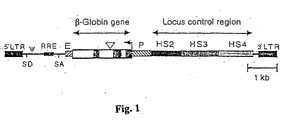
- TNS9 incorporates human ⁇ -globin gene (from position-618 to +2484) that includes an extended promoter sequence and a 3'-enhancer element.
- a portion of 3' U3 region of the lentiviral backbone can be deleted for increased safety.
- the exons and introns of the human ⁇ -globin gene are represented by filled and open boxes, The locations are indicated for the splice donor (SD), splice acceptor (SA), packaging region ( ⁇ ), rev-response element (RRE), human ⁇ -globin promoter (P) and 3'- ⁇ -globine enhancer (E).
- SD splice donor
- SA splice acceptor
- RRE rev-response element
- P human ⁇ -globin promoter
- E 3'- ⁇ -globine enhancer
- a functional ⁇ -globin gene which includes both the exons and introns of the gene and the relevant control sequence from the human ⁇ -globin locus. These are combined with the large fragments ot the locus control region.
- the 3.2 kb LCR assembles into dTNS9 consists of an 840 bp HS2 fragment ( SnaBI-BstXl ), a 1308 bp HS3 fragment ( HindIII-BamHI ) and a 1069 bp HS4 fragment ( BamHI-BanII ).
- the ⁇ -globin gene coding sequence can be exchanged and replaced with either the gamma globin gene (for sickle cell disease) or the alpha globin gene (for alpha-thalassemias).
- a Ncol-Pst I fragment of the ⁇ -globin gene is replaced with the corresponding NcoI-HindE fragment of the gamma globin gene or the NcoI-PstI fragment of the human alpha globin gene. These fragments start at the translational start of each globin gene (spanning the NcoI site) and end past their respective polyadenylation signals.
- chimeric genes can be generated by only swapping the coding sequence of each one of the three exons of these genes.
- the result is a vector that comprises the beta globin promoter, the beta globin 5' untranslated region, the gamma exon 1 coding region, the gamma intron 1 the gamma exon 2, the beta intron 2, the gamma exon 3, and the beta 3' untranslated region.
- the codon visage within exon 3 of the gamma globin gene can be modified so that its sequence will resemble as much as possible that of the beta globin gene. The reason for testing this is that the beta globin gene is always the best expressed.
- the vector includes selectable markers, to confirm the expression of the vector or to provide a basis for selection of transformed cells over untransformed cells, or control markers which allow targeted disruption of transformed cells, and thus the selective removal of such cells should termination of therapy become necessary.
- the vector of the invention includes the mouse PGK promotor and human dihydrofolate reductase (DHFR) cDNA as a transcriptional unit.
- DHFR human dihydrofolate reductase
- Mutant forms of DHFR which increase the capacity of the DHFR to confer resistance to drugs such as methotrexate are suitably used.
- single and double mutants of DHFR with mutations at amino acids 22 and 31 as described in commonly assigned PCT Publication No. WO 97/33988 may be advantageously utilized.
- Fig. 2 shows the genomic structure of a specific vector within the scope of the invention.
- the vector includes a deleted LTR, from -456 to -9 of HIV LTR and the PGK promoter (530 bp) from the murine phosphoglycerate kinase 1 gene. It also includes a DHFR-encoding region encoding human DHFR with s/f mutation at amino acid 22. The locus control region and the ⁇ -globin region are the same as in TSN9. This vector is designated dTNS9-PD. This incorporation of DHFR into this vector provides transformed cells with a methotrexate-resistant phenotype. As a result, methotrexate, and other antifolates can be used, both in vitro and in vivo as a selection to tool to enhance levels of the functional hemoglobin.
- mice When hematopoietic stem cells were transformed using dTNS9-PD and reintroduced to mice that were then treated with NMBPR-P (0.5 mg/dose) and TMTX (0.5 mg dose) for five days, observed levels of expressed human ⁇ -globin were much higher in mice transduced with dTNS9-PD vectors after treatment with TMTX and NMBPR-P for selection of transduced cells.
- NMBPR-P 0.5 mg/dose
- TMTX 0.5 mg dose
- hematopoietic progenitor or stem cells are transformed ex vivo and then restored to the patient.
- hematopoietic progenitor sand stem cells encompasses hematopoietic cells and non-hematopoietic stem cells, e.g., non-human embryonic stem cells, hematopoietic stem cell precursors, or any of the latter generated by nuclear transfer from a somatic cell. It is know in the art that efficient genes transfer into human embryonic stem cells can be achieved using lentiviral vectors.
- Selection processes may be used to increase the percentage of transformed cells in the returned population.
- a selection marker which makes transformed cells more drug resistant than un-transformed cells allows selection by treatment of the cells with the corresponding drug.
- DHFR When used as a selection marker, it can be used for enrichment of transduced cells in vitro, or for in vivo selection to maintain the effectiveness of the vector.
- vector TNS9 the human ⁇ -globin gene was subcloned from M ⁇ 6L ( Sadelain et al. Proc. Nat'l Acad. Sci. (USA)92: 6728-6732 (1995 )) into lentiviral vector pHR'LacZ ( Zuffery et al., Nature 15: 871-875 (1997 )) replacing the CMV-LacZ sequence.
- pHR'eGFP was constructed by replacing LacZ with the eGFP sequence (Clontech).
- Viral stocks were generated by triple transfection of the recombinant vectors pCMV ⁇ R8.9 (Zuffrey et al.) and pMD.G in 293T cells as previously described in Dull, et al., J. Virol. 72: 8463-8471 (1998 ).
- the pseudotyped virions were concentrated by ultracentrifugationm resuspended and titrated as described in Gallardo et al., Blood 90: 952-957 (1997 ).
- RSN1 was used which has a similar structure, except that the LCR contains only the core portion of HS2, HS3 and HS4.
- Northern blot analysis showed full length RNA transcripts, indicating that the recombinant lentiviral genomoes are stable.
- LTR long terminal repeat
- stage specificity and expression level of the vector-encoded human B-globin gene we transduced RNS1 and TNS9 into MEL cells, lymphoid Jurkat cells and myeloid HL-60 cells. Cell-free viral supernatant was used to infect C88 MEL cells in the presence of polybrene (8 ⁇ g ml -1 ).
- Transduced MEL cells were subcloned by limiting dilution, and screened by PCR for transduction 30 using primers that anneal in the human ⁇ -globin promoter sequence ( ⁇ PS, 5' - GTCTAAGTGATGACAGCCGTACCTG-3') and in HS2 (C2A, 5'- TCAGCCTAGAGT GATGACTCC TATCTG-3'). Vector copy number and integration site analysis was determined by Southern blot analysis 9 . Transduced MEL cells were induced to maturation by 5-day culture in 5 mM N,N'- hexamethylene bisacetamide (HMBA, Sigma).
- HMBA hexamethylene bisacetamide
- transduced MEL cell pools were differentiated using hexamethylene bisacetamide HMBA).
- Human ⁇ -globin ( ⁇ A ) and mouse ⁇ -globin transcripts were measured by quantitative primer extension. After normalization to vector copy number and to endogenous ⁇ -globin expression per allele, human ⁇ -globin levels were 14.2 ⁇ 4.7% for RNS1 and 71.3 ⁇ 2.3% for TNS9 in pooled MEL cells ( Fig. 2a ).
- MEL, Jurkat and HL-60 cells were transduced with RNS1, TNS9 or control GFP recombinant lentivirus.
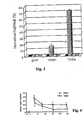
- Human ⁇ -globin RNA expression in HMBA induced MEL cells was measured by quantitative primer extension and normalized to mouse ⁇ -globin RNA expression per locus. Expression was then normalized to the vector copy number determined by Southern blot. No human ⁇ -globin RNA expression was detected in non-induced MEL (black bars), Jurkat (white bars) or HL-60 cells (hatched bars), indicating that globin expression was erythroid- and differentiation-specific. No human ⁇ -globin expression was detected in non-induced MEL, Jurkat and HL-60 cells ( Fig. 3 ), indicating that human ⁇ -globin expression was appropriately regulated in terms of tissue specificity and state of differentiation.
- RNA isolated from A85.68 mice 20 was used as positive control. After correction for primer labelling, the human to mouse RNA signal was 29 ⁇ 1% per gene copy in repeated experiments (n > 8), in agreement with previous findings based on RT-PCR 20 . Values measured in bone marrow chimaeras that were obtained in separate runs were standardized to the value obtained in the A85.68 RNA sample.
- human ⁇ -globin expression is expressed per vector copy and normalized to the endogenous transcripts (accounting for two endogenous alleles).
- Fig. 3b human transcripts are reported as the fraction of total ⁇ -globin RNA (Hu ⁇ / Hu ⁇ + Mu ⁇ ) to reflect absolute contribution of vector-encoded transcripts.
- Bone marrow cells were resuspended in serum-free medium, and supplemented with IL-1 ⁇ (10 ng ml -1 ), IL-3 (100 U ml -1 ), IL-6 (150 U ml -1 ), Kit ligand (10 ng ml -1 ) (Genzyme), ⁇ -mercaptoethanol (0.5 mM; Sigma), L-glutamine (200 mM), penicillin (100 IU ml -1 ) and streptomycin (100 ⁇ g m -1 ), and cultured for 18 h.
- IL-1 ⁇ 10 ng ml -1
- IL-3 100 U ml -1
- IL-6 150 U ml -1
- Kit ligand 10 ng ml -1
- ⁇ -mercaptoethanol 0.5 mM
- L-glutamine 200 mM
- penicillin 100 IU ml -1
- streptomycin 100 ⁇ g m -1
- Recipient mice (11- to 14-week-old C57/BL6 or Hbb th3/+ mice) were irradiated with 10.5 Gy (split dose 2 x 5.25 Gy) on the day of transplantation.
- Bone marrow cells were pelleted and resuspended in serum-free medium containing concentrated lentiviral supernatant, and supplemented with polybrene (8 ⁇ g ml -1 ), L-glutamine (200 mM), penicillin (100 IU ml -1 ) and streptomycin (100 ⁇ g ml -1 ), and cultured for 6 h.
- Transduced bone marrow cells (1 x 10 5 or 5 x 10 5 ) were then i.v. injected into each of the irradiated female recipients to establish short-term and long-term bone marrow chimaeras, respectively.
- spleens were removed 12 d after transplantation to extract total RNA and genomic DNA.
- two or three capillary tubes of blood were collected every 4-6 weeks, from which genomic DNA, total RNA and haemoglobin were extracted.
- erythroid cell populations were purified from spleen. Single-cell suspensions were incubated with rat anti-mouse TER-119 monoclonal antibody (PharMingen). Sheep anti-Rat IgG dynabeads (M-450, Dynal Inc.) Were added to the antibody-coated spleen cells and purified as recommended by the manufacturer.
- Vector copy number, integration pattern and chimaerism were determined by Southern blot analysis.
- the fraction of donor DNA relative to recipient was determined by stripping and reprobing the blot with a [ 32 P] dCTP-labelled probe specific for the Y chromosome and normalizing to an endogenous mouse band. Radioactive bands were quantitated by phosphorimager analysis.
- Sera from five randomly selected long-term bone marrow chimaeras (30 weeks after transplantation) tested negative for HIV-1 gag by RT-PCR using the Amplicor HIV-1 monitor kit (Roche).
- a Vector copy number was assessed by southern blot analysis of genomic DNA isolated from peripheral blood at weeks 6, 10, 16 and 24.
- Hbb hu Haemoglobin tetramers incorporating vector-encoded human ⁇ A and endogenous murine ⁇ -globin (designated Hbb hu ) were quantitated in peripheral blood red cell lysates after cellulose acetate gel fractionation. Hbb hu levels accounting for up to 13% of total haemoglobin were found 24 weeks after transplantation ( Fig. 3e , Table 1 in Supplementary Information).
- transgenic mice bearing one copy of a 230-kb yeast artificial chromosome (YAC) encompassing the entire human ⁇ -globin like gene cluster 20 showed 14% of their total haemoglobin incorporating human ⁇ A .
- No haemoglobin tetramers containing human ⁇ A were measurble in any of the mice bearing RNS1 (table 1 in Supplementary Information).
- the proportion of mature peripheral blood red cells expressing human ⁇ A was elevate in most TNS9 bone marrow chimaeras, as shown by dual staining of human ⁇ A and TER-119.
- chimaeras engrafted with RNS1-transduced bone marrow showed highly variable fractions of weakly staining ⁇ A -positive erythrocytes. Normalized to the fraction of circulating ⁇ A -positive mature red cells, the levels of haemoglobin containing lentivirus-encoded ⁇ A were on average 64% of those obtained in the YAC transgenic mice.
- TNS9 The combined effect of the high efficiency of gene transfer and the absence of vector rearrangements afforded by the recombinant lentivirus carrying the ⁇ -globin gene and LCR configuration adopted in TNS9 yielded levels of human ⁇ A expression in the therapeutic range.
- the higher expression obtained with TNS9 compared with RNS1 was associated with a higher fraction of permissive integration sites in MEL cells and a higher fraction of human ⁇ A -containing red blood cells in bone marrow chimaeras.
- RNS1 which carries a weaker enhancer, silenced over time whereas TNS9 retained undiminished transcriptional activity over the same time period and in secondary transplant recipients.
- Donor bone marrow was flushed from the temurs of 8-to 16- week old male c57/BL6 or Hbb tb3/+ mice 23 obtain from Jackson Laboratories (Bar Harbor, ME) that had been injected intravenously (IV) 6 days earlier with 5-flurouracil (5-FU) 150 mg/kg body weight obtained from Pharmacia (Piscataway, NJ).
- Bone marrow cells were resuspended in X-VIVO-15 serum-free medium and supplemented with 10 ng/ML interleukin-1 ⁇ (IL-1 ⁇ ) 100 U/mL IL-3, 150 U/mL IL-6, 10ng/mL Kit ligand obtained from Genzyme (Cambridge, MA), 0.5mM ⁇ -mercaptoethanol obtained from Sigma (St. Louis, MO), 200-mM L-glutamine, 100 IU/mL penicillin, and 100 ⁇ g/mL streptomycin.
- IL-1 ⁇ interleukin-1 ⁇
- IL-6 interleukin-6
- Kit ligand obtained from Genzyme (Cambridge, MA)
- 0.5mM ⁇ -mercaptoethanol obtained from Sigma (St. Louis, MO)
- 200-mM L-glutamine 100 IU/mL penicillin
- 100 ⁇ g/mL streptomycin 100 ⁇ g/mL streptomycin.
- Bone marrow cells were ten pelleted and resuspended in serrum-free medium containing concentrated lentiviral supernatant and supplemented with 8 mg/mL polybrene (Sigma), 200mM L-glutamine, 100 U/mL penicillin, 100 ⁇ g/mL streptomycin and cytokines as above, and cultureed for 8 hours.
- Transduced bone marrow cells (5 ⁇ 10 5 ) were ten injected IV into each of the irradiated female recipients to establish bone marrow chimeras.
- Recipients mice (11- to 14-week-old C57/BL6 or Hbb th3/+ mice) were irradiated with 10.5 Gy (Split dose 2 ⁇ 5.25 Gy) on the day of transplantation.
- Vector copy number was monitored in peripheral blood by quantitive Southern blot analysis, and found to remain stable, between 0.5 and 1.0 copy/cell on average (data not shown).
- Protein expression was assessed by quantitive hemoglobin analysis, to measure the proportion of hemoglobin tetramers that incorporate human ⁇ A (Hbb hu , mu ⁇ 2 : hu ⁇ A 2 ) or murine ⁇ -globin (Hbb mu , mu ⁇ 2 :mu ⁇ 2 ), and immunofluorescence, to determine the fraction of mature RBCs that contain human ⁇ A protein.
- the reticulocyte counts decreased to 5% to 8% in TNS9 treated-chimeras, compared to 19% to 21% in control eGFP-treated Hbb th3/+ chimeras and age-matched Hbb th3/+ mice, suggesting an increase in RBC life span and a decreasein erythropoietic activity.
- mice engrafted with eGFP-transduced Hbb th3/+ bone marrow cells showed spleen weights and total cell numbers that were about 3-fold greater.
- TNS9-treated chimeras In TNS9-treated chimeras, the amount of red pulp was considerably decreased, accounting for olny about 50% to 60% of the cross-sectional area. In addition, the number of nucleated erythroid precursors in the red pulp was decreased. Other immature hematopoietic cells were present in the red pulp, but much less frequently than in the spleens of control Hbb th3/+ thalassemic mice. The livers from TNS9-treated chimeras were similar to those of the normal control mice in that no EMH was detected. In contrast, livers from mice engrafted with eGFP-trasduced Hbb th3/+ bone marrow cells showed seral small foci of intrasinusoidal EMH.
- Toxic iron accumulation in the organs of thalassemic patients is a consequence of RBC destruction and increased gastrointestinal iron uptake.
- TNS9 vector reduced iron overload we stuied tissue sections of liver and heart, stained using Gomori iron stain. No iron deposition was seen in the livers of normal Hbb +/+ control mice, whereas Hbb th3/+ mice showed variable amounts of iron, including some large aggregates.
- TNS9-trasduced treated chimeras demonstrated low to undetectable levels of iron in the livers, whereas iron was readily detected in the livers of all mice that received transplants of eGFP-transduced Hbb th3/+ bone marrow cells.
- No iron accumulation was found in the heart of treated or control mice, as previously observed in another murine model of ⁇ -thalassemia, 30 in contrast to what is found in the human disease. 1-3
- protocol 1 the recipient mice are treated daily for 5 days with MTX (25mg/Kg) and NBMPR-P (20mg/Kg), starting 6 weeks after administration of transduced bone marrow cells.
- protocol 2 the recipient mice are treated daily for 5 days with TMTX (40mg/Kg) and NBMPR-P (20mg/Kg), starting 6 weeks after administration of transduced bone marrow cells.
- protocol 3 the recipient mice, conditioned with busulphan rather than with gamma-irradiation, are treated daily for 5 days with TMTX (40mg/Kg) and NBMPR-P (20mg/Kg), starting 4 weeks after administration of transduced bone marrow cells.
- TMTX Neurotrexin; US Bioscience
- >MTX Metalhotrexate LPF Sodium; Immunex
- NBMPR-P Nonrobenzylthioinosine 5'-monophpsphate disodium salt; Alberta nucleoside therapeutics.
- Protocol 3 is in principle the most attractive protocol as the recipients are not irradiated and furthermore not treated with a "myeloablative conditioning regimen".
Landscapes
- Health & Medical Sciences (AREA)
- Life Sciences & Earth Sciences (AREA)
- Chemical & Material Sciences (AREA)
- Genetics & Genomics (AREA)
- Engineering & Computer Science (AREA)
- Organic Chemistry (AREA)
- General Health & Medical Sciences (AREA)
- Bioinformatics & Cheminformatics (AREA)
- Biochemistry (AREA)
- Medicinal Chemistry (AREA)
- Molecular Biology (AREA)
- Biotechnology (AREA)
- Public Health (AREA)
- Pharmacology & Pharmacy (AREA)
- Animal Behavior & Ethology (AREA)
- Biomedical Technology (AREA)
- Wood Science & Technology (AREA)
- General Engineering & Computer Science (AREA)
- Biophysics (AREA)
- Veterinary Medicine (AREA)
- Zoology (AREA)
- Plant Pathology (AREA)
- Microbiology (AREA)
- Diabetes (AREA)
- Hematology (AREA)
- Chemical Kinetics & Catalysis (AREA)
- General Chemical & Material Sciences (AREA)
- Nuclear Medicine, Radiotherapy & Molecular Imaging (AREA)
- Physics & Mathematics (AREA)
- Virology (AREA)
- Proteomics, Peptides & Aminoacids (AREA)
- Gastroenterology & Hepatology (AREA)
- Epidemiology (AREA)
- Micro-Organisms Or Cultivation Processes Thereof (AREA)
- Medicines Containing Material From Animals Or Micro-Organisms (AREA)
- Medicines That Contain Protein Lipid Enzymes And Other Medicines (AREA)
- Peptides Or Proteins (AREA)
- Pharmaceuticals Containing Other Organic And Inorganic Compounds (AREA)
Claims (17)
- Rekombinanter Lentivektor, umfassend:a. eine Region, die ein funktionales Globin-Gen kodiert, das operabel mit einem β-Globin-Promotor verknüpft ist;b. einen 3,2-kb-Teil einer humanen β-Globin-Locus-Kontrollregion (LCR), der aus einem Nukleotidfragment besteht, das die HS2-Stelle überspannt und sich zwischen den SnaBI- und BstXI-Restriktionsschnittstellen des LCR erstreckt, einem Nukleotidfragment, das die HS3-Stelle überspannt und sich zwischen den HindIII- und BamHI-Restriktionsschnittstellen des LCR erstreckt, und einem Nukleotidfragment, das die HS4-Stelle überspannt und sich zwischen der BamHI- und der BanII-Restriktionsschnittstelle des LCR erstreckt; undc. eine Region, die den selektierbaren Marker Dihydrofolatreduktase kodiert und die operabel mit einem PGK-Promotor der Maus verknüpft ist;
wobei der Lentivektor bei Einführung in einen Säuger zur Expression eines funktionalen Globins in vivo führt, die therapeutischen Nutzen für ein Individuum mit einem defekten Globin-Gen bereitstellt. - Lentivektor nach Anspruch 1, wobei die Dihydrofolatreduktase eine humane Dihydrofolatreduktase ist.
- Lentivektor nach Anspruch 2, wobei die humane Dihydrofolatreduktase eine mutierte Form mit gesteigerter Resistenz gegenüber Antifolaten im Vergleich mit humaner Wildtyp-Dihydrofolatreductase aufweist, wobei die mutierte Form als Ergebnis einer Reihe von Mutationen sich in ihrer Aminosäuresequenz von humaner Wildtyp-Dihydrofolatreduktase unterscheidet.
- Lentivektor nach Anspruch 3, wobei die Reihe von Mutationen eine Mutation an einer Aminosäure, die der Aminosäure 22 der Wildtyp-Sequenz entspricht, und eine Mutation an einer Aminosäure, die der Aminosäure 31 der Wildtyp-Sequenz entspricht, umfasst.
- Lentivektor nach einem der Ansprüche 1 bis 4, wobei das Globin-Gen ein β-Globin kodiert.
- Lentivektor nach einem der Ansprüche 1 bis 4, wobei das Globin-Gen ein γ-Globin kodiert.
- Lentivektor nach einem der Ansprüche 1 bis 4, wobei das Globin-Gen ein α-Globin kodiert.
- Lentivektor nach Anspruch 5, wobei das β-Globin ein humanes β-Globin ist.
- Lentivektor nach einem der Ansprüche 1 bis 8, wobei das Globin-Gen ein mutiertes Globin-Gen ist.
- Lentivektor nach einem der Ansprüche 1 bis 9, wobei das Globin-Gen ein Wildtyp-Globin-Gen ist.
- Hämatopoietische Zelle eines Säugers, oder hämatopoietischer Stammzellenvorläufer eines Säugers, transduziert mit einem rekombinanten Lentivektor nach einem der Ansprüche 1 bis 10, wobei der Vorläufer keine humane embryonale Stammzelle ist.
- Verwendung eines rekombinanten Lentivektors nach einem der Ansprüche 1 bis 10 bei der Herstellung eines Medikaments zur Behandlung einer Hämoglobinopathie in einem Säugerindividuum, das an einer Hämoglobinopathie leidet, wobei der Lentivektor zur Transduktion einer hämatopoietischen Zelle oder eines hämatopoietischen Stammzellenvorläufers eines Säugers verwendet wird und wobei der Vorläufer keine humane embryonale Stammzelle ist.
- Verwendung nach Anspruch 12, wobei die hämatopoietische Zelle des Säugers oder der hämatopoietische Stammzellenvorläufer des Säugers in vivo transduziert wird.
- Verwendung nach Anspruch 13, wobei für den Fall, dass der Lentivektor einen selektierbaren Marker aufweist, zusätzlich ein Selektionsschritt unter Verwendung eines Antifolats durchgeführt wird.
- Verwendung nach Anspruch 12, wobei der hämatopoietische Vorläufer eines Säugers oder der hämatopoietische Stammzellenvorläufer eines Säugers ex vivo transduziert wird.
- Verwendung nach Anspruch 15, wobei für den Fall, dass der Lentivektor einen selektierbaren Marker aufweist, zusätzlich ein Selektionsschritt unter Verwendung eines Antifolats durchgeführt wird.
- Verwendung nach Anspruch 14 oder 16, wobei das Antifolat Methotrexat ist.
Priority Applications (1)
| Application Number | Priority Date | Filing Date | Title |
|---|---|---|---|
| EP10185464.4A EP2359868B1 (de) | 2001-06-29 | 2002-07-01 | Vektor kodierend für humanes Globulin-Gen und seine Verwendung zur Behandlung von Hämoglobinopathien |
Applications Claiming Priority (5)
| Application Number | Priority Date | Filing Date | Title |
|---|---|---|---|
| US30186101P | 2001-06-29 | 2001-06-29 | |
| US301861P | 2001-06-29 | ||
| US30285201P | 2001-07-02 | 2001-07-02 | |
| US302852P | 2001-07-02 | ||
| PCT/US2002/020988 WO2003002155A1 (en) | 2001-06-29 | 2002-07-01 | Vector encoding human globlin gene and use thereof in treatment of hemoglobinopathies |
Related Child Applications (2)
| Application Number | Title | Priority Date | Filing Date |
|---|---|---|---|
| EP10185464.4A Division EP2359868B1 (de) | 2001-06-29 | 2002-07-01 | Vektor kodierend für humanes Globulin-Gen und seine Verwendung zur Behandlung von Hämoglobinopathien |
| EP10185464.4 Division-Into | 2010-10-01 |
Publications (3)
| Publication Number | Publication Date |
|---|---|
| EP1409025A1 EP1409025A1 (de) | 2004-04-21 |
| EP1409025A4 EP1409025A4 (de) | 2005-10-19 |
| EP1409025B1 true EP1409025B1 (de) | 2011-11-30 |
Family
ID=26972630
Family Applications (2)
| Application Number | Title | Priority Date | Filing Date |
|---|---|---|---|
| EP02749753A Expired - Lifetime EP1409025B1 (de) | 2001-06-29 | 2002-07-01 | Vektor kodierend humanes globin-gen und seine verwendung bei der behandlung von hämoglobinopathien |
| EP10185464.4A Expired - Lifetime EP2359868B1 (de) | 2001-06-29 | 2002-07-01 | Vektor kodierend für humanes Globulin-Gen und seine Verwendung zur Behandlung von Hämoglobinopathien |
Family Applications After (1)
| Application Number | Title | Priority Date | Filing Date |
|---|---|---|---|
| EP10185464.4A Expired - Lifetime EP2359868B1 (de) | 2001-06-29 | 2002-07-01 | Vektor kodierend für humanes Globulin-Gen und seine Verwendung zur Behandlung von Hämoglobinopathien |
Country Status (10)
| Country | Link |
|---|---|
| US (2) | US7541179B2 (de) |
| EP (2) | EP1409025B1 (de) |
| JP (1) | JP2004537539A (de) |
| CN (1) | CN1522160A (de) |
| AT (1) | ATE535260T1 (de) |
| BR (1) | BR0211307A (de) |
| CA (1) | CA2451173C (de) |
| ES (1) | ES2582028T3 (de) |
| IL (2) | IL159371A0 (de) |
| WO (1) | WO2003002155A1 (de) |
Families Citing this family (29)
| Publication number | Priority date | Publication date | Assignee | Title |
|---|---|---|---|---|
| CN1880458B (zh) * | 2005-06-15 | 2010-04-28 | 中国医学科学院基础医学研究所 | 人β-珠蛋白基因簇的人源染色体打靶载体及其应用 |
| CN101348786B (zh) * | 2007-07-20 | 2011-05-11 | 谭孟群 | 一种人β珠蛋白基因及其重组腺相关病毒载体 |
| US20090156534A1 (en) * | 2007-09-13 | 2009-06-18 | Memorial Sloan-Kettering Cancer Center | Globin lentiviral vectors for treatment of disease |
| GB0812191D0 (en) * | 2008-07-03 | 2008-08-13 | Greater Glasgow Health Board | Modified cells and methods of monitoring their viability |
| CN101475936B (zh) * | 2008-10-17 | 2011-04-06 | 滨州医学院 | 一种edrf基因片段 |
| ITRM20100418A1 (it) * | 2010-07-28 | 2012-01-29 | Santa Anna Acuto | Vettore lentivirale ricombinante per la beta-globina e suoi usi in campo medico. |
| KR101931403B1 (ko) | 2011-09-23 | 2018-12-21 | 블루버드 바이오, 인코포레이티드. | 개선된 유전자 치료 방법 |
| JP6329537B2 (ja) * | 2012-07-11 | 2018-05-23 | サンガモ セラピューティクス, インコーポレイテッド | 生物学的薬剤の送達のための方法および組成物 |
| CN105209060B (zh) * | 2013-03-15 | 2018-12-07 | 高等教育联邦系统-匹兹堡大学 | 用于治疗碳氧血红蛋白血症的组合物和方法 |
| JP6509884B2 (ja) * | 2014-01-30 | 2019-05-08 | チルドレンズ ホスピタル メディカル センター | 鎌状赤血球病の遺伝子的是正のための改善された胎児ヘモグロビン |
| EP3620521B1 (de) * | 2014-09-04 | 2024-05-29 | Memorial Sloan-Kettering Cancer Center | Globingentherapie zur behandlung von hämoglobinopathien |
| WO2016118715A1 (en) * | 2015-01-21 | 2016-07-28 | Cornell University | Viral vectors for prophylaxis and therapy of hemoglobinopathies |
| LT3277807T (lt) * | 2015-03-31 | 2020-01-10 | Glycotope Gmbh | Eukariotiniai ekspresijos vektoriai, apimantys globino genų klasterių reguliavimo elementus |
| KR20230004944A (ko) * | 2016-08-05 | 2023-01-06 | 아브페로 파마슈티칼스, 인크. | 금속-매개 상태를 치료하기 위한 투여 요법 |
| GB2560933A (en) * | 2017-03-28 | 2018-10-03 | Glaxosmithkline Ip Dev Ltd | Transduced cell formulation |
| CN106978443B (zh) * | 2017-05-04 | 2020-01-14 | 济南赛尔生物科技股份有限公司 | 一种β-珠蛋白重组慢病毒载体及其应用 |
| CN111164211B (zh) | 2017-07-18 | 2024-08-02 | 杰特贝林基因治疗股份有限公司 | 用于治疗β-血红蛋白病的组合物和方法 |
| EP3720509A4 (de) | 2017-12-06 | 2021-12-08 | Memorial Sloan-Kettering Cancer Center | Globingentherapie zur behandlung von hämoglobinopathien |
| EP3511412A1 (de) * | 2018-01-12 | 2019-07-17 | Genethon | Genetisch modifizierte hematopoietische stammzellen als plattform fuer systemische proteinexpression |
| EP3788070A4 (de) * | 2018-04-30 | 2022-03-09 | The Children's Hospital Of Philadelphia | Zusammensetzungen und verfahren zur hämoglobinproduktion |
| US12241079B2 (en) * | 2018-09-14 | 2025-03-04 | The Children's Hospital Of Philadelphia | Compositions and methods for hemoglobin production |
| US20220136007A1 (en) * | 2019-02-14 | 2022-05-05 | The Regents Of The University Of California | Optimized lentiviral vector compromising minimal enhancer elements for stem cell gene therapy of hemoglobinopathies |
| US20220170045A1 (en) * | 2019-02-28 | 2022-06-02 | The Regents Of The University Of California | Augmentations to lentiviral vectors (cclc-mgata/ank-core lcr-beta-as3-fb) to increase expression |
| WO2020264488A1 (en) * | 2019-06-28 | 2020-12-30 | The Children's Hospital Of Philadelphia | Compositions and methods for treating anemia |
| CN110699381A (zh) * | 2019-09-17 | 2020-01-17 | 合肥瑞灵生物科技有限公司 | 地中海贫血病基因治疗载体构建方法及其用途 |
| CN115125270A (zh) * | 2021-03-22 | 2022-09-30 | 华东师范大学 | 一种α-珠蛋白过表达载体及其应用 |
| CN114480293B (zh) * | 2022-04-15 | 2022-07-12 | 山东兴瑞生物科技有限公司 | 一种hbb融合基因修饰的自体造血干细胞、制备方法及其应用 |
| WO2024006388A1 (en) * | 2022-06-29 | 2024-01-04 | The Regents Of The University Of California | Lentiviral vectors expressing alpha-glob in genes for gene therapy of alpha thalassemia |
| WO2025151744A1 (en) | 2024-01-10 | 2025-07-17 | University Of Tennessee Research Foundation | Improved globin and other lentiviral vectors for gene therapy |
Family Cites Families (19)
| Publication number | Priority date | Publication date | Assignee | Title |
|---|---|---|---|---|
| US594136A (en) * | 1897-11-23 | Bicycle-frame | ||
| JP2779192B2 (ja) * | 1987-09-17 | 1998-07-23 | マサチユセツツ・インスチチユート・オブ・テクノロジー | ヒト赤血球特異的転写エンハンサー |
| US6544771B1 (en) * | 1987-12-11 | 2003-04-08 | Cell Genesys, Inc. | Retroviral gene therapy vectors and therapeutic methods based thereon |
| US5981276A (en) * | 1990-06-20 | 1999-11-09 | Dana-Farber Cancer Institute | Vectors containing HIV packaging sequences, packaging defective HIV vectors, and uses thereof |
| CA2557882C (en) * | 1992-02-28 | 2010-05-18 | Syngenix Limited | Defective packaging non-oncoviral vectors based on mpmv and hiv |
| US5610053A (en) * | 1993-04-07 | 1997-03-11 | The United States Of America As Represented By The Department Of Health And Human Services | DNA sequence which acts as a chromatin insulator element to protect expressed genes from cis-acting regulatory sequences in mammalian cells |
| US6051427A (en) * | 1993-06-11 | 2000-04-18 | Cell Genesys, Inc. | Method for production of high titer virus and high efficiency retroviral mediated transduction of mammalian cells |
| US5631162A (en) * | 1993-06-11 | 1997-05-20 | Massachusetts Institute Of Technology | Retroviral vectors for transducing β-globin gene and β-locus control region derivatives |
| US5834256A (en) * | 1993-06-11 | 1998-11-10 | Cell Genesys, Inc. | Method for production of high titer virus and high efficiency retroviral mediated transduction of mammalian cells |
| IL109558A (en) * | 1994-05-04 | 2004-08-31 | Yissum Res Dev Co | DNA structures Derived from the SV40 virus that include DNA sequences External |
| US6110666A (en) * | 1994-06-09 | 2000-08-29 | Medical Research Council | Locus control subregions conferring integration-site independent transgene expression abstract of the disclosure |
| US6013516A (en) | 1995-10-06 | 2000-01-11 | The Salk Institute For Biological Studies | Vector and method of use for nucleic acid delivery to non-dividing cells |
| WO1997033988A1 (en) | 1996-03-12 | 1997-09-18 | Sloan-Kettering Institute For Cancer Research | Double mutants of dihydrofolate reductase and methods of using same |
| US6797494B1 (en) | 1996-08-16 | 2004-09-28 | Medical Research Council | Self-replicating episomal expression vectors conferring tissue-specific gene expression |
| PT904392E (pt) * | 1996-10-17 | 2001-06-29 | Oxford Biomedica Ltd | Vectores retrovirais |
| US6444421B1 (en) * | 1997-11-19 | 2002-09-03 | The United States Of America As Represented By The Department Of Health And Human Services | Methods for detecting intermolecular interactions in vivo and in vitro |
| US5994136A (en) | 1997-12-12 | 1999-11-30 | Cell Genesys, Inc. | Method and means for producing high titer, safe, recombinant lentivirus vectors |
| IT1298165B1 (it) * | 1998-01-20 | 1999-12-20 | Riccardo Reverso | Procedimento biochimico per l'estrazione di olii da semi e cariossidi di piante oleaginose |
| CA2246005A1 (en) * | 1998-10-01 | 2000-04-01 | Hsc Research And Development Limited Partnership | Hybrid genes for gene therapy in erythroid cells |
-
2002
- 2002-07-01 WO PCT/US2002/020988 patent/WO2003002155A1/en not_active Ceased
- 2002-07-01 JP JP2003508393A patent/JP2004537539A/ja active Pending
- 2002-07-01 AT AT02749753T patent/ATE535260T1/de active
- 2002-07-01 EP EP02749753A patent/EP1409025B1/de not_active Expired - Lifetime
- 2002-07-01 BR BR0211307-4A patent/BR0211307A/pt not_active Application Discontinuation
- 2002-07-01 US US10/188,221 patent/US7541179B2/en not_active Expired - Lifetime
- 2002-07-01 CN CNA028130200A patent/CN1522160A/zh active Pending
- 2002-07-01 IL IL15937102A patent/IL159371A0/xx unknown
- 2002-07-01 ES ES10185464.4T patent/ES2582028T3/es not_active Expired - Lifetime
- 2002-07-01 EP EP10185464.4A patent/EP2359868B1/de not_active Expired - Lifetime
- 2002-07-01 CA CA2451173A patent/CA2451173C/en not_active Expired - Lifetime
-
2003
- 2003-12-15 IL IL159371A patent/IL159371A/en active IP Right Grant
-
2009
- 2009-04-30 US US12/433,412 patent/US8058061B2/en not_active Expired - Fee Related
Also Published As
| Publication number | Publication date |
|---|---|
| WO2003002155B1 (en) | 2004-05-27 |
| US8058061B2 (en) | 2011-11-15 |
| WO2003002155A1 (en) | 2003-01-09 |
| US20030022303A1 (en) | 2003-01-30 |
| CA2451173C (en) | 2012-12-18 |
| US7541179B2 (en) | 2009-06-02 |
| ES2582028T3 (es) | 2016-09-08 |
| EP2359868A1 (de) | 2011-08-24 |
| EP2359868B1 (de) | 2016-05-04 |
| EP1409025A1 (de) | 2004-04-21 |
| BR0211307A (pt) | 2004-09-14 |
| EP1409025A4 (de) | 2005-10-19 |
| IL159371A0 (en) | 2004-06-01 |
| IL159371A (en) | 2010-05-31 |
| JP2004537539A (ja) | 2004-12-16 |
| CA2451173A1 (en) | 2003-01-09 |
| US20090274671A1 (en) | 2009-11-05 |
| ATE535260T1 (de) | 2011-12-15 |
| CN1522160A (zh) | 2004-08-18 |
Similar Documents
| Publication | Publication Date | Title |
|---|---|---|
| US8058061B2 (en) | Vector encoding human globin gene and use thereof in treatment of hemoglobinopathies | |
| US20250034591A1 (en) | Self-inactivating lentiviral vector encoding beta- or gamma-globin | |
| Hanawa et al. | Extended β-globin locus control region elements promote consistent therapeutic expression of a γ-globin lentiviral vector in murine β-thalassemia | |
| Persons et al. | The degree of phenotypic correction of murine β-thalassemia intermedia following lentiviral-mediated transfer of a human γ-globin gene is influenced by chromosomal position effects and vector copy number | |
| May et al. | Therapeutic haemoglobin synthesis in β-thalassaemic mice expressing lentivirus-encoded human β-globin | |
| Emery et al. | Development of virus vectors for gene therapy of β chain hemoglobinopathies: flanking with a chromatin insulator reduces γ-globin gene silencing in vivo | |
| Rivella et al. | A novel murine model of Cooley anemia and its rescue by lentiviral-mediated human β-globin gene transfer | |
| Imren et al. | High-level β-globin expression and preferred intragenic integration after lentiviral transduction of human cord blood stem cells | |
| US11345740B2 (en) | Fetal hemoglobin for genetic correction of sickle cell disease | |
| Moreau-Gaudry et al. | High-level erythroid-specific gene expression in primary human and murine hematopoietic cells with self-inactivating lentiviral vectors | |
| EP1581056B1 (de) | Therapeutische retrovirus-vektoren für gentherapie | |
| Belmont et al. | Expression of human adenosine deaminase in murine hematopoietic cells | |
| Correll et al. | Expression of human glucocerebrosidase in long-term reconstituted mice following retroviral-mediated gene transfer into hematopoietic stem cells | |
| Yannaki et al. | Gene therapy for β-thalassaemia: the continuing challenge | |
| US20250235480A1 (en) | Vectors combining anti-sickling beta-as3-globin with anti bcel11a shrnamir to treat beta-hemoglobinopathies | |
| US20250034568A1 (en) | Constructs comprising tandem microrna-adapted short hairpin rna (shmir) for increasing fetal hemoglobin | |
| Moi et al. | Towards the genetic treatment of beta-thalassemia: new disease models, new vectors, new cells | |
| Herzog et al. | Update on gene therapy for hereditary hematological disorders | |
| Cavazzana-Calvo et al. | Correction of genetic blood defects by gene transfer | |
| Perumbeti et al. | Genetic Correction of Sickle Cell Anemia and β‐Thalassemia: Progress and New Perspective | |
| Apperley et al. | The Current Status of Bone Marrow Transplantation and Gene Therapy in the Management of the Haemoglobinopathies | |
| Sadelain | Globin gene transfer as a potential treatment for the β-thalassaemias and sickle cell disease. | |
| HK1230949A1 (en) | An improved fetal hemoglobin for genetic correction of sickle cell disease | |
| HK1230949B (en) | An improved fetal hemoglobin for genetic correction of sickle cell disease | |
| HK1082379B (en) | Therapeutic retroviral vectors for gene therapy |
Legal Events
| Date | Code | Title | Description |
|---|---|---|---|
| PUAI | Public reference made under article 153(3) epc to a published international application that has entered the european phase |
Free format text: ORIGINAL CODE: 0009012 |
|
| 17P | Request for examination filed |
Effective date: 20031223 |
|
| AK | Designated contracting states |
Kind code of ref document: A1 Designated state(s): AT BE BG CH CY CZ DE DK EE ES FI FR GB GR IE IT LI LU MC NL PT SE SK TR |
|
| AX | Request for extension of the european patent |
Extension state: AL LT LV MK RO SI |
|
| A4 | Supplementary search report drawn up and despatched |
Effective date: 20050905 |
|
| 17Q | First examination report despatched |
Effective date: 20060728 |
|
| GRAP | Despatch of communication of intention to grant a patent |
Free format text: ORIGINAL CODE: EPIDOSNIGR1 |
|
| GRAS | Grant fee paid |
Free format text: ORIGINAL CODE: EPIDOSNIGR3 |
|
| GRAA | (expected) grant |
Free format text: ORIGINAL CODE: 0009210 |
|
| AK | Designated contracting states |
Kind code of ref document: B1 Designated state(s): AT BE BG CH CY CZ DE DK EE ES FI FR GB GR IE IT LI LU MC NL PT SE SK TR |
|
| REG | Reference to a national code |
Ref country code: GB Ref legal event code: FG4D Ref country code: CH Ref legal event code: EP |
|
| REG | Reference to a national code |
Ref country code: IE Ref legal event code: FG4D |
|
| REG | Reference to a national code |
Ref country code: DE Ref legal event code: R096 Ref document number: 60241669 Country of ref document: DE Effective date: 20120308 |
|
| REG | Reference to a national code |
Ref country code: NL Ref legal event code: VDEP Effective date: 20111130 |
|
| REG | Reference to a national code |
Ref country code: DE Ref legal event code: R082 Ref document number: 60241669 Country of ref document: DE Representative=s name: REITSTOETTER, KINZEBACH & PARTNER (GBR), DE Ref country code: DE Ref legal event code: R082 Ref document number: 60241669 Country of ref document: DE Representative=s name: REITSTOETTER KINZEBACH, DE |
|
| REG | Reference to a national code |
Ref country code: CH Ref legal event code: NV Representative=s name: BOVARD AG |
|
| PG25 | Lapsed in a contracting state [announced via postgrant information from national office to epo] |
Ref country code: GR Free format text: LAPSE BECAUSE OF FAILURE TO SUBMIT A TRANSLATION OF THE DESCRIPTION OR TO PAY THE FEE WITHIN THE PRESCRIBED TIME-LIMIT Effective date: 20120301 Ref country code: PT Free format text: LAPSE BECAUSE OF FAILURE TO SUBMIT A TRANSLATION OF THE DESCRIPTION OR TO PAY THE FEE WITHIN THE PRESCRIBED TIME-LIMIT Effective date: 20120330 Ref country code: BE Free format text: LAPSE BECAUSE OF FAILURE TO SUBMIT A TRANSLATION OF THE DESCRIPTION OR TO PAY THE FEE WITHIN THE PRESCRIBED TIME-LIMIT Effective date: 20111130 Ref country code: SE Free format text: LAPSE BECAUSE OF FAILURE TO SUBMIT A TRANSLATION OF THE DESCRIPTION OR TO PAY THE FEE WITHIN THE PRESCRIBED TIME-LIMIT Effective date: 20111130 Ref country code: NL Free format text: LAPSE BECAUSE OF FAILURE TO SUBMIT A TRANSLATION OF THE DESCRIPTION OR TO PAY THE FEE WITHIN THE PRESCRIBED TIME-LIMIT Effective date: 20111130 |
|
| PG25 | Lapsed in a contracting state [announced via postgrant information from national office to epo] |
Ref country code: CY Free format text: LAPSE BECAUSE OF FAILURE TO SUBMIT A TRANSLATION OF THE DESCRIPTION OR TO PAY THE FEE WITHIN THE PRESCRIBED TIME-LIMIT Effective date: 20111130 |
|
| PG25 | Lapsed in a contracting state [announced via postgrant information from national office to epo] |
Ref country code: DK Free format text: LAPSE BECAUSE OF FAILURE TO SUBMIT A TRANSLATION OF THE DESCRIPTION OR TO PAY THE FEE WITHIN THE PRESCRIBED TIME-LIMIT Effective date: 20111130 Ref country code: BG Free format text: LAPSE BECAUSE OF FAILURE TO SUBMIT A TRANSLATION OF THE DESCRIPTION OR TO PAY THE FEE WITHIN THE PRESCRIBED TIME-LIMIT Effective date: 20120229 Ref country code: SK Free format text: LAPSE BECAUSE OF FAILURE TO SUBMIT A TRANSLATION OF THE DESCRIPTION OR TO PAY THE FEE WITHIN THE PRESCRIBED TIME-LIMIT Effective date: 20111130 Ref country code: CZ Free format text: LAPSE BECAUSE OF FAILURE TO SUBMIT A TRANSLATION OF THE DESCRIPTION OR TO PAY THE FEE WITHIN THE PRESCRIBED TIME-LIMIT Effective date: 20111130 Ref country code: EE Free format text: LAPSE BECAUSE OF FAILURE TO SUBMIT A TRANSLATION OF THE DESCRIPTION OR TO PAY THE FEE WITHIN THE PRESCRIBED TIME-LIMIT Effective date: 20111130 |
|
| PG25 | Lapsed in a contracting state [announced via postgrant information from national office to epo] |
Ref country code: IT Free format text: LAPSE BECAUSE OF FAILURE TO SUBMIT A TRANSLATION OF THE DESCRIPTION OR TO PAY THE FEE WITHIN THE PRESCRIBED TIME-LIMIT Effective date: 20111130 |
|
| REG | Reference to a national code |
Ref country code: AT Ref legal event code: MK05 Ref document number: 535260 Country of ref document: AT Kind code of ref document: T Effective date: 20111130 |
|
| PLBE | No opposition filed within time limit |
Free format text: ORIGINAL CODE: 0009261 |
|
| STAA | Information on the status of an ep patent application or granted ep patent |
Free format text: STATUS: NO OPPOSITION FILED WITHIN TIME LIMIT |
|
| 26N | No opposition filed |
Effective date: 20120831 |
|
| REG | Reference to a national code |
Ref country code: DE Ref legal event code: R097 Ref document number: 60241669 Country of ref document: DE Effective date: 20120831 |
|
| PG25 | Lapsed in a contracting state [announced via postgrant information from national office to epo] |
Ref country code: AT Free format text: LAPSE BECAUSE OF FAILURE TO SUBMIT A TRANSLATION OF THE DESCRIPTION OR TO PAY THE FEE WITHIN THE PRESCRIBED TIME-LIMIT Effective date: 20111130 |
|
| PG25 | Lapsed in a contracting state [announced via postgrant information from national office to epo] |
Ref country code: MC Free format text: LAPSE BECAUSE OF NON-PAYMENT OF DUE FEES Effective date: 20120731 |
|
| PG25 | Lapsed in a contracting state [announced via postgrant information from national office to epo] |
Ref country code: ES Free format text: LAPSE BECAUSE OF FAILURE TO SUBMIT A TRANSLATION OF THE DESCRIPTION OR TO PAY THE FEE WITHIN THE PRESCRIBED TIME-LIMIT Effective date: 20120311 |
|
| REG | Reference to a national code |
Ref country code: IE Ref legal event code: MM4A |
|
| PG25 | Lapsed in a contracting state [announced via postgrant information from national office to epo] |
Ref country code: FI Free format text: LAPSE BECAUSE OF FAILURE TO SUBMIT A TRANSLATION OF THE DESCRIPTION OR TO PAY THE FEE WITHIN THE PRESCRIBED TIME-LIMIT Effective date: 20111130 |
|
| PG25 | Lapsed in a contracting state [announced via postgrant information from national office to epo] |
Ref country code: IE Free format text: LAPSE BECAUSE OF NON-PAYMENT OF DUE FEES Effective date: 20120701 |
|
| PG25 | Lapsed in a contracting state [announced via postgrant information from national office to epo] |
Ref country code: TR Free format text: LAPSE BECAUSE OF FAILURE TO SUBMIT A TRANSLATION OF THE DESCRIPTION OR TO PAY THE FEE WITHIN THE PRESCRIBED TIME-LIMIT Effective date: 20111130 |
|
| PG25 | Lapsed in a contracting state [announced via postgrant information from national office to epo] |
Ref country code: LU Free format text: LAPSE BECAUSE OF NON-PAYMENT OF DUE FEES Effective date: 20120701 |
|
| REG | Reference to a national code |
Ref country code: FR Ref legal event code: PLFP Year of fee payment: 15 |
|
| REG | Reference to a national code |
Ref country code: FR Ref legal event code: PLFP Year of fee payment: 16 |
|
| REG | Reference to a national code |
Ref country code: FR Ref legal event code: PLFP Year of fee payment: 17 |
|
| PGFP | Annual fee paid to national office [announced via postgrant information from national office to epo] |
Ref country code: FR Payment date: 20210611 Year of fee payment: 20 |
|
| PGFP | Annual fee paid to national office [announced via postgrant information from national office to epo] |
Ref country code: GB Payment date: 20210609 Year of fee payment: 20 |
|
| PGFP | Annual fee paid to national office [announced via postgrant information from national office to epo] |
Ref country code: DE Payment date: 20210602 Year of fee payment: 20 Ref country code: CH Payment date: 20210715 Year of fee payment: 20 |
|
| REG | Reference to a national code |
Ref country code: DE Ref legal event code: R071 Ref document number: 60241669 Country of ref document: DE |
|
| REG | Reference to a national code |
Ref country code: CH Ref legal event code: PL |
|
| REG | Reference to a national code |
Ref country code: GB Ref legal event code: PE20 Expiry date: 20220630 |
|
| PG25 | Lapsed in a contracting state [announced via postgrant information from national office to epo] |
Ref country code: GB Free format text: LAPSE BECAUSE OF EXPIRATION OF PROTECTION Effective date: 20220630 |