EP1412458B1 - Verbessertes flexibeles verfahren zur herstellung von basisölen und mitteldestillaten mittels einer hydroisomerierung und anschliessender katalytischen entparraffinierung - Google Patents
Verbessertes flexibeles verfahren zur herstellung von basisölen und mitteldestillaten mittels einer hydroisomerierung und anschliessender katalytischen entparraffinierung Download PDFInfo
- Publication number
- EP1412458B1 EP1412458B1 EP01270584A EP01270584A EP1412458B1 EP 1412458 B1 EP1412458 B1 EP 1412458B1 EP 01270584 A EP01270584 A EP 01270584A EP 01270584 A EP01270584 A EP 01270584A EP 1412458 B1 EP1412458 B1 EP 1412458B1
- Authority
- EP
- European Patent Office
- Prior art keywords
- catalyst
- process according
- effluent
- weight
- noble metal
- Prior art date
- Legal status (The legal status is an assumption and is not a legal conclusion. Google has not performed a legal analysis and makes no representation as to the accuracy of the status listed.)
- Expired - Lifetime
Links
Images

Classifications
-
- C—CHEMISTRY; METALLURGY
- C10—PETROLEUM, GAS OR COKE INDUSTRIES; TECHNICAL GASES CONTAINING CARBON MONOXIDE; FUELS; LUBRICANTS; PEAT
- C10G—CRACKING HYDROCARBON OILS; PRODUCTION OF LIQUID HYDROCARBON MIXTURES, e.g. BY DESTRUCTIVE HYDROGENATION, OLIGOMERISATION, POLYMERISATION; RECOVERY OF HYDROCARBON OILS FROM OIL-SHALE, OIL-SAND, OR GASES; REFINING MIXTURES MAINLY CONSISTING OF HYDROCARBONS; REFORMING OF NAPHTHA; MINERAL WAXES
- C10G65/00—Treatment of hydrocarbon oils by two or more hydrotreatment processes only
- C10G65/02—Treatment of hydrocarbon oils by two or more hydrotreatment processes only plural serial stages only
- C10G65/04—Treatment of hydrocarbon oils by two or more hydrotreatment processes only plural serial stages only including only refining steps
-
- B—PERFORMING OPERATIONS; TRANSPORTING
- B01—PHYSICAL OR CHEMICAL PROCESSES OR APPARATUS IN GENERAL
- B01J—CHEMICAL OR PHYSICAL PROCESSES, e.g. CATALYSIS OR COLLOID CHEMISTRY; THEIR RELEVANT APPARATUS
- B01J29/00—Catalysts comprising molecular sieves
- B01J29/04—Catalysts comprising molecular sieves having base-exchange properties, e.g. crystalline zeolites
- B01J29/06—Crystalline aluminosilicate zeolites; Isomorphous compounds thereof
- B01J29/80—Mixtures of different zeolites
-
- B—PERFORMING OPERATIONS; TRANSPORTING
- B01—PHYSICAL OR CHEMICAL PROCESSES OR APPARATUS IN GENERAL
- B01J—CHEMICAL OR PHYSICAL PROCESSES, e.g. CATALYSIS OR COLLOID CHEMISTRY; THEIR RELEVANT APPARATUS
- B01J29/00—Catalysts comprising molecular sieves
- B01J29/04—Catalysts comprising molecular sieves having base-exchange properties, e.g. crystalline zeolites
- B01J29/06—Crystalline aluminosilicate zeolites; Isomorphous compounds thereof
- B01J29/064—Crystalline aluminosilicate zeolites; Isomorphous compounds thereof containing iron group metals, noble metals or copper
-
- B—PERFORMING OPERATIONS; TRANSPORTING
- B01—PHYSICAL OR CHEMICAL PROCESSES OR APPARATUS IN GENERAL
- B01J—CHEMICAL OR PHYSICAL PROCESSES, e.g. CATALYSIS OR COLLOID CHEMISTRY; THEIR RELEVANT APPARATUS
- B01J29/00—Catalysts comprising molecular sieves
- B01J29/04—Catalysts comprising molecular sieves having base-exchange properties, e.g. crystalline zeolites
- B01J29/06—Crystalline aluminosilicate zeolites; Isomorphous compounds thereof
- B01J29/70—Crystalline aluminosilicate zeolites; Isomorphous compounds thereof of types characterised by their specific structure not provided for in groups B01J29/08 - B01J29/65
-
- B—PERFORMING OPERATIONS; TRANSPORTING
- B01—PHYSICAL OR CHEMICAL PROCESSES OR APPARATUS IN GENERAL
- B01J—CHEMICAL OR PHYSICAL PROCESSES, e.g. CATALYSIS OR COLLOID CHEMISTRY; THEIR RELEVANT APPARATUS
- B01J29/00—Catalysts comprising molecular sieves
- B01J29/04—Catalysts comprising molecular sieves having base-exchange properties, e.g. crystalline zeolites
- B01J29/06—Crystalline aluminosilicate zeolites; Isomorphous compounds thereof
- B01J29/70—Crystalline aluminosilicate zeolites; Isomorphous compounds thereof of types characterised by their specific structure not provided for in groups B01J29/08 - B01J29/65
- B01J29/72—Crystalline aluminosilicate zeolites; Isomorphous compounds thereof of types characterised by their specific structure not provided for in groups B01J29/08 - B01J29/65 containing iron group metals, noble metals or copper
-
- C—CHEMISTRY; METALLURGY
- C10—PETROLEUM, GAS OR COKE INDUSTRIES; TECHNICAL GASES CONTAINING CARBON MONOXIDE; FUELS; LUBRICANTS; PEAT
- C10G—CRACKING HYDROCARBON OILS; PRODUCTION OF LIQUID HYDROCARBON MIXTURES, e.g. BY DESTRUCTIVE HYDROGENATION, OLIGOMERISATION, POLYMERISATION; RECOVERY OF HYDROCARBON OILS FROM OIL-SHALE, OIL-SAND, OR GASES; REFINING MIXTURES MAINLY CONSISTING OF HYDROCARBONS; REFORMING OF NAPHTHA; MINERAL WAXES
- C10G65/00—Treatment of hydrocarbon oils by two or more hydrotreatment processes only
- C10G65/02—Treatment of hydrocarbon oils by two or more hydrotreatment processes only plural serial stages only
- C10G65/04—Treatment of hydrocarbon oils by two or more hydrotreatment processes only plural serial stages only including only refining steps
- C10G65/043—Treatment of hydrocarbon oils by two or more hydrotreatment processes only plural serial stages only including only refining steps at least one step being a change in the structural skeleton
-
- C—CHEMISTRY; METALLURGY
- C10—PETROLEUM, GAS OR COKE INDUSTRIES; TECHNICAL GASES CONTAINING CARBON MONOXIDE; FUELS; LUBRICANTS; PEAT
- C10G—CRACKING HYDROCARBON OILS; PRODUCTION OF LIQUID HYDROCARBON MIXTURES, e.g. BY DESTRUCTIVE HYDROGENATION, OLIGOMERISATION, POLYMERISATION; RECOVERY OF HYDROCARBON OILS FROM OIL-SHALE, OIL-SAND, OR GASES; REFINING MIXTURES MAINLY CONSISTING OF HYDROCARBONS; REFORMING OF NAPHTHA; MINERAL WAXES
- C10G65/00—Treatment of hydrocarbon oils by two or more hydrotreatment processes only
- C10G65/02—Treatment of hydrocarbon oils by two or more hydrotreatment processes only plural serial stages only
- C10G65/12—Treatment of hydrocarbon oils by two or more hydrotreatment processes only plural serial stages only including cracking steps and other hydrotreatment steps
Definitions
- the present invention relates to an improved process for manufacturing base oils of very high quality, ie having a high viscosity index (VI), a good UV stability and a low pour point, from hydrocarbon feedstocks. (and preferably from feedstocks from the Fischer-Tropsch process or from hydrocracking residues), possibly with simultaneous production of middle distillates (especially gas oils, kerosene) of very high quality, that is to say having a low pour point and a high cetane number.
- VI viscosity index
- middle distillates especially gas oils, kerosene
- lubricants are most often obtained by a succession of refining steps to improve the properties of a petroleum cut.
- a treatment of heavy petroleum fractions with high levels of linear paraffins or little branched is necessary in order to obtain base oils of good quality and with the best possible yields, by an operation which aims to eliminate linear paraffins or very poorly connected, loads that will then be used as base oils.
- FR-A-2 792 945 describes a process for producing oil bases with a hydroisomerisation followed by catalytic dewaxing.
- US-A-6,051,129 discloses dewaxing using EU-1 and ZSM48 or SSZ-32.
- Zeolite catalysts such as ZSM-5, ZSM-11, ZSM-12, ZSM-22, ZSM-23, ZSM-35 and ZSM-38 have been described for use in these processes.
- All the catalysts currently used in hydroisomerization are of the bifunctional type associating an acid function with a hydrogenating function.
- the acid function is provided by supports with large surface areas (generally 150 to 800 m 2 .g -1 ) having a surface acidity, such as halogenated aluminas (chlorinated or fluorinated in particular), phosphorus aluminas, combinations of oxides of boron and aluminum, amorphous silica-aluminas and silica-aluminas.
- the hydrogenating function is provided either by one or more metals of group VIII of the periodic table of the elements, such as iron, cobalt, nickel, ruthenium, rhodium, palladium, osmium, iridium and platinum, or by a combination of at least one Group VI metal such as chromium, molybdenum and tungsten and at least one Group VIII metal.
- group VIII of the periodic table of the elements such as iron, cobalt, nickel, ruthenium, rhodium, palladium, osmium, iridium and platinum, or by a combination of at least one Group VI metal such as chromium, molybdenum and tungsten and at least one Group VIII metal.
- the equilibrium between the two acid and hydrogenating functions is the fundamental parameter which governs the activity and the selectivity of the catalyst.
- a weak acidic function and a strong hydrogenating function give catalysts which are not very active and selective towards isomerization whereas a strong acid function and a low hydrogenating function give very active and cracking-selective catalysts.
- a third possibility is to use a strong acid function and a strong hydrogenating function to obtain a very active catalyst but also very selective towards isomerization. It is therefore possible, by judiciously choosing each of the functions to adjust the activity / selectivity couple of the catalyst.
- the Applicant therefore proposes, according to the process described in the invention, to jointly produce middle distillates of very good quality, base oils VI and pour point at least equal to those obtained with a hydrorefining process and or hydrocracking.
- the applicant has focused its research efforts on the development of an improved process for manufacturing high quality lubricating oils and high quality middle distillates from hydrocarbon feedstocks and preferably from hydrocarbon feedstocks from Fischer-Tropsch process or from residues hydrocracking.
- the present invention therefore relates to a series of processes for the joint production of very high quality base oils and middle distillates (including gas oils) of very high quality from petroleum fractions.
- the oils obtained have a high viscosity index (VI), low volatility, good UV stability and a low pour point.
- Step (a) is therefore optionally preceded by a hydrotreatment step generally carried out at a temperature of 200-450 ° C., under a pressure of 2 to 25 MPa, with a space velocity of 0.1-6 h -1 , in the presence of hydrogen in the hydrogen / hydrocarbon volume ratio of 100-2000 l / l, and in the presence of an amorphous catalyst comprising at least one Group VIII metal and at least one Group VI B metal.
- step (b) All the effluent from step (a) can be sent in step (b).
- Step (a) may optionally be followed by separation of the light gaseous compounds from the effluent obtained at the end of step (a).
- the effluent resulting from the conversion-hydroisomerization treatment (a) is subjected to a distillation step (preferably atmospheric) so as to separate the compounds having a boiling point below 340 ° C. (gas, gasoline, kerosene, gas oil) products having an initial boiling point of at least 340 ° C and which form the residue.
- a distillation step preferably atmospheric
- the compounds having a boiling point below 340 ° C. gas, gasoline, kerosene, gas oil
- the catalytic dewaxing step (b) then applies at least to the residue at the end of the distillation which contains compounds with a boiling point greater than at least 340 ° C.
- the effluent from step (a) is not distilled before carrying out step (b). At most, it undergoes a separation of at least a portion of the light gases (by flash .%) and is then subjected to catalytic dewaxing.
- step (b) is carried out with a catalyst containing at least one molecular sieve whose microporous system has at least one main type of pore-opening channel having 9 or 10 T atoms, T being selected from the group formed by Si / Al, P, B, Ti, Fe, Ga, alternating with an equal number of oxygen atoms, the distance between two openings of pores accessible to and containing 9 or 10 atoms T being at most equal to 0, 75 mm.
- a catalyst containing at least one molecular sieve whose microporous system has at least one main type of pore-opening channel having 9 or 10 T atoms, T being selected from the group formed by Si / Al, P, B, Ti, Fe, Ga, alternating with an equal number of oxygen atoms, the distance between two openings of pores accessible to and containing 9 or 10 atoms T being at most equal to 0, 75 mm.
- the effluent from the dewaxing treatment is subjected to a distillation step advantageously comprising an atmospheric distillation and a vacuum distillation so as to separate at least one oil fraction at a boiling point greater than at least 340 ° C. It most often has a pour point of less than -10 ° C and a VI greater than 95, a viscosity at 100 ° C of at least 3cSt (or 3mm 2 / s).
- This distillation step is essential when there is no distillation between steps (a) and (b).
- the effluent from the dewaxing treatment is subjected to a hydrofinishing treatment.
- the method according to the invention comprises the following steps:
- the hydrocarbon feedstock from which the oils and possibly the middle distillates of high quality are obtained preferably contains at least 20% by volume of compounds boiling above 340.degree. C., preferably at least 350.degree. at least 380 ° C. This does not mean that the boiling point is 380 ° C or higher, but 380 ° C or higher.
- the feed contains n-paraffins.
- the feed is an effluent from a Fischer-Tropsch unit.
- a wide variety of fillers can be processed by the process.
- the feedstock may also be, for example, vacuum distillates obtained from the direct distillation of the crude or from conversion units such as FCC, coker or visbreaking, or from aromatic extraction units, or from hydrotreatment or hydroconversion of RAT (atmospheric residues) and / or RSV (vacuum residues), or the charge may be a deasphalted oil, or a hydrocracking residue for example derived from DSV or any mixture of charges previously mentioned.
- conversion units such as FCC, coker or visbreaking, or from aromatic extraction units
- RAT atmospheric residues
- RSV vacuum residues
- the charge may be a deasphalted oil, or a hydrocracking residue for example derived from DSV or any mixture of charges previously mentioned.
- the fillers suitable for the objective oils have an initial boiling point of at least 340 ° C and more preferably at least 370 ° C.
- the feed introduced in step (a) conversion-hydroisomerization must be clean.
- cleaning load we mean the fillers whose sulfur content is less than 1000 ppm by weight and preferably less than 500 ppm by weight and even more preferably less than 300 ppm by weight or better still, 100 ppm by weight.
- the nitrogen content is less than 200 ppm by weight and preferably less than 100 ppm by weight and even more preferably less than 50 ppm by weight.
- the metal content of the filler such as nickel and vanadium is extremely low, ie less than 50 ppm and more advantageously less than 10 ppm by weight, or better still less than 2 ppm by weight.
- the feedstock (for example from the Fischer-Tropsch process) must, before entering the hydroisomerisation zone, undergo a hydrotreatment in a hydrotreating zone. Hydrogen is reacted with the feedstock in contact with a hydrotreatment catalyst whose role is to reduce the content of unsaturated and oxygenated hydrocarbon molecules (produced, for example, during Fischer-Tropsch synthesis). The oxygen content is thus reduced to at most 0.2% by weight.
- the charge to be treated is not specific to the meaning defined above, it is first subjected to a preliminary hydrotreatment step, during which it is brought into contact, in the presence of hydrogen, with at least one catalyst comprising an amorphous support and at least one metal having a hydro-dehydrogenating function provided, for example, by at least one group VI B element and at least one group VIII element, at a temperature of between 200 and 450 ° C .; preferably 250-450 ° C, advantageously 330-450 ° C or 360-420 ° C, at a pressure of 5 and 25 MPa or better still less than 20 MPa, preferably between 5 and 20 MPa, the space velocity being included between 0.1 and 6 h -1 , preferably 0.3-3 h -1 , and the amount of hydrogen introduced is such that the volume ratio hydrogen / hydrocarbon is between 100 and 2000 liters / liter.
- a preliminary hydrotreatment step during which it is brought into contact, in the presence of hydrogen, with at least one catalyst comprising an amorphous support and
- the support is generally based (preferably essentially consisting of) of alumina or amorphous silica-alumina; it may also contain boron oxide, magnesia, zirconia, titanium oxide or a combination of these oxides.
- the hydro-dehydrogenating function is preferably filled with at least one metal or group VIII and VIB metal compound preferably chosen from; molybdenum, tungsten, nickel and cobalt.
- This catalyst may advantageously contain phosphorus; in fact, it is known in the prior art that the compound provides two advantages to hydrotreatment catalysts: an ease of preparation, especially when impregnating the nickel and molybdenum solutions, and a better hydrogenation activity.
- the preferred catalysts are NiMo and / or NiW catalysts on alumina, also the NiMo and / or NiW catalysts on alumina doped with at least one element included in the group of atoms formed by phosphorus, boron, silicon and fluorine, or alternatively NiMo and / or NiW catalysts on silica-alumina, or on silica-alumina-titanium oxide doped or not by at least one element included in the group of atoms formed by phosphorus, boron, fluorine and silicon.
- the total concentration of metal oxides of groups VIB and VIII is between 5 and 40% by weight and preferably between 7 and 30% and the weight ratio expressed as metal oxide between metal (or metals) of Group VI on metal (or metals) of group VIII is preferably between 20 and 1.25 and even more preferably between 10 and 2.
- the concentration of phosphorus oxide P 2 O 5 will be less than 15% by weight and preferably 10% by weight.
- step (a) Before being sent to step (a), the product obtained at the end of the hydrotreatment undergoes, if necessary, an intermediate separation of the water (H 2 O, H 2 S, NH 3 ) so to bring the water content, H 2 S and NH 3 in the feed introduced in step (a) to values respectively less than at most 100 ppm, 200 ppm, 50 ppm. It is possible at this level to provide for a possible separation of the products having a boiling point of less than 340 ° C. so as to treat only a residue in step (a).
- a hydrocracking residue is treated, it is then in the presence of a feedstock which has already undergone hydrotreatment and hydrocracking.
- the own charge can then be processed directly in step (a).
- the hydrocracking takes place over a zeolitic catalyst, more often based on zeolite Y, and in particular dealuminated Y zeolites.
- the catalyst also contains at least one non-noble GVIII group metal and at least one Group VIB metal.
- Step (a) takes place in the presence of hydrogen and in the presence of a bifunctional catalyst comprising an amorphous acidic support (preferably an amorphous silica-alumina) and a hydro-dehydrogenating metal function provided by at least one noble metal.
- the noble metal dispersion is 20-100%.
- the support is said to be amorphous, that is to say devoid of molecular sieves, and zeolite, as well as the catalyst.
- the amorphous acidic support is advantageously an amorphous silica-alumina but other supports are usable. When it is a silica-alumina, the catalyst generally does not contain added halogen, other than that which could be introduced for the impregnation, noble metal for example.
- n-paraffins in the presence of a bifunctional catalyst are subjected to isomerization and then optionally hydrocracking to lead respectively to the formation of isoparaffins and lighter cracking products such as gas oils and kerosene.
- the conversion usually varies between 5 and 90% but is generally at least 20% or more than 20%.
- a catalyst comprising a particular silica-alumina is used which makes it possible to obtain very active catalysts which are also very selective in the isomerization of fillers as defined above.
- Silica content the preferred support used for the preparation of the catalyst described in the context of this patent is composed of silica SiO 2 and alumina Al 2 O 3 .
- the silica content of the support expressed as a weight percentage, is generally between 1 and 95%, advantageously even between 5 and 95%, and preferably between 10 and 80% and even more preferably between 20 and 70%, and between 22 and 45%. This silica content is perfectly measured using X-ray fluorescence.
- the metal function is provided by a noble metal of group VIII of the periodic table of elements and more particularly platinum and / or palladium.
- the content of noble metal expressed in% weight of metal relative to the catalyst, is between 0.05 to 10 and more preferably between 0.1 and 5.
- Dispersion of the noble metal can be measured, for example, by H 2 / O 2 titration.
- the metal is reduced beforehand, that is to say that it undergoes a treatment under hydrogen flow at high temperature under these conditions such that all the platinum atoms accessible to hydrogen are converted into metallic form.
- a flow of oxygen is sent under suitable operating conditions so that all the reduced platinum atoms accessible to oxygen is oxidized in PtO 2 form.
- the dispersion is then equal to the ratio of the quantity of platinum accessible to oxygen to the total amount of platinum of the catalyst. In our case, the dispersion is between 20% and 100% and preferably between 30% and 100%.
- the distribution of the noble metal represents the distribution of the metal inside the catalyst grain, the metal being able to be well or badly dispersed.
- the platinum poorly distributed for example detected in a ring whose thickness is significantly less than the radius of the grain
- the platinum distribution is good, that is to say that the platinum profile, measured according to the Castaing microprobe method, has a distribution coefficient greater than 0.1 and preferably greater than 0.1. 0.2.
- the BET surface of the support is between 100 m 2 / g and 500 m 2 / g and preferably between 250 m 2 / g and 450 m 2 / g and for silica-alumina-based supports, so still more preferred between 310 m 2 / g and 450 m 2 / g.
- Average pore diameter for the preferred silica-alumina catalysts the average pore diameter of the catalyst is measured from the porous distribution profile obtained using a mercury porosimeter.
- the average pore diameter is defined as the diameter corresponding to the cancellation of the derived curve obtained from the mercury porosity curve.
- the mean diameter of the pores, thus defined, is between 1 nm (1x10 -9 meters) and 12 nm (12x10 -9 meters) and preferably between 1 nm (1x10 -9 meters) and 11 nm (11x10 -9 meters). ) and even more preferably between 3 nm (4x10 -9 meters) and 10.5 nm (10.5x10 -9 meters).
- Porous distribution the preferred catalyst referred to in this patent has a porous distribution such that the pore volume of the pores whose diameter is between the average diameter as defined above decreased by 3 nm and the average diameter as defined previously increased 3 nm (ie the mean diameter ⁇ 3 nm) is greater than 40% of the total pore volume and preferably between 50% and 90% of the total pore volume and more preferably still between 50% and 70% of the total pore volume .
- Overall pore volume of the support for the preferred silica-alumina catalyst, it is generally less than 1.0 ml / g and preferably of between 0.3 and 0.9 ml / g and even more advantageously less than 0, 85 ml / g.
- the preparation and shaping of the support, and in particular of the silica-alumina (especially used in the preferred embodiment) is made by usual methods well known to those skilled in the art.
- the support may undergo calcination, for example a heat treatment at 300-750 ° C. (preferred 600 ° C.) for 0.25-10 hours (preferred 2 hours) under 0. -30% volume of water vapor (for the silica alumina 7.5% preferred).
- the noble metal salt is introduced by one of the usual methods used to deposit the metal (preferably platinum and / or palladium, platinum being still preferred) on the surface of a support.
- One of the preferred methods is dry impregnation which consists of introducing the metal salt into a volume of solution which is equal to the pore volume of the catalyst mass to be impregnated.
- the catalyst may undergo calcination, for example a treatment in dry air at 300-750 ° C (520 ° C preferred) for 0.25-10 hours (2 hours preferred).
- the metal contained in the catalyst Before use in the hydroisomerization-conversion reaction, the metal contained in the catalyst must be reduced.
- One of the preferred methods for conducting the reduction of the metal is hydrogen treatment at a temperature of from 150 ° C to 650 ° C and a total pressure of 0.1 to 25 MPa.
- a reduction consists of a stage at 150 ° C. for 2 hours then a rise in temperature up to 450 ° C. at the rate of 1 ° C./min and then a plateau of 2 hours at 450 ° C. throughout this reduction step, the hydrogen flow rate is 1000 liters hydrogen / liter catalyst. Note also that any ex-situ reduction method is suitable.
- the pressure will generally be maintained between 2 and 25 MPa (most often at least 5 MPa) and preferably 2 (or 3) at 20 MPa and preferably 2 to 18 MPa
- the space velocity will usually be between 0.1 h -1 and 10 h -1 and preferably between 0.2 and 10 h -1 is preferably between 0.1 or 0.5 h -1 and 5, 0h -1
- a hydrogen rate generally between 100 and 2000 liters of hydrogen per liter of filler and preferably between 150 and 1500 liters of hydrogen per liter of filler.
- the temperature used in this stage is most often between 200 and 500 ° C. (or 450 ° C.) and preferably between 250 ° C. and 450 ° C., advantageously between 300 and 450 ° C., and still more advantageously above 340 ° C. for example between 320-450 ° C.
- the two hydrotreatment and hydroisomerization-conversion stages can be carried out on the two types of catalysts in (two or more) different reactors, and / or on at least two catalytic beds installed in the same reactor.
- step (a) has the effect of increasing the viscosity index (VI) by + 10 points. More generally, it is found that the increase of VI is at least 2 points, the VI being measured on a solvent-dewaxed charge (residue) and on the product from step (a) also dewaxed with solvent, aiming a pour point temperature between -15 and -20 ° C.
- An increase of VI of at least 5 points is usually obtained, and often more than 5 points or more than 10 points.
- pour point depression which can range from a few degrees to 10-15 ° C or more (25 ° C for example).
- the magnitude of the decrease varies according to the conversion and therefore the operating conditions and the load.
- the effluent from the hydroisomerization-conversion step (a) may be completely treated in the dewaxing step (b). Alternatively, it may undergo separation of at least a portion (and preferably at least a major part) of light gases which include hydrogen and optionally also hydrocarbon compounds up to 4 carbon atoms. Hydrogen can be separated beforehand.
- the embodiment (except variant), with passage in step (b) of the entire effluent of step (a), is economically interesting, since a single distillation unit is used at the end of the process . In addition, at the final distillation (after catalytic dewaxing or subsequent treatments) a cold cold gas oil is obtained.
- the effluent from step (a) is distilled so as to separate the light gases and also separate at least one residue containing the compounds with a boiling point greater than at least 340 ° C. . It is preferably an atmospheric distillation.
- this fraction (residue) will then be treated in the catalytic dewaxing step, that is to say without undergoing distillation under vacuum. But in another variant, it is possible to use vacuum distillation.
- middle distillates In one embodiment, more focused on an objective of producing middle distillates, and still according to the invention, it is possible to recycle a portion of the residue from the separation step to the reactor containing the hydroisomerization catalyst of to convert it and increase the production of middle distillates.
- the fraction (s) with initial boiling point of at least 150 ° C and final up to the residue ie generally say up to 340 ° C, 350 ° C or preferably below 370 ° C or 380 ° C.
- the effluent from step (a) can undergo, before or after distillation, other treatments such as for example an extraction of at least a portion of the aromatic compounds.
- the acid function is provided by at least one molecular sieve and preferably a molecular sieve whose microporous system has at least one main type of channel whose openings are formed of rings which contain 10 or 9 atoms T.
- the T atoms are the constituent tetrahedral atoms of the molecular sieve and may be at least one of the elements contained in the following set of atoms (Si, Al, P, B, Ti, Fe, Ga).
- the atoms T defined above, alternate with an equal number of oxygen atoms. It is therefore equivalent to say that the openings are formed of rings which contain 10 or 9 oxygen atoms or rings which contain 10 or 9 atoms T.
- the catalyst according to the invention comprises at least one sieve selected from ZBM-30, EU-2 and EU-11. It may also comprise at least one molecular sieve having the above characteristics.
- the molecular sieve used in the composition of the hydrodewaxing catalyst may also comprise other types of channels but the openings of which are formed of rings which contain less than 10 T atoms or oxygen atoms.
- the bridge width measurement is carried out using a graphic design and molecular modeling tool such as Hyperchem or Biosym, which makes it possible to construct the surface of the molecular sieves in question and, taking into account the ionic rays of the elements present in the framework of the sieve, to measure the bridge width.
- a graphic design and molecular modeling tool such as Hyperchem or Biosym
- molecular sieves thus selected, under the conditions described above, from among the numerous molecular sieves already in existence, makes it possible in particular to produce low pour point and high viscosity index products with good yields in the context of process according to the invention.
- the molecular sieves which may also be included in the composition of the preferred catalytic hydrodewaxing catalyst are, by way of examples, the following zeolites: Ferrierite, NU-10, EU-13, EU-1.
- the molecular sieves also included in the composition of the hydrodewaxing catalyst are included in the group formed by ferrierite and zeolite EU-1.
- the hydrodewaxing catalyst may also comprise at least one zeolite selected from the group consisting of NU-10, EU-1, EU-13, ferrierite, ZSM-22, Theta-1, ZSM-50, ZSM-23, NU-23, ZSM-35, ZSM-38, ZSM-48, ISI-1, KZ-2, ISI-4, KZ-1.
- zeolite selected from the group consisting of NU-10, EU-1, EU-13, ferrierite, ZSM-22, Theta-1, ZSM-50, ZSM-23, NU-23, ZSM-35, ZSM-38, ZSM-48, ISI-1, KZ-2, ISI-4, KZ-1.
- the weight content of molecular sieves in the hydrodewaxing catalyst is between 1 and 90%, preferably between 5 and 90% and even more preferably between 10 and 85%.
- the matrices used to carry out the shaping of the catalyst are, by way of examples and in a nonlimiting manner, alumina gels, aluminas, magnesia, amorphous silica-aluminas, and mixtures thereof. Techniques such as extrusion, pelletizing or coating may be used to perform the shaping operation.
- the catalyst also comprises a hydro-dehydrogenating function ensured, for example, by at least one group VIII element and preferably at least one noble element comprised in the group consisting of platinum and palladium.
- the weight content of non-noble metal of group VIII, relative to the final catalyst is between 1 and 40%, preferably between 10 and 30%. In this case, the non-noble metal is often associated with at least one Group VIB metal (Mo and W preferred). If it is at least one noble metal of group VIII, the weight content, relative to the final catalyst, is less than 5%, preferably less than 3% and even more preferably less than 1.5. %.
- platinum and / or palladium are preferably located on the matrix.
- the hydrodewaxing catalyst according to the invention may also contain from 0 to 20%, preferably from 0 to 10% by weight (expressed as oxides) of phosphorus.
- the combination of Group VIB metal (s) and / or Group VIII metal (s) with phosphorus is particularly advantageous.
- a residue obtained at the end of stage (a) and distillation and which is interesting to be treated in this stage (b) of hydrodewaxing, has the following characteristics: it has an initial boiling point greater than 340 ° C and preferably greater than 370 ° C, a pour point of at least 15 ° C, a viscosity index of 35 to 165 (before dewaxing), preferably at least 110 and even more preferred less than 150, a viscosity at 100 ° C greater than or equal to 3 cSt (mm 2 / s), an aromatic content of less than 10 wt%, a nitrogen content of less than 10 ppm wt, a lower sulfur content at 50 ppm wt or better at 10 ppm wt.
- the contact between the feedstock and the catalyst is carried out in the presence of hydrogen.
- the level of hydrogen used and expressed in liters of hydrogen per liter of filler is between 50 and about 2000 liters of hydrogen per liter of filler and preferably between 100 and 1500 liters of hydrogen per liter of filler.
- the effluent leaving the hydrodewaxing step (b) is sent to the distillation train, which preferably incorporates atmospheric distillation and vacuum distillation, the purpose of which is to separate the conversion products from the 'boiling less than 340 ° C and preferably less than 370 ° C, (and including in particular those formed during the catalytic hydrodewaxing step), and to separate the fraction which constitutes the oil base and whose initial boiling point is greater than at least 340 ° C and preferably greater than or equal to 370 ° C.
- the distillation train which preferably incorporates atmospheric distillation and vacuum distillation, the purpose of which is to separate the conversion products from the 'boiling less than 340 ° C and preferably less than 370 ° C, (and including in particular those formed during the catalytic hydrodewaxing step), and to separate the fraction which constitutes the oil base and whose initial boiling point is greater than at least 340 ° C and preferably greater than or equal to 370 ° C.
- this vacuum distillation section makes it possible to separate the different grades of oils.
- the effluent leaving the catalytic hydrodewaxing stage (b) is, at least in part and preferably, in its entirety, sent on a hydrofinishing catalyst (hydrofinishing).
- hydrofinishing catalyst presence of hydrogen so as to carry out a thorough hydrogenation of aromatic compounds which adversely affect the stability of oils and distillates.
- the acidity of the catalyst must be low enough not to lead to the formation of cracking product boiling point below 340 ° C so as not to degrade the final yields including oils.
- the catalyst used in this step comprises at least one Group VIII metal and / or at least one Group VIB element of the Periodic Table.
- amorphous or crystalline oxide type support such as, for example, aluminas, silicas, silica-aluminas.
- the hydrofinishing catalyst (HDF) may also contain at least one element of group VII A of the periodic table of elements.
- these catalysts contain fluorine and / or chlorine.
- the weight contents of metals are between 10 and 30% in the case of non-noble metals and less than 2%, preferably between 0.1 and 1.5%, and even more preferably between 0.1. and 1.0% in the case of noble metals.
- the total amount of halogen is between 0.02 and 30 wt.%, Advantageously 0.01 to 15 wt.%, Or even 0.01 to 10 wt.%, Preferably 0.01 to 5 wt.
- group VIII platinum and VIII for example
- halogen chlorine and / or fluorine
- the contact between the feedstock and the catalyst is carried out in the presence of hydrogen.
- the level of hydrogen used and expressed in liters of hydrogen per liter of filler is between 50 and about 2000 liters of hydrogen per liter of filler and preferably between 100 and 1500 liters of hydrogen per liter of filler.
- the temperature of the hydrofiniton step (HDF) is lower than the temperature of the catalytic hydrodewaxing step (HDPC).
- the difference T HDPC- T HDF is generally between 20 and 200, and preferably between 30 and 100 ° C.
- the effluent at the outlet of HDF is then sent to the distillation train.
- the base oils obtained according to this process have a pour point of less than -10 ° C, a VI greater than 95, preferably greater than 110 and even more preferably greater than 120, a viscosity of at least 3, At 100 ° C., an ASTM color of less than 1 and a UV stability such that the ASTM color increase is between 0 and 4 and preferably between 0.5 and 2.5.
- Another advantage of the process according to the invention is that it is possible to achieve very low aromatics contents, less than 2% by weight, preferably 1% by weight and better still less than 0.05% by weight, and even of go to the production of medicinal grade white oils with aromatic contents of less than 0.01% by weight.
- These oils have UV absorbance values at 275, 295 and 300 nanometers respectively less than 0.8, 0.4 and 0.3 (ASTM D2008 method) and a Saybolt color between 0 and 30.
- the process according to the invention also makes it possible to obtain medicinal white oils.
- Medical white oils are mineral oils obtained by advanced petroleum refining, their quality is subject to various regulations that aim to ensure their safety for pharmaceutical applications, they are devoid of toxicity and are characterized by their density and viscosity.
- White medicinal oils mainly comprise saturated hydrocarbons, they are chemically inert and their content of aromatic hydrocarbons is low. Particular attention is paid to aromatic compounds and in particular to 6 polycyclic aromatic hydrocarbons (PAHs for the abbreviation of polycyclic aromatic hydrocarbons) which are toxic and present at concentrations of one part per billion by weight of aromatic compounds in the form of polycyclic aromatic hydrocarbons. white oil.
- PAHs polycyclic aromatic hydrocarbons
- the control of the total content of can be carried out by the ASTM D 2008 method, this UV adsorption test at 275, 292 and 300 nanometers makes it possible to control an absorbance lower than 0.8, 0.4 and 0.3 respectively (that is to say that the white oils have aromatic contents of less than 0.01% by weight). These measurements are made with concentrations of 1 g of oil per liter, in a 1 cm tank.
- the white oils marketed differ in their viscosity but also in their original crude which can be paraffinic or naphthenic, these two parameters will induce differences both in the physicochemical properties of the white oils considered but also in their chemical composition .
- oil cuts whether from direct distillation of a crude oil followed by extraction of the aromatic compounds by a solvent, or from catalytic hydrorefining or hydrocracking processes, still contain significant amounts of aromatic compounds.
- medicinal white oils must have an aromatic content lower than a threshold imposed by the legislation of each country.
- the absence of these aromatic compounds in the oil cuts results in a Saybolt color specification which must be substantially at least 30 (+30), a maximum UV adsorption specification which must be less than 1.60-275. nm on a 1 centimeter pure vessel product and a maximum specification of DMSO extraction product absorption which must be less than 0.1 for the US market (Food and Drug Administration, standard 1211145).
- the latter test consists in extracting polycyclic aromatic hydrocarbons specifically using a polar solvent, often DMSO, and controlling their content in the extract by a UV absorption measurement in the range 260-350 nm.
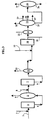
- the feed enters via the pipe (1) in a hydrotreatment zone (2) (which may be composed of one or more reactors, and comprise one or more catalytic beds of one or more catalysts) in which between hydrogen (by example by the pipe (3)) and where is carried out the hydrotreatment step.
- a hydrotreatment zone (2) which may be composed of one or more reactors, and comprise one or more catalytic beds of one or more catalysts
- the hydrotreated feedstock is transferred via the pipe (4) to the hydroisomerisation zone (7) (which may be composed of one or more reactors, and comprise one or more catalytic beds of one or more catalysts) where, in the presence of hydrogen, step (a) hydroisomerization.
- Hydrogen can be supplied via line (8).
- the charge to be hydroisomerized is freed from a large part of its water in the flask (5), the water leaving via the pipe (6) and possibly ammonia and hydrogen sulphide H 2 S, in the case where the charge entering through line 1 contains sulfur and nitrogen.
- the effluent from the zone (7) is sent via a pipe (9) into a flask (10) for separating the hydrogen which is extracted via a pipe (11), the effluent is then distilled at atmospheric pressure in the column (12) from which is extracted at the top by the line (13) a light fraction containing the compounds with at most 4 carbon atoms and those boiling below. It is also obtained at least one gasoline fraction (14) and at least one middle distillate fraction (kerosene (15) and diesel (16) for example).
- a fraction containing the compounds with a boiling point greater than at least 340 ° C. is obtained at the bottom of the column. This fraction is evacuated via line (17) to the catalytic dewaxing zone (18).
- the catalytic dewaxing zone (18) (comprising one or more reactors, one or more catalytic beds of one or more catalysts) also receives hydrogen via a line (19) to carry out step (b) of the process.
- the effluent obtained leaving the pipe (20) is separated in a distillation train including the balloon (21) to separate the hydrogen by a pipe (22), an atmospheric distillation column (23) and a vacuum column (24) which processes the atmospheric distillation residue transferred via line (25), an initial boiling point residue of greater than 340 ° C.
- an oil fraction (line 26) and lower boiling fractions such as gas oil (line 27), kerosene (line 28) gasoline (line 29) are obtained; the light gases eliminated by the pipe (30) of the atmospheric column and the line (31) through the vacuum distillation column.
- the effluent leaving the pipe (20) can also be advantageously sent to a hydrofinishing zone (not shown) (comprising one or more reactors, one or more catalytic beds of one or more catalysts) before being injected into the separation train. Hydrogen can be added if needed in this area.
- the outgoing effluent is then transferred into the flask (21) and the described distillation train.
- step a all of the effluent from the hydroisomerization-conversion zone (7) (step a) passes directly through line (9) into the catalytic dewaxing zone (18) (step b).
- the effluent from the hydroisomerization-conversion zone (7) undergoes in the flask (32) a separation of at least a portion of the light gases (hydrogen and hydrocarbon compounds at plus 4 carbon atoms) for example by flash.
- the separated gases are removed via line (33) and the residual effluent is sent via line (34) to the catalytic dewaxing zone (18).
Landscapes
- Chemical & Material Sciences (AREA)
- Engineering & Computer Science (AREA)
- Organic Chemistry (AREA)
- Chemical Kinetics & Catalysis (AREA)
- Oil, Petroleum & Natural Gas (AREA)
- Crystallography & Structural Chemistry (AREA)
- Materials Engineering (AREA)
- General Chemical & Material Sciences (AREA)
- Production Of Liquid Hydrocarbon Mixture For Refining Petroleum (AREA)
- Catalysts (AREA)
- Fats And Perfumes (AREA)
Claims (13)
- Verfahren zur Herstellung von Ölen aus einer Kohlenwasserstoffcharge, wobei das Verfahren die folgenden aufeinander folgenden Schritte umfasst:(a) Umwandlung der Charge mit gleichzeitiger Hydroisomerierung mindestens eines Teils der n-Paraffine der Charge, wobei die Charge einen Schwefelgehalt unter 1.000 ppm pds, einen Stickoxidgehalt unter 200 ppm pds, einen Metallgehalt unter 50 ppm pds, einen Sauerstoffgehalt von höchstens 0,2 % pds hat, wobei der Schritt bei einer Temperatur von 200 bis 500 °C, unter einem Druck zwischen 2 und 25 MPa, mit einer Raumgeschwindigkeit von 0,1 bis 10h-1, in Gegenwart von Wasserstoff und in Gegenwart eines Katalysators stattfindet, der mindestens ein Edelmetall enthält, das auf einem amorphen Säureträger niedergeschlagen ist, wobei die Edelmetalldispersion zwischen 20 und 100 % liegt.(b) Katalytisches Entparaffinieren mindestens eines Teils des ablaufenden Mediums, das aus Schritt (a) hervorgegangen ist, das bei einer Temperatur von 200 bis 500 °C realisiert wird, unter einem Druck von 1 bis 25 Mpa, mit einer stündlichen Volumengeschwindigkeit von 0,05 bis 50h-1, in Gegenwart von 50 - 2.000 Liter Wasserstoff/Liter ablaufendes Medium, das in den Schritt (b) eintritt, und in Gegenwart eines Katalysators, der mindestens ein hydro-dehydrierendes Element und mindestens ein Molekularsieb umfasst, ausgewählt aus der Gruppe, gebildet aus ZBM-30, EU-2 und EU-11.
- Verfahren nach Anspruch 1, in dem für den Schritt (a) ein Katalysator verwendet wird, der mindestens ein Edelmetall enthält, das auf einem amorphen Alumina-Silika niedergeschlagen ist.
- Verfahren nach einem der vorstehenden Ansprüche, bei dem für Schritt (a) ein Katalysator verwendet wird, der im Wesentlichen aus 0,05 bis 10 Gew.-% mindestens eines Edelmetalls der Gruppe VIII besteht, das auf einem amorphen Alumina-Silika-Träger niedergeschlagen ist, der 5 bis 90 Gew.-% Silika enthält und eine spezifische Oberfläche BET von 100 bis 500 m2/g aufweist, und wobei der Katalysator aufweist:- einen mittleren Porendurchmesser zwischen 1 bis 12 nm.- ein Porenvolumen der Poren deren Durchmesser zwischen dem mittleren Durchmesser, wie zuvor definiert, der um 3 nm verringert ist, und dem mittlere Durchmesser, wie zuvor definiert, der um 3 nm erhöht ist, liegt, der höher als 40 % des Gesamtporenvolumes ist,- eine Edelmetalldispersion zwischen 20 und 100 %- einen Verteilungskoeffizienten des Edelmetalls über 0,1.
- Verfahren nach einem der vorstehenden Ansprüche, bei dem das Edelmetall des Katalysators aus Schritt (a) Platin und/oder Palladium ist.
- Verfahren nach einem der vorstehenden Ansprüche, in dem die Gesamtheit des abfließenden Mediums aus Schritt (a) in Schritt (b) behandelt wird.
- Verfahren nach einem der Ansprüche 1 bis 4, in dem das abfließende Medium, das aus Schritt (a) hervorgegangen ist, destilliert wird, um die Leichtgase und mindestens einen Rückstand, der die Verbindungen mit einem Siedepunkt von mindestens 340 °C enthält, zu separieren, wobei der Rückstand dem Schritt (b) unterzogen wird.
- Verfahren nach einem der vorstehenden Ansprüche, in dem das abfließende Medium, das aus Schritt (b) hervorgegangen ist, destilliert wird, um ein Öl zu separieren, das Verbindungen mit einem Siedepunkt von mindestens 340 °C enthält.
- Verfahren nach Anspruch 7, das eine atmosphärische Destillation gefolgt von einer Vakuumdestillation des atmosphärischen Rückstands umfasst.
- Verfahren nach einem der vorstehenden Ansprüche, in dem die Charge, die Schritt (a) unterzogen wurde, zuvor eine Wasserstoffbehandlung durchgemacht hat, dann eventuell eine Separation des Wassers, des Ammoniaks und des Schwefelwasserstoffs.
- Verfahren nach einem der vorstehenden Ansprüche, in dem der Katalysator der katalytischen Entparaffinierung ebenfalls mindestens ein Zeolith enthält, ausgewählt aus der Gruppe, gebildet aus NU-10, EU-1 EU-13, Ferrierit, ZSM-22, Theta-1, ZSM-50, ZSM-23, NU - 23, ZSM-35, ZSM-38, ZSM-48, ISI-1 KZ-2, ISI-4 und KZ-1.
- Verfahren nach einem der vorstehenden Ansprüche, in dem das abfließende Medium, das aus Schritt (b) hervorgegangen ist, bevor es destilliert wird, einem Schritt der abschließenden Hydrobehandlung unterzogen wird.
- Verfahren nach einem der vorstehenden Ansprüche, in dem die behandelte Kohlenwasserstoffcharge mindestens 20 Volumen-% der Verbindungen, die über 340°C sieden, enthält.
- Verfahren nach einem der vorstehenden Ansprüche, in dem die behandelte Kohlenwasserstoffcharge ausgewählt ist aus der Gruppe, gebildet aus den abfliesenden Medien, die aus der Fischer-Tropsch-Einheit hervorgegangen sind, den Vakuumdestillaten, die aus der direkten Destillation des Rohöls, den Vakuumdestillaten, die aus den Umwandlungseinheiten hervorgegangen sind, den Vakuumdestillaten, die aus den aromatischen Extraktionseinheiten stammen, den Vakuumdestillaten, die aus der Entschwefelung oder der Umsetzung in Gegenwart von Wasserstoff der atmosphärischen Rückstände stammen und/oder den Vakuumrückständen, den entasphaltierten Ölen, den Hydrocracking-Rückständen oder jeder Mischung dieser Chargen.
Applications Claiming Priority (3)
| Application Number | Priority Date | Filing Date | Title |
|---|---|---|---|
| FR0016366A FR2818284B1 (fr) | 2000-12-15 | 2000-12-15 | Procede flexible ameliore de production de bases huiles et distillats moyens avec une conversion-hydroisomerisation suivie d'un deparaffinage catalytique |
| FR0016366 | 2000-12-15 | ||
| PCT/FR2001/003975 WO2002048289A1 (fr) | 2000-12-15 | 2001-12-13 | Procede flexible ameliore de production de bases huiles et distillats moyens avec une conversion-hydroisomerisation suivie d'un deparaffinage catalytique |
Publications (2)
| Publication Number | Publication Date |
|---|---|
| EP1412458A1 EP1412458A1 (de) | 2004-04-28 |
| EP1412458B1 true EP1412458B1 (de) | 2006-06-14 |
Family
ID=8857698
Family Applications (1)
| Application Number | Title | Priority Date | Filing Date |
|---|---|---|---|
| EP01270584A Expired - Lifetime EP1412458B1 (de) | 2000-12-15 | 2001-12-13 | Verbessertes flexibeles verfahren zur herstellung von basisölen und mitteldestillaten mittels einer hydroisomerierung und anschliessender katalytischen entparraffinierung |
Country Status (10)
| Country | Link |
|---|---|
| US (1) | US7267758B2 (de) |
| EP (1) | EP1412458B1 (de) |
| JP (1) | JP4224637B2 (de) |
| KR (1) | KR100809506B1 (de) |
| AT (1) | ATE329986T1 (de) |
| BR (1) | BR0116218A (de) |
| DE (1) | DE60120791T2 (de) |
| ES (1) | ES2266094T3 (de) |
| FR (1) | FR2818284B1 (de) |
| WO (1) | WO2002048289A1 (de) |
Families Citing this family (37)
| Publication number | Priority date | Publication date | Assignee | Title |
|---|---|---|---|---|
| FR2805762B1 (fr) * | 2000-03-02 | 2004-01-16 | Inst Francais Du Petrole | Catalyseur a base de zeolithe zsm-48 et procede pour l'amelioration du point d'ecoulement de charges paraffiniques |
| US7838708B2 (en) | 2001-06-20 | 2010-11-23 | Grt, Inc. | Hydrocarbon conversion process improvements |
| FR2850393B1 (fr) * | 2003-01-27 | 2005-03-04 | Inst Francais Du Petrole | Procede de production de distillats moyens par hydroisomerisation et hydrocraquage de charges issues du procede fischer-tropsch |
| FR2852865B1 (fr) * | 2003-03-24 | 2007-02-23 | Inst Francais Du Petrole | Catalyseur et son utilisation pour l'amelioration du point d'ecoulement de charges hydrocarbonnees |
| FR2852863B1 (fr) * | 2003-03-24 | 2005-05-06 | Inst Francais Du Petrole | Catalyseur et son utilisation pour l'amelioration du point d'ecoulement de charges hydrocarbonnees |
| FR2852864B1 (fr) * | 2003-03-24 | 2005-05-06 | Inst Francais Du Petrole | Catalyseur comprenant au moins une zeolithe choisie parmi zbm-30, zsm-48, eu-2 et eu-11 et au moins une zeolithe y et procede d'hydroconversion de charges hydrocarbonees utilisant un tel catalyseur |
| FR2857019B1 (fr) * | 2003-07-03 | 2005-08-19 | Inst Francais Du Petrole | Procede d'amelioration du point d'ecoulement de charges hydrocarbonees issues du procede fischer-tropsch, utilisant un catalyseur a base de zeolithe zbm-30 |
| FR2857020B1 (fr) * | 2003-07-03 | 2007-08-17 | Inst Francais Du Petrole | Procede d'amelioration du point d'ecoulement de charges hydrocarbonees issues du procede fischer-tropsch, utilisant un catalyseur a base d'un melange de zeolithes |
| ITMI20031361A1 (it) * | 2003-07-03 | 2005-01-04 | Enitecnologie Spa | Processo per la preparazione di distillati medi e basi lube a partire da cariche idrocarburiche sintetiche. |
| WO2005021468A1 (en) | 2003-07-15 | 2005-03-10 | Grt, Inc. | Hydrocarbon synthesis |
| US20050171393A1 (en) | 2003-07-15 | 2005-08-04 | Lorkovic Ivan M. | Hydrocarbon synthesis |
| RU2258733C2 (ru) * | 2003-10-06 | 2005-08-20 | ОАО "Всероссийский научно-исследовательский институт по переработке нефти" | Способ получения основы смазочных масел |
| US20080275284A1 (en) | 2004-04-16 | 2008-11-06 | Marathon Oil Company | Process for converting gaseous alkanes to liquid hydrocarbons |
| US8642822B2 (en) | 2004-04-16 | 2014-02-04 | Marathon Gtf Technology, Ltd. | Processes for converting gaseous alkanes to liquid hydrocarbons using microchannel reactor |
| US20060100469A1 (en) | 2004-04-16 | 2006-05-11 | Waycuilis John J | Process for converting gaseous alkanes to olefins and liquid hydrocarbons |
| US7244867B2 (en) | 2004-04-16 | 2007-07-17 | Marathon Oil Company | Process for converting gaseous alkanes to liquid hydrocarbons |
| US7674941B2 (en) | 2004-04-16 | 2010-03-09 | Marathon Gtf Technology, Ltd. | Processes for converting gaseous alkanes to liquid hydrocarbons |
| US8173851B2 (en) | 2004-04-16 | 2012-05-08 | Marathon Gtf Technology, Ltd. | Processes for converting gaseous alkanes to liquid hydrocarbons |
| US7579510B2 (en) | 2006-02-03 | 2009-08-25 | Grt, Inc. | Continuous process for converting natural gas to liquid hydrocarbons |
| AU2007212493B2 (en) | 2006-02-03 | 2012-09-27 | Grt, Inc. | Separation of light gases from halogens |
| GB2446127A (en) * | 2007-01-30 | 2008-08-06 | Gtl F1 Ag | Preparation of Fischer-Tropsch Catalysts |
| KR20100027141A (ko) | 2007-05-24 | 2010-03-10 | 지알티, 인코포레이티드 | 가역적으로 할로겐화수소를 흡수 및 방출할 수 있는 존 반응기 |
| US8282810B2 (en) | 2008-06-13 | 2012-10-09 | Marathon Gtf Technology, Ltd. | Bromine-based method and system for converting gaseous alkanes to liquid hydrocarbons using electrolysis for bromine recovery |
| SG192538A1 (en) | 2008-07-18 | 2013-08-30 | Grt Inc | Continuous process for converting natural gas to liquid hydrocarbons |
| CA2773368A1 (en) * | 2009-09-08 | 2011-03-17 | Exxonmobil Research And Engineering Company | Fuel production from feedstock containing lipidic material |
| US8367884B2 (en) | 2010-03-02 | 2013-02-05 | Marathon Gtf Technology, Ltd. | Processes and systems for the staged synthesis of alkyl bromides |
| US8198495B2 (en) | 2010-03-02 | 2012-06-12 | Marathon Gtf Technology, Ltd. | Processes and systems for the staged synthesis of alkyl bromides |
| KR101354235B1 (ko) * | 2010-04-14 | 2014-02-13 | 에스케이이노베이션 주식회사 | 수소화 탈왁스 공정을 위한 촉매 및 이의 제조 방법 |
| US8815050B2 (en) | 2011-03-22 | 2014-08-26 | Marathon Gtf Technology, Ltd. | Processes and systems for drying liquid bromine |
| US8436220B2 (en) | 2011-06-10 | 2013-05-07 | Marathon Gtf Technology, Ltd. | Processes and systems for demethanization of brominated hydrocarbons |
| US8829256B2 (en) | 2011-06-30 | 2014-09-09 | Gtc Technology Us, Llc | Processes and systems for fractionation of brominated hydrocarbons in the conversion of natural gas to liquid hydrocarbons |
| US8802908B2 (en) | 2011-10-21 | 2014-08-12 | Marathon Gtf Technology, Ltd. | Processes and systems for separate, parallel methane and higher alkanes' bromination |
| US9193641B2 (en) | 2011-12-16 | 2015-11-24 | Gtc Technology Us, Llc | Processes and systems for conversion of alkyl bromides to higher molecular weight hydrocarbons in circulating catalyst reactor-regenerator systems |
| US9796936B2 (en) | 2015-09-09 | 2017-10-24 | Chevron U.S.A. Inc. | Production of heavy API group II base oil |
| WO2021113093A1 (en) * | 2019-12-06 | 2021-06-10 | Exxonmobil Chemical Patents Inc. | Methylparaffins obtained through isomerization of linear olefins and use thereof in thermal management |
| US12090468B2 (en) * | 2021-03-11 | 2024-09-17 | Chevron U.S.A. Inc. | High nanopore volume hydrotreating catalyst and process |
| KR20240009693A (ko) * | 2022-07-14 | 2024-01-23 | 에스케이이노베이션 주식회사 | 폐플라스틱 열분해유의 연속 정제방법 및 정제장치 |
Family Cites Families (9)
| Publication number | Priority date | Publication date | Assignee | Title |
|---|---|---|---|---|
| US4554065A (en) * | 1984-05-03 | 1985-11-19 | Mobil Oil Corporation | Isomerization process to produce low pour point distillate fuels and lubricating oil stocks |
| FR2698863B1 (fr) * | 1992-12-08 | 1995-01-13 | Elf Aquitaine | Procédé de synthèse de zolithes du type ZSM-48, produits obtenus et leur application en adsorption et catalyse. |
| DE69511575T2 (de) * | 1994-11-23 | 2000-04-27 | Exxon Chemical Patents, Inc. | Verfahren zur umwandlung von kohlenwasserstoffen unter verwendung eines durch zeolith gebundenen zeolithkatalysators |
| EP1054942A4 (de) * | 1998-02-13 | 2006-07-26 | Exxonmobil Res & Eng Co | Herstellung von schmierölen mit einem katalysatorverbundsystem |
| US6051129A (en) * | 1998-07-24 | 2000-04-18 | Chevron U.S.A. Inc. | Process for reducing haze point in bright stock |
| FR2792978B1 (fr) | 1999-04-28 | 2001-06-22 | Oliveira & Irmao Sa | Ecrou de montage et demontage rapide |
| NL1015035C2 (nl) * | 1999-04-29 | 2001-02-12 | Inst Francais Du Petrole | Flexibel proces voor de productie van basisoliÙn en destillatieproducten door een omzetting-hydroisomerisatie op een weinig gedispergeerde katalysator, gevolgd door een katalytische ontparaffinering. |
| FR2792945B1 (fr) * | 1999-04-29 | 2006-01-13 | Inst Francais Du Petrole | Procede de production de bases huiles et distillats moyens avec une conversion-hydroisomerisation suivie d'un deparaffinage catalytique |
| FR2805762B1 (fr) | 2000-03-02 | 2004-01-16 | Inst Francais Du Petrole | Catalyseur a base de zeolithe zsm-48 et procede pour l'amelioration du point d'ecoulement de charges paraffiniques |
-
2000
- 2000-12-15 FR FR0016366A patent/FR2818284B1/fr not_active Expired - Fee Related
-
2001
- 2001-12-13 EP EP01270584A patent/EP1412458B1/de not_active Expired - Lifetime
- 2001-12-13 AT AT01270584T patent/ATE329986T1/de not_active IP Right Cessation
- 2001-12-13 BR BR0116218-7A patent/BR0116218A/pt not_active Application Discontinuation
- 2001-12-13 WO PCT/FR2001/003975 patent/WO2002048289A1/fr not_active Ceased
- 2001-12-13 DE DE60120791T patent/DE60120791T2/de not_active Expired - Lifetime
- 2001-12-13 ES ES01270584T patent/ES2266094T3/es not_active Expired - Lifetime
- 2001-12-13 KR KR1020037007995A patent/KR100809506B1/ko not_active Expired - Fee Related
- 2001-12-13 JP JP2002549808A patent/JP4224637B2/ja not_active Expired - Fee Related
- 2001-12-13 US US10/450,397 patent/US7267758B2/en not_active Expired - Fee Related
Also Published As
| Publication number | Publication date |
|---|---|
| FR2818284B1 (fr) | 2006-08-04 |
| KR20030081351A (ko) | 2003-10-17 |
| JP2004515636A (ja) | 2004-05-27 |
| EP1412458A1 (de) | 2004-04-28 |
| WO2002048289A1 (fr) | 2002-06-20 |
| KR100809506B1 (ko) | 2008-03-07 |
| ES2266094T3 (es) | 2007-03-01 |
| JP4224637B2 (ja) | 2009-02-18 |
| DE60120791D1 (de) | 2006-07-27 |
| US20040065585A1 (en) | 2004-04-08 |
| DE60120791T2 (de) | 2006-11-16 |
| FR2818284A1 (fr) | 2002-06-21 |
| BR0116218A (pt) | 2003-12-30 |
| ATE329986T1 (de) | 2006-07-15 |
| US7267758B2 (en) | 2007-09-11 |
Similar Documents
| Publication | Publication Date | Title |
|---|---|---|
| FR2818284A1 (fr) | Procede flexible ameliore de production de bases huiles et distillats moyens avec une conversion-hydroisomerisation suivie d'un deparaffinage catalytique | |
| EP1278812B1 (de) | Anpassungsfähiges verfahren zur herstellung von ölen mit zeolit zsm-48 | |
| EP1307526B1 (de) | Vefahren zur herstellung von basisölen und von mitteldestillaten aus einem heteroatomhaltigen einsatz | |
| EP1346010B1 (de) | Verbessertes flexibles verfahren zur herstellung von grundölen und destillaten durch hydroisomerisierung-konversion an einem schwach dispergierten katalysator und anschliessende katalytische entparaffinierung | |
| EP0725810B1 (de) | Verfahren zur behandlung duch hydroisomerizierung von einsätze aus fisher-tropshverfahren | |
| EP1048346B1 (de) | Katalysator mit schwach dispergiertem Edelmetall und seine Verwendung für die Umwandlung von Kohlenwasserstoffeneinsätzen | |
| EP1088879A1 (de) | Verfahren zur Erzeugung von Benzin mit verbesserter Oktanzahl | |
| FR2926087A1 (fr) | Procede multietapes de production de distillats moyens par hydroisomerisation et hydrocraquage d'un effluent produit par le procede fischer-tropsch | |
| FR2926086A1 (fr) | Procede de production de distillats moyens par hydroisomerisation et hydrocraquage sequences d'un effluent produit par le procede fischer-tropsch | |
| EP1462168B1 (de) | Katalysator und seine Verwendung zur Verbesserung des Fliesspunktes von Kohlenwasserstoffen | |
| EP1157084B1 (de) | Anpassungsfähiges verfahren zur herstellung medizinischer öle und gegebenenfalls mitteldestillaten | |
| FR2805543A1 (fr) | Procede flexible de production de bases huiles et distillats moyens avec une conversion-hydroisomerisation suivie d'un deparaffinage catalytique | |
| FR2805542A1 (fr) | Procede flexible de production de bases huiles et de distillats par une conversion-hydroisomerisation sur un catalyseur faiblement disperse suivie d'un deparaffinage catalytique | |
| FR2989381A1 (fr) | Production de distillats moyens a partir d'un effluent issu de la synthese fischer-tropsch comprenant une etape de reduction de la teneur en composes oxygenes | |
| EP1462166B1 (de) | Katalysator und seine Verwendung zur Verbesserung des Fliesspunktes von Kohlenwasserstoffen | |
| WO2005012461A1 (fr) | Procede d'amelioration du point d'ecoulement de charges hydrocarbonees issues du procede fischer-tropsch utilisant un catalyseur a base d'un melange de zeolithes | |
| FR2792946A1 (fr) | Procede de production de bases huiles et de distillats moyens a partir de charges hydrocarbonees par une conversion-hydroisomerisation sur un catalyseur faiblement disperse suivie d'un deparaffinage catalytique | |
| FR2792945A1 (fr) | Procede de production de bases huiles et distillats moyens avec une conversion-hydroisomerisation suivie d'un deparaffinage catalytique | |
| WO2005012460A1 (fr) | Procede d'amelioration du point d'ecoulement de charges hydrocarbonees issues du procede fischer-tropsch, utilisant un catalyseur a base de zeolithe zbm-30 | |
| FR2785616A1 (fr) | Procede flexible de production de bases huiles et eventuellement de distillats moyens de tres haute qualite | |
| FR2797270A1 (fr) | Procede et flexible de production de bases huiles et eventuellement de distillats moyens de tres haute qualite | |
| FR2785617A1 (fr) | Procede flexible de production de bases huiles et eventuellement de distillats moyens de tres haute qualite | |
| FR2857370A1 (fr) | Procede de production de distillats et d'huiles lubrifiantes | |
| FR2718146A1 (fr) | Procédé de production d'huiles à partir de coupes lourdes en deux étapes comprenant un hydrotraitement suivi d'une hydroisomérisation. |
Legal Events
| Date | Code | Title | Description |
|---|---|---|---|
| PUAI | Public reference made under article 153(3) epc to a published international application that has entered the european phase |
Free format text: ORIGINAL CODE: 0009012 |
|
| 17P | Request for examination filed |
Effective date: 20030715 |
|
| AK | Designated contracting states |
Kind code of ref document: A1 Designated state(s): AT BE CH CY DE DK ES FI FR GB GR IE IT LI LU MC NL PT SE TR |
|
| GRAP | Despatch of communication of intention to grant a patent |
Free format text: ORIGINAL CODE: EPIDOSNIGR1 |
|
| GRAS | Grant fee paid |
Free format text: ORIGINAL CODE: EPIDOSNIGR3 |
|
| GRAA | (expected) grant |
Free format text: ORIGINAL CODE: 0009210 |
|
| AK | Designated contracting states |
Kind code of ref document: B1 Designated state(s): AT BE CH CY DE DK ES FI FR GB GR IE IT LI LU MC NL PT SE TR |
|
| PG25 | Lapsed in a contracting state [announced via postgrant information from national office to epo] |
Ref country code: FI Free format text: LAPSE BECAUSE OF FAILURE TO SUBMIT A TRANSLATION OF THE DESCRIPTION OR TO PAY THE FEE WITHIN THE PRESCRIBED TIME-LIMIT Effective date: 20060614 Ref country code: IE Free format text: LAPSE BECAUSE OF FAILURE TO SUBMIT A TRANSLATION OF THE DESCRIPTION OR TO PAY THE FEE WITHIN THE PRESCRIBED TIME-LIMIT Effective date: 20060614 Ref country code: AT Free format text: LAPSE BECAUSE OF FAILURE TO SUBMIT A TRANSLATION OF THE DESCRIPTION OR TO PAY THE FEE WITHIN THE PRESCRIBED TIME-LIMIT Effective date: 20060614 |
|
| REG | Reference to a national code |
Ref country code: GB Ref legal event code: FG4D Free format text: NOT ENGLISH |
|
| REG | Reference to a national code |
Ref country code: CH Ref legal event code: EP |
|
| REG | Reference to a national code |
Ref country code: IE Ref legal event code: FG4D Free format text: LANGUAGE OF EP DOCUMENT: FRENCH |
|
| REF | Corresponds to: |
Ref document number: 60120791 Country of ref document: DE Date of ref document: 20060727 Kind code of ref document: P |
|
| PG25 | Lapsed in a contracting state [announced via postgrant information from national office to epo] |
Ref country code: DK Free format text: LAPSE BECAUSE OF FAILURE TO SUBMIT A TRANSLATION OF THE DESCRIPTION OR TO PAY THE FEE WITHIN THE PRESCRIBED TIME-LIMIT Effective date: 20060914 Ref country code: SE Free format text: LAPSE BECAUSE OF FAILURE TO SUBMIT A TRANSLATION OF THE DESCRIPTION OR TO PAY THE FEE WITHIN THE PRESCRIBED TIME-LIMIT Effective date: 20060914 |
|
| GBT | Gb: translation of ep patent filed (gb section 77(6)(a)/1977) |
Effective date: 20060923 |
|
| PG25 | Lapsed in a contracting state [announced via postgrant information from national office to epo] |
Ref country code: PT Free format text: LAPSE BECAUSE OF FAILURE TO SUBMIT A TRANSLATION OF THE DESCRIPTION OR TO PAY THE FEE WITHIN THE PRESCRIBED TIME-LIMIT Effective date: 20061114 |
|
| PG25 | Lapsed in a contracting state [announced via postgrant information from national office to epo] |
Ref country code: CH Free format text: LAPSE BECAUSE OF NON-PAYMENT OF DUE FEES Effective date: 20061231 Ref country code: LI Free format text: LAPSE BECAUSE OF NON-PAYMENT OF DUE FEES Effective date: 20061231 Ref country code: MC Free format text: LAPSE BECAUSE OF NON-PAYMENT OF DUE FEES Effective date: 20061231 |
|
| REG | Reference to a national code |
Ref country code: IE Ref legal event code: FD4D |
|
| REG | Reference to a national code |
Ref country code: ES Ref legal event code: FG2A Ref document number: 2266094 Country of ref document: ES Kind code of ref document: T3 |
|
| PLBE | No opposition filed within time limit |
Free format text: ORIGINAL CODE: 0009261 |
|
| STAA | Information on the status of an ep patent application or granted ep patent |
Free format text: STATUS: NO OPPOSITION FILED WITHIN TIME LIMIT |
|
| 26N | No opposition filed |
Effective date: 20070315 |
|
| REG | Reference to a national code |
Ref country code: CH Ref legal event code: PL |
|
| PG25 | Lapsed in a contracting state [announced via postgrant information from national office to epo] |
Ref country code: GR Free format text: LAPSE BECAUSE OF FAILURE TO SUBMIT A TRANSLATION OF THE DESCRIPTION OR TO PAY THE FEE WITHIN THE PRESCRIBED TIME-LIMIT Effective date: 20060915 |
|
| PG25 | Lapsed in a contracting state [announced via postgrant information from national office to epo] |
Ref country code: LU Free format text: LAPSE BECAUSE OF NON-PAYMENT OF DUE FEES Effective date: 20061213 Ref country code: TR Free format text: LAPSE BECAUSE OF FAILURE TO SUBMIT A TRANSLATION OF THE DESCRIPTION OR TO PAY THE FEE WITHIN THE PRESCRIBED TIME-LIMIT Effective date: 20060614 |
|
| PG25 | Lapsed in a contracting state [announced via postgrant information from national office to epo] |
Ref country code: CY Free format text: LAPSE BECAUSE OF FAILURE TO SUBMIT A TRANSLATION OF THE DESCRIPTION OR TO PAY THE FEE WITHIN THE PRESCRIBED TIME-LIMIT Effective date: 20060614 |
|
| REG | Reference to a national code |
Ref country code: FR Ref legal event code: CD |
|
| PGFP | Annual fee paid to national office [announced via postgrant information from national office to epo] |
Ref country code: GB Payment date: 20101224 Year of fee payment: 10 Ref country code: IT Payment date: 20101216 Year of fee payment: 10 Ref country code: NL Payment date: 20101223 Year of fee payment: 10 |
|
| PGFP | Annual fee paid to national office [announced via postgrant information from national office to epo] |
Ref country code: DE Payment date: 20110125 Year of fee payment: 10 |
|
| REG | Reference to a national code |
Ref country code: DE Ref legal event code: R081 Ref document number: 60120791 Country of ref document: DE Owner name: IFP ENERGIES NOUVELLES, FR Free format text: FORMER OWNER: INSTITUT FRANCAIS DU PETROLE, RUEIL-MALMAISON, FR Effective date: 20110331 Ref country code: DE Ref legal event code: R081 Ref document number: 60120791 Country of ref document: DE Owner name: IFP ENERGIES NOUVELLES, FR Free format text: FORMER OWNER: INSTITUT FRANCAIS DU PETROLE, RUEIL-MALMAISON, HAUTS-DE-SEINE, FR Effective date: 20110331 |
|
| PGFP | Annual fee paid to national office [announced via postgrant information from national office to epo] |
Ref country code: BE Payment date: 20101223 Year of fee payment: 10 Ref country code: ES Payment date: 20101221 Year of fee payment: 10 |
|
| BERE | Be: lapsed |
Owner name: INSTITUT FRANCAIS DU *PETROLE Effective date: 20111231 |
|
| REG | Reference to a national code |
Ref country code: NL Ref legal event code: V1 Effective date: 20120701 |
|
| GBPC | Gb: european patent ceased through non-payment of renewal fee |
Effective date: 20111213 |
|
| REG | Reference to a national code |
Ref country code: DE Ref legal event code: R119 Ref document number: 60120791 Country of ref document: DE Effective date: 20120703 |
|
| PG25 | Lapsed in a contracting state [announced via postgrant information from national office to epo] |
Ref country code: GB Free format text: LAPSE BECAUSE OF NON-PAYMENT OF DUE FEES Effective date: 20111213 Ref country code: DE Free format text: LAPSE BECAUSE OF NON-PAYMENT OF DUE FEES Effective date: 20120703 Ref country code: BE Free format text: LAPSE BECAUSE OF NON-PAYMENT OF DUE FEES Effective date: 20111231 |
|
| PG25 | Lapsed in a contracting state [announced via postgrant information from national office to epo] |
Ref country code: IT Free format text: LAPSE BECAUSE OF NON-PAYMENT OF DUE FEES Effective date: 20111213 |
|
| PG25 | Lapsed in a contracting state [announced via postgrant information from national office to epo] |
Ref country code: NL Free format text: LAPSE BECAUSE OF NON-PAYMENT OF DUE FEES Effective date: 20120701 |
|
| REG | Reference to a national code |
Ref country code: ES Ref legal event code: FD2A Effective date: 20130704 |
|
| PG25 | Lapsed in a contracting state [announced via postgrant information from national office to epo] |
Ref country code: ES Free format text: LAPSE BECAUSE OF NON-PAYMENT OF DUE FEES Effective date: 20111214 |
|
| REG | Reference to a national code |
Ref country code: FR Ref legal event code: PLFP Year of fee payment: 15 |
|
| REG | Reference to a national code |
Ref country code: FR Ref legal event code: PLFP Year of fee payment: 16 |
|
| REG | Reference to a national code |
Ref country code: FR Ref legal event code: PLFP Year of fee payment: 17 |
|
| PGFP | Annual fee paid to national office [announced via postgrant information from national office to epo] |
Ref country code: FR Payment date: 20171214 Year of fee payment: 17 |
|
| PG25 | Lapsed in a contracting state [announced via postgrant information from national office to epo] |
Ref country code: FR Free format text: LAPSE BECAUSE OF NON-PAYMENT OF DUE FEES Effective date: 20181231 |