EP1418432B1 - Méthode, dosage et kit pour la quantification d'inhibiteurs de la protéase du VIH - Google Patents
Méthode, dosage et kit pour la quantification d'inhibiteurs de la protéase du VIH Download PDFInfo
- Publication number
- EP1418432B1 EP1418432B1 EP03024289A EP03024289A EP1418432B1 EP 1418432 B1 EP1418432 B1 EP 1418432B1 EP 03024289 A EP03024289 A EP 03024289A EP 03024289 A EP03024289 A EP 03024289A EP 1418432 B1 EP1418432 B1 EP 1418432B1
- Authority
- EP
- European Patent Office
- Prior art keywords
- hiv protease
- hiv
- sample
- protease inhibitor
- conjugate
- Prior art date
- Legal status (The legal status is an assumption and is not a legal conclusion. Google has not performed a legal analysis and makes no representation as to the accuracy of the status listed.)
- Expired - Lifetime
Links
Images

Classifications
-
- G—PHYSICS
- G01—MEASURING; TESTING
- G01N—INVESTIGATING OR ANALYSING MATERIALS BY DETERMINING THEIR CHEMICAL OR PHYSICAL PROPERTIES
- G01N33/00—Investigating or analysing materials by specific methods not covered by groups G01N1/00 - G01N31/00
- G01N33/48—Biological material, e.g. blood, urine; Haemocytometers
- G01N33/50—Chemical analysis of biological material, e.g. blood, urine; Testing involving biospecific ligand binding methods; Immunological testing
- G01N33/53—Immunoassay; Biospecific binding assay; Materials therefor
- G01N33/573—Immunoassay; Biospecific binding assay; Materials therefor for enzymes or isoenzymes
-
- G—PHYSICS
- G01—MEASURING; TESTING
- G01N—INVESTIGATING OR ANALYSING MATERIALS BY DETERMINING THEIR CHEMICAL OR PHYSICAL PROPERTIES
- G01N33/00—Investigating or analysing materials by specific methods not covered by groups G01N1/00 - G01N31/00
- G01N33/48—Biological material, e.g. blood, urine; Haemocytometers
- G01N33/50—Chemical analysis of biological material, e.g. blood, urine; Testing involving biospecific ligand binding methods; Immunological testing
- G01N33/53—Immunoassay; Biospecific binding assay; Materials therefor
- G01N33/569—Immunoassay; Biospecific binding assay; Materials therefor for microorganisms, e.g. protozoa, bacteria, viruses
- G01N33/56983—Viruses
- G01N33/56988—HIV or HTLV
-
- G—PHYSICS
- G01—MEASURING; TESTING
- G01N—INVESTIGATING OR ANALYSING MATERIALS BY DETERMINING THEIR CHEMICAL OR PHYSICAL PROPERTIES
- G01N2333/00—Assays involving biological materials from specific organisms or of a specific nature
- G01N2333/81—Protease inhibitors
-
- G—PHYSICS
- G01—MEASURING; TESTING
- G01N—INVESTIGATING OR ANALYSING MATERIALS BY DETERMINING THEIR CHEMICAL OR PHYSICAL PROPERTIES
- G01N2333/00—Assays involving biological materials from specific organisms or of a specific nature
- G01N2333/90—Enzymes; Proenzymes
- G01N2333/914—Hydrolases (3)
- G01N2333/948—Hydrolases (3) acting on peptide bonds (3.4)
-
- Y—GENERAL TAGGING OF NEW TECHNOLOGICAL DEVELOPMENTS; GENERAL TAGGING OF CROSS-SECTIONAL TECHNOLOGIES SPANNING OVER SEVERAL SECTIONS OF THE IPC; TECHNICAL SUBJECTS COVERED BY FORMER USPC CROSS-REFERENCE ART COLLECTIONS [XRACs] AND DIGESTS
- Y10—TECHNICAL SUBJECTS COVERED BY FORMER USPC
- Y10S—TECHNICAL SUBJECTS COVERED BY FORMER USPC CROSS-REFERENCE ART COLLECTIONS [XRACs] AND DIGESTS
- Y10S435/00—Chemistry: molecular biology and microbiology
- Y10S435/81—Packaged device or kit
Definitions
- HIV human immunodeficiency virus
- HIV protease is the causative agent responsible for AIDS, and that the enzyme HIV protease is responsible for catalyzing specific cleavages in the gag and gag-pol polypeptides of the HIV.
- a virus that synthesizes a mutationally inactivated HIV protease does not generally form infectious virions. HIV protease is thus an important target for which drugs against AIDS can be designed. HIV protease inhibitors can cause a reduction or cessation of the activity of HIV protease.
- HIV protease inhibitors approved by the Food and Drug Administration (FDA) for treatment of AIDS patients - amprenavir, indinavir, lopinavir, nelfinavir, ritonavir, and saquinavir.
- FDA Food and Drug Administration
- Combination therapies involving HIV protease inhibitors and HIV reverse transcriptase inhibitors are the cornerstones of currently recommended therapies for HIV infection. Not all AIDS patients show the same optimal response to a combination therapy regimen. There can be a large variability in drug response between individual patients. Relationships between systemic exposure to protease inhibitors and antiviral effect have been supported by accumulating clinical information.
- FDA Food and Drug Administration
- HIV protease inhibitors concentrations of HIV protease inhibitors in patients to ensure that drug exposure is sufficient to maintain antiviral activity in AIDS patients.
- quantitative measurement of HIV protease inhibitors in biological samples from test subjects is crucial in the drug development process.
- Other measurements of interest in the treatment of HIV include the measurement of the metabolites of HIV protease inhibitors, and the measurement of anti-HIV protease antibodies.
- the presence and amount of metabolites can provide information regarding the effectiveness of the therapeutic treatment.
- the presence of anti-HIV protease antibodies indicates infection of a patient by HIV, and the detection of the antibodies can therefore be used to diagnose possible infection.
- HIV protease inhibitors in patient samples have been quantified by assay methods which require sophisticated and expensive instrumentation, making the analysis difficult to perform in a clinical setting.
- plasma samples can be analyzed for the presence of numerous HTV protease inhibitor compounds simultaneously using chromatographic methods such as high-performance liquid chromatography (HPLC) or HPLC coupled with dual mass spectrometry (HPLC/MS/MS).
- HPLC high-performance liquid chromatography
- HPLC/MS/MS HPLC coupled with dual mass spectrometry
- Radioimmunoassays typically involve competitive interaction between a radiolabeled conjugate containing an HIV protease inhibitor analog and any free HIV protease inhibitor in the sample.
- the receptor is generally an antibody for the particular HIV protease inhibitor.
- an analog of an HIV protease inhibitor labeled with iodine-125 is reported to compete with any HIV inhibitor compound in a sample of patient plasma for binding with an antibody.
- the precipitated antibody complexes are then analyzed for their level of radioactivity to determine the concentration of the HIV protease inhibitor compound. See, for example, Wiltshire, H.R. et al. Analyt. Biochem. 281:105-114 (2000).
- HIV protease can be added to a sample together with a substrate for HIV protease. Cleavage of the substrate can then be measured by a radioimmunoassay utilizing an antibody which specifically binds the cleavage products. An absence of cleavage products indicates the presence of anti-HIV protease antibodies. See, for example, U.S. Patent No. 5,171,662.
- EP-A2-1 207 394 discloses an immunoassay for HIV protease inhibitors in which an antibody which is selective for a particular protease inhibitor is used as a receptor for the HIV protease inhibitor.
- there is a method for quantifying an HIV protease inhibitor in a sample comprising combining an HIV protease, a conjugate comprising an HIV protease inhibitor analog, and a sample suspected of containing an HIV protease inhibitor; wherein the HIV protease and the conjugate form a detectable complex; measuring the amount of the detectable complex, and relating the amount of said detectable complex to a concentration of the HIV protease inhibitor in the sample.
- a method for quantifying an HIV protease inhibitor in a sample comprising combining an HIV protease, a conjugate comprising a carrier and at least two HIV protease inhibitor analogs linked to the carrier, and a sample suspected of containing an HIV protease inhibitor; wherein the HIV protease is immobilized on a surface of a microparticle, the HIV protease and the conjugate together undergo agglutination; measuring the agglutination; and relating the amount of agglutination to a concentration of the HIV protease inhibitor in the sample.
- a method for quantifying an HIV protease inhibitor in a sample comprising combining a multivalent carrier comprising at least two HIV protease enzymes, a conjugate comprising a microparticle and an HIV protease inhibitor analog, and a sample suspected of containing an HIV protease inhibitor, wherein the HIV protease and the conjugate together undergo agglutination, and the sample is human serum or human plasma; measuring the agglutination; and relating the amount of agglutination to a concentration of the HIV protease inhibitor in the sample.
- a method for quantifying an HIV protease inhibitor in a sample comprising combining an HIV protease, a conjugate comprising a label and an HIV protease inhibitor analog linked to the label, and a sample suspected of containing an HIV protease inhibitor, wherein the HIV protease and the conjugate together form a detectable complex; measuring the amount of the detectable complex by monitoring a change in fluorescence polarization; and relating the amount of the detectable complex to a concentration of the HIV protease inhibitor in the sample.
- the present invention relates to methods for quantifying an HIV protease inhibitor in a sample involving an assay system for determining the concentration of HIV protease inhibitors (HIV-PIs) in a sample.
- the system includes HIV protease (HIV-PR) enzyme, a conjugate, and a sample suspected of containing HIV-PIs.
- HIV-PR HIV protease
- the conjugate and HIV-PIs present in the sample compete for the binding to the HIV-PR.
- the levels of HIV-PR bound to the conjugate change, and this change can be measured and correlated to the concentration of the HIV-PIs in the sample.
- HIV protease means an enzyme responsible for posttranslational processing of the gag and gag-pol polypeptides of the HIV.
- HIV-1 Two types of HIV, which encode HIV-PR, are HIV-1 and HIV-2. HIV-1 is a highly variable virus which mutates very readily, resulting in many different strains of HIV-1. These strains can be classified according to groups (for example, M and O) and according to subtypes. Examples of HIV protease thus include HIV-1 PR and HIV-2 PR, as well as engineered HIV-PR.
- HIV protease inhibitor includes HIV protease inhibitor compounds, active metabolites of HIV protease inhibitor compounds, and anti-HIV protease antibodies.
- HIV protease inhibitor compounds and metabolites thereof include peptides, organic compounds, organometallic compounds, and metallic complexes which can reduce or eliminate the activity of HIV protease.
- Specific examples of HIV protease inhibitor compounds include the compounds which are currently approved by the FDA for treatment of AIDS patients, namely amprenavir, indinavir, lopinavir, nelfinavir, ritonavir, and saquinavir.
- An anti-HIV protease antibody is an antibody which has a specific binding affinity for the HIV protease enzyme to the exclusion of other substances.
- antibody includes polyclonal antibodies, monoclonal antibodies and antibody fragments.
- analyte means a substance, or group of substances, whose presence or amount in a sample is to be determined including any drug or drug derivative, hormone, protein antigen or oligonucleotide.
- the analyte is an HIV protease inhibitor, including an HIV protease inhibitor compound, a metabolite of an HIV protease inhibitor compound, or an anti-HIV protease antibody.
- receptor means a specific binding partner of an analyte, and is meant to include any substance, or group of substances, which has a specific binding affinity for the analyte to the exclusion of other substances. Examples of receptors includes enzymes and antibodies. In the present assay system, HIV protease acts as a receptor for an HIV-PI and/or for a conjugate containing an HIV-PI analog.
- HIV-PI analog means a substance, or group of substances, which behaves essentially the same as an HIV protease inhibitor with respect to binding affinity for HIV protease.
- An HIV-PI analog is typically an HIV-PI that has been modified or derivatized such that it will mimic the interaction of the HIV-PI with HIV-PR.
- An HIV-PI analog thus includes any modification of an HIV-PI.
- an HIV-PI analog may be identical to the HIV-PI except for the presence of a linkage between the HIV-PI and another substance, such as an atom, a linking group, a label, or a carrier substance.
- examples of HIV-PI analogs include analogs of HIV protease inhibitor compounds, analogs of metabolites of HIV protease inhibitor compounds, and analogs of anti-HIV protease antibodies.
- conjugate means a composite of an HIV-PI analog linked to another substance, for example a carrier, a label or a solid phase, and is capable of specifically binding to a receptor.
- a conjugate containing an HIV-PI analog may specifically bind with HIV-PR through the analog.
- a conjugate containing an HIV-PI analog can be prepared, for example as described in a co-pending application Serial No. 10/192,052 filed on July 7, 2002.
- label means an identifying tag which, when attached to an HIV-PI analog as part of a conjugate, can be used to detect the binding of the conjugate with an appropriate receptor.
- a label may be attached to the HIV-PI analog directly or indirectly by means of a linking or bridging moiety.
- labels include fluorescent labels such as fluoresceins and rhodamines; luminescent compounds such as dioxetanes and luciferin; radioactive isotopes such as 125 I; chemiluminescent labels such as acridinium esters; electrochemiluminescent labels such as ruthenium bipyridyl; enzymes such as peroxidase and beta-galactosidase; and enzyme substrate labels.
- carrier means a substance, commonly a protein, which can join with one or more HIV-PI analogs, thereby enabling the detection of any binding of the HIV-PI analog with a receptor.
- carriers include proteins such as bovine serum albumin (BSA); synthetic or natural polysaccharides; and polymers such as aminodextran (AMD).
- detectable complex means a complex formed by a receptor and a conjugate, the amount of which can be measured by monitoring a change in a signal from the complex and/or its surroundings.
- the change in signal may be, for example, the formation of a measurable precipitate; a change in a characteristic of a spectroscopic absorbance, emission, luminescence or fluorescence; or a change in electrical properties.
- peptide means any compound formed by the linkage of two or more amino acids by amide (peptide) bonds, usually a polymer of ⁇ -amino acids in which the ⁇ -amino group of each amino acid residue (except the NH 2 -terminal) is linked to the ⁇ -carboxyl group of the next residue in a linear chain.
- peptide, polypeptide and poly(amino acid) are used synonymously herein to refer to this class of compounds without restriction as to size. The largest members of this class are referred to as proteins.
- covalent bond means a chemical bond between two species, and may involve single bonds or multiple bonds.
- non-covalent bond means chemical or physical interactions that do not form chemical bonds.
- Non-covalent bonding thus includes hydrophobic/hydrophilic interactions, Hydrogen-bonding, van der Waals interactions, and ionic and metallic interactions.
- adsorption of a substance to a surface is non-covalent
- coupling of a substance to a surface is covalent.
- biological sample means a bodily fluid obtained from a living organism.
- a biological sample is preferably an aqueous mixture, for example, urine, whole blood, plasma, serum, saliva, semen, stool, sputum, cerebral spinal fluid, tears, mucus or the like, but preferably is plasma or serum, and more preferably is human plasma or human serum.
- Any sample that is suspected of containing an HIV-PI can be analyzed by the method of the present invention.
- the sample can be pretreated if desired, including pretreatment by dilution, filtration, and/or centrifugation.
- the sample can be prepared in any convenient medium that does not interfere with the assay, and an aqueous medium is preferred.
- calibration material means any standard or reference material containing a known amount of the analyte to be measured.
- the sample suspected of containing the analyte and the calibration material are assayed under conditions which are as identical as possible. Analyte concentration is then calculated by comparing the results obtained for the unknown sample with results obtained for the standard.
- solid phase means a non-fluid substance, and includes particles (including microparticles and beads) made from materials such as polymer, metal (paramagnetic, ferromagnetic particles), glass, and ceramic; gel substances such as silica, alumina, and polymer gels; capillaries, which may be made of polymer, metal, glass, and/or ceramic; zeolites and other porous substances; electrodes; microtiter plates; solid strips; and cuvettes, tubes or other spectrometer sample containers.
- a solid phase component of an assay is distinguished from inert solid surfaces with which the assay may be in contact in that a "solid phase" contains at least one moiety on its surface which is intended to interact with one or more of the components of the assay mixture.
- An assay system for determining the concentration of HIV protease inhibitors (HIV-PIs) in a sample can include HIV-PR and a conjugate containing an HIV-PI analog.
- the conjugate can bind to the HIV-PR to form a detectable complex; however any HIV-PIs present can also bind to the HIV-PR, thus competing with the conjugate.
- the levels of HIV-PR bound to the conjugate change, and this change can be measured and correlated to the concentration of the HIV-PIs in the sample.
- the HIV protease enzyme acts as a receptor for the conjugate and for the HIV protease inhibitors in the sample.
- a conventional immunoassay uses an antibody that specifically binds the analyte and the analyte analog portion of a conjugate. See, for example, European Patent Application Publication EP 1 207 394 A2. This method can require the preparation of unique antibodies for each variety of HIV-PI to be analyzed.
- HIV-PR as a receptor, any type of HIV-PI may be quantified using a single assay system, since the HIV-PR will be inhibited by any HIV-PI in a sample.
- This format can provide for advantageous diagnostic assay characteristics.
- a sample containing a variety of different HIV-PIs can be analyzed in a single assay, allowing a convenient quantification of overall HIV-PI levels in a sample.
- a single type of conjugate can be used to analyze for a variety of HIV-PIs, further contributing to the simplicity of the assay.
- the HIV-PR may be present in an assay mixture as a free enzyme, or it may be bound to another substance, such as to a surface of a solid phase or to a carrier.
- the use of HIV-PR as a receptor can be applied to both homogeneous assays and heterogeneous assays.
- a heterogeneous assay a solid phase component of the assay is separated from the rest of the liquid assay mixture before the measurement of interest is performed.
- a homogeneous assay allows measurements to be obtained from the complete assay mixture, including the sample.
- a solid phase in a diagnostic assay can provide a convenient way of localizing and/or separating particular components of an assay mixture, so that the measurement of interest can be obtained.
- assay configurations which include the use of a solid phase component, and these may be classified roughly as either heterogeneous or homogeneous.
- Solid phase components in either homogeneous or heterogeneous formats may contain HIV-PR as an active moiety on the solid phase surface.
- the HIV-PR can act as a receptor capable of binding both HIV-PIs and detectable conjugates.
- the surface of a given solid phase component can be modified to include HIV-PR by a variety of methods.
- HIV-PR can be adsorbed onto a surface by contacting the surface with a liquid mixture containing the HIV-PR enzyme.
- an antibody which binds HIV-PR without obscuring critical binding sites of the enzyme can be adsorbed or bound to the surface, and the HIV-PR subsequently can be immobilized on the surface through its interaction with the antibody.
- biotin, avidin, or streptavidin can be used to immobilize a modified HIV-PR which contains the appropriate binding partner. In this example, it may be convenient to modify the HIV-PR with the smaller biotin moiety and to modify the solid surface with avidin or streptavidin.
- HIV-PR may be immobilized by covalent attachment such as carbodiimide coupling, N-hydroxy succinimide (NHS) ester coupling, or other chemical coupling techniques. See, for example, Markgren, P.-O. et al. Analytical Biochemistry 265 , 340-3 50 (1998).
- covalent attachment such as carbodiimide coupling, N-hydroxy succinimide (NHS) ester coupling, or other chemical coupling techniques.
- Solid phase components for heterogeneous assays may be stationary components, such as a tube, strip, cuvette or microtiter plate, or may be non-stationary components, such as beads and microparticles.
- Microparticles can also be used as a solid phase for homogeneous assay formats.
- a variety of microparticles that allow either non-covalent or covalent attachment of proteins and other substances may be used.
- Such particles include polymer particles such as polystyrene and poly(methylmethacrylate); gold particles such as gold nanoparticles and gold colloids; and ceramic particles such as silica, glass, and metal oxide particles. See for example C.R. Martin et al. Analytical Chemistry - News & Features, May 1, 1998, 322A-327A.
- useful microparticle reagents may be formed by adsorption of the HIV-PR onto the surface of the microparticles.
- Preferred microparticles include polystyrene-based latex microparticles having diameters between 0.1 and 1.0 micrometers ( ⁇ m).
- the surface of the microparticles can include carboxylate groups (-COO - and -COOH).
- Carboxylate groups can be introduced to surfaces, for example by hydrolysis reactions, by treatment with a carboxylating reagent, or by formation of self-assembled monolayers (SAMs) containing carboxylate groups. See for example J.G. Chapman et al. J. Am. Chem. Soc., 122, 8303-8304 (2000).
- the microparticles may contain carboxylate groups in a concentration which provides a 5-200 ⁇ 2 , or preferably 10-120 ⁇ 2 carboxylate surface parking area, which is defined as the surface area of the microparticle, divided by the total number of carboxylate groups on the surface.
- the enzyme is adsorbed onto carboxylate-modified latex microparticles.
- the microparticles containing bound HIV-PR are then separated from the adsorption mixture and subjected to repeated cycles of washing and centrifugation. These modified particles may be stored at reduced temperature, for example at 4 °C for up to 2 weeks.
- the aqueous mixtures used for adsorption, washing, or preparing stock mixtures are buffered, preferably at a pH between 3.5 and 6.5. If a more robust, engineered HIV-PR is used, the handling and storage conditions may be more flexible.
- a solid phase material, whether stationary or non-stationary, having HIV-PR bound to its surface may be used in a competitive assay to quantify HIV-PIs in a sample.
- HIV-PIs in the sample compete with a conjugate for binding with the immobilized HIV-PR, which functions as a receptor.
- the binding of HIV-PR with the conjugate results in the formation of a detectable complex.
- Measurement of the amount of binding of the enzyme with the conjugate alone, compared with the amount of binding in the presence of HIV-PIs can be correlated to the amount of the HIV-PIs in the sample that are competing with the conjugate.
- fluorescence polarization One example of a homogeneous assay utilizing free HIV-PR enzyme as a receptor is fluorescence polarization.
- the conjugate includes a fluorescent tracer linked to the HIV-PI analog. This fluorescent conjugate competes with HIV-PI in a sample for binding to the HIV-PR. A conjugate which is bound to the HIV-PR will exhibit a fluorescence polarization which is different from that exhibited by an unbound conjugate.
- the detectable complex is quantified or measured by monitoring the change in fluorescence polarization of the assay mixture.
- the change in fluorescence polarization signal due to the presence of HIV-PIs can be correlated to the amount of HIV-PI in a sample. See for example Biochem. Biophys. Res. Comm. 5:299, 1961.
- fluorescence polarization techniques are based on the principle that a fluorescein labeled compound, when excited by linearly polarized light, will emit fluorescence having a degree of polarization inversely related to its rate of rotation.
- fluorescein derivatives from which fluorescein labeled tracers can be prepared are known and are commercially available.
- fluorescein derivatives are derived from the 5 or 6 position of fluorescein (also referred to as isomer I for the 5 position and isomer II for the 6 position) and include 5 or 6-N-hydroxysuccinimidylcarboxyfluorescein,5-aminomethylfluorescein and 5-or 6-dichloro-1,3,5-triazin-2-ylaminofluorescein (DTAF).
- the signal of fluorescence polarization immunoassays can be quantified in terms of millipolarization units (mP), from which a calibration curve can be determined.
- the polarization of fluorescence decreases in a regular manner as the concentration of the analyte increases, and the concentration of analyte in the sample can be determined by comparison to the standard calibration curve.
- Fluorescence polarization assays including procedures, instrumentation, and reagents, are described in U.S. Pat. Nos. 5,986,094; 5,070,025; 4, 868,132; and in European Patent Application No. EP 0 745 602 A1.
- fluorescence polarization is a function of the analyte concentration, and thus is suitable for quantifying HIV protease inhibitor compounds, metabolites of HIV protease inhibitor compounds, and anti-HIV protease antibodies.
- the conjugate and HIV-PR are mixed together in the absence of free HIV-PI, most of the conjugate binds to the HIV-PR.
- the bound tracer is excited with polarized light at an absorption wavelength, the light emitted at the emission wavelength remains highly polarized.
- the HIV-PIs will compete with the conjugate for binding to the HIV-PR bound to the particles.
- the conjugate includes an HIV-PI analog linked to fluorescein.
- the detection of the complex of the HIV-PR and the conjugate includes irradiating the sample with light at 489 nm, and measuring polarization of the light emitted at 520 nm.
- microparticle agglutination assays One example of a homogeneous assay in which the HIV-PR receptor is bound to as surface of a solid phase is microparticle agglutination.
- the conjugate includes a plurality of HIV-PI analogs linked to a carrier substance. This multivalent conjugate competes with any HIV-PI in a sample for binding to a limited amount of HIV-PR bound to microparticles. As few as two, either of the same or of a different origin HIV-PI analogs linked to a carrier can be used, but an increased amount of HIV-PI analogs can also be linked to the carrier.
- the HIV-PI analogs that originate from different HIV-PIs must be competitors to the HIV-PIs in the sample.
- the multivalent nature of the conjugate results in crosslinking, and thus agglutination, of the microparticles when the conjugate binds to the immobilized HIV-PR.
- the amount of microparticle agglutination which occurs in the absence of HIV-PIs is thus reduced by the presence of any HIV-PI in the sample.
- the detectable complex can thus be measured or quantified by a variety of agglutinometric techniques including, for example, turbidity, nephelometry, angular anisotropy, and quasielastic light scattering.
- turbidity measurements which can be performed on a simple spectrophotometer, detect changes in absorbance due to the changes in microparticle size related to the degree of agglutination. See, for example, U.S. Pat. No. 4,480,042, and European Patent Application Publication.
- Microparticle agglutination assays may also be performed using an HIV-PI analog linked to a microparticle surface, in combination with a carrier linked to a plurality of HIV-PR enzymes.
- the conjugate in this assay contains the HIV-PI analog bound to the microparticle, and this conjugate competes with any HIV-PI in the sample for binding to the HIV-PR enzyme on the multivalent carrier.
- the detectable complex can be measured by agglutination techniques as described above.
- HIV-PI analogs can be linked to solid phase surfaces, for example, through covalent coupling and through adsorption of an HIV-PI analog linked to a carrier such as bovine serum albumin. Carriers linked to HIV-PIs, and the adsorption of such carriers to solid phase surfaces to form conjugates, are described, for example, in co-pending application Serial No. 09/712,525 filed on November 14, 2000.
- an aqueous buffer having a pH between 3.5 and 6.5, or preferably between 4.5 and 5.5.
- Useful buffers may include sodium chloride at a concentration between 0.1 molar (M) and 1 M, or between 0.2 M and 0.8 M, and may also include an agglutination accelerator.
- Agglutination accelerators include, for example, poly(acrylic acid) (PAA), polyvinylpyrrolidone (PVP), and sodium dextransulfate, and may be present at a concentration between 0.5% and 3%, or preferably between 0.8% and 2.5%.
- Heterogeneous assays can also be used to quantify HIV-PIs.
- Preferred heterogenous formats include enzyme linked solid phase receptor assays, in which the conjugate includes an HIV-PI analog linked to an enzyme.
- Enzyme linked solid phase receptor assays can be performed in competitive or non-competitive formats. In a competitive format, the enzyme-linked inhibitor analog competes with any analyte in a sample for binding to a limited amount of receptor that is immobilized on a solid phase. A variety of techniques may then be used for the detection of an enzyme label.
- the enzyme is responsible for the conversion of a substrate to a product that can be readily detected, either by its color or through another spectroscopic property such as fluorescence or luminescence.
- alkaline phosphatase may be used as an enzyme label
- NADPH nicotinamide adenine dinucleotide phosphate
- the solid phase may be microparticles.
- a sample suspected of containing HIV-PIs is incubated with a conjugate and microparticles containing immobilized HIV-PR.
- the amount of binding between the conjugate and the bound HIV-PR which occurs in the absence of HIV-PIs is reduced as result of the presence of any competing HIV-PIs in the sample.
- the unbound components of the sample and conjugate are then removed, for example by centrifugation and decantation.
- the microparticles can also be captured by a filter containing a glass-fiber matrix or a selective membrane.
- ferromagnetic particles can be separated by the application of a magnetic field, drawing the particles to the side or the base of the tube.
- the supernatant solution can be removed by aspiration or decantation.
- the microparticles isolated from the assay mixture can then be treated with a substrate for the linked enzyme label, and the amount of enzyme bound to the particles can be measured and related to the concentration of HIV-PIs in the original sample.
- the solid phase may be a stationary phase, such as a microtiter plate.
- the solid phase materials can be glasses, metals, polymers, plastics, papers, or membranes. Preferred materials are plastics such as polystyrene.
- a sample suspected of containing HIV-PIs is incubated with a conjugate in the presence of HIV-PR immobilized on a microtiter plate. The amount of HIV-PR binding which occurs in the absence of HIV-PIs is reduced as result of competing HIV-PIs in the sample. The unbound portion of the sample, including any unbound conjugate, is then removed by aspiration, followed with several washes and their subsequent aspirations.
- the microtiter plate can then be treated with a substrate for the linked enzyme label, and the amount of enzyme bound to the plate can be measured and related to the concentration of HIV-PIs in the original sample.
- the HIV-PR may function as a receptor without being immobilized on a solid phase surface.
- a conjugate which is capable of being immobilized either directly (via covalent coupling or adhesive binding) or indirectly (for example by avidin/biotin complexation) can compete with any free HIV-PI in a sample for binding to the free HIV-PR in an assay mixture.
- This assay mixture is then combined with a solid surface to which the conjugate can be directly or indirectly immobilized.
- any HIV-PR bound to the conjugate will be immobilized on the solid surface and can be separated from the rest of the assay mixture.
- an HIV-PI analog linked to biotin can compete with any free HIV-PI in a sample for binding to free HIV-PR in an assay mixture.
- Microparticles containing avidin or streptavidin bound to the surface can be combined with this assay mixture, allowing the complexation of the biotin with the bound avidin or streptavidin.
- any HIV-PR bound to the analog will be immobilized on the microparticles.
- a stationary solid phase having avidin or streptavidin bound to the surface can be combined with the assay mixture, allowing HIV-PR to be immobilized through the biotin complexation with the avidin or streptavidin.
- the components of the sample that are not bound to the solid phase including any HIV-PR which has been competitively inhibited by free HIV-PI, are then removed using standard heterogeneous assay techniques. If the HIV-PI analog is linked to a label, the isolated solid phase can be analyzed using spectroscopic techniques. If the HIV-PI analog is not linked to a label, the isolated solid phase can be contacted with a labeled anti-HIV protease antibody to provide for spectroscopic analysis.
- the free HIV-PR can also be modified prior to the assay, for example to include a spectroscopic label or an electrochemiluminescent label.
- HIV-PR linked to a ruthenium bypridyl moiety can be bound to an electrode surface containing streptavidin through its interaction with a conjugate containing biotin and an HIV-PI analog.
- the electrode can then be separated, treated with tripropylamine, and used for electrochemiluminescent analysis.
- both homogeneous and heterogeneous assays for HIV-PIs can be performed on commercial, automated spectroscopic analyzers to provide for expeditious clinical analysis.
- automated spectroscopic analyzers include the COBAS/HITACHI and the COBAS INTEGRA (ROCHE DIAGNOSTICS SYSTEMS, Indianapolis).
- spectroscopic analyzers include UV-visible spectrophotometers, fluorometers, luminometers, and NMR instruments.
- the measured concentration of HIV-PI(s) in the sample has a value between the lowest and highest concentrations used for the calibration.
- the method of the present invention can be used to quantify HIV-PIs in biological samples.
- Biological samples include fluid samples from an organism, for example, urine, whole blood, plasma, serum, saliva, semen, stool, sputum, cerebral spinal fluid, tears, mucus or the like.
- Such fluids typically include a variety of components in addition to the water and the HIV-PI of interest, including various peptides, lipids, salts, and other compounds and/or antibodies.
- extraneous components can interfere with the interaction between HIV-PR and either or both of the conjugate and the HIV-PI.
- the conjugate and/or the HIV-PI may adsorb to or react with one or more of the extraneous components.
- HIV-PR may also be nonspecifically inhibited by other peptides in the fluid. It is surprising and unexpected that, given the possibility of interference in assays of body fluids, HIV-PIs can be quantified in biological samples by the use of HIV-PR as a receptor.
- the method of the present invention may thus be used to monitor the levels of HIV protease inhibitor compounds in patients to whom therapeutic doses have been administered. Evaluation of the levels of HIV protease inhibitor compounds and correlation to positive or negative symptoms can be used to modify the treatment of AIDS patients. The measurements of HIV protease inhibitor compounds may also be used to evaluate the effectiveness of such compounds or of combinations of such compounds. The method of the present invention may also be used to monitor the levels of anti-HIV protease antibodies in patients. Determinations of the presence of the antibodies can be helpful in diagnosing infection by HIV, and determinations of the levels of the antibodies can be helpful in evaluating a patient's response to the virus or to antiviral therapies.
- HIV-1 protease (0.65 milligrams per milliliter (mg/mL), 16 International Units per milligram (IU/mg)) was obtained from BACHEM AMERICAS (King of Prussia, PA).
- HIV-PI conjugate containing an amprenavir analog was prepared as described in a co-pending patent application Serial No. 10/192,052 filed on July 10, 2002.
- the APV derivative used in conjugate preparation was N-(succinimidyl-oxycarbonyl-propylamino-co-glycyl-glycyl-glutaryl)-amprenavir, having the following structure:
- a stock solution of a carrier aminodextran (AMD; MW 40 kDa, 5.7 amines per molecule) was prepared by dissolving 80 mg of AMD in 4 mL of dimethyl sulfoxide (DMSO), for a final concentration of 20 mg/mL.
- a stock solution of 20 mg/mL of the APV derivative was prepared by dissolving 22 mg of APV derivative in 1.1 mL of DMSO.
- Lyophilized product was prepared by adding 0.183 mL of APV derivative stock solution (4:1 molar ratio of APV derivative to AMD) or 0.366 mL of APV derivative stock solution (8:1 molar ratio of APV derivative to AMD) dropwise with stirring to 2 mL of AMD stock solution at room temperature.
- the reaction mixture was then allowed to stir for 24 hours at room temperature.
- the reaction solution was next dialyzed against 80%, 60%, 40%, 20% DMSO and deionized water.
- the dialyzed solution was lyophilized and then kept in -20 °C.
- a stock solution of 0.5 mg/mL conjugate was prepared by dissolving 2 mg of lyophilized product in 4 mL of 20 mM Phosphate-Buffered Saline (PBS), pH 7.2. Serial dilutions, differing by factor of two, were made in the same buffer for a final volume of 2 mL, resulting in the conjugate solutions with concentrations of 0.25 mg/mL and 0.125 mg/mL. The same concentration stock solution and serial dilutions were made for AMD. The absorbance measurements at 264 nm were obtained for the various concentrations of the conjugate using AMD solution at corresponding concentrations as calibration blanks. The data and calculation results of load and average load are shown in Table 1. Table 1.
- 0.33 mL of 50 mM MES, pH 5.5, and 0.33 mL of pre-washed 1.18% solid latex suspension were added with stirring to a 1.7- mL microcentrifuge tube followed by addition of 0.33 mL of 0.3 mg/mL HIV-1 PR (provided in 0.1 M sodium acetate buffer, pH 5.5, 10% (v/v) glycerol, and 5% (v/v) ethylene glycol).
- the reaction solution was mixed well and incubated overnight at 4°C. Next day, the mixture was centrifuged at 32,600xg for 1 hr at 4°C. The pellet was saved and resuspended by sonication in 0.5 mL of 50 mM MES, pH 5.5.
- BSA Bovine Serum Albumin
- the mixture was centrifuged at 32,600 x g for 1 hr at 4°C.
- the pellet was saved and washed with HIV-PR assay buffer as described above. After the final wash, the pellet was resuspended in 1 mL of HIV-PR assay buffer.
- the final concentration of latex microparticles was determined by comparison of latex microparticles to the standard curves at five different wavelengths (340, 405, 500, 550 and 600 nm) on ROCHE COBAS MIRA (ROCHE DIAGNOSTICS, Indianapolis, IN).
- Latex microparticle reagents prepared as described above were diluted with HIV-PR assay buffer for a 0.08% solid latex suspension.
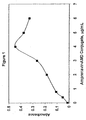
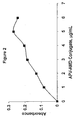
- the 2.15:1 and the 3.75:1 APV-AMD conjugates at nine different concentrations (0, 0.4, 0.8, 1, 2, 3, 4, 5, 6 ⁇ g/mL) were each mixed with HIV-PR assay buffer and 2.5% polyacrylic acid (PAA).
- PAA polyacrylic acid
- ROCHE ZERO CALIBRATOR (ROCHE DIAGNOSTICS, Indianapolis, IN) (normal human serum) was used as a serum sample.
- Figures 1 and 2 are graphs of the results obtained for the 3.75:1 and the 2.15:1 conjugates, respectively. These agglutination tests were run on ROCHE COBAS MIRA.
- a stock solution of 1 mg/mL of APV was prepared by dissolving 1 mg APV in 1 mL of DMSO.
- the APV stock was spiked into ROCHE ZERO CALIBRATOR to obtain a series of the serum samples at concentrations of 0.5, 1.5, 2.5, 3.5 and 5 ⁇ g/mL.
- the microparticle reagent was prepared as described in Example 1.
- the conjugate reagent contained 5 ⁇ g/mL conjugate APV:AMD (3.75:1) in HIV-PR assay buffer and 2.5% PAA.
- the agglutination inhibition/replacement tests were run on ROCHE COBAS MIRA using various concentrations of APV prepared in normal human serum.
- the assay parameters for ROCHE COBAS MIRA used are the same as in Example 2.
- the results of the competitive inhibition assay as measured by microparticle agglutination at various concentrations of APV are illustrated in Figure 3.
- Stock solutions containing a conjugate and HIV-PR bound to microparticles are prepared as in Example 1.
- a stock solution containing protease inhibitors (indinavir sulfate, nelfinavir mesylate, ritonavir, and saquinavir) is prepared in methanol as described in Remmel et al.
- Different calibration solutions are prepared by dilution from the stock solution such that the final concentration ranges are 0.05-19.4 ⁇ g/ml for indinavir, 0.02- 8.6 ⁇ g/ml for nelfinavir, 0.05-20.0 ⁇ g/ml for ritonavir, and 0.02- 8.8 ⁇ g/ml for saquinavir (Remmel et al.).
- a quality control stock solution was prepared separately in methanol. Serum or plasma samples are obtained from the healthy human volunteers and are then supplemented with a portion of the stock solution of the HIV protease inhibitors. These samples supplemented with HIV-PIs are then incubated with the microparticle solution with HIV-PR and the conjugate.
- the concentration of the protease inhibitors is established by monitoring the microparticle agglutination of HIV-PIs in the serum or plasma samples.
- the increased absorbance, due to the increasing microparticle size from agglutination, is measured by a spectrophotometer.
- the concentration of HIV protease inhibitors is inversely proportional to the decrease in the measured absorbance, the concentration of protease inhibitors in the serum or plasma is calculated.
- Stock solutions containing a conjugate and HIV PR bound to microparticles are prepared as in Example 1.
- Serum or plasma samples are obtained from AIDS patients 8 hours after treatment with an oral dose of protease inhibitors (HIV-PI).
- HIV-PI protease inhibitors
- the serum or plasma samples from AIDS patients are then incubated with the microparticle solution with HIV-PR and the conjugate, and the concentration of HIV-PIs is established by measuring the microparticle agglutination of HIV-PIs in the serum or plasma samples.
- the increased absorbance, due to the increasing microparticle size from agglutination, is measured by a spectrophotometer.
- the concentration of HIV protease inhibitors is inversely proportional to the decrease in the measured absorbance, the concentration of protease inhibitors in the serum or plasma is calculated.
- Stock solutions containing a conjugate and HIV PR bound to microparticles are prepared as in Example 1. Serum or plasma samples are obtained from AIDS patients within the first year from the AIDS diagnosis, and are then are then incubated with the microparticle solution with HIV PR and the conjugate, and the concentration of HIV-PIs is established by measuring the microparticle agglutination of HIV-PIs in the serum or plasma samples. The increased absorbance, due to the increasing microparticle size from agglutination, is measured by a spectrophotometer.
- the concentration of anti-HIV protease antibodies is inversely proportional to the decrease in the measured absorbance, the concentration of anti-HIV protease antibodies in the serum or plasma is calculated.
Landscapes
- Health & Medical Sciences (AREA)
- Life Sciences & Earth Sciences (AREA)
- Immunology (AREA)
- Engineering & Computer Science (AREA)
- Molecular Biology (AREA)
- Biomedical Technology (AREA)
- Chemical & Material Sciences (AREA)
- Hematology (AREA)
- Urology & Nephrology (AREA)
- Food Science & Technology (AREA)
- General Physics & Mathematics (AREA)
- Cell Biology (AREA)
- Biotechnology (AREA)
- Medicinal Chemistry (AREA)
- Physics & Mathematics (AREA)
- Analytical Chemistry (AREA)
- Biochemistry (AREA)
- General Health & Medical Sciences (AREA)
- Microbiology (AREA)
- Pathology (AREA)
- Virology (AREA)
- AIDS & HIV (AREA)
- Tropical Medicine & Parasitology (AREA)
- Measuring Or Testing Involving Enzymes Or Micro-Organisms (AREA)
- Investigating Or Analysing Biological Materials (AREA)
- Investigating Or Analysing Materials By The Use Of Chemical Reactions (AREA)
- Immobilizing And Processing Of Enzymes And Microorganisms (AREA)
Claims (15)
- Procédé pour la quantification d'un inhibiteur de la protéase VIH dans un échantillon, comprenant :la combinaison d'une protéase VIH , d'un conjugué comprenant un analogue de l'inhibiteur de la protéase VIH , et d'un échantillon soupçonné de contenir un inhibiteur de la protéase VIH , dans lequel la protéase VIH et le conjugué forment un complexe détectable ; la mesure de la quantité du complexe détectable ; et l'établissement d'une relation entre la quantité du complexe détectable et une concentration de l'inhibiteur de la protéase VIH dans l'échantillon.
- Procédé selon la revendication 1, dans lequel la protéase VIH est immobilisée sur une surface d'une phase solide.
- Procédé selon la revendication 1, dans lequel l'inhibiteur de la protéase VIH comprend un membre choisi dans le groupe constitué par un composé inhibiteur de la protéase VIH , un anticorps anti-protéase VIH , et un métabolite d'un composé inhibiteur de la protéase VIH .
- Procédé selon la revendication 1, dans lequel l'inhibiteur de la protéase VIH comprend un membre choisi dans le groupe constitué par l'amprénavir, l'indinavir, le lopinavir, le nelfinavir, le ritonavir et le saquinavir.
- Procédé selon la revendication 1, dans lequel le conjugué comprend un marqueur.
- Procédé selon la revendication 5, dans lequel le marqueur comprend un membre choisi dans le groupe constitué par un marqueur fluorescent, un composé luminescent, un isotope radioactif, un marqueur électrochimioluminescent, une enzyme, et un substrat enzymatique.
- Procédé selon la revendication 2, dans lequel le conjugué comprend un support et au moins deux analogues d'inhibiteur de la protéase VIH liés au support, et la mesure de la quantité du complexe détectable comprend la mesure d'une agglutination.
- Procédé selon la revendication 1, dans lequel le conjugué comprend un marqueur fluorescent, et la mesure de la quantité du complexe détectable comprend la mesure de la polarisation de fluorescence.
- Procédé selon la revendication 2, dans lequel la phase solide comprend un membre choisi dans le groupe constitué par une particule, une plaque de microtitrage, une cuvette, un tube, et une bande.
- Procédé selon la revendication 2, dans lequel la mesure de la quantité du complexe détectable comprend la mesure d'une propriété spectroscopique de la phase solide.
- Procédé selon la revendication 1, dans lequel le conjugué comprend la biotine, et le procédé comprend, en outre, l'immobilisation du complexe détectable sur une surface d'une phase solide, la surface comprenant de l'avidine ou de la streptavidine.
- Procédé selon la revendication 11, dans lequel la protéase VIH est liée à un marqueur.
- Procédé pour la quantification d'un inhibiteur de la protéase VIH dans un échantillon selon la revendication 1, caractérisé en ce qu'une protéase VIH, un conjugué comprenant un support et au moins deux analogues d'inhibiteur de la protéase VIH liés au support, et un échantillon soupçonné de contenir un inhibiteur de la protéase VIH sont combinés, dans lequel la protéase VIH est immobilisée sur une surface d'une microparticule, la protéase VIH et le conjugué subissent ensemble une agglutination, et l'échantillon est du sérum humain ou du plasma humain ; pour la mesure de l'agglutination ; et pour l'établissement d'une relation entre la quantité d'agglutination et une concentration de l'inhibiteur de la protéase VIH dans l'échantillon.
- Procédé pour la quantification d'un inhibiteur de la protéase VIH dans un échantillon selon la revendication 1, caractérisé en ce qu'un support plurivalent comprenant au moins deux enzymes protéases VIH , un conjugué comprenant une microparticule et un analogue d'inhibiteur de la protéase VIH , et un échantillon soupçonné de contenir un inhibiteur de la protéase VIH sont combinés, dans lequel la protéase VIH et le conjugué subissent ensemble une agglutination, et l'échantillon est du sérum humain ou du plasma humain ; pour la mesure de l'agglutination ; et pour l'établissement d'une relation entre la quantité d'agglutination et une concentration de l'inhibiteur de la protéase VIH dans l'échantillon.
- Procédé pour la quantification d'un inhibiteur de la protéase VIH dans un échantillon selon la revendication 1, caractérisé en ce qu'une protéase VIH , un conjugué comprenant un marqueur et un analogue d'inhibiteur de la protéase VIH lié au marqueur, et un échantillon soupçonné de contenir un inhibiteur de la protéase VIH sont combinés, dans lequel la protéase VIH et le conjugué forment ensemble un complexe détectable, et l'échantillon est du sérum humain ou du plasma humain ; pour la mesure de la quantité du complexe détectable par contrôle d'une variation dans la polarisation de fluorescence ; et pour l'établissement d'une relation entre la quantité du complexe détectable et une concentration de l'inhibiteur de la protéase VIH dans l'échantillon.
Applications Claiming Priority (2)
| Application Number | Priority Date | Filing Date | Title |
|---|---|---|---|
| US284040 | 2002-10-29 | ||
| US10/284,040 US6821744B2 (en) | 2002-10-29 | 2002-10-29 | Method, assay, and kit for quantifying HIV protease inhibitors |
Publications (2)
| Publication Number | Publication Date |
|---|---|
| EP1418432A1 EP1418432A1 (fr) | 2004-05-12 |
| EP1418432B1 true EP1418432B1 (fr) | 2006-11-29 |
Family
ID=32107581
Family Applications (1)
| Application Number | Title | Priority Date | Filing Date |
|---|---|---|---|
| EP03024289A Expired - Lifetime EP1418432B1 (fr) | 2002-10-29 | 2003-10-23 | Méthode, dosage et kit pour la quantification d'inhibiteurs de la protéase du VIH |
Country Status (7)
| Country | Link |
|---|---|
| US (1) | US6821744B2 (fr) |
| EP (1) | EP1418432B1 (fr) |
| JP (1) | JP2004147655A (fr) |
| AT (1) | ATE347105T1 (fr) |
| CA (1) | CA2447172A1 (fr) |
| DE (1) | DE60310012T2 (fr) |
| ES (1) | ES2277018T3 (fr) |
Families Citing this family (15)
| Publication number | Priority date | Publication date | Assignee | Title |
|---|---|---|---|---|
| US20060270058A1 (en) * | 2005-05-31 | 2006-11-30 | United Drug Testing Lab Inc. | Method for collecting, extracting and quantifying drugs from saliva samples and surfaces |
| KR100709555B1 (ko) | 2005-09-29 | 2007-04-20 | 한국과학기술연구원 | 고성능 액체크로마토그래피-질량분석기를 이용한 혈장 중의에이즈 치료제 검출 방법 |
| KR101457716B1 (ko) | 2006-11-01 | 2014-11-03 | 베크만 컬터, 인코포레이티드 | 친화도 분석을 위한 결합 표면 |
| WO2011119920A2 (fr) | 2010-03-25 | 2011-09-29 | Oregon Health & Science University | Glycoprotéines du cmv et vecteurs recombinés |
| SMT201800284T1 (it) | 2011-06-10 | 2018-07-17 | Univ Oregon Health & Science | Glicoproteine cmv e vettori ricombinanti |
| EP2568289A3 (fr) | 2011-09-12 | 2013-04-03 | International AIDS Vaccine Initiative | Immunosélection du virus de la stomatite vésiculaire recombinant exprimant les protéines du VIH-1 par des anticorps largement neutralisants |
| EP2586461A1 (fr) | 2011-10-27 | 2013-05-01 | Christopher L. Parks | Particules virales dérivées d'un virus enveloppé |
| HU230404B1 (hu) | 2012-05-18 | 2016-04-28 | Debreceni Egyetem | Hígításon alapuló gátlóhatást mérő módszer |
| ES2631608T3 (es) | 2012-06-27 | 2017-09-01 | International Aids Vaccine Initiative | Variante de la glicoproteína Env del VIH-1 |
| EP2848937A1 (fr) | 2013-09-05 | 2015-03-18 | International Aids Vaccine Initiative | Procédés d'identification de nouveaux immunogènes du VIH-1 |
| EP2873423B1 (fr) | 2013-10-07 | 2017-05-31 | International Aids Vaccine Initiative | Trimères de glycoprotéines d'enveloppe du vih -1 soluble |
| US10174292B2 (en) | 2015-03-20 | 2019-01-08 | International Aids Vaccine Initiative | Soluble HIV-1 envelope glycoprotein trimers |
| US9931394B2 (en) | 2015-03-23 | 2018-04-03 | International Aids Vaccine Initiative | Soluble HIV-1 envelope glycoprotein trimers |
| US9925258B2 (en) | 2015-10-02 | 2018-03-27 | International Aids Vaccine Initiative | Replication-competent VSV-HIV Env vaccines |
| JP7109374B2 (ja) * | 2016-04-14 | 2022-07-29 | エフ.ホフマン-ラ ロシュ アーゲー | 体液の試料中の標的分析物の濃度を決定するための方法 |
Citations (2)
| Publication number | Priority date | Publication date | Assignee | Title |
|---|---|---|---|---|
| WO2001069258A1 (fr) * | 2000-03-16 | 2001-09-20 | Biacore Ab | Procede de capture de substances a analyser eluees de ligands lies a une surface |
| WO2002059154A2 (fr) * | 2001-01-26 | 2002-08-01 | Abgenix, Inc. | Utilisation de souris transgenique pour isoler efficacement de nouveaux anticorps monoclonaux humains a activite de neutralisation de souches primaires du vih-1 et nouveaux anticorps de neutralisation du vih-1 |
Family Cites Families (20)
| Publication number | Priority date | Publication date | Assignee | Title |
|---|---|---|---|---|
| US4480042A (en) | 1981-10-28 | 1984-10-30 | E. I. Du Pont De Nemours And Company | Covalently bonded high refractive index particle reagents and their use in light scattering immunoassays |
| US4868132A (en) | 1987-02-03 | 1989-09-19 | Abbott Laboratories | Fluorescence polarization immunoassay for amphetamine/methamphetamine |
| DE3806430A1 (de) | 1988-02-29 | 1989-09-07 | Boehringer Mannheim Gmbh | Verfahren zur bestimmung eines proteins nach dem prinzip des fluoreszenz-polarisations-immunoassays |
| DE3819846A1 (de) | 1988-06-10 | 1989-12-14 | Hans Prof Dr Dr Wolf | Testsystem fuer die entwicklung von inhibitoren der protease von hiv |
| DK93990D0 (da) | 1990-04-17 | 1990-04-17 | Carlsberg As | Fluorogene peptider og deres anvendelse ved bestemmelse af enzymatisk aktivitet |
| KR930701619A (ko) | 1990-06-01 | 1993-06-12 | 레나토 스가르비 | 인체 면역 결핍 바이러스의 gag 단백질 전구체 p55에 대한 단일클론 항체 |
| US5171662A (en) | 1990-09-13 | 1992-12-15 | The Upjohn Company | Method of detecting HIV protease activity |
| US5543390A (en) | 1990-11-01 | 1996-08-06 | State Of Oregon, Acting By And Through The Oregon State Board Of Higher Education, Acting For And On Behalf Of The Oregon Health Sciences University | Covalent microparticle-drug conjugates for biological targeting |
| CA2159639A1 (fr) | 1993-04-02 | 1994-10-13 | Vincent J. Miles | Methode pour l'inactivation selective de la replication virale |
| US5436131A (en) | 1993-04-02 | 1995-07-25 | Merck & Co., Inc. | Color screening assay for identifying inhibitor resistant HIV protease mutants |
| US5741715A (en) | 1995-05-30 | 1998-04-21 | Roche Diagnostic Systems, Inc. | Quinidine immunoassay and reagents |
| IT1298693B1 (it) | 1996-04-24 | 2000-01-12 | Hoffmann La Roche | Derivati della fluoresceina 4'-metil sostituiti |
| CN1225134A (zh) | 1996-05-14 | 1999-08-04 | 曼尼托巴大学 | 用固相法检测生物活性物质 |
| WO1998053093A1 (fr) | 1997-05-23 | 1998-11-26 | Bioarray Solutions Llc | Codage couleur et interrogation in-situ de composes chimiques couples a une matrice |
| US6342611B1 (en) | 1997-10-10 | 2002-01-29 | Cytovia, Inc. | Fluorogenic or fluorescent reporter molecules and their applications for whole-cell fluorescence screening assays for capsases and other enzymes and the use thereof |
| PL341661A1 (en) | 1997-10-10 | 2001-04-23 | Cytovia | Novel fluorescent reporter particles and their application in combination with testing capsizes |
| FR2773994B1 (fr) | 1998-01-23 | 2002-10-11 | Univ Nice Sophia Antipolis | Prodrogues issues d'anti-proteases inhibitrices du virus de l'immunodeficience humaine (vih) pour l'amelioration de leur biodisponibilite, de leur tropisme vers et/ou de leur delivrance dans le systeme nerveux central |
| JP4776775B2 (ja) | 1998-06-23 | 2011-09-21 | アメリカ合衆国 | Hiv感染哺乳動物を治療するための医薬組成物 |
| DE69920473T2 (de) | 1998-07-21 | 2006-02-23 | Cytovia, Inc., San Diego | Neue fluoreszenzfarbstoffe und ihre anwendung in fluoreszenznachweisverfahren ganzer zellen für kaspasen, peptidasen, proteasen und andere enzyme sowie deren verwendung |
| EP1207394B1 (fr) | 2000-11-14 | 2009-12-30 | Roche Diagnostics GmbH | Immunoessai pour les inhibiteurs de la protéase de VIH |
-
2002
- 2002-10-29 US US10/284,040 patent/US6821744B2/en not_active Expired - Fee Related
-
2003
- 2003-10-23 AT AT03024289T patent/ATE347105T1/de not_active IP Right Cessation
- 2003-10-23 EP EP03024289A patent/EP1418432B1/fr not_active Expired - Lifetime
- 2003-10-23 ES ES03024289T patent/ES2277018T3/es not_active Expired - Lifetime
- 2003-10-23 DE DE60310012T patent/DE60310012T2/de not_active Expired - Fee Related
- 2003-10-28 CA CA002447172A patent/CA2447172A1/fr not_active Abandoned
- 2003-10-29 JP JP2003369489A patent/JP2004147655A/ja active Pending
Patent Citations (2)
| Publication number | Priority date | Publication date | Assignee | Title |
|---|---|---|---|---|
| WO2001069258A1 (fr) * | 2000-03-16 | 2001-09-20 | Biacore Ab | Procede de capture de substances a analyser eluees de ligands lies a une surface |
| WO2002059154A2 (fr) * | 2001-01-26 | 2002-08-01 | Abgenix, Inc. | Utilisation de souris transgenique pour isoler efficacement de nouveaux anticorps monoclonaux humains a activite de neutralisation de souches primaires du vih-1 et nouveaux anticorps de neutralisation du vih-1 |
Non-Patent Citations (2)
| Title |
|---|
| GULNIK S. ET AL: "ENZYMATIC BIOASSAY FOR THERAPEUTIC DRUG MONITORING OF HIV PROTEASE INHIBITORS", ANTIVIRAL THERAPY, vol. 7, 2 July 2002 (2002-07-02), pages S103 * |
| LESCAR J. ET AL: "Inhibition of the HIV-1 and HIV-2 proteases by a monoclonal antibody", PROTEIN SCIENCE, vol. 8, pages 2686 - 2696 * |
Also Published As
| Publication number | Publication date |
|---|---|
| DE60310012T2 (de) | 2007-06-06 |
| US20040081957A1 (en) | 2004-04-29 |
| US6821744B2 (en) | 2004-11-23 |
| EP1418432A1 (fr) | 2004-05-12 |
| CA2447172A1 (fr) | 2004-04-29 |
| JP2004147655A (ja) | 2004-05-27 |
| ATE347105T1 (de) | 2006-12-15 |
| ES2277018T3 (es) | 2007-07-01 |
| DE60310012D1 (de) | 2007-01-11 |
Similar Documents
| Publication | Publication Date | Title |
|---|---|---|
| US11959912B2 (en) | Fluorescence immunochromatographic detection card and a preparation method therefor and use thereof | |
| US6821744B2 (en) | Method, assay, and kit for quantifying HIV protease inhibitors | |
| CN112782156B (zh) | 一种壳多糖酶3样蛋白1试剂盒及其制备方法 | |
| CN104634980B (zh) | 心肌肌钙蛋白i超敏检测试剂盒及超敏检测方法 | |
| CN104749367B (zh) | 一种降钙素原光激化学发光免疫分析试剂盒及其制备方法 | |
| WO2008095358A1 (fr) | Trousse de test pour la détection de l'albumine modifiée par l'ischémie et méthode associée | |
| JP2000514196A (ja) | グリコヘモグロビン(%)の定量 | |
| US20230341392A1 (en) | Detection of antibodies to sars-cov2 | |
| US20230333115A1 (en) | KIT FOR DETECTING ANTI-PROTEASOME SUBUNIT ALPHA TYPE 1-IMMUNOGLOBULIN G (IgG) ANTIBODY | |
| JP2003509693A (ja) | グリコヘモグロビン(%)の定量 | |
| CN202916286U (zh) | 一种定量检测降钙素原pct的胶乳增强免疫比浊试剂盒 | |
| CN105842464B (zh) | 基于上转换发光技术的联合定量检测uNGAL和uCr的装置及其制备方法 | |
| CN108362895B (zh) | 叶酸检测试剂盒及其制备方法 | |
| JP3342749B2 (ja) | 糖化蛋白の測定方法 | |
| CN109444431A (zh) | 一种心脏肌球蛋白结合蛋白c的定量检测方法及检测试剂盒 | |
| EP0398292B1 (fr) | Composition diagnostique pour l'arthrite rheumatoide | |
| JPH03103195A (ja) | 血栓及び凝固亢進状態の診断及び検査のための生物学的試料からのd―ダイマーの直接化学結合的方法 | |
| CN112129933B (zh) | 一种免疫分析系统中抗生物素干扰的试剂、试剂盒及方法 | |
| CN118707112B (zh) | 一种gfap、nfl和uch-l1联合检测试剂盒及其用于脑创伤早期检测 | |
| JP2688943B2 (ja) | 試料中の物質の測定方法 | |
| JP3846973B2 (ja) | 慢性炎症の判定方法及びキット | |
| JP3542245B2 (ja) | 糖尿病もしくは糖尿病合併症用マーカーとしての使用および免疫試薬 | |
| US5593898A (en) | Diagnostic method for the immunological determination of NCAM | |
| JPH11166931A (ja) | 生体成分の量的あるいは質的異常を検出する方法 | |
| CN119716086A (zh) | 一种用于联合检测的试剂盒及其制备方法 |
Legal Events
| Date | Code | Title | Description |
|---|---|---|---|
| PUAI | Public reference made under article 153(3) epc to a published international application that has entered the european phase |
Free format text: ORIGINAL CODE: 0009012 |
|
| AK | Designated contracting states |
Kind code of ref document: A1 Designated state(s): AT BE BG CH CY CZ DE DK EE ES FI FR GB GR HU IE IT LI LU MC NL PT RO SE SI SK TR |
|
| AX | Request for extension of the european patent |
Extension state: AL LT LV MK |
|
| 17P | Request for examination filed |
Effective date: 20041112 |
|
| AKX | Designation fees paid |
Designated state(s): AT BE BG CH CY CZ DE DK EE ES FI FR GB GR HU IE IT LI LU MC NL PT RO SE SI SK TR |
|
| 17Q | First examination report despatched |
Effective date: 20050322 |
|
| GRAP | Despatch of communication of intention to grant a patent |
Free format text: ORIGINAL CODE: EPIDOSNIGR1 |
|
| GRAS | Grant fee paid |
Free format text: ORIGINAL CODE: EPIDOSNIGR3 |
|
| GRAA | (expected) grant |
Free format text: ORIGINAL CODE: 0009210 |
|
| AK | Designated contracting states |
Kind code of ref document: B1 Designated state(s): AT BE BG CH CY CZ DE DK EE ES FI FR GB GR HU IE IT LI LU MC NL PT RO SE SI SK TR |
|
| PG25 | Lapsed in a contracting state [announced via postgrant information from national office to epo] |
Ref country code: RO Free format text: LAPSE BECAUSE OF FAILURE TO SUBMIT A TRANSLATION OF THE DESCRIPTION OR TO PAY THE FEE WITHIN THE PRESCRIBED TIME-LIMIT Effective date: 20061129 Ref country code: FI Free format text: LAPSE BECAUSE OF FAILURE TO SUBMIT A TRANSLATION OF THE DESCRIPTION OR TO PAY THE FEE WITHIN THE PRESCRIBED TIME-LIMIT Effective date: 20061129 Ref country code: SI Free format text: LAPSE BECAUSE OF FAILURE TO SUBMIT A TRANSLATION OF THE DESCRIPTION OR TO PAY THE FEE WITHIN THE PRESCRIBED TIME-LIMIT Effective date: 20061129 Ref country code: BE Free format text: LAPSE BECAUSE OF FAILURE TO SUBMIT A TRANSLATION OF THE DESCRIPTION OR TO PAY THE FEE WITHIN THE PRESCRIBED TIME-LIMIT Effective date: 20061129 Ref country code: SK Free format text: LAPSE BECAUSE OF FAILURE TO SUBMIT A TRANSLATION OF THE DESCRIPTION OR TO PAY THE FEE WITHIN THE PRESCRIBED TIME-LIMIT Effective date: 20061129 Ref country code: CZ Free format text: LAPSE BECAUSE OF FAILURE TO SUBMIT A TRANSLATION OF THE DESCRIPTION OR TO PAY THE FEE WITHIN THE PRESCRIBED TIME-LIMIT Effective date: 20061129 Ref country code: NL Free format text: LAPSE BECAUSE OF FAILURE TO SUBMIT A TRANSLATION OF THE DESCRIPTION OR TO PAY THE FEE WITHIN THE PRESCRIBED TIME-LIMIT Effective date: 20061129 |
|
| REG | Reference to a national code |
Ref country code: GB Ref legal event code: FG4D |
|
| REG | Reference to a national code |
Ref country code: CH Ref legal event code: EP |
|
| REG | Reference to a national code |
Ref country code: IE Ref legal event code: FG4D |
|
| REF | Corresponds to: |
Ref document number: 60310012 Country of ref document: DE Date of ref document: 20070111 Kind code of ref document: P |
|
| PG25 | Lapsed in a contracting state [announced via postgrant information from national office to epo] |
Ref country code: DK Free format text: LAPSE BECAUSE OF FAILURE TO SUBMIT A TRANSLATION OF THE DESCRIPTION OR TO PAY THE FEE WITHIN THE PRESCRIBED TIME-LIMIT Effective date: 20070228 Ref country code: SE Free format text: LAPSE BECAUSE OF FAILURE TO SUBMIT A TRANSLATION OF THE DESCRIPTION OR TO PAY THE FEE WITHIN THE PRESCRIBED TIME-LIMIT Effective date: 20070228 Ref country code: BG Free format text: LAPSE BECAUSE OF FAILURE TO SUBMIT A TRANSLATION OF THE DESCRIPTION OR TO PAY THE FEE WITHIN THE PRESCRIBED TIME-LIMIT Effective date: 20070228 |
|
| PG25 | Lapsed in a contracting state [announced via postgrant information from national office to epo] |
Ref country code: PT Free format text: LAPSE BECAUSE OF FAILURE TO SUBMIT A TRANSLATION OF THE DESCRIPTION OR TO PAY THE FEE WITHIN THE PRESCRIBED TIME-LIMIT Effective date: 20070430 |
|
| NLV1 | Nl: lapsed or annulled due to failure to fulfill the requirements of art. 29p and 29m of the patents act | ||
| ET | Fr: translation filed | ||
| REG | Reference to a national code |
Ref country code: ES Ref legal event code: FG2A Ref document number: 2277018 Country of ref document: ES Kind code of ref document: T3 |
|
| PLBE | No opposition filed within time limit |
Free format text: ORIGINAL CODE: 0009261 |
|
| STAA | Information on the status of an ep patent application or granted ep patent |
Free format text: STATUS: NO OPPOSITION FILED WITHIN TIME LIMIT |
|
| 26N | No opposition filed |
Effective date: 20070830 |
|
| PG25 | Lapsed in a contracting state [announced via postgrant information from national office to epo] |
Ref country code: GR Free format text: LAPSE BECAUSE OF FAILURE TO SUBMIT A TRANSLATION OF THE DESCRIPTION OR TO PAY THE FEE WITHIN THE PRESCRIBED TIME-LIMIT Effective date: 20070301 |
|
| PG25 | Lapsed in a contracting state [announced via postgrant information from national office to epo] |
Ref country code: MC Free format text: LAPSE BECAUSE OF NON-PAYMENT OF DUE FEES Effective date: 20071031 |
|
| PG25 | Lapsed in a contracting state [announced via postgrant information from national office to epo] |
Ref country code: IE Free format text: LAPSE BECAUSE OF NON-PAYMENT OF DUE FEES Effective date: 20071023 |
|
| PGFP | Annual fee paid to national office [announced via postgrant information from national office to epo] |
Ref country code: GB Payment date: 20080915 Year of fee payment: 6 |
|
| PG25 | Lapsed in a contracting state [announced via postgrant information from national office to epo] |
Ref country code: EE Free format text: LAPSE BECAUSE OF FAILURE TO SUBMIT A TRANSLATION OF THE DESCRIPTION OR TO PAY THE FEE WITHIN THE PRESCRIBED TIME-LIMIT Effective date: 20061129 |
|
| PGFP | Annual fee paid to national office [announced via postgrant information from national office to epo] |
Ref country code: CH Payment date: 20081028 Year of fee payment: 6 Ref country code: DE Payment date: 20081031 Year of fee payment: 6 |
|
| PGFP | Annual fee paid to national office [announced via postgrant information from national office to epo] |
Ref country code: AT Payment date: 20080915 Year of fee payment: 6 Ref country code: ES Payment date: 20081021 Year of fee payment: 6 |
|
| PGFP | Annual fee paid to national office [announced via postgrant information from national office to epo] |
Ref country code: IT Payment date: 20081016 Year of fee payment: 6 |
|
| PGFP | Annual fee paid to national office [announced via postgrant information from national office to epo] |
Ref country code: FR Payment date: 20081006 Year of fee payment: 6 |
|
| PG25 | Lapsed in a contracting state [announced via postgrant information from national office to epo] |
Ref country code: CY Free format text: LAPSE BECAUSE OF FAILURE TO SUBMIT A TRANSLATION OF THE DESCRIPTION OR TO PAY THE FEE WITHIN THE PRESCRIBED TIME-LIMIT Effective date: 20061129 Ref country code: LU Free format text: LAPSE BECAUSE OF NON-PAYMENT OF DUE FEES Effective date: 20071023 |
|
| PG25 | Lapsed in a contracting state [announced via postgrant information from national office to epo] |
Ref country code: HU Free format text: LAPSE BECAUSE OF FAILURE TO SUBMIT A TRANSLATION OF THE DESCRIPTION OR TO PAY THE FEE WITHIN THE PRESCRIBED TIME-LIMIT Effective date: 20070530 Ref country code: TR Free format text: LAPSE BECAUSE OF FAILURE TO SUBMIT A TRANSLATION OF THE DESCRIPTION OR TO PAY THE FEE WITHIN THE PRESCRIBED TIME-LIMIT Effective date: 20061129 |
|
| REG | Reference to a national code |
Ref country code: CH Ref legal event code: PL |
|
| REG | Reference to a national code |
Ref country code: FR Ref legal event code: ST Effective date: 20100630 |
|
| PG25 | Lapsed in a contracting state [announced via postgrant information from national office to epo] |
Ref country code: DE Free format text: LAPSE BECAUSE OF NON-PAYMENT OF DUE FEES Effective date: 20100501 Ref country code: FR Free format text: LAPSE BECAUSE OF NON-PAYMENT OF DUE FEES Effective date: 20091102 |
|
| PG25 | Lapsed in a contracting state [announced via postgrant information from national office to epo] |
Ref country code: AT Free format text: LAPSE BECAUSE OF NON-PAYMENT OF DUE FEES Effective date: 20091023 |
|
| PG25 | Lapsed in a contracting state [announced via postgrant information from national office to epo] |
Ref country code: LI Free format text: LAPSE BECAUSE OF NON-PAYMENT OF DUE FEES Effective date: 20091031 Ref country code: CH Free format text: LAPSE BECAUSE OF NON-PAYMENT OF DUE FEES Effective date: 20091031 |
|
| PG25 | Lapsed in a contracting state [announced via postgrant information from national office to epo] |
Ref country code: GB Free format text: LAPSE BECAUSE OF NON-PAYMENT OF DUE FEES Effective date: 20091023 |
|
| REG | Reference to a national code |
Ref country code: ES Ref legal event code: FD2A Effective date: 20110325 |
|
| PG25 | Lapsed in a contracting state [announced via postgrant information from national office to epo] |
Ref country code: IT Free format text: LAPSE BECAUSE OF NON-PAYMENT OF DUE FEES Effective date: 20091023 |
|
| PG25 | Lapsed in a contracting state [announced via postgrant information from national office to epo] |
Ref country code: ES Free format text: LAPSE BECAUSE OF NON-PAYMENT OF DUE FEES Effective date: 20110314 |
|
| PG25 | Lapsed in a contracting state [announced via postgrant information from national office to epo] |
Ref country code: ES Free format text: LAPSE BECAUSE OF NON-PAYMENT OF DUE FEES Effective date: 20091024 |