EP1418746A2 - Bildverarbeitung - Google Patents
Bildverarbeitung Download PDFInfo
- Publication number
- EP1418746A2 EP1418746A2 EP03078402A EP03078402A EP1418746A2 EP 1418746 A2 EP1418746 A2 EP 1418746A2 EP 03078402 A EP03078402 A EP 03078402A EP 03078402 A EP03078402 A EP 03078402A EP 1418746 A2 EP1418746 A2 EP 1418746A2
- Authority
- EP
- European Patent Office
- Prior art keywords
- image
- printed
- film
- images
- photographic
- Prior art date
- Legal status (The legal status is an assumption and is not a legal conclusion. Google has not performed a legal analysis and makes no representation as to the accuracy of the status listed.)
- Withdrawn
Links
Images


Classifications
-
- H—ELECTRICITY
- H04—ELECTRIC COMMUNICATION TECHNIQUE
- H04N—PICTORIAL COMMUNICATION, e.g. TELEVISION
- H04N1/00—Scanning, transmission or reproduction of documents or the like, e.g. facsimile transmission; Details thereof
- H04N1/00127—Connection or combination of a still picture apparatus with another apparatus, e.g. for storage, processing or transmission of still picture signals or of information associated with a still picture
- H04N1/00132—Connection or combination of a still picture apparatus with another apparatus, e.g. for storage, processing or transmission of still picture signals or of information associated with a still picture in a digital photofinishing system, i.e. a system where digital photographic images undergo typical photofinishing processing, e.g. printing ordering
- H04N1/00143—Ordering
-
- H—ELECTRICITY
- H04—ELECTRIC COMMUNICATION TECHNIQUE
- H04N—PICTORIAL COMMUNICATION, e.g. TELEVISION
- H04N1/00—Scanning, transmission or reproduction of documents or the like, e.g. facsimile transmission; Details thereof
- H04N1/00127—Connection or combination of a still picture apparatus with another apparatus, e.g. for storage, processing or transmission of still picture signals or of information associated with a still picture
- H04N1/00132—Connection or combination of a still picture apparatus with another apparatus, e.g. for storage, processing or transmission of still picture signals or of information associated with a still picture in a digital photofinishing system, i.e. a system where digital photographic images undergo typical photofinishing processing, e.g. printing ordering
-
- H—ELECTRICITY
- H04—ELECTRIC COMMUNICATION TECHNIQUE
- H04N—PICTORIAL COMMUNICATION, e.g. TELEVISION
- H04N1/00—Scanning, transmission or reproduction of documents or the like, e.g. facsimile transmission; Details thereof
- H04N1/32—Circuits or arrangements for control or supervision between transmitter and receiver or between image input and image output device, e.g. between a still-image camera and its memory or between a still-image camera and a printer device
- H04N1/32101—Display, printing, storage or transmission of additional information, e.g. ID code, date and time or title
- H04N1/32128—Display, printing, storage or transmission of additional information, e.g. ID code, date and time or title attached to the image data, e.g. file header, transmitted message header, information on the same page or in the same computer file as the image
-
- H—ELECTRICITY
- H04—ELECTRIC COMMUNICATION TECHNIQUE
- H04N—PICTORIAL COMMUNICATION, e.g. TELEVISION
- H04N2201/00—Indexing scheme relating to scanning, transmission or reproduction of documents or the like, and to details thereof
- H04N2201/32—Circuits or arrangements for control or supervision between transmitter and receiver or between image input and image output device, e.g. between a still-image camera and its memory or between a still-image camera and a printer device
- H04N2201/3201—Display, printing, storage or transmission of additional information, e.g. ID code, date and time or title
- H04N2201/3225—Display, printing, storage or transmission of additional information, e.g. ID code, date and time or title of data relating to an image, a page or a document
- H04N2201/3242—Display, printing, storage or transmission of additional information, e.g. ID code, date and time or title of data relating to an image, a page or a document of processing required or performed, e.g. for reproduction or before recording
-
- H—ELECTRICITY
- H04—ELECTRIC COMMUNICATION TECHNIQUE
- H04N—PICTORIAL COMMUNICATION, e.g. TELEVISION
- H04N2201/00—Indexing scheme relating to scanning, transmission or reproduction of documents or the like, and to details thereof
- H04N2201/32—Circuits or arrangements for control or supervision between transmitter and receiver or between image input and image output device, e.g. between a still-image camera and its memory or between a still-image camera and a printer device
- H04N2201/3201—Display, printing, storage or transmission of additional information, e.g. ID code, date and time or title
- H04N2201/3261—Display, printing, storage or transmission of additional information, e.g. ID code, date and time or title of multimedia information, e.g. a sound signal
- H04N2201/3266—Display, printing, storage or transmission of additional information, e.g. ID code, date and time or title of multimedia information, e.g. a sound signal of text or character information, e.g. text accompanying an image
-
- H—ELECTRICITY
- H04—ELECTRIC COMMUNICATION TECHNIQUE
- H04N—PICTORIAL COMMUNICATION, e.g. TELEVISION
- H04N2201/00—Indexing scheme relating to scanning, transmission or reproduction of documents or the like, and to details thereof
- H04N2201/32—Circuits or arrangements for control or supervision between transmitter and receiver or between image input and image output device, e.g. between a still-image camera and its memory or between a still-image camera and a printer device
- H04N2201/3201—Display, printing, storage or transmission of additional information, e.g. ID code, date and time or title
- H04N2201/3274—Storage or retrieval of prestored additional information
- H04N2201/3277—The additional information being stored in the same storage device as the image data
-
- H—ELECTRICITY
- H04—ELECTRIC COMMUNICATION TECHNIQUE
- H04N—PICTORIAL COMMUNICATION, e.g. TELEVISION
- H04N23/00—Cameras or camera modules comprising electronic image sensors; Control thereof
- H04N23/60—Control of cameras or camera modules
- H04N23/63—Control of cameras or camera modules by using electronic viewfinders
- H04N23/633—Control of cameras or camera modules by using electronic viewfinders for displaying additional information relating to control or operation of the camera
- H04N23/634—Warning indications
Definitions
- the present invention relates to image processing and in particular to an improved method of processing customer image orders.
- the invention also relates to a photographic processing system and a computer program for controlling the system.
- the process of photofinishing relates to the delivery of customer image orders from exposed film.
- it relates to the delivery of colour photographic prints, from exposed colour negative film supplied by a customer.
- the term 'photographic prints' incorporates photographs printed on photographic paper and also other forms of output from the photofinishing process.
- film supplied by a customer is processed to create a permanent negative image on the film.
- An important step in the photofinishing process is printing of the negative image. When optical printing is used, light is irradiated onto and through the negative image from where it is incident onto photosensitive paper, thereby forming a latent image on the photosensitive paper. The photosensitive paper is then chemically developed to produce the final customer print or photograph.
- a possible later step in the photofinishing process is print inspection.
- This step comprises an operator checking prints to determine if one or more quality features have affected the image and for example if an image needs to be reprinted.
- a self-adhesive label is attached to the print.
- the self-adhesive label may be used to convey information to the customer about the quality feature. If the quality feature relates to some defect, the information may include instructions to a user about how to avoid the defect in future images.
- a problem with this conventional photofinishing process is that manual operator intervention is required. This has cost, speed and efficiency implications for the photofinishing process. A method of processing customer image orders is required that overcomes these problems.
- a method of processing customer image orders comprising the steps of:
- the one or more digital images are obtained by scanning a processed film having one or more images captured thereon prior to the step of identifying the one or more quality features of one or more digital images.
- the method comprises the step of scanning a processed film to create the one or more digital images.
- the indicator is a printed statement to notify a customer as to how the one or more quality features may be improved or avoided in the future.
- adjustment of the one or more features is automatically applied to the one or more digital images, in which case the indicator is a printed statement to notify a customer that adjustment has occurred.
- the image may also be printed without the feature adjusted together with a statement to alert a user to the difference in quality between the adjusted image and the non-adjusted image.
- the output format prints are printed on photographic material such as light sensitive photographic paper.
- the prints could also be made on inkjet paper. Other formats for the output prints would also be suitable.
- a single indicator is printed to alert a customer to the fact that the quality feature was present in more than one of the images.
- a photographic print comprising an image region having an image printed thereon and a data region, the data region being arranged adjacent to the image region and containing data relating to one or more quality features of the image.
- a printing system for incorporation into a photographic processing system.
- the printing system comprises a data source and a printer, the data source being adapted to provide data relating to an image to be printed and data relating to an indicator of a quality feature of the image to the printer.
- the data source comprises a scanner for scanning processed film and creating a digital image file for providing to the printer.
- the scanner preferably includes a detection and control system for detecting one or more quality features of images on film that it scans and generating a control signal for coupling to the printer.
- the control signal will cause the printer to print the image and the indicator of the quality feature of the image.
- the detection and control system may be implemented by image enhancement software optionally stored on a computer readable medium.
- a computer program for controlling the operation of a photographic processing system comprising a processor for receiving and processing exposed photographic film and a printing system for printing images from the film.
- the computer program when run on a computer associated with the photographic processing system causes the printer to detect any quality features of images on the film and print an indication of the one or more detected quality features adjacent to the corresponding printed image from the film.
- the invention provides a method of automatically providing a customer with information relating to quality features of the images.
- the invention enables the time consuming process of manual inspection of print quality to be avoided, thus providing cost and efficiency savings to the photofinishing process.
- the indicator is a printed statement to notify a customer as to the likely cause of the one or more quality features. This enables a customer to understand how the quality feature may be improved or avoided in the future.
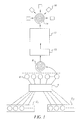
- Figure 1 shows a schematic representation of the main steps in a photofinishing process by which films are received by photofinishers and photographs returned to customers, incorporating the method of the present invention.
- films are deposited at individual shops within dealerships 2 1 , 2 2 etc. such as a chain of high street photography shops or high street chemists.
- the films are then transferred to a photofinishing laboratory 4, which serves to process the film and produce the photographs and any other desired output for the customer, to be returned to the customer as the customer product.
- the films may be grouped together in batches 6 to facilitate quick processing and convenient arrangement of the output.
- one batch may correspond to all films from which one set of standard size prints has been requested.
- one batch may include all films from which two sets of standard size prints and one photo CD have been requested.
- Any combination of output formats may be used to define a batch.
- the films could also be grouped in batches in dependence on the dealer from which they were received i.e. all films from a common dealer may be grouped in a common batch.
- twinchecking is the process by which a unique number is associated with each film and order envelope in which the film was received. Although the film and order envelope are separated during the photofinishing process, twinchecking enables them to be rematched at the end of the process.
- An identification card is produced that identifies each particular batch roll 8. The batch rolls 8 may then be notched. Notching is the process of identifying the presence of an image on a film and making a small mark e.g. a punched hole or notch, at an edge of the film. This enables a scanner or printer to recognise and position an image on the film in the scanning or exposing area of a scanner or printer.
- the batch roll 8 of film is transferred to a printing system 12 for printing of the photographs on photographic paper prior to processing of the paper.
- the printing system 12 is described below with reference to Figure 2.
- a roll of paper 14 onto which has been exposed the photographs corresponding to each of the images on a corresponding batch roll 8 of film is processed for each batch roll 8.
- the roll of processed paper 14 is transferred to finishing stations 16 for preparation e.g. cutting and assembly of the customer product.
- the preparation and assembly stage of the customer product involves the insertion of the photographs into an envelope for return to the customer.
- This stage has conventionally also involved the checking of photographs for noticeable quality features or defects effecting individual photographs. For example, if an operator notices that a particular print is too dark, a sticker alerting the customer to the fact that an error was made during exposure of the image onto the film is manually applied to the print. Alternatively, a leaflet alerting the customer to the error may be manually inserted into the envelope.
- information relating to quality features or defects effecting individual photographs is provided to the printing system 12 to enable the automatic provision of an indicator to the customer, thereby rendering the manual application of stickers or insertion of leaflets, unnecessary. This provides a saving in both time and cost.
- the automatic provision of the indicator comprises printing of the indicator in-line with the photographs.
- an adhesive label having information printed thereon may be adhered to the relevant photograph by an automated synchronised label application system.
- the label application system is synchronised such that labels are affixed to the relevant photograph in the finishing station 16.
- Figure 2 shows an example of a printing system 12 suitable for use in a photographic processing system according to the present invention.
- An example of a printing system 12 suitable for use in the present invention is the Kodak I. Lab System Gen.2.
- a computer (not shown) controls the printing system 12 and may be used to control the processing of the film and paper.
- a computer program optionally stored in the computer may be used to control the printing system 12 and also the entire photoprocessing system.
- the computer program may also be stored on any suitable form of computer readable medium such as amongst others CD-ROM or a floppy disk.
- the printing system comprises a scanner 18 for digitising an analogue image from a processed film.
- the analogue image is captured in digital form by the scanner 18 and is provided to a digital printer 20.
- the scanner 18 is provided with a detection and control system 19, which may be implemented by image enhancement software, controlled to assess the image for defects or quality features that affect it and optionally apply some enhancement to the image. If the image was originally captured in digital form for example by a digital camera, no scanning or digitisation may be required. Accordingly, the image may be provided directly to the printing system where it is assessed for defects or quality features before being supplied to the printer 20.
- the digital file input to the printer 20, may be a file obtained from a digital camera or any other suitable source of digital images.
- the detection and control system 19 assesses the overall colour and density of the image and recognizes particular features of the overall image or areas of the image. This may include exposure level of the film, overall colour cast of the film, sharpness of the image, presence of finger in front of the image capture device lens during image capture, flash subject too close and any other errors that arise as a result of incorrect or suboptimal operation of the image capture device.
- the detection and control system 19 is configured to generate a request to add additional information to the image to be written by the printer 20.
- the printer 20 is then controlled to write the image together with the additional information requested by the detection and control system 19.
- a preferred format of the printed image is described below with reference to Figure 3.
- any suitable sort of printer capable of receiving a digital image file and providing a printed output may be used.
- photographic printers that write the images onto photosensistive paper for subsequent processing, examples include inkjet printers and laser printers for printing directly onto a receiver surface and thermal printing systems.
- the information could be a general piece of advice directed to the customer to inform him of how the quality feature might be avoided in future.
- a statement such as "image underexposed", or "film used was too fast for exposure conditions" 2 might be printed adjacent to the image.
- automatic correction could be applied to the image such that the quality feature is not noticed by the customer. In this case, a statement such as "This image has been corrected to compensate for under exposure” might be printed adjacent to the image.
- an additional corrected photograph could be printed adjacent to the original with the quality feature.
- a statement relating to the difference(s) between the two could then be printed to alert a customer as to the benefits of the image enhancement. If it is detected by the detection and control system 19 that a whole film has been affected by the same quality feature, rather than print a notification with each image a single notification could be printed at the beginning alerting the customer to the fact that the whole film has been subject to the same error during exposure e.g. a statement such "All images on this film have been over exposed - Please check film/camera settings.”
- FIG. 3 shows a schematic representation of a photographic print according to the present invention.
- the print 24 includes an image region 26 having the dimensions of a conventional photographic print e.g. 4" x 6", 5" x 7" etc.
- Adjacent to the image region 26 is a data region 28 in which is printed an indicator relating to the one or more quality features identified in relation to the particular image i.e. information for the customer relating to a quality feature of the print.
- the customer of course has the option of removing the data region 28 so that the suitably sized image region 26 remains for keeping as the photograph.
- the border between the image region 26 and the data region 28 may be scored or treated in some other suitable manner as part of the photofinishing process to enable easy separation of the two by a customer.
- Figures 4 and 5 show examples of photographic prints according to the present invention.
- an obstruction obscured the camera lens. This has created an undesirable region of the photograph.
- the message to the customer alerts them to the cause of the undesirable region of the photograph so that in future the customer will take care to ensure that such obstructions do not occur.
- the image has been enhanced by the removal of red-eye. The message to the customer alerts them to this fact.
- the processing system includes a photographic processor having a number of processing stages.
- the processing system might include a developing stage to develop an exposed film, a fixing stage to fix the developed film and a wash and dry stage to wash and dry the developed and fixed film.
- a printing system as described above with reference to Figure 2.
- the printing system is integral with the processing stages. Accordingly, exposed films are provided as an input to the processing system and printed photographs according to the present invention are obtained as an output.
- the invention enables quality features to be identified automatically and pointed out to a customer (and optionally automatically corrected) so that added value is provided to the customer.
Landscapes
- Engineering & Computer Science (AREA)
- Multimedia (AREA)
- Signal Processing (AREA)
- General Engineering & Computer Science (AREA)
- Projection-Type Copiers In General (AREA)
- Facsimiles In General (AREA)
Applications Claiming Priority (2)
| Application Number | Priority Date | Filing Date | Title |
|---|---|---|---|
| GBGB0225820.0A GB0225820D0 (en) | 2002-11-06 | 2002-11-06 | Image processing |
| GB0225820 | 2002-11-06 |
Publications (2)
| Publication Number | Publication Date |
|---|---|
| EP1418746A2 true EP1418746A2 (de) | 2004-05-12 |
| EP1418746A3 EP1418746A3 (de) | 2004-11-17 |
Family
ID=9947270
Family Applications (1)
| Application Number | Title | Priority Date | Filing Date |
|---|---|---|---|
| EP03078402A Withdrawn EP1418746A3 (de) | 2002-11-06 | 2003-10-30 | Bildverarbeitung |
Country Status (4)
| Country | Link |
|---|---|
| US (1) | US20040090653A1 (de) |
| EP (1) | EP1418746A3 (de) |
| JP (1) | JP2004157540A (de) |
| GB (1) | GB0225820D0 (de) |
Cited By (2)
| Publication number | Priority date | Publication date | Assignee | Title |
|---|---|---|---|---|
| EP1596574A2 (de) * | 2004-05-14 | 2005-11-16 | Fuji Photo Film Co. Ltd. | Apparat und Programmspeichermedium zur Datenerzeugung und Evaluationsausgabe |
| EP2106118A1 (de) * | 2008-03-28 | 2009-09-30 | Brother Kogyo Kabushiki Kaisha | Hinzufügen von Bildqualitätsindikatoren zu einer Liste von Daumenbildern |
Families Citing this family (2)
| Publication number | Priority date | Publication date | Assignee | Title |
|---|---|---|---|---|
| JP4262065B2 (ja) * | 2003-11-28 | 2009-05-13 | キヤノン株式会社 | 撮像装置及びその制御方法、プリンタ |
| JP7234747B2 (ja) * | 2019-04-02 | 2023-03-08 | セイコーエプソン株式会社 | 印刷システム |
Family Cites Families (12)
| Publication number | Priority date | Publication date | Assignee | Title |
|---|---|---|---|---|
| JPH03227681A (ja) * | 1990-02-02 | 1991-10-08 | Toshiba Corp | 画像形成装置 |
| US6351321B1 (en) * | 1995-02-14 | 2002-02-26 | Eastman Kodak Company | Data scanning and conversion system for photographic image reproduction |
| JPH1191169A (ja) * | 1997-09-19 | 1999-04-06 | Fuji Photo Film Co Ltd | 画像処理装置 |
| US6018397A (en) * | 1998-02-13 | 2000-01-25 | Eastman Kodak Company | Digital image processing with indication to user of hardcopy output image quality |
| US6275600B1 (en) * | 1998-03-09 | 2001-08-14 | I.Data International, Inc. | Measuring image characteristics of output from a digital printer |
| US6157435A (en) * | 1998-05-29 | 2000-12-05 | Eastman Kodak Company | Image processing |
| US6388732B1 (en) * | 1998-07-31 | 2002-05-14 | Burrell Professional Labs, Inc. | Method and apparatus for producing digital photographic prints |
| US6185001B1 (en) * | 1999-02-01 | 2001-02-06 | The Standard Register Company | Printed document and method of determining the print quality of a printed document |
| US7355746B2 (en) * | 1999-02-12 | 2008-04-08 | Eastman Kodak Company | Method and apparatus for printing and/or displaying digital images |
| JP2001265547A (ja) * | 2000-01-11 | 2001-09-28 | Fuji Photo Film Co Ltd | プリントシステム |
| US6965447B2 (en) * | 2000-05-08 | 2005-11-15 | Konica Corporation | Method for producing a print having a visual image and specific printed information |
| US6873435B1 (en) * | 2000-08-17 | 2005-03-29 | Eastman Kodak Company | Print having encoded metadata coupled thereto |
-
2002
- 2002-11-06 GB GBGB0225820.0A patent/GB0225820D0/en not_active Ceased
-
2003
- 2003-10-30 EP EP03078402A patent/EP1418746A3/de not_active Withdrawn
- 2003-11-04 JP JP2003374577A patent/JP2004157540A/ja not_active Withdrawn
- 2003-11-05 US US10/701,750 patent/US20040090653A1/en not_active Abandoned
Cited By (3)
| Publication number | Priority date | Publication date | Assignee | Title |
|---|---|---|---|---|
| EP1596574A2 (de) * | 2004-05-14 | 2005-11-16 | Fuji Photo Film Co. Ltd. | Apparat und Programmspeichermedium zur Datenerzeugung und Evaluationsausgabe |
| EP2106118A1 (de) * | 2008-03-28 | 2009-09-30 | Brother Kogyo Kabushiki Kaisha | Hinzufügen von Bildqualitätsindikatoren zu einer Liste von Daumenbildern |
| US8279492B2 (en) | 2008-03-28 | 2012-10-02 | Brother Kogyo Kabushiki Kaisha | Image processing devices and computer program products for processing image data |
Also Published As
| Publication number | Publication date |
|---|---|
| GB0225820D0 (en) | 2002-12-11 |
| JP2004157540A (ja) | 2004-06-03 |
| US20040090653A1 (en) | 2004-05-13 |
| EP1418746A3 (de) | 2004-11-17 |
Similar Documents
| Publication | Publication Date | Title |
|---|---|---|
| US5400152A (en) | High speed index printer | |
| JPH04119347A (ja) | 写真フイルム | |
| US6101000A (en) | Photographic processing apparatus and method | |
| US5213043A (en) | Non-film lithographic imaging | |
| JPH06202247A (ja) | フルフレーム/パノラマ写真印画装置および方法 | |
| EP1418746A2 (de) | Bildverarbeitung | |
| JP2002118766A (ja) | 水中画像の補正方法および補正システム | |
| JP2637293B2 (ja) | オートプリンタ | |
| JP2632685B2 (ja) | 写真装置 | |
| US6854643B2 (en) | Identification and detection means for non-conventional negatives | |
| JP2000246961A (ja) | ディジタル画像を印刷する方法及び装置 | |
| US6672508B2 (en) | Photographic processing system | |
| CN100483250C (zh) | 照片打印系统 | |
| JPH11258712A (ja) | プリンタ及び写真焼付装置のセットアップ方法、並びに、プリントシステム及び写真焼付システム、並びに、プリンタ及び写真焼付装置のセットアップシステム | |
| JP3908216B2 (ja) | プリントシステム | |
| US20030120545A1 (en) | Image processing | |
| US6373996B2 (en) | Apparatus and method for reading and reproducing image | |
| JP2744124B2 (ja) | 写真作成方法 | |
| JPH11265030A (ja) | 印画紙の処理方法 | |
| JP2001330902A (ja) | 写真プリント装置 | |
| JPH11234476A (ja) | 写真感光材料処理装置 | |
| JP2745263B2 (ja) | マイクロフィルムカメラ | |
| JPH07270939A (ja) | フィルム情報表示機構付ネガマスク | |
| JPH0760259B2 (ja) | オペーク装置 | |
| JP2005073136A (ja) | 写真処理装置 |
Legal Events
| Date | Code | Title | Description |
|---|---|---|---|
| PUAI | Public reference made under article 153(3) epc to a published international application that has entered the european phase |
Free format text: ORIGINAL CODE: 0009012 |
|
| AK | Designated contracting states |
Kind code of ref document: A2 Designated state(s): AT BE BG CH CY CZ DE DK EE ES FI FR GB GR HU IE IT LI LU MC NL PT RO SE SI SK TR |
|
| AX | Request for extension of the european patent |
Extension state: AL LT LV MK |
|
| PUAL | Search report despatched |
Free format text: ORIGINAL CODE: 0009013 |
|
| AK | Designated contracting states |
Kind code of ref document: A3 Designated state(s): AT BE BG CH CY CZ DE DK EE ES FI FR GB GR HU IE IT LI LU MC NL PT RO SE SI SK TR |
|
| AX | Request for extension of the european patent |
Extension state: AL LT LV MK |
|
| RIC1 | Information provided on ipc code assigned before grant |
Ipc: 7H 04N 1/00 B Ipc: 7H 04N 1/32 A |
|
| 17P | Request for examination filed |
Effective date: 20050329 |
|
| AKX | Designation fees paid |
Designated state(s): DE FR GB |
|
| STAA | Information on the status of an ep patent application or granted ep patent |
Free format text: STATUS: THE APPLICATION IS DEEMED TO BE WITHDRAWN |
|
| 18D | Application deemed to be withdrawn |
Effective date: 20090317 |