EP1432403B1 - Liposomenladung mit metallionen - Google Patents
Liposomenladung mit metallionen Download PDFInfo
- Publication number
- EP1432403B1 EP1432403B1 EP02766998A EP02766998A EP1432403B1 EP 1432403 B1 EP1432403 B1 EP 1432403B1 EP 02766998 A EP02766998 A EP 02766998A EP 02766998 A EP02766998 A EP 02766998A EP 1432403 B1 EP1432403 B1 EP 1432403B1
- Authority
- EP
- European Patent Office
- Prior art keywords
- liposomes
- liposome
- loading
- solution
- agent
- Prior art date
- Legal status (The legal status is an assumption and is not a legal conclusion. Google has not performed a legal analysis and makes no representation as to the accuracy of the status listed.)
- Expired - Lifetime
Links
Images









Classifications
-
- A—HUMAN NECESSITIES
- A61—MEDICAL OR VETERINARY SCIENCE; HYGIENE
- A61K—PREPARATIONS FOR MEDICAL, DENTAL OR TOILETRY PURPOSES
- A61K31/00—Medicinal preparations containing organic active ingredients
- A61K31/70—Carbohydrates; Sugars; Derivatives thereof
- A61K31/7042—Compounds having saccharide radicals and heterocyclic rings
- A61K31/7052—Compounds having saccharide radicals and heterocyclic rings having nitrogen as a ring hetero atom, e.g. nucleosides, nucleotides
- A61K31/706—Compounds having saccharide radicals and heterocyclic rings having nitrogen as a ring hetero atom, e.g. nucleosides, nucleotides containing six-membered rings with nitrogen as a ring hetero atom
- A61K31/7064—Compounds having saccharide radicals and heterocyclic rings having nitrogen as a ring hetero atom, e.g. nucleosides, nucleotides containing six-membered rings with nitrogen as a ring hetero atom containing condensed or non-condensed pyrimidines
- A61K31/7068—Compounds having saccharide radicals and heterocyclic rings having nitrogen as a ring hetero atom, e.g. nucleosides, nucleotides containing six-membered rings with nitrogen as a ring hetero atom containing condensed or non-condensed pyrimidines having oxo groups directly attached to the pyrimidine ring, e.g. cytidine, cytidylic acid
- A61K31/7072—Compounds having saccharide radicals and heterocyclic rings having nitrogen as a ring hetero atom, e.g. nucleosides, nucleotides containing six-membered rings with nitrogen as a ring hetero atom containing condensed or non-condensed pyrimidines having oxo groups directly attached to the pyrimidine ring, e.g. cytidine, cytidylic acid having two oxo groups directly attached to the pyrimidine ring, e.g. uridine, uridylic acid, thymidine, zidovudine
-
- A—HUMAN NECESSITIES
- A61—MEDICAL OR VETERINARY SCIENCE; HYGIENE
- A61K—PREPARATIONS FOR MEDICAL, DENTAL OR TOILETRY PURPOSES
- A61K31/00—Medicinal preparations containing organic active ingredients
-
- A—HUMAN NECESSITIES
- A61—MEDICAL OR VETERINARY SCIENCE; HYGIENE
- A61K—PREPARATIONS FOR MEDICAL, DENTAL OR TOILETRY PURPOSES
- A61K31/00—Medicinal preparations containing organic active ingredients
- A61K31/33—Heterocyclic compounds
- A61K31/395—Heterocyclic compounds having nitrogen as a ring hetero atom, e.g. guanethidine or rifamycins
- A61K31/435—Heterocyclic compounds having nitrogen as a ring hetero atom, e.g. guanethidine or rifamycins having six-membered rings with one nitrogen as the only ring hetero atom
- A61K31/47—Quinolines; Isoquinolines
- A61K31/4738—Quinolines; Isoquinolines ortho- or peri-condensed with heterocyclic ring systems
- A61K31/4745—Quinolines; Isoquinolines ortho- or peri-condensed with heterocyclic ring systems condensed with ring systems having nitrogen as a ring hetero atom, e.g. phenantrolines
-
- A—HUMAN NECESSITIES
- A61—MEDICAL OR VETERINARY SCIENCE; HYGIENE
- A61K—PREPARATIONS FOR MEDICAL, DENTAL OR TOILETRY PURPOSES
- A61K31/00—Medicinal preparations containing organic active ingredients
- A61K31/70—Carbohydrates; Sugars; Derivatives thereof
- A61K31/7028—Compounds having saccharide radicals attached to non-saccharide compounds by glycosidic linkages
- A61K31/7034—Compounds having saccharide radicals attached to non-saccharide compounds by glycosidic linkages attached to a carbocyclic compound, e.g. phloridzin
- A61K31/704—Compounds having saccharide radicals attached to non-saccharide compounds by glycosidic linkages attached to a carbocyclic compound, e.g. phloridzin attached to a condensed carbocyclic ring system, e.g. sennosides, thiocolchicosides, escin, daunorubicin
-
- A—HUMAN NECESSITIES
- A61—MEDICAL OR VETERINARY SCIENCE; HYGIENE
- A61K—PREPARATIONS FOR MEDICAL, DENTAL OR TOILETRY PURPOSES
- A61K31/00—Medicinal preparations containing organic active ingredients
- A61K31/70—Carbohydrates; Sugars; Derivatives thereof
- A61K31/7042—Compounds having saccharide radicals and heterocyclic rings
- A61K31/7048—Compounds having saccharide radicals and heterocyclic rings having oxygen as a ring hetero atom, e.g. leucoglucosan, hesperidin, erythromycin, nystatin, digitoxin or digoxin
-
- A—HUMAN NECESSITIES
- A61—MEDICAL OR VETERINARY SCIENCE; HYGIENE
- A61K—PREPARATIONS FOR MEDICAL, DENTAL OR TOILETRY PURPOSES
- A61K31/00—Medicinal preparations containing organic active ingredients
- A61K31/70—Carbohydrates; Sugars; Derivatives thereof
- A61K31/7042—Compounds having saccharide radicals and heterocyclic rings
- A61K31/7052—Compounds having saccharide radicals and heterocyclic rings having nitrogen as a ring hetero atom, e.g. nucleosides, nucleotides
- A61K31/706—Compounds having saccharide radicals and heterocyclic rings having nitrogen as a ring hetero atom, e.g. nucleosides, nucleotides containing six-membered rings with nitrogen as a ring hetero atom
- A61K31/7064—Compounds having saccharide radicals and heterocyclic rings having nitrogen as a ring hetero atom, e.g. nucleosides, nucleotides containing six-membered rings with nitrogen as a ring hetero atom containing condensed or non-condensed pyrimidines
- A61K31/7076—Compounds having saccharide radicals and heterocyclic rings having nitrogen as a ring hetero atom, e.g. nucleosides, nucleotides containing six-membered rings with nitrogen as a ring hetero atom containing condensed or non-condensed pyrimidines containing purines, e.g. adenosine, adenylic acid
-
- A—HUMAN NECESSITIES
- A61—MEDICAL OR VETERINARY SCIENCE; HYGIENE
- A61K—PREPARATIONS FOR MEDICAL, DENTAL OR TOILETRY PURPOSES
- A61K33/00—Medicinal preparations containing inorganic active ingredients
- A61K33/24—Heavy metals; Compounds thereof
- A61K33/243—Platinum; Compounds thereof
-
- A—HUMAN NECESSITIES
- A61—MEDICAL OR VETERINARY SCIENCE; HYGIENE
- A61K—PREPARATIONS FOR MEDICAL, DENTAL OR TOILETRY PURPOSES
- A61K45/00—Medicinal preparations containing active ingredients not provided for in groups A61K31/00 - A61K41/00
- A61K45/06—Mixtures of active ingredients without chemical characterisation, e.g. antiphlogistics and cardiaca
-
- A—HUMAN NECESSITIES
- A61—MEDICAL OR VETERINARY SCIENCE; HYGIENE
- A61K—PREPARATIONS FOR MEDICAL, DENTAL OR TOILETRY PURPOSES
- A61K9/00—Medicinal preparations characterised by special physical form
- A61K9/10—Dispersions; Emulsions
- A61K9/127—Synthetic bilayered vehicles, e.g. liposomes or liposomes with cholesterol as the only non-phosphatidyl surfactant
-
- A—HUMAN NECESSITIES
- A61—MEDICAL OR VETERINARY SCIENCE; HYGIENE
- A61K—PREPARATIONS FOR MEDICAL, DENTAL OR TOILETRY PURPOSES
- A61K9/00—Medicinal preparations characterised by special physical form
- A61K9/10—Dispersions; Emulsions
- A61K9/127—Synthetic bilayered vehicles, e.g. liposomes or liposomes with cholesterol as the only non-phosphatidyl surfactant
- A61K9/1271—Non-conventional liposomes, e.g. PEGylated liposomes or liposomes coated or grafted with polymers
-
- A—HUMAN NECESSITIES
- A61—MEDICAL OR VETERINARY SCIENCE; HYGIENE
- A61K—PREPARATIONS FOR MEDICAL, DENTAL OR TOILETRY PURPOSES
- A61K9/00—Medicinal preparations characterised by special physical form
- A61K9/10—Dispersions; Emulsions
- A61K9/127—Synthetic bilayered vehicles, e.g. liposomes or liposomes with cholesterol as the only non-phosphatidyl surfactant
- A61K9/1271—Non-conventional liposomes, e.g. PEGylated liposomes or liposomes coated or grafted with polymers
- A61K9/1272—Non-conventional liposomes, e.g. PEGylated liposomes or liposomes coated or grafted with polymers comprising non-phosphatidyl surfactants as bilayer-forming substances, e.g. cationic lipids or non-phosphatidyl liposomes coated or grafted with polymers
-
- A—HUMAN NECESSITIES
- A61—MEDICAL OR VETERINARY SCIENCE; HYGIENE
- A61P—SPECIFIC THERAPEUTIC ACTIVITY OF CHEMICAL COMPOUNDS OR MEDICINAL PREPARATIONS
- A61P35/00—Antineoplastic agents
-
- A—HUMAN NECESSITIES
- A61—MEDICAL OR VETERINARY SCIENCE; HYGIENE
- A61P—SPECIFIC THERAPEUTIC ACTIVITY OF CHEMICAL COMPOUNDS OR MEDICINAL PREPARATIONS
- A61P43/00—Drugs for specific purposes, not provided for in groups A61P1/00-A61P41/00
Definitions
- This invention relates to encapsulation of drugs and other agents into liposomes.
- Liposomes are microscopic particles that are made up of one or more lipid bilayers enclosing an internal compartment. Liposomes can be categorized into multilamellar vesicles, multivesicular liposomes, unilamellar vesicles and giant liposomes. Multilamellar liposomes (also known as multilamellar vesicles or "MLV”) contain multiple concentric bilayers within each liposome particle, resembling the "layers of an onion”. Multivesicular liposomes consist of lipid membranes enclosing multiple non-concentric aqueous chambers.
- Liposomes that enclose a single internal aqueous compartment include small unilamellar vesicles (SUVs) and large unilamellar vesicles (LUVs).
- LUVs and SUVs range in size from about 50 to 500 nm and 20 to 50 nm respectively.
- Giant liposomes typically range in size from 5000 nm to 50,000 nm and are used mainly for studying mechanochemical and interactive features of lipid bilayer vesicles in vitro ( Needham et al., Colloids and Surfaces B: Biointerfaces (2000) 18: 183-195 ).
- Liposomes have been widely studied and used as carriers for a variety of agents such as drugs, cosmetics, diagnostic reagents, and genetic material. Since liposomes consist of non-toxic lipids, they generally have low toxicity and therefore are useful in a variety of pharmaceutical applications. In particular, liposomes are useful for increasing the circulation lifetime of agents that have a short half-life in the bloodstream. Liposome-encapsulated drugs often have biodistributions and toxicities which differ greatly from those of free drug. For specific in vivo delivery, the sizes, charges and surface properties of these carriers can be changed by varying the preparation methods and by tailoring the lipid makeup of the carrier. For instance, liposomes may be made to release a drug more quickly by decreasing the acyl chain length of a lipid making up the carrier.
- Liposomes containing metal ions encapsulated in the interior of the vesicle have been used in diagnostic applications.
- liposomes have been used for delivery of contrast agents with the goal of accumulating a contrast agent at a desired site within the body of a subject.
- liposomes have mainly been used for delivery of diagnostic radionucleotides and paramagnetic metal ions in gamma and magnetic resonance imaging, respectively.
- Two methods are typically employed to prepare liposomes for imaging purposes.
- the metal is converted to a soluble chelate and then introduced into the aqueous interior of a liposome.
- a chelating agent derivatized with a lipophilic group is anchored to the liposome surface during or after liposome preparation.
- Manganese and non-transition metal ions have also been involved in methods for encapsulation of ionizable agents into liposomes containing an ionophore inserted in the liposome membrane (see US patent no. 5837282 and Fenske et al. , Biochim. Biophys. Acta (1998) 1414: 188-204 ). In this method, the ionophore translocates the metal ion across the liposome membrane in exchange for protons, thereby establishing a pH gradient.
- an acidic liposomal interior and a basic to neutral exterior environment allows agents that are primarily in the neutral form at neutral to basic pH and primarily in the charged form at acidic pH to be readily entrapped within a liposome.
- Drugs containing ionizable moieties such as amine groups are readily encapsulated and retained in liposomes containing an acidic interior.
- This method where an ionophore (A23187) is used to generate a pH gradient across a manganese-containing liposome, has been used to load topotecan into cholesterol-free liposomes comprising a PEG-lipid conjugate inserted in the membrane (see WO/0185131 ).
- This invention is based on the discovery that liposome loading efficiency and retention properties using metal-based procedures carried out in the absence of an ionophore in the liposome is surprisingly dependent on the metal employed and the lipid makeup of the liposome.
- loading or retention properties can be tailored to achieve a desired loading or release of a selected agent from a liposome.
- undesirable precipitation of metal from solutions employed in formulating metal ion encapsulated liposomes may be avoided by use of metal compatible solutions, and loading may also be enhanced by rigorous removal or complexation of metal ions from an external solution containing such liposomes.
- This invention thus provides a liposome composition
- a liposome composition comprising liposomes containing an internal solution, the internal solution comprising copper ions and one or more encapsulated therapeutic agents, which agent is a drug or an antineoplastic agent; and wherein:
- a liposome of this invention or used in methods of this invention has an extraliposomal pH that is substantially similar to the intraliposomal pH. More preferably, the extraliposomal and intraliposomal pH is at about pH 3.5 to pH 9.0, more preferably, it is between about pH 6.0 to pH 8.5, even more preferably, it is between about 6.5 and 8.5, and most preferably, it is between about pH 6.5 and pH 7.5.
- the invention also provides a method of loading a therapeutic agent into a liposome in a liposome composition, the method comprising:
- the pH will be comparable to the pH of physiological fluids or an approximately neutral pH.
- the external solution will have less, more preferably substantially less metal ions.
- the external solution and the surface of the liposomes will be essentially free of metal ions in an uncomplexed state.
- the present invention provides compositions which are prepared according to this method as well as liposomes containing encapsulated metals suitable for use in the method.
- the invention provides a liposome composition comprising liposomes comprising one or more therapeutic agents produced by the method of the invention.
- the transition metal ion may be selected from one or more of Fe, Co, Ni, Cu, Zn, V, Ti, Cr, Rh, Ru, Mo and Pd and may be encapsulated in a liposome in which Mn is also encapsulated.
- compositions which are prepared according to this method as well as liposomes containing a transition metal ion or two or more different such ions, suitable for use in the method.
- Also described herein is a method of loading liposomes using a metal ion in a "metal compatible”solution as described herein to minimize precipitation of the metal and to maintain it in solution for sufficient time to prepare the liposome.
- a method of loading an agent into a liposome comprising the steps of:
- compositions which are prepared according to this method as well as liposomes containing a metal ion and metal compatible solutions suitable for use in this method.
- This invention is further based on the finding that liposomes prepared to be of low cholesterol content display unexpected loading and retention properties when metal-based loading is utilized.
- a method for encapsulating an agent into a liposome, the liposome being present in an external solution comprising the steps of :
- the metal compatible solution includes a transition metal.
- Also described herein is a method for encapsulating an agent into a liposome, the method comprising the steps of:
- a method of administering a liposome to a subject comprising administering a pharmaceutical composition comprising liposomes of the invention.
- Methods of treatment or of administration will generally be understood to comprise administering the pharmaceutical composition at a dosage sufficient to ameliorate said disorder or symptoms thereof.
- this invention is based on the finding that liposomes loaded with active agent using an encapsulated metal display loading and retention properties that are distinct from that displayed by manganese.
- a liposome composition comprising a liposome containing an internal solution comprising one or more encapsulated transition metal ions and one or more therapeutic agents, providing that if the liposome has a lipid composition consisting of sphingomyelin and cholesterol or if the one or more therapeutic agents is solely doxorubicin, the one or more encapsulated ions is not solely manganese.
- This invention also provides the aforementioned liposome composition wherein the liposomes are in an external solution.
- Also described herein is a method of loading liposomes with an agent, wherein the liposome composition is a liposome composition as described above, the method comprising: selecting an agent that is capable of crossing membranes of liposomes in the composition when present in the external solution of the composition but incapable of crossing said membranes when in a complex with the one or more metal ions in the internal solution, adding the selected agent to the external solution of the composition, and maintaining the agent in the external solution for sufficient time to load the agent.
- This invention also provides methods for preparing, selecting or designing liposomes, comprising selecting a metal ion for encapsulation in a liposome to achieve a desired retention of an encapsulated agent in the liposome.
- a method for selecting a liposome composition having a preferred loading or retention property for an agent according to this invention comprises:
- liposome as used herein means vesicles comprised of one or more concentrically ordered lipid bilayers encapsulating an aqueous phase. Formation of such vesicles requires the presence of "vesicle-forming lipids” which are amphipathic lipids capable of either forming or being incorporated into a bilayer structure. The latter term includes lipids that are capable of forming a bilayer by themselves or when in combination with another lipid or lipids. An amphipathic lipid is incorporated into a lipid bilayer by having its hydrophobic moiety in contact with the interior, hydrophobic region of the membrane bilayer and its polar head moiety oriented toward an outer, polar surface of the membrane.
- Hydrophilicity arises from the presence of functional groups such as hydroxyl, phosphato, carboxyl, sulfato, amino or sulfhydryl groups. Hydrophobicity results from the presence of a long chain of aliphatic hydrocarbon groups.
- any suitable vesicle-forming lipid may be utilized in the practice of this invention as judged by one of skill in the art.
- Preferred phospholipids comprise two acyl chains from 6 to 24 carbon atoms selected independently of one another and with varying degrees of unsaturation.
- Liposomes prepared in accordance with this invention can be generated by conventional techniques used to prepare vesicles. These techniques include the ether injection method ( Deamer et al., Acad. Sci. (1978) 308: 250 ), the surfactant method ( Brunner et al., Biochim. Biophys. Acta (1976) 455: 322 ), the freeze-thaw method ( Pick et al., Arch. Biochim. Biophys. (1981) 212: 186 ) the reverse-phase evaporation method ( Szoka et al., Biochim. Biophys. Acta.
- ether injection method Deamer et al., Acad. Sci. (1978) 308: 250
- the surfactant method Brunner et al., Biochim. Biophys. Acta (1976) 455: 322
- the freeze-thaw method Pick et al., Arch. Biochim. Biophys. (1981) 212: 186
- small unilamellar vesicles are prepared by the ultrasonic treatment method, the ethanol injection method and the French press method.
- multilamellar vesicles are prepared by the reverse-phase evaporation method or by the simple addition of an aqueous solution to a lipid film followed by dispersal by mechanical agitation ( Bangham et al., J. Mol. Biol. (1965) 13: 238-252 ).
- LUVs large unilamellar vesicles
- LUVs may be prepared by the ether injection method, the surfactant method, the freeze-thaw method, the reverse-phase evaporation method, the french press method or the extrusion method.
- LUVs are prepared according to the extrusion method.
- the extrusion method involves first combining lipids in chloroform to give a desired mole ratio.
- a lipid marker may optionally be added to the lipid preparation. The resulting mixture is dried under a stream of nitrogen gas and placed in a vacuum pump until the solvent is substantially removed.
- the samples are then hydrated in an appropriate aqueous solution, which may contain a mixture of therapeutic agent or agents.
- the mixture is then passed through an extrusion apparatus (e.g. apparatus by Northern Lipids, Vancouver, Canada) to obtain liposomes of a defined size.
- Average liposome size can be determined by a variety of methods including quasi-elastic light scattering using, for example, a NICOM TM 370 submicron particle sizer at a wavelength of 632.8 nm.
- liposomes are prepared to be of "low-cholesterol". Such liposomes contain “substantially no cholesterol,” or “essentially no cholesterol.”
- the term “substantially no cholesterol” allows for the presence of an amount of cholesterol that is insufficient to significantly alter the phase transition characteristics of the liposome (typically less than 20 mol % cholesterol). 20 mol % or more of cholesterol broadens the range of temperatures at which phase transition occurs, with phase transition disappearing at higher cholesterol levels (e.g. greater than 30 mol %).
- a liposome having substantially no cholesterol will have about 15 or less and more preferably about 10 or less mol % cholesterol.
- essentially no cholesterol means about 5 or less mol %, preferably about 2 or less mol % and even more preferably about 1 or less mol % cholesterol. Most preferably, no cholesterol will be present or added when preparing "low cholesterol" liposomes.
- Liposomes of this invention may comprise a hydrophilic polymer-lipid conjugate such as a polyalkylether-lipid conjugate. Grafting a hydrophilic polymer such as a polyalkylether to the surface of liposomes has been utilized to "sterically stabilize" liposomes thereby increasing the circulation longevity of liposomes. This results in enhanced blood stability and increased circulation time, reduced uptake into healthy tissues, and increased delivery to disease sites such as solid tumors (see: U.S. Patents 5013556 and 5593622 ; and Patel et al., Crit Rev Ther Drug Carrier Syst (1992) 9: 39-90 ). Typically, the polymer is conjugated to a lipid component of the liposome.
- hydrophilic polymer-lipid conjugate refers to a vesicle-forming lipid covalently joined at its polar head moiety to a hydrophilic polymer, and is typically made from a lipid that has a reactive functional group at the polar head moiety in order to attach the polymer. Suitable reactive functional groups are for example, amino, hydroxyl, carboxyl or formyl groups.
- the lipid may be any lipid described in the art for use in such conjugates.
- the lipid is a phospholipid having two acyl chains comprising between about 6 to about 24 carbon atoms in length with varying degrees of unsaturation.
- the lipid in the conjugate is a PE, preferably of the distearoyl form.
- the polymer is a biocompatible polymer characterized by a solubility in water that permits polymer chains to effectively extend away from a liposome surface with sufficient flexibility that produces uniform surface coverage of a liposome.
- a polymer is a polyalkylether, including polyethylene glycol (PEG), polymethylene glycol, polyhydroxy propylene glycol, polypropylene glycol, polylactic acid, polyglycolic acid, polyacrylic acid and copolymers thereof, as well as those disclosed in U.S. Patents 5,013,556 and 5,395,619 .
- PEG polyethylene glycol
- polymethylene glycol polyhydroxy propylene glycol
- polypropylene glycol polylactic acid
- polyglycolic acid polyacrylic acid and copolymers thereof
- such a polymer has a molecular weight between about 350 and 5000 daltons.
- the conjugate may be prepared to include a releasable lipid-polymer linkage such as a peptide, ester, or disulfide linkage.
- the conjugate may also include a targeting ligand. Mixtures of conjugates may be incorporated into liposomes for use in this invention.
- Negatively charged lipids as described below may be incorporated in metal encapsulated liposome formulations to increase the circulation longevity of the carrier. These lipids may be employed in place of hydrophilic polymer lipid conjugates as surface stabilizing agents. Embodiments of this invention may make use of cholesterol-free liposomes containing such negatively charged lipids to prevent aggregation thereby increasing the blood residence time of the carrier. Such embodiments are ideally loaded following rigorous removal of metal ions from the surface of the liposome and the external solution of the liposomes.
- negatively charged lipid refers to a vesicle-forming lipid having one or more negative charges at physiological pH, including phospholipids and sphingolipids. Negatively charged lipids may be incorporated in a liposome of this invention at 5 to 95 mol %, more preferably at 10 to 50 mol % and most preferably at 15 to 30 mol %.
- a lipid that is negatively charged at physiological pH for use in this invention will comprise a "non-zwitterionic moiety" which refers to a moiety that does not have opposing charges at physiological pH.
- lipids impart to the liposome desirable circulation properties for in vivo uses.
- the net negative charge on the lipid may arise solely from the presence of the negative charge on the lipid (e.g. from a phosphate group) or where the lipid has more than one charge, additional negative charge may be due to the presence of a negatively charged non-zwitterionic moiety.
- the negative charge arises solely from the lipid component in which case the non-zwitterionic moiety is a neutral group.
- the non-zwitterionic comprises 2 to 6 carbon atoms.
- Suitable non-zwitterionic moieties contain electron-withdrawing functional groups that impart to the head group hydrophilic characteristics. Such functional groups can be selected from the group consisting of alcohols, acids, ketones, esters, ethers, amides and aldehydes. Non-zwitterionic moieties of the following formulas may be utilized:
- P-R or POR or PO(CH 2 ) 2 NHR where R is -(CH 2 ) v (C) x (CO) y (CH 3 ) z where the number of carbons (v+x+y+z) is 2-6 most preferably 3-5 where the number of ketone groups is 1-2 (y 1-2) e.g. N-butyryl-DPPE, N-valeryl-DPPE
- the non-zwitterionic moiety may also be comprised of combinations of functional groups; for example a compound of formula:
- cyclitols e.g. phosphatidylinositol
- Monosaccharides that may be used in the practice of this invention include arabinose, fucose, galactose, glucose, lyxose, ribose and xylose.
- Disaccharides include sucrose, lactose, trehalose, cellobiose, gentiobiose and maltose.
- monosaccharides and disaccharides which do not bind to cellular receptors are preferred (e.g. mannose).
- the head group consists of groups that are neutral at physiological pH including alcohols, ketones, esters, ethers, amides and aldehydes.
- the non-zwitterionic moiety is a short-chain alcohol, a preferred alcohol containing two or more hydroxyl groups.
- the alcohol can be a straight-chain polyol of which glycerol is an example.
- Glycerol may make up the head group of a phosphosphingolipid or a phospholipid through linkage of one of the hydroxyl groups to the phosphate group of the lipid.
- glycerol is attached to the phosphate via a terminal hydroxyl group of the glycerol molecule, the resulting molecule being termed phosphatidylglycerol (PG).
- PG phosphatidylglycerol
- the fatty acid chains of the phosphatidylglycerol are selected independently of each other from the group consisting of caproyl (6:0), octanoyl (8:0), capryl (10:0), lauroyl (12:0), myristoyl (14:0), palmitoyl (16:0), stearoyl (18:0), arachidoyl (20:0), behenoyl (22:0), lingnoceroyl (24:0) and phytanoyl, including the unsaturated versions of these fatty acid chains in the cis or trans configurations such as oleoyl (18:1), linoleoyl (18:2), arachidonoyl (20:4) and docosahexaenoyl (22:6).
- Phospholipids having two acyl chains of 14 to 18 carbon atoms are preferred.
- the non-zwitterionic moiety is a ring structure.
- the ring structure is a cyclitol, which is a cycloalkane containing one hydroxyl group on each of three or more ring atoms.
- Such compounds may be derivatived with various groups to impart to the molecule a desired water solubility.
- the cyclitol is an inositol attached to a phospholipid through the phosphate group, the resulting compound being phosphatidylinositol (PI).
- the fatty acid chains of the phosphatidylinositol are selected independently of each other from the group consisting of caproyl (6:0), octanoyl (8:0), capryl (10:0), lauroyl (12:0), myristoyl (14:0), palmitoyl (16:0), stearoyl (18:0), arachidoyl (20:0), behenoyl (22:0), lingnoceroyl (24:0) and phytanoyl, including the unsaturated versions of these fatty acid chains in the cis or trans configurations such as oleoyl (18:1), linoleoyl (18:2), arachidonoyl (20:4) and docosahexaenoyl (22:6). Phosphatidylinositol having two acyl chains of 14 to 18 carbon atoms are preferred.
- Negatively charged lipids may be obtained from natural sources or may be chemically synthesized. Methods to covalently attach compounds to the head group of a lipid are well known in the art and generally involve reacting functional groups on the terminal portion of the lipid head group with functional groups on the moiety to be attached. Suitable lipids for the chemical attachment of a hydrophilic moiety include lipids having a polar head group that terminates with a reactive functional group such as an amine or a carboxylic acid. An example of a particularly suitable lipid is phosphatidylethanolamine as it contains a reactive amino group. Methods for preparing phosphatidylethanolamine derivatives have been described in Ahl, P., et al.
- Examples of negatively charged lipids obtained from natural sources include phosphatidylglycerol and phosphatidylinositol obtained from egg and plant sources respectively.
- This invention provides a method for loading an agent into a liposome comprising an encapsulated transition metal.
- agent refers to substances which are capable of being encapsulated into liposomes according to this invention.
- an agent will be a "therapeutic agent” capable of exerting an effect on a target, in vitro or in vivo.
- Suitable active agents include, for example, prodrugs, diagnostic agents, therapeutic agents, pharmaceutical agents, drugs, synthetic organic molecules, proteins, peptides, vitamins, steroids and steroid analogs.
- the agent at least when not complexed with a transition metal, must be permeable across a liposomal membrane in order to achieve loading.
- Transition metals described herein include the Group 1B, 2B, 3B, 4B, 5B, 6B, 7B and 8B elements (groups 3-12).
- Preferred metals include those selected from the group consisting of Fe, Co, Ni, Cu, Zn, V, Ti, Cr, Rh, Ru, Mo, Mn and Pd. More preferably, the metal is Fe, Co, Ni, Cu, Mn or Zn. Even more preferably, the metal is Zn, Mn, Co or Cu. Even more preferably, the metal is Zn, Co, or Cu.
- Transition metal ions may be encapsulated in liposomes according to conventional techniques known in the art. This includes the passive encapsulation techniques known in the art and as described below.
- the liposomes are formed in a solution comprising a transition metal at a concentration of from about 20 mM to about I M, preferably from about 50 mM to about 800 mM and more preferably from about 100 to about 350 mM.
- salts of metals may be employed in the practice of this invention.
- the salt is pharmaceutically acceptable and soluble in aqueous solvent.
- Preferred salts may be selected from the group consisting of chlorides, sulfates, tartrates, citrates, phosphates, nitrates, carbonates, acetates, glutamates, gluconates, glycinates, histidinates, lysinates and the like.
- a therapeutic agent to be encapsulated into a liposome of this invention is one which is capable of coordinating with a metal encapsulated in the liposome.
- Agents that are capable of coordinating with a transition metal typically comprise coordination sites such as amines, carbonyl groups, ethers, ketones, acyl groups, acetylenes, olefins, thiols, hydroxyl, halides, groups or other suitable groups capable of donating electrons to the transition metal thereby forming a complex with the metal.
- agents which bind transition metals include quinolones such as fluoroquinolones, quionlones such as nalidixic acid, anthracyclines such as doxorubicin, daunorubicin idarubicin and epirubicin, amino glycosides such as kanamycin and other antibiotics such as bleomycin, mitomycin C and tetracycline and nitrogen mustards such as cyclophosphamide, thiosemicarbazones, indomethacin and nitroprusside, camptothecins such as topotecan, irinotecan, lurtotecan, 9-aminocamptothecin, 9-nitrocamptothecin and 10-hydroxycamptothecin and podophyllotoxins such as etoposide.
- quinolones such as fluoroquinolones, quionlones such as nalidixic acid
- anthracyclines such as doxor
- Agents used in this invention can be capable of donating electrons from different atoms in the agent and to different sites in the geometric structure of the complex. Such agents capable of donating more than one non-bonding pair of electrons are also known as multidentate.
- a therapeutic agent for use in this invention is an antineoplastic agent.
- Non-limiting examples of active agents that complex with transition metals are provided in Table I. TABLE I EXAMPLES OF METAL-BASED ACTIVE AGENTS METAL(S) AGENT(S) REFERENCE Cu etoposide Tawa et al. (1997) Biol. Pharm. Bull. 20: 1002-1005 Fe (III) dexrazoxane, Hasinoff et al. (1999) Journal of Inorganic Biochemistry 77 : 257- 259 losoxantrone, piroxantrone Zn, Cu(II), bleomycin Wenbao et al. (2001) Biochemistry 40: 7559-7568 Fe(III), Co(III) Fe(III) anthracyclines Fiallo et al.
- Methods of determining whether coordination occurs between an agent and a transition metal include conventional techniques well know to those of skill in the art. Preferred techniques involve measuring the absorption spectra or using NMR as described by Greenaway and Dabrowiak (J. Inorg. Biochem. (1982) 16(2): 91 ). If desired, an active agent may be tested before encapsulation in order to determine whether coordination occurs and the optimal pH for complexation.
- a preferred technique for preparing liposomes with an encapsulated metal involves first combining lipids in chloroform to give a desired mole ratio.
- a lipid marker may optionally be added to the lipid preparation.
- the resulting mixture is dried under a stream of nitrogen gas and placed in a vacuum pump until the solvent is removed.
- the samples are hydrated in a solution comprising a transition metal (which may comprise more than one metal, for example Cu and Mn, or one metal, but different salts of the metal).
- the mixture is then passed through an extrusion apparatus to obtain a preparation of liposomes of a defined size.
- Average liposome size can be determined by quasi-elastic light scattering using a NICOMP TM 370 submicron particle sizer at a wavelength of 632.8 nm. Subsequent to extrusion, the external solution may be treated or replaced so as to remove metal ions from the external solution and the liposome surface.
- This invention preferably makes use of liposomes with an encapsulated or "internal” medium comprising a transition metal in a "metal compatible solution".
- a metal compatible solution prevents precipitation of the metal or minimizes precipitation to an extent sufficient to allow for pharmaceutical use of the liposomes.
- a metal compatible solution is defined as one that consists of a metal in solution that does not cause unacceptable precipitation to occur for at least the time required to formulate liposomes.
- the metal solution should be clear and soluble, free of aggregation, precipitation or flocculation for at least about 4 hours.
- a 300mM solution of MnSO 4 in pH 7.4 HEPES buffer as described in Cheung, et al. [supra] is not a metal compatible solution as it produces an obvious brown precipitate of Mn(OH)2 comprising approximately 6-7 molar % of the manganese added to the solution.
- Various methods are known in the art and may be used to determine if the metal solution is forming a precipitate such as centrifugation of the solution and an evaluation of whether a pellet is formed or observation of cloudiness in the solution.
- the absorbance of the solution can also be monitored by spectroscopy (e.g. increase in absorbance at 690 nm), where a substantial increase in absorbance is indicative of solution instability and precipitation.
- the simplest method is to filter the solution and look for the presence of a precipitate on the filter. For example, a 50ml sample may be passed through Whatman(tm) No. 2 filter paper and the filter observed for visible sediment.
- a preferred method to determine whether a solution is metal compatible is to monitor absorbance at 690nm. Additional of metal should not result in an increase of more than about 0.1 absorption units and preferably no more than about 0.05 units.
- An alternative preferred method of determining whether a metal solution is metal compatible is by centrifugation (e.g. 100ml sample at 1000 rpm for 10 minutes) to collect any precipitate, measuring the amount of precipitate collected and determining the proportion of the metal added to the original solution present in the precipitate.
- the amount of metal in the precipitate should not exceed about 1 molar % of the amount of metal added to the original solution.
- Preferred metal compatible solutions are those that are also pharmaceutically acceptable such as ones comprising triethanolamine (TEA), sodium chloride, sodium acetate/acetic acid, sodium citrate/citric acid or sugars such as sucrose, dextrose and lactose.
- TAA triethanolamine
- Phosphate and carbonate based solutions (although pharmaceutically acceptable) will have limited use except at pH's outside of normal physiological ranges, due to the likelihood of metal precipitation.
- the metal compatible solution is buffered and has pH in a physiological range.
- uncomplexed metal ions includes metal ions free in the external solution and metal ions bound to (or otherwise associated with) the external surface of the liposomes.
- a complexed metal ion is one which is no longer free to interact with the therapeutic agent or the liposome surface because it is present in the external solution in a complex with a moiety such as a chelating agent.
- the surface of the liposomes and the external solution be substantially free of the metal ions or if metal ions are present, that they be complexed with a chelating agent.
- cationic chelating agents include: EDTA and derivatives; EGTA and derivatives; histidine; Chelex(tm); TPEN and derivatives; BAPTA and derivatives; bishosphonate; o-phenanthrolene (phenanthroline); citrate; InsP6; Diazo-2; and DTPA (diethylene-triaminopenta acetic acid) isothiocyanate.
- Replacement of the external solution to remove metal ions can be accomplished by various other techniques, such as by chromatography of the liposome preparation through an extensive gel filtration column equilibrated with a second aqueous buffered solution, by centrifugation, extensive or repeated dialysis, exchange of the external medium, treating the external solution with chelating agents or by related techniques.
- a single solution exchange or round of dialysis without the use of a chelating agent is typically insufficient to remove metal ions from the surface of negatively charged liposomes.
- the external solution is also preferably a buffered solution.
- a preferred external solution has a pH at about physiological pH and comprises a buffer which has a buffering range to include physiological pH.
- suitable buffers for the external solution are HBS, pH 7.4 (150 mM NaCl, 20 mM HEPES) and SHE, pH 7.4 (300 mM sucrose, 20 mM HEPES, 30 mM EDTA).
- Uptake of an agent may be established by incubation of the mixture at a suitable temperature after addition of the agent to the external medium. Depending on the composition of the liposome, temperature and pH of the internal medium, and chemical nature of the agent, uptake of the agent may occur over a time period of minutes or hours. Loading may be carried out at temperatures of, for example, 20° C to about 75° C, preferably from about 30° C to about 60° C.
- Removal of unencapsulated agent may be carried out by passing a liposome preparation through a gel filtration column equilibrated with a second aqueous buffered solution, or by centrifugation, dialysis, or related techniques.
- the second solution is one that is physiologically compatible but need not be "metal compatible".
- the extent of agent loading may be determined by measurement of drug and lipid levels according to conventional techniques. Lipid and drug concentrations may be determined by employing techniques such as scintillation counting, spectrophotometric assays, fluorescent assays and high performance liquid chromatography. The choice of analysis depends on the nature of the drug and whether the liposomes contain a radiolabeled lipid marker. An example of quantification utilizing a radiolabeled marker is set forth in the Examples herein, although it will be appreciated that any suitable method of determining the extent of loading may be used.
- the liposome Prior to loading of an agent into a liposome using an encapsulated transition metal, the liposome may be passively co-encapsulated with an agent and a metal. Using this approach, two or more agents may be incorporated into the liposome by combining passive and active methods of loading.
- an ionophore may be incubated with the mixture such that insertion of the ionophore into the bilayer occurs.
- ionophore refers to a compound which forms a complex with a metal ion and assists the ion in crossing a lipid bilayer while further assisting the transport of H+ in the counter direction.
- suitable ionophores for the present invention include nigericin, monensin, dianemycin, A23187, 4-BrA23187, ionomycin and X-537A.
- the ionophores may be specific for monovalent or divalent metal ions.
- ionophores specific for monovalent metal ions examples include nigericin, monensin and dianemycin. Uptake of the ionophore is established by addition of the ionophore to the mixture and incubation at a temperature suitable for incorporation of the ionophore into the liposomal bilayer. The amount of ionophore used will typically depend on the nature and type of liposome formulation.
- Addition of the ionophore to the liposomes after loading of the agent may be carried out in order to subsequently impose a pH gradient across the liposomal bilayer to alter the retention properties of the agent in the liposome or to protect agents that are affected by neutral or alkaline environments such as, topotecan and irinotecan.
- Preferred metal compatible solutions may include components such as buffers that can be utilized between pH 6.0 and 8.5.
- the buffer does not substantially precipitate over a two-day time period at 4° C with an encapsulated metal ion at pH 6.0 to 8.0 and more preferably pH 6.5 to 7.5.
- a buffer may be tested for its ability to prevent precipitation by visually inspecting the solution for the appearance of cloudiness, which is indicative of formation of a precipitate.
- An example of a method for determining whether a buffer is compatible with a particular transition metal is outlined in Example 3. After encapsulation of a transition metal in a metal compatibly solution, an agent may be added to the external medium such that the agent is encapsulated into the liposome.
- Liposomes encapsulating a transition metal and a metal compatible solution may be prepared according to conventional techniques known in the art including the techniques described above. It is appreciated, however, that any suitable metal may be utilized in this aspect.
- the liposome with the encapsulated agent or agents has an extraliposomal pH that is substantially similar to the intraliposomal pH. Most preferably, the extraliposomal and intraliposomal pH is about pH 6.0 to pH 8.0, most preferably, it is between about pH 6.5 and pH 7.5.
- Also described herein is a method of designing liposomes, said method comprising selecting a metal ion for encapsulation in a liposome to achieve a desired retention of an encapsulated agent. It will be appreciated that any suitable liposome and agent may be utilized in the practice of this aspect. Other preferred features and conditions of this aspect are as generally described above.
- the liposome may be administered intravenously and plasma levels of agent and lipid measured after administration.
- the lipid component may be radioactively labeled and the plasma subjected to liquid scintillation counting.
- the amount of drug may be determined by a spectrophotometric, HPLC or other assays.
- testing for the retention of the agent in the liposome may be carried out in vitro in plasma or a suitable buffer.
- a liposome comprising an encapsulated agent and transition metal may be tested in vitro or in vivo for retention of agent. If a desired retention of the agent is not achieved, a different metal may be selected and tested for its ability to retain the agent of interest.
- compositions are described herein, and methods of treating a mammal affected by or susceptible to or suspected of being affected by a disorder (e.g. cancer).
- Methods of treatment or of administration will generally be understood to comprise administering the pharmaceutical composition at a dosage sufficient to ameliorate said disorder or symptoms thereof.
- compositions of the present invention For treatment of human ailments, a qualified physician may be expected to determine how the compositions of the present invention should be utilized with respect to dose, schedule and route of administration using established protocols. Such applications may also utilize dose escalation should active agents encapsulated in delivery vehicle compositions of the present invention exhibit reduced toxicity to healthy tissues of the subject.
- the pharmaceutical compositions are administered parenterally, i.e., intraarterialy, intravenously, intraperitoneally, subcutaneously, or intramuscularly or via aerosol.
- Aerosol administration methods include intranasal and pulmonary administration.
- the pharmaceutical compositions are administered intravenously or intraperitoneally by a bolus injection or infusion.
- a bolus injection or infusion see Rahman et al., U.S. Pat. No. 3,993,754 ; Sears, U.S. Pat. No. 4,145,410 ; Papahadjopoulos et al., U.S. Pat. No. 4,235,871 ; Schneider, U.S. Pat. No.
- Lipids were dissolved in chloroform solution and subsequently dried under a stream of nitrogen gas and placed in a vacuum pump to remove solvent. Unless otherwise specified, trace levels of radioactive lipid 3H-CHE were added to quantify lipid during the formulation process. The resulting lipid film was placed under high vacuum for a minimum of 2 hours. The lipid film was hydrated in the solution indicated to form multilamellar vesicles (MLVs). The resulting preparation was extruded 10 times through stacked polycarbonate filters with an extrusion apparatus (Lipex Biomembranes, Vancouver, BC) to achieve a mean liposome size between 80 and 150 nm. All constituent lipids of liposomes are reported in mole %.
- Metal loading can occur in the absence of a pH gradient
- Metal-containing liposomes with internal and external solutions buffered to pH 7.4 were investigated for their ability to load drug. These studies were performed to determine whether metal-based loading of drug could occur independently of the presence of a pH gradient. Conventional techniques for actively loading drugs into liposomes often require the presence of a transmembrane pH gradient.
- DSPC/DSPG 80:20 mole ratio liposomes containing copper(II)gluconate were prepared with an external and internal pH of 7.4. Lipid films of DSPC/DSPG at a mole ratio of 80:20 were prepared as described above in the method section. The lipid films were hydrated in 100 mM Cu(II)gluconate adjusted to pH 7.4 with triethanolamine (TEA) and extruded at 70° C.
- TEA triethanolamine
- the liposomes were buffer exchanged into 300 mM sucrose, 20 mM HEPES, 30 mM EDTA (SHE buffer), pH 7.4 by tangential flow dialysis and subsequently washed three times in 6 mL of SHE, pH 7.4 to remove any copper(II)gluconate from the extraliposomal solution.
- Irinotecan was added to the liposome preparation at a 0.1:1 drug-to-lipid mole ratio and incubated at 50° C. The extent of drug loading was determined as described in the methods by measuring absorbance at 370 nm and lipid levels were determined by liquid scintillation counting.
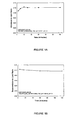
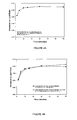
- Results depicted in Figure 1A show that loading of irinotecan into DSPC/DSPG (80:20 mole ratio) liposomes with no pH gradient at 50°C was essentially complete within about 5 minutes after initiation of loading.
- Daunorubicin was loaded at a 0.1:1 drug/lipid weight ratio.
- a drug-to-lipid ratio at various time points during loading was determined by measuring absorbance at 480 nm after solubilization in detergent to quantify daunorubicin as described; lipid levels were determined by liquid scintillation counting.
- irinotecan Copper loading of irinotecan into cholesterol-containing liposomes exhibiting no pH gradient was investigated employing DPPC/Chol (55:45 mole ratio) liposomes.
- the liposomes were prepared as described in the methods by hydrating lipid films in a solution of 100 mM copper(II)gluconate adjusted to pH 7.4 with TEA. Liposomes were extruded at 65° C and the external buffer of the liposomes was exchanged to SHE, pH 7.4 by tangential flow dialysis. Liposomes were incubated with irinotecan at a 0. 1: drug-to-lipid weight ratio at 50° C and the extent of drug loading was determined as described by measuring absorbance at 370 nm after solubilization by detergent.
- DSPC/DSPE-PEG2000 (95:5 mole ratio) liposomes were prepared with an internal MnSO 4 solution buffered to pH 7.4 and an external solution buffered to pH 7.4 with SHE.
- Lipids films were prepared as described and hydrated in 300 mM MnSO 4 buffered to pH 7.4 with 20 mM imidazole (initial pH was adjusted to 7.4 with concentrated HCl) and extrusion was carried out at 70° C.
- the samples were run down a Sephadex G-50 column to exchange the exterior buffer with SHE, pH 7.4.
- Epirubicin was loaded at a drug-to-lipid weight ratio of 0.2:1 and loading was carried out at 60° C. The extent of drug loading was measured as described in the methods by measuring drug absorbance at 480 nm.
- the technique can be employed to load two or more drugs into a single liposome.
- One technique involves first passively entrapping at least one drug along with a metal during preparation of the liposome followed by active metal loading of another drug.
- liposomes were prepared such that there was no pH gradient across the membrane thus ensuring loading of the second drug by the process of this invention.
- DSPC/DSPG 85:15 mole ratio liposomes containing FUDR were prepared by dissolving DSPC in chloroform and DSPG in chloroform/methanol/water (50:10:1 v/v). The lipids were then combined together at an 85:15 mole ratio and labeled with trace amounts of 14C-CHE. The samples were hydrated in 100 mM copper(II)gluconate, 220 mM TEA, pH 7.4, containing 24.62 mg/mL (100 mM) FUDR with trace levels of 3H-FUDR at 70°C.
- the resulting MLVs were extruded at 70°C, then buffer exchanged first into saline and next into SHE, pH 7.4 using a hand-held tangential flow dialysis column. This sample was then exchanged into 300 mM sucrose, 20 mM HEPES, pH 7.4 to remove any EDTA in the exterior buffer.
- Irinotecan was added to the resulting liposome preparation at a drug-to-lipid mole ratio of 0.1:1 at 50° C.
- a drug-to-lipid ratio for the spun column eluant was generated using liquid scintillation counting to determine lipid and FUDR concentrations, and absorbance at 370 nm to determine irinotecan concentrations.
- liposomes Prior to measurement of absorbance, liposomes were solubilized in a solution containing Triton X-100. The initial FUDR drug-to-lipid mole ratio was 0.09:1, and 0.06:1 after loading of irinotecan occurred.
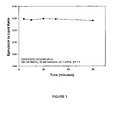
- Figure 4A shows that loading of irinotecan into cholesterol-free DSPC/DSPG (85:15 mole ratio) liposomes containing encapsulated FUDR and metal does not require the presence of a pH gradient as efficient loading of the drug occurred throughout the time course of the experiment.
- DSPC/Chol/DSPG 70:10:20 mole ratio liposomes containing FUDR and copper(II)gluconate were prepared as described above.
- half of the resulting LUVs were buffer exchanged into SHE, pH 7.4 and then into 20 mM HEPES, 150 mM NaCl (HBS), pH 7.4 while the other half was further exchanged into 300 mM sucrose, 20 mM HEPES, pH 7.4 using a hand-held tangential flow dialysis column. Irinotecan was added to the FUDR-containing liposomes, and subsequently measured, as described above.
- the initial FUDR drug-to-lipid mole ratios were 0.1:1 and 0.09:1 for samples respectively containing HBS (closed circles) or 300 mM sucrose, 20 mM HEPES (open circles) as the external buffer. After loading of irinotecan, the same samples had FUDR drug/lipid ratios of 0.09:1 and 0.08:1, respectively.
- Loading of irinotecan into DSPC/DSPG (80:20 mole ratio) liposomes with passively encapsulated carboplatin was measured using liposomes prepared as described above except that lipid films were hydrated in 150 mM CuSO 4 (adjusted to pH 7.4 using TEA), containing 25 mg/ml carboplatin. Samples were extruded and external buffers exchanged into SHE, pH 7.4, using a hand-held tangential flow dialysis column. Irinotecan was added at 60° C at a drug-to-lipid weight ratio of 0.1:1 and uptake was measured as previously described.
- Atomic absorption spectrometry was used to determine carboplatin concentrations and absorbance at 370 nm was measured to determine irinotecan concentrations.
- the initial carboplatin drug-to-lipid weight ratio was 0.030, and 0.025 after loading of irinotecan occurred.
- irinotecan loads to a high degree in carboplatin and metal-containing DSPC/DSPG (80:20 mole ratio) liposomes in the absence of a pH gradient.
- DSPC/Chol (55:45 mole ratio) liposomes were prepared as described for Figure 4B except that lipid films were hydrated with a cisplatin solution.
- Solid Cisplatin (40 mg/mL) was dissolved in 150mum CuCl 2 , pH 7.4 (pH adjusted with NaOH) with the addition of 4% DMSO at 80° C then added to the lipid films and allowed to hydrate at 80° C with frequent vortexing.
- the samples were centrifuged on a bench top centrifuge to pellet any unencapsulated cisplatin, and the supernatant collected.
- the liposomes were then applied to a Sephadex G-50 column pre-equilibrated with HBS, pH 7.4 to remove excess metal ions from the outside of the liposomes.
- Daunorubicin was added to the liposomes at a 0.1:1 weight ratio and loading was carried out at 60° C. Aliquots were removed at various time points and applied to a Sephadex G-50 spin column. Absorbance measurements were carried out at 480 nm was used to determine daunorubicin concentrations and cisplatin levels were measured using AA. The initial cisplatin drug-to-lipid ratio was 0.044:1.
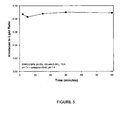
- Figure 6 shows that DSPC/Chol liposomes containing passively encapsulated cisplatin efficiently load daunorubicin in the absence of a pH gradient. This further supports loading of a second agent, into liposomes, through metal loading complexation.
- Solutions of cobalt, nickel, manganese, cadmium, zinc and copper were prepared at concentrations of 150 and 300 mM in 20 mM histidine. Triethanolamine (1.13 g/mL) was added drop-wise until the resulting solution was pH 7.4 or until the solution was cloudy in appearance (over a 10 minute observation period). Typically, less than 500 (L of 1.13 g/mL triethanolamine was added. Subsequent to addition of triethanolamine, the solutions were visually inspected to determine whether precipitation of the metal had occurred. A cloudy appearance of the solution indicated the presence of a precipitate whereas clarity of the solution indicated a lack of precipitation. The results are shown in Table 2.
- Metal loading is distinct from citrate-based loading
- doxorubicin The ability of doxorubicin to be accumulated in DPPC/DSPE-PEG2000 (95:5 mole ratio) liposomes according to the MnSO 4 and citrate based loading procedures was compared.
- Lipid films were hydrated with 300 mM MnSO 4 solution or 300 mM citrate, pH 3.5 and passed through an extrusion apparatus at 55° C.
- the resulting liposomes were run down a Sephadex G-50 column equilibrated with a buffering solution of SHE, pH 7.5 for MnSO 4 containing liposomes and HBS, pH 7.5 for citrate-containing liposomes.
- liposomes were combined with doxorubicin to give a final drug:lipid weight ratio of about 0.1:1, 0.2:1 or 0.3:1.
- the resulting mixture was incubated at 37° C for 80 minutes.
- the extent of drug loading was determined as described in the methods by measuring the absorbance at 480 nm to quantify drug; lipid levels were measured by liquid scintillation counting.
- DMPC/Chol The effect of doxorubicin loading on the transmembrane pH gradient of DMPC/Chol liposomes was compared using citrate and manganese loading techniques by measuring pH gradients prior to and subsequent to loading of drug.
- DMPC/Chol (55:45 mole ratio) lipid films were hydrated with 300 mM citrate buffer, pH 3.5, 300 mM MnSO 4 or 300 mM MnCl 2 .
- the resulting MLVs were subjected to 5 freeze-and thaw cycles (freezing in liquid nitrogen and thawing at 40° C) followed by extrusion at 40° C.
- samples were fractionated on Sephadex G-50 columns.
- the external buffer was exchanged to HBS and for liposomes with encapsulated MnSO 4 and MnCl 2 , the external buffer was exchanged to SHE, pH 7.5. Following buffer exchange, doxorubicin was added at a 0.2:1 weight ratio at 60° C. Absorbance at 480 nm following detergent solubilization was assessed to quantify drug and lipid levels were determined by liquid scintillation counting.
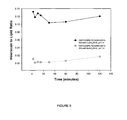
- Results presented in Figure 8A show that loading of doxorubicin into liposomes containing encapsulated citrate (squares) and MnSO 4 (circles) was essentially complete within 5 minutes of incubation. Doxorubicin accumulation employing MnCl 2 (triangles) was less complete in relation to MnSO 4 and citrate loading. Data points represent the mean drug-to-lipid ratios of at least three replicate experiments and the error bars indicate the standard deviation.
- Loading efficiency is dependent on the metal ion employed
- Lipid films were hydrated in a solution of either 300 mM MnSO 4 or 300 mM CuSOo 4 .
- the resulting multilamellar vesicles (MLVs) were extruded at 60° C and the LUVs were buffer exchanged into SHE, pH 7.4.
- Drug loading was initiated by the addition of irinotecan to the resulting solution at a 0.1:1 drug-to-lipid weight ratio at 60° C. The extent of drug loading was measured as described and absorbance was measured at 370 nm.
- Cholesterol-free (DSPC/DSPE-PEG2000, 95:5 mole ratio) liposomes encapsulating manganese were prepared by hydration of lipid films in 300 mM MnSO 4 and extrusion was carried out at 75° C. The samples were exchanged into HBS using a hand held tangential flow dialysis column. The external buffer contained 1.67 mM EDTA to remove any divalent cations. Daunorubicin was loaded at a drug-to-lipid weight ratio of 0.1:1 and loading was carried out at 23° C, 37° C or 60° C. The extent of drug loading was measured by solubilizing the liposomes in detergent followed by measuring the absorbance at 480 nm.
- results in Figure 10A show that loading of daunorubicin into DSPC/DSPE-PEG2000 (95:5 mole ratio) MnSO 4 containing liposomes is most efficient at 60° C whereas loading at 23° C and 37° C occurred to a lesser extent. Daunorubicin to lipid ratios (mol:mol) of 0.07 can be achieved when the loading temperature is at 60° C.
- Cobalt containing DSPC/DSPE-PEG2000 (95:5 mole ratio) liposomes were prepared by hydration of lipid films in 150 mM CoCl 2 . MLVs were extruded at 75°C and the exterior buffer was then exchanged by dialyzing against HBS overnight. The liposomes were then further exchanged into HBS using a hand held tangential flow dialysis column to remove any residual CoCl 2 . Daunorubicin was loaded at 23, 37 and 60° C at a drug/lipid weight ratio of 0.1:1. The extent of daunorubicin loading was determined by measuring the absorbance at 480 nm after solubilization of the liposomes. Lipid levels were determined by liquid scintillation counting.
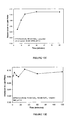
- Daunorubicin was efficiently loaded into CoCl 2 containing DSPC/DSPE-PEG2000 (95:5 mole ratio) liposomes at 60° C (see Figure 10B ). At 60° C, loading resulted in >95% encapsulation of daunorubicin within 5 minutes. Loading at 23° C and 37° C was less efficient and a 60 minute incubation at 37° C was required to achieve 80% drug encapsulation.
- Liposomes containing DSPC/DSPE-PEG2000 (95:5 mole ratio) and encapsulating NiSO4 were prepared as described in the previous examples. Lipid films were hydrated in 300 mM NiSO4 and the external buffer of the liposomes was exchanged by passage through a Sephadex G-50 column equilibrated with SHE, pH 7.4. Daunorubicin was added such that the initial (prior to loading) drug-to-lipid weight ratio was 0.2 to 1 and loading was carried out at 60° C. Loading efficiencies of daunorubicin were measured as described above by UV absorption.
- Results in Figure 10C demonstrate that incubation of daunorubicin with NiSO4 containing DSPC/DSPE-PEG2000 liposomes at 60° C resulted in greater than 75% drug encapsulation within 5 minutes.
- Copper containing DSPC/DSPE-PEG2000 (95:5 mole ratio) liposomes were prepared as described in the previous examples. Lipid films were hydrated in 300 mM CuSO 4 and extrusion was carried out at 70° C. The external buffer was replaced with SHE, pH 7.4 by passing liposomes through a Sephadex G-50 column equilibrated with SHE buffer prior to loading. Epirubicin was added to the copper-containing liposomes at a drug-to-lipid weight ratio of about 0.2:1 and loading was carried out at 60° C. Epirubicin and lipid levels were assayed by spectrophotometry and scintillation counting respectively. To quantify epirubicin, the absorbance was measured at 480 nm after solubilizing the liposome preparation with detergent.
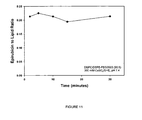
- Figure 11 shows that loading of epirubicin into DSPC/DSPE-PEG2000 (95:5 mole ratio) liposomes resulted in >95% drug accumulation within 5 minutes when uptake occurred at 60° C.
- DSPC/Chol (55:45 mole ratio) liposomes encapsulating cobalt were prepared as described above by hydration of lipid films in a solution of 300 mM CoCl 2 .
- the external buffer was exchanged by column chromatography to SHE, pH 7.5. Loading was initiated by the addition of doxorubicin at a drug-to-lipid weight ratio of approximately 0.1:1. Liposomes were then incubated at 60° C to facilitate drug loading. The extent of drug loading was measured as described previously by solubilization of the samples with detergent followed by measurement of the absorbance at 480 nm.
- Results in Figure 12A show that within 10 minutes, >90% of the added drug was encapsulated.
- Copper sulfate containing DSPC/Chol (55:45 mole ratio) liposomes were prepared by hydration of a lipid film in 300 mM CuSO 4 .
- the resulting MLVs were extruded at 70° C and the external solution was exchanged to HBS by passage through a Sephadex G-50 spin column.
- the buffer exchanged liposomes were loaded at 60° C with daunorubicin at a 0.1:1, 0.2:1 or 0.4:1 drug-to-lipid weight ratio. Liposomes were solubilized in detergent prior to determining drug levels by measuring the absorbance at 480 nm.
- Results in Figure 12B indicate that drug loading into DSPC/Chol (55:45 mole ratio) liposomes loaded using encapsulated CuSO 4 was efficient with >90% of the added drugs encapsulated within 5 minutes at 60° C.
- DSPC/Chol (55:45 mole ratio) liposomes encapsulating 300 mM CuSO 4 were prepared as described for Figure 12B except that the external buffer was exchanged to SHE, pH 7.4. The liposomes were then incubated with topotecan at a 0.1:1 drug/lipid weight ratio at 37° C. The extent of loading was monitored for 2 hours at the indicated time points by quantifying drug absorbance at 380 nm and lipid by liquid scintillation counting. Drug was quantified by measuring absorbance at 380 nm.
- Figure 12C indicates that the loading of topotecan into DSPC/Chol (55:45 mole ratio) liposomes was essentially 100% (>95%) complete within 30 minutes.
- Daunorubicin uptake into cisplatin-containing liposomes was measured according to the following procedures.
- DSPC/DSPE-PEG2000 (95:5 mole ratio) or DMPC/Chol (55:45 mole ratio) liposomes were prepared according to the materials and methods of the preceding examples.
- the lipid films were hydrated in 150 mM MnCl 2 or 150 mM CuCl 2 , respectively, with 8.5 mg/mL cisplatin at 80° C.
- the MLVs were extruded at 75° C. Precipitated cisplatin was removed by centrifugation and the samples were then dialyzed against HBS overnight.
- Samples containing CuCl 2 were further exchanged into HBS using a hand held tangential flow dialysis column to remove any residual CuCl 2 or cisplatin.
- Daunorubicin was loaded into cisplatin/MnCl 2 and cisplatin/CuCl 2 containing liposomes at a drug/lipid weight ratio of 0.1:1 at an incubation temperature of 60° C.
- the initial cisplatin drug/lipid weight ratio was 0.0 1: 1 for both liposome compositions.
- the extent of drug loading was measured as described previously by solubilization of the samples with detergent followed by measurement of the absorbance at 480 nm.
- Figures 13A and 13B show that DSPC/DSPE-PEG2000 (95:5 mole ratio) and DMPC/Chol (55:45 mole ratio) liposomes preloaded with cisplatin can be loaded with a second drug (daunorubicin) when using either manganese- or copper-based active loading, respectively. Furthermore, daunorubicin encapsulation was not as efficient using MnCl 2 compared to CuCl 2 .
- Nickel-containing samples were dialyzed overnight against 1 L 300 mM sucrose, 20 mM HEPES, pH 7.4, while samples containing copper were exchanged into SHE, pH 7.4, by chromatography on Sepharose columns containing CL4B resin.
- Daunorubicin was loaded at 37° C at a drug-to-lipid weight ratio of 0.1:1.
- Irinotecan was loaded into liposomes as previously described at 60° C at a drug-to-lipid weight ratio of 0.1. Drug and lipid levels were measured using procedures previously described.
- DSPC/cholesterol liposomes (55:45 mole ratio) were prepared as described in the preceding examples except that lipid films were hydrated in 300 mM MnSO 4 and the lipid marker 14C-CHE was used.
- the resulting MLVs were extruded at 65° C and then passed through a Sephadex G-50 column that had been pre-equilibrated with 300 mM sucrose, 20 mM HEPES and 15 mM EDTA (pH 7.5). Doxorubicin was then added in a 0.2:1 drug-to-lipid weight ratio and further incubated at 60° C for 60 minutes.
- the divalent cation ionophore A23187 (1?g ionophore/(mol lipid) was added to the liposomes and the mixture was incubated at room temperature for 3 minutes to facilitate A23187 incorporation into the bilayer. Subsequently, vincristine was added to the mixture and incubated at 50° C for 100 minutes. A small amount of radiolabeled vincristine was added to the drug preparation to facilitate drug quantitation. Drug uptake was performed at a 0.05:1 vincristine to lipid weight ratio. Vincristine and lipid was quantified by scintillation counting following liposome solubilization with detergent.. Absorbance at 480 nm was used to quantify doxorubicin levels.
- Figure 14 shows that liposomes preloaded with doxorubicin (circles) through metal loading display near maximum encapsulation of ionophore-mediated loading of vincristine (squares) after 40 minutes of incubation at 50° C, with no significant leakage of doxorubicin during vincristine encapsulation.
- the data points represent the mean drug-to-lipid ratio of three separate experiments and the error bars indicate the standard deviation.
- DSPC/Chol liposomes (55:45 mole ratio) were prepared as detailed previously with encapsulated 300 mM CuSO 4 .
- the extruded liposomes were passed through a Sephadex G-50 column that had been pre-equilibrated with SHE, pH 7.5.
- Irinotecan was loaded first at a drug-to-lipid mole ratio of 0.2:1 at 60° C to approximately 100% encapsulation.
- doxorubicin was incubated at 60° C at a drug-to-lipid mole ratio of 0.15:1 with the irinotecan-containing liposomal formulation to allow sufficient loading of doxorubicin.
- Irinotecan levels were measured by measuring the absorbance at 370 nm using a standard curve prepared in the presence of doxorubicin to account for its absorbance at 370 nm.
- doxorubicin concentrations were determined by measuring absorbance at 480 nm using a standard curve prepared in the presence of irinotecan to account for its absorbance at 480 nm.
- individual uptake of each drug was measured separately into liposomes of the same composition.
- DSPC/DSPE-PEG2000 liposomes were prepared as described and extruded at 75° C.
- the external solution was exchanged to HBS by dialysis against HBS.
- Daunorubicin was loaded at a drug-to-lipid weight ratio of about 0.1:1 and loading was carried out at 60° C. Daunorubicin loading was measured as described in the preceding examples using EDTA in the solubilization buffer.
- the drug-loaded liposomes were then intravenously administered to Balb/c mice at lipid doses of 100 mg/kg and daunorubicin doses of 10 mg/kg.
- Blood was recovered 24 hours after administration by cardiac puncture (3 mice per time point) and collected into EDTA-containing tubes. Plasma lipid concentrations were determined by liquid scintillation counting. Daunorubicin was extracted from plasma as follows:
- a defined volume of plasma was adjusted to 200 (L with distilled water followed by addition of 600 (L of distilled water, 100 (L of 10% SDS and 100 (L of 10 mM H 2 SO 4 .
- the resulting mixture was mixed and 2 mL of 1:1 isopropanol/chloroform was added followed by vortexing.
- the samples were frozen at -20° C overnight or -80° C for 1 hour to promote protein aggregation, brought to room temperature, vortexed and centrifuged at 3000 rpm for 10 minutes.
- the bottom organic layer was removed and assayed for fluorescence intensity at 500 nm as the excitation wavelength (2.5 nm bandpass) and 550 nm as an emission wavelength (10 nm bandpass) and using an absorbance wavelength of 480 nm.
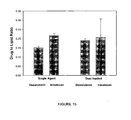
- Figure 16 demonstrates that DSPC/DSPE-PEG2000 (95:5 mole ratio) liposomes loaded with daunorubicin employing encapsulated citrate, pH 4.0, CuSO 4 and MnSO 4 display differing plasma drug-to-lipid ratios 24 hours after intravenous administration. These results thus show that drug release can be controlled through selection of an appropriate metal ion. The results represent the mean drug-to-lipid ratio of at least three separate experiments and the error bars indicate the standard deviation.
- Liposomes composed of DSPC/DSPG were prepared following the procedures as described in Example 1. DSPC and DSPG lipids were dissolved in chloroform and chloroform/methanol/water (50:10:1 v/v), respectively. The lipids were then combined in appropriate amounts for each formulation. Solvent was removed under a steady stream of N 2 gas while maintaining the temperature at 70° C and put under vacuum for 5 minutes. The resulting lipid films were redissolved in chloroform to further remove any methanol or water and then solvent was removed as before and dried under vacuum to remove any residual solvent.
- Both liposome preparations were then loaded at 37, 50 and 60° C with irinotecan at a drug to lipid weight ratio of 0.1:1 as described above.
- Drug uptake was assayed using liquid scintillation counting to determine lipid concentrations and absorbance at 370nm to determine irinotecan concentrations after solubilization in detergent.
- results depicted in Figure 17 reveal that loading of irinotecan into DSPC/DSPG (80:20 mole ratio) liposomes was enhanced when the liposome preparation was passed through a Chelex-100 TM column to remove external metal ions.
- results shown in Figure 18 demonstrate that loading of irinotecan into liposomes exchanged into a solution not containing a chelating agent loaded at a reduced rate.
- removal of metal ions associated with the negatively charged liposomal surface by complexing the ions with a chelating agent may reduce metal-drug interactions on the outer surface of the membrane thereby increasing the amount of free drug that may cross the membrane to become entrapped in the internal compartment of the liposome.
- Copper-based loading of irinotecan into DSPC/DSPG (80:20 mole ratio) liposomes was investigated after removal of Cu 2+ from the external solution using two different techniques both reliant on chelation of the external metal.
- the first technique involved removal of the copper by passage through a Chelex TM column and the second technique involved exchanging the liposomes into a buffer containing EDTA.
- DSPC/DSPG (80:20 mole ratio) were prepared as in Example 14, except that samples were rehydrated in 150 mM copper gluconate, pH 7.4 (pH adjusted with TEA). External copper was removed by: i) passage through a 15 mL Chelex-100 column equilibrated in 300 mM sucrose, 20 mM HEPES, pH 7.4; or ii) by buffer exchange into saline and then into 300 mM sucrose, 20 mM HEPES, 30 mM EDTA, pH 7.4 (SHE buffer) using tangential flow.
- Both liposome preparations were then loaded at 37, 50 and 60° C with irinotecan at a drug to lipid weight ratio of 0.1:1 as described in Example 14. Aliquots (100 ⁇ L) were removed at various time points after initiation of loading and applied to a Sephadex G-50 spin column. The samples were then solubilized in detergent and drug and lipid quantitation was performed as previously described in Example 14.
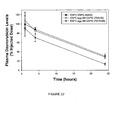
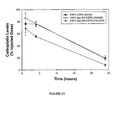
- Daunorubicin and carboplatin were encapsulated in DSPC/DSPG (80:20 mole ratio), DSPC/SM/DSPG (75:5:20 mole ratio) and DSPC/SM/DSPG (70:10:20 mole ratio) liposomes.
- the liposomes were prepared following the procedures as described in preceding examples.
- DSPG was dissolved in a solution of 50:10:1 chloroform/methanol/ water (v/v) and the radioactive marker 14C-CHE was added to the preparation to quantify lipid.
- the lipid films were rehydrated in 150 mM CuSO 4 , 20 mM histidine, pH 7.4 containing 80 mg/mL carboplatin (with 4% DMSO to improve carboplatin solubility). After extrusion, samples were centrifuged to remove unencapsulated carboplatin. Liposomes exchanged into SHE buffer were loaded with 3 H-daunorubicin. Mice were administered liposomes at a dose of 100 mg/kg lipid. Liquid scintillation counting was used to quantitate daunorubicin and lipid. Plasma carboplatin levels were determined by atomic absorption.
- results in Figure 21 indicate that dual loaded DSPC/DSPG (80:20 mole ratio), DSPC/SM/DSPG (75:5:20 mole ratio) and DSPC/SM/DSPG (70:10:20 mole ratio) liposomes display enhanced plasma lipid levels at various time points after intravenous administration, although liposomes prepared with 10 mol % sphingomyelin exhibited lower lipid levels in relation to liposomes with 5 mol % sphingomyelin. The liposomes effectively altered the pharmacokinetics of the drug as demonstrated by the high levels daunorubicin and carboplatin remaining in the blood compartment after administration (see Figure 22 and 23 ).
Landscapes
- Health & Medical Sciences (AREA)
- Life Sciences & Earth Sciences (AREA)
- Chemical & Material Sciences (AREA)
- Medicinal Chemistry (AREA)
- Pharmacology & Pharmacy (AREA)
- Animal Behavior & Ethology (AREA)
- General Health & Medical Sciences (AREA)
- Public Health (AREA)
- Veterinary Medicine (AREA)
- Epidemiology (AREA)
- Molecular Biology (AREA)
- Dispersion Chemistry (AREA)
- Biophysics (AREA)
- Chemical Kinetics & Catalysis (AREA)
- General Chemical & Material Sciences (AREA)
- Nuclear Medicine, Radiotherapy & Molecular Imaging (AREA)
- Organic Chemistry (AREA)
- Inorganic Chemistry (AREA)
- Engineering & Computer Science (AREA)
- Bioinformatics & Cheminformatics (AREA)
- Medicinal Preparation (AREA)
- Pharmaceuticals Containing Other Organic And Inorganic Compounds (AREA)
- Medicines That Contain Protein Lipid Enzymes And Other Medicines (AREA)
- Manufacturing Of Micro-Capsules (AREA)
Claims (21)
- Liposomenzusammensetzung umfassend Liposomen enthaltend eine interne Lösung, die interne Lösung umfassend Kupferionen und ein oder mehrere eingeschlossene therapeutische(s) Agens/Agentien, wobei das Agens ein Arzneimittel oder ein antineoplastisches Agens ist und wobei:(a) die Liposomen kein Ionophor umfassen;(b) das therapeutische Agens in vorgefertigte Liposomen, welche die Kupferionen in der internen Lösung enthalten, eingebracht wurde;(c) die interne Lösung eine Kupferionen-kompatible Lösung umfasst und(d) die Zusammensetzung die Liposomen in einer liposomenexternen Lösung umfasst.
- Zusammensetzung gemäß Anspruch 1, wobei das therapeutische Agens ein Chinolon, ein Anthrazyklin, ein Antikörper, ein Stickstofflost, ein Camptothecin oder ein Podophyllotoxin ist.
- Zusammensetzung gemäß Anspruch 1 oder 2, wobei die externe Lösung und die externen Oberflächen der Liposomen im Wesentlichen keine nicht-komplexierten Metallionen enthält/enthalten.
- Zusammensetzung gemäß Anspruch 3, wobei die externe Lösung ein Metallchelat-bildendes Agens umfasst.
- Zusammensetzung gemäß einem der Ansprüche 1 bis 4, wobei die externe Lösung und die interne Lösung im Wesentlichen den gleichen pH im Bereich von 6,0 bis 8,5 haben.
- Zusammensetzung gemäß einem der Ansprüche 1 bis 5, wobei die Liposomen weniger als 20% Cholesterol enthalten.
- Zusammensetzung gemäß einem der Ansprüche 1 bis 6, wobei die Liposomen ein oder mehrere Lipid(e) umfassen, welche(s) bei physiologischem pH negativ geladen ist/sind.
- Zusammensetzung gemäß Anspruch 7, wobei das eine oder die mehreren negativ geladene(n) Lipid(e) ausgewählt ist/sind aus Phosphatidylglycerol (PG) und Phosphatidylinositol (PI).
- Verfahren des Einbringens eines therapeutischen Agens in ein Liposom in einer Liposomenzusammensetzung, das Verfahren umfassend:i) Bereitstellen einer Liposomenzusammensetzung umfassend ein Liposom in einer externen Lösung, das Liposom enthaltend eine interne Lösung, umfassend eingeschlossene Kupferionen;ii) Zugabe eines oder mehrerer therapeutischen/therapeutischer Agens/Agentien zu der externen Lösung undiii) Halten des Agens in der externen Lösung für ausreichende Zeit, um das Agens in das Liposom einzubringen, wobei die Liposomen kein Ionophor enthalten und die interne Lösung eine Kupferionen-kompatible Lösung umfasst.
- Verfahren gemäß Anspruch 9, wobei
die externe Lösung und die externen Oberflächen des Liposoms keine nicht-komplexierten Metallionen enthält/enthalten und/oder
nicht-komplexierte Metallionen vor Schritt (ii) aus der externen Lösung durch Chromatographie oder durch ausgiebigen Lösungsaustausch oder Dialyse entfernt werden und/oder
die interne Lösung und die externe Lösung im Wesentlichen den gleichen pH haben und/oder
die Liposomen weniger als 20 Mol% Cholesterol enthalten. - Verfahren gemäß Anspruch 10, wobei die externe Lösung ein Metallchelat-bildendes Agens umfasst.
- Verfahren gemäß Anspruch 10, wobei die Liposomen ein oder mehrere Lipid(e) umfassen, welche(s) bei physiologischem pH negativ geladen ist/sind.
- Verfahren gemäß Anspruch 12, wobei das eine oder die mehreren negativ geladene(n) Lipid(e) ausgewählt ist/sind aus PG und PI.
- Verfahren gemäß einem der Ansprüche 9 bis 13, wobei ein zweites therapeutisches Agens anhand eines transmembranen pH-Gradienten, gebildet nach Schritt (iii), eingebracht wird.
- Verfahren gemäß einem der Ansprüche 9 bis 14, wobei ein zweites therapeutisches Agens anhand eines Transmembrangradienten, aufgebaut mit einem in dem Liposom vorliegenden Ionophor, eingebracht wird, wobei der Transmembrangradient nach Schritt (iii) aufgebaut wird.
- Liposomenzusammensetzung umfassend Liposomen, umfassend ein oder mehrere therapeutische(s) Agens/Agentien, hergestellt durch das Verfahren gemäß einem der Ansprüche 9 bis 15.
- Verfahren zur Selektion einer Liposomenzusammensetzung mit einer bevorzugten Einbringungs- oder Retentionseigenschaft für ein Agens, umfassend:(a) Bereitstellen einer ersten Liposomenzusammensetzung, umfassend ein Liposom in einer externen Lösung, das Liposom enthaltend eine interne Lösung umfassend ein oder mehrere Übergangsmetallion(en);(b) Zugabe des Agens zu der externen Lösung der Zusammensetzung aus (a) für einen Zeitabschnitt um das Agens in das Liposom der ersten Zusammensetzung einzubringen;(c) Bereitstellen eines zweiten Liposoms umfassend ein Liposom in einer externen Lösung, das Liposom enthaltend eine interne Lösung umfassend ein oder mehrere Übergangsmetallion(en);(d) Zugabe des Agens zu der externen Lösung der Zusammensetzung aus (c) für einen Zeitabschnitt um das Agens in das Liposom der zweiten Zusammensetzung einzubringen;(e) Vergleichen der Menge an eingebrachtem Agens oder der Menge an während des Zeitablaufs zurückgehaltenen Agens für das Liposom der Zusammensetzung hervorgehend aus (b) mit dem Liposom der Zusammensetzung hervorgehend aus (d) und(f) Selektion der Liposomenzusammensetzung hervorgehend aus (b) oder (d), die eine größere Menge an eingebrachtem oder zurückgehaltenem Agens hat,
wobei:(I) die Liposomenzusammensetzung aus (a) und (c) sich in einem oder mehreren von (i) Metallionen, vorliegend in der internen Lösung, (ii) Lipiden in dem Liposom der Liposomenzusammensetzung und (iii) Konzentration an Metallionen, vorliegend in der internen Lösung, unterscheiden;(II) der Zeitabschnitt bei (b) unterschiedlich zu dem Zeitabschnitt bei (d) ist, oder(III) das Einbringen in (b) bei einer unterschiedlichen Temperatur als das Einbringen in (d) durchgeführt wird. - Verfahren gemäß Anspruch 17, wobei eine der ersten und der zweiten Zusammensetzung Cholesterol enthaltende Liposomen umfasst und die andere der Zusammensetzungen Liposomen mit wenig Cholesterol umfasst.
- Verfahren gemäß Anspruch 17 oder 18, wobei wenigstens eine der ersten und der zweiten Zusammensetzung ein oder mehrere Metallion(en) umfasst, ausgewählt aus Cu, Co und Zn.
- Verfahren gemäß einem der Ansprüche 17-19, wobei die interne Lösung jeder der ersten und der zweiten Zusammensetzung eine metallkompatible Lösung umfasst.
- Verfahren gemäß einem der Ansprüche 17-20, umfassend den zusätzlichen Schritt des Einbringens eines Agens in Liposomen der Zusammensetzung von welcher gezeigt wurde, dass sie eine größere Menge an eingebrachtem oder zurückgehaltenem Agens hat.
Applications Claiming Priority (11)
| Application Number | Priority Date | Filing Date | Title |
|---|---|---|---|
| US32667101P | 2001-10-03 | 2001-10-03 | |
| US326671P | 2001-10-03 | ||
| US34152901P | 2001-12-17 | 2001-12-17 | |
| US341529P | 2001-12-17 | ||
| US35675902P | 2002-02-15 | 2002-02-15 | |
| US356759P | 2002-02-15 | ||
| US36207402P | 2002-03-07 | 2002-03-07 | |
| US362074P | 2002-03-07 | ||
| US39427302P | 2002-07-09 | 2002-07-09 | |
| US394273P | 2002-07-09 | ||
| PCT/CA2002/001501 WO2003028697A2 (en) | 2001-10-03 | 2002-10-03 | Liposome loading with metal ions |
Publications (2)
| Publication Number | Publication Date |
|---|---|
| EP1432403A2 EP1432403A2 (de) | 2004-06-30 |
| EP1432403B1 true EP1432403B1 (de) | 2010-07-28 |
Family
ID=27541066
Family Applications (1)
| Application Number | Title | Priority Date | Filing Date |
|---|---|---|---|
| EP02766998A Expired - Lifetime EP1432403B1 (de) | 2001-10-03 | 2002-10-03 | Liposomenladung mit metallionen |
Country Status (10)
| Country | Link |
|---|---|
| US (3) | US7238367B2 (de) |
| EP (1) | EP1432403B1 (de) |
| JP (2) | JP4822666B2 (de) |
| AT (1) | ATE475411T1 (de) |
| AU (1) | AU2002331481B2 (de) |
| CA (1) | CA2462376C (de) |
| DE (1) | DE60237162D1 (de) |
| IL (2) | IL161187A0 (de) |
| TW (1) | TWI235066B (de) |
| WO (1) | WO2003028697A2 (de) |
Cited By (1)
| Publication number | Priority date | Publication date | Assignee | Title |
|---|---|---|---|---|
| WO2026009217A1 (en) * | 2024-07-01 | 2026-01-08 | Shaare Zedek Scientific Ltd. | Liposome compositions comprising a lipophilic ascorbic acid prodrug, methods, and uses thereof |
Families Citing this family (58)
| Publication number | Priority date | Publication date | Assignee | Title |
|---|---|---|---|---|
| KR100489701B1 (ko) * | 2002-10-09 | 2005-05-16 | 주식회사 태평양 | 고농도의 트리터페노이드를 함유하는 미소화 리포좀 및 그제조방법 |
| US8980310B2 (en) * | 2002-12-31 | 2015-03-17 | Bharat Serums and Vaccines, Ltd. | Non-pegylated long-circulating liposomes |
| CA2520864A1 (en) * | 2003-03-31 | 2004-10-21 | Alza Corporation | Lipid particles having asymmetric lipid coating and method of preparing same |
| US20040265368A1 (en) * | 2003-04-02 | 2004-12-30 | Lawrence Mayer | Combination compositions of camptothecins and fluoropyrimidines |
| EP1608338A1 (de) * | 2003-04-02 | 2005-12-28 | Celator Technologies Inc. | Pharmazeutische zusammensetzungen enthaltend wirkstoffe mit einer lactongruppe und übergangsmetallionen |
| WO2005102359A1 (en) * | 2004-04-22 | 2005-11-03 | Celator Pharmaceuticals, Inc. | Liposomal formulations of anthracycline agents and cytidine analogs |
| US8658203B2 (en) * | 2004-05-03 | 2014-02-25 | Merrimack Pharmaceuticals, Inc. | Liposomes useful for drug delivery to the brain |
| CA2928387A1 (en) | 2004-05-03 | 2005-11-17 | Merrimack Pharmaceuticals, Inc. | Drug delivery liposomes containing anionic polyols or anionic sugars |
| JP4885715B2 (ja) | 2004-06-01 | 2012-02-29 | テルモ株式会社 | イリノテカン製剤 |
| EP1614414A3 (de) * | 2004-07-09 | 2008-07-09 | Robert Sabin | Kupferverbindung enthaltende Zusammensetzungen zur Behandlung von Erkrankungen bei Säugetieren |
| US7449196B2 (en) * | 2004-07-09 | 2008-11-11 | Robert Sabin | Anti tumor compositions and methods of use |
| BRPI0516265A (pt) | 2004-10-06 | 2008-08-26 | Bc Cancer Agency | composição, uso da mesma, método de aumentar a retenção de um agente terapêutico dentro dos lipossomas, formulação lipossomal, e, uso de um agente terapêutico encapsulado lipossomalmente |
| US20090285878A1 (en) * | 2004-11-05 | 2009-11-19 | Tekmira Pharmaceuticals Corporation | Compositions and methods for stabilizing liposomal drug formulations |
| EP1817005A1 (de) * | 2004-11-18 | 2007-08-15 | Celator Pharmaceuticals, Inc. | Verfahren zum beladen von abgabetransportmitteln mit mehrfachen wirkstoffen |
| WO2007028154A2 (en) * | 2005-09-02 | 2007-03-08 | Northwestern University | Encapsulated arsenic drugs |
| US20110020434A1 (en) * | 2005-09-02 | 2011-01-27 | O'halloran Thomas V | Nanoparticle arsenic-platinum compositions |
| WO2007076117A2 (en) * | 2005-12-22 | 2007-07-05 | Celator Pharmaceuticals, Inc. | Liposomal formulations comprising secondary and tertiary amines and methods for preparing thereof |
| US8597678B2 (en) * | 2005-12-30 | 2013-12-03 | Dermazone Solutions, Inc. | Nanolipidic particles |
| CN102940878A (zh) * | 2006-10-06 | 2013-02-27 | Scil技术股份有限公司 | 脊柱髓核植入物 |
| US20080213352A1 (en) * | 2007-03-02 | 2008-09-04 | Luna Innovations Incorporated | Liposome carriers for in vivo delivery of fullerenes |
| ES2550759T3 (es) | 2007-08-17 | 2015-11-12 | Celator Pharmaceuticals, Inc. | Formulaciones farmacológicas de platino mejoradas |
| KR101085824B1 (ko) * | 2009-03-11 | 2011-11-23 | 한국유나이티드제약 주식회사 | 생체적합성 고분자를 이용한 다기능성 조영제 및 이의 제조방법 |
| US9814657B2 (en) * | 2009-04-27 | 2017-11-14 | Premier Dental Products Company | Buffered microencapsulated compositions and methods |
| US10688026B2 (en) * | 2009-04-27 | 2020-06-23 | Premier Dental Products Company | Buffered microencapsulated compositions and methods |
| DK177532B1 (en) * | 2009-09-17 | 2013-09-08 | Bio Bedst Aps | Medical use of sPLA2 hydrolysable liposomes |
| JP2012236772A (ja) * | 2009-09-28 | 2012-12-06 | Terumo Corp | スピカマイシン誘導体を有するリポソーム製剤 |
| WO2011109334A2 (en) * | 2010-03-01 | 2011-09-09 | The Regents Of The University Of California | Localization of agents at a target site with a composition and an energy source |
| US20110237686A1 (en) | 2010-03-26 | 2011-09-29 | Cerulean Pharma Inc | Formulations and methods of use |
| PL226015B1 (pl) * | 2011-03-03 | 2017-06-30 | Wrocławskie Centrum Badań Eit + Spółka Z Ograniczoną | Liposomowy preparat zawierajacy przeciwnowotworowa substancje aktywna, sposob jego wytwarzania i zawierajaca go kompozycja farmaceutyczna |
| KR101371698B1 (ko) * | 2011-06-30 | 2014-03-07 | 한국화학연구원 | 진단 및 치료를 위한 이중기능성 리포솜 및 그의 제조방법 |
| EP3572071A1 (de) | 2011-10-21 | 2019-11-27 | Jazz Pharmaceuticals Research LLC | Lyophilisierte liposomen |
| US20140378404A1 (en) * | 2011-10-25 | 2014-12-25 | Nektar Therapeutics | Treatment of Patients Suffering from Cancer |
| WO2014015027A1 (en) | 2012-07-18 | 2014-01-23 | Onyx Therapeutics, Inc. | Liposomal compositions of epoxyketone-based proteasome inhibitors |
| ES2442450B1 (es) * | 2012-08-09 | 2014-12-12 | Enoc Solutions, S.L. | Liposomas vacíos como adyuvante de diferentes principios activos, administrados independientemente y en su forma galénica convencional |
| US9801874B2 (en) | 2012-11-20 | 2017-10-31 | Spectrum Pharmaceuticals | Method for the preparation of liposome encapsulated vincristine for therapeutic use |
| US9993427B2 (en) * | 2013-03-14 | 2018-06-12 | Biorest Ltd. | Liposome formulation and manufacture |
| AU2015320595B2 (en) * | 2014-09-25 | 2021-01-21 | Premier Dental Products Company | Bondable microcapsules and surface functionalized fillers |
| EP3212159A4 (de) * | 2014-10-29 | 2018-06-27 | The Regents of the University of California | Trägerstoffe zur bioaktiven abgabe |
| TWI678213B (zh) | 2015-07-22 | 2019-12-01 | 美商史倍壯製藥公司 | 用於長春新鹼硫酸鹽脂質體注射之即可使用的調配物 |
| MX382522B (es) | 2015-10-16 | 2025-03-13 | Ipsen Biopharm Ltd | Composiciones farmaceuticas estabilizantes de camptotecina. |
| WO2017120586A1 (en) * | 2016-01-07 | 2017-07-13 | Western University Of Health Sciences | Formulations for treating bladder cancer |
| US11602512B1 (en) | 2016-07-22 | 2023-03-14 | Flamel Ireland Limited | Modified release gamma-hydroxybutyrate formulations having improved pharmacokinetics |
| UY37341A (es) | 2016-07-22 | 2017-11-30 | Flamel Ireland Ltd | Formulaciones de gamma-hidroxibutirato de liberación modificada con farmacocinética mejorada |
| US11504347B1 (en) | 2016-07-22 | 2022-11-22 | Flamel Ireland Limited | Modified release gamma-hydroxybutyrate formulations having improved pharmacokinetics |
| US11602513B1 (en) | 2016-07-22 | 2023-03-14 | Flamel Ireland Limited | Modified release gamma-hydroxybutyrate formulations having improved pharmacokinetics |
| US11986451B1 (en) | 2016-07-22 | 2024-05-21 | Flamel Ireland Limited | Modified release gamma-hydroxybutyrate formulations having improved pharmacokinetics |
| US12186296B1 (en) | 2016-07-22 | 2025-01-07 | Flamel Ireland Limited | Modified release gamma-hydroxybutyrate formulations having improved pharmacokinetics |
| US12478604B1 (en) | 2016-07-22 | 2025-11-25 | Flamel Ireland Limited | Modified release gamma-hydroxybutyrate formulations having improved pharmacokinetics |
| EP3856198A4 (de) | 2018-09-25 | 2022-06-22 | Celator Pharmaceuticals, Inc. | Behandlung von hämatologischen störungen niedriger intensität |
| CN113473980A (zh) | 2019-03-01 | 2021-10-01 | 弗拉梅尔爱尔兰有限公司 | 在进食状态下具有改善的药代动力学的γ-羟基丁酸酯组合物 |
| WO2021258013A1 (en) | 2020-06-18 | 2021-12-23 | Akagera Medicines, Inc. | Oxazolidinone compounds, liposome compositions comprising oxazolidinone compounds and methods of use thereof |
| WO2022023450A1 (en) | 2020-07-28 | 2022-02-03 | Jazz Pharmaceuticals Ireland Limited | Chiral synthesis of fused bicyclic raf inhibitors |
| JP2023535790A (ja) | 2020-07-28 | 2023-08-21 | ジャズ ファーマシューティカルズ アイルランド リミテッド | 縮合二環式raf阻害薬及びその使用方法 |
| US11980636B2 (en) | 2020-11-18 | 2024-05-14 | Jazz Pharmaceuticals Ireland Limited | Treatment of hematological disorders |
| IL303195A (en) | 2020-11-25 | 2023-07-01 | Akagera Medicines Inc | Lipid nanoparticles for delivery of nucleic acids and related methods of use |
| US11779557B1 (en) | 2022-02-07 | 2023-10-10 | Flamel Ireland Limited | Modified release gamma-hydroxybutyrate formulations having improved pharmacokinetics |
| US11583510B1 (en) | 2022-02-07 | 2023-02-21 | Flamel Ireland Limited | Methods of administering gamma hydroxybutyrate formulations after a high-fat meal |
| EP4531819A2 (de) | 2022-05-25 | 2025-04-09 | Akagera Medicines, Inc. | Lipidnanopartikel zur abgabe von nukleinsäuren und verfahren zur verwendung davon |
Family Cites Families (27)
| Publication number | Priority date | Publication date | Assignee | Title |
|---|---|---|---|---|
| US3932657A (en) | 1973-11-12 | 1976-01-13 | The United States Of America As Represented By The United States Energy Research And Development Administration | Liposome encapsulation of chelating agents |
| JPS5933287A (ja) * | 1982-08-19 | 1984-02-23 | Hidetoshi Tsuchida | 対面型ポルフイリン金属錯体を包接したリン脂質リポソ−ムおよび酸素吸脱着剤 |
| JPS6176414A (ja) * | 1984-09-21 | 1986-04-18 | Shionogi & Co Ltd | リポソーム製剤の製法 |
| JPH0639382B2 (ja) * | 1985-03-29 | 1994-05-25 | 財団法人生産開発科学研究所 | リン脂質リポソ−ム |
| US4898735A (en) * | 1985-12-06 | 1990-02-06 | Yissum Research And Development Company Of The Hebrew University Of Jerusalem | Liposome/doxorubicin composition and method |
| US4797285A (en) * | 1985-12-06 | 1989-01-10 | Yissum Research And Development Company Of The Hebrew University Of Jerusalem | Lipsome/anthraquinone drug composition and method |
| JPH0751496B2 (ja) * | 1986-04-02 | 1995-06-05 | 武田薬品工業株式会社 | リポソ−ムの製造法 |
| MX9203808A (es) | 1987-03-05 | 1992-07-01 | Liposome Co Inc | Formulaciones de alto contenido de medicamento: lipido, de agentes liposomicos-antineoplasticos. |
| ATE114967T1 (de) | 1989-06-22 | 1994-12-15 | Vestar Inc | Einkapselverfahren. |
| US5227170A (en) * | 1989-06-22 | 1993-07-13 | Vestar, Inc. | Encapsulation process |
| US5010073A (en) | 1989-10-05 | 1991-04-23 | The Rockefeller University | Use of liposomes as carriers for metalloporphyrins |
| US5270053A (en) * | 1990-04-03 | 1993-12-14 | Ciba-Geigy Corp. | Parenterally administerable liposome formulation comprising synthetic lipid |
| DE4134158C2 (de) | 1991-10-11 | 1997-02-13 | Max Delbrueck Centrum | Verwendung von Carboplatin in lyotrophen Mesophasen zur Überwindung einer durch Zytostatika ausgelösten Leukopenie |
| WO1993026019A1 (en) * | 1992-06-08 | 1993-12-23 | Molecular Bioquest, Inc. | Preparation of controlled size inorganic particles for use in separations, as magnetic molecular switches, and as inorganic liposomes for medical applications |
| US6764693B1 (en) * | 1992-12-11 | 2004-07-20 | Amaox, Ltd. | Free radical quenching composition and a method to increase intracellular and/or extracellular antioxidants |
| US6274116B1 (en) | 1993-06-03 | 2001-08-14 | Reagents Of The University Of California | Compositions for boron delivery to mammalian tissue |
| CA2126648C (en) * | 1993-11-09 | 2000-10-10 | Tomas De Paoli | Liposomes containing bioavailable iron (ii) and method for obtaining them |
| DE4341479A1 (de) | 1993-12-02 | 1995-06-08 | Deutsches Rheuma Forschungszen | Verwendung von Metallothioneinen oder deren Apothioneinen zur Herstellung von Arzneimitteln mit antiviraler Wirkung |
| US5466467A (en) * | 1994-03-30 | 1995-11-14 | The United States Of America As Represented By The Secretary Of The Navy | Liposomes containing polymerized lipids for non-covalent immobilization of proteins and enzymes |
| GB9420390D0 (en) | 1994-10-10 | 1994-11-23 | Nycomed Salutar Inc | Liposomal agents |
| GB9500116D0 (en) * | 1995-01-05 | 1995-03-01 | Ciba Geigy Ag | Pharmaceutical compositions |
| US5837282A (en) | 1996-10-30 | 1998-11-17 | University Of British Columbia | Ionophore-mediated liposome loading |
| US5843475A (en) * | 1996-12-06 | 1998-12-01 | Board Of Regents, The University Of Texas System | Delivery and activation through liposome incorporation of diaminocyclohexane platinum (II) complexes |
| AU3999699A (en) * | 1998-05-19 | 1999-12-06 | Sdg, Inc. | Targeted liposomal drug delivery system |
| WO2001085131A2 (en) | 2000-05-11 | 2001-11-15 | Celator Technologies Inc. | Lipid carrier compositions for improved drug retention |
| WO2001089653A2 (en) | 2000-05-23 | 2001-11-29 | The Government Of The United States Of America, As Represented By The Secretary Of The Navy | Immobilized metalchelate complexes for catalysis and decontamination of pesticides and chemical warfare nerve-agents |
| US6416745B1 (en) * | 2001-05-03 | 2002-07-09 | Block Drug Company, Inc. | Dental composition for treating hypersensitive teeth |
-
2002
- 2002-10-03 CA CA2462376A patent/CA2462376C/en not_active Expired - Lifetime
- 2002-10-03 AT AT02766998T patent/ATE475411T1/de not_active IP Right Cessation
- 2002-10-03 US US10/264,818 patent/US7238367B2/en not_active Expired - Lifetime
- 2002-10-03 IL IL16118702A patent/IL161187A0/xx unknown
- 2002-10-03 TW TW091122851A patent/TWI235066B/zh not_active IP Right Cessation
- 2002-10-03 JP JP2003532030A patent/JP4822666B2/ja not_active Expired - Lifetime
- 2002-10-03 EP EP02766998A patent/EP1432403B1/de not_active Expired - Lifetime
- 2002-10-03 AU AU2002331481A patent/AU2002331481B2/en not_active Expired
- 2002-10-03 DE DE60237162T patent/DE60237162D1/de not_active Expired - Lifetime
- 2002-10-03 WO PCT/CA2002/001501 patent/WO2003028697A2/en not_active Ceased
-
2004
- 2004-03-31 IL IL161187A patent/IL161187A/en active IP Right Grant
-
2005
- 2005-10-21 US US11/256,445 patent/US20060193904A1/en not_active Abandoned
-
2007
- 2007-08-20 US US11/842,130 patent/US7744921B2/en not_active Expired - Lifetime
-
2011
- 2011-04-01 JP JP2011081637A patent/JP2011157376A/ja active Pending
Cited By (1)
| Publication number | Priority date | Publication date | Assignee | Title |
|---|---|---|---|---|
| WO2026009217A1 (en) * | 2024-07-01 | 2026-01-08 | Shaare Zedek Scientific Ltd. | Liposome compositions comprising a lipophilic ascorbic acid prodrug, methods, and uses thereof |
Also Published As
| Publication number | Publication date |
|---|---|
| IL161187A (en) | 2012-10-31 |
| WO2003028697A3 (en) | 2003-05-30 |
| WO2003028697A2 (en) | 2003-04-10 |
| JP2005508921A (ja) | 2005-04-07 |
| AU2002331481B2 (en) | 2008-04-24 |
| JP4822666B2 (ja) | 2011-11-24 |
| US20030091621A1 (en) | 2003-05-15 |
| US20060193904A1 (en) | 2006-08-31 |
| US7744921B2 (en) | 2010-06-29 |
| EP1432403A2 (de) | 2004-06-30 |
| DE60237162D1 (de) | 2010-09-09 |
| CA2462376A1 (en) | 2003-04-10 |
| HK1066731A1 (en) | 2005-04-01 |
| JP2011157376A (ja) | 2011-08-18 |
| US7238367B2 (en) | 2007-07-03 |
| CA2462376C (en) | 2010-12-14 |
| IL161187A0 (en) | 2004-08-31 |
| TWI235066B (en) | 2005-07-01 |
| US20080044464A1 (en) | 2008-02-21 |
| ATE475411T1 (de) | 2010-08-15 |
Similar Documents
| Publication | Publication Date | Title |
|---|---|---|
| EP1432403B1 (de) | Liposomenladung mit metallionen | |
| AU2002331481A1 (en) | Liposome loading with metal ions | |
| US7311924B2 (en) | Compositions and methods for treating cancer | |
| JP4555569B2 (ja) | 増強された血中安定性を有する脂質キャリア組成物 | |
| EP2680820B1 (de) | Fortschrittliches, aktives liposomales laden von schwer wasserlöslichen substanzen | |
| CA2566559C (en) | Liposomal formulations comprising dihydrosphingomyelin and methods of use thereof | |
| CA2584279C (en) | Compositions and methods for stabilizing liposomal drug formulations | |
| JP2010235634A (ja) | リポソーム処方物 | |
| KR20090023548A (ko) | 암 치료 | |
| EP1448165B1 (de) | Lipidträgerzusammensetzungen und verfahren zur verbesserten wirkstoffzurückhaltung | |
| US20030129224A1 (en) | Lipid carrier compositions and methods for improved drug retention | |
| US20080107722A1 (en) | Method For Loading Multiple Agents Into Delivery Vehicles | |
| HK1066731B (en) | Liposome loading with metal ions | |
| WO2001085131A2 (en) | Lipid carrier compositions for improved drug retention | |
| ES2347534T3 (es) | Carga de liposomas con iones metalicos. | |
| Woo | Thermosensitive liposomal cisplatin: formulation development, in vitro characterization and in vivo plasma elimination studies | |
| CA2467060A1 (en) | Lipid carrier compositions and methods for improved drug retention |
Legal Events
| Date | Code | Title | Description |
|---|---|---|---|
| PUAI | Public reference made under article 153(3) epc to a published international application that has entered the european phase |
Free format text: ORIGINAL CODE: 0009012 |
|
| 17P | Request for examination filed |
Effective date: 20040416 |
|
| AK | Designated contracting states |
Kind code of ref document: A2 Designated state(s): AT BE BG CH CY CZ DE DK EE ES FI FR GB GR IE IT LI LU MC NL PT SE SK TR |
|
| AX | Request for extension of the european patent |
Extension state: AL LT LV MK RO SI |
|
| REG | Reference to a national code |
Ref country code: HK Ref legal event code: DE Ref document number: 1066731 Country of ref document: HK |
|
| RAP1 | Party data changed (applicant data changed or rights of an application transferred) |
Owner name: CELATOR PHARMACEUTICALS, INC. |
|
| GRAP | Despatch of communication of intention to grant a patent |
Free format text: ORIGINAL CODE: EPIDOSNIGR1 |
|
| RIC1 | Information provided on ipc code assigned before grant |
Ipc: A61K 9/127 20060101AFI20100118BHEP |
|
| GRAS | Grant fee paid |
Free format text: ORIGINAL CODE: EPIDOSNIGR3 |
|
| GRAA | (expected) grant |
Free format text: ORIGINAL CODE: 0009210 |
|
| AK | Designated contracting states |
Kind code of ref document: B1 Designated state(s): AT BE BG CH CY CZ DE DK EE ES FI FR GB GR IE IT LI LU MC NL PT SE SK TR |
|
| REG | Reference to a national code |
Ref country code: GB Ref legal event code: FG4D |
|
| REG | Reference to a national code |
Ref country code: CH Ref legal event code: EP |
|
| REG | Reference to a national code |
Ref country code: IE Ref legal event code: FG4D |
|
| REF | Corresponds to: |
Ref document number: 60237162 Country of ref document: DE Date of ref document: 20100909 Kind code of ref document: P |
|
| RAP2 | Party data changed (patent owner data changed or rights of a patent transferred) |
Owner name: CELATOR PHARMACEUTICALS, INC. |
|
| REG | Reference to a national code |
Ref country code: HK Ref legal event code: GR Ref document number: 1066731 Country of ref document: HK |
|
| REG | Reference to a national code |
Ref country code: ES Ref legal event code: FG2A Ref document number: 2347534 Country of ref document: ES Kind code of ref document: T3 |
|
| REG | Reference to a national code |
Ref country code: NL Ref legal event code: VDEP Effective date: 20100728 |
|
| PG25 | Lapsed in a contracting state [announced via postgrant information from national office to epo] |
Ref country code: NL Free format text: LAPSE BECAUSE OF FAILURE TO SUBMIT A TRANSLATION OF THE DESCRIPTION OR TO PAY THE FEE WITHIN THE PRESCRIBED TIME-LIMIT Effective date: 20100728 Ref country code: AT Free format text: LAPSE BECAUSE OF FAILURE TO SUBMIT A TRANSLATION OF THE DESCRIPTION OR TO PAY THE FEE WITHIN THE PRESCRIBED TIME-LIMIT Effective date: 20100728 Ref country code: FI Free format text: LAPSE BECAUSE OF FAILURE TO SUBMIT A TRANSLATION OF THE DESCRIPTION OR TO PAY THE FEE WITHIN THE PRESCRIBED TIME-LIMIT Effective date: 20100728 |
|
| PG25 | Lapsed in a contracting state [announced via postgrant information from national office to epo] |
Ref country code: BG Free format text: LAPSE BECAUSE OF FAILURE TO SUBMIT A TRANSLATION OF THE DESCRIPTION OR TO PAY THE FEE WITHIN THE PRESCRIBED TIME-LIMIT Effective date: 20101028 Ref country code: CY Free format text: LAPSE BECAUSE OF FAILURE TO SUBMIT A TRANSLATION OF THE DESCRIPTION OR TO PAY THE FEE WITHIN THE PRESCRIBED TIME-LIMIT Effective date: 20100728 Ref country code: PT Free format text: LAPSE BECAUSE OF FAILURE TO SUBMIT A TRANSLATION OF THE DESCRIPTION OR TO PAY THE FEE WITHIN THE PRESCRIBED TIME-LIMIT Effective date: 20101129 |
|
| PG25 | Lapsed in a contracting state [announced via postgrant information from national office to epo] |
Ref country code: SE Free format text: LAPSE BECAUSE OF FAILURE TO SUBMIT A TRANSLATION OF THE DESCRIPTION OR TO PAY THE FEE WITHIN THE PRESCRIBED TIME-LIMIT Effective date: 20100728 Ref country code: BE Free format text: LAPSE BECAUSE OF FAILURE TO SUBMIT A TRANSLATION OF THE DESCRIPTION OR TO PAY THE FEE WITHIN THE PRESCRIBED TIME-LIMIT Effective date: 20100728 Ref country code: GR Free format text: LAPSE BECAUSE OF FAILURE TO SUBMIT A TRANSLATION OF THE DESCRIPTION OR TO PAY THE FEE WITHIN THE PRESCRIBED TIME-LIMIT Effective date: 20101029 |
|
| PG25 | Lapsed in a contracting state [announced via postgrant information from national office to epo] |
Ref country code: DK Free format text: LAPSE BECAUSE OF FAILURE TO SUBMIT A TRANSLATION OF THE DESCRIPTION OR TO PAY THE FEE WITHIN THE PRESCRIBED TIME-LIMIT Effective date: 20100728 |
|
| PG25 | Lapsed in a contracting state [announced via postgrant information from national office to epo] |
Ref country code: SK Free format text: LAPSE BECAUSE OF FAILURE TO SUBMIT A TRANSLATION OF THE DESCRIPTION OR TO PAY THE FEE WITHIN THE PRESCRIBED TIME-LIMIT Effective date: 20100728 Ref country code: CZ Free format text: LAPSE BECAUSE OF FAILURE TO SUBMIT A TRANSLATION OF THE DESCRIPTION OR TO PAY THE FEE WITHIN THE PRESCRIBED TIME-LIMIT Effective date: 20100728 Ref country code: EE Free format text: LAPSE BECAUSE OF FAILURE TO SUBMIT A TRANSLATION OF THE DESCRIPTION OR TO PAY THE FEE WITHIN THE PRESCRIBED TIME-LIMIT Effective date: 20100728 Ref country code: MC Free format text: LAPSE BECAUSE OF NON-PAYMENT OF DUE FEES Effective date: 20101031 |
|
| REG | Reference to a national code |
Ref country code: CH Ref legal event code: PL |
|
| PLBE | No opposition filed within time limit |
Free format text: ORIGINAL CODE: 0009261 |
|
| STAA | Information on the status of an ep patent application or granted ep patent |
Free format text: STATUS: NO OPPOSITION FILED WITHIN TIME LIMIT |
|
| 26N | No opposition filed |
Effective date: 20110429 |
|
| PG25 | Lapsed in a contracting state [announced via postgrant information from national office to epo] |
Ref country code: LI Free format text: LAPSE BECAUSE OF NON-PAYMENT OF DUE FEES Effective date: 20101031 Ref country code: CH Free format text: LAPSE BECAUSE OF NON-PAYMENT OF DUE FEES Effective date: 20101031 |
|
| REG | Reference to a national code |
Ref country code: DE Ref legal event code: R097 Ref document number: 60237162 Country of ref document: DE Effective date: 20110429 |
|
| PG25 | Lapsed in a contracting state [announced via postgrant information from national office to epo] |
Ref country code: IE Free format text: LAPSE BECAUSE OF NON-PAYMENT OF DUE FEES Effective date: 20101003 |
|
| PG25 | Lapsed in a contracting state [announced via postgrant information from national office to epo] |
Ref country code: LU Free format text: LAPSE BECAUSE OF NON-PAYMENT OF DUE FEES Effective date: 20101003 |
|
| PG25 | Lapsed in a contracting state [announced via postgrant information from national office to epo] |
Ref country code: TR Free format text: LAPSE BECAUSE OF FAILURE TO SUBMIT A TRANSLATION OF THE DESCRIPTION OR TO PAY THE FEE WITHIN THE PRESCRIBED TIME-LIMIT Effective date: 20100728 |
|
| REG | Reference to a national code |
Ref country code: FR Ref legal event code: PLFP Year of fee payment: 15 |
|
| REG | Reference to a national code |
Ref country code: FR Ref legal event code: PLFP Year of fee payment: 16 |
|
| REG | Reference to a national code |
Ref country code: FR Ref legal event code: PLFP Year of fee payment: 17 |
|
| PGFP | Annual fee paid to national office [announced via postgrant information from national office to epo] |
Ref country code: FR Payment date: 20210826 Year of fee payment: 20 Ref country code: IT Payment date: 20210910 Year of fee payment: 20 |
|
| PGFP | Annual fee paid to national office [announced via postgrant information from national office to epo] |
Ref country code: GB Payment date: 20210825 Year of fee payment: 20 |
|
| PGFP | Annual fee paid to national office [announced via postgrant information from national office to epo] |
Ref country code: DE Payment date: 20210824 Year of fee payment: 20 Ref country code: ES Payment date: 20211110 Year of fee payment: 20 |
|
| REG | Reference to a national code |
Ref country code: DE Ref legal event code: R071 Ref document number: 60237162 Country of ref document: DE |
|
| REG | Reference to a national code |
Ref country code: GB Ref legal event code: PE20 Expiry date: 20221002 |
|
| PG25 | Lapsed in a contracting state [announced via postgrant information from national office to epo] |
Ref country code: GB Free format text: LAPSE BECAUSE OF EXPIRATION OF PROTECTION Effective date: 20221002 |
|
| REG | Reference to a national code |
Ref country code: ES Ref legal event code: FD2A Effective date: 20221031 |
|
| PG25 | Lapsed in a contracting state [announced via postgrant information from national office to epo] |
Ref country code: ES Free format text: LAPSE BECAUSE OF EXPIRATION OF PROTECTION Effective date: 20221004 |