EP1432666B1 - Procede pour la production de 1-olefines a l'aide de composes carbene de palladium - Google Patents
Procede pour la production de 1-olefines a l'aide de composes carbene de palladium Download PDFInfo
- Publication number
- EP1432666B1 EP1432666B1 EP02774675A EP02774675A EP1432666B1 EP 1432666 B1 EP1432666 B1 EP 1432666B1 EP 02774675 A EP02774675 A EP 02774675A EP 02774675 A EP02774675 A EP 02774675A EP 1432666 B1 EP1432666 B1 EP 1432666B1
- Authority
- EP
- European Patent Office
- Prior art keywords
- alkyl
- process according
- aryl
- catalyst
- cleavage
- Prior art date
- Legal status (The legal status is an assumption and is not a legal conclusion. Google has not performed a legal analysis and makes no representation as to the accuracy of the status listed.)
- Expired - Lifetime
Links
Classifications
-
- C—CHEMISTRY; METALLURGY
- C07—ORGANIC CHEMISTRY
- C07C—ACYCLIC OR CARBOCYCLIC COMPOUNDS
- C07C11/00—Aliphatic unsaturated hydrocarbons
- C07C11/02—Alkenes
Definitions
- the invention relates to a process for the preparation of 1-olefins by telomerization of Compounds with conjugated double bonds with a telogen in the presence of a Precious metal telomerization catalyst, hydrogenation of the telomer and cleavage of the hydrogenated Intermediate.
- 1-olefins such as 1-octene are used in large quantities in the production of various chemical Products used.
- surfactants such as 1-octene
- plasticizers such as ethylene glycol dimethacrylate
- Lubricants such as ethylene glycol dimethacrylate
- polymers made from 1-octene.
- a large field of application is still the Use as comonomer in polymers, especially in polyethylene.
- telomerization Common to processes is the first process step, which is common referred to as telomerization.
- a telogen in EP-A-0 440 995 the carboxylic acid
- a taxogen (1,3-butadiene, 2 equivalents
- Halogen-free palladium (0) and palladium (II) compounds have proven to be effective catalysts for telomerization (A. Behr, in “ Aspects of Homogeneous Catalysis ", Editors R. Ugo, D. Reidel Publishing Company, Doordrecht / Boston / Lancaster, 1984 , Vol. 5, 3).
- compounds of other transition metals such. Cobalt (R.Baker, A. Onions, RJ Popplestone, TN Smith, J. Chem. Soc., Perkin Trans. II 1975, 1133-1138), rhodium, nickel (R. Baker, DE Halliday, TN Smith, J. Organomet. Chem., 1972, 35 , C61-C63; R.
- WO 91/09822 describes a continuous process with Palladium acetylacetonate / 2 equivalents of triphenylphosphine as catalyst.
- Catalyst productivities turnover numbers
- Chemoselectivities at such catalyst turnover numbers for the target product ⁇ 85%.
- the use of palladium complexes or palladium salts in conjunction with Carboxylic acids for the telomerization of butadiene is known from EP 0 440 995. The However complexing agents are not specified.
- Carboxylic acids like alcohols, are suitable nucleophiles in telomerization reactions. From acetic acid and butadiene, the corresponding octadienyl derivatives are obtained in good yields (DE 2 137 291).
- the ratio of the linear and branched products can be influenced via the ligands on the palladium (Rose, H. Lepper, J. Organomet Chem 1973, 49, 473). With triphenylphosphine as ligand, a ratio of 4/1 was achieved, when using tris (o-methylphenyl) phosphite, the ratio could be increased to 17/1.
- Other carboxylic acids such as pivalic acid, benzoic acid or methacrylic acid, but also dicarboxylic acids can also be reacted with butadiene
- Shell Oil has been based on the telomerization of conjugated dienes with carboxylic acids Process for the preparation of ⁇ -olefins described in US 5 030 792. Telomerization reactions using water as the nucleophile are under Others by the company Kuraray intensively studied (US 4,334,117, US 4,356,333, US 5 057 631). These are phosphines, usually water-soluble phosphines, or Phosphonium salts (EP 0 296 550) used as ligands. The use of water-soluble Diphosphines as a ligand is described in WO 98/08794, DE 195 23 335 discloses Reaction of alkadienes with water in the presence of phosphonite or Phosphinite.
- GB 1 535 718 describes the telomerization of butadiene with amines catalyzed by Palladium (0) complexes.
- EP 939074 and EP 773211 describe the preparation of octa-2,7-diethyl-1-amine described by telomerization of ammonia and butadiene.
- telomerization of butadiene with nucleophiles such as formaldehyde, aldehydes, ketones, Carbon dioxide, sulfur dioxide, sulfinic acids, ⁇ -ketoesters, ⁇ -diketones, malonic esters, ⁇ -formyl ketones and silanes is also described in the literature.
- the present invention therefore provides a process for the preparation of 1-olefins with 8 to 16 carbon atoms by telomerization of a starting olefin with at least two conjugated double bonds with a nucleophile in the presence of a Palladium catalyst, hydrogenation of the resulting telomer and subsequent cleavage to the 1-olefin, wherein as Palladiumkatalysator a Palladiumcarbenkomplex is used.
- Preferred palladium complexes used are those in which the carbene carbon atom is bonded by two nitrogen atoms. This means that the carbene ligands are the structural element wherein C represents the carbene carbon atom which binds to the palladium atom.
- Particularly preferred palladium-carbene complexes are those having at least one carbene ligand of the formula I or II used wherein R 2 and R 3 are independently a linear, branched or cyclic C 1 to C 24 alkyl group or a C 5 to C 18 aryl group, wherein the alkyl group and the aryl group independently of one another the substituents -CN, -COOH, -COO -Alkyl- (C 1 -C 8 ), -CO-alkyl- (C 1 -C 8 ), -aryl (C 6 -C 18 ), -alkyl- (C 1 -C 24 ), -COO-aryl - (C 6 -C 10 ), -CO-aryl- (C 6 -C 10 ), -O-alkyl- (C 1 -C 8 ), -O-CO-alkyl- (C 1 -C 8 ), -N-alkyl 2 - (C 1 -C 8
- the nucleophiles used in the process according to the invention are preferably compounds of the formulas III, IV and V wherein R 1 , R 1 'are independently selected from hydrogen, a linear, branched or cyclic C 1 to C 22 alkyl group, an alkenyl group, an alkynyl group, a carboxyl group or a C 5 to C 18 aryl group, these groups selected substituents from the group -CN, -COOH, -COO-alkyl- (C 1 -C 8 ), -CO-alkyl- (C 1 -C 8 ), -aryl (C 5 -C 10 ), -COO-aryl - (C 6 -C 10 ), -CO-aryl- (C 6 -C 10 ), -O-alkyl- (C 1 -C 8 ), -O-CO-alkyl- (C 1 -C 8 ), -N-alkyl 2 - (C 1 -C 8 ),
- the process according to the invention is suitable for the preparation of 1-olefins having 8-16 Carbon atoms, particularly preferred product is 1-octene.
- the starting olefin preferably 1,3-butadiene or isoprene used.
- both pure starting olefins and mixtures of these olefins with other hydrocarbons can be used.
- the other hydrocarbons are z.
- 1,3-butadiene-containing mixtures are preferably mixtures of 1,3-butadiene with other C 4 - or C 5 hydrocarbons used.
- Such mixtures are obtained, for example, in cracking processes for the production of ethene, in which refinery gases, naphtha, gas oil, LPG (liquefied petroleum gas), NGL (natural gas liquid), etc. are reacted.
- the C 4 cuts which are by-produced in these processes contain different amounts of 1,3-butadiene.
- Typical 1,3-butadiene concentrations in the C 4 cut are 20-70% 1,3-butadiene.
- the alkynes can be reduced via selective hydrogenations to alkenes or alkanes and the cumulative dienes to monoenes.
- Methods for such hydrogenations are known in the art and described for example in WO 98/12160, EP-A-0 273 900, DE-A-37 44 086 or US 4 704 492.
- nucleophiles are methanol, ethanol, 2-ethylhexanol, octanol, octenol, Octadienol, isopropanol, n-propanol, isobutanol, n-butanol, isononanol, formic acid, Acetic acid, propionic acid, n-butanoic acid, iso-butanoic acid, benzoic acid, phthalic acid and / or Water.
- Nucleophiles which can be obtained even via a telomerization reaction, can used directly or formed in situ.
- 2,7-octadien-1-ol formed in situ from water and butadiene in the presence of the telomerization catalyst 2,7-octadienylamine from ammonia and 1,3-butadiene etc.
- the ratio of nucleophile to starting olefin with at least two conjugated Double bonds in the telomerization reaction is the number of active hydrogens to be considered in the Telogen.
- methanol has an active hydrogen atom
- Ethylene glycol has two
- methylamine has two and so on.
- Per mole of active hydrogen atom of the nucleophile, which react with the starting olefin can are preferably 0.001 mol to 10 mol of starting olefin in the telomerization reaction used. In a reaction with a liquid phase, a ratio of 0.1 More preferably moles to 2 moles of starting olefin per mole of active hydrogen.
- the nucleophile used is generally used when it is present as a liquid under reaction conditions. However, other solvents can also be used. The solvents used should be largely inert. Preference is given to the addition of solvents when using nucleophiles which are present under the reaction conditions as solids or products which would be obtained under the reaction conditions as solids.
- Suitable solvents include aliphatic, cycloaliphatic and aromatic hydrocarbons such as C 3 -C 20 alkanes, mixtures of lower alkanes (C 3 -C 20 ), cyclohexane, cyclooctane, ethylcyclohexane, alkenes and polyenes, vinylcyclohexene, 1,3,7 -Octatrien, the C 4 hydrocarbons from cracking C 4 fractions, benzene, toluene and xylene; polar solvents such as tertiary and secondary alcohols, amides such as acetamide, dimethylacetamide and dimethylformamide, nitriles such as acetonitrile and benzonitrile, ketones such as acetone, methyl isobutyl ketone and diethyl ketone; Carboxylic esters such as ethyl acetate, ethers such as dipropyl ether, dieth
- the solvents are used alone or as mixtures of different solvents.
- the temperature at which the telomerization reaction is carried out is between 10 and 180 ° C, preferably between 30 and 120 ° C, more preferably between 40 and 100 ° C.
- the Reaction pressure is 1 to 300 bar, preferably 1 to 120 bar, particularly preferably 1 to 64 bar and most preferably 1 to 20 bar.
- telomerization reaction with Catalysts based on palladium complexes with carbene ligands is performed.
- the Palladiumcarbenkomplexe can be used as such in the telomerization reaction or generated in situ during this reaction.
- carbene ligands are understood as meaning both free carbenes, which can function as ligands, and palladium-coordinated carbenes. It is possible to simultaneously use different carbene ligands in the process according to the invention.
- Examples are palladium (0) carbeneolefin complexes, palladium-carbene-phosphine complexes, palladium (0) dicarboxylic complexes and palladium (II) dicarbene complexes, palladium (0) carbene-1,6-diene complexes.
- 1,6-diene for example, diallylamine, 1,1'-divinyltetramethyldisiloxane, 2,7-octadienyl ether or 2,7-octadienylamine can function.
- suitable palladium-carbene complexes are given in the following table.
- the carbene complexes of palladium to be used in the process according to the invention can be prepared in many different ways.
- a simple way is, for example, the attachment of carbene ligands or the exchange of ligands on palladium complexes by carbene ligands.
- the complexes If to Ii are obtainable by exchanging the phosphorus ligands of the bis (tri-o-tolylphosphine) palladium (0) complex (T. Weskamp, WA Herrmann, J. Organomet. Chem. 2000 , 595 , 186).
- palladium salts such as Palladium (II) acetate, palladium (II) chloride, palladium (II) bromide, lithium tetrachloropalladate, Palladium (II) acetylacetonate, palladium (0) -dibenzylideneacetone complexes, Palladium (II) propionate, palladium (II) chloride bisacetonitrile, palladium (II) bis-triphenylphosphane dichloride, Palladium (II) chloride bisbenzonitrile, bis (tri-o-tolylphosphine) palladium (0) and others Palladium (0) - and palladium (II) complexes can be used.
- Palladium (II) acetate palladium (II) chloride
- palladium (II) bromide lithium tetrachloropalladate
- Palladium (II) acetylacetonate
- the carbenes are used in the form of free carbenes or as metal complexes or in situ generated from carbene precursors.
- Suitable carbene precursors of the carbenes according to the general formulas I and II are, for example, salts of the carbenes according to the general formulas VI and VII, wherein R 2 , R 3 , R 4 , R 5 , R 6 , R 7 have the same meaning as in formulas I and II and Y is a singly charged anionic group or according to the stoichiometry pro rata for a multiply charged anionic group.
- Examples of Y are halides, hydrogensulfate, sulfate, alkyl sulfates, aryl sulfates, borates, Bicarbonate, carbonate, alkyl carboxylates, phosphates or aryl carboxylates.
- the corresponding carbenes From the salts of the carbene, the corresponding carbenes, for example, by Implementation with a base to be released.
- the concentration of the catalyst is 0.01 ppm to 1000 ppm, preferably 0.5 to 100 ppm, particularly preferably 1 to 50 ppm.
- the ratio [mol / mol] of carbene to Pd is 0.01: 1 to 250: 1, preferably 1: 1 to 100: 1, particularly preferably 1: 1 to 50: 1.
- telomerization process in the presence of other ligands perform.
- all ligands suitable for this purpose are suitable Increase reaction rate, improve the selectivity of the formation of the telomer, the Extend catalyst lifetime, etc.
- suitable additional ligands are Compounds with one or more trivalent phosphorus, arsenic, antimony or Nitrogen atoms.
- phosphorus ligands examples are:
- phosphonium salts are also understood as further ligands.
- suitable phosphonium salts and their use in telomerization can be found inter alia in EP-A-0 296 550.
- the ratio of further ligands to palladium can be 0.1 / 1 to 500/1, preferably 0.5 / 1 to 50/1, more preferably 1/1 to 20/1 [mol / mol].
- the other ligand can be the Reaction in bulk, dissolved or supplied in the form of metal complexes. Additional ligand can be added to the reaction at any point in time and at any point in the reactor be supplied in bulk, as a solution or in the form of a metal complex.
- telomerization reaction it is often advantageous to carry out the telomerization reaction in the presence of bases.
- basic components having a pK b value of less than 7, in particular compounds selected from the group of amines, alkali metal salts or alkaline earth metal salts.
- amines such as trialkylamines, which may be alicyclic or / and open-chain, amides, alkali and / or alkaline earth salts of aliphatic and / or aromatic carboxylic acids, such as acetates, propionates, benzoates or corresponding carbonates, bicarbonates, carbon dioxide, alcoholates of alkali and / or alkaline earth elements, phosphates, hydrogen phosphates and / or hydroxides preferably of lithium, sodium, potassium, calcium, magnesium, cesium, ammonium and phosphonium compounds. Hydroxides of the alkali metal and alkaline earth metal elements and metal salts of the nucleophiles according to the general formulas III-V are preferred as additives .
- amines such as trialkylamines, which may be alicyclic or / and open-chain, amides, alkali and / or alkaline earth salts of aliphatic and / or aromatic carboxylic acids, such as acetates
- the basic component is between 0.00001 mol% and 10 mol% (based on the starting olefin), preferably between 0.0001 mol% and 5 mol% and completely particularly preferably used between 0.001 mol% and 1 mol%.
- Additional base can be added to the reaction at any time and anywhere in the reactor Substance or be supplied in solution.
- the ratio [mol / mol] is between Starting olefin and nucleophile 1: 100 to 100: 1, preferably 1:50 to 10: 1, more preferably 1:10 to 2: 1.
- the telomerization reaction of the process according to the invention can be continuous or is operated discontinuously and is not limited to the use of certain reactor types limited.
- reactors in which the reaction can be carried out are Stirring reactor, stirred tank cascade, flow tube and loop reactor. Also Combinations of different reactors are possible, for example a stirred tank reactor with downstream flow tube.
- telomerization in multiphase systems (For example, heterogeneously catalyzed or in the presence of two liquid phases, of which one containing the catalyst).
- concentration ranges in which the catalyst is used will be able to move.
- telomerization is in several liquid phases it is particularly advantageous if catalyst and product are present in different phases, because then the catalyst can be easily separated by a phase separation.
- Water forms one of the liquid phases.
- the telomerization of butadiene with water in ionic Liquids are described by J.E.L. Dullius, P.A. Z. Suarez, S. Einloft, R.F. de Souza, J.
- the telomerization reaction is preferably not complete conversion of the Starting olefins performed. It is often advantageous to increase the conversion to a maximum of 95, preferably 88% limit.
- the telomerization catalyst can be recovered after the telomerization reaction and used in whole or in part for further telomerization reactions (cf., EP-A-0 218 100).
- the separation of the catalyst can, for example, via a distillation, extraction, Precipitation or adsorption take place. If the catalyst is completely or partially in a second Phase before, the separation can be done simply by separating the phases.
- the catalyst before separation or during the separation is modified. This applies analogously to the complete or partial repatriation in the Process, which can also be preceded by a modification of the catalyst.
- a method is described in which before Catalyst separation, the catalyst is stabilized by auxiliaries. After the separation the other products activate and return to the process.
- the catalyst can also be worked up otherwise after the reaction (cf. WO 90/13531, US 5,254,782).
- the excess Telogen becomes preferably separated from the discharge of the telomerization reaction and wholly or partly in these are traced back.
- distillative separation all available techniques can be used, for example tray columns, columns with packing, dividing wall columns, extractive distillation, thin film evaporator and falling film evaporator.
- the distillative separation can be carried out in one or more steps and is dependent on the boiling points of the components contained in the product mixture. If butadiene-containing mixtures of C 4 hydrocarbons are used as starting materials, the remaining C 4 hydrocarbons have the lowest boiling point and can therefore be easily separated overhead.
- isobutene is present in the remaining C 4 hydrocarbons and alcohols are used as telogen, it is also possible to separate off excess alcohol together with the C 4 hydrocarbons and to convert it further in other processes. If, for example, isobutene is present in the C 4 hydrocarbons and methanol is used as telogen, C 4 hydrocarbons remaining after the telomerization can be separated off together with excess methanol and fed together into an MTBE synthesis. It may optionally be advantageous to previously hydrogenate residues from unused diene selectively to the olefin.
- Insulation As components to be isolated are z. B. the telogen used, excess 1,3-butadiene, the 3-position substituted 1,7-octadiene, 1,3,7-octatriene, 4-vinylcyclohexene, the base used or the bases used and optionally used solvents.
- the discharge of the telomerization reaction is then, optionally together with the Hydrogenated by-products with hydrogen or hydrogen-containing gases.
- the unsaturated olefinic double bonds become single bonds implemented.
- telogen When using alcohols as nucleophiles (telogen) and 1,3-butadiene as taxogens
- telogen formed in the telomerization as the main product of 2,7-octadienyl ether, which in the Hydrogenation be converted to n-octyl ethers.
- n-octyl ester is obtained from 2,7-octadienyl esters, from 2,7-octadienylamine-n-octylamine.
- the hydrogenation can be carried out as liquid and / or gas-phase hydrogenation or in combination thereof Techniques can be done and it can be done in one or more steps such as in a preliminary and a final hydrogenation.
- reactors for the hydrogenation the known standards for hydrogenations can be used, for example trickle bed reactors.
- the heat of reaction formed in the reaction is removed by known methods, for example by internal or external coolers. In concrete terms, this can mean the use of tube bundle reactors, cold fingers, cooling coils or plates or the cooling of a recycle stream (circulating reactors, recycling).
- the hydrogenation is carried out catalyzed.
- Both homogeneous and heterogeneous catalysts can be used.
- heterogeneous catalysts are used which contain at least one metal of groups 6-11 of the Periodic Table of the Elements.
- the catalysts for this hydrogenation particularly preferably contain copper, chromium and at least one of the metals of the 8th-10th Group of the periodic table.
- Suitable ligands are, for example, compounds of the trivalent Phosphors (for example, phosphines or phosphites), compounds of trivalent arsenic or antimony, nitrogen compounds (for example amines, pyridines, nitriles), halides, Carbon monoxide, cyanide and carbenes.
- trivalent Phosphors for example, phosphines or phosphites
- nitrogen compounds for example amines, pyridines, nitriles
- halides Carbon monoxide, cyanide and carbenes.
- heterogeneous catalysts the metals mentioned above can be mixed with other metals or Moderators be modified.
- heterogeneous palladium catalysts often by adding sulfur or carbon monoxide in their activity and selectivity modified.
- Copper catalysts are often added a proportion of chromium.
- supported catalysts are generally advantageous since lower Metal quantities are needed and in addition to the nature of the carrier Properties of the catalyst can be influenced.
- support materials have become for example, activated carbon, aluminum oxides, silicon dioxides, silicon-aluminum oxides, Barium carbonate, barium sulfate or kieselguhr proven.
- the hydrogenation of the Telomers and optionally unreacted starting olefins a heterogeneous palladium, Nickel or platinum-containing catalyst used.
- supported heterogeneous palladium or platinum catalysts used wherein the metal content is preferably between 0.01-10, preferably between 0.1-1% lies.
- the hydrogenations are at temperatures from 0 to 400 ° C, preferably between 20 and 200 ° C performed.
- the pressure is between 0.01 and 300 bar, preferably between 0.1 and 125 bar, more preferably between 1 and 64 bar.
- the weight hourly space velocity (WHSV), expressed in grams of substrate per gram of catalyst per hour, is preferably 0.01 to 100 h -1 , more preferably 0.1-50 h -1 , very particularly preferably 0.5-10 h -1 .
- the weight hourly space velocity (WHSV), expressed in grams of substrate per gram of catalyst per hour is preferably 0.1 to 200 h -1 , more preferably 0.5 to 100 h -1 , all more preferably 1-50 h -1 .
- the hydrogenation in the liquid phase can be carried out without or in the presence of additional solvents.
- suitable solvents are aliphatic and cycloaliphatic hydrocarbons, for example C 3 -C 16 -alkanes, mixtures of lower or higher alkanes (C 3 -C 20 ), cyclohexane, cyclooctane and ethylcyclohexane; Alcohols such as methanol, ethanol, propanol, isopropanol, n-butanol, isobutanol, 2-ethylhexanol, isononanol and isotridecanol; Polyols such as ethylene glycol, propylene glycol, 1,3-propanediol and 1,4-butanediol; Carboxylic acid esters such as ethyl acetate; Ethers such as dipropyl ether,
- the hydrogenation in the process according to the invention can be carried out continuously, semi-continuously or batchwise.
- the continuous process is preferred.
- the hydrogenation product (hydrogenated telomer) becomes olefin and other cleavage products implemented.
- Preferred separation technique is the distillation.
- all available techniques can be used such as tray columns, columns with packing, dividing wall columns, Extractive distillation, thin film evaporator and falling film evaporator.
- the distillative Separation can be done in one or more steps and depends on the Boiling points of the components contained in the product mixture.
- the hydrogenated telomer is cleaved to give the desired 1-olefin.
- the cleavage can be carried out both in the liquid phase and in the gas phase; the cleavage is preferably in the gas phase.
- the cleavage of the hydrogenated telomer can be carried out in the presence of any amount of other substances that are inert or largely inert under the cleavage conditions. For example, nitrogen or argon, but also water, steam or alkanes such as methane, propane or butane can be added.
- the proportion of these inert substances is preferably between 0 and 98% by volume, more preferably between 0 and 50% by volume.
- the cleavage reaction can be carried out thermally without catalyst or catalyzed in the presence of heterogeneous catalysts, each continuously, semi-continuously or discontinuously (batchwise).
- the hydrogenated telomer is cleaved to give the desired 1-olefin.
- Cleavage reactions of this type have already been described in the literature.
- the cleavages of alcohols and esters are standard methods for the preparation of olefins (see Houben-Weyl, Methods of Organic Chemistry , Georg Thieme Verlag, Stuttgart, fourth edition, Volume 5 / 1b, page 45 ff and 105 ff).
- JP 02172924 describes the cleavage of 1-octanol obtained from a Telomerization reaction and subsequent hydrogenation, to 1-octene.
- a catalyst comes using, among other things, sodium hydroxide modified calcium phosphate.
- EP 0 440 995 describes the cleavage of alkyl esters obtained from a Telomerization reaction and subsequent hydrogenation, to 1-octene. There will be no Catalysts used in the cleavage reaction.
- WO 92/10450 the use of acidic catalysts is preferred, whereby mainly aluminum oxides, which have been optionally modified, are used.
- CN 1158277 A catalysts selected from modified SiO 2 , thorium oxide, the oxides of the alkaline earth metals, the rare earths and the metals of group IV B for the cleavage of ethers claimed.
- the patent application CN 1165053 describes the use of magnesium-silicon oxides for the cleavage of octyl methyl ether. With these catalysts it was possible to obtain selectivities of more than 95% for 1-octene in conversions of the octyl methyl ether of more than 80%.
- the cleavage to the 1-olefin is preferably carried out as a heterogeneously catalyzed gas phase reaction.
- Catalysts which can be used are both acidic and superacid catalysts, such as natural clays, acids on support materials, acidic metal oxides and metal sulfides, metal salts, metal oxides, zeolites, and basic or strongly basic catalysts, such as bases on support materials, basic metal oxides, metal salts, mixed oxides and zeolites (usually exchanged with alkali or alkaline earth metals) are used.
- acidic and superacid catalysts such as natural clays, acids on support materials, acidic metal oxides and metal sulfides, metal salts, metal oxides, zeolites, and basic or strongly basic catalysts, such as bases on support materials, basic metal oxides, metal salts, mixed oxides and zeolites (usually exchanged with alkali or alkaline earth metals) are used.
- alkali metal hydroxides / oxides or alkaline earth metal hydroxides / oxides are optionally used on support materials such as silica, alumina or carbonates.
- the proportion of metal hydroxides on the support is preferably 0.01% by weight to 20% by weight, particularly preferably 0.1% by weight to 10% by weight.
- the catalysts are prepared by known methods. Common methods are for example, precipitation or impregnation and subsequent calcination.
- the cleavage can be carried out at temperatures between 100 and 800 ° C, preferably between 200 and 450 ° C, more preferably between 300 and 350 ° C.
- the pressure (absolute) under which the cleavage is carried out is typically between 0.1 and 25 bar. Preference is given to pressures between 0.2 and 5 bar, more preferably between 1 and 2 bar.
- the weight hourly space velocity (WHSV), expressed in grams of substrate per gram of catalyst per hour, is preferably 0.01 to 30 h -1 , more preferably 0.1 to 15 h -1 , most preferably 0.5 - 10 h -1 .
- the cleavage can be carried out under complete or partial conversion.
- Unreacted educt can, after separation of the formed 1-olefin and optionally other cleavage products, are recycled to the cleavage. It is also possible to separate only the 1-olefin and optionally a part of the cleavage products and to return the return to the pre-cleaning before the actual cleavage.
- the cleavage is preferably carried out with partial conversion.
- the turnover is thereby between 10 and 95%, more preferably between 30 and 90%, most preferably between 40 and 95%.
- Separation of the target product, the 1-olefin, from the other components of the effluent the cleavage takes place by known methods such as phase separation, Extraction, washing, distillation or precipitation.
- Preferred method is the distillation.
- the nucleophile (eg, methanol) obtained in the cleavage can optionally be recycled to the telomerization reactor.
- small amounts of other C 8 -olefins can be made in addition to the 1-octene.
- 2-octene can be formed by isomerization of the 1-octene
- 3-octene can be formed from the 2-octene
- octane and octadiene can be formed.
- the 1-olefins obtained by the process according to the invention are especially as Comonomer suitable in polymerization reactions of ethene or propene. Most notably suitable for this is 1-octene.
- the reaction became started by adding this solution (from a pressure burette) in the autoclave and the Reaction process by gas chromatographic analysis of regularly taken samples tracked. After 180 minutes, 85% of butadiene had reacted, after 420 minutes more than 99%. The experiment was terminated by cooling down the autoclave.
- the selectivity of Reaction to 2,7-octadienyl-1-methyl ether (1-methoxy-2,7-octadiene, 1-MODE) was after Gas chromatographic analysis of the reactor effluent> 96%.
- the reaction was carried out by adding this solution (from a pressure burette) to the Autoclave started and the course of the reaction by gas chromatographic analysis of regularly sampled. After 105 minutes, 85% of butadiene was implemented, after 285 minutes more than 98%. The experiment was done by cooling down the Autoclave finished. The selectivity of the reaction to 2,7-octadienyl-1-methyl ether was after Gas chromatographic analysis of the reactor effluent> 96%.
- the reaction became started by adding this solution (from a pressure burette) in the autoclave and the Reaction process by gas chromatographic analysis of regularly taken samples tracked. After 210 minutes, 85% of the butadiene had reacted, after 420 minutes more than 98%. The experiment was terminated by cooling down the autoclave.
- the selectivity of Reaction to 2,7-octadienyl-1-methyl ether was by gas chromatographic analysis of 87% yield to the 1,3,7-octatriene 4%.
- the ratio of 2,7-octadienyl-1-methyl ether to 3-methoxyoctadiene was 91.6: 8.4.
- the reaction mixtures were analyzed by gas chromatography on a FFAP column from Hewlett-Packard.
- the hydrogenation catalyst used was the commercial catalyst H 14184r, manufactured by Degussa AG. Its characteristics are described by the manufacturer as follows: Pd content 0.5% by weight carrier Al 2 O 3 shape extrudates diameter 1.2 mm length 2 - 8 mm bulk density 600 kg / m 3 BET surface area 200 m 2 / g Specific pore volume 0.65 cm 3 / g reduction provision none, catalyst is prereduced
- the product of the hydrogenation 1-methoxyoctane (1-MOAN, methyl-n-octyl ether) was obtained with a purity of approx. 98 wt .-% (2% high boilers) used for the cleavage in a flow-fixed bed reactor in the presence of a silica-alumina catalyst.
- the catalyst is a commercially available catalyst with the name K306 from Süd-Chemie AG. Before entering the reactor, the liquid educt was evaporated in an upstream evaporator at 220 ° C. At a reaction temperature of 250 ° C.
- the product of the hydrogenation 1-methoxyoctane (1-MOAN, methyl-n-octyl ether) was obtained with a purity of approx. 98 wt .-% (2% high boilers) for the cleavage in a flow-fixed bed reactor in the presence of a soda lye modified alumina (Al 2 O 3 with 1 wt .-% Na 2 O) used.
- a soda lye modified alumina Al 2 O 3 with 1 wt .-% Na 2 O
- the 1-MOAN is cleaved with a high 1-octene selectivity (> 92%) to give the desired value product 1-octene.
- the by-products listed under Rest contain components that can also be cleaved to form 1-octene, including dioctyl ether. These may also be attributed to the division.
Landscapes
- Chemical & Material Sciences (AREA)
- Organic Chemistry (AREA)
- Organic Low-Molecular-Weight Compounds And Preparation Thereof (AREA)
- Low-Molecular Organic Synthesis Reactions Using Catalysts (AREA)
- Addition Polymer Or Copolymer, Post-Treatments, Or Chemical Modifications (AREA)
- Catalysts (AREA)
- Transition And Organic Metals Composition Catalysts For Addition Polymerization (AREA)
- Polyoxymethylene Polymers And Polymers With Carbon-To-Carbon Bonds (AREA)
Claims (25)
- Procédé de production de 1-oléfines portant 8 à 16 atomes de carbone par télomérisation d'une oléfine de départ, comportant au moins deux doubles liaisons conjuguées, avec un nucléophile en présence d'un catalyseur à base de palladium, hydrogénation du télomère ainsi obtenu et clivage subséquent en 1-oléfine,
caractérisé en ce que
comme catalyseur à base de palladium on utilise un complexe de palladium-carbène. - Procédé selon la revendication 1,
caractérisé en ce que
les ligands de carbène présentent l'élément structureldans lequel C représente l'atome de carbone du carbène qui se lie à l'atome de palladium.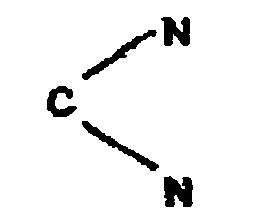
- Procédé selon la revendication 1,
caractérisé en ce que
comme ligand de carbène, on utilise un ou plusieurs composés des formules I ou II,dans lesquelles R2 et R3, indépendamment l'un de l'autre, représentent un groupe alkyle linéaire, ramifié ou cyclique en C1 à C4 ou un groupe aryle en C5 à C18, le groupe alkyle et le groupe aryle, indépendamment l'un de l'autre, peuvent contenir les substituants -CN, -COOH, -COO-alkyle-(C1-C8), -CO-alkyle-(C1-C8), -aryle-(C6-C18), -alkyle-(C1-C24), -COO-aryle-(C6-C10), -CO-aryle-(C6-C10), -O-alkyle-(C1-C8), -O-CO-alkyle-(C1-C8), -N-alkyle2-(C1-C8), -CHO, -SO3H, -NH2, -F, -Cl, -OH, -CF3, -NO2, ferrocényle et dans lesquelles R4 à R7, indépendamment l'un de l'autre, représentent un atome d'hydrogène, -CN, -COOH, -COO-alkyle-(C1-C8), -CO-alkyle-(C1-C8), -COO-aryle-(C6-C10), -CO-aryle-(C6-C10), -O-alkyle-(C1-C8), -O-CO-alkyle-(C1-C8), -N-alkyle2-(C1-C8), -CHO, -SO3H, -NH2, -F, -Cl, -OH, -CF3, -NO2, ou un groupe linéaire, ramifié ou cyclique alkyle en C1 à C24 ou aryle en C6 à C18, et les groupes alkyle et aryle, indépendamment l'un de l'autre, peuvent contenir les substituants -CN, -COOH, -COO-alkyle-(C1-C8), -CO-alkyle-(C1-C8), -aryle-(C6-C10), -alkyle-(C1-C24), -COO-aryle-(C6-C10), -CO-aryle-(C6-C10), -O-alkyle-(C1-C8), -O-CO-alkyle-(C1-C8), -N-alkyle2-(C1-C8), -CHO, -SO3H, -NH2, -F, -Cl, -OH, -CF3, -NO2, et dans lesquelles les radicaux R4 et R5 peuvent aussi être une partie du cycle aliphatique ou aromatique pontant.
- Procédé selon l'une quelconque des revendications 1 à 3,
caractérisé en ce qu'
on utilise, comme nucléophile, des composés de formule III, IV ou Vdans lesquelles R1 et R1', indépendamment l'un de l'autre, sont choisis parmi l'hydrogène, un groupe alkyle linéaire, ramifié ou cyclique en C1 à C22, un groupe alcényle, un groupe alcynyle, un groupe carboxyle ou un groupe aryle en C5 à C18, ces groupes pouvant contenir des substituants choisis dans le groupe -CN, -COOH, -COO-alkyle-(C1-C8), -CO-alkyle-(C1-C8), -aryle-(C5-C10), -COO-aryle-(C6-C10), -CO-aryle-(C6-C10), -O-alkyle-(C1-C8), -O-CO-alkyle-(C1-C8), -N-alkyle2-(C1-C8), -CHO, -SO3H, - NH2, -F, -Cl, -OH, -CF3, -NO2, et dans lesquelles les radicaux R1 et R1' peuvent être associés ensemble par des liaisons covalentes.
- Procédé selon l'une quelconque des revendications 1 à 4,
caractérisé en ce qu'
on utilise comme nucléophile, du méthanol, de l'éthanol, du 2-éthylhexanol, de l'octanol, de l'octénol, de l'octadiénol, de l'isopropanol, du n-propanol, de l'isobutanol, du n-butanol, de l'isononanol, de l'acide formique, de l'acide acétique, de l'acide propionique, de l'acide n-butanoïque, de l'acide iso-butanoïque, de l'acide benzoïque, de l'acide phtalique et/ou de l'eau. - Procédé selon l'une quelconque des revendications 1 à 5,
caractérisé en ce que
la télomérisation n'est réalisée que jusqu'à une conversion de l'oléfine de départ d'au maximum 95 %. - Procédé selon l'une quelconque des revendications 1 à 6,
caractérisé en ce qu'
on utilise un catalyseur hétérogène ou homogène pour hydrogéner le télomère. - Procédé selon l'une quelconque des revendications 1 à 7,
caractérisé en ce que
pour l'hydrogénation, on utilise un catalyseur hétérogène contenant au moins un métal des groupes 6-11 de la Classification périodique des éléments. - Procédé selon l'une quelconque des revendications 1 à 8,
caractérisé en ce que
pour le clivage du télomère hydrogéné, on utilise un catalyseur hétérogène. - Procédé selon l'une quelconque des revendications 1 à 9,
caractérisé en ce que
pour le clivage du télomère hydrogéné, on utilise un catalyseur basique ou fortement basique ou un catalyseur acide ou fortement acide. - Procédé selon l'une quelconque des revendications 1 à 10,
caractérisé en ce que
pour le clivage du télomère hydrogéné, on utilise des catalyseurs contenant des hydroxydes/oxydes de métaux alcalins ou des hydroxydes/oxydes de métaux alcalino-terreux. - Procédé selon l'une quelconque des revendications 1 à 10,
caractérisé en ce que
pour le clivage du télomère hydrogéné, on utilise des catalyseurs contenant des oxydes de métaux alcalins, des oxydes de métaux alcalino-terreux, de l'oxyde de zinc, de l'oxyde d'aluminium, de l'oxyde d'yttrium, de l'oxyde de lanthane, de l'oxyde de cérium, de l'oxyde de thorium, de l'oxyde de titane, de l'oxyde de zirconium, de l'oxyde d'étain, des carbonates, hydmgénocarbonates ou wolframates de métaux alcalins et alcalino-terreux. - Procédé selon l'une quelconque des revendications 1 à 10,
caractérisé en ce que
pour le clivage du télomère hydrogéné, on utilise des catalyseurs contenant des hydrotalcites, des oxydes mixtes de silicium et/ou d'aluminium avec des métaux alcalins ou alcalino-terreux, du zinc, du thorium, du titane, du zirconium, du tungstène, de l'étain ou du molybdène. - Procédé selon l'une quelconque des revendications 1 à 13,
caractérisé en ce que
le clivage du télomère hydrogéné est réalisé en phase gazeuse. - Procédé selon l'une quelconque des revendications 1 à 14,
caractérisé en ce que
le clivage du télomère hydrogéné est réalisé à des températures comprises entre 100 et 800°C. - Procédé selon l'une quelconque des revendications 1 à 15,
caractérisé en ce que
le clivage est réalisé jusqu'à une conversion du télomère hydrogéné de 10 à 95%. - Procédé selon l'une quelconque des revendications 1 à 16,
caractérisé en ce qu'
on utilise du 1,3-butadiène ou de l'isoprène en tant qu'oléfine de départ comportant au moins deux doubles liaisons conjuguées. - Procédé selon la revendication 17,
caractérisé en ce qu'
on utilise l'oléfine de départ en mélange avec d'autres hydrocarbures. - Procédé selon les revendications 1 à 18,
caractérisé en ce qu'
on réalise la télomérisation à des températures de 10 à 180°C et à une pression de 1 à 300 bars. - Procédé selon les revendications 1 à 19,
caractérisé en ce que
le rapport entre les ligands de carbène et le Pd [mole/mole] est de 0,01:1 à 250:1. - Procédé selon les revendications 1 à 20,
caractérisé en ce que
les complexes de palladium-carbène sont utilisés en tant que tels dans la réaction de télomérisation. - Procédé selon les revendications 1 à 20,
caractérisé en ce que
les complexes palladium-carbène sont produits in situ pendant la réaction de télomérisation. - Procédé selon l'une quelconque des revendications 1 à 20,
caractérisé en ce que
les ligands de carbène sont produits in situ pendant la réaction de télomérisation. - Procédé selon les revendications 1 à 13,
caractérisé en ce qu'
on ajoute, à la réaction de télomérisation, un composant basique d'une valeur pKb < 7. - Procédé selon les revendications 1 à 23,
caractérisé en ce que
la concentration en palladium dans le mélange réactionnel de la télomérisation est égal à 0,01 à 1 000 ppm.
Applications Claiming Priority (3)
| Application Number | Priority Date | Filing Date | Title |
|---|---|---|---|
| DE10149348A DE10149348A1 (de) | 2001-10-06 | 2001-10-06 | Verfahren zur Herstellung von 1-Olefin mit Palladiumcarbenverbindungen |
| DE10149348 | 2001-10-06 | ||
| PCT/EP2002/010971 WO2003031379A1 (fr) | 2001-10-06 | 2002-10-01 | Procede pour la production de 1-olefines a l'aide de composes carbene de palladium |
Publications (2)
| Publication Number | Publication Date |
|---|---|
| EP1432666A1 EP1432666A1 (fr) | 2004-06-30 |
| EP1432666B1 true EP1432666B1 (fr) | 2005-08-03 |
Family
ID=7701637
Family Applications (1)
| Application Number | Title | Priority Date | Filing Date |
|---|---|---|---|
| EP02774675A Expired - Lifetime EP1432666B1 (fr) | 2001-10-06 | 2002-10-01 | Procede pour la production de 1-olefines a l'aide de composes carbene de palladium |
Country Status (19)
| Country | Link |
|---|---|
| US (1) | US7371909B2 (fr) |
| EP (1) | EP1432666B1 (fr) |
| JP (1) | JP4068062B2 (fr) |
| KR (1) | KR100858837B1 (fr) |
| CN (1) | CN1260190C (fr) |
| AT (1) | ATE301110T1 (fr) |
| AU (1) | AU2002340959B2 (fr) |
| BR (1) | BR0213104B1 (fr) |
| CA (1) | CA2462832C (fr) |
| DE (2) | DE10149348A1 (fr) |
| ES (1) | ES2244808T3 (fr) |
| HU (1) | HU228319B1 (fr) |
| MX (1) | MXPA04003106A (fr) |
| MY (1) | MY128220A (fr) |
| NO (1) | NO334184B1 (fr) |
| PL (1) | PL204463B1 (fr) |
| RO (1) | RO122775B1 (fr) |
| TW (1) | TWI251586B (fr) |
| WO (1) | WO2003031379A1 (fr) |
Families Citing this family (52)
| Publication number | Priority date | Publication date | Assignee | Title |
|---|---|---|---|---|
| DE10058383A1 (de) | 2000-11-24 | 2002-05-29 | Oxeno Olefinchemie Gmbh | Neue Phosphininverbindungen und deren Metallkomplexe |
| DE10105751B4 (de) * | 2001-02-08 | 2005-09-29 | Oxeno Olefinchemie Gmbh | Verfahren zur Herstellung von 1-Octen |
| DE10128144A1 (de) | 2001-06-09 | 2002-12-12 | Oxeno Olefinchemie Gmbh | Verfahren zur Telomerisation von nicht cyclischen Olefinen |
| CA2455191C (fr) * | 2001-09-26 | 2011-03-15 | Oxeno Olefinchemie Gmbh | Melanges de phthalate d'alkyl avec controle de la viscosite |
| DE10220801A1 (de) * | 2002-05-10 | 2003-11-20 | Oxeno Olefinchemie Gmbh | Verfahren zur Rhodium-katalysierten Hydroformylierung von Olefinen unter Reduzierung der Rhodiumverluste |
| DE10225565A1 (de) | 2002-06-10 | 2003-12-18 | Oxeno Olefinchemie Gmbh | Katalysator und Verfahren zur Hydrierung von aromatischen Verbindungen |
| DE10312829A1 (de) * | 2002-06-29 | 2004-01-22 | Oxeno Olefinchemie Gmbh | Verfahren zur Telomerisation von nicht cyclischen Olefinen |
| AU2003250219A1 (en) | 2002-08-31 | 2004-04-30 | Oxeno Olefinchemie Gmbh | Method for producing aldehydes by means of hydroformylation of olefinically unsaturated compounds, said hydroformylation being catalysed by unmodified metal complexes in the presence of cyclic carbonic acid esters |
| BR0313866A (pt) | 2002-08-31 | 2005-07-05 | Oxeno Olefinchemie Gmbh | Processo para a hidroformilação de compostos olefinicamente insaturados, especialmente olefinas na presença de ésteres de ácido carbÈnico cìclicos |
| DE10257499A1 (de) * | 2002-12-10 | 2004-07-01 | Oxeno Olefinchemie Gmbh | Verfahren zur Herstellung von 1-Olefinen durch katalytische Spaltung von 1-Alkoxyalkanen |
| DE10257938A1 (de) * | 2002-12-12 | 2004-06-24 | Oxeno Olefinchemie Gmbh | Verfahren zur Herstellung von Metallkomplexen der Gruppen 6 bis 10 des Periodensystems und ihr Einsatz als Katalysatoren |
| DE10329042A1 (de) * | 2003-06-27 | 2005-01-13 | Oxeno Olefinchemie Gmbh | Verfahren zur Herstellung von 1-Octen aus Crack-C4 |
| DE10359628A1 (de) * | 2003-12-18 | 2005-07-21 | Oxeno Olefinchemie Gmbh | Katalysator und Verfahren zur Herstellung von 1-Olefinen aus 2-Hydroxyalkanen |
| DE10360771A1 (de) * | 2003-12-23 | 2005-07-28 | Oxeno Olefinchemie Gmbh | Verfahren zur Herstellung von dreiwertigen Organophosphor-Verbindungen |
| DE10360772A1 (de) * | 2003-12-23 | 2005-07-28 | Oxeno Olefinchemie Gmbh | Verfahren zur Herstellung von Organoacylphosphiten |
| DE102004033410A1 (de) * | 2004-02-14 | 2005-09-01 | Oxeno Olefinchemie Gmbh | Verfahren zur Herstellung von Olefinen mit 8 bis 12 Kohlenstoffatomen |
| DE102004013514A1 (de) * | 2004-03-19 | 2005-10-06 | Oxeno Olefinchemie Gmbh | Verfahren zur Hydroformylierung von Olefinen in Anwesenheit von neuen phosphororganischen Verbindungen |
| DE102004021128A1 (de) * | 2004-04-29 | 2005-11-24 | Oxeno Olefinchemie Gmbh | Vorrichtung und Verfahren für die kontinuierliche Umsetzung einer Flüssigkeit mit einem Gas an einem festen Katalysator |
| DE102005036039A1 (de) | 2004-08-28 | 2006-03-02 | Oxeno Olefinchemie Gmbh | Verfahren zur Herstellung von 2,7-Octadienylderivaten |
| DE102005036040A1 (de) * | 2004-08-28 | 2006-03-02 | Oxeno Olefinchemie Gmbh | Verfahren zur Telomerisation von nicht cyclischen Olefinen |
| DE102005036038A1 (de) | 2004-08-28 | 2006-03-02 | Oxeno Olefinchemie Gmbh | Verfahren zur Telomerisation von nicht cyclischen Olefinen |
| ES2360865T3 (es) * | 2004-08-28 | 2011-06-09 | Evonik Oxeno Gmbh | Procedimiento para la telomerización de olefinas no cíclicas. |
| DE102004060520A1 (de) * | 2004-12-16 | 2006-06-22 | Oxeno Olefinchemie Gmbh | Verfahren zur Herstellung von unverzweigten acyclischen Octatrienen |
| DE102004063673A1 (de) | 2004-12-31 | 2006-07-13 | Oxeno Olefinchemie Gmbh | Verfahren zur kontinuierlichen katalytischen Hydrierung von hydrierbaren Verbindungen an festen, im Festbett angeordneten Katalysatoren mit einem wasserstoffhaltigen Gas |
| US7442800B2 (en) * | 2005-05-27 | 2008-10-28 | Promerus Llc | Nucleophilic heterocyclic carbene derivatives of Pd(acac)2 for cross-coupling reactions |
| DE102005035816A1 (de) * | 2005-07-30 | 2007-02-01 | Oxeno Olefinchemie Gmbh | Verfahren zur Hydrierung von Oxo-Aldehyden mit hohen Estergehalten |
| DE102005042464A1 (de) * | 2005-09-07 | 2007-03-08 | Oxeno Olefinchemie Gmbh | Carbonylierungsverfahren unter Zusatz von sterisch gehinderten sekundären Aminen |
| DE102006003618A1 (de) * | 2006-01-26 | 2007-08-02 | Oxeno Olefinchemie Gmbh | Verfahren zur Abtrennung von Metall-Komplexkatalysatoren aus Telomerisationsgemischen |
| DE102007023515A1 (de) * | 2006-07-05 | 2008-01-10 | Evonik Degussa Gmbh | Verfahren zur Herstellung von Dienen durch Hydrodimerisierung |
| CN102643372B (zh) * | 2008-02-12 | 2014-09-10 | 可隆工业株式会社 | 选择性氢化方法 |
| DE102008002347A1 (de) | 2008-06-11 | 2009-12-17 | Evonik Oxeno Gmbh | Katalysator und Verfahren zur Herstellung von gesättigten Ethern durch Hydrierung ungesättigter Ether |
| DE102009026819A1 (de) | 2008-09-08 | 2010-03-11 | Evonik Röhm Gmbh | Monomermischung, Polymer, Beschichtungsmittel und Verfahren zur Herstellung einer Beschichtung |
| DE102008046075A1 (de) | 2008-09-08 | 2010-03-11 | Evonik Röhm Gmbh | (Meth)acrylatmonomer, Polymer sowie Beschichtungsmittel |
| DE102008043344A1 (de) | 2008-10-31 | 2010-05-06 | Evonik Oxeno Gmbh | Verfahren zur Herstellung von 1-Alkoxyocta-2,7-dien |
| DE102009001966A1 (de) | 2009-03-30 | 2010-10-07 | Evonik Röhm Gmbh | Beschichtungszusammensetzung,(Meth)acryl-Polymer und Monomermischung zur Herstellung des(Meth)acryl-Polymers |
| DE102009001970A1 (de) | 2009-03-30 | 2010-10-14 | Evonik Röhm Gmbh | (Meth)acrylat-Polymer, Beschichtungsmittel, Verfahren zur Herstellung einer Beschichtung und beschichteter Gegenstand |
| DE102009001965A1 (de) | 2009-03-30 | 2010-10-07 | Evonik Röhm Gmbh | Beschichtungsmittel, Verfahren zur Herstellung einer Beschichtung und beschichteter Gegenstand |
| DE102009001964A1 (de) | 2009-03-30 | 2010-10-07 | Evonik Röhm Gmbh | Multifunktionales(Meth)acryl-Polymer, Beschichtungszusammensetzung, Verfahren zur Herstellung einer Beschichtung und beschichteter Gegenstand |
| DE102009002888A1 (de) | 2009-05-07 | 2010-11-11 | Evonik Röhm Gmbh | Beschichtungsmittel, Verfahren zur Herstellung einer Beschichtung und beschichteter Gegenstand |
| EP2431375B1 (fr) | 2009-05-14 | 2013-05-01 | Dow Global Technologies LLC | Complexes de palladium-phosphine pour la télomérisation du butadiène |
| JP5702403B2 (ja) * | 2010-01-08 | 2015-04-15 | ブルースター・シリコーンズ・フランス・エスアエス | 溶液状のカルベンの製造方法、特に該方法によって得られる新規な安定な形のカルベン、及び触媒反応におけるその使用 |
| US8779164B2 (en) | 2010-02-17 | 2014-07-15 | Dow Global Technologies Llc | Phosphine-based catalysts useful for the telomerization of butadiene |
| DE102010030970A1 (de) | 2010-07-06 | 2012-01-12 | Evonik Röhm Gmbh | Zusammensetzung zur Herstellung von Polymeren, (Meth)acryl-Polymer, Beschichtungsmittel und Beschichtung |
| DE102010030990A1 (de) | 2010-07-06 | 2012-01-12 | Evonik Oxeno Gmbh | Verfahren zur selektiven Hydrierung von mehrfach ungesättigten Kohlenwasserstoffen in olefinhaltigen Kohlenwasserstoffgemischen |
| DE102010041272A1 (de) | 2010-09-23 | 2012-03-29 | Evonik Röhm Gmbh | Beschichtungsmittel mit (Meth)acryl-Polymeren und Koaleszenzhilfsmitteln |
| DE102011006721A1 (de) | 2011-04-04 | 2012-10-04 | Evonik Oxeno Gmbh | Verfahren zur Herstellung von 1-Buten und einem 1,3-Butadienderivat |
| JP2013212995A (ja) * | 2012-03-30 | 2013-10-17 | Idemitsu Kosan Co Ltd | オレフィン重合体の製造方法 |
| CN103418438B (zh) | 2013-08-22 | 2015-08-19 | 上海化工研究院 | 一种氮杂卡宾类钯催化剂及其制备方法和应用 |
| CN105085563B (zh) * | 2015-09-09 | 2018-09-21 | 中国科学院上海有机化学研究所 | 一种支链烯丙基化合物、制备方法及应用 |
| CN106012047B (zh) * | 2016-05-24 | 2018-06-26 | 浙江大学 | 利用静电纺丝法制备形貌可控的聚乙烯醇复合纤维的方法 |
| TWI718818B (zh) * | 2019-12-19 | 2021-02-11 | 財團法人工業技術研究院 | 氫化不飽和多元酸的觸媒與方法 |
| CN113801161A (zh) * | 2020-06-15 | 2021-12-17 | 华东师范大学 | 咪唑类配体衍生物及其制备和在丁二烯调聚反应中的应用 |
Citations (2)
| Publication number | Priority date | Publication date | Assignee | Title |
|---|---|---|---|---|
| US5685128A (en) * | 1991-10-15 | 1997-11-11 | The Dow Chemical Company | Method of packaging food products |
| US6063878A (en) * | 1996-09-13 | 2000-05-16 | Fina Research, S.A. | Process for the preparation of polyethylene which has a broad molecular weight distribution |
Family Cites Families (37)
| Publication number | Priority date | Publication date | Assignee | Title |
|---|---|---|---|---|
| DE3270823D1 (en) * | 1981-01-13 | 1986-06-05 | Mitsui Petrochemical Ind | Novel ethylene/alpha-olefin copolymer |
| US5030792A (en) | 1987-06-22 | 1991-07-09 | Shell Oil Company | Process for preparing 1-octene |
| DE69020586T2 (de) * | 1990-12-13 | 1996-04-11 | The Dow Chemical Co. (N.D.Ges.D. Staates Delaware), Midland, Mich. | Verfahren zur herstellung von 1-okten. |
| DE19654340A1 (de) | 1996-12-24 | 1998-08-06 | Huels Chemische Werke Ag | Verfahren zur Herstellung von höheren Oxo-Alkoholen |
| DE19842368A1 (de) | 1998-09-16 | 2000-03-23 | Oxeno Olefinchemie Gmbh | Verfahren zur Herstellung von höheren Oxoalkoholen aus Olefingemischen durch zweistufige Hydroformylierung |
| DE19842371A1 (de) | 1998-09-16 | 2000-03-23 | Oxeno Oelfinchemie Gmbh | Verfahren zur Herstellung von höheren Oxo-Alkoholen aus Olefingemischen |
| DE19842370A1 (de) | 1998-09-16 | 2000-03-23 | Oxeno Oelfinchemie Gmbh | Verfahren zur selektiven Hydrierung von Hydroformylierungsgemischen |
| DE19842369A1 (de) | 1998-09-16 | 2000-03-23 | Oxeno Oelfinchemie Gmbh | Verfahren zur Hydrierung von Hydroformylierungsgemischen |
| DE19925384A1 (de) | 1999-06-02 | 2000-12-07 | Oxeno Olefinchemie Gmbh | Verfahren zur katalytischen Durchführung von Mehrphasenreaktionen, insbesondere Hydroformylierungen |
| DE19956410A1 (de) | 1999-11-24 | 2001-05-31 | Oxeno Olefinchemie Gmbh | Verfahren zur Durchführung von Aldolkondensationen |
| DE19957528A1 (de) | 1999-11-30 | 2001-05-31 | Oxeno Olefinchemie Gmbh | Verfahren zur Hydroformylierung von Olefinen |
| DE10009207A1 (de) | 2000-02-26 | 2001-08-30 | Oxeno Olefinchemie Gmbh | Verbessertes Verfahren zur Hydroformylierung von Olefinen durch Reduzierung der Ameisensäurekonzentration |
| DE10034360A1 (de) | 2000-07-14 | 2002-01-24 | Oxeno Olefinchemie Gmbh | Mehrstufiges Verfahren zur Herstellung von Oxo-Aldehyden und/oder Alkoholen |
| DE10048301A1 (de) | 2000-09-29 | 2002-04-11 | Oxeno Olefinchemie Gmbh | Stabilisierung von Rhodiumkatalysatoren für die Hydroformylierung von Olefinen |
| DE10053272A1 (de) | 2000-10-27 | 2002-05-08 | Oxeno Olefinchemie Gmbh | Neue Bisphosphitverbindungen und deren Metallkomplexe |
| DE10058383A1 (de) | 2000-11-24 | 2002-05-29 | Oxeno Olefinchemie Gmbh | Neue Phosphininverbindungen und deren Metallkomplexe |
| DE10062448A1 (de) | 2000-12-14 | 2002-06-20 | Oxeno Olefinchemie Gmbh | Verfahren zur Hydrierung von Hydroformylierungsgemischen |
| DE10100708A1 (de) | 2001-01-10 | 2002-07-11 | Oxeno Olefinchemie Gmbh | Neue N-Phenylpyrrolbisphosphanverbindungen und deren Metallkomplexe |
| DE10105751B4 (de) | 2001-02-08 | 2005-09-29 | Oxeno Olefinchemie Gmbh | Verfahren zur Herstellung von 1-Octen |
| EP1231194B1 (fr) | 2001-02-10 | 2003-11-12 | Oxeno Olefinchemie GmbH | Préparation des 1-oléfines |
| DE10106186A1 (de) | 2001-02-10 | 2002-08-14 | Oxeno Olefinchemie Gmbh | Verfahren zur Kondensation von Aldehyden mit Ketonen mittels Mehrphasenreaktion |
| DE10114868C1 (de) | 2001-03-26 | 2002-10-31 | Oxeno Olefinchemie Gmbh | Verfahren zur Herstellung von Diphosphinen und deren Verwendung |
| DE10128144A1 (de) | 2001-06-09 | 2002-12-12 | Oxeno Olefinchemie Gmbh | Verfahren zur Telomerisation von nicht cyclischen Olefinen |
| DE10135906A1 (de) | 2001-07-24 | 2003-02-06 | Oxeno Olefinchemie Gmbh | Verfahren zur Hydroformylierung von höheren Olefinen mit Kobaltverbindungen als Katalysator |
| DE10140086A1 (de) | 2001-08-16 | 2003-02-27 | Oxeno Olefinchemie Gmbh | Neue Phosphitverbindungen und neue Phosphitmetallkomplexe |
| DE10140083A1 (de) | 2001-08-16 | 2003-02-27 | Oxeno Olefinchemie Gmbh | Neue Phosphitverbindungen und deren Metallkomplexe |
| CA2455191C (fr) | 2001-09-26 | 2011-03-15 | Oxeno Olefinchemie Gmbh | Melanges de phthalate d'alkyl avec controle de la viscosite |
| US6960699B2 (en) | 2002-03-15 | 2005-11-01 | Oxeno Olefinchemie Gmbh | Method for the hydroformylation of olefins |
| DE10220801A1 (de) | 2002-05-10 | 2003-11-20 | Oxeno Olefinchemie Gmbh | Verfahren zur Rhodium-katalysierten Hydroformylierung von Olefinen unter Reduzierung der Rhodiumverluste |
| DE10220799A1 (de) | 2002-05-10 | 2003-12-11 | Oxeno Olefinchemie Gmbh | Verfahren zur Herstellung von C13-Alkoholgemischen |
| DE10225565A1 (de) | 2002-06-10 | 2003-12-18 | Oxeno Olefinchemie Gmbh | Katalysator und Verfahren zur Hydrierung von aromatischen Verbindungen |
| BR0313866A (pt) | 2002-08-31 | 2005-07-05 | Oxeno Olefinchemie Gmbh | Processo para a hidroformilação de compostos olefinicamente insaturados, especialmente olefinas na presença de ésteres de ácido carbÈnico cìclicos |
| AU2003250219A1 (en) | 2002-08-31 | 2004-04-30 | Oxeno Olefinchemie Gmbh | Method for producing aldehydes by means of hydroformylation of olefinically unsaturated compounds, said hydroformylation being catalysed by unmodified metal complexes in the presence of cyclic carbonic acid esters |
| DE102004021128A1 (de) | 2004-04-29 | 2005-11-24 | Oxeno Olefinchemie Gmbh | Vorrichtung und Verfahren für die kontinuierliche Umsetzung einer Flüssigkeit mit einem Gas an einem festen Katalysator |
| DE102004059293A1 (de) | 2004-12-09 | 2006-06-14 | Oxeno Olefinchemie Gmbh | Verfahren zur Hydroformylierung von Olefinen |
| DE102004059292A1 (de) | 2004-12-09 | 2006-06-14 | Oxeno Olefinchemie Gmbh | Verfahren zur Herstellung von Alkoholen aus Olefinen durch Hydroformylierung und Hydrierung |
| DE102004063673A1 (de) | 2004-12-31 | 2006-07-13 | Oxeno Olefinchemie Gmbh | Verfahren zur kontinuierlichen katalytischen Hydrierung von hydrierbaren Verbindungen an festen, im Festbett angeordneten Katalysatoren mit einem wasserstoffhaltigen Gas |
-
2001
- 2001-10-06 DE DE10149348A patent/DE10149348A1/de not_active Withdrawn
-
2002
- 2002-10-01 AU AU2002340959A patent/AU2002340959B2/en not_active Ceased
- 2002-10-01 EP EP02774675A patent/EP1432666B1/fr not_active Expired - Lifetime
- 2002-10-01 PL PL367695A patent/PL204463B1/pl unknown
- 2002-10-01 BR BRPI0213104-8A patent/BR0213104B1/pt not_active IP Right Cessation
- 2002-10-01 WO PCT/EP2002/010971 patent/WO2003031379A1/fr not_active Ceased
- 2002-10-01 RO ROA200400305A patent/RO122775B1/ro unknown
- 2002-10-01 CA CA002462832A patent/CA2462832C/fr not_active Expired - Fee Related
- 2002-10-01 US US10/490,038 patent/US7371909B2/en not_active Expired - Fee Related
- 2002-10-01 CN CNB028197860A patent/CN1260190C/zh not_active Expired - Fee Related
- 2002-10-01 ES ES02774675T patent/ES2244808T3/es not_active Expired - Lifetime
- 2002-10-01 DE DE50203844T patent/DE50203844D1/de not_active Expired - Lifetime
- 2002-10-01 HU HU0401669A patent/HU228319B1/hu not_active IP Right Cessation
- 2002-10-01 JP JP2003534367A patent/JP4068062B2/ja not_active Expired - Fee Related
- 2002-10-01 MX MXPA04003106A patent/MXPA04003106A/es active IP Right Grant
- 2002-10-01 AT AT02774675T patent/ATE301110T1/de not_active IP Right Cessation
- 2002-10-01 KR KR1020047005047A patent/KR100858837B1/ko not_active Expired - Fee Related
- 2002-10-03 MY MYPI20023690A patent/MY128220A/en unknown
- 2002-10-03 TW TW091122819A patent/TWI251586B/zh not_active IP Right Cessation
-
2004
- 2004-05-06 NO NO20041866A patent/NO334184B1/no not_active IP Right Cessation
Patent Citations (2)
| Publication number | Priority date | Publication date | Assignee | Title |
|---|---|---|---|---|
| US5685128A (en) * | 1991-10-15 | 1997-11-11 | The Dow Chemical Company | Method of packaging food products |
| US6063878A (en) * | 1996-09-13 | 2000-05-16 | Fina Research, S.A. | Process for the preparation of polyethylene which has a broad molecular weight distribution |
Also Published As
| Publication number | Publication date |
|---|---|
| PL204463B1 (pl) | 2010-01-29 |
| HU228319B1 (hu) | 2013-03-28 |
| NO20041866L (no) | 2004-05-06 |
| PL367695A1 (en) | 2005-03-07 |
| BR0213104B1 (pt) | 2013-03-19 |
| CN1260190C (zh) | 2006-06-21 |
| CA2462832A1 (fr) | 2003-04-17 |
| DE50203844D1 (de) | 2005-09-08 |
| NO334184B1 (no) | 2014-01-13 |
| MXPA04003106A (es) | 2004-07-27 |
| HUP0401669A2 (hu) | 2004-11-29 |
| ES2244808T3 (es) | 2005-12-16 |
| KR100858837B1 (ko) | 2008-09-17 |
| BR0213104A (pt) | 2004-09-21 |
| CA2462832C (fr) | 2009-12-22 |
| US7371909B2 (en) | 2008-05-13 |
| HUP0401669A3 (en) | 2008-05-28 |
| WO2003031379A1 (fr) | 2003-04-17 |
| JP2005504838A (ja) | 2005-02-17 |
| EP1432666A1 (fr) | 2004-06-30 |
| US20040242947A1 (en) | 2004-12-02 |
| RO122775B1 (ro) | 2010-01-29 |
| CN1564795A (zh) | 2005-01-12 |
| DE10149348A1 (de) | 2003-04-10 |
| MY128220A (en) | 2007-01-31 |
| TWI251586B (en) | 2006-03-21 |
| ATE301110T1 (de) | 2005-08-15 |
| AU2002340959B2 (en) | 2007-08-02 |
| KR20050032503A (ko) | 2005-04-07 |
| JP4068062B2 (ja) | 2008-03-26 |
Similar Documents
| Publication | Publication Date | Title |
|---|---|---|
| EP1432666B1 (fr) | Procede pour la production de 1-olefines a l'aide de composes carbene de palladium | |
| DE10105751B4 (de) | Verfahren zur Herstellung von 1-Octen | |
| EP1569881B1 (fr) | Procede de production de 1-olefines par separation catalytique de 1-alcoxyalcanes | |
| DE10128144A1 (de) | Verfahren zur Telomerisation von nicht cyclischen Olefinen | |
| HUP0401668A2 (hu) | Javított hegeszthetőségű, optikai tulajdonságú és csökkentett oldhatóságú kristályos propilén kopolimer készítmények | |
| DE10149347A1 (de) | Verfahren zur Herstellung von 1-Octen durch reduktive Telomerisation | |
| DE69020586T2 (de) | Verfahren zur herstellung von 1-okten. | |
| EP1781586B1 (fr) | Procede de telomerisation d'olefines non cycliques | |
| EP1781588A1 (fr) | Procede pour produire des derives de 2,7- octadienyle | |
| EP1781587B1 (fr) | Procede de telomerisation d'ol fines non cycliques | |
| EP1824802B1 (fr) | Procede de production d'octatrienes acycliques non ramifies |
Legal Events
| Date | Code | Title | Description |
|---|---|---|---|
| PUAI | Public reference made under article 153(3) epc to a published international application that has entered the european phase |
Free format text: ORIGINAL CODE: 0009012 |
|
| 17P | Request for examination filed |
Effective date: 20040219 |
|
| AK | Designated contracting states |
Kind code of ref document: A1 Designated state(s): AT BE BG CH CY CZ DE DK EE ES FI FR GB GR IE IT LI LU MC NL PT SE SK TR |
|
| AX | Request for extension of the european patent |
Extension state: AL LT LV MK RO SI |
|
| RIN1 | Information on inventor provided before grant (corrected) |
Inventor name: KAIZIK, ALFRED Inventor name: MASCHMEYER, DIETRICH Inventor name: JACKSTELL, RALF Inventor name: KLEIN, HOLGER Inventor name: BELLER, MATTHIAS Inventor name: ROETTGER, DIRK Inventor name: WIESE, KLAUS-DIETHER Inventor name: TUCHLENSKI, AXEL Inventor name: SANTIAGO FERNANDEZ, SILVIA |
|
| 17Q | First examination report despatched |
Effective date: 20041208 |
|
| GRAP | Despatch of communication of intention to grant a patent |
Free format text: ORIGINAL CODE: EPIDOSNIGR1 |
|
| GRAS | Grant fee paid |
Free format text: ORIGINAL CODE: EPIDOSNIGR3 |
|
| GRAA | (expected) grant |
Free format text: ORIGINAL CODE: 0009210 |
|
| AK | Designated contracting states |
Kind code of ref document: B1 Designated state(s): AT BE BG CH CY CZ DE DK EE ES FI FR GB GR IE IT LI LU MC NL PT SE SK TR |
|
| PG25 | Lapsed in a contracting state [announced via postgrant information from national office to epo] |
Ref country code: SK Free format text: LAPSE BECAUSE OF FAILURE TO SUBMIT A TRANSLATION OF THE DESCRIPTION OR TO PAY THE FEE WITHIN THE PRESCRIBED TIME-LIMIT Effective date: 20050803 Ref country code: TR Free format text: LAPSE BECAUSE OF FAILURE TO SUBMIT A TRANSLATION OF THE DESCRIPTION OR TO PAY THE FEE WITHIN THE PRESCRIBED TIME-LIMIT Effective date: 20050803 Ref country code: IE Free format text: LAPSE BECAUSE OF FAILURE TO SUBMIT A TRANSLATION OF THE DESCRIPTION OR TO PAY THE FEE WITHIN THE PRESCRIBED TIME-LIMIT Effective date: 20050803 Ref country code: FI Free format text: LAPSE BECAUSE OF FAILURE TO SUBMIT A TRANSLATION OF THE DESCRIPTION OR TO PAY THE FEE WITHIN THE PRESCRIBED TIME-LIMIT Effective date: 20050803 Ref country code: CZ Free format text: LAPSE BECAUSE OF FAILURE TO SUBMIT A TRANSLATION OF THE DESCRIPTION OR TO PAY THE FEE WITHIN THE PRESCRIBED TIME-LIMIT Effective date: 20050803 Ref country code: EE Free format text: LAPSE BECAUSE OF FAILURE TO SUBMIT A TRANSLATION OF THE DESCRIPTION OR TO PAY THE FEE WITHIN THE PRESCRIBED TIME-LIMIT Effective date: 20050803 |
|
| REG | Reference to a national code |
Ref country code: GB Ref legal event code: FG4D Free format text: NOT ENGLISH |
|
| REG | Reference to a national code |
Ref country code: CH Ref legal event code: EP |
|
| REG | Reference to a national code |
Ref country code: SE Ref legal event code: TRGR |
|
| REG | Reference to a national code |
Ref country code: IE Ref legal event code: FG4D Free format text: LANGUAGE OF EP DOCUMENT: GERMAN |
|
| REF | Corresponds to: |
Ref document number: 50203844 Country of ref document: DE Date of ref document: 20050908 Kind code of ref document: P |
|
| PG25 | Lapsed in a contracting state [announced via postgrant information from national office to epo] |
Ref country code: AT Free format text: LAPSE BECAUSE OF NON-PAYMENT OF DUE FEES Effective date: 20051001 Ref country code: CY Free format text: LAPSE BECAUSE OF FAILURE TO SUBMIT A TRANSLATION OF THE DESCRIPTION OR TO PAY THE FEE WITHIN THE PRESCRIBED TIME-LIMIT Effective date: 20051001 |
|
| GBT | Gb: translation of ep patent filed (gb section 77(6)(a)/1977) |
Effective date: 20050908 |
|
| PG25 | Lapsed in a contracting state [announced via postgrant information from national office to epo] |
Ref country code: LU Free format text: LAPSE BECAUSE OF NON-PAYMENT OF DUE FEES Effective date: 20051031 Ref country code: MC Free format text: LAPSE BECAUSE OF NON-PAYMENT OF DUE FEES Effective date: 20051031 |
|
| PG25 | Lapsed in a contracting state [announced via postgrant information from national office to epo] |
Ref country code: BG Free format text: LAPSE BECAUSE OF FAILURE TO SUBMIT A TRANSLATION OF THE DESCRIPTION OR TO PAY THE FEE WITHIN THE PRESCRIBED TIME-LIMIT Effective date: 20051103 Ref country code: GR Free format text: LAPSE BECAUSE OF FAILURE TO SUBMIT A TRANSLATION OF THE DESCRIPTION OR TO PAY THE FEE WITHIN THE PRESCRIBED TIME-LIMIT Effective date: 20051103 Ref country code: DK Free format text: LAPSE BECAUSE OF FAILURE TO SUBMIT A TRANSLATION OF THE DESCRIPTION OR TO PAY THE FEE WITHIN THE PRESCRIBED TIME-LIMIT Effective date: 20051103 |
|
| REG | Reference to a national code |
Ref country code: ES Ref legal event code: FG2A Ref document number: 2244808 Country of ref document: ES Kind code of ref document: T3 |
|
| PG25 | Lapsed in a contracting state [announced via postgrant information from national office to epo] |
Ref country code: PT Free format text: LAPSE BECAUSE OF FAILURE TO SUBMIT A TRANSLATION OF THE DESCRIPTION OR TO PAY THE FEE WITHIN THE PRESCRIBED TIME-LIMIT Effective date: 20060103 |
|
| REG | Reference to a national code |
Ref country code: IE Ref legal event code: FD4D |
|
| ET | Fr: translation filed | ||
| PLBE | No opposition filed within time limit |
Free format text: ORIGINAL CODE: 0009261 |
|
| STAA | Information on the status of an ep patent application or granted ep patent |
Free format text: STATUS: NO OPPOSITION FILED WITHIN TIME LIMIT |
|
| 26N | No opposition filed |
Effective date: 20060504 |
|
| PG25 | Lapsed in a contracting state [announced via postgrant information from national office to epo] |
Ref country code: LI Free format text: LAPSE BECAUSE OF NON-PAYMENT OF DUE FEES Effective date: 20061031 Ref country code: CH Free format text: LAPSE BECAUSE OF NON-PAYMENT OF DUE FEES Effective date: 20061031 |
|
| REG | Reference to a national code |
Ref country code: CH Ref legal event code: PL |
|
| NLT1 | Nl: modifications of names registered in virtue of documents presented to the patent office pursuant to art. 16 a, paragraph 1 |
Owner name: EVONIK OXENO GMBH |
|
| REG | Reference to a national code |
Ref country code: FR Ref legal event code: CD |
|
| REG | Reference to a national code |
Ref country code: DE Ref legal event code: R081 Ref document number: 50203844 Country of ref document: DE Owner name: EVONIK DEGUSSA GMBH, DE Free format text: FORMER OWNER: EVONIK OXENO GMBH, 45772 MARL, DE Effective date: 20130905 |
|
| REG | Reference to a national code |
Ref country code: GB Ref legal event code: 732E Free format text: REGISTERED BETWEEN 20140327 AND 20140402 |
|
| REG | Reference to a national code |
Ref country code: ES Ref legal event code: PC2A Owner name: EVONIK DEGUSSA GMBH Effective date: 20140424 |
|
| REG | Reference to a national code |
Ref country code: NL Ref legal event code: SD Effective date: 20140502 |
|
| REG | Reference to a national code |
Ref country code: FR Ref legal event code: TP Owner name: EVONIK DEGUSSA GMBH, DE Effective date: 20140411 |
|
| REG | Reference to a national code |
Ref country code: ES Ref legal event code: PC2A Owner name: EVONIK DEGUSSA GMBH. Effective date: 20141008 |
|
| PGFP | Annual fee paid to national office [announced via postgrant information from national office to epo] |
Ref country code: ES Payment date: 20141028 Year of fee payment: 13 Ref country code: DE Payment date: 20141022 Year of fee payment: 13 Ref country code: SE Payment date: 20141021 Year of fee payment: 13 Ref country code: GB Payment date: 20141021 Year of fee payment: 13 Ref country code: FR Payment date: 20141022 Year of fee payment: 13 |
|
| PGFP | Annual fee paid to national office [announced via postgrant information from national office to epo] |
Ref country code: NL Payment date: 20141021 Year of fee payment: 13 |
|
| PGFP | Annual fee paid to national office [announced via postgrant information from national office to epo] |
Ref country code: IT Payment date: 20141024 Year of fee payment: 13 |
|
| PGFP | Annual fee paid to national office [announced via postgrant information from national office to epo] |
Ref country code: BE Payment date: 20141021 Year of fee payment: 13 |
|
| REG | Reference to a national code |
Ref country code: DE Ref legal event code: R119 Ref document number: 50203844 Country of ref document: DE |
|
| REG | Reference to a national code |
Ref country code: SE Ref legal event code: EUG |
|
| GBPC | Gb: european patent ceased through non-payment of renewal fee |
Effective date: 20151001 |
|
| REG | Reference to a national code |
Ref country code: NL Ref legal event code: MM Effective date: 20151101 |
|
| PG25 | Lapsed in a contracting state [announced via postgrant information from national office to epo] |
Ref country code: DE Free format text: LAPSE BECAUSE OF NON-PAYMENT OF DUE FEES Effective date: 20160503 Ref country code: IT Free format text: LAPSE BECAUSE OF NON-PAYMENT OF DUE FEES Effective date: 20151001 Ref country code: GB Free format text: LAPSE BECAUSE OF NON-PAYMENT OF DUE FEES Effective date: 20151001 |
|
| REG | Reference to a national code |
Ref country code: FR Ref legal event code: ST Effective date: 20160630 |
|
| PG25 | Lapsed in a contracting state [announced via postgrant information from national office to epo] |
Ref country code: FR Free format text: LAPSE BECAUSE OF NON-PAYMENT OF DUE FEES Effective date: 20151102 Ref country code: SE Free format text: LAPSE BECAUSE OF NON-PAYMENT OF DUE FEES Effective date: 20151002 Ref country code: NL Free format text: LAPSE BECAUSE OF NON-PAYMENT OF DUE FEES Effective date: 20151101 |
|
| REG | Reference to a national code |
Ref country code: ES Ref legal event code: FD2A Effective date: 20161125 |
|
| PG25 | Lapsed in a contracting state [announced via postgrant information from national office to epo] |
Ref country code: ES Free format text: LAPSE BECAUSE OF NON-PAYMENT OF DUE FEES Effective date: 20151002 |
|
| PG25 | Lapsed in a contracting state [announced via postgrant information from national office to epo] |
Ref country code: BE Free format text: LAPSE BECAUSE OF NON-PAYMENT OF DUE FEES Effective date: 20151031 |