EP1437400A2 - Chromosomes artificiels comprenant des séquences d'acides nucléiques capables de diriger la formation de virus a arn recombinant - Google Patents
Chromosomes artificiels comprenant des séquences d'acides nucléiques capables de diriger la formation de virus a arn recombinant Download PDFInfo
- Publication number
- EP1437400A2 EP1437400A2 EP04007406A EP04007406A EP1437400A2 EP 1437400 A2 EP1437400 A2 EP 1437400A2 EP 04007406 A EP04007406 A EP 04007406A EP 04007406 A EP04007406 A EP 04007406A EP 1437400 A2 EP1437400 A2 EP 1437400A2
- Authority
- EP
- European Patent Office
- Prior art keywords
- dna
- coronavirus
- virus
- rna
- gene
- Prior art date
- Legal status (The legal status is an assumption and is not a legal conclusion. Google has not performed a legal analysis and makes no representation as to the accuracy of the status listed.)
- Withdrawn
Links
Images






Classifications
-
- C—CHEMISTRY; METALLURGY
- C12—BIOCHEMISTRY; BEER; SPIRITS; WINE; VINEGAR; MICROBIOLOGY; ENZYMOLOGY; MUTATION OR GENETIC ENGINEERING
- C12N—MICROORGANISMS OR ENZYMES; COMPOSITIONS THEREOF; PROPAGATING, PRESERVING, OR MAINTAINING MICROORGANISMS; MUTATION OR GENETIC ENGINEERING; CULTURE MEDIA
- C12N7/00—Viruses; Bacteriophages; Compositions thereof; Preparation or purification thereof
-
- C—CHEMISTRY; METALLURGY
- C12—BIOCHEMISTRY; BEER; SPIRITS; WINE; VINEGAR; MICROBIOLOGY; ENZYMOLOGY; MUTATION OR GENETIC ENGINEERING
- C12N—MICROORGANISMS OR ENZYMES; COMPOSITIONS THEREOF; PROPAGATING, PRESERVING, OR MAINTAINING MICROORGANISMS; MUTATION OR GENETIC ENGINEERING; CULTURE MEDIA
- C12N15/00—Mutation or genetic engineering; DNA or RNA concerning genetic engineering, vectors, e.g. plasmids, or their isolation, preparation or purification; Use of hosts therefor
- C12N15/09—Recombinant DNA-technology
- C12N15/11—DNA or RNA fragments; Modified forms thereof; Non-coding nucleic acids having a biological activity
-
- A—HUMAN NECESSITIES
- A61—MEDICAL OR VETERINARY SCIENCE; HYGIENE
- A61K—PREPARATIONS FOR MEDICAL, DENTAL OR TOILETRY PURPOSES
- A61K39/00—Medicinal preparations containing antigens or antibodies
- A61K39/12—Viral antigens
-
- A—HUMAN NECESSITIES
- A61—MEDICAL OR VETERINARY SCIENCE; HYGIENE
- A61K—PREPARATIONS FOR MEDICAL, DENTAL OR TOILETRY PURPOSES
- A61K39/00—Medicinal preparations containing antigens or antibodies
- A61K39/12—Viral antigens
- A61K39/215—Coronaviridae, e.g. avian infectious bronchitis virus
- A61K39/225—Porcine transmissible gastroenteritis virus
-
- A—HUMAN NECESSITIES
- A61—MEDICAL OR VETERINARY SCIENCE; HYGIENE
- A61P—SPECIFIC THERAPEUTIC ACTIVITY OF CHEMICAL COMPOUNDS OR MEDICINAL PREPARATIONS
- A61P1/00—Drugs for disorders of the alimentary tract or the digestive system
-
- A—HUMAN NECESSITIES
- A61—MEDICAL OR VETERINARY SCIENCE; HYGIENE
- A61P—SPECIFIC THERAPEUTIC ACTIVITY OF CHEMICAL COMPOUNDS OR MEDICINAL PREPARATIONS
- A61P11/00—Drugs for disorders of the respiratory system
-
- A—HUMAN NECESSITIES
- A61—MEDICAL OR VETERINARY SCIENCE; HYGIENE
- A61P—SPECIFIC THERAPEUTIC ACTIVITY OF CHEMICAL COMPOUNDS OR MEDICINAL PREPARATIONS
- A61P29/00—Non-central analgesic, antipyretic or antiinflammatory agents, e.g. antirheumatic agents; Non-steroidal antiinflammatory drugs [NSAID]
-
- A—HUMAN NECESSITIES
- A61—MEDICAL OR VETERINARY SCIENCE; HYGIENE
- A61P—SPECIFIC THERAPEUTIC ACTIVITY OF CHEMICAL COMPOUNDS OR MEDICINAL PREPARATIONS
- A61P31/00—Antiinfectives, i.e. antibiotics, antiseptics, chemotherapeutics
-
- A—HUMAN NECESSITIES
- A61—MEDICAL OR VETERINARY SCIENCE; HYGIENE
- A61P—SPECIFIC THERAPEUTIC ACTIVITY OF CHEMICAL COMPOUNDS OR MEDICINAL PREPARATIONS
- A61P31/00—Antiinfectives, i.e. antibiotics, antiseptics, chemotherapeutics
- A61P31/12—Antivirals
-
- A—HUMAN NECESSITIES
- A61—MEDICAL OR VETERINARY SCIENCE; HYGIENE
- A61P—SPECIFIC THERAPEUTIC ACTIVITY OF CHEMICAL COMPOUNDS OR MEDICINAL PREPARATIONS
- A61P37/00—Drugs for immunological or allergic disorders
- A61P37/02—Immunomodulators
- A61P37/04—Immunostimulants
-
- A—HUMAN NECESSITIES
- A61—MEDICAL OR VETERINARY SCIENCE; HYGIENE
- A61P—SPECIFIC THERAPEUTIC ACTIVITY OF CHEMICAL COMPOUNDS OR MEDICINAL PREPARATIONS
- A61P43/00—Drugs for specific purposes, not provided for in groups A61P1/00-A61P41/00
-
- C—CHEMISTRY; METALLURGY
- C07—ORGANIC CHEMISTRY
- C07K—PEPTIDES
- C07K14/00—Peptides having more than 20 amino acids; Gastrins; Somatostatins; Melanotropins; Derivatives thereof
- C07K14/005—Peptides having more than 20 amino acids; Gastrins; Somatostatins; Melanotropins; Derivatives thereof from viruses
-
- C—CHEMISTRY; METALLURGY
- C12—BIOCHEMISTRY; BEER; SPIRITS; WINE; VINEGAR; MICROBIOLOGY; ENZYMOLOGY; MUTATION OR GENETIC ENGINEERING
- C12N—MICROORGANISMS OR ENZYMES; COMPOSITIONS THEREOF; PROPAGATING, PRESERVING, OR MAINTAINING MICROORGANISMS; MUTATION OR GENETIC ENGINEERING; CULTURE MEDIA
- C12N15/00—Mutation or genetic engineering; DNA or RNA concerning genetic engineering, vectors, e.g. plasmids, or their isolation, preparation or purification; Use of hosts therefor
- C12N15/09—Recombinant DNA-technology
- C12N15/63—Introduction of foreign genetic material using vectors; Vectors; Use of hosts therefor; Regulation of expression
- C12N15/70—Vectors or expression systems specially adapted for E. coli
-
- C—CHEMISTRY; METALLURGY
- C12—BIOCHEMISTRY; BEER; SPIRITS; WINE; VINEGAR; MICROBIOLOGY; ENZYMOLOGY; MUTATION OR GENETIC ENGINEERING
- C12N—MICROORGANISMS OR ENZYMES; COMPOSITIONS THEREOF; PROPAGATING, PRESERVING, OR MAINTAINING MICROORGANISMS; MUTATION OR GENETIC ENGINEERING; CULTURE MEDIA
- C12N15/00—Mutation or genetic engineering; DNA or RNA concerning genetic engineering, vectors, e.g. plasmids, or their isolation, preparation or purification; Use of hosts therefor
- C12N15/09—Recombinant DNA-technology
- C12N15/63—Introduction of foreign genetic material using vectors; Vectors; Use of hosts therefor; Regulation of expression
- C12N15/79—Vectors or expression systems specially adapted for eukaryotic hosts
- C12N15/85—Vectors or expression systems specially adapted for eukaryotic hosts for animal cells
- C12N15/86—Viral vectors
-
- A—HUMAN NECESSITIES
- A61—MEDICAL OR VETERINARY SCIENCE; HYGIENE
- A61K—PREPARATIONS FOR MEDICAL, DENTAL OR TOILETRY PURPOSES
- A61K39/00—Medicinal preparations containing antigens or antibodies
- A61K2039/51—Medicinal preparations containing antigens or antibodies comprising whole cells, viruses or DNA/RNA
- A61K2039/525—Virus
-
- A—HUMAN NECESSITIES
- A61—MEDICAL OR VETERINARY SCIENCE; HYGIENE
- A61K—PREPARATIONS FOR MEDICAL, DENTAL OR TOILETRY PURPOSES
- A61K39/00—Medicinal preparations containing antigens or antibodies
- A61K2039/51—Medicinal preparations containing antigens or antibodies comprising whole cells, viruses or DNA/RNA
- A61K2039/525—Virus
- A61K2039/5256—Virus expressing foreign proteins
-
- A—HUMAN NECESSITIES
- A61—MEDICAL OR VETERINARY SCIENCE; HYGIENE
- A61K—PREPARATIONS FOR MEDICAL, DENTAL OR TOILETRY PURPOSES
- A61K39/00—Medicinal preparations containing antigens or antibodies
- A61K2039/51—Medicinal preparations containing antigens or antibodies comprising whole cells, viruses or DNA/RNA
- A61K2039/53—DNA (RNA) vaccination
-
- A—HUMAN NECESSITIES
- A61—MEDICAL OR VETERINARY SCIENCE; HYGIENE
- A61K—PREPARATIONS FOR MEDICAL, DENTAL OR TOILETRY PURPOSES
- A61K39/00—Medicinal preparations containing antigens or antibodies
- A61K2039/54—Medicinal preparations containing antigens or antibodies characterised by the route of administration
- A61K2039/541—Mucosal route
-
- C—CHEMISTRY; METALLURGY
- C12—BIOCHEMISTRY; BEER; SPIRITS; WINE; VINEGAR; MICROBIOLOGY; ENZYMOLOGY; MUTATION OR GENETIC ENGINEERING
- C12N—MICROORGANISMS OR ENZYMES; COMPOSITIONS THEREOF; PROPAGATING, PRESERVING, OR MAINTAINING MICROORGANISMS; MUTATION OR GENETIC ENGINEERING; CULTURE MEDIA
- C12N2770/00—MICROORGANISMS OR ENZYMES; COMPOSITIONS THEREOF; PROPAGATING, PRESERVING, OR MAINTAINING MICROORGANISMS; MUTATION OR GENETIC ENGINEERING; CULTURE MEDIA ssRNA viruses positive-sense
- C12N2770/00011—Details
- C12N2770/20011—Coronaviridae
- C12N2770/20034—Use of virus or viral component as vaccine, e.g. live-attenuated or inactivated virus, VLP, viral protein
-
- C—CHEMISTRY; METALLURGY
- C12—BIOCHEMISTRY; BEER; SPIRITS; WINE; VINEGAR; MICROBIOLOGY; ENZYMOLOGY; MUTATION OR GENETIC ENGINEERING
- C12N—MICROORGANISMS OR ENZYMES; COMPOSITIONS THEREOF; PROPAGATING, PRESERVING, OR MAINTAINING MICROORGANISMS; MUTATION OR GENETIC ENGINEERING; CULTURE MEDIA
- C12N2770/00—MICROORGANISMS OR ENZYMES; COMPOSITIONS THEREOF; PROPAGATING, PRESERVING, OR MAINTAINING MICROORGANISMS; MUTATION OR GENETIC ENGINEERING; CULTURE MEDIA ssRNA viruses positive-sense
- C12N2770/00011—Details
- C12N2770/20011—Coronaviridae
- C12N2770/20041—Use of virus, viral particle or viral elements as a vector
- C12N2770/20043—Use of virus, viral particle or viral elements as a vector viral genome or elements thereof as genetic vector
-
- C—CHEMISTRY; METALLURGY
- C12—BIOCHEMISTRY; BEER; SPIRITS; WINE; VINEGAR; MICROBIOLOGY; ENZYMOLOGY; MUTATION OR GENETIC ENGINEERING
- C12N—MICROORGANISMS OR ENZYMES; COMPOSITIONS THEREOF; PROPAGATING, PRESERVING, OR MAINTAINING MICROORGANISMS; MUTATION OR GENETIC ENGINEERING; CULTURE MEDIA
- C12N2770/00—MICROORGANISMS OR ENZYMES; COMPOSITIONS THEREOF; PROPAGATING, PRESERVING, OR MAINTAINING MICROORGANISMS; MUTATION OR GENETIC ENGINEERING; CULTURE MEDIA ssRNA viruses positive-sense
- C12N2770/00011—Details
- C12N2770/20011—Coronaviridae
- C12N2770/20061—Methods of inactivation or attenuation
- C12N2770/20062—Methods of inactivation or attenuation by genetic engineering
-
- C—CHEMISTRY; METALLURGY
- C12—BIOCHEMISTRY; BEER; SPIRITS; WINE; VINEGAR; MICROBIOLOGY; ENZYMOLOGY; MUTATION OR GENETIC ENGINEERING
- C12N—MICROORGANISMS OR ENZYMES; COMPOSITIONS THEREOF; PROPAGATING, PRESERVING, OR MAINTAINING MICROORGANISMS; MUTATION OR GENETIC ENGINEERING; CULTURE MEDIA
- C12N2800/00—Nucleic acids vectors
- C12N2800/20—Pseudochromosomes, minichrosomosomes
- C12N2800/204—Pseudochromosomes, minichrosomosomes of bacterial origin, e.g. BAC
-
- C—CHEMISTRY; METALLURGY
- C12—BIOCHEMISTRY; BEER; SPIRITS; WINE; VINEGAR; MICROBIOLOGY; ENZYMOLOGY; MUTATION OR GENETIC ENGINEERING
- C12N—MICROORGANISMS OR ENZYMES; COMPOSITIONS THEREOF; PROPAGATING, PRESERVING, OR MAINTAINING MICROORGANISMS; MUTATION OR GENETIC ENGINEERING; CULTURE MEDIA
- C12N2800/00—Nucleic acids vectors
- C12N2800/80—Vectors containing sites for inducing double-stranded breaks, e.g. meganuclease restriction sites
Definitions
- This invention relates to methods of preparing a DNA or an RNA, nucleic acids obtainable by this method and their use as vaccines and for gene therapy.
- a vector is a nucleic acid molecule capable of replicating or expressing in a host cell.
- a vector-host system can be defined as a host cell that bears a vector and allows the genetic information it contains to be replicated and expressed.
- Vectors have been developed from viruses with both DNA and RNA genomes. Viral vectors derived from DNA viruses that replicate in the nucleus of the host cell have the drawback of being able to integrate into the genome of said cell, so they are generally not very safe. In contrast, viral vectors derived from RNA viruses, which replicate in the cytoplasm of the host cell, are safer than those based on DNA viruses, since the replication occurs through RNA outside the nucleus. These vectors are thus very unlikely to integrate into the host cell's genome.
- cDNA clones have been obtained from single-chain RNA viruses with positive polarity [ssRNA(+)], for example, picornavirus (Racaniello & Baltimore, 1981); bromovirus (Ahlquist et al., 1984); alphavirus, a genus that includes the Sindbis virus; Semliki Forest virus (SFV) and the Venezuelan equine encephalitis virus (VEE) (Rice et al., 1987; Liljeström and Garoff, 1991; Frolov et al., 1996; Smerdou and Liljestrom, 1999); flavivirus and pestivirus (Rice and Strauss, 1981; Lai et al., 1991; Rice et al., 1989); and viruses of the Astroviridae family (Geigenmuller et al., 1997).
- ssRNA(+) positive polarity
- vectors for the expression of heterologous genes have been developed from clones of DNA complementary to the genome of ssRNA(+) virus, for example alphavirus, including the Sindbis virus, Semliki Forest virus (SFV), and the Venezuelan equine encephalitis (VEE) virus (Frolov et al., 1996; Liljeström, 1994; Pushko et al., 1997).
- alphavirus including the Sindbis virus, Semliki Forest virus (SFV), and the Venezuelan equine encephalitis (VEE) virus
- SFV Semliki Forest virus
- VEE Venezuelan equine encephalitis
- the coronaviruses are ssRNA(+) viruses that present the largest known genome for an RNA virus, with a length comprised between about 25 and 31 kilobases (kb) (Siddell, 1995; Lai & Cavanagh, 1997; Enjuanes et al., 1998).
- gRNA genomic RNA
- sgRNA subgenomic RNAs
- cDNAs that code defective interfering (DI) genomes deletion mutants that require the presence of a complementing virus for their replication and transcription
- some coronaviruses such as the murine hepatitis virus (MHV), infectious bronchitis virus (IBV), bovine coronavirus (BCV) (Chang et al., 1994), and porcine gastroenteritis virus (TGEV)
- MHV murine hepatitis virus
- IBV infectious bronchitis virus
- BCV bovine coronavirus
- TGEV porcine gastroenteritis virus
- BACs as a cloning vector.
- the use of BACs has the particular advantage that these vectors are present in bacteria in a number of one or two copies per cell, which considerably limits the toxicity and reduces the possibilities of interplasmid re-combinantion.
- the invention further provides methods of preparing a viral RNA or a virion comprising steps, wherein a DNA is prepared according to one of the above methods, the DNA is expressed and the viral RNA or the virion is isolated. Further, methods of preparing pharmaceuticals, specifically vaccines comprising the steps of the above methods to prepare a DNA are disclosed.
- a DNA comprising sequences derived from the genomic RNA (gRNA) of a coronavirus which sequences have a homology of at least 60% to the natural sequence of the coronavirus and code for an RNA dependent RNA polymerase and at least one structural or non-structural protein, wherein a fragment of said DNA is capable of being transcribed into RNA and which RNA can be assembled to a virion.
- gRNA genomic RNA
- the present invention also encompasses methods of preparing respective DNAs.
- the present invention further provides vectors, more specifically bacterial artificial chromosomes (BACs) comprising respective nucleic acids.
- BACs bacterial artificial chromosomes
- the present invention is directed to host cells and infectious, attenuated or inactivated viruses comprising the DNAs or RNAs of the present invention.
- the invention also provides pharmaceutical preparations, such as mono- or multivalent vaccines comprising nucleic acids, vectors, host cells or virions of the present invention.
- the present invention provides methods for producing a virion or a viral RNA comprising steps, wherein a DNA according to the present invention is transcribed and the virions or viral RNAs are recovered, as well as viral RNAs obtainable by this method.
- bacterial artificial chromosome is a DNA sequence which comprises the sequence of the F factor. Plasmids containing this sequences, so-called F plasmids, are capable of stably maintaining heterologous sequences longer than 300 Kb in low copy number (one or two copies per cell). Respective BACs are known in the art (Shizuya et al., 1992).
- the DNA cloned into the BAG has a homology of at least 60%, preferably 75% and more preferably 85 or 95%, to a natural sequence of an RNA virus. Sequence homology is preferably determined using the Clustal computer program available from the European Bioinformatics Institute (EBI).
- the DNA cloned into the BAC may further comprise sequences coding for several or all except one of the structural or non-structural proteins of the virus.
- the DNA cloned into the BAG further comprises sequences encoding one or several heterologous gene.
- a gene is characterized as a "heterologous gene” if it is not derived from the virus which was used as a source for the genes encoding the RNA dependent RNA polymerase and the structural or non-structural protein.
- a “heterologous gene” thus also refers to genes derived from one type of virus and expressed in a vector comprising sequences derived from another type of virus. Any heterologous gene of interest can be inserted into the nucleic acids of the present invention.
- the method of the present invention may be performed using heterologous genes encoding at least one molecule interfering with the replication of an infectious agent or an antibody providing protection against an infectious agent.
- the heterologous sequences may contain sequences encoding an immune modulator, a cytokine, an immonenhancer and/or an anti-inflammatory compound.
- the method of the present invention may be performed using a DNA for cloning into a BAC that has any size.
- the DNA cloned into the BAC may thus comprise a length of at least 5 Kb, wherein DNA with a size of at least 15, 25 or 30 Kb is specifically preferred.
- the BAC comprises a sequence controlling the transcription of the DNA cloned into the BAG.
- This will allow transcription of the viral RNA and thus enable expression of the virus.
- Any sequence controlling transcription known in the art may be used for this purpose, including sequences driving the expression of genes derived from DNA or RNA genomes.
- the use of the immediately early (IE) promoter of cytomegalovirus (CMV) is preferred.
- the DNA cloned into the BAC may also be flanked at the 3'-end by a poly(A)tail.
- the nucleic acid may comprise termination and/or polyadenylation sequences of bovine growth hormone (BGH). Additionally or alternatively, the nucleic acids may comprise sequences encoding a ribozyme, for example the ribozyme of the hepatitis ⁇ virus (HDV).
- BGH bovine growth hormone
- HDV hepatitis ⁇ virus
- the gene controlling tropism of the virus may be modified to obtain viruses with altered tropism.
- the gene controlling tropism of the virus has been substituted with the respective gene of another virus.
- the modification is preferably performed in the S, M and/or N genes of the virus.
- a method wherein the DNA cloned into the BAG is capable of being transcribed into RNA which RNA can be assembled to an virion.
- the virion may be an infectious, attenuated, replication defective or inactivated virus.
- RNA virus may be used in the methods of the invention.
- the virus can for example be a picornavirus, flavivirus, togavirus, coronavirus, toroviruses, arterivurses, calcivirus, rhabdovirus, paramixovirus, filovirus, bornavirus, orthomyxovirus, bunyavirus, arenavirus or reovirus.
- the use of viruses naturally having a plus strand genome is preferred.
- the present invention provides methods of 'preparing a viral RNA or a virion comprising steps, wherein a DNA is prepared according to one of above methods, the DNA is expressed in a suitable host cell and the viral RNA or the virion is isolated from that host cell. Any of methods for isolating viruses from the cell culture known in the art may be used. Alternatively, methods of preparing a viral RNA or a virion are disclosed, wherein the DNA of the present invention is transcribed or translated using chemicals, biological reagents and/or cell extracts and the viral RNA or the virion is subsequently isolated. For certain embodiments, the virus may subsequently be inactivated or killed.
- the invention also provides methods for preparing a pharmaceutical composition comprising steps, wherein a DNA, a viral RNA or a virion is prepared according to one of the above methods and is subsequently mixed with a pharmaceutically acceptable adjuvans and/or carrier.
- a pharmaceutically acceptable adjuvans and/or carrier A large number of adjuvans and carriers and diluents are known in the prior art and may be used in accordance with the present invention.
- the pharmaceutical is preferably a vaccine for protecting humans or animals against an infectious disease.
- the pharmaceutical can advantageously also be used for gene therapy.
- the present invention further provides for the first time a DNA comprising sequences derived from the genomic RNA (gRNA) of a coronavirus which sequences have a homology of at least 60% to the natural sequence of the coronavirus and code for an RNA dependent RNA polymerase and at least one structural or non-structural protein, wherein a fragment of said DNA is capable of being transcribed into RNA which can be assembled to a virion:
- gRNA genomic RNA
- sequence derived from a coronavirus is used to refer to a nucleic acid sequence which has a homology of at least 60%, preferably 75% and more preferably 85 or 95%, to a natural sequence of a coronavirus. Sequence homology can be determined using the Clustal computer program available from the European Bioinformatics Institute (EBI).
- coronavirus is used according to the present invention to refer to a group of viruses having a single molecule of linear, positive sense, ssRNA of 25 to 33 Kb. These viruses usually contain 7 to 10 structural genes, i.e. genes encoding proteins that determine the viral structure. These genes are typically arranged in the viral genome in the order of 5' replicase-(hemagglutinin-esterase)-spike-envelope-membrane-nucleoprotein-3'. Additionally the viral genome may comprise a number of non-structural genes which encode a nested set of mRNAs with a common 3' end and are largely non-essential.
- RNA sequence which can be assembled into a virion
- the term "capable of being transcribed into RNA which can be assembled into a virion" is used to characterize a DNA sequence, which - once introduced into a suitable host cell - will be transcribed into RNA and generate virions.
- the virions are preferably infectious viruses, but may also be inactivated, attenuated or replication defective viruses comprising said RNA.
- Preferably all the information necessary for expression of the virion is encoded by the DNA sequence of the present invention.
- the nucleic acids of the present invention may further comprise a sequence encoding one or several heterologous genes of interest.
- a gene is characterized as a "heterologous gene” if it is not derived from the coronavirus which was used as a source for the genes encoding the RNA dependent RNA polymerase and the structural or non-structural protein.
- a “heterologous gene” thus also refers to genes derived from one type of coronavirus and expressed in a vector comprising sequences derived from another type of coronavirus. Any heterologous gene of interest can be inserted into the nucleic acids of the present invention.
- the heterologous gene may thus encode at least one antigen suitable for inducing an immune response against an infectious agent, at least one molecule interfering with the replication of an infectious agent or an antibody providing protection against an infectious agent.
- the heterologous gene may encode an immune modulator, a cytokine, an immonenhancer or an anti-inflammatory compound.
- the fragment of the DNA according to the present invention which is transcribed into RNA preferably has a size of at least 25 Kb. Fragments with a size of at least 30 Kb are especially preferred.
- the DNA further comprises sequences derived from a coronavirus coding for several or all except one of the structural or non-structural proteins of a coronavirus.
- the DNA of the present invention further comprises sequences coding for all of the structural or non-structural proteins of a coronavirus.
- the nucleic acids of the present invention comprise a sequence controlling the transcription of a sequence derived from a coronavirus gRNA. Any sequence controlling transcription known in the art may be used for this purpose, including sequences driving the expression of genes derived from DNA or RNA genomes.
- the use of the immediately early (IE) promoter of cytomegalovirus (CMV) is preferred.
- the nucleic acid according to the present invention may also be flanked at the 3'-end by a poly(A)tail.
- the nucleic acid may comprise termination and/or polyadenylation sequences of bovine growth hormone (BGH). Additionally or alternatively, the nucleic acids may comprise sequences encoding a ribozyme, for example the ribozyme of the hepatitis ⁇ virus (HDV).
- BGH bovine growth hormone
- HDV hepatitis ⁇ virus
- the nucleic acids of the present invention may comprise sequences derived from any coronavirus, for example derived from an isolate of the porcine transmissible gastroenteritis virus (TGEV), murine hepatitits virus (MHV), infectious bronchitis virus (IBV), bovine coronavirus (BoCV), canine coronavirus (CCoV), feline coronavirus (FcoV) or human coronavirus.
- TGEV porcine transmissible gastroenteritis virus
- MHV murine hepatitits virus
- IBV infectious bronchitis virus
- BoCV bovine coronavirus
- Canine coronavirus CoV
- feline coronavirus FecoV
- human coronavirus derived from a transmissable gastroenteritis virus.
- the DNAs of the present invention are part of a plasmid, preferably part of a bacterial artificial chromosome (BAG).
- BAG bacterial artificial chromosome
- the present invention further provides host cells comprising respective nucleic acids or vectors.
- the host cells may be eucaryotes or procaryotes.
- the present invention provides virions comprising a nucleic acid according the present invention. Respective virions may for example be isolated from cell cultures transfected or infected with the nucleic acids of the present invention.
- the present invention provides methods for producing a virion or a viral RNA comprising steps, wherein a DNA of the present invention is introduced into a host cell, host cells containing the DNA are cultivated under conditions allowing the expression thereof and the virion or viral RNA is recovered. Additionally, methods for producing a virion or a viral RNA are provided, wherein a DNA of the present invention is mixed in vitro with chemicals, biological reagents and/or cell extracts under conditions allowing the expression of the DNA and the virion or viral RNA is recovered.
- the present invention also encompasses the virions and viral RNAs obtainable by either of the above methods. RNAs and virions carrying a heterologous gene are preferred.
- the viruses so obtained may have the form of an infectious, attenuated, replication defective or inactivated virus.
- the virus may comprise modified genes, for example a modified S, N or M gene.
- modified genes for example a modified S, N or M gene.
- the modification of the S, N or M gene gives raise to an attenuated virus or a virus with altered tropism.
- the invention provides a pharmaceutical preparation comprising nucleic acids, host cells or virions according to the present invention.
- the pharmaceutical preparation is a vaccine capable of protecting an animal against deseases caused by an infectious agent.
- the vaccine may for example comprise sequences of at least one antigen suitable for inducing an immune response against the infectious agent or an antibody providing protection against said infectious agent.
- the vaccine may comprise a DNA expressing at least one molecule interfering with the replication of the infectious agent.
- the vaccine may comprise a vector expressing at least one antigen capable of inducing a systemic immune response and/or an immune response in mucous membranes against different infectious agents that propagate in respiratory, intestinal mucous membranes or in other tissues.
- the vaccine may also be a multivalent vaccine capable of protecting an animal against the infection caused by more than one infectious agent, that comprises more than one nucleic acid of the present invention each of which expresses an antigen capable of inducing an immune response against each of said infectious agents, or antibodies that provide protection against each one of said infectious agents or other molecules that interfere with the replication of any infectious agent.
- the vaccines of the present invention may further comprise any of the pharmaceutically acceptable carriers or diluents known in the state of the art.
- the present invention further provides methods for preparing a DNA of the present invention comprising steps, wherein an interfering defective genome derived from a coronavirus is cloned under the expression of a promotor into a BAC vector and the deletions within the defective genome are re-inserted.
- the method may further comprise steps, wherein toxic sequences within the viral genome are identified before re-insertion into the remaining genomic DNA.
- the toxic sequences within the viral genome are the last sequences to be re-inserted before completing the genome.
- this method is suitable to yield infectious clones of coronaviruses which are stable in bacteria for at least 80 generations and thus provides a very efficient cloning vector.
- the present invention provides the development of infective clones of cDNA derived from coronavirus (Almazan et al., 2000), as well as vectors constructed from said infective clones that also include heterologous nucleic acid sequences inserted into said clones.
- the infective clones and vectors provided by this invention have numerous applications in both basic and applied research, as well as a high cloning capacity, and can be designed in such a way that their species specificity and tropism can be easily controlled.
- This patent describes the development of a method that makes it possible to obtain, for the first time in the history of coronavirus, a full-length infective cDNA clone that codes the genome of a coronavirus (Almazan et al., 2000).
- TGEV porcine transmissible gastroenteritis virus
- the new system of expression can be used in basic or applied research, for example, to obtain products of interest (proteins, enzymes, antibodies, etc.), as a vaccinal vector, or in gene therapy in both humans and animals.
- the infective coronavirus obtained from the infective cDNA clone can be manipulated by conventional genetic engineering techniques so that new genes can be introduced into the genome of the coronavirus, and so that these genes can be expressed in a tissue- and species-specific manner to induce an immune response or for gene therapy.
- the expression has been optimized by the selection of new transcription-regulating sequences (TRS) that make it possible to increase the levels of expression more than a hundredfold.
- TRS transcription-regulating sequences
- TGEV coronavirus infects intestinal and respiratory mucous membranes (Enjuanes and Van der Zeijst, 1995), that is, the best sites for induction of secretory immunity;
- TGEV infects intestinal and respiratory mucous membranes (Enjuanes and Van der Zeijst, 1995), that is, the best sites for induction of secretory immunity;
- its tropism can be controlled by modifying the S (spike) gene (Ballesteros et al., 1997);
- coronaviruses are cytoplasmic RNA viruses that replicate without passing through an intermediate DNA stage (Lai and Cavanagh, 1997), making its integration into the cellular chromosome practically impossible.
- the procedure that has made it possible to recover an infective coronavirus from a cDNA that codes the gRNA of a coronavirus includes the following strategies:
- the promoter plays an important role in increasing the expression of viral RNA in the nucleus, where it is synthesized, to be transported to the cytoplasm later on.
- BACs constitutes one of the key points of the procedure of the invention.
- cloning of eukaryotic sequences in bacterial plasmids is often impossible due to the toxicity of the exogenous sequences for bacteria.
- the bacteria usually eliminate toxicity by modifying the introduced sequences.
- the necessary clonings were carried out to obtain a complete cDNA of the coronavirus in BACs.
- These plasmids appear in only one copy or a maximum of two per cell, considerably limiting their toxicity and reducing the possibilities of interplasmid recombination.
- the construction of the cDNA that codes the complete genome of a coronavirus can be completed, with the exception of the toxic sequences, which are added in the last step of construction of the complete genome, that is, just before transfection in eukaryotic cells, avoiding their modification by the bacteria.
- One object of the present invention therefore consists in an infective double-chain cDNA clone that codes the gRNA of a coronavirus, as well as the procedure for obtaining it.
- An additional object of this invention consists in a set of recombinant viral vectors that comprises said infective clone and sequences of heterologous nucleic acids inserted into said infective clone.
- An additional object of this invention consists in a method for producing a recombinant coronavirus that comprises the introduction of said infective clone into a host cell, the culture of the transformed cell in conditions that allow the replication of the infective clone and production of the recombinant coronavirus, and recovering the recombinant coronavirus from the culture.
- Another object of this invention consists in a method for producing a modified recombinant coronavirus that comprises introducing the recombinant viral vector into a host cell, cultivating it in conditions that allow the viral vector to replicate and the modified recombinant coronavirus to be produced, and recovering the modified recombinant coronavirus from the culture.
- Another object of this invention consists in a method for producing a product of interest that comprises cultivating a host cell that contains said recombinant viral vector in conditions that allow the expression of the sequence of heterologous DNA.
- Cells containing the aforementioned infective clones or recombinant viral vector constitute another object of the present invention.
- Another object of this invention consists in a set of vaccines that protect animals against infections caused by infectious agents.
- These vaccines comprise infective vectors that express at least one antigen adequate for inducing an immune response against 'each infective agent, or at least one antibody that provides protection against said infective agent, along with a pharmaceutically acceptable excipient.
- the vaccines can be mono- or multivalent, depending on whether the vectors express one or more antigens capable of inducing an immune response to one or more infectious agents, or, alternatively, one or more antibodies that provide protection against one or more infectious agents.
- Another object provided by this invention comprises a method of animal immunization that consists in the administration of said vaccine.
- the invention provides a cDNA clone that codes the infective RNA of a coronavirus, henceforth the infective clone of the invention, which comprises: (1) a copy of the complementary DNA (cDNA) to the infective genomic RNA (gRNA) of a coronavirus or the viral RNA itself; and (2) an expression module for an additional gene, which includes optimized transcription-promoting sequences.
- cDNA complementary DNA
- gRNA infective genomic RNA
- the coronavirus is a TGEV isolate, in particular, the PUR46-MAD isolate (Sánchez et al., 1990), modified by the replacement of the S gene of this virus by the S gene of the clone C11 TGEV isolate or the S gene of a canine or human coronavirus.
- the transcription-promoting sequence is an RNA sequence located at. the 5'-terminal end of each messenger RNA (mRNA) of coronavirus, to which the viral polymerase RNA binds to begin the transcription of the messenger RNA (mRNA).
- mRNA messenger RNA
- the viral genome is expressed from a cDNA using the IE promoter of CMV, due to the high level of expression obtained using this promoter (Dubensky et al., 1996), and to previous results obtained in our laboratory that indicated that large defective genomes (9.7 kb and 15 kb) derived from the TGEV coronavirus expressed RNAs that did not undergo splicing during their transport from the nucleus, where they are synthesized, to the cytoplasm.
- the infective clone of the invention also contains a transcription termination sequence and a polyadenylation signal such as that coming from the BGH gene. These termination sequences have to be placed at the 3'-end of the poly(A) tail.
- the infective clone of the invention contains a poly(A) tail of 24 residues of A and the termination and polyadenylation sequences of the BGH separated from the poly(A) tail by the sequence of the HDV ribozyme.
- the plasmid into which the infective cDNA of the virus has been inserted is a DNA molecule that possesses a replication origin, and is therefore potentially capable of replicating in a suitable cell.
- the plasmid used is a replicon adequate for maintaining and amplifying the infective clone of the invention in an adequate host cell such as a bacterium, for example, Escherichia coli.
- the replicon generally carries a gene of resistance to antibiotics that allows the selection of the cells that carry it (for example, cat ).
- Example 1 the construction of an infective clone of TGEV under the control of the IE promoter of CMV is described.
- the 3'-end of the cDNA appears flanked by a 24 nt poly(A) sequence, the HDV ribozyme, and the transcription termination sequence of the BGH.
- the procedure for obtaining the infective clone of the invention comprises constructing the full-length cDNA from the gRNA of a coronavirus and joining the transcription-regulating elements.
- the cDNA that codes the infective gRNA of a coronavirus was obtained from a DI genome derived from a coronavirus cloned as a cDNA under the control of an appropriate prompter in a BAC, for the purpose of increasing the cDNA's stability. Then the bacteriotoxic sequences were identified and, for the purpose of eliminating that toxicity, said toxic sequences were removed and inserted at the end of the construction of the complete genome, just before transfection in eukaryotic cells .
- the viral progeny can be reconstituted by means of transfection of the BAC plasmid that contains the coronavirus genome in eukaryotic cells that support viral replication.
- the transcription-regulating elements are joined by means of conventional techniques (Maniatis et al., 1989).
- the infective clone of the invention can be manipulated by conventional genetic engineering techniques to insert at least one sequence of a heterologous nucleic acid that codes a determined activity, under the control of the promoter that is present in the infective clone and of the regulating sequences contained in the resulting expression vector.
- the infective clone of the invention presents numerous applications; for example, it can be used both in basic research, for example, to study the mechanism of replication and transcription of coronaviruses, and in applied research, for example, in the development of efficient systems of expression of products of interest (proteins, enzymes, antibodies, etc.).
- the invention moreover provides a method for producing a recombinant coronavirus that comprises the introduction of an infective cDNA of the invention into a host cell, the culture of said cell under conditions that allow the expression and replication of the infective clone and the recovery of the virions obtained from the recombinant coronavirus, which contain the infective genome of the coronavirus.
- the infective clone of the invention can be introduced into the host cell in various ways, for example by transfection of the host cell with an RNA transcribed in vitro from an infective clone of the invention, or by infecting the host cell with the infective cDNA clone of the invention. Said host cells that contain the infective clone of the invention constitute an additional object of the present invention.
- the invention also provides a set of recombinant viral vectors derived from an infective clone of the invention, henceforth viral vectors of the invention.
- the viral vectors of the invention comprise an infective cDNA clone of the invention modified to contain a heterologous nucleic acid inserted into said infective clone under conditions that allow said heterologous nucleic acid to be expressed.
- nucleic acid includes genes or gene fragments as well as, in general, any molecule of DNA or RNA.
- heterologous applied to a nucleic acid refers to a nucleic acid sequence that is not normally present in the vector used to introduce the heterologous nucleic acid into a host cell.
- the heterologous nucleic acid that can contain the viral vector of the invention can be a gene or fragment that codes a protein, a peptide, an epitope, or any gene product of interest (such as antibodies, enzymes, etc.).
- the heterologous nucleic acid can be inserted into the infective clone of the invention by means of conventional genetic engineering techniques in any appropriate region of the cDNA, for example, after ORF 1b or between genes N and 7, following the initiator codon (AUG), and in reading frame with that gene; or, alternatively, in the zones corresponding to other ORFs.
- the viral vector of the invention can express one or more activities.
- the viral vector will include as many sequences of heterologous nucleic acid as activities to be expressed, preceded by one or several promoters, or by a promoter and various ribosome recognition sites (IRES, internal ribosome entry sites), or by various promoters and one ribosome recognition site.
- IRS ribosome recognition sites
- the invention provides a method for producing a product of interest that comprises cultivating a host cell that contains a viral vector of the invention under conditions that allow the heterologous nucleic acid to be expressed and the product of interest to be recovered.
- Said host cells that contain the viral vector of the invention constitute an additional object of the present invention.
- the viral vector of the invention can be designed so that its species specificity and tropism can be easily controlled. Due to these characteristics, a very interesting application of the viral vectors of the invention is their use in gene therapy as a vector of the gene of interest, or as a vaccinal vector to induce immune responses against different pathogens.
- the invention furthermore provides vaccines, capable of protecting an animal against the infection caused by an infectious agent, that comprise (i) at least one viral vector of the invention that expresses at least one antigen suitable for inducing an immune response against said infectious agent, or an antibody that provides protection against said infectious agent, along with, optionally, (ii) a pharmaceutically acceptable excipient.
- inducing protection should be understood as the immune response of the receiving organism (animal to be immunized) induced by the viral vector of the invention, through suitable mechanisms such as that induced by substances that potentiate cellular response (interleukins, interferons, etc.), cellular necrosis factors, and similar substances that protect the animal from infections caused by infectious agents.
- animal are all animals of any species, preferably mammals, including man.
- infectious agent in the sense used in this description includes any viral, bacterial, fungal, parasitic, or other infective agent that can infect an animal and cause it a pathology.
- the vaccine provided by this invention comprises at least one viral vector of the invention that expresses at least one antigen capable of inducing a systemic immune response and/or an immune response in mucous membranes against different infectious agents that propagate in respiratory or intestinal mucous membranes.
- the vectors of the invention are quite suitable to induce immunity in mucous membranes as well as lactogenic immunity, which is of special interest in protecting newborns against intestinal tract infections.
- the vaccine provided by this invention comprises at least one viral vector of the invention that expresses at least one gene that codes for the light and heavy chains of an antibody of any isotype (for example, IgG 1 , IgA, etc.) that protects against an infectious agent.
- an isotype for example, IgG 1 , IgA, etc.
- Species specificity can be controlled so that the viral vector may express the S protein of the envelope of a coronavirus that infects the desired species (man, dog, cat, pig, etc.), suitable to be recognized by the cellular receptors of the corresponding species.
- the vaccines provided by this invention can be monovalent or multivalent, depending on whether the viral vectors of the invention express one or more antigens capable of inducing an immune response to one or more infectious agents, or one or more antibodies that provide protection against one or more infectious agents.
- monovalent vaccines capable of protecting man, pigs, dogs and cats against different infectious human, porcine, canine, and feline agents are provided, and tropism is controlled by expressing the S glycoprotein of the coronavirus with the desired species specificity.
- the monovalent vaccines against porcine infectious agents can contain a vector that expresses an antigen selected from the group consisting essentially of antigens of the following porcine pathogens: Actinobacillus pleuropneumoniae, Actinobacillus suis, Haemophilus parasuis, porcine parvovirus, Leptospira, Escherichia coli, Erysipelotrix rhusiopathiae, Pasteurella multocida, Bordetella bronchiseptica, Clostridium sp., Serpulina hydiosenteriae, Mycoplasma hyopneumoniae, porcine epidemic diarrhea virus (PEDV), porcine respiratory coronavirus, rotavirus, or against the pathogens that cause porcine respiratory and reproductive syndrome, Aujeszky's disease (pseudorabies), swine influenza, or transmissible gastroenteritis, and the etiological agent of atroph
- the monovalent vaccines against canine infectious agents can contain an expression vector that expresses an antigen selected from the group essentially consisting of antigens of the following canine pathogens: canine herpes viruses, types 1 and 2 canine adenovirus, types 1 and 2 canine parvovirus, canine reovirus, canine rotavirus, canine coronavirus, canine parainfluenza virus, canine influenza virus, distemper virus, rabies virus, retrovirus, and canine calicivirus.
- canine herpes viruses types 1 and 2 canine adenovirus, types 1 and 2 canine parvovirus, canine reovirus, canine rotavirus, canine coronavirus, canine parainfluenza virus, canine influenza virus, distemper virus, rabies virus, retrovirus, and canine calicivirus.
- the monovalent vaccines against feline infectious agents can contain an expression vector that expresses an antigen selected from the group essentially consisting of antigens of the following feline pathogens: cat calicivirus, feline immunodeficiency virus, feline herpes viruses, feline panleukopenia virus, feline reovirus, feline rotavirus, feline coronavirus, cat infectious peritonitis virus, rabies virus, feline Chlamydia psittaci, and feline leukemia virus.
- an antigen selected from the group essentially consisting of antigens of the following feline pathogens: cat calicivirus, feline immunodeficiency virus, feline herpes viruses, feline panleukopenia virus, feline reovirus, feline rotavirus, feline coronavirus, cat infectious peritonitis virus, rabies virus, feline Chlamydia psittaci, and feline leukemia virus.
- the vectors can express an antibody that provides protection against an infectious agent, for example, a porcine, canine or feline infectious agent such as those cited above.
- the vector expresses the recombinant monoclonal antibody identified as 6A.C3, which neutralizes TGEV, expressed with isotypes IgG 1 or IgA, in which the constant part of the immunoglobulin is of porcine origin, or neutralizing antibodies for human and porcine rotaviruses.
- a diluent such as physiological saline or other similar saline solutions can be used.
- these vaccines can also contain an adjuvant from those usually used in the formulation of both aqueous vaccines, such as aluminum hydroxide, QuilA, suspensions of alumina gels and the like, and oily vaccines based on mineral oils, glycerides, fatty acid derivatives, and their mixtures.
- the vaccines of the present invention can also contain cell-response-potentiating (CRP) substances, that is, substances that potentiate subpopulations of helper T-cells (Th 1 and Th 2 ) such as interleukin-1 (IL-1), IL-2, IL-4, IL-5, IL-6, IL-12, gamma-IFN (gamma-interferon), cellular necrosis factor, and similar substances that could theoretically provoke cellular immunity in vaccinated animals.
- CRP substances could be used in vaccine formulations with aqueous or oily adjuvants.
- Another type of adjuvants that modulate and immunostimulate cellular response can also be used, such as MDP (muramyl dipeptide), ISCOM (Immunostimulant Complex), or liposomes.
- the invention provides multivalent vaccines capable of preventing and protecting animals from infections caused by different infectious agents.
- These multivalent vaccines can be prepared from viral vectors of the invention into which the different sequences that code the corresponding antigens have been inserted in the same recombinant vector, or by constructing independent recombinant vectors that would later be mixed for joint inoculation. Therefore, these multivalent vaccines comprise a viral vector that contains more than one sequence of heterologous nucleic acids that code for more than one antigen or, alternatively, different viral vectors, each of which expresses at least one different antigen.
- multivalent vaccines that comprise multivalent vectors can be prepared using sequences that code antibodies that protect against infectious agents, instead of sequences that code the antigens.
- vaccines capable of immunizing humans, pigs, dogs, and cats against different porcine, canine and feline infectious agents, respectively, are provided.
- the viral vectors contained in the vaccine must express different antigens of the human, porcine, canine or feline pathogens mentioned above or others.
- the vaccines of this invention can be presented in liquid or lyophilized form and can be prepared by suspending the recombinant systems in the excipient. If said systems were in lyophilized form, the excipient itself could be the reconstituting substance.
- the vaccines provided by this invention can be used in combination with other conventional vaccines, either forming part of them or as a diluent or lyophilized fraction to be diluted with other conventional or recombinant vaccines.
- the vaccines provided by this invention can be administered to the animal orally, nasally, subcutaneously, intradermally, intraperitoneally, intramuscularly, or by aerosol.
- the invention also provides a method for the immunization of animals, in particular pigs, dogs and cats, against one or various infectious agents simultaneously, that comprises the oral, nasal, subcutaneous, intradermal, intraperitoneal, intramuscular, or aerosol administration (or combinations thereof) of a vaccine that contains an immunologically efficacious quantity of a recombinant system provided by this invention.
- the invention also provides a method for protecting newborn animals against infectious agents that infect said animals, consisting in the oral, nasal, subcutaneous, intradermal, intraperitoneal, intramuscular, or aerosol administration (or combinations thereof) of a vaccine of those provided by this invention to mothers before or during the gestation period, or to their offspring.
- the invention is illustrated by the following examples, which describe in detail the obtainment of infective clones and the construction of the viral vectors of the invention. These examples should not be considered as limiting the scope of the invention, but as illustrating it.
- the transformation and growth of bacteria, DNA purification, sequence analysis, and the assay to evaluate the stability of the plasmids were carried out according to the methodology described below.
- the DNA was sequenced in an automatic sequencer (373 DNA Sequencer, Applied Biosystems) using dideoxynucleotides marked with fluorochromes and a temperature-resistant polymerase (Perkin Elmer).
- the reagents were obtained by way of a kit (ABI PRISM Dye Terminator Cycle Sequencing Ready Reaction Kit) from the Applied Biosystems company.
- the thermocycler used to perform the sequencing reactions was a "GeneAmpPCR System 9600" (Perkin Elmer).
- the joining of the sequences and their comparison with the consensus sequence of the TGEV were carried out using the SeqMan II and Align (DNASTAR) programs, respectively. No differences in relation to the consent sequence were detected.
- the bacteria that contained recombinant pBeloBAC11 plasmids were grown in 20 mL of LB with chloramphenicol (12.5 ⁇ g/mL) for 16 h at 30°C and 37°C. This material was considered passage 0. The bacteria were diluted 10 6 times and grown at 30°C and 37°C for 16 h. Serial passages were realized during eight consecutive days (each passage represents approximately 20 generations). The plasmid DNA was purified by Miniprep at passages 0 and 8 (160 generations) and analyzed with restriction endonucleases. The two plasmids that contained part of the genome of TGEV were highly stable, whereas the plasmid that contained the complete genome of TGEV showed a certain instability after 40 generations (at this point approximately 80% of the DNA presented the correct restriction pattern).
- the DI-C genome presents three deletions ( ⁇ 1, ⁇ 2, and ⁇ 3) of approximately 10, 1 and 8 kilobases (kb), at ORFs 1a, 1b, and between genes S and 7, respectively (see Figure 1).
- the strategy followed to complete the sequence of a cDNA that would code for an infective TGEV genome was to incorporate, step by step, the sequences deleted in the DI-C genome, analyzing the bacteriotoxicity of the new generated constructions. This aspect is very important, since it is widely documented in the scientific literature that recombinant plasmids presenting cDNAs of RNA virus generally grew poorly and were unstable (Boyer and Haenni, 1994; Rice et al., 1989; Mandl et al., 1997).
- the first deletion to be completed was deletion ⁇ 2, of 1 kb, of ORF 16, yielding a stable recombinant plasmid.
- the sequence that lacked ORF 1a was introduced by cloning cDNA fragments A, B, C, and D ( Figure 1) (Almazan et al., 2000) in such a way that all the information required for the gene of the replicase would be complete.
- the recombinant plasmid obtained was unstable in the bacteria, generating new plasmids that had incorporated additions and deletions in fragment B (Almazan et al., 2000).
- the pBeloBAC11 plasmid was a generous gift from H. Shizuya and M. Simon (California Institute of Technology).
- the plasmid, 7,507 bp in size includes the replication origin of the F factor from parB, parC, E. coli (oriS) and the genes necessary to keep a single copy of the plasmid per cell (parA, and repE).
- the plasmid also presents the gene of resistance to chloramphenicol (cat) as a selection marker.
- the cDNA was cloned under the control of the IE promoter of CMV, due to the high level of expression obtained using this promoter (Dubensky et al., 1996) and to previous results obtained in our laboratory, indicating that large (9.7 kb and 15 kb) defective genomes derived from TGEV expressed RNAs that did not undergo splicing during transport from the nucleus, where they are synthesized, to the cytoplasm (Izeta et al., 1999; Penzes et al., 1999; Almazan et al., 2000).
- the generated TGEV cDNA (pBAC-TcDNA- ⁇ ClaI) contained the information for the genes of the replicase, with the exception of the deleted 5,198 bp ClaI fragment, and all the information of the structural and non-structural genes.
- the 3'-end of the cDNA appears flanked by a 24 nt polyA sequence, the HDV ribozyme, and the transcription termination sequence of BGH (Izeta et al., 1999).
- the ClaI fragment necessary to generate a complete genome of TGEV was cloned in BAC, generating the plasmid pBAC-B+C+D5', which contained the region of the TGEV genome between 4,310 and 9,758 (see Figure 3).
- Both plasmids were grown in the E. coli DH10B strain and sequenced in their entirety.
- the S gene of the PUR46-MAD isolate which replicates at highs levels in the respiratory tract (>10 6 PFU/g of tissue) and at low levels in the intestinal tract ( ⁇ 10 3 PFU/mL), was completely replaced by the S gene of TGEV clone 11, henceforth C11, which replicates with elevated titers both in the respiratory tract ( ⁇ 10 6 PFU/mL) and in the intestinal tract ( ⁇ 10 6 PFU/mL) (Sánchez et al., 1999).
- the S gene of C11 presents 14 nucleotides that differ from the S gene of the PUR46-MAD isolate, plus a 6 nt insertion at the 5'-end of the S gene (see Figure 4) (Sánchez et al., 1999).
- Previous results in our laboratory showed that mutants generated by directed recombination, in which the S gene of the PUR46-MAD isolate of the TGEV was replaced with the S gene of the C11 intestinal isolate, acquired intestinal tropism and increased virulence, unlike the natural PUR46-MAD isolate of the TGEV that replicates very little or not at all in the intestinal tracts of infected pigs.
- a cDNA was constructed from the PUR46-MAD isolate of TGEV with the S gene of the intestinal isolate C11, by means of cloning of the 5,198 bp ClaI-ClaI fragment, obtained from the pBAC-B+C+D5' plasmid, in the pBAC-TcDNA - ⁇ ClaI plasmid, to generate the pBAC--TCDNA FL plasmid that contains the cDNA that codes for the complete TGEV genome ( Figure 3).
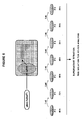
- ST cells were transfected with the pBAC-TcDNA FL plasmid. At 48 h posttransfection, the supernatant of the culture was collected and passed into ST cells six times (see Figure 5). Starting at passage 2, at 14 h postinfection, the cytopathic effect became apparent, extending later, at 20 h postinfection, to practically all of these cells that formed the monolayer (see Figure 6). On the other hand, the titer of rescued virus increased rapidly with the passages, reaching values on the order of 10 8 PFU/mL as of passage 3 (see Figure 7).
- the sequence at positions 6,752 and 18,997 was determined by means of sequencing of CDNA fragments amplified by RT-PCR using the genomic RNA of the rescued virus as a template. The analysis of the sequence determined that the nucleotides in positions 6,752 'and 18,997 were those present in the cDNA.
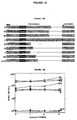
- the rescued virus presented, in the cDNA sequence of the S gene, a restriction site DraIII at position 20,990, as was expected for the S gene of C11 ( Figure 8).
- the presence of these three genetic markers confirmed that the isolated virus came from the cDNA.
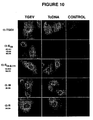
- a comparative analysis was made by immunofluorescence of infected cells with the virus recovered (TcDNA) after transfection with the pBAC-TcDNA FL plasmid or cells infected with the PUR46-MAD isolate of the TGEV.
- TcDNA virus recovered
- specific polyclonal and monoclonal antibodies that recognized both the C11 isolate and the PUR46-MAD isolate, or only the latter, were used (see Figure 10).
- the results obtained confirmed the antigenicity expected for the new TcDNA virus.
- the polyclonal antibody specific for TGEV, the expected specific monoclonal of the S protein (ID.B12 and 6A.C3), as well as the specific monoclonal of the M (3B.B3) and N (3B.D8,) proteins recognized both the TcDNA and the PUR46-MAD.
- the data obtained indicated that the virus generated presented the M and N proteins of the PUR46-MAD isolate and the S protein of the C11 isolate, as had been designed in the original cDNA.
- RNA synthesis in coronavirus takes place by means of an RNA-dependent process, in which the mRNAs are transcribed from templates with negative polarity.
- TGEV a conserved consensus sequence, CUAAAC, appears, which is located just in front of the majority of the genes.
- CUAAAC conserved consensus sequence
- These sequences represent signals for the transcription of the subgenomic mRNAs.
- coronavirus there are between six and eight types of mRNAs with variable sizes, depending on the type of coronavirus and of the host. The largest corresponds to the genomic RNA, which in turn serves as mRNA for ORFs 1a and 1b The rest of the mRNAs correspond to subgenomic mRNAs.
- RNAs are denominated mRNA 1 to 7, in decreasing size order.
- some mRNAs that have been discovered after the set of originally described mRNAs have been denominated with the name of the corresponding mRNA, a dash, and a number, e.g., mRNA 2-1.
- the mRNAs present a coterminal structure in relation to the structure of the genomic RNA. With the exception of the smallest mRNA, the rest are structurally polycistronic, while, in general, only the ORF located closest to 5' is translated.
- constructions were made from a vector of interchangeable modules flanked by cloning sequences that facilitate the exchange of TRSs and heterologous genes within the vector.
- the construction which included ORF 5 of the PRRSV (Porcine respiratory and reproductive syndrome virus) flanked at the 5'-end by the minimal IGS consensus sequence (CUAAAC) preceded by the -88 nts flanking the gene of the viral nucleocapsid (N), and at the 3'-end by restriction site SalI (GTCGAC) and a sequence analogous to that of Kozak (AC)GACC, yielded an optimal expression (about 10 ⁇ g/10 6 cells).
- PRRSV Porcine respiratory and reproductive syndrome virus
- CUAAAC minimal IGS consensus sequence preceded by the -88 nts flanking the gene of the viral nucleocapsid
- GTCGAC restriction site SalI
- AC Kozak
- these levels of expression of the heterologous gene are more than sufficient to induce an immune response.
- the gene encoding the green fluorescent protein (GFP) was expressed at high levels (20 ⁇ g of protein per million of cells in swine testis, ST, cells). The expression levels were stable for more than 20 passages in cell culture. Furthermore, a set of swine were immunized with the live virus vector, that was administered by the oral, intranasal and intragastric routes and a strong humoral immune response was detected against both the virus vector and the GFP. Interestingly, no secondary effect was observed in the inoculated animals after the administration of three doses of the virus vector.
- biosafety is a priority.
- three types of safety guards are being engineered in the vector. Two of these are based on the deletion of two virus components, mapping at different positions of the virus genome, essential for the replication of the virus. These components are being provided in trans by a packaging cell line. This cell (Baby Hamster Kidney, BHK) expresses the missing TGEV genes encoding essential structural proteins of the virus (the envelope E and the membrane M proteins).
- the third safety guard is the relocation of the packaging signal of the virus genome, in such a way that the recovery of an infectious virus by recombination is prevented, leading to the generation of a suicide vector that efficiently expresses the heterologous genes but that is unable to propagate even to the closest neighbor cell.
- the vector is based on a replication defective virus. It can only be grown in the vaccine factory by using packaging cells complementing the deletions of the virus. These safety guards represent novel procedures in the engineering of coronaviruses.
- the recombinant virus with a new tropism will be replication competent at least in feline cells, since these cells replicate human, porcine, canine and feline coronaviruses.
Landscapes
- Health & Medical Sciences (AREA)
- Life Sciences & Earth Sciences (AREA)
- Chemical & Material Sciences (AREA)
- Genetics & Genomics (AREA)
- Organic Chemistry (AREA)
- Engineering & Computer Science (AREA)
- General Health & Medical Sciences (AREA)
- Bioinformatics & Cheminformatics (AREA)
- Medicinal Chemistry (AREA)
- Virology (AREA)
- Zoology (AREA)
- Wood Science & Technology (AREA)
- Biomedical Technology (AREA)
- General Engineering & Computer Science (AREA)
- Biotechnology (AREA)
- Veterinary Medicine (AREA)
- Public Health (AREA)
- Animal Behavior & Ethology (AREA)
- Pharmacology & Pharmacy (AREA)
- Microbiology (AREA)
- Immunology (AREA)
- Biochemistry (AREA)
- Molecular Biology (AREA)
- Nuclear Medicine, Radiotherapy & Molecular Imaging (AREA)
- General Chemical & Material Sciences (AREA)
- Chemical Kinetics & Catalysis (AREA)
- Biophysics (AREA)
- Communicable Diseases (AREA)
- Plant Pathology (AREA)
- Physics & Mathematics (AREA)
- Epidemiology (AREA)
- Mycology (AREA)
- Gastroenterology & Hepatology (AREA)
- Pulmonology (AREA)
- Proteomics, Peptides & Aminoacids (AREA)
- Oncology (AREA)
- Pain & Pain Management (AREA)
- Rheumatology (AREA)
- Micro-Organisms Or Cultivation Processes Thereof (AREA)
- Medicines Containing Antibodies Or Antigens For Use As Internal Diagnostic Agents (AREA)
Applications Claiming Priority (3)
| Application Number | Priority Date | Filing Date | Title |
|---|---|---|---|
| ES009902673A ES2170622B1 (es) | 1999-12-03 | 1999-12-03 | Clones y vectores infectivos derivados de coronavirus y sus aplicaciones. |
| ES9902673 | 1999-12-03 | ||
| EP00990628A EP1234024B2 (fr) | 1999-12-03 | 2000-11-30 | Chromosomes artificiels comprenant des sequences d'acides nucleiques capables de diriger la formation de virus a arn recombinant |
Related Parent Applications (1)
| Application Number | Title | Priority Date | Filing Date |
|---|---|---|---|
| EP00990628A Division EP1234024B2 (fr) | 1999-12-03 | 2000-11-30 | Chromosomes artificiels comprenant des sequences d'acides nucleiques capables de diriger la formation de virus a arn recombinant |
Publications (2)
| Publication Number | Publication Date |
|---|---|
| EP1437400A2 true EP1437400A2 (fr) | 2004-07-14 |
| EP1437400A3 EP1437400A3 (fr) | 2004-10-20 |
Family
ID=8310818
Family Applications (2)
| Application Number | Title | Priority Date | Filing Date |
|---|---|---|---|
| EP04007406A Withdrawn EP1437400A3 (fr) | 1999-12-03 | 2000-11-30 | Chromosomes artificiels comprenant des séquences d'acides nucléiques capables de diriger la formation de virus a arn recombinant |
| EP00990628A Expired - Lifetime EP1234024B2 (fr) | 1999-12-03 | 2000-11-30 | Chromosomes artificiels comprenant des sequences d'acides nucleiques capables de diriger la formation de virus a arn recombinant |
Family Applications After (1)
| Application Number | Title | Priority Date | Filing Date |
|---|---|---|---|
| EP00990628A Expired - Lifetime EP1234024B2 (fr) | 1999-12-03 | 2000-11-30 | Chromosomes artificiels comprenant des sequences d'acides nucleiques capables de diriger la formation de virus a arn recombinant |
Country Status (27)
| Country | Link |
|---|---|
| US (4) | US7445928B2 (fr) |
| EP (2) | EP1437400A3 (fr) |
| JP (1) | JP4637432B2 (fr) |
| KR (1) | KR100755814B1 (fr) |
| CN (3) | CN1872994A (fr) |
| AR (1) | AR027893A1 (fr) |
| AT (1) | ATE267246T1 (fr) |
| AU (2) | AU785081B2 (fr) |
| BR (1) | BR0016145A (fr) |
| CA (1) | CA2393325A1 (fr) |
| CZ (1) | CZ302785B6 (fr) |
| DE (1) | DE60010921T3 (fr) |
| DK (1) | DK1234024T4 (fr) |
| ES (2) | ES2170622B1 (fr) |
| HU (1) | HU228205B1 (fr) |
| IL (2) | IL149859A0 (fr) |
| MX (1) | MXPA02005525A (fr) |
| NO (1) | NO331812B1 (fr) |
| NZ (1) | NZ518990A (fr) |
| PL (1) | PL206816B1 (fr) |
| PT (1) | PT1234024E (fr) |
| RS (1) | RS50372B (fr) |
| SI (1) | SI1234024T2 (fr) |
| SK (1) | SK7612002A3 (fr) |
| TR (1) | TR200401186T4 (fr) |
| WO (1) | WO2001039797A2 (fr) |
| ZA (1) | ZA200203560B (fr) |
Cited By (2)
| Publication number | Priority date | Publication date | Assignee | Title |
|---|---|---|---|---|
| WO2010051288A1 (fr) | 2008-10-27 | 2010-05-06 | Revivicor, Inc. | Ongulés immunodéprimés |
| EP2527456A1 (fr) | 2004-10-22 | 2012-11-28 | Revivicor Inc. | Porcs transgéniques déficients en chaîne légère d'immunoglobuline endogène |
Families Citing this family (27)
| Publication number | Priority date | Publication date | Assignee | Title |
|---|---|---|---|---|
| ES2170622B1 (es) | 1999-12-03 | 2004-05-16 | Consejo Superior De Investigaciones Cientificas | Clones y vectores infectivos derivados de coronavirus y sus aplicaciones. |
| CA2447450C (fr) * | 2001-05-17 | 2011-12-20 | Universiteit Utrecht | Particules de type virus corona comprenant des genomes a deletions fonctionnelles |
| US7556957B2 (en) | 2001-05-17 | 2009-07-07 | Stichting Voor De Technische Wetenschappen | Coronavirus-like particles comprising functionally deleted genomes |
| US7906311B2 (en) | 2002-03-20 | 2011-03-15 | Merial Limited | Cotton rat lung cells for virus culture |
| US7371837B2 (en) * | 2004-07-21 | 2008-05-13 | The University Of Hong Kong | Human virus causing respiratory tract infection and uses thereof |
| EP1619246A1 (fr) * | 2004-07-23 | 2006-01-25 | Université de la Méditerranée, Aix-Marseille II | ARN-polymerases ARN-dépendante de coronavirus et leur utilisations en biologie moléculaire et pour le criblage de médicaments |
| AU2005279303B2 (en) | 2004-09-03 | 2011-10-27 | Consejo Superior De Investigaciones Cientificas | Nucleic acid sequences encoding proteins capable of associating into a virus-like particle |
| EP1632247A1 (fr) * | 2004-09-03 | 2006-03-08 | Consejo Superior De Investigaciones Cientificas | Acide nucléique codant pour des protéines du FMDV et étant capable de s'assembler dans une particule pseudovirale |
| EP1792996A1 (fr) | 2005-12-01 | 2007-06-06 | Consejo Superior de Investigaciones Cientificas | Acides nucléiques encodant des vaccins contre le virus du syndrome reproductif et respiratoire porcin (PRRSV) |
| JP2007312649A (ja) * | 2006-05-24 | 2007-12-06 | Japan Health Science Foundation | 再構築された感染性レトロウイルスゲノムクローンdna及びそれを含む微生物ならびにそれらの製造方法 |
| FR2947839A1 (fr) * | 2009-07-09 | 2011-01-14 | Centre Nat Rech Scient | Nouveaux agents antibacteriens |
| EP2681232A1 (fr) | 2011-03-02 | 2014-01-08 | Intervet International B.V. | Protéine de spicule du virus de la bronchite infectieuse (ibv) en tant que vaccin sous-unité |
| GB201307528D0 (en) * | 2013-04-26 | 2013-06-12 | Univ Leuven Kath | Bacterial artificial chromosomes |
| AU2015259470A1 (en) * | 2014-05-16 | 2016-11-10 | Yale University | Virus like vesicles (VLVs) based vaccines to prevent or treat chronic hepatitis B virus (HBV) infection |
| CN106459997A (zh) * | 2014-05-16 | 2017-02-22 | 耶鲁大学 | 用于疫苗应用的高效价病毒样囊泡的进化 |
| CN107109371A (zh) | 2014-09-22 | 2017-08-29 | 明尼苏达大学评议会 | 皮钦德病毒反向遗传学系统及其使用方法 |
| GB201603374D0 (en) | 2016-02-26 | 2016-04-13 | Ucl Business Plc | Packaging cell |
| CN107190022B (zh) * | 2017-06-28 | 2020-10-30 | 浙江大学 | 一种快速构建禽传染性支气管炎病毒反向遗传株的方法 |
| WO2019204654A1 (fr) * | 2018-04-18 | 2019-10-24 | Utah State University | Compositions et procédés de caractérisation et de développement de vaccins contre le virus zika |
| KR102119875B1 (ko) * | 2019-03-19 | 2020-06-05 | 한국화학연구원 | 한국형 중동호흡기증후군 코로나바이러스 감염성 변이 유전자 및 이의 용도 |
| CN110468113A (zh) * | 2019-08-07 | 2019-11-19 | 中国农业科学院哈尔滨兽医研究所(中国动物卫生与流行病学中心哈尔滨分中心) | 重组修饰的猪传染性胃肠炎病毒强毒株及其应用 |
| CN110656120A (zh) * | 2019-10-16 | 2020-01-07 | 中国医学科学院医学生物学研究所 | 一种乙脑病毒sa14-14-2的克隆方法及应用 |
| CN111662885A (zh) * | 2020-06-22 | 2020-09-15 | 扬州大学 | 两株基因组高度同源猪繁殖与呼吸综合征病毒强弱毒株感染性克隆构建、拯救与应用 |
| EP4188435A4 (fr) * | 2020-08-03 | 2025-03-05 | The Penn State Research Foundation | Coronavirus défectueux interférents synthétiques |
| WO2022055862A1 (fr) | 2020-09-08 | 2022-03-17 | Sunflower Therapeutics, Llc | Collecteur de transport et de distribution de fluide |
| CN112852873B (zh) * | 2021-02-04 | 2023-03-24 | 华中农业大学 | 一种猪δ冠状病毒感染性克隆质粒的构建方法 |
| CN115094142B (zh) * | 2022-07-19 | 2024-05-28 | 中国医学科学院肿瘤医院 | 用于诊断肺肠型腺癌的甲基化标志物 |
Family Cites Families (57)
| Publication number | Priority date | Publication date | Assignee | Title |
|---|---|---|---|---|
| US5833975A (en) * | 1989-03-08 | 1998-11-10 | Virogenetics Corporation | Canarypox virus expressing cytokine and/or tumor-associated antigen DNA sequence |
| US5288641A (en) | 1984-06-04 | 1994-02-22 | Arch Development Corporation | Herpes Simplex virus as a vector |
| US5550289A (en) * | 1985-01-07 | 1996-08-27 | Syntex (U.S.A.) Inc. | N-(1,(1-1)-dialkyloxy)-and N-(1,(1-1)-dialkenyloxy alk-1-yl-N-N,N-tetrasubstituted ammonium lipids and uses therefor |
| US4946787A (en) * | 1985-01-07 | 1990-08-07 | Syntex (U.S.A.) Inc. | N-(ω,(ω-1)-dialkyloxy)- and N-(ω,(ω-1)-dialkenyloxy)-alk-1-yl-N,N,N-tetrasubstituted ammonium lipids and uses therefor |
| US5106733A (en) * | 1987-06-25 | 1992-04-21 | Immunex Corporation | Bovine granulocyte-macrophage colony stimulating factor |
| JPH04503306A (ja) | 1989-02-01 | 1992-06-18 | ザ・ジェネラル・ホスピタル・コーポレーション | 単純ヘルペスウイルス1型発現ベクター |
| US5811103A (en) * | 1989-03-19 | 1998-09-22 | Akzo Nobel N.V. | Hog cholera virus vaccine and diagnostic |
| US5703055A (en) * | 1989-03-21 | 1997-12-30 | Wisconsin Alumni Research Foundation | Generation of antibodies through lipid mediated DNA delivery |
| CA2039921A1 (fr) | 1990-04-16 | 1991-10-17 | Xandra O. Breakefield | Transfert et expression de la sequence d'adn dans les cellules du systeme nerveux central a l'aide de mutants du virus de l'herpes, avec deletions chez les genes en vue de repliquer le virus |
| US5264618A (en) * | 1990-04-19 | 1993-11-23 | Vical, Inc. | Cationic lipids for intracellular delivery of biologically active molecules |
| DE69233158T2 (de) * | 1991-03-07 | 2004-05-13 | Connaught Technology Corp., Greenville | Gentechnologisch hergestellter stamm für impfstoffe |
| ES2026827A6 (es) * | 1991-03-26 | 1992-05-01 | Ercros Sa | Procedimiento para la produccion de una vacuna subunidad contra el parvovirus porcino. |
| US5382425A (en) * | 1992-01-13 | 1995-01-17 | Syntro Corporation | Recombinant swinepox virus |
| US6033904A (en) * | 1992-01-13 | 2000-03-07 | Syntro Corporation | Recombinant swinepox virus |
| US5658724A (en) | 1992-07-31 | 1997-08-19 | University Of Pittsburgh Of The Commonwealth System Of Higher Education | Herpes simplex virus strains deficient for the essential immediate early genes ICP4 and ICP27 and methods for their production, growth and use |
| KR100374295B1 (ko) * | 1993-02-08 | 2003-12-24 | 바이엘 코포레이션 | 돼지생식및호흡증후군바이러스의생육방법과백신에서그의용도 |
| JP3626187B2 (ja) * | 1993-06-07 | 2005-03-02 | バイカル インコーポレイテッド | 遺伝子治療に適するプラスミド |
| US20020146392A1 (en) | 1993-06-24 | 2002-10-10 | Frank L. Graham | Helper dependent adenovirus vectors based on site-specific recombinases |
| WO1995003400A1 (fr) * | 1993-07-23 | 1995-02-02 | Johns Hopkins University School Of Medicine | Clonage cible par recombinaison dans les chromosomes artificiels de levure |
| US6015686A (en) * | 1993-09-15 | 2000-01-18 | Chiron Viagene, Inc. | Eukaryotic layered vector initiation systems |
| EP0804249A2 (fr) * | 1994-03-15 | 1997-11-05 | Brown University Research Foundation | Systeme de liberation de genes polymeres |
| ATE298370T1 (de) * | 1994-04-29 | 2005-07-15 | Baxter Healthcare Sa | Rekombinante poxviren mit fremdenpolynukleotiden in wichtigen regionen |
| GB2289279B (en) * | 1994-05-13 | 1998-09-16 | Iberica Cyanamid | Diagnostic kits and vaccines containing recombinant PRRSV proteins |
| US5585096A (en) | 1994-06-23 | 1996-12-17 | Georgetown University | Replication-competent herpes simplex virus mediates destruction of neoplastic cells |
| GB9415319D0 (en) | 1994-07-29 | 1994-09-21 | Medical Res Council | HSV viral vector |
| AU4367096A (en) | 1994-11-21 | 1996-06-17 | Trustees Of Columbia University In The City Of New York, The | Unique associated kaposi's sarcoma virus sequences and uses thereof |
| US5719131A (en) * | 1994-12-09 | 1998-02-17 | Genzyme Corporation | Cationic amphiphiles containing dialkylamine lipophilic groups for intracellular delivery of therapeutic molecules |
| EP0811057B1 (fr) | 1995-02-21 | 2006-04-26 | Cantab Pharmaceuticals Research Limited | Preparations virales, vecteurs, immunogenes et vaccins correspondants |
| US6043232A (en) * | 1997-07-23 | 2000-03-28 | Nitromed, Inc. | Nitroso esters of beta-oxo-amides and aryl propionic acid derivatives of non-steroidal antiinflammatory drugs |
| US5705385A (en) * | 1995-06-07 | 1998-01-06 | Inex Pharmaceuticals Corporation | Lipid-nucleic acid particles prepared via a hydrophobic lipid-nucleic acid complex intermediate and use for gene transfer |
| US6019980A (en) * | 1995-06-07 | 2000-02-01 | Connaught Laboratories Limited | Nucleic acid respiratory syncytial virus vaccines |
| US5820869A (en) * | 1995-06-07 | 1998-10-13 | American Home Products Corporation | Recombinant raccoon pox viruses and their use as an effective vaccine against feline immunodeficiency virus infection |
| US5851826A (en) | 1995-07-26 | 1998-12-22 | Children's Medical Center Corporation | Helper virus-free herpesvirus vector packaging system |
| US5795872A (en) * | 1995-09-19 | 1998-08-18 | Pharmadigm, Inc. | DNA construct for immunization |
| US6133243A (en) | 1996-02-22 | 2000-10-17 | Onyx Pharmaceuticals, Inc. | Liposomal-viral DNA complexes for treating disease |
| ES2109189B1 (es) * | 1996-03-14 | 1998-05-16 | Iberica Cyanamid | Vectores basados en genomas virales defectivos recombinantes y su empleo en la formulacion de vacunas. |
| FR2751224B1 (fr) * | 1996-07-19 | 1998-11-20 | Rhone Merieux | Formule de vaccin polynucleotidique contre les pathologies respiratoires et de reproduction des porcs |
| US5990091A (en) * | 1997-03-12 | 1999-11-23 | Virogenetics Corporation | Vectors having enhanced expression, and methods of making and uses thereof |
| US6004777A (en) * | 1997-03-12 | 1999-12-21 | Virogenetics Corporation | Vectors having enhanced expression, and methods of making and uses thereof |
| DE19733364A1 (de) * | 1997-08-01 | 1999-02-04 | Koszinowski Ulrich H Prof | Verfahren zur Klonierung eines großen Virusgenoms |
| US6517843B1 (en) * | 1999-08-31 | 2003-02-11 | Merial | Reduction of porcine circovirus-2 viral load with inactivated PCV-2 |
| FR2781159B1 (fr) * | 1998-07-06 | 2000-10-06 | Merial Sas | Vaccin circovirus et parvovirus porcin |
| US6391314B1 (en) * | 1997-10-03 | 2002-05-21 | Merial | Porcine circoviruses vaccines diagnostic reagents |
| US7211379B2 (en) * | 1997-10-03 | 2007-05-01 | Merial Sas | Prevention of myocarditis, abortion and intrauterine infection associated with porcine circovirus-2 |
| UA78180C2 (uk) * | 1997-10-03 | 2007-03-15 | Меріаль | Кільцевий вірус свині типу ii, вакцини та діагностичні реагенти |
| US6165493A (en) * | 1997-10-22 | 2000-12-26 | New York Blood Center, Inc. | "Methods and compositions for decreasing the frequency of HIV, herpesvirus and sexually transmitted bacterial infections" |
| US20040062775A1 (en) * | 1997-12-05 | 2004-04-01 | Agence Francaise De Securite Sanitaire Des Aliments | Circovirus sequences associated with piglet weight loss disease (PWD) |
| FR2772047B1 (fr) * | 1997-12-05 | 2004-04-09 | Ct Nat D Etudes Veterinaires E | Sequence genomique et polypeptides de circovirus associe a la maladie de l'amaigrissement du porcelet (map), applications au diagnostic et a la prevention et/ou au traitement de l'infection |
| JP3795751B2 (ja) * | 1997-12-11 | 2006-07-12 | ユニバーシティ オブ サスカッチェワン | ブタからの離乳後多全身系消耗症候群ウイルス |
| US6277621B1 (en) | 1998-02-26 | 2001-08-21 | Medigene, Inc. | Artificial chromosome constructs containing foreign nucleic acid sequences |
| EP1064024A4 (fr) * | 1998-03-13 | 2005-04-06 | Univ Georgia Res Found | Vaccins contre les infections par circovirus |
| US6497883B1 (en) * | 1999-06-10 | 2002-12-24 | Merial | Porcine circovirus recombinant poxvirus vaccine |
| ES2170622B1 (es) | 1999-12-03 | 2004-05-16 | Consejo Superior De Investigaciones Cientificas | Clones y vectores infectivos derivados de coronavirus y sus aplicaciones. |
| NZ519034A (en) | 1999-12-14 | 2005-02-25 | Novartis Ag | Bovine immunodeficiency virus (BIV) based vectors |
| WO2001090340A2 (fr) | 2000-05-21 | 2001-11-29 | University Of North Carolina At Chapel Hill | Ensemble directionnel de grands genomes viraux et de chromosomes |
| DE10044648A1 (de) * | 2000-09-08 | 2002-03-21 | Aventis Behring Gmbh | Verfahren zur Vermehrung oder zur Entfernung von Cirocoviren aus biologischem Material |
| CN1309836C (zh) * | 2001-03-27 | 2007-04-11 | 萨斯喀彻温大学 | 培养环状病毒的方法 |
-
1999
- 1999-12-03 ES ES009902673A patent/ES2170622B1/es not_active Expired - Fee Related
-
2000
- 2000-11-30 DE DE60010921T patent/DE60010921T3/de not_active Expired - Lifetime
- 2000-11-30 CN CNA2006100733455A patent/CN1872994A/zh active Pending
- 2000-11-30 US US10/148,669 patent/US7445928B2/en not_active Expired - Fee Related
- 2000-11-30 AU AU30051/01A patent/AU785081B2/en not_active Ceased
- 2000-11-30 CN CNB008165904A patent/CN100402643C/zh not_active Expired - Fee Related
- 2000-11-30 TR TR2004/01186T patent/TR200401186T4/xx unknown
- 2000-11-30 IL IL14985900A patent/IL149859A0/xx unknown
- 2000-11-30 BR BR0016145-4A patent/BR0016145A/pt not_active IP Right Cessation
- 2000-11-30 CA CA002393325A patent/CA2393325A1/fr not_active Abandoned
- 2000-11-30 EP EP04007406A patent/EP1437400A3/fr not_active Withdrawn
- 2000-11-30 PL PL356390A patent/PL206816B1/pl not_active IP Right Cessation
- 2000-11-30 WO PCT/EP2000/012063 patent/WO2001039797A2/fr not_active Ceased
- 2000-11-30 SK SK761-2002A patent/SK7612002A3/sk unknown
- 2000-11-30 HU HU0203305A patent/HU228205B1/hu not_active IP Right Cessation
- 2000-11-30 MX MXPA02005525A patent/MXPA02005525A/es active IP Right Grant
- 2000-11-30 DK DK00990628.0T patent/DK1234024T4/da active
- 2000-11-30 EP EP00990628A patent/EP1234024B2/fr not_active Expired - Lifetime
- 2000-11-30 CN CNA2004100789786A patent/CN1616670A/zh active Pending
- 2000-11-30 ES ES00990628T patent/ES2218276T5/es not_active Expired - Lifetime
- 2000-11-30 PT PT00990628T patent/PT1234024E/pt unknown
- 2000-11-30 JP JP2001541529A patent/JP4637432B2/ja not_active Expired - Fee Related
- 2000-11-30 AT AT00990628T patent/ATE267246T1/de active
- 2000-11-30 SI SI200030394T patent/SI1234024T2/sl unknown
- 2000-11-30 KR KR1020027007118A patent/KR100755814B1/ko not_active Expired - Fee Related
- 2000-11-30 NZ NZ518990A patent/NZ518990A/en not_active IP Right Cessation
- 2000-11-30 RS YUP-375/02A patent/RS50372B/sr unknown
- 2000-11-30 CZ CZ20021882A patent/CZ302785B6/cs not_active IP Right Cessation
- 2000-12-04 AR ARP000106406A patent/AR027893A1/es active IP Right Grant
-
2002
- 2002-05-06 ZA ZA200203560A patent/ZA200203560B/xx unknown
- 2002-05-22 NO NO20022419A patent/NO331812B1/no not_active IP Right Cessation
- 2002-05-27 IL IL149859A patent/IL149859A/en not_active IP Right Cessation
- 2002-09-11 US US10/238,786 patent/US7368557B2/en not_active Expired - Fee Related
-
2006
- 2006-08-03 AU AU2006203327A patent/AU2006203327B2/en not_active Ceased
-
2008
- 2008-09-30 US US12/285,213 patent/US20100167352A1/en not_active Abandoned
-
2010
- 2010-11-03 US US12/938,771 patent/US20110142879A1/en not_active Abandoned
Cited By (2)
| Publication number | Priority date | Publication date | Assignee | Title |
|---|---|---|---|---|
| EP2527456A1 (fr) | 2004-10-22 | 2012-11-28 | Revivicor Inc. | Porcs transgéniques déficients en chaîne légère d'immunoglobuline endogène |
| WO2010051288A1 (fr) | 2008-10-27 | 2010-05-06 | Revivicor, Inc. | Ongulés immunodéprimés |
Also Published As
Similar Documents
| Publication | Publication Date | Title |
|---|---|---|
| US7368557B2 (en) | Polynucleotides encoding porcine transmissible gastroenteritis virus | |
| KR100360327B1 (ko) | 재조합결함성바이러스게놈계벡터및이들벡터를백신의제형화에사용하는방법 | |
| NZ529691A (en) | Coronaviruses and diagnosis, therapeutic use and vaccines derived thereof. | |
| EP1736539A1 (fr) | Vaccins comprenant le SARS-CoV atténué | |
| HK1064409A (en) | Artificial chromosome constructs containing nucleic acid sequences capable of directing the formation of a recombinant rna-virus | |
| US7279327B2 (en) | Methods for producing recombinant coronavirus | |
| MXPA04007178A (es) | SECUENCIA DE áCIDO NUCLEICO QUE COMPRENDE LA SENAL DE ENCAPSIDACION DEL RNA DE UN CORONAVIRUS DEL GRUPO 1 Y SUS APLICACIONES. | |
| HK1028067A (en) | Vectors based on recombinant defective viral genomes, and their use in the formulation of vaccines |
Legal Events
| Date | Code | Title | Description |
|---|---|---|---|
| PUAI | Public reference made under article 153(3) epc to a published international application that has entered the european phase |
Free format text: ORIGINAL CODE: 0009012 |
|
| 17P | Request for examination filed |
Effective date: 20040326 |
|
| AC | Divisional application: reference to earlier application |
Ref document number: 1234024 Country of ref document: EP Kind code of ref document: P |
|
| AK | Designated contracting states |
Kind code of ref document: A2 Designated state(s): AT BE CH CY DE DK ES FI FR GB GR IE IT LI LU MC NL PT SE TR |
|
| AX | Request for extension of the european patent |
Extension state: AL LT LV MK RO SI |
|
| RIN1 | Information on inventor provided before grant (corrected) |
Inventor name: ENJUANES SANCHES, LUIS |
|
| PUAL | Search report despatched |
Free format text: ORIGINAL CODE: 0009013 |
|
| AK | Designated contracting states |
Kind code of ref document: A3 Designated state(s): AT BE CH CY DE DK ES FI FR GB GR IE IT LI LU MC NL PT SE TR |
|
| AX | Request for extension of the european patent |
Extension state: AL LT LV MK RO SI |
|
| REG | Reference to a national code |
Ref country code: HK Ref legal event code: DE Ref document number: 1064409 Country of ref document: HK |
|
| AKX | Designation fees paid |
Designated state(s): AT BE CH CY DE DK ES FI FR GB GR IE IT LI LU MC NL PT SE TR |
|
| AXX | Extension fees paid |
Extension state: SI Payment date: 20040326 Extension state: RO Payment date: 20040326 Extension state: MK Payment date: 20040326 Extension state: LV Payment date: 20040326 Extension state: LT Payment date: 20040326 Extension state: AL Payment date: 20040326 |
|
| STAA | Information on the status of an ep patent application or granted ep patent |
Free format text: STATUS: THE APPLICATION IS DEEMED TO BE WITHDRAWN |
|
| 18D | Application deemed to be withdrawn |
Effective date: 20130423 |
|
| REG | Reference to a national code |
Ref country code: HK Ref legal event code: WD Ref document number: 1064409 Country of ref document: HK |